
On-Demand All-Red Interval (ODAR): Evaluation and Implementation in Software-in-the-Loop Simulation




Abstract
1. Introduction
2. Literature Review
3. Methodology
- Description of fixed, dynamic all-red methods and the proposed all-red method.
- Calibration of the driver’s response in Vissim.
- Description of SILS.
- Experimental setup and evaluation of all-red methods.
3.1. Dynamic All-Red Methods
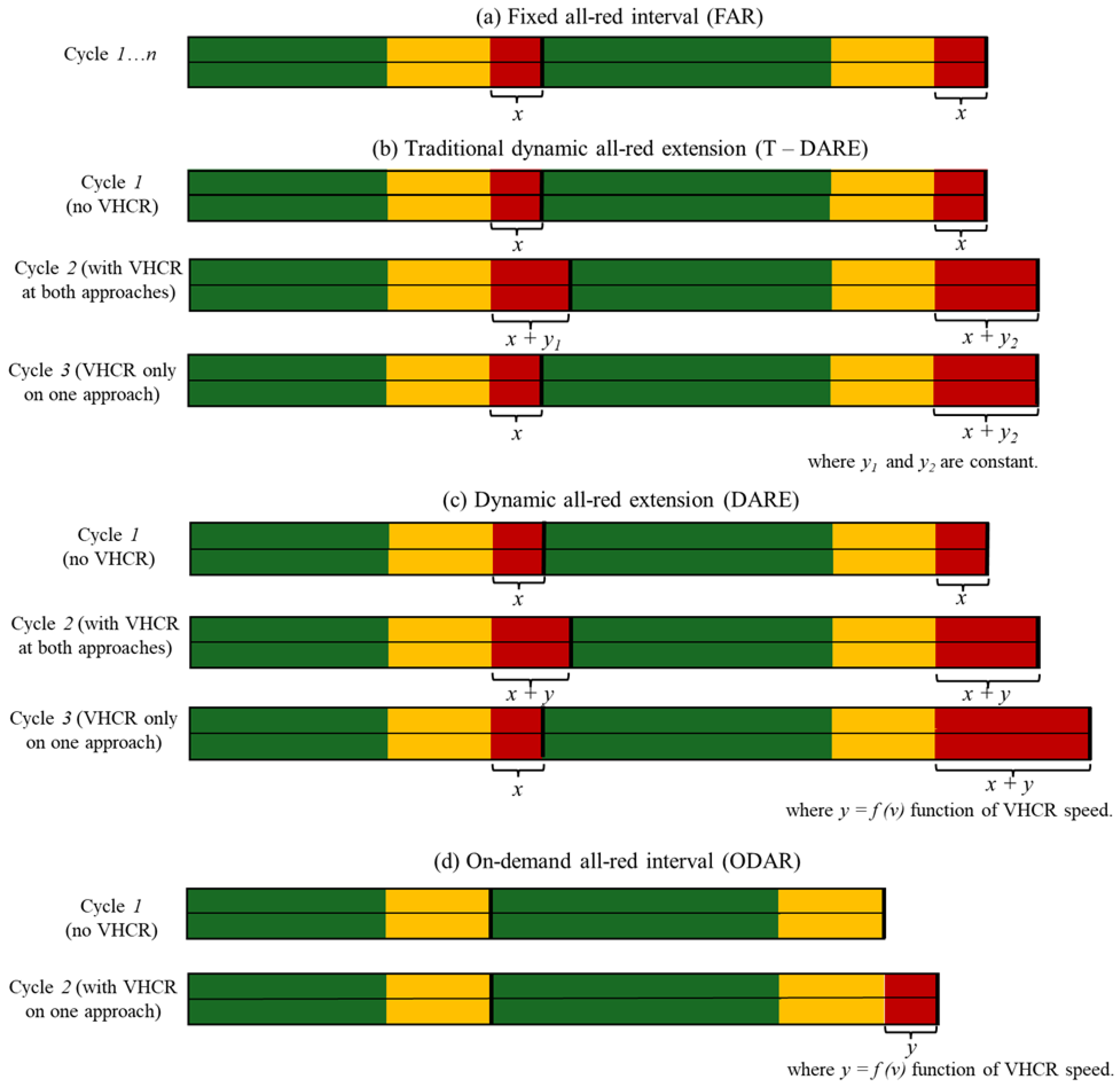
- Fixed all-red (FAR) method: the all-red interval is the same every cycle (in Figure 1 presented as x), and it is calculated by practitioners during preparations of signal timing plans.
- Traditional ‘dynamic’ all red extension (T-DARE) system: the all-red interval is the same for each cycle (in Figure 1 presented as x) and is extended for a fixed number of seconds when a VHCR is detected on both intersection approaches (in Figure 1 presented as y1 and y2 for the two intersection approaches). In this system, the all-red extension is not calculated based on the vehicle’s speed and position or the time in the cycle when VHCR detection occurs; instead, it is a fixed value of time. While this method offers a degree of ‘dynamic safety’, it has several limitations, as it assumes that the same extension time will suffice for vehicles running the red light at different speeds.
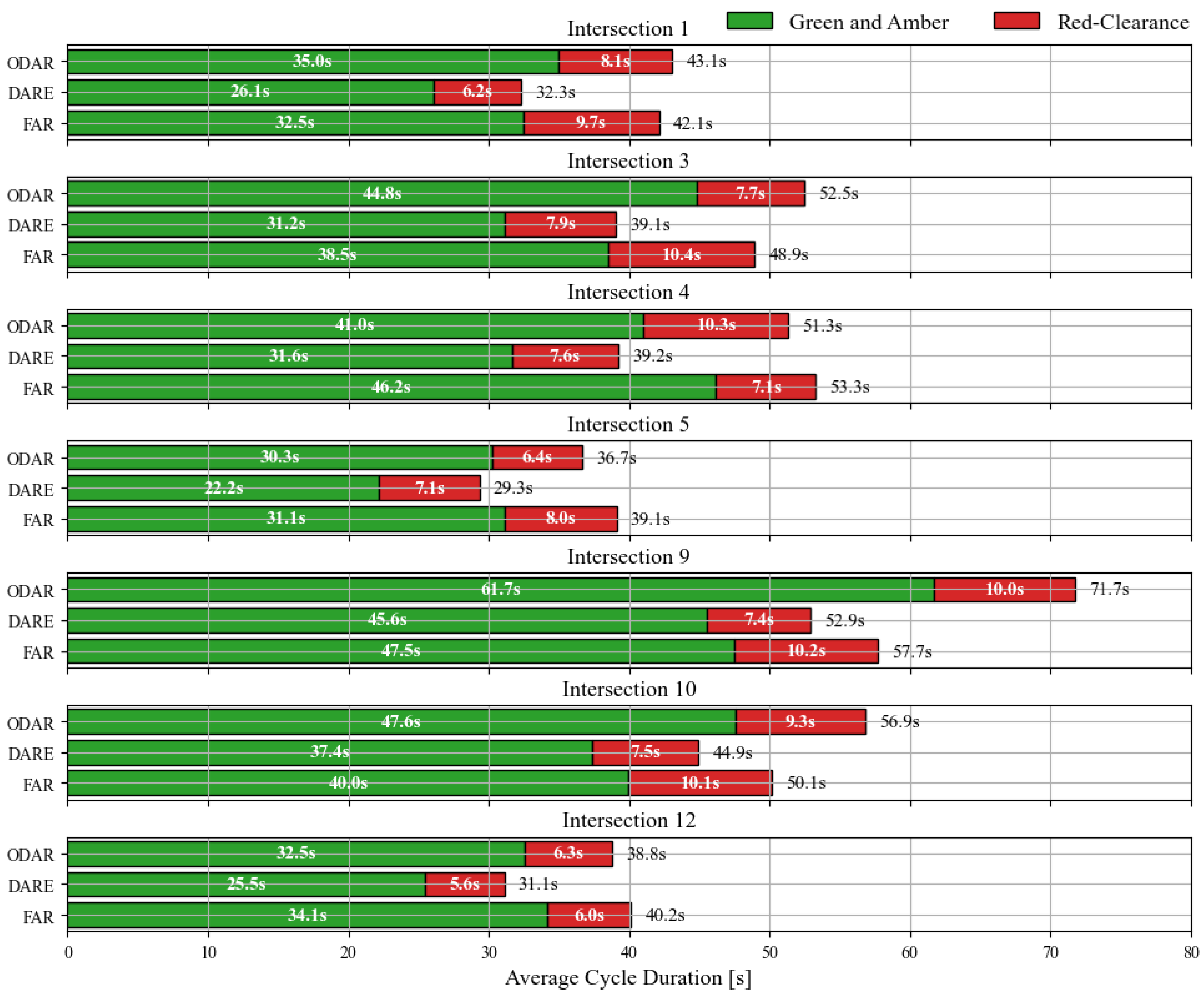
- Dynamic all-red interval (DARE) system: the system operates by dynamically extending the all-red clearance interval at signalized intersections when it detects a vehicle likely to violate the red signal. This extension provides additional time for the offending vehicle to clear the intersection before the next phase receives a green indication, thereby protecting vehicles entering the intersection on the cross street. DARE needs user-programmable logic to process the inputs from the inductive loops and decide whether to extend the all-red interval based on the detected speed of the approaching vehicle (in Figure 1 presented as y = f (v)). The system calculates the necessary extension of the all-red interval based on the speed, position of the detected vehicle, and time in the cycle when the detection happened. However, the DARE system relies on the accuracy of its predictions of which vehicle will run the red light. Furthermore, the DARE system uses the red clearance times and additional extensions, which increases the delays at the intersections.
- On-demand all-red (ODAR) system: the system proposed in this study eliminates the all-red interval from the signal timing plan and adds it only when necessary due to the detection of a vehicle running a red light or yellow light. Similar to DARE, this extension provides a safety buffer to prevent collisions due to red-light running. In our system, an all-red interval is triggered only if a vehicle is detected passing through the intersection during the yellow light phase. If a vehicle enters the intersection during the yellow interval, it is classified as a VHCR, indicating that additional red clearance time is required to enhance safety. In this case, the dynamic extension is a function of the VHCR vehicle speed (in Figure 1 presented as y = f (v)). If no vehicle enters on yellow, then no extended red clearance is required. The necessary red time is calculated using the speed of the vehicle, assuming the vehicle continues at a constant speed, the intersection width, and the vehicle length as given in the MUTCD:where W is the intersection width in meters, is the length of the vehicle, and represents the speed of the vehicle. To increase the applicability of the system, the vehicle length is assumed to be the same for every vehicle, set at 5 m. The minimum all-red time is set to 0 s, and the maximum all-red time is set to 6 s for the sake of this study. Additionally, the calculated all-red time is rounded to have only one decimal place.In this study, a uniform vehicle length of 5 m was assumed to simplify the real-world variability in vehicle dimensions and to focus on evaluating the core ODAR control logic. While this assumption is representative of the majority of passenger vehicles, it may underestimate the required clearance time for longer vehicles such as trucks or buses. Future work would address this limitation by incorporating vehicle-class–specific lengths or real-time vehicle dimension estimates obtained from advanced detection technologies, enabling more precise and adaptive clearance time calculations.
3.2. Testbed Microsimulation Model and Setup of Driver’s Response Model in Vissim
3.3. Software-in-the-Loop Simulation
3.4. Experimental Setup
Performance Metrics
4. Results
5. Conclusions
- Based on the most common parameters used in the literature to evaluate intersection efficiency and safety, it is challenging to determine which all-red strategy provides the overall best performance. Most results varied among the studied intersections, depending on various interrelated factors such as driver propensity for red-light-running at specific locations, traffic demand, etc.
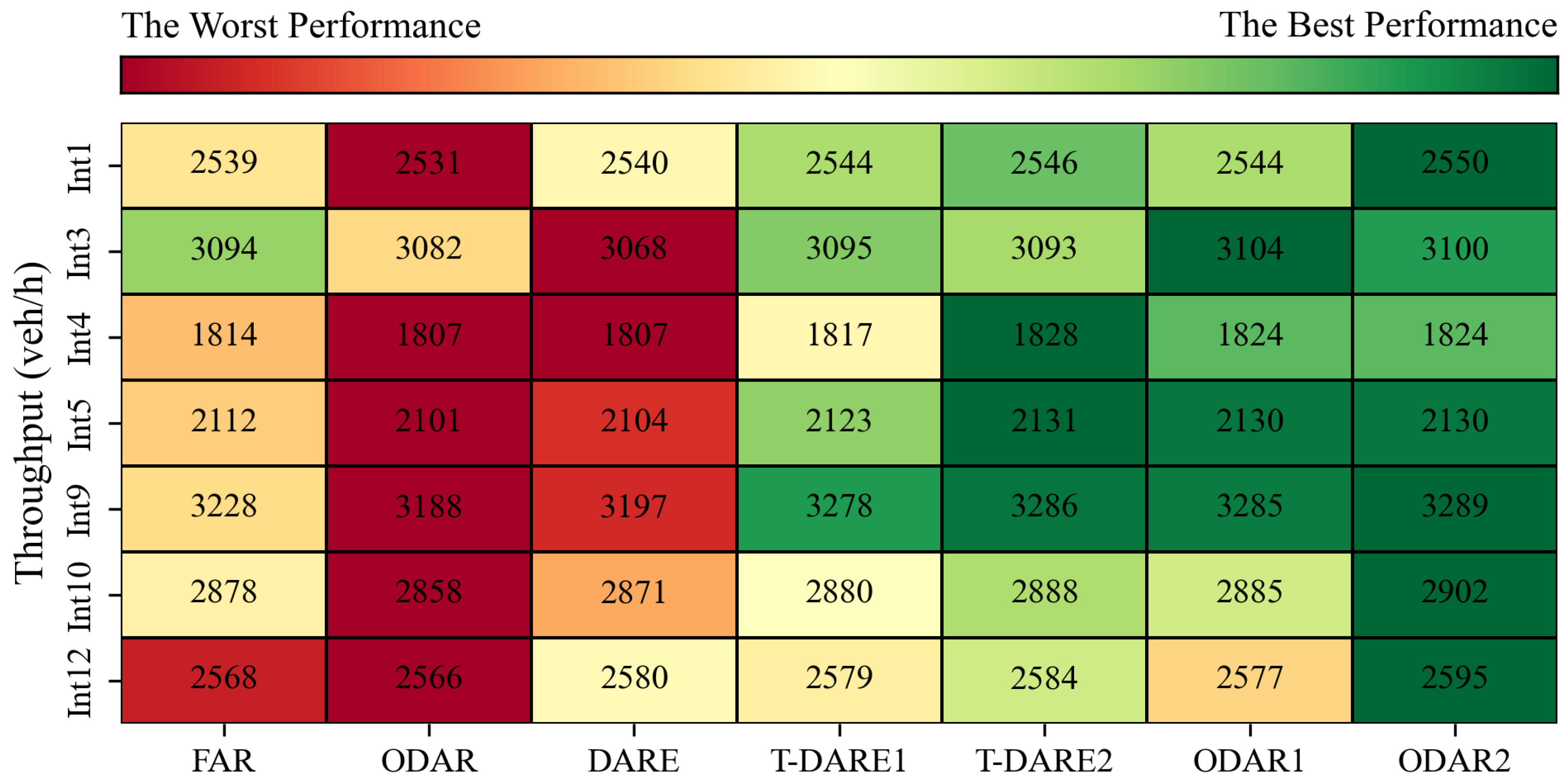
- Although the majority of results cannot be generalized, at most of the studied intersections, the ODAR strategy with a fixed-time extension achieved the highest throughput, statistically outperforming both FAR and DARE. However, it is important to note that ODAR with dynamic extensions, longer than 2 s, tend to reduce throughput and decrease road capacity.
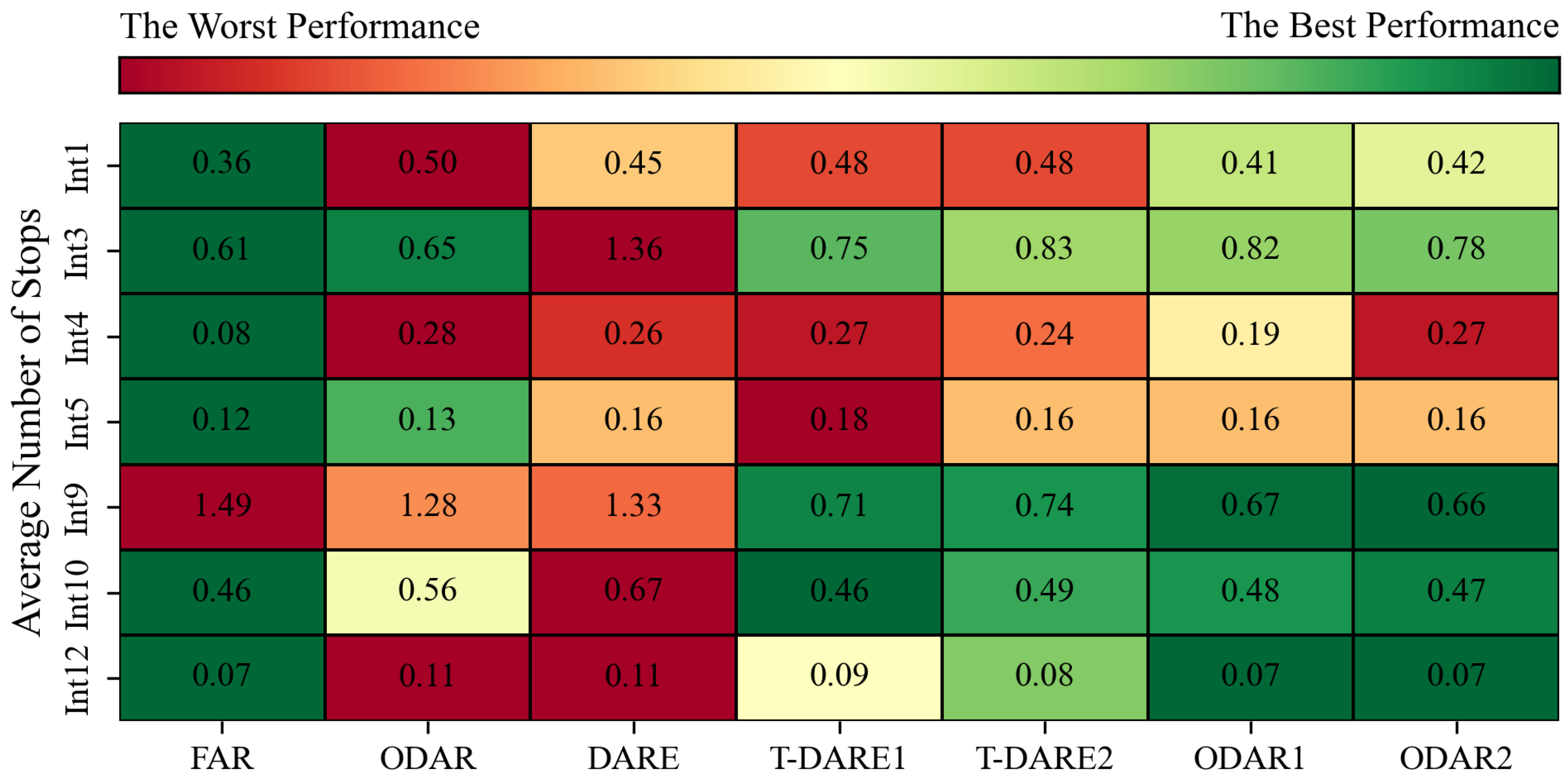
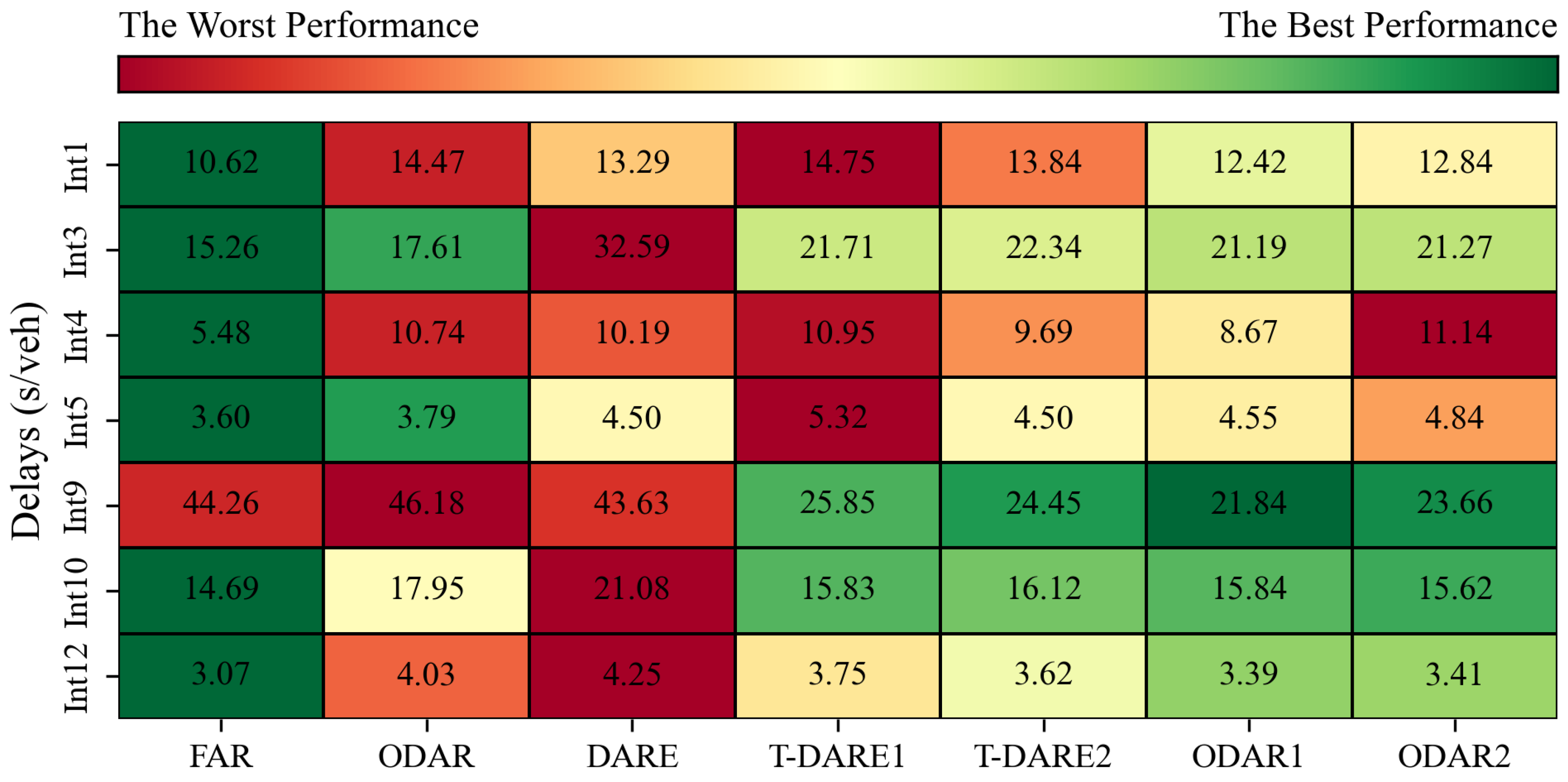
- In general, at most intersections, delays and stops increased with the application of all-red extensions. Conversely, under conditions of high traffic demand and low RLR occurrence, the ODAR strategy with a fixed-time extension effectively fulfilled its main purpose, omitting the all-red interval when unnecessary, and improved intersection efficiency across all three efficiency measures (Throughput, Delays, and Number of Stops).
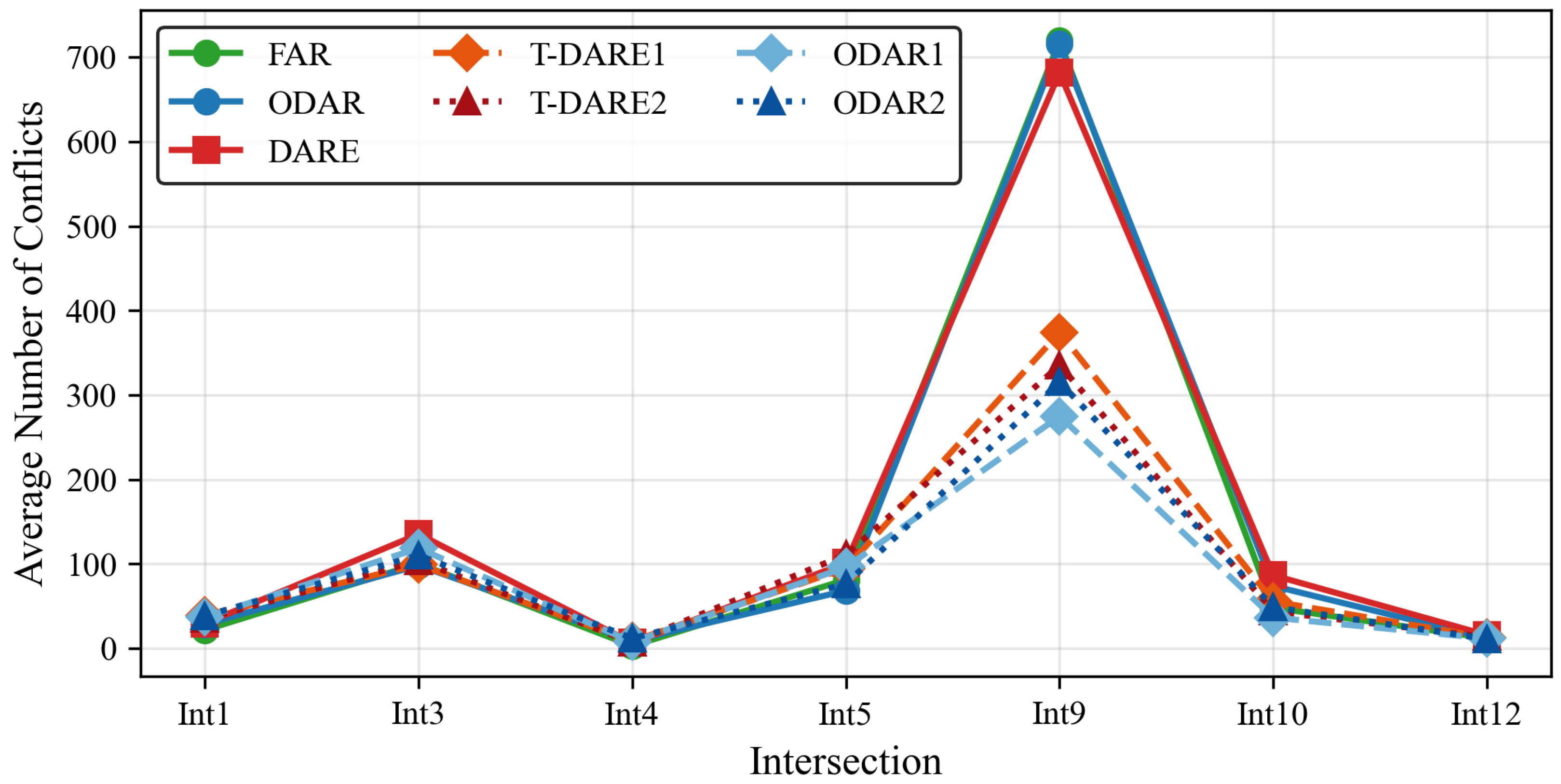
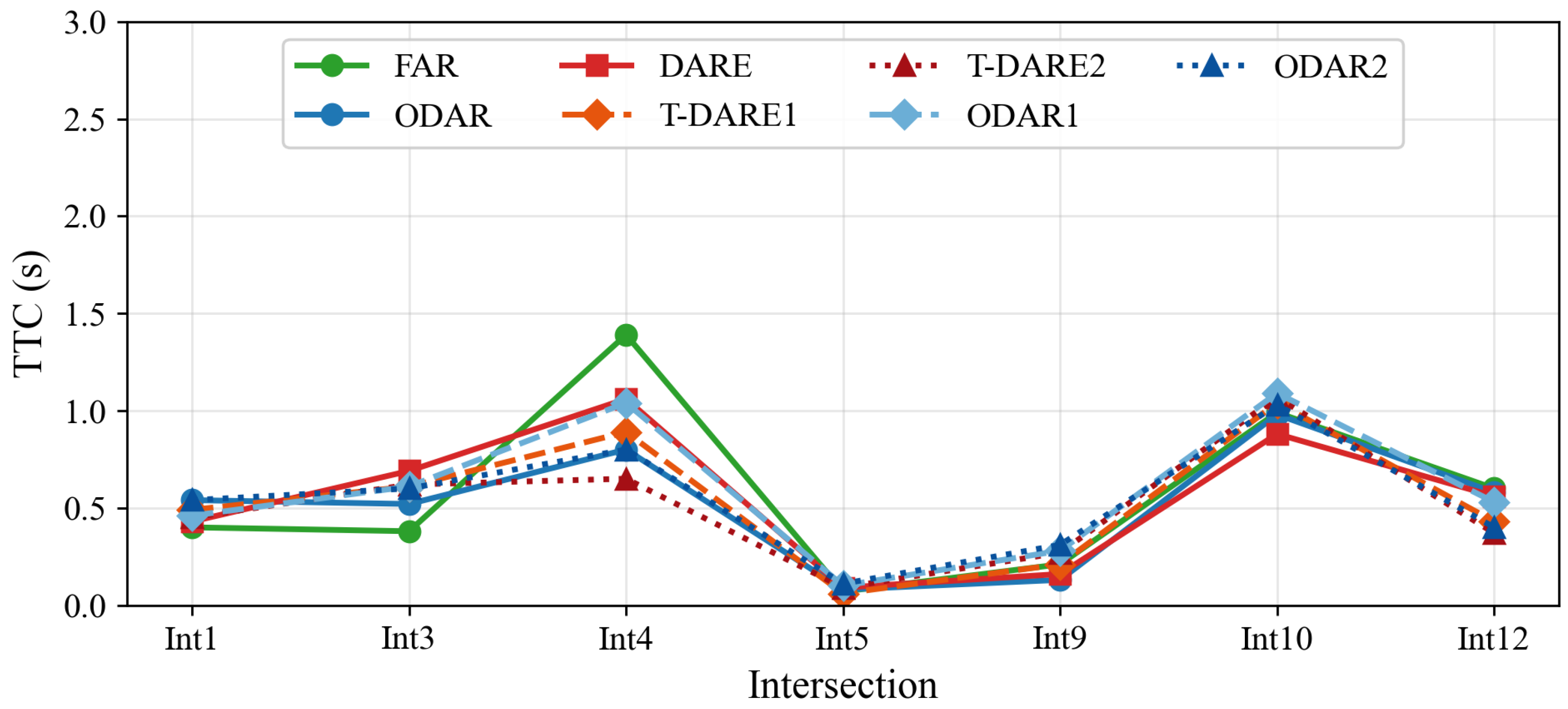
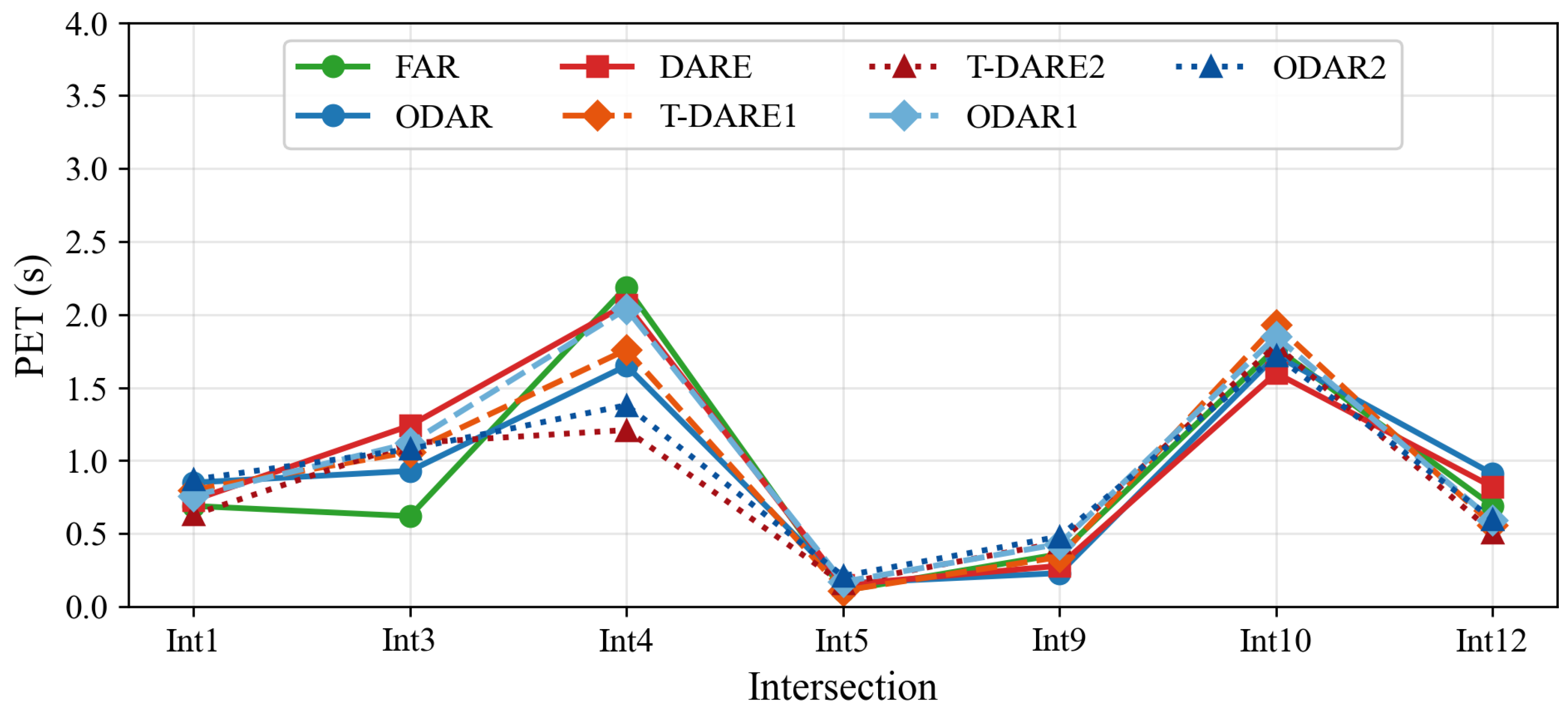
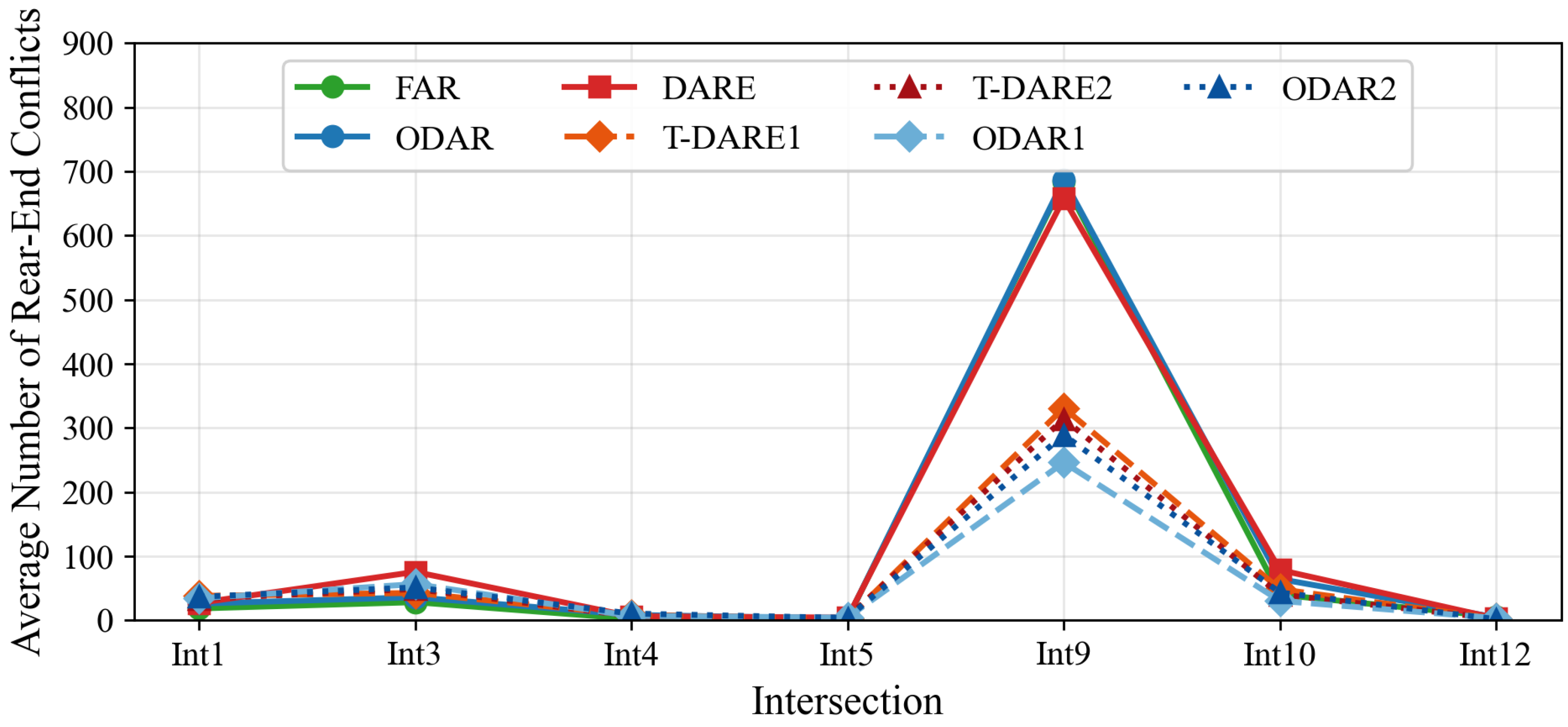
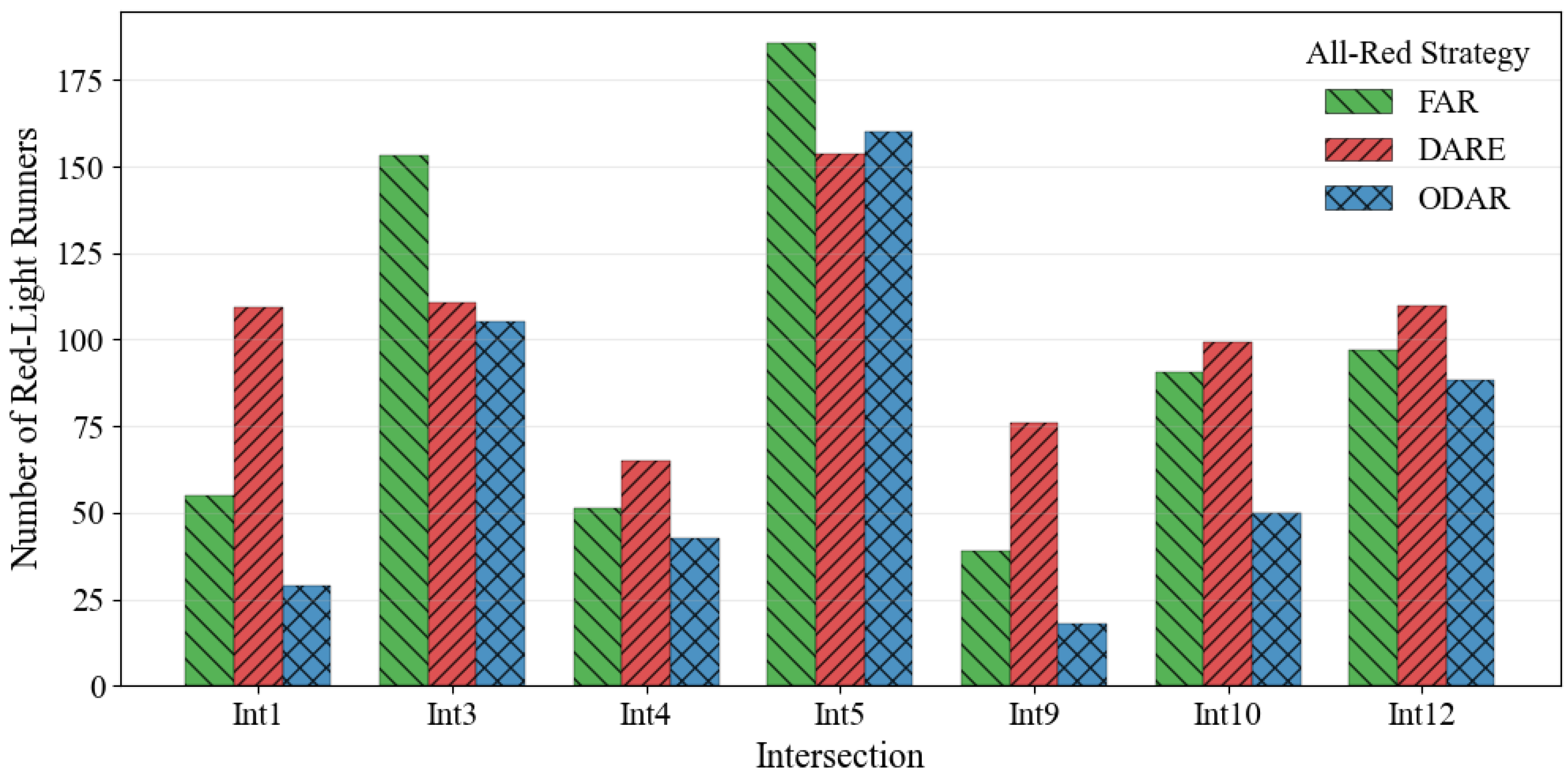
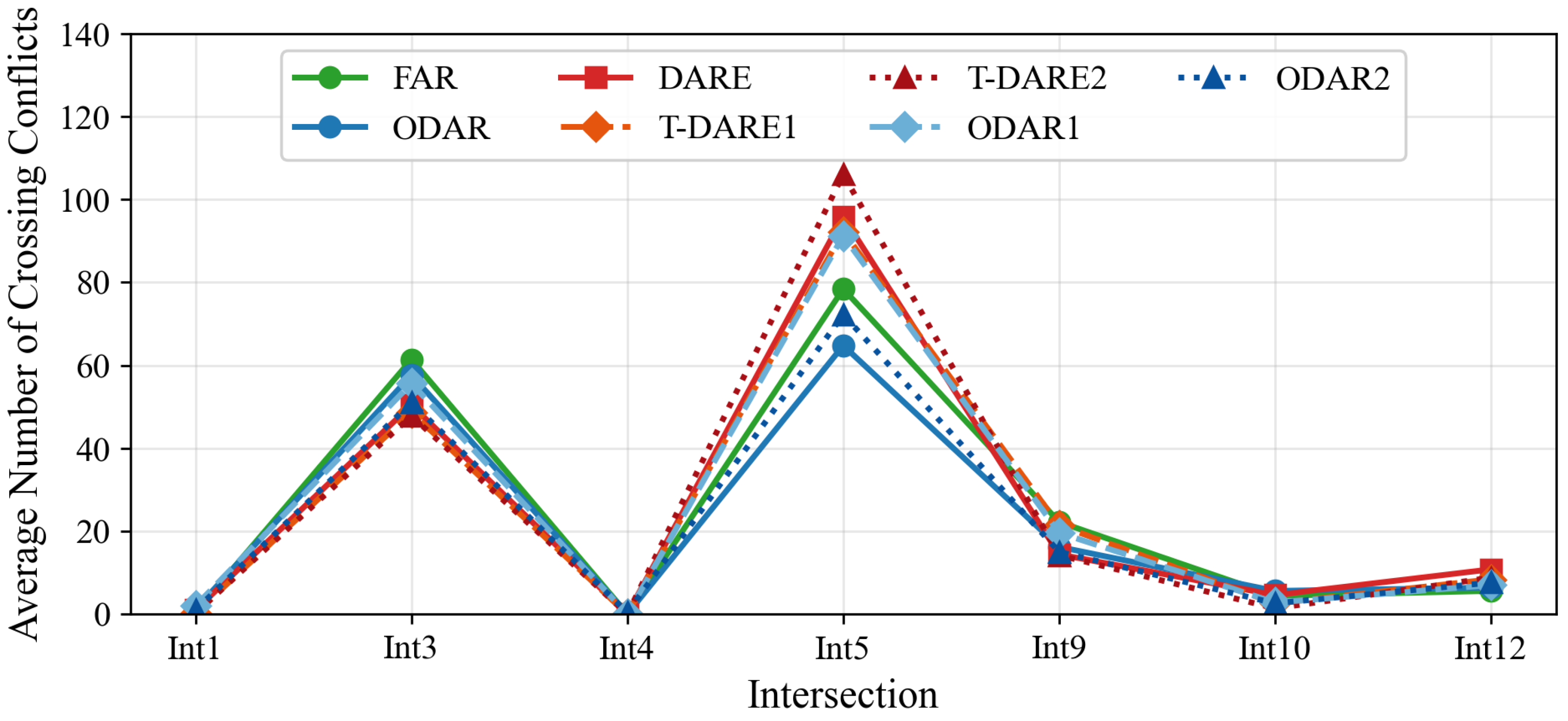
- From a safety perspective, the results across red-light-running events, conflict frequency, and conflict severity indicate that no single all-red strategy consistently dominates across all intersections. At a notable number of study locations, there were no statistically significant differences among all-red strategies in terms of either conflict frequency or conflict severity. Where differences did emerge, the safety outcomes were mixed: from a conflict frequency perspective, fixed-time all-red extensions, including fixed-time ODAR variants, often resulted in fewer conflicts, whereas from a conflict severity perspective, dynamic extension strategies tended to produce less severe conflicts as reflected by TTC and PET measures. The ODAR strategy generally reduced the number of red-light-running events relative to FAR and DARE, although the magnitude of this effect varied by intersection and operational context. The observed variability in safety outcomes underscores the importance of intersection-specific characteristics, such as traffic demand, driver behavior (i.e., propensity for red-light running), and signal operations, in shaping the effectiveness of all-red strategies. Overall, these findings suggest that the on-demand elimination of the all-red interval, when combined with event-triggered activation, can maintain intersection safety without introducing systematic adverse safety effects.
Author Contributions
Funding
Institutional Review Board Statement
Informed Consent Statement
Data Availability Statement
Acknowledgments
Conflicts of Interest
References
- Yang, C.Y.D.; Najm, W.G. Analysis of Red Light Violation Data Collected from Intersections Equipped with Red Light Photo Enforcement Cameras; Project Memorandum DOT HS 810 580; U.S. Department of Transportation, Research and Innovative Technology Administration, John A. Volpe National Transportation Systems Center: Cambridge, MA, USA; U.S. Department of Transportation, National Highway Traffic Safety Administration: Washington, DC, USA, 2006.
- Mohammed, H.A.; Abadi, M.G.; Hurwitz, D.S. Red-Light Running Violation during Car Following at High-Speed Signalized Intersections. Transp. Eng. 2022, 8, 100110. [Google Scholar] [CrossRef] [Scilit]
- Baguley, C. ‘Running the red’ at signals on high-speed roads. Traffic Eng. Control 1988, 29, 415–420. [Google Scholar]
- Elmitiny, N.; Yan, X.; Radwan, E.; Russo, C.; Nashar, D. Classification Analysis of Driver’s Stop/Go Decision and Red-Light Running Violation. Accid. Anal. Prev. 2010, 42, 101–111. [Google Scholar] [CrossRef] [Scilit]
- Bell, M.C.; Galatioto, F.; Giuffre, T.; Tesoriere, G. Novel Application of Red-Light Runner Proneness Theory within Traffic Microsimulation to an Actual Signal Junction. Accid. Anal. Prev. 2012, 46, 26–36. [Google Scholar] [CrossRef] [Scilit]
- Retting, R.A.; Ulmer, R.G.; Williams, A.F. Prevalence and Characteristics of Red Light Running Crashes in the United States. Accid. Anal. Prev. 1999, 31, 687–694. [Google Scholar] [CrossRef] [Scilit]
- Jalali Khalilabadi, P.; Karimpour, A.; Wu, Y.J. Severity Analysis of Red-Light-Running Behavior at Signalized Intersections. J. Transp. Saf. Secur. 2024, 16, 482–506. [Google Scholar] [CrossRef] [Scilit]
- Bonneson, J.A.; Zimmerman, K.; Brewer, M.A. Engineering Countermeasures to Reduce Red-Light-Running; Technical Report; Texas Transportation Institute, Texas A & M University System College: College Station, TX, USA, 2002. [Google Scholar]
- McGee, H.S.; Moriarty, K.; Gates, T.J. Guidelines for Timing Yellow and Red Intervals at Signalized Intersections. Transp. Res. Rec. 2012, 2298, 1–8. [Google Scholar] [CrossRef] [Scilit]
- Simpson, C.L.; Harrison, M.W.; Troy, S.A. Implementation of a Dynamic All-Red Extension at Signalized Intersections in North Carolina: Evaluation of Driver Adaptation and Operational Performance. Transp. Res. Rec. 2017, 2624, 19–27. [Google Scholar] [CrossRef] [Scilit]
- Simpson, C.L. Dynamic All-Red Extension: An Innovative Safety Countermeasure to Treat Red Light Running Crashes. Transp. Res. Rec. 2023, 2677, 753–762. [Google Scholar] [CrossRef] [Scilit]
- Rahman, M. Dynamic Dilemma Zone Protection System: A Smart Machine Learning Based Approach to Countermeasure Driver’s Yellow Light Dilemma. Ph.D. Thesis, University of South Alabama, Mobile, AL, USA, 2022. [Google Scholar]
- Abadi, M.G.; Hurwitz, D.S.; Marnell, P.; Quayle, S. Evaluation of Red Clearance Extension Designs with Hardware-in-the-Loop Simulation. Transp. Lett. 2019, 11, 264–274. [Google Scholar] [CrossRef] [Scilit]
- Archer, J.; Young, W. Signal Treatments to Reduce the Likelihood of Heavy Vehicle Crashes at Intersections: Microsimulation Modeling Approach. J. Transp. Eng. 2010, 136, 632–639. [Google Scholar] [CrossRef] [Scilit]
- Cesme, B.; Stevanovic, A.; Day, C.; Schroeder, B.; Bonneson, J.; Hale, D. Traffic Signal Change and Clearance Interval Pooled Fund Study: Synthesis Report; Technical Report; Department of Transportation, Federal Highway Administration: Washington, DC, USA, 2023.
- Federal Highway Administration. Manual on Uniform Traffic Control Devices for Streets and Highways; U.S. Department of Transportation, Federal Highway Administration: Washington, DC, USA, 2009.
- Gates, T.J.; Noyce, D.A. A Conceptual Framework for Dynamic Extension of the Red Clearance Interval as a Countermeasure for Red-Light-Running. Accid. Anal. Prev. 2016, 96, 341–350. [Google Scholar] [CrossRef] [Scilit]
- Hadi, M.; Amine, K.; Hunsanon, T.; Arafat, M. Evaluating the Benefits of Red-Light Violation Warning System in a Connected Vehicle Simulation Environment. Transp. Res. Rec. 2021, 2675, 1372–1381. [Google Scholar] [CrossRef] [Scilit]
- Zimmerman, K. Additional Dilemma Zone Protection for Trucks at High-Speed Signalized Intersections. Transp. Res. Rec. 2007, 2009, 82–88. [Google Scholar] [CrossRef] [Scilit]
- Archer, J.; Young, W. Signal Treatments to Reduce Heavy Vehicle Crash-Risk at Metropolitan Highway Intersections. Accid. Anal. Prev. 2009, 41, 404–411. [Google Scholar] [CrossRef] [Scilit]
- Olson, C.S. Safety Effectiveness of Red Light Treatments for Red Light Running; Portland State University: Portland, OR, USA, 2012. [Google Scholar]
- Kang, M.W.; Hossain, M.R.; Rahman, M.; Biswas, P. Speed–Space Analysis and Dynamic All-Red Extension for Red-Light Running Protection at Signalized Intersections on Rural High-Speed Arterials. Transp. Res. Rec. 2025, 2679, 03611981241312214. [Google Scholar] [CrossRef] [Scilit]
- Hurwitz, D.; Abadi, M.G.; McCrea, S.; Quayle, S.; Marnell, P. Smart Red Clearance Extensions to Reduce Red-Light Running Crashes; Technical Report; Oregon Department of Transportation: Salem, OR, USA, 2016.
- Tainter, F.; Christofa, E.; Knodler, M.A. All-Red Clearance Intervals for Use in the Left-Turn Application of Flashing Yellow Arrows. J. Transp. Eng. Part Syst. 2020, 146, 04020008. [Google Scholar] [CrossRef] [Scilit]
- Chen, Y.H.; Park, S.Y.; Chang, G.L.; Kim, M. Preventing Intersection Rear-End Collisions with an Optimized Dynamic Two-Stage Actuated Control. J. Transp. Eng. Part Syst. 2021, 147, 04021049. [Google Scholar] [CrossRef] [Scilit]
- Wang, L.; Zhang, L.; Zhang, W.B.; Zhou, K. Red Light Running Prediction for Dynamic All-Red Extension at Signalized Intersection. In Proceedings of the 2009 12th International IEEE Conference on Intelligent Transportation Systems, St. Louis, MI, USA, 4–7 October 2009; IEEE: New York, NY, USA, 2009; pp. 1–5. [Google Scholar] [CrossRef] [Scilit]
- Wang, L.; Zhang, L.; Zhou, K.; Zhang, W.B.; Wang, X. Prediction of Red-Light Running on Basis of Inductive-Loop Detectors for Dynamic All-Red Extension. Transp. Res. Rec. 2012, 2311, 44–50. [Google Scholar] [CrossRef] [Scilit]
- Zhao, J.; Yu, J.; Zhang, F.; Liu, Y. Mitigation of Signalized Intersection Collision Risks with Trajectory-Based Dynamic Dilemma Zone Protection. Accid. Anal. Prev. 2023, 192, 107288. [Google Scholar] [CrossRef] [Scilit] [PubMed]
- Rakha, H.; El-Shawarby, I.; Setti, J.R. Characterizing Driver Behavior on Signalized Intersection Approaches at the Onset of a Yellow-Phase Trigger. IEEE Trans. Intell. Transp. Syst. 2007, 8, 630–640. [Google Scholar] [CrossRef]
- Alshayeb, S.; Stevanovic, A.; Stevanovic, J.; Dobrota, N. Optimizing of Traffic-Signal Timing Based on the FCIC-PI—A Surrogate Measure for Fuel Consumption. Future Transp. 2023, 3, 663–683. [Google Scholar] [CrossRef] [Scilit]
- Gettman, D.; Pu, L.; Sayed, T.; Shelby, S.G.; Energy, S.; Automation, B.U.I.T.S. Surrogate Safety Assessment Model and Validation: Final Report; Technical Report FHWA-HRT-08-051; Federal Highway Administration: Washington, DC, USA, 2008.
- Gettman, D.; Head, L. Surrogate Safety Measures from Traffic Simulation Models. Transp. Res. Rec. 2003, 1840, 104–115. [Google Scholar] [CrossRef] [Scilit]
- Stevanovic, A.; Stevanovic, J.; Kergaye, C. Optimizing signal timings to improve safety of signalized arterials. In Proceedings of the 3rd International Conference on Road Safety and Simulation, Indianapolis, IN, USA, 14–16 September 2011; Volume 14. [Google Scholar]
- Stevanovic, A.; Kergaye, C.; Haigwood, J. Assessment of surrogate safety benefits of an adaptive traffic control system. In Proceedings of the 33rd International Conference on Road Safety and Simulation, Indianapolis, IN, USA, 14–16 September 2011; pp. 14–16. [Google Scholar]
- Stevanovic, A.; Stevanovic, J.; So, J.; Ostojic, M. Multi-Criteria Optimization of Traffic Signals: Mobility, Safety, and Environment. Transp. Res. Part C Emerg. Technol. 2015, 55, 46–68. [Google Scholar] [CrossRef] [Scilit]
- Alzoubaidi, M.; Zlatkovic, M.; Jadaan, K.; Farid, A. Safety Assessment of Coordinated Signalized Intersections in a Connected Vehicle Environment: A Microsimulation Approach. Int. J. Inj. Control. Saf. Promot. 2023, 30, 26–33. [Google Scholar] [CrossRef] [Scilit] [PubMed]






| Intersection Name | Almond Rd | Hunt Club Rd | N Cemetery | Tri State Pkwy | N Greenleaf St | Frontage | Teske Blvd |
|---|---|---|---|---|---|---|---|
| Intersection ID | 1 | 3 | 4 | 5 | 9 | 10 | 12 |
| RLR Before Calibration (%) | 0.05 | 0.15 | 0.05 | 0.00 | 0.04 | 0.08 | 0.00 |
| RLR After Calibration (%) | 0.03 | 1.54 | 0.05 | 0.40 | 0.04 | 0.43 | 1.41 |
| Field RLR (%) | 0.01 | 2.21 | 0.26 | 0.60 | 0.01 | 0.45 | 2.89 |
Disclaimer/Publisher’s Note: The statements, opinions and data contained in all publications are solely those of the individual author(s) and contributor(s) and not of MDPI and/or the editor(s). MDPI and/or the editor(s) disclaim responsibility for any injury to people or property resulting from any ideas, methods, instructions or products referred to in the content. |
© 2026 by the authors. Licensee MDPI, Basel, Switzerland. This article is an open access article distributed under the terms and conditions of the Creative Commons Attribution (CC BY) license.
Share and Cite
Erdagi, I.G.; Gavric, S.; Vukojevic, M.; Stevanovic, A. On-Demand All-Red Interval (ODAR): Evaluation and Implementation in Software-in-the-Loop Simulation. Information 2026, 17, 142. https://doi.org/10.3390/info17020142
Erdagi IG, Gavric S, Vukojevic M, Stevanovic A. On-Demand All-Red Interval (ODAR): Evaluation and Implementation in Software-in-the-Loop Simulation. Information. 2026; 17(2):142. https://doi.org/10.3390/info17020142
Chicago/Turabian StyleErdagi, Ismet Goksad, Slavica Gavric, Marko Vukojevic, and Aleksandar Stevanovic. 2026. "On-Demand All-Red Interval (ODAR): Evaluation and Implementation in Software-in-the-Loop Simulation" Information 17, no. 2: 142. https://doi.org/10.3390/info17020142
APA StyleErdagi, I. G., Gavric, S., Vukojevic, M., & Stevanovic, A. (2026). On-Demand All-Red Interval (ODAR): Evaluation and Implementation in Software-in-the-Loop Simulation. Information, 17(2), 142. https://doi.org/10.3390/info17020142