Article

Data-Driven Trail Management Through Climate Refuge-Based Comfort Index for a More Sustainable Mobility in Protected Natural Areas


by
Carmen García-Barceló
1,*,
Adriana Morejón
1,
Francisco J. Martínez
2,
David Tomás
1 and
Jose-Norberto Mazón
1
1
Department of Software and Computing Systems, University of Alicante, Carretera San Vicente del Raspeig s/n, 03690 San Vicente del Raspeig, Spain
2
Parque Natural de las Lagunas de La Mata y Torrevieja, 03188 Torrevieja, Spain
*
Author to whom correspondence should be addressed.
Information 2026, 17(1), 79; https://doi.org/10.3390/info17010079
Submission received: 4 December 2025 / Revised: 6 January 2026 / Accepted: 9 January 2026 / Published: 13 January 2026

Abstract

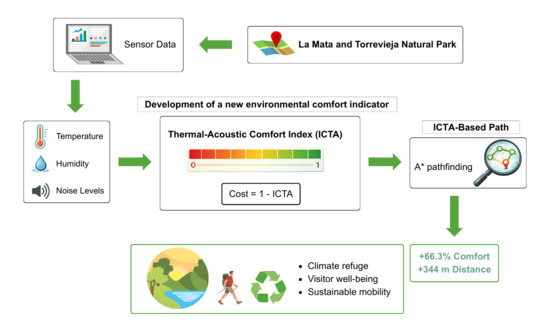
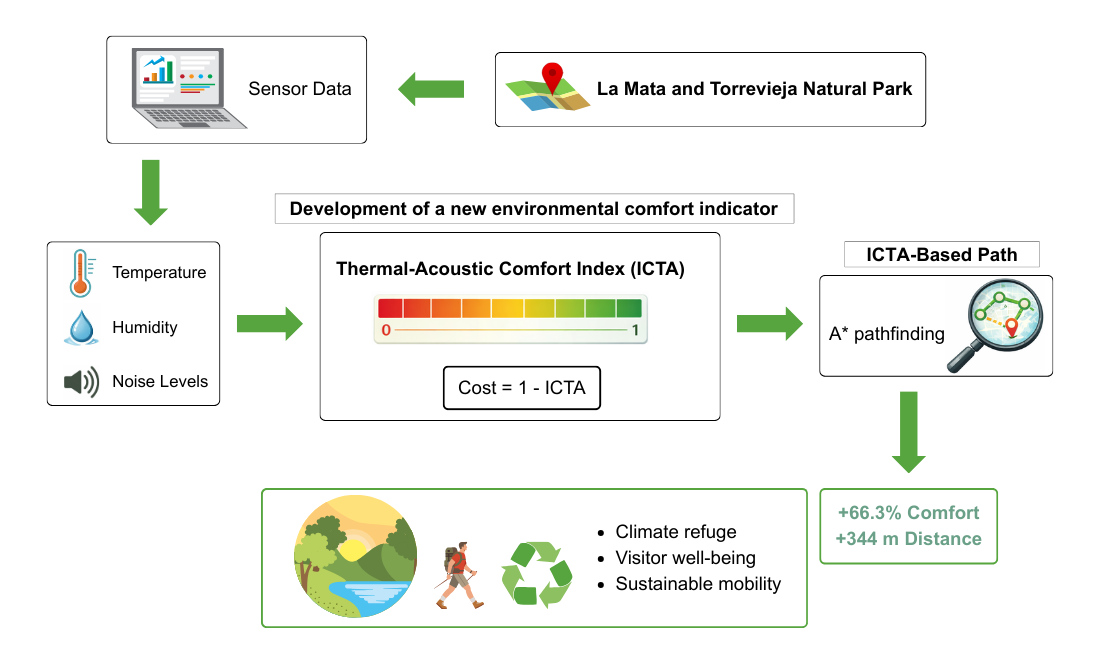
In this paper, we propose a data-driven decision-support approach for conceptual trail planning and management in protected natural areas, where environmental awareness (particularly climatic comfort and noise levels) is critical to ensuring a sustainable and enjoyable visitor mobility. Our case study is the Natural Park of La Mata and Torrevieja in Spain. The paper begins by identifying climate refuges in this park (areas offering shelter from heat and other adverse conditions based on meteorological data). We extend this with a novel comfort indicator that incorporates ambient noise levels, using acoustic data from sensors. A key challenge is the integration of heterogeneous data sources (climatic data and noise data from the park’s digital twin infrastructure). To demonstrate the potential of this approach for trail planning, we implement an A* pathfinding algorithm to explore comfort-oriented routing alternatives, guided by our combined climate-noise comfort index. The algorithm is applied to trail management in the Natural Park of La Mata and Torrevieja, enabling the identification of indicative high-comfort routes that can inform future trail design and management decisions, while accounting for ecological constraints and visitor well-being. Results show that the proposed comfort-aware routing improves average environmental comfort by 66.3% with only an additional 344 m of walking distance. Finally, this work constitutes a first step toward a data space use case, showcasing interoperable, AI-ready environmental data usage and aligning with the European Green Deal.

Graphical Abstract

1. Introduction

Protected natural areas play a key role in conserving biodiversity, providing ecosystem services, and offering opportunities for recreation and environmental education [1]. At the same time, they are increasingly exposed to the pressure of climate change [2]. Rising temperatures, more frequent and intense heat waves, and the amplification of heat stress through the heat island effect are making outdoor activities less comfortable and, in some cases, potentially unsafe for visitors. In this context, the concept of climate refuges (i.e., areas that provide shelter from heat and other adverse atmospheric conditions) is gaining relevance as a basis for planning and managing mobility within and around protected areas, not only for biodiversity [3], but for human beings [4].
The Torrevieja-La Mata lagoon system, located in southeastern Spain, is a paradigmatic example of this situation. The Natural Park of La Mata and Torrevieja Lagoons is embedded within a highly urbanized coastal environment, where tourism, agriculture, and salt extraction activities coexist with sensitive ecosystems and conservation objectives [5]. This juxtaposition generates strong spatial contrasts in thermal and acoustic conditions between the urban fabric and the natural park, making it an ideal case study for exploring how environmental data can support more sustainable and comfortable visitor mobility. While previous work has assessed the area’s environmental, socioeconomic, biotechnological, and therapeutic potential [6,7,8,9,10], the integration of climatic comfort and noise into trail management remains largely unexplored [11].
Human comfort in outdoor environments is usually evaluated through thermal indices that combine air temperature and relative humidity. Indicators such as Thom’s Discomfort Index (DI) [12] and Mieczkowski’s Tourism Climate Index [13] have been widely used to characterize heat stress, urban heat islands, and climatic suitability. However, these indices typically ignore acoustic factors, despite the fact that noise is a major determinant of perceived environmental quality and well-being, particularly in areas where road traffic, urban activity, or other anthropogenic sources are present in close proximity to natural landscapes. As a result, current approaches often provide only a partial view of the conditions that shape visitor experience along recreational trails.
At the same time, there is a growing interest in using pathfinding algorithms to optimize routes according to criteria beyond mere distance or time [14]. Algorithms such as A* have been successfully adapted to incorporate road quality, accessibility constraints, and other context-dependent variables in a wide range of applications, including emergency response and navigation in complex terrain [15]. Nevertheless, the use of such algorithms to optimize recreational trails in protected natural areas based on combined comfort indicators is still scarce. This limits the ability of park managers to proactively design and recommend routes that both respect ecological constraints and enhance visitor well-being.
To address these challenges in our analysis, we made use of meteorological measurements (temperature and humidity) obtained from different sensing infrastructures and complemented with noise data from the park’s digital twin, understood here as a real-time environmental monitoring and data integration platform, and local environmental monitoring networks [16]. We propose a data-driven approach for trail management in protected natural areas that explicitly accounts for both climatic and acoustic comfort. Our work is conducted in the Natural Park of La Mata and Torrevieja Lagoons (Alicante, Spain), with a focus on the surroundings of La Mata lagoon, which constitute the main area for public access and ecological monitoring. Building on dense time series of environmental sensor data, we develop a novel Thermal–Acoustic Comfort Index (ICTA) that combines thermal discomfort, as captured by the Discomfort Index (DI), with a noise penalty derived from sound level measurements and World Health Organization guidelines.
To operationalize this index in trail planning, we adapt the A* algorithm to search for routes that prioritize environmental comfort rather than minimizing distance. Graph nodes correspond to real sensor locations, and edge costs are defined as a decreasing function of ICTA, so that the algorithm preferentially selects segments with higher comfort levels. This approach allows for comfort-aware trail planning under varying environmental conditions. The routing framework is not built on the park’s existing footpath network; instead, it is designed to explore potential comfort-oriented routes that could complement current trails and be considered for future implementation, addressing a planning objective identified by park management. The park authorities are responsible for implementing the conceptual trails generated by our approach as physical footpaths.
The main contributions of this work are as follows:
  • We characterize the Natural Park of La Mata and the urban area of Torrevieja as contrasting thermal–acoustic environments, providing evidence of the park’s potential role as a climate refuge based on long-term sensor observations.
  • We propose the Thermal–Acoustic Comfort Index (ICTA), which integrates thermal discomfort and noise penalties into a single, normalized measure suitable for route planning and comparative analyses.
  • We adapt the A* pathfinding algorithm as a guided search strategy using ICTA-derived costs and apply it to trail management in the Natural Park, obtaining comfort-aware routes and quantifying the additional distance associated with prioritizing environmental comfort.
Also, as future work, we will include our proposal as use case within a data space perspective (such as the European Green Deal data space) [17], highlighting the value of sharing heterogeneous environmental data sources and the importance of transparent documentation of data and algorithms for interoperable, AI-ready services [18]. A data space [19] is a federated, interoperable ecosystem in which multiple organizations share data and services under common standards, governance rules, and usage policies while retaining full data sovereignty. Unlike traditional centralized platforms, data spaces do not require data to be stored in a single repository; instead, they rely on distributed architectures, semantic interoperability, secure data exchange protocols, and clear contractual and technical frameworks. European data spaces (e.g., Green Deal, Tourism, and Mobility data spaces) aim to enable AI-ready, FAIR (Findable, Accessible, Interoperable and Reusable)-aligned data flows across sectors, ensuring transparency, trust, provenance, and responsible reuse of data. Within such an ecosystem, datasets, models, and algorithms are exposed as well-documented, machine-readable assets that can be combined and reused to build new services.
Overall, the proposed approach aims to support more sustainable and visitor-centered mobility in protected natural areas by combining environmental sensing, comfort modeling, and algorithmic decision support within an interoperable data-sharing framework.
The remainder of this paper is structured as follows: Section 2 reviews the related literature on Torrevieja-La Mata region, environmental comfort, path-planning algorithms, and approaches for transparent and interoperable documentation of datasets and models; Section 3 describes the study area, the data sources and preprocessing procedures, and the methodological framework, including the computation of DI, the development of the proposed ICTA index, and the application of the A* algorithm; Section 4 presents the main results, with a spatial-temporal analysis of environmental comfort and the comfort-oriented path computation; Section 5 discusses the implications of these findings; and Section 6 summarizes the main conclusions and suggests directions for future research.

2. Related Work

Research on the Torrevieja–La Mata region has addressed a wide range of topics, reflecting its unique environmental significance and the multidisciplinary interest it has attracted over the years. A recent study evaluated the climate, water and peloid characteristics of the Torrevieja Lagoon in order to assess its potential use in thalassotherapy [10]. Other work examined the biological singularity of these hypersaline systems, highlighting the biotechnological potential of halophilic microorganisms present in the local solar evaporation ponds [9]. Another line of research focused on geological hazards along the Torrevieja–La Mata coast, analyzing past tectonic and tsunami events, and highlighting the area’s vulnerability to erosion and catastrophic events, aggravated by tourism and salt-mining, as well as its exposure to future sea-level rise during warmer episodes [20].
Furthermore, studies have examined the anthropogenic pressures affecting the Torrevieja lagoon system. Early work documented the industrial operation of the Torrevieja saltworks, detailing their technical organisation and evaporative processes [7], while subsequent ecological assessments explored suitable indicators for monitoring this highly modified saline environment [8]. At a broader territorial scale, sustainability studies have analyzed how intensive tourism and associated urban pressures influence environmental conditions and governance in Torrevieja [6].
Regarding climatic comfort, previous studies have assessed thermal stress and human discomfort using a variety of climatic indices. Among these, Thom’s Discomfort Index (DI) has been widely applied to evaluate thermal conditions in different environments, such as urban settings in Sudan [21].
In addition, the literature most relevant to this study also includes research on path planning algorithms, particularly A*. The A* algorithm has been widely used in real-world contexts due to its efficiency in finding optimal paths, and several studies have proposed improvements by incorporating additional factors beyond the shortest distance. For instance, in the context of emergency rescue, an improved A* algorithm was developed integrating road conditions into the heuristic function, allowing more efficient and accessible off-road path planning [15]. Similarly, another study addressed large-scale complex terrain navigation, proposing a pathfinding algorithm based on A* that improves route selection in challenging environments [22]. A further contribution can be found in [23], where a modified A* approach was proposed incorporating an adaptive heuristic to reduce redundant nodes, together with a hybrid approach that enhanced performance in dynamic environments.
Finally, this work is also situated within the context of data spaces and the need for transparent and interoperable documentation of both datasets and AI models and algorithms. In this regard, approaches such as Dataspace Cards have been proposed to semantically link data, models, and their metadata in a unified framework [24], complementing existing efforts such as Model Cards and Dataset Cards. This perspective emphasizes the importance of detailed documentation to ensure reusability and interoperability within data space infrastructures.

3. Materials and Methods

3.1. Study Area and Data Collection

The Natural Park of La Mata and Torrevieja Lagoons is a protected natural area located in the province of Alicante, within the Valencian Community, southeastern Spain. The park lies primarily within the municipality of Torrevieja, although its boundaries also extend into the municipalities of Guardamar del Segura, Rojales, and Los Montesinos. It covers a total area of approximately 3700 hectares and includes two hypersaline lagoons: La Mata Lagoon (700 hectares) in the north, and Torrevieja Lagoon (1400 hectares) in the south.
Although neither lagoon is naturally connected to the Mediterranean Sea, La Mata Lagoon is linked to the sea via an artificial ditch known as El Acequión. Furthermore, La Mata is hydraulically connected to Torrevieja Lagoon via the Salinero Canal, an excavated channel that regulates salinity and water levels to support ongoing salt extraction practices. Both lagoons lie just below sea level.
The park encompasses a diverse range of ecosystems, including wetlands, salt-adapted vegetation, Mediterranean shrubland, and pine forests, which support a wide variety of flora and fauna. It plays a critical role in regional biodiversity and environmental conservation, serving as a key habitat for numerous species, especially birds. These characteristics make it an ideal location for birdwatching and other nature-based activities.
The location and geographic extent of the city of Torrevieja and the Natural Park are illustrated in Figure 1.
This study focuses specifically on the surroundings of La Mata Lagoon, as it constitutes the main area for public access, recreational activities, and ecological monitoring within the park. Both the Natural Park and the city of Torrevieja, where it is located, experience a semi-arid Mediterranean climate characterized by dry, mild winters and hot, very dry summers. Due to their coastal position along the Mediterranean Sea, the area exhibits high humidity levels, which can exacerbate thermal discomfort during the hot summer months. These climatic conditions significantly affect local environmental comfort and visitor experience throughout the park.
For this research, meteorological data from the Natural Park of La Mata and the urban area of Torrevieja were obtained from the open data portal of the park’s digital twin (http://datos.chantwin.iuii.ua.es (accessed on 3 April 2025)). The datasets included three meteorological variables—air temperature, relative humidity, and noise levels—measured at multiple sampling points surrounding La Mata Lagoon, with a temporal resolution of five minutes. The observation period spanned from February 2024 to April 2025. Due to occasional sensor malfunctions or outages, particularly in the urban area of Torrevieja, the datasets were complemented with publicly available data from the Valencian Regional Government’s environmental monitoring network (https://mediambient.gva.es/es/web/calidad-ambiental/datos-historicos (accessed on 5 May 2025)).

3.2. Data Preprocessing

Data preprocessing is a fundamental step to ensure data quality and consistency prior to any analysis or algorithmic application. The preprocessing phase involved the following steps applied to the raw sensor data:
  • Timestamp Conversion: Timestamps originally stored in Unix epoch format (milliseconds since 1 January 1970) were converted into human-readable datetime format to enable time-based analysis and processing.
  • Missing Data Imputation: Identified missing values were imputed through linear interpolation. This method is suitable for short gaps in time-series environmental data, where gradual changes are expected. Across the datasets, only one Torrevieja station had missing entries, accounting for less than 6% of the measurements. Consecutive gaps did not exceed one hour (12 consecutive 5-min readings), making linear interpolation appropriate and ensuring continuity with negligible impact on the analysis.
  • Geolocation assignment: Latitude and longitude coordinates were assigned to each sensor based on its physical location.
Additionally, as the park digital twin sensors and the regional environmental monitoring network operate at different temporal resolutions (five-minute and hourly measurements, respectively), a harmonization process was required prior to analysis. To ensure temporal consistency across data sources, all variables were aggregated following two distinct strategies, depending on the analysis objective. First, daily mean values were computed and used exclusively for the spatial and temporal analysis of environmental comfort and for comparative assessments between locations (Section 4.1), as this aggregation reduces short-term noise. For the comfort-based routing experiments (Section 4.2), a different aggregation strategy was adopted. Instead of daily means, the preprocessed five-minute park sensor data were aggregated by season and time slot for route computation. This approach reduces computational complexity while preserving the temporal patterns relevant for comfort-aware routing.
Regarding the use of regional monitoring data, only stations located within the urban area of Torrevieja were considered. These data were employed to support the park sensor datasets and ensure spatial representativeness by reinforcing the spatial coverage of the urban environment.

3.3. Discomfort Index (DI)

The Discomfort Index (DI), originally proposed by Thom [12], is a widely used indicator for assessing human thermal stress based on a combination of air temperature and relative humidity. It is calculated as follows:
D I = T ( 0.55 0.0055 H ) × ( T 14.5 )
where T is the air temperature in degrees Celsius (°C) and H is the relative humidity in percent (%).
Thom established threshold values for the DI corresponding to increasing levels of perceived thermal discomfort. For instance, values below 21 °C are generally associated with no discomfort, while values exceeding 32 °C indicate a state of medical emergency. These thresholds have been validated and adopted in later studies using both in situ and remote sensing data [25]. The full classification is presented in Table 1.

3.4. Development of the Thermal–Acoustic Comfort Index (ICTA)

Human comfort in outdoor environments is influenced not only by thermal conditions but also by acoustic factors, particularly in urban public spaces. While thermal indices such as the Discomfort Index (DI) are widely used to assess heat-related stress, they typically neglect environmental noise, which may also contribute to perceived discomfort and reduced usability of public urban areas. To address this limitation, we propose the Thermal–Acoustic Comfort Index (ICTA), a novel indicator that incorporates both thermal and acoustic factors into a single metric.
The objective of this index is to provide a unified measure of overall comfort in outdoor urban spaces by penalizing areas with thermal discomfort and high noise pollution, thereby enabling a more comprehensive assessment and planning of urban comfort conditions. The ICTA integrates two components: the Discomfort Index ( D I ), described previously, and a noise penalty ( P n o i s e ), representing noise-related discomfort. Both factors are normalized to a [0, 1] scale, where 0 indicates no discomfort and 1 indicates maximum discomfort. This normalization ensures compatibility between the thermal and acoustic contributions and was computed using a data-driven min–max scaling approach based on the range of values specific to each temporal aggregation configuration:
D I norm = D I D I min D I max D I min
where D I min and D I max denote the minimum and maximum Discomfort Index values observed within the corresponding aggregated dataset (e.g., daily means, or season–time-slot averages).
The resulting ICTA is defined by the following equation:
I C T A = 1 D I norm if P noise , norm = 0 1 ( 0.7 × D I norm + 0.3 × P noise , norm ) if P noise , norm > 0
where D I norm is the normalized Discomfort Index representing thermal discomfort, and P noise , norm is the normalized noise penalty factor.
This formulation assumes that thermal discomfort has a stronger influence on perceived comfort than acoustic factors, as reflected in the weighting scheme (70% for D I norm and 30% for P noise , norm ). This choice is supported by empirical evidence showing that, although both thermal and acoustic factors influence subjective comfort in outdoor public spaces, the thermal environment is more important for overall comfort than the acoustic conditions [26]. The index is scaled such that higher ICTA values correspond to more comfortable conditions. When no noise discomfort is detected ( P noise , norm = 0 ), the index simplifies to a function of thermal discomfort alone.
According to the World Health Organization (WHO) Guidelines for Community Noise [27], outdoor noise levels should not exceed 55 dB during the daytime to prevent significant annoyance, and special attention should be given to preserving quiet environments in natural parks and conservation areas. Based on these recommendations, the noise penalty is defined to reflect increasing discomfort with noise levels as follows:
  • No penalty is assigned for noise levels below 45 dB, considered generally acceptable for outdoor environments.
  • A linear, progressive penalty is introduced for noise levels between 45 dB and 55 dB, reflecting growing discomfort as noise approaches the WHO upper limit.
  • The maximum penalty is applied for noise levels exceeding 55 dB, corresponding to the highest degree of noise discomfort.
For clarity and reproducibility, the noise penalty can be expressed mathematically as a piecewise function:
P noise , norm = 0 , L < 45 dB L 45 10 , 45 L < 55 dB 1 , L 55 dB
where L is the measured noise level in decibels (dB) and P noise , norm [ 0 , 1 ] is the normalized noise penalty.

3.5. A* Algorithm

The A* algorithm, originally proposed by Hart et al. [28], is a graph search method designed to find the minimum cost path from a start node to a goal node by combining actual path costs with heuristic estimates. At each iteration, the algorithm maintains two sets of nodes: an open list containing nodes discovered but not yet expanded, and a closed list of nodes already expanded. It selects to expand the node in the open list with the lowest estimated total cost, defined by the evaluation function:
f ( n ) = g ( n ) + h ( n )
where g ( n ) is the accumulated cost from the start node to node n, and h ( n ) is the heuristic function that estimates the remaining cost from node n to the goal node.
There are three possible distance metrics (Manhattan, Euclidean or Chebyshev) to define the heuristic function h ( n ) , depending on the problem domain and the nature of the graph. In this study, the Euclidean distance between the current node and the goal node is used as the heuristic, defined as:
h ( n ) = ( x n x g ) 2 + ( y n y g ) 2
where ( x n , y n ) are the coordinates of the current node n, and ( x g , y g ) are the coordinates of the goal node g.
In this study, the graph nodes represent environmental sensors located at their real geographic coordinates. The A* algorithm is adapted to find paths that maximize environmental comfort, represented by the ICTA index, by defining the edge weights as a decreasing linear function of the ICTA values. This formulation guides the algorithm to favor routes passing through higher ICTA zones, meaning higher comfort levels. The weight of the edge from node i to node j is expressed as:
w i j = 1 ICTA j
where ICTA j is the ICTA value at the destination node j.
These edge weights represent the cost of moving from one node to another and are accumulated in the cost function g ( n ) within the evaluation function (Equation (5)). Specifically, g ( n ) is the sum of the weights of the edges along the path from the start node to the current node n.
It should be noted that the heuristic function h ( n ) , defined as the Euclidean distance to the goal node, is not expressed in the same units as the comfort-based edge cost w i j = 1 ICTA j . Consequently, the heuristic does not formally satisfy the consistency conditions required to guarantee strict optimality of the A* algorithm in the classical sense. This is not a requirement for the objectives of this study, as the focus is on identifying plausible high-comfort routes for decision support rather than on enforcing strict theoretical algorithmic optimality. Importantly, the accumulated comfort-cost g ( n ) represents an aggregated environmental index rather than a conventional metric; therefore, the concept of optimality in this context does not directly correspond to that in classical routing.
This design choice is intentional. The heuristic is independent of ICTA values and any environmental variable and therefore does not anticipate or bias comfort-related costs. In other words, the heuristic is conservative: it only orders the exploration spatially and does not affect the accumulated comfort cost minimized by the algorithm. All comfort optimization is entirely captured by the accumulated cost function g ( n ) , while the heuristic provides only geometric guidance toward the destination. In the worst case, this formulation causes the search to behave equivalently to Dijkstra’s algorithm ( h ( n ) = 0 ), while still benefiting from heuristic guidance when available.
Given the limited size and sparse connectivity of the sensor-based routing graph, this approach was found to reliably identify paths with minimal accumulated comfort cost under the adopted formulation in practice. Accordingly, A* is employed here as an efficient guided search strategy rather than as a mechanism claiming strict heuristic optimality guarantees.
Finally, it is important to mention that the routing graph used in this study is not derived from an official trail network. Instead, sensor locations are used as anchor points to construct an abstract connectivity graph that enables the exploration of potential comfort-oriented routes across the park. This abstraction was chosen in response to park management needs aimed at identifying candidate routes that could complement existing trails or inform future trail design under climate stress conditions.

4. Results

This section presents the main results of the study, structured in two parts. First, a spatial and temporal analysis of the ICTA index is carried out to compare environmental comfort between the urban area of Torrevieja and the Natural Park area surrounding La Mata Lagoon. Second, the A* algorithm is applied to determine comfort-oriented walking routes in the Natural Park, using ICTA values to guide the search toward more thermally and acoustically comfortable paths. This analysis includes route comparisons and relevant performance metrics.

4.1. Spatial and Temporal Analysis of the ICTA Index

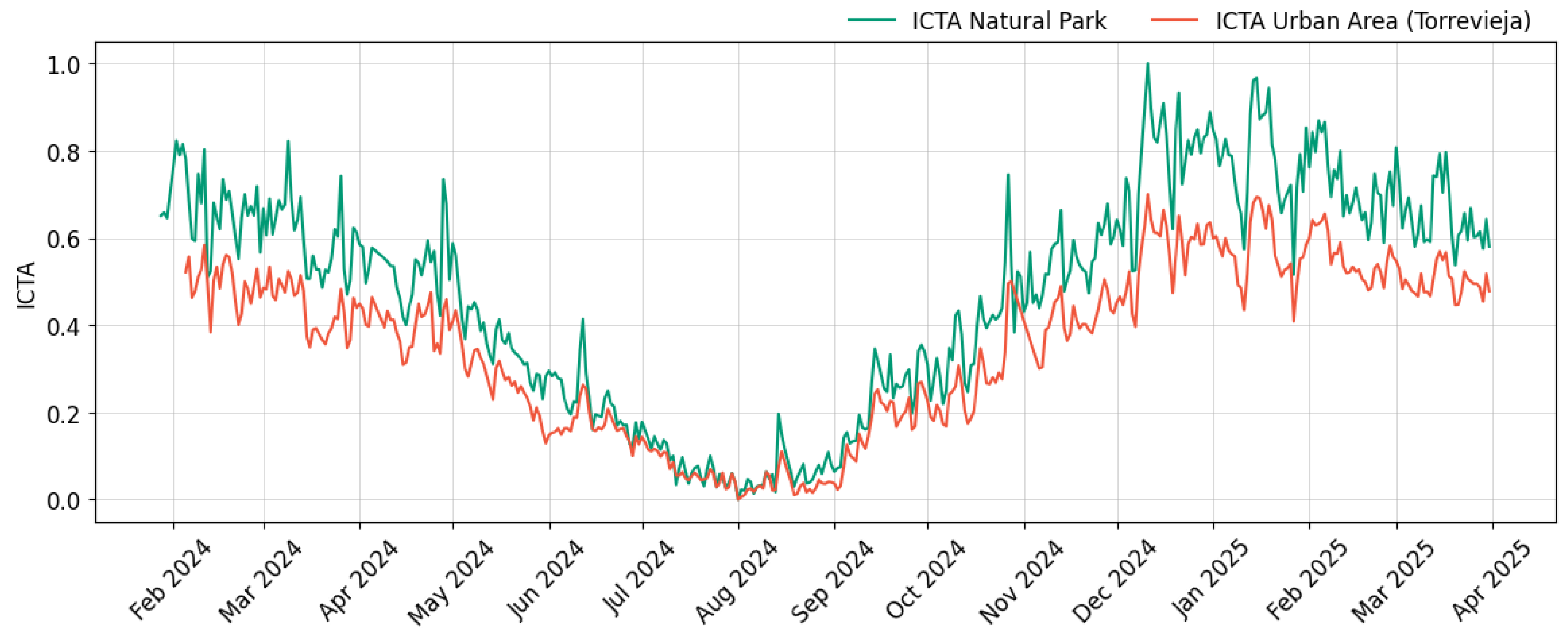
To assess and compare environmental comfort conditions, the Thermal–Acoustic Comfort Index (ICTA) was calculated for two contrasting settings: the urban area of Torrevieja and the surrounding zones of La Mata Lagoon within the Natural Park. For each area, daily average ICTA values were computed by aggregating the measurements from all available sensors in that zone, enabling a direct temporal comparison between the two environments. Figure 2 presents the temporal evolution of ICTA values for both locations over the available data period.
Throughout the observation period, the Natural Park consistently exhibits higher ICTA values than those recorded in the urban environment, indicating more favorable comfort conditions. In both locations, ICTA values show a clear seasonal trend, with lower comfort levels during the summer months (June to August) and higher levels in winter (December to February).
Although both areas reach their lowest ICTA values during the warmest months, the Natural Park maintains a slight advantage over the urban area even under these unfavorable conditions. From September onward, and particularly throughout the cooler months, the difference between the two locations becomes more pronounced, with the Natural Park reflecting more favorable thermal and acoustic conditions.

4.2. Trail Optimization Using A* Algorithm Based on ICTA

To support the design of visitor trails favoring better environmental comfort, the A* algorithm was applied using a cost function that penalizes transitions through areas monitored by sensors reporting lower thermal–acoustic comfort, as measured by the ICTA index. This approach favors segments with higher ICTA values, which correspond to more favorable environmental conditions in terms of both thermal and acoustic factors. The objective is to identify routes that enhance the overall recreational experience by maximizing comfort levels throughout the trail.
Given the high temporal resolution of the sensor data, recorded every 5 min, computing high-comfort paths for each timestamp would result in an excessive number of combinations. Therefore, the data were aggregated into meaningful temporal groups to reduce computational complexity while preserving relevant patterns. In this study, aggregation was performed based on the season of the year and time slot of the day, yielding 12 possible configurations under which a trail can be computed, corresponding to the combinations of four seasons and three time slots. Table 2 summarizes the seasonal and time slot categories used. This approach balances temporal resolution and computational feasibility, enabling effective comfort-oriented trail planning that reflects environmental and temporal variations. Early morning hours (12:00 a.m.–5:59 a.m.) were excluded from the analysis, as visitor presence and activity during this period are generally minimal.
To assess whether the aggregation by season and time slot masks extreme environmental conditions, a stress-test was performed considering the hottest week and the hottest day in the park. These extreme periods were identified based on the maximum Discomfort Index (DI) recorded. The ICTA for these periods was calculated using the same normalization procedure applied to the aggregated data, ensuring comparability across sensors. As the hottest week (29 July–4 August) and the hottest day (2 August) occurred during summer season, the comparison was performed against the aggregated ICTA for summer across all time slots. The results show that the ICTA during the hottest week (0.295) and the hottest day (0.285) differs only slightly from the aggregated ICTA for summer (0.243). Specifically, the differences are 0.052 and 0.042, respectively, indicating that the temporal aggregation smooths minor fluctuations but does not significantly alter the overall comfort assessment. This analysis supports the use of aggregation by season and time slot for computing trails, while acknowledging that local peaks may still occur.
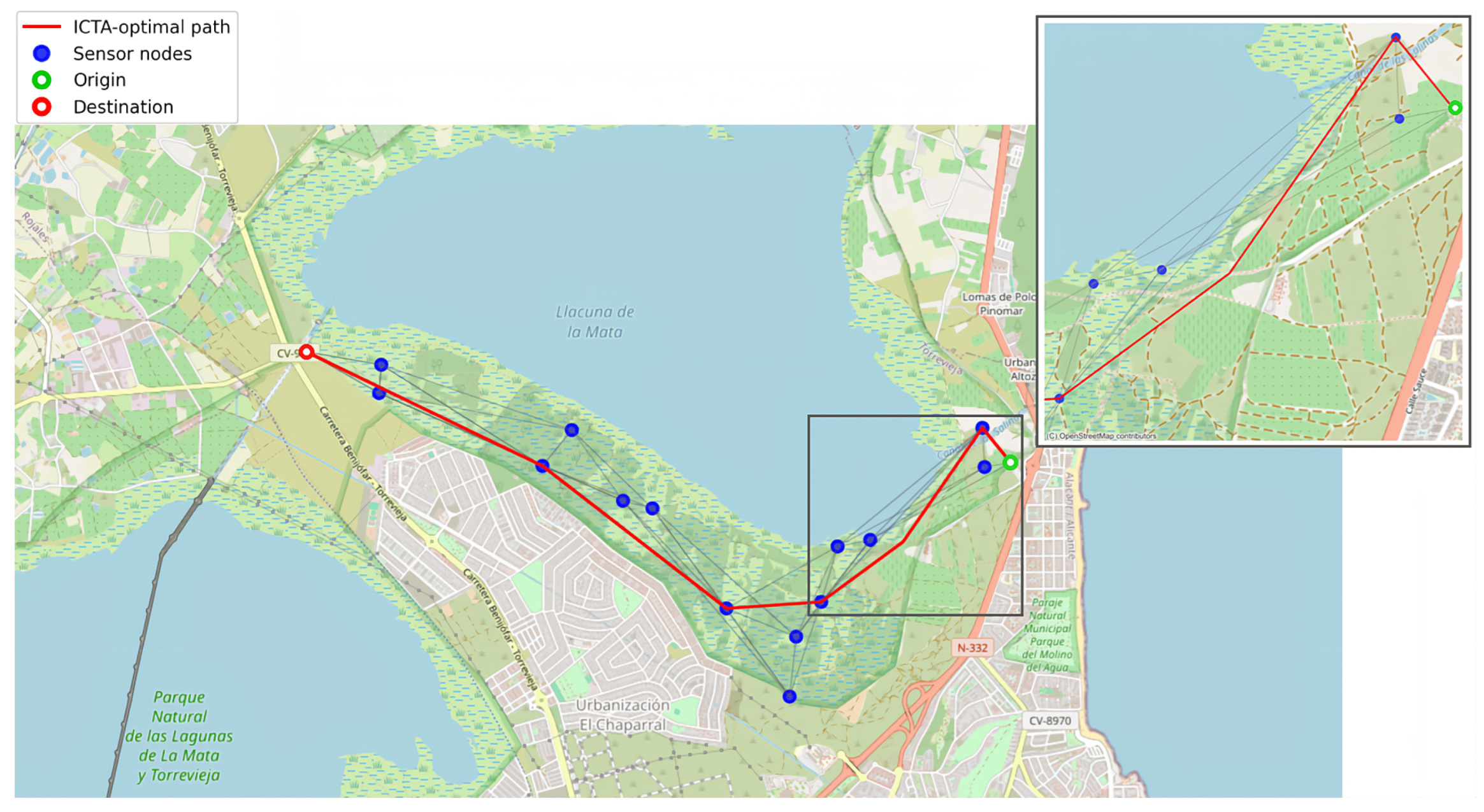
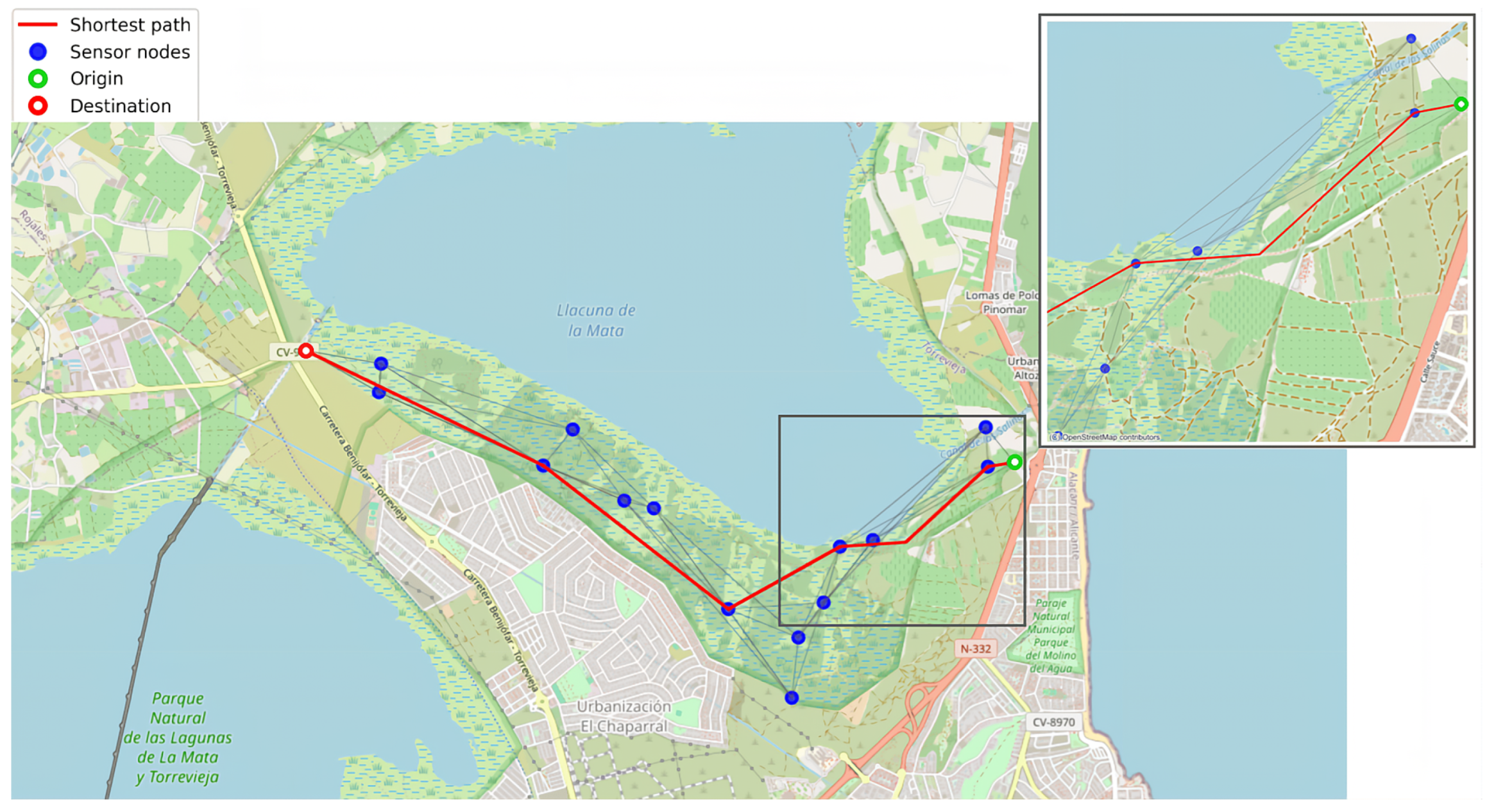
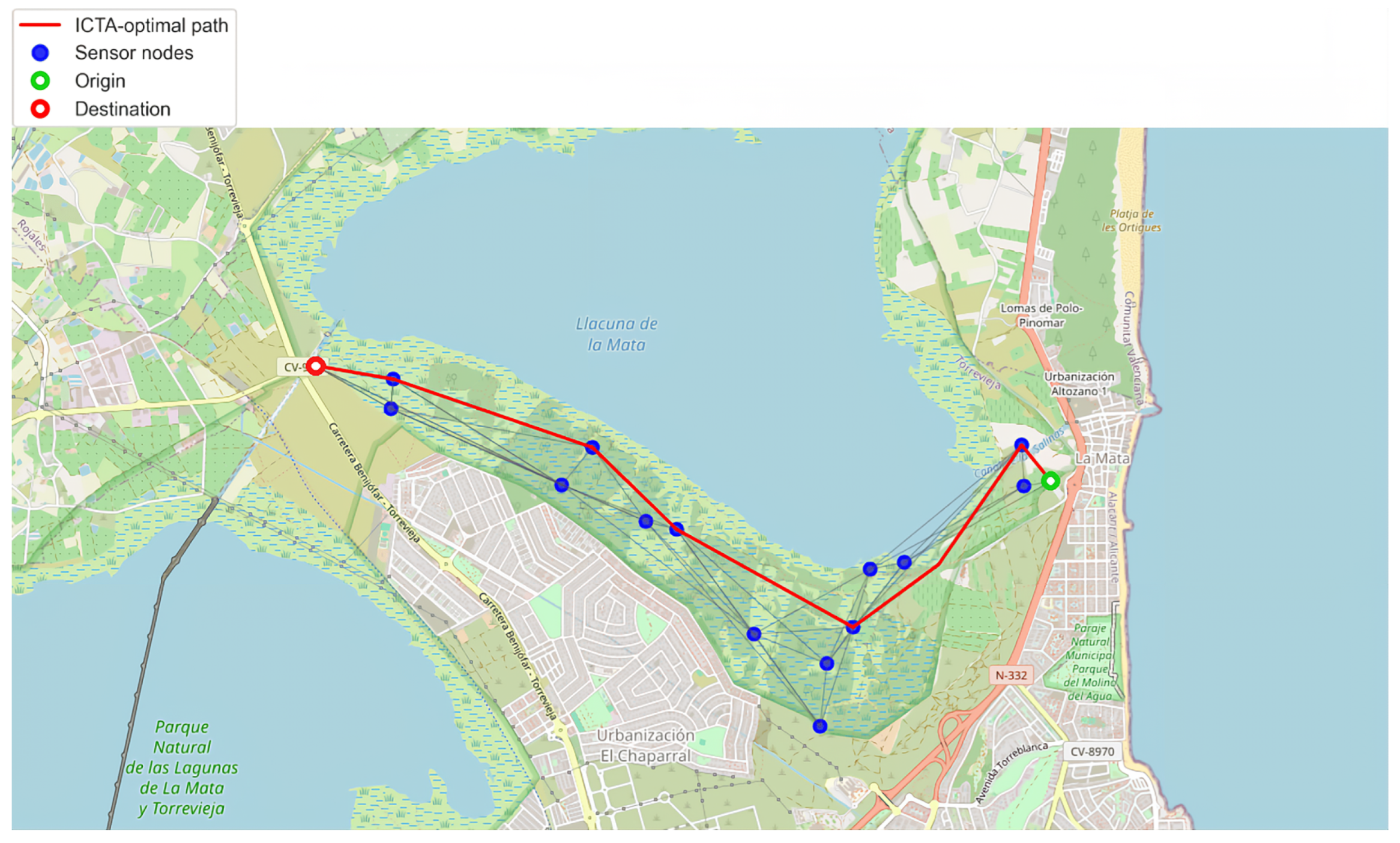
The meteorological station was selected as the starting point (marked in green in Figure 3 and Figure 4), while sensor number 2 was chosen as the destination (marked in red in Figure 3 and Figure 4) for generating trails. Each sensor was represented as a node in a directed graph, including its geographic coordinates and ICTA value.
Edges were created from each node to a limited set of neighboring nodes in order to construct a sparse and realistic connectivity graph from the discrete sensor network. Specifically, each node was connected to up to three nearby neighbors. The choice of limiting connections to three neighbors is motivated by the need to preserve spatial coherence in a graph built from a sparse sensor network. Without such a restriction, excessive connectivity could link nodes to very distant sensors, leading to unrealistic jumps, backtracking, or looping paths that would not correspond to plausible pedestrian movement. Restricting each node to a set of nearby neighbors ensures gradual progression through the park, maintaining realistic paths while still allowing alternative routing options.
As the cost of each edge was linearly and negatively correlated with the ICTA value of the neighboring node, the algorithm preferred moves toward higher thermal–acoustic comfort. To ensure realistic and safe routes, the graph structure was also designed to avoid paths crossing through the lagoon.
To illustrate the functioning of the proposed A*-based path generation algorithm guided by environmental comfort, a representative example is presented using the Summer–Morning configuration. This scenario was selected because summer typically presents the lowest thermal–acoustic comfort levels in the park, driven by elevated temperatures, high humidity, and increased ambient noise. Additionally, morning hours coincide with a higher visitor activity, making this time period particularly relevant for assessing and improving trail conditions. Therefore, this configuration highlights the potential value of implementing strategic routing aimed at enhancing the recreational experience under adverse environmental conditions.
To evaluate the performance of the proposed method, the comfort-guided path is compared to the shortest path, which corresponds to a classical A* algorithm implementation minimizing travel distance without considering environmental variables. This comparison allows for a quantitative assessment of the distance increase incurred when prioritizing environmental comfort over shortest-distance routing. Figure 3 shows the path computed using the ICTA-based cost function, favoring segments with higher thermal–acoustic comfort. In contrast, Figure 4 presents the shortest path between the same start and end points, optimized solely for distance. Table 3 summarizes the main performance metrics for both approaches, including path length in meters, average ICTA values, and the number of expanded and selected nodes during the A* algorithm search.
The resulting paths should be interpreted as indicative comfort-oriented routes, not finalized or signposted walking trails. They are intended to illustrate how the A*-based routing approach can guide visitors toward higher comfort areas and to support future trail planning decisions, rather than to represent current operational trails. The objective is to enable discussion of alternative solutions at a conceptual level with the park management, thereby supporting informed decision-making that allows for their later implementation (e.g., depending on the required budget).
The ICTA-based path achieves an average ICTA improvement of 66.3% over the shortest path. This substantial gain in environmental comfort is obtained at the cost of traveling an additional 344 m compared to the shortest-distance alternative. The comfort-oriented routing also results in fewer nodes being expanded during the search process, indicating a more directed exploration toward favorable trail segments.
Furthermore, both algorithms exhibited extremely short execution times, remaining below 0.1 ms in all cases, with no significant differences between them. This demonstrates that both approaches are computationally efficient for graphs of the size considered. These measurements were performed on a workstation with an Intel Core i5-1135G7 CPU (4 cores, 8 threads) and 8 GB of RAM, using Python (version 3.12.1). Execution time was recorded using the time.perf_counter() function around the A* search implementation.
In addition to the aggregated seasonal and time-slot configurations, we further evaluated the robustness of the proposed routing approach under extreme thermal stress conditions. To this end, we computed the comfort-aware route corresponding to the hottest day of the analyzed period. ICTA values were derived exclusively from measurements collected on that day, and the A* algorithm was applied while keeping the same start and end nodes and graph structure as in the Summer-Morning configuration. This enables a direct comparison between aggregated seasonal routing and routing under acute thermal–acoustic stress.
The resulting comfort-aware route for the hottest day is shown in Figure 5. When comparing this extreme-day route with the one obtained for the aggregated Summer-Morning configuration, we observe that the initial segments of both paths are identical, following the same sequence of sensors. However, a divergence occurs in the central section of the route, where the extreme-day path is redirected closer to the lagoon. This deviation can be explained by the localized microclimatic effects associated with proximity to the water body, which tend to moderate temperature and reduce thermal stress during extreme heat events. As expected, under aggregated conditions, these localized effects are partially smoothed, whereas during the hottest day they become sufficiently dominant to influence the routing decision. As a result, the algorithm favors a trajectory that maximizes short-scale thermal relief.
The findings illustrate that the ICTA-based routing framework can adjust its recommendations in response to extreme environmental conditions, producing alternative routes when comfort levels vary sharply and comfort gradients become critical. This adaptability highlights its potential for real-time routing applications, particularly for guiding visitors during adverse climatic events such as heat waves.
Beyond individual case studies, Table 4 summarizes performance metrics of the ICTA-based path across all 12 seasonal and time-slot configurations. The table highlights how environmental comfort varies throughout the year and at different times of the day. As expected, summer season yields the lowest ICTA values, reflecting periods of higher thermal–acoustic discomfort. Notably, the evening time slot consistently exhibits the highest ICTA values across all seasons, indicating the most favorable environmental comfort. This improvement is likely due not only to the reduction in temperature during late-day hours but also, to the lower ambient noise levels, which contribute to the overall thermal–acoustic comfort experienced along the trails.
This table offers a comprehensive overview of comfort-oriented trail planning outcomes, providing a clear quantitative basis to understand seasonal and diurnal variations in trail comfort and to support informed decisions for visitor routing and park management.
Finally, to evaluate the applicability of the proposed routing method across different spatial contexts, additional experiments were conducted using two alternative origin–destination (OD) configurations within the Natural Park. This analysis illustrates how the approach can be extended beyond a single predefined corridor, supporting its use as a general comfort-oriented path-planning tool.
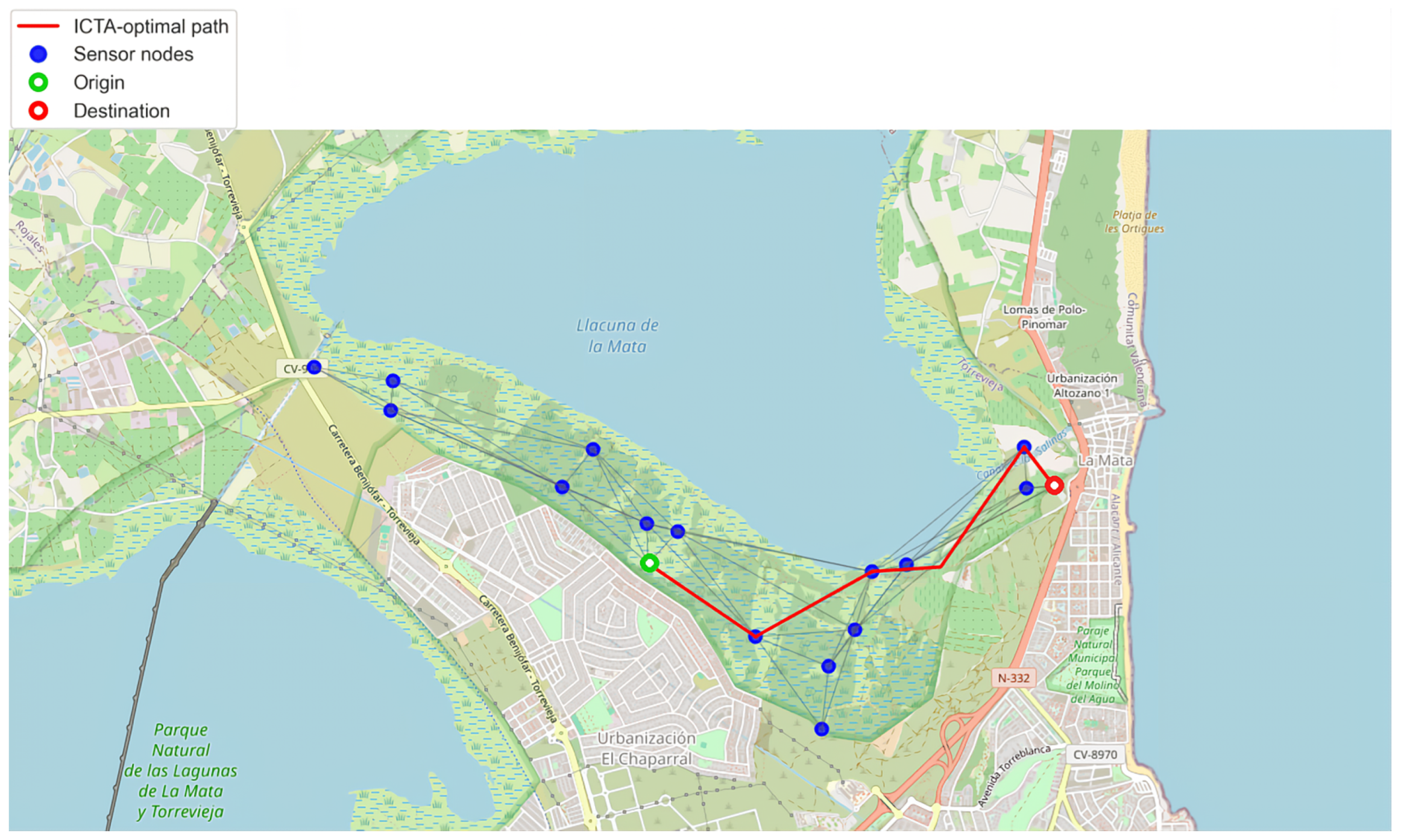
Two heterogeneous OD pairs were selected to represent different visitor profiles and potential use cases. The first configuration connects a point located near a residential area adjacent to the park boundary with the Visitor Center of the Natural Park. The Visitor Center serves as a key facility for public engagement, hosting exhibitions, educational materials, and guided activities related to the park’s natural values. This OD pair represents a potential future access route that could facilitate direct pedestrian access from nearby residential neighborhoods, encouraging regular recreational use of the park by local residents.
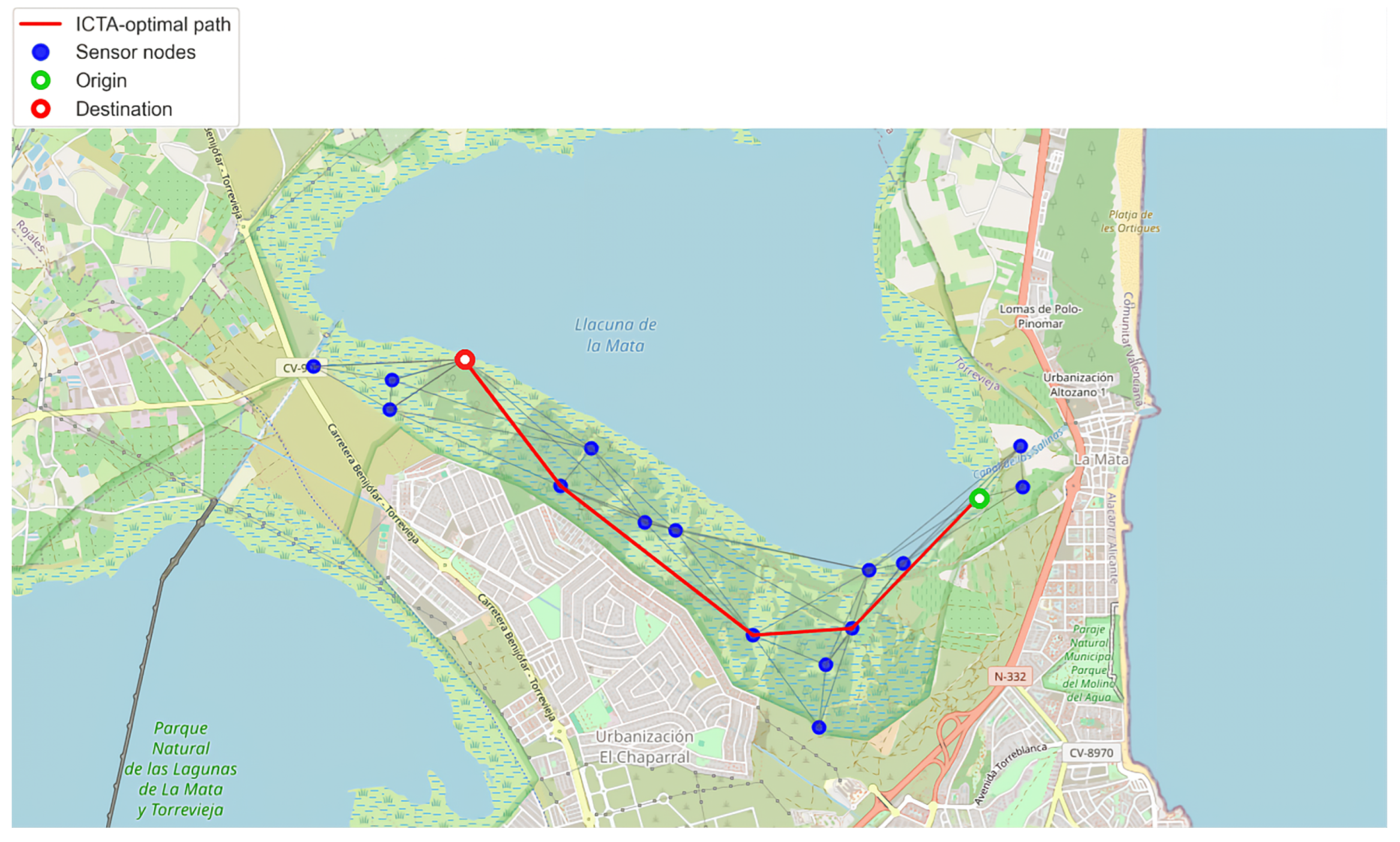
The second configuration links two points of interest within the park itself, connecting one of the most important birdwatching locations (La Cigüeñuela Observatory) with a scenic viewpoint located on the shore of the lagoon (Mirador de l’Illa). This OD pair is representative of visitor itineraries oriented toward nature and landscape observation, particularly for users interested in birdwatching and lagoon-related ecosystems.
Figure 6 and Figure 7 show the higher-comfort routes computed for these two alternative origin and destination points. In both cases, the algorithm successfully identifies paths that prioritize segments with higher thermal–acoustic comfort, adapting the route geometry to the spatial distribution of ICTA values while avoiding unrealistic crossings. These examples demonstrate that the proposed routing framework can be applied consistently across different access–exit scenarios, supporting its use as a flexible decision-support tool for exploratory trail planning rather than as a solution limited to a single predefined corridor.

5. Discussion

The spatial and temporal analysis of ICTA values revealed systematically higher comfort levels in the Natural Park of La Mata compared to the urban environment of Torrevieja. This can be explained by the presence of vegetation, lower building density, and reduced noise levels from traffic and human activity. Vegetation provides shade and helps regulate microclimate, mitigating thermal stress, while the lower prevalence of anthropogenic noise sources enhances acoustic comfort. Together, these factors reinforce the role of the park as a climate refuge, where environmental conditions are generally more favorable for visitors.
During the summer months, however, the advantage of the park over the city was reduced. High ambient temperatures and humidity strongly increase thermal discomfort in both areas, limiting the relative benefits of vegetation and reduced noise. Under such conditions, even natural areas struggle to maintain comfortable microclimates. This seasonal convergence highlights the importance of temporal adaptation of routes, such as promoting early-morning visits in summer when ICTA levels are relatively higher, thus mitigating exposure to extreme thermal stress.
From a methodological perspective, the ICTA index was calculated using data aggregated by season and time slot, and averaged across sensors for each zone (Natural Park and urban area). This approach ensures computational feasibility and captures broad temporal patterns but it also smooths short-term fluctuations such as sudden heatwaves, local noise peaks, or microclimatic differences within the park. As a result, the values represent an averaged comfort condition rather than real-time dynamics. Future work could explore finer temporal resolutions or adaptive trail recommendations using real-time sensor data.
The comparison between ICTA-based routes and shortest-distance routes highlights the distance cost associated with comfort-oriented routing. The results suggest that comfort-aware routing is not only feasible but strategically advantageous for trail management. The comfort-oriented path achieved an average ICTA improvement of 66.3% while only requiring an additional 344 m compared to the shortest path. From a visitor’s perspective, this extra distance is negligible, whereas the improvement in perceived comfort is substantial. The relatively modest increase in path length indicates that comfort can be significantly enhanced without requiring users to deviate far from the most direct route. This reflects the strong influence of micro-environmental variations on perceived comfort: even small changes in route selection, such as avoiding a sun-exposed or noisy segment, translate into a notable improvement in the ICTA index. Furthermore, the ICTA-based algorithm required fewer node expansions, indicating that using environmental indicators as a guiding criterion directs the search efficiently toward favorable regions of the graph without increasing complexity. The minimal computational differences between both search algorithms demonstrate that comfort-aware routing remains efficient for graphs of this size, supporting its practical applicability in trail management and decision-support tools.
Importantly, the ICTA-based and shortest-distance routes were similar in their overall structure, with differences concentrated mainly at the beginning of the route. This suggests that relatively small adjustments in routing can significantly enhance visitor well-being, making this approach particularly attractive for park managers seeking to improve visitor experience without the need to redesign or implement major modifications to existing trail networks.
The proposed framework can be applied to other areas facing similar environmental challenges. Comfort-aware routing can be transferred to other protected areas or even urban environments where environmental conditions strongly influence mobility and user experience. Moreover, the ICTA index is flexible and can be extended to include additional environmental variables, such as rain, UV radiation, or wind, as well as social factors like visitor flow.
Despite the insights gained, this study has some limitations that should be considered. First, the spatial density of environmental sensors is limited, which may affect the granularity of the comfort assessment across the park and urban areas. This limitation also constrains the routing graph, which is constructed from sensor locations rather than official trail networks. While this abstraction allows for the exploration of potential comfort-oriented routes, future work should validate these routes in terms of walkability, connectivity, and geometric alignment with real trails before operational deployment, always considering their feasibility in terms of available resources and budget. Second, the ICTA index was computed using aggregated values by season and time slot to maintain computational feasibility. This approach, however, can reduce the temporal detail available for comfort assessment. Third, this study lacks direct validation of perceived comfort with park visitors, so the ICTA-based results reflect modeled rather than user-reported experience. Recognizing these limitations points to directions for future research.
Finally, the underlying idea is to implement this use case within a data space context, where both the data from multiple sources and the machine learning models or algorithms that operate on them are accessible, interoperable, and reusable. In such an environment, where transparency is a core principle, it is essential to provide well-documented information not only about the data, but also for the models and algorithms applied. In this regard, one of the most widely adopted practices is the use of Model Cards, developed by Mitchell et al. [29], which provide structured documentation of machine learning models, including their intended use, performance characteristics, limitations, and ethical considerations. This practice fosters transparency and helps democratize access to model information. Altogether, this line of research aligns with European data space initiatives, which promote interoperable infrastructures for sustainable tourism and environmental digitalization.

Applying the Proposed Approach in Practice

This subsection is intended as a qualitative plausibility evaluation of the proposed comfort-oriented route for the Summer-Morning temporal configuration. At a conceptual level, it examines whether the ICTA-based path corresponds to physically plausible walking corridors observable in satellite imagery. A full quantitative validation using GIS-based analyses (e.g., terrain slope, land-cover constraints, official trail networks, and accessibility) is identified as a direction for future work.
Since the routing graph in this study is not derived from an official trail network, the ICTA-based route may differ from designated paths within the park. To provide spatial context, a qualitative geospatial comparison was conducted using high-resolution satellite imagery.
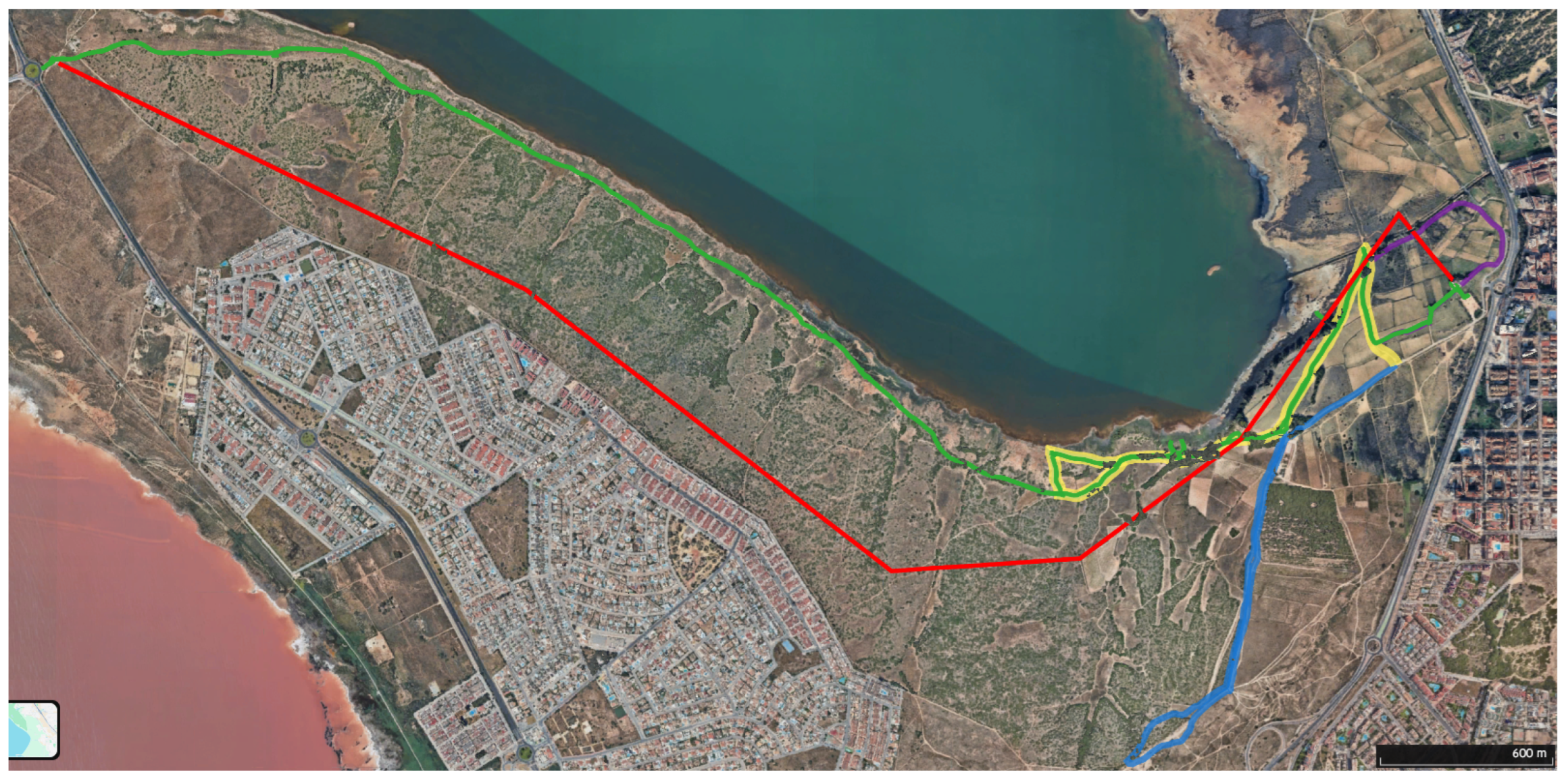
Figure 8 presents an overlay of the routes included for comparison. These consist of the three official walking routes provided by park management: Ruta Amarilla (main pedestrian route, shown in yellow), Ruta Roja (cycling route, also walkable, shown in blue), and Ruta del Vino (short pedestrian route, shown in purple). In addition, a user-generated hiking route obtained from the Wikiloc (https://www.wikiloc.com (accessed on 29 December 2025)) platform is incorporated (shown in green) to illustrate alternative paths frequently used by visitors. Finally, the ICTA-guided route obtained in this study is shown in red, highlighting its trajectory relative to existing paths.
All routes were visualized as KML layers (Google Earth project available at https://earth.google.com/earth/d/1S1G8okhqCnXSwkoDlzPT_oTgsd19VEkz (accessed on 29 December 2025)) in Google Earth on top of satellite imagery, enabling direct visual inspection of their spatial alignment with existing ground features.
The comparison shows that beyond the three officially designated routes, the study area contains a dense network of clearly delineated unpaved paths and informal tracks visible in the satellite imagery. This observation is further supported by the Wikiloc route, which does not coincide with the official trail network but is nonetheless regularly traversed by hikers, indicating the existence of walkable corridors outside the formally defined paths.
Importantly, the comfort-guided route generally aligns with some areas where informal paths and open corridors are visible. While this suggested route does not exactly overlap with the official trails, its spatial trajectory roughly follows areas that appear walkable in the satellite imagery. In general, it seems to avoid physically inaccessible features such as the lagoon or dense vegetation. However, the actual feasibility of developing this potential trail in the future would require careful evaluation and adaptation by park management.
This assessment, based on visual inspection of satellite imagery, suggests that the sensor-to-sensor connections in the routing graph could correspond to some feasible walking corridors, although the proposed paths are generally straighter than if fully adapted to the real terrain. The results should therefore be interpreted as indicative and exploratory, supporting conceptual trail planning rather than immediate deployment as navigable visitor routes. Currently, the ICTA cannot be directly applied to the official trails because sensors have not been installed along these paths. For full operational deployment, sensors would need to be installed along the existing official paths, or field-based validation would need to be conducted on potential new routes in collaboration with park management.
Furthermore, the use of a Google Earth-based tool, as demonstrated in this study, could also provide park authorities with a practical way to visualize, manage, and adapt potential routes before any physical trail development. The KML layers containing both the official routes and the ICTA-informed route can additionally serve as a decision-support tool for park management, helping to promote or encourage the use of specific trails depending on seasonal thermal–acoustic conditions, visitor comfort, or conservation priorities, which illustrates the practical need for the approach proposed in this paper.

6. Conclusions and Future Work

This work has presented a data-driven approach to trail management in a protected natural area, explicitly incorporating both thermal and acoustic factors into a unified comfort-oriented framework. Using the Natural Park of La Mata and Torrevieja Lagoons and the urban area of Torrevieja as a case study, we combined dense environmental sensor data with an adapted A* pathfinding algorithm to identify potential comfort-oriented routes that enhance visitor comfort at a conceptual level, supporting park management in exploratory planning and decision-making.
First, the spatial and temporal analysis of the proposed Thermal–Acoustic Comfort Index (ICTA) revealed that the Natural Park systematically offers more favorable comfort conditions than the surrounding urban environment. Although both areas experience reduced comfort during the summer months, the park maintained higher ICTA values overall, confirming its role as a climate refuge. These results underscore the importance of preserving and managing natural areas near urban centers as key assets for mitigating the impacts of heat stress and noise exposure on residents and visitors.
Second, the comparison between ICTA-based and shortest-distance routes demonstrated that comfort-aware routing can substantially improve environmental conditions along visitor trails with only modest increases in distance. In the representative Summer-Morning configuration, the suggested path prioritizing comfort achieved an average ICTA improvement of 66.3% at the cost of an additional 344 m relative to the shortest path. From a practical perspective, this additional distance is likely acceptable for most visitors, especially under adverse climatic conditions, suggesting that environmental comfort can be meaningfully incorporated into trail planning scenarios without substantially compromising route efficiency.
Third, the proposed adaptation of the A* algorithm proved to be computationally efficient for the graph size considered, with execution times on the order of tenths of milliseconds and no significant overhead compared to traditional distance-based A*. Moreover, the ICTA-based search required fewer node expansions, indicating that comfort information provides a useful guiding signal that can make the search process more directed and efficient.
Beyond its local relevance, the methodology presented here illustrates how heterogeneous environmental datasets (including meteorological variables, noise measurements, and local environmental monitoring data) can be integrated into a coherent analytical workflow under data space principles. The case study supports the vision of interoperable, AI-ready environmental data services for sustainable tourism and nature-based recreation, aligning with ongoing European initiatives on data spaces and environmental digitalization.
Future work will focus on several directions. From a modeling perspective, ICTA can be extended to incorporate additional environmental variables such as wind speed, solar radiation, or UV index, as well as social factors like visitor density or crowding perceptions. The flexibility of the index formulation allows different weights and components to be explored and calibrated based on empirical studies and stakeholder feedback. From a temporal standpoint, the current aggregation by season and time slot can be refined toward higher temporal resolution or even near real-time recommendations, enabling dynamic trail suggestions that respond to evolving meteorological and acoustic conditions. In terms of validation, further studies are needed to assess how well ICTA-based routes align with subjective perceptions of comfort and satisfaction among visitors. This could be addressed through user surveys, wearable sensor campaigns, or controlled experiments comparing alternative trails. Future research could explore constructing the routing graph from the park’s official trail networks to ensure walkability and connectivity. In addition, a more thorough quantitative validation using GIS analyses could be conducted to verify that ICTA-based routes correspond to physically traversable paths.
Moreover, advanced AI techniques could further enhance data-driven trail management. For instance, transformer-based models, as used for automated feature extraction from street view imagery [30], or attention-based approaches for predictive modeling in building systems [31], could inspire methods for automated environmental feature recognition, comfort prediction, or adaptive recommendation of trails. Integrating such techniques could allow the framework to anticipate microclimatic or acoustic changes, support personalized route suggestions, and leverage heterogeneous data sources more effectively, opening new avenues for AI-assisted, real-time environmental comfort management in protected areas.
Finally, an important next step is to formalize this proposal as a full data space use case. While this paper demonstrates the feasibility of integrating diverse environmental datasets within a unified analytical workflow, a data space implementation requires additional layers of interoperability and governance. In future work, we will define the assets of the use case following data space principles: (i) standardized, FAIR-compliant descriptions of datasets; (ii) explicit documentation of models and algorithms (e.g., through Dataset Cards, Model Cards, and Dataspace Cards); (iii) clear policies for data access, usage control, and provenance; and (iv) mechanisms for exposing AI-ready comfort analytics as reusable services within a federated ecosystem. By developing these components, the comfort-aware trail management system introduced in this paper can be elevated into a reusable building block inside a tourism or an environmental data space, contributing to the broader European vision for interoperable, sovereign and sustainable data-driven innovation.

Author Contributions

Conceptualization, C.G.-B., F.J.M. and J.-N.M.; methodology, C.G.-B.; software, C.G.-B. and A.M.; validation, C.G.-B., D.T. and J.-N.M.; formal analysis, C.G.-B.; investigation, C.G.-B., F.J.M. and J.-N.M.; resources, C.G.-B. and J.-N.M.; data curation, C.G.-B.; writing—original draft preparation, C.G.-B. and J.-N.M.; writing—review and editing, C.G.-B., D.T. and J.-N.M.; visualization, C.G.-B.; supervision, D.T. and J.-N.M.; project administration, J.-N.M.; funding acquisition, J.-N.M. All authors have read and agreed to the published version of the manuscript.

Funding

This work is part of the projects: INREED/2024/7, funded by the European Union-NextGenerationEU, Recovery, Transformation and Resilience Plan (GVA Next—Generalitat Valenciana); REMARKABLE project (HORIZON-MSCA-2021-SE-0 action number: 101086387); and HELEADE project (TSI-100121-2024-24), funded by Spanish Ministry of Digital Processing and by the European Union-NextGenerationEU.

Institutional Review Board Statement

Not applicable.

Informed Consent Statement

Not applicable.

Data Availability Statement

The datasets used in this study are openly available from the park’s digital twin portal (http://datos.chantwin.iuii.ua.es/ (accessed on 3 April 2025)) and the Valencian Regional Government’s environmental monitoring network (https://mediambient.gva.es/es/web/calidad-ambiental/datos-historicos (accessed on 5 May 2025)).

Conflicts of Interest

The authors declare no conflicts of interest.

References

  1. Rode, J.; Wittmer, H.; Emerton, L.; Schröter-Schlaack, C. ‘Ecosystem service opportunities’: A practice-oriented framework for identifying economic instruments to enhance biodiversity and human livelihoods. J. Nat. Conserv. 2016, 33, 35–47. [Google Scholar] [CrossRef]
  2. Nila, M.U.S.; Beierkuhnlein, C.; Jaeschke, A.; Hoffmann, S.; Hossain, M.L. Predicting the effectiveness of protected areas of Natura 2000 under climate change. Ecol. Processes 2019, 8, 13. [Google Scholar] [CrossRef]
  3. Xu, D.; Peng, J.; Liu, M.; Jiang, H.; Tang, H.; Dong, J.; Meersmans, J. Bridging climate refuges for climate change adaptation: A spatio-temporal connectivity network approach. Geogr. Sustain. 2025, 6, 100235. [Google Scholar] [CrossRef]
  4. Amorim-Maia, A.T.; Anguelovski, I.; Connolly, J.; Chu, E. Seeking refuge? The potential of urban climate shelters to address intersecting vulnerabilities. Landsc. Urban Plan. 2023, 238, 104836. [Google Scholar] [CrossRef]
  5. Climent, M.P.S. Management of public use of a protected natural area in a mass tourist destination: The lagoons of Torrevieja and La Mata. Investig. Geogr. 2003, 30, 47–75. [Google Scholar]
  6. Rebollo, J.F.V.; Baidal, J.A.I. Measuring sustainability in a mass tourist destination: Pressures, perceptions and policy responses in Torrevieja, Spain. J. Sustain. Tour. 2003, 11, 181–203. [Google Scholar] [CrossRef]
  7. Bernabéu, M.A.C.; Molina, C.A. The industrial operation of the Torrevieja salt lakes (Alicante). Investig. Geogr. 2004, 35, 105–132. [Google Scholar]
  8. Romero, I.; Pachés, M.; Martínez-Guijarro, R. Selection of an indicator to assess a highly modified saline ecosystem. Sci. Total Environ. 2019, 693, 133656. [Google Scholar] [CrossRef]
  9. Martínez, G.M.; Pire, C.; Martínez-Espinosa, R.M. Hypersaline environments as natural sources of microbes with potential applications in biotechnology: The case of solar evaporation systems to produce salt in Alicante County (Spain). Curr. Res. Microb. Sci. 2022, 3, 100136. [Google Scholar] [CrossRef]
  10. Maraver, F.; Carbajo, J.M.; Armijo, F.; Aguilera, L.; Martin-Megias, A.I.; Fernandez-Toran, M.A.; Fernandez-Gonzalez, M.V.; Vela, M.L. Evaluation of climate, water and peloid of the Pink Lagoon of Torrevieja and its possible use in thalassotherapy. Int. J. Biometeorol. 2025, 69, 1943–1956. [Google Scholar] [CrossRef]
  11. Gao, M.; Zhu, X. Seeking comfort in the urban heat: Unraveling the effects of thermal-acoustic environments on psychological restoration in urban greenways. Build. Environ. 2025, 282, 113269. [Google Scholar] [CrossRef]
  12. Thom, E.C. The discomfort index. Weatherwise 1959, 12, 57–61. [Google Scholar] [CrossRef]
  13. Mieczkowski, Z. The tourism climatic index: A method of evaluating world climates for tourism. Can. Geogr./Géogr. Can. 1985, 29, 220–233. [Google Scholar] [CrossRef]
  14. Fahmin, A.; Cheema, M.A.; Eunus Ali, M.; Nadjaran Toosi, A.; Lu, H.; Li, H.; Taniar, D.; A. Rakha, H.; Shen, B. Eco-Friendly Route Planning Algorithms: Taxonomies, Literature Review and Future Directions. ACM Comput. Surv. 2024, 57, 1–42. [Google Scholar] [CrossRef]
  15. Zhao, D.; Ni, L.; Zhou, K.; Lv, Z.; Qu, G.; Gao, Y.; Yuan, W.; Wu, Q.; Zhang, F.; Zhang, Q. A Study of the Improved A* Algorithm Incorporating Road Factors for Path Planning in Off-Road Emergency Rescue Scenarios. Sensors 2024, 24, 5643. [Google Scholar] [CrossRef] [PubMed]
  16. Arratia, B.; Rosas, E.; Furones, Á.M.; Perles-Ivars, Á.; Posadas-Yagüe, J.L.; Cecilia, J.M.; Manzoni, P. An adaptive lora-based edge architecture for data sensing and collection in natural parks. In Proceedings of the 2024 IEEE Globecom Workshops (GC Wkshps), Cape Town, South Africa, 8–12 December 2024; IEEE: Piscataway, NJ, USA, 2024; pp. 1–6. [Google Scholar]
  17. Otsu, K.; Maso, J. Digital Twins for Research and Innovation in Support of the European Green Deal Data Space: A Systematic Review. Remote Sens. 2024, 16, 3672. [Google Scholar] [CrossRef]
  18. Radha, S.K.; Kuehlkamp, A.; Nabrzyski, J. Advancing Transparency and Responsibility in Machine Learning: The Critical Role of FAIR Principles-A Comprehensive Review. ACM J. Responsible Comput. 2025, 2, 1–38. [Google Scholar] [CrossRef]
  19. Otto, B. The evolution of data spaces. In Designing Data Spaces: The Ecosystem Approach to Competitive Advantage; Springer International Publishing: Cham, Switzerland, 2022; pp. 3–15. [Google Scholar]
  20. Torres, T.; Ortiz, J.E.; Mediavilla, R.; Sánchez-Palencia, Y.; Santisteban, J.I.; Vega-Panizo, R. Assessment of prospective geological hazards in Torrevieja-La Mata coast (western Mediterranean) based on Pleistocene and Holocene events. Nat. Hazards 2022, 111, 2721–2748. [Google Scholar] [CrossRef]
  21. Yousif, T.A.; Tahir, H.M. Application of Thom’s thermal discomfort index in Khartoum state, Sudan. J. For. Prod. Ind. 2013, 2, 36. [Google Scholar]
  22. Kui, L.; Yu, X. A Pathfinding Algorithm for Large-Scale Complex Terrain Environments in the Field. ISPRS Int. J.-Geo-Inf. 2024, 13, 251. [Google Scholar] [CrossRef]
  23. Sun, Y.; Yuan, Q.; Gao, Q.; Xu, L. A Multiple Environment Available Path Planning Based on an Improved A* Algorithm. Int. J. Comput. Intell. Syst. 2024, 17, 172. [Google Scholar] [CrossRef]
  24. Donald, A.; Galanopoulos, A.; Curry, E.; Muñoz, E.; Ullah, I.; Waskow, M.; Kalra, M.; Saxena, S.; Iqbal, T. A Semantic Approach for Linked Model, Data, and Dataspace Cards. IEEE Access 2025, 13, 110194–110207. [Google Scholar] [CrossRef]
  25. Stathopoulou, M.I.; Cartalis, C.; Keramitsoglou, I.; Santamouris, M. Thermal remote sensing of Thom’s discomfort index (DI): Comparison with in-situ measurements. In Proceedings of the Remote Sensing for Environmental Monitoring, GIS Applications, and Geology V, Bruges, Belgium, 19–22 September 2005; SPIE: Bellingham, WA, USA, 2005; Volume 5983, pp. 131–139. [Google Scholar]
  26. Yin, Y.; Zhang, D.; Zhen, M.; Jing, W.; Luo, W.; Feng, W. Combined effects of the thermal-acoustic environment on subjective evaluations in outdoor public spaces. Sustain. Cities Soc. 2022, 77, 103522. [Google Scholar] [CrossRef]
  27. World Health Organization. Guidelines for Community Noise; World Health Organization: Geneva, Switzerland, 1999. [Google Scholar]
  28. Hart, P.E.; Nilsson, N.J.; Raphael, B. A formal basis for the heuristic determination of minimum cost paths. IEEE Trans. Syst. Sci. Cybern. 1968, 4, 100–107. [Google Scholar] [CrossRef]
  29. Mitchell, M.; Wu, S.; Zaldivar, A.; Barnes, P.; Vasserman, L.; Hutchinson, B.; Spitzer, E.; Raji, I.D.; Gebru, T. Model cards for model reporting. In Proceedings of the Conference on Fairness, Accountability, and Transparency, Atlanta, GA, USA, 29–31 January 2019; pp. 220–229. [Google Scholar]
  30. Wang, S. Development of approach to an automated acquisition of static street view images using transformer architecture for analysis of Building characteristics. Sci. Rep. 2025, 15, 29062. [Google Scholar] [CrossRef]
  31. Wang, S. Evaluating cross-building transferability of attention-based automated fault detection and diagnosis for air handling units: Auditorium and hospital case study. Build. Environ. 2025, 287, 113889. [Google Scholar] [CrossRef]
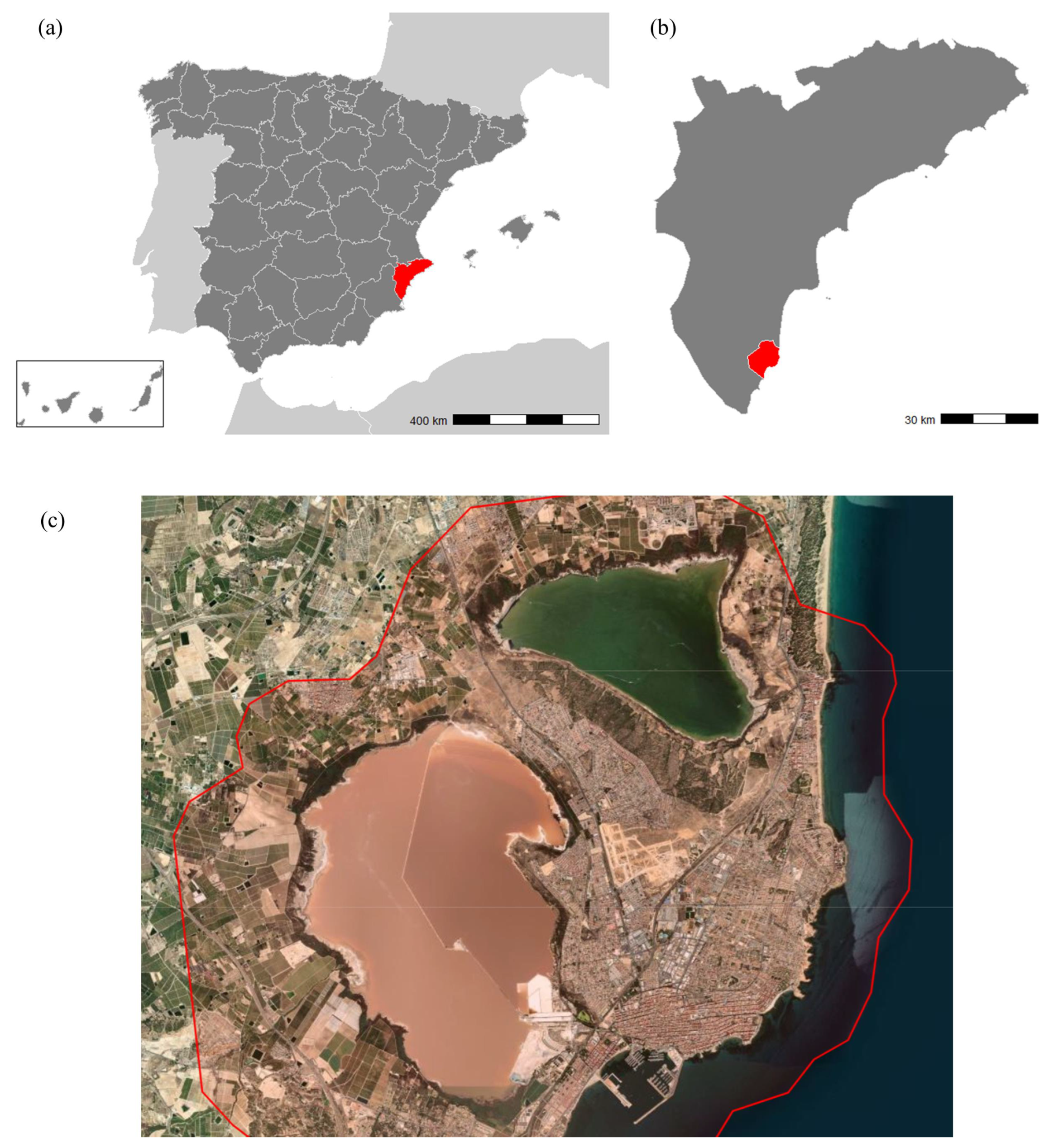
Figure 1. Study area at different spatial scales: (a) Location of Alicante in Spain (marked in red), (b) Torrevieja highlighted in red within the province of Alicante, and (c) Satellite image of the lagoons with the city of Torrevieja outlined in red.
Information 17 00079 g001
Figure 2. Temporal evolution of the ICTA index over time in the urban area of Torrevieja and La Mata Lagoon (Natural Park), showing environmental comfort trends.
Information 17 00079 g002
Figure 3. Comfort-oriented trail computed using the A* algorithm with ICTA-based cost function, prioritizing segments with higher thermal–acoustic comfort. The green marker indicates the starting point (meteorological station), and the red marker shows the destination (sensor 2). The inset panel provides a zoomed view of the initial segment, where both routes diverge. Basemap data from OpenStreetMap under ODbL license; non-English labels (place names and landmarks) are kept as in the original.
Information 17 00079 g003
Figure 4. Shortest trail computed using the A* algorithm with a classical cost function based on geographic distance. The green marker indicates the starting point (meteorological station), and the red marker shows the destination (sensor 2). The inset panel provides a zoomed view of the initial segment, where both routes diverge. Basemap data from OpenStreetMap under ODbL license; non-English labels (place names and landmarks) are kept as in the original.
Information 17 00079 g004
Figure 5. Comfort-oriented trail computed for the hottest day of the analyzed period. Basemap data from OpenStreetMap under ODbL license; non-English labels (place names and landmarks) are kept as in the original.
Information 17 00079 g005
Figure 6. Comfort-oriented trail computed for the first proposed OD pair. The green marker indicates the starting point (near a residential area), and the red marker shows the destination (Visitor Center). Basemap data from OpenStreetMap under ODbL license; non-English labels (place names and landmarks) are kept as in the original.
Information 17 00079 g006
Figure 7. Comfort-oriented trail computed for the second proposed OD pair. The green marker indicates the starting point (La Cigüeñuela Observatory), and the red marker shows the destination (Mirador de l’Illa scenic viewpoint). Basemap data from OpenStreetMap under ODbL license; non-English labels (place names and landmarks) are kept as in the original.
Information 17 00079 g007
Figure 8. Satellite view comparing official park routes (yellow, blue, and purple), a crowd-sourced Wikiloc trail (green), and the proposed ICTA-oriented route (red).
Information 17 00079 g008
Table 1. Classification of the Discomfort Index (DI) according to thermal stress levels.
DI Range (°C)Discomfort Level
D I < 21 No discomfort
21 D I < 24 Under 50% of population feels discomfort
24 D I < 27 Over 50% of population feels discomfort
27 D I < 29 Most of the population suffers discomfort
29 D I < 32 Everyone feels severe stress
D I 32 State of medical emergency
Table 2. Categorization of data by season and time slot.
SeasonMonths
WinterDecember, January, February
SpringMarch, April, May
SummerJune, July, August
AutumnSeptember, October, November
Time SlotHour Range
Morning06:00 a.m.–11:59 a.m.
Afternoon12:00 p.m.–5:59 p.m.
Evening6:00 p.m.–11:59 p.m.
Table 3. Comparison of performance metrics between the ICTA-based and shortest-distance paths.
MetricICTA-Based PathShortest Path
Path Length (m)60445700
Average ICTA0.3410.205
Nodes Expanded1620
Nodes Selected66
Table 4. Performance metrics for the 12 different configurations.
ConfigurationPath Length (m)Average ICTA
Winter-Morning60440.803
Winter-Afternoon58990.609
Winter-Evening59190.959
Spring-Morning58990.568
Spring-Afternoon58990.455
Spring-Evening57330.796
Summer-Morning60440.341
Summer-Afternoon58990.266
Summer-Evening56380.412
Autumn-Morning58990.455
Autumn-Afternoon58990.415
Autumn-Evening59190.600
Disclaimer/Publisher’s Note: The statements, opinions and data contained in all publications are solely those of the individual author(s) and contributor(s) and not of MDPI and/or the editor(s). MDPI and/or the editor(s) disclaim responsibility for any injury to people or property resulting from any ideas, methods, instructions or products referred to in the content.