Article

Comparative Study of the Underwater Soundscape in Natural and Artificial Environments in the Mediterranean †

1
University Institute of Physics Applied to Science and Technology, University of Alicante, San Vicente del Raspeig s/n, 03690 Alicante, Spain
2
Department of Marine Sciences and Applied Biology, University of Alicante, San Vicente del Raspeig s/n, 03690 Alicante, Spain
3
Institut d’Investigació per a la Gestió Integrada de Zones Costaneres (IGIC), Universitat Politècnica deValència (UPV), 46730 Gandia, Spain
*
Author to whom correspondence should be addressed.
This paper is an extended version of our manuscript presented at the Forum Acusticum/Euronoise 2025, the 11th EAA Annual European Conference on Acoustics and Noise Control Engineering, and XLVI TECNIACÚSTICA 2025, Málaga, Spain, 23–26 June 2025. Available online: https://dael.euracoustics.org/confs/fa2025/data/index.html.
J. Mar. Sci. Eng. 2026, 14(3), 241; https://doi.org/10.3390/jmse14030241
Submission received: 10 December 2025 / Revised: 20 January 2026 / Accepted: 21 January 2026 / Published: 23 January 2026

Abstract

The recent growth of Blue Economy-related human activities has increased underwater noise pollution. Sound is a key factor in ensuring the well-being of marine animals as it allows them to communicate with each other and extract valuable information from the environment. Although the Marine Strategy Framework Directive requires monitoring programs to achieve good environmental status, there remains a significant deficit of information concerning three key domains: the characteristics of the underwater soundscape, its transformation due to anthropogenic activities, and the effects of noise on marine animals. This study aimed to evaluate the impact of anthropogenic activities on marine acoustic environments. Acoustic metrics and ecoacoustic indices were applied to characterise variability and assess daily, weekly, and seasonal patterns, as well as the effects of trawling restrictions. Three underwater soundscapes were compared in this study: two natural environments in the Mediterranean Sea and one artificial environment, a land-based fish farm tank. High anthropogenic noise levels were found, primarily due to fishing vessels near the selected locations. Similarly, the soundscape exhibited notable seasonal variations (annual and weekly), demonstrating a significant dependence on tourist activities. The results highlight the benefits of acoustic parameters as a tool for monitoring environmental conditions over time.

1. Introduction

A soundscape can be defined as a mixture of different types of sounds that are present in an environment [1]. The concept of soundscape was first introduced in the “World Soundscape Project”, led by R. Murray Schafer [2], which sought to describe how humans perceive sounds in a particular area at a specific time.
Soundscapes are usually studied by categorising their sounds into three main sources: biophony (biological sounds), geophony (natural physical sounds such as wind, waves, or seismic activity), and anthrophony (human-generated sounds). Such a framework facilitates ecological interpretations and impact assessments [2,3].
For its part, an underwater soundscape refers to the acoustic energy present in a given marine or freshwater environment. Thus, the soundscape can be broadly categorised into two groups: natural or artificial. These groups present different origins and characteristics, and therefore have different ecological implications. Natural underwater soundscapes are composed of sounds generated by biological and geophysical processes. Biophony includes the vocalisations and movements of marine organisms such as fish, cetaceans, crustaceans, or snapping shrimp, among others, and plays an essential role in communication, reproduction, navigation, and predator avoidance [4]. On the other hand, geophony consists of non-biological natural sounds such as waves breaking, rainfall hitting the surface, underwater earthquakes, ice cracking, volcanic activity, etc. These sounds form the acoustic backdrop of marine environments and contribute to the overall structure of natural soundscapes [5].
In contrast, artificial underwater soundscapes originate from human activities, so they are linked to anthrophony. The most widespread sound source in marine environments is commercial shipping. It generates low-frequency noise (mainly from 10 Hz to 1 kHz) that can travel long distances (hundreds to thousands of kilometres). Other sources include seismic surveys, naval sonar, underwater construction (e.g., pile driving), offshore wind farms, and pleasure craft. These sounds significantly increase the ambient noise levels, especially in coastal and industrial regions [6]. The balance between artificial and natural sounds has important ecological consequences. Indeed, elevated levels of anthropogenic noise can mask biologically relevant sounds, interfere with animal communication and navigation, cause behavioural changes, and even lead to physiological stress or hearing loss in marine organisms [7]. In contrast, natural soundscapes support ecological processes and biodiversity, often serving as indicators of ecosystem health.
For marine conservation, monitoring and managing the balance between artificial and natural acoustic inputs is an increasingly critical priority. Tools such as passive acoustic monitoring (PAM) and soundscape mapping can help to identify the areas most affected by anthropogenic noise. They can also support the development of mitigation strategies, such as vessel speed reduction, quieting technologies, the establishment of marine sanctuaries, or the enforcement of reduced human activity periods. In this regard, understanding and characterising underwater soundscapes is crucial for ecological monitoring, marine spatial planning, and the assessment of noise pollution’s impact on marine life.
Analysis of the underwater soundscape is based on a set of acoustic parameters which, when considered together, provide a comprehensive understanding of the acoustic environment. And to advance marine science and inform conservation strategies in increasingly noisy oceans, it is essential to select and interpret these parameters. However, this task is particularly complicated in underwater environments because, unlike on-land studies, perceptual elements are lacking.
A major parameter used to describe the underwater soundscape is the sound pressure level (SPL), typically measured in decibels relative to 1 μPa (dB re 1 μPa). SPL quantifies the intensity of sound introduced into the water by the different sources. Depending on the study objectives, it can be measured as instantaneous, Root Mean Square (RMS), or peak levels [6]. Another essential parameter is Power Spectral Density (PSD), which describes how acoustic power is distributed across the frequency spectrum. PSD is necessary to distinguish between different sound sources, such as artificial low-frequency noise that can overlap with the hearing ranges of many marine mammals and fish [7], or biological high-frequency signals, such as echolocation clicks [8]. Finally, third-octave band levels (TOLs) and broadband levels are used to summarise sound energy in specific frequency ranges. These metrics are particularly useful for long-term monitoring and for conducting comparisons across different regions and time periods [9]. At the same time, the Signal-to-Noise Ratio (SNR) is used to evaluate how anthropogenic noise can mask biological sounds and, therefore, interfere with biological processes.
In addition, time parameters are among the critical metrics used in underwater soundscape analysis as they provide information on how organisms experience and respond to sound exposure over time [10]. These include the duration, repetition rate, and duty cycle of sound events. Such parameters help to characterise and differentiate impulsive sources (e.g., seismic surveys) from continuous sources (e.g., shipping). They are particularly relevant when studying the behaviour of marine organisms or the operational cycles of anthropogenic activities such as sonar or pile driving [5].
In the ecological and regulatory domain, cumulative sound exposure levels (SELcum) and spatiotemporal exposure maps are used to evaluate the long-term effects on populations and habitats. In fact, such metrics are gaining in significance in environmental impact assessments (EIAs) and marine spatial planning.
On the other hand, in terrestrial environments, ecoacoustic indices are increasingly used to quantify and interpret soundscapes. These metrics are developed to summarise complex acoustic data, can provide a description of biodiversity and ecosystem health, and can even detect changes with respect to a reference state. The indices aim to capture the presence, richness, and activity levels of biological sounds (biophony) in relation to other sound sources, such as anthropogenic noise or geophysical processes: Acoustic Complexity Index, ACI [11]; Normalised Difference Soundscape Index, NDSI [12]; Acoustic Entropy Index, H [13,14]; Bioacoustic Index, BI [15]; Acoustic Diversity Index, ADI [16]; Acoustic Evenness Index, AEI [16]; among others [17,18]. These indices offer the advantage of being computationally efficient and suitable for long-term monitoring, but their performance can vary depending on habitat type, recording quality, and the presence of non-biological noise sources.
Over the last decade, the use of ecoacoustic indices (the same as defined for terrestrial environments) has expanded to the marine environment [18]. Roca et al. [19] analyse 10 years of raw passive acoustic recordings from five different locations in the Atlantic section of the Southern Ocean. Using parameters such as ACI, AEI, and H, the authors aim to establish differences in the soundscape and the contribution of these metrics to characterising marine mammal community composition. The study provides promising results for identifying trends in marine mammal species diversity.
On the other hand, Mattmüller et al. [20] make use of ecoacoustic indices to characterise soundscapes in polar offshore environments and to distinguish acoustically impacted areas. Based on the analysis of long-term recordings, the authors conclude that combining acoustic techniques with ecoacoustic indices is a useful tool for identifying spatiotemporal patterns in the soundscape. Williams et al. [21] obtain similar results when studying the health status of coral reefs using different acoustic descriptors and machine-learning techniques. The work also emphasises the potential of multi-index approaches for monitoring underwater environments. In addition, Guagliumi et al. [22] analyse the influence of marine vegetation structure on the soundscape. The authors use ecoacoustic indices to investigate possible patterns and changes in noise levels linked to the environmental impact of human activities. Although ecoacoustic indices are valuable predictors of biodiversity and ecological status, they are most effective when combined with other environmental attributes.
From a regulatory perspective, the Marine Strategy Framework Directive (MSFD), adopted by the European Union (EU) in 2008 (Directive 2008/56/EC), provides an integrated approach to protect the marine environment across European seas [23], addressing underwater noise through Descriptor 11. This descriptor focuses on anthropogenic noise and its potential impacts on marine life [6,7]. The MSFD defines two main indicators: Low-Frequency Continuous Sound (LFCS), mainly from shipping and monitored through long-term PAM systems (63 Hz and 125 Hz as the main third-octave bands), and Impulsive Sound Events (ISEs) from activities such as seismic surveys and construction. In this case, Member States are required to report the spatial and temporal distribution of these activities in standardised registries (e.g., impulsive noise registry in support of the Convention for the Protection of the Marine Environment of the North-East Atlantic—OSPAR Convention).
Although D11 establishes a foundational framework, its implementation is significantly challenged by the absence of definitive thresholds for adverse effects on marine animals and the inherent complexity of underwater sound propagation. Consequently, many EU countries are working towards the harmonisation of data collection, acoustic modelling, and ecological risk assessment methodologies. In this regard, research continues to support the MSFD by improving ecological indicators, identifying noise-sensitive species and habitats, and evaluating cumulative exposure impacts. Projects such as QuietMED, JOMOPANS, and UNDERWATER have helped to coordinate efforts between Member States by developing tools to support decision-making and environmental impact assessments. Acoustics studies under the MSFD play a critical role in managing underwater noise pollution and safeguarding marine ecosystems. Moreover, ongoing research, standardisation, and monitoring efforts are essential to fulfil the directive’s goals and to protect ocean health in the Anthropocene.
The present study focused on a comparative analysis of the underwater soundscapes in three different locations, aiming to highlight differences in pressure generated by acoustic stressors in the marine ecosystem and the influence of anthropogenic activities, specifically fishing and tourism, on the soundscape. The potential of traditional acoustic metrics such as SPL, PSD, SEL, and dynamic range to characterise and differentiate underwater environments was also evaluated. To this end, the influence of anthropogenic activities, particularly maritime traffic, seasonal tourism, and fishing restrictions, on the temporal and spectral structure of underwater sound were evaluated. The work also examined daily, weekly, and seasonal variations in the soundscape, distinguishing between periods of anthropogenic activity and rest. In addition, the differences between natural and artificial environments (land-based aquaculture facilities) were analysed. Finally, the study assessed the effectiveness of ecoacoustic indices in distinguishing between acoustic scenarios and detecting environmental changes, thereby confirming them as a valuable tool for monitoring plans. The first two locations were natural environments on the Mediterranean coast (Alicante, Spain), situated relatively close to offshore aquaculture facilities. The third was the interior space of a tuna breeding tank at the Infrastructure for Atlantic Bluefin Tuna Aquaculture (ICAR), belonging to the Spanish Institute of Oceanography (IEO), in Mazarrón (Murcia, Spain). Monitoring this artificial environment directly fulfils the scientific need to quantify the influence of anthropogenic noise on fish through laboratory tests. The rest of this paper is structured as follows. Section 2, entitled Materials and Methods, describes the specificities of each environment as well as the measurement and analysis procedures used. Section 3 focuses on the acoustic analysis and comparison of the selected environments. In this case, a study was conducted of the frequency and time characteristics of the records obtained across different periods. Section 4 provides a detailed analysis of how the ecoacoustic indices were used to assess underwater soundscapes. Finally, Section 5 includes a discussion of the results and Section 6 summarises the main conclusions of this work and possible future lines.

2. Materials and Methods

2.1. Selected Environments

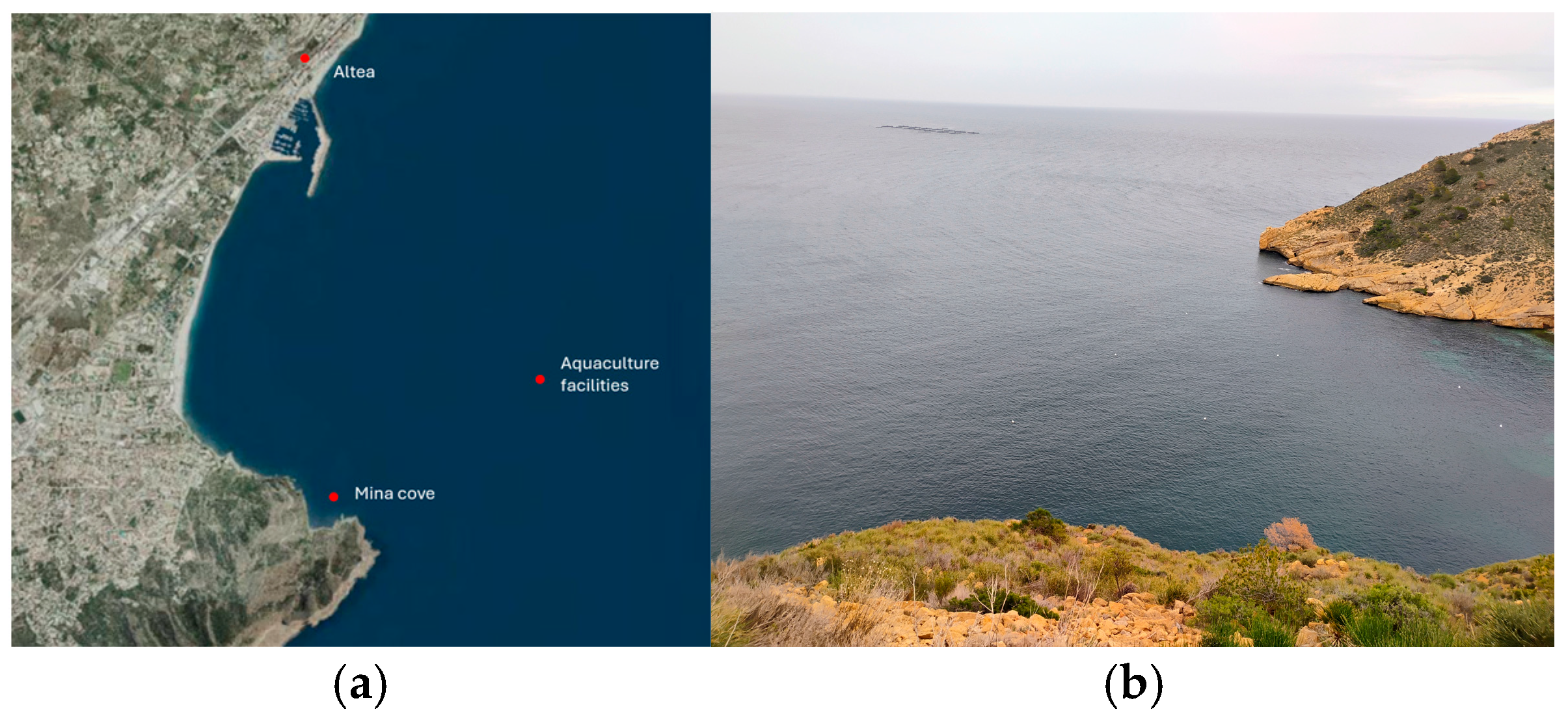
Three different locations were selected to compare the underwater soundscape. The first was a coastal area in the Serra Gelada Natural Park, between the towns of Benidorm, Alfaz del Pi, and Altea, Alicante, Spain (Figure 1). Covering approximately 5653 ha, the area is predominantly maritime, 4908 ha of the total, and is characterised by the presence of cliffs exceeding 300 m, as well as numerous coves. Among the latter, one of the best known is Mina Cove (MC), so-called because of its mining history. It is part of the route to the “El Albir” lighthouse. The site is close to the harbour of the village of Altea and is equipped with anchor buoys for mooring (vessel density 2017–2023: 0.73 h per square km per month according to EMODNet EU). The underwater environment here is defined by a sandy bottom in the anchoring area which is approximately 14–15 m deep. Notable features are the high-quality meadows of Posidonia oceanica and their rocky substrates, which exhibit major spatial heterogeneity. The cove’s characteristics make it an ideal habitat for local fish populations, as evidenced by its high species diversity. Some of them, such as groupers, serve as reliable indicators of the effects of park management. Conversely, Mina Cove is situated in a heavily touristic region and lies in close proximity to offshore aquaculture facilities.
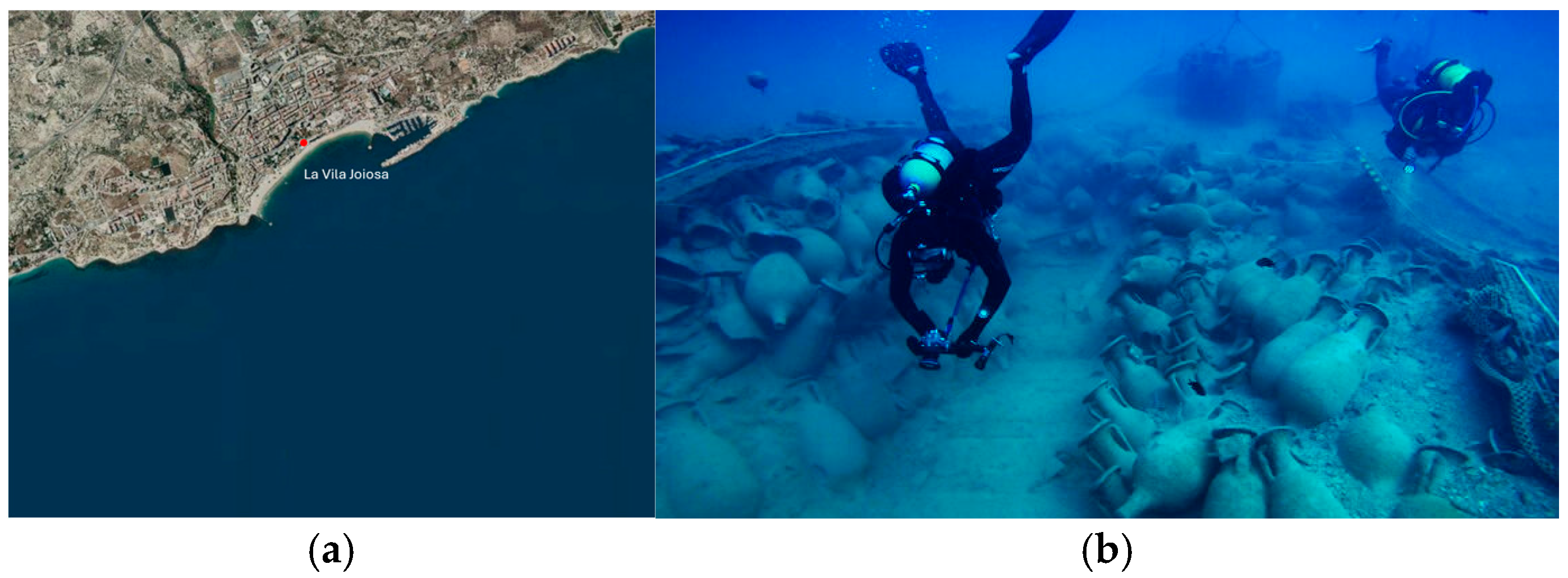
The second monitoring area was located near the Bou Ferrer (BF) wreck, which was discovered in 1999 on the coast of the town of La Vila Joiosa, in the province of Alicante [24] (Figure 2). Dated to the late first–early second century, the wreck lies at a depth of 25 m, located only 1.2 km away from a fish farm [25] and approximately 1 km offshore. The area experiences a high level of maritime traffic (vessel density 2017–2023: 7.2 h per square km per month according to EMODNet EU), primarily due to its proximity to the mouth of the La Vila Joiosa harbour and the heavy tourist influx.
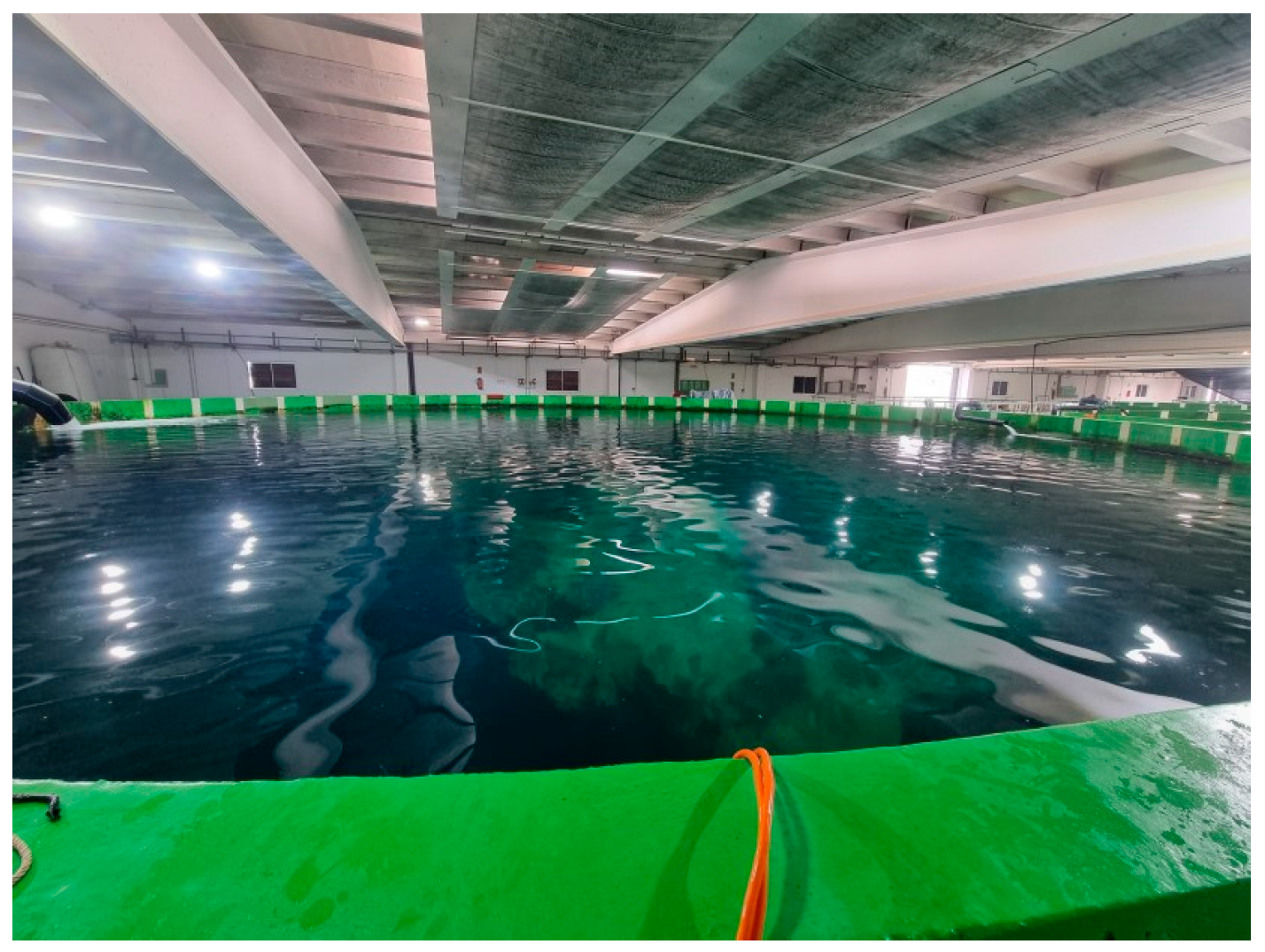
The last selected area was an artificial environment, consisting of a tank for the maintenance and breeding of bluefin tuna. The latter is part of the ICAR, a Unique Scientific and Technical Infrastructure (ICTS) located in Mazarrón, Murcia (Spain), and belongs to the IEO (Figure 3) (location hereinafter referred to as MZ). This 10 m deep tank is constructed of concrete and has a diameter of 22 m. During the monitoring period, the tank was occupied by around 17 Thunnus thynnus weighing 250 kg.

2.2. Measurement Setup

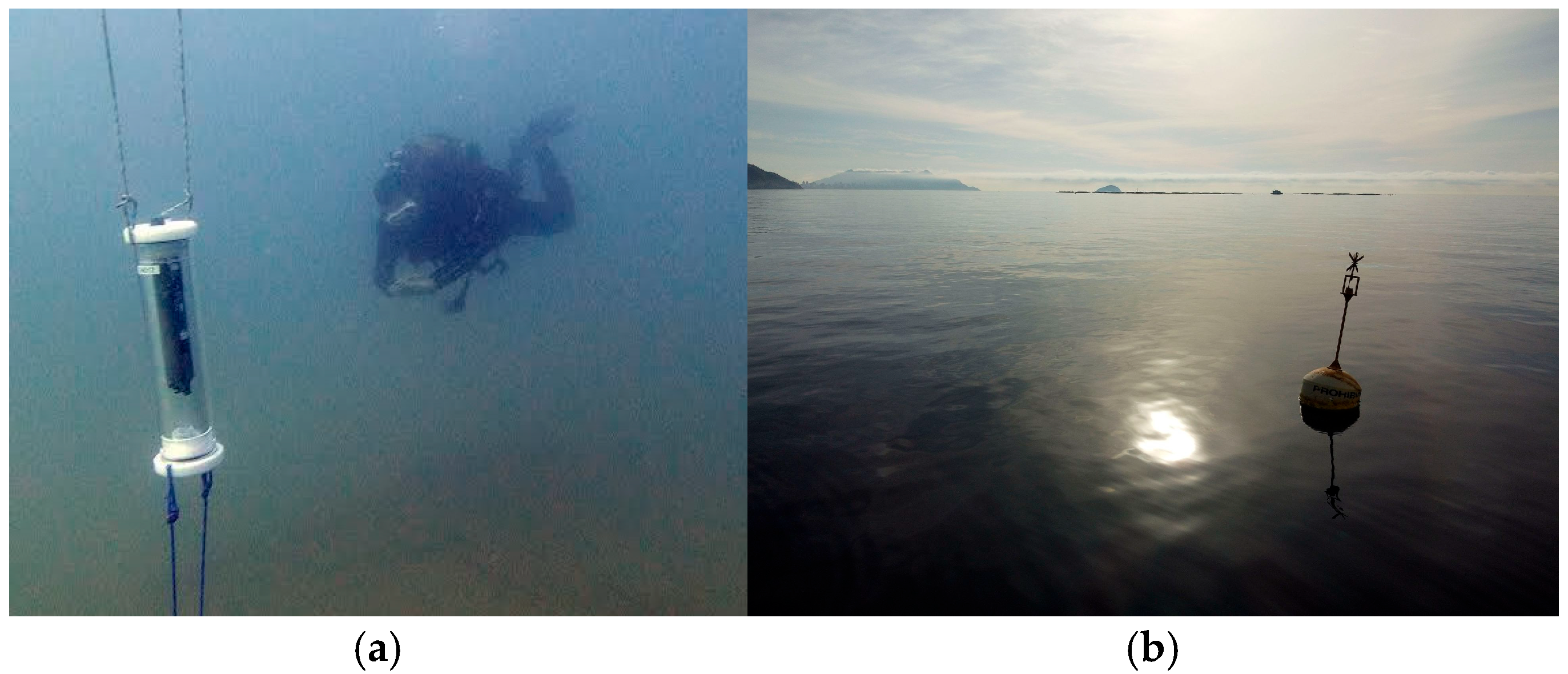
Measurements were taken using Nauta uRec384k underwater autonomous acoustic recorders (NAUTA Scientific S.R.L, Milan, Italy) (Figure 4). Each device, based on a DODOTRONIC Ultramic384K BLR programable board, featured a SQ26-05 pre-amplified hydrophone (system sensitivity −180 dB re. 1μV/Pa; flat frequency response ±2dB in the frequency range from 50 Hz to 20 kHz) (Sensor Technology, Collingwood, ON Canada). Calibration was carried out using a Lubell VC2C (Lubell Labs, Columbus, OH, USA) calibrated underwater sound source and a reference factory-calibrated B&K 8103 hydrophone (Hottinger Brüel & Kjaer, Virum, Denmark).
The recording devices had an autonomy of approximately 10 days and were configured for continuous sound acquisition during the entire monitoring campaign. To facilitate further data processing and analysis, the signals were stored in .wav files every 5 min at a sampling rate of 48 kHz. Once the devices reached their autonomy limit, they were either substituted entirely or their batteries were replaced to ensure continuous long-term monitoring.
Measurement campaigns were conducted across different winter and summer periods over 2024 and 2025 in order to address potential soundscape seasonal effects (see Table 1). For their part, tank measurements were taken during a full day given the minimal variations existing in this type of environment over time.

2.3. Characteristic Noise Sources in the Area

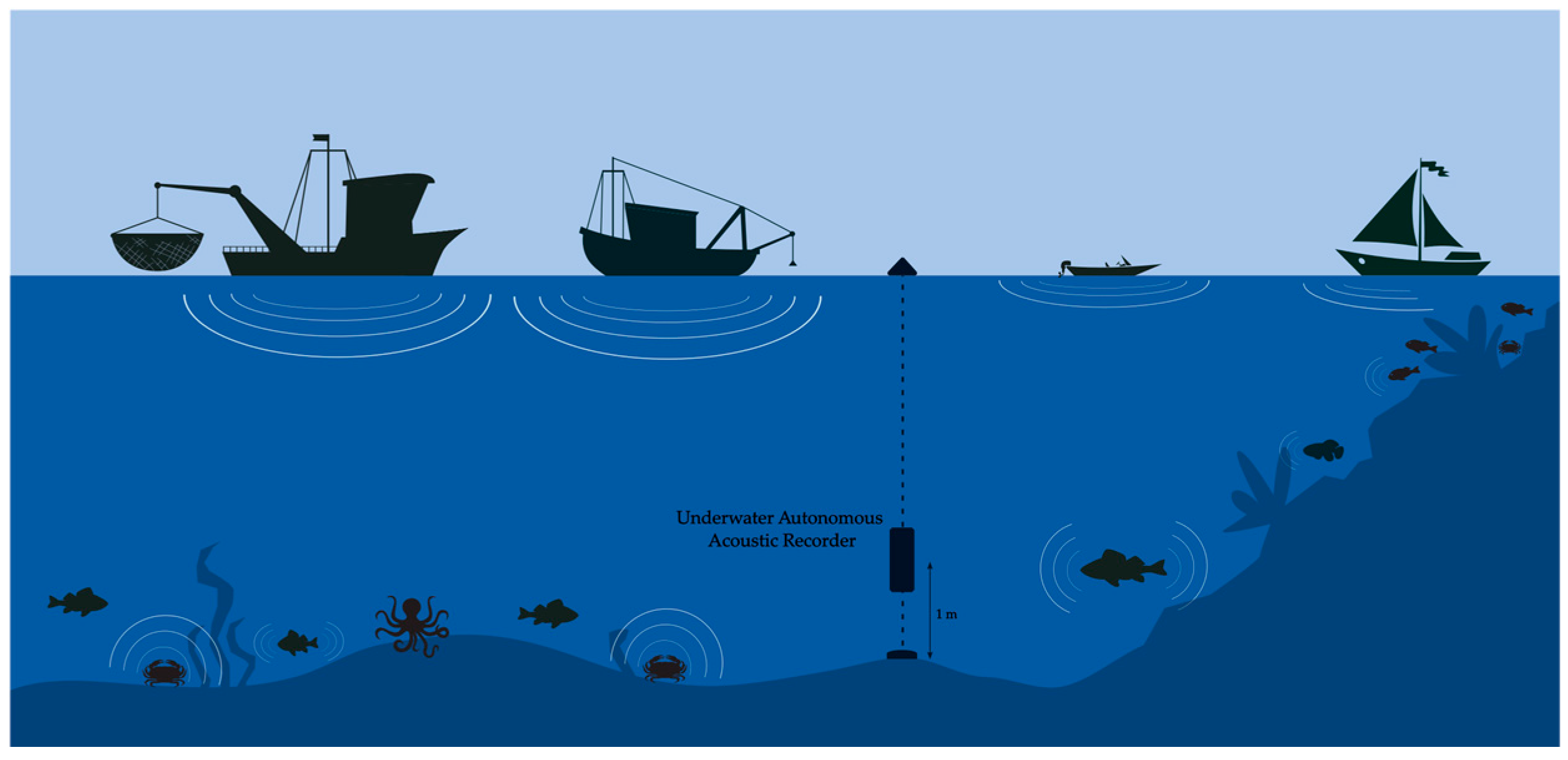
An underwater autonomous acoustic recorder was deployed 1 m above the seabed in each location: BF—24 m deep; MC—13 m deep; MZ—9 m deep. During the monitoring, the sensors recorded different types of noise. Given the characteristics of the natural environment selected for the measurements, the main noise sources detected corresponded to biological (marine animals) and anthropogenic activities (fishing vessels or pleasure craft) as illustrated in Figure 5.
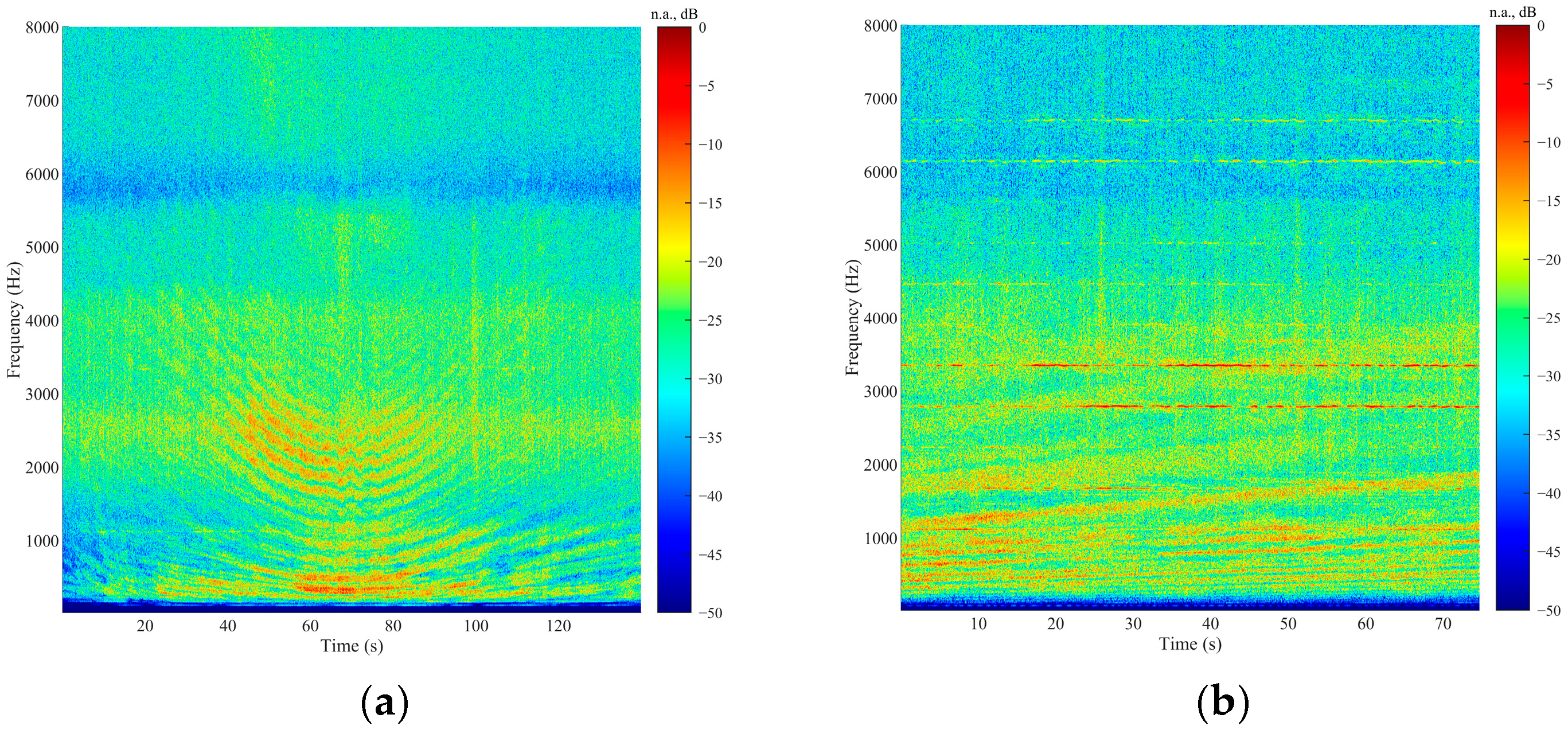
The noise produced by ships originates from engine vibration which is transmitted through the structure to the hull; the propeller rotation and the resulting cavitation; and the hydrodynamic behaviour governing the interaction with water. Normally continuous in nature, the noise is characterised by prominent tonal components whose frequency varies depending on factors such as the type, size, and speed of the ship. The pattern recorded by the acoustic sensor in this case generally corresponds to the passage of ships, leading to an increase or decrease in signal amplitude depending on the distance, as well as frequency variation due to the Doppler effect. Figure 6 illustrates the temporal and frequency evolution of different ships observed in MC.
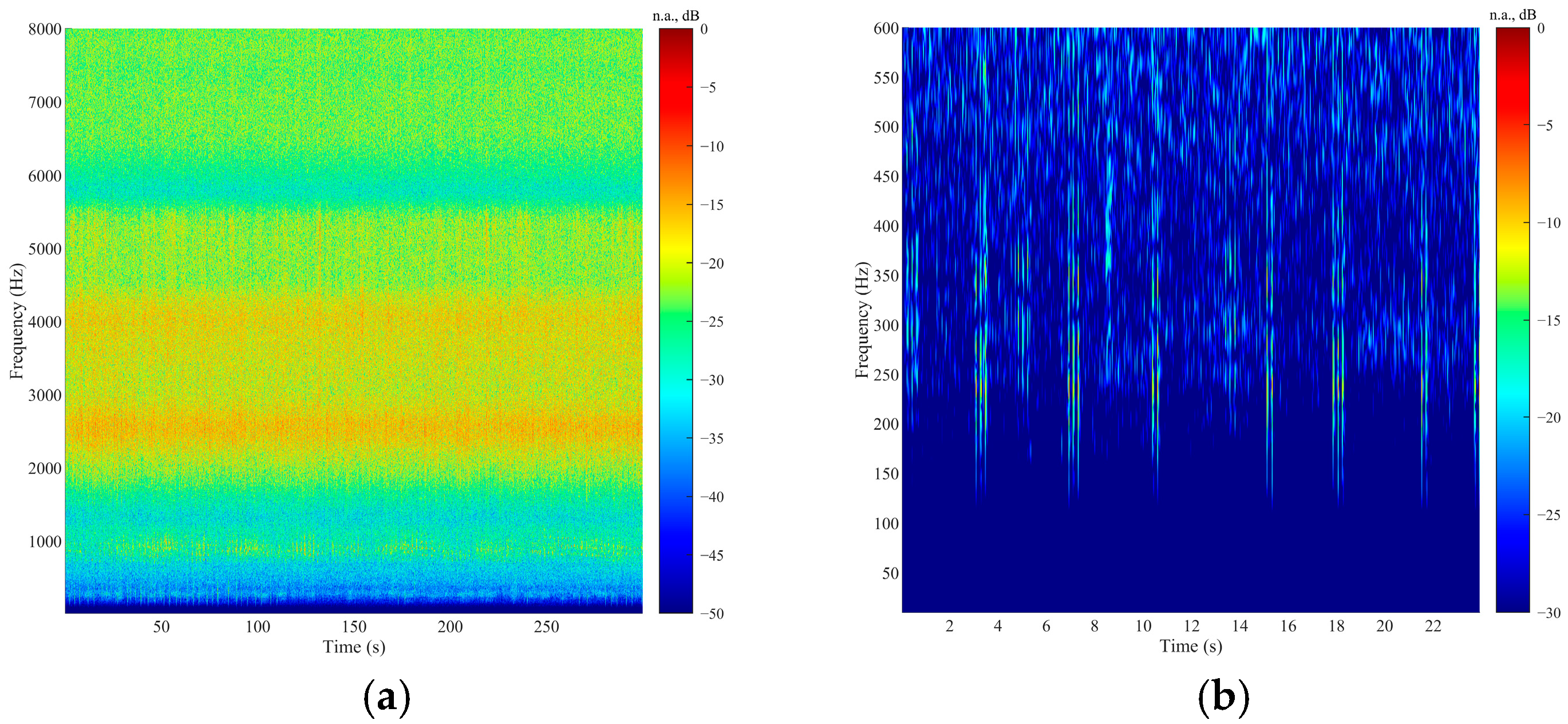
Regarding the biological noises, the recordings allowed us to distinguish the sounds produced by crustaceans when tapping their claws. These sounds are characterised by an impulsive broadband signal (see Figure 7a). On the other hand, fish vocalisations could be observed, including the croaking of gilthead seabream and the booming sounds made by groupers (see Figure 7b).

2.4. Soundscape Analysis

Each environment’s recorded signals were analysed in terms of time and frequency. Particular attention was paid to the soundscape differences across environments (BF, MC, and MZ) and time periods: summer versus winter; weekday (WK) versus weekend (WKND); periods of anthropogenic activity (AA) versus rest (R). Furthermore, since the trawling activity was halted in January 2025, the indices obtained during this ban season were compared to those obtained during periods of normal activity.
The environments were analysed based on the parameters proposed by Merchant et al. [8] using PAMGuide and Matlab R2024b. Given the lack of clear standardisation regarding signal-processing settings for marine environment analysis and the wide range of approaches reported in the literature [26,27,28,29,30], the present study primarily follows the recommendations of the International Quiet Ocean Experiment [31]. First, according to a set window size (9600 samples, Hanning window) [8,27,32] and a time average of 1 min—the essential temporal observation window according to [31]—the single-sided spectral power of the signals (PSS) was calculated using the Discrete Fourier Transform (DFT). The selected time-average window took into account the characteristics of the predominant noise sources in the monitoring areas. It prevented impulsive sounds from having excessive influence, prioritising continuous sources, such as ships in this case. Based on this data, both PSD (Equation (1)) and SPL (Equation (2)) were obtained for third-octave bands between 10 Hz and 24 kHz:
P S D f i , m = 10 · log 1 B · f P S S m ( f i ) p r e f 2 S d B
S P L = 10 · log 1 p r e f 2 i = f m i n f m a x P S S ( i ) B S d B
where pref is the reference pressure (1 μPa); ∆f is the ratio between the sampling frequency and the number of samples of each signal block; B is the window’s noise power bandwidth; S is the measurement device sensitivity (dB); and fmin and fmax are the limiting frequencies of the frequency band to be calculated.
Moreover, temporal averaging was applied in order to reduce the amount of processed data and to improve time–frequency evolution figures readability. The use of high averaging times reduces the influence of impulsive noises, allowing for better visualisation of possible trends in acoustic parameters. Conversely, the use of short time windows provides a level of detail that exceeds the objectives of this study.
In the case of SPL, both the frequency spectrum and the temporal evolution of the sound (broadband, 63 Hz and 125 Hz 1/3 oct. bands in accordance with MSFD) were studied. Similarly, the power level was established for different percentiles, and finally the difference was calculated between p90th and p10th—the essential maximum and minimum percentiles in the temporal analysis window according to [31]—providing a result that accounted for the dynamic range of the noise in each environment. In addition, the noise exposure level, SEL (Equation (3)), was calculated, with s being the reference time (1 s). To avoid the influence of sound event length on the results, the signals were divided into 120 min time blocks and the energy content was then summed for each of them. Finally, the average value for the entire event was calculated.
S E L = 10 · log m = 1 M i = f m i n f m a x P S S m ( i ) / B p r e f 2 · s S d B
Ecoacoustic parameters were also calculated using the R Soundecology library [33]. The study included ACI, ADI, AEI, BI, H and NDSI. The characteristics of the different indices are listed below.
The ACI [11,34,35,36] is one of the most widely used indices. It was originally used by researchers to analyse bird vocalisations but has recently been implemented in various studies to assess the underwater soundscape of various regions [10,35,36,37]. It measures the temporal variability of sound intensity across frequency bands [5] and is calculated by adding the absolute difference between two adjacent intensity values from the intensity matrix obtained by means of a Short-Time Discrete Fourier Transform (STDFT). ACI is particularly sensitive to biologically rich environments, such as coral reefs or coastal habitats, where many species present vocalisations that follow impulsive patterns (high energy and short duration). High ACI values often correlate with high biological activity [13].
The ADI [16,38] is calculated based on the Shannon–Weiner diversity index and establishes the energy distribution in frequency bands. For its part, the AEI [16] is calculated using the Gini coefficient and the same frequency bands as the ADI. Lower AEI values suggest that acoustic energy is distributed more evenly across frequency bands.
The BI was initially designed for terrestrial monitoring, but has also been applied to underwater soundscapes. It calculates total sound energy within specific frequency bands that are commonly associated with biological activity. It is worth noting that low-frequency bands are generally considered as anthropogenic noise, which helps to distinguish biophonic signals from background noise [15]. The latter has been used for detecting daily and seasonal biophonic patterns in underwater environments, particularly in tropical reef systems and coastal lagoons [14].
Another commonly used index is H [13], which combines temporal entropy and spectral entropy to evaluate the sound signal’s overall disorder. This index assumes that acoustically diverse environments—those with a wide range of sound frequencies and temporal patterns—reflect higher biodiversity. The entropy index is useful for detecting shifts in soundscapes due to human disturbances, such as shipping traffic or construction.
Finally, the NDSI [12] was developed more recently. This parameter compares biophonic and anthropogenic components of the soundscape and serves to differentiate original habitats from those exposed to human pressure. Although originally intended for terrestrial environment analyses, the adaptation of the index to underwater soundscapes is promising for quantifying human impacts on marine ecosystems.
The configuration parameters used to calculate each ecoacoustic index are described in Table 2. Although these types of descriptors have been used in previous studies, insufficient information is often provided about the parameters used for their calculation [19,20,22,27]—a fact that significantly hinders the standardisation of methods or the comparison of results across experiments. Alternatively, typical values derived from aerial soundscape studies are directly employed [21]. The characteristics of the marine environment, from both spectral and temporal perspectives, differ considerably from those of terrestrial habitats, which implies the need to reconfigure certain aspects of the indices.
The frequency limits used in this study were selected based on the bandwidth of greatest impact of the predominant noise sources in the area, which typically consist of ships with more relevant spectral content in the frequency band between 60 Hz and 1000 Hz (see Figure 6a), but with presence extending up to above 7 kHz (see Figure 6b). The final selected range, from 20 Hz to 8 kHz, also provides sufficient margin to consider other anthropogenic or biological sources in the analysis, as inferred from Figure 7.
The number of frequency bands used to compute the ACI index was increased from 10 [16,21] to 30 in order to achieve greater spectral resolution (approximately 270 Hz). Both the window length and the thresholds were set based on previous tests, selecting the most consistent values. The window length was increased compared to the value used in other studies [19,21], from 512 to 1024 samples, to prioritise continuous sounds over transient sounds generated by certain marine animals. Regarding the threshold, previous tests showed good performance for −50 dB, a value used by [21] and proposed by [16] for terrestrial environments.
It is worth highlighting certain characteristics associated with sound propagation in shallow waters. In this type of environment, the velocity profile shows minimal variations throughout the water column. Sound propagation losses are caused by reflections from the seabed for low frequencies and dispersion for high frequencies [4]. The medium behaves in a similar way as a transmission channel and, therefore, propagation depends on depth, seabed profile (orography), and substrate properties (density, propagation velocity in the medium, etc.). These characteristics vary significantly between environments. According to Urick et al. [39], this behaviour occurs for frequencies above the cut-off frequency, fc (Equation (4)):
f c = c w / 4 h 1 c w 2 c s 2
where cw is the speed of sound propagation in water (approximately 1500 m/s), cs is the speed of sound propagation in the seabed (between 1638 and 1658 m/s for a sand–silt substrate) [40], and h is the depth. At frequencies below fc, levels may differ significantly depending on the distance from the noise source [4]. The fc values obtained for BF and MC were 36 Hz and 60 Hz, respectively, both below the most significant frequency range emitted by the characteristic noise sources in the area.

3. Acoustic Analysis of Monitored Underwater Soundscapes

3.1. General Structure of Natural Soundscapes

The soundscapes of the two monitored natural environments, Bou Ferrer (BF) and Mina Cove (MC), exhibited similar patterns in terms of both time and frequency, enabling a direct correlation between noise and anthropogenic activities in the area.
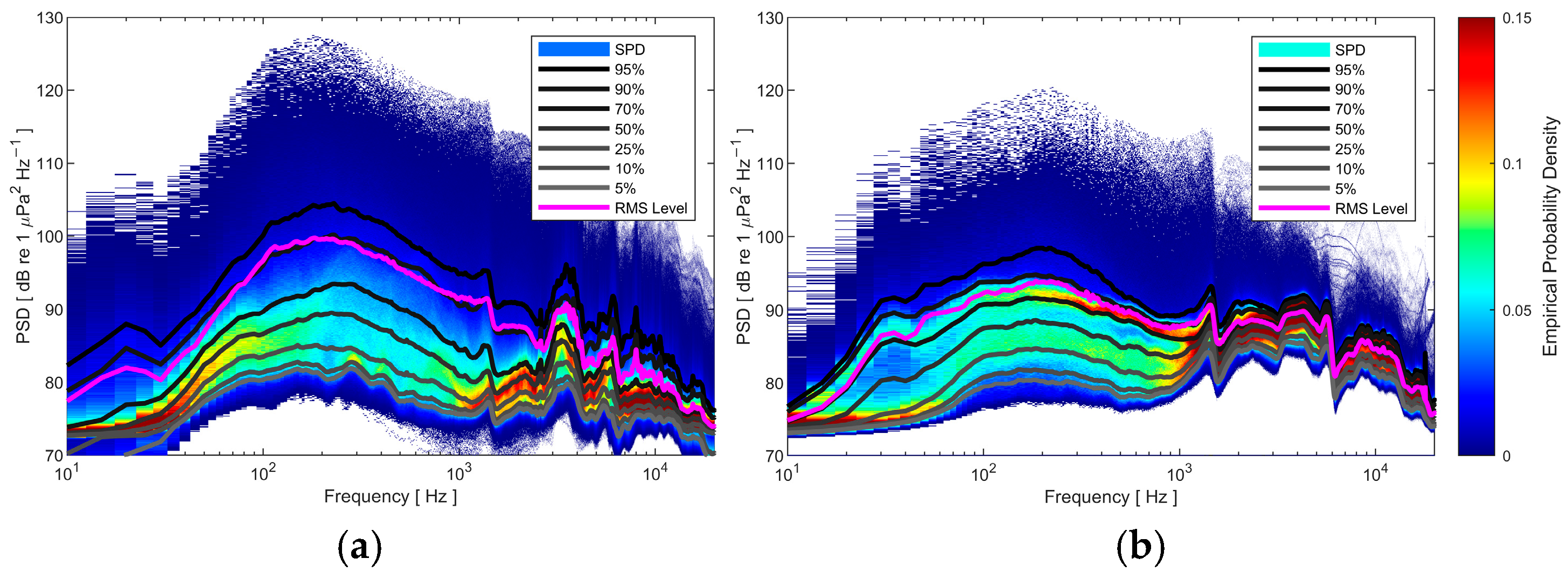
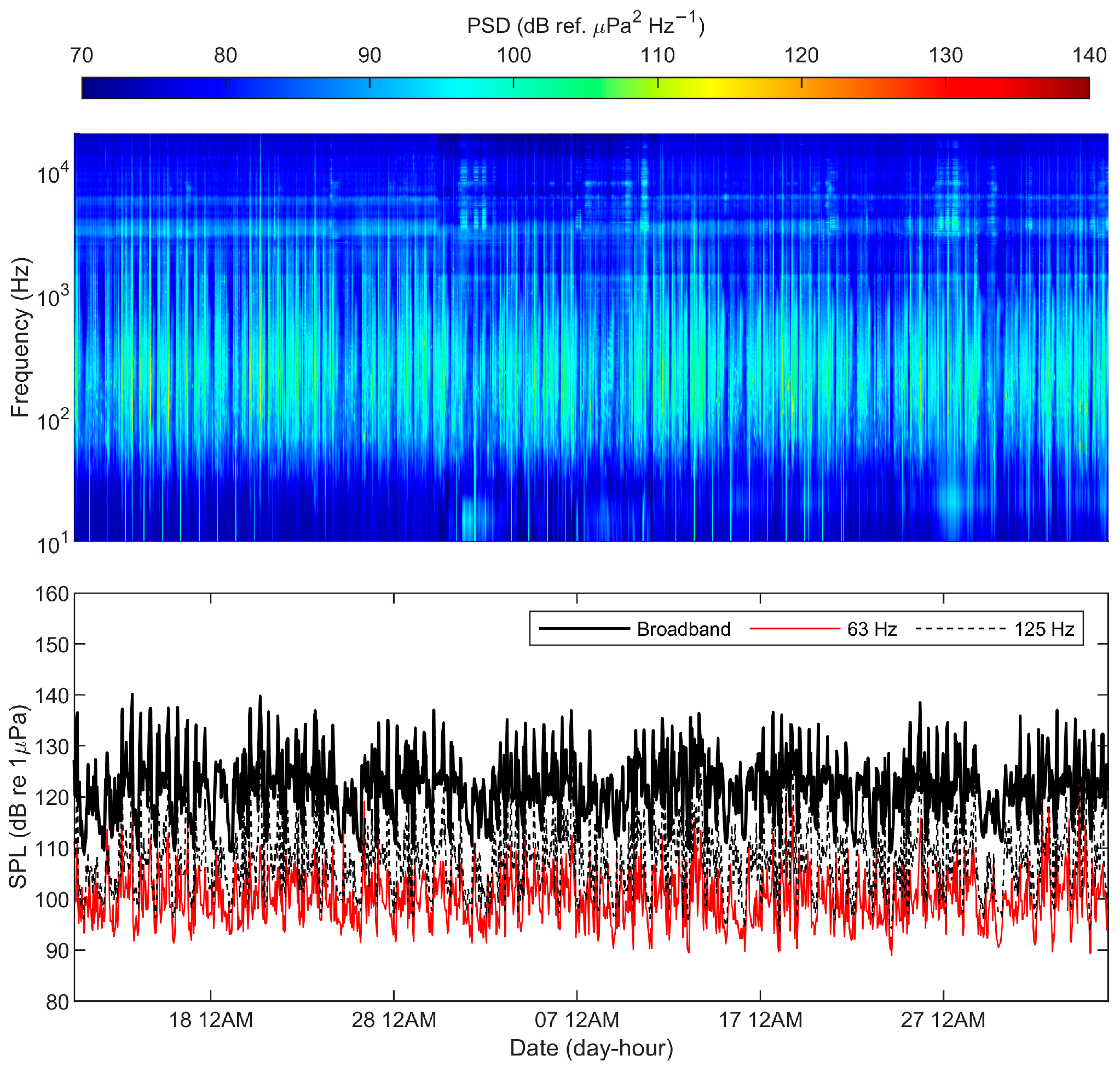
Figure 8 shows the spectral power density and the empirical probability density for both environments (BF: 10 May 2025 to 5 July 2025; MC: 17 February 2025 to 2 March 2025). The results show that most of the energy was concentrated in the 60–1000 Hz band, which was consistent with the noise spectra emitted by ships. However, sound events were significantly less likely to occur in this band than in the rest of the spectrum, which presented an accumulation of biological sounds (biophony) and physical sounds (e.g., waves, wind, and rain).
Based on the temporal and frequency evolution of noise, a clear periodicity was observed that allowed attribution of weekly SEL to maritime traffic. Given the area’s characteristics, this traffic was mainly composed of fishing vessels and pleasure craft. Noise dynamics remained constant in both locations during weekdays (Monday to Friday). However, SPL decreased at weekends (Saturday and Sunday), when the fishing fleet was almost inactive (see Figure 9 and Figure 10).
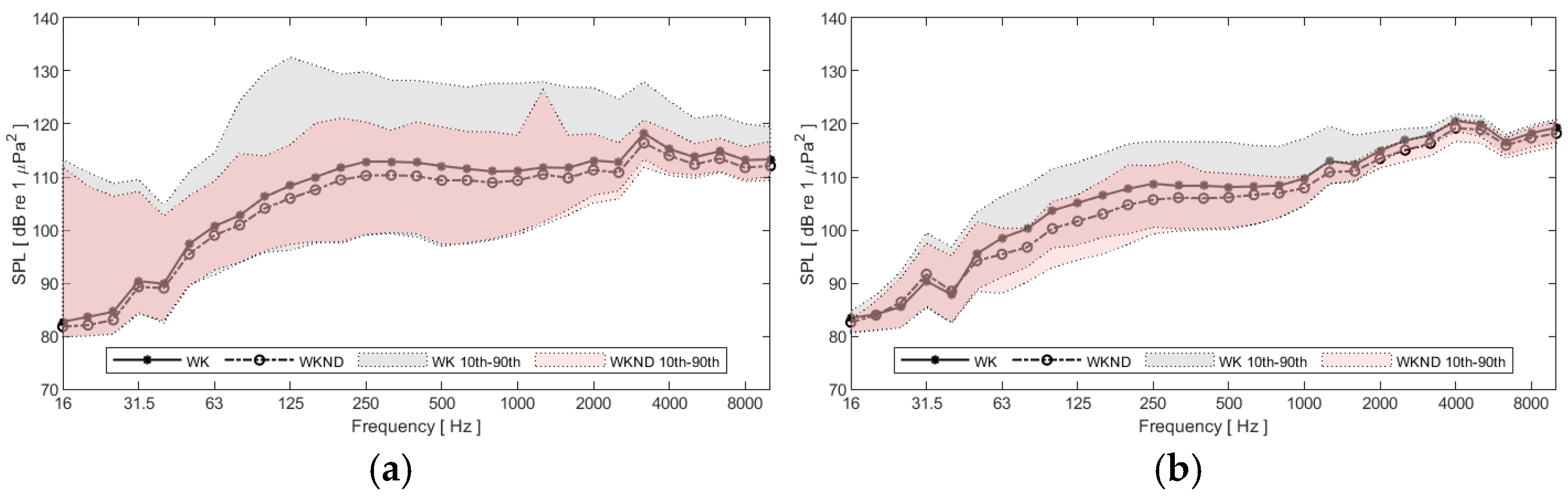
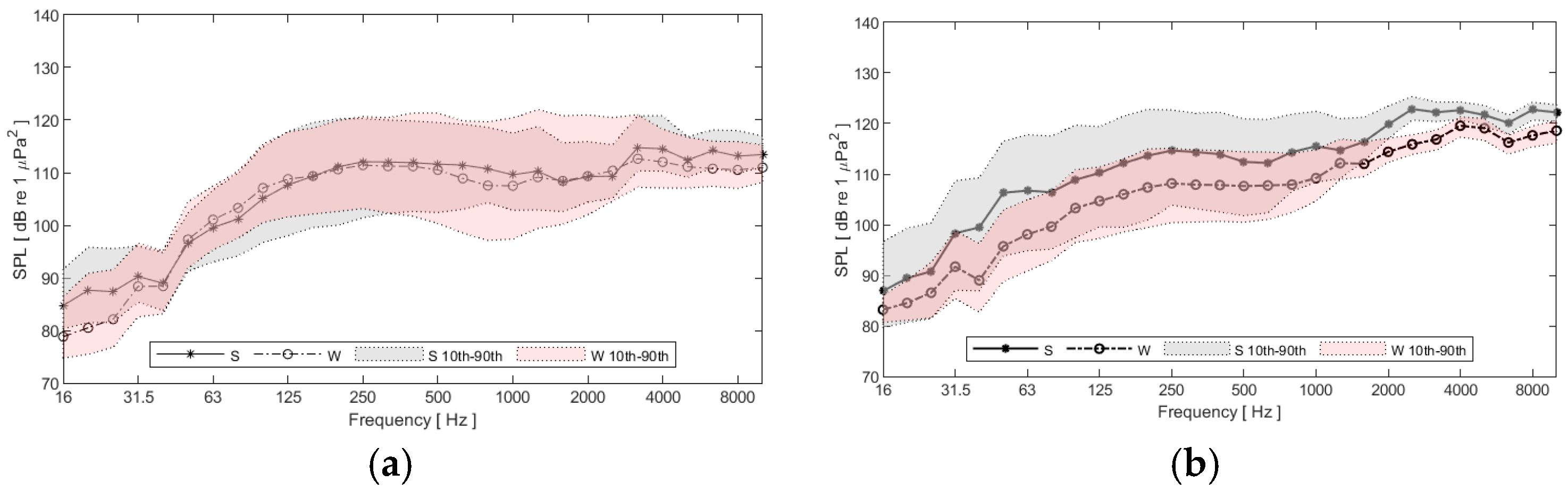
In BF, the absence of large fishing vessels during the weekends significantly reduced noise levels in the 80–1200 Hz frequency range (∆SPL ≈ 10 dB). This highlighted the influence of human activities on the soundscape of the area. MC exhibited a behaviour similar to BF, although this similarity was less noticeable because the area was situated further away from the typical fishing vessels routes and was sheltered by the coast’s orographic characteristics (being a cove rather than an open space). The lower noise limit at both locations (shaded areas in Figure 11), represented by the 10th percentile, presented consistent values throughout the week and at weekends. The equivalent sound pressure level in BF was 124 dB on weekdays and 120 dB at weekends (ΔSPLeq = 4 dB). For MC, the levels were 123 dB and 121 dB, respectively (∆SPLeq = 2 dB). These differences were owed mainly to the measurement depth (25 m at BF and 14 m at MC) and each area’s specific maritime traffic (pleasure craft closer to MC as it was a tourist area).
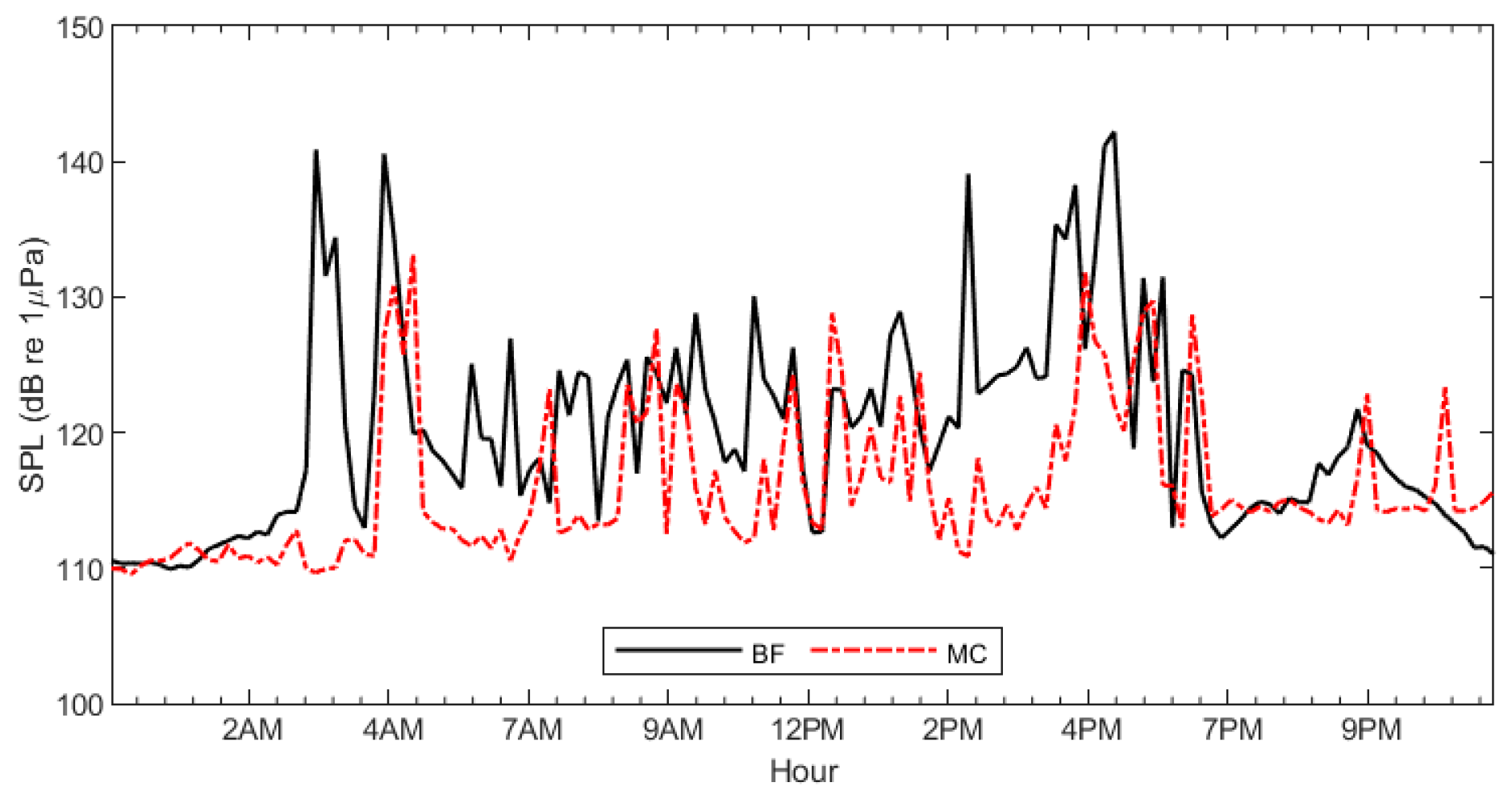
The soundscape’s daily evolution presented a clear pattern of repetition during weekdays (see Figure 12). A significant noise increase (BF: Lavg_max = 140 dB; MC: Lavg_max = 130 dB) was observed at around 3:00 a.m. (4:00 a.m. in MC) which persisted until 4:30 a.m., coinciding with the times of most dense traffic leaving the nearest ports (BF: Vila Joiosa; MC: Altea). The sound pressure level dropped to approximately 125 dB for BF and 115 dB for MC between 4:30 a.m. and 3:00 p.m., peaking occasionally due to the scattered presence of fishing boats or pleasure craft. Most fishing vessels returned to the port between 3 p.m. and 6 p.m., resulting in similar SPL values to those recorded in the early hours of the day. The noise level dropped to 110 dB after 6:00 p.m., and remained almost constant until the following day. The daily analysis provided relevant information on the soundscape structure, enabling the temporal segmentation of each day’s acoustic data.
As in the case of other environmental regulations, indicators of good environmental status could be associated with time slots related to circadian rhythms—those of the fish and other marine animals in this work. The latter also made it possible to compare periods of anthropogenic noise pollution with the area’s natural soundscape within a given environment. According to this principle, the soundscape could be divided into two time periods: AA on the one hand, i.e., 3:00 a.m. to 6:00 p.m.; R on the other, i.e., 6:00 p.m. to 3:00 a.m. This segmentation was used in Section 3.3 to study each environment’s sound exposure variations.

3.2. Seasonality Analysis of the Underwater Soundscape

Up to this point, the soundscape had been analysed from a general perspective, examining the typical spectral composition of noise and the temporal variations observed on a daily and weekly timescale. However, given the characteristics of the selected environments, it was worth addressing the anthropogenic noise issue from a seasonal perspective. Both BF and MC are located in a Mediterranean region whose economy is largely tourism-dependent, in turn causing a significant increase in nautical activities during the summer months. BF is 25 m deep and located approximately 1000 m offshore from the nearest beach, while MC is located within the Serra Gelada Natural Park. This area was subject to heavy marine traffic during the summer due to the presence of mooring buoys. In this case, the hydrophone was anchored less than 100 m from the coast at a depth of approximately 14 m, resulting in greater exposure to noise.
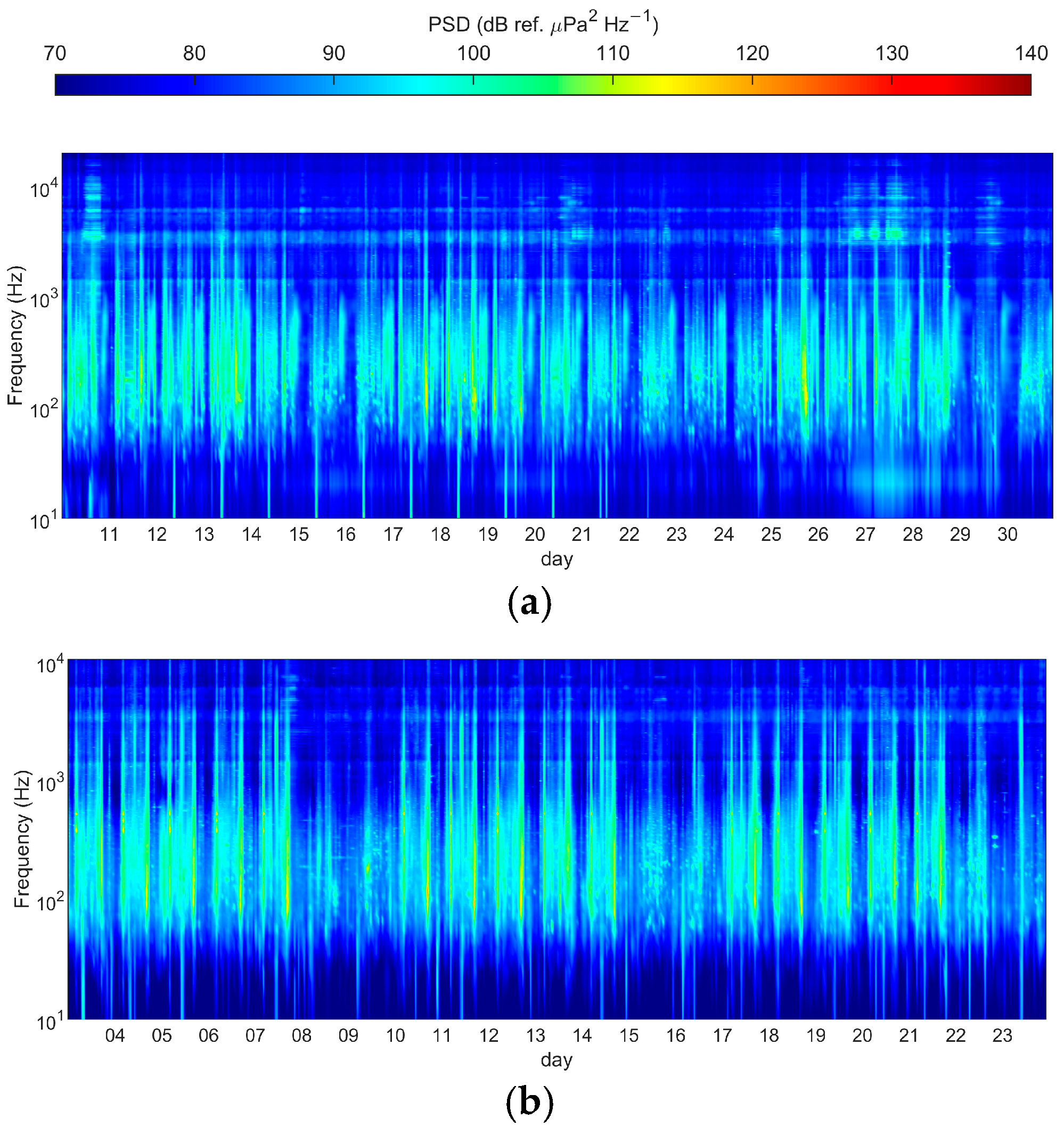
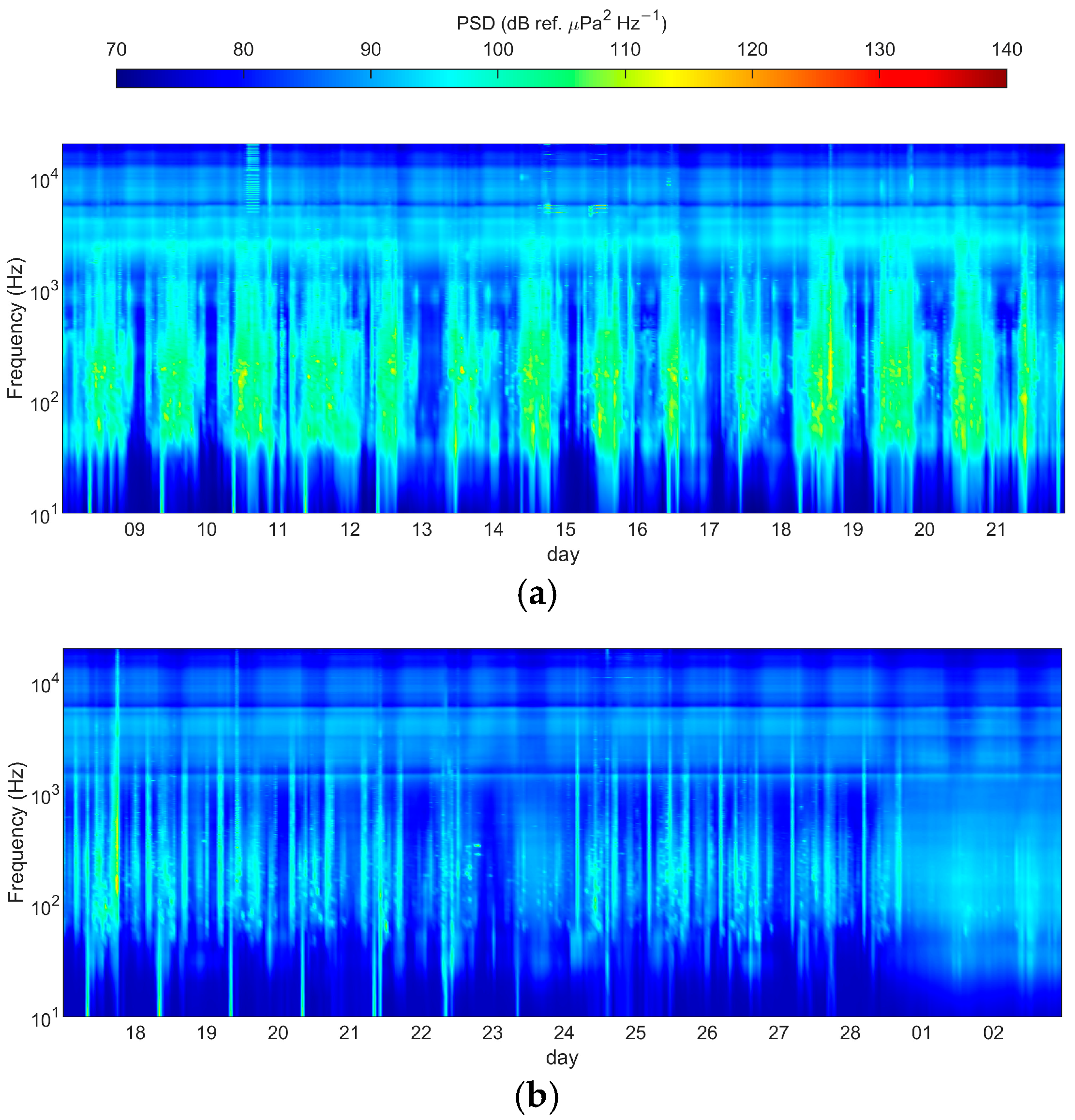
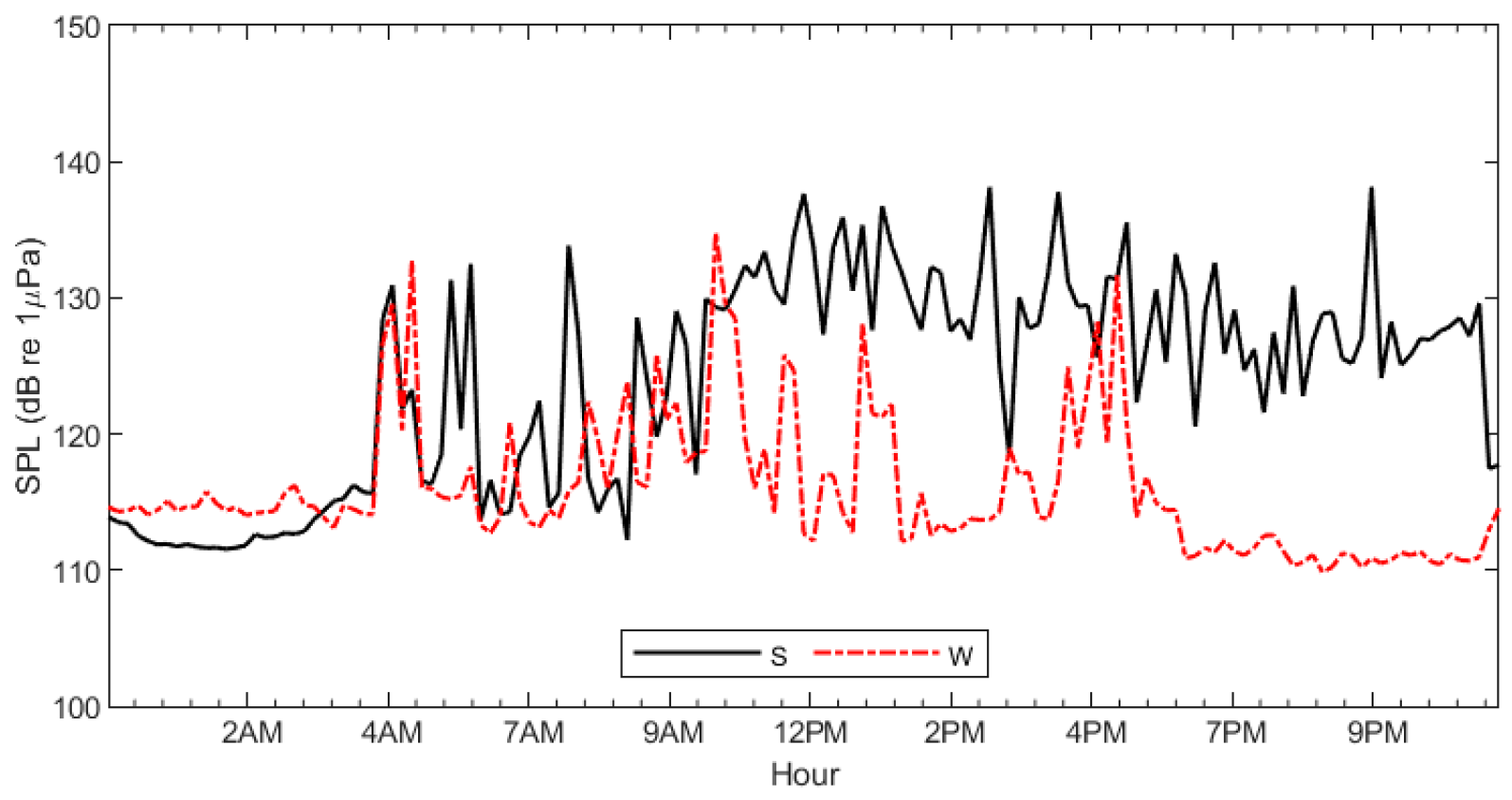
To analyse how seasonality influenced the soundscape, monitoring data from two different periods in each environment were utilised: summer (BF: 10 June to 30 June 2024; MC: 8 July to 21 July 2024) and winter (BF: 3 February to 23 February 2025; MC: 17 February to 2 March 2025). The SPL obtained in both periods was 122 dB (see Figure 13a). However, the greater deviation between the 10th and 90th percentiles in the case of frequency bands between 600 Hz and 1500 Hz during the winter season was worthy of note. According to Figure 14, seasonality did not significantly affect the BF soundscape. As for the MC environment, the SPL recorded during summer differed by almost 5 dB with respect to that recorded in winter (126.8 dB and 122.0 dB, respectively) (see Figure 13b). This was also reflected in the time and frequency evolution of noise in the area. As shown in Figure 15, a larger number of pleasure craft in the Serra Gelada area generated higher noise levels across the entire analysed spectrum. Similarly, the dynamic range (p90th–p10th) increased for frequencies below 1500 Hz, coinciding with an increase in the number of vessels. A comparison of the soundscape structure throughout the day showed that during the winter months, the fishing vessels left port early in the morning and returned mid-afternoon (see Figure 16). However, during the summer, noise levels increased from 10:00 am onwards (∆SPL = 15 dB) and remained high until late at night.
The findings revealed a clear yearly MC soundscape pattern, notably influenced by the summertime activity peak. In areas further from the coast, such as BF, the effects of pleasure crafts and differences over a year were less pronounced.

3.3. Soundscape Comparison According to Time Segmentation

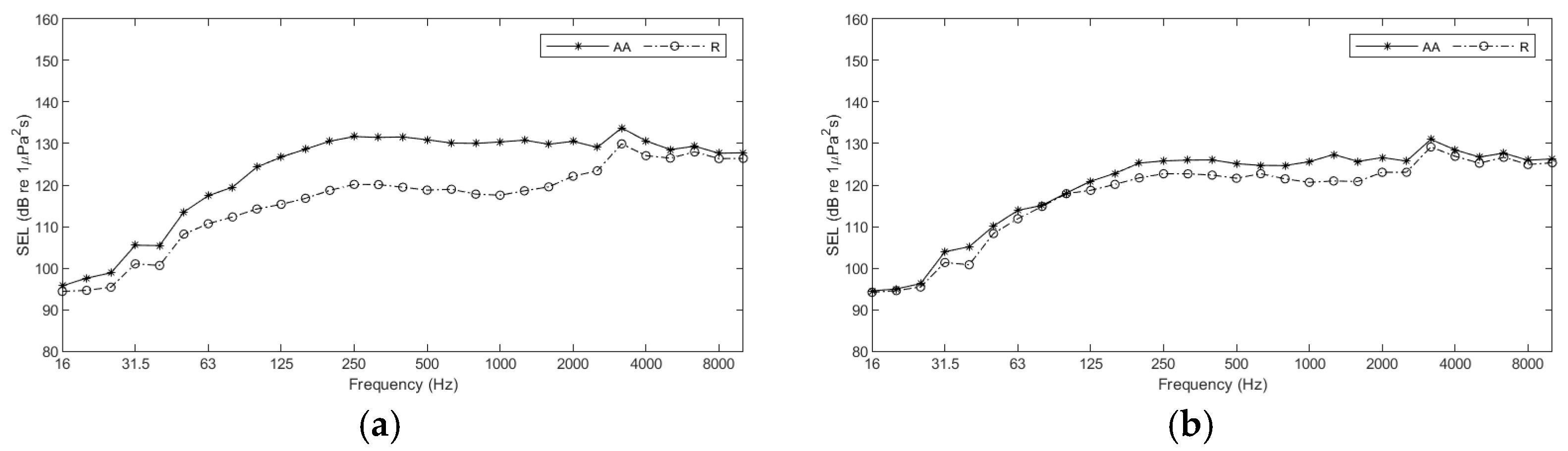
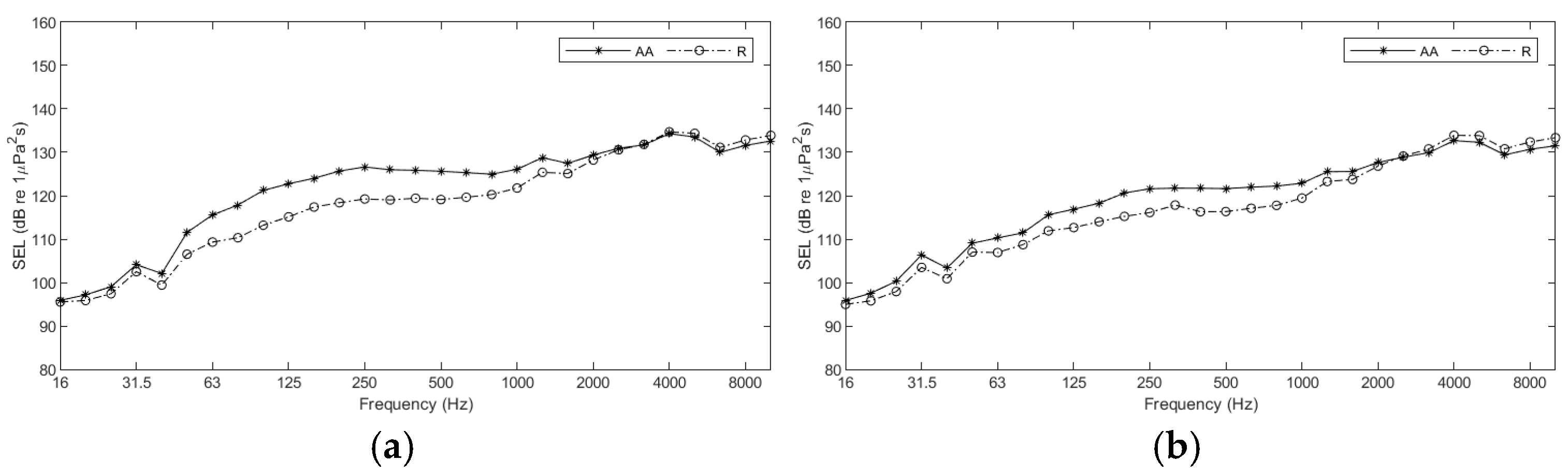
The analysis of the recordings obtained in both environments according to the time segmentation indicated in Section 3.1 (AA: 3:00 a.m. to 6:00 p.m.; R: 6:00 p.m. to 3:00 a.m.) showed the relationship between SEL and existing nautical activities in the area.
On a weekly basis, the difference in SEL between the two environments was greater during the week than at the weekend (see Figure 17 and Figure 18) due to the higher density of small-scale, Monday-to-Friday maritime traffic. For BF, the difference was around 12 dB between the 50 Hz and 2500 Hz bands, while it dropped to 3 dB at weekends. In contrast, for MC, located further away from the usual route taken by fishing vessels, the difference was approximately 7 dB and it was limited to the 50 Hz to 1500 Hz frequency range. During the weekends, the AA-R variation in SEL fell to 5 dB.
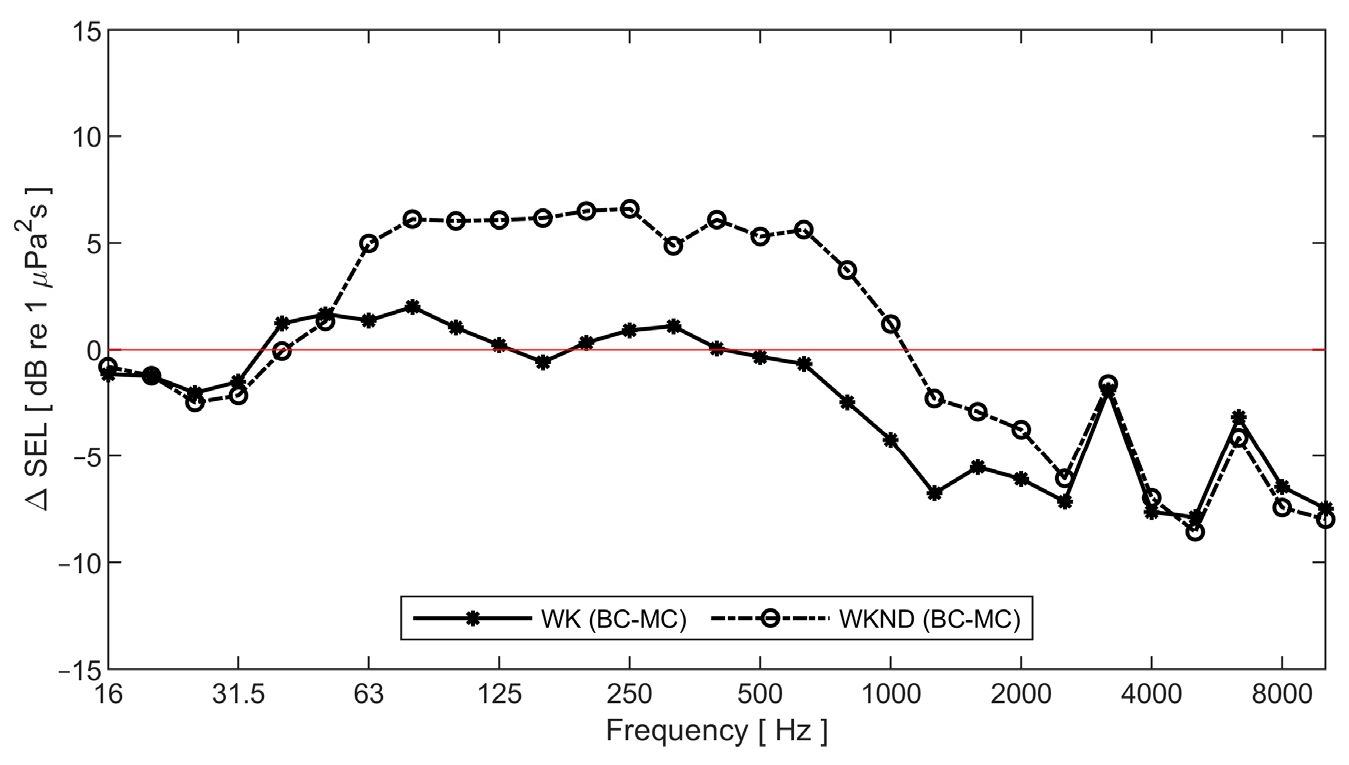
On the other hand, significant differences were found between the weekly soundscapes of both locations. Figure 19 illustrates the SEL difference between BF and MC during period R, in the case of both weekdays and weekends. As can be observed, the exposure was identical in both environments for frequencies below 600 Hz on weekdays (solid line). For higher frequencies, the environment characteristics—linked to more numerous pleasure craft near MC—caused a rise of almost 10 dB. This high-frequency behaviour continued at weekends (dotted line). However, an increase in SEL was observed for frequencies below 1000 Hz in BF over this period. Such a behaviour could be due to the presence of fishing vessels in the La Vila Joiosa area or to an increase in the number of large pleasure boats passing through at weekends.
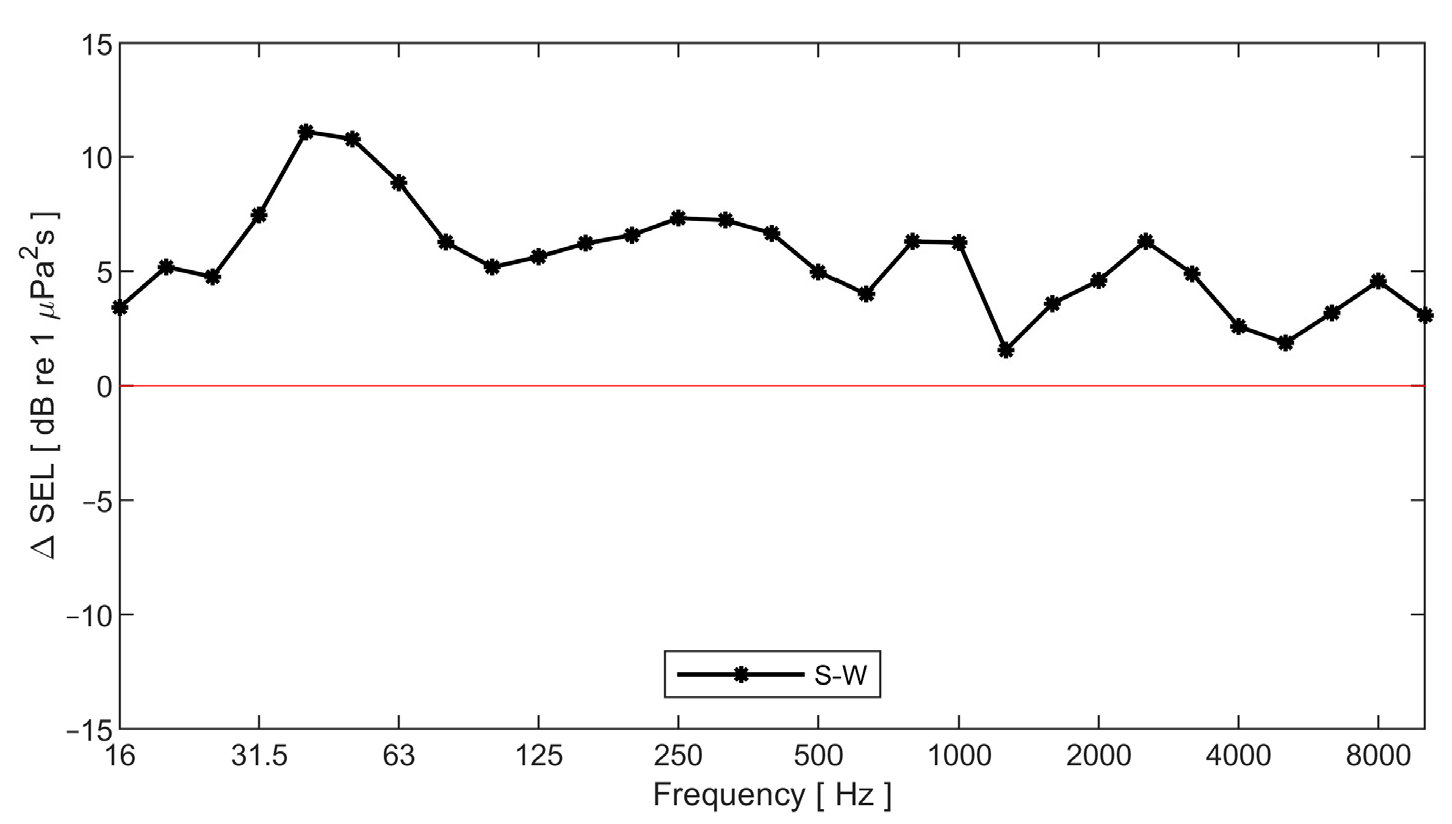
In line with the previous paragraph, a comparison between summer and winter for time slot R showed that pleasure craft significantly influenced the MC’s underwater soundscape, with an average SEL difference of 5 dB for all third-octave bands compared to winter (see Figure 20).

3.4. Effect of Trawling Restrictions on the Soundscape

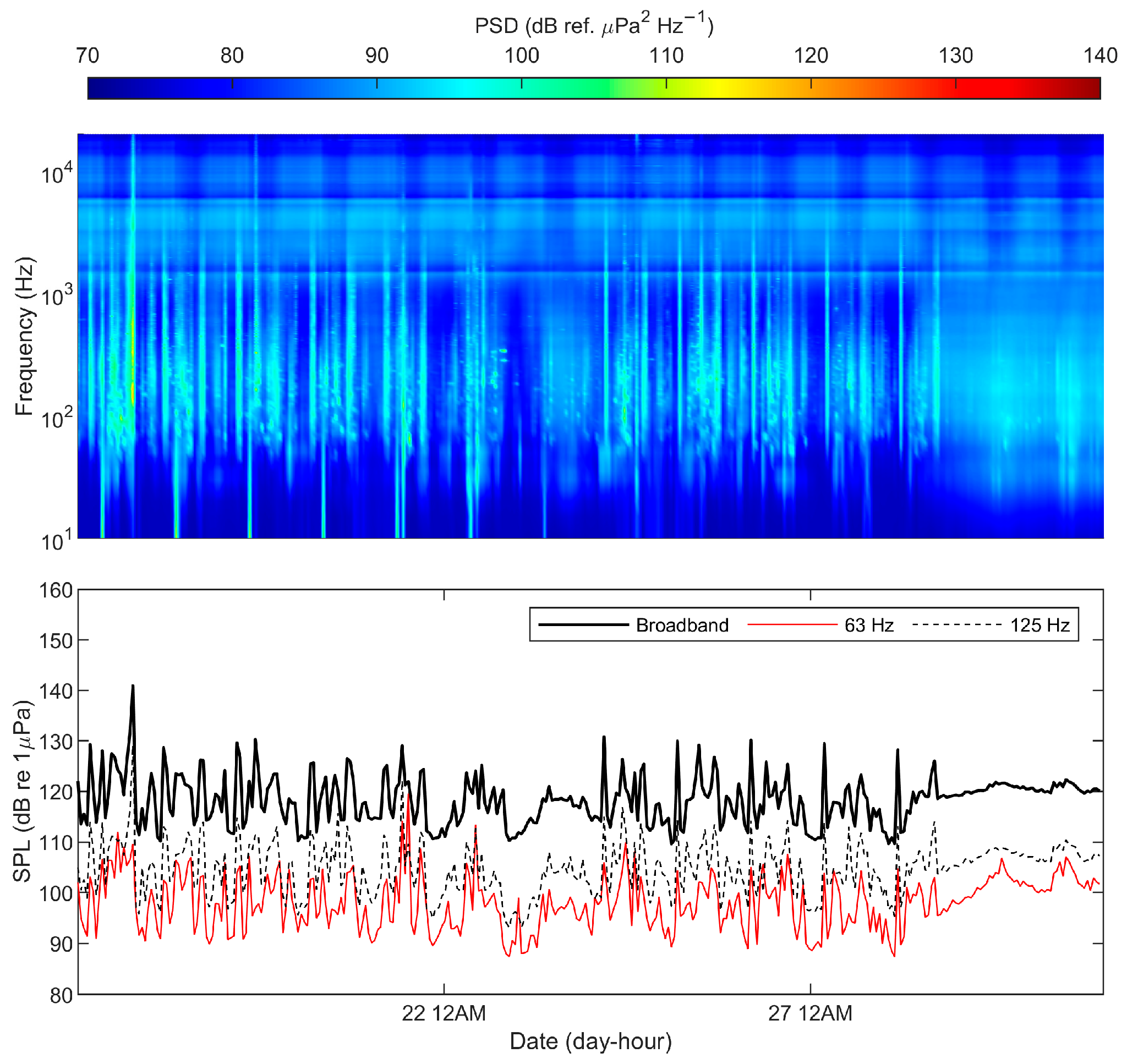
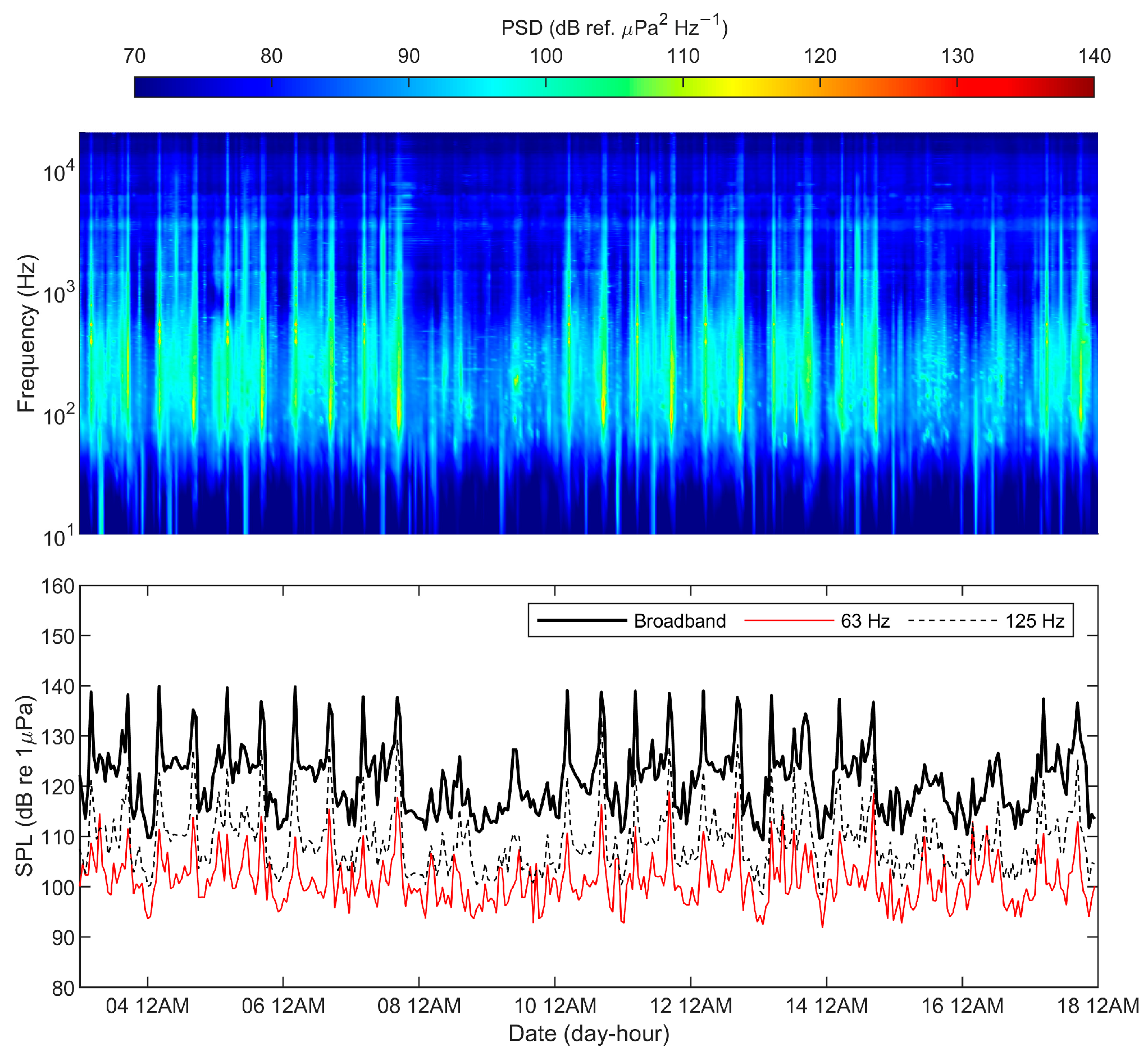
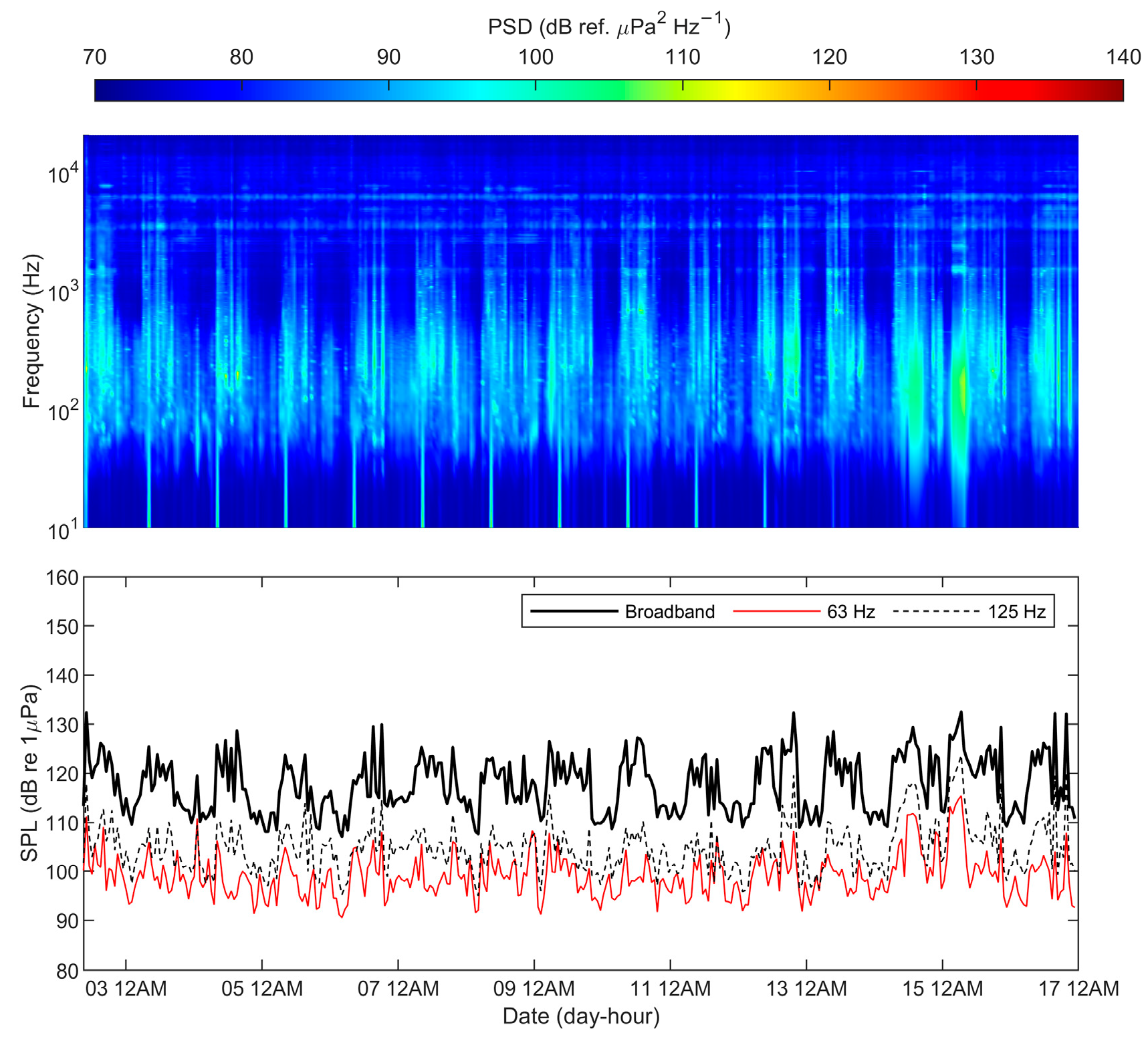
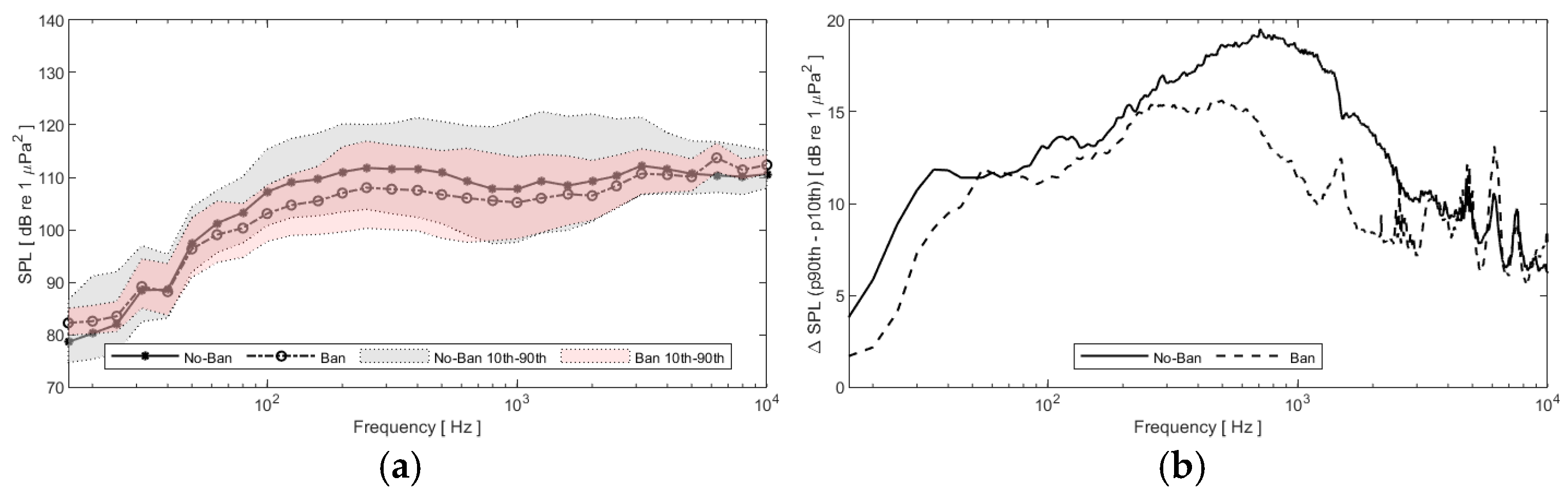
In January 2025, a biological shutdown impacted trawling activities. The decrease in traffic density in the area changed the underwater soundscape. Figure 21 shows the noise temporal and frequency evolution for BF between 3 and 17 February 2025, a period of normal fishing activity. As can be observed, the peaks correspond to usual ship departure and arrival times: early morning and early evening, respectively. The average SPL for this period was 122 dB. Figure 22, on the other hand, presents the noise between 2 and 16 January 2025 during the closed season. In this case, the noise peaks corresponding to the start and end of the fishing day were absent, reducing the average SPL by 4 dB (SPLavg = 118 dB). The soundscape continues to be dominated by noise generated by other vessels between 12:00 p.m. and 5:00 p.m. From a spectral point of view, the most significant level reductions occurred in the third-octave bands between 63 Hz and 3000 Hz (see Figure 23). Similarly, a narrowband analysis revealed changes in the dynamic range, showing an increase of up to 4 dB for frequencies below 40 Hz and 7 dB for frequencies between 600 Hz and 2000 Hz (see Figure 23).

3.5. Differences Between Natural and Artificial Soundscapes

Aquaculture can be divided into two main categories. The first is entirely offshore aquaculture taking placing in dedicated facilities. The farmed animals live in a quasi-natural environment and are therefore exposed to a soundscape similar to that of the BF and MC indicated in previous sections. The second is aquaculture in land facilities that use breeding tanks. The characteristics of the soundscape in these facilities differ considerably from those of the natural underwater environments and may affect the welfare of the fish.
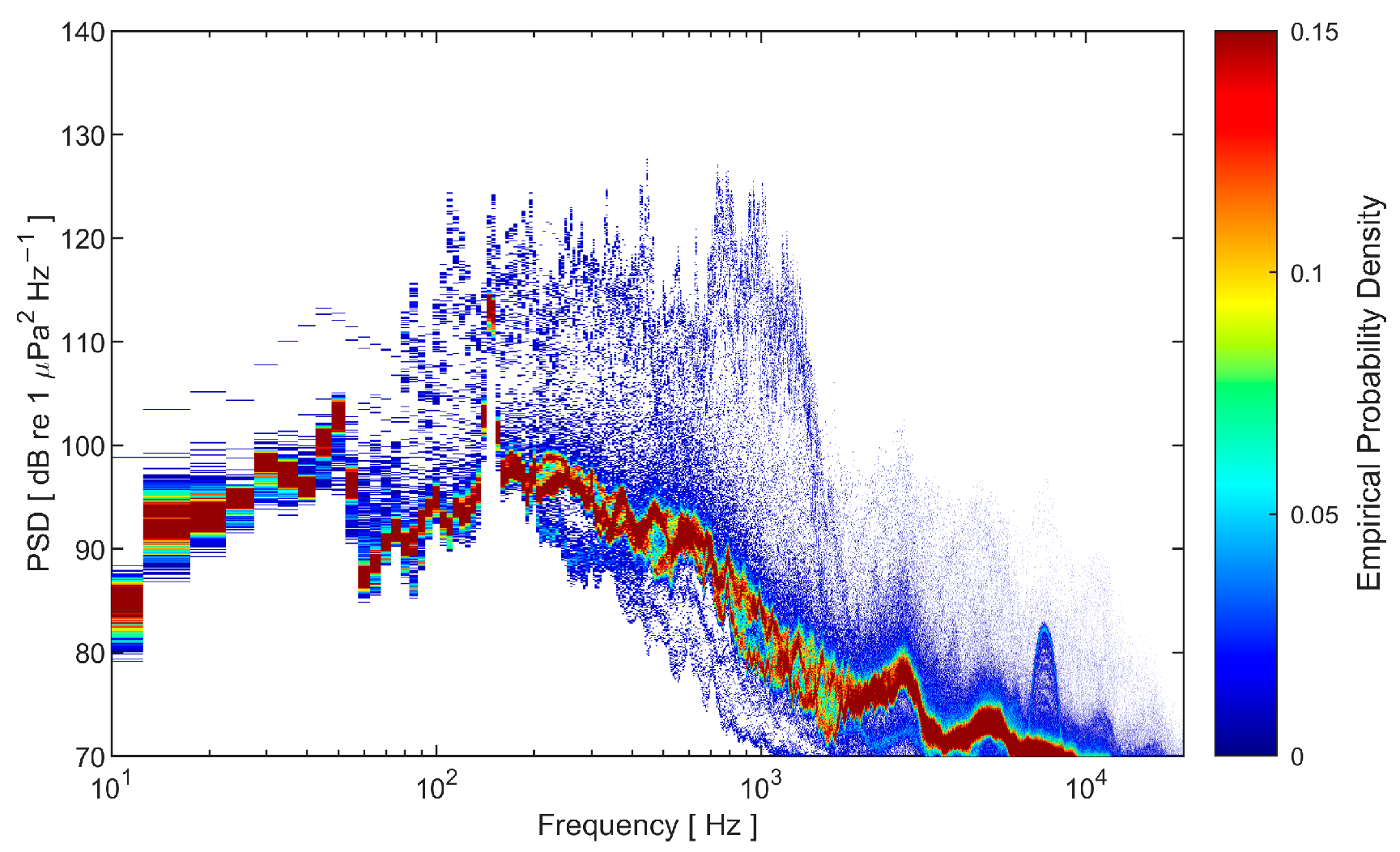
Figure 24 illustrates PSD and probability density derived from analysing the soundscape within a tank in MZ throughout a complete day. As indicated in Section 3.1, while sound events were more likely to occur at frequencies below 60 Hz or above 1000 Hz in the natural environments, the spectral probability density was evenly distributed across the spectrum inside the tank.
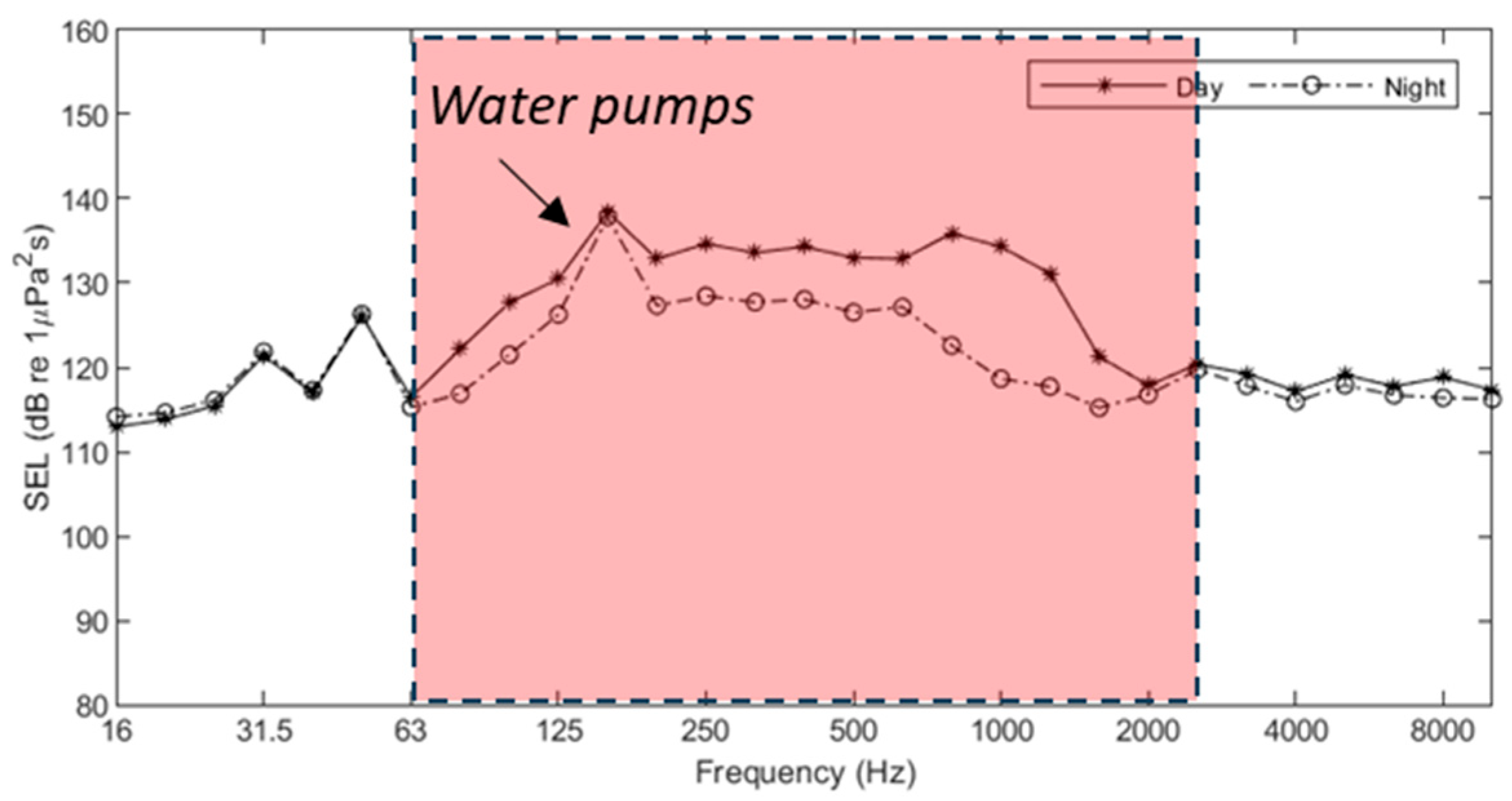
On the other hand, observing the SPL obtained in the tank (Figure 25), most of the energy was concentrated in the third-octave bands between 125 Hz and 1500 Hz. In terms of levels, this behaviour bore some potential resemblance to that observed in a natural environment with the presence of ships. However, due to its nature, the tank noise exhibited completely different time and frequency properties. The water filtration and oxygenation system necessary for fish maintenance poured a continuous flow of water onto the surface of the tank, resulting in a constant broadband noise over time. On the other hand, booster pumps introduced tonal components into the soundscape, with their frequency linked to the system’s operating regime (e.g., flow rate or RPM). Figure 25 illustrates this phenomenon, showing an SPL increase for the 160 Hz band due to the presence of a high-energy tonal component.
Moreover, some differences were observed between working hours (day, 7:00 a.m. to 8:00 p.m.) and the rest of the day (night) for third-octave bands between 63 and 2500 Hz. This behaviour was mainly due to operational activities in the facilities during the day, such as vehicle movement and the movement of loads and fish feeding.
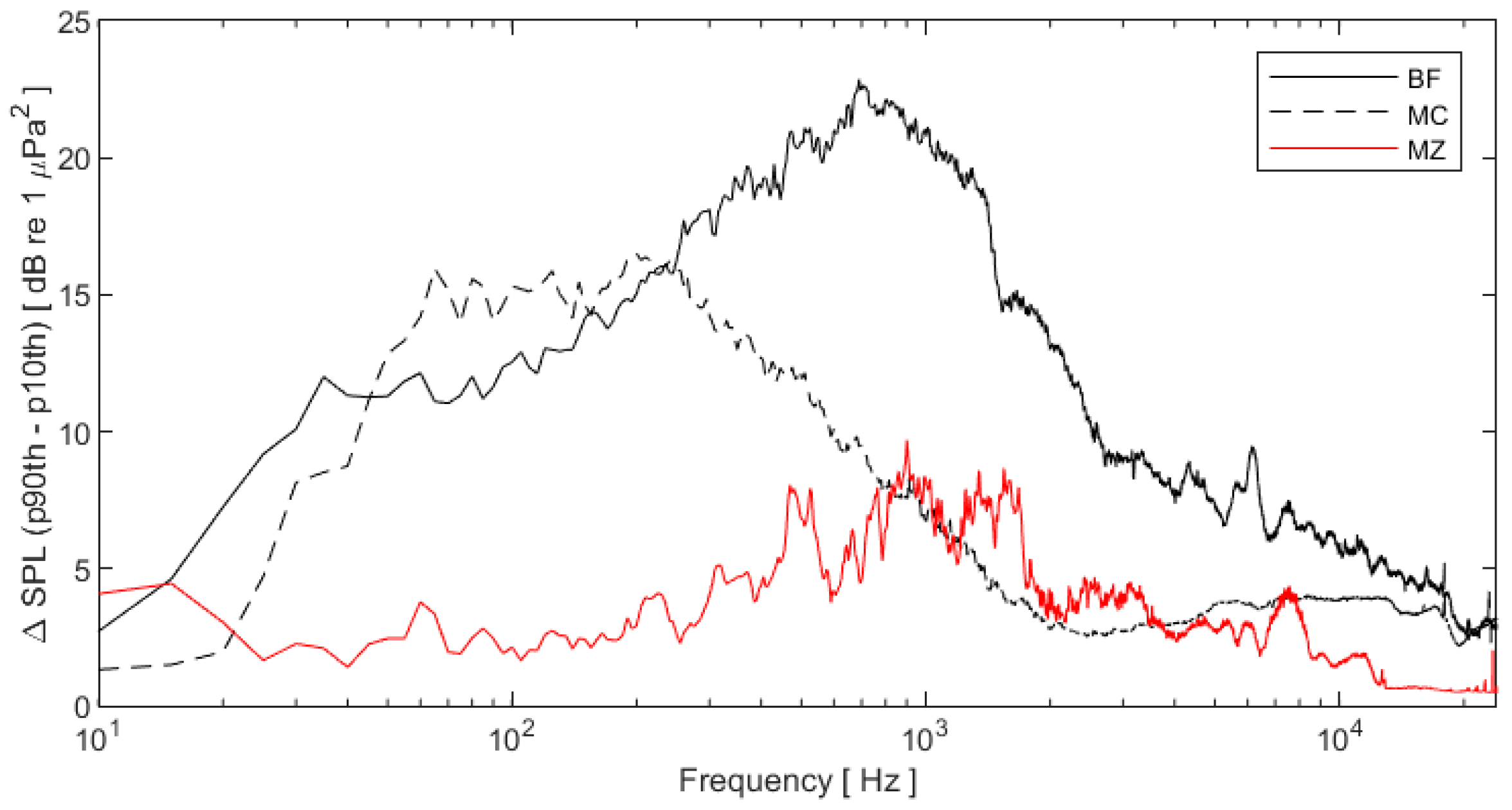
Furthermore, the estimated dynamic range, based on the difference between the SPL 10th and 90th percentiles, revealed significant differences compared to natural environments (Figure 26). While the daily SPL variation was above 10–15 dB in BF and MC, the tank soundscape was considerably more constant and lower in dynamic range, especially at low frequencies (5 dB). These differences reflected the complexity of natural soundscapes.

4. Comparison of Ecoacoustic Indices Based on the Environment

Finally, the monitored environments were compared using different ecoacoustic indices: ACI, ADI, AEI, BI, H, and NDSI. As introduced in Section 2.4, the analysis was performed considering full days according to different cases: natural environments/artificial environments; WK/WKND; S/W; ban season/non-ban season. Each parameter was calculated in 5 min blocks resulting in a population of 288 samples per case of analysis (24 h of sampling data). The statistical analysis was carried out using IBM SPSS Statistics 25.
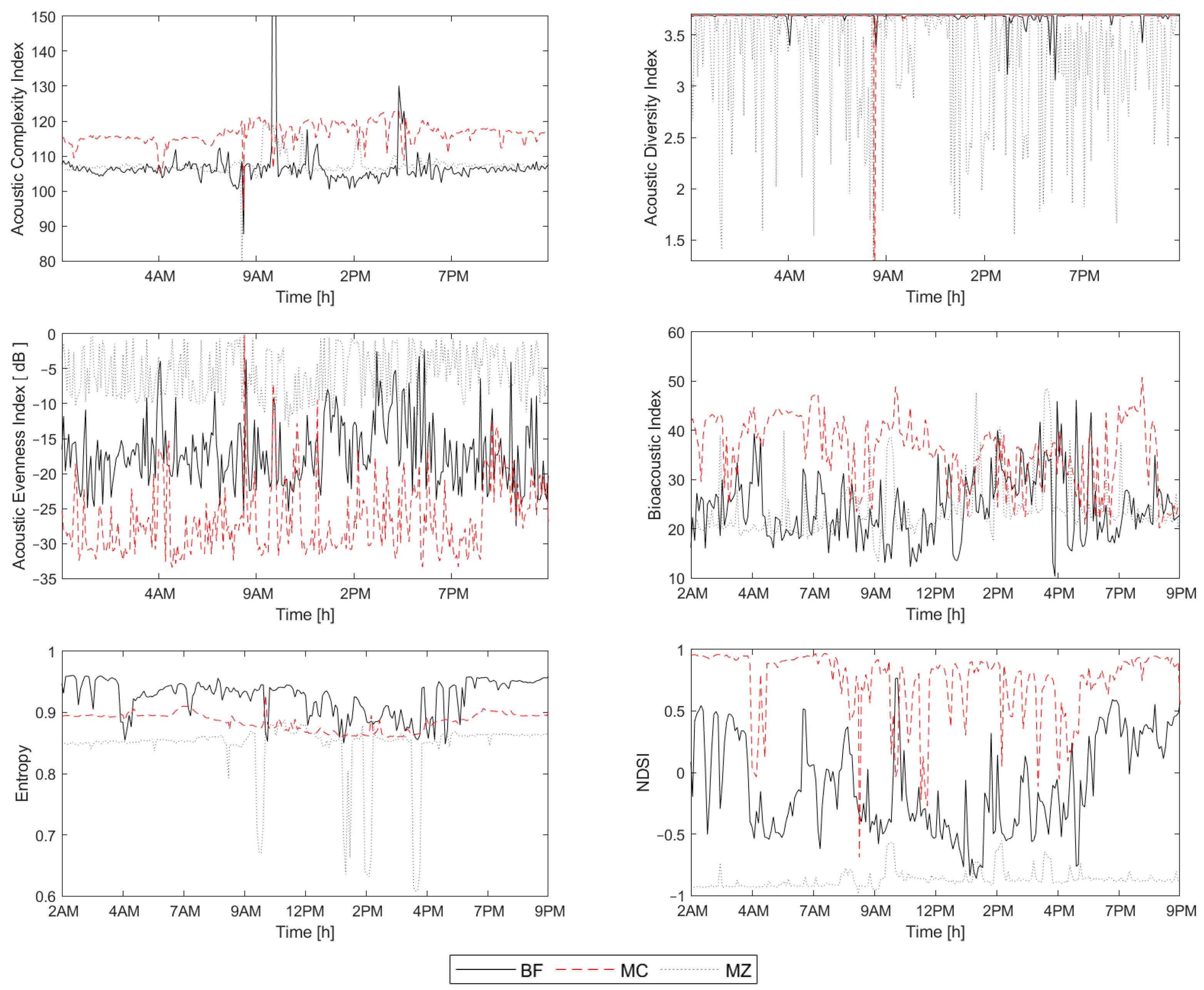
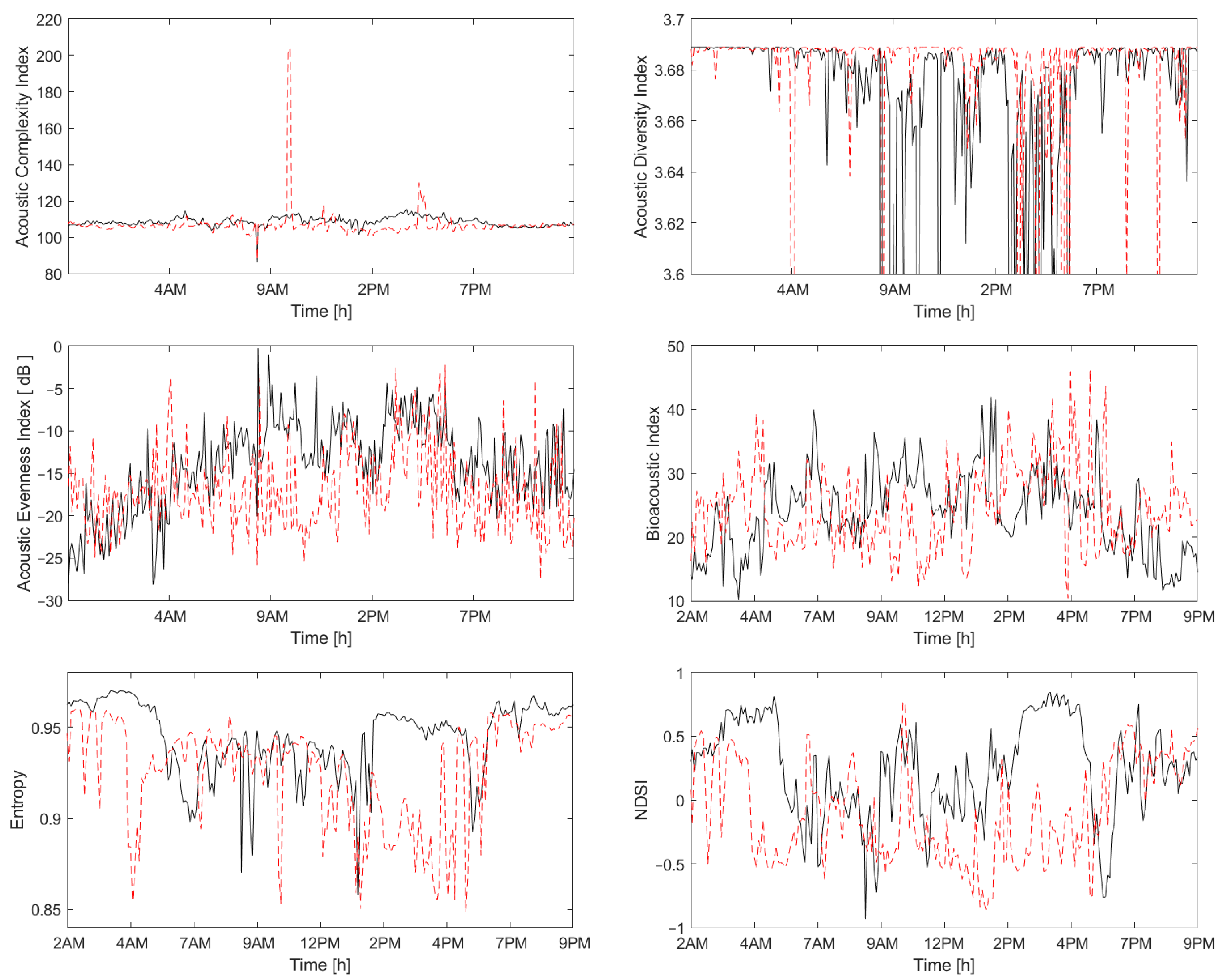
The first analysis focused on establishing whether it was possible to distinguish between environments with different characteristics. To achieve this, recordings were utilised from BF (19 February 2025), MC (19 February 2025), and MZ (8 November 2024). Figure 27 shows the time evolution obtained in each case. As can be observed, most metrics differed clearly between environments. The ACI provided higher values for the soundscape MC. According to the index definition, this indicated a greater change in amplitude over time within the analysed bandwidth. The variation was consistent with the environmental characteristics and the increased number of pleasure craft throughout the day. Regarding the ADI, MZ’s evolution clearly showed a greater number of lower-value peaks, indicating less uniform energy distribution between bands. This result was confirmed by the AEI parameter, which provided higher values than those observed in the other environments and was also associated with a less uniform distribution. This behaviour could be due to tonal components in the artificial soundscape being associated with the water filtration and oxygenation system. Regarding the BI, Figure 27 shows higher values for the MC environment, implying a greater variation in intensity between bands relative to the band with the lowest amplitude—a result that was in line with the ACI. Finally, both H and the NDSI clearly enabled us to differentiate between the three analysed environments. The analysis revealed lower H values for MZ, which was consistent with the presence of pure tones associated with booster pumps and other devices. This parameter presented a different value in BF and MC, which could be due to the distance to the coast or the type of vessels present in the area (linked to excitation frequencies). In terms of the NDSI, MZ exhibited the lowest value, followed by BF, with the MC value being significantly higher (close to unity). The results obtained in this case could not be explained by the definition of the NDSI parameter, which suggests that values close to 1 indicate less disturbance. Biological and anthropogenic noise characteristics differ significantly between sea and land. While anthropogenic noise in terrestrial environments is usually considered in frequency bands below those corresponding to biophony (except in certain cases), in underwater environments, most biological sounds are concentrated in the low-frequency range and generally overlap with anthropogenic noise. The NDSI thus provided clear results regarding the separation of underwater sound environments, but its formulation needs to be revised to make it more meaningful.
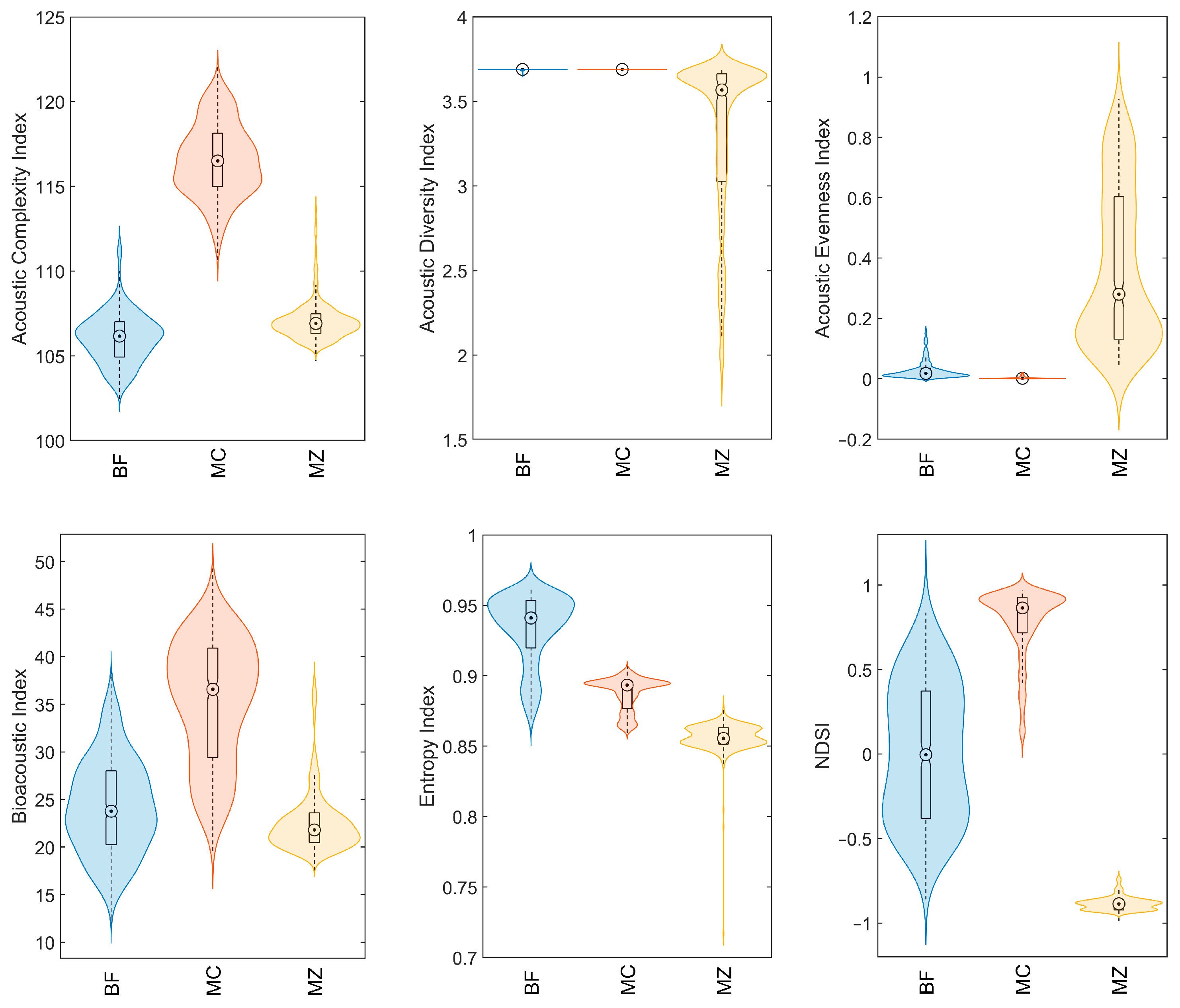
Figure 28 shows the statistical descriptors obtained from the data analysis. In the case of the ACI parameter, the mean values for BF and MZ were similar (105.92 and 106.97, respectively). By contrast, MC showed a notably higher value (116.01), suggesting a shift in environmental characteristics. According to a Repeated-Measures Analysis of Variance (RMANOVA) with a Greenhouse–Geisser correction, a statistically significant difference was found in ACI between environments on the days studied (FACI = 270.451; p = 8.836 × 10−57). However, a post hoc analysis with Bonferroni adjustment revealed an absence of differences between the environments BF and MZ (p > 0.05); therefore, it was not feasible to differentiate between them. In contrast, using the ADI metric, it was possible to establish a clear differentiation between MZ and the other environments (FADI = 129.710; p = 1.817 × 10⁻²⁹; pMZ-BF = pMZ-MC < 0.05). In all other cases, the metrics used clearly distinguished between the three environments at a significance level below 0.001 (see Table 3 and Table 4).
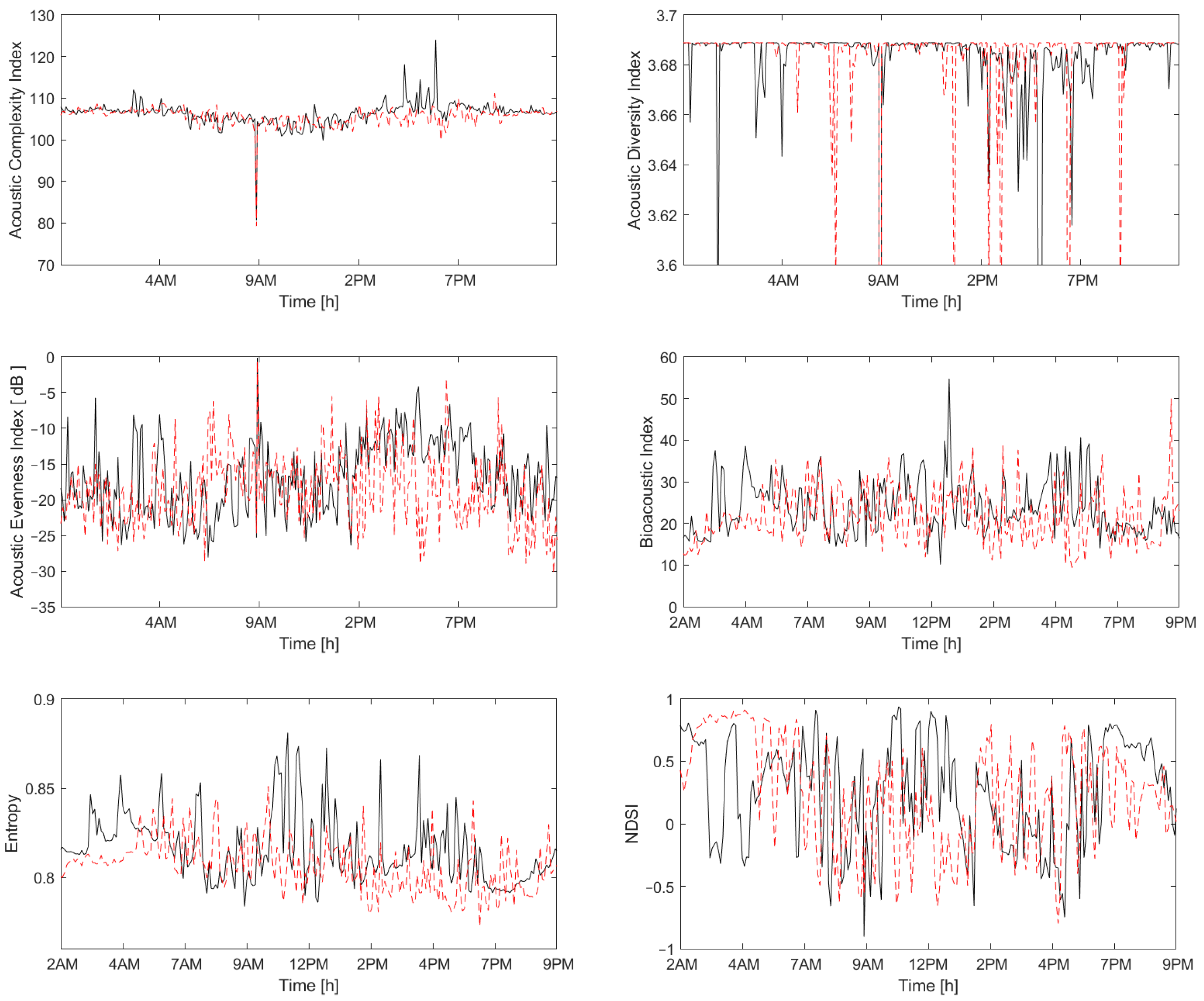
A comparison of the weekday and weekend results in the BF area (WK: 15 May 2024; WKND: 18 May 2024) revealed a clear drop in the differences between the two curves (see Figure 29). At first glance, it was difficult to draw a clear conclusion from the graphs. Only higher values were plainly visible at certain times of day for the ACI during the week, indicating greater amplitude variation compared to weekends. This behaviour was consistent with fewer fishing boats passing through on Saturdays and Sundays.
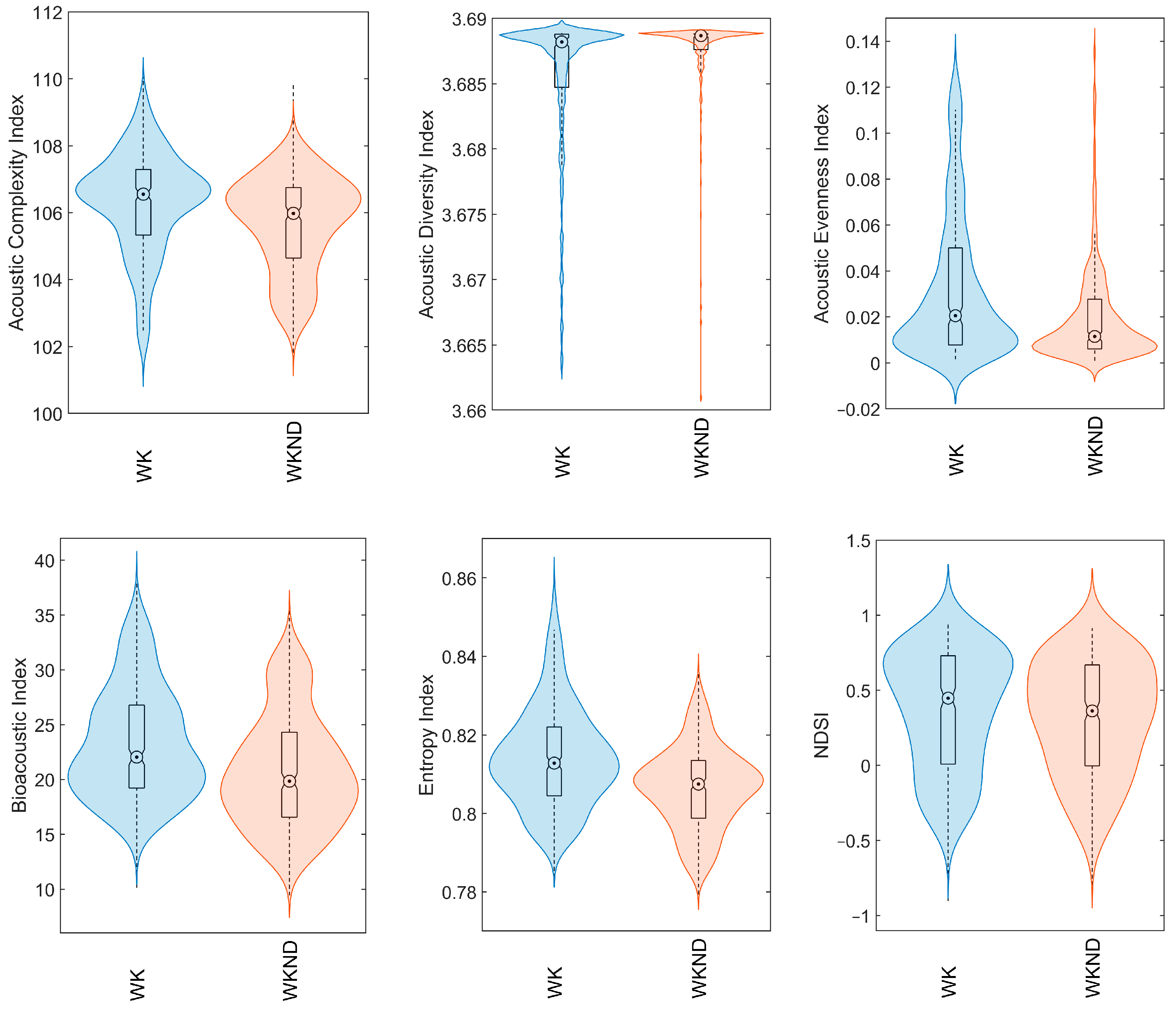
In this comparison, a RMANOVA analysis showed that for some indices, it was not possible to statistically separate the two time periods with a significance level of 0.05 (FADI = 1.152, p = 0.284; FNDSI = 2.125, p = 0.146). Conversely, despite the fact that the statistical descriptors revealed more limited deviations (see Figure 30), for example, ACI (FACI = 25,423, p = 8.171 × 10⁻⁷), AEI (FAEI = 7896, p = 0.005), BI (FBI = 26,568, p = 4.744 × 10⁻⁷), and H (FH = 51,538, p = 6.036 × 10⁻¹²), they correctly identified soundscape changes deriving from reduced fishing activity at the weekends (see Table 5). Due to increased maritime traffic, the BI showed greater intensity variation between bands on weekdays than on weekends. On the other hand, H presented a lower value during the weekend period. This result was consistent with that obtained when comparing BF and MC environments. Reducing the number of fishing vessels and changing their type to pleasure craft made the soundscape slightly more tonal.
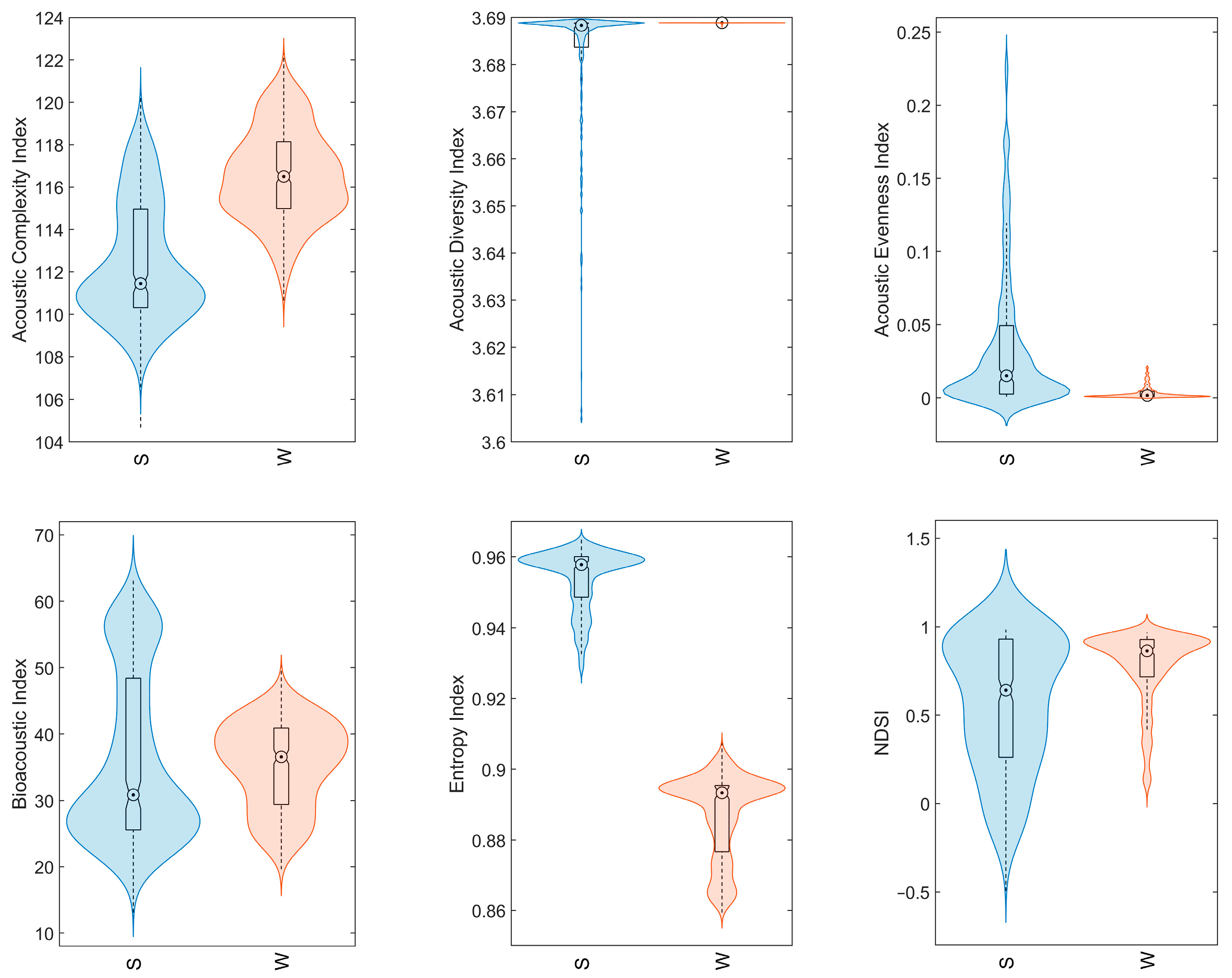
Extending the temporal comparison to include the difference between summer—when there was a notable increase in tourism in the area—and winter again allows us to identify soundscape structure alterations using some of the ecoacoustic indices (see Figure 31). The variation in the average values of the ACI, AEI, and H parameters between the two periods was particularly noteworthy (see Figure 32). This was evident in both the graphical representation of the values and the RMANOVA study significance (Table 6). Longer daylight hours during the summer led to a more uniform noise distribution throughout the day. As a result, amplitude variation decreased over time, as represented by the ACI parameter. Conversely, an AEI index increase during the summer months could be attributed to a greater diversity in the types of vessels or to a period of increased biological activity which would generate a less uniform frequency distribution. As for H, the results showed that the soundscape during the summer period was composed of noises with a reduced tonal profile.
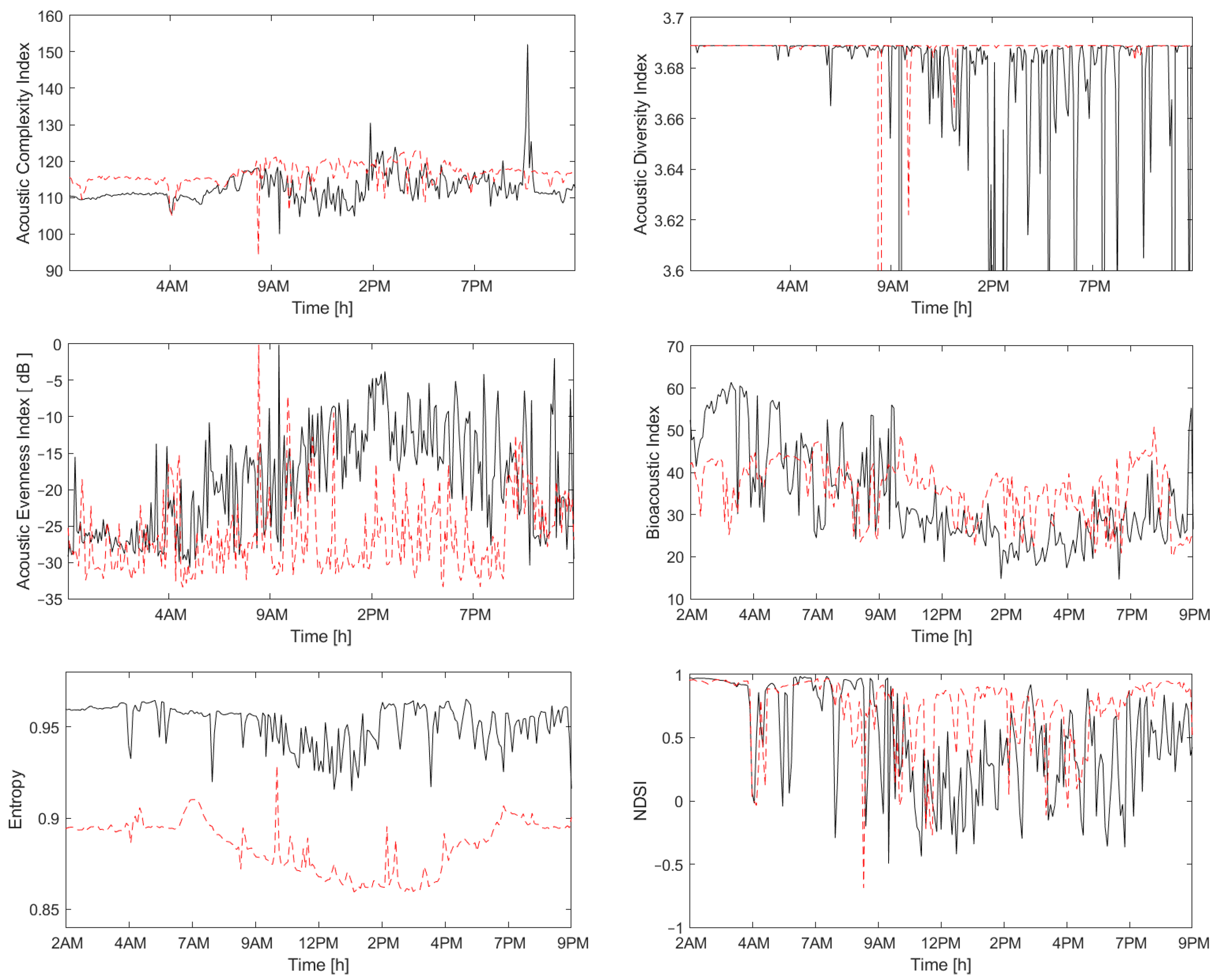
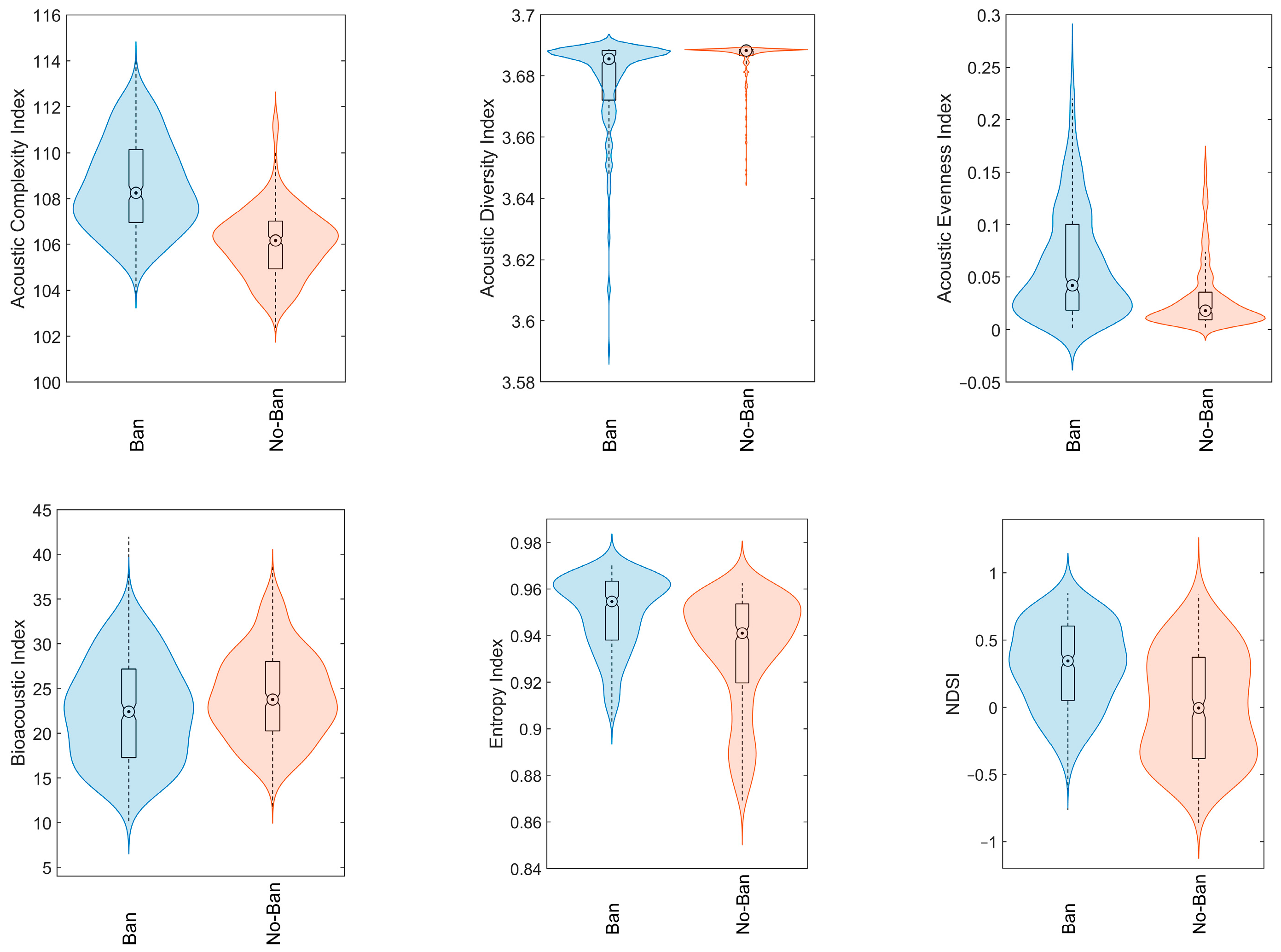
Finally, the effects of the fishing ban season on various parameters were analysed. Once again, the ADI provided similar average values for both scenarios (see Figure 33), indicating a non-significant difference according to this metric (FADI = 2229; p = 0.137). Based on the index definition, the energy distribution between bands was similar in both scenarios. Therefore, it was not possible to distinguish the effects of imposing a closed season on amplitude variations (see Figure 34). In contrast, the soundscape was altered for the other indices due to the absence of trawlers, so it was identified as a new scenario (see Table 7). As with H and the NDSI, the most notable environments differences occurred at the beginning and end of the day, when vessels left and returned to port. In the case of H, the absence of ships led to an increase in the index due to a decrease in pure tones. This change was most visible in the case of the NDSI: ( N D S I ¯ b a n = 0.290 ; N D S I ¯ n o _ b a n = 0.007 ) . However, as mentioned above, the evolution of this parameter was inconsistent with its meaning in land environments. In this case, higher NDSI values should indicate greater disturbance and, consequently, a more degraded soundscape.

5. Discussion

One of the fundamental principles underlying the MSDF is the need to determine the good environmental status of the different regions within each implementation cycle of the regulation. This objective presents two significant challenges to the scientific community: establishing noise thresholds harmful to marine fauna and developing metrics and techniques to accurately describe the environmental quality of a given area.
Firstly, it is essential to understand how the auditory systems of different organisms work [41] and how sound affects them at the behavioural and biochemical levels [42,43,44,45,46,47]. However, the complexity of marine animals’ auditory systems, together with interspecific variability [48,49], means that there is still considerable uncertainty in this field, which greatly hinders the establishment of general welfare thresholds.
Despite the limitations imposed on their definition and application by the lack of noise impact thresholds for marine organisms, the results presented in Section 3 and Section 4 of this work, together with those obtained in other recent studies [19,20,21,22], highlight the strengths of acoustic methods as tools for assessing the impact of human activities on the marine environment.
Similar acoustic patterns were observed in the monitored natural environments. First, a clear weekly periodicity associated with anthropogenic activity (fishing traffic) could be observed. In this case, the energy was concentrated in the 60 Hz to 1000 Hz frequency band. However, changes in the dynamic range of noise were also found depending on the proximity to large vessel transit areas.
At the same time, a clear seasonal difference in noise pollution levels was found in the environments most exposed to tourism. During the summer months, the average MC levels rose by approximately 5 dB due to a greater influx of pleasure craft. Similarly, the noise exposure levels obtained were closely linked to nautical activity schedules, peaking at the beginning and end of the working day. In this regard, measures such as the imposition of biological closures on trawling activities improved the underwater soundscape.
A comparison between natural and artificial environments showed a clear difference. For fish breeding tanks, the probability density extended across the entire spectrum, although most of the energy was concentrated between 125 Hz and 1500 Hz. It showed a lower dynamic range than that obtained for natural environments and a clear presence of tonal components associated with the operation of water maintenance equipment.
For their part, all ecoacoustic indices revealed differences between the natural environments—with greater time and spectral variability—and artificial environments—with a less uniform energy distribution given the presence of pure tones associated with the water filtration and oxygenation system. Likewise, the ACI, BI, and H allowed us to correctly differentiate the intensity variations between frequency bands and the soundscape weekday–weekend tonal changes. The ACI, AEI, and H equally achieved differentiation regarding seasonality (summer–winter). Finally, H and the NDSI clearly reflected the soundscape variations caused by fishing restrictions. Long-term monitoring of ecoacoustic indices can provide valuable insights into the noise pollution suffered by marine animals. However, it is essential to establish an appropriate correlation between changes observed in the parameters and their behavioural (e.g., migration due to disturbance or masking), physiological, or biochemical implications for marine organisms.
Long-term monitoring and the subsequent generation of historical records enables trend changes to be identified at an early stage. This information is useful for both anticipating the deterioration of the environmental quality in a given area and for evaluating the environment’s response to certain mitigation measures, as shown in Section 3.4. In this context, acoustic parameters such as SPL, PSD, or SEL provide relevant spectral and temporal information. Similar results are obtained using ecoacoustic indices, which are useful for distinguishing between marine environments, as well as for detecting sound events or spatiotemporal patterns. Similarly, analysing the evolution of the dynamic range within the soundscape, as described in Section 3.4 and calculated from the 10th and 90th percentiles, can help to identify the spectral regions with the greatest variability. This can then be used to associate habitat degradation with a specific type of noise source.
On the other hand, ecoacoustic indices can be helpful in determining the diversity of a region. According to Mattmüller et al. [20], ACI values increase in the presence of certain whale species. Based on computer simulation experiments. Bohnenstiehl et al. [50] report changes in H and the ACI as a function of the number of fish calls and their spectral composition. Similarly, Staaterman et al. [51] observed a decrease in the H and ACI indices with increasing sound monotony, a phenomenon common in areas with large numbers of individuals of the same species. The authors also highlight a decrease in these parameters when toadfish are chorusing on reefs.
However, despite some promising results, using ecoacoustic indices in the marine environment has certain limitations. On the one hand, the spectral characteristics of biophonies often overlap with those of anthropogenic noise sources, resulting in masking by background noise. This makes it difficult to distinguish between these elements within the soundscape. The configuration required to calculate the parameters must therefore be adapted more precisely to the particularities of the environment. Furthermore, an increase in a given species within a specific area leads to a monotonous soundscape and consequently a decrease in parameters related to spectral uniformity. The same effect may result from an increase in noise due to anthropogenic activities. The results obtained for the analysed artificial environment support this trend, showing lower H and NDSI values associated with a more homogeneous and constant soundscape.
In addition, the topographic characteristics of the environment, including depth, geometry, and seabed substrate and vegetation type, condition the characteristics of the soundscape. This complicates comparisons between environments and may lead to inconsistent results. Considering the relationship between the ecoacoustic indices used in this study and the spectral variation of the soundscape, and in agreement with the results presented in Section 4, the presence of a greater number of recreational vessels at weekends leads to a decrease in the values of the ecoacoustic indices for the BF environment. The same trend is observed for trawling restrictions; however, it yields opposite results for the MC environment between summer and winter (H). Therefore, further research into ecoacoustic indices is required, focusing on their configuration, their dependence on the monitored region, and their possible association with other acoustic parameters in order to improve soundscape characterisation from a biodiversity perspective. According to Staaterman et al. [51], combining passive acoustic monitoring methods with visual surveys can help to improve these types of tools.

6. Conclusions

The relentless rise in human activities in the marine environment has significantly altered the underwater soundscape, potentially affecting the health and well-being of fish and other marine life. For this reason, it is essential to monitor underwater noise pollution to ensure the good environmental status of seas and oceans, as defined in the Marine Strategy Framework Directive.
A comparative analysis of underwater soundscapes at three locations, two natural environments and an artificial one, was carried out to assess the influence of anthropogenic activities on the marine acoustic environment. Traditional acoustic metrics (SPL, PSD, SEL, and dynamic range) were used to characterise and differentiate temporal and spectral soundscape patterns, considering daily (anthropogenic activity/rest), weekly (weekday/weekend), and seasonal variability (summer/winter), as well as periods of trawling restrictions. In addition, the performance of several ecoacoustic indices was evaluated to determine their capability to discriminate between acoustic scenarios and detect environmental changes.
The results obtained have made it possible to identify spatiotemporal differences between the analysed environments, demonstrating the effectiveness of passive acoustic monitoring systems in evaluating changes to the soundscape structure. At the same time, the statistical analysis performed confirmed the capability of ecoacoustic indices to identify soundscape variations. All the parameters included in this study can be calculated in real time, making them extremely useful for identifying changes in the underwater soundscape and adopting measures to mitigate noise pollution. However, it is necessary to redefine or adapt some of these indices, such as the NDSI, to the specificities of the underwater environment, where the relationship between anthropogenic noise and biophony differs significantly from that of land environments.
In view of the results obtained in this work and in line with the objectives outlined in the Marine Strategy Framework Directive, future research should focus on two fundamental lines. On the one hand, further research should be conducted into the auditory capabilities of fish, the magnitudes involved in this process (pressure and particle motion), and the effect of anthropogenic noise on aspects such as behaviour, physiology, and biochemistry. The implementation of monitoring strategies and the definition of metrics capable of describing the underwater environmental status are essential. The development of technologies capable of providing real-time environmental information and their integration into hybrid prediction models could be a fundamental tool in establishing preventive/corrective measures to ensure the welfare of the marine ecosystem. In this context, it is essential to address the connection between the information offered by the Automatic Identification System (AIS) or more sophisticated techniques such as High-Frequency Surface Wave Radar (HFSWR) [52] concerning maritime traffic (e.g., vessel type, density, velocity, etc.) and that provided by passive acoustic monitoring systems.

Author Contributions

Conceptualisation, J.R.-S. and P.P.-M.; methodology, P.P.-M. and J.R.-S.; investigation, P.P.-M., N.U., J.C., J.R.-S., C.V., A.F., I.P.-A. and V.E.; writing—original draft preparation, J.R.-S. and P.P.-M.; writing—review and editing, P.P.-M., N.U., J.C., J.R.-S., C.V., A.F., I.P.-A. and V.E.; funding acquisition, J.R.-S. and I.P.-A. All authors have read and agreed to the published version of the manuscript.

Funding

This publication is part of the project PCI22022-135081-2, funded by MCIN/AEI/10.13039/501100011033 and by the European Union “Next Generation EU”/PRTR”, where MCIN stands for the Ministry of Science and Innovation; AEI represents the State Research Agency; 10.13039/501100011033 is the DOI (Digital Object Identifier) of the agency; and PRTR is the acronym of the Plan for Recovery, Transformation, and Resilience). It is also part of the projects PID2021-127426OB-C21 and C22 founded by MCIN/AEI/10.13039/501100011033/FEDER, UE; MCIN is the acronym for the Ministry of Science and Innovation; AEI is the acronym for the State Research Agency; 10.13039/501100011033 is the DOI of the agency (Spain). The APC was covered by a Full Waiver provided by the Guest Editors of the Special Issue.

Data Availability Statement

The data that support the findings of this study are available on request from the corresponding author.

Conflicts of Interest

The authors declare no conflicts of interest. Also, the funding sources had no involvement in the study design, data collection, analyses, or interpretation, manuscript writing, or result publication decision.

References

  1. Pijanowski, B.C.; Farina, A.; Gage, S.H.; Dumyahn, S.L.; Krause, B.L. What is soundscape ecology? An introduction and overview of an emerging new science. Landsc. Ecol. 2011, 26, 1213–1232. [Google Scholar] [CrossRef]
  2. Schafer, R.M. The New Soundscape: A Handbook for the Modern Music Teacher; BMI Canada: Boisbriand, QC, Canada, 1969. [Google Scholar]
  3. Pijanowski, B.C.; Villanueva-Rivera, L.J.; Dumyahn, S.L.; Farina, A.; Krause, B.L.; Napoletano, B.M.; Pieretti, N. Soundscape ecology: The science of sound in the landscape. BioScience 2011, 61, 203–216. [Google Scholar] [CrossRef]
  4. Au, W.W.L.; Hastings, M.C. Principles of Marine Bioacoustics; Springer: New York, NY, USA, 2008. [Google Scholar] [CrossRef]
  5. Duarte, C.M.; Chapuis, L.; Collin, S.P.; Costa, D.P.; Devassy, R.P.; Eguiluz, V.M.; Erbe, C. The soundscape of the Anthropocene ocean. Science 2021, 371, eaba4658. [Google Scholar] [CrossRef] [PubMed]
  6. Hildebrand, J.A. Anthropogenic and natural sources of ambient noise in the ocean. Mar. Ecol. Prog. Ser. 2009, 395, 5–20. [Google Scholar] [CrossRef]
  7. Popper, A.N.; Hawkins, A.D. An overview of fish bioacoustics and the impacts of anthropogenic sounds on fishes. J. Fish Biol. 2019, 94, 692–713. [Google Scholar] [CrossRef] [PubMed]
  8. Merchant, N.D.; Fristrup, K.M.; Johnson, M.P.; Tyack, P.L.; Witt, M.J.; Blondel, P.; Godley, B.J. Measuring acoustic habitats. Methods Ecol. Evol. 2015, 6, 257–265. [Google Scholar] [CrossRef]
  9. McKenna, M.F.; Ross, D.; Wiggins, S.M.; Hildebrand, J.A. Underwater radiated noise from modern commercial ships. J. Acoust. Soc. Am. 2012, 131, 92–103. [Google Scholar] [CrossRef]
  10. Erbe, C.; Marley, S.A.; Schoeman, R.P.; Smith, J.N.; Trigg, L.E.; Embling, C.B. The effects of ship noise on marine mammals—A review. Front. Mar. Sci. 2016, 3, 277. [Google Scholar] [CrossRef]
  11. Pieretti, N.; Farina, A.; Morri, D. A new methodology to infer the singing activity of an avian community: The Acoustic Complexity Index (ACI). Ecol. Indic. 2011, 11, 868–873. [Google Scholar] [CrossRef]
  12. Kasten, E.P.; Gage, S.H.; Fox, J.; Joo, W. The remote environmental assessment laboratory’s acoustic library: An archive for studying soundscape ecology. Ecol. Inform. 2012, 12, 50–67. [Google Scholar] [CrossRef]
  13. Sueur, J.; Pavoine, S.; Hamerlynck, O.; Duvail, S. Rapid acoustic survey for biodiversity appraisal. PLoS ONE 2008, 3, e4065. [Google Scholar] [CrossRef] [PubMed] [PubMed Central]
  14. Depraetere, M.; Pavoine, S.; Jiguet, F.; Gasc, A.; Duvail, S.; Sueur, J. Monitoring animal diversity using acoustic indices: Implementation in a temperate woodland. Ecol. Indic. 2012, 13, 46–54. [Google Scholar] [CrossRef]
  15. Boelman, N.T.; Asner, G.P.; Hart, P.J.; Martin, R.E. Multi-trophic invasion resistance in Hawaii: Bioacoustics, field surveys, and airborne remote sensing. Ecol. Appl. 2007, 17, 2137–2144. [Google Scholar] [CrossRef] [PubMed]
  16. Villanueva-Rivera, L.J.; Pijanowski, B.C.; Doucette, J.; Pekin, P. A primer of acoustic analysis for landscape ecologists. Landsc. Ecol. 2011, 26, 1233–1246. [Google Scholar] [CrossRef]
  17. McPherson, C.; Martin, B.; MacDonnell, J.; Whitt, C. Examining the value of the acoustic variability index in the characterisation of Australian marine soundscapes. In Proceedings of the 2nd Australas Acoustic Social Conference on Acoustics, Brisbane, Australia, 9–11 November 2016; pp. 1–13. [Google Scholar]
  18. Minello, M.; Calado, L.; Xavier, F.C. Ecoacoustic indices in marine ecosystems: A review on recent developments, challenges, and future directions. ICES J. Mar. Sci. 2021, 78, 3066–3074. [Google Scholar] [CrossRef]
  19. Roca, I.T.; Van Opzeeland, I. Using acoustic metrics to characterize underwater acoustic biodiversity in the Southern Ocean. Remote Sens. Ecol. Conserv. 2019, 6, 262–273. [Google Scholar] [CrossRef]
  20. Mattmüller, R.M.; Thomisch, K.; Hoffman, J.I.; Van Opzeeland, I. Characterizing offshore polar ocean soundscapes using ecoacoustic intensity and diversity metrics. R. Soc. Open Sci. 2024, 11, 231917. [Google Scholar] [CrossRef]
  21. Williams, B.; Lamont, T.A.C.; Chapuis, L.; Harding, H.R.; May, E.B.; Prasetya, M.E.; Seraphim, M.J.; Jompa, J.; Smith, D.J.; Janetski, N.; et al. Enhancing automated analysis of marine soundscapes using ecoacoustic indices and machine learning. Ecol. Indic. 2022, 140, 108986. [Google Scholar] [CrossRef]
  22. Guagliumi, G.; Canedoli, C.; Potenza, A.; Zaffaroni-Caorsi, V.; Benocci, R.; Padoa-Schioppa, E.; Zambon, G. Unraveling Soundscape Dynamics: The Interaction Between Vegetation Structure and Acoustic Patterns. Sustainability 2025, 17, 4204. [Google Scholar] [CrossRef]
  23. Van der Graaf, A.J.; Ainslie, M.A.; André, M.; Brensing, K.; Dalen, J.; Dekeling, R.P.A.; Robinson, S.P. European Marine Strategy Framework Directive–Good Environmental Status (MSFD GES): Report of the Technical Subgroup on Underwater Noise and Other Forms of Energy; European Commission: Brussels, Belgium, 2012. [Google Scholar]
  24. De Juan, C.; Cibecchini, F.; Matamoros, C.; Moya, J.A.; Molina, J. Jornada «El pecio Bou Ferrer de Villajoyosa: Un yacimiento romano extraordinario». Boletín del Museo Arqueológico Nacional 34/2016. 2016, pp. 457–474. Available online: https://www.man.es/dam/jcr:366f62bc-4646-48d2-bbef-c3ceb37675a7/man-bol-2016-34-de-juan.pdf (accessed on 10 November 2025).
  25. Soler, E.; Bras, M.; Martínez, B. Estudio de Impacto Ambiental del Proyecto de “Ampliación de Producción de la Granja Marina nº12 de Engorde de Dorada, Lubina, Corvina y Seriola en Jaulas Flotantes en Aguas del Mediterráneo, Villajoyosa (Alicante)”. 2020. Available online: https://agroambient.gva.es/auto/Proyectos_Acuicultura/ALICANTE/VILLAJOYOSA/ANIA%2003-0026/EIA%20AMPLIAC%20PRODUCCI%C3%93N%20ANIA26.pdf (accessed on 10 November 2025).
  26. Mihailov, M.E. Characterization and Automated Classification of Underwater Acoustic Environments in the Western Black Sea Using Machine Learning Techniques. J. Mar. Sci. Eng. 2025, 13, 1352. [Google Scholar] [CrossRef]
  27. La Manna, G.; Guala, I.; Pansini, A.; Stipcich, P.; Arrostuto, N.; Ceccherelli, G. Soundscape analysis can be an effective tool in assessing seagrass restoration early success. Sci Rep. 2024, 14, 20910. [Google Scholar] [CrossRef] [PubMed] [PubMed Central]
  28. Prawirasasra, M.S.; Mustonen, M.; Klauson, A. The Underwater Soundscape at Gulf of Riga Marine-Protected Areas. J. Mar. Sci. Eng. 2021, 9, 915. [Google Scholar] [CrossRef]
  29. Ainslie, M.A.; Miksis-Olds, J.L.; Martin, B.; Heaney, K.; de Jong, C.A.F.; von Benda- Beckmann, A.M.; Lyons, A.P. ADEON Underwater Soundscape and Modeling Metadata Standard. Version 1.0. Technical Report by JASCO Applied Sciences for ADEON Prime Contract No. M16PC00003. 2018. Available online: https://adeon.unh.edu/standards (accessed on 15 October 2025).
  30. Robinson, S.P.; Lepper, P.A.; Hazelwood, R.A. Good practice guide for underwater noise measurement. NPL Good Practic Guide No. 133. National Measurement Office, Marine Scotland, The Crown Estate. 2014. Available online: https://github.com/ljvillanueva/soundecology (accessed on 15 October 2025).
  31. IQOE (International Quiet Ocean Experiment). IQOE Workshop Report: Guidelines for Observation of Ocean Sound. 2019. Available online: https://iqoe.org/products (accessed on 1 February 2024).
  32. Van Geel, N.; Risch, D.; Wittich, A. A brief overview of current approaches for underwater sound analysis and reporting. Mar. Pollut. Bull. 2022, 178, 113610. [Google Scholar] [CrossRef] [PubMed]
  33. Villanueva-Rivera, L.J.; Pijanowski, B.C. Soundecology: Soundscape Ecology, R Package Version 1.3.2. 2016. Available online: http://ljvillanueva.r-universe.dev/soundecology (accessed on 1 June 2025).
  34. Bradfer-Lawrence, T.; Duthie, B.; Abrahams, C.; Adam, M.; Barnett, R.J.; Beeston, A.; Darby, J.; Dell, B.; Gardner, N.; Gasc, A.; et al. The acoustic index user’s guide: A practical manual for defining, generating and understanding current and future acoustic indices. Methods Ecol. Evol. 2024, 16, 1040–1050. [Google Scholar] [CrossRef]
  35. Farina, A.; Morri, D. Source-sink e eco-field: Ipotesi ed evidenze sperimentali. In Atti del X Congresso Nazionale Della SIEP-IALE. Ecologia e Governance del Paesaggio: Esperienze e Prospettive; SIEP: Bari, Italy, 2008; pp. 365–372. [Google Scholar]
  36. Kasten, E.P.; Gage, S.H.; Fox, J.; Joo, W. The use of acoustic indices to assess marine soundscapes. Ecol. Indic. 2021, 122, 107254. [Google Scholar] [CrossRef]
  37. Popper, A.N.; Hawkins, A.D. The effects of anthropogenic sources of sound on fishes. J. Fish Biol. 2016, 94, 692–713. [Google Scholar] [CrossRef]
  38. Bradfe-Lawrence, T.; Desjonquères, C.; Eldridge, A.; Johnston, A.; Metcalf, O. Using acoustic indices in ecology: Guidance on study design, analyses and interpretation. Methods Ecol. Evol. 2023, 14, 2192–2204. [Google Scholar] [CrossRef]
  39. Urick, R.J. Principles of Underwater Sound, 3rd ed.; McGraw-Hill Book Company: New York, NY, USA, 1983. [Google Scholar]
  40. Wang, J.Q.; Liu, B.H.; Kan, G.M.; Li, G.B.; Zheng, J.W.; Meng, X.M. Frequency dependence of sound speed and attenuation in fine-grained sediments from 25 to 250 kHz based on a probe method. Ocean Eng. 2018, 160, 45–53. [Google Scholar] [CrossRef]
  41. Sand, O.; Popper, A.N.; Hawkins, A.D. Evolution of the Understanding of Fish Hearing. In A History of Discoveries on Hearing. Springer Handbook of Auditory Research; Ketten, D.R., Coffin, A.B., Fay, R.R., Popper, A.N., Eds.; Springer: Cham, Switzerland, 2024; p. 77. [Google Scholar] [CrossRef]
  42. Mooney, T.A.; Kaplan, M.B.; Lammers, M.O. Singing whales generate high levels of particle motion: Implications for acoustic communication and hearing? Biol. Lett. 2016, 12, 20160381. [Google Scholar] [CrossRef]
  43. Roberts, L.; Laidre, M.E. Finding a home in the noise: Cross-modal impact of antrhopogenic vibration on animal search behaviour. Biol. Open 2019, 8, bio041988. [Google Scholar] [CrossRef]
  44. Campbell, J.; Sabet, S.S.; Slabbekoorn, H. Particle motion and sound pressure in fish tanks: A behavioural exploration of acoustic sensitivity in the zebrafish. Behav. Process. 2019, 164, 38–47. [Google Scholar] [CrossRef]
  45. Mauro, M.; Pérez-Arjona, I.; Perez, E.J.B.; Ceraulo, M.; Bou-Cabo, M.; Benson, T.; Espinosa, V.; Beltrame, F.; Mazzola, S.; Vazzana, M.; et al. The effect of low frequency noise on the behavior of juvenile Sparus aurata. J. Acoust. Soc. Am. 2020, 147, 3795. [Google Scholar] [CrossRef] [PubMed]
  46. Solé, M.; De Vreese, S.; Fortuño, J.M.; van der Schaar, M.; Sánchez, A.M.; André, M. Commercial cuttlefish exposed to noise from offshore windmill construction show short-range acoustic trauma. Environ. Pollut. 2022, 312, 119853. [Google Scholar] [CrossRef]
  47. Olivier, F.; Gigot, M.; Mathias, D.; Jezequel, Y.; Meziane, T.; L’Her, C.; Chauvaud, L.; Bonnel, J. Assessing the impacts of anthropogenic sounds on early stages of benthic invertebrates: The “Larvosonic system”. Limnol. Oceanogr. Methods 2023, 21, 53–68. [Google Scholar] [CrossRef]
  48. Tavolga, W.N.; Wodinsky, J. Auditory Capacities in Fishes: Pure Tone Thresholds in Nine Species of Marine Teleosts. Bulletin of the AMNH; American Museum of Natural History: New York, NY, USA, 1963; Volume 126, Available online: https://www.biodiversitylibrary.org/bibliography/89251 (accessed on 25 October 2025).
  49. Popper, A.N. Hearing diversity in 34000 fish species: A personal perspective. J. Acoust. Soc. Am. 2023, 154, 1351–1361. [Google Scholar] [CrossRef]
  50. Bohnenstiehl, D.R.; Lyon, R.P.; Caretti, O.N.; Ricci, S.W.; Eggleston, D.B. Investigating the utility of ecoacoustic metrics in marine soundscapes. J. Ecoacoustics 2018, 2, 1. [Google Scholar] [CrossRef]
  51. Staaterman, E.; Ogburn, M.B.; Altieri, A.H.; Brandl, S.J.; Whippo, R.; Seemann, J.; Goodison, M.; Duffy, J.E. Bioacoustic measurements complement visual biodiversity surveys: Preliminary evidence from four shallow marine habitats. Mar. Ecol. Prog. Ser. 2017, 575, 207–215. [Google Scholar] [CrossRef]
  52. Golubović, D.; Erić, M.; Vukmirović, N.; Orlić, V. High-Resolution Sea Surface Target Detection Using Bi-Frequency High-Frequency Surface Wave Radar. Remote Sens. 2024, 16, 3476. [Google Scholar] [CrossRef]
Figure 1. (a) Location of MC. (b) View of the surrounding area.
Jmse 14 00241 g001
Figure 2. (a) Location of BF. (b) Surroundings of the shipwreck.
Jmse 14 00241 g002
Figure 3. Bluefin tuna breeding tank at the ICAR-IEO facilities in Mazarrón.
Jmse 14 00241 g003
Figure 4. (a) Autonomous recording system installation. (b) Measurement point (fish farm in the background).
Jmse 14 00241 g004
Figure 5. Underwater soundscape monitoring ecosystem. Illustration of existing sound sources in the area.
Jmse 14 00241 g005
Figure 6. Example of the time–frequency evolution of anthropogenic sounds. (a) Ship passing by. (b) Idling engine. The colour bar represents normalised SPL.
Jmse 14 00241 g006
Figure 7. Example of the time–frequency evolution of biological sounds. (a) Crustacean noise. (b) Grouper sounds. The colour bar represents normalised SPL.
Jmse 14 00241 g007
Figure 8. Calculated PSD: (a) BF, (b) MC.
Jmse 14 00241 g008
Figure 9. (Top) BF spectrogram (10 May 2025 to 5 July 2025). (Bottom) Temporal evolution of the overall SPL, 63 Hz, and 125 Hz third-octave bands.
Jmse 14 00241 g009
Figure 10. (Top) MC spectrogram (10 May 2025 to 5 July 2025). (Bottom) Temporal evolution of the overall SPL, 63 Hz, and 125 Hz third-octave bands.
Jmse 14 00241 g010
Figure 11. Averaged third-octave SPL comparison between weekday and weekend: (a) BF, (b) MC. Shaded areas represent levels between 10th and 90th percentiles.
Jmse 14 00241 g011
Figure 12. Daily broadband SPL evolution for BF and MC.
Jmse 14 00241 g012
Figure 13. Averaged third-octave SPL comparison between summer and winter: (a) BF, (b) MC. Shaded areas represent levels between 10th and 90th percentiles.
Jmse 14 00241 g013
Figure 14. Comparison of the spectrograms obtained for BF: (a) summer—10 June to 30 June 2024; (b) winter—3 February to 23 February 2025.
Jmse 14 00241 g014
Figure 15. Comparison of the spectrograms obtained for MC: (a) summer—8 July to 21 July 2024; (b) winter—17 February to 2 March 2025.
Jmse 14 00241 g015
Figure 16. Comparison of the daily broadband SPL evolution in MC for summer and winter.
Jmse 14 00241 g016
Figure 17. Averaged third-octave SPL comparison between periods of anthropogenic activity and rest for BF: (a) weekday, (b) weekend.
Jmse 14 00241 g017
Figure 18. Averaged third-octave SPL comparison between periods of anthropogenic activity and rest for MC: (a) weekday, (b) weekend.
Jmse 14 00241 g018
Figure 19. Difference in SEL between BF and MC environments during the week and at weekends (the red line denotes a zero difference as a reference).
Jmse 14 00241 g019
Figure 20. Difference in SEL between summer and winter in the MC environment (the red line shows a zero difference as a reference).
Jmse 14 00241 g020
Figure 21. (Top) BF spectrogram during normal activity period (3–17 February 2025). (Bottom) Temporal evolution of the overall SPL, 63 Hz, and 125 Hz third-octave bands.
Jmse 14 00241 g021
Figure 22. (Top) BF spectrogram during ban period (2–16 January 2025). (Bottom) Temporal evolution of the overall SPL, 63 Hz, and 125 Hz third-octave bands.
Jmse 14 00241 g022
Figure 23. (a) Averaged third-octave SPL comparison between normal activity and closed periods. (b) Dynamic range between 10th and 90th percentiles for both situations.
Jmse 14 00241 g023
Figure 24. Calculated Power Spectral Density (PSD) for artificial environment MZ.
Jmse 14 00241 g024
Figure 25. Averaged third-octave SPL comparison between day and night hours for environment MZ.
Jmse 14 00241 g025
Figure 26. Dynamic range between 10th and 90th percentiles for environments BF, MC, and MZ.
Jmse 14 00241 g026
Figure 27. Comparison of the ecoacoustic indices obtained for BF (19 February 2025), MC (19 February 2025), and MZ (8 November 2024). (BF: continuous line; MC: red dash line; MZ: grey dotted line).
Jmse 14 00241 g027
Figure 28. Series of violin plots showing the distributions obtained for ecoacoustic indices in BF (19 February 2025), MC (19 February 2025), and MZ (8 November 2024).
Jmse 14 00241 g028
Figure 29. Ecoacoustic indices comparison for weekday–weekend scenario in BF (WK: 15 May 2024; WKND: 18 May 2024). Weekday: continuous line; weekend: red dash line.
Jmse 14 00241 g029
Figure 30. Series of violin plots showing the distributions obtained for BF in a weekday and during the weekend (WK: 15 May 2024; WKND: 18 May 2024).
Jmse 14 00241 g030
Figure 31. Ecoacoustic indices comparison between summer and winter MC scenarios (S: continuous line; W: red dash line).
Jmse 14 00241 g031
Figure 32. Series of violin plots showing the distributions obtained for MC during summer and winter.
Jmse 14 00241 g032
Figure 33. Series of violin plots showing the distributions obtained for MC during the fishing restriction period.
Jmse 14 00241 g033
Figure 34. Ecoacoustic indices comparison between ban and normal activity periods in BF (fishing restrictions: continuous line; no restrictions: red dash line).
Jmse 14 00241 g034
Table 1. Soundscape monitoring periods: dates (number of days, season).
Bou Ferrer (BF)Mina Cove (MC)Mazarrón (MZ)
10 May 2024–5 July 2024 (59, S)20 February 2024–26 February 2024 (36, W)7 November 2024–15 November 2024 (9, F)
2 January 2025–17 January 2025 (16, W)6 July 2024–21 July 2024 (16, S)
26 January 2025–25 February 2025 (31, W)2 December 2024–16 December 2024 (15, W)
27 February 2025–29 March 2025 (31, W)14 January 2025–10 March 2025 (25, W)
27 June 2025–11 July 2025 (15, S)
S: summer; W: winter; F: autumn.
Table 2. Ecoacoustic index configuration parameters.
ACI: fmin = 20 Hz; fmax = 8000 Hz; nº freq. bands = 30
ADI: fmax = 8000 Hz; dBthreshold = −50; fstep = 200 Hz
AEI: fmax = 8000 Hz; dBthreshold = −50; fstep = 200 Hz
BI: fmin = 20 Hz; fmax = 8000 Hz; window length = 1024 samples
H: window length = 1024 samples; envelope = Hilbert amplitude envelope
NDSI: window length = 1024 samples; fmin_anthro = 63 Hz; fmax_anthro = 1000 Hz; fbio_min = 1000 Hz;
   fbio_max = 8000
Table 3. RMANOVA results for the comparison of ecoacoustic indices in BF (19 February 2025), MC (19 February 2025), and MZ (8 November 2024). Tests of within-subject effects (Greenhouse–Geisser correction).
SourceType III Sum of SquaresdfMean SquareFSig.
ACI16,452.2541.33612,316.408270.4510.000
Error (ACI)17,458.981383.37545.540
ADI35.2741.19929.411129.7100.000
Error (ADI)78.047344.2100.227
AEI23.6091.18919.857421.7920.000
Error (AEI)16.065341.2390.047
BI25,088.9961.80413,909.989311.3470.000
Error (BI)23,127.037517.65344.677
H1.0371.4400.720668.9040.000
Error (H)0.445413.2570.001
NDSI381.7991.630234.1802276.6730.000
Error (NDSI)48.130467.9150.103
Table 4. Post hoc analysis for the comparison of ecoacoustic indices obtained in BF (19 February 2025), MC (19 February 2025), and MZ (8 November 2024).
Mean Difference (I–J) 95% Conf. Interval for Dif. b
Std. ErrorSig. bLower BoundUpper Bound
ACIBFMC−9444 *0.5620.000−10.798−8.089
MZ−0.3860.5001.000−1.5900.818
MCBF9444 *0.5620.0008.08910.798
MZ9058 *0.2590.0008.4339.682
MZBF0.3860.5001.000−0.8181.590
MC−9058 *0.2590.000−9.682−8.433
ADIBFMC−0.0010.0131.000−0.0330.032
MZ0.428 *0.0350.0000.3440.513
MCBF0.0010.0131.000−0.0320.033
MZ0.429 *0.0380.0000.3380.520
MZBF−0.428 *0.0350.000−0.513−0.344
MC−0.429 *0.0380.000−0.520−0.338
AEIBFMC0.034 *0.0060.0000.0200.048
MZ−0.333 *0.0170.000−0.372−0.293
MCBF−0.034 *0.0060.000−0.048−0.020
MZ−0.366 *0.0170.000−0.406−0.327
MZBF0.333 *0.0170.0000.2930.372
MC0.366 *0.0170.0000.3270.406
BIBFMC−10,801 *0.5930.000−12.229−9.373
MZ1170 *0.4400.0250.1102.229
MCBF10,801 *0.5930.0009.37312.229
MZ11,971 *0.5420.00010.66513.277
MZBF−1170 *0.4400.025−2.229−0.110
MC−11,971 *0.5420.000−13.277−10.665
HBFMC0.045 *0.0010.0000.0410.048
MZ0.085 *0.0030.0000.0780.091
MCBF−0.045 *0.0010.000−0.048−0.041
MZ0.040 *0.0030.0000.0340.046
MZBF−0.085 *0.0030.000−0.091−0.078
MC−0.040 *0.0030.000−0.046−0.034
NDSIBFMC−0.744 *0.0270.000−0.809−0.679
MZ0.882 *0.0270.0000.8180.946
MCBF0.744 *0.0270.0000.6790.809
MZ1626 *0.0170.0001.5841.668
MZBF−0.882 *0.0270.000−0.946−0.818
MC−1626 *0.0170.000−1.668−1.584
Based on estimated marginal means. (*) The mean difference is significant at the 0.05 level. Pairwise comparison with Bonferroni adjustment (b).
Table 5. RMANOVA results for the ecoacoustic indices comparison between weekday and weekend for BF (WK: 15 May 2024; WKND: 18 May 2024). Tests of within-subject effects (Greenhouse–Geisser correction).
SorcheType III Sum of SquaresdfMean SquareFSig.
ACI76.6011.00076.60125.4230.000
Error (ACI)864.757287.0003.013
ADI0.0041.0000.0041.1520.284
Error (ADI)1.060287.0000.004
AEI0.0181.0000.0187.8960.005
Error (AEI)0.665287.0000.002
BI970.0461.000970.04626.5680.000
Error (BI)10,479.076287.00036.512
H0.0111.0000.01151.5380.000
Error (H)0.060287.0000.000
NDSI0.3021.0000.3022.1250.146
Error (NDSI)40.829287.0000.142
Table 6. RMANOVA results for the summer and winter comparison of ecoacoustic indices for MC. Tests of within-subject effects (Greenhouse–Geisser correction).
SorcheType III Sum of SquaresdfMean SquareFSig.
ACI1953.0021.0001953.002140.9170.000
Error (ACI)3977.587287.00013.859
ADI0.0311.0000.0310.6380.425
Error (ADI)14.075287.0000.049
AEI0.2411.0000.24136.6160.000
Error (AEI)1.892287.0000.007
BI192.5191.000192.5191.9580.163
Error (BI)28,214.182287.00098.307
H0.6281.0000.6286274.0980.000
Error (H)0.029287.0000.000
NDSI6.0851.0006.08566.3890.000
Error (NDSI)26.305287.0000.092
Table 7. RMANOVA results for comparison of ecoacoustic indices in BF during fishing restriction period. Tests of within-subject effects (Greenhouse–Geisser correction).
SorcheType III Sum of SquaresdfMean SquareFSig.
ACI369.0861.000369.0869.9690.002
Error (ACI)10,626.090287.00037.025
ADI0.0501.0000.0502.2290.137
Error (ADI)6.375287.0000.022
AEI0.1461.0000.14621.2770.000
Error (AEI)1.971287.0000.007
BI482.9351.000482.93511.1470.001
Error (BI)12,434.187287.00043.325
H0.0391.0000.03983.5270.000
Error (H)0.133287.0000.000
NDSI11.6001.00011.60089.4970.000
Error (NDSI)37.198287.0000.130
Disclaimer/Publisher’s Note: The statements, opinions and data contained in all publications are solely those of the individual author(s) and contributor(s) and not of MDPI and/or the editor(s). MDPI and/or the editor(s) disclaim responsibility for any injury to people or property resulting from any ideas, methods, instructions or products referred to in the content.