Article

Experimental Study on Mechanism of Using Complex Nanofluid Dispersions to Enhance Oil Recovery in Tight Offshore Reservoirs

1
State Key Laboratory of Petroleum Resources and Prospecting, China University of Petroleum at Beijing, Beijing 102249, China
2
Digital & Integration, SLB, Beijing 100015, China
*
Author to whom correspondence should be addressed.
J. Mar. Sci. Eng. 2026, 14(2), 126; https://doi.org/10.3390/jmse14020126
Submission received: 19 October 2025 / Revised: 3 January 2026 / Accepted: 6 January 2026 / Published: 7 January 2026
(This article belongs to the Special Issue Advances in Offshore Oil and Gas Exploration and Development)

Abstract

Horizontal wells combined with multi-stage fracturing are key techniques for extracting tight oil formation. However, due to the ultra-low permeability and porosity of reservoirs, energy depletion occurs rapidly, necessitating external supplements to sustain production. During the hydraulic fracturing process, large volumes of fracturing fluid are injected into reservoirs, increasing its pressure to a certain extent. However, due to the oil-wet nature of the formation, the fracturing fluid cannot penetrate the rock, failing to enhance oil recovery during the shut-in period. Surfactant-based nanofluids have been introduced as fracturing fluid additives to reverse rock wettability, thereby boosting imbibition-driven recovery. Although the imbibition has been studied to inspire the tight oil recovery, few studies have demonstrated the imbibition in enhanced fossil hydrogen energy, which further promotes the imbibition recovery. In this paper, complex nanofluid dispersions (CND) have been proved to enhance the tight reservoir pressure. Through contact angle and imbibition experiments, it is shown that CND can transform oil-wet rock to water-wet, reduce the adhesion of oil, and improve the ultimate oil recovery through the imbibition effect. Then, core flow testing experiments were conducted to show CND can decrease the flow resistance and improve the swept area of the injected fluid. In the end, pressure transmission tests were conducted to show CND can enhance the formation energy and production after fracturing. Results demonstrate that CND enables the fracturing fluid to travel further away from the hydraulic fractures, thus decreasing the depletion of tight formation pressure and maintaining a higher oil production rate. Results help optimize the design of the hydraulic fracturing of tight offshore reservoirs.

1. Introduction

Unconventional reservoirs are acknowledged as vital contributors to global fossil energy supplies [1]. Tight offshore reservoirs also act as the vital part of petroleum and gas reservoirs. Despite their low permeability and porosity, their vast spatial extent results in substantial original oil in place (OOIP). Horizontal drilling and multi-stage hydraulic fracturing have become the primary techniques for oil extraction from these reservoirs. However, production rates tend to decline rapidly, yet ultimate recovery rates rarely exceed 5–10% of the OOIP [2,3]. Due to the low permeability of the reservoir, the reservoir pressure in the distal area cannot propagate promptly after the bottomhole flowing pressure is reduced. Hence, numerous studies have been conducted to use gas to improve the reservoir pressure [4,5,6,7,8]. However, due to the high cost of gas resource (CO2) and injection equipment, this technique remains challenging to enhance reservoir pressure in the grim situation of low oil prices.
During the hydraulic fracturing process, substantial quantities of fracturing fluid are injected into the reservoir formation under high pressure, causing the reservoir’s internal pressure to increase by nearly one to two times. If the fracturing fluid rather stays in reservoirs than flows back to the surface, more reservoir pressure and production would be enhanced. The fracturing fluid would be more efficiently applied. Fracturing fluid that stays in reservoirs can help enhance reservoir pressure and production, which can be more efficiently applied. Imbibition is the primary mechanism enabling fracturing fluids to remain in reservoirs, making it a core technique for enhanced oil recovery (EOR) in tight formations [9]. Driven by capillary forces, aqueous fracturing fluids infiltrate pores and throats autonomously, displacing crude oil toward fractures [10,11], and finally, the fracturing fluid stays in the rock and enhances elastic energy. Wettability of the reservoir is the decisive factor for the whether imbibition happens or not [12,13]. The wettability of the reservoir rock determines the extent to which water penetrates the rock. After prolonged contact with crude oil, the reservoir often becomes oil-wet because the polar compounds in the oil adsorb onto the rock surface under the influence of reservoir pressure and temperature. In this case, imbibition of the fracturing fluid will not occur unless the reservoir rock is altered to a water-wet state. Once the reservoir rock becomes water-wet, the fracturing fluid can remain in the reservoir, helping to enhance the formation pressure and ultimately improve oil recovery [14,15,16].
Surfactants are commonly employed to modify reservoir wettability, with documented success in enhancing recovery from unconventional reservoirs [17,18,19,20,21,22,23,24]. Their mechanisms include two key aspects: first, lowering interfacial tension to reduce flow resistance and enhance production [25,26,27]; second, reversing oil-wet surface properties to water-wet conditions, which stimulates spontaneous imbibition [28,29,30,31]. In addition, surfactants also enhance the oil recovery through emulsification [32,33,34,35]. However, due to surfactants being easier to adsorb on the rock surface, the effective spread area of surfactants is limited [36,37,38,39]. In recent years, surfactants have been assembled into nanofluid to reduce the adsorption and enhance recovery. Reduced adsorption of liquid nanofluids on rock surfaces has been confirmed in prior studies [40,41]. Penny et al. demonstrated nanofluid could improve the production and net present value in shale reservoirs during hydraulic fracturing [42,43]. Liang et al. has proved that the nanofluid can reduce the adsorption, and also prove the nanofluid could alter the wettability [44]. Zhou et al. also demonstrated that the nanofluid could reduce the interfacial tension (IFT) and enhance production in the field [45]. Franco also proves the application of nanofluid during the cyclic steam stimulation process [46]. Other studies have used different kinds of nanofluids to prove the function [47,48,49,50].
The above studies have demonstrated that nanofluid could reduce the adsorption, alter the wettability, and improve relative permeability to oil. However, there are few studies devoted to the mechanism of nanofluids from the perspective of enhancing reservoir pressure. In this paper, several experiments have been conducted to try to answer this question. Contact angle and spontaneously imbibition test were conducted to testify wettability alteration and decrease adhesive force. To demonstrate that complex nanofluid dilutes (CND) could inspire the fracturing fluid traveling further into the formation, core flooding test was applied to demonstrate reducing the flow resistance after using CND. Most importantly, it was demonstrated that the CND could enhance the system pressure and enhance oil recovery based on the pressure transmission test (PTT). Clarifying this issue can provide theoretical guidance for further expanding the widespread application of CND in oilfields, offer support for further enhancing CND performance, and additionally provide extra insights into revealing the mechanism by which CND boost oil production.

2. Material and Procedure

Rock properties: Rock specimens were collected from the Jimsar Formation in Xinjiang Oilfield, China, exhibiting a permeability of 1 μD and porosity of 0.1. The average of pore throat is around 0.1 to 0.3 μm. The mineral composition is detailed in Table 1, which is tested by XRD. The formation water salinity is 20,000 ppm; therefore, a 2 wt. % KCl solution was prepared to mimic formation water salinity. Additionally, the rock exhibits weak water sensitivity [51,52]. The rock wettability is of a mixed type, meaning that some pores and pore throats are oil-wet, while others are water-wet. Rock samples with a diameter of 2.54 cm and a length of approximately 2 cm were used for contact angle experiments, while samples with a length of about 5 cm were used for imbibition and fracturing fluid transfer experiments. Samples are the same except for the length. Rock A, B, C, D, and E are all from the Jimsar Formation; they are from the same formation.
CND: CND is a diluted nanostructure liquid. The core of CND is oil phase, which is a kind of alcohol. The surfactant adsorbs on the oil phase. The dispersed phase contains 10% alkanes or olefins as the oil cores. In total, 30–50% nonionic surfactant was used to stabilize the oil cores. A total of 20–40% alcohol was chosen as the co-solvent. Its mass concentration is usually 0.1–0.2 wt. %. In this study, 0.15 wt. % was added into the brine, which is composed of 2 wt. % KCl and distill water. The average diameter of CND is 15 nm, IFT of CND and kerosene is 3 mN/m, the IFT was tested by Du Noüy Ring method. Adsorption is 3 mg/g, and viscosity is 1.1 mpa.s at 25 °C. CND features a unique oil-in-water structure (alcohol-based oil core + nonionic surfactant + co-solvent) different from conventional inorganic nanoparticle-based nanofluids. It exhibits lower adsorption (3 mg/g), better wettability reversal effect (oil-wet → water-wet), and higher imbibition recovery compared to existing systems, highlighting its scientific uniqueness.
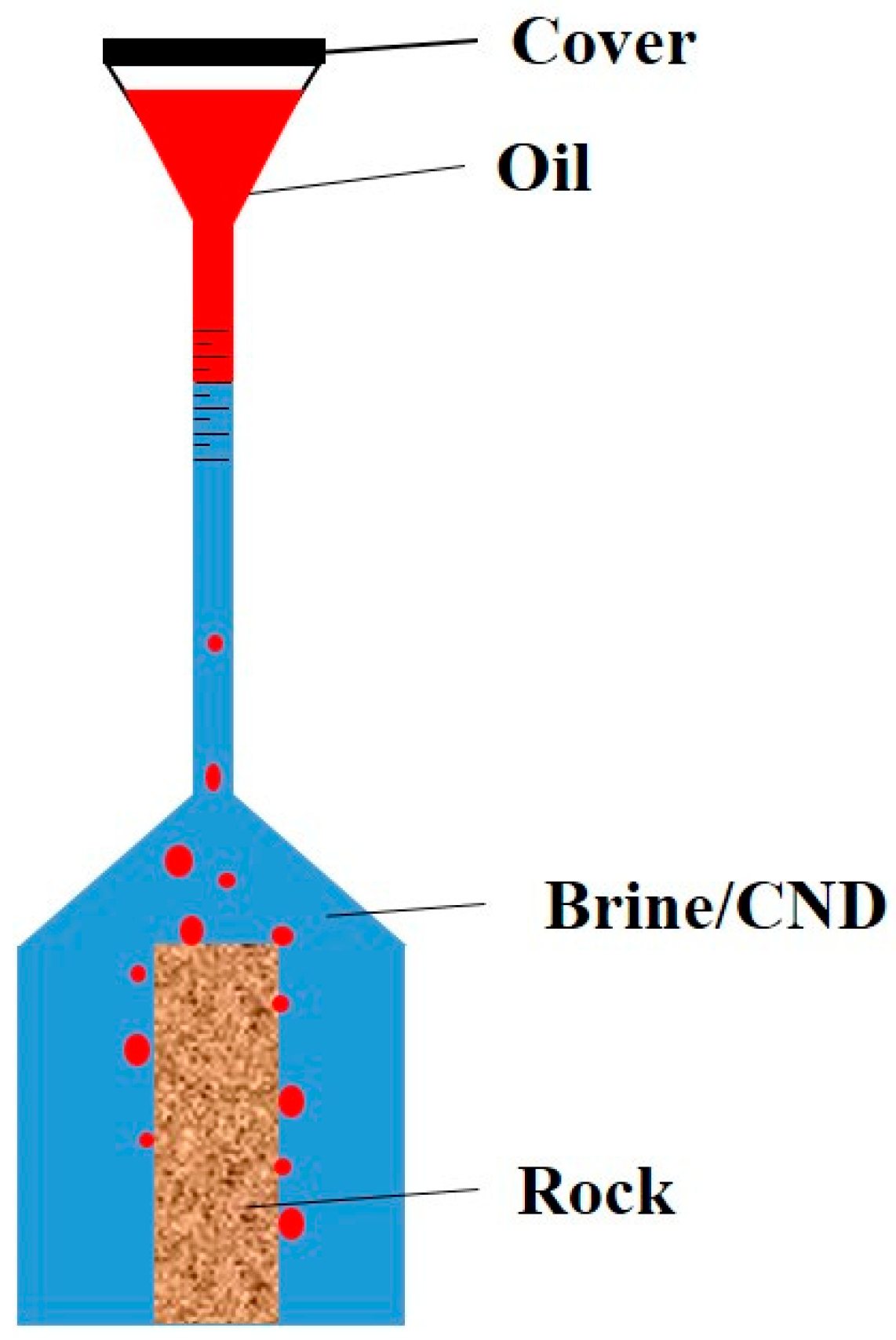
Amott cell: The cell (Figure 1) accommodates cylindrical core samples up to 6 cm in length, featuring a measurement accuracy of 0.02 mL within a 0–2 mL operational range. The apparatus is equipped with a top-mounted sealing cap to prevent liquid evaporation, while a centrally positioned capillary tube enables real-time monitoring of oil–water interface dynamics.
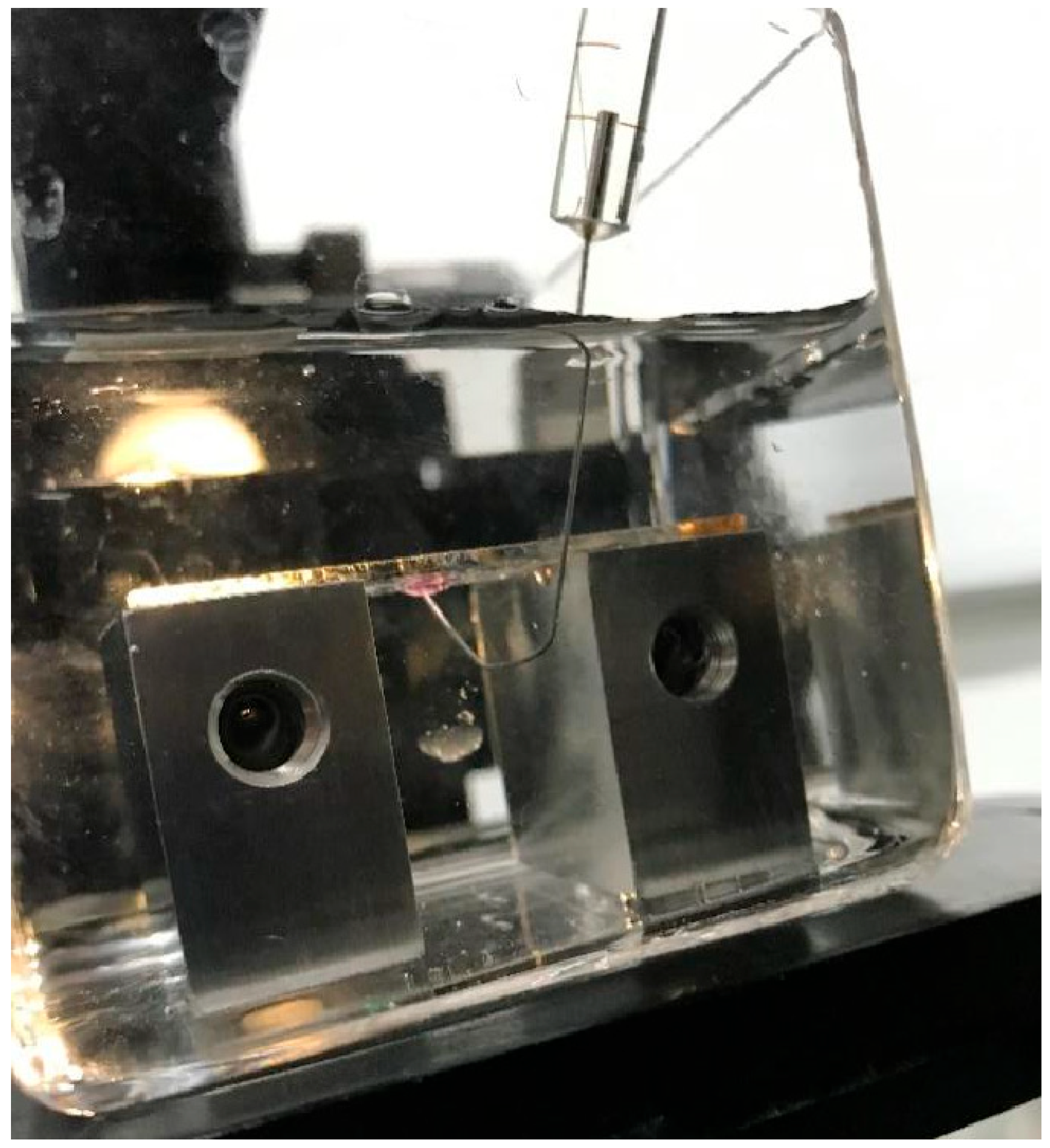
Contact angle equipment: The apparatus (Figure 2) was employed to determine the contact angle between solid surfaces and liquids. The measurement protocol consisted of depositing a 10 μL droplet onto the rock surface, with subsequent image acquisition using a high-resolution digital camera. Following optimization of camera focus to achieve sharp droplet imaging, the liquid droplet profile on the rock substrate was displayed on the computer interface, enabling precise quantification of the solid–liquid contact angle through specialized image analysis software.
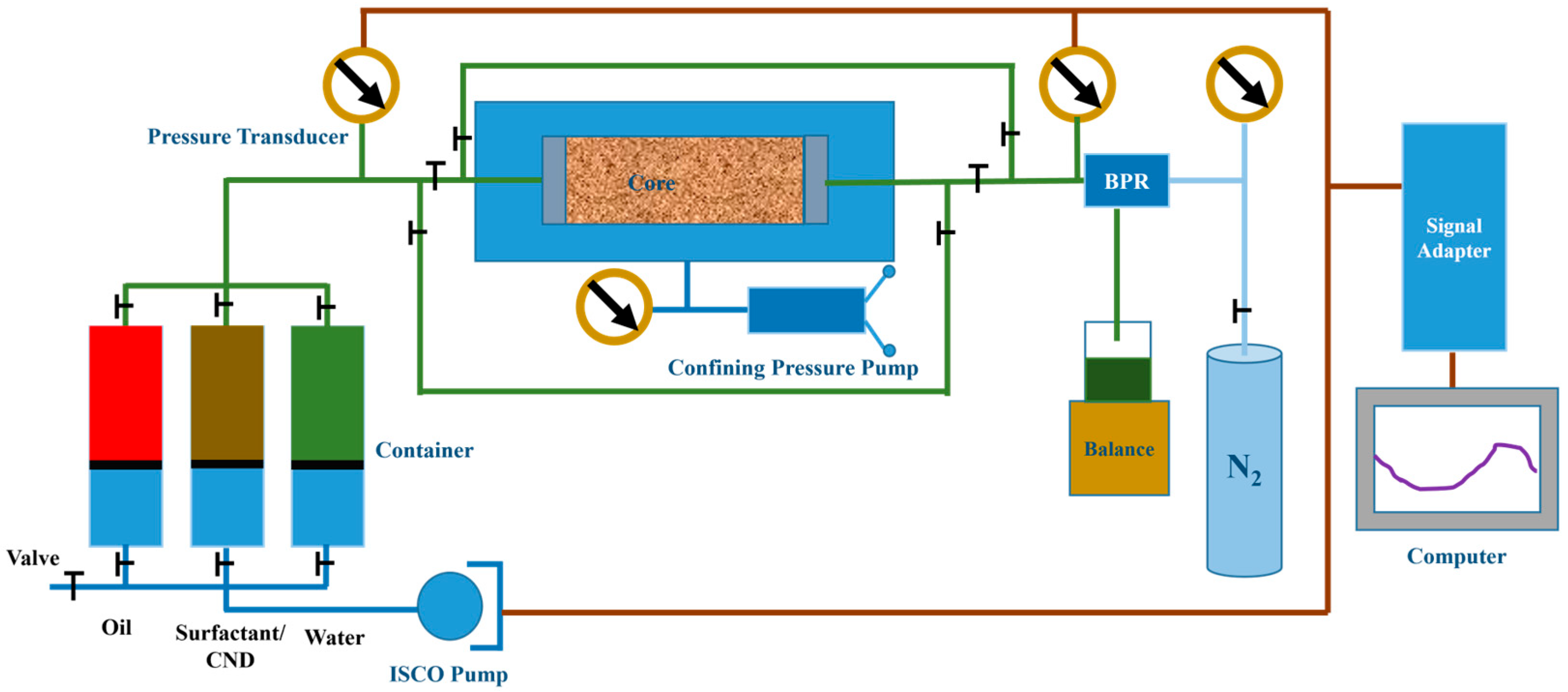
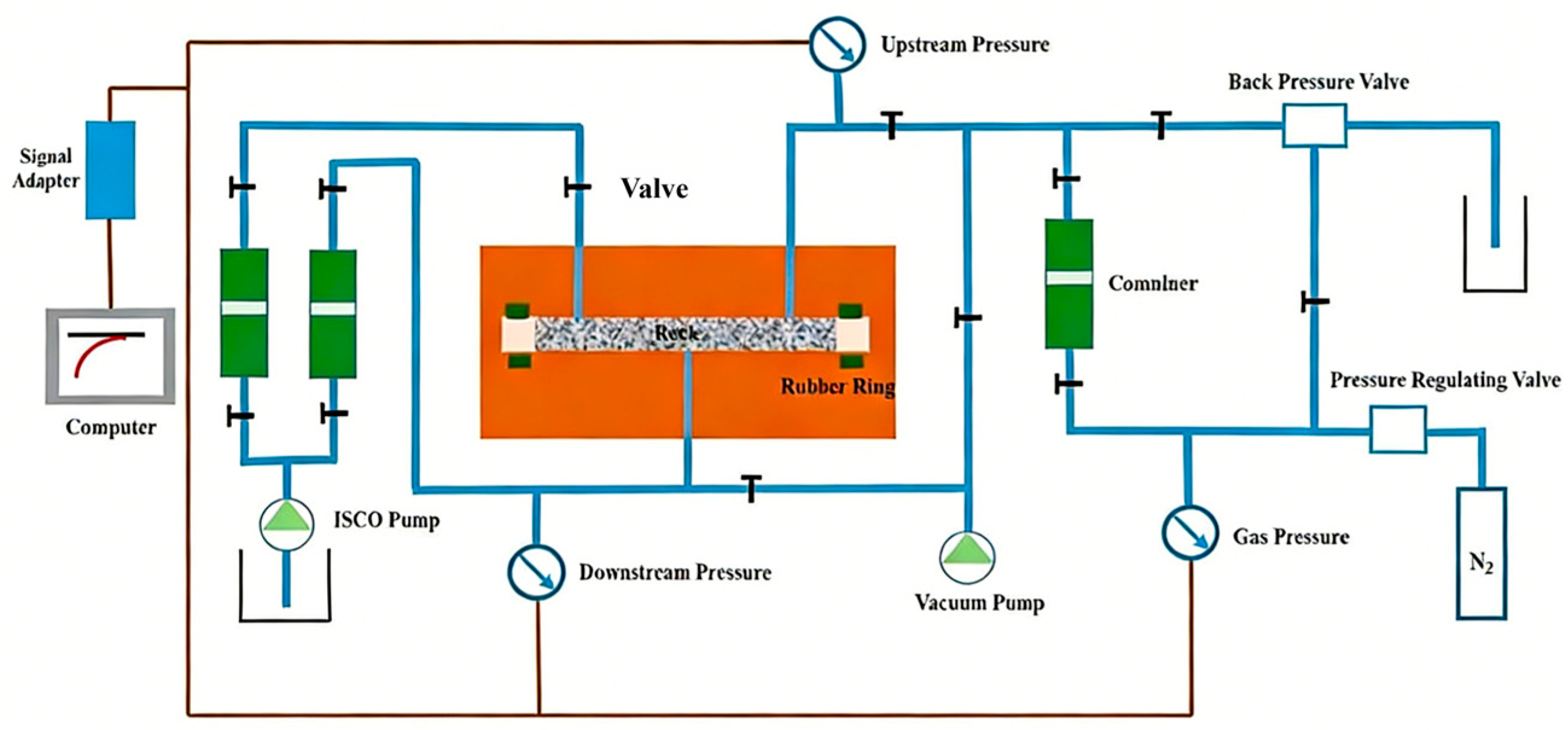
Core flow testing system: The core flow system (Figure 3) is composed of seven components. The power system utilizes a ISCO pump, which offers a flow rate ranging from 0.001 mL/min to 50 mL/min and can reach a maximum pressure of 70 MPa. There are three containers available, each designed to hold water, CND, and kerosene, respectively. These containers have a pressure-bearing capacity of 70 MPa. Five pressure sensors are installed to monitor pressure, with an accuracy of 0.4 kPa. Rock samples of varying lengths are loaded into the Hassler core holder, and the diameter of these rock samples is 2.54 cm. A manual pump is used to apply confining pressure, while a nitrogen cylinder provides backpressure. A signal adapter and a computer are employed to monitor pressure and weight signals.
Pressure transmission test (PTT): The Pressure Transmission Technique (PTT) setup (Figure 4) is utilized to measure degree of formation damage, capillary entry pressure, and the permeability in shale and tight oil reservoirs. In this research, the PTT is applied to investigate formation damage and enhanced pressure fracturing. The PTT includes a power system featuring a pump, 3 containers designed to hold water, CND, and kerosene, respectively, each with a pressure-bearing capacity of 35 MPa. Rock slices for PTT experiments are bonded using an epoxy resin–hardener mixture (1:1 mass ratio), then cut to a length of 0.7 cm and a diameter of 6.35 cm.
Procedure:
Contact Angle Test:
Rock A samples were ground with 200–300 mesh sandpaper to achieve surface homogeneity. The test procedure was as follows:
  • Samples were soaked in brine, and a 10 μL kerosene droplet was placed on the rock surface using a micro syringe.
  • After the droplet stabilized, images were recorded using contact angle measurement tools, and initial angles were computed with dedicated software.
  • Taking out the rock, and drying it with an air-laid paper.
  • Rock was then immersed in the CND, then a micro syringe was applied again to drop 10 μL droplet of kerosene to the rock surface.
  • After the kerosene droplet was stable, a picture was captured again by the contact angle equipment, and contact angle was measured and compared to the initial contact angle.
  • Same steps were repeated from (1) to (6) for rock B, except the immersed liquid is brine in step (5).
Imbibition Test:
  • Place rock sample C into an Amott cell and inject brine until the liquid reaches the marked line on the cell.
  • Place rock sample D into an Amott cell and inject CND until the liquid reaches the marked line on the cell.
  • Record the oil–water interface at different time points until no further changes are observed in the interface.

3. Core Flow Testing Experiment

Due to the extremely high compactness of the prepared core samples, which made it difficult to conduct core flow experiments, two other cores with higher permeability (0.7 mD) were selected for the experiment.
(1)
Core sample E was subjected to vacuum pumping for 12 h and saturated with brine.
(2)
For wettability modification, a kerosene blend with a 1.5 wt. % oleic acid concentration was employed to displace the core sample for a duration corresponding to over 10 pore volumes (PV). Subsequently, pure kerosene was used for displacement to remove the oleic acid, preventing it from affecting the experimental results.
(3)
CND was injected into the rock in a reverse manner to simulate the invasion of fracturing fluid.
(4)
Steps (1) and (2) were repeated for rock sample F, followed by the reverse injection of brine into the rock for comparison with CND.
During the experiment, the pressure difference as well as the volumes of water and oil were monitored, with the flow rate consistently maintained at 0.05 mL/min throughout the process.
Pressure Transmission Test (PTT):
(1)
The rock was vacuum-treated and then saturated with brine to ensure complete saturation.
(2)
A single rock slice was placed into a specialized core holder to ensure system sealing. The dead volume was then vacuum-treated for 5 min to prevent air interference.
(3)
Kerosene was injected into the downstream until the downstream pressure reached the specified value. After displacing for a long time, the top valve was closed and recording the pressure until it equilibrated with the down value.
(4)
The top valve was opened, and the top part was vacuum-treated for 5 min. The down valve was then opened until the down value dropped to 0.05 MPa. CND was injected into the top part until the value equaled 0.6 MPa. Closing both top and down valves, and pressure changes over time were recorded until equilibrium was achieved.
(5)
The top and down valves were reopened, and the system was vacuum-treated for 5 min. Kerosene was again injected into the down part while maintaining a constant downstream value of 0.6 MPa. After displacing for a long time, the top was closed, and the top value was monitored until equilibrium with the down value was reached.
(6)
Steps (1) to (5) were repeated, with brine replacing the simulated fracturing fluid (CND) in step (4). Finally, the results of the two sets of experiments were compared and analyzed.

4. Result and Discussion

Contact Angle Test
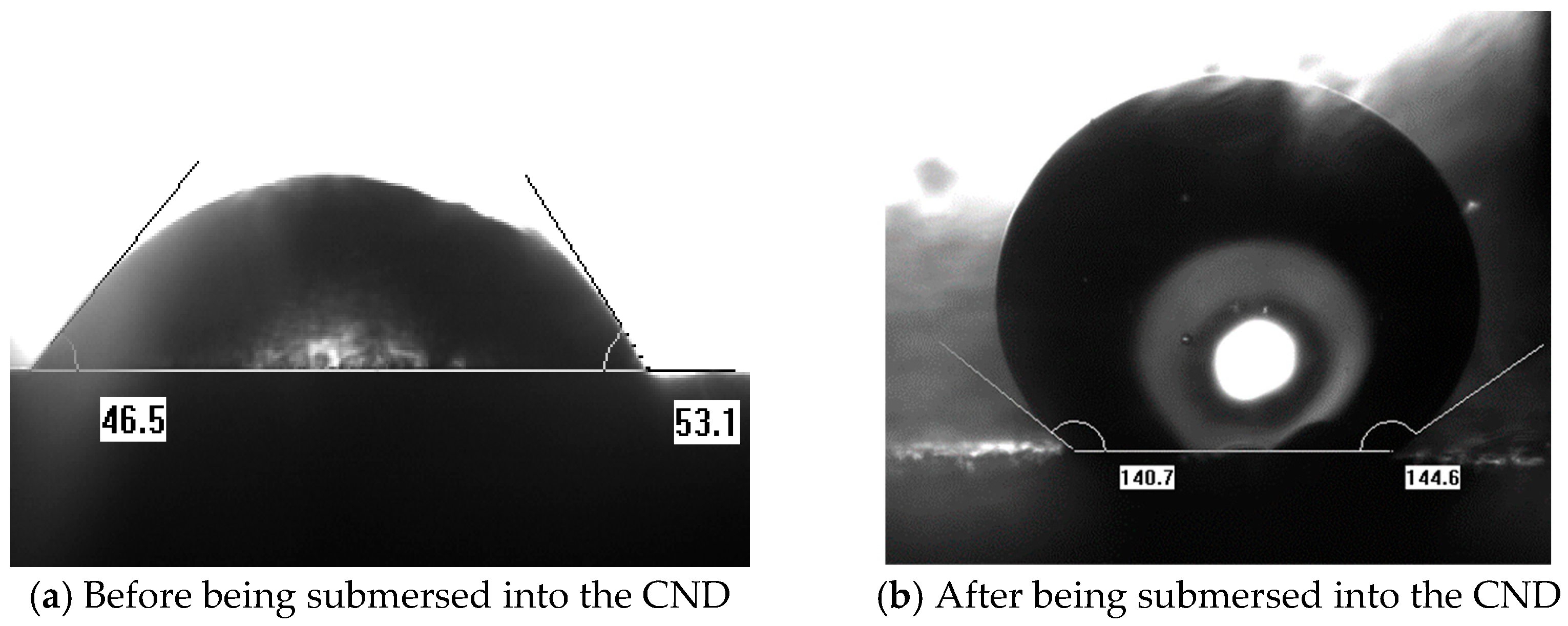
Different wettability characteristics are reflected by variations in the liquid–solid contact angle. Contact angle values were obtained via oil droplet measurements. When a rock is immersed in an aqueous solution and a drop of kerosene is placed on the bottom of its surface: if the contact angle is >105°, the rock is water-wet; if it is between 75° and 105°, it is neutrally wet; if it is <75°, it is oil-wet.
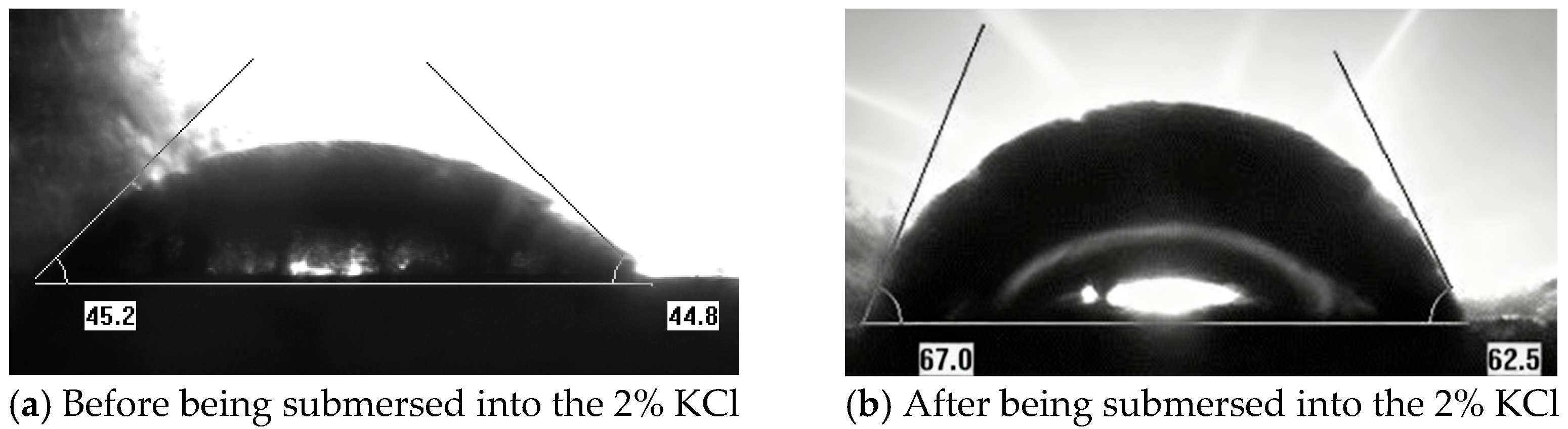
After spontaneous imbibition with oleic acid, Rock A exhibited an average contact angle of 49.8° (Figure 5 left) and Rock B 44.9° (Figure 6 left), indicating that both rock surfaces showed oil-wet characteristics. After treatment with CND, Rock A’s average contact angle reached 142.7° (Figure 5 right), indicating that its wettability had changed from oil-wet to water-wet. This may be due to the adsorption of surfactants in CND on the rock surface, altering its preferential wettability from oil-wetting to water-wetting. Rock B’s average contact angle was 64.4° (Figure 6 right), indicating that it remained oil-wet because the brine could not change its wettability. The contact angle increases because the low-salinity water alters rock wettability toward hydrophilicity by reducing the solid–liquid interfacial tension, dissolving adsorbed high-valence ions on the rock surface, and enhancing the exposure of polar hydrophilic groups.
Adhesion between the stone surface and liquid is the resistance during flowing; the adhesion Wn is calculated as the following equation.
W n = γ o l ( 1 + cos θ )
During the hydraulic fracturing process, some tight oil reservoirs exhibit an initial oil-wet wettability, with contact angles less than 90°. After the injection of CND, the interfacial tension decreases on one hand; on the other hand, the oil-wet reservoir transforms into a water-wet state, with contact angles increasing to values greater than 90°. Consequently, the adhesion force decreases, making it easier for the oil to detach from the rock surface.

5. Spontaneous Imbibition

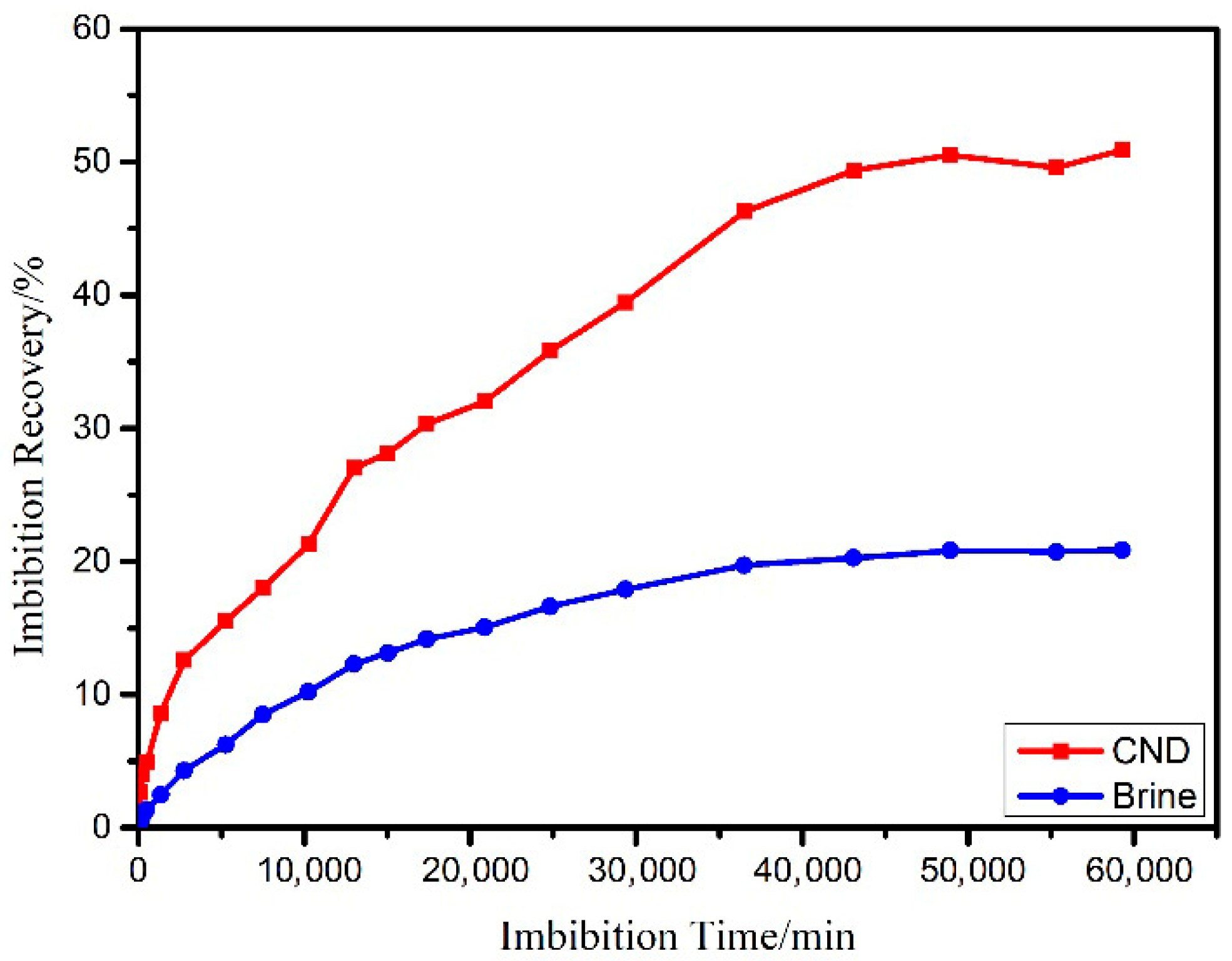
As shown in Figure 7, the ultimate imbibition recovery of brine reached a maximum value of 22% at 50,000 min. The contact angle test indicated that the rock surface was oil-wet, while the imbibition test suggested that some pores remained water-wet. These two results implied that the wettability of the Jimsar rock was mixed-wet. By 50,000 min, CND achieved a maximum imbibition recovery of 51%, 29% higher than brine. The difference in oil displacement performance stems mainly from CND-induced wettability changes, which enhance water-driven oil recovery, as the treated rock showed enhanced ability to displace oil compared to brine-treated samples. The driving force for imbibition is capillary force. If the rock wettability is oil-wet, the capillary force will generate resistance, and imbibition will not occur spontaneously; conversely, if the rock wettability is water-wet, the oil will be replaced by water after placing the rock in water. CND can change the wettability from oil-wet to water-wet, thus allowing imbibition to occur and extract more oil. This result is consistent with the observations from the contact angle test. Additionally, Figure 8 shows that the imbibition of both rocks almost ceased at 50,000 min (34.7 days), which is a time-consuming process. Compared to the result of Li et al. [53], the imbibition period for these two rocks is extended. Li et al. conducted the experiment for 120 h, which is less than our experiments, and the permeability is higher. Properties of rock can help explain this phenomena; due to the lower permeability, the flow resistance is considerable, and the explanation is in agreement with the result of Sheng [54] and Yang [55].
Core Flooding Test
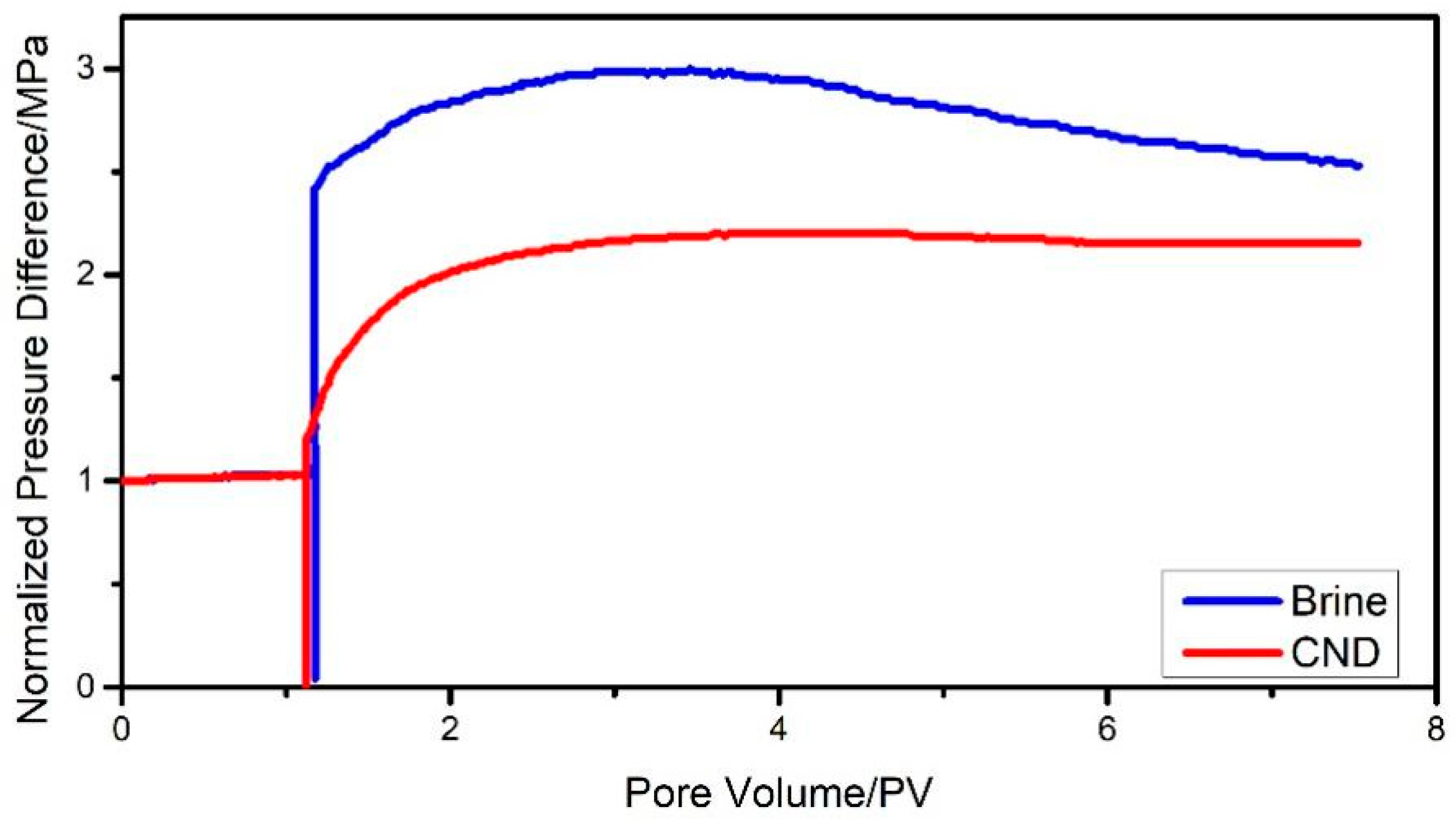
As shown in Figure 8, to compare the pressure differences between CND and brine, the study normalized the initial permeability. When injecting CND into the rock, the displacement pressure was 1.2 MPa, whereas it reached 2.5 MPa for brine injection. The experimental results demonstrate that CND can effectively reduce flow resistance.
During the shut-in period, the extremely high pressure environment in hydraulic fractures and connected natural fractures causes fracturing fluid to leak off into the rock matrix. Flow resistance becomes crucial in this post-fracturing shut-in phase. Lower resistance not only offers potential for energy savings but also enables the fracturing fluid to propagate farther, significantly increasing its contact area with crude oil. This expanded effective contact area facilitates pressure wave propagation over greater distances, which helps extend the economic production cycle. Moreover, the enhanced contact between crude oil and fracturing fluid improves spontaneous imbibition efficiency, thereby displacing more oil. Due to its low interfacial tension characteristics, CND reduces flow resistance, resulting in a smaller pressure drop compared to brine. The pressure drop curve morphology in the second step also reflects wettability alteration. During two-phase spontaneous imbibition, when the wetting phase displaces the non-wetting phase, the pressure drop trend shows an “initial rise followed by stabilization” pattern. Conversely, when the non-wetting phase displaces the wetting phase, the trend exhibits an “initial rise followed by decline”. In this study, both core samples were first treated with oleic acid to achieve oil-wet conditions, then saturated with kerosene (which cannot alter rock wettability). In the second step, the pressure drop trend of CND aqueous solution matched the “wetting phase displacing non-wetting phase” characteristic, indicating the rock’s wettability had changed from oil-wet to water-wet. Correspondingly, the brine’s pressure drop trend in the second step followed the “non-wetting phase displacing wetting phase” pattern, confirming the rock remained oil-wet. These results verify that CND can convert oil-wet rock to water-wet, consistent with findings from both contact angle measurements and spontaneous imbibition experiments.
Test of Reservoir Pressure Enhancement
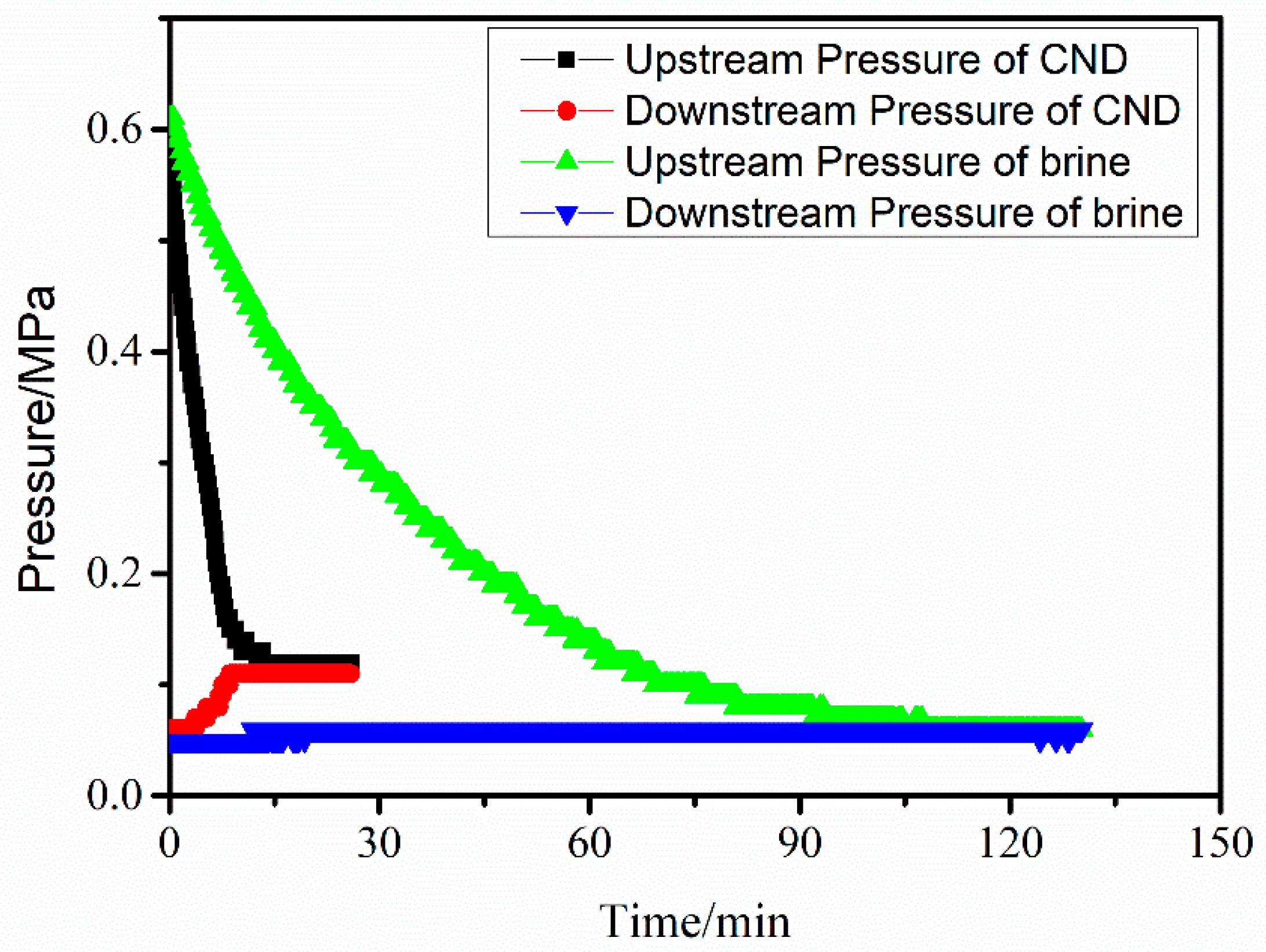
Upstream chamber in the PTT equipment is applied to simulate the fracture after hydraulic fracturing, while downstream chamber is applied to simulate the reservoir pore volume. As shown in Figure 9, the upstream pressure has decreased from 0.6 MPa to 0.11 MPa after closing the valve in the CND invasion experiment, the variation in upstream pressure is 0.49 MPa; while the downstream pressure has increased from 0.05 MPa to 0.11 MPa, the variation in downstream pressure is 0.06 MPa. In addition, the whole process lasts for 15 min. The upstream pressure has decreased from 0.6 MPa to 0.07 MPa in the brine invasion experiment, the variation in upstream pressure is 0.53 MPa, the downstream pressure has increased from 0.05 MPa to 0.07 MPa, the variation in downstream pressure is 0.02 MPa, and the whole process lasts for 80 min.
CND’s final equilibrium pressure was 57% higher than brine, a finding associated with its lower interfacial tension (3 mN/m vs. 34 mN/m for brine), due to the surfactant in the CND, which can reduce the IFT. This reduced IFT minimizes flow resistance. Additionally, CND altered the rock from mixed-wet to water-wet, which further boosted pressure transmission efficiency. The pressure of downstream could represent the reservoir pressure, which makes us conclude that CND can enhance the reservoir pressure. The result implies that surfactants and nanofluid are a crucial part in fracturing fluid, which can not only enhance the oil recovery, but also benefit enhancing reservoir energy. In addition, the balanced time for CND is 19% of brine, which demonstrates that the shorter shut-in period for enhancing reservoir energy is demanded after adding CND. To the best of our knowledge, longer shut-in time can reduce the economic benefit. Thus, CND could help enhance the revenue from another perspective. CND reduces interfacial tension (3 mN/m) and reverses wettability, increasing capillary driving force (per Young–Laplace equation) and reducing interfacial energy consumption. This enables fracturing fluid to penetrate deeper and store more elastic energy, differing from simple pressure transmission. PTT results show CND’s equilibrium pressure is 57% higher than brine, confirming genuine formation energy enhancement.
To further quantitatively confirm energized extent of CND and brine, energized range ( Δ E ) is defined, which means improved dimensionless pressure while decreased per unit of pressure during shut-in period.
Δ E = Δ P I / Δ P D
Dimensionless improved pressure extent: Δ P I = Δ P / Δ P D
Dimensionless decreased pressure extent: Δ P D = Δ P / P 2
Improved pressure value: Δ P = P 2 P 1
Decreased pressure value: Δ P = P 1 P 0
Energized speed ( Δ F ) is defined to show the speed of energized range.
ΔF = ΔE/T
According to Equation (2) and Equation (3), the energized range and the energized speed of CND and brine are calculated, respectively.
Table 2 shows the energized range of CND is 4.08, which is 3.24 times larger than brine (1.26); the energized speed of CND is 0.272, which is 17 times faster than brine (0.016). The calculated results further demonstrate that CND can enhance the reservoir energy and reduce effective shut-in period.
Permeability Recover Test
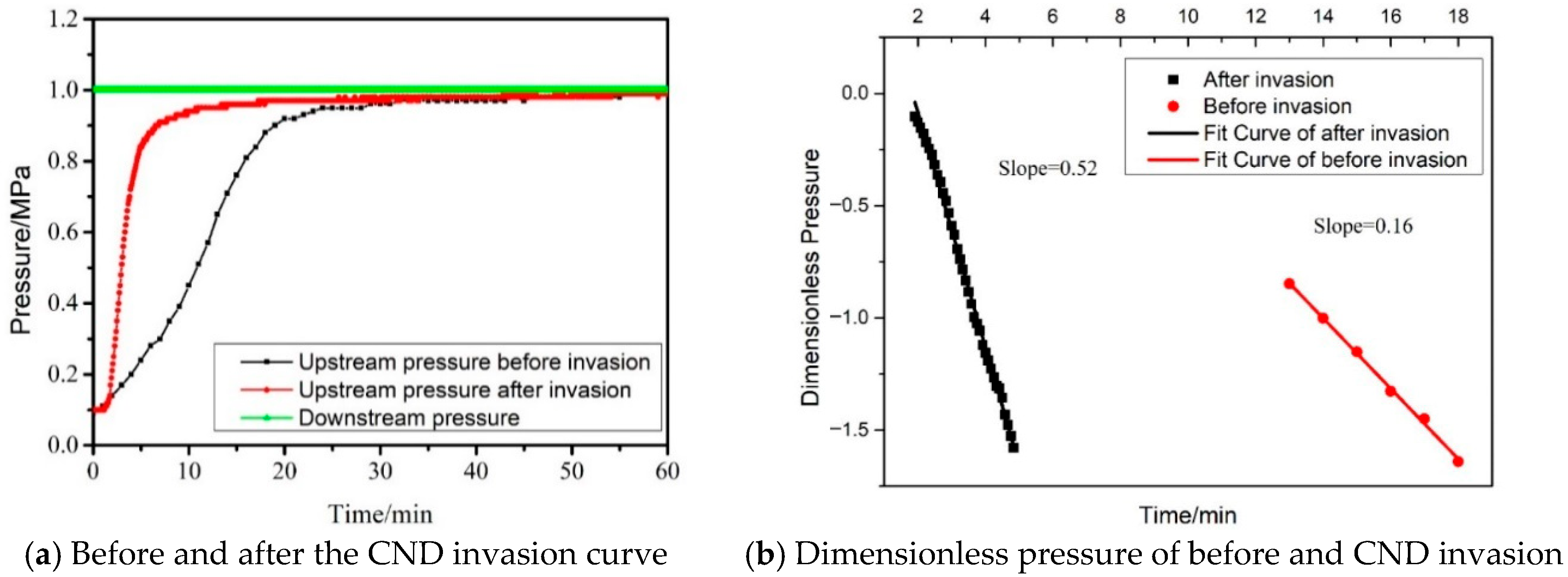
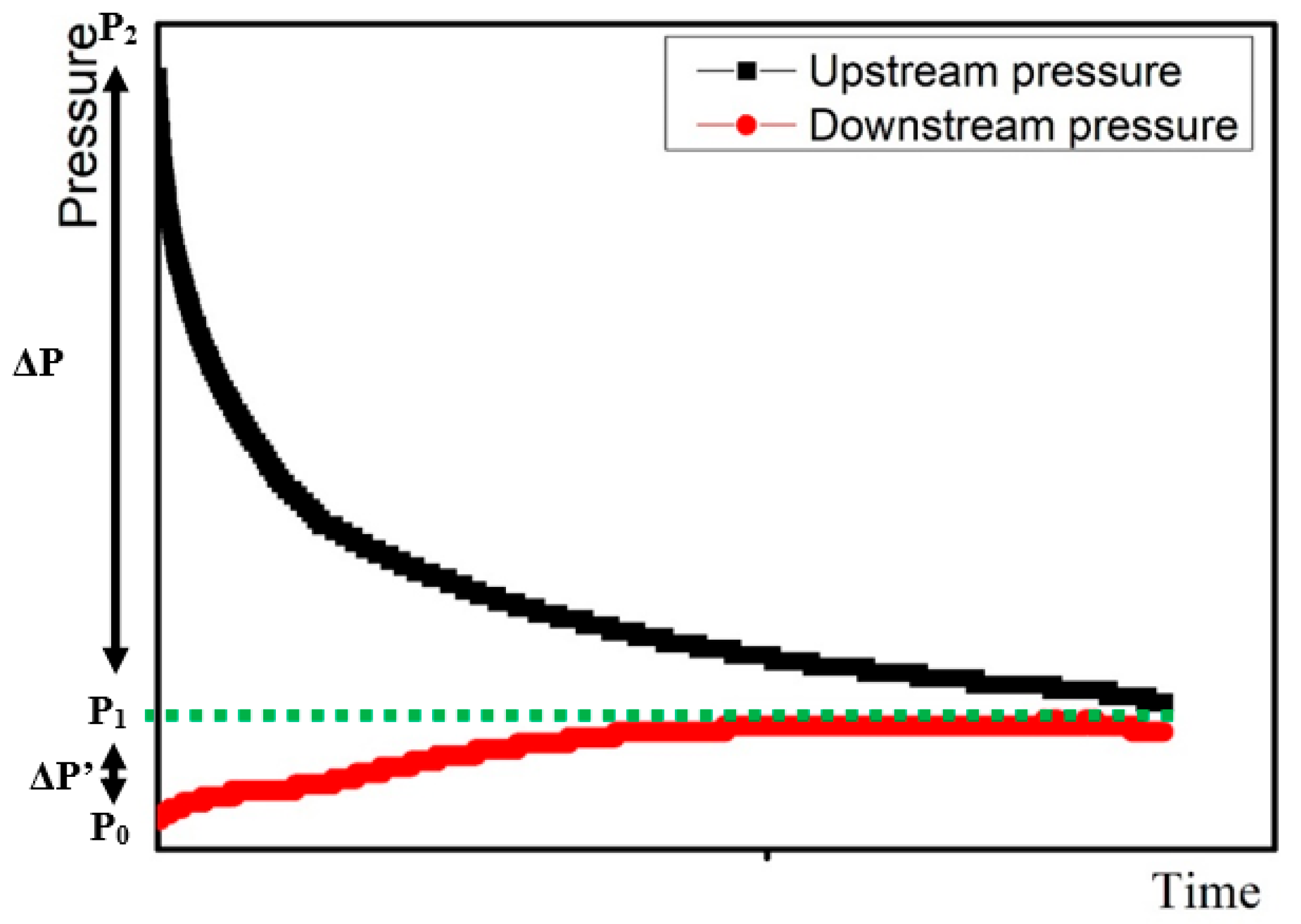
The permeability restoration experiment was conducted using PTT equipment. Given the extremely low permeability of tight oil reservoirs, conventional core flow testing equipment struggles to effectively evaluate fluid permeability. Therefore, this study employed an unsteady-state method instead of the traditional steady-flow method to calculate fluid permeability [56,57]. The rock samples used in the experiment were approximately 0.8 cm in length, a design that significantly shortened the experimental cycle. Formation water was first injected into the downstream chamber to simulate pore pressure (P0); the test fluid was then pumped into the upstream chamber to establish and maintain a higher pressure (Pm). The change in downstream pressure [P(l, t)] was continuously monitored until it stabilized. Figure 10 illustrates the pressure change before and after CND invasion. Permeability was calculated using Equation (4), where the λ value was derived from Equation (5). Specifically, data from the stable transition period of downstream pressure were selected to plot a dimensionless pressure ( P m P ( L , t ) P m P 0 ) vs. time curve (as shown in Figure 11). The slope of this curve corresponds to the λ value. Detailed calculation methods can be found in the research by Liang et al. [40].
K = λ μ C V L / A
λ = P m P ( L , t ) P m P 0 / t
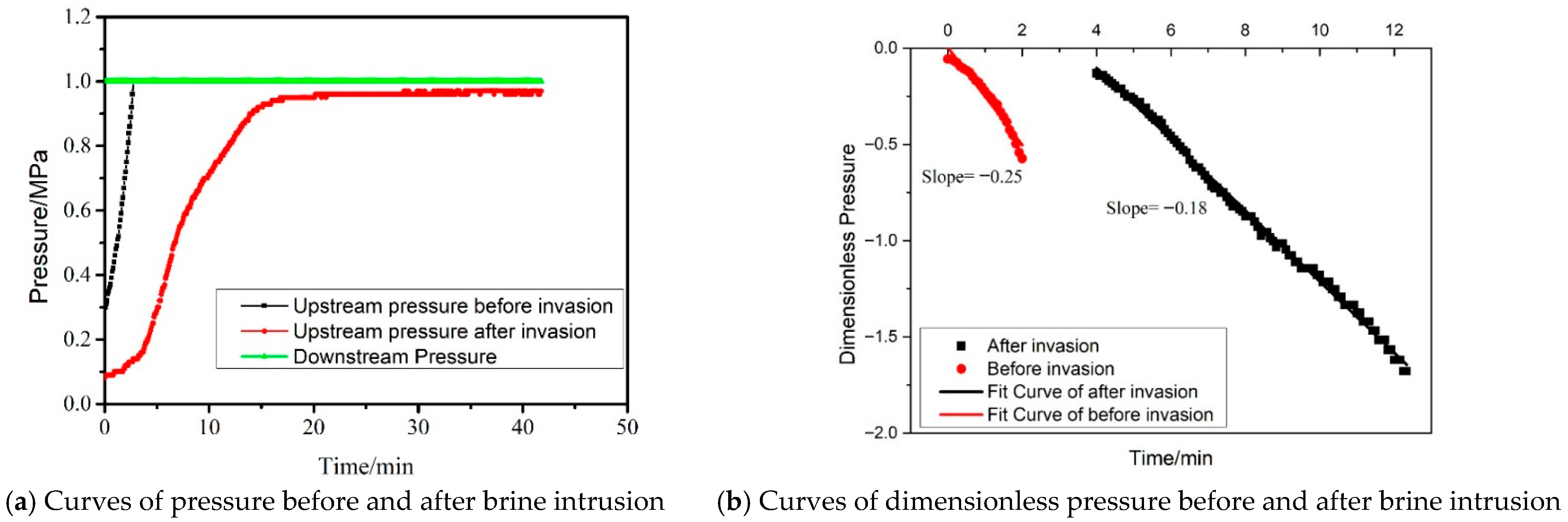
Figure 10 shows the pressure and dimensionless pressure variations before and after CND invasion into the rock slice. Figure 12 presents the corresponding pressure and dimensionless pressure changes before and after brine invasion. The calculated slopes and permeability results are summarized in Table 3.
Table 3 shows that the initial permeability to oil of two rocks are not much different, which states that the comparison is effective. The result shows that the permeability recovery is 334% after CND invasion, while the permeability recovery is 73% after brine invasion. Compared results demonstrate CND could help increase the production after hydraulic fracturing.

6. Field Application

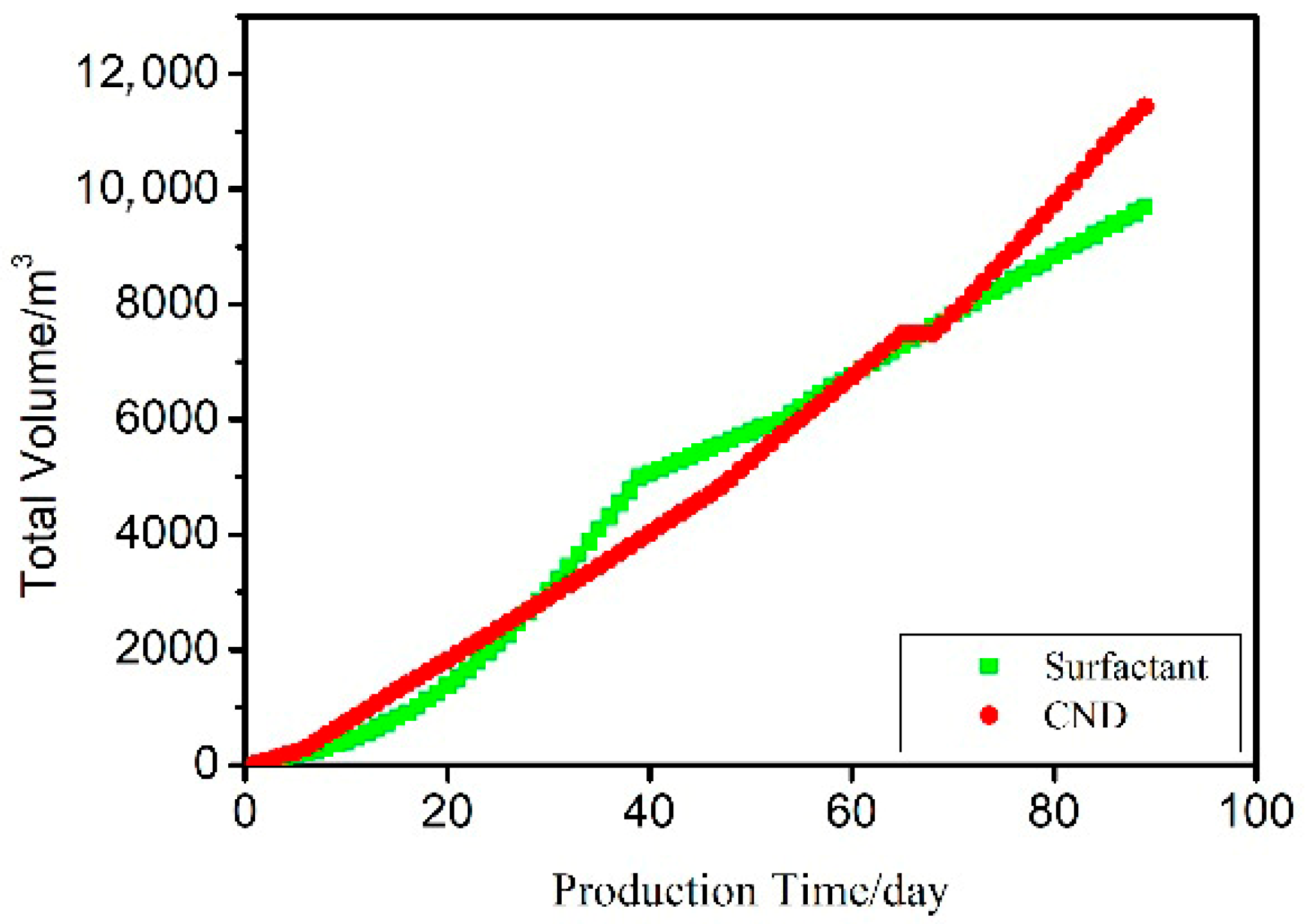
The CND and common surfactant were applied in two adjacent tight sandstone wells in the Xinjiang oil field in China. The formation pressure and reservoirs conditions are similar for two wells. An amount of 0.1 wt. % CND was added as the fracturing fluid additive during hydraulic fracturing in well #1, while 0.3 wt. % common surfactant was added in well #2. Wells were open to production for 89 days; the result is shown in Figure 13. Over an 89-day production period, well #1 (CND-treated) produced 1750 m3 more oil than well #2 (conventional surfactant-treated). This output increase is likely due to CND’s ability to enhance imbibition and minimize permeability impairment, as validated in laboratory tests. Other researchers also proved that production can be enhanced after adding the CND during hydraulic fracturing [45,58,59,60].

7. Conclusions

Rapid reservoir energy depletion is a critical challenge in tight oil formation development. While large volumes of fracturing fluid injected during hydraulic fracturing hold potential for enhancing formation energy, oil-wet wettability and high flow resistance prevent fluid penetration into pores and throats, hindering imbibition. This study confirms that Complex Nanofluid Dispersions (CND) effectively addresses these issues through experimental and field validation, with key quantitative outcomes. CND reverses oil-wet rocks to water-wet, boosting spontaneous imbibition recovery to 51%. It reduces flow resistance by 52%, enhances reservoir energy range by 3.24 times, and shortens stabilization time to 19% of brine. Field application in Xinjiang Oilfield shows the CND-treated well produced 1750 m3 more oil than the conventional surfactant-treated well over 89 days. The core mechanisms underlying CND’s effectiveness are the synergistic effects of reduced interfacial tension and wettability reversal, which enhance imbibition driving force and reduce flow resistance, achieving both energy retention and productivity improvement.
A limitation of this study is the idealized experimental conditions: cores were collected from the same formation with homogeneous properties, failing to cover the heterogeneity and complex mineral compositions of actual reservoirs. Future research will focus on adaptability studies for multi-property reservoirs to establish a matching model between CND concentration and reservoir properties, numerical simulation optimization coupling imbibition and fracturing processes for precise field parameter design, and long-term stability and compatibility experiments of CND under high-temperature, high-salinity conditions and with other fracturing fluid additives.

Author Contributions

Methodology, Z.X. and X.L.; Formal analysis, S.C.; Investigation, F.Z.; Resources, G.H.; Data curation, K.Y.; Writing—original draft, Z.X. All authors have read and agreed to the published version of the manuscript.

Funding

This work is financial support from Science Foundation of China University of Petroleum, Beijing (No. 2462023YJRC019), National Natural Science Foundation of China (No. 52204059).

Data Availability Statement

The original contributions presented in this study are included in the article. Further inquiries can be directed to the corresponding author.

Conflicts of Interest

Author Shuping Chang was employed by the company SLB. The remaining authors declare that the research was conducted in the absence of any commercial or financial relationships that could be construed as a potential conflict of interest.

Nomenclature

W n the adhesion;
γ o l the interfacial tension;
θ the contact angle between stone and oil;
P 2 initial upstream pressure, represents the wellbore pressure after hydraulic fracturing;
P 1 final balanced pressure, represents the reservoir pressure after shut-in well for a long period;
P 0 initial downstream pressure, represents the initial reservoir pressure;
Tthe period from initial decrease time to the ended decrease, min;
λ dimensionless pressure;
μ liquid viscosity;
Ccompressibility of liquid;
Vupstream or downstream sealed chamber;
Llength of rock;
Across-sectional area of rock sample;
P m initial large pressure.

References

  1. AEO2018—Issues in Focus Articles—U.S. Energy Information Administration. Available online: https://www.eia.gov/outlooks/aeo/section_issues.php#grt (accessed on 5 January 2019).
  2. Lotfollahi, M.; Beygi, M.R.; Abouie, A.; Sepehrnoori, K.; Wheeler, M.; DiCarlo, D.A. Optimization of Surfactant Flooding in Tight Oil Reservoirs. In Proceedings of the Unconventional Resources Technology Conference, Austin, TX, USA, 24 July 2017. [Google Scholar]
  3. Ma, H.; Han, G.; Zhu, Z.; Wang, B.; Xiang, X.; Liang, X. Hybrid Virtual Flow Metering on Arbitrary Well Patterns for Transient Multiphase Prediction Driven by Mechanistic and Data Model. Geoenergy Sci. Eng. 2024, 243, 213335. [Google Scholar] [CrossRef]
  4. Popov, E.; Myasnkov, A.; Cheremisin, A.; Miftakov, R.; Stukachev, V.; Mukhametdinova, A. Experimental and Computational Complex for Determination of the Effectiveness of Cyclic Carbon Dioxide Injection for Tight Oil Reservoirs. In Proceedings of the SPE Russian Petroleum Technology Conference and Exhibition, Moscow, Russia, 24–26 October 2016; Society of Petroleum Engineers: Richardson, TX, USA, 2016. [Google Scholar]
  5. Burke, L.H.; Nevison, G.W.; Peters, W.E. Improved Unconventional Gas Recovery with Energized Fracturing Fluids: Montney Example. In Proceedings of the SPE Eastern Regional Meeting, Columbus, OH, USA, 17–19 August 2011; Society of Petroleum Engineers: Richardson, TX, USA, 2011. [Google Scholar]
  6. Ribeiro, L.; Sharma, M. Fluid Selection for Energized Fracture Treatments. In Proceedings of the SPE Hydraulic Fracturing Technology Conference, The Woodlands, TX, USA, 4–6 February 2013; Society of Petroleum Engineers: Richardson, TX, USA, 2013. [Google Scholar]
  7. Kong, B.; Wang, S.; Chen, S. Minimize Formation Damage in Water-Sensitive Montney Formation with Energized Fracturing Fluid. SPE Reserv. Eval. Eng. 2017, 20, 562–571. [Google Scholar] [CrossRef]
  8. Denney, D. Fluid Selection for Energized Hydraulic Fractures. J. Pet. Technol. 2010, 62, 42–44. [Google Scholar] [CrossRef]
  9. Peng, J.; Xia, B.; Lu, Y.; Wang, L.; Song, R. Pore-Scale Numerical Investigation on the Capillary Trapping of Hydrogen in Natural Sandstone under in-Situ Wettability Condition: Implications for Underground Hydrogen Storage in Aquifers. Int. J. Hydrogen Energy 2025, 113, 509–522. [Google Scholar] [CrossRef]
  10. Abbasi, J.; Ghaedi, M.; Riazi, M. A New Numerical Approach for Investigation of the Effects of Dynamic Capillary Pressure in Imbibition Process. J. Pet. Sci. Eng. 2018, 162, 44–54. [Google Scholar] [CrossRef]
  11. Akbarabadi, M.; Saraji, S.; Piri, M.; Georgi, D.; Delshad, M. Nano-Scale Experimental Investigation of in-Situ Wettability and Spontaneous Imbibition in Ultra-Tight Reservoir Rocks. Adv. Water Resour. 2017, 107, 160–179. [Google Scholar] [CrossRef]
  12. Liang, X.; Zhou, F.; Liang, T.; Su, H.; Yuan, S.; Li, Y. Impacts of Pore Structure and Wettability on Distribution of Residual Fossil Hydrogen Energy after Imbibition. Int. J. Hydrogen Energy 2020, 45, 14779–14789. [Google Scholar] [CrossRef]
  13. Liang, X.; Zhou, F.; Liang, T.; Wang, C.; Wang, J.; Yuan, S. Impacts of Low Harm Fracturing Fluid on Fossil Hydrogen Energy Production in Tight Reservoirs. Int. J. Hydrogen Energy 2020, 45, 21195–21204. [Google Scholar] [CrossRef]
  14. Dai, C.; Wang, X.; Li, Y.; Lv, W.; Zou, C.; Gao, M.; Zhao, M. Spontaneous Imbibition Investigation of Self-Dispersing Silica Nanofluids for Enhanced Oil Recovery in Low-Permeability Cores. Energy Fuels 2017, 31, 2663–2668. [Google Scholar] [CrossRef]
  15. Al-Ameri, A.; Gamadi, T.; Watson, M. The Impact of the Fracturing Fluid Spontaneous Imbibition on the Petrophysical Properties of Low Permeability Reservoirs. In Proceedings of the SPE International Conference and Exhibition on Formation Damage Control, Lafayette, LA, USA, 7–9 February 2018; Society of Petroleum Engineers: Richardson, TX, USA, 2018. [Google Scholar]
  16. Cuiec, L.E.; Bourbiaux, B.; Kalaydjian, F. Oil Recovery by Imbibition in Low-Permeability Chalk. SPE Form. Eval. 1994, 9, 200–208. [Google Scholar] [CrossRef]
  17. Patil, P.D.; Rohilla, N.; Katiyar, A.; Yu, W.; Falcone, S.; Nelson, C.; Rozowski, P. Surfactant Based EOR for Tight Oil Reservoirs through Wettability Alteration: Novel Surfactant Formulations and Their Efficacy to Induce Spontaneous Imbibition. In Proceedings of the SPE EOR Conference at Oil and Gas West Asia, Muscat, Oman, 26–28 March 2018; Society of Petroleum Engineers: Richardson, TX, USA, 2018. [Google Scholar]
  18. Lu, J.; Liyanage, P.J.; Solairaj, S.; Adkins, S.; Arachchilage, G.P.; Kim, D.H.; Britton, C.; Weerasooriya, U.; Pope, G.A. Recent Technology Developments in Surfactants and Polymers for Enhanced Oil Recovery. In Proceedings of the International Petroleum Technology Conference, Beijing, China, 26–28 March 2013. [Google Scholar]
  19. Hendraningrat, L.; Li, S.; Torster, O. A Coreflood Investigation of Nanofluid Enhanced Oil Recovery. J. Pet. Sci. Eng. 2013, 111, 128–138. [Google Scholar] [CrossRef]
  20. Denney, D. Nanotechnology Applications for Challenges in Egypt. J. Pet. Technol. 2014, 66, 123–126. [Google Scholar] [CrossRef]
  21. Alvarez, J.O.; Saputra, I.W.R.; Schechter, D.S. The Impact of Surfactant Imbibition and Adsorption for Improving Oil Recovery in the Wolfcamp and Eagle Ford Reservoirs. In Proceedings of the SPE Annual Technical Conference and Exhibition, San Antonio, TX, USA, 9–11 October 2017; Society of Petroleum Engineers: Richardson, TX, USA, 2017. [Google Scholar]
  22. Alvarez, J.O.; Schechter, D.S. Altering Wettability in Bakken Shale by Surfactant Additives and Potential of Improving Oil Recovery During Injection of Completion Fluids. In Proceedings of the SPE Improved Oil Recovery Conference, Tulsa, OK, USA, 11–13 April 2016; Society of Petroleum Engineers: Richardson, TX, USA, 2016. [Google Scholar]
  23. Alvarez, J.O.; Schechter, D.S. Application of Wettability Alteration in the Exploitation of Unconventional Liquid Resources. Pet. Explor. Dev. 2016, 43, 832–840. [Google Scholar] [CrossRef]
  24. Liang, T.; Achour, S.H.; Longoria, R.A.; DiCarlo, D.A.; Nguyen, Q.P. Flow Physics of How Surfactants Can Reduce Water Blocking Caused by Hydraulic Fracturing in Low Permeability Reservoirs. J. Pet. Sci. Eng. 2017, 157, 631–642. [Google Scholar] [CrossRef]
  25. Liang, T.; Zhou, F.; Lu, J. Evaluation of Wettability Alteration and IFT Reduction on Mitigating Water Blocking for Low-Permeability Oil-Wet Rocks after Hydraulic Fracturing. Fuel 2017, 209, 650–660. [Google Scholar] [CrossRef]
  26. Liang, T.; Achour, S.H.; Longoria, R.A.; DiCarlo, D.A.; Nguyen, Q.P. Identifying and Evaluating Surfactant Additives to Reduce Water Blocks after Hydraulic Fracturing for Low Permeability Reservoirs. In Proceedings of the SPE Improved Oil Recovery Conference, Tulsa, OK, USA, 11–13 April 2016; Society of Petroleum Engineers: Richardson, TX, USA, 2016. [Google Scholar]
  27. Shuler, P.J.; Lu, Z.; Ma, Q.; Tang, Y. Surfactant Huff-n-Puff Application Potentials for Unconventional Reservoirs. In Proceedings of the SPE Improved Oil Recovery Conference, Tulsa, OK, USA, 11–13 April 2016; Society of Petroleum Engineers: Richardson, TX, USA, 2016. [Google Scholar]
  28. Patil, P.D.; Rohilla, N.; Katiyar, A.; Yu, W.; Nelson, C.; Falcone, S.; Rozowski, P. Surfactant Based EOR for Tight Oil Unconventional Reservoirs Through Wettability Alteration: Novel Surfactant Formulations and Their Efficacy to Induce Spontaneous Imbibition. In Proceedings of the Unconventional Resources Technology Conference, Houston, TX, USA, 23–25 July 2018. [Google Scholar]
  29. Zhao, M.; He, H.; Dai, C.; Sun, Y.; Fang, Y.; Liu, Y.; You, Q.; Zhao, G.; Wu, Y. Enhanced Oil Recovery Study of a New Mobility Control System on the Dynamic Imbibition in a Tight Oil Fracture Network Model. Energy Fuels 2018, 32, 2908–2915. [Google Scholar] [CrossRef]
  30. Nguyen, D.; Sadeghi, N.; Houston, C. Chemical Interactions and Demulsifier Characteristics for Enhanced Oil Recovery Applications. Energy Fuels 2012, 26, 2742–2750. [Google Scholar] [CrossRef]
  31. Mirchi, V.; Saraji, S.; Goual, L.; Piri, M. Dynamic Interfacial Tension and Wettability of Shale in the Presence of Surfactants at Reservoir Conditions. Fuel 2015, 148, 127–138. [Google Scholar] [CrossRef]
  32. Yang, Y.; Dismuke, K.I.; Penny, G.S.; Paktinat, J. Lab and Field Study of New Microemulsion-Based Crude Oil Demulsifiers for Well Completions. In Proceedings of the SPE International Symposium on Oilfield Chemistry, The Woodlands, TX, USA, 20–22 April 2009; Society of Petroleum Engineers: Richardson, TX, USA, 2009. [Google Scholar]
  33. Zhu, Y.; Zhang, Y.; Hou, Q.; Yuan, H.; Jian, G. Effect of Main Factors on Oil Recovery of Surfactant-Polymer Flooding. In Proceedings of the International Petroleum Technology Conference, Beijing, China, 26–28 March 2013. [Google Scholar]
  34. Wei, B.; Li, Q.; Jin, F.; Li, H.; Wang, C. The Potential of a Novel Nanofluid in Enhancing Oil Recovery. Energy Fuels 2016, 30, 2882–2891. [Google Scholar] [CrossRef]
  35. Paktinat, J.; Pinkhouse, J.A.; Stoner, W.P.; Williams, C.; Carder, G.A.; Penny, G.S. Case Histories: Post-Frac Fluid Recovery Improvements of Appalachian Basin Gas Reservoirs. In Proceedings of the SPE Eastern Regional Meeting, Morgantown, WV, USA, 14–16 September 2005; Society of Petroleum Engineers: Richardson, TX, USA, 2005. [Google Scholar]
  36. Riewchotisakul, S.; Akkutlu, I.Y. Adsorption-Enhanced Transport of Hydrocarbons in Organic Nanopores. SPE J. 2016, 21, 1960–1969. [Google Scholar] [CrossRef]
  37. Howard, P.; Mukhopadhyay, S.; Moniaga, N.; Schafer, L.A.; Penny, G.S.; Dismuke, K.I. Comparison of Flowback Aids: Understanding Their Capillary Pressure and Wetting Properties. SPE Prod. Oper. 2010, 25, 376–387. [Google Scholar] [CrossRef]
  38. Al-Wahaibi, Y.; Al-Hashmi, A.-A.; Joshi, S.; Mosavat, N.; Rudyk, S.; Al-Khamisi, S.; Al-Kharusi, T.; Al-Sulaimani, H. Mechanistic Study of Surfactant/Polymer Adsorption and Its Effect on Surface Morphology and Wettability. In Proceedings of the SPE Oil and Gas India Conference and Exhibition, Mumbai, India, 4–6 April 2017; Society of Petroleum Engineers: Richardson, TX, USA, 2017. [Google Scholar]
  39. Zhang, F.; Zhu, Y.; Luo, W.; Cai, H.; Song, W.; Zhang, Q.; Zhou, Z. Lab Study and Field Application of Surfactant Induced Imbibition for Low Permeability Reservoirs. In Proceedings of the SPE Middle East Oil & Gas Show and Conference, Manama, Kingdom of Bahrain, 6–9 March 2017; Society of Petroleum Engineers: Richardson, TX, USA, 2017. [Google Scholar]
  40. Liang, T.; Li, Q.; Liang, X.; Yao, E.; Wang, Y.; Li, Y.; Chen, M.; Zhou, F.; Lu, J. Evaluation of Liquid Nanofluid as Fracturing Fluid Additive on Enhanced Oil Recovery from Low-Permeability Reservoirs. J. Pet. Sci. Eng. 2018, 168, 390–399. [Google Scholar] [CrossRef]
  41. Alvarez, J.O.; Saputra, I.W.R.; Schechter, D.S. Potential of Improving Oil Recovery with Surfactant Additives to Completion Fluids for the Bakken. Energy Fuels 2017, 31, 5982–5994. [Google Scholar] [CrossRef]
  42. Penny, G.S.; Crafton, J.W.; Champagne, L.M.; Zelenev, A.S. Proppant and Fluid Selection to Optimize Performance of Horizontal Shale Fracs. In Proceedings of the SPE Hydraulic Fracturing Technology Conference, The Woodlands, TX, USA, 6–8 February 2012; Society of Petroleum Engineers: Richardson, TX, USA, 2012. [Google Scholar]
  43. Penny, G.S.; Zelenev, A.; Lett, N.; Paktinat, J.; O′Neil, B.J. Nano Surfactant System Improves Post Frac Oil and Gas Recovery in Hydrocarbon Rich Gas Reservoirs. In Proceedings of the SPE Improved Oil Recovery Symposium, Tulsa, OK, USA, 14–18 April 2012; Society of Petroleum Engineers: Richardson, TX, USA, 2012. [Google Scholar]
  44. Liang, X.; Liang, T.; Zhou, F.; Zhu, J.; Wang, R.; Li, Y. Enhanced Fossil Hydrogen Energy Recovery through Liquid Nanofluid Huff-n-Puff in Low Permeability Reservoirs. Int. J. Hydrogen Energy 2020, 45, 19067–19077. [Google Scholar] [CrossRef]
  45. Zhou, F.; Su, H.; Liang, X.; Meng, L.; Yuan, L.; Li, X.; Liang, T. Integrated Hydraulic Fracturing Techniques to Enhance Oil Recovery from Tight Rocks. Pet. Explor. Dev. 2019, 46, 1065–1072. [Google Scholar] [CrossRef]
  46. Franco, C.A.; Franco, C.A.; Salinas, L.M.; Alzate, L.G.; Molina, D.; Rendon, G.J.; Obregon, C.C.; Lopera, S.H.; Medina, O.E.; Cortes, F.B. First Field Application of Functionalized Nanoparticles-Based Nanofluids in Thermal Enhanced Oil Recovery: From Laboratory Experiments to Cyclic Steam Stimulation Process. Fuel 2025, 382, 133736. [Google Scholar] [CrossRef]
  47. Godiwal, R.; Mandal, M.M. Modeling of Enhanced Oil Recovery Using Nanofluid. Chem. Eng. Technol. 2024, 47, 568–577. [Google Scholar] [CrossRef]
  48. Chen, Q.; Ye, M.; Wang, D.; Yin, X.; Lu, J.; Pu, W.; Zhong, J.; Shui, B. Development and Evaluation of a Janus Amphiphilic Carbon Nanotube-Based Nanofluid for Enhanced Heavy Oil Recovery. Phys. Fluids 2025, 37, 052003. [Google Scholar] [CrossRef]
  49. Meng, L.; Dai, Y.; Zhao, M.; Zhang, Z.; Dai, C.; Wu, Y. Investigation of Carbon-Based Nanofluid Imbibition Processes in Low-Permeability Reservoirs Using Nuclear Magnetic Resonance. Colloid Surf. A-Physicochem. Eng. Asp. 2024, 695, 134310. [Google Scholar] [CrossRef]
  50. Pang, Q.; Pu, W.; Tang, X.; Zou, B.; Li, S.; Liu, R.; Pang, S. Experimental Investigation and Simulation of W/O Emulsion Flow in Nanofluid Flood for Enhanced Oil Recovery. Geoenergy Sci. Eng. 2024, 239, 212973. [Google Scholar] [CrossRef]
  51. Jiang, W.; Lv, W.; Jia, N.; Lu, X.; Wang, L.; Wang, K.; Mei, Y. Study on the Effects of Wettability and Pressure in Shale Matrix Nanopore Imbibition during Shut-in Process by Molecular Dynamics Simulations. Molecules 2024, 29, 1112. [Google Scholar] [CrossRef]
  52. Lai, N.; Deng, J.; Wang, Z.; Wang, J.; Guo, W.; Tang, L. Evaluation of the Lower Producing Limit of the Pore Radius for Imbibition and Displacement Based on Shale Oil Reservoir Characteristics. Energy Fuels 2023, 37, 11453–11464. [Google Scholar] [CrossRef]
  53. Shuai, L.; Yunhong, D.; Bo, C.; Yongjun, L. Experiment and Modelling of Massive Fracturing Considering Drainage and Imbibition Process in Tight Oil Reservoirs. In Proceedings of the International Petroleum Technology Conference, Bangkok, Thailand, 14–16 November 2016. [Google Scholar]
  54. Sheng, J.J. What Type of Surfactants Should Be Used to Enhance Spontaneous Imbibition in Shale and Tight Reservoirs? J. Pet. Sci. Eng. 2017, 159, 635–643. [Google Scholar] [CrossRef]
  55. Yang, L.; Ge, H.; Shi, X.; Cheng, Y.; Zhang, K.; Chen, H.; Shen, Y.; Zhang, J.; Qu, X. The Effect of Microstructure and Rock Mineralogy on Water Imbibition Characteristics in Tight Reservoirs. J. Nat. Gas Sci. Eng. 2016, 34, 1461–1471. [Google Scholar] [CrossRef]
  56. Sharma, M.M.; Zhang, R.; Chenevert, M.E.; Ji, L.; Guo, Q.; Friedheim, J. A New Family of Nanoparticle Based Drilling Fluids. In Proceedings of the SPE Annual Technical Conference and Exhibition, San Antonio, TX, USA, 8–10 October 2013; Society of Petroleum Engineers: Richardson, TX, USA, 2012. [Google Scholar]
  57. Al-Bazali, T.M.; Zhang, J.; Chenevert, M.E.; Sharma, M.M. Measurement of the Sealing Capacity of Shale Caprocks. In Proceedings of the SPE Annual Technical Conference and Exhibition, Dallas, TX, USA, 9–12 October 2005; Society of Petroleum Engineers: Richardson, TX, USA, 2005. [Google Scholar]
  58. Gharibshahi, R.; Jafari, A.; Haghtalab, A.; Karambeigi, M.S. Application of CFD to Evaluate the Pore Morphology Effect on Nanofluid Flooding for Enhanced Oil Recovery. RSC Adv. 2015, 5, 28938–28949. [Google Scholar] [CrossRef]
  59. Kutty, S.M.; Kuliyev, M.; Hussein, M.A.; Chitre, S.; Mustafa, H.; Penny, G.; Wehbeh, J.; Germack, D.; Shedd, D.; Lelenwa, C. Well Performance Improvement Using Complex Nano Fluids. In Proceedings of the Abu Dhabi International Petroleum Exhibition and Conference, Abu Dhabi, UAE, 9–12 November 2015; Society of Petroleum Engineers: Richardson, TX, USA, 2015. [Google Scholar]
  60. Mohanty, K.K.; Tong, S.; Miller, C.; Honarpour, M.M.; Turek, E.; Peck, D.D. Improved Hydrocarbon Recovery Using Mixtures of Energizing Chemicals in Unconventional Reservoirs. In Proceedings of the SPE Annual Technical Conference and Exhibition, San Antonio, TX, USA, 9–11 October 2017; Society of Petroleum Engineers: Richardson, TX, USA, 2017. [Google Scholar]
Figure 1. Schematic diagram of Amott cell.
Jmse 14 00126 g001
Figure 2. Contact angle test.
Jmse 14 00126 g002
Figure 3. Schematic diagram of the core flow testing system.
Jmse 14 00126 g003
Figure 4. Schematic diagram of the PTT system.
Jmse 14 00126 g004
Figure 5. Before and after being submersed into the CND.
Jmse 14 00126 g005
Figure 6. Before and after being submersed into the 2% KCl.
Jmse 14 00126 g006
Figure 7. The imbibition curve with CND and brine.
Jmse 14 00126 g007
Figure 8. The pressure difference between CND and brine.
Jmse 14 00126 g008
Figure 9. The depletion curve between CND and brine.
Jmse 14 00126 g009
Figure 10. Curves of pressure and dimensionless pressure before and after CND intrusion.
Jmse 14 00126 g010
Figure 11. Schematic diagram of depletion.
Jmse 14 00126 g011
Figure 12. Curves of pressure and dimensionless pressure before and after brine intrusion.
Jmse 14 00126 g012
Figure 13. Field comparison between CND and common surfactant.
Jmse 14 00126 g013
Table 1. Mineral composition of rocks.
Non-Clay Mineral (%)Clay Mineral (%)
QuartzPlagioclaseCalciteAnkerite
10.3426.885.1755.821.79
Table 2. Energized range and energized speed of CND and brine.
Type of Fracturing FluidEnergized Range ΔEEnergized Speed ΔF
CND4.080.272
Brine1.260.016
Table 3. Calculated slope and permeability.
Type of Fracturing FluidBefore InvasionAfter InvasionPermeability Recovery
(%)
SlopePermeability (μD)SlopePermeability (μD)
CND0.160.190.520.65334%
Brine0.250.310.180.2373%
Disclaimer/Publisher’s Note: The statements, opinions and data contained in all publications are solely those of the individual author(s) and contributor(s) and not of MDPI and/or the editor(s). MDPI and/or the editor(s) disclaim responsibility for any injury to people or property resulting from any ideas, methods, instructions or products referred to in the content.