Numerical Investigation on Safety Assessment of Gas Dispersion from Vent Mast for LNG-Powered Vessels

Abstract
1. Introduction
2. Principle
2.1. Relevant Regulation Analysis
2.2. Methodology and Model
2.3. Calculation of Gas Release Flow
3. Simulation Method
3.1. 3d Modeling Establishment
3.2. Grid Generation
3.3. Simulation Scenario and Boundary Conditions
- (1)
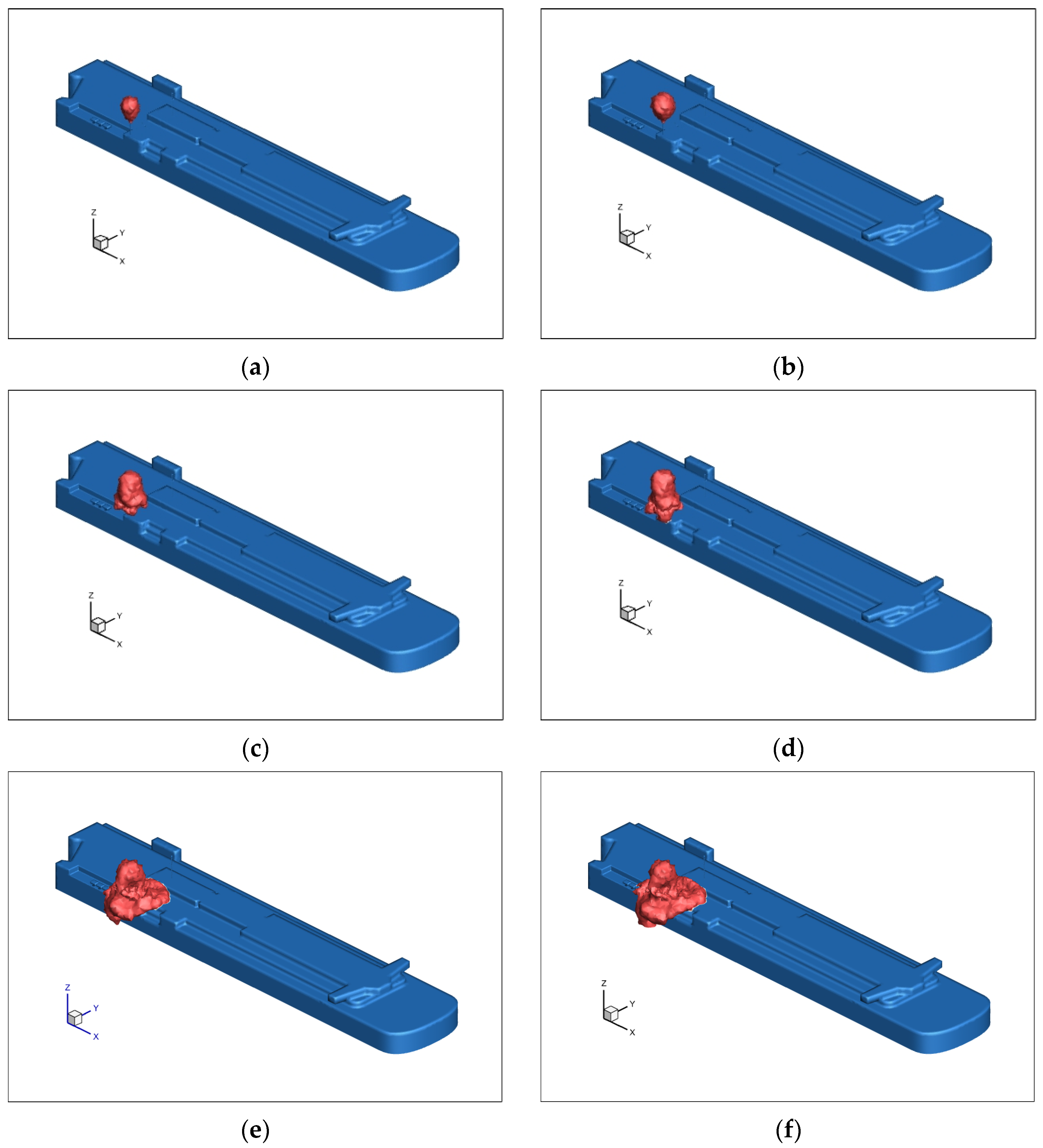
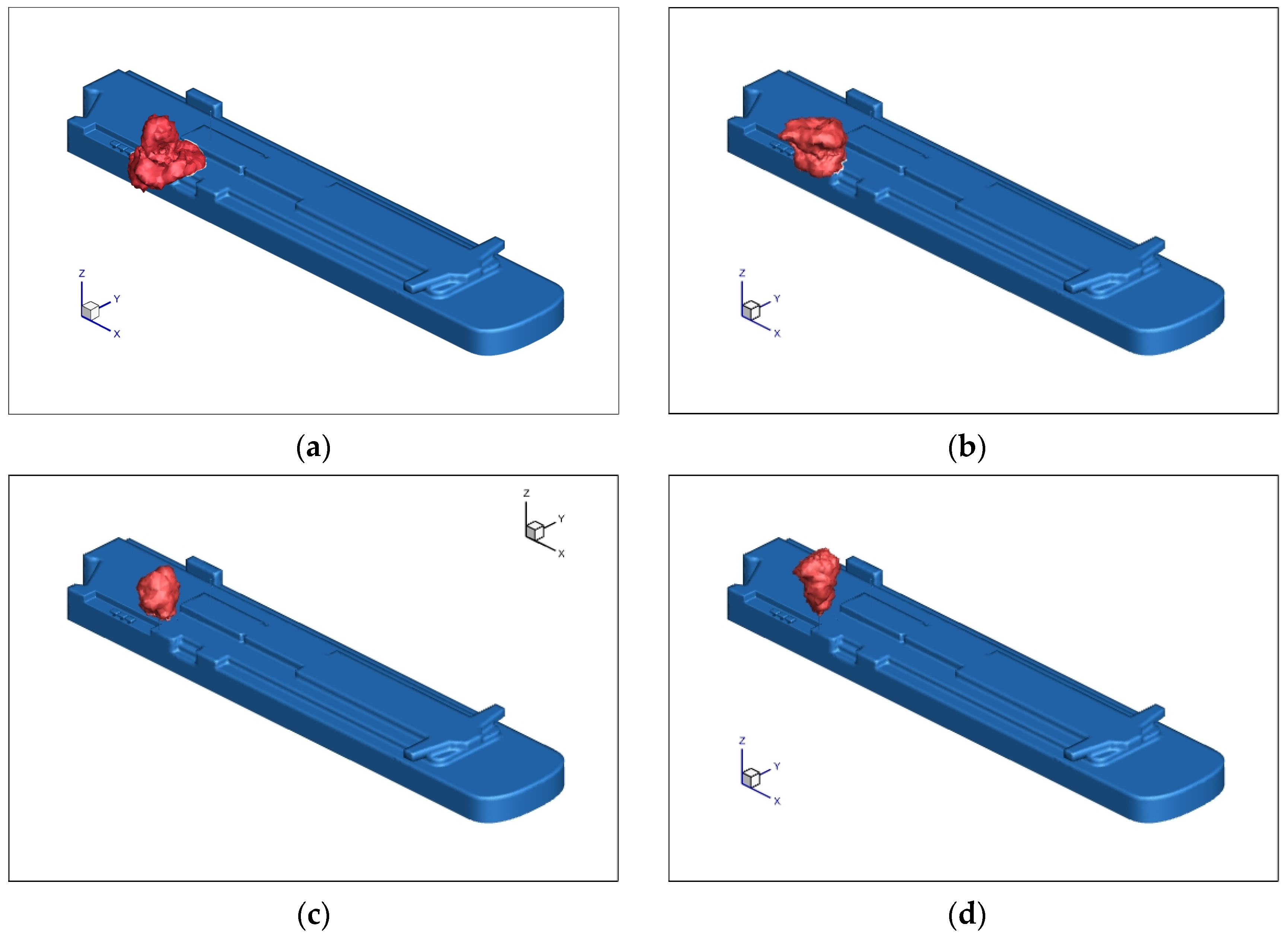
- Vent mast height. As described in Section 2.1, the vent mast height has an impact on the safety of gas release from the vent mast. In line with the IGF code, the height of the mast should be at least 6 m or one—third of the ship beam, whichever is the greater value. This study conducts a comparison of the gas release risk from the vent mast with two designed heights, namely 6 m and 15 m (one-third of the ship beam). Meanwhile, an optimized design of the vent mast height is implemented to determine the minimum height that satisfies the safety requirements.
- (2)
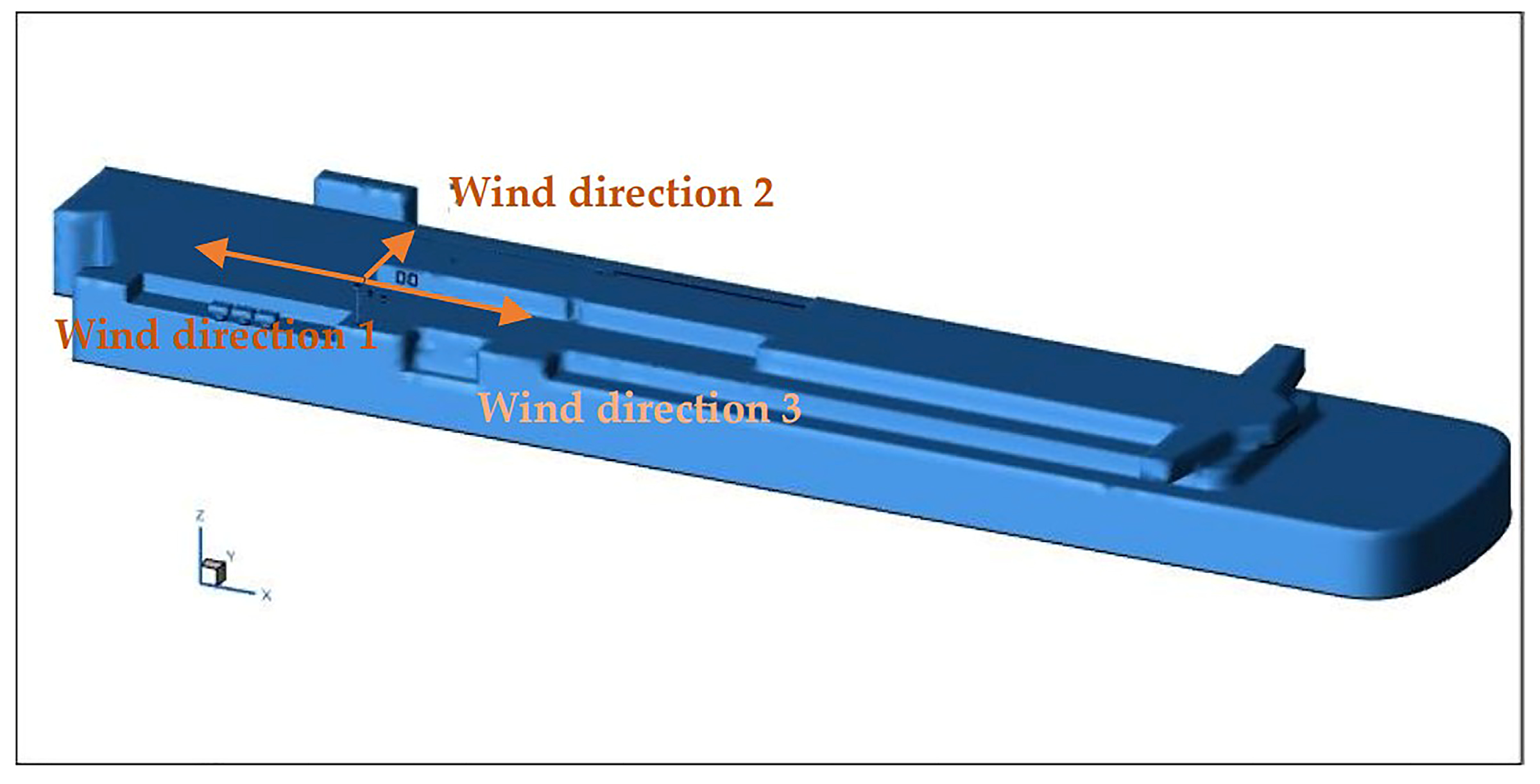
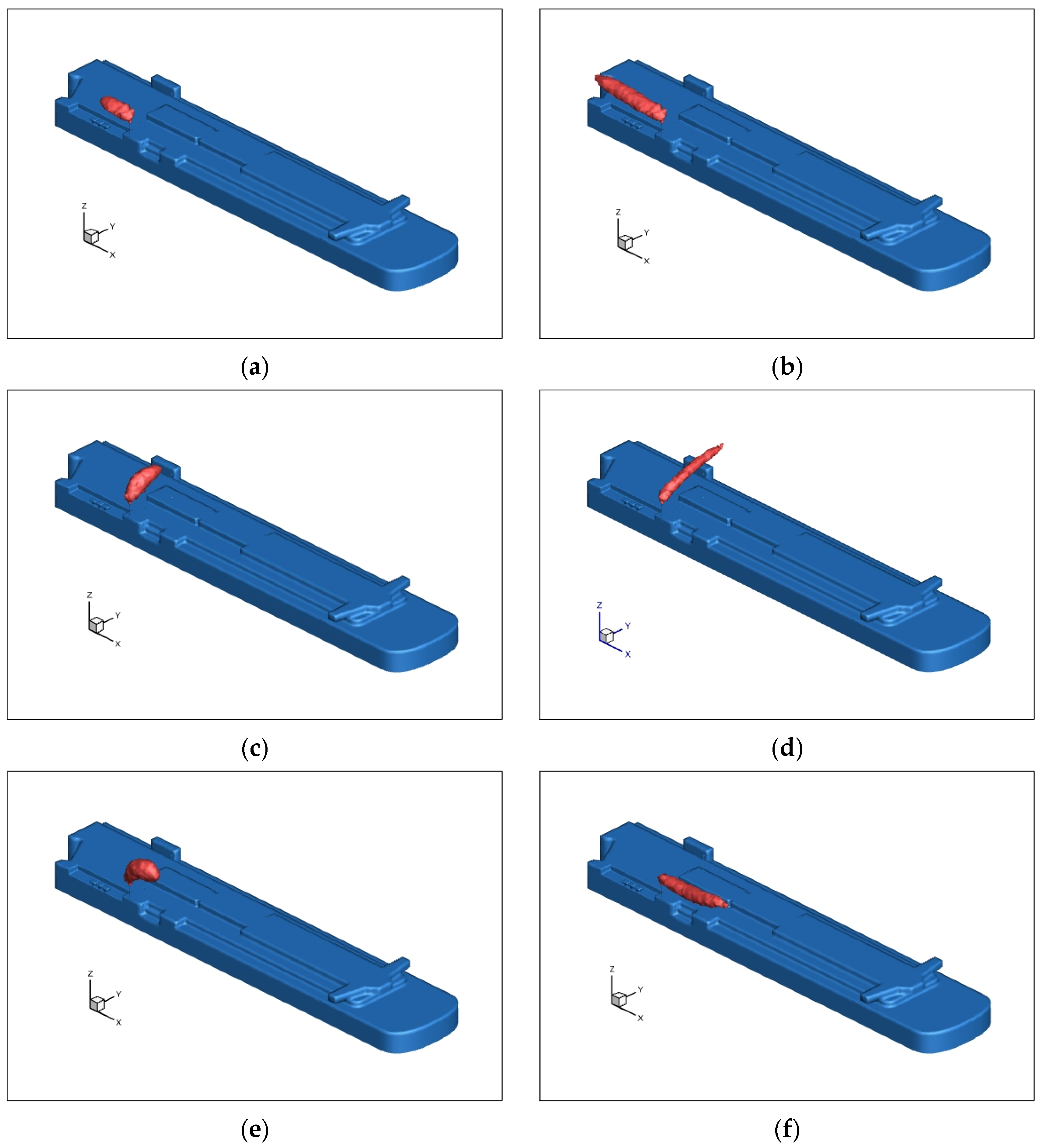
- Wind direction. As depicted in Figure 2, various wind directions are considered to evaluate the influence of gas release from the vent mast on the surrounding sensitive areas. Specifically, we considered the wind blowing towards the stern direction (wind direction 1), port-side direction (wind direction 2), and bow direction (wind direction 3), respectively.
- (3)
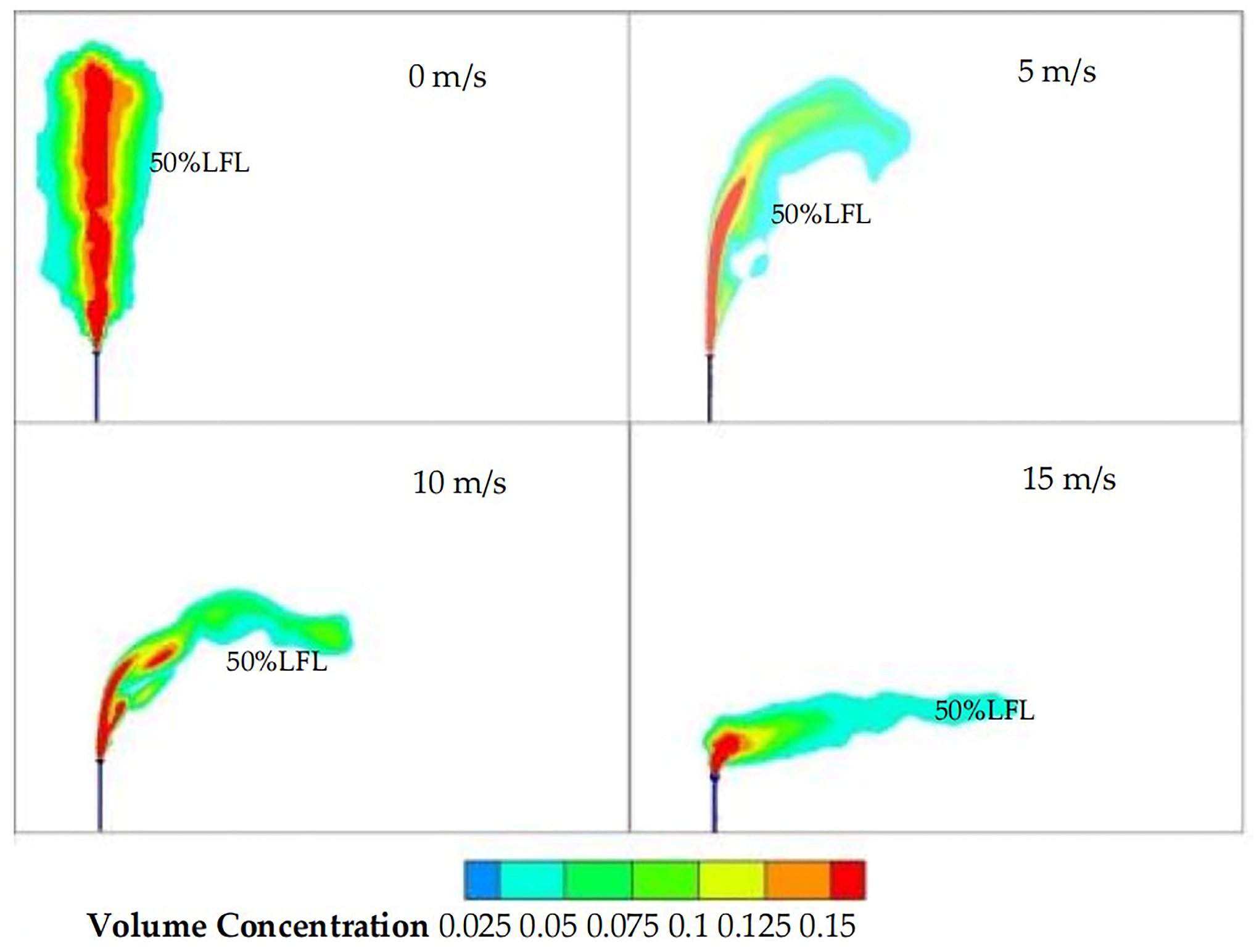
- Wind velocity. In this project, the vessel navigation velocity under the navigation condition is 14.5 knots, and the wind velocity during simulation is the synthesized wind velocity derived from fitting the navigation velocity and ambient wind velocity. Four wind velocities were selected for the gas dispersion simulation: 0 m/s, 5 m/s, 10 m/s, and 15 m/s.
4. Results and Discussion
4.1. Vent Mast Height
4.1.1. Vent Mast Height of 6 m and B/3
4.1.2. Gas Dispersion Hazards from 6-m High Vent Mast
4.1.3. Optimized Design of Vent Mast Height
4.2. Wind Direction
4.3. Wind Velocity
4.4. Discussions
5. Conclusions
- (1)
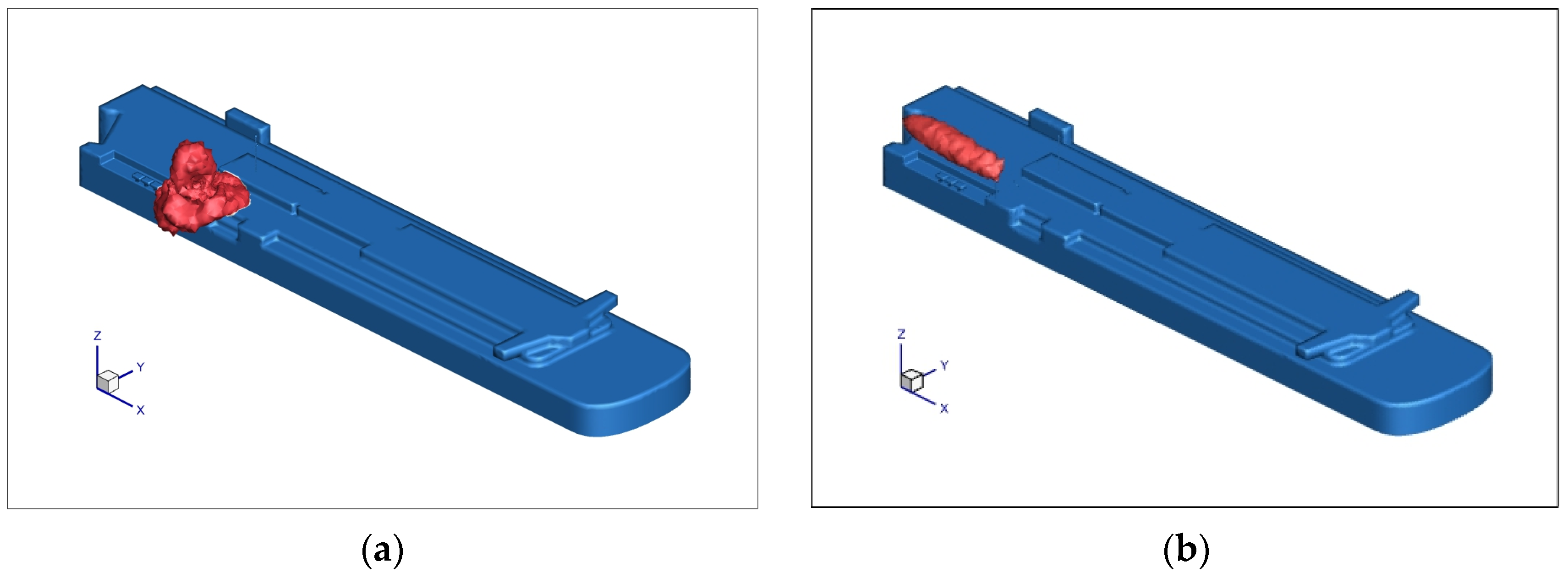
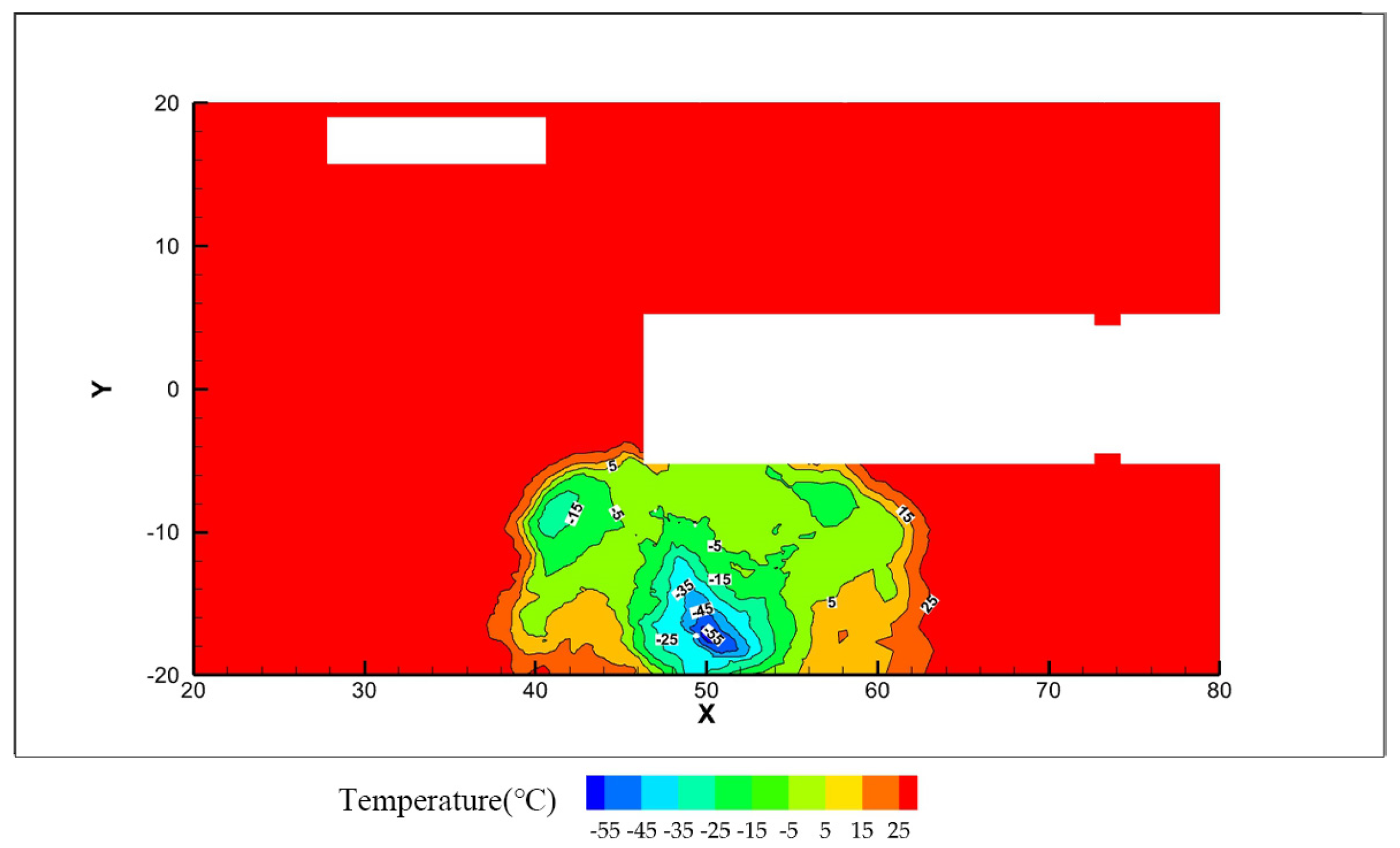
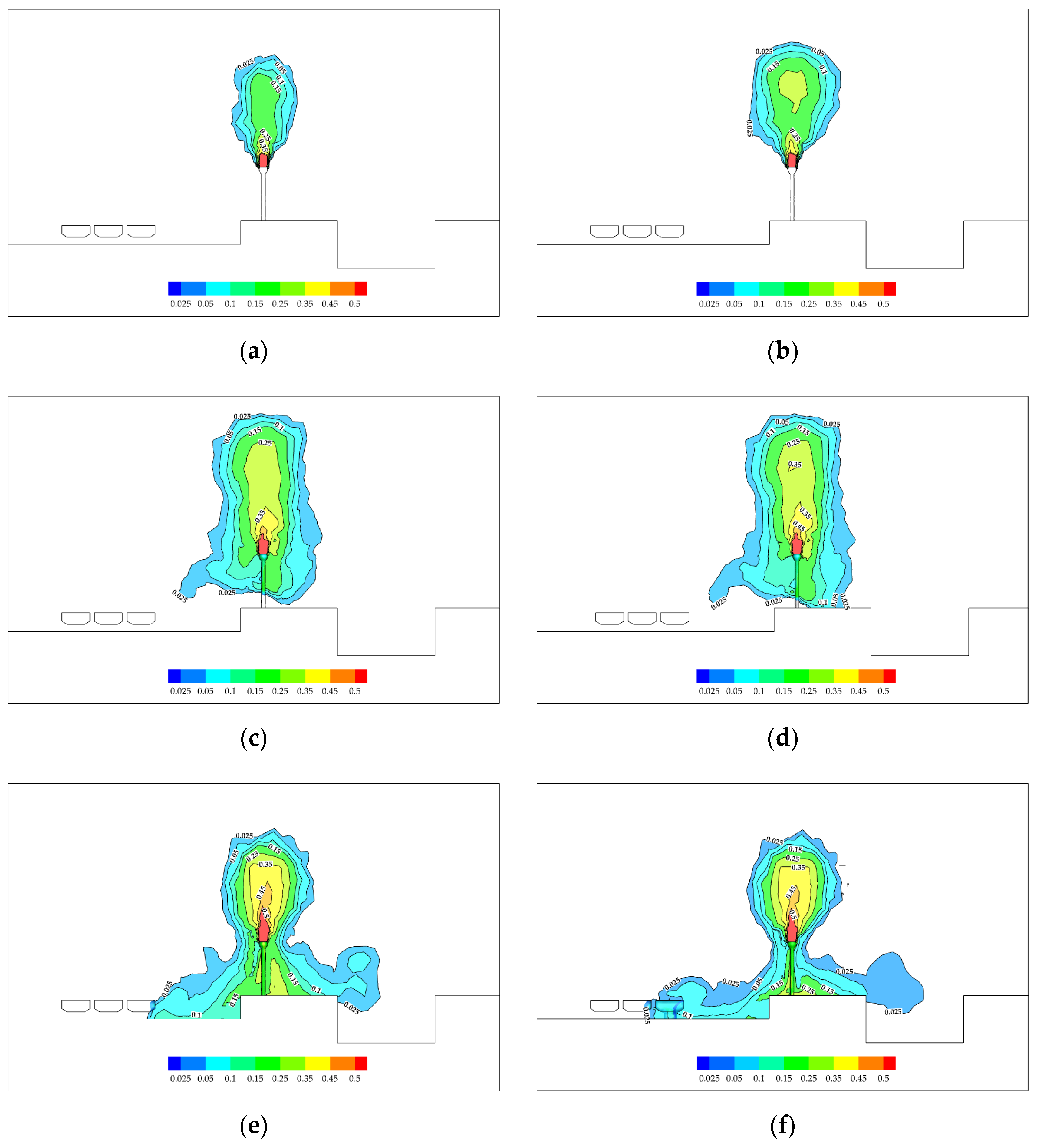
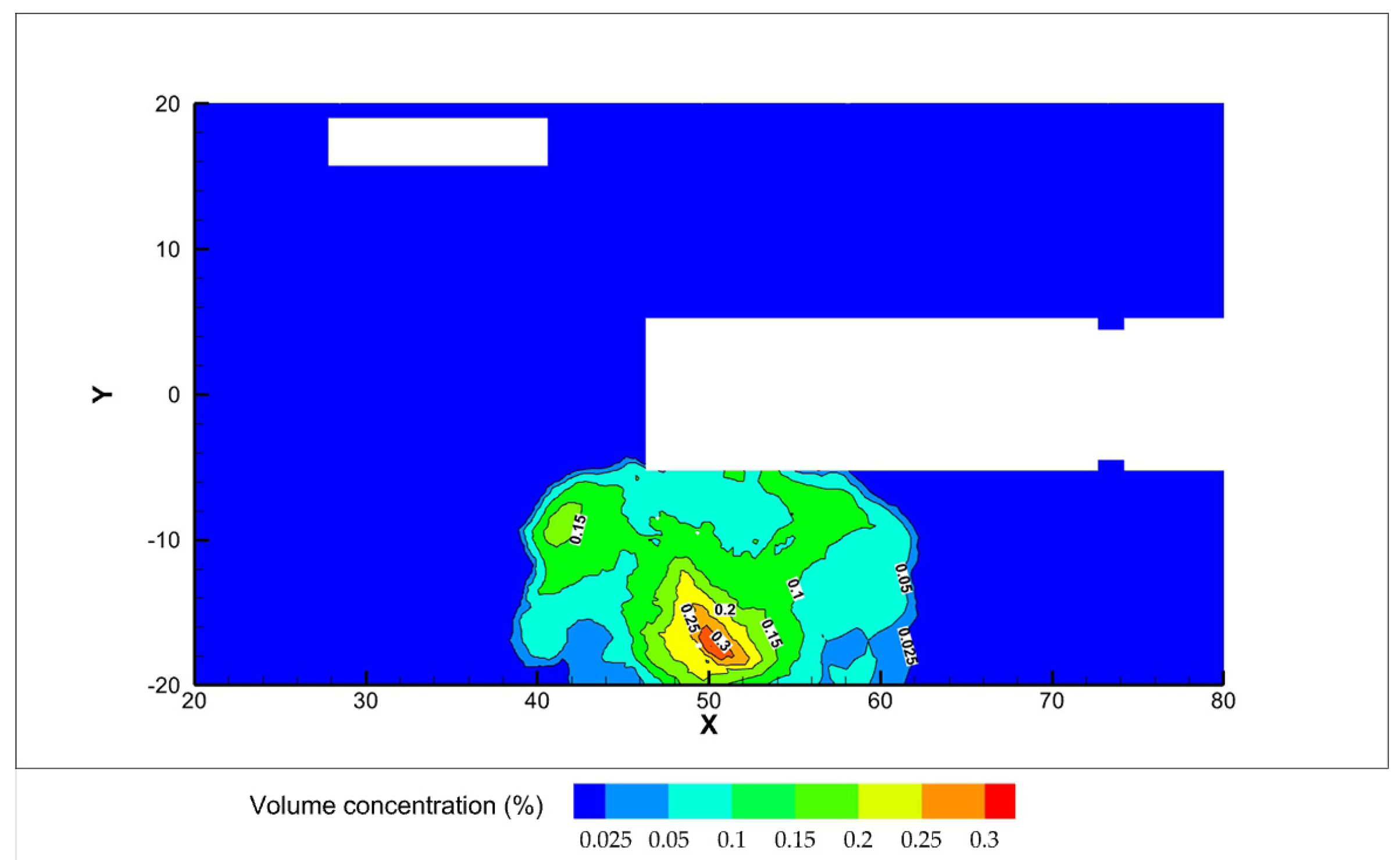
- The height of the vent mast affects the gas dispersion behavior. A greater height of the vent mast leads to a more favorable upward diffusion trend of the natural gas and a lower risk of gas sedimentation on the deck. When the height of the vent mast reaches 15 m (B/3), the range of the flammable gas cloud does not spread to the deck surface, and the deck area remains within the safe range. When the vent mast height is 6 m, the flammable gas cloud will accumulate on the deck surface under windless conditions, covering the sensitive areas and posing a substantial risk. An explosion and cryogenic hazard area on the deck is formed with the vent mast position as the center, where the gas concentration reaches a maximum of 30% and the minimum temperature is below −55 °C.
- (2)
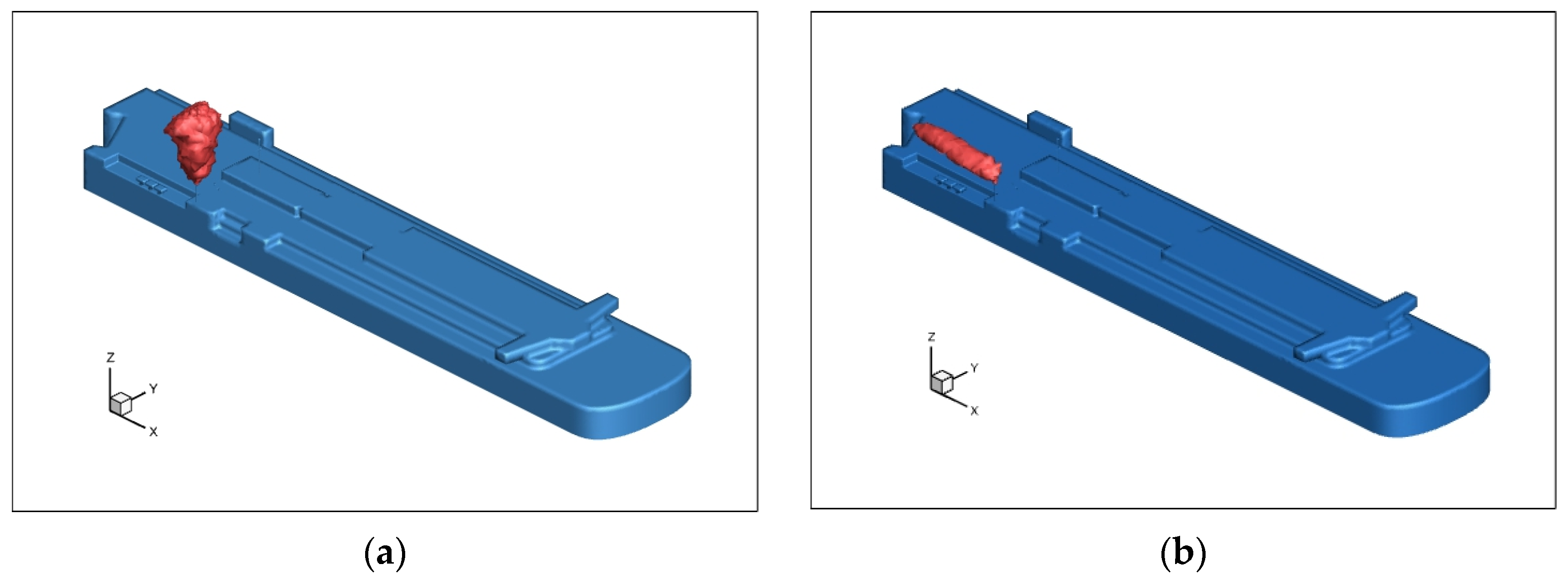
- The wind direction exerts a significant influence on the gas dispersion behavior from the vent mast. The flammable gas cloud spreads along the wind direction, while the extension distance is positively correlated with the wind speed. A higher wind speed enables natural gas to disperse a greater distance, resulting in the formation of a longer flammable gas cloud. Given that wind direction affects the direction and scope of gas dispersion, during the optimization design of the vent mast height, the wind direction conditions blowing towards surrounding sensitive areas, such as fans, air outlets, and personnel activity areas, should be taken into account to assess the influence of the gas release from the vent mast on the surrounding sensitive areas.
- (3)
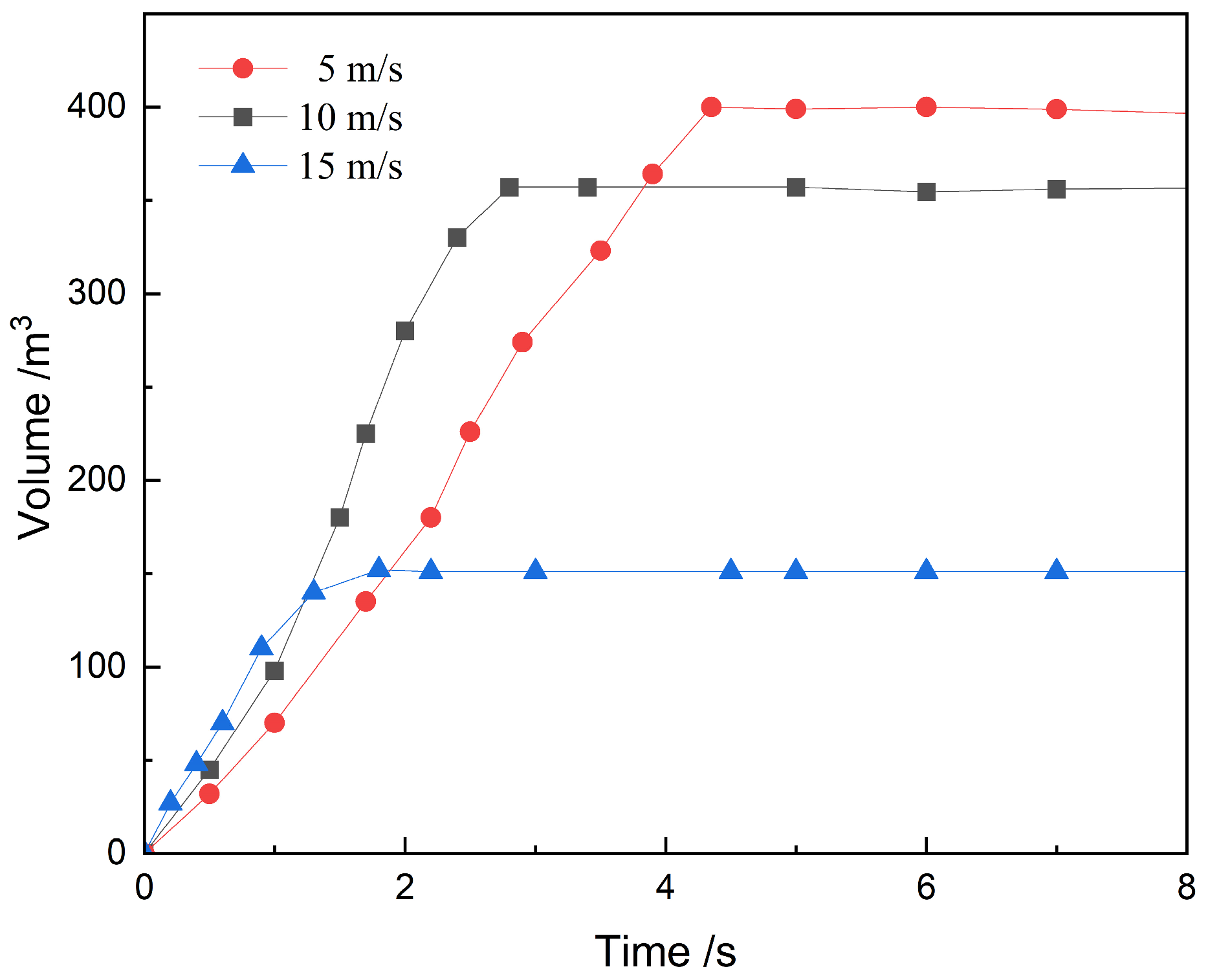
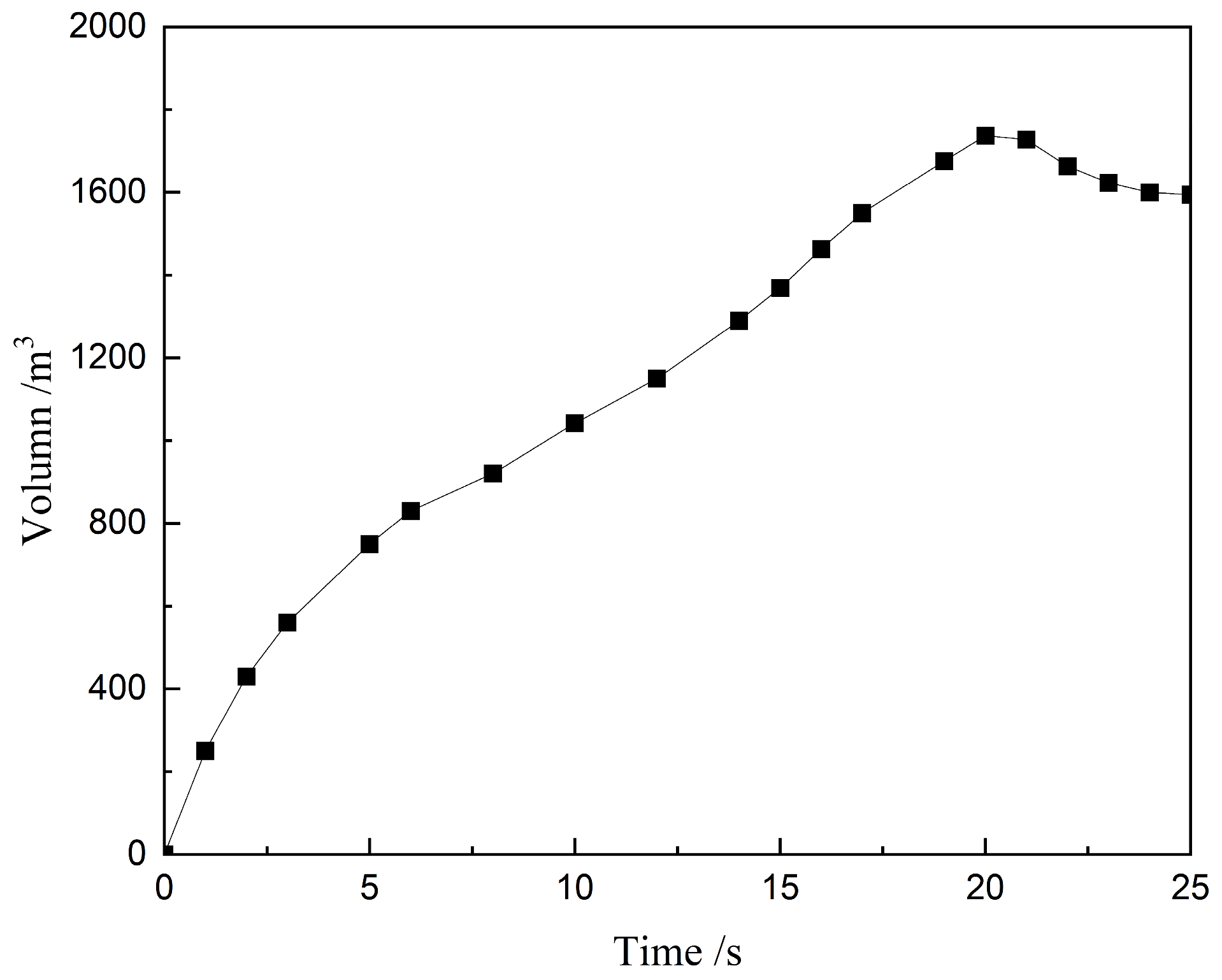
- For further exploring the influence of wind velocity on the gas release from the vent mast, the flammable gas cloud volume with a gas concentration exceeding 2.5% over gas release time under varying wind velocity, including 0 m/s, 5 m/s, 10 m/s, and 15 m/s, is computed by the simulation. With the wind velocity increasing, the height attainable by the flammable gas cloud diminishes, while the volume of the stable flammable gas cloud reduces. With the increase in wind speed, the maximum volume of the flammable gas cloud decreases notably, while the time to reach the maximum volume of the flammable gas cloud advances. When the wind speed is 15 m/s, the volume of the flammable gas cloud is less than half of that at a wind speed of 5 m/s and less than one-tenth of that at a wind speed of 0 m/s. Higher wind speed can notably facilitate gas diffusion.
- (4)
- This research outlines a method based on gas dispersion safety simulation for optimizing the vent mast height. Through the optimization design, when the vent mast height is not less than 12.5 m, the flammable cloud remains above deck level in all simulated scenarios, guaranteeing that the surrounding fans and critical air vents remain outside the flammable zone. In the actual design and construction process of the LNG-powered vessel in a certain large-scale shipyard, such an optimization design method for the vent mast has been applied many times and has been recognized. This approach can be widely applied to meet the design requirements for substituting the vent mast height in large PCTC and container LNG-powered vessels with excessive ship heights, and the target audience includes marine engineers, classification society auditors, and researchers in alternative fuel propulsion systems.
Author Contributions
Funding
Data Availability Statement
Conflicts of Interest
Abbreviations
| IMO | International Maritime Organization |
| LNG | Liquefied Natural Gas |
| GHG | Greenhouse Gas |
| IGF Code | International Safety Code for Ships Using Gas or Other Low Flash Point Fuels |
| NG | Natural Gas |
| BOG | Boil Off Gas |
| B | Beam of ship |
| LFL | Lower Flammable Limit |
| CFD | Computational Fluid Dynamics |
| SST | Shear Stress Transport |
| PCTC | Pure Car and Truck Carrier |
Appendix A

| Symbol | Description | Unit |
|---|---|---|
| u | Eulerian velocity | m/s |
| p | Pressure | Pa |
| Kinetic viscosity | Pa·s | |
| x | Direction | m |
| e | Internal energy | J |
| K | Thermal conductivity | W/(m·K) |
| J | Diffusion flux | s·m2 |
| S | Chemical reaction heat | J |
| h | Enthalpy | J |
| Q | Release rate at standard condition | m3/s |
| F | Fire exposure coefficient applicable | / |
| G | Gas influencing factor | / |
| A | External area of the storage tank | m2 |

References
- Wang, Z.; Zhou, H.; Li, Y.; Zhang, P.; Luo, J. Experimental study of the pore structure during coal and biomass ash sintering based X-ray CT technology. Energy Fuels 2021, 35, 2098–2109. [Google Scholar] [CrossRef] [Scilit]
- Lankahaluge, A.S.; Graham, T.; Wang, H.; Bashir, M.; Blanco-Davis, E.; Wang, J. Formal Safety Assessment for Ammonia Fuel Storage Onboard Ships Using Bayesian Network. J. Mar. Sci. Eng. 2025, 13, 768. [Google Scholar] [CrossRef] [Scilit]
- Peng, Y.; Zhao, X.Z.; Zuo, T.L.; Wang, W.Y.; Song, X.Q. A systematic literature review on port LNG bunkering station. Transp. Res. Part D Transp. Environ. 2021, 91, 102704. [Google Scholar] [CrossRef] [Scilit]
- Vlado, V. LNG export diversification and demand security: A comparative study of major exporters. Energy Policy 2022, 170, 113218. [Google Scholar] [CrossRef] [Scilit]
- Cao, Y.; Jia, Q.; Wang, S.; Jiang, Y.; Bai, Y. Safety design analysis of a vent mast on a LNG powered ship during a low-temperature combustible gas leakage accident. J. Ocean. Eng. Sci. 2021, 7, 75–83. [Google Scholar] [CrossRef] [Scilit]
- LNG-Powered Fleet Will Reach More Than 2000 Vessels as Demand Grows. Available online: https://www.offshore-energy.biz/sea-lng-lng-powered-fleet-will-reach-more-than-2000-vessels-as-demand-grows/ (accessed on 8 August 2025).
- Yarlagadda, B.; Iyer, G.; Binsted, M.; Patel, P.; Wise, M.; McLeod, J. The future evolution of global natural gas trade. iScience 2024, 27, 108902. [Google Scholar] [CrossRef] [Scilit]
- Wang, C.; Ju, Y.L.; Fu, Y.Z. Comparative life cycle cost analysis of low pressure fuel gas supply systems for LNG fueled ships. Energy 2021, 218, 119541. [Google Scholar] [CrossRef] [Scilit]
- Gz, A.; Xg, A.; Yan, Y.A.; Wei, T.A.; Chao, J. Experiment and simulation research of evolution process for LNG leakage and diffusion. J. Loss Prev. Process Ind. 2020, 64, 104041. [Google Scholar] [CrossRef] [Scilit]
- Gerbec, M.; Vidmar, P.; Pio, G.; Salzano, E. A comparison of dispersion models for the LNG dispersion at port of Koper, Slovenia. Safety Sci. 2021, 144, 105467. [Google Scholar] [CrossRef] [Scilit]
- Li, T.; Qu, S.; Zang, Q.; Dong, C.; Fu, C.; Zhang, Z. Leakage failure analysis of a 60 m3 LNG storage tank. Eng. Fail. Anal. 2023, 153, 107591. [Google Scholar] [CrossRef] [Scilit]
- Lewis, M.; Murray, R.O.; Fredriksson, S.; Maskell, J.; de Fockert, A.; Neill, S.P.; Robins, P.E. A standardised tidal-stream power curve, optimised for the global resource. Renew. Energy 2021, 170, 1308–1323. [Google Scholar] [CrossRef] [Scilit]
- Tofalos, C.; Jeong, B.; Jang, H. Safety comparison analysis between LNG/LH2 for bunkering operation. J. Int. Marit. Saf. Environ. Aff. Shipp. 2020, 4, 135–150. [Google Scholar] [CrossRef] [Scilit]
- Giannissi, S.G.; Venetsanos, A.G. A comparative CFD assessment study of cryogenic hydrogen and LNG dispersion. Int. J. Hydrogen Energy 2019, 44, 9018–9030. [Google Scholar] [CrossRef] [Scilit]
- Zhou, Z.Q.; Zhao, W.W.; Zhang, Y.L.; Jiang, H.L.; Zhang, L.; Chen, S.Y. Study on the diffusion law of heavy gas leakage in complex scenarios based on scaled-down experiments. ACS Omega 2024, 9, 13. [Google Scholar] [CrossRef] [Scilit]
- Liu, C.; Zhang, X.; Qu, W.; Xu, Y.; Chen, S. Simulation of LNG tank container leakage and dispersion on anchoring inland carrying vessel. J. Loss Prevent. Proc. 2024, 92, 105427. [Google Scholar] [CrossRef] [Scilit]
- Nubli, H.; Jung, D.; Kim, S.; Sohn, J.M. Structural impact under accidental LNG release on the LNG bunkering ship: Implementation of advanced cryogenic risk analysis. Process Saf. Environ. Protect. 2024, 186, 329–347. [Google Scholar] [CrossRef] [Scilit]
- Wang, Z.; Zhang, Q.; Wang, Y.; Li, X.; Zhou, J. Computational fluid dynamics simulation of cryogenic safety analysis in an liquefied natural gas powered ship during liquefied natural gas leakage. Front. Energy Res. 2023, 10, 1015904. [Google Scholar] [CrossRef] [Scilit]
- Duong, P.A.; Ryu, B.R.; Jung, J.; Kang, H. Comparative analysis on vapor cloud dispersion between LNG/liquid NH3 leakage on the ship to ship bunkering for establishing safety zones. J. Loss Prevent. Proc. 2023, 85, 105167. [Google Scholar] [CrossRef] [Scilit]
- Zhang, K.F.; Zhou, X.Y.; Cong, B.H. The effect of relative humidity on vapor dispersion of liquefied natural gas: A CFD simulation using three phase change models. J. Wind. Eng. Ind. Aerod. 2022, 230, 105181. [Google Scholar] [CrossRef] [Scilit]
- Carboni, M.; Pio, G.; Vianello, C.; Mocellin, P.; Maschio, G.; Salzano, E. Numerical simulation of LNG dispersion in harbours: A comparison of flammable and visible cloud. Chem. Eng. Trans. 2022, 90, 355–360. [Google Scholar] [CrossRef]
- ISO/TS 18683:2021; Guidelines for Safety and Risk Assessment of LNG Fuel Bunkering Operations. ISO Copyright Office: Geneva, Switzerland, 2021.
- Kang, H.K. An Examination on the Dispersion Characteristics of Boil-Off Gas in Vent Mast Exit of Membrane Type LNG Carriers. Korean Soc. Mar. Environ. Saf. 2013, 19, 225–231. [Google Scholar] [CrossRef] [Scilit]
- Shaheed, R.; Mohammadian, A.; Shaheed, A.M. Numerical Simulation of Turbulent Flow in River Bends and Confluences Using the k-ω SST Turbulence Model and Comparison with Standard and Realizable k-ε Models. Hydrology 2025, 12, 145. [Google Scholar] [CrossRef] [Scilit]
- Chao, Y.; James, G.M.; Shaheed, A.M. Hyperbolic equivalent k-ϵ and k-ω turbulence models for moment-closure Hydrology. J. Comput. Phys. 2023, 476, 111881. [Google Scholar] [CrossRef] [Scilit]
- Li, X.; Chen, G.; Zhang, R.; Zhu, H.; Xu, C. Simulation and assessment of gas dispersion above sea from a subsea release: A CFD-based approach. Int. J. Nav. Ocean Eng. 2019, 11, 353–363. [Google Scholar] [CrossRef] [Scilit]
- International Maritime Organization (IMO). International Code of Safety for Ships Using Gases or other Low-Flashpoint Fuels (IGF Code); Resolution MSC.428(98); International Maritime Organization: London, UK, 2021. [Google Scholar]
- Li, Y.; Sone, C.; Dong, J.; Zheng, H. An efficient encryption method for smart grid data based on improved CBC mode. J. King Saud. Univ-Com. 2023, 35, 101744. [Google Scholar] [CrossRef] [Scilit]
- Min, G.; Choi, W.; Yun, H.; Do, Y.; Kim, K.; Shi, W.; Dai, S.; Kim, D.; Song, S. Evaluation of Free-Surface Exposure Effects on Tidal Turbine Performance Using CFD. J. Mar. Sci. Eng. 2025, 13, 1589. [Google Scholar] [CrossRef] [Scilit]
- Rana, M.A. Forced Dispersion of Liquefied Natural Gas Vapor Clouds with Water Spray Curtain Application. Ph.D. Thesis, Texas A&M University, College Station, TX, USA, 2009. [Google Scholar]
- Wang, Z.; He, H.; Gao, A.; Cheng, S.; Gang, C. Study on hazard analysis of gas dispersion from vent mast on dual-fuel PCTC ship. In Proceedings of the 2025 International Ocean and Polar Engineering Conference, Seoul, Republic of Korea, 1–6 June 2025. [Google Scholar]
- Nubli, H.; Sohn, J.M. CFD-based simulation of accidental fuel release from LNG-fuelled ships. Ships Offshore Struct. 2020, 17, 339–358. [Google Scholar] [CrossRef] [Scilit]




| Item | Value |
|---|---|
| Length overall (m) | 199.9 |
| Beam (m) | 45.0 |
| Molded depth (m) | 38 |
| LNG storage tanks (m3) | 2 × 1750 |
| Item | Number of Cells | Inlet Velocity (m/s) | Error (%) |
|---|---|---|---|
| Grid 1 | 1,028,984 | 10.21 | 0.79 |
| Grid 2 | 2,156,476 | 10.13 | 0.40 |
| Grid 3 | 3,405,368 | 10.09 | 0.09 |
| Grid 4 | 5,023,632 | 10.08 | / |
| Item | Value | Unit |
|---|---|---|
| Computation condition Turbulent model | Transient state SST model | / |
| Gas release flow | 20.47 | kg/s |
| Gas initial temperature | −137.4 | °C |
| Gas release duration | 15 | s |
| Gravity | −9.81 | m/s2 |
| Methane | Ethane | Propane | i-Butane | n-Butane | i-Pentane | Nitrogen |
|---|---|---|---|---|---|---|
| 98.11 | 1.30 | 0.38 | 0.08 | 0.10 | 0.01 | 0.02 |
| Wind Speed (m/s) | Maximum Gas Volume (m3) | Time Reaching the Maximum (s) | Volume Multiple |
|---|---|---|---|
| 0 | 1737 | 20 | 11.4 |
| 5 | 400 | 4.4 | 2.6 |
| 10 | 357 | 2.8 | 2.3 |
| 15 | 152 | 1.8 | 1 |
Disclaimer/Publisher’s Note: The statements, opinions and data contained in all publications are solely those of the individual author(s) and contributor(s) and not of MDPI and/or the editor(s). MDPI and/or the editor(s) disclaim responsibility for any injury to people or property resulting from any ideas, methods, instructions or products referred to in the content. |
© 2025 by the authors. Licensee MDPI, Basel, Switzerland. This article is an open access article distributed under the terms and conditions of the Creative Commons Attribution (CC BY) license (https://creativecommons.org/licenses/by/4.0/).
Share and Cite
Wang, Z.; Wang, Z.; Chen, G. Numerical Investigation on Safety Assessment of Gas Dispersion from Vent Mast for LNG-Powered Vessels. J. Mar. Sci. Eng. 2025, 13, 1892. https://doi.org/10.3390/jmse13101892
Wang Z, Wang Z, Chen G. Numerical Investigation on Safety Assessment of Gas Dispersion from Vent Mast for LNG-Powered Vessels. Journal of Marine Science and Engineering. 2025; 13(10):1892. https://doi.org/10.3390/jmse13101892
Chicago/Turabian StyleWang, Zhaowen, Zhangjian Wang, and Gang Chen. 2025. "Numerical Investigation on Safety Assessment of Gas Dispersion from Vent Mast for LNG-Powered Vessels" Journal of Marine Science and Engineering 13, no. 10: 1892. https://doi.org/10.3390/jmse13101892
APA StyleWang, Z., Wang, Z., & Chen, G. (2025). Numerical Investigation on Safety Assessment of Gas Dispersion from Vent Mast for LNG-Powered Vessels. Journal of Marine Science and Engineering, 13(10), 1892. https://doi.org/10.3390/jmse13101892