1. Introduction
Poultry production is a crucial component of global food systems, providing a primary source of protein for billions. As the world’s population increases and consumer preferences shift toward sustainable practices, the poultry industry faces pressure to meet demand for high-quality products while keeping costs low and reducing environmental impact [
1]. Proper nutrition has a significant impact on poultry health and product quality. Therefore, formulating and monitoring poultry diets is crucial in farming. However, finding the right balance of nutrients for different poultry types has been a complicated task. It requires constant adjustments and refinements to feeding strategies. One major challenge in poultry nutrition is the variation in nutrient needs based on age, breed, and environmental conditions. Nutritionists have traditionally relied on experience and trial-and-error methods to create diets, which can be inefficient and costly. Since feed is a significant expense in poultry production, optimizing its use is vital for improving profitability and sustainability [
2,
3].
However, these traditional methods have limitations in precision, and the industry has been seeking better ways to ensure birds receive the right nutrients at the right time. Recent advancements in Artificial Intelligence (AI) have opened new opportunities in poultry nutrition. AI, through machine learning algorithms and real-time data analysis, enables the monitoring of poultry health and nutrient intake on an individual level. These technologies enable farmers to create customized feed formulations that support growth, enhance feed conversion, and minimize waste [
4,
5]. Additionally, AI can automate the real-time monitoring and adjustment of poultry diets. This ensures that birds’ nutritional needs are met efficiently, avoiding issues related to overfeeding or underfeeding, both of which can harm poultry health and farm profits.
The poultry sector faces increasing pressure to meet global protein demands sustainably while maintaining bird health and product quality. Traditional approaches to feed formulation are resource-intensive and may not fully optimize nutrient use. AI technologies provide new opportunities for precision nutrition, predictive management, and sustainable production. This review synthesizes current evidence on AI applications in poultry nutrition, identifies gaps, and highlights potential strategies for improved efficiency, welfare, and sustainability [
1,
6].
Moreover, AI’s role extends beyond just nutrient optimization to managing poultry health and welfare. By integrating Internet of Things (IoT) devices with AI systems, farmers can track health indicators such as body temperature, feed consumption, and activity levels. All these factors are crucial for managing poultry welfare and preventing diseases [
7,
8]. AI-driven solutions provide ongoing insights that aid in making informed decisions about the health of individual birds and the overall flock [
9].
In addition to improving nutrition and health, AI innovations help achieve sustainability goals. AI can enhance resource efficiency by accurately predicting feed requirements and minimizing waste, thus reducing the environmental impact of poultry farming [
10,
11,
12]. These advancements respond to growing consumer demand for sustainable food sources, enabling poultry producers to meet both economic and environmental goals simultaneously. By reducing feed waste and enhancing nutrient utilization, AI contributes to lowering the carbon footprint of poultry production, thereby supporting the transition to more environmentally friendly farming methods [
13].
This review examines how AI can advance poultry nutrition. It examines how AI technologies are improving feed formulation, nutrient monitoring, and health management and their effects on sustainability and productivity. By exploring AI integration in poultry farming, we aim to demonstrate how these innovations can enhance efficiency, reduce costs, and produce healthier, higher-quality poultry products. Ultimately, we strive to show how AI can transform the poultry industry into a more sustainable, profitable, and responsible sector.
2. AI-Driven Solutions for Monitoring Nutrient Requirements
Historically, determining the optimal nutrient profile for poultry has been a labor-intensive and somewhat imprecise process. Poultry nutritionists and farmers often relied on generalized nutritional models, coupled with their experience and experimental data, to adjust nutrient formulations. While these traditional methods worked to some degree, they were not without their limitations. The trial-and-error approach necessitated frequent adjustments and could result in inefficiencies, including feed waste, over-supplementation, and higher feed costs [
1]. This inefficiency often resulted in the underutilization of feed ingredients, causing unnecessary economic and environmental costs. In this context, AI technologies, particularly machine learning (ML) and data analytics, have introduced dynamic, data-driven solutions that significantly improve precision in poultry nutrition.
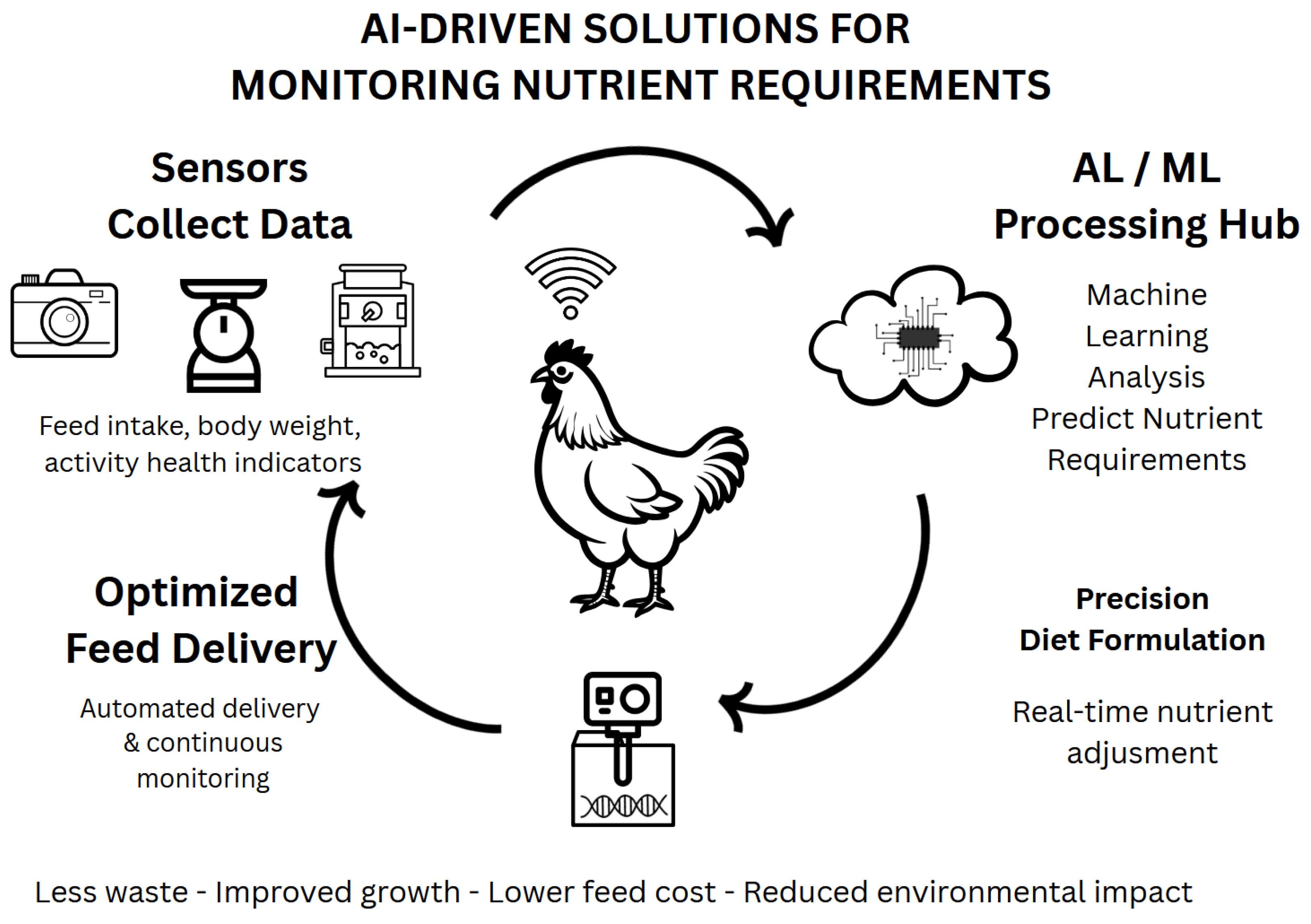
Figure 1 illustrates the AI-driven precision nutrition loop for poultry production. This circular system illustrates a real-time feedback cycle designed to improve nutrient delivery through artificial intelligence and IoT integration. At the center, a flock icon with sensor symbols (camera, feeder sensor, wearable device) indicates ongoing data collection from birds. Moving clockwise, the process begins with sensors gathering key parameters, such as feed intake, body weight, activity, and health indicators. These data streams are sent to an AI/ML processing hub, where machine learning algorithms identify patterns and predict specific nutrient requirements. Based on these insights, precision diet formulation occurs, adjusting protein, energy, and mineral levels in real-time. The optimized feed is then delivered through smart feeders, ensuring automatic dispensing and continuous monitoring. The bottom ribbon highlights the primary benefits of this system: reduced feed waste, improved growth performance, lower feed costs, and a lower environmental impact. Overall, this graphical abstract represents the closed-loop approach of AI-driven nutrition management, connecting data collection, predictive analytics, and automatic feed delivery for sustainable poultry production.
AI allows for the real-time tracking of poultry nutrient intake through advanced sensors and monitoring systems. These systems analyze a range of factors, including feeding patterns, growth rates, and health indicators [
11]. Continuous data collection from the poultry farm allows AI to identify specific nutritional needs based on several variables, such as age, weight, breed, activity levels, and health conditions. As a result, AI algorithms can optimize feed formulations and adjust nutrient profiles in real-time, ensuring that the birds receive the precise nutrients they require at different stages of growth [
5]. This capability is particularly important in optimizing the balance of macronutrients like energy and protein, which are critical to healthy growth and feed conversion efficiency.
Machine learning algorithms can continuously learn and refine nutrient recommendations based on data gathered from sensors and farm management software. For example, by analyzing patterns in feed consumption, body weight changes, and activity levels, AI systems can forecast the nutritional needs of poultry with greater accuracy, thereby minimizing the trial-and-error process [
14]. These technologies empower poultry producers to provide more personalized and precise feeding regimens, ultimately reducing feed waste and enhancing both poultry health and farm profitability. Moreover, the ability to adjust feed formulations based on real-time data enables poultry producers to fine-tune their operations in response to fluctuating conditions, such as changes in environmental factors or poultry health status [
10].
An essential benefit of AI-driven systems is their ability to assess and modify nutrient profiles without manual intervention. For instance, if a poultry flock requires higher protein intake due to increased activity levels or higher growth rates, the system can automatically adjust feed composition to provide the necessary protein without overfeeding. This type of precise control minimizes feed waste, ensuring that birds receive just the right amount of nutrients they need to grow and perform at their best [
7,
15]. Such real-time feed adjustment also helps in reducing environmental impacts, such as nitrogen and phosphorus runoff, by preventing the overuse of feed ingredients and ensuring that nutrient levels remain within optimal thresholds [
1].
AI-based systems also offer significant improvements in feed cost management. By accurately monitoring and predicting the nutritional requirements of poultry, AI reduces the likelihood of overfeeding or underfeeding, thus optimizing the use of feed resources. This helps minimize feed costs, which are typically one of the highest expenses in poultry production [
4]. Furthermore, more efficient nutrient management translates into reduced waste and less environmental pollution, aligning with the growing demand for more sustainable and environmentally friendly poultry farming practices [
16]. AI’s ability to automate feed adjustments not only improves efficiency but also provides farmers with better control over their operational costs and resource utilization.
In addition to improving feed efficiency, AI technologies contribute to poultry health management. By continuously monitoring the health status of birds through sensors that track vital signs, movement, and feeding behaviors, AI systems can detect early signs of disease or nutrient deficiencies. Early detection allows farmers to take corrective action before health issues escalate, thereby improving overall poultry welfare and reducing the need for antibiotics or other interventions [
5]. This integration of AI in health monitoring has the potential to reduce the reliance on conventional animal husbandry practices and promote healthier, more sustainable poultry production systems.
The integration of AI into poultry nutrition may also advance the industry’s sustainability efforts. Feed production and feed ingredient sourcing are resource-intensive processes, and improving feed efficiency can significantly reduce the carbon footprint of poultry farming. By using AI to optimize nutrient profiles, farms can minimize feed wastage, reduce the need for additional feed inputs, and ultimately lower their environmental impact [
13,
17]. AI technologies are thus aligned with the broader goals of reducing the environmental impact of food production while maintaining high levels of productivity and profitability. In this sense, AI not only benefits poultry health and welfare but also contributes to the sustainability of the poultry industry as a whole.
In conclusion, AI-driven solutions for monitoring poultry nutrient requirements represent a revolutionary advancement in the poultry industry. These technologies offer real-time, precise, and efficient methods for formulating and adjusting poultry diets based on individualized data, which leads to improved feed efficiency, reduced waste, and lower costs. Additionally, AI facilitates better health management and supports sustainable farming practices by optimizing nutrient use and reducing environmental impact. As these AI technologies continue to evolve, they hold the potential to revolutionize poultry nutrition further, making it more sustainable, cost-effective, and aligned with the needs of both producers and consumers [
3,
18].
3. Optimizing Feed Ingredients with AI
Feed ingredients are a critical component in poultry nutrition, constituting the largest share of production costs in poultry farming. Selecting the right feed ingredients is a complex and often costly task, requiring a balance between nutritional adequacy, ingredient availability, and cost-effectiveness. Traditionally, poultry nutritionists have relied on a limited range of ingredients, often determined by their availability and cost, which sometimes restricts the potential for improving poultry health and performance. In addition, conventional feed formulations have generally been based on established, standardized ingredients, without consideration for newer or less traditional sources that might offer higher nutritional value or sustainability. However, AI technologies have the potential to improve this process by enabling more precise, data-driven approaches to ingredient selection [
1].
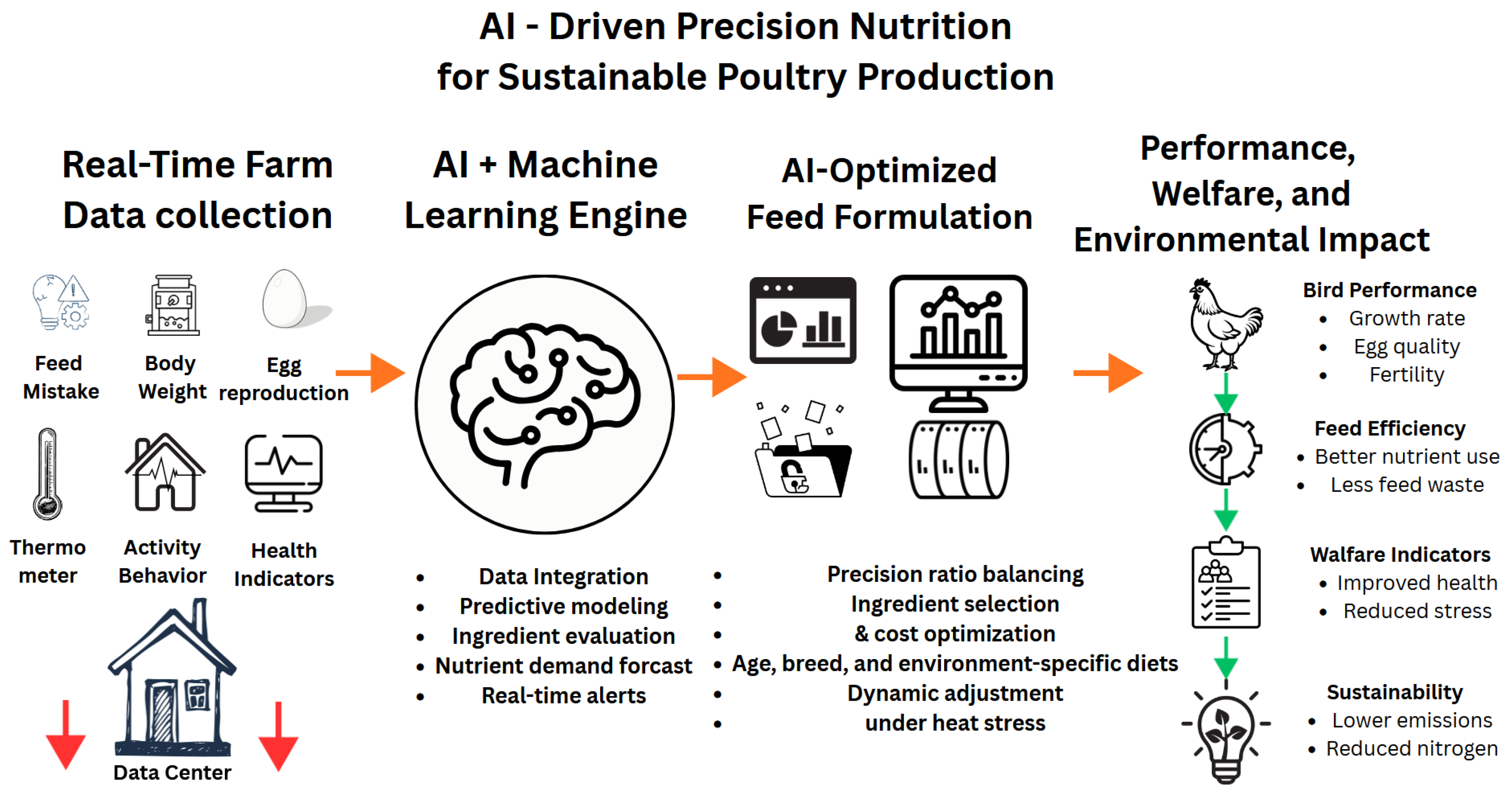
Figure 2 shows the AI-driven workflow for selecting feed ingredients in poultry nutrition. The diagram outlines a process that starts with various data inputs. These include nutrient composition databases, ingredient price trends, availability forecasts, and alternative sources like insects, algae, and agro-industrial byproducts. These inputs go to a central AI/ML optimization engine. Here, machine learning models predict ingredient performance, simulate thousands of diet formulations, forecast costs and availability, and assess sustainability scores. The outputs from this system are threefold: (1) optimized feed formulations with balanced nutrients, (2) cost-effective ingredient mixes that respond to market changes, and (3) sustainable ingredient integration to lessen environmental impact. The summary at the bottom highlights the key outcomes: higher efficiency, lower feeding costs, better bird health, and a smaller carbon footprint. This emphasizes how AI can transform precision feed formulation and support sustainable poultry production.
AI is significantly enhancing the precision with which feed ingredients are chosen. Using advanced predictive analytics and optimization models, AI can evaluate the nutritional content of various feed ingredients and predict how they interact with one another. By analyzing vast datasets, AI algorithms can simulate thousands of potential ingredient combinations, assessing their impact on poultry growth, feed conversion efficiency, and overall health. This helps to identify more cost-effective and nutritionally balanced formulations tailored to the specific needs of different poultry groups, whether they are broilers, layers, or other specialized poultry breeds [
4]. AI-driven models enable precise control over the nutrient profile of poultry diets, ensuring that they receive the optimal amount of vitamins, minerals, proteins, and carbohydrates, all while minimizing unnecessary waste [
13].
One of the key advantages of AI in optimizing feed ingredients is its ability to predict the availability and price fluctuations of different feed ingredients. By utilizing historical data and market trends, AI systems can forecast ingredient availability and pricing in real-time, allowing poultry farmers to adjust their purchasing strategies accordingly. For instance, if the price of a common feed ingredient such as corn rises due to supply chain disruptions, AI can suggest alternative ingredients with comparable nutritional profiles but lower costs [
11]. This enables farmers to make more informed and flexible purchasing decisions, improving the cost-efficiency of poultry feed without compromising the nutritional quality of the diet.
Beyond traditional ingredients, AI is also facilitating the exploration of alternative, sustainable feed options that were previously underutilized or overlooked. Feed ingredients like insect protein, algae, and agricultural byproducts are gaining attention due to their potential nutritional benefits and reduced environmental impact [
7]. For example, insect larvae are rich in protein and essential amino acids, making them a promising alternative to soy or fish meal, which are commonly used but often face supply chain challenges or environmental concerns. AI models can analyze the nutritional content of these alternative ingredients and predict their effectiveness when incorporated into poultry diets, offering farmers a more sustainable and potentially cost-effective solution.
Recent studies provide quantitative evidence of the benefits of precision feeding and AI-enabled poultry management. For example, Nawab et al. [
6] conducted a controlled trial with 440 male Ross 308 broilers to evaluate precision feeding strategies, demonstrating a significant improvement in weight-corrected feed conversion ratio (FCR) compared to a standard four-phase commercial diet
. The study also reported a 4.13% reduction in feed cost per kg of body weight and improved apparent metabolizable energy (
,
), highlighting enhanced nutrient utilization under precision feeding protocols.
Machine learning models have also been applied to predict long-term FCR based on short-term performance data. Yang et al. [
19] trained algorithms on 438,552 samples, achieving a correlation coefficient of 0.85 between predicted and actual FCR values. This demonstrates the feasibility of AI-assisted predictive modeling for feed efficiency, supporting more accurate diet formulation and performance forecasting in broiler production.
In addition to nutrition-focused AI, adjacent AI applications provide quantitative insights that indirectly support nutritional management. For instance, Cruz et al. [
20] implemented a YOLOv8-based monitoring system for flock management, achieving 93.1% precision and 93.0% recall in automated bird counting under commercial farm conditions. These accurate, real-time data streams facilitate timely decision-making and can enhance feed allocation and overall flock performance.
Although direct metrics for fully integrated AI-driven feed formulation systems in large-scale commercial settings remain limited, these representative studies collectively show measurable improvements in feed efficiency, nutrient utilization, predictive accuracy, and flock management. Limitations include reliance on controlled experimental conditions, the need for validation across diverse commercial environments, and the integration of predictive models into operational farm systems for real-time use.
The use of AI in feed ingredient optimization also supports the concept of a circular economy. By identifying and incorporating byproducts from other industries, such as food processing waste or crop residues, AI can help reduce feed production’s environmental footprint [
10]. For instance, poultry farmers can use byproducts like distiller’s dried grains or oilseed meals, which are often underutilized, in their feed formulations. AI can help determine the most effective ways to integrate these ingredients into poultry diets without compromising nutritional quality, ensuring a more sustainable and resource-efficient poultry farming system. This approach not only reduces waste but also contributes to the more efficient use of raw materials, enhancing the sustainability of the entire poultry supply chain.
Another significant benefit of AI-based feed ingredient optimization is its role in enhancing the sustainability of poultry farming. Traditional feed ingredients, such as corn and soybean, are resource-intensive to produce and often contribute to environmental degradation. By promoting the use of alternative ingredients and byproducts, AI can reduce the reliance on these conventional ingredients, thus lessening the environmental impact of poultry farming [
7]. AI-driven models help farmers make informed decisions about ingredient sourcing and usage, ultimately reducing the carbon footprint associated with poultry feed production. This is particularly important in the context of increasing global attention on sustainable agricultural practices and the need to reduce food production’s environmental impact.
Furthermore, AI in feed ingredient optimization contributes to the improvement of poultry health and welfare. By ensuring that poultry receive a balanced and nutritionally appropriate diet, AI can help prevent common health issues related to malnutrition, such as poor growth rates, immune system deficiencies, or metabolic disorders. AI systems can continuously monitor the effects of different feed formulations on poultry health and adjust the nutrient profile accordingly, ensuring optimal growth and performance at every stage of the poultry lifecycle [
5]. This level of precision and responsiveness helps create a more resilient poultry farming system that is better equipped to respond to challenges such as disease outbreaks or environmental stresses.
AI applications in poultry nutrition can be broadly categorized into core nutrition-focused technologies and adjacent applications. Core nutrition AI includes nutrient requirement modeling, individualized feed formulation, and diet optimization, which directly influence growth performance, feed efficiency, nutrient utilization, and cost-effectiveness. For instance, precision feeding systems guided by AI algorithms have demonstrated improvements in feed conversion ratio (FCR) and reductions in feed waste, allowing for more efficient nutrient allocation on a per-bird basis [
1,
6]. Machine learning approaches can predict growth trends and feed efficiency based on short-term performance data, enabling dynamic adjustments to diet formulations that are difficult to achieve with conventional manual methods [
1,
6,
19].
Adjacent AI applications, such as environmental monitoring, automated disease detection, and general farm automation, indirectly support nutritional outcomes by maintaining optimal housing conditions, detecting health issues early, and enhancing overall flock management. For example, AI-based flock monitoring systems can identify abnormal behaviors or signs of illness, allowing timely interventions that preserve feed intake efficiency and bird welfare [
20]. These technologies can also provide integrated data streams that support nutrition-related decision-making, even though their primary function is not feed optimization.
Based on available studies, both core and adjacent AI applications show promising improvements in feed efficiency, operational management, and welfare outcomes. However, practical implementation remains limited, especially at commercial scale, due to challenges such as high costs of sensors and infrastructure, algorithmic bias, and the need for data validation across diverse breeds and environmental conditions. Consequently, while AI has the potential to revolutionize poultry nutrition, further research is required to validate these systems under commercial production settings and to develop standardized protocols for their safe and effective deployment [
1,
6,
19,
20].
In conclusion, AI is playing a transformative role in optimizing feed ingredients for poultry. Through the use of predictive analytics, optimization models, and real-time market forecasting, AI enables poultry farmers to select the most cost-effective and nutritionally balanced feed ingredients. Additionally, AI encourages the use of alternative and sustainable feed sources, helping to reduce feed costs and the environmental impact of poultry production. By improving the efficiency of feed ingredient selection, AI not only benefits poultry health and welfare but also contributes to the broader goal of creating a more sustainable and resilient poultry industry [
3,
13].
5. Technical Challenges and Risks of AI-Driven Feeding
Although AI-enabled individualized precision feeding offers opportunities to optimize nutrient delivery and improve poultry performance, several technical and operational challenges remain. AI systems rely on high-quality, real-time data from sensors and computer vision devices, but sensor calibration errors, occlusions, lighting variations, and high stocking densities can compromise data reliability and lead to false alarms or incorrect feeding decisions [
22]. In addition, AI models may exhibit algorithmic bias if trained on datasets that are not representative of all breeds, ages, or environmental conditions, potentially generating inaccurate or unsafe feeding recommendations [
23,
24].
Integration into commercial farm systems poses further challenges, including high implementation costs, the need for specialized personnel, and compatibility with existing farm infrastructure [
22]. Moreover, the “black box” nature of many AI algorithms can reduce transparency and hinder trust among producers, while limited external validation across diverse farms and conditions may reduce the generalizability of model predictions [
24]. Ethical and welfare considerations must also be addressed, as improper implementation of AI systems can inadvertently compromise bird welfare [
22,
23].
Overall, these challenges highlight the need for robust validation of AI models under commercial conditions, regular sensor maintenance, transparent and interpretable algorithm design, and integration of human oversight to ensure safe, reliable, and welfare-conscious precision feeding.
Despite the promising potential of AI in poultry nutrition, several technical, operational, and ethical challenges must be considered. AI systems rely on high-quality, continuous data from sensors, cameras, and computer vision devices; however, poor calibration, occlusions, lighting variations, or high stocking densities can compromise data accuracy and trigger false alarms or misinterpretations of flock behavior. Algorithmic bias is another concern: models trained on datasets that are not representative of all breeds, ages, or environmental conditions may produce inaccurate or unsafe feeding recommendations, potentially leading to nutritional imbalances or welfare issues [
22,
23].
Economic and integration barriers further constrain implementation. The cost of sensors, data storage, AI software, and personnel training can be prohibitive, particularly for small- and medium-scale poultry operations. Additionally, integration of AI systems with existing farm infrastructure can be complex, and interoperability challenges may reduce system efficiency. Ethical considerations and animal welfare implications also require attention, as AI-driven interventions must avoid unintended stress or harm to birds [
23,
24].
Based on available studies, these challenges are increasingly recognized in precision livestock farming research, emphasizing the importance of rigorous validation under commercial conditions, continuous human oversight, and careful implementation. Incremental adoption strategies, robust sensor calibration protocols, and transparent, interpretable algorithms can help mitigate risks and enhance the reliability, safety, and welfare outcomes of AI-driven precision feeding in poultry systems [
22,
24]. While these solutions show promise, practical application in large-scale commercial farms remains limited, highlighting the need for further research and field-based validation.
6. Precision Feeding and Health Monitoring
Precision feeding is a fundamental aspect of modern poultry nutrition, and the incorporation of AI could improve its implementation. AI-driven systems may advance poultry management by using advanced sensors and wearable devices to track a bird’s health, behavior, and feeding patterns in real time. These technologies provide in-depth insights into the condition of individual birds, allowing farmers to adjust the amount and type of feed based on precise data throughout the birds’ lifecycles [
1]. Continuous data collection on a bird’s growth, activity, and health enables highly tailored feeding strategies that not only reduce waste but also improve feed efficiency.
Figure 3 shows an integrated AI-enabled framework for precision nutrition and disease prevention in modern poultry farming. At the center, the AI Data Integration Hub collects real-time information from various sources, including feed intake, health indicators, and environmental conditions. It uses machine learning algorithms to create actionable insights. The top panels display AI-driven precision feed formulation and real-time feed monitoring. This ensures tailored nutrient profiles and continuous adjustments to prevent deficiencies and leg disorders. The bottom panels focus on health surveillance and predictive disease analytics. They utilize thermal imaging, behavioral tracking, and historical data to identify early signs of lameness, infection, or metabolic stress, and predict potential outbreaks. Environmental optimization appears on the right, where automated control of temperature, humidity, ventilation, and lighting reduces heat stress and metabolic disorders. The outcome bar summarizes the benefits of this system: stronger legs, improved feed efficiency, reduced antibiotic use, lower production costs, and enhanced animal welfare. This highlights how AI transforms sustainable poultry production.
AI systems rely on sensors to monitor critical health parameters such as body temperature, movement, and feeding behavior, while also considering environmental conditions like humidity, temperature, and light. By processing this data, AI algorithms can deliver real-time updates on the nutritional needs of each bird, ensuring timely and accurate dietary adjustments. This level of precision helps ensure that birds receive the right nutrients for optimal growth, health, and reproduction, which enhances overall farm productivity [
5]. Continuous monitoring also allows AI to detect subtle health changes before they escalate into more serious issues, enabling early intervention.
One of the most notable advantages of AI in precision feeding is its ability to identify early signs of nutrient deficiencies or imbalances. Problems such as inadequate protein or vitamin intake can lead to stunted growth, poor feed conversion, and increased susceptibility to diseases. AI systems are capable of detecting anomalies in growth patterns, such as when birds fall behind weight milestones or exhibit signs of fatigue. By analyzing activity and growth trends, AI can pinpoint these issues and recommend adjustments to the feed, preventing long-term health complications and unnecessary expenses [
7].
AI also plays a crucial role in refining feeding schedules, taking into account environmental and metabolic influences on poultry. Factors such as ambient temperature, humidity, and light cycles significantly affect poultry metabolism and nutrient needs. AI can adjust feeding times to align with the birds’ natural metabolic rhythms, ensuring that feed is provided at the most beneficial times for nutrient absorption. For example, birds may require more nutrients during certain growth phases or reproductive periods, and AI systems can modify feed quantities accordingly [
11]. This flexible feeding approach helps enhance poultry health and growth while reducing feed waste.
Additionally, AI systems monitor individual bird health by detecting early signs of stress, disease, or metabolic disturbances that may stem from feeding practices. Stress can negatively impact poultry health, affecting development and immune function. Through continuous observation, AI can identify changes in behavior such as decreased activity or altered feeding patterns, which might indicate health problems. By linking these changes to feeding practices and environmental variables, AI can assist farmers in identifying whether the issue is related to nutritional imbalances or other management factors. Early identification of stress or disease allows for more targeted responses, minimizing harm to the flock and promoting overall health [
14].
AI also enhances animal welfare by enabling more individualized care for each bird, which is particularly valuable in large-scale poultry operations. Traditional methods often focus on managing flocks as a whole, but AI-driven health monitoring allows for tracking the behavior and performance of individual birds. This enables farmers to identify birds with specific health concerns or those underperforming, allowing for tailored feeding strategies. This personalized approach not only boosts health and growth but also improves animal welfare by reducing the risk of preventable issues [
13]. The ability to meet each bird’s unique needs improves both the health of the birds and the productivity of the farm.
The integration of AI in poultry nutrition also supports sustainability by optimizing feed use and reducing waste. Overfeeding is a common issue in traditional poultry farming, leading to nutrient wastage and environmental pollution. AI ensures that birds receive only the necessary amount of feed, cutting down on waste and reducing the carbon footprint of poultry production. Additionally, healthier birds that grow more efficiently generate less waste, contributing to a reduction in the environmental impact of poultry farming [
25]. By improving both bird health and feed efficiency, AI contributes to more sustainable farming practices.
AI’s role in precision feeding also leads to better economic outcomes for poultry farmers. By enhancing feed efficiency and cutting waste, AI systems lower operational costs, especially those associated with feed, which makes up a large portion of production expenses [
3,
26]. Furthermore, AI helps improve bird health and reduces the need for veterinary care and antibiotics, which also decreases costs. As a result, AI not only boosts farm profitability but also contributes to more sustainable and cost-effective poultry production [
7].
As AI technology continues to improve, the capabilities of precision feeding and health monitoring will only grow. The development of more advanced sensors and AI algorithms will enable even finer adjustments to feeding and health management. In the future, AI could make real-time adjustments to feeding regimens based on continuous health monitoring, further enhancing poultry well-being and farm efficiency [
18]. As these technologies become more integrated into farming practices, they will play a key role in shaping the future of poultry production, ensuring that it is both sustainable and profitable.
In conclusion, AI-driven precision feeding and health monitoring have the potential to improve poultry nutrition by enabling real-time data analysis, improving health management, and optimizing feed efficiency. These systems allow farmers to make informed decisions, enhancing bird health and farm productivity. As AI continues to evolve, it promises to improve further the sustainability, profitability, and welfare of poultry farming, ultimately contributing to global food security [
16]. With the growing demand for sustainable poultry products, AI offers farmers the tools they need to meet these challenges while producing high-quality poultry products.
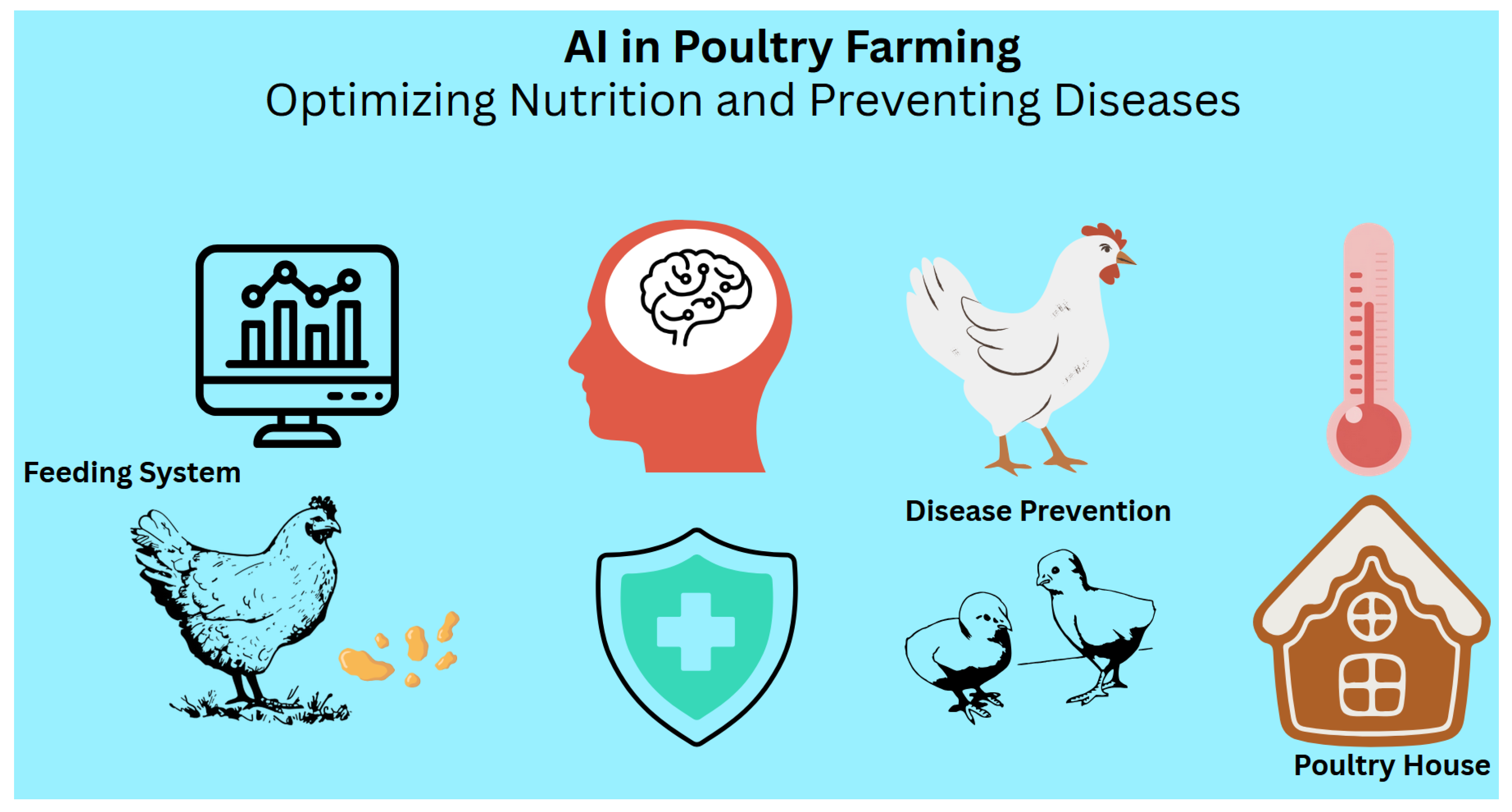
7. AI in Poultry Farming: Optimizing Nutrition and Preventing Diseases
AI may also contribute to advancements in poultry farming and has the potential to improve the way poultry nutrition is managed, playing a pivotal role in preventing common diseases, including leg problems in broilers and layers. One of the primary ways AI contributes to poultry health is by precisely formulating feeds tailored to the specific needs of individual birds at different life stages. These formulations take into account factors such as the bird’s age, weight, health status, and overall nutritional requirements. By providing poultry with the exact nutrients needed at every stage, AI helps prevent deficiencies that may lead to diseases, particularly leg disorders, which are a common issue in intensive poultry farming systems [
1]. Through this targeted nutritional approach, AI supports healthier poultry and optimizes feed efficiency, reducing waste and lowering production costs.
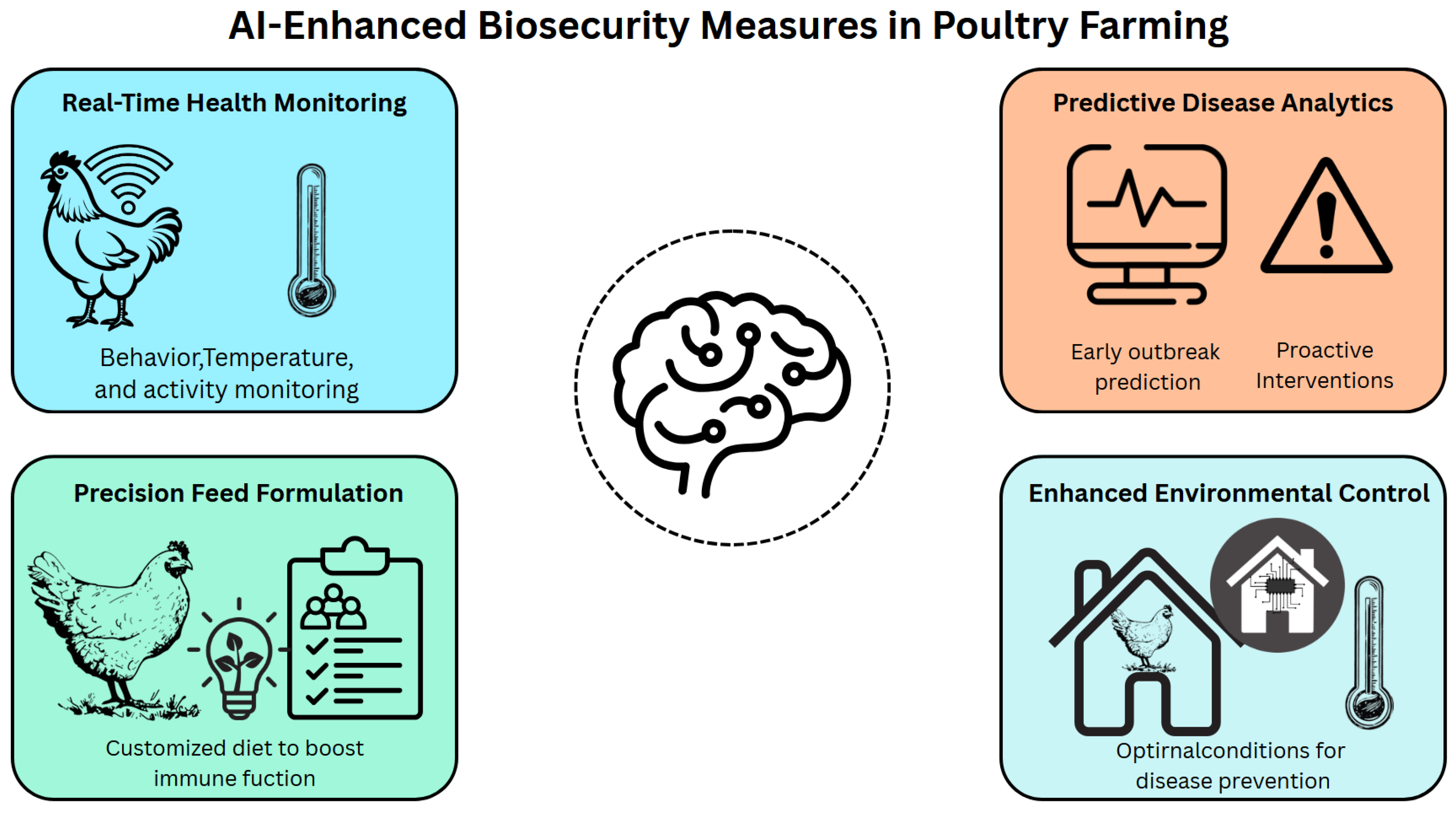
Figure 4 illustrates an AI-based biosecurity framework designed to protect poultry farms through real-time monitoring and predictive analysis. At the center, the AI Core Monitoring Hub collects data from various sources, including flock health indicators, behavioral patterns, feed intake, environmental conditions, and personnel movements. The surrounding elements represent key components of this system: real-time disease detection using thermal and behavioral sensors, video analytics powered by AI for tracking movement, automated control of temperature, humidity, and ventilation, and precise nutrition adjustments to boost immunity and reduce antibiotic use. Additional features include predictive outbreak analysis, RFID-based access control, monitoring of water and litter safety, and blockchain traceability for feed and health records. IoT connectivity enables remote oversight of the farm and provides automated decision support, ensuring swift corrective measures. The bottom banner outlines the results: better animal welfare, lower disease risk, improved sustainability, and complete traceability, highlighting how AI is changing biosecurity management in modern poultry production.
AI-powered systems leverage real-time data from sensors placed in feeding systems to continuously monitor feed consumption, wastage, and the birds’ growth responses. This data is vital for understanding how poultry are interacting with their feed and their development, as well as the effects of feed formulations on their overall health. AI algorithms analyze this vast amount of data to adjust and refine feed formulas, ensuring that each bird receives the precise nutrient profile it requires at any given moment. This dynamic feed management reduces the risk of overfeeding or underfeeding, which can lead to both nutritional imbalances and diseases, such as leg problems, that stem from poor bone health and improper growth [
7]. By maintaining a balanced and optimized feeding regimen, AI systems promote strong bone structure, reducing the incidence of leg disorders, which are particularly problematic in broilers that experience rapid growth.
In addition to managing feed, AI systems are integral in monitoring the overall health of poultry, specifically through disease surveillance and early detection systems. These systems utilize a variety of sensors that track health indicators like body temperature, activity levels, and behavioral patterns. By detecting deviations from normal patterns, AI can identify early signs of disease or stress, including conditions that may affect leg health, such as infections or metabolic issues [
11]. For example, a sudden decrease in activity or changes in temperature could indicate the onset of lameness, a common condition linked to poor leg health. Early detection allows farmers to take swift action, such as adjusting feed formulations or administering treatments to address the problem before it spreads throughout the flock.
Moreover, AI is able to forecast potential disease outbreaks by utilizing predictive analytics. By analyzing historical data and identifying patterns associated with disease spread, AI can predict when and where outbreaks are likely to occur. This predictive capability enables farmers to implement preventative measures in advance, including altering feed composition, changing environmental conditions, or administering vaccines at the right time. This proactive approach to disease management helps to mitigate the risks associated with leg disorders, ensuring that poultry remain healthy and disease-free. The integration of predictive analytics in disease surveillance not only prevents outbreaks but also improves overall flock health, reducing the reliance on antibiotics and enhancing sustainability within poultry farming operations [
5].
AI also plays a critical role in managing and optimizing environmental conditions within poultry houses. By analyzing data from various sensors monitoring temperature, humidity, ventilation, and lighting, AI systems ensure that the poultry are raised in an environment conducive to healthy growth. Environmental control is particularly important for preventing leg problems in poultry, as extreme temperatures, poor ventilation, and improper lighting can contribute to poor bone development and metabolic stress, which in turn affect leg health [
25]. For instance, high temperatures can lead to metabolic imbalances that affect bone mineralization, while inadequate lighting can disrupt the natural circadian rhythm of birds, affecting their growth patterns and overall well-being. AI systems can adjust these conditions in real-time to ensure that poultry are raised in optimal environments, minimizing the risk of leg problems and promoting strong, healthy bones.
Furthermore, AI’s ability to continuously monitor and adjust environmental conditions ensures that changes in the poultry house are made proactively, minimizing stress on the birds. This is particularly relevant in broiler production, where rapid growth rates put significant strain on the birds’ skeletal system, making them more susceptible to leg problems. By providing real-time data, AI systems enable farmers to respond quickly to environmental changes, such as a spike in temperature or humidity, ensuring that the poultry are always kept in optimal conditions for healthy growth [
14]. The result is a healthier flock with fewer cases of lameness and other leg-related disorders, leading to a more efficient and sustainable poultry operation.
AI systems are also crucial in enhancing the long-term sustainability of poultry farming by reducing the environmental impact associated with traditional practices. Precision feeding and environmental control contribute to reducing feed waste, improving feed conversion ratios, and lowering the carbon footprint of poultry farming operations [
11]. By reducing excess feed and ensuring that poultry receive only the nutrients they need, AI helps to cut down on the resources required to produce poultry, including the environmental costs associated with the production and transportation of feed. These efficiencies contribute to the overall sustainability of poultry farming, which is an increasingly important goal as the industry faces mounting pressure to reduce its environmental footprint.
AI is also improving the welfare of poultry by minimizing the use of medications and antibiotics. In conventional poultry farming, the use of antibiotics is often necessary to prevent diseases and leg problems, but AI-enabled disease surveillance and predictive analytics reduce the need for routine antibiotic use by identifying and addressing health concerns early. By optimizing feed compositions, managing environmental conditions, and monitoring the birds’ health, AI allows farmers to maintain a healthier flock with fewer interventions. This not only supports animal welfare but also addresses growing consumer demand for antibiotic-free and more sustainably raised poultry products [
13].
Moreover, AI technologies enable more precise breeding programs aimed at improving leg strength and overall skeletal health in poultry. By analyzing genetic data and performance metrics, AI can assist in identifying birds with superior bone structure and resistance to leg disorders, thereby enhancing the genetic quality of future generations. This long-term approach to improving poultry health through genetics and nutrition ensures that the next generation of birds may be more resilient to common problems such as lameness and leg deformities. The result is a more robust and healthier poultry population that is better suited to thrive in modern farming environments [
3].
As AI technologies continue to evolve, their impact on poultry farming is likely to expand, offering even more advanced solutions for preventing disease, optimizing nutrition, and improving leg health. The future of poultry farming looks increasingly promising as AI systems continue to develop, further refining feed formulations, predicting and preventing health issues, and optimizing environmental conditions. These advancements may help the industry meet the growing demand for high-quality, sustainable poultry products while improving animal welfare and reducing environmental impacts [
18].
In conclusion, AI has the potential to improve poultry farming by optimizing nutritional management, preventing diseases, and ensuring healthy leg development. Through real-time monitoring, predictive analytics, and advanced feed formulations, AI provides farmers with the tools they need to enhance poultry health and welfare while improving overall production efficiency. The integration of AI technologies into poultry farming not only addresses immediate concerns such as leg problems and disease outbreaks but also contributes to the long-term sustainability and profitability of the industry. With continued advancements, AI has the potential to further enhance poultry farming practices, ensuring that they remain sustainable, efficient, and resilient in the face of future challenges.
8. AI Enhancing Biosecurity Measures in Poultry Farming
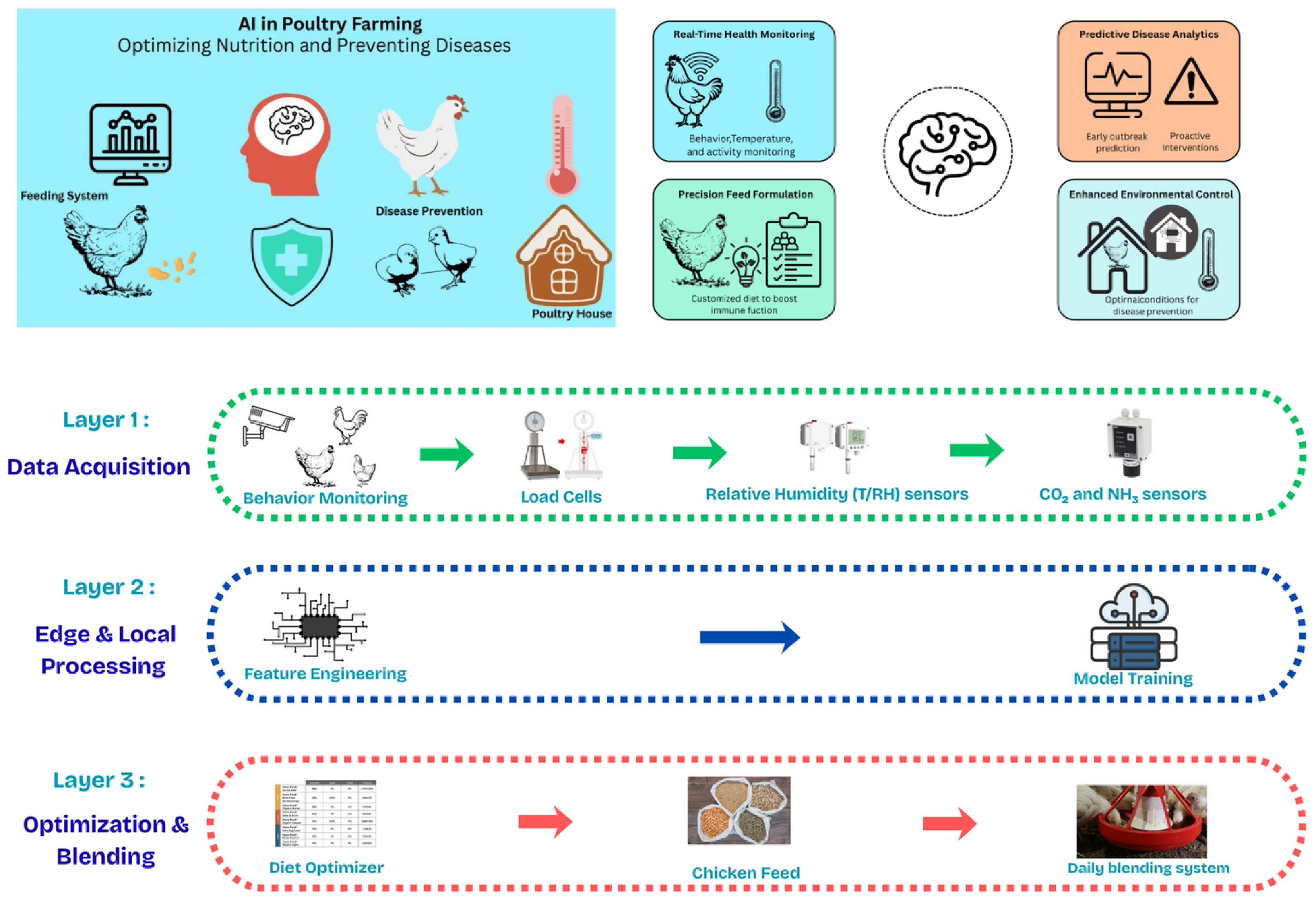
The integration of AI into poultry production provides a structured framework for strengthening biosecurity and flock management. The three-layer architecture depicted in
Figure 5 operationalizes a complete pipeline that transforms heterogeneous, real-time field measurements into actionable, evidence-based decisions [
7,
14]. By partitioning the system into (i) data acquisition, (ii) computational processing, and (iii) decision and actuation layers, the framework ensures traceability from sensor observation to management intervention, thereby enabling proactive rather than reactive biosecurity practices [
20,
27]. The data collection layer constitutes the empirical foundation of the system. Continuous acquisition of high-resolution behavioral signals, feed intake dynamics, and environmental indicators (e.g., temperature, relative humidity, and ammonia concentration) yields a comprehensive representation of both individual-level and flock-level states [
7,
20].
Behavioral monitoring captures deviations in activity and social interactions that frequently precede overt clinical signs [
14]. Feed intake tracking provides sensitive measures of subclinical stress or emerging health issues, while environmental sensing quantifies exposure to conditions known to modulate pathogen load and welfare outcomes [
27]. Collectively, these multimodal streams generate a temporally resolved dataset suitable for downstream inferential modeling. Within the processing layer, microcontrollers perform data aggregation and quality control, while AI processing units execute feature extraction, optimization routines, and predictive modeling [
20]. Machine learning algorithms synthesize the multimodal inputs to detect anomalies, estimate risk trajectories, and forecast key performance indicators [
7]. This layer converts raw signals into statistically robust, biologically meaningful insights by filtering noise, learning spatiotemporal patterns, and quantifying uncertainty [
7]. The resulting models support early warning for biosecurity threats (e.g., ventilation failure, incipient disease) and enable evaluation of counterfactual management strategies under varying environmental and operational constraints [
20,
27]. The output layer operationalizes model inferences into management actions. It provides (i) optimized feeding adjustments aligned with nutritional and welfare targets, (ii) real-time performance dashboards that synthesize flock, environmental, and process metrics, and (iii) automated alerts that prioritize decision support for farm managers [
7,
14]. By coupling continuous feedback with prescriptive recommendations, this layer shortens the sensing-to-action cycle and enhances the timeliness and precision of interventions [
20]. Overall, the layered architecture facilitates scalable, data-driven, and real-time biosecurity management, thereby improving resilience, productivity, and animal welfare in contemporary poultry systems [
27].
Table 1 summarizes the key roles of artificial intelligence in enhancing biosecurity measures in poultry farming, highlighting how AI-driven monitoring, predictive analytics, automated surveillance, and traceability systems help prevent disease outbreaks and strengthen flock health management.
AI is rapidly becoming a cornerstone of biosecurity management in poultry farming, and it has the potential to improve the monitoring of poultry health and the prevention of disease outbreaks. By incorporating AI technologies, poultry farmers can proactively manage biosecurity risks and safeguard their flocks from a range of diseases. One of the key ways AI contributes to biosecurity is by continuously monitoring each bird’s health. AI-powered systems utilize a range of data inputs, including behavioral monitoring, temperature, and activity levels, to detect early signs of illness before they spread throughout the flock [
1]. These early warning systems enable farmers to respond swiftly to health threats, minimizing the risk of widespread disease outbreaks and ensuring timely interventions.
AI-driven disease detection systems rely on advanced algorithms, including image recognition and behavior-tracking technologies, to analyze subtle changes in poultry behavior that may indicate health issues. For example, AI can detect changes in feeding behavior, mobility, or even posture, all of which may signal the onset of leg problems or other health conditions [
4]. By identifying these signs early, AI systems allow farmers to intervene before the disease spreads, reducing the need for extensive medication and limiting the impact on production. Such systems are especially valuable in intensive poultry farming, where diseases can spread rapidly if not detected and managed promptly.
Furthermore, AI systems are capable of continuously refining and optimizing feed formulations based on real-time health data, ensuring that poultry receive the precise nutrients they need to remain healthy. This precision feeding helps maintain optimal immune function, reducing susceptibility to infections that could otherwise lead to biosecurity risks [
11]. By ensuring that birds receive an ideal nutritional profile at each life stage, AI plays a crucial role in reducing the need for antibiotics and other pharmaceutical interventions, aligning with growing consumer demands for antibiotic-free poultry products.
AI technologies also support biosecurity by enabling farmers to implement more precise environmental controls within poultry houses. Sensors integrated with AI systems can track critical environmental parameters such as temperature, humidity, ventilation, and light levels. Maintaining optimal environmental conditions is essential for minimizing stress on poultry, which can otherwise lead to weakened immune systems and increased vulnerability to diseases [
5]. AI can monitor these conditions in real-time, adjusting them as needed to ensure that the birds’ environment is conducive to strong health and well-being, thereby reducing the likelihood of disease outbreaks associated with poor living conditions.
The use of AI in poultry farming not only enhances the detection of health issues but also improves the overall efficiency of disease management. AI-powered predictive analytics enable farmers to forecast potential disease outbreaks based on historical data, environmental factors, and the current health status of their flocks [
7]. With these insights, farmers can implement preventive measures well in advance, such as adjusting feed formulations or administering vaccines at the appropriate time. This proactive approach helps mitigate the spread of diseases and strengthens the farm’s biosecurity practices.
In addition to real-time health monitoring and predictive disease management, AI is also improving the traceability of poultry products. Blockchain technology, integrated with AI, can track every stage of poultry production, from hatching to processing, ensuring that any signs of contamination or health concerns are quickly identified and addressed [
14]. This level of traceability is crucial for maintaining the integrity of biosecurity measures, as it allows for the rapid identification of the source of any disease outbreak, whether related to feed, water, or environmental factors. Such traceability not only strengthens biosecurity but also builds consumer confidence by ensuring the safety and quality of poultry products.
AI’s role in biosecurity extends to automating tasks that were once time-consuming and prone to human error, such as monitoring health indicators and controlling farm conditions. Automated systems can monitor large numbers of birds simultaneously, providing farmers with comprehensive and up-to-date data on the health of the entire flock. This automation ensures that any deviations from normal behavior or health parameters are quickly flagged, allowing farmers to take immediate corrective action. By reducing human intervention, AI systems also minimize the risk of error and improve the overall consistency and reliability of biosecurity practices [
27].
Additionally, AI’s ability to learn and adapt over time further enhances biosecurity measures in poultry farming. As AI systems collect more data and gain more insights, they become better at detecting emerging diseases and identifying novel risk factors that might not have been considered in traditional biosecurity approaches [
28]. This continuous learning process means that AI technologies become increasingly effective at preventing disease outbreaks and maintaining the health of poultry flocks, ensuring more robust and sustainable farming practices.
The integration of AI into biosecurity measures also helps improve the welfare of poultry by reducing the need for physical handling and interventions. AI-enabled systems can monitor the birds’ health without human intervention, reducing the stress associated with manual health assessments or treatments. This reduction in stress is crucial for maintaining a healthy immune system and preventing the onset of disease, as stressed birds are more prone to health issues, including leg problems [
13]. By minimizing the need for direct human contact, AI contributes to improving both the physical health of the birds and their overall welfare.
Finally, the increasing sophistication of AI technologies promises even greater advancements in biosecurity for poultry farming in the future. As AI systems become more integrated with other technologies, such as the IoT, farmers may be able to monitor their flocks from anywhere in real-time, receiving instant alerts and making data-driven decisions on the go [
10]. These advancements may further strengthen biosecurity measures, making poultry farming more efficient, sustainable, and resilient to diseases. As AI continues to evolve, it will likely to play an even greater role in safeguarding poultry health and ensuring the production of high-quality, disease-free poultry products for global markets.
In conclusion, AI may also advance biosecurity measures in poultry farming by providing farmers with tools to monitor poultry health, prevent disease outbreaks, and enhance the overall welfare of their flock. Through real-time data collection, predictive analytics, and precise environmental control, AI helps to detect health issues early, optimize nutrition, and reduce the risk of diseases that could impact poultry health and production. As AI technology continues to advance, its role in enhancing biosecurity will be integral to the future of sustainable, efficient, and safe poultry farming.
9. Reducing Feed Costs and Environmental Impact
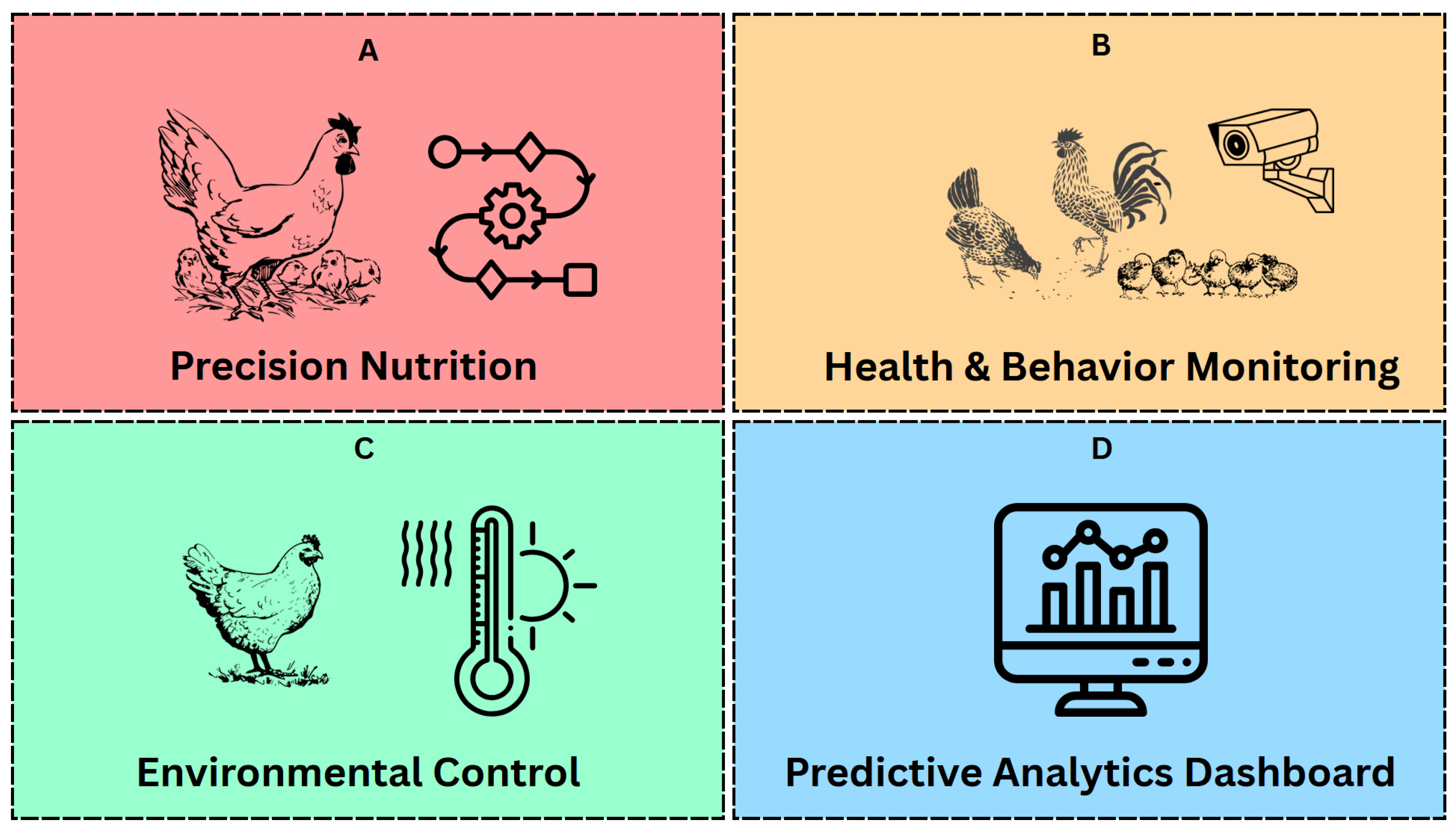
Figure 6 presents the core functional components of the proposed integrated system. The precision nutrition module (
Figure 6A) facilitates optimized feed allocation by incorporating real-time measurements of feed intake and growth dynamics, thereby improving nutrient utilization efficiency and reducing over-formulation [
1]. The health and behavior monitoring module (
Figure 6B) employs vision-based sensing to detect deviations in flock activity that may indicate emerging health or welfare concerns, enabling earlier intervention relative to conventional observation [
4]. The environmental control module (
Figure 6C) provides continuous regulation of temperature, humidity, and air quality to maintain conditions conducive to optimal performance and lower morbidity risk [
3]. Finally, the predictive analytics and decision support dashboard (
Figure 6D) integrates historical and real-time data to support forecasting, performance evaluation, and informed decision-making by farm managers.
From an operational standpoint, the integration of these modules creates a closed feedback loop that links sensing, inference, and actuation in near real time [
1]. Continuous data streams from feed intake sensors, machine vision systems, and environmental probes are aggregated and filtered, after which machine learning models generate prescriptive recommendations for feeding, ventilation, and husbandry adjustments. This pipeline shortens the sensing to action interval, enabling rapid responses to deviations such as suboptimal feed conversion, abnormal activity patterns, or rising ammonia concentrations [
3].
Table 2 presents an overview of how AI contributes to reducing feed costs and minimizing environmental impact through precision feeding, optimization of nutrient utilization, incorporation of sustainable alternative ingredients, improved feed conversion efficiency, and smarter resource and waste management.
Reducing feed costs and minimizing environmental impact have become critical challenges in poultry farming, especially with the rising prices of feed ingredients and the growing environmental concerns linked to conventional feed production. AI technologies are playing a pivotal role in addressing these challenges by optimizing feed formulations, improving resource utilization, and reducing waste. Through data-driven solutions, AI helps farmers reduce the cost of feed while simultaneously promoting more sustainable practices.
One of the most significant advantages of AI in poultry nutrition is its ability to precisely tailor feed to the needs of individual birds. By utilizing advanced monitoring systems, AI can track a bird’s health, growth, and activity levels in real time. This allows farmers to make data-driven adjustments to the birds’ diets, ensuring they receive only the nutrients required for optimal growth and health. As a result, AI helps eliminate overfeeding—a common issue in traditional feeding practices—which not only reduces feed costs but also curtails the environmental impact of excess feed production [
1]. By cutting down on feed waste, AI ensures that the feed provided is more efficient, contributing to better economic outcomes and reducing the ecological footprint of poultry farming.
Moreover, AI-driven systems offer the potential to use alternative feed ingredients, which can lower both costs and environmental impact. The traditional reliance on a limited range of ingredients often leads to long supply chains that contribute to high transportation costs and increased carbon emissions. AI enables farmers to explore locally sourced, alternative feed materials—such as insect protein, algae, or byproducts from other industries—which can offer more sustainable and cost-effective options. These alternative ingredients not only help reduce the need for imported feed but also promote a circular economy by repurposing waste products into valuable nutritional sources [
28]. This shift toward local and alternative ingredients can help reduce the carbon footprint associated with feed production and transportation.
In addition to reducing waste, AI also helps optimize nutrient utilization, further decreasing the need for supplementary additives. AI-powered monitoring systems collect vast amounts of data on the birds’ nutrient intake and growth patterns. With this data, AI algorithms can calculate the ideal balance of proteins, fats, carbohydrates, vitamins, and minerals needed for the birds’ specific growth stages and environmental conditions. This level of precision reduces the reliance on synthetic additives such as amino acids, vitamins, and minerals, which are often added to feed to compensate for nutrient imbalances. By minimizing the use of these additives, AI contributes to the sustainability of poultry feed production by reducing the ecological impact of synthetic ingredients [
13].
AI also plays a crucial role in optimizing the efficiency of feed conversion. Feed conversion ratio (FCR) is a key metric in poultry farming that measures how efficiently birds convert feed into body weight. AI systems, through continuous data collection and analysis, can identify the most effective feeding strategies to maximize FCR. By adjusting feed ingredients and schedules to align with a bird’s growth rate and metabolic requirements, AI can significantly enhance feed conversion efficiency. This not only reduces feed costs but also lowers the environmental impact of poultry farming by ensuring that fewer resources are used to produce the same amount of poultry products [
5]. Improved feed conversion also means less waste produced, contributing to a reduction in the overall environmental burden of the poultry industry.
Furthermore, AI can assist in optimizing the environmental impact of poultry farms by promoting smarter resource management. AI-based systems can analyze data on feed production, resource consumption, and waste generation, helping farmers identify opportunities for reducing energy usage, water consumption, and other operational costs. By automating and fine-tuning the management of resources, AI systems can reduce the overall carbon footprint of poultry farms and increase sustainability. This type of optimization aligns with global efforts to promote sustainable agriculture practices and reduce the environmental impact of food production systems [
25].
The environmental benefits of AI also extend beyond feed production. By enhancing health monitoring and management, AI contributes to healthier poultry that require fewer medical interventions, which in turn reduces the need for antibiotics and other pharmaceutical treatments. This not only improves animal welfare but also helps to minimize the environmental impact of pharmaceutical waste. Healthier birds that grow more efficiently also produce less waste, further reducing the environmental footprint of poultry farming [
7]. This integrated approach to poultry health and feed management ensures that AI-driven solutions not only contribute to better productivity but also to a more sustainable farming model.
Another area where AI significantly contributes to sustainability is in its ability to predict and manage the availability and cost fluctuations of feed ingredients. The poultry industry is heavily impacted by global supply chain disruptions and fluctuating commodity prices. By using predictive analytics, AI can forecast changes in ingredient availability and pricing, enabling farmers to adjust their purchasing strategies and reduce exposure to price volatility. This helps ensure that farmers are able to secure feed ingredients at the best possible prices, reducing costs and making the poultry industry more resilient to global market fluctuations [
11].
AI’s role in improving the sustainability of poultry farming is also evident in the optimization of waste management systems. By tracking feed intake and waste production in real time, AI systems can provide insights into how to minimize waste and optimize the disposal of manure and other byproducts. This reduces the environmental impact associated with waste disposal, which is a significant concern in traditional poultry farming. Furthermore, AI can help farms implement more sustainable waste recycling practices, such as converting manure into fertilizer or energy, further enhancing sustainability [
7].
In conclusion, AI offers poultry farmers powerful tools to reduce feed costs and minimize the environmental impact of their operations. By optimizing feed efficiency, reducing waste, utilizing alternative feed ingredients, and improving resource management, AI systems are helping create a more sustainable and cost-effective poultry industry. These advancements not only contribute to lower operational costs but also support the global push for more environmentally friendly agricultural practices. As AI technologies continue to evolve, their ability to enhance sustainability and profitability in poultry farming will likely play an increasingly important role in shaping the future of the industry [
16,
29,
30]. Through the intelligent application of AI, poultry farmers can achieve the dual goals of improving farm profitability and reducing their environmental footprint.
10. Enhancing Poultry Product Quality Through AI-Driven Precision Feeding
Table 3 outlines the major contributions of AI-driven precision feeding to improving poultry product quality, including enhancements in omega-3 enrichment, mineral balance, fat-content control, stress reduction for improved tenderness, nutritional fortification, and consistency in meat and egg quality.
AI-powered precision feeding systems have the potential to improve the poultry industry by improving not only bird health and welfare but also enhancing the overall quality of poultry products, including meat and eggs. These AI systems help tailor nutrient intake based on the specific needs of individual birds, optimizing key attributes such as meat tenderness, texture, flavor, and nutritional content. By using real-time data to monitor and adjust nutrient levels, AI enables farmers to ensure that poultry receive the correct balance of nutrients at each stage of their growth cycle. This results in superior-quality products that meet consumer demands for both health and taste [
1].
One critical area where AI enhances poultry product quality is by optimizing the omega-3 fatty acid content in poultry meat. Omega-3 fatty acids, especially EPA and DHA, are associated with numerous health benefits, including improved cardiovascular health and reduced inflammation. AI can fine-tune feed formulations to incorporate sources such as flaxseed, fish oil, or algae, which are rich in omega-3s. By continually monitoring the bird’s nutrient intake and adjusting feed composition accordingly, AI ensures that poultry meat meets specific omega-3 content targets. This optimization results in healthier meat products that appeal to health-conscious consumers seeking functional foods with added nutritional benefits [
11].
In addition to omega-3 fatty acids, minerals such as calcium and phosphorus play an essential role in poultry health and the quality of poultry products. These minerals are vital for bone strength and development, and imbalances can lead to leg disorders, which affect the health of the birds and the overall quality of the meat. AI can continuously monitor these mineral levels in the feed and make necessary adjustments to prevent deficiencies. By optimizing mineral content, AI helps ensure stronger bones, which in turn improves the quality of the meat by reducing the occurrence of fractures or deformities. This results in poultry products with better appearance, higher market value, and fewer defects [
5].
AI also plays a significant role in controlling fat content in poultry meat, a key determinant of product quality. Depending on market demands and consumer preferences, poultry farmers may aim to produce leaner meat or meat with higher fat content. By adjusting the nutrient ratios, particularly in terms of fat and protein, AI systems help produce poultry that meets specific market requirements. For example, reducing fat intake results in leaner meat, which is popular among health-conscious consumers, while increasing fat content can yield juicier meat suitable for culinary applications that require a richer taste and texture. AI thus helps meet varying consumer needs for poultry meat with controlled fat content [
14].
AI technologies also contribute to improving the texture and tenderness of poultry meat. Stress is a critical factor that negatively impacts meat quality, as it leads to the release of hormones that interfere with muscle development and result in tough, less desirable meat. By using AI to monitor the behavior and health of individual birds, farmers can detect signs of stress early. With real-time adjustments to feeding practices and environmental factors, AI can reduce stress levels in poultry, ensuring that the meat produced is tender and of higher quality. This also enhances the overall eating experience for consumers, making AI-driven poultry farming more appealing for premium markets [
13].
Moreover, AI contributes to the overall nutritional quality of poultry products by optimizing the levels of specific vitamins and minerals, such as vitamin D, which are important for both poultry health and human nutrition. As consumers increasingly seek functional foods that provide additional health benefits, the ability to adjust feed formulations to enhance nutritional content becomes increasingly valuable. For example, by increasing vitamin D levels in poultry feed, AI helps improve the nutritional profile of both eggs and meat, offering a product that supports human health, including bone health and immune function. This also addresses consumer demands for food that is both nutritious and functional [
4].
Finally, AI systems can reduce variability in poultry product quality by ensuring consistency in feed formulations. In traditional farming systems, inconsistent feed formulations can lead to variations in product quality, such as inconsistent meat texture or egg quality. AI ensures that feed ingredients remain consistent throughout the production cycle, optimizing nutrient balance and maintaining quality control. This consistency is crucial for large-scale producers who need to meet specific market standards, ensuring that the quality of their products aligns with consumer expectations and industry regulations. AI’s ability to streamline and standardize poultry production significantly benefits both farmers and consumers [
7].
In conclusion, AI-driven precision feeding offers substantial improvements in the quality of poultry products. By optimizing omega-3 content, mineral balance, fat ratios, and nutritional profiles, AI systems enable poultry farmers to produce meat and eggs that are not only healthier but also more appealing to consumers. Through AI’s ability to reduce stress, improve tenderness, and enhance nutritional content, the poultry industry can meet the growing demand for high-quality, nutritious products. The integration of AI in poultry nutrition represents a significant leap forward in producing sustainable, high-quality poultry products, ultimately benefiting both the poultry industry and consumers [
25]. With continued advancements in AI technologies, the potential for further improving the quality of poultry products and addressing global nutritional needs will only expand in the future.
11. AI/ML-IoT Incubation Meets in Ovo Technologies: Current Capabilities and Emerging Integration
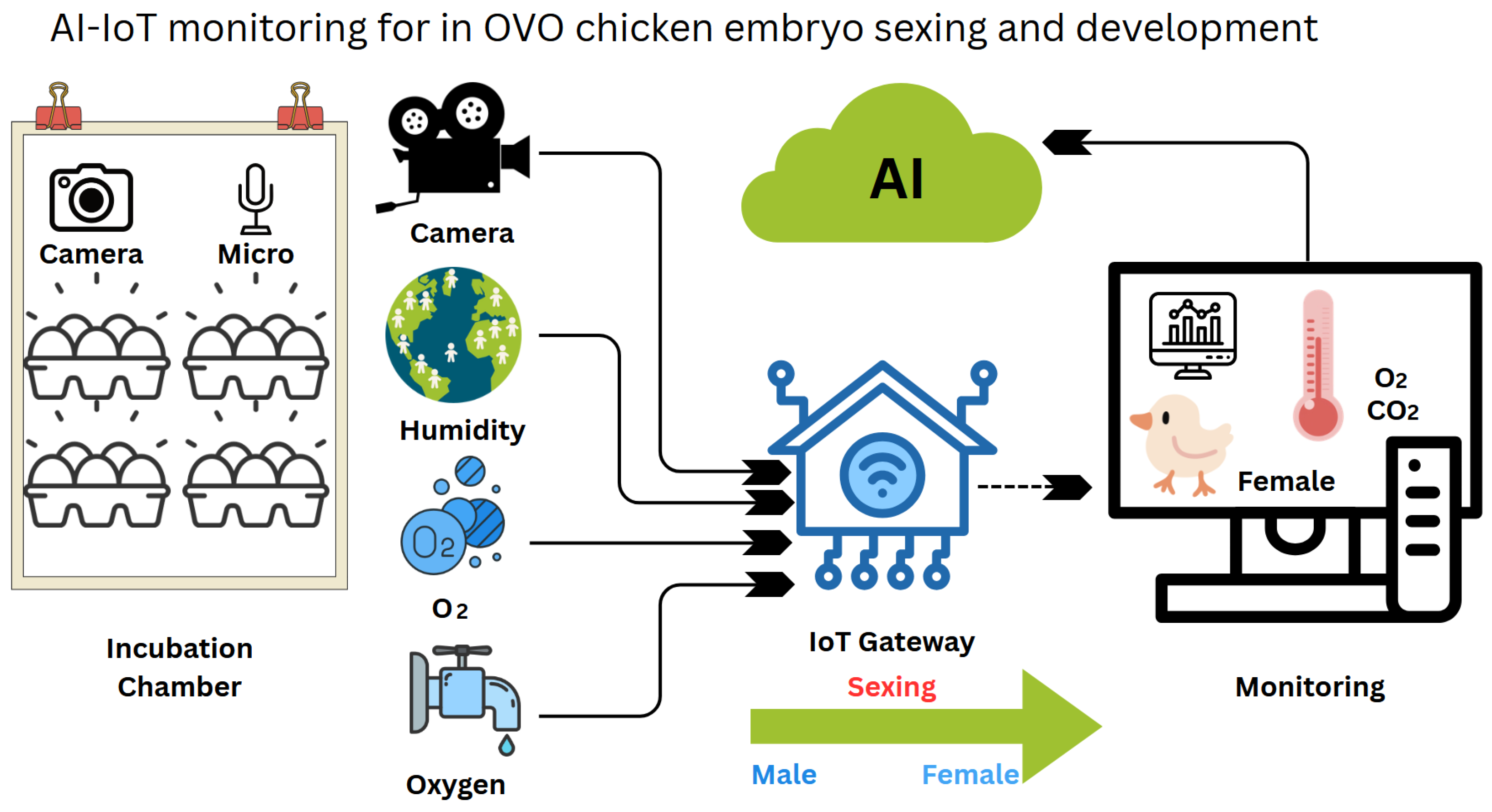
Figure 7 Integrated AI–IoT monitoring system for in ovo chicken embryo sexing and developmental assessment. The schematic illustrates a smart incubation setup in which multiple in ovo parameters are continuously captured using embedded sensors and imaging devices. Inside the incubation chamber, cameras and microphones record visual and acoustic signals from developing embryos, while additional sensors measure humidity, oxygen (O
2), and other environmental conditions. These real time data streams are transmitted to an IoT gateway, which aggregates and preprocesses the inputs before sending them to a cloud based AI model. The AI system analyzes multimodal signals to support early sexing of embryos and to monitor physiological and environmental conditions essential for normal development. The processed outputs are displayed on a monitoring interface that visualizes embryo status, gas exchange (O
2/CO
2), temperature, and predicted sex (male or female). This integrated approach illustrates how AI and IoT technologies can enhance precision, animal welfare, and decision making in modern hatchery management and in ovo feeding strategies.
AI, ML, and IoT technologies are transforming poultry incubation by enabling continuous multimodal monitoring, automated environmental control, and adaptive interventions. Modern smart incubators integrate temperature, humidity, and gas sensors, cameras, microphones, and AI/ML controllers with mobile dashboards to stabilize conditions, detect anomalies, and adjust set-points in real time, directly supporting embryo viability assessment and experimental standardization in in ovo studies. Notable examples include fuzzy-logic or AI-enabled incubators with automated egg turning and remote monitoring, as well as hybrid deep learning–IoT frameworks that employ computer vision to track hatch progress and optimize incubation parameters [
12,
31,
32,
33,
34]. Collectively, these systems demonstrate AI’s capacity to improve hatchability, reduce variability, and create a digital platform for precise biological interventions around the egg.
The most advanced commercial applications of AI in in ovo incubation are non-invasive, early embryo sexing systems. Optical or MRI-based platforms coupled with ML classifiers can determine the sex of embryos before hatch without breaching the shell, reducing the need for culling day-old male chicks and enabling earlier utilization of incubator space. Several industry reports document the deployment of AI-guided optical spectroscopy [
35] and MRI + AI modules [
36,
37,
38], enabling thousands of eggs to be processed per hour while maintaining hatch integrity. These systems exemplify how AI can act directly on in ovo decision points—such as classification and selection, while remaining compatible with other in-egg procedures, such as vaccination.
Biologically, the in ovo space provides a strong rationale for integrating AI-assisted monitoring and optimization. Targeted delivery of bioactive compounds, such as probiotics, prebiotics, synbiotics, phytogenics, amino acids, minerals, or nanomaterials, can modulate embryonic physiology, early immune development, gut maturation, and post-hatch performance, while reducing reliance on antibiotic growth promoters [
39,
40,
41]. Probiotic administration in ovo has been linked to improved stress tolerance, feed efficiency, and pathogen control [
39], and in ovo vaccination induces earlier immune responses than post-hatch immunization, closing the susceptibility window around hatch [
41]. Recent experimental work further demonstrates that in ovo administration of green silver nanoparticles and probiotics favorably alters microbial populations and physiology in one-day-old broilers, highlighting the type of intervention whose effects could be monitored in real time by AI–IoT systems [
42,
43].
Despite this progress, no peer-reviewed study to date has fully integrated in ovo nutrient or bioactive delivery with a closed-loop AI/IoT incubation platform. The components clearly exist: AI-IoT incubators for multimodal sensing and control, AI systems capable of operating on in ovo embryos at industrial throughput, and a mature knowledge base regarding optimal substance type, timing, route (air cell vs. amnion), and dose [
12,
31,
32,
33,
34,
35,
36,
37,
42]. Combining these elements would enable adaptive, data-driven in ovo protocols, for example, adjusting dose or timing based on embryo-level signals such as shell-weight loss, CO
2/O
2 dynamics, or acoustic and movement patterns, potentially reducing the variability commonly observed in in ovo trials. This represents a clear near-term research opportunity for advancing precision poultry incubation.
12. Integrating AI Hardware, Algorithms, and Metrics into Precision Feed Formulation
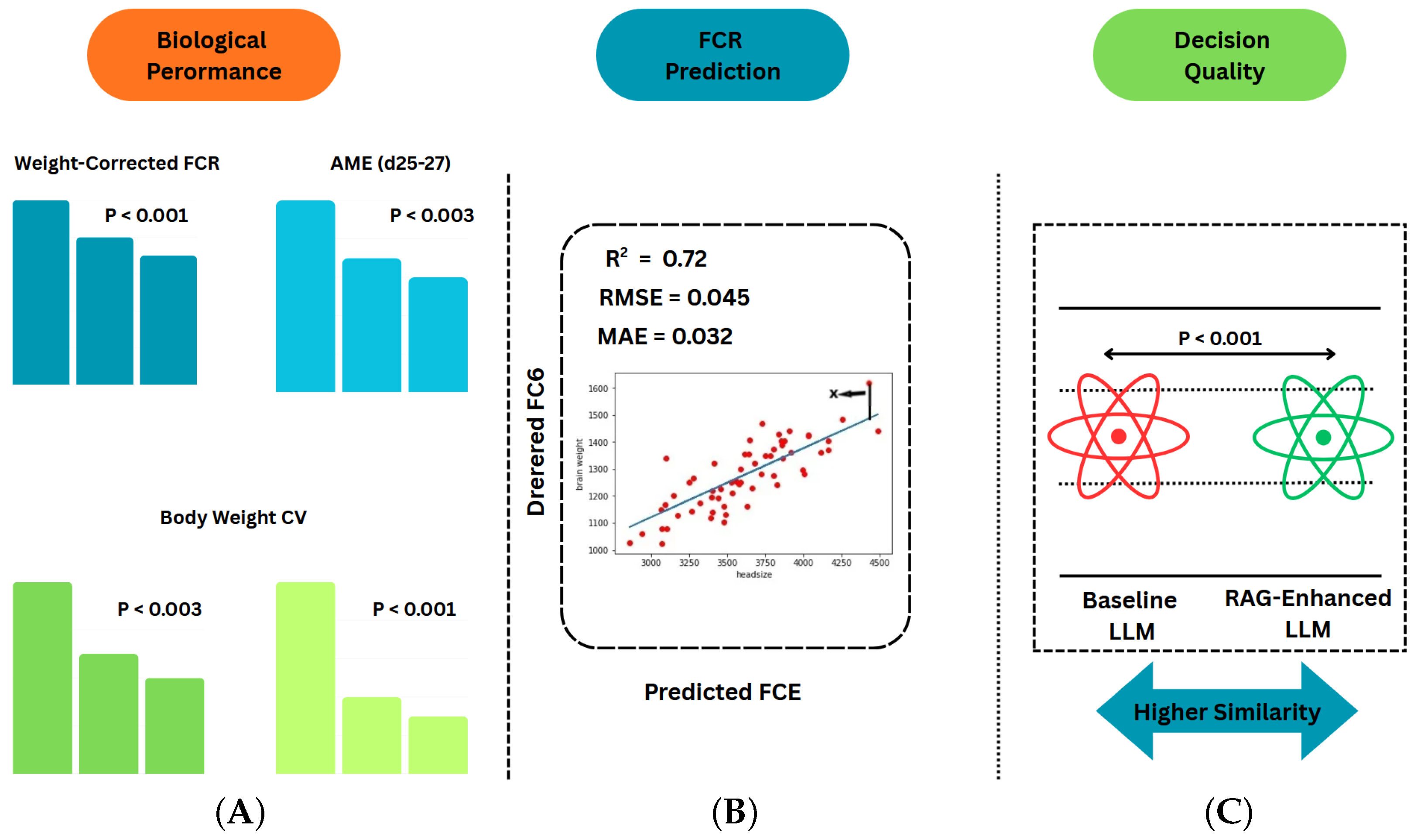
The transition from conventional phase-based feeding to precision nutrition in broiler production has been accelerated by the integration of smart hardware, advanced AI algorithms, and standardized performance metrics. Precision feeding enables nutrient supply to be continuously adjusted according to flock requirements, improving both feed efficiency and flock uniformity while maintaining economic feasibility. A recent study employing a two-concentrate, daily-blend precision-feeding strategy demonstrated measurable biological benefits, including improved weight-corrected feed conversion ratio (FCR), increased apparent metabolizable energy (AME) at mid-grow-out, and reduced body-weight variability, without additional feed costs [
6]. These findings highlight the practical potential of precision feeding to enhance efficiency and uniformity at the commercial scale. Previous trials using commercial blending equipment also confirmed operational feasibility and interval-specific FCR improvements, bridging the gap between theoretical modeling and industrial implementation [
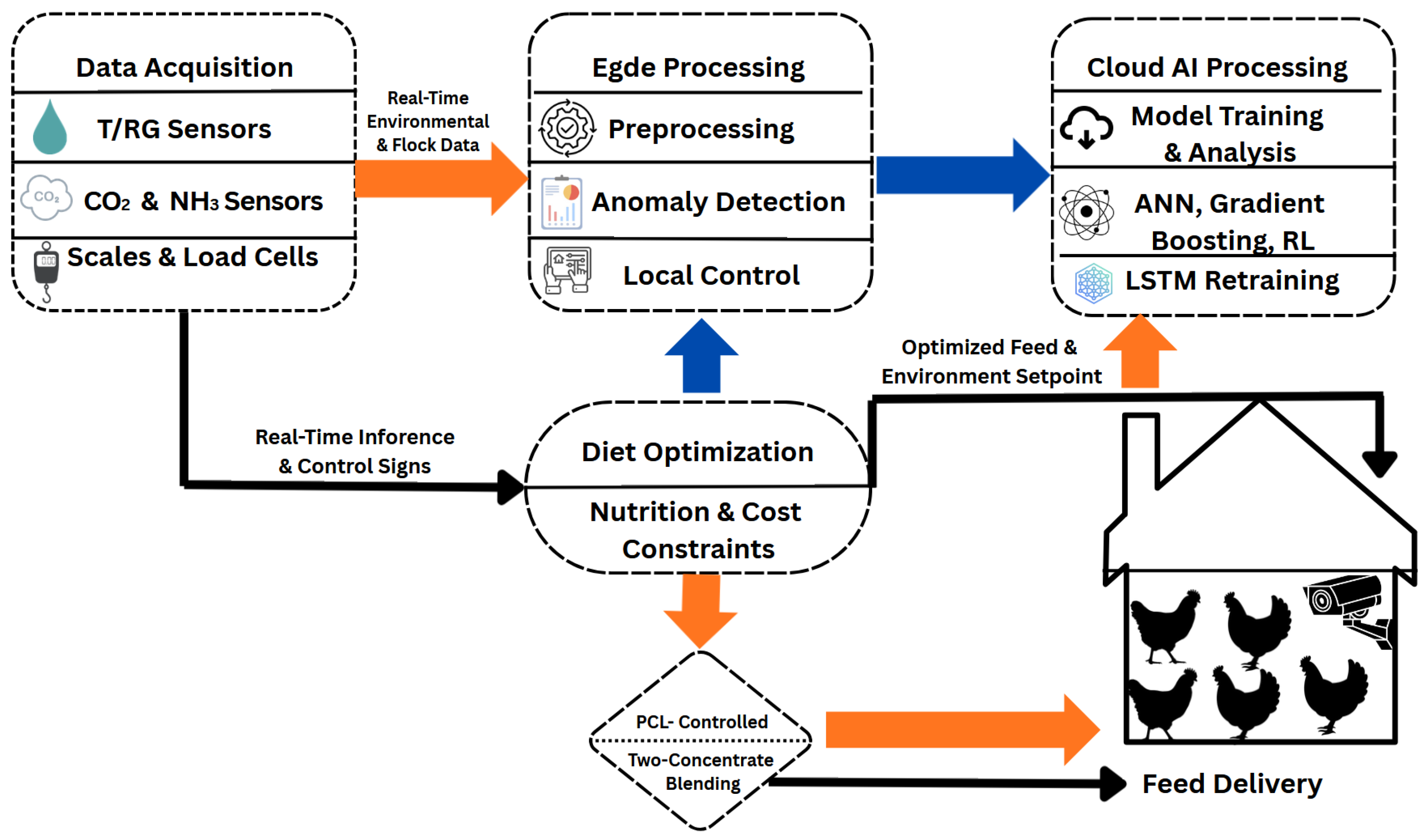
44]. A modern AI-enabled precision-nutrition system relies on sensor-rich poultry houses, edge-level computing, and cloud-based analytics to continuously monitor and control environmental and flock variables. Sensors record temperature, humidity, CO
2, NH
3, and body-weight data, which are processed in real time by edge devices for immediate control actions and transmitted to cloud GPUs for model training and retraining [
14,
45]. The system forms a closed loop, linking data acquisition to diet optimization and feeding control, with actuators such as fans, heaters, inlets, and feed valves maintaining conditions close to set points. PLC-driven two-concentrate daily blending replaces multi-phase pellet programs, enabling more precise nutrient delivery and reducing operational complexity [
44].
Table 4 summarizes the hardware, algorithms, and multi-domain evaluation metrics critical for precision nutrition implementation. AI algorithms form the computational backbone of precision nutrition. Supervised models, including artificial neural networks (ANNs), gradient boosting, and random forests, are used to predict feed intake, nutrient requirements, and long-term FCR from short-term data streams. Gradient boosting has shown the highest accuracy for long-horizon FCR prediction, achieving an R
2 of 0.72 and a correlation coefficient of 0.85 when prediction intervals exceed 40 kg of live weight [
19]. Reinforcement learning (RL) and control policies further support adaptive diet density adjustments across grow-out periods. LSTM and ConvBiLSTM models, in combination with computer vision approaches such as YOLOv5s, can forecast intake and environmental conditions while linking behavior and welfare indicators to nutrition management [
21]. Additionally, retrieval-augmented generation (RAG) for large language models (LLMs) significantly improves the relevance of environmental and feeding recommendations compared with non-RAG models, providing actionable decisions for ventilation and thermal management [
14]. Evaluating precision nutrition requires comprehensive multi-domain metrics to ensure reproducibility and industrial applicability. Biological metrics include FCR, weight-corrected FCR, AME/AMEn, body-weight coefficient of variation, mortality, and welfare indicators [
6]. Operational performance is quantified through sensor uptime, inference latency, and blending accuracy [
16,
45]. Economic measures consider diet cost, return on investment (ROI), and wholesale returns [
6], while environmental metrics include NH
3 and CO
2 exposure, nitrogen excretion, nitrogen excretion, and litter-to-energy recovery efficiency [
11]. Together, these metrics link hardware, AI predictions, and outcomes, providing a framework for assessing both technical performance and practical relevance. Representative studies illustrate the effectiveness of AI-enabled precision feeding. The Animals (2025) trial demonstrated that two-concentrate daily blending improved FCR, AME, and body-weight uniformity compared with conventional feeding [
6]. Operational deployment of precision feeding logistics has shown interval-specific FCR gains in commercial systems [
44]. Gradient-boosting models accurately predicted long-term FCR from short-term production data, facilitating anticipatory feed adjustments and inventory planning [
19]. RAG-enhanced LLMs increased decision relevance for environmental control in broiler houses, as quantified by paired similarity scores [
16]. Additionally, techno-economic modeling using fuzzy logic and Monte Carlo simulation showed that litter moisture management can improve energy recovery while considering capital and operating expenditures, highlighting the integration of environmental and nutritional decisions [
11].
Table 5 provides a summary of these representative studies, linking AI hardware, algorithms, and practical outcomes. To improve accessibility and reader comprehension, we propose two integrated figures.
Figure 8 depicts the complete precision-nutrition system workflow, from sensors through feature engineering, model predictions, diet optimization, PLC-controlled two-concentrate daily blending, and verification loops, combining the functional elements of data acquisition, edge/cloud processing, and closed-loop actuation [
44,
45].
Figure 9 presents performance and decision-quality outcomes, including (i) control versus precision-fed treatments for weight-corrected FCR, AME (d25–27), and body-weight CV with 95% confidence intervals [
6], (ii) predicted versus observed long-term FCR from gradient boosting models with performance metrics [
19], and (iii) similarity score distributions for LLM recommendations with and without RAG, demonstrating a significant improvement in decision quality [
14]. Together, these figures integrate hardware, algorithms, and measurable outcomes in a visually interpretable form. The convergence of AI, sensors, and automation represents a practical advance beyond theoretical models, embedding real-time, data-driven decisions into industrial poultry production. By linking predictive models to automated blending and verified performance metrics, precision nutrition systems provide operational, biological, economic, and environmental benefits, including improved feed efficiency, uniformity, and sustainability [
6,
11,
19]. The use of visual and tabular elements enhances manuscript readability and facilitates adoption by both researchers and practitioners. Overall, the integration of AI-enabled hardware, algorithms, and metrics demonstrates that precision nutrition in broilers is ready for practical implementation. Rather than being purely theoretical, these systems have been validated under commercial conditions, providing a robust framework for reproducible research, industrial deployment, and whole-farm optimization. Future research should continue to expand the scope of sensors, predictive models, and performance metrics, while emphasizing decision support and environmental sustainability to maximize the benefits of AI-driven precision feeding.
13. Future Perspectives and Directions
Looking ahead, the potential of AI in poultry farming is expected to continue expanding, particularly as new advancements in AI technologies, sensor accuracy, and data analytics emerge. Future developments will likely enable even more precise and individualized feeding regimens, which will adjust dynamically to each bird’s specific health and nutritional needs in real-time. This level of precision will further enhance bird health, growth rates, and overall farm efficiency, reducing feed waste and optimizing nutrient utilization. Sustainability will remain a key focus for the future of poultry farming, with AI playing a critical role in reducing the environmental footprint of feed production and waste management. By enabling the use of alternative, locally sourced feed ingredients, AI can help reduce dependency on conventional, resource-intensive feed sources, contributing to a more sustainable food production system.
Additionally, the integration of AI with other technologies, such as the IoT and automation, will enable even greater control over poultry farm management, resulting in more efficient resource utilization and improved health outcomes for birds. Furthermore, AI’s potential to enhance the quality of poultry products will continue to grow, allowing farmers to fine-tune feed compositions to meet market demands for specific nutritional attributes, such as omega-3 fatty acids or leaner meat. This will not only improve consumer satisfaction but also allow farmers to cater to evolving dietary preferences and the increasing demand for functional foods.
As AI adoption becomes more widespread, it will also play a key role in tackling global food security challenges. By improving feed efficiency and reducing waste, AI will help poultry farmers increase output without overburdening the environment, ensuring a sustainable and reliable source of protein for a growing global population. The future of poultry nutrition will be increasingly defined by the use of AI-driven solutions. These innovations will optimize farm operations, improve poultry health, and contribute to a more sustainable, efficient, and resilient global food system. As AI technologies continue to advance, their role in shaping the future of poultry farming will be pivotal in addressing the evolving challenges of the industry while ensuring the continued production of high-quality poultry products.