Systematic Review

Valorization of Babassu (Attalea speciosa) Waste: A Systematic Review of Phytochemical Extraction Methods and Antioxidant Capacity


by
Anna Paula Azevedo de Carvalho
1,2,3,4,*,†,
Mayara Regina da Silva de Figueiredo
1,2,† and
Carlos Adam Conte-Junior
1,2,3,4
1
Research Support Group on Nanomaterials, Polymers, and Interaction with Biosystems (BioNano), Department of Biochemistry, Chemistry Institute, Federal University of Rio de Janeiro (UFRJ), Rio de Janeiro 21941-909, RJ, Brazil
2
Center for Food Analysis (NAL), Technological Development Support Laboratory (LADETEC), Chemistry Institute, Federal University of Rio de Janeiro (UFRJ), Rio de Janeiro 21941-598, RJ, Brazil
3
Graduate Program in Chemistry (PGQu), Chemistry Institute, Federal University of Rio de Janeiro, Rio de Janeiro 21941-909, RJ, Brazil
4
Graduate Program in Food Science (PPGCAL), Chemistry Institute, Federal University of Rio de Janeiro, Rio de Janeiro 21941-909, RJ, Brazil
*
Author to whom correspondence should be addressed.
These authors contributed equally to this manuscript, and each has the right to list themselves first in author order on their CVs.
Agriculture 2026, 16(11), 1230; https://doi.org/10.3390/agriculture16111230
Submission received: 19 April 2026 / Revised: 22 May 2026 / Accepted: 26 May 2026 / Published: 2 June 2026

Abstract

Babassu (Attalea speciosa) is one of the most abundant palm species in the Brazilian Amazon and an important unconventional crop, playing a key socioeconomic role due to the commercial exploitation of its oil-rich almonds. However, approximately 90–93% of the fruit biomass—mainly mesocarp, epicarp, and endocarp—is generated as underutilized residue. This systematic review aims to analyze extraction methods, phytochemical composition, and antioxidant capacity of bioactive compounds derived from different babassu fractions. Following PRISMA guidelines, searches of five databases (Embase, ScienceDirect, Scopus, PubMed, and Web of Science) retrieved 410 records, of which 23 met the inclusion criteria. The results show that, although research has predominantly focused on the almond fraction, non-edible parts contain significant levels of phenolic compounds, flavonoids, phytosterols, and other bioactive metabolites with antioxidant properties. Green and non-thermal extraction technologies, such as ultrasound-assisted extraction (UAE), supercritical CO2 extraction (SC-CO2), and pressurized liquid extraction (PLE), demonstrated advantages in improving extraction efficiency while reducing solvent consumption and thermal degradation. Overall, the available evidence indicates that babassu residues represent a promising and still underexplored source of bioactive compounds. Their valorization may contribute to sustainable extraction strategies, waste reduction, and the development of value-added products within agricultural and bioeconomic systems.

1. Introduction

The Amazon region harbors an extraordinary biodiversity that includes a wide variety of native palms with socioeconomic and ecological importance [1,2]. Among them, Attalea speciosa Mart. ex Spreng (syn. Orbignya phalerata Mart.), commonly known as babassu, stands out as one of the most abundant and economically relevant palm species in the Northeast [3] and Amazon regions of Brazil [4,5] and is increasingly recognized as a promising unconventional crop, particularly as a sustainable source of edible oil and high-value compounds, contributing to the diversification of raw materials beyond traditional agricultural commodities [6].
Traditionally, the babassu almond is used to produce oil, a valuable product for the cosmetic, pharmaceutical, and food industries due to its high content of medium-chain fatty acids such as lauric and myristic acids [7]. However, this conventional exploitation targets only a small fraction of the fruit, while industrial processing generates a substantial volume of residues—including the mesocarp, epicarp, and endocarp—which represent approximately 90–93% of the total fruit mass [8,9,10]. These by-products are frequently discarded or underutilized, despite being rich in bioactive molecules with potential functional and technological applications [11,12]. Mesocarp, for example, is commonly repurposed as an ingredient in animal feed [13] or processed into flour for human consumption [14,15]. Nevertheless, its current uses remain limited, highlighting the need for innovative strategies and advanced technologies to enhance its valorization and enable the production of higher-value-added compounds [14,16]. Previous studies have demonstrated that these residual fractions can be converted into value-added products, such as activated carbon [17,18], dye removal [19], drug delivery systems [20,21], and other bioproducts [22,23,24,25,26], biomass resources for energy [10,27], through technological innovation and circular bioeconomy approaches, highlighting their potential for sustainable resource utilization [27,28].
Recent studies have demonstrated that different fractions of the babassu plant parts, including leaves [29], contain a variety of secondary metabolites, such as polyphenols, flavonoids, tannins, and fatty acids, which exhibit antioxidant [30,31,32], antimicrobial [8,32,33,34], antineoplastic agents [35], and anti-inflammatory activities [36,37]. These compounds can inhibit oxidative stress associated with chronic diseases, promote food preservation, and serve as natural alternatives to synthetic additives. Therefore, the recovery of phytochemicals from babassu residues aligns with the principles of circular bioeconomy and sustainable resource use, promoting the transformation of agro-industrial waste into high-value bioactive ingredients for the food, cosmetic, and pharmaceutical sectors.
The efficiency and selectivity of phytochemical recovery depend largely on the extraction method employed. Conventional methods—such as Soxhlet extraction or maceration—are still widely used but often rely on toxic solvents, long extraction times, and high energy consumption, which can compromise both the sustainability of the process and the integrity of thermolabile compounds [38]. In contrast, green and non-thermal extraction technologies, including pressurized liquid extraction (PLE) [7], supercritical CO2 extraction (SC-CO2) [39], and ultrasound-assisted extraction (UAE) [32,40], have emerged as eco-friendly alternatives capable of improving yield, reducing solvent use, and preserving the structural integrity of bioactive compounds. These approaches are consistent with the United Nations Sustainable Development Goals (SDGs), particularly SDG 12 (Responsible Consumption and Production) and SDG 15 (Life on Land) [41].
Despite growing scientific interest, the available literature on the extraction, characterization, and antioxidant potential of babassu residues remains fragmented. Most research efforts have focused on the almond fraction, particularly for oil extraction and fatty acid characterization [39,40,42,43]. In contrast, relatively few studies have explored other parts of the fruit, such as the mesocarp and endocarp, which are commonly generated as agro-industrial residues [32,44,45]. Consequently, a systematic and comparative assessment of extraction methodologies and bioactive compounds derived from these underexplored fractions remains limited.
Therefore, this systematic review aims to provide a comprehensive and integrative synthesis of the literature on extraction methods used for recovering phytochemicals from babassu (A. speciosa), with emphasis on their chemical composition, antioxidant capacity, and sustainability aspects. By combining an analytical perspective on extraction efficiency with a broader discussion of technological valorization, this work seeks to highlight the potential of babassu residues as valuable bioresources for the development of sustainable products and materials, bridging the gap between chemical science and bioeconomic innovation.

2. Literature Search Methods

This systematic review aimed to analyze studies retrieved from scientific databases on extraction methods for bioactive compounds and on the antioxidant capacity of different fractions of babassu (A. speciosa syn. O. phalerata), to identify knowledge gaps and underexplored opportunities related to the valorization of agricultural wastes and by-products.
To ensure methodological rigor and transparency, the review was conducted following the PRISMA (Preferred Reporting Items for Systematic Reviews and Meta-Analyses) guidelines [46]. The research design was structured using the PICO (Problem, Intervention, Comparison, Outcome) framework [47], and the StArt 3.4 (State of the Art through Systematic Review) tool [48] was employed to support study selection and data management. Reference management was performed using Mendeley.
A review protocol was defined prior to the study, including research questions, eligibility criteria, and data extraction strategy. The protocol was registered in the Open Science Framework (OSF): 10.17605/OSF.IO/JSM52.

2.1. Focus Questions

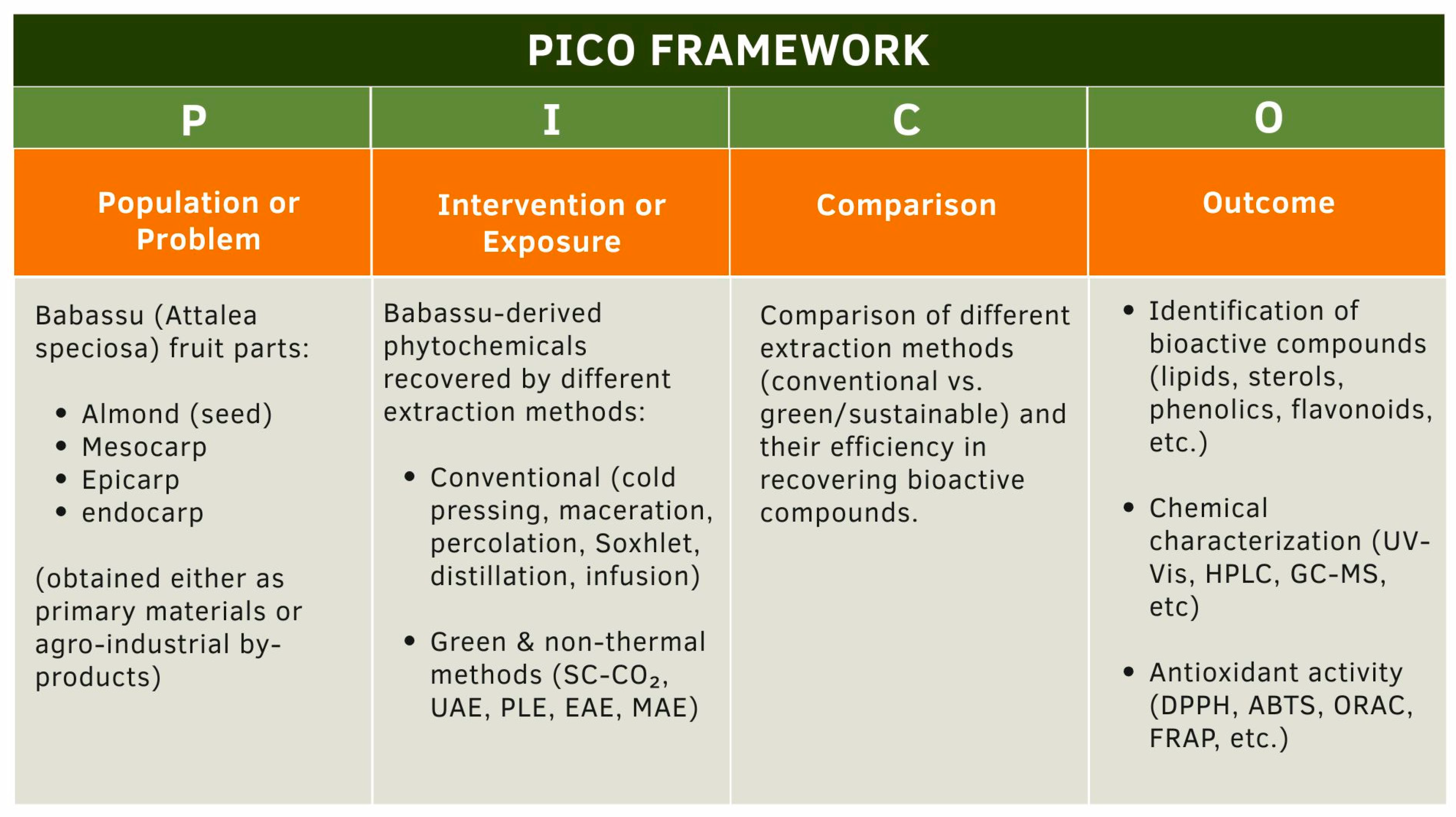
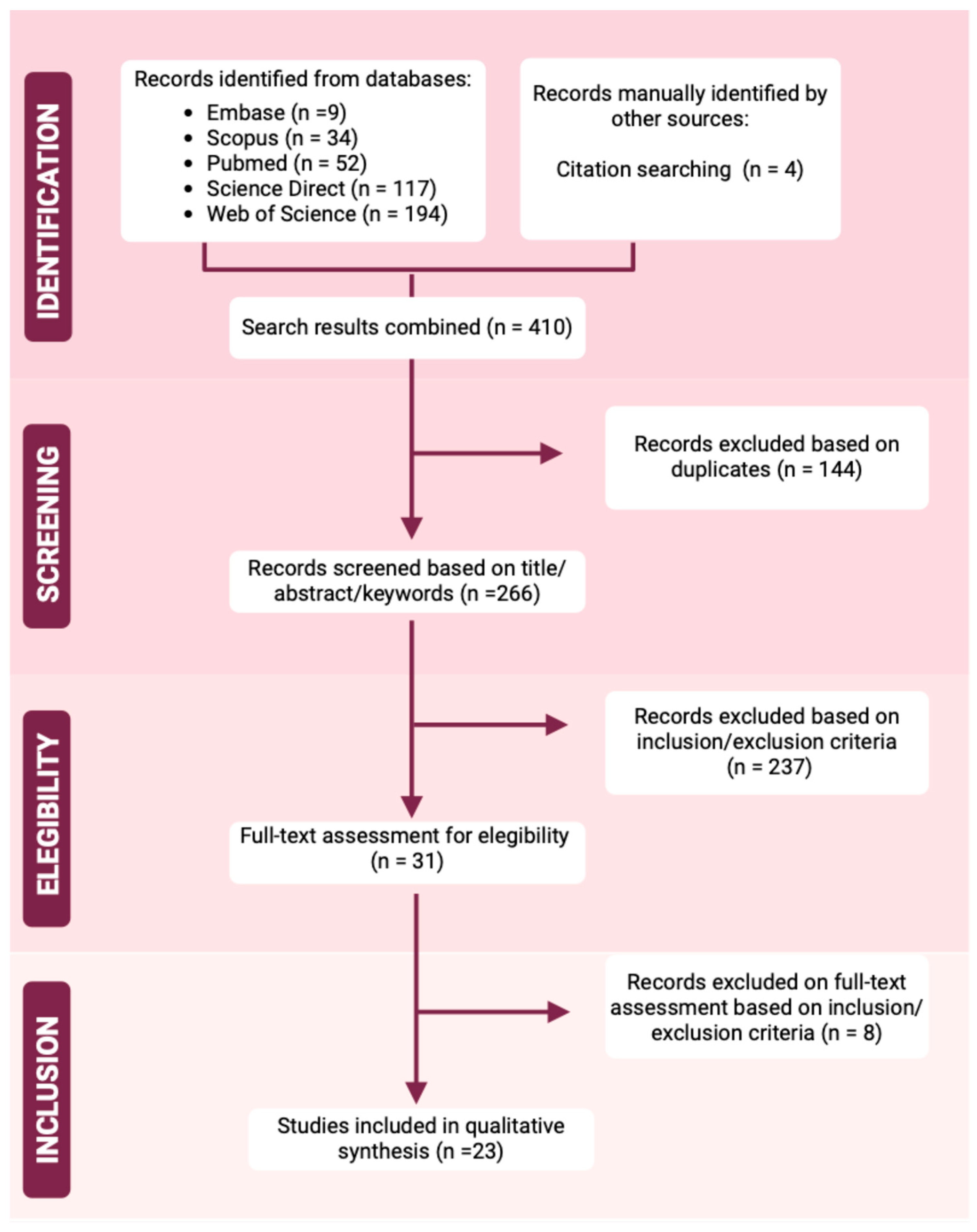
The research questions were structured according to the PICO framework [47], adapted for a non-clinical context, as illustrated in Figure 1. The PRISMA flow diagram is presented in Figure 2. This systematic review was guided by a central question addressing how extraction methods influence the recovery, composition, and antioxidant capacity of bioactive compounds derived from different babassu (Attalea speciosa) fruit parts.
To further explore this topic, the following secondary questions were defined:
(i)
Which babassu parts have been investigated as sources of bioactive compounds, and how are they classified as raw materials or agro-industrial by-products?
(ii)
Which extraction methods have been applied for phytochemical recovery, and how do conventional and green approaches compare in terms of efficiency and sustainability?
(iii)
Which bioactive compounds have been identified?
(iv)
How is the antioxidant capacity of babassu-derived extracts evaluated in relation to extraction methods and phytochemical composition?

2.2. Eligibility Criteria

The eligibility criteria were defined according to the PICO framework and applied in two stages: (i) an initial screening based on titles, abstracts, and keywords, followed by (ii) a full-text assessment to confirm study eligibility.

2.2.1. Inclusion Criteria

(i)
Studies were included if they met one or more of the following criteria:
(ii)
Investigated babassu (Attalea speciosa, syn. Orbignya phalerata) as the raw material, including different fruit fractions (almond, mesocarp, epicarp, or endocarp), either as primary materials or agro-industrial by-products.
(iii)
Reported extraction methods for phytochemical recovery, including conventional or emerging (green and non-thermal) techniques.
(iv)
Identified or characterized bioactive compounds, such as phenolics, flavonoids, fatty acids, or other metabolites.
(v)
Evaluated antioxidant capacity using chemical or biological assays (e.g., DPPH, ABTS, FRAP).
(vi)
Were original research articles published in English.

2.2.2. Exclusion Criteria

Studies were excluded if they:
(i)
Investigated plant species other than babassu.
(ii)
Did not address phytochemical extraction, bioactive compound characterization, or antioxidant evaluation.
(iii)
Focused exclusively on babassu oil refining or industrial processing (e.g., deacidification, deodorization, transesterification).
(iv)
Were non-original publications (reviews, commentaries, letters, theses, or editorials).
(v)
Are modeling studies or reports lacking sufficient methodological detail or relevant data.
(vi)
Did not meet the objectives of this review.

2.3. Information Sources and Search Strategy

Studies were retrieved through systematic searches in five electronic databases: Embase, ScienceDirect, Scopus, PubMed, and Web of Science.
Searches were limited to studies published in English, with no restriction on publication date. The last search update was performed on 16 May 2026.
The search strategy was based on combinations of keywords, synonyms, and Boolean operators (“AND” and “OR”), structured to reflect the research questions. The initial search string [(babassu OR “Attalea speciosa” OR “Orbignya phalerata”) AND (extraction) AND (phytochemical OR “bioactive compounds”) AND (antioxidant)] was first applied in ScienceDirect and subsequently adapted to the syntax of the other databases. To improve search coverage, the strategy was organized into four search components (SC):
SC1: plant species (babassu OR babaçu OR Attalea speciosa OR Orbignya phalerata).
SC2: extraction methods (extraction OR ultrasound OR microwave OR solvent OR supercritical OR distillation OR maceration OR composition).
SC3: bioactive compounds (phytochemicals OR metabolites OR polyphenols OR phenolics OR fatty acids OR flavonoids OR tannins OR triacylglycerols).
SC4: antioxidant activity (antioxidant OR “antioxidant activity”).

2.4. Study Selection Process

The records retrieved from the databases were imported into the StArt® tool for study management. Duplicate records were initially removed automatically, followed by manual verification.
The selection process was conducted in two stages. First, titles, abstracts, and keywords were screened independently by two authors using predefined eligibility criteria. Records that clearly did not meet the inclusion criteria were excluded, while uncertain cases were retained for further evaluation.
In the second stage, the full texts of all potentially relevant studies were assessed. Studies were included or excluded based on the eligibility criteria. The selection process was not blinded to authors, institutions, or journal titles.

2.5. Data Collection Process and Data Items

The outcomes of interest included phytochemical composition and antioxidant capacity. Data extraction was performed independently by two authors using a structured data extraction form developed for this review. The following information was collected whenever available:
  • Bibliographic data: first author, year, title, keywords, and DOI.
  • Study characteristics: objective and plant species.
  • Raw material: plant fraction used.
  • Extraction process: technique, solvent, conditions, and yield.
  • Extract characteristics: type of product obtained.
  • Phytochemical profile: metabolites identified and analytical techniques (e.g., UV–Vis, HPLC, GC–MS).
  • Antioxidant activity: assays used (e.g., DPPH, ABTS, FRAP, ORAC, TBARS).
  • Additional data: physicochemical properties, main findings, applications, and future perspectives.
Missing information was recorded as “not available” or “not reported”.

2.6. Risk of Bias

The risk of bias in the included studies was not formally assessed due to the heterogeneity of experimental designs and the absence of standardized tools for this type of research. However, potential sources of bias, such as variability in extraction conditions, analytical methods, and reporting practices, were taken into account during data interpretation.

2.7. Synthesis Methods

The synthesis of results was conducted using a qualitative and descriptive approach due to the heterogeneity of the included studies. Extracted data were organized into thematic categories, including lipid composition, non-lipid bioactive compounds, and antioxidant activity.
Structured tables were developed to facilitate comparison across studies, summarizing extraction methods, identified compounds, and antioxidant assays. A narrative synthesis was performed to interpret the findings, identify trends, and highlight knowledge gaps.
No meta-analysis was performed due to heterogeneity of studies; thus, no formal certainty assessment was performed.

3. Results

Main Findings

The bibliographic search identified 410 studies across five databases (Embase, Scopus, PubMed, Science Direct, and Web of Science). After duplicate removal and screening of titles, abstracts, and keywords, 31 full-text articles were assessed for eligibility, of which 23 met the inclusion criteria (Figure 2). Studies excluded after full-text assessment did not meet the inclusion criteria (e.g., non-original studies, studies involving other plant species, studies that did not report extraction methods, did not analyze bioactive compounds, or did not meet the objectives of the review). These studies provided both qualitative and quantitative data on extraction methodologies, phytochemical composition, and antioxidant activity of different babassu fruit parts and by-products.
Overall, the analysis revealed a clear predominance of studies focused on the almond fraction, mainly due to its high lipid content and established industrial applications. In contrast, considerably fewer studies have investigated the extraction of mesocarp, epicarp, and endocarp, despite these fractions representing most of the fruit biomass generated during oil extraction. This imbalance highlights a significant research gap and indicates that these underutilized fractions remain largely unexplored as sources of bioactive compounds.
Recent studies included in this review further support the potential of these non-edible fractions. Investigations involving mesocarp-derived extracts have demonstrated the presence of phenolic compounds, flavonoids, and other bioactive constituents with relevant antioxidant activity, as well as promising functional and biological properties. Additionally, emerging approaches such as fermentation and simulated gastrointestinal digestion have been shown to enhance the bioactivity and functional performance of babassu-derived materials, thereby reinforcing their applicability as functional ingredients.
Taken together, these findings indicate that babassu biomass is a chemically versatile resource whose valorization extends beyond the traditional use of the almond fraction. The limited exploration of non-lipid fractions, combined with the growing evidence of their bioactive potential, underscores the need for further research focused on sustainable extraction strategies and comprehensive characterization of these residues. Such efforts are essential to support the development of value-added products and to promote more efficient and sustainable use of babassu within agricultural and agro-industrial systems.
However, the available evidence is limited by the heterogeneity in extraction methods, analytical techniques, and reporting standards across studies, which restricts direct comparisons and generalization of the findings.

4. Discussion

4.1. Characterization of Extracted Phytochemicals

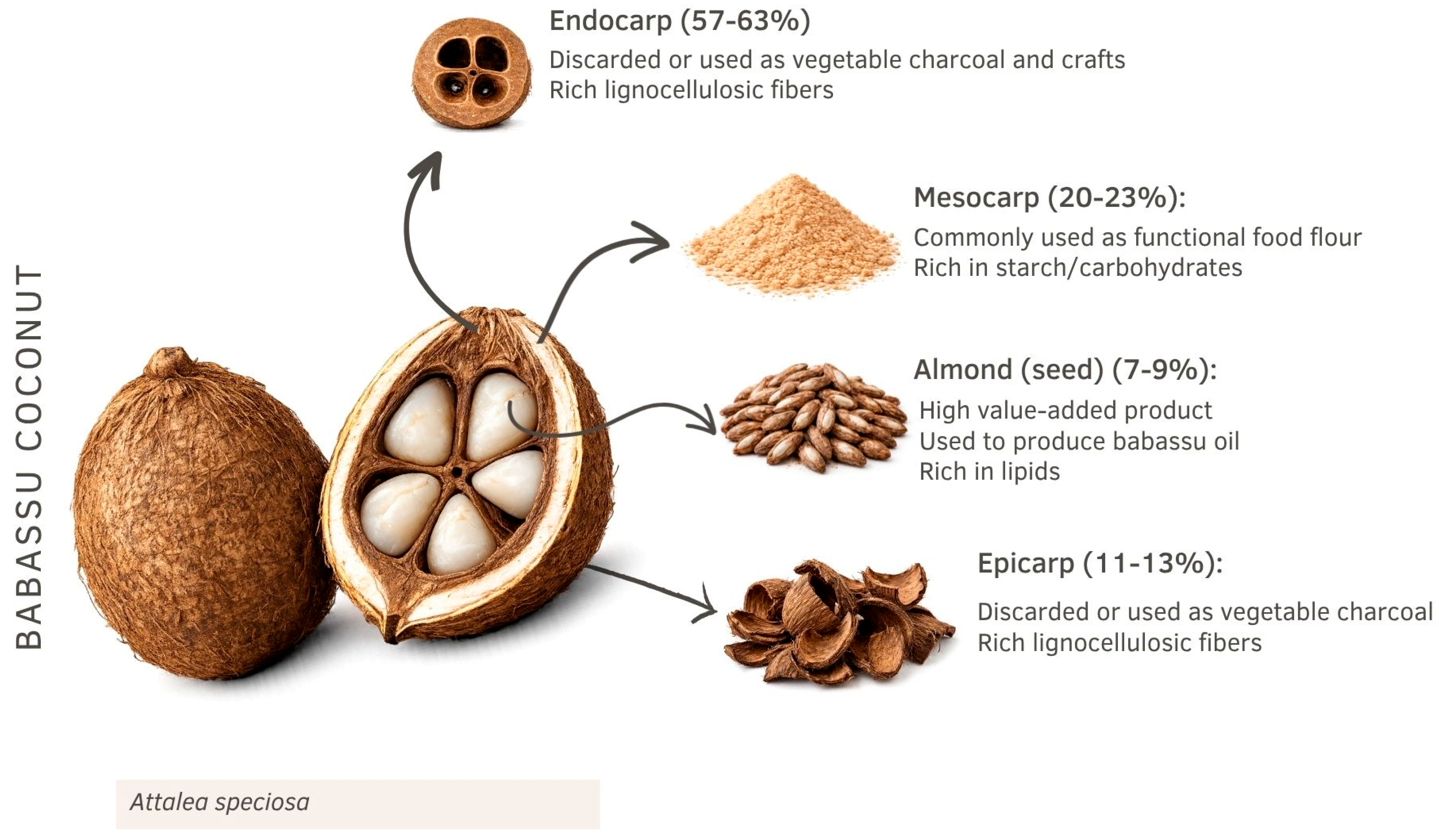
The babassu fruit (A. speciosa) is a structurally complex biomass composed of distinct fractions with different physicochemical characteristics and potential applications. As illustrated in Figure 3, the fruit consists of the epicarp (outer layer), which represents approximately 11–13% of the total mass and is rich in carbohydrates; the mesocarp (20–23%), a fibrous and starchy fraction commonly used as flour; the endocarp (57–63%), a hard lignocellulosic shell widely utilized for charcoal production and artisanal applications; and the almond or seed fraction (7–9%), which is rich in lipids and represents the most economically valuable component due to its use in oil extraction [49]. This heterogeneous composition highlights the potential for integral valorization of babassu biomass, as each fraction presents distinct chemical profiles and functional properties that can be explored in different industrial and biotechnological applications.
Phytochemicals extracted from babassu-derived matrices have attracted significant attention due to their chemical diversity, functional applications, and potential health benefits. The literature analysis revealed that the almond (seeds) remains the most extensively investigated component, primarily due to its high lipid content.

4.1.1. Lipid Composition and Fatty Acid Profile of Babassu Oil

As summarized in Table 1, babassu oil exhibits a distinctive and highly consistent fatty acid profile, characterized by the predominance of saturated fatty acids. Lauric acid (C12:0) represents the major component, accounting for approximately 43–56% of the total lipid fraction across the evaluated studies, followed by myristic acid (C14:0) and palmitic acid (C16:0). Medium-chain fatty acids, such as caprylic (C8:0) and capric (C10:0) acids, were consistently detected, while short-chain fatty acids, including caproic acid (C6:0), appeared in lower proportions or were not detected in some studies. In contrast, unsaturated fatty acids, such as oleic acid (C18:1 n-9) and linoleic acid (C18:2 n-6), were present in comparatively lower amounts, with linoleic acid representing the only essential fatty acid identified. Oleic acid was present in varying, but lower, proportions compared to saturated fatty acids, reaching its highest value (23.10%) in studies employing cold pressing, a mild extraction method that avoids high temperatures [43].
Notably, the fatty acid composition summarized in Table 1 remained remarkably stable regardless of the extraction method employed, cold pressing, cold extraction, including Soxhlet extraction, SC-CO2 extraction, PLE, and ultrasound-assisted extraction. This compositional robustness indicates that the lipid profile of babassu oil is primarily governed by the intrinsic characteristics of the biomass rather than by the extraction technique itself.

4.1.2. Influence of Extraction Methods on Lipid Recovery

Comparative analyses indicated that SC-CO2 extraction [39,42] and PLE using ethanol or isopropanol exhibit superior selectivity for specific lipid compounds, minimizing thermal degradation while maximizing extraction yield.
In contrast, solvent-based extractions performed at low temperatures (e.g., n-hexane) [58] have also demonstrated high efficiency in recovering the major fatty acids from babassu oil, particularly lauric and oleic acids, reflecting both the intrinsic lipid composition of the almond and the affinity of these compounds for non-polar solvents. Although mechanical cold pressing is often associated with better preservation of unsaturated fatty acids, the available evidence [7] suggests that different extraction approaches can influence the relative recovery of lipid fractions depending on process conditions and solvent polarity.
While green extraction methods may improve process sustainability and help preserve minor or thermolabile bioactive compounds, the available evidence suggests that the major fatty acid profile of babassu oil is largely preserved across extraction methods; therefore, small quantitative differences should be interpreted cautiously unless statistically supported by the original studies. The influence of extraction technologies on the recovery and preservation of other bioactive compounds, including phenolics, flavonoids, phytosterols, and antioxidant constituents, is discussed in the following sections.
The effectiveness of ethanol-based extraction systems can be partially explained by the solubility behavior of babassu oil in hydroalcoholic media. Sampaio Neto et al. [54], for example, identified significant levels of fatty acids, including lauric acid (54.55%) and myristic acid (16.99%), using ethanol as the extraction solvent. Classical studies have demonstrated that babassu oil is miscible in near-anhydrous ethanol at relatively mild temperatures (approximately 30 °C), while higher temperatures are required as the water content increases [45]. This behavior indicates that both temperature and solvent composition play a key role in enhancing lipid solubility and mass transfer, supporting the use of ethanol and hydroalcoholic mixtures in sustainable extraction processes.
Despite these methodological differences, the lipid profiles reported across studies remain relatively consistent, with lauric acid identified as the predominant component, typically ranging from approximately 47% to 56%, corroborating previous findings in the literature [34,43,54]. Oleic acid is also consistently detected as a relevant unsaturated fraction. This indicates that, while extraction methods modulate extraction efficiency and relative recovery, the overall fatty acid composition—particularly the dominance of lauric acid—is largely governed by the intrinsic characteristics of babassu almonds.
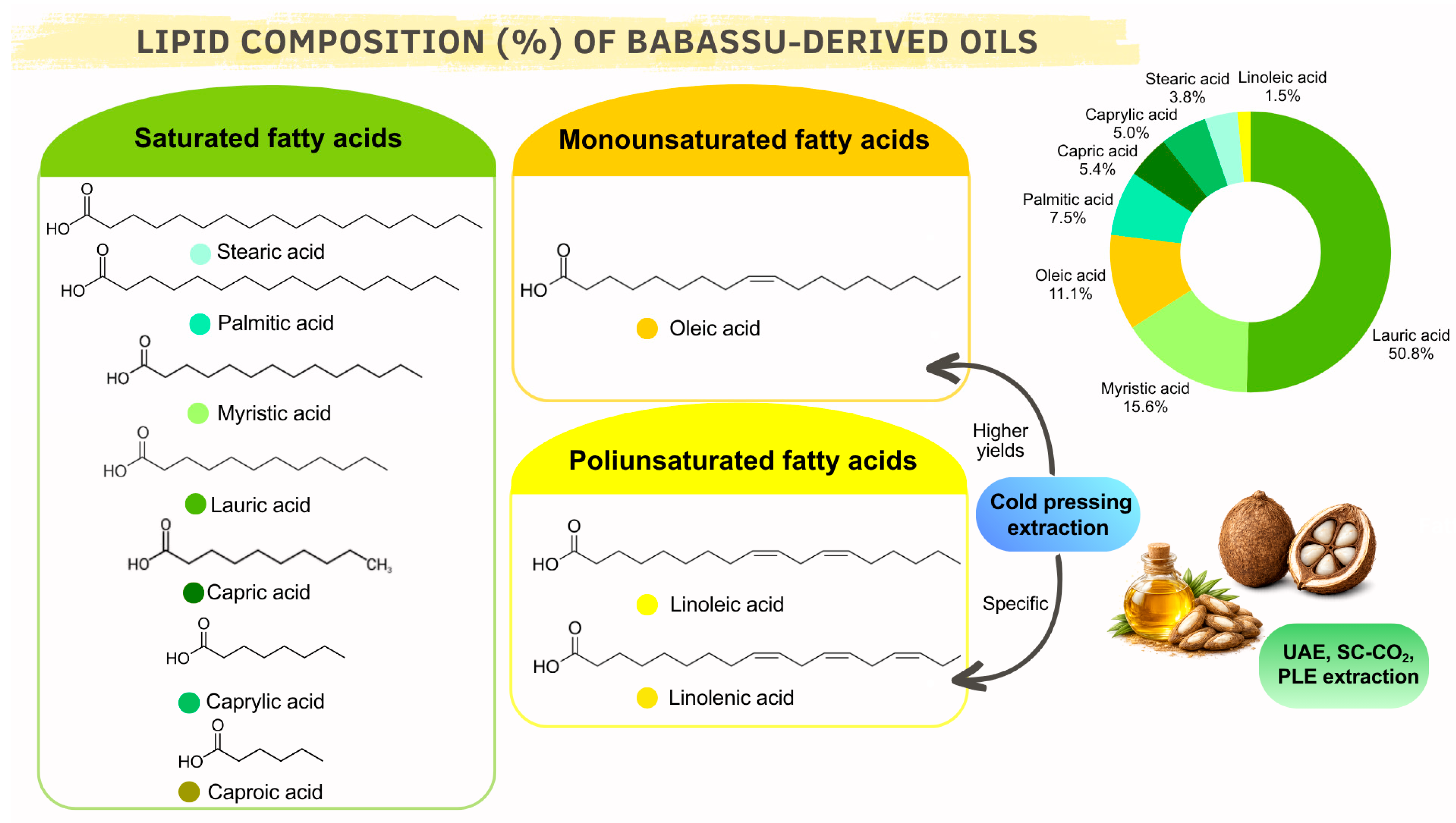
While alternative and green extraction methods may influence extraction efficiency, processing conditions, and the preservation of minor lipid constituents, they do not substantially modify the qualitative fatty acid profile of babassu oil (Figure 4). This reinforces that the characteristic lipid signature—marked by the predominance of lauric acid—remains stable across different extraction approaches. Such consistency supports the feasibility of adopting more sustainable and non-conventional extraction strategies without compromising the compositional integrity of the oil, which is particularly important for industrial applications that require standardized and reproducible raw materials.
However, despite the promising extraction efficiency and sustainability advantages associated with UAE, PLE, and SC-CO2, the currently available studies involving babassu matrices remain predominantly laboratory-scale investigations. Important aspects related to industrial scalability, operational costs, energy consumption, equipment investment, and process standardization are still insufficiently explored in the current literature. Therefore, although these technologies demonstrate potential for sustainable biomass valorization, additional techno-economic and pilot-scale studies are necessary to better assess their industrial feasibility and large-scale applicability.

4.1.3. Non-Lipid Bioactive Compounds in Babassu Fractions

Although most studies have focused on the almond fraction, emerging evidence suggests that other parts of the fruit—particularly the mesocarp and epicarp—also contain valuable secondary metabolites. Lima et al. [11], in a study conducted by our group, analyzed mesocarp residues and identified phenolic compounds, flavonoids, and lignin derivatives with measurable antioxidant and antimicrobial activities. Similarly, Nobre et al. [34] reported that polar solvents, such as methanol and ethanol, facilitated the extraction of phenolic compounds, including flavones and xanthones, whereas Santos et al. [52] demonstrated that nonpolar solvents, such as n-hexane, enhanced the solubility of neutral lipids. Table 2 compiles the phytochemical composition, total phenolic content, and antioxidant activity reported for different babassu-derived extracts obtained using distinct extraction approaches. Nevertheless, cross-study quantitative comparisons should be interpreted cautiously due to methodological heterogeneity, including differences in solvent systems, extraction conditions, analytical assays, reporting units, and sample basis.
More recent investigations have emphasized the advantages of using green solvents as sustainable alternatives [7,11,55]. In addition to reducing toxicity and environmental impact, these solvents have been shown to preserve the functional integrity of bioactive compounds. De Oliveira et al. [7] reported that ethanol extraction enabled the recovery of phytosterols, such as β-sitosterol, at concentrations ranging from 10.2 to 25.9 mg/100 g.
Beyond the lipid-rich almond fraction, the babassu mesocarp has emerged as an important source of non-lipid bioactive compounds. The biological relevance of babassu mesocarp bioactives has also been supported by earlier studies. da Silva et al. [45] reported that extracts obtained from babassu mesocarp exhibited significant antioxidant-related biological effects, reinforcing that this fraction contains functionally active secondary metabolites. Although the extraction approach differed from green protocols, the study corroborates that non-lipid components of babassu contribute meaningfully to its bioactive profile.
Lima et al. [32] demonstrated that UAE using food-grade ethanol enabled the recovery of remarkably high levels of phenolic compounds and flavonoids from babassu mesocarp residues, reaching up to 51.25 mg GAE/g and 4.77 mg QE/g, respectively. These values exceed those reported for several conventional dietary sources of polyphenols, reinforcing the mesocarp as a highly valuable yet underexploited by-product. The authors highlighted that the solid–liquid ratio strongly influenced phenolic recovery, indicating that process optimization is essential for maximizing bioactive yield from lignocellulosic babassu fractions.
Together with more recent green extraction studies, this evidence supports the mesocarp as a promising source of functional compounds beyond the traditionally exploited oil fraction.
Beyond extraction efficiency and solvent selection, recent research has highlighted the relevance of post-extraction assessments to better understand the biological performance of babassu-derived extracts. A flavonoid-rich hydroethanolic extract obtained from babassu was recently evaluated after simulated gastrointestinal digestion, demonstrating preserved antioxidant activity and absence of cytotoxic effects in HepG2 cancer cells [44]. Although this approach does not represent an extraction method per se, it provides important complementary information on the functional stability and safety of extracts obtained using green solvents, reinforcing the relevance of sustainable extraction strategies.

4.1.4. Analytical Approaches and Chemical Variability

The underutilization of non-edible babassu fractions results in large volumes of waste that, when improperly disposed of, may cause negative ecological impacts. In this context, lignocellulosic residues, such as the epicarp and mesocarp, represent promising raw materials, as they contain fibers and bioactive compounds that could be valorized for sustainable applications, including their use as natural antioxidants [22].
Finally, the compositional variability observed among the reviewed studies also reflects differences in the analytical techniques employed. Gas chromatography–mass spectrometry (GC–MS) was predominantly used for lipid profiling, whereas high-performance liquid chromatography (HPLC) was commonly applied to the analysis of phenolic compounds. Additionally, UV–Vis spectrophotometry was employed to detect carotenoids and other antioxidant pigments. Collectively, these findings underscore that babassu is a chemically versatile biomass whose non-edible fractions remain largely underexplored despite their high phytochemical potential.

4.1.5. Antioxidant Capacity

The antioxidant capacity of babassu-derived extracts has been widely investigated as an indicator of their functional and technological potential. Such antioxidant activity has been evaluated using a variety of in vitro assays, including 2,2-diphenyl-1-picrylhydrazyl radical scavenging assay (DPPH), Oxygen Radical Absorbance Capacity (ORAC), Ferric-Reducing Antioxidant Power (FRAP) assay, Thiobarbituric Acid Reactive Substances (TBARS), iron-chelation, and the ability to scavenge the ABTS•+ radical cation (ABTS) assay, as summarized in Table 3. Among these methods, DPPH-based assays were the most frequently applied across the selected studies, reflecting their simplicity and widespread use in screening antioxidant potential.
Santos et al. [30] comparatively evaluated the antioxidant activity of babassu oil obtained directly from fruit extraction and its nanoemulsified form using the DPPH assay monitored by Electron Paramagnetic Resonance (EPR). In this study, the nanoemulsified extract exhibited enhanced antioxidant performance, with EC50 values of 0.1956 mg/mL for ascorbic acid, 0.5488 mg/mL for pure babassu oil, and 0.4329 mg/mL for nanoemulsified babassu oil. According to the authors, this behavior indicates that nanoemulsification potentiated the antioxidant activity of the extract, as the dispersion of oil within nanodroplets increases the available surface area, thereby enhancing the accessibility of bioactive compounds to neutralize DPPH free radicals.
In a complementary approach, Nobre et al. [59] evaluated the antioxidant potential of methanolic extracts obtained from babassu almond residues after oil extraction using multiple in vitro assays targeting distinct oxidative mechanisms. The extract exhibited measurable but modest radical-scavenging activity, with a high IC50 value in the DPPH assay (3.517 mg/mL), indicating low efficiency in direct free-radical neutralization. Similarly, limited metal-chelating capacity was observed, as reflected by the high IC50 value for iron chelation (6.892 mg/mL), and no inhibitory effect was detected in the TBARS assay. The ferric-reducing antioxidant power (FRAP) assay further confirmed a weak reducing capacity (EC = 1560.2 µmol Fe2+/g extract). Despite the moderate antioxidant performance, the results demonstrate that babassu almond residues retain bioactive potential after lipid extraction, supporting their valorization as secondary raw materials rather than waste.
Thermal processing effects were investigated by da Silva Souza et al. [31], who assessed the influence of seed pre-heating on the antioxidant capacity of babassu extracts. Using ORAC and ABTS assays, the authors demonstrated that optimization of roasting conditions increased the phenolic content of the extracts, leading to enhanced antioxidant capacity. These effects were correlated with the release of polar antioxidant compounds previously bound to the matrix and with chemical transformations of phenolic compounds under prolonged heating. Additionally, the formation of intermediate compounds, such as melanoidins from the Maillard reaction, was suggested to contribute to the increased antioxidant activity observed.
In contrast, Ferreira et al. [50], when evaluating the antioxidant potential of babassu and buriti extracts using the DPPH assay, did not attribute the observed activity to phenolic compounds but rather to the presence of carotenoids. These authors, together with Rasmussen et al. [40], also reported significant losses of natural antioxidant compounds associated with thermal stress induced by Soxhlet extraction. Conversely, Lima et al. [32] demonstrated, using DPPH and FRAP assays, that the application of more sustainable and mild extraction protocols resulted in extracts with higher contents of antioxidant compounds.
The antioxidant potential of babassu mesocarp has also been supported by earlier studies focusing on its biological activity. da Silva et al. [45] demonstrated that extracts obtained from babassu mesocarp exhibited relevant antioxidant-related effects, indicating the presence of functionally active secondary metabolites in this non-lipid fraction. Although the study did not employ green or non-thermal extraction technologies, its findings corroborate that the mesocarp contains compounds capable of contributing to antioxidant mechanisms, reinforcing the relevance of this underutilized fraction. When interpreted alongside more recent studies using optimized and sustainable extraction approaches, these results support the mesocarp as a promising source of antioxidant compounds beyond the traditionally exploited oil-rich almond.
Lima et al. [32] evaluated two solid–liquid ratios during ultrasound-assisted extraction of babassu mesocarp. Although both conditions resulted in antioxidant-active extracts, the higher solid–liquid ratio led to significantly greater phenolic recovery and antioxidant capacity; therefore, only the optimal condition is reported in Table 3 for comparative purposes. The high phenolic and flavonoid contents reported by Lima et al. [32] translated into strong antioxidant performance, as evidenced by FRAP and DPPH assays. The mesocarp extracts exhibited high ferric-reducing power and efficient radical-scavenging capacity, with distinct DPPH reaction kinetics depending on the solid–liquid ratio [32]. These results suggest that babassu mesocarp extracts contain antioxidant compounds capable of acting through different mechanisms, including single-electron transfer and hydrogen-atom transfer, highlighting their potential for applications aimed at oxidative stability in food systems.
Borges et al. [60] reported that extracts obtained from babassu mesocarp flour exhibited significantly higher antioxidant capacity when recovered by PLE compared to conventional maceration, as evidenced by DPPH, FRAP, and ORAC assays. The enhanced antioxidant activity observed in PLE extracts is directly related to the higher TPC achieved under elevated temperature and pressure conditions, which promote matrix disruption and improve the release of bound phenolic compounds. Although both extraction methods yielded similar classes of phenolics, the superior performance of PLE highlights the importance of extraction conditions in maximizing the functional properties of babassu residues.
Overall, this trend indicates that the antioxidant capacity of babassu-derived extracts is strongly influenced by both extraction methodology and processing conditions, highlighting the advantages of non-thermal and sustainable approaches in preserving bioactive compounds with antioxidant functionality through different mechanisms.

4.1.6. Comparison Between Conventional Extraction Methods and Green and Non-Thermal Methods

The first step in obtaining bioactive compounds from plant matrices is extraction. Based on the analysis of the selected studies, it was observed that the efficiency of this process can be influenced by several factors, including the type and concentration of solvent, extraction time and temperature, solubility, the methodology employed, and intrinsic characteristics of the matrix. When properly optimized, these parameters can maximize both the yield and quality of the extracts obtained.
Extraction technologies can be broadly classified into conventional (or classical) and non-conventional methods, each presenting specific advantages and limitations. Conventional methodologies are widely applied due to their simplicity and relatively low operational cost. However, these approaches generally require long processing times, high solvent consumption—often involving toxic solvents—and frequently rely on heat, which may compromise the integrity of thermolabile compounds commonly found in plant matrices [64]. In addition, the overall sustainability of these methods is limited, and the need for additional purification steps due to solvent toxicity further increases process complexity and environmental impact.
The analysis of the twenty selected articles revealed that more than half of the studies employed conventional extraction technologies. Among them, six studies used Soxhlet extraction, while the remaining studies applied techniques such as mechanical pressing, cooking followed by filtration and drying, and liquid–liquid extraction (LLE) and solid–liquid extraction (SLE) [55]. Conversely, four studies did not report the extraction methodology used. Overall, although conventional methods generally provided satisfactory yields and were effective in extracting phenolic compounds and secondary fatty acids, studies employing high-temperature extraction, such as Soxhlet extraction, reported negative effects on the final quality of the extracts due to thermal degradation of bioactive compounds [40,50].
In contrast, techniques such as cold pressing, reported by Ferrari and Soler [49], Melo et al. [53], Machado et al. [43], Costa et al. [56], and da Silva Souza et al. [31], demonstrated reduced degradation of natural antioxidants and phenolic compounds, including catechins and epicatechins. Although these methods typically result in lower yields due to limited mechanical disruption of the plant matrix and the absence of solvents and thermal assistance, they proved to be well-suited for extracting less volatile and heat-sensitive compounds.
In response to increasing concerns from both the scientific community and consumers regarding the health benefits associated with bioactive compounds, non-conventional extraction methods have gained attention as promising alternatives [11,65]. These approaches, often classified as green and sustainable extraction technologies, offer advantages such as the reduced or eliminated use of toxic solvents and minimized degradation of bioactive compounds. For example, Microwave-Assisted Extraction (MAE) is widely reported to improve extraction efficiency mainly by shortening extraction time, while Enzyme-Assisted Extraction (EAE) is associated with reduced energy consumption and solvent use. In addition, UAE is recognized as a proven green biorefining technology due to its ability to reduce solvent consumption, shorten operation time, lower energy demand, and improve extraction efficiency through enhanced mass transfer [66,67]. However, despite their recognized potential, no studies employing either MAE or EAE were identified within the scope of the present review. Overall, the application of sustainable extraction strategies remains limited, as among the twenty articles included in this review, only three employed green extraction approaches, including one study conducted by our research group [32].
In the context of green extraction, green solvents are defined as environmentally benign alternatives characterized by low toxicity, reduced environmental persistence, and compatibility with sustainable processing principles. Studies by Soares et al. [42] and de Oliveira et al. [7,39] demonstrated the efficiency of non-conventional extraction methods, such as SC-CO2 and PLE, for the extraction of bioactive compounds. SC-CO2 extraction proved to be highly effective for recovering lipids and phytosterols, yielding significant amounts of fatty acids such as lauric and oleic acids, as shown in Table 1. Similarly, PLE achieved comparable results to SC-CO2, with high extraction yields and substantial phytosterol concentrations while employing green solvents such as ethanol and isopropanol, reinforcing its sustainability. Both techniques stand out for their efficiency and ability to preserve bioactive compounds, representing promising alternatives to conventional extraction methods, with PLE offering the additional advantage of greater industrial feasibility due to its environmentally friendly approach [7].
Rasmussen et al. [40] further contributed to this discussion by comparing conventional methods, such as Soxhlet extraction using n-hexane, with non-thermal techniques, including UAE. Their results demonstrated that UAE was more efficient in extracting essential fatty acids, including lauric and capric acids, compared to Soxhlet extraction. In addition, UAE produced higher-quality extracts while reducing solvent consumption, extraction time, and operating temperature. This technique employs ultrasonic waves (typically in the 20–100 kHz range) to induce acoustic cavitation, which enhances mass transfer and disrupts cell walls, thereby increasing extraction efficiency while enabling shorter extraction times and lower temperatures or reduced solvent use [67]. Lima et al. [32] further demonstrated that ultrasound-assisted extraction represents an efficient green technology for babassu by-product valorization. The use of UAE at low temperature (20 °C) combined with ethanol as a GRAS solvent allowed high recovery of bioactive compounds while minimizing thermal degradation and solvent toxicity. The enhanced extraction efficiency was attributed to acoustic cavitation, which improves mass transfer and promotes cell wall disruption. These results reinforce UAE as a sustainable alternative to conventional extraction methods for recovering non-lipid bioactives from babassu residues. The enhanced efficiency of UAE can therefore be attributed to these physical effects, which promote more selective and effective recovery of bioactive compounds [11,32,65].
Recent studies have expanded the application of alternative solvent systems for babassu biomass processing. Silva et al. [16] demonstrated that deep eutectic solvents (DES), particularly choline chloride:acetic acid (CC:AA), are highly effective in dissolving babassu mesocarp, achieving dissolution yields of up to 97%. This high efficiency was strongly influenced by temperature, highlighting the role of thermal effects in enhancing mass transfer and matrix disruption. In addition to lignin solubilization, UV–Vis analyses suggested the presence of phenolic compounds, tannins, and possible anthocyanins in the liquid fractions. Although these compounds were not structurally characterized or quantitatively determined, the results indicate that DES systems may act not only as pretreatment agents but also as potential platforms for the recovery of bioactive molecules from lignocellulosic residues.
More recent studies have also explored the use of natural deep eutectic solvents (NADES) in systems containing babassu mesocarp, reporting high antioxidant activity (DPPH inhibition > 95%) and reinforcing the potential of green solvents for recovering bioactive compounds from babassu by-products [63].
Collectively, this outcome reinforces the potential of non-conventional methods to overcome the limitations of traditional approaches, offering more sustainable and efficient alternatives for phytochemical recovery.
It is important to note that in vitro antioxidant assays are primarily useful for comparative and screening purposes, particularly for evaluating extraction efficiency and phytochemical recovery, and should not be directly interpreted as evidence of biological or in vivo efficacy. Furthermore, it is important to note that direct comparisons among antioxidant assays should be interpreted with caution, since different methods evaluate distinct antioxidant mechanisms and report results using heterogeneous metrics such as IC50, EC50, percentage inhibition, and Trolox equivalent values.
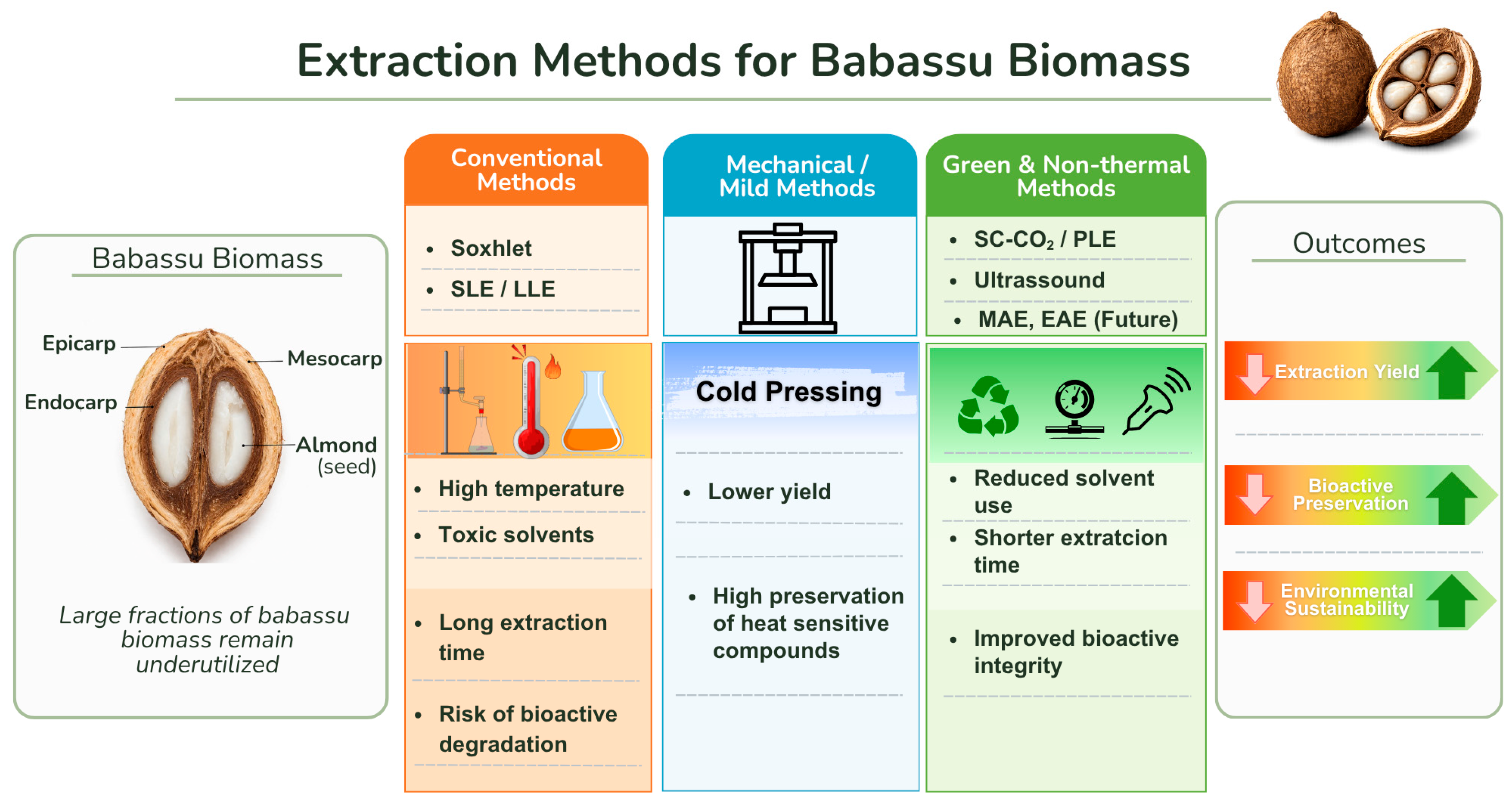
Figure 5 summarizes the main comparative trends observed among conventional and non-conventional extraction methods applied to babassu matrices. Overall, green and non-thermal approaches such as UAE, PLE, and SC-CO2 showed advantages related to reduced extraction time, lower solvent consumption, and improved preservation of thermolabile bioactive compounds. For example, UAE achieved extraction efficiencies comparable to Soxhlet extraction while significantly reducing extraction time and operating temperature. In contrast, conventional high-temperature methods, particularly Soxhlet extraction, were frequently associated with the degradation of phenolic compounds and reduced phytosterol preservation. These findings reinforce the relevance of sustainable extraction technologies for improving both extraction efficiency and extract quality.
In addition, some limitations of the review process should be acknowledged. The analysis was restricted to studies published in English and to the selected databases, which may have resulted in the exclusion of relevant studies from other sources.

5. Conclusions and Perspectives

This review provides a comprehensive synthesis of the extraction strategies, chemical composition, and antioxidant potential of bioactive compounds derived from different fractions of babassu (A. speciosa). The analysis of the selected studies demonstrates that the almond fraction remains the most extensively investigated component, primarily due to its high lipid content and its established role in the production of babassu oil for food, cosmetic, and industrial applications. The fatty acid profile of babassu oil is characterized by a predominance of medium-chain saturated fatty acids, particularly lauric acid, followed by myristic and palmitic acids. Notably, although quantitative variations in fatty acid proportions were observed among studies and extraction methods, lauric acid remained the predominant fatty acid, indicating that the lipid profile of babassu oil is strongly influenced by the intrinsic biochemical characteristics of the biomass.
Beyond the lipid-rich almond fraction, other parts of the fruit—particularly the mesocarp and epicarp—have been suggested as potentially promising sources of non-lipid bioactive compounds, including phenolic compounds, flavonoids, and phytosterols. Currently available studies suggest that these fractions may exhibit relevant antioxidant activity, highlighting the potential of babassu residues as valuable raw materials for the development of functional ingredients and natural antioxidants. However, the available evidence remains limited, and further studies are still needed to strengthen the current understanding of these underexplored fractions.
The findings of this review also indicate that extraction conditions play a key role in determining the recovery and preservation of bioactive compounds. Conventional extraction methods remain widely used due to their simplicity and accessibility; however, they often involve high temperatures and large volumes of organic solvents that may compromise the stability of thermolabile compounds and increase the environmental impact of the process. In contrast, non-conventional and green extraction technologies—including UAE, SC-CO2, and PLE—have shown promising advantages, including reduced solvent consumption, shorter extraction times, and improved preservation of bioactive compounds. Nevertheless, the literature survey revealed that the application of these sustainable approaches in babassu research remains limited, indicating an important opportunity for future technological development.
From an agricultural and agro-industrial perspective, the underutilization of babassu residues represents a significant loss of potentially valuable biomass resources. The mesocarp, epicarp, and endocarp fractions, which are frequently treated as waste, contain bioactive molecules with potential applications in food systems, nutraceuticals, cosmetics, and biomaterials. Their recovery aligns with the principles of circular bioeconomy and sustainable agriculture, contributing to the reduction in agro-industrial waste and the generation of higher-value-added products from native plant resources.
Overall, the results highlight babassu as a chemically versatile and strategically important biomass within tropical agroecosystems. Future research should focus on expanding the use of green extraction technologies, improving the physicochemical and biological characterization of underexplored fruit fractions, and evaluating the functional performance of babassu-derived compounds in food and agricultural systems. Strengthening the integration between sustainable extraction technologies and biomass valorization strategies will be essential for unlocking the full potential of babassu residues and promoting more sustainable agricultural production systems in regions where this palm plays a key socioeconomic role.
Nevertheless, additional toxicological, safety, and regulatory studies will be essential to support the future industrial and commercial application of babassu-derived bioactive extracts in food, cosmetic, and pharmaceutical systems.

Author Contributions

A.P.A.d.C.: conceptualization, methodology, supervision, project administration, writing—original manuscript preparation, writing—reviewing and editing. M.R.d.S.d.F.: formal analysis, investigation, writing—original manuscript preparation. C.A.C.-J.: supervision. writing—reviewing and editing, funding. All authors have read and agreed to the published version of the manuscript.

Funding

This work was funded by Fundação Carlos Chagas Filho de Amparo à Pesquisa do Estado do Rio de Janeiro—Brasil (FAPERJ) [grants E-26/200.621/2022, E-26/210.385/2022, E-26/200.223/2022 and E-26/200.891/2021] and the Conselho Nacional de Desenvolvimento Científico e Tecnológico—Brasil (CNPq) [grant 313119/2020-1]. The funding sources have no role or involvement with this work.

Institutional Review Board Statement

Not applicable.

Data Availability Statement

No new data were created or analyzed in this study.

Conflicts of Interest

The authors declare no conflicts of interest.

Abbreviations

The following abbreviations are used in this manuscript:
UAEUltrasound-assisted extraction
SC-CO2Supercritical CO2 extraction
PLEPressurized liquid extraction
LDLinear dichroism
SDGsSustainable Development Goals
PRISMAPreferred Reporting Items for Systematic Reviews and Meta-Analyses
PICOProblem, Intervention, Comparison, Outcome
StArtState of the Art through Systematic Review
SCSearch Component
GCGas Chromatography
GC-MCGas Chromatography–Mass Spectrometry
GC-FIDGas Chromatography–Flame Ionized Detector
SFAsSaturated Fatty Acids
MUFAsMonounsaturated Fatty Acids
PUFAsPolyunsaturated Fatty Acids
NaOHSodium Hydroxide
GAEGallic Acid Equivalent
QEQuercetin Equivalent
UV–VisUltraviolet–Visible
TPCTotal Phenolic Content
HPLCHigh-Performance Liquid Chromatography
HPLC-DADHPLC with Diode-Array Detection
HPLC-MS/MSHPLC Combined with Tandem Mass Spectrometry
TFCTotal Flavonoid Content
LLELiquid–Liquid Extraction
DPPH2,2-diphenyl-1-picrylhydrazyl Radical Scavenging
ORACOxygen Radical Absorbance Capacity
FRAPFerric-Reducing Antioxidant Power Assay
TBARSThiobarbituric Acid Reactive Substance
ABTS2,2′-azino-bis (3-ethylbenzothiazoline-6-sulfonic acid)
EPRElectron Paramagnetic Resonance
EC50Efficient Concentration 50%
IC50Inhibitory Concentration 50%
TEACTrolox Equivalent Antioxidant Capacity
NDNot Detected
SLESolid–Liquid Extraction
MAEMicrowave-Assisted Extraction
EAEEnzyme-Assisted Extraction
GRASGenerally Recognized as Safe
DESDeep Eutectic Solvent
NADESNatural Deep Eutectic Solvent

References

  1. Zambrana, N.Y.P.; Byg, A.; Svenning, J.-C.; Moraes, M.; Grandez, C.; Balslev, H. Diversity of Palm Uses in the Western Amazon. Biodivers. Conserv. 2007, 16, 2771–2787. [Google Scholar] [CrossRef]
  2. Empresa Brasileira de Pesquisa Agropecuária (Embrapa). Amazônia é Berço de Frutas Nativas de Alto Potencial Comercial. Available online: https://www.embrapa.br/busca-de-noticias/-/noticia/14818376/amazonia-e-berco-de-frutas-nativas-de-alto-potencial-comercial (accessed on 25 April 2020).
  3. Ressiore, C.A.; Lima, C.L.S.; Turnhout, E. Care Narratives: Babassu Breakers and Mother Palm Trees. Geoforum 2024, 156, 104109. [Google Scholar] [CrossRef]
  4. Araújo, F.R.; González-Pérez, S.E.; Lopes, M.A.; Viégas, I.D.J.M. Ethnobotany of Babassu Palm (Attalea speciosa Mart.) in the Tucuruí Lake Protected Areas Mosaic—Eastern Amazon. Acta Bot. Bras. 2016, 30, 193–204. [Google Scholar] [CrossRef]
  5. Future Market Insights. Babassu Oil Market Analysis—Size, Share, & Forecast Outlook 2025 to 2035. Available online: https://www.futuremarketinsights.com/reports/babassu-oil-market (accessed on 2 December 2025).
  6. Sorita, G.D.; Favaro, S.P.; Ambrosi, A.; Di Luccio, M. Aqueous Extraction Processing: An Innovative and Sustainable Approach for Recovery of Unconventional Oils. Trends Food Sci. Technol. 2023, 133, 99–113. [Google Scholar] [CrossRef]
  7. de Oliveira, N.A.; dos Santos Garcia, A.B.; Mazalli, M.R.; Fukumasu, H.; de Oliveira, A.L. Babassu Almonds Oil Extracted with Alternative Pressurized Green Solvents, Its Triacylglycerol Prediction and β-Sitosterol Composition. J. Food Process Eng. 2019, 42, e13139. [Google Scholar] [CrossRef]
  8. Araruna, F.B.; Oliveira Sousa Araruna, F.; Lima Alves Pereira, L.P.; Aranha Brito, M.C.; Veras Quelemes, P.; de Araújo-Nobre, A.R.; de Oliveira, T.M.; da Silva, D.A.; de Almeida Leite, J.R.D.S.; Fernandes Coutinho, D.; et al. Green Syntheses of Silver Nanoparticles Using Babassu Mesocarp Starch (Attalea speciosa Mart. Ex Spreng.) and Their Antimicrobial Applications. Environ. Nanotechnol. Monit. Manag. 2020, 13, 100281. [Google Scholar] [CrossRef]
  9. Maniglia, B.C.; Tessaro, L.; Lucas, A.A.; Tapia-Blácido, D.R. Bioactive Films Based on Babassu Mesocarp Flour and Starch. Food Hydrocoll. 2017, 70, 383–391. [Google Scholar] [CrossRef]
  10. de Paula Protásio, T.; Fernando Trugilho, P.; da Silva César, A.A.; Napoli, A.; Alves de Melo, I.C.N.; Gomes da Silva, M. Babassu Nut Residues: Potential for Bioenergy Use in the North and Northeast of Brazil. SpringerPlus 2014, 3, 124. [Google Scholar] [CrossRef]
  11. Lima, R.C.; de Carvalho, A.P.A.; de Almeida, A.E.C.C.; Conte-Junior, C.A. Bioactive Compounds and Benefits of By-Products of Amazon Babassu Oil Production: Potential for Dietary Supplement, Biomedical and Food Applications. Food Funct. 2024, 15, 6232–6253. [Google Scholar] [CrossRef]
  12. Lima, R.S.; de Carvalho, A.P.A.; Conte-Junior, C.A. Health from Brazilian Amazon Food Wastes: Bioactive Compounds, Antioxidants, Antimicrobials, and Potentials against Cancer and Oral Diseases. Crit. Rev. Food Sci. Nutr. 2022, 63, 12453–12475. [Google Scholar] [CrossRef]
  13. de Medeiros, V.C.; Costa, M.R.G.F.; Pereira Filho, J.M.; de Lucena, K.H.D.O.S.; Pereira, G.A.; Lisboa, S.B.; Brito, C.D.L.; Parente, M.D.O.M.; de Araujo, M.J.; Bezerra, L.R. Babassu Coconut plus Urea Supplementation in Diets of Lactating Goats: Effects on Intake, Feeding Behavior, Digestibility, and Milk Yield, Composition, and Fatty Acid Profile. Small Rumin. Res. 2026, 258, 107746. [Google Scholar] [CrossRef]
  14. Borges, L.A.; Ramos, K.K.; Felisberto, M.H.F.; Franciosi, E.R.N.; Efraim, P. Babassu Mesocarp: A Sustainable Source for Obtaining Starch and New Products. Starch 2023, 75, 2200203. [Google Scholar] [CrossRef]
  15. da Cruz, L.N.; Costa, B.V.; Lopes, C.; Henriques, C.M.H.; de Castro, R.J.S. Effects of Fermentation on the Bioactive, Functional, and Technological Characteristics of Babassu and Brazil Nut Flours. J. Food Sci. 2025, 90, e70554. [Google Scholar] [CrossRef]
  16. Silva, L.S.; Ribeiro, B.D.; Itabaiana, I. Investigation of Babassu Mesocarp Dissolution in the Presence of Deep Eutectic Solvents. Bioenergy Res. 2023, 16, 2081–2092. [Google Scholar] [CrossRef]
  17. Nobre, J.R.C.; Queiroz, L.S.; Castro, J.P.; Pego, M.F.F.; Hugen, L.N.; da Costa, C.E.F.; Pardauil, J.D.J.R.; do Nascimento, L.A.S.; da Rocha Filho, G.N.; Zamian, J.R.; et al. Potential of Agro-Industrial Residues from the Amazon Region to Produce Activated Carbon. Heliyon 2023, 9, e17189. [Google Scholar] [CrossRef] [PubMed]
  18. Schmitt, C.C.; Chiaro, S.S.X.; Tanobe, V.O.D.A.; Takeshita, E.V.; Yamamoto, C.I. Regeneration of Activated Carbon from Babassu Coconut Refuse, Applied as a Complementary Treatment to Conventional Refinery Hydrotreatment of Diesel Fuel. J. Clean. Prod. 2017, 140, 1465–1469. [Google Scholar] [CrossRef]
  19. Vieira, A.P.; Santana, S.A.A.; Bezerra, C.W.B.; Silva, H.A.S.; Chaves, J.A.P.; Melo, J.C.P.; Filho, E.C.S.; Airoldi, C. Removal of Textile Dyes from Aqueous Solution by Babassu Coconut Epicarp (Orbignya speciosa). Chem. Eng. J. 2011, 173, 334–340. [Google Scholar] [CrossRef]
  20. Santos, A.M.S.; Dias, É.R.; Osajima, J.A.; Cuevas, M.D.M.O.; Barud, H.S.; Silva-Filho, E.C. Chemically Modified Polysaccharide Cryogels and Their Performance in Ibuprofen Release. J. Mol. Liq. 2025, 428, 127446. [Google Scholar] [CrossRef]
  21. Vieira, I.R.S.; Silva, A.C.L.N.; Castro, N.R.; Pinto, C.S.C.; de Freitas, Z.M.F.; Ricci-Júnior, E.; Dos Santos, E.P.; Camara, A.L.; Costa, M.C.P.; Conte-Junior, C.A. Development and Characterization of Photoprotective Nanoemulsions Containing Babassu (Orbignya phalerata Mart.) Lipophilic Extract. Braz. J. Pharm. Sci. 2023, 59, e23011. [Google Scholar] [CrossRef]
  22. Maragoni-Santos, C.; Cortat, C.M.G.; Zago, L.; Bogusz Junior, S.; Pinto, T.C.A.; de Gois, J.S.; Maniglia, B.C.; Fai, A.E.C. Babassu Mesocarp-Based Coating with Amazonian Plant Extracts Obtained Using Natural Deep Eutectic Solvents (NADES) for Cherry Tomato Preservation. Foods 2026, 15, 74. [Google Scholar] [CrossRef]
  23. Gerardo, C.F.; Barboza, L.S.; Rodrigues, A.C.B.; Bastos, B.C.; da Silveira, P.H.P.M.; Monteiro, S.N.; Santos, S.F.; Tapanes, N.D.L.C.O.; Bastos, D.C. Influence of Babassu Fiber Content on the Chemical, Physical and Mechanical Properties of Polyhydroxybutyrate/Babassu Biocomposites. J. Mater. Res. Technol. 2025, 36, 6969–6981. [Google Scholar] [CrossRef]
  24. Cavalcanti, E.D.C.; Aguieiras, E.C.G.; Mota, M.F.S.; da Silva, P.R.; Fernandez-Lafuente, R.; de Castro, A.M.; Freire, D.M.G. Use of Rhizomucor Miehei Fermented Babassu Cake (an Agro-Product Residue) as Efficient Biocatalyst for Macaúba Acid Oil Deacidification in Solvent-Free Medium: Transforming a Non-Edible Crop Product in a Favourable Biodiesel Feedstock. Process Biochem. 2025, 148, 176–182. [Google Scholar] [CrossRef]
  25. Lima, J.B.; Marques, G.N.; Ferreira, D.S.; Moreira, A.J.; Assis, M.; Longo, E.; Bernardi, M.I.B.; Rangel, J.H.G.; Azevedo, E.; Mascaro, L.H.; et al. Degradation of Emerging Contaminants Using Co/Nb-Modified SnO2 Nanoparticles and Produced with Babassu Mesocarp (Orbgnya speciosa). J. Environ. Chem. Eng. 2025, 13, 115941. [Google Scholar] [CrossRef]
  26. Reul, L.T.A.; Pereira, C.A.B.; Sousa, F.M.; Santos, R.M.; Carvalho, L.H.; Canedo, E.L. Polycaprolactone/Babassu Compounds: Rheological, Thermal, and Morphological Characteristics. Polym. Compos. 2019, 40, E540–E549. [Google Scholar] [CrossRef]
  27. Teixeira, M.A. Babassu—A New Approach for an Ancient Brazilian Biomass. Biomass Bioenergy 2008, 32, 857–864. [Google Scholar] [CrossRef]
  28. Borchardt, M.; da Silva, M.R.M.A.; Pereira, G.M.; Scavarda, A.J.; Filho, E.A.B. Leveraging Social Sustainability in the Amazonian Forest. Int. J. Soc. Ecol. Sustain. Dev. 2023, 14, 1–17. [Google Scholar] [CrossRef]
  29. de Oliveira, A.I.T.; Mahmoud, T.S.; Nascimento, G.N.L.D.; da Silva, J.F.M.; Pimenta, R.S.; de Morais, P.B. Chemical Composition and Antimicrobial Potential of Palm Leaf Extracts from Babaçu (Attalea speciosa), Buriti (Mauritia flexuosa), and Macaúba (Acrocomia aculeata). Sci. World J. 2016, 2016, 9734181. [Google Scholar] [CrossRef]
  30. Santos, D.S.; de Moura, L.D.; Radicchi, M.A.; Azevedo, R.B.; Costa, M.C.P.; de Souza, P.E.N.; Camara, A.L.; da Silva, J.R.; Muehlmann, L.A.; Longo, J.P.F. Nanoemulsion Improves Babassu Palm Oil (Orbignya phalerata) Antioxidant Properties. Braz. Arch. Biol. Technol. 2021, 64, e21190387. [Google Scholar] [CrossRef]
  31. da Silva Souza, I.H.; Nogueira, J.P.; Rajan, M.; Santos Leite Neta, M.T.; Narain, N. Babassu Oil (Orbynia phalerata), an Artisanal Product: Process Optimization of Seed Roasting on Yield, Phenolic Compounds, and Antioxidant Capacity. Eur. J. Lipid Sci. Technol. 2021, 123, 2000163. [Google Scholar] [CrossRef]
  32. Lima, R.C.; de Carvalho, A.P.A.; da Silva, B.D.; Torres Neto, L.; de Figueiredo, M.R.D.S.; Chaves, P.H.T.; de Almeida, A.E.C.C.; Conte-Junior, C.A. Green Ultrasound-Assisted Extraction of Bioactive Compounds of Babassu (Attalea speciosa) Mesocarp: Effects of Solid-Liquid Ratio Extraction, Antioxidant Capacity, and Antimicrobial Activity. Appl. Food Res. 2023, 3, 100331. [Google Scholar] [CrossRef]
  33. Barroqueiro, E.S.B.; Prado, D.S.; Barcellos, P.S.; Silva, T.A.; Pereira, W.S.; Silva, L.A.; Maciel, M.C.G.; Barroqueiro, R.B.; Nascimento, F.R.F.; Gonçalves, A.G.; et al. Immunomodulatory and Antimicrobial Activity of Babassu Mesocarp Improves the Survival in Lethal Sepsis. Evid.-Based Complement. Altern. Med. 2016, 2016, 2859652. [Google Scholar] [CrossRef]
  34. Nobre, C.B.; de Sousa, E.O.; de Lima Silva, J.M.F.; Melo Coutinho, H.D.; da Costa, J.G.M. Chemical Composition and Antibacterial Activity of Fixed Oils of Mauritia flexuosa and Orbignya speciosa Associated with Aminoglycosides. Eur. J. Integr. Med. 2018, 23, 84–89. [Google Scholar] [CrossRef]
  35. Rennó, M.N.; Barbosa, G.M.; Zancan, P.; Veiga, V.F.; Alviano, C.S.; Sola-Penna, M.; Menezes, F.S.; Holandino, C. Crude Ethanol Extract from Babassu (Orbignya speciosa): Cytotoxicity on Tumoral and Non-Tumoral Cell Lines. An. Acad. Bras. Cienc. 2008, 80, 467–476. [Google Scholar] [CrossRef]
  36. Reis, M.Y.F.A.; dos Santos, S.M.; Silva, D.R.; Silva, M.V.; Correia, M.T.S.; Navarro, D.M.A.F.; Santos, G.K.N.; Hallwass, F.; Bianchi, O.; Silva, A.G.; et al. Anti-Inflammatory Activity of Babassu Oil and Development of a Microemulsion System for Topical Delivery. Evid.-Based Complement. Altern. Med. 2017, 2017, 3647801. [Google Scholar] [CrossRef]
  37. Santos, J.A.A.; da Silva, J.W.; dos Santos, S.M.; Rodrigues, M.D.F.; Silva, C.J.A.; da Silva, M.V.; Correia, M.T.S.; Albuquerque, J.F.C.; Melo, C.M.L.; Silva, T.G.; et al. In Vitro and In Vivo Wound Healing and Anti-Inflammatory Activities of Babassu Oil (Attalea speciosa Mart. Ex Spreng., Arecaceae). Evid.-Based Complement. Altern. Med. 2020, 2020, 8858291. [Google Scholar] [CrossRef]
  38. Shahbaz, M.; Riaz, M.; Momal, U.; Rasool, I.F.U.; Naeem, H.; Raza, N.; Moreno, A.; Khalid, W.; Esatbeyoglu, T. Green Solvent Extraction and Eco-Friendly Novel Techniques of Bioactive Compounds from Plant Waste: Applications, Future Perspective and Circular Economy. Appl. Food Res. 2025, 5, 101434. [Google Scholar] [CrossRef]
  39. de Oliveira, N.A.; Mazzali, M.R.; Fukumasu, H.; Gonçalves, C.B.; de Oliveira, A.L. Composition and Physical Properties of Babassu Seed (Orbignya phalerata) Oil Obtained by Supercritical CO2 Extraction. J. Supercrit. Fluids 2019, 150, 21–29. [Google Scholar] [CrossRef]
  40. Rasmussen, P.P.; Stevanato, N.; Raspe, D.T.; Garcia, V.A.D.S.; da Silva, C. Babassu Kernel Oil: Enhanced Extraction and Chemical Characterization. J. Food Process. Preserv. 2022, 46, e16559. [Google Scholar] [CrossRef]
  41. United Nations. Transforming Our World: The 2030 Agenda for Sustainable Development. Available online: https://sdgs.un.org/2030agenda (accessed on 4 February 2025).
  42. Soares, B.M.C.; Gamarra, F.M.C.; Paviani, L.C.; Gonçalves, L.A.G.; Cabral, F.A. Solubility of Triacylglycerols in Supercritical Carbon Dioxide. J. Supercrit. Fluids 2007, 43, 25–31. [Google Scholar] [CrossRef]
  43. Machado, J.; do Socorro Costa, M.; Tintino, S.; Rodrigues, F.; Nobre, C.; Coutinho, H.; da Costa, J.; de Menezes, I.; de Sousa, E. Antibiotic Activity Potentiation and Physicochemical Characterization of the Fixed Orbignya speciosa Almond Oil against MDR Staphylococcus aureus and Other Bacteria. Antibiotics 2019, 8, 28. [Google Scholar] [CrossRef]
  44. Debia, N.; Nunes, A.M.; do Nascimento, M.L.L.B.; Neta, E.R.S.; Rocha, M.S.R.; Lima, S.G.; Sousa, J.M.C.; Falagan-Lotsch, P. Lipid Profile, Toxicity, and Antioxidant Potential of Flavonoid-Rich Babassu Mesocarp Extract after Simulated Human Digestion. Drug Chem. Toxicol. 2025, 9, 1–13. [Google Scholar] [CrossRef]
  45. da Silva, V.C.; Barboza, J.R.; Dutra, R.P.; Batista, M.C.A.; Veras, K.S.; Godinho, J.W.L.S.; de Mesquita, J.W.C.; de Mesquita, L.S.S.; do Amaral, F.M.M.; Ribeiro, M.N.D.S. Identification of Phenolic Compounds by LC/MS-MS and Antioxidant and Anti Tyrosinase Activities of the Attalea speciosa Mart. Ex Spreng. Mesocarp. J. Chem. Pharm. Res. 2017, 9, 268–276. [Google Scholar]
  46. Page, M.J.; McKenzie, J.E.; Bossuyt, P.M.; Boutron, I.; Hoffmann, T.C.; Mulrow, C.D.; Shamseer, L.; Tetzlaff, J.M.; Akl, E.A.; Brennan, S.E.; et al. The PRISMA 2020 Statement: An Updated Guideline for Reporting Systematic Reviews. BMJ 2021, 372, n71. [Google Scholar] [CrossRef]
  47. Hosseini, M.-S.; Jahanshahlou, F.; Akbarzadeh, M.A.; Zarei, M.; Vaez-Gharamaleki, Y. Formulating Research Questions for Evidence-Based Studies. J. Med. Surg. Public Health 2024, 2, 100046. [Google Scholar] [CrossRef]
  48. Fabbri, S.; Hernandes, E.; Di Thommazo, A.; Belgamo, A.; Zamboni, A.; Silva, C. Managing Literature Reviews Information through Visualization. In Proceedings of the 14th International Conference on Enterprise Information Systems; SciTePress—Science and and Technology Publications: Wroclaw, Poland, 2012; pp. 36–45. [Google Scholar]
  49. Ferrari, R.A.; Soler, M.P. Obtention and Characterization of Coconut Babassu Derivatives. Sci. Agric. 2015, 72, 291–296. [Google Scholar] [CrossRef]
  50. Ferreira, B.S.; De Almeida, C.G.; Faza, L.P.; De Almeida, A.; Diniz, C.G.; Da Silva, V.L.; Grazul, R.M.; Le Hyaric, M. Comparative Properties of Amazonian Oils Obtained by Different Extraction Methods. Molecules 2011, 16, 5874–5885. [Google Scholar] [CrossRef]
  51. Silva Ferreira, B.; Pereira Faza, L.; Le Hyaric, M. A Comparison of the Physicochemical Properties and Fatty Acid Composition of Indaiá (Attalea dubia) and Babassu (Orbignya phalerata) Oils. Sci. World J. 2012, 2012, 532374. [Google Scholar] [CrossRef] [PubMed]
  52. Santos, D.S.; Da Silva, I.G.; Araújo, B.Q.; Júnior, C.A.L.; Monção, N.B.N.; Citó, A.M.D.G.L.; De Souza, M.H.S.L.; Nascimento, M.D.D.S.B.; Costa, M.C.P. Extraction and Evaluation of Fatty Acid Compositon of Orbignya phalerata Martius Oils (Arecaceae) from Maranhão State, Brazil. J. Braz. Chem. Soc. 2013, 24, 355–362. [Google Scholar] [CrossRef]
  53. Melo, E.; Michels, F.; Arakaki, D.; Lima, N.; Gonçalves, D.; Cavalheiro, L.; Oliveira, L.; Caires, A.; Hiane, P.; Nascimento, V. First Study on the Oxidative Stability and Elemental Analysis of Babassu (Attalea speciosa) Edible Oil Produced in Brazil Using a Domestic Extraction Machine. Molecules 2019, 24, 4235. [Google Scholar] [CrossRef]
  54. Sampaio Neto, O.Z.; Gonçalves, D.; Bergara, S.D.F.; Batista, E.A.C.; Meirelles, A.J.D.A. Oil Extraction from Semi-Defatted Babassu Bagasse with Ethanol: Liquid-Liquid Equilibrium and Solid-Liquid Extraction in a Single Stage. J. Food Eng. 2020, 276, 109845. [Google Scholar] [CrossRef]
  55. Bauer, L.C.; Santos, L.S.; Sampaio, K.A.; Ferrão, S.P.B.; Fontan, R.D.C.I.; Minim, L.A.; Veloso, C.M.; Bonomo, R.C.F. Physicochemical and Thermal Characterization of Babassu Oils (Orbignya phalerata Mart.) Obtained by Different Extraction Methods. Food Res. Int. 2020, 137, 109474. [Google Scholar] [CrossRef]
  56. Costa, A.; Sousa, P.; Gaban, S.; Silva, L.; Gouveia, S.; Figueiredo, R. Physicochemical and Nutritional Aspects of Babassu Coconut Almond and Oil (Orbignya phalerata Mart.). Rev. Chil. Nutr. 2020, 47, 57–66. [Google Scholar] [CrossRef]
  57. Silva, J.T.D.C.; da Cruz, R.P.; Rolón, M.; Coronel, C.; Gómez, C.V.; Bezerra, J.J.L.; dos Santos, M.A.F.; Sampaio, R.S.L.; da Silva, V.B.; da Silva, N.C.; et al. Chemical Composition, Antiparasitic Activity, and Cytotoxicity of Fixed Oils from Attalea speciosa Mart., Syagrus Cearensis Noblick, and Acrocomia aculeata (Jacq.) Lodd. ex R.Keith. Pharmacol. Res. Nat. Prod. 2025, 6, 100166. [Google Scholar] [CrossRef]
  58. Rao, R.K.; Arnold, L.K. Alcoholic Extraction of Vegetable Oils. III. Solubilities of Babassu, Coconut, Olive, Palm, Rapeseed, and Sunflower Seed Oils in Aqueous Ethanol. J. Am. Oil Chem. Soc. 1956, 33, 389–391. [Google Scholar] [CrossRef]
  59. Nobre, C.B.; Sousa, E.O.; Camilo, C.J.; Machado, J.F.; Silva, J.M.F.L.; Filho, J.R.; Coutinho, H.D.M.; Costa, J.G.M. Antioxidative Effect and Phytochemical Profile of Natural Products from the Fruits of “Babaçu” (Orbignia speciose) and “Buriti” (Mauritia flexuosa). Food Chem. Toxicol. 2018, 121, 423–429. [Google Scholar] [CrossRef]
  60. Borges, L.A.; de Melo, R.P.F.; Barbosa, L.D.; Martínez, J.; Hantao, L.W.; Ramos, K.K.; Efraim, P. Recovery of Phenolic Compounds from Babassu Mesocarp Flour Using Pressurized Liquid Extraction. Plant Foods Hum. Nutr. 2026, 81, 27. [Google Scholar] [CrossRef] [PubMed]
  61. Da Bezerra, K.S.; Antoniosi Filho, N.R. Characterization and Quantification by Gas Chromatography of Free Steroids in Unsaponifiable Matter of Vegetable Oils. J. Braz. Chem. Soc. 2014, 25, 238–245. [Google Scholar] [CrossRef]
  62. Vieira, A.P.; Santana, S.A.A.; Bezerra, C.W.B.; Silva, H.A.S.; Santos, K.C.A.; Melo, J.C.P.; Silva Filho, E.C.; Airoldi, C. High Performance Maleated Lignocellulose Epicarp Fibers for Copper Ion Removal. Braz. J. Chem. Eng. 2014, 31, 183–193. [Google Scholar] [CrossRef]
  63. Sun, S.; Yu, Y.; Jo, Y.; Han, J.H.; Xue, Y.; Cho, M.; Bae, S.-J.; Ryu, D.; Park, W.; Ha, K.-T.; et al. Impact of Extraction Techniques on Phytochemical Composition and Bioactivity of Natural Product Mixtures. Front. Pharmacol. 2025, 16, 1615338. [Google Scholar] [CrossRef]
  64. Lima, R.C.; de Carvalho, A.P.A.; Lelis, C.A.; Faria, D.J.; da Silva, B.D.; da Silva de Figueiredo, M.R.; Chaves, P.H.T.; de Almeida, A.E.C.C.; Conte-Junior, C.A. An Innovative Alternative to Reduce Sodium in Cheese: Babassu Coconut Byproduct Improving Quality and Shelf-Life of Reduced-sodium Minas Fresh Cheese. Innov. Food Sci. Emerg. Technol. 2024, 92, 103601. [Google Scholar] [CrossRef]
  65. Martins, R.; Barbosa, A.; Advinha, B.; Sales, H.; Pontes, R.; Nunes, J. Green Extraction Techniques of Bioactive Compounds: A State-of-the-Art Review. Processes 2023, 11, 2255. [Google Scholar] [CrossRef]
  66. Mgoma, S.T.; Basitere, M.; Mshayisa, V.V.; De Jager, D. A Systematic Review on Sustainable Extraction, Preservation, and Enhancement in Food Processing: The Advancement from Conventional to Green Technology Through Ultrasound. Processes 2025, 13, 965. [Google Scholar] [CrossRef]
  67. Yang, Y.; Wang, Z.; Hu, D.; Xiao, K.; Wu, J.-Y. Efficient Extraction of Pectin from Sisal Waste by Combined Enzymatic and Ultrasonic Process. Food Hydrocoll. 2018, 79, 189–196. [Google Scholar] [CrossRef]
Figure 1. PICO framework used to guide the research strategy and study selection in this review.
Agriculture 16 01230 g001
Figure 2. PRISMA flow diagram displaying the results of the systematic search up to 16 May 2026.
Agriculture 16 01230 g002
Figure 3. Structural composition of babassu (A. speciosa) fruit and relative proportion of its main fractions, including epicarp (11–13%), mesocarp (20–23%), endocarp (57–63%), and almond (7–9%), as reported in the literature.
Agriculture 16 01230 g003
Figure 4. Fatty acid composition of babassu-derived oils, showing the predominance of saturated fatty acids, especially lauric acid, based on selected studies.
Agriculture 16 01230 g004
Figure 5. Schematic comparison of conventional, mechanical, and green/non-thermal extraction methods applied to babassu biomass.
Agriculture 16 01230 g005
Table 1. Fatty acid composition (%) of babassu-derived oils obtained using different extraction methods.
Babassu Fruit Part Product ObtainedExtractionFatty Acid ProfileRef.
MethodSolvent UseYield (%)Analytical MethodSaturationCommon Name (Chain Length)(%)
Babassu fatCO2-babassu fatSupercritical fluid extractionSC-CO2
(99% pure)
NRGC-FID SFAsCaprylic acid (C8:0)5.75[42]
Capric acid (C10:0)5.24
Lauric acid (C12:0)43.1
Myristic acid (C14:0)16.3
Palmitic acid (C16:0)9.10
Stearic acid (C18:0)3.77
MUFAsOleic acid (C18.1n9)14.3
PUFAsLinoleic acid (C18.2n6)2.39
Almond (seeds)Purchased artisanal oilCooking, filtration and drying oil in a pansolvent-free13GC-MS (FAME)SFAsCaproic acid (C6:0)3.3[50]
Caprylic acid (C8:0)9.2
Capric acid (C10:0)9.6
Lauric acid (C12:0)54.7
Myristic acid (C14:0)11.8
Palmitic acid (C16:0)4.8
MUFAsOleic acid (C18.1n9)6.5
PUFAsLinoleic acid (C18.2n6)ND
Almond (seeds)OilSoxhlet Petroleum ether15GC-MS (FAME)SFAsCaproic acid (C6:0)3.3[51]
Caprylic acid (C8:0)9.2
Capric acid (C10:0)9.6
Lauric acid (C12:0)54.7
Myristic acid (C14:0)11.8
Palmitic acid (C16:0)4.8
Stearic acid (C18:0)2.05
MUFAsOleic acid (C18.1n9)5.8
PUFAsLinoleic acid (C18.2n6)0.9
Almond (seeds)OilSoxhlet Petroleum etherUp to 67.45GC-MS (FAME)SFAsCaproic acid (C6:0)ND[52]
Caprylic acid (C8:0)6.66
Capric acid (C10:0)7.05
Lauric acid (C12:0)54.55
Myristic acid (C14:0)16.99
Palmitic acid (C16:0)3.18
Stearic acid (C18:0)2.11
MUFAsOleic acid (C18.1n9)7.76
PUFAsLinoleic acid (C18.2n6)1.70
Almond (seeds)Fixed oilNR (Used as supplied)NRNRGC-FIDSFAsCaproic acid (C6:0)0.19[53]
Caprylic acid (C8:0)5.14
Capric acid (C10:0)5.20
Lauric acid (C12:0)44.69
Myristic acid (C14:0)16.35
Palmitic acid (C16:0)9.11
Stearic acid (C18:0)3.75
MUFAsOleic acid (C18.1n9)14.32
PUFAsLinoleic acid (C18.2n6)0.70
Almond (seeds)Fixed oilSoxhlet Hexane20GC-FIDSFAsCaproic acid (C6:0)3.36[34]
Caprylic acid (C8:0)9.13
Capric acid (C10:0)7.89
Lauric acid (C12:0)54.15
Myristic acid (C14:0)10.62
Palmitic acid (C16:0)4.78
Stearic acid (C18:0)1.45
MUFAsOleic acid (C18.1n9)6.10
PUFAsLinoleic acid (C18.2n6)0.92
Almond (seeds)OilMechanical-Cold pressing Solvent-free5.6GC-FIDSFAsCaprylic acid (C8:0)6.21[54]
Capric acid (C10:0)5.78
Lauric acid (C12:0)47.40
Myristic acid (C14:0)15.64
Palmitic acid (C16:0)8.01
Stearic acid (C18:0)3.15
MUFAsOleic acid (C18.1n9)11.28
PUFAsLinoleic acid (C18.2n6)1.85
Almond (seeds)OilMechanical-Cold pressing Solvent free48GC-MSSFAsLauric acid (C12:0)56.28[43]
Myristic acid (C14:0)14.38
Palmitic acid (C16:0)6.24
MUFAsOleic acid (C18.1n9)23.10
Almond (seeds)OilSupercritical fluid extraction aSC-CO259.93 ± 0.17 bGC-MS (FAME)SFAsCaprylic acid (C8:0)1.3[39]
Capric acid (C10:0)5.3
Lauric acid (C12:0)35.1
Myristic acid (C14:0)18.7
Palmitic acid (C16:0)12.0
Stearic acid (C18:0)5.7
MUFAsOleic acid (C18.1n9)18.9
PUFAsLinoleic acid (C18.2n6)2.9
Almond (seeds)OilPressurized liquid extraction (PLE)Ethanol53.12 cGC-MS (FAME)SFAsCaprylic acid (C8:0)2.4[7]
Capric acid (C10:0)5.3
Lauric acid (C12:0)36.2
Myristic acid (C14:0)18.5
Palmitic acid (C16:0)11.6
Stearic acid (C18:0)5.3
MUFAsOleic acid (C18.1n9)18.7
PUFAsLinoleic acid (C18.2n6)2.5
Pressurized liquid extraction (PLE)Isopropanol55.34 dGC-MS (FAME)SFAsCaprylic acid (C8:0)4.3
Capric acid (C10:0)8.3
Lauric acid (C12:0)32.9
Myristic acid (C14:0)17.4
Palmitic acid (C16:0)11.5
Stearic acid (C18:0)5.8
MUFAsOleic acid (C18.1n9)18.6
PUFAsLinoleic acid (C18.2n6)3.5
Almond (seeds)Babassu crude oil–deacidified eMechanical pressingAnhydrous
ethanol (>99.5)
75.11 fGCSFAsCaproic acid (C6:0)ND[55]
Caprylic acid (C8:0)6.66
Capric acid (C10:0)7.05
Lauric acid (C12:0)54.55
Myristic acid (C14:0)16.99
Palmitic acid (C16:0)3.18
Stearic acid (C18:0)2.11
MUFAsOleic acid (C18.1n9)7.76
PUFAsLinoleic acid (C18.2n6)1.70
Almond (seeds)Extra virgin oil–EVBO (purchased)Mechanical-Cold pressing Solvent freeNRGC-FIDSFAsCaproic acid (C6:0)0.54[56]
Caprylic acid (C8:0)7.51
Capric acid (C10:0)6.56
Lauric acid (C12:0)47.75
Myristic acid (C14:0)14.22
Palmitic acid (C16:0)6.86
Stearic acid (C18:0)2.89
MUFAsOleic acid (C18.1n9)8.60
PUFAsLinoleic acid (C18.2n6)0.27
Linolenic acid (C18.3n3)1.36
Virgin oil–VBO (purchased)Heat-roasted, cooked, and crushed seedsSolvent freeNRGC-FIDSFAsCaproic acid (C6:0)0.54[56]
Caprylic acid (C8:0)7.6
Capric acid (C10:0)6.8
Lauric acid (C12:0)47.6
Myristic acid (C14:0)13.8
Palmitic acid (C16:0)7.3
Stearic acid (C18:0)3.3
MUFAsOleic acid (C18.1n9)9.5
PUFAsLinoleic acid (C18.2n6)0.3
Linolenic acid (C18.3n3)1.65
Almond (seeds)OilMechanical-Cold pressing Solvent free55.6 ± 0.01GC-MS (FAME)SFAsCaproic acid (C6:0)0.4[57]
Caprylic acid (C8:0)5.6
Capric acid (C10:0)5.1
Lauric acid (C12:0)41.6
Myristic acid (C14:0)14.6
Palmitic acid (C16:0)7.7
Stearic acid (C18:0)2.6
MUFAsOleic acid (C18.1n9)15.7
PUFAsLinoleic acid (C18.2n6)2.3
Almond (seeds)OilHeat and mechanical-Seed roasting + cold pressingSolvent free54.47 ± 4.78GC-MS (FAME)SFAsCaprylic acid (C8:0)6.19[31]
Capric acid (C10:0)6.63
Lauric acid (C12:0)52.35
Myristic acid (C14:0)13.67
Palmitic acid (C16:0)7.03
Stearic acid (C18:0)2.71
MUFAsOleic acid (C18.1n9)9.67
PUFAsLinoleic acid (C18.2n6)1.74
Almond (seeds)OilSoxhlet n-hexane55.07 ± 0.43GC-FIDSFAsCaprylic acid (C8:0)4.87[40]
Capric acid (C10:0)5.13
Lauric acid (C12:0)49.03
Myristic acid (C14:0)15.55
Palmitic acid (C16:0)7.75
Stearic acid (C18:0)3.11
MUFAsOleic acid (C18.1n9)12.70
PUFAsLinoleic acid (C18.2n6)1.86
Ultrassound-assisted extractionn-hexane49.28 ± 1.1SFAsCaprylic acid (C8:0)5.02
Capric acid (C10:0)5.39
Lauric acid (C12:0)50.79
Myristic acid (C14:0)15.62
Palmitic acid (C16:0)7.47
Stearic acid (C18:0)3.17
MUFAsOleic acid (C18.1n9)11.14
PUFAsLinoleic acid (C18.2n6)1.48
Almond (seeds)Fixed oilCold
extraction
n-hexaneNRGC-FIDSFAsCaprylic acid (C8:0)5.03[58]
Capric acid (C10:0)4.25
Lauric acid (C12:0)47.21
Myristic acid (C14:0)15.77
Palmitic acid (C16:0)6.18
Stearic acid (C18:0)2.15
MUFAsOleic acid (C18.1n9)14.85
PUFAsLinoleic acid (C18.2n6)1.98
a: optimum extract condition of 25 MPa/70 °C; SC-CO2: supercritical carbon dioxide; GC: Gas chromatography; GC-MS: Gas chromatography–mass spectrometry; GC-FID: Gas Chromatography–Flame Ionized Detector; GC-MS (FAME): GC-MS analysis after fatty acid methyl esters derivatization; SFAs: saturated fatty acids; MUFAs: monounsaturated fatty acids; PUFAs: polyunsaturated fatty acids; b: under optimized condition of 35 MPa/80 °C; c: optimum condition of 9 min + 94% SV (Test 4); d: optimum condition of 6 min + 100% SV (Test 11); e: deacidified with NaOH by titration; f: optimum extract condition of ethanol extraction at 318.2 K, R = 50.74%, 48 h; NR: not reported; ND: not detected.
Table 2. Phytochemicals of babassu-derived products obtained by different extraction methods.
Babassu Fruit PartExtractionPhytochemicals/Bioactive CompoundsRef.
Product ObtainedMethodSolventAnalytical MethodChemical CompoundsOutcome
Almond (seeds)OilSoxhletPetroleum etherUV-Vis (Folin–Ciocalteu)TPC288.0 ± 1.5 g/g a[50]
UV-Vis (β-carotene as standard)Total carotene content19.8 ± 0.5 μg/g a
Babassu oil (purchased)Free steroids (unsaponifiable fraction)Saponification EthanolGC-FID
(quantitative)
β-sitosterol0.38 mg/g[59]
Campesterol0.10 mg/g
Stigmasterol0.06 mg/g
Brassicasterol0.01 mg/g
Other isomers/stereoisomers0.01 to 0.290 mg/g
Almond (seeds)OilSupercritical fluid extraction (optimum conditions) bSC-CO2HPLC
(quantitative)
β-sitosterol0.274 mg/g[39]
Almond (seeds)OilPressurized liquid extraction (PLE)EthanolChromatographic quantification cβ-sitosterol 0.10 to 0.22 mg/g of oil[7]
Isopropanolβ-sitosterol 0.13 to 0.26 mg/g of oil
Almond (seeds)OilHeat and mechanical-Seed roasting + cold pressingSolvent-freeUV-Vis
(Folin–Ciocalteu)
TPCUp to 0.87 mg of GAE/g [31]
HPLC-DADCaffeic acid33.14
Epigallocatechin gallate9.57
Epicatechin gallate9.43
Epicatechin3.82
Catechin 3.11
Photocatechuic acid2.11
Almond (seeds)OilUAE (optimum conditions)HexaneUV-Vis
(Folin–Ciocalteu)
TPC 0.026-0.05 mg GAE/g[40]
GC-MS (quantitative, internal standard 5α-cholestane)β-sitosterol0.30 ± 1.93 mg/g
Campesterol0.063 mg/g
GC-MS (qualitative)Triterpenes: squalenePresence
Diglycerides: 1,3-dicaprin and 1,2-dilaurinPresence
Residual material after oil extraction
Residual almond
material
Methanolic extractSoxhlet MethanolQualitative phytochemical screeningFlavonoids: Phenols, Leucoanthocyanidins, flavones, flavonols, xanthones, chalcones, aurones, and catechinsPresence[60]
Flavonoids: anthocyanins and anthocyanidinsAbsence
Tannins: phlobaphenes and pyrogallatesAbsence
Babassu fruit by-product
MesocarpHydroalcoholic extract + fractionsMaceration + LLE fractionEthanol: water (70:30); ethyl acetateUV-Vis
(Folin–Ciocalteu)
TPC646.5 mg GAE/g[61]
HPLC-MS/MS (qualitative)Flavonoids: 1–9 procyanidins monomers and oligomersPresence
MesocarpExtractUAE (optimal solid/liquid ratio)Ethanol
(94%)
UV-Vis
(Folin–Ciocalteu)
TPC51.25 mg GAE/g[32]
UV-Vis
(AlCl3 complexation)
TFC4.93 mg QE/g
MesocarpExtractMaceration
(25 °C, 24 h)
Ethanol: water (75:25)UHPLC-ESI-HRMS/MS
(qualitative)
Flavonoids, tannins, procyanidins (A-type e B-type), catechin/epicatechin, dihydrochalcones, gentisic acid, quercetin derivativesPresence[62]
PLE
(95 °C, 15 min)
Presence
Maceration
(25 °C, 24 h)
UV-Vis
(Folin–Ciocalteu)
TPC17.53 mg GAE/g
PLE
(95 °C, 15 min)
25.82 mg GAE/g
a: unit reported as presented in the original study; b: optimum extract condition of 25 MPa/40 °C; c: external standardization by retention time and peak area comparison, without specification of chromatographic technique; SC-CO2: supercritical carbon dioxide; UV–Vis: Ultraviolet–visible; TPC: Total Phenolic Content; HPLC: High-Performance Liquid Chromatography; HPLC-DAD: HPLC with Diode-Array Detection; GC: Gas Chromatography; GC-MS: Gas Chromatography–Mass Spectrometry; GC-FID: Gas Chromatography–Flame Ionized Detector; HPLC-MS/MS: HPLC combined with Tandem Mass Spectrometry; TFC: Total Flavonoid Content; LLE: liquid–liquid extraction; UAE: Ultrasound-assisted extraction; PLE: pressurized liquid extraction.
Table 3. Antioxidant capacity of babassu fruit and derivative extracts.
Babassu Fruit PartProduct FormExtractionAntioxidant CapacityRef.
MethodSolventAssay TypeOutcome
Almond (seeds)OilCooking, filtration and drying oil in a panSolvent-freeDPPH EC50: 70.57 ± 0.4 mg/mL[50]
Almond (seeds), freeze-driedOilSoxhlet + cold pressureHexaneTBARSNull results[57]
Almond (seeds)OilSeed roasting + cold pressingSolvent-freeORAC 3.97 µmol TE/g of oil[31]
ABTS 2834.11 µmol TE/g of oil
Almond (seeds)OilSoxhlet extractionHexaneDPPH 123.47 ± 3.03 mmol TE/g[40]
UAEHexane126.11 ± 2.78 mmol TE/g
Residual material after oil extraction
Residual almond
material
Methanolic extractSoxhlet MethanolDPPHIC50: 3.517 mg/mL[60]
TBARSND
Iron chelationIC50: 6.89 mg/mL
FRAPEC: 1560.2 µmol Fe2+/g
Babassu fruit by-product (after oil extraction)
MesocarpHydroalcoholic extract and fractions Maceration + liquid–liquid fractionationEthanol/water (70:30)FRAP 15,410 µmol Fe2+/g[61]
DPPH IC50: 0.004 mg/mL
ABTS IC50: 0.002 mg/mL
MesocarpBabassu mesocarp extractUAE (optimal solid/liquid ratio)Ethanol
(94%, v/v)
FRAP4037.56 µmol TE/100 g[32]
UAE solid/liquid ratio: 1/4DPPHEC50: 37.23 mg/mL
(tEC50 < 1 min)
UAE solid/liquid ratio: 1/25EC50: 36.78 mg/mL
(tEC50 > 120 min)
Babassu derivatives
Fruit partProduct formObtaining methodAntioxidant capacityRef.
Assay typeOutcome
Almond (seeds)Babassu oilUsed as suppliedDPPH (EPR-based method)EC50: 0.5488 mg/mL[30]
Lipid nanoemulsionsSpontaneous emulsificationEC50: 0.4329 mg/mL
MesocarpBabassu
Coatings
UAE (45 °C, 2 h), NADESDPPH>95% inhibition (extracts)[63]
MesocarpBabassu mesocarp extractMaceration (25 °C, 24 h), ethanol:water (75:25)DPPH54.5 µmol TE/g[62]
FRAP25.98 µmol TE/g
ORAC96.44 µmol TE/g
PLE (95 °C, 15 min), ethanol:water (75:25)DPPH130.54 µmol TE/g
FRAP152.99 µmol TE/g
ORAC158.82 µmol TE/g
DPPH: 2,2-diphenyl-1-picrylhydrazyl (DPPH) radical scavenging assay; EC50: Efficient Concentration 50%; UAE: Ultrasound-assisted extraction; TBARS: Thiobarbituric acid reactive substances; FRAP: ferric-reducing antioxidant power assay; IC50: Inhibitory Concentration 50%; ORAC: oxygen radical absorbance capacity; ABTS: ability to scavenge the ABTS•+ radical cation assay; ND: not detected; NADESs: natural deep eutectic solvents; DESs: deep eutectic solvents.
Disclaimer/Publisher’s Note: The statements, opinions and data contained in all publications are solely those of the individual author(s) and contributor(s) and not of MDPI and/or the editor(s). MDPI and/or the editor(s) disclaim responsibility for any injury to people or property resulting from any ideas, methods, instructions or products referred to in the content.