Article

Quality Differences in Ziziphus jujuba Mill. cv. Jinsi from Different Geographical Origins: A Comprehensive Multi-Indicator and Multivariate Statistical Evaluation

1
College of Pharmacy, Gansu University of Chinese Medicine, Lanzhou 730000, China
2
Gansu Pharmaceutical Industry Innovation Research Institute, Lanzhou 730000, China
3
Northwest Collaborative Innovation Center for Traditional Chinese Medicine and Tibetan Medicine Co-Constructed by Gansu Province & MOE of PRC, Lanzhou 730000, China
*
Author to whom correspondence should be addressed.
Agriculture 2025, 15(24), 2570; https://doi.org/10.3390/agriculture15242570
Submission received: 10 November 2025 / Revised: 5 December 2025 / Accepted: 9 December 2025 / Published: 11 December 2025
(This article belongs to the Section Agricultural Product Quality and Safety)

Abstract

Ziziphus jujuba Mill. cv. Jinsi (Z. jujuba), a commercially significant cultivar of Chinese jujube, is extensively cultivated across diverse regions of China. However, comprehensive evaluations addressing the quality disparities of Z. jujuba originating from different geographical regions have received limited attention. To systematically evaluate quality variations in Z. jujuba across origins, 14 commercially cultivated commercial batches from 7 Chinese provinces were collected, with comprehensive parameters determined, including appearance, color, safety, aroma, flavor, and functional components. Multivariate statistical analyses, specifically Principal Component Analysis (PCA), Orthogonal Partial Least Squares Discriminant Analysis (OPLS-DA), and the entropy weight Technique for Order Preference by Similarity to Ideal Solution (TOPSIS), were employed for data interpretation. All samples met national standards for aflatoxin and SO2 residues. Shanxi samples had the largest length and weight, while Jiangsu and Shaanxi showed optimal color. Key volatiles included nitrogen oxides and sulfides, with sweetness as the main sensory trait. Ningxia samples had the highest total triterpenes, Jiangxi the highest flavonoids, and Shandong the highest polysaccharides, and Shaanxi samples possessed the highest total oligosaccharides. Entropy weight TOPSIS ranked quality as Ningxia > Shaanxi > Jiangsu > Jiangxi > Shanxi > Shandong > Henan. These findings confirm origin-related environmental effects on Z. jujuba quality, providing a scientific basis for its quality evaluation and sustainable development.

1. Introduction

Ziziphus jujuba Mill. cv. Jinsi (Z. jujuba), a prominent fruit recognized for its dual medicinal and edible properties. Its fruits are characterized by a thin pericarp, fleshy mesocarp, and a distinctive “golden thread” surface texture that becomes pronounced upon drying. Demonstrating high adaptability to various soil types, this species thrives in temperate continental climates, preferring sunny environments with moderate precipitation. Consequently, it is widely cultivated across regions in North and Northwest China. It is rich in nutritional compounds such as sugars and amino acids, alongside a suite of functional constituents including triterpenes, flavonoids, and polysaccharides, which contribute to its recognized health benefits. Consequently, Z. jujuba holds significant importance in ensuring dietary nutrition and fostering regional agricultural economic development, making it highly favored by both domestic and international markets [1]. In recent years, escalating consumer awareness regarding the quality and safety of agricultural products has shifted industry research focus towards the distinctive quality attributes, origin traceability, and comprehensive quality assessment of Jinsi jujube [2].
To the best of our knowledge, this is the first study to undertake a comprehensive comparative analysis of Z. jujuba from seven major producing provinces in China, which bridges a crucial gap in the systematic multi-origin assessment of this specific cultivar. Previously, research on Z. jujuba primarily focused on single-origin component analysis or morphological characterization [3]. A few studies explored specific attributes such as polysaccharide content [4] or colorimetric parameters [5] of jujubes from particular regions. However, a systematic comparative analysis of samples from diverse geographical origins was notably absent. Specifically, synergistic investigations integrating appearance attributes, intelligent sensory characteristics, functional components, and safety indicators were lacking. This limitation hindered a comprehensive elucidation of the regulatory mechanisms by which distinct geographical environments influenced Z. jujuba quality formation and the identification of core differential indicators. Concurrently, existing quality evaluation methodologies exhibited limitations [6]. Most studies relied solely on individual physicochemical parameters for assessment, neglecting the effective integration of intelligent sensory technologies for the precise characterization of sensory attributes, such as aroma and flavor, in jujubes. Furthermore, the integrated application of multivariate statistical analysis was often overlooked. Consequently, the grading and ranking of overall Z. jujuba quality lacked a robust scientific foundation, thus impeding the provision of precise guidance for product positioning in industrial applications.
To address these research gaps, representative samples of Z. jujuba were collected from seven distinct regions across China. Physical parameters, including length, width, and weight, along with the content of five types of oligosaccharides and other functional components, were determined. Colorimetric analysis, electronic tongue, and electronic nose technologies were employed for the objective quantification of sensory attributes. Concurrently, residual levels of sulfur dioxide and aflatoxins were analyzed. Moving beyond previous approaches, this research introduces a multidimensional methodology that encompasses intelligent sensory profiling, visual quality assessment, and material content quantification. This comprehensive approach established a multi-dimensional quality evaluation system encompassing ‘morphological attributes—sensory characteristics—nutritional functionality—safety risks.’ The study aimed to elucidate quality differences among Z. jujuba from various origins and reveal the intrinsic link between the geographical environment and jujube quality formation. Ultimately, this research sought to provide scientific data to support origin traceability and quality standard development for Z. jujuba, offer a theoretical basis for its differentiated utilization, and consequently promote the high-quality development and value enhancement of the Z. jujuba industry.

2. Materials and Methods

2.1. Sample Collection

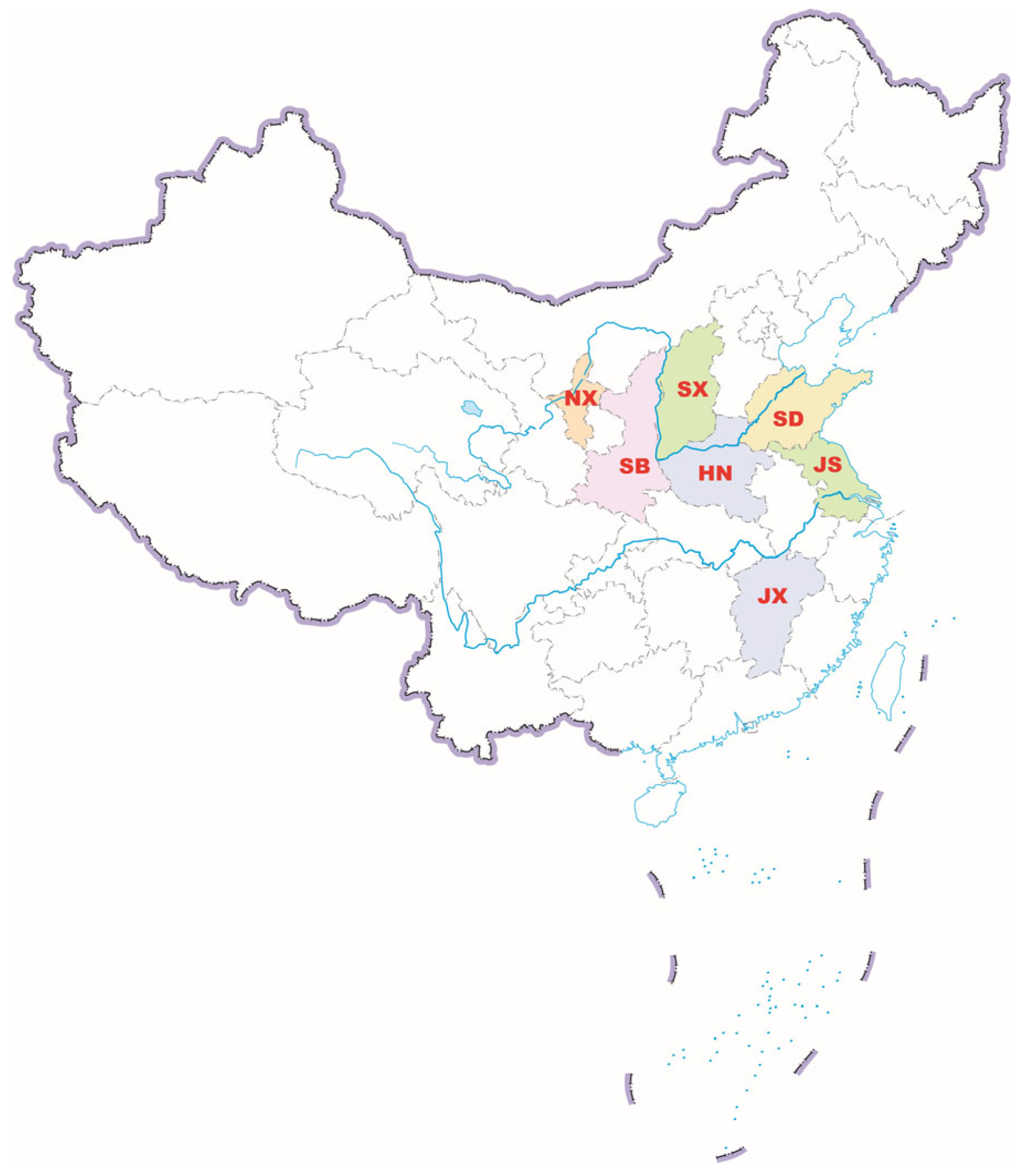
Fourteen commercial batches of Z. jujuba samples were purchased in 2024 from local markets across seven Chinese provinces (Henan, Jiangsu, Jiangxi, Ningxia, Shaanxi, Shandong, and Shanxi), with two samples acquired from each province. Samples were selected from the current harvest season and characterized by relatively uniform size, each weighing 1 kg. The samples were subsequently transported to the laboratory, thoroughly cleaned with deionized water, and dried at 55 °C, with some retained as reference samples. The remainder was pulverized and subjected to pre-treatment according to specific analytical requirements. Detailed information regarding the sample origins is presented in Table 1; climate information for the sample’s place of origin and harvest time are shown in Table 2; distribution information by region is shown in Figure 1.

2.2. Appearance Attribute Measurement

For each sample batch, 30 individual Z. jujuba were randomly selected for physical attribute measurements. Length was defined as the distance from the pedicel attachment point to the apex, and width was determined as the maximum lateral distance across the fruit. A 0–150 mm digital caliper was utilized for these measurements, with results recorded to an accuracy of 0.01 mm. The weight of each fruit was determined using an electronic analytical balance, precise to 0.01 g. The final length, width, and weight values for each batch were reported as the average of the 30 individual measurements [7].

2.3. Colorimetric Measurement

The colorimetric characteristics of Z. jujuba samples were evaluated using an NH310+ portable colorimeter (3nh, Guangzhou, China). Prior to measurement, the colorimeter was calibrated against a standard white plate. The instrument settings included a D65 illuminant, a 5 mm measurement aperture, and a 10° observer angle. The L* (lightness), a* (redness/greenness), and b* (yellowness/blueness) values were determined for each sample. The total color difference (ΔE) was subsequently calculated using the following formula: ΔE = (ΔL*2 + Δa*2 + Δb*2)1/2 [8].

2.4. SO2 Residue Determination

Sulfur dioxide (SO2) residues were determined in accordance with the National Food Safety Standard GB 5009.34-2022, “Determination of Sulfur Dioxide in Foods” [9]. Briefly, 10 g of the sample was accurately weighed and transferred into a predetermined volume of formaldehyde buffer absorption solution. After vigorous shaking and soaking for 2 h at room temperature, then filter to obtain the filtrate. A series of standard solutions were prepared by pipetting different volumes of the SO2 working standard solution into volumetric flasks and diluting to the marked volume with ultrapure water. Subsequently, aminosulfonic acid solution, sodium hydroxide solution, and p-rosaniline-hydrochloric acid solution were sequentially added to each standard solution and sample filtrate. After incubation at 25 °C for 20 min to complete the reaction, the absorbance of each solution was measured at 579 nm using a UV-visible spectrophotometer, and a standard curve was constructed with SO2 concentration as the abscissa and absorbance as the ordinate. An appropriate volume of the sample filtrate was subjected to color development under the same experimental conditions. The SO2 content in the sample was calculated based on the standard curve, combined with the sampling mass and solution volume parameters. The limit of detection of this method was 1 mg/kg, and the limit of quantification was 6 mg/kg.

2.5. Determination of Four Aflatoxin Contents

The determination of four target aflatoxins was performed using an Agilent 1290 high-performance liquid chromatography (HPLC) system coupled with an Agilent 6460 triple quadrupole mass spectrometer (MS) (Agilent Technologies Inc., Santa Clara, CA, USA). Chromatographic separation was achieved on an HSS T3 column (100 mm × 2.1 mm, 1.8 μm). The mobile phase consisted of 5 mmol/L ammonium acetate solution and methanol, delivered via a gradient elution program at a flow rate of 0.3 mL/min. Mass spectrometric detection was conducted in positive electrospray ionization (ESI+) mode using multiple reaction monitoring (MRM). The ion source temperature was maintained at 120 °C, drying gas flow at 11 L/h, nebulizer pressure at 35 psi, and desolvation gas temperature at 350 °C.
For sample preparation, a 5 g homogenized sample was weighed into a 50 mL centrifuge tube. An isotope-labeled internal standard solution (200 μL) was added, and the mixture was shaken and incubated for 30 min. Subsequently, 20 mL of acetonitrile-water (84:16, v/v) was added, followed by vortex mixing and ultrasonication for 20 min. The mixture was then centrifuged at 6000 rpm for 10 min. A 4 mL aliquot of the supernatant was collected, to which 46 mL of 1% Tween-20 in phosphate-buffered saline (PBS) was added. This solution underwent a clean-up procedure involving a 20 mL water rinse, followed by drying, and subsequent elution with 2 mL of methanol. The eluate was gently evaporated to near dryness under a stream of nitrogen at 50 °C. The residue was then reconstituted in 1 mL of mobile phase, filtered through a 0.22 μm membrane, and prepared for instrumental analysis.

2.6. Electronic Nose Measurement of Odor

The odor profiles of Z. jujuba samples were evaluated using a Pen3 electronic nose system (AIRSENSE, Schwerin, Germany). The number, names, and primary applications of the sensors are detailed in Table 3. The detection methodology was adopted from Guo et al. [10] with slight modifications. Specifically, 2.0 g of each sample was incubated at 25 °C for 15 min. The analysis parameters included a sampling time of 100 s, an injection flow rate of 200 mL/min, a sensor cleaning time of 120 s, and an injection waiting time of 10 s. The parameter G/G0 represented the relative resistance when odorous compounds passed through the sensor channels. Stable resistance values were observed between 95 and 97 s, and the average G/G0 value within this interval was utilized to quantify the odor characteristics for each sample. Further details on electronic nose sensor performance are provided in Table 3.

2.7. Electronic Tongue Measurement of Flavor

The flavor attributes of Z. jujuba samples were assessed using a TS-5000Z taste analysis system (INSENT, Nisshin City, Japan). This instrument was capable of evaluating umami, saltiness, sourness, bitterness, sweetness, astringency, bitter aftertaste, astringent aftertaste, and richness. The methodology was adapted from Zhang X. et al. [11] with minor modifications. Briefly, 6 g of Z. jujuba powder was dissolved in 120 mL of boiling water. The mixture was then subjected to ultrasonication for 10 min, a process repeated twice. Subsequently, the solution was transferred to a centrifuge tube and centrifuged for 10 min. The supernatant was collected by filtration and used for electronic tongue analysis. After balancing for 30 s at equilibrium position, the reference solution’s potential Vr is obtained. Once the sensor reaches equilibrium, it tests the sample solution to yield the sample’s potential vs. the difference between the two, Vs-Vr, represents the initial taste. Subsequently, after rinsing in each of the two reference solution cups for 3 s, respectively, the sensor is immersed in the new reference solution to determine its membrane potential Vr′. The CPA value (Vr′-Vr) represented the aftertaste sensation. Data were acquired at a rate of one data point per second, recorded and analyzed by the electronic tongue software (TS-5000Z). The sensor signal output was taken as the measurement value at 30 s. Each sample underwent four replicate analyses following the described procedure, and the data from the last three replicates were used for subsequent analysis.

2.8. Determination of Total Triterpenes, Total Flavonoids, and Total Polysaccharides

Total triterpene content in Z. jujuba was determined following a modified method adapted from Van Nguyen et al. [12]. Oleanolic acid was used as the standard, and a calibration curve was constructed (y = 60.948x + 0.0114, R2 = 0.9993). Precisely, 0.5 g of sample was weighed into a 15 mL centrifuge tube. It was then extracted with 5 mL of 80% methanol solution by ultrasonication for 30 min, followed by centrifugation for 10 min. The supernatant was collected, and the residue was re-extracted once more using the same procedure. The combined supernatants were filtered, and the filtrate was made up to 10 mL. A 0.4 mL aliquot of the sample solution was evaporated to dryness in a water bath, followed by the addition of 0.4 mL of 5% vanillin-glacial acetic acid solution and 1.6 mL of perchloric acid reagent. The mixture was incubated in a 90 °C water bath for 15 min, then cooled to room temperature. The final volume was adjusted with ethyl acetate, mixed thoroughly, and the absorbance was measured at 560 nm.
Total flavonoid content was determined following a modified spectrophotometric method based on Wang J et al. [13]. Rutin served as the standard, and its calibration curve was established as y = 12.852x − 0.00752 (R2 = 0.9994). Precisely, 0.5 g of sample was weighed into a 15 mL centrifuge tube. Sample preparation followed the identical procedure described for total triterpenes. From the prepared sample solution, a 0.4 mL aliquot was transferred. Then, 0.3 mL of 5% NaNO2 solution was added, mixed, and allowed to stand for 6 min. Subsequently, 0.3 mL of 10% Al(NO3)3 solution was introduced, mixed, and allowed to stand for another 6 min. Finally, 4 mL of 1 mol/L NaOH solution was added, thoroughly mixed, and the volume was adjusted to 10 mL with 80% methanol solution. After mixing again, the absorbance was measured at 510 nm after 10 min.
Total polysaccharide content was determined using the phenol-sulfuric acid method [14], with glucose as the standard. A calibration curve was established as y = 6.8433x − 0.0059 (R2 = 0.9994). Specifically, 1.5 g of sample powder was extracted with 10 mL of distilled water using microwave heating for 50 s. The extract was then filtered, and the filtrate was adjusted to a final volume of 10 mL. A 1.5 mL aliquot of this filtrate was mixed with 6 mL of absolute ethanol and centrifuged. The supernatant was discarded, and the precipitate was washed with 80% ethanol and centrifuged again. The resulting precipitate was then reconstituted with distilled water to a final volume of 5.0 mL. A 2 mL aliquot of this solution was combined with 2.0 mL of 100 mg/mL NaOH solution and 2.0 mL of copper reagent solution. The mixture was heated in a boiling water bath for 2 min, then cooled and centrifuged to discard the supernatant. The precipitate was washed twice with 80% ethanol. Subsequently, the precipitate was dissolved in 2.0 mL of 10% sulfuric acid, transferred to a 25 mL volumetric flask, and diluted to the mark with distilled water for analysis. Absorbance was measured at 490 nm.

2.9. HPLC Determination of Oligosaccharide Content

The content of oligosaccharides was determined following a modified HPLC method reported by Shi et al. [15]. Initially, 5 g of sample powder was soaked in 30 mL of deionized water for 1 h. The mixture was then boiled twice, and the resulting filtrates were combined and concentrated under reduced pressure at 45 °C to approximately 5 mL. To this extract, 15 mL of 95% ethanol was added, and the solution was allowed to stand at 4 °C for 24 h. Subsequent centrifugation was performed at 4000 rpm for 30 min, a step repeated three times. The combined supernatants were concentrated, subjected to decolorization with activated carbon, and then freeze-dried to obtain crude oligosaccharide powder.
A 10 mg aliquot of the crude oligosaccharide powder was then hydrolyzed with 2 mL of 2 mol/L trifluoroacetic acid (TFA) at 110 °C for 6 h under a nitrogen-sealed atmosphere. After hydrolysis, the acid was removed by evaporation to dryness, and the residue was repeatedly dissolved and evaporated with methanol to ensure complete acid removal. The final residue was dissolved in ultrapure water and adjusted to a volume of 10 mL to yield the hydrolysate.
For derivatization, 500 μL aliquots of both the hydrolysate and mixed monosaccharide standard working solutions were successively treated with 200 μL of 0.5 mol/L NaOH and 500 μL of 0.5 mol/L 1-phenyl-3-methyl-5-pyrazolone (PMP) in methanol. After vortex mixing, derivatization was performed at 70 °C for 1 h. Following cooling, the reaction mixture was neutralized with 200 μL of 0.5 mol/L HCl and purified by three extractions with chloroform. The final aqueous phase was filtered through a 0.22 μm membrane to obtain the test solution.
HPLC analysis was conducted using a Thermo HyPURITY™ C18 column (250 mm × 4.6 mm, 5 μm) (Thermo, Waltham, MA, USA). The mobile phase consisted of 0.1 mol/L potassium dihydrogen phosphate and acetonitrile, and detection was performed at a wavelength of 250 nm, the gradient elution program is shown in Table 4. Quantification of the five target oligosaccharides was achieved using the external standard calibration curve method.

2.10. Statistical Analysis

Electronic eye data were processed using CQCS 3 software. Electronic nose data were analyzed using Winmuster 1.6.2 software. Statistical analyses were performed using SPSS 27.0 software. Chromatograms, radar charts, three-dimensional scatter plots, and bar charts were generated using OriginPro 2022 software. Principal Component Analysis (PCA) and Orthogonal Partial Least Squares Discriminant Analysis (OPLS-DA), along with their corresponding plots, were performed using Simca 14.1 software.

3. Results

3.1. Analysis of Appearance Attributes

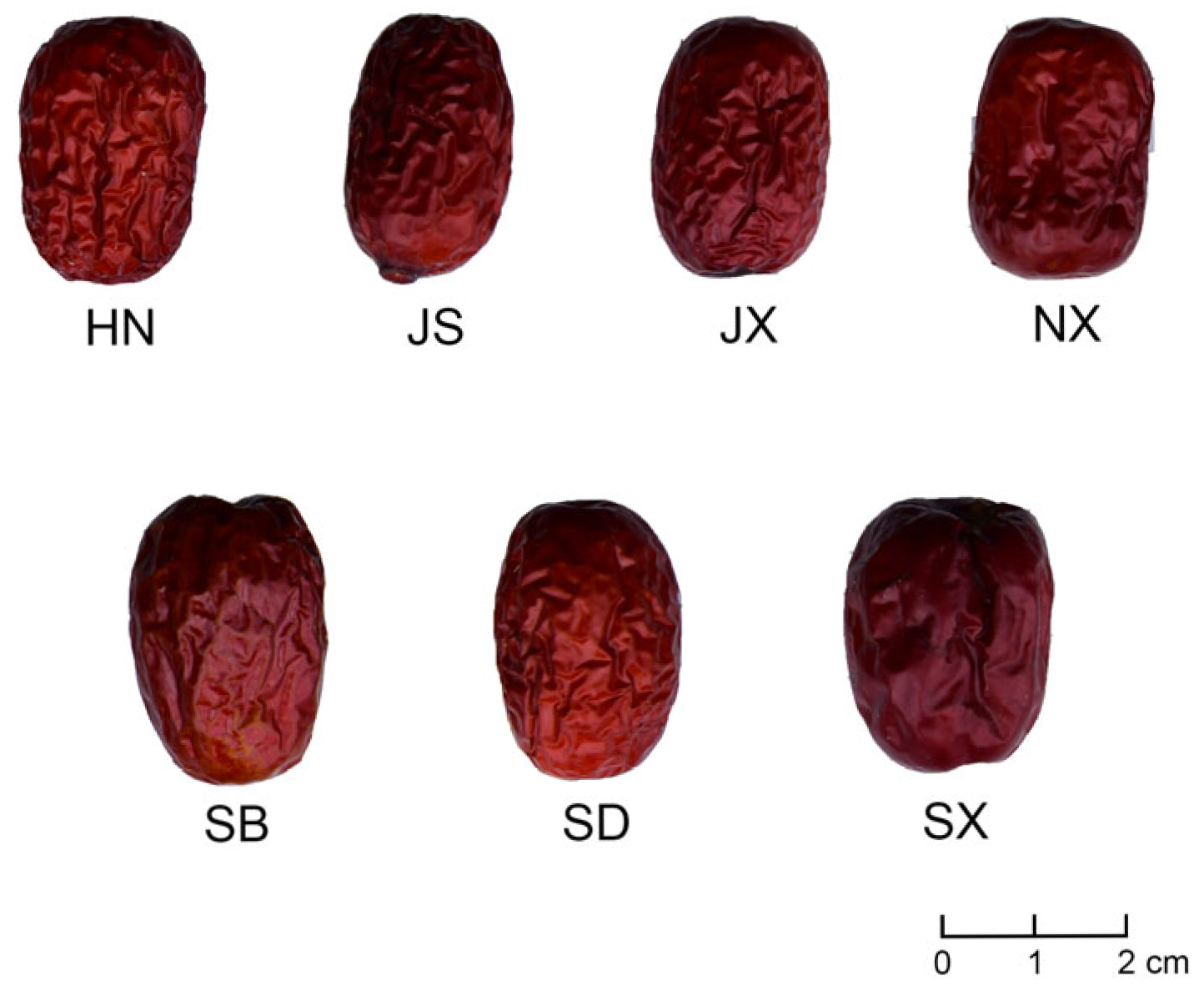
Appearance attributes are among the most intuitive indicators for evaluating Z. jujuba quality. In this study, the appearance attributes of Z. jujuba from different origins were evaluated based on both morphological characteristics and colorimetric parameters. Samples of Z. jujuba from different origins are shown in Figure 2.

3.1.1. Morphological Measurement Results

The morphological characteristics of Z. jujuba from seven different origins were determined, and the results are presented in Table 5. Z. jujuba samples from Shanxi exhibited significantly greater length, width, and weight compared to those from other origins, indicating superior physical appearance. Conversely, samples from Henan generally showed relatively lower values across all these metrics, suggesting a comparatively poorer appearance. Based on these morphological attributes, the origins were ranked from best to worst as follows: Shanxi > Shaanxi ≈ Shandong > Jiangxi > Jiangsu > Ningxia > Henan.

3.1.2. Colorimetric Measurement Results

Colorimetric values for Z. jujuba from the seven distinct origins were measured, and the variations in L*, a*, b* values, and ΔE are presented in Table 6. L* represents lightness; a higher L* value indicates greater lightness. Samples from Jiangsu and Shaanxi exhibited significantly higher L* values compared to other origins, suggesting a brighter color. The a* value indicates redness; a larger a* value denotes a redder color. Shaanxi samples displayed significantly higher a* values than those from other regions, presenting the reddest coloration. In contrast, Shandong samples had lower a* values compared to other origins, resulting in a darker color. Based on the colorimetric measurements (considering L* for brightness and a* for redness), the origins were ranked as: Jiangsu ≈ Shaanxi > Jiangxi > Henan ≈ Shanxi > Ningxia > Shandong.

3.2. SO2 Residue Determination Results

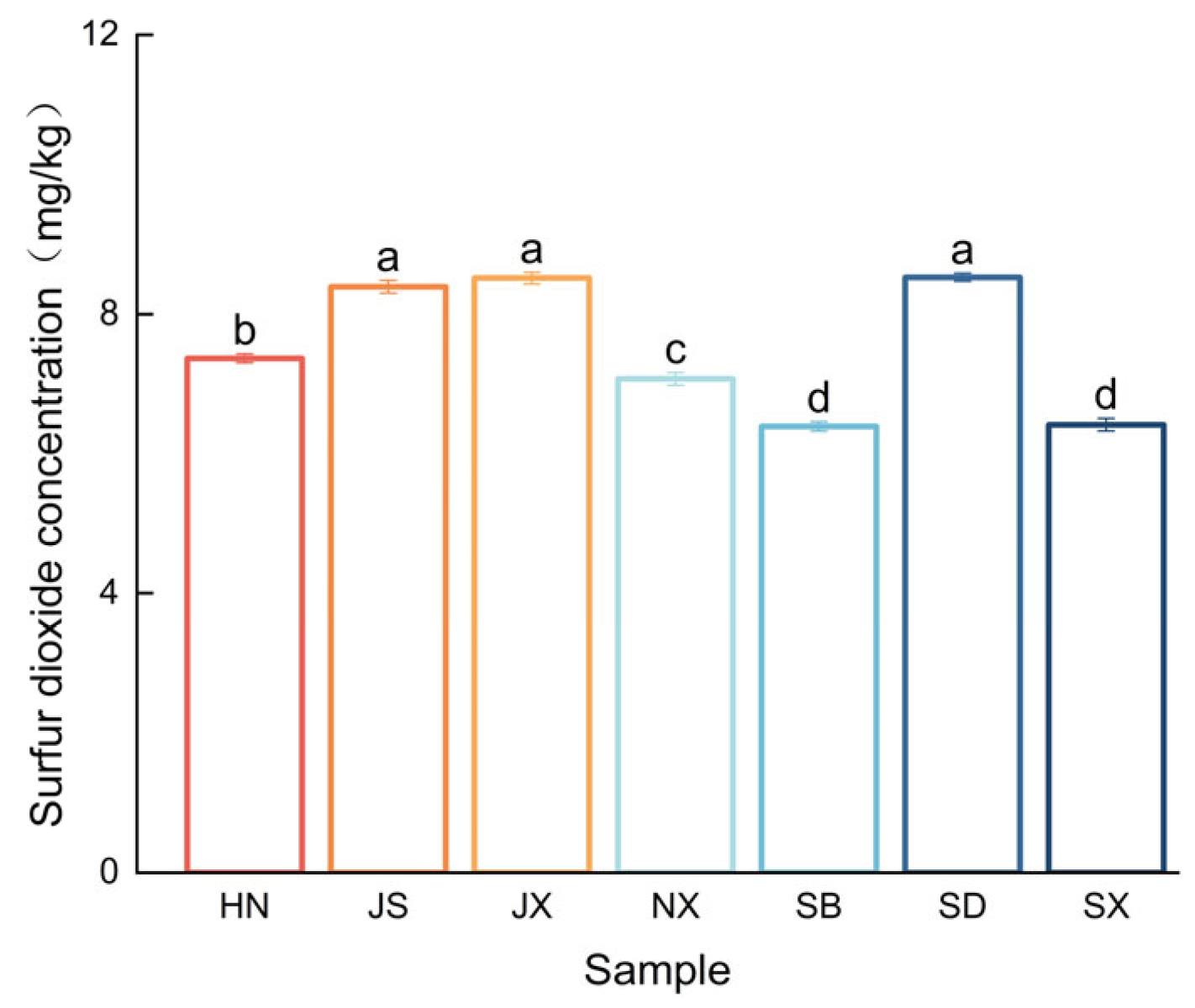
The determination results (Figure 3) indicated that SO2 residues were detected in Z. jujuba samples from all origins. While slight variations existed among regions, all detected levels complied with the quantitative limit of 10 mg/kg specified in GB5009.34-2022 [9].

3.3. Results of the Determination of Four Aflatoxin Contents

None of the four target aflatoxins were detected in Z. jujuba samples from any of the origins. Detailed data can be found in Folder S1.

3.4. Electronic Nose Measurement Results

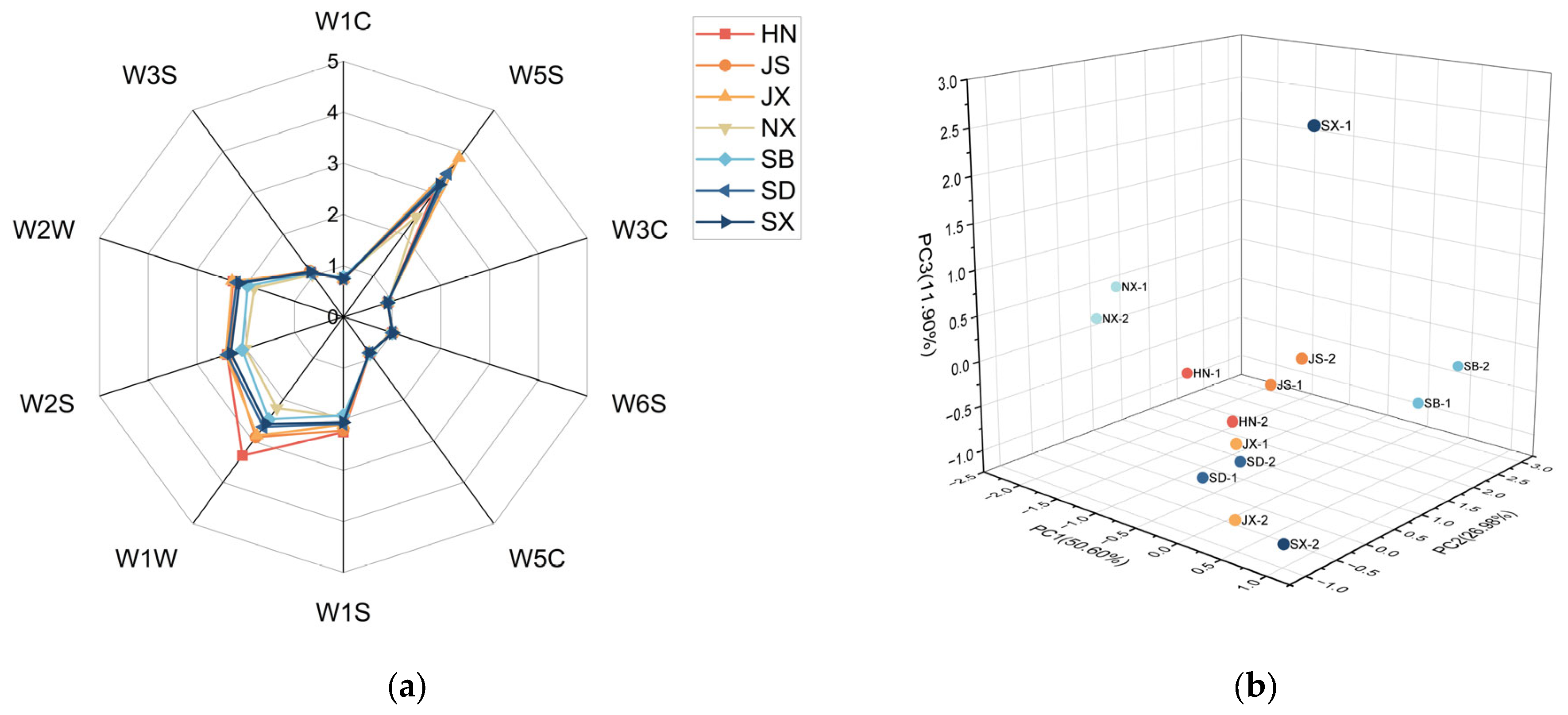
Electronic nose technology was employed to analyze the volatile profiles of Z. jujuba from different origins, with results presented in Figure 4a. The odor responses of Z. jujuba samples primarily concentrated on sensors W5S, W1W, W2S, W1S, and W2W. This suggested that the key volatile compounds contributing to Z. jujuba aroma encompassed nitrogen oxides, sulfides, ethanol, methane, aromatic compounds, and organic sulfides. Samples from Jiangxi exhibited significantly higher response values on the W5S sensor compared to other origins, indicating a higher content of nitrogen oxides in Jiangxi Z. jujuba. Henan samples showed a significantly higher response on the W1W sensor than those from Ningxia, Shaanxi, and other origins, reflecting a more sensitive response to sulfides. Moderate levels of nitrogen oxides and sulfides may impart distinct aromas to the fruit, endowing it with a unique freshness and more pronounced flavor. Consequently, Z. jujuba from Jiangxi and Henan provinces should prove more appealing to consumers in terms of their scent. The response profiles of samples from Shaanxi, Shandong, and Shanxi were relatively similar across multiple indicators, including W2S and W2W, suggesting minor differences in the corresponding categories of volatile compounds among these origins. Electronic nose measurements demonstrated potential for differentiating Z. jujuba based on origin, thus providing theoretical support for origin traceability and quality differentiation studies of Z. jujuba.
Principal Component Analysis (PCA) of the electronic nose data revealed the extraction of three principal components (PCs) with eigenvalues greater than 1. These PCs accounted for 50.60%, 26.98%, and 11.90% of the total variance, respectively, yielding a cumulative variance contribution rate of 89.48%. The scores plot for these principal components is presented in Figure 4b. Some variability was observed in the principal component scores among different batches from the same origin. Notably, Z. jujuba samples from Shanxi (SX-1, SX-2) exhibited significant differences in their PC3 scores.

3.5. Electronic Tongue Measurement Results

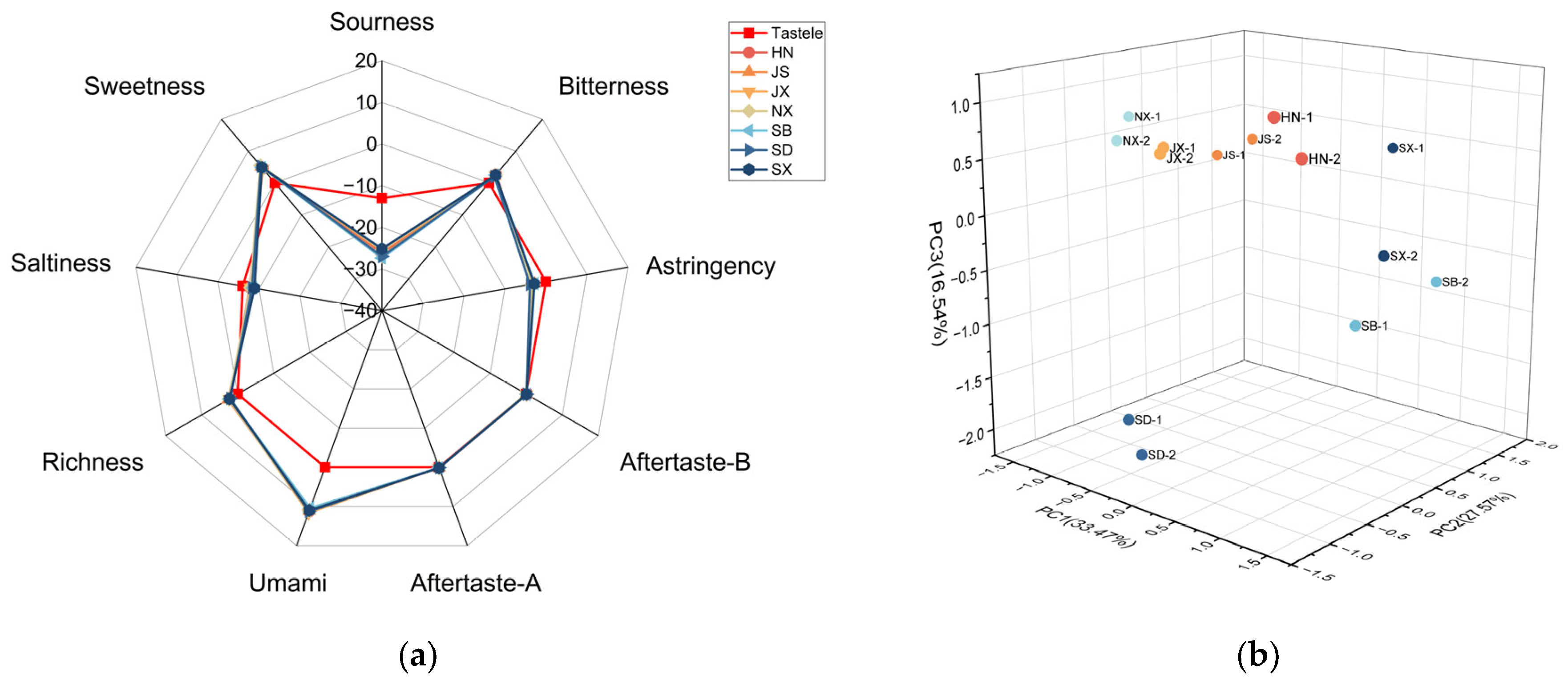
The nine taste attributes of Z. jujuba from various origins were analyzed using electronic tongue, with results presented in Figure 5a. Regarding sweetness, response values for Z. jujuba from all origins were consistently high, indicating that sweetness is a pervasive and prominent sensory characteristic of Z. jujuba. A ranking of sweetness among the different origins was established as: Ningxia > Shandong > Jiangsu > Shanxi > Shaanxi > Jiangxi > Henan. The high sweetness response values of Ningxia origin samples correspond to a more pronounced sweetness experience, aligning better with the general public’s preference for premium red dates characterized by rich, mellow sweetness. Conversely, the relatively lower sweetness response values of Henan origin samples may result in a lighter or subtler sweetness profile, catering to consumers who favor lower sweetness levels. Conversely, the response values for sourness and saltiness were generally low across all samples, with most origins showing similar performance in these two dimensions. This suggested that both sourness and saltiness perceptions in Z. jujuba were weak and not significantly influenced by origin. From a sensory perspective, lower levels of sourness and saltiness can mitigate the impact on the sweetness of Z. jujuba, thereby preserving the purity of the flavor profile. Responses for bitterness and astringency also remained in a low range. Shandong exhibited the lowest bitterness and astringency among the seven origins. In contrast, Henan displayed relatively higher bitterness, while Shaanxi showed relatively higher astringency. Although variations in bitterness values existed among Z. jujuba from different origins, overall bitter and astringent characteristics remained indistinct. For umami and richness indicators, values across all origins were relatively similar.
PCA results indicated the extraction of three PCs with eigenvalues greater than 1, accounting for 33.47%, 27.57%, and 16.54% of the variance, respectively. The cumulative variance contribution rate of the first three PCs was 77.59% (Figure 5b).

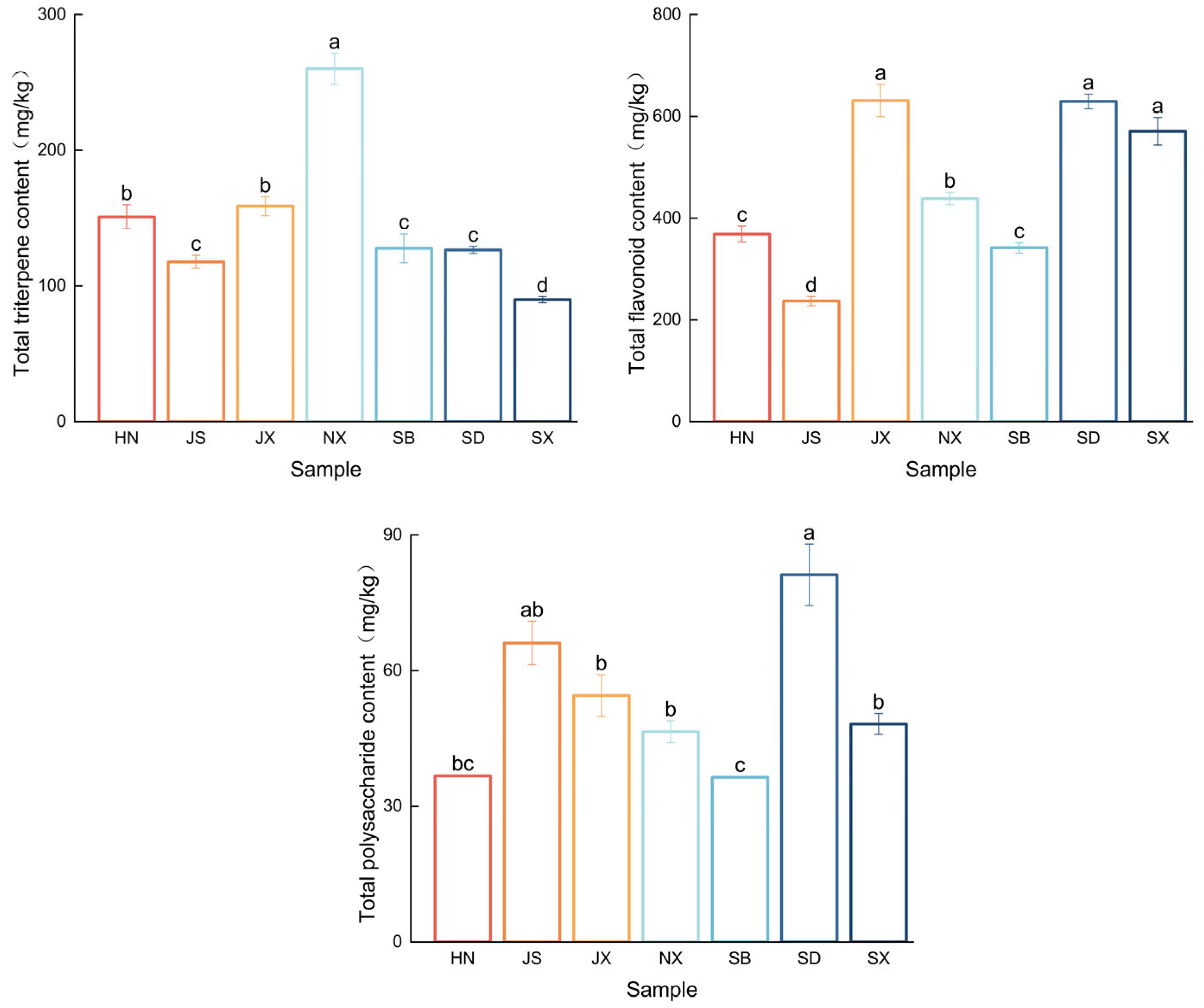
3.6. Total Triterpenes, Total Flavonoids, and Total Polysaccharides Content

Significant variations were observed in the contents of total triterpenes, total flavonoids, and total polysaccharides among Z. jujuba samples from different origins (Figure 6). Ningxia samples exhibited the highest total triterpene content (260 mg/kg), significantly exceeding all other origins. Henan and Jiangxi showed the next highest levels, while Jiangsu had significantly lower total triterpene content than both Henan and Jiangxi. Shanxi samples contained only 89 mg/kg of total triterpenes, which was significantly different from all other origins. Jiangxi, Shandong, and Shanxi origins exhibited significantly higher total flavonoid content compared to other regions, with values of 631.2 mg/kg, 629.3 mg/kg, and 570.8 mg/kg, respectively. Jiangsu had the lowest total flavonoid content (237 mg/kg), which was significantly different from all other origins. Regarding total polysaccharide content, Shandong samples were significantly higher than all other origins, at 81.2 mg/kg. Jiangxi, Ningxia, and Shanxi samples showed moderate levels without significant differences among them. Shaanxi had the lowest content, at 36.4 mg/kg.
In summary, geographical origin significantly influenced the biosynthesis and accumulation of total triterpenes, total flavonoids, and total polysaccharides in Z. jujuba, resulting in distinct differentiations in the content of these active compounds among samples from various origins.

3.7. Oligosaccharide Content Analysis

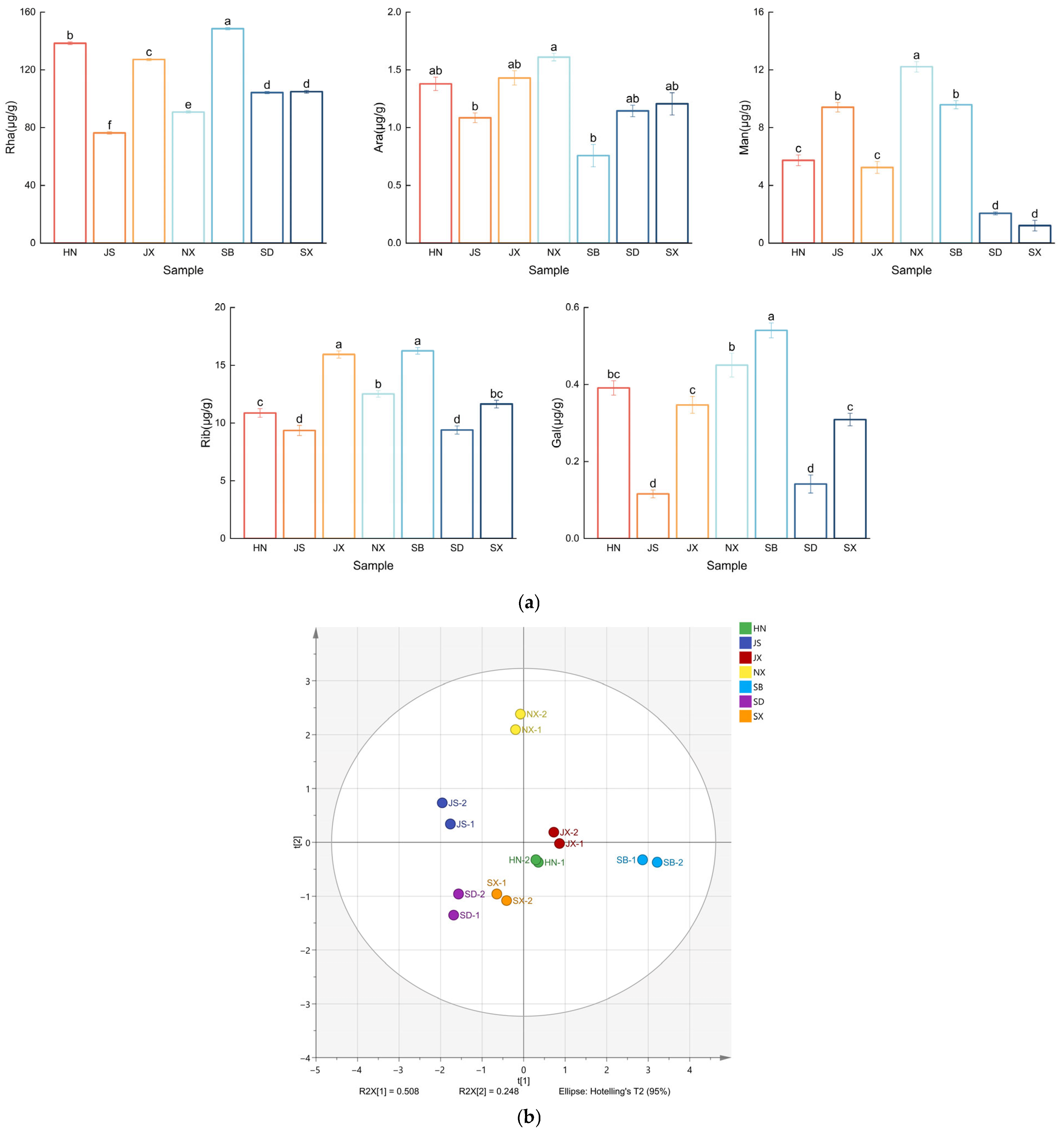
Significant differences were observed in the content of the five target oligosaccharides among Z. jujuba samples from different origins, as shown in Figure 7a. Shaanxi samples exhibited the highest overall oligosaccharide content among all origins. Specifically, the highest contents of rhamnose (147.96 µg/g), ribose (16.25 µg/g), and galactose (0.54 µg/g) were found in Shaanxi samples. Mannose content was also relatively high at 9.30 µg/g. In Shandong samples, rhamnose content was relatively high (103.72 µg/g); however, arabinose, mannose, and ribose contents were significantly lower, leading to the lowest overall oligosaccharide content for this origin. Significant differences in oligosaccharide content were also observed among the remaining origins.
PCA results (Figure 7b) indicated the extraction of two PCs with eigenvalues greater than 1, accounting for 50.83% and 24.80% of the variance, respectively. The cumulative variance contribution rate was 75.63%. Ningxia samples showed high scores in the PC2 dimension and were located near the edge of the ellipse, clearly separating them from other origins. This suggested distinct differences in their oligosaccharide composition or content compared to other origins. Both Shandong and Shanxi samples were situated in the negative regions of both PC1 and PC2 and clustered closely, indicating some commonality in their oligosaccharide content patterns.
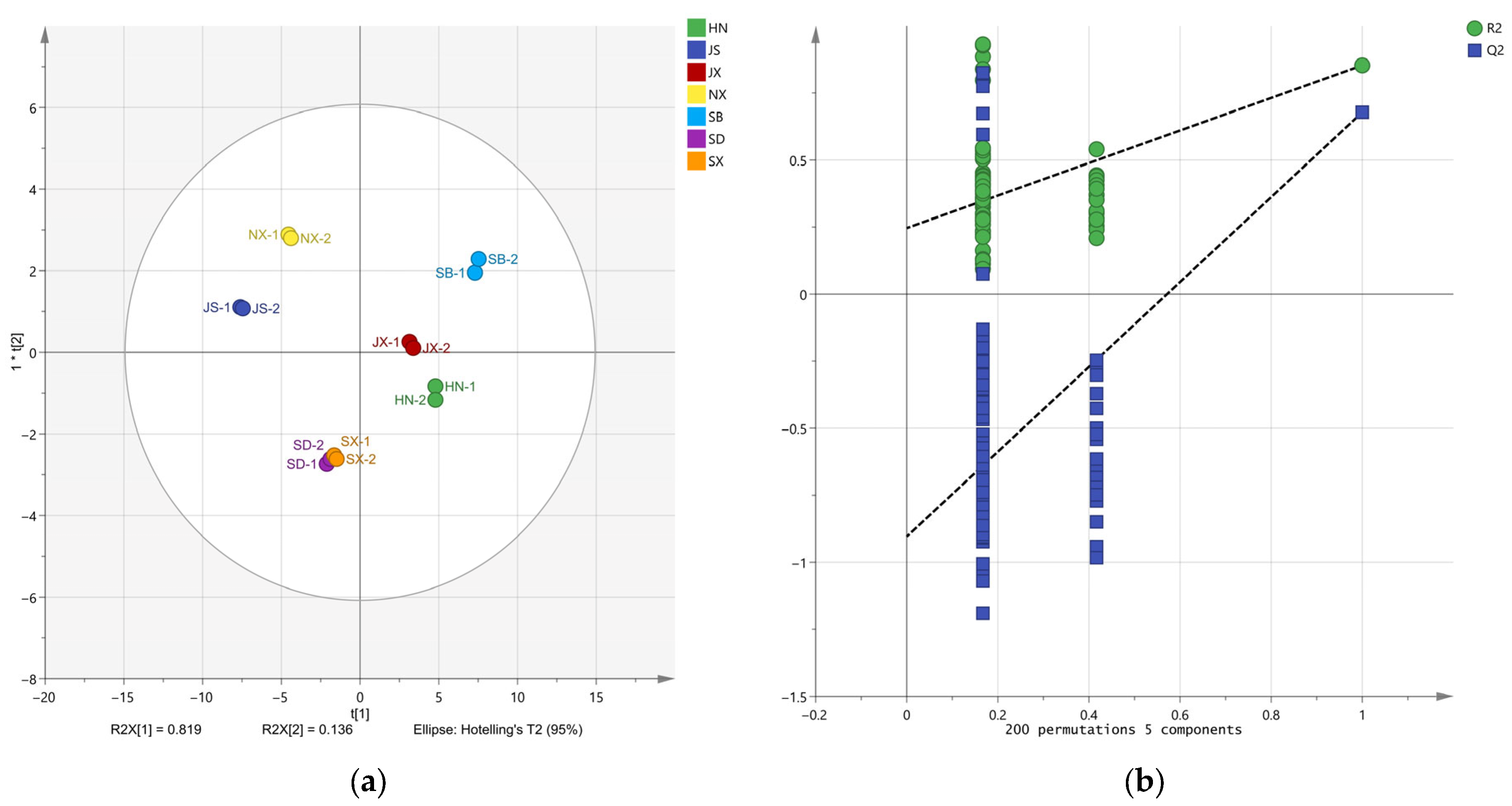
Orthogonal Partial Least Squares Discriminant Analysis (OPLS-DA) was performed using SIMCA 14.1 on the five oligosaccharides (rhamnose, arabinose, mannose, ribose, and galactose). The model exhibited a predictive capability with a principal component regression coefficient Q2 of 0.589, a model discrimination parameter R2Y of 0.844, and a matrix robustness R2X of 1. All these values were greater than 0.5, indicating good predictive power for the model. The results (Figure 8a) demonstrated clear inter-origin separation and intra-origin clustering of Z. jujuba samples in the score plot defined by PC1 and PC2, which was consistent with the PCA findings. Furthermore, a 200-permutation response validation test (Figure 8b) was conducted, yielding R2 = 0.235 and Q2 = −0.932. The randomly permuted R2 and Q2 values on the left were all lower than the original values on the right, confirming the robustness of the model and the absence of overfitting.

3.8. Entropy Weight TOPSIS Analysis

The entropy weight Technique for Order Preference by Similarity to Ideal Solution (TOPSIS) is a multi-attribute decision-making method that first determines the objective weights of various evaluation indicators using the entropy weight method and then calculates the proximity of each evaluated object to the positive and negative ideal solutions for subsequent ranking. Given the significant differences across 34 evaluation indicators among samples from different origins, direct quality assessment was challenging. Therefore, the entropy weight TOPSIS method was employed for a comprehensive quality evaluation of Z. jujuba from the seven distinct origins. Samples were ranked based on their Ci values; a higher Ci value indicated superior overall quality of the evaluated object. The results showed that Ningxia samples attained the highest overall ranking (first place), indicating their superior overall quality compared to other origins. The comprehensive quality ranking for all origins was established as Ningxia > Shaanxi > Jiangsu > Jiangxi > Shanxi > Shandong > Henan.

4. Discussion

Fruit size is intimately linked to environmental factors, which directly influence the entire process of plant growth and development. The final size of a fruit is primarily determined by its cell number and volume [16,17]. The present study revealed significant differences in the appearance of Z. jujuba from various origins, suggesting a correlation with the unique growing environments of each region. Shanxi province, characterized by loess parent material in the Lüliang Mountains and Fen River Valley, possesses strong water and nutrient retention capabilities, providing ample resources for plant growth and development. During the fruit cell division stage (June–September), the optimal average daily temperature of 22–25 °C, coupled with a diurnal temperature difference of 12–14 °C, can reduce the consumption of photosynthates and promote the transport of soluble sugars to the fruit. This, in turn, drives cell water uptake and expansion, leading to the largest fruit volume and weight in Shanxi-produced jujubes, consistent with findings by Duan et al. [18]. Conversely, Z. jujuba from Henan exhibited lower values across all indicators. In this region, summer average daily temperatures often exceed 28 °C, which can inhibit gibberellin synthesis and reduce cell expansion rates [19]. Concurrently, the high clay content in Henan soils can lead to waterlogging and root hypoxia during the rainy season [20], reducing nutrient absorption. These dual limitations likely contribute to the smaller fruit size observed in Henan.
Differences in fruit color are associated with the synthesis and degradation of substances such as carotenoids and anthocyanins, regulated by factors like light and temperature. Studies indicate that the L* value, reflecting fruit peel brightness, correlates with chlorophyll degradation and carotenoid content [21]. The key enzyme in carotenoid synthesis, phytoene synthase (PSY), controls the rate of carotenoid production. Under light conditions, PSY rapidly translocates from prolamellar bodies to thylakoid membranes, leading to a quick increase in enzyme activity and content [22]. Due to higher light intensity during the Z. jujuba coloring period in Jiangsu and Shaanxi production areas, carotenoid synthesis is promoted, resulting in higher L* values. The a* value, representing redness, is determined by anthocyanin content. Anthocyanin synthesis relies on the phenylpropanoid metabolic pathway, and the activity of key enzymes is regulated by diurnal temperature variations and UV radiation intensity [23]. Research suggests that strong UV-B radiation in high-altitude regions promotes anthocyanin accumulation in plant fruits [24]. The high altitude and strong UV radiation in the Shaanxi region could increase anthocyanin synthase activity, promoting pigment accumulation, thus leading to the highest a* values in Shaanxi-produced Z. jujuba. In contrast, the lower altitude in the Shandong region might result in reduced anthocyanin synthesis. Furthermore, while drought conditions can promote anthocyanin synthesis [25], the high humidity in the Shandong region may inhibit anthocyanin synthesis, leading to the lowest a* values.
The content of secondary metabolites such as total triterpenes and total flavonoids also varied significantly among Z. jujuba from different origins. The synthesis of total triterpenes is critically dependent on the activity of the rate-limiting enzyme HMGR in the terpene synthesis pathway, with its activity positively correlating with total triterpene accumulation [26]. Ningxia Hui Autonomous Region, characterized by a temperate continental climate, experiences less precipitation and longer sunshine hours, resulting in an overall drier environment compared to other regions. Drought stress is known to promote HMGR gene expression and allosteric effects, thereby enhancing its activity. Consequently, Ningxia-produced jujubes exhibited higher total triterpene content. Flavonoid synthesis primarily relies on the phenylpropanoid metabolic pathway, with its content influenced by the activity of enzymes like PAL and C4H [27] and significantly correlated with UV radiation intensity [28] and diurnal temperature variation [29]. Many areas in Jiangxi experience strong UV radiation, which promotes increased PAL and C4H activity. Additionally, the moderate diurnal temperature differences in autumn contribute to total flavonoid accumulation, hence the highest flavonoid content in Z. jujuba from this region. Although Ningxia also receives strong UV radiation, the excessive diurnal temperature variation during the fruit ripening period is unfavorable for flavonoid enrichment.
Total polysaccharide content is determined by the efficiency of photosynthate synthesis, transport, and conversion [30], and these critical physiological processes are significantly regulated by the physicochemical properties of the soil in the production area [31]. The soil type in the Shandong region is Yellow River alluvial soil, which possesses a high organic matter content. This provides an abundant carbon source for plant growth, effectively increasing leaf photosynthetic rates, thus leading to high levels of total polysaccharides in Z. jujuba from Shandong. In contrast, the soil in the Shaanxi region is predominantly aeolian sandy soil, which has significantly lower organic matter content compared to the Shandong region [32], resulting in fewer photosynthates. The content of fruit oligosaccharides is regulated by the balance of sugar metabolism during the late ripening stage, with temperature and humidity serving as significant environmental factors [33]. The Shaanxi production area frequently experiences climatic conditions characterized by average daily temperatures of 15–18 °C and relatively low humidity during the late fruit ripening stage. Theoretically, such conditions may favor the net accumulation of oligosaccharides by inhibiting sucrase activity and reducing respiratory intensity [34]. This may be one of the potential physiological reasons for the higher oligosaccharide content in Z. jujuba from this production area. Therefore, this origin showed the highest total oligosaccharide content. Conversely, the temperature and humidity conditions in the Shandong region during the late ripening period were unfavorable for oligosaccharide accumulation.
The aroma characteristics of fruits are determined by the types and contents of volatile substances such as alcohols, aldehydes, ketones, and sulfides [35]. These substances originate from physiological processes like fatty acid metabolism and amino acid degradation during fruit ripening [36]. The response values of different electronic nose sensors can reflect regional differences. The W5S sensor showed the highest response value in the Jiangxi region. Jiangxi’s large diurnal temperature variation in autumn, particularly the low-temperature periods, can activate amino acid decarboxylase activity, promoting polyamine formation, which is further oxidized into nitrogen oxides [37]. Moreover, the high nitrogen content in the local soil promotes amino acid synthesis, providing more precursors for nitrogen oxides. The W1W sensor showed a significantly higher response in the Henan region compared to Ningxia and Shaanxi. Sulfides are related to the degradation of sulfur-containing amino acids. High summer temperatures in Henan can promote methionine degradation to hydrogen sulfide, further increasing sulfide content [38]. The W2S and W2W sensors showed similar response profiles in the Shaanxi and Ningxia regions and in the Shandong and Shanxi regions. This is speculated to be related to the spatial similarity in precipitation within the Shaanxi and Ningxia regions and within the Jiangsu and Jiangxi regions, respectively. Precipitation directly influences the synthesis and accumulation of specific fatty acids in plants. Therefore, the response values of these two sensors differed significantly between the two southern production areas and the two northern production areas, which aligns with the findings of Maria Celeste Dias et al. [39].
The taste characteristics of fruits are determined by non-volatile substances such as soluble sugars, organic acids, tannins, and amino acids [40]. Sweetness, as one of the important evaluation indicators for Z. jujuba, was thoroughly investigated in this study. Electronic tongue detection revealed that the Ningxia region exhibited the highest sweetness response value, directly related to its higher oligosaccharide content. The arid climate in Ningxia promotes the accumulation of soluble sugars [41], thus leading to the most prominent sweetness. Shandong followed with the second-highest sweetness response, which was correlated with its high total polysaccharide content. Although polysaccharides have lower sweetness, they can enhance the rich and mellow sensation of sweetness, thereby improving overall sweetness perception. The electronic tongue PCA showed that the cumulative variance contribution rate of the first three principal components reached 77.59% and could effectively differentiate taste variations among different origins. PC1 contributed 33.47% and was significantly influenced by the sweetness response value, further indicating that sweetness can serve as one of the primary indicators for distinguishing origins.
In summary, the quality differences observed in Z. jujuba from the seven origins stem from a combination of natural selection and human intervention. Each origin possesses unique advantages and can be precisely positioned for specific application scenarios based on differences in appearance, intelligent sensory attributes, and chemical composition. From an appearance perspective, Z. jujuba from Shanxi, with its large size and regular shape, is most suitable for high-end gift jujube processing and fresh consumption, significantly enhancing product added value. Shaanxi-produced jujubes, characterized by high redness, vibrant color, and high anthocyanin content [42], maintain stable color during processing into candied fruits and preserves, resulting in a richer, redder finished product. From an intelligent sensory perspective, Ningxia- and Shandong-produced jujubes, with their prominent sweetness and rich aromatic compounds, are ideal for fresh consumption and dessert processing. Shaanxi-produced jujubes have a strong jujube aroma but slightly higher astringency; however, after drying, tannins degrade and astringency decreases [43], making them suitable for dried products, preserves, and jujube essence extraction. Henan-produced jujubes, with slightly higher bitterness, are suitable for fermented foods like jujube wine and jujube vinegar [44]. Furthermore, sensory fingerprint maps can be established based on intelligent sensory data to aid product traceability and quality control. From a chemical composition standpoint, Ningxia-produced jujubes, with the highest total triterpene content, are suitable for developing functional foods and health products [45]. Jiangxi- and Shandong-produced jujubes, rich in total flavonoids, can be used to create natural antioxidants and health teas [46]. Shandong-produced jujubes, with high total polysaccharide content, can be developed into probiotic jujube powder [47], suitable for children and individuals with weaker intestinal function. Shaanxi-produced jujubes, high in oligosaccharides, are suitable for infant complementary foods [48] and low-sugar preserves [49], benefiting infant gut health and meeting the needs of diabetic patients.

5. Conclusions

This study investigated the appearance attributes, intelligent sensory characteristics, functional component content, and safety parameters of 14 batches of Z. jujuba samples collected from seven different production regions. The results consistently showed that all 14 batches of Z. jujuba complied with national standards for sulfur dioxide (SO2) residues and aflatoxin content. However, significant inter-origin variations were observed in the appearance attributes, intelligent sensory profiles, and functional component content. Specifically, Z. jujuba from Shanxi, Shaanxi, and Shandong exhibited superior morphological characteristics and colorimetric values compared to the other four origins. Samples from Ningxia, Jiangsu, and Shaanxi generally demonstrated better intelligent sensory quality. Furthermore, Z. jujuba originating from Jiangxi, Ningxia, and Shaanxi were found to have higher functional component contents. A comprehensive quality ranking of Z. jujuba from the seven origins, established using the Entropy-TOPSIS method, resulted in the following order: Ningxia > Shaanxi > Jiangsu > Jiangxi > Shanxi > Shandong > Henan. This study, by employing multivariate statistical methods for a thorough quality evaluation of Z. jujuba across diverse origins, provides valuable reference for its future development and utilization. The findings offer a robust theoretical basis and practical guidance to foster the high-quality advancement of the Z. jujuba industry.
This study employed multivariate statistical methods to evaluate the quality of Z. jujuba from seven distinct production regions. For premium growing areas such as Shanxi and Ningxia, the findings facilitate industrial applications including fresh consumption and functional foods, thereby aiding enterprises in raw material selection and regional brand development. For lower-quality regions like Henan, the research proposes conversion pathways including Z. jujuba wine fermentation and low-cost raw material supply.
This study provides valuable reference for the development and utilization of Z. jujuba, establishing an application framework centered on “high-quality selection and low-quality conversion”. It bridges the gap between scientific research and industrial requirements, offering direct guidance for optimizing industrial layout, enhancing resource utilization, and promoting sustainable development.
However, the samples collected in this study only covered a single growth cycle, failing to account for climatic variations across different years. Furthermore, only two batches of samples were collected from each production area, resulting in insufficient sample diversity. Factors such as soil microbial communities and altitude were not monitored. Future multi-year, multi-batch long-term monitoring will validate result stability. Integrating metabolomics and transcriptomics will elucidate the molecular mechanisms underpinning quality formation and identify key genes. Concurrently, expanding sample coverage will enhance the generalizability of conclusions and the feasibility of origin tracing, thereby providing more comprehensive data support for cross-regional industrial planning.

Supplementary Materials

The following supporting information can be downloaded at: https://www.mdpi.com/article/10.3390/agriculture15242570/s1, Table S1: Morphological Measurement Results; Table S2: Colorimetric Measurement Results; Table S3: SO2 Residue Determination Results; Table S4: Electronic Nose Measurement Results; Table S5: Electronic Tongue Measurement Results; Table S6: Total Triterpenes, Total Flavonoids, and Total Polysaccharides Content; Table S7: Oligosaccharide Content Analysis; Folder S1: Determination of Four Aflatoxin Contents.

Author Contributions

Author Contributions: Writing—original draft, T.P., J.J. and H.G.; methodology, L.J.; software, T.P., J.J. and J.Z.; validation, L.L., X.M. and R.Y.; formal analysis, L.J.; investigation, T.P. and L.J.; resources, L.J.; data curation, J.Z. and L.L.; writing—review and editing, T.P., J.J. and R.Y.; visualization, T.P. and J.J.; supervision, L.L. and L.J.; project administration, L.J. All authors have read and agreed to the published version of the manuscript.

Funding

This research was funded by China Agriculture Research System of MOF and MARA (CARS-21); Strategic Research and Consulting Project of China Academy of Engineering (GS2021ZDA06); Northwest Collaborative Innovation Center for Traditional Chinese Medicine Co-constructed by Gansu Province and MOE of PRC (Xbzzy202207); The Project for the Protection, Development and Utilization of High-Quality Traditional Chinese Medicine Resources and the Research and Development of Food and Medicinal Substances in Gansu Province (Gansu TCM General Letter [2025] No. 28); Research project on the protection and development of traditional Chinese medicine resources (Gansu TCM General Letter [2025] No. 4).

Institutional Review Board Statement

Not applicable.

Informed Consent Statement

Not applicable.

Data Availability Statement

The original contributions presented in this study are included in the article and Supplementary Materials. Further inquiries can be directed to the corresponding author.

Conflicts of Interest

The authors declare no conflicts of interest.

References

  1. Popstoyanova, D.; Gerasimova, A.; Gentscheva, G.; Nikolova, S.; Gavrilova, A.; Nikolova, K. Ziziphus jujuba: Applications in the Pharmacy and Food Industry. Plants 2024, 13, 2724. [Google Scholar] [CrossRef]
  2. Ben Ayed, R.; Hanana, M.; Ercisli, S.; Karunakaran, R.; Rebai, A.; Moreau, F. Integration of Innovative Technologies in the Agri-Food Sector: The Fundamentals and Practical Case of DNA-Based Traceability of Olives from Fruit to Oil. Plants 2022, 11, 1230. [Google Scholar] [CrossRef]
  3. Wu, Z.; Zhang, S.; Liu, L.; Wang, L.; Ban, Z. The Grade of Dried Jujube (Ziziphus jujuba Mill. Cv. Junzao) Affects Its Quality Attributes, Antioxidant Activity, and Volatile Aroma Components. Foods 2023, 12, 989. [Google Scholar] [CrossRef]
  4. Ji, X.; Zhang, S.; Jin, X.; Yin, C.; Zhang, Y.; Guo, X.; Lin, X. Systematic Comparison of Structural Characterization of Polysaccharides from Ziziphus jujuba Cv. Muzao. Molecules 2023, 28, 562. [Google Scholar] [CrossRef] [PubMed]
  5. Li, W.; Liang, C.; Bao, F.; Zhang, T.; Cheng, Y.; Zhang, W.; Lu, Y. Chemometric Analysis Illuminates the Relationship among Browning, Polyphenol Degradation, Maillard Reaction and Flavor Variation of 5 Jujube Fruits during Air-Impingement Jet Drying. Food Chem. X 2024, 22, 101425. [Google Scholar] [CrossRef] [PubMed]
  6. Liu, Y.; Sang, Y.; Guo, J.; Zhang, W.; Zhang, T.; Wang, H.; Cheng, S.; Chen, G. Analysis of Volatility Characteristics of Five Jujube Varieties in Xinjiang Province, China, by HS-SPME-GC/MS and E-nose. Food Sci. Nutr. 2021, 9, 6617–6626. [Google Scholar] [CrossRef] [PubMed]
  7. Huang, C.; Lu, L.; Du, J.; Huang, X. Correlation Study of Traits and Chemical Composition of Tinosporae Radix Based on “Quality Evaluation through Morphological Identification”. Chin. Tradit. Herb. Drugs 2025, 56, 1366–1376. [Google Scholar]
  8. Zhu, X.; Dong, W.; Zhao, Y.; Chen, P.; Li, M.; Chen, M.; Li, W.; Fei, C. Integrated Electronic Eye, Electronic Nose and High Performance Liquid Chromatography for Identification of Raw and Salt-Processed Psoralea Corylifolia Fructus. J. Pharm. Biomed. Anal. 2025, 263, 116915. [Google Scholar] [CrossRef] [PubMed]
  9. GB 5009.34-2022; Determination of Sulfur Dioxide in Foods. Standardization Administration of the People’s Republic of China: Beijing, China, 2022.
  10. Guo, X.; Yang, R.; Wang, Y.; Wang, J.; Wang, Y.; Zou, H.; Yan, Y. Prediction of Chemical Composition and Sensory Information of Codonopsis Radix Based on Electronic Nose. Molecules 2025, 30, 1146. [Google Scholar] [CrossRef]
  11. Zhang, X.; Wu, H.; Lin, L.; Du, X.; Tang, S.; Liu, H.; Yang, H. The Qualitative and Quantitative Assessment of Xiaochaihu Granules Based on E-Eye, e-Nose, e-Tongue and Chemometrics. J. Pharm. Biomed. Anal. 2021, 205, 114298. [Google Scholar] [CrossRef]
  12. Van Nguyen, H.; Trong Le, N.; Nguyen Le, N.T.; Duong, T.D.; Thuc Le, T.; Thi Nguyen, H.T.; Phung, H.T.; Thi Nguyen, H. Extraction, Purification, and Evaluation of Bioactivities of Total Triterpenoids from Persimmon (Diospyros kaki L.f.) Leaves. Process Biochem. 2024, 139, 70–80. [Google Scholar] [CrossRef]
  13. Wang, J.; Huang, X.; Chen, Z.; Chen, N.; Yang, M.; Liang, C.; Yu, Y.; Shi, D. Extraction and Purification of Total Flavonoids from Zanthoxylum planispinum Var. Dintanensis Leaves and Effect of Altitude on Total Flavonoids Content. Sci. Rep. 2025, 15, 7080. [Google Scholar] [CrossRef]
  14. Yue, F.; Zhang, J.; Xu, J.; Niu, T.; Lü, X.; Liu, M. Effects of Monosaccharide Composition on Quantitative Analysis of Total Sugar Content by Phenol-Sulfuric Acid Method. Front. Nutr. 2022, 9, 963318. [Google Scholar] [CrossRef]
  15. Shi, S.; Zhang, J.; Zhang, J.; Ma, S.; Hu, Y.; Zhu, H.; Wang, H.; Jiang, M.; Wang, Y. Structural Characterization of Raw and Wine-Steamed Polygonatum Cyrtonema Hua Oligosaccharides and Their Bioactivity on Immune Regulation via Modifying the Gut Microbiota. Int. Immunopharmacol. 2025, 153, 114468. [Google Scholar] [CrossRef]
  16. Camarero, M.C.; Briegas, B.; Corbacho, J.; Labrador, J.; Román, Á.-C.; Verde, A.; Gallardo, M.; Gomez-Jimenez, M.C. Variations in Fruit Ploidy Level and Cell Size between Small- and Large-Fruited Olive Cultivars during Fruit Ontogeny. Plants 2024, 13, 990. [Google Scholar] [CrossRef] [PubMed]
  17. Li, H.; Suo, Y.; Li, H.; Sun, P.; Li, S.; Yuan, D.; Han, W.; Fu, J. Cytological and Transcriptome Analyses Provide Insights into Persimmon Fruit Size Formation (Diospyros kaki Thunb.). Int. J. Mol. Sci. 2024, 25, 7238. [Google Scholar] [CrossRef] [PubMed]
  18. Duan, Y.; Liu, S.; Zhu, Y.; Wang, Y.; Yan, F.; Liu, Z.; Shi, X.; Liu, P.; Liu, M. The Influences of Soil and Meteorological Factors on the Growth and Fruit Quality of Chinese Jujube (Ziziphus jujuba Mill.). Plants 2023, 12, 4107. [Google Scholar] [CrossRef] [PubMed]
  19. Pandey, S.K.; Maurya, J.P.; Aryal, B.; Drynda, K.; Nair, A.; Miskolczi, P.; Singh, R.K.; Wang, X.; Ma, Y.; De Souza Moraes, T.; et al. A Regulatory Module Mediating Temperature Control of Cell-Cell Communication Facilitates Tree Bud Dormancy Release. EMBO J. 2024, 43, 5793–5812. [Google Scholar] [CrossRef] [PubMed]
  20. Jia, H.; Wang, X.; Sun, W.; Mu, X.; Gao, P.; Zhao, G.; Li, Z. Estimation of Soil Erosion and Evaluation of Soil and Water Conservation Benefit in Terraces under Extreme Precipitation. Water 2022, 14, 1675. [Google Scholar] [CrossRef]
  21. Sibeko, D.S.; Shikwambana, K.; Mathaba, N. Effect of Ripening Temperature on Early-Season “hass” Avocado Fruit Exocarp Colour Development and Pigmentation during Ripening. Hortic. Sci. 2024, 51, 152–159. [Google Scholar] [CrossRef]
  22. Welsch, R.; Beyer, P.; Hugueney, P.; Kleinig, H.; von Lintig, J. Regulation and Activation of Phytoene Synthase, a Key Enzyme in Carotenoid Biosynthesis, during Photomorphogenesis. Planta 2000, 211, 846–854. [Google Scholar] [CrossRef]
  23. Liu, X.; Huang, Q.; Liang, Y.; Lu, Z.; Liu, W.; Yuan, H.; Li, H. Genome-Wide Identification and Expression Analysis of ‘NanGuo’ Pear Revealed Key MYB Transcription Factor Family Genes Involved in Anthocyanin Accumulation. Horticulturae 2024, 10, 989. [Google Scholar] [CrossRef]
  24. Arias, L.A.; Berli, F.; Fontana, A.; Bottini, R.; Piccoli, P. Climate Change Effects on Grapevine Physiology and Biochemistry: Benefits and Challenges of High Altitude as an Adaptation Strategy. Front. Plant Sci. 2022, 13, 835425. [Google Scholar] [CrossRef] [PubMed]
  25. Dabravolski, S.A.; Isayenkov, S.V. The Role of Anthocyanins in Plant Tolerance to Drought and Salt Stresses. Plants 2023, 12, 2558. [Google Scholar] [CrossRef]
  26. Gao, X.; Huo, H.; Bao, H.; Wang, J.; Gao, D. Changes of Active Substances in Ganoderma Lucidum during Different Growth Periods and Analysis of Their Molecular Mechanism. Molecules 2024, 29, 2591. [Google Scholar] [CrossRef] [PubMed]
  27. He, Y.; Hao, Q.; Chen, P.; Qin, Y.; Peng, M.; Yao, S.; He, X.; Yu, Q.; Agassin, R.H.; Ji, K. Cloning of PmMYB6 in Pinus Massoniana and an Analysis of Its Function. Int. J. Mol. Sci. 2023, 24, 13766. [Google Scholar] [CrossRef] [PubMed]
  28. Hao, J.; Lou, P.; Han, Y.; Zheng, L.; Lu, J.; Chen, Z.; Ni, J.; Yang, Y.; Xu, M. Ultraviolet-B Irradiation Increases Antioxidant Capacity of Pakchoi (Brassica rapa L.) by Inducing Flavonoid Biosynthesis. Plants 2022, 11, 766. [Google Scholar] [CrossRef] [PubMed]
  29. Tan, X.; Li, H.; Zhang, Z.; Yang, Y.; Jin, Z.; Chen, W.; Tang, D.; Wei, C.; Tang, Q. Characterization of the Difference between Day and Night Temperatures on the Growth, Photosynthesis, and Metabolite Accumulation of Tea Seedlings. Int. J. Mol. Sci. 2023, 24, 6718. [Google Scholar] [CrossRef]
  30. Di, P.; Yang, X.; Wan, M.; Han, M.; Zhang, Y.; Yang, L. Integrative Metabolomic and Transcriptomic Reveals Potential Mechanism for Promotion of Ginsenoside Synthesis in Panax Ginseng Leaves under Different Light Intensities. Front. Bioeng. Biotechnol. 2023, 11, 1298501. [Google Scholar] [CrossRef] [PubMed]
  31. Iqbal, M.A.; Khan, M.A.; Azam, M.; Bhatti, M.I.N.; Feroze, M.A.; Zulfiqar, B.; Umar, H.; Asif, M. Seasonal Fluctuations of N, P and K in Leaves Influenced Nutrient Requirement during Fruit Development Stages in Different Olive Genotypes. Braz. Arch. Biol. Technol. 2022, 65, e22210347. [Google Scholar] [CrossRef]
  32. Maluleke, M.K.; Moja, S.J.; Nyathi, M.; Modise, D.M. Nutrient Concentration of African Horned Cucumber (Cucumis metuliferus L.) Fruit under Different Soil Types, Environments, and Varying Irrigation Water Levels. Horticulturae 2021, 7, 76. [Google Scholar] [CrossRef]
  33. Jiang, C.; Ge, J.; He, B.; Zhang, Z.; Hu, Z.; Li, Y.; Zeng, B. Transcriptomic Analysis Reveals Aspergillus Oryzae Responds to Temperature Stress by Regulating Sugar Metabolism and Lipid Metabolism. PLoS ONE 2022, 17, e0274394. [Google Scholar] [CrossRef]
  34. Morales-Solis, A.; Pérez-López, A.; Ramírez-Guzmán, M.E.; Espinosa-Solares, T.; Alia-Tejacal, I. ARIMAX Modelling: Response of Hass Avocado Respiration Rate to Environmental Factors. Horticulturae 2024, 10, 700. [Google Scholar] [CrossRef]
  35. Li, Y.; Ye, Z.; Li, Q. Precise Identification of Food Smells to Enable Human–Computer Interface for Digital Smells. Electronics 2023, 12, 418. [Google Scholar] [CrossRef]
  36. Brosset, A.; Blande, J.D. Volatile-Mediated Plant–Plant Interactions: Volatile Organic Compounds as Modulators of Receiver Plant Defence, Growth, and Reproduction. J. Exp. Bot. 2022, 73, 511–528. [Google Scholar] [CrossRef] [PubMed]
  37. Yao, S.; Li, L.; Xiong, H.; Zhang, P.; Ju, T.; Chen, Z.; Zheng, L. The Involvement of Arbuscular Mycorrhizal Fungi in Modulating Polyamine Metabolism and Low-Temperature Tolerance Enhancement in White Clover. Front. Plant Sci. 2025, 16, 1571852. [Google Scholar] [CrossRef] [PubMed]
  38. Raza, A.; Charagh, S.; Abbas, S.; Hassan, M.U.; Saeed, F.; Haider, S.; Sharif, R.; Anand, A.; Corpas, F.J.; Jin, W.; et al. Assessment of Proline Function in Higher Plants under Extreme Temperatures. Plant Biol. 2023, 25, 379–395. [Google Scholar] [CrossRef] [PubMed]
  39. Dias, M.C.; Pinto, D.C.G.A.; Costa, M.; Araújo, M.; Santos, C.; Silva, A.M.S. Phytochemical and Antioxidant Profile of the Medicinal Plant Melia Azedarach Subjected to Water Deficit Conditions. Int. J. Mol. Sci. 2022, 23, 13611. [Google Scholar] [CrossRef] [PubMed]
  40. Zhang, S.; Wu, S.; Yu, Q.; Shan, X.; Chen, L.; Deng, Y.; Hua, J.; Zhu, J.; Zhou, Q.; Jiang, Y.; et al. The Influence of Rolling Pressure on the Changes in Non-Volatile Compounds and Sensory Quality of Congou Black Tea: The Combination of Metabolomics, E-Tongue, and Chromatic Differences Analyses. Food Chem. X 2023, 20, 100989. [Google Scholar] [CrossRef]
  41. Ma, W.-F.; Li, Y.-B.; Nai, G.-J.; Liang, G.-P.; Ma, Z.-H.; Chen, B.-H.; Mao, J. Changes and Response Mechanism of Sugar and Organic Acids in Fruits under Water Deficit Stress. PeerJ 2022, 10, e13691. [Google Scholar] [CrossRef]
  42. Li, S.; Shen, Y.; Zheng, S.; Zhu, Q.; Cai, L.; Wang, Y.; Zhao, X. ZjFAS2 Is Involved in the Fruit Coloration in Ziziphus jujuba Mill. by Regulating Anthocyanin Accumulation. Front. Plant Sci. 2023, 14, 1142757. [Google Scholar] [CrossRef] [PubMed]
  43. Wang, Y.; Shan, W.; Li, Y.; Han, Y.; Li, X.; Wang, C. Improving Hawthorn Fruit Pulp Processing and Quality through Optimized Freeze-Thaw Cycles. J. Food Compos. Anal. 2025, 137, 106882. [Google Scholar] [CrossRef]
  44. Nurhayati, N.; Apriyanto, M. Sensory Evaluation of Chocolate Bar Production Materials of Dry Cocoa Seeds in Various Fermentation Treatments. Czech J. Food Sci. 2021, 39, 58–62. [Google Scholar] [CrossRef]
  45. Zhou, Y.; Chen, C.; Yuan, J.; Xue, J.; Chen, H.; Liu, X.; Cai, Z.; Wu, N.; Yang, W.; Cheng, J. A Study for Quality Evaluation of Lysimachiae Herba from Different Origins Based on Fingerprint-Activity Relationship Modeling and Multi-Component Content Determination. J. Ethnopharmacol. 2024, 325, 117840. [Google Scholar] [CrossRef] [PubMed]
  46. Yang, R.; Yang, Y.; Hu, Y.; Yin, L.; Qu, P.; Wang, P.; Mu, X.; Zhang, S.; Xie, P.; Cheng, C.; et al. Comparison of Bioactive Compounds and Antioxidant Activities in Differentially Pigmented Cerasus Humilis Fruits. Molecules 2023, 28, 6272. [Google Scholar] [CrossRef]
  47. Song, H.; Zhang, Z.; Li, Y.; Zhang, Y.; Yang, L.; Wang, S.; He, Y.; Liu, J.; Zhu, D.; Liu, H. Effects of Different Enzyme Extraction Methods on the Properties and Prebiotic Activity of Soybean Hull Polysaccharides. Heliyon 2022, 8, e11053. [Google Scholar] [CrossRef]
  48. Hill, D.R.; Chow, J.M.; Buck, R.H. Multifunctional Benefits of Prevalent HMOs: Implications for Infant Health. Nutrients 2021, 13, 3364. [Google Scholar] [CrossRef] [PubMed]
  49. Amorim, C.; Cardoso, B.B.; Silvério, S.C.; Silva, J.C.; Alves, J.I.; Pereira, M.A.; Moreira, R.; Rodrigues, L.R. Designing a Functional Rice Muffin Formulated with Prebiotic Oligosaccharides and Sugar Reduction. Food Biosci. 2021, 40, 100858. [Google Scholar] [CrossRef]
Figure 1. Geographical Distribution Information of Ziziphus jujuba Mill. cv. Jinsi.
Agriculture 15 02570 g001
Figure 2. Appearance of Z. jujuba.
Agriculture 15 02570 g002
Figure 3. Residual SO2 Levels in Z. jujuba from Different Regions. Different letters placed above each column indicate significant difference (p < 0.05). Detailed data can be found in Table S3.
Agriculture 15 02570 g003
Figure 4. (a) Radar chart of electronic nose results by origin; (b) PCA score plot in Z. jujuba from different origins. Detailed data can be found in Table S2.
Agriculture 15 02570 g004
Figure 5. (a) Radar chart of electronic tongue results by origin; (b) PCA score plot in Z. jujuba from different origins. Detailed data can be found in Table S5.
Agriculture 15 02570 g005
Figure 6. Determination of total triterpenoids, total flavonoids, and total polysaccharides in Z. jujuba from different origins. Different letters placed above each column indicate significant difference (p < 0.05). Detailed data can be found in Table S6.
Agriculture 15 02570 g006
Figure 7. (a) Determination of oligosaccharide content in Z. jujuba from different origins, different letters placed above each column indicate significant difference (p < 0.05); (b) PCA score plot in Z. jujuba from different origins. Detailed data can be found in Table S7.
Agriculture 15 02570 g007
Figure 8. (a) OPLS-DA score plot in Z. jujuba from different origins; (b) Permutation test plot in Z. jujuba from different origins. Detailed data can be found in Table S7.
Agriculture 15 02570 g008
Table 1. Information of 14 batches of Ziziphus jujuba Mill. cv. Jinsi samples.
SampleOriginGrowth PatternSampleOriginGrowth Pattern
HN-1HenanCultivationNX-2NingxiaCultivation
HN-2HenanCultivationSB-1ShaanxiCultivation
JS-1JiangsuCultivationSB-2ShaanxiCultivation
JS-2JiangsuCultivationSD-1ShandongCultivation
JX-1JiangxiCultivationSD-2ShandongCultivation
JX-2JiangxiCultivationSX-1ShanxiCultivation
NX-1NingxiaCultivationSX-2ShanxiCultivation
Table 2. Partial climatic conditions and harvest times by region.
OriginAnnual Mean Temperature/°CTotal Precipitation/mmAnnual Average Sunshine Hours/hHarvesting Period
Henan14.4558.82174.0mid-to-late September
Jiangsu15.41140.02182.4mid-October
Jiangxi17.91735.01664.6early October
Ningxia9.9168.02990.0mid-September
Shaanxi13.2745.01980.0late September
Shandong12.4578.22605.2late September
Shanxi11.6528.02807.0mid-September
Table 3. Composition of the 10-Sensor Array for the Electronic Nose and Its Response Performance.
NumberSensorPerformance
1W1CSensitive to aromatic compounds
2W5SHigh sensitivity, responsive to nitrogen oxides
3W3CAmmonia solution, sensitive to aromatic components
4W6SPrimarily selective for hydrogen gas
5W5CSensitive to alkane and aromatic components
6W1SSensitive to methane and other short-chain alkanes
7W1WSensitive to sulfides
8W2SSensitive to alcohols, ethers, aldehydes, and ketones
9W2WSensitive to aromatic compounds and organosulfur compounds
10W3SSensitive to alkanes
Table 4. The Schedule of Gradient Elution Program.
Time/minA % (Potassium Dihydrogen Phosphate)B % (Acetonitrile)
08218
228218
306040
326040
338218
Table 5. Results of Appearance and Shape by Origin.
Appearance TraitsLengthWidthWeight
Sample
HN28.27 ± 2.76 c19.37 ± 1.07 c3.98 ± 0.70 d
JS29.83 ± 2.44 b19.67 ± 1.06 c3.85 ± 0.57 d
JX30.70 ± 2.88 b21.00 ± 1.55 b4.41 ± 0.81 c
NX29.69 ± 2.32 bc19.10 ± 1.54 c3.61 ± 0.69 d
SB31.35 ± 3.19 b21.73 ± 1.26 b4.92 ± 0.94 b
SD31.32 ± 2.72 b21.19 ± 1.35 b5.10 ± 0.96 b
SX34.67 ± 3.88 a24.61 ± 3.25 a6.15 ± 1.84 a
Note. Data were presented as the mean ± standard error (n = 60), with different letters (a–d) in the same column indicating a significant difference (p < 0.05). Detailed data can be found in Table S1.
Table 6. Color Measurement Results by Origin.
ChromaticityL*a*b*ΔE
Sample
HN63.45 ± 0.38 d7.19 ± 0.02 c14.34 ± 0.06 e2.34 ± 0.12 c
JS65.33 ± 0.27 a7.33 ± 0.14 b14.18 ± 0.46 ef3.32 ± 0.08 b
JX64.60 ± 0.41 c7.60 ± 0.37 b14.67 ± 0.20 d2.44 ± 0.04 c
NX62.73 ± 0.20 e6.51 ± 0.09 e15.06 ± 0.03 c2.40 ± 0.07 c
SB65.05 ± 0.10 b8.26 ± 0.20 a15.59 ± 0.10 a2.15 ± 0.08 d
SD61.83 ± 0.07 f5.05 ± 0.08 f14.15 ± 0.02 f4.25 ± 0.05 a
SX63.15 ± 0.02 d6.68 ± 0.02 d15.16 ± 0.01 b2.19 ± 0.02 d
Note. L* value indicates lightness, a* value indicates redness, b* value indicates yellowed, ΔE = (Δa2 + Δb2 + ΔL2)1/2, The differences between the chromaticity values of the sample and the standard sample are, respectively, ΔL, Δa, and Δb. Data were presented as the mean ± standard error (n = 6), with different letters (a–f) in the same column indicating a significant difference (p < 0.05). Detailed data can be found in Table S2.
Disclaimer/Publisher’s Note: The statements, opinions and data contained in all publications are solely those of the individual author(s) and contributor(s) and not of MDPI and/or the editor(s). MDPI and/or the editor(s) disclaim responsibility for any injury to people or property resulting from any ideas, methods, instructions or products referred to in the content.