

Epidemiology, Treatment, and Prevention of Nosocomial Bacterial Pneumonia

Abstract
1. Introduction
2. Materials and Methods
3. Results
3.1. Risk Factors in Association with Acquiring Specific HAP/VAP Pathogens
3.1.1. MRSA
3.1.2. P. aeruginosa
3.1.3. XDR-Acinetobacter Species
3.1.4. ESBL- and XDR-Enterobacteriaceae Species
3.1.5. S. maltophilia
3.1.6. Chryseobacterium Species and E. meningoseptica
3.2. Risk Factors Related to Acquisition of the Overall MDR Pathogens of HAP/VAP
3.3. Special Considerations about Specific Antibiotics for HAP/VAP
3.4. Optimal Treatment Durations, Including the Combination Antibiotic Regimens
4. Discussion
5. Conclusions
Author Contributions
Funding
Conflicts of Interest
References
- Angus, D.C.; van der Poll, T. Severe sepsis and septic shock. N. Engl. J. Med. 2013, 369, 2063. [Google Scholar] [CrossRef]
- Jean, S.S.; Ko, W.C.; Xie, Y.; Pawar, V.; Zhang, D.; Prajapati, G.; Mendoza, M.; Kiratisin, P.; Ramalheira, E.; Castro, A.P.; et al. Clinical characteristics of patients with community-acquired complicated intra-abdominal infections: A prospective, multicentre, observational study. Int. J. Antimicrob. Agents 2014, 44, 222–228. [Google Scholar] [CrossRef] [PubMed]
- Ceccato, A.; Panagiotarakou, M.; Ranzani, O.T.; Martin-Fernandez, M.; Almansa-Mora, R.; Gabarrus, A.; Bueno, L.; Cilloniz, C.; Liapikou, A.; Ferrer, M.; et al. Lymphocytopenia as a Predictor of Mortality in Patients with ICU-Acquired Pneumonia. J. Clin. Med. 2019, 8, 843. [Google Scholar] [CrossRef] [PubMed]
- Jean, S.S.; Hsueh, P.R. Distribution of ESBLs, AmpC beta-lactamases and carbapenemases among Enterobacteriaceae isolates causing intra-abdominal and urinary tract infections in the Asia-Pacific region during 2008–14: Results from the Study for Monitoring Antimicrobial Resistance Trends (SMART). J. Antimicrob. Chemother. 2017, 72, 166–171. [Google Scholar] [CrossRef] [PubMed]
- Chang, G.H.; Ding, M.C.; Yang, Y.H.; Lin, Y.H.; Liu, C.Y.; Lin, M.H.; Wu, C.Y.; Hsu, C.M.; Tsai, M.S. High Risk of Deep Neck Infection in Patients with Type 1 Diabetes Mellitus: A Nationwide Population-Based Cohort Study. J. Clin. Med. 2018, 7, 385. [Google Scholar] [CrossRef] [PubMed]
- Rodrigues, C.F.; Rodrigues, M.E.; Henriques, M. Candida sp. Infections in Patients with Diabetes Mellitus. J. Clin. Med. 2019, 8, 76. [Google Scholar] [CrossRef]
- Bustamante-Munguira, J.; Herrera-Gomez, F.; Ruiz-Alvarez, M.; Figuerola-Tejerina, A.; Hernandez-Aceituno, A. A New Surgical Site Infection Risk Score: Infection Risk Index in Cardiac Surgery. J. Clin. Med. 2019, 8, 480. [Google Scholar] [CrossRef]
- Jean, S.S.; Lee, W.S.; Hsueh, P.R. Ertapenem non-susceptibility and independent predictors of the carbapenemase production among the Enterobacteriaceae isolates causing intra-abdominal infections in the Asia-Pacific region: Results from the Study for Monitoring Antimicrobial Resistance Trends (SMART). Infect. Drug Resist. 2018, 11, 1881–1891. [Google Scholar] [CrossRef]
- Chen, C.H.; Lai, C.C.; Wang, Y.H.; Wang, C.Y.; Wang, H.C.; Yu, C.J.; Chen, L. The Impact of Sepsis on the Outcomes of COPD Patients: A Population-Based Cohort Study. J. Clin. Med. 2018, 7, 393. [Google Scholar] [CrossRef]
- Chou, C.C.; Shen, C.F.; Chen, S.J.; Chen, H.M.; Wang, Y.C.; Chang, W.S.; Chang, Y.T.; Chen, W.Y.; Huang, C.Y.; Kuo, C.C.; et al. Recommendations and guidelines for the treatment of pneumonia in Taiwan. J. Microbiol. Immunol. Infect. 2019, 52, 172–199. [Google Scholar] [CrossRef]
- Kalil, A.C.; Metersky, M.L.; Klompas, M.; Muscedere, J.; Sweeney, D.A.; Palmer, L.B.; Napolitano, L.M.; O’Grady, N.P.; Bartlett, J.G.; Carratala, J.; et al. Management of Adults with Hospital-acquired and Ventilator-associated Pneumonia: 2016 Clinical Practice Guidelines by the Infectious Diseases Society of America and the American Thoracic Society. Clin. Infect. Dis. 2016, 63, e61–e111. [Google Scholar] [CrossRef] [PubMed]
- Leu, H.S.; Kaiser, D.L.; Mori, M.; Woolson, R.F.; Wenzel, R.P. Hospital-acquired pneumonia. Attributable mortality and morbidity. Am. J. Epidemiol. 1989, 129, 1258–1267. [Google Scholar] [CrossRef] [PubMed]
- Hellyer, T.P.; Ewan, V.; Wilson, P.; Simpson, A.J. The Intensive Care Society recommended bundle of interventions for the prevention of ventilator-associated pneumonia. J. Intensive Care Soc. 2016, 17, 238–243. [Google Scholar] [CrossRef] [PubMed]
- Torres, A.; Niederman, M.S.; Chastre, J.; Ewig, S.; Fernandez-Vandellos, P.; Hanberger, H.; Kollef, M.; Li Bassi, G.; Luna, C.M.; Martin-Loeches, I.; et al. International ERS/ESICM/ESCMID/ALAT guidelines for the management of hospital-acquired pneumonia and ventilator-associated pneumonia: Guidelines for the management of hospital-acquired pneumonia (HAP)/ventilator-associated pneumonia (VAP) of the European Respiratory Society (ERS), European Society of Intensive Care Medicine (ESICM), European Society of Clinical Microbiology and Infectious Diseases (ESCMID) and Asociacion Latinoamericana del Torax (ALAT). Eur. Respir. J. 2017, 50, 1700582. [Google Scholar] [CrossRef]
- Martin-Loeches, I.; Deja, M.; Koulenti, D.; Dimopoulos, G.; Marsh, B.; Torres, A.; Niederman, M.S.; Rello, J. Potentially resistant microorganisms in intubated patients with hospital-acquired pneumonia: The interaction of ecology, shock and risk factors. Intensive Care Med. 2013, 39, 672–681. [Google Scholar] [CrossRef]
- Jean, S.S.; Lee, W.S.; Chen, F.L.; Ou, T.Y.; Hsueh, P.R. Elizabethkingia meningoseptica: An important emerging pathogen causing healthcare-associated infections. J. Hosp. Infect. 2014, 86, 244–249. [Google Scholar] [CrossRef]
- Jones, R.N. Microbial etiologies of hospital-acquired bacterial pneumonia and ventilator-associated bacterial pneumonia. Clin. Infect. Dis. 2010, 51 (Suppl. 1), S81–S87. [Google Scholar] [CrossRef]
- Sader, H.S.; Castanheira, M.; Mendes, R.E.; Flamm, R.K. Frequency and antimicrobial susceptibility of Gram-negative bacteria isolated from patients with pneumonia hospitalized in ICUs of US medical centres (2015–2017). J. Antimicrob. Chemother. 2018, 73, 3053–3059. [Google Scholar] [CrossRef]
- Carvalhaes, C.G.; Castanheira, M.; Sader, H.S.; Flamm, R.K.; Shortridge, D. Antimicrobial activity of ceftolozane-tazobactam tested against gram-negative contemporary (2015–2017) isolates from hospitalized patients with pneumonia in US medical centers. Diagn. Microbiol. Infect. Dis. 2019, 94, 93–102. [Google Scholar] [CrossRef]
- Chung, D.R.; Song, J.H.; Kim, S.H.; Thamlikitkul, V.; Huang, S.G.; Wang, H.; So, T.M.; Yasin, R.M.; Hsueh, P.R.; Carlos, C.C.; et al. High prevalence of multidrug-resistant nonfermenters in hospital-acquired pneumonia in Asia. Am. J. Respir. Crit. Care Med. 2011, 184, 1409–1417. [Google Scholar] [CrossRef]
- Magiorakos, A.P.; Srinivasan, A.; Carey, R.B.; Carmeli, Y.; Falagas, M.E.; Giske, C.G.; Harbarth, S.; Hindler, J.F.; Kahlmeter, G.; Olsson-Liljequist, B.; et al. Multidrug-resistant, extensively drug-resistant and pandrug-resistant bacteria: An international expert proposal for interim standard definitions for acquired resistance. Clin. Microbiol. Infect. 2012, 18, 268–281. [Google Scholar] [CrossRef] [PubMed]
- Bouza, E.; Giannella, M.; Bunsow, E.; Torres, M.V.; Granda, M.J.; Martin-Rabadan, P.; Munoz, P. Ventilator-associated pneumonia due to meticillin-resistant Staphylococcus aureus: Risk factors and outcome in a large general hospital. J. Hosp. Infect. 2012, 80, 150–155. [Google Scholar] [CrossRef] [PubMed]
- Dryden, M.; Andrasevic, A.T.; Bassetti, M.; Bouza, E.; Chastre, J.; Cornaglia, G.; Esposito, S.; French, G.; Giamarellou, H.; Gyssens, I.C.; et al. A European survey of antibiotic management of methicillin-resistant Staphylococcus aureus infection: Current clinical opinion and practice. Clin. Microbiol. Infect. 2010, 16, 3–30. [Google Scholar] [CrossRef] [PubMed]
- Merchant, S.; Proudfoot, E.M.; Quadri, H.N.; McElroy, H.J.; Wright, W.R.; Gupta, A.; Sarpong, E.M. Risk factors for Pseudomonas aeruginosa infections in Asia-Pacific and consequences of inappropriate initial antimicrobial therapy: A systematic literature review and meta-analysis. J. Glob. Antimicrob. Resist. 2018, 14, 33–44. [Google Scholar] [CrossRef] [PubMed]
- Micek, S.T.; Kollef, M.H.; Torres, A.; Chen, C.; Rello, J.; Chastre, J.; Antonelli, M.; Welte, T.; Clair, B.; Ostermann, H.; et al. Pseudomonas aeruginosa nosocomial pneumonia: Impact of pneumonia classification. Infect. Control Hosp. Epidemiol. 2015, 36, 1190–1197. [Google Scholar] [CrossRef] [PubMed]
- Lee, C.H.; Su, T.Y.; Ye, J.J.; Hsu, P.C.; Kuo, A.J.; Chia, J.H.; Lee, M.H. Risk factors and clinical significance of bacteremia caused by Pseudomonas aeruginosa resistant only to carbapenems. J. Microbiol. Immunol. Infect. 2017, 50, 677–683. [Google Scholar] [CrossRef]
- Lin, K.Y.; Lauderdale, T.L.; Wang, J.T.; Chang, S.C. Carbapenem-resistant Pseudomonas aeruginosa in Taiwan: Prevalence, risk factors, and impact on outcome of infections. J. Microbiol. Immunol. Infect. 2016, 49, 52–59. [Google Scholar] [CrossRef]
- Fernandez-Barat, L.; Ferrer, M.; de Rosa, F.; Gabarrus, A.; Esperatti, M.; Terraneo, S.; Rinaudo, M.; Li Bassi, G.; Torres, A. Intensive care unit-acquired pneumonia due to Pseudomonas aeruginosa with and without multidrug resistance. J. Infect. 2017, 74, 142–152. [Google Scholar] [CrossRef]
- Lopez-Hernandez, S.; Alarcon, T.; Lopez-Brea, M. Carbapenem resistance mediated by beta-lactamases in clinical isolates of Acinetobacter baumannii in Spain. Eur. J. Clin. Microbiol. Infect. Dis. 1998, 17, 282–285. [Google Scholar] [CrossRef]
- Jean, S.S.; Hsueh, P.R.; Lee, W.S.; Yu, K.W.; Liao, C.H.; Chang, F.Y.; Ko, W.C.; Wu, J.J.; Chen, Y.H.; Chen, Y.S.; et al. Carbapenem susceptibilities and non-susceptibility concordance to different carbapenems amongst clinically important Gram-negative bacteria isolated from intensive care units in Taiwan: Results from the Surveillance of Multicentre Antimicrobial Resistance in Taiwan (SMART) in 2009. Int. J. Antimicrob. Agents 2013, 41, 457–462. [Google Scholar] [CrossRef]
- Kiratisin, P.; Chongthaleong, A.; Tan, T.Y.; Lagamayo, E.; Roberts, S.; Garcia, J.; Davies, T. Comparative in vitro activity of carbapenems against major Gram-negative pathogens: Results of Asia-Pacific surveillance from the COMPACT II study. Int. J. Antimicrob. Agents 2012, 39, 311–316. [Google Scholar] [CrossRef] [PubMed]
- Luna, C.M.; Rodriguez-Noriega, E.; Bavestrello, L.; Guzman-Blanco, M. Gram-negative infections in adult intensive care units of Latin America and the Caribbean. Crit. Care Res. Pract. 2014, 2014, 480463. [Google Scholar] [CrossRef] [PubMed]
- Hsueh, P.R.; Teng, L.J.; Chen, C.Y.; Chen, W.H.; Yu, C.J.; Ho, S.W.; Luh, K.T. Pandrug-resistant Acinetobacter baumannii causing nosocomial infections in a university hospital, Taiwan. Emerg. Infect. Dis. 2002, 8, 827–832. [Google Scholar] [CrossRef]
- Jean, S.S.; Lee, W.S.; Lam, C.; Hsu, C.W.; Chen, R.J.; Hsueh, P.R. Carbapenemase-producing Gram-negative bacteria: Current epidemics, antimicrobial susceptibility and treatment options. Future Microbiol. 2015, 10, 407–425. [Google Scholar] [CrossRef] [PubMed]
- Chen, T.L.; Chang, W.C.; Kuo, S.C.; Lee, Y.T.; Chen, C.P.; Siu, L.K.; Cho, W.L.; Fung, C.P. Contribution of a plasmid-borne blaOXA-58 gene with its hybrid promoter provided by IS1006 and an ISAba3-like element to beta-lactam resistance in Acinetobacter genomic species 13TU. Antimicrob. Agents Chemother. 2010, 54, 3107–3112. [Google Scholar] [CrossRef] [PubMed]
- Lee, Y.C.; Huang, Y.T.; Tan, C.K.; Kuo, Y.W.; Liao, C.H.; Lee, P.I.; Hsueh, P.R. Acinetobacter baumannii and Acinetobacter genospecies 13TU and 3 bacteraemia: Comparison of clinical features, prognostic factors and outcomes. J. Antimicrob. Chemother. 2011, 66, 1839–1846. [Google Scholar] [CrossRef]
- Li, Y.J.; Pan, C.Z.; Fang, C.Q.; Zhao, Z.X.; Chen, H.L.; Guo, P.H.; Zhao, Z.W. Pneumonia caused by extensive drug-resistant Acinetobacter baumannii among hospitalized patients: Genetic relationships, risk factors and mortality. BMC Infect. Dis. 2017, 17, 371. [Google Scholar] [CrossRef]
- Ozgur, E.S.; Horasan, E.S.; Karaca, K.; Ersoz, G.; Nayci Atis, S.; Kaya, A. Ventilator-associated pneumonia due to extensive drug-resistant Acinetobacter baumannii: Risk factors, clinical features, and outcomes. Am. J. Infect. Control 2014, 42, 206–208. [Google Scholar] [CrossRef]
- Lee, Y.T.; Fung, C.P.; Wang, F.D.; Chen, C.P.; Chen, T.L.; Cho, W.L. Outbreak of imipenem-resistant Acinetobacter calcoaceticus-Acinetobacter baumannii complex harboring different carbapenemase gene-associated genetic structures in an intensive care unit. J. Microbiol. Immunol. Infect. 2012, 45, 43–51. [Google Scholar] [CrossRef][Green Version]
- Karlowsky, J.A.; Hoban, D.J.; Hackel, M.A.; Lob, S.H.; Sahm, D.F. Antimicrobial susceptibility of Gram-negative ESKAPE pathogens isolated from hospitalized patients with intra-abdominal and urinary tract infections in Asia-Pacific countries: SMART 2013–2015. J. Med. Microbiol. 2017, 66, 61–69. [Google Scholar] [CrossRef]
- Kurup, A.; Liau, K.H.; Ren, J.; Lu, M.C.; Navarro, N.S.; Farooka, M.W.; Usman, N.; Destura, R.V.; Sirichindakul, B.; Tantawichien, T.; et al. Antibiotic management of complicated intra-abdominal infections in adults: The Asian perspective. Ann. Med. Surg. 2014, 3, 85–91. [Google Scholar] [CrossRef] [PubMed]
- Paterson, D.L. “Collateral damage” from cephalosporin or quinolone antibiotic therapy. Clin. Infect. Dis. 2004, 38 (Suppl. 4), S341–S345. [Google Scholar] [CrossRef] [PubMed]
- Razazi, K.; Mekontso Dessap, A.; Carteaux, G.; Jansen, C.; Decousser, J.W.; de Prost, N.; Brun-Buisson, C. Frequency, associated factors and outcome of multi-drug-resistant intensive care unit-acquired pneumonia among patients colonized with extended-spectrum beta-lactamase-producing Enterobacteriaceae. Ann. Intensive Care 2017, 7, 61. [Google Scholar] [CrossRef]
- Bratu, S.; Landman, D.; Haag, R.; Recco, R.; Eramo, A.; Alam, M.; Quale, J. Rapid spread of carbapenem-resistant Klebsiella pneumoniae in New York City: A new threat to our antibiotic armamentarium. Arch. Intern. Med. 2005, 165, 1430–1435. [Google Scholar] [CrossRef] [PubMed]
- Chiu, S.K.; Wu, T.L.; Chuang, Y.C.; Lin, J.C.; Fung, C.P.; Lu, P.L.; Wang, J.T.; Wang, L.S.; Siu, L.K.; Yeh, K.M. National surveillance study on carbapenem non-susceptible Klebsiella pneumoniae in Taiwan: The emergence and rapid dissemination of KPC-2 carbapenemase. PLoS ONE 2013, 8, e69428. [Google Scholar] [CrossRef]
- Akgul, F.; Bozkurt, I.; Sunbul, M.; Esen, S.; Leblebicioglu, H. Risk factors and mortality in the Carbapenem-resistant Klebsiella pneumoniae infection: Case control study. Pathog. Glob. Health 2016, 110, 321–325. [Google Scholar] [CrossRef] [PubMed]
- Kumarasamy, K.K.; Toleman, M.A.; Walsh, T.R.; Bagaria, J.; Butt, F.; Balakrishnan, R.; Chaudhary, U.; Doumith, M.; Giske, C.G.; Irfan, S.; et al. Emergence of a new antibiotic resistance mechanism in India, Pakistan, and the UK: A molecular, biological, and epidemiological study. Lancet Infect. Dis. 2010, 10, 597–602. [Google Scholar] [CrossRef]
- Isozumi, R.; Yoshimatsu, K.; Yamashiro, T.; Hasebe, F.; Nguyen, B.M.; Ngo, T.C.; Yasuda, S.P.; Koma, T.; Shimizu, K.; Arikawa, J. blaNDM-1-positive Klebsiella pneumoniae from environment, Vietnam. Emerg. Infect. Dis. 2012, 18, 1383–1385. [Google Scholar] [CrossRef]
- El Chakhtoura, N.G.; Saade, E.; Iovleva, A.; Yasmin, M.; Wilson, B.; Perez, F.; Bonomo, R.A. Therapies for multidrug resistant and extensively drug-resistant non-fermenting gram-negative bacteria causing nosocomial infections: A perilous journey toward ‘molecularly targeted’ therapy. Expert Rev. Anti-Infect. Ther. 2018, 16, 89–110. [Google Scholar] [CrossRef]
- Velazquez-Acosta, C.; Zarco-Marquez, S.; Jimenez-Andrade, M.C.; Volkow-Fernandez, P.; Cornejo-Juarez, P. Stenotrophomonas maltophilia bacteremia and pneumonia at a tertiary-care oncology center: A review of 16 years. Support. Care Cancer 2018, 26, 1953–1960. [Google Scholar] [CrossRef]
- Tseng, C.C.; Fang, W.F.; Huang, K.T.; Chang, P.W.; Tu, M.L.; Shiang, Y.P.; Douglas, I.S.; Lin, M.C. Risk factors for mortality in patients with nosocomial Stenotrophomonas maltophilia pneumonia. Infect. Control Hosp. Epidemiol. 2009, 30, 1193–1202. [Google Scholar] [CrossRef] [PubMed]
- Chen, F.L.; Wang, G.C.; Teng, S.O.; Ou, T.Y.; Yu, F.L.; Lee, W.S. Clinical and epidemiological features of Chryseobacterium indologenes infections: Analysis of 215 cases. J. Microbiol. Immunol. Infect. 2013, 46, 425–432. [Google Scholar] [CrossRef] [PubMed]
- Hsu, M.S.; Liao, C.H.; Huang, Y.T.; Liu, C.Y.; Yang, C.J.; Kao, K.L.; Hsueh, P.R. Clinical features, antimicrobial susceptibilities, and outcomes of Elizabethkingia meningoseptica (Chryseobacterium meningosepticum) bacteremia at a medical center in Taiwan, 1999–2006. Eur. J. Clin. Microbiol. Infect. Dis. 2011, 30, 1271–1278. [Google Scholar] [CrossRef] [PubMed]
- Bloch, K.C.; Nadarajah, R.; Jacobs, R. Chryseobacterium meningosepticum: An emerging pathogen among immunocompromised adults. Report of 6 cases and literature review. Medicine 1997, 76, 30–41. [Google Scholar] [CrossRef] [PubMed]
- Atici, S.; Unkar, Z.A.; Erdem, K.; Kadayifci, E.K.; Karaaslan, A.; Memisoglu, A.C.; Soysal, A.; Toprak, N.U.; Soyletir, G.; Ozek, E.; et al. Ventilator-associated pneumonia caused by Chryseobacterium indologenes: A rare infant case and review of the literature. Springerplus 2016, 5, 1741. [Google Scholar] [CrossRef] [PubMed]
- Chiu, C.H.; Waddingdon, M.; Greenberg, D.; Schreckenberger, P.C.; Carnahan, A.M. Atypical Chryseobacterium meningosepticum and meningitis and sepsis in newborns and the immunocompromised, Taiwan. Emerg. Infect. Dis. 2000, 6, 481–486. [Google Scholar] [CrossRef]
- Jean, S.S.; Hsieh, T.C.; Ning, Y.Z.; Hsueh, P.R. Role of vancomycin in the treatment of bacteraemia and meningitis caused by Elizabethkingia meningoseptica. Int. J. Antimicrob. Agents 2017, 50, 507–511. [Google Scholar] [CrossRef]
- Vardakas, K.Z.; Athanassaki, F.; Pitiriga, V.; Falagas, M.E. Clinical relevance of in vitro synergistic activity of antibiotics for multidrug-resistant Gram-negative infections: A systematic review. J. Glob. Antimicrob. Resist. 2019, 17, 250–259. [Google Scholar] [CrossRef]
- Jean, S.S.; Hsieh, T.C.; Hsu, C.W.; Lee, W.S.; Bai, K.J.; Lam, C. Comparison of the clinical efficacy between tigecycline plus extended-infusion imipenem and sulbactam plus imipenem against ventilator-associated pneumonia with pneumonic extensively drug-resistant Acinetobacter baumannii bacteremia, and correlation of clinical efficacy with in vitro synergy tests. J. Microbiol. Immunol. Infect. 2016, 49, 924–933. [Google Scholar] [CrossRef]
- Chamot, E.; El Amari, E.B.; Rohner, P.; van Delden, C. Effectiveness of combination antimicrobial therapy for Pseudomonas aeruginosa bacteremia. Antimicrob. Agents Chemother. 2003, 47, 2756–2764. [Google Scholar] [CrossRef]
- Di Carlo, P.; Vitale, F.; O’Suilleabhain, C.; Casuccio, A. Management of Intra-abdominal Infections due to Carbapenemase-Producing Organisms. Curr. Infect. Dis. Rep. 2014, 16, 428. [Google Scholar] [CrossRef] [PubMed]
- Jean, S.S.; Hsueh, P.R.; Lee, W.S.; Chang, H.T.; Chou, M.Y.; Chen, I.S.; Wang, J.H.; Lin, C.F.; Shyr, J.M.; Ko, W.C.; et al. In vitro activities of doripenem and other carbapenems against clinically important bacteria isolated in intensive care units: Nationwide data from the SMART Programme. Eur. J. Clin. Microbiol. Infect. Dis. 2010, 29, 471–475. [Google Scholar] [CrossRef] [PubMed]
- Kollef, M.H.; Chastre, J.; Clavel, M.; Restrepo, M.I.; Michiels, B.; Kaniga, K.; Cirillo, I.; Kimko, H.; Redman, R. A randomized trial of 7-day doripenem versus 10-day imipenem-cilastatin for ventilator-associated pneumonia. Crit. Care 2012, 16, R218. [Google Scholar] [CrossRef] [PubMed]
- Liu, W.D.; Shih, M.C.; Chuang, Y.C.; Wang, J.T.; Sheng, W.H. Comparative efficacy of doripenem versus meropenem for hospital-acquired and ventilator-associated pneumonia. J. Microbiol. Immunol. Infect. 2019. [Google Scholar] [CrossRef]
- Lan, S.H.; Chang, S.P.; Lai, C.C.; Lu, L.C.; Chao, C.M. Efficacy and Safety of Ceftaroline for the Treatment of Community-Acquired Pneumonia: A Systemic Review and Meta-Analysis of Randomized Controlled Trials. J. Clin. Med. 2019, 8, 824. [Google Scholar] [CrossRef]
- Zhang, H.; Xiao, M.; Kong, F.; O’Sullivan, M.V.; Mao, L.L.; Zhao, H.R.; Zhao, Y.; Wang, H.; Xu, Y.C. A multicentre study of meticillin-resistant Staphylococcus aureus in acute bacterial skin and skin-structure infections in China: Susceptibility to ceftaroline and molecular epidemiology. Int. J. Antimicrob. Agents 2015, 45, 347–350. [Google Scholar] [CrossRef]
- Garonzik, S.M.; Li, J.; Thamlikitkul, V.; Paterson, D.L.; Shoham, S.; Jacob, J.; Silveira, F.P.; Forrest, A.; Nation, R.L. Population pharmacokinetics of colistin methanesulfonate and formed colistin in critically ill patients from a multicenter study provide dosing suggestions for various categories of patients. Antimicrob. Agents Chemother. 2011, 55, 3284–3294. [Google Scholar] [CrossRef]
- Jean, S.S.; Hsueh, P.R. Spread of Klebsiella pneumoniae carbapenemase-2-producing Klebsiella pneumoniae clones in Asia. Future Microbiol. 2014, 9, 273–275. [Google Scholar] [CrossRef]
- Tumbarello, M.; Viale, P.; Viscoli, C.; Trecarichi, E.M.; Tumietto, F.; Marchese, A.; Spanu, T.; Ambretti, S.; Ginocchio, F.; Cristini, F.; et al. Predictors of mortality in bloodstream infections caused by Klebsiella pneumoniae carbapenemase-producing K. pneumoniae: Importance of combination therapy. Clin. Infect. Dis. 2012, 55, 943–950. [Google Scholar] [CrossRef]
- Ramirez, J.; Dartois, N.; Gandjini, H.; Yan, J.L.; Korth-Bradley, J.; McGovern, P.C. Randomized phase 2 trial to evaluate the clinical efficacy of two high-dosage tigecycline regimens versus imipenem-cilastatin for treatment of hospital-acquired pneumonia. Antimicrob. Agents Chemother. 2013, 57, 1756–1762. [Google Scholar] [CrossRef]
- Crandon, J.L.; Kim, A.; Nicolau, D.P. Comparison of tigecycline penetration into the epithelial lining fluid of infected and uninfected murine lungs. J. Antimicrob. Chemother. 2009, 64, 837–839. [Google Scholar] [CrossRef] [PubMed]
- Geng, T.T.; Xu, X.; Huang, M. High-dose tigecycline for the treatment of nosocomial carbapenem-resistant Klebsiella pneumoniae bloodstream infections: A retrospective cohort study. Medicine 2018, 97, e9961. [Google Scholar] [CrossRef] [PubMed]
- Garcia-Cabrera, E.; Jimenez-Mejias, M.E.; Gil Navarro, M.V.; Gomez-Gomez, M.J.; Ortiz-Leyba, C.; Cordero, E.; Pachon, J. Superinfection during treatment of nosocomial infections with tigecycline. Eur. J. Clin. Microbiol. Infect. Dis. 2010, 29, 867–871. [Google Scholar] [CrossRef] [PubMed]
- Yapa, S.W.S.; Li, J.; Patel, K.; Wilson, J.W.; Dooley, M.J.; George, J.; Clark, D.; Poole, S.; Williams, E.; Porter, C.J.; et al. Pulmonary and systemic pharmacokinetics of inhaled and intravenous colistin methanesulfonate in cystic fibrosis patients: Targeting advantage of inhalational administration. Antimicrob. Agents Chemother. 2014, 58, 2570–2579. [Google Scholar] [CrossRef]
- Cheng, A.; Chuang, Y.C.; Sun, H.Y.; Sheng, W.H.; Yang, C.J.; Liao, C.H.; Hsueh, P.R.; Yang, J.L.; Shen, N.J.; Wang, J.T.; et al. Excess Mortality Associated with Colistin-Tigecycline Compared With Colistin-Carbapenem Combination Therapy for Extensively Drug-Resistant Acinetobacter baumannii Bacteremia: A Multicenter Prospective Observational Study. Crit. Care Med. 2015, 43, 1194–1204. [Google Scholar] [CrossRef]
- Tumbarello, M.; de Pascale, G.; Trecarichi, E.M.; de Martino, S.; Bello, G.; Maviglia, R.; Spanu, T.; Antonelli, M. Effect of aerosolized colistin as adjunctive treatment on the outcomes of microbiologically documented ventilator-associated pneumonia caused by colistin-only susceptible gram-negative bacteria. Chest 2013, 144, 1768–1775. [Google Scholar] [CrossRef]
- Abdellatif, S.; Trifi, A.; Daly, F.; Mahjoub, K.; Nasri, R.; Ben Lakhal, S. Efficacy and toxicity of aerosolised colistin in ventilator-associated pneumonia: A prospective, randomised trial. Ann. Intensive Care 2016, 6, 26. [Google Scholar] [CrossRef]
- Zampieri, F.G.; Nassar, A.P., Jr.; Gusmao-Flores, D.; Taniguchi, L.U.; Torres, A.; Ranzani, O.T. Nebulized antibiotics for ventilator-associated pneumonia: A systematic review and meta-analysis. Crit. Care 2015, 19, 150. [Google Scholar] [CrossRef]
- Rello, J.; Rouby, J.J.; Sole-Lleonart, C.; Chastre, J.; Blot, S.; Luyt, C.E.; Riera, J.; Vos, M.C.; Monsel, A.; Dhanani, J.; et al. Key considerations on nebulization of antimicrobial agents to mechanically ventilated patients. Clin. Microbiol. Infect. 2017, 23, 640–646. [Google Scholar] [CrossRef]
- Jean, S.S.; Hsueh, P.R. Current review of antimicrobial treatment of nosocomial pneumonia caused by multidrug-resistant pathogens. Expert Opin. Pharmacother. 2011, 12, 2145–2148. [Google Scholar] [CrossRef]
- Ismail, B.; Shafei, M.N.; Harun, A.; Ali, S.; Omar, M.; Deris, Z.Z. Predictors of polymyxin B treatment failure in Gram-negative healthcare-associated infections among critically ill patients. J. Microbiol. Immunol. Infect. 2018, 51, 763–769. [Google Scholar] [CrossRef]
- Michalopoulos, A.; Virtzili, S.; Rafailidis, P.; Chalevelakis, G.; Damala, M.; Falagas, M.E. Intravenous fosfomycin for the treatment of nosocomial infections caused by carbapenem-resistant Klebsiella pneumoniae in critically ill patients: A prospective evaluation. Clin. Microbiol. Infect. 2010, 16, 184–186. [Google Scholar] [CrossRef]
- Endimiani, A.; Patel, G.; Hujer, K.M.; Swaminathan, M.; Perez, F.; Rice, L.B.; Jacobs, M.R.; Bonomo, R.A. In vitro activity of fosfomycin against blaKPC-containing Klebsiella pneumoniae isolates, including those nonsusceptible to tigecycline and/or colistin. Antimicrob. Agents Chemother. 2010, 54, 526–529. [Google Scholar] [CrossRef]
- Matzi, V.; Lindenmann, J.; Porubsky, C.; Kugler, S.A.; Maier, A.; Dittrich, P.; Smolle-Juttner, F.M.; Joukhadar, C. Extracellular concentrations of fosfomycin in lung tissue of septic patients. J. Antimicrob. Chemother. 2010, 65, 995–998. [Google Scholar] [CrossRef]
- Jean, S.S.; Gould, I.M.; Lee, W.S.; Hsueh, P.R. New Drugs for Multidrug-Resistant Gram-Negative Organisms: Time for Stewardship. Drugs 2019, 79, 705–714. [Google Scholar] [CrossRef] [PubMed]
- Liao, C.H.; Lee, N.Y.; Tang, H.J.; Lee, S.S.; Lin, C.F.; Lu, P.L.; Wu, J.J.; Ko, W.C.; Lee, W.S.; Hsueh, P.R. Antimicrobial activities of ceftazidime-avibactam, ceftolozane-tazobactam, and other agents against Escherichia coli, Klebsiella pneumoniae, and Pseudomonas aeruginosa isolated from intensive care units in Taiwan: Results from the Surveillance of Multicenter Antimicrobial Resistance in Taiwan in 2016. Infect. Drug Resist. 2019, 12, 545–552. [Google Scholar] [CrossRef] [PubMed]
- Torres, A.; Zhong, N.; Pachl, J.; Timsit, J.F.; Kollef, M.; Chen, Z.; Song, J.; Taylor, D.; Laud, P.J.; Stone, G.G.; et al. Ceftazidime-avibactam versus meropenem in nosocomial pneumonia, including ventilator-associated pneumonia (REPROVE): A randomised, double-blind, phase 3 non-inferiority trial. Lancet Infect. Dis. 2018, 18, 285–295. [Google Scholar] [CrossRef]
- Bassetti, M.; Vena, A.; Castaldo, N.; Righi, E.; Peghin, M. New antibiotics for ventilator-associated pneumonia. Curr. Opin. Infect. Dis. 2018, 31, 177–186. [Google Scholar] [CrossRef]
- Shortridge, D.; Pfaller, M.A.; Streit, J.M.; Flamm, R.K. Antimicrobial Activity of Ceftolozane-Tazobactam Tested against Contemporary (2015–2017) P. aeruginosa Isolates from a Global Surveillance Program. J. Glob. Antimicrob. Resist. 2019. [Google Scholar] [CrossRef]
- Chandorkar, G.; Huntington, J.A.; Gotfried, M.H.; Rodvold, K.A.; Umeh, O. Intrapulmonary penetration of ceftolozane/tazobactam and piperacillin/tazobactam in healthy adult subjects. J. Antimicrob. Chemother. 2012, 67, 2463–2469. [Google Scholar] [CrossRef]
- Jean, S.S.; Hsueh, S.C.; Lee, W.S.; Hsueh, P.R. Cefiderocol: A promising antibiotic against multidrug-resistant Gram-negative bacteria. Expert Rev. Anti-Infect. Ther. 2019, 17, 307–309. [Google Scholar] [CrossRef] [PubMed]
- Torres, A.; Motos, A.; Battaglini, D.; Li Bassi, G. Inhaled amikacin for severe Gram-negative pulmonary infections in the intensive care unit: Current status and future prospects. Crit. Care 2018, 22, 343. [Google Scholar] [CrossRef] [PubMed]
- Goldstein, I.; Wallet, F.; Robert, J.; Becquemin, M.H.; Marquette, C.H.; Rouby, J.J. Lung tissue concentrations of nebulized amikacin during mechanical ventilation in piglets with healthy lungs. Am. J. Respir. Crit. Care Med. 2002, 165, 171–175. [Google Scholar] [CrossRef] [PubMed]
- de Pascale, G.; Martucci, G.; Montini, L.; Panarello, G.; Cutuli, S.L.; Di Carlo, D.; Di Gravio, V.; Di Stefano, R.; Capitanio, G.; Vallecoccia, M.S.; et al. Double carbapenem as a rescue strategy for the treatment of severe carbapenemase-producing Klebsiella pneumoniae infections: A two-center, matched case-control study. Crit. Care 2017, 21, 173. [Google Scholar] [CrossRef]
- Dimopoulos, G.; Poulakou, G.; Pneumatikos, I.A.; Armaganidis, A.; Kollef, M.H.; Matthaiou, D.K. Short- vs. long-duration antibiotic regimens for ventilator-associated pneumonia: A systematic review and meta-analysis. Chest 2013, 144, 1759–1767. [Google Scholar] [CrossRef]
- Pugh, R.; Grant, C.; Cooke, R.P.; Dempsey, G. Short-course versus prolonged-course antibiotic therapy for hospital-acquired pneumonia in critically ill adults. Cochrane Database Syst. Rev. 2011. [Google Scholar] [CrossRef]
- Garnacho-Montero, J.; Sa-Borges, M.; Sole-Violan, J.; Barcenilla, F.; Escoresca-Ortega, A.; Ochoa, M.; Cayuela, A.; Rello, J. Optimal management therapy for Pseudomonas aeruginosa ventilator-associated pneumonia: An observational, multicenter study comparing monotherapy with combination antibiotic therapy. Crit. Care Med. 2007, 35, 1888–1895. [Google Scholar] [CrossRef]
- Jean, S.S.; Hsieh, T.C.; Lee, W.S.; Hsueh, P.R.; Hsu, C.W.; Lam, C. Treatment outcomes of patients with non-bacteremic pneumonia caused by extensively drug-resistant Acinetobacter calcoaceticus-Acinetobacter baumannii complex isolates: Is there any benefit of adding tigecycline to aerosolized colistimethate sodium? Medicine 2018, 97, e12278. [Google Scholar] [CrossRef]
- Dizbay, M.; Tozlu, D.K.; Cirak, M.Y.; Isik, Y.; Ozdemir, K.; Arman, D. In vitro synergistic activity of tigecycline and colistin against XDR-Acinetobacter baumannii. J. Antibiot. 2010, 63, 51–53. [Google Scholar] [CrossRef][Green Version]
- Khawcharoenporn, T.; Pruetpongpun, N.; Tiamsak, P.; Rutchanawech, S.; Mundy, L.M.; Apisarnthanarak, A. Colistin-based treatment for extensively drug-resistant Acinetobacter baumannii pneumonia. Int. J. Antimicrob. Agents 2014, 43, 378–382. [Google Scholar] [CrossRef]
- Tzouvelekis, L.S.; Markogiannakis, A.; Psichogiou, M.; Tassios, P.T.; Daikos, G.L. Carbapenemases in Klebsiella pneumoniae and other Enterobacteriaceae: An evolving crisis of global dimensions. Clin. Microbiol. Rev. 2012, 25, 682–707. [Google Scholar] [CrossRef] [PubMed]
- Lee, S.H.; Ruan, S.Y.; Pan, S.C.; Lee, T.F.; Chien, J.Y.; Hsueh, P.R. Performance of a multiplex PCR pneumonia panel for the identification of respiratory pathogens and the main determinants of resistance from the lower respiratory tract specimens of adult patients in intensive care units. J. Microbiol. Immunol. Infect. 2019, 52, 920–928. [Google Scholar] [CrossRef] [PubMed]
- Barlam, T.F.; Cosgrove, S.E.; Abbo, L.M.; MacDougall, C.; Schuetz, A.N.; Septimus, E.J.; Srinivasan, A.; Dellit, T.H.; Falck-Ytter, Y.T.; Fishman, N.O.; et al. Implementing an Antibiotic Stewardship Program: Guidelines by the Infectious Diseases Society of America and the Society for Healthcare Epidemiology of America. Clin. Infect. Dis. 2016, 62, e51–e77. [Google Scholar] [CrossRef] [PubMed]
- Perez, F.; El Chakhtoura, N.G.; Papp-Wallace, K.M.; Wilson, B.M.; Bonomo, R.A. Treatment options for infections caused by carbapenem-resistant Enterobacteriaceae: Can we apply “precision medicine” to antimicrobial chemotherapy? Expert Opin. Pharmacother. 2016, 17, 761–781. [Google Scholar] [CrossRef]
- Marelich, G.P.; Murin, S.; Battistella, F.; Inciardi, J.; Vierra, T.; Roby, M. Protocol weaning of mechanical ventilation in medical and surgical patients by respiratory care practitioners and nurses: Effect on weaning time and incidence of ventilator-associated pneumonia. Chest 2000, 118, 459–467. [Google Scholar] [CrossRef]
- Schweickert, W.D.; Pohlman, M.C.; Pohlman, A.S.; Nigos, C.; Pawlik, A.J.; Esbrook, C.L.; Spears, L.; Miller, M.; Franczyk, M.; Deprizio, D.; et al. Early physical and occupational therapy in mechanically ventilated, critically ill patients: A randomised controlled trial. Lancet 2009, 373, 1874–1882. [Google Scholar] [CrossRef]
- Kollef, M.H.; Shapiro, S.D.; Silver, P.; St John, R.E.; Prentice, D.; Sauer, S.; Ahrens, T.S.; Shannon, W.; Baker-Clinkscale, D. A randomized, controlled trial of protocol-directed versus physician-directed weaning from mechanical ventilation. Crit. Care Med. 1997, 25, 567–574. [Google Scholar] [CrossRef]
- Morris, P.E.; Goad, A.; Thompson, C.; Taylor, K.; Harry, B.; Passmore, L.; Ross, A.; Anderson, L.; Baker, S.; Sanchez, M.; et al. Early intensive care unit mobility therapy in the treatment of acute respiratory failure. Crit. Care Med. 2008, 36, 2238–2243. [Google Scholar] [CrossRef]
- Kress, J.P.; Pohlman, A.S.; O’Connor, M.F.; Hall, J.B. Daily interruption of sedative infusions in critically ill patients undergoing mechanical ventilation. N. Engl. J. Med. 2000, 342, 1471–1477. [Google Scholar] [CrossRef]
- Girard, T.D.; Kress, J.P.; Fuchs, B.D.; Thomason, J.W.; Schweickert, W.D.; Pun, B.T.; Taichman, D.B.; Dunn, J.G.; Pohlman, A.S.; Kinniry, P.A.; et al. Efficacy and safety of a paired sedation and ventilator weaning protocol for mechanically ventilated patients in intensive care (Awakening and Breathing Controlled trial): A randomised controlled trial. Lancet 2008, 371, 126–134. [Google Scholar] [CrossRef]
- Muscedere, J.; Rewa, O.; McKechnie, K.; Jiang, X.; Laporta, D.; Heyland, D.K. Subglottic secretion drainage for the prevention of ventilator-associated pneumonia: A systematic review and meta-analysis. Crit. Care Med. 2011, 39, 1985–1991. [Google Scholar] [CrossRef] [PubMed]
- Nseir, S.; Zerimech, F.; Fournier, C.; Lubret, R.; Ramon, P.; Durocher, A.; Balduyck, M. Continuous control of tracheal cuff pressure and microaspiration of gastric contents in critically ill patients. Am. J. Respir. Crit. Care Med. 2011, 184, 1041–1047. [Google Scholar] [CrossRef] [PubMed]
- Drakulovic, M.B.; Torres, A.; Bauer, T.T.; Nicolas, J.M.; Nogue, S.; Ferrer, M. Supine body position as a risk factor for nosocomial pneumonia in mechanically ventilated patients: A randomised trial. Lancet 1999, 354, 1851–1858. [Google Scholar] [CrossRef]
- Lorente, L.; Lecuona, M.; Jimenez, A.; Mora, M.L.; Sierra, A. Influence of an endotracheal tube with polyurethane cuff and subglottic secretion drainage on pneumonia. Am. J. Respir. Crit. Care Med. 2007, 176, 1079–1083. [Google Scholar] [CrossRef]
- Chan, E.Y.; Ruest, A.; Meade, M.O.; Cook, D.J. Oral decontamination for prevention of pneumonia in mechanically ventilated adults: Systematic review and meta-analysis. BMJ 2007, 334, 889. [Google Scholar] [CrossRef]
- Siempos, I.I.; Ntaidou, T.K.; Falagas, M.E. Impact of the administration of probiotics on the incidence of ventilator-associated pneumonia: A meta-analysis of randomized controlled trials. Crit. Care Med. 2010, 38, 954–962. [Google Scholar] [CrossRef]
- Morrow, L.E.; Kollef, M.H.; Casale, T.B. Probiotic prophylaxis of ventilator-associated pneumonia: A blinded, randomized, controlled trial. Am. J. Respir. Crit. Care Med. 2010, 182, 1058–1064. [Google Scholar] [CrossRef]
- Bashar, F.R.; Manuchehrian, N.; Mahmoudabadi, M.; Hajiesmaeili, M.R.; Torabian, S. Effects of ranitidine and pantoprazole on ventilator-associated pneumonia: A randomized double-blind clinical trial. Tanaffos 2013, 12, 16–21. [Google Scholar]

| MDR Bacteria | Risk Factors |
|---|---|
| MRSA | Stay at a given unit where there is a >20% prevalence of methicillin resistance amongst clinical S. aureus isolates [11,14] |
| A receipt of intravenous antibiotic(s) within 90 days [11,22] | |
| Higher clinical severity (APACHE II score), or prior receipt of surgery [22] | |
| Delay-onset pneumonia at hospital, a nasopharyngeal colonisation of MRSA [23] | |
| MDR- or CR-Pseudomonas aeruginosa | More than 10% prevalence of resistance to a single anti-pseudomonal antibiotic class amongst clinical P. aeruginosa isolates at a specific unit [11] |
| Receipt of intravenous antibiotic(s), especially carbapenem or fluoroquinolone agents within 90 days [11,26,27] Prolonged (>3 weeks) hospital stay durations before HAP [26] | |
| The presence of chronic hepatic disorder, diabetes mellitus, or admission to intensive care units [28] | |
| XDR- or CR-Acinetobacter baumannii complex species | Stay at a unit where isolates of XDR-A. baumannii complex are highly prevalent [33] |
| Charlson co-morbidity index ≥4 points [34,35] | |
| Prolonged (≥14-day) hospital stays, or ≥10-day ICU stays [36,37] | |
| A high APACHE II score (≥16) or Simplified Acute Physiology Score II [37,38] | |
| Prior receipt of cefepime, piperacillin-tazobactam, or carbapenem agents [37,39] | |
| ESBL-producing or carbapenem-resistant Enterobacteriaceae species | Stay at an institute where NDM-producing Enterobacteriaceae are highly prevalent, or contact with patients who are colonised with blaNDM-harbouring Enterobacteriaceae isolates [34] |
| Receipt of immunosuppressive agent(s) [41] | |
| Prior colonisation of drug-resistant isolates of K. pneumoniae or Enterobacter species within the airway [43] | |
| Receipt of fluoroquinolone or extended-spectrum cephalosporins [44] | |
| High-severity residents requiring hospitalisation at ICUs [45] | |
| Stenotrophomonas maltophila | An ICU stay, or >28-day hospital stay course, or required ventilator use, with co-morbidities such as malignancy or diabetes mellitus, etc. [51] |
| Chryseobacterium species, or Elizabethkingia meningoseptica | Recent receipt of extended-spectrum cephalosporin, carbapenem, aminoglycoside, or colistin therapy [16,52,55] |
| Use of intravascular catheter or indwelling central venous lines, or other non-invasive equipment (e.g., humidifiers) [52,55] | |
| Recent receipt of chemotherapy [53] | |
| Underlying co-morbidities of malignancy, or diabetes mellitus in adults [53,54] | |
| Immunosuppressed conditions, or neutropenia regardless of ages [55,56] |
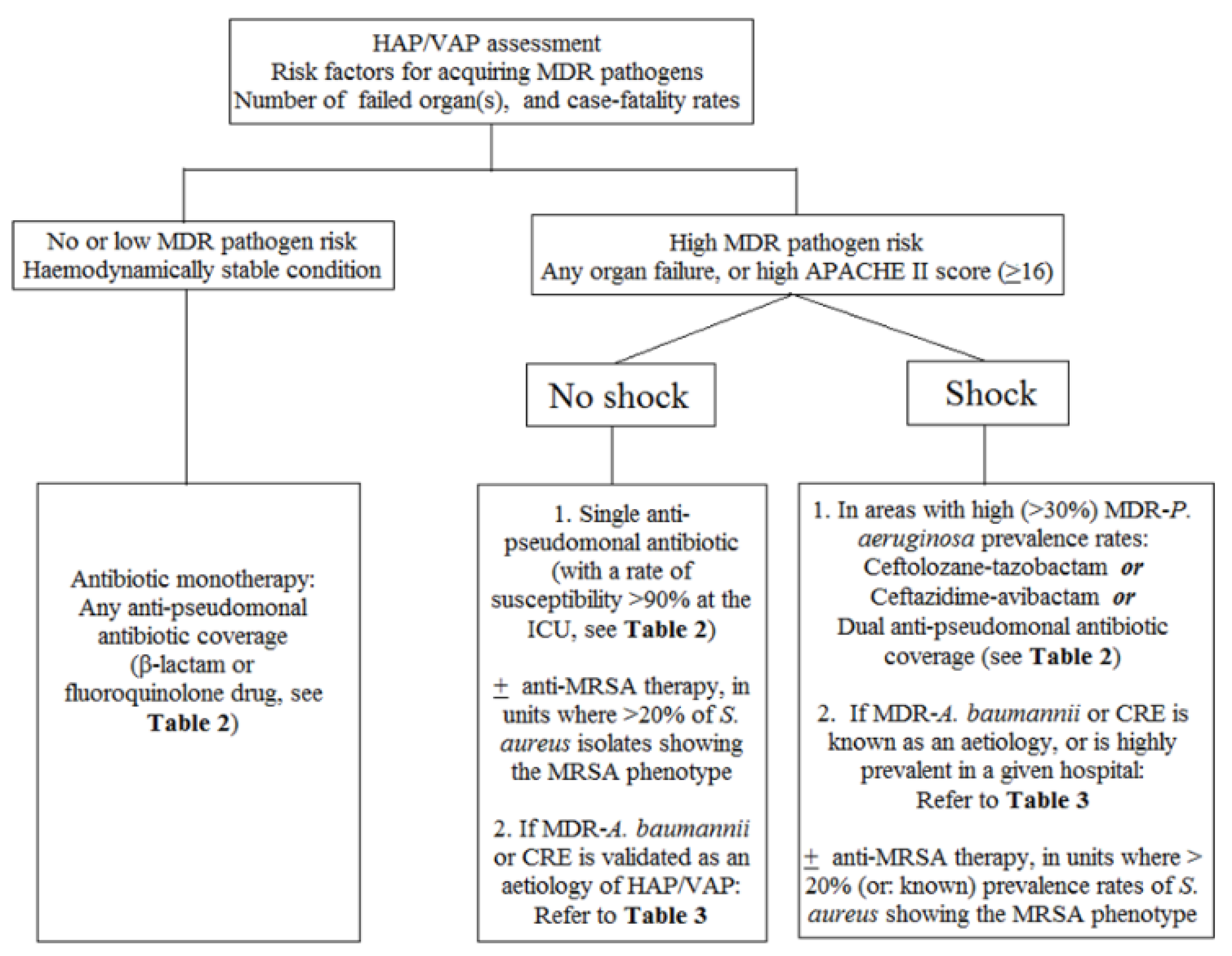
| Clinical Severity and Risk Evaluation | Recommended Antibiotic(s) |
|---|---|
| Haemodynamically stable, low MDR-GNB risks | Any anti-pseudomonal agent (except aminoglycoside IVD monotherapy) |
| Haemodynamically not stable, or higher risks of acquiring MDR-GNB pathogens | Monotherapy with any of the following antibiotics, including: |
| Ceftolozane-tazobactam: 1.5 g IVD every 8 h [19] | |
| Ceftazidime-avibactam: 2.5 g IVD every 8 h Or | |
| Piperacillin-tazobactam: 4.5 g IVD (EI) every 6 h | |
| Ceftazidime: 2 g IVD (EI) every 8 h | |
| Cefepime: 2 g IVD (EI) every 12 h or every 8 h | |
| Imipenem/cilastatin sodium: 500 mg IVD every 6 h or 1 g IVD every 8 h | |
| Meropenem: 1–2 g IVD (EI) every 8 h | |
| Cefoperazone-sulbactam: 4 g IVD every 12 h | |
| +(any of the below non-β-lactam agent) Ciprofloxacin: 400 mg IVD every 8 h (preferred), or alternatively levofloxacin: 750 mg once daily | |
| Colistin (66.8 mg/vial): 5 mg/kg IVD loading, then 2.5 mg × (1.5 × CrCl + 30) IVD every 12 h [67] ±Aerosolised colistimethate sodium (2 MU/vial): 1–2 vials every 12 h or 8 h, or ±Amikacin: 15–20 mg/kg IVD once daily, if complicated bacteraemia, combined with urinary tract infection, and in vitro susceptible to amikacin | |
| High risk of acquiring MRSA pneumonia | Vancomycin: 25–30 mg/kg loading, then 15 mg/kg IVD every 12 h, or |
| Teicoplanin: 12 mg/kg every 12 h × 3 doses (loading), then 6–12 mg/kg IVD once daily, or | |
| Linezolid: 600 mg IVD every 12 h |
| Causative Organisms | Recommended Antibiotic(s) |
|---|---|
| CR- or XDR-Acinetobacter baumannii complex | Ampicillin/sulbactam (0.5/1 g/vial): 3 g IVD every 6 h (if in vitro susceptible and haemodynamically stable) |
| Aerosolised colististimate sodium (2 MU/vial): 2 vials every 8 h (if in vitro susceptible and haemodynamically stable) | |
| Otherwise High-dose meropenem [EI], or doripenem [EI], or imipenem/cilastatin, plus sulbactam: 2.0 g IVD every 6 h, or alternatively colistin (66.8 mg/vial): 2.5–5.0 mg/kg/day IVD (divided into 2–3 times per day, if normal renal function) [75] | |
| ±Aerosolised colistimethate sodium (2 MU/vial): 1–2 vials every 12 h or every 8 h, or ±Amikacin: 15–20 mg/kg IVD once daily, if complicated bacteraemia and/or urinary tract infection, and in vitro susceptible to amikacin | |
| Tigecycline: 50 mg IVD every 12 h (after 150–200 mg loading) plus any anti-pseudomonal carbapenem (EI if necessary) | |
| CR-Enterobacteriaceae spp. | Regardless of haemodynamic condition or severity— Tigecycline: 50 mg IVD every 12 h (after 150–200 mg loading) plus Meropenem: 2 g IVD [EI] every 8 h, and colistin (66.8 mg/vial): 1 vial IVD every 8 h, or 2 vials IVD every 12 h after adequate dose loading if CrCl is normal (or alternatively, Fosfomycin: 2 g IVD every 6 h) |
| Ceftazidime-avibactam: 2.5 g IVD every 8 h (against KPC, or partial oxacillinase-producing CRE) | |
| Dual carbapenem regimen (ertapenem: 1 g IVD once daily plus high-dose meropenem or doripenem [EI]) against KPC producers that are in vitro resistant to colistin [94] |
|
|
© 2020 by the authors. Licensee MDPI, Basel, Switzerland. This article is an open access article distributed under the terms and conditions of the Creative Commons Attribution (CC BY) license (http://creativecommons.org/licenses/by/4.0/).
Share and Cite
Jean, S.-S.; Chang, Y.-C.; Lin, W.-C.; Lee, W.-S.; Hsueh, P.-R.; Hsu, C.-W. Epidemiology, Treatment, and Prevention of Nosocomial Bacterial Pneumonia. J. Clin. Med. 2020, 9, 275. https://doi.org/10.3390/jcm9010275
Jean S-S, Chang Y-C, Lin W-C, Lee W-S, Hsueh P-R, Hsu C-W. Epidemiology, Treatment, and Prevention of Nosocomial Bacterial Pneumonia. Journal of Clinical Medicine. 2020; 9(1):275. https://doi.org/10.3390/jcm9010275
Chicago/Turabian StyleJean, Shio-Shin, Yin-Chun Chang, Wei-Cheng Lin, Wen-Sen Lee, Po-Ren Hsueh, and Chin-Wan Hsu. 2020. "Epidemiology, Treatment, and Prevention of Nosocomial Bacterial Pneumonia" Journal of Clinical Medicine 9, no. 1: 275. https://doi.org/10.3390/jcm9010275
APA StyleJean, S.-S., Chang, Y.-C., Lin, W.-C., Lee, W.-S., Hsueh, P.-R., & Hsu, C.-W. (2020). Epidemiology, Treatment, and Prevention of Nosocomial Bacterial Pneumonia. Journal of Clinical Medicine, 9(1), 275. https://doi.org/10.3390/jcm9010275

