Review

Saccular Aneurysm Models Featuring Growth and Rupture: A Systematic Review


1
Department of Neurosurgery, Kantonsspital Aarau, Aarau 5000, Switzerland
2
Cerebrovascular Research Group, Department for BioMedical Research, University of Bern, Bern 3000, Switzerland
*
Author to whom correspondence should be addressed.
Brain Sci. 2020, 10(2), 101; https://doi.org/10.3390/brainsci10020101

Submission received: 15 January 2020 / Accepted: 25 January 2020 / Published: 13 February 2020

Abstract

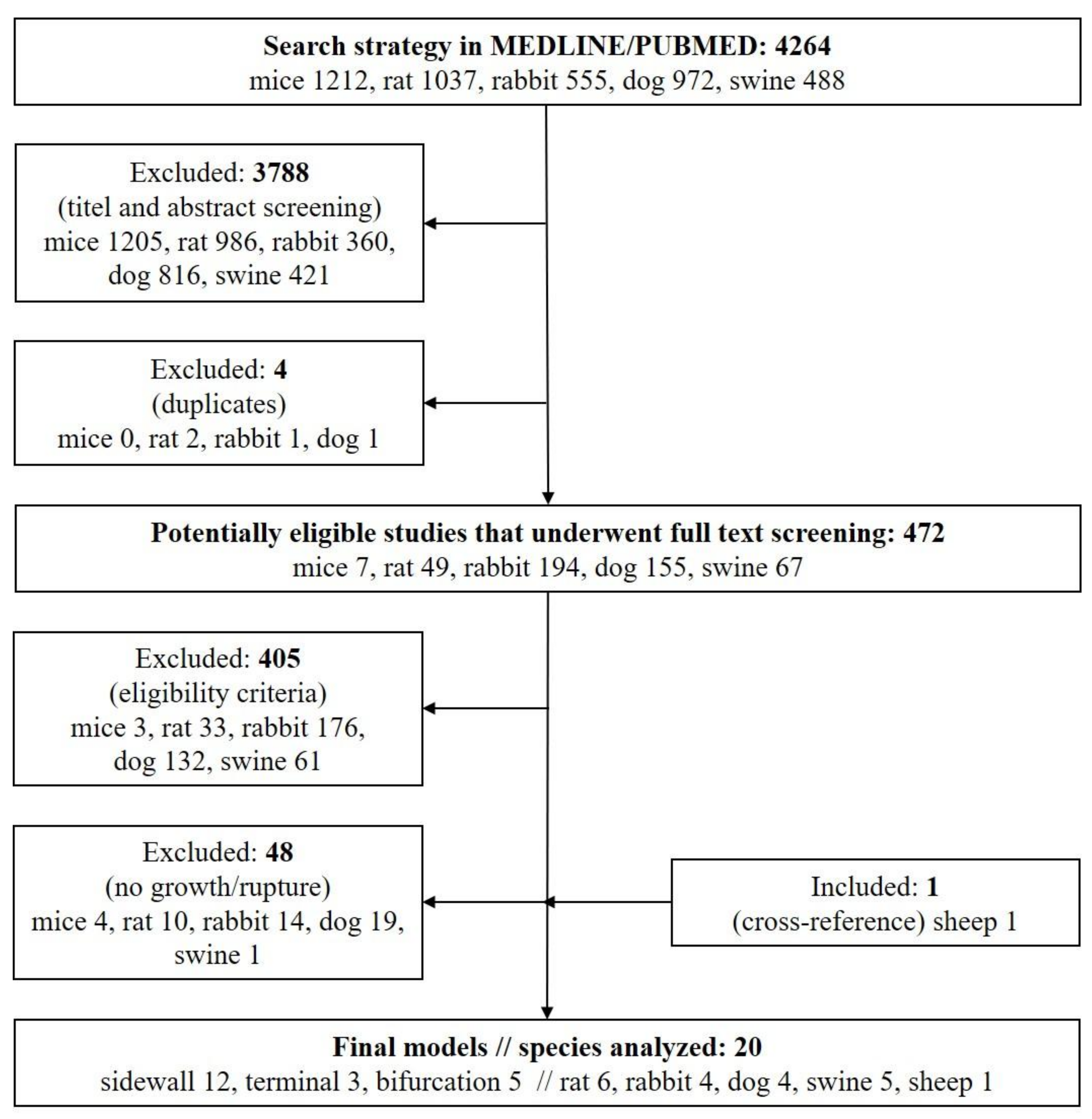
Background. Most available large animal extracranial aneurysm models feature healthy non-degenerated aneurysm pouches with stable long-term follow-ups and extensive healing reactions after endovascular treatment. This review focuses on a small subgroup of extracranial aneurysm models that demonstrated growth and potential rupture during follow-up. Methods. The literature was searched in Medline/Pubmed to identify extracranial in vivo saccular aneurysm models featuring growth and rupture, using a predefined search strategy in accordance with the PRISMA guidelines. From eligible studies we extracted the following details: technique and location of aneurysm creation, aneurysm pouch characteristics, time for model creation, growth and rupture rate, time course, patency rate, histological findings, and associated morbidity and mortality. Results. A total of 20 articles were found to describe growth and/or rupture of an experimentally created extracranial saccular aneurysm during follow-up. Most frequent growth was reported in rats (n = 6), followed by rabbits (n = 4), dogs (n = 4), swine (n = 5), and sheep (n = 1). Except for two studies reporting growth and rupture within the abdominal cavity (abdominal aortic artery; n = 2) all other aneurysms were located at the neck of the animal. The largest growth rate, with an up to 10-fold size increase, was found in a rat abdominal aortic sidewall aneurysm model. Conclusions. Extracranial saccular aneurysm models with growth and rupture are rare. Degradation of the created aneurysmal outpouch seems to be a prerequisite to allow growth, which may ultimately lead to rupture. Since it has been shown that the aneurysm wall is important for healing after endovascular therapy, it is likely that models featuring growth and rupture will gain in interest for preclinical testing of novel endovascular therapies.
Keywords: animal model; growth; aneurysm rupture; saccular; intracranial aneurysm animal model; growth; aneurysm rupture; saccular; intracranial aneurysm