Review

Preclinical Intracranial Aneurysm Models: A Systematic Review


1
Department of Neurosurgery, 5001 Kantonsspital Aarau, Switzerland
2
Cerebrovascular Research Group, Department for BioMedical Research, University of Bern, 3008 Bern, Switzerland
*
Author to whom correspondence should be addressed.
Brain Sci. 2020, 10(3), 134; https://doi.org/10.3390/brainsci10030134

Submission received: 31 January 2020 / Revised: 21 February 2020 / Accepted: 23 February 2020 / Published: 27 February 2020

Abstract

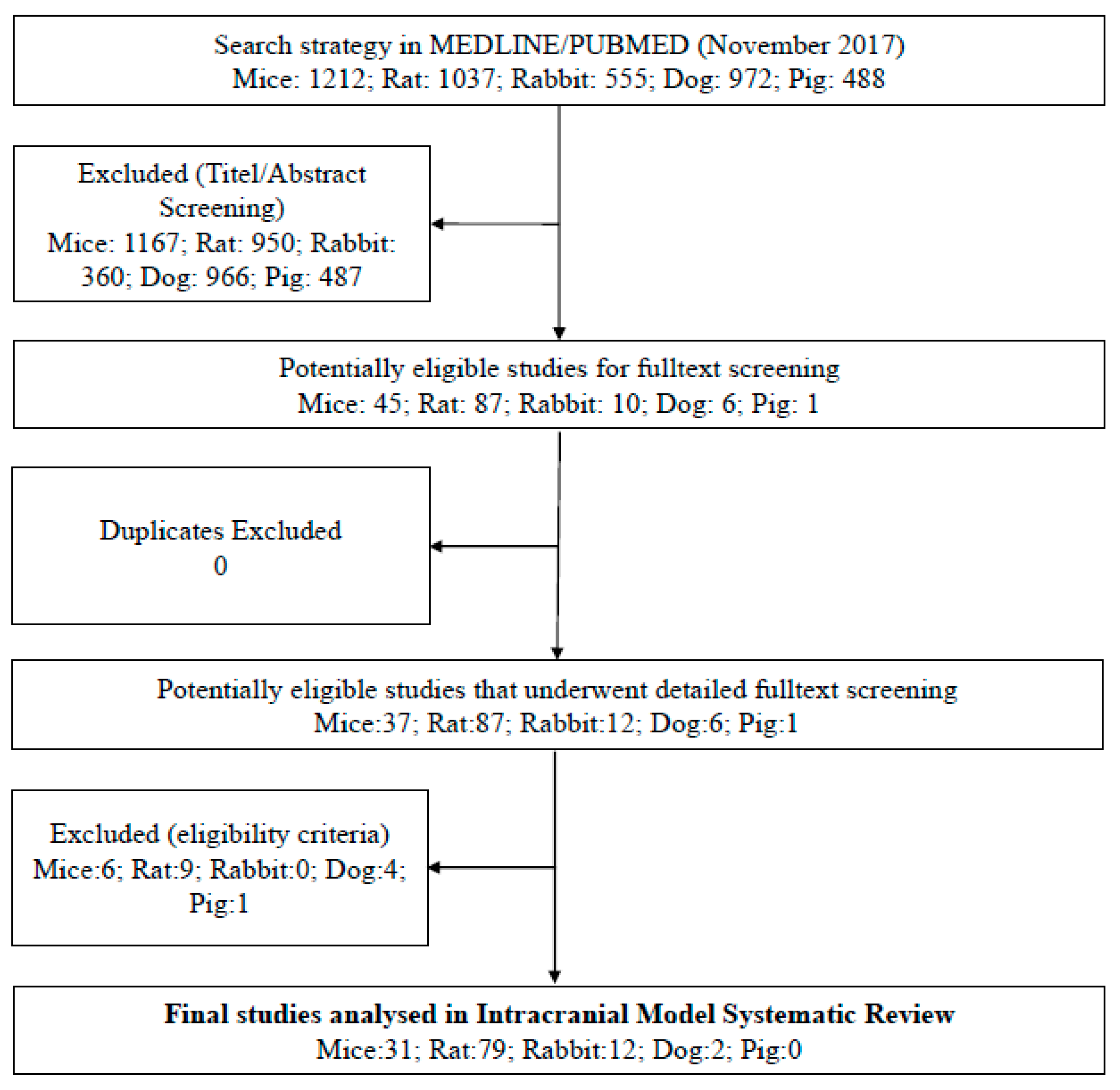
Intracranial aneurysms (IA) are characterized by weakened cerebral vessel walls that may lead to rupture and subarachnoid hemorrhage. The mechanisms behind their formation and progression are yet unclear and warrant preclinical studies. This systematic review aims to provide a comprehensive, systematic overview of available animal models for the study of IA pathobiology. We conducted a systematic literature search using the PubMed database to identify preclinical studies employing IA animal models. Suitable articles were selected based on predefined eligibility criteria following the Preferred Reporting Items for Systematic Reviews and Meta-Analyses (PRISMA) guidelines. Included studies were reviewed and categorized according to the experimental animal and aneurysm model. Of 4266 returned results, 3930 articles were excluded based on the title and/or abstract and further articles after screening the full text, leaving 123 studies for detailed analysis. A total of 20 different models were found in rats (nine), mice (five), rabbits (four), and dogs (two). Rat models constituted the most frequently employed intracranial experimental aneurysm model (79 studies), followed by mice (31 studies), rabbits (12 studies), and two studies in dogs. The most common techniques to induce cerebral aneurysms were surgical ligation of the common carotid artery with subsequent induction of hypertension by ligation of the renal arteries, followed by elastase-induced creation of IAs in combination with corticosterone- or angiotensin-induced hypertension. This review provides a comprehensive summary of the multitude of available IA models to study various aspects of aneurysm formation, growth, and rupture. It will serve as a useful reference for researchers by facilitating the selection of the most appropriate model and technique to answer their scientific question.
Keywords: animal model; aneurysm; cerebral aneurysm; intracranial aneurysm animal model; aneurysm; cerebral aneurysm; intracranial aneurysm