Phenolic Acids and Flavonoids in Selected Commercial Organic and Conventional Tea Products Characterized by Different Degrees of Leaf Fragmentation

 ,
,  ,
,  , , , ,
  and
and 
Abstract
1. Introduction
2. Materials and Methods
2.1. Research Material
2.2. Phenolic Compounds and Caffeine Extraction and Identification
2.3. Statistical Analyses
3. Results
3.1. The Content of Polyphenolic Compounds in the Studied Tea Infusions
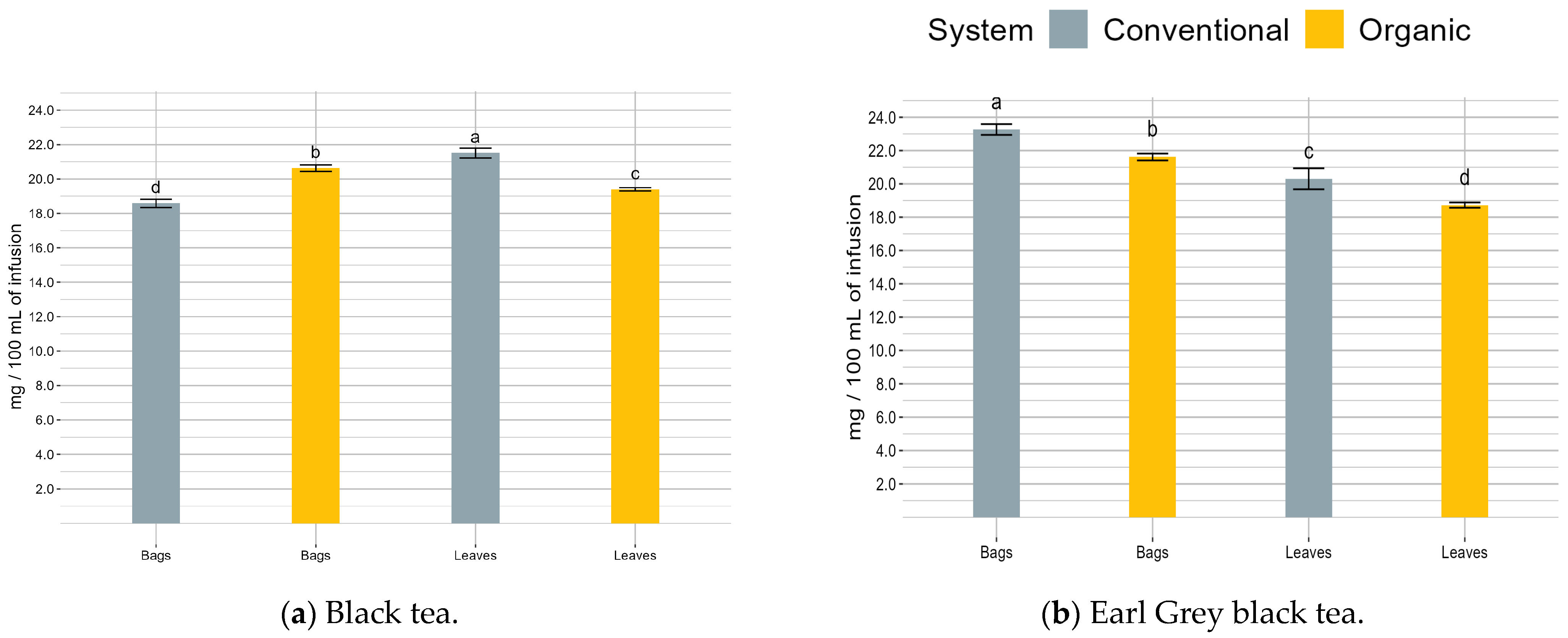
3.1.1. Polyphenol Content (Sum)
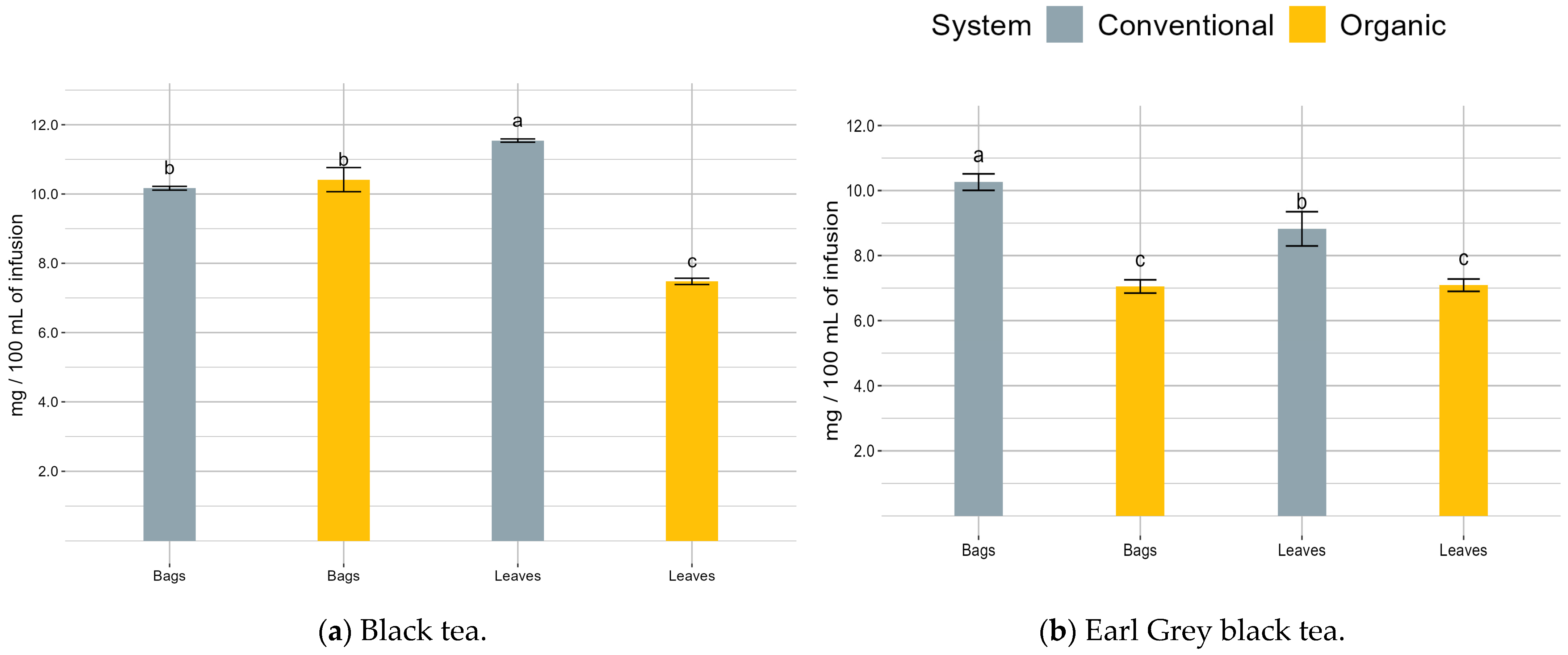
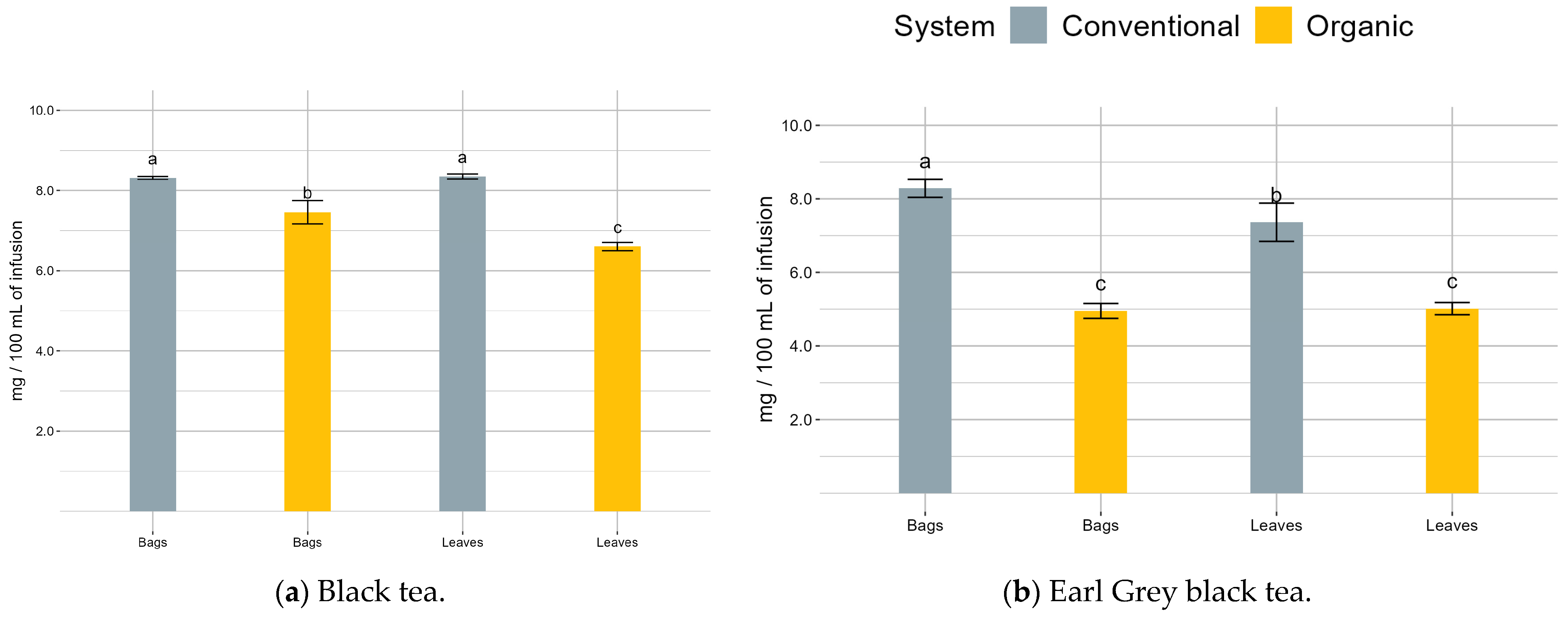
3.1.2. Phenolic Acid Content
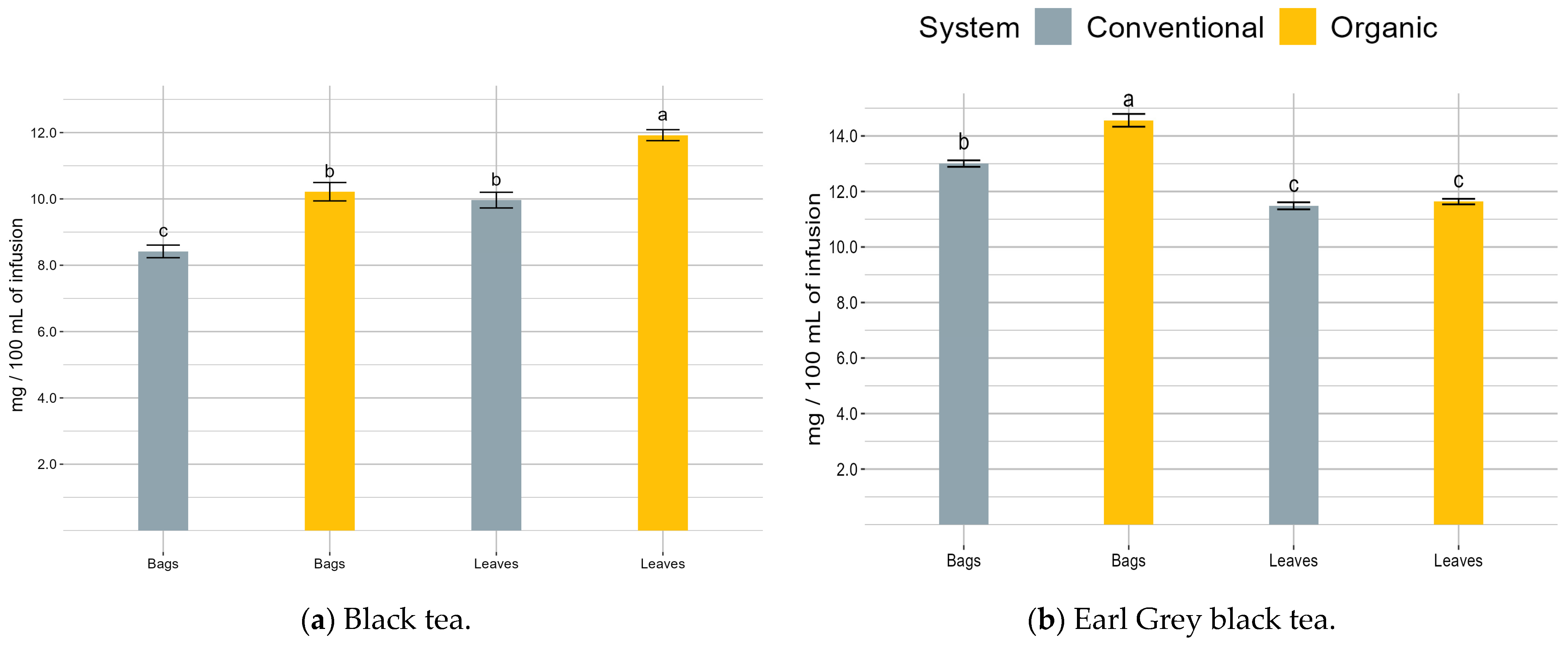
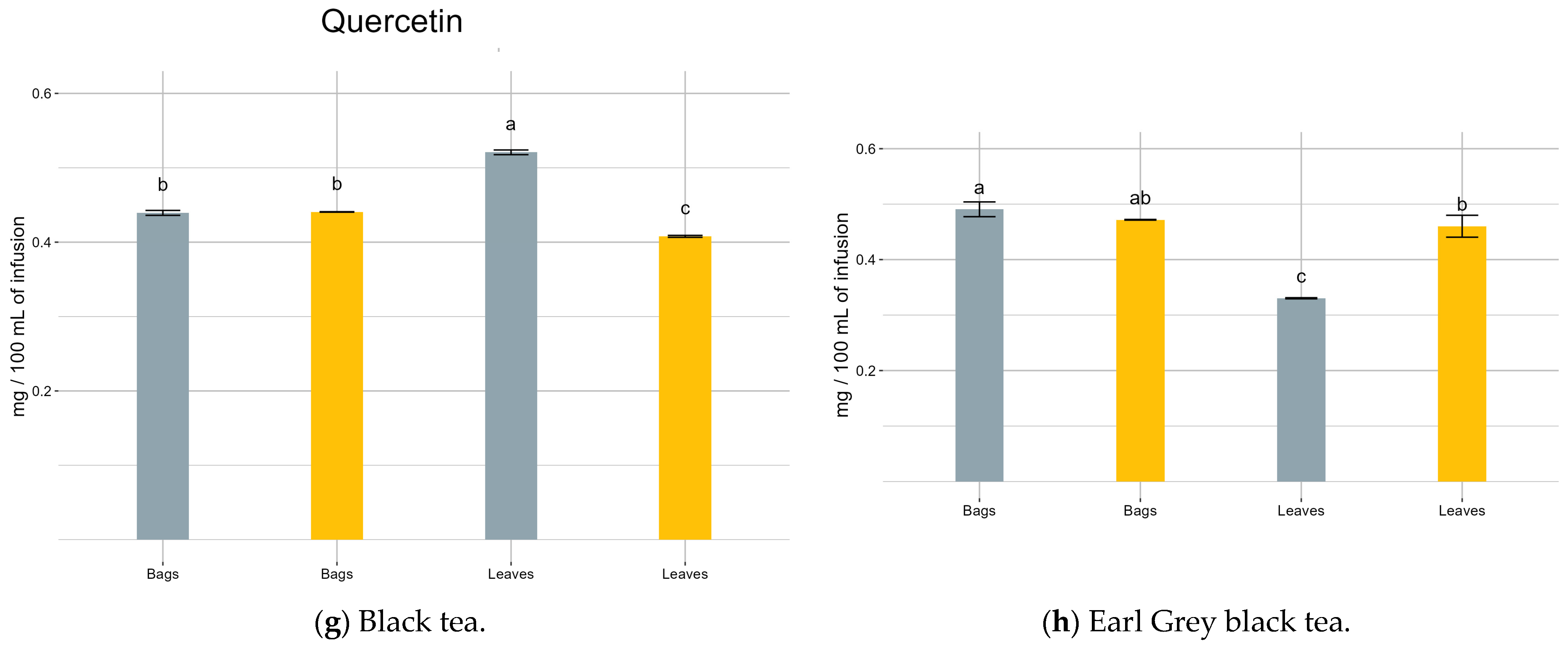
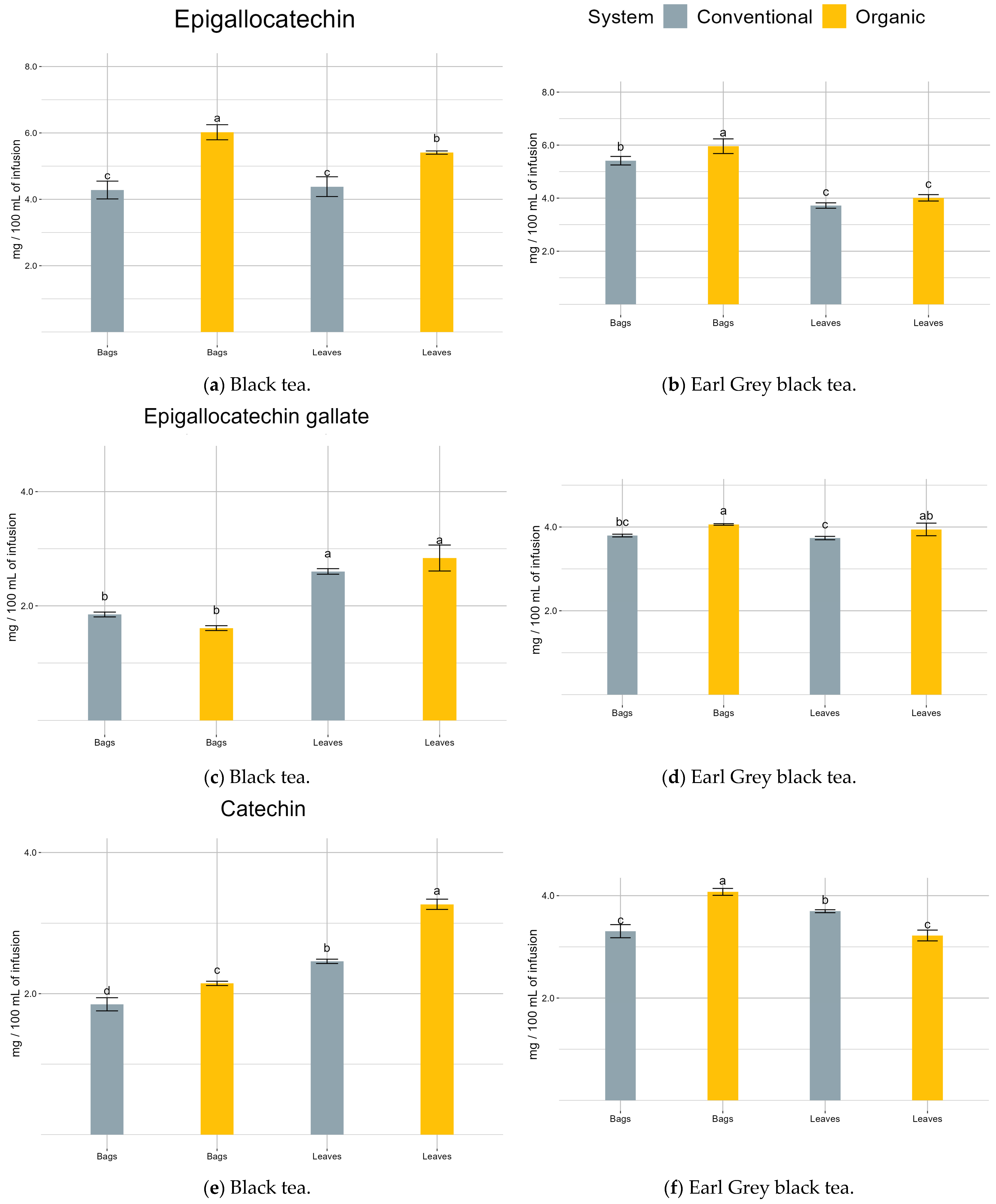
3.1.3. Flavonoid Content
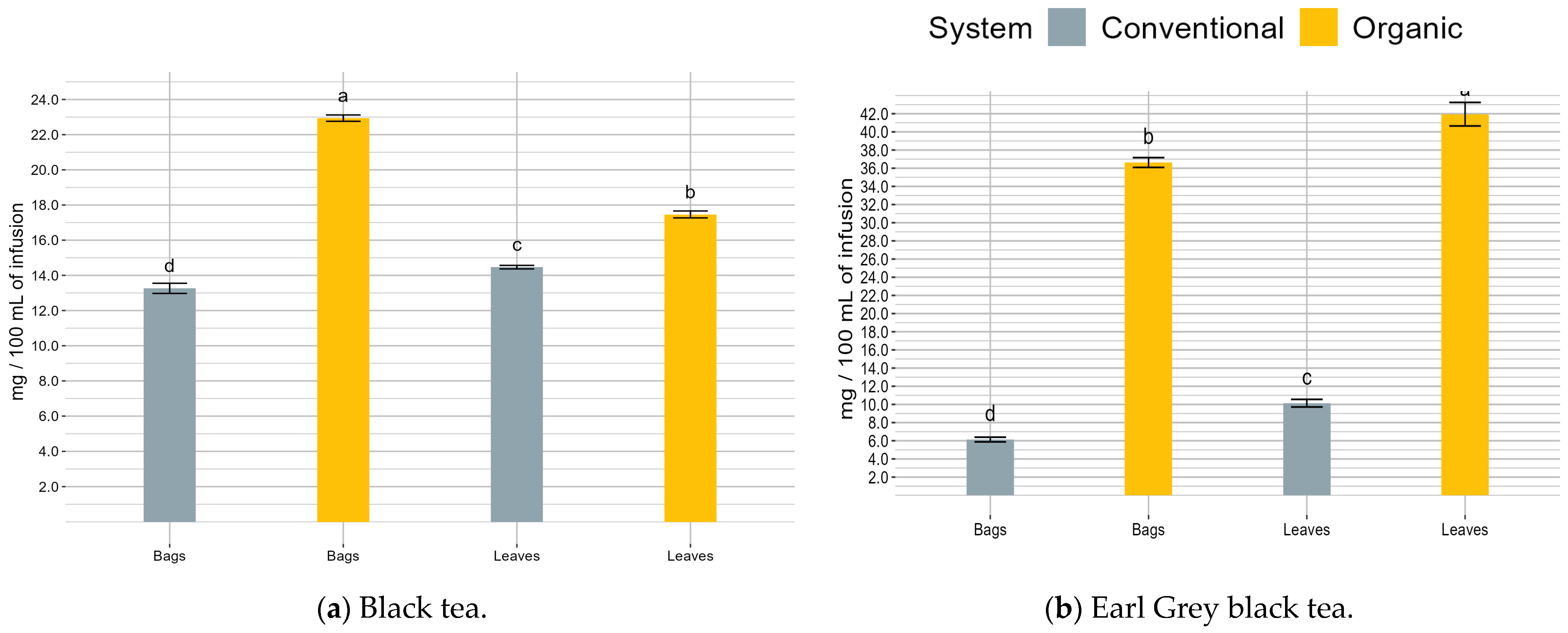
3.2. Caffeine Content in the Examined Tea Infusions
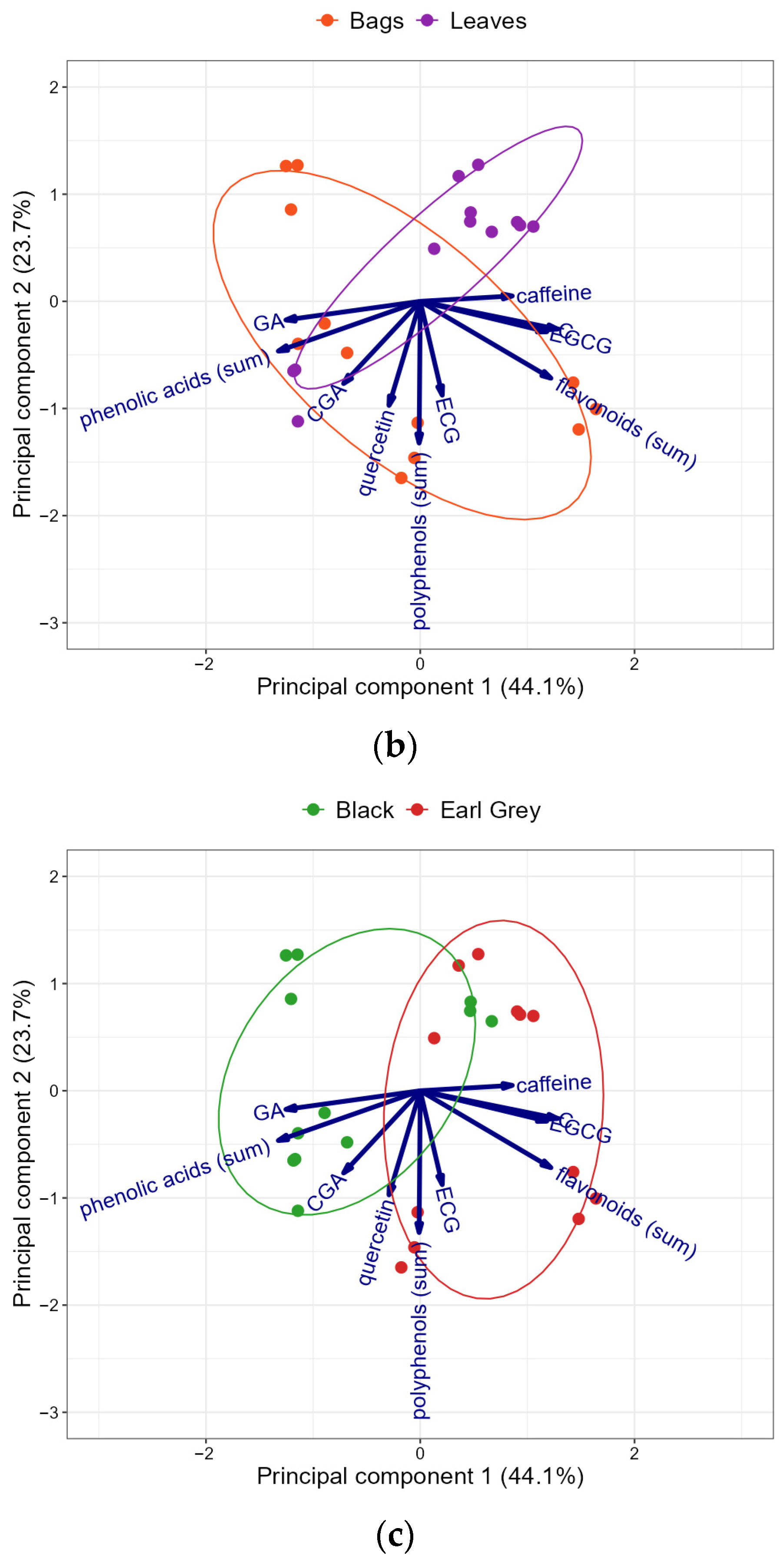
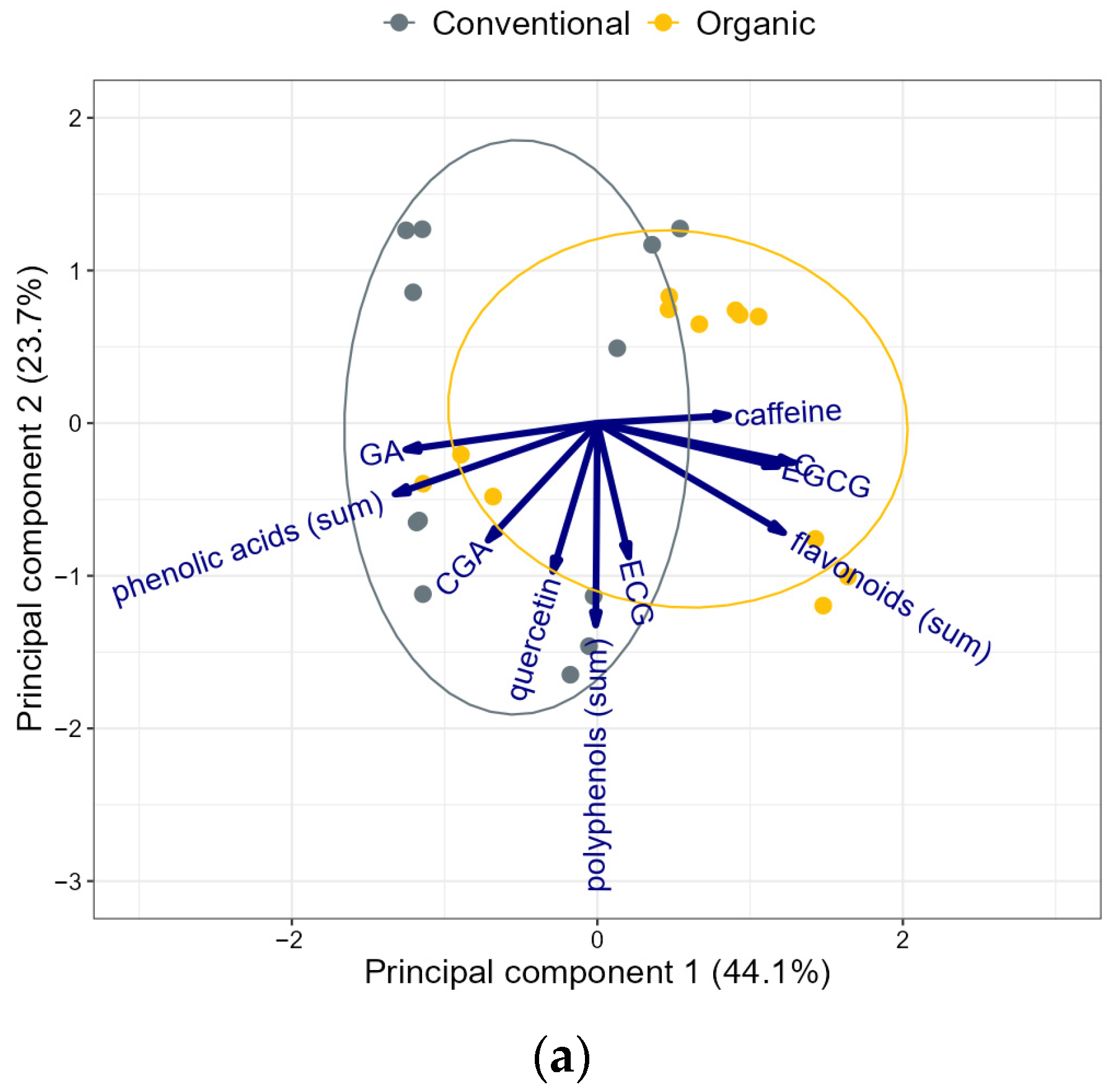
3.3. Principal Component Analysis of the Content of Bioactive Compounds in Tested Tea Infusions
4. Discussion
4.1. The Content of Polyphenolic Compounds
4.2. The Content of Caffeine
4.3. Study Limitations
5. Conclusions
Author Contributions
Funding
Data Availability Statement
Conflicts of Interest
Abbreviations
| GA | Gallic acid |
| CGA | Chlorogenic acid |
| C | Catechin |
| EGC | Epigallocatechin |
| EGCG | Epigallocatechin gallate |
| HPLC | High-performance liquid chromatography |
References
- Zhang, J.; Yang, R.; Chen, R.; Li, Y.C.; Peng, Y.; Liu, C. Multielemental Analysis Associated with Chemometric Techniques for Geographical Origin Discrimination of Tea Leaves (Camelia sinensis) in Guizhou Province, SW China. Molecules 2018, 23, 3013. [Google Scholar] [CrossRef]
- Willson, K.C.; Clifford, M.N. Tea: Cultivation to Consumption; Springer Science & Business Media: Berlin/Heidelberg, Germany, 2012. [Google Scholar]
- Wang, H.; Hua, J.; Jiang, Y.; Yang, Y.; Wang, J.; Yuan, H. Influence of fixation methods on the chestnut-like aroma of green tea and dynamics of key aroma substances. Food Res. Int. 2020, 136, 109479. [Google Scholar] [CrossRef]
- Zhai, X.; Zhang, L.; Granvogl, M.; Ho, C.T.; Wan, X. Flavor of tea (Camellia sinensis): A review on odorants and analytical techniques. Compr. Rev. Food Sci. Food Saf. 2022, 21, 3867–3909. [Google Scholar] [CrossRef]
- Kim, D.B.; Kim, Y.S.; Kim, M.S. Simultaneous determination of polycyclic aromatic hydrocarbons and their nitrated and oxygenated derivatives in dried tea by GC–MS/MS. Food Chem. X 2025, 31, 103029. [Google Scholar] [CrossRef]
- Feng, Z.; Li, Y.; Li, M.; Wang, Y.J.; Zhang, L.; Wan, X.C.; Yang, X.G. Tea aroma formation from six model manufacturing processes. Food Chem. 2019, 285, 347–354. [Google Scholar] [CrossRef]
- Chen, Z.; Sui, Y.; Wisniewski, M. Current and future perspectives on tea production. Ind. Crops Prod. 2025, 235, 121663. [Google Scholar] [CrossRef]
- Han, T.-H.; Tzen, J.T.-C.; Hu, C.-C. Systematic Characterization of Tea Varieties and Manufacturing Processes through Chemical Profiling and Multivariate Statistical Analysis. ACS Food Sci. Technol. 2025, 5, 3387–3398. [Google Scholar] [CrossRef]
- Huda, H.S.A.; Majid, N.B.A.; Chen, Y.; Adnan, M.; Ashraf, S.A.; Roszko, M.; Bryła, M.; Kieliszek, M.; Sasidharan, S. Exploring the ancient roots and modern global brews of tea and herbal beverages: A comprehensive review of origins, types, health benefits, market dynamics, and future trends. Food Sci. Nutr. 2024, 12, 6938–6955. [Google Scholar] [CrossRef]
- Nsanzabera, F.; Nduwayezu, B.; Irakoze, E.; Mwiseneza, A.; Mubashankwaya, I.; Manishimwe, A.; Nsengiyumva, J.B.; Nkurikiyimana, F. Biochemistry of Tea Leaves and Tea Processing Technology. Univers. J. Agric. Res. 2024, 12, 615–628. [Google Scholar] [CrossRef]
- Wong, M.; Sirisena, S.; Ng, K. Phytochemical profile of differently processed tea: A review. J. Food Sci. 2022, 87, 1925–1942. [Google Scholar] [CrossRef]
- Sedaghathoor, S.; Roofigari Haghighat, S.; Shokrgozar, S.A. Storage period effects on the qualitative characteristics of scented tea. Int. J. Biosci. 2013, 3, 66–73. [Google Scholar] [CrossRef]
- Seyıs, F.; Yurterı, E.; Ozcan, A.; Savsatlı, Y. Organic Tea Production and Tea Breeding in Turkey: Challenges and Possibilities. Ekin J. Crop Breed. Genet. 2018, 4, 60–69. [Google Scholar]
- Karagöz, H.; Parlakova Karagöz, F.; Erduran, E.; Çakmakçı, R. Flavor in a Tea Glass to Present from Past: Safely Organic Production and Health Effects of Tea. J. Agric. Prod. 2021, 2, 72–85. [Google Scholar] [CrossRef]
- Liu, Z.; Wang, Q.; Ma, Y.; Zhao, M. Influence on soil ecology, tea yield, and quality of tea plant organic cultivation: A mini-review. Front. Agron. 2025, 7, 1557723. [Google Scholar] [CrossRef]
- ReportLinker. Organic Tea Global Market Report 2023; ReportLinker: New York, NY, USA, 2023. [Google Scholar]
- Luo, Q.; Luo, L.; Zhao, J.; Wang, Y.; Luo, H. Biological potential and mechanisms of Tea’s bioactive compounds: An Updated review. J. Adv. Res. 2024, 65, 345–363. [Google Scholar] [CrossRef] [PubMed]
- Skolmowska, D.; Kołota, A.; Stachoń, M.; Lachowicz, K. Health-promoting properties of bioactive compounds of tea and the influence of method of infusion preparation and time on their. Postępy Tech. Przetwórstwa Spoż. 2020, 30, 131–141. [Google Scholar]
- Chandrasekaran, V.; Hediyal, T.A.; Anand, N.; Kendaganna, P.H.; Gorantla, V.R.; Mahalakshmi, A.M.; Ghanekar, R.K.; Yang, J.; Sakharkar, M.K.; Chidambaram, S.B. Polyphenols, Autophagy and Neurodegenerative Diseases: A Review. Biomolecules 2023, 13, 1196. [Google Scholar] [CrossRef]
- Chen, L.; Wang, H.; Ye, Y.; Wang, Y.; Xu, P. Structural insight into polyphenol oxidation during black tea fermentation. Food Chem. X 2023, 17, 100615. [Google Scholar] [CrossRef]
- Kim, Y.; Goodner, K.; Park, J.-D.; Choi, J.; Talcott, S. Changes in antioxidant phytochemicals and volatile composition of Camellia sinensis by oxidation during tea fermentation. Food Chem. 2011, 129, 1331–1342. [Google Scholar] [CrossRef]
- Piyasena, K.G.N.P.; Hettiarachchi, L.S.K. Comparison of tea quality parameters of conventionally and organically grown tea, and effects of fertilizer on tea quality: A mini-review. Food Chem. Adv. 2023, 3, 100399. [Google Scholar] [CrossRef]
- Khan, N.; Mukhtar, H. Tea polyphenols for health promotion. Life Sci. 2007, 81, 519–533. [Google Scholar] [CrossRef]
- Das, C.; Banerjee, A.; Saha, M.; Chatterjee, S. A Review of the Health Benefits of Tea: Implications of the Biochemical Properties of the Bioactive Constituents. Curr. Res. Nutr. Food Sci. J. 2022, 10, 458–475. [Google Scholar] [CrossRef]
- Trisha, A.T.; Shakil, M.H.; Talukdar, S.; Rovina, K.; Huda, N.; Zzaman, W. Tea Polyphenols and Their Preventive Measures against Cancer: Current Trends and Directions. Foods 2022, 11, 3349. [Google Scholar] [CrossRef] [PubMed]
- Sirotkin, A.V.; Kolesarova, A. The Anti-Obesity and Health-Promoting Effects of Tea and Coffee. Physiol. Res. 2021, 9973, 161–168. [Google Scholar] [CrossRef]
- Sun, M.-F.; Jiang, C.-L.; Kong, Y.-S.; Luo, J.-L.; Yin, P.; Guo, G.-Y. Recent Advances in Analytical Methods for Determination of Polyphenols in Tea: A Comprehensive Review. Foods 2022, 11, 1425. [Google Scholar] [CrossRef]
- Gramza-Michałowska, A. Caffeine in tea Camellia sinensis—Content, absorption, benefits and risks of consumption. J. Nutr. Health Aging 2014, 18, 143–149. [Google Scholar] [CrossRef]
- Ayakdaş, G.; Ağagündüz, D. Determination of L-Theanine and Caffeine Contents in Tea Infusions with Different Fermentation Degrees and Brewing Conditions Using the Chromatographic Method. Foods 2025, 14, 2313. [Google Scholar] [CrossRef]
- Zaiter, A.; Becker, L.; Karam, M.C.; Dicko, A. Effect of particle size on antioxidant activity and catechin content of green tea powders. J. Food Sci. Technol. 2016, 53, 2025–2032. [Google Scholar] [CrossRef]
- Makanjuola, S.A. Influence of particle size and extraction solvent on antioxidant properties of extracts of tea, ginger, and tea—Ginger blend. Food Sci. Nutr. 2017, 5, 1179–1185. [Google Scholar] [CrossRef] [PubMed]
- Etti, C.J.; Alonge, A.F.; Oladejo, A.O.; Akpan, M.G.; Okoko, J.U.; Etuk, N.I. Effects of Particles Size on Tea Processing: A Perspective on Zobo Production. Eur. J. Agric. Food Sci. 2022, 4, 11–18. [Google Scholar] [CrossRef]
- Zhu, H.; Chu, F.; Liu, J.; Chen, L.; Ye, Y. Investigating particle-size-induced changes in composition, physical, rheological, and bioactive properties of black tea powder. J. Sci. Food Agric. 2022, 102, 4131–4139. [Google Scholar] [CrossRef]
- Kolodziej, B.; Sugier, D.; Luchowska, K. Changes of antioxidant activity and active compounds content in selected teas. Foods Raw Mater. 2020, 8, 91–97. [Google Scholar] [CrossRef]
- Ponder, A.; Krakówko, K.; Kruk, M.; Kuliński, S.; Magoń, R.; Ziółkowski, D.; Jariene, E.; Hallmann, E. Organic and Conventional Coffee Beans, Infusions, and Grounds as a Rich Sources of Phenolic Compounds in Coffees from Different Origins. Molecules 2025, 30, 1290. [Google Scholar] [CrossRef] [PubMed]
- R Core Team. A Language and Environment for Statistical Computing; R Core Team: Vienna, Austria, 2024. [Google Scholar]
- Jaganyi, D.; Ndlovu, T. Kinetics of tea infusion. Part 3: The effect of tea bag size and shape on the rate of caffeine extraction from Ceylon orange pekoe tea. Food Chem. 2001, 75, 63–66. [Google Scholar] [CrossRef]
- Xiao, W.; Zhang, Y.; Fan, C.; Han, L. A method for producing superfine black tea powder with enhanced infusion and dispersion property. Food Chem. 2017, 214, 242–247. [Google Scholar] [CrossRef] [PubMed]
- Manach, C.; Scalbert, A.; Morand, C.; Rémésy, C.; Jiménez, L. Polyphenols: Food sources and bioavailability. Am. J. Clin. Nutr. 2004, 79, 727–747. [Google Scholar] [CrossRef]
- Scalbert, A.; Johnson, I.T.; Saltmarsh, M. Polyphenols: Antioxidants and beyond. Am. J. Clin. Nutr. 2005, 81, 215S–217S. [Google Scholar] [CrossRef]
- Shaukat, H.; Ali, A.; Zhang, Y.; Ahmad, A.; Riaz, S.; Khan, A.; Mehany, T.; Qin, H. Tea polyphenols: Extraction techniques and its potency as a nutraceutical. Front. Sustain. Food Syst. 2023, 7, 1175893. [Google Scholar] [CrossRef]
- Manach, C.; Williamson, G.; Morand, C.; Scalbert, A.; Rémésy, C. Bioavailability and bioefficacy of polyphenols in humans. Am. J. Clin. Nutr. 2005, 81, 230S–242S. [Google Scholar] [CrossRef]
- Bhushan, B.; Mahato, D.K.; Verma, D.K.; Kapri, M.; Srivastav, P.P. Potential health benefits of tea polyphenols—A review. In Engineering Interventions in Agricultural Processing; Apple Academic Press: Palm Bay, FL, USA, 2017; pp. 229–282. [Google Scholar]
- EFSA Panel on Food Additives and Nutrient Sources added to Food (ANS); Younes, M.; Aggett, P.; Aguilar, F.; Crebelli, R.; Dusemund, B.; Filipič, M.; Frutos, M.J.; Galtier, P.; Gott, D.; et al. Scientific opinion on the safety of green tea catechins. EFSA J. 2018, 16, e05239. [Google Scholar] [CrossRef]
- Ferrari, E.; Naponelli, V. Catechins and human health: Breakthroughs from clinical trials. Molecules 2025, 30, 3128. [Google Scholar] [CrossRef] [PubMed]
- Cruz-Carrión, Á.; Ruiz de Azua, M.J.; Muguerza, B.; Mulero, M.; Bravo, F.I.; Arola-Arnal, A.; Suarez, M. Organic vs. Non-Organic Plant-Based Foods—A Comparative Study on Phenolic Content and Antioxidant Capacity. Plants 2023, 12, 183. [Google Scholar] [CrossRef]
- Wang, Z.; Zhao, T.; Ma, L.; Chen, C.; Miao, Y.; Guo, L.; Liu, D. Mechanisms governing the impact of nitrogen stress on the formation of secondary metabolites in Artemisia argyi leaves. Sci. Rep. 2023, 13, 12866. [Google Scholar] [CrossRef] [PubMed]
- Barański, M.; Średnicka-Tober, D.; Volakakis, N.; Seal, C.; Sanderson, R.; Stewart, G.B.; Benbrook, C.; Biavati, B.; Markellou, E.; Giotis, C.; et al. Higher antioxidant and lower cadmium concentrations and lower incidence of pesticide residues in organically grown crops: A systematic literature review and meta-analyses. Br. J. Nutr. 2014, 112, 794–811. [Google Scholar] [CrossRef]
- Nikniaz, Z.; Mahdavi, R.; Ghaemmaghami, S.J.; Lotfi Yagin, N.; Nikniaz, L. Effect of different brewing times on antioxidant activity and polyphenol content of loosely packed and bagged black teas (Camellia sinensis L.). Avicenna J. Phytomed. 2016, 6, 313–321. [Google Scholar]
- Senawong, K.; Katekaew, S.; Juntahum, S.; Laloon, K. Impact of Grinding and Sorting Particle Size on Phytochemical Yield in Dipterocarpus alatus Leaf Extract. Int. J. Biomater. 2023, 2023, 4512665. [Google Scholar] [CrossRef]
- Kazimierczak, R.; Hallmann, E.; Rusaczonek, A.; Rembiałkowska, E. Polyphenols, tannins and caffeine content and antioxidant activity of green teas coming from organic and non-organic production. Renew. Agric. Food Syst. 2015, 30, 263–269. [Google Scholar] [CrossRef]
- Han, W.-Y.; Yang, M.-Z. Organic tea has more health benefit and environmental adaptability than conventional tea. In Proceedings of the 4th ISOFAR Scientific Conference. ‘Building Organic Bridges’, at the Organic World Congress; Johann Heinrich von Thünen-Institut, Braunschweig: Braunschweig, Germany, 2014; pp. 151–154. [Google Scholar]
- Han, W.Y.; Wang, D.H.; Fu, S.W.; Ahmed, S. Tea from organic production has higher functional quality characteristics compared with tea from conventional management systems in China. Biol. Agric. Hortic. 2018, 34, 120–131. [Google Scholar] [CrossRef]
- Kim, M.J.; Kim, J.H.; Kim, J.H.; Kim, Y.J. Comparative studies on the antioxidant capacities and catechin profiles of conventional and organic green tea. J. Korean Soc. Appl. Biol. Chem. 2015, 58, 475–480. [Google Scholar] [CrossRef]
- Adorisio, S.; Muscari, I.; Fierabracci, A.; Thi Thuy, T.; Marchetti, M.C.; Ayroldi, E.; Delfino, D.V. Biological effects of bergamot and its potential therapeutic use as an anti-inflammatory, antioxidant, and anticancer agent. Pharm. Biol. 2023, 61, 639–646. [Google Scholar] [CrossRef] [PubMed]
- Nauman, M.C.; Johnson, J.J. Clinical application of bergamot (Citrus bergamia) for reducing high cholesterol and cardiovascular disease markers. Integr. Food Nutr. Metab. 2019, 6, 1–7. [Google Scholar] [CrossRef] [PubMed]
- Pompelli, M.F.; Pompelli, G.M.; de Oliveira, A.F.; Antunes, W.C. The effect of light and nitrogen availability on the caffeine, theophylline and allantoin contents in the leaves of Coffea arabica L. AIMS Environ. Sci. 2014, 1, 1–11. [Google Scholar] [CrossRef]
- Wu, T.; He, J.; Deng, X.; Wang, X.; Yuan, W.; Wang, Q.; Chen, X.; Zou, M.; An, H.; Wang, B.; et al. Influencing Factors and Regulatory Mechanisms of Fresh Tea Leaf Quality: A Review. Foods 2025, 14, 3268. [Google Scholar] [CrossRef] [PubMed]






| Compounds (Standard) | mg/100 mL | |||
|---|---|---|---|---|
| LOD | LOQ | % Recovery | % RSD for Peak Area | |
| Gallic acid | 1.22 | 4.03 | 99.10 | 1.31 |
| Epigallocatechin gallate | 0.97 | 3.20 | 98.87 | 1.38 |
| Catechin | 0.87 | 2.87 | 99.92 | 1.26 |
| Quercetin | 0.12 | 0.39 | 98.93 | 1.12 |
| Caffeine | 4.26 | 14.06 | 99.07 | 1.13 |
| Sample | Polyphenols | Phenolic Acids | Gallic Acid | Chlorigenic Acid | Flavonoids | Catechin | Epigallocatechin | Epigallocatechin Gallate | Quercetin | Caffeine |
|---|---|---|---|---|---|---|---|---|---|---|
| Black–Bags–Conventional | 18.58 ± 0.41 * | 10.17 ± 0.10 | 8.31 ± 0.06 | 1.85 ± 0.05 | 8.42 ± 0.33 | 1.85 ± 0.16 | 4.28 ± 0.46 | 1.85 ± 0.07 | 0.44 ± 0.01 | 13.26 ± 0.50 |
| Black–Bags–Organic | 20.63 ± 0.33 | 10.41 ± 0.60 | 7.46 ± 0.50 | 2.96 ± 0.10 | 10.22 ± 0.48 | 2.15 ± 0.05 | 6.02 ± 0.39 | 1.61 ± 0.07 | 0.44 ± 0.00 | 22.94 ± 0.31 |
| Black–Leaves–Conventional | 21.51 ± 0.49 | 11.54 ± 0.08 | 8.35 ± 0.10 | 3.19 ± 0.03 | 9.96 ± 0.41 | 2.46 ± 0.05 | 4.38 ± 0.52 | 2.60 ± 0.08 | 0.52 ± 0.01 | 14.47 ± 0.17 |
| Black–Leaves–Organic | 19.40 ± 0.17 | 7.48 ± 0.16 | 6.60 ± 0.18 | 0.87 ± 0.03 | 11.92 ± 0.29 | 3.27 ± 0.13 | 5.41 ± 0.08 | 2.84 ± 0.39 | 0.41 ± 0.00 | 17.46 ± 0.34 |
| Earl Grey–Bags–Conventional | 23.26 ± 0.56 | 10.26 ± 0.44 | 8.29 ± 0.42 | 1.97 ± 0.11 | 13.00 ± 0.20 | 3.31 ± 0.22 | 5.41 ± 0.28 | 3.80 ± 0.06 | 0.49 ± 0.02 | 6.14 ± 0.44 |
| Earl Grey–Bags–Organic | 21.61 ± 0.36 | 7.05 ± 0.35 | 4.95 ± 0.35 | 2.10 ± 0.02 | 14.56 ± 0.40 | 4.07 ± 0.11 | 5.96 ± 0.48 | 4.06 ± 0.03 | 0.47 ± 0.00 | 36.63 ± 0.93 |
| Earl Grey–Leaves–Conventional | 20.31 ± 1.09 | 8.82 ± 0.91 | 7.36 ± 0.90 | 1.46 ± 0.03 | 11.48 ± 0.22 | 3.70 ± 0.05 | 3.72 ± 0.18 | 3.74 ± 0.07 | 0.33 ± 0.00 | 10.14 ± 0.73 |
| Earl Grey–Leaves–Organic | 18.72 ± 0.28 | 7.09 ± 0.33 | 5.01 ± 0.29 | 2.08 ± 0.08 | 11.64 ± 0.17 | 3.22 ± 0.18 | 4.01 ± 0.21 | 3.94 ± 0.26 | 0.46 ± 0.03 | 41.95 ± 2.24 |
| p-value ** | ||||||||||
| Type | 0.000 | 0.000 | 0.000 | 0.000 | 0.000 | 0.000 | 0.110 | 0.000 | 0.036 | 0.000 |
| Fragmentation | 0.000 | 0.001 | 0.030 | 0.000 | 0.040 | 0.000 | 0.000 | 0.000 | 0.000 | 0.005 |
| Cultivation | 0.002 | 0.000 | 0.000 | 0.000 | 0.000 | 0.000 | 0.000 | 0.125 | 0.977 | 0.000 |
| Type × Fragmentation | 0.000 | 0.830 | 0.955 | 0.075 | 0.000 | 0.000 | 0.000 | 0.000 | 0.000 | 0.000 |
| Type × Cultivation | 0.002 | 0.150 | 0.000 | 0.000 | 0.002 | 0.002 | 0.005 | 0.120 | 0.000 | 0.000 |
| Fragmentation × Cultivation | 0.000 | 0.002 | 0.896 | 0.000 | 0.034 | 0.005 | 0.117 | 0.170 | 0.174 | 0.003 |
| Type × Fragmentation × Cultivation | 0.000 | 0.000 | 0.017 | 0.000 | 0.010 | 0.000 | 0.444 | 0.084 | 0.000 | 0.000 |
Disclaimer/Publisher’s Note: The statements, opinions and data contained in all publications are solely those of the individual author(s) and contributor(s) and not of MDPI and/or the editor(s). MDPI and/or the editor(s) disclaim responsibility for any injury to people or property resulting from any ideas, methods, instructions or products referred to in the content. |
© 2026 by the authors. Licensee MDPI, Basel, Switzerland. This article is an open access article distributed under the terms and conditions of the Creative Commons Attribution (CC BY) license.
Share and Cite
Kazimierczak, R.; Kopczyńska, K.; Hallmann, E.; Ponder, A.; Żebrowska-Krasuska, M.; Jakubowska, M.; Filipović, A.; Banožić, M.; Mandić, A.; Średnicka-Tober, D. Phenolic Acids and Flavonoids in Selected Commercial Organic and Conventional Tea Products Characterized by Different Degrees of Leaf Fragmentation. Appl. Sci. 2026, 16, 3283. https://doi.org/10.3390/app16073283
Kazimierczak R, Kopczyńska K, Hallmann E, Ponder A, Żebrowska-Krasuska M, Jakubowska M, Filipović A, Banožić M, Mandić A, Średnicka-Tober D. Phenolic Acids and Flavonoids in Selected Commercial Organic and Conventional Tea Products Characterized by Different Degrees of Leaf Fragmentation. Applied Sciences. 2026; 16(7):3283. https://doi.org/10.3390/app16073283
Chicago/Turabian StyleKazimierczak, Renata, Klaudia Kopczyńska, Ewelina Hallmann, Alicja Ponder, Małgorzata Żebrowska-Krasuska, Martyna Jakubowska, Adrijana Filipović, Marija Banožić, Ana Mandić, and Dominika Średnicka-Tober. 2026. "Phenolic Acids and Flavonoids in Selected Commercial Organic and Conventional Tea Products Characterized by Different Degrees of Leaf Fragmentation" Applied Sciences 16, no. 7: 3283. https://doi.org/10.3390/app16073283
APA StyleKazimierczak, R., Kopczyńska, K., Hallmann, E., Ponder, A., Żebrowska-Krasuska, M., Jakubowska, M., Filipović, A., Banožić, M., Mandić, A., & Średnicka-Tober, D. (2026). Phenolic Acids and Flavonoids in Selected Commercial Organic and Conventional Tea Products Characterized by Different Degrees of Leaf Fragmentation. Applied Sciences, 16(7), 3283. https://doi.org/10.3390/app16073283