Article

Germinated Cocoa Beans and Cocoa Husks as Sources of γ-Aminobutyric Acid: Effects of Solvent Extraction (Deionized Water, 70% and 90% Ethanol) and Geographical Variation Across Thailand

1
Department of Tropical Agriculture and International Cooperation, National Pingtung University of Science and Technology (NPUST), Pingtung 91201, Taiwan
2
Department of Food Science, National Pingtung University of Science and Technology (NPUST), Pingtung 91201, Taiwan
*
Author to whom correspondence should be addressed.
Appl. Sci. 2026, 16(8), 3616; https://doi.org/10.3390/app16083616
Submission received: 11 February 2026 / Revised: 28 March 2026 / Accepted: 2 April 2026 / Published: 8 April 2026
(This article belongs to the Special Issue Advancements in Food Nutrition and Bioactive Compounds)

Abstract

Gamma-aminobutyric acid (GABA), a non-protein amino acid, functions as the chief inhibitory neurotransmitter in mammals and is associated with several health benefits, including hypotensive, diuretic, tranquilizing, and antidiabetic effects. Although cocoa has been identified as a potential source of GABA, information regarding its concentration in cocoa-derived materials remains limited. This study evaluated the GABA content of dried germinated cocoa beans and dried cocoa husks (shells) collected from different geographical regions in Thailand. GABA was extracted using solid–liquid extraction with deionized water, 70% ethanol (v/v), and 90% ethanol (v/v), and quantified by high-performance liquid chromatography coupled with diode array detection (HPLC/DAD). The results revealed that both germinated cocoa beans and cocoa husks contain considerable amounts of GABA. The highest GABA content in cocoa beans was detected in samples from Tak province (242 ± 18 mg/100 g), while cocoa husks from Nan province exhibited the highest GABA content (361 ± 11 mg/100 g), both obtained using 70% ethanol extraction. Among the solvents tested, 70% ethanol demonstrated superior extraction efficiency compared with deionized water and 90% ethanol. In conclusion, germinated cocoa beans and cocoa husks represent promising natural sources of GABA, and extraction with 70% ethanol provides an effective approach for maximizing GABA recovery for potential functional foods and bioactive product development.

1. Introduction

Cocoa beans originate as seeds in the fruit pods of the tropical crop Theobroma cacao L., which is typically cultivated in the humid lowland tropics by small-scale producers [1]. Cocoa cultivation in Thailand has expanded steadily in recent years, with plantations now distributed across mountainous, plateau, and lowland regions. Despite this growth, information regarding bioactive compounds in Thai cocoa, particularly GABA, remains limited. GABA is a non-protein amino acid formed through the enzymatic α-decarboxylation of glutamate. It is recognized as a neurotransmitter and is considered a natural compound for managing lifestyle diseases, including via hypotensive, diuretic, tranquilizing, and diabetes-preventing agents. GABA is generated from l-glutamate through a single-step α-decarboxylation catalyzed by glutamic acid decarboxylase (GAD) [2,3]. GABA and GAD exist in many prokaryotes and eukaryotes. In animals and humans, GABA is the main inhibitory neurotransmitter in the central nervous system [4]. Clinical research shows that increased intake of GABA has several health benefits, such as reducing the blood pressure of mildly hypertensive animals [5,6] and humans [7]. Other physiological functions of GABA include potential diabetes prevention, and diuretic and tranquilizer effects [8,9,10,11,12]. Regarding these health benefits, several GABA-enriched products have been made and studied. These include beverages [13], fermented milks [14], cereal-based products [15], rice vinegars [16], and teas [17]. In addition, GABA is also used in pharmaceutical preparations, and it is a significant ingredient of many nutritional supplements.
Currently, Thailand produces approximately 200,000 tons of cocoa beans annually [18]. Moreover, several cocoa cultivations in Thailand are constantly expanding to all regions of Thailand. Different environmental and climatic diversity across different regions is hypothesized to alter the biochemical composition of the cocoa. Moreover, the early stages of cocoa post-harvest processing are carried out in the place of origin by traditional processes. Cocoa is a well-known source of food products and is gaining recognition as a functional food due to its abundant polyphenols, methylxanthines (caffeine and theobromine), and amino acids. The knowledge of the amino acid composition is critical to assess part of the nutritional value and to predict the development of flavor compounds during the manufacture of cocoa products [19,20,21,22,23]. Non-fermented beans contain some free amino acids, with a prevalence of acidic ones. The distribution of free amino acids of unfermented cocoa beans exhibits a 1/1 ratio between hydrophobic and acidic amino acids [24]. The increase in the concentrations of hydrophobic amino acids, such as leucine, alanine, and phenylalanine, is explained by the activity of two cocoa proteases: carboxypeptidase releases single hydrophobic amino acids, while aspartic endoprotease hydrolyzes proteins preferentially at the hydrophobic amino acid sites [25,26]. A comprehensive investigation of free amino acid distribution in over 100 cocoa bean samples from various nations has been conducted [21]. The investigation indicated that the GABA concentrations in cocoa beans were as follows: Africa: 35 to 93.9 mg/100 g; America: 31.7 to 101.2 mg/100 g; Asia: 47 to 95 mg/100 g; and Oceania: 45 to 68 mg/100 g [27]. While international studies confirm significant variability of GABA in cocoa based on its origin, there is a notable lack of comprehensive data on the GABA content in cocoa sourced from the diverse terroirs of Thailand. The cultivation of cocoa in Thailand has been consistently increasing. A greater quantity of cocoa beans is entering the Thai chocolate manufacturing industry. Nonetheless, after post-harvesting processes such as fermentation and drying, numerous germinated cocoa beans frequently remain unutilized. Only non-germinated cocoa beans are employed as raw materials for chocolate production. Furthermore, the abundant cocoa husks, regarded as bean shells, are considered a significant agricultural waste product. These waste materials are recognized to contain GABA but remain predominantly uncharacterized in the Thai literature. A systematic study is necessary to map the distribution of GABA in both the dried germinated cocoa beans and husks using various solvents, which are crucial for enhancing the biochemical profiles. Concerning the GABA content in cocoa, limited information is available in the literature. The objective of this study was to evaluate the GABA content in dried germinated cocoa beans and husks (shells) from different geographical regions in Thailand and to investigate the influence of solvent extraction using deionized water, 70% ethanol, and 90% ethanol on GABA recovery.

2. Materials and Methods

2.1. Cocoa Sample Collection and Preparation

Samples of dried germinated cocoa beans, classified as defective, were obtained from processed cocoa beans sourced from 8 distinct areas in Thailand [Table 1], after being processed through fermentation and sun-drying to attain a moisture content of 7% by small-scale manufacturers. Naturally, germination in cocoa refers to the process whereby the seed begins to sprout (radicle emergence) in the presence of moisture, appropriate temperature, and sufficient duration. The samples were subsequently separated into beans and husks, and ground individually using a mortar and pestle. All cocoa samples originated from the Chumphon #1 variety, developed by hybridizing the PA7 and NA32 varieties of Trinidad. The cultivating sites, each covering approximately two hectares and featuring cocoa trees cultivated for five years, were in areas characterized by broadly comparable agricultural soils suitable for cocoa cultivation, based on local agronomic information, although no detailed soil classification or physicochemical analyses were conducted in this study. Cocoa sampling occurred in December 2025, representing the second harvest period following the wet season in Thailand (July 2025 to November 2025). Additionally, each sample originated from distinct geographical locations, ranging from mountainous regions (307–315 m above sea level) in Nan and Chiang Mai to plateau regions (184–187 m above sea level) in Tak, Nakhon Ratchasima, and Chaiyaphum and lowland regions (14–21 m above sea level) in Lopburi, Nakhon Si Thammarat, and Phatthalung. Table 1 exhibits the provinces of origin together with their respective altitudes above sea level [28].
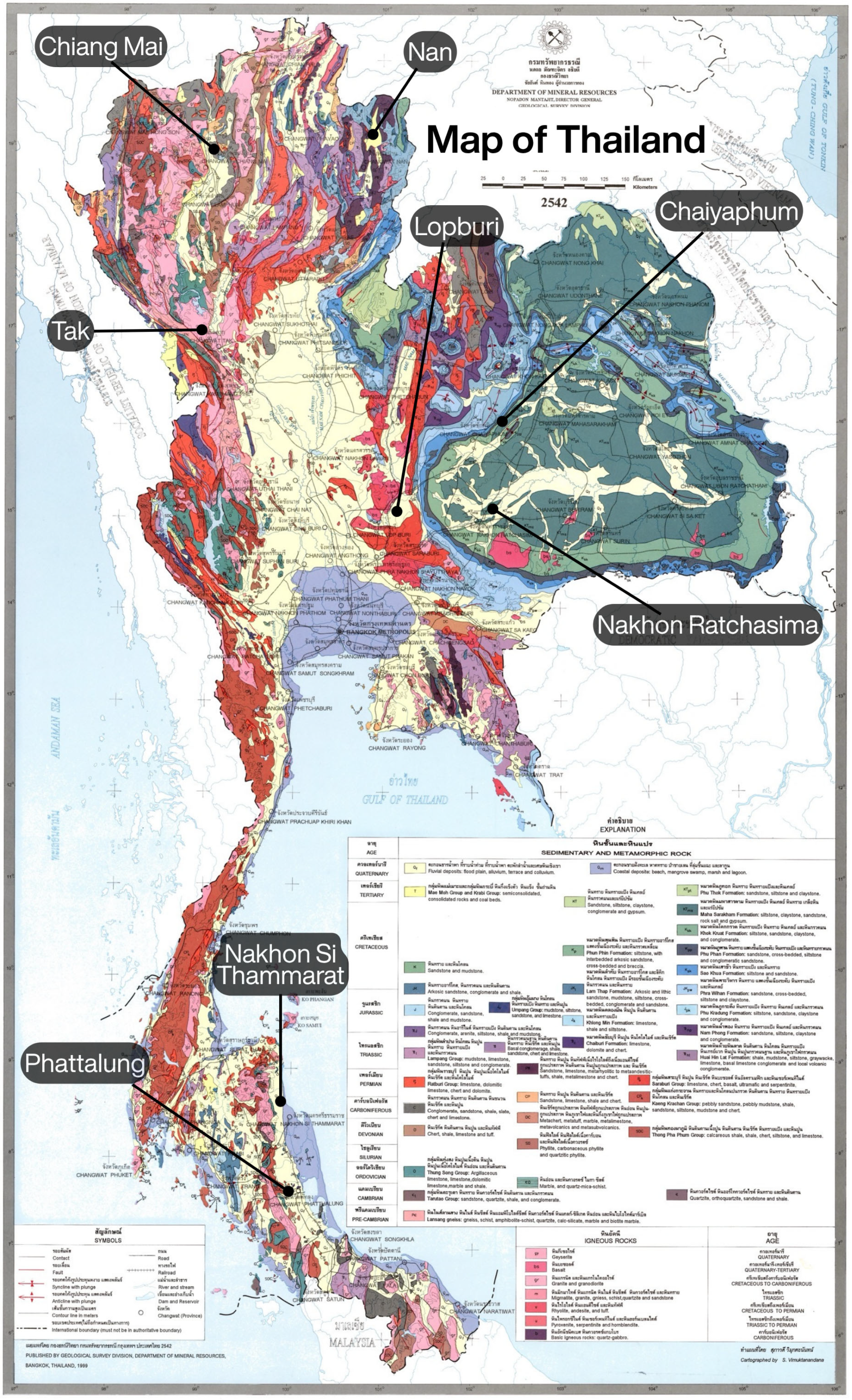
Figure 1 presents a map indicating the origins of cocoa bean sampling in Thailand, depicting the geographical distribution of the cocoa sampling locations utilized in this study throughout the country. Cocoa samples were collected from eight provinces, each representing distinct regions and geological landscapes of the country: Chiang Mai and Nan from the mountainous region; Tak, Nakhon Ratchasima, and Chaiyaphum from the plateau region; and Lopburi, Nakhon Si Thammarat, and Phatthalung from the lowland region. The image derives from the national geology map of Thailand’s Department of Mineral Resources [28] and highlights the diverse geological formations and environmental conditions across the sampling locations. The variations in geographical and geological factors may affect cocoa cultivation conditions and potentially contribute to differences in the biochemical composition of cocoa beans and husks, including GABA content. The marked locations indicate the origins of the cocoa samples examined in this study.

2.2. Sample Extraction

A standardized solid–liquid extraction (SLE) procedure was performed for each sample–solvent pairing using 3 different solvents: deionized water, 70% ethanol solution, and 90% ethanol solution. Five grams of dried germinated cocoa beans and cocoa bean husks (shells) were separately extracted with 100 mL of the three aforementioned solvents and kept at 4 °C for 48 h. The extraction procedure was repeated three times. After filtration, the filtrate was concentrated under reduced pressure to obtain the crude extract. An aliquot of 100 mg of crude extract was dissolved in 1 mL of ultrapure water and centrifuged at 17,850 rpm at 4 °C. The supernatant was collected and passed through a 0.45 μm membrane filter to yield a clear solution.

2.3. HPLC Analysis of GABA

Preparation step before chromatographic injection, 100 μL of the filtered sample solution was combined with 50 μL of o-phthalaldehyde (OPA) reagent and permitted to react at ambient temperature for 1 min. Finally, 10 μL of the derivatized solution was injected into the high-performance liquid chromatography (HPLC) system for analysis, and each sample was analyzed in triplicate. Table 2 presents the chromatographic parameters for the high-performance liquid chromatograph (HPLC), which operated with a Hitachi L-2200 Autosampler and a Hitachi L-2455 Diode Array Detector at a specific wavelength of 338 nm for the GABA derivative. The HPLC analytical conditions for OPA derivatization utilized a Luna CN column (5 μm), measuring 250 × 4.6 mm (Phenomenex, Torrance, CA, USA). Eluent A consisted of phosphate buffer (NaH2PO4). Eluent B consisted of Acetonitrile (ACN). Eluent C was a 5 mM citrate buffer. The flow rate was 0.8 milliliters per min. Gradient (A + B = 100% v/v, and B + C = 100% v/v): (1) 0 to 12 min: 87% A, 13% B; (2) 12 to 20 min: 15% B, 85% C; (3) 20 to 25 min: 85% B, 15% C; (4) 25 to 40 min: 87% A, 13% B; (5) 40 to 60 min: 87% A, 13% B. Following the injection of 10 μL of this mixture, the derivatization was terminated precisely after 12 min by passing the eluent into the column. And the peak area obtained from the HPLC analysis was converted to concentration using the calibration equation y = 9,456,934.50x + 998,187.50, where x represents the concentration and y represents the peak area. The calibration curve exhibited a coefficient of determination (R2) of 0.9945.

2.4. Statistical Analysis

All experimental results were presented as mean ± standard deviation (SD). Differences in gamma-aminobutyric acid (GABA) concentrations among dried germinated cocoa bean and husk samples from different geographical origins were evaluated using one-way analysis of variance (ANOVA), followed by Scheffé’s post hoc test for multiple comparisons to identify statistically significant differences between group means. Statistical analyses were performed using Microsoft Excel. A p-value less than 0.05 was considered indicative of statistical significance.

3. Results

3.1. The Concentration of GABA in Cocoa Beans Varies Depending on Their Origin and the Solvent Used for Extraction

Gamma-aminobutyric acid (GABA) concentrations in dried germinated cocoa beans from eight provinces of Thailand, as determined by HPLC, are summarized in Table 3. Overall, extraction with 70% ethanol resulted in the highest GABA yields in most cocoa bean origins, confirming its superior extraction efficiency compared with deionized water and 90% ethanol. The highest quantities of GABA were observed in samples from Tak (242 ± 18 mg/100 g) and Nan (237 ± 15 mg/100 g) when extracted using 70% ethanol, with a statistically significant difference among the samples. In contrast, extraction with 90% ethanol yielded the lowest GABA concentrations across all origins, with GABA being undetectable in samples from Lopburi, highlighting the limited suitability of high-ethanol systems for amino acid extraction. For deionized water extracts, Nan showed the highest GABA concentration (200 ± 12 mg/100 g), which was significantly higher than that observed in Lopburi and Nakhon Ratchasima, but not significantly different from that in Chaiyaphum or Chiang Mai. Among the remaining provinces, intermediate GABA levels were found in Chaiyaphum, Chiang Mai, Nakhon Si Thammarat, and Phatthalung. The findings indicated that extraction solvents significantly influence GABA recovery from dried germinated cocoa beans, with 70% ethanol identified as the most effective solvent, while Nan and Tak were notably potential sources of GABA-enriched cocoa.

3.2. The Concentration of GABA in Cocoa Husks Varies Depending on Their Origin and the Solvent Used for Extraction

The GABA concentrations in cocoa husks from eight provinces of Thailand, determined by HPLC, are presented in Table 4. Among all samples, extraction with 70% ethanol yielded the highest GABA concentration in most origins, particularly in Nan, which exhibited a markedly high GABA level (361 ± 11 mg/100 g), significantly greater than all other samples. This result highlights Nan-derived cocoa husks as the most promising source of GABA among the investigated regions. Similarly, relatively high GABA concentrations were observed in Nakhon Si Thammarat (144 ± 18 mg/100 g) and Chaiyaphum (135 ± 10 mg/100 g) under 70% ethanol extraction. Moreover, Phatthalung origin showed undetectable GABA level in 70% ethanol extracts. In contrast, deionized water extracts generally yielded low GABA concentrations across all origins, with the highest value detected in Nan (160 ± 11 mg/100 g), followed by Chaiyaphum (85 ± 5 mg/100 g). Moreover, Lopburi origin showed undetectable GABA level in deionized water extracts. Extraction with 90% ethanol resulted in consistently low or undetectable GABA concentrations in most samples, except for those from Phatthalung (70 ± 8 mg/100 g) and Chaiyaphum (68 ± 6 mg/100 g), where moderate levels were observed. Several origins, including Nakhon Si Thammarat, Tak, Lopburi, and Nakhon Ratchasima, showed undetectable GABA level in 90% ethanol extracts. These findings further confirm the limited suitability of high-ethanol systems for the extraction of polar amino acids such as GABA. Overall, the results demonstrated that solvent type significantly influence GABA recovery from cocoa husks. The superior performance of 70% ethanol and the particularly high GABA content in Nan-derived husks emphasize the potential of cocoa processing by-products as a valuable source of functional bioactive compounds.

3.3. Comparative GABA Concentration in Dried Germinated Cocoa Beans and Husks Utilizing 70% Ethanol Solvent

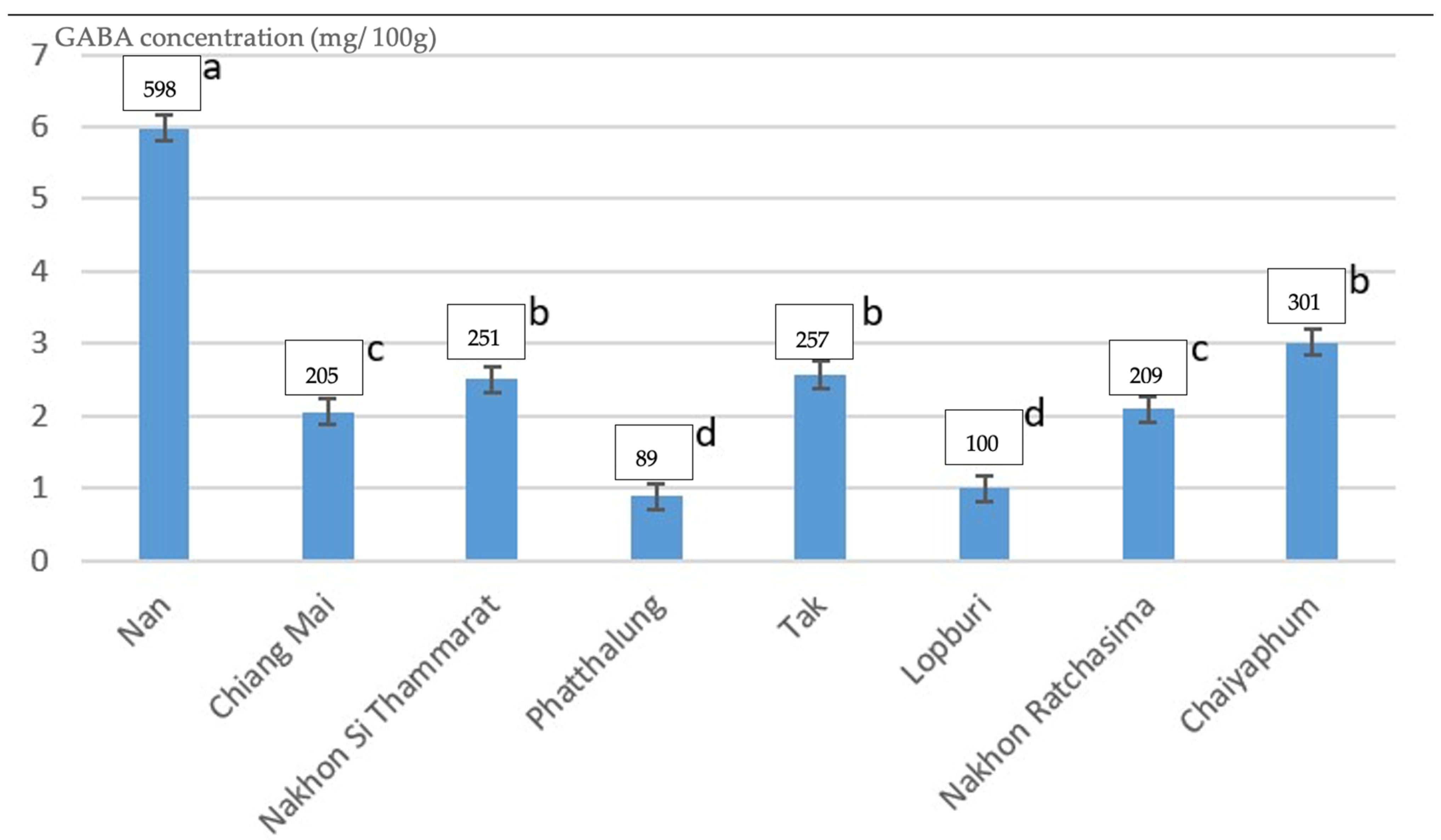
The total GABA content of dried germinated cocoa bean and husk extracted with 70% ethanol exhibited significant variation among the examined geographical origins in Thailand. The highest GABA concentration was observed in samples from Nan (598 mg/100 g), followed by Chaiyaphum (301 mg/100 g), Tak (257 mg/100 g), and Nakhon Si Thammarat (251 mg/100 g). Intermediate levels were detected in Nakhon Ratchasima (209 mg/100 g) and Chiang Mai (205 mg/100 g), while Lopburi (100 mg/100 g) and Phatthalung (89 mg/100 g) exhibited the lowest GABA contents (Figure 2). However, the relationship between geographic variation and GABA concentration did not conform to a strictly correlated pattern, as some mid-altitude regions (e.g., Chaiyaphum and Tak) also showed relatively high GABA concentrations. Overall, these findings demonstrated that the GABA content of dried germinated cocoa materials was influenced by the geographical origin and other complex interactions of various environmental factors as they were extracted with 70% ethanol.

4. Discussion

The detection of γ-aminobutyric acid (GABA) in germinated cocoa beans and cocoa husks demonstrates that cocoa-derived materials are viable sources of this bioactive compound. Previous studies have primarily focused on non-germinated cocoa beans, reporting GABA concentrations ranging from 31.7 to 101.2 mg/100 g across diverse global origins. In contrast, the germinated cocoa samples analyzed in this study exhibited elevated GABA levels, consistent with the metabolic activation associated with germination. This distinction indicates that Thai germinated cocoa not only shares a comparable biochemical profile with non-germinated cocoa from Africa, America, Asia, and Oceania, but also demonstrates enhanced GABA accumulation attributable to germination. Importantly, this work provides novel evidence by specifically characterizing GABA in germinated cocoa beans and husks, materials that have received limited attention in the prior literature. In plants, GABA is synthesized predominantly via the GABA shunt pathway, wherein glutamate undergoes α-decarboxylation catalyzed by GAD. This metabolic pathway connects carbon and nitrogen metabolism and is crucial for plant responses to environmental stress [29]. Physiological stressors, such as those encountered during germination, are known to enhance GAD activity and thereby increase GABA accumulation. The elevated GABA levels observed in germinated cocoa beans in this study corroborate earlier findings in grains and legumes, reinforcing germination as a key factor influencing GABA biosynthesis. The efficiency of solvent extraction further underscores the importance of methodological considerations in GABA recovery. The superior performance of 70% ethanol compared with deionized water and 90% ethanol can be explained by solvent polarity and penetration dynamics. Hydroalcoholic mixtures are widely recognized for their ability to facilitate the extraction of polar metabolites, as the presence of water enhances mass transfer while maintaining sufficient polarity to solubilize hydrophilic compounds such as GABA [30]. Conversely, highly concentrated ethanol reduces polarity, thereby limiting the extraction of amino acids. This solvent-dependent behavior is consistent with previous studies on plant-derived amino acids and other polar bioactives. Regional variation in GABA content among Thai cocoa samples likely reflects environmental and agronomic influences. GABA accumulation in plants increases during abiotic stress conditions, including drought, temperature variations, and nutrient limitations, contributing to stress tolerance and metabolic control [31]. Differences in climate, altitude, and soil properties across cocoa-growing regions in Thailand may therefore account for the observed variability in GABA levels. Prior research on germinated seeds, including legumes and cereals, has shown that germination processes significantly enhance GABA accumulation due to increased GAD activity and metabolic activation [32].
A particularly noteworthy finding is the relatively high GABA content detected in cocoa husks. Cocoa husks are generally regarded as agro-industrial by-products from chocolate production; nonetheless, there is growing interest in their potential as sources of bioactive components, such as polyphenols, dietary fiber, and other functional metabolites [33]. The significant GABA concentrations identified here suggest that cocoa husks could be valorized as functional food ingredients or nutraceutical components, supporting sustainable utilization of cocoa processing by-products. Comparable valorization solutions have been suggested for cocoa processing byproducts within sustainable food production systems [34]. Overall, the results of this study confirm the presence and variability of GABA in cocoa while providing novel insights into the effects of germination, solvent extraction, and regional diversity. The findings highlight the importance of both geographical origin and extraction methodology in determining GABA content and establish a foundation for further exploration of Thai cocoa as a functional food resource.

5. Conclusions

This study demonstrated that germinated cocoa beans and cocoa husks from various regions of Thailand contain GABA, indicating that cocoa-derived materials can serve as potential natural sources of this bioactive compound. The findings highlight the significance of extraction conditions, since solvent polarity substantially affects GABA recovery, with hydroalcoholic extraction offering optimal conditions for its extraction from cocoa matrices. In addition, the detection of considerable GABA levels in cocoa husks suggests that this commonly underutilized by-product may represent a valuable raw material for the recovery of functional compounds. The findings support the potential utilization of germinated cocoa beans and cocoa husks as alternate sources of GABA for functional food and nutraceutical applications, while also enhancing the value of cocoa manufacturing by-products. Future research should investigate the impact of cocoa processing stages, including fermentation and roasting, on GABA stability, while also assessing its bioavailability and functional attributes in cocoa-derived food products.

Author Contributions

Conceptualization, C.P., Y.-S.L., C.-H.C. and K.S.; Methodology, C.P., Y.-S.L., C.L., Y.-T.H., C.-H.C. and K.S.; Software, C.P., C.L. and Y.-T.H.; Validation, C.P.; Formal analysis, C.P.; Investigation, C.P.; Resources, C.P.; Data curation, C.P., C.L. and Y.-T.H.; Writing—original draft, C.P.; Writing—review & editing, Y.-S.L., C.-H.C. and K.S.; Visualization, C.P., C.L., Y.-T.H. and K.S.; Supervision, Y.-S.L., C.-H.C. and K.S.; Project administration, Y.-S.L., C.-H.C. and K.S.; Funding acquisition, C.P., Y.-S.L., C.-H.C. and K.S. All authors have read and agreed to the published version of the manuscript.

Funding

This research received no external funding.

Institutional Review Board Statement

Not applicable.

Informed Consent Statement

Not applicable.

Data Availability Statement

The data presented in this study are available on request from the corresponding author. The data is not publicly available due to restrictions related to an ongoing patent application.

Acknowledgments

The authors used QuillBot (QuillBot, LLC, Chicago, IL, USA) as an AI-powered paraphrasing and grammar-checking tool, during the preparation of this manuscript. This tool was employed solely to enhance the linguistic quality, clarity, and grammatical correctness of the text.

Conflicts of Interest

The authors declare no conflict of interest.

Abbreviations

The following abbreviations are used in this manuscript:
GABAGamma-aminobutyric acid
GADGlutamic acid decarboxylase
HPLCHigh-performance liquid chromatography
DADDiode Array Detector
m.a.s.l.Meters above sea level
minMinute
μmMicrometer
rpmRevolutions per minute
mAuMilli-Absorbance Units
mg/100 gMilligrams per 100 g

References

  1. Prabhakaran Nair, K.P. Cocoa (Theobroma cacao L.). In The Agronomy and Economy of Important Tree Crops of the Developing World; Elsevier Inc.: Amsterdam, The Netherlands, 2010; pp. 131–180. [Google Scholar]
  2. Battaglioli, G.; Liu, H.; Martin, D.L. Kinetic differences between the isoforms of glutamate decarboxylase: Implications for the regulation of GABA synthesis. J. Neurochem. 2003, 86, 879–887. [Google Scholar] [CrossRef]
  3. Ueno, H. Enzymatic and structural aspects on glutamate decarboxylase. J. Mol. Catal. B Enzym. 2000, 10, 67–79. [Google Scholar] [CrossRef]
  4. Krnjevic, K. Chemical nature of synaptic transmission in vertebrates. Physiol. Rev. 1974, 54, 418–540. [Google Scholar] [CrossRef]
  5. Abe, Y.; Umemura, S.; Sugimoto, K.; Hirawa, N.; Kato, Y.; Yokoyama, N.; Yokoyama, T.; Iwai, J.; Ishii, M. Effect of green tea rich in Gamma-Aminobutyric Acid on blood pressure of Dah1 saltsensitive rats. Am. J. Hypertens. 1995, 8, 74–79. [Google Scholar] [CrossRef] [PubMed]
  6. Hayakawa, K.; Kimura, M.; Kamata, K. Mechanism underlying Gamma-Aminobutyric Acid-induced antihypertensive effect in spontaneously hypertensive rats. Eur. J. Pharmacol. 2002, 428, 107–113. [Google Scholar] [CrossRef] [PubMed]
  7. Inoue, K.; Shirai, T.; Ochiai, H.; Kasao, M.; Hayakawa, K.; Kimura, M.; Sansawa, H. Bloodpressure-lowering effect of a novel fermented milk containing Gamma-Aminobutyric Acid (GABA) in mild hypertensives. Eur. J. Clin. Nutr. 2003, 57, 490–495. [Google Scholar] [CrossRef] [PubMed]
  8. Adeghate, E.; Ponery, A.S. GABA in the endocrine pancreas: Cellular localization and function in normal and diabetic rats. Tissue Cell 2002, 34, 1–6. [Google Scholar] [CrossRef]
  9. Cohen, I.; Navarro, V.; Clemenceau, S.; Baulac, M.; Miles, R. On the origin of interictal activity in human temporal lobe epilepsy in vitro. Science 2002, 298, 1418–1421. [Google Scholar] [CrossRef]
  10. Hagiwara, H.; Seki, T.; Ariga, T. The effect of pre-germinated brown rice intake on blood glucose and PAI-1 levels in streptozotocin-induced diabetic rats. Biosci. Biotechnol. Biochem. 2004, 68, 444–447. [Google Scholar] [CrossRef]
  11. Jakobs, C.; Jaeken, J.; Gibson, K.M. Inherited disorders of GABA metabolism. J. Inherit. Metab. Dis. 1993, 16, 704–715. [Google Scholar] [CrossRef]
  12. Komatsuzaki, N.; Shimaa, J.; Kawamotoa, S.; Momosed, H.; Kimura, T. Production of γ-aminobutyric acid (GABA) by Lactobacillus paracasei isolated from traditional fermented foods. Noriko Food Microbiol. 2005, 22, 497–504. [Google Scholar] [CrossRef]
  13. Di Cagno, R.; Mazzacane, F.; Rizzello, C.G.; De Angelis, M.; Giuliani, G.; Meloni, M.; De Servi, B.; Gobbetti, M. Synthesis of Gamma-Aminobutyric Acid (GABA) by Lactobacillus plantarum DSM19463: Functional grape must beverage and dermatological applications. Appl. Microbiol. Biotechnol. 2010, 86, 731–741. [Google Scholar] [CrossRef] [PubMed]
  14. Nejati, F.; Rizzello, C.G.; Di Cagno, R.; Sheikh-Zeinoddin, M.; Diviccaro, A.; Minervini, F.; Gobbetti, M. Manufacture of a functional fermented milk enriched of Angiotensin-I Converting Enzyme (ACE)-inhibitory peptides and γ-amino butyric acid (GABA). LWT-Food Sci. Technol. 2013, 51, 183–189. [Google Scholar] [CrossRef]
  15. Coda, R.; Rizzello, C.G.; Gobbetti, M. Use of sourdough fermentation and pseudocereals and leguminous flours for the making of a functional bread enriched of γ-aminobutyric acid (GABA). Int. J. Food Microbiol. 2010, 137, 236–245. [Google Scholar] [CrossRef] [PubMed]
  16. Chen, C.; Chen, F. Study on the conditions to brew rice vinegar with high content of γ-amino butyric acid by response surface methodology. Food Bioprod. Process. 2009, 87, 334–340. [Google Scholar] [CrossRef]
  17. Tsushida, T.; Murai, T.; Omori, M.; Okamoto, J. Production of new type tea containing a high level of γ-aminobutyric acid. Nippon Nogeikagaku Kaishi 1987, 61, 817–822. [Google Scholar] [CrossRef]
  18. Ozturk, G.; Young, G.M. Food evolution: The impact of society and science on the fermentation of cocoa beans. Compr. Rev. Food Sci. Food Saf. 2017, 16, 431–455. [Google Scholar] [CrossRef]
  19. de Brito, E.S.; García, N.H.P.; Gallão, M.I.; Cortelazzo, A.L.; Fevereiro, P.S.; Braga, M.R. Structural and chemical changes in cocoa (Theobroma cacao L) during fermentation, drying and roasting. J. Sci. Food Agric. 2001, 81, 281–288. [Google Scholar] [CrossRef]
  20. Hofmann, T.; Münch, P.; Schieberle, P. Quantitativemodel studies on the formation of aroma-active aldehydes and acids by strecker-type reactions. J. Agric. Food Chem. 2000, 48, 434–440. [Google Scholar] [CrossRef]
  21. Rohsius, C.; Matissek, R.; Lieberei, R. Free amino acid amounts in raw cocoas from different origins. Eur. Food Res. Technol. 2006, 222, 432–438. [Google Scholar] [CrossRef]
  22. Saltini, R.; Akkerman, R.; Frosch, S. Optimizing chocolate production through traceability: A review of the influence of farming practices on cocoa bean quality. Food Control 2013, 29, 167–187. [Google Scholar] [CrossRef]
  23. Schieberle, P. The carbon module labeling (CAMOLA) technique: A useful tool for identifying transient intermediates in the formation of maillard-type target molecules. Ann. N. Y. Acad. Sci. 2005, 1043, 236–248. [Google Scholar] [CrossRef]
  24. Kirchhoff, P.M.; Biehl, B.; Crone, G. Peculiarity of the accumulation of free amino acids during cocoa fermentation. Food Chem. 1989, 31, 295–311. [Google Scholar] [CrossRef]
  25. Hashim, P.; Selamat, J.; Muhammad, S.K.S.; Ali, A. Changes in free amino acid, peptide-N, sugar and pyrazine concentration during cocoa fermentation. J. Sci. Food Agric. 1998, 78, 535–542. [Google Scholar] [CrossRef]
  26. Voigt, J.; Biehl, B.; Heinrichs, H.; Kamaruddin, S.; Gaim Arsoner, G.; Hugi, A. In-vitro formation of cocoa-specific aroma precursors: Aroma-related peptides generated from cocoa seed protein by co-operation of an aspartic endoprotease and a carboxypeptidase. Food Chem. 1994, 49, 173–180. [Google Scholar] [CrossRef]
  27. Ramos-Ruiz, R.; Poirot, E.; Flores-Mosquera, M. GABA, a non-protein amino acid ubiquitous in food matrices. Cogent Food Agric. 2018, 4, 1534323. [Google Scholar] [CrossRef]
  28. Department of Mineral Resources. Geological Resource Information System. 2024. Available online: https://gisportal.dmr.go.th/portal/apps/MapSeries/index.html?appid=927a0f2c42f44c40ab6cb03109682ebf (accessed on 12 December 2025).
  29. Bouché, N.; Fromm, H. GABA Plants: Just a metabolite? Trends Plant Sci. 2004, 9, 110–115. [Google Scholar] [CrossRef]
  30. Dai, J.; Mumper, R.J. Plant phenolics: Extraction, analysis and their antioxidant and anticancer properties. Molecules 2010, 2010, 7313–7352. [Google Scholar] [CrossRef]
  31. Shelp, B.J.; Bown, A.W.; McLean, M.D. Metabolism and functions of γ-aminobutyric acid. Trends Plant Sci. 2012, 2012, 57–63. [Google Scholar] [CrossRef]
  32. Komatsuzaki, N.; Tsukahara, K.; Toyoshima, H.; Suzuki, T.; Shimizu, N.; Kimura, T. Effect of soaking and germination on γ-aminobutyric acid content of brown rice. J. Food Eng. 2007, 78, 556–560. [Google Scholar] [CrossRef]
  33. Martínez, R.; Torres, P.; Meneses, M.A.; Figueroa, J.G.; Pérez-Álvarez, J.A.; Viuda-Martos, M. Chemical, technological and in vitro antioxidant properties of cocoa (Theobroma cacao L.) co-products. Food Res. Int. 2012, 49, 39–45. [Google Scholar] [CrossRef]
  34. Vriesmann, L.C.; Teófilo, R.F.; Petkowicz, C.L.O. Extraction and characterization of pectin from cacao pod husks. Food Hydrocoll. 2011, 25, 221–227. [Google Scholar]
Figure 1. Map of cocoa bean origins in Thailand.
Applsci 16 03616 g001
Figure 2. Gamma-aminobutyric acid (GABA) concentration (mg/100 g) in dried germinated cocoa beans and husks from various geographical origins in Thailand utilizing 70% ethanol solvent. Means with a different superscript a–d are significantly different (Scheffé’s post hoc test, p < 0.05).
Applsci 16 03616 g002
Table 1. Provinces of origin and elevation above sea level of cocoa bean samples collected.
Geographical RegionProvinceElevation (m.a.s.l.)
Mountainous Region1. Nan307
2. Chiang Mai315
Plateau Region3. Chaiyaphum188
4. Nakhon Ratchasima187
5. Tak184
Lowland Region6. Lopburi21
7. Phatthalung15
8. Nakhon Si Thammarat14
Table 2. Chromatographic parameters.
ColumnLuna CN (5 μm), 250 × 4.6 mm
Mobile phaseAPhosphate buffer (NaH2PO4)
BAcetonitrile (ACN)
C5 mM citrate buffer
Gradient elution0–12 minA: 87%, B: 13%
12–20 minB: 15%, C: 85%
20–25 minB: 85%, C: 15%
25–40 minA: 87%, B: 13%
40–60 minA: 87%, B: 13%
Flow rate0.8 mL/min
DetectorDiode Array Detector L-2455, 338 nm (Hitachi Ltd., Tokyo, Japan)
Injection Volume10 μL
Table 3. HPLC technique performance for the quantification of GABA concentration (mg/100 g) in dried germinated cocoa beans from 8 provinces.
Sample OriginGABA Concentration (mg/100 g)
Deionized Water70% Ethanol90% Ethanol
1. Nan200 ± 12 a237 ± 15 a99 ± 22 a
2. Chiang Mai119 ± 13 ab108 ± 7 c13 ± 5 c
3. Nakhon Si Thammarat103 ± 14 ab107 ± 14 c10 ± 4 c
4. Phatthalung117 ± 10 ab89 ± 11 d27 ± 3 bc
5. Tak99 ± 21 ab242 ± 18 a80 ± 4 ab
6. Lopburi76 ± 14 b85 ± 12 d0
7. Nakhon Ratchasima96 ± 43 b113 ± 15 c83 ± 8 ab
8. Chaiyaphum164 ± 62 ab166 ± 25 b26 ± 3 bc
Mean ± SD values (n = 3) with a different superscript a–d in the same column are significantly different (Scheffé’s post hoc test, p < 0.05).
Table 4. HPLC technique performance for the quantification of GABA concentration (mg/100 g) in cocoa husks from 8 provinces.
Sample OriginGABA Concentration (mg/100 g)
Deionized Water70% Ethanol90% Ethanol
1. Nan160 ± 11 a361 ± 11 a3 ± 1 bc
2. Chiang Mai37 ± 3 c97 ± 21 c28 ± 6 b
3. Nakhon Si Thammarat36 ± 8 c144 ± 18 b0
4. Phatthalung 13 ± 3 d07 ± 8 a
5. Tak17 ± 6 d15 ± 3 d0
6. Lopburi015 ± 3 d0
7. Nakhon Ratchasima27 ± 2 c96 ± 14 c0
8. Chaiyaphum85 ± 5 b135 ± 10 b68 ± 6 a
Mean ± SD values (n = 3) with a different superscript a–d in the same column are significantly different (Scheffé’s post hoc test, p < 0.05).
Disclaimer/Publisher’s Note: The statements, opinions and data contained in all publications are solely those of the individual author(s) and contributor(s) and not of MDPI and/or the editor(s). MDPI and/or the editor(s) disclaim responsibility for any injury to people or property resulting from any ideas, methods, instructions or products referred to in the content.