Article

The Effects of Core Training on Selected Physical Performance Parameters in Judo Athletes

1
Faculty of Sports Sciences, Kahramanmaraş Sütçü İmam University, Kahramanmaraş 46000, Türkiye
2
Faculty of Sports Sciences, Artvin Çoruh University, Artvin 08100, Türkiye
3
Faculty of Sport Sciences, Alanya Alaaddin Keykubat University, Antalya 07425, Türkiye
4
Faculty of Yaşar Doğu Sport Sciences, Ondokuz Mayıs University, Samsun 55270, Türkiye
*
Author to whom correspondence should be addressed.
Appl. Sci. 2026, 16(4), 2013; https://doi.org/10.3390/app16042013
Submission received: 17 January 2026 / Revised: 13 February 2026 / Accepted: 16 February 2026 / Published: 18 February 2026
(This article belongs to the Special Issue Human Performance in Sports and Training)

Abstract

Background: The purpose of this study was to examine the effects of an 8-week core training program on the lower-extremity, upper-extremity, and core strength of judokas. Methods: This study is based on a pre-test/post-test experimental design involving repeated measures and a control group. The study was conducted with the voluntary participation of 20 judo athletes (10 females and 10 males) aged between 18 and 22 years (mean age: 18.60 years; height: 163 cm; body weight: 59.40 kg; BMI: 22.30 kg/m2). Participants were divided into two groups: a control group that continued routine judo training and an experimental group that performed core training in addition to routine judo training. Participants performed Medial Push-Ups (MPUs) to assess upper-extremity muscle strength; sit-ups and Plank Tests (PTs) to assess core strength; five different Single-Leg Hop Tests (SLHTs) to assess lower-extremity muscle strength; and the Y Balance Test (YBT) to assess balance. These tests were conducted before and after the 8-week core training program. Results: PT performance improved significantly in both groups, with a significant group × time interaction (p < 0.001, η2p = 0.623), indicating greater improvement in the core training group compared to the control group. No significant interaction was observed for MPU and Sit-up tests; however, a significant main effect of time was detected for MPU (p = 0.032, η2p = 0.231), suggesting general improvements in both groups. For SLHT parameters, no significant group × time interactions were detected (p > 0.050); improvements were observed over time across groups. In balance performance, a significant group × time interaction was found only in the NDS postero-medial (PM) direction (p = 0.020, η2p = 0.267), whereas the other parameters demonstrated time-related improvements without between-group differences. Conclusions: Core stability training resulted in greater improvements in PT performance and influenced balance performance in the NDS PM direction. Improvements observed in other performance parameters appeared to be time-related rather than intervention-specific. Overall, core stability training may contribute to core endurance and certain aspects of lower-extremity function in judokas.

1. Introduction

Judo is an Olympic combat sport that requires the coordinated use of multiple physical parameters, including strength, balance, and agility [1]. To respond rapidly and accurately to unpredictable forces during competition, judo athletes must possess advanced levels of body control [2]. Under the continuously changing conditions of competition, trunk stability and alignment emerge as important determinants of both overall and technical performance in judo athletes [1,3].
The core region, which functions as the central link of the kinetic chain, consists of the abdominal and spinal muscles, as well as the hip and diaphragm muscles [4]. The core region plays a critical role in the efficiency of force transfer between the lower and upper extremities and supports spinal stabilization and postural control, particularly during dynamic movements [5]. The technical demands and competitive conditions of judo require sudden changes in direction and asymmetric strength loading [6]. Core stability provides a fundamental basis for the efficient transmission of these sudden and asymmetric strengths during competition, thereby enabling the execution of technical performance at a high level [1,3]. In addition, dynamic balance and both upper and lower-extremity functionality emerge as other important performance-related factors in judo athletes [1].
The sport-specific demands of judo have also been a determining factor in previous research conducted in this field. Accordingly, the relationships between core training and various physical performance components in judo athletes have been examined in several studies [3,7,8,9,10]. These studies have reported that core training may lead to significant improvements in judo athletes, particularly in terms of dynamic balance [3,9]. In addition, various functional tests, such as single-leg hop tests (SLHT), are commonly used in the literature to evaluate functional lower-extremity capacity and neuromuscular control in judo athletes [3,11]. Previous studies have emphasized the importance of examining these physical parameters in the assessment of judo-specific technical and physical performance, as well as in monitoring training effects [2,8,10].
However, a review of the existing literature reveals that most studies focus solely on isolated performance measures such as balance or general strength [3,9]. Considering the asymmetric, multifunctional, and highly variable technical structure of judo, it is noteworthy that randomized controlled trials simultaneously evaluating the integral structure of core stability with rapid changes in direction, explosive strength transfer, and lower-extremity functionality have not been sufficiently investigated in this field [3,5,11]. Therefore, the effects of core stability training on trunk endurance, upper-extremity muscle endurance, multidirectional dynamic balance, and functional lower-extremity performance have not been sufficiently addressed in young competitive judo athletes.
In this regard, the present study aimed to provide a comprehensive assessment focusing primarily on performance and function-related outcomes rather than maximum muscle strength. In this context, core stability within judo’s sport-specific movement demands was reflected by evaluating trunk endurance, upper-extremity muscle endurance, lower-extremity functional performance, and multidimensional dynamic balance.
Therefore, the purpose of this study is to examine the effects of an 8-week core training program on selected performance-related parameters in judo athletes aged 18–22 years. It was hypothesized that the 8-week core training intervention would lead to significant improvements in the selected functional performance outcomes.

2. Materials and Methods

2.1. Study Design

This study employed a pre-test/post-test experimental design with repeated measures and a control group. Participants visited the laboratory five times. During the first visit, participants were informed about the training program and testing procedures to be applied, and they were encouraged to familiarize themselves with the tests. Anthropometric measurements, including age, height, body weight, and body mass index (BMI), were obtained from all volunteers who agreed to participate in the study.
During the second and third visits, participants completed pre-test assessments, which included the SLHT, Y Balance Test (YBT), Medial Push-Up Test (MPU), Sit-Up Test, and Plank Test (PT). Pre-test measurements were conducted based on the participants’ selections from randomly assigned exercise cards. The distribution of tests across the randomly selected exercise cards was as follows: Card 1 included the single leg hop for distance (SH), triple hop for distance (TH), crossover hop for distance (CH), medial side triple hop for distance (MSTH), 90° medial rotation hop for distance (MRH), and the Sit-up; Card 2 included the YBT, MPU and PT.
A 5 min rest period was provided between tests, and, upon the participant’s request, rest intervals were extended up to twofold. Prior to testing, participants completed a standardized 15 min warm-up protocol consisting of dynamic stretching and mobilization exercises. To minimize the effects of acute fatigue, neuromuscular activation changes, and transient performance fluctuations, participants were given a 48 h rest period between pre-test sessions and before the initiation of the intervention period [12].
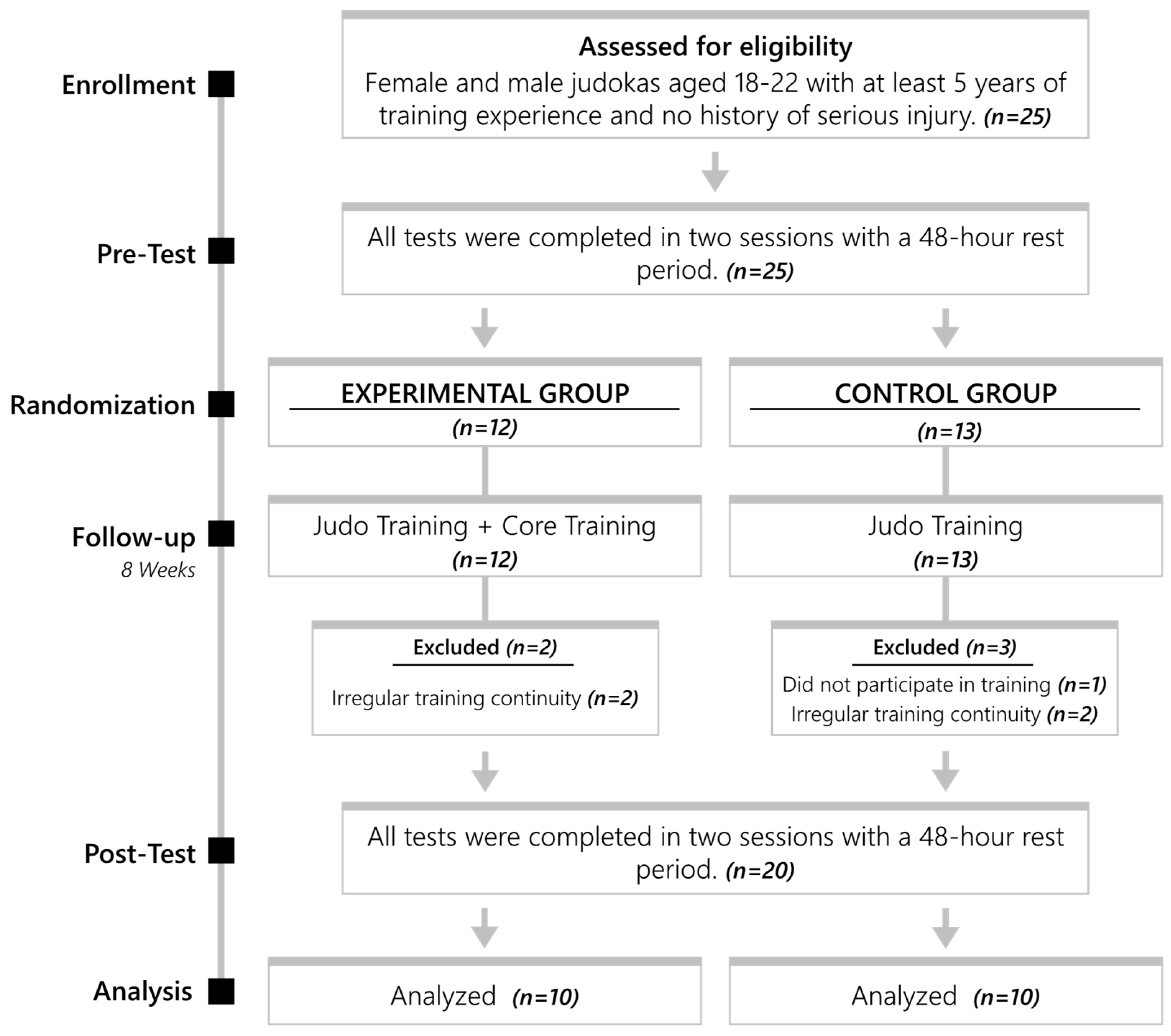
Following the rest period, the experimental group performed an 8-week core training program in addition to their regular judo training (Table 1), whereas the control group continued with only their routine judo training. Both groups continued with the same routine judo training. At the end of the intervention period, participants revisited the laboratory for the fourth and fifth times to complete the post-test assessments. The researchers responsible for data collection and data analysis were independent of each other, and researchers in both groups were blind to the participants’ group assignment. Post-test procedures were conducted in the same manner as the pre-test protocol (Figure 1).
All measurement sessions were conducted at the same time of day (12:00–14:00) and under similar environmental conditions. Participants were instructed to refrain from strenuous physical activity and from consuming stimulants such as caffeine for at least 48 h prior to testing. The study was conducted in accordance with the ethical principles outlined in the Declaration of Helsinki. This study was approved by the Alanya Alaaddin Keykubat University Non-Interventional Clinical Research Ethics Committee (approval number: 2025/08). Informed consent forms were obtained from all participants.

2.2. Participants

The study was conducted with the voluntary participation of 20 judo athletes (10 females and 10 males) aged between 18 and 22 years (mean age: 18.60 years; height: 163 cm; body weight: 59.40 kg; BMI: 22.30 kg/m2) (Table 2). Sample size was determined using a priori power analysis performed with G*Power software (version 3.1.9.6, Germany), with an effect size of d = 0.8, a significance level of α = 0.05, and a statistical power of 1 − β = 0.80, indicating a minimum required sample size of 16 participants. Inclusion criteria were as follows: actively participating in judo training, having a minimum of five years of regular judo training experience, and no history of serious sports-related injury within the preceding six months. Participants who did not meet the inclusion criteria or who chose to withdraw from the study at any stage were excluded from the analysis. Participants were allocated to either the experimental group (n = 10) or the control group (n = 10). To ensure homogeneity between groups, demographic and anthropometric characteristics, including sex, age, training experience, height, body weight, and BMI, were taken into consideration. Matched pairs with similar characteristics were formed, and one participant from each pair was assigned to the experimental group and the other to the control group using a computer-assisted randomization procedure. This approach minimized potential between-group differences prior to the intervention. Written informed consent was obtained from all participants prior to their inclusion in the study.

2.3. Procedures

2.3.1. Anthropometric Measurements

Body weight was measured to the nearest 0.1 kg using a body composition analyzer (Jawon Body Composition Analyser Model X-Scanplus II, Seoul, Republic of Korea), and height was measured to the nearest 0.1 cm using a stadiometer (Holtain Ltd., Crymych, UK). All measurements were performed barefoot in the anatomical position [13]. BMI was calculated using the formula body weight (kg)/height (m2).

2.3.2. Single Leg Hop Tests (SLHT)

SLHTs were performed on a flat surface in the laboratory using a measuring tape fixed to the floor (length: 6 m; width: 15 cm). At the starting phase of each test, participants positioned the toes of the tested foot at the starting line of the measuring tape and maintained balance on a single leg [dominant (DS) or non-dominant (NDS)] before initiating the test at a self-selected time.
During the execution phase, arm swing was permitted, and successful trials were defined as those in which participants were able to maintain single-leg balance for 3 s following landing. In the SH test, participants performed one maximal hop; in the TH test, three consecutive hops were performed. In the CH test, participants completed three consecutive hops in a crossover pattern, landing alternately on the opposite side of the initial hop direction.
For the MRH test, participants placed the medial border of the foot at the starting line of the measuring tape and, once ready, performed a single medial hop following a 90° medial rotation. In the MSTH test, participants similarly positioned the medial border of the foot at the starting line and performed three consecutive hops in the medial direction.
Participants completed three practice trials before the main testing session. For the main trials, the distance between the heel at landing and the starting line of the measuring tape was recorded in centimeters for all successful attempts [14,15,16].

2.3.3. Y Balance Test (YBT)

YBT was performed on three 15 cm-wide strips arranged on the floor in a Y-shaped configuration, oriented in the anterior (ANT), posteromedial (PM), and posterolateral (PL) directions. The angle between the ANT and PM directions, as well as between the ANT and PL directions, was 135°, while the angle between the PM and PL directions was 90°.
During the execution phase, participants were instructed to place the stance foot at the zero-mark position, extend the contralateral limb as far as possible in the designated reach direction, and then return the reaching limb to the starting position. ANT reach distances were recorded as the distance (cm) from the toe of the stance foot to the point of maximal reach, whereas PM and PL reach distances were measured from the heel of the stance foot to the point of maximal reach.
A trial was considered successful if participants were able to return the reaching limb to the starting position while maintaining balance on the stance limb. Participants performed three trials in each direction, and the mean of the reach distances was recorded for analysis [17].

2.3.4. Medial Push up Test (MPU)

MPU was used to assess upper-body muscular endurance. At the start of the test, participants placed their hands shoulder-width apart on a flat surface and positioned their bodies in a straight line from head to heels, with their toes in contact with the ground. During the execution phase, participants flexed their elbows to approximately 90° and then returned to the starting position. Each complete lowering and raising movement was counted as one repetition, and the total number of correctly performed repetitions completed within 30 s was recorded [18].

2.3.5. Sit-Up Test

The Sit-up test is a field-based assessment used to evaluate the muscular endurance of the core region. During the preparation phase, participants lay supine on a flat surface with their knees flexed at approximately 90°. The feet remained in contact with the ground, and the arms were crossed over the chest. Upon the start command, participants lifted the trunk off the surface and, once approaching the thighs, returned to the starting position in a controlled manner. Each complete movement was counted as one repetition, and the total number of correctly performed repetitions completed within 30 s was recorded [19].

2.3.6. Plank Test (PT)

The PT is a field-based assessment used to evaluate trunk stabilization and the isometric endurance of the core muscles. At the start of the test, participants assumed a prone position on a flat surface, with the elbows positioned directly under the shoulders and the forearms and toes in contact with the ground. The body was aligned in a straight line. During the execution phase, timing commenced, and participants were instructed to maintain body stabilization for as long as possible without altering the initial position. The test was terminated when proper plank alignment could no longer be maintained. The total duration for which the correct position was sustained was recorded in seconds [20].

2.4. Statistical Analysis

Statistical analyses were performed using the SPSS software package (version 25.0; IBM Corp., Armonk, NY, USA). Descriptive data are presented as mean ± standard deviation. Data normality and homogeneity of variances were assessed using the Shapiro–Wilk test, Q–Q plots, and Levene’s test, respectively. Although the sample size was small, visual inspection and statistical tests indicated no significant deviations from normality. A 2 × 2 mixed-model repeated-measures analysis of variance (ANOVA) was employed to examine the effects of time (pre vs. post) and group (experimental vs. control), as well as time × group interaction effects. When a significant main effect or interaction was detected, Bonferroni-adjusted post hoc tests were conducted to identify the source of the differences. Post hoc pairwise comparisons (paired-samples t-tests) were performed only for variables showing a significant Group × Time interaction. To determine the magnitude of the differences, effect sizes were calculated. Partial eta squared (η2p) was reported for the ANOVA main and interaction effects, classified as small (0.01), medium (0.06), and large (0.14). For pairwise comparisons (t-tests), Cohen’s dz was calculated and interpreted as trivial (<0.2), small (0.2–0.5), moderate (0.5–0.8), and large (>0.8). The level of statistical significance was set at p < 0.05.

3. Results

Descriptive characteristics of the participants are presented in Table 2.
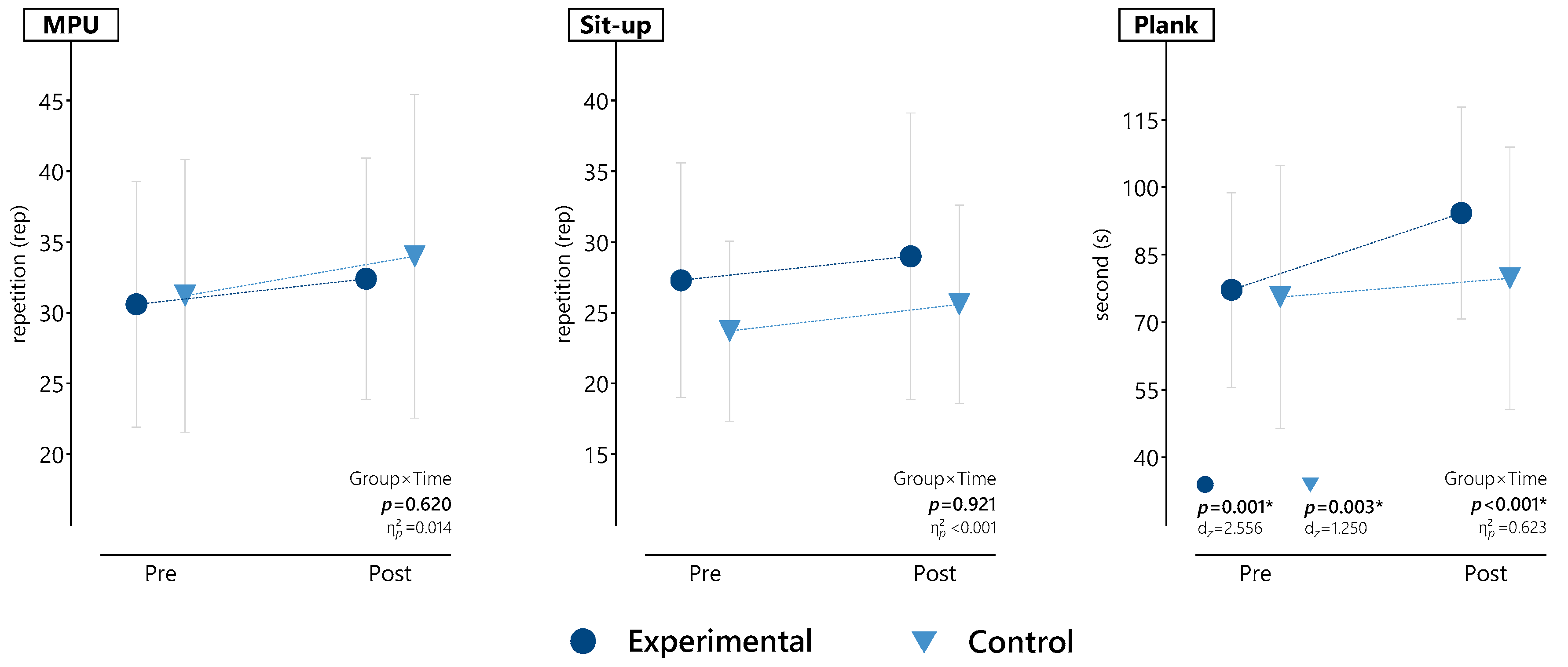
Figure 2 presents the intergroup comparison of performance changes before and after the intervention. A significant group × time interaction was observed for the PT parameter (p < 0.001, η2p = 0.623), indicating a differential change between groups. Additionally, a significant main effect of time was found (p < 0.001, η2p = 0.818). Post hoc analyses revealed significant improvements in both the experimental group (p = 0.001, dz = 2.556) and the control group (p = 0.003, dz = 1.250), indicating very large and large effect sizes, respectively.
No significant group × time interaction was observed for the other parameters (p > 0.050). For the MPU parameter, although the interaction was not significant, a significant main effect of time was detected (p < 0.032, η2p = 0.231), suggesting that both groups improved similarly over time.
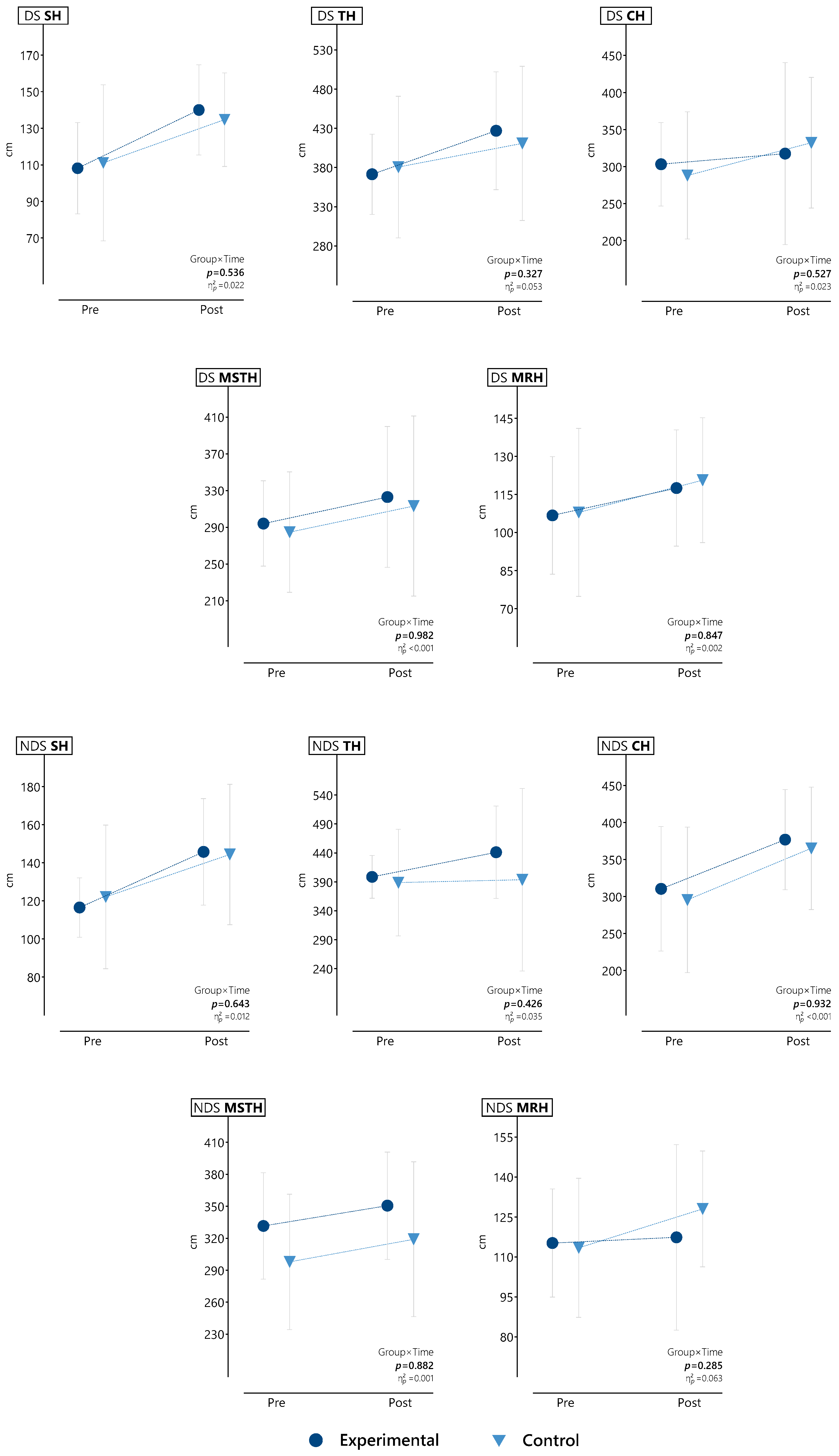
Figure 3 presents the comparison of SLHT changes between groups before and after the intervention. No significant group × time interaction was observed for any parameter (p > 0.05, η2p < 0.064), indicating that the magnitude of change did not differ between groups.
However, significant main effects of time were detected. On the dominant side, significant improvements were observed in SH (p < 0.001, η2p = 0.497), TH (p = 0.003, η2p = 0.396), MSTH (p = 0.041, η2p = 0.212), and MRH (p = 0.026, η2p = 0.247). On the non-dominant side, significant time effects were found for SH (p = 0.003, η2p = 0.401), CH (p = 0.002, η2p = 0.433), and MSTH (p = 0.013, η2p = 0.296). These findings indicate that both groups improved over time, but the intervention did not produce a differential effect.
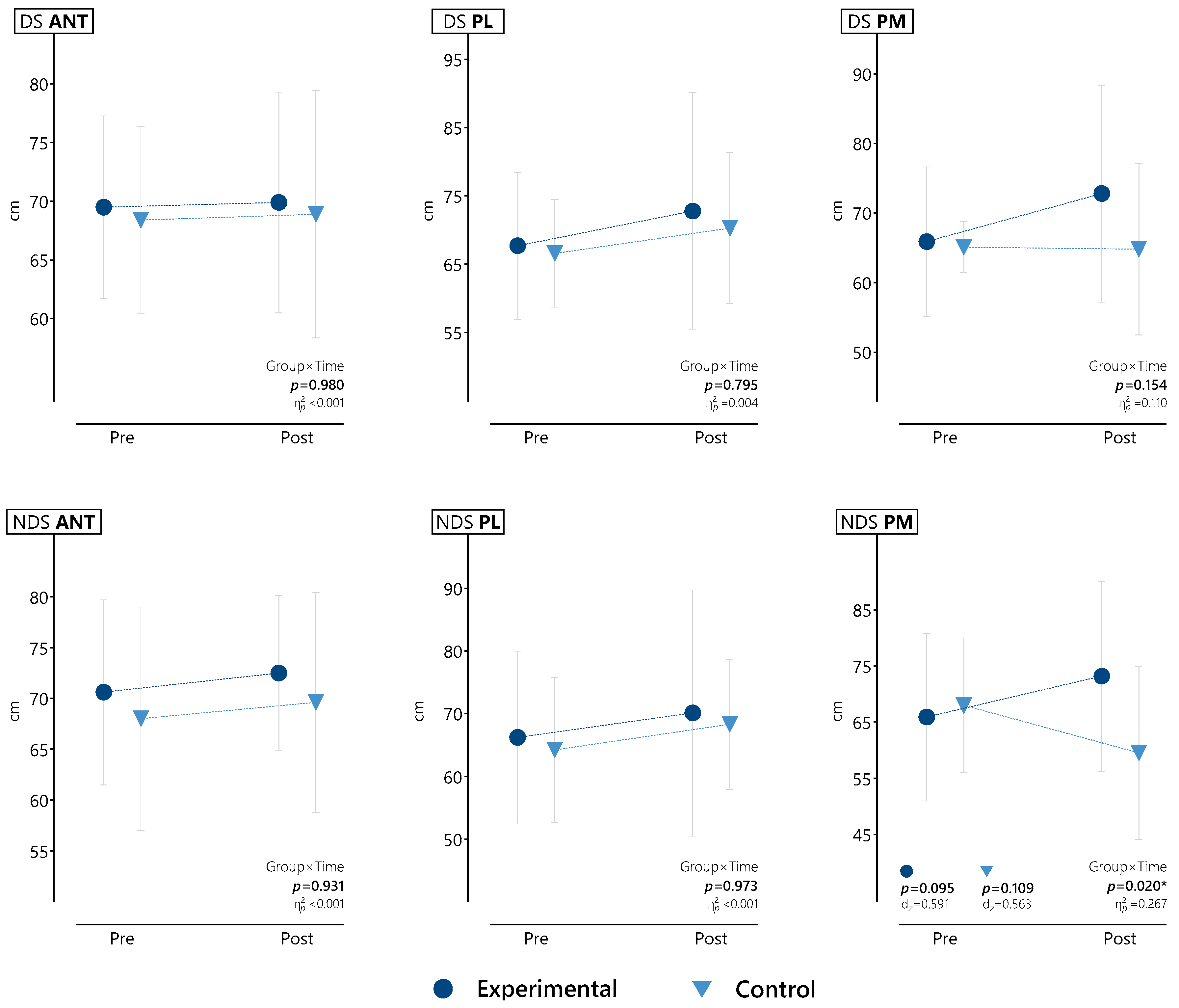
Figure 4 presents the comparison of YBT performance changes between groups before and after the intervention. A significant group × time interaction was observed for the NDS PM parameter (p = 0.020, η2p = 0.267), indicating a differential change between groups. However, post hoc within-group comparisons did not reach statistical significance in either the experimental group (p = 0.095, dz = 0.591) or the control group (p = 0.109, dz = 0.563). This suggests that although the magnitude of change differed between groups, the within-group improvements were not statistically significant.

4. Discussion

This study evaluated the effects of an 8-week core training program on lower-extremity, upper-extremity, and core strength in judo athletes. The major finding of the study was that 8-week core training significantly improved PT and NDS PM performance. There was no significant group × time interaction for the other parameters. Time-dependent improvements were observed in some parameters without any differences between groups.
Core stability is associated with the ability to maintain postural control of the lumbopelvic region during both static and dynamic tasks. This characteristic supports not only isometric endurance but also lower-extremity function [21,22,23]. Upper and lower-extremity strength, endurance, and trunk muscle function are critical attributes for success in judo athletes [24]. Enhancement of these qualities is likely to increase the capacity to generate and sustain force throughout judo competitions. Core stability plays a key role in transferring force generated in the lower extremities to the upper extremities [25].
In this study, a significant group × time interaction (p < 0.001, η2p = 0.623) was detected in plank performance, reflecting isometric core endurance. Significant increases were observed in both the experimental group (p < 0.001) and the control group (p < 0.003). Although improvement was seen in both groups, the more pronounced increase in the experimental group suggests an additional contribution of core training to performance. These findings are consistent with randomized controlled trials and meta-analyses reporting that core training interventions significantly improve plank duration [26,27,28]. The PT requires simultaneous isometric activation of the transversus abdominis, internal and external oblique muscles, multifidus, and erector spinae, and is widely recognized in the literature as a valid indicator of trunk endurance [29,30]. Moreover, core stability is particularly emphasized during isometric tasks, and improvements in plank performance suggest that the applied training program effectively stimulated lumbopelvic stabilization mechanisms [22].
Despite the pronounced improvement in plank performance, no statistically significant changes were observed in the MPU and Sit-up tests. The absence of significant changes in these tests suggests that the intervention primarily targeted stabilization and postural control rather than dynamic upper-extremity strength or repetitive trunk flexion. The sit-up test predominantly reflects the dynamic strength of the rectus abdominis, whereas the push-up test largely depends on muscle groups such as the pectoralis major, triceps brachii, and anterior deltoid [31]. Therefore, the limited effects of core stability–based training on these tests are considered consistent with previous findings in the literature [32].
The SLHT primarily assesses forward-oriented movements to evaluate functional performance [3]. This movement involves taking one or more consecutive hops on the same limb while maintaining contact of the contralateral limb with the ground during stabilization phases [14]. In judo, where balance and body stabilization are of central importance, core exercise interventions have been suggested to effectively enhance SLHT-based functional performance scores [3].
In this study, no significant group × time interaction was detected in SLHT performance after the intervention. However, the main effects of time were significant in many test types (p < 0.050). These results indicate that routine judo training is effective in SLHT performance, but additional core training does not lead to specific differences. Due to the intensive application of pushing, pulling, and various technical actions in judo, certain physical and physiological attributes must be particularly well developed. This requirement is closely related to the ability to execute judo-specific movements accurately and effectively, to possess sufficient skeletal muscle strength, and to maintain body stabilization during training and competition [33]. Enhanced core stability may reduce energy dissipation along the kinetic chain, thereby allowing more efficient transfer of lower-extremity muscle force to performance outcomes [3,34], and supports the functional link between core muscle strength and lower-extremity performance [35,36]. Systematic reviews have demonstrated that core training plays a supportive role in translating lower-extremity explosive power into technical performance [5]. Furthermore, core stability programs have been shown to increase both single and multiple hop distances, as well as to improve hop test performance and inter-limb symmetry [37]. However, considering the significant potential of core training for lower-extremity function, it is possible that the current results have not reached a certain level of difference due to the intervention period and training intensity.
When balance test outcomes were evaluated before and after the intervention, statistically significant improvements were observed only in the PM direction in the experimental group, whereas no marked changes were detected in the ANT and PL directions. This finding suggests that core stability–based interventions may exert more pronounced effects on dynamic balance performance, specifically in the PM direction. The improvement observed in the PM direction may be explained by enhanced lumbopelvic stability and the coordinated activation of core musculature and lower-extremity stabilizers, leading to optimized postural control [25,32]. Previous studies have reported that core training interventions can produce direction-specific effects on balance and may not result in uniform improvements across all balance parameters [38]. Side-to-side differences may be associated with more frequent use of the DS in daily activities or subtle asymmetries in neuromuscular control [39,40]. With increased core stability, lumbopelvic and pelvic muscle groups may be more effectively recruited, thereby reducing energy losses in the lower extremities and supporting balance control [22,34,41]. The absence of significant changes in the ANT and PL directions may be attributed to the greater reliance of postural control in these directions on vestibular and proprioceptive inputs, as well as their limited direct association with short-term isometric core endurance [42,43]. Additionally, individual differences in adaptation, motor learning processes, and pre-existing balance abilities may have contributed to the lack of statistically significant changes in certain parameters [44,45]. Consistent with these findings, previous studies have demonstrated that core stability programs tend to elicit more pronounced improvements in the PM direction and in multidirectional balance tasks, while failing to produce simultaneous enhancements across all balance components [32,40,46,47,48]. According to Sikorski (2010), judo athletes must effectively control dynamic postural positions, as judo techniques are fundamentally based on continuous displacements aimed at disrupting the opponent’s balance and inducing falls [49].
During offensive actions, experienced combat sport athletes typically demonstrate more effective postural regulation than novices, and judo training is assumed to facilitate the acquisition of complex skills associated with effective postural control and tactical excellence [50]. Overall, the literature suggests that regardless of the specific training approach applied in high-level athletes, strengthening the core musculature is essential for ensuring strength, neuromuscular control, and balance of the lumbopelvic–hip complex, as muscle weakness or impaired neuromuscular control may lead to postural instability and less efficient movement patterns [51].

Limitations

Although the present study has several strengths when compared with existing literature, certain limitations should be acknowledged. Conducting the study with the minimum sample size in the power analysis should be considered a significant limitation in terms of both statistical validity and the generalizability of the results. Furthermore, the inclusion of only judo athletes limits the generalizability of the findings to a larger athletic population. In addition, the relatively short duration of the core training intervention does not allow conclusions to be drawn regarding long-term adaptations to core exercise programs. Participants’ nutrition, sleep patterns, and physical activities outside of training were not standardized during the study period; therefore, these variables may have positively or negatively influenced the test outcomes. Finally, the absence of clinical assessment methods such as electromyographic measurements and biomechanical analyses limited the ability to provide a more detailed explanation of the underlying mechanisms of the intervention effects.

5. Conclusions

This study demonstrated the effects of an 8-week core training program on selected performance parameters in judo athletes. The findings revealed that core training contributed to significant improvements in plank and PM balance performance. In contrast, it was determined that additional core training did not produce any specific changes in MPU, Sit-Up, SLHT, or other balance parameters. The current findings alone are not sufficient to definitively confirm that core training improves lower- and upper-extremity strength and core strength in judo athletes. Therefore, future studies with larger sample sizes and designs that incorporate more long-term and varied tests will contribute to revealing the potential effects of core training in judo in a more specific manner.

Author Contributions

Conceptualization, S.A. and A.K.Y.; methodology, M.A., S.A., A.B. and A.K.Y.; software, E.K.S., B.A., E.A. and D.K.; validation, S.A., E.A. and A.K.Y.; formal analysis, S.A. and A.B.; investigation, M.A., E.K.S., B.A. and D.K.; resources, E.K.S., B.A., E.A. and D.K.; data curation, M.A., S.A. and A.K.Y.; writing—original draft preparation, M.A., S.A., A.B., E.K.S., B.A., E.A., D.K. and A.K.Y.; writing—review and editing, M.A., S.A., A.B., E.K.S., B.A., E.A., D.K. and A.K.Y.; visualization, S.A. and E.A.; supervision, M.A. and A.K.Y.; project administration, M.A., S.A., A.B. and A.K.Y. All authors have read and agreed to the published version of the manuscript.

Funding

This research received no external funding.

Institutional Review Board Statement

This study was approved by the Alanya Alaaddin Keykubat University Non-Interventional Clinical Research Ethics Committee (approval number: 2025/08) and was conducted in accordance with the Declaration of Helsinki.

Informed Consent Statement

Informed consent was obtained from all subjects involved in the study.

Data Availability Statement

Data supporting the findings of this study are available through the corresponding author, but restrictions apply to the availability of these data used for the current study and are therefore not publicly available. However, data are available from the corresponding author upon reasonable request.

Conflicts of Interest

The authors declare no conflicts of interest.

Abbreviations

MRH90° Medial Rotation Hop for Distance
ANOVAAnalysis of Variance
ANTAnterior
BMIBody Mass Index
CIConfidence Interval
CHCrossover Hop for Distance
DSDominant
MPUMedial Push-Up Test
MSTHMedial Side Triple Hop for Distance
NDSNon-Dominant
PTPlank Test
PLPosterolateral
PMPosteromedial
SHSingle-Leg Hop for Distance
SLHTSingle-Leg Hop Test
THTriple Hop for Distance
YBTY Balance Test

References

  1. Schoof, S.; Krabben, K.; Lojanica, M.B.; Pion, J.; Elferink-Gemser, M.T. Multidimensional Performance Characteristics of Talented Youth Judoka: Dynamic Balance and Coping Skills Relate to International Competitive Performance. Int. J. Sports Sci. Coach. 2024, 19, 2489–2500. [Google Scholar] [CrossRef] [Scilit]
  2. Tascan, M.B.; Akkus, C.; Turgut, E. Development of a Novel Judo-Specific Ippon Reactive Agility Test: A Reliability and Validity Study. J. Strength Cond. Res. 2025, 39, e1212–e1217. [Google Scholar] [CrossRef] [Scilit] [PubMed]
  3. Yasul, Y.; Akdemir, E.; Öner, S.; Anıl, B.; Korkmaz, E.; Pekesen Kurtça, M.; Yılmaz, A.K. The Effect of Core Training Practices on Some Strength, Lower Limb Functions and Balance Performance in Judo Athletes. Int. J. Disabil. Sport. Heal. Sci. 2023, 6, 507–520. [Google Scholar] [CrossRef] [Scilit]
  4. Rodríguez-Perea, Á.; Reyes-Ferrada, W.; Jerez-Mayorga, D.; Chirosa Ríos, L.; Van den Tillar, R.; Chirosa Ríos, I.; Martínez-García, D. Core Training and Performance: A Systematic Review with Meta-Analysis. Biol. Sport 2023, 40, 975–992. [Google Scholar] [CrossRef] [Scilit]
  5. Zhang, S.; Huang, W.; Soh, K.G.; Luo, S.; Li, L.; Wang, X. Effects of Core Strength Training on the Technical Skill Performance of Striking Combat Sport Players: A Systematic Review. PeerJ 2025, 13, e19615. [Google Scholar] [CrossRef] [Scilit]
  6. Santos, L.; Federolf, P.A.; Schneider, F.; Pocecco, E.; Fernández-Río, J.; Iglesias-Soler, E.; Carballeira-Fernández, E.; Uriarte, S.; Dopico-Calvo, X. In-Contest Body Acceleration Profiles for the Judo Male and Female Weight Divisions. Front. Sport. Act. Living 2024, 6, 1372314. [Google Scholar] [CrossRef] [Scilit]
  7. Barbado, D.; Lopez-Valenciano, A.; Juan-Recio, C.; Montero-Carretero, C.; van Dieën, J.H.; Vera-Garcia, F.J. Trunk Stability, Trunk Strength and Sport Performance Level in Judo. PLoS ONE 2016, 11, e0156267. [Google Scholar] [CrossRef] [Scilit]
  8. Harris, D.M.; Foulds, S.; Latella, C. Evidence-Based Training Recommendations for the Elite Judoka. Strength Cond. J. 2019, 41, 108–118. [Google Scholar] [CrossRef] [Scilit]
  9. Martins, H.S.; Lüdtke, D.D.; César de Oliveira Araújo, J.; Cidral-Filho, F.J.; Inoue Salgado, A.S.; Viseux, F.; Martins, D.F. Effects of Core Strengthening on Balance in University Judo Athletes. J. Bodyw. Mov. Ther. 2019, 23, 758–765. [Google Scholar] [CrossRef] [Scilit]
  10. Ren, M.; Tian, Y.; McNeill, C.; Lenetsky, S.; Uthoff, A. The Role and Development of Strength for Elite Judo Athletes. Strength Cond. J. 2023, 45, 663–673. [Google Scholar] [CrossRef] [Scilit]
  11. Acar, K.; Yılmaz, A.K. Functional Dimorphism and Relationship between Different Lower Extremity Strength Tests in Young Elite Judokas. Rev. Artes Marciales Asiáticas 2021, 16, 56–66. [Google Scholar] [CrossRef] [Scilit]
  12. Hecksteden, A.; Faude, O.; Meyer, T.; Donath, L. How to Construct, Conduct and Analyze an Exercise Training Study? Front. Physiol. 2018, 9, 1007. [Google Scholar] [CrossRef] [Scilit]
  13. Lohman, T.G.; Roche, A.F.; Martorell, R. Anthropometric Standardization Reference Manual; Human Kinetics: Champaign, IL, USA, 1988. [Google Scholar]
  14. Dingenen, B.; Truijen, J.; Bellemans, J.; Gokeler, A. Test–Retest Reliability and Discriminative Ability of Forward, Medial and Rotational Single-Leg Hop Tests. Knee 2019, 26, 978–987. [Google Scholar] [CrossRef] [Scilit] [PubMed]
  15. Munro, A.G.; Herrington, L.C. Between-Session Reliability of Four Hop Tests and the Agility T-Test. J. Strength Cond. Res. 2011, 25, 1470–1477. [Google Scholar] [CrossRef] [Scilit]
  16. Peebles, A.T.; Renner, K.E.; Miller, T.K.; Moskal, J.T.; Queen, R.M.; Mıller, T.K.; Moskal, J.T.; Queen, R.M. Associations between Distance and Loading Symmetry during Return to Sport Hop Testing. Med. Sci. Sports Exerc. 2019, 51, 624–629. [Google Scholar] [CrossRef] [Scilit]
  17. Plisky, P.J.; Gorman, P.P.; Butler, R.J.; Kiesel, K.B.; Underwood, F.B.; Elkins, B. The Reliability of an Instrumented Device for Measuring Components of the Star Excursion Balance Test. N. Am. J. Sports Phys. Ther. 2009, 4, 92–99. [Google Scholar]
  18. McManis, B.G.; Baumgartner, T.A.; Wuest, D.A. Objectivity and Reliability of the 90° Push-Up Test. Meas. Phys. Educ. Exerc. Sci. 2000, 4, 57–67. [Google Scholar] [CrossRef] [Scilit]
  19. Diener, M.H.; Golding, L.A.; Diener, D. Validity and Reliability of a One-minute Half Sit-up Test of Abdominal Strength and Endurance. Sport. Med. Train. Rehabil. 1995, 6, 105–119. [Google Scholar] [CrossRef] [Scilit]
  20. Bohannon, R.W.; Steffl, M.; Glenney, S.S.; Green, M.; Cashwell, L.; Prajerova, K.; Bunn, J. The Prone Bridge Test: Performance, Validity, and Reliability among Older and Younger Adults. J. Bodyw. Mov. Ther. 2018, 22, 385–389. [Google Scholar] [CrossRef] [Scilit]
  21. Kabadayı, M.; Karadeniz, S.; Yılmaz, A.K.; Karaduman, E.; Bostancı, Ö.; Akyildiz, Z.; Clemente, F.M.; Silva, A.F. Effects of Core Training in Physical Fitness of Youth Karate Athletes: A Controlled Study Design. Int. J. Environ. Res. Public Health 2022, 19, 5816. [Google Scholar] [CrossRef] [Scilit]
  22. Willardson, J.M. Core Stability Training: Applications to Sports Conditioning Programs. J. Strength Cond. Res. 2007, 21, 979. [Google Scholar] [CrossRef] [Scilit] [PubMed]
  23. Zazulak, B.T.; Hewett, T.E.; Reeves, N.P.; Goldberg, B.; Cholewicki, J. Deficits in Neuromuscular Control of the Trunk Predict Knee Injury Risk. Am. J. Sports Med. 2007, 35, 1123–1130. [Google Scholar] [CrossRef] [Scilit] [PubMed]
  24. Franchini, E.; Del Vecchio, F.B.; Matsushigue, K.A.; Artioli, G.G. Physiological Profiles of Elite Judo Athletes. Sport. Med. 2011, 41, 147–166. [Google Scholar] [CrossRef] [Scilit] [PubMed]
  25. Kibler, W.B.; Press, J.; Sciascia, A. The Role of Core Stability in Athletic Function. Sport. Med. 2006, 36, 189–198. [Google Scholar] [CrossRef] [Scilit]
  26. Dong, K.; Yu, T.; Chun, B. Effects of Core Training on Sport-Specific Performance of Athletes: A Meta-Analysis of Randomized Controlled Trials. Behav. Sci. 2023, 13, 148. [Google Scholar] [CrossRef] [Scilit]
  27. Mornieux, G.; Weltin, E.; Friedman, C.; Pauls, M.; Forsythe, S.; Gollhofer, A. Influence of a Functional Core Stability Program on Trunk and Knee Joint Biomechanics in Female Athletes During Lateral Movements. J. Strength Cond. Res. 2021, 35, 2713–2719. [Google Scholar] [CrossRef] [Scilit]
  28. Hung, K.-C.; Chung, H.-W.; Yu, C.C.-W.; Lai, H.-C.; Sun, F.-H. Effects of 8-Week Core Training on Core Endurance and Running Economy. PLoS ONE 2019, 14, e0213158. [Google Scholar] [CrossRef] [Scilit]
  29. McGill, S.M.; Childs, A.; Liebenson, C. Endurance Times for Low Back Stabilization Exercises: Clinical Targets for Testing and Training from a Normal Database. Arch. Phys. Med. Rehabil. 1999, 80, 941–944. [Google Scholar] [CrossRef] [Scilit]
  30. Tong, T.K.; Wu, S.; Nie, J. Sport-Specific Endurance Plank Test for Evaluation of Global Core Muscle Function. Phys. Ther. Sport 2014, 15, 58–63. [Google Scholar] [CrossRef] [Scilit]
  31. Escamilla, R.F.; Lewis, C.; Bell, D.; Bramblet, G.; Daffron, J.; Lambert, S.; Pecson, A.; Imamura, R.; Paulos, L.; Andrews, J.R. Core Muscle Activation during Swiss Ball and Traditional Abdominal Exercises. J. Orthop. Sports Phys. Ther. 2010, 40, 265–276. [Google Scholar] [CrossRef] [Scilit]
  32. Behm, D.G.; Drinkwater, E.J.; Willardson, J.M.; Cowley, P.M. The Use of Instability to Train the Core Musculature. Appl. Physiol. Nutr. Metab. 2010, 35, 91–108. [Google Scholar] [CrossRef] [Scilit] [PubMed]
  33. Franchini, E.; Takito, M.Y.; Kiss, M.A.P.D.M.; Sterkowicz, S. Physical Fitness and Anthropometrical Differences between Elite and Nonelite Judo Players. Biol. Sport 2005, 22, 315–328. [Google Scholar]
  34. Okada, T.; Huxel, K.C.; Nesser, T.W. Relationship between Core Stability, Functional Movement, and Performance. J. Strength Cond. Res. 2011, 25, 252–261. [Google Scholar] [CrossRef] [Scilit] [PubMed]
  35. Beckman, S.M.; Buchanan, T.S. Ankle Inversion Injury and Hypermobility: Effect on Hip and Ankle Muscle Electromyography Onset Latency. Arch. Phys. Med. Rehabil. 1995, 76, 1138–1143. [Google Scholar] [CrossRef] [Scilit]
  36. Bullock-Saxton, J.E.; Janda, V.; Bullock, M.I. The Influence of Ankle Sprain Injury on Muscle Activation during Hip Extension. Int. J. Sports Med. 1994, 15, 330–334. [Google Scholar] [CrossRef] [Scilit]
  37. Fallah Mohammadi, M.; Dashti Rostami, K.; Shabanzadeh, S.; Hosseininejad, S.E.; Ghaffari, S.; Thomas, A. Does Core Stability Training Improve Hopping Performance and Kinetic Asymmetries during Single-Leg Landing in Anterior Cruciate Ligament Reconstructed Patients? Res. Sports Med. 2024, 32, 268–278. [Google Scholar] [CrossRef] [Scilit]
  38. Wang, X.-Q.; Zheng, J.-J.; Yu, Z.-W.; Bi, X.; Lou, S.-J.; Liu, J.; Cai, B.; Hua, Y.-H.; Wu, M.; Wei, M.-L.; et al. A Meta-Analysis of Core Stability Exercise versus General Exercise for Chronic Low Back Pain. PLoS ONE 2012, 7, e52082. [Google Scholar] [CrossRef] [Scilit]
  39. Hodges, P.W.; Richardson, C.A. Contraction of the Abdominal Muscles Associated with Movement of the Lower Limb. Phys. Ther. 1997, 77, 132–142. [Google Scholar] [CrossRef] [Scilit]
  40. Leetun, D.T.; Ireland, M.L.; Willson, J.D.; Ballantyne, B.T.; Davis, I.M. Core Stability Measures as Risk Factors for Lower Extremity Injury in Athletes. Med. Sci. Sports Exerc. 2004, 36, 926–934. [Google Scholar] [CrossRef] [Scilit]
  41. McGill, S.M. Low Back Stability: From Formal Description to Issues for Performance and Rehabilitation. Exerc. Sport Sci. Rev. 2001, 29, 26–31. [Google Scholar] [CrossRef] [Scilit]
  42. Horak, F.B. Postural Orientation and Equilibrium: What Do We Need to Know about Neural Control of Balance to Prevent Falls? Age Ageing 2006, 35, ii7–ii11. [Google Scholar] [CrossRef] [Scilit] [PubMed]
  43. Paillard, T. Effects of General and Local Fatigue on Postural Control: A Review. Neurosci. Biobehav. Rev. 2012, 36, 162–176. [Google Scholar] [CrossRef] [Scilit] [PubMed]
  44. Gribble, P.A.; Hertel, J.; Plisky, P. Using the Star Excursion Balance Test to Assess Dynamic Postural-Control Deficits and Outcomes in Lower Extremity Injury: A Literature and Systematic Review. J. Athl. Train. 2012, 47, 339–357. [Google Scholar] [CrossRef] [Scilit] [PubMed]
  45. Myer, G.D.; Ford, K.R.; Barber Foss, K.D.; Liu, C.; Nick, T.G.; Hewett, T.E. The Relationship of Hamstrings and Quadriceps Strength to Anterior Cruciate Ligament Injury in Female Athletes. Clin. J. Sport Med. 2009, 19, 3–8. [Google Scholar] [CrossRef] [Scilit]
  46. Abdi, J.; Sadeghi, H. The Effect of Eight-Week Core Stability Training Program on the Dynamic Balance in Young Elite Footballers. Scoliosis 2013, 8, P20. [Google Scholar] [CrossRef] [Scilit]
  47. Barrio, E.D.; Ramirez-Campillo, R.; Garcia de Alcaraz Serrano, A.; RaquelHernandez-García, R. Effects of Core Training on Dynamic Balance Stability: A Systematic Review and Meta-Analysis. J. Sports Sci. 2022, 40, 1815–1823. [Google Scholar] [CrossRef] [Scilit]
  48. Szafraniec, R.; Bartkowski, J.; Kawczyński, A. Effects of Short-Term Core Stability Training on Dynamic Balance and Trunk Muscle Endurance in Novice Olympic Weightlifters. J. Hum. Kinet. 2020, 74, 43–50. [Google Scholar] [CrossRef] [Scilit]
  49. Sikorski, W. Identification of Judo Contest from Physiological Viewpoint. J. Combat Sport. Martial Arts 2010, 2, 115–118. [Google Scholar]
  50. Perrin, P.; Deviterne, D.; Hugel, F.; Perrot, C. Judo, Better than Dance, Develops Sensorimotor Adaptabilities Involved in Balance Control. Gait Posture 2002, 15, 187–194. [Google Scholar] [CrossRef] [Scilit]
  51. Fredericson, M.; Moore, T. Muscular Balance, Core Stability, and Injury Prevention for Middle- and Long-Distance Runners. Phys. Med. Rehabil. Clin. N. Am. 2005, 16, 669–689. [Google Scholar] [CrossRef] [Scilit]
Figure 1. Flowchart.
Applsci 16 02013 g001
Figure 2. Comparison of pre- and post-intervention changes in the MPU, Sit-up, and PT performances. * p < 0.05.
Applsci 16 02013 g002
Figure 3. Between-group comparison of pre- and post-intervention changes in SLHT performances.
Applsci 16 02013 g003
Figure 4. Between-group comparison of pre- and post-intervention changes in YBT performances. * p < 0.05.
Applsci 16 02013 g004
Table 1. 8-week core training program.
WeekDayExercisesSetsDuration
11Plank, Dead Bug, Glute Bridge, Russian Twist, Bird Dog230 s
2Side Plank, Leg Raises, Mountain Climbers, Plank to Elbow, Glute Bridge
3Dead Bug, Bird Dog, Russian Twist, Plank, Leg Raises
21Plank, Hollow Hold, Side Plank, Glute Bridge, Russian Twist230 s
2Bird Dog, Mountain Climbers, Bicycle Crunch, V-Ups, Leg Raises
3Plank Jacks, Plank to Elbow, Glute Bridge, Dead Bug, Side Plank
31Hollow Hold, Leg Raises, V-Ups, Plank, Russian Twist330 s
2Plank Jacks, Bicycle Crunch, Glute Bridge, Side Plank, Bird Dog
3Dead Bug, Mountain Climbers, Plank to Elbow, Hollow Hold, Russian Twist
41Plank, Leg Raises, Side Plank (crunch), V-Ups, Plank Jacks330 s
2Bicycle Crunch, Bird Dog, Russian Twist, Glute Bridge, Hollow Hold
3Plank to Elbow, Mountain Climbers, Dead Bug, Plank, Side Plank
51Plank Jacks, V-Ups, Russian Twist, Hollow Hold, Glute Bridge335 s
2Bicycle Crunch, Bird Dog, Side Plank, Plank to Elbow, Mountain Climbers
3Plank, Leg Raises, Dead Bug, Russian Twist, Plank Jacks
61Hollow Hold, V-Ups, Side Plank (crunch), Glute Bridge, Mountain Climbers335 s
2Bicycle Crunch, Plank Jacks, Leg Raises, Plank, Russian Twist
3Dead Bug, Bird Dog, Plank to Elbow, Side Plank, V-Ups
71Hollow Hold, Plank Jacks, Bicycle Crunch, Glute Bridge, Side Plank340 s
2Plank, Russian Twist, Bird Dog, V-Ups, Leg Raises
3Mountain Climbers, Plank to Elbow, Dead Bug, Hollow Hold, Glute Bridge
81Hollow Hold, Plank Jacks, Bicycle Crunch, Side Plank, Leg Raises340 s
2V-Ups, Glute Bridge, Russian Twist, Bird Dog, Plank
3Mountain Climbers (fast), Plank to Elbow, Dead Bug, Plank Jacks, Side Plank
Rest between exercises: 30 s. Rest between sets: 2 min.
Table 2. Descriptive data.
Experimental (n = 10)
Mean ± SD
Control (n = 10)
Mean ± SD
p
Age (year)18.60 ± 0.8418.50 ± 0.710.777
Height (cm)163 ± 8.44162.50 ± 9.540.903
Weight (kg)59.40 ± 11.4256.90 ± 12.940.652
BMI (kg/m2)22.30 ± 3.8821.30 ± 3.110.534
Training age (year)6.80 ± 1.037 ± 1.330.712
p < 0.05; SD: standard deviation; BMI: body mass index.
Disclaimer/Publisher’s Note: The statements, opinions and data contained in all publications are solely those of the individual author(s) and contributor(s) and not of MDPI and/or the editor(s). MDPI and/or the editor(s) disclaim responsibility for any injury to people or property resulting from any ideas, methods, instructions or products referred to in the content.