1. Introduction
In petroleum and natural gas drilling engineering, the top drive drilling system (referred to as the top drive) is a core component of power equipment [
1]. With its efficient drilling capabilities and advantages in handling complex accidents, it has become a standard configuration in modern drilling systems. The top drive–drill string system, as the key transmission unit connecting the top drive and the drill bit, directly affects drilling efficiency and downhole safety. The moment of inertia, as the core parameter describing the system’s moment of inertia, plays a crucial role in key technologies such as drill string torsional vibration suppression [
2] and soft torque control [
3,
4]. Its accurate identification can significantly improve the control performance of the top drive system and effectively prevent instability during drilling operations.
The top drive–drill string system can essentially be simplified as a typical torsional vibration system, with the moment of inertia of components such as the top drive, drill string, drill collars, and drill bit, along with the torsional stiffness and damping of the drill string, forming a multi-degree-of-freedom dynamic model [
5]. During the drilling process, due to the variation in bottom-hole friction resistance, stick–slip vibrations of the drill bit are likely to occur, manifested as sawtooth fluctuations in the top drive’s output torque and sharp oscillations in the downhole tool’s rotational speed. This phenomenon not only accelerates bit wear and leads to the failure of downhole instruments, but can also cause serious incidents such as stuck pipe, significantly increasing drilling costs and operational risks. Therefore, accurately identifying the moment of inertia and optimizing the control system to reduce torsional vibration has become an important goal for improving drilling efficiency and ensuring downhole operation safety [
6].
In addition to control-based mitigation strategies, mechanical vibration protection devices have been widely developed to suppress drill string oscillations. Various downhole dampers and shock absorbers have been designed to reduce longitudinal and torsional vibrations. In particular, shell-type flexible components have been experimentally validated as effective energy-dissipation elements in drilling vibration damping devices, exhibiting high load-bearing capacity combined with controllable damping characteristics [
7]. Analytical and numerical studies of torque and axial load transmission in drilling shock absorbers further reveal the interaction between elastic deformation and frictional dissipation within the drill string system. Moreover, investigations on the inertial properties of rotating drill string sections highlight the importance of accurately characterizing dynamic parameters for reliable vibration analysis [
8]. However, the effectiveness of both mechanical damping devices and control strategies depends strongly on precise knowledge of the system’s equivalent moment of inertia, which motivates the present study.
To address the problem of drill string stick–slip, a top-drive soft torque system was developed. In torsional drilling systems, the critical rotational speed refers to the threshold speed at which the drill string system becomes dynamically unstable and torsional oscillations are significantly amplified. When the operating speed approaches this critical value, the inherent damping of the system is insufficient to suppress energy accumulation caused by elastic deformation, which may trigger severe stick–slip vibration. Therefore, controlling or reducing the critical rotational speed is essential to maintain stable drilling and prevent resonance-induced torsional instability. This system suppresses torsional vibration by dynamically adjusting the top-drive rotational speed to compensate for the elastic potential energy stored in the drill string, thereby reducing the system’s critical rotational speed. Existing soft torque systems mainly employ two control strategies: (1) feedforward control based on the calculated stiffness and damping of the bottom-hole assembly [
9,
10] and (2) predictive control based on feedback of top-drive torque and rotational speed [
11]. However, both strategies rely on accurate moment of inertia parameters as key inputs. The adaptability of current soft torque systems is limited, particularly because parameter adjustments lag behind changes in drilling depth. The primary reason is insufficient accuracy in moment of inertia identification, which prevents the control strategy from adapting in real time to the dynamic characteristics of the drill string system.
To address this issue, rotational inertia identification methods have emerged, primarily categorized into online identification algorithms [
12] and offline identification algorithms [
13]. Common online identification approaches include the least squares identification algorithm [
14], model reference adaptive method [
15], and gradient correction method [
16]. However, traditional online identification algorithms suffer from drawbacks such as high computational complexity and poor anti-disturbance capability. Consequently, offline rotational inertia identification has become an effective approach for optimizing control systems and enhancing system dynamic responses. Offline identification involves analyzing the input–output data of the system under experimental conditions and deriving the rotational inertia value via mathematical models. This method does not rely on real-time operations; instead, it enables the identification of rotational inertia parameters either before system startup or under disturbance-free conditions. Nonetheless, current offline inertia identification still faces issues such as low accuracy and limitation to specific application scenarios. Additionally, the identified values exhibit significant error fluctuations across systems with different inertia levels, which indicates a lack of reliability in the identification results [
17].
Therefore, improving the accuracy of moment of inertia identification and developing efficient, dynamic identification methods are of great theoretical and engineering significance for optimizing top-drive control strategies and enhancing the real-time adaptability of soft torque systems. These improvements help mitigate stick–slip vibration, reduce drilling costs, and improve drilling efficiency. By providing more accurate inertia parameters, advanced identification methods can further promote the development of automatic top-drive technology while enhancing the safety and economic performance of drilling operations.
The main contributions of this paper can be summarized as follows:
(1) A dynamic-response-based inertia identification framework for top drive systems is established by explicitly incorporating PI control dynamics and nonlinear friction effects.
(2) A systematic sensitivity analysis is conducted using orthogonal experimental design to quantify the influence of excitation frequency, controller parameters, and friction disturbances on identification accuracy.
(3) The dominant role of viscous damping in inertia identification error is revealed, providing practical guidance for parameter selection in field applications.
(4) Field experiments under no-load conditions validate the effectiveness and engineering feasibility of the proposed method.
2. Research on Top Drive Drilling Systems
2.1. Control Principle of Top Drive Systems
The top drive system is the core actuator of modern drilling equipment, and its control principle is mainly based on motor drive, speed–torque closed-loop regulation, and real-time coupled control with drill string dynamics. The top drive typically uses an AC variable-frequency motor or a permanent magnet synchronous motor as the power source. By regulating the electromagnetic torque of the motor through a variable-frequency drive, precise control of drill string rotational speed, torque, and tool face angle can be achieved. The control system usually consists of three hierarchical loops—an inner current loop, a speed loop, and an outer position/tool face angle loop, forming a multi-loop nested closed-loop structure that balances fast dynamic response with steady-state performance.
The core objective of top drive control technology is to optimize the rotational speed and torque of the drill string during drilling, ensuring optimal operating conditions under different formations and drilling environments. Top drive control techniques have evolved from traditional torque-based simple feedback control to more advanced strategies, including adaptive control and predictive control. Modern top drive control systems not only improve drilling efficiency and reduce energy consumption, but also significantly extend the service life of drilling tools while ensuring drilling safety.
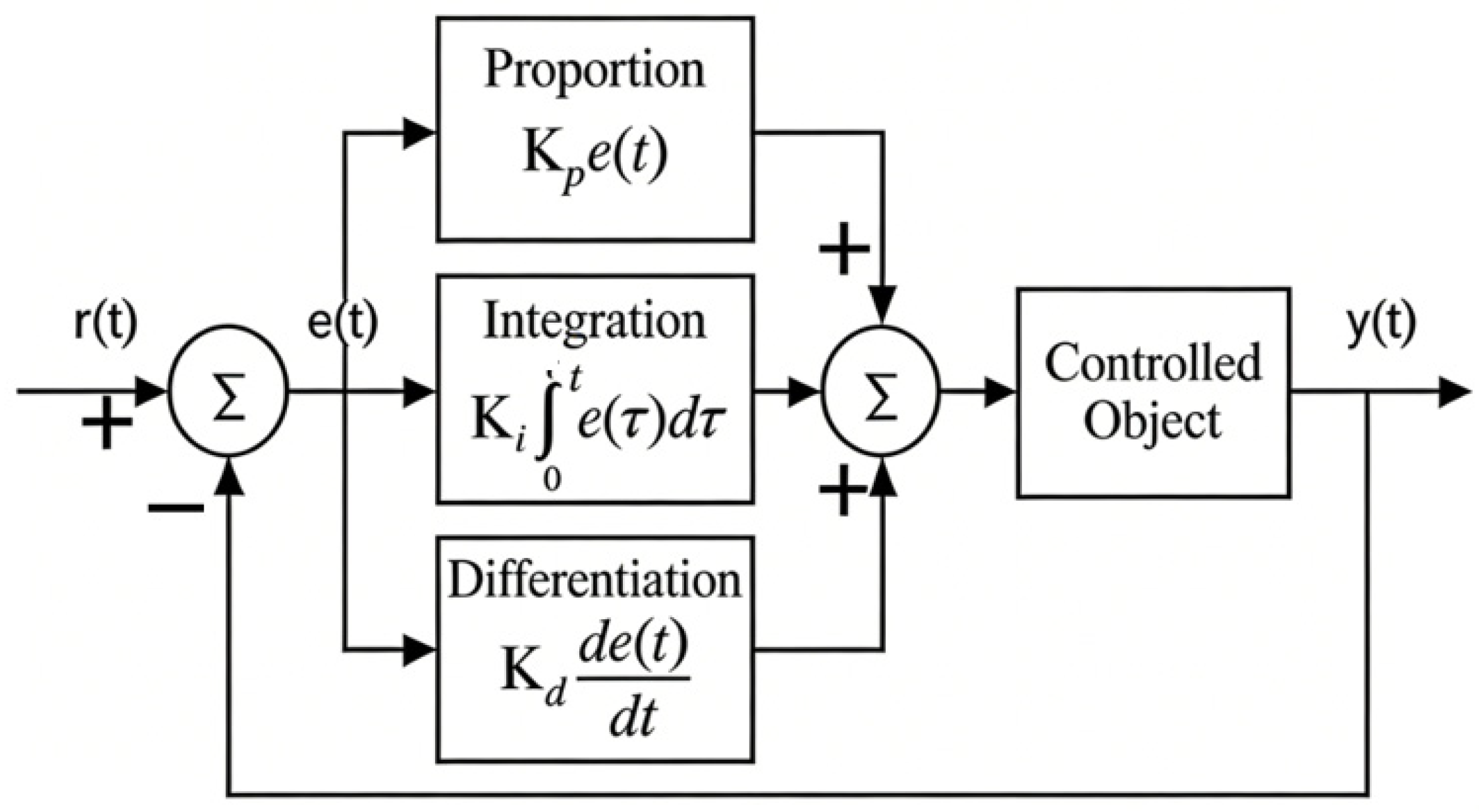
PID control is a commonly used technique in top drive systems. Through a feedback loop, the control signal is adjusted based on the error between the system output and the reference input. As shown in
Figure 1, “P” represents the proportional action, which adjusts the output directly according to the instantaneous error, making the output proportional to the error; “I” represents the integral action, which accumulates the error over time and eliminates steady-state error; and “D” represents the derivative action, which responds to the rate of change of the error and suppresses system oscillations [
18,
19].
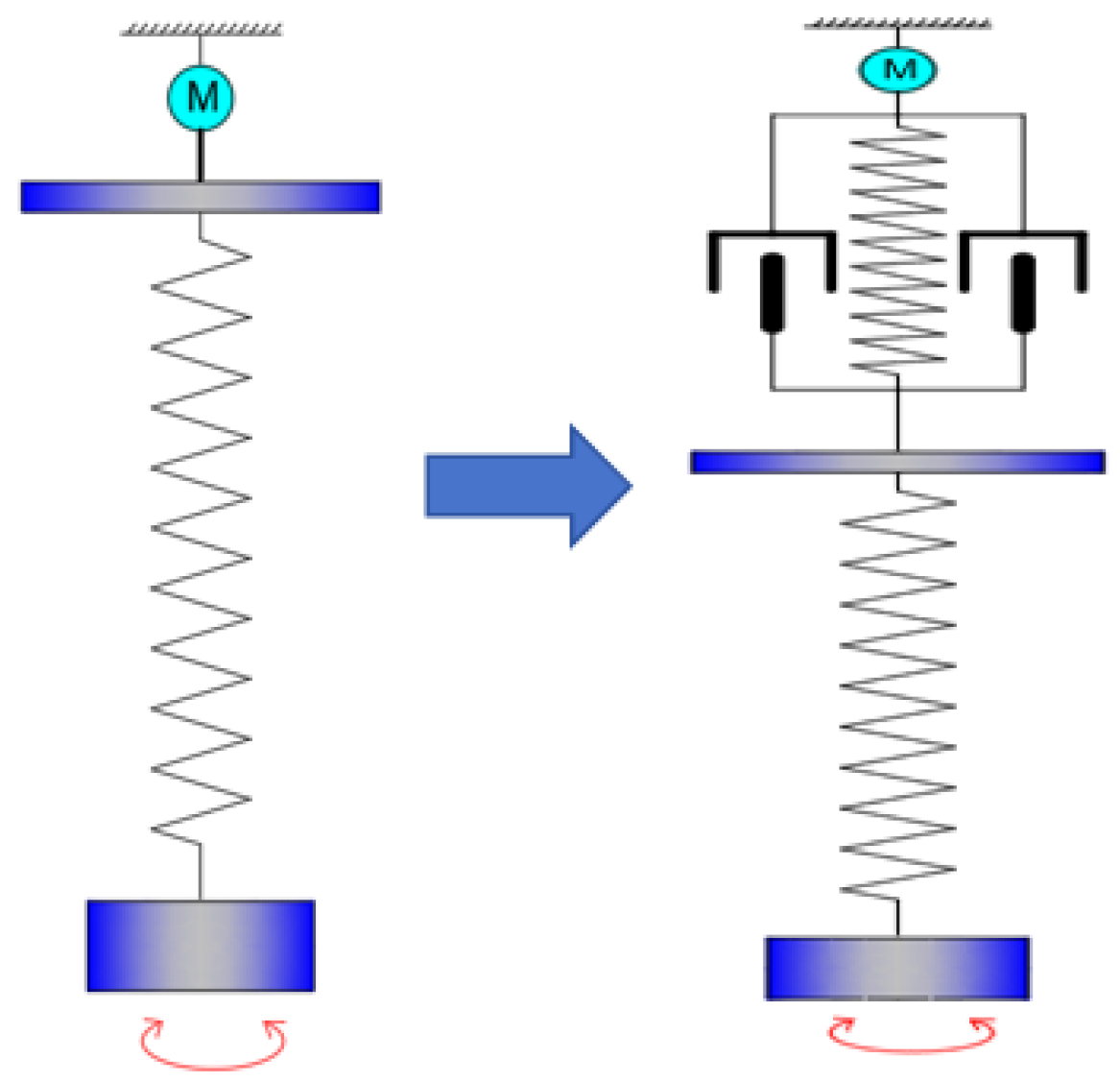
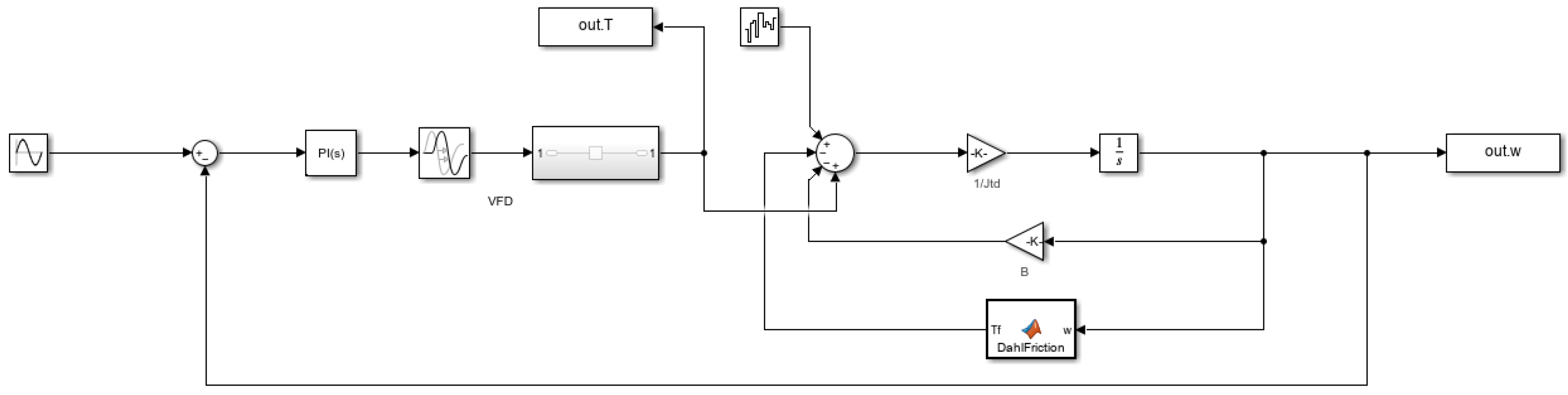
Soft torque is a torque modulation control strategy applied to motor drive systems and mechanical transmission equipment, and the principle is illustrated in
Figure 2. Its core objective is to smooth the motor output torque during operation, preventing mechanical shocks, amplified vibrations, or system instability caused by sudden torque changes. In rotary drilling systems, soft torque technology is widely used in top drive or variable-frequency drive control to suppress drill string torsional vibrations and stick–slip phenomena [
20].
2.2. Friction Model
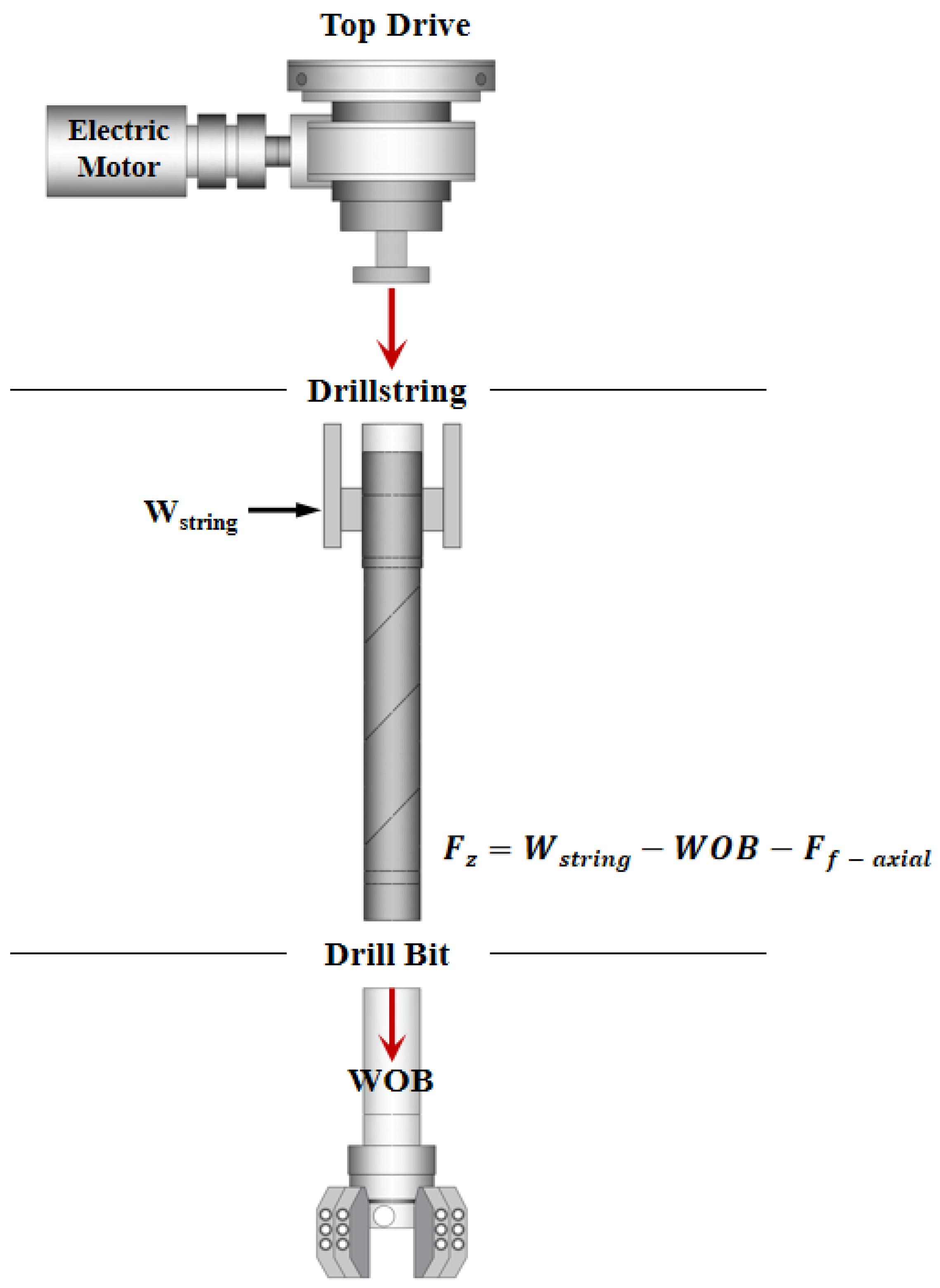
In the top drive control system, friction is a key nonlinear factor affecting control accuracy and system stability. It mainly originates from three aspects: first, the contact friction between the drill pipe and the wellbore; second, the mechanical friction in the top drive transmission mechanism, which is significantly influenced by load and rotational speed; third, the viscous friction in the hydraulic drive system, which is related to the viscosity of the hydraulic oil and the valve opening. These frictional forces can cause an increased deviation between the actual output torque and the set value, leading to “creeping” during low-speed startup and potentially exacerbating torsional vibrations at high rotational speeds. Therefore, specialized friction models are required to quantitatively describe and compensate for these effects. The commonly used friction models in engineering analysis are shown in
Figure 3. The top drive system is primarily subjected to three axial forces: the effective suspended weight of the drill string
, the weight on bit (WOB), and the axial friction force between the wellbore wall and the drill string
Ff-axial.
2.2.1. Coulomb Friction Model
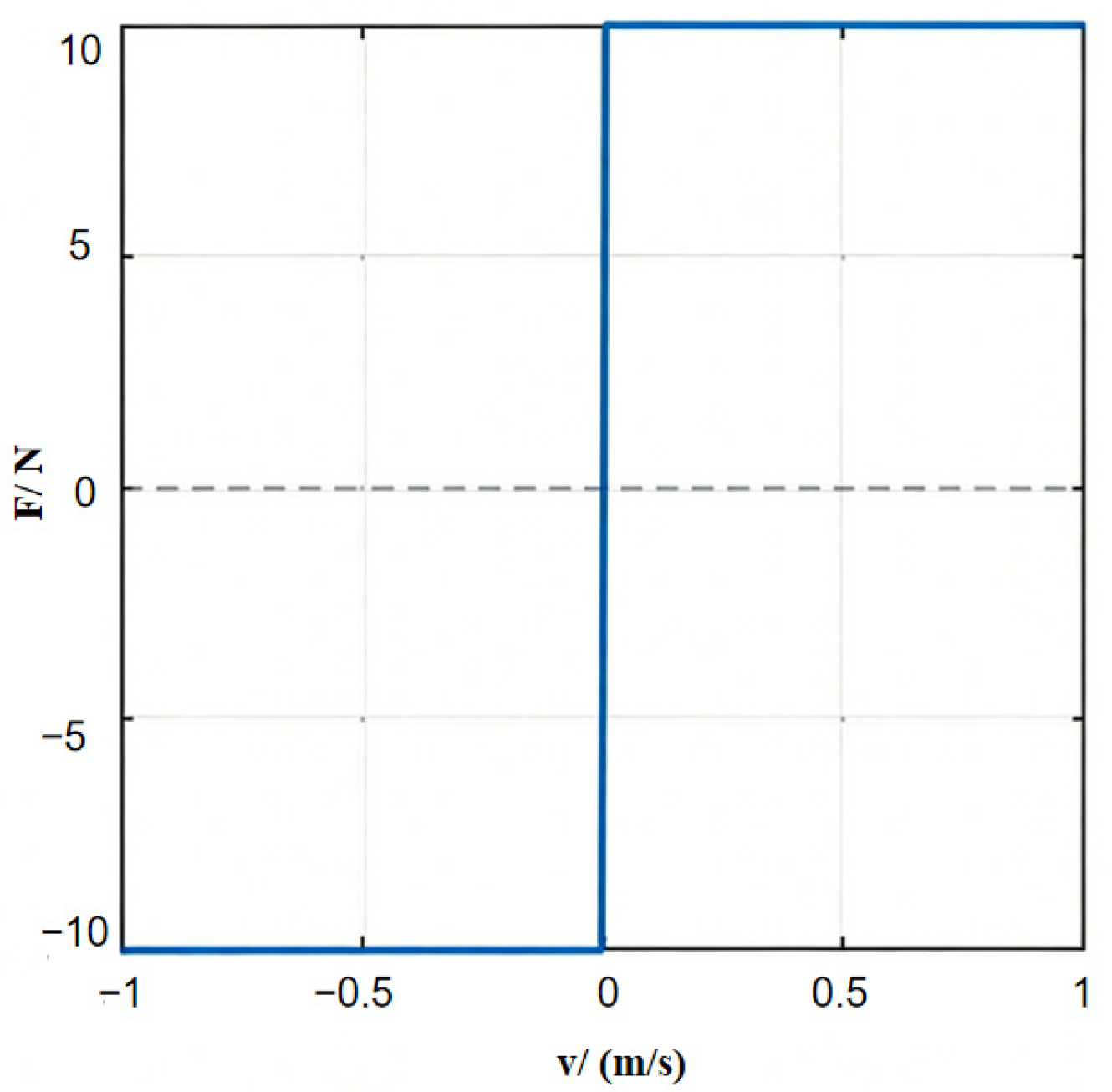
The Coulomb friction model is the earliest friction model, which is shown in
Figure 4. Based on previous research, Coulomb introduced factors such as temperature, time, contact area, pressure, and contact surface materials that could influence friction. Combining experimental studies, he summarized the Coulomb friction law:
where
denotes the total friction torque generated by the Coulomb friction model;
w is the angular velocity of the top drive system (rad/s); and
sgn() represents the sign function.
2.2.2. Viscous Friction Model
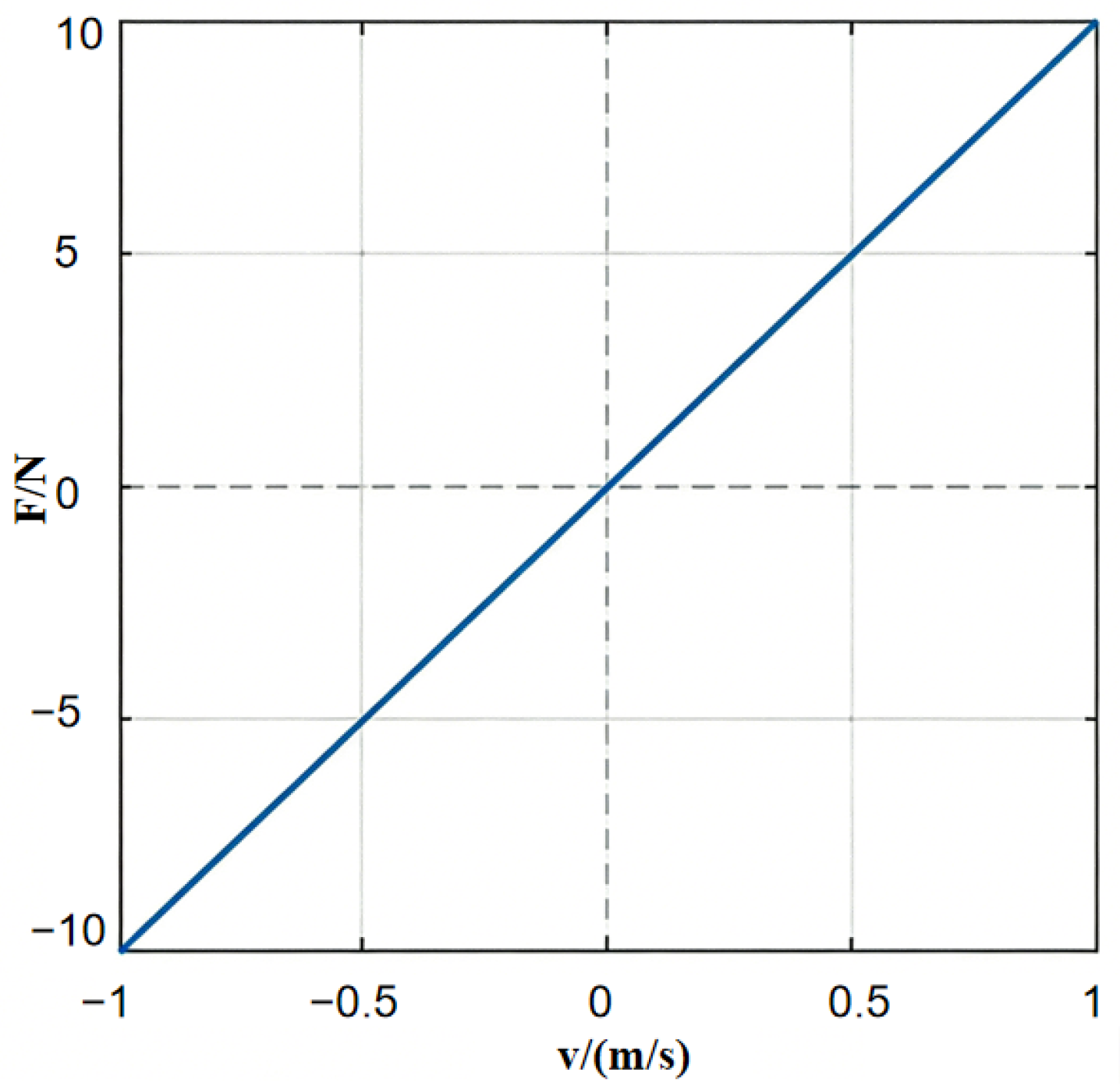
In addition to friction forms such as static friction and Coulomb friction, viscous friction is a type of resistance directly related to the motion velocity, and it is widely present in rotating shaft system scenarios; the model is shown in
Figure 5. To quantify this friction effect that is linearly correlated with velocity, the viscous friction model is commonly used in engineering, with its core expression given by:
where
is the friction torque generated by viscous friction;
w is the angular velocity of the moving component; and B is the viscous friction coefficient [
21].
2.2.3. Dahl Friction Model
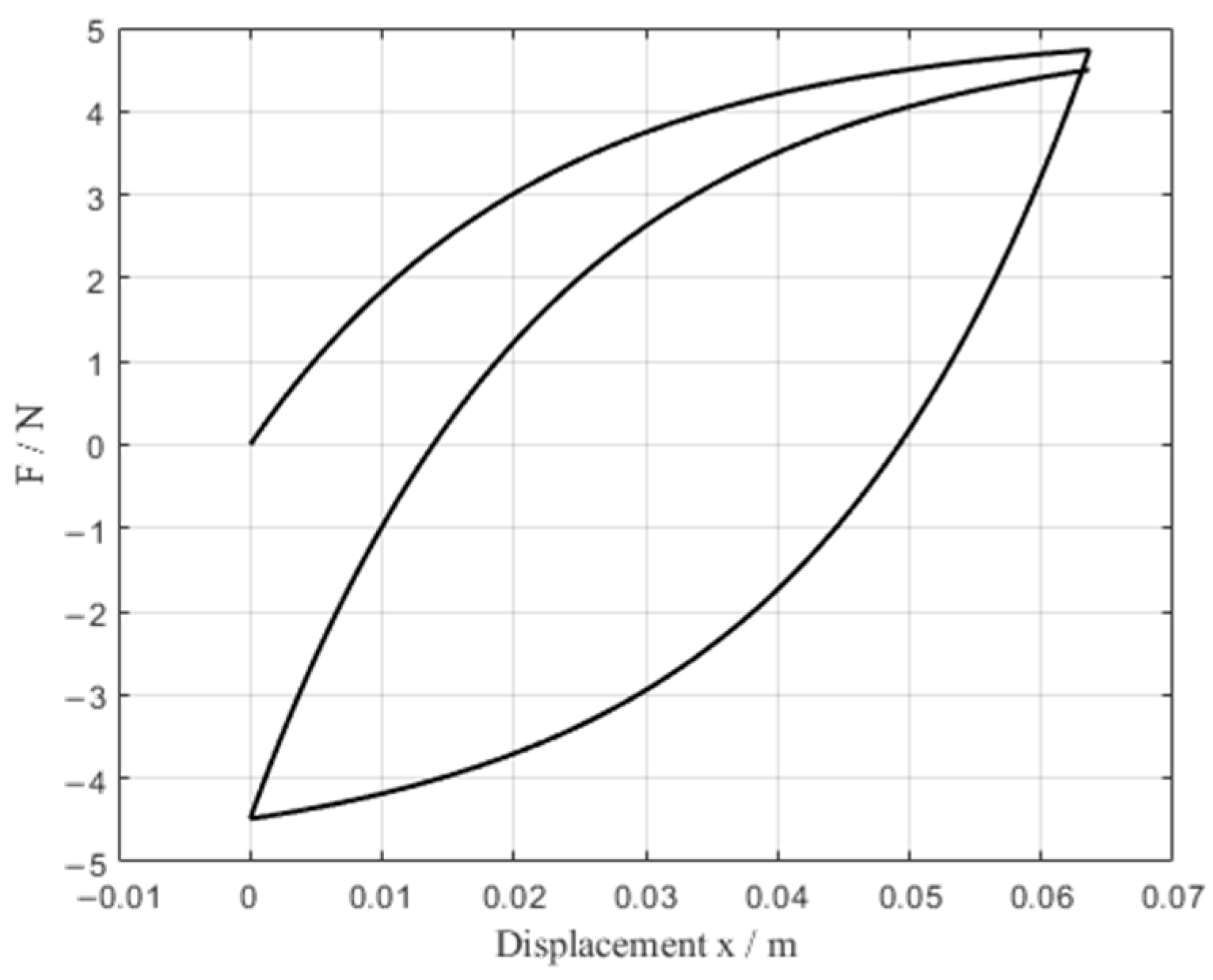
Compared with static friction models such as the Coulomb and viscous friction models, the Dahl model introduces an internal state variable to describe the pre-sliding displacement, enabling a continuous transition between static and dynamic friction regimes. Unlike the LuGre model [
22], which requires additional parameters and may introduce numerical stiffness, the Dahl model offers a favorable balance between modeling accuracy and computational simplicity. This characteristic makes it particularly suitable for dynamic inertia identification in top drive systems, where both low-speed creep and transient responses are critical.
The Dahl friction model is a dynamic extension of the Coulomb friction model. As shown in
Figure 6, it characterizes the relationship between friction force and relative motion through a spring–damper-like behavior, and its mathematical expression is given as follows [
23]:
where
z is the internal state variable;
σ denotes the contact stiffness;
is the Coulomb friction force; and
is the friction torque described by the Dahl model. The Dahl model can achieve smooth compensation during low-speed transition phases.
2.3. Fundamental Dynamic Analysis of the Top Drive System
The top drive system consists of a variable-frequency motor, a gearbox, a main shaft assembly, and the upper drill string connection structure, and its primary function is to provide rotational power to the drill string. For the purpose of moment of inertia identification, the top drive system can be regarded as an overall inertial load composed of the motor-side inertia , the equivalent inertia of the gearbox , and the inertia of the main shaft and connecting components . Since the length of the drill string is much greater than that of the top drive structure, and inertia identification is typically carried out under no-load or low-torque conditions, the load torque from the drill string can be reasonably assumed to be small. Therefore, the dynamic behavior of the system is mainly governed by the inherent dynamics of the top drive itself.
To establish a mathematical model suitable for inertia identification, the following reasonable assumptions are made in this study:
1. Rigid connection assumption: There is no significant torsional flexibility between the motor, gearbox, and main shaft; torsional deformation of the shaft system is neglected.
2. Equivalent inertia assumption: Each component of the top drive is simplified as a lumped mass, and the rotational inertia of each mass is referred to the motor shaft side to form an equivalent moment of inertia (J).
3. Simplified friction modeling: System friction mainly arises from bearing friction and seal friction and can be described using a nonlinear friction model.
4. Scope of vibration analysis: This study focuses only on stick–slip vibration of the drill string, while axial vibration and lateral vibration are not considered.
These assumptions are commonly adopted in inertia identification studies under no-load or low-torque conditions and are sufficient to capture the dominant dynamic characteristics relevant to inertia estimation.
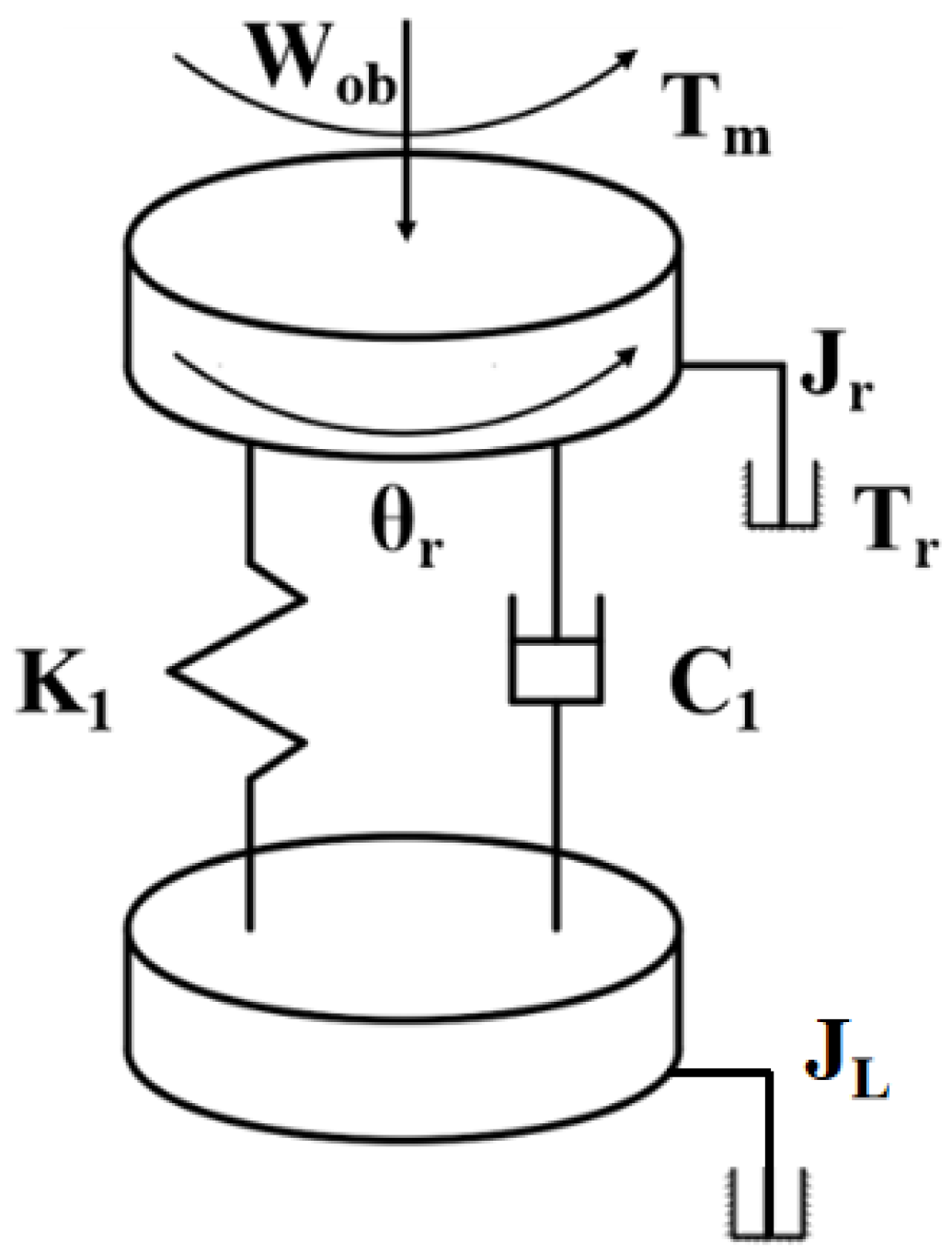
Based on the above assumptions, the drill string system is further simplified in this section. The drill pipe is modeled as a torsional spring with stiffness but no inertia, the top drive assembly is treated as a lumped mass unit, and the bottom-hole assembly—including the drill bit and drill collars—is also regarded as a lumped mass unit. These two lumped masses are connected through equivalent torsional spring and damping elements, and the mass of the drill pipe is lumped into the top drive assembly. Accordingly, a two-lumped-mass dynamic model of the drill string system is established, as shown schematically in
Figure 7.
Here,
is the equivalent moment of inertia of the top drive unit (kg·m
2), and
is the equivalent moment of inertia of the load (kg·m
2). Based on the two-lumped-mass dynamic model established in
Figure 6, the dynamic behavior of the top drive system is analyzed, and the corresponding differential equations of the top drive unit can be derived as follows:
where
J is the total equivalent moment of inertia of the system,
w is the system angular velocity, and
is the resultant torque acting on the system. For the top drive system investigated in this study, the equation can be written as follows:
where
is the electromagnetic torque output by the inverter,
is the friction torque during motor rotation, B is the viscous damping coefficient, and
is the load torque. Variations in the motor-side moment of inertia directly affect the acceleration of the angular velocity response. Therefore, an inverse formulation can be constructed on this basis to identify the moment of inertia.
2.4. Mathematical Inverse Model for Inertia Identification
In the moment of inertia identification process, no-load operation is adopted in this study, and the load torque
is assumed to be zero. Accordingly, Equation (5) can be simplified as:
This equation provides the core description of the relationship between the input electromagnetic torque and the angular velocity response, and it constitutes the theoretical basis for inertia identification. To inversely determine the equivalent moment of inertia J from measurable signals, Equation (6) can be rewritten as:
Equation (7) is the inertia inversion formula, which essentially identifies the moment of inertia by exploiting the proportional relationship between the system’s angular acceleration and the applied torque. According to the law of rotational motion, a larger moment of inertia results in a smaller angular acceleration under the same applied torque. Therefore, the equivalent moment of inertia J can be directly estimated from the measured angular acceleration.
Although torsional flexibility and load torque are neglected in the theoretical derivation, their influence is implicitly reflected in the equivalent friction and damping terms during experimental identification. Under no-load or low-torque conditions, the dominant contribution to angular acceleration originates from the motor-side inertia, rendering the simplified model sufficiently accurate for inertia estimation purposes.
5. Experimental Platform Design and Validation
To verify the effectiveness of the proposed top drive moment of inertia identification method and to evaluate its accuracy and robustness under practical operating conditions, comparative analyses of inertia identification results under different excitation conditions and control parameters were conducted on a top drive system experimental platform. This section mainly introduces the experimental platform, the testing procedure, and the comparative validation between the experimental results and the simulation results.
5.1. Field Experimental Validation
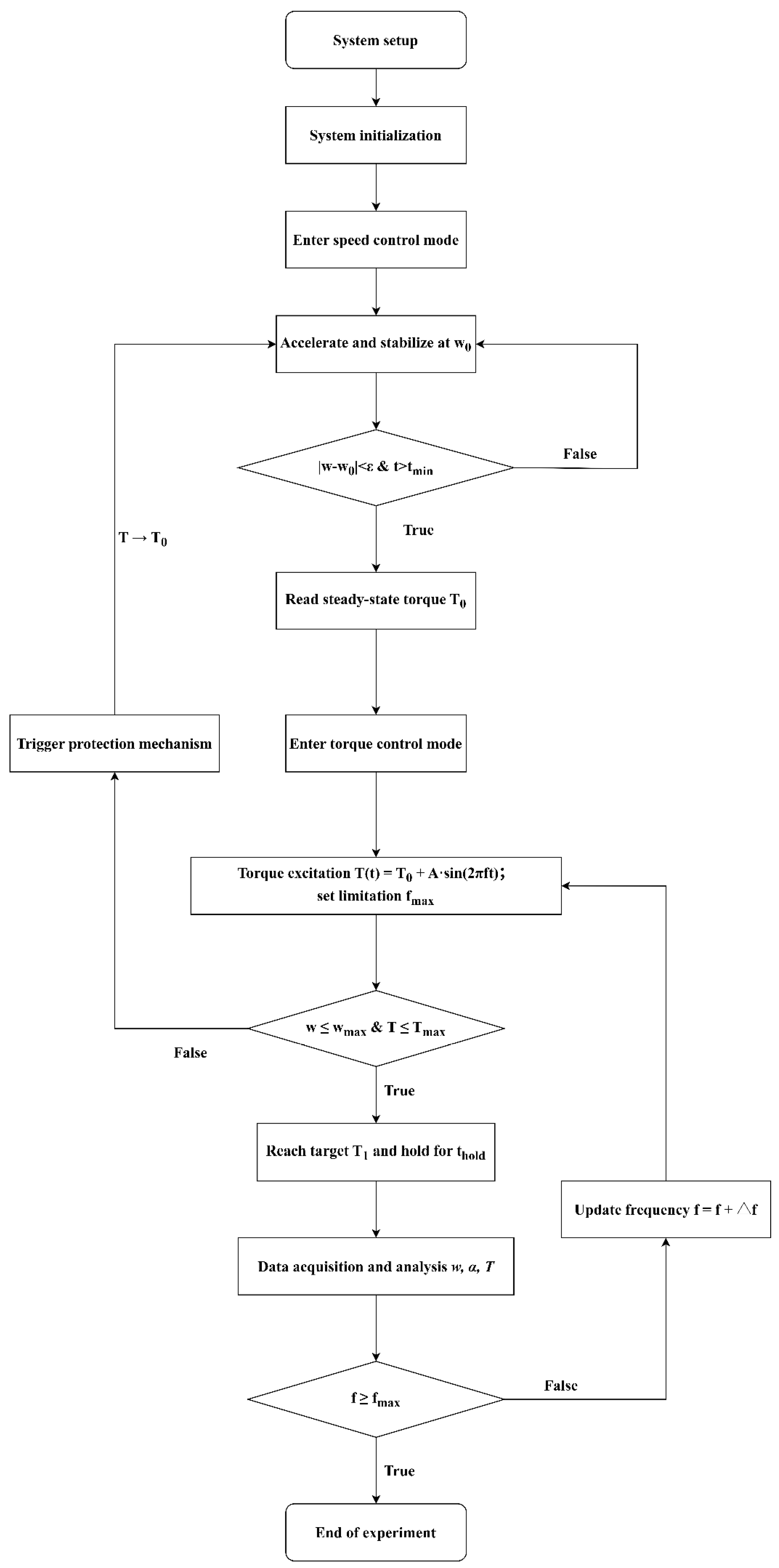
To verify the feasibility of the proposed top drive moment of inertia identification method, field experiments were conducted based on the theoretical model under no-load conditions using the experimental setup. The experimental procedure is shown in
Figure 18, and details are described as follows:
- 1.
Experimental system setup and initialization
Prior to the experiment, comprehensive commissioning and calibration of the top drive system were carried out. This included the installation of speed sensors, torque sensors, and accelerometers to ensure real-time monitoring of motor speed, output torque, and the dynamic response of the drill string. All sensor data were transmitted in real time to the control platform via the data acquisition system for monitoring and analysis of the experimental process.
- 2.
Target speed setting and operation in speed control mode
In the first stage of the experiment, the motor was operated in speed control mode to gradually reach the preset target speed n0. During this stage, the PI controller adjusted the motor input current or voltage according to the reference speed, enabling the motor to stably reach the desired speed. Under speed control mode, the motor speed variation was dominated by stability, ensuring smooth operation at the target speed without significant fluctuations or oscillations.
- 3.
Switching to torque control mode and torque increase
After the target speed n0 was achieved, the experiment entered the second stage, in which the control mode was switched to torque control. In this stage, the motor output torque was gradually increased based on the target speed n0 until the preset target torque T was reached. Under torque control mode, the PI controller regulated the motor input based on real-time feedback of torque and speed to ensure accurate tracking of the target torque.
- 4.
Real-time feedback and fine adjustment
Once the target torque T was reached, the system entered a steady operating state. By continuously monitoring the speed and torque signals, the PI controller performed fine adjustments to maintain the output torque at the target value while avoiding overshoot or stability issues. During this process, the experimental system was continuously adjusted and optimized to accommodate practical operating conditions such as load fluctuations and friction variations.
- 5.
Data acquisition and result analysis
Throughout the experiment, all relevant data—including motor speed, output torque, and drill string angular acceleration—were recorded in real time by the data acquisition system and used for subsequent analysis. By comparing the experimental data with predefined reference values, the performance of the soft torque control system was evaluated, and the accuracy of the moment of inertia identification was verified. The experimental results demonstrate that the system can operate stably under different well conditions, effectively reduce torsional vibration, and significantly improve drilling efficiency.
5.2. Experimental Results and Analysis
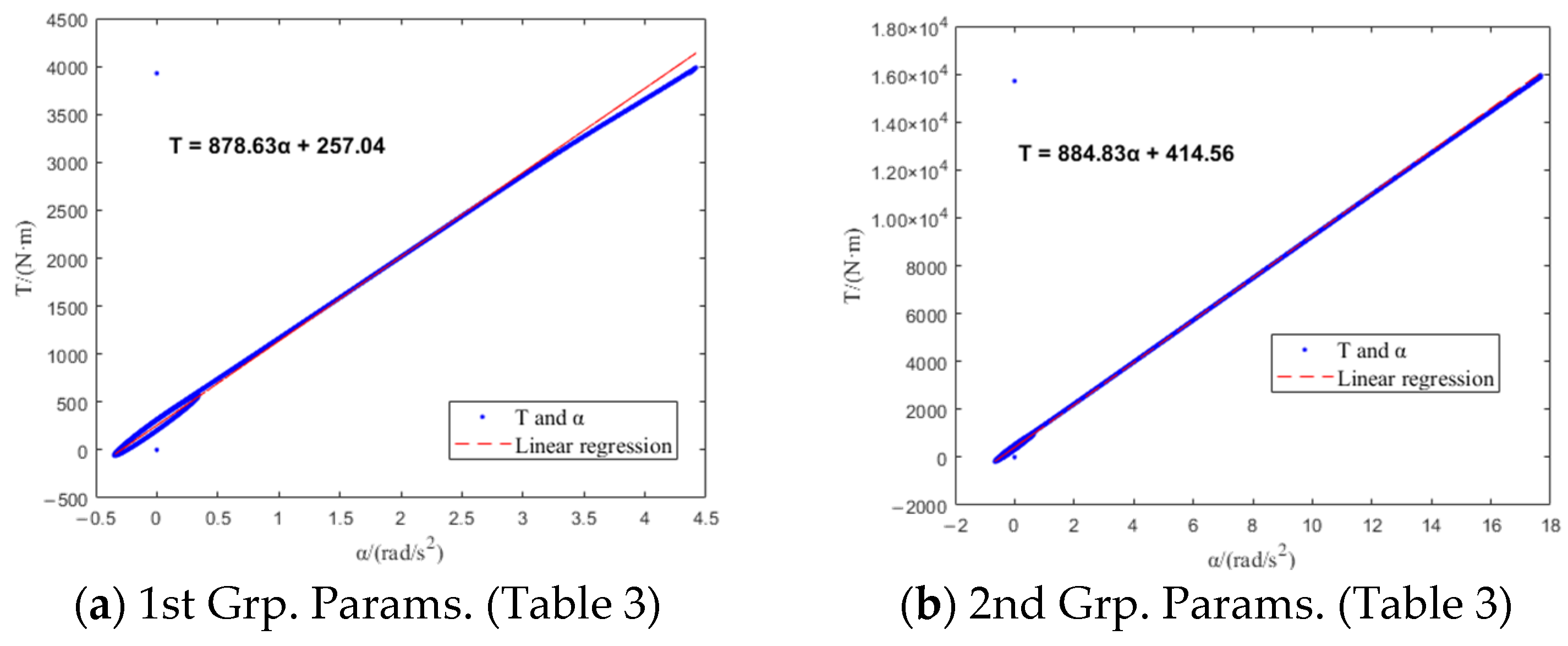
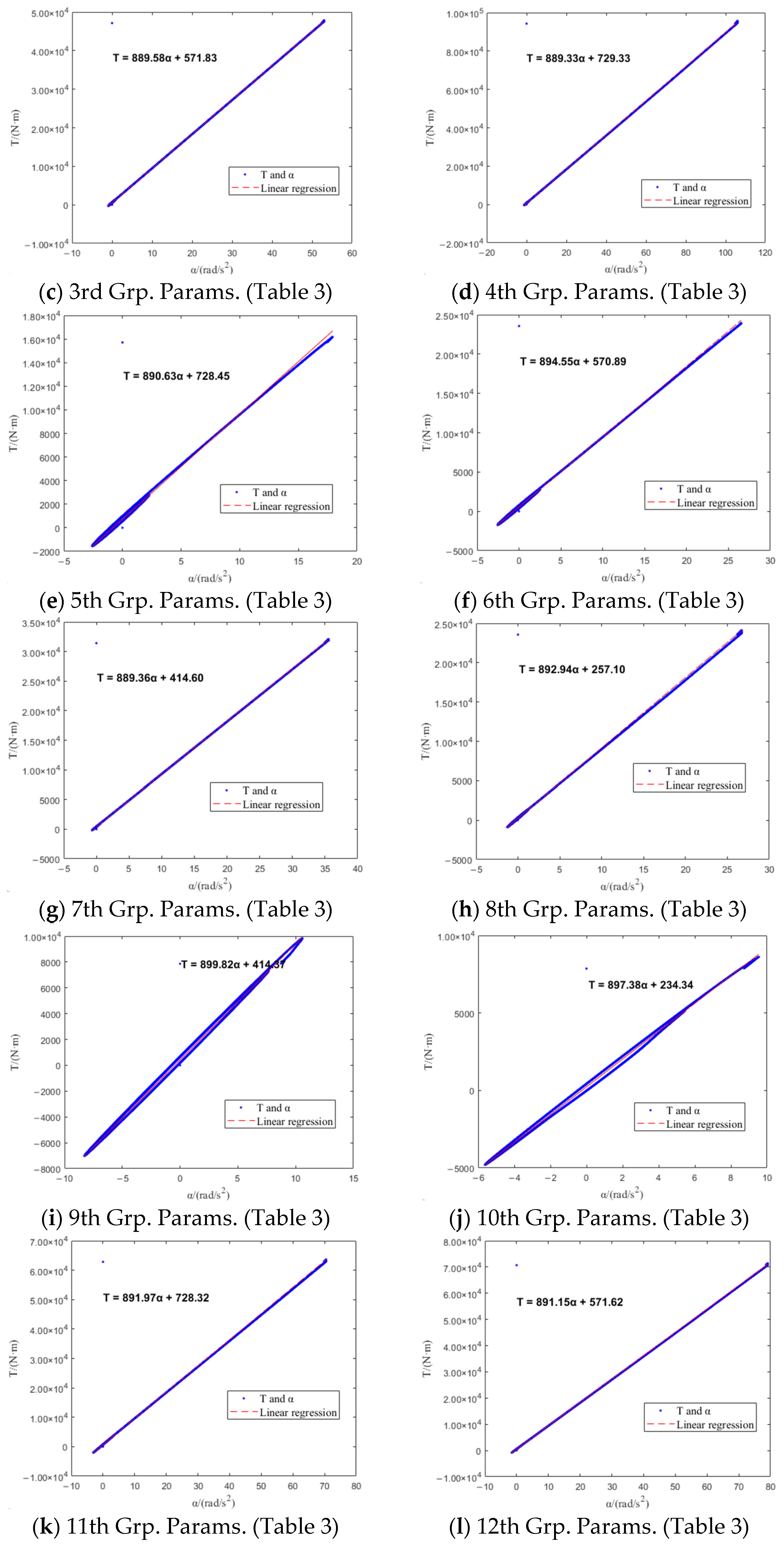
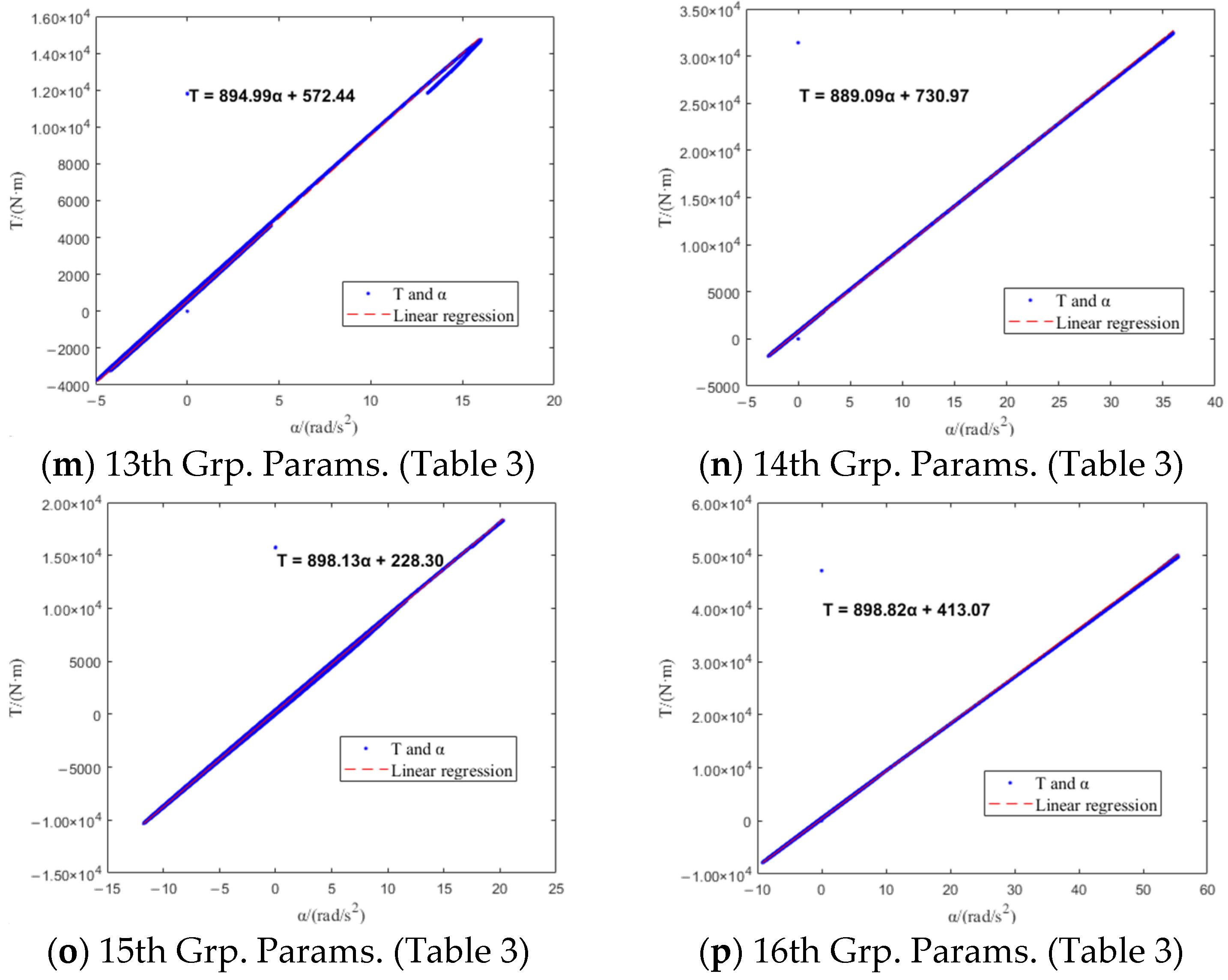
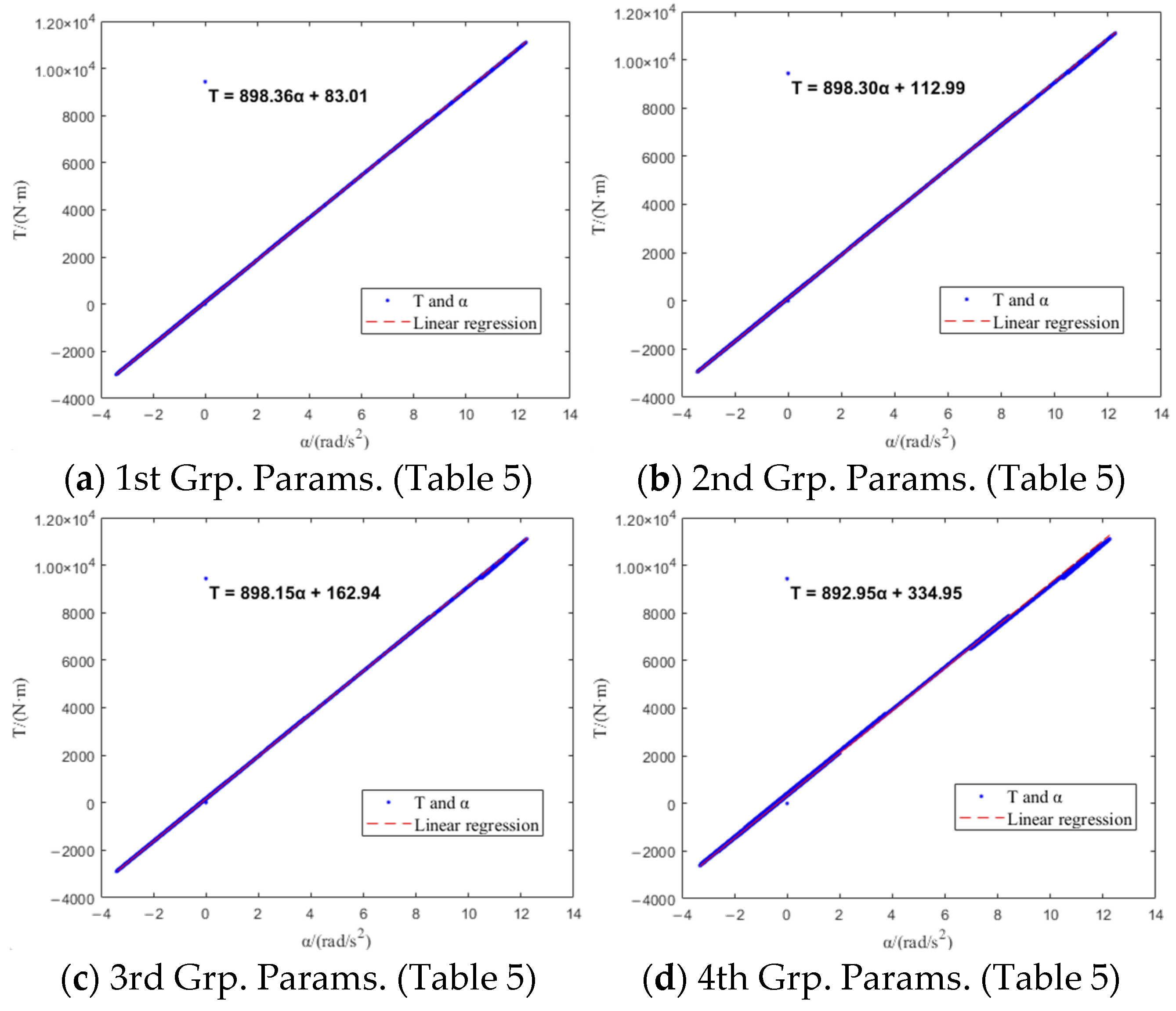
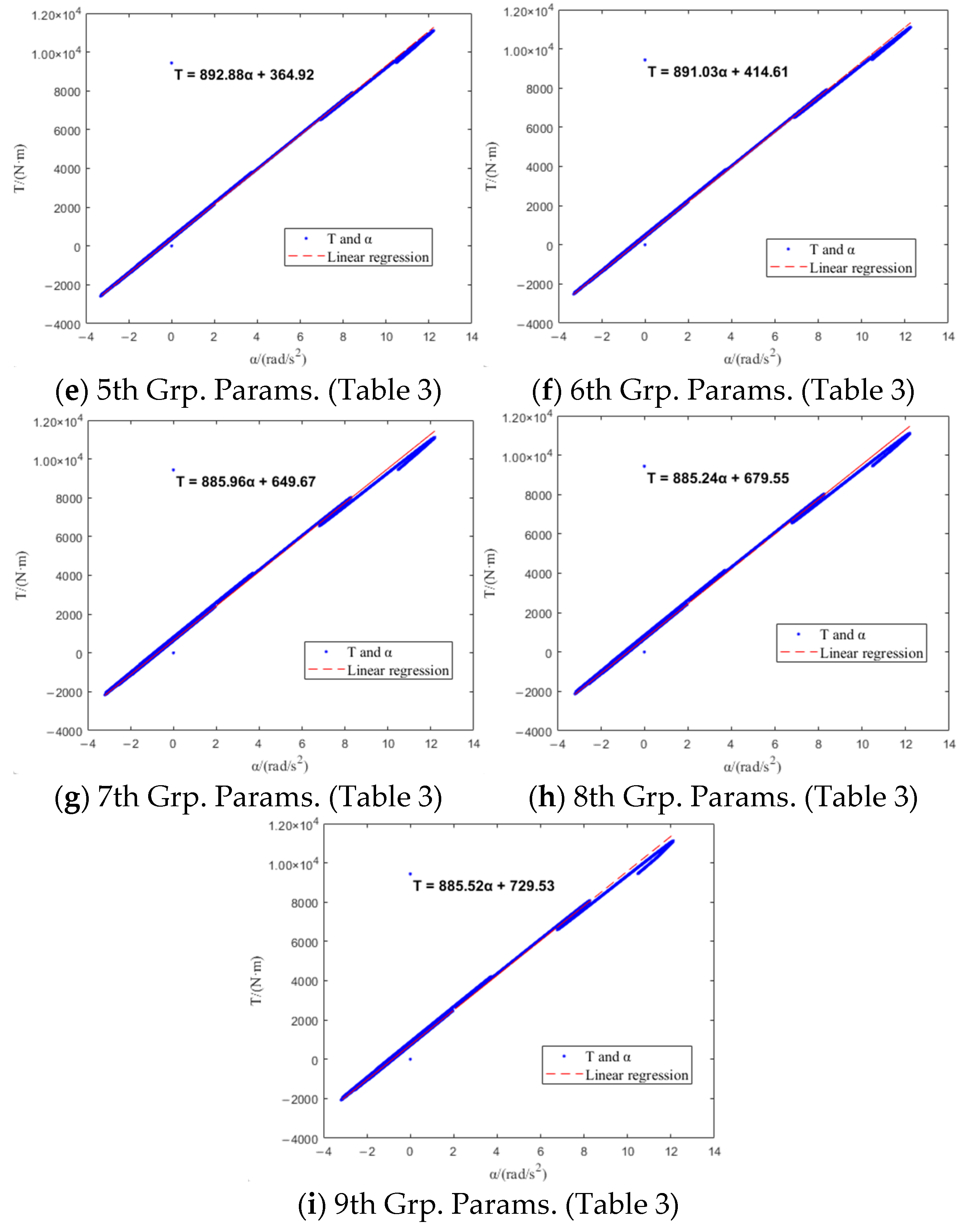
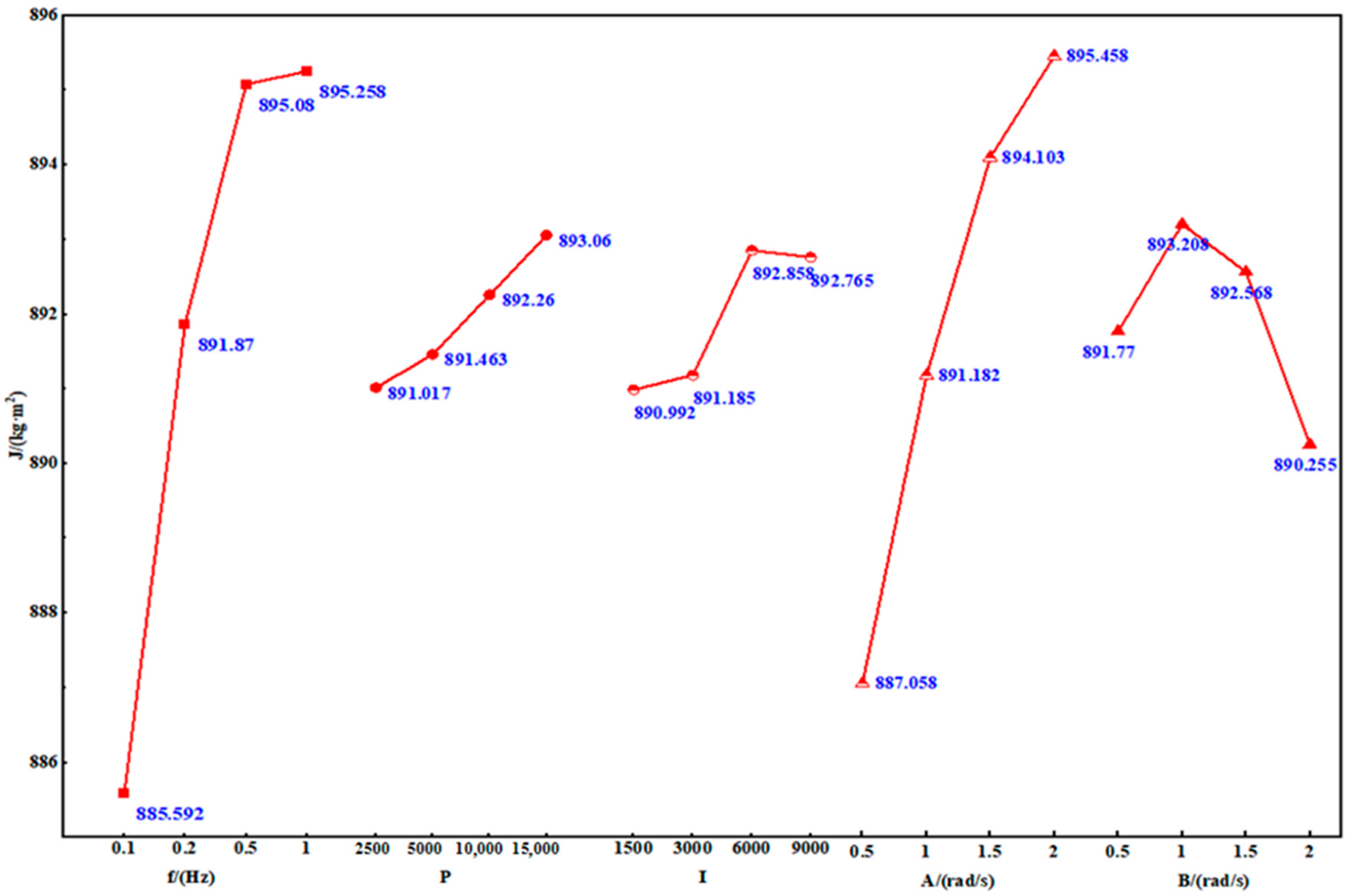
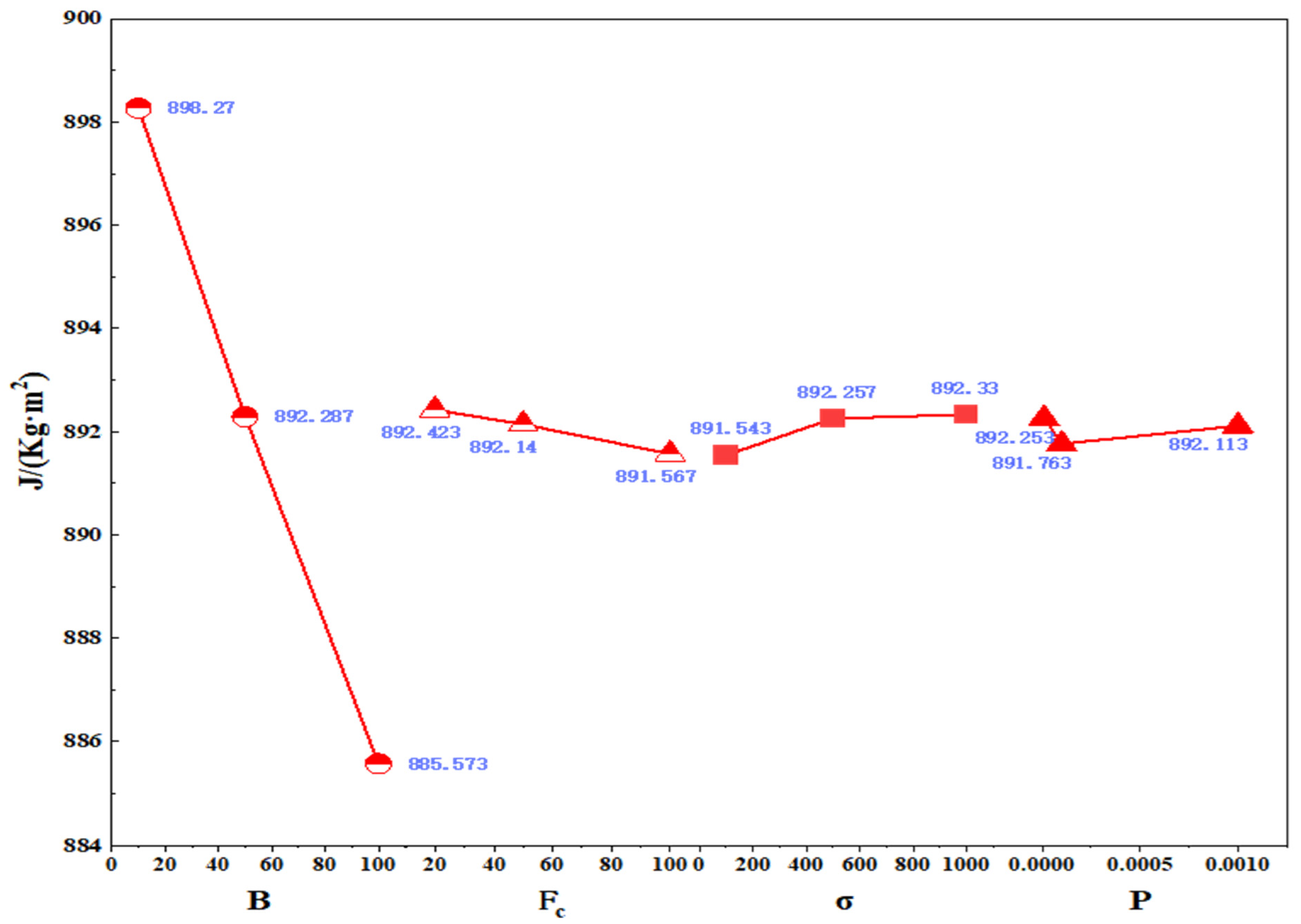
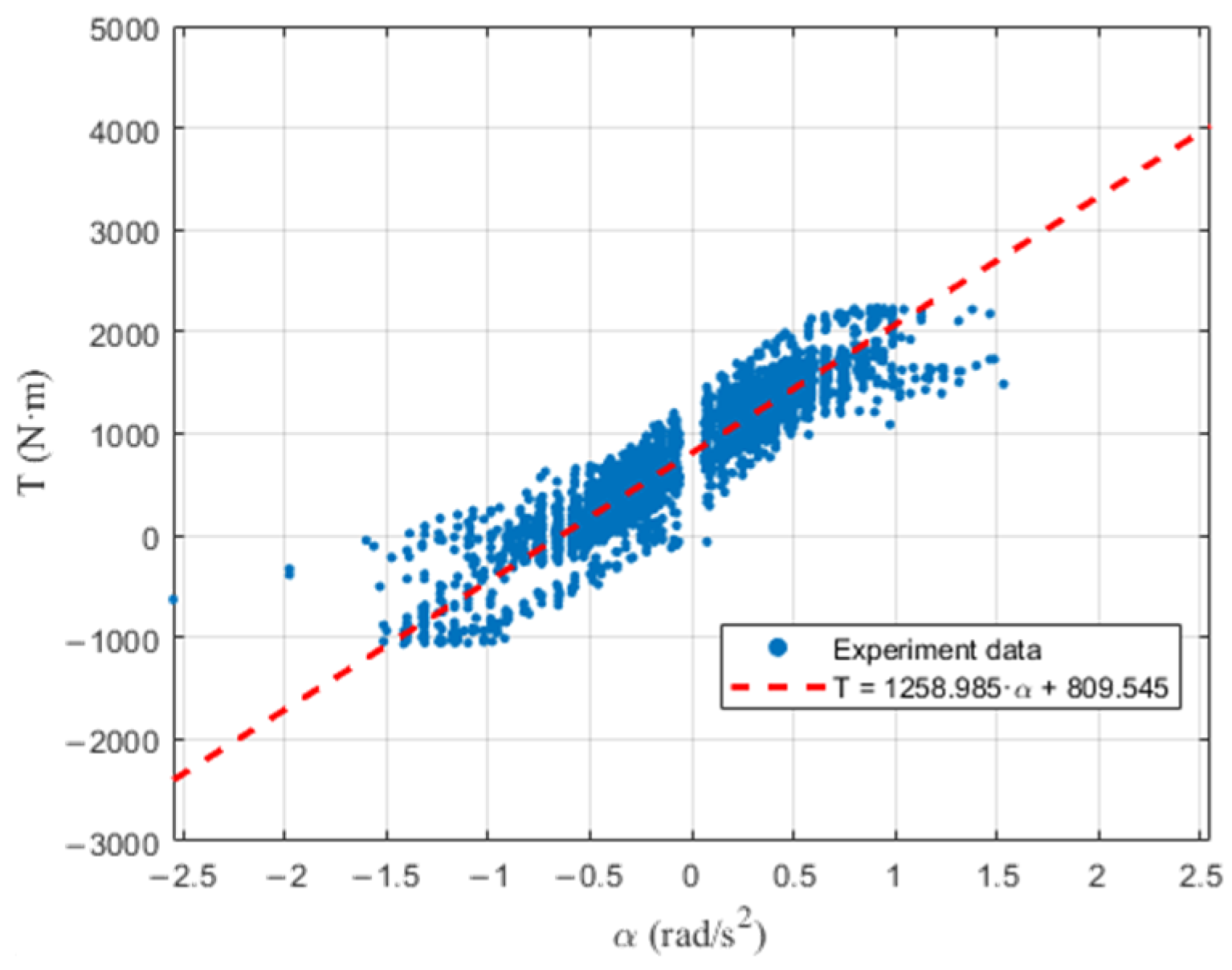
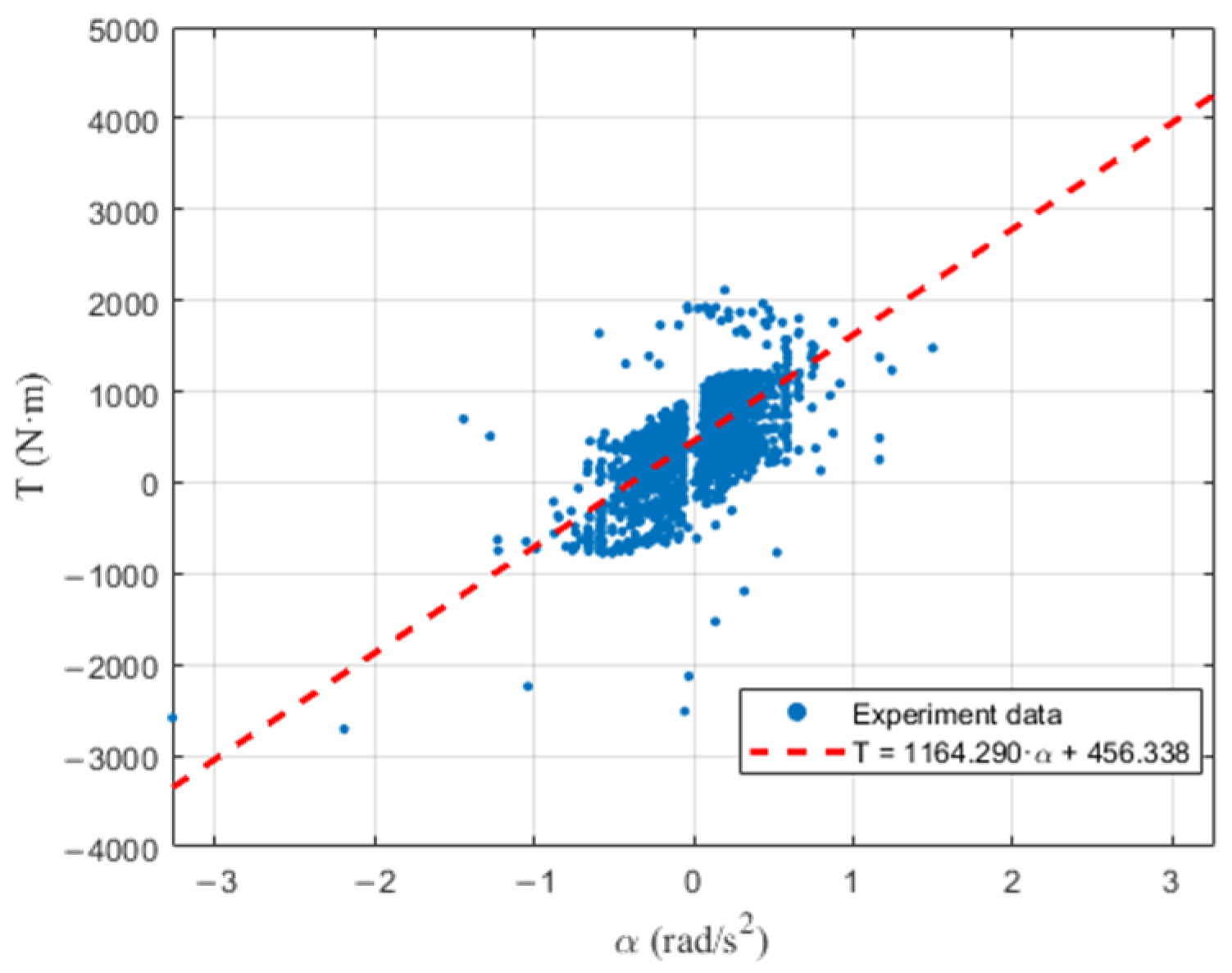
Figure 19 illustrates the mapping relationship between system torque and angular acceleration under different P and I parameter settings. The fitted lines corresponding to different PI parameter settings exhibit distinct slopes, indicating that controller parameters directly influence the dynamic response characteristics and, consequently, the identified moment of inertia. In addition, the degree of data point clustering varies with parameter changes, indicating that adjustments of the P and I parameters directly alter the input–output response characteristics of the system.
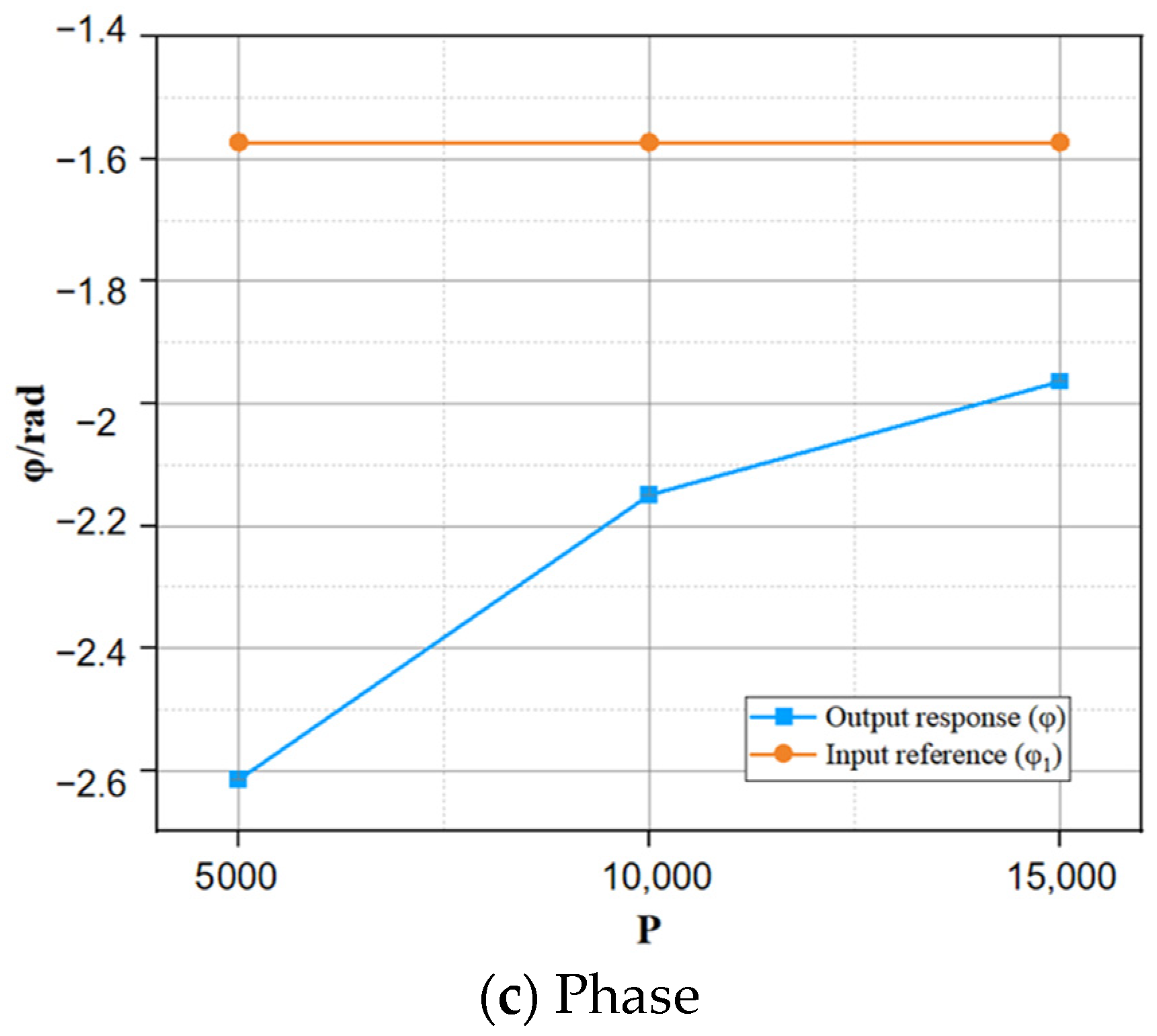
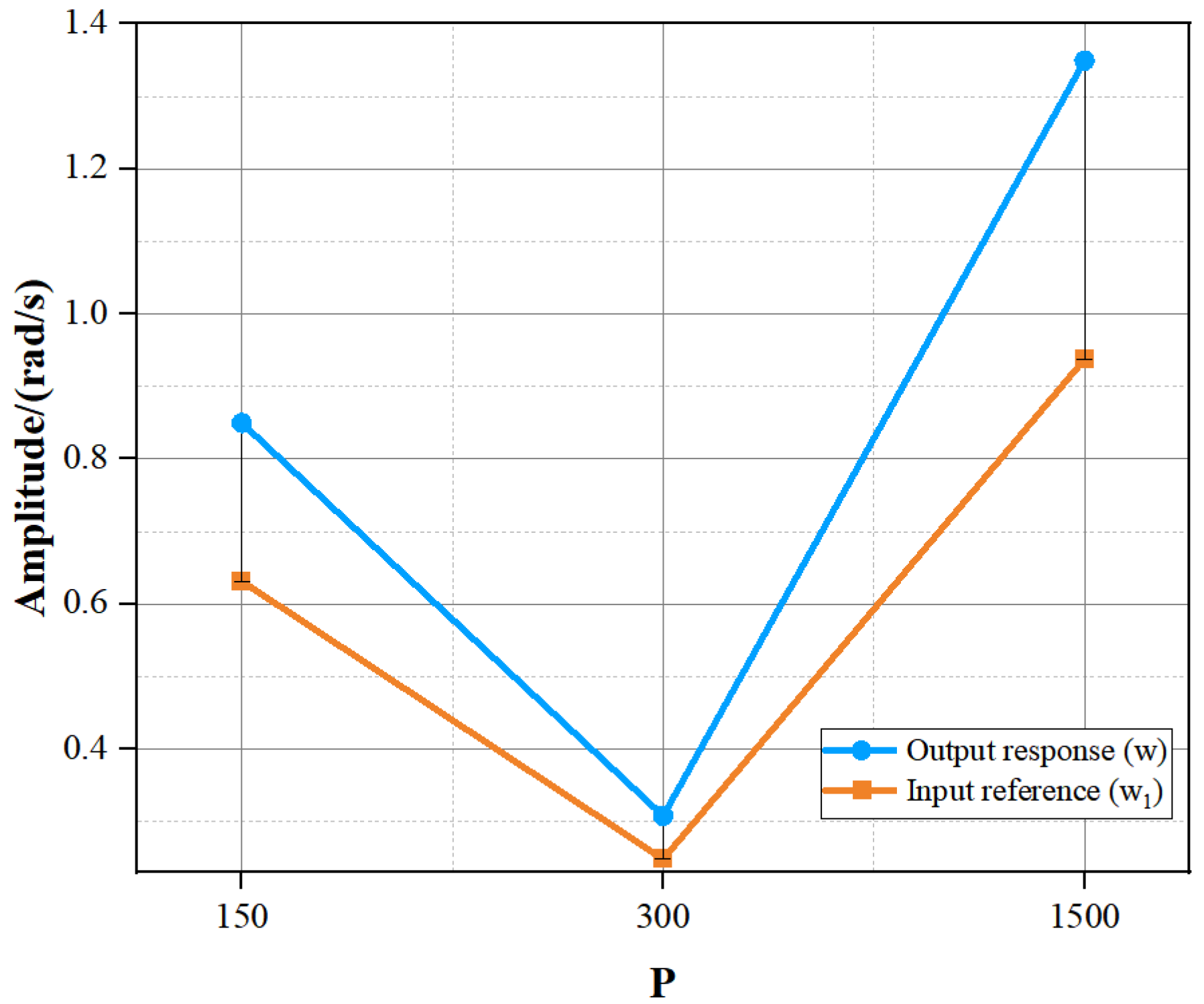
As shown in the amplitude difference plot in
Figure 20, when the P parameter increases from 150 to 1500, the amplitude difference between the input and output waveforms exhibits a trend of first decreasing and then increasing. The minimum amplitude difference occurs at P = 300, suggesting that this proportional gain provides an optimal balance between response speed and tracking accuracy for inertia identification. When P deviates from this value, the amplitude difference gradually increases, reflecting the gain-regulating effect of the P parameter on the system output.
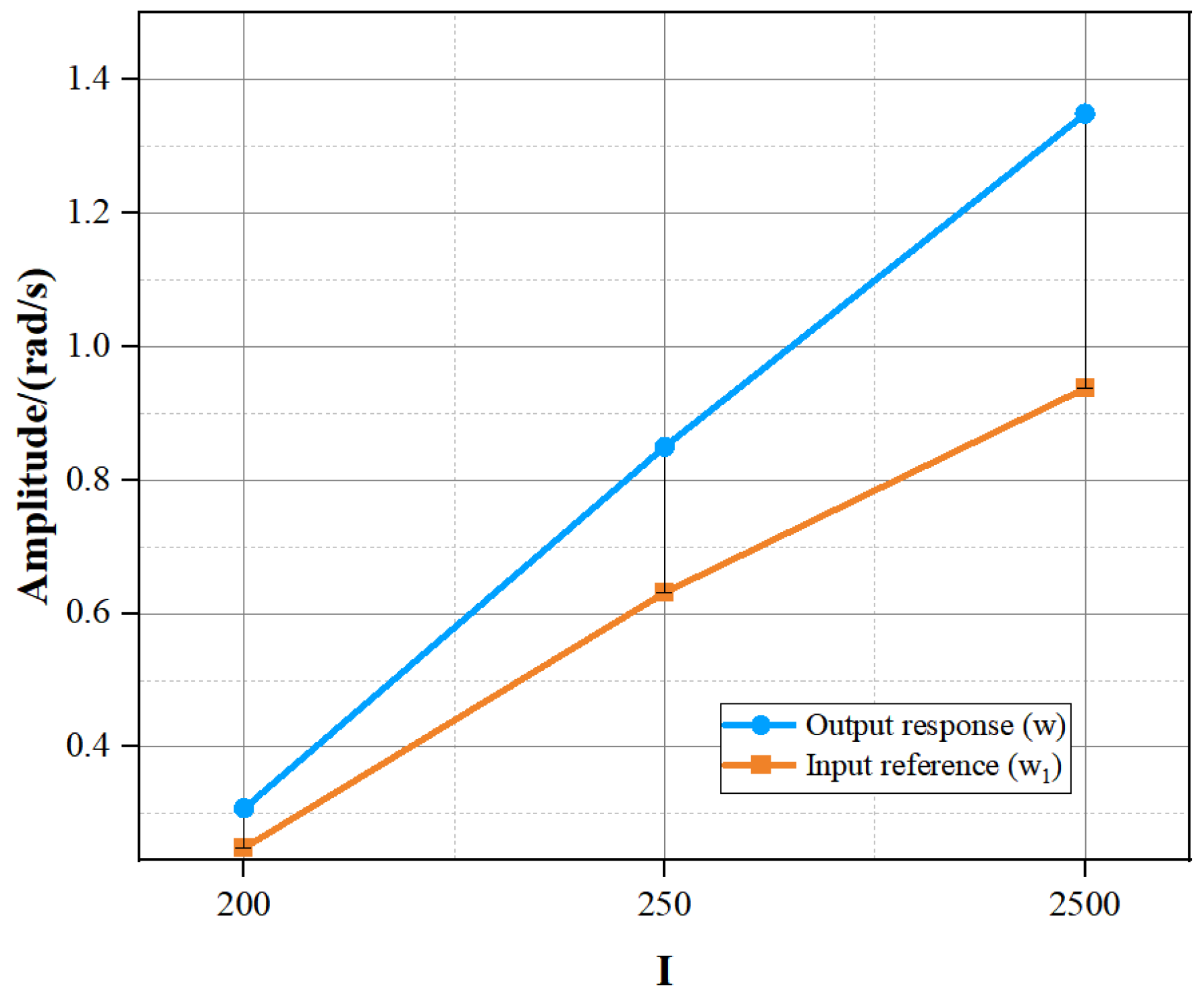
As shown in the amplitude difference plot in
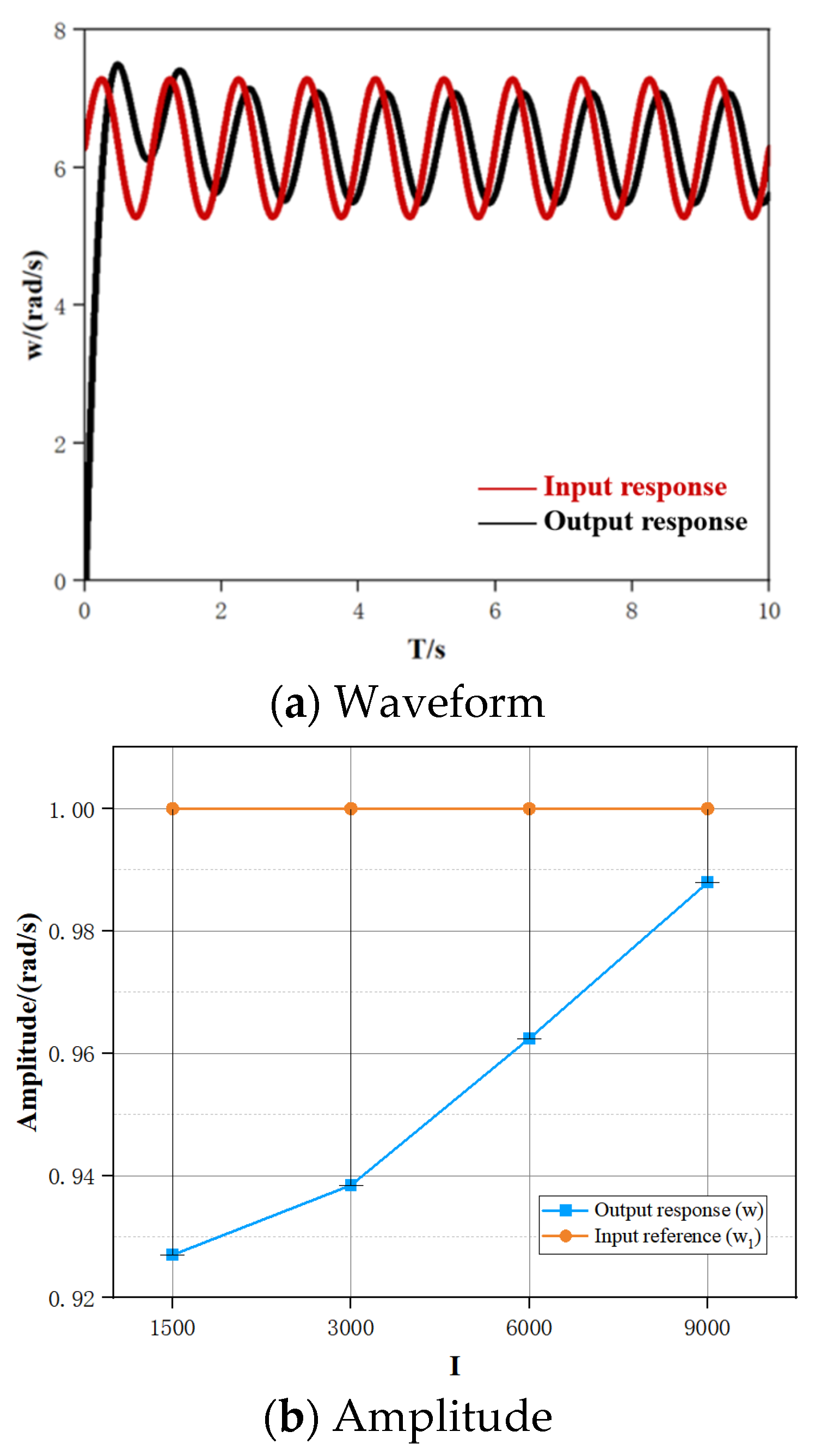
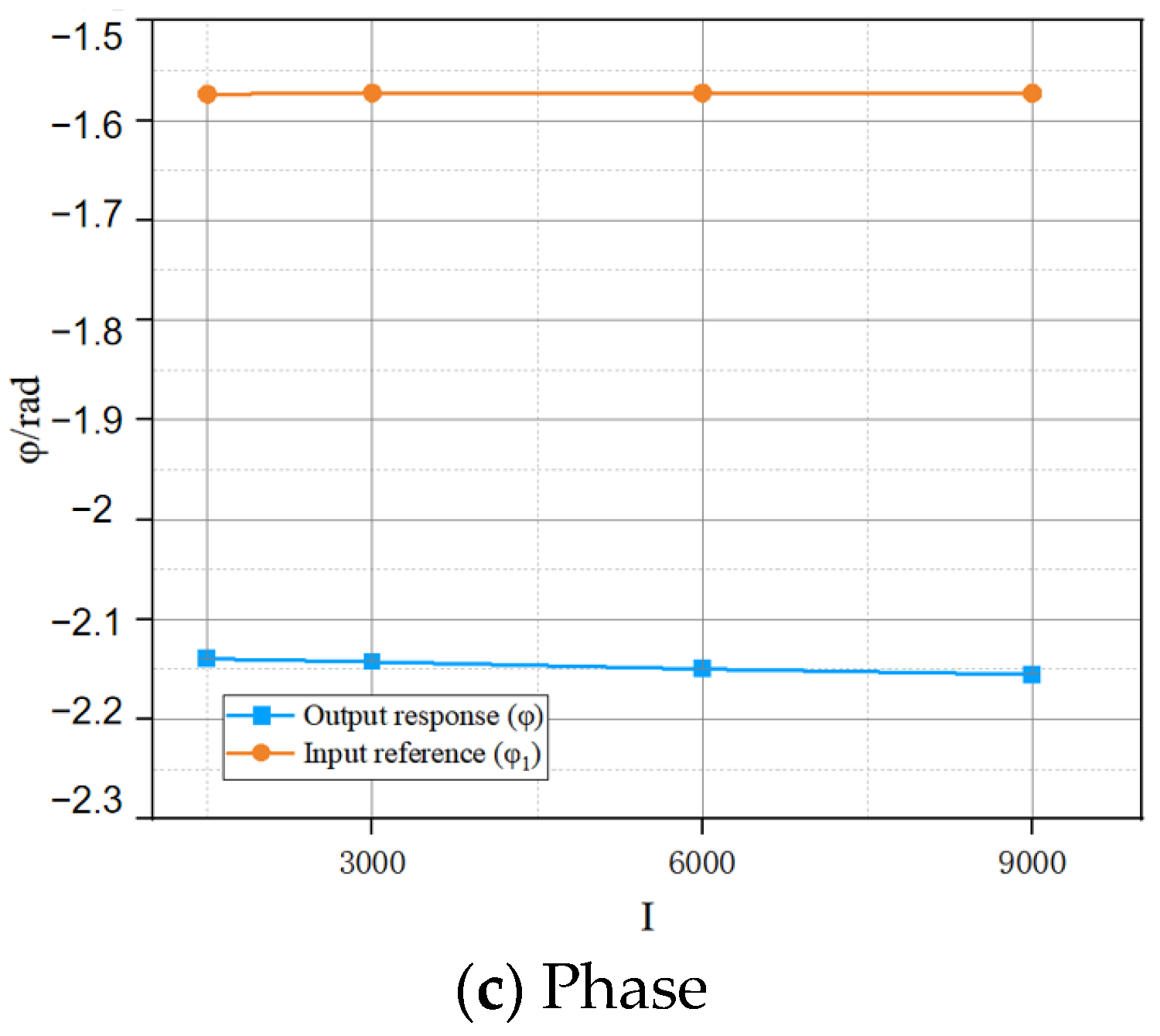
Figure 21, the regulation effect of the I parameter is evident: as I increases from 200 to 2500, the amplitude difference exhibits an increase trend, reaching a minimum value of 0.0594 rad/s at I = 200. Compared with the influence curve of the P parameter, the variation trend of the amplitude difference corresponding to the I parameter shows a similar pattern. These results demonstrate that both proportional and integral gains jointly shape the input–output consistency of the system, thereby influencing the reliability of moment of inertia identification.
In summary, both the P and I parameters are key regulating factors for the output performance of the top drive system. By modifying the system gain and integral characteristics, they jointly affect the amplitude matching between the input and output. The experimental results indicate that when the P and I parameters are around 300, the input–output consistency of the system is optimal, providing experimental evidence for subsequent optimization of the control parameters of the top drive system.
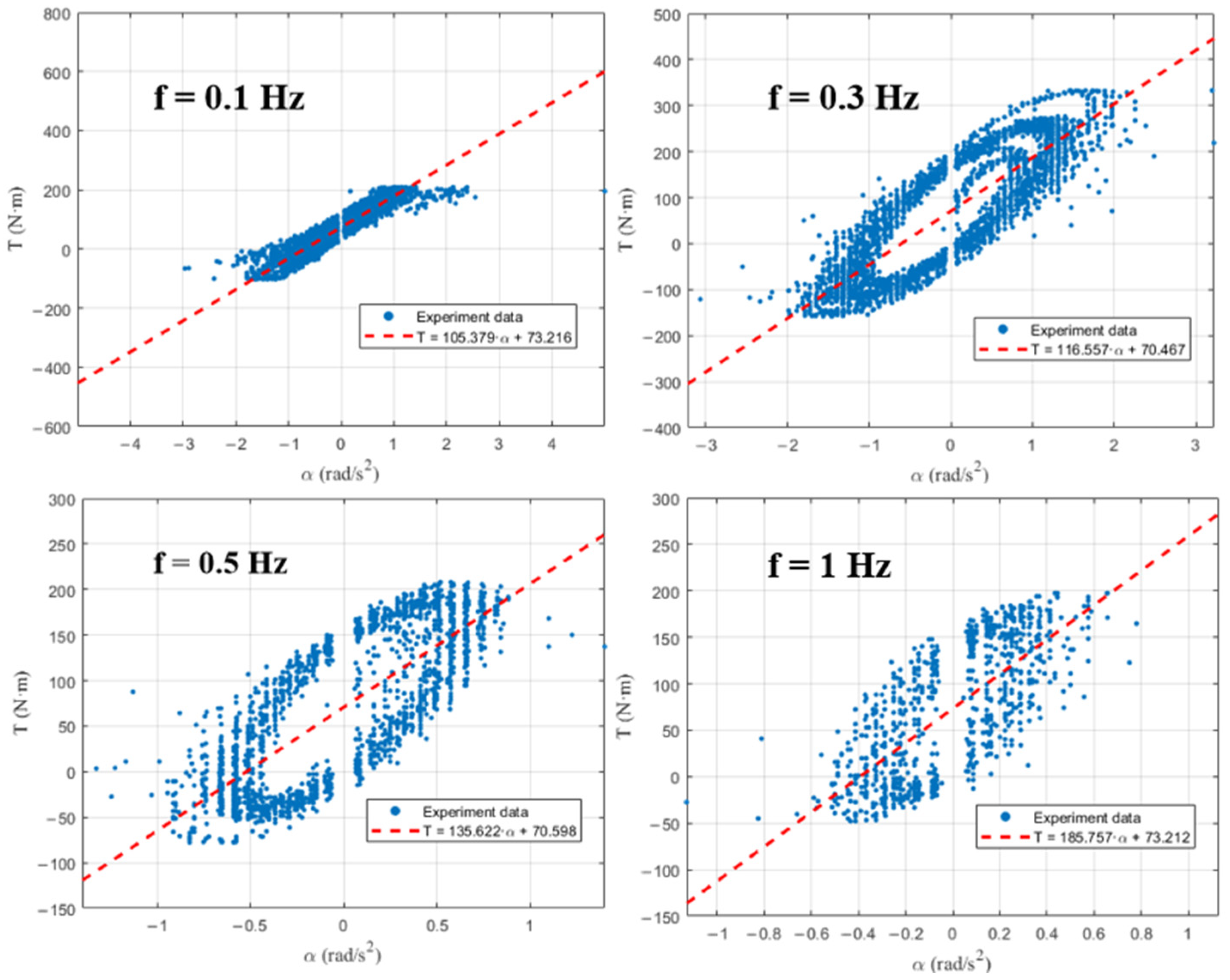
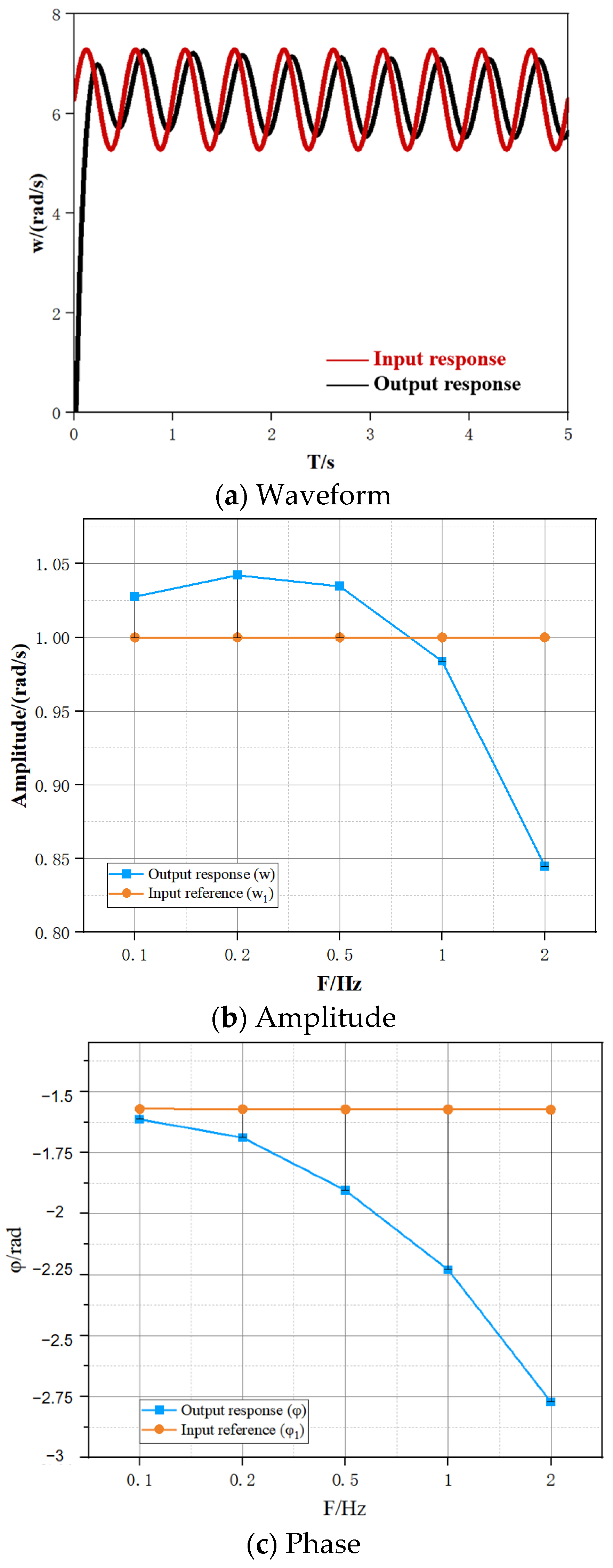
To verify the input (angular acceleration)–output (torque) characteristics of the system under different excitation frequencies and the feasibility of the moment of inertia identification method, experimental tests were conducted at excitation frequencies of 0.05 Hz, 0.1 Hz, 0.5 Hz, and 1 Hz. The experimental results are shown in
Figure 22. Under all frequency conditions, the torque–angular acceleration scatter points exhibit a clear linear distribution, and the fitted relationships are consistent with the mechanical model of moment of inertia identification. Among them, the scatter distribution at 0.1 Hz is the most concentrated, with the fitting equation T = 105.379α + 73.216, showing the highest agreement with the fitted line. For the 0.3 Hz, 0.5 Hz, and 1 Hz conditions, the fitting equations are T = 116.557α + 70.467, T = 135.622α + 70.598, and T = 185.757α + 73.212, respectively. As the excitation frequency increases, the scatter points become increasingly dispersed, indicating that high-frequency excitation amplifies noise and friction effects, thereby reducing inertia identification accuracy. The deviation from the fitted line increases, demonstrating the trend that a lower excitation frequency leads to higher accuracy in moment of inertia identification. The identified inertia should therefore be interpreted as an equivalent dynamic inertia referred to the motor shaft, which may exhibit frequency-dependent variation due to system coupling effects.
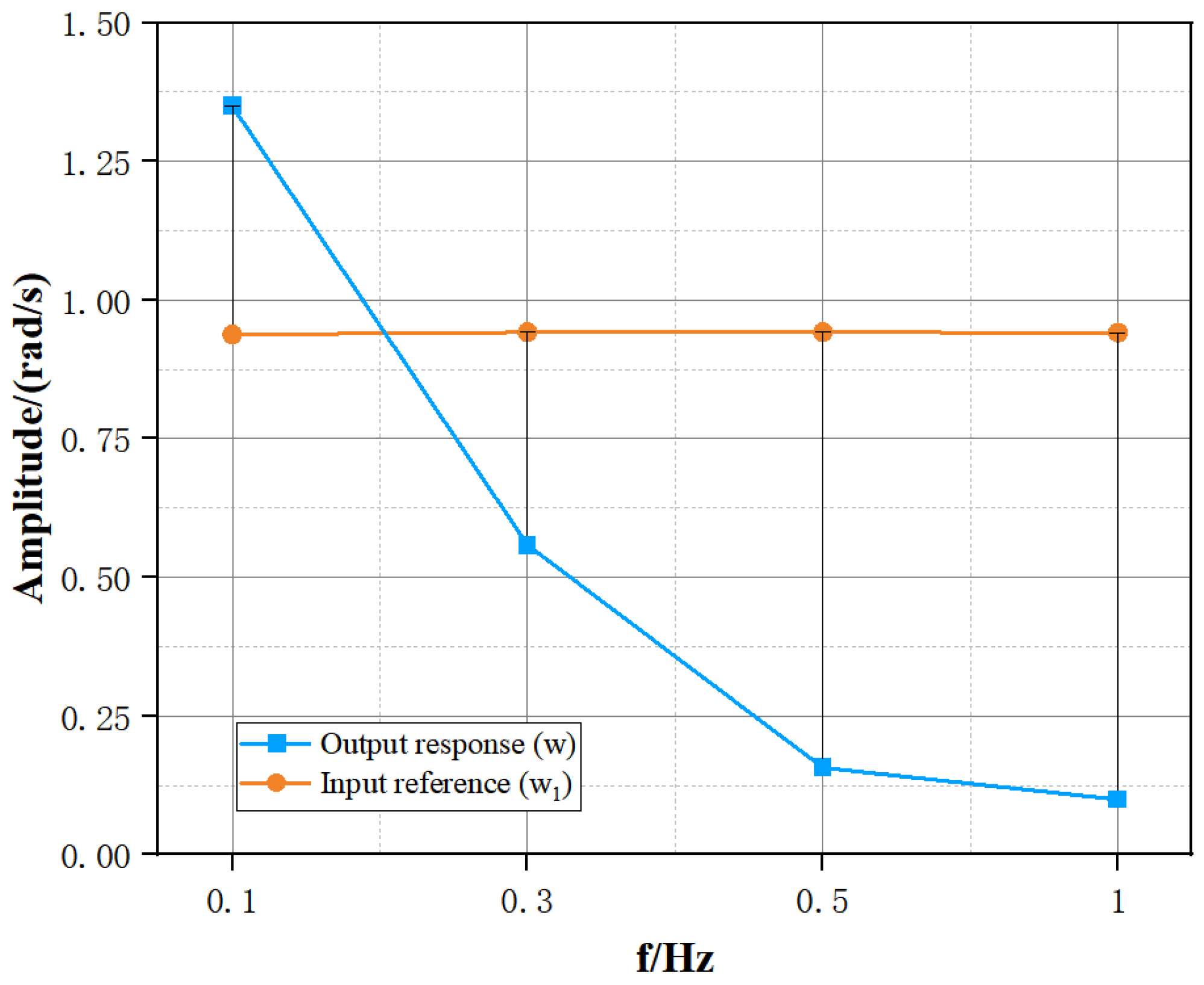
From the amplitude differences between the input and output signals shown in
Figure 23, it can be observed that as the frequency increases from 0.1 Hz to 1 Hz, the system output amplitude continuously decreases from 1.3492 rad/s to 0.0992 rad/s. As the frequency increases, the difference between the amplitudes of the input and output signals gradually increases. When the input signal frequency is 1 Hz, the difference reaches 0.8414 rad/s, whereas at lower frequencies the difference is relatively small, which is consistent with the characteristics of a low-pass system.
Overall, the linear relationship between torque and angular acceleration at different frequencies, as well as the influence of excitation frequency on identification accuracy and system gain, are in good agreement with theoretical expectations. These experimental results confirm the engineering feasibility and robustness of the proposed inertia identification method, particularly under low-frequency excitation and appropriately tuned PI control conditions, and further confirm that low-frequency excitation provides a more favorable operating condition for improving the accuracy of moment of inertia identification.
The strong agreement between simulation predictions and experimental observations confirms that the proposed dynamic response-based identification framework captures the essential physical mechanisms governing inertia estimation. This consistency demonstrates that the simulation model can be effectively used to guide parameter selection and experimental design in practical top drive systems.
6. Conclusions
This study presents a dynamic response-based method for identifying the equivalent rotational moment of inertia of a top drive system. By modeling the top drive and drill string assembly as an equivalent torsional dynamic system, the moment of inertia is identified through the relationship between applied torque and angular acceleration under controlled excitation.
Experimental investigations demonstrate that the proposed method can reliably identify the equivalent inertia using measurable dynamic responses without requiring additional hardware modifications. Quantitative comparison of different excitation frequencies shows that low-frequency excitation yields the most accurate and stable inertia identification results, highlighting the importance of proper excitation frequency selection in practical applications. The identified inertia values exhibit good consistency across different excitation frequencies, indicating that the method is robust to frequency variation and suitable for practical implementation. Comparison with theoretical estimates further confirms the accuracy of the identification results.
The proposed inertia identification approach provides a solid foundation for subsequent dynamic modeling, frequency response analysis, and control system design of top drive systems. In particular, the identified inertia can be directly applied to parameter tuning in speed and torque control loops, as well as to vibration suppression and stability analysis in drilling operations. The finding that low-frequency excitation improves identification reliability offers practical guidance for field implementation and future research on dynamic parameter identification of drilling systems.
The result accuracy reflects experimental repeatability under controlled conditions rather than a formal metrological uncertainty bound. It should be noted that the present study focuses on validating the feasibility and consistency of the proposed identification approach under controlled experimental conditions. Although repeatability was verified, a comprehensive metrological uncertainty budget—including sensor calibration, synchronization accuracy, and filtering-induced bias—has not yet been formally established. Future work will incorporate systematic uncertainty quantification and confidence-bound analysis and focus on extending the proposed method to loaded drilling conditions and incorporating distributed drill string dynamics to further improve identification accuracy under complex downhole environments.