Enhancing Physiotherapy Outcomes Through Multimodal Interventions in Post-Stroke Rehabilitation
 , ,
, ,  , , and
Abstract
1. Introduction
2. Material and Methods
3. Integrating EMG into the Physiological Biofeedback of Post-Stroke Rehabilitation
3.1. Surface EMG Within the Concept of Biofeedback
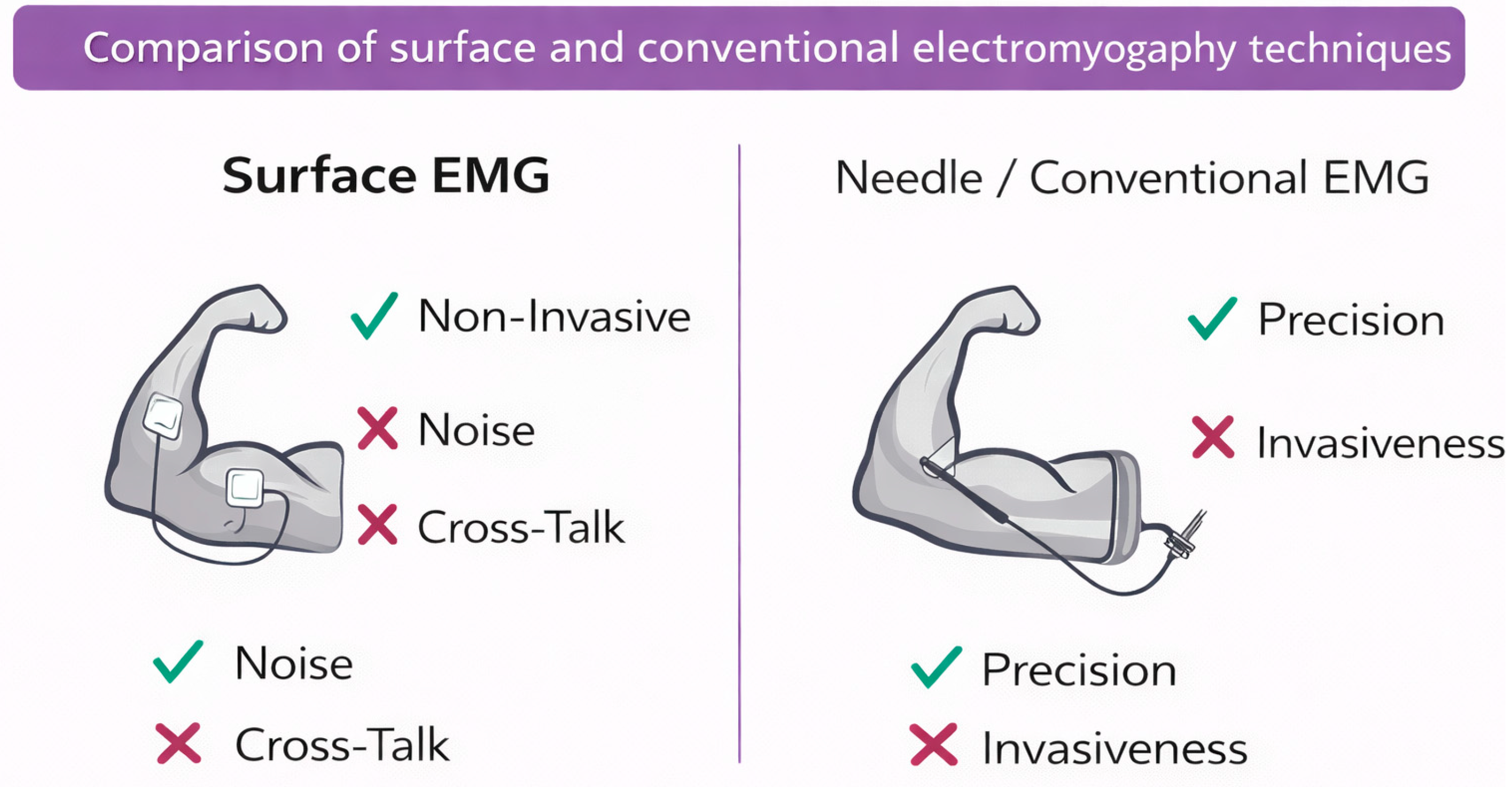
3.2. Surface EMG Versus Conventional EMG
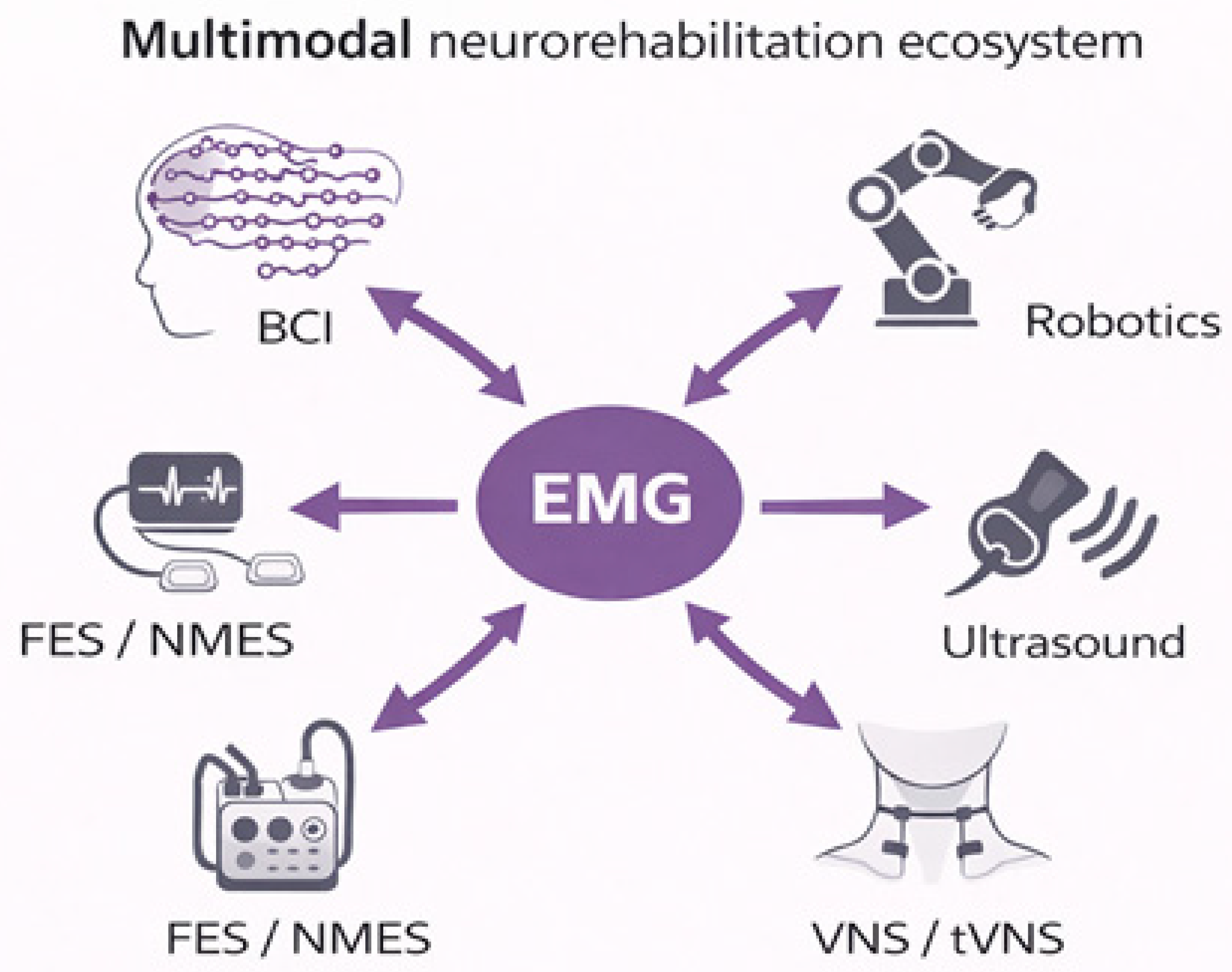
4. Interdisciplinary Perspectives of EMG Biofeedback
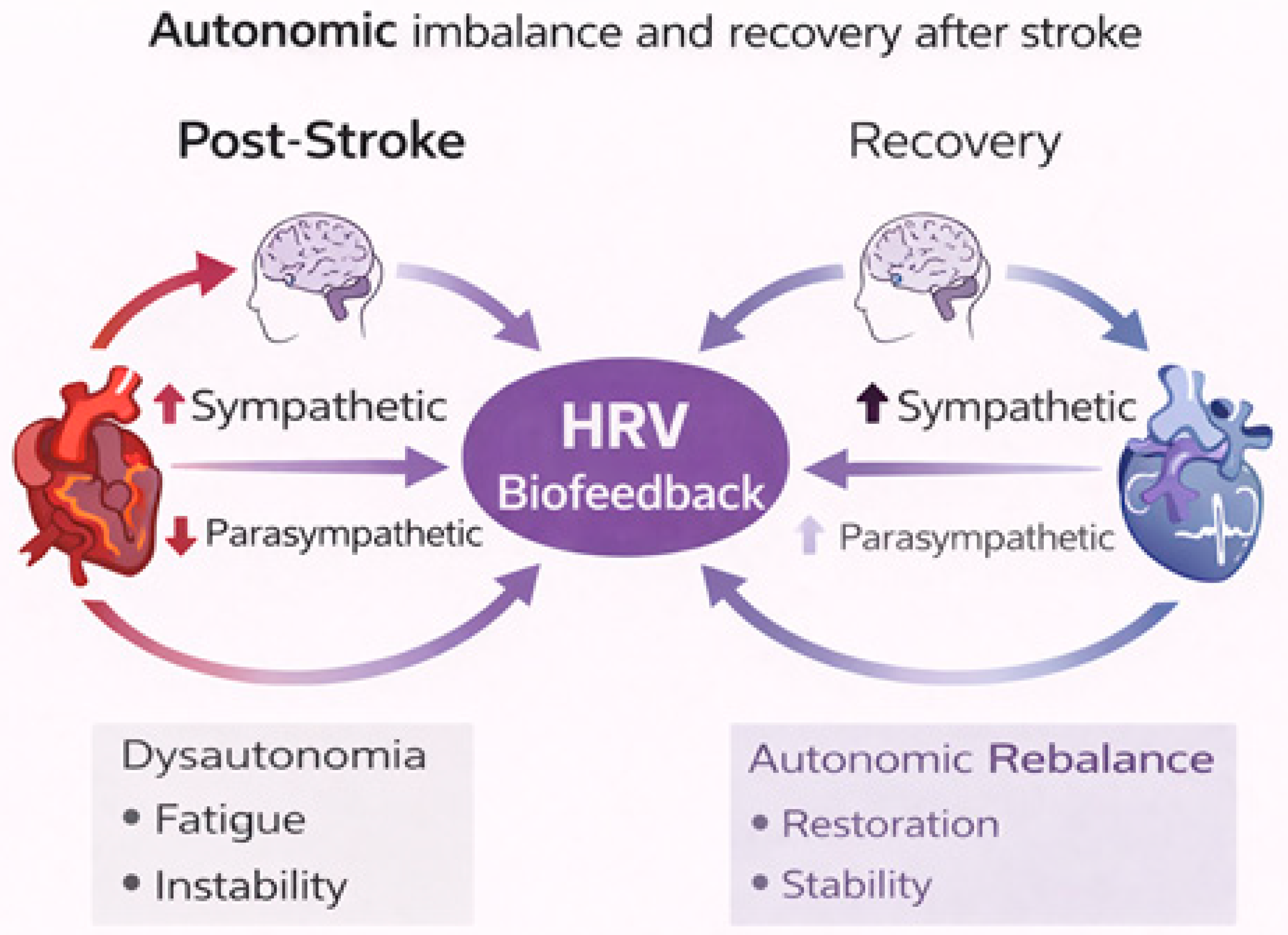
5. Heart Rate Variability in Post-Stroke Rehabilitation
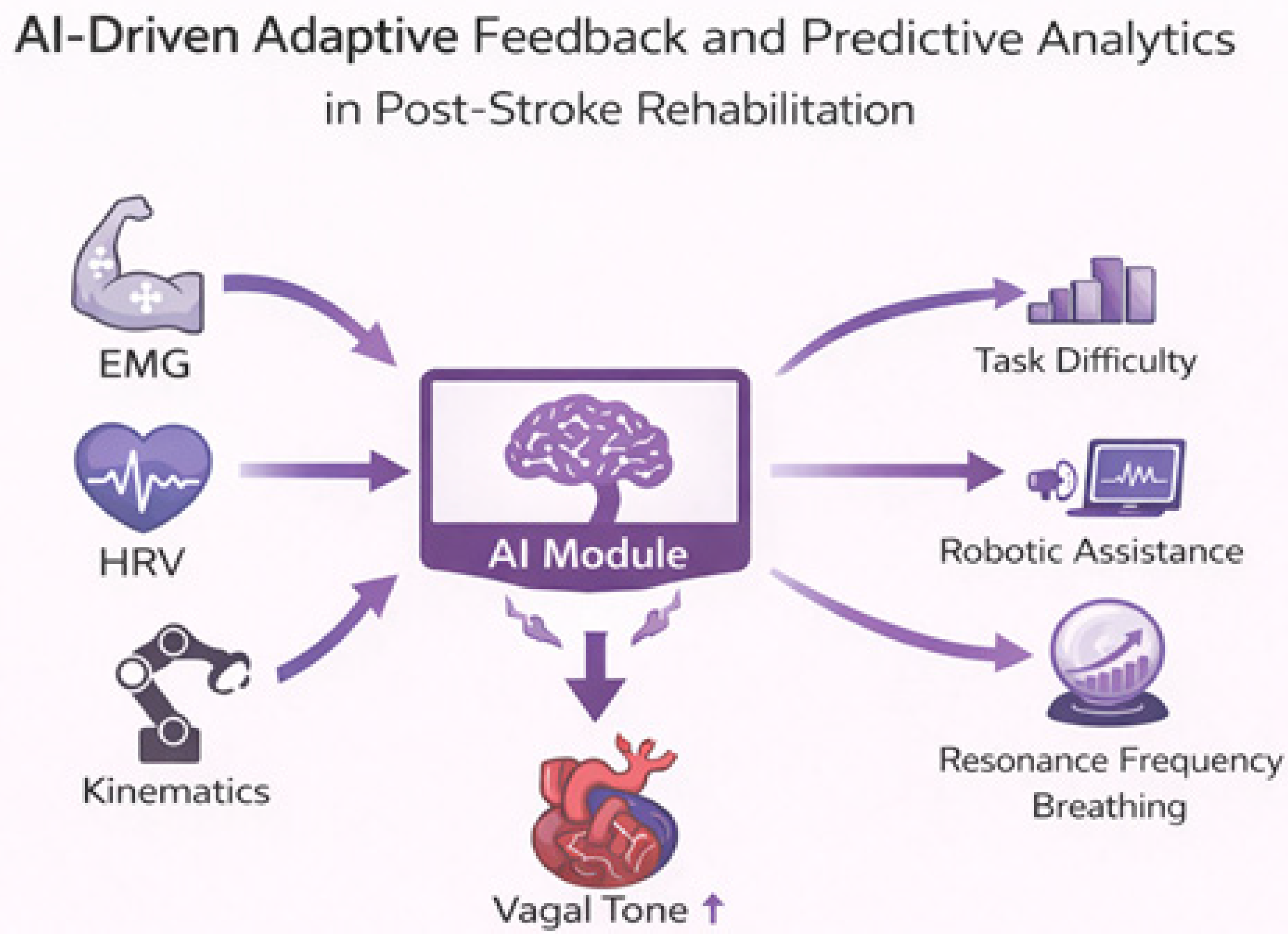
6. AI-Driven Adaptive Feedback and Predictive Analytics in Post-Stroke Rehabilitation
7. Future Perspectives
Author Contributions
Funding
Institutional Review Board Statement
Informed Consent Statement
Data Availability Statement
Conflicts of Interest
References
- Hussain, I.; Jany, R. Interpreting stroke-impaired electromyography patterns through explainable artificial intelligence. Sensors 2024, 24, 1392. [Google Scholar] [CrossRef]
- Guo, Z.; Zhou, S.; Ji, K.; Zhuang, Y.; Song, J.; Nam, C.; Hu, X.; Zheng, Y. Corticomuscular integrated representation of voluntary motor effort in robotic control for wrist-hand rehabilitation after stroke. J. Neural Eng. 2022, 9, 19. [Google Scholar] [CrossRef]
- Hussain, I.; Park, S. Big-ECG: Cardiographic predictive cyber-physical system for stroke management. IEEE Access 2021, 9, 123146–123164. [Google Scholar] [CrossRef]
- Verma, A.; Aarotale, P.; Dehkordi, P.; Lou, J.; Tavakolian, K. Relationship between ischemic stroke and pulse rate variability as a surrogate of heart rate variability. Brain Sci. 2019, 9, 162. [Google Scholar] [CrossRef]
- Sipos, D.; Vészi, K.; Bogár, B.; Pető, D.; Füredi, G.; Betlehem, J.; Pandur, A.A. Smart Clothing and Medical Imaging Innovations for Real-Time Monitoring and Early Detection of Stroke: Bridging Technology and Patient Care. Diagnostics 2025, 15, 1970. [Google Scholar] [CrossRef] [PubMed]
- Wang, W.; Li, H.; Kong, D.; Xiao, M.; Zhang, P. A novel fatigue detection method for rehabilitation training of upper limb exoskeleton robot using multi-information fusion. Int. J. Adv. Robot. Syst. 2020, 17, 1729881420974295. [Google Scholar] [CrossRef]
- Rosli, N.; Rahman, M.; Mazlan, S.; Zamzuri, H. Electrocardiographic (ECG) and electromyographic (EMG) signals fusion for physiological device in rehab application. In Proceedings of the 2014 IEEE Student Conference on Research and Development, Penang, Malaysia, 16–17 December 2014; pp. 1–5. [Google Scholar] [CrossRef]
- Feng, S.; Tang, M.; Huang, G.; Wang, J.; He, S.; Liu, D.; Gu, L. EMG biofeedback combined with rehabilitation training may be the best physical therapy for improving upper limb motor function and relieving pain in patients with the post-stroke shoulder-hand syndrome: A Bayesian network meta-analysis. Front. Neurol. 2023, 13, 1056156. [Google Scholar] [CrossRef]
- Mugler, E.M.; Tomic, G.; Singh, A.; Hameed, S.; Lindberg, E.W.; Gaide, J.; Alqadi, M.; Robinson, E.; Dalzotto, K.; Limoli, C.; et al. Myoelectric Computer Interface Training for Reducing Co-Activation and Enhancing Arm Movement in Chronic Stroke Survivors: A Randomized Trial. Neurorehabil. Neural Repair 2019, 33, 284–295. [Google Scholar] [CrossRef] [PubMed]
- Marin-Pardo, O.; Donnelly, M.R.; Phanord, C.S.; Wong, K.; Pan, J.; Liew, S.L. Functional and neuromuscular changes induced via a low-cost, muscle-computer interface for telerehabilitation: A feasibility study in chronic stroke. Front. Neuroergon. 2022, 3, 1046695. [Google Scholar] [CrossRef]
- Kim, D.; Jang, S. Effects of mirror therapy combined with emg-triggered functional electrical stimulation to improve on standing balance and gait ability in patient with chronic stroke. Int. J. Environ. Res. Public Health 2021, 18, 3721. [Google Scholar] [CrossRef]
- Kim, Y.; Jung, S.; Yang, E.; Paik, N. Clinical and sonographic risk factors for hemiplegic shoulder pain: A longitudinal observational study. J. Rehabil. Med. 2014, 46, 81–87. [Google Scholar] [CrossRef]
- Donnelly, M.R.; Phanord, C.S.; Marin-Pardo, O.; Jeong, J.; Bladon, B.; Wong, K.; Abdullah, A.; Liew, S.L. Acceptability of a Telerehabilitation Biofeedback System Among Stroke Survivors: A Qualitative Analysis. OTJR Occup. Ther. J. Res. 2023, 43, 549–557. [Google Scholar] [CrossRef] [PubMed]
- Genthe, K.; Schenck, C.; Eicholtz, S.; Zajac-Cox, L.; Wolf, S.; Kesar, T.M. Effects of real-time gait biofeedback on paretic propulsion and gait biomechanics in individuals post-stroke. Top. Stroke Rehabil. 2018, 25, 186–193. [Google Scholar] [CrossRef]
- Hahnemann, I.; Fron, J.; Ballmaier, J.; Guntinas-Lichius, O.; Volk, G. Electromyography as an objective outcome measure for the therapeutic effect of biofeedback training to reduce post-paralytic facial synkinesis. Healthcare 2025, 13, 550. [Google Scholar] [CrossRef]
- Semprini, M.; Cuppone, A.; Delis, I.; Squeri, V.; Panzeri, S.; Konczak, J. Biofeedback signals for robotic rehabilitation: Assessment of wrist muscle activation patterns in healthy humans. IEEE Trans. Neural Syst. Rehabil. Eng. 2017, 25, 883–892. [Google Scholar] [CrossRef] [PubMed]
- Gámez, A.; Morante, J.; Gil, J.; Esparza-Ros, F.; Martínez, C. The effect of surface electromyography biofeedback on the activity of extensor and dorsiflexor muscles in elderly adults: A randomized trial. Sci. Rep. 2019, 9, 13153. [Google Scholar] [CrossRef] [PubMed]
- Donnelly, M.R.; Marin-Pardo, O.; Abdullah, A.; Phanord, C.; Kumar, A.; Chakraborty, S.; Liew, S.L. Pre-Implementation Analysis of the Usability and Acceptability of a Poststroke Complex Telehealth Biofeedback Intervention. Am. J. Occup. Ther. 2024, 78, 7802180210. [Google Scholar] [CrossRef]
- Diotaiuti, P.; Marotta, G.; Vitiello, S.; Di Siena, F.; Palombo, M.; Langiano, E.; Ferrara, M.; Mancone, S. Biofeedback for Motor and Cognitive Rehabilitation in Parkinson’s Disease: A Comprehensive Review of Non-Invasive Interventions. Brain Sci. 2025, 15, 720. [Google Scholar] [CrossRef]
- Li, X.; Rymer, W.; Li, G.; Zhou, P. The effects of notch filtering on electrically evoked myoelectric signals and associated motor unit index estimates. J. Neuroeng. Rehabil. 2011, 8, 64. [Google Scholar] [CrossRef]
- Li, X.; Holobar, A.; Gazzoni, M.; Merletti, R.; Rymer, W.; Zhou, P. Examination of poststroke alteration in motor unit firing behavior using high-density surface EMG decomposition. IEEE Trans. Biomed. Eng. 2015, 62, 1242–1252. [Google Scholar] [CrossRef]
- Li, X.; Liu, J.; Li, S.; Wang, Y.; Zhou, P. Examination of hand muscle activation and motor unit indices derived from surface EMG in chronic stroke. IEEE Trans. Biomed. Eng. 2014, 61, 2891–2898. [Google Scholar] [CrossRef] [PubMed]
- Zhang, X.; Zhou, P. Sample entropy analysis of surface emg for improved muscle activity onset detection against spurious background spikes. J. Electromyogr. Kinesiol. 2012, 22, 901–907. [Google Scholar] [CrossRef] [PubMed]
- Nam, C.; Rong, W.; Li, W.; Xie, Y.; Hu, X.; Zheng, Y. The effects of upper-limb training assisted with an electromyography-driven neuromuscular electrical stimulation robotic hand on chronic stroke. Front. Neurol. 2017, 8, 679. [Google Scholar] [CrossRef]
- Hu, X.; Tong, K.; Ho, N.; Xue, J.; Rong, W.; Li, L. Wrist rehabilitation assisted by an electromyography-driven neuromuscular electrical stimulation robot after stroke. Neurorehabilit. Neural Repair 2014, 29, 767–776. [Google Scholar] [CrossRef]
- Huo, Y.; Wang, X.; Zhao, W.; Hu, H.; Li, L. Effects of EMG-based robot for upper extremity rehabilitation on post-stroke patients: A systematic review and meta-analysis. Front. Physiol. 2023, 14, 1172958. [Google Scholar] [CrossRef]
- Yen-Wei, C.; Chiang, W.; Chang, C.; Lo, S.; Wu, C. Comparative effects of emg-driven robot-assisted therapy versus task-oriented training on motor and daily function in patients with stroke: A randomized cross-over trial. J. Neuroeng. Rehabil. 2022, 19, 6. [Google Scholar] [CrossRef]
- Ramos-Murguialday, A.; García-Cossio, E.; Walter, A.; Cho, W.; Broetz, D.; Bogdan, M.; Cohen, L.G.; Birbaumer, N. Decoding upper limb residual muscle activity in severe chronic stroke. Ann. Clin. Transl. Neurol. 2015, 2, 1–11. [Google Scholar] [CrossRef]
- Hünkar, R.; Balcı, K. Entrapment neuropathies in chronic stroke patients. J. Clin. Neurophysiol. 2012, 29, 96–100. [Google Scholar] [CrossRef]
- Emam, F.; Genedy, A.; Mahmoud, S. Axillary nerve conduction study in paretic limbs of patients with cerebrovascular stroke. Egypt. J. Hosp. Med. 2014, 54, 94–100. [Google Scholar] [CrossRef]
- Lima, F.; Luvizutto, G.; Schelp, A.; Braga, G.; Bazán, R. Stroke chameleons manifesting as distinct radial neuropathies: Expertise can hasten the diagnosis. Case Rep. Neurol. 2017, 9, 277–283. [Google Scholar] [CrossRef] [PubMed]
- Folyovich, A.; Varga, V.; Várallyay, G.; Kozák, L.; Bakos, M.; Scheidl, E.; Béres-Molnár, K.A.; Kajdácsi, Z.; Bereczki, D. A case report of isolated distal upper extremity weakness due to cerebral metastasis involving the hand knob area. BMC Cancer 2018, 18, 947. [Google Scholar] [CrossRef]
- Chen, H.J.; Tani, J.; Lin, C.S.; Chang, T.S.; Lin, Y.C.; Hsu, T.W.; Sung, J.Y. Neuroplasticity of peripheral axonal properties after ischemic stroke. PLoS ONE 2022, 17, e0275450. [Google Scholar] [CrossRef]
- Liu, L.; Jin, M.; Zhang, L.; Zhang, Q.; Hu, D.; Jin, L.; Nie, Z. Brain-Computer Interface-Robot Training Enhances Upper Extremity Performance and Changes the Cortical Activation in Stroke Patients: A Functional Near-Infrared Spectroscopy Study. Front. Neurosci. 2022, 16, 809657. [Google Scholar] [CrossRef] [PubMed]
- Levitsky, A.; Klein, J.; Artemiadis, P.; Buneo, C. Effects of transcutaneous electric nerve stimulation on upper extremity proprioceptive function. In Proceedings of the 42nd Annual International Conference of the IEEE Engineering in Medicine & Biology Society (EMBC), Montreal, QC, Canada, 20–24 July 2020; pp. 3577–3580. [Google Scholar] [CrossRef]
- Dawson, J.; Liu, C.Y.; Francisco, G.E.; Cramer, S.C.; Wolf, S.L.; Dixit, A.; Alexander, J.; Ali, R.; Brown, B.L.; Feng, W.; et al. Vagus nerve stimulation paired with rehabilitation for upper limb motor function after ischaemic stroke (VNS-REHAB): A randomised, blinded, pivotal, device trial. Lancet 2021, 397, 1545–1553. [Google Scholar] [CrossRef]
- Dawson, J.; Engineer, N.D.; Prudente, C.N.; Pierce, D.; Francisco, G.; Yozbatiran, N.; Tarver, W.B.; Casavant, R.; Kline, D.K.; Cramer, S.C.; et al. Vagus Nerve Stimulation Paired With Upper-Limb Rehabilitation After Stroke: One-Year Follow-up. Neurorehabil. Neural Repair 2020, 34, 609–615. [Google Scholar] [CrossRef]
- Badran, B.W.; Peng, X.; Baker-Vogel, B.; Hutchison, S.; Finetto, P.; Rishe, K.; Fortune, A.; Kitchens, E.; O’Leary, G.H.; Short, A.; et al. Motor Activated Auricular Vagus Nerve Stimulation as a Potential Neuromodulation Approach for Post-Stroke Motor Rehabilitation: A Pilot Study. Neurorehabil. Neural Repair 2023, 37, 374–383. [Google Scholar] [CrossRef]
- Wang, Y.L.; Wu, W.X.; Yang, C.C.; Huang, S.M.; Chang, C.C.; Li, C.R.; Chiang, S.L.; Chen, Y.J. Heart rate variability biofeedback enhances cognitive, motor, psychological, and autonomic functions in post-stroke rehabilitation. Int. J. Psychophysiol. 2024, 203, 112411. [Google Scholar] [CrossRef]
- Geng, H.; Min, L.; Tang, J.; Lv, Q.; Li, R.; Wang, L. Early rehabilitation exercise after stroke improves neurological recovery through enhancing angiogenesis in patients and cerebral ischemia rat model. Int. J. Mol. Sci. 2022, 23, 10508. [Google Scholar] [CrossRef] [PubMed]
- Gao, Y.; Zhu, Y.; Lu, X.; Wang, N.; Zhu, S.; Gong, J.; Wang, T.; Tang, S.W. Vagus nerve stimulation paired with rehabilitation for motor function, mental health and activities of daily living after stroke: A systematic review and meta-analysis. J. Neurol. Neurosurg. Psychiatry 2023, 94, 257–266. [Google Scholar] [CrossRef]
- Watanabe, S.; Yamauchi, W.; Shoka, K.; Kawashima, A.; Sawamura, S.; Kanamori, K.; Furukawa, T.; Naito, Y.; Takeshita, N.; Utiyama, K.; et al. Balancing Rehabilitation Dose in Acute Stroke Decision-Making and Global Assessment (The BRIDGE Study). J Clin. Med. 2025, 14, 6786. [Google Scholar] [CrossRef] [PubMed]
- Jeon, S.; Kim, Y.; Jung, K.; Chung, Y. The effects of electromyography-triggered electrical stimulation on shoulder subluxation, muscle activation, pain, and function in persons with stroke: A pilot study. NeuroRehabilitation 2017, 40, 69–75. [Google Scholar] [CrossRef]
- Jang, S.H.; Yi, J.H.; Chang, C.H.; Jung, Y.J.; Kim, S.H.; Lee, J.; Seo, J.P. Prediction of motor outcome by shoulder subluxation at early stage of stroke. Medicine 2016, 95, e4525. [Google Scholar] [CrossRef]
- Jung, K.; Choi, J. The effects of active shoulder exercise with a sling suspension system on shoulder subluxation, proprioception, and upper extremity function in patients with acute stroke. Med. Sci. Monit. 2019, 25, 4849–4855. [Google Scholar] [CrossRef]
- Silva, W.; Cirne, G.; Silva-Filho, E.; Cacho, Ê.; Lopes, J.; Cacho, R.; Baroni, M.P. Functional electrical stimulation reduces pain and shoulder subluxation in chronic post-stroke patients? Man. Ther. Posturology Rehabil. J. 2020, 1–5. [Google Scholar] [CrossRef]
- Lavi, C.; Elboim-Gabyzon, M.; Naveh, Y.; Kalichman, L. A combination of long-duration electrical stimulation with external shoulder support during routine daily activities in patients with post-hemiplegic shoulder subluxation: A randomized controlled study. Int. J. Environ. Res. Public Health 2022, 19, 9765. [Google Scholar] [CrossRef]
- Lee, J.; Baker, L.; Johnson, R.; Tilson, J. Effectiveness of neuromuscular electrical stimulation for management of shoulder subluxation post-stroke: A systematic review with meta-analysis. Clin. Rehabil. 2017, 31, 1431–1444. [Google Scholar] [CrossRef] [PubMed]
- Qu, Y.; Shi, X.; Wang, Y.; Ji, T.; Chen, L.; Yu, S.; Huo, M. Observation of risk factors for shoulder subluxation after stroke using ultrasonography to measure thickness of the supraspinatus muscle: A cross-sectional study. Front. Neurol. 2025, 16, 1532004. [Google Scholar] [CrossRef]
- Middaugh, S.; Thomas, K.; Smith, A.; McFall, T.; Klingmueller, J. EMG biofeedback and exercise for treatment of cervical and shoulder pain in individuals with a spinal cord injury: A pilot study. Top. Spinal Cord Inj. Rehabil. 2013, 19, 311–323. [Google Scholar] [CrossRef] [PubMed]
- Hidayati, E.; Adha, Z.; Yusviani, H.; Alifprilia, S. Sonography and emg biofeedback’s role in pin syndrome after rehabilitation? a case report. Surabaya Phys. Med. Rehabil. J. 2022, 4, 90–97. [Google Scholar] [CrossRef]
- Tacca, N.; Baumgart, I.; Schlink, B.R.; Kamath, A.; Dunlap, C.; Darrow, M.J.; Iv, S.C.; Putnam, P.; Branch, J.; Wengerd, L.; et al. Identifying alterations in hand movement coordination from chronic stroke survivors using a wearable high-density EMG sleeve. J. Neural Eng. 2024, 5, 21. [Google Scholar] [CrossRef]
- Machetanz, K.; Grimm, F.; Schäfer, R.; Trakolis, L.; Hurth, H.; Haas, P.; Gharabaghi, A.; Tatagiba, M.; Naros, G. Design and Evaluation of a Custom-Made Electromyographic Biofeedback System for Facial Rehabilitation. Front. Neurosci. 2022, 16, 666173. [Google Scholar] [CrossRef]
- Giggins, O.; Persson, U.; Caulfield, B. Biofeedback in rehabilitation. J. Neuroeng. Rehabil. 2013, 10, 60. [Google Scholar] [CrossRef] [PubMed]
- Garrido-Montenegro, M.; Álvarez, E.; Vergara-Ruiz, S. Use of EMG biofeedback for basic activities of daily living training in stroke patients. pilot randomized clinical trial. Rev. De La Fac. De Med. 2016, 64, 477. [Google Scholar] [CrossRef]
- Kobelt, M.; Wirth, B.; Schuster-Amft, C. Muscle Activation During Grasping With and Without Motor Imagery in Healthy Volunteers and Patients After Stroke or With Parkinson’s Disease. Front. Psychol. 2018, 9, 597. [Google Scholar] [CrossRef]
- Damkjær, M.; Simonsen, S.A.; Heiberg, A.V.; Mehlsen, J.; West, A.S.; Jennum, P.; Iversen, H.K. Autonomic dysfunction after mild acute ischemic stroke and six months after: A prospective observational cohort study. BMC Neurol. 2023, 23, 26. [Google Scholar] [CrossRef]
- Jimenez-Ruiz, A.; Racosta, J.M.; Kimpinski, K.; Hilz, M.J.; Sposato, L.A. Cardiovascular autonomic dysfunction after stroke. Neurol. Sci. 2021, 42, 1751–1758. [Google Scholar] [CrossRef]
- Bai, X.; Wang, N.; Si, Y.; Liu, Y.; Yin, P.; Xu, C. The Clinical Characteristics of Heart Rate Variability After Stroke: A Systematic Review. Neurologist 2024, 29, 133–141. [Google Scholar] [CrossRef]
- Aftyka, J.; Staszewski, J.; Dębiec, A.; Pogoda-Wesołowska, A.; Żebrowski, J. Heart rate variability as a predictor of stroke course, functional outcome, and medical complications: A systematic review. Front. Physiol. 2023, 14, 1115164. [Google Scholar] [CrossRef] [PubMed]
- Pavlov, V.A.; Ochani, M.; Gallowitsch-Puerta, M.; Ochani, K.; Huston, J.M.; Czura, C.J.; Al-Abed, Y.; Tracey, K.J. Central muscarinic cholinergic regulation of the systemic inflammatory response during endotoxemia. Proc. Natl. Acad. Sci. USA 2006, 103, 5219–5223. [Google Scholar] [CrossRef]
- Dimova, V.; Welte-Jzyk, C.; Kronfeld, A.; Korczynski, O.; Baier, B.; Koirala, N.; Steenken, L.; Kollmann, B.; Tüscher, O.; Brockmann, M.A.; et al. Brain connectivity networks underlying resting heart rate variability in acute ischemic stroke. Neuroimage Clin. 2024, 41, 103558. [Google Scholar] [CrossRef] [PubMed]
- Laborde, S.; Allen, M.S.; Borges, U.; Dosseville, F.; Hosang, T.J.; Iskra, M.; Mosley, E.; Salvotti, C.; Spolverato, L.; Zammit, N.; et al. Effects of voluntary slow breathing on heart rate and heart rate variability: A systematic review and a meta-analysis. Neurosci. Biobehav. Rev. 2022, 138, 104711. [Google Scholar] [CrossRef]
- Lehrer, P.M.; Vaschillo, E.; Vaschillo, B. Resonant frequency biofeedback training to increase cardiac variability: Rationale and manual for training. Appl. Psychophysiol. Biofeedback 2000, 25, 177–191. [Google Scholar] [CrossRef] [PubMed]
- Lei, W. Bridging Neuroscience and Clinical Practice: Accelerating Stroke Recovery in a Pontine Infarction Case Through Neuroplasticity-Based Rehabilitation. Cureus 2024, 16, e72563. [Google Scholar] [CrossRef]
- Silveira, A.C.; Moraes, Í.A.P.; Vidigal, G.P.; Simcsik, A.O.; Rosa, R.M.; Favero, F.M.; Fernandes, S.M.S.; Garner, D.M.; Araújo, L.V.; Massa, M.; et al. Cardiac Autonomic Modulation in Subjects with Amyotrophic Lateral Sclerosis (ALS) during an Upper Limb Virtual Reality Task: A Prospective Control Trial. Biomed Res. Int. 2022, 2022, 4439681. [Google Scholar] [CrossRef]
- Malik, M. Heart rate variability. Standards of measurement, physiological interpretation, and clinical use. Task Force of the European Society of Cardiology and the North American Society of Pacing and Electrophysiology. Eur. Heart J. 1996, 17, 354–381. [Google Scholar] [CrossRef]
- Scherbakov, N.; Barkhudaryan, A.; Ebner, N.; von Haehling, S.; Anker, S.D.; Joebges, M.; Doehner, W. Early rehabilitation after stroke: Relationship between the heart rate variability and functional outcome. ESC Heart Fail. 2020, 7, 2983–2991. [Google Scholar] [CrossRef] [PubMed]
- Lees, T.; Shad-Kaneez, F.; Simpson, A.M.; Nassif, N.T.; Lin, Y.; Lal, S. Heart Rate Variability as a Biomarker for Predicting Stroke, Post-stroke Complications and Functionality. Biomark. Insights 2018, 13, 1–13. [Google Scholar] [CrossRef]
- Catai, A.M.; Pastre, C.M.; Godoy, M.F.; Silva, E.D.; Takahashi, A.C.M.; Vanderlei, L.C.M. Heart rate variability: Are you using it properly? Standardisation checklist of procedures. Braz. J. Phys. Ther. 2020, 24, 91–102. [Google Scholar] [CrossRef] [PubMed]
- Shaffer, F.; Ginsberg, J.P. An Overview of Heart Rate Variability Metrics and Norms. Front. Public Health 2017, 5, 258. [Google Scholar] [CrossRef]
- Lehrer, P.; Kaur, K.; Sharma, A.; Shah, K.; Huseby, R.; Bhavsar, J.; Sgobba, P.; Zhang, Y. Heart Rate Variability Biofeedback Improves Emotional and Physical Health and Performance: A Systematic Review and Meta Analysis. Appl. Psychophysiol. Biofeedback 2020, 45, 109–129, Erratum in Appl. Psychophysiol. Biofeedback 2021, 46, 389. https://doi.org/10.1007/s10484-021-09526-y. [Google Scholar] [CrossRef]
- Winstein, C.J.; Stein, J.; Arena, R.; Bates, B.; Cherney, L.R.; Cramer, S.C.; Deruyter, F.; Eng, J.J.; Fisher, B.; Harvey, R.L.; et al. Guidelines for Adult Stroke Rehabilitation and Recovery: A Guideline for Healthcare Professionals from the American Heart Association/American Stroke Association. Stroke 2016, 47, e98–e169. [Google Scholar] [PubMed]
- Nebeker, C.; Torous, J.; Ellis, R.J.B. Building the case for actionable ethics in digital health research supported by artificial intelligence. BMC Med. 2019, 17, 137. [Google Scholar] [CrossRef] [PubMed]



| Figure/Parameter | Surface EMG | Conventional EMG |
|---|---|---|
| Data Source | Muscle groups, superficial muscles | Individual motor units, deep/small muscles |
| Temporal Resolution | High (real-time feedback possible) | High (but focused on bursts/diagnostics) |
| Biofeedback Use | Widely used (real-time patient feedback) | Still rarely used (mainly diagnostic, not feedback) |
| Signal Artifacts | Susceptible (crosstalk, movement, noise) | Less susceptible (but more technically demanding) |
| Limitations | Poor specificity for deep muscles, signal noise [21,23] | Invasive, limited for repeated feedback when used as a single technique [26,27,33] |
| Modality | Primary Physiological Target | Clinical Benefits | Limitations | Optimal Use in Rehabilitation |
|---|---|---|---|---|
| HRV Biofeedback | Autonomic nervous system (vagal tone, baroreflex) | Improves emotional regulation, stress tolerance, autonomic balance [63,64]; | Requires cognitive participation | Pre-session autonomic regulation |
| EMG Biofeedback | Muscle activation, coactivation | Enhances motor relearning, reduces abnormal synergies [8,9] | Susceptible to noise/artifacts | Task-oriented motor training |
| ECG Monitoring | Cardiac/autonomic function | Detects dysautonomia, monitors safety [58,69] | Low specificity for motor function | Safety and autonomic tracking |
| AI-Driven Data Analysis (processing and fusion method) | Multimodal physiological fusion | Personalized adaptation, predictive modeling [1,2,52] | Requires datasets/computation | Closed-loop adaptive rehab |
| EMG + AI | HRV + AI | AI (EMG + HRV) |
|---|---|---|
| Myoelectric patterns in stroke patients aiding in diagnosis and prediction of gait rehabilitation enhanced by AI through machine learning techniques [8] | Effects of stress by HRV monitoring and analysis [63] | Improvement of diagnostic accuracy and real-time monitoring capabilities through advanced predictive analytics and telemedicine integration [1] |
| Trigger robot-assisted training in stroke patients due to residual EMG signals [8,9] | Analyzing ECG data to identify stroke risk patterns and enabling early stroke detection [63,69] | Improved motor control and autonomic regulation with potential for personalization by wearable technology [2] |
| Enhances conventional therapy for orofacial functions, improving quality of life and neuromuscular patterns, particularly for swallowing [9] | Utilizing machine learning to analyze discomfort associated with rehabilitation [2,6] | Personalized feedback and predictive analytics [1,52] |
| Enhances proprioception and control of the affected leg in stroke patients [1,8] | Reflects real-time autonomic nervous system state and cardiac health [2,63] | Tailored rehabilitation through adaptive robotic technologies [2,52] |
| Enabling real-time monitoring and accurate gesture recognition for upper-limb exercises [1,8,9] | Can improve cardiac management and treatment strategies [2,63] | Can improve monitoring and support for stroke patients by integrating various physiological modalities for better state assessment [1] |
Disclaimer/Publisher’s Note: The statements, opinions and data contained in all publications are solely those of the individual author(s) and contributor(s) and not of MDPI and/or the editor(s). MDPI and/or the editor(s) disclaim responsibility for any injury to people or property resulting from any ideas, methods, instructions or products referred to in the content. |
© 2026 by the authors. Licensee MDPI, Basel, Switzerland. This article is an open access article distributed under the terms and conditions of the Creative Commons Attribution (CC BY) license.
Share and Cite
Tutu, A.; Trofin, D.; Sardaru, D.-P.; Onu, I.; Onita, C.A.; Ignat, E.B.; Trofin, D.-M.; Onu, A.; Matei, D.V. Enhancing Physiotherapy Outcomes Through Multimodal Interventions in Post-Stroke Rehabilitation. Appl. Sci. 2026, 16, 1760. https://doi.org/10.3390/app16041760
Tutu A, Trofin D, Sardaru D-P, Onu I, Onita CA, Ignat EB, Trofin D-M, Onu A, Matei DV. Enhancing Physiotherapy Outcomes Through Multimodal Interventions in Post-Stroke Rehabilitation. Applied Sciences. 2026; 16(4):1760. https://doi.org/10.3390/app16041760
Chicago/Turabian StyleTutu, Andrei, Dan Trofin, Dragos-Petrica Sardaru, Ilie Onu, Cristiana Amalia Onita, Emilian Bogdan Ignat, Daniela-Marilena Trofin, Ana Onu, and Daniela Viorelia Matei. 2026. "Enhancing Physiotherapy Outcomes Through Multimodal Interventions in Post-Stroke Rehabilitation" Applied Sciences 16, no. 4: 1760. https://doi.org/10.3390/app16041760
APA StyleTutu, A., Trofin, D., Sardaru, D.-P., Onu, I., Onita, C. A., Ignat, E. B., Trofin, D.-M., Onu, A., & Matei, D. V. (2026). Enhancing Physiotherapy Outcomes Through Multimodal Interventions in Post-Stroke Rehabilitation. Applied Sciences, 16(4), 1760. https://doi.org/10.3390/app16041760