1. Introduction
Musculoskeletal pain during pregnancy is a highly prevalent condition, commonly affecting the lumbar and pelvic regions, and is associated with substantial impairments in quality of life, functional capacity, and daily functioning [
1]. Epidemiological studies indicate that between 45% and 70% of women report musculoskeletal pain during the third trimester of pregnancy [
2]. Beyond its high prevalence, perinatal musculoskeletal pain represents a relevant clinical and public health concern, as it is associated with increased healthcare utilization, reduced work participation, and difficulties in maternal caregiving activities. Although symptoms often decrease after childbirth, a considerable proportion of women continue to experience pain during the postpartum period, which has been linked to delayed physical recovery, functional limitations, and an increased risk of pain chronicity [
3].
The persistence of perinatal musculoskeletal pain is increasingly understood as a multifactorial process involving physical, psychological, and behavioral mechanisms rather than pain intensity alone [
4]. Longitudinal research has shown continuity in pain experiences across the perinatal period and has highlighted the relevance of intermediate mechanisms that may contribute to pain maintenance [
5]. These findings are consistent with contemporary biopsychosocial models of pain, which emphasize that early pain experiences may shape subsequent pain trajectories through interacting physiological and behavioral pathways. However, despite growing recognition of pain persistence across pregnancy and postpartum, less attention has been paid to modifiable behavioral factors that could attenuate association across time over time.
Physical activity during pregnancy has emerged as a potential protective factor. Systematic reviews and meta-analyses suggest that regular exercise is associated with lower prevalence and intensity of lumbopelvic pain and with improved postpartum recovery outcomes [
6,
7]. Proposed mechanisms include improvements in muscular strength, postural stability, and neuromuscular control, alongside beneficial effects on pain modulation and inflammatory processes. Nevertheless, most existing studies have focused on concurrent or short-term outcomes, and evidence remains limited regarding the role of physical activity in shaping longitudinal pain trajectories across key perinatal stages [
8].
The immediate postpartum period, particularly the first 48 h after delivery, represents a clinically relevant phase for understanding pain progression across the perinatal period. Pain experienced during this early stage has been associated with subsequent pain persistence and functional impairment, suggesting that early postpartum pain may act as an indicator of later pain outcomes [
9]. However, its role as an intermediate factor linking prenatal pain with later postpartum pain has received limited empirical attention in longitudinal research [
6,
10].
Accordingly, the present study aims to examine whether musculoskeletal pain experienced during the third trimester predicts pain at three months postpartum. In addition, we investigate whether pain at 48 h postpartum mediates this relationship and whether daily time spent in physical exercise during pregnancy moderates the association between third-trimester pain and early postpartum pain. By integrating longitudinal modeling with a focus on modifiable behavioral factors, this study seeks to contribute evidence with practical implications for the prevention of persistent postpartum musculoskeletal pain and for the development of early, non-pharmacological intervention strategies.
Unlike previous studies that have primarily examined concurrent associations between physical activity and perinatal pain, the present study adopts a longitudinal approach to explore pain trajectories across key perinatal stages. Moreover, this study applies a moderated mediation framework to examine whether early postpartum pain functions as an intermediate mechanism linking prenatal and later postpartum pain, and whether physical activity during pregnancy modifies this association. This analytical approach allows for a more nuanced understanding of how behavioral factors may influence pain progression over time.
2. Materials and Methods
2.1. Design
A longitudinal observational study was conducted to examine the evolution of musculoskeletal pain from late pregnancy through the postpartum period, as well as the moderating role of physical activity during gestation. Assessments were performed at three time points: during the third trimester of pregnancy (between gestational weeks 28 and 36, prior to delivery), 48 h postpartum, and three months postpartum.
2.2. Participants and Procedure
A convenience sample of 242 pregnant women was recruited during the third trimester of pregnancy between April 2025 and July 2025. Recruitment was conducted by midwives from Hospital Fundación Alcorcón and several primary care health centers, who informed eligible women about the study during routine clinical visits. Study information was provided through verbal explanations, informational leaflets, and links to an online questionnaire.
Medical records were reviewed to confirm eligibility. Inclusion criteria were age ≥18 years, sufficient physical and cognitive capacity to complete the assessments, and an uncomplicated pregnancy. Women with a prior diagnosis of chronic pain or with maternal or fetal conditions that could interfere with pain perception or physical activity were excluded.
Of the initial sample, 117 women completed all assessments and constituted the final study sample. Attrition was mainly due to loss of contact, lack of availability, or voluntary withdrawal. Participants were assessed following a standardized protocol at three time points: during the third trimester of pregnancy, at 48 h postpartum, and at three months postpartum. No significant differences were observed in sociodemographic or obstetric variables between women who completed the study and those lost to follow-up.
After expressing interest, participants received a digital information sheet describing the study objectives and procedures. Written informed consent was obtained electronically prior to participation. Data were collected using a secure online platform that ensured anonymity and confidentiality. Responses were automatically coded and stored in a password-protected database accessible only to the research team.
2.3. Ethical Approval
The study was approved by the Research Ethics Committee of Rey Juan Carlos University (URJC) and was conducted in accordance with the Declaration of Helsinki. All participants provided written informed consent and were informed of their right to withdraw at any time without consequences for their medical care.
2.4. Measurements
2.4.1. Musculoskeletal Pain
Pain intensity was assessed using the Numerical Rating Scale of the Brief Pain Inventory [
11,
12], which measures the maximum intensity of the worst musculoskeletal pain experienced. Participants rated pain on a scale of 0 (“no pain”) to 10 (“worst possible pain”) at each assessment time (third trimester, 48 h postpartum, and three months postpartum). Scores < 2 indicated mild pain, scores 2–5 moderate pain, and scores ≥ 6 severe pain. Pain location was also recorded, allowing for multiple responses. The third-trimester assessment was conducted during routine antenatal visits and did not correspond to the immediate days prior to delivery.
2.4.2. Physical Activity
Physical activity during pregnancy was assessed at 48 h postpartum using a self-reported item aimed at capturing habitual exercise behavior throughout pregnancy. Participants were asked to retrospectively estimate the average amount of time they spent engaging in planned physical exercise on a typical day during pregnancy. They were instructed to report the number of minutes per day dedicated to moderate-intensity physical activity (e.g., walking for exercise, swimming, fitness classes), explicitly excluding routine daily activities such as household chores or occupational physical demands.
Participants provided a single numerical value representing their average daily exercise time (in minutes), which was treated as a continuous variable in all statistical analyses.
2.4.3. Sociodemographic and Clinical Variables
Sociodemographic (age, education, employment status) and obstetric (parity and type of delivery) variables were collected using questionnaires and medical records.
2.5. Statistical Analyses
Analyses were performed using SPSS version 22 [
13]. Descriptive statistics were calculated for all variables, and Pearson correlations were used to examine associations between pain measurements at different time points. Moderate mediation analyses were performed using the PROCESS macro for SPSS [
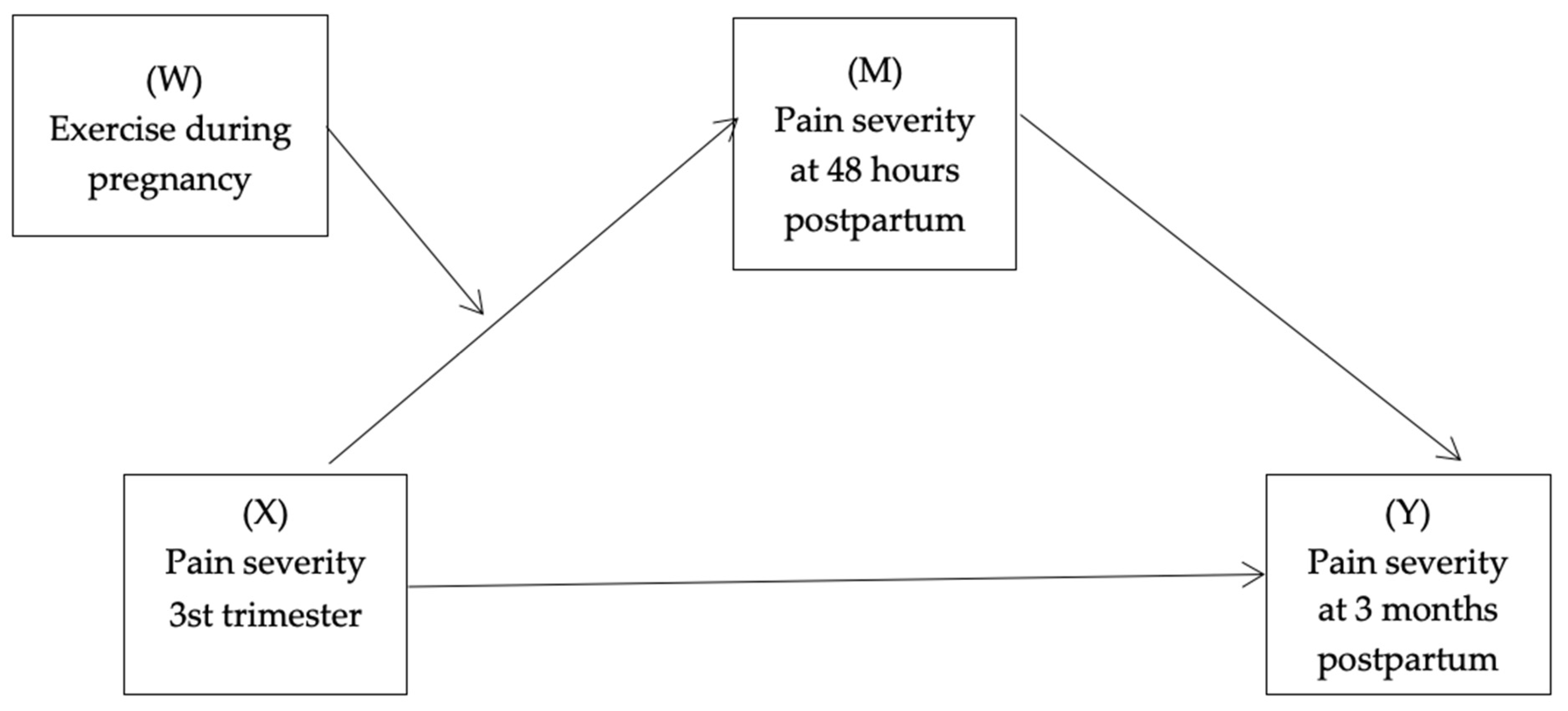
14], Model 7. Pain intensity during the third trimester was specified as a predictor (X), pain intensity at 48 h postpartum as a mediator (M), pain intensity at three months postpartum as an outcome (Y), and daily physical exercise time as a moderator (W) of the X-M pathway (see
Figure 1). Indirect effects were assessed using 5000 bootstrap resamples to generate 95% confidence intervals. Sociodemographic and obstetric variables were initially examined for associations with the main study variables. Given the limited sample size and the absence of significant bivariate associations, these variables were not included as covariates in the final moderated mediation model in order to reduce the risk of overfitting. Nevertheless, the potential influence of unmeasured or residual confounding factors, such as obstetric or postpartum recovery variables, cannot be ruled out.
3. Results
3.1. Sample Characteristics and Descriptives Stadistics
The sample consisted of women with a mean age of 33.04 years [standard deviation (SD) = 4.14]. The majority were living with a partner or were married (81.19%), while a smaller percentage were separated or divorced (12.82%) or single (5.98%). Regarding educational attainment, secondary education predominated (47.01%), followed by university studies (32.48%), high school diploma or vocational training (17.95%), and, to a lesser extent, primary education (2.56%). As for employment status, 43.59% of participants teleworked, 26.50% worked in person, and 29.91% were not employed at the time of the assessment.
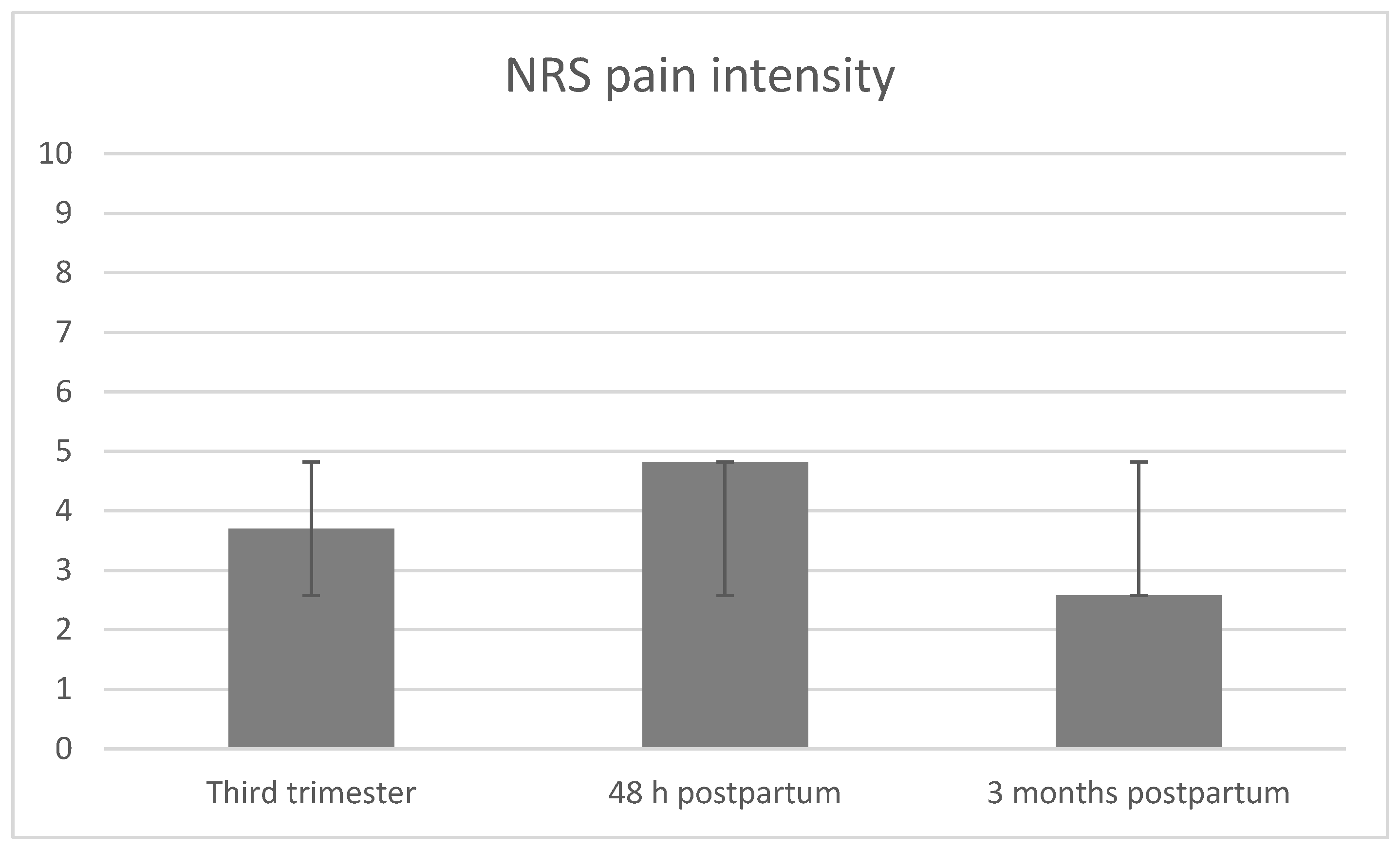
Regarding obstetric variables, approximately one-quarter of the women (24.78%) reported a history of spontaneous abortions. The mean gestational age at delivery was 39.20 weeks (SD = 1.40). Most deliveries were vaginal (76.92%), while 23.08% were cesarean sections. Furthermore, 65.81% of the participants were primiparous. The mean intensity of musculoskeletal pain during the third trimester of pregnancy was 3.70 (SD = 2.50). At 48 h postpartum, mean pain intensity increased to 4.82 (SD = 2.77), whereas pain intensity at three months postpartum decreased to 2.58 (SD = 2.03) (see
Figure 2).
Regarding physical activity, participants reported an average of 37 min of physical exercise per day during pregnancy (SD = 15.10).
3.2. Bivariate Correlations
Pearson correlation analyses were conducted to examine the associations among musculoskeletal pain during the third trimester, pain at 48 h postpartum, and pain at three months postpartum.
Third-trimester pain was positively and significantly associated with pain at 48 h postpartum (r = 0.29, p = 0.002), indicating continuity of pain from late pregnancy to the immediate postpartum period. Pain at 48 h postpartum was also significantly correlated with pain at three months postpartum (r = 0.33, p < 0.001), supporting its role as an early indicator of later pain persistence. In addition, third-trimester pain showed a moderate positive association with pain at three months postpartum (r = 0.40, p < 0.001), suggesting a stable trajectory of musculoskeletal pain across the perinatal period.
These correlational findings provided preliminary support for the subsequent moderated mediation analyses.
3.3. Moderated Mediation Model
A moderate mediation model (PROCESS Model 7) was tested to examine whether pain at 48 h postpartum mediated the relationship between musculoskeletal pain in the third trimester and pain at three months postpartum, and whether daily time spent exercising during pregnancy moderated the association between pain in the third trimester and pain at 48 h postpartum.
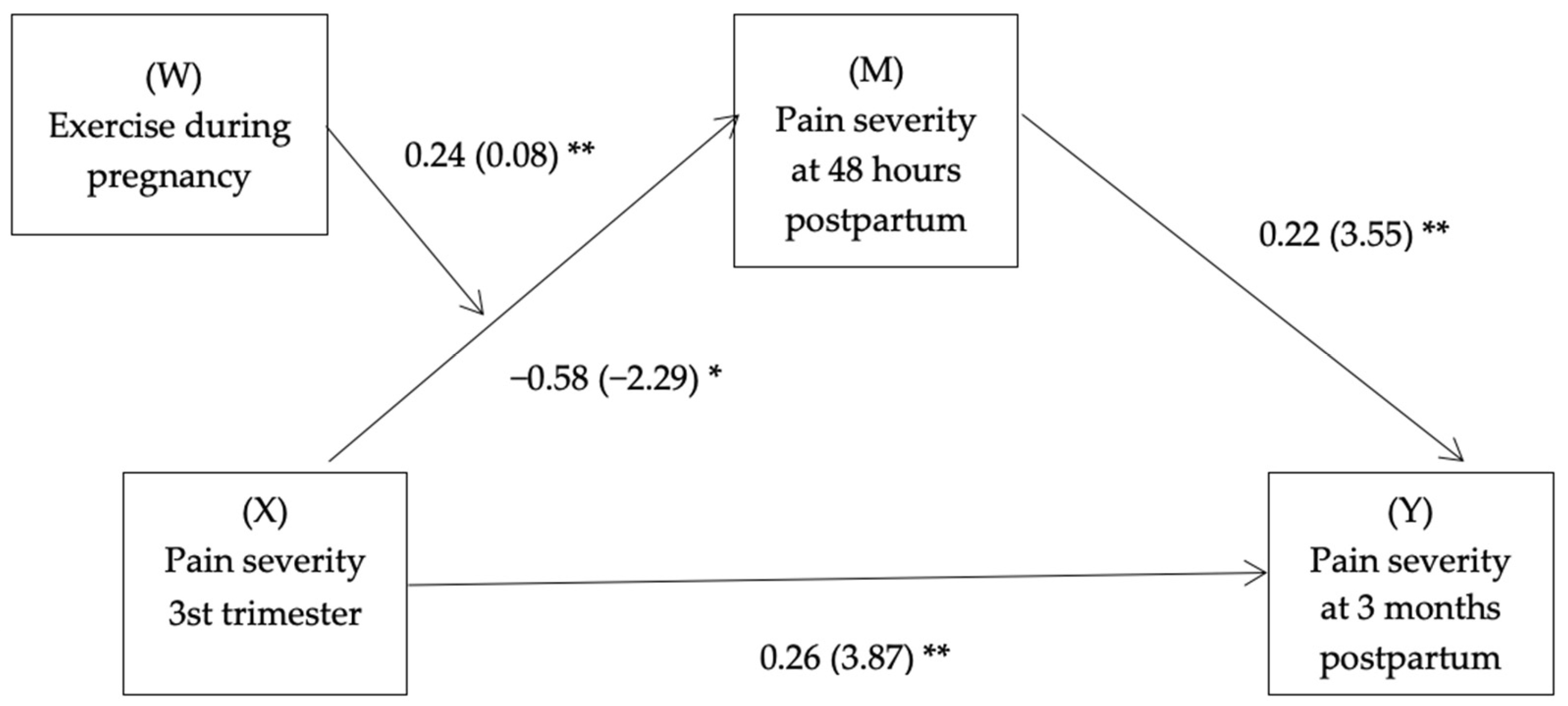
The results indicated that musculoskeletal pain in the third trimester significantly predicted pain at 48 h postpartum (R
2 = 0.10, F(3,113) = 4.27,
p = 0.0068). Both pain in the third trimester (β = −0.58,
p = 0.024) and daily exercise time (β = −1.57,
p = 0.001) were associated with lower levels of pain at 48 h postpartum. It is worth noting that the interaction between third-trimester pain and exercise duration was statistically significant (β = 0.24,
p = 0.0057), indicating a moderating effect of physical activity (see
Table 1). The negative coefficient of third-trimester pain in the conditional model should be interpreted in the context of the significant interaction with physical activity. This indicates that the association between prenatal pain and pain at 48 h postpartum varies as a function of exercise levels, rather than reflecting a uniform inverse relationship. Thus, the direction and magnitude of this association depend on the level of physical activity during pregnancy (see
Figure 3).
Conditional effects showed that the association between third-trimester pain and pain at 48 h postpartum varied with exercise duration. Specifically, higher levels of daily physical activity attenuated the transmission of pregnancy pain to the immediate postpartum period (see
Table 2).
In the final outcome model, both third-trimester pain (β = 0.26, p < 0.001) and pain at 48 h postpartum (β = 0.22, p = 0.001) significantly predicted pain at three months postpartum (R2 = 0.21, F(2,114) = 15.23, p < 0.001). The moderate mediation index was statistically significant (Index = 0.0527, 95% confidence interval (CI) [0.0093, 0.1095]), confirming that the indirect effect of third-trimester pain on later postpartum pain through early postpartum pain depended on the level of physical exercise during pregnancy.
4. Discussion
The present longitudinal study examined the evolution of musculoskeletal pain from late pregnancy to the postpartum period and explored the role of physical activity during pregnancy as a moderating factor in pain progression. Specifically, we tested a moderated mediation model in which pain at 48 h postpartum mediated the relationship between third-trimester pain and pain at three months postpartum, while daily physical exercise time moderated the association between prenatal pain and early postpartum pain. The findings provide novel evidence supporting the protective role of physical activity in modulating pain trajectories across the perinatal period.
Consistent with previous research, our results showed significant positive associations between musculoskeletal pain experienced during the third trimester, pain at 48 h postpartum, and pain at three months postpartum. These findings support the notion that pain during pregnancy is not an isolated or transient phenomenon but may persist beyond delivery in a substantial proportion of women [
2,
3,
9]. The moderate correlations observed suggest a degree of continuity in pain perception across critical perinatal stages, aligning with longitudinal evidence indicating that prenatal pain is a risk factor for persistent postpartum pain [
15,
16].
Interestingly, pain intensity increased from the third trimester to the immediate postpartum period and subsequently decreased by three months postpartum. This pattern reflects the physiological and biomechanical stress associated with childbirth and the early postpartum recovery phase, followed by gradual symptom resolution in many women [
17]. However, the persistence of pain in a subset of participants underscores the importance of identifying early mechanisms that may contribute to pain maintenance or chronicity.
A key finding of this study is the mediating role of pain at 48 h postpartum in the association between third-trimester pain and pain at three months postpartum. Early postpartum pain emerged as a significant predictor of later pain, supporting previous work that has identified the immediate postpartum period as a critical window for the development of persistent pain [
16,
18].
From a mechanistic perspective, early postpartum pain may reflect central sensitization processes, incomplete tissue recovery, or maladaptive pain processing that increase vulnerability to prolonged pain experiences [
19]. These findings are consistent with biopsychosocial models of pain, which emphasize that early pain experiences can shape subsequent pain trajectories through both physiological and behavioral pathways [
20]. Clinically, this highlights the relevance of early postpartum pain assessment as a potential marker for identifying women at risk of longer-term pain.
One of the most novel contributions of this study lies in demonstrating that physical activity during pregnancy moderates the transmission of pain from the third trimester to the early postpartum period. Although third-trimester pain showed a negative coefficient in the conditional model, this effect must be interpreted in the context of a significant interaction with exercise duration, indicating that the direction and magnitude of this association depend on physical activity levels.
Specifically, higher levels of daily physical exercise attenuated the association between prenatal pain and pain at 48 h postpartum, suggesting a buffering or attenuating role. This finding extends prior evidence showing that physical activity during pregnancy is associated with lower prevalence and severity of lumbopelvic pain [
6,
7,
21] by demonstrating its role in shaping longitudinal pain trajectories rather than merely concurrent pain outcomes.
Several mechanisms may potentially account for the observed associations. Regular physical activity during pregnancy may be associated with improved muscular strength, joint stability, and postural control, which could contribute to lower biomechanical strain during pregnancy and childbirth [
22]. In addition, exercise has been linked to enhanced endogenous pain modulation and reduced inflammatory responses through neurophysiological processes [
23]. Psychological mechanisms may also be involved, as physically active women may experience greater self-efficacy [
24].
4.1. Implications for Prevention and Clinical Practice
The moderated mediation model tested in this study has important implications for preventive strategies aimed at reducing persistent postpartum pain. Our findings suggest that promoting physical activity during pregnancy may not only reduce pain intensity but also disrupt maladaptive associations across time between prenatal and postpartum stages. This aligns with current clinical guidelines that encourage moderate physical activity during uncomplicated pregnancies [
25,
26]
Importantly, the results also underscore the value of early postpartum pain assessment. Identifying women with elevated pain levels at 48 h postpartum may allow for targeted interventions, such as tailored exercise programs, physiotherapy, or pain education, to prevent pain persistence. From an applied perspective, integrating physical activity counseling into routine prenatal care could represent a low-cost, non-pharmacological strategy with long-term benefits for maternal health.
4.2. Strengths and Limitations
This study has several strengths, including its longitudinal design, assessment of pain at clinically meaningful perinatal time points, and the use of a moderated mediation analytical approach to examine pain trajectories across pregnancy and the postpartum period. Nevertheless, several limitations should be acknowledged. First, physical activity during pregnancy was assessed using a single retrospective self-report item collected at 48 h postpartum. This measure provides only a global estimate of exercise behavior and does not capture relevant dimensions such as frequency, intensity, type, or variability of physical activity. Consequently, it may be subject to recall bias and measurement imprecision, which should be considered when interpreting the moderating role of physical activity in the present analyses. Second, the relatively modest sample size may limit the stability and precision of parameter estimates in moderated mediation models, particularly for interaction effects. Although bootstrap procedures were applied to reduce estimation bias, the findings should be interpreted with caution. Third, the observational nature of the study precludes causal inferences. In addition, although relevant sociodemographic and obstetric variables were examined, the possibility of residual confounding due to unmeasured clinical or postpartum recovery factors cannot be excluded. Despite these limitations, the study provides novel longitudinal evidence regarding the associations between prenatal pain, early postpartum pain, and later postpartum pain, and highlights the potential relevance of behavioral factors in shaping perinatal pain trajectories.
4.3. Future Research Directions
Future studies should aim to replicate these findings using objective measures of physical activity and to explore additional psychological or biological moderators that may influence pain trajectories. Randomized controlled trials examining structured exercise interventions during pregnancy would be particularly valuable for establishing causal mechanisms. Moreover, extending follow-up beyond three months postpartum could provide further insight into the long-term impact of prenatal physical activity on chronic pain development.
5. Conclusions
This longitudinal study shows that musculoskeletal pain experienced during late pregnancy is associated with pain persistence into the postpartum period, and that pain at 48 h postpartum is statistically linked to pain at three months postpartum. These findings highlight the immediate postpartum period as a clinically relevant stage for understanding subsequent pain outcomes.
In addition, physical activity during pregnancy was found to be associated with variability in the relationship between prenatal pain and early postpartum pain. Higher levels of reported exercise were linked to a weaker association between third-trimester pain and pain at 48 h postpartum, suggesting that physical activity may attenuate pain progression across perinatal stages.
Given the observational design and the retrospective assessment of physical activity, these findings should be interpreted as associative rather than causal. Although the results suggest potential clinical relevance, further research using prospective and objective measures of physical activity, as well as experimental designs, is required before preventive or causal conclusions can be drawn.