Durability and Fire Performance of Gypsum Composites Reinforced with Recycled Polyethylene Fibers

 ,
,  ,
,  , and
, and 
Abstract
1. Introduction
2. Materials and Methods
2.1. Materials
- The binder was Sival gypsum powder (Leiria, Portugal), type A according to EN 13279-1:2008 [22]. It has more than 90% purity, 0.6–0.7 g/cm3 bulk density, and pH 7.0 (manufacturer’s data).
- For gypsum hydration, tap water (Coimbra, Portugal) in accordance with Council Directive 98/83/EC [23] was used.
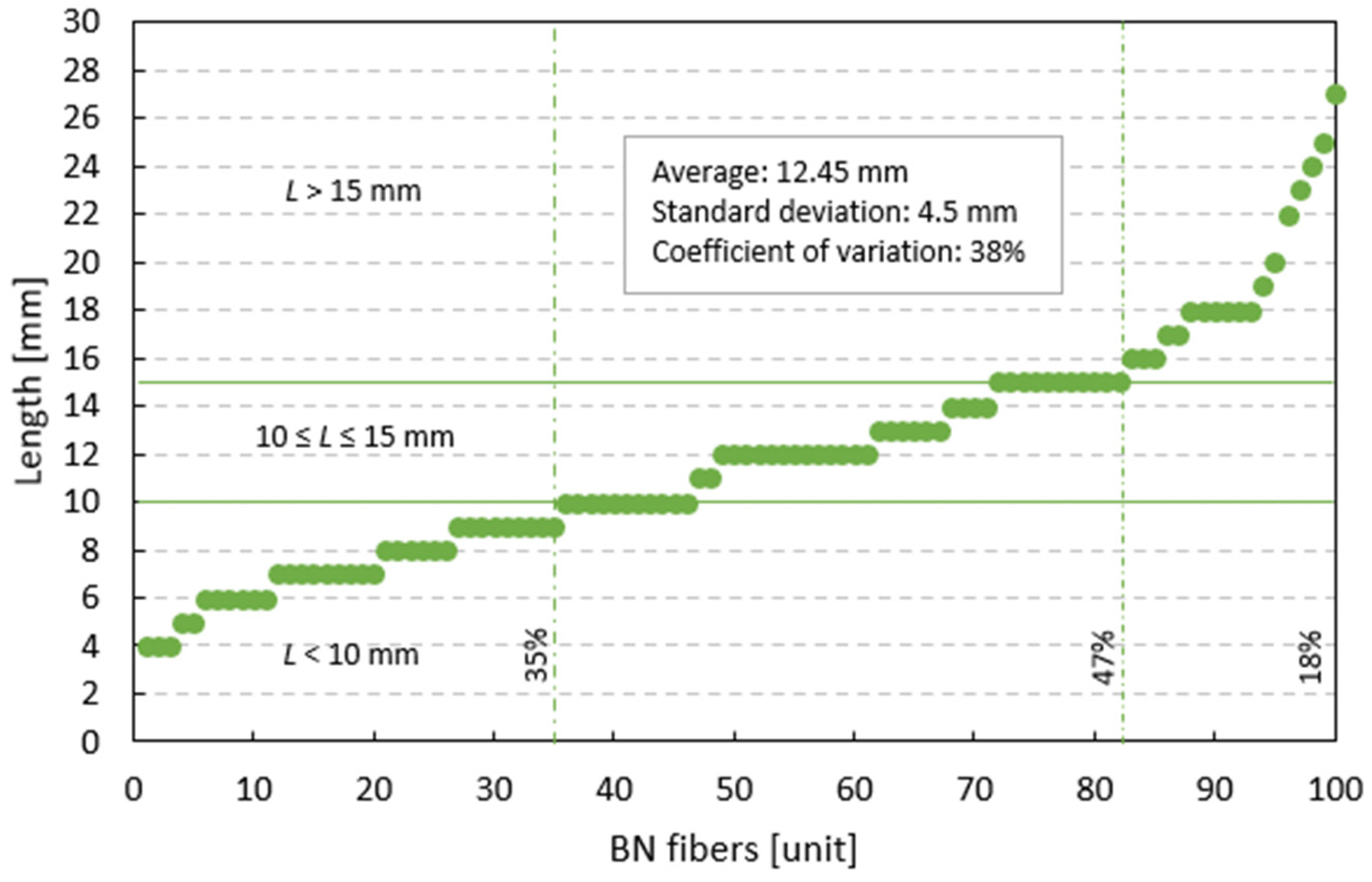
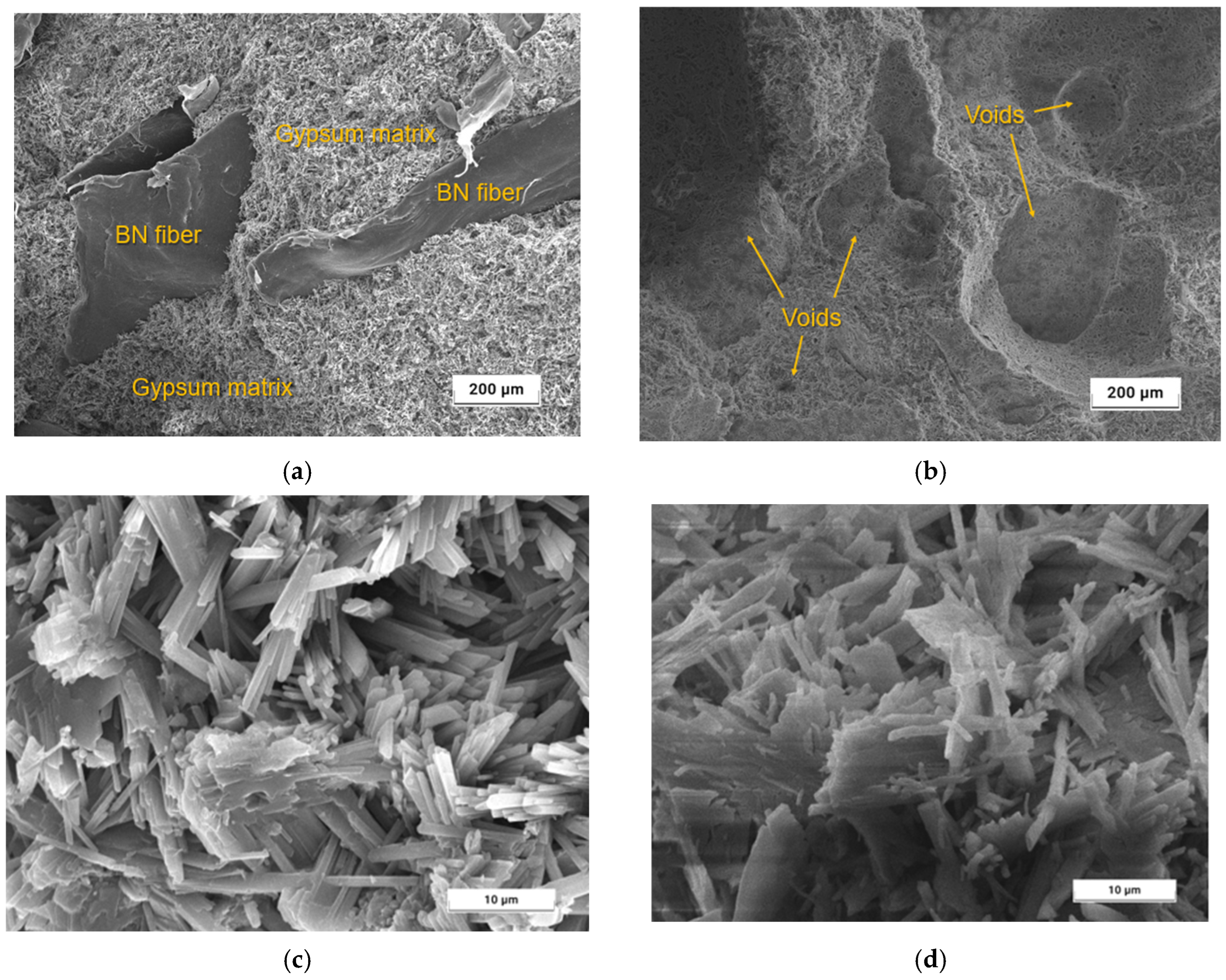
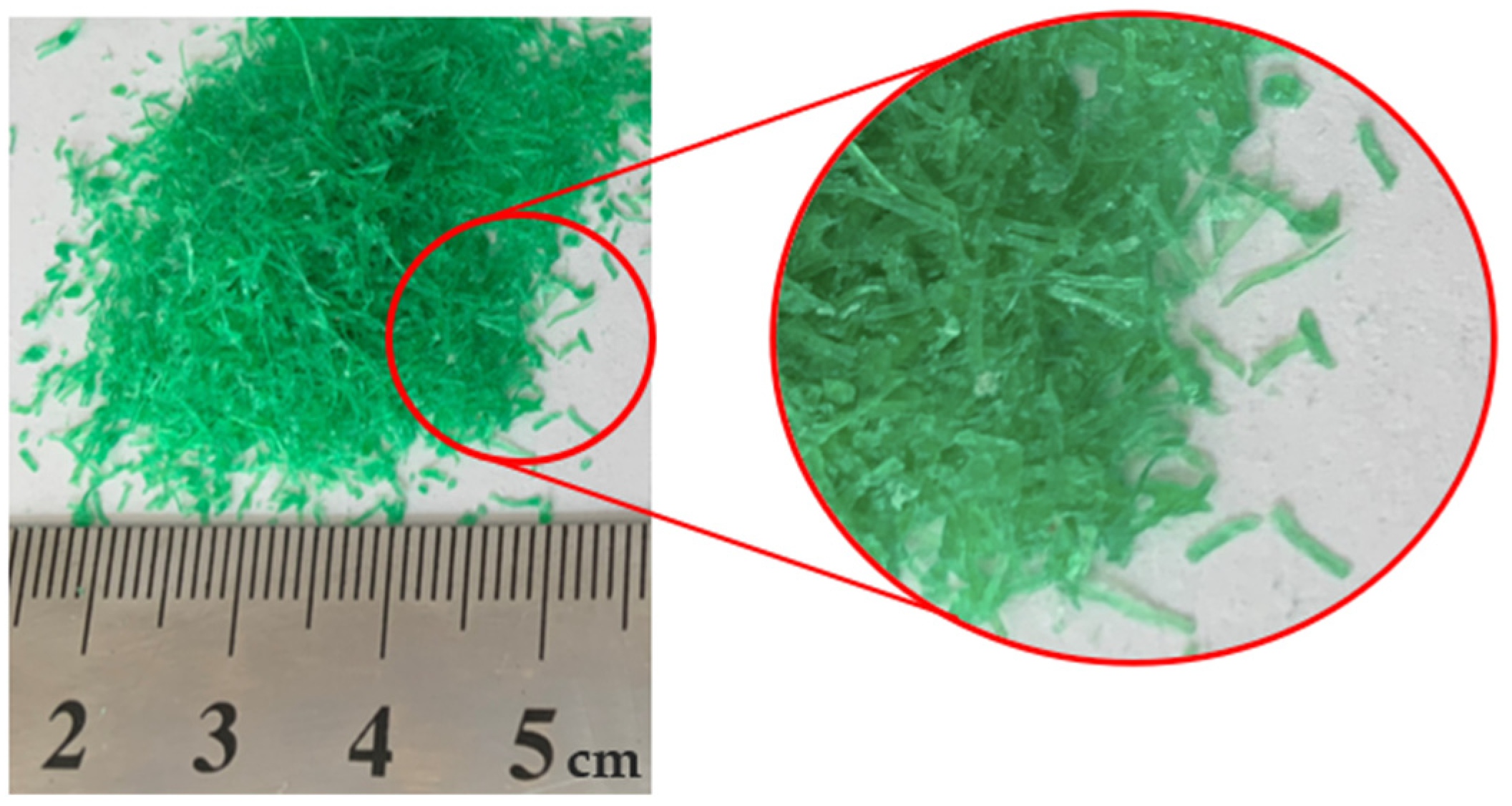
- In addition, PE fibers were used. They were extracted from BNs produced by Conmetall Meister (Conmetall Meister, Celle, Germany). First, the BNs were reduced with a paper-cutter to small pieces, which were ground by a Retsch (Retsch, Haan, Germany) cutting mill machine. After that, the ground material was sifted through sieves with meshes of 0.850 mm and 0.425 mm. The material retained on the 0.425 mm mesh sieve was characterized as BN fibers (Figure 1). The thickness of the BN fibers was 0.12 mm. Their bulk density was determined to be 0.35 g/cm3.
2.2. Experimental Program
2.2.1. Mechanical Tests
2.2.2. Wet–Dry Cycles Test
2.2.3. Fire Test
2.2.4. Toxicity Estimation
3. Results and Discussion
3.1. Total Water Absorption and Open Porosity
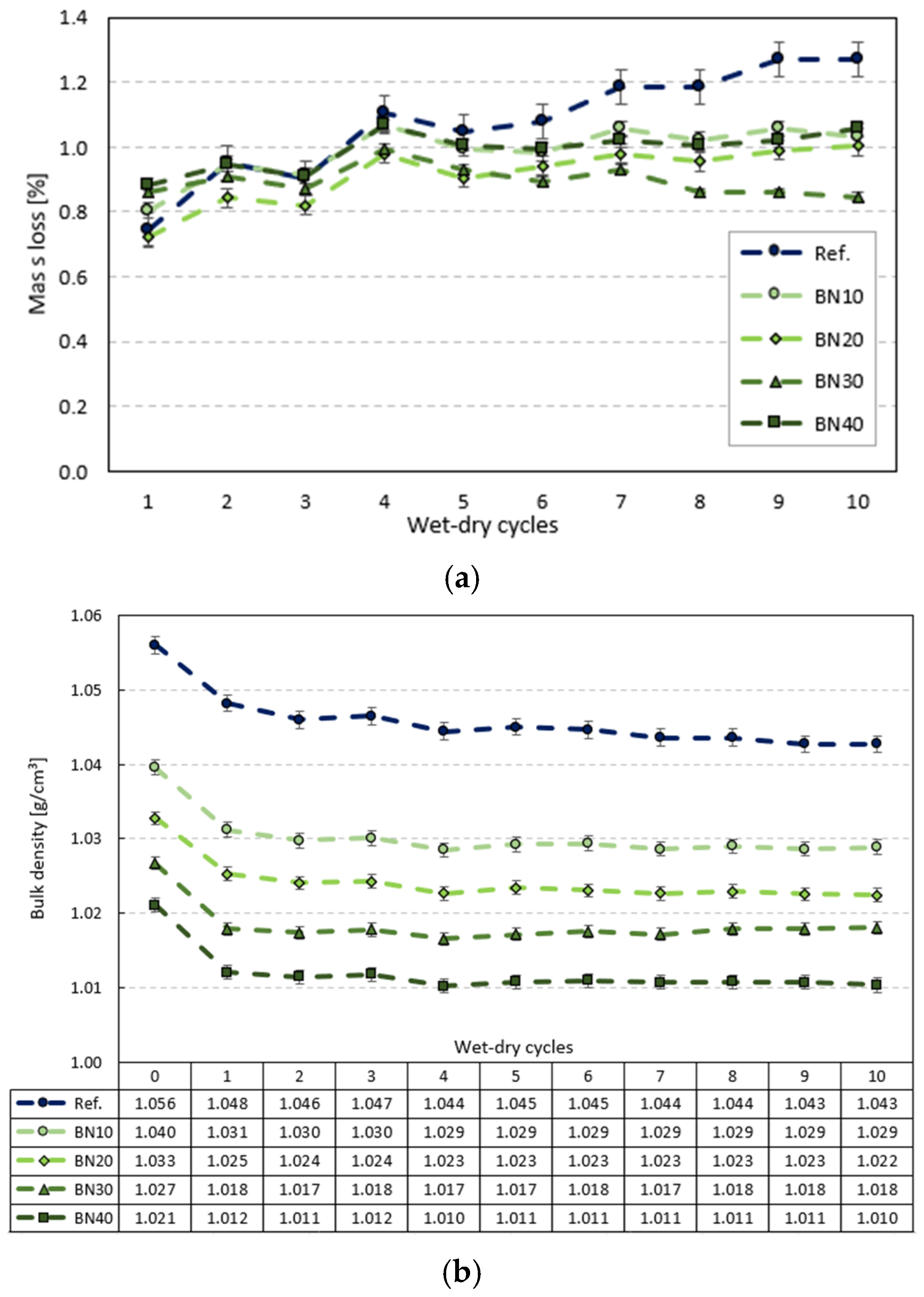
3.2. Wet–Dry Cycles and Bulk Density
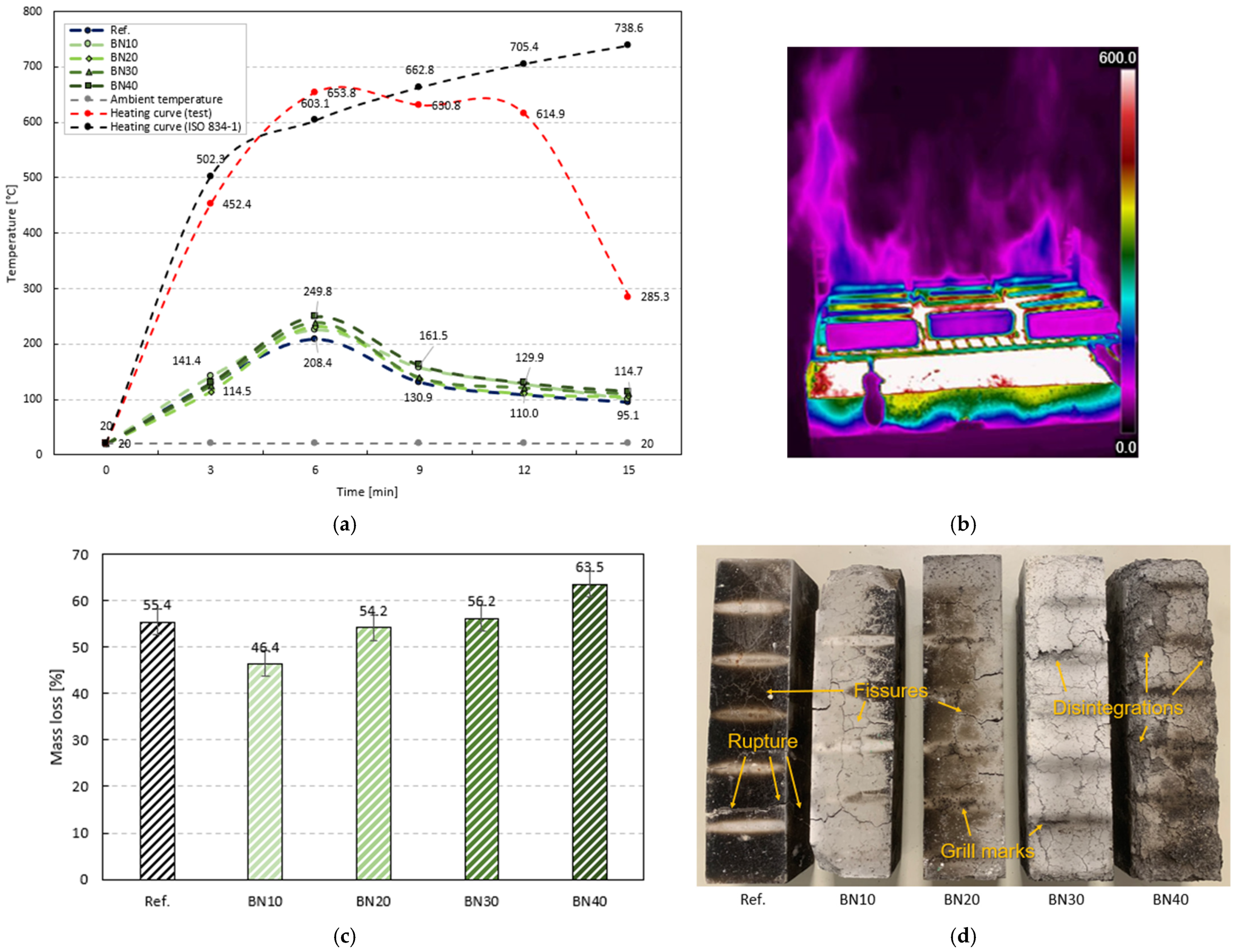
3.3. Fire Behavior
3.4. Mechanical Properties
3.5. Toxicity Estimation
- Molecular weight of PE monomer:
- 2.
- Mass of CO2 emitted by the combustion of 1 kg of PE:
- 3.
- Since both CO and CO2 contain one carbon atom, the number of moles of both gases is the same. Therefore, to calculate the mass of CO emitted:
4. Conclusions
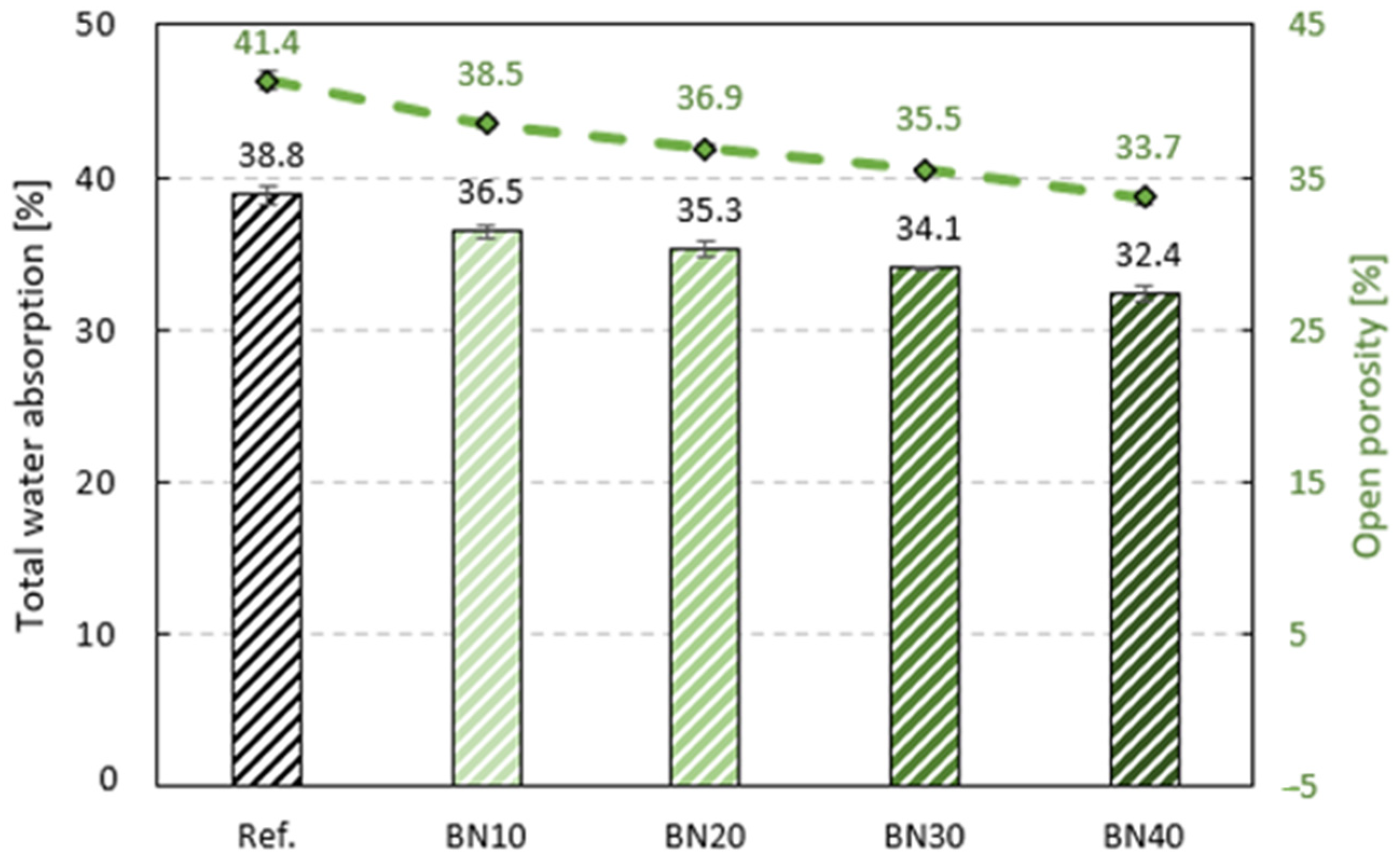
- The incorporation of BN fibers reduced open porosity by 19% and total water absorption by 17% in the gypsum matrix with 40% of f/g content (BN40). This composite showed a 3.3% reduction in bulk density compared to the reference.
- After exposure to fire, BN10 lost 9% less mass than the fiber-free matrix and showed only surface cracks. Therefore, lower BN fiber content contributed to greater fire resistance in the GCs.
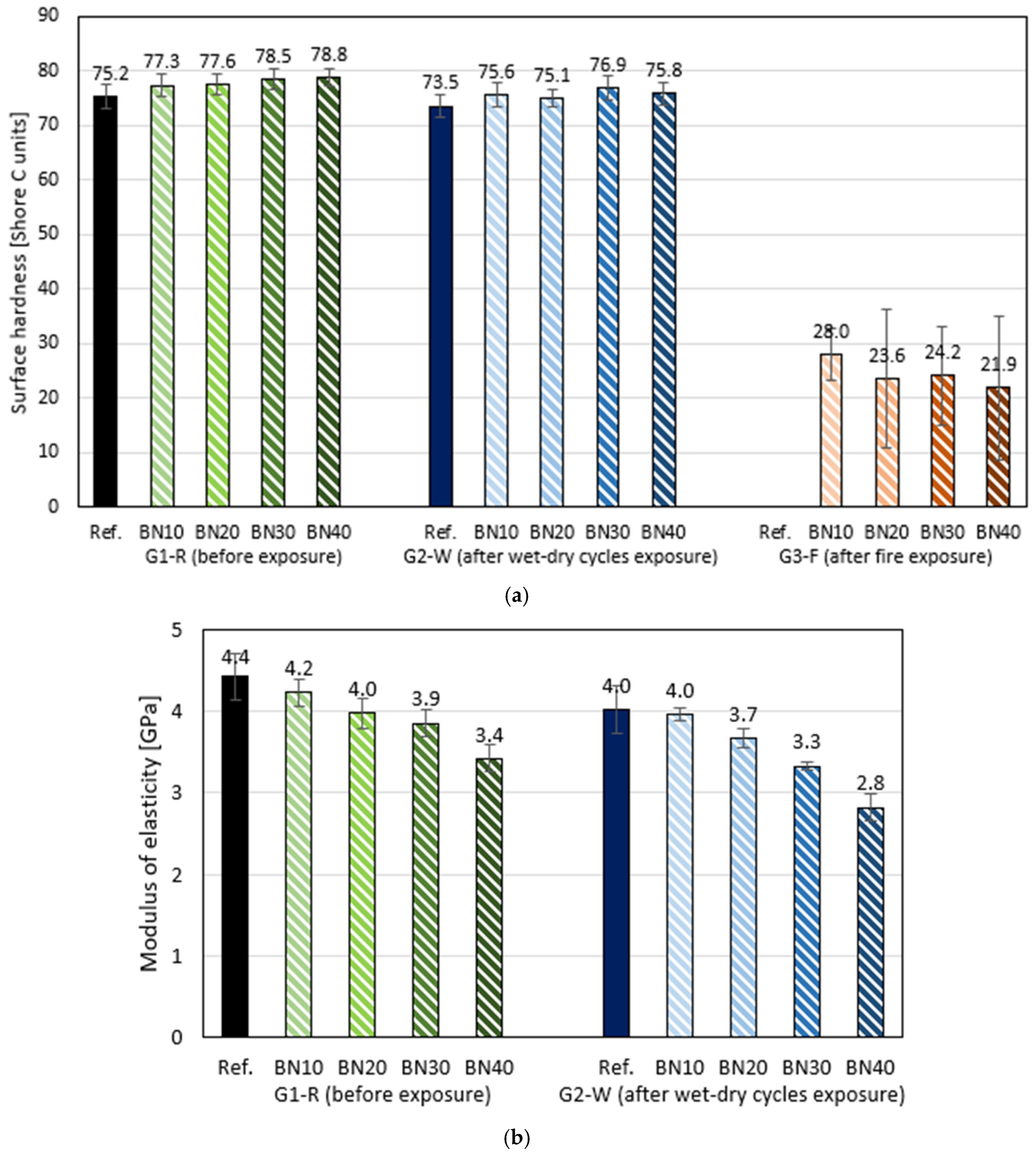
- The BN fibers helped maintain the dynamic modulus of elasticity after the durability test. The modulus of elasticity of BN40 decreased by 17%, while that of BN10 decreased by only 6%, when comparing them to the same composites before exposure.
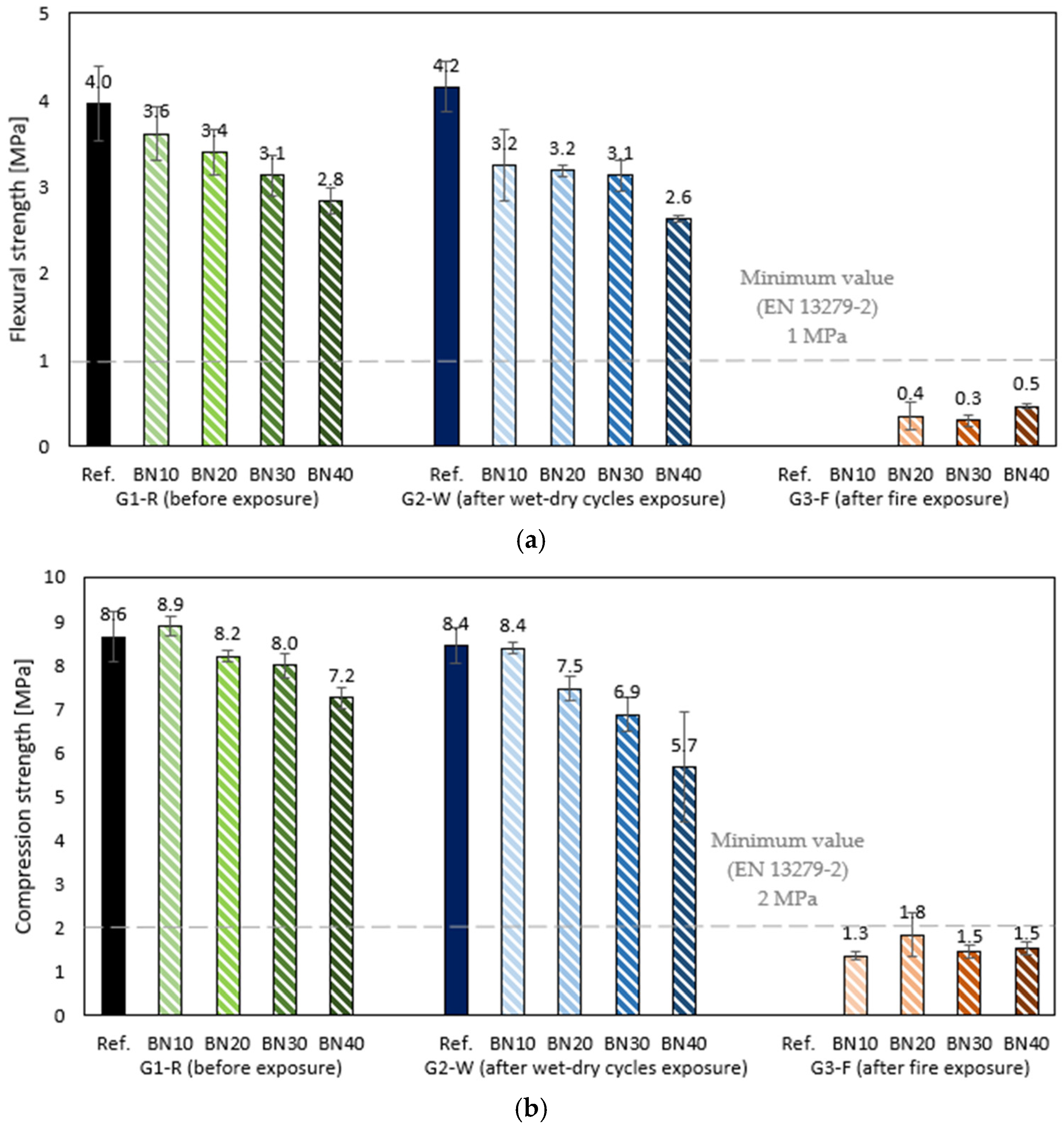
- Surface hardness increased with the addition of BN fibers in the GCs. BN40 had a value 5% higher than the reference. The compressive strength of BN10 increased by 3% compared to that of the reference, while the flexural strength decreased by only 9%.
- The wet–dry cycles did not significantly influence the strengths, unlike the fire, which drastically reduced them. After the durability test, the flexural and compressive strengths of all composites, even those of BN40, reached at least double the standardized minimum required values. These minimum values were not reached after exposure to fire.
- In case of complete combustion of the BN fibers within the GCs, the emissions of CO2 and CO do not reach the level of intoxication in humans.
Author Contributions
Funding
Data Availability Statement
Conflicts of Interest
Abbreviations
| GC | Gypsum composite |
| PE | Polyethylene |
| HDPE | High-density polyethylene |
| UHMWPE | Ultra-high-molecular-weight polyethylene |
| LSF | Light steel-framed |
| BN | Bird net |
| f/g | Fiber/gypsum |
| w/g | Water/gypsum |
| G1-R | Group 1-Reference |
| G2-W | Group 2-Wet–dry cycles exposure |
| G3-F | Group 3-Fire exposure |
| SEM | Scanning electron microscopy |
| SD | Standard deviation |
References
- Xu, R.; Lu, S.; Miao, J.; Tang, C.; Yu, J. Fiber-reinforced gypsum composites with ultra high ductility: Investigation of physical and mechanical properties. Constr. Build. Mater. 2024, 457, 139285. [Google Scholar] [CrossRef]
- Doleželová, M.; Scheinherrová, L.; Krejsová, J.; Keppert, M.; Černý, R.; Vimmrová, A. Investigation of gypsum composites with different lightweight fillers. Constr. Build. Mater. 2021, 297, 123791. [Google Scholar] [CrossRef]
- Jia, R.; Wang, Q.; Feng, P. A comprehensive overview of fibre-reinforced gypsum-based composites (FRGCs) in the construction field. Compos. Part B Eng. 2021, 205, 108540. [Google Scholar] [CrossRef]
- Hošťálková, M.; Vavřínová, N.; Longauerová, V. Mechanical properties of the gypsum composite reinforcement with wooden fibers. Int. Rev. Appl. Sci. Eng. 2019, 10, 15–21. [Google Scholar] [CrossRef]
- Ferrández, D.; Zaragoza-Benzal, A.; Carballosa, P.; Calvo, J.G.; Santos, P. Gypsum-Based Composites with Recycled PP/HDPE Pellets for Circular Material Development: A Comprehensive Characterisation. Materials 2025, 18, 4037. [Google Scholar] [CrossRef]
- Jameel, M.A.; Al-Asadi, L.S.M.; Hacheem, Z.A.; AL-Ridha, A.S.D. Effect of Chopped Carbon Fibre (CCF) on enhancing the compressive strength and density of gypsum plaster. Mater. Today Proc. 2022, 62, 4539–4544. [Google Scholar] [CrossRef]
- Lima, L.; Zaragoza-Benzal, A.; Ferrández, D.; Santos, P. Eco-Gypsum Panels with Recycled Fishing NET Fibers for Sustainable Construction: Development and Characterization. Materials 2025, 18, 4305. [Google Scholar] [CrossRef] [PubMed]
- Maitlo, G.; Ali, I.; Maitlo, H.A.; Ali, S.; Unar, I.N.; Ahmad, M.B.; Bhutto, D.K.; Karmani, R.K.; Naich, S.u.R.; Sajjad, R.U.; et al. Plastic Waste Recycling, Applications, and Future Prospects for a Sustainable Environment. Sustainability 2022, 14, 11637. [Google Scholar] [CrossRef]
- Murti, Z.; Soedjati, D.; Barkah, A.; Rahardjo, P. Review of the Circular Economy of Plastic Waste in Various Countries and Potential Applications in Indonesia. In IOP Conference Series: Earth and Environmental Science; Institute of Physics: London, UK, 2022. [Google Scholar] [CrossRef]
- Hao, G.; He, M.; Lim, S.M.; Ong, G.P.; Zulkati, A.; Kapilan, S. Recycling of plastic waste in porous asphalt pavement: Engineering, environmental, and economic implications. J. Clean. Prod. 2024, 440, 140865. [Google Scholar] [CrossRef]
- Romero-Gómez, M.I.; Silva, R.V.; de Brito, J.; Flores-Colen, I. Prototype of alveolar gypsum blocks with plastic waste addition for partition walls: Physico-mechanical, water-resistance and life cycle assessment. J. Clean. Prod. 2023, 432, 139810. [Google Scholar] [CrossRef]
- Rahat, M.H.H.; Massarra, D.C.; Wang, D.G. Using Plastic Wastes in Construction: Opportunities and Challenges. Epic. Ser. Built Environ. 2022, 3, 785–794. [Google Scholar] [CrossRef]
- Wang, Y.; Jian, X.; Yu, J.; Ye, J.; Dong, F. Development of gypsum-based composites with tensile strain-hardening characteristics. J. Am. Ceram. Soc. 2020, 103, 7115–7126. [Google Scholar] [CrossRef]
- Songkhla, W.N.; Chaikaew, C.; Chatveera, B.; Sua-iam, G. Experimental investigation of recycled HDPE waste fiber-reinforced gypsum with emphasis on durability and mechanical performance. Results Eng. 2025, 26, 105330. [Google Scholar] [CrossRef]
- Pedreño-Rojas, M.A.; Morales-Conde, M.J.; Rubio-de-Hita, P.; Pérez-Gálvez, F. Impact of wetting-drying cycles on the mechanical properties and microstructure of wood waste-gypsum composites. Materials 2019, 12, 1829. [Google Scholar] [CrossRef]
- Belayachi, N.; Hoxha, D.; Slaimia, M. Impact of accelerated climatic aging on the behavior of gypsum plaster-straw material for building thermal insulation. Constr. Build. Mater. 2016, 125, 912–918. [Google Scholar] [CrossRef]
- Aldaood, A.; Bouasker, M.; Al-Mukhtar, M. Impact of wetting-drying cycles on the microstructure and mechanical properties of lime-stabilized gypseous soils. Eng. Geol. 2014, 174, 11–21. [Google Scholar] [CrossRef]
- Romero-Gómez, M.I.; Costa-Pereira, M.F.; Dias, A.P.S.; Flores-Colen, I. Influence of high-temperature exposure on the properties of gypsum-plastic waste composites: Thermophysical and microstructural analysis. J. Build. Eng. 2023, 79, 107862. [Google Scholar] [CrossRef]
- Zaragoza-Benzal, A.; Ferrández, D.; Prieto, M.I.; Atanes-Sánchez, E. Fire-resistant performance of new sustainable waste-lightened composites with glass and basalt fibres reinforcement. Constr. Build. Mater. 2024, 411, 134620. [Google Scholar] [CrossRef]
- Alameda, L.; Calderón, V.; Junco, C.; Rodríguez, A.; Gadea, J.; Gutiérrez-González, S. Characterization of gypsum plasterboard with polyurethane foam waste reinforced with polypropylene fibers. Mater. Construcción 2016, 66, e100. [Google Scholar] [CrossRef]
- Ramos, F.J.H.T.V.; Mendes, L.C. Recycled high-density polyethylene/gypsum composites: Evaluation of the microscopic, thermal, flammability, and mechanical properties. Green Chem. Lett. Rev. 2014, 7, 199–208. [Google Scholar] [CrossRef]
- EN 13279-1:2008; Gypsum Binders and Gypsum Plasters—Part 1: Definitions and Requirements. CEN—European Committee for Standardization: Brussels, Belgium, 2008.
- The Council of the European Union. On the Quality of Water Intended for Human Consumption; Council Directive 98/83/EC; The Council of the European Union: Brussels, Belgium, 1998. [Google Scholar]
- Lin, C.; Kanstad, T.; Jacobsen, S.; Ji, G. Bonding property between fiber and cementitious matrix: A critical review. Constr. Build. Mater. 2023, 378, 131169. [Google Scholar] [CrossRef]
- Duraiswamy, S.; Neelamegam, P.; VishnuPriyan, M.; Alaneme, G.U. Impact of plastic waste fiber and treated construction demolition waste on the durability and sustainability of concrete. Sci. Rep. 2024, 14, 27221. [Google Scholar] [CrossRef] [PubMed]
- Esan, M.T. Review of gypsum reinforced composites as building materials. Discov. Civ. Eng. 2024, 1, 5. [Google Scholar] [CrossRef]
- EN 13279-2:2014; Gypsum Binders and Gypsum Plasters—Part 2: Test Methods. CEN—European Committee for Standardization: Brussels, Belgium, 2014.
- EN 12859:2011; Gypsum Blocks—Definitions, Requirements and Test Methods. CEN—European Committee for Standardization: Brussels, Belgium, 2011.
- EN 14617-1:2013; Agglomerated Stone—Test Methods—Part 1: Determination of Apparent Density and Water Absorption. CEN—European Committee for Standardization: Brussels, Belgium, 2013.
- EN 1936:2006; Natural Stone Test Methods—Determination of Real Density and Apparent Density, and of Total and Open Porosity. CEN—European Committee for Standardization: Brussels, Belgium, 2006.
- ASTM C597-22; Standard Test Method for Pulse Velocity Through Concrete. American Society for Testing and Materials: West Conshohocken, PA, USA, 2022.
- ASTM D559-12; Standard Test Methods for Wetting and Drying Compacted Soil-Cement Mixtures. American Society for Testing and Materials: West Conshohocken, PA, USA, 2012.
- Salih, W.T.; Yu, W.; Dong, X.; Hao, W. Study on stress-strain-resistivity and microscopic mechanism of red mud waste modified by desulphurization gypsum-fly ash under drying-wetting cycles. Constr. Build. Mater. 2020, 249, 118772. [Google Scholar] [CrossRef]
- Con, A.Y.; Adiciones, O.; Somolinos, R.S. Estudio del Comportamiento Frente al Fuego del Hormigón en Masa con Adición de Nanofibras de Carbono (cnfs) y su Comparación con Hormigones sin Adición y con Otras Adiciones. Ph.D. Thesis, E.T.S. de Edificación (UPM), Madrid, Spain, 2018. [Google Scholar]
- ISO 834-1:1999; Fire-Resistance Tests—Elements of Building Construction—Part 1: General Requirements. ISO—International Organization for Standardization: Geneva, Switzerland, 1999.
- Cheung, W.K.; Zeng, Y.; Lin, S.; Huang, X. Modelling carbon monoxide transport and hazard from smouldering for building fire safety design analysis. Fire Saf. J. 2023, 140, 103895. [Google Scholar] [CrossRef]
- Durgun, M.Y. Effect of wetting-drying cycles on gypsum plasters containing ground basaltic pumice and polypropylene fibers. J. Build. Eng. 2020, 32, 101801. [Google Scholar] [CrossRef]
- Chajec, A.; Królicka, A.; Rainer, J.; Pachnicz, M.; Nieświec, M.; Kaczmarczyk, O.; Walendzik, I.; Kapeluszna, E. Beyond filler effects: The role of mechanical activation in transforming quarry waste into functional cementitious components. Constr. Build. Mater. 2025, 490, 142637. [Google Scholar] [CrossRef]
- Li, Z.; Wang, X.; Yan, W.; Ding, L.; Liu, J.; Wu, Z.; Huang, H. Physical and mechanical properties of gypsum-based composites reinforced with basalt, glass, and PVA fibers. J. Build. Eng. 2023, 64, 105640. [Google Scholar] [CrossRef]
- Romero-Gómez, M.I.; Silva, R.V.; Flores-Colen, I.; Rubio-de-Hita, P. Mechanical performance of waste fishing net fibre-reinforced gypsum composites. Constr. Build. Mater. 2023, 387, 131675. [Google Scholar] [CrossRef]
- Gonçalves, R.M.; Martinho, A.; Oliveira, J.P. Evaluating the potential use of recycled glass fibers for the development of gypsum-based composites. Constr. Build. Mater. 2022, 321, 126320. [Google Scholar] [CrossRef]
- Ardebili, A.A.; Sáez, P.V.; Cortina, M.G.; Cruz, D.M.T.; Sáiz, Á.R.; Atanes-Sánchez, E. Mechanical characterization of gypsum mortars with waste from the automotive sector. Constr. Build. Mater. 2023, 370, 130675. [Google Scholar] [CrossRef]
- Magbool, H.M. Sustainability of utilizing recycled plastic fiber in green concrete: A systematic review. Case Stud. Constr. Mater. 2025, 22, e04432. [Google Scholar] [CrossRef]
- Rosell, J.R.; Cantalapiedra, I.R. Método simple para determinar el módulo de Young dinámico a partir de una excitación por impacto aplicado a morteros de cal y cemento. Mater. Constr. 2011, 61, 39–48. [Google Scholar] [CrossRef]
- Bertelsen, I.M.G.; Ottosen, L.M. Recycling of Waste Polyethylene Fishing Nets as Fibre Reinforcement in Gypsum-based Materials. Fibers Polym. 2022, 23, 164–174. [Google Scholar] [CrossRef]
- Merino, M.D.R. Elaboración y Aplicaciones Constructivas de Paneles Prefabricados de Escayola Aligerada y Reforzada con Fibras de Vidrio e y Otros Aditivos. Ph.D. Thesis, Universidad Politécnica de Madrid, Madrid, Spain, 1999. [Google Scholar] [CrossRef]
- Zheng, D.; Lu, H.; Sun, X.; Liu, X.; Han, W.; Wang, L. Reaction mechanism of reductive decomposition of FGD gypsum with anthracite. Thermochim. Acta 2013, 559, 23–31. [Google Scholar] [CrossRef]
- Luna, J.I.V.; Acosta, M.A.L.; Guzmán, G.S. Monitoreo de concentración de monóxido de carbono usando tecnología Long-Range. Ingenius 2017, 18, 73. [Google Scholar] [CrossRef]
- Instituto Para la Salud Geoambiental. Available online: https://www.saludgeoambiental.org/dioxido-carbono-co2 (accessed on 18 December 2025).




| Sample | Gypsum [g] | Water [g] | BN Fibers [g] |
|---|---|---|---|
| Ref. | 333.3 | 233.3 | 0.0 |
| BN10 | 300.0 | 210.0 | 9.0 |
| BN20 | 266.7 | 186.7 | 17.9 |
| BN30 | 233.3 | 163.3 | 26.9 |
| BN40 | 200.0 | 140.0 | 35.8 |
| Sample | Total Water Absorption [%] | Open Porosity [%] | ||
|---|---|---|---|---|
| Average | SD * | Average | SD * | |
| Ref. | 38.8 | 0.61 | 41.4 | 0.62 |
| BN10 | 36.5 | 0.42 | 38.5 | 0.39 |
| BN20 | 35.3 | 0.59 | 36.9 | 0.30 |
| BN30 | 34.1 | 0.12 | 35.5 | 0.13 |
| BN40 | 32.4 | 0.48 | 33.7 | 0.41 |
| Total Mass Loss [%] | Interval [°C] | Maximum Temperature [°C] | Partial Mass Loss [%] | Associated Heating Effects | Comments |
|---|---|---|---|---|---|
| 21.6 | 0–250 | 128.05 | 20.3 | Endothermal | DH to HH |
| 137.41 | Endothermal | HH to anhydrite | |||
| 250–550 | 354.12 | - | Exothermal | Anhydrite phase transition | |
| 550–750 | 636.15; 661.32 | 1.3 | Endothermal | CaCO3 to CaO |
| Sample | Total Fibers in the Panels for the Unit Room [kg] | Estimated CO2 [kg] | Estimated CO [kg] | Estimated CO2 [ppm] | Estimated CO [ppm] |
|---|---|---|---|---|---|
| Ref. | - | - | - | - | - |
| BN10 | 13.1836 | 41.3569 | 26.3276 | 1378.57 | 877.59 |
| BN20 | 26.2207 | 82.2543 | 52.3627 | 2741.81 | 1745.43 |
| BN30 | 39.4043 | 123.6113 | 78.6904 | 4120.38 | 2623.01 |
| BN40 | 52.4414 | 164.5087 | 104.7255 | 5483.62 | 3490.85 |
Disclaimer/Publisher’s Note: The statements, opinions and data contained in all publications are solely those of the individual author(s) and contributor(s) and not of MDPI and/or the editor(s). MDPI and/or the editor(s) disclaim responsibility for any injury to people or property resulting from any ideas, methods, instructions or products referred to in the content. |
© 2026 by the authors. Licensee MDPI, Basel, Switzerland. This article is an open access article distributed under the terms and conditions of the Creative Commons Attribution (CC BY) license.
Share and Cite
Lima, L.; Zaragoza-Benzal, A.; Ferrández, D.; Atanes-Sánchez, E.; Santos, P. Durability and Fire Performance of Gypsum Composites Reinforced with Recycled Polyethylene Fibers. Appl. Sci. 2026, 16, 1489. https://doi.org/10.3390/app16031489
Lima L, Zaragoza-Benzal A, Ferrández D, Atanes-Sánchez E, Santos P. Durability and Fire Performance of Gypsum Composites Reinforced with Recycled Polyethylene Fibers. Applied Sciences. 2026; 16(3):1489. https://doi.org/10.3390/app16031489
Chicago/Turabian StyleLima, Leonardo, Alicia Zaragoza-Benzal, Daniel Ferrández, Evangelina Atanes-Sánchez, and Paulo Santos. 2026. "Durability and Fire Performance of Gypsum Composites Reinforced with Recycled Polyethylene Fibers" Applied Sciences 16, no. 3: 1489. https://doi.org/10.3390/app16031489
APA StyleLima, L., Zaragoza-Benzal, A., Ferrández, D., Atanes-Sánchez, E., & Santos, P. (2026). Durability and Fire Performance of Gypsum Composites Reinforced with Recycled Polyethylene Fibers. Applied Sciences, 16(3), 1489. https://doi.org/10.3390/app16031489