1. Introduction
Technology assessment has become established as a strategic pillar in higher education, particularly in disciplines such as biomedicine, where technological innovations are transforming research, professional practice, and the training of new specialists. The incorporation of tools such as virtual reality, simulated laboratories, and online learning platforms requires rigorous analysis to assess their acceptance, usefulness, and sustainability in educational contexts [
1].
The United Nations Conference on Trade and Development (UNCTAD) recognizes that technology assessment is an essential tool for the formulation of science, technology, and innovation policies [
2]. In the teaching of biomedicine, this practice enables instructors and students to understand the implications of emerging technologies for health and well-being, promoting a critical approach to innovation in the field. However, multiple studies have identified a recurring problem: the lack of standardized methodologies to effectively integrate these technologies into higher education [
3,
4,
5]. As a proposed solution, these authors suggest the application of evaluation models that consider dimensions such as acceptance, ease of use, usability, motivation, and technological maturity [
3,
4,
5,
6,
7].
Among the most relevant theoretical frameworks are the Technology Acceptance Model (TAM), the System Usability Scale (SUS), Technology Readiness Levels (TRL), and the ARCS Model (Attention, Relevance, Confidence, and Satisfaction). These models make it possible to analyze key factors such as perceived usefulness, ease of use, user experience, student motivation, and the level of technological development, establishing themselves as essential references for evaluating the relevance and sustainability of educational innovations in biomedicine [
3,
4,
5,
6,
7]. Existing literature shows key-factor model application individually, highlighting the need for integrated assessment frameworks in immersive biomedical training.
This article examines the methodologies most commonly used in the evaluation of technologies applied to the teaching of biomedicine, exploring their strengths, limitations, and practical applications, with the aim of providing a critical framework that supports the strategic adoption of educational innovations in a constantly evolving context.
Accordingly, the main objective of this review is to systematically analyze and integrate widely used technological evaluation models applied in biomedical education, including TAM, UTAUT, SUS, TRL, and ARCS. Specifically, this study aims to (i) examine the theoretical foundations and empirical applications of each model in biomedical and health sciences education, (ii) identify their strengths, limitations, and areas of overlap, and (iii) propose an integrated, multi-phase evaluation framework to support informed decision-making in the adoption and implementation of emerging educational technologies.
2. Materials and Methods
This section systematically describes the methodological components of the review. Specifically, it outlines the types of information resources consulted, the databases searched, and the inclusion and exclusion criteria applied for study selection. It also specifies the version of the PRISMA methodology followed and the procedures used for literature identification, screening, and eligibility assessment. Finally, the section explains the criteria used to group the included studies according to the technological evaluation models analyzed, facilitating a structured and comparative synthesis of the reviewed literature. The detailed reviewing process is presented in
Section 5.
We prioritized peer-reviewed articles, books, and standards that present, validate, or extensively apply TAM, UTAUT, SUS, TRL, and ARCS in educational or health-related contexts. Sources were identified from relevant journals and reference lists; illustrative works include Brooke (SUS), Davis and Venkatesh (TAM, UTAUT), ISO 16290 [
6] (TRL), and Keller (ARCS), alongside recent applications in XR/VR laboratories and blended learning. Reporting follows good-practice guidance inspired by PRISMA for clarity and transparency; This review follows PRISMA 2020 guidelines for search and selection procedures. However, given the heterogeneous nature of the included studies (ranging from technical reports to observational studies), a formal risk of bias assessment (e.g., using MMAT or ROBINS-I) was not performed. Studies were grouped by technology model assessment (TAM, SUS, TRL, ARCS and UTAUT) to provide a comprehensive perspective to facilitate the technology evaluation in health care education.
The systematic review was not registered, and no external protocol repository was generated.
3. Technological Assessment Models
The increasing incorporation of e-learning resources and digital technologies in higher education has intensified the need for evaluation frameworks that go beyond technical performance and address acceptance, usability, motivation, and contextual factors influencing adoption. Perceived usefulness, ease of use, motivational engagement, and institutional context have been shown to play a decisive role in the effective integration of educational technologies, particularly in biomedical training environments [
1,
2,
3]. Technological assessment, therefore, supports not only adoption decisions but also the design of pedagogical strategies that enhance accessibility, effectiveness, and educational relevance [
3,
7].
Several well-established models have been employed for this purpose. TAM focuses on acceptance through perceived usefulness and ease of use [
5,
8]; SUS evaluates perceived usability and user experience [
9]; TRL classifies technologies according to their maturity level [
6]; ARCS explicitly addresses motivational dimensions in learning [
7]; and UTAUT integrates individual, social, and organizational determinants of technology adoption [
10]. Together, these models offer complementary perspectives that enable a multidimensional evaluation of technologies applied to biomedical education.
This review examines these methodological frameworks, discussing their key contributions, limitations, and applications in educational and health-related contexts, to support the informed and context-sensitive adoption of emerging technologies.
3.1. TAM
The Technology Acceptance Model, initially proposed by Davis (1985) [
5] and consolidated by Davis (1989) [
8], remains one of the most influential frameworks for explaining technology acceptance. The model establishes that perceived usefulness and perceived ease of use shape users’ attitudes, intentions, and subsequent usage behavior [
11]. Its validity has been repeatedly confirmed in educational contexts, where these constructs consistently predict students’ willingness to incorporate digital resources into learning processes [
1,
3].
Within biomedical and health sciences education, TAM has been widely applied to evaluate acceptance of virtual laboratories, learning platforms, and clinical simulators. Ref. [
1] demonstrated that perceived usefulness and ease of use significantly explain students’ intention to use virtual laboratories, while Ref. [
3] showed that TAM-based models better explain adoption when motivational variables are incorporated. Studies in immersive environments further indicate that increased presence may enhance motivation without necessarily translating into improved learning outcomes, highlighting contextual limitations of the model [
12].
Although TAM remains a robust theoretical reference, its primary focus on individual perceptions limits its ability to capture institutional, infrastructural, and motivational dimensions [
13]. For this reason, several authors emphasize that its application in biomedical education benefits from integration with complementary frameworks that address contextual and pedagogical complexity [
10,
11]. In this sense, TAM provides a foundational layer for acceptance analysis rather than a comprehensive explanatory model.
3.1.1. TAM Variants
Extensions of TAM have sought to address these limitations. TAM2 incorporated social influence and subjective norms [
14], while TAM3 further integrated constructs related to self-efficacy, anxiety, and facilitating conditions [
15]. These variants have shown improved explanatory capacity in higher education contexts, particularly in studies analyzing blended learning environments and mobile technologies [
16]. Their development reflects an ongoing effort to expand acceptance models toward more context-sensitive interpretations of technology adoption.
3.1.2. SEM and TAM Validation
Structural Equation Modeling (SEM) has been widely employed to validate TAM and its extensions, as it allows simultaneous analysis of relationships between latent and observed variables while accounting for measurement error [
17,
18,
19]. In educational research, SEM-based studies consistently confirm the influence of perceived usefulness and perceived ease of use, as well as the mediating role of attitudes toward digital learning [
17,
19].
Although its application in biomedical education remains comparatively limited, recent contributions highlight SEM’s relevance for theory validation in digital health and training environments, provided that adequate theoretical grounding and methodological rigor are ensured [
18,
20]. Within review studies, SEM is therefore best understood as a supporting methodological approach rather than a central analytical focus.
3.1.3. UTAUT
The Unified Theory of Acceptance and Use of Technology was developed by Venkatesh et al. [
10] as an evolution of TAM and related models, integrating constructs such as performance expectancy, effort expectancy, social influence, and facilitating conditions, along with demographic moderators [
10]. Its higher predictive capacity compared to TAM has been demonstrated across multiple contexts, including education and health [
10].
In educational and biomedical settings, UTAUT has been applied to analyze adoption of blended learning systems, digital platforms, and mobile health technologies [
16,
20,
21]. However, its strong emphasis on behavioral intention and reliance on self-reported measures limit its ability to capture actual usage behavior and motivational dynamics. As a result, UTAUT is most informative when complemented by models addressing user experience and learning motivation [
7,
13].
3.2. SUS
The System Usability Scale, developed by Brooke [
9], is a concise and standardized instrument designed to measure perceived usability. Its reliability and cross-cultural applicability have been widely confirmed [
4,
22], explaining its extensive use in educational and technological research. In biomedical education, SUS has been applied to evaluate virtual reality tools, simulators, and digital laboratories, where higher usability scores have been associated with increased motivation and learner engagement [
12,
23].
Nevertheless, SUS focuses on general usability and does not explicitly address pedagogical effectiveness, accessibility, or motivational factors [
13]. Consequently, its contribution is strongest when used as part of a broader evaluative framework that incorporates acceptance and motivational models.
3.3. TRL
Technology Readiness Levels provide a standardized framework for classifying the maturity of technologies from conceptual development to real-world implementation [
6,
24]. Originally developed for aerospace applications, TRL has been extended to engineering, healthcare, and educational technology assessment [
25,
26]. In biomedical contexts, it supports risk assessment and decision-making prior to adoption [
27].
However, TRL focuses primarily on technical development and does not account for pedagogical, motivational, or usability-related dimensions [
25]. Its application in educational environments is therefore most effective when combined with user-centered and learning-oriented evaluation models.
3.4. ARCS
The ARCS model, proposed by Keller [
7], emphasizes motivation as a key determinant of learning effectiveness through the dimensions of attention, relevance, confidence, and satisfaction. Its applicability has been demonstrated in higher education, blended learning, and biomedical training environments, including immersive and simulation-based programs [
13,
28,
29,
30,
31].
While ARCS effectively captures motivational processes, it does not address technological maturity or usability, limiting its standalone explanatory power in technology adoption studies. Its integration with acceptance, usability, and readiness models, therefore, enables a more complete understanding of how emerging technologies support learning in biomedical education.
The combined examination of TAM, UTAUT, SUS, TRL, and ARCS highlights that each framework contributes a distinct but partial perspective on technological adoption. Their integrated use enables a multidimensional evaluation encompassing acceptance, usability, maturity, and motivation, providing a more coherent basis for assessing emerging technologies in biomedical education.
Table 1 summarizes the main constructs, applications, advantages, and limitations of their work.
4. Measurement and Analysis Details
This section presents a synthesized methodological overview of established evaluation frameworks commonly applied in biomedical and health sciences education, including TAM, UTAUT, SUS, TRL, and ARCS. It summarizes recommended methodological best practices derived from prior empirical and theoretical studies that have employed these models in educational and training contexts. This section does not report original empirical analyses conducted within this review; rather, its purpose is to provide practical guidance for researchers and educators seeking to operationalize these evaluation models in future empirical studies.
4.1. Instrument Design and Adaptation
To operationalize constructs from TAM/UTAUT, ARCS, and SUS in biomedical education:
Prefer reflective measurement with 3–5 items per construct and 5–7 point Likert scales to balance sensitivity and respondent burden.
For cross-language deployment, apply translation/back-translation and expert review; pilot with 20–30 participants to check clarity and response variability.
For accessibility, ensure items accommodate diverse learners (e.g., avoid double-barreled wording; provide screen-reader friendly survey formats).
4.2. Reliability and Validity Criteria
Report the following for each reflective construct:
Internal consistency: Cronbach’s ; Composite Reliability (CR) .
Convergent validity: Average Variance Extracted (AVE) ; standardized loadings preferred.
Discriminant validity: HTMT < 0.85 (stringent) or <0.90 (liberal); cross-loadings lower on non-native constructs.
Invariance (optional, for groups such as gender/experience): configural, metric, and scalar invariance with ΔCFI and ΔRMSEA thresholds.
4.3. SEM Estimation and Fit
For model testing, two complementary routes are common:
CB-SEM (covariance-based): Recommended for theory confirmation using robust ML or WLSMV for ordinal Likert data. Model fit should be assessed using the criteria proposed by [
32]: CFI/TLI
(indicating good fit), RMSEA
, and SRMR
.
PLS-SEM (variance-based): Recommended for prediction-oriented analysis or small samples. Report , , path effect sizes, and bootstrapped confidence intervals.
Sample size guidance: CB-SEM often targets or at least 10 participants per estimated parameter; PLS-SEM follows the “ rule” (10 times the largest number of arrows pointing at a latent variable) as a lower bound. Prefer a priori power analysis when feasible.
4.4. TAM/UTAUT Example Specification
An illustrative structural form for TAM with reflective constructs is:
where BI is behavioral intention and USE is self-reported use. UTAUT extends this with performance/effort expectancy, social influence, and facilitating conditions, with moderator effects of gender, age, experience, and voluntariness of use.
4.5. SUS: Scoring and Interpretation
SUS comprises 10 items rated 1–5. For scoring, subtract 1 from odd items (1, 3, 5, 7, 9) and subtract responses from 5 for even items (2, 4, 6, 8, 10). Sum the adjusted values and multiply by 2.5 to obtain a 0–100 score. Interpretations commonly used in HCI place a score of 68 near the average; scores
are typically considered “excellent” usability, while scores
indicate poor usability [
22]. When comparing groups, report means with 95% CIs and standardized differences.
4.6. TRL: Levels and Education Mapping
The
Table 2 summarizes TRL levels and a pragmatic mapping to education decision points.
4.7. Data Quality and Bias
Handle missing data via FIML (CB-SEM) or multiple imputation when data are MAR; report percentage missingness and diagnostics. Assess common method variance with procedural remedies (e.g., item separation, anonymity) and statistical checks (e.g., marker variable approaches) to avoid inflated relationships.
4.8. Reporting Checklist
For reproducibility, report: instrument items and sources; translation/adaptation process; sample characteristics; reliability/validity statistics (, CR, AVE, HTMT); model specification and fit; effect sizes and CIs; handling of missing data; and decision criteria for SUS, TAM/UTAUT, and TRL. Sensitivity was conceptually appraised based on model triangulation rather than statistical re-estimation.
5. Methodology
This review was conducted following the recommendations of the PRISMA 2020 guide (Preferred Reporting Items for Systematic Reviews and Meta-Analyses) [
33], with the purpose of identifying, analyzing, and comparing the main technology evaluation models applied in biomedical education.
5.1. Search Strategy
The literature search was carried out between January 2010 and June 2024 in databases recognized for their impact in education, technology, and health sciences: Scopus, Web of Science, PubMed, IEEE Xplore, ScienceDirect, SpringerLink, Taylor & Francis, and MDPI. Likewise, relevant articles manually identified in journals such as Medical Informatics and Decision Making (BMC), Computers & Education (Elsevier), and Education and Information Technology (Springer) were included.
The keywords and Boolean operators used were:
“Technology acceptance model” AND “biomedical education”
“System usability scale” AND “health sciences”
“Technology readiness levels” AND “medical education”
“ARCS model” AND “learning motivation”
“UTAUT” AND “e-learning”
Additionally, terms related to emerging technologies such as “virtual reality”, “augmented reality”, and “simulators” were incorporated.
5.2. Inclusion and Exclusion Criteria
Inclusion: articles published between 2010 and 2024, in English or Spanish; empirical studies, systematic or integrative reviews; research applied in biomedical education or health sciences; documents that explicitly applied the TAM, SUS, TRL, ARCS, or UTAUT models.
Exclusion: title and abstract that did not met the systematic review criteria, articles without full access, duplicate studies, works out-side the high education or biomedical field, and the results of the articles were not compatible with the objective of the systematic review.
5.3. Selection Process
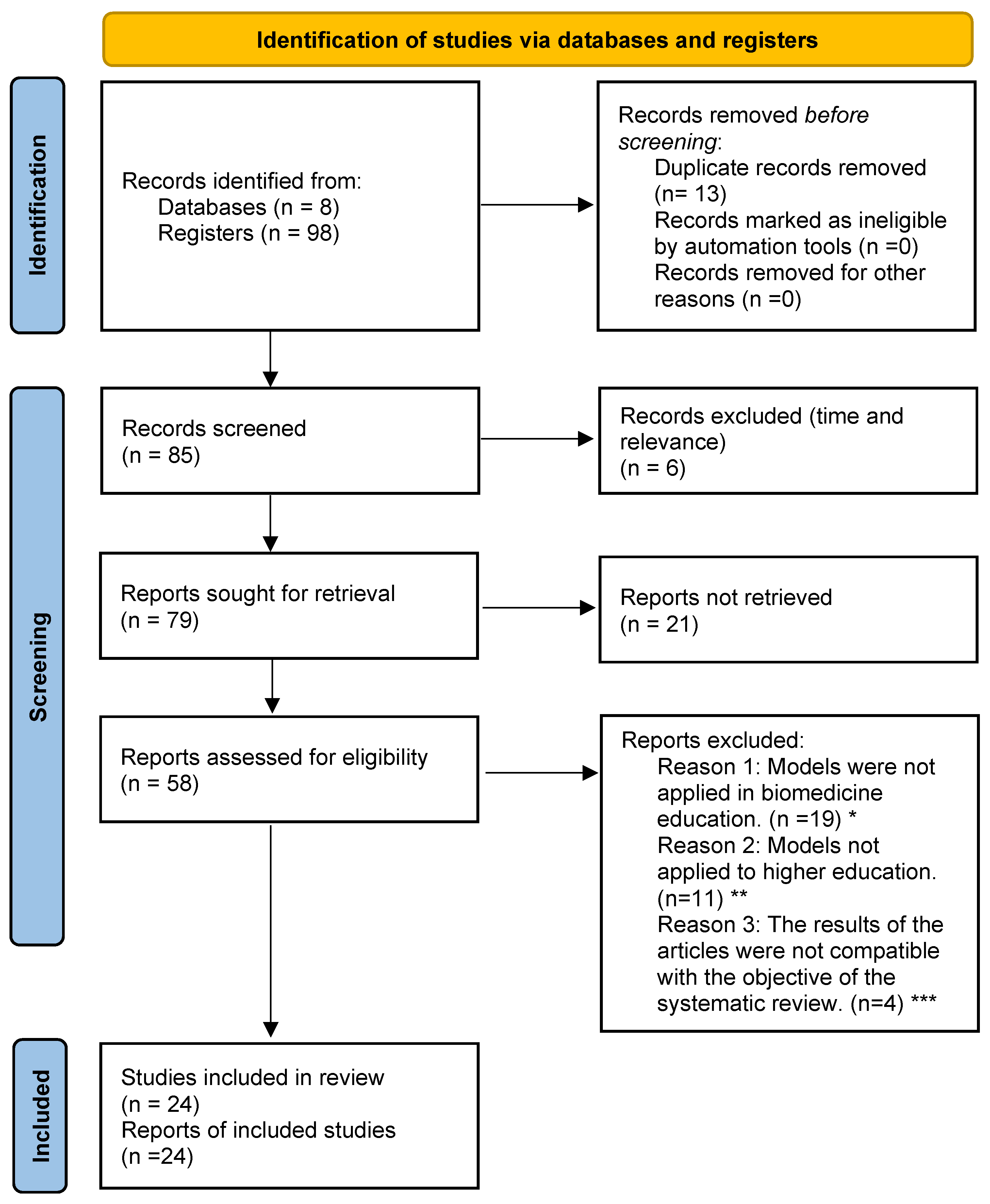
The selection process followed the three phases established in the PRISMA 2020 flow diagram (see
Figure 1):
Identification: 98 records were initially retrieved from databases.
Screening: after removing duplicates, 85 articles remained; 6 articles were excluded by humans based on time and relevance criteria, leaving 79 reports sought for retrieval; 21 articles were not retrieved; from the last 58 articles, 34 were excluded for the three reasons described in
Figure 1.
Inclusion: finally, 24 studies were included and reported in the review because they met the criteria for the qualitative synthesis.
Figure 1.
PRISMAflow diagram of study identification, screening, eligibility, and inclusion. * Records excluded by human screening based on time and relevance criteria. ** Reports not retrieved. *** Reports excluded due to not meeting systematic review criteria, lack of full access, being duplicate studies (not detected earlier), or results incompatible with the review objective.
Figure 1.
PRISMAflow diagram of study identification, screening, eligibility, and inclusion. * Records excluded by human screening based on time and relevance criteria. ** Reports not retrieved. *** Reports excluded due to not meeting systematic review criteria, lack of full access, being duplicate studies (not detected earlier), or results incompatible with the review objective.
5.4. Information Analysis
Information from the selected studies was systematized in a data matrix including the following variables: author/year, applied model, dimensions or constructs, indicators, application context, and main findings (
Table 1). The synthesis of results included both critical narratives and comparative tables to contrast the advantages and limitations of each model.
5.5. Trend Analysis and Projection
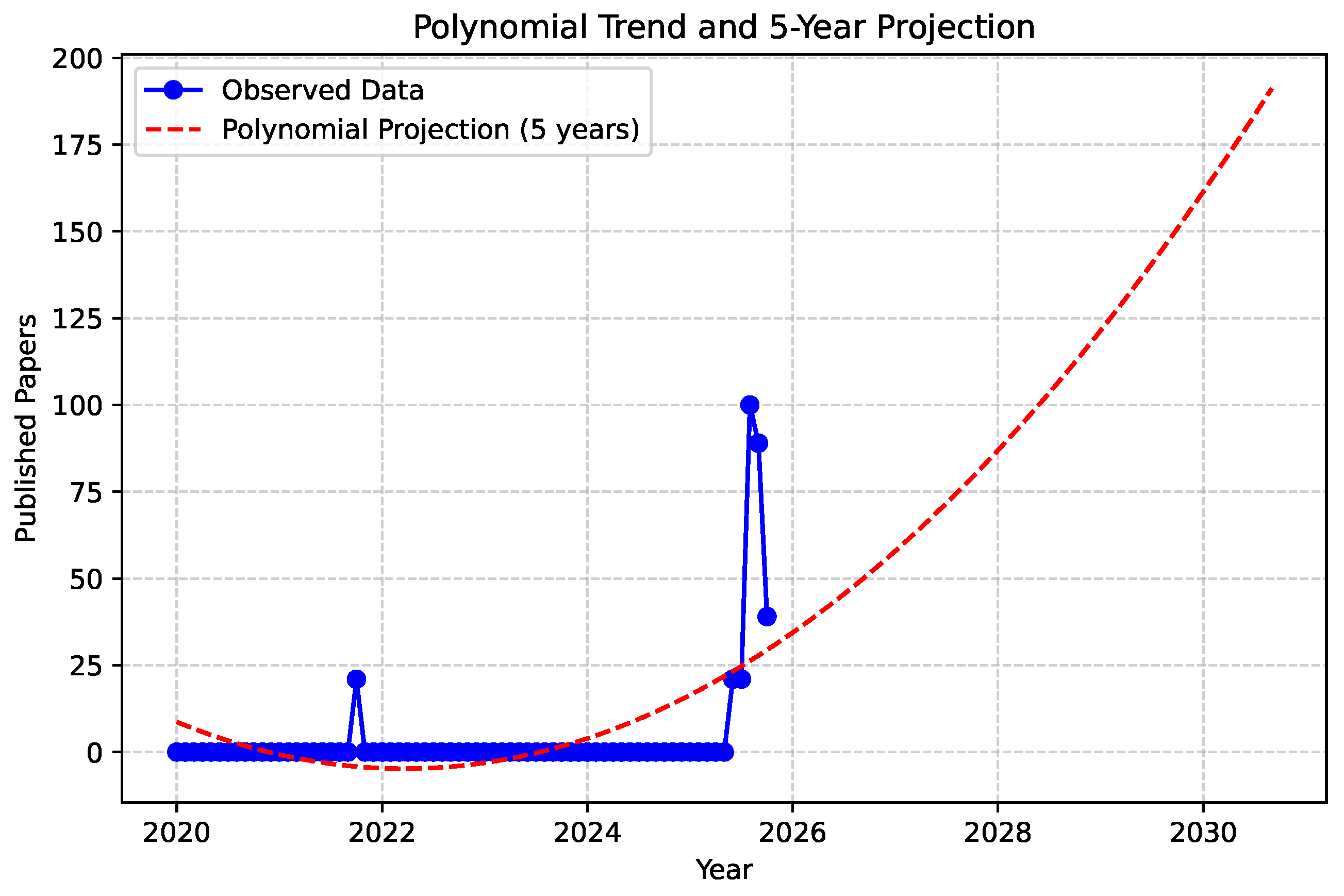
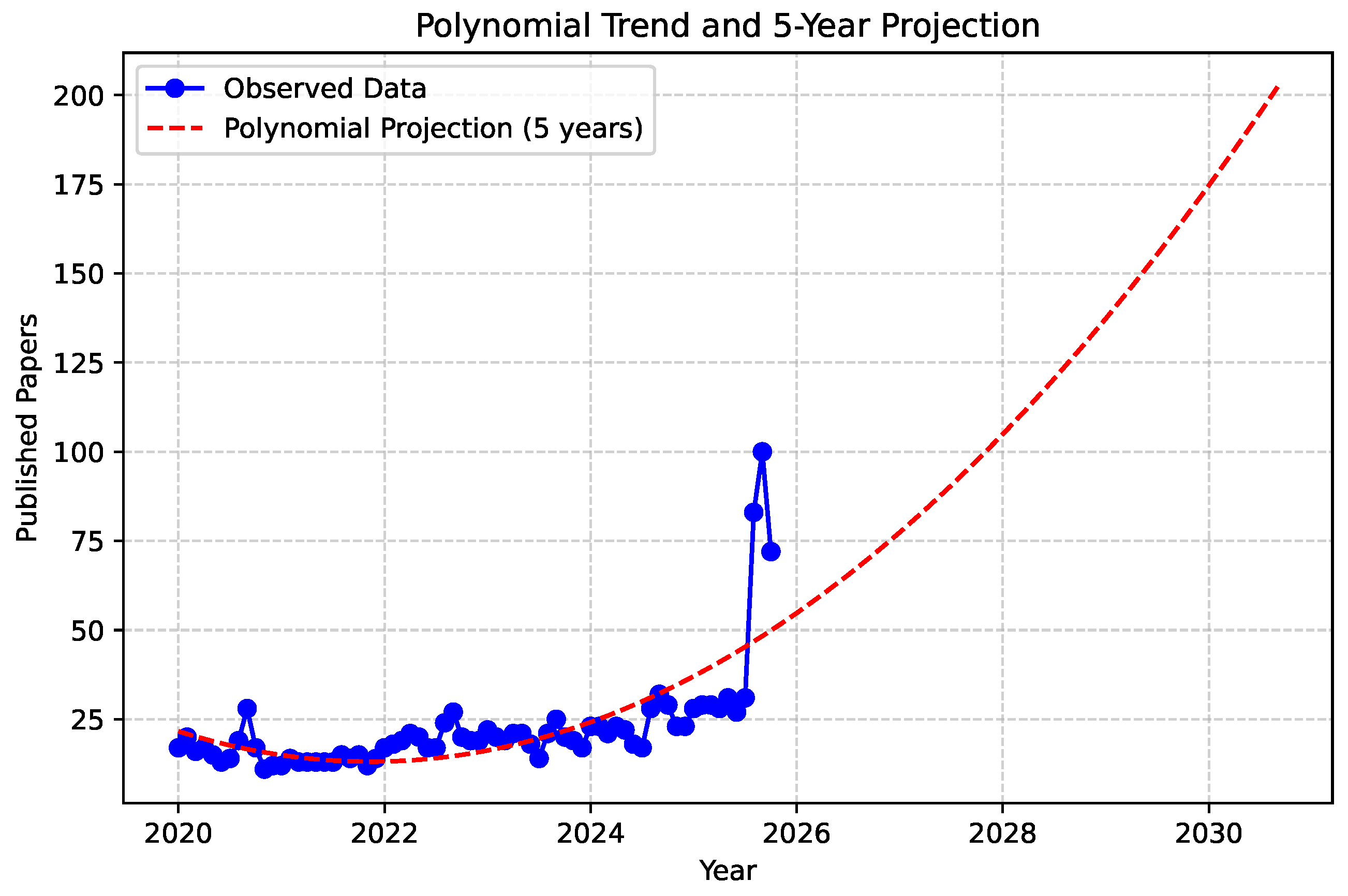
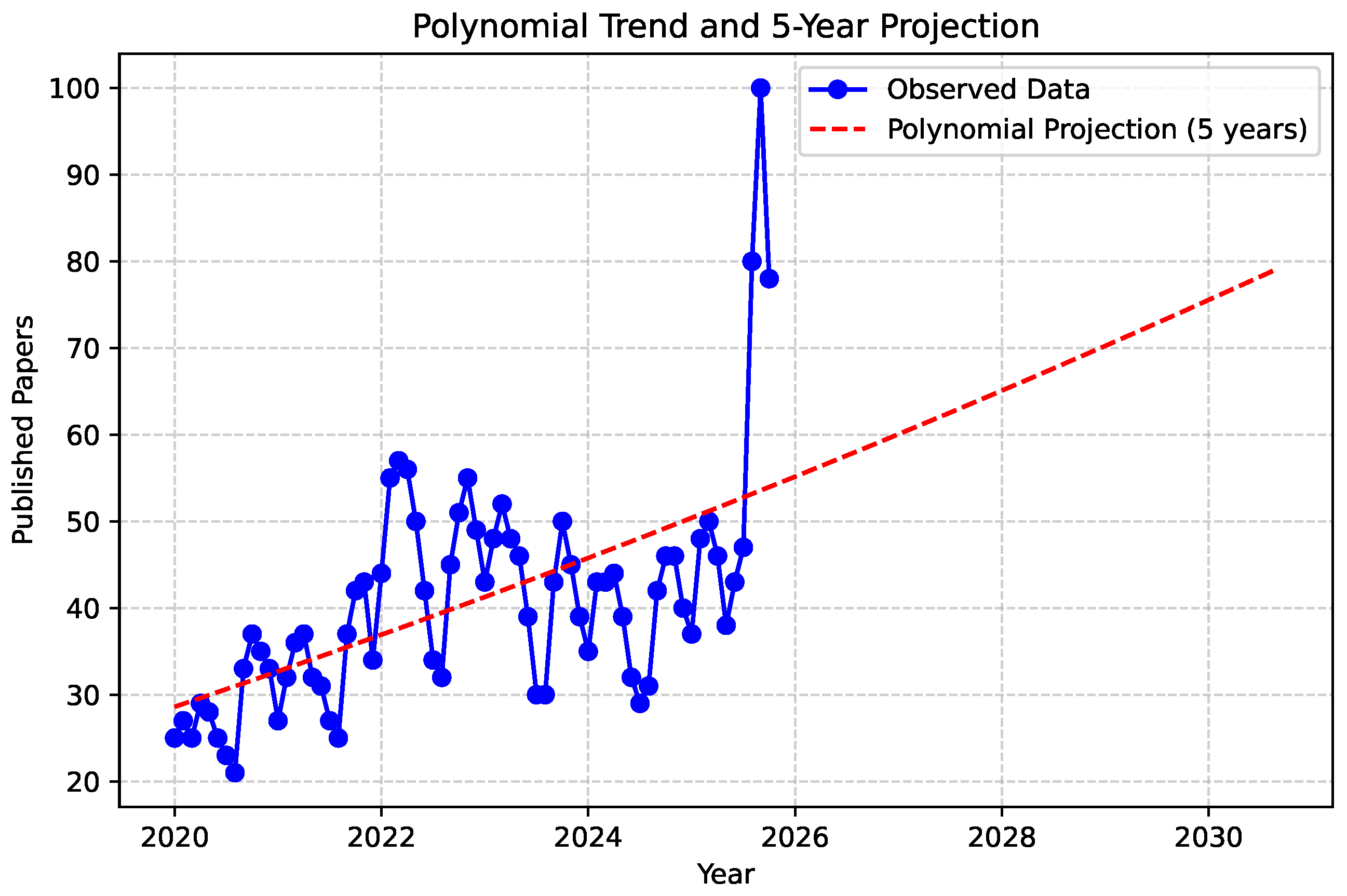
In addition to the qualitative synthesis, a quantitative exploratory analysis was conducted to examine temporal tendencies in five representative constructs derived from the reviewed models: Biomedical Education, Learning Motivation, Technological Assessment, Technology Acceptance, and Technology Readiness Levels.
Each dataset comprised monthly observations between 2020 and 2024. The time variable, expressed as
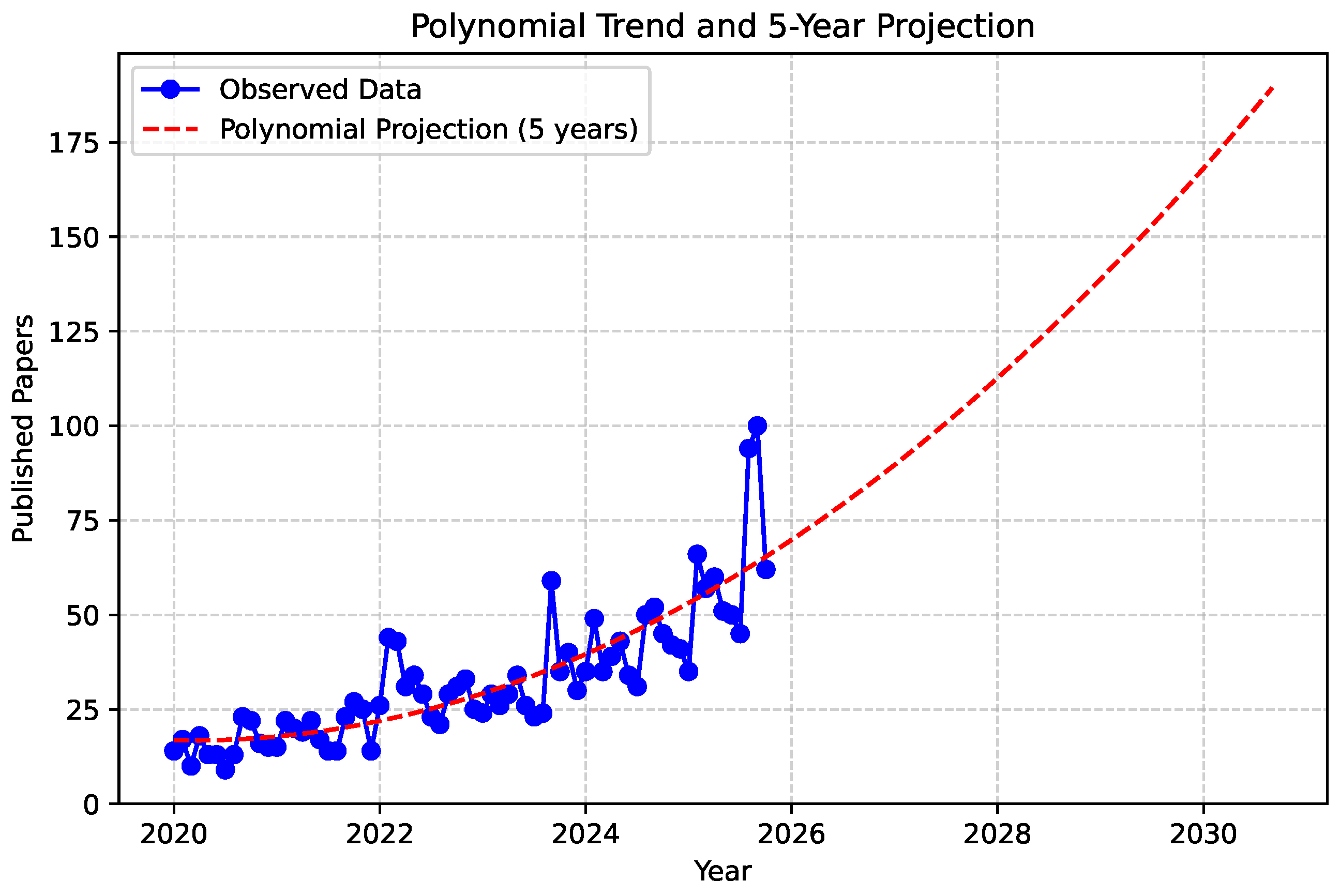
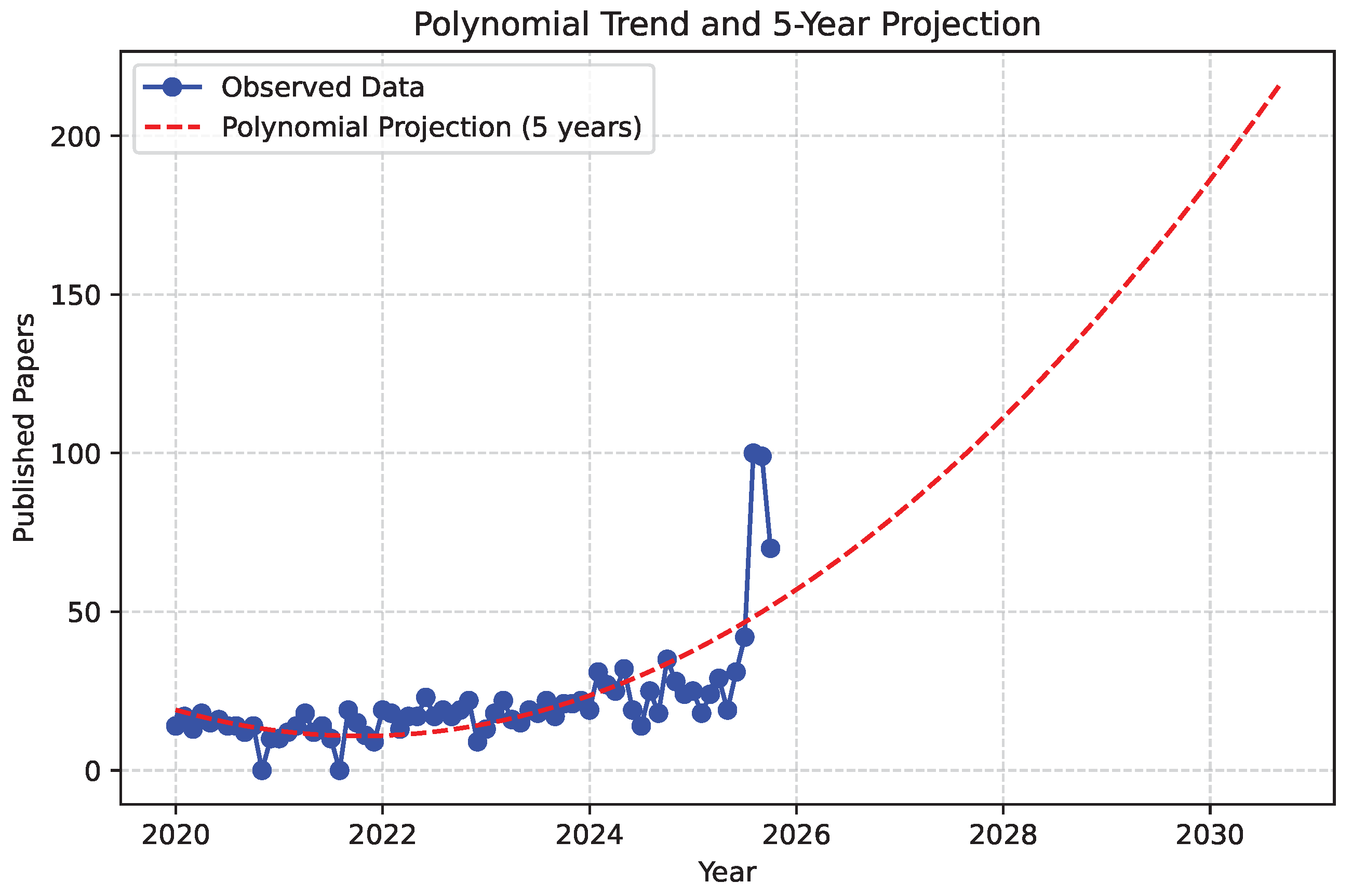
YYYY–M (e.g., 2020–1 = January 2020), was transformed into decimal years. A third-degree polynomial regression was fitted to capture nonlinear dynamics and provide an exploratory projection of the potential behavior of each variable through 2030. Each resulting figure depicts the observed values and a five-year forward projection (
Figure 2,
Figure 3,
Figure 4,
Figure 5 and
Figure 6). Effect estimates were based on polynomial trend projections and narrative adoption direction without meta-analytic pooling.
6. Results
This review identified convergent evidence that no single model sufficiently captures the multi-dimensional nature of technology adoption in biomedical education. Across the surveyed literature, TAM and UTAUT explain intention to use and behavior; SUS provides a concise, reliable proxy for perceived usability; TRL supports staged decisions about technical maturity and risk; and ARCS captures motivational qualities of instructional design.
Table 1 summarizes core constructs and typical applications.
Complementary trend analyses (
Figure 2,
Figure 3,
Figure 4,
Figure 5 and
Figure 6) revealed consistent upward trajectories across all constructs between 2020 and 2024, suggesting increasing integration and maturity of educational technologies in biomedical contexts. The results of this review are primarily presented through a qualitative synthesis of the selected studies, organized by evaluation model. Quantitative trend visualizations are included as contextual elements to support the interpretation of the literature and to illustrate temporal patterns of interest, rather than as primary outcomes of the systematic review. Accordingly, the trend figures should be interpreted as illustrative contextual evidence that complements the qualitative synthesis, without implying predictive or causal conclusions regarding the adoption of specific evaluation models.
The polynomial forecasts indicate:
Biomedical education: sustained linear growth, reaching a projected index near 190 by 2030 (
Figure 2), reflecting accelerated institutional adoption.
Learning motivation: moderate positive trend (index ≈ 95 by 2030), with inflection around 2025–2026 suggesting stabilization of motivational interventions (
Figure 3).
Technological assessment: steady upward curve (index ≈ 170 by 2030) denoting the institutionalization of assessment frameworks (
Figure 4).
Technology acceptance: strong increase through 2028 (index ≈ 200), followed by a plateau—consistent with theoretical expectations of saturation in adoption (
Figure 5).
Technology readiness levels: exponential-like rise (index ≈ 200) indicating rapid technical consolidation and reduced implementation risk (
Figure 6).
These projections collectively suggest that, if current trajectories persist, biomedical education will continue to experience both technological and pedagogical consolidation through 2030, with increasing convergence between usability, acceptance, and motivational quality.
Taken together, studies in virtual laboratories, immersive simulators, and blended learning environments indicate that: (i) acceptance constructs (usefulness, ease/effort expectancy) are consistently associated with intention to use; (ii) perceived usability is necessary but not sufficient for learning gains; (iii) higher technical maturity (e.g., TRL 6–8) correlates with fewer adoption risks in curricular settings; and (iv) motivational design elements aligned with ARCS improve engagement and intention to continue learning [
1,
3,
12,
28,
29,
30].
6.1. Synthesis by Model
TAM/UTAUT: Consistent positive paths from perceived usefulness/performance expectancy and ease/effort expectancy to behavioral intention; facilitating conditions and social influence vary with context (compulsory vs. voluntary use). Moderator effects (e.g., experience, age) alter magnitudes but not the direction of effects.
SUS: Reliable single-score proxy of perceived usability across devices and platforms; useful for iterative UI/UX refinement. High SUS scores alone do not imply learning impact; they should be triangulated with acceptance and outcome measures.
TRL: Helpful gatekeeping instrument for curricular risk management. Adoption decisions improved when TRL checks prevent premature deployment (e.g., avoiding TRL < 5 in graded activities).
ARCS: Motivation improvements (attention, relevance, confidence, satisfaction) associate with higher engagement and intention to persist; strongest effects reported when ARCS is embedded early in course and aligned to assessments.
6.2. Integrated Outcomes Across Contexts
Across VR/XR labs, simulators, and blended courses, studies converged on three pragmatic findings: (1) acceptance predicts use but requires adequate usability to translate into sustained adoption; (2) usability gains are fastest when SUS-guided improvements occur before large-scale pilots; (3) institutionalizing at TRL 7–9 yields fewer disruptions and better student satisfaction.
6.3. Illustrative Use Case
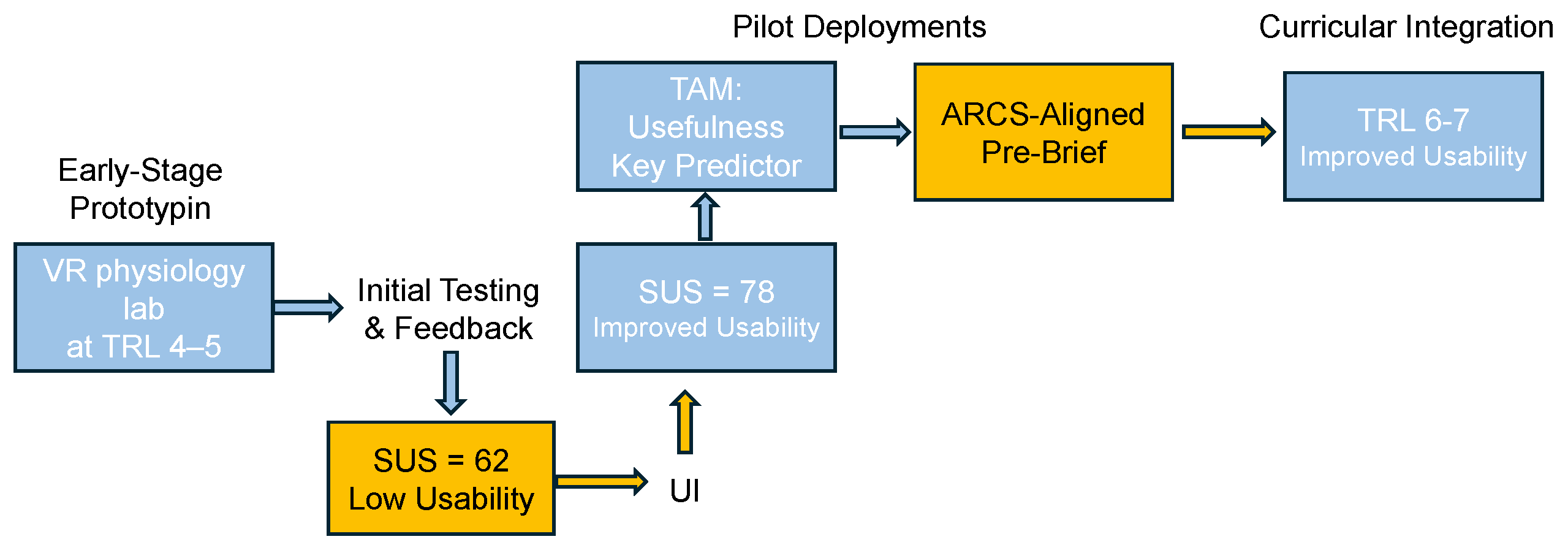
Consider a VR physiology lab at TRL 4–5. A formative round yields SUS = 62 (below the typical 68 average). After UI simplification and onboarding tweaks, SUS improves to 78; TAM shows that usefulness remains the strongest predictor of intention to use. A short ARCS-aligned pre-brief increases perceived relevance and confidence, correlating with higher task completion and lower dropout. Only after stability and support are verified (TRL 6–7) is the lab integrated into a graded module, reducing risk of technical interruptions while preserving engagement (see
Figure 7).
7. Discussion
Evidence points to complementary roles for acceptance, usability, maturity, and motivation. We recommend an integrated evaluation workflow aligned with development stages: (1) early-stage prototyping: emphasize formative usability (SUS) and TRL assessment to identify technical and interaction issues; (2) pilot deployments: evaluate acceptance (TAM/UTAUT), refine motivational design (ARCS), and iterate on accessibility; (3) curricular integration: reassess TRL to ensure operational readiness, confirm acceptance/usage behavior, and collect learning/engagement outcomes. This staged approach reduces adoption risk while improving pedagogical fit.
The exploratory trend patterns identified in this review reinforce the conceptual logic of the proposed multi-phase evaluation framework by revealing asymmetries in the progression of key dimensions of educational technology adoption. Acceptance and technical maturity progress earlier and faster, whereas motivational and pedagogical alignment evolve more gradually, requiring continuous instructional design updates.
Implications for educators and program designers include prioritizing measurement alignment with objectives (e.g., use TAM/UTAUT for adoption decisions, SUS for UI/UX iteration, ARCS for motivation) and reporting transparent instrument use and thresholds. For researchers, triangulating models avoids over-interpreting single scores (e.g., SUS-only). Limitations of this review include its narrative scope and non-exhaustive search; future work could implement protocolized searches and meta-analytic synthesis in specific biomedical subdomains (e.g., anatomy VR, surgical simulators), using standardized outcome sets.
Assessment in the Era of AI and Immersive Tech While current models like TAM and SUS remain valid for screen-based learning, the “Future of Education” in biomedicine will increasingly rely on Generative AI and haptic robotic simulations. Traditional acceptance constructs must evolve to include “Algorithmic Trust” and “Explainability” (XAI), as users may accept an AI tutor’s utility but reject it due to a lack of trust in its diagnostic reasoning. Similarly, for VR surgical training, standard usability scales (SUS) should be augmented with metrics for “Haptic Fidelity” and “Cybersickness”, ensuring that assessment frameworks keep pace with the technological complexity of medical training 5.0.
7.1. Practical Recommendations
Align instruments to development stage: TRL for readiness, SUS for usability, TAM/UTAUT for adoption, ARCS for motivation.
Set decision gates: avoid curricular deployment below TRL 5; require documented support/training by TRL 7+.
Report thresholds and targets a priori (e.g., SUS improvements of +10 points before pilots; predefine acceptance path hypotheses in SEM).
Collect outcomes beyond perception: add engagement, task performance, or error rates where appropriate.
Plan accessibility from the outset: include assistive tech support and alt-interactions; monitor equity of access.
7.2. Threats to Validity and Limitations
Common risks include common method variance from single-time, single-source surveys; underpowered SEM models; construct drift after translation; and survivorship bias when only successful pilots are reported. Procedural and statistical remedies (marker variables, multi-time designs, invariance testing) help mitigate these threats. Finally, the absence of a standardized quality appraisal (risk of bias assessment) for the included studies means that the reported effectiveness of technologies is based on authors’ self-reports. Consequently, findings should be interpreted as a mapping of current assessment practices rather than a quantitative confirmation of clinical efficacy.
Additionally, the trend analysis presented in
Section 5.5 is exploratory in nature. The projections through 2030 are based on a third-degree polynomial fit of data from a limited timeframe (2020–2024). Therefore, these forecasts assume a continuity of current patterns and should be interpreted as hypothetical scenarios rather than precise statistical predictions of future technology adoption. The trend analysis based on Google Trends was conducted as an exploratory and complementary component of this review. This analysis does not aim to replace bibliometric or scientometric approaches, nor to infer causality or precise forecasting. Instead, it provides an indirect indication of temporal interest in selected evaluation models and emerging educational technologies, offering contextual support for the qualitative synthesis of the literature. This limitation is inherent to the use of search trends as a proxy for complex institutional phenomena.
7.3. Policy and Curriculum Implications
Institutions can standardize adoption workflows: require a TRL and SUS dossier before pilots; mandate acceptance and motivation assessments (TAM/UTAUT, ARCS) during pilots; and review post-integration metrics (support tickets, course evaluations) each term for continuous improvement.
8. Conclusions
An integrated, model-driven approach supports a more reliable evaluation and adoption of educational technologies in biomedical higher education; by informing likely acceptance and use, supporting iterative improvements in usability, situating technical readiness and implementation risk, and strengthening motivational design and engagement. Using TAM/UTAUT, SUS, TRL, and ARCS models in combination, aligned with development stages and curricular goals, could improve decision-making, enhance the learner experience, and increase the sustainability of innovations.
8.1. Key Takeaways
No single model suffices; triangulation across acceptance, usability, maturity, and motivation is essential.
Early SUS-guided redesign accelerates usability gains and lowers pilot risk.
TRL gates reduce curricular disruptions and clarify support requirements.
ARCS-aligned activities improve engagement and intention to continue learning.
8.2. Future Work
Priority avenues include protocolized searches with meta-analytic synthesis by subdomain (e.g., anatomy VR vs. clinical simulation), cross-cultural invariance testing of instruments, standardized reporting templates for adoption decisions (TRL + SUS + TAM/ UTAUT + ARCS), and longitudinal designs linking acceptance/usability to objective performance and retention.




 ,
,