


Abstract
The demand for efficient dehumidification in evaporators has become one of the key technical challenges restricting the high-quality development of the refrigerated air dryer industry. To investigate the effects of fin structure on the air-side heat transfer and dehumidification performance of finned-tube evaporators applied in refrigerated air dryers under the operating conditions of 50 °C, RH = 85%, numerical heat and mass transfer models for the air side of evaporators with plain fins and wavy fins were established based on the Ansys Fluent software 2022R1. The study found that wavy fins possess superior heat transfer and moisture removal capabilities. Key performance indicators, including the air-side heat transfer rate (Q), moisture removal amount (Δm), friction factor (f), and the nusselt number (Nu), were all higher for wavy fins compared to plain fins. Building upon this, three types of vortex generators (VGs) were introduced to further optimize the performance of the wavy fins, aiming to balance heat transfer enhancement and flow resistance control. At an attack angle of 30°, the comprehensive performance factor (JF) showed the highest improvement, reaching 43% with the Delta Winglet vortex generators. The 15° configuration also showed improvement, while 45° led to the worst performance due to increased flow resistance. The results indicate that for typical high-temperature and high-humidity environments, the wavy fin is recommended as the preferred choice due to its superior overall performance and simple structure. For applications requiring higher dehumidification capacity, wavy fins equipped with vortex generators can be selected to achieve the most efficient dehumidification. This study provides valuable insights for the design and application of finned-tube evaporators in dehumidification systems under high-temperature, high-humidity conditions for refrigerated air dryers.
1. Introduction
Refrigerated air dryers are essential in compressed air systems, primarily for removing moisture through cooling and dehumidification. By cooling the air, these dryers reduce humidity, ensuring the air quality meets equipment operation requirements. Finned-tube evaporators are core components of the refrigeration system, and the thermal performance on the air side directly impacts the system’s dehumidification efficiency [1,2]. During dehumidification, water vapor condenses into liquid, with simultaneous heat and mass transfer. The condensed liquid influences the heat exchange process in finned-tube heat exchangers [3,4].
To investigate the performance of the evaporator, scholars have conducted both numerical simulations and experiments. Liu et al. [5] conducted a numerical study on the evaporator in the refrigeration dehumidification system. They found that, within the air temperature range of 21–36 °C and relative humidity of 40–85%, the dehumidification capacity first increases and then decreases as air velocity rises, with an optimal air volume for dehumidification. Zhang et al. [6] concluded that the heat transfer performance of the evaporator under dehumidification conditions decreases with a decrease in ambient pressure. Bozkula G and Demir H [7] that the heat transfer factor increases with the increase in fin spacing, air temperature, and relative humidity, while it decreases with higher air velocity and number of rows. Li et al. [8] analyzed the heat and mass transfer performance of plain fins under dehumidification conditions through numerical simulation and developed a multi-parameter correlation for the heat and mass transfer factor.
To improve the dehumidification intensity of evaporators, researchers have enhanced the heat and mass transfer performance by modifying the fin surface characteristics of finned-tube evaporators and establishing condensation heat transfer models, thereby improving the heat exchange efficiency and dehumidification effect [9,10,11]. Hu et al. [12] conducted experiments comparing fins with vortex generators to plain fins. The results showed under certain operating conditions fins with vortex generators exhibited better dehumidification performance. Liu et al. [13] increased the heat transfer coefficient of the corrugated fins by 5.5% by slotting the windward part. Gupta et al. [14] concluded that adding rectangular vortex generators with a 45° attack angle significantly enhanced heat transfer while mitigating the adverse effects on resistance. Zhi et al. [15,16,17] pointed out that both the heat transfer coefficient and flow pressure drop increase with slit height. Zhang et al. [18] used the Taguchi method to study the effects of corrugated fin structural parameters on heat transfer performance and pressure drop of heat exchangers. They identified the fin length that maximizes the comprehensive performance of the heat exchanger under certain operating conditions. He et al. [19] designed a numerical model for plain-slit fins. The simulation results showed that, compared to plain fins, the total heat transfer capacity and condensation capacity of the plain-slit fins increased by 23.7% and 18.0%. Murugan et al. [20] found that the presence of the superhydrophobic coating significantly reduced the attachment of condensed liquid, effectively lowering the air-side pressure drop, while the fin heat transfer efficiency remained almost unchanged. Cao et al. [21] designed a staggered-hole louvered fin heat exchanger based on numerical simulation. The study found that, within the Reynolds number range of 150 to 400, its comprehensive performance outperforms that of the traditional louvered structure. Song et al. [22] found that smaller vortex generators provide greater heat transfer enhancement at lower Re, while larger vortex generators are more effective at higher Re. Haque et al. [23] concluded that the configuration with seven vortex generators in an elliptical tube with an aspect ratio of 1.25 achieved the optimal performance. Deylami et al. [24] compared simple trapezoidal and curved trapezoidal vortex generators and found that curved trapezoidal winglets exhibit lower pressure drop and better heat transfer performance.
At present, scholars mainly focus on the study of heat and mass transfer and heat resistance characteristics under normal temperature conditions of 20–35 °C and relative humidity of 40–90%. However, for evaporators applied in refrigerated air dryers, after the inlet gas passes through the air compressor, the mechanical energy is converted into heat energy during the compression process [25]. This process can be described by enthalpy change, where the enthalpy of the compressed air increases with the rise in temperature and pressure, directly resulting in a higher inlet air temperature. Currently, research on the dehumidification conditions of refrigerated air dryer systems under high temperature and high humidity is relatively scarce. Existing studies primarily focus on the thermal performance of finned-tube evaporators under normal temperature conditions, and these findings are not applicable to high temperature and high humidity environments. Specifically, the thermal performance of evaporators in refrigerated air dryers, which are required to produce dry and clean compressed air, remains inconclusive [26], highlighting the urgent need for high-performance evaporators suitable for cooling and dehumidification. Therefore, this paper conducts a comparative study on the heat and mass transfer characteristics of the air side of plain and corrugated finned-tube evaporators under high temperature and high humidity conditions through numerical simulation. Vortex generators are introduced into the corrugated finned tubes, and a comparative analysis is performed using the JF evaluation method to balance the resistance and heat transfer characteristics. The overall performance of different finned-tube evaporators is explored, aiming to provide theoretical guidance and reference for the design and application of finned-tube evaporators in high temperature and high humidity refrigerated air dryer dehumidification systems.
2. Materials and Methods
2.1. Physical Model
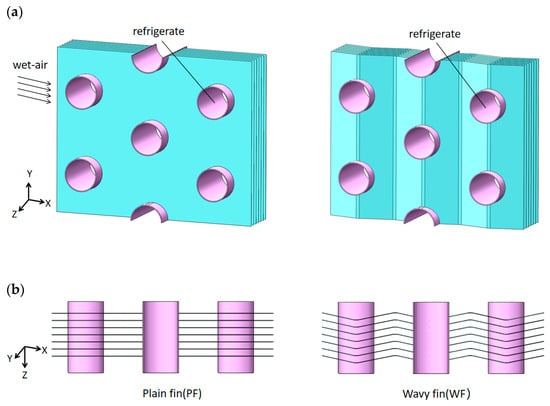
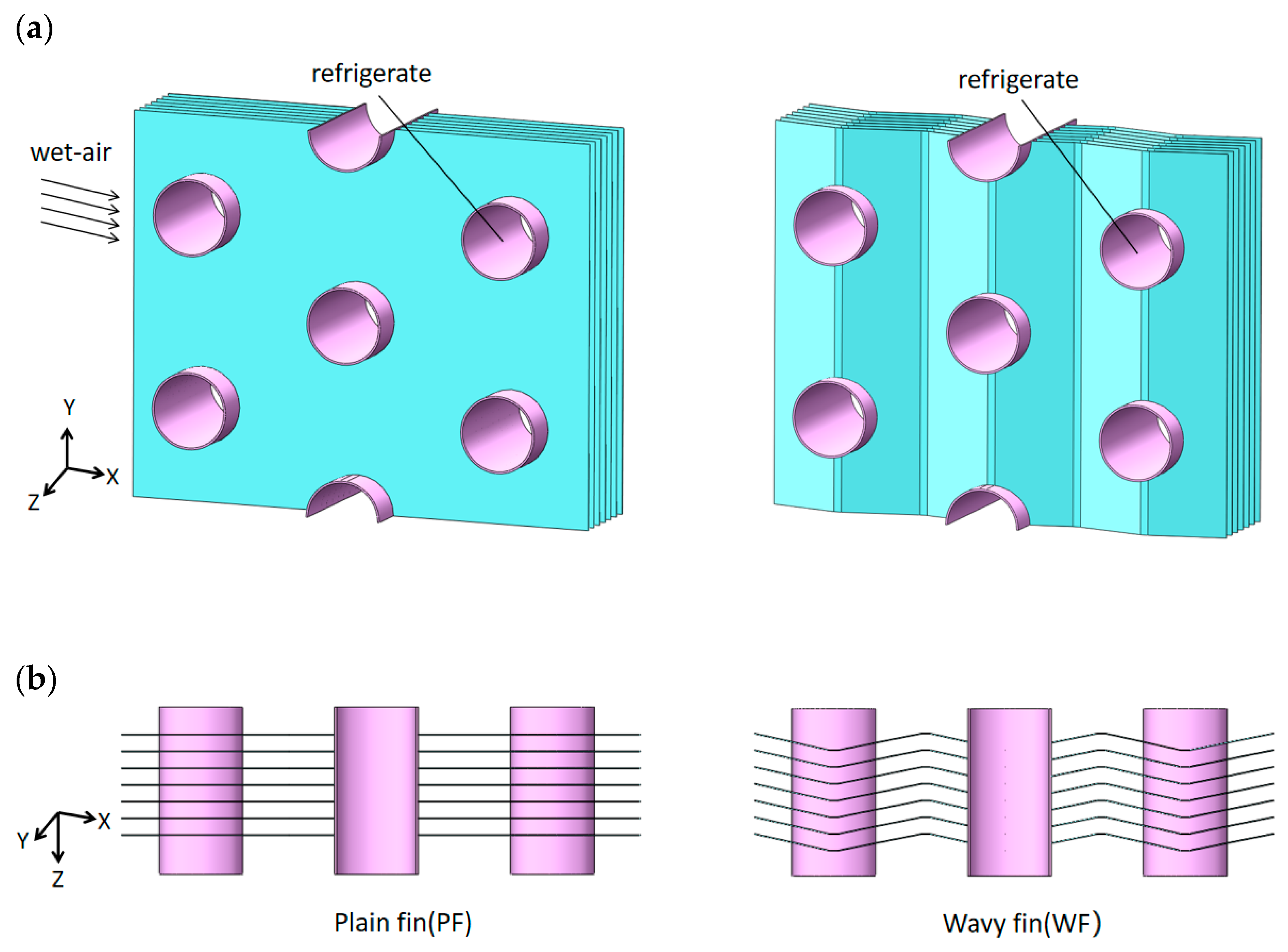
Schematic diagrams of the physical models of the plain fin and corrugated fin evaporators simulated and studied in this paper are shown in Figure 1. Three-dimensional modeling of the finned-tube evaporator is performed by the SolidWorks software 2024, and simulations are carried out using the Ansys Fluent 2022R1. Due to the limitations of computational power, a reasonable selection and simplification of the complex models for actual refrigerated air dryer evaporators were made after comparing and analyzing the existing literature. The specific geometric parameters and material physical property parameters are presented in Table 1 and Table 2, respectively.
Figure 1.
(a) Schematic diagrams of two types of finned-tube evaporators, in system XOY. (b) Schematic diagrams of two types of finned-tube evaporators, in system XOZ.
Table 1.
Structural parameters of finned-tube evaporators.
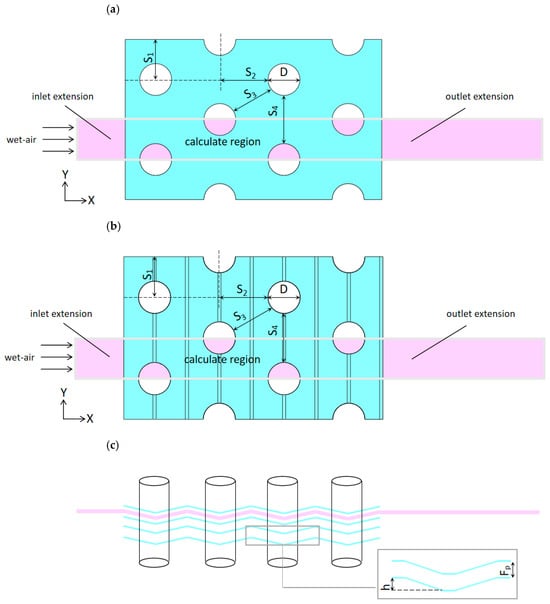
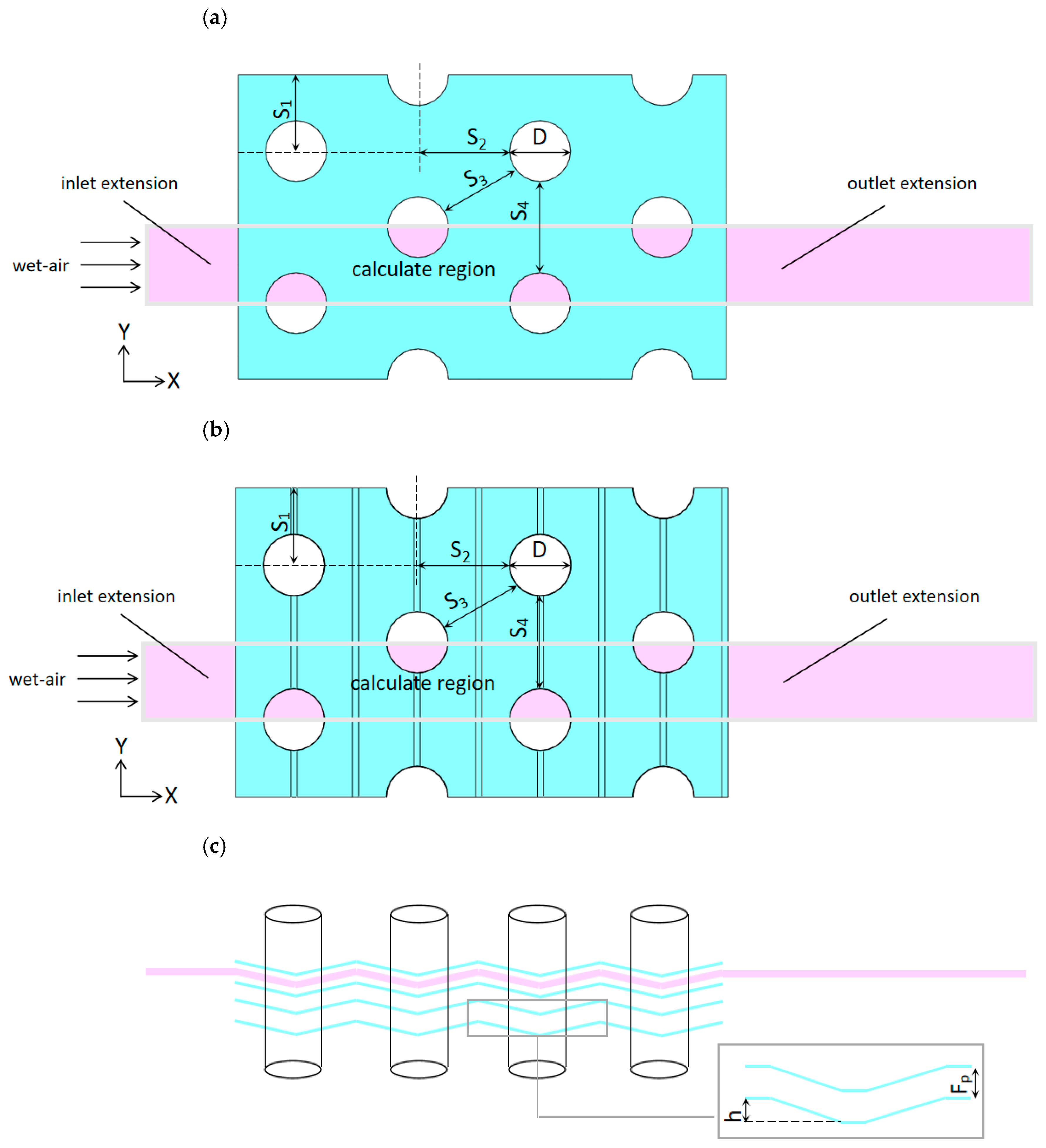
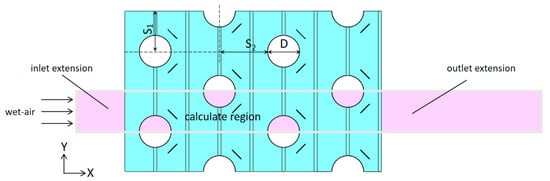
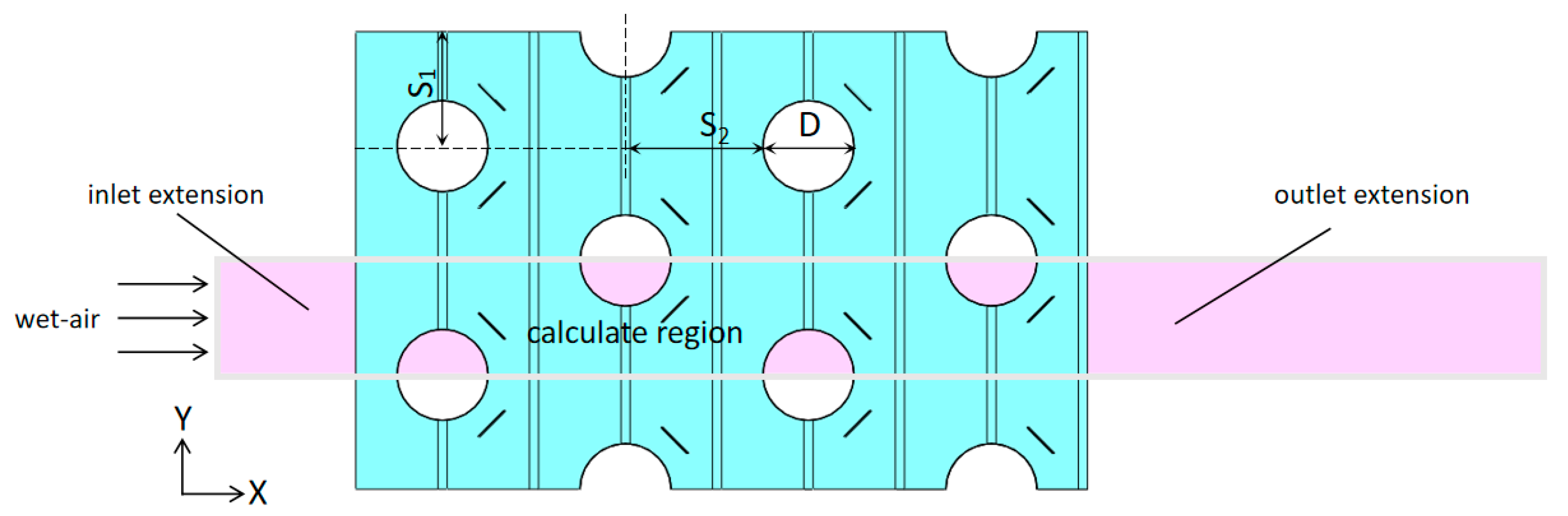
Owing to the periodically arranged and symmetric structure of the finned-tube evaporator, the simplified physical model is presented in Figure 2, with the dashed-line area denoting the computational domain. A 15-mm extended buffer zone is set along the inlet, and a 50-mm extended adiabatic zone is established in the outlet direction. The extended inlet buffer zone ensures that the airflow is more stable before entering the heat exchange region, preventing uneven flow. The extended adiabatic zone at the outlet effectively isolates pressure variations, reducing backflow. These arrangements provide a better simulation of the actual flow process, as shorter computational domains may cause boundary effects, impacting accuracy, while overly long domains would result in excessive mesh counts and waste computational resources [27,28,29]. The specific geometric parameters are listed in Table 1.
Figure 2.
Schematic diagrams of structures and computational domains of two types of finned-tube evaporators, where (a) PF plan view; (b) WF plan view; (c) WF three-dimensional view.
2.2. Numerical Simulation and Boundary Conditions
The cooling and drying process of humid air flowing through the finned-tube evaporator applied in refrigerated air dryers was simulated and analyzed via the Ansys Fluent 2022R1 in this paper. The following assumptions were adopted for the model: (1) Humid air was regarded as an ideal incompressible gas composed only of dry air and water vapor [30], and the physical property parameters of each component were set as constants during the simulation; (2) The homogeneous condensation process of water vapor in the air within the heat exchange channel was neglected, and condensation occurred only on surfaces below the dew point temperature [31]; (3) The movement of the condensed liquid in the heat exchange channel is influenced only by its own gravity, the drag force of the airflow, and the adhesive force of the wall surface. The variation in the thickness of the liquid film in the direction of gravity is neglected; (4) No slip occurs at the wall surface [32]. (5) The influence of thermal radiation on the air-side performance of the finned-tube evaporator was ignored due to the relatively low temperature difference between the air and the fin surfaces, where convective and conductive heat transfer processes dominate the overall heat exchange performance.
The mixture model [33] was employed to describe the mixed flow of two or more different substances. It is suitable for multiphase flows where there is no obvious interface between different phases, with more emphasis on interphase mixing and interaction. Since humid air is a mixture of gas and water vapor and usually has no clear phase interface, whereas the commonly used VOF model is more appropriate for flows with a distinct free surface or strongly evolving interfaces, the Mixture model is adopted here to better simulate the flow behavior of this two-phase flow. The governing equations included the following [34,35]:
Momentum conservation equation:
Mass conservation equation:
Energy conservation equation:
Species conservation equation:
In the equations, the subscripts i represent the i-th phase; is density; t is time; ∇ is the divergence operator; u is the fluid velocity; the superscript T represents the transpose of a vector; p is pressure; μ is dynamic viscosity; is the gravitational constant; F is the surface tension of a droplet; min,i and mout,i are the mass flow rates entering and leaving the i-th phase, respectively; E is internal energy; κ is the interface curvature; T is the temperature; Q is the heat source term; Y is the component mass fraction; J is the component diffusion flux; S is the component condensation rate;
The Lee model, an in-built evaporation-condensation model in the Ansys Fluent, exhibits good universality for simulating the cooling and condensation process of humid air, and the mass transfer equation is derived as follows [36].
Evaporation process: ()
Condensation process: ()
In the equations, the subscripts l, v, represent the condensate liquid, water vapor, respectively; sat denotes the saturated state; r is the inverse of the relaxation time; α is the volume fraction; Tsat is the saturation temperature; which is given by the saturation temperature of water at the local pressure. Interphase heat transfer was achieved by coupling the energy equations. The model’s validity was confirmed through quantitative comparison presented in Section 3.2.
To investigate the dehumidification performance of the finned-tube evaporator under high temperature and high humidity conditions, and based on the aforementioned analysis, the study focuses on an inlet relative humidity (RH) of 85%. According to the current standards for evaluating the comprehensive thermal performance of heat exchangers [37], the air velocity range for various types of heat exchangers should be between 1.0 m·s−1 and 8.0 m·s−1. Therefore, a velocity range of 2 to 5 m·s−1 was chosen for the performance study, which is also widely applied in the design of finned-tube evaporators for refrigerated air dryers.
Numerical simulation was performed using the Mixture model coupled with the Lee model. The PISO algorithm, selected for transient, compressible flow calculations without iteration, was employed. The Standard k-ε turbulence model was chosen. The Second Order Upwind scheme was used for discretizing the convective terms, while default values were applied for the discrete pressure and volume fraction methods.
The wet air inlet boundary was set as a velocity inlet with a value ranging from 2 to 5 m·s−1 and a temperature of 50 °C. The outlet boundary condition was defined as a pressure outlet with free stream conditions. The interface between the fluid domain and the solid domain was defined as a coupled wall boundary condition, allowing temperature calculation through fluid-solid interaction (FSI). Symmetry boundary conditions were applied to the top and bottom sides of the fin channel. Periodic boundary conditions were applied in the direction of the z-axis. Considering that the focus of this numerical calculation is on the air-side performance of the finned-tube evaporator, based on the description of the numerical calculation method for finned-tube evaporators in the literature [38], the variation in refrigerant temperature along the flow direction can be neglected. The process of heat exchange involving refrigerant flow inside the tube can be simplified to a process where the temperature of the outer wall surface of the tube in contact with the air remains constant. The tube wall was set as an isothermal boundary condition with a constant temperature of 0 °C.
3. Data Processing
The air-side heat transfer rate, Q, is given by [31]:
The sensible heat transfer rate, Qs, is given by [31,39]:
The latent heat transfer rate, Ql, is given by [31,39]:
where , , and are the total, sensible, and latent air-side heat transfer rates, respectively; is the air-side mass flow rate; is the specific heat capacity of wet air at constant pressure; and are the air inlet and outlet temperatures; is the enthalpy of saturated water vapor; and and are the air inlet and outlet humidity ratios.
The moisture removal rate per unit fin area, Δm is given by [31]:
The friction factor, f, is given by [40]:
where P is the pressure drop generated during flow; is the air-side hydraulic diameter; is the fluid density; Va is the average air velocity; and is the length of the flow channel.
The Nusselt number, Nu, a key indicator for evaluating convective heat transfer on the air side, is calculated as shown in Equation (12) [40]:
The convective heat transfer coefficient, h, is defined as the sensible heat transfer rate per unit area and per unit characteristic temperature difference [34]:
where h is the air-side convective heat transfer coefficient, and λ is the thermal conductivity of air.
The heat transfer factor, jh and the mass transfer factor, jm are calculated according to the method described in the literature, as shown in Equations (14) and (15) [41]:
where hs and hm are the sensible heat transfer coefficient and the mass transfer coefficient, respectively, calculated based on the formulation in Reference [42]; and Pr and Sc are the Prandtl number and Schmidt number, respectively.
3.1. Grid Independence Verification
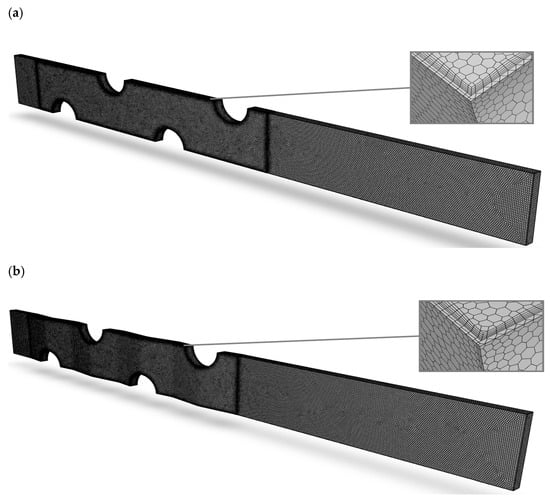
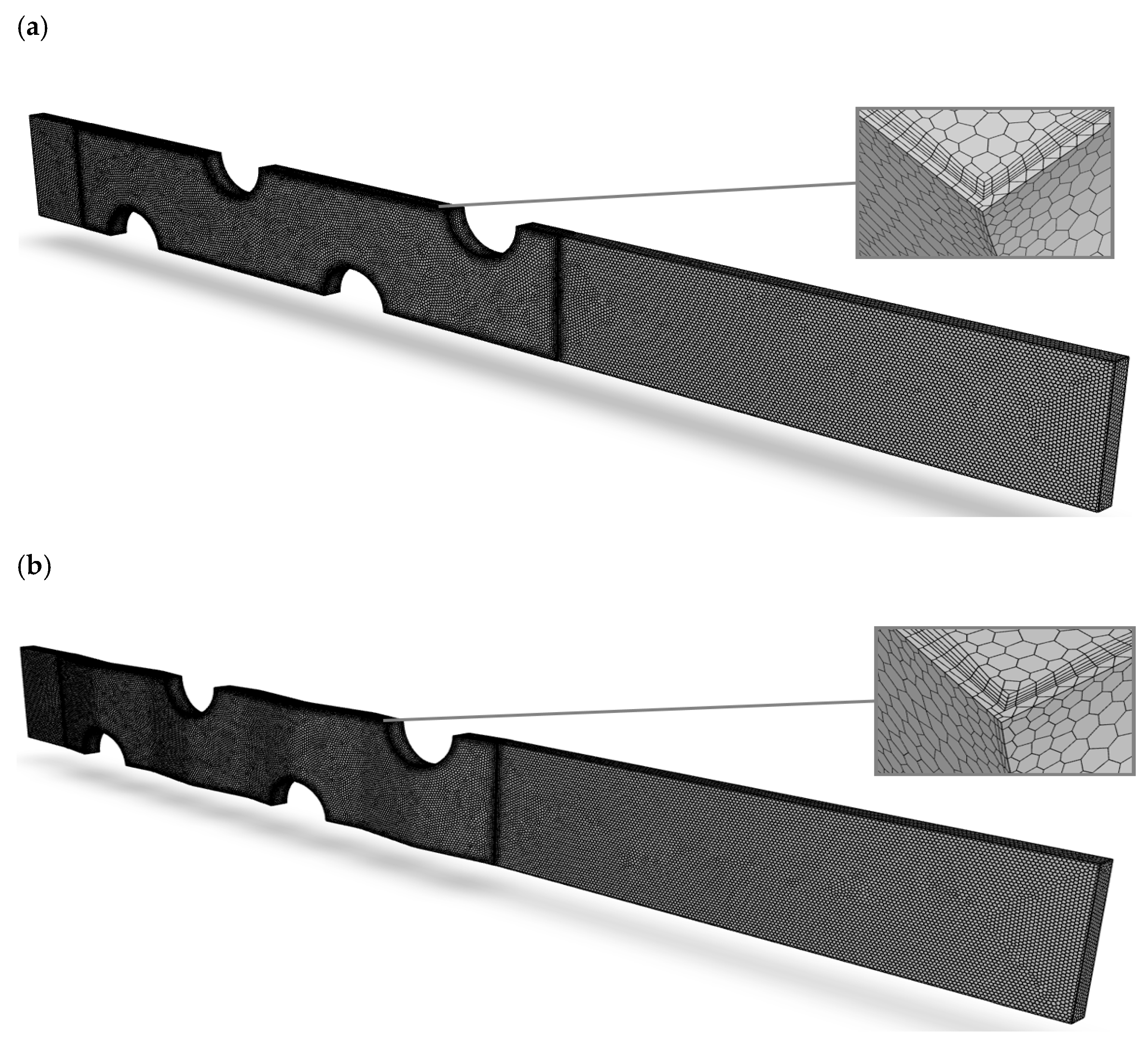
In this paper, hexahedral structured grids are employed to analyze the numerical models of plain fins and wavy fins, with the mesh layouts illustrated in Figure 3a,b. Three sets of grid systems were used to verify the Nusselt Number and Friction Factor, as shown in Table 2. The results indicate that the maximum relative errors of Nu for the straight fin and wavy fin are 0.72% and 1.21%, respectively, while the maximum relative errors of f are 0.22% and 1.87%, respectively, all within acceptable error limits. This confirms the independence of the grid system. For numerical simulations, grid systems of 258120 for the straight fin and 331684 for the wavy fin were selected.
Figure 3.
Computational mesh of the fins within the calculation domain: (a) Plain fin (PF); (b) Wavy fin (WF).
Table 2.
Grid independence verification.
3.2. Validation of Numerical Method Accuracy
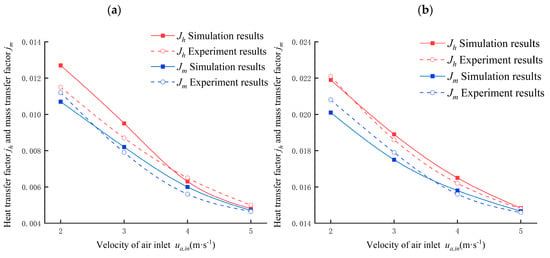
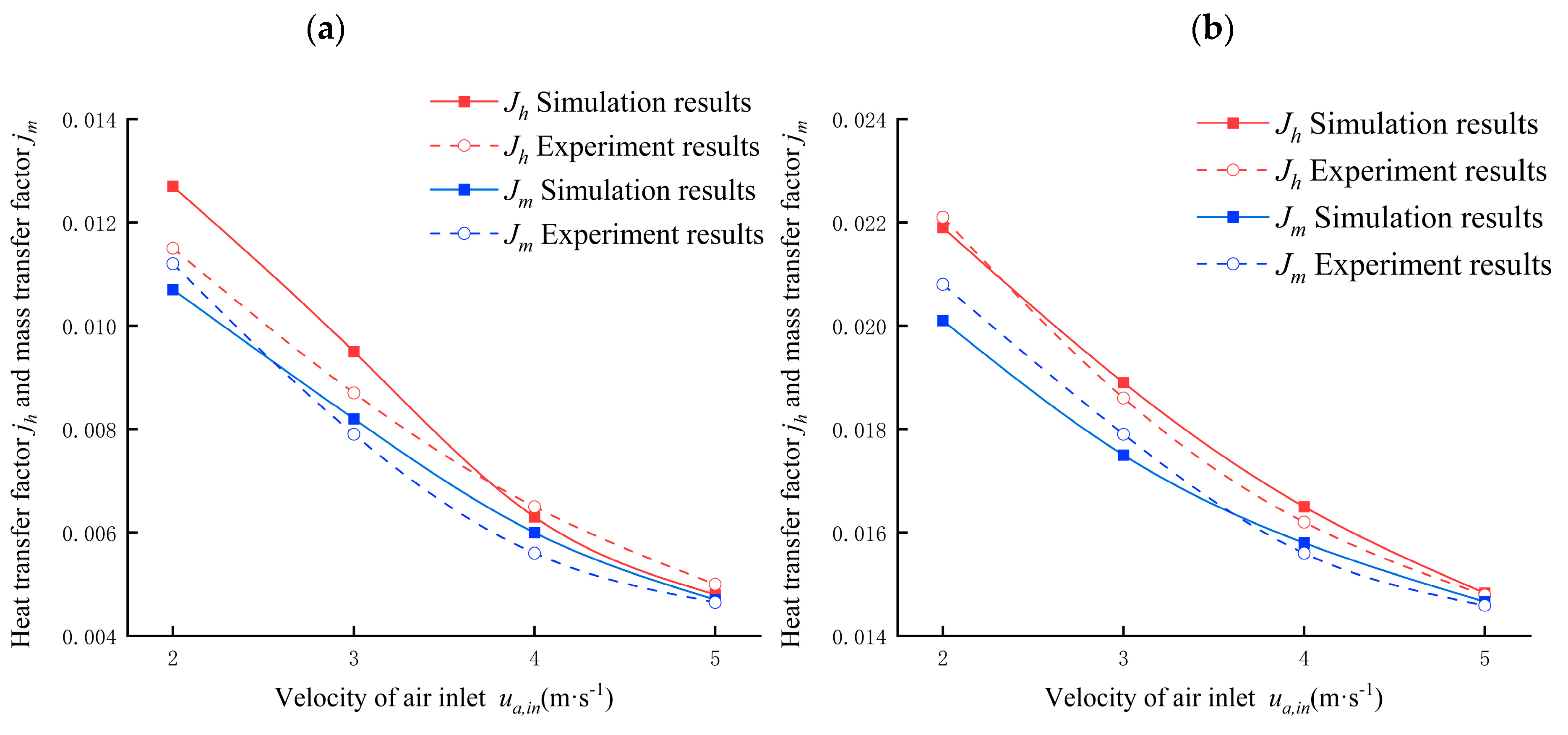
To verify the accuracy and reliability of the moist air cooling and dehumidification model established in this study, as shown in Figure 4a, a mathematical model identical to that reported in Reference [43] was constructed for comparison. The average relative errors of the simulated heat transfer factor and mass transfer factor under different inlet air velocities were 13.21% and 9.45%, respectively. At the same time, we established a mathematical model using the parameters from Table 1 and compared it with the experimental data from the previous work of our research group. As shown in Figure 4b. The average relative errors between the simulated values of heat transfer and mass transfer coefficients were 12.31% and 10.48%, respectively. The comparison results showed that the simulation values exhibited the same variation trend as the experimental values. These results confirm the accuracy and reliability of the moist air cooling and dehumidification model proposed in this work.
Figure 4.
Validation of the correctness of the numerical simulation method. Note: The experimental data in (a) were obtained from the reference [38].
4. Numerical Simulation Results and Analysis
4.1. Analysis of Air-Side Heat Transfer, Flow, and Dehumidification Mechanisms for Evaporators with Different Fin Types
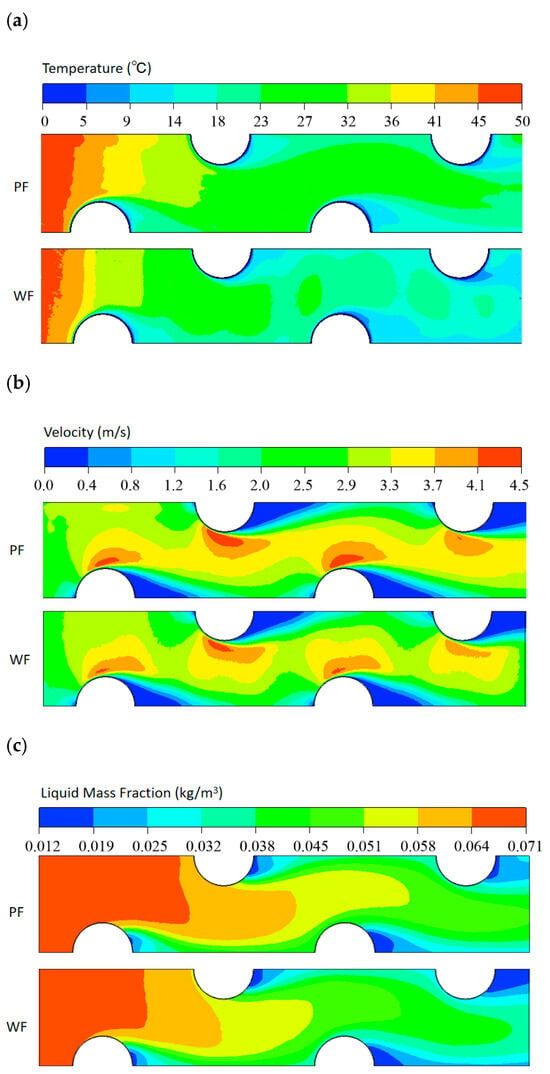
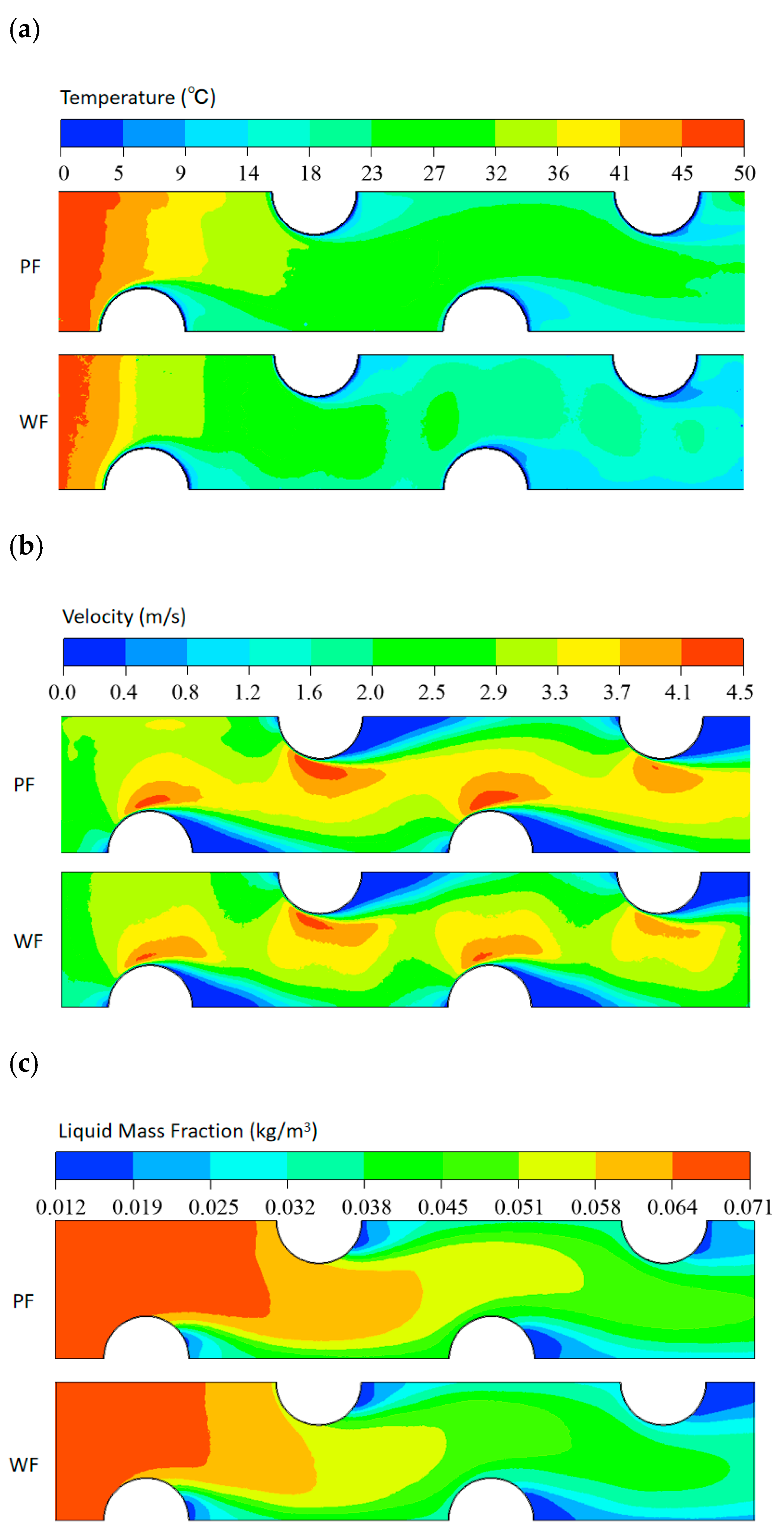
Figure 5a,b show the air-side temperature and velocity distributions of the plain fins and wavy fins. Under high inlet humidity conditions, the condensation process induced by the cold wall significantly affects the distribution of liquid water. Figure 5c presents the liquid water mass fractions of air flowing through the plain fins and wavy fins. From Figure 5, it can be seen that the temperature distribution of the plain fins exhibits a relatively uniform monotonic decrease, with the temperature gradually decreasing and approximating a linear decline in the mainstream region. The flow characteristics of the plain fins fail to effectively generate flow disturbances, so no noticeable local vortices or flow separation occur on the surface of the fins. However, in the near-wall and tail tube regions of the plain fins, the local temperature gradient becomes steeper due to flow separation and reattachment effects, forming a noticeable boundary layer, which reduces the heat exchange efficiency. In contrast, the temperature and velocity distributions of the wavy fins show more complex features. At the curved parts of the structure, the vortices and turbulence effects lead to more concentrated and intensified condensation of water vapor, promoting energy and mass exchange in the near-wall region, resulting in a significantly thinner boundary layer, a larger temperature gradient, and thus an increase in heat exchange efficiency. In the condensation area of the wavy fins, the distribution of the condensed liquid water is more uniform and widespread, and the condensation process is significantly enhanced. The flow disturbances generated by the wavy fins not only help to enhance the heat exchange process but also more effectively alleviate the limitations of convective mass transfer.
Figure 5.
Contours of heat and moisture transfer characteristics: (a) Temperature contours; (b) Velocity contours; (c) Liquid water mass fraction contours.
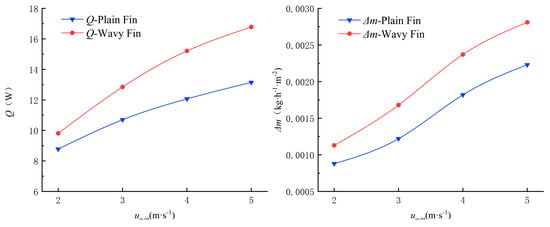
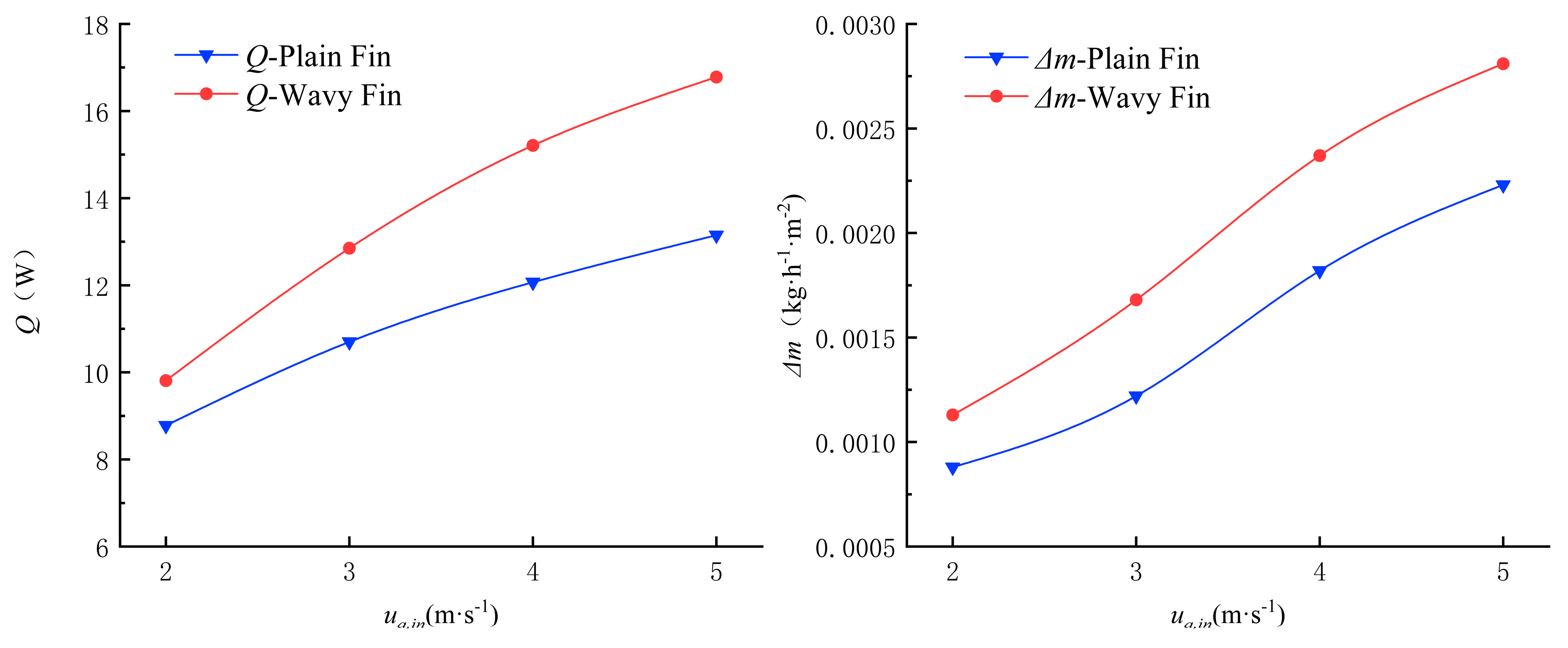
The wavy fin (WF) exhibited a significantly steeper temperature gradient, with the air in the downstream region being cooled more rapidly. As shown in Figure 6, under high-temperature and high-humidity conditions, both the heat transfer rate (Q) and the moisture removal rate per unit area (Δm) reached their maximum values of 16.78 W and 0.00281 kg/(m2·s), respectively, with increasing inlet air velocity. Compared to the plain fin, the wavy fin demonstrated increases of 20.68% in total heat transfer rate and 26.01% in moisture removal rate per unit area.
Figure 6.
Comparison of heat transfer quantity and unit area moisture absorption capacity.
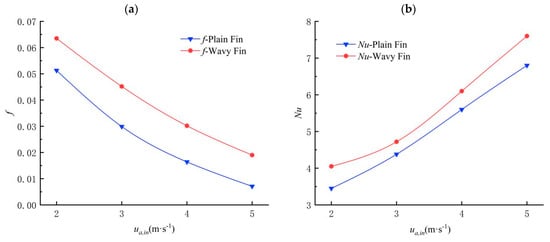
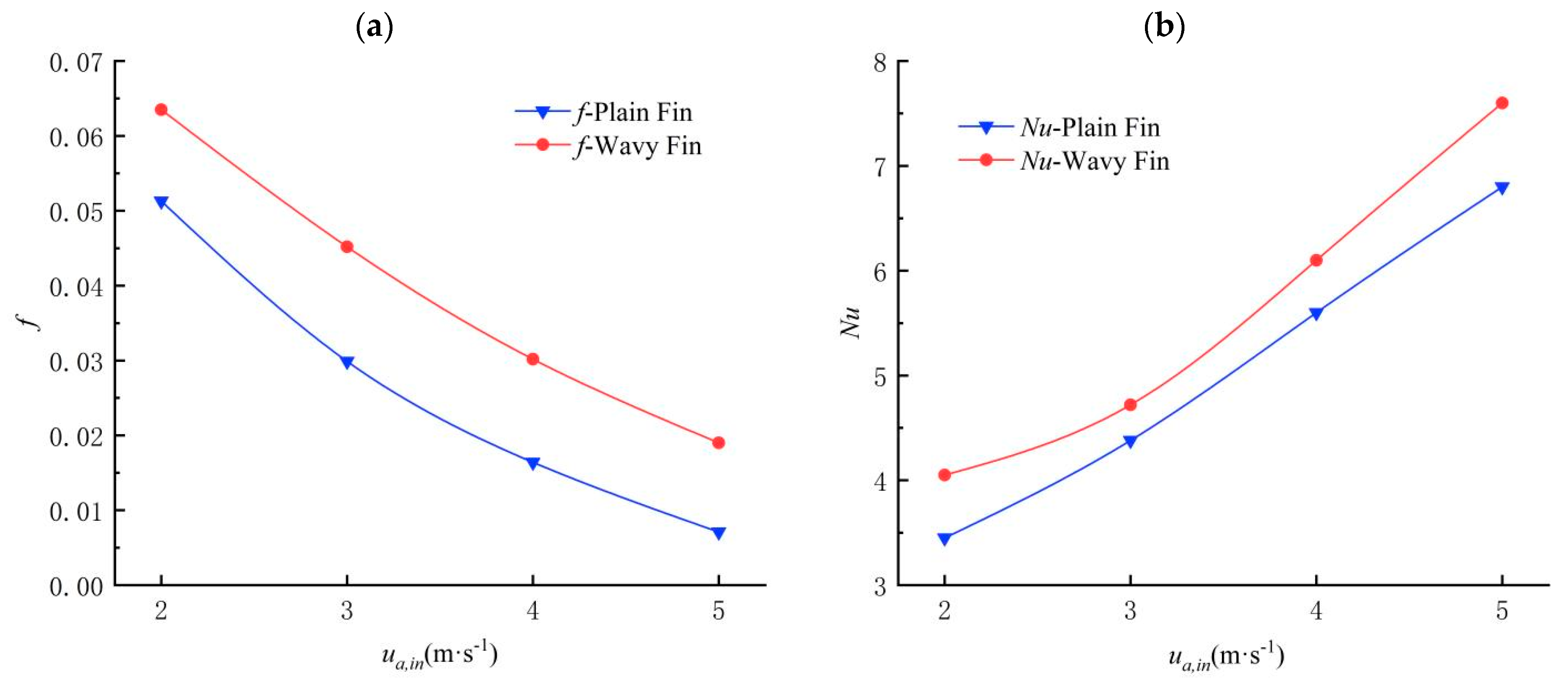
The corresponding trend of the friction factor f is presented in Figure 7a. Within the inlet velocity range of 2–5 m·s−1, the average reductions were 32.1% and 29.2%, respectively. The friction factor f of the plain fin remained consistently lower than that of the wavy fin across this range. This is attributed to the plain fin’s smoother channels, which generate less flow disturbance and consequently result in a lower pressure drop. In contrast, the enhanced airflow disturbance in the wavy fin channels leads to a relatively higher friction factor. The corresponding trend of the Nusselt number Nu is presented in Figure 7b. As the air velocity increased, the Nu values for both structures increased, with average growth rates of 14.53% and 26.21%, respectively. The wavy fin consistently demonstrated a higher heat transfer capability, indicating its superior effectiveness in enhancing the convective heat transfer process of moist air.
Figure 7.
Comparison of friction factors and Nusselt numbers on the air side of finned evaporators, where (a) The corresponding trend of the f; (b) The corresponding trend of the Nu.
4.2. Analysis of Air-Side Heat Transfer and Dehumidification Characteristics for the Wavy Finned-Tube Evaporator with Vortex Generators
Building upon the conventional wavy fin, the introduction of vortex generators is considered an effective method to enhance air-side convective heat transfer and improve dehumidification performance. Vortex generators strengthen the heat and moisture transfer process by inducing secondary vortices within the flow, disrupting boundary layer development, and enhancing the transverse migration of fluid particles.
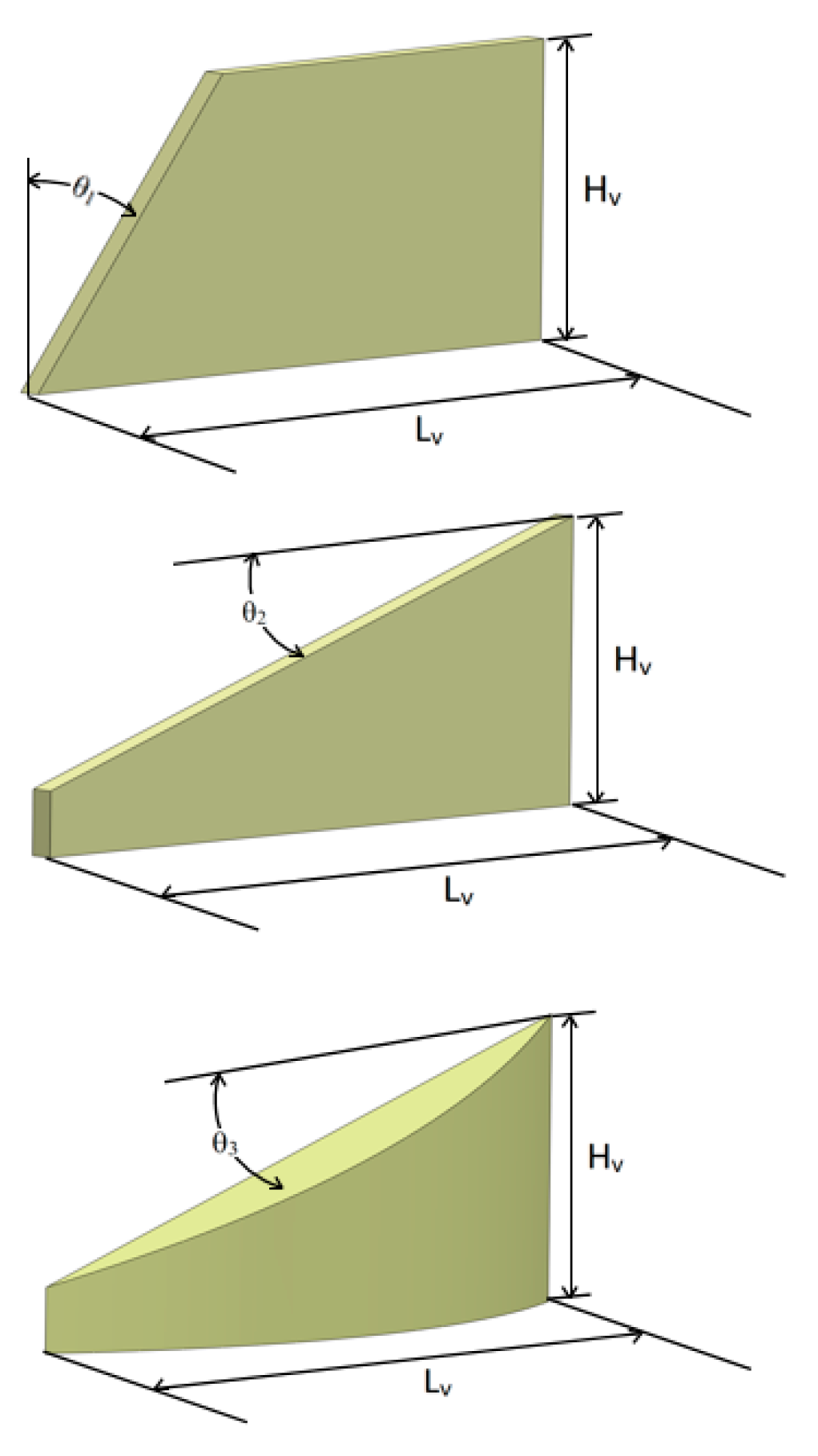
To further explore the impact of vortex generators on the air-side heat transfer and dehumidification performance of the wavy fin evaporator, three types of vortex generators—a triangular (delta) winglet, a trapezoidal winglet, and a curved delta winglet—were designed and arranged based on the original wavy fin structure. Their computational domains are illustrated in Figure 8.
Figure 8.
Schematic diagram of the structure and computational domain for the wavy finned-tube evaporator with vortex generators.
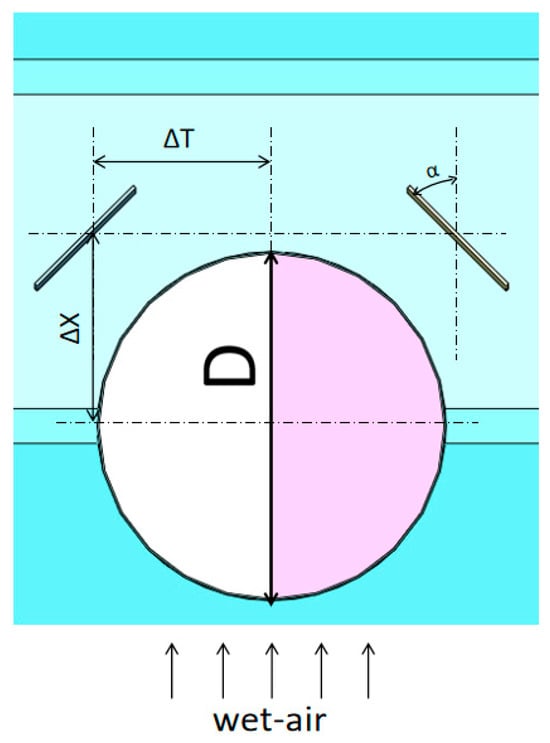
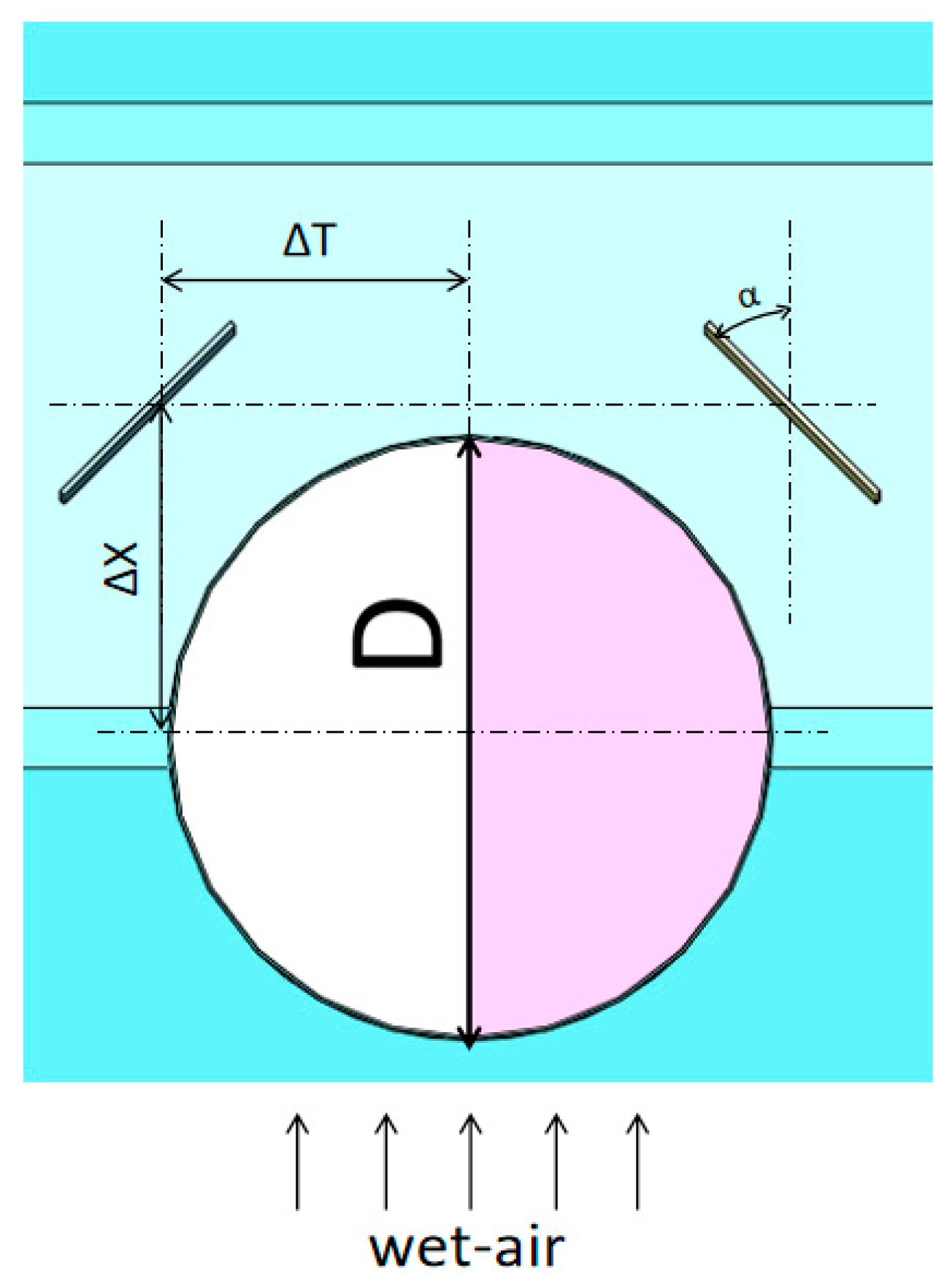
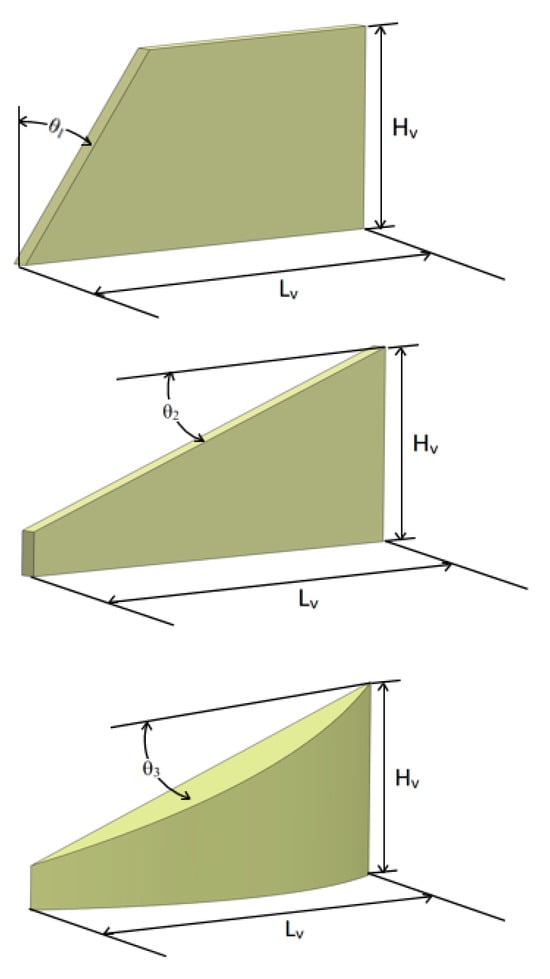
Figure 9 and Figure 10 show the placement of the vortex generators and the three-dimensional views of the three vortex generator types. The influence of three attack angles α (α = 15°, α = 30°, α = 45°) on the heat and mass transfer of the evaporator was studied. The specific geometric and arrangement parameters are listed in Table 3.
Figure 9.
Positioning of Vortex Generators.
Figure 10.
Three different types of vortex generators and their parameters.
Table 3.
Geometric and arrangement parameters of vortex generators.
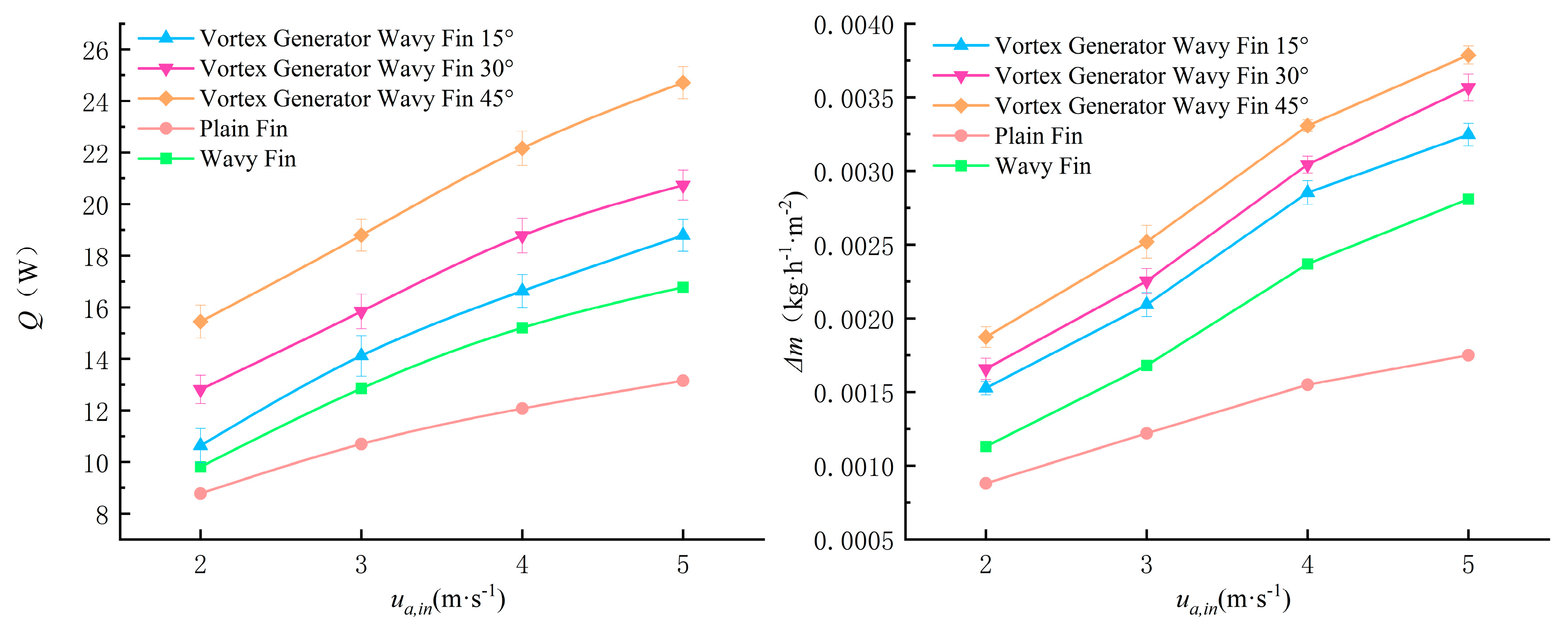
Figure 11 presents a comparison of the air-side total heat transfer rate and the moisture removal rate per unit area versus the inlet air velocity for the wavy fin structure with vortex generators and the conventional wavy fin structure. As shown in the figure, the total heat transfer rate for the structure equipped with vortex generators exceeded that of both the conventional wavy fin and the plain fin across all tested inlet velocities. Furthermore, the degree of heat transfer enhancement gradually increased with larger attack angles (α). Regarding dehumidification intensity, the wavy fin structure with vortex generators also demonstrated superior performance. This is attributed to the vortex structures induced by the generators, which promote an enhanced water vapor concentration gradient near the condensation interface, thereby improving the latent heat transfer capacity. Consequently, the moisture removal rate per unit area also increased progressively with larger α.
Figure 11.
Comparison of air-side total heat transfer and unit area moisture removal capacity among different fin structures.
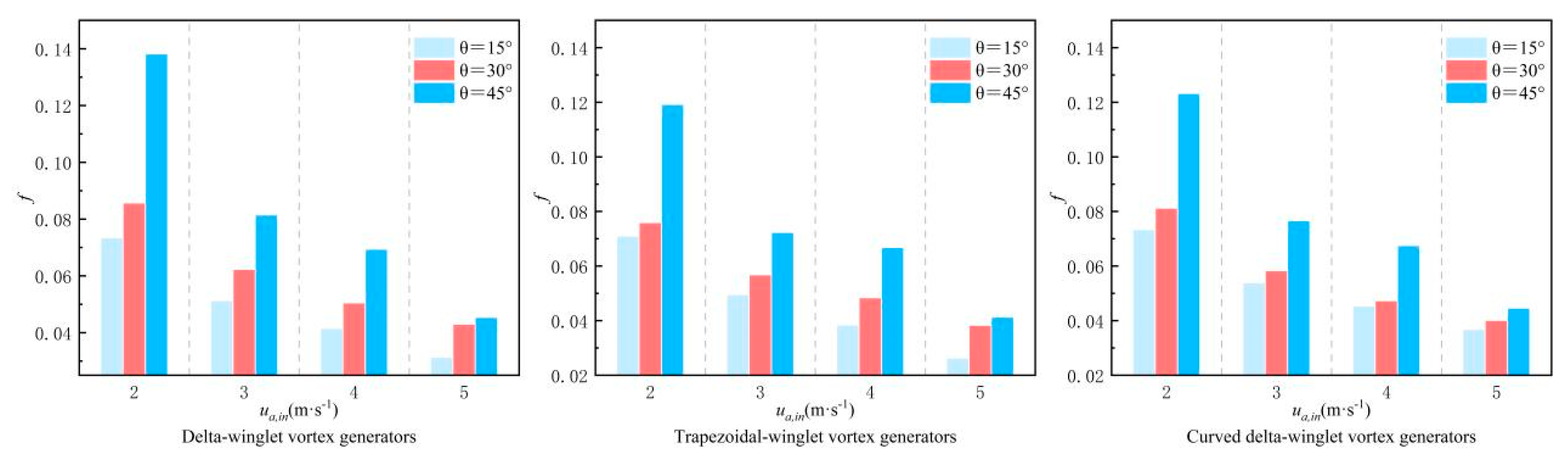
Figure 12 illustrates the influence of three vortex generator types Delta-winglet, Trapezoidal-winglet, and Curved delta-winglet, on the friction factor of the wavy fin at different attack angles (15°, 30°, and 45°). Overall, the friction factor exhibited a gradually decreasing trend with increasing air velocity, with notably higher values observed at lower velocities. This suggests that at higher velocities, the strong turbulence and fluid disturbances induced by the vortex generators reduce the boundary layer thickness, thereby lowering the frictional resistance. Among the configurations, the Trapezoidal Winglet and Curved Delta Winglet demonstrated lower friction factors. Furthermore, higher attack angles generally resulted in larger friction factors, particularly at low air velocities, due to the enhanced vortex effects generated by larger attack angles, which increase the friction between the fluid and the fin surface.
Figure 12.
Comparison of air-side friction factors for different fin structures.
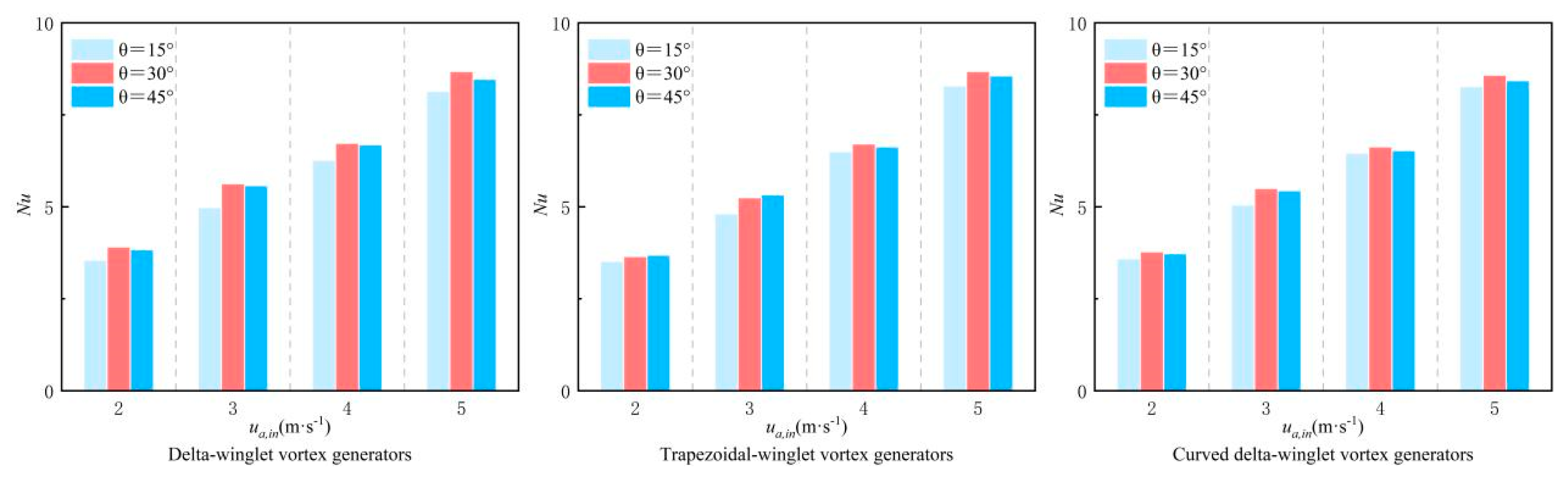
Figure 13 illustrates the influence of three different types of vortex generators (VGs): Delta-winglet vortex generators, Trapezoidal-winglet vortex generators, and Curved delta-winglet vortex generators—on the Nusselt number (Nu) of the wavy fin at different attack angles (α = 15°, 30°, and 45°). Overall, the Nusselt number exhibited an increasing trend with higher air velocity, reaching its maximum at an inlet velocity of 5 m·s−1. The effect of the attack angle on the Nusselt number was non-monotonic. The magnitude of Nu depends on the intensity of the vortices induced by the VGs and their effectiveness in disrupting the thermal boundary layer. As the attack angle increased from 15° to 30°, the Nusselt number increased with the attack angle. This was due to the increased projection area of the vortex generators in the flow direction, generating stronger and larger-scale longitudinal vortices. Stronger secondary flows mean more intense and thorough mixing between the fluid core region and the near-wall region, which more effectively sweeps the cold fluid towards the fin surface and carries the hot fluid away, thus making the temperature distribution in the entire flow field more uniform and maintaining a higher thermal gradient. These vortices help to enhance the mixing between the fluid core and the near-wall region, effectively disrupting the thermal boundary layer and enhancing the heat transfer process. However, as the attack angle increased further, especially beyond 30°, the efficiency of the vortex generators began to decrease. An excessively large attack angle leads to large-scale stable flow separation on the leeward side, forming a larger low-velocity or even recirculation region. These flow separation regions not only reduce the generation of vortices but also form larger thermal resistance. Additionally, the large separation area effectively reduces the available flow area for the fluid to pass through the vortex generators, thus limiting the heat transfer capability. At this point, the shape resistance resulting from large-scale separation dominates, and the efficiency of generating beneficial longitudinal vortices for heat transfer enhancement decreases. The negative impact of the separation region on heat transfer outweighs the positive effect of enhanced mixing.
Figure 13.
Comparison of air-side Nusselt numbers for different fin structures.
4.3. Comprehensive Performance Evaluation
As observed in Section 4.1 and Section 4.2, while both the wavy fin with vortex generators and the conventional wavy finned-tube evaporator demonstrated superior heat and mass transfer performance compared to the plain finned-tube evaporator, their associated flow resistance characteristics were also greater. Therefore, a direct and simplistic assessment of their air-side thermohydraulic performance is not feasible. To comprehensively evaluate the air-side heat transfer and flow characteristics of evaporators with different fin structures, the heat transfer enhancement factor JF, proposed by Yun et al. [44], is employed as a criterion to measure the merits of the corresponding air-side thermohydraulic performance.
where Nuref and fref are the reference Nusselt number and friction factor, respectively, with the plain fin selected as the reference.
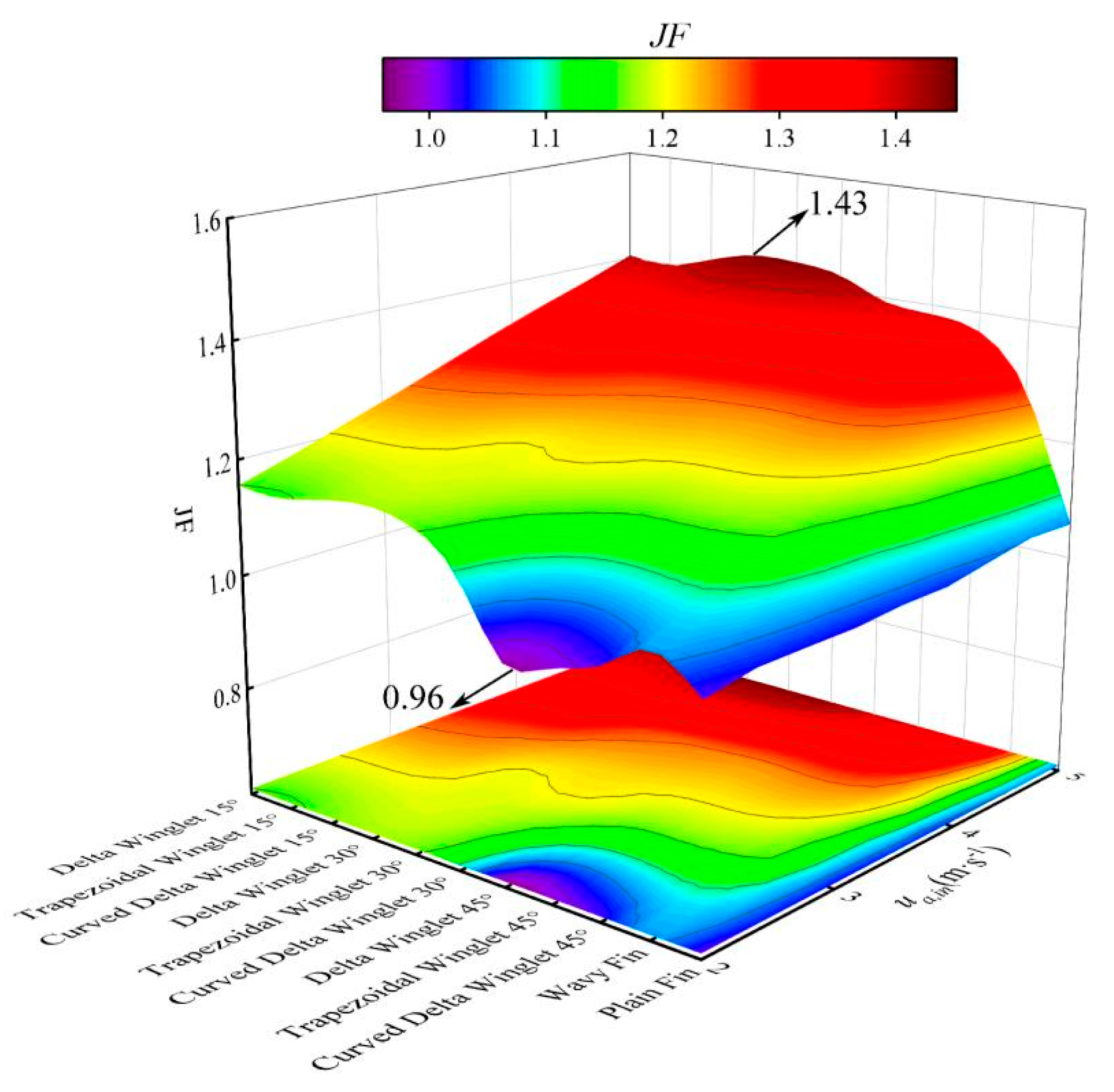
Figure 14 presents a comparison of the variation in the comprehensive performance factor (JF) with inlet air velocity for different fin structures, using the plain fin evaporator as a reference benchmark under high temperature and high humidity conditions. As shown in Figure 14, both the wavy fins with vortex generators and the conventional wavy fins exhibited an increasing trend in their JF factors with rising inlet air velocity. For inlet velocities of 2~5m·s−1, the wavy fins equipped with Delta-winglet, Trapezoidal-winglet, and Curved delta-winglet at an attack angle of 15° showed average increases of 21.8%, 21.1%, and 21.6%, respectively. At an attack angle of 30°, the average increases were 22.6%, 23.4%, and 23.1%, respectively. At an attack angle of 45°, the average increases were 42.7%, 35.8%, and 39.8%, respectively. While the conventional wavy fin showed an average increase of 19.4%. A comparative analysis reveals that the wavy fin with Delta Winglet at an attack angle of α = 30° showed the highest average JF factor of 1.271 within the inlet air velocity range of 2–5 m·s−1. This indicates that this fin type outperforms other configurations in heat transfer performance. The average JF factor of the conventional wavy fin was 1.2275, which is also superior to that of the plain fin. At an inlet air velocity of 5 m·s−1 and an attack angle of α = 30°, the JF factor for the Delta Winglet wavy fin reached a maximum of 1.43. However, at α = 45°, the JF factor for the Delta Winglet wavy fin dropped to a minimum of 0.96, lower than the reference plain fin.
Figure 14.
Comparison of air-side overall performance factors.
Overall, the introduction of vortex generators to the wavy fin structure significantly enhances the air-side sensible and latent heat transfer processes under high-temperature and high-humidity conditions. At attack angles of α = 15° and α = 30°, despite a concomitant increase in flow resistance, the comprehensive performance remains superior to that of traditional fin structures, making these configurations suitable for application in refrigerated air dryer dehumidification evaporators. However, at α = 45°, although the heat transfer and moisture removal capabilities exceed those at smaller attack angles, the associated penalty is a substantially higher friction factor. Consequently, this configuration is not recommended for use in refrigerated air dryer dehumidification evaporators.
5. Conclusions
This study conducted numerical simulations and comparative analysis on the air-side heat transfer performance and moisture removal intensity of finned-tube evaporators under high-temperature and high-humidity conditions in refrigerated air dryer systems. The heat and moisture transfer characteristics and flow behavior of three fin structures—plain fin, wavy fin, and wavy fin with vortex generators—were investigated under varying inlet air velocities. The main conclusions are as follows:
- Compared to the plain fin, the wavy fin features a unique structure that reduces the stagnation zone area at the tail of the tube. Additionally, the transverse mixing effect induced by the streamwise vortices at the structural bending areas promotes energy and mass exchange in the near-wall region, leading to the thinning of the boundary layer and further improving heat transfer and dehumidification capabilities. Under the same inlet velocity, the wavy fin outperforms the plain fin in terms of heat transfer, moisture removal rate per unit area, and Nusselt number.
- Three types of vortex generators were introduced to the wavy fin design. As the attack angle increased, the friction factor continued to rise. When the attack angle was between 15° and 30°, the Nusselt number increased continuously. However, when the attack angle exceeded 30°, the excessively large angle caused flow separation on the windward side, which limited heat transfer capacity and led to a decrease in the Nusselt number. To evaluate the overall heat transfer performance of each fin type, the enhanced heat transfer factor (JF) was considered. Among them, the wavy fin with Delta Winglet vortex generators at an attack angle of 30° showed the highest average JF value of 1.271, which reached its maximum value of 1.431 at an inlet velocity of 5 m·s−1, demonstrating the best overall heat transfer performance.
- For conventional high-temperature and high-humidity refrigerated air dryer systems, the wavy fin is recommended as the primary choice. It offers a simple structure and a comprehensive performance improvement of approximately 12% over the plain fin, effectively balancing efficient dehumidification with low manufacturing costs. For systems demanding higher dehumidification intensity, the wavy fin equipped with Delta Winglet vortex generators at a 30° attack angle should be selected. This configuration achieves optimal enhancement of both heat transfer and moisture removal capabilities at an acceptable cost in flow resistance. This paper compares the air-side performance of plain fins, wavy fins, and wavy fins with vortex generators of the same size, and identifies the most suitable fin type for refrigerated air dryers. The performance of different fin tube evaporator structures or the optimal attack angle for vortex generators in this context can be further explored in future studies. This study provides a theoretical basis and engineering guidance for the design of evaporators in refrigerated air dryers.
Author Contributions
Conceptualization, Y.W.; methodology, Y.W.; software, Y.W.; validation, Y.W.; formal analysis, Y.W.; investigation, Z.Y.; resources, Y.W.; data curation, Z.Y.; writing—original draft preparation, Y.W.; writing—review and editing, B.F.; supervision, D.Y.; project administration, D.Y. All authors have read and agreed to the published version of the manuscript.
Funding
This research was funded by the Fujian Provincial Department of Science and Technology (Grant No. 2024I1006) and the Fujian Provincial Department of Industry and Information Technology (Grant No. 2024XQ010).
Informed Consent Statement
Not applicable.
Data Availability Statement
All data presented in this study were obtained through numerical simulations and are not readily accessible. If needed, raw data files may be requested from the corresponding author.
Conflicts of Interest
The authors declare no conflict of interest.
Correction Statement
This article has been republished with a minor correction to the Funding and Informed Consent Statement. This change does not affect the scientific content of the article.
References
- Reshaeel, M.; Abdelsamie, M.M.; Ali, M.I.H. A critical review of the thermal-hydraulic performance of fin and tube heat exchangers using statistical analysis. Int. J. Thermofluids 2024, 24, 100858. [Google Scholar] [CrossRef] [Scilit]
- Baldas, L.; Brandner, J.J.; Morini, G.L. Editorial for the Special Issue “Selected Papers from the ISTEGIM’19—Thermal Effects in Gas Flow in Microscale”. Micromachines 2020, 11, 879. [Google Scholar] [CrossRef] [Scilit] [PubMed]
- Eder, E.; Hiller, S.; Brüggemann, D.; Preißinger, M. Characteristics of Air–Liquid Heat and Mass Transfer in a Bubble Column Humidifier. Appl. Therm. Eng. 2022, 209, 118240. [Google Scholar] [CrossRef] [Scilit]
- Kim, N.H.; Kim, C.H.; Han, H.S. An Airside Performance of the Wavy Fin-and-Tube Heat Exchangers Having Oval Tubes. Appl. Therm. Eng. 2021, 190, 116807. [Google Scholar] [CrossRef] [Scilit]
- Liu, S.; Ma, G.; Xu, S.; Li, F.; Hang, C. Simulation Analysis and Optimization of Evaporator Refrigeration Dehumidification Characteristics. J. Refrig. 2020, 41, 15–21. [Google Scholar]
- Zhang, J.; Liu, J.; Zhang, L.; Liu, Q.; Wu, Q. Effect of ambient pressure on air side heat transfer and flow characteristics of plain finned tube heat exchanger. Int. J. Heat Mass Transf. 2020, 158, 120010. [Google Scholar] [CrossRef] [Scilit]
- Bozkula, G.; Demir, H. Experimental investigation of heat transfer and pressure drop of fin and tube heat exchanger under dry and wet conditions. Int. J. Therm. Sci. 2022, 177, 107580. [Google Scholar] [CrossRef] [Scilit]
- Li, X.; Tao, W. Numerical simulation of heat and mass transfer characteristics of plain fins under dry and wet conditions. J. Eng. Thermophys. 2022, 43, 1034–1040. [Google Scholar]
- Sadeghianjahromi, A.; Kheradmand, S.; Nemati, H.; Wang, C.-C. Heat transfer enhancement of wavy fin-and-tube heat exchangers via innovative compound designs. Int. J. Therm. Sci. 2020, 149, 17. [Google Scholar] [CrossRef] [Scilit]
- Dika, F.; Dagbasi, M.; Adedeji, M.; Adun, H. Performance Analysis of a Wavy Fin-and-Tube Automobile Radiator Operating on Ethylene Glycol and Water Based Ternary Nanofluids. Heliyon 2025, 11, e41509. [Google Scholar] [CrossRef] [Scilit]
- Qi, X.; Yang, J.; Zhang, Y.; Wang, J.; Guo, X. Simulation Study of the Influence of Circular Arc Vortex Generator Size on the Heat Transfer Characteristics of Fin-and-Tube Heat Exchanger. Sci. Rep. 2025, 15, 22059. [Google Scholar] [CrossRef] [Scilit]
- Hu, W.; Zhang, C.; Tang, R.; Zhang, Y.; Guan, Y.; Li, J.; Xu, F. Numerical Analysis of Enhanced Heat Transfer in Evaporator for Condensation Dehumidification System in Solar Greenhouse. Trans. Chin. Soc. Agric. Eng. 2020, 36, 221–228. [Google Scholar]
- Liu, X.; Wang, M.; Liu, H.; Chen, W.; Qian, S. Numerical analysis on heat transfer enhancement of wavy fin-tube heat exchangers for air-conditioning applications. Appl. Therm. Eng. 2021, 199, 117597. [Google Scholar] [CrossRef] [Scilit]
- Gupta, A.; Roy, A.; Gupta, S.; Gupta, M. Numerical investigation towards implementation of punched winglet as vortex generator for performance improvement of a fin-and-tube heat exchangers. Int. J. Heat Mass Transf. 2020, 149, 119171. [Google Scholar] [CrossRef] [Scilit]
- Zhi, C.; Ren, Y.; Miao, A.; Wang, X.; Liu, Y. Numerical Investigation of Slit Fin at Different Reynolds Numbers: A Sensitivity Analysis and Optimization by Taguchi Methodology. Int. Commun. Heat Mass Transf. 2022, 138, 106393. [Google Scholar] [CrossRef] [Scilit]
- Zhi, C.; Wang, X.; Liu, Y. Numerical Investigation on the Effects of Slotted Height on Performance of Louver and Slit Fins at Different Fin Pitches. Therm. Sci. 2024, 28, 437–451. [Google Scholar] [CrossRef] [Scilit]
- Fran, T.; Anica, T.; Kristian, L. Numerical Analysis of Geometry Influence on Heat Transfer in a Slotted Fin and Tube Heat Exchanger. Heat Transf. Eng. 2023, 44, 411–425. [Google Scholar]
- Zhang, Q.; Xu, L.; Li, J.; Ouyang, M. Performance Prediction of Plate-Fin Radiator for Low Temperature Preheating System of Proton Exchange Membrane Fuel Cells Using CFD Simulation. Int. J. Hydrogen Energy 2017, 42, 24504–24516. [Google Scholar] [CrossRef] [Scilit]
- He, Y.; Gao, S.; Wu, Q.; Zhang, M.; Long, T.; Niu, p.; Gao, J.; Meng, Y. Numerical Study on Heat and Mass Transfer Characteristics of Plain Slit Fins under Dehumidifying Conditions. J. Chem. Ind. Eng. 2023, 74, 1073–1081. [Google Scholar]
- Murugan, M.; Wang, C.C. Energy-Saving of Air-Cooling Heat Exchangers Operating under Wet Conditions with the Help of Superhydrophobic Coating. Energy Convers. Manag. 2021, 229, 113740. [Google Scholar]
- Cao, K.; Yuan, Y.; Wang, C.; Su, Z.; Li, M. Numerical Simulation of a Staggered Perforated Louver Fin Heat Exchanger. Cryog. Supercond. 2021, 49, 41–46. [Google Scholar]
- Song, K.; Xi, Z.; Su, M.; Wang, L.; Wu, X.; Wang, L. Effect of Geometric Size of Curved Delta Winglet Vortex Generators and Tube Pitch on Heat Transfer Characteristics of Fin-Tube Heat Exchanger. Exp. Therm. Fluid Sci. 2017, 82, 8–18. [Google Scholar] [CrossRef] [Scilit]
- Haque, M.R.; Rahman, A. Numerical investigation of convective heat transfer characteristics of circular and oval tube banks with vortex generators. J. Mech. Sci. Technol. 2020, 34, 457–467. [Google Scholar] [CrossRef] [Scilit]
- Esmaeilzadeh, A.; Amanifard, N.; Deylami, H. Comparison of Simple and Curved Trapezoidal Longitudinal Vortex Generators for Optimum Flow Characteristics and Heat Transfer Augmentation in a Heat Exchanger. Appl. Therm. Eng. 2017, 125, 1414–1425. [Google Scholar] [CrossRef] [Scilit]
- Li, H.; Liu, Y. Basic Structure and Working Principle of LMF Air Compressor. Geophys. Prospect. Equip. 2006, 55, 308–313+316. [Google Scholar]
- Mahmoudinezhad, S.; Sadi, M.; Arabkoohsar, G.A. A Comprehensive Review on the Current Technologies and Recent Developments in High-Temperature Heat Exchangers. Renew. Sustain. Energy Rev. 2023, 183, 113467. [Google Scholar] [CrossRef] [Scilit]
- Thanh, L.N.; Nhut, L.M.; Hoang, A.Q. The heat transfer and entropy generation of fin and inclined flat tube heat exchanger. Case Stud. Therm. Eng. 2024, 56, 104202. [Google Scholar] [CrossRef] [Scilit]
- Thanh, L.N. The influence of baffled channel for cooling hot surface: Numerical simulation and Taguchi analysis. Case Stud. Therm. Eng. 2023, 52, 103646. [Google Scholar] [CrossRef] [Scilit]
- Qasem, N.A.A.; Zubair, S.M. An assessment of the optimal air-side thermal-hydraulic performance of wavy-fin compact heat exchangers. Int. J. Refrig. 2018, 96, 117–130. [Google Scholar] [CrossRef] [Scilit]
- Li, X.; Shang, Y.; Yan, Y.; Yang, L.; Tu, J. Modelling of evaporation of cough droplets in inhomogeneous humidity fields using the multi-component Eulerian-Lagrangian approach. Build. Environ. 2018, 128, 68–76. [Google Scholar] [CrossRef] [Scilit]
- Guan, Y.; Zhao, S.; Guo, Y.; Lin, Y.; Hu, W.; Chen, C. Thermal and mass transfer performance analysis of hydrophilic finned-tube evaporators for greenhouse dehumidification. Trans. Chin. Soc. Agric. Eng. 2024, 40, 255–264. [Google Scholar] [CrossRef]
- Feng, Y. Wall Slip Behaviour of Polymers Based on Molecular Dynamics at the Micro/Nanoscale and Its Effect on Interface Thermal Resistance. Polymers 2020, 12, 2182. [Google Scholar] [CrossRef] [Scilit]
- Yan, W. Selection and Application Explanation of Three Multiphase Flow Models Based on FLUENT. Yunnan Chem. Ind. 2020, 47, 43–44. [Google Scholar]
- Anderson, J.D. Computational Fluid Dynamics: The Basics with Applications; Tsinghua University Press: Beijing, China, 2002. [Google Scholar]
- ANSYS Inc. ANSYS Fluent Theory Guide; ANSYS Inc.: Canonsburg, PA, USA, 2013. [Google Scholar]
- Mudawar, I.; Lee, J. Experimental and Computational Investigation into Hydrodynamic and Heat Transfer Characteristics of Subcooled Flow Boiling on the International Space Station. Int. J. Heat Mass Transf. 2023, 207, 124000. [Google Scholar] [CrossRef] [Scilit]
- GB/T 14296-2008; Air Coolers and Air Heaters. Standards Press of China: Beijing, China, 2008.
- Hu, W. The Characteristics of Air Side Secondary Flow and Heat Transfer Enhancement in Circle Tube Bank Fin Heat Exchanger. Ph.D. Thesis, Lanzhou Jiaotong University, Lanzhou, China, 2014. [Google Scholar] [CrossRef]
- Dogan, S.; Darici, S.; Ozgoren, M. Numerical comparison of thermal and hydraulic performances for heat exchangers having circular and elliptic cross-section. Int. J. Heat Mass Transf. 2019, 145, 118731. [Google Scholar] [CrossRef] [Scilit]
- Yogesh, S.S.; Selvaraj, A.S.; Ravi, D.K.; Rajagopal, T.K.R. Heat transfer and pressure drop characteristics of inclined elliptical fin tube heat exchanger of varying ellipticity ratio using CFD code. Int. J. Heat Mass Transf. 2018, 119, 26–39. [Google Scholar] [CrossRef] [Scilit]
- Hu, W.; Wang, J.; Zhang, Y.; Guan, Y.; Lin, Y.; Zhao, S. Air side performance of fin-and-tube heat exchangers with a hydrophilic layer under low-temperature frost-free conditions. Appl. Therm. Eng. 2023, 219, 119532. [Google Scholar] [CrossRef] [Scilit]
- Ma, X. Air-Side Characteristics of Air-Conditioning Evaporators and Refrigerant Distribution in Systems. Ph.D. Thesis, Shanghai Jiao Tong University, Shanghai, China, 2008. [Google Scholar]
- Zhuang, D. Numerical Simulation and Experimental Verification of Condensate Droplet Behavior on Fin Surface of Heat Exchanger Under Dehumidifying Condition. Ph.D. Thesis, Shanghai Jiao Tong University, Shanghai, China, 2015. [Google Scholar]
- Yun, J.Y.; Lee, K.S. Influence of Design Parameters on the Heat Transfer and Flow Friction Characteristics of the Heat Exchanger with Slit Fins. Int. J. Heat Mass Transf. 2000, 43, 2529–2539. [Google Scholar] [CrossRef] [Scilit]

Disclaimer/Publisher’s Note: The statements, opinions and data contained in all publications are solely those of the individual author(s) and contributor(s) and not of MDPI and/or the editor(s). MDPI and/or the editor(s) disclaim responsibility for any injury to people or property resulting from any ideas, methods, instructions or products referred to in the content. |
© 2026 by the authors. Licensee MDPI, Basel, Switzerland. This article is an open access article distributed under the terms and conditions of the Creative Commons Attribution (CC BY) license.