Article

Characteristics of Stratum Disturbance During the Construction of Dual-Line Shield Tunnels with Consideration of Soil Spatial Variability

1
Faculty of Engineering, China University of Geosciences, Wuhan 430074, China
2
Wuhan Municipal Construction Group Co., Ltd., Wuhan 430023, China
*
Author to whom correspondence should be addressed.
Appl. Sci. 2026, 16(2), 1132; https://doi.org/10.3390/app16021132
Submission received: 25 November 2025 / Revised: 15 January 2026 / Accepted: 19 January 2026 / Published: 22 January 2026

Abstract

Soil spatial variability is an inherent feature of natural strata, and random field theory provides an effective framework for quantifying it, aiding accurate deformation prediction. This study focuses on the tunnel section between Kepugongyuan and Gangduhuayuan Stations on Wuhan Metro Line 12. Its novelty focuses on analyzing dual-line shield-induced ground response with explicit consideration of multi-layer soil spatial variability. It examines the effects of the coefficient of variation and the horizontal/vertical spatial correlation distances of cohesion, internal friction angle, and elastic modulus—considering multilayer soil variability—on ground disturbance induced by twin-tunnel shield construction. The main findings include the following: (1) In cross-section, the settlement trough transitions from a “W”-shaped double trough to a “V”-shaped single trough as excavation advances, with the settlement center moving toward the midpoint between the tunnels. Longitudinally, soil heaves ahead of the shield and settles behind. (2) Ignoring spatial variability results in underestimated deformations; nearly 80% of stochastic simulations produced larger maximum surface settlements compared to deterministic analysis. (3) Ground loss and shield thrust disturbance are categorized into four zones based on tunnel diameter (D): Disturbance Zone, Secondary Zone, Transition Zone, and Undisturbed Zone. These findings provide practical guidance for predicting ground deformation and managing settlement-related risks in urban dual-line shield projects.

1. Introduction

As the development of urban underground space continues to advance, conducting shield tunneling directly adjacent to existing structures has become a standard practice [1,2,3]. However, the inherent spatial variability and non-uniform nature of geotechnical parameters make it difficult to determine definitive model inputs, thereby posing a primary source of uncertainty in the stability assessment of tunnels [4,5]. Furthermore, the construction of dual-line shield tunnels inevitably induces repeated disturbances to the surrounding soil, leading to more complex soil movement and deformation. As construction proceeds, soil deformation accumulates progressively. When this deformation exceeds a certain threshold, it can endanger the safety of adjacent structures [6,7,8]. To mitigate construction risks within the tunnel itself and safeguard the safety of adjacent structures, it is essential to accurately understand the deformation characteristics and patterns of the strata under shield construction disturbance. Therefore, analyzing the disturbance characteristics of the strata during dual-line shield tunnel construction that account for the spatial variability of the soil has significant theoretical and practical value.
To address this issue, Lumb (1966) introduced the concept of spatial variability [9], arguing that geotechnical parameters at different spatial locations exhibit both correlation and variability. Vanmarcke (1977) developed the random field theory framework [10], utilizing numerical discretization methods such as the K-L expansion or Cholesky decomposition to embed random fields into numerical solvers (e.g., FEM, FDM, BEM), thereby enabling random field-based engineering analysis. In recent years, scholars have conducted extensive research on spatial variability and random field theory, refining and advancing these concepts. Current research in random field theory primarily focuses on three key aspects: the probability distribution of parameters [11], the fluctuation range [12], and the discretization of random fields. When the sample size is limited, normal or log-normal distributions are commonly used to characterize the statistical distribution of soil parameters, thereby enhancing the reliability of the predicted results [13]. The fluctuation range serves as a key indicator for characterizing the spatial variation in geotechnical parameters [14]. At the same site, geotechnical parameters at different locations often exhibit variations while maintaining specific spatial correlations. As the spatial separation increases, the correlation between these parameters gradually diminishes to zero. The corresponding spatial distance at which this occurs is defined as the fluctuation range. Random field variables require discretization processing prior to application [15,16]. Only after being decomposed into a finite number of random variables can they be input into numerical simulation software for computation.
Given the complex geological conditions in tunnel engineering, a series of challenges persist in the random field modeling of large-scale, irregular tunnel models and in determining the fluctuation ranges of geotechnical parameters. However, in recent years, a growing number of researchers have introduced random field theory into the field of tunnel engineering, resulting in notable progress. Gan et al. employed a two-stage random analysis method to investigate the impact of spatial variability in soil elastic modulus on the longitudinal response of an existing shield tunnel passing beneath a newly constructed tunnel [17]. They found that increased fluctuations in soil elastic modulus and a higher coefficient of variation lead to greater variability in tunnel response. Zhang et al. employed Cholesky decomposition to generate random fields for the Young’s modulus and friction angle of soils, systematically investigating the influence of their spatial variability and mutual correlation effects on surface settlement [18]. Ai developed a complex function method for an elliptical tunnel within an orthotropic elastic full-space under non-uniform ground stress [19]. Zhang et al. generated random fields of soil strength parameters to investigate the stability of tunnels in cohesive-friction soils [20]. They found that simultaneously considering the variability of both c and φ had a more detrimental effect on tunnel stability compared to considering the variability of only one of the two strength parameters. Zhang et al. found that fluctuations at both horizontal and vertical scales significantly affect the settlement of the tunnel crown in the Loess Tunnel [21]. Wang et al. introduced random fields discretized via the Karhunen–Loève expansion to simulate the spatial variation in subgrade stiffness [22]. Subsequently, they proposed a probabilistic analysis framework for the longitudinal performance of shield tunnels that accounts for spatial variability in soil. However, current stochastic analyses of tunnel-induced deformation predominantly focus on single-line tunnels in homogeneous soil layers. In contrast, research incorporating the spatial variability of parameters in multi-layered soils remains insufficient. Moreover, most current urban rail transit tunnel projects employ closely spaced dual-line parallel shield tunneling. Significant mutual influence occurs during the advancing process, and the resulting ground deformation is larger than that under single-line conditions.
In contrast to previous studies that typically assume homogeneous soil strata or single-tunnel configurations, the novelty of this work lies in extending random field analysis to dual-line shield tunneling while explicitly accounting for the spatial variability of multi-layered soils. By comprehensively considering the variability and correlation of key geotechnical parameters, this approach enables a probabilistic assessment of stratum disturbance, providing deeper insight into the interaction effects between adjacent tunnels.
Based on the Wuhan Metro Line 12 project, this paper employs a co-simulation methodology integrating random field theory with ABAQUS. It simulates the construction of dual-line shield tunnels, taking into account spatial variability in soil, and examines the corresponding ground deformation patterns. It establishes disturbance zoning and systematically analyzes the quantitative impact of spatial variability in soil parameters on deformation calculations. This study compares the stratum disturbance characteristics from deterministic and random field simulations of dual-line shield tunneling, highlighting the technical advantages of the random field approach. These research conclusions offer practical guidance for informed decision-making in urban rail transit construction and safety control.

2. Project Overview

2.1. Project Background

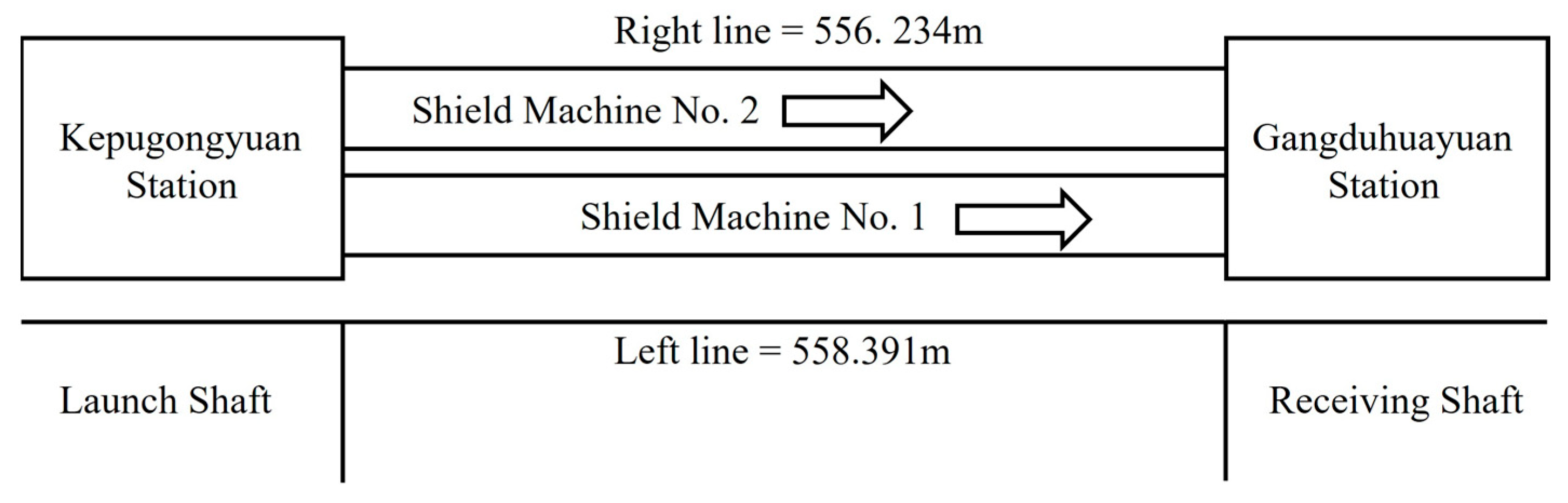
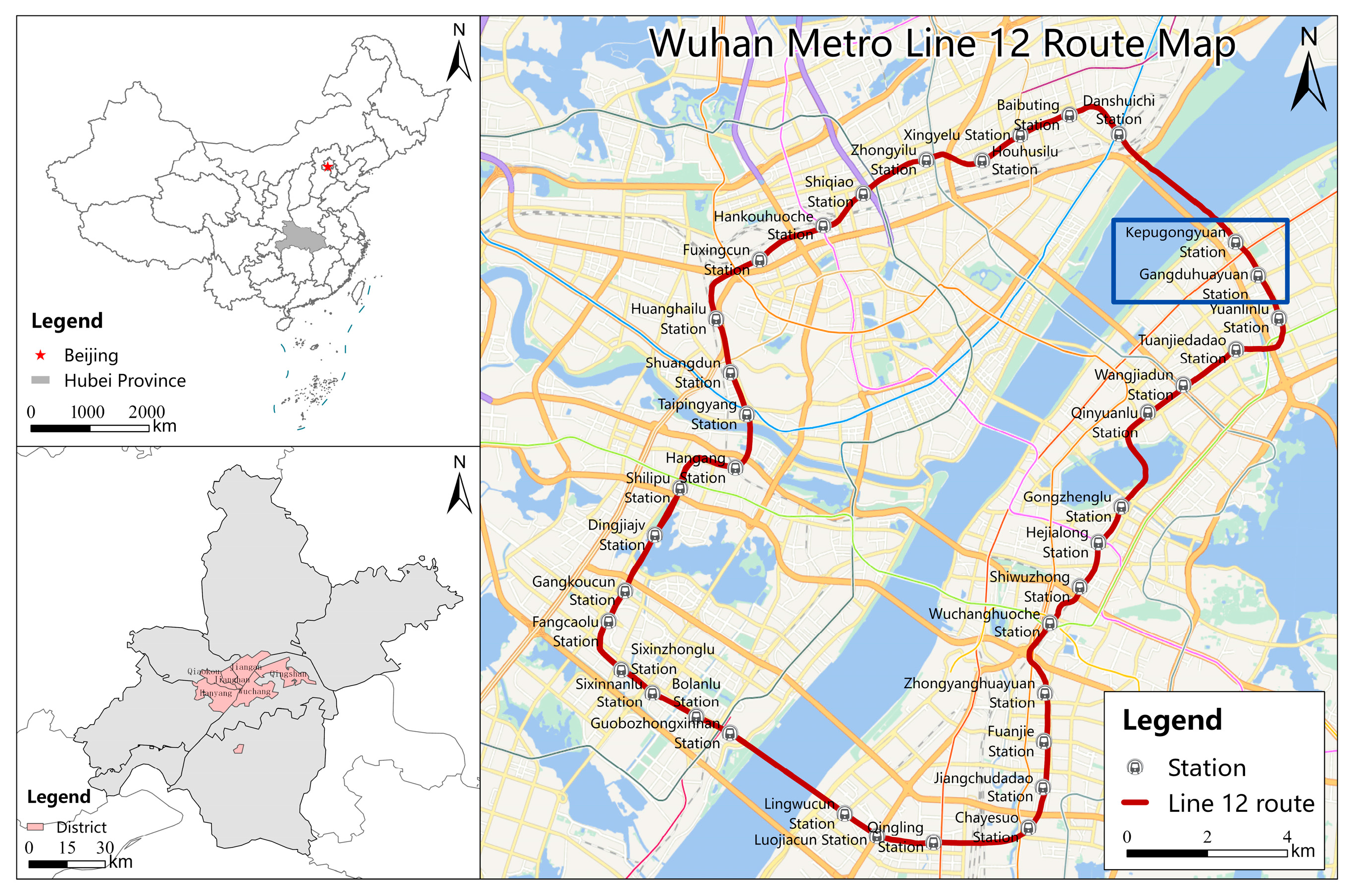
The section between Kepugongyuan Station and Gangduhuayuan Station of Wuhan Metro Line 12 in Hubei Province, China, was constructed using the shield tunneling method. This project was selected as a representative case study because it exhibits typical geological conditions of the Yangtze River first terrace and adopted dual-line parallel shield construction, which is widely applicable to urban rail transit tunneling projects. The single-tunnel excavation has a cross-sectional area of 30 m2, with the shield tunnel axis buried at a depth of 24.7 m and a center-to-center distance between tunnels of 12.7 m. The tunnel structure utilizes precast reinforced concrete segments with C50-grade concrete. The segments feature an outer diameter of 6.2 m, a wall thickness of 350 mm, and a ring width of 1.5 m. The construction of the shield-driven section utilizes an Earth Pressure Balance shield machine, following a sequence where the left tunnel is excavated first, followed by the right tunnel. The shield machine possesses a rated thrust capacity of 36,492 kN, with the operational thrust during tunneling maintained at 60% to 70% of the maximum rated value. It should be noted that due to the unavailability of field monitoring data from this site, the simulation results presented in this study could not be directly validated against in situ measurements. This limitation is acknowledged and forms an important direction for future research. The general project overview and the construction sequence of the twin tunnels are illustrated in Figure 1 and Figure 2, respectively.

2.2. Geological Conditions

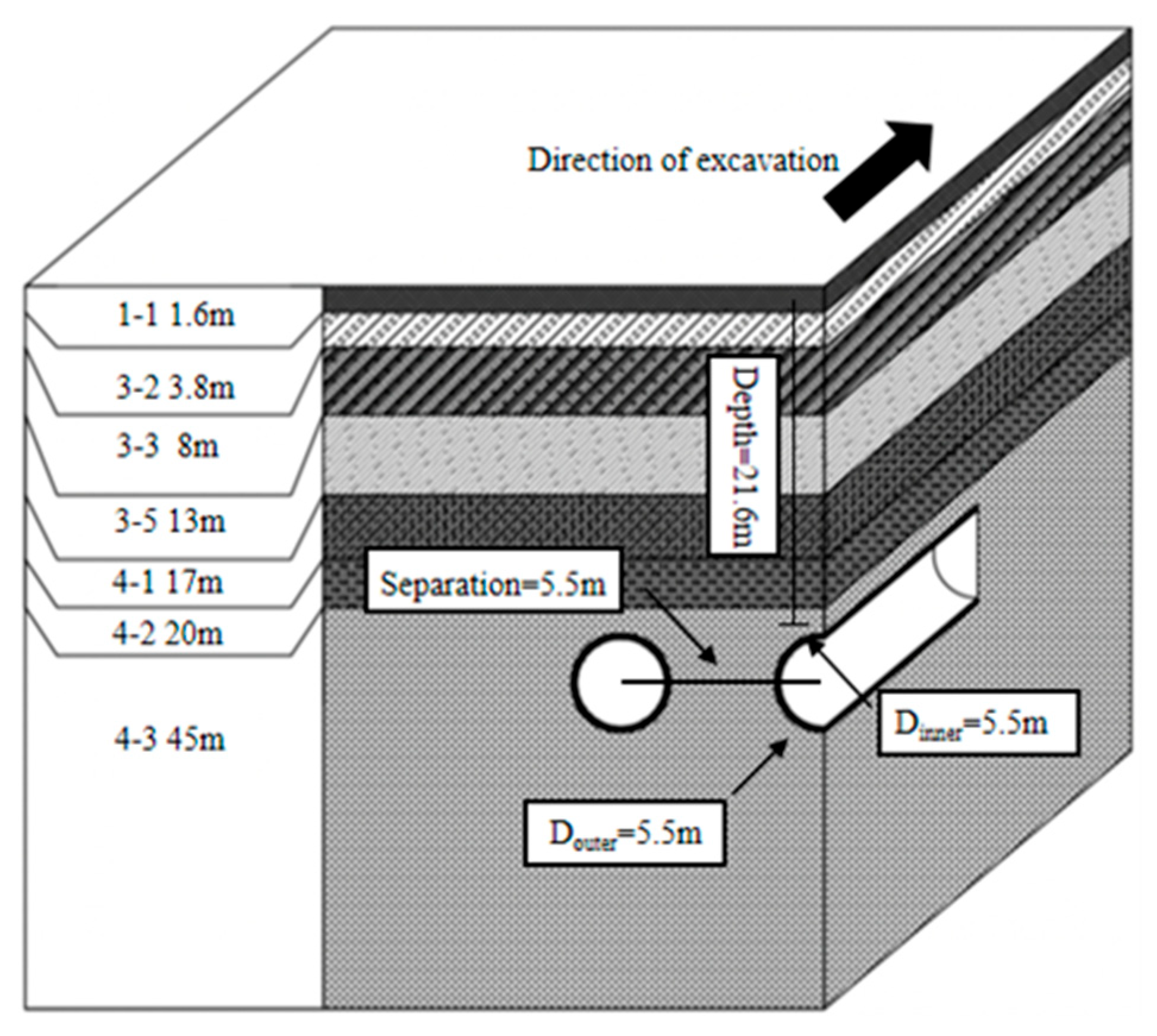
Based on the site investigation data, the stratigraphic sequence from top to bottom is primarily as follows: 1-1 Miscellaneous Fill; 3-2 Silty Clay; 3-3 Mucky Silty Clay interlayered with Silt and Silty Sand; 3-5 Interbedded Silty Clay, Silt, and Silty Sand; 4-1 Silty Sand interlayered with Silt; 4-2 Silty Fine Sand; and 4-3 Fine Sand. Figure 3 presents the site geological profile and the tunnel cross-section.

2.3. Tunnel Engineering Modeling

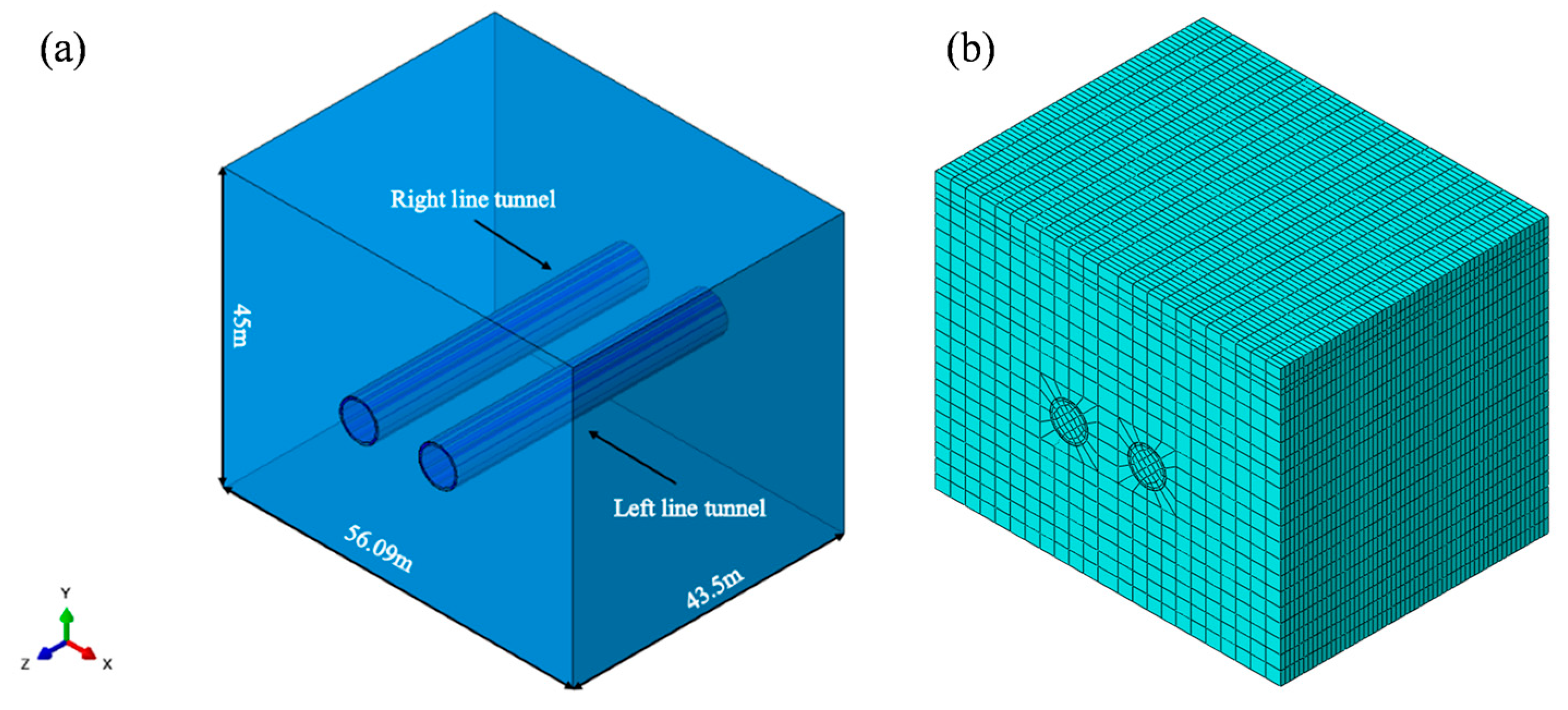
This study employed ABAQUS to develop a three-dimensional numerical model. The model design fully considers boundary effects, adopting overall dimensions of 56.09 m × 45 m × 43.5 m with the Y-direction designated as the vertical direction. The stratification divides the soil components into seven layers according to actual site conditions. The modeling approach uses solid elements for both the soil and segments, while applying shell elements exclusively for the shield shell. For boundary conditions, the analysis constrains all three displacement directions at the bottom of the mesh. Displacements along the four side boundaries are permitted only in the vertical direction, while horizontal displacements are restricted. Table 1 and Table 2 list the physical and mechanical parameters used in the model for the soil, segments, and shield shell.
The model uses a global seed size of 2.4 to achieve higher accuracy in the numerical analysis. The analysis employs a mesh refinement strategy for the excavated soil, tunnel segments, and shield shell, utilizing a local seed size of 1.2 for these components. After mesh encryption, the number of elements was 3712 for the excavated soil, 1972 for the shield shell, and 928 for the segments. The total number of elements in the entire model was 31,726. Figure 4 presents the numerical model and corresponding mesh.
Model change interaction is employed to simulate tunnel excavation, wherein soil excavation, shield machine tunneling, and segment installation are modeled through the operation of killing and activating elements.

3. Random Field Theory and Numerical Realization

3.1. Random Field Generation Method

Kriging is a mathematical technique of spatial interpolation used to determine the correlation of parameters within a specific region [23]. The core of this method lies in utilizing the spatial autocorrelation of observed data by constructing a semivariogram to quantify the spatial dependence between data points at different distances. Based on this, a weighted interpolation prediction is provided for the variable at unknown locations [24]. By implementing the Kriging method, one can not only reveal the statistical characteristics of rock parameters but also capture their spatial variability [2]. This makes it an effective tool for the probabilistic modeling of parameters in practical engineering scenarios. To achieve the spatial characterization of the soil, a Gaussian model was adopted as the variogram for subsequent analysis. The formula for the Kriging method’s variogram is as follows:
γ ( h ) = n 1 exp h l 2 + n 0
where n0 represents the nugget value; n = σ2, in which σ denotes the standard deviation of the parameter; n + n0 represents the sill value; h represents the lag distance; and l represents the autocorrelation length. γ(h) is defined on the range [n0, n + n0]. The covariance function and correlation coefficient play a fundamental role in the random field modeling of geotechnical parameters, as they collectively form the mathematical foundation for describing the spatial variability of geological materials. The corresponding Gaussian-type covariance function and correlation coefficient are as follows:
C ( h ) = n exp h l 2
ξ ( h ) = exp h l 2

3.2. Random Field Mode

To investigate the spatial variability characteristics of geotechnical parameters, Zhu and Zhang [25] established a functional expression that describes the relative distance between any two points in space, considering different anisotropy modes through coordinate rotation and correction [26]. The corresponding correlation scales are listed in Table 3; only the modal types adopted in this study are shown here. The solid black arrows indicate the direction of the principal axis of spatial variation, and the blue dashed arrows represent the direction of the correlation scales. The variables are defined as follows: θ is the direction angle; Δx and Δy represent the Euclidean distances between the two observation points along the horizontal and vertical directions, respectively; and δθ denotes the correlation scale. Combining the direction angle with the definitions of Δx and Δy gives the corresponding transformation relation: Δyx = tanθ.

3.3. Characterization of Random Field Anisotropy

The realization of a spatial random field is dependent on two functions: the covariance function and the variogram [27,28]. These functions define key parameters such as the correlation distance, variance, and separation distance between two points, and quantitatively characterize the variability and correlation of the soil structure. The covariance function plays a crucial role in generating spatial random fields.
The autocorrelation function serves as a key tool for characterizing the variation in geotechnical parameters and quantifying the correlation between two spatial points [29]. This study utilizes a Gaussian-type autocorrelation function. Equation (4) presents the expression for the two-dimensional autocorrelation coefficient:
ρ τ x , τ y = exp τ x 2 δ h 2 + τ y 2 δ v 2
where τx represents the distance between two points along one principal axis; τy represents the distance between two points along the other principal axis; and δh and δv denote the autocorrelation lengths in the direction of the two principal axes, respectively.
The substitution of Equation (4) into Equation (2) subsequently provides the covariance functions for different random field modes.
Under these conditions, the expression for the variogram can be obtained by substituting Equation (4) into Equation (1):
γ ( h ) = n 1 exp τ s 2 δ s 2 + τ s 2 δ s 2 + n 0
The Kriging Gaussian variogram for different random field modes is obtained by substituting the expressions for τx and τy from Table 3 into Equation (5). After determining the specific Variogram, Kriging interpolation can be performed over the entire domain to obtain the conditional random field (CRF) of the parameters.

3.4. Discretization of Random Fields

Prior to application, random field variables must undergo discretization. Only after being decomposed into a finite set of random variables can they be input into finite element or finite difference software for numerical computation. The discretization of random fields thus constitutes a crucial step that bridges conditional random fields (CRF) with deterministic numerical analysis [23]. Among all second-order expansions, the Karhunen-Loève (K-L) expansion achieves the fastest convergence rate, meaning it attains a given accuracy with the fewest number of terms. Its core concept is to represent a random field as a series sum of a set of deterministic functions and uncorrelated random variables [30]. Its mathematical expression is as follows.
For a random field H defined on a spatial domain U ith a mean field μ and a covariance function C(h), its Karhunen-Loève expansion is given by the following:
H = μ + k = 1 M λ k ν f k ( h )
where ν denotes a set of standard orthogonal random variables; λk and fk(h) are the eigenvalues and eigenfunctions of the covariance function C(h).

3.5. Realization of Random Fields

Ground deformation is governed by the physical and mechanical parameters of the geotechnical mass, among which cohesion, internal friction angle, and elastic modulus are the most influential. Therefore, this study focuses on investigating the influence of the spatial variability of soil cohesion, internal friction angle, and elastic modulus on the characteristics of stratum disturbance [5,31]. Since cohesion, internal friction angle, and elastic modulus typically exhibit positively skewed distributions, the normal distribution was selected to model the probability distribution of these random parameters. Furthermore, compared to the cross-correlation between parameters, the inherent variability of each soil parameter itself exerts a more profound influence on ground deformation outcomes. Therefore, cohesion, internal friction angle, and elastic modulus were assumed to be independent random fields in this study. Prior to implementing the conditional random field for soil parameters, the coefficient of variation and the autocorrelation length must be determined. The coefficient of variation (COV) was primarily assigned based on the in situ geotechnical investigation report, synthesizing results from a series of field and laboratory tests including the fiat dilatometer test, cone penetration test, standard penetration test, and direct shear test. Statistics of COV for soil field and laboratory tests are shown in Table 4. The autocorrelation lengths were calculated using the transverse anisotropy mode provided in Table 3 based on the site-specific soil properties and papers with similar soil properties, with horizontal autocorrelation lengths of 10 and vertical autocorrelation lengths of 2, i.e., c = [10, 10, 2] [32,33,34]. Statistical analyses in the literature report that the horizontal correlation length for shear strength parameters of cohesive soils typically ranges from 10 to 62 m, while the vertical correlation length ranges from 0.1 to 8.0 m. The values adopted in this study (horizontal = 10 m; vertical = 2 m) fall within these documented ranges and are consistent with the site-specific layered soil conditions. It is assumed that all other physical and mechanical parameters of the soil remain constant.
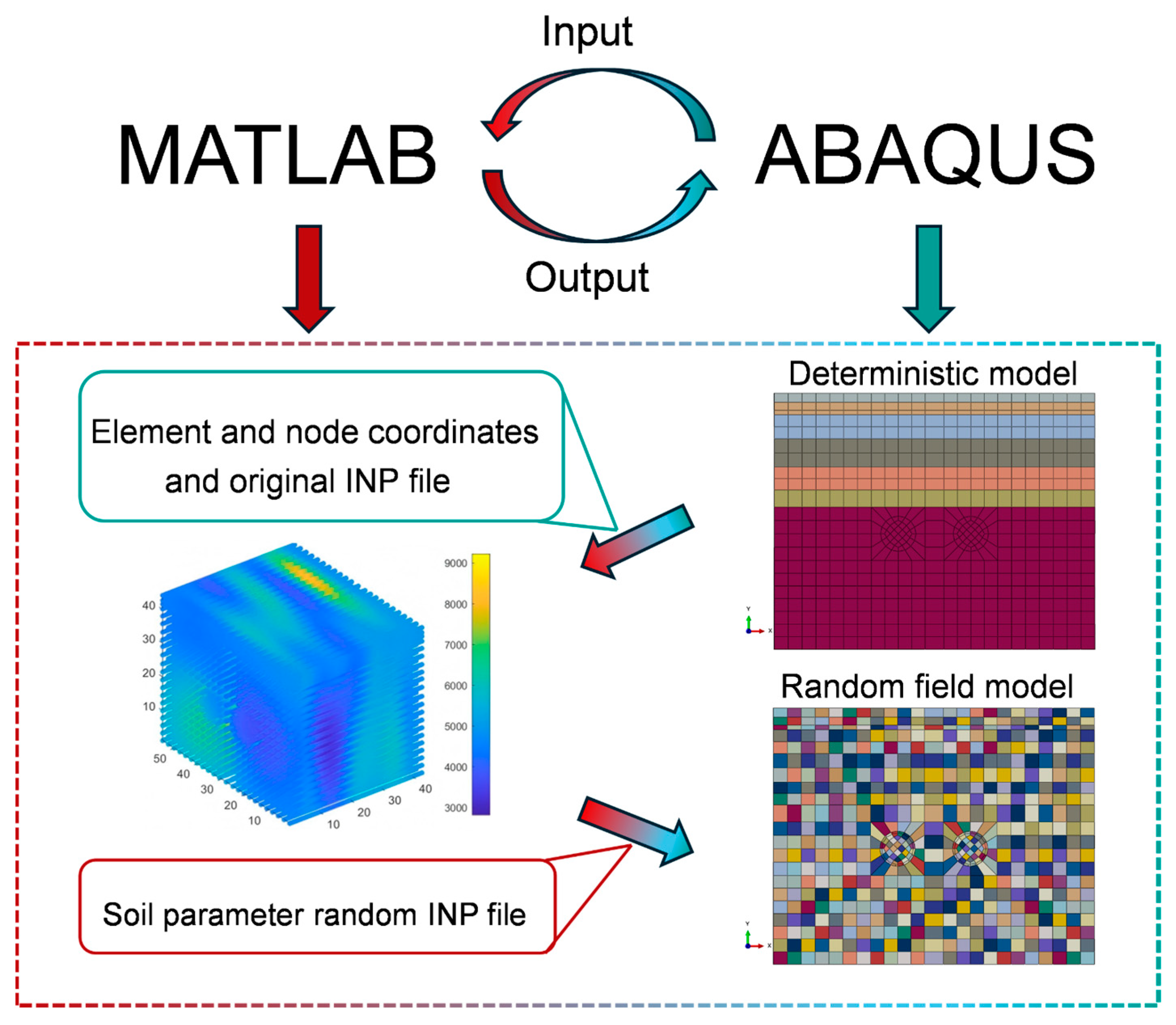
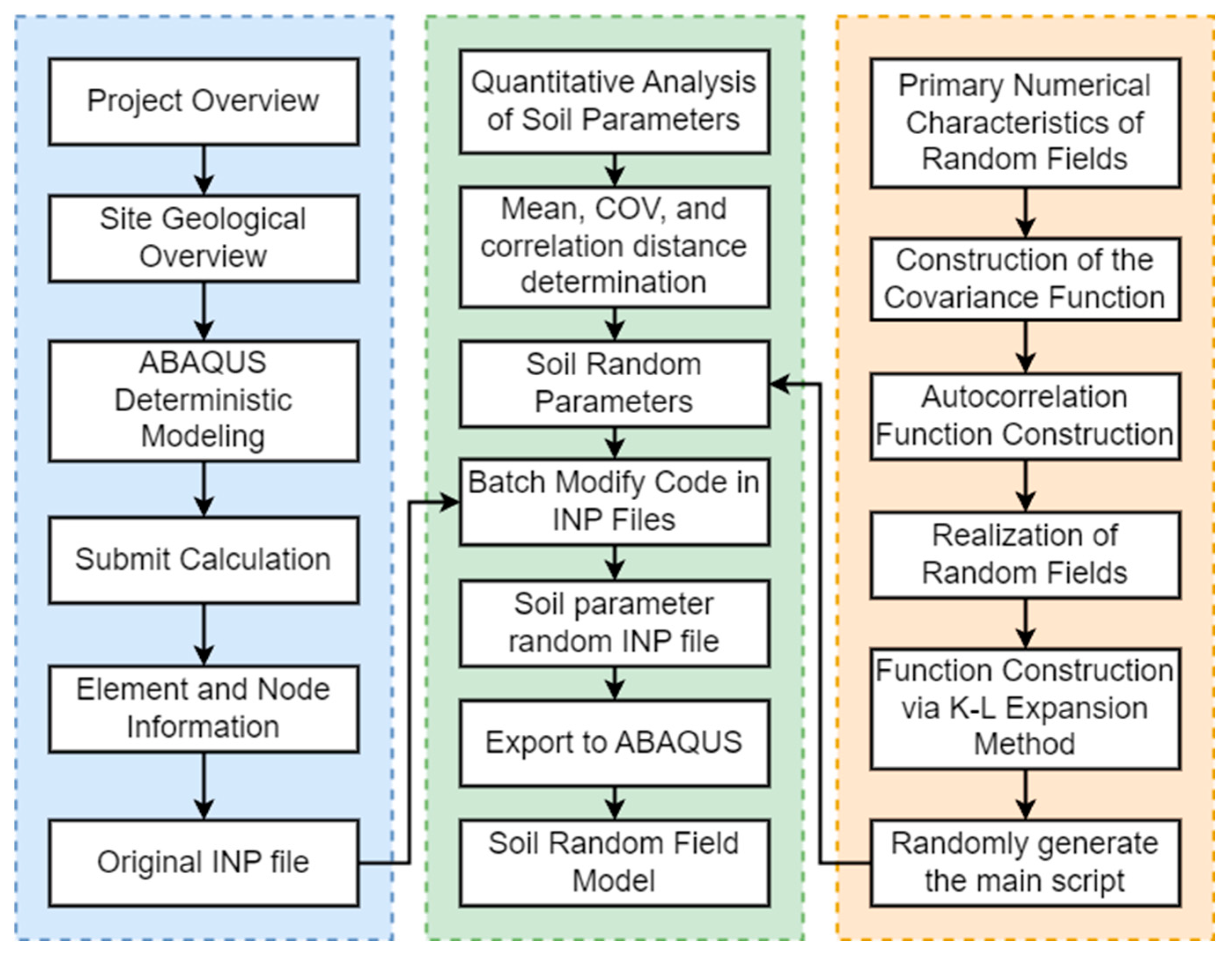
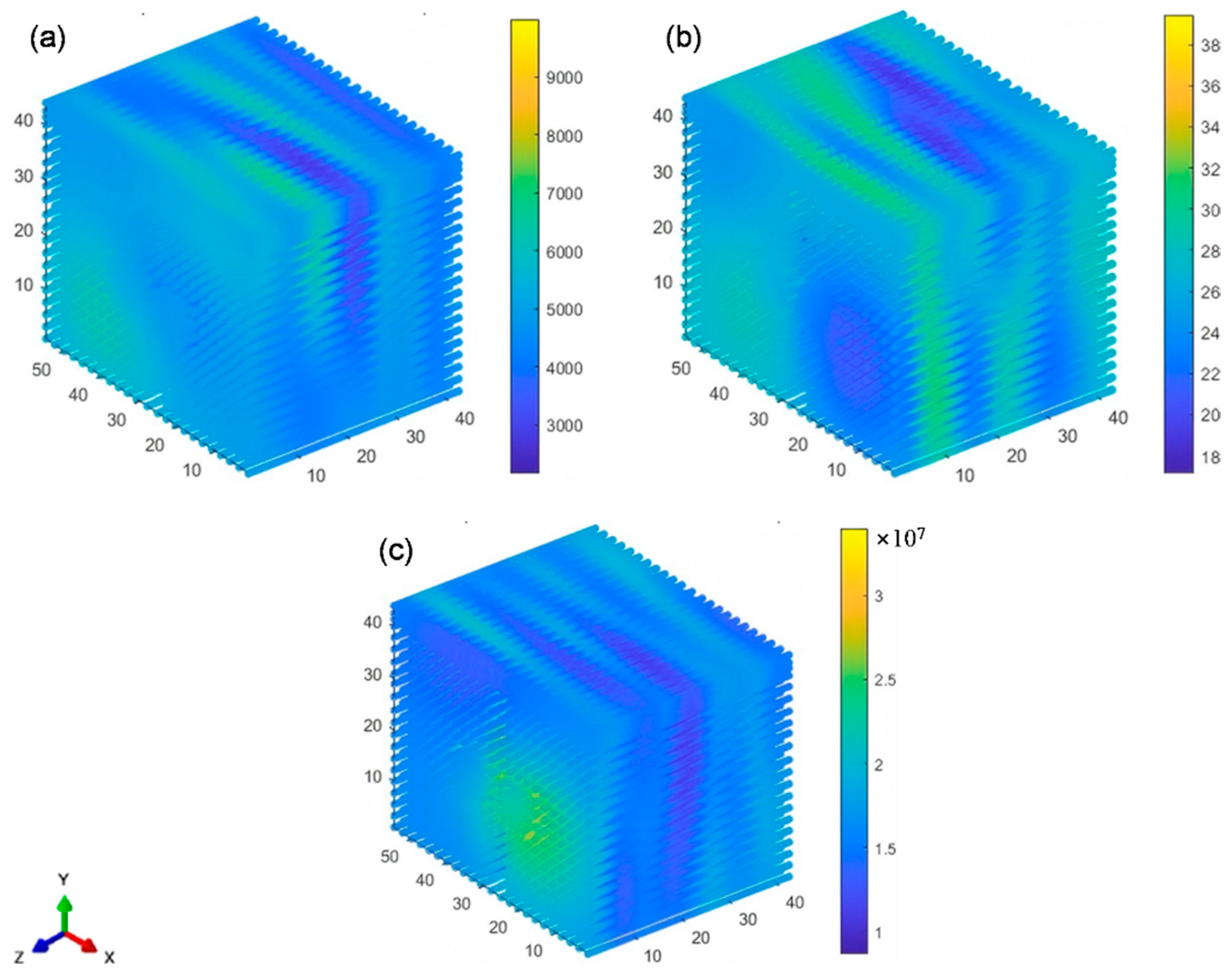
Figure 5 illustrates the coupling process between MATLAB R2024b and ABAQUS 2025. Upon determining the COV and autocorrelation length and inputting them into the MATLAB code for computation, the conditional random field of soil parameters can be obtained. Simultaneously, the deterministic ABAQUS model was submitted for analysis to generate the original INP file. Subsequently, the conditional random field was discretized using the Karhunen-Loève expansion method, and the resulting stochastic soil parameters were incorporated into the INP model file, thereby establishing the numerical model for random field analysis. The realization process of the random field numerical analysis model and the soil parameter conditional random field are shown in Figure 6 and Figure 7.

4. Results

4.1. Deterministic Analysis Results

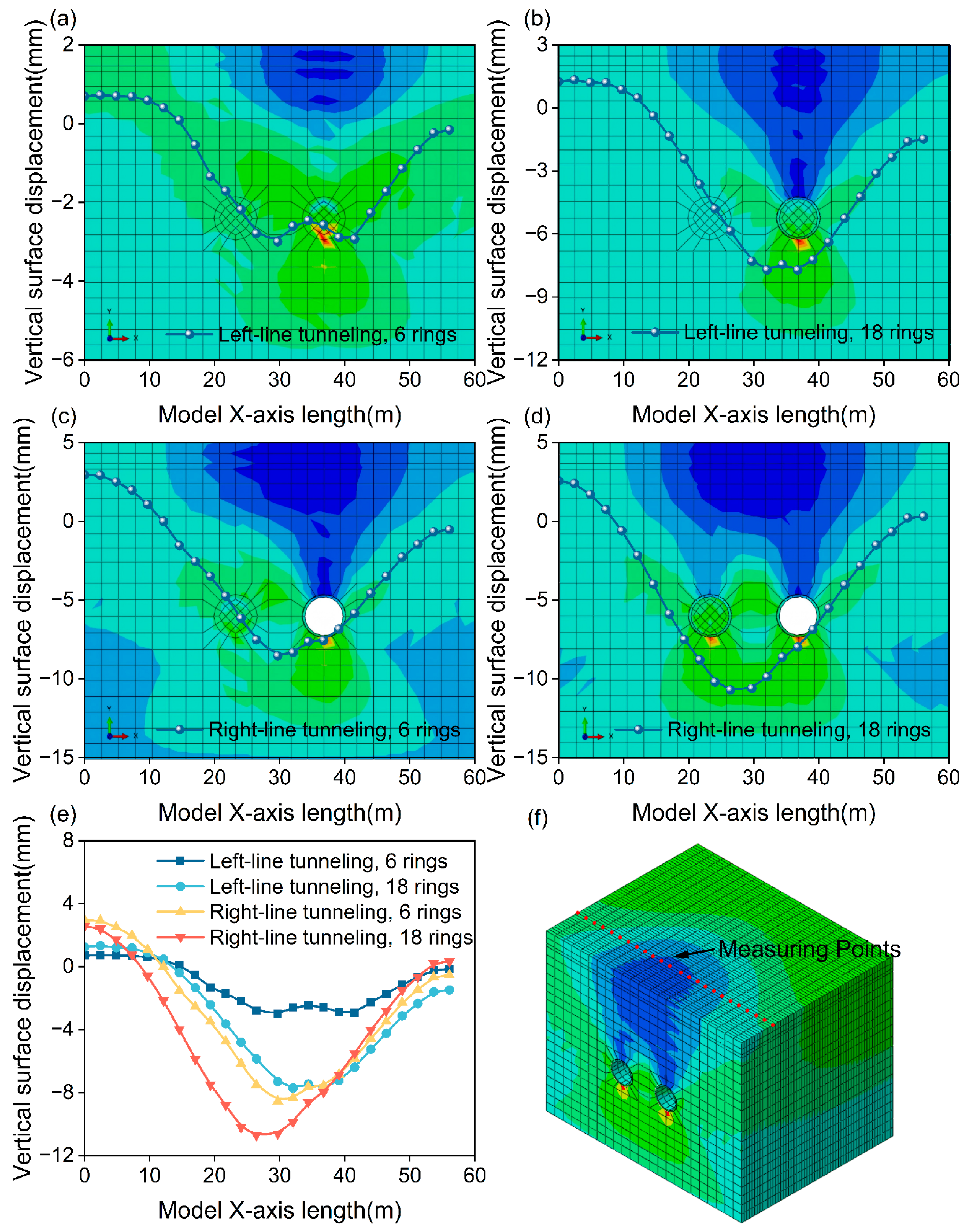
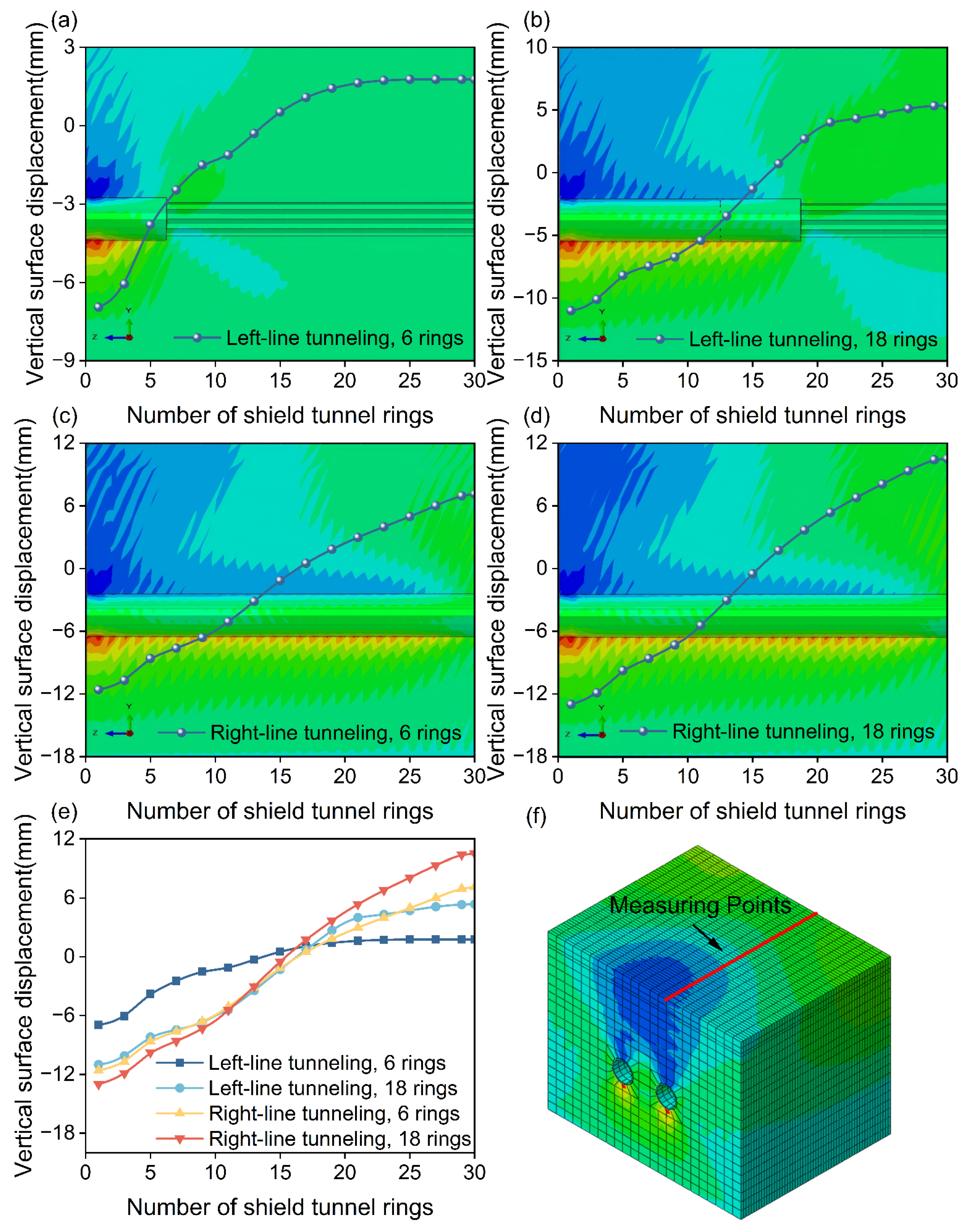
Figure 8 illustrates the surface and stratum deformation responses in the cross-sections of a shield tunnel. When the left tunnel was excavated to the 6th ring (Figure 8a), the ground surface exhibited a typical double-trough (W-shaped) settlement profile. As the excavation advanced to the 18th ring (Figure 8b), the settlement trough began to transition from a double-trough to a single-trough shape. Upon excavating the right tunnel to the 6th ring (Figure 8c), the settlement trough evolved into an asymmetric single-trough, with the maximum settlement located between the axes of the twin tunnels. Finally, when the excavation reached the 18th ring of the right tunnel (Figure 8d), a symmetric single-trough settlement profile was formed. Figure 8e reveals the evolution pattern of the transverse surface settlement profile throughout the entire excavation process: the settlement trough transitions from a double-trough to a single-trough configuration, with the settlement center continuously migrating towards the tunnel centerline.
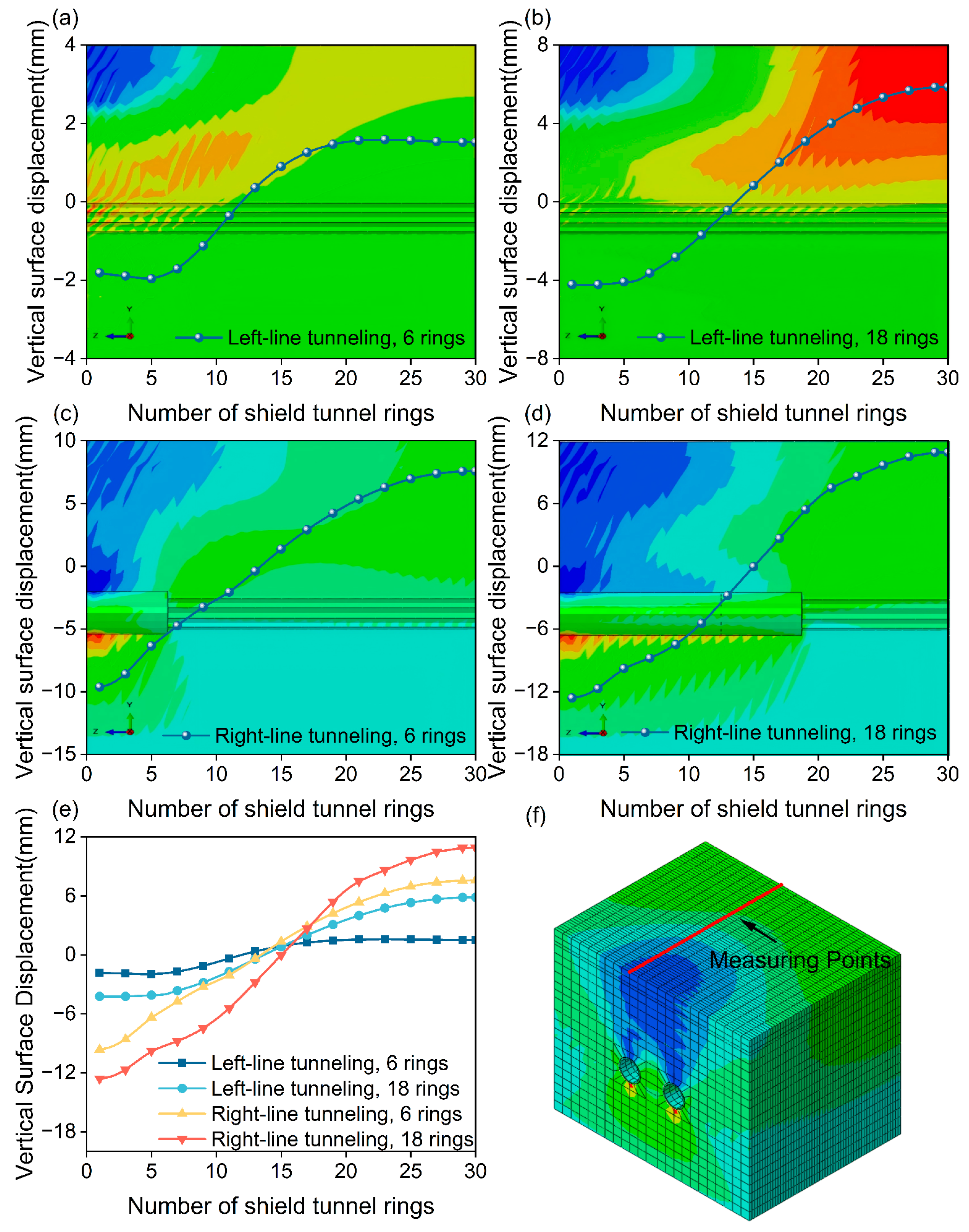
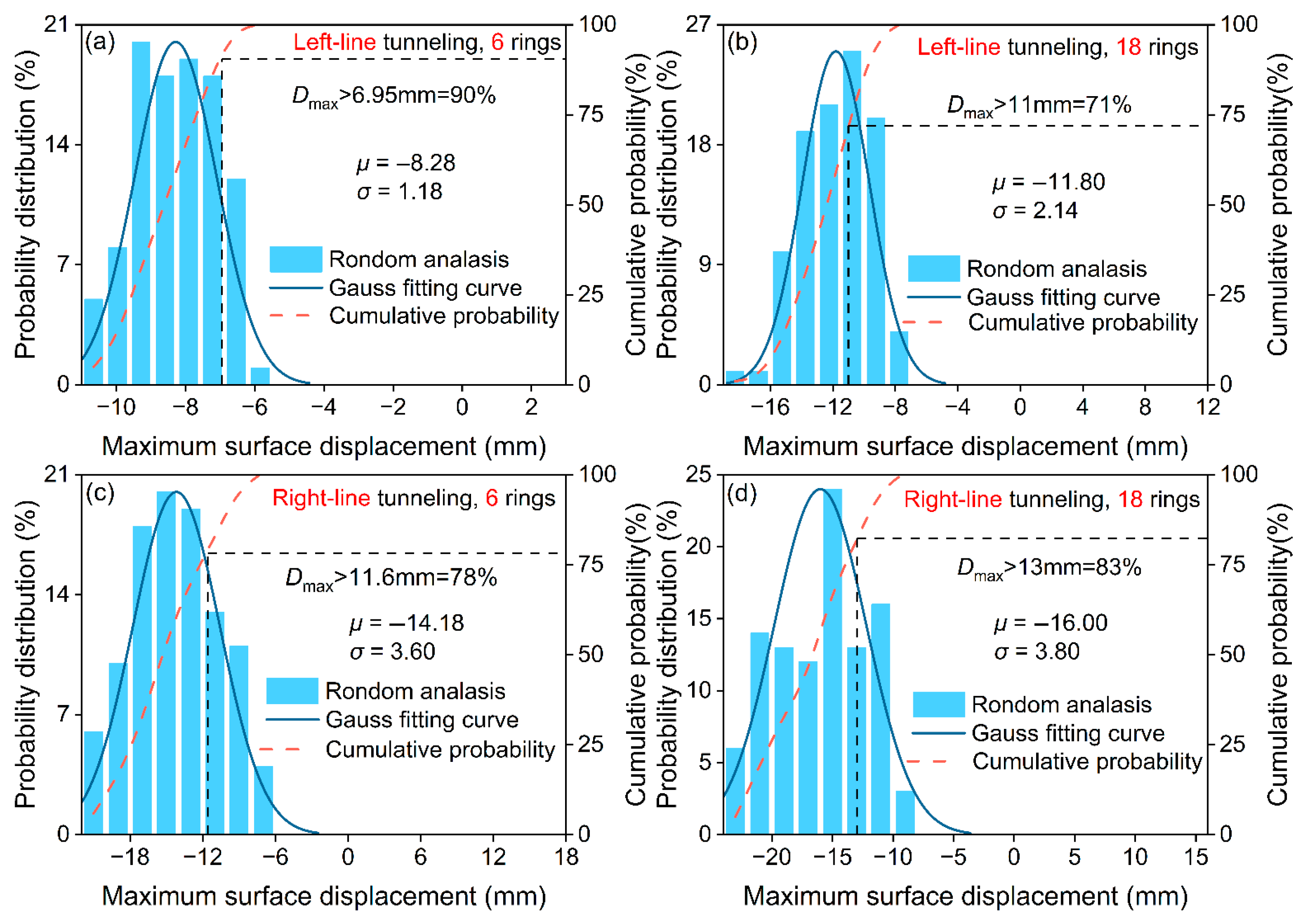
Figure 9 presents the surface and stratum deformation responses along the left-line longitudinal sections. During the excavation of the left line (Figure 9a,b), the longitudinal sections deformation exhibited consistent patterns: soil heaving occurred ahead of the shield machine head, while subsidence occurred behind it. Additionally, a localized uplift appeared directly above the machine head, indicating that the thrust force could mitigate the impact of ground loss. During the excavation of the right line (Figure 9c,d), the deformation patterns of the left line remained essentially unchanged. It is noteworthy that during the left tunnel excavation, the ground surface settlement increased rapidly from −6.95 mm to −11 mm. However, when the right tunnel was excavated to the 6th and 18th rings, the settlement at the left tunnel’s longitudinal section increased only to −11.6 mm and −13 mm, respectively, showing a markedly slower growth rate. Meanwhile, the maximum surface heave continued to increase. Figure 9e further demonstrates that during left tunnel advancement, the maximum settlement changed drastically, while the heave growth remained relatively stable. This indicates that the soil’s self-stabilization capacity can effectively mitigate the effects of stratum loss, particularly in areas farther from the excavation zone. In contrast, the shield thrust produces more extensive and significant disturbance to the soil mass.
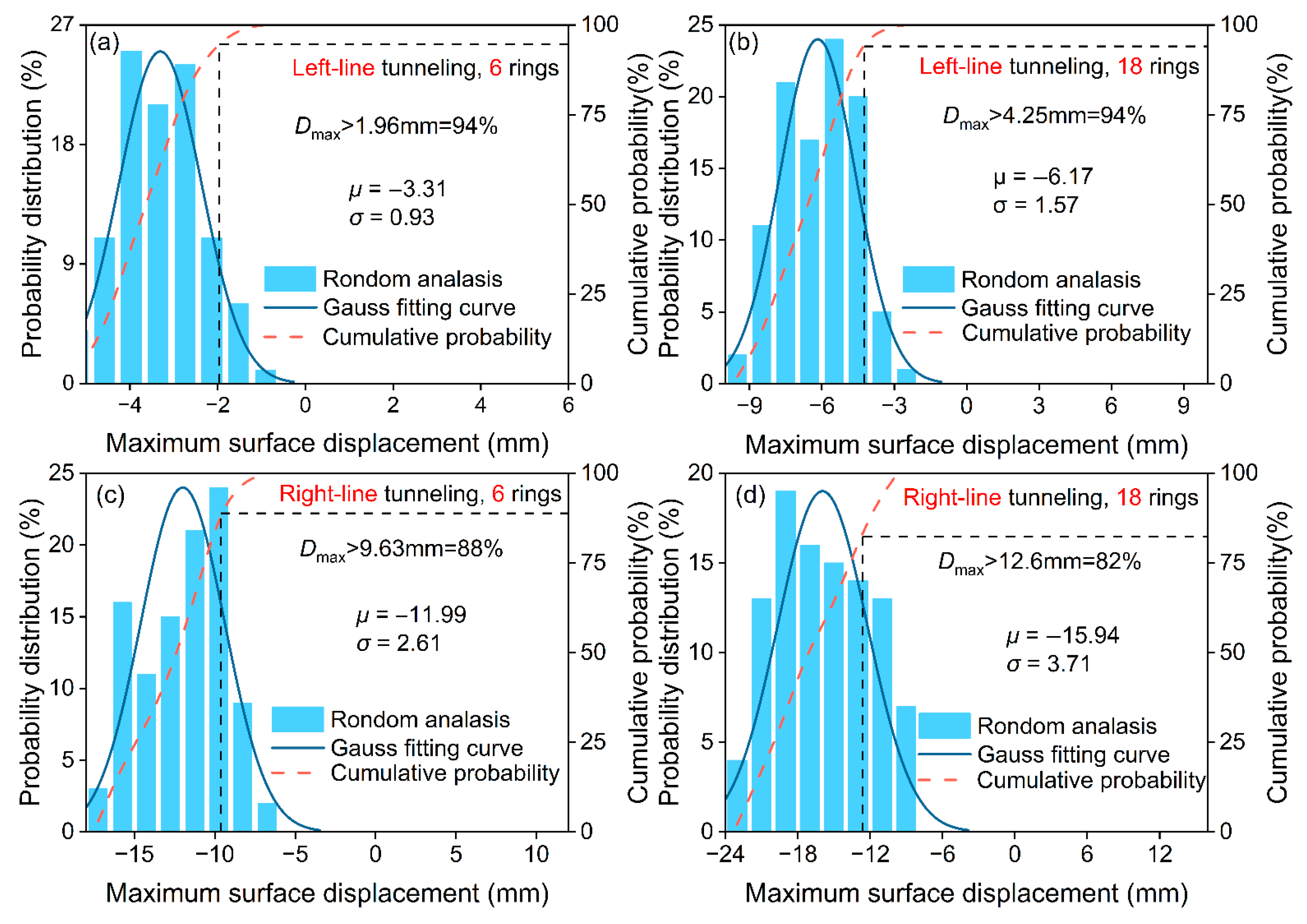
Figure 10 documents the surface and stratum deformation response along the right-line longitudinal sections. During the advancement phase of the left tunnel (Figure 10a,b), the longitudinal deformation pattern of the right tunnel was similar to that of the left tunnel, with the surface settlement gradually increasing from −1.96 mm to −4.25 mm. In comparison, the maximum heave value rose markedly from 1.59 mm to 5.87 mm, indicating that the development of heave was more pronounced than the settlement. After the right tunnel commenced excavation (Figure 10c), the maximum surface settlement in the longitudinal sections increased sharply to −9.63 mm. When the excavation progressed to the 18th ring (Figure 10d), the maximum settlement accumulated to −12.6 mm, but the growth rate showed a decelerating trend. This rate characteristic is more clearly demonstrated in the comparative analysis presented in Figure 10e.

4.2. Random Field Analysis Results

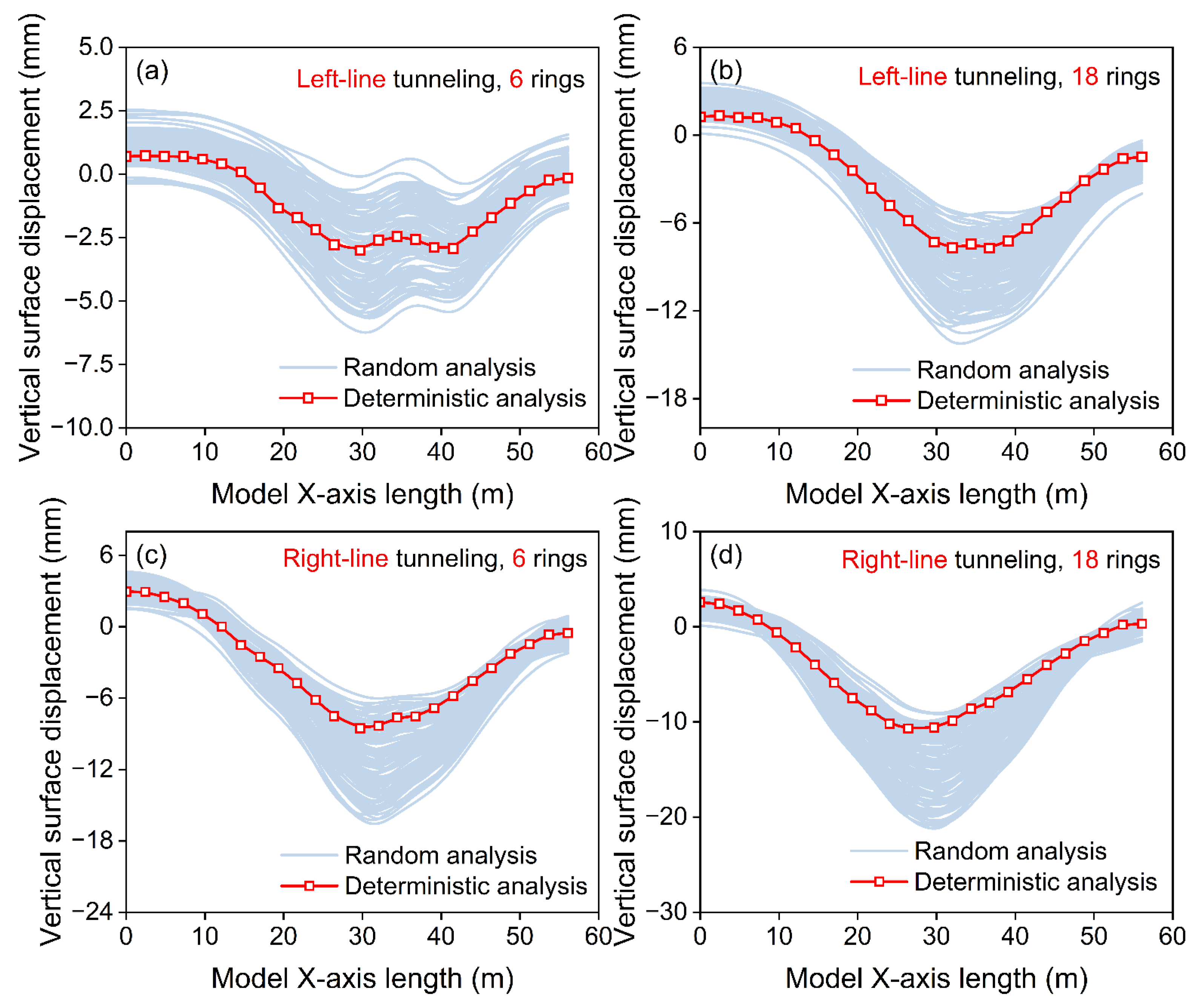
To balance precision and computational cost, a total of 100 sets of random field models were analyzed. Figure 11 compares the results of random analysis of surface deformation in cross-sections. In terms of deformation morphology, the random analysis results are generally consistent with the evolutionary trend observed in the deterministic analysis. However, the former reveals more pronounced asymmetry, with the deformation curves distributed on both sides of the deterministic result, indicating a significant influence of soil spatial distribution on the deformation pattern.
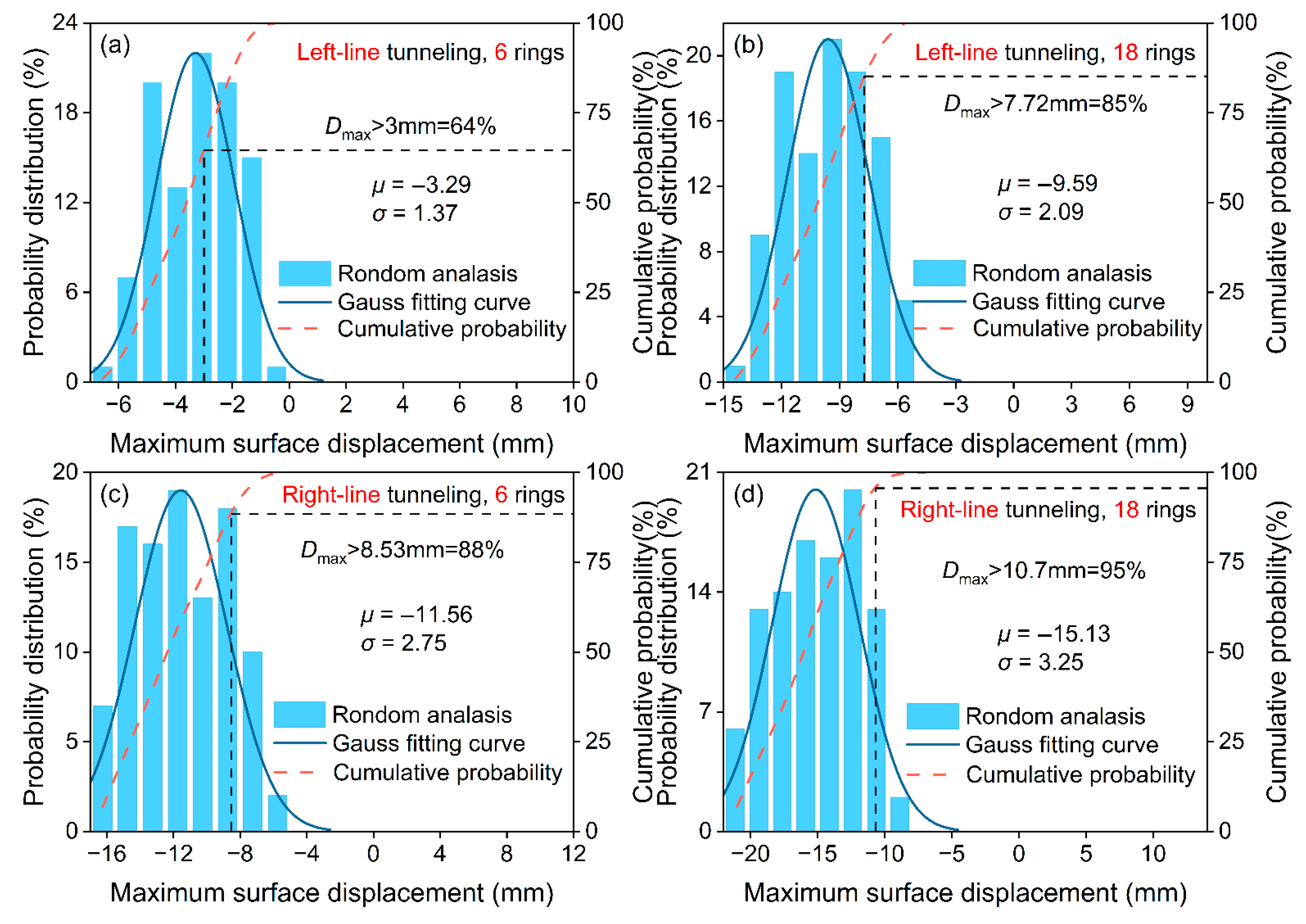
Regarding the deformation magnitude (Figure 12), taking the maximum surface settlement as an example, the results from the random analysis gradually increased with tunnel advancement: when the left tunnel advanced to the 6th ring, the settlement range was 0 to −7 mm (median: −3 mm); at the 18th ring, it was −5 to −15 mm (median: −9.59 mm). When the right tunnel advanced to the 6th ring, the range was −5 to −17 mm (median: −11.56 mm), and at the 18th ring, it was −8 to −21 mm (median: −15.13 mm). The proportions of random analysis results exceeding the deterministic results are 64%, 85%, 85%, and 95%, respectively. Approximately 80% of the random settlement values are higher than the deterministic results. This indicates that the deterministic method tends to underestimate the maximum surface settlement and fails to fully capture the potential settlement risk associated with soil spatial variability.
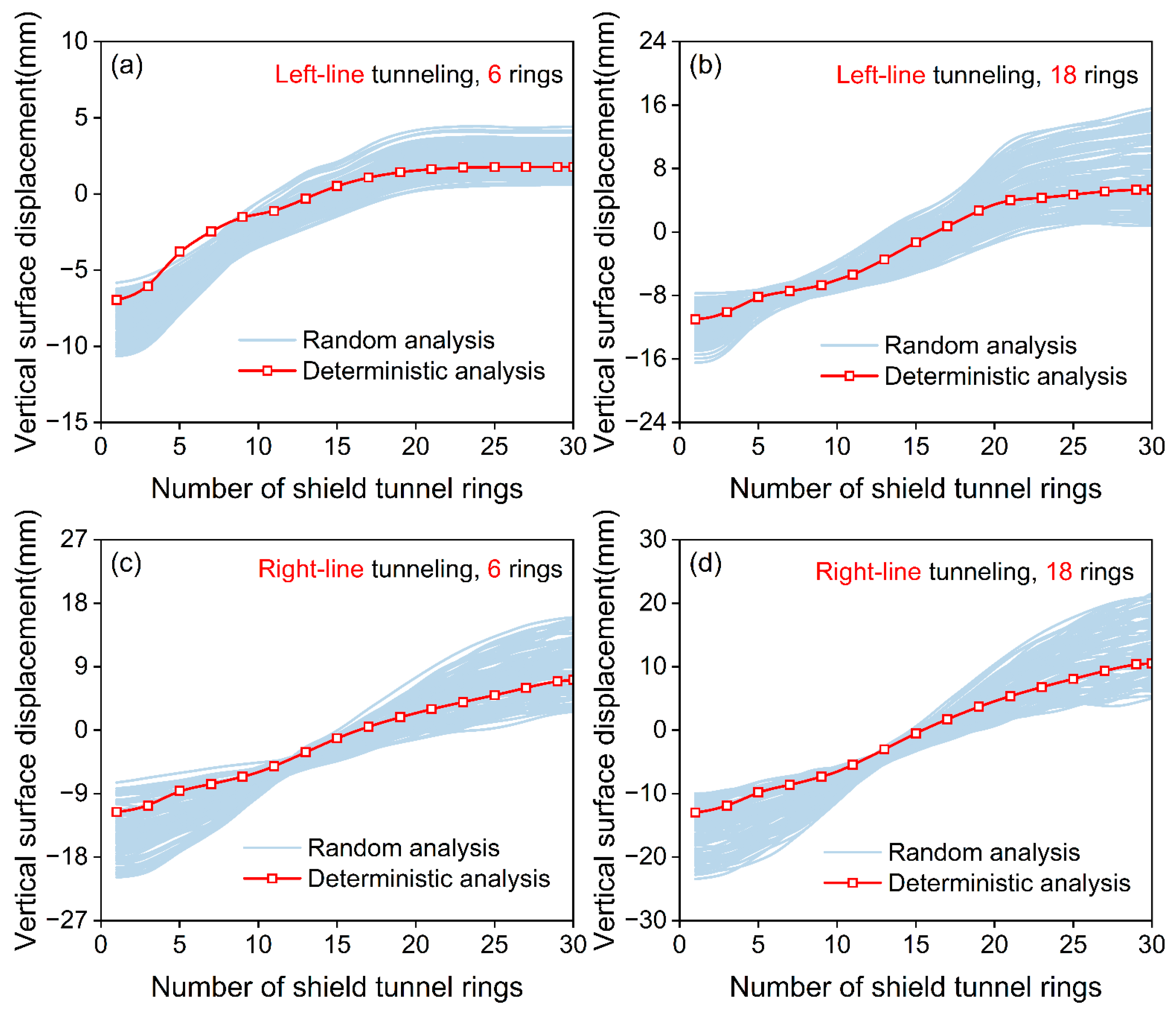
Figure 13 depicts the random analysis results of the longitudinal surface deformation along the left tunnel. In terms of deformation morphology, the random analysis results are generally consistent with the deterministic analysis, both of which exhibit the typical longitudinal deformation characteristics induced by shield tunneling.
Regarding the deformation magnitude (Figure 14), the random analysis shows that the maximum surface settlement progressively develops with the advancement of tunneling: when the left tunnel advanced to the 6th ring, the settlement range was −5 to −11 mm (median: −8.28 mm); at the 18th ring, it was −7 to −19 mm (median: −11.8 mm). When the right tunnel advanced to the 6th ring, the range was −6 to −22 mm (median: −14.18 mm), and at the 18th ring, it was −9 to −24 mm (median: −16.00 mm). The proportions of random analysis results exceeding the deterministic results are 90%, 71%, 78%, and 83%, respectively.
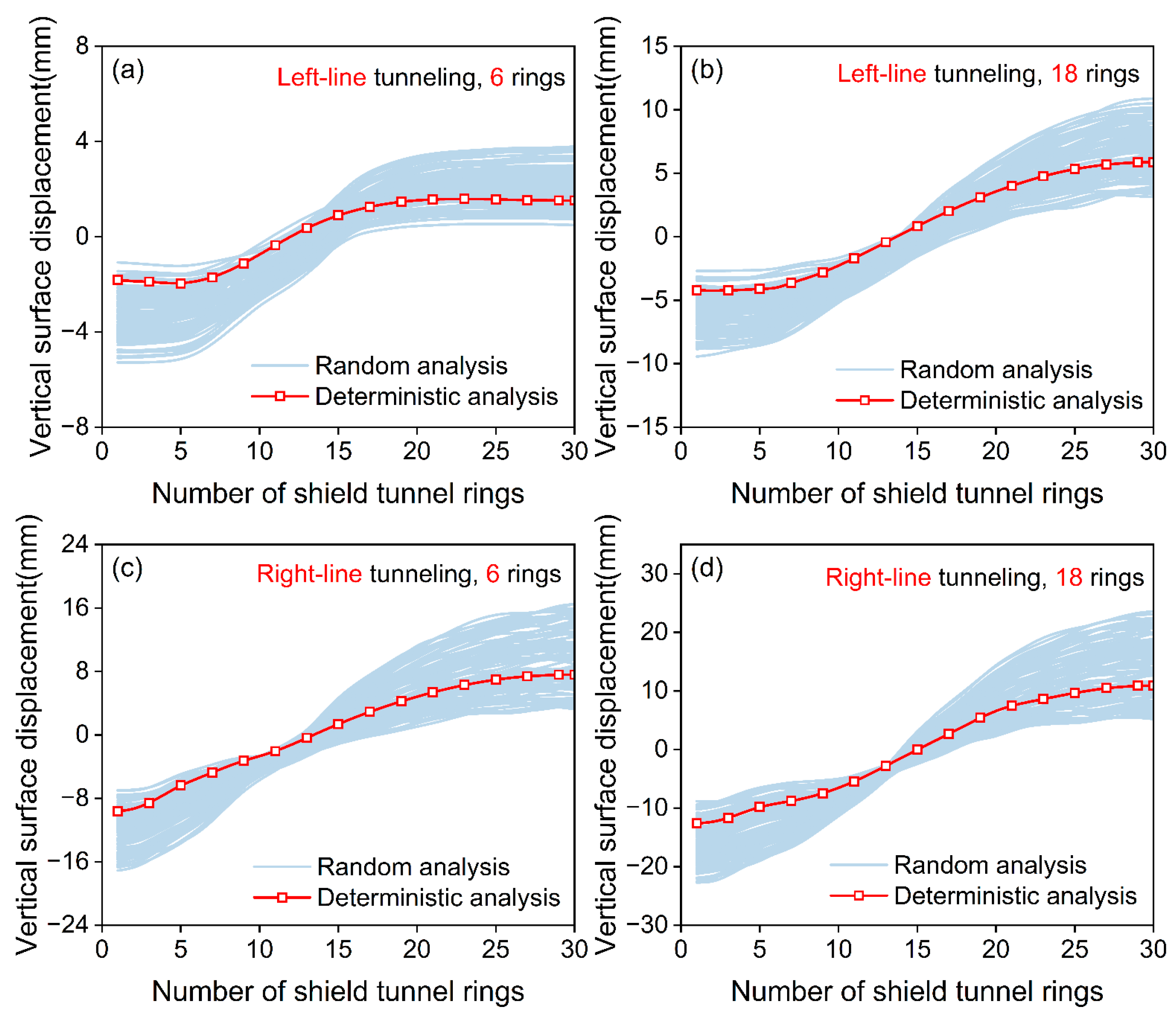
Figure 15 presents the random analysis results of the longitudinal surface deformation along the right tunnel. In terms of deformation morphology, the random analysis results are generally consistent with the deterministic results, indicating that the spatial variability of soils does not alter the overall deformation mechanism.
Regarding the deformation magnitude (Figure 16), the random analysis indicates that the maximum surface settlement increases progressively with tunnel advancement. When the left tunnel advanced to the 6th ring, the settlement range was 0 to −6 mm (median: −3.31 mm); at the 18th ring, it was −2 to −10 mm (median: −6.17 mm). During the right tunnel’s advancement to the 6th ring, the range was −6 to −18 mm (median: −11.99 mm), and at the 18th ring, it was −8 to −24 mm (median: −15.94 mm). The proportions of random analysis results exceeding the deterministic results are 94%, 94%, 88%, and 82%, respectively.

4.3. Stratum Disturbance Characteristics Induced by Dual-Line Shield Tunneling

Based on the results of prior deterministic and random field numerical analysis, a comprehensive understanding of stratigraphic disturbance characteristics is established from two dimensions: the dynamic evolution patterns of surface deformation and the spatial zoning of Stratum disturbance.

4.3.1. The Dynamic Evolution Patterns of Surface Deformation

The shape of the transverse surface settlement trough transitions progressively from a “W”-shaped double-trough to a “V”-shaped single-trough as excavation advances, while the width of the settlement trough increases over time. The settlement center, influenced by the position of the shield machine head, shifts from the sides of the left tunnel to the area between the twin tunnels. In the longitudinal sections, the ground generally follows the typical deformation pattern of heaving ahead of the shield machine and settling behind it. Additionally, the tunnel segments play a controlling role in soil deformation, significantly reducing surface settlement. The consideration of soil spatial variability has a significant impact on the results of surface deformation analysis, as evidenced by both the deformation patterns and magnitudes. Specifically, the surface deformation curve from the random analysis exhibits pronounced asymmetry, and approximately 80% of the random analysis results exceed those of the deterministic analysis.

4.3.2. The Spatial Zoning of Stratum Disturbance

The stratum loss and shield thrust are the primary factors causing ground surface deformation. Based on the results from deterministic and random field analyses, and using soil strain as the zoning criterion together with references, the stratum disturbance induced by ground loss and shield thrust can be categorized into the following four primary zones [35,36]:
  • Disturbance Zone: This zone is defined as the area directly subjected to stratum loss and shield thrust, where soil strain exceeds 10 mm. The lateral range of the zone is 1 tunnel diameter, and the vertical range is 2 tunnel diameters. Within this zone, the original soil structure undergoes severe disruption.
  • Secondary Disturbance Zone: This zone is indirectly influenced by stratum loss and shield thrust, where soil strain ranges from 5 to 10 mm. The lateral range of the zone is 2 tunnel diameters, and the vertical range is 3 tunnel diameters. Within this zone, the soil structure is moderately disturbed, while portions of the soil mass retain a certain degree of strength and stability.
  • Transition Zone: This zone is still subjected to stratum loss and shield thrust, but to a lesser extent, where soil strain ranges from 1 to 5 mm. The lateral range of the zone is 3 tunnel diameters, and the vertical range is 4 tunnel diameters. Within this zone, the soil is only slightly affected.
  • Undisturbed Zone: This zone is located far from the construction area of the shield tunnel and is minimally affected by stratum loss and shield thrust, where soil strain is less than 1 mm. The lateral range of the zone is 4 tunnel diameters outward, and the vertical range is 5 tunnel diameters outward.
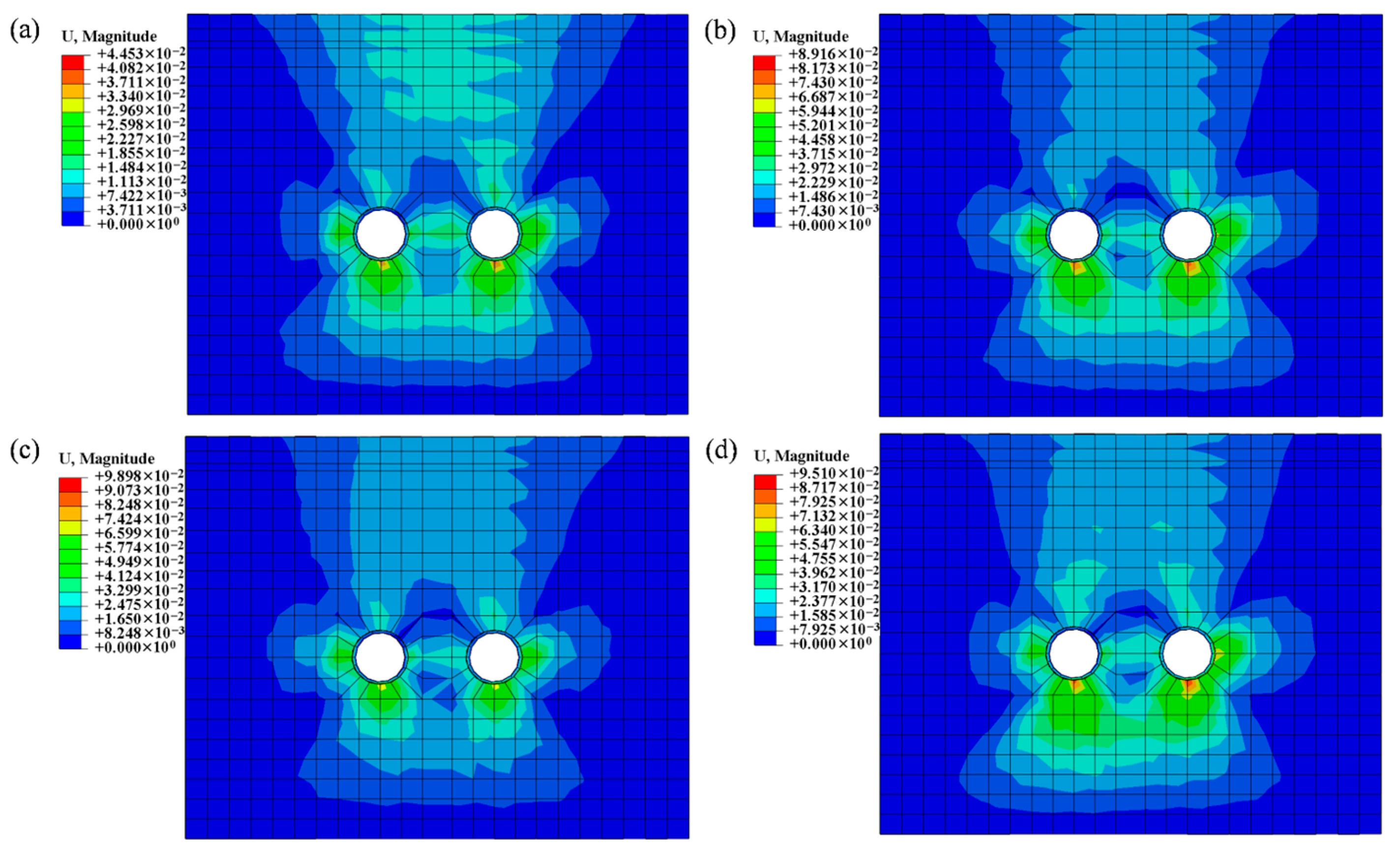
The zoning of stratum disturbance is shown in Figure 17. In the figure, the green and orange-red areas represent the Disturbance Zone, the light blue area denotes the Secondary Disturbance Zone, the blue area indicates the Transition Zone, and the dark blue area corresponds to the Undisturbed Zone. Figure 17a presents the deterministic analysis results, while Figure 17b–d display the results from the random analysis. The figure clearly demonstrates the influence of soil spatial variability on both the deformation pattern and magnitude, as well as the differences and similarities in the spatial distribution of the stratum disturbance zones.

5. Conclusions

This study employed random field theory and numerical analysis methods, taking the tunnel section between Kepugongyuan Station and Gangduhuayuan Station on Wuhan Metro Line 12 as the case. A deterministic numerical model was established, and random field models for soil cohesion, internal friction angle, and elastic modulus were realized. Through systematic analysis of the results from both deterministic and random field simulations, the following conclusions are drawn:
(1)
In the cross-sections, the ground settlement trough induced by dual-line shield tunneling evolves from a “W”-shaped double-trough profile to a “V”-shaped single-trough profile with excavation advance. The settlement center migrates from the sides of the left tunnel towards the centerline between the two tunnels. In the longitudinal sections, the surface deformation follows a consistent pattern: soil heaves ahead of the shield machine and settles behind it.
(2)
If the spatial variability of soil parameters is not considered, the calculated ground deformation will be underestimated. As an example of the maximum surface settlement, nearly 80% of the random analysis results are greater than those from the deterministic analysis. Taking the right-line longitudinal section as an example, during the 18th ring of right-line excavation, the maximum surface settlement from random analysis reached −24 mm, while the determined analysis value was −15.94 mm, indicating a significant difference.
(3)
Stratum disturbance caused by stratum loss and shield thrust force can be categorized into four primary zones based on influence intensity: the Disturbance Zone is classified as an area extending horizontally 1 tunnel diameter and vertically 2 tunnel diameters; the Secondary Disturbance Zone extends horizontally 2 tunnel diameters and vertically 3 tunnel diameters. The Transition zone is classified as extending horizontally to 3 times the tunnel diameter and vertically to 4 times the tunnel diameter; the Undisturbed Zone is classified as extending horizontally beyond 4 times the tunnel diameter and vertically beyond 5 times the tunnel diameter. The proposed zoning framework was established based on the specific geology and construction parameters of the Wuhan case. However, its core premise that disturbance intensity decays with distance (in tunnel diameters, D) from the source is transferable. For application to projects with markedly different conditions, the key lies in recalibrating the zone boundaries (e.g., the multiplier of D) through project-specific numerical analyses or monitoring data. This calibration process, rather than the framework itself, would be project-dependent.
However, it should be specifically noted that due to the unavailability of actual field settlement monitoring data for this line, the results presented herein cannot yet be directly validated against measured data. This limitation partially restricts the empirical persuasiveness of the research conclusions and represents a primary constraint of this study. Future work that incorporates field monitoring data to compare numerical simulation results with measured outcomes would significantly enhance the reliability and engineering reference value of this research. We also regard this as a crucial direction for subsequent research to further validate and refine the model and methodology proposed in this paper.

Author Contributions

Conceptualization, Y.L. (Yuan Lyu) and X.L.; methodology, Y.L. (Yuan Lyu); software, Y.L. (Yuan Lyu) and C.H.; investigation, D.H. and J.P.; data curation, Z.W.; writing—original draft preparation, Y.L. (Yong Liu); writing—review and editing, Y.L. (Yong Liu). All authors have read and agreed to the published version of the manuscript.

Funding

This research was funded by the National Natural Science Foundation of China (Grant No. 42072309).

Institutional Review Board Statement

Not applicable.

Informed Consent Statement

Not applicable.

Data Availability Statement

The data that support the findings of this study are available from the corresponding author upon reasonable request.

Conflicts of Interest

Authors Chaoqun Huang, Dong Huang, Jing Peng were employed by the company Wuhan Municipal Construction Group Co., Ltd. The remaining authors declare that the research was conducted in the absence of any commercial or financial relationships that could be construed as a potential conflict of interest.

Abbreviations

The following abbreviations are used in this manuscript:
DTunnel Diameter
K-LKarhunen–Loève
FEMFinite Element Method
FDMFinite Difference Method
BEMBlade Element Momentum Theory
EPBEarth Pressure Balance
GISGeographic Information Systems
CRFConditional Random Field
COVCoefficient Of Variation
DmaxMaximum surface displacement

References

  1. Gan, X.; Yu, J.; Gong, X.; Liu, N.; Zheng, D. Behaviours of Existing Shield Tunnels Due to Tunnelling underneath Considering Asymmetric Ground Settlements. Undergr. Space 2022, 7, 882–897. [Google Scholar] [CrossRef]
  2. Chen, K.; Jiang, Q. Evaluation of Spatial Variability Characteristics Based on Anisotropic Modes of Random Fields. J. Rock Mech. Geotech. Eng. 2025, 18, 494–508. [Google Scholar] [CrossRef]
  3. Gan, X.; Yu, J.; Gong, X.; Zhu, M. Probabilistic Analysis for Twin Tunneling-Induced Longitudinal Responses of Existing Shield Tunnel. Tunn. Undergr. Space Technol. 2022, 120, 104317. [Google Scholar] [CrossRef]
  4. Pan, Q.; Dias, D. Probabilistic Evaluation of Tunnel Face Stability in Spatially Random Soils Using Sparse Polynomial Chaos Expansion with Global Sensitivity Analysis. Acta Geotech. 2017, 12, 1415–1429. [Google Scholar] [CrossRef]
  5. Huang, H.W.; Xiao, L.; Zhang, D.M.; Zhang, J. Influence of Spatial Variability of Soil Young’s Modulus on Tunnel Convergence in Soft Soils. Eng. Geol. 2017, 228, 357–370. [Google Scholar] [CrossRef]
  6. Liu, J.; Shi, C.; Wang, Z.; Lei, M.; Zhao, D.; Cao, C. Damage Mechanism Modelling of Shield Tunnel with Longitudinal Differential Deformation Based on Elastoplastic Damage Model. Tunn. Undergr. Space Technol. 2021, 113, 103952. [Google Scholar] [CrossRef]
  7. Shi, C.; Wang, Z.; Gong, C.; Liu, J.; Peng, Z.; Cao, C. Prediction of the Additional Structural Response of Segmental Tunnel Linings Induced by Asymmetric Jack Thrusts. Tunn. Undergr. Space Technol. 2022, 124, 104471. [Google Scholar] [CrossRef]
  8. Zhou, S.; Di, H.; Xiao, J.; Wang, P. Differential settlement and induced structural damage in a cut-and-cover subway tunnel in a soft deposit. J. Perform. Constr. Facil. 2016, 30, 04016028. [Google Scholar] [CrossRef]
  9. Lumb, P. The Variability of Natural Soils. Can. Geotech. J. 1966, 3, 74–97. [Google Scholar] [CrossRef]
  10. Vanmarcke, E.H. Probabilistic Modeling of Soil Profiles. J. Geotech. Eng. Div. 1977, 103, 1227–1246. [Google Scholar] [CrossRef]
  11. Straub, D.; Papaioannou, I. Bayesian Updating with Structural Reliability Methods. J. Eng. Mech. 2015, 141, 04014134. [Google Scholar] [CrossRef]
  12. Tian, M.; Li, D.-Q.; Cao, Z.-J.; Phoon, K.-K.; Wang, Y. Bayesian Identification of Random Field Model Using Indirect Test Data. Eng. Geol. 2016, 210, 197–211. [Google Scholar] [CrossRef]
  13. Geyer, S.; Papaioannou, I.; Straub, D. Bayesian Analysis of Hierarchical Random Fields for Material Modeling. Probabilistic Eng. Mech. 2021, 66, 103167. [Google Scholar] [CrossRef]
  14. Yan, S.; Guo, L. Calculation of Scale of Fluctuation and Variance Reduction Function. Trans. Tianjin Univ. 2015, 21, 41–49. [Google Scholar] [CrossRef]
  15. Nath, K.; Dutta, A.; Hazra, B. An Adaptive Scheme for Random Field Discretization Using KL Expansion. Eng. Comput. 2022, 38, 2937–2954. [Google Scholar] [CrossRef]
  16. Hamrouni, A.; Dias, D.; Sbartai, B. Soil spatial variability impact on the behavior of a reinforced earth wall. Front. Struct. Civ. Eng. 2020, 14, 518–531. [Google Scholar] [CrossRef]
  17. Gan, X.; Liu, N.; Bezuijen, A.; Gong, X. Random Responses of Shield Tunnel to New Tunnel Undercrossing Considering Spatial Variability of Soil Elastic Modulus. Appl. Sci. 2024, 14, 3949. [Google Scholar] [CrossRef]
  18. Zhang, S.; Wang, Y.; Gao, Q.; Ma, X.; Zhou, H.; Wang, Z. Probabilistic analysis of ground settlement induced by tunnel excavation in multilayered soil considering spatial variability. Comput. Geotech. 2024, 165, 105951. [Google Scholar] [CrossRef]
  19. Ai, Z.Y.; Ye, Z.K.; Huang, H.W.; Hu, K.X. Stress Analysis of Elliptical Tunnels in an Orthogonally Anisotropic Elastic Full-Space under Non-Uniform in-Situ Stress. Int. J. Numer. Anal. Methods Geomech. 2024, 48, 517–537. [Google Scholar]
  20. Zhang, Y.; Liu, X.; Yuan, S.; Zhang, T.; Song, J.; Chen, W. Probabilistic stability analysis of qanat tunnels in c-φ soil considering soil spatial variability. Eur. J. Environ. Civ. Eng. 2023, 27, 3763–3783. [Google Scholar] [CrossRef]
  21. Zhang, H.; Luo, F.; Yang, S.; Wu, Y. Probabilistic Analysis of Crown Settlement in High-Speed Railway Tunnel Constructed by Sequential Excavation Method Considering Soil Spatial Variability. Tunn. Undergr. Space Technol. 2023, 140, 105342. [Google Scholar] [CrossRef]
  22. Wang, Z.; Shi, C.; Chen, H.; Peng, Z.; Sun, Y.; Zheng, X. Probabilistic Analysis of the Longitudinal Performance of Shield Tunnels Based on a Simplified Finite Element Procedure and Its Surrogate Model Considering Spatial Soil Variability. Comput. Geotech. 2023, 162, 105662. [Google Scholar] [CrossRef]
  23. Krige, D.G. A Statistical Approach to Some Basic Mine Valuation Problems on the Witwatersrand. J. S. Afr. Inst. Min. Metall. 1951, 52, 119–139. [Google Scholar]
  24. Oliver, M.A.; Webster, R. Kriging: A Method of Interpolation for Geographical Information Systems. Int. J. Geogr. Inf. Syst. 1990, 4, 313–332. [Google Scholar]
  25. Zhu, H.; Zhang, L.M. Characterizing Geotechnical Anisotropic Spatial Variations Using Random Field Theory. Can. Geotech. J. 2013, 50, 723–734. [Google Scholar] [CrossRef]
  26. Tian, N.; Chen, J.; Wang, Z.; Tian, K.; Huang, J. Modified Matrix Decomposition Method for Generating Multivariate Three-Dimensional Cross-Correlated Random Fields. Arab. J. Sci. Eng. 2023, 48, 13615–13632. [Google Scholar]
  27. Liu, W.; Pyrcz, M.J. A Spatial Correlation-Based Anomaly Detection Method for Subsurface Modeling. Math. Geosci. 2021, 53, 809–822. [Google Scholar] [CrossRef]
  28. Alegría, A.; Ramírez, F.; Porcu, E. Hybrid Parametric Classes of Isotropic Covariance Functions for Spatial Random Fields. Math. Geosci. 2024, 56, 1517–153713. [Google Scholar] [CrossRef]
  29. Cao, Z.; Wang, Y. Bayesian Model Comparison and Selection of Spatial Correlation Functions for Soil Parameters. Struct. Saf. 2014, 49, 10–17. [Google Scholar] [CrossRef]
  30. Sudret, B.; Der Kiureghian, A. Stochastic Finite Element Methods and Reliability: A State-of-the-Art Report; Department of Civil and Environmental Engineering, University of California: Berkeley, CA, USA, 2000; pp. 18–34. [Google Scholar]
  31. Wu, Y.; Bao, H.; Wang, J.; Gao, Y. Probabilistic Analysis of Tunnel Convergence on Spatially Variable Soil: The Importance of Distribution Type of Soil Properties. Tunn. Undergr. Space Technol. 2021, 109, 103747. [Google Scholar] [CrossRef]
  32. Wang, Y.; Zhao, T.; Hu, Y.; Phoon, K.K. Simulation of random fields with trend from sparse measurements without detrending. J. Eng. Mech. 2019, 145, 04018130. [Google Scholar] [CrossRef]
  33. Griffiths, D.V.; Fenton, G.A.; Manoharan, N. Bearing capacity of rough rigid strip footing on cohesive soil: Probabilistic study. J. Geotech. Geoenviron. Eng. 2002, 128, 743–755. [Google Scholar]
  34. Ji, J.; Liao, H.J.; Low, B.K. Modeling 2-D Spatial Variation in Slope Reliability Analysis Using Interpolated Autocorrelations. Comput. Geotech. 2012, 40, 135–146. [Google Scholar] [CrossRef]
  35. Mair, R.J.; Taylor, R.N. Bored tunnelling in the urban environments. Fourteenth Int. Conf. Soil Mech. Found. Eng. 1999, 4, 2353–2385. [Google Scholar]
  36. Burland, J.B. Small is beautiful—The stiffness of soils at small strains, Ninth Laurits Bjerrum memorial lecture. Can. Geotech. J. 1989, 26, 499–516. [Google Scholar] [CrossRef]
Figure 1. Overview of Wuhan Rail Metro Line 12.
Applsci 16 01132 g001
Figure 2. Sequential diagram of dual-line shield construction.
Applsci 16 01132 g002
Figure 3. Site geological profile and tunnel cross-sections.
Applsci 16 01132 g003
Figure 4. Model and mesh diagram: (a) numerical model; (b) global mesh.
Applsci 16 01132 g004
Figure 5. MATLAB-ABAQUS coupling workflow.
Applsci 16 01132 g005
Figure 6. Flowchart for realizing a numerical analysis model of soil random fields.
Applsci 16 01132 g006
Figure 7. Random field of soil parameter: (a) cohesion; (b) internal friction angle; (c) elastic modulus.
Applsci 16 01132 g007
Figure 8. Deterministic analysis of soil deformation in cross-sections: (a) left-line tunneling, 6 rings; (b) left-line tunneling, 18 rings; (c) right-line tunneling, 6 rings; (d) right-line tunneling, 18 rings; (e) surface deformation comparison; (f) locations of measuring points.
Applsci 16 01132 g008
Figure 9. Deterministic analysis of soil deformation in the left-line longitudinal sections: (a) left-line tunneling, 6 rings; (b) left-line tunneling, 18 rings; (c) right-line tunneling, 6 rings; (d) right-line tunneling, 18 rings; (e) surface deformation comparison; (f) locations of measuring points.
Applsci 16 01132 g009
Figure 10. Deterministic analysis of soil deformation in the right-line longitudinal sections: (a) left-line tunneling, 6 rings; (b) left-line tunneling, 18 rings; (c) right-line tunneling, 6 rings; (d) right-line tunneling, 18 rings; (e) surface deformation comparison; (f) locations of measuring points.
Applsci 16 01132 g010
Figure 11. Random analysis of surface deformation in cross-sections: (a) left-line tunneling, 6 rings; (b) left-line tunneling, 18 rings; (c) right-line tunneling, 6 rings; (d) right-line tunneling, 18 rings.
Applsci 16 01132 g011
Figure 12. Random analysis of maximum surface settlement distribution in cross-sections: (a) left-line tunneling, 6 rings; (b) left-line tunneling, 18 rings; (c) right-line tunneling, 6 rings; (d) right-line tunneling, 18 rings.
Applsci 16 01132 g012
Figure 13. Random analysis of surface deformation in the left-line longitudinal sections: (a) left-line tunneling, 6 rings; (b) left-line tunneling, 18 rings; (c) right-line tunneling, 6 rings; (d) right-line tunneling, 18 rings.
Applsci 16 01132 g013
Figure 14. Random analysis of maximum surface settlement distribution in left-line longitudinal sections: (a) left-line tunneling, 6 rings; (b) left-line tunneling, 18 rings; (c) right-line tunneling, 6 rings; (d) right-line tunneling, 18 rings.
Applsci 16 01132 g014
Figure 15. Random analysis of surface deformation in the right-line longitudinal sections: (a) left-line tunneling, 6 rings; (b) left-line tunneling, 18 rings; (c) right-line tunneling, 6 rings; (d) right-line tunneling, 18 rings.
Applsci 16 01132 g015
Figure 16. Random analysis of maximum surface settlement distribution in right-line longitudinal sections: (a) left-line tunneling, 6 rings; (b) left-line tunneling, 18 rings; (c) right-line tunneling, 6 rings; (d) right-line tunneling, 18 rings.
Applsci 16 01132 g016
Figure 17. Stratum deformation from deterministic and random analysis: (a) deterministic analysis results; (b) random analysis results; (c) random analysis results; (d) random analysis results.
Applsci 16 01132 g017
Table 1. Soil mechanics parameters.
Layer NumberUnit Weight
(KN/m3)
Cohesion (kPa)Internal Friction Angle (°)Poisson’s RatioElastic Modulus (MPa)
1-1198180.32.3
3-218.21480.33.5
3-317.71180.32.9
3-518.38180.35
4-1193260.3215
4-219.20330.3523.4
4-319.50350.3531.2
Table 2. Tunnel structure and shield shell physical and mechanical parameters.
TypeMaterialsUnit Weight
(KN/m3)
Poisson’s RatioElastic Modulus (GPa)
SegmentsC5025000.234.5
Shield ShellQ335 steel78500.2210
Table 3. Correlation scales [2].
Correlation ScaleFormulae
Applsci 16 01132 i001 τ x = Δ x
τ y = Δ y
δ θ = δ h 2 δ v 2 ( 1 + tan 2 θ ) δ h 2 tan 2 θ + δ v 2
Table 4. Statistics of COV for soil laboratory and field tests.
Layer NumberCohesionInternal Friction AngleElastic Modulus
1-10.120.160.12
3-20.210.180.10
3-30.150.210.11
3-50.110.130.22
4-10.150.180.32
4-2-0.110.22
4-3-0.140.25
Disclaimer/Publisher’s Note: The statements, opinions and data contained in all publications are solely those of the individual author(s) and contributor(s) and not of MDPI and/or the editor(s). MDPI and/or the editor(s) disclaim responsibility for any injury to people or property resulting from any ideas, methods, instructions or products referred to in the content.