Systematic Review

Effect of Warm-Up Using Different Types of Stretching on Physical Performance in Soccer Players: A Systematic Review with Meta-Analysis

by
Jordan Hernandez-Martínez
1,2,
Izham Cid-Calfucura
3,
Joaquín Perez-Carcamo
4,
Edgar Vásquez-Carrasco
5,6,7,
Tomás Herrera-Valenzuela
3,
Eduardo Guzmán-Muñoz
8,9,
Jorge Méndez-Cornejo
10 and
Pablo Valdés-Badilla
10,11,*
1
Department of Physical Activity Sciences, Universidad de Los Lagos, Osorno 5290000, Chile
2
Department of Education, Faculty of Humanities, Universidad de la Serena, La Serena 1700000, Chile
3
Department of Physical Activity, Sports and Health Sciences, Faculty of Medical Sciences, Universidad de Santiago de Chile (USACH), Santiago 9170022, Chile
4
G-IDyAF Research Group, Department of Physical Activity Sciences, Universidad de Los Lagos, Osorno 5290000, Chile
5
School of Occupational Therapy, Faculty of Psychology, Universidad de Talca, Talca 3460000, Chile
6
Centro de Investigación en Ciencias Cognitivas, Facultad de Psicología, Universidad de Talca, Talca 3460000, Chile
7
Vitalis Longevity Center, Universidad de Talca, Talca 3460000, Chile
8
Escuela de Kinesiología, Facultad de Salud, Universidad Santo Tomás, Talca 3460000, Chile
9
Escuela de Pedagogía en Educación Física, Facultad de Educación, Universidad Autónoma de Chile, Talca 3460000, Chile
10
Department of Physical Activity Sciences, Faculty of Education Sciences, Universidad Católica del Maule, Talca 3460000, Chile
11
Sports Coach Career, Faculty of Life Sciences, Universidad Viña del Mar, Viña del Mar 2520000, Chile
*
Author to whom correspondence should be addressed.
Appl. Sci. 2026, 16(15), 7407; https://doi.org/10.3390/app16157407
Submission received: 30 June 2026 / Revised: 18 July 2026 / Accepted: 20 July 2026 / Published: 24 July 2026
(This article belongs to the Special Issue Advanced Studies in Ball Sports Performance)

Abstract

Objective: To analyze, through a systematic review with meta-analysis, the acute effects of warm-up based on different types of stretching on physical performance in soccer players. Methods: The PRISMA guidelines were followed, and the protocol was registered in PROSPERO. The search was conducted in PubMed, MEDLINE, CINAHL Complete, Scopus, SPORTDiscus, and Web of Science through June 2026. We included randomized and non-randomized controlled trials comparing warm-ups involving static, dynamic, or ballistic stretching against conventional warm-ups or active controls in healthy soccer players. Methodological quality was assessed using TESTEX, risk of bias using RoB 2, and certainty of evidence using GRADE. Effects were calculated using Hedges’ g with random-effects models. Results: Six studies were included, resulting in a limited evidence base. Different types of stretching were reported, with dynamic stretching producing favorable effects on countermovement jump performance compared with control conditions (ES = 0.555; 95% CI: 0.306 to 0.804; p < 0.001) and on 10 m sprint performance (ES = 0.397; 95% CI: 0.191 to 0.603; p < 0.001). For the 30 m sprint, dynamic stretching showed a favorable but non-significant effect (ES = 0.328; 95% CI: −0.258 to 0.914; p = 0.273), with substantial heterogeneity. Dynamic stretching also showed a favorable but imprecise and non-significant effect on dominant-foot ball-kicking speed (ES = 2.496; 95% CI: −2.240 to 7.232; p = 0.302). Ballistic stretching improved countermovement jump performance compared with control conditions (p < 0.001), whereas static stretching showed trivial, inconsistent, or unfavorable effects, including a small adverse effect on 10 m sprint performance (ES = −0.209; 95% CI: −0.398 to −0.019; p = 0.031). Heterogeneity ranged from moderate to substantial, and the GRADE certainty of evidence was low because of serious risk of bias and inconsistency. Conclusions: Dynamic stretching may acutely improve selected explosive performance outcomes in soccer players; however, the low certainty of evidence and substantial heterogeneity preclude definitive recommendations.

1. Introduction

Warm-up is essential in sports, aiming to raise body temperature, increase blood flow, and improve joint mobility, which leads to maximizing physical performance while reducing the injury risk [1], especially in sports involving explosive movements, as it improves performance by up to 20% and reduces the risk of injuries, such as strains and sprains, by more than 50% [2]. One such sport is soccer, in which explosive movements such as running, jumping, and kicking the ball occur throughout the game and are crucial to success [3].
In soccer, various conventional warm-up methods are used, including raise, activate, mobilize, and potentiate (RAMP), FIFA 11+, small-sided games, and stretching, all of which have been shown to have positive effects on physical performance and injury prevention among soccer players [4,5,6]. A systematic review by Fernandes et al. [7] reported that the FIFA 11+ warm-up reduced the incidence of injuries among soccer players aged 13 to 17 years compared with conventional warm-ups. This is similar to the findings reported by Thorborg et al. [8] in a meta-analysis showing significant reductions in hamstring injuries (p = 0.016), knee (p < 0.001), and ankle (p = 0.035) in favor of FIFA 11+ compared to conventional warm-up. A study conducted by Thapa et al. [5] on amateur soccer players reported significant improvements in 10 m sprint time (p = 0.002) and countermovement jump (CMJ, p = 0.016) in favor of a warm-up using small-sided games compared to a conventional warm-up. In another study conducted by Girginer et al. [6] on young amateur soccer players, significant improvements in vertical jump height (p < 0.05) were observed with the RAMP method compared to conventional warm-up and warm-up involving static stretching (SSC). Oliveira et al. [9] found decreases in CMJ after warm-ups including SSC (−2.3%), dynamic stretching (DSC, −0.4%), and ballistic stretching (BSC, −0.7%), as well as declines in 10 m (0.01–0.04%) and 20 m (0.01–0.06%) sprint in youth soccer players, compared to a control group performing a conventional warm-up without stretching. In contrast, Hernandez-Martinez et al. [10] examined this topic in Chilean youth soccer players using a randomized crossover trial and observed no significant differences (p > 0.05) in sport-specific performance outcomes, including CMJ, linear sprint performance (10–30 m), and ball kicking speed, across SSC-, DSC-, and BSC-based warm-ups and a conventional protocol.
While there is evidence regarding the benefits of non-conventional warm-ups for injury prevention and maximizing physical performance in soccer players [4,5,6,9,10], stretching-based warm-ups are an inexpensive, accessible, and easy-to-implement method that can be replicated on any playing field without the need for external equipment [11]. Although stretching-based warm-ups are widely used in soccer, previous studies have reported inconsistent results, ranging from favorable effects of dynamic and ballistic stretching to minimal or unfavorable effects of SSC. These inconsistencies may reflect differences in the stretching modality, the duration and intensity of the protocol, the warm-up structure, participant characteristics, and the performance outcomes assessed. Furthermore, the generally small sample sizes of individual studies limit the precision of their estimates. Consequently, it remains uncertain whether any stretching modality provides a consistent acute performance advantage over conventional warm-up strategies. This systematic review with meta-analysis aimed to compare the acute effects of warm-ups incorporating SSC, DSC, or BSC with conventional or active-control warm-up conditions on physical performance in soccer players.

2. Methods

2.1. Protocol and Registration

The PRISMA guidelines were adhered to in this systematic review [12]. The completed PRISMA 2020 checklist is provided in Supplementary File S1. PROSPERO (the International Prospective Register of Systematic Reviews; ID code: CRD420261364036) was registered with the protocol. The search was restricted to peer-reviewed full-text studies to ensure sufficient methodological and outcome information for eligibility assessment and evidence synthesis.

2.2. Eligibility Criteria

Eligible study designs included randomized and non-randomized controlled trials using either crossover or parallel-group designs. Crossover studies were expected to be common because the review focused on acute responses to warm-up conditions, for which within-participant comparisons are frequently used to reduce interindividual variability. However, eligibility was not restricted exclusively to crossover designs, and parallel-group controlled trials were also considered when they compared at least one stretching-based warm-up condition with an active control or conventional warm-up condition and reported post-warm-up physical performance outcomes (see Table 1).

2.3. Information Search Process and Databases

The search was conducted between April 2026 and June 2026 using six generic databases: PubMed, Medline, CINAHL Complete, Scopus, SportDiscus, and Web of Science (core collection). The US National Library of Medicine Medical Subject Headings (MeSH) used free language terms related to soccer, warm-up, and physical performance. The search string used was as follows: (“Warm Up” OR “Heating” OR “Warming-Up Exercise”) AND (“Stretching Exercises” OR “Flexibility Training” OR “Static Stretching” OR “Dynamic Stretching” OR “Ballistic Stretching”) AND (“Physical Performance” OR “Physical Fitness”) AND (“Soccer” OR “Football” OR “Soccer Players” OR “Football Players”). To assist in identifying additional relevant studies, two independent experts were consulted on the included publications and the inclusion and exclusion criteria. We stipulated two requirements for the experts: (i) to hold a PhD in sport science and (ii) to have peer-reviewed publications on physical performance in various population groups and/or physical performance published in journals with an impact factor according to Journal Citation Reports®. We did not disclose our search strategy to specialists to avoid bias in their searches. After completing these steps, we searched a database on 24 June 2026, for relevant retractions or errata related to the listed papers.

2.4. Studies Selection and Data Collection Process

The EndNote reference manager (version X9, Clarivate Analytics, Philadelphia, PA, USA) was used to export the studies. Two authors conducted separate searches, eliminated duplicates, and examined titles and abstracts and full texts. No disparities were observed at this time. The procedure was repeated for recommendations made by external research and searches of the reference lists. The texts of potentially suitable papers were then examined, and the rationale for excluding those that did not meet the selection criteria was disclosed.

2.5. Methodological Quality Assessment

TESTEX, a tool for exercise-based intervention studies [13], assessed the methodological quality of the selected studies. One potential exclusion criterion was the TESTEX result [13], with a score of <8 points. According to Smart, Waldron, Ismail, Giallauria, Vigorito, Cornelissen and Dieberg [13], there is a 15-point rating system (5 points for study quality and 10 points for reporting). Two authors carried out this process separately, while a third author served as a referee for borderline cases that required further validation by another author.

2.6. Data Synthesis and Statistical Analyses

Data regarding the following were obtained and analyzed: (i) author and year of publication; (ii) study design; (iii) country; (iv) competitive level; (v) mean age of the sample; (vi) body weight and height; (vii) warm-up condition; (viii) intensity; (ix) type of surface and professional supervision; (x) assessments; (xi) intervention season; and (xii) temperature and relative humidity. In addition, for the quantitative synthesis, post-warm-up means, standard deviations, and sample sizes were extracted for each experimental and comparator condition according to each specific outcome.
Effect sizes were calculated using post-warm-up means and standard deviations for each experimental and comparator condition. Because the included studies primarily used acute crossover or within-subject designs, post-warm-up values were considered the relevant performance data for each condition. Standardized mean differences were expressed as Hedges’ g with corresponding 95% confidence intervals. When within-participant correlations were not reported, a correlation coefficient of 0.50 was assumed to account for the paired nature of the data. Because individual participant data and period-specific results were not available, carryover and period effects could not be formally modeled in the meta-analysis. However, when reported by the original studies, randomization or counterbalanced ordering of the warm-up conditions and rest or washout intervals between conditions were considered during data extraction and methodological appraisal. Therefore, the pooled estimates should be interpreted as condition-level acute effects rather than as fully adjusted crossover estimates. Because most included studies used crossover designs, paired data were accounted for using the reported within-participant correlation or an assumed value of r = 0.50 when unavailable. In multi-arm studies, each condition was included only in its corresponding pairwise comparison to avoid duplicate inclusion within the same pooled estimate. Period and carryover effects could not be formally modeled because individual-level and period-specific data were unavailable; therefore, the results should be interpreted as condition-level acute effects. A random-effects model was used for all meta-analyses because clinical and methodological heterogeneity was expected across studies, including differences in age, sex, competitive level, warm-up structure, stretching duration, and outcome assessment. Meta-analyses were performed only when at least two studies contributed data for the same outcome and comparison. Comparisons supported by a single study were not pooled and were summarized narratively or presented descriptively. For sprint outcomes, effect sizes were multiplied by −1 so that positive values consistently indicated better performance in favor of the experimental warm-up condition.

2.7. Risk of Bias in Individual Studies

Two independent researchers evaluated the risk of bias using version 2 (RoB 2) of the included studies, and a third researcher analyzed the results. The Cochrane Handbook for Systematic Reviews of Interventions’ recommendations for RCTs were the foundation of this evaluation [14]. Based on the randomization procedure, departures from the planned interventions, missing outcome data, outcome assessment, and choice of the reported result, the risk of bias was categorized as “high,” “low,” or “some concerns.”

2.8. Summary Measures for Meta-Analysis

The study methodology includes a meta-analysis; full information is available in PROSPERO (registration code: CRD420261364036). Meta-analyses were only performed in the present case when ≥2 studies were available [15]. Effect sizes (ES; Hedges’ g) for each jump performance, sprint performance, and ball kicking speed performance in the stretching condition (SSC, DSC, BSC) and control condition (CC) were calculated using the post-warm-up mean and SD for each dependent variable. The ES values are presented with 95% confidence intervals (95%CIs). Calculated ES values was interpreted using the following scale: trivial: <0.2; small: >0.2–0.6; moderate: >0.6–1.2; large: >1.2–2.0; very large: >2.0–4.0; extremely large: >4.0 [16]. The random-effects model was used to account for between-study differences that might affect the effect of warm-up. Comprehensive Meta-analysis software (Version 2.0; Biostat, Englewood, NJ, USA) was used to perform these calculations. Statistical significance was set at p ≤ 0.05 [17]. In each trial, the random-effects model (Der Simonian–Laird approach) was used to estimate and pool the SMD and MD for CMJ, SJ, DJ, 10 m sprint, 20 m sprint, 30 m sprint, and ball-kicking speed (dominant foot; stretching conditions vs. CC). The fundamental premise of the random-effects model is that genuine effects (interventions, duration, among others) vary throughout studies and that samples are selected from populations with varying effect sizes. The data were pooled if at least three studies showed the same results [18].
Heterogeneity between trial results was tested with a Cochran’s Q test and I2 statistic. I2 values of <25%, 25–50%, and >50% represent small, medium, and large amounts of inconsistency [19]. Formal assessment of small-study effects and publication bias, including Egger’s regression test and visual inspection of funnel plots, was not performed because fewer than ten studies were available for each meta-analysis. Under these conditions, such methods have limited power and may yield misleading results [20]. Publication bias and small-study effects could not be formally assessed because each meta-analysis included fewer than ten studies. Therefore, the possibility of selective publication or underrepresentation of small studies with null findings cannot be excluded.

2.9. Assessment of the Certainty of Evidence

Studies were categorized as having high, moderate, low, or very low confidence based on their assessment using the GRADE scale [21]. As studies with RCT designs were included, all analyses were conducted with a high degree of certainty and downgraded if there were concerns about bias, inconsistency, imprecision, indirectness, or risk of publication bias [21]. Two authors evaluated the studies separately, and any disagreements were settled by agreement with a third author.

3. Results

3.1. Study Selection

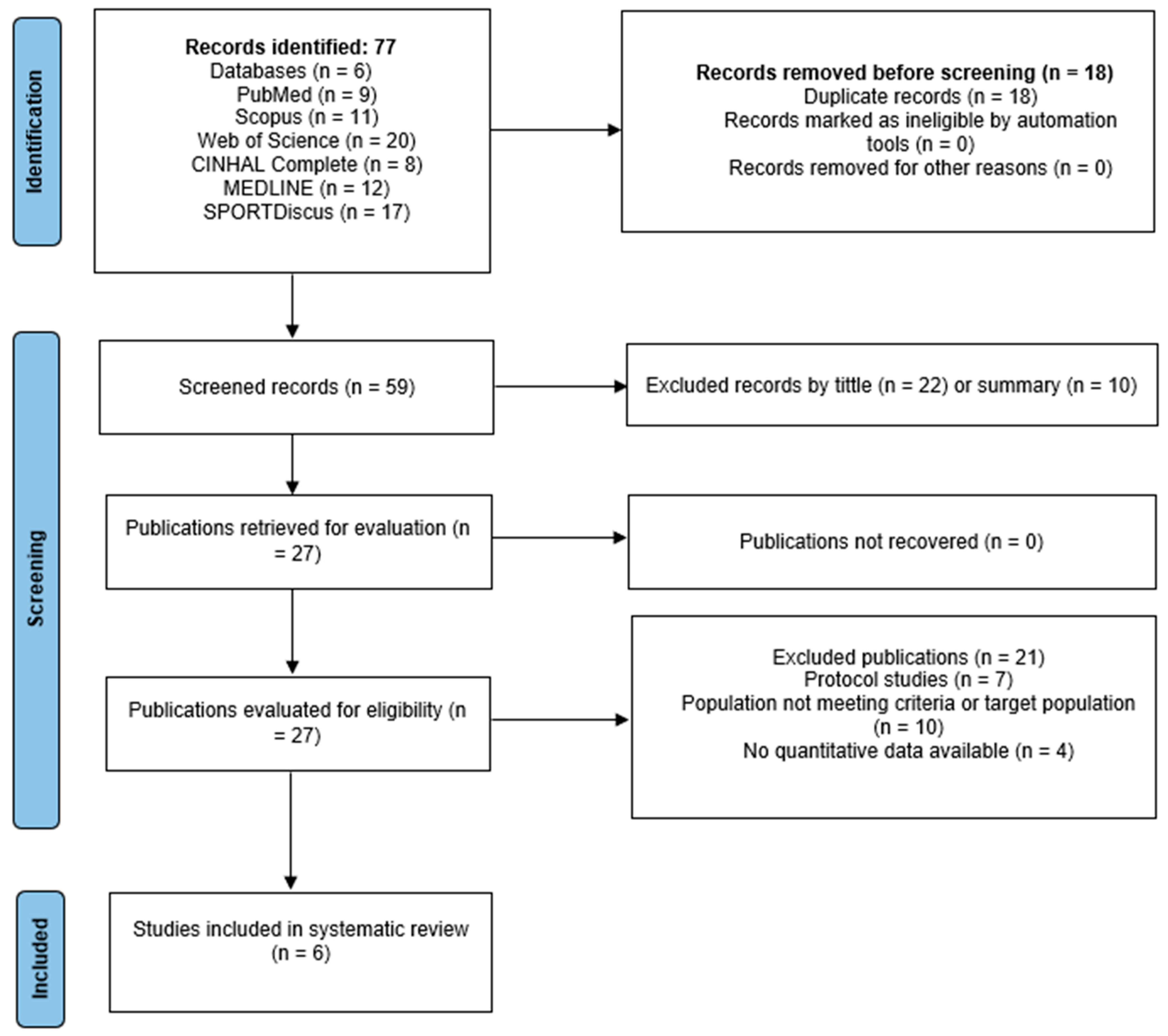
The search process is detailed in Figure 1. In the study identification phase, a total of 77 records were found. After removing 18 duplicate records, 59 references were screened by title and abstract. A total of 32 articles were eliminated for not meeting the inclusion criteria. In total, 27 full-text studies were analyzed, of which seven were protocol studies, 10 had populations not meeting the criteria of the target population and four did not have quantitative/incomplete outcome data, with six articles remaining for final analysis [10,22,23,24,25].

3.2. Methodological Quality

Of the six studies selected [10,22,23,24,25], all presented a score above the established cut-off point ≥ 8 points, equivalent to >60% of methodological quality. These results are presented in Table 2.

3.3. Study Characteristics

Five studies were RCTs and only one was a non-RCT; two studies were conducted in Chile, and one each in Spain, Iran, the United States of America, and Turkey. In terms of competitive level, the studies analyzed amateur, semi-professional, professional, and elite soccer players, including both male and female adolescents and adults. These results are presented in detail in Table 3.

3.4. Meta-Analysis

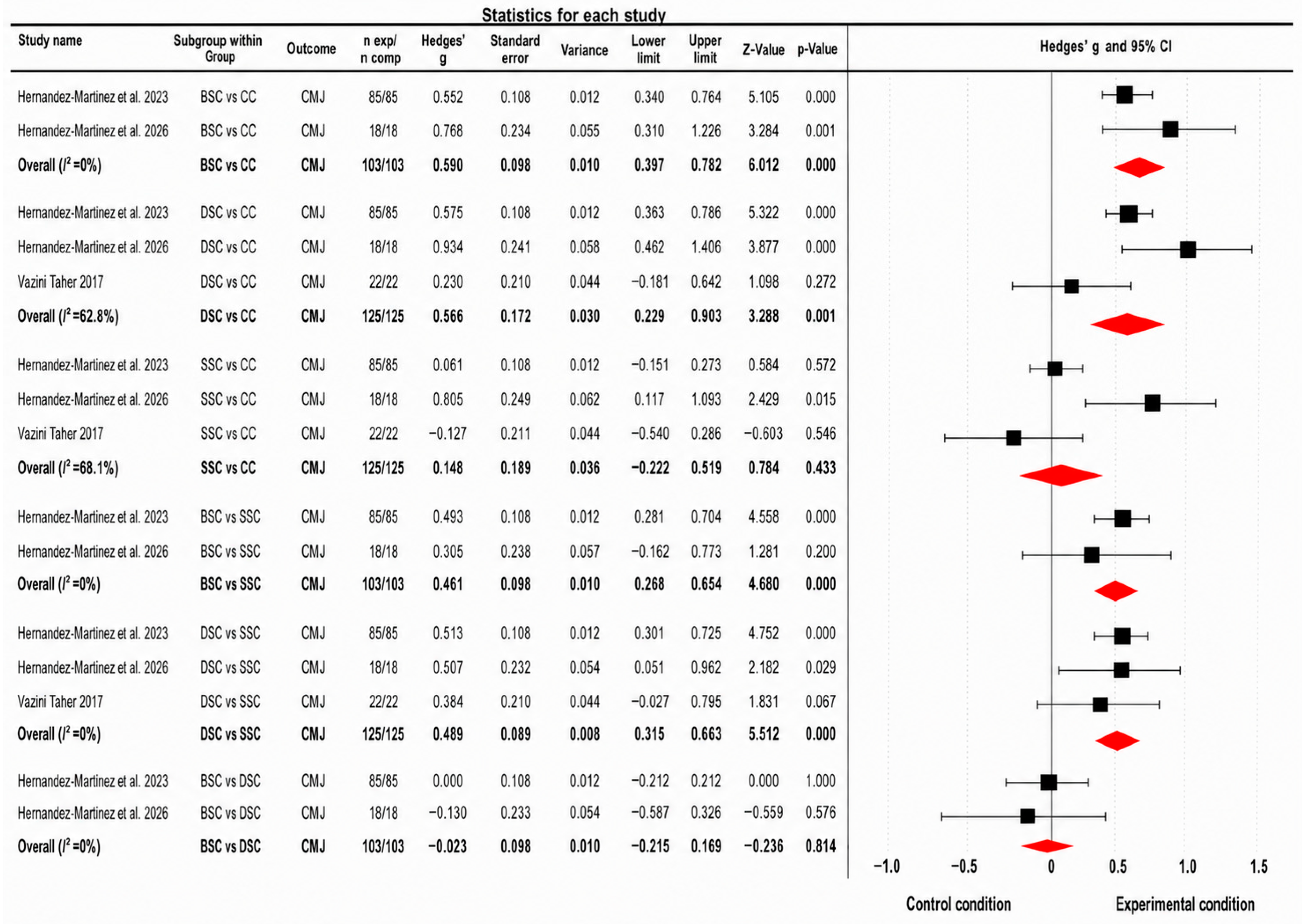
The subgroup meta-analysis for countermovement jump (CMJ) showed significant positive effects favoring the experimental interventions in most comparisons. The BSC vs. CC demonstrated a significant moderate effect on CMJ performance (p < 0.001). Similarly, the BSC vs. SSC comparison showed a significant positive effect (p = 0.001). For the DSC comparisons, significant improvements were also observed. The DSC vs. CC showed a significant effect favoring DSC (Hedges’ g = 0.555; 95% CI: 0.306 to 0.804; p < 0.001), while the DSC vs. SSC comparison also reached statistical significance (p < 0.001).
In contrast, the SSC vs. CC showed a small, non-significant effect (p = 0.381), indicating no clear advantage of SSC over the CC in CMJ performance. These results are presented in Figure 2.
For sprint performance, meta-analyses were conducted only when at least two studies contributed data to the same sprint distance and comparison. The 20 m sprint outcome was not meta-analyzed because only one study contributed data for the available comparisons.
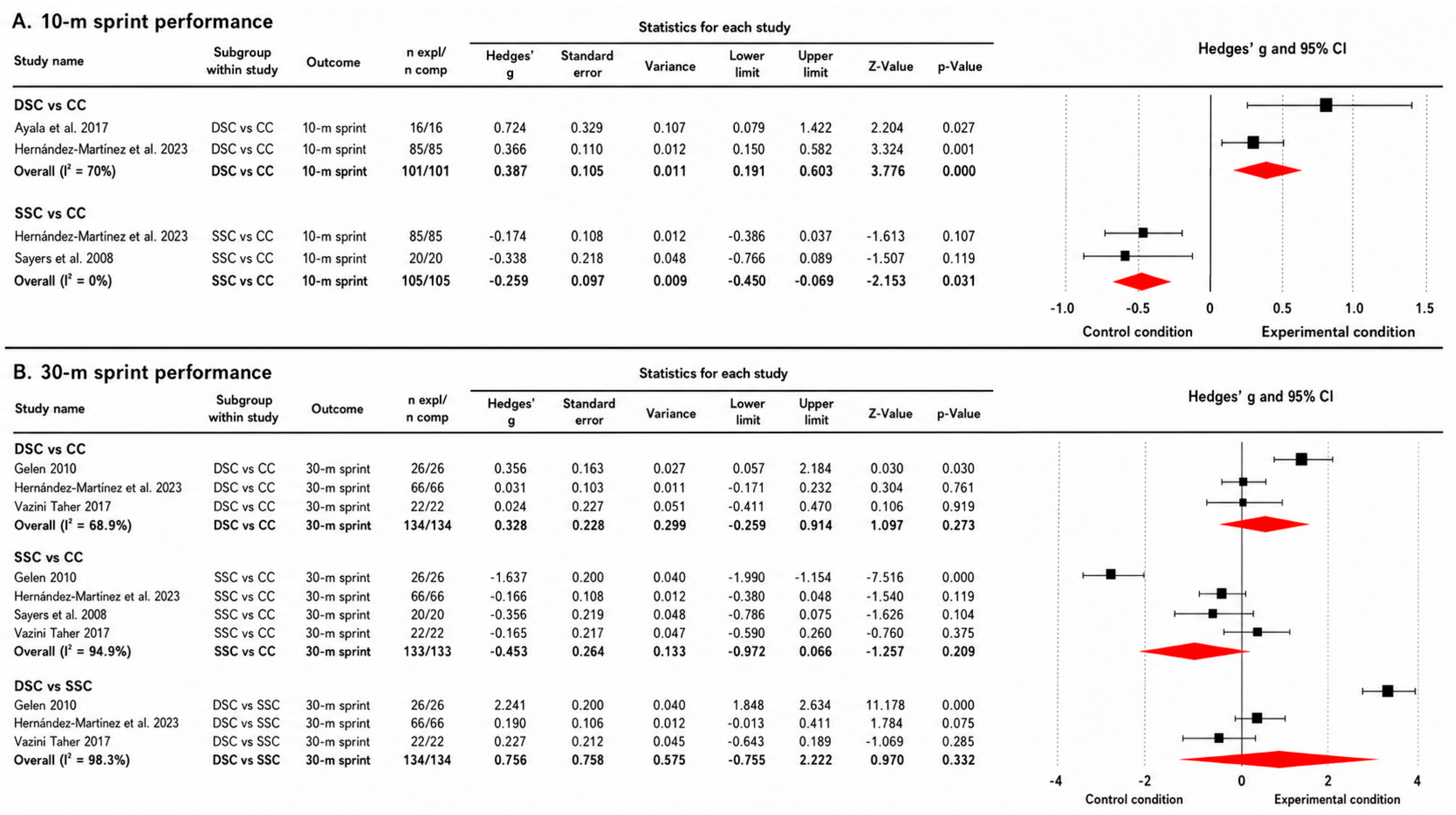
Regarding 10 m sprint performance, DSC had a significantly greater effect compared with the CC (Hedges’ g = 0.397; 95% CI: 0.191 to 0.603; p < 0.001), with no statistical heterogeneity observed (I2 = 0%), whereas SSC had a significant adverse pooled effect relative to the CC (Hedges’ g = −0.209; 95% CI: −0.398 to −0.019; p = 0.031), with no statistical heterogeneity (I2 = 0%).
For 30 m sprint performance, DSC showed a favorable but non-significant pooled effect compared with the CC (Hedges’ g = 0.328; 95% CI: −0.258 to 0.914; p = 0.273), with substantial heterogeneity (I2 = 88.9%). This difference was quite considerable (I2 = 88.9%), thereby indicating heterogeneity. Comparatively, the SSC training method resulted in an unfavorable effect that was not statistically significant (Hedges’ g = −0.458, 95% CI: −1.172 to 0.256, p = 0.209) and showed large heterogeneity (I2 = 94.0%). Therefore, the pooled estimates for 30 m sprint performance should be interpreted cautiously. These results are presented in Figure 3.
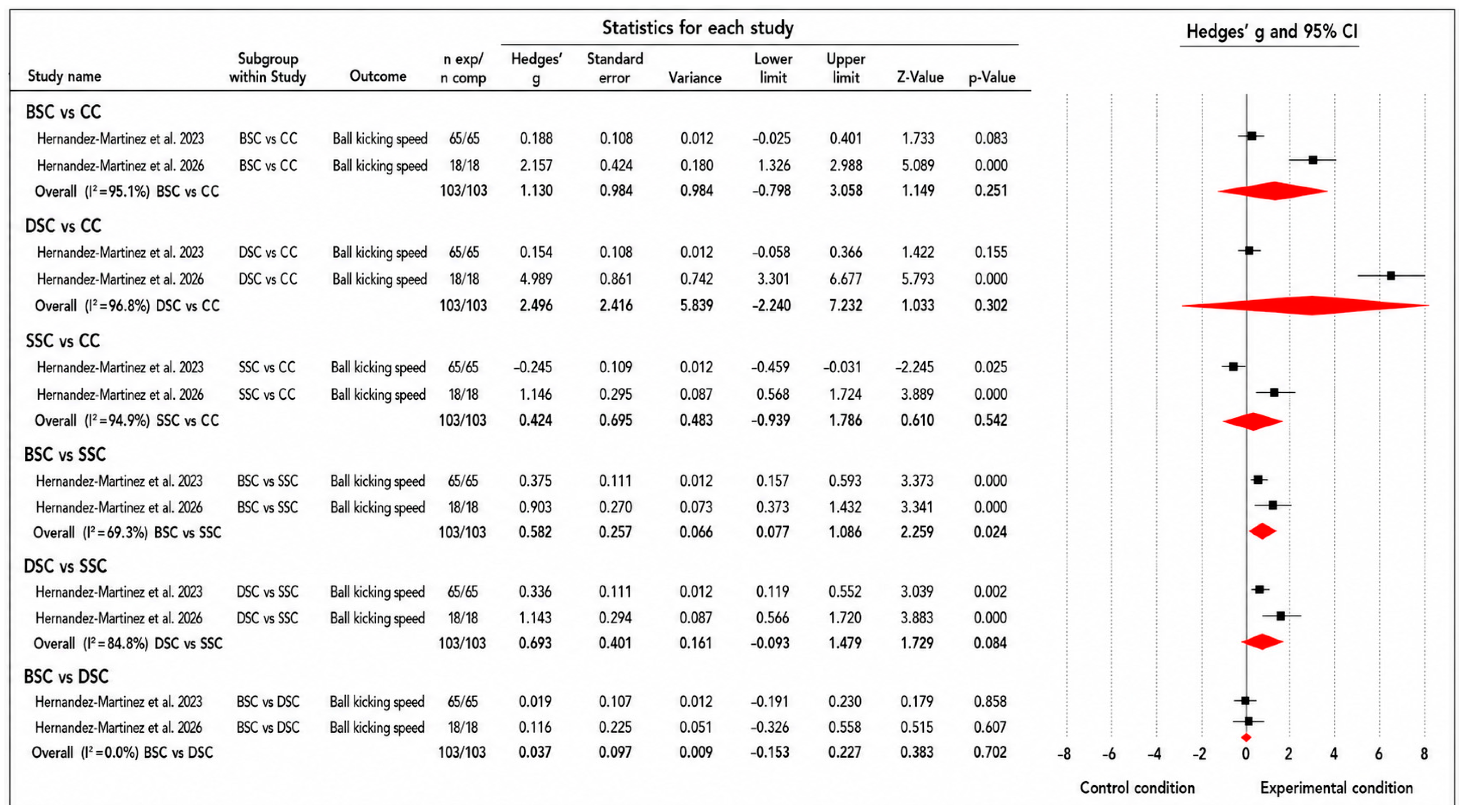
For dominant-foot ball kicking speed, pooled estimates showed wide confidence intervals and substantial-to-considerable heterogeneity across several comparisons. BSC showed a favorable but non-significant pooled effect compared with the CC (Hedges’ g = 1.130; 95% CI: −0.798 to 3.058; p = 0.251; I2 = 95.1%). DSC similarly demonstrated a favorable but non-significant pooled effect against the CC (Hedges’ g = 2.496; 95% CI: −2.240 to 7.232; p = 0.302; I2 = 96.8%). On the other hand, SSC revealed a non-significant pooled effect when compared with the CC (Hedges’ g = 0.424; 95% CI: −0.939 to 1.786; p = 0.542; I2 = 94.9%).
When stretching modalities were compared with each other, BSC showed a significant favorable effect compared with SSC (Hedges’ g = 0.582; 95% CI: 0.077 to 1.086; p = 0.024; I2 = 69.3%). The DSC vs. SSC comparison showed a favorable but non-significant pooled effect for DSC (Hedges’ g = 0.693; 95% CI: −0.093 to 1.479; p = 0.084; I2 = 84.8%). No significant difference was observed between BSC and DSC (Hedges’ g = 0.037; 95% CI: −0.153 to 0.227; p = 0.702; I2 = 0%). Therefore, the pooled estimates for dominant-foot ball kicking speed, particularly comparisons against the CC, should be interpreted cautiously. These results are presented in Figure 4.

3.5. Heterogeneity Analysis

Concerning heterogeneity, moderate heterogeneity was reported for CMJ (p = 0.07; I2 = 36.5), whereas the other variables showed high heterogeneity: 10 m sprint performance and 30 m sprint performance (p = 0.00; I2 = 88.3), in the same way as ball kicking speed with the dominant foot (p = 0.00; I2 = 94.4).

3.6. Risk of Bias

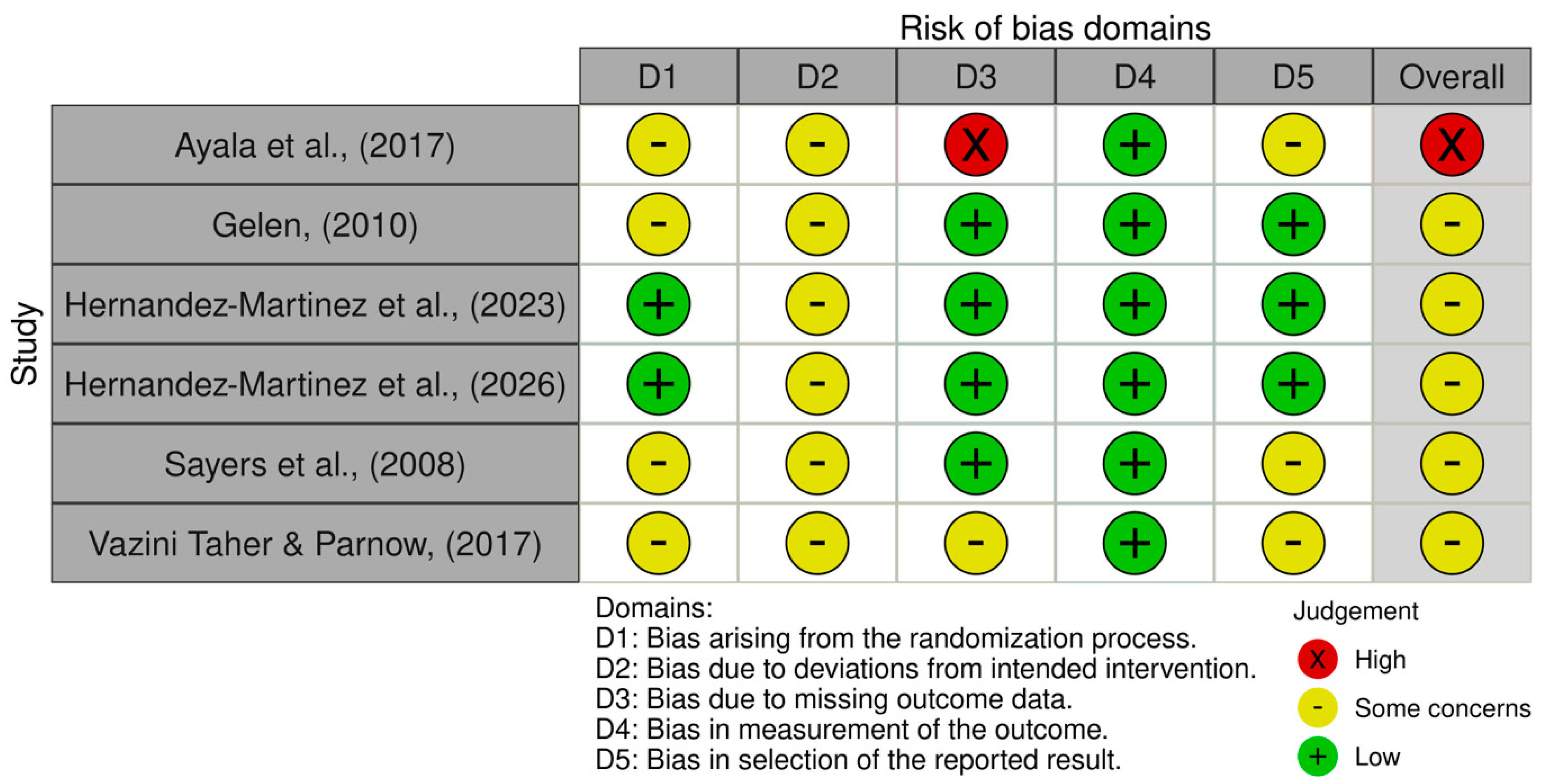
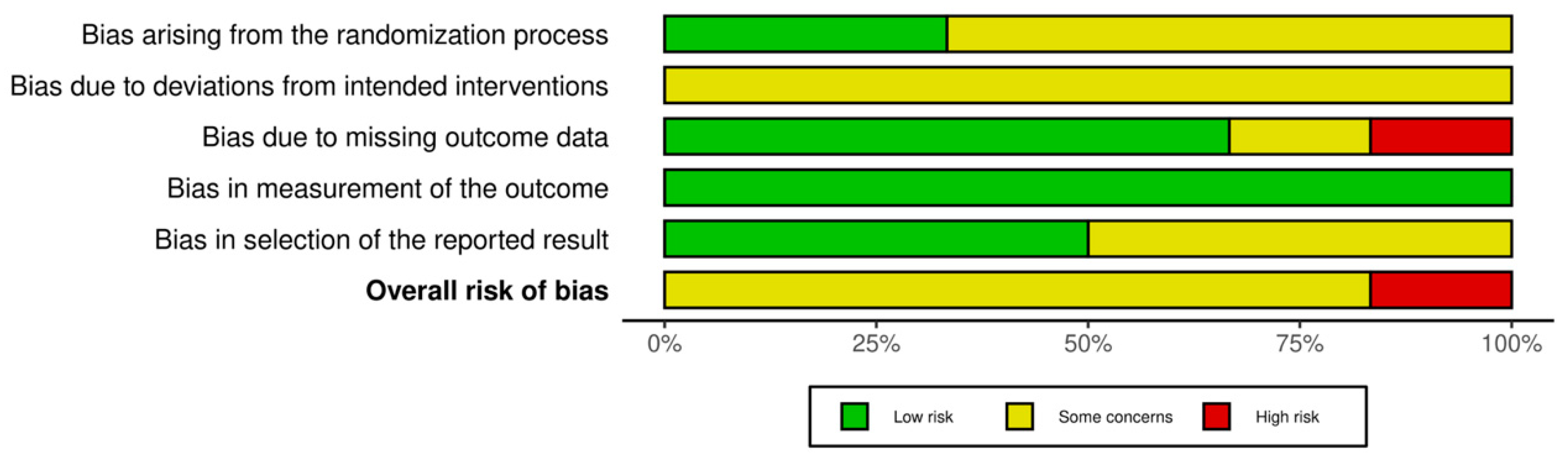
Five studies raised some concerns [10,23,24,25,26], and one study was rated as having a high risk of bias [22]. No study was judged to be at low risk of bias overall. Overall, most included studies presented at least some methodological concerns, and one was judged to be at high risk of bias. These findings suggest that the results should be interpreted with caution. Figure 5 and Figure 6 summarize the risk-of-bias assessments.

3.7. Certainty of Evidence

The certainty of evidence was assessed separately for each outcome within each stretching-versus-control comparison. Moderate-certainty evidence was found for the effects of ballistic stretching on countermovement jump performance and for the unfavorable effect of static stretching on 10 m sprint performance. Low-certainty evidence supported the effects of dynamic stretching on countermovement jump and 10 m sprint performance. The certainty of evidence for the remaining outcomes was low, primarily because of serious risk-of-bias concerns, substantial or considerable inconsistency, and imprecision associated with confidence intervals that included potentially important benefit, no effect, and harm. No serious concerns were identified regarding indirectness. The outcome-specific assessments are presented in Table 4.

4. Discussion

This systematic review with meta-analysis aimed to analyze crossover trials comparing the effects of stretching-based warm-ups with conventional warm-up protocols on physical performance in soccer players. The main findings suggest that the acute effects of stretching-based warm-up strategies on physical performance largely depend on the type of stretching performed. Specifically, DSC demonstrated the most consistent improvements across several performance outcomes, including CMJ, short-distance sprint performance (10 and 30 m), and dominant-foot ball kicking speed, compared with conventional warm-up protocols and SSC. BSC also showed favorable effects on CMJ performance compared with CC and SSC conditions, whereas SSC generally produced trivial, inconsistent, or even unfavorable effects on explosive performance variables. Collectively, these findings suggest that warm-up protocols incorporating movement-specific and velocity-oriented stretching strategies may promote more favorable acute neuromuscular responses for soccer-specific actions than conventional SSC approaches. However, the certainty of evidence was low, substantial heterogeneity was observed across several analyses, and no included study was judged to be at low risk of bias overall. Therefore, these findings should be interpreted with caution.
Although an overall GRADE assessment was used to summarize the certainty of evidence, confidence in the findings likely differed across outcomes and comparisons because of variations in the number of contributing studies, methodological quality, and between-study heterogeneity. Outcomes such as sprint performance and ball-kicking speed should be interpreted with greater caution owing to the substantial heterogeneity observed, whereas the evidence for CMJ appeared comparatively more consistent.
Compared with previous systematic reviews and meta-analyses, the present review provides a more focused synthesis of the acute effects of different stretching modalities performed within soccer-specific warm-up routines. Whereas previous reviews have examined broader warm-up strategies in soccer players [27], stretching interventions across physically active populations [11], or specific technical outcomes such as ball-kicking performance [28], the present review quantitatively compared SSC, DSC, and BSC exclusively in soccer players. Consequently, this review provides a more sport-specific synthesis of the available evidence while also highlighting the methodological limitations and heterogeneity that currently prevent definitive practical recommendations.

4.1. Jump Performance

For vertical jump performance, both DSC and BSC produced significant improvements compared with CC and SSC conditions, whereas SSC showed trivial and non-significant effects. These findings are consistent with those reported by Hammami et al. [27] in a systematic review investigating the effects of warm-up strategies in soccer players, in which DSC elicited significant improvements (p < 0.05) with a moderate effect size (ES = 0.41) in vertical jump performance across players at different competitive levels. In the present review, the pooled effect size for the DSC versus CC comparison was also of moderate magnitude (Hedges’ g = 0.555), suggesting that the observed improvement may be practically meaningful in soccer, where relatively small gains in explosive lower-limb performance can contribute to decisive actions such as jumping, accelerating, and changing direction during match play.
In contrast, SSC significantly reduced vertical jump performance compared with the no-stretching condition. Similarly, Esteban-García et al. [11] observed that SSC tended to reduce CMJ, although non-significantly (SMD = −0.17; p = 0.30), whereas DSC showed a non-significant favorable trend (SMD = 0.12; p = 0.41) in physically active individuals. Collectively, these findings suggest that stretching modalities involving dynamic movements and higher-velocity muscle actions may be more effective in preparing the neuromuscular system for explosive tasks such as vertical jumping. Conversely, SSC appears to provide limited benefits for activities that require rapid force production and efficient use of the stretch–shortening cycle.
One possible mechanism underlying the favorable effects of DSC and BSC on CMJ performance is that these stretching modalities involve repeated active muscle contractions performed through movement amplitudes and velocities more specific to the sporting context [29,30]. This may promote acute increases in muscle temperature, motor unit recruitment, neural drive, musculotendinous stiffness, and rate of force development [30,31]. Collectively, these responses may enhance stretch–shortening cycle efficiency and improve the storage and reutilization of elastic energy during the eccentric-to-concentric transition of the CMJ [30,32]. In addition, these warm-up strategies may induce responses similar to post-activation performance enhancement (PAPE), characterized by transient improvements in contractile performance following high-velocity muscular actions [31,33]. Considering that soccer involves repeated high-intensity accelerations, jumps, and changes of direction during match play, these acute neuromuscular adaptations may be particularly relevant for sport-specific performance [3].
In contrast, the trivial effects observed following SSC may be related to transient reductions in the force-producing capacity of the muscle contractile component after prolonged stretching [34], potentially impairing rapid force transmission during explosive actions. Additionally, acute alterations in tendon viscoelastic properties may occur, particularly reductions in musculotendinous stiffness, which could compromise the efficiency of force transfer and the reutilization of elastic energy during the stretch–shortening cycle [11,34]. However, the magnitude of these effects appears to depend on several factors, including stretching duration and intensity, participant training status, and the time interval between the warm-up and performance assessment [33]. In this context, shorter-duration SSC protocols integrated into more comprehensive warm-up routines may induce smaller performance impairments than isolated, prolonged SSC interventions [29,35].
Finally, no significant differences were observed between DSC and BSC in CMJ performance, despite both modalities demonstrating superior effects compared with SSC and the CC. This suggests that both dynamic and ballistic stretching can elicit comparable acute neuromuscular responses when incorporated into soccer-specific warm-up routines [10]. Nevertheless, from a practical perspective, DSC may represent a more feasible strategy for implementation across different age groups and competitive levels, particularly in younger athletes, as ballistic movements may increase technical demands and movement variability [10,36]. However, although the observed effect sizes suggest a potentially meaningful practical benefit for CMJ performance, these findings should be interpreted cautiously because of the moderate heterogeneity across studies and the methodological differences among the included investigations [33,37].

4.2. Sprint Performance

Regarding linear sprint performance, the present meta-analysis showed a significant improvement in the 10 m sprint in favor of DSC compared with the CC, whereas the pooled effect for the 30 m sprint also favored DSC but did not reach statistical significance. In contrast, SSC showed trivial and non-significant effects across sprint outcomes. Collectively, these findings are consistent with previous evidence suggesting that warm-up protocols based on DSC may be more effective at enhancing short-distance acceleration and sprint performance in soccer players. In this regard, Hammami et al. [27] reported significant improvements (p < 0.05) in short-distance sprint performance following DSC protocols in trained athletes, whereas protocols predominantly based on SSC tended to produce neutral effects or slight performance decrements. Similarly, Silva et al. [38] observed improvements in sprint performance among team-sport athletes from different competitive levels (−7.69%; d = 1.72) following DSC protocols compared with conventional stretching strategies. In the present review, the pooled effect size for the 10 m sprint (Hedges’ g = 0.397) was small but may still be considered practically relevant, as even modest improvements in acceleration can influence decisive match situations such as reaching the ball first, creating separation from opponents, or initiating offensive and defensive actions. In contrast, although the pooled effect for the 30 m sprint also favored DSC, it was not statistically significant and was accompanied by substantial heterogeneity, limiting confidence in its practical relevance.
The favorable effects observed following DSC may be explained by greater mechanical and neuromuscular specificity relative to sprint demands [3,39]. In this context, high-velocity dynamic movements performed during the warm-up may acutely increase muscle temperature, reducing muscle viscous resistance and consequently enhancing tissue extensibility [30,40]. In addition, DSC may enhance nerve conduction velocity and neuromuscular activation, both of which are potentially relevant to rapid force production during the initial phases of acceleration [30,38]. Likewise, this type of stretching may help maintain or increase musculotendinous stiffness, which is considered an important factor in efficient horizontal force transmission and in optimizing ground contact time during sprinting [30,38].
Conversely, the trivial effects observed following SSC may be associated with transient reductions in musculotendinous stiffness and rapid force production capacity after prolonged stretching [26,40]. Previous studies have suggested that SSC may temporarily alter the mechanical properties of muscle and tendon tissue, negatively affecting sprint-related variables such as rate of force development and stretch–shortening cycle efficiency [41,42]. Nevertheless, the effects of SSC do not appear to be entirely uniform, particularly when shorter-duration protocols are incorporated within more comprehensive warm-up routines that also include dynamic exercises and sport-specific movements.
It is important to highlight that the sprint analysis demonstrated considerable heterogeneity across studies (I2 = 88.3) for both the 10- and 30 m sprint tests. This variability may be related to important methodological and population-related differences among the included investigations. Specifically, the meta-analyzed studies evaluated soccer players with substantial differences in age, sex, and competitive level. For example, Ayala et al. [22] examined amateur male and female soccer players aged 19–20 years, Hernandez-Martinez et al. [10] evaluated soccer players with a mean age of 13.3 years, Gelen [23] included adult professional players with a mean age of 23.3 years, Vazini, Taher & Parnow [25] studied elite players with a mean age of 23 years, and Sayers et al. [24] analyzed elite female soccer players with a mean age close to 19 years. These differences may be particularly relevant considering that sprint performance depends heavily on neuromuscular and mechanical factors that are highly sensitive to training status, competitive experience, and biological maturation [31,33].
In this regard, younger soccer players may exhibit acute warm-up responses that differ from those observed in adults due to differences in neuromuscular development, motor coordination, force production capacity, and mechanical efficiency during the initial phases of acceleration [43,44]. Similarly, elite or professional players likely exhibit greater technical stability and more sport-specific neuromuscular preparedness for high-speed actions, which may influence both the magnitude and consistency of the responses induced by different stretching protocols [24,43]. In addition, sex and competitive level differences may affect variables such as musculotendinous stiffness, reactive capacity, and force–velocity characteristics, all of which are considered relevant to sprint performance [31,44]. Furthermore, the limited number of studies examining BSC in sprint-related outcomes prevented more robust interpretations regarding its potential effects on linear speed performance. Therefore, although the observed effect size suggests that DSC may provide practically meaningful improvements in short-distance acceleration, particularly over 10 m, the evidence for longer sprint distances remains uncertain because of the substantial heterogeneity and limited number of available studies. Accordingly, these findings should be interpreted cautiously.

4.3. Specific Performance

Regarding dominant-foot ball kicking speed, the results of the present meta-analysis showed significant improvements only in favor of DSC compared with CC, whereas the comparison between DSC and SSC did not reach statistical significance. These findings are partially consistent with those reported by Palucci Vieira et al. [28] in a systematic review examining the effects of different warm-up strategies on kicking performance in soccer players, in which moderate evidence of greater ball speed following DSC than SSC was observed among senior, sub-elite, and elite players (SMD = 0.99–2.44). Similarly, the authors noted that SSC tended to impair kicking-related performance parameters when applied in isolation. In this context, the present findings suggest that warm-up protocols based on dynamic movements may enhance explosive soccer-specific technical actions, such as ball-kicking speed [28]. Given that higher kicking velocity may reduce the reaction time available to the goalkeeper or the opponent, this variable is a relevant component of offensive performance in soccer [45]. Although the pooled effect size for the DSC versus CC comparison was very large (Hedges’ g = 2.496), the wide confidence interval, lack of statistical significance, and substantial between-study heterogeneity considerably limit confidence in its practical relevance. Moreover, the pooled estimate may have been disproportionately influenced by the findings of Hernandez-Martínez et al. [26], who reported a substantially larger effect size than the remaining included studies. Therefore, despite the apparent magnitude of the pooled effect, the current evidence is insufficient to conclude that DSC consistently improves ball-kicking speed in soccer players.
Conversely, based on the findings for CMJ and sprint performance, the potential mechanisms underlying the effects on kicking speed may be more closely related to coordinative and motor-specific factors than to force-production variables alone [26,39]. In this regard, DSC may promote a more task-specific preparation of the motor patterns involved in the kicking action, as this type of stretching incorporates active movements performed at velocities and amplitudes more closely aligned with the biomechanical demands of soccer [45,46]. From a neuromuscular perspective, DSC may transiently enhance agonist muscle activation and intermuscular coordination, potentially improving both the timing and acceleration velocity of the limb during the kicking movement [38,47]. Likewise, the observed improvements may be associated with increased neuronal excitability and reduced reciprocal inhibition [40,48], thereby facilitating a more synchronized movement sequence among the hip flexors, knee extensors, and plantar flexors during ball impact. In addition, dynamic movements may contribute to greater joint mobility and improved proximal-to-distal coordination during technical execution, factors that are potentially relevant to maximizing lower-limb segmental velocity [39,45].
These findings may also be influenced by important methodological and population-related differences among the included studies. Specifically, the meta-analyzed investigations evaluated soccer players with marked differences in age, competitive level, and degree of technical development. For example, Hernandez-Martinez et al. [10] assessed semi-professional players with a mean age of 13.3 years, Gelen [23] included adult professional players with a mean age of 23.3 years, whereas Hernandez-Martínez et al. [26] examined amateur players with a mean age close to 11 years. These differences may be particularly relevant, given that ball-kicking speed is a skill highly dependent on intermuscular coordination, sport-specific technique, and motor control [43,45]. In this regard, younger soccer players may still exhibit developing movement patterns and acute neuromuscular responses to warm-up protocols that differ from those observed in trained adults. Furthermore, factors related to biological maturation, playing experience, and technical stability of the kicking action may influence the magnitude of the acute responses induced by different stretching protocols [44,49]. Therefore, the differences observed between studies may depend not only on the type of stretching performed but also on the neuromuscular and technical-coordinative characteristics of the populations analyzed.
Finally, ball-kicking speed showed the greatest heterogeneity among all variables included in the present meta-analysis (I2 = 94.4%), considerably limiting confidence in both the pooled estimates and their practical interpretation. In addition, the limited number of available studies and the marked methodological variability across investigations make it difficult to draw robust conclusions about the true effects of different stretching modalities on kicking speed in soccer players. Consequently, although the pooled estimates tended to favor DSC, the current evidence remains insufficient to determine whether these effects are consistently meaningful from a sports performance perspective.

4.4. Warm-Up Strategies

The findings of the present review suggest that the acute effects of stretching-based warm-up strategies in soccer players may depend not only on the stretching modality itself, but also on the extent to which the physiological and neuromuscular responses elicited by each protocol align with the specific demands of the subsequent performance task. Overall, DSC demonstrated the most consistent positive effects on outcomes such as CMJ, sprint performance (10 and 30 m), and ball kicking speed, whereas SSC produced predominantly trivial or inconsistent responses. Collectively, these findings reinforce the notion that stretching modalities involving active movements performed at higher velocities and greater sport specificity may be more suitable for preparing explosive, soccer-specific actions than isolated passive stretching strategies.
From a conceptual perspective, both DSC and BSC may be classified as neuromuscular activation-oriented strategies, as they incorporate repeated active muscle actions performed through dynamic movement amplitudes and velocities more closely aligned with those observed during soccer-specific performance [10,26]. In contrast, SSC appears to be more closely associated with responses aimed at improving range of motion and flexibility, potentially prioritizing increases in joint mobility over the acute optimization of neuromuscular performance [11,40]. Nevertheless, these mechanisms likely do not operate in isolation and may interact depending on factors such as the structure, intensity, duration, and sequencing of the warm-up protocol employed [1,33].
Finally, the magnitude and consistency of the responses observed across studies appeared to depend considerably on participant characteristics, particularly age, competitive level, degree of technical development, and potential differences in biological maturation [49,50]. In addition, important methodological differences among the included studies, such as variations in stretching modality, exercise selection, volume, duration, sequencing within the warm-up routine, comparator conditions, and performance assessment procedures, may also have contributed to the observed heterogeneity. This may be especially relevant in soccer, where actions such as sprinting and ball-kicking speed rely not only on force-production capabilities but also on highly coordinated and sport-specific motor patterns [51,52]. Consequently, the effectiveness of stretching-based warm-up strategies may depend less on the stretching modality alone and more on the interaction between participant characteristics, methodological aspects of the warm-up protocol, and the specific physical and technical-coordinative demands of the performance task being assessed.

4.5. Practical Applications

(i)
The available evidence suggests that warm-up strategies incorporating DSC may represent a suitable option compared with SSC when the objective is to prepare soccer players for explosive actions such as vertical jumping and short-distance sprinting. However, these findings should be interpreted cautiously because they are based on a limited number of studies, several subgroup analyses, and low-certainty evidence. Moreover, the substantial heterogeneity observed for sprint and ball-kicking outcomes limits the strength of practical recommendations.
(ii)
Across the included studies, relatively consistent prescription patterns were identified for DSC protocols. These generally incorporated between 4 and 12 lower-body dynamic exercises, performed over two or three sets lasting approximately 10–30 s or 10 repetitions per exercise, depending on the protocol. The movements were typically executed through dynamic ranges of motion with progressively increasing velocities and frequently included soccer-specific actions such as skipping, locomotor drills, accelerations, changes of direction, and controlled ballistic movements. Nevertheless, these prescription characteristics should be considered descriptive of the available literature rather than evidence-based recommendations for optimal practice.
(iii)
SSC protocols generally included between 3 and 5 exercises targeting specific lower-body muscle groups, performed over two or three sets of approximately 20–30 s per exercise with relatively short recovery intervals. Studies investigating BSC used repetitive high-velocity movements performed through dynamic ranges of motion; however, the limited number of available studies precludes firm recommendations regarding the optimal prescription of this modality.
(iv)
Collectively, these findings suggest that the acute effects of stretching-based warm-up strategies are likely influenced not only by the stretching modality itself but also by variables such as volume, duration, intensity, sequencing within the warm-up, and the characteristics of the athletes. Furthermore, the previous literature has highlighted considerable interindividual variability in acute responses according to factors such as neuromuscular profile, training status, and the specific performance task [49,50]. Therefore, practitioners should recognize that the same stretching protocol may not produce uniform responses across different soccer populations.
(v)
Consequently, practitioners may consider individualizing stretching-based warm-up strategies according to the physical and technical-tactical demands of the sport and the characteristics of their athletes. However, given the limited evidence base and the low certainty of evidence, these recommendations should be viewed as preliminary and interpreted alongside practitioner experience and the specific competitive context.
Figure 7 summarizes the recommendations regarding warm-up strategies for soccer players.

4.6. Limitations and Strengths

This systematic review with meta-analysis presents several limitations that should be considered when interpreting the findings: (i) the number of included studies was small (n = 6), particularly for certain variables and specific comparisons, limiting the statistical robustness of the meta-analyses performed; (ii) robust sensitivity analyses could not be conducted due to the limited number of studies available per comparison. In this context, the sequential exclusion of individual studies could have generated unstable and methodologically unreliable estimates, limiting the ability to determine the true influence of specific studies on the overall effect sizes; (iii) the small number of available investigations also prevented subgroup analyses or meta-regressions according to potentially relevant variables such as age, sex, competitive level, season period, or specific characteristics of the stretching protocols; (iv) substantial heterogeneity was observed across several analyses, likely associated with important methodological and population-related differences between studies, including age, competitive level, sex, stretching duration and intensity, type of control protocol, and characteristics of the performance tests employed; (v) some outcomes were analyzed based on a very limited number of studies, reducing the precision of the effect estimates and increasing the possibility that certain results were disproportionately influenced by individual studies with large effect sizes. This appears particularly relevant for the ball kicking speed variable; (vi) most included studies used acute crossover or within-subject designs, but individual participant data and period-specific results were not available. Therefore, although an assumed within-participant correlation was used to account for the paired nature of the data, carryover and period effects could not be formally modeled. In addition, washout or rest intervals between warm-up conditions were extracted when reported, but their adequacy could not be statistically tested. Consequently, the pooled estimates should be interpreted cautiously as condition-level acute effects. (vii) Most included studies used crossover designs; however, the data required for fully adjusted crossover analyses were unavailable. Therefore, an assumed within-participant correlation of r = 0.50 was used, and period and carryover effects could not be formally assessed. Multi-arm comparisons were analyzed separately, although estimates derived from the same participants may remain correlated, and (viii) finally, the overall certainty of evidence was low for several analyzed comparisons, and therefore the findings should be interpreted cautiously until future studies with more robust methodological designs confirm the current results.
On the other hand, the present study has several strengths: (i) to the best of our knowledge, this is the first study specifically synthesizing the acute effects of different stretching strategies on relevant physical performance variables in soccer players, including CMJ, linear sprint performance, and ball kicking speed; (ii) a comprehensive search strategy was conducted across six databases (Scopus, PubMed, SPORTDiscus, MEDLINE, CINAHL Complete, and Web of Science—Core Collection), which likely increased search sensitivity and reduced the risk of selection bias; (iii) the review was conducted according to PRISMA guidelines and used widely accepted methodological tools for assessing methodological quality and certainty of evidence, strengthening the transparency and rigor of the review process; and (iv) the present study incorporated differentiated comparisons between SSC, DSC, and BSC, allowing a more specific interpretation regarding the potential effects of each stretching modality on different soccer-specific performance tasks.
Overall, although the findings of the present study suggest that DSC-based warm-up strategies may more consistently favor explosive performance in soccer players compared with SSC, these results should be interpreted with caution due to the limited number of available studies, the substantial heterogeneity observed across investigations, and the overall low certainty of evidence for several of the analyzed comparisons. Consequently, while the current findings provide relevant information on the acute effects of different stretching modalities in soccer, further investigations with more homogeneous methodological designs, larger sample sizes, and better-standardized warm-up protocols are still required to establish more robust and applicable conclusions across diverse competitive and population contexts.

5. Conclusions

The findings of the present systematic review and meta-analysis suggest that warm-up strategies incorporating DSC may be associated with more favorable acute effects on selected explosive performance outcomes, particularly CMJ performance and short-distance sprinting, compared with SSC. However, these findings are based on a limited number of studies and should be interpreted cautiously given the substantial heterogeneity across several outcomes, the low certainty of evidence, and the fact that no included study was judged to be at low risk of bias overall. Therefore, although DSC may represent a promising component of soccer warm-up routines, the current evidence is insufficient to support definitive practical recommendations. Further high-quality studies using standardized protocols are needed to strengthen the evidence base and clarify the effectiveness of different stretching modalities.

Supplementary Materials

The following supporting information can be downloaded at: https://www.mdpi.com/article/10.3390/app16157407/s1. Supplementary File S1: PRISMA 2020 checklist.

Author Contributions

Conceptualization, J.H.-M. and I.C.-C.; methodology, J.P.-C., E.V.-C., P.V.-B. and J.H.-M.; software, J.P.-C. and J.H.-M.; formal analysis, J.P.-C., E.V.-C. and J.H.-M.; investigation, J.P.-C., E.V.-C., T.H.-V., E.G.-M., J.M.-C. and J.H.-M.; resources, J.P.-C., P.V.-B. and J.H.-M.; data curation, J.P.-C., E.V.-C. and J.H.-M.; validation, E.V.-C., T.H.-V., E.G.-M., J.M.-C., P.V.-B. and J.H.-M.; writing—original draft preparation, J.P.-C. and J.H.-M.; writing—review and editing, J.P.-C., E.V.-C., T.H.-V., E.G.-M., J.M.-C., P.V.-B. and J.H.-M.; supervision, J.H.-M. and P.V.-B.; project administration, J.P.-C. and J.H.-M. All authors have read and agreed to the published version of the manuscript.

Funding

This research received no external funding.

Institutional Review Board Statement

Not applicable.

Informed Consent Statement

Not applicable.

Data Availability Statement

The datasets generated and analyzed during the current study are available from the corresponding author upon reasonable request. The data are not publicly available due to privacy.

Conflicts of Interest

The authors declare no conflicts of interest.

References

  1. Afonso, J.; Brito, J.; Abade, E.; Rendeiro-Pinho, G.; Baptista, I.; Figueiredo, P.; Nakamura, F.Y. Revisiting the ‘Whys’ and ‘Hows’ of the Warm-Up: Are We Asking the Right Questions? Sports Med. 2024, 54, 23–30. [Google Scholar] [CrossRef]
  2. Feng, L.; Liu, H. The impact of warm-up intensity on lower-limb explosive power and agility performance in male university football athletes. BMC Sports Sci. Med. Rehabil. 2026, 18, 120. [Google Scholar] [CrossRef] [PubMed]
  3. Dolci, F.; Hart, N.H.; Kilding, A.E.; Chivers, P.; Piggott, B.; Spiteri, T. Physical and energetic demand of soccer: A brief review. Strength Cond. J. 2020, 42, 70–77. [Google Scholar] [CrossRef]
  4. Alikhajeh, Y.; Ramezanpour, M.R.; Moghaddam, A. The Effect of Different Warm-up Protocols on young Soccer Players’ sprint. Procedia-Social. Behav. Sci. 2011, 30, 1588–1592. [Google Scholar] [CrossRef]
  5. Thapa, R.K.; Clemente, F.M.; Moran, J.; Garcia-Pinillos, F.; Scanlan, A.T.; Ramirez-Campillo, R. Warm-up optimization in amateur male soccer players: A comparison of small-sided games and traditional warm-up routines on physical fitness qualities. Biol. Sport 2023, 40, 321–329. [Google Scholar] [CrossRef] [PubMed]
  6. Girginer, F.G.; Seyhan, S.; Açar, G.; Bilici, M.F.; Bilici, Ö.F.; Soylu, Ç. Acute effects of the RAMP warm-up on sprint and jump performance in youth soccer players. Front. Physiol. 2025, 16, 1612611. [Google Scholar] [CrossRef] [PubMed]
  7. Fernandes, A.A.; Da Silva, C.; Teoldo da Costa, I.; Marins, J. The “FIFA 11+” warm-up programme for preventing injuries in soccer players: A systematic review. Fisioter. EM Mov. 2015, 28, 397–405. [Google Scholar] [CrossRef]
  8. Thorborg, K.; Krommes, K.K.; Esteve, E.; Clausen, M.B.; Bartels, E.M.; Rathleff, M.S. Effect of specific exercise-based football injury prevention programmes on the overall injury rate in football: A systematic review and meta-analysis of the FIFA 11 and 11+ programmes. Br. J. Sports Med. 2017, 51, 562. [Google Scholar] [CrossRef] [PubMed]
  9. Oliveira, L.P.; Vieira, L.H.; Aquino, R.; Manechini, J.P.; Santiago, P.R.; Puggina, E.F. Acute effects of active, ballistic, passive, and proprioceptive neuromuscular facilitation stretching on sprint and vertical jump performance in trained young soccer players. J. Strength Cond. Res. 2018, 32, 2199–2208. [Google Scholar] [CrossRef] [PubMed]
  10. Hernandez-Martinez, J.; Ramirez-Campillo, R.; Vera-Assaoka, T.; Castillo-Cerda, M.; Carter-Truillier, B.; Herrera-Valenzuela, T.; López-Fuenzalida, A.; Nobari, H.; Valdés-Badilla, P. Warm-up stretching exercises and physical performance of youth soccer players. Front. Physiol. 2023, 14, 1127669. [Google Scholar] [CrossRef] [PubMed]
  11. Esteban-García, P.; Abián-Vicen, J.; Sánchez-Infante, J.; Ramírez-delaCruz, M.; Rubio-Arias, J.Á. Does the Inclusion of Static or Dynamic Stretching in the Warm-Up Routine Improve Jump Height and ROM in Physically Active Individuals? A Systematic Review with Meta-Analysis. Appl. Sci. 2024, 14, 3872. [Google Scholar] [CrossRef]
  12. Page, M.J.; McKenzie, J.E.; Bossuyt, P.M.; Boutron, I.; Hoffmann, T.C.; Mulrow, C.D.; Shamseer, L.; Tetzlaff, J.M.; Akl, E.A.; Brennan, S.E.; et al. The PRISMA 2020 statement: An updated guideline for reporting systematic reviews. BMJ 2021, 372, n71. [Google Scholar] [CrossRef] [PubMed]
  13. Smart, N.A.; Waldron, M.; Ismail, H.; Giallauria, F.; Vigorito, C.; Cornelissen, V.; Dieberg, G. Validation of a new tool for the assessment of study quality and reporting in exercise training studies: TESTEX. Int. J. Evid. Based Healthc. 2015, 13, 9–18. [Google Scholar] [CrossRef] [PubMed]
  14. Sterne, J.A.C.; Savović, J.; Page, M.J.; Elbers, R.G.; Blencowe, N.S.; Boutron, I.; Cates, C.J.; Cheng, H.Y.; Corbett, M.S.; Eldridge, S.M.; et al. RoB 2: A revised tool for assessing risk of bias in randomised trials. BMJ 2019, 366, l4898. [Google Scholar] [CrossRef] [PubMed]
  15. Pagaduan, J.; Pojskic, H. A Meta-Analysis on the Effect of Complex Training on Vertical Jump Performance. J. Hum. Kinet. 2020, 71, 255–265. [Google Scholar] [CrossRef] [PubMed]
  16. Hopkins, W.G.; Marshall, S.W.; Batterham, A.M.; Hanin, J. Progressive statistics for studies in sports medicine and exercise science. Med. Sci. Sports Exerc. 2009, 41, 3–13. [Google Scholar] [CrossRef] [PubMed]
  17. Verhagen, A.P.; de Vet, H.C.; de Bie, R.A.; Kessels, A.G.; Boers, M.; Bouter, L.M.; Knipschild, P.G. The Delphi list: A criteria list for quality assessment of randomized clinical trials for conducting systematic reviews developed by Delphi consensus. J. Clin. Epidemiol. 1998, 51, 1235–1241. [Google Scholar] [CrossRef] [PubMed]
  18. Davey, J.; Turner, R.M.; Clarke, M.J.; Higgins, J.P. Characteristics of meta-analyses and their component studies in the Cochrane Database of Systematic Reviews: A cross-sectional, descriptive analysis. BMC Med. Res. Methodol. 2011, 11, 160. [Google Scholar] [CrossRef] [PubMed]
  19. Higgins, J.P.; Thompson, S.G.; Deeks, J.J.; Altman, D.G. Measuring inconsistency in meta-analyses. BMJ 2003, 327, 557–560. [Google Scholar] [CrossRef] [PubMed]
  20. Higgins, J.P.; Thompson, S.G. Quantifying heterogeneity in a meta-analysis. Stat. Med. 2002, 21, 1539–1558. [Google Scholar] [CrossRef] [PubMed]
  21. Guyatt, G.; Oxman, A.D.; Akl, E.A.; Kunz, R.; Vist, G.; Brozek, J.; Norris, S.; Falck-Ytter, Y.; Glasziou, P.; DeBeer, H.; et al. GRADE guidelines: 1. Introduction-GRADE evidence profiles and summary of findings tables. J. Clin. Epidemiol. 2011, 64, 383–394. [Google Scholar] [CrossRef] [PubMed]
  22. Ayala, F.; Calderón-López, A.; Delgado-Gosálbez, J.C.; Parra-Sánchez, S.; Pomares-Noguera, C.; Hernández-Sánchez, S.; López-Valenciano, A.; De Ste Croix, M. Acute Effects of Three Neuromuscular Warm-Up Strategies on Several Physical Performance Measures in Football Players. PLoS ONE 2017, 12, e0169660. [Google Scholar] [CrossRef] [PubMed]
  23. Gelen, E. Acute effects of different warm-up methods on sprint, slalom dribbling, and penalty kick performance in soccer players. J. Strength Cond. Res. 2010, 24, 950–956. [Google Scholar] [CrossRef] [PubMed]
  24. Sayers, A.L.; Farley, R.S.; Fuller, D.K.; Jubenville, C.B.; Caputo, J.L. The effect of static stretching on phases of sprint performance in elite soccer players. J. Strength Cond. Res. 2008, 22, 1416–1421. [Google Scholar] [CrossRef] [PubMed]
  25. Vazini Taher, A.; Parnow, A. Level of functional capacities following soccer-specific warm-up methods among elite collegiate soccer players. J. Sports Med. Phys. Fit. 2017, 57, 537–542. [Google Scholar] [CrossRef] [PubMed]
  26. Hernandez-Martínez, J.; Cid-Calfucura, I.; Perez-Carcamo, J.; Canales-Canales, S.; Guzmán-Muñoz, E.; Vásquez-Carrasco, E.; Herrera-Valenzuela, T.; Valdés-Badilla, P. Effect of conventional warm-up versus stretching warm-up on physical performance in children soccer players: A randomized crossover trial. Front. Physiol. 2026, 17, 1827385. [Google Scholar] [CrossRef] [PubMed]
  27. Hammami, A.; Zois, J.; Slimani, M.; Russel, M.; Bouhlel, E. The efficacy and characteristics of warm-up and re-warm-up practices in soccer players: A systematic review. J. Sports Med. Phys. Fit. 2018, 58, 135–149. [Google Scholar] [CrossRef] [PubMed]
  28. Palucci Vieira, L.H.; Santinelli, F.B.; Carling, C.; Kellis, E.; Santiago, P.R.P.; Barbieri, F.A. Acute Effects of Warm-Up, Exercise and Recovery-Related Strategies on Assessments of Soccer Kicking Performance: A Critical and Systematic Review. Sports Med. 2021, 51, 661–705. [Google Scholar] [CrossRef] [PubMed]
  29. Fletcher, I.M.; Monte-Colombo, M.M. An Investigation into the Effects of Different Warm-Up Modalities on Specific Motor Skills Related to Soccer Performance. J. Strength Cond. Res. 2010, 24, 2096–2101. [Google Scholar] [CrossRef] [PubMed]
  30. Li, F.Y.; Guo, C.G.; Li, H.S.; Xu, H.R.; Sun, P. A systematic review and net meta-analysis of the effects of different warm-up methods on the acute effects of lower limb explosive strength. BMC Sports Sci. Med. Rehabil. 2023, 15, 106. [Google Scholar] [CrossRef] [PubMed]
  31. Olsen, O.R.; Bojsen-Møller, J.; Aagaard, P. Post-Activation Performance Enhancement in Strength and Power Sports-A Narrative Review. Scand. J. Med. Sci. Sports 2025, 35, e70162. [Google Scholar] [CrossRef] [PubMed]
  32. López Mariscal, S.; Sánchez Garcia, V.; Fernández-García, J.C.; Sáez de Villarreal, E. Acute Effects of Ballistic vs. Passive Static Stretching Involved in a Prematch Warm-up on Vertical Jump and Linear Sprint Performance in Soccer Players. J. Strength Cond. Res. 2021, 35, 147–153. [Google Scholar] [CrossRef] [PubMed]
  33. Blazevich, A.J.; Babault, N. Post-activation Potentiation Versus Post-activation Performance Enhancement in Humans: Historical Perspective, Underlying Mechanisms, and Current Issues. Front. Physiol. 2019, 10, 1359. [Google Scholar] [CrossRef] [PubMed]
  34. Taylor, K.L.; Sheppard, J.M.; Lee, H.; Plummer, N. Negative effect of static stretching restored when combined with a sport specific warm-up component. J. Sci. Med. Sport 2009, 12, 657–661. [Google Scholar] [CrossRef] [PubMed]
  35. Carvalho, F.L.P.; Carvalho, M.C.G.A.; Simão, R.; Gomes, T.M.; Costa, P.B.; Neto, L.B.; Carvalho, R.L.P.; Dantas, E.H.M. Acute Effects of a Warm-Up Including Active, Passive, and Dynamic Stretching on Vertical Jump Performance. J. Strength Cond. Res. 2012, 26, 2447–2452. [Google Scholar] [CrossRef] [PubMed]
  36. Jaggers, J.R.; Swank, A.M.; Frost, K.L.; Lee, C.D. The acute effects of dynamic and ballistic stretching on vertical jump height, force, and power. J. Strength Cond. Res. 2008, 22, 1844–1849. [Google Scholar] [CrossRef] [PubMed]
  37. Enes, A.; Mohan, A.E.; Piñero, A.; Hermann, T.; Sapuppo, M.; Coleman, M.; Korakakis, P.A.; Wolf, M.; Souza-Junior, T.P.; Swinton, P.A.; et al. Warming up to improved performance? Effects of different specific warm-up protocols on neuromuscular performance in trained individuals. Sports Med. Health Sci. 2025; in press. [CrossRef]
  38. Silva, L.M.; Neiva, H.P.; Marques, M.C.; Izquierdo, M.; Marinho, D.A. Effects of Warm-Up, Post-Warm-Up, and Re-Warm-Up Strategies on Explosive Efforts in Team Sports: A Systematic Review. Sports Med. 2018, 48, 2285–2299. [Google Scholar] [CrossRef] [PubMed]
  39. Stone, M.H.; Hornsby, W.G.; Suarez, D.G.; Duca, M.; Pierce, K.C. Training Specificity for Athletes: Emphasis on Strength-Power Training: A Narrative Review. J. Funct. Morphol. Kinesiol. 2022, 7, 102. [Google Scholar] [CrossRef] [PubMed]
  40. Peck, E.; Chomko, G.; Gaz, D.V.; Farrell, A.M. The effects of stretching on performance. Curr. Sports Med. Rep. 2014, 13, 179–185. [Google Scholar] [CrossRef] [PubMed]
  41. Komi, P.V. Stretch-shortening cycle: A powerful model to study normal and fatigued muscle. J. Biomech. 2000, 33, 1197–1206. [Google Scholar] [CrossRef] [PubMed]
  42. Takeuchi, K.; Nakamura, M.; Fukaya, T.; Konrad, A.; Mizuno, T. Acute and Long-Term Effects of Static Stretching on Muscle-Tendon Unit Stiffness: A Systematic Review and Meta-Analysis. J. Sports Sci. Med. 2023, 22, 465–475. [Google Scholar] [CrossRef] [PubMed]
  43. Ferrini, M.; Asian-Clemente, J.; Bagattini, G.; Suarez-Arrones, L. Effects of Maturation Status on Physical Performance Adaptations Following a Combined 7-Week Strength and Power Training Program in Elite Male Youth Soccer Players. Appl. Sci. 2025, 15, 11505. [Google Scholar] [CrossRef]
  44. Radnor, J.M.; Oliver, J.L.; Waugh, C.M.; Myer, G.D.; Moore, I.S.; Lloyd, R.S. The Influence of Growth and Maturation on Stretch-Shortening Cycle Function in Youth. Sports Med. 2018, 48, 57–71. [Google Scholar] [CrossRef] [PubMed]
  45. Rađa, A.; Kuvačić, G.; De Giorgio, A.; Sellami, M.; Ardigò, L.P.; Bragazzi, N.L.; Padulo, J. The ball kicking speed: A new, efficient performance indicator in youth soccer. PLoS ONE 2019, 14, e0217101. [Google Scholar] [CrossRef] [PubMed]
  46. Zago, M.; Motta, A.F.; Mapelli, A.; Annoni, I.; Galvani, C.; Sforza, C. Effect of Leg Dominance on The Center-of-Mass Kinematics During an Inside-of-the-Foot Kick in Amateur Soccer Players. J. Hum. Kinet. 2014, 42, 51–61. [Google Scholar] [CrossRef] [PubMed]
  47. Daneshjoo, A.; Hosseini, E.; Heshmati, S.; Sahebozamani, M.; Behm, D.G. Effects of slow dynamic, fast dynamic, and static stretching on recovery of performance, range of motion, balance, and joint position sense in healthy adults. BMC Sports Sci. Med. Rehabil. 2024, 16, 167. [Google Scholar] [CrossRef] [PubMed]
  48. Masugi, Y.; Obata, H.; Inoue, D.; Kawashima, N.; Nakazawa, K. Neural effects of muscle stretching on the spinal reflexes in multiple lower-limb muscles. PLoS ONE 2017, 12, e0180275. [Google Scholar] [CrossRef] [PubMed]
  49. Wik, E.H. Growth, maturation and injuries in high-level youth football (soccer): A mini review. Front. Sports Act. Living 2022, 4, 975900. [Google Scholar] [CrossRef] [PubMed]
  50. Aixa-Requena, S.; Gil-Galve, A.; Legaz-Arrese, A.; Hernández-González, V.; Reverter-Masia, J. Influence of Biological Maturation on the Career Trajectory of Football Players: Does It Predict Elite Success? J. Funct. Morphol. Kinesiol. 2025, 10, 153. [Google Scholar] [CrossRef] [PubMed]
  51. Faude, O.; Koch, T.; Meyer, T. Straight sprinting is the most frequent action in goal situations in professional football. J. Sports Sci. 2012, 30, 625–631. [Google Scholar] [CrossRef] [PubMed]
  52. Lees, A.; Asai, T.; Andersen, T.B.; Nunome, H.; Sterzing, T. The biomechanics of kicking in soccer: A review. J. Sports Sci. 2010, 28, 805–817. [Google Scholar] [CrossRef] [PubMed]
Figure 1. Flowchart of the review process. Legend: Based on the PRISMA guidelines [12].
Applsci 16 07407 g001
Figure 2. Forest plot howing the effects of stretching conditions on countermovement jump performance in soccer players compared with control or alternative stretching conditions [10,25,26]. Values are presented as Hedges’ g with 95% confidence intervals (CI). The sizes of the squares represent the statistical weight of each study, and the red diamonds represent the pooled effect estimates.
Applsci 16 07407 g002
Figure 3. Forest plots showing the effects of stretching-based warm-up strategies on sprint performance according to sprint distance: (A) 10 m sprint and (B) 30 m sprint [10,22,23,24,25]. The 20 m sprint outcome was not meta-analyzed because only one study contributed data for the available comparisons. For sprint outcomes, effect sizes were multiplied by −1 so that positive values indicate better performance in favor of the experimental warm-up condition. Black squares represent individual study effects, and red diamonds represent pooled estimates.
Applsci 16 07407 g003
Figure 4. Forest plot of changes in dominant-foot ball-kicking speed in soccer players participating in stretching conditions compared with control or alternative stretching conditions [10,26]. Values shown are effect sizes (Hedges’ g) with 95% confidence intervals (CI). The sizes of the plotted squares reflect the statistical weight of each study.
Applsci 16 07407 g004
Figure 5. Risk of bias within studies [10,22,23,24,25,26]. D1, randomization process; D2, deviations from the intended interventions; D3, missing outcome data; D4, measurement of the outcome; D5, selection of the reported results.
Applsci 16 07407 g005
Figure 6. Risk of bias: traffic light graph.
Applsci 16 07407 g006
Figure 7. Practical applications and prescription patterns of stretching-based warm-up strategies for soccer players. The figure summarizes the main characteristics of dynamic stretching (DSC), static stretching (SSC), and ballistic stretching (BSC) protocols identified across the included studies, including exercise volume, sets, duration, movement characteristics, and practical considerations for implementation. In addition, the figure highlights general recommendations for coaches and practitioners, emphasizing the importance of warm-up structure, individualization, and task-specific demands when designing pre-competition or pre-training routines in soccer players. This graphic was created using artificial intelligence.
Applsci 16 07407 g007
Table 1. Selection criteria used in the systematic review.
CategoryInclusion CriteriaExclusion Criteria
PopulationApparently healthy male or female soccer players, with no restrictions as to their level of play or age. Male or female soccer players with health problems (e.g., injuries, recent surgery).
InterventionWarm-up exercises involving stretching, whether static, dynamic, or ballistic. Other types of exercises used for warm-ups, such as strength exercises or jumping, for example.
ComparatorActive control group. Absence of active control group
OutcomeAt least one physical performance measure (e.g., muscle power (i.e., jumping and/or ball kicking speed), linear and change of direction speed, or muscle strength) after warm-up. Lack of baseline and/or follow-up data
Study designRandomized or non-randomized controlled trials using crossover or parallel-group designs. Cross-sectional studies, uncontrolled trials, case studies, protocol studies, and reviews.
Table 2. Study quality assessment according to the TESTEX scale.
Study Eligibility
Criteria Specified
Randomly
Allocated
Participants
Allocation
Concealed
Groups Similar
at Baseline
Assessors
Blinded
Outcome
Measures Assessed >85% of Participants *
Intention to Treat AnalysisReporting of
Between Group Statistical Comparisons
Point Measures and Measures
of Variability Reported **
Activity Monitoring
in Control Group
Relative Exercise
Intensity Reviewed
Exercise Volume
and Energy Expended
Overall
TESTEX #
Hernandez et al. [10]YesYesYesYesNoYes (1)No YesYes (2)YesYesYes11/15
Vazini Taher and Parnow [25]YesYesNoYesNoYes (1)NoYesYes (2)YesNoYes9/15
Sayers et al. [24]YesNoNoYesNoYes (1)NoYesYes (2)YesNoYes8/15
Gelen [23]YesYesNoYesNoYes (1)NoYesYes (2)YesNoYes9/15
Ayala et al. [22]YesYesYesYesNoYes (1)No YesYes (2)YesYesYes11/15
Hernandez et al. [26]YesYesYesYesNoYes (1)No YesYes (2)YesYesYes11/15
* Three points are possible: one point if adherence > 85%, one point if adverse events were reported, and one point if exercise attendance was reported. ** Two points possible: one point if the primary outcome is reported, one point if all other outcomes were reported. # total out of 15 points. TESTEX: Tool for assessing study quality and reporting in exercise.
Table 3. Characteristics of the studies that examined the effects of stretching warm-ups on physical performance in soccer players.
AuthorsStudy DesignCountryCompetitive LevelNumber Participants (n) and
Mean Aged (Years)
Body Weight and HeightWarm-UpIntensityType of Surface and Professional SupervisionAssessmentsIntervention SeasonTemperature and Relative Humidity
TypeTime per SessionDosage
Hernandez et al. [10]Crossover Controlled trials ChileSemi-professional soccer playersMale (85): 13.3 ± 3.4 Body mass: 40.1 ± 3.4 kg, bipedal height: 1.42 ± 2.8 m Warm-up 1: SSC
Warm-up 2: DSC
Warm-up 3: BSC
Warm-up 4: CG
15–20 minStretching condition: 4 exercises 2 sets × 30 s × 45 s recovery (quadriceps, gluteus, hamstrings and).
Control group: 4 min jumping continued 3 exercises × 60 s × 60 s recovery (jumps, ball striking, change of direction movements).
6 and 8 points of RPE.Synthetic feed
Physical education teacher
CMJ (cm)
10 m sprint (s)
20 m sprint (s)
30 m sprint (s)
Ball kicking speed of the dominant foot (km/h)
Ball kicking speed of the non-dominant foot (km/h)
pre-seasonNR
Vazini Taher and Parnow [25]Crossover controlled trialsIranElite soccer playersMale (24): 23 ± 4.0NRWarm-up 1: SSC
Warm-up 2: DSC
Warm-up 3: CG
25–30 minWarm-up 1: Lower-body exercises using static stretches.
Warm-up 2: Lower-body exercises using dynamic stretches.
Warm-up 3: FIFA 11+.
NRNRCMJ (cm)
30 m sprint (s)
NRTemperature (between 20 and 25 °C).
Sayers et al. [24]Crossover controlled trialsUnited States elite soccer playersFemale (20): 19.3 ± 0.99.Body mass: 59.8 ± 8.6 kg, bipedal height: 1.63 ± 2.8 mWarm-up 1: SSC
Warm-up 2: CG
10–15 min Warm-up 1: 3 exercises 3 sets × 30 s × 10–20 s recovery (hamstrings, calf muscles, and quadriceps).
Warm-up 2: conventional warm-up exercises in soccer.
NRNR
Coach
10 m sprint (s)NRNR
Gelen [23]Crossover controlled trialsTurkeyprofessional soccer playersMale (26): 23.3 ± 3.2Body mass: 73.0 ± 6.5 kg, bipedal height: 1.78 ± 6.1 mWarm-up 1: SSC
Warm-up 2: DSC
Warm-up 3: CG
15–20 minWarm-up 1: 5 exercises static stretching 2 sets × 20 s × 10 s recovery.
Warm-up 2: 12 exercises dynamic stretching 2 repetition × 10 s recovery.
Warm-up 3: conventional warm-up exercises in soccer.
NRNR30 m sprint (s)
Ball kicking speed of the dominant foot (km/h)
NRNR
Ayala et al. [22]Crossover controlled trialsSpainAmateur soccer players Male (8): 19.1 ± 1.3
Female (8): 20.1 ± 1.8.
Male: 71.4 ± 8.8 kg; bipedal height: 1.77 ± 6.4 cm.
Female: 60.1 ± 6.6 kg; bipedal height: 1.64 ± 6.9 cm.
Warm-up 1: DSC
Warm-up 2: CG
20–25 min Warm-up 1: dynamic stretching exercises 3 sets × 10 repetitions.
Warm-up 2: FIFA 11+.
NRNR10 m sprint (s)NRNR
Hernandez et al. [26]Crossover controlled trialsChile Amateur soccer players Male (18): 11.2 ± 2.4Male: body weight: 47.0 ± 4.3 kg; bipedal height: 1.45 ± 3.2 m.Warm-up 1: SSC
Warm-up 2: DSC
Warm-up 3: BSC
Warm-up 4: CG
15–20 minStretching condition: 4 exercises 2 sets × 30 s × 45 s recovery (quadriceps, gluteus, hamstrings and
gastrocnemius).
Control group: 4 min jumping continued 3 exercises × 60 s × 60 s recovery (jumps, ball striking, change of direction movements).
6 and 8 points of RPE.Synthetic feed
Qualified professional.
CMJ (cm)
Ball kicking speed of the dominant foot (km/h)
Ball kicking speed of the non-dominant foot (km/h)
Competition period40% to 50% humidity and an
ambient temperature of approximately 20 °C.
SSC: static stretching condition; DSC: dynamic stretching condition; BSC: ballistic stretching condition; NR: not reported; CG: control group; RPE: rating of perceived exertion; CMJ: countermovement jump.
Table 4. GRADEpro assessment.
A. Ballistic Stretching (BSC) Versus Control Condition (CC)
OutcomeCertainty AssessmentNo. of ParticipantsEffectCertaintyImportance
No. of StudiesStudy DesignRisk of BiasInconsistencyIndirectnessImprecisionOther Considerations
Countermovement jump2RCTSeriousNot seriousNot seriousSeriousNone103Hedges’ g
0.590 (0.397 to 0.782)
LOWIMPORTANT
Dominant-foot ball-kicking speed2RCTSeriousSeriousNot seriousSeriousNone83Hedges’ g
1.130 (−0.798 to 3.058)
LOWIMPORTANT
B. Dynamic Stretching (DSC) Versus Control Condition (CC)
OutcomeCertainty AssessmentNo. of ParticipantsEffectCertaintyImportance
No. of StudiesStudy DesignRisk of BiasInconsistencyIndirectnessImprecisionOther Considerations
Countermovement jump3RCTSeriousSeriousNot seriousSeriousNone125Hedges’ g
0.566 (0.229 to 0.903)
LOWIMPORTANT
10 m sprint performance2RCTSeriousSeriousNot seriousSeriousNone101Hedges’ g
0.387 (0.191 to 0.603)
LOWIMPORTANT
30 m sprint performance3RCTSeriousSeriousNot seriousSeriousNone114Hedges’ g
0.328 (−0.259 to 0.914)
LOWIMPORTANT
Dominant-foot ball-kicking speed2RCTSeriousSeriousNot seriousSeriousNone83Hedges’ g
2.496 (−2.240 to 7.232)
LOWIMPORTANT
C. Static Stretching (SSC) Versus Control Condition (CC)
OutcomeCertainty AssessmentNo. of ParticipantsEffectCertaintyImportance
No. of StudiesStudy DesignRisk of BiasInconsistencyIndirectnessImprecisionOther Considerations
Countermovement jump3RCTSeriousSeriousNot seriousVery seriousNone125Hedges’ g
0.148 (−0.222 to 0.519)
LOWIMPORTANT
10 m sprint performance2RCTSeriousNot seriousNot seriousSeriousNone105Hedges’ g
−0.259 (−0.450 to −0.069)
LOWIMPORTANT
30 m sprint performance4RCTSeriousSeriousNot seriousVery seriousNone134Hedges’ g
−0.453 (−0.972 to 0.066)
LOWIMPORTANT
Dominant-foot ball-kicking speed2RCTSeriousSeriousNot seriousVery seriousNone83Hedges’ g
0.424 (−0.939 to 1.786)
LOWIMPORTANT
D. Ballistic Stretching (BSC) Versus Static Stretching (SSC)
OutcomeCertainty AssessmentNo. of ParticipantsEffectCertaintyImportance
No. of StudiesStudy DesignRisk of BiasInconsistencyIndirectnessImprecisionOther Considerations
Countermovement jump2RCTSeriousNot seriousNot seriousSeriousNone103Hedges’ g
0.461 (0.268 to 0.654)
LOWIMPORTANT
Dominant-foot ball-kicking speed2RCTSeriousSeriousNot seriousSeriousNone83Hedges’ g
0.582 (0.077 to 1.086)
LOWIMPORTANT
E. Dynamic Stretching (DSC) Versus Static Stretching (SSC)
OutcomeCertainty AssessmentNo. of participantsEffectCertaintyImportance
No. of studiesStudy designRisk of biasInconsistencyIndirectnessImprecisionOther considerations
Countermovement jump3RCTSeriousNot seriousNot seriousSerious dNone125Hedges’ g
0.489 (0.315 to 0.663)
LOWIMPORTANT
30 m sprint performance3RCTSeriousVery serious cNot seriousVery serious eNone114Hedges’ g
0.756 (−0.755 to 2.222)
LOWIMPORTANT
Dominant-foot ball-kicking speed2RCTSeriousVery serious cNot seriousVery serious eNone83Hedges’ g
0.693 (−0.093 to 1.479)
LOWIMPORTANT
F. Ballistic Stretching (BSC) Versus Dynamic Stretching (DSC)
OutcomeCertainty AssessmentNo. of ParticipantsEffectCertaintyImportance
No. of StudiesStudy DesignRisk of BiasInconsistencyIndirectnessImprecisionOther Considerations
Countermovement jump2RCTSeriousNot seriousNot seriousSerious dNone103Hedges’ g
−0.023 (−0.215 to 0.169)
LOWIMPORTANT
Dominant-foot ball-kicking speed2RCTSeriousNot seriousNot seriousSerious dNone83Hedges’ g
0.037 (−0.153 to 0.227)
LOWIMPORTANT
Abbreviations: BSC, ballistic stretching condition; DSC, dynamic stretching condition; SSC, static stretching condition; CC, control condition; RCT, randomized controlled trial. c Downgraded two levels for very serious inconsistency because considerable between-study heterogeneity was observed, with markedly variable effect estimates across studies. d Downgraded one level for serious imprecision because the analysis included a limited information size and the confidence interval did not exclude no effect or a potentially important effect. e Downgraded two levels for very serious imprecision because the confidence interval was very wide, crossed the line of no effect, and included both potentially important benefit and harm.
Disclaimer/Publisher’s Note: The statements, opinions and data contained in all publications are solely those of the individual author(s) and contributor(s) and not of MDPI and/or the editor(s). MDPI and/or the editor(s) disclaim responsibility for any injury to people or property resulting from any ideas, methods, instructions or products referred to in the content.