1. Introduction
Reactive agility is widely recognized as a key determinant of performance in soccer, an open-skill sport characterized by rapidly changing environmental constraints and continuous perceptual demands [
1,
2,
3,
4]. Unlike closed-skill activities, soccer requires players to constantly perceive external stimuli, make rapid decisions, and execute multidirectional movements in response to unpredictable game situations [
5,
6,
7]. Consequently, performance in soccer is not solely dependent on physical capacities such as speed and strength but also on the efficient integration of perceptual–cognitive processing and movement execution. In this context, reactive agility (RA) has been conceptualized as the ability to rapidly change direction or speed in response to external stimuli, rather than in a pre-planned manner [
8]. This distinction separates reactive agility from planned change-of-direction (PCOD) performance, which primarily reflects physical and biomechanical capacities. While PCOD tests remain useful for assessing linear speed and directional control, they fail to capture the perceptual–cognitive demands inherent to soccer performance. As a result, reactive agility has gained increasing attention as a more representative performance construct for open-skill sports [
3,
5,
9,
10].
Previous research has demonstrated that reactive agility is influenced by perceptual skills such as visual scanning, anticipation, and decision-making, in addition to neuromuscular and mechanical factors [
10,
11]. Studies comparing elite and non-elite athletes consistently report greater performance differences in reactive agility tasks than in PCOD tests, highlighting the contribution of perceptual–cognitive demands to high-level soccer performance [
3,
6,
8,
12,
13,
14,
15,
16]. These findings emphasize the need for assessment tools capable of isolating and quantifying reactive agility beyond purely physical movement capacity. Despite this growing recognition, the assessment of reactive agility remains methodologically challenging. Many commonly used reactive agility tests rely on light-based [
8,
14,
16,
17,
18,
19,
20,
21] or screen-based visual stimuli [
3,
8,
12,
15] often delivered from a location spatially separated from the movement execution plane. In such systems, athletes perceive stimuli from an elevated screen or peripheral light source and subsequently perform a directional movement on the ground. This spatial dissociation between stimulus perception and motor execution may limit ecological validity, as real-game soccer situations typically involve stimuli perceived and acted upon within the same ground-level visual field [
21]. In team sports, reactive dynamism training focuses on developing athletes’ ability to respond quickly and accurately to unpredictable in-game stimuli (such as opponents, the ball, and positional changes), change direction, and regain momentum through exercises centered on perception-decision and neuromuscular control. These trainings support the ability to maintain adaptation and enhance movement in dynamic match conditions, fostering the transferability of sport-specific and unplanned situations [
6,
9,
14,
18,
19,
22,
23].
More recently, technology-driven systems have incorporated pressure-sensitive mats or sensor-based platforms (such as SpeedCourt, SkillCourt, and Cybex) to deliver reactive stimuli [
24,
25,
26]. In these systems, pressure sensors are arranged at fixed intervals on the floor mats, and the same layout is displayed on a computer screen. The athlete observes which sensor is activated on the screen, moves rapidly to the corresponding mat, and triggers the next stimulus by stepping on it. While these approaches partially address movement specificity, they often continue to rely on screen-based cues and predefined movement nodes, reducing the representativeness of real-game perceptual demands. Furthermore, many existing systems provide limited flexibility in stimulus design and lack sport-specific visual content, constraining their ability to assess perceptual–cognitive demands relevant to soccer performance [
9]. Ground-level visual stimuli represent a promising yet underexplored approach to reactive agility assessment. By presenting sport-specific stimuli directly on the movement surface, this approach enables stimulus perception and motor response to occur within a unified perceptual–motor space. Such integration more closely reflects the visual–motor coupling observed in soccer, where players respond to ball trajectories, opponent movements, and spatial cues originating from the ground plane. From an ecological perspective, this alignment may enhance the validity of reactive agility assessments and improve their relevance for both performance evaluation and training prescription. Projection-based systems offer a novel technological framework to implement ground-level visual stimuli in a controlled and repeatable manner. When combined with real-time motion tracking, such systems allow precise detection of athlete–stimulus interactions while maintaining flexibility in stimulus presentation and task complexity. However, to date, no reactive agility assessment has systematically integrated projection-based, ground-level visual stimuli with real-time motion tracking for soccer-specific performance evaluation [
11,
27,
28].
Therefore, the purpose of the present study was to develop and validate a projection-based, ground-level reactive agility test designed specifically for soccer players. The system aimed to assess reactive agility by integrating perceptual–cognitive demands and movement execution within the same spatial plane. Construct validity was examined by comparing reactive agility and planned change-of-direction performance between professional and amateur soccer players, as well as by analyzing the relationships between these performance measures. In addition, the test–retest reliability of the reactive agility protocols was evaluated. It was hypothesized that (i) professional players would outperform amateur players to a greater extent in reactive agility tasks than in planned COD tests, and (ii) reactive agility outcomes would demonstrate high reliability and only moderate associations with planned COD performance, reflecting their distinct performance characteristics.
2. Materials and Methods
The current study was conducted in two phases. In the first phase, a novel projection-based reactive agility test (RAT) system was designed and developed, including both hardware configuration and software architecture. In the second phase, the validity and reliability of the developed system were evaluated in a cohort of soccer players using a cross-sectional experimental design.
2.1. System Development
2.1.1. Hardware Configuration
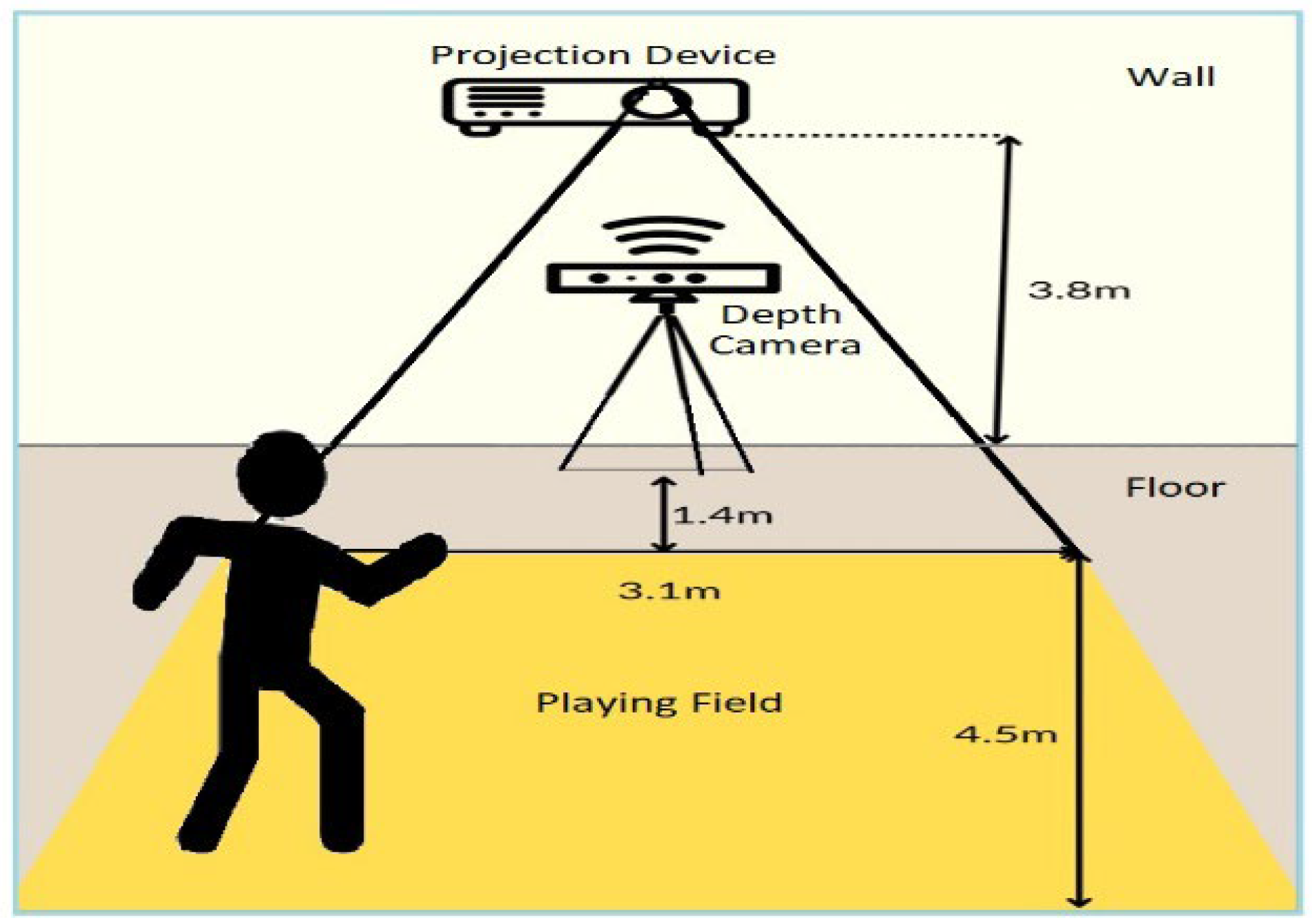
The projection-based RAT system consisted of four main components: (i) a control unit, (ii) a wide-angle projector, (iii) a three-dimensional depth camera, and (iv) a designated projection area on the floor (
Figure 1).
A ceiling-mounted wide-angle projector (Optoma HD29He, Hertfordshirei, UK) was positioned at a height of 3.8 m and configured to project a 3.1 × 4.5 m (≈14 m2) interactive area onto the floor with a 120° projection angle. The control unit was a laptop computer equipped with a 64-bit operating system and an Intel i5 (or higher) processor (Santa Clara, CA, USA). The system interface and visual stimuli were projected directly onto the floor surface. An Intel RealSense D455 depth camera (resolution: 1280 × 720 pixels at 30 fps; depth accuracy: ±2 mm, Santa Clara, CA, USA) was positioned 1.0 m above the floor and 1.4 m in front of the projection area. The depth camera operated at a fixed sampling frequency of 30 Hz, meaning that skeletal joint positions were updated every 33 ms. This sampling rate was selected as it is sufficient to capture rapid lower-limb movements during short-distance reactive agility tasks. To enhance real-time data processing performance, the depth camera was integrated with an NVIDIA Jetson Xavier NX (Santa Clara, CA, USA) development kit.
2.1.2. Software Architecture and Motion Tracking
The system software was developed using MATLAB R2022b (MathWorks, Natick, MA, USA), incorporating the Image Processing Toolbox (R2022b) and Computer Vision Toolbox (R2022b). The graphical user interface (GUI) and test protocols were implemented using MATLAB’s GUI development environment. Unity 2021.3.16f1 was additionally employed for real-time visualization and stimulus rendering, while Unitrack v3.6 motion analysis software was used for reference motion tracking.
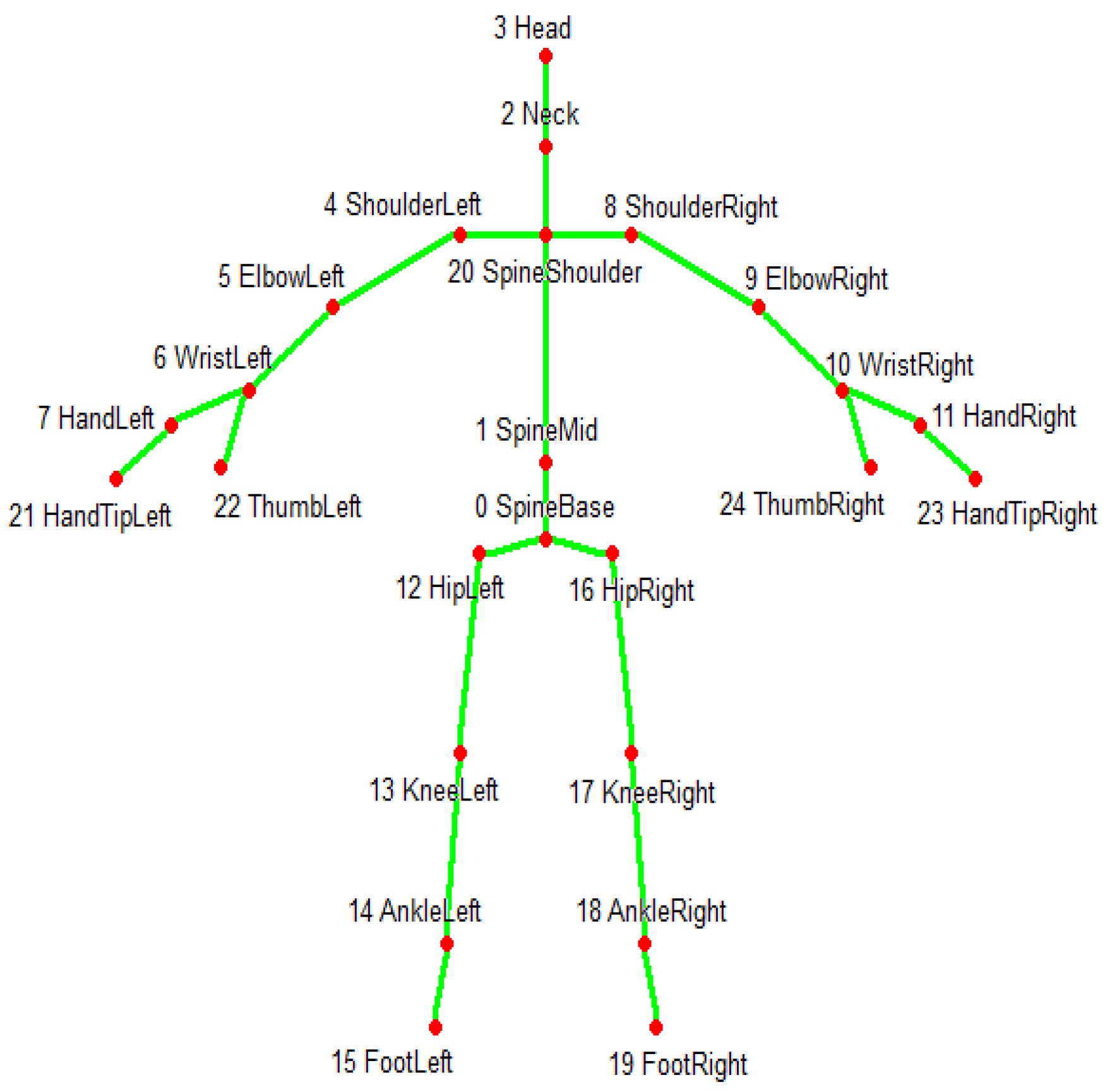
Spatial calibration was performed to align the projected stimulus coordinates with the depth camera’s coordinate system. Lower-limb joint coordinates were extracted in real time from the depth camera’s skeletal tracking output. Specifically, joint indices corresponding to the left knee and foot (indices 14 and 15) and the right knee and foot (indices 18 and 19) were used to determine foot placement and stimulus interaction (
Figure 2).
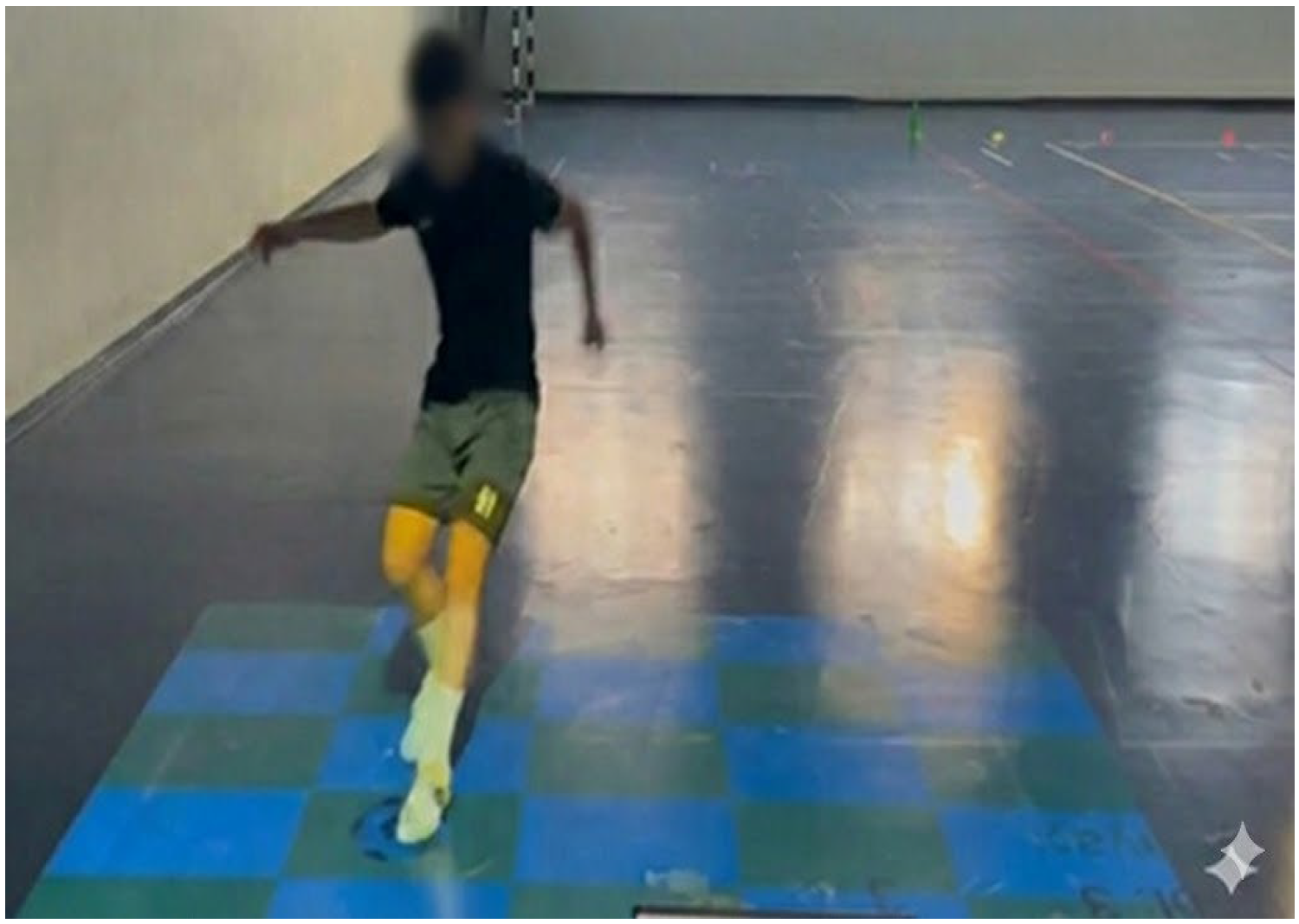
A stimulus was registered as successfully activated when the Euclidean distance between the projected stimulus center and the detected foot position was ≤30 mm in the horizontal plane (x–y), while maintaining vertical (z-axis) proximity consistent with ground contact. This spatial tolerance threshold was determined during system calibration to account for minor tracking noise and natural foot placement variability. Upon successful activation, the system immediately removed the stimulus and generated the next randomized stimulus according to the predefined test protocol. The x, y, and z coordinates (distance) of the squares (
Figure 3) where the stimulus will be delivered are pre-calibrated. Accordingly, a stimulus is triggered when the foot’s (x,y,z) coordinate information matches the coordinates of the previously calibrated squares.
2.2. Participants
A total of 57 male soccer players voluntarily participated in the study, including 24 professional players (age: 23.5 ± 4.2 years; height: 176 ± 5.28 cm; body mass: 74.29 ± 2.42 kg; playing experience: 8.7 ± 3.1 years) and 33 amateur players (age: 21.8 ± 3.7 years; height: 174 ± 4.11 cm; body mass: 74.89 ± 3.76 kg; playing experience: 7.2 ± 2.4 years). Ethical approval was obtained from the University Health Sciences Ethics Committee (Approval No: 2023/21; Date: 19 October 2023). All participants provided written informed consent prior to participation, in accordance with the Declaration of Helsinki.
2.3. Reactive Agility Test Protocols
Two reactive agility test protocols were implemented using the developed system.
2.3.1. Randomized Simple Reaction Test (RsimRT)
As illustrated in
Figure 3, the athlete waits at the starting position while a soccer ball image is projected onto a predetermined location within the testing area. The athlete is required to move rapidly toward the projected stimulus and deactivate it by stepping on the ball image. After deactivating each stimulus, the athlete must return to the starting gate before a new soccer ball image is projected at a different location within the testing area. The athlete is instructed to respond as quickly as possible to each newly projected stimulus by moving toward it and deactivating it with the foot. Once the athlete reaches the stimulus location, the visual stimulus disappears. In this protocol, five soccer ball stimuli are randomly projected for each participant. To ensure consistency across participants, total movement distance was standardized using a predefined set of stimulus locations with known distances relative to the starting position. For each participant, the software algorithm automatically generated randomized stimulus sequences in which the cumulative travel distance, including both outbound and return movements to the starting gate, matched a fixed predefined total distance. Accordingly, although stimulus order and spatial configuration varied between trials, all participants completed an identical overall movement distance, thereby minimizing the influence of unequal locomotor demands on performance outcomes. The test was completed when the athlete deactivated the fifth stimulus and returned to the starting position. The total completion time determined by the system was recorded as the test outcome.
2.3.2. Randomized Selective Reaction Test (RselRT)
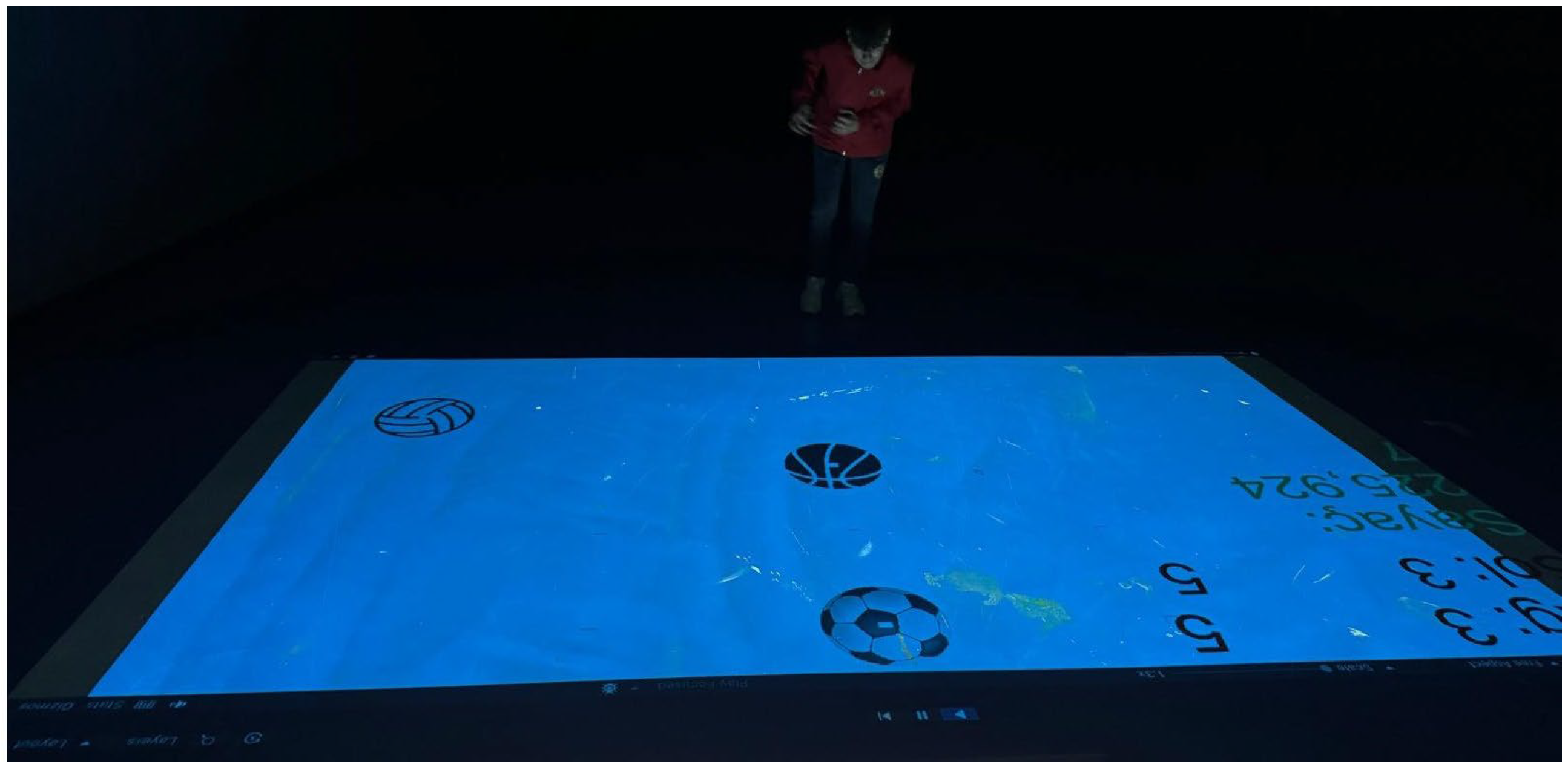
In this test protocol (
Figure 4), three different ball images (soccer, volleyball, and basketball) were simultaneously projected onto three separate locations on the floor. The athlete was instructed to respond exclusively to the soccer ball stimulus by stepping on it with the foot. After deactivating the target stimulus, the athlete was required to return to the starting gate before a new set of stimuli (soccer, basketball, and volleyball balls) was projected at different locations within the testing area. If the athlete moved toward and stepped on a non-target stimulus, the system did not deactivate the stimulus and did not present a new stimulus set, thereby requiring the athlete to correct the response and reorient toward the target. In this protocol, five target soccer ball stimuli were randomly presented to each participant. To ensure consistency across participants, the distance between the starting position and each projected target stimulus was calculated, and the total distance covered during the test was standardized so that all athletes completed the same overall movement distance. Thus, although different spatial configurations were used for each participant, performance was assessed independently of distance. The test was completed when the athlete deactivated the fifth target stimulus and returned to the starting position. The total completion time determined by the system was recorded as the test outcome.
2.3.3. Planned Change-of-Direction Tests
t-Test
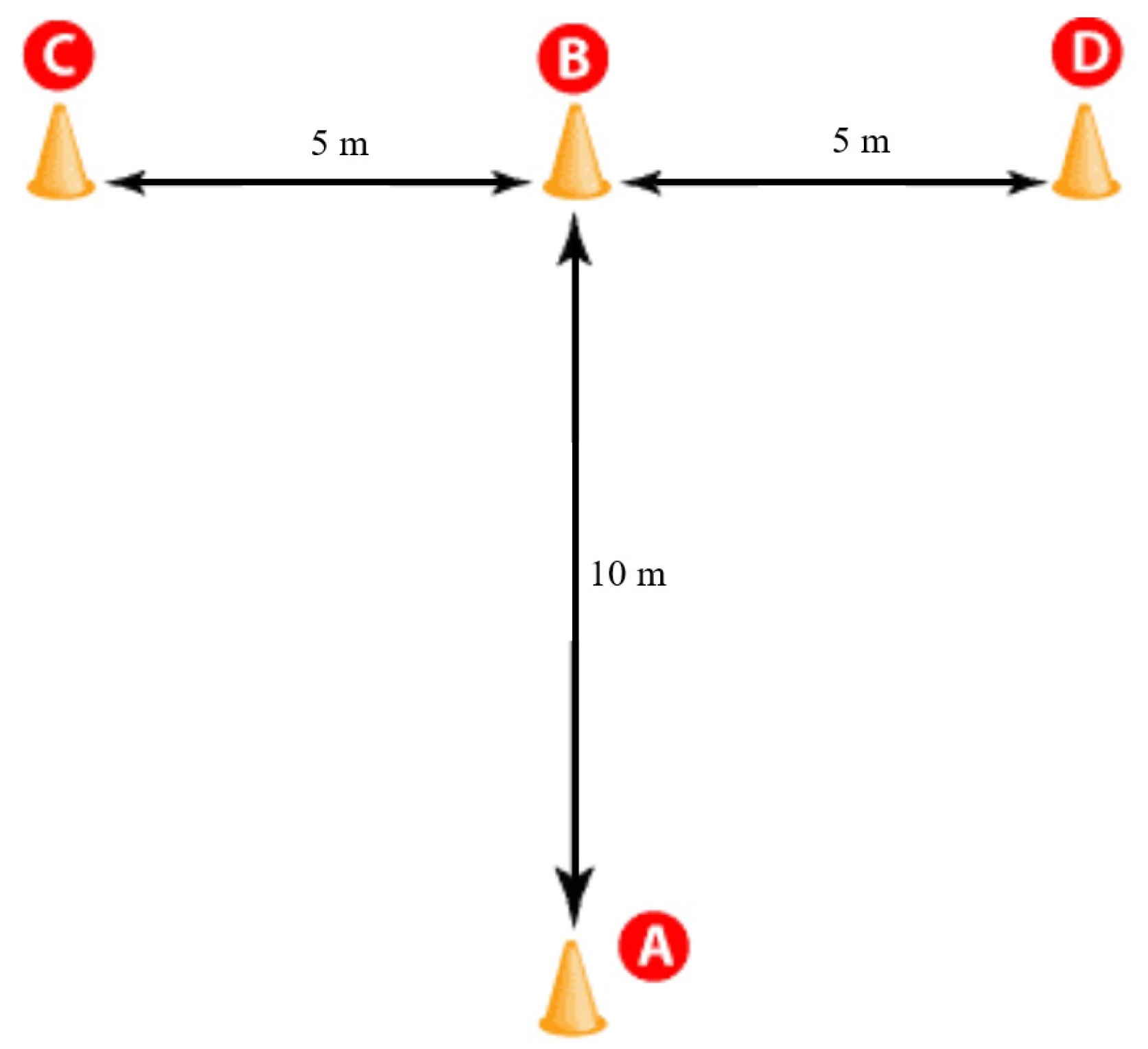
Each athlete was positioned behind the cone at point A, which served as the starting point, with both feet placed behind the starting line (
Figure 5). Athletes were informed that they could initiate the test at a self-selected time. After starting, the athlete sprinted forward to cone B located 10 m ahead, then changed direction to the left and ran 5 m to cone C. From cone C, the athlete sprinted backward 10 m to cone D. After touching cone D, the athlete immediately changed direction, sprinted forward to cone B, touched the cone, and then returned to the starting point at cone A to complete the test [
29].
Illinois Agility Test
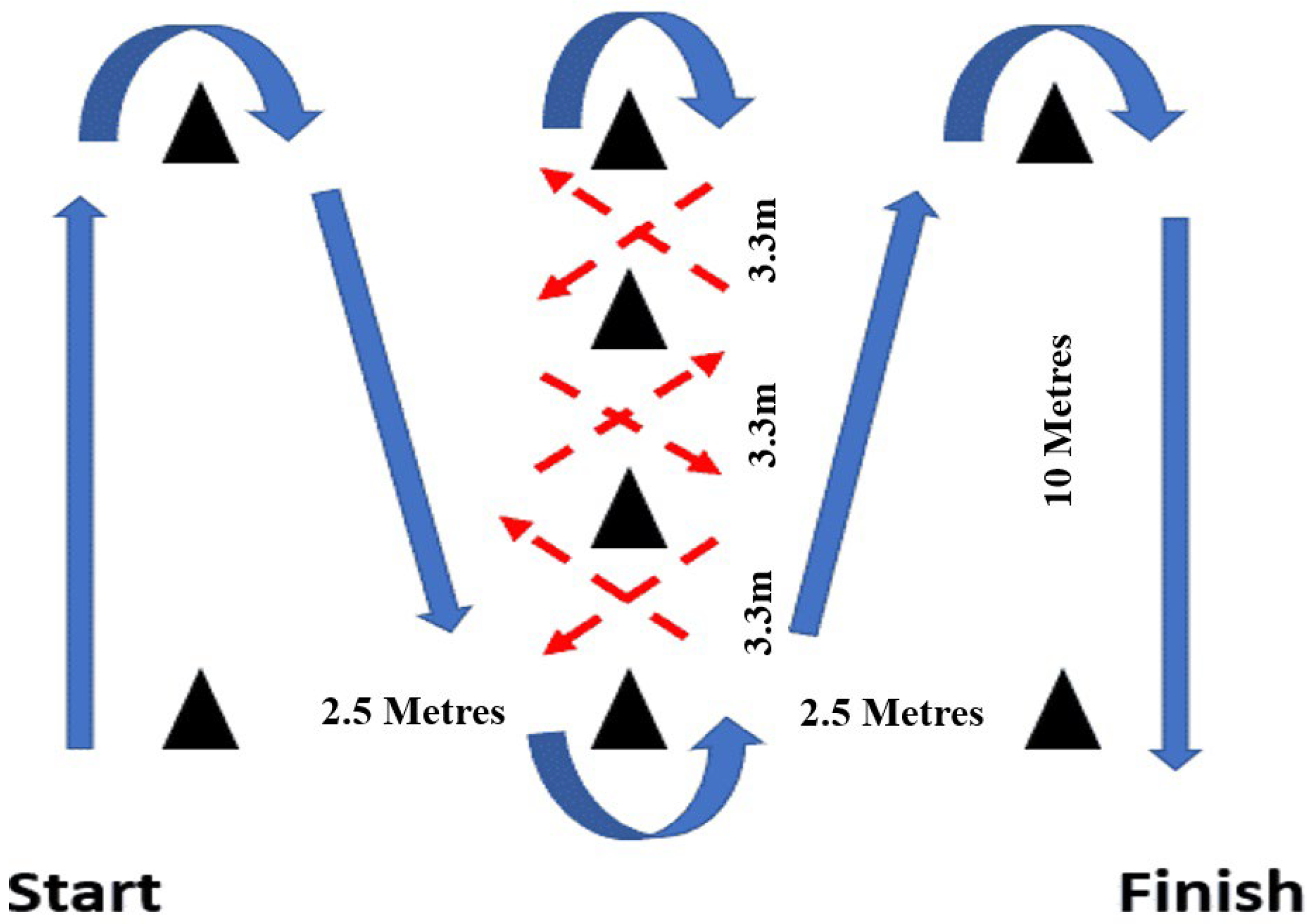
The Illinois Agility Test course consists of a rectangular area measuring 10 m in length and 5 m in width, with three cones aligned in a straight line at 3.3 m intervals in the central section of the course (
Figure 6). The test comprises a total running distance of 60 m, including 40 m of straight sprinting with 180° turns every 10 m and 20 m of slalom running between the cones. After the course was set up, a dual-beam photocell timing system with a measurement accuracy of 0.01 s was positioned at the start and finish lines. Prior to testing, participants were familiarized with the course and procedures and were allowed to perform 3–4 low-intensity practice trials. Subsequently, participants completed a self-paced warm-up and stretching routine lasting approximately 5–6 min. Participants started the test from the starting line in a prone position, with hands placed on the ground at shoulder width. The total time to complete the course was recorded in seconds. Following full recovery, the test was repeated twice, and the best performance time was retained for analysis [
30,
31].
2.4. Testing Procedure
All testing sessions were conducted indoors between 19:00 and 22:00 h. Participants were instructed to avoid strenuous exercise on the day preceding testing and to refrain from eating for at least 2 h before testing. Standardized footwear suitable for indoor sports surfaces was required. Anthropometric measurements were obtained prior to testing. Participants then completed a standardized warm-up consisting of 10 min of light jogging followed by 10 min of dynamic stretching. Familiarization trials were provided for both PCOD and reactive agility tests before data collection. PCOD tests were performed first (t-test followed by Illinois Agility Test), followed by the reactive agility tests (RsimRT and RselRT). A minimum rest period of 5 min was provided between tests. Two trials were performed for each test, and the best performance was used for analysis.
2.4.1. Validity
To evaluate the field validity of the proposed system, planned change-of-direction (PCOD) performance and reactive agility (RA) performance of amateur and professional players were compared, and the relationship between the two testing protocols was examined. It was hypothesized that PCOD performance would differ significantly between amateur and professional players, while RA performance would demonstrate a greater performance advantage for professional players compared with PCOD tests. In addition, a significant relationship between PCOD tests and RA tests obtained from the newly developed system was expected. Confirmation of these hypotheses would indicate that the system is capable of discriminating between competitive levels.
2.4.2. Reliability
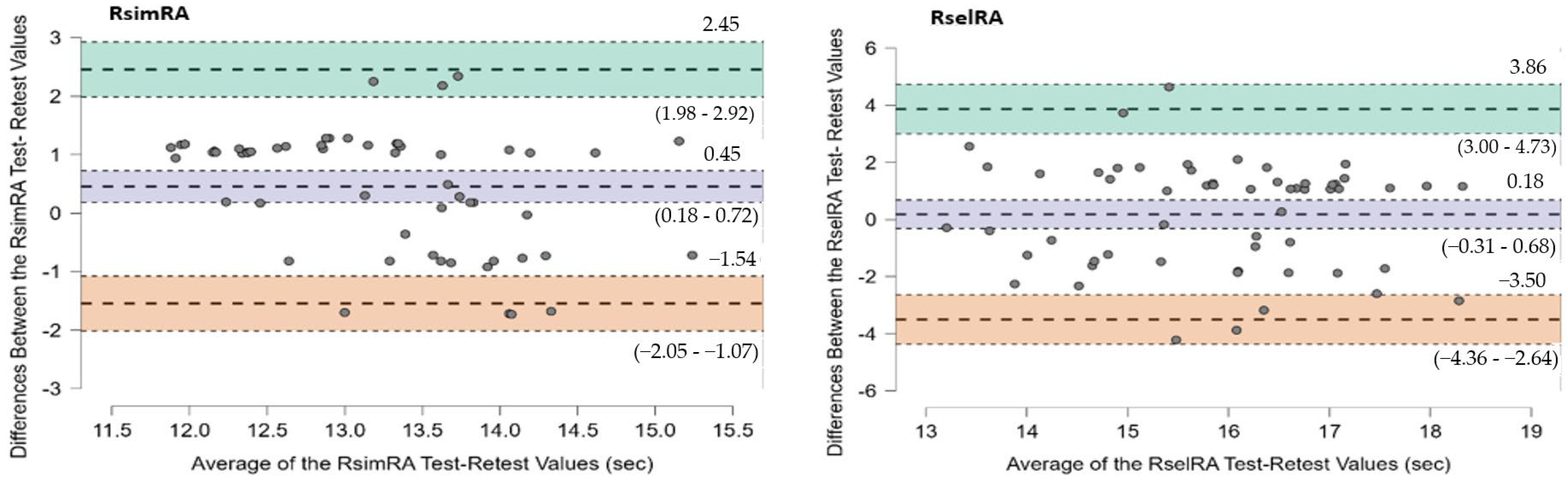
The reliability of the data obtained from the newly developed system was assessed using a test–retest design. The developed test protocols were administered to all participants on two separate occasions with a 24 h interval. Reliability was evaluated by comparing the measurements obtained on the two testing days.
2.5. Statistical Analysis
All statistical analyses were performed using IBM SPSS Statistics (version 20.0). Descriptive statistics were reported as mean ± standard deviation (SD). For validity analyses, independent samples t-tests were used to determine differences in planned change-of-direction (PCOD) and reactive agility test (RAT) outcomes between professional and amateur soccer players. In addition, repeated-measures analysis of variance (ANOVA) was employed to examine group × test interactions. Relationships between test protocols were assessed using Pearson’s correlation analysis. To evaluate reliability, test–retest data were compared using paired t-tests to identify differences between measurement sessions. Intraclass correlation coefficients (ICC) were calculated to determine the degree of agreement between measurements. The percentage change between measurements was expressed as the coefficient of variation (CV%), while limits of agreement and random error were assessed using Bland–Altman plots.
ICC values were interpreted according to the following thresholds: extremely high (0.99–0.90), very high (0.90–0.75), high (0.75–0.50), moderate (0.50–0.20), and low (<0.20) [
9,
10]. Statistical significance was set at
p < 0.05 for all analyses. Effect sizes for Cohen’s d were classified as small (0.20), medium (0.50), and large (0.80). Thresholds for Pearson’s correlation coefficients were defined as trivial (<0.10), small (0.10–0.29), moderate (0.30–0.49), large (0.50–0.69), very large (0.70–0.89), and nearly perfect (≥0.90) (32). For reliability, threshold criteria were set as CV < 8% [
32] and ICC ≥ 0.80 [
25,
28]. For validity, ICC values ≥ 0.90 were considered indicative of adequate validity.
4. Discussion
The purpose of the current study was to develop and validate a projection-based, ground-level reactive agility test designed to better reflect the perceptual–cognitive and motor demands of soccer. The main findings indicate that the proposed system demonstrates high construct validity and excellent test–retest reliability, while providing a greater ability to discriminate between professional and amateur players compared with traditional planned COD tests. These results support the use of ground-level visual stimuli as a more ecologically valid approach to reactive agility assessment in open-skill sports.
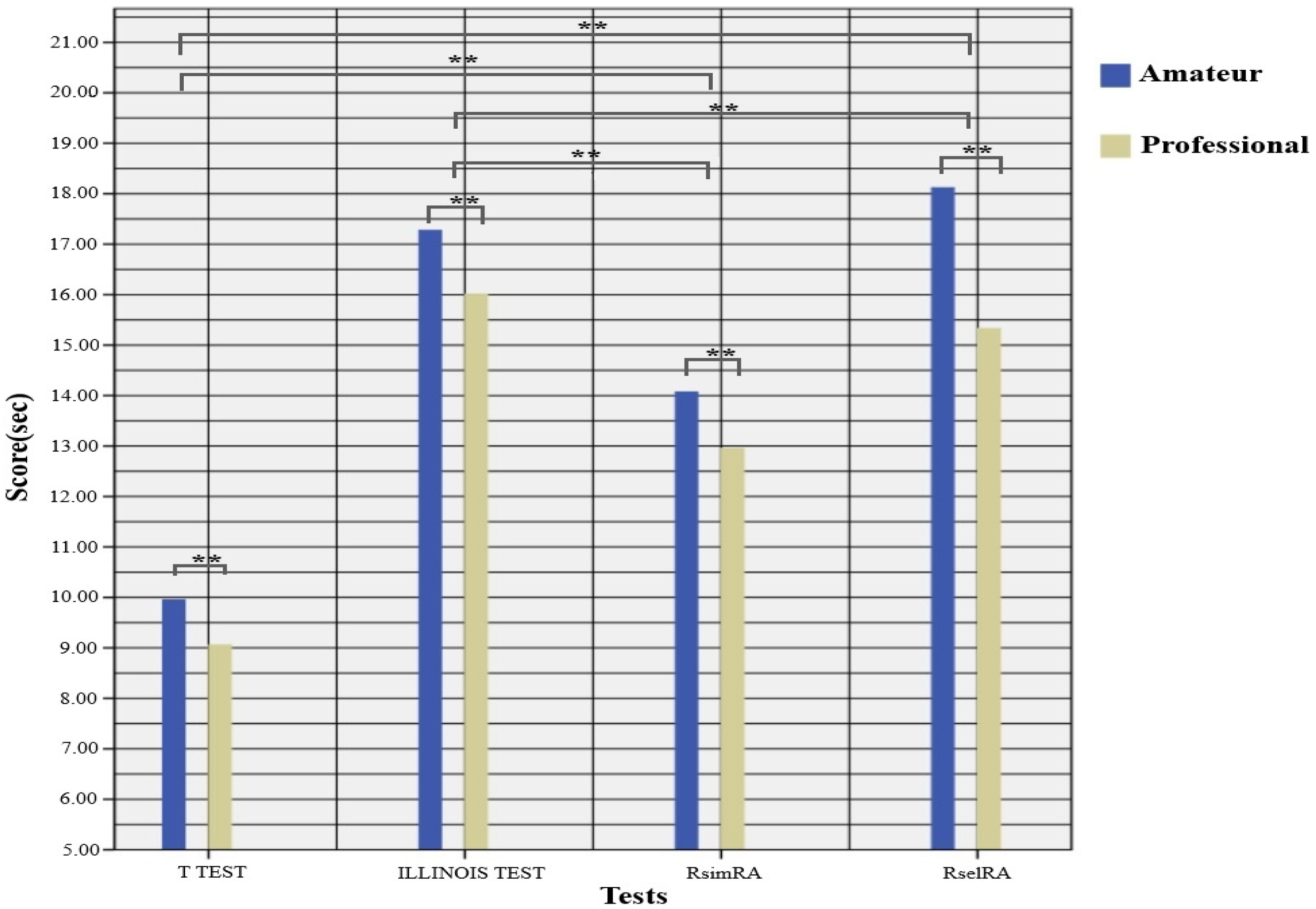
A key finding of the present study is the substantially larger between-group differences observed in reactive agility performance compared with planned COD outcomes. While professional players outperformed amateur players in both test categories, performance gaps were markedly greater in the reactive agility protocols, particularly as task complexity increased. This pattern suggests that reactive agility performance in soccer is strongly influenced by perceptual–cognitive demands, such as stimulus identification, decision-making, and response selection, in addition to physical movement capacity. In contrast, planned COD tests primarily reflect neuromuscular and biomechanical attributes, which may explain the relatively smaller group differences observed in these measures. The low-to-moderate correlations between planned COD performance and reactive agility outcomes further support the notion that these constructs, while related, represent distinct performance qualities. The weaker associations observed for the more cognitively demanding selective reaction protocol indicate that increasing perceptual complexity reduces the contribution of purely physical determinants. This finding aligns with previous research demonstrating that reactive agility captures additional performance components not assessed by pre-planned agility tasks and reinforces the importance of incorporating perceptual–cognitive demands into agility assessment frameworks [
6,
8,
12,
13,
14,
15,
16].
From a methodological perspective, the use of projection-based, ground-level visual stimuli represents a central contribution of this study. Many existing reactive agility assessments rely on sensor-based platforms [
19,
24,
25,
26] screen-based [
3,
8,
12,
15] or light-based [
14,
16] cues delivered from spatially separated locations, requiring athletes to process visual information in one plane and execute movement in another. Such spatial dissociation may reduce ecological validity, as soccer-specific stimuli—such as ball movement, opponent actions, and spatial affordances—are typically perceived and acted upon at ground level. By integrating stimulus perception and movement execution within the same spatial plane, the proposed system more closely replicates the visual–motor coupling inherent to soccer performance. Moreover, in sensor-based platforms, such as SpeedCourt, SkillCourt, and Cybex, rely on screen-based cues and predefined movement nodes, reducing the representativeness of real-game perceptual demands. The present findings are consistent with previous studies reporting superior reactive agility performance in elite athletes when compared with sub-elite or amateur players, particularly when tasks involve higher perceptual or decision-making demands [
3,
6,
8,
12,
13,
14,
15,
16]. However, unlike many earlier systems that employ predefined movement nodes or screen-based cues, the current approach allows flexible stimulus placement and sport-specific visual content. This flexibility may enhance both assessment sensitivity and training applicability, especially in contexts where perceptual–cognitive load is a key determinant of performance.
The test–retest reliability results demonstrate that the developed system provides stable and repeatable measurements, with excellent intraclass correlation coefficients and low measurement error. Although small systematic improvements were observed between test sessions, these changes are likely attributable to familiarization or learning effects rather than measurement instability [
32]. Importantly, individual performance rankings remained highly consistent across sessions, supporting the suitability of the system for longitudinal monitoring and performance evaluation. Ref. [
33] emphasized that a test may be considered reliable if ICC values exceed 0.80 and CV values are below 10%; based on these criteria, the developed system can be classified as having very high reliability. Ref. [
32] further noted that significant differences may still be observed in test–retest designs despite high ICC values due to learning effects, pacing strategies, or environmental factors. Therefore, the observed improvements between sessions do not contradict the high reliability of the system but rather indicate that athletes may adapt to the testing environment. Comparable reliability findings have been reported for similar systems. Ref. [
34] found moderate-to-high reliability (ICC = 0.59–0.73) for the Cybex Reactor system across different testing sessions. Ref. [
24] reported high test–retest reliability for the SpeedCourt system in terms of total completion time (ICC > 0.79, CV < 5%). Ref. [
35] reported moderate-to-high reliability for reactive agility protocols using FitLight sensors (Aurora, Ontario, Canada). Ref. [
7] reported ICC values of 0.91 for the Defensive Reactive Agility Test, although reliability varied depending on direction-change configurations. Similarly, Ref. [
4] reported ICC = 0.94 for the G-RAT protocol.
Although the current system has advantages over others due to its sport-specific stimulus and low predictability, its most significant limitations lie in the absence of real-world performance metrics (such as opponent movement and the ball remaining static). However, the software-based nature of the system allows for the addition of dynamic ball movements in future applications. Moreover, several limitations should be acknowledged. The effective operational range of the depth camera and projection system constrained the size of the testing area, which may influence stimulus visibility and tracking accuracy under certain conditions. In addition, projection-based stimuli are sensitive to lighting conditions and surface contrast, factors that should be considered during test setup.
5. Conclusions
This study developed and validated a projection-based, ground-level reactive agility test designed to capture the perceptual–cognitive and motor demands of soccer within an ecologically valid assessment framework. The findings demonstrate that the proposed system provides a valid and reliable measure of reactive agility and effectively discriminates between professional and amateur soccer players.
Compared with planned change-of-direction tests, the reactive agility protocols revealed substantially greater performance differences between competitive levels and showed only low-to-moderate associations with planned agility outcomes. These results indicate that reactive agility represents a distinct performance construct that extends beyond physical movement capacity by incorporating perceptual–cognitive demands such as stimulus identification, decision-making, and response selection. A key contribution of the present study lies in the use of ground-level, sport-specific visual stimuli integrated with real-time motion tracking. By aligning stimulus perception and movement execution within the same spatial plane, the system enhances ecological validity and more closely reflects the visual–motor coupling inherent to soccer performance. The flexible, software-based architecture further enables the development of adaptable reactive agility protocols for different performance contexts.
From an applied perspective, the findings support the inclusion of perceptual–cognitively demanding reactive agility tasks alongside traditional change-of-direction drills in soccer training and performance assessment. Nevertheless, as this study represents an initial validation, future research should investigate the applicability of the system across different age groups, sexes, and competitive levels, as well as its sensitivity to training-induced adaptations and longitudinal performance changes. Moreover, future research may extend the current paradigm by incorporating three-dimensional and continuously moving ball stimuli using augment reality or virtual reality technologies.