Article

Generative AI as a More Knowledgeable Other: An Autoethnographic Study of Game Design Education

by
Sultan A. Alharthi
College of Computer Science and Engineering, University of Jeddah, Jeddah 21959, Saudi Arabia
Appl. Sci. 2026, 16(11), 5689; https://doi.org/10.3390/app16115689 (registering DOI)
Submission received: 17 April 2026 / Revised: 25 May 2026 / Accepted: 1 June 2026 / Published: 5 June 2026
(This article belongs to the Special Issue Applications of Digital Technology and AI in Educational Settings)

Abstract

Generative AI tools are increasingly being adopted in education, where they function as collaborators that can provide feedback, suggest alternatives, and scaffold learning. In this paper, I conducted an autoethnographic study by examining my experience as a teacher-researcher integrating generative AI tools as a More Knowledgeable Other (MKO) within the context of game design education. Drawing on Vygotsky’s sociocultural theory, this study documents how generative AI can facilitate creative learning by extending learners’ capacity to ideate, iterate, and reflect on their design processes. This study further reflects on instructional practices and observations of learners engaging with AI-supported creative activities across workshops and training programs. My reflections reveal that generative AI tools enhance feedback loops, accelerate prototyping, and democratize access to mentorship by providing context-aware guidance. However, they also introduce challenges related to illusions of competence, a lack of internalization, and reduced iteration design depth. Future work will explore structured pedagogical models that balance human mentorship with AI-assisted guidance, aiming to establish ethical, adaptive, and creativity-centered frameworks for using generative AI in game design education. Through this lens, this study contributes to an emerging understanding of AI-enabled learning partnerships and their implications for cultivating innovation and talent in the creative industries.

1. Introduction

Generative artificial intelligence has become increasingly integrated into game design and development over recent years, expanding from procedural content generation into broader support for creating game assets and interactive experiences [1,2,3,4,5]. Previous studies suggest that generative AI tools can reduce parts of the manual development workload while also supporting creative exploration during the design process [6,7]. Tools such as ChatGPT, Midjourney, and Scenario allow designers to generate text, visuals, audio, and code, influencing multiple stages of game design and development workflows [8,9,10,11,12]. These advancements imply that generative AI tools are no longer just executing pre-defined strategies or generating random patterns; they are actively contributing to ideation and refinement, thus shifting the landscape of game design practice and learning.
However, balancing the possibilities of generative AI tools with the vision and constraints of game designers is critical in producing original designs [13]. Effective prompt engineering and careful parameter tuning are vital to ensure that AI outputs align with design goals [14,15]. To address these challenges, researchers have proposed hybrid approaches that combine human intuition with model-driven exploration [16,17], asserting that the most meaningful contributions of generative AI arise from interactive dialogues between designers and generative AI tools [14,18]. Furthermore, cultivating the ability to integrate such tools into workflows has become a crucial learning objective in game design education. Students must learn not only how to generate and manipulate AI-produced content but also how to critically assess, iterate, and co-create with these systems [2]. Embedding such practices into game design talent development programs can help future designers develop adaptive, reflective, and ethically grounded competencies for leveraging generative AI as a genuine creative partner in the design and development process.
Recent studies propose that generative AI tools can act as a More Knowledgeable Other (MKO) [19], providing adaptive guidance by tailoring feedback, modeling expert processes, and promoting dialogic co-construction of knowledge [20,21,22]. Tran et al. [21] observe that such generative AI tools support personalized learning, while Lee and Palmer [22] demonstrate that having generative AI perform initial coding tasks in qualitative analysis allows students to critique and extend the AI’s output, thereby developing higher-order thinking skills. Applied to game design education, this perspective suggests that generative AI tools can scaffold novice designers by illustrating design principles, offering iterative feedback on prototypes, and stimulating reflective dialogue about creative decisions. Stojanov [20] examines how ChatGPT can act as a MKO in the context of higher education, highlighting that such interactions can enhance engagement and promote self-directed inquiry, with the risk of also creating an illusion of competence due to inconsistencies and overreliance on AI-generated explanations. Similarly, Tran et al. [21] noted that the rapid generation of AI outputs may hinder deeper comprehension unless learning activities incorporate opportunities for critical evaluation and refinement.
Previous studies of generative AI tools in game design often investigates technical implementation or designer perspectives [2,7], leaving a gap in understanding how educators themselves perceive, utilize, and navigate these tools in the classroom. This paper contributes an educator-centered perspective through an autoethnographic study in which the author reflects on integrating generative AI as a MKO within game design talent development workshops. Rather than conducting surveys or interviews, this study captures lived experience and introspective analysis to illuminate the pedagogical and creative implications of working alongside generative AI. This study is guided by four research questions:
1.
Could generative AI serve as a companion in the creation of a game design course?
2.
How do generative AI tools mediate learning in game design education?
3.
What tensions emerge in the process of integrating AI into game design learning?
4.
What are the design implications of integrating AI into game design learning?
The aim of this work is to provide deeper insight into the sociotechnical dynamics of AI-supported game design learning and education. The remainder of this paper is organized as follows: Section 2 reviews existing research on generative AI in game design and educational contexts. Section 3 describes the autoethnographic methodology and data analysis approach used in this study. Section 4 presents the findings that emerged from the author’s reflective experiences and workshop observations during AI-supported game design learning activities. Section 5 discusses the broader implications of these findings for educators, designers, and researchers. Section 6 outlines the limitations of this study, and Section 7 concludes this paper and presents directions for future research.

2. Background

Generative AI has increasingly reshaped game design and development, influencing both design and technical production pipelines. Such tools have expanded the boundaries of what designers can conceptualize and produce while also introducing new challenges related to authorship [10]. The integration of generative AI into game design workflows has fostered innovative mechanics and interactive storytelling approaches [23,24]. As these tools become more deeply embedded in game development, perspectives within the design community remain divided. Some practitioners regard generative AI tools as co-creative partners that enhance creativity, efficiency, and experimentation [2], whereas others question their impact on originality, authenticity, and ethical responsibility [25]. This tension is particularly evident among independent developers, where some view generative AI tools as a democratizing force that empowers individuals to create complex projects with limited resources, while others caution against the risk of losing distinctive creative voices [26].

2.1. Generative AI in Game Design Practice

Generative AI is now used across different stages of game design and development, supporting activities such as concept art creation, procedural environment generation, adaptive storytelling, and rapid prototyping [27,28,29,30]. Tools including Stable Diffusion, Midjourney, and ChatGPT allow designers to generate visual and textual content more efficiently, reducing parts of the time and effort involved in traditional development workflows [31]. In parallel, some game engines have started integrating AI-driven systems that adapt gameplay based on player behavior and narrative decisions in real time [32,33]. One widely discussed application in this area is procedural content generation, where generative AI systems generate environments, objects, and characters dynamically during gameplay. A commonly referenced example is No Man’s Sky, which uses procedurally generated planetary systems to create a large universe with billions of different worlds [10]. Moreover, AI-driven systems are increasingly utilized in playtesting and quality assurance, assisting developers in detecting design flaws and optimizing gameplay balance.
The perspectives of game designers and developers toward generative AI integration remain complex, reflecting both enthusiasm and apprehension regarding its influence on creative practice [32]. One commonly discussed benefit of generative AI is its ability to support efficiency and reduce parts of the production workload. For instance, AI-generated concept art allows designers to explore different visual ideas before selecting a final direction, helping speed up early ideation and design processes [2]. For independent developers, generative AI tools are often viewed as empowering technologies that compensate for limited resources. Through the generation of code, textures, animations, and sound assets, small studios and solo creators can produce sophisticated projects that would traditionally require larger teams and budgets [26]. Despite these benefits, concerns persist regarding excessive reliance on generative AI, particularly the possibility that it may weaken the individuality, creativity, and craftsmanship often associated with independent game development [2].
In parallel, concerns surrounding intellectual property rights and ethical accountability remain central to ongoing debates about AI-generated content [34]. Developers continue to question the legitimacy of training datasets derived from copyrighted materials and emphasize the need for clearer frameworks that protect original creators while supporting innovation. Similarly, some researchers argue that AI-generated narratives, level structures, and visual assets may lack the expressive nuance and intentionality characteristic of human-crafted designs [31,35]. These discussions highlight the growing need to critically examine not only what generative AI produces within game design workflows but also how these systems reshape creative processes, authorship, and the broader culture of design practice.

2.2. Generative AI in Learning and Creative Education

Recent research increasingly positions generative AI as a transformative presence in educational settings, reshaping how learners think, create, and engage with knowledge [36,37]. Unlike its role in production-oriented workflows, generative AI in education is often discussed in relation to feedback, guidance, reflection, and learner support. These systems are capable of generating explanations, responding to questions, suggesting alternatives, and adapting outputs in ways that can influence both cognitive and creative learning processes.
Pérez-Colado et al. [38] show that student adoption of generative AI depends not only on tool accessibility but also on the availability of guidance, training, and pedagogical support. Similarly, Kreminski [39] warns that excessive reliance on automation may diminish creative agency and discourage deeper engagement with the learning process. Together, these studies suggest that the educational value of generative AI extends beyond efficiency or task completion, emphasizing instead the importance of reflection, interpretation, and active participation in learning activities.
Within game-based learning environments, generative AI has demonstrated potential as a form of cognitive and motivational support. Muengsan and Chatwattana [40], along with Li et al. [41], demonstrate that embedding generative AI within game-based learning environments can scaffold confidence, digital literacy, and learner motivation without overwhelming students. Vinchon et al. [42] further argue that creativity emerges through interaction and reflection with generative AI systems rather than from the autonomous outputs of the systems themselves. This perspective reframes AI-assisted creativity as a collaborative and iterative process where meaning develops through ongoing engagement between the learner and the system.
Beyond creative education, generative AI has also been widely explored in language learning contexts. AI-driven feedback, translation, and conversational interaction can accelerate vocabulary acquisition, grammar development, and writing skills [43]. Lee and Davis [44] show that integrating generative AI into instructional activities significantly improved students’ motivation and linguistic confidence. At the same time, researchers caution that many educational uses of generative AI remain relatively superficial, often emphasizing convenience and output generation over critical thinking and deeper conceptual understanding [45,46,47].
Across these studies, generative AI is increasingly framed as a system that supports learning through responsiveness, personalization, and iterative interaction. However, much of the existing literature still treats generative AI primarily as an instructional support mechanism that assists educational activities. Less attention has been given to how learners and educators experience generative AI as an active participant within the learning process itself, particularly in creative disciplines where experimentation, dialogue, and reflective inquiry play a central role in knowledge construction.

2.3. Sociocultural Theory and AI-Mediated Learning

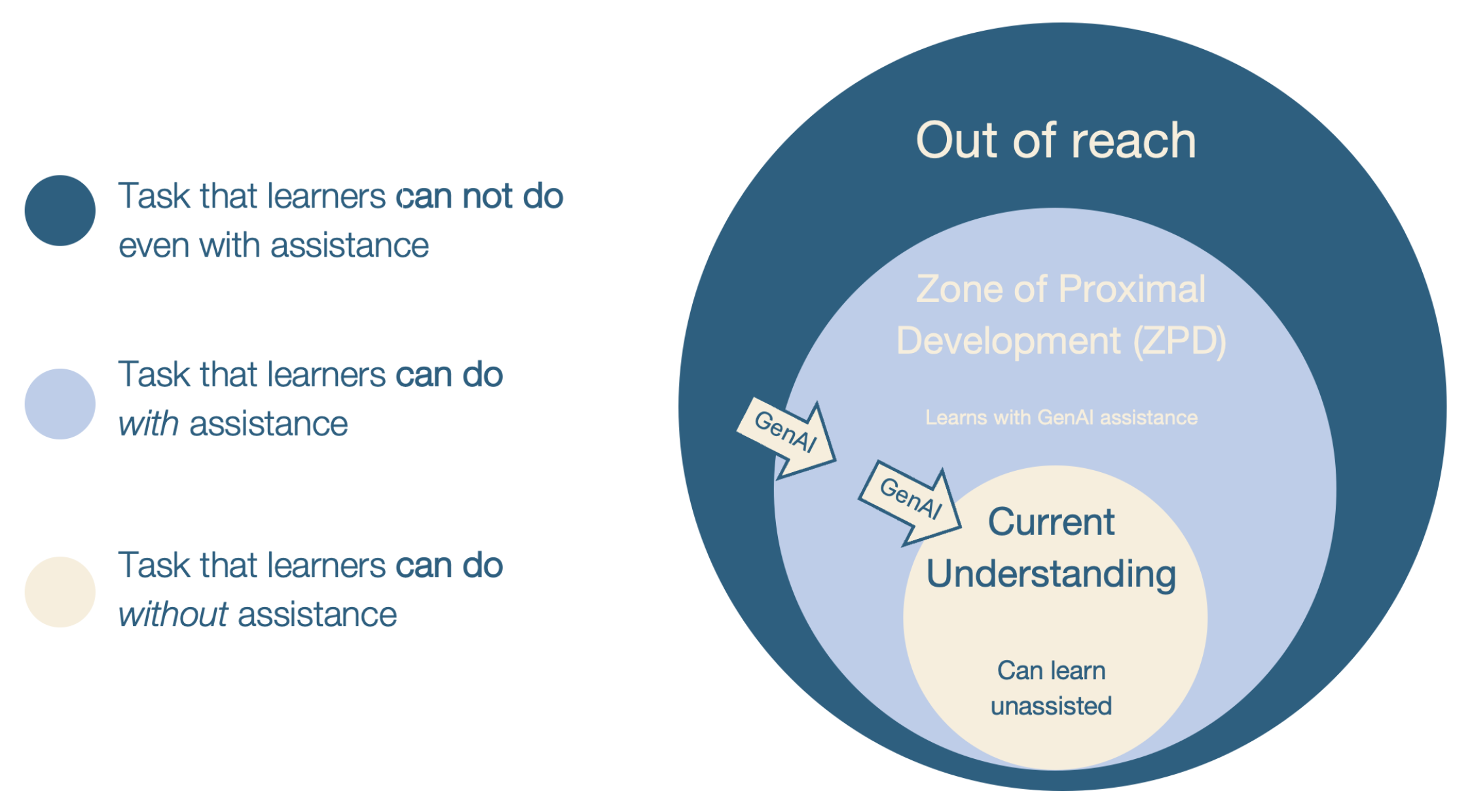
Vygotsky’s sociocultural theory positions learning as a fundamentally social and mediated process in which knowledge is constructed through interaction with others and through engagement with cultural tools [19]. Central to this perspective is the Zone of Proximal Development (ZPD), defined as the space between what learners can accomplish independently and what they can achieve with guidance from a More Knowledgeable Other (MKO). Within this zone, scaffolding enables learners to gradually internalize new forms of reasoning, problem-solving strategies, and conceptual understanding through dialogue, imitation, and collaborative engagement. The ZPD therefore provides a useful framework for examining how technologies mediate learning processes and shape the development of expertise (Figure 1).
Recent research has increasingly extended sociocultural perspectives toward AI-mediated learning environments. Rather than viewing generative AI solely as a tool that delivers information or automates tasks, researchers have begun examining how these systems participate in processes of reflection, guidance, and co-construction of knowledge [20,21,22]. Within this perspective, generative AI can function as a mediating presence that supports learners through adaptive feedback, iterative dialogue, and contextualized assistance. This shift is particularly important because it reframes generative AI interaction from simple tool usage toward a socially situated learning relationship.
Cai et al. [48] examine the integration of generative AI tools in higher education through the lens of sociocultural theory, arguing that such systems can scaffold learners’ cognitive development by modeling expert reasoning, adapting explanations, and supporting engagement with complex tasks. However, the authors also caution that poorly structured AI integration may move learners toward dependency or frustration rather than productive learning. Their findings emphasize that effective AI-mediated learning still requires educators to guide reflection, regulate challenge, and contextualize AI-generated support within broader pedagogical goals.
Similarly, Tran et al. [21] observe that generative AI tools can personalize learning by adapting responses to learners’ cognitive levels and prior knowledge. Their findings suggest that AI-mediated interaction may help sustain motivation and engagement by maintaining learners within an appropriate range of challenge. Lee and Palmer [22] further demonstrate that delegating preliminary analytic or creative tasks to generative AI creates opportunities for learners to critique, reinterpret, and refine AI-generated outputs. In this sense, learning emerges not from passive consumption but through dialogic interaction and reflective negotiation with the system. The authors argue that this process can support higher-order thinking skills such as abstraction, evaluation, and reflective judgment.
Stojanov [20] complements these perspectives by examining how ChatGPT can function as a MKO within higher education contexts. The study highlights how AI-mediated dialogue may enhance engagement, autonomy, and self-directed inquiry while simultaneously introducing risks associated with overreliance and the illusion of competence. Learners may perceive understanding without fully internalizing concepts due to the fluency and confidence of AI-generated explanations. This tension reflects a broader challenge within AI-mediated learning environments, where guidance and dependency can emerge simultaneously.
Taken together, sociocultural perspectives suggest that generative AI is not simply assisting learning activities but actively shaping how learners interpret problems, construct understanding, and engage in reflective inquiry. However, despite growing interest in AI-mediated learning, limited work has examined how these dynamics unfold within creative learning environments such as game design education, where experimentation, iteration, authorship, and mentorship frequently intersect. This study addresses this gap by examining how generative AI mediates creative learning experiences through the perspective of a teacher-researcher working within game design talent development initiatives.

3. Methodology

Integrating generative AI into game design education involves a process of iterative experimentation that resembles learning through trial and error, including crafting meaningful prompts, interpreting outputs, and refining results. All of these acquired skills improve through continuous practice. Learners often rely on community-shared resources, online examples, and peer exchanges, yet genuine understanding develops through direct engagement and reflective iteration within authentic tasks. This study adopts an autoethnographic research design to critically examine the author’s lived experience of integrating generative AI tools into game design education and talent development [49]. This approach is particularly well-suited to studies of emerging technologies such as generative AI, where the researcher simultaneously assumes the roles of the designer, educator, and participant-observer. This study thus situates the author’s engagement with generative AI as a form of reflective practice, a process of examining how AI-mediated interactions shape creativity, learning, and mentorship within educational environments.

3.1. Positionality

As this is an autoethnography, I share my positionality to clarify how my background and experiences shape my engagement with generative AI in creative learning contexts. I hold a PhD in Computer Science specializing in Game Design and have extensive experience delivering game design and development training through workshops, courses, and educational programs in both online and face-to-face settings. In my role as an Associate Professor and Chair of the Software Engineering Department at the University of Jeddah, I design programs that integrate technology, creativity, and experiential learning. Alongside my academic work, I am also the co-founder of a game design studio, which places me at the intersection of teaching, creative practice, and industry application. These combined experiences influence how I interpret AI’s role in shaping creative processes, learner motivation, and design workflows. My perspective is informed by a commitment to fostering accessible, reflective, and human-centered approaches to game development while also recognizing that my enthusiasm for innovation may shape how I perceive the possibilities and limitations of generative AI in education.

3.2. Research Study Context and Procedure

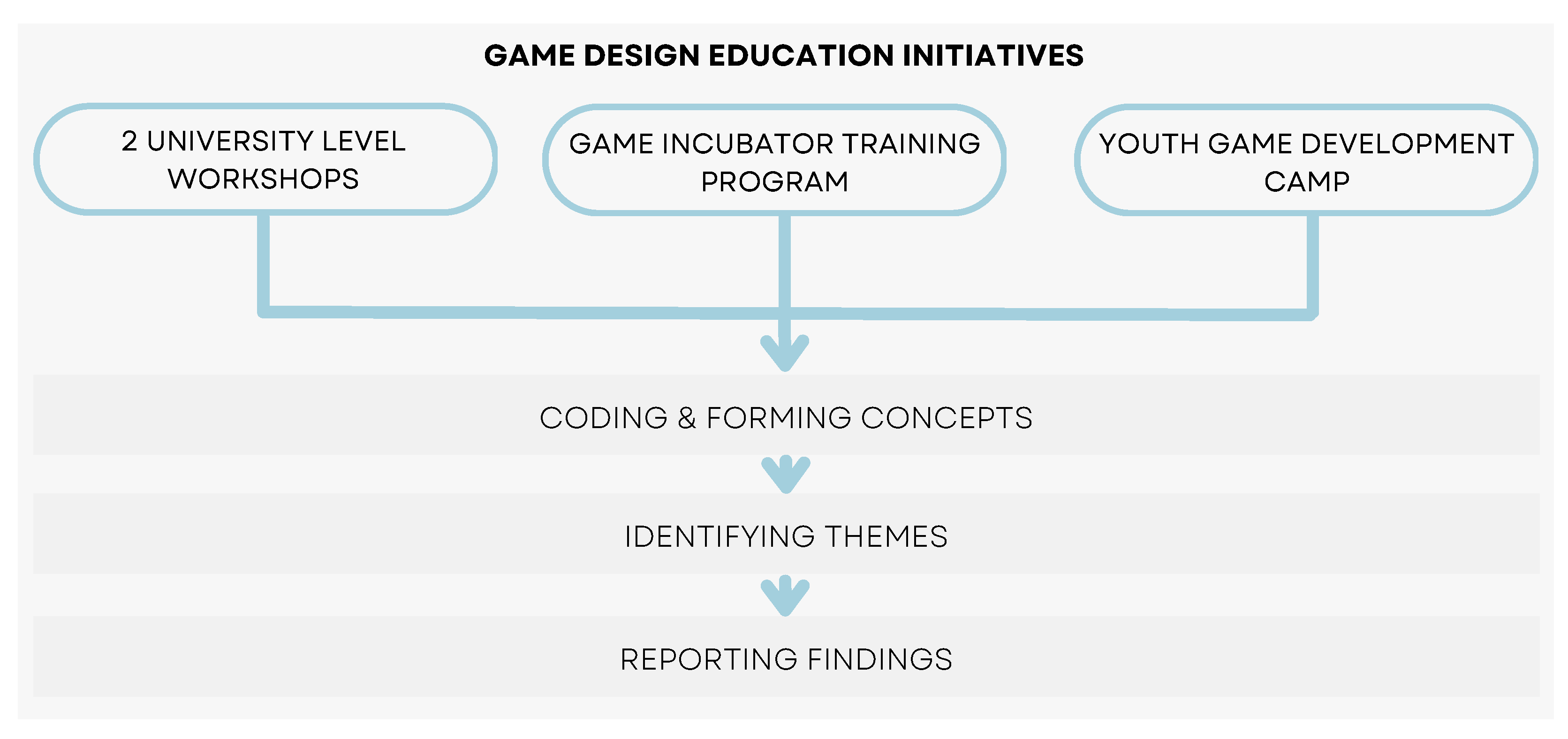
This study was conducted across a series of 4 game design education initiatives in Saudi Arabia between May 2025 and September 2025, including 2 university-level workshops, 1 game incubator training program, and 1 youth game development camp (Figure 2). Across these initiatives, participants included undergraduate university students, novice game designers, and youth participants with varying levels of prior experience in programming and game development. Most participants had limited or no formal background in game design, particularly within the youth camp activities, where the workshops emphasized introductory creative learning and experimentation with generative AI tools. The educational initiatives collectively involved ( n = 113 ) participants across the 4 different programs with an average age of ( M = 19.0 , S D = 1.43 ).
Students in these initiatives included novice designers and young developers who engaged in design challenges, prototyping sessions, and collaborative learning activities. These initiatives were created and facilitated by the researcher in collaboration with different government and private educational institutions. These learning sessions emphasized the creative and reflective integration of generative AI tools within the pedagogical design of the workshops. During the learning sessions, students engaged with ChatGPT for ideation and dialogue generation, Midjourney and Scenario for visual concept art and 2D asset creation, and Rodine AI for 2D-to-3D asset conversion. Each tool was deliberately embedded in the learning activities to scaffold creative thinking, support iterative design, and demonstrate how generative AI can function as a co-creative partner within the game development process. While the researcher was the primary subject of reflection in this study, observations of students’ interactions with generative AI tools and peers were used as contextual reference points that informed the researcher’s reflective interpretations and pedagogical responses throughout the workshops. This study was conducted in accordance with Declaration 1022 of Helsinki and approved by the Institutional Review Board of the University of Jeddah (UJ-REC-326) on 16 March 2025. Participants were informed about the educational and research-related nature of the workshops and observations. Consent was obtained for the documentation of workshop activities, including photographs of learning environments and design artifacts used within this study. For youth participants involved in the game development camps, parental or institutional guardian consent procedures were followed in accordance with the hosting organizations’ ethical requirements and participation policies. Photographic materials included in this paper were selected to avoid personally sensitive information and were used solely for research and educational documentation purposes.
While observations of learners informed the broader educational context of the workshops, the primary unit of analysis in this study remained the researcher’s own reflective experience of integrating generative AI into teaching and creative practice. Observations of students were therefore not treated as independent empirical claims about learner behavior but rather as contextual triggers that shaped the researcher’s reflections, pedagogical decisions, and interpretations throughout the autoethnographic process.

3.3. Data Collection

Reflexive fieldnotes were maintained throughout all stages of the study, capturing immediate impressions, evolving interpretations, and critical reflections on the researcher’s experiences as both a facilitator and a participant. These notes documented observations of learner interactions, emerging patterns of engagement with generative AI tools, and moments of tension or insight that arose during creative tasks. Each entry emphasized how the researcher’s assumptions, pedagogical decisions, and emotional responses influenced the unfolding of the learning process. Artifact analysis complemented these reflections by examining tangible outputs generated during the workshops. This included AI-generated visual assets, text prompts, prototypes, and documentation of design iterations. These artifacts provided empirical anchors to the experiential narrative, allowing the researcher to trace how design decisions evolved in response to AI-generated suggestions or constraints. In addition to textual and digital records, photographic documentation was used to capture workshop settings, interaction patterns, and low-fidelity game design sketches (Figure 3 and Figure 4). Together, these diverse data sources formed a triangulated basis for interpretation. This multi-layered approach ensured that the analysis would not rely solely on the researcher’s memory or subjective interpretation but instead be grounded in material traces of the creative process and situated classroom experiences.
To support interpretive claims related to learner interaction, the researcher also documented moments of classroom dialogue, recurring interaction patterns, and examples of AI-supported design artifacts within reflexive field notes. These records were not analyzed as standalone data but rather as contextual material that informed the researcher’s reflections on teaching, scaffolding, and AI-mediated learning experiences.
The photographic documentation focused primarily on learning environments, collaborative activities, design processes, and workshop artifacts rather than individual participant identification. Any visual materials used in this study were reviewed to ensure consistency with participant consent procedures and institutional ethical guidelines.

3.4. Data Analysis

Analysis followed an iterative, interpretive approach, combining thematic analysis with narrative reflection [50]. The process began with familiarization through repeated reading of reflexive journals, field notes, and workshop documentation, followed by initial open coding to identify patterns related to scaffolding, creativity, agency, and critical reflection. These initial codes were inductively derived from the lived experiences recorded during each session and refined through a continuous comparison across different educational contexts. The emphasis was not on the frequency of occurrence but on the interpretive depth and educational significance of each theme, particularly in how generative AI mediated creative learning and pedagogical relationships. Themes were reviewed, organized, and defined through an iterative process of clustering related codes, resulting in higher-order conceptual categories that reflected the evolving nature of AI-assisted learning. Thematic mapping revealed how specific moments of experimentation, tension, or collaboration contributed to learners’ development of creative confidence and reflective awareness. The findings were then interpreted through the lens of Vygotsky’s constructivist principles [19], emphasizing how learning occurred through active engagement, collaboration, contextual exploration, and reflection (Table 1).

4. Findings

The findings focus on moments where my role, my interactions with students, and my relationship with generative AI shifted in meaningful ways. These insights emerged not only from observing the outcomes of generative AI-supported learning but also from noticing how my own practices, assumptions, and responsibilities evolved as I worked alongside students and generative AI tools. The subsections that follow are organized around the central research question guiding this study, which helped unpack the changes and highlight the patterns, tensions, and possibilities that surfaced throughout the process. Because this study is grounded in autoethnography, I present the findings in the first person and draw directly on my lived experience integrating generative AI tools into game design education.

4.1. RQ1: Could Generative AI Serve as a Companion in the Creation of a Game Design Course?

The process of integrating generative AI into game design course creation revealed a layered interaction between instructional design, creative exploration, and reflective learning practices. Rather than functioning solely as productivity tools, generative AI systems became embedded within the broader pedagogical process, influencing how procedural knowledge was structured, how visual ideas were explored, how understanding developed through iterative interaction, and how emotional tensions surrounding dependency and creativity emerged throughout the learning experience. The following themes capture these interconnected dimensions of AI-mediated course design and instructional practice.

4.1.1. Procedural Scaffolding and Course Structuring

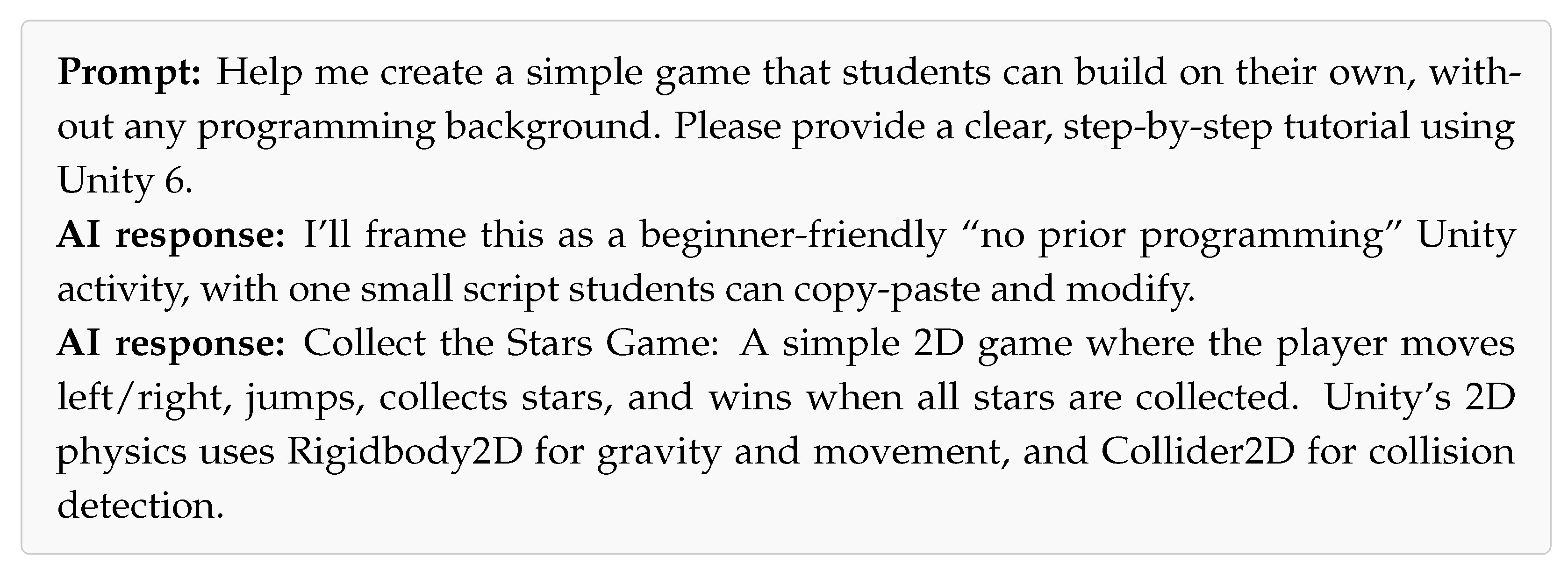
When I began integrating generative AI tools into my game design course creation class, I did not approach them as simple aids for coding or ideation. I treated them as learning partners, mediators that could shape the way knowledge was constructed and shared. I started with a simple prompt on ChatGPT:
Applsci 16 05689 i001
The results of this simple prompt not only provide vague information; it also provided a structured plan (Appendix A). The responses were structured, procedural, and reflective of a logical workflow that I could examine, imitate, and then modify. For instance, when I asked for a simple Unity game tutorial for students with no programming background, the AI outlined the full process step by step, including setting up scenes, creating scripts, and linking components. It broke down complexity into small, learnable actions. This ability to externalize procedural knowledge made the invisible aspects of expert reasoning visible.
At first glance, the structure seemed perfect. Yet, underneath that surface clarity, I wondered could my students, who had never seen a code editor before, actually follow these steps and succeed? Could generative AI anticipate their confusion, their hesitations, their fear of failure? The text made sense to me as an educator, but would it make sense to someone standing at the very beginning of the learning curve? That question became the seed of this exploration. I realized I could not evaluate this through observation alone. I needed to experience the process the way a learner would. That meant setting aside my expertise and deliberately entering the Zone of Proximal Development as a student again, guided not by a human mentor but by generative AI.
Thus, I made a deliberate decision to forget what I knew. I opened Unity as if it were my first encounter with the software and followed ChatGPT’s tutorial word for word. I even avoided using shortcuts or external searches. If I got stuck, I would ask ChatGPT, just like a student might. Yet the mediation was not one-sided. As I implemented each step, I noticed how much interpretation was required. The AI assumed certain levels of familiarity, leaving subtle gaps that I had to bridge through intuition and trial. This helped me understand how my students might struggle with the same hidden assumptions, which shaped my thinking as a teacher about how to redesign instructions, examples, and scaffolding to better support beginners.
This tension between clarity and assumption became the real site of learning. Through repeated exchanges, I developed a deeper understanding of how generative AI mediates learning: not by giving answers, but by structuring inquiry. Each prompt and response formed a micro-dialogue that scaffolded my sense of process, confidence, and flow. In this way, generative AI not only mediated what I learned but also determined how I learned. It shaped my pace, sequence, and perception of difficulty, making the process of learning game design visible and traceable in a way that was both empowering and at times overwhelming.

4.1.2. Visual Ideation and AI-Supported Design Exploration

A similar process emerged when I experimented with Midjourney during visual ideation activities for the course. Instead of using the tools only to generate assets, I began using them as exploratory design spaces that could help students think visually about atmosphere, gameplay tone, and environmental storytelling. For example, I prompted Midjourney with the following phrase:
Applsci 16 05689 i002
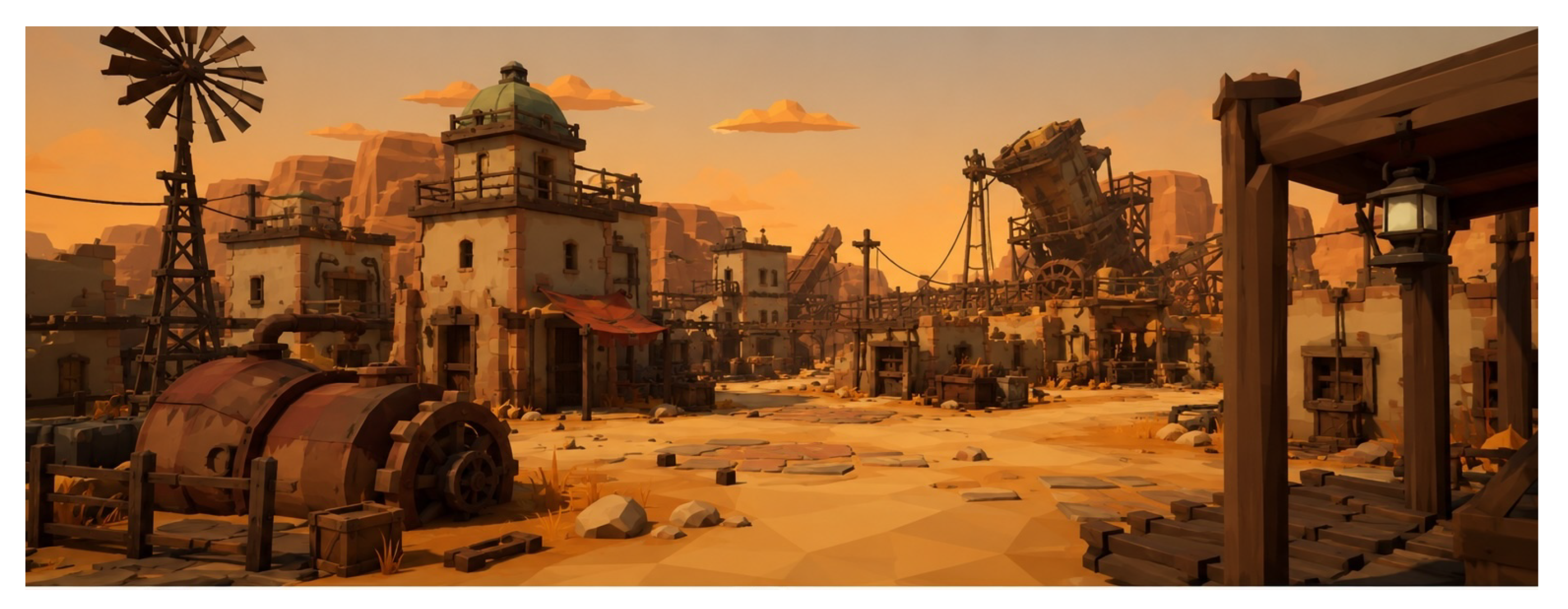
The generated environments did more than provide concept art (Figure 5). They introduced possible gameplay directions, traversal ideas, environmental hazards, and visual identities that could be discussed with students during design exercises. As I iteratively refined prompts by adjusting mood, structure density, and stylistic details, I realized that prompt iteration functioned similarly to sketching and visual prototyping. Small changes in wording produced noticeable shifts in atmosphere and gameplay tone, making aesthetic reasoning more visible and easier to communicate during the learning process.

4.1.3. Cognitive Apprenticeship Through AI Interaction

As I continued this dialogue with ChatGPT, I began to notice a subtle but important shift in how I approached learning tasks. I was no longer following instructions as if they were fixed steps but instead negotiating meaning with the tool. When a suggestion did not work as intended, I asked follow-up questions, tested alternatives, and compared results until a solution emerged. This iterative exchange resembled a conversation with a mentor who was never tired of explaining or rephrasing. In this process, I experienced what could be described as cognitive apprenticeship, where understanding develops through guided participation and incremental independence. The generative AI tool provided a form of scaffolding that allowed me to observe, imitate, and eventually internalize strategies that once seemed too abstract to teach directly. This reinforced the idea that generative AI can co-construct understanding with the learner rather than act as a passive reference.
Over time, I learned to accept this tension as part of the process. The generative AI tool was not there to replace struggle but to help me make sense of it, transforming frustration into reflection and confusion into discovery. Through this experience, I came to understand generative AI as a genuine companion in creating the game design course. It supported, shaped, and extended my instructional thinking in ways that felt collaborative rather than mechanical. It also helped me design tasks that mirrored the stepwise, inquiry-driven structure I had experienced as a learner, showing me how the AI could indirectly influence the pedagogy itself. In the end, the role of generative AI was not simply to assist me. It became a partner that revealed my assumptions as an educator, surfaced gaps that learners might face, and helped me design a course that acknowledges both the strengths and the limits of AI-guided learning.

4.1.4. Emotional Dependency and Reflective Learning

However, this partnership also exposed the emotional dimension of mediated learning. There were moments when the results felt mechanical and its feedback was too literal to understand the nuance of creative design. These moments reminded me that learning is not purely procedural; it is also affective and situational. When the tool offered a flawless solution to a bug I had spent sometime trying to fix, I felt a mix of relief and discomfort. The relief came from progress, but the discomfort came from realizing how dependent I had become on the tool. A similar emotional tension emerged during visual ideation activities using Midjourney. When generating the stylized desert village environment (Figure 5), I was initially excited by how quickly the generative AI tool produced visually coherent environments that matched the gameplay tone I envisioned. However, after several iterations, I noticed a growing sense of emotional distance from the generated outputs. Although the environments reflected my prompts, parts of the creative process felt displaced because many aesthetic decisions emerged through computational interpretation rather than through slow manual experimentation. This emotional friction revealed an important limitation of generative AI as a companion. It could support progress, but it could not fully grasp the creative uncertainty, hesitation, or meaning making that shape human learning.

4.2. RQ2: How Do Generative AI Tools Mediate Learning in Game Design Education?

The experience of learning with generative AI revealed that mediation extended beyond simple task assistance or information retrieval. The interaction with tools such as ChatGPT, Midjourney, and Scenario shaped how understanding developed, how design decisions were negotiated, and how confidence, reflection, and independence evolved throughout the learning process. Rather than functioning as static tools, generative AI systems continuously mediated cognitive, procedural, visual, and emotional aspects of learning through iterative interaction. The following themes illustrate how AI-mediated learning unfolded through scaffolding, prompting practices, visual reasoning, and the shifting relationship between dependence and learner agency.

4.2.1. Generative AI as a More Knowledgeable Other (MKO)

The experience of working with generative AI placed me directly within my own Zone of Proximal Development. I was no longer the expert designing lessons, but the learner navigating unfamiliar ground. I deliberately approached ChatGPT as if I were a beginner, following its Unity instructions without relying on prior expertise, which helped me understand the ways learners move through their ZPD when engaging with generative AI. This positioned me to observe firsthand how generative AI can shape the path a learner follows, revealing the mechanisms through which it mediates understanding.
At first, I occupied the outer edge of the ZPD, heavily dependent on the AI’s guidance. I copied its code verbatim, often without fully understanding why each line was written that way. As I practiced, tested, and encountered errors, I began to rely less on imitation and more on adaptation.
Applsci 16 05689 i003
When a bug appeared, I no longer asked for the full solution but only hints or explanations. Eventually, I reached a point where I could predict what the generative AI might suggest before asking. That shift from dependence to anticipation marked a movement toward internalization, which is the transition from “learning with AI” to “learning through AI.” This moment of anticipation signaled that part of the AI’s reasoning had become internalized, showing how the tool can actively mediate the learner’s progression from surface-level imitation to conceptual understanding.
Applsci 16 05689 i004
Each iteration of interaction expanded the boundary of what I could do alone. I noticed that generative AI tools functioned as a MKO, but not in the traditional sense of an authoritative instructor. Instead, it acted as a responsive partner that adjusted its guidance based on my prompts. When I refined my questions, the tool’s feedback became more specific, mirroring my own growth. In this way, my ZPD became dynamic, continuously negotiated through the quality of prompts I created. This responsiveness highlighted how the generative AI tool mediates learning through a form of negotiated scaffolding, where progress depends on both the learner’s clarity and the tool’s ability to interpret and extend that clarity.
This process revealed that the ZPD in AI-mediated learning is not a fixed zone between two individuals. My progression was not linear; I moved back and forth between reliance, confusion, and independence. The tool’s role was to hold that middle ground, providing enough structure to sustain progress while still leaving space for uncertainty and discovery. One example of this occurred when I misunderstood the purpose of a Unity component. Instead of correcting me outright, the AI asked clarifying questions that nudged me to reconsider my assumption, demonstrating how mediation can occur through subtle redirection rather than explicit instruction.

4.2.2. Prompting as a Learning Strategy

As I continued interacting with generative AI systems, I noticed a gradual shift in how I approached learning tasks. I was no longer following instructions mechanically. Instead, I began negotiating meaning with the generative AI tools through cycles of questioning, testing, and refinement. When a suggestion failed or produced unexpected results, I responded with follow-up prompts, alternative constraints, or requests for clarification.
This iterative process increasingly resembled a form of cognitive apprenticeship where understanding emerged through guided participation and gradual independence. Rather than treating prompts as isolated commands, I began treating them as conversational moves that shaped the direction of inquiry itself.
Over time, I noticed similar patterns among students. During workshops, students who iteratively refined prompts appeared more engaged with design reasoning than those who treated generative AI outputs as final solutions. Some students began discussing prompts almost as design sketches, debating wording choices to communicate mood, pacing, and player experience more precisely. This transformed prompting from a technical interaction into a pedagogical and creative practice.
I observed that students were no longer asking only whether the output looked good. They were debating whether the wording of the prompt communicated the feeling of the game experience correctly. This shift suggested that prompting itself had become part of the learning process rather than merely a way of obtaining outputs.

4.2.3. AI-Mediated Spatial and Visual Reasoning

As I continued working with generative AI tools during game design activities, I began to realize that these tools were mediating more than visual asset generation alone. They increasingly shaped how I interpreted gameplay spaces, imagined player movement, communicated atmosphere, and reasoned about interaction design itself. The process of generating and refining environments became closely tied to how I conceptualized pacing, emotional tone, tension, exploration, and cooperative behavior within a game world. Rather than functioning as static image generators, the AI tool acted as external thinking spaces where design ideas could be iteratively explored, reframed, and made visible.
This became especially apparent during early-stage ideation, where many gameplay concepts initially existed only as vague mental images or incomplete design intentions. The generative process helped transform these abstract ideas into concrete visual forms that could then be reflected upon, critiqued, and modified. In many cases, the AI-generated environments revealed unintended gameplay implications that I had not consciously considered beforehand. Environmental layouts, lighting conditions, object density, and spatial constraints frequently suggested new possibilities for navigation, cooperation, tension, or player behavior. This transformed visual generation into a reflective process of design reasoning rather than simple content production.
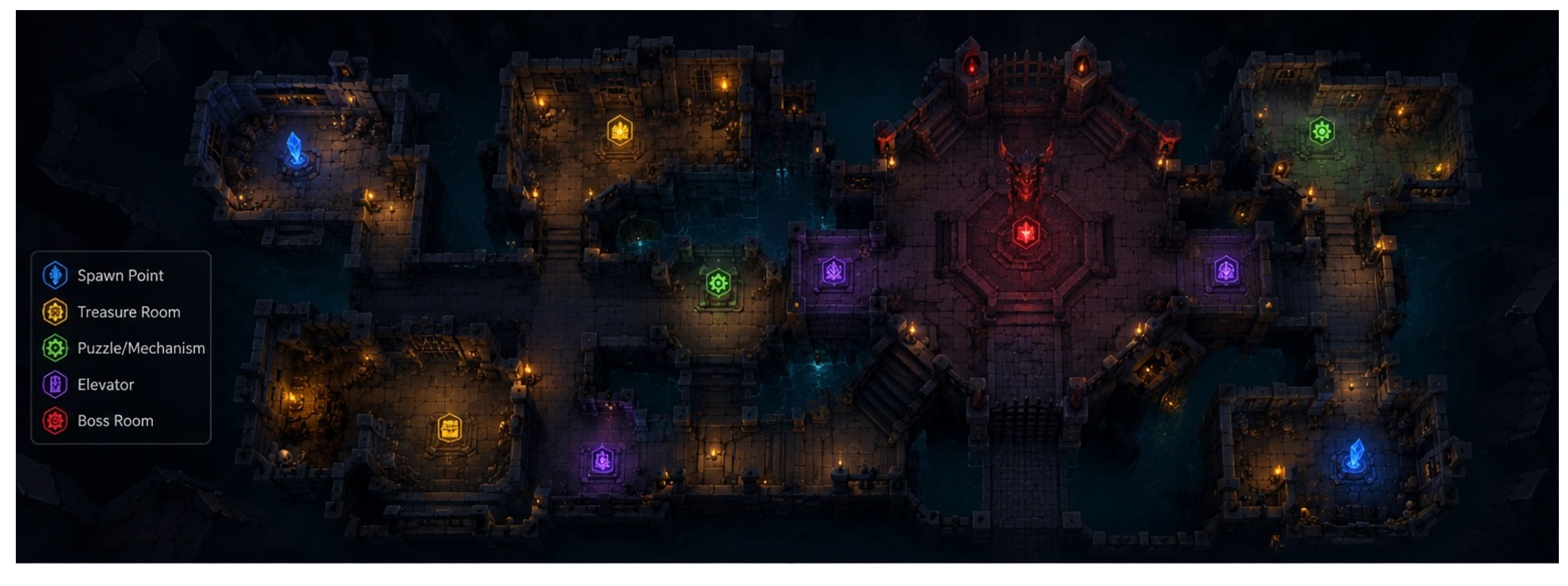
I also observed that visual prompting gradually became a way of thinking through game mechanics indirectly. Instead of explicitly designing player behaviors first, I often discovered gameplay possibilities through spatial atmosphere and environmental composition (Figure 6). Narrow pathways implied vulnerability and slower pacing, while large open spaces suggested freedom of movement, and fragmented visibility introduced uncertainty and anticipation. These environmental qualities began shaping design decisions before mechanics were formally implemented. Through this process, visual ideation and gameplay reasoning became deeply interconnected.
For example, during a level design exercise, I initially prompted Midjourney with the following:
Applsci 16 05689 i005
Figure 6. The resulted AI-generated dungeon level layout created in Midjourney.
Applsci 16 05689 g006
Applsci 16 05689 i006
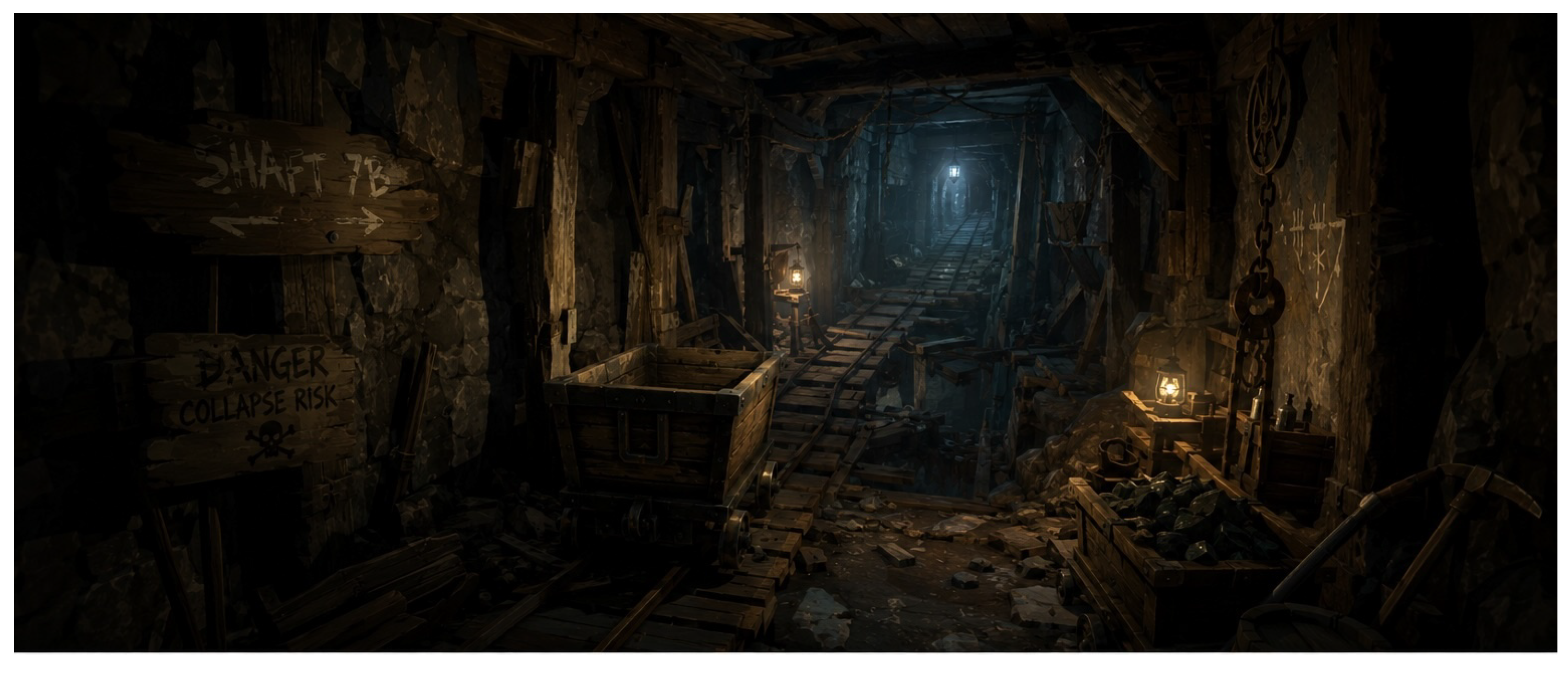
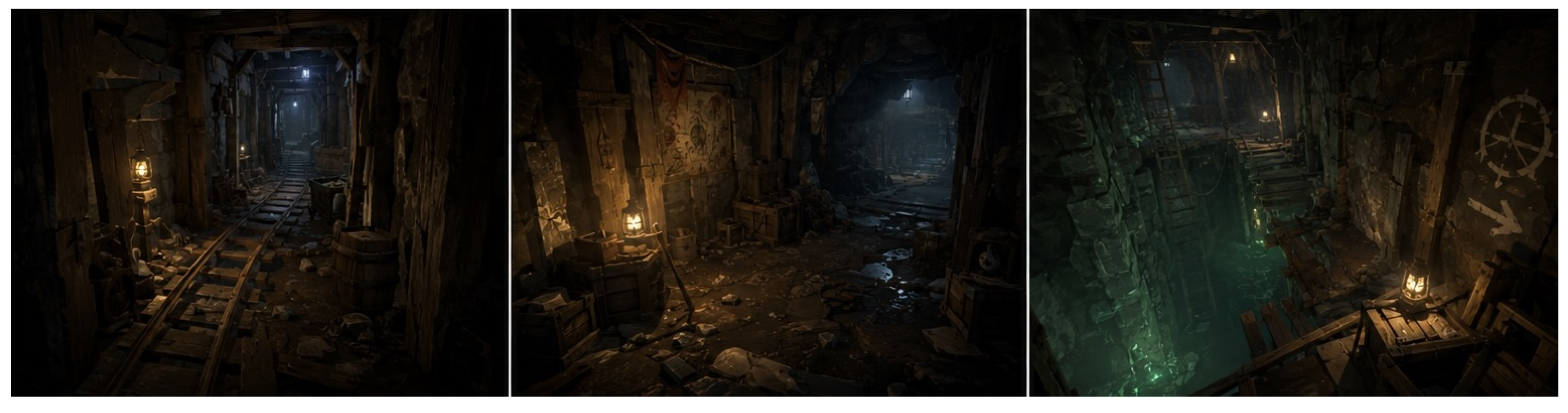
The second output dramatically changed the spatial atmosphere and suggested new gameplay ideas related to ambushes, navigation, and cooperative movement (Figure 7 and Figure 8). What mattered was not simply obtaining a better image, but learning how prompt specificity shaped design intention itself. Prompting gradually became a reflective design activity tied to reasoning, communication, and experimentation.
The claustrophobic layout suggested slower exploration and cooperative coordination, while the uneven lighting implied uncertainty and tension without explicitly scripting those experiences. Through repeated iterations, environmental design became less about static visual composition and more about communicating gameplay experience through atmosphere and spatial arrangement.
Applsci 16 05689 i007
Figure 7. Refined AI-generated dungeon environment illustrating how iterative prompt modification altered atmosphere, spatial tension, and implied gameplay experience in Midjourney.
Applsci 16 05689 g007
Figure 8. Three additional underground mine environment variations generated in response to the prompt in Midjourney.
Applsci 16 05689 g008
I observed that the generative AI tool is not only generating images. It is also helping externalize gameplay ideas that were previously difficult to verbalize. This process revealed how generative AI could mediate forms of visual and spatial reasonings that are often difficult for beginners to articulate during early-stage game design activities.
Over time, I also noticed similar patterns among students during workshop sessions. Students frequently reacted to generated environments not only aesthetically but also behaviorally, discussing how players might move, cooperate, hide, explore, or feel within the spaces. The AI-generated visuals appeared to support a form of situated design thinking where gameplay ideas emerged directly through interaction with environmental representations. This became particularly valuable for beginners who often struggled to verbally describe gameplay pacing or emotional atmosphere during early ideation stages. The generated environments provided a shared visual reference that made these abstract design discussions easier to initiate and refine collaboratively.

4.2.4. Oscillation Between Dependence and Independence

Over time, I began to see how this back-and-forth movement was not a weakness in the process but an essential feature of learning with generative AI. The boundary of my ZPD expanded and contracted depending on the clarity of my goals, the accuracy of the AI’s responses, and even my own emotional state at the time. When I felt confident, I experimented freely, modifying code and testing outcomes beyond what the generative AI suggested. When I felt uncertain, I retreated to its guidance for reassurance and structure. This oscillation mirrored the rhythm of authentic learning, where mastery is rarely steady but instead shaped by alternating moments of exploration and dependence. In this sense, the AI became both a mirror and a stabilizer. It reflected my readiness by how well I could frame a question and stabilized my momentum by providing immediate, structured feedback when I faltered. These shifts showed that generative AI mediates not only cognitive processes but also emotional regulation by offering a sense of continuity when my own confidence fluctuated.
What fascinated me most was how the AI’s presence subtly altered my understanding of agency. It was not that I surrendered control to the system, but that my agency began to coexist with the AI’s structured reasoning. Each interaction required negotiation: I had to decide when to accept its solutions, when to modify them, and when to reject them altogether. This negotiation became a learning practice in itself, teaching me that growth within the ZPD involves continuous judgment, not blind adoption of guidance. The AI, through its responsiveness, highlighted the importance of self-regulation, reminding me that independence does not emerge from isolation but from the ability to direct one’s learning within a web of external supports.
By the time I could predict its likely responses, I realized I had internalized not only specific skills but also a new mindset of collaborative inquiry. Taken together, these experiences suggest that generative AI mediates learning by shaping the learner’s cognitive, procedural, visual, and emotional pathways, creating a layered form of guidance that evolves alongside the learner’s increasing independence.

4.3. RQ3: What Tensions Emerge in the Process of Integrating AI into Game Design Learning?

The integration of generative AI into game design learning revealed that the learning process was shaped not only by support and efficiency, but also by a series of emotional, cognitive, ethical, and pedagogical tensions. These tensions often emerged simultaneously, particularly during moments where rapid AI-generated outputs intersected with uncertainty, authorship, dependency, and creative judgment. Rather than appearing as isolated challenges, these tensions became deeply embedded within the experience of learning and teaching alongside generative AI systems. The following themes capture how these contradictions shaped my understanding of learning, creativity, and educational responsibility within AI-mediated game design environments.

4.3.1. Illusion of Competence and Superficial Understanding

Throughout this process, I experienced multiple emotional and intellectual tensions. One of the most persistent was the tension between empowerment and dependency. The AI often made difficult tasks seem easy, but that ease sometimes concealed superficial understanding. When I followed its steps too mechanically, I produced functioning code without really grasping the underlying logic. It was a form of illusory competence, which is a sense of mastery that dissolved the moment I tried to apply the same concept independently. This gap between performance and understanding revealed how generative AI can unintentionally encourage a kind of accelerated progress that masks fragile learning.
As these tensions accumulated, I began to observe how they echoed the experiences my students might face when learning with AI. The sense of empowerment that came from quick solutions mirrored their excitement, while the quiet dependency that followed resembled the subtle erosion of confidence that can occur when understanding lags behind performance. I started to question whether the same illusion of mastery that I felt might also mislead learners who equate success with output rather than comprehension. This realization reshaped my view of guidance and assessment. I recognized that the role of an educator in an AI-mediated classroom is not to eliminate dependency but to help students recognize it, navigate it, and eventually transform it into awareness. In doing so, the purpose of learning shifted from producing polished results to cultivating the capacity to interrogate, reinterpret, and sometimes resist what the generative AI tool presents as authoritative.
In several reflective moments, I noticed that the feeling of understanding often arrived before actual conceptual clarity. When a generated solution worked immediately, it created a temporary sense of mastery that was emotionally convincing despite being intellectually incomplete. The speed and fluency of the generative AI responses sometimes compressed the natural struggle that usually accompanies skill development, making it more difficult to distinguish between recognition and genuine comprehension. This revealed that generative AI can alter the learner’s perception of progress itself, encouraging confidence before deeper understanding has fully developed.

4.3.2. Emotional Friction and Dependency

I also faced moments of frustration and doubt. When the AI’s instructions failed or produced errors, I felt a mix of irritation and vulnerability. I caught myself relying on it too much, copying and pasting fixes without reflection. I had to consciously resist the temptation to let AI become my default problem solver. These moments made me realize that meaningful learning requires discomfort. The friction between what generative AI provides and what it cannot explain became the catalyst for reflection. In those moments, I understood that the emotional discomfort was not a sign of poor design but part of the cognitive work required to transform automated answers into personal knowledge.
These tensions also shaped my understanding of teaching with AI. They reminded me that technology in education is not neutral. It amplifies both capability and vulnerability, revealing the emotional landscape of learning that often remains hidden behind technical skill. I began to see that teaching with generative AI requires not only technical support but emotional guidance, especially as students confront their own dependencies, insecurities, and shifting sense of authorship.
What became increasingly apparent was that dependency on generative AI was rarely experienced as a simple reliance on a tool. Instead, it developed gradually through convenience, responsiveness, and the emotional reassurance that immediate feedback provided during moments of uncertainty. The AI reduced feelings of isolation during difficult tasks, yet this same reassurance sometimes discouraged sustained independent problem solving. I noticed that the temptation to seek instant clarification often appeared before I had fully explored my own reasoning process. This revealed a tension between productive support and premature assistance, where the accessibility of generative AI could unintentionally interrupt deeper reflection if used uncritically.
At the same time, the moments where the generative AI tool failed, misunderstood my intention, or generated flawed outputs often became the most educationally valuable interactions. These breakdowns forced me to slow down, re-evaluate assumptions, and articulate problems more clearly. In many cases, frustration became inseparable from learning itself. The emotional friction created by unsuccessful interactions exposed gaps in my understanding that would otherwise have remained hidden beneath smooth AI-generated outputs.

4.3.3. Distributed Authorship and Creative Identity

Another tension was ethical and emotional. As I used generative AI to create visual assets and story ideas, I often wondered whether I was still the author of the work. Was I designing or merely curating? The AI’s creative fluency was both inspiring and unsettling. It blurred the boundaries of authorship and originality that I usually teach my students to value. Reflecting on this, I began to view creativity less as ownership and more as collaboration, a distributed process of co-creation between human intention and computational capability. This shift complicated my identity as an educator, since I had to reconcile my belief in student authorship with the reality of shared creative agency in AI-supported design.
This tension became especially visible while generating concept environments and visual assets through Midjourney and Scenario. When I generated the stylized desert village and later refined the underground mining dungeon environment, I often felt caught between creative satisfaction and emotional distance from the final outputs. The generated scenes were visually compelling and frequently aligned with the gameplay atmosphere I envisioned, yet parts of the creative process felt displaced because many aesthetic decisions emerged from the generative AI tool rather than through my own manual iteration process. At times, I questioned whether I was still designing the environment itself or primarily curating and refining computational suggestions. These moments complicated my understanding of authorship and revealed how generative AI can reshape the emotional relationship designers have with their own creative work.
Beyond the cognitive dimension, these tensions exposed the emotional depth of human–AI collaboration. I often felt caught between admiration and discomfort. The AI could generate elegant lines of code, evocative narratives, and visually rich game concepts within seconds, accomplishments that once required me hours of careful work. Watching it perform these tasks so effortlessly provoked both wonder and unease. I admired its precision, yet I grieved the quiet displacement of craft, the slow and imperfect process through which human creativity usually unfolds.
Over time, I realized that the tension surrounding authorship was not only about ownership of outputs but also about ownership of process. Traditional creative practice often involves extended periods of uncertainty, revision, experimentation, and gradual refinement. Generative AI compressed many of these stages into rapid cycles of production, changing how creative effort itself was experienced. This acceleration challenged my assumptions about the relationship between labor, originality, and creative value. The emotional discomfort emerged not because the tool lacked usefulness, but because it altered the rhythm through which creative identity had previously been constructed.

4.3.4. Teacher Role Expansion and Ethical Guidance

Over time, I came to understand that working with generative AI required a new kind of humility. It demanded that I accept the coexistence of human limitation and machine capability without letting either dominate. This balance, though fragile, revealed a deeper truth about education in the age of intelligent systems: that learning is no longer about possessing knowledge but about learning how to share authorship, uncertainty, and agency with non-human partners. In this sense, the tensions were not obstacles but indicators of how deeply generative AI reshapes the learning experience, exposing the emotional, ethical, and cognitive negotiations that now define game design education.
As these tensions became more visible, my role as an educator also began to shift. I found myself moving beyond technical instruction toward a form of guidance that involved emotional support, ethical discussion, and critical reflection. Students did not only need help understanding how to use generative AI systems effectively. They also needed support in understanding when to trust the outputs, when to question them, and how to maintain a sense of agency within AI-assisted workflows. This expanded the responsibilities of teaching beyond procedural knowledge toward helping learners navigate ambiguity, uncertainty, and evolving notions of creativity and authorship.
I also began to recognize that AI-mediated learning environments require educators to design moments where reflection deliberately interrupts automation. Without structured opportunities for critique and interpretation, learners could easily drift into passive acceptance of AI-generated outputs. This realization reshaped how I thought about scaffolding within game design education. The goal was no longer simply helping students complete tasks successfully but creating conditions where learners continuously evaluate, reinterpret, and negotiate the role of generative AI within their own creative and cognitive processes.
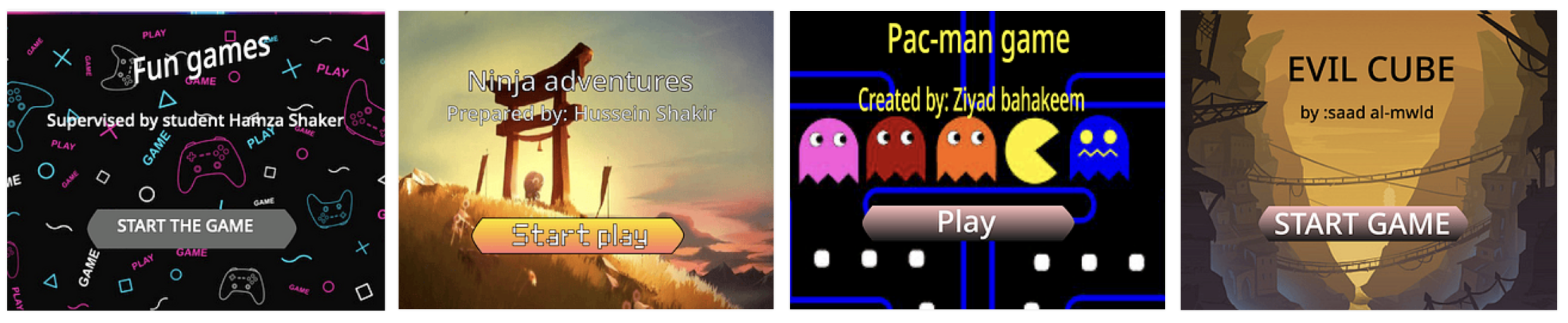
These shifts became increasingly visible through the diversity of student-created projects that emerged during the workshops (Figure 9). Despite many students having limited prior experience in programming or game design, they were able to produce a wide range of playable concepts, visual identities, and gameplay themes through iterative collaboration with generative AI tools. What stood out was not only the technical completion of the projects but also the growing confidence students demonstrated when discussing design choices, gameplay atmosphere, interface aesthetics, and player experience. At the same time, these projects often became entry points for broader conversations about originality, authorship, and the role of generative AI within creative practice. This reinforced my realization that teaching with generative AI extends beyond helping students create functional outcomes; it also involves guiding them through the ethical, reflective, and interpretive dimensions of AI-assisted creativity.

4.4. RQ4: What Are the Design Implications of Integrating AI into Game Design Learning?

Across the workshops and reflective observations, several design implications emerged regarding how generative AI shaped creative learning, instructional guidance, and interaction with game design workflows. Activities should alternate between guided exploration, where generative AI helps build competence, and independent creation, where students test their understanding without assistance. This design ensures that learners experience both progress and productive struggle. Reflective writing, peer dialogue, and iterative critique can help students recognize their own learning patterns and dependencies, reinforcing awareness and autonomy. These approaches are consistent with the findings by Cai et al. [48], who emphasize maintaining learners within an optimal range of cognitive challenge.

4.4.1. Generative AI as a Co-Creative Learning Partner

The findings align with recent discussions surrounding generative AI as a co-creative system within design processes. Previous research suggests that generative AI can shift parts of the creative process from direct production toward selection, refinement, and reinterpretation, which was similarly reflected in how students filtered and modified AI-generated outputs during the workshops [2,24]. This supports perspectives on distributed creativity, where creative outcomes emerge through interaction between human judgment and machine-generated suggestions rather than through isolated authorship alone. The ethical concerns raised by students, particularly regarding originality, attribution, and creative ownership, also reflect wider discussions surrounding responsible AI use within creative industries [34]. These observations highlight the importance of developing generative AI systems and educational practices that maintain transparency, support human creative intent, and encourage critical engagement with AI-generated content.
Another important observation relates to the accessibility and usability of generative AI tools within learning environments. Many students described these systems as relatively intuitive and easy to incorporate into their workflows, reflecting the increasing usability of contemporary generative AI interfaces. At the same time, workshop observations revealed differences in how effectively students could engage with these tools, particularly when learners lacked prior experience, technical confidence, or guidance on prompting strategies. These findings suggest that broader access to generative AI alone may not guarantee meaningful participation. Instead, structured support, training opportunities, and pedagogical guidance remain necessary to help learners critically and effectively engage with AI-assisted creative workflows.

4.4.2. Ethical Implications

Ethical concerns surrounding generative AI emerged repeatedly throughout the workshops and reflective observations. Although many participants appreciated the efficiency and accessibility offered by these tools, there were also recurring concerns regarding originality, authorship, and excessive dependence on AI-generated content [25,34]. Several students expressed discomfort with relying too heavily on generated assets, particularly when the outputs began shaping major creative decisions within their projects. These concerns reflected an ongoing tension between the convenience provided by generative AI and the desire to maintain a personal creative identity throughout the design process.
Questions surrounding authorship and ownership also became increasingly visible during discussions about AI-assisted production. Some students questioned whether AI-generated outputs could genuinely communicate intentionality, emotional depth, or stylistic consistency in the same way as human-created work. Others described AI-generated assets as technically impressive yet creatively detached, particularly when outputs were accepted without substantial refinement or reinterpretation. These observations align with broader concerns regarding creative ownership and the changing boundaries of authorship within AI-supported creative industries [51].
The findings therefore suggest that ethical discussions surrounding generative AI should not be treated as separate from the learning process itself. Instead, questions related to originality, authorship, labor, and creative responsibility increasingly become part of how learners understand design practice in AI-mediated environments. This highlights the need for educational approaches that encourage critical reflection on when, how, and why generative AI should be integrated into creative workflows rather than focusing solely on technical efficiency or output generation.

4.4.3. Playing with AI as a Pedagogical Method

Throughout the workshops and reflective activities, moments of playful experimentation frequently emerged during ideation and early-stage design tasks. Students would often enter prompts, adjust parameters, observe the outputs, and then continue refining their ideas through repeated interaction with the generative AI tools [11,16,52]. Rather than treating generative AI as a system that simply delivered final answers, many learners approached it as something to explore, test, and react to creatively. Unexpected outputs occasionally introduced new directions for mechanics, aesthetics, or narrative ideas, particularly when students encountered creative blocks or uncertainty during the design process.
This interaction style created a back-and-forth rhythm between the learner and the system, where ideas gradually evolved through iterative exchanges. In several workshop observations, students repeatedly modified prompts after seeing generated outputs, experimenting with alternative wording, mechanics, or visual directions to discover new possibilities. The process resembled exploratory play more than direct task completion, where experimentation itself became part of the learning experience.
These interactions also share similarities with forms of interaction discussed in research on idle games, where progress emerges gradually through ongoing exchanges between the player and the game rather than through a single deliberate action [53]. In a similar way, AI-supported design activities often unfolded through small cycles of prompting, observing, revising, and responding. Both the learner and the generative AI system contributed incrementally to how ideas developed over time.
The findings suggest that this playful mode of engagement may hold pedagogical value within creative learning environments. Generative AI was not only used to accelerate production or solve technical problems but also to support curiosity, experimentation, and open-ended exploration. In this sense, interacting with generative AI became part of the creative process itself, encouraging learners to remain receptive to unexpected outcomes and alternative design possibilities. Moreover, these forms of interaction may have broader applications within simulation games, collaborative mixed reality environments, and other educational settings where generative systems can dynamically support engagement, variation, and exploratory learning experiences.

4.4.4. What You Prompt Is What You Get (WYPIWYG)

There is an emerging shift in user interface paradigms, from visual, menu-driven interactions toward a renewed emphasis on text-based interaction [54]. This transition has been characterized as a movement from WYSIWYG (What You See Is What You Get) interfaces [55] toward WYPIWYG (What You Prompt Is What You Get) paradigms. While traditional WYSIWYG systems emphasized direct manipulation through graphical elements, allowing users to see and modify content in real time, generative AI tools increasingly rely on textual prompts as the primary means of control. This repositions users not as operators of visual interfaces but as authors of intentions, requiring them to articulate outcomes through carefully crafted language. The effectiveness of a tool now hinges less on interface layout and more on prompt fluency, introducing both expressive power and interpretive ambiguity.
This evolution redefines usability and creativity, shifting the skill set from interface navigation to linguistic precision, and marks a return to text as the dominant input modality in digital creation. Together, these developments mark a return to language as the dominant interface in digital creation. For game designers, this reconfiguration of interface logic reframes usability, positioning prompt fluency as a core creative skill. The return of text-driven interaction does not merely revive old paradigms, it reimagines them for a new era of co-creative, generative software.
Throughout my experience, the quality of each AI-mediated learning moment depended on my ability to articulate prompts clearly, refine them iteratively, and interpret the AI’s responses with increasing accuracy. As I moved through my own ZPD, prompt refinement became both a cognitive tool and a learning strategy. When a prompt was vague, the AI’s responses were equally ambiguous; when my language became precise, the system’s guidance became more actionable. This dynamic mirrored the students’ experiences as well, where their capacity to learn with AI was directly tied to how well they could express their intentions, ask questions, and adjust their wording.

4.4.5. Prompt Design Patterns

Repeated use of certain prompting approaches and interaction habits resembles the idea of game design patterns [56]. This suggests that working with generative AI may gradually produce its own set of reusable interaction approaches, or prompt design patterns, that designers rely on as recurring creative strategies over time. For example, I often used a “critique then improve” pattern, where I first asked the generative AI tools to critique a mechanic, a level, or a narrative beat, and then asked it to refine or rework that same piece based on its own critique. Another pattern was “multi angle brainstorming”, where I asked for several alternatives but framed each one through a different lens, such as mechanics, narrative, aesthetics, or player motivation. A third pattern was “constraints first”, where I carefully specified the audience, platform, cultural tone, and technical limits before asking for ideas. These prompt design patterns slowly became like mental templates. They helped me move from a vague feeling that “something is missing in this design” to a more structured conversation that produced concrete options. These patterns became even more valuable when I shared them with students during the workshops.
As students adopted these patterns, I noticed that their interactions with the generative AI tools became more intentional and their learning more reflective. Instead of using the tools to generate quick answers, they began using it to test ideas, compare alternatives, and iterate on concepts just as I had. The patterns acted as scaffolds that shaped the way they approached problems, encouraging them to think in terms of processes rather than products. What surprised me was how these patterns functioned like shared cognitive tools. When a student used a critique-first pattern, for example, the AI naturally guided them through the same iterative reasoning I had internalized. This meant the generative AI was not only providing content but also replicating the structure of expert inquiry. In this way, prompt design patterns became a form of distributed expertise, enabling students to access a version of my instructional reasoning even when I was not present. Ultimately, the emergence of prompt design patterns showed that prompting is not simply a technical skill but a pedagogical one. These patterns mediate how learners frame questions, explore possibilities, and internalize design principles.

5. Discussion

The findings of this study suggest that generative AI reshapes game design education not simply by accelerating production tasks, but by transforming how learners engage with experimentation, reflection, scaffolding, and creative inquiry. Across the workshops and reflective observations, AI-mediated learning frequently unfolded through iterative cycles of prompting, testing, failure, revision, and reinterpretation. Rather than passively consuming information, learners engaged in ongoing negotiation with the system, refining prompts, interpreting outputs, and adjusting design decisions through repeated interaction. These observations reinforce sociocultural perspectives that position learning as an active and mediated process shaped through dialogue, contextual engagement, and collaborative meaning making [19].
From a sociocultural perspective, this study extends current discussions surrounding AI-mediated learning by suggesting that generative AI can function as a MKO within creative learning environments. Generative AI tools frequently provided procedural guidance, adaptive feedback, and structured reasoning that supported learners as they navigated unfamiliar tasks. Consistent with Cai et al. [48], the findings demonstrate how generative AI can scaffold inquiry by externalizing expert-like processes and helping learners remain engaged with technically and creatively demanding activities. However, this scaffolding was not neutral or inherently beneficial. Several reflective moments revealed how learners could become overly dependent on fluent AI-generated explanations, producing functioning outputs without fully internalizing the underlying concepts. This tension reflects Stojanov’s [20] concern regarding the illusion of competence in AI-supported educational settings.
The findings further suggest that the Zone of Proximal Development becomes more fluid and emotionally dynamic when mediated through generative AI systems. Learners frequently oscillated between confidence, uncertainty, dependence, experimentation, and independence as they interacted with AI-generated guidance. Progress rarely appeared linear. Instead, learning emerged through continuous negotiation between human judgment and algorithmic responsiveness. In this sense, the AI acted both as a scaffold and as a mirror that reflected the learner’s ability to articulate questions, refine prompts, and critically interpret outputs. The quality of learning therefore depended not only on access to AI-generated responses but also on the learner’s capacity to interrogate, contextualize, and revise those responses.
These observations also reshape how constructivist learning can be understood within generative environments. Traditional constructivist approaches emphasize active experimentation within social and material contexts. Yet in this study, some of these interactions were mediated through an algorithmic partner rather than through direct human collaboration alone. Despite this shift, the learning process remained deeply interactive and reflective. Each prompt functioned simultaneously as a technical instruction, a design decision, and a reflection of the learner’s own thinking process. The findings therefore suggest that generative AI does not simply support constructivist learning practices, but actively reshapes the space in which constructivist learning occurs. Reflection, experimentation, prompting, and revision became intertwined within a continuous feedback-driven process mediated through interaction with the generative AI tool.
This study also highlights how prompting gradually evolved into a learning strategy rather than a purely technical interaction method. Learners who iteratively refined prompts, compared alternatives, and critically evaluated AI-generated suggestions appeared to engage more deeply with the design process than those who accepted outputs without revision. This supports Lee and Palmer’s [22] argument that AI-mediated learning requires metacognitive engagement and interpretive judgment. Prompting, in this context, functioned as a reflective and dialogic practice closely tied to inquiry, articulation, and decision making. The findings therefore suggest that effective AI-supported learning may depend less on generating outputs and more on developing prompt literacy, reflective questioning, and iterative reasoning skills.
Creativity within the workshops similarly emerged as a relational and dialogic process distributed between human intention and algorithmic generation. This observation aligns with Naik’s [25] discussion of distributed creativity and shared authorship. Learners who critically adapted, reinterpreted, and refined AI-generated outputs demonstrated forms of reflective co-creativity grounded in judgment and intentionality. However, when generative AI outputs were accepted uncritically, creative practice became increasingly procedural and superficial. These findings suggest that the educational challenge is not to prevent AI-supported creativity, but to cultivate forms of engagement that preserve reflection, interpretation, and personal meaning within the creative process.
The findings additionally reveal how generative AI reshapes instructional dynamics and the role of the educator within creative learning environments. Throughout the workshops, generative AI tools frequently mediated forms of immediate support that students would traditionally seek directly from the instructor. This redistribution of instructional guidance feel as if several smaller versions of my instructional presence were circulating simultaneously through the room. Students often turned to ChatGPT for clarification, idea exploration, or debugging support before approaching the instructor directly. Rather than replacing mentorship, the AI absorbed portions of the iterative clarification and feedback process, particularly during ideation and prototyping activities. This shifted the educator’s role away from being the sole source of expertise toward facilitating reflection, critical interpretation, and ethical judgment within AI-supported workflows.
At the same time, these shifts introduced new pedagogical tensions. Several workshop reflections documented moments where learners accepted AI-generated suggestions without substantial critique or modification, particularly during early ideation stages. These moments reinforced the importance of maintaining structured mentorship, reflective discussion, and guided critique within AI-mediated classrooms. While generative AI could accelerate experimentation and reduce technical barriers, it could not independently support deeper reflection, emotional interpretation, or ethical reasoning. These dimensions continued to depend heavily on human facilitation and pedagogical structure.
Finally, the findings point toward the need for educational ecosystems where generative AI complements rather than replaces human teaching. The value of generative AI within game design education lies not only in automation or productivity enhancement but also in its capacity to create new forms of mediated interactions that reshape how learners experience inquiry, creativity, authorship, and guidance. In these environments, educators remain essential for contextualizing AI-generated outputs, shaping reflective practices, and helping learners navigate the cognitive and ethical tensions that emerge through human–AI collaboration. Rather than functioning as a substitute for mentorship, generative AI appears most effective when positioned as a catalyst that amplifies experimentation, dialogue, and reflective engagement within creative learning processes.

6. Limitations

This study is based on a single-author autoethnographic approach, which provides depth and reflexivity but limits generalizability. The findings represent my lived experience as both an educator and a learner within a specific pedagogical and disciplinary context. As such, the insights reflect subjective interpretation shaped by my own expertise, values, and positionality. While this perspective allows for rich analysis of the human–AI learning relationship, it does not capture the full diversity of learner experiences or institutional settings in which generative AI is being implemented.
Another limitation lies in the scope of the observed interactions. This study primarily focuses on generative AI as implemented through text-based dialogue with ChatGPT, and does not examine other modalities such as image or audio generation in depth. Consequently, the findings emphasize language-based mediation and may not fully represent how multimodal generative AI systems affect learning processes in more complex design environments. Future studies that include broader toolsets could yield a more complete understanding of generative AI pedagogical impact.
Finally, this research was conducted within a relatively short teaching cycle and did not measure long-term learning outcomes or retention. The reflections presented here reveal moment-to-moment transformations in attitude and understanding, yet they do not track how these experiences translate into sustained competence or creativity over time. A longitudinal perspective would be necessary to determine whether the observed changes in learner agency and reflection persist once AI support is removed or reconfigured.

7. Conclusions

This study explored how generative AI mediates learning, creativity, and instructional interaction within game design education through an autoethnographic perspective. The findings show that generative AI can support learners in gradually engaging with complex design and technical tasks by providing iterative feedback, procedural guidance, and rapid opportunities for experimentation. Rather than functioning only as a productivity tool, generative AI became part of the learning process itself, shaping how learners explored ideas, solved problems, and reflected on design decisions.
This study also found that the quality of AI-supported learning depended heavily on learners’ ability to formulate prompts, interpret responses, and critically evaluate generated outputs. Prompting gradually became a reflective learning strategy tied to inquiry, iteration, and decision making rather than a purely technical interaction method. At the same time, the speed and fluency of AI-generated responses occasionally created an illusion of competence, where learners appeared to progress quickly without fully internalizing underlying concepts or reasoning processes.
Another important finding concerns the changing role of the educator within AI-mediated learning environments. While generative AI supported immediate feedback, idea exploration, and iterative guidance, the teacher remained essential for facilitating reflection, contextual interpretation, ethical judgment, and critical engagement with AI-generated content. The findings therefore suggest that effective integration of generative AI in game design education depends not on replacing human mentorship but on creating learning environments where AI-supported interaction and human guidance complement one another.
Overall, this study contributes to ongoing discussions surrounding AI-mediated learning, constructivist pedagogy, and creative education by showing how generative AI can simultaneously support experimentation, reshape instructional dynamics, and introduce new pedagogical and ethical tensions within game design learning environments. Future research should continue examining how different forms of AI-mediated interactions influence creativity, reflection, authorship, and learning across broader educational and cultural contexts.

Funding

This research received no external funding.

Institutional Review Board Statement

This study was conducted in accordance with the Declaration of Helsinki, and approved by the Institutional Review Board of the University of Jeddah (UJ-REC-326 on 16 March 2025).

Informed Consent Statement

Informed consent was obtained from all subjects involved in this study.

Data Availability Statement

The original contributions presented in this study are included in the article. Further inquiries can be directed to the corresponding author.

Conflicts of Interest

The author declares no conflicts of interest.

Appendix A. Example AI-Generated Unity Tutorial Using ChatGPT

Applsci 16 05689 i008Applsci 16 05689 i009Applsci 16 05689 i010Applsci 16 05689 i011

References

  1. Sweetser, P. Large language models and video games: A preliminary scoping review. In Proceedings of the 6th ACM Conference on Conversational User Interfaces, Luxembourg, 8–10 July 2024; pp. 1–8. [Google Scholar] [CrossRef]
  2. Panchanadikar, R.; Freeman, G. “I’m a solo developer but AI is my new ill-informed co-worker”: Envisioning and designing generative AI to support indie game development. Proc. ACM Hum.-Comput. Interact. 2024, 8, 1–26. [Google Scholar] [CrossRef]
  3. Qiu, S. Generative AI processes for 2d platformer game character design and animation. Lect. Notes Educ. Psychol. Public Media 2023, 29, 146–160. [Google Scholar] [CrossRef]
  4. Watanabe, N.; Kano, Y. Werewolf game agent by generative AI incorporating logical information between players. In Proceedings of the 2nd International AIWolfDial Workshop, Tokyo, Japan, 24 September 2024; pp. 21–29. [Google Scholar] [CrossRef]
  5. Sternberg, R.J. Do not worry that generative AI may compromise human creativity or intelligence in the future: It already has. J. Intell. 2024, 12, 69. [Google Scholar] [CrossRef] [PubMed]
  6. Medeiros, K.; Cropley, D.H.; Marrone, R.L. Human-AI Co-Creativity: Does ChatGPT Make Us More Creative? J. Creat. Behav. 2025, 59, e70022. [Google Scholar] [CrossRef]
  7. Alharthi, S.A. Generative AI in Game Design: Enhancing Creativity or Constraining Innovation? J. Intell. 2025, 13, 60. [Google Scholar] [CrossRef]
  8. Werning, S. Generative AI and the technological imaginary of game design. In Creative Tools and the Softwarization of Cultural Production; Springer: Cham, Switzerland, 2024; pp. 67–90. [Google Scholar] [CrossRef]
  9. Hutson, J.; Fulcher, B.; Jeremiah, R. Enhancing Assessment and Feedback in Game Design Programs: Leveraging Generative AI for Efficient and Meaningful Evaluation. Int. J. Educ. Res. Innov. 2024, 701, 1–20. [Google Scholar] [CrossRef]
  10. Ratican, J.; Hutson, J. Adaptive worlds: Generative AI in game design and future of gaming, and interactive media. ISRG J. Arts Humanit. Soc. Sci. 2024, 2, 686. [Google Scholar] [CrossRef]
  11. Chien, C.C.; Chan, H.Y.; Hou, H.T. Learning by playing with generative AI: Design and evaluation of a role-playing educational game with generative AI as scaffolding for instant feedback interaction. J. Res. Technol. Educ. 2025, 57, 894–913. [Google Scholar] [CrossRef]
  12. Liang, X.; Wang, Y.; Yan, F.; Ouyang, Z.; Hu, Y.; Luo, S. Reborn of the white bone demon: Role-playing game design using generative AI in xr. In Proceedings of the SIGGRAPH Asia 2024 Posters, Tokyo, Japan, 3–6 December 2024; pp. 1–3. [Google Scholar] [CrossRef]
  13. Bao, A.; Zeng, Y. Allowing AI co–authors is a disregard for humanization. Account. Res. 2024, 4, 1–9. [Google Scholar] [CrossRef]
  14. Colado, I.J.P.; Colado, V.M.P.; Morata, A.C.; Píriz, R.S.C.; Manjón, B.F. Using new AI-driven techniques to ease serious games authoring. In Proceedings of the 2023 IEEE Frontiers in Education Conference (FIE), College Station, TX, USA, 18–21 October 2023; pp. 1–9. [Google Scholar] [CrossRef]
  15. Giray, L. Prompt engineering with ChatGPT: A guide for academic writers. Ann. Biomed. Eng. 2023, 51, 2629–2633. [Google Scholar] [CrossRef]
  16. Matthews, J.; Nguyen, H.; Swanson, H. Shall we play a game? distributed games with a generative AI player. In Proceedings of the 17th International Conference on Computer-Supported Collaborative Learning-CSCL 2024, Buffalo, NY, USA, 10–14 June 2024; pp. 139–146. [Google Scholar] [CrossRef]
  17. Ranella, N.; Eger, M. Towards automated video game commentary using generative AI. In Proceedings of the EXAG@ AIIDE; University of Utah: Salt Lake City, UT, USA, 2023. [Google Scholar]
  18. Chen, K.; Vinjamuri, R.; Wang, H.; Kadiyala, S.P. Generative AI based difficulty level design of serious games for stroke rehabilitation. IEEE Internet Things J. 2024, 11, 39560–39569. [Google Scholar] [CrossRef]
  19. Vygotsky, L.S.; Cole, M.; John-Steiner, V.; Scribner, S.; Souberman, E. Mind in Society: The Development of Higher Psychological Processes; Harvard University Press: Cambridge, MA, USA, 1978. [Google Scholar] [CrossRef]
  20. Stojanov, A. Learning with ChatGPT 3.5 as a more knowledgeable other: An autoethnographic study. Int. J. Educ. Technol. High. Educ. 2023, 20, 35. [Google Scholar] [CrossRef]
  21. Tran, M.; Balasooriya, C.; Semmler, C.; Rhee, J. Generative artificial intelligence: The ‘more knowledgeable other’ in a social constructivist framework of medical education. npj Digit. Med. 2025, 8, 430. [Google Scholar] [CrossRef] [PubMed]
  22. Lee, D.; Palmer, E. GenAI as the More Knowledgeable Other in Vygotsky’s Zone of Proximal Development. In Proceedings of the Innovation & Transformation in Higher Education, Higher Education Research Group Adelaide (HERGA), Bedford Park, Australia, 1 October 2025. [Google Scholar]
  23. Sun, Y.; Li, Z.; Fang, K.; Lee, C.H.; Asadipour, A. Language as reality: A co-creative storytelling game experience in 1001 nights using generative AI. Proc. AAAI Conf. Artif. Intell. Interact. Digit. Entertain. 2023, 19, 425–434. [Google Scholar] [CrossRef]
  24. Li, S. Using Generative AI for Teaching Game Development Using Unity. Master’s Thesis, The University of Auckland, Auckland, New Zealand, 2024. [Google Scholar]
  25. Naik, T.; Gostu, H.; Sharma, R. Navigating Ethics of AI-Powered Creativity in Midjourney. In Proceedings of the 3rd International Conference for Innovation in Technology, Bangalore, India, 1–3 March 2024. [Google Scholar] [CrossRef]
  26. Panchanadikar, R.; Freeman, G.; Li, L.; Schulenberg, K.; Hu, Y. “A new golden era” or “slap comps”: How non-profit driven indie game developers perceive the emerging role of generative AI in game development. In Proceedings of the Extended Abstracts of the CHI Conference on Human Factors in Computing Systems, Honolulu, HI, USA, 11–16 May 2024; pp. 1–7. [Google Scholar] [CrossRef]
  27. Gao, F.; Fang, K.; Chan, W.K. Chemate: Anthropomorphic-cues-mediated experiential learning game using generative AI. In Proceedings of the International Conference on Human-Computer Interaction; Springer: Cham, Switzerland, 2024; pp. 301–311. [Google Scholar] [CrossRef]
  28. Gao, F.; Fang, K.; Chan, W.K. Humanizing artifacts: An educational game for cultural heritage artifacts and history using generative ai. In Proceedings of the Companion Proceedings of the 2024 Annual Symposium on Computer-Human Interaction in Play, Tampere, Finland, 14–17 October 2024; pp. 91–96. [Google Scholar] [CrossRef]
  29. Kim, M.; Kim, S. Generative AI in mafia-like game simulation. arXiv 2023, arXiv:2309.11672. [Google Scholar] [CrossRef]
  30. Maleki, M.F.; Zhao, R. Procedural content generation in games: A survey with insights on emerging llm integration. Proc. AAAI Conf. Artif. Intell. Interact. Digit. Entertain. 2024, 20, 167–178. [Google Scholar] [CrossRef]
  31. Begemann, A.; Hutson, J. Empirical insights into AI-assisted game development: A case study on the integration of generative AI tools in creative pipelines. Metaverse 2024, 5, 53. [Google Scholar] [CrossRef]
  32. Boucher, J.D.; Smith, G.; Telliel, Y.D. Is resistance futile?: Early career game developers, generative AI, and ethical skepticism. In Proceedings of the CHI Conference on Human Factors in Computing Systems, Honolulu, HI, USA, 11–16 May 2024; pp. 1–13. [Google Scholar] [CrossRef]
  33. Shan, T.; Michel, K. Generative AI with goap for fast-paced dynamic decision-making in game environments. In Proceedings of the 2024 IEEE Conference on Games (CoG), Milan, Italy, 5–8 August 2024; pp. 1–5. [Google Scholar] [CrossRef]
  34. Singh, G.; Srivastava, V.; Kumar, S.; Bhatnagar, V.; Dhondiyal, S.A. Understanding the ethical implications of generative AI: A multi-disciplinary perspective. In Proceedings of the 2024 5th International Conference on Electronics and Sustainable Communication Systems (ICESC), Coimbatore, India, 7–9 August 2024; pp. 1714–1719. [Google Scholar] [CrossRef]
  35. Lee, J.; Eom, S.Y.; Lee, J. Empowering game designers with generative AI. IADIS Int. J. Comput. Sci. Inf. Syst. 2023, 18, 213–230. [Google Scholar] [CrossRef]
  36. Amresh, A. Leveling up education: Harnessing generative AI for game-based learning. In Proceedings of the 16th Annual ACM India Compute Conference, Hyderabad, India, 9–11 December 2023; p. 4. [Google Scholar] [CrossRef]
  37. Arnecke, J.; Eck, S.O.; Steuck, P.; Vaughan, A. Integrating generative AI in music education: With AI in a musical question-answer game. In Proceedings of the INFORMATIK 2024; Gesellschaft für Informatik e.V.: Bonn, Germany, 2024; pp. 683–689. [Google Scholar] [CrossRef]
  38. Pérez-Colado, I.J.; Freire-Morán, M.; Calvo-Morata, A.; Pérez-Colado, V.M.; Fernández-Manjón, B. AI asyet another tool in undergraduate student projects: Preliminary results. In Proceedings of the 2024 IEEE Global Engineering Education Conference (EDUCON), Kos Island, Greece, 8–11 May 2024; pp. 1–7. [Google Scholar] [CrossRef]
  39. Kreminski, M. Endless forms most similar: The death of the author in AI-supported art. AI Soc. 2025, 41, 1655–1669. [Google Scholar] [CrossRef]
  40. Muengsan, S.; Chatwattana, P. The game-based learning (gbl) platform with generative ai to enhance digital and technology literacy skills. High. Educ. Stud. 2024, 14, 46–53. [Google Scholar] [CrossRef]
  41. Li, C.T.; Lee, L.H.; Hou, H.T. An educational simulation game integrated with generative AI as conversational contextual scaffolding for business english: A preliminary analysis of learning achievement, self-efficacy and cognitive load. In Proceedings of the 2024 16th IIAI International Congress on Advanced Applied Informatics (IIAI-AAI), Takamatsu, Japan, 6–12 July 2024; pp. 726–727. [Google Scholar] [CrossRef]
  42. Vinchon, F.; Gironnay, V.; Lubart, T. Genai creativity in narrative tasks: Exploring new forms of creativity. J. Intell. 2024, 12, 125. [Google Scholar] [CrossRef]
  43. Liu, Y.; Wang, J.; Zhang, Q.; Chen, M. How do generative artificial intelligence (AI) tools and large language models (LLMs) influence language learners’ critical thinking in EFL education? A systematic review. Smart Learn. Environ. 2025, 12, 406. [Google Scholar] [CrossRef]
  44. Lee, H.; Davis, M. A case study of implementing generative AI in university’s general English courses. Contemp. Educ. Technol. 2024, 16, 85–102. [Google Scholar] [CrossRef]
  45. Lee, S.; Zhai, X. Using ChatGPT for science learning: A study on pre-service teachers’ lesson planning. arXiv 2024, arXiv:2402.01674. [Google Scholar] [CrossRef]
  46. Choi, B.H. Investigating learner perceptions for effective teaching of generative AI-from a game development perspective. J. Korea Soc. Comput. Inf. 2024, 29, 137–144. [Google Scholar] [CrossRef]
  47. Pettersson, A.; Samuelsson, E.; Nilsson, J. Generative AI and teachers: For us or against us? A case study. arXiv 2024, arXiv:2404.03486. [Google Scholar] [CrossRef]
  48. Cai, L.; Msafiri, M.M.; Kangwa, D. Exploring the impact of integrating AI tools in higher education using the Zone of Proximal Development. Educ. Inf. Technol. 2025, 30, 7191–7264. [Google Scholar] [CrossRef]
  49. Ellis, C.; Adams, T.E.; Bochner, A.P. Autoethnography: An overview. Hist. Soc. Res./Hist. Sozialforschung 2011, 36, 273–290. [Google Scholar]
  50. Braun, V.; Clarke, V. Thematic analysis. J. Posit. Psychol. 2017, 12, 297–298. [Google Scholar] [CrossRef]
  51. Kudless, A. Stop Making Sense: Complexity and Contradiction in AI and Architecture. Archit. Des. 2024, 94, 86–93. [Google Scholar] [CrossRef]
  52. Lee, C.; Dimitrakopoulou, D.; Roy, D. Meeting at Crossroads: An exploration of playful listening through a co-creative AI game. In Proceedings of the Extended Abstracts of the CHI Conference on Human Factors in Computing Systems; Association for Computing Machinery: New York, NY, USA, 2025. [Google Scholar] [CrossRef]
  53. Alharthi, S.A.; Alsaedi, O.; Toups Dugas, P.O.; Tanenbaum, T.J.; Hammer, J. Playing to Wait: A Taxonomy of Idle Games. In Proceedings of the 2018 CHI Conference on Human Factors in Computing Systems; Association for Computing Machinery: New York, NY, USA, 2018. [Google Scholar] [CrossRef]
  54. Benbasat, I.; Todd, P. An experimental investigation of interface design alternatives: Icon vs. text and direct manipulation vs. menus. Int. J. Man-Mach. Stud. 1993, 38, 369–402. [Google Scholar] [CrossRef]
  55. Guo, H.; Mao, N.; Yuan, X. Wysiwyg (what you see is what you get) volume visualization. IEEE Trans. Vis. Comput. Graph. 2011, 17, 2106–2114. [Google Scholar] [CrossRef]
  56. Björk, S.; Lundgren, S.; Holopainen, J. Game Design Patterns. In Proceedings of DiGRA 2003 Conference: Level Up; DiGRA: Tampere, Finland, 2003. [Google Scholar] [CrossRef]
Figure 1. The Zone of Proximal Development (ZPD) framework showing how generative AI can act as a mediating tool that supports learners in progressing toward more complex tasks.
Applsci 16 05689 g001
Figure 2. Overview of the research process, outlining the data collection process and the thematic analysis process across 4 game design education initiatives.
Applsci 16 05689 g002
Figure 3. Scenes from the youth game development camp where participants use generative AI tools within guided learning environments to design interactive games.
Applsci 16 05689 g003
Figure 4. Students participating in the different workshops engaged in collaborative ideation, prototyping, and peer discussion to design interactive games.
Applsci 16 05689 g004
Figure 5. AI-generated environmental concept art created through iterative prompting in Midjourney.
Applsci 16 05689 g005
Figure 9. Examples of student-created games developed during the generative AI-supported game design workshops.
Applsci 16 05689 g009
Table 1. Summary of Vygotsky’s constructivist principles referenced in this study.
Constructivist PrincipleDescription
Learning is an active processLearners construct understanding through direct engagement, experimentation, and interaction with concepts rather than passively receiving information.
Prior knowledge influences learningNew knowledge is built upon learners’ existing cognitive frameworks; understanding emerges through the integration and reorganization of prior experiences.
Learning is contextualizedKnowledge is best acquired in authentic, meaningful contexts where learners can apply concepts to real-world or practice-based situations.
Learning is collaborativeSocial interaction and dialogue with peers, mentors, and tools facilitate shared meaning making and co-construction of knowledge.
Reflection enhances learningReflective thinking enables learners to evaluate their own understanding, identify misconceptions, and internalize knowledge more deeply.
Learning involves problem solvingLearning requires inquiry, exploration, and creative problem solving, which are central to developing transferable knowledge and skills.
Disclaimer/Publisher’s Note: The statements, opinions and data contained in all publications are solely those of the individual author(s) and contributor(s) and not of MDPI and/or the editor(s). MDPI and/or the editor(s) disclaim responsibility for any injury to people or property resulting from any ideas, methods, instructions or products referred to in the content.