Mechanism of Strength Development and Microstructural Evolution of KDJ-II–Cement Composite-Stabilized Soil for Loess Base Courses

Abstract
1. Introduction
2. Materials and Methods
2.1. Stabilizer
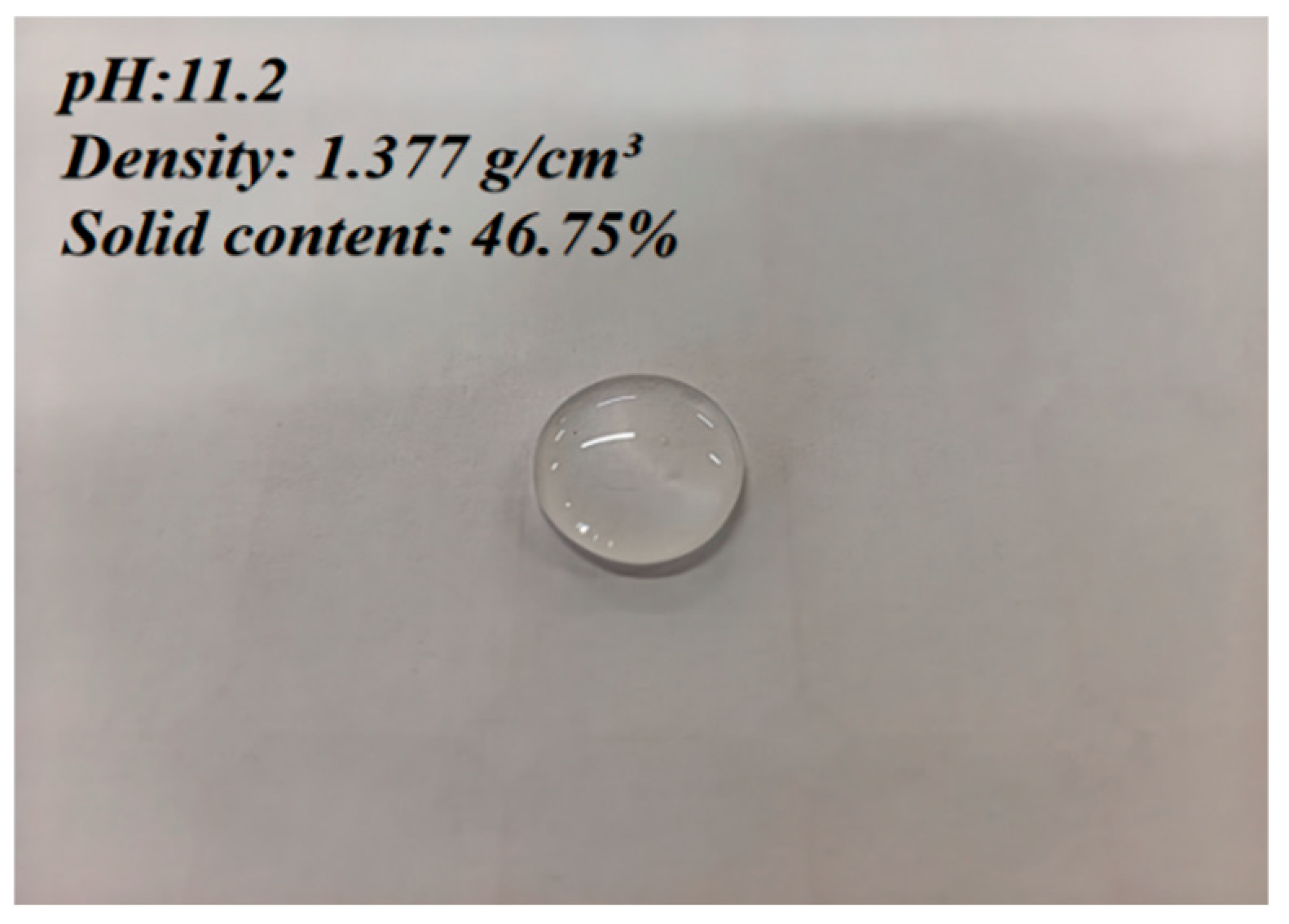
2.1.1. Basic Physical Properties of the Stabilizer
2.1.2. Ion Composition Analysis of the Stabilizer Solution
2.2. Test Soil
2.3. Cement
2.4. Specimen Preparation
3. Mechanical Strength Testing of Composite Stabilized Soil
4. Microstructural Evolution and Stabilization Mechanism
4.1. XRD Analysis of Stabilized Soil
4.1.1. XRD Pattern Analysis of Stabilized Soil
4.1.2. Analysis of Relative Mineral Contents in Stabilized Soil
- (1)
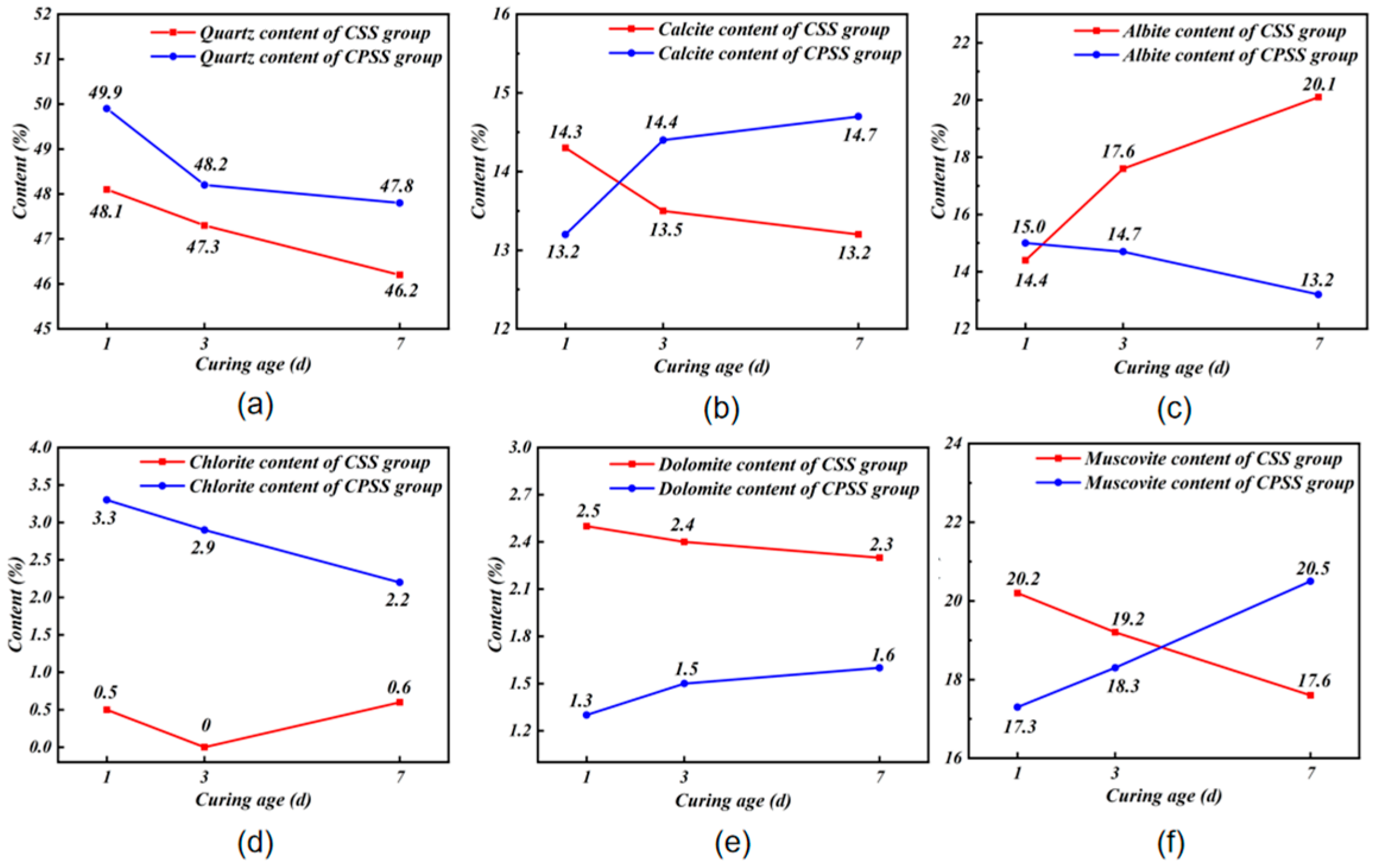
- Quartz was the dominant crystalline phase in both groups, and its content decreased only slightly with curing age (CSS: 48.1% → 46.2%; CPSS: 49.9% → 47.8%). The quartz content in CPSS remained slightly higher, by approximately 1.5–1.8%. This can be understood as a relative difference after crystalline-phase normalization. It may also reflect different degrees of amorphous hydration product formation in the two groups.
- (2)
- Calcite showed different variation trends in the two systems. In CSS, the calcite content decreased slightly from 14.3% to 13.2%, which may indicate partial dissolution or consumption of calcite in the alkaline cement environment. In CPSS, the calcite content increased from 13.2% to 14.7%. This suggests that stronger preservation and/or secondary precipitation, such as carbonation, may have occurred during strength development. The change in calcite may contribute to pore filling and microstructural densification, but its quantitative contribution to strength still needs further verification.
- (3)
- Albite showed opposite trends in the two groups. Its content increased in CSS but decreased in CPSS. This difference may be related to different dissolution–precipitation balances of Na-bearing aluminosilicates in the two systems. It may also be related to normalization effects caused by changes in other crystalline or amorphous components. The change in albite is more likely to reflect the influence of KDJ-II on the early ionic reaction conditions and mineral evolution process of the system. It should not be regarded as direct evidence of a specific recrystallization pathway.
- (4)
- Muscovite decreased in CSS from 20.2% to 17.6%, but increased in CPSS from 17.3% to 20.5%. This difference indicates that composite-stabilized soil was more favorable for preserving the signals of layered silicate minerals, such as muscovite, during early strength development. This may be related to changes in pore-water chemistry and weakened mineral dissolution in the KDJ-II–cement system.
- (5)
- The chlorite content was lower and showed greater fluctuation in CSS, whereas it was higher and more stable in CPSS. For example, the chlorite content in CPSS was approximately 6.6 times that in CSS at 1 day and remained approximately 3.7 times that in CSS at 7 days. This result is consistent with changes in the stability or preservation of Mg-bearing layered silicates in composite-stabilized soil.
- (6)
- Dolomite remained a minor phase throughout the curing period and showed only small changes in both groups. Its content was slightly higher in CSS than in CPSS.
4.2. SEM-Based Microstructural Analysis
4.3. FTIR Spectroscopy Analysis of Micro-Solidification Mechanism
4.4. Analysis of the Stabilization Mechanism Based on Ion Concentration Changes
4.5. Stabilization Mechanism
5. Conclusions
- (1)
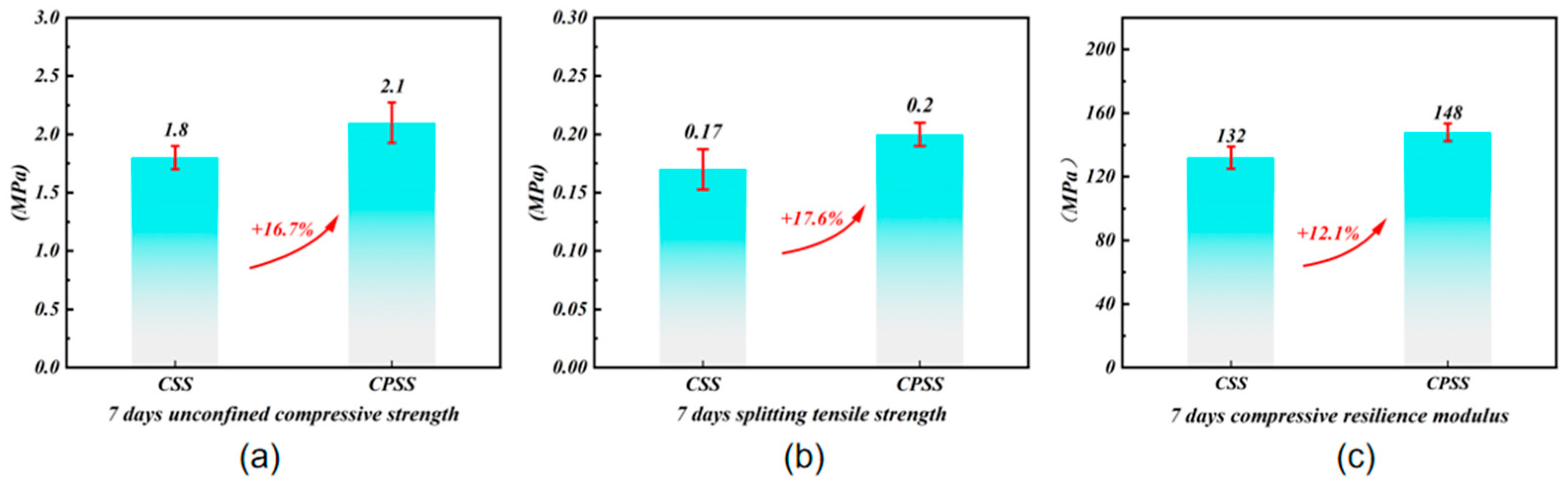
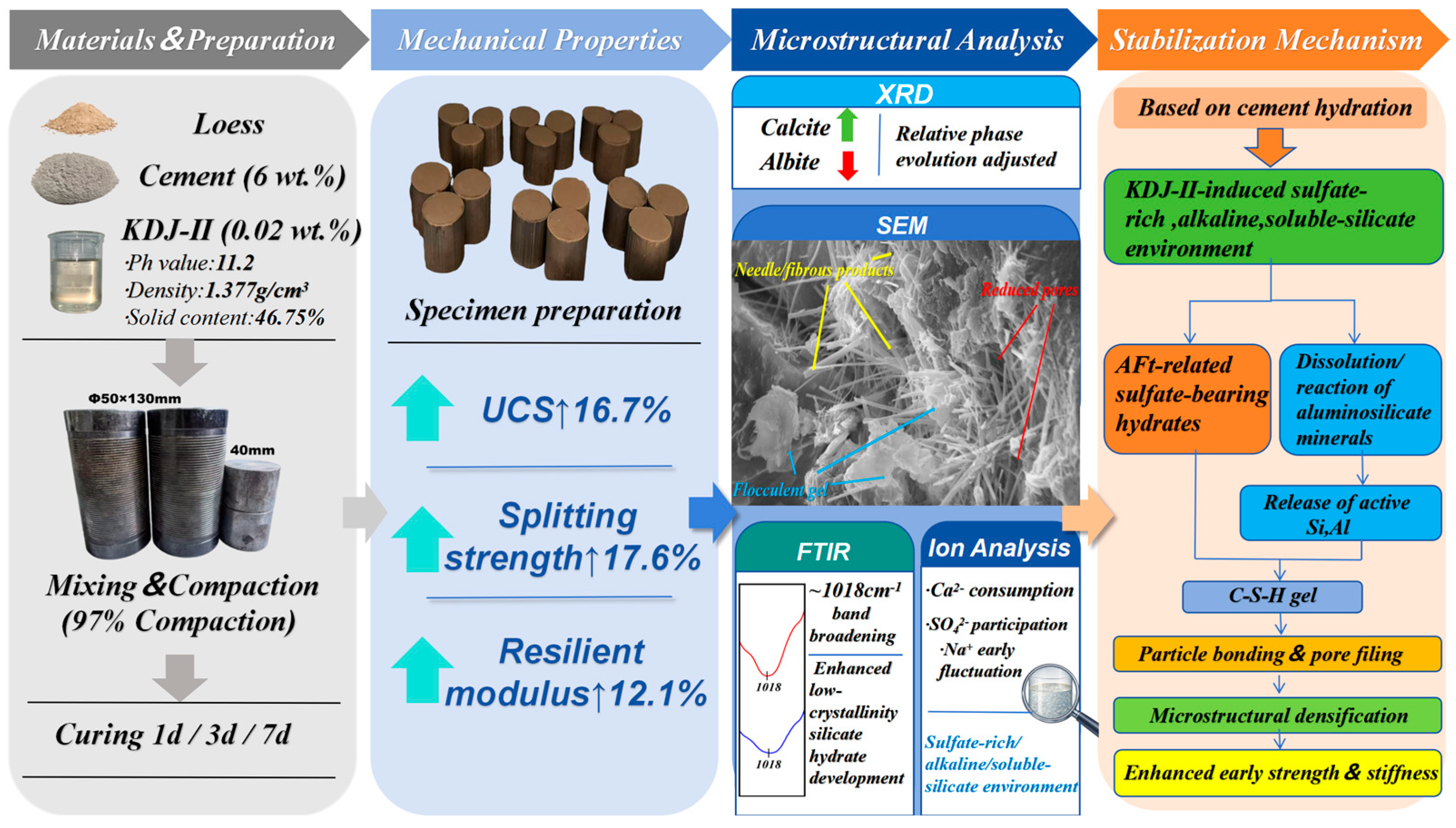
- Compared with cement-stabilized soil, the introduction of KDJ-II improved the early mechanical properties of the stabilized soil under the selected mixture proportion. At 7 days, the unconfined compressive strength, splitting tensile strength, and resilient modulus increased by 16.7%, 17.6%, and 12.1%, respectively. These results indicate that the composite-stabilized soil developed a more favorable cemented and densified structure at an early age, thereby improving the load-bearing capacity, cracking resistance, and stiffness of the material. However, these improvements should be interpreted within the tested loess type, cement content, KDJ-II dosage, and curing condition.
- (2)
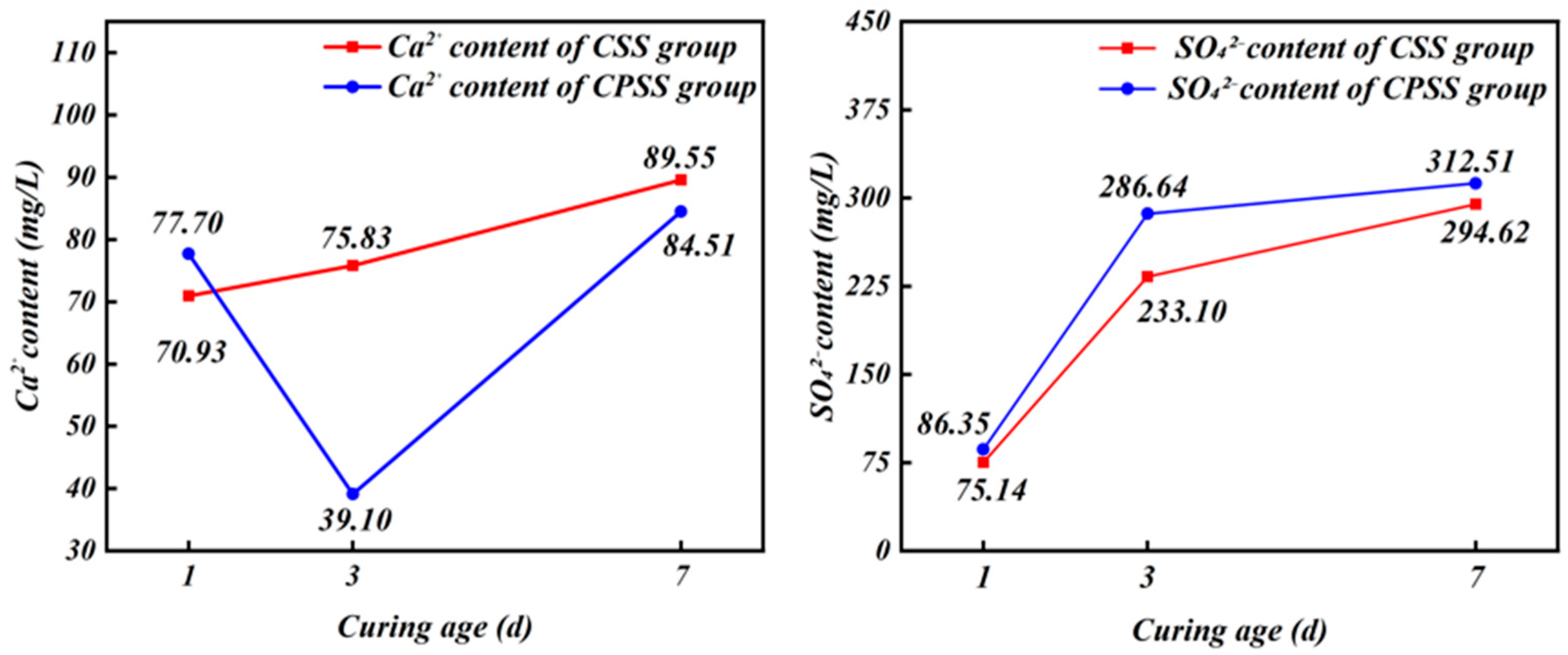
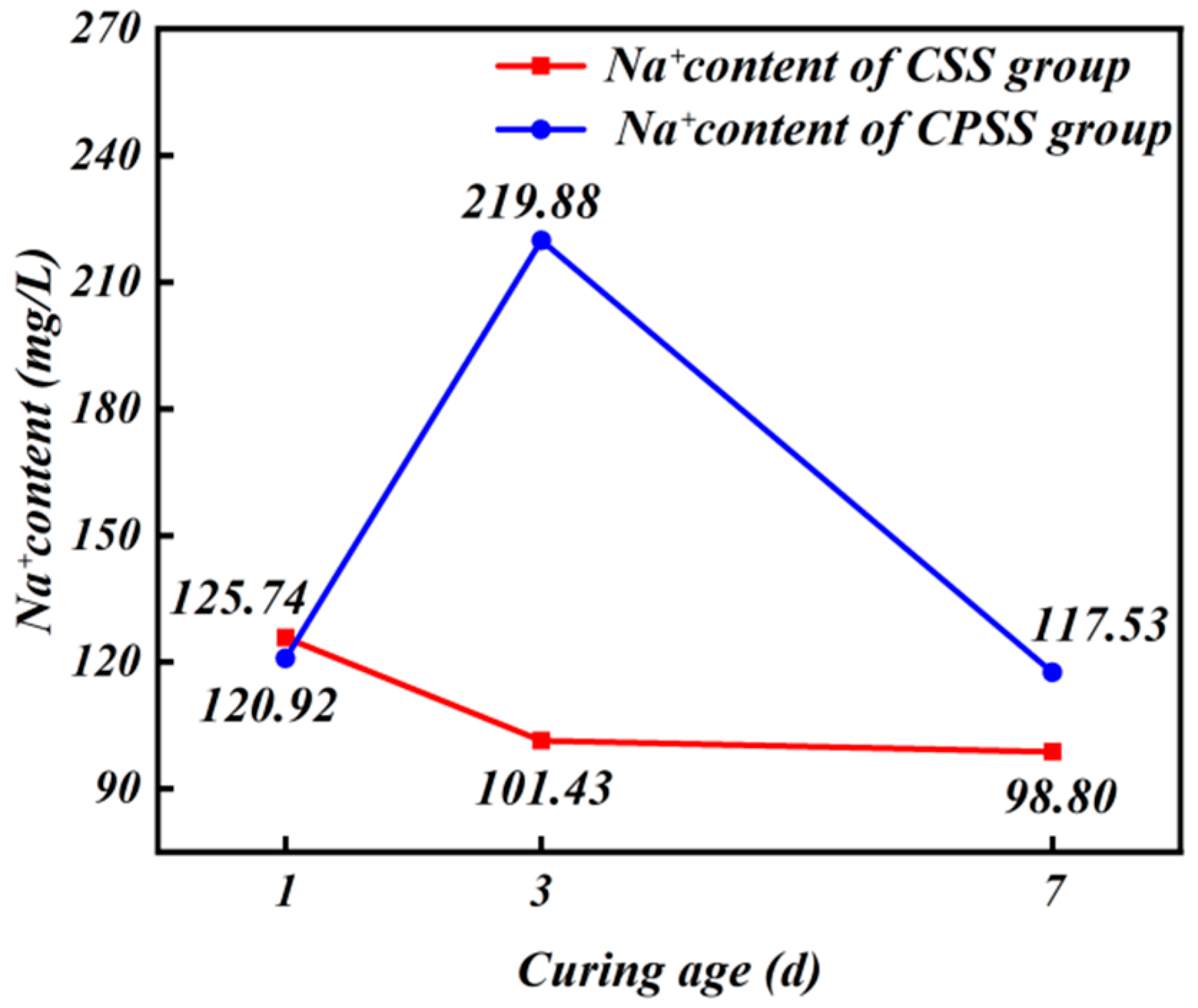
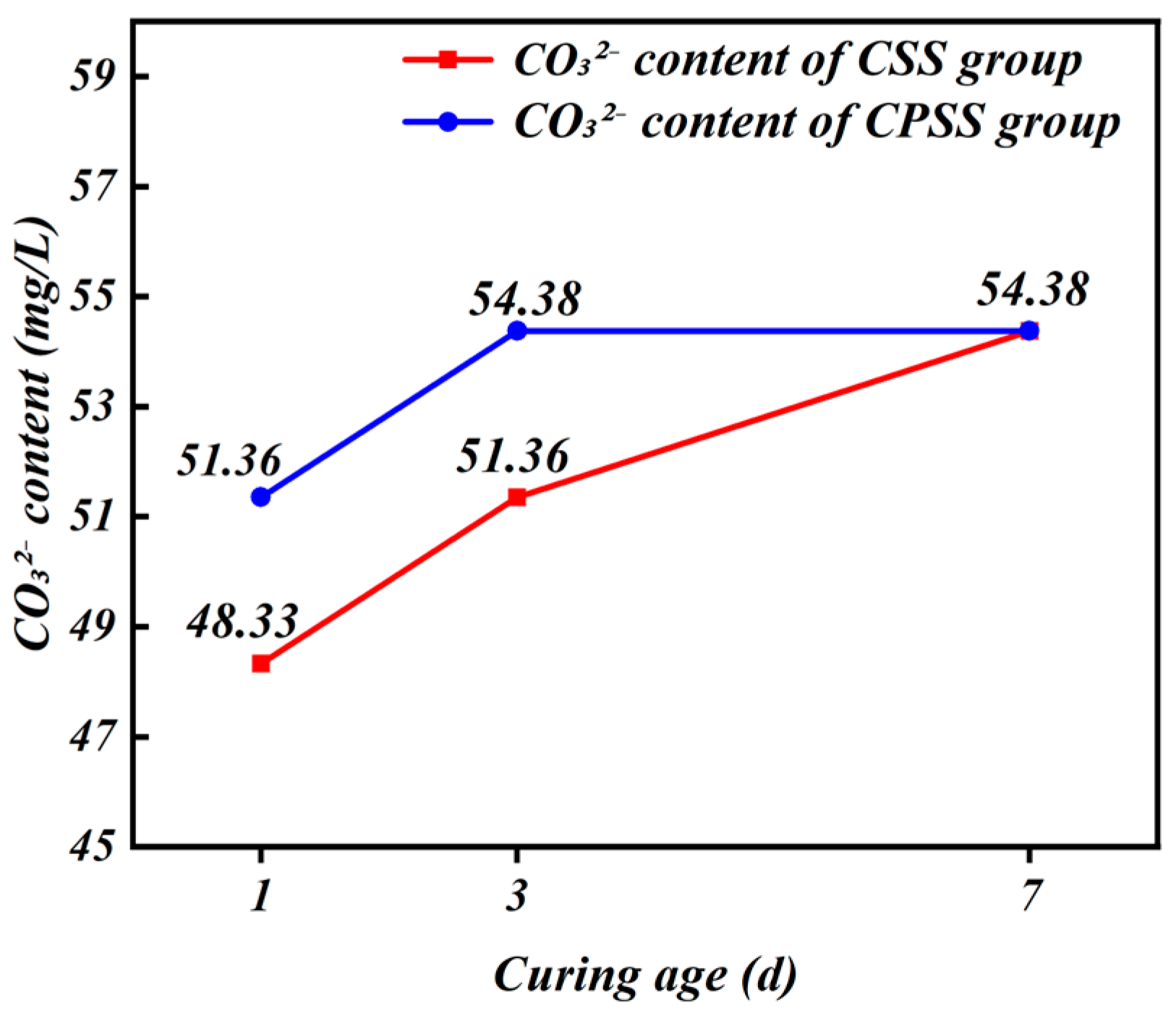
- The variations in leachable Ca2+, SO42−, and Na+ indicate that KDJ-II influenced the early ion release, retention, and solid–liquid partitioning behavior of cement-stabilized soil. The higher leachable SO42− concentration in CPSS was mainly related to the sulfate introduced by KDJ-II, while the variation in leachable Ca2+ may reflect a dynamic balance among cement hydration, dissolution, precipitation, and solid-phase retention. The transient Na+ peak may be associated with both the Na-bearing components introduced by KDJ-II and the partial dissolution or activation of Na-bearing aluminosilicate minerals. Therefore, the ion concentration results should be regarded as indirect evidence supporting the proposed reaction pathway rather than as direct pore-solution evidence.
- (3)
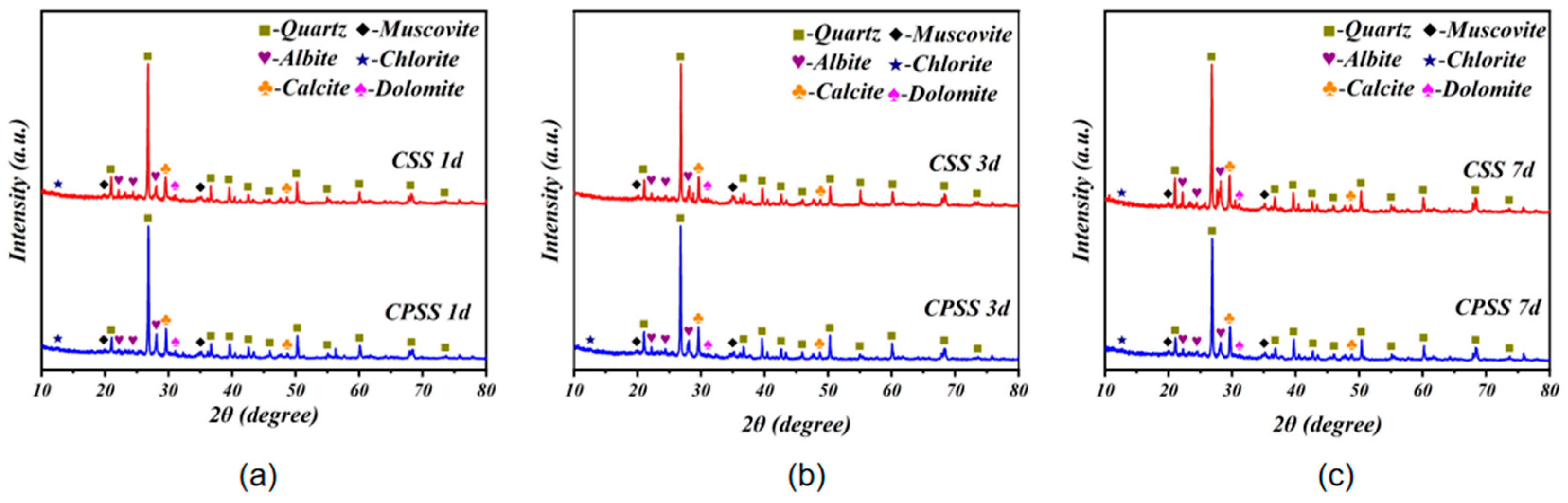
- XRD and FTIR provided supporting evidence for changes in mineral phase evolution and bonding environments during early curing. The Rietveld refinement results showed an increase in the relative calcite content and a decrease in the relative albite content in CPSS. Because the refinement results were normalized within the detected crystalline phases and no internal standard was used, these changes should be interpreted as relative trends rather than absolute reaction extents. The decrease in albite, together with the Na+ fluctuation, suggests that KDJ-II may have promoted the partial activation of Na-bearing aluminosilicate minerals. The broadening of the absorption band at approximately 1018 cm−1 in the FTIR spectra further supports the possible development of disordered silicate hydration products, such as C–S–H-like gels.
- (4)
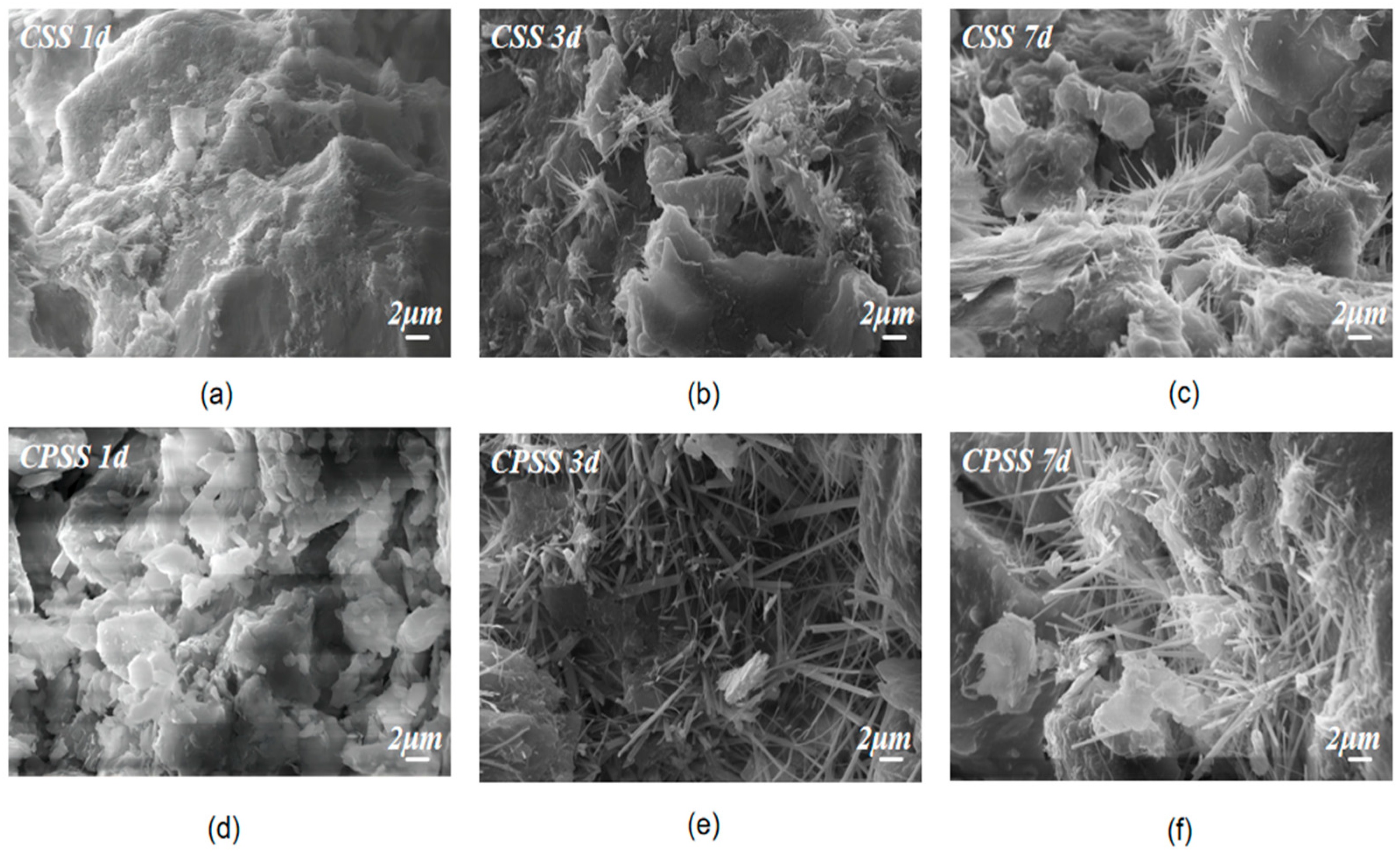
- SEM observations showed that CPSS had more needle/fibrous features, flocculent gel-like materials, reduced visible pores, and closer particle contacts than CSS. The needle/fibrous features may be related to AFt-related sulfate-bearing hydration products, while the flocculent materials may be associated with C–S–H-like gels. These microstructural observations support the interpretation that KDJ-II promoted particle bridging, interparticle cementation, pore filling, and structural densification. Such microstructural refinement provides a reasonable explanation for the improved early strength and stiffness of CPSS under the tested conditions.
Author Contributions
Funding
Institutional Review Board Statement
Informed Consent Statement
Data Availability Statement
Acknowledgments
Conflicts of Interest
Abbreviations
| CPSS | KDJ-II–Cement Composite-Stabilized Soil |
| CSS | Cement-Stabilized Soil |
| XRD | X-ray Diffraction |
| SEM | Scanning Electron Microscope |
| FTIR | Fourier Transform Infrared Spectroscopy |
References
- Ren, Z.; Jiang, M.; Behrens, P.; Chen, D.; Mostert, C.; Zhou, W.; Li, C.; Li, F.; Liu, L.; Wang, H.; et al. Declining demand and circular transition possibilities of sand, gravel and crushed stone in China. Nat. Commun. 2025, 16, 9294. [Google Scholar] [CrossRef] [Scilit]
- Li, G.; Wang, F.; Ma, W.; Fortier, R.; Mu, Y.; Mao, Y.; Hou, X. Variations in strength and deformation of compacted loess exposed to wetting-drying and freeze-thaw cycles. Cold Reg. Sci. Technol. 2018, 151, 159–167. [Google Scholar] [CrossRef] [Scilit]
- Yuan, K.; Wang, H.; Ni, W.; Ren, S.; Guo, Y. New insights into the dynamic changes of loess collapsibility under climate-induced wetting-drying cycles: A case study of the Loess Plateau of China. Catena 2025, 250, 108782. [Google Scholar] [CrossRef] [Scilit]
- Tian, L.; Bao, W.; Huang, Z.; Zhang, Z. Macro/microstructure deterioration mechanism and constitutive modeling of compacted loess under drying-wetting-freezing-thawing cycles. Eng. Geol. 2025, 359, 108442. [Google Scholar] [CrossRef] [Scilit]
- Jiang, Y.J.; Ni, C.Y.; Sha, H.W.; Li, Z.H.; Cai, L.Y. Deterioration characteristics of cement-improved loess under dry-wet and freeze-thaw cycles. PLoS ONE 2021, 16, e0253199. [Google Scholar] [CrossRef] [Scilit]
- Zhu, W.; Long, Z.; He, L.; Ye, S.; Mao, Y. Hydro-physical properties and durability study of cement slurry material based on loess. Sci. Rep. 2025, 15, 13198. [Google Scholar] [CrossRef] [Scilit]
- Yangsukkasem, N.; Suebsuk, J.; Kampala, A.; Siriphan, A.; Somna, R.; Jiammeepreecha, W.; Chindaprasirt, P. Durability against cyclic wetting-drying of cement-stabilized loess subgrade for railway in tropical semi-arid regions. Constr. Build. Mater. 2024, 455, 139123. [Google Scholar] [CrossRef] [Scilit]
- Wu, Z.; Liu, Y.; Intaj, F. Minimizing Shrinkage Cracking in Cement-Stabilized Bases Through Micro-Cracking. FHWA/LA.18/588 Final Report, 2018. Available online: https://rosap.ntl.bts.gov/view/dot/61444 (accessed on 2 June 2026).
- Al-Dakheeli, H.; Arefin, S.; Bulut, R.; Little, D. Effectiveness of ionic stabilization in the mitigation of soil volume change behavior. Transp. Geotech. 2021, 29, 100573. [Google Scholar] [CrossRef] [Scilit]
- Greening, P.A.K.; Page-Green, P. Evaluation of Sulphonated Petroleum Products as Soil Stabilisers and Compaction Aids. TRL/CSIR Report, Project R6896, 2003. Available online: https://assets.publishing.service.gov.uk/media/57a08d0eed915d622c001747/R6896.pdf (accessed on 2 June 2026).
- Lu, J.; Jiang, S.Y.; Chen, J.; Lee, C.H.; Cai, Z.; Ruan, H.D. Fabrication of superhydrophobic soil stabilizers derived from solid wastes applied for road construction: A review. Transp. Geotech. 2023, 40, 100974. [Google Scholar] [CrossRef] [Scilit]
- Jia, J.; Lu, X.; Zhu, J.; Wang, J.; Zhang, L.; Cheng, X. Effect of ionic soil stabilizer on the properties of lime and fly ash stabilized iron tailings as pavement base. Constr. Build. Mater. 2024, 450, 138558. [Google Scholar] [CrossRef] [Scilit]
- Li, H.; Jia, J.; Lu, X.; Cheng, X.; Zhu, J.; Zhang, L.; Guo, P.; Zhai, G. The effect of ionic soil stabilizer on cement and cement-stabilized iron tailings soil: Hydration difference and mechanical properties. Materials 2025, 18, 1444. [Google Scholar] [CrossRef] [Scilit] [PubMed]
- Li, G.; Ren, Z.; Liu, J.; Chen, H.; Wen, Z.; Fu, C. Enhancing coastal saline dispersive soil with ionic stabilizer-cement synergy: Mechanisms and performance. Case Stud. Constr. Mater. 2025, 23, e05519. [Google Scholar] [CrossRef] [Scilit]
- Barbieri, D.M.; Lou, B.; Dyke, R.J.; Wang, X.; Chen, H.; Shu, B.; Gazder, U.; Horpibulsuk, S.; Tingle, J.S.; Hoff, I. Design and sustainability analyses of road base layers stabilized with traditional and nontraditional additives. J. Clean. Prod. 2022, 372, 133752. [Google Scholar] [CrossRef] [Scilit]
- Santoni, R.L.; Tingle, J.S.; Webster, S.L. Stabilization of silty sand with nontraditional additives. Transp. Res. Rec. 2002, 1787, 61–70. [Google Scholar] [CrossRef] [Scilit]
- Tingle, J.S.; Newman, J.K.; Larson, S.L.; Weiss, C.A.; Rushing, J.F. Stabilization mechanisms of nontraditional additives. Transp. Res. Rec. 2007, 1989, 59–67. [Google Scholar] [CrossRef] [Scilit]
- Wang, Q.; Li, Y.; Li, P.; Qi, Y. Using cement and calcium lignosulfonate to improve the mechanical properties and microstructure of loess in a seasonal freezing zone. Buildings 2024, 14, 1495. [Google Scholar] [CrossRef] [Scilit]
- Julphunthong, P.; Joyklad, P.; Manprom, P.; Chompoorat, T.; Palou, M.-T.; Suriwong, T. Evaluation of calcium carbide residue and fly ash as sustainable binders for environmentally friendly loess soil stabilization. Sci. Rep. 2024, 14, 671. [Google Scholar] [CrossRef] [Scilit]
- Yuan, K.; Ni, W.; Zhao, L.; Wang, H. Silica fume stabilized loess: Mechanical properties, microstructural evolution and environmental analysis. Sustain. Mater. Technol. 2023, 36, e00604. [Google Scholar] [CrossRef] [Scilit]
- JTG 3430-2020; Test Methods of Soils for Highway Engineering. Ministry of Transport of the People’s Republic of China: Beijing, China, 2020.
- JTG 3441-2024; Test Methods of Materials Stabilized with inorganic Binders for Highway Engineering. Ministry of Transport of the People’s Republic of China: Beijing, China, 2024.
- Jiao, S. Application Research of Composite Stabilized Loess in Base Courses of Low-Grade Highways. Master’s Thesis, Northwest Minzu University, Lanzhou, China, 2024. [Google Scholar]
- Chang, J.; Li, J.; Wang, Y.; Zhang, H. Mechanical characteristics and microstructural changes in phosphogypsum-cement-lime composite modified loess. Case Stud. Constr. Mater. 2024, 21, e03881. [Google Scholar] [CrossRef] [Scilit]
- de Matos, P.R.; Andrade Neto, J.S.; Sakata, R.D.; Kirchheim, A.P.; Rodríguez, E.D.; Campos, C.E.M. Strategies for XRD quantitative phase analysis of ordinary and blended Portland cements. Cem. Concr. Compos. 2022, 131, 104571. [Google Scholar] [CrossRef] [Scilit]
- de Matos, P.R.; Andrade Neto, J.S.; Jansen, D.; De la Torre, A.G.; Kirchheim, A.P.; Campos, C.E.M. In-situ laboratory X-ray diffraction applied to assess cement hydration. Cem. Concr. Res. 2022, 162, 106988. [Google Scholar] [CrossRef] [Scilit]
- Yang, X.; Hu, Z.; Li, L.; Wang, X.; Zhou, X. Strength properties, microstructural evolution, and reinforcement mechanism for cement-stabilized loess with silica micro powder. Case Stud. Constr. Mater. 2024, 20, e02848. [Google Scholar] [CrossRef] [Scilit]
- Ylmén, R.; Jäglid, U. Carbonation of Portland cement studied by diffuse reflection FTIR spectroscopy. Int. J. Concr. Struct. Mater. 2013, 7, 119–125. [Google Scholar] [CrossRef] [Scilit]
- Yusuf, M.O. Bond characterization in cementitious material binders using Fourier-transform infrared spectroscopy. Appl. Sci. 2023, 13, 3353. [Google Scholar] [CrossRef] [Scilit]
- Bernard, E.; Yan, Y.; Lothenbach, B. Effective cation exchange capacity of calcium silicate hydrates (C-S-H). Cem. Concr. Res. 2021, 143, 106393. [Google Scholar] [CrossRef] [Scilit]
- Yan, Y.; Bernard, E.; Miron, G.D.; Rentsch, D.; Ma, B.; Scrivener, K.; Lothenbach, B. Kinetics of Al uptake in synthetic calcium silicate hydrate (C-A-S-H). Cem. Concr. Res. 2023, 172, 107296. [Google Scholar] [CrossRef] [Scilit]






| Item | Unit | Technical Specification | Measured Value |
|---|---|---|---|
| pH | / | 11 ± 1.0 | 11.2 |
| Density | g/cm3 | 1.35 ± 0.03 | 1.377 |
| Solid content | % | 45 ± 2.0 | 46.75 |
| Detected Component | Concentration (mg/L) | Anion Component | Concentration (mg/L) |
|---|---|---|---|
| Si | 1430.6 | SO42− | 4910.5 |
| Na | 606.2 | PO43− | 346.1 |
| Al | 12.1 | Cl− | 280.2 |
| K | 7.5 | - | - |
| Fe | 4.3 | - | - |
| Ca | 2.0 | - | - |
| Mg | 0.11 | - | - |
| Item | Natural Water Content | Optimum Moisture Content | Maximum Dry Density | Liquid Limit | Plastic Limit | Plasticity Index |
|---|---|---|---|---|---|---|
| Value | 7.8% | 12.6% | 1.84 g/cm3 | 30% | 20.1% | 9.9 |
| Run | Factor Level | |||
|---|---|---|---|---|
| A: KDJ-II Content (%) | B: Cement Content (%) | Blank Column | C: Compaction Degree (%) | |
| 1 | 0.015 | 4 | 1 | 93 |
| 2 | 0.015 | 5 | 2 | 95 |
| 3 | 0.015 | 6 | 3 | 97 |
| 4 | 0.020 | 4 | 2 | 97 |
| 5 | 0.020 | 5 | 3 | 93 |
| 6 | 0.020 | 6 | 1 | 95 |
| 7 | 0.025 | 4 | 3 | 95 |
| 8 | 0.025 | 5 | 1 | 97 |
| 9 | 0.025 | 6 | 2 | 93 |
Disclaimer/Publisher’s Note: The statements, opinions and data contained in all publications are solely those of the individual author(s) and contributor(s) and not of MDPI and/or the editor(s). MDPI and/or the editor(s) disclaim responsibility for any injury to people or property resulting from any ideas, methods, instructions or products referred to in the content. |
© 2026 by the authors. Licensee MDPI, Basel, Switzerland. This article is an open access article distributed under the terms and conditions of the Creative Commons Attribution (CC BY) license.
Share and Cite
Wu, H.; Zhao, B.; Niu, X.; Wang, R.; Zhang, W.; Tong, Y.; Chen, C. Mechanism of Strength Development and Microstructural Evolution of KDJ-II–Cement Composite-Stabilized Soil for Loess Base Courses. Appl. Sci. 2026, 16, 5678. https://doi.org/10.3390/app16115678
Wu H, Zhao B, Niu X, Wang R, Zhang W, Tong Y, Chen C. Mechanism of Strength Development and Microstructural Evolution of KDJ-II–Cement Composite-Stabilized Soil for Loess Base Courses. Applied Sciences. 2026; 16(11):5678. https://doi.org/10.3390/app16115678
Chicago/Turabian StyleWu, Hongjuan, Bangxuan Zhao, Xiaohui Niu, Rui Wang, Wei Zhang, Yanmei Tong, and Chenggui Chen. 2026. "Mechanism of Strength Development and Microstructural Evolution of KDJ-II–Cement Composite-Stabilized Soil for Loess Base Courses" Applied Sciences 16, no. 11: 5678. https://doi.org/10.3390/app16115678
APA StyleWu, H., Zhao, B., Niu, X., Wang, R., Zhang, W., Tong, Y., & Chen, C. (2026). Mechanism of Strength Development and Microstructural Evolution of KDJ-II–Cement Composite-Stabilized Soil for Loess Base Courses. Applied Sciences, 16(11), 5678. https://doi.org/10.3390/app16115678