Article

The Effect of Acerola and Rosemary Extracts on the Quality and Oxidative Stability of Sliced Fermented Salami Stored in a Modified Atmosphere †

Department of Food Hygiene, Technology and Safety, University of Veterinary Medicine and Pharmacy in Košice, Komenského 73, 04181 Košice, Slovakia
*
Author to whom correspondence should be addressed.
This article is a revised and expanded version of a paper published in Marcinčák, S.; Nosková, E.; Reitznerová, A.; Mesarčová, L.; Semjon, B. Plant extracts used as natural antioxidants in the production of fermented meat products (in Slovak). In Proceedings of the “Bezpečnosť a kvalita potravín: Zborník vedeckých prác” Conference, Piešťany, Slovakia, 26–28 March 2025.
Appl. Sci. 2026, 16(11), 5335; https://doi.org/10.3390/app16115335
Submission received: 31 March 2026 / Revised: 21 May 2026 / Accepted: 22 May 2026 / Published: 26 May 2026

Featured Application

Fermented salami is highly susceptible to lipid oxidation due to its high fat content and the long ripening process. This study provides a descriptive overview of the application of plant extracts (acerola and rosemary) in salami production. Extracts demonstrated their practical use in the meat industry as natural antioxidants, which prevent the formation of malondialdehyde, the primary marker of rancidity in products.

Abstract

The use of plant extracts in the production of fermented meat products can help protect fats from oxidation, improve color stability, and extend their shelf life. The study evaluated the effect of natural extracts (acerola—A, rosemary—R, and their combination—M) on the quality of Tokaj salami stored in MAP at 4 °C for 35 days, compared to negative (N) and positive (K, sodium erythorbate) controls. While the initial chemical composition showed differences due to raw material variability (p < 0.001), fat and protein content remained stable during storage (p > 0.05). In contrast, acidity and water activity (aw) were significantly affected (p < 0.001). Regarding oxidative stability, plant extracts significantly inhibited lipid oxidation during storage (p < 0.05). By day 35, the negative control reached the highest malondialdehyde (MDA) level of 0.67 mg/kg, whereas samples with acerola (A) maintained the lowest values at 0.38 mg/kg, performing comparably to the synthetic antioxidant (0.43 mg/kg; p > 0.05). Acerola extract (A) demonstrated the highest efficacy in stabilizing oxidative changes, with results comparable to the synthetic antioxidant (p > 0.05). Colorimetric analysis revealed that lightness (L*) ranged from 45.98 to 49.75, with L*, a*, and b* parameters significantly influenced by both the antioxidant type and storage phase (p < 0.001). Sensory evaluation remained unaffected by the antioxidants, being affected only by storage time (p < 0.05). These results confirm that acerola and rosemary extracts are viable natural alternatives to sodium erythorbate for maintaining the oxidative and color stability of fermented salami.

1. Introduction

Fermented meat products (salami, ham, and sausage) are among the most popular foods worldwide, with a long tradition of production [1]. Their production usually involves the use of starter microbial cultures composed of lactic acid-producing Lactobacillus bacteria, Pediococci characterized by weaker lactic acid production, and non-toxinogenic catalase-positive representatives of the genera Staphylococcus and Micrococcus, which have the ability to reduce nitrates and decompose the resulting hydrogen peroxide. Yeasts and microfungi are also used to improve the quality and aroma of uncooked meat products. Biological fermentation reduces pH values and, together with a reduction in water activity (aw), ensures the health, safety, and shelf life of meat products [2,3]. Fermented meat products contain proteins with high biological value, B vitamins (B6 and B12), and minerals, while also having a high content of fat, saturated fatty acids, sodium, and additives, the consumption of which is associated with a higher risk of certain chronic diseases [4]. In general, meat products are more sensitive to oxidative processes due to their higher fat content, the presence of pro-oxidants (heme pigments), and processing methods (grinding, mixing, salting, heating, smoking), which promote the contact between lipids and oxygen and, subsequently, the formation of free radicals initiating further lipid oxidation [5]. Dry fermented products (sausages, salami), characterized by their high fat content and extended ripening period, are particularly susceptible to lipid oxidation, which may lead to rancidity and undesirable sensory changes [6]. These undesirable processes can be limited or slowed down by adding antioxidants. Antioxidants in meat products enhance oxidative stability, improve color stability, and prolong the shelf life of meat products [4]. Synthetic antioxidants such as butylated hydroxyanisole and butylated hydroxytoluene have been used to reduce or prevent lipid oxidation in meat products. However, many countries have banned their use as food additives due to their potential toxicity [7]. This fact, together with the current consumer trend to minimize the amount of additives in products, has encouraged the search for substitutes in the form of vegetable or plant extracts (obtained from fruits, vegetables, spices, and herbs, including residues from food processing) rich in bioactive compounds with antioxidant activity, which could replace synthetic antioxidants [5,8,9,10]. These plant extracts include acerola and rosemary. Acerola (Malphighia emarginata) is a berry growing in the tropical regions of South America and the Caribbean. Due to its physicochemical, organoleptic, and nutritional properties and its use in the food, pharmaceutical, and chemical industries, the production of this fruit has increased in recent years [11]. Acerola is a significant source of vitamin C (>10 g/kg of fruit) and a good source of vitamin A. It also contains smaller amounts of vitamins B1, B2, B3, B5, and E. In addition to vitamins, acerola has high antioxidant capacity (anthocyanins, phenols, flavonoids, and carotenoids) [12]. From a health perspective, the components of acerola have proven their potential in reducing inflammation, alleviating oxidative stress, and preventing diseases such as diabetes, dyslipidemia, obesity, and cancer [13,14]. Rosemary (Rosmarinus officinalis, L.) is an aromatic plant of the Lamiaceae family originating in the Mediterranean region. Rosemary extract or oil is one of the most studied natural preservatives, slowing down oxidative reactions and the growth of microorganisms in meat products, thereby extending their shelf life [15]. The biological and functional properties of rosemary are attributed to the presence of bioactive compounds (phenolic diterpenes, flavonoids, and triterpenes), which are well known for their antioxidant, antimicrobial, anti-inflammatory, anticancer, and neuroprotective properties [16,17].
The addition of plant extracts to fermented meat products is currently becoming a widespread trend, and they are increasingly being studied in the context of potential antioxidant properties. Despite the known antioxidant potential of these botanical extracts, there is a lack of specific research on their efficacy in sliced fermented products, such as Tokaj salami, especially when combined with modified atmosphere packaging (MAP) during extended storage. This study addresses this gap by evaluating how these natural alternatives influence both the oxidative and color stability of such products under industrial-scale storage conditions. The aim of this experiment was therefore to produce dry fermented salami using acerola and rosemary extract due to their high content of bioactive substances and evaluate their antioxidant effects. The study compares the effect of natural antioxidants, acerola, and rosemary extracts (alone and in combination) on lipid oxidation, color stability, and organoleptic properties of dry fermented Tokaj salami packed in a modified atmosphere and stored at 4 °C for 35 days.

2. Materials and Methods

2.1. The Production of Tokaj Salami Samples

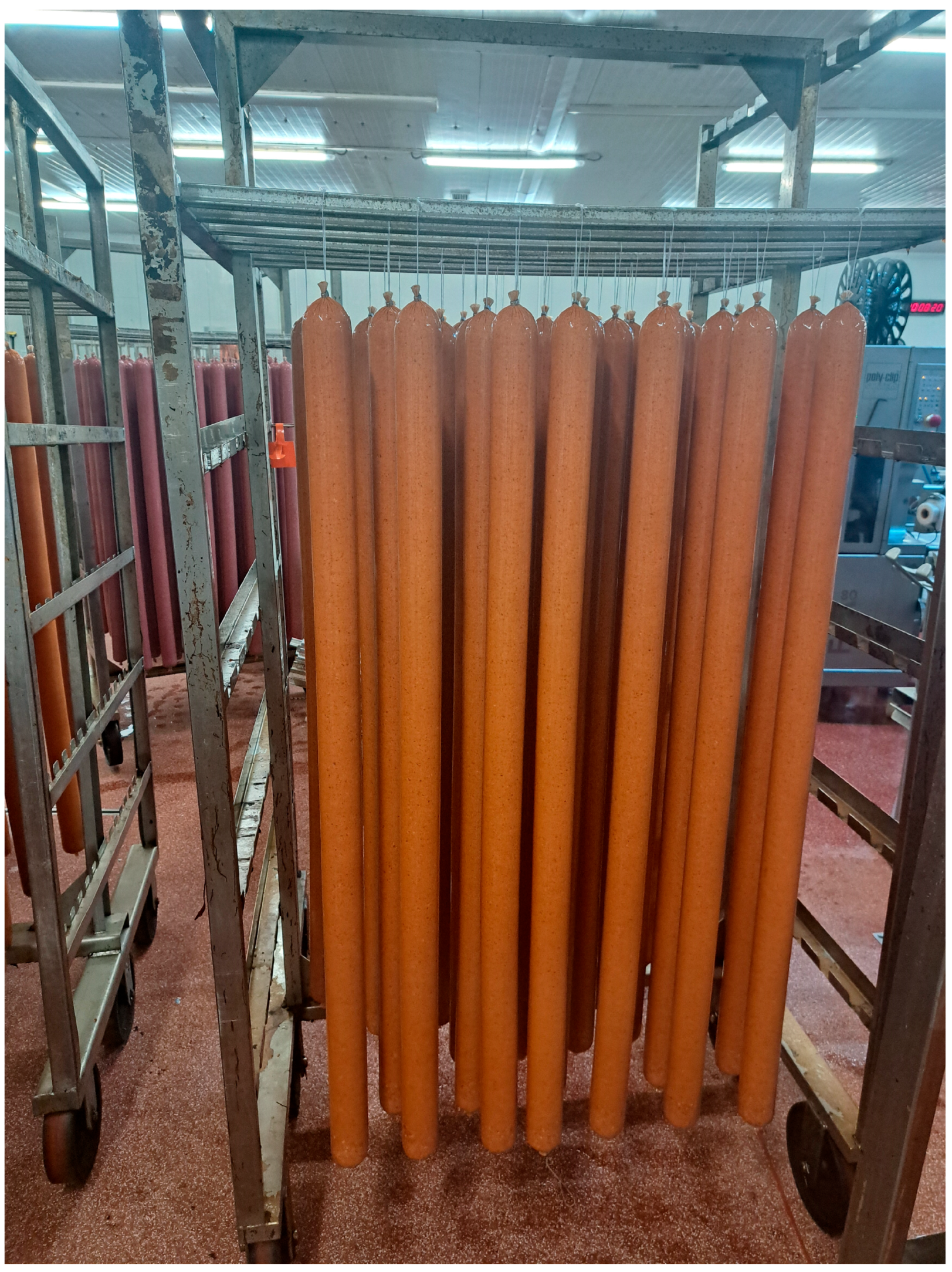
For experimental purposes, dry fermented salami (“Tokajská saláma”, a non-thermally treated meat product) was produced according to the relevant commercial recipe of the cooperating company (Mecom s.r.o., Humenné, Slovakia) with the addition of acerola and rosemary plant extracts—a source of antioxidants (Figure 1). The basic composition of salami in individual groups was as follows: pork lean meat, pork bacon, pork protein, beef meat, salt, sweet pepper, dextrose, spice extracts (sweet pepper, hot pepper), starter culture (Lyocarni VBY—81, Mäspoma Ltd., Zvolen, Slovakia), and sodium nitrite. A total of five experimental batches were prepared (100 kg each). For every 1000 g of the final product, 1360 g of raw materials (meat and fat—average fat content 40%) was used. The individual experimental groups of salami were labeled according to the antioxidant used:
  • N—Tokaj salami Natur, without added antioxidants (negative control).
  • K—Tokaj salami Klasik, with the addition of sodium erythorbate in an amount of up to 500 mg/kg of product as part of the spice mixture (positive control; Mäspoma Ltd., Zvolen, Slovakia).
  • A—Tokaj salami Natur with the addition of the commercial premix with acerola extract (NovaTaste GmbH, Salzburg, Austria) at a dose of 3 g/kg. Final concentration of added acerola extract in salami was calculated at the 0.19% level.
  • R—Tokaj salami with the addition of the commercial premix with rosemary extract (Progast Ltd., Bratislava, Slovakia) at a dose of 3 g/kg. The final concentration of added rosemary extract in salami was calculated at the 0.19% level.
  • M—Tokaj salami Natur with the addition of the commercial premix with a mix of acerola and rosemary extracts (Campus Ltd., Milano, Italy) at a dose of 2 g/kg. The final concentration of added plant extracts in salami was calculated at the 0.14% level.
The meat ingredients were placed in a cutter (Seydelmann, Aalen, Germany) together with spices, additives, and antioxidants, ground to the desired particle size, and filled into casings (Mäspoma Ltd., Zvolen, Slovakia) with a diameter of 55 mm. The salami was then fermented and dried for at least 16 days at temperatures of 16 ± 1 °C and a relative humidity of around 77%. After fermentation and attainment of the required pH and water activity, the salami samples were sliced, packaged in a modified atmosphere (30% CO2 and 70% N2), and stored for 35 days at 4 ± 2 °C in a refrigerator (Liebherr, Lienz, Austria). The samples of experimental salami were subjected to individual analyses on days 0, 21, and 35 of storage. Six packages of sliced salami were taken from each experimental group for individual analysis. All measurements were performed in triplicate.

2.2. Determination of Chemical Composition

The physical variable pH and chemical composition (fat, protein) of Tokaj salami samples were determined using near-infrared spectroscopy, a non-destructive method that does not require chemical treatment of samples, on the TANGO FT-NIR spectrophotometer (Bruker Optics, Ettlingen, Germany) with a resolution of 16 cm−1 and a measurement time of 64 scans. Spectral acquisition and instrument control were performed by the OPUS software (v. 6.5, Bruker Optics).

2.3. Determination of Water Activity aw

The water activity aw was determined using a Lab MASTER-aw device (Novasina AG, Lachen, Switzerland) at a constant temperature of 25 °C.

2.4. Determination of the Lipid Oxidation Processes

The oxidative stability of samples was determined by measuring the amount of malondialdehyde (MDA), a secondary product of lipid oxidation. MDA was measured spectrophotometrically as a complex with 2-thiobarbituric acid (MDA-TBA) using a Heλios γ UV spectrophotometer (Thermospectronic, Cambridge, UK) at a wavelength of 532 nm against a blank sample. The results are expressed as mg MDA per kg of fat [18].

2.5. Determination of Colorimetric Parameters

The color of experimental salami samples was measured using a Chroma meter CR-410 (Konica Minolta, Tokyo, Japan; measuring area ∅ 50 mm, illumination D65, standard viewing angle 2°). Prior to measurement, the device was calibrated with a white calibration standard and black trap, according to the manufacturer’s instructions. The colorimetric parameters of the analyzed samples are expressed in the CIE L*a*b* color space. The L* value represents lightness (ranging from 0—black to 100—white), a* represents redness (color between red and green), and b* represents yellowness (color between blue and yellow). The results of colorimetric parameters were processed in the Color Data Software CM-S100w SpectraMagic™ NX program (Konica Minolta, Tokyo, Japan).

2.6. Sensory Analysis of Tokaj Salami

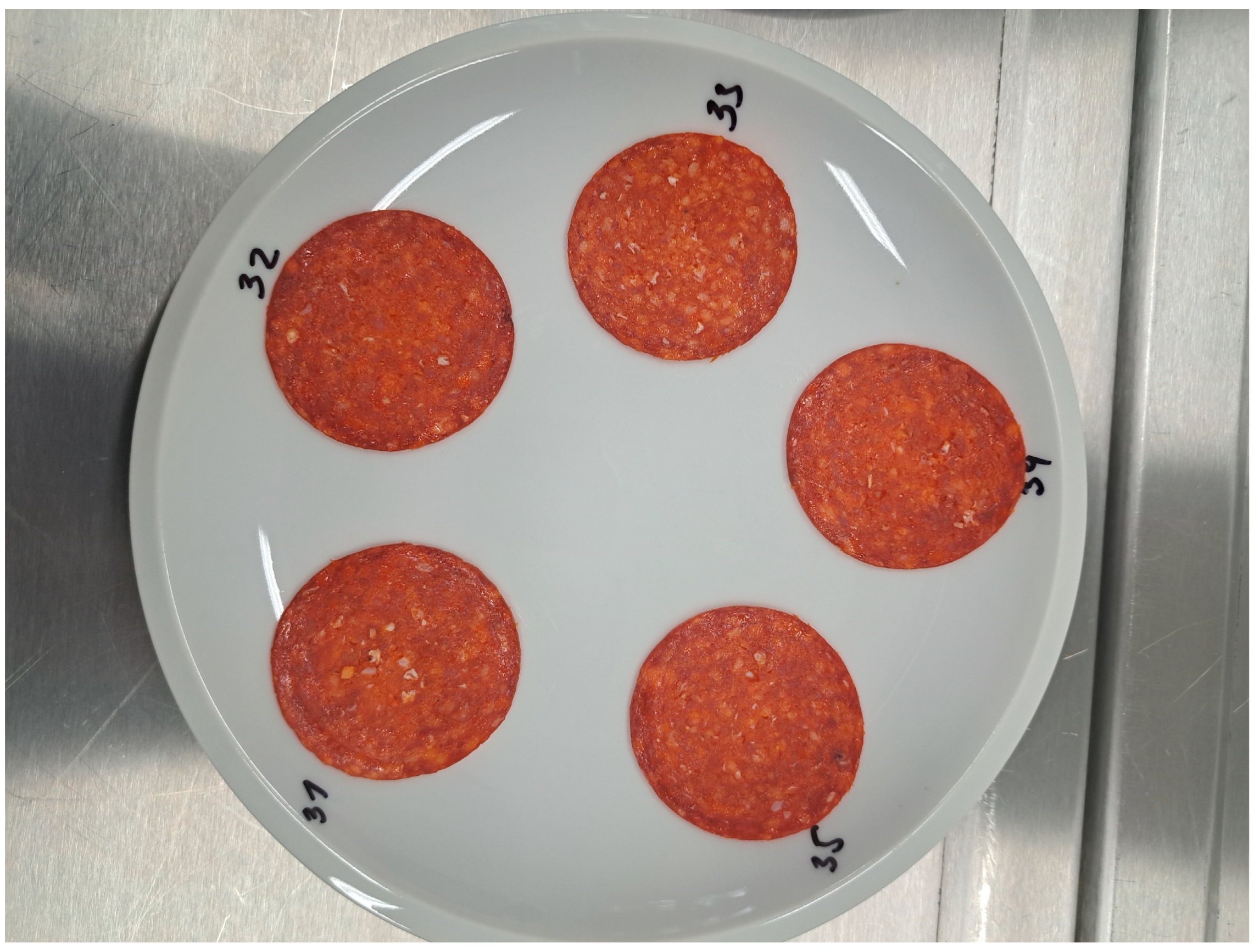
Sensory analysis of the experimental samples was performed in a specialized sensory laboratory at the University of Veterinary Medicine and Pharmacy in Košice, Slovakia (Figure 2). The sensory panel consisted of 10 trained evaluators (both men and women) aged 28 to 60, trained prior to analysis. The protocol for evaluation of the experimental salami samples was compiled according to Lawless and Heymann [19]. The protocol consisted of a 9-point hedonic scale for evaluating the appearance, consistency, aroma, taste, and overall acceptability of the samples from 1—dislike extremely to 9—like extremely.

2.7. Statistical Analysis

The results of physical–chemical, color, and sensory data measurements were evaluated using R statistics software version 4.3.3 (R Core Team, 2025). In the experimentally produced salami samples, we selected the influence of added antioxidants (Additive) and the influence of the storage length of samples in the refrigerator at 4 ± 2 °C (Phase) as the main factors for analysis. The two-way analysis of variance method (ANOVA) and Tukey’s test for multiple comparison of the means with a confidence interval set at 95% were used for statistical evaluation of the results.

3. Results

The chemical composition of the experimental groups of sliced fermented products (Tokaj salami) packed in a modified atmosphere (MAP) and stored for 35 days at a temperature of up to 4 ± 2 °C in a refrigerator is shown in Table 1. The chemical composition of samples showed statistically significant differences (p < 0.001) between the experimental samples of salami with different antioxidant additions. The differences observed between the experimental groups were mainly due to the composition of the raw meat material used for salami production. Despite the implementation of a raw material calibration system, fluctuations in the fat and protein content of the finished products could not be entirely eliminated. During storage, no statistically significant differences in fat and protein content were observed (p > 0.05); however, acidity and water activity (a_w) were significantly affected (p < 0.001). The interaction between the two main analyzed factors was significant only for pH and water activity variables (p < 0.001).
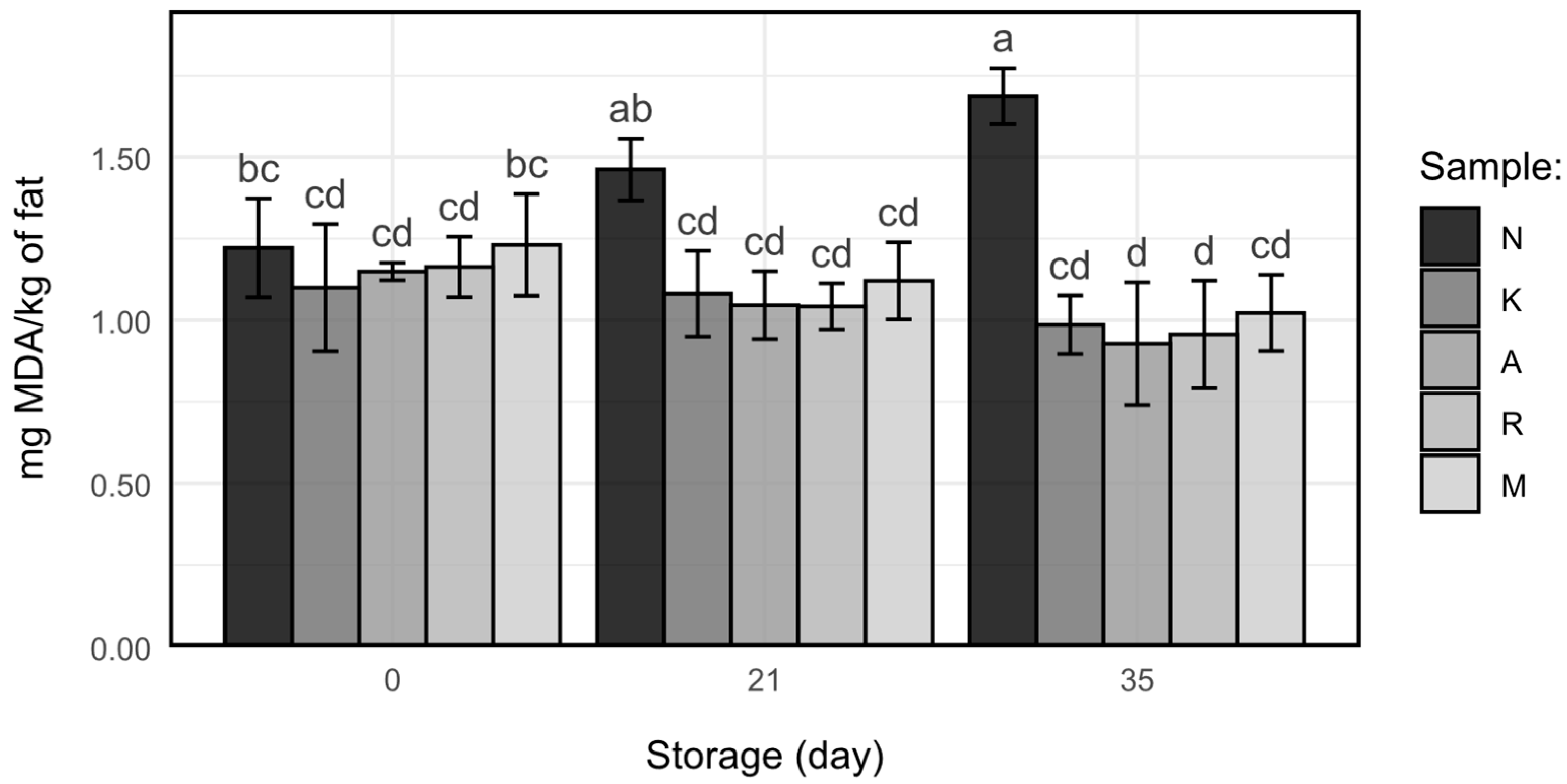
The comparison of lipid oxidative changes in sliced Tokaj salami based on the addition of natural antioxidant extracts (acerola, rosemary, and a mixture of acerola and rosemary) is presented in Figure 3. After fermentation and slicing of the products, we observed a significant effect of plant extracts on the oxidative changes in the lipids of the produced salami (p < 0.001). The phase of this experiment had no significant effect on MDA content in the fat of the samples (p > 0.05); however, the interaction between both analyzed factors was significant at p < 0.001. The results were comparable to both the negative control (without added antioxidants) and the positive control (with added sodium ascorbate) immediately after processing. However, during storage, significant differences were observed between the negative control and the groups with added extracts as well as the positive control (p < 0.05). All added extracts were effective in stabilizing oxidative changes in sliced salami throughout the storage period, with acerola showing the strongest effect.
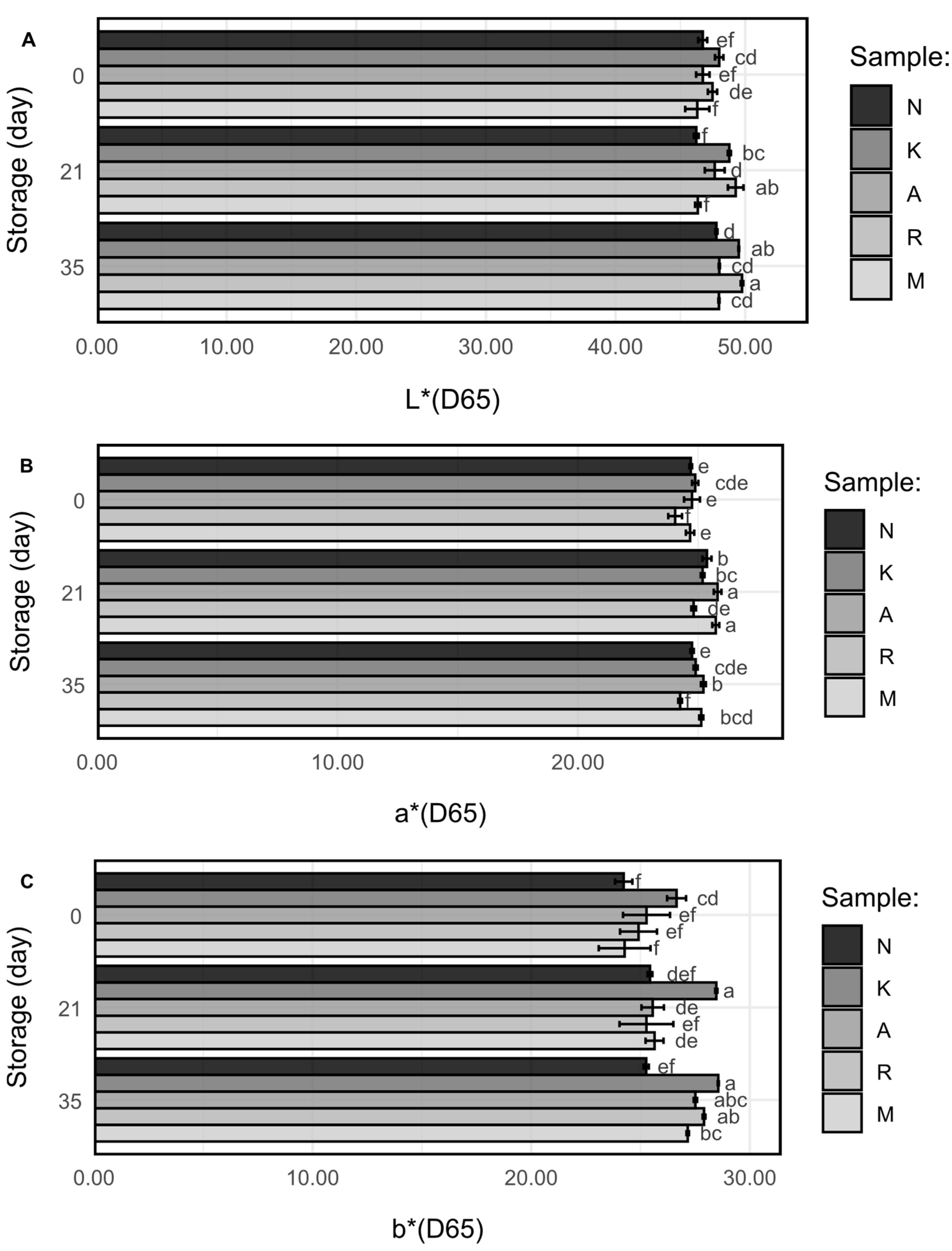
Figure 4 shows the colorimetric parameters L*a*b* in experimental samples of stored sliced fermented products (Tokaj salami) packed in MAP. The lightness (L*) of the product was measured in the range from 45.98 to 49.75, depending on the added antioxidant (p < 0.001) and the storage phase (p < 0.001). The parameters for redness a* and yellowness b* also showed a statistically significant effect of the added natural antioxidant (p < 0.001) and storage phase (p < 0.001). Moreover, the interaction between factors was significant in each colorimetric variable (p < 0.001).
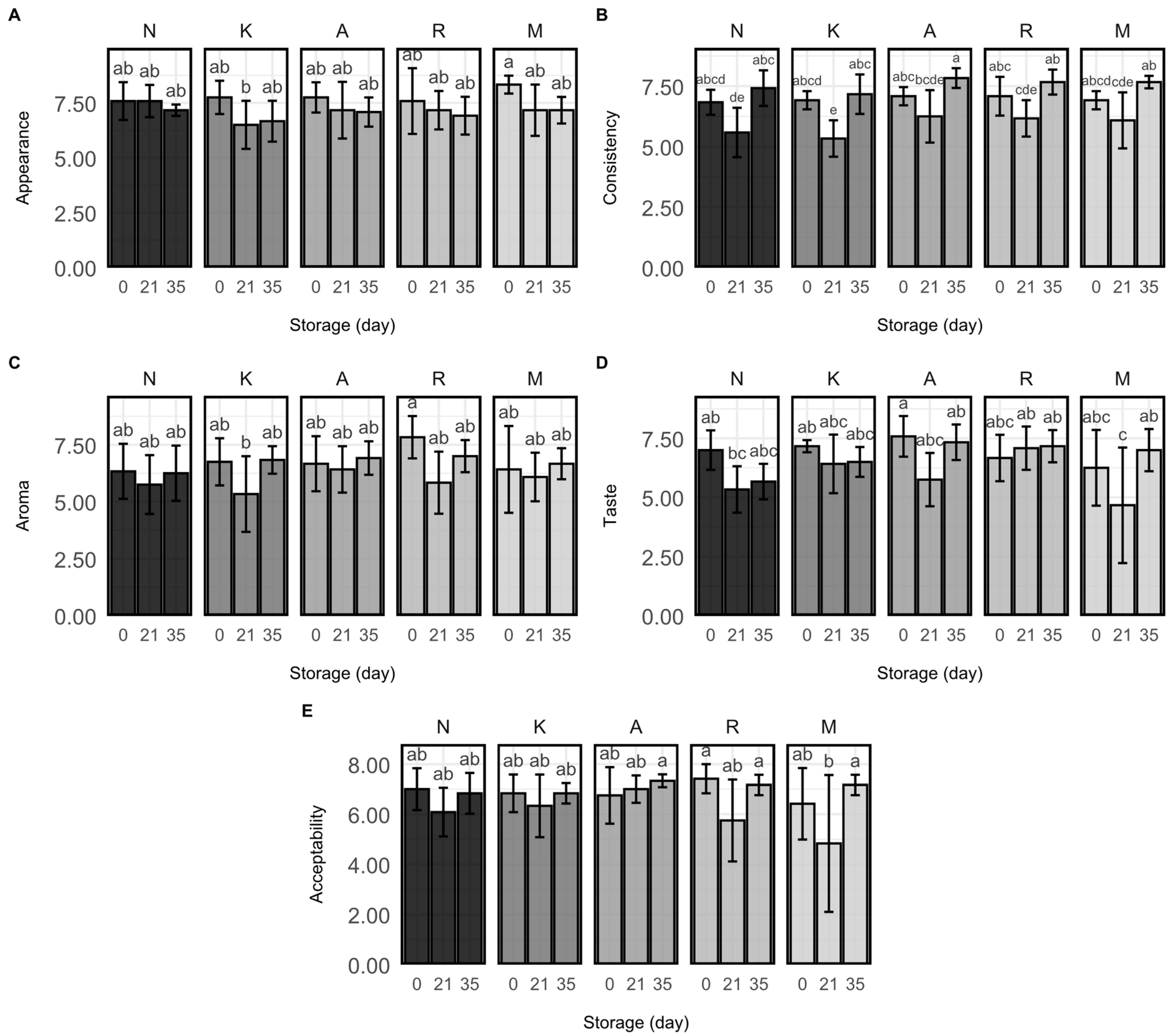
The results of the sensory evaluation of sliced Tokaj salami samples during storage are presented in Figure 5. The addition of acerola, rosemary, and a mixture of acerola and rosemary powder extracts in fermented Tokaj salami did not affect the evaluated sensory variables of sliced products packaged in MAP and stored for 35 days, except for sample taste (p < 0.05). Significant storage-induced changes were observed across the evaluated sensory parameters (p < 0.01). On the 21st day of storage, these parameters were rated significantly lower compared to the evaluation immediately after the products were sliced and packaged for all evaluated salami samples. Conversely, further storage of the samples significantly improved the sensory parameters of all evaluated samples. The interaction between the addition of natural extracts and storage period was significant only in the taste variable (p < 0.001).

4. Discussion

The production of high-quality fermented dry salami depends on controlling several key factors during formulation, fermentation, and drying. These factors determine salami safety, sensory properties, and shelf stability. The quality of the raw meat material used in the production process is also essential, as it affects microbial safety, freshness, nutrient content (e.g., lean-to-fat ratio), and fat quality [20]. The key production stages—fermentation, maturation, and drying—modify carbohydrates, proteins, and lipids, thereby generating specific physicochemical parameters (pH, water activity, and color) and sensory attributes (taste and aroma) [21].
Water activity (aw) is critical for non-thermally treated meat products not subjected to heat treatment. It provides information regarding the microbial safety of the product and is used to monitor preservative effects ensured by the fermentation and drying processes. According to Slovak national legislative regulations [22], aw for fermented and dried durable unprocessed meat products should not exceed 0.93, and the pH should be below 5.50. The pH values of the experimental salami samples in this study ranged from 4.66 to 4.97, and the water activity ranged from 0.914 to 0.930 (Table 1), which is in strict accordance with these legislative limits. The efficiency of the applied manufacturing parameters and the preservation of nutrient value are further confirmed by chemical analysis. The protein content determined in this study ranged from 17.74% to 19.90%. These values correlate well with current literature in the field of fermented meat production and are comparable to findings published by other authors. For instance, Henning [23] identified protein variations ranging from 16.75% to 28.98% in fermented sausages, while Bernadino Filho et al. [24] reported values of 28.32% to 28.70% protein in fermented goat meat salami-type sausages. During fermentation, ripening, and storage, mild protein degradation occurs, which subsequently exerts a positive effect on the final flavor development and nutritional value of these products [25].
Fermented meat products are generally characterized by their stability and suitability for storage at ambient temperatures [20]. However, their high fat content and exposure to various external factors promoting oxidation necessitate the use of antioxidants to protect meat lipids. Oxidative processes significantly reduce the shelf life of the final product, leading to a loss of nutritional value through the degradation of fatty acids and vitamins, while negatively affecting organoleptic characteristics such as color, texture, odor, and taste [26].
Despite growing interest in natural additives, there is still a limited number of studies directly comparing the efficacy of plant-based versus synthetic antioxidants in fermented meat products. This gap in research underscores the importance of evaluating natural extracts in complex matrices like dry fermented sausages. For instance, Pavlík et al. [26] investigated the incorporation of microencapsulated linseed oil in dry fermented sausage (Poličan) and hot smoked dry sausage (Vysočina), both with and without the addition of rosemary extract. These authors reported an increase in PUFA content and a favorable decrease in the n − 6/n − 3 ratio; however, these formulations exhibited higher TBARS levels compared to the control. Notably, when rosemary extract (0.3 g/kg) was applied, a significant decline in lipid oxidation was observed, demonstrating the potent capacity of plant extracts to stabilize lipid-dense systems. Similar antioxidant efficacy was reported by Martínez-Zamora et al. [27] in ‘Clean label’ Spanish chorizo, where natural extracts, including rosemary, effectively prevented lipid oxidation by reducing the formation of hexanal and nonanal over a 150-day period, outperforming samples with synthetic additives.
In the present study, no significant differences in lipid oxidation were observed among experimental salami samples at the beginning of storage, with MDA values ranging from 1.10 to 1.22 mg/kg of fat content. However, significant differences emerged on day 21 and particularly on day 35, where the negative control (sample N, without antioxidants) showed significantly higher oxidation compared to all other groups (p < 0.001). All samples treated with natural antioxidants exhibited an inhibitory effect comparable to the positive control (sodium ascorbate). The most effective antioxidant protection, represented by the lowest MDA concentration (0.94 mg/kg), was observed in samples with acerola extract. This potent effect is likely due to the high content of natural ascorbic acid and polyphenols, which act as free radical scavengers, protecting unsaturated fatty acids from oxidative rancidity. This is in agreement with Hoelsher et al. [28], who also detected a strong antioxidant effect of acerola extract in sausages, comparable to our findings.
Furthermore, Lorenzo et al. [29] found that rosemary extract reduced TBARS values in various meat products even at low concentrations (300 ppm to 1%). The antioxidant activity of rosemary is primarily attributed to polyphenols such as rosmarinic acid, carnosol, and carnosic acid [30,31], while the effect of acerola is driven by the synergy between ascorbic acid and polyphenolic compounds [32,33]. Given the increasing consumer demand for ‘clean label’ foods, natural polyphenols represent a safer and viable alternative to synthetic antioxidants [30,31,32]. In contrast, De Paiva et al. [34] reported that acerola and rosemary extracts at 0.05% were insufficient to reduce lipid oxidation in fried meat nuggets. However, the concentrations used in their study were significantly lower than those employed in our experiment. Our results suggest that the concentrations used in this study are sufficient to delay oxidation in fermented dry salami during both ripening and storage. In conclusion, the use of premixes containing acerola, rosemary, or their combination provides effective antioxidant protection, offering manufacturers a functional alternative to synthetic additives without compromising product quality.
Meat product color, especially in sliced varieties, represents a critical quality attribute that significantly influences consumer purchasing decisions. Therefore, the primary objective of manufacturers is to stabilize color parameters to maintain product visual appeal throughout its entire shelf life. During the 35-day storage period of our samples, Tokaj salami formulated with sodium erythorbate (positive control) and rosemary extract exhibited the most pronounced coloration. Regarding individual color coordinates, acerola extract demonstrated an excellent capacity to maintain and stabilize redness (a*) throughout the entire monitoring period. While other samples showed more pronounced fluctuations or a premature decline in redness, the salami with acerola reached its peak for this parameter at the midpoint of storage and successfully protected the product against the loss of its characteristic red hue at the end of the trial (day 35). These findings align with the study by Pietrasik et al. [35], where antioxidant-rich acerola extract played a key role in stabilizing the red color of dry-cured ham by enhancing its natural shade. Despite the limitations of available studies on the use of acerola in fermented meat products, Van Buren et al. [36] investigated the effects of a combined acerola and rosemary treatment in other meat products, specifically frozen beef steaks, reporting both a reduction in lipid oxidation and an impact on color, specifically an improvement in the colorimetric parameter (a*) (meat redness). This was due to the ability of ascorbic acid to regenerate tocopherols and delay myoglobin oxidation and color change.
The development of lightness (L*) in Tokaj salami demonstrated that rosemary extract effectively stabilizes and increases product brightness, which is consistent with the findings of Hoelschen et al. [28]. The sample containing rosemary reached the highest lightness value at the end of storage, whereas the acerola-treated samples exhibited lower brightness due to gradual darkening. Bernadino Filho et al. [24] arrived at similar conclusions for fermented goat sausages, noting that higher concentrations of rosemary extract led to significantly higher lightness (L*) values compared to treatments using a synthetic antioxidant (sodium ascorbate) alone. The influence of rosemary extract content and the drying process on brightness values was also confirmed by Bowser et al. [37], where rosemary treatments yielded the highest lightness values on day 1 (means of 48.56, 45.97, and 46.97), which significantly differed from the control [44.40 (p < 0.05)].
Sodium nitrite is another significant factor influencing color stability and antioxidant properties. This additive is incorporated into meat products for technological reasons and, most importantly, as a preservative to inhibit the growth of anaerobic pathogens, particularly Clostridium botulinum. To eliminate its potential confounding effect on color stability and isolate the impact of the tested natural antioxidants, sodium nitrite was added to all experimental groups (including the negative control) at an identical concentration.
During the fermentation of meat products, complex physical, chemical, and biochemical changes in fats, proteins, and other substances in raw meat produce a large number of aromatic and flavor compounds, which ultimately give meat products their unique taste [10]. Sensory evaluation of the individual experimental samples of Tokaj salami (Figure 5) did not show a significant effect of the additives in most assessed sensory variables (p > 0.05), except for overall taste (p < 0.05). However, the evaluation based on the experimental phase (storage time) showed significant effects in appearance, consistency, aroma, taste, and overall acceptability (p < 0.001). The results of the evaluation indicate that the organoleptic requirements for Tokaj salami specified in Annex 3 of Decree No. 83/2016 [22] are met. Specifically, our experimental samples showed a reddish-brown color after paprika with an irregular mosaic of lean and fatty grains, glossy when cut, with a typical aroma for a durable meat product and a salty and distinct paprika flavor. The overall hedonic sensory evaluation among the experimental salami samples confirmed that the addition of natural plant extracts as sources of antioxidants does not affect the taste and aroma, allowing their use in non-thermally treated products without negatively affecting their sensory properties.
This assumption is also supported by Bernadino Filho et al. [24]. According to their findings, the overall score indicates that the rosemary extract did not negatively affect the acceptance of the formulations, which is in agreement with the values obtained for taste, color, aroma, and texture.

5. Conclusions

In conclusion, acerola and rosemary extracts proved to be effective natural alternatives to synthetic sodium erythorbate in the production of fermented Tokaj salami. The study demonstrated that these botanical extracts significantly enhanced oxidative stability during MAP storage compared to the negative control, while effectively stabilizing color parameters (lightness, redness, and yellowness). Specifically, rosemary extract contributed positively to the visual profile, while all tested plant extracts maintained lipid stability at levels comparable to synthetic antioxidants. From an industrial perspective, these findings support a “clean label” strategy, fulfilling consumer demand for natural ingredients without compromising shelf life or safety. Although the cost of botanical extracts is typically higher than that of synthetic additives, their high antioxidant capacity allows for low inclusion levels, effectively mitigating the impact on total production costs. Sensory evaluation confirmed that the addition of these extracts did not negatively affect organoleptic properties, ensuring high consumer acceptability and a seamless transition for industrial adoption. Aligned with EU and FDA standards for natural flavorings and antioxidant-rich ingredients, the use of acerola and rosemary extracts represents a viable solution for improving the quality and marketability of traditional fermented meat products in the modern food industry.

6. Study Limitations and Future Directions

A limitation of this study is its exclusive focus on the lipid fraction, monitoring oxidative stability solely via malondialdehyde (MDA) levels. In complex fermented meat systems, lipid and protein oxidation are tightly coupled processes. Consequently, neglecting protein oxidation markers (e.g., carbonyl formation or sulfhydryl loss) limits a holistic understanding of overall product and color stability.
Furthermore, the underlying structure–activity relationships between the extract’s functional groups, heme degradation, and free radicals require deeper mechanical exploration. Future research will integrate protein oxidation markers to provide a comprehensive view of the synergistic oxidative pathways and fully elucidate the protective mechanisms of these plant extracts.

Author Contributions

Conceptualization, E.N., S.M. and J.N.; methodology, S.M. and J.N.; software, B.S.; validation, B.S. and A.R.; formal analysis, L.M.; investigation, E.N., S.M. and A.R.; resources, E.N.; data curation, B.S.; writing—original draft preparation, E.N., A.R. and L.M.; writing—review and editing, S.M. and B.S.; visualization, B.S.; supervision, S.M. All authors have read and agreed to the published version of the manuscript.

Funding

This research was supported by the Science Grant Agency of the Ministry of Education, Research, Development and Youth of the Slovak Republic under the project VEGA no. 1/0451/26.

Institutional Review Board Statement

Not applicable.

Informed Consent Statement

Not applicable.

Data Availability Statement

The original contributions presented in this study are included in the article. Further inquiries can be directed to the corresponding author.

Conflicts of Interest

The authors declare no conflicts of interest.

Abbreviations

MAPModified atmosphere packaging
MDAMalondialdehyde

References

  1. Leroy, F.; De Vuyst, L. Fermented foods: Fermented meat products. In Encyclopedia of Food and Health; Caballero, B., Finglas, P.M., Toldrá, F., Eds.; Academic Press: Oxford, UK, 2016; pp. 656–660. [Google Scholar]
  2. Pipová, M. Mikrobiológia mäsa a mäsových výrobkov. In Hygiene and Technology of Meat and Meat Products; Turek, P., Ed.; UVLF: Košice, Slovakia, 2016; pp. 303–329. (In Slovak) [Google Scholar]
  3. Marcinčák, S.; Nosková, E.; Reitznerová, A.; Mesarčová, L.; Semjon, B. Plant extracts used as natural antioxidants in the production of fermented meat products (in Slovak). In Proceedings of the “Bezpečnosť a Kvalita Potravín: Zborník Vedeckých Prác” Conference, Piešťany, Slovakia, 26–28 March 2025. [Google Scholar]
  4. Selani, M.M.; Herrero, A.M.; Ruiz-Capillas, C. Plant Antioxidants in Dry Fermented Meat Products with a Healthier Lipid Profile. Foods 2022, 11, 3558. [Google Scholar] [CrossRef] [PubMed]
  5. Estévez, M. Critical Overview of the Use of Plant Antioxidants in the Meat Industry: Opportunities, Innovative Applications and Future Perspectives. Meat Sci. 2021, 181, 108610. [Google Scholar] [CrossRef] [PubMed]
  6. Hruška, F.; Beňo, F.; Krátká, B.; Ševčík, R. Application of sage and ginger extracts in dry fermented salami. Food Chem. X 2025, 29, 102809. [Google Scholar] [CrossRef]
  7. Shahidi, F.; Ambigaipalan, P. Phenolics and polyphenolics in foods, beverages and spices: Antioxidant activity and health effects—A review. J. Funct. Foods 2015, 18, 820–897. [Google Scholar] [CrossRef]
  8. Domínguez, R.; Pateiro, M.; Gagaoua, M.; Barba, F.J.; Zhang, W.; Lorenzo, J.M. A Comprehensive Review on Lipid Oxidation in Meat and Meat Products. Antioxidants 2019, 8, 429. [Google Scholar] [CrossRef]
  9. Pateiro, M.; Gómez-Salazar, J.A.; Jaime-Patlán, M.; Sosa-Morales, M.E.; Lorenzo, J.M. Plant Extracts Obtained with Green Solvents as Natural Antioxidants in Fresh Meat Products. Antioxidants 2021, 10, 181. [Google Scholar] [CrossRef]
  10. Munekata, P.E.S.; Pateiro, M.; Tomasevic, I.; Domínguez, R.; Da Silva Barretto, A.C.; Santos, E.M.; Lorenzo, J.M. Functional Fermented Meat Products with Probiotics—A Review. J. Appl. Microbiol. 2022, 133, 91–103. [Google Scholar] [CrossRef]
  11. Miskinis, R.A.; do Nascimento, L.A.; Colussi, R.J. Bioactive compounds from acerola pomace: A review. Food Chem. 2023, 404, 134613. [Google Scholar]
  12. Fernandes, F.A.N.; Santos, V.O.; Gomes, W.F.; Rodrigues, S. Application of High-Intensity Ultrasound on Acerola (Malpighia emarginata) Juice supplemented with Fructooligosaccharides and its effects on Vitamins, Phenolics, Carotenoids, and Antioxidant Capacity. Processes 2023, 11, 2243. [Google Scholar] [CrossRef]
  13. Laurindo, L.F.; Takeda, L.N.; Machado, N.M.; Otoboni, A.M.M.B.; Goulart, R.A.; Catharin, V.C.S.; Silva, L.R.; Barbalho, S.M.; Direito, R. Health Benefits of Acerola (Malpighia spp.) and its By-Products: A Comprehensive Review of Nutrient-Rich Composition, Pharmacological Potential, and Industrial Applications. Food Biosci. 2024, 62, 105422. [Google Scholar] [CrossRef]
  14. Olędzki, R.; Harasym, J. Acerola (Malpighia emarginata) Anti-Inflammatory Activity—A Review. Int. J. Mol. Sci. 2024, 25, 2089. [Google Scholar] [CrossRef]
  15. Van Buren, J.B.; Buseman, B.J.; Weber, T.M.; Nasados, J.A.; Lancaster, J.M.; Smart, J.H.; Church, J.A.; Price, W.J.; Bass, P.D.; Colle, M.J. Topical application of acerola cherry powder in combination with rosemary extract extends the shelf life of beef chuck roll and bone-in short rib steaks. Meat Muscle Biol. 2023, 7, 15705. [Google Scholar] [CrossRef]
  16. Kaur, R.; Gupta, T.B.; Bronlund, J.; Kaur, L. The potential of rosemary as a functional ingredient for meat products—A review. Food Rev. Int. 2021, 39, 2212–2232. [Google Scholar] [CrossRef]
  17. Smeti, S.; Yagoubi, Y.; Houssemeddine, S.; Lobón, S.; Bertolin, J.R.; Mahouchi, M.; Joy, M.; Atti, N. Effects of using rosemary residues as a cereal substitute on concentrate on vitamin E, antioxidant activity, color, lipid oxidation, and fatty acid profile of barbarine lamb meat. Animals 2021, 11, 2100. [Google Scholar] [CrossRef]
  18. Marcinčák, S.; Sokol, J.; Turek, P.; Popelka, P.; Nagy, J. Determination of malondialdehyde in pork meat using solid phase extraction and HPLC. Chem. Listy 2006, 100, 528–532. (In Slovak) [Google Scholar]
  19. Lawless, H.T.; Heymann, H. Sensory Evaluation of Food: Principles and Practices, 2nd ed.; Springer: New York, NY, USA, 2010; p. 596. [Google Scholar]
  20. Flores, M.; Perea-Sanz, L.; Belloch, C. Nitrite reduction in fermented meat products and its impact on aroma. Adv. Food Nutr. Res. 2021, 95, 131–181. [Google Scholar]
  21. Toldrá, F. Biochemistry of Fermented Meat. In Food Biochemistry and Food Processing, 2nd ed.; Simpson, B.K., Ed.; John Wiley & Sons, Ltd.: Hoboken, NJ, USA, 2012; pp. 331–343. [Google Scholar]
  22. Ministry of Agriculture and Rural Development of the Slovak Republic. Decree No. 83/2016 Coll. on Meat Products; Collection of Laws of the Slovak Republic; Ministry of Agriculture and Rural Development of the Slovak Republic: Bratislava, Slovakia, 2016; Volume 2016, pp. 1–23.
  23. Henning, K. Embutidos Cárneos Fermentados Produzidos em Francisco Beltrão, Paraná: Avaliação Físico-Química, Microbiológica e Perfil de Resistência Bacteriana. Master’s Thesis, Universidade Estadual do Oeste do Paraná, Francisco Beltrão, Brazil, 2019. Available online: https://www.unioeste.br/portal/ (accessed on 15 May 2026).
  24. Bernadino Filho, R.; Silva Lima, M.d.; Castello Branco Chinelate, G.; Galindo Carneiro Rosal, A.; Silva Ribeiro, D.; Xavier Mesquita de Queiroga, A.; Oliveira de Andrade, R.; Santos de Lima, G.; Lorranne Santos Lima, T.; da Nóbrega Santos, E.; et al. Development of fermented goat meat salami-type sausage with added rosemary extract as a natural antioxidant. Food Sci. Technol. 2025, 45, e550. [Google Scholar] [CrossRef]
  25. Berardo, A.; Claeys, E.; Vossen, E.; Leroy, F.; De Smet, S. Protein oxidation affects proteolysis in a meat model system. Meat Sci. 2015, 106, 78–84. [Google Scholar] [CrossRef] [PubMed]
  26. Pavlík, A.; Sládek, L.; Straková, E.; Suchý, P. Effect of micro-encapsulated n-3 fatty acids on quality properties of dry meat products. Acta Vet. Brno 2014, 83, 163–171. [Google Scholar] [CrossRef]
  27. Martínez-Zamora, L.; Peñalver, R.; Ros, G.; Nieto, G. Substitution of synthetic nitrates and antioxidants by spices, fruits and vegetables in Clean label Spanish chorizo. Food Res. Int. 2021, 139, 109835. [Google Scholar] [CrossRef]
  28. Hoelscher, H.; Fell, E.L.; Colet, R.; Nascimento, L.H.; Backes, A.S.; Backes, G.T.; Cansian, R.L.; Valduga, E. Antioxidant activity of rosemary extract, acerola, extract and a mixture of tocopherols in sausage during storage at 8 °C. J. Food Sci. Technol. 2024, 61, 69–83. [Google Scholar] [CrossRef]
  29. Lorenzo, J.M.; Munekata, P.; Pateiro, M.; Domínguez-Valencia, R.; Alaghbari, M.; Tomasevic, I. Preservation of meat products with natural antioxidants from rosemary. IOP Conf. Ser. Earth Environ. Sci. 2021, 854, 012053. [Google Scholar] [CrossRef]
  30. Nieto, G.; Ros, G.; Castillo, J. Antioxidant and Antimicrobial Properties of Rosemary (Rosmarinus officinalis L.): A Review. Medicines 2018, 5, 98. [Google Scholar] [CrossRef] [PubMed]
  31. Bianchin, M.; Pereira, D.; de Almeida, J.F.; de Moura, C.; Pinheiro, R.S.; Heldt, L.F.S.; Haminiuk, C.W.I.; Carpes, S.T. Antioxidant properties of lyophilized rosemary and sage extracts and its effect to prevent lipid oxidation in poultry pate. Molecules 2020, 25, 5160. [Google Scholar] [CrossRef]
  32. Righetto, A.M.; Netto, F.M.; Carraro, F. Chemical Composition and Antioxidant Activity of Juices from Mature and Immature Acerola (Malpighia emarginata DC). Food Sci. Technol. Int. 2005, 11, 315–321. [Google Scholar] [CrossRef]
  33. Realini, C.E.; Guàrdia, M.D.; Díaz, I.; García-Regueiro, J.A.; Arnau, J. Effects of Acerola Fruit Extract on Sensory and Shelf-Life of Salted Beef Patties from Grinds Differing in Fatty Acid Composition. Meat Sci. 2014, 99, 18–24. [Google Scholar] [CrossRef]
  34. De Paiva, G.B.; Trindade, M.A.; Romero, J.T.; da Silva-Barretto, A.C. Antioxidant effect of acerola fruit powder, rosemary and licorice extract in caiman meat nuggets containing mechanically separated caiman meat. Meat Sci. 2021, 173, 108406. [Google Scholar] [CrossRef]
  35. Pietrasik, R.; Pawęta, S.; Budryn, G.; Grzelczyk, J.; Paprocka, Z.; Zakłos-Szyda, M. Multidirectional Effects of Acerola and Ginger Extracts on the Quality of Dry-Cured Ham. Foods 2025, 14, 4207. [Google Scholar] [CrossRef] [PubMed]
  36. Van Buren, J.B.; Epperson, B.; Jepsen, S.; Heimbuch, M.; Oliver, K.; Nasados, J.; Colle, M.J. Acerola cherry and rosemary extracts improve color and delay lipid oxidation in previously frozen beef. Foods 2024, 13, 1476. [Google Scholar] [CrossRef]
  37. Bowser, T.J.; Mwavita, M.; Al-Sakini, A.; McGlynn, W.; Maness, N.O. Quality and Shelf Life of Fermented Lamb Meat Sausage with Rosemary Extract. Open Food Sci. J. 2014, 8, 22–31. [Google Scholar] [CrossRef]
Figure 1. The experimental production of the Tokaj salami samples.
Applsci 16 05335 g001
Figure 2. An example of the preparation and presentation of the samples for sensory evaluation.
Applsci 16 05335 g002
Figure 3. The results of the malondialdehyde concentration measurements of sliced Tokaj salami samples during storage (mean mg MDA/kg of fat ± SD). N—Tokaj salami Natur, without added antioxidants; K—Tokaj salami Klasik with E 316; A—Tokaj salami Natur with added acerola; R—Tokaj salami with added rosemary; M—Tokaj salami Natur with added acerola and rosemary. Means sharing the same superscript in a column are not statistically significant (Tukey’s test, p < 0.05).
Applsci 16 05335 g003
Figure 4. The results of the colorimetric measurements of sliced Tokaj salami samples during storage (mean ± SD): (A) the results of L* (D65) colorimetric variable measurements; (B) the results of a* (D65) colorimetric variable measurements; (C) the results of b* (D65) colorimetric variable measurements; N—Tokaj salami Natur, without added antioxidants; K—Tokaj salami Klasik with E 316; A—Tokaj salami Natur with added acerola; R—Tokaj salami with added rosemary; M—Tokaj salami Natur with added acerola and rosemary. Means sharing the same superscript in a column are not statistically significant (Tukey’s test, p < 0.05).
Applsci 16 05335 g004
Figure 5. The results of the sensory evaluation of sliced Tokaj salami samples during storage (mean ± SD): (A) evaluation of the overall appearance; (B) evaluation of the overall consistency; (C) evaluation of the overall aroma; (D) evaluation of the overall taste; (E) evaluation of the overall acceptability; N—Tokaj salami Natur, without added antioxidants; K—Tokaj salami Klasik with E 316; A—Tokaj salami Natur with added acerola; R—Tokaj salami with added rosemary; M—Tokaj salami Natur with added acerola and rosemary. Means sharing the same superscript in a column are not statistically significant (Tukey’s test, p < 0.05).
Applsci 16 05335 g005
Table 1. The results of the physical and chemical analyses of sliced Tokaj salami samples during storage (mean ± SD).
SampleStorage
(Day)
pHWater
Activity
Fat
(%)
Protein
(%)
N04.97 ± 0.02 a0.923 ± 0.003 c40.03 ± 0.07 d19.67 ± 0.13 a
K04.95 ± 0.03 a0.929 ± 0.002 a43.71 ± 0.12 a17.74 ± 0.16 b
A04.88 ± 0.00 b0.920 ± 0.006 h41.51 ± 0.48 bc18.89 ± 0.29 ab
R04.83 ± 0.02 c0.918 ± 0.002 g43.96 ± 0.32 a18.41 ± 0.09 ab
M04.89 ± 0.03 b0.918 ± 0.003 h40.22 ± 0.48 bcd18.98 ± 0.13 ab
N214.79 ± 0.00 d0.929 ± 0.003 c40.21 ± 0.61 cd19.49 ± 0.41 a
K214.62 ± 0.00 i0.930 ± 0.002 a43.24 ± 1.05 a18.54 ± 0.51 ab
A214.71 ± 0.00 fg0.922 ± 0.005 h40.77 ± 0.78 bcd19.44 ± 0.15 a
R214.66 ± 0.00 h0.914 ± 0.004 g44.12 ± 0.75 a18.26 ± 0.57 ab
M214.70 ± 0.00 g0.916 ± 0.005 h40.08 ± 0.22 cd19.35 ± 0.47 ab
N354.59 ± 0.00 j0.921 ± 0.002 e39.54 ± 0.50 d19.55 ± 0.13 a
K354.64 ± 0.00 hi0.928 ± 0.003 b43.94 ± 1.26 a19.09 ± 2.24 ab
A354.73 ± 0.00 ef0.918 ± 0.006 f41.67 ± 1.36 b19.34 ± 1.09 ab
R354.85 ± 0.00 c0.923 ± 0.003 d43.78 ± 0.78 a18.81 ± 1.54 ab
M354.75 ± 0.00 e0.921 ± 0.004 f40.40 ± 0.42 bcd19.90 ± 0.87 a
P-Additivep < 0.001p < 0.001p < 0.001p < 0.001
P-Phasep < 0.001p < 0.001p > 0.05p > 0.05
P-Interactionp < 0.001p < 0.001p > 0.05p > 0.05
N—Tokaj salami Natur, without added antioxidants; K—Tokaj salami Klasik with E 316; A—Tokaj salami Natur with added acerola; R—Tokaj salami with added rosemary; M—Tokaj salami Natur with added acerola and rosemary; P-Additive: p value for the main factor of statistical analysis of the effect of antioxidant additives; P-Phase: p value for the main factor of statistical analysis of the effect of the production phase. P-Interaction: p value for the combination of the two main factors (addition of the additive and experimental phase). Means sharing the same superscript in a column are not statistically significant (Tukey’s test, p < 0.05).
Disclaimer/Publisher’s Note: The statements, opinions and data contained in all publications are solely those of the individual author(s) and contributor(s) and not of MDPI and/or the editor(s). MDPI and/or the editor(s) disclaim responsibility for any injury to people or property resulting from any ideas, methods, instructions or products referred to in the content.