Article

Mechanical Performance of OSL Made of Hungarian Indigenous and Hybrid Poplar Strands

Faculty of Wood Engineering and Creative Industries, University of Sopron, 9400 Sopron, Hungary
*
Author to whom correspondence should be addressed.
Appl. Sci. 2026, 16(11), 5260; https://doi.org/10.3390/app16115260
Submission received: 26 April 2026 / Revised: 15 May 2026 / Accepted: 18 May 2026 / Published: 24 May 2026

Featured Application

The results of the investigation presented in this article are directly applicable to companies intending to produce Oriented Strand Lumber out of Hungarian hybrid and/or indigenous poplar raw material.

Abstract

Strand-based structural products offer an excellent alternative material for wood-based construction, which can be produced from low-quality raw materials. Indigenous poplar is becoming an increasingly important raw material, but its industrial utilization requires a new approach due to its unfavorable growth characteristics. The study introduced in this paper was aimed at developing Oriented Structural Lumber (OSL) from Hungarian poplar and comparing the potential of indigenous vs. hybrid poplar materials. Laboratory-scale (400 × 400 × 30 mm) OSL was produced, first to find viable manufacturing parameters for poplar OSL based on modulus of rupture (MOR), internal bond strength, and thickness swelling, and then to compare a wide range of mechanical and physical characteristics of OSL made of the two types of poplar. The first part of the study showed that a resin content of 3.4%, 650 kg/m3 target density, and 750 s of pressing time gave the best results for producing 30 mm thick OSL in laboratory conditions. The produced boards were comparable to softwood and bamboo OSL developed in earlier studies, and their performance was comparable to a higher grade of structural lumber (C35) in terms of density and MOR, as measured on small laboratory-scale specimens. There were only minor differences in in-plane and out-of-plane compression and tension between indigenous and hybrid poplar boards. Hybrid poplar performed better in terms of bending, but indigenous poplar had significantly higher screw withdrawal resistance, and lower thickness swelling and water absorption. Overall, poplar OSL is promising as a potential new product, and indigenous poplar can be used to replace hybrid poplar in this application without a decline in mechanical and physical performance.

1. Introduction

Strand-based structural materials such as Oriented Strand Board (OSB), Laminated Strand Lumber (LSL), and Oriented Strand Lumber (OSL) are high-value-added products. They are useful for creating valuable, high-strength load-bearing elements out of relatively low-quality raw materials that cannot directly yield high-value structural lumber or technical veneer. OSB is a panel-type product with densities of 600 to 700 kg/m3, produced by cross-laminating strands of approx. 12–15 cm in length, and is typically used as sheathing for lightframe structures. OSL is made of the same types of strands, but all strands are oriented in the same direction, resulting in a product similar to lumber, used in the same applications. Its density is slightly higher than that of OSB. LSL is similar to OSL but made of longer strands (typically 30 cm in length), which results in an even stronger product, useful in more demanding applications (e.g., large span beams, I-beam flanges). One common advantage of all three materials is that the production of strands does not require high-quality, straight, and large-diameter defect-free logs, and the technology yields a high-strength, high-quality end product.
Hungarian forests consist of approx. 85% deciduous trees. In addition to high-density species like beech, oak, and black locust, there are large areas of low-density poplars (Populus spp.) Due to their proclivity to hybridization, they are prone to form natural hybrids and lend themselves to artificial hybridization as well. Indigenous species in Hungary include white and black poplar (Populus alba and Populus nigra), aspen (Populus Tremula), as well as grey poplar (Populus × canescens), a frequently occurring natural hybrid of white poplar and aspen. These species are well adapted to the Hungarian climate and sites and are more drought resistant, but their growth characteristics, appearance, and physical and mechanical characteristics are generally regarded as inferior to hybrid poplars [1].
Central Europe represents a key region in poplar cultivation, with Hungary standing out as one of the leading countries. Poplar stands occupy about 198,520 hectares there, ranking second in Europe after France [2]. Within this area, indigenous and hybrid poplars occur in nearly equal proportions, suggesting a balanced silvicultural approach that integrates ecological resilience with productivity. However, recent trends indicate a gradual annual decrease of 1–2% in hybrid poplar areas, paralleled by a similar increase in native species, highlighting a shift toward more ecologically oriented forest management [2]. The distribution, proportion, and quantity of indigenous and hybrid poplar stands in Europe reflect both ecological conditions and silvicultural strategies. Across Europe, poplar plantations cover approximately 1.064 million hectares, demonstrating their substantial role among fast-growing tree species [3]. Their spatial distribution is heterogeneous: hybrid poplars dominate countries like Spain almost exclusively, whereas in countries like Bulgaria and Slovenia, native species prevail, indicating contrasting management priorities and site conditions [3,4].
In terms of growing stock, poplars represent a significant component of European forest resources. In Hungary alone, the standing volume reaches approximately 37.9 million m3, accounting for around 9.4% of total forest stock [2,4]. This considerable biomass is largely associated with short rotation cycles, typically 10–30 years, which enhance productivity and make poplars suitable for both industrial raw material supply and bioenergy production [5]. A limited number of taxa often dominates species composition. For example, grey poplar (Populus × canescens) and the ‘Pannonia’ hybrid (Populus × euramericana cv. Pannonia) together constitute roughly two-thirds of the poplar area of Hungary. Such dominance reflects both natural adaptability and the outcomes of long-term breeding programs aimed at optimizing yield and wood quality [6].
Hybrid poplars have been created by artificial hybridization of various species. The most prominent group of poplar hybrids in Hungary has been created by crossing Populus nigra and Populus deltoides to create the so-called Euramerican poplars (Populus × euramericana, a.k.a. Populus × canadensis), which have many varieties, each with its particular characteristics. Most of these varieties typically have light color, homogeneous structure, and excellent growth characteristics, not unlike those of softwoods [7]. Their extensive use to create fast-growing plantations in Hungary in the second half of the 20th century means that currently there are high quantities of hybrid poplar harvested and available as industrial raw material. However, hybrid poplar cultivation requires high quantities of water. Due to climate change trends and increasingly stringent environmental regulations, their availability in Hungary is expected to slowly decline in the coming decades, and the industry will have to contend with lower quality indigenous poplar [8]. In addition, indigenous poplars are available in large quantities, while their amount used in industry is quite low.
OSL is a high-strength construction material produced from relatively small wood particles. Strands, typically 100 to 150 mm in length and approx. 0.5 to 1 mm in thickness [4], can be produced even from small diameter logs with less-than-ideal shapes [9], (p 12–7). OSL is an engineered wood product, with strands oriented in the longitudinal direction to achieve technical characteristics similar to, but typically exceeding those of solid wood. Its characteristics depend on a number of processing parameters, including strand shape and dimensions, moisture content, adhesive, and pressing parameters (pressure, temperature, time, schedule) [9,10,11,12,13].
Since the development of strand-based products like OSL in the U.S., it has been primarily produced from North American softwoods and light-density hardwoods like Yellow poplar (Liriodendron tulipifera) [14]. Other fast-growing hardwoods like Poplar spp. have received relatively less attention. Some studies are available for LSL development [15,16], as well as creating OSL from various softwoods, aspen, and even bamboo [11,15,17,18].
Indigenous poplars in Hungary offer several advantages for OSL production. They support sustainable forestry practices, as they can be grown in short-rotation plantations and harvested relatively quickly, typically within 10–15 years [19,20], making them an excellent renewable resource. Indigenous poplar forests also contribute to carbon sequestration and ecosystem restoration, making them an environmentally friendly option for OSL production. Indigenous poplars have excellent structural properties, including high strength and stiffness [21,22]. In the meantime, their growth characteristics (esp. their unfavorable shape) make their utilization as structural lumber almost impossible. However, they may be used as a source of strands for OSB, LSL and OSL, and thus be used for load-bearing applications in the construction industry. In order to achieve this, their potential for such purposes needs to be examined.
While some information is available on the use of poplar species like aspen in OSL production, a systematic comparison of indigenous and hybrid poplars is missing. A recent study [23] compared the wettability of indigenous and hybrid poplar strands and established that there is only a minuscule difference in the short- and long-term wettability of the two materials, with indigenous poplar exhibiting slightly better wettability. This indicates that the adhesion of indigenous poplar should pose no extra challenges compared with the currently more prevalent hybrid varieties. This article reports on a comprehensive investigation of the mechanical properties of OSL made of indigenous and hybrid poplar. The aim of the study is to evaluate the viability of poplar grown in Hungary as a raw material for OSL in general, and to examine the opportunities that OSL production offers for the utilization of indigenous poplar, a highly underexploited resource in Hungary. The objective of the study was twofold: (1) to find a viable parameter combination for creating poplar OSL from Hungarian raw materials, and (2) to compare the performance of OSL made of indigenous and hybrid poplar based on a wide range of mechanical parameters, including, bending, compression, tensile strength, and stiffness, as well as internal bond strength and screw withdrawal resistance.

2. Materials and Methods

2.1. Finding Viable Processing Parameters for Producing Poplar OSL

To facilitate the comparison of indigenous and hybrid poplar as a raw material, viable technological parameters had to be established first. This included the examination of target density, adhesive content, and pressing time/pressing cycle.
The OSB plant of the SWISS KRONO Hungary Kft., Vásárosnamény, Hungary, supplied raw materials for the experiments. Strands with average dimensions of 120 × 20 × 0.6 mm, comprising a mixture of indigenous and hybrid poplar, as well as some scots pine (Pinus sylvestris), were sourced from industrial production. Strand moisture content was between 4 and 5%, as confirmed by measuring a small number of strands with a KERN MLB_N (KERN & SOHN GmbH, Balingen, Baden-Württemberg, Germany) type moisture analyzer. The same company supplied the Polymeric Methylene Diphenyl Diisocyanate (pMDI) resin and the paraffin emulsion sizing agent (manufacturers unknown) used for panel manufacturing.
The 400 × 400 × 30 mm OSL panels were manufactured in a Siempelkamp laboratory hydraulic hot press (G. Siempelkamp GmbH & Co. KG, Krefeld, Germany) using different resin contents, target densities, and pressing times, as described in Table 1 (one panel per parameter combination). Panel manufacturing involved the following steps:
  • Measuring the requisite number of strands according to the target density;
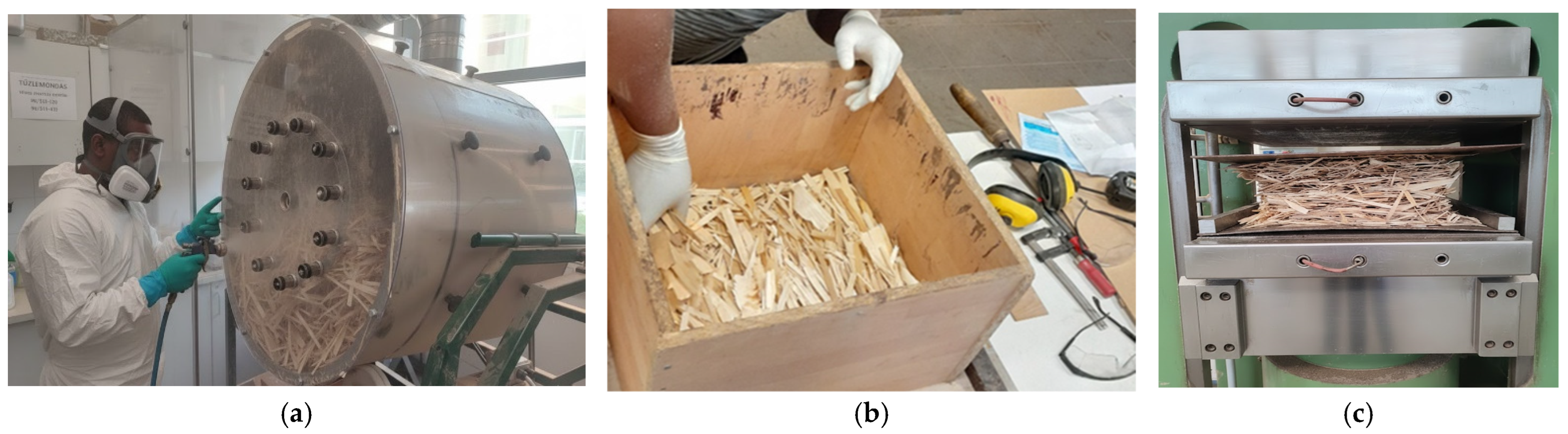
  • Applying the requisite amount of resin and paraffin emulsion in a drum hoop mixer, using a high-pressure spray system (Figure 1a), and applying rigorous safety protocols (intensive ventilation, full-face respirator masks, and dermal protection);
  • Hand laying the strands onto a metal caul plate, using a 400 × 400 mm forming box (Figure 1b);
  • Transferring the mat into the preheated laboratory press (200 °C), after placing 30 mm metal spacing rods beside the mat and a second caul plate on top (Figure 1c);
  • OSL pressing, using a 3-stage pressing cycle, gradually decreasing the initial pressure of 12 MPa to 8 MPa to 4 MPa, for rapid closure/eliminating voids, resin curing/polymerization, and controlled release of internal steam pressure, respectively;
  • Unloading and panel cooldown at room temperature (at least 24 h).
OSL performance was assessed based on the modulus of rupture (MOR), apparent bending modulus of elasticity (MOEb), internal bond (IB) strength, thickness swelling (TS), and water absorption (WA) of each panel. Mechanical testing was performed on an INSTRON 5985 (Illinois Tool Works Inc., Glenview, IL, USA) Bluehill software universal testing machine controlled with Bluehill analytical software version 4.44 (Illinois Tool Works Inc., IL, USA). Specimen manufacturing and testing followed the protocol, as listed below:
  • Trimming 30 mm from each side of the panels;
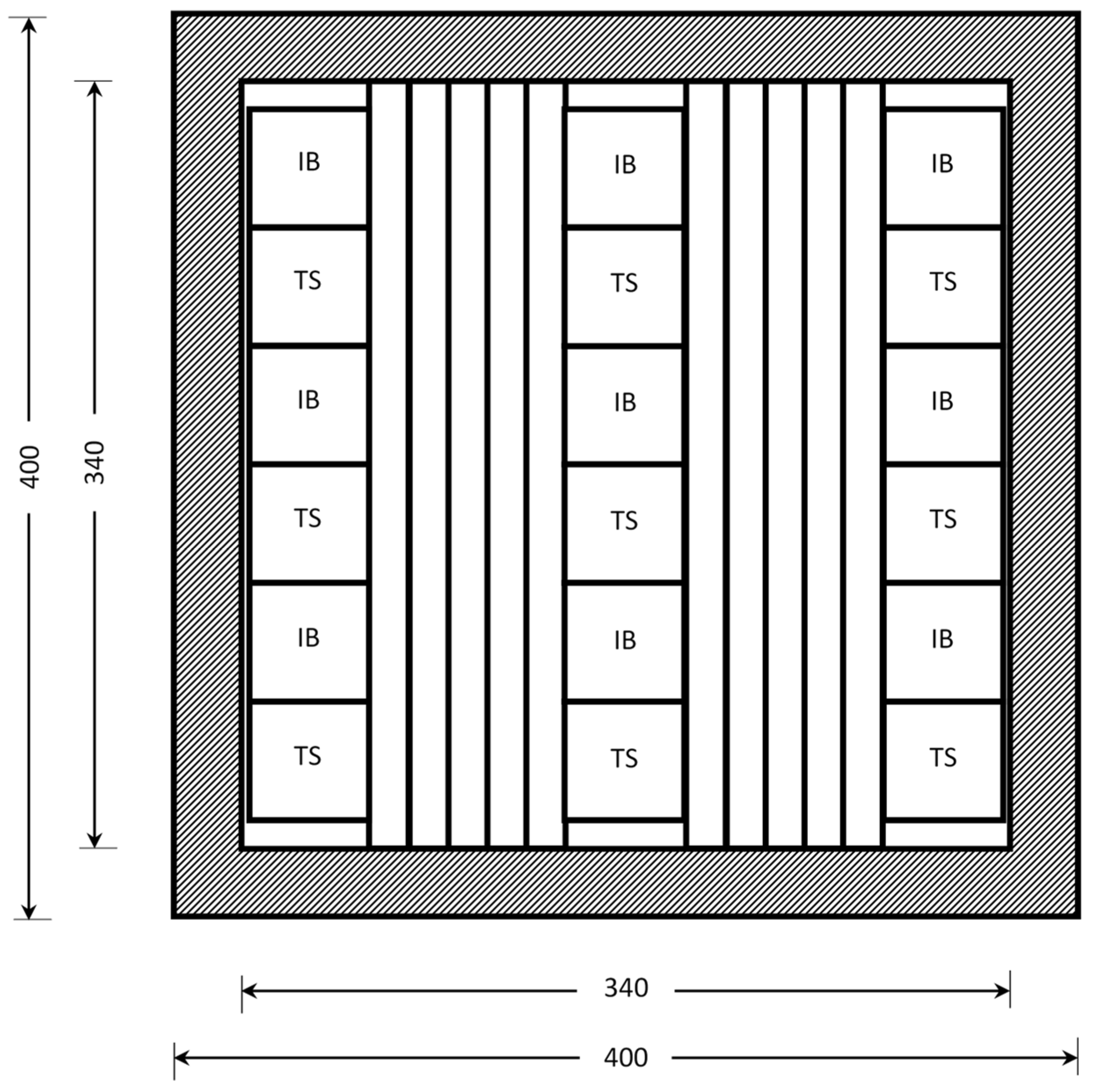
  • Cutting bending (10 specimens per panel), IB, and TS (9 specimens per panel) specimens from the remaining panel with a circular saw, according to the pattern in Figure 2;
  • Specimen conditioning for 72 h in a controlled environment at 20 °C and 65% relative humidity to reach a target Moisture Content of 12%, according to EN 310:1993 [24];
  • MOR and MOE determination according to EN 310:1999 [24] (10 replications per panel), edgewise bending. A constant crosshead speed of 5 mm/min was used to ensure quasi-static loading. The support span was 300 mm, and the total specimen length was 340 mm. Note: MOEb was determined based on crosshead movement, rather than displacement measurement, and is therefore considered an indicative apparent value, rather than accurate MOE;
  • IB strength determination according to EN 319:1998 [25] (9 replications per panel), by gluing the specimens between two steel blocks using a high-strength epoxy adhesive. Loading was applied at a constant rate of 2.0 mm/min;
  • 24 h TS and WA measurements according to EN 317:1998 [26] (9 replications per panel).
The best parameter combination was chosen primarily based on panel performance, also taking economics into consideration.

2.2. Comparative Assessment of Indigenous and Hybrid OSL Performance

The comparative investigation required indigenous and hybrid poplar strands. Since strands cannot be separated based on appearance or any other physical or chemical parameters (other than costly and time-consuming DNA analysis), this necessitated differentiation before stranding. SWISS KRONO Hungary Kft., Vásárosnamény, Hungary, manufactured the strands by separating shipments of logs into indigenous and hybrid categories based on the appearance of the logs (further breakdown into various species or varieties was not possible). Because of the industrial circumstances, this cannot guarantee complete purity, but using sufficiently large sample sizes can counter any cross-contamination. DNA analysis performed on a small sample of green strands in the Forest Research Institute in Sárvár, Hungary, showed hybrid strands to be hybrids of Populus nigra and Populus deltoides (i.e., they are some kind of Populus × euramericana hybrid. The ‘Pannonia’ hybrid is the most likely candidate, as it is the most commonly cultivated hybrid poplar in Hungary), while the indigenous poplar strands were evidently unhybridized Populus nigra. This result cannot be considered representative of all strands used in the experiments, but it is a good indication that the separation into indigenous and hybrid raw materials, based on the external characteristics of logs, was successful.
Strand dimensions, moisture content, the applied adhesive, and sizing agents were the same as outlined in Section 2.1. Eight OSL panels were manufactured from both raw materials; panel manufacturing followed the protocol in Section 2.1 using parameter combination F in Table 1. Unfortunately, three panels (1 indigenous and 2 hybrid) were partially exploded when removing from the press due to steam pressure buildup. Specimens manufactured from the exploded regions were excluded from the evaluation.
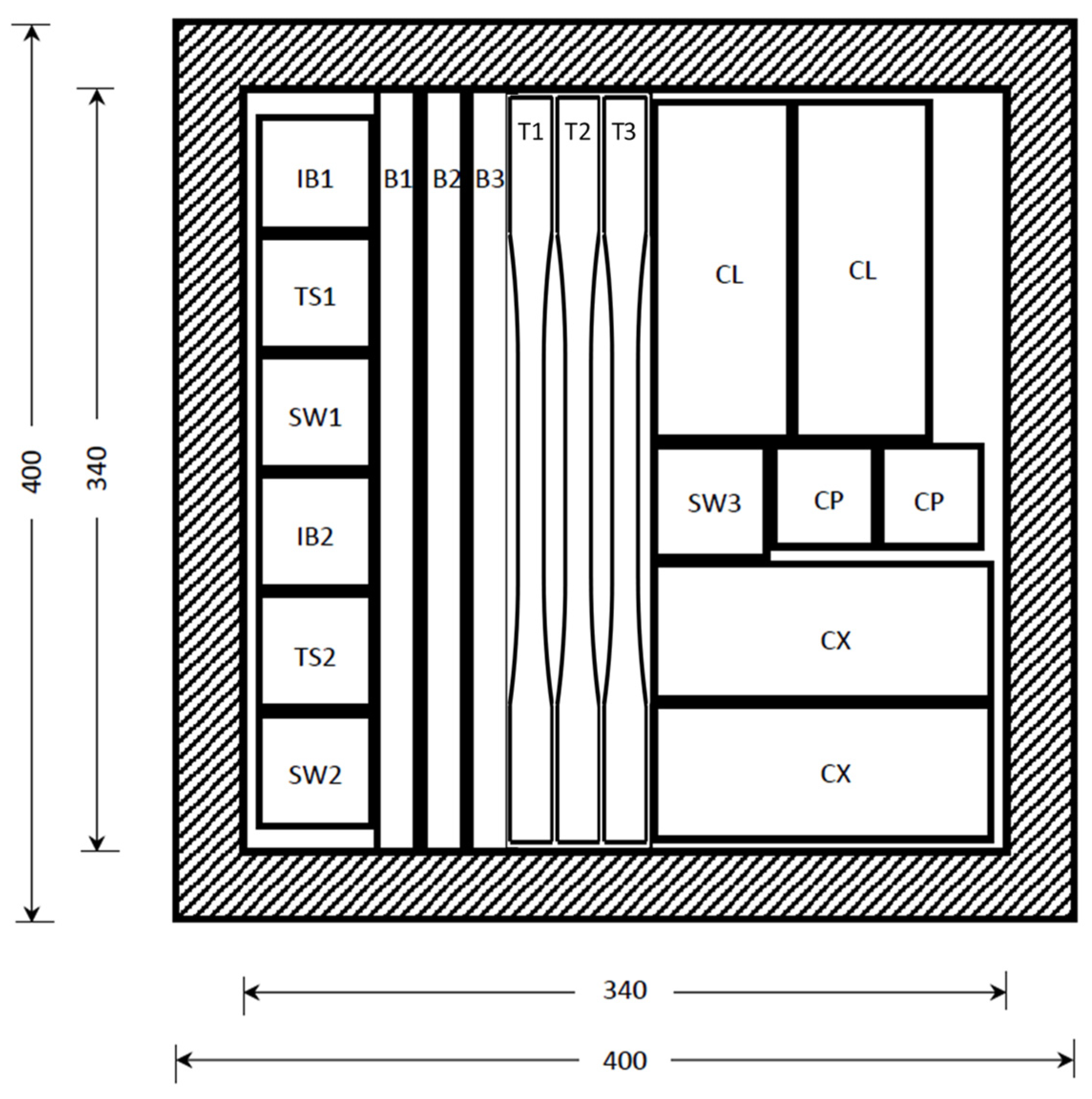
The assessment of panel performance involved more extensive testing of mechanical and physical performance, including tensile and compression strength and stiffness, as well as screw withdrawal resistance, in addition to the tests described in Section 2.1. Table 2 summarizes the tests performed on the panels, and Figure 3 shows the cutting pattern of specimens from each panel. Specimen dimensions and testing parameters followed the appropriate standards, with some relevant details listed below:
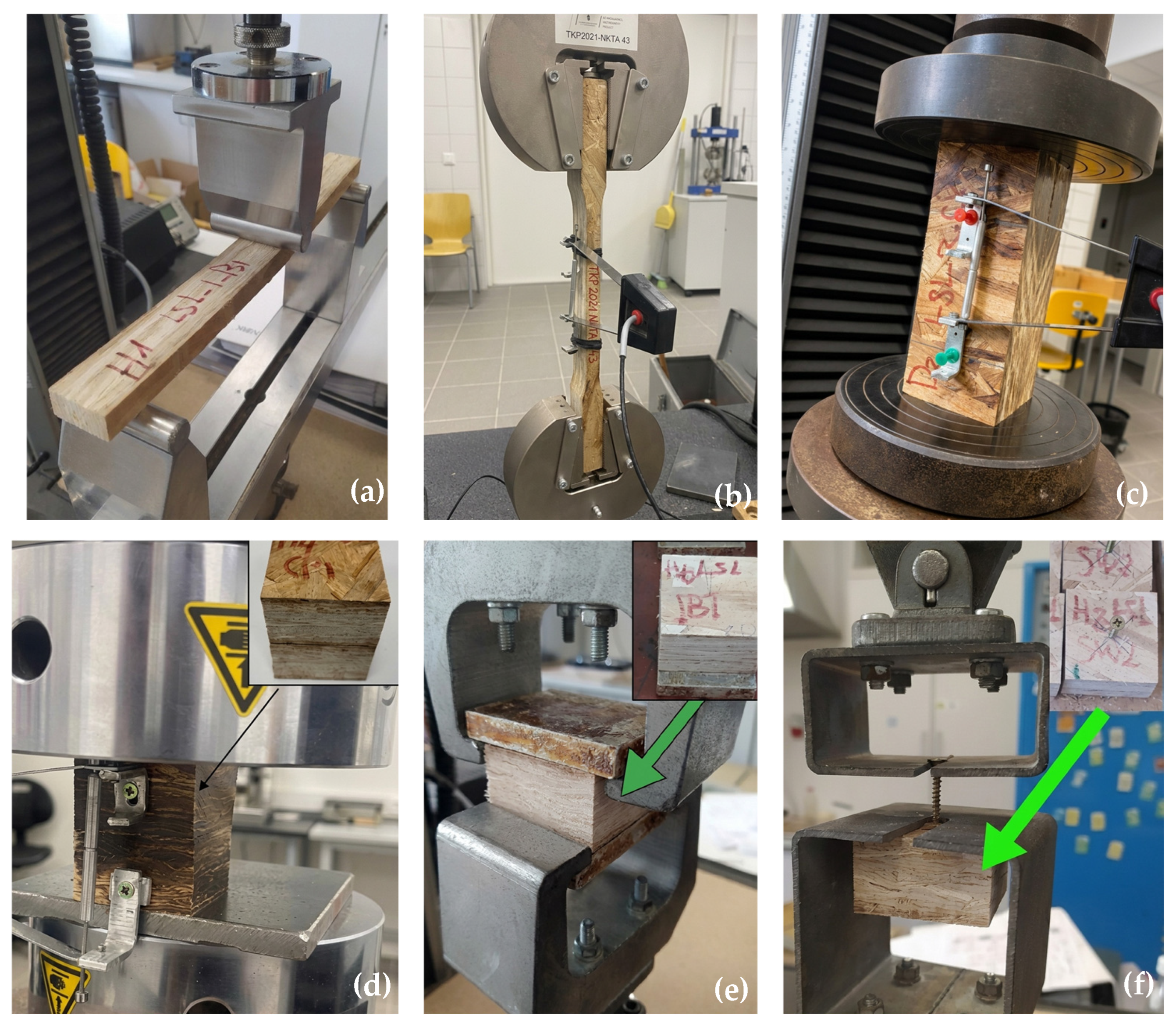
  • Bending tests were performed edgewise, as described in Section 2.1; see Figure 4a.
  • The narrowed cross-section (12 mm) of the bone-shaped tensile specimens was determined through experimentation, ensuring that specimens failed in the middle zone, rather than at the grips; see Figure 4b.

  • In-plane compression specimens of appropriate cross-sections were created by gluing two specimens together as required by EN 408:2010 [27]; see Figure 4c.
Table 2. Tests performed on each indigenous and hybrid OSL panel.
Name of the TestSpecimen
Dimensions (mm)
ReplicationsStandard
Bending strength and MOE (B)340 × 15 × 303EN 310:1999 [24]
Tensile strength and MOE (T)340 × 16 × 301EN 789:2005 [28]
In-plane compression,
along strand orientation (CL) 1
150 × 60 × 601EN 408:2010 [27]
In-plane compression,
across strand orientation (CX) 1
150 × 60 × 601EN 408:2010 [27]
Flatwise compression (CF) 160 × 45 × 451EN 789:2005 [28]
Internal bond (IB)50 × 50 × 302EN 319:1998 [25]
Screw withdrawal resistance (SW)50 × 50 × 303EN 320:2011 [29]
Thickness swelling and
water absorption (TS)
50 × 50 × 302EN 317:1998 [26]
1 Specimens created by gluing two pieces together.
  • Flatwise compression specimens of appropriate length were created by gluing two specimens together as required by MSZ EN 789:2005 [28]; see Figure 4d.
  • The loading rates for tensile, in-plane, and flatwise compression were 2.0 mm/min, 1.0 mm/min, and 1.0 mm/min, respectively. Tensile and compression deformation were measured with caliper-style extensometers; see Figure 4b–d.
  • IB strength determination followed the protocol described in Section 2.1; see also Figure 4e.
  • Screw withdrawal resistance was determined from the board face only. For SW measurements, a standard screw of nominal diameter d = 4 mm was inserted perpendicular to the specimen face to a controlled embedment depth, lp = 15.5 mm, and pulled out at a constant rate of 2.0 mm/min until screw withdrawal occurred; see Figure 4f.
  • TS and WA measurements were performed the same way as described in Section 2.1.
During the bending test, deformation was measured through crosshead movement only; therefore, bending MOE values should be considered apparent MOE. Unfortunately, during the compression and tensile tests, the testing machine allowed deformation measurements on one side of the specimens only. This led to a very wide deviation in the measured deformation values because of asymmetric elongation and compaction of the specimens. Therefore, these MOE values are not reported in this paper.

3. Results

3.1. Finding Viable Processing Parameters for Poplar OSL

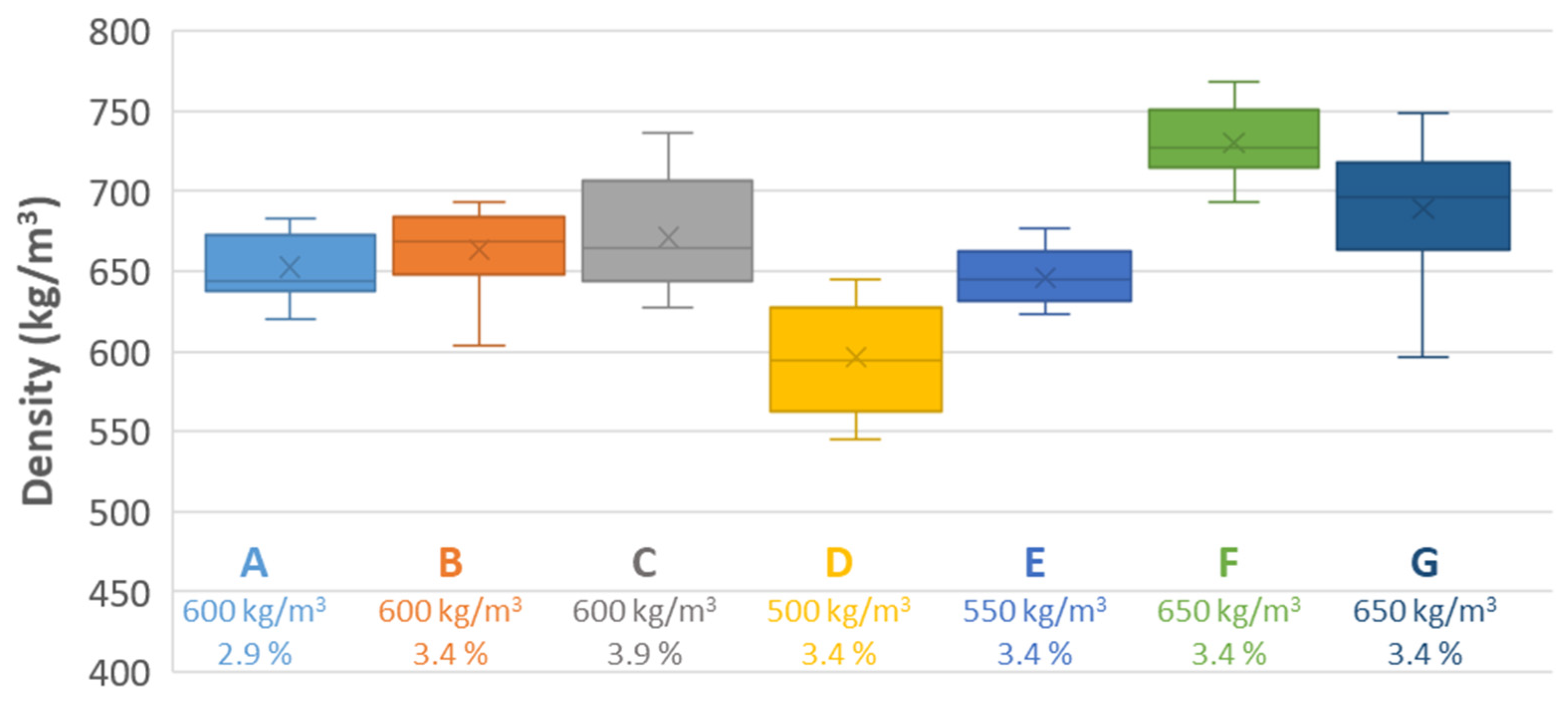
Actual density values (Figure 5) exceeded the target density by approximately 10 to 15% in most cases. This resulted from working with a slightly higher number of strands to account for any losses in the mixing process (which turned out to be less than expected), as well as the extra weight coming from the adhesive, additive, and higher moisture content at the time of testing (12%, compared with 4 to 5% at the time of manufacturing).
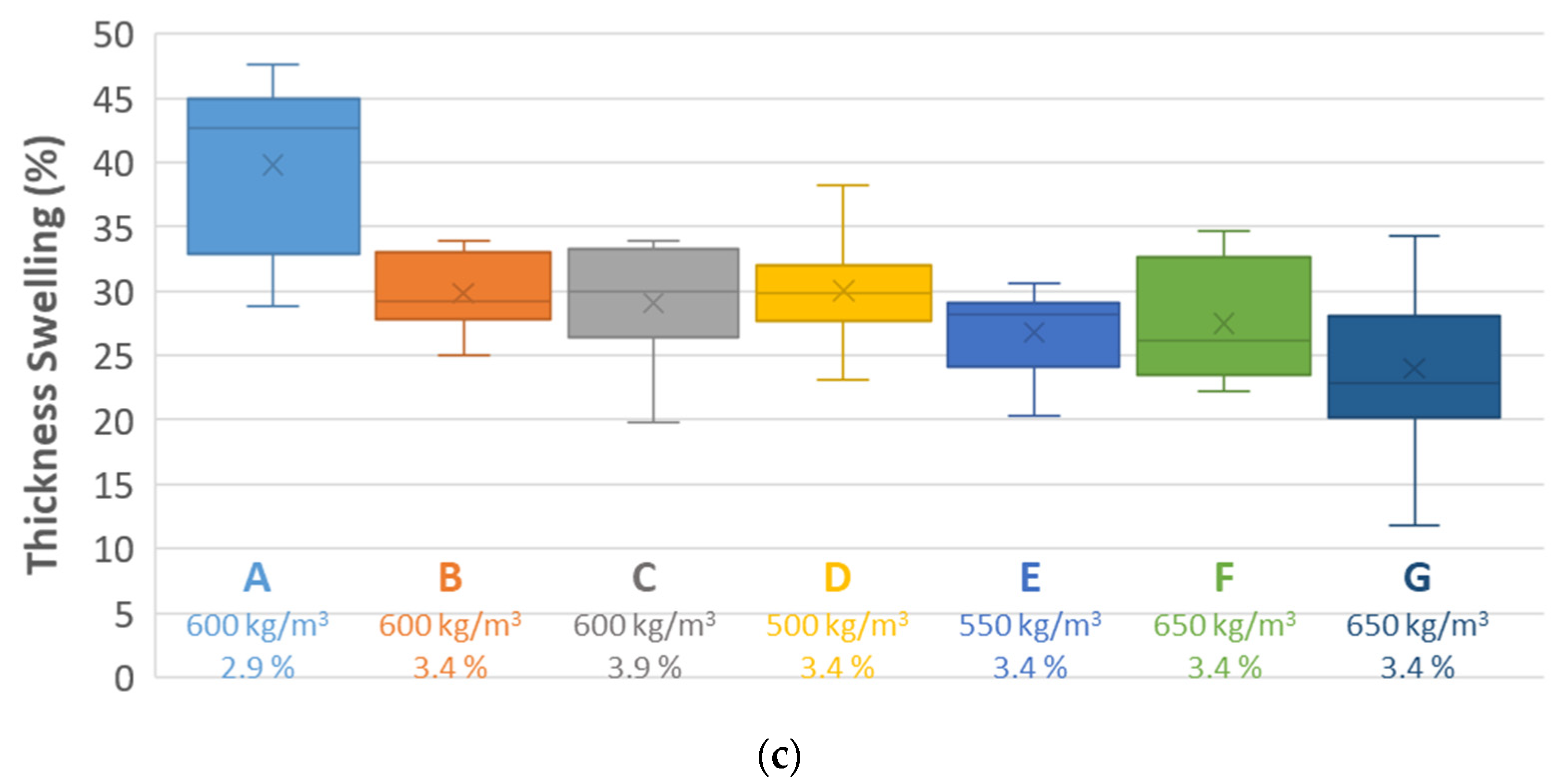
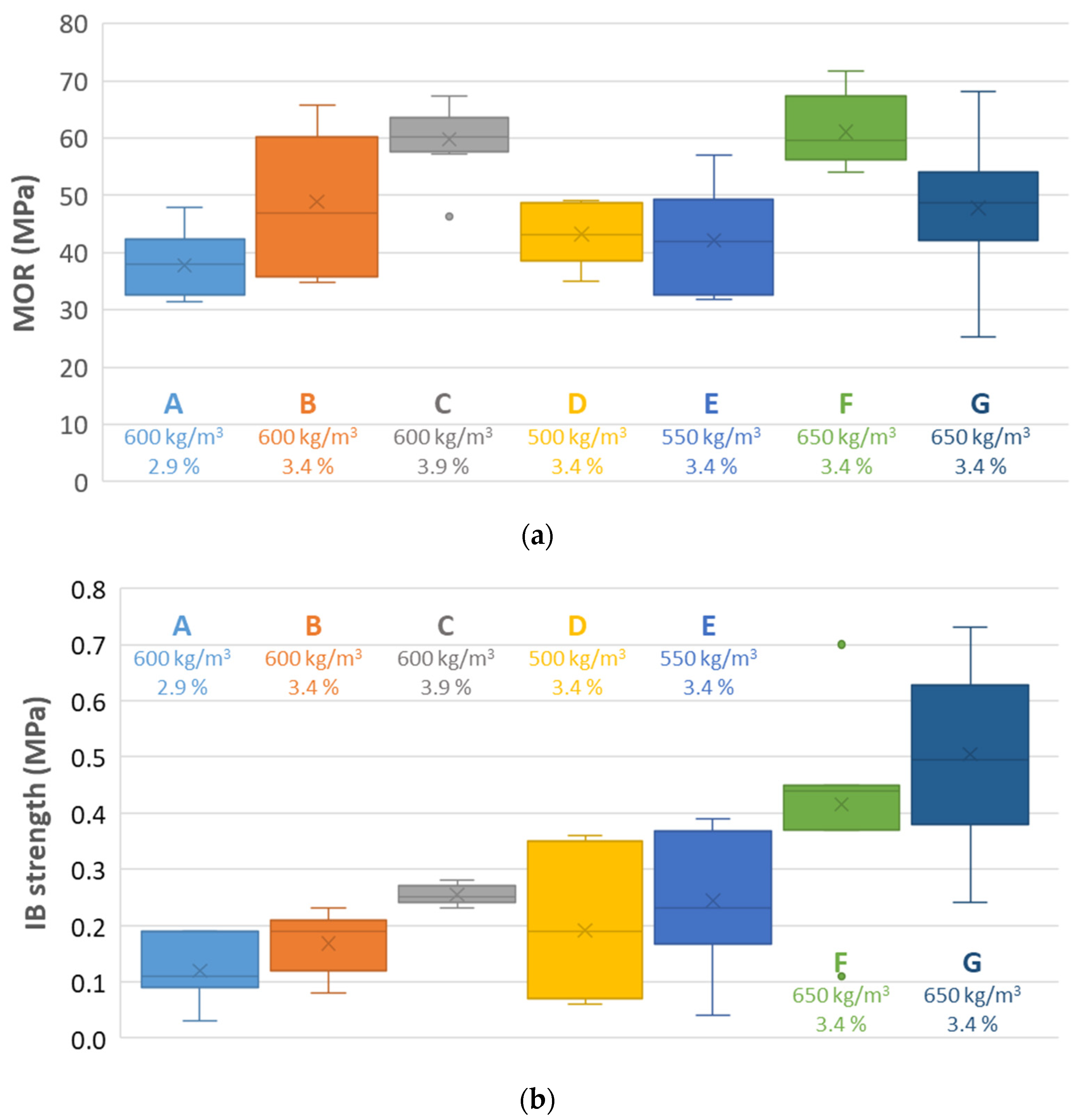
Figure 6a–c demonstrate the effect of varying the manufacturing parameters on the mechanical and physical parameters of the OSL. One-way analysis of variance (ANOVA) performed on the data (using Statistica version 14.0.1.25) showed that the effect of the process parameters was significant in all three cases, at a 5% significance level (for sample sizes, see Section 2.1. Note that, for each parameter combination, specimens came from the same panel, although from different sections of the panel, and therefore replications are not independent). Tukey’s range test showed all differences to be significant, except for panels D and E, as well as A and G for MOR; panels B and D, as well as C and D for IB strength; and panels B, C, and D for thickness swelling.
As expected, increasing adhesive content resulted in a steep increase in MOR and IB strength. Thickness swelling also improved when increasing the adhesive content from 2.9 to 3.4%, but a further increase to 3.9% caused no additional decrease in TS.
Increasing the target density also led to improved characteristics, but the improvement was more gradual. Nevertheless, at the highest target density, measured MOR and IB were higher, and TS was lower than in the case of panel C (which had a lower density but higher adhesive content).
The effect of pressing time was not extensively investigated. Preliminary experimentation suggested that allowing a longer period for pressure release (stage 3) may lead to improved mechanical and physical characteristics. This turned out to be partially true, as panel G exhibited a somewhat higher IB strength and lower TS but yielded a lower MOR than did panel F. Overall, the evidence suggests that whatever improvement may be achieved is not worth the loss in productivity due to the increased pressing time. Thus, method F was selected as the best parameter combination. Subsequent test specimens—both indigenous and hybrid panels—were produced using these specified settings.

3.2. Comparing the Performance of Indigenous and Hybrid Poplar OSL

The performance of indigenous and hybrid poplar OSL was assessed by comparing each mechanical and physical parameter. Independent Student’s t-tests were performed on each parameter to establish statistical significance. Table 3, along with Figure 6 and Figure 7, summarize the results.
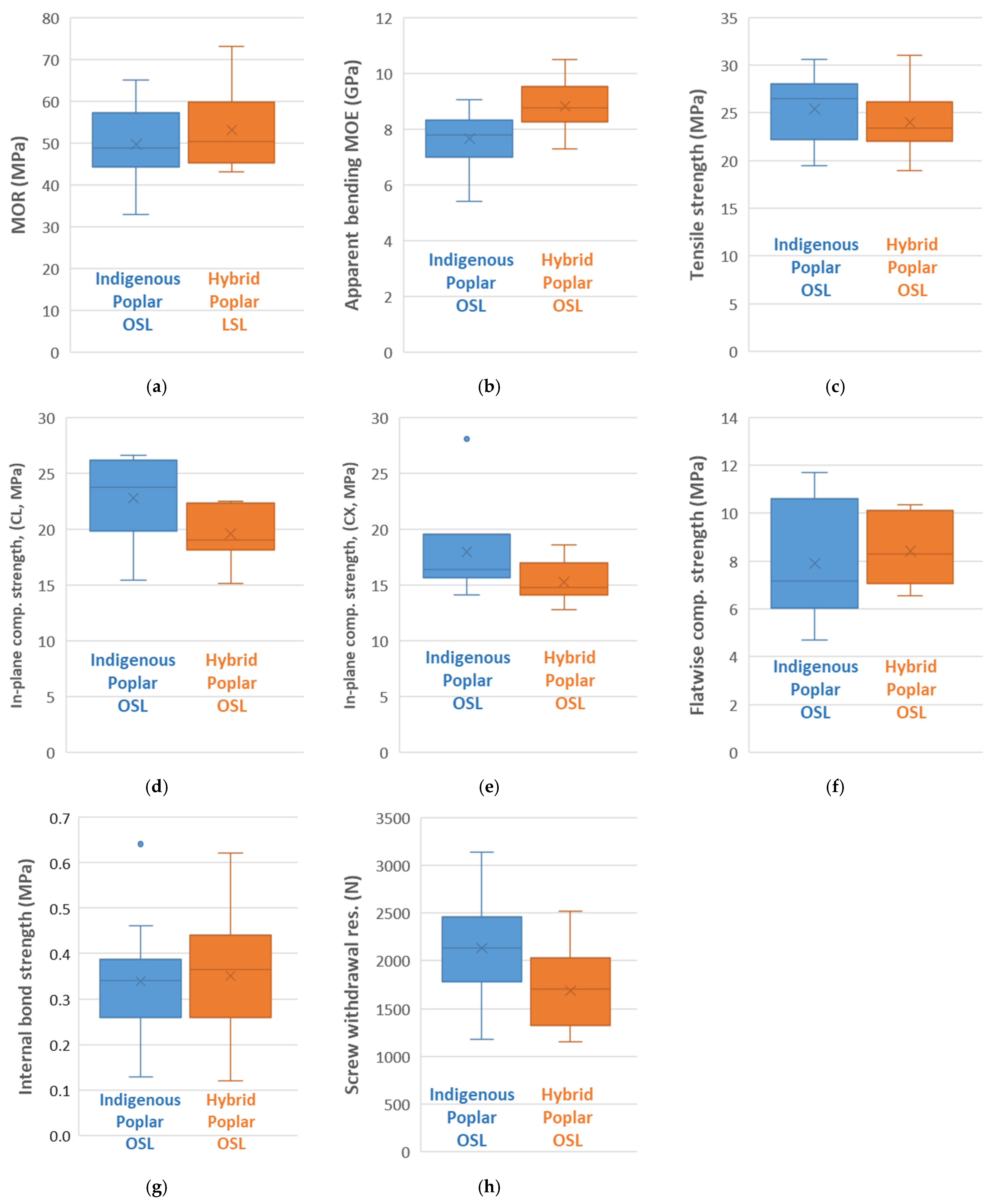
In terms of mechanical properties (Figure 7), indigenous and hybrid poplars exhibit balanced performance. Hybrid poplar has somewhat higher MOR, flatwise compression, and internal bond strength, while indigenous poplar is slightly better in terms of tensile strength, as well as in-plane compression, both parallel and perpendicular to the strand orientation. None of these differences was statistically significant at a 5% significance level. Hybrid poplar OSL did significantly outperform in terms of apparent MOE, but, notably, this was measured using crosshead movement and is therefore not an entirely reliable measure of stiffness. Since the measurement methodology was identical for both samples, their apparent MOE values are directly comparable; even if the absolute values are not entirely accurate, the ratio between the hybrid poplar OSL and the indigenous poplar OSL apparent MOE remains informative and valid for interpretation. Indigenous poplar, on the other hand, had significantly higher screw withdrawal resistance. Interestingly, the difference in in-plane compression strength parallel and perpendicular to the strand orientation was relatively small, around 20 to 25% for both species. Flatwise compression strength, on the other hand, was 60 to 65% lower than the longitudinal value.
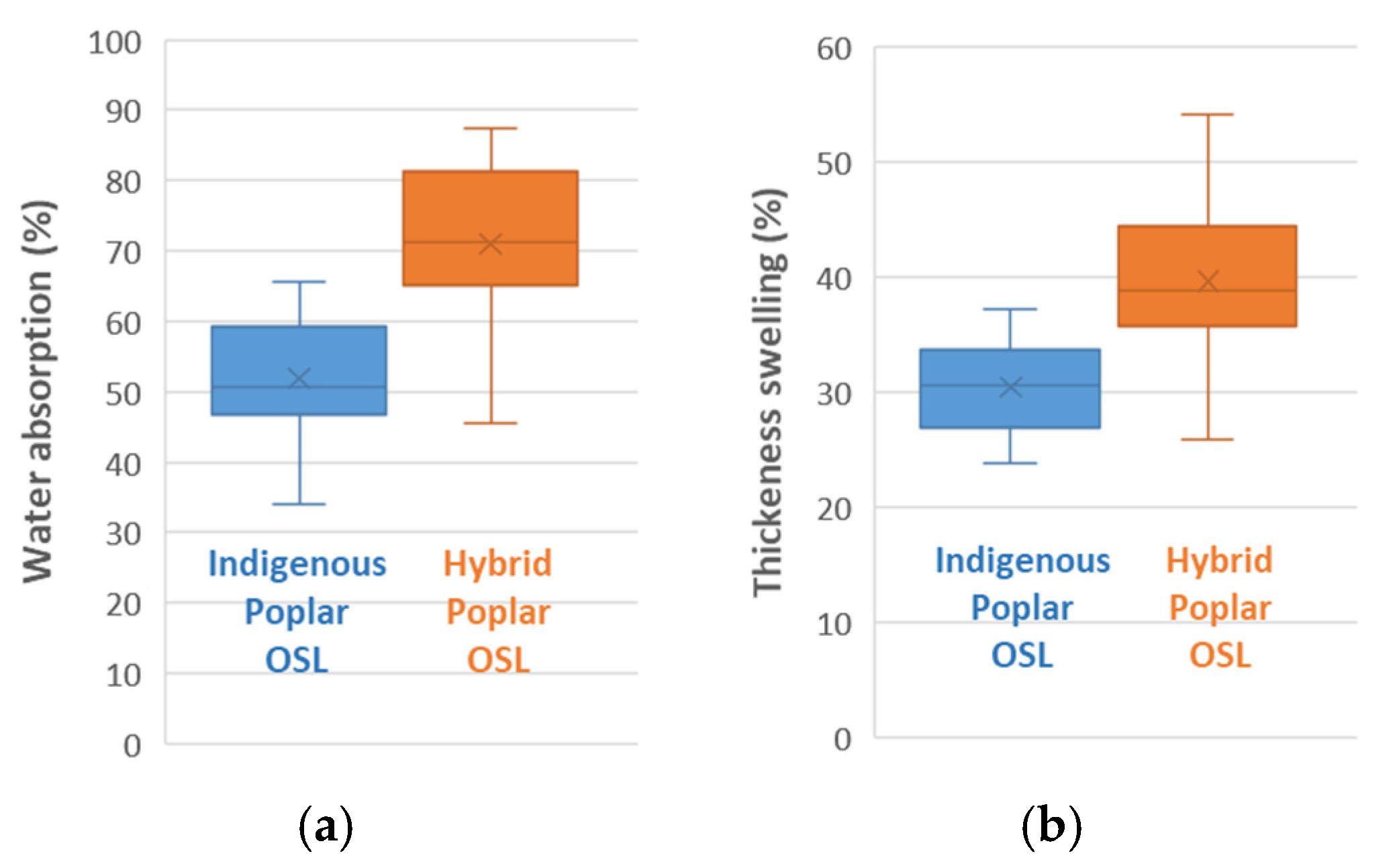
In terms of water uptake and thickness swelling (Figure 8), indigenous poplar OSL had significantly lower values. The 25 to 30% difference was highly statistically significant.
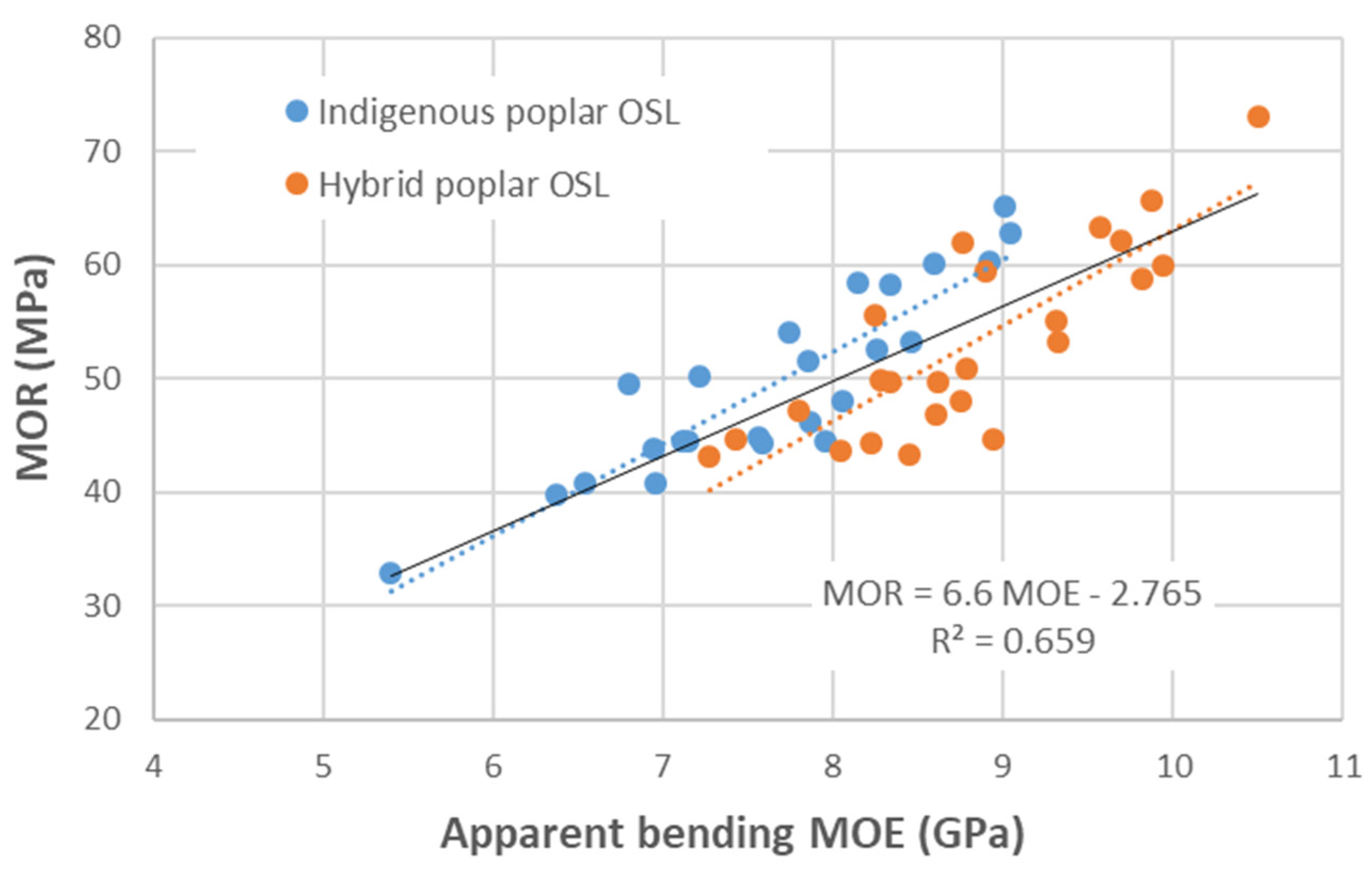
Figure 9 shows the relationship between the apparent modulus of elasticity and bending strength. The indicated linear relationship is based on the combined dataset, i.e., it includes both indigenous and hybrid poplar OSL. The coefficient of determination (R2) is 0.659. Notably, when analyzing individually, the tightness of fit improves for both indigenous and hybrid poplar (R2 values of 0.683 and 0.795, respectively), while the slope of the line also increases (8.1 and 8.4, respectively).

4. Discussion

The results of the preliminary production study showed that, overall, panel F, manufactured with the highest target density, medium adhesive content, and shorter pressing cycle compared with panel G, yielded the best results in terms of MOR, along with satisfactory IB strength and thickness swelling. This parameter combination was used in further experimentation to compare the performance of OSL made of indigenous and hybrid poplar strands.
In general, the mechanical performance of the OSL panels created in this study falls within the typical range of Oriented Strand Lumber values reported in earlier studies. Various sources reported MOR values of 36.4 through 57.3 MPa using pine strands with various geometries and adhesives [11], and 45.1 through 49.4 MPa for pine unidirectional strand board [17], while it ranged between 45.2 and 62.5 in the case of bamboo OSL made with higher pMDI adhesive contents (7 through 13%) [18]. The results of the present study (49.6, 53.0, and 61.1 MPa for indigenous, hybrid poplar, and mixed species OSL, respectively) compare favorably to the literature values. In the same studies [11,17,18], MOE, tensile, compression, and IB strength ranged from 4.4 through 11.0 GPa, 16.7 through 35.9 MPa, 31.8 through 54.2 MPa, and 0.37 through 1.4 MPa, respectively. The panels produced in this experiment fall within these ranges, except for compression strength, which was somewhat lower in our case (15 through 27 MPa, parallel to strand orientation). However, the panels in the present study had higher compression strength in the perpendicular orientation than that reported in [17]. The exact reason for this discrepancy is unknown. It is possible that strand orientation was controlled less precisely in the present study, leading to lower performance longitudinally, but better in the perpendicular direction.
The significantly higher screw withdrawal resistance of indigenous poplar LSL compared with hybrid poplar specimens is a remarkable result. Since manufacturing parameters and conditions were the same for the two types of panels, this is likely explained by the physical and anatomical differences between the two raw materials. Microanatomical features are not considerably different between Populus nigra and Populus × euramericana. However, according to an earlier study, the wettability of P. nigra strands is somewhat better, leading to better bond quality [23]. This may have resulted in better integrity, esp. at the very localized level required for better fastener holding capacity.
In terms of TS and WA of pine wood-based OSL, refs. [11] and [17] report ranges of 16.4 through 23.6% and 58 through 77%, respectively. The performance of poplar panels in this study was inferior compared with earlier studies, particularly in terms of thickness swelling (TS: 30.4–39.6%, and WA: 51.9–71.0%). This may be due to the more porous structure of poplar, which can lead to increased moisture uptake and associated swelling. In addition, the pits of conifers close as a result of drying, making it harder for moisture to penetrate. Despite the strong and highly moisture-resistant pMDI adhesive used in this study (and in strand-based composite manufacturing in general), this high degree of porosity and associated increased moisture movement may lead to a weakening of the adhesive interfaces, and may ultimately lead to a loss of integrity, esp. in humid environments. This may lead to similar phenomena as observed in bamboo-timber composite materials in earlier studies [30], where the multi-layer bamboo component, in particular, showed signs of serious weakening and disintegration due to repeated wetting and boiling. Such risks may be mitigated by increased application of the sizing agent.
Another way to evaluate the performance of the experimental OSL panels is to compare their performance to the characteristic values of structural lumber, as specified in EN 338:2016 [31]. The fifth percentile values for the distribution of MOR values measured in our study were 36.1 and 39.4 in the case of indigenous and hybrid poplar OSL, respectively. This exceeds the requirements for C35 lumber (fm,k = 35 MPa), and so does the average and fifth percentile density of the experimental OSL material. However, the MOE values are significantly lower than those specified in the standard. It is important to remember that the measured MOE values were based on crosshead movement, which includes compressive deformation at the supports and loading point, as well as bending deformation. Actual bending MOE is likely to be higher than the apparent values measured in this experiment. Another important difference is that EN 408:2010 [27], as required by EN 338 [31], specifies a 4-point bending test, which also yields different results compared with the results of this study. Even so, poplar OSL MOE values are likely to be relatively low because poplar, in general, tends to have low bending MOE [1,32,33]. In addition, the results presented in this paper are based on small-scale laboratory specimens, and test methods were not consistent with the requirements of EN 338:2016 and EN 408:2010 [27,30]. Final assessment of the mechanical performance is only possible after manufacturing structural size panels, and characteristic values—which are likely to be different from structural lumber, esp. in terms of MOE—need to be established based on these large specimens.
The differences in the performance of indigenous and hybrid poplar OSL are relatively minor. No statistically significant differences were found in terms of MOR, tensile, compression, and IB strength. The MOE of hybrid poplar OSL, although still low, was found to be significantly better (15.0%), while indigenous poplar OSL performed significantly better in terms of screw withdrawal resistance (26.6% higher), thickness swelling (23.2% lower), and water absorption (26.9% lower). While a lack of statistical significance does not prove equality, in practical terms, the mechanical and physical characteristics of indigenous poplar OSL were found to be equivalent and, in certain cases, even better than hybrid poplar, which uses higher quality raw materials. An earlier study found little difference between the wettability of indigenous and hybrid poplar strands and concluded that glueline quality is likely to be similar when using the two investigated raw materials [23]. This supports the findings of this study, which indicates that, as the raw material base inevitably shifts towards indigenous poplar, the quality of OSL is unlikely to decline due to this change.

5. Conclusions

This paper presents the findings of a study aimed at developing and evaluating the performance of Oriented Strand Lumber made of indigenous and hybrid poplar. The findings of the study are summarized as follows:
  • Among the examined options, the best parameter combination for producing laboratory-scale, 30 mm poplar OSL is 3.4% resin content, 650 kg/m3 target density, and 750 s pressing time.
  • Most of the mechanical parameters of the produced indigenous and hybrid poplar OSL panels are similar to those of softwood, aspen, and bamboo OSL produced in recent studies. Compression strength along and across the strand orientation was somewhat lower and higher than in earlier studies, respectively, which may be due to less control over strand orientation.
  • Thickness swelling and water absorption were somewhat higher than in earlier studies, presumably due to the higher degree of porosity of the raw material.
  • Produced OSL panels were comparable to a C35 grade structural lumber according to MSZ EN 338, in terms of MOR and density, but the apparent bending MOE was lower than required for this grade. These are indicative results; final comparison should be made based on large-sized beams and appropriate measurement methods.
  • Despite mostly minor differences in the mechanical and physical performance of the two raw materials, indigenous and hybrid poplar can be considered equivalent as raw materials for Oriented Strand Lumber. As the resource base seems to shift towards indigenous poplar in the future, the quality of poplar OSL is not expected to decline.
The research described in this paper indicates that poplar OSL may be a viable material for the European and Hungarian construction materials market, or in any region of the world where poplar trees are available in large quantities. Further research is necessary for the precise measurement of the elastic properties of poplar OSL, as well as experimentation with full-scale OSL materials produced in an industrial setting.

Author Contributions

Conceptualization, L.B.; methodology, T.A. and M.B.; formal analysis, L.B. and M.B.; investigation, A.A.O.A.; resources, LB. and T.A.; data curation, M.B. and A.A.O.A.; writing—original draft preparation, A.A.O.A.; writing—review and editing, L.B. and M.B.; visualization, A.A.O.A. and L.B.; supervision, L.B. and T.A.; project administration, L.B.; funding acquisition, L.B. and T.A. All authors have read and agreed to the published version of the manuscript.

Funding

This article was made in the framework of the project TKP2021-NKTA-43, which was implemented with support provided by the Ministry of Culture and Innovation of Hungary from the National Research, Development and Innovation Fund, financed under the TKP2021-NKTA funding scheme.

Institutional Review Board Statement

Not applicable.

Informed Consent Statement

Not applicable.

Data Availability Statement

The raw data supporting the conclusions of this article will be made available by the authors on request.

Acknowledgments

Raw materials were provided by the SWISS KRONO Hungary Kft., Vásárosnamény. The authors gratefully acknowledge the assistance of Attila Benke and Klara Cseke in the DNA-based identification of the raw materials, as well as the vital help from Gábor Kun and Imre Horvath.

Conflicts of Interest

The authors declare no conflicts of interest. The funders had no role in the design of the study; in the collection, analyses, or interpretation of data; in the writing of the manuscript; or in the decision to publish the results.

Abbreviations

The following abbreviations are used in this manuscript:
ANOVAAnalysis of variance
CARBCalifornia Air Resources Board
DNADeoxyriboNucleic Acid
IBInternal bond
LSLLaminated Strand Lumber
MOEModulus of elasticity
MORModulus of rupture
OSBOriented Strand Board
OSLOriented Strand Lumber
pMDIPolymeric Methylene Diphenyl Diisocyanate
REACHRegistration, Evaluation, Authorisation, and Restriction of Chemicals
SWScrew withdrawal
TSThickness swelling
TSCAToxic Substances Control Act
WAWater absorption

References

  1. Molnár, S.; Bariska, M. Wood Species of Hungary; Szaktudás Publishing House: Budapest, Hungary, 2002; 210p. [Google Scholar]
  2. NFK (National Land Centre). Hungarian Forest Related Data (Magyarország Erdeivel Kapcsolatos Adatok); National Land Centre of the Ministry of Agriculture: Budapest, Hungary, 2022. Available online: https://foldalap.am.gov.hu/Magyarorszag_erdeivel_kapcsolatos_adatok_news_513 (accessed on 14 April 2026).
  3. FAO (Food and Agriculture Organization). Poplars and Other Fast-Growing Trees—Renewable Resources for Future Green Economies; Synthesis of Country Progress Reports; 25th Session of the International Poplar Commission; Forestry Policy and Resources Division; Food and Agriculture Organization: Rome, Italy, 2016. [Google Scholar]
  4. Komán, S.; Németh, R.; Báder, M. An Overview of the Current Situation of European Poplar Cultures with a Main Focus on Hungary. Appl. Sci. 2023, 13, 12922. [Google Scholar] [CrossRef]
  5. Lindegaard, K.N.; Adams, P.W.R.; Holley, M.; Lamley, A.; Henriksson, A.; Larsson, S.; von Engelbrechten, H.-G.; Esteban Lopez, G.; Pisarek, M. Short Rotation Plantations Policy History in Europe: Lessons from the Past and Recommendations for the Future. Food Energy Secur. 2016, 5, 125–152. [Google Scholar] [CrossRef] [PubMed]
  6. Stanton, B.J.; Neale, D.B.; Li, S. Populus Breeding: From the Classical to the Genomic Approach. In Genetics and Genomics of Populus; Jansson, S., Bhalerao, R., Groover, A., Eds.; Springer: New York, NY, USA, 2010; pp. 309–348. ISBN 978-1-4419-1540-5. [Google Scholar]
  7. Bondor, A. A Nemesnyár-Termesztés Fejlesztésének Újabb Eredményei [Latest Results in the Development of Hybrid Poplar Cultivation]. Doctoral Dissertation, University of West-Hungary, Faculty of Forestry, Sopron, Hungary, 2011. [Google Scholar]
  8. Borovics, A.; Király, É.; Kottek, P. Projection of the Carbon Balance of the Hungarian Forestry and Wood Industry Sector Using the Forest Industry Carbon Model. Forests 2024, 15, 600. [Google Scholar] [CrossRef]
  9. Cai, Z.; Senalik, C.A.; Ross, R. Mechanical properties of wood-based composite materials. In Wood Handbook: Wood as an Engineering Material; General Technical Report FPL-GTR-282; Ross, R., Ed.; U.S. Department of Agriculture, Forest Service, Forest Products Laboratory: Madison, WI, USA, 2021; 543p. [Google Scholar]
  10. Asdrubali, F.; Ferracuti, B.; Lombardi, L.; Guattari, C.; Evangelisti, L.; Grazieschi, G. A review of structural, thermo-physical, acoustical, and environmental properties of wooden materials for building applications. Build. Environ. 2017, 114, 307–332. [Google Scholar] [CrossRef]
  11. Mirski, R.; Derkowski, A.; Dziurka, D. Influence of strand size, board density, and adhesive type on characteristics of oriented strand lumber boards manufactured from pine strands. BioResources 2019, 14, 6686–6696. [Google Scholar] [CrossRef]
  12. Moses, D.M.; Prion, H.G.L.; Li, H.; Boehner, W. Composite behavior of laminated strand lumber. Wood Sci. Technol. 2003, 37, 59–77. [Google Scholar] [CrossRef]
  13. EOTA Structural Composite Lumber Product: Laminated Strand Lumber (LSL) European Assessment Document nr. EAD 130308-00-0304. 2018. 21p. Available online: https://www.eota.eu/download?file=/2017/17-13-0308/for%20ojeu/ead%20130308-00-0304_ojeu2020.pdf (accessed on 14 April 2026).
  14. Russell, E. Effects of Strand Geometry on Selected Properties of Long-Stand Structural Composite Lumber Made from Northeastern Hardwoods. Master’s Thesis, University of Maine, Orono, ME, USA, 2003. Electronic Theses and Dissertations. 459. Available online: https://digitalcommons.library.umaine.edu/etd/459 (accessed on 14 April 2026).
  15. Bayatkashkoli, A.; Faegh, M. Evaluation of mechanical properties of laminated strand lumber and oriented strand lumber made from Poplar wood (Populus deltoides) and Paulownia (Paulownia fortunei) with urea formaldehyde adhesive containing nanoclay. Int. Wood Prod. J. 2014, 5, 192–195. [Google Scholar] [CrossRef]
  16. Moradpour, P.; Pirayesh, H.; Gerami, M.; Jouybari, I.R. Laminated strand lumber (LSL) reinforced by GFRP; mechanical and physical properties. Constr. Build. Mater. 2018, 158, 236–242. [Google Scholar] [CrossRef]
  17. Malzl, L.; Ghazanfair, A.; Fašalek, A.; Konnerth, J.; Kromoser, B.; Pramreiter, M. Mechanical properties of unidirectional strand board (USB): Effects of related EN standards and panel density. Constr. Build. Mater. 2025, 505, 144571. [Google Scholar] [CrossRef]
  18. Malanit, P.; Barbu, M.C.; Frühwald, A. Physical and mechanical properties of oriented strand lumber made from an Asian bamboo (Dendrocalamus asper Backer). Eur. J. Wood Prod. 2011, 69, 27–36. [Google Scholar] [CrossRef]
  19. Rockwood, D.; Naidu, C.; Carter, D.; Rahmani, M.; Spriggs, T.; Lin, C.; Alker, G.; Isebrands, J.; Segrest, S. Short-rotation woody crops and phytoremediation: Opportunities for agroforestry? Agrofor. Syst. 2004, 61, 51–63. [Google Scholar] [CrossRef]
  20. Worrell, R. European aspen (Populus tremula L.): A review with particular reference to Scotland I. Distribution, ecology and genetic variation. Int. J. Res. 1995, 68, 93–105. [Google Scholar] [CrossRef]
  21. Balatinecz, J.; Mertens, P.; Boever, L.D.; Yukun, H.; Wan, J.J.; Acker, J.V. Properties, processing and utilization. In Poplars and Willows: Trees for Society and the Environment; Isebrands, J.G., Richardson, J., Eds.; CABI Wallingford: London, UK, 2014; pp. 527–561. [Google Scholar]
  22. Sun, X.; He, M.; Liang, F.; Li, Z.; Wu, L.; Sun, Y. Experimental investigation into the mechanical properties of scrimber composite for structural applications. Constr. Build. Mater. 2021, 276, 122234. [Google Scholar] [CrossRef]
  23. Ahmed, A.A.O.; Csiha, C.M.; Alpár, T.; Bejó, L. Comparative Analysis of Wettability of Hybrid and Indigenous Poplar Strands. Forests 2025, 16, 1528. [Google Scholar] [CrossRef]
  24. EN 310:1999; Wood-Based Panels-Determination of Modulus of Elasticity in Bending and of Bending Strength. European Committee for Standardization: Brussels, Belgium, 1999; 8p.
  25. EN 319:1998; Particleboards and Fibreboards. Determination of Tensile Strength Perpendicular to the Plane of the Board. European Committee for Standardization: Brussels, Belgium, 1998; 8p.
  26. EN 317:1998; Particleboards and Fibreboards. Determination of Swelling in Thickness After Immersion in Water. European Committee for Standardization: Brussels, Belgium, 1998; 8p.
  27. EN 408:2010+A1:2012; Timber Structures. Structural Timber and Glued Laminated Timber. Determination of Some Physical and Mechanical Properties. European Committee for Standardization: Brussels, Belgium, 2012; 39p.
  28. EN 789:2005; Timber Structures. Test Methods. Determination of Mechanical Properties of Wood Based Panels. European Committee for Standardization: Brussels, Belgium, 2005; 33p.
  29. EN 320:2011; Particleboards and Fibreboards. Determination of Resistance to Axial Withdrawal of Screws. European Committee for Standardization: Brussels, Belgium, 2011; 10p.
  30. Li, H.; Semple, K.E.; Wang, B.J.; Dai, C. Block shear and delamination performance of cross-laminated bamboo and timber: An experimental investigation. Wood Mater. Sci. Eng. 2025, 1–9. [Google Scholar] [CrossRef]
  31. EN 338:2016; Structural Timber. Strength Classes. European Committee for Standardization: Brussels, Belgium, 2016; 12p.
  32. Kramer, A. Cross-Laminated Timber Engineering: Improvement and Application. Master’s Thesis, Oregon State University, Corvallis, OR, USA, 2025; 74p. [Google Scholar]
  33. Marko, G.; Bejó, L.; Takáts, P. Cross-laminated timber made of Hungarian raw materials. In IOP Conference Series: Materials Science and Engineering; IOP Publishing: Bristol, UK, 2016; Volume 123, p. 012059. [Google Scholar] [CrossRef]
Figure 1. Oriented Strand Lumber (OSL) panel manufacturing: (a) adhesive and paraffin application; (b) strand laying; (c) layup placed in the preheated press.
Applsci 16 05260 g001
Figure 2. Cutting pattern of various OSL specimens for choosing pressing parameters (long specimens are for bending tests. IB = internal bond specimens; TS = thickness swelling and water Absorption specimens). Strand orientation is vertical.
Applsci 16 05260 g002
Figure 3. Cutting pattern of various OSL specimens for comparing indigenous and hybrid poplar OSL. Abbreviations are listed in Table 2.
Applsci 16 05260 g003
Figure 4. Mechanical tests of OSL panels: (a) bending; (b) tension; (c) in-plane compression; (d) flatwise compression; (e) internal bond strength; (f) screw withdrawal resistance.
Applsci 16 05260 g004
Figure 5. Comparison of the actual density of OSL panels made using various manufacturing parameters. Capital letters mean parameter combinations as described in Table 1. Numbers below the capital letters indicate target density and resin content.
Applsci 16 05260 g005
Figure 6. Comparison of the performance of OSL panels made using various manufacturing parameters: (a) MOR; (b) IB strength; (c) thickness swelling. Capital letters mean parameter combinations as described in Table 1. Numbers below the capital letters indicate target density and resin content.
Applsci 16 05260 g006aApplsci 16 05260 g006b
Figure 7. Mechanical performance of OSL made of indigenous and hybrid poplar: (a) MOR; (b) apparent bending MOE; (c) tensile strength (T); (d) in-plane compression strength along the strand orientation (CL); (e) in-plane compression strength across the strand orientation (CX); (f) flatwise compression strength (CF); (g) internal bond strength (IB); (h) screw withdrawal resistance (SW).
Applsci 16 05260 g007
Figure 8. Physical characteristics of OSL made of indigenous and hybrid poplar: (a) water absorption (WA); (b) thickness swelling (TS).
Applsci 16 05260 g008
Figure 9. Relationship between the measured bending MOE and MOR values of indigenous and hybrid poplar OSL.
Applsci 16 05260 g009
Table 1. Pressing parameter combinations examined for poplar OSL production (paraffin content was 1.2% in each case).
Parameter
Combination
Resin Content
(%)
Target Density (kg/m3)Total Pressing Time (s)
A2.9600750 1
B3.4600750 1
C3.9600750 1
D3.4500750 1
E3.4550750 1
F3.4650750 1
G3.4600900 2
1 250 s for each pressing stage; 2 180, 180, and 540 s for pressing stage 1, 2, and 3, respectively.
Table 3. Comparison of the average parameters of indigenous and hybrid poplar OSL, along with the statistical evaluation.
Measured ParameterIndigenousHybridDifferencet-Valuep
Modulus of rupture (MPa)49.6353.09−7.0%1.4490.157
Bending Modulus of Elasticity (MOEb, GPa)76608811−15.0%4.627<0.001
Tensile strength (MPa)25.3924.005.5%1.3450.188
Compression parallel (CL, MPa)22.7819.5814.0%1.6810.119
Compression, perpendicular (CX, MPa)17.9815.2315.3%1.2720.227
Flatwise compression (CP, MPa)7.908.41−6.5%0.4960.628
Internal bond strength (MPa)0.3390.351−3.5%0.2810.781
Screw withdrawal resistance (N)2132168421.0%3.4510.001
Water absorption (%)51.971.0−36.8%5.229<0.001
Thickness swelling (%)30.439.6−30.3%4.834<0.001
Disclaimer/Publisher’s Note: The statements, opinions and data contained in all publications are solely those of the individual author(s) and contributor(s) and not of MDPI and/or the editor(s). MDPI and/or the editor(s) disclaim responsibility for any injury to people or property resulting from any ideas, methods, instructions or products referred to in the content.