3.1. Total Phenolic Content and Extraction Efficiency
As shown in
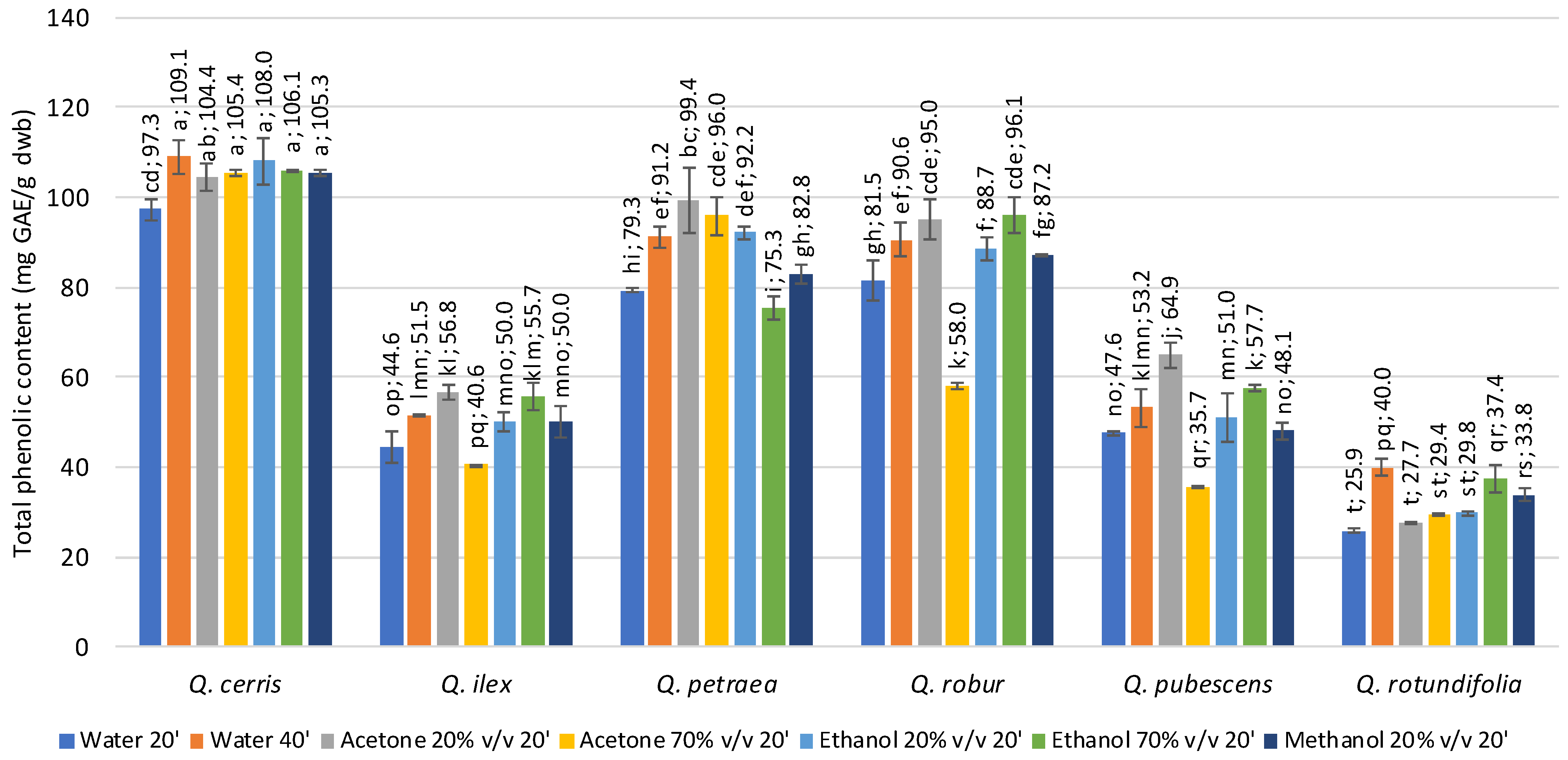
Figure 1, interspecific variation in TPC substantially exceeds intraspecific variation due to solvent selection across all studied species, visually confirming the dominant statistical effect of the species factor.
The most notable pattern is the consistently high TPC of
Q. cerris across all extraction systems (97.3–109.1 mg GAE/g), with minimal variation between solvents, indicating that this species’ exceptional phenolic richness is reliably recovered regardless of the extraction medium. In contrast,
Q. robur exhibits a pronounced solvent-dependent profile: while most systems yield values between 88 and 96 mg GAE/g, 70% acetone drops to 58.0 mg GAE/g—the largest absolute solvent-induced reduction observed in any species—suggesting a phenolic matrix in this species that is particularly sensitive to solvent polarity.
Q. rotundifolia displays the lowest TPC profile across all solvents (25.9–40.0 mg GAE/g), consistent with its reduced phytochemical richness. Notably, in
Q. ilex,
Q. robur and
Q. pubescens, 70% acetone consistently yielded the lowest recovery (35.7–58.0 mg GAE/g, respectively), reinforcing the general pattern that higher organic fractions reduce extraction efficiency for the predominantly hydrophilic tannin pool characteristic of
Quercus acorns [
28,
32].
The two-way ANOVA results (
Table 1) confirm that both botanical species and solvent type are statistically significant determinants of total phenolic content (TPC) in acorn extracts, with the species factor exerting a markedly dominant influence (
F = 111.8;
p < 0.0001) over the solvent system (
F = 3.2;
p = 0.016). A comprehensive comparison of solvent performance across all six species for TPC, TC, and NTPC is provided in the
Supplementary Materials, Table S1. This demonstrates that the intrinsic genetic architecture of
Quercus species is the primary driver of phytochemical variability, consistent with other authors findings [
10,
16].
The magnitude of this disproportion between
F-values (approximately 35-fold) requires further mechanistic consideration. The species factor reflects the cumulative outcome of genotype-determined biosynthetic capacity, including the expression of galloyl transferases, laccase-type oxidases, and glycoside hydrolases responsible for assembling hydrolysable tannin scaffolds, whereas the solvent factor operates exclusively at the level of physicochemical extraction selectivity [
33,
34]. The practical consequence is that interspecific selection is a much more powerful lever for modulating polyphenol yield than solvent optimization, implying that species identity should be the primary decision criterion in the industrial sourcing of acorn-based ingredients, with solvent choice reserved for fine-tuning fractional composition rather than maximizing overall yield.
Post hoc analysis revealed a distinct and statistically resolved interspecific hierarchy:
Q. cerris >
Q. petraea >
Q. robur >
Q. pubescens >
Q. ilex >
Q. rotundifolia.
Q. cerris exhibited the highest average TPC (105.1 ± 3.8 mg GAE/g), approximately three times greater than
Q. rotundifolia (32.0 ± 5.2 mg GAE/g). These findings are consistent with earlier studies identifying
Q. cerris as exceptionally rich in secondary metabolites, with tannin concentrations documented as high as 11.69% on a dry weight basis [
20,
35]. Conversely, the comparatively low pheminnolic content of
Q. rotundifolia reflects its designation as a “sweet” acorn variety, characterized by naturally reduced tannin levels that facilitate direct human consumption without extensive processing [
4,
36]. The high values recorded for
Q. petraea (88.0 mg GAE/g) and
Q. robur (85.3 mg GAE/g) confirm their substantial bioactive potential and agree with recent HPLC-ESI-MS/MS characterizations reporting TPC values for
Q. robur in the range of 103–105 mg GAE/g [
16,
17].
The placement of
Q. ilex and
Q. pubescens in the lower-middle tier (49.9 and 51.2 mg GAE/g, respectively) requires contextual interpretation. Both are Mediterranean sclerophyllous species adapted to summer drought and high UV irradiance—conditions that, paradoxically, often induce upregulation of secondary metabolite biosynthesis as a photoprotective response [
10]. The relatively modest absolute TPC values recorded here may partly reflect the specific provenance of the sampled material (island populations of Krk, Croatia) and inter-population genetic variation, rather than being invariant species-level traits. Future studies incorporating multi-provenance sampling across the full geographic range of these species would help distinguish genotypic from environmental contributions to phenolic variability.
Regarding solvent influence, ultrasound-assisted aqueous extraction at 40 min (Water 40′; 72.6 mg GAE/g) and 20% acetone (74.7 mg GAE/g) were the most effective systems for total phenolic recovery, while 70% acetone yielded the lowest results (60.8 mg GAE/g). The superior performance of the extended aqueous extraction suggests that many acorn phenolics exist in bound or complexed forms within the matrix, the release of which is enhanced by prolonged ultrasound-assisted extraction (UAE), facilitating improved mass transfer and the disruption of phenolic–matrix interactions [
32,
37]. The effectiveness of 20% acetone aligns with the established principle that aqueous–organic binary mixtures of moderate polarity provide optimal solvation for both hydrophilic phenolic acids and higher-molecular-weight tannins [
20,
26].
The consistently higher phenolic recovery observed in this study compared to many reports using conventional maceration can be attributed to the specific physical and chemical effects of acoustic cavitation [
32,
37]. Unlike traditional maceration, which relies on passive solvent diffusion, UAE facilitates the mechanical disruption of acorn cell walls, effectively targeting cell wall-bound phenolics complexed with polysaccharides and structural proteins [
32,
37]. These compounds are held within the matrix by strong non-covalent interactions, such as hydrogen bonding, which require the localized high-pressure microenvironments generated by ultrasonic waves to be effectively disrupted [
26,
28]. Furthermore, the phenomenon of ‘partial acoustic hydrolysis’ observed in our results suggests that UAE does not merely solubilize existing free phenolics but actively promotes the release of monomeric gallic and ellagic acid units from gallotannin and ellagitannin scaffolds [
38,
39]. This active liberation of bound and complexed forms explains why UAE provides a more comprehensive representation of the acorn’s bioactive potential than conventional stirring or soaking methods, which often fail to penetrate the recalcitrant lignocellulosic matrix of the acorn flour [
32,
37].
The species-specific solvent response patterns described above reveal biologically meaningful differences in matrix composition. The smallest standard deviation (
SD) for
Q. cerris across all seven extraction systems (
SD = 3.8) contrasts sharply with the high variability of
Q. robur (
SD = 13.0), suggesting that the former has a phenolic matrix whose constituents are thermodynamically accessible across a wide range of dielectric constants—probably as a result of its overwhelming dominance by uniformly hydrophilic pentagalloylglucose and tetra-O-galloyl-β-D-glucose isomers. In
Q. robur, the coexistence of gallotannins and structurally more heterogeneous ellagitannins creates a phenolic pool with a broader polarity range, explaining its greater sensitivity to solvent dielectric properties [
33]. From a practical standpoint, the solvent insensitivity of
Q. cerris implies that routine quality control of this species’ acorn flour can be performed with any green, food-safe extraction medium without compromising analytical accuracy—a significant advantage for industrial implementation, where ethanol- or water-based systems are preferred for regulatory and safety reasons [
19].
The Pearson correlation matrix (
Table 2) demonstrates exceptional methodological congruence, with coefficients exceeding
r = 0.95 in most pairwise comparisons. The near-perfect correlations between the 20 min aqueous extraction and low-concentration binary mixtures—specifically 20% ethanol (
r = 0.997) and 20% methanol (
r = 0.995)—confirm the predominantly hydrophilic nature of the
Quercus phenolic profile and indicate that these systems are functionally interchangeable for rapid screening purposes. A notable deviation was observed for 70% acetone, which showed the lowest overall correlation coefficients and a non-significant relationship with 70% ethanol (
r = 0.789). This divergence likely reflects a shift in solvent selectivity as the organic fraction increases, decreasing the dielectric constant and favoring the extraction of mid-polarity compounds or higher-molecular-weight condensed tannins less accessible to aqueous systems [
20,
28].
3.2. Non-Tannic Phenolic Content and Solvent Selectivity
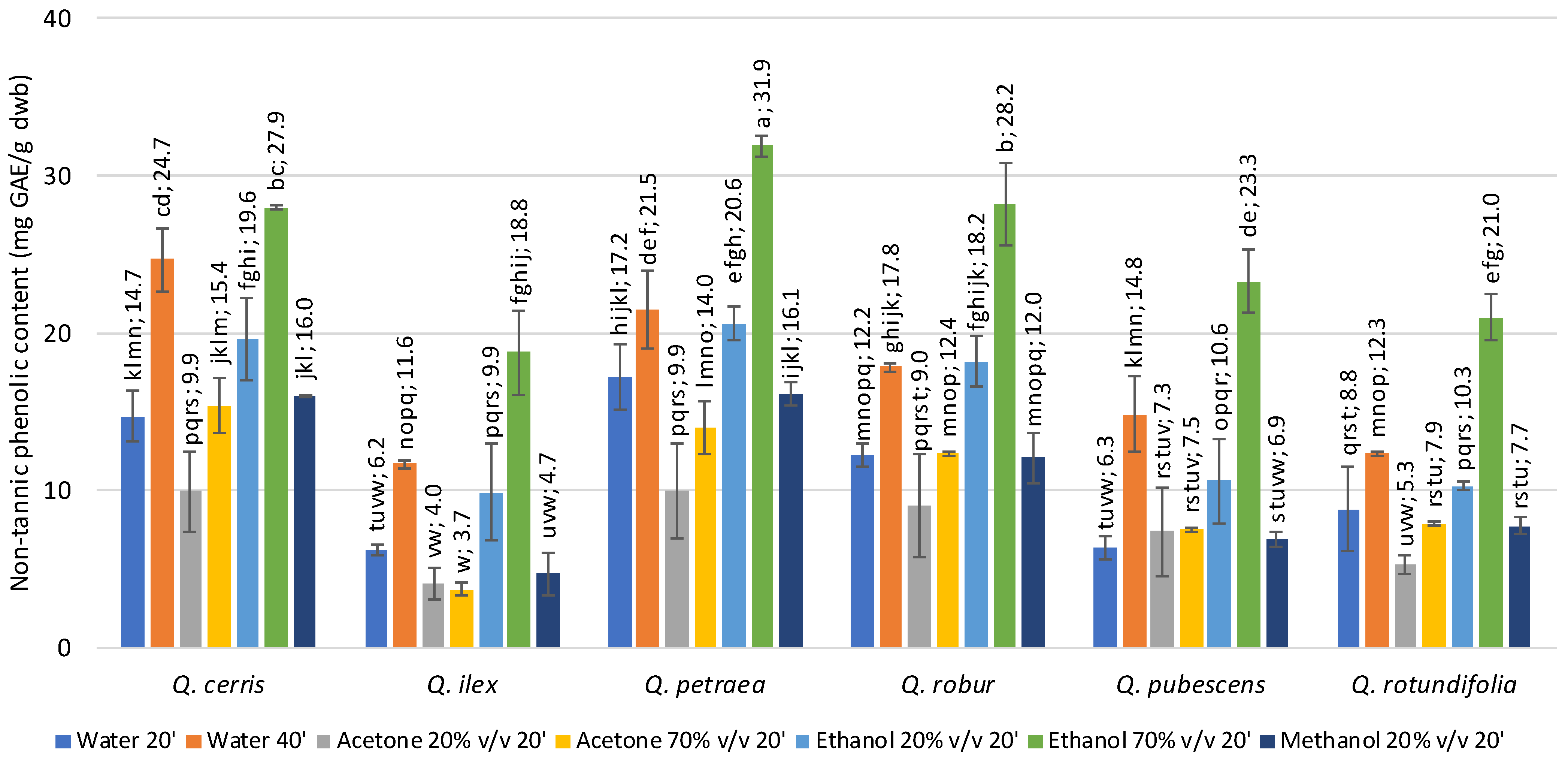
Figure 2 shows a markedly different extraction pattern of NTPC compared to TPC. The most prominent visual feature is the consistent superiority of 70% ethanol across all six species, which in every case yields the highest NTPC value—peaking at 31.9 mg GAE/g in
Q. petraea and 28.2 mg GAE/g in
Q. robur. This solvent-driven dominance provides a direct graphical counterpart to the reversed ANOVA factor hierarchy observed for NTPC (
F = 95.0 for solvent vs.
F = 60.5 for species;
Table 3). Equally noteworthy is the consistently low performance of 20% acetone, which produced the lowest or near-lowest NTPC in five of the six species, with values as low as 3.7–4.0 mg GAE/g in
Q. ilex. This inverse behavior—where acetone-rich systems excel at total and tannin-fraction recovery but underperform for non-tannic phenolics—underscores the opposite thermodynamic preferences of high-molecular-weight polymeric tannins and low-molecular-weight phenolic acids [
26,
32].
The time effect in aqueous extraction is also graphically evident: Water 40′ consistently outperforms Water 20′ across all species, with the largest absolute gain observed in
Q. cerris (14.7 vs. 24.7 mg GAE/g) and
Q. petraea (17.2 vs. 21.5 mg GAE/g), consistent with the proposed mechanism of partial tannin hydrolysis under extended ultrasound-assisted aqueous conditions [
1,
17].
The ANOVA results for non-tannic phenolic content (NTPC;
Table 3) reveal a significant shift in the relative importance of the two factors compared to TPC analysis: the solvent effect (
F = 95.0;
p < 0.0001) now surpasses the species effect (
F = 60.5;
p < 0.0001) in statistical magnitude. This inversion suggests that while genetic factors set the overall ceiling of bioactive potential, the selective extraction of low-molecular-weight phenolic compounds is largely governed by the thermodynamic properties of the solvent system [
17,
32].
The mechanistic basis for this factor inversion requires explicit discussion, as it reflects a fundamental difference in the physical chemistry of tannin versus non-tannic phenolic extraction. High-molecular-weight hydrolysable tannins are primarily recovered through solvent-mediated disruption of non-covalent tannin–matrix complexes (hydrogen bonding with cell wall polysaccharides and structural proteins), a process governed mainly by the hydrogen-bond-accepting capacity of the solvent—a property intrinsically linked to the plant matrix composition and therefore dominated by the species factor [
26,
28]. In contrast, low-molecular-weight non-tannic phenolics—gallic acid, ellagic acid, catechin, and their glycosides—are more freely distributed within the vacuolar compartment and intercellular spaces of the flour matrix, and their recovery is principally governed by solvent polarity and the ability to disrupt lipophilic barriers surrounding intracellular pools [
32,
37]. This structural distinction explains why the solvent factor becomes the dominant determinant of NTPC yield, and why the F-ratio for solvent increases nearly 30-fold relative to its TPC counterpart—from 3.2 to 95.0—while the species F-ratio declines from 111.8 to 60.5.
Post hoc analysis identified
Q. cerris and
Q. petraea as yielding the highest absolute NTPC values (18.3 and 18.8 mg GAE/g, respectively), while
Q. rotundifolia exhibited the significantly highest NTPC/TPC ratio (32.0%;
Table 4). This finding is of considerable practical relevance: it confirms that in “sweet” acorn varieties, a larger proportion of the phenolic pool consists of low-molecular-weight, potentially more bioavailable compounds rather than astringent polymeric tannins [
4,
40]. This phytochemical profile positions
Q. rotundifolia favorably for functional food applications where antioxidant activity is desired without the antinutritional effects associated with high tannin loading [
20,
36].
The clear superiority of 70% ethanol for non-tannic phenolic recovery (25.2 mg GAE/g; NTPC/TPC ratio of 38.0%) is consistent with this solvent’s capacity to solubilize free phenolic acids—including gallic, ellagic, syringic, and protocatechuic acids—as well as flavonoids such as catechin and quercetin, as confirmed by HPLC profiling [
11,
16]. The higher efficiency of 70% relative to 20% ethanol indicates that an elevated organic fraction is required to disrupt the vegetal matrix and stabilize monomeric phenolics during extraction [
12,
41]. Notably, extending the aqueous extraction duration from 20 to 40 min also significantly increased NTPC recovery (10.9 to 17.1 mg GAE/g), suggesting that partial acoustic hydrolysis of complex tannins into simpler, measurable phenolic units occurs under prolonged acoustic exposure—a phenomenon previously documented in tannic acid processing [
39,
42].
This time-dependent NTPC increase in purely aqueous media requires additional investigation in order to draw a conclusion about this behavior. According to some previous research, ultrasonic cavitation creates localized, transient microenvironments with elevated temperature and pressure that can accelerate the cleavage of ester bonds within gallotannin and ellagitannin scaffolds, releasing free gallic and ellagic acid moieties into solution [
39,
42]. The result is a measurable transfer of phenolic mass from the tannin to the non-tannic fraction—evidenced by the simultaneous increase in NTPC (10.9 → 17.1 mg GAE/g,
Table 3) and decrease in the TC/TPC ratio under Water 40′ compared to Water 20′—without a proportional increase in absolute TPC. This trend is also confirmed when expressed as the relative proportion of NTPC to total phenolics, which increased from 18.9% to 24.5% with extended extraction time (
Table 4). This partial acoustic hydrolysis effect is functionally relevant from a food processing perspective. Our results showed that increasing extraction time causes a measurable shift from complex tannins to simpler phenolic units. It suggests that conventional aqueous cooking or blanching of acorn flour (which involves higher temperatures and longer durations than the present UAE conditions) may substantially alter the tannin-to-non-tannin balance of the product. This provides a powerful tool to strategically modulate sensory properties (reduced astringency) and nutritional profile (shift toward more bioavailable phenolic forms). These factors should be considered as a critical framework in developing processing protocols for acorn-based functional ingredients.
The practical significance of the NTPC/TPC ratio goes beyond analytical characterization, as it indicates the proportion of the phenolic pool most likely to survive gastrointestinal transit and reach systemic circulation in a bioavailable form. High-molecular-weight hydrolysable tannins (MW > 3 kDa) are generally poorly absorbed in the small intestine and instead undergo extensive microbial biotransformation in the colon, producing bioactive metabolites such as urolithins (from ellagitannins) and pyrogallol derivatives (from gallotannins), whose systemic bioavailability is further influenced by individual microbiome composition [
34,
40]. In contrast, free gallic acid, ellagic acid, and their low-molecular-weight glycosides show substantially higher and more predictable small intestinal absorption. Accordingly, the markedly elevated NTPC/TPC ratio of
Q. rotundifolia (32.0%, compared to 16.5–22.0% for the other species) suggests not only reduced astringency but also a more directly bioavailable phenolic profile—a distinction relevant for functional food formulations targeting acute antioxidant responses rather than the delayed and microbiome-dependent effects of tannin fermentation products [
4,
40]. Conversely, for applications where slow-release colonic metabolites are the desired bioactive output—for example, in gut microbiota modulation or sustained anti-inflammatory effects—the high-tannin species such as
Q. cerris and
Q. ilex would be the more appropriate substrates.
The Pearson correlation matrix for NTPC (
Table 5) supports these findings. The exceptionally high correlation of 20% methanol with all other systems (
r = 0.975–0.979) highlights its value as a robust reference solvent for the phytochemical screening of low-molecular-weight metabolites.
The strong correlation between 70% ethanol and 20% acetone (
r = 0.958) indicates that both systems effectively penetrate the plant matrix to recover non-tannic phenolics, with solvent polarity, rather than specific chemical affinity, being the primary governing factor [
32,
37]. The relatively lower correlation between the two water extraction times (
r = 0.878) further supports a time-dependent release mechanism for simple phenolics in purely aqueous media.
From a methodological perspective, the high inter-solvent correlations for NTPC (
r > 0.85 across all system pairs, except for Water 20′ vs. Ace 20%) confirm that the ranking of species by non-tannic phenolic content is largely solvent-independent, similar to the pattern observed for TPC. This indicates that the analytical conclusions regarding the relative NTPC richness of the six species are methodologically robust and not an artifact of solvent choice. However, the substantially lower absolute NTPC values obtained from acetone-based systems compared to ethanolic ones (7.6 vs. 25.2 mg GAE/g for Ace 20% and EtOH 70%, respectively) confirm that, while the species ranking is preserved, absolute quantification is strongly solvent-dependent. This distinction directly affects interlaboratory comparability: studies reporting NTPC values for
Quercus species without specifying solvent composition may not be directly comparable, highlighting the need for standardized extraction protocols in comparative phytochemical research on oak acorns. The detailed breakdown of individual solvent efficiencies for non-tannic fractions confirms the consistent superiority of ethanol-based systems (
Table S1).
3.3. Tannin Content and Interspecific Variability
As shown in
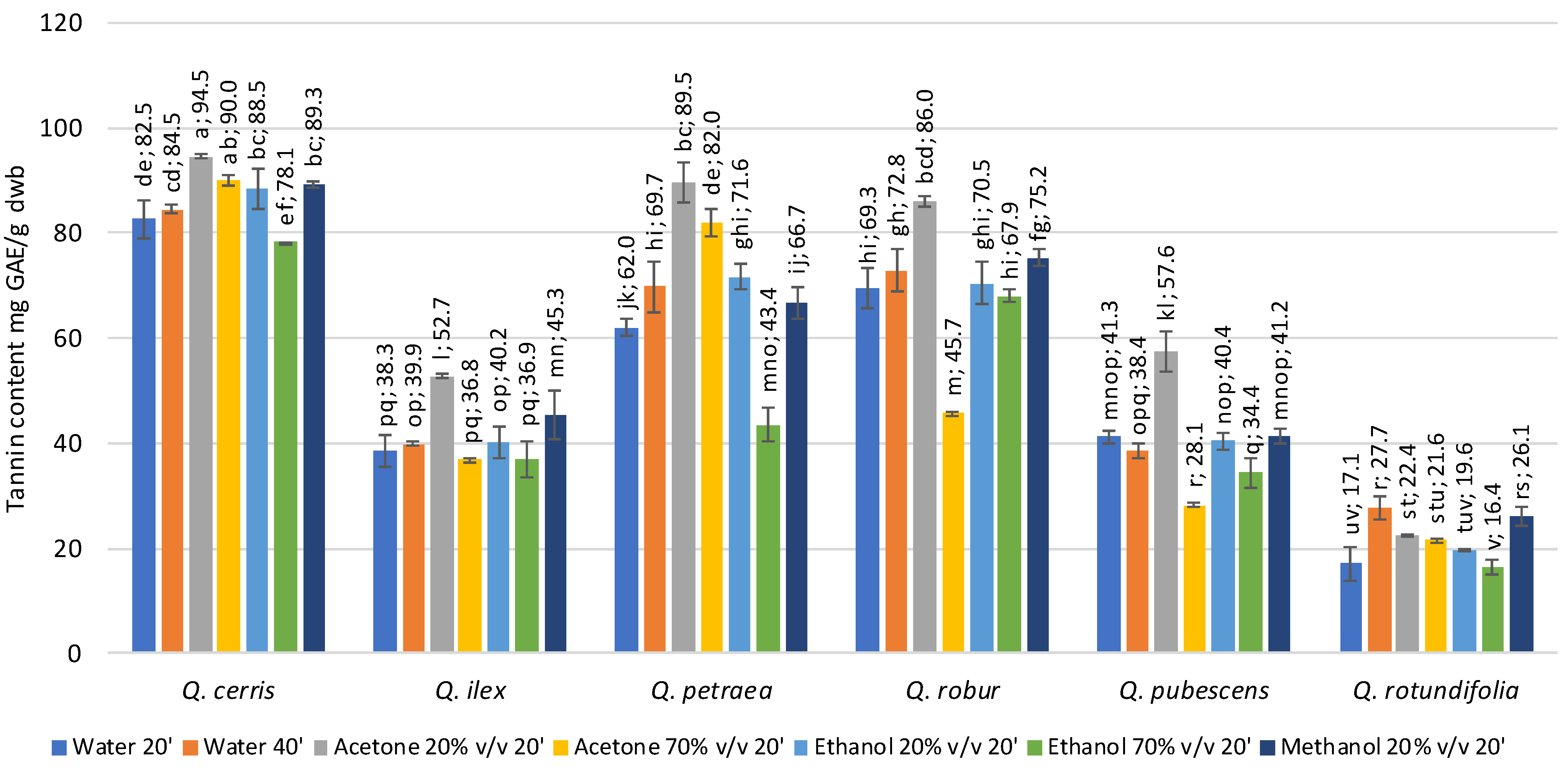
Figure 3, the graphical representation of tannin content provides important visual context for the statistical findings in
Table 6 and
Table 7. The dominant interspecific gradient is immediately clear:
Q. cerris consistently shows high tannin recovery across all solvents (78.1–90.0 mg GAE/g), while
Q. rotundifolia remains uniformly low (16.9–27.7 mg GAE/g), with no overlap between these extremes, regardless of the extraction medium used. This visual pattern reinforces the primacy of the species factor over solvent selection, as subsequently confirmed by ANOVA.
A particularly informative feature is the contrasting intra-solvent behavior of the acetone series across species. In
Q. petraea and
Q. robur, 20% acetone yields the highest tannin recovery among all solvents (69.5 and 86.0 mg GAE/g, respectively), whereas 70% acetone drops sharply—to 43.4 mg GAE/g in
Q. petraea and 45.7 mg GAE/g in
Q. robur. This steep intra-series contrast directly supports the thermodynamic principle that moderate water content in acetone–water mixtures is essential for tannin solvation: as the organic fraction increases to 70%, the dielectric constant falls below the threshold required for effective solubilization of the predominantly hydrophilic tannin pool characteristic of
Quercus acorns [
26,
28]. Conversely, in contrast to the TPC and NTPC figures where 70% ethanol was consistently among the top performers,
Figure 3 shows that 70% ethanol produces the lowest or near-lowest tannin recovery in four of the six species—most notably in
Q. cerris (78.1 mg GAE/g, the lowest of all solvents for this species) and
Q. pubescens (21.6 mg GAE/g). This graphical inversion between
Figure 2 and
Figure 3 for the 70% ethanol bars is the clearest visual demonstration of the opposite thermodynamic selectivity of the non-tannic and tannic phenolic fractions, and it provides direct graphical support for the practical recommendation to use 20% acetone for tannin-targeted extraction and 70% ethanol for non-tannic phenolic recovery. Water extraction kinetics are also evident: Water 40′ consistently exceeds Water 20′ across all species, though the absolute gain is modest relative to the solvent polarity effect, which is consistent with the interpretation that tannin release in aqueous media is primarily limited by matrix binding rather than solubility [
32,
37].
The ANOVA results for tannin content (TC;
Table 6) confirmed the dominant role of the species (
F = 76.9;
p < 0.0001) over solvent selection (
F = 4.8;
p = 0.002) in determining both the absolute tannin concentration and its relative proportion within the total phenolic pool (TC/TPC ratio).
Q. cerris exhibited the highest TC (86.8 ± 5.4 mg GAE/g), representing 82.6% of its total phenolic content (
Table 7), which is consistent with its status as an exceptionally tannin-rich species [
20,
35]. At the opposite extreme,
Q. rotundifolia showed the lowest tannin content (21.5 ± 4.3 mg GAE/g) and the lowest TC/TPC ratio (68.0%), confirming its classification as a low-bitterness variety that requires minimal leaching or thermal detannification for human consumption [
4,
40].
These values also provide an important reference point in the context of acorn processing and detannification strategies reported in the literature. Previous studies on thermal leaching, boiling, fermentation, and prolonged soaking treatments have consistently shown substantial reductions in tannin concentration, often ranging from 40% to over 80%, depending on species and process intensity [
3]. In this context, the present untreated flour values establish a baseline for defining species-specific processing thresholds. For highly tannin-rich species such as
Q. cerris and
Q. robur, more intensive detannification may be required to reach acceptable sensory and nutritional targets, whereas
Q. rotundifolia and
Q. pubescens may require only mild processing to reduce astringency while preserving antioxidant functionality. This interspecific baseline is particularly valuable for optimizing processing severity according to the intended food application.
Q. robur and
Q. petraea exhibited statistically similar intermediate values (approximately 69 mg GAE/g), which is consistent with their characterization as major sources of hydrolysable tannins, including gallotannins and ellagitannins [
16,
17].
Regarding the solvent effects (
Table 6 and
Table 7), 20% acetone was the most effective medium for tannin recovery (67.1 mg GAE/g; TC/TPC = 88.9%), which is consistent with the established principle that acetone–water mixtures are superior for disrupting strong hydrogen bonds between tannins and the plant matrix or complexed proteins [
38,
40]. Conversely, 70% ethanol yielded the lowest tannin concentration (46.2 mg GAE/g) and relative proportion (TC/TPC = 62.0%), indicating its selectivity for lower-molecular-weight phenolics rather than polymeric tannins [
32,
43]. Extending the water extraction from 20 to 40 min resulted in only a marginal, statistically insignificant (
p > 0.05) increase in absolute TC (51.8 to 55.5 mg GAE/g) but a significant decrease in the TC/TPC ratio (81.1% to 75.5%), suggesting that prolonged acoustic exposure may facilitate partial depolymerization or hydrolysis of complex tannins into smaller phenolic units, thereby increasing the measurable non-tannic fraction [
39,
42]. The extraction-optimized framework, organized by species and solvent polarity, is summarized in
Table S1.
From a food safety and regulatory perspective, the finding that TC/TPC ratios exceeded 75% in four of the six studied species (
Q. cerris,
Q. ilex,
Q. robur, and
Q. petraea) is practically significant. At high dietary concentrations, tannins reduce protein digestibility and mineral bioavailability and have been associated with potential hepatotoxic effects [
13,
15]. Therefore, using high-tannin species such as
Q. cerris and
Q. ilex in food formulations requires prior detannification—by aqueous leaching, alkaline treatment, or thermal processing—or limiting their incorporation to levels consistent with safe intake thresholds [
14]. In contrast, the comparatively lower tannin content of
Q. rotundifolia (TC/TPC = 68.0%; TC = 21.5 mg GAE/g) and
Q. pubescens (TC/TPC = 78.7%; TC = 40.2 mg GAE/g) makes these species more suitable for direct incorporation into functional foods, provided that consumption remains within established safety parameters [
4,
40].
A particularly noteworthy finding from the TC/TPC ratio analysis (
Table 7) is that
Q. ilex exhibited the highest relative tannin proportion (83.5 ± 9.5%), slightly exceeding
Q. cerris (82.6 ± 5.6%), despite its substantially lower absolute TC (41.5 vs. 86.8 mg GAE/g). This apparent paradox reflects the qualitatively distinct phenolic composition of
Q. ilex, whose profile is dominated by structurally complex ellagitannins—including trigalloyl-HHDP (hexahydroxydiphenoyl) glucoside derivatives and O-galloyl-castalagin—rather than the simpler galloyl ester monomers prevalent in
Q. cerris. The Folin–Ciocalteu reagent, while broadly responsive to all reducing phenolics, interacts differently with HHDP-bearing ellagitannins compared to galloyl esters, likely generating a higher reducing signal per unit of total phenolics in
Q. ilex [
28,
34]. From a nutritional and technological perspective, the high TC/TPC ratio of
Q. ilex indicates that its phenolic bioactivity is strongly tannin-mediated, with a comparatively limited contribution from free phenolic acids—a consideration directly relevant when targeting selective antioxidant fractions for nutraceutical applications [
10].
The correlation matrix for tannin content (
Table 8) shows a high degree of methodological congruence across solvent systems, with most coefficients exceeding
r = 0.95 among high-polarity systems. The near-perfect correlations between Water 20′, Water 40′, 20% ethanol (
r = 0.991), and 20% methanol (
r = 0.992) confirm the highly hydrophilic nature of the predominant tannins in acorn flours, which is consistent with their classification as hydrolysable gallotannins and ellagitannins rather than condensed proanthocyanidins [
20,
44,
45]. The high linearity between the two water extraction times (
r = 0.980) further suggests that tannin recovery is governed by rapid initial mass transfer, with extended extraction yielding diminishing returns in metabolic profile diversity [
32,
37]. From a practical perspective, this statistical redundancy confirms that pure water, as green and food-safe solvent, is fully adequate for representative tannin quantification in acorn flours, eliminating the need for high-concentration organic systems in routine analytical workflows [
18,
36].
The lowest correlation in the matrix (70% acetone vs. 70% ethanol;
r = 0.709, non-significant) highlights a critical divergence in solvent selectivity at elevated organic fractions. As the dielectric constant decreases with increasing organic content, the two solvents diverge thermodynamically: 70% acetone preferentially disrupts hydrogen-bonding interactions between the condensed tannins and the plant matrix, favoring their solubilization [
20,
28,
46], while 70% ethanol shows a greater affinity for lower-molecular-weight flavonoids and phenolic acids, as evidenced by its superior NTPC recovery (
Table 3). This complementary selectivity underscores the fact that, while high-polarity aqueous systems provide a reliable general assessment of total polyphenol load, acetone–water mixtures remain indispensable for targeted investigations into complex tannin fractions—a distinction that is directly relevant when designing extraction protocols for specific industrial applications [
20,
28].
3.4. Antioxidant Potential and Correlations with Phenolic Fractions
The antioxidant potential of the acorn flour samples (
Table 9) was assessed using the Water 40′ extract. This system was selected based on three criteria: (i) among purely aqueous systems, it provided the most representative capture of the total phenolic pool, including both soluble hydrophilic phenolic acids and the hydrolysable tannins; (ii) water is the closest food-grade analog to gastrointestinal extraction conditions, making the results physiologically relevant for potential in vivo bioavailability; and (iii) the high Pearson correlation coefficients of Water 40′ with all other solvent systems confirm that it reflects each species’ intrinsic bioactive character rather than solvent-specific extraction artifacts.
In all three assays (DPPH, ABTS, FRAP), absolute antioxidant potential followed the species hierarchy established for TPC, with
Q. cerris consistently showing the highest total phenol-based activity (1183.6–1228.4 µmol TE/g) and
Q. rotundifolia the lowest (267.8–329.5 µmol TE/g). This ranking is unsurprising given the strong linear relationship between phenolic content and radical scavenging capacity documented across plant matrices [
14,
21].
However, the fractionated data (NTP/TP and T/TP ratios;
Table 9) reveal important qualitative differences that absolute values alone obscure. The implementation of PVPP-based fractionation was a cornerstone of our analytical approach, offering a more nuanced view of antioxidant capacity than conventional total phenolic assays.
Q. rotundifolia showed markedly elevated NTP/TP ratios across all assays (27.9% DPPH, 35.4% ABTS, 33.6% FRAP), indicating that a disproportionately large share of its antioxidant activity originates from low-molecular-weight non-tannic compounds. This is consistent with its characteristically simple phenolic profile and low tannin content (
Table 6) and supports its suitability for food applications where milder astringency is required [
4,
40]. Conversely,
Q. ilex exhibited the lowest NTP/TP ratios (11.5% DPPH, 17.4% ABTS, 14.5% FRAP), confirming that the great majority of its antioxidant capacity is tannin-mediated—consistent with its ellagitannin-dominated HPLC profile, and the highest TC/TPC ratio recorded among the six species (
Table 7). A notable discordance was observed between assays for
Q. petraea and
Q. robur: in the DPPH assay,
Q. robur (1022.1 µmol TE/g) exceeded
Q. petraea (960.6 µmol TE/g), while this ranking was reversed in both ABTS and FRAP assays (
Q. petraea: 1107.0 and 1137.2 µmol TE/g, respectively;
Q. robur: 1136.2 and 1053.1 µmol TE/g). This inversion most likely reflects mechanistic differences between the assays: DPPH measures predominantly hydrogen atom transfer (HAT) activity, whereas ABTS and FRAP are more sensitive to electron transfer (ET) [
47,
48]. The divergence in ranking therefore implies that the phenolic profiles of these two species differ in the relative proportions of HAT-active and ET-active structural motifs—a distinction consistent with the HPLC data showing that
Q. robur is richer in pentagalloylglucose isomers (which are efficient HAT donors), while
Q. petraea uniquely contains pedunculagin (peak 4), an ellagitannin whose HHDP moiety is particularly active in ET-based mechanisms [
34,
49].
Pearson correlation analysis was conducted to quantify the relationship between phenolic fractions and antioxidant potential across all six species (
Table 10). The results showed strong linear associations, with all correlation coefficients exceeding
r = 0.937. The strongest associations were found for total phenolic content (TPC), with coefficients of r = 0.993 for DPPH,
r = 0.974 for ABTS, and
r = 0.982 for FRAP, all statistically significant at
p < 0.01. Tannin content (TC) also showed a near-perfect correlation with radical scavenging capacity (
r = 0.957 to 0.989,
p < 0.01), highlighting its dominant role in the bioactive pool. Even the non-tannic phenolic fraction (NTPC), though a minor component, contributed significantly to the antioxidant response, with correlation coefficients ranging from 0.937 to 0.948 (
p < 0.01). These findings indicate that the antioxidant capacity of acorn flours is directly and predictably determined by their polyphenolic content, particularly the hydrolysable tannin fraction.
Similarly strong correlations were observed between TC and the antioxidant activity (
r = 0.989, 0.957, and 0.974 for DPPH, ABTS, and FRAP, respectively), reflecting the predominance of tannins within the phenolic pool and their well-established radical scavenging and metal-chelating properties [
12,
21]. NTPC also showed significant correlations with all three assays (
r ≈ 0.94–0.95), underscoring the independent and meaningful contribution of free phenolic acids and flavonoids to the overall antioxidant response, even when they represent a minor fraction of the total phenolics [
50].
The analysis of the specific antioxidant potential (
Table 11)—activity normalized per milligram of phenolic compound—showed that quantitative dominance does not equate to per-unit efficiency. While
Q. cerris recorded the highest absolute antioxidant activity,
Q. robur and
Q. petraea exhibited superior or statistically equivalent specific potentials across most assays. In the ABTS assay,
Q. robur reached 12.5 µmol TE/mg and
Q. petraea 12.1 µmol TE/mg, both of which were significantly higher than that of
Q. cerris (10.9 µmol TE/mg). In the FRAP assay,
Q. petraea recorded the highest specific potential among all species (12.5 µmol TE/mg). These findings suggest that
Q. cerris achieves high absolute activity primarily through phenolic mass rather than structural efficiency, while
Q. robur and
Q. petraea contain structurally more efficient radical scavengers—most likely monomeric ellagitannins with dense vicinal hydroxyl groups enabling superior radical stabilization [
51,
52].
A particularly unexpected finding was the exceptionally high specific tannin antioxidant activity of
Q. pubescens in the ABTS (14.0 µmol TE/mg) and FRAP (13.7 µmol TE/mg) assays—the highest among all species in these assays—despite its relatively modest absolute TC (40.2 mg GAE/g). This discordance between the bulk concentration and per-unit activity points to the presence of structurally specific tannins with exceptional per-molecule efficiency. As discussed in
Section 3.5,
Q. pubescens uniquely exhibits the highest ellagic acid hexoside concentration among all species (1.94 mg/g; peak 14), a compound whose glucosylated ellagic acid scaffold may confer particularly favorable redox properties in ET-based assays [
34,
49].
Q. rotundifolia consistently showed the lowest specific antioxidant activity across all assays and fractions; notably, its tannin fraction (7.0–7.7 µmol TE/mg) exhibited a lower per-unit activity than its non-tannic fraction in several assays—a pattern that is inverse to those of all other species, where tannins consistently outperform NTPC on a per-mg basis—further confirming the structural simplicity and low functional density of its tannin pool.
3.5. Individual Phenolic Profile by HPLC-DAD Analysis
The HPLC-DAD analysis (
Table 12) identified and tentatively assigned 30 phenolic compounds across the six
Quercus species, including hydrolysable tannins from both gallotannin and ellagitannin subclasses, as well as several non-tannic phenolic acids. The results demonstrated a highly heterogeneous distribution of constituents among the investigated
Quercus species, confirming that differences in phenolic composition are strongly species-dependent. The profile was predominantly represented by hydrolysable tannins, which is consistent with previous findings indicating that acorns are rich in ellagitannins and gallotannins, while condensed tannins are generally negligible or absent in the cotyledon fraction of acorns [
3]. The distribution of individual compounds was highly species-specific in both composition and relative abundance, reflecting genetic predispositions and environmental adaptations that govern secondary metabolism. Some quantitative discrepancies between the HPLC results and the Folin–Ciocalteu phenolic content were identified. These discrepancies are well documented in the literature and can be explained by the presence of a wide range of non-phenolic reducing compounds with which the Folin reagent reacts with, and the influence of large polymerized tannins that may not be fully detected by standard HPLC methods [
52]. These limitations are well recognized in the field and do not compromise the comparative value of either approach; however, they should be considered when interpreting absolute values across methodologies.
Among the identified compounds, gallic acid and ellagic acid were the most abundant non-tannic phenolics, with gallic acid reaching its highest concentration in
Q. cerris (6.67 mg/g), while ellagic acid was particularly abundant in
Q. cerris and
Q. petraea. These compounds are well known as the hydrolysis products of gallotannins and ellagitannins, respectively, and their presence may reflect their natural metabolic turnover [
3].
Q. cerris was characterized by a pronounced dominance of high-molecular-weight gallotannins, with 1,2,3,6-tetra-O-galloyl-β-D-glucose isomer II as the single most abundant compound across all species (14.11 mg/g; peak 21), and multiple pentagalloylglucose isomers collectively reaching approximately 18.1 mg/g (peaks 26–29). Along with the highest gallic acid concentration recorded (6.67 mg/g; peak 1), this gallotannin-dominated profile reflects the species’ exceptional capacity for sequential galloylation of glucose through the central tannin biosynthetic pathway [
33,
34,
35]. The accumulation of pentagalloylglucose (PGG) is of particular biosynthetic significance: PGG is the obligate branch-point precursor from which ellagitannins are formed via oxidative C–C coupling of adjacent galloyl groups into HHDP units [
34]. The fact that
Q. cerris accumulates PGG at high levels without proceeding substantially to ellagitannins suggests either a low flux through the oxidative coupling step in this species or a high rate of PGG turnover in other pathways.
From an antioxidant perspective, the dense array of free hydroxyl groups on galloyl residues—five per PGG molecule—provides a structurally favorable scaffold for hydrogen atom transfer, which is mechanistically consistent with the high absolute DPPH activity recorded for this species (
Table 9) [
51].
A similar, although less pronounced, pattern was observed in
Q. robur, which also exhibited substantial levels of tetra- and pentagalloyl glucose derivatives. This is in agreement with earlier studies showing that gallotannins can accumulate extensively in certain
Quercus species and represent key intermediates in tannin biosynthesis. The high abundance of these compounds explains the elevated total tannin content and suggests a metabolic shift toward galloylation processes [
53,
54]. Furthermore,
Q. robur displayed a mixed gallotannin–ellagitannin profile, with gallotannins totaling 13.93 mg/g and a substantial ellagitannin complement (4.81 mg/g), including multiple digalloyl-HHDP glucoside isomers (peaks 8, 9, 11, 15) and trigalloyl-HHDP glucoside isomer I (1.85 mg/g; peak 17). The coexistence of both biosynthetic arms—galloylation and oxidative HHDP coupling—is consistent with the characterization of
Q. robur as a species expressing both gallotannin and ellagitannin pathways simultaneously [
16,
17]. Notably,
Q. robur was one of only two species (alongside
Q. petraea) in which ellagic acid pentoside was detected (2.11 mg/g; peak 18), a compound absents in
Q. cerris and
Q. ilex. Ellagic acid pentoside represents a hydrolysis or glycosylation product of ellagitannins and has been associated with sustained antioxidant activity and distinct bioavailability profiles relative to free ellagic acid [
33]. Its exclusive presence in
Q. robur and
Q. petraea may in part explain the higher specific DPPH activity of
Q. robur relative to that of
Q. cerris (11.3 vs. 10.8 µmol TE/mg;
Table 11), despite the latter carrying greater absolute phenolic mass.
Q. ilex exhibited a distinctly ellagitannin-enriched signature that sets it apart from all the other studied species. Its profile was dominated by trigalloyl-HHDP-glucoside isomer IV (4.14 mg/g; peak 25)—by far the highest concentration of this compound across any species—alongside trigalloyl-HHDP-glucoside isomers II and III (peaks 19 and 23). The high concentration of these compounds suggests the enhanced oxidative coupling of galloyl groups into HHDP units, which is a key step in ellagitannin formation [
34]. Although
Q. ilex, together with
Q. rotundifolia, has the lowest polyphenolic content, the high content of ellagitannins, and especially Trigalloyl-HHDP-glucoside isomer IV, means that the astringency potential of
Q. ilex is significant. Namely, ellagitannins can trigger a feeling of astringency faster and for longer than other tannins because their binding kinetics with saliva proteins are faster, and their dissociation is slower than that observed in gallotannins [
55]. Furthermore, O-galloyl-castalagin (0.44 mg/g; peak 20) is a structural derivative of castalagin, one of the most complex naturally occurring ellagitannins, and it was detected exclusively in
Q. ilex among all six species, constituting a species-specific chemical marker [
34]. Hexagalloyl-glucoside was detected at its highest concentration in
Q. ilex as well (0.45 mg/g vs. 0.22 mg/g in
Q. cerris; peak 30), indicating a biosynthetic preference for extensively oxidized and coupled polyphenolic scaffolds. This shift toward structurally complex ellagitannins, involving the multi-step oxidative coupling of galloyl moieties into HHDP units, is consistent with the known biochemistry of ellagitannin biosynthesis and has been associated with antioxidant mechanisms distinct from those of simple galloyl esters, including metal chelation and redox cycling [
34,
49,
56]. This structural complexity provides a mechanistic basis for the high relative tannin efficiency of
Q. ilex in ET-based assays (ABTS specific tannin activity: 12.8 µmol TE/mg; FRAP: 12.4 µmol TE/mg;
Table 11) despite its comparatively low absolute TC.
Q. petraea exhibited the most chemically diverse profile among the six species. Its unique features include the exclusive presence of pedunculagin (0.13 mg/g; peak 4) and galloyl-HHDP-DHHDP-hexoside (0.23 mg/g; peak 5), both of which were detected only in
Q. petraea. Pedunculagin is a dimeric ellagitannin containing two HHDP groups, and its presence confirms that the oxidative coupling pathway in this species extends beyond the initial HHDP formation step [
34]. Galloyl-HHDP-DHHDP-hexoside provides further evidence of the advanced oxidative modification, involving a dehydro-HHDP (DHHDP) unit formed through additional C–C coupling. The simultaneous detection of ellagic acid pentoside (2.00 mg/g; peak 18) and ellagic acid deoxyhexoside (1.27 mg/g; peak 22) further supports a diversified ellagitannin hydrolysis and secondary modification metabolism. Structurally, the presence of multiple HHDP-bearing scaffolds in
Q. petraea aligns with the superior per-unit electron-transfer activity recorded for this species in both the ABTS (12.1 µmol TE/mg) and the FRAP assays (12.5 µmol TE/mg;
Table 11), as HHDP-bearing ellagitannins are particularly active due to their extended aromatic conjugation and favorable redox potential [
49,
51].
Species such as
Q. rotundifolia and
Q. pubescens displayed comparatively lower concentrations of both gallotannins and ellagitannins, alongside a relatively higher contribution of non-tannic phenolics (>50%). This pattern may indicate either reduced tannin biosynthesis or increased degradation, as suggested in previous studies on acorn composition and variability [
3,
57]. The lower tannin content of acorns from the
Q. rotudifolia and
Q. pubescens species was confirmed by other authors [
4,
58], which could be a crucial factor in the selection of less bitter species for use in food production.
Q. pubescens displayed a moderate overall phenolic content but was notable for one structurally significant observation: it had the highest concentration of ellagic acid hexoside among all six species (1.94 mg/g; peak 14), a compound present in all species but for which
Q. pubescens ranked distinctly first (compared to 1.37 mg/g in
Q. petraea, the next highest). Ellagic acid hexoside is a glycosylated form of free ellagic acid whose glucosyl substituent confers improved aqueous solubility and may modulate both the bioavailability and the intrinsic redox activity relative to the aglycone [
33,
49]. The prominence of this compound in
Q. pubescens is directly relevant to the antioxidant results discussed in
Section 3.4: this species recorded the highest specific tannin antioxidant activity in both the ABTS (14.0 µmol TE/mg) and the FRAP (13.7 µmol TE/mg) assays, despite a modest absolute TC (40.2 mg GAE/g). The selective enrichment of an ellagic acid conjugate with favorable electron-transfer properties in a species otherwise unremarkable for its bulk phenolic concentration suggests a qualitative rather than quantitative basis for its exceptional per-unit activity and requires further investigation by targeted MS
2 fragmentation and in vitro bioavailability assays.
Q. rotundifolia exhibited the simplest and least diverse phenolic profile among the six species, which was consistent with its low absolute TPC and TC values. Most of its phenolic content was accounted for by a small number of compounds distributed across classes: gallic acid (1.92 mg/g; peak 1), free ellagic acid (1.59 mg/g; peak 24), and minor contributions from the digalloyl-glucose isomers and the pentagalloylglucose isomers, which were present only at trace levels compared to those in
Q. cerris and
Q. robur. However, one structurally noteworthy observation emerged from the quantitative data:
Q. rotundifolia had the highest concentration of ellagic acid deoxyhexoside among all the species (1.48 mg/g; peak 22)—the only compound in
Table 12 for which this species ranked first, being absent or below the detection limit in
Q. cerris,
Q. ilex, and
Q. robur. Ellagic acid deoxyhexoside is a deoxy-sugar conjugate of ellagic acid whose biosynthetic origin is not fully established but may involve salvage pathways from ellagitannin hydrolysis coupled with non-standard glycosylation [
33]. Its selective accumulation in an otherwise tannin-poor species suggests species-specific regulation of ellagitannin catabolic or secondary modification pathways and may partially explain the comparatively higher specific antioxidant activity of its non-tannic fraction, which exceeded that of its tannin fraction in per-unit activity in several assays—a pattern that is unique to
Q. rotundifolia across the dataset (
Table 11).
Overall, the HPLC-DAD profiling results confirm that the phenolic composition of acorn flour is highly species-specific, with distinct metabolic patterns ranging from gallotannin-dominated (
Q. cerris,
Q. robur) to ellagitannin-rich (
Q. ilex) and low-tannin profiles (
Q. rotundifolia). These differences can also be attributed to the harvest timing and the fruit’s stage of maturity. The literature indicates that oxidation plays a key role in the breakdown of phenolic compounds. Therefore, factors such as the maturity stage, growing conditions, handling practices, and storage conditions can also influence variations in the phenolic composition of samples. These differences are expected to significantly influence the antioxidant properties and functional behavior of the flour in food systems [
57,
58].
The results presented in this study, along with the converging structure–activity relationships established, validate the fractionation strategy employed and underscore the complementary and irreplaceable role of HPLC-DAD profiling alongside bulk spectrophotometric assays in the full characterization of Quercus-derived phenolic ingredients.






 ,
,