Impact of Sunflower (Helianthus annuus) Seed Meal Use on the Nutritional, Phytochemical, Rheological, Physicochemical, and Sensory Quality of Wheat Bread

 , , , , ,
  , ,
, , 
Featured Application
Abstract
1. Introduction
2. Materials and Methods
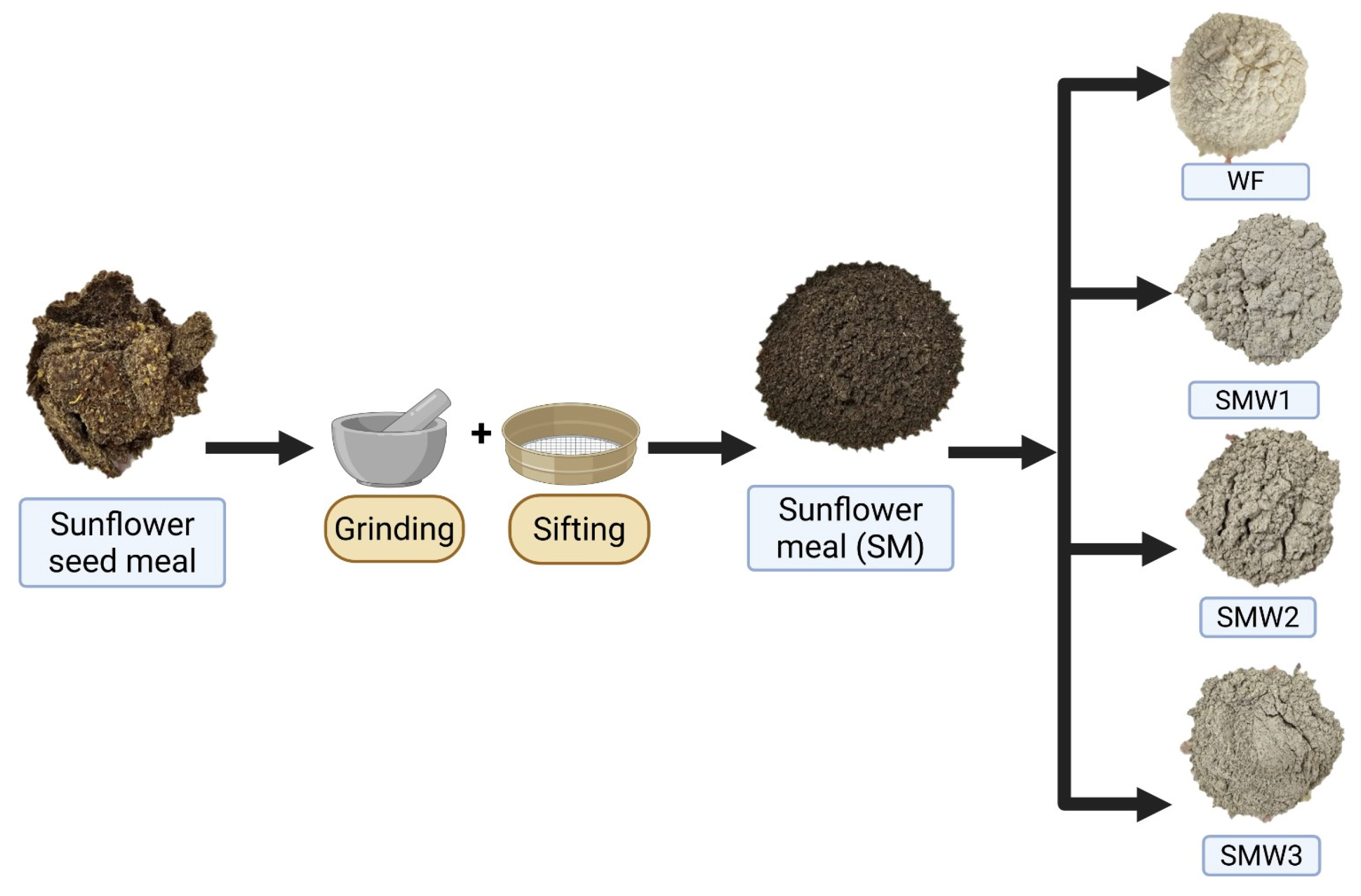
2.1. Preparation of Composite Flours
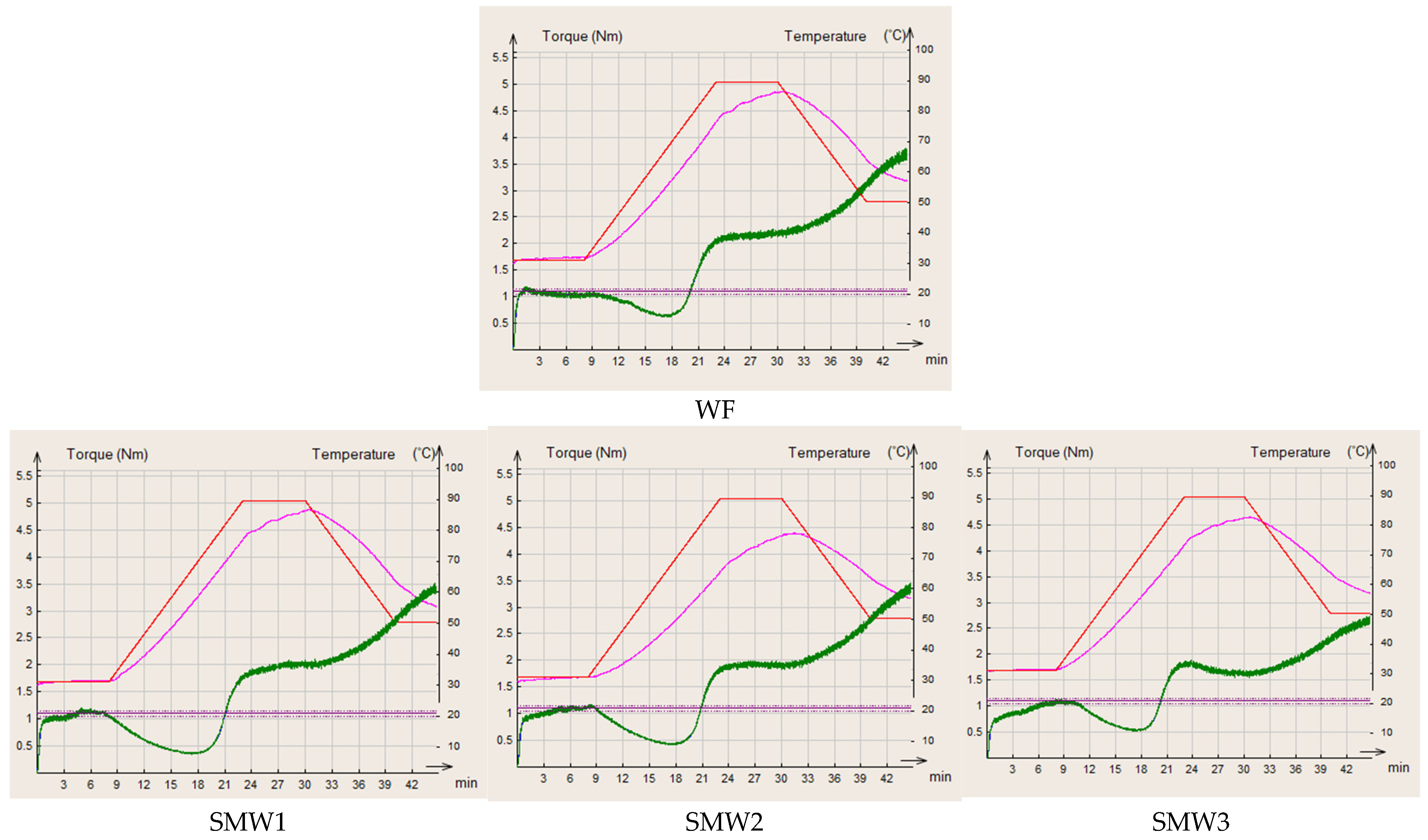
2.2. Rheological Analysis
2.3. Preparation of Breads
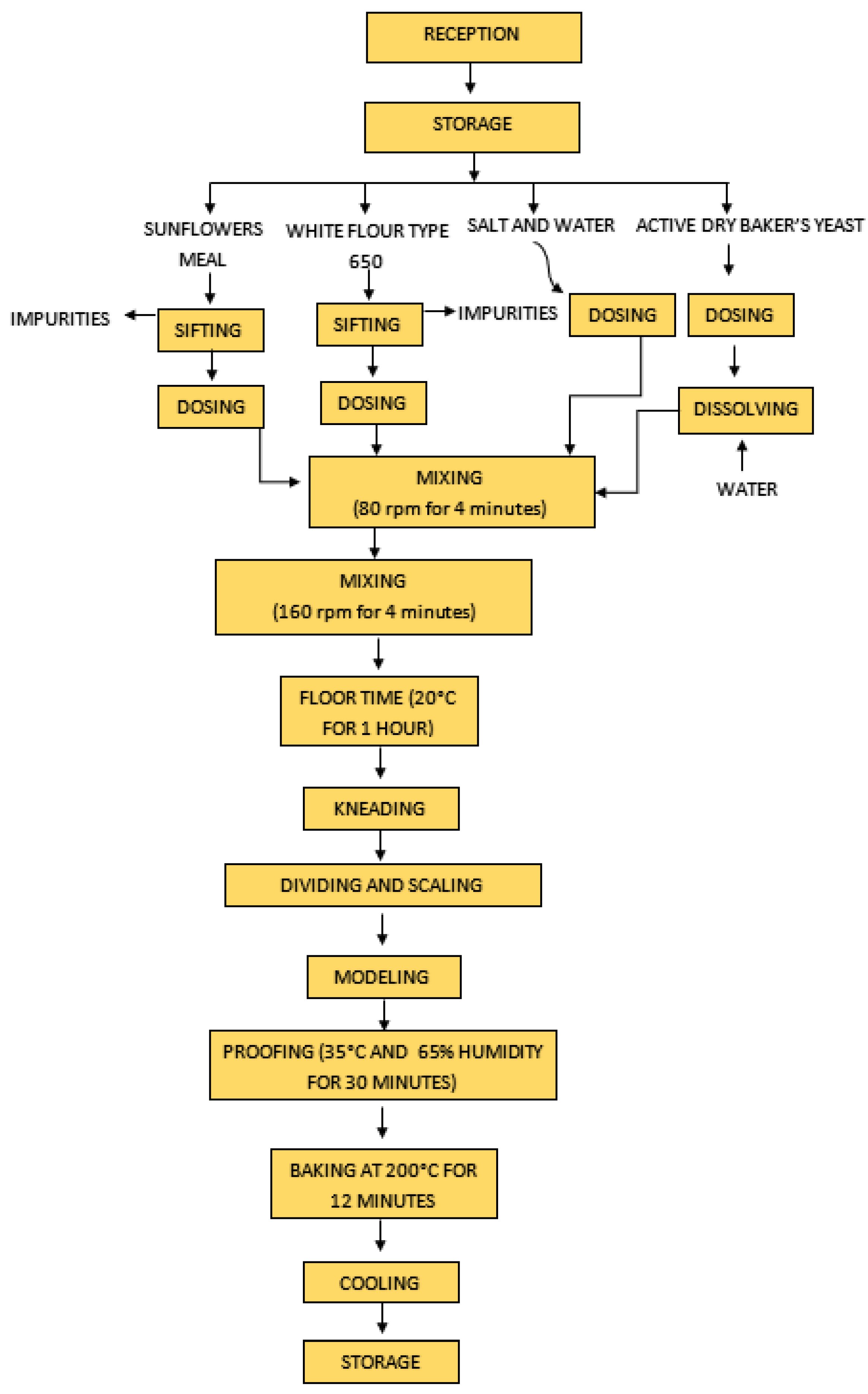
2.3.1. Preparation of Breads with Different Levels of WF Substitution by SM
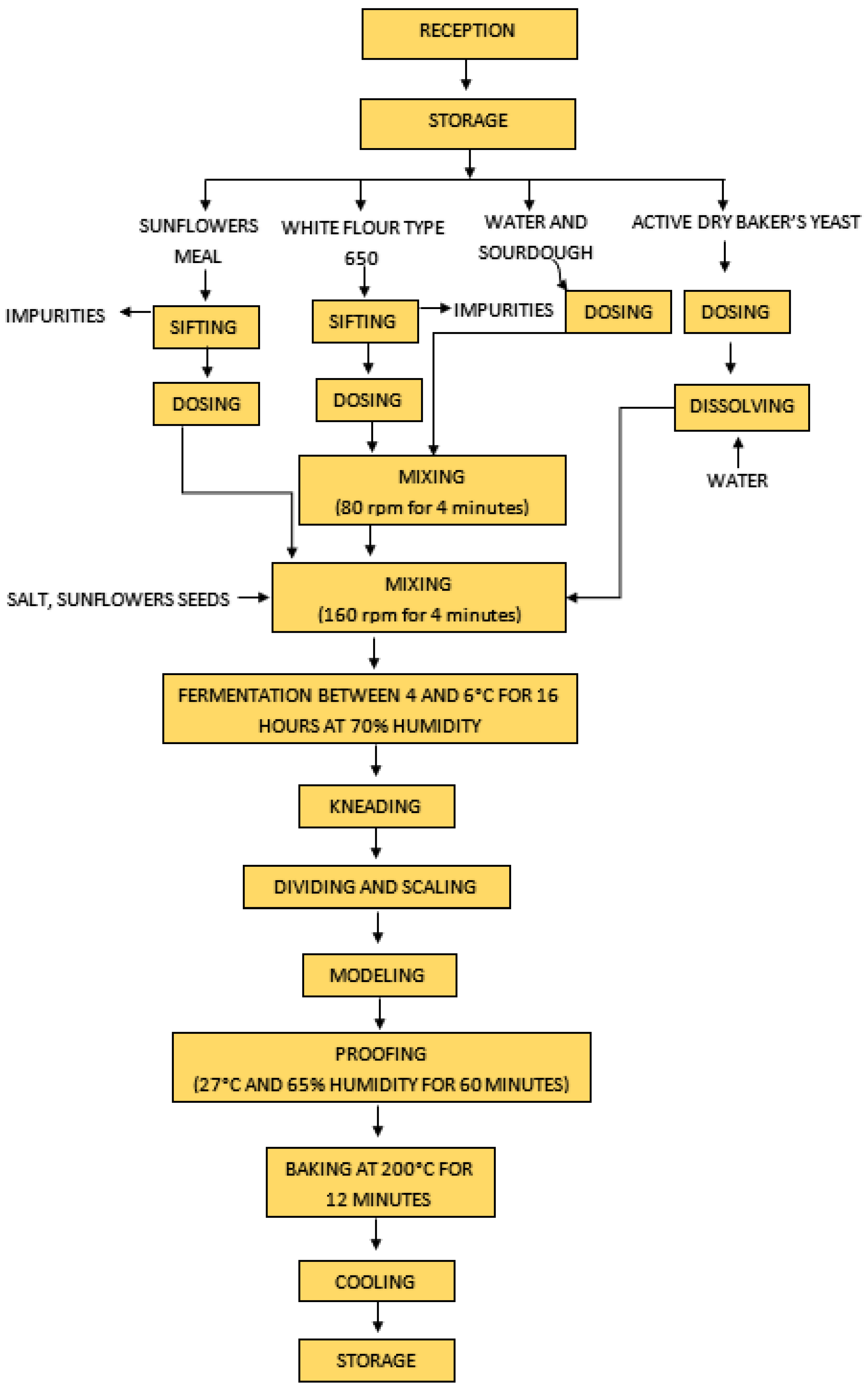
2.3.2. Preparation of Bread Improved with Sunflower Meal (SMWB10)
2.4. Determination of the Proximate Composition of Different Flours and Breads Enriched with Sunflower Meal
2.5. Determination of Macro- and Microelements in Different Samples of Flour and Bread
2.6. Determination of the Phytochemical Profile of Different Flour and Bread Samples
2.6.1. Preparation of Alcoholic Extracts
2.6.2. Evaluation of the Total Phenolic Compound (TPC) Content of Different Samples of Flour and Bread Enriched with Sunflower Meal
2.6.3. Evaluation of the Antioxidant Activity (AA) of Different Samples of Flour and Bread Enriched with Sunflower Meal
2.7. Physical Analyses Carried out on Different Types of Bread
2.7.1. Porosity
2.7.2. The Height-to-Diameter Ratio (H/D)
2.7.3. Elasticity
2.8. Determining the Impact of Fermentation on Dough Parameters and Kinetic Modeling
2.8.1. Dough Preparation and Fermentation Conditions
2.8.2. Sampling Plan
2.8.3. Determination of pH and Titratable Acidity (TTA) During Fermentation
2.8.4. Fermentation Kinetics and Model Fitting
2.8.5. Linear Acidification Model (Constant Acidification Rate)
2.8.6. Relationship Between pH, Titratable Acidity and Buffering Effects
2.8.7. Phytic Acid Content
2.9. Sensory Evaluation of Different Types of Bread
2.10. Statistical Analysis
3. Results and Discussion
3.1. Proximate Composition of the Various Flour and Bread Samples
3.2. Macro- and Micro-Element Composition of the Various Flour and Bread Samples
3.3. Phytochemical Profile
3.4. Rheological Profile of Different Types of Flour: WF, SMW1, SMW2, and SMW3
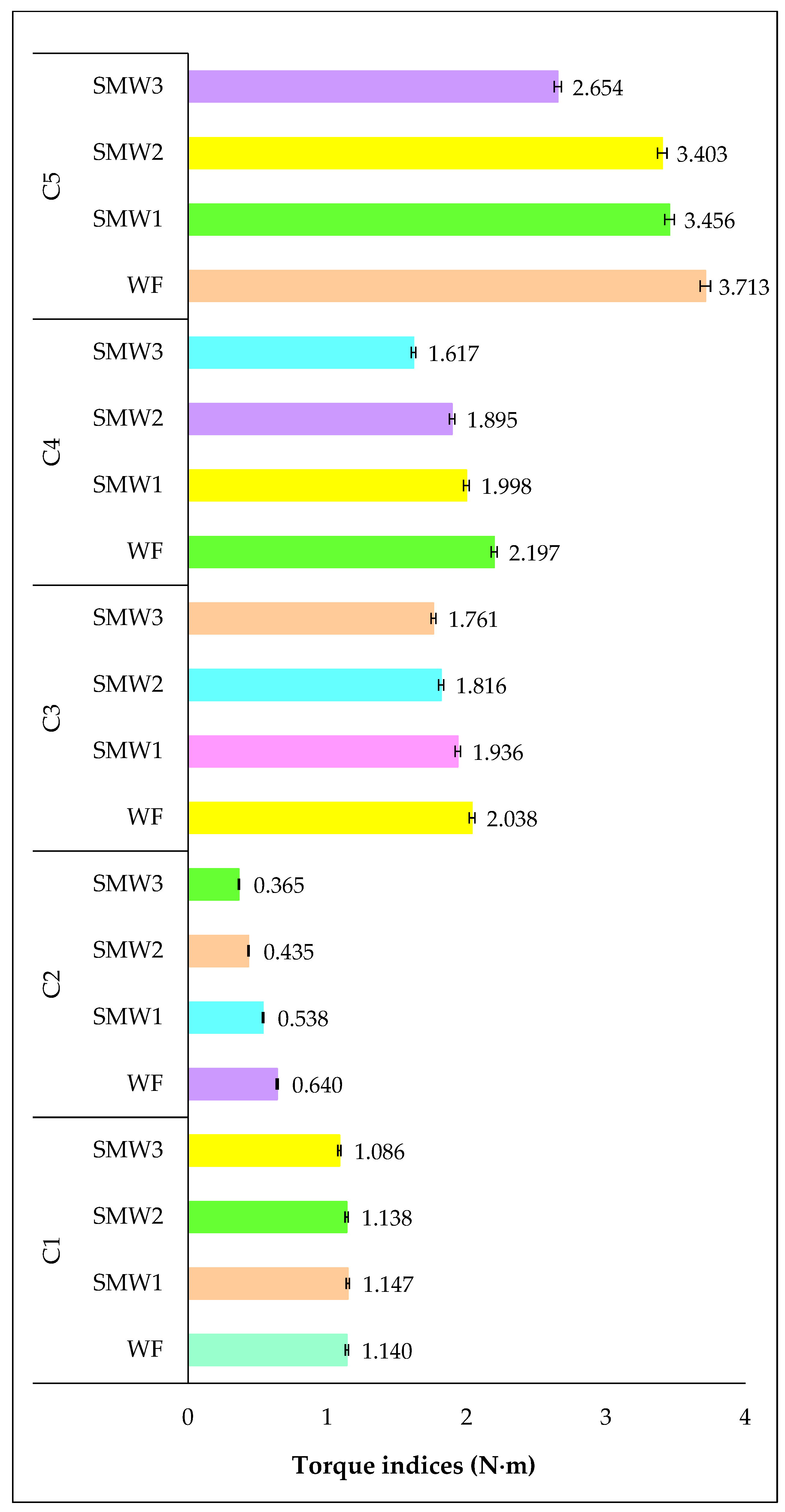
3.4.1. Mixolab Torque Indices for Different Types of Flour
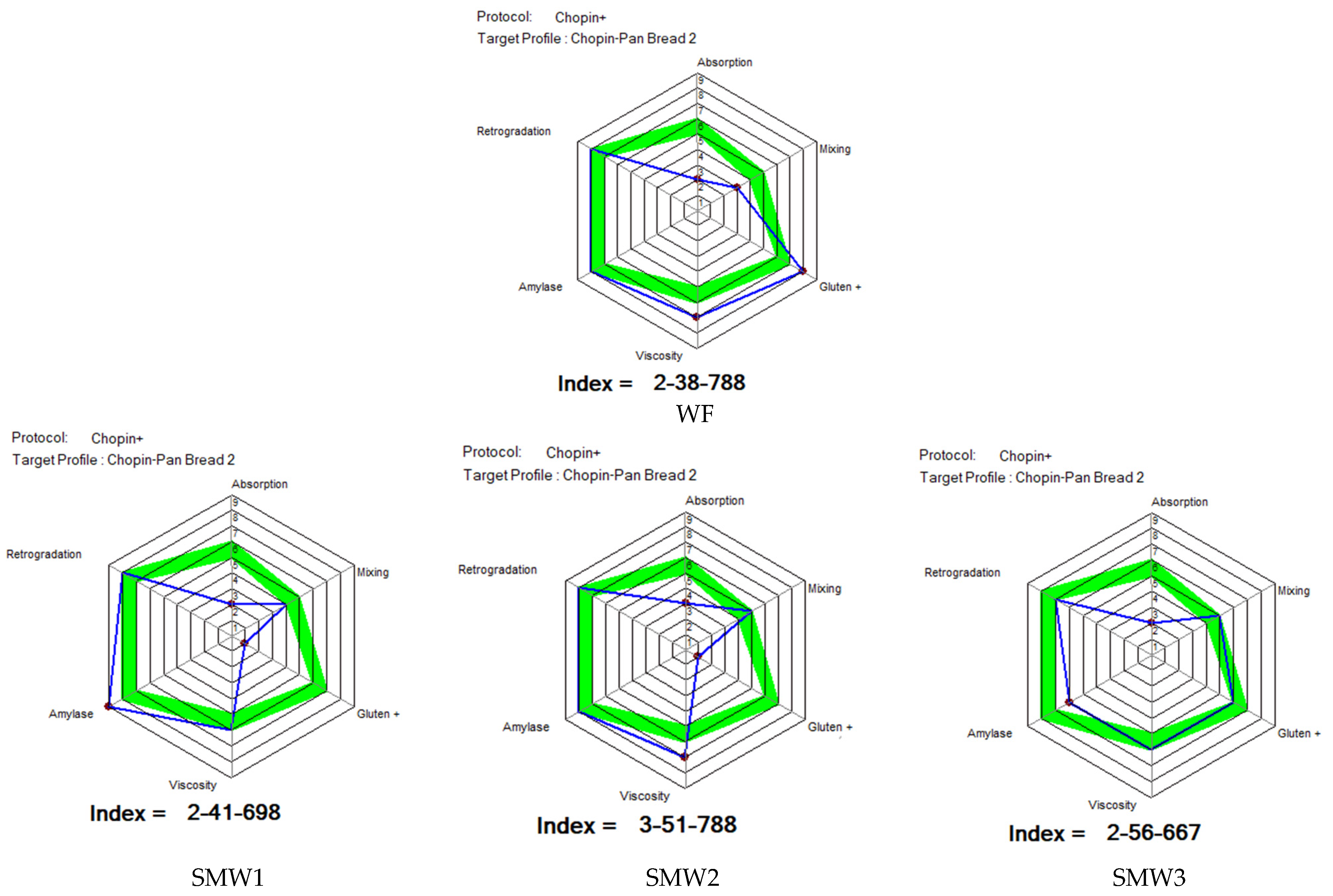
3.4.2. Mixolab Profiler Index
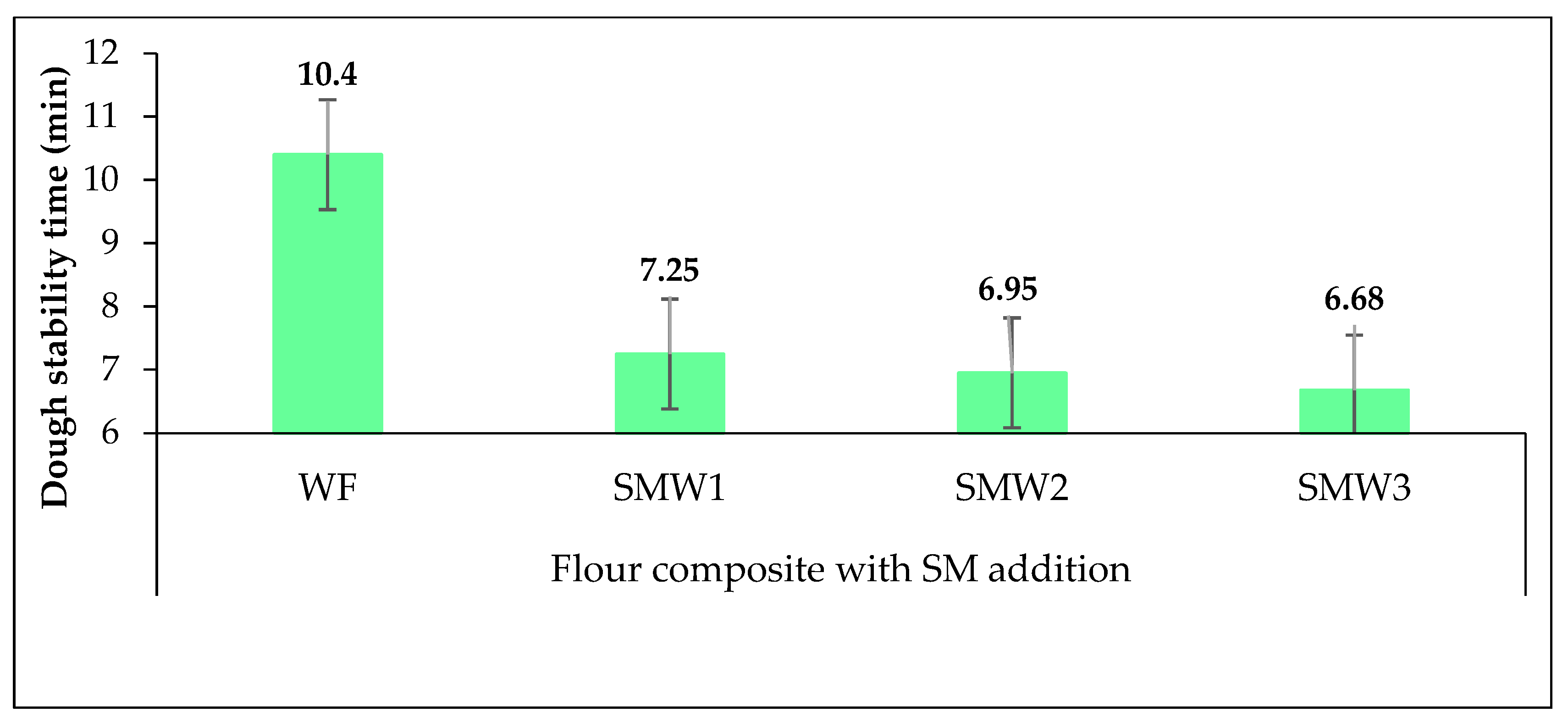
3.4.3. Dough Stability Time
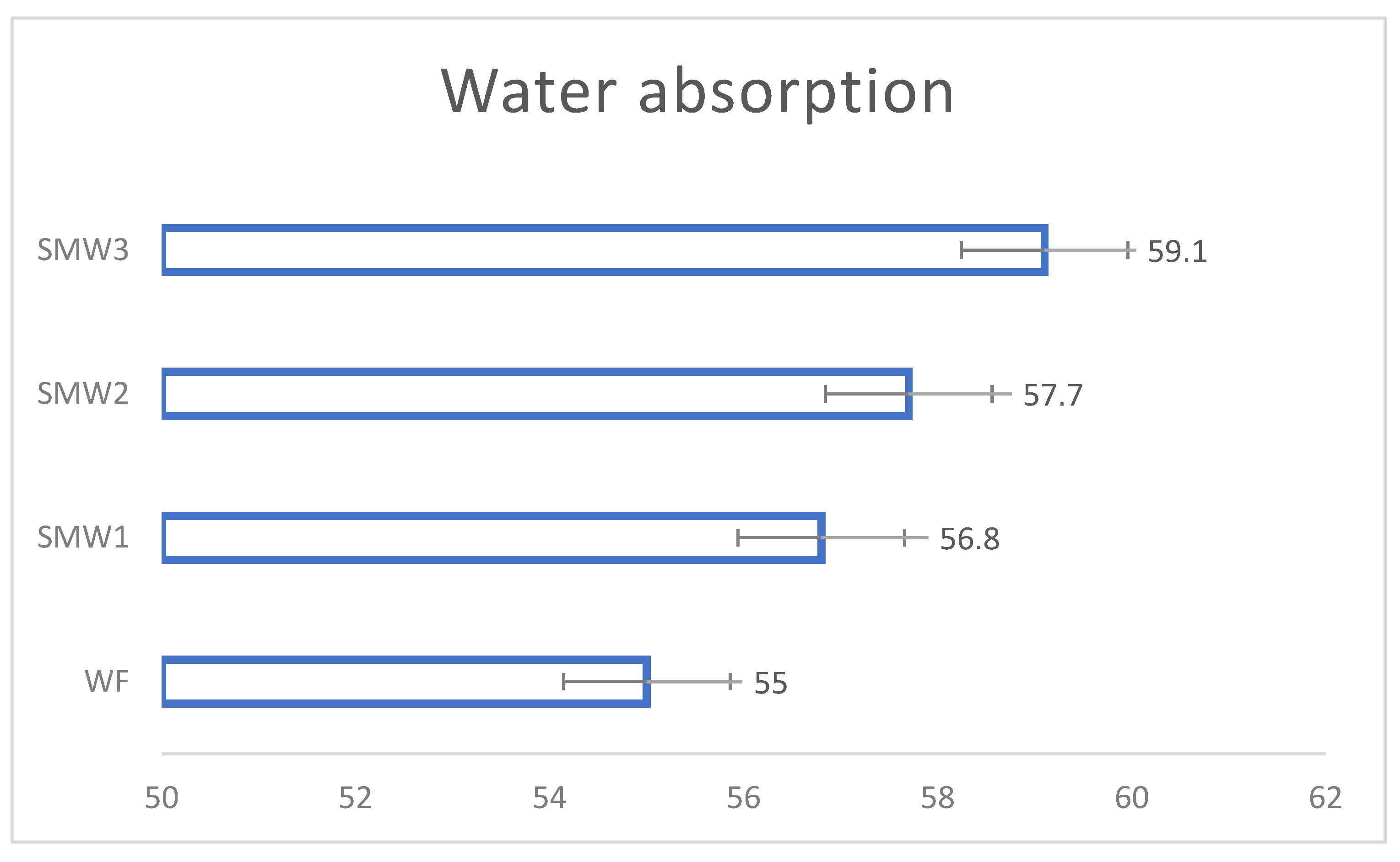
3.4.4. Water Absorption
3.5. Physical Characteristics of Different Types of Bread
3.6. Correlation Between the Different Parameters Analyzed in Flours and Breads
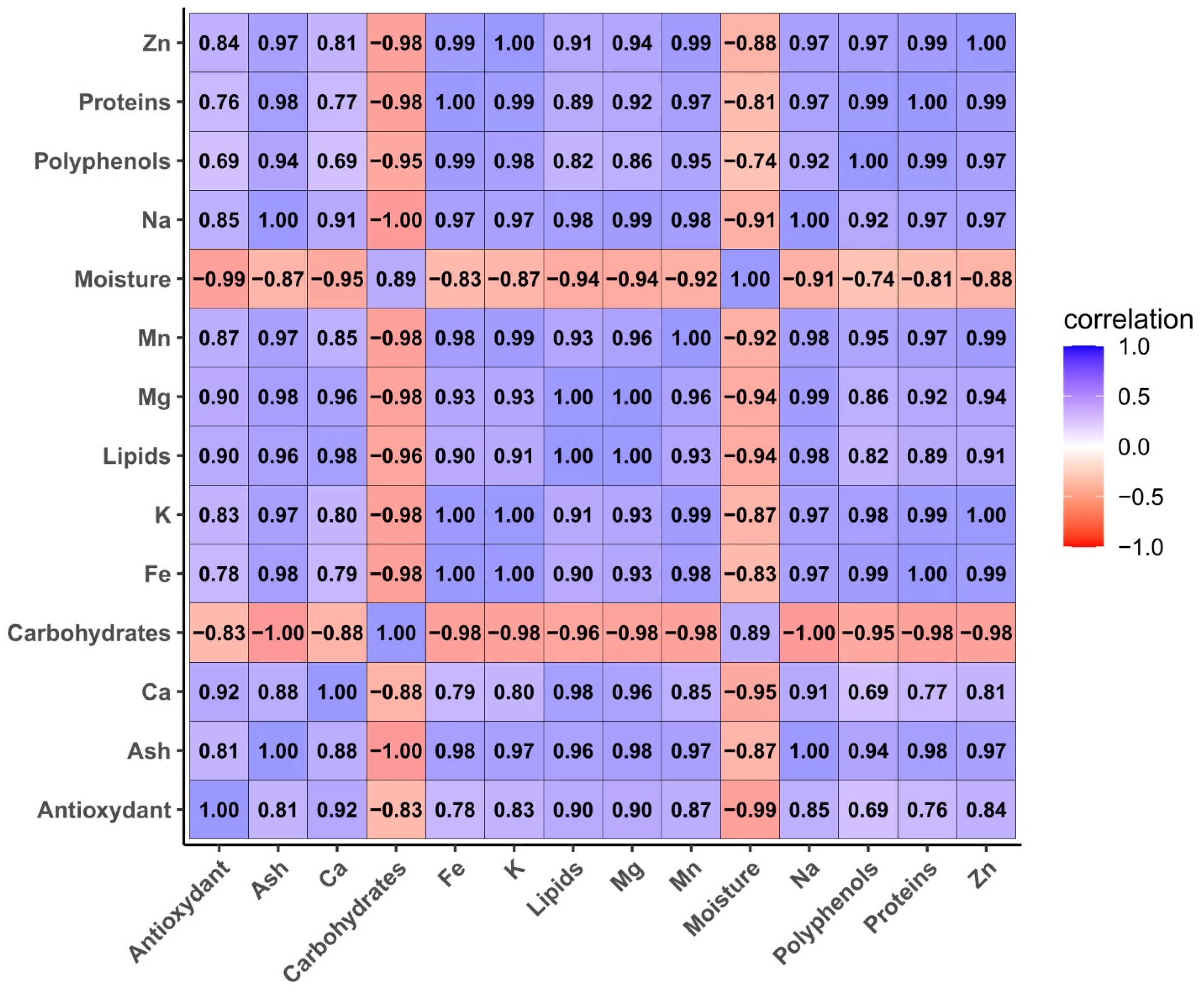
3.6.1. Analysis of the Correlation Between Nutritional Parameters, Macro- and Microelements, Total Polyphenol Profile, and Antioxidant Activity of Different Flours
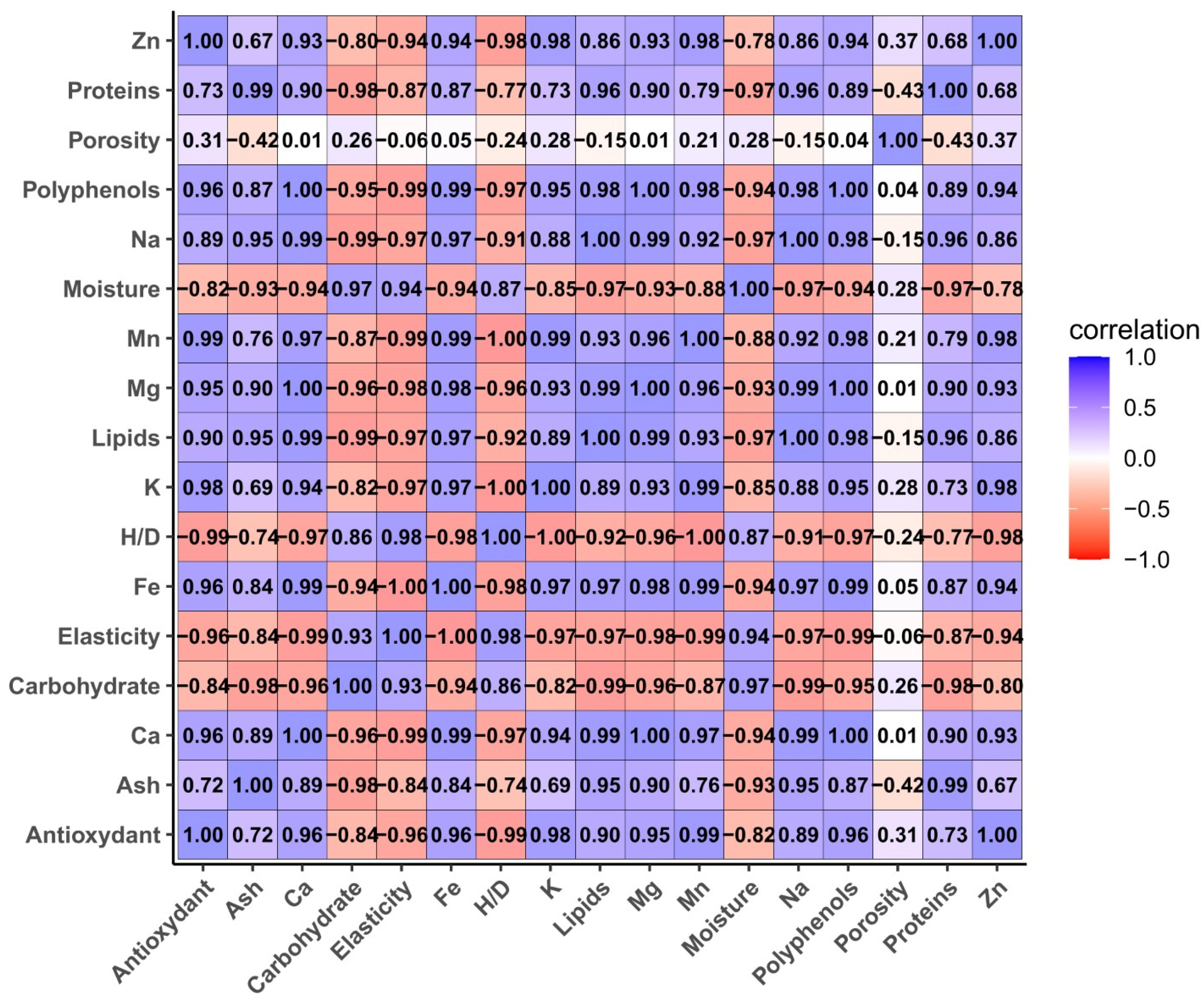
3.6.2. Analysis of the Correlation Between Nutritional Parameters, Macro- and Microelements, Total Polyphenol Profile, Antioxidant Activity, and Physical Characteristics of Different Types of Bread
3.7. Principal Component Analysis for Flour Samples (WF, SM, SMW1, SMW2, and SMW3) and Bread Samples (CB, SMWB1, SMWB2, and SMWB3)
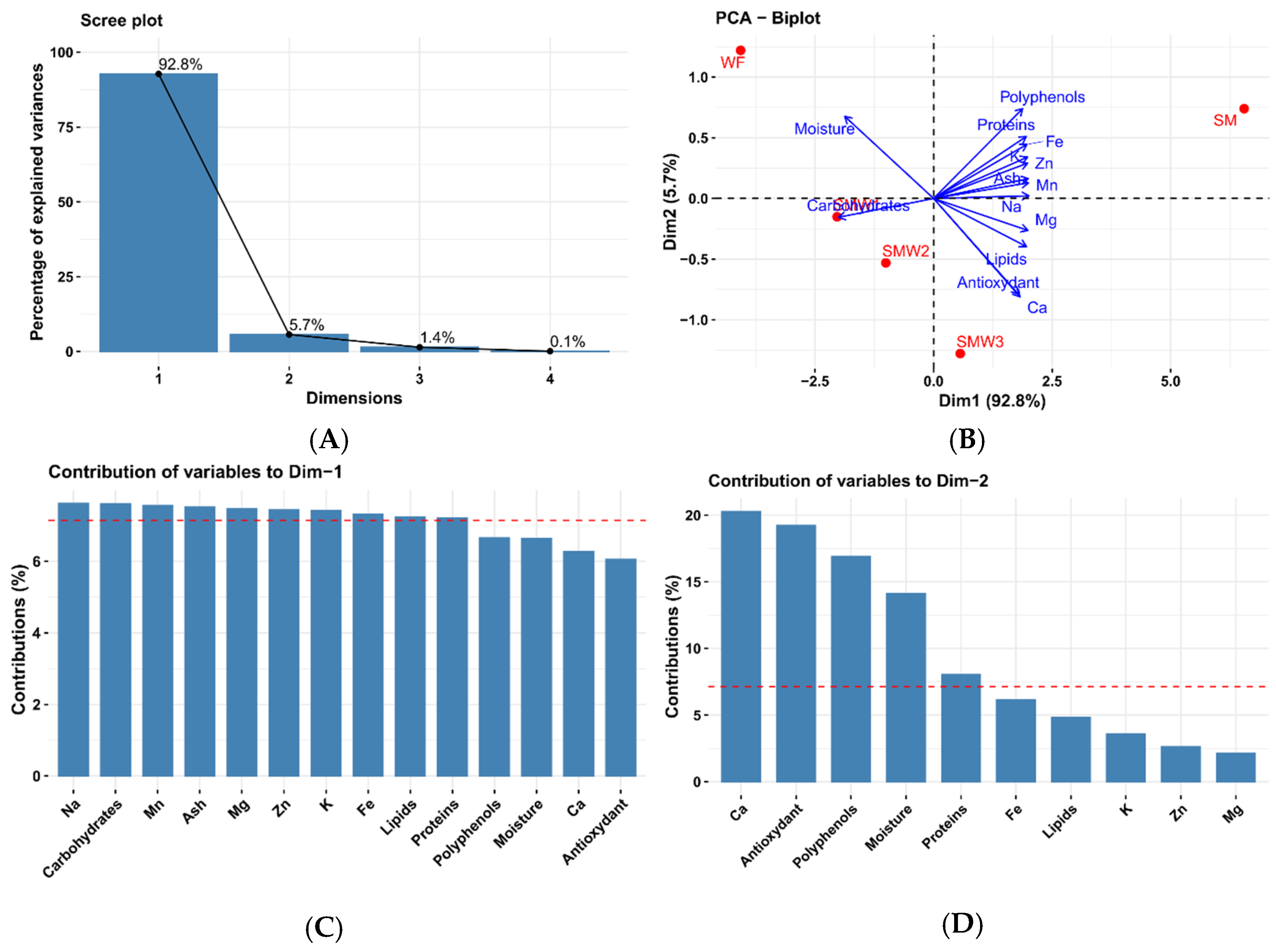
3.7.1. Principal Component Analysis for Flour Samples (WF, SM, SMW1, SMW2, and SMW3)
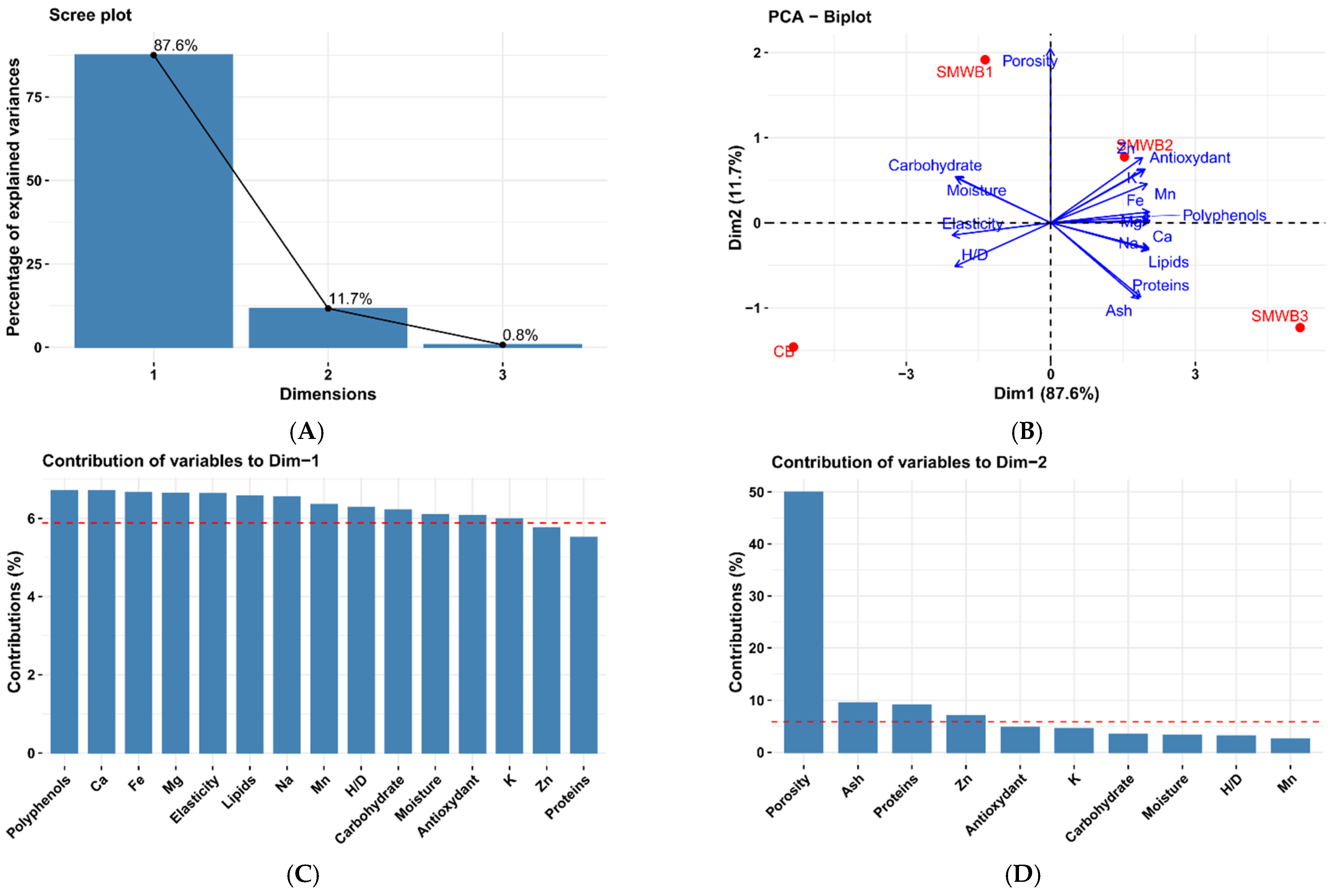
3.7.2. Principal Component Analysis for Bread Samples (CB, SMWB1, SMWB2, and SMWB3)
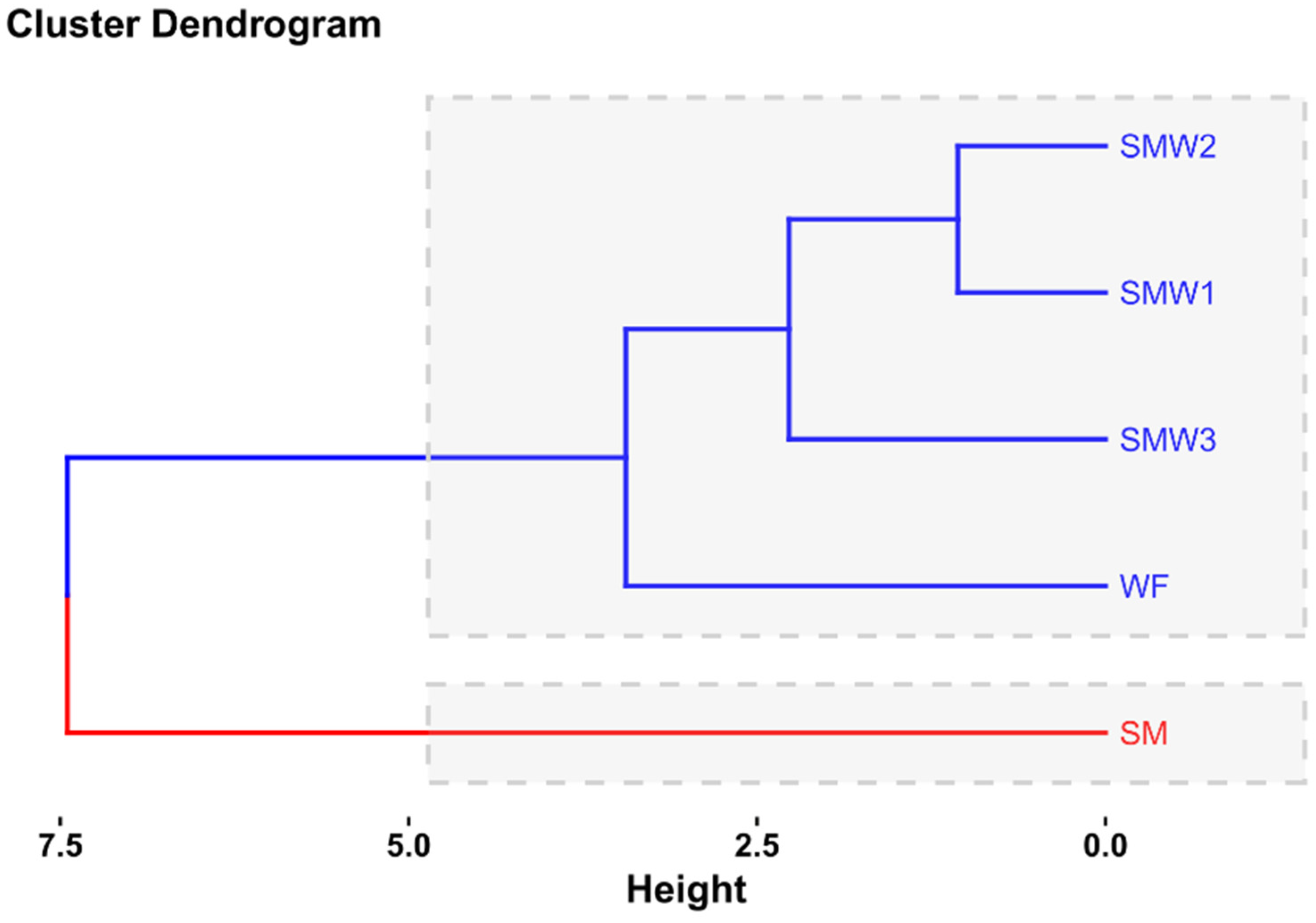
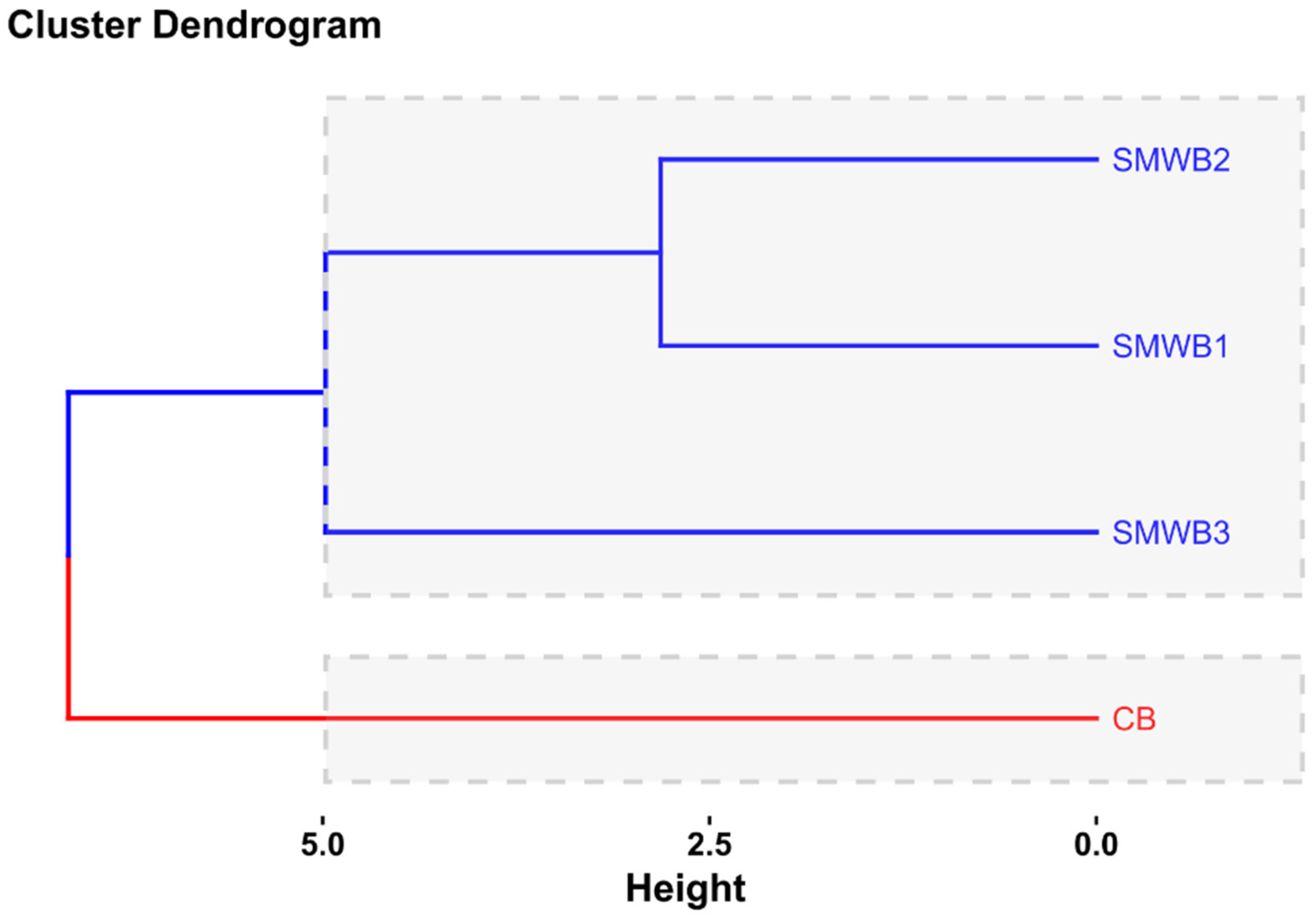
3.8. Cluster Analysis for Flour Samples (WF, SM, SMW1, SMW2, and SMW3) and Bread Samples (CB, SMWB1, SMWB2, and SMWB3)
3.8.1. Cluster Analysis for Flour Samples (WF, SM, SMW1, SMW2, and SMW3)
3.8.2. Cluster Analysis for Breads Samples (CB, SMWB1, SMWB2, and SMWB3)
3.9. The Influence of Fermentation Process on Dough Parameters
3.9.1. The Influence of Fermentation Process on pH and TTA
3.9.2. Kinetic Models of Fermentation Based on pH and Titratable Acidity
Acidification Kinetics (TTA)
Kinetics of pH Decrease
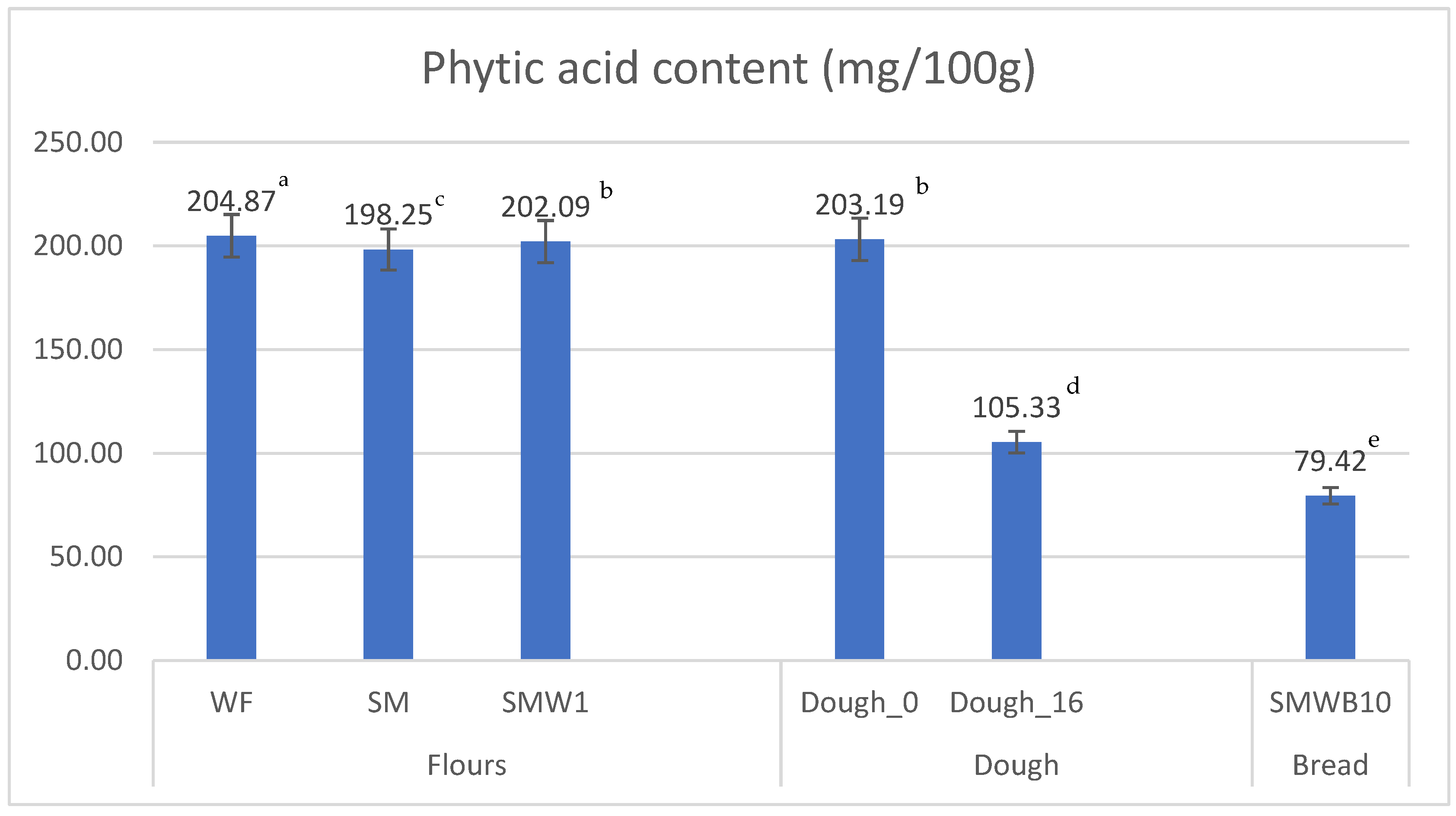
3.9.3. Phytic Acid Degradation
3.9.4. Effect of Fermentation on Phytate Degradation and Technological Properties
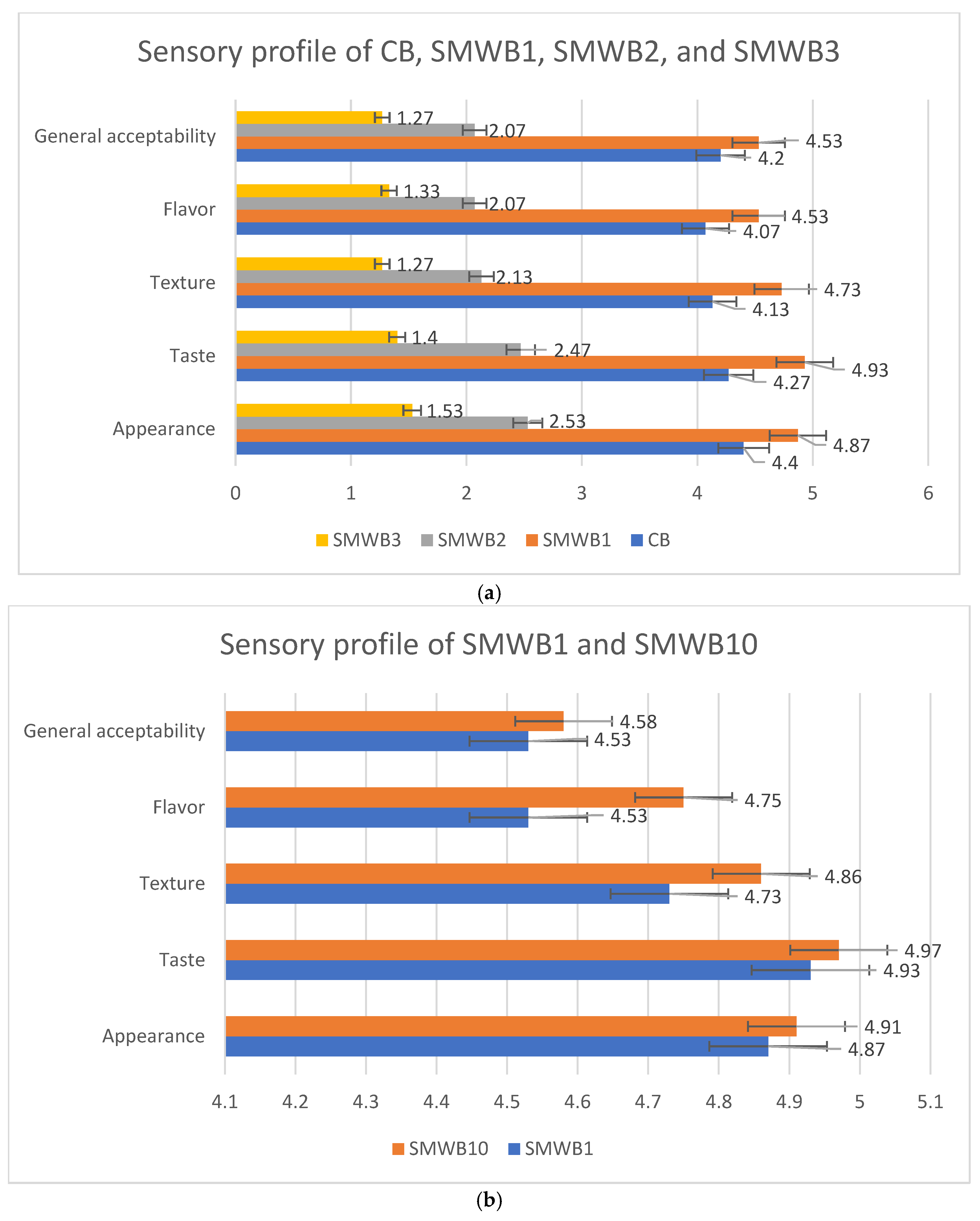
3.10. Sensory Profile of Different Types of Bread
4. Conclusions
Author Contributions
Funding
Institutional Review Board Statement
Informed Consent Statement
Data Availability Statement
Acknowledgments
Conflicts of Interest
References
- World Health Organization. The State of Food Security and Nutrition in the World 2018: Building Climate Resilience for Food Security and Nutrition; Food & Agriculture Org.: Rome, Italy, 2018. [Google Scholar]
- Khedkar, R.; Singh, K. New approaches for food industry waste utilization. Biologix 2015, 51–65. [Google Scholar]
- Adascălului, M.; Multescu, M.; Mihai, A.L.; Bobea, S.A.; Florea, C.; Belc, N. Cytotoxicity assessment and nutritional profiling of bio-active compounds obtained from food waste. Processes 2022, 11, 89. [Google Scholar] [CrossRef]
- Lai, W.T.; Khong, N.M.; Lim, S.S.; Hee, Y.Y.; Sim, B.I.; Lau, K.Y.; Lai, O.M. A review: Modified agricultural by-products for the development and fortification of food products and nutraceuticals. Trends Food Sci. Technol. 2017, 59, 148–160. [Google Scholar] [CrossRef]
- Grasso, S.; Pintado, T.; Pérez-Jiménez, J.; Ruiz-Capillas, C.; Herrero, A.M. Potential of a sunflower seed by-product as animal fat replacer in healthier frankfurters. Foods 2020, 9, 445. [Google Scholar] [CrossRef]
- Salgado, P.R.; Molina Ortiz, S.E.; Petruccelli, S.; Mauri, A.N. Functional food ingredients based on sunflower protein concentrates naturally enriched with antioxidant phenolic compounds. J. Am. Oil Chem. Soc. 2012, 89, 825–836. [Google Scholar] [CrossRef]
- Yegorov, B.; Turpurova, T.; Sharabaeva, E.; Bondar, Y. Prospects of Using By-Products of Sunflower Oil Production in Compound Feed Industry; Wiley: Hoboken, NJ, USA, 2019. [Google Scholar]
- Moure, A.; Sineiro, J.; Domínguez, H.; Parajó, J.C. Functionality of oilseed protein products: A review. Food Res. Int. 2006, 39, 945–963. [Google Scholar] [CrossRef]
- Dabbour, M.; He, R.; Ma, H.; Musa, A. Optimization of ultrasound assisted extraction of protein from sunflower meal and its physicochemical and functional properties. J. Food Process Eng. 2018, 41, e12799. [Google Scholar] [CrossRef]
- Bisinotto, M.S.; da Silva Napoli, D.C.; Simabuco, F.M.; Bezerra, R.M.N.; Antunes, A.E.C.; Galland, F.; Pacheco, M.T.B. Sunflower and Palm Kernel Meal Present Bioaccessible compounds after digestion with antioxidant activity. Foods 2023, 12, 3283. [Google Scholar] [CrossRef] [PubMed]
- Alexandrino, T.D.; da Silva, M.G.; Ferrari, R.A.; Ruiz, A.L.T.G.; Duarte, R.M.T.; Simabuco, F.M.; Bezerra, R.M.N.; Pacheco, M.T.B. Evaluation of some in vitro bioactivities of sunflower phenolic compounds. Curr. Res. Food Sci. 2021, 4, 662–669. [Google Scholar] [CrossRef]
- Wang, Y.; Lyu, B.; Fu, H.; Li, J.; Ji, L.; Gong, H.; Zhang, R.; Liu, J.; Yu, H. The development process of plant-based meat alternatives: Raw material formulations and processing strategies. Food Res. Int. 2023, 167, 112689. [Google Scholar] [CrossRef]
- Andrade, T.N.; Arbach, C.T.; de Oliveira Garcia, A.; Domingues, L.; Marinho, T.V.; Nabeshima, E.; Ramirez, B.F.D.; Pacheco, M.T.B. Exploring new plant-based products: Acceptance of sunflower meal as a protein source in meat alternative products. Food Res. Int. 2025, 209, 116158. [Google Scholar] [CrossRef]
- Grasso, S.; Omoarukhe, E.; Wen, X.; Papoutsis, K.; Methven, L. The use of upcycled defatted sunflower seed flour as a functional ingredient in biscuits. Foods 2019, 8, 305. [Google Scholar] [CrossRef]
- Grasso, S.; Liu, S.; Methven, L. Quality of muffins enriched with upcycled defatted sunflower seed flour. Lwt 2020, 119, 108893. [Google Scholar] [CrossRef]
- Ibidapo, O.P.; Henshaw, F.O.; Shittu, T.A.; Afolabi, W.A. Quality evaluation of functional bread developed from wheat, malted millet (Pennisetum Glaucum) and ‘Okara’flour blends. Sci. Afr. 2020, 10, e00622. [Google Scholar]
- Melini, V.; Melini, F. Chapter 30—Phytic acid and phytase. In A Centum of Valuable Plant Bioactives; Mushtaq, M., Anwar, F., Eds.; Academic Press: Cambridge, MA, USA, 2021; pp. 681–706. [Google Scholar]
- Oatway, L.; Vasanthan, T.; Helm, J.H. Phytic acid. Food Rev. Int. 2001, 17, 419–431. [Google Scholar] [CrossRef]
- Buddrick, O.; Jones, O.A.; Cornell, H.J.; Small, D.M. The influence of fermentation processes and cereal grains in wholegrain bread on reducing phytate content. J. Cereal Sci. 2014, 59, 3–8. [Google Scholar] [CrossRef]
- Najafi, M.A.; Rezaei, K.; Safari, M.; Razavi, S.H. Use of sourdough to reduce phytic acid and improve zinc bioavailability of a traditional flat bread (sangak) from Iran. Food Sci. Biotechnol. 2012, 21, 51–57. [Google Scholar] [CrossRef]
- Nielsen, M.M.; Damstrup, M.L.; Thomsen, A.D.; Rasmussen, S.K.; Hansen, Å. Phytase activity and degradation of phytic acid during rye bread making. Eur. Food Res. Technol. 2007, 225, 173–181. [Google Scholar] [CrossRef]
- Rizwanuddin, S.; Kumar, V.; Singh, P.; Naik, B.; Mishra, S.; Chauhan, M.; Saris, P.E.J.; Verma, A.; Kumar, V. Insight into phytase-producing microorganisms for phytate solubilization and soil sustainability. Front. Microbiol. 2023, 14, 1127249. [Google Scholar] [CrossRef] [PubMed]
- Joudaki, H.; Aria, N.; Moravej, R.; Rezaei Yazdi, M.; Emami-Karvani, Z.; Hamblin, M.R. Microbial Phytases: Properties and Applications in the Food Industry. Curr. Microbiol. 2023, 80, 374. [Google Scholar] [CrossRef] [PubMed]
- Yildirim, R.M.; Arici, M. Effect of the fermentation temperature on the degradation of phytic acid in whole-wheat sourdough bread. Lwt 2019, 112, 108224. [Google Scholar] [CrossRef]
- Dossa, S.; Negrea, M.; Cocan, I.; Berbecea, A.; Obistioiu, D.; Dragomir, C.; Alexa, E.; Rivis, A. Nutritional, Physico-Chemical, Phytochemical, and Rheological Characteristics of Composite Flour Substituted by Baobab Pulp Flour (Adansonia digitata L.) for Bread Making. Foods 2023, 12, 2697. [Google Scholar] [CrossRef]
- Mixolab Applications Handbook Rheological and Enzymatic Analysis; CHOPIN Applications Laboratory: Villeneuve la Garenne, France, 2009.
- Plustea, L.; Negrea, M.; Cocan, I.; Radulov, I.; Tulcan, C.; Berbecea, A.; Popescu, I.; Obistioiu, D.; Hotea, I.; Suster, G. Lupin (Lupinus spp.)-fortified bread: A sustainable, nutritionally, functionally, and technologically valuable solution for bakery. Foods 2022, 11, 2067. [Google Scholar] [CrossRef]
- Horwitz, W.; Latimer, G.W. Official Methods of Analysis of AOAC International; AOAC International: Gaithersburg, MD, USA, 2000; Volume 1. [Google Scholar]
- ISO 2171:2023; Cereals, Pulses and By-Products: Determination of Total Ash Yield by Incineration. International Organization for Standardization: Geneva, Switzerland, 2007.
- Danciu, C.; Muntean, D.; Alexa, E.; Farcas, C.; Oprean, C.; Zupko, I.; Bor, A.; Minda, D.; Proks, M.; Buda, V. Phytochemical characterization and evaluation of the antimicrobial, antiproliferative and pro-apoptotic potential of Ephedra alata Decne. hydroalcoholic extract against the MCF-7 breast cancer cell line. Molecules 2018, 24, 13. [Google Scholar] [CrossRef]
- Obistioiu, D.; Cocan, I.; Tîrziu, E.; Herman, V.; Negrea, M.; Cucerzan, A.; Neacsu, A.-G.; Cozma, A.L.; Nichita, I.; Hulea, A. Phytochemical profile and microbiological activity of some plants belonging to the Fabaceae family. Antibiotics 2021, 10, 662. [Google Scholar] [CrossRef] [PubMed]
- Ciulca, S.; Roma, G.; Alexa, E.; Radulov, I.; Cocan, I.; Madosa, E.; Ciulca, A. variation of polyphenol content and antioxidant activity in some bilberry (Vaccinium myrtillus L.) populations from Romania. Agronomy 2021, 11, 2557. [Google Scholar] [CrossRef]
- Association A.R.S. Romanian Standard for Bread, Confectionery and Bakery Specialties—Methods of Analysis; Association A.R.S.: Washington, DC, USA, 2007. [Google Scholar]
- Megazyme. PHYTIC ACID. In Product Instructions; Megazyme Ltd.: Wicklow, UK, 2025; p. 15. [Google Scholar]
- ISO 6658:2017; Sensory Analysis—Methodology—Overall Guidelines. ISO: Geneva, Switzerland, 2017.
- de Oliveira Filho, J.G.; Egea, M.B. Sunflower seed byproduct and its fractions for food application: An attempt to improve the sustainability of the oil process. J. Food Sci. 2021, 86, 1497–1510. [Google Scholar] [CrossRef] [PubMed]
- Blicharz-Kania, A.; Pecyna, A.; Zdybel, B.; Andrejko, D.; Marczuk, A. Sunflower seed cake as a source of nutrients in gluten-free bread. Sci. Rep. 2023, 13, 10864. [Google Scholar] [CrossRef]
- Grasso, S.; Pintado, T.; Pérez-Jiménez, J.; Ruiz-Capillas, C.; Herrero, A.M. Characterisation of muffins with upcycled sunflower flour. Foods 2021, 10, 426. [Google Scholar] [CrossRef]
- Muhammad Anjum, F.; Nadeem, M.; Issa Khan, M.; Hussain, S. Nutritional and therapeutic potential of sunflower seeds: A review. Br. Food J. 2012, 114, 544–552. [Google Scholar] [CrossRef]
- Petraru, A.; Ursachi, F.; Amariei, S. Nutritional characteristics assessment of sunflower seeds, oil and cake. Perspective of using sunflower oilcakes as a functional ingredient. Plants 2021, 10, 2487. [Google Scholar] [CrossRef]
- Vasudha, C.; Sarla, L. Nutritional quality analysis of sunflower seed cake (SSC). Pharma Innov. J. 2021, 10, 720–728. [Google Scholar]
- Wanjari, N.; Waghmare, J. Phenolic and antioxidant potential of sunflower meal. Adv. Appl. Sci. Res. 2015, 6, 221–229. [Google Scholar]
- Lomascolo, A.; Uzan-Boukhris, E.; Sigoillot, J.-C.; Fine, F. Rapeseed and sunflower meal: A review on biotechnology status and challenges. Appl. Microbiol. Biotechnol. 2012, 95, 1105–1114. [Google Scholar] [CrossRef]
- Dossa, S.; Dragomir, C.; Plustea, L.; Dinulescu, C.; Cocan, I.; Negrea, M.; Berbecea, A.; Alexa, E.; Rivis, A. Gluten-Free Cookies Enriched with Baobab Flour (Adansonia digitata L.) and Buckwheat Flour (Fagopyrum esculentum). Appl. Sci. 2023, 13, 12908. [Google Scholar] [CrossRef]
- Chatziharalambous, D.; Kaloteraki, C.; Potsaki, P.; Papagianni, O.; Giannoutsos, K.; Koukoumaki, D.I.; Sarris, D.; Gkatzionis, K.; Koutelidakis, A.E. Study of the Total Phenolic Content, Total Antioxidant Activity and In Vitro Digestibility of Novel Wheat Crackers Enriched with Cereal, Legume and Agricultural By-Product Flours. Oxygen 2023, 3, 256–273. [Google Scholar] [CrossRef]
- Multescu, M.; Marinas, I.C.; Susman, I.E.; Belc, N. Byproducts (flour, meals, and groats) from the vegetable oil industry as a potential source of antioxidants. Foods 2022, 11, 253. [Google Scholar] [CrossRef] [PubMed]
- Pop, I.-A.; Dossa, S.; Stoin, D.; Neagu, C.; Moigradean, D.; Alexa, E.; Poiana, M.-A. Nutritional, Rheological, and Functional Assessment in the Development of Bread Using Chestnut and Rosehip-Fortified Wheat Flour. Foods 2025, 14, 3343. [Google Scholar] [CrossRef]
- Mariotti, M.; Lucisano, M.; Pagani, M.A.; Ng, P.K. The role of corn starch, amaranth flour, pea isolate, and Psyllium flour on the rheological properties and the ultrastructure of gluten-free doughs. Food Res. Int. 2009, 42, 963–975. [Google Scholar] [CrossRef]
- Gómez, M.; Ronda, F.; Blanco, C.A.; Caballero, P.A.; Apesteguía, A. Effect of dietary fibre on dough rheology and bread quality. Eur. Food Res. Technol. 2003, 216, 51–56. [Google Scholar] [CrossRef]
- Antanas, S.; Alexa, E.; Negrea, M.; Guran, E.; Lazureanu, A. Studies Regarding Rheological Properties of Triticale, Wheat and Rye Flours; MDPI: Geneva, Switzerland, 2013. [Google Scholar]
- Dhiman, A.; Chopra, R.; Singh, P.K.; Homroy, S.; Chand, M.; Talwar, B. Amelioration of nutritional properties of bakery fat using omega-3 fatty acid-rich edible oils: A review. J. Sci. Food Agric. 2024, 104, 3175–3184. [Google Scholar] [CrossRef]
- Steffolani, E.; Martinez, M.M.; León, A.E.; Gómez, M. Effect of pre-hydration of chia (Salvia hispanica L.), seeds and flour on the quality of wheat flour breads. LWT-Food Sci. Technol. 2015, 61, 401–406. [Google Scholar] [CrossRef]
- Coelho, M.S.; de las Mercedes Salas-Mellado, M. Effects of substituting chia (Salvia hispanica L.) flour or seeds for wheat flour on the quality of the bread. LWT-Food Sci. Technol. 2015, 60, 729–736. [Google Scholar] [CrossRef]
- El-Adawy, T. Effect of sesame seed proteins supplementation on the nutritional, physical, chemical and sensory properties of wheat flour bread. Plant Foods Hum. Nutr. 1995, 48, 311–326. [Google Scholar] [CrossRef] [PubMed]
- Luna Pizarro, P.; Almeida, E.L.; Coelho, A.S.; Sammán, N.C.; Hubinger, M.D.; Chang, Y.K. Functional bread with n-3 alpha linolenic acid from whole chia (Salvia hispanica L.) flour. J. Food Sci. Technol. 2015, 52, 4475–4482. [Google Scholar] [CrossRef]
- Mansour, E.; Dworschak, E.; Pollhamer, Z.; Hóvári, J. Pumpkin and canola seed proteins and bread quality. Acta Aliment. Hung 1999, 281, 59–70. [Google Scholar]
- Iglesias-Puig, E.; Haros, M. Evaluation of performance of dough and bread incorporating chia (Salvia hispanica L.). Eur. Food Res. Technol. 2013, 237, 865–874. [Google Scholar] [CrossRef]
- Verdu, S.; Vasquez, F.; Ivorra, E.; Sanchez, A.J.; Barat, J.M.; Grau, R. Physicochemical effects of chia (Salvia hispanica) seed flour on each wheat bread-making process phase and product storage. J. Cereal Sci. 2015, 65, 67–73. [Google Scholar] [CrossRef]
- De Lamo, B.; Gómez, M. Bread Enrichment with Oilseeds. A Review. Foods 2018, 7, 191. [Google Scholar] [CrossRef]
- Dragomir, C.; Dossa, S.; Jianu, C.; Cocan, I.; Radulov, I.; Berbecea, A.; Radu, F.; Alexa, E. Composite Flours Based on Black Lentil Seeds and Sprouts with Nutritional, Phytochemical and Rheological Impact on Bakery/Pastry Products. Foods 2025, 14, 319. [Google Scholar] [CrossRef]
- Iombor, T.; Onah, M.; Girgih, A. Evaluation of the nutritional quality and consumer acceptability of wheat-sesame (Triticum aestivum-Sesame indicum) composite bread blends. J. Nutr. Health Food Sci. 2016, 4, 1–7. [Google Scholar]
- Lee, Y.P.; Mori, T.A.; Puddey, I.B.; Sipsas, S.; Ackland, T.R.; Beilin, L.J.; Hodgson, J.M. Effects of lupin kernel flour–enriched bread on blood pressure: A controlled intervention study. Am. J. Clin. Nutr. 2009, 89, 766–772. [Google Scholar] [CrossRef]
- Ugwuona, F.; Ejinkeonye, U.; Ibrahim, H. Effect of Added Sesame Seed on Quality Characteristics of Wheat Bread. J. Home Econ. 2017, 24, 1–12. [Google Scholar]
- Graça, C.; Raymundo, A.; Sousa, I. Wheat bread with dairy products—Technology, nutritional, and sensory properties. Appl. Sci. 2019, 9, 4101. [Google Scholar] [CrossRef]
- Karamać, M.; Kosińska, A.; Estrella, I.; Hernández, T.; Duenas, M. Antioxidant activity of phenolic compounds identified in sunflower seeds. Eur. Food Res. Technol. 2012, 235, 221–230. [Google Scholar] [CrossRef]
- Ribeiro, T.B.; Campos, D.; Oliveira, A.; Nunes, J.; Vicente, A.A.; Pintado, M. Study of olive pomace antioxidant dietary fibre powder throughout gastrointestinal tract as multisource of phenolics, fatty acids and dietary fibre. Food Res. Int. 2021, 142, 110032. [Google Scholar] [CrossRef]
- Tullberg, C.; Vegarud, G.; Undeland, I. Oxidation of marine oils during in vitro gastrointestinal digestion with human digestive fluids–Role of oil origin, added tocopherols and lipolytic activity. Food Chem. 2019, 270, 527–537. [Google Scholar] [CrossRef]
- Gómez, M.; Oliete, B. Effect of fibre in enriched breads. In Bread and its Fortification: Nutrition and Health Benefits; CRC Press: Boca Raton, FL, USA, 2015; pp. 273–305. [Google Scholar]
- Wang, J.; Rosell, C.M.; de Barber, C.B. Effect of the addition of different fibres on wheat dough performance and bread quality. Food Chem. 2002, 79, 221–226. [Google Scholar] [CrossRef]
- Fluerasu, D.; Neagu, C.; Dossa, S.; Negrea, M.; Jianu, C.; Berbecea, A.; Stoin, D.; Lalescu, D.; Brezovan, D.; Cseh, L.; et al. The Use of Whey Powder to Improve Bread Quality: A Sustainable Solution for Utilizing Dairy By-Products. Foods 2025, 14, 2911. [Google Scholar] [CrossRef] [PubMed]
- Zhou, J.; Liu, J.; Tang, X. Effects of whey and soy protein addition on bread rheological property of wheat flour. J. Texture Stud. 2018, 49, 38–46. [Google Scholar] [CrossRef] [PubMed]
- Courtin, C.; Delcour, J.A. Arabinoxylans and endoxylanases in wheat flour bread-making. J. Cereal Sci. 2002, 35, 225–243. [Google Scholar] [CrossRef]
- Katina, K.; Arendt, E.; Liukkonen, K.-H.; Autio, K.; Flander, L.; Poutanen, K. Potential of sourdough for healthier cereal products. Trends Food Sci. Technol. 2005, 16, 104–112. [Google Scholar] [CrossRef]
- Granato, D.; Santos, J.S.; Escher, G.B.; Ferreira, B.L.; Maggio, R.M. Use of principal component analysis (PCA) and hierarchical cluster analysis (HCA) for multivariate association between bioactive compounds and functional properties in foods: A critical perspective. Trends Food Sci. Technol. 2018, 72, 83–90. [Google Scholar] [CrossRef]
- González-Pérez, S.; Vereijken, J.M. Sunflower proteins: Overview of their physicochemical, structural and functional properties. J. Sci. Food Agric. 2007, 87, 2173–2191. [Google Scholar] [CrossRef]
- De Oliveira, F.C.; Coimbra, J.S.d.R.; De Oliveira, E.B.; Zuñiga, A.D.G.; Rojas, E.E.G. Food protein-polysaccharide conjugates obtained via the Maillard reaction: A review. Crit. Rev. Food Sci. Nutr. 2016, 56, 1108–1125. [Google Scholar] [CrossRef]
- Xu, J.; Wang, W.; Li, Y. Dough properties, bread quality, and associated interactions with added phenolic compounds: A review. J. Funct. Foods 2019, 52, 629–639. [Google Scholar] [CrossRef]
- Qin, W.; Pi, J.; Zhang, G. The interaction between tea polyphenols and wheat gluten in dough formation and bread making. Food Funct. 2022, 13, 12827–12835. [Google Scholar] [CrossRef]
- Sanz-Penella, J.M.; Wronkowska, M.; Soral-Smietana, M.; Haros, M. Effect of whole amaranth flour on bread properties and nutritive value. LWT-Food Sci. Technol. 2013, 50, 679–685. [Google Scholar] [CrossRef]
- Shewry, P.R. Wheat. J. Exp. Bot. 2009, 60, 1537–1553. [Google Scholar] [CrossRef] [PubMed]
- Požrl, T.; Kopjar, M.; Kurent, I.; Hribar, J.; Janeš, A.; Simčič, M. Phytate degradation during breadmaking: The influence of flour type and breadmaking procedures. Czech J. Food Sci. 2009, 27, 29–38. [Google Scholar] [CrossRef]
- Aplevicz, K.S.; Ogliari, P.J.; Sant’Anna, E.S. Influence of fermentation time on characteristics of sourdough bread. Braz. J. Pharm. Sci. 2013, 49, 233–239. [Google Scholar] [CrossRef]
- Dossa, S.; Neagu, C.; Lalescu, D.; Negrea, M.; Stoin, D.; Jianu, C.; Berbecea, A.; Cseh, L.; Rivis, A.; Suba, M.; et al. Evaluation of the Nutritional, Rheological, Functional, and Sensory Properties of Cookies Enriched with Taro (Colocasia esculenta) Flour as a Partial Substitute for Wheat Flour. Foods 2025, 14, 3526. [Google Scholar] [CrossRef] [PubMed]
- Febles, C.; Arias, A.; Hardisson, A.; Rodrıguez-Alvarez, C.; Sierra, A. Phytic acid level in wheat flours. J. Cereal Sci. 2002, 36, 19–23. [Google Scholar] [CrossRef]
- Ali, S.; Kausar, T.; Shah, W. Nutritional evaluation of heat treated sunflower meal on the performance of broiler chicks. Proc.-Pak. Acad. Sci. 2004, 41, 55. [Google Scholar]
- Gandhi, A.; Jha, K.; Gupta, V. Polyphenol and phytate contents and its nutritional profile. Asean Food J. 2008, 15, 97–100. [Google Scholar]
- Miller, N.; Pretorius, H.; Du Toit, L. Phytic acid in sunflower seeds, pressed cake and protein concentrate. Food Chem. 1986, 21, 205–209. [Google Scholar] [CrossRef]
- Ebune, A.; Al-Asheh, S.; Duvnjak, Z. Effects of phosphate, surfactants and glucose on phytase production and hydrolysis of phytic acid in canola meal by Aspergillus ficuum during solid-state fermentation. Bioresour. Technol. 1995, 54, 241–247. [Google Scholar] [CrossRef]
- El-Batal, A.; Karem, H.A. Phytase production and phytic acid reduction in rapeseed meal by Aspergillus niger during solid state fermentation. Food Res. Int. 2001, 34, 715–720. [Google Scholar] [CrossRef]
- Magala, M.; Kohajdová, Z.; Karovičová, J. Degradation of phytic acid during fermentation of cereal substrates. J. Cereal Sci. 2015, 61, 94–96. [Google Scholar] [CrossRef]
- Sokrab, A.M.; Mohamed Ahmed, I.A.; Babiker, E.E. Effect of fermentation on antinutrients, and total and extractable minerals of high and low phytate corn genotypes. J. Food Sci. Technol. 2014, 51, 2608–2615. [Google Scholar] [CrossRef]
- Dhankher, N.; Chauhan, B. Effect of temperature and fermentation time on phytic acid and polyphenol content of rabadi—A fermented pearl millet food. J. Food Sci. 1987, 52, 828–829. [Google Scholar] [CrossRef]
- El Hag, M.E.; El Tinay, A.H.; Yousif, N.E. Effect of fermentation and dehulling on starch, total polyphenols, phytic acid content and in vitro protein digestibility of pearl millet. Food Chem. 2002, 77, 193–196. [Google Scholar] [CrossRef]
- Qazi, I.M.; Wahab, S.; Shad, A.A.; Zeb, A.; Ayuab, M. Effect of different fermentation time and baking on phytic acid. Asian J. Plant Sci. 2003, 2, 597–601. [Google Scholar] [CrossRef][Green Version]
- Guttieri, M.; Peterson, K.; Souza, E. Milling and baking quality of low phytic acid wheat. Crop Sci. 2006, 46, 2403–2408. [Google Scholar] [CrossRef]
- Türk, M.; Sandberg, A.-S. Phytate degradation during breadmaking: Effect of phytase addition. J. Cereal Sci. 1992, 15, 281–294. [Google Scholar] [CrossRef]
- WEAVER, C.M.; Kannan, S. Phytate and mineral bioavailability. In Food Phytates; CRC Press: Boca Raton, FL, USA, 2001; pp. 227–240. [Google Scholar]
- Karaman, K.; Sagdic, O.; Durak, M.Z. Use of phytase active yeasts and lactic acid bacteria isolated from sourdough in the production of whole wheat bread. Lwt 2018, 91, 557–567. [Google Scholar] [CrossRef]
- Alkay, Z.; Falah, F.; Cankurt, H.; Dertli, E. Exploring the Nutritional Impact of Sourdough Fermentation: Its Mechanisms and Functional Potential. Foods 2024, 13, 1732. [Google Scholar] [CrossRef]
- Wang, Z.; Wang, L. Impact of sourdough fermentation on nutrient transformations in cereal-based foods: Mechanisms, practical applications, and health implications. Grain Oil Sci. Technol. 2024, 7, 124–132. [Google Scholar] [CrossRef]
- Erben, M.; Osella, C.A. Optimization of mold wheat bread fortified with soy flour, pea flour and whey protein concentrate. Food Sci. Technol. Int. 2017, 23, 457–468. [Google Scholar] [CrossRef] [PubMed]
- Gani, A.; Broadway, A.; Masoodi, F.A.; Wani, A.A.; Maqsood, S.; Ashwar, B.A.; Shah, A.; Rather, S.A.; Gani, A. Enzymatic hydrolysis of whey and casein protein-effect on functional, rheological, textural and sensory properties of breads. J. Food Sci. Technol. 2015, 52, 7697–7709. [Google Scholar] [CrossRef] [PubMed]
- Külcü, D.B.; Kocabaş, N.; Kutlu, S. The determination of some qualities parameters and use of strip loin beef (M. Longissimus dorsi) powder in bread enrichment. Cumhur. Sci. J. 2019, 40, 715–722. [Google Scholar] [CrossRef]
- Rosell, C.M.; Rojas, J.A.; De Barber, C.B. Influence of hydrocolloids on dough rheology and bread quality. Food Hydrocoll. 2001, 15, 75–81. [Google Scholar] [CrossRef]



| Ingredient |  |  |  |  |
| CB | SMWB1 | SMWB2 | SMWB3 | |
| Wheat flour (WF) | 1 kg | 0.900 kg | 0.800 kg | 0.700 kg |
| Sunflowers meal (SM) | - | 0.100 kg | 0.200 kg | 0.300 kg |
| Active dry baker’s yeast | 0.030 kg | 0.030 kg | 0.030 kg | 0.030 kg |
| Salt | 0.020 Kg | 0.020 Kg | 0.020 Kg | 0.020 Kg |
| Water | 500 mL | 500 mL | 500 mL | 500 mL |
 SMWB10 | Ingredient | Wheat flour (WF) | Sunflowers meal (SM) | Sourdough | Active dry baker’s yeast | Salt | Water |
| Quantity | 0.900 kg | 0.100 kg | 0.200 | 0.001 | 0.020 | 1000 mL |
| Samples | Nutritional Characteristics | ||||
|---|---|---|---|---|---|
| Moisture | Ash | Proteins | Lipids | Carbohydrates | |
| (%) | (%) | (%) | (%) | (g/100 g) | |
| Composite flours | |||||
| SM | 10 ± 0.02 d | 2.73 ± 0.05 a | 24 ± 0.02 a | 10 ± 0.01 e | 53.28 ± 0.06 a |
| WF | 10.40 ± 0.08 a | 0.60 ± 0.02 e | 12.26 ± 0.04 e | 1.42 ± 0.04 d | 75.32 ± 0.15 b |
| SMW1 | 10.23 ± 0.02 b | 0.72 ± 0.01 d | 12.93 ± 0.05 d | 3 ± 0.17 c | 73.12 ± 0.18 c |
| SMW2 | 10.16 ± 0.04 b,c | 0.95 ± 0.02 c | 13.64 ± 0.04 c | 4.32 ± 0.15 b | 70.93 ±0.16 d |
| SMW3 | 10.13 ± 0.02 c | 1.46 ± 0.05 b | 14.59 ± 0.27 b | 7.08 ± 0.32 a | 66.75 ± 0.59 e |
| Breads | |||||
| CB | 34.71 ± 0.34 a | 0.99 ± 0.02 c | 11.30 ± 0.02 c | 1.06 ± 0.06 d | 51.95 ± 0.33 a |
| SMWB1 | 34.61 ± 0.25 a | 1.01 ± 0.04 c | 11.23 ± 0.05 c | 2.47 ± 0.07 c | 50.68 ± 0.29 b |
| SMWB2 | 33.94 ± 0.07 b | 1.28 ± 0.06 b | 12.15 ± 0.08 b | 4.02 ± 0.03 b | 48.61 ± 0.16 c |
| SMWB3 | 33.50 ± 0.02 c | 2.08 ± 0.03 a | 13.50 ± 0.02 a | 6.44 ± 0.04 a | 44.48 ± 0.03 d |
| Improved bread | |||||
| SMWB1 | 34.61 ± 0.25 b | 1.01 ± 0.04 b | 11.23 ± 0.05 b | 2.47 ± 0.07 a | 50.68 ± 0.29 a |
| SMWB10 | 45.13 ± 0.01 a | 1.48 ± 0.01 a | 14.16 ± 0.02 a | 2.52 ± 0.02 a | 36.71 ± 0.02 b |
| Samples | Micro and Macro-Elements Contents (mg/kg) | ||||||
|---|---|---|---|---|---|---|---|
| Mn | Ca | Mg | K | Na | Zn | Fe | |
| Composite flours | |||||||
| SM | 20.51 ± 0.66 a | 736.59 ± 42.76 a | 702.68 ± 17.03 a | 8040.88 ± 41.78 a | 120.64 ± 0.68 a | 69.86 ± 0.52 a | 250.42 ± 1.19 a |
| WF | 4.45 ± 0.51 d | 369.09 ± 21.03 e | 363.67 ± 10.72 e | 1248.85 ± 20.82 e | 20.39 ± 0.61 e | 3.43 ± 0.05 e | 8.51 ± 0.04 e |
| SMW1 | 7.59 ± 0.29 c | 477.45 ± 5.31 d | 427.13 ± 5.65 d | 2460.22 ± 18.55 d | 30.32 ± 1 d | 17.79 ± 0.51 d | 30.09 ± 0.65 d |
| SMW2 | 9.80 ± 0.16 b | 539 ± 20.37 c | 466.18 ± 4.31 c | 2736.48 ± 41.90 c | 45.49 ± 0.62 c | 18.79 ± 0.38 c | 47.34 ± 0.84 c |
| SMW3 | 9.95 ± 0.15 b | 687.32 ± 8.27 b | 561.2 ± 4.83 b | 3034.39 ± 42.68 b | 65.47 ± 0.36 b | 22.39 ± 0.25 b | 62.66 ± 0.58 b |
| Composite Breads | |||||||
| CB | 7.45 ± 0.32 d | 354.86 ± 6.08 d | 353.21 ± 1.97 d | 1201.96 ± 6.53 d | 19.50 ± 0.17 d | 3.24 ± 0.03 d | 8.6 ± 0.04 d |
| SMWB1 | 9.08 ± 0.13 c | 489.29 ± 5.59 c | 420.57 ± 1.37 c | 1851.57 ± 46.07 c | 30.01 ± 0.57 c | 16.91 ± 0.23 c | 29.33 ± 0.88 c |
| SMWB2 | 9.08 ± 0.13 b | 564.65 ± 4.50 b | 447.59 ± 1.58 b | 2198.67 ± 3.90 b | 41.17 ± 0.19 b | 18.52 ± 0.40 b | 46.19 ± 0.48 b |
| SMWB3 | 10.07 ± 0.18 a | 688.91 ± 10.02 a | 516.15 ± 4.58 a | 2263.23 ± 14.06 a | 60.03 ± 0.38 a | 21.98 ± 0.10 a | 59.15 ± 0.50 a |
| Improved bread | |||||||
| SMWB1 | 9.08 ± 0.13 b | 489.29 ± 5.59 b | 420.57 ± 1.37 b | 1851.57 ± 46.07 b | 30.01 ± 0.57 b | 16.91 ± 0.23 b | 29.33 ± 0.88 b |
| SMWB10 | 10.19 ± 0.04 a | 526.15 ± 4.33 a | 490.14 ± 1.28 a | 2082.23 ± 11.00 a | 33.82 ±0.55 a | 17.53 ± 0.25 a | 31.68 ± 0.34 a |
| Samples | Phytochemical Profile | |
|---|---|---|
| Antioxydantes Activity | Total Polyphenols | |
| (%) | (mg QE/100 g) | |
| Composite flours | ||
| SM | 89.7 ± 0.07 a | 14,284.92 ± 0.59 a |
| WF | 76.07 ± 0.09 e | 345.55 ± 1.45 e |
| SMW1 | 83.72 ± 0.26 d | 729.08 ± 0.53 d |
| SMW2 | 84.28 ± 0.02 c | 927.64 ± 0.71 c |
| SMW3 | 85.69 ± 0.00 b | 1222.17 ± 1.02 b |
| Breads | ||
| CB | 75.36 ± 0.15 d | 369.07 ± 0.95 d |
| SMWB1 | 82.61 ± 0.10 c | 749.19 ± 1.19 c |
| SMWB2 | 84.04 ± 0.05 b | 964.91 ± 0.58 b |
| SMWB3 | 86.343 ± 0.11 a | 1278.25 ± 1.30 a |
| Improved bread | ||
| SMWB1 | 82.61 ± 0.10 b | 749.19 ± 1.19 b |
| SMWB10 | 85.09 ± 0.20 a | 821.65 ± 2.01 a |
| Samples | Porosity (%) | Elasticity (%) | Height/Diameter Ratio (H/D) |
|---|---|---|---|
| CB | 65.25 ± 0.01 a | 61.18 ± 0.08 a | 0.59 ± 0.002 a |
| SMWB1 | 64.25 ± 0.05 b | 59.57 ± 0.37 b | 0.52 ± 0.002 b |
| SMWB2 | 63.39 ± 0.08 c | 58.22 ± 0.13 c | 0.49 ± 0.002 c |
| SMWB3 | 62.43 ±0.03 d | 57.28 ±0.18 d | 0.47 ±0.002 d |
| Improved bread | |||
| SMWB1 | 64.25 ± 0.05 b | 59.57 ± 0.37 b | 0.52 ± 0.002 a |
| SMWB10 | 77.04 ± 0.68 a | 67.67 ± 0.67 a | 0.53 ± 0.016 a |
| Sample/Time (h) | Temperature (°C) | pH | TTA (mL NaOH/10 g Sample) |
|---|---|---|---|
| Dough_0 | 20.03 ± 0.06 | 6.13 ± 0.01 | 2.6 ± 0.01 |
| Dough_2 | 19.7 ± 0.06 | 6.09 ± 0.01 | 3 ± 0.1 |
| Dough_4 | 18.2 ± 0.00 | 6.04 ± 0.01 | 3.43 ± 0.06 |
| Dough_6 | 17.8 ± 0.01 | 5.89 ± 0.01 | 4 ± 0.17 |
| Dough_8 | 16.43 ± 0.06 | 5.82 ± 0.00 | 4.77 ± 0.01 |
| Dough_10 | 15.87 ± 0.06 | 5.8 ± 0.01 | 5 ± 0.1 |
| Dough_12 | 15.01 ± 0.02 | 5.57 ± 0.06 | 5.4 ± 0.1 |
| Dough_14 | 14.89 ± 0.02 | 5.37 ± 0.06 | 5.8 ± 0.1 |
| Dough_16 | 14.47 ± 0.06 | 5.27 ± 0.06 | 6.17 ± 0.06 |
| SMWB10 | - | 5.04 ± 0.01 | 5.53 ± 0.06 |
| SM | - | 6.18 ± 0.02 | 3 ± 0.01 |
| Sourdough | - | 4.44 ± 0.03 | 5 ± 0.17 |
Disclaimer/Publisher’s Note: The statements, opinions and data contained in all publications are solely those of the individual author(s) and contributor(s) and not of MDPI and/or the editor(s). MDPI and/or the editor(s) disclaim responsibility for any injury to people or property resulting from any ideas, methods, instructions or products referred to in the content. |
© 2026 by the authors. Licensee MDPI, Basel, Switzerland. This article is an open access article distributed under the terms and conditions of the Creative Commons Attribution (CC BY) license.
Share and Cite
Dossa, S.; Rinovetz, A.; Neagu, C.; Stoin, D.; Lalescu, D.; Jianu, C.; Radulov, I.; Serpe, L.; Brinzeu, A.; Alexa, E. Impact of Sunflower (Helianthus annuus) Seed Meal Use on the Nutritional, Phytochemical, Rheological, Physicochemical, and Sensory Quality of Wheat Bread. Appl. Sci. 2026, 16, 461. https://doi.org/10.3390/app16010461
Dossa S, Rinovetz A, Neagu C, Stoin D, Lalescu D, Jianu C, Radulov I, Serpe L, Brinzeu A, Alexa E. Impact of Sunflower (Helianthus annuus) Seed Meal Use on the Nutritional, Phytochemical, Rheological, Physicochemical, and Sensory Quality of Wheat Bread. Applied Sciences. 2026; 16(1):461. https://doi.org/10.3390/app16010461
Chicago/Turabian StyleDossa, Sylvestre, Alexandru Rinovetz, Christine Neagu, Daniela Stoin, Dacian Lalescu, Călin Jianu, Isidora Radulov, Lelia Serpe, Adina Brinzeu, and Ersilia Alexa. 2026. "Impact of Sunflower (Helianthus annuus) Seed Meal Use on the Nutritional, Phytochemical, Rheological, Physicochemical, and Sensory Quality of Wheat Bread" Applied Sciences 16, no. 1: 461. https://doi.org/10.3390/app16010461
APA StyleDossa, S., Rinovetz, A., Neagu, C., Stoin, D., Lalescu, D., Jianu, C., Radulov, I., Serpe, L., Brinzeu, A., & Alexa, E. (2026). Impact of Sunflower (Helianthus annuus) Seed Meal Use on the Nutritional, Phytochemical, Rheological, Physicochemical, and Sensory Quality of Wheat Bread. Applied Sciences, 16(1), 461. https://doi.org/10.3390/app16010461