Review

A Review of Nanotechnology in Food, Smart Packaging and Potential Public Health Impact

1
Laboratory of Food Technology, Quality Control and Food Safety, Department of Agriculture Crop Production and Rural Environment, School of Agriculture Sciences, University of Thessaly, 38446 Volos, Greece
2
Laboratory of Pharmacognosy and Chemistry of Natural Products, Department of Pharmacy, National & Kapodistrian University of Athens, Zografou, 15771 Athens, Greece
3
POSS-Driving Innovation in Functional Foods PCC, Sarantaporou 17, 54639 Thessaloniki, Greece
*
Author to whom correspondence should be addressed.
Appl. Sci. 2026, 16(1), 168; https://doi.org/10.3390/app16010168
Submission received: 29 October 2025 / Revised: 14 December 2025 / Accepted: 17 December 2025 / Published: 23 December 2025

Abstract

Recent technological developments in food packaging are directly related to the interaction of packaging with both food and consumers, reflecting the growing demand for safer, minimally processed, and more natural food products. This trend resulted in the emergence of interactive packaging which combines two functions, the active function and the smart function. Such innovations in food packaging aim to be commercially viable, meet increasing consumer expectations, deliver beneficial results, and remain cost-effective. Interactive packaging thus provides multiple benefits for the packaged product and the consumer. For this reason, the present review highlights recent advances in the field. A literature search was conducted in PubMed-Medline, Web of Science and Google Scholar databases for relevant articles published up to November 2025. Nanotechnology, which has already achieved significant success in other fields, also plays a crucial role in food packaging. Beyond its benefits in enhancing packaging properties, nanotechnology contributes to the detection of pesticides, pathogens, and toxins, thereby strengthening the food quality monitoring process.

1. Introduction

Food packaging protects food from the external environment and serves four main functions: protection, communication, convenience and containment [1]. Packaging allows the product to “communicate” with consumers through written texts or graphics and facilitates handling by providing practical features, such as resalable closures or microwave-safe design. Furthermore, containers are available in various shapes and sizes, tailored to consumer preferences [2].
In addition to improving the commercial value and facilitating food distribution, packaging helps slow down the deterioration of food quality, supporting both safe delivery and prolonged preservation of packaged foods [3].
However, it should be noted that the loss of quality in packaged foods cannot be completely prevented. The inherent properties of highly perishable foods change after processing [1]. While some changes may improve quality, such as controlled fruit ripening others can lead to spoilage due to biological, chemical or physical processes depending on the package contents. These changes are often difficult for consumers to assess accurately [4]. Consequently, many products that are still suitable for consumption are discarded, typically due to minor deviations in appearance or expiration dates [5].
When food loss is compared within the value chain, the final consumer appears to contribute the most. Importantly, a significant portion of this loss could be prevented [6]. Smart packaging technologies offer a promising approach to reduce such waste, although this is only one of their many advantages [7].
Microbiological and chemical tests of products are carried out at regular intervals by companies during production and before being placed on the market [1]. However, such monitoring is typically not performed after products reach supermarkets [7]. Smart packaging can bridge this gap by providing continuous monitoring and displaying the quality status throughout the supply chain, from production to delivery to the customer [8]. Continuous monitoring not only helps limit unnecessary food waste but also protects consumers from possible foodborne illnesses, enhances the efficiency of industrial food management, and improves traceability [3].
Maintaining food quality is a highly interesting area for research, as it is directly linked to the global goal of improving the quality of people’s lives. Consumers’ demand for high-quality and safe products has increased and these attributes are strongly influenced by the choice of packaging materials [4]. Smart packaging further enhances product safety, reduces environmental impact and increases the attractiveness of packaged foods [7]. Although existing studies demonstrate the technological advantages of smart and nanoenabled food packaging, the literature still lacks long-term public health evidence, standardized safety assessment methods, and real-world validation across the supply chain. In addition, consumer perception, environmental impacts, and regulatory challenges remain insufficiently explored, representing significant gaps for future research. Most papers treat smart packaging and nanotechnology separately. There is insufficient research on combining both (e.g., nanobased sensors, intelligent indicators using nanomaterials) in a single functional system and this review aims to fill the gap. Moreover, highlights the benefits of nanotechnology, consumers’ acceptance and future targets.
A literature search was carried out in the databases: PubMed, Web of Science and Google Scholar for relevant articles published since 2018, up to November 2025. Additional studies were identified through bibliographic references cited in the selected articles. This study applied inclusive criteria concerning, design of the studies (studies and reviews but also with emphasize on randomization, variability of the used questionnaires, sample size) and excluded criteria were the narrative reviews, studies with limited sizes and concerns about risk of bias.

2. Smart Packaging (Types, Applications, Trends Etc.) and Consumers’ Acceptance

2.1. Smart Packaging (Types, Applications, Trends Etc.)

Smart packaging has emerged as a significant innovation in the packaging industry with profound implications for public health [7]. It refers to packaging systems that go beyond traditional containment and protection by incorporating technologies that: monitor product conditions (e.g., temperature, freshness), communicate information to users, respond to environmental changes (active packaging) [9], and extend shelf life or improve safety [10]. Smart packaging can be broadly classified into two main types:
  • Active Packaging: Interacts with the contents to extend shelf life or maintain quality (e.g., oxygen scavengers, antimicrobial layers). Unlike conventional packaging, which acts as a passive barrier, active packaging includes components that deliberately absorb or release substances within the package [11]. Oxygen scavengers remove residual oxygen to prevent oxidation and spoilage, while moisture regulators control humidity levels to prevent microbial growth or product degradation [12]. Antimicrobial films/layers inhibit the growth of bacteria or fungi on the product surface. Ethylene absorbers, commonly used in fruit and vegetable packaging, slow down ripening and help maintain freshness [9].
  • Intelligent Packaging: Provides real-time data about the product condition. Intelligent packaging refers to packaging systems that monitor the condition of a product, provide real-time information, and improve traceability and safety throughout the supply chain [13]. It does not change the product or packaging environment (unlike active pack-aging), but it communicates useful data to manufacturers, retailers, and consumers [14]. Some examples of Intelligent packaging technologies are the Time–Temperature Indicators (TTIs), these sensors change color to show whether a product has been exposed to temperatures outside the recommended range [15]. Commonly used for perishable foods, vaccines, and pharmaceuticals. Finally, other examples are Quick Response (QR) Codes that are scan able codes that give consumers access to detailed product information such as origin, nutritional facts, instructions [13], or authenticity verification and Radio Frequency Identification (RFID) Tags, wireless tags that enable automatic identification and tracking of products, useful for inventory control, supply chain logistics, and ensuring product authenticity, e.g., time-temperature indicators, Quick Response (QR) codes, Radio Frequency Identification (RFID) tags [16].

2.1.1. Tags/Barcodes (1-D Barcode, 2-D Barcode, QR Code, RFID Tags)

Data carriers facilitate the efficient flow of information through the supply chain [17]. Their function is not to monitor product quality, but to ensure traceability, automation, protection against theft and protection against counterfeit products. To achieve this, information regarding storage, distribution and other relevant parameters is stored and transmitted by data carriers, which are often incorporated into tertiary packaging. The most commonly used data carriers are barcode labels and RFID tags (Table 1) [18]. Barcodes are considered inexpensive and user-friendly and their widespread use supports inventory control, stock recording, and transaction processing. Barcodes are classified as one-dimensional or two-dimensional [13]. These tags contribute to the collection, storage and transmission of data directly to the user’s information system. Compared to barcodes, RFID tags offer greater accuracy and a stronger electronic information network [19]. Additionally, information can be electronically loaded to and updated on the tags as needed. Furthermore, RFID technology benefits the entire food supply chain by enhancing traceability, inventory management and the promotion of product quality and safety [19]. Barcodes and QR codes play a vital role in modern packaging by enabling fast identification, tracking, and communication of product information [20]. Traditional barcodes store essential data such as product numbers, prices, and inventory details, making them indispensable for retail scanning and logistics [21]. QR codes, however, can hold much more information and can be scanned with smartphones, allowing brands to share instructions, promotions, websites, or traceability details directly with consumer [22]. Together, barcodes and QR codes make packaging smarter, more efficient, and more interactive, benefiting both businesses and customers, for example, Bioett has developed a TTI-Barcode system and Infratab has developed a TTI-RFID tag equipped [1].

2.1.2. Indicators (Microbial Growth, Gas Leakage/Concentration Indicators and Freshness Indicators and Time Temperature Indicators)

Critical temperature indicators are specialized tools used to show whether a product has been exposed to temperatures beyond a safe or acceptable limit [22]. These indicators change color or display a visual signal when a specific threshold is reached [23], making it easy to detect temperature abuse [24]. They are commonly used in industries such as pharmaceuticals, food, and biotechnology, where even brief exposure to improper temperatures can compromise safety or quality [25]. By providing a simple and reliable visual cue, critical temperature indicators help ensure proper handling and maintain product integrity throughout storage and transport [23]. The basic principle for TTI to operate is to detect all changes that depend on time [26].
Because of its simple operation, TTIs are considered easy-to-use tools. A well-known example of a TTI indicator is the Fresh-Check by Lifeline Technology [14]. It functions through a polymerization reaction that results in a distinct color change providing a straightforward indication of product freshness [27]. A clear center indicates that the product is still fresh and the TTI is newly activated. Since the color of the active center is combined with the outer ring, this indicates that the product should be consumed immediately. In the case of non-fresh products, the TTI displays a dark center [14].
Freshness indicators are used to monitor the quality of food products when they are stored and transported [28]. Loss of freshness is typically caused by improper storage conditions or by the product exceeding its shelf life. Therefore, indicators that provide information on microbiological growth, the presence of microbiological metabolites or chemical changes in the products are of great importance [29].
Freshness is another factor that can be part of the package [30]. Depending on the type of indicator, Quality Sensor International Inc. (FQSI) in Lexington, KY, USA, offers devices designed to detect biogenic amines. One such device is the SensorQTM sticker, which provides a simple visual signal when spoilage-related amines are present, helping ensure product freshness and safety. This type of indicator is especially useful for monitoring the quality of perishable foods during storage and distribution [1]. The SensorQTM sticker is an easy-to-use freshness indicator designed to detect the presence of biogenic amines, which are natural markers of food spoilage. When attached to packaging, the sticker changes color as amine levels rise, providing a quick visual signal of product quality [31]. This makes it a valuable tool for monitoring the freshness of perishable foods throughout storage and distribution [32]. Lactate sensors work by detecting the concentration of lactate, a key metabolic by-product, in various biological samples such as blood, sweat, or food products. They typically use an enzymatic reaction—often involving lactate oxidase—that converts lactate into measurable electrical or optical signals. The intensity of this signal corresponds to the amount of lactate present, allowing the sensor to provide quick and accurate readings. These sensors are widely used in medical diagnostics, sports monitoring, and quality control in food and fermentation industries [33].
Gas indicators indicate the quality state of a food, based on the internal atmosphere in the package [34]. The sensor detects and responds to changes in gas composition, providing a direct indication of product quality. Such changes are influenced by the activity of the food itself (i.e., enzymatic or chemical reactions), the nature of the package and the environmental conditions. For example, microorganisms can produce gases during metabolism, while packaging materials may allow varying degrees of gas transmission [35]. Most gas indicators are designed to monitor oxygen levels because oxygen plays a crucial role in determining the freshness, safety, and stability of many packaged products. These indicators typically change color when oxygen is present or when its concentration rises above a set threshold, providing a simple visual warning of package leakage or improper sealing [36]. By revealing unwanted oxygen exposure, these indicators help ensure product quality, extend shelf life, and maintain safety in food, pharmaceutical, and sensitive industrial applications [35].
To address this, companies are currently developing colorimetric indicators with enhanced stability (Table 2). These include UV-activated indicators and devices with dyes protected by encapsulation or coating technologies, which reduce dye leaching and improve reliability.

2.1.3. Sensors (Gas Sensors, Fluorescence Based Oxygen Sensors, Bio Sensors)

A sensor is a device used to detect, locate, or quantify the energy or matter that produces a signal to measure a physical or chemical property, to which the device responds [37]. The majority of sensors consist of two main components: a sensing element [38] and a signal transducer [37]. The sensing element interacts directly with the target substance or condition—such as temperature, gas concentration, or chemical compounds—and produces an initial response. The transducer then converts this response into a measurable signal, often electrical or optical, that can be interpreted or displayed. Together, these components allow sensors to accurately detect changes in their environment and provide reliable information for monitoring and control applications [39]. Gas sensors detect specific gases in the environment by producing a measurable signal when the target gas is present. They help ensure safety, quality, and proper monitoring in applications such as food packaging, environmental control, and industrial systems [38]. NDIR sensors detect gases by measuring how infrared light is absorbed at specific wavelengths [40]. They are valued for their accuracy, stability, and ability to monitor gases like CO2 in environmental, industrial, and packaging applications [41]. Biosensors are analytical devices that combine a biological sensing element with a transducer to detect specific substances. They are widely used in medical diagnostics, food safety, and environmental monitoring for rapid and accurate detection [42]. For example, a biosensor is available (Toxin Guard by Toxin Alert) that operates based on antibodies [43]. Moreover, there are other systems available on the market such as Thermochromics and Holograms [42].
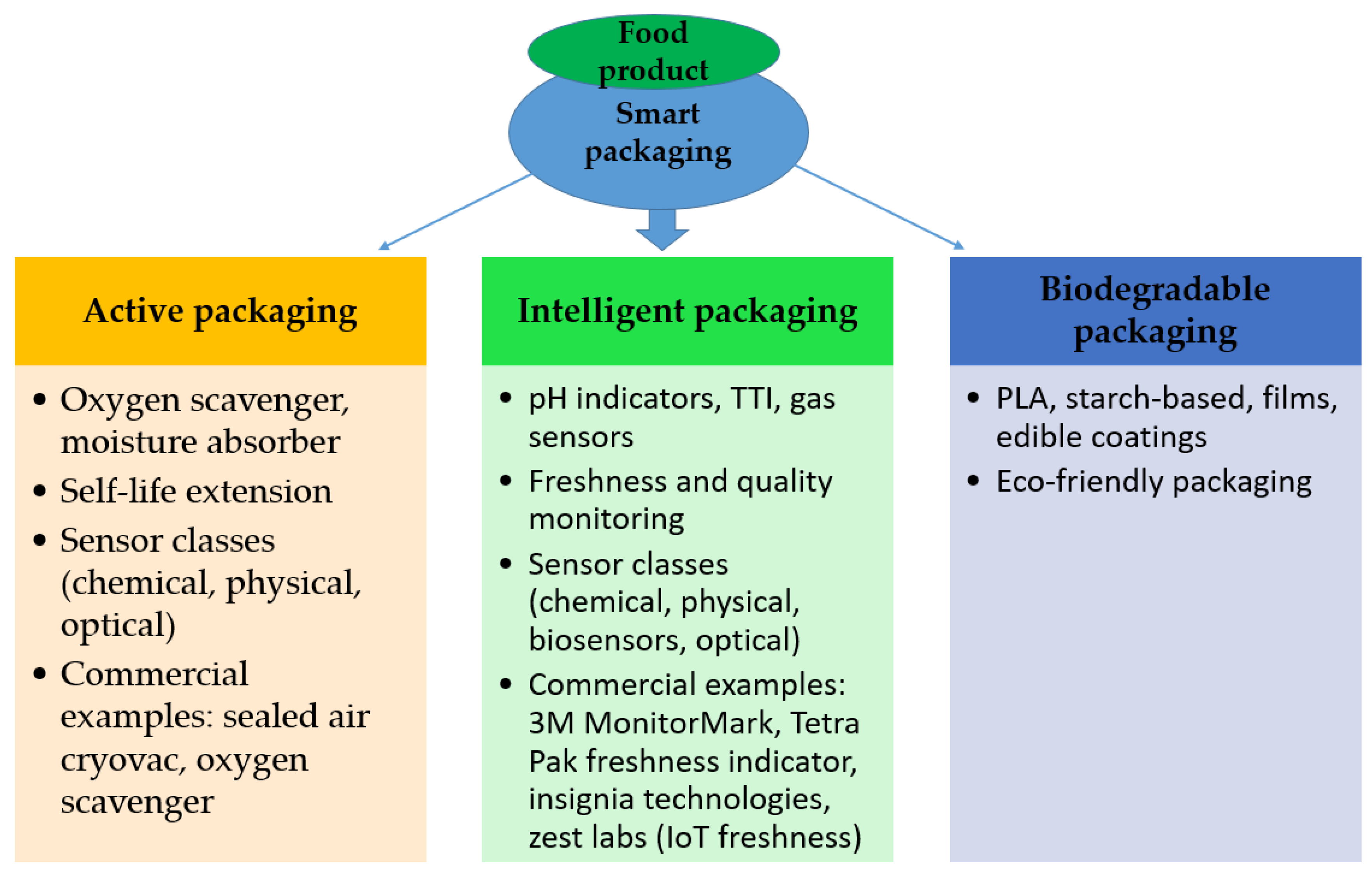
Smart packaging generally falls into three types: active packaging (interacts with the product to extend shelf life, e.g., oxygen scavengers or antimicrobial films), intelligent packaging (monitors product condition and provides information), and connected packaging (links to digital systems via QR codes, RFID, or NFC). The benefits include improved food safety and quality, longer shelf life, reduced waste, better traceability, and enhanced consumer engagement (Figure 1). Key sensor classes used in smart packaging are chemical sensors (e.g., gas sensors for oxygen, CO2, or spoilage compounds), physical sensors (temperature, humidity, shock), and biological sensors (pathogen or freshness indicators) (Table 3). Commercial examples include Time–Temperature Indicators from companies like 3M, oxygen indicators used in modified-atmosphere meat packaging, RFID-enabled packages by Avery Dennison for logistics tracking, and freshness indicators such as Insignia Technologies’ smart labels, which visually signal product freshness (Table 4).

2.2. Consumers’ Acceptance

Smart packaging is generally easy to use and offers many advantages to consumers, food manufacturers and the food industry. Depending on the system, it can offer a wide range of features [44]. The quality of a product is potentially determined using indicators and sensors, which increases product safety and reduces food waste [45].
Continuous quality monitoring allows real-time tracking of product conditions, ensuring consistent safety and performance [46]. It helps detect deviations early, reduces waste, improves efficiency, and builds consumer trust by maintaining high-quality standards throughout production [47], storage, and distribution [48]. One disadvantage is the fact that indicators and sensors are not yet widely available on the market [49]. The cost of packaging can be significant [50].
At the same time, the use of indicators and sensors can negatively influence consumer behavior [1]. For instance, customers may return products with discolored freshness indicators to the shelves while choosing products with unchanged indicators [30]. This variation in label color on branded products may reduce consumer trust potentially increase unsold food [51].
On the other hand, smart packaging can enhance the traditional “first in, first out” (FIFO) principle by providing real-time information on product freshness and condition [1]. Indicators such as sensors or QR codes help identify items that should be used or sold first, reducing waste, improving inventory management, and ensuring product quality for consumers [52]. It is important to ensure that the systems are compatible with the food that needs to be monitored [53]. Not all smart packaging solutions are suitable for every food product, so the appropriate indicator or sensor must be selected [10]. For example, an oxygen sensor is suitable for MAP (Modified Atmosphere Packaging) packaged foods, whereas, for preserved chilled foods and frozen products the TTI is suitable [54].
Another aspect to consider is recyclability [55]. The additional waste generated during the production and disposal of smart packaging can contradict the goal of reducing food waste [10]. It is also worth noting that one cannot rely entirely on smart packaging to improve product quality, because it is not possible to exclude misuse or system failure [56].
Various factors are usually responsible for the loss of quality. Monitoring only one parameter does not allow the full assessment of the product’s quality status. At the same time, external influences, such as light, temperature and mechanical stress on the product, are exerted and can negatively technologies [57]. In addition, this may encourage the classification of products as unfit for consumption, although they continue to be available on the market [10]. Furthermore, spoilage may not be detected or communicated. Additionally, the health of consumers may be negatively affected if such products are consumed. Overall, the robustness of smart packaging systems should be improved, and individual packaging technologies should be combined to maximize advantages and minimize disadvantages.

3. Potential Toxicity of Nanomaterials, Consumer Acceptance and Regulatory Issues

3.1. Nanotechnology, Smart Packaging and Antimicrobial Properties

Microbial contamination can promote the development of pathogenic microorganisms and malnutrition of weaned foods. The management of bacterial spoilage is therefore a key issue in the production, processing, transportation and storage of food [58]. New “nanoantimicrobials” show promising results, as they prevent food spoilage and contribute to extending shelf life [59]. Some metal and metal oxide nanomaterials have been proposed as effective antimicrobials due to their ability to disrupt microbial membranes, generate reactive oxygen species, and interfere with cellular processes. These properties make them promising for applications in food preservation, medical devices, and packaging to control bacterial growth and enhance safety [58].
At the same time, the release of metal ions on the cell surface or inside the cell can modify the cell structure or function. Therefore, nanocomposites based on metal or metal oxide are used in food packaging as coatings, or even incorporated into food ingredients [59].
Silver nanoparticles and nanocomposites are widely used as nanomaterials, as antimicrobials, in the food industry [60]. Twelve zeolites or other substances containing silver are approved by the US FDA for use as materials that come into direct contact with food, for disinfection purposes [61]. Silver nanoparticles may also be useful as a source of AgB ions, as they are a source of binding to membrane proteins, forming pits and encouraging the creation of morphological changes [62]. In this way, the generation of ROS in bacterial cells is catalyzed, thus causing cell death through oxidative stress [63].
Recent studies have highlighted and documented that silver nanocomposites are safe for use in food packaging [64]. These materials provide effective antimicrobial protection, helping to extend shelf life and maintain food quality, while showing minimal risk of toxicity when properly incorporated into packaging systems [65].
Nanocomposites generally provide enhanced stability, which improves the mechanical, thermal, and barrier properties of materials [66]. This makes them highly valuable in packaging, coatings, and biomedical applications, as they help protect products, extend shelf life, and maintain overall quality under various conditions [67]. Among the polymers, low-density polyethylene (LDPE), gelatin, and isotactic polypropylene (iPP) are commonly used in packaging and coating applications [68]. LDPE offers flexibility and moisture resistance, gelatin provides biodegradability and film-forming ability, and isotactic polypropylene delivers strength and thermal stability, making them versatile choices for protecting and preserving various products [69,70].
Finally, chitosan [71], polystyrene, polyvinylpyrrolidone and poly(vinyl chloride) are used as nanocomposite membranes that act as binders with Cu or ZnO nanomaterials to inactivate food pathogens [72].
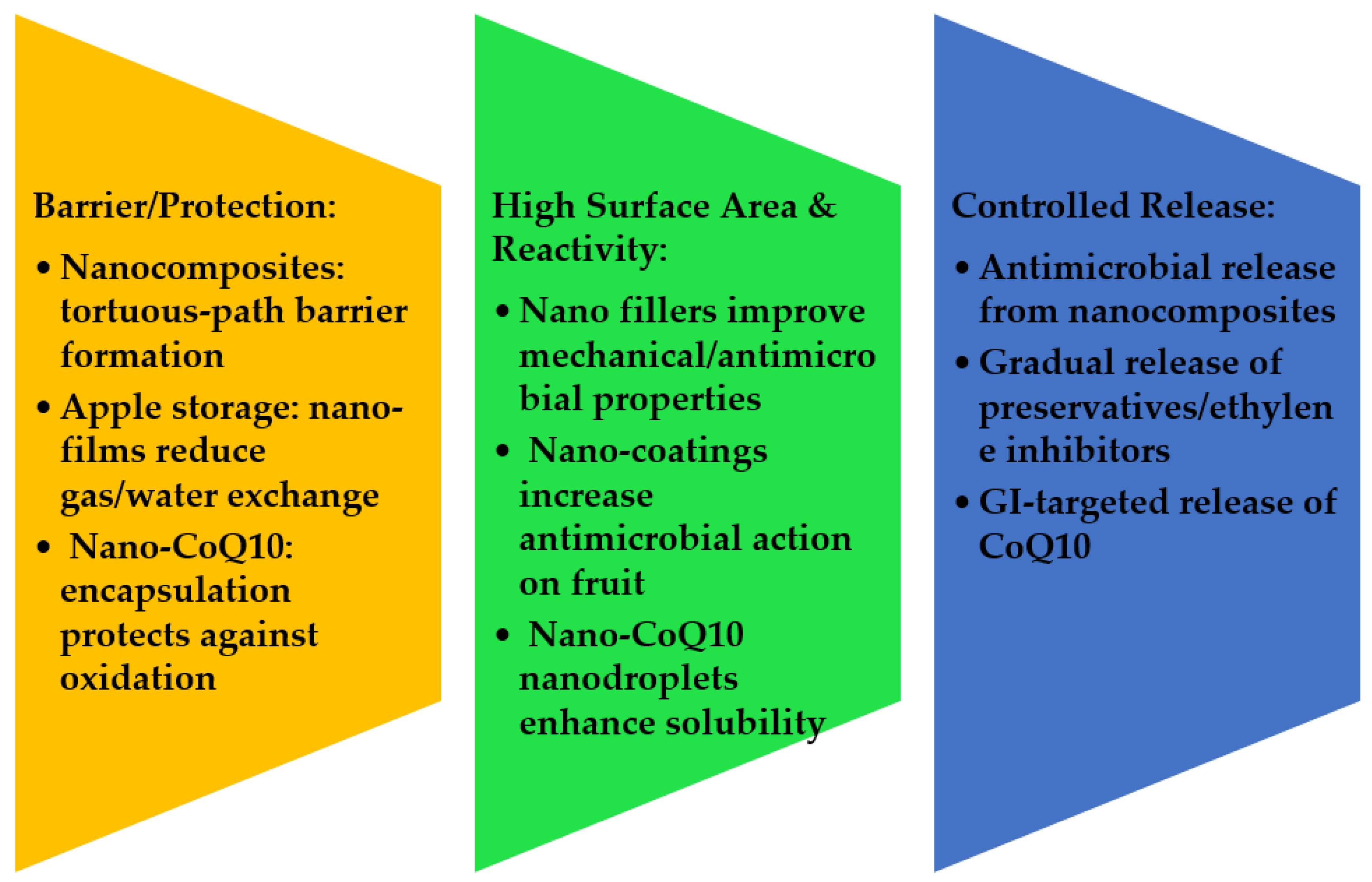
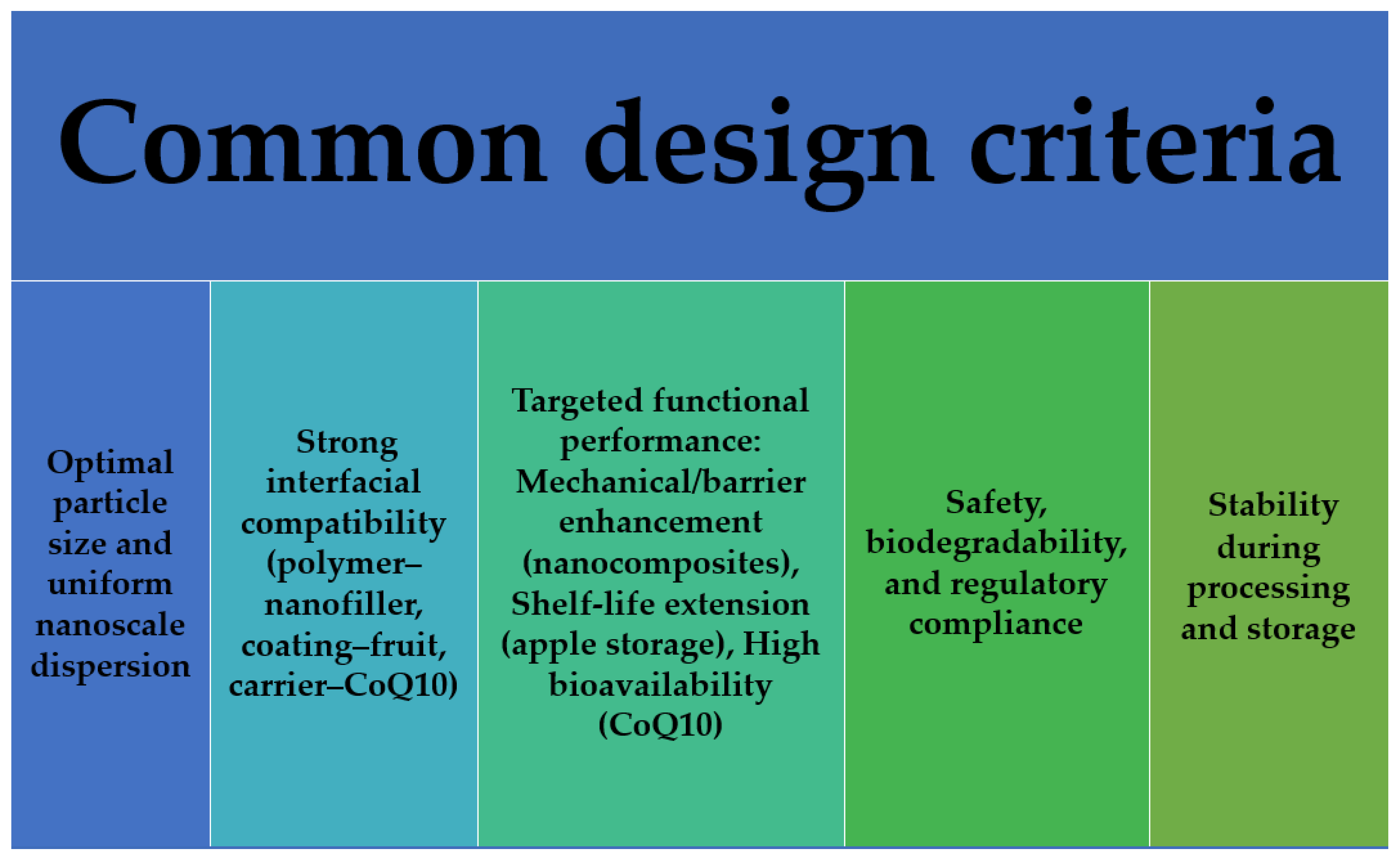
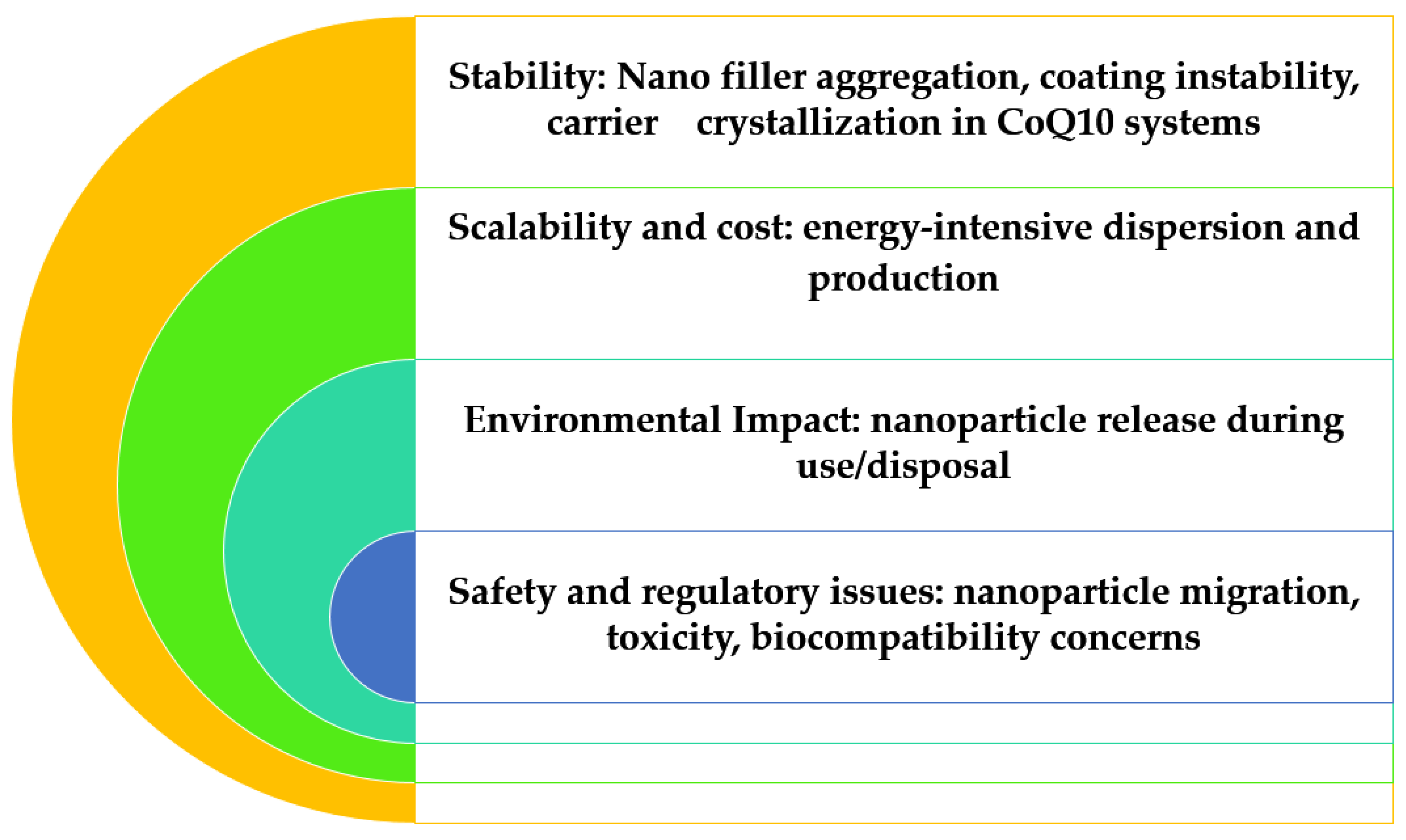
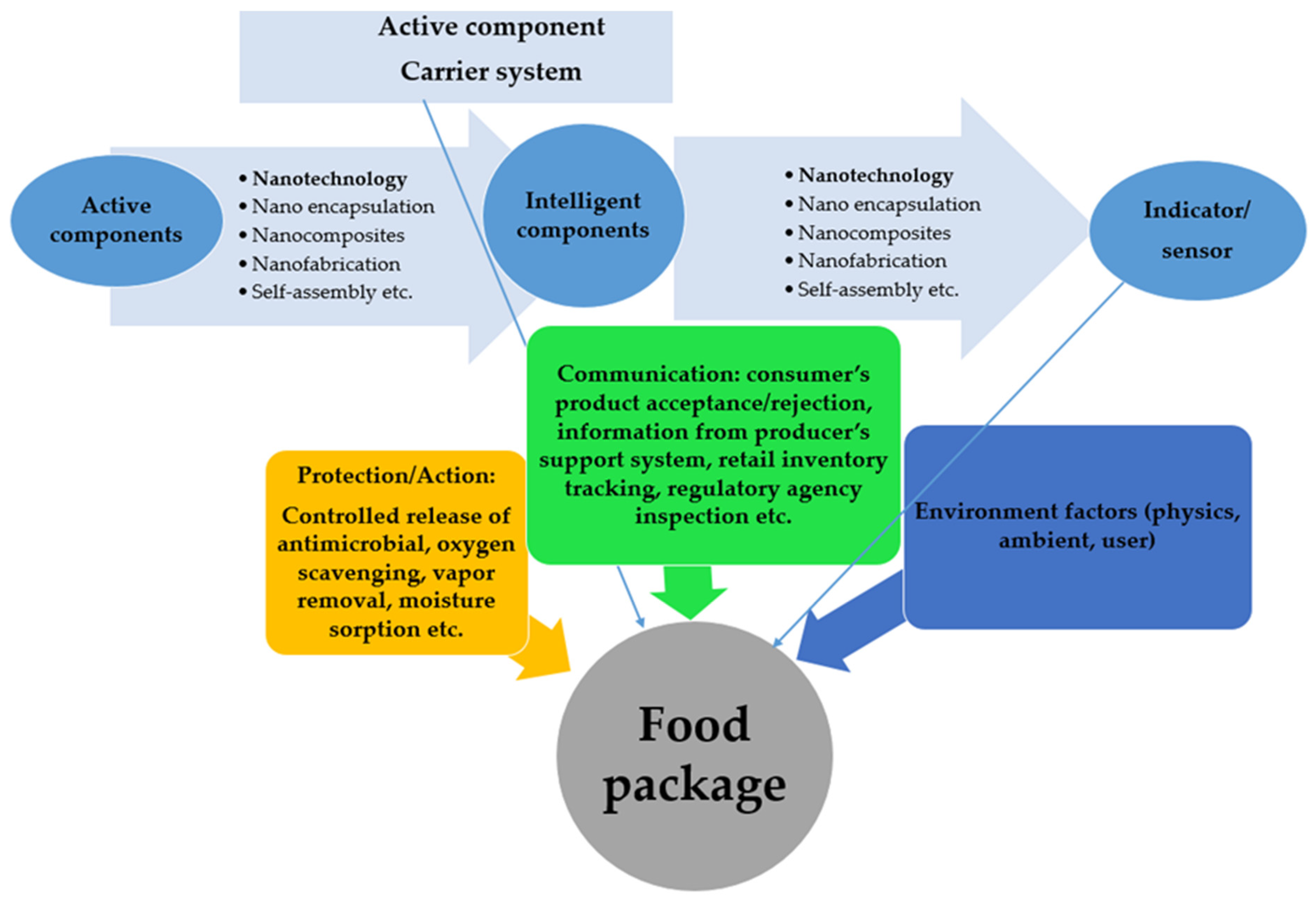
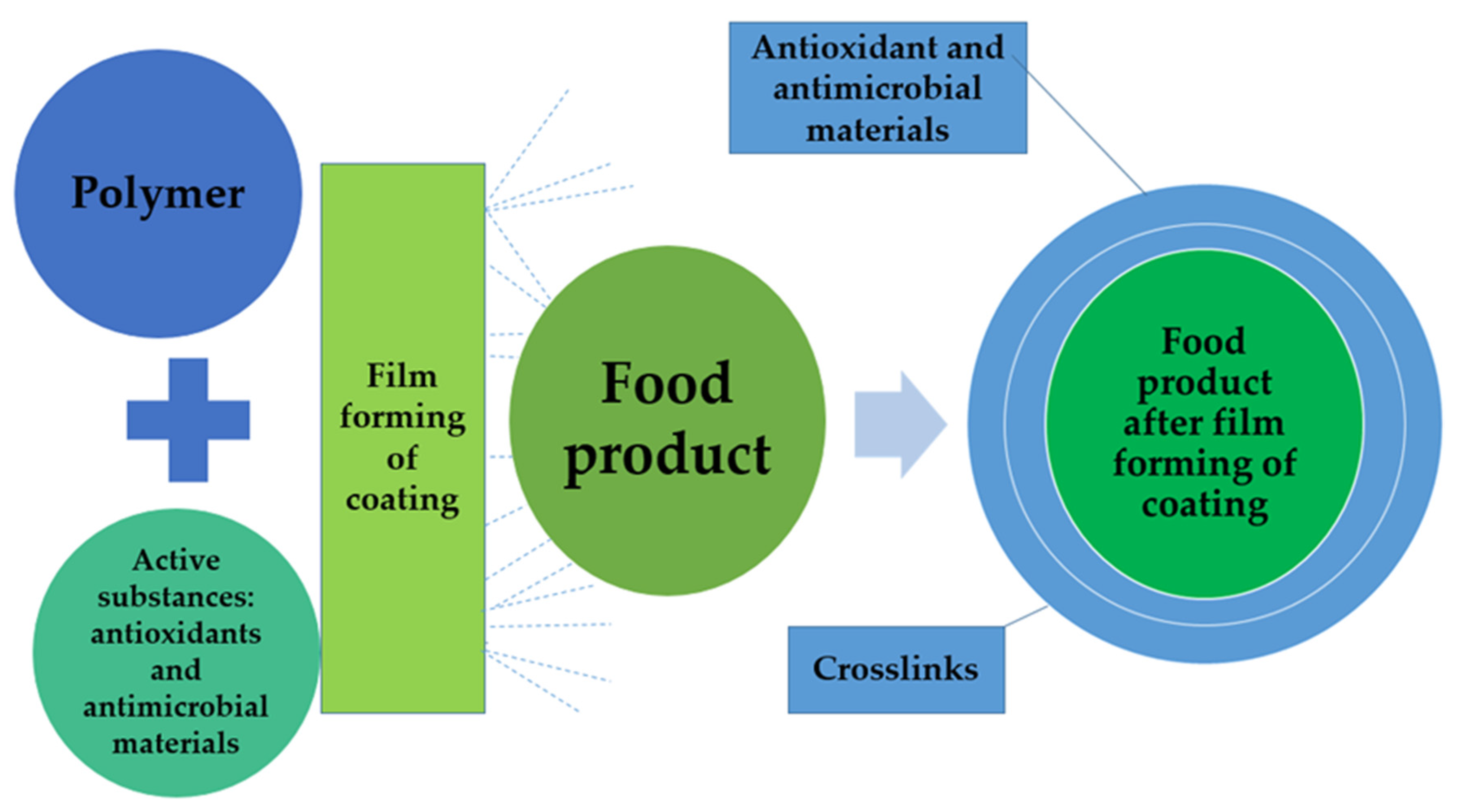
Structured synthesis identifying common mechanisms, limitations, and design criteria across nanocomposites, nanoenabled apple-storage technologies, and nanoparticulate Coenzyme Q10 formulations (Figure 2, Figure 3 and Figure 4). Nano-CoQ10 system is a delivery system that uses extremely small (nano-sized) particles to carry coenzyme Q10, helping it dissolve better and be absorbed more efficiently by the body.

3.2. Nanotechnology and Increasing Bio Acceptability

Nanotechnology is one of the most promising technologies, constituting a scientific revolution in the food sector and its industry. Food processing and packaging with the contribution of nanotechnology shows what food systems can protect public health [73].
There are studies that have reviewed the usefulness of nanomaterials as delivery systems for bioactive compounds, drugs, and nutrients. These studies highlight how nanomaterials can improve solubility, stability, targeted delivery, and controlled release, making them valuable tools in medicine, food science, and biotechnology [74,75]. Various bioactive compounds, such as coenzyme Q10 (CoQ10), vitamins, and polyphenols, offer significant health benefits due to their antioxidant and metabolic roles. However, their effectiveness often depends on stability and bioavailability, which can be enhanced through advanced delivery systems like nanocarriers or encapsulation technologies. Nano in general, nan production systems contribute to increasing the bioavailability of bioactive substances in various ways [76].
To maximize the bioavailability of bioactive substances, strategies can be applied to improve absorption and modify molecular structure during digestion [77]. By changing the size of the particles, it is possible to improve solubility, increasing the surface area to volume ratio, thus increasing bio accessibility [78].
For example, CoQ10 is lipophilic with low bioavailability because it does not have good water solubility [79]. The new lipid-free nanoCoQ10 system modified with various surfactants contributes to improving the solubility and bioavailability of CoQ10, as it is administered orally. Furthermore, selecting appropriate surfactant formulations may enhance gastrointestinal permeability appropriate surfactant formulations [80]. This contributes to increasing absorption and bioavailability. Another example is the use of hydrochloric acid as a surfactant to prepare nanoemulsions of green tea catechins, stabilized with soy protein, acidic oils in water, thus increasing permeability [81].
Additionally, surface-engineered nanomanufacturing systems have been developed to control their interactions with the biological environment. Surface-modified nano production systems are manufacturing technologies used to create extremely small particles (nanoparticles) whose outer surfaces are intentionally altered to improve properties such as stability, absorption, solubility, or interaction with other materials [82]. Such systems can be modified by chemical grafting of hydrophilic molecules, such as polyethylene glycol (PEG) or other water-attracting polymers. This modification improves solubility, stability, and biocompatibility, enhancing the performance of drug delivery systems, coatings, or nanomaterials in biological and industrial applications [83].
Metal-based nanomaterials incorporated into food contact polymers help enhance mechanical and barrier properties, help prevent photo degradation of plastics, and are useful because they act as effective antimicrobials in the form of heavy metal ions [84,85]. However, the potential for negative consequences cannot be ignored, as heavy metals may be released into food simulants, especially with long-term accumulation. Common heavy metal–based nanomaterials include ZnO, Ag, and CuO [86]. The release of heavy metals from these nanomaterials is a key driver of toxicity [87].

3.3. Nanotechnology, Food Packaging and Possible Public Health Impact

Some metal or metal oxide nanomaterials can create oxidative stress through the formation of reactive oxygen species (ROS). These ROS can damage cellular components such as proteins, lipids, and DNA, which may lead to cytotoxic effects [88]. Understanding this mechanism is important for assessing the safety and potential biomedical or environmental impacts of nanomaterials [89]. Similarly, SiO2egallic acid nanoparticles, which, being nanoantioxidants, are developed and tested according to their ability to scavenge 2,2-diphenyl-1-picrylhydrazyl radicals, function [90].
The application of antioxidant treatments in combination with sustainable coatings can enhance the shelf life and stability of products, particularly in food and packaging. Antioxidants help prevent oxidative damage, while eco-friendly coatings provide a protective barrier, together improving quality, safety, and sustainability [91].
Nanomaterials can be used as anti-browning agents to prevent enzymatic or oxidative browning in food products [89]. By interacting with reactive compounds or acting as carriers for antioxidants, they help maintain color, freshness, and visual appeal, extending shelf life while potentially reducing the need for chemical additives [88]. Furthermore, the initial presence of freshly cut Fuji apples can influence the effectiveness of preservation methods. Factors such as natural antioxidants, moisture content, and enzyme activity in the fresh fruit play a key role in determining how well treatments like coatings, antioxidants, or nanomaterial-based agents can prevent browning and maintain quality (Figure 3) [92]. The oral bioavailability of bioactive substances refers to the proportion of an ingested compound that reaches the bloodstream and becomes available for physiological activity. It is influenced by factors such as solubility, stability in the digestive tract, metabolism, and absorption efficiency. Enhancing bioavailability is essential for maximizing the health benefits of nutraceuticals, pharmaceuticals, and functional foods [93].
A key aspect of food systems is taste, which contributes to the sensory perception of flavor and aroma to enhance the eating experience [94]. Nanoencapsulation techniques are useful and are applied to improve the release of flavor and preserve the taste and achieve gastronomic balance. For example, SiO2 nanomaterials can serve as carriers for aromas or flavors in both food and non-food products (Table 5) [95].
Despite significant advances in the development of nanoenabled food packaging, a substantial scientific deficit remains regarding its long-term implications for human health [96]. Existing toxicological data are dominated by acute or short-term exposure studies, which fail to capture the complex biological responses associated with chronic, low-dose ingestion of engineered nanomaterials [97]. Critically, empirical evidence is insufficient to characterize the mechanistic pathways through which these materials may exert cumulative or delayed biological effects in humans [98]. Proposed mechanisms, including sustained oxidative stress, ROS-mediated mitochondrial dysfunction, and activation of redox-sensitive transcription factors (e.g., Nrf2, NF-κB), remain largely theoretical in the context of dietary exposure. Similarly, the potential for nanomaterials to induce genotoxicity via direct DNA interaction, interference with spindle apparatus function during mitosis, or epigenetic modulation (e.g., DNA methylation, histone modification, miRNA dysregulation) has not been rigorously evaluated over long temporal scales [99].
Furthermore, there is a critical lack of evidence regarding persistent inflammatory signaling, including chronic activation of cytokine networks (IL-1β, IL-6, TNF-α), inflammasome engagement (e.g., NLRP3), and downstream effects on tissue remodeling or immune dysregulation [100,101]. Likewise, the long-term potential for bioaccumulation in organs of the human body such as the liver, spleen, gastrointestinal epithelium, or lymphatic tissues remains poorly defined, particularly for nanoparticles capable of translocating across the intestinal epithelial barrier via paracellular transport, M-cell uptake, or endocytosis [102].
The absence of longitudinal multi-omics studies—integrating transcriptomics, proteomics, metabolomics, and epigenomics—significantly limits our ability to construct a systems-level understanding of how nanoenabled packaging materials may perturb homeostasis over months or years [98]. Large-scale epidemiological data linking chronic dietary nanomaterial exposure to disease outcomes are essentially nonexistent, leaving substantial uncertainty surrounding potential long-term risks such as carcinogenesis, metabolic disorders, or immune-mediated conditions [101]. Addressing these mechanistic and epidemiological gaps will require sophisticated chronic exposure models, advanced analytical characterization of nano–bio interactions, and coordinated population-level [103,104,105,106,107,108,109,110,111,112].
Table 5. Summarizing these studies, their type, nanomaterial studied, key mechanistic findings, and relevance to food packaging/consumer health.
Authors/YearNanomaterial/TypeStudy TypeKey Mechanistic FindingsRelevance to Food Packaging/Consumer HealthReferences
Stuparu-Cretu et al., 2023Metal oxide NPs (TiO2, ZnO, Ag)ReviewROS generation, oxidative stress, inflammation, genotoxicityHighlights risks of NP migration from packaging; underscores need for safety assessment[105]
Gupta et al., 2024Various NPs in packagingReviewOxidative stress, DNA damage, cellular dysfunctionSummarizes evidence gaps in chronic exposure and regulatory assessment[106]
Angelescu et al., 2024Silver NPsReviewCytotoxicity, ROS, gut microbiota alterationsDirectly relates to nanoenabled packaging and dietary exposure[107]
Du et al., 2025Silver SiO2 NPsIn vivo (mice)Altered gut microbiota, disrupted serotonin metabolismShows systemic and metabolic effects.[108]
Han et al., 2025Silver NPsIn vivo (mice)Liver accumulation, fibrosis, gut-liver axis perturbationDemonstrates long-term organ-specific toxicity relevant to chronic exposure[109]
Wang et al., 2023Silver NPsIn vivo (mice)Neurotoxicity, oxidative stress, NF-κB activation, gut–brain axis disruptionSuggests chronic ingestion could have central nervous system implications[110]
Medina-Reyes et al., 2020TiO2, ZnO, SiO2, AgReviewROS, mitochondrial dysfunction, inflammationIllustrates general toxicological mechanisms of foodborne NPs[111]
Herrera-Rodríguez et al., 2023TiO2, ZnOIn vivo (rats)Cardiac toxicity, oxidative stressEvidence of systemic effects from dietary NP exposure[112]

4. Discussion

Due to the changing lifestyles, evolving consumer demands and trends in commoditization, packaging plays an important role in preserving fast-moving consumer goods [111]. The main finding of this review is that nanotechnology is increasingly integrated into food production and smart packaging because nanoenabled materials can enhance food quality, extend shelf life, improve nutrient delivery, and provide real-time monitoring of product freshness. In food systems, nanoparticles such as nanoencapsulated nutrients, antimicrobial agents, and nanoemulsions can improve stability, bioavailability, and sensory attributes. In packaging, nanosensors and antimicrobial nanomaterials offer innovative functions, such as detecting spoilage, reducing contamination, and strengthening packaging barriers, thereby contributing to improved safety and reduced waste [112].
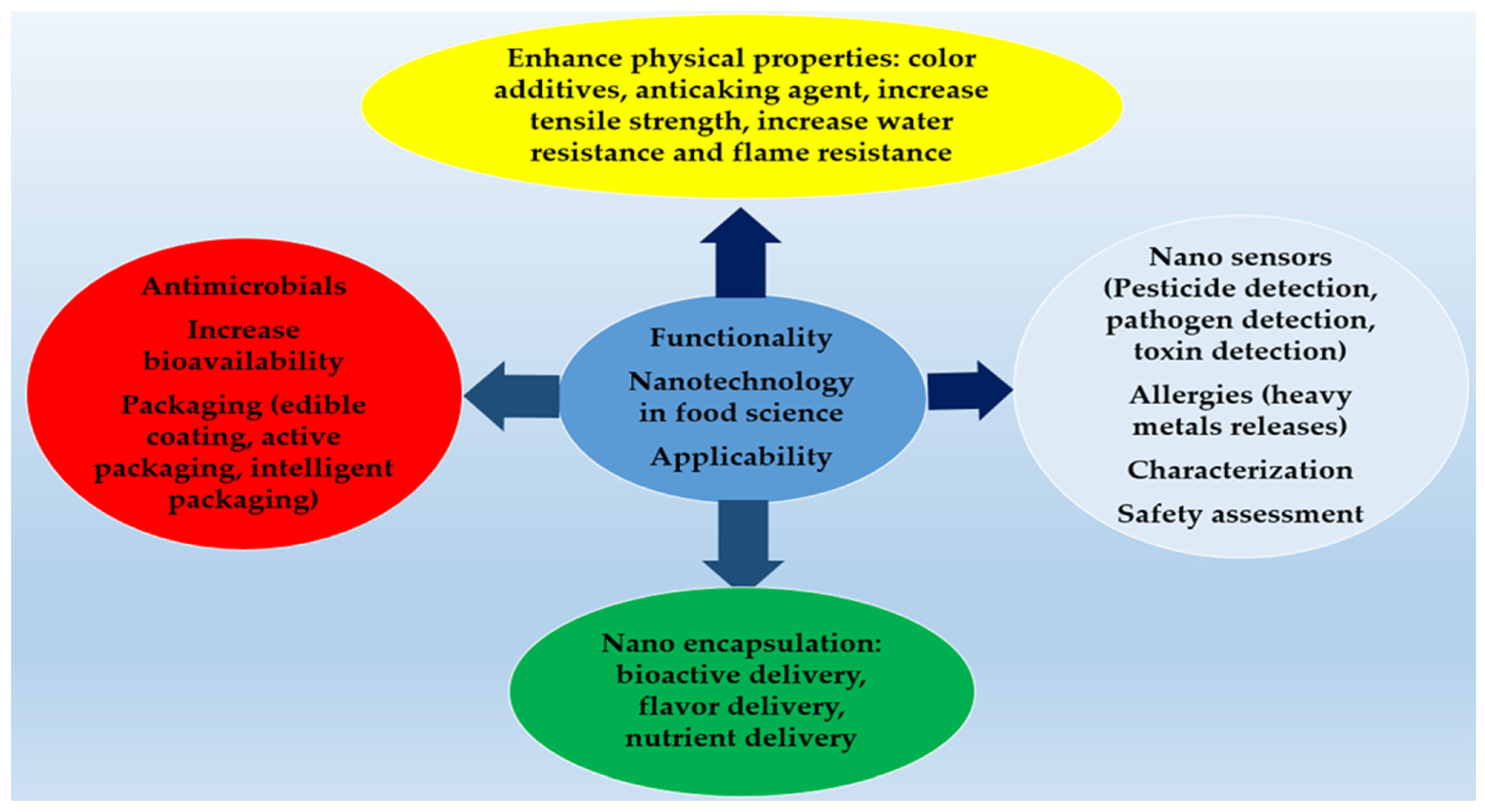
However, the expanding use of nanomaterials (Figure 5) raises notable public-health concerns. The main risks involve the potential migration of nanoparticles from food or packaging into the human body, where their small size may allow them to cross biological barriers and interact unpredictably with cells [113]. Evidence suggests possible toxicity depending on nanoparticle type, dose, and exposure route, though data remain incomplete. As a result, regulatory frameworks and standardized risk-assessment methods lag behind technological advances [111], so smart packaging systems have not yet achieved widespread adoption in the market [114]. Other reasons relate to the disadvantages of smart packaging, which as mentioned above, relate to the increased product costs, acceptance by distributors and adoption by brand owners [115]. However, the advantages of smart packaging systems should not be ignored [116]. Additional research and improvement measures should be taken to utilize the benefits of these systems and expand their use [1].
There is a great interest in methods for improving food quality and safety and for managing the food supply chain. The demand for information about packaged foods is constantly increasing [118]. Consumers want to be informed and knowledgeable about the ingredients in each product or how to store the product they buy [44]. Smart packaging has certain advantages that can help fulfill these expectations, which would lead to an increased demand for these systems in the future [16].
This is the reason why, there is an increasing interest and research efforts on the application of nanotechnology to food, paralleled by the expanding role of nanotechnology in the food industry, which together contribute to increased human exposure to these substances [76]. Humans are increasingly exposed to nanomaterials, both intentionally, as in the case of food additives, and unintentionally [119]. Some studies have focused on the potential toxicity of nanomaterials and their migration into packaged foods [120]. Accordingly, researchers have analyzed food packaging materials and food additives. However, little is known about the bioavailability, biodistribution, metabolic pathways and toxicity of nanomaterials upon exposure [119].
A key concern is that nanomaterials used as food additives come into contact with the organs of the human body [76]. This can lead to higher exposure, depending on their concentration in food and the amount of food ingested. There is an increase in the use of nanomaterials in foods as additives for flavor and color [120]. Overall, the safety of nanomaterial is an issue that has attracted the interest and attention of public health authorities and regulatory bodies. A typical example is the study conducted on TiO2 used in sugar-coated chewing gum. It was found, therefore, that 93% of the amount of TiO2 in chewing gum is nanosized. Similarly, the intestinal epithelium, is apparently exposed to nanoparticles when humans consume chewing gum containing E551 [121].
Consumers should, therefore, approach the development of nanotechnology and its application in food science and the food industry with awareness—without fear, but with acceptance of its potential. Nanotechnology has already achieved great successes in other fields as well [122]. In addition, in addition to its benefits, nanotechnology also contributes to the detection of pesticides, pathogens, and toxins, all of which are useful for the food quality monitoring chain. Recently there have been technological developments in food packaging (Table 1, Table 2, Table 3 and Table 4) and this is directly related to the fact that packaging interacts with food and the consumer public, thus reflecting a trend for safer and less processed and more natural food products [123]. This trend has led to the development of interactive packaging, which combines active function and smart function [124]. Such innovations aim to make food packaging commercially viable, meet the ever-increasing demands of consumers, provide tangible benefits, and remain economical, particularly for nutritional products [125]. Therefore, this type of packaging offers multiple advantages, including maintaining the freshness of fruits (Figure 3), and enhancing the experience and safety for the consumer [92].
Nanotechnology-based smart packaging holds significant promise for enhancing food safety, extending shelf life, and reducing food waste, all of which positively impact public health (Table 5) [126]. However, uncertainties regarding nanoparticle safety, migration, and regulation necessitate a precautionary approach, ongoing research, and robust policy frameworks to ensure long-term public health protection [127]. The public health benefits of nanotechnology-based smart packaging could be summarized as follows: (a) improved food safety with the early detection of contamination reduces risk of foodborne illnesses (e.g., E. coli, Salmonella) and antimicrobial packaging can suppress microbial growth before consumption, (b) reduced food waste with smart labels or freshness indicators prevent premature disposal and accurate assessment of shelf life improves food utilization, (c) enhanced nutrient preservation, antioxidant-releasing nanomaterials help maintain nutritional quality and protects vitamins and sensitive compounds from degradation, (d) better traceability and transparency with the use of smart tags (e.g., RFID, QR codes) improve traceability across the food supply chain and supports recall management and consumer confidence [128].
Although nanocomposites, nanoenabled apple storage technologies, and nanoCoQ10 formulations operate in different application domains (Figure 6), they share core nanoscale mechanisms (barrier enhancement, surface reactivity, protection, controlled release) (Figure 2) and face similar challenges (stability, safety, dispersion, cost) (Figure 4). Their design criteria converge on optimizing particle size, interfacial interactions, functional efficiency, and regulatory acceptability (Figure 3).
Potential public health risks associated with nanotechnology-based food packaging can be summarized as follows: (a) nanoparticle migration and ingestion or concern over unintentional migration of nanoparticles into food and possible toxicological effects from chronic ingestion (e.g., oxidative stress, DNA damage), (b) lack of long-term toxicity data (most studies are short-term or based on animal models and bioaccumulation and interactions with human cells remain uncertain, (c) regulatory and labeling gaps as there are not universal standards on nanomaterial use in food packaging and consumers often not informed of nanoenabled packaging use, (d) environmental impact (improper disposal of nanopackaging may lead to ecosystem disruption and concerns about nanoparticle persistence and toxicity in soil/water). Regarding regional regulatory status, European union requires specific approval for nanomaterials in food contact [129]. The United States Food and Drug Administration (FDA or US FDA) evaluates on a case-by-case basis and labeling not mandatory unless significantly different from conventional. Asia regulations emerging, often less stringent or under development [130].
Some recommendations for public health protection include: (a) comprehensive risk assessment (pre-market toxicology studies and post-market surveillance), (b) standardization of nanotesting methods, (c) clear labeling (inform consumers about nanotechnology use in packaging), (d) green nanotechnology (develop biodegradable and non-toxic nanomaterials) and e) public awareness and education promoting transparency to build trust and acceptance [129].
Smart packaging is not considered essential for every sector, as its benefits—such as real-time monitoring, extended shelf life, and interactive features—are most valuable for perishable, high-value, or sensitive products. In many industries, traditional packaging remains sufficient, balancing cost and functionality without the need for advanced technologies [131]. The main areas of application are perishable products, such as meat and fish or seafood [18,20,132]. When shelf life or quality attributes are easily recognizable by consumer, such as the brown color of ripe bananas, then smart packaging does not need to be applied [133]. A polymeric matrix functions as a multifunctional system component, with roles spanning structural, protective, interfacial, transport, morphological, processing, and environmental domains. These functions collectively determine the performance, durability, and utility of the composite or hybrid material [134].
At the same time, the use of smart packaging predominates in the food industry (Figure 7) and less often in other life science industries, although these systems provide many positives in these sectors as well [135]. For example, they could enhance product safety in the pharmaceutical and cosmetics industries [136]. Even within the food sector, barcodes would provide the benefit of optimized traceability and the benefit of determining temperature fluctuations through temperature indicators [137,138].
As mentioned above, further research is needed to make smart packaging feasible by addressing issues, such as pricing [139]. While customers want improved quality and additional information about the products, but the majority of them do not want to pay more for its implementation [140]. However, if consumers are better informed about the benefits of these systems, they may be more willing to pay a premium for food using smart packaging. This could also strengthen consumer confidence in the safety of these technologies [141].
Therefore, additional measures should be taken to promote smart packaging [140]. Manufacturers should recognize that its use can provide added value to the market. If these considerations are addressed, the adoption of smart packaging can be significantly expanded [142]. Current review emphasizes the need for long-term toxicological studies, clearer labeling, and stronger oversight to ensure that the benefits of nanotechnology in the food sector do not come at the expense of consumer health [143].

5. Conclusions

Emerging technologies such as smart packaging and nanotechnology are reshaping the landscape of food safety, quality, and public health. Smart packaging provides dynamic monitoring of product freshness, temperature, and microbial activity, improving shelf life, reducing food waste, and enhancing traceability across the supply chain. Nanotechnology further complements these systems by enabling antimicrobial surfaces, controlled release of bioactive compounds, and detection of contaminants such as pesticides, pathogens, and toxins. Nanotechnology facilitates the interpretation of complex data from these technologies in food industry, allowing real-time decision-making, predictive modeling, and optimized resource management throughout food production and distribution.
Despite these advantages, the adoption of these innovations faces challenges. The potential migration of nanoparticles, long-term toxicity, environmental persistence, and gaps in regulation and labeling require precautionary approaches and continued research. Consumer perception and willingness to pay for these advanced systems also influence implementation, highlighting the importance of transparency, education, and public engagement.
When effectively integrated, these technologies offer a synergistic approach to improving product safety, nutrient preservation, and supply chain efficiency. They have the potential to strengthen public confidence, minimize health risks, and support sustainable practices in food and related industries. Strategic deployment, guided by rigorous risk assessment, standardized testing, and regulatory oversight, will be essential to maximize benefits while mitigating potential hazards.
In summary, the convergence of smart packaging, nanotechnology, and AI represents a transformative opportunity to enhance food safety, quality, and sustainability, provided that technological, regulatory, and societal considerations are addressed in parallel.

Author Contributions

Conceptualization, O.G., I.C., K.G. and M.D.; methodology, M.D.; software, M.D.; validation, O.G., I.C., M.D. and K.G.; formal analysis, M.D.; investigation, M.D.; resources, M.D.; data curation, M.D.; writing—original draft preparation, M.D.; writing—review and editing, O.G., M.D., K.G. and I.C.; visualization, O.G. and I.C.; supervision, O.G. All authors have read and agreed to the published version of the manuscript.

Funding

This research received no external funding.

Data Availability Statement

No new data was created.

Conflicts of Interest

Author Olga Gortzi was employed by the company POSS-Driving Innovation in Functional Foods PCC. The remaining authors declare that the research was conducted in the absence of any commercial or financial relationships that could be construed as a potential conflict of interest.

References

  1. Müller, P.; Schmid, M. Intelligent packaging in the food sector: A brief overview. Foods 2019, 8, 16. [Google Scholar] [CrossRef]
  2. Majid, I.; Nayik, G.A.; Dar, S.M.; Nanda, V. Novel food packaging technologies: Innovations and future prospective. JSSAS 2018, 17, 454–462. [Google Scholar] [CrossRef]
  3. da Costa, T.P.; Gillespie, J.; Cama-Moncunill, X.; Ward, S.; Condell, J.; Ramanathan, R.; Murphy, F. A Systematic Review of Real-Time Monitoring Technologies and Its Potential Application to Reduce Food Loss and Waste: Key Elements of Food Supply Chains and IoT Technologies. Sustainability 2023, 15, 614. [Google Scholar] [CrossRef]
  4. Yousefi, H.; Su, H.-M.; Imani, S.M.; Alkhaldi, K.M.; Filipe, C.D.; Didar, T.F. Intelligent food packaging: A review of smart sensing technologies for monitoring food quality. ACS Sens. 2019, 4, 808–821. [Google Scholar] [CrossRef]
  5. Chauhan, N.; Jain, U.; Soni, S.U. Sensors for food quality monitoring. In Nanoscience for Sustainable Agriculture; Springer: Berlin/Heidelberg, Germany, 2019; pp. 601–626. [Google Scholar]
  6. Wohner, B.; Pauer, E.; Heinrich, V.; Tacker, M. Packaging-related food losses and waste: An overview of drivers and issues. Sustainability 2019, 11, 264. [Google Scholar] [CrossRef]
  7. Kahyaoglu, L.N. Intelligent Packaging System: A Promising Approach to Reduce Food Waste. Curr. Food Sci. Technol. Rep. 2024, 2, 411–419. [Google Scholar] [CrossRef]
  8. Ganeson, K.; Mouriya, G.K.; Bhubalan, K.; Razifah, M.R.; Jasmine, R.; Sowmiya, S.; Amirul, A.-A.A.; Vigneswari, S.; Ramakrishna, S. Smart packaging—A pragmatic solution to approach sustainable food waste management. Food Packag. Shelf Life 2023, 36, 101044. [Google Scholar] [CrossRef]
  9. Mouhoub, A.; Guendouz, A.; El Alaoui-Talibi, Z.; Ibnsouda Koraichi, S. El Modafar Optimization of Chitosan-Based Film Performance by the Incorporation of Cinnamomum Zeylanicum Essential Oil. Food Biophys. 2025, 20, 48. [Google Scholar] [CrossRef]
  10. Alam, A.U.; Rathi, P.; Beshai, H.; Sarabha, G.K.; Deen, M.J. Fruit quality monitoring with smart packaging. Sensors 2021, 21, 1509. [Google Scholar] [CrossRef] [PubMed]
  11. Awulachew, M.T. A review of food packaging materials and active packaging system. Int. J. Health Policy Plann 2022, 1, 28–35. [Google Scholar]
  12. Ogwu, M.C.; Ogunsola, O.A. Physicochemical methods of food preservation to ensure food safety and quality. In Food Safety and Quality in the Global South; Springer: Berlin/Heidelberg, Germany, 2024; pp. 263–298. [Google Scholar]
  13. Rotsios, K.; Konstantoglou, A.; Folinas, D.; Fotiadis, T.; Hatzithomas, L.; Boutsouki, C. Evaluating the use of QR codes on food products. Sustainability 2022, 14, 4437. [Google Scholar] [CrossRef]
  14. Gurunathan, K. Time–Temperature Indicators (TTIs) for Monitoring Food Quality. In SFPS: Innovations and Technology Applications; John Wiley & Sons: Hoboken, NJ, USA, 2024; pp. 281–304. [Google Scholar]
  15. Mohammadian, E.; Alizadeh-Sani, M.; Jafari, S.M. Smart monitoring of gas/temperature changes within food packaging based on natural colorants. Compr. Rev. Food Sci. Food Saf. 2020, 19, 2885–2931. [Google Scholar] [CrossRef] [PubMed]
  16. Drago, E.; Campardelli, R.; Pettinato, M.; Perego, P. Innovations in smart packaging concepts for food: An extensive review. Foods 2020, 9, 1628. [Google Scholar] [CrossRef]
  17. Kumar, L.; Dutt, R.; Gaikwad, K.K. Packaging 4.0: Artificial Intelligence and Machine Learning Applications in the Food Packaging Industry. Curr. Food Sci. Technol. Rep. 2025, 3, 19. [Google Scholar] [CrossRef]
  18. Abedi-Firoozjah, R.; Salim, S.A.; Hasanvand, S.; Assadpour, E.; Azizi-Lalabadi, M.; Prieto, M.A.; Jafari, S.M. Application of smart packaging for seafood: A comprehensive review. Compr. Rev. Food Sci. Food Saf. 2023, 22, 1438–1461. [Google Scholar] [CrossRef] [PubMed]
  19. Kumari, A.; Gaikwad, K.K. Data carriers for real-time tracking and monitoring in smart, intelligent packaging applications: A technological review. Next Mater. 2025, 8, 100591. [Google Scholar] [CrossRef]
  20. Ahmed, I. An overview of smart packaging technologies for monitoring safety and quality of meat and meat products. Packag. Technol. Sci. 2018, 31, 449–471. [Google Scholar] [CrossRef]
  21. Abraham, J. Future of food packaging: Intelligent packaging. In Nanotechnology in Intelligent Food Packaging; Annu, Bhattacharya, T., Ahmed, S., Eds.; John Wiley & Sons: Hoboken, NJ, USA, 2022; pp. 383–417. [Google Scholar] [CrossRef]
  22. Stoica, M.; Bichescu, C.I.; Crețu, C.-M.; Dragomir, M.; Ivan, A.S.; Podaru, G.M.; Stoica, D.; Stuparu-Crețu, M. Review of Bio-Based Biodegradable Polymers: Smart Solutions for Sustainable Food Packaging. Foods 2024, 13, 3027. [Google Scholar] [CrossRef] [PubMed]
  23. Pandian, A.T.; Chaturvedi, S.; Chakraborty, S. Applications of enzymatic time–temperature indicator (TTI) devices in quality monitoring and shelf-life estimation of food products during storage. Food Meas. 2021, 15, 1523–1540. [Google Scholar] [CrossRef]
  24. Ghoshal, G. Recent trends in active, smart, and intelligent packaging for food products. In Food Packaging and Preservation; Elsevier: Amsterdam, The Netherlands, 2018; pp. 343–374. [Google Scholar]
  25. Mani, R.; Kumar, J.V.; Murugesan, B.; Alaguthevar, R.; Rhim, J.W. Smart Sensors in Food Packaging: Sensor Technology for Real-Time Food Safety and Quality Monitoring. J. Food Process Eng. 2025, 48, e70120. [Google Scholar] [CrossRef]
  26. Dobrucka, R.; Przekop, R. New perspectives in active and intelligent food packaging. J. Food Process. Preserv. 2019, 43, e14194. [Google Scholar] [CrossRef]
  27. Liu, Y.; Li, L.; Yu, Z.; Ye, C.; Pan, L.; Song, Y. Principle, development and application of time–temperature indicators for packaging. Packag. Technol. Sci. 2023, 36, 833–853. [Google Scholar] [CrossRef]
  28. Baek, S.; Maruthupandy, M.; Lee, K.; Kim, D.; Seo, J. Freshness indicator for monitoring changes in quality of packaged kimchi during storage. Food Packag. Shelf Life 2020, 25, 100528. [Google Scholar] [CrossRef]
  29. Beshai, H.; Sarabha, G.K.; Rathi, P.; Alam, A.U.; Deen, M.J. Freshness monitoring of packaged vegetables. Appl. Sci. 2020, 10, 7937. [Google Scholar] [CrossRef]
  30. Luo, X.; Zaitoon, A.; Lim, L.T. A review on colorimetric indicators for monitoring product freshness in intelligent food packaging: Indicator dyes, preparation methods, and applications. Compr. Rev. Food Sci. Food Saf. 2022, 21, 2489–2519. [Google Scholar] [CrossRef] [PubMed]
  31. Kishore, A.; Aravind S, M.; Kumar, P.; Singh, A.; Kumari, K.; Kumar, N. Innovative packaging strategies for freshness and safety of food products: A review. Packag. Technol. Sci. 2024, 37, 399–427. [Google Scholar] [CrossRef]
  32. Danchuk, A.I.; Komova, N.S.; Mobarez, S.N.; Doronin, S.Y.; Burmistrova, N.A.; Markin, A.V.; Duerkop, A. Optical sensors for determination of biogenic amines in food. Anal. Bioanal. Chem. 2020, 412, 4023–4036. [Google Scholar] [CrossRef]
  33. Wang, S.; Huang, H.; Wang, X.; Zhou, Z.; Luo, Y.; Huang, K.; Cheng, N. Recent advances in personal glucose meter-based biosensors for food safety hazard detection. Foods 2023, 12, 3947. [Google Scholar] [CrossRef]
  34. Pereira, P.F.; de Sousa Picciani, P.H.; Calado, V.; Tonon, R.V. Electrical gas sensors for meat freshness assessment and quality monitoring: A review. Trends Food Sci. Technol. 2021, 118, 36–44. [Google Scholar] [CrossRef]
  35. Heo, W.; Lim, S. A review on gas indicators and sensors for smart food packaging. Foods 2024, 13, 3047. [Google Scholar] [CrossRef]
  36. Shaalan, N.M.; Ahmed, F.; Saber, O.; Kumar, S. Gases in food production and monitoring: Recent advances in target chemiresistive gas sensors. Chemosensors 2022, 10, 338. [Google Scholar] [CrossRef]
  37. Patric, D.R.; Fardo, S.W. Level Determining Systems. In Industrial Process Control Systems, 2nd ed.; River Publishers: Gistrup, Denmark, 2021; pp. 185–220. [Google Scholar]
  38. Osmólska, E.; Stoma, M.; Starek-Wójcicka, A. Application of biosensors, sensors, and tags in intelligent packaging used for food products—A review. Sensors 2022, 22, 9956. [Google Scholar] [CrossRef] [PubMed]
  39. Park, S.J.; Lee, S.M.; Oh, M.H.; Huh, Y.S.; Jang, H.W. Food quality assessment using chemoresistive gas sensors: Achievements and future perspectives. Sustain. Food Technol. 2024, 2, 266–280. [Google Scholar] [CrossRef]
  40. Jha, R.K. Non-dispersive infrared gas sensing technology: A review. IEEE Sens. J. 2021, 22, 6–15. [Google Scholar] [CrossRef]
  41. Struzik, M.; Garbayo, I.; Pfenninger, R.; Rupp, J.L. A simple and fast electrochemical CO2 sensor based on Li7La3Zr2O12 for environmental monitoring. Adv. Mater. 2018, 30, 1804098. [Google Scholar] [CrossRef]
  42. Sobhan, A.; Muthukumarappan, K.; Wei, L. Biosensors and biopolymer-based nanocomposites for smart food packaging: Challenges and opportunities. Food Packag. Shelf Life 2021, 30, 100745. [Google Scholar] [CrossRef]
  43. Redondo-Solano, M. Nanotechnology Principles for the Detection of Foodborne Bacterial Pathogens and Toxins. In Nanobiotechnology for Sustainable Food Management; CRC Press: Boca Raton, FL, USA, 2024; pp. 241–278. [Google Scholar]
  44. Young, E.; Mirosa, M.; Bremer, P. A systematic review of consumer perceptions of smart packaging technologies for food. Front. Sustain. Food Syst. 2020, 4, 63. [Google Scholar] [CrossRef]
  45. Chen, S.; Brahma, S.; Mackay, J.; Cao, C.; Aliakbarian, B. The role of smart packaging system in food supply chain. J. Forensic Sci. 2020, 85, 517–525. [Google Scholar] [CrossRef]
  46. Dodero, A.; Escher, A.; Bertucci, S.; Castellano, M.; Lova, P. Intelligent packaging for real-time monitoring of food-quality: Current and future developments. Appl. Sci. 2021, 11, 3532. [Google Scholar] [CrossRef]
  47. Rydzkowski, T.; Wróblewska-Krepsztul, J.; Thakur, V.K.; Królikowski, T. Current trends of intelligent, smart packagings in new medical applications. Procedia Comput. Sci. 2022, 207, 1271–1282. [Google Scholar] [CrossRef]
  48. Rostan, M. A Comparative Study on QR Code and Bar Code Detection Techniques in Modern Systems. Int. J. Synerg. Eng. Technol. 2025, 6, 14–22. [Google Scholar]
  49. Fernandez, C.M.; Alves, J.; Gaspar, P.D.; Lima, T.M.; Silva, P.D. Innovative processes in smart packaging. A systematic review. J. Sci. Food Agric. 2023, 103, 986–1003. [Google Scholar] [CrossRef]
  50. Georgakoudis, E.D.; Pechlivanidou, G.G.; Tipi, N.S. Sustainable Packaging Design: Packaging Optimization and Material Reduction for Environmental Protection and Economic Benefits to Industry and Society. Appl. Sci. 2025, 15, 8289. [Google Scholar] [CrossRef]
  51. Zhang, A.; Jakku, E. Australian consumers’ preferences for food attributes: A latent profile analysis. Foods 2020, 10, 56. [Google Scholar] [CrossRef] [PubMed]
  52. Thakur, M.; Majid, I.; Nanda, V. Smart Packaging for Managing and Monitoring Shelf Life and Food Safety. In Shelf Life and Food Safety; CRC Press: Boca Raton, FL, USA, 2022; pp. 285–306. [Google Scholar]
  53. Tiekstra, S.; Dopico-Parada, A.; Koivula, H.; Lahti, J.; Buntinx, M. Holistic approach to a successful market implementation of active and intelligent food packaging. Foods 2021, 10, 465. [Google Scholar] [CrossRef]
  54. Liu, D.; Yang, L.; Shang, M.; Zhong, Y. Research progress of packaging indicating materials for real-time monitoring of food quality. Mater. Express 2019, 9, 377–396. [Google Scholar] [CrossRef]
  55. Zhu, Z.; Liu, W.; Ye, S.; Batista, L. Packaging design for the circular economy: A systematic review. Sustain. Prod. Consum. 2022, 32, 817–832. [Google Scholar] [CrossRef]
  56. Poli, M.; Malagas, K.; Nomikos, S.; Papapostolou, A.; Vlassas, G. An Overview of the Impact of the Food Sector “Intelligent Packaging” and “Smart Packaging”. Eur. J. Interdiscip. Stud. 2023, 15, 120–134. [Google Scholar] [CrossRef]
  57. Barreira-Pinto, R.; Carneiro, R.; Miranda, M.; Guedes, R.M. Polymer-matrix composites: Characterising the impact of environmental factors on their lifetime. Materials 2023, 16, 3913. [Google Scholar] [CrossRef]
  58. Lien, W.C.; Yu, Y.L.; Liang, Y.J.; Wang, C.Y.; Lin, Y.C.; Chang, H.C.; Lin, F.H.; David Wang, H.M. Cerium Oxide Nanoparticles Achieve Long-Lasting Senescence Inhibition in an Aging Mouse Model of Sarcopenia via Reactive Oxygen Species Scavenging and CILP2 Downregulation. In Small Science; John Wiley & Sons: Hoboken, NJ, USA, 2025; p. 2500208. [Google Scholar]
  59. Gold, K.; Slay, B.; Knackstedt, M.; Gaharwar, A.K. Antimicrobial activity of metal and metal-oxide based nanoparticles. Adv. Therap. 2018, 1, 1700033. [Google Scholar] [CrossRef]
  60. Simbine, E.O.; Rodrigues, L.d.C.; Lapa-Guimaraes, J.; Kamimura, E.S.; Corassin, C.H.; Oliveira, C.A.F.d. Application of silver nanoparticles in food packages: A review. Food Sci. Technol. 2019, 39, 793–802. [Google Scholar] [CrossRef]
  61. Istiqola, A.; Syafiuddin, A. A review of silver nanoparticles in food packaging technologies: Regulation, methods, properties, migration, and future challenges. J. Chin. Chem. Soc. 2020, 67, 1942–1956. [Google Scholar] [CrossRef]
  62. Mat Lazim, Z.; Salmiati, S.; Marpongahtun, M.; Arman, N.Z.; Mohd Haniffah, M.R.; Azman, S.; Yong, E.L.; Salim, M.R. Distribution of silver (Ag) and silver nanoparticles (AgNPs) in aquatic environment. Water 2023, 15, 1349. [Google Scholar] [CrossRef]
  63. Hong, Y.; Zeng, J.; Wang, X.; Drlica, K.; Zhao, X. Post-stress bacterial cell death mediated by reactive oxygen species. Proc. Natl. Acad. Sci. USA 2019, 116, 10064–10071. [Google Scholar] [CrossRef]
  64. El-Batal, A.I.; Attia, M.S.; Nofel, M.M.; El-Sayyad, G.S. Potential nematicidal properties of silver boron nanoparticles: Synthesis, characterization, in vitro and in vivo root-knot nematode (Meloidogyne incognita) treatments. J. Clust. Sci. 2019, 30, 687–705. [Google Scholar] [CrossRef]
  65. Morais, L.d.O.; Macedo, E.V.; Granjeiro, J.M.; Delgado, I.F. Critical evaluation of migration studies of silver nanoparticles present in food packaging: A systematic review. Crit. Rev. Food Sci. Nutr. 2020, 60, 3083–3102. [Google Scholar] [CrossRef]
  66. Yadav, A.; Kumar, N.; Dixit, A.; Kumar, S.; Upadhyay, A. Nano Technology in Food Packaging. In Nonthermal Food Engineering Operations; John Wiley & Sons: Hoboken, NJ, USA, 2024; pp. 285–317. [Google Scholar]
  67. Prasanna, S.S.; Balaji, K.; Pandey, S.; Rana, S. Metal oxide based nanomaterials and their polymer nanocomposites. In Nanomaterials and Polymer Nanocomposites; Elsevier Academic Press: London, UK, 2019; pp. 123–144. [Google Scholar]
  68. Garcia, C.V.; Shin, G.H.; Kim, J.T. Metal oxide-based nanocomposites in food packaging: Applications, migration, and regulations. Trends Food Sci. Technol. 2018, 82, 21–31. [Google Scholar] [CrossRef]
  69. Jagtiani, E. Advancements in nanotechnology for food science and industry. Food Front. 2022, 3, 56–82. [Google Scholar] [CrossRef]
  70. Al-Maliki, R.M.; Alsalhy, Q.F.; Al-Jubouri, S.; Salih, I.K.; AbdulRazak, A.A.; Shehab, M.A.; Németh, Z.; Hernadi, K. Classification of nanomaterials and the effect of graphene oxide (GO) and recently developed nanoparticles on the ultrafiltration membrane and their applications: A review. Membranes 2022, 12, 1043. [Google Scholar] [CrossRef]
  71. Attaran, S.A.; Hassan, A.; Wahit, M.U. Materials for food packaging applications based on bio-based polymer nanocomposites: A review. J. Thermoplast. Compos. Mater. 2017, 30, 143–173. [Google Scholar] [CrossRef]
  72. Spoială, A.; Ilie, C.-I.; Ficai, D.; Ficai, A.; Andronescu, E. Chitosan-based nanocomposite polymeric membranes for water purification—A review. Materials 2021, 14, 2091. [Google Scholar] [CrossRef] [PubMed]
  73. Thirugnanasambandan, T. Polymers-metal nanocomposites. In Environmental Nanotechnology; Springer: Berlin/Heidelberg, Germany, 2018; Volume 2, pp. 213–254. [Google Scholar]
  74. Malik, S.; Muhammad, K.; Waheed, Y. Nanotechnology: A revolution in modern industry. Molecules 2023, 28, 661. [Google Scholar] [CrossRef]
  75. Kumari, A.; Raina, N.; Wahi, A.; Goh, K.; Sharma, P.; Nagpal, R.; Jain, A.; Ming, L.; Gupta, M. Wound-Healing Effects of Curcumin and Its Nanoformulations: A Comprehensive Review. Pharmaceutics 2022, 14, 2288. [Google Scholar] [CrossRef]
  76. Vieira, I.; Tessaro, L.; Lima, A.; Velloso, I.; Conte-Junior, C. Recent Progress in Nanotechnology Improving the Therapeutic Potential of Polyphenols for Cancer. Nutrients 2023, 15, 3136. [Google Scholar] [CrossRef]
  77. Ferdous, Z.; Nemmar, A. Health impact of silver nanoparticles: A review of the biodistribution and toxicity following various routes of exposure. Int. J. Mol. Sci. 2020, 21, 2375. [Google Scholar] [CrossRef]
  78. Dima, C.; Assadpour, E.; Dima, S.; Jafari, S.M. Bioavailability and bioaccessibility of food bioactive compounds; overview and assessment by in vitro methods. Compr. Rev. Food Sci. Food Saf. 2020, 19, 2862–2884. [Google Scholar] [CrossRef] [PubMed]
  79. Friedl, J.D.; Steinbring, C.; Zaichik, S.; Le, N.M.N.; Bernkop-Schnürch, A. Cellular uptake of self-emulsifying drug-delivery systems: Polyethylene glycol versus polyglycerol surface. Nanomedicine 2020, 15, 1829–1841. [Google Scholar] [CrossRef]
  80. Paroha, S.; Chandel, A.K.S.; Dubey, R.D. Nanosystems for drug delivery of coenzyme Q10. Environ. Chem. Lett. 2018, 16, 71–77. [Google Scholar] [CrossRef]
  81. Talegaonkar, S.; Bhattacharyya, A. Potential of lipid nanoparticles (SLNs and NLCs) in enhancing oral bioavailability of drugs with poor intestinal permeability. Aaps Pharmscitech 2019, 20, 121. [Google Scholar] [CrossRef] [PubMed]
  82. Severino, P.; da Silva, C.F.; Andrade, L.N.; de Lima Oliveira, D.; Campos, J.; Souto, E.B. Alginate nanoparticles for drug delivery and targeting. Curr. Pharm. Des. 2019, 25, 1312–1334. [Google Scholar] [CrossRef]
  83. Das, S.; Bhardwaj, A.; Pandey, L.M. Functionalized biogenic nanoparticles for use in emerging biomedical applications: A review. Curr. Nanomater. 2021, 6, 119–139. [Google Scholar] [CrossRef]
  84. Maher, S.; Geoghegan, C.; Brayden, D.J. Intestinal permeation enhancers to improve oral bioavailability of macromolecules: Reasons for low efficacy in humans. Expert. Opin. Drug Deliv. 2021, 18, 273–300. [Google Scholar] [CrossRef]
  85. Kumar, A.; Choudhary, A.; Kaur, H.; Mehta, S.; Husen, A. Metal-based nanoparticles, sensors, and their multifaceted application in food packaging. J. Nanobiotechnol. 2021, 19, 256. [Google Scholar] [CrossRef]
  86. Adeyemi, J.O.; Fawole, O.A. Metal-based nanoparticles in food packaging and coating technologies: A review. Biomolecules 2023, 13, 1092. [Google Scholar] [CrossRef]
  87. Ziarati, P.; Shirkhan, F.; Mostafidi, M.; Zahedi, M.T. A comprehensive review: Toxicity of nanotechnology in the food industry. J. Med. Discov. 2018, 3, 1–12. [Google Scholar]
  88. He, X.; Fu, P.; Aker, W.G.; Hwang, H.-M. Toxicity of engineered nanomaterials mediated by nano–bio–eco interactions. J. Environ. Sci. Health Part C 2018, 36, 21–42. [Google Scholar] [CrossRef]
  89. Firdaus, J.U.; Singh, S.; Sindhu, R.K. Basics of Nano-Bioactive Compounds and Their Therapeutic Potential. In Bioactive-Based Nanotherapeutics; John Wiley & Sons: Hoboken, NJ, USA, 2025; pp. 1–25. [Google Scholar]
  90. Mohite, P.; Puri, A.; Bharati, D.; Singh, S. Polyphenol-Encapsulated Nanoparticles for the Treatment of Chronic Metabolic Diseases. In Role of Flavonoids in Chronic Metabolic Diseases: From Bench to Clinic; John Wiley & Sons: Hoboken, NJ, USA, 2024; pp. 375–416. [Google Scholar]
  91. Theofanous, A.; Deligiannakis, Y.; Louloudi, M. Hybrids of Gallic Acid@ SiO2 and {Hyaluronic-Acid Counterpats}@ SiO2 against Hydroxyl (OH) Radicals Studied by EPR: A Comparative Study vs. Their Antioxidant Hydrogen Atom Transfer Activity. Langmuir 2024, 40, 26412–26424. [Google Scholar] [CrossRef]
  92. Zhang, S. Recent advances of polyphenol oxidases in plants. Molecules 2023, 28, 2158. [Google Scholar] [CrossRef]
  93. Oladzadabbasabadi, N.; Nafchi, A.M.; Ariffin, F.; Karim, A. Bioactive NanoBased packaging for postharvest storage of horticultural produce. In Postharvest Nanotechnology for Fresh Horticultural Produce, 1st ed.; Radhankrishnan, E.K., Ashitha, J., Sunil, P., Eds.; CRC Press: Boca Raton, FL, USA, 2023; pp. 221–236. [Google Scholar]
  94. Dima, C.; Assadpour, E.; Nechifor, A.; Dima, S.; Li, Y.; Jafari, S.M. Oral bioavailability of bioactive compounds; modulating factors, in vitro analysis methods, and enhancing strategies. Crit. Rev. Food Sci. Nutr. 2024, 64, 8501–8539. [Google Scholar] [CrossRef] [PubMed]
  95. Munteanu, S.B.; Vasile, C. Vegetable additives in food packaging polymeric materials. Polymers 2019, 12, 28. [Google Scholar] [CrossRef] [PubMed]
  96. Krishna, A.; Elder, R.S. A review of the cognitive and sensory cues impacting taste perceptions and consumption. Consum. Psychol. Rev. 2021, 4, 121–134. [Google Scholar] [CrossRef]
  97. English, M.; Okagu, O.D.; Stephens, K.; Goertzen, A.; Udenigwe, C.C. Flavour encapsulation: A comparative analysis of relevant techniques, physiochemical characterisation, stability, and food applications. Front. Nutr. 2023, 10, 1019211. [Google Scholar] [CrossRef]
  98. Zhang, L.; Wu, C.; Wang, Q. Toxicity of Engineered Nanoparticles in Food: Sources, Mechanisms, Contributing Factors, and Assessment Techniques. J. Agric. Food Chem. 2025, 73, 13142–13158. [Google Scholar] [CrossRef]
  99. Sousa, A.; Azevedo, R.; Costa, V.M.; Oliveira, S.; Preguiça, I.; Viana, S.; Reis, F.; Almeida, A.; Matafome, P.; Dias-Pereira, P.; et al. Biodistribution and intestinal inflammatory response following voluntary oral intake of silver nanoparticles by C57BL/6J mice. Arch. Toxicol. 2023, 97, 2643–2657. [Google Scholar] [CrossRef]
  100. Wang, M.; Li, S.; Chen, Z.; Zhu, J.; Hao, W.; Jia, G.; Chen, W.; Zheng, Y.; Qu, W.; Liu, Y. Safety assessment of nanoparticles in food: Current status and prospective. NanoToday 2021, 39, 101169. [Google Scholar] [CrossRef]
  101. Jia, M.; Zhang, W.; He, T.; Shu, M.; Deng, J.; Wang, J.; Li, W.; Bai, J.; Lin, Q.; Luo, F.; et al. Evaluation of the Genotoxic and Oxidative Damage Potential of Silver Nanoparticles in Human NCM460 and HCT116 Cells. Int. J. Mol. Sci. 2020, 21, 1618. [Google Scholar] [CrossRef] [PubMed]
  102. Lamas, B.; Martins Breyner, N.; Houdeau, E. Impacts of foodborne inorganic nanoparticles on the gut microbiota-immune axis: Potential consequences for host health. Part. Fibre Toxicol. 2020, 17, 19. [Google Scholar] [CrossRef] [PubMed]
  103. Pérez-Arizti, J.A.; Ventura-Gallegos, J.L.; Galván Juárez, R.E.; Ramos-Godinez, M.D.P.; Colín-Val, Z.; López-Marure, R. Titanium dioxide nanoparticles promote oxidative stress, autophagy and reduce NLRP3 in primary rat astrocytes. Chem. Biol. Interact. 2020, 317, 108966. [Google Scholar] [CrossRef]
  104. Gan, J.; Sun, J.; Chang, X.; Li, W.; Li, J.; Niu, S.; Kong, L.; Zhang, T.; Wu, T.; Tang, M.; et al. Biodistribution and organ oxidative damage following 28 days oral administration of nanosilver with/without coating in mice. J. Appl. Toxicol. 2020, 40, 815–831. [Google Scholar] [CrossRef]
  105. Stuparu-Cretu, M.; Braniste, G.; Necula, G.-A.; Stanciu, S.; Stoica, D.; Stoica, M. Metal Oxide Nanoparticles in Food Packaging and Their Influence on Human Health. Foods 2023, 12, 1882. [Google Scholar] [CrossRef]
  106. Gupta, R.K.; Guha, P.; Srivastav, P.P. Investigating the toxicological effects of nanomaterials in food packaging associated with human health and the environment. J. Hazard. Mater. Lett. 2024, 5, 100125. [Google Scholar] [CrossRef]
  107. Angelescu, N.; Grigorescu, D.; Ungureanu, D.N. Silver Nanoparticles in Food Bio Packaging. A Short Review. Sci. Bull. Valahia Univ.-Mater. Mech. 2024, 20, 30–34. [Google Scholar] [CrossRef]
  108. Du, L.; Wang, B.; Wang, X.; Wang, L.; Wang, R.; Zhang, Y.; Hong, Z.; Han, X.; Wang, Y. Gastrointestinal exposure to silica nanoparticles induced Alzheimer’s disease-like neurotoxicity in mice relying on gut microbiota and modulation through TLR4/NF-κB and HDAC. J. Nanobiotechnol. 2025, 23, 406. [Google Scholar] [CrossRef] [PubMed]
  109. Han, X.; Du, L.; Dou, Y.; Wang, H.; Lv, M.; Wang, L.; Xiao, J.; Yin, J.; Wu, J. Orally ingested nanosilica causes liver-specific accumulation and induces liver senescence and fibrosis via the microbiota-gut-liver axis. J. Nanobiotechnol. 2025, 23, 645. [Google Scholar] [CrossRef] [PubMed]
  110. Wang, X.; Cui, X.; Wu, J.; Bao, L.; Chen, C. Oral administration of silver nanomaterials affects the gut microbiota and metabolic profile altering the secretion of 5-HT in mice. J. Mater. Chem. B 2023, 11, 1904–1915. [Google Scholar] [CrossRef]
  111. Medina-Reyes, E.I.; Rodríguez-Ibarra, C.; Déciga-Alcaraz, A.; Díaz-Urbina, D.; Chirino, Y.I.; Pedraza-Chaverri, J. Food additives containing nanoparticles induce gastrotoxicity, hepatotoxicity and alterations in animal behavior: The unknown role of oxidative stress. Food Chem. Toxicol. 2020, 146, 111814. [Google Scholar] [CrossRef]
  112. Herrera-Rodríguez, M.A.; Del Pilar Ramos-Godinez, M.; Cano-Martínez, A.; Segura, F.C.; Ruiz-Ramírez, A.; Pavón, N.; Lira-Silva, E.; Bautista-Pérez, R.; Thomas, R.S.; Delgado-Buenrostro, N.L.; et al. Food-grade titanium dioxide and zinc oxide nanoparticles induce toxicity and cardiac damage after oral exposure in rats. Part. Fibre Toxicol. 2023, 20, 43. [Google Scholar] [CrossRef] [PubMed]
  113. Rodrigues, C.; Paula, C.D.d.; Lahbouki, S.; Meddich, A.; Outzourhit, A.; Rashad, M.; Pari, L.; Coelhoso, I.; Fernando, A.L.; Souza, V.G. Opuntia spp.: An overview of the bioactive profile and food applications of this versatile crop adapted to arid lands. Foods 2023, 12, 1465. [Google Scholar] [CrossRef]
  114. Aigbogun, I.; Mohammed, S.; Orukotan, A.; Tanko, J. The role of nanotechnology in food industries—A review. J. Adv. Microbiol. 2018, 7, 1–9. [Google Scholar] [CrossRef]
  115. Jeevanandam, J.; Barhoum, A.; Chan, Y.S.; Dufresne, A.; Danquah, M.K. Review on nanoparticles and nanostructured materials: History, sources, toxicity and regulations. Beilstein J. Nanotechnol. 2018, 9, 1050–1074. [Google Scholar] [CrossRef]
  116. Schaefer, D.; Cheung, W.M. Smart packaging: Opportunities and challenges. Procedia Cirp 2018, 72, 1022–1027. [Google Scholar] [CrossRef]
  117. Singh, R.; Dutt, S.; Sharma, P.; Sundramoorthy, A.K.; Dubey, A.; Singh, A.; Arya, S. Future of nanotechnology in food industry: Challenges in processing, packaging, and food safety. Glob. Chall. 2023, 7, 2200209. [Google Scholar] [CrossRef]
  118. Du, L.; Huang, X.; Li, Z.; Qin, Z.; Zhang, N.; Zhai, X.; Shi, J.; Zhang, J.; Shen, T.; Zhang, R.; et al. Application of smart packaging in fruit and vegetable preservation: A review. Foods 2025, 14, 447. [Google Scholar] [CrossRef] [PubMed]
  119. Bhatlawande, A.R.; Ghatge, P.U.; Shinde, G.U.; Anushree, R.; Patil, S.D. Unlocking the future of smart food packaging: Biosensors, IoT, and nanomaterials. Food Sci. Biotechnol. 2024, 33, 1075–1091. [Google Scholar] [CrossRef]
  120. Gigauri, I.; Palazzo, M.; Siano, A. Examining the market potential for smart intelligent packaging: A focus on Italian consumers. Virtual Econ. 2024, 7, 89–116. [Google Scholar] [CrossRef]
  121. Lead, J.R.; Batley, G.E.; Alvarez, P.J.; Croteau, M.N.; Handy, R.D.; McLaughlin, M.J.; Judy, J.D.; Schirmer, K. Nanomaterials in the environment: Behavior, fate, bioavailability, and effects—An updated review. Environ. Toxicol. Chem. 2018, 37, 2029–2063. [Google Scholar] [CrossRef]
  122. Ganguly, P.; Breen, A.; Pillai, S.C. Toxicity of nanomaterials: Exposure, pathways, assessment, and recent advances. ACS Biomater. Sci. Eng. 2018, 4, 2237–2275. [Google Scholar] [CrossRef] [PubMed]
  123. Athinarayanan, J.; Alshatwi, A.A.; Periasamy, V.S. Biocompatibility analysis of Borassus flabellifer biomass-derived nanofibrillated cellulose. Carbohydr. Polym. 2020, 235, 115961. [Google Scholar] [CrossRef]
  124. Fazal, M.I.; Patel, M.E.; Tye, J.; Gupta, Y. The past, present and future role of artificial intelligence in imaging. Eur. J. Radiol. 2018, 105, 246–250. [Google Scholar] [CrossRef]
  125. Han, J.W.; Ruiz-Garcia, L.; Qian, J.P.; Yang, X.T. Food packaging: A comprehensive review and future trends. Compr. Rev. Food Sci. Food Saf. 2018, 17, 860–877. [Google Scholar] [CrossRef]
  126. Modi, B.; Timilsina, H.; Bhandari, S.; Achhami, A.; Pakka, S.; Shrestha, P.; Kandel, D.; Gc, D.B.; Khatri, S.; Chhetri, P.M. Current trends of food analysis, safety, and packaging. Int. J. Food Sci. 2021, 2021, 9924667. [Google Scholar] [CrossRef] [PubMed]
  127. Yan, M.R.; Hsieh, S.; Ricacho, N. Innovative food packaging, food quality and safety, and consumer perspectives. Processes 2022, 10, 747. [Google Scholar] [CrossRef]
  128. Thirumalai, A.; Harini, K.; Pallavi, P.; Gowtham, P.; Girigoswami, K.; Girigoswami, A. Nanotechnology driven improvement of smart food packaging. Mater. Res. Innov. 2023, 27, 223–232. [Google Scholar] [CrossRef]
  129. de Sousa, M.S.; Schlogl, A.E.; Estanislau, F.R.; Souza, V.G.L.; dos Reis Coimbra, J.S.; Santos, I.J.B. Nanotechnology in packaging for food industry: Past, present, and future. Coatings 2023, 13, 1411. [Google Scholar] [CrossRef]
  130. Kerorsa, G.B.; Pal, M. An Overview of Nanotechnology-Based Innovations in Food Packaging. In Nano-Innovations in Food Packaging; Taylor & Francis Group: London, UK, 2022; pp. 3–44. [Google Scholar]
  131. Mahajan, P.; Sethi, A.; Singla, M.; Bhardwaj, D.; Kaur, B. Nanotechnology in Food: Advances in Processing, Packaging, Safety, and Emerging Challenges. J. Food Chem. Nanotechnol. 2025, 11, 83–96. [Google Scholar] [CrossRef]
  132. Muthu, A.; Nguyen, D.H.; Neji, C.; Törős, G.; Ferroudj, A.; Atieh, R.; Prokisch, J.; El-Ramady, H.; Béni, Á. Nanomaterials for Smart and Sustainable Food Packaging: NanoSensing Mechanisms, and Regulatory Perspectives. Foods 2025, 14, 2657. [Google Scholar] [CrossRef] [PubMed]
  133. Stramarkou, M.; Boukouvalas, C.; Koskinakis, S.E.; Serifi, O.; Bekiris, V.; Tsamis, C.; Krokida, M. Life cycle assessment and preliminary cost evaluation of a smart packaging system. Sustainability 2022, 14, 7080. [Google Scholar] [CrossRef]
  134. Ibrahim, S.; Fahmy, H.; Salah, S. Application of interactive and intelligent packaging for fresh fish shelf-life monitoring. Front. Nutr. 2021, 8, 677884. [Google Scholar] [CrossRef]
  135. Kurnianto, M.; Poerwanto, B.; Wahyono, A.; Apriliyanti, M.; Lestari, I. Monitoring of banana deteriorations using intelligent-packaging containing brazilien extract (Caesalpina sappan L.). In IOP Conference Series: Earth and Environmental Science; IOP Publishing: Bristol, UK, 2020. [Google Scholar] [CrossRef]
  136. Kumar, L.; Deshmukh, R.K.; Gaikwad, K.K. Functional Agents from Agro-Waste for Active and Intelligent Food Packaging. In Agro-Waste Derived Biopolymers and Biocomposites: Innovations and Sustainability in Food Packaging; Kumar, S., Mukherjee, A., Katiyar, V., Eds.; John Wiley & Sons: Hoboken, NJ, USA, 2024; pp. 205–239. [Google Scholar] [CrossRef]
  137. Esfahanian, S. Implementing Artificial Intelligence in the Evaluation of Packaging Distribution and Label Design Modeling. Ph.D. Thesis, Michigan State University, East Lansing, MI, USA, 2024. [Google Scholar]
  138. Trejo Beltran, D.Y. Barriers and Drivers to Adoption of IoT-Enhanced Smart Packaging in the Food Supply Chain. Master’s Thesis, University of Manitoba Winnipeg, Winnipeg, MB, Canada, 2023. [Google Scholar]
  139. Pal, A.; Kant, K. Smart sensing, communication, and control in perishable food supply chain. ACM Trans. Sens. Netw. (TOSN) 2020, 16, 1–41. [Google Scholar] [CrossRef]
  140. Butuc, O.; Akkerman, R.; de Leeuw, S. Smart packaging adoption in fresh fruits and vegetables supply chains. Intern. J. Logist. Manag. 2025, 36, 284–307. [Google Scholar] [CrossRef]
  141. Sohail, M.; Sun, D.-W.; Zhu, Z. Recent developments in intelligent packaging for enhancing food quality and safety. Crit. Rev. Food Sci. Nutr. 2018, 58, 2650–2662. [Google Scholar] [CrossRef] [PubMed]
  142. Madhusudan, P.; Chellukuri, N.; Shivakumar, N. Smart packaging of food for the 21st century—A review with futuristic trends, their feasibility and economics. Mater. Today Proc. 2018, 5, 21018–21022. [Google Scholar] [CrossRef]
  143. Dimitrakopoulos, G.; Varga, P.; Gutt, T.; Schneider, G.; Ehm, H.; Hoess, A.; Tauber, M.; Karathanasopoulou, K.; Lackner, A.; Delsing, J. Industry 5.0: Research areas and challenges with artificial intelligence and human acceptance. IEEE Ind. Electron. Mag. 2024, 18, 43–54. [Google Scholar] [CrossRef]
Figure 1. Overview of the types of packaging, benefits, sensor classes and commercial examples.
Applsci 16 00168 g001
Figure 2. Common mechanisms across nanocomposites, Apple-Storage nanosystems, and nanoparticulate Coenzyme Q10 formulations.
Applsci 16 00168 g002
Figure 3. Common design criteria across nanocomposites, Apple-Storage nanosystems, and nanoparticulate Coenzyme Q10 formulations.
Applsci 16 00168 g003
Figure 4. Common limitations across nanocomposites, Apple-Storage nanosystems, and nanoparticulate Coenzyme Q10 formulations.
Applsci 16 00168 g004
Figure 5. The relationship between nanotechnology applications and food safety [117].
Applsci 16 00168 g005
Figure 6. The development of nanotechnology and its application in smart packaging.
Applsci 16 00168 g006
Figure 7. The system functions of a polymeric matrix, recreated from Munteanu and Vasile [134].
Applsci 16 00168 g007
Table 1. Types of smart packaging.
TypeFunctionTypical Use
Active PackagingInteracts with the food to extend shelf lifeOxygen scavengers, moisture absorbers, antimicrobial films
Intelligent/Smart PackagingMonitors condition of food or environmentFreshness indicators, time-temperature indicators, RFID tags
Edible/Functional PackagingConsumable films with bioactive compoundsNutraceutical delivery, edible coatings
Biodegradable/Green PackagingEnvironmentally friendlyBiopolymers like polylactic acid (PLA), starch-based films
Table 2. Indicator mechanisms in smart packaging.
IndicatorMechanismWhat It DetectsExample
pH IndicatorColor change due to chemical reaction with acids/basesSpoilage (ammonia, lactic acid)Anthocyanin-based labels
Time-Temperature Indicator (TTI)Chemical or enzymatic reaction that progresses with time & temperatureCumulative heat exposure3MTM MonitorMarkTM
Gas IndicatorReaction with volatile compoundsOxygen, CO2, ethylene, spoilage gasesFreshness sensors in meat packaging
Moisture IndicatorChanges in color or conductivity with humidityWater activity, mold growthInk-based moisture strips
Table 3. Sensor classes in smart packaging.
Sensor TypePrincipleExamplesApplication
Chemical SensorsDetect specific analytes via reactionpH sensors, gas sensorsFreshness, spoilage detection
BiosensorsUse biological molecules for detectionEnzyme, antibody, DNA-based sensorsPathogen detection, toxin monitoring
Physical SensorsMeasure temperature, pressure, lightThermochromic inks, RFIDTTI, cold chain monitoring
Optical SensorsColorimetric or fluorescence changeColor-changing labelsSpoilage, freshness
Table 4. Commercial examples of smart packaging.
Brand/CompanyProduct/TechnologyType of Smart PackagingIndicator/Sensor
3MMonitorMarkTMTTI LabelTime-temperature indicator
Tetra PakFreshness IndicatorIntelligent packagingpH/gas indicator
Sealed AirCryovac® FreshnessActive and intelligentOxygen scavenger and gas sensor
Insignia TechnologiesInk-based labelsIntelligent packagingColorimetric freshness sensor
Zest LabsZest FreshIoT-based sensorEthylene detection and freshness tracking
Disclaimer/Publisher’s Note: The statements, opinions and data contained in all publications are solely those of the individual author(s) and contributor(s) and not of MDPI and/or the editor(s). MDPI and/or the editor(s) disclaim responsibility for any injury to people or property resulting from any ideas, methods, instructions or products referred to in the content.