Article

Effect of Different Downward Loads and Rotational Speeds on the Removal of Gutta-Percha and Root Canal Sealer Using a Nickel-Titanium Rotary Gutta-Percha Removal System: An Ex Vivo Study


1
Department of Pulp Biology and Endodontics, Division of Oral Health Sciences, Graduate School of Medical and Dental Sciences, Institute of Science Tokyo, Tokyo 113-8510, Japan
2
Department of Endodontics, The Nippon Dental University School of Life Dentistry at Tokyo, Tokyo 102-8159, Japan
*
Author to whom correspondence should be addressed.
Appl. Sci. 2026, 16(1), 446; https://doi.org/10.3390/app16010446
Submission received: 29 November 2025 / Revised: 25 December 2025 / Accepted: 29 December 2025 / Published: 31 December 2025
(This article belongs to the Special Issue Recent Developments in Endodontics and Dental Materials)

Abstract

Effective gutta-percha/sealer removal is essential for predictable nonsurgical endodontic retreatment, but the effects of key operational parameters on nickel–titanium rotary removal instruments remain insufficiently understood. This study aimed to examine how varying downward loads and rotational speeds affect the removal efficiency and torque/force generation of the HyFlex Remover. Sixty transparent straight resin canals filled with gutta-percha and AH Plus sealer were prepared using the HyFlex Remover at two rotational speeds (400 and 800 rpm) and three downward loads (2, 3, and 4 N; n = 10/group). The removal rate, calculated using micro-computed tomography, as well as removal time, maximum force, maximum torque, and cumulative torque were recorded and evaluated using two-way analysis of variance with Bonferroni correction (α = 0.05). The removal rate was consistently higher at 400 rpm than at 800 rpm (p < 0.001), while removal time and cumulative torque were greater at 400 rpm (p < 0.001). Maximum torque differed only between the 800-2 N and 800-4 N groups (p = 0.006). Maximum force increased with higher loads (p < 0.001), and at 3 N and 4 N, it was lower at 400 rpm than at 800 rpm (3 N: p = 0.039, 4 N: p < 0.001). Overall, lower downward loads reduced torque but prolonged working time, whereas higher rotational speeds shortened both working time and torque but decreased the removal rate.

1. Introduction

Root canal treatment is performed to eliminate infection within the root canal system and prevent its recurrence, primarily in cases of irreversible pulpitis and apical periodontitis. The procedure involves chemomechanical root canal preparation, integrating mechanical instrumentation to clean and shape the canal with chemical irrigation to further reduce the microbial load, followed by three-dimensional obturation to establish a hermetic seal [1]. However, when the initial root canal treatment fails—often due to inadequate disinfection or sealing resulting from the complexity of the root canal anatomy—nonsurgical retreatment is frequently indicated. Complete removal of root filling materials, mainly gutta-percha, is often challenging, but is considered essential to ensure effective cleaning, reshaping, and refilling of the canal system [2]. Incomplete removal of filling materials can compromise disinfection and negatively influence treatment outcomes, whereas excessive instrumentation may cause canal transportation or dentinal damage [3]. Various instruments, including stainless steel hand files, Gates–Glidden drills, and ultrasonic tips, have been used for gutta-percha removal but none of them has been proven entirely effective [4].
Nickel–titanium (NiTi) rotary instruments have been used to improve the efficiency and safety of gutta-percha removal during retreatment [2,3,4]. The superior flexibility and shape-memory properties of NiTi rotary instruments compared with those of stainless steel files allow them to better follow the original canal curvature, thereby minimizing canal transportation and dentinal stress [5]. Several studies have shown that NiTi retreatment systems remove filling materials more effectively and in less time than manual or ultrasonic techniques, supporting their use as a reliable adjunct to stainless-steel files during removal [6,7].
The HyFlex Remover (Coltene/Whaledent, Altstätten, Switzerland) is a recently developed heat-treated NiTi rotary instrument specifically designed for removing gutta-percha and sealer. This instrument is made using heat-treated C-wire, and features a tri-edge cross-section design, with a size 30/0.07 taper blade portion and a non-cutting tip [8]. Recent studies have shown that the HyFlex Remover outperforms other NiTi retreatment files, demonstrating superior buckling resistance and mechanical performance [8], producing less residual gutta-percha with reduced instrumentation time [9], and achieving higher patency with minimal alteration in bioceramic-obturated teeth [10].
Despite the advantages of NiTi instruments, they have a higher risk of fracture during retreatment than stainless steel hand instruments [10], which can be attributed to excessive torque/force generation. Frictional heat generated during removal may decrease the fatigue resistance of NiTi instruments because elevated temperatures can shift the phase composition of heat-treated NiTi alloys toward an austenite-rich state [11], which is more prone to cyclic fatigue failure [12]. Moreover, aggressive gutta-percha/sealer removal can result in debris extrusion beyond the apex [7,13], potentially causing postoperative pain or periapical inflammation [14]. Therefore, understanding how operating parameters influence NiTi instrument efficiency and mechanics is essential for improving their safety and performance.
Previous studies on NiTi systems for gutta-percha/sealer removal have mainly focused on the file design and alloy type [15]. However, operational parameters, such as applied load and rotational speed, may be important because they can affect removal efficiency and mechanical stress on the instrument and canal. Studies show that increasing downward load during NiTi rotary instrumentation reduces apical canal deviation and working time but increases the screw-in force [16,17]. The screw-in force is a self-propelling upward force that can drive the instrument deeper into the canal and have a risk of fracture [18]. However, little is known about how downward load affects gutta-percha/sealer removal with NiTi rotary files. Evidence regarding the effect of rotational speed is also limited, although studies have suggested that higher speeds reduce debris extrusion and the working time [19,20,21].
Therefore, this study aimed to evaluate the effects of different loads and rotational speeds on the efficiency and torque/force generation of the HyFlex Remover instrument during gutta-percha/sealer removal, using automated instrumentation in simulated straight canal models. The null hypothesis was that neither the applied load nor the rotational speed would significantly affect the removal rate, removal time, or the torque and force generated during gutta-percha/sealer removal.

2. Materials and Methods

2.1. Sample Size Estimation

G*Power software (version 3.1.9.7; Heinrich Heine Universität, Düsseldorf, Germany) was used to determine the sample size required. A priori analysis of variance (ANOVA) with fixed effects, including main effects and interactions, was selected from the F-test family to reflect the two-way experimental design. The effect size was set at 0.52 based on moderate effect reported in a previous in vitro study evaluating the mechanical behavior of NiTi instruments during root canal procedures [22]. The significance level was set at 0.05, and the statistical power was set at 0.95. Considering six experimental groups, a sample size of 10 specimens per group was determined to be sufficient to detect expected differences.

2.2. Canal Preparation, Filling, and Storage

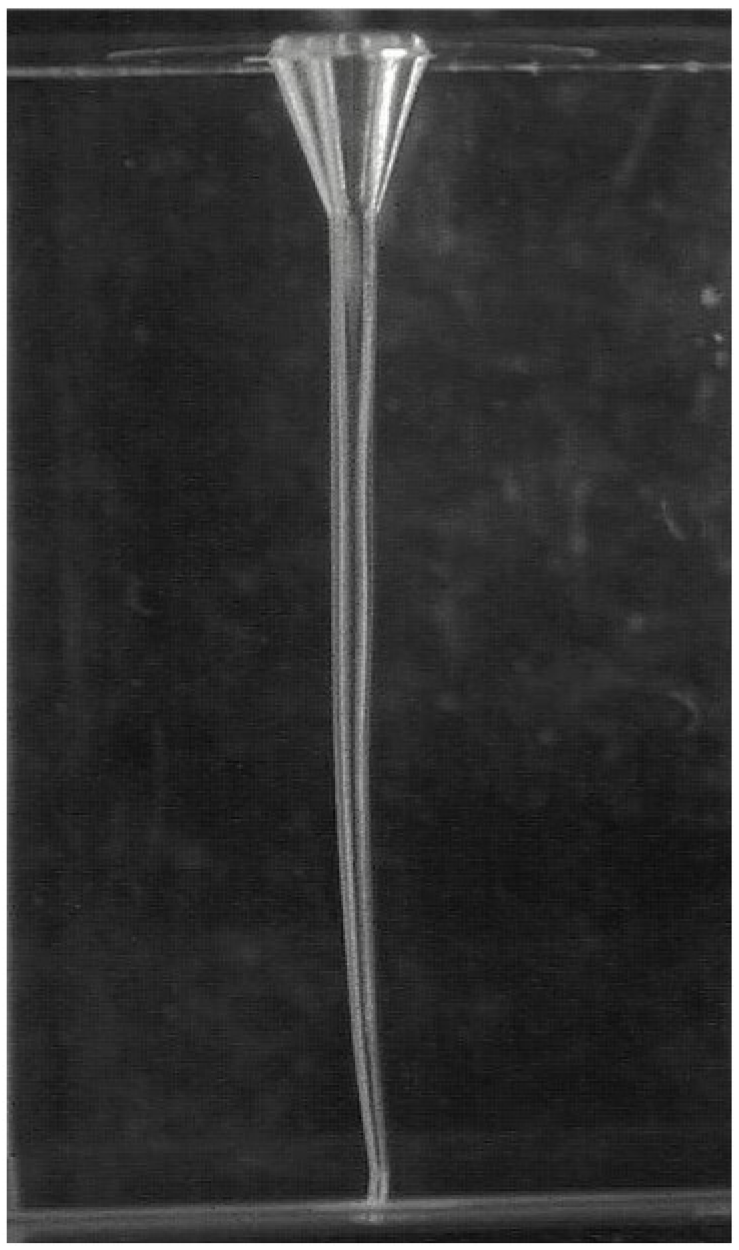
Sixty simulated straight canals in resin blocks (END3L001; Nissin, Kyoto, Japan) with a 0.2 mm apical diameter, 0.017 taper, and 14 mm length were used (Figure 1). Canal patency was confirmed using a #15 K-file (Zipperer; VDW, Munich, Germany). The canals were prepared with HyFlex EDM One File (#25/0.08–0.04 taper, 25 mm; Coltene/Whaledent), irrigated with physiological saline, and dried with paper points corresponding to the HyFlex EDM One File. The canals were then filled using the corresponding HyFlex EDM gutta-percha point (Coltene/Whaledent) and AH Plus sealer (Dentsply Sirona, Bensheim, Germany) with the single-cone technique. The specimens were stored at 37 °C in a 100% humidified incubator for 4 weeks to allow sealer setting and maturation, a protocol commonly adopted in previous in vitro studies to simulate clinical conditions prior to retreatment [23,24].

2.3. Micro-Computed Tomography Imaging

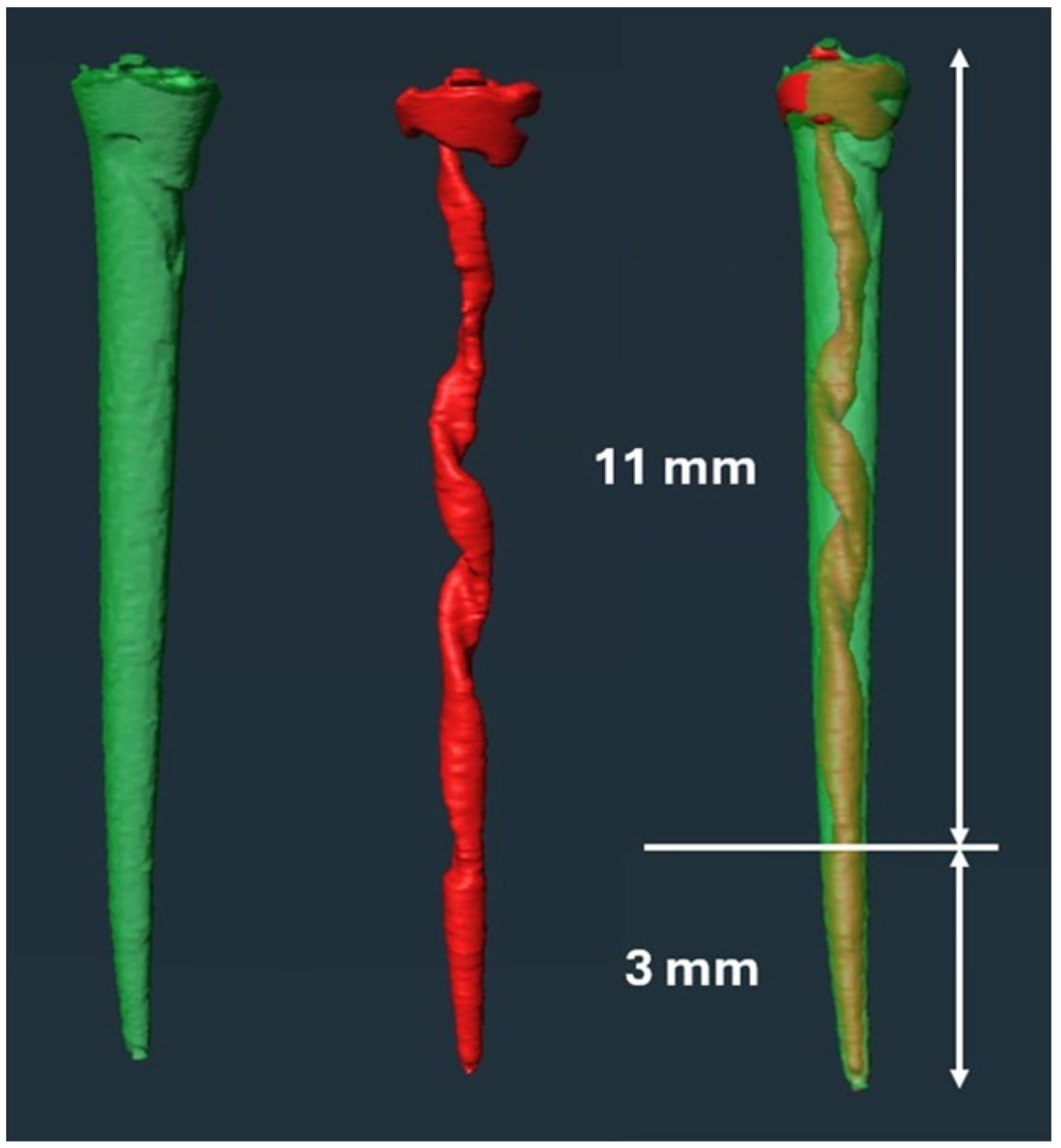
All specimens were scanned using a micro-computed tomography (CT) system (inspeXio SMX-100CTPlus; Shimadzu, Kyoto, Japan) at a voxel size of 0.03 mm, 70 kV, and 100 mA, with 360° rotation in 0.5° steps, frame averaging of 4, and a 1 mm aluminum filter. Three-dimensional models were reconstructed using Amira 3D 2023.2 software (Visage Imaging, Berlin, Germany) to measure the filling material volume (Figure 2).

2.4. Automated Root Canal Instrumentation Device with Controlled Downward Loading

Gutta-percha and sealer removal was performed using the automated root canal instrumentation system with integrated torque and force measurement, as described in our previous studies [16,17], where the system was employed exclusively for the evaluation of root canal shaping. Briefly, the instrumentation setup consisted of a modified Tri-Auto ZX motor (J. Morita) mounted on a motor-driven testing stand (MX2-500N; Imada, Aichi, Japan). The specimens were secured in a rigid holder linked to the torque/force sensing system. The handpiece was held on the stand via an electromagnet and balanced with counterweights on pulleys. When the electromagnet was deactivated, it allowed the handpiece to drop under a preset load of 2, 3, or 4 N. The torque/force sensing system consisted of strain gauges (KFG-2-120-D31-11; Kyowa, Tokyo, Japan) and a load cell (LUX-B-ID; Kyowa), respectively. The signals were amplified with a PCD-400A amplifier (Kyowa) and captured using DCS-100A data acquisition software (version 4.31; Kyowa).

2.5. Root Canal Filling Removal

Two rotational speeds (400 and 800 rpm) were chosen to represent the lower and upper limits of the manufacturer-recommended operating range for the HyFlex Remover instrument. The downward loads (2, 3, and 4 N) were determined based on preliminary experiments, with reference to the load range reported in a previous study [16].
The coronal 3 mm of gutta-percha was initially removed using a HyFlex EDM Orifice Opener (#25/0.12; Coltene/Whaledent), and each canal was mounted on the automated root canal instrumentation device. The HyFlex Remover instrument was set with its tip positioned 3 mm below the orifice. A constant load of 2 N, 3 N, or 4 N was applied during rotation (low-speed group: 400 rpm; high-speed group: 800 rpm; torque: 2.5 N·cm, according to the manufacturer’s recommendation). Removal was terminated when the file reached 3 mm short of the apex by following the manufacturer’s recommendation to prevent unnecessary apical enlargement and reduce the risk of file fracture [7]. A new micro-CT scan was performed with the same parameters as described previously.

2.6. Evaluation

The specimens were arbitrarily assigned to six experimental groups according to two rotational speeds (400 and 800 rpm) and three force conditions (2, 3, and 4 N), resulting in six combinations (n = 10/group). Torque and force generated within the canal were measured in real-time using the torque/force analyzing unit of the instrumentation device, and maximum force and torque were recorded. Torque data were collected every 0.01 s, and cumulative torque was calculated as the sum of values exceeding 0.1 N·mm. The time required for the instrumentation was measured. Gutta-percha extrusion was recorded. Micro-CT scans before and after removal were used to measure the remaining gutta-percha volume from the canal orifice to 3 mm short of the apex, using the Amira 3D 2023.2 software, and the removal rate (%) was calculated as shown in Figure 2.

2.7. Statistical Analysis

Data were analyzed using IBM SPSS Statistics 27 (IBM Corp., Armonk, NY, USA). Normality was assessed using the Shapiro–Wilk test, and homogeneity of variance was evaluated using Levene’s test for all outcome variables. The maximum torque, cumulative torque, maximum force, removal time, and removal rate were analyzed using a two-way fixed-effects analysis of variance (ANOVA), with downward load and rotational speed as independent factors. When significant effects were detected, post hoc comparisons were performed using the Bonferroni correction (α = 0.05).

3. Results

3.1. Removal Efficiency (Removal Rate and Time)

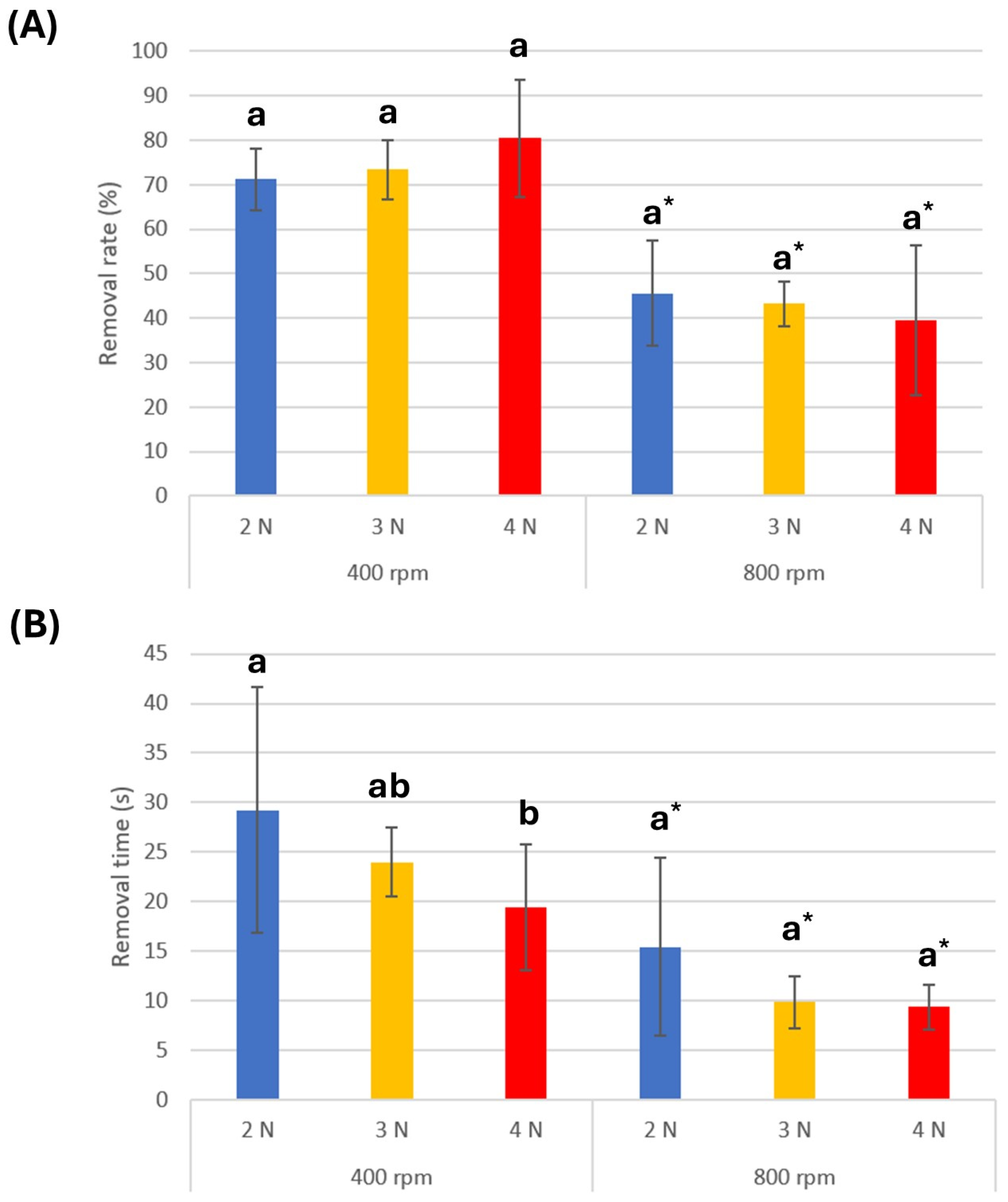
The removal rate was significantly higher in all 400 rpm groups than the corresponding 800 rpm groups under the same load conditions (p < 0.001; Figure 3A). However, no significant differences were observed between the different load groups at the same rotational speed (p > 0.05).
The removal time was consistently longer in all 400 rpm groups than in the corresponding 800 rpm groups (p < 0.001; Figure 3B). In the 400 rpm condition, the 400-2 N group required a significantly longer removal time than the 400-4 N group (p = 0.009; Figure 3B). No file fracture, ledging, or gutta-percha extrusion occurred during the removal procedures.

3.2. Torque Characteristics

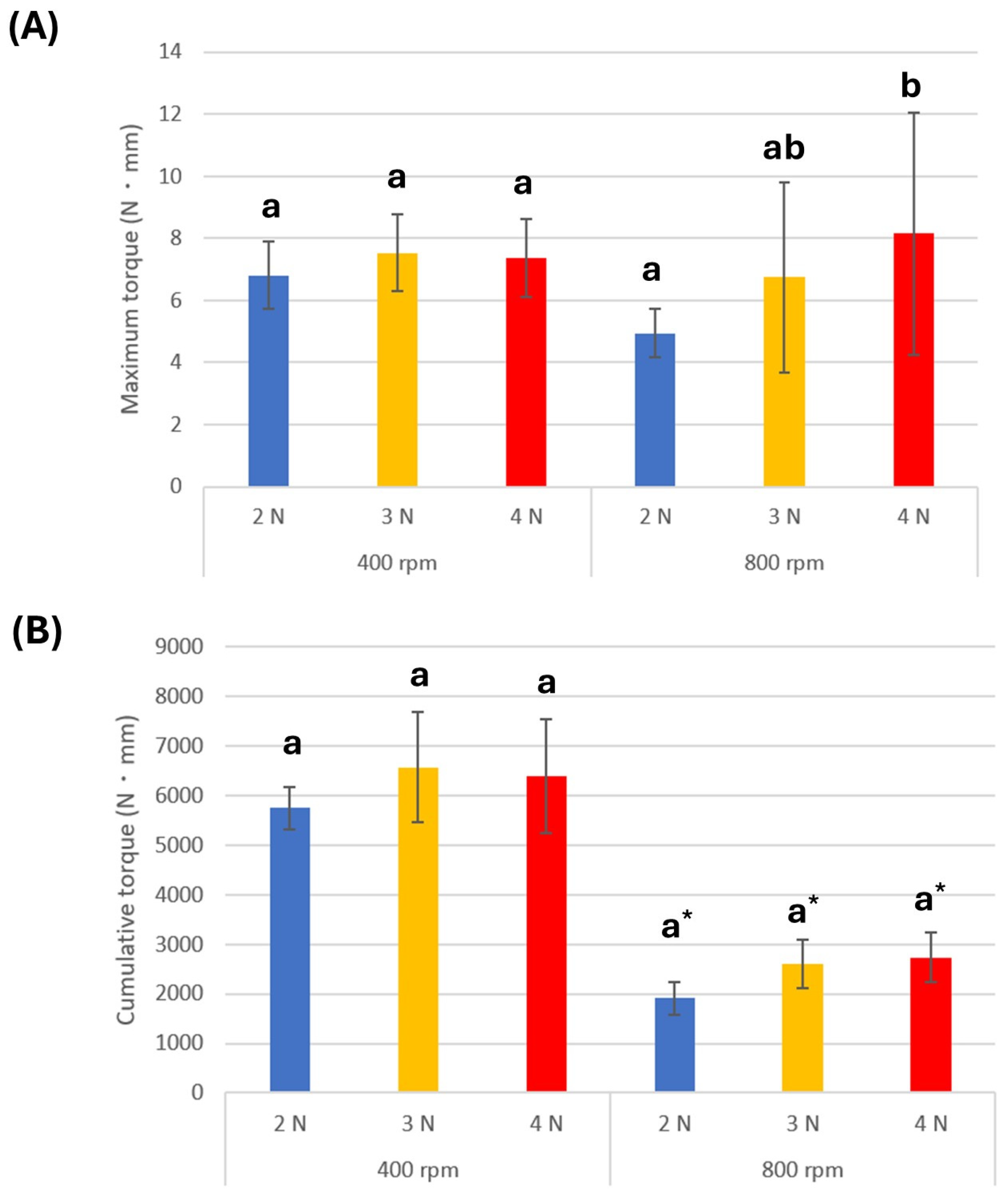
The 800-2 N group showed significantly lower maximum torque than the 800-4 N groups (p = 0.006; Figure 4A), with no significant differences between the 400 rpm groups or across different rotational speeds (all p > 0.05).
Cumulative torque was significantly higher in all 400 rpm groups than the corresponding 800 rpm groups under the same load conditions (all p < 0.001; Figure 4B).

3.3. Maximum Force

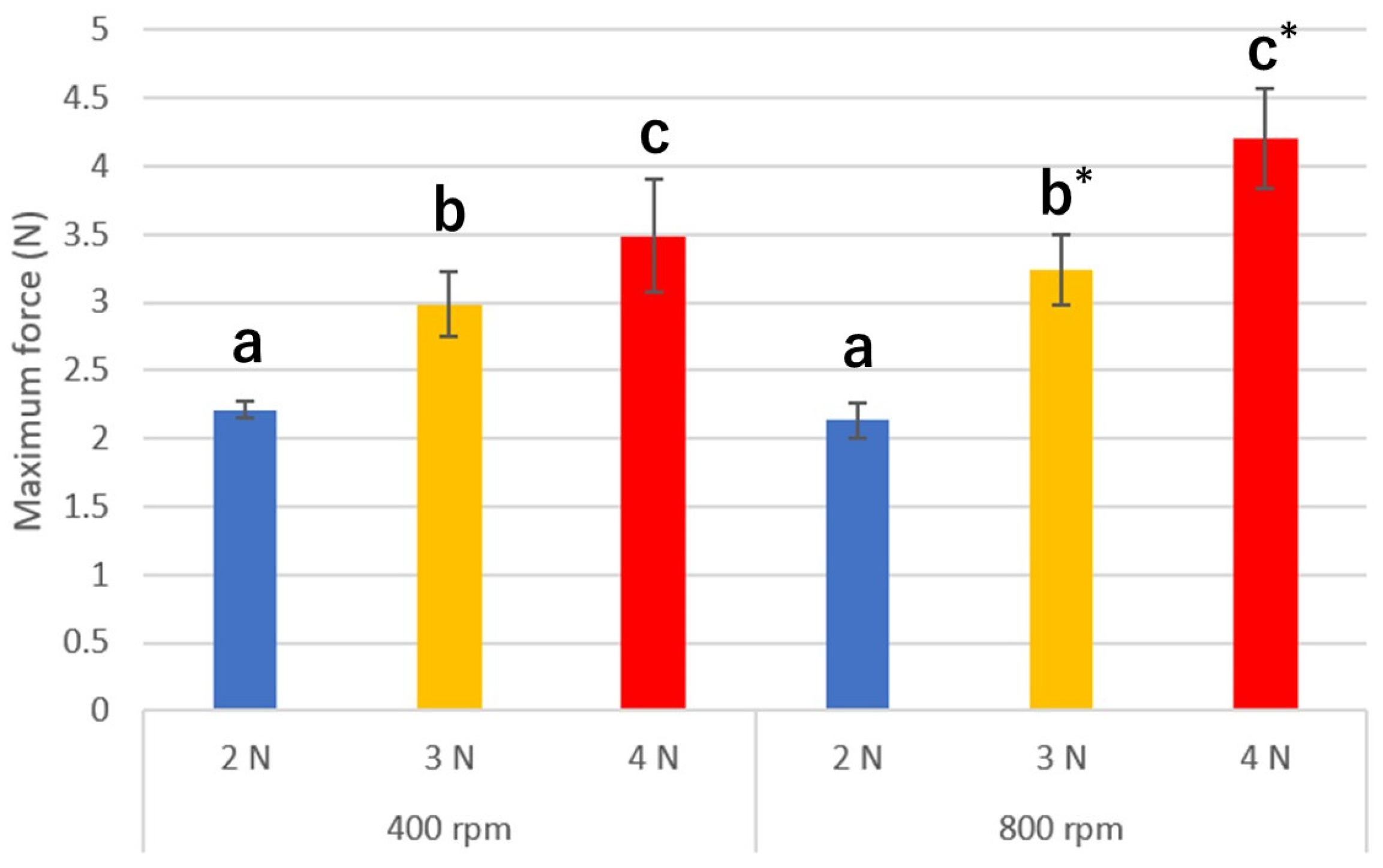
The maximum force increased with the applied load, with significant differences between the 400-2 N, 400-3 N, and 400-4 N groups, as well as between the 800-2 N, 800-3 N, and 800-4 N groups (all p < 0.001; Figure 5). At 3 N and 4 N, the 400-3 N and 400-4 N groups showed significantly lower maximum force values than the 800-3 N and 800-4 N groups, respectively (p = 0.039 and p < 0.001, respectively; Figure 5).

4. Discussion

To the best of our knowledge, this is the first study to evaluate the effects of different downward loads, in combination with rotational speeds, on the efficiency and torque/force generation of gutta-percha/sealer removal with an NiTi rotary instrument. Under the present experimental conditions, the downward load and rotational speed influenced the removal performance of the HyFlex Remover instrument. The maximum force significantly increased with increasing downward load, while cumulative torque and removal rate were significantly greater at 400 rpm than with 800 rpm, with longer removal times particularly under lower loads. Therefore, the null hypothesis was rejected. These findings indicate that downward loads and rotational speeds directly affect the removal efficiency and mechanical stress applied to the instrument and the canal wall.
In this study, the HyFlex Remover was selected as a representative contemporary heat-treated NiTi rotary removal instrument. Previous studies have reported that its removal performance is comparable to or, under certain experimental conditions, greater than that of other NiTi retreatment systems, with reports of reduced residual gutta-percha, shorter instrumentation time, and higher patency rates [8,9,10]. The instrument features a triple-helix blade design, a relatively large taper and core diameter, and is manufactured from CM-wire [8], which predominantly exhibits a martensitic structure at room temperature and transitions to a stiffer mixed martensitic–austenitic phase at body temperature [25]. These metallurgical and geometric characteristics have been linked with increased cyclic fatigue resistance compared with conventional NiTi instruments [26], along with high buckling resistance [8], which may facilitate penetration into gutta-percha and contribute to effective filling material removal. Nevertheless, previous micro-CT and CLSM studies have consistently demonstrated that complete elimination of root canal filling materials cannot be achieved with any currently available NiTi retreatment system [4,6,8,9,10,24], and the results of the present study further support these observations.
Proper manipulation of NiTi rotary instruments, particularly precise control of downward load, is essential for safe and effective clinical performance [27]. Excessive apical force has been reported to promote instrument engagement with the canal wall, resulting in increased torsional stress and a higher risk of instrument fracture [28]. However, standardized evidence regarding the influence of downward load remains limited because this parameter is difficult to isolate under experimental conditions. Using an automated instrumentation system comparable to that employed in the present study, our previous investigations demonstrated that increased downward load led to significantly higher screw-in forces during canal shaping procedures [16], an effect that was mitigated when heat-treated NiTi instruments were used [17]. In addition to downward load, pecking amplitude—the magnitude of the instrument’s vertical in-and-out motion—has been shown to influence axial loading, with larger amplitudes increasing screw-in force and improving canal centering ability [29,30]. However, their effect on cyclic fatigue resistance appears to be instrument-dependent [30,31,32]. Despite these findings, the impact of downward load on the efficiency of gutta-percha and sealer removal, as well as on torque and force generation during retreatment procedures, has not yet been clarified. The present study addresses this gap by evaluating the effects of controlled downward load under standardized conditions.
Under the conditions of this experiment, maximum force significantly increased with increasing applied load, and maximum torque also significantly increased at 4 N, while the removal time was significantly longer at 2 N. Applying a larger load allows the NiTi rotary instrument to engage gutta-percha more aggressively, improving cutting efficiency and reducing the removal time. However, the increased contact resistance between the instrument and material may raise the mechanical load on the instrument, resulting in higher torque during cutting. Based on our finding that the removal rate did not vary with the applied load, 2 N and 3 N loads appear to be the most appropriate under the conditions of this study because they shortened the removal time while preventing excessive torque generation.
Rotational speed is another factor that affects the shaping behavior of NiTi instruments, although its effects remain controversial. Higher rotational speeds have been associated with shorter working times during root canal filling removal, likely due to enhanced cutting efficiency [20,21]. However, increased rotational speed has also been linked to a higher incidence of instrument fracture [33], potentially due to elevated stress caused by an increased strain rate and reduced time for stress relaxation and crystalline transformation. In contrast, some studies have reported that higher speeds can generate lower torque and apical force, likely because faster cutting reduces the contact time and contact area, and does not necessarily increase the fracture risk [34,35,36]. These conflicting findings indicate that the influence of rotational speed is highly dependent on the experimental context, instrument design, and evaluated outcome variables, highlighting the need for controlled investigations focusing on specific clinical procedures such as gutta-percha removal.
The differences in torque generation and the removal rate between different rotational speed in this study may be attributed to variations in the cutting dynamics and instrument–material interaction [7,34]. In this study, the removal rate and cumulative torque were higher and the removal time was longer in the 400 rpm group than in the 800 rpm group, regardless of the applied load. A possible explanation is that a lower rotational speed may prolong the contact time and friction with gutta-percha, and thereby raising cumulative torque and improving removal efficacy. However, direct experimental verification (e.g., friction coefficient measurement, real-time torque profiling) is required to confirm this assumption. In contrast, at a higher rotational speed, the contact time per revolution may be shorter, which contributes to faster material removal, but may slightly reduce cutting efficiency. Additionally, a higher rotational speed may increase frictional heat [37], softening gutta-percha for faster removal, but also may make the NiTi alloy more austenitic, reducing fatigue resistance [11]. Under the present experimental conditions, while a rotational speed of 400 rpm increased removal efficacy, it was associated with longer working time and greater cumulative torque, which may increase the risk of torsional stress on the instrument. From a clinical perspective, a higher rotational speed such as 800 rpm may therefore offer practical advantages by reducing procedure time and limiting torque accumulation during retreatment. Nevertheless, the present findings also suggest that an intermediate rotational speed could potentially provide a more balanced trade-off between efficiency and mechanical safety, although further investigation is required.
Taken together, the present study provides novel insight by demonstrating how controlled downward load and rotational speed interact to influence both removal efficiency and mechanical stress during gutta-percha and sealer removal, an aspect that has not been addressed in previous retreatment studies.

Study Limitations

While informative on gutta-percha/sealer removal using NiTi rotary files, this study is not without limitations. Simulated straight resin root canal blocks were used to improve experimental reproducibility by standardizing canal wall hardness and morphology; however, their physical properties, particularly hardness, differ from those of natural dentin [38]. Furthermore, given the high prevalence of curved root canals (84%) [39], the inclusion of curved canals, especially from anatomically matched human teeth [40], would enhance clinical relevance. In addition, only one NiTi instrument system was evaluated, limiting the generalizability of the findings. It remains unclear whether the observed effects are specific to the system’s design and metallurgy or applicable to other systems. Future studies should therefore incorporate multiple instrument systems, canal curvatures, and clinically relevant conditions to identify optimal mechanical parameters for effective and safe gutta-percha removal.

5. Conclusions

This study assessed how downward load and rotational speed affect gutta-percha and sealer removal efficiency and torque/force of a NiTi rotary instrument in simulated straight resin canals. Under the present experimental conditions, lower downward loads reduced torque but prolonged the working time, whereas higher rotational speeds shortened both the working time and torque, albeit with a lower removal rate. These findings indicate that both load and speed parameters affect the efficiency and safety of gutta-percha and sealer removal, and that optimizing these factors could improve outcomes in clinical practice. A combination of a lower load and a higher rotational speed appeared advantageous for balancing overall performance.

Author Contributions

Conceptualization, K.T., S.K., A.E. and T.O.; methodology, K.T.; software, K.M.; validation, K.T., S.K., A.E. and T.O.; formal analysis, K.T.; investigation, K.T.; resources, K.H. and T.O.; data curation, K.T.; writing—original draft preparation, K.T.; writing—review and editing, S.K., A.E. and T.O.; visualization, K.T.; supervision, T.O.; project administration, S.K.; funding acquisition, S.O. and K.H. All authors have read and agreed to the published version of the manuscript.

Funding

This research was supported in part by a contract grant (grant no. 11BA100335) from the Institute of Science Tokyo, and in part by grants-in-aid for Scientific Research from the Japan Society for the Promotion of Sciences (grant nos. 25K20261 and 23K19739).

Institutional Review Board Statement

Not applicable.

Informed Consent Statement

Not applicable.

Data Availability Statement

The data presented in this study is available on request from the corresponding author.

Acknowledgments

We thank Ellen Knapp, from Edanz (https://jp.edanz.com/ac accessed on 24 November 2025) for editing a draft of this manuscript.

Conflicts of Interest

The authors declare no conflicts of interest.

Correction Statement

This article has been republished with a minor correction to the Funding statement. This change does not affect the scientific content of the article.

References

  1. Tomson, P.L.; Adams, N.; Kavanagh, D.; Virdee, S.S. Non-surgical endodontics: Contemporary biomechanical preparation of the root canal system. Br. Dent. J. 2025, 238, 478–486. [Google Scholar] [CrossRef] [Scilit]
  2. Duncan, H.F.; Chong, B.S. Removal of root filling materials. Endod. Top. 2008, 19, 33–57. [Google Scholar] [CrossRef] [Scilit]
  3. Ajina, M.A.; Shah, P.K.; Chong, B.S. Critical analysis of research methods and experimental models to study removal of root filling materials. Int. Endod. J. 2022, 55, 119–152. [Google Scholar] [CrossRef] [Scilit] [PubMed]
  4. Rossi-Fedele, G.; Ahmed, H.M.A. Assessment of root canal filling removal effectiveness using micro-computed tomography: A systematic review. J. Endod. 2017, 43, 520–526. [Google Scholar] [CrossRef] [Scilit] [PubMed]
  5. Arias, A.; Peters, O.A. Present status and future directions: Canal shaping. Int. Endod. J. 2022, 55, 637–655. [Google Scholar] [CrossRef] [Scilit] [PubMed]
  6. Taşdemir, T.; Er, K.; Yıldırım, T.; Çelik, D. Efficacy of three rotary NiTi instruments in removing gutta-percha from root canals. Int. Endod. J. 2008, 41, 191–196. [Google Scholar] [CrossRef] [Scilit]
  7. Dincer, A.N.; Er, O.; Canakci, B.C. Evaluation of apically extruded debris during root canal retreatment with several NiTi systems. Int. Endod. J. 2015, 48, 1194–1198. [Google Scholar] [CrossRef] [Scilit]
  8. Kim, Y.; Chang, S.W.; Oh, S. Buckling resistance, torque, and force generation during retreatment with D-RaCe, HyFlex Remover, and Mtwo retreatment files. Restor. Dent. Endod. 2023, 48, e10. [Google Scholar] [CrossRef] [Scilit]
  9. Sidnal, S.; Gowda, B.; Satish, S.V.; Patil, A.; Kovvuru, S.K.; Laxmi Prìya, C.H. Comparative evaluation of three different retreatment files for gutta-percha removal under confocal laser scanning microscope: An in vitro study. Int. J. Appl. Dent. Sci. 2025, 11, 145–149. [Google Scholar] [CrossRef] [Scilit]
  10. Lee, J.; Kim, H.C.; Kirkpatrick, T.; Jaramillo, D.E.; Kwak, S.W.; Jeong, J.W. Effectiveness of nickel-titanium files for retreatment of molars filled with single-cone hydraulic technique using bioceramic sealers: An in vitro study. Materials 2025, 18, 1265. [Google Scholar] [CrossRef] [Scilit]
  11. Kasuga, Y.; Kimura, S.; Maki, K.; Unno, H.; Omori, S.; Hirano, K.; Ebihara, A.; Okiji, T. Phase transformation and mechanical properties of heat-treated nickel-titanium rotary endodontic instruments at room and body temperatures. BMC Oral Health 2023, 23, 825. [Google Scholar] [CrossRef] [Scilit] [PubMed]
  12. Abdellatif, D.; Iandolo, A.; Scorziello, M.; Sangiovanni, G.; Pisano, M. Cyclic fatigue of different Ni-Ti endodontic rotary file alloys: A comprehensive review. Bioengineering 2024, 11, 499. [Google Scholar] [CrossRef] [Scilit]
  13. Çanakçi, B.C.; Ustun, Y.; Er, O.; Genc Sen, O. Evaluation of apically extruded debris from curved root canal filling removal using 5 nickel-titanium systems. J. Endod. 2016, 42, 1101–1104. [Google Scholar] [CrossRef] [Scilit]
  14. Siqueira, J.F., Jr. Microbial causes of endodontic flare-ups. Int. Endod. J. 2003, 36, 453–463. [Google Scholar] [CrossRef] [Scilit]
  15. Alves, F.R.; Ribeiro, T.O.; Moreno, J.O.; Lopes, H.P. Comparison of the efficacy of nickel-titanium rotary systems with or without the retreatment instruments in the removal of gutta-percha in the apical third. BMC Oral Health 2014, 14, 102. [Google Scholar] [CrossRef] [Scilit]
  16. Maki, K.; Ebihara, A.; Unno, H.; Omori, S.; Nakatsukasa, T.; Kimura, S.; Okiji, T. Effect of different downward loads on canal centering ability, vertical force, an torque generation during nickel-titanium rotary instrumentation. Materials 2022, 15, 2724. [Google Scholar] [CrossRef] [Scilit]
  17. Maki, K.; Ebihara, A.; Luo, Y.; Kasuga, Y.; Unno, H.; Omori, S.; Kimura, S.; Okiji, T. Thermal treatment prevents effects of downward loads on the screw-in force generation and canal-centering ability of nickel-titanium rotary instruments. Materials 2025, 18, 3610. [Google Scholar] [CrossRef] [Scilit]
  18. Ha, J.H.; Cheung, G.S.; Versluis, A.; Lee, C.J.; Kwak, S.W.; Kim, H.C. ‘Screw-in’ tendency of rotary nickel-titanium files due to design geometry. Int. Endod. J. 2015, 48, 666–672. [Google Scholar] [CrossRef] [Scilit] [PubMed]
  19. Liu, M.; Xiong, S.; Tan, F.; Liu, Y. Less extrusion debris during the retreatment of curved canals using twisted files with higher rotational speeds: An ex vivo study. BMC Oral Health 2017, 17, 45. [Google Scholar] [CrossRef] [Scilit]
  20. Bramante, C.M.; Betti, L.V. Efficacy of Quantec rotary instruments for gutta-percha removal. Int. Endod. J. 2000, 33, 463–467. [Google Scholar] [CrossRef] [Scilit] [PubMed]
  21. Royzenblat, A.; Goodell, G.G. Comparison of removal times of Thermafil plastic obturators using Profiles at different speeds. J. Endod. 2007, 33, 256–258. [Google Scholar] [CrossRef] [Scilit]
  22. Cecagno, F.L.; De-Martin, A.S.; Fontana, C.E.; Cavenago, B.C.; Nascimento, W.M.; Limoeiro, A.G.S.; Bueno, C.E.S. Evaluation of the ability of 3 reciprocating instruments to remove obturation material: A micro-computed tomography study. J. Endod. 2024, 50, 376–380. [Google Scholar] [CrossRef] [Scilit] [PubMed]
  23. Ørstavik, D.; Nordahl, I.; Tibballs, J.E. Dimensional change following setting of root canal sealer materials. Dent. Mater. 2001, 17, 512–519. [Google Scholar] [CrossRef] [Scilit]
  24. Yang, X.; Wang, Y.; Ji, M.; Li, Y.; Wang, H.; Luo, T.; Gao, Y.; Zou, L. Microcomputed tomographic analysis of the efficiency of two retreatment techniques in removing root canal filling materials from mandibular incisors. Sci. Rep. 2023, 13, 2267. [Google Scholar] [CrossRef] [Scilit]
  25. Jo, H.J.; Kwak, S.W.; Kim, H.C.; Kim, S.K.; Ha, J.H. Torsional resistance of heat-treated nickel-titanium instruments under different temperature conditions. Materials 2021, 14, 5295. [Google Scholar] [CrossRef] [Scilit] [PubMed]
  26. Azizi, A.; Prati, C.; Schiavon, R.; Fitzgibbon, R.M.; Pirani, C.; Iacono, F.; Pelliccioni, G.A.; Spinelli, A.; Zamparini, F.; Puddu, P.; et al. In-depth metallurgical and microstructural analysis of OneShape and heat treated OneCurve instruments. Eur. Endod. J. 2021, 6, 90–97. [Google Scholar] [CrossRef] [Scilit] [PubMed]
  27. Thu, M.; Ebihara, A.; Adel, S.; Okiji, T. Analysis of torque and force induced by rotary nickel-titanium instruments during root canal preparation: A systematic review. Appl. Sci. 2021, 11, 3079. [Google Scholar] [CrossRef] [Scilit]
  28. Ohri, K.; Chen, P.Y.-O.; Peters, O.A. The biomechanics of nickel titanium instrument fracture in root canal therapy: A narrative review. Materials 2024, 17, 6147. [Google Scholar] [CrossRef] [Scilit]
  29. Ha, J.H.; Kwak, S.W.; Sigurdsson, A.; Chang, S.W.; Kim, S.K.; Kim, H.C. Stress generation during pecking motion of rotary nickel-titanium instruments with different pecking depth. J. Endod. 2017, 43, 1688–1691. [Google Scholar] [CrossRef] [Scilit]
  30. Hirano, K.; Kimura, S.; Maki, K.; Omori, S.; Ebihara, A.; Okiji, T. Impact of varying amplitudes of upward and downward motion on the torque/force generation, canal-centering ability, and cyclic fatigue resistance of nickel–titanium reciprocating instrument. Appl. Sci. 2025, 15, 288. [Google Scholar] [CrossRef] [Scilit]
  31. Pedullà, E.; Carlesi, T.; Pappalardo, A.; Canova, F.S.; Malagnino, V.A.; La Rosa, G.R.M.; Generali, L. Impact of pecking amplitude on cyclic fatigue of new nickel-titanium files. Clin. Exp. Dent. Res. 2024, 10, e811. [Google Scholar] [CrossRef] [Scilit]
  32. La Rosa, G.R.M.; Canova, F.S.; Generali, L.; Pedullà, E. The role of pecking motion depths in dynamic cyclic fatigue resistance: In vitro study. Int. Dent. J. 2024, 74, 855–861. [Google Scholar] [CrossRef] [Scilit]
  33. Zelada, G.; Varela, P.; Martín, B.; Bahíllo, J.G.; Magán, F.; Ahn, S. The effect of rotational speed and the curvature of root canals on the breakage of rotary endodontic instruments. J. Endod. 2002, 28, 540–542. [Google Scholar] [CrossRef] [Scilit] [PubMed]
  34. Bardsley, S.; Peters, C.I.; Peters, O.A. The effect of three rotational speed settings on torque and apical force with vortex rotary instruments in vitro. J. Endod. 2011, 37, 860–864. [Google Scholar] [CrossRef] [Scilit]
  35. Kyaw, M.S.; Ebihara, A.; Kasuga, Y.; Maki, K.; Kimura, S.; Htun, P.H.; Nakatsukasa, T.; Okiji, T. Influence of rotational speed on torque/force generation and shaping ability during root canal instrumentation of extracted teeth with continuous rotation and optimum torque reverse motion. Int. Endod. J. 2021, 54, 1614–1622. [Google Scholar] [CrossRef] [Scilit]
  36. Haimed, T.S.A. The effect of rotational speed on force and torque during instrumentation of simulated root canals using ProTaper Next rotary files. Saudi Endod. J. 2024, 14, 19–24. [Google Scholar] [CrossRef] [Scilit]
  37. Bramante, C.M.; Fidelis, N.S.; Assumpção, T.S.; Bernardineli, N.; Garcia, R.B.; Bramante, A.S.; Moraes, I.G. Heat release, time required, and cleaning ability of MTwo R and ProTaper Universal retreatment systems in the removal of filling material. J. Endod. 2010, 36, 1870–1873. [Google Scholar] [CrossRef] [Scilit]
  38. Hülsmann, M. A critical appraisal of research methods and experimental models for studies on root canal preparation. Int. Endod. J. 2022, 55 (Suppl. 1), 95–118. [Google Scholar] [CrossRef] [Scilit]
  39. Schäfer, E.; Diez, C.; Hoppe, W.; Tepel, J. Roentgenographic investigation of frequency and degree of canal curvatures in human permanent teeth. J. Endod. 2002, 28, 211–216. [Google Scholar] [CrossRef] [Scilit] [PubMed]
  40. De-Deus, G.; Simões-Carvalho, M.; Belladonna, F.G.; Versian, M.A.; Silva, E.J.N.L.; Cavalcante, D.M.; Souza, E.M.; Johnsen, G.F.; Haugen, H.J.; Paciornik, S. Creation of well-balanced experimental groups for comparative endodontic laboratory studies: A new proposal based on micro-CT and in silico methods. Int. Endod. J. 2020, 53, 974–985. [Google Scholar] [CrossRef] [Scilit] [PubMed]
Figure 1. Representative simulated straight canal in a resin block. The canals were prepared using the HyFlex EDM One File (#25/0.08–0.04 taper) and obturated with a corresponding gutta-percha point and AH Plus sealer. After 30 days of storage, the gutta-percha and sealer were removed using the HyFlex Remover at two rotational speeds (400 and 800 rpm) and three downward loads (2, 3, and 4 N). During removal, torque, force, and working time were recorded, and the removal rate was determined using micro-computed tomography.
Applsci 16 00446 g001
Figure 2. Representative three-dimensional reconstructed micro-CT images before (green; left) and after (red; center) gutta-percha and sealer removal. The right image depicts the superimposition. The evaluation was performed over an 11 mm canal segment from the canal orifice to 3 mm from the apex. The removal rate was calculated using the following formula: [pre-removal gutta-percha and sealer volume − post-removal gutta-percha and sealer volume]/pre-removal gutta-percha and sealer volume) × 100.
Applsci 16 00446 g002
Figure 3. Removal rate (A) and removal time (B) of gutta-percha and AH Plus sealer using the HyFlex Remover instrument under varying vertical loads and rotational speeds. Values are presented as the mean ± standard deviation (n = 10). Different lowercase letters denote significant differences between load conditions at each rotational speed, whereas an asterisk (*) denotes a significant difference between rotational speeds at each load condition.
Applsci 16 00446 g003
Figure 4. Maximum torque (A) and cumulative torque (B) generated during the removal of gutta-percha and AH Plus sealer using the HyFlex Remover instrument under varying vertical loads and rotational speeds. Values are presented as the mean ± standard deviation (n = 10). Different lowercase letters denote significant differences between load conditions at each rotational speed, whereas an asterisk (*) denotes a significant difference between rotational speeds at each load condition.
Applsci 16 00446 g004
Figure 5. Maximum force generated during the removal of gutta-percha and AH Plus sealer using the HyFlex Remover instrument under varying vertical loads and rotational speeds. Values are presented as the mean ± standard deviation (n = 10). Different lowercase letters denote significant differences between load conditions at each rotational speed, whereas an asterisk (*) denotes a significant difference between rotational speeds at each load condition.
Applsci 16 00446 g005
Disclaimer/Publisher’s Note: The statements, opinions and data contained in all publications are solely those of the individual author(s) and contributor(s) and not of MDPI and/or the editor(s). MDPI and/or the editor(s) disclaim responsibility for any injury to people or property resulting from any ideas, methods, instructions or products referred to in the content.