Review

Recent Progress in Fermentation of Asteraceae Botanicals: Sustainable Approaches to Functional Cosmetic Ingredients


Department of Organic Chemical Technology and Polymeric Materials, Faculty of Chemical Technology and Engineering, West Pomeranian University of Technology in Szczecin, 10 Pulaski Str., 70-322 Szczecin, Poland
Appl. Sci. 2026, 16(1), 283; https://doi.org/10.3390/app16010283 (registering DOI)
Submission received: 2 December 2025 / Revised: 20 December 2025 / Accepted: 24 December 2025 / Published: 26 December 2025

Abstract

The cosmetics industry is experiencing dynamic growth, which poses significant environmental challenges, primarily due to the accumulation of cosmetic ingredients in aquatic and soil ecosystems. In response, sustainable solutions aligned with the principles of the circular economy and the concept of “clean beauty” are increasingly sought. One promising approach is the use of bioferments obtained through the fermentation of plant raw materials from the Asteraceae family as alternatives to conventional extracts in cosmetic formulations. This literature review provides up-to-date insights into the biotechnological transformation of Asteraceae plants into cosmetic bioferments, with particular emphasis on fermentation processes enabling enzymatic hydrolysis of glycosylated flavonoids into aglycones, followed by their conversion into low-molecular-weight phenolic acids. These compounds exhibit improved local skin penetration (i.e., higher local bioavailability within the epidermal barrier) compared to their parent glycosides, thereby enhancing antioxidant activity. The analysis includes evidence-based data on the enzymatic hydrolysis of glycosidic flavonoids into free aglycones and their subsequent conversion into low-molecular-weight phenolic acids, which exhibit improved antioxidant potential compared to unfermented extracts. Furthermore, this narrative review highlights the role of lactic acid bacteria and yeast in producing bioferments enriched with bioactive metabolites, including lactic acid (acting as a natural moisturizing factor and preservative), while emphasizing their biodegradability and contribution to minimizing the environmental impact of cosmetics. This review aims to provide a comprehensive perspective on the technological, dermatological, and environmental aspects of Asteraceae-based bioferments, outlining their potential as sustainable and functional ingredients in modern cosmetics.

1. Introduction

The growing interest in natural cosmetics is closely associated with the “clean beauty” trend, which refers to formulations free from environmentally burdensome components (e.g., parabens, silicones, microplastics) and designed to minimize environmental impact while ensuring safety and effectiveness. In this context, bioferments (fermented plant extracts obtained through controlled microbial processes) represent an innovative solution in cosmetic technology. Bioferments are characterized by enhanced local bioavailability (skin permeation) of active compounds and higher antioxidant potential compared to unfermented extracts; however, these benefits are not inherent to fermentation itself but depend on critical process variables, including microbial strain (e.g., species and metabolic capabilities of lactic acid bacteria), substrate composition (plant species, sugar content, polyphenolic profile), fermentation time and temperature, pH value, and oxygen availability [1,2,3]. This process leads to the enzymatic degradation of complex macromolecules, such as polysaccharides or proteins, into forms with a lower molecular weight, which promotes their better penetration through the epidermal barrier [4,5,6]. During fermentation, biologically active substances are released, including polyphenols, flavonoids, vitamins, and amino acids, which have antioxidant, moisturizing, and protective properties [7,8,9]. Moreover, reducing the proportion of compounds with low bioavailability (i.e., limited ability to penetrate the skin barrier, thereby decreasing local availability of active substances) and generating metabolites such as lactic acid enhances the functionality and usability of cosmetic raw materials. Additionally, the formation of lactic acid, a natural moisturizing factor (NMF), helps maintain the pH of the skin and hydration, which is essential for anti-aging strategies [10,11]. The use of bioferments in biodegradable cosmetic formulations allows for the creation of products with higher biological efficacy, better skin tolerance, and antioxidant potential. The concept of biodegradable cosmetic formulations refers to products whose ingredients meet internationally recognized biodegradability standards (e.g., OECD 301 tests) and do not accumulate in aquatic or soil ecosystems. Such formulations reduce environmental impact and support compliance with sustainability regulations, including the European Green Deal [1,12,13].
Plants from the Asteraceae family are rich in phenolic compounds, flavonoids, phenolic acids, terpenoids, sesquiterpene lactones, flavonolignans, essential oils, triterpenes, sterols, and vitamins, which have antioxidant, anti-inflammatory, and soothing properties [14,15,16,17]. The Asteraceae family, commonly known as the daisy family (daisies or sunflowers), is one of the largest and most diverse plant families, comprising over 23,000 species worldwide. These species occur in a variety of ecosystems, from meadows (e.g., Taraxacum officinale L. (T. officinale), Arnica montana L. (A. Montana) to alpine regions (black yarrow Achillea atrata), steppe habitats (Artemisia), ruderal areas and Mediterranean landscapes (Silybum marianum L. (S. marianum)), to tropical zones (Tagetes) [18,19,20,21]. Their adaptability and the presence of biologically active compounds mean that they have long been used in both traditional medicine and modern cosmetic formulations. T. officinale, S. marianum, Matricaria chamomilla L. (M. chamomilla), Calendula officinalis L. (C. officinalis), and A. montana are a particularly interesting group of raw materials due to the presence of valuable small-molecule bioactive compounds with high antioxidant potential, as well as a significant content of large-molecule flavonoid compounds and their glycoside forms [22,23,24,25,26,27]. The local bioavailability of these macromolecular compounds in their unprocessed form is limited because they occur as glycosides with a complex structure and higher molecular weight. The fermentation process enables enzymatic hydrolysis of glycosylated flavonoids into aglycones and their subsequent conversion into low-molecular-weight phenolic acids, which exhibit improved skin permeation (i.e., improved local bioavailability within the epidermal barrier) compared to their parent glycosides. However, these transformations do not guarantee universal benefits: aglycones may present lower chemical stability, greater skin irritability, or undergo differential metabolism, which can influence their cosmetic performance and safety. Therefore, it is essential to perform controlled optimization of fermentation parameters to maximize the conversion of compounds into phenolic acids (rather than aglycones, which may exhibit skin-irritating properties) and to assess their stability and safety [11,28,29,30,31]. In recent years, there has been intensive research into the fermentation of plants from the Asteraceae family to obtain bioferments with antioxidant, moisturizing, and regenerating properties that can be used as active ingredients in cosmetic formulations [17,28,32,33,34]. Bioferments are classified as biodegradable cosmetic raw materials, which further emphasizes their importance in the context of ecology and sustainable development [35]. Contemporary research places particular emphasis on developing sustainable, biodegradable cosmetic formulations that minimize environmental impact, use renewable plant-based raw materials, and fit in with the idea of a circular economy [36,37,38,39,40].
The selection of plants from the Asteraceae family is justified by their unique phytochemical profile. They are a rich source of polyphenols, flavonoids, and terpenoids, which have antioxidant and anti-inflammatory properties and support skin regeneration. The fermentation process of these raw materials plays a key role in increasing the bioavailability of active compounds. In addition, it leads to the formation of lactic acid, which acts as a natural moisturizer and preservative, fitting in with the concept of sustainable development and the “clean beauty” trend. These characteristics make plants from the Asteraceae family particularly suitable for use in the production of bioferments with high cosmetic value.
The aim of this narrative review is to critically analyze the fermentation of plant raw materials from the Asteraceae family in the context of obtaining bioferments for cosmetic applications, based on a structured framework covering key technological, chemical, functional, and environmental aspects. In particular, the review aims to identify process variables such as microorganism strains, fermentation conditions (time, temperature, pH, oxygen availability), and fermentation mixture composition that determine the release of metabolites; assess chemical transformation indicators, including glycoside hydrolysis, aglycone and phenolic acid formation, and changes in the metabolite profile; summarize functional parameters of bioferments, such as antioxidant activity (DPPH, ABTS, FRAP), total phenolic content (TPC), and lactic acid efficiency (LAe); and analyze environmental safety aspects using OECD 301 biodegradability tests. The integration of these areas aims to create a methodological basis for the development of standardized fermentation protocols and the establishment of quality and safety standards for bioferments in sustainable cosmetic formulations.

2. Methodology

This narrative review was conducted using a structured approach to literature search and evidence selection to ensure transparency and reproducibility. The search strategy included the following elements: Databases consulted: Scopus, Web of Science, PubMed, and Google Scholar; Search terms and Boolean operators: “Asteraceae fermentation” and “cosmetic bioferments” or “antioxidant activity” or “biodegradability” or “OECD 301”; Time frame: Publications from 2007 to 2025 were considered to capture recent advances in fermentation technologies and cosmetic applications. Inclusion criteria: Peer-reviewed articles and reviews focusing on (1) fermentation of Asteraceae plant materials, (2) biotechnological processes for cosmetic applications, (3) evaluation of antioxidant activity and biodegradability; Exclusion criteria: Non-peer-reviewed sources, conference abstracts, patents (unless providing essential technological insights), and studies unrelated to cosmetic formulations; Selection process: Titles and abstracts were screened for relevance, followed by full-text review. Data were extracted on fermentation conditions (microbial strains, time, temperature, pH, oxygenation), chemical transformations (glycoside hydrolysis, aglycone and phenolic acid formation), functional metrics (antioxidant assays, TPC, lactic acid yield), and environmental safety (OECD 301 biodegradability); Evidence synthesis: The analysis represents a critical synthesis of literature rather than original experimental work. Comparative tables and figures summarize key findings, highlighting technological variables, functional outcomes, and sustainability aspects.

3. Flavonoid Profile of Selected Species from the Asteraceae Family

3.1. Dandelion (T. officinale)—Flavonoids and Their Glycoside Forms

Dandelion (T. officinale), a member of the Asteraceae family, is a valuable plant characterized by a rich and diverse phytochemical profile. This widely used medicinal and edible species contains numerous secondary metabolites, including flavonoids—polyphenolic compounds composed of two benzene rings connected by a three-carbon bridge, featuring conjugated double bonds and hydroxyl groups—and their glycosidic derivatives (linked to sugar residues). Additionally, it is a source of phenolic acids (such as ferulic, caffeic, p-hydroxyphenylacetic, dicaffeoylquinic, hydroxycinnamic, chicoric, and chlorogenic acids), amino acids, coumarins, lignans, phytosterols, terpenes, glycoproteins, oligosaccharides, alkaloids, and tannins. This complex chemical composition underpins the broad spectrum of biological activities attributed to dandelion, including antioxidant, anti-inflammatory, and photoprotective effects, which are of particular relevance in cosmetic applications [41,42,43,44].
Flavonoids, a major subgroup of polyphenols, are recognized for their broad spectrum of biological activities, particularly their antioxidant properties. In T. officinale, notable representatives include naringenin, delphinidin, quercetin, apigenin, and luteolin, along with their glycosidic derivatives such as prunin, myrtillin, quercetin-3-rhamnoside, apigenin-7-glucoside, and luteolin-7-glucoside. These compounds function primarily as electron donors, stabilizing free radicals and reactive oxygen species (ROS), thereby contributing to the significant antioxidant potential of dandelion and its relevance in cosmetic formulations [45].

3.2. Milk Thistle (S. marianum)—Flavonoids and Their Glycoside Forms

Milk thistle (S. marianum) is a valuable plant material belonging to the Silybum genus in the Asteraceae family. The species S. marianum and Silybum eburneum L. (S. eburneum) have been used in traditional medicine for centuries due to their documented hepatoprotective potential [46]. This effect is primarily due to the presence of powerful antioxidants, including a flavonolignan complex known as silymarin, as well as vitamin E, which in its natural form is much better absorbed by the body’s cells than its synthetic counterpart [47]. S. marianum belongs to the group of the most important medicinal plants obtained from crops, mainly in southern and central Europe, North and South America, and Australia [48]. The improved variety of S. marianum “Silma”, cultivated in Poland, was entered in the register of varieties at the Central Research Center for Cultivated Plant Varieties in Słupia Wielka in 1993. This variety is characterized by high seed yield (approx. 1.5 t/ha) and more than twice the flavonolignan content (approx. 3.4% calculated as silibin) than required by Polish standards (≥1.5% calculated as silibin) [46,49].
In addition to flavonolignans, milk thistle also contains classic flavonoids and their glycoside forms, although in smaller quantities than in other species of the Asteraceae family. The most important flavonoids present in this raw material include: quercetin (a flavonol with strong antioxidant properties), taxifolin (dihydroxyquercetin)—a precursor in the biosynthesis of flavonolignans, as well as apigenin and luteolin, known for their anti-inflammatory and antioxidant properties [46,50]. The presence of glycosidic forms of flavonoids, such as quercetin-3-O-glucoside (isoquercitrin), rutin (quercetin glycoside), apigenin-7-O-glucoside, and luteolin-7-O-glucoside, has also been found in milk thistle. Although their concentration is lower than in other plants of the Asteraceae family, the presence of these compounds further enhances the antioxidant and anti-inflammatory properties of milk thistle, which increases its value in cosmetic formulations [51,52,53].

3.3. Common Chamomile (M. chamomilla)—Flavonoids and Their Glycoside Forms

M. chamomilla, belonging to the Asteraceae family, is an annual herbaceous plant reaching a height of 15–50 cm. It is characterized by an erect, branched stem, hairless, often furrowed. The leaves are alternate, pinnately lobed, with thread-like segments, without petioles, which gives the plant a delicate appearance. The inflorescence is a capitulum 1.5–2.5 cm in diameter, composed of ligulate flowers (white, female) on the periphery and tubular flowers (yellow, hermaphroditic) in the center [24,52,54,55]. A characteristic diagnostic feature of the species is the empty bottom of the capitulum, which distinguishes it from related species. The fruit is a small achene, yellowish-gray, without calyx fluff. The root system is taproot-like and poorly developed. The species originates from Europe and Western Asia but is now widespread throughout the world. It prefers light, sandy, sunny soils and often colonizes farmland, fallow land, and roadsides. The pharmacological and cosmetic raw material is the chamomile flower head (Chamomillae anthodium L. (Ch. anthodium)), harvested at full bloom [56,57,58].
M. chamomilla is one of the richest sources of flavonoids in the Asteraceae family. Its composition is dominated by compounds from the flavone group, primarily apigenin and its glycoside forms, such as apigenin-7-O-glucoside, which are responsible for the anti-inflammatory and antioxidant properties of the raw material [59,60,61]. In addition to apigenin, luteolin is also present, known for its antioxidant and oxidative stress protection properties. The content of these compounds makes chamomile a valued ingredient in cosmetic and pharmaceutical preparations, especially in products that soothe irritation and support skin regeneration. In addition, the raw material contains essential oil (including chamazulene and α-bisabolol), coumarins, and phenolic acids such as caffeic, chlorogenic, ferulic, p-coumaric, gallic, and protocatechuic acids. These compounds work synergistically with flavonoids to neutralize free radicals, inhibit lipid peroxidation, and support the cells’ defense mechanisms against oxidative stress [60,62].

3.4. C. officinalis—Flavonoids and Their Glycoside Forms

C. officinalis, belonging to the Asteraceae family, is an annual or biennial plant reaching a height of 30–60 cm. The stem is erect, branched, and covered with soft hairs. The leaves are arranged alternately, lanceolate to ovate, entire or slightly serrated, with a hairy surface. The inflorescence is a capitulum 3–7 cm in diameter, composed of ligulate flowers (orange or yellow) on the periphery and tubular flowers in the center. The fruit is a sickle-shaped achene without calyx fluff [63,64]. The species originates from the Mediterranean region and is currently cultivated in many countries in Europe and Asia. It prefers fertile, well-drained soils and sunny locations. The pharmacognostic raw material of C. officinalis is the marigold flower (Flos Calendulae), which, according to the requirements of the European Pharmacopoeia, must contain not less than 0.4% flavonoids, calculated as hyperoside. The harvesting of flowers is performed at full bloom to ensure optimal phytochemical composition and compliance with pharmacopoeial standards [65,66].
C. officinalis is rich in biologically active compounds, including flavonoids (0.3–0.8% w/w of dry plant material)—mainly isorhamnetin and quercetin glycosides (e.g., rutin, isoquercitrin), as well as trace amounts of apigenin, as determined by chromatographic methods [25]. Phenolic acids are also present, primarily chlorogenic acid, as well as caffeic, ferulic, and p-coumaric acids. Carotenoids (β-carotene and xanthophylls), responsible for the intense color of the flowers, are characteristic of the raw material [63]. Triterpenic alcohols such as faradiol, heliantriol, arnidiol, and taraxasterol, which have anti-inflammatory and healing properties, as well as triterpene saponins—calendulosides A–F and calendasaponins A–D [67]. The essential oil (0.2–0.3% w/w of dry plant material) contains sesquiterpenes, among others (e.g., α-cadinene). The dominant flavonoids are isorhamnetin (3-O-glucoside, 3-O-rutinoside) and quercetin (rutin, isoquercitrin). These compounds have anti-inflammatory, antioxidant, and tissue regeneration properties [67,68].

3.5. A. montana—Flavonoids and Their Glycoside Forms

A. montana, a member of the Asteraceae family, is a highly valued plant material with a complex phytochemical profile and a long history of use in phytotherapy. This species contains numerous secondary metabolites, including flavonoids—polyphenolic compounds composed of two benzene rings connected by a three-carbon bridge with conjugated double bonds and hydroxyl groups—and their glycosidic derivatives (linked to sugar residues). Additionally, A. montana is rich in phenolic acids (such as chlorogenic, caffeic, ferulic, and p-coumaric acids), sesquiterpene lactones (primarily helenalin and its esters), triterpene alcohols (including faradiol, arnidiol, and taraxasterol), carotenoids, coumarins, essential oils, and tannins. This diverse chemical composition underpins the plant’s well-documented biological activities, including anti-inflammatory, antioxidant, and wound-healing properties, which are of particular relevance for cosmetic and dermatological applications [69,70,71].
The flavonoids present in A. montana predominantly belong to the classes of flavones and flavonols. Among the most representative compounds are quercetin, kaempferol, isorhamnetin, and luteolin, along with their glycosidic derivatives such as isoquercitrin (quercetin-3-O-glucoside), rutin (quercetin-3-O-rutinoside), and luteolin glycosides (e.g., luteolin-7-O-glucoside). These molecules exhibit pronounced antioxidant properties by acting as electron donors, thereby stabilizing free radicals and ROS. Furthermore, flavonoids modulate the activity of key pro-inflammatory enzymes, including cyclooxygenase (COX) and lipoxygenase (LOX), as well as the transcription factor NF-κB, which collectively reduce the synthesis of inflammatory mediators and support tissue regeneration processes [72,73].
Thanks to the synergistic action of flavonoids, sesquiterpene lactones, and phenolic acids, A. montana exhibits pronounced anti-inflammatory, anti-edematous, antioxidant, and tissue-regenerating properties. These combined effects explain its widespread use in dermatological, cosmetic, and pharmaceutical formulations, particularly in products designed to alleviate bruising, swelling, and hematomas [74,75].
Particular attention was paid to flavonoids present in plant materials from the Asteraceae family (Table 1), including aglycones such as naringenin, delphinidin, quercetin, apigenin, and luteolin, and their glycoside forms: prunin, myrtillin, quercetin-3-rhamnoside, apigenin-7-O-glucoside, and luteolin-7-glucoside. In the case of dandelion, the flavonoid content in leaves and flowers is 0.5–1.5% [76,77]. Milk thistle (S. marianum) contains 0.1–0.3% flavonoids and 2–3% flavonolignans [54,78,79], while common chamomile (M. chamomilla) is characterized by a high flavonoid content of 6–8% in its flower heads [80,81,82]. The flowers of C. officinalis were found to contain 0.3–0.8% flavonoids, whereas according to the requirements of the European Pharmacopoeia, the content should not be lower than 0.4% [83]. A. montana, on the other hand, contains 0.4–0.6% flavonoids [84]. These compounds act as electron donors, stabilizing free radicals and ROS, which translates into their high antioxidant activity. However, the limited bioavailability of flavonoids in skin applications may reduce their ability to penetrate deeper layers of the skin, reducing protection against autooxidation and photodamage. Glycosidic forms of flavonoids, characterized by a higher molecular weight and more complex structure than aglycones, exhibit even lower bioavailability, which further limits their effectiveness in topical applications [45,85,86,87].

4. Biosynthesis and Biological Activity of Secondary Metabolites of Selected Plants from the Asteraceae Family

4.1. Dandelion: Biosynthesis, Chemical Composition and Pharmacological Significance

In the context of the pharmacological properties of T. officinale, its complex profile of secondary metabolites, which determine the plant’s broad spectrum of biological activity, should be emphasized. The key groups of compounds include sesquiterpene lactones (e.g., taraxacin, taraxacerin), phenolic acids (chicoric, chlorogenic, caffeic), triterpenes (e.g., taraxasterol), and inulin-type fructans, which are found in the highest quantities in dandelion root [88]. These metabolites exhibit pleiotropic effects, including antioxidant, anti-inflammatory, hepatoprotective, and antimicrobial properties, as well as potential anti-cancer effects resulting from their synergistic interactions. The biosynthesis of these compounds is associated with several major metabolic pathways: sesquiterpene lactones are formed in the mevalonate pathway from farnesyl diphosphate (FPP), and their structure is shaped by cyclization and oxidation reactions catalyzed by enzymes from the cytochrome P450 family [89]. Phenolic acids and flavonoids are synthesized in the phenylpropanoid pathway, starting from phenylalanine, with the participation of key enzymes such as PAL (phenylalanine ammonia lyase) and CHS (chalcone synthase). Inulin-type fructans are formed as a result of the polymerization of fructose residues catalyzed by fructosyltransferases, serving as an energy reserve in the root [88,90].
T. officinale is a valued raw material in both phytotherapy and nutraceuticals, due to the important role of taraxasterol in modulating inflammatory processes and the function of inulin in regulating carbohydrate and lipid metabolism. The presence of these compounds promotes the maintenance of metabolic homeostasis, and their synergistic action may support the prevention of chronic diseases associated with energy metabolism disorders [91,92].

4.2. Milk Thistle: Biosynthesis, Chemistry of Silymarin, and Its Role in Medicine

Despite the presence of flavonoids and their glycoside forms, the most valuable chemical component found in Silybum species is silymarin—a complex of flavonolignans known for its ability to neutralize ROS and protect cells from oxidative damage [93,94,95]. Silymarin, present exclusively in seed coats, is a mixture of seven flavonolignan isomers: taxifolin (0.26–0.36%), silybin (0.23–0.35%), silyianin (0.69–0.99%), silybin A and B (1.31–1.78%) and isosilybin A and B (0.27–0.39%), of which silybins exhibit the highest biological activity. Silibinin and its derivatives (isosilibinin A and B) play an important role in antiviral therapy, including the treatment of hepatitis C (HCV) [96,97]. Correlation analyses indicate that taxifolin shows the weakest links with other components of the complex, while silibinin A is positively correlated with silibinin B, and the biosynthesis of silidianin is strongly dependent on the presence of taxifolin. Of particular importance is the very strong correlation between the total content of silymarin and isosilybin A, suggesting a central role for isosilybin A in the silymarin biosynthesis pathway [98].
Numerous methods for isolating extracts containing silymarin and its most valuable components, silibins A and B, are known from the literature. The structure of silibin was first described in 1968, while its stereochemical configuration at positions C-2 and C-3 was unequivocally determined in 1975 [99,100]. Silybin (also known as flavobin, silyverin, or silymarin) is a compound with a complex structure, in which two basic units connected by an oxirane ring can be distinguished: the first is based on a taxifolin (flavonoid) skeleton, while the second is a phenylpropanoid unit derived from coniferyl alcohol (Figure 1) [97]. The flavonolignans present in silymarin are formed in the plant as a result of an oxidative coupling reaction between taxifolin and coniferyl alcohol, which leads to the formation of a number of structural variants differing in the position and stereochemistry of the bond. The most important products of this process are silibin and isosilibin, which occur in the form of two diastereoisomers (A and B). Other flavonolignans, such as silicristin and silidianin, as well as less numerous components, including isosilicristin, silymonin, slandrin, and siligermin, differ in the way coniferyl alcohol is attached to the taxifolin core. Among them, silibin and its isomers are the most abundant and biologically active, which means that silymarin preparations are most often standardized for silibin content [101].
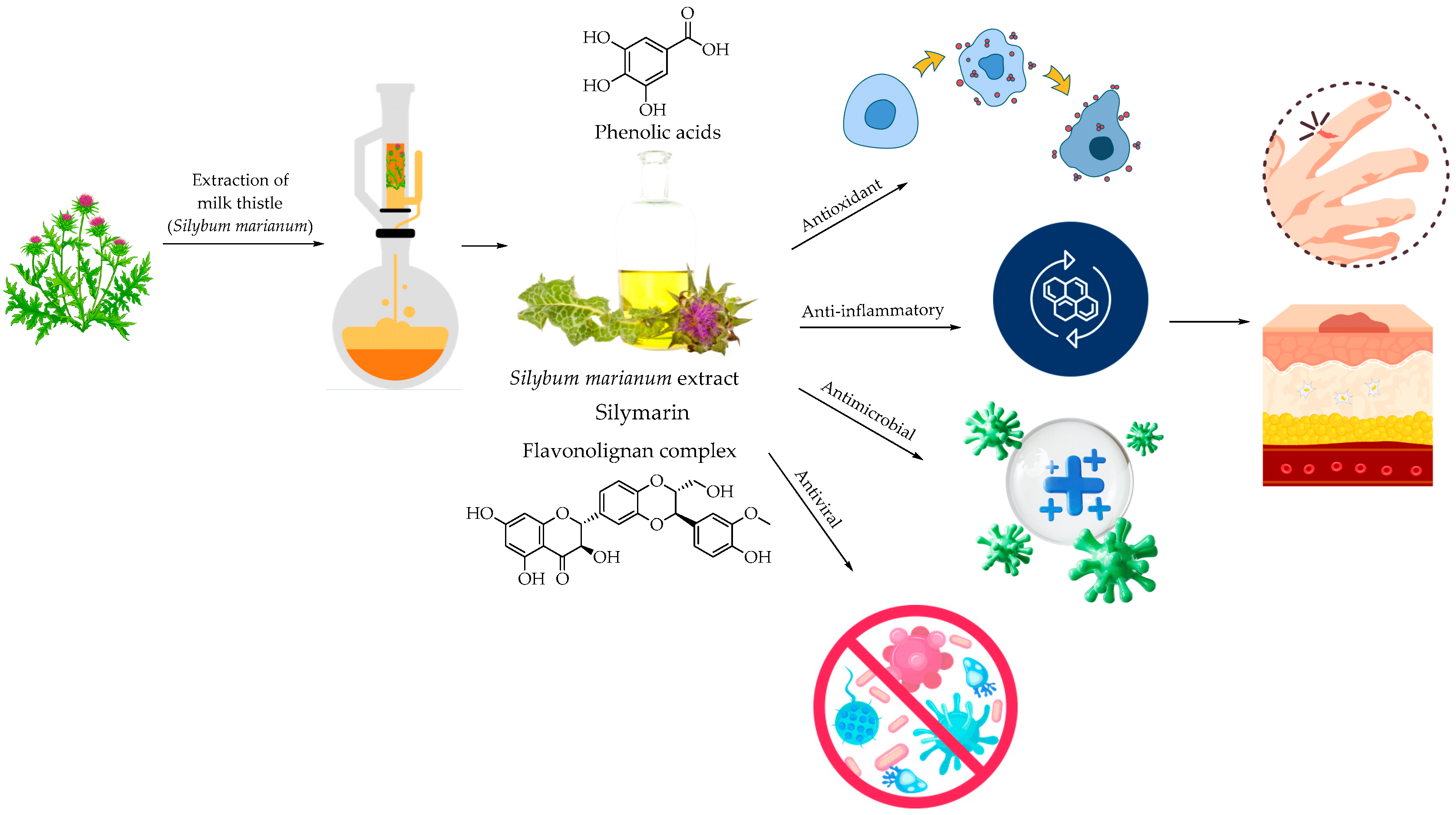
Due to its phenolic nature, silymarin has the ability to donate electrons, which enables the stabilization of free radicals and reactive oxygen species, giving it strong antioxidant properties [93]. This mechanism plays an important role in the wound healing process, which is a complex, multi-stage process involving inflammatory response, cell proliferation, and extracellular matrix remodeling [102]. The complex of flavonolignans present in silymarin has proven to be a breakthrough in the treatment of melasma (difficult-to-remove skin discoloration), eliminating the side effects characteristic of hydroquinone therapy (most commonly used in the USA) [103]. UV radiation is the main factor inducing melasma, and oxidative stress further exacerbates its course. Thanks to the multidirectional action of silymarin (antioxidant, anti-inflammatory, antimicrobial, and antiviral), it has found application in preparations supporting wound healing, including in patients with diabetes (Figure 2) [103,104,105].
The phenolic acids present in S. marianum have the ability to combat bacterial skin infections by modifying cell membrane permeability, changing the lipid profile, and inhibiting the adhesion of pathogens such as Staphylococcus aureus, Escherichia coli, and Pseudomonas aeruginosa, which disrupts the tissue regeneration process [106,107]. One of the main factors in premature skin aging is oxidative stress caused by prolonged exposure to UV radiation, leading to tissue degeneration, inflammation, and cancerous changes. Oxidative stress is also linked to many diseases of old age, including neurodegenerative diseases (Alzheimer’s disease, Parkinson’s disease), cancer, hypertension, and diabetes [103].
Despite the enormous potential of S. marianum, its use in cosmetics remains limited. The cosmetic industry most often uses seed oil (e.g., Banobagi, Biogospa, Ol′Vita), obtained through pressing, which mainly contains oil (approx. 25%), proteins (25–30%), sterols (0.6%), and tocopherols (0.04%) [108,109]. The pomace (rich in silymarin) remains as waste. In pharmacy, dry extracts are used (e.g., POLSKI LEK, Pharmovit, Herbapol), the production of which requires energy-intensive solvent evaporation processes (e.g., in vacuum evaporators). In Poland, medicinal preparations such as “Sylimarol” (Herbapol Poznań) are obtained using methanol (90%) as an extractant. Seed oil and pomace flour available in health food stores do not contain silymarin because this compound is not soluble in fats (log P = 1.8) [110,111]. Even oils advertised as health-promoting do not contain silymarin. In Europe, S. marianum is sometimes consumed in the form of sprouts or roasted seeds as a coffee substitute. A dry silymarin concentrate (83%) has also been patented, obtained by extraction with hydrated alcohol, defatting with gasoline and precipitation with water, followed by concentration by extraction with acetone or methylene chloride [112,113].
Research indicates that silymarin, in addition to its therapeutic effects, prevents lipid oxidation in cosmetics, extending their shelf life. Thanks to its antimicrobial properties against resistant strains of bacteria (MRSA), Gram-positive bacteria (Bacillus subtilis, B. cereus, S. aureus), Gram-negative bacteria (P. aeruginosa) and fungi (Aspergillus, Penicillium, Geotericum candidum), silymarin can act as a natural antioxidant and antimicrobial agent [107,114].
The process of extracting silymarin from S. marianum seeds has been widely described in the literature. Various techniques are used, including extraction with ethyl acetate and ethanol (yield: approx. 10.9 mg/g silibin), ultrasonic reflux extraction with ethanol (16.4–18.3 mg/g), and two-stage alkaline extraction with NaOH solutions (0.5 M and 2 M), yielding 2.32 mg/g and 10.47 mg/g of silymarin, respectively. Another approach involves grinding the seeds (ball mill, 5000 rpm, 15 min), defatting in hexane (10 h, 1:10 w/v), soaking in methanol (10 h, 1:5) and ultrasonic extraction (45 min, 30 °C, 40 kHz, 100 W), which yields an extract containing >10 mg/g silybin. The efficiency of extraction depends on the type of solvent and the use of supporting techniques (ultrasound, alkalization, defatting) [115,116].
Studies described in the literature confirm that the choice of solvent (ethanol, ethyl acetate, n-hexane) and technique (maceration, ultrasound, supercritical CO2 extraction) affects the silymarin content and biological activity of extracts. Multi-solvent extraction (e.g., sequential use of hexane, methanol, ethyl acetate) provides the highest recovery of flavonolignans and antioxidant activity (DPPH test). The methanol extract has an IC50 of ≈ 40–50 μg/mL, the ethanol and ethyl acetate extracts have an IC50 of ≈ 60–80 μg/mL, while the aqueous extract has an IC50 of >100 μg/mL [117,118,119].

4.3. Common Chamomile: Biosynthesis, Chemical Composition and Pharmacological Properties

M. chamomilla has a wide range of therapeutic properties, including anti-inflammatory effects, confirmed in clinical trials in the treatment of mucosal inflammation, relief of dyspepsia and gastrointestinal spasms, supporting wound healing processes, and a calming effect resulting from the modulation of gamma-aminobutyric acid type A (GABAA) receptors by apigenin [120,121]. In addition, it has been shown to reduce oxidative stress by scavenging ROS, chelating metal ions that catalyze free radical reactions, inhibiting lipid peroxidation, increasing the activity of antioxidant enzymes (SOD, catalase, and glutathione peroxidase), and modulating inflammatory signaling pathways such as NF-κB and NLRP3 [62,122]. Chamomile also exhibits antimicrobial activity against selected pathogens, including Staphylococcus aureus (including MRSA strains), B. subtilis, E. coli, P. aeruginosa, and fungi of the genera C. albicans, A. niger, and Penicillium spp. [56].
The plant is widely used in phytotherapy, cosmetology, and pharmacy in the form of infusions, extracts, essential oils, and topical preparations. The standardization of the raw material is based on the content of apigenin-7-O-glucoside and the essential oil profile (α-bisabolol, chamazulene), which ensures the reproducibility The plant is widely used in phytotherapy, cosmetology, and pharmacy in the form of infusions, extracts, essential oils, and topical preparations. of the biological activity [123,124].
The biosynthesis pathways of secondary metabolites in chamomile mainly include the phenylpropanoid pathway, responsible for the synthesis of flavonoids (apigenin, luteolin, and their glycosides) and phenolic acids (chlorogenic and caffeic). Key enzymes involved in this process include PAL (phenylalanine ammonia-lyase), CHS (chalcone synthase), CHI (chalcone isomerase), and UGT (glycosyltransferases), which catalyze the successive stages of conversion from phenylalanine to complex flavonoid structures. In addition, the mevalonate pathway (MEP pathway) plays an important role, leading to the biosynthesis of sesquiterpenes present in essential oils (including α-bisabolol and chamazulene). The key enzymes in this pathway are HMGR (HMG-CoA reductase), terpene cyclases, and enzymes from the cytochrome P450 family, responsible for the cyclization and structural modifications of terpene molecules [125,126,127].

4.4. C. officinalis: Secondary Metabolite Biosynthesis Pathways, Phytochemical Composition and Pharmacological Activity

C. officinalis synthesizes key secondary metabolites in several biosynthetic pathways. Flavonoids and phenolic acids are produced in the phenylpropanoid pathway, while carotenoids and triterpenes are produced in the mevalonate pathway. The cyclization of squalene to pentacyclic triterpenes, such as faradiol and arnidiol, is initiated by the enzyme oxidosqualene cyclase, after which these compounds undergo further oxidative modifications and esterification [128]. Glycosylation of flavonoid aglycones leads to the formation of glycosides (e.g., quercetin and isorhamnetin), which increases their solubility in an aqueous environment, bioavailability, and chemical stability. As a result, these compounds exhibit stronger biological activity, including antioxidant, anti-inflammatory, blood vessel protective, antibacterial, and tissue regeneration properties, which makes them important in the prevention and treatment of inflammatory diseases and in healing processes. Carotenoids, including lutein and β-carotene, are responsible for both the intense color of the flowers and their antioxidant activity [129,130,131].
Calendula flowers are a valuable pharmacognostic raw material due to the presence of numerous biologically active compounds, which determine their wide therapeutic application. Among the most important metabolites are pentacyclic triterpenes and their esters (including taraxasterol, faradiol, and arnidiol), which have a strong anti-inflammatory effect by inhibiting pro-inflammatory mediators such as IL-6 and TNF-α [132]. These compounds also support the wound healing process by regulating the inflammatory response and stimulating tissue regeneration. An important group is flavonoids, mainly quercetin and isorhamnetin glycosides, which have antioxidant and anti-inflammatory properties. Glycosylation of aglycones increases their solubility, bioavailability, and chemical stability, which translates into more effective biological activity, such as neutralization of free radicals, protection of blood vessels, and support for regenerative processes. Another group consists of phenolic acids (chlorogenic, caffeic, ferulic, and p-coumaric), which act as antioxidants, reducing oxidative stress and protecting cell structures from damage. Carotenoids (β-carotene, lutein, and xanthophylls) are responsible for the intense color of flowers and antioxidant activity, supporting tissue repair processes and protection against free radicals. In addition, the essential oil, rich in sesquiterpenes, has soothing and antiseptic properties, which increase the therapeutic value of the raw material [67,132,133].

4.5. Mountain Arnica: Biosynthetic Pathways and Pharmacological Activity

A. montana is a plant with high therapeutic value due to the presence of various secondary metabolites. The phenylpropanoid pathway synthesizes flavonoids (mainly glycosides of quercetin, kaempferol, isorhamnetin, and luteolin) and phenolic acids (chlorogenic, caffeic, ferulic, and p-coumaric), while triterpenes and sesquiterpene lactones, including helenalin and its esters, are formed in the mevalonate pathway [71]. Glycosylation of flavonoids increases their solubility in an aqueous environment, bioavailability, and chemical stability, which enhances their antioxidant and anti-inflammatory effects. Sesquiterpene lactones, especially helenalin, play a key role in anti-inflammatory activity by inhibiting the activity of the NF-κB transcription factor and limiting the synthesis of inflammatory mediators. Flavonoids act as antioxidants, neutralizing ROS and modulating the activity of pro-inflammatory enzymes (COX, LOX), while phenolic acids support protection against oxidative stress. Carotenoids (lutein, β-carotene) further enhance the antioxidant effect. The synergistic action of these groups of compounds gives arnica anti-inflammatory, anti-oedema, antioxidant, and regenerative properties, which justifies its use in dermatological, cosmetic, and pharmaceutical preparations, especially in products that soothe mechanical injuries such as bruises, swelling, and hematomas, as well as in the treatment of skin inflammation [70,84,134].

5. Biotechnological Transformation of Plant Raw Materials from the Asteraceae Family into Cosmetic Bioferments

5.1. Dandelion (T. officinale)

Plant-derived bioferments represent an innovative direction in cosmetic technology, gaining increasing importance due to their broad spectrum of biological activity. Their popularity is attributed to properties such as enhanced antioxidant activity, resulting from the formation of highly reactive phenolic compounds during fermentation, biocompatibility and skin compatibility, and the absence of cytotoxic effects on skin fibroblasts, as confirmed by in vitro studies [1].
The process of bioferment production involves not only the extraction of active compounds from plant material (as in the case of conventional extracts) but also the enzymatic transformation of high-molecular-weight compounds (e.g., lignans, alkylresorcinols, catechins, flavonoid glycosides) into products with lower molecular weight, which are more bioavailable and capable of penetrating the skin barrier. The activity of microorganisms with hydrolytic properties also leads to the degradation of cell walls, enhancing the release of anthocyanins, flavonoids, organic acids, amino acids, ceramides, and biologically active enzymes. A key aspect is the ability of active compounds to penetrate the stratum corneum, which depends on their molecular weight. Optimal transport through the skin barrier occurs for molecules with a molecular weight below 600 Da, which justifies the biotechnological transformation toward low-molecular-weight metabolites. During fermentation, poorly bioavailable flavonoid glycosides (e.g., eriodictyol-7-O-glucoside, naringenin-7-O-glucoside, daidzein, genistein, and kaempferol glycosides) are converted into compounds with higher bioavailability and lower molecular weight, such as gallic acid, vanillic acid, catechin, naringenin, eriodictyol, baicalin, wogonin, daidzein, genistein, kaempferol, and quercetin [57,108,135].
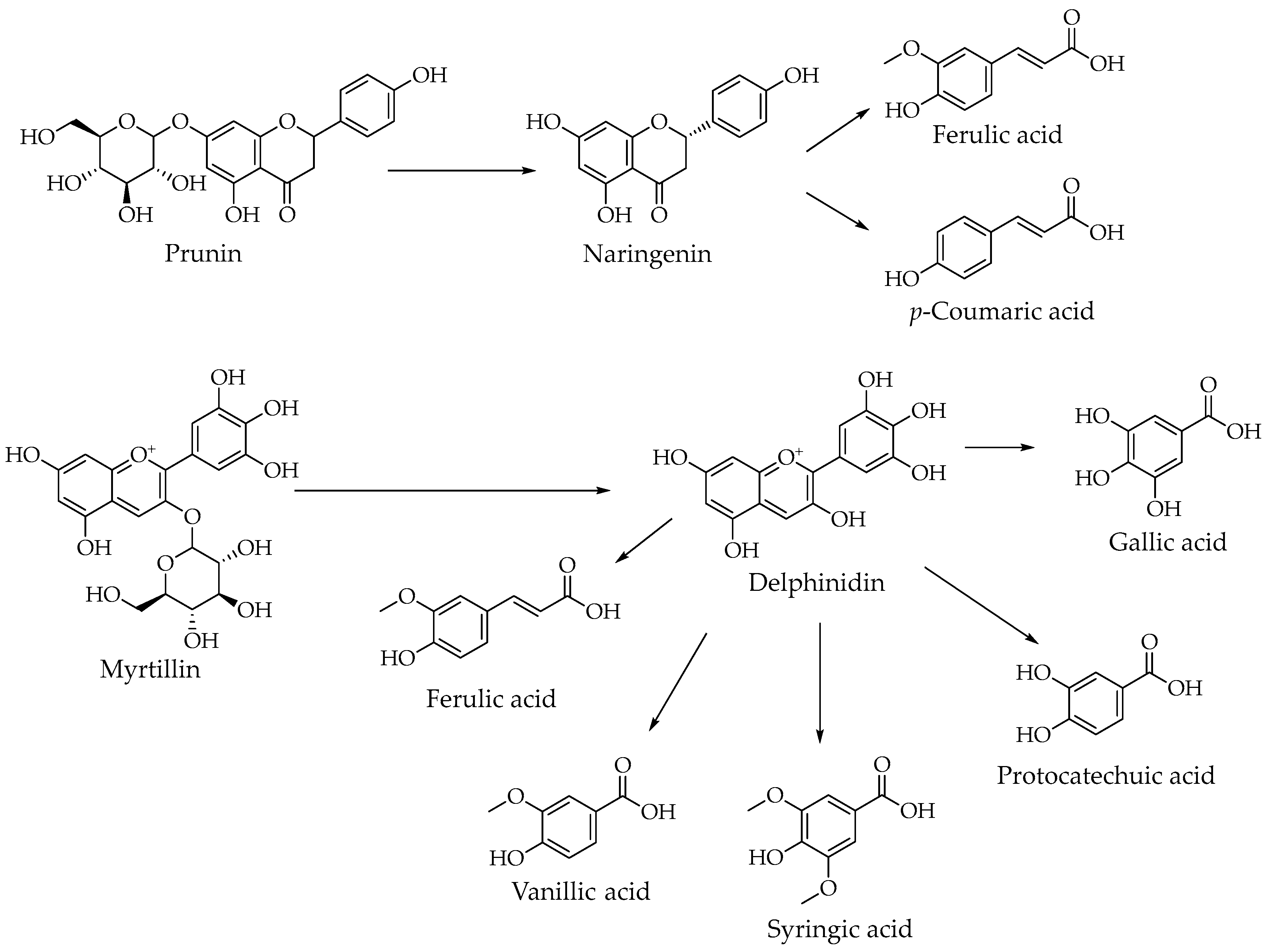
Phenolic acids (including gallic, protocatechuic, syringic, vanillic, and ferulic acids) are among the most bioavailable low-molecular-weight compounds formed during biofermentation. These compounds exhibit a strong ability to neutralize ROS and protect cells against oxidative stress. Their antioxidant properties result from the presence of hydroxyl groups in the aromatic ring and conjugated double bonds, which enable electron donation and stabilization of free radicals. The mechanism of action involves the transformation of reactive oxygen species, including peroxyl radicals generated during the propagation phase, into non-radical products through the transfer of a hydrogen atom from the –OH group to the radical. As a result, a stable phenoxyl radical of the respective phenolic acid is formed, which leads to the inhibition of chain reactions. Consequently, phenolic acids play an important role in cosmetics designed for the prevention and treatment of skin disorders associated with oxidative stress, including viral and bacterial infections—Figure 3 [136,137,138,139].
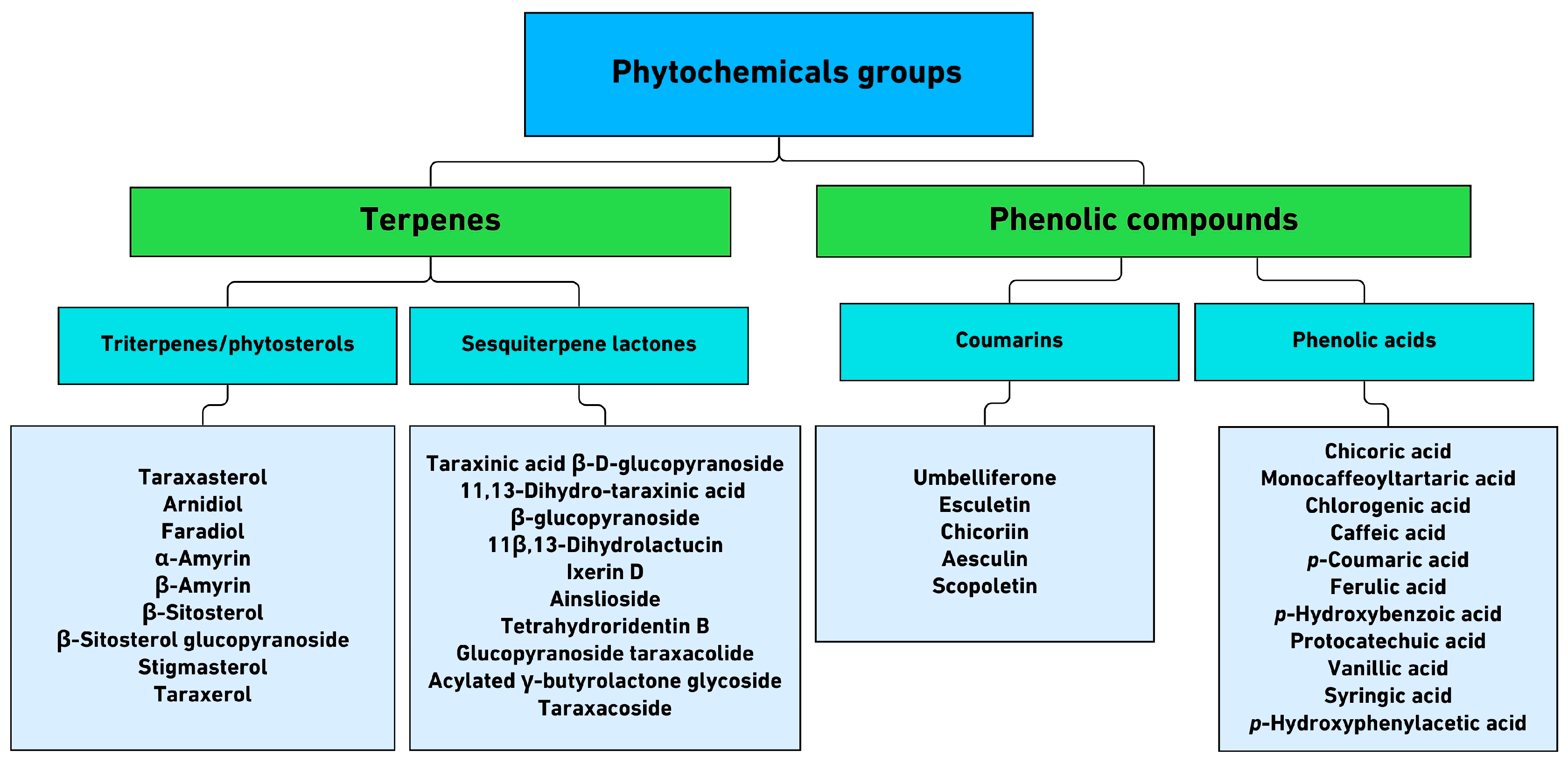
The antioxidant properties of dandelion are primarily due to the presence of polyphenolic compounds, which constitute the main group of bioactive metabolites in this plant. The total polyphenol content in the above-ground parts averages about 16 mg/g of dry weight, while in the roots it is about 10 mg/g of dry weight. In addition to polyphenols, other classes of compounds with antioxidant potential have also been identified in dandelion, including alkaloids, steroids, terpenoids, glycosides, reducing sugars, and tannins (Figure 4). The synergistic effect of these active substances makes dandelion a valuable fermentation raw material [76,85,140].
According to the authors in [76], an innovative method for obtaining a fermented cosmetic raw material from dandelion leaves has been described. The reported fermented material typically contains 0.1–2.3% (w/w) sugars, 0.2–3.7% (w/w) lactic acid, 91–96% (w/w) water, and 0.6–3.6% (w/w) active compounds, including ferulic, chicoric, chlorogenic, gallic, and protocatechuic acids [76,141].
Literature sources describe methods for producing dandelion leaf-based bioferments, which typically involve steps such as dissolving beet and cane molasses in water, adding dried and ground dandelion leaves, and applying ultrasound-assisted extraction. Published protocols [76] report co-fermentation for several days under controlled temperature conditions using mixed inocula of lactic acid bacteria and yeast, followed by enzymatic treatment and sterilization. These approaches aim to enhance bioavailability of active compounds and antioxidant activity compared to non-fermented extracts (Table 2) [76]. A direct comparison of these co-fermentation protocols with single-strain SmF approaches is confounded by heterogeneity in matrix (leaf powder vs. whole plant), solvent systems (molasses/water vs. aqueous ethanolic extraction), and process parameters (inoculum load, time, temperature, and pH trajectory). To improve cross-study comparability, we interpret results alongside reporting bases (e.g., TPC as mg GAE/g dry matter, antioxidant activity as mmol Trolox equivalents per liter or IC50 in mg/mL, lactic acid as % conversion of available sugars) and emphasize effect direction over absolute magnitude where normalization is not feasible.
Literature reports indicate [76] that co-fermentation of dandelion leaves can significantly increase lactic acid content and total phenolic content compared to unfermented extracts. These changes are associated with increased antioxidant activity (e.g., the DPPH test), and mixed-strain fermentation accelerates this process compared to single-strain methods. Published studies attribute these effects to the synergistic action of lactic acid bacteria, which release phenolic compounds from glycoside forms, and yeasts, which create conditions conducive to bacterial growth and enzymatic activity. According to the cited sources, the choice of carbohydrate substrates (e.g., beet and cane molasses) provides the necessary nitrogen and micronutrients, supporting the metabolism of lactic acid bacteria without additional mineral salt supplementation. These strategies are meant to make active compounds more bioavailable (i.e., make them more available in the epidermal barrier) and to make bioferments more useful as antioxidants in cosmetics [31,35,76,108].
Similar observations regarding the increase in lactic acid (LA) content and phenolic compounds during two-stage fermentation of dandelion extracts have been reported by other authors [142,143]. In the first stage, fresh plant material was washed, then dried at 50 °C for 20 h, ground, and sieved through a 60-mesh screen to obtain dandelion powder. A mixture of the obtained powder and distilled water was prepared at a solid-to-liquid ratio of 1:20 (w/v) and left for 10 min to ensure complete hydration, followed by pasteurization at 90 °C for 10 min and cooling to room temperature (20 ± 5 °C)—Table 3. Lactic acid bacteria strains (L. plantarum CICC 22699, L. fermentum CICC 21828, L. rhamnosus CICC 23119, and L. casei CICC 23184) were activated in MRS broth and incubated until the late logarithmic growth phase, with the concentration adjusted to 1 × 10⁸ CFU/mL. A 1% (v/v) solution of the appropriate Lactobacillus strain was inoculated into the dandelion fermentation medium and fermented at 37 °C, using an uninoculated medium as the control. The collected samples were sterilized by heating at 90 °C for 10 min and then dried at 45 °C to constant weight to obtain fermented dandelion material. In the second stage, the fermented dandelion (1 g) was mixed with distilled water (solid-to-liquid ratio 1:100 w/v), subjected to ultrasound-assisted extraction (frequency 20 kHz, t = 30 min), and then centrifuged (t = 10 min, 4500× g, 4 °C), resulting in a fermented dandelion extract (Table 3) [142,143].
The lactic acid content in bioferments obtained using L. plantarum, L. fermentum, L. rhamnosus, and L. casei strains (after 8 h of fermentation) was as follows: 32.53 ± 3.05 mg/g (corresponding to 0.016 g/L B), 53.62 ± 1.00 mg/g (0.027 g/L B), 55.53 ± 6.13 mg/g (0.028 g/L B), and 53.36 ± 1.71 mg/g (0.027 g/L B), respectively. In the case of fermentation with L. plantarum, a significant increase in chlorogenic acid was observed—from 14.37 ± 1.78 mg/g (7.19 mg/L B) to 17.22 ± 1.39 mg/g (8.61 mg/L B). Meanwhile, dandelion fermentation with L. casei resulted in bioferments with the highest levels of caffeic acid (0.77 ± 0.11 mg/g, i.e., 0.39 mg/L B) and chicoric acid (14.90 ± 2.77 mg/g, i.e., 7.45 mg/L B). The increase in chlorogenic acid content can be attributed to enzymes produced by LAB, which promote anthocyanin catabolism and the release of bound chlorogenic acid, while the high level of caffeic acid was due to the conversion of hydroxycinnamic acids. Chicoric acid, known for its strong antioxidant properties, is a metabolite of caffeic and tartaric acids, which additionally enhance the sensory qualities of the obtained bioferments. Reported results for different LAB strains include lactic acid yields and shifts in phenolic-acid profiles (e.g., higher chlorogenic/caffeic/chicoric acids), accompanied by improved DPPH activity, as summarized in Table 4.
The increased content of phenolic acids reported in the literature correlates with a significant rise in antioxidant activity, typically assessed using the DPPH radical scavenging assay. Studies indicate that the degree of DPPH reduction increased by approximately 30% for bioferments obtained with L. plantarum and by more than 50% for those produced with L. casei. In these investigations, various Lactobacillus strains (L. plantarum, L. fermentum, L. rhamnosus, and L. casei) were employed under controlled fermentation conditions, commonly at 37 °C, with inoculum concentrations around 1 × 10⁸ CFU/mL. Post-fermentation, samples were typically sterilized and subjected to extraction using ultrasound-assisted techniques, followed by centrifugation to obtain bioferment fractions for analysis. These standardized approaches, as described in recent studies, highlight the role of microbial enzymatic activity in enhancing phenolic acid release and improving antioxidant potential compared to non-fermented extracts. The highest lactic acid content was recorded for fermentation with L. rhamnosus (55.53 ± 6.13 mg/g; 0.028 g/L B). Particularly significant were changes in phenolic acid content: fermentation with L. plantarum increased chlorogenic acid concentration from 14.37 ± 1.78 mg/g to 17.22 ± 1.39 mg/g, while L. casei generated the highest levels of caffeic acid (0.77 ± 0.11 mg/g) and chicoric acid (14.90 ± 2.77 mg/g). The increase in phenolic acids resulted from LAB enzymatic activity, promoting anthocyanin catabolism and the release of chlorogenic acid, as well as the conversion of hydroxycinnamic acids. Chicoric acid, known for its strong antioxidant properties, is a metabolite of caffeic and tartaric acids, which additionally improve the sensory qualities of the bioferment [42,44]. The increased phenolic acid content correlated with enhanced antioxidant activity (DPPH), which rose by about 30% for L. plantarum bioferment and over 50% for L. casei bioferment, making this strain particularly promising for the production of functional foods [142,143].
One of the methods for obtaining fermented dandelion extracts with enhanced antioxidant activity compared to non-fermented extracts and improved flavonoid bioavailability is solid-state fermentation (SSF) using Saccharomyces cerevisiae (CGMCC No. 2.1190) and lactic acid bacteria L. plantarum (CGMCC No. 1.12934). The entire dandelion plant was air-dried, ground, sieved through a 1 mm mesh, sterilized, and used as a substrate for SSF with an inoculum prepared by mixing the two strains (S. cerevisiae:L. plantarum) in a 3:7 ratio.
Published SSF protocols for dandelion report mixed inocula (yeast/LAB), controlled fermentation (e.g., 35 °C, 52 h), ethanolic extraction, and lyophilization, followed by quantitative assays (e.g., DPPH IC50). Fermented samples typically show higher aglycone content and improved antioxidant activity than non-fermented counterparts [29] (see Table 5 for literature parameters). Fermentation processes reported in the literature were typically conducted with an inoculum concentration of approximately 12% and a moisture content of 52%. Following fermentation, the plant material was subjected to extraction using ethanol (40%) under heating (70 °C, 30 min), followed by centrifugation to separate the supernatant. The resulting extract was then lyophilized to obtain a freeze-dried sample of fermented dandelion, which served as the basis for subsequent analyses of antioxidant activity and phytochemical composition. These standardized procedures, as described in recent studies, aim to maximize the release of bioactive compounds and improve their stability for cosmetic applications. The lyophilized bioferment was then ground using a mixer mill with a zirconia ball for 1.5 min at 30 Hz. Subsequently, 100 mg of the powder was extracted overnight at 4 °C with 1 mL of 70% aqueous methanol. After centrifugation (10,000× g, 10 min), the extract was purified, pre-concentrated, and filtered through an SCAA-104 membrane filter (0.22 μm pore size), yielding the final dandelion bioferment [29].
For comparative purposes, non-fermented dandelion extracts were prepared using the same procedure as fermented samples. Literature reports indicate that the concentration of aglycones (formed through enzymatic hydrolysis of flavonoid glycosides during fermentation) was more than 65% higher in fermented extracts (183.72 ± 2.24 mg/g) compared to their non-fermented counterparts (109.49 ± 1.05 mg/g). This increase in aglycone concentration in the bioferment contributed to enhanced antioxidant activity, as determined by the DPPH assay. The antioxidant activity values for the bioferment and its non-fermented counterpart were IC50 = 0.075 mg/mL and IC50 = 0.088 mg/mL, respectively [29].

5.2. Fermentation of Asteraceae Plant Materials: Beyond T. officinale

Asteraceae family into cosmetic bioferments focus mainly on the use of T. officinale. However, other species belonging to this family, such as S. marianum, M. chamomilla, C. officinalis, and A. montana, also show significant fermentation potential due to their rich profile of phenolic compounds, flavonoids, and terpenoids.
Literature reports on milk thistle bioferments (various fractions) indicate safety of use, which is confirmed by the lack of cytotoxicity towards skin cells [35]. They have a multidirectional beneficial effect on the skin, including antioxidant, anti-inflammatory, moisturizing, and epidermal barrier regeneration properties [108]. The presence of phenolic compounds and flavonoids, including silymarin, promotes the neutralization of free radicals and the reduction in oxidative stress, which limits photoaging processes [93]. Lactic acid produced during fermentation acts as a natural humectant, improving moisture levels and supporting the homeostasis of the skin microbiome [108]. In addition, bioferments can modulate the inflammatory response by reducing the expression of pro-inflammatory mediators, making them particularly valuable in the care of sensitive and irritation-prone skin [144]. The fermentation process involving lactic acid bacteria not only increases the bioavailability of secondary metabolites but also enriches the product with bioactive ingredients with proven cosmetic effects [35,108,145].
Published work suggests that LAB fermentation generates postbiotic metabolites (e.g., organic acids, peptides, EPS) supportive of microbiome homeostasis. The most important of these are lactic and acetic acids, which lower the pH of the skin, creating an environment conducive to the growth of beneficial bacteria and inhibiting the growth of pathogens; bioactive peptides and enzymes with anti-inflammatory and microorganism-regulating properties; bacteriocins with antibacterial activity, limiting the proliferation of pathogenic strains; exopolysaccharides (EPS), which modulate the immune response, support the integrity of the epidermal barrier and have a moisturising effect; and fragments of the bacterial cell wall, including teicho- and peptidoglycans, which can have an immunomodulatory effect and strengthen the protective functions of the skin [146,147]. According to recent studies [35], fermentation of milk thistle fractions has been performed under controlled conditions for 14 days at 37.5 °C, using molasses as a carbohydrate source and multiple strains of lactic acid bacteria, including Lactobacillus brevis, L. salivarius, L. reuteri, L. rhamnosus, L. plantarum, and L. acidophilus. Both single-strain and mixed-strain inoculations were applied to evaluate potential synergistic effects on metabolite release. Key parameters monitored during these processes included total polyphenol content (TPC), determined by the Folin–Ciocalteu method, and lactic acid concentration, assessed by GC–MS. These findings highlight the role of microbial diversity and fermentation conditions in enhancing the antioxidant potential and bioavailability of active compounds in cosmetic bioferments. The highest TPC and LA values were recorded on day 14 of fermentation using mixed cultures, confirming the synergistic effect of microorganism interaction. In [35], pomace-derived bioferments exhibited antioxidant activity of approximately 3.21 mmol Trolox equivalents per liter (DPPH), 22.43 mmol Tx/L (ABTS), and 16.68 mmol Tx/L (FRAP), as reported in literature assays. The polyphenol content ranged from 2306.82 ± 0.10 mg GA/L (B-S) to 2599.43 ± 0.12 mg GA/L (B-O). HPLC analyses confirmed the presence of phenolic acids, such as gallic acid (up to 44.25 ± 3.29 mg/L), caffeic acid (up to 41.42 ± 2.81 mg/L), protocatechuic (16.44 ± 2.46 mg/L), and neochlorogenic (7.12 ± 1.25 mg/L), indicating the high cosmetic potential of bioferments. The literature emphasizes that these compounds play a key role in neutralizing free radicals, modulating inflammatory responses, and protecting against oxidative stress [148]. Published studies [35] report lactic acid yields expressed as % conversion of available sugars, with values around 50% for pomace, 53% for extract, 51% for oil, and 59% for seeds. Maximum lactic acid yield is usually achieved on the 14th day of fermentation. The cited works [35] report maximum lactic acid yields around day 14, expressed as % conversion of initial sugars, with fraction-dependent values (50–59%). The use of mixed bacterial cultures increases lactic acid yield, improves the adaptation of microorganisms to changing conditions, and reduces process costs, making this strategy particularly attractive in the context of biotechnological bioferment production [35,108]. Methods described in the literature include the production of bioferments obtained from various parts of milk thistle, such as seed hulls (pomace), extracts, oil, and seeds. These bioferments are considered completely safe for human health, as they exhibit no cytotoxicity toward skin cells, and they demonstrate effective activity on the skin. In the study described in [108], an innovative method for fermenting defatted S. marianum seeds was developed to enhance the bioavailability of phenolic compounds (such as silybin and taxifolin) and their antioxidant activity. The research included the evaluation of antioxidant activity (AA) using the DPPH assay, determination of total phenolic content (TPC) by the Folin–Ciocalteu method, and lactic acid yield (LAe) assessed by GC-MS. Furthermore, literature reports highlight the anti-aging potential of cosmetic formulations incorporating fermented extracts from defatted S. marianum seeds as functional raw materials [35,108].
Table 6 compiles published antioxidant activity (DPPH), TPC (Folin–Ciocalteu), and lactic-acid yields reported for bioferments versus unfermented counterparts, based on [35,108].
Literature highlights that fermentation can utilize renewable carbon sources (e.g., beet molasses), supporting circular-economy strategies and sustainable cosmetic design. Bioferments represent highly active components of cosmetic formulations, eliminating key issues associated with conventional technologies. The proposed method allows for the utilization of plant-based waste materials, such as press cakes obtained during oil extraction from S. marianum seeds, which contain silymarin—the most valuable compound of this plant, insoluble in fats (log P = 1.8). The use of beet molasses eliminates the need for expensive sugar while providing amino acids, mineral salts, and betaine with strong antioxidant potential. Fermentation of press cakes from the Polish variety “Silma” (with an increased silymarin content of 6.8%) using LAB strains capable of producing L(+)-lactic acid makes it possible to replace synthetic equivalents of natural moisturizing factors (NMF). Lactic acid, at a minimum concentration of 30 g/L of bioferment, becomes the main fermentation product, enhancing skin hydration and reducing transepidermal water loss (TEWL). Furthermore, the presence of natural preservatives such as vitamin E, lactic acid, and silymarin (acting as an antioxidant and antimicrobial agent) extends the shelf life of cosmetics and enables the production of larger batches without the risk of rapid quality loss [35,108].
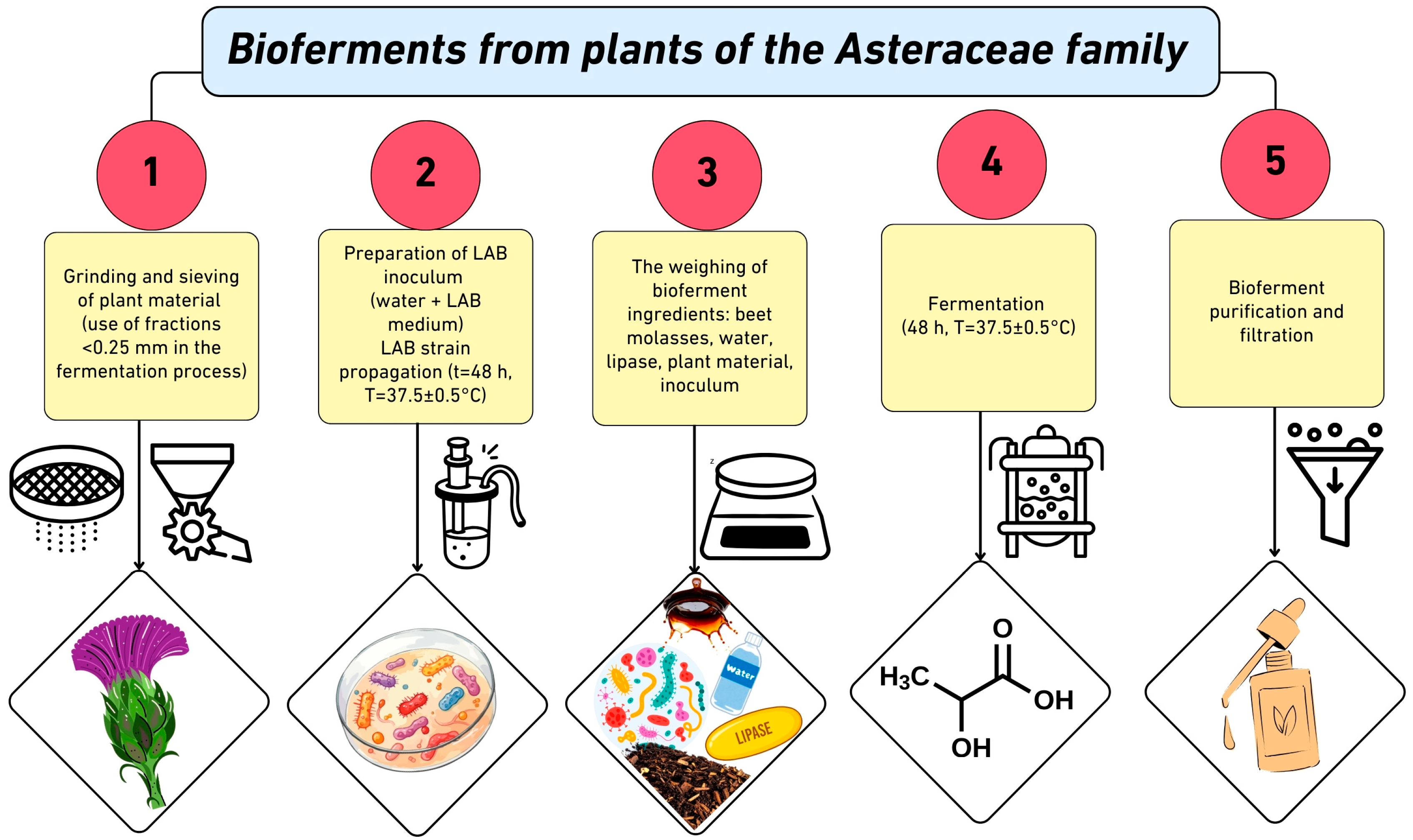
Published studies report process-level and functional benefits of plant-material fermentation (e.g., enhanced antioxidant potential, contribution of betaine in beet molasses, in-vitro biocompatibility) and discuss biodegradability assessments based on OECD guidelines where available. Fermentation of plant raw materials not only solves technological challenges but also provides numerous additional benefits: increased antioxidant activity resulting from the use of the “Silma” variety with high silymarin content and enzymatic conversion of macromolecules into more bioavailable phenolic acids (e.g., gallic, syringic); the presence of betaine in beet molasses, enhancing antioxidant effects and supporting skin condition; high biocompatibility and lack of cytotoxicity confirmed by in vitro tests on HaCaT keratinocytes and HDF fibroblasts, due to the transformation of large molecules into smaller ones that more easily penetrate the skin barrier; biodegradability of formulation components and their safety for aquatic organisms, assessed according to OECD guidelines (301B); and support for the circular economy through the possibility of using fermentation residues to produce adsorbents for water and air purification (Figure 5). The proposed fermentation method aligns with the principles of sustainable development, minimizing the environmental impact of cosmetics while increasing their effectiveness and safety. In the context of growing consumer ecological awareness and tightening legal regulations, bioferments represent a strategic direction for the development of the cosmetics industry [35,108].
The fermentation of raw materials from the Asteraceae family, including C. officinalis, is an innovative strategy in cosmetic biotechnology, going beyond the traditional use of plant extracts. Calendula was chosen for its high content of carotenoids, including lutein, which is valued for its antioxidant, photoprotective, and skin barrier-supporting properties. Lutein is a lipophilic compound with limited bioavailability in classic extracts, so fermentation aims to increase its release and improve its chemical and physical stability (resistance to oxidation, thermal degradation, and photodegradation). The literature indicates that solid-state fermentation (SSF) with lactic acid bacteria promotes the degradation of the plant matrix, the release of lipophilic compounds (carotenoids, triterpenes), and an increase in the antioxidant activity of the extracts. In a study by Rahman and Aeri [149], the lutein content determined by HPLC increased from 4.0 mg/g dry weight (DW) in fresh flakes and 1.1 mg/g DW in dried flakes to 40.66 mg/g DW and 9.92 mg/g DW, respectively, after SSF (10 days, 35 °C, L. rhamnosus, L. casei, and L. plantarum strains). The authors emphasize that the extraction yield depends on the type of solvent (hexane vs. ethanol) and the form of the raw material (fresh vs. dried). Fermentation also increased antioxidant activity as assessed by DPPH, ABTS, and FRAP methods, with an increase of up to 2–3 times compared to unfermented material (e.g., DPPH: from 3.21 mmol Tx/L to 8.45 mmol Tx/L). The process conditions included inoculation with a 10% suspension of LAB (MRS) strains, humidity of 60–70%, pH of 5–6, duration of 10 days, and, after fermentation, extraction with hexane or ethanol (20 mL/g of dry matter, 35 °C, 2 h, 131 rpm). SSF reviews confirm that in semi-dry systems (humidity 60–70%, pH ~5–6), microorganisms effectively degrade the lignocellulosic matrix (cellulases, hemicellulases, pectinases), which promotes the release of phenols and carotenoids and an increase in TPC and antioxidant activity in DPPH, ABTS, and FRAP tests [149]. Increases in lutein with LAB-SSF are consistent with cell-wall breakdown; however, substrate humidity (60–70%) and solvent selection (hexane vs. ethanol) substantially modulate carotenoid recovery. I therefore contextualize lutein gains against these variables and avoid cross-study ranking where humidity/solvent are not matched.
C. officinalis extracts are also analyzed for saponin content, which can modulate fermentation processes. In a study by Budan et al. [150], the effect of calendula extracts on rumen fermentation was evaluated in vitro. The saponin content in calendula extracts, determined by HPLC–ELSD, ranged from 43.6 to 57.6 mg/g dry matter (DM), expressed as hederacoside C equivalent. The authors indicated that the saponin profile may determine biological activity, which emphasizes the importance of identifying the structure of compounds when assessing their function. In the experiment, extracts from C. officinalis reduced the acetate: propionate ratio (by 8.6–17.4%) and increased the concentration of volatile fatty acids (VFA), suggesting the potential of these plants to modulate fermentation. These results indicate that the presence of saponins in calendula may be important not only in the context of animal nutrition but also in the design of cosmetic bioferments, where these compounds may affect the stability of emulsions and the surface properties of formulations [150].
The fermentation of raw materials from the Asteraceae family also includes M. chamomilla, valued for its anti-inflammatory, antioxidant, and soothing properties. The authors [57] decided to ferment chamomile to increase its biofunctionality (improving antioxidant activity and anti-cancer potential) and to obtain natural ingredients with higher bioavailability. The literature emphasizes that fermentation with lactic acid bacteria, such as L. plantarum, can modify the polyphenol profile and generate secondary metabolites with stronger biological activity. Fermentation was conducted under controlled conditions for 72 h at 37 °C in an anaerobic environment, with an initial pH of approximately 6.5 that decreased to below 4.0 by the end of the process. According to published studies, the total polyphenol content (TP), determined using the Folin–Denis method, showed a slight reduction (from 21.75 to 18.76 mg GAE/g); however, antioxidant activity assessed by the DPPH assay increased by approximately 11.1% compared to the unfermented material. These findings suggest that structural modifications during fermentation, including the conversion of glycosidic forms into more bioavailable aglycones and phenolic acids, may enhance antioxidant potential despite minor losses in total polyphenol content. In the β-carotene test, the antioxidant effect decreased, which was associated with a decrease in pH during fermentation. Importantly, fermented chamomile showed strong cytotoxic activity against cancer cells (AGS, HeLa, LoVo, MCF-7)—approximately 95% inhibition at a concentration of 12.7 mg dry weight/mL of medium, with low sensitivity of normal cells (MRC-5). These results suggest that chamomile fermentation can be used to develop natural ingredients with antioxidant and anticancer properties, which opens up prospects for cosmetology and nutraceuticals [57].
Fermentation of extracts from chamomile flowers (Chamomilla recutita L. (Ch. recutita)) has been investigated as a strategy to enhance the bioavailability of apigenin, one of the key phenolic compounds with high biological activity. In its native state, apigenin occurs mainly in bound forms, such as apigenin-7-O-β-glucoside and its acylated derivatives, which are characterized by lower biological activity compared to free aglycone. Fermentation utilizing endogenous chamomile enzymes has been reported as an effective approach to hydrolyze glycosidic bonds and increase the concentration of free apigenin. This process typically occurs under controlled conditions for approximately 24 h at 37 °C, at a near-neutral pH (around 6.5), leveraging native enzymatic activity present in ligulate flower tissues. Such enzymatic conversion enhances the bioavailability and biological efficacy of apigenin, which is particularly relevant for cosmetic applications. UHPLC-MS/MS analysis confirmed the effectiveness of the conversion (a significant increase in aglycone concentration was observed in fermented samples compared to unfermented material). The effect of fermentation on the biological properties of the extracts was also evaluated. Antioxidant activity was determined by electron spin resonance (ESR) spectroscopy against hydroxyl and superoxide radicals, showing a clear increase in free radical scavenging capacity in fermented samples. Antimicrobial activity was evaluated against eight strains of microorganisms, and cytotoxic activity against two cancer cell lines (cervical cancer, rhabdomyosarcoma) and mouse fibroblasts. The results indicate that fermentation of chamomile flower extracts significantly improves their antioxidant and cytotoxic properties, which may provide a basis for the development of new functional ingredients in cosmetology and nutraceuticals [151].
Fermentation of Ch. recutita ligulate flowers in the form of autofermentation (A-CLF) was used for the enzymatic conversion of apigenin glycosides to free aglycone, which significantly increases the biological activity of the extract. The fermentation process is typically described as occurring under controlled conditions for approximately 24 h at 37 °C, at a near-neutral pH, utilizing endogenous enzymes naturally present in the flower tissues. Analysis of the biological properties of the A-CLF extract showed high antioxidant activity—at a concentration of 0.84 mg/mL, the extract inhibited 50% of hydroxyl radicals, and the IC50 value for lipid peroxidation inhibition was 5.21 mg/mL. Antimicrobial activity was assessed based on the MIC value against eight strains of microorganisms, obtaining a range of 9.75–156.25 μg/mL, which confirms strong antibacterial and antifungal activity. Cytotoxicity was tested on three cell lines of different histological origin (Hep2C, RD, L2OB), yielding IC50 values of 28.72, 17.31, and 10.92 μg/mL, respectively, indicating significant anticancer potential. In addition, the extract’s ability to inhibit the activity of enzymes involved in carbohydrate metabolism and skin pigmentation was evaluated. The activity against α-amylase and α-glucosidase was 0.94 and 3.24 mmol ACAE/g, respectively, while against tyrosinase it was 0.69 mg KAEs/g, indicating significant potential in glycemic regulation and cosmetic applications (e.g., skin lightening). The results confirm that autofermentation of chamomile flowers significantly increases their pharmacological properties, opening up prospects for their use in nutraceuticals and cosmetology [152].
Literature and patent reports on yeast-derived glycolipids (e.g., MEL from Pseudozyma spp.) describe moisturizing, bioemulsifying, and barrier-supporting properties and upregulation of epidermal-differentiation markers; process ranges are provided in the source documents [153,154,155]. In the case of A. montana [153], it describes fermentation with yeasts of the genus Pseudozyma (preferably P. epicola) as a method to enhance the cosmetic functionality of arnica oil. Reported benefits include improved skin hydration, reduction in transepidermal water loss (TEWL), anti-inflammatory and anti-edematous effects in the eye area, and the development of complexes combining fermented arnica oil (FAO) with other fermented oils, such as green tea (Camellia sinensis), licorice (Glycyrrhiza uralensis), olive (Olea europaea), sunflower (Helianthus annuus), argan (Argania spinosa), and extracts from roots of Angelica gigas and Lithospermum erythrorhizon. Mechanistically, Pseudozyma species synthesize glycolipids, including mannosylerythritol lipids (MEL), which exhibit moisturizing, bioemulsifying, and barrier-supporting properties comparable to ceramides [154]. In vitro studies confirm that MEL fractions (MEL-B/C) increase the expression of epidermal differentiation markers (FLG, LOR, TGM1), supporting barrier integrity and reducing TEWL [155]. Fermentation parameters vary depending on strain and substrate; typical ranges include 48–96 h, 25–30 °C, pH 5.0–6.0, under aerobic or anaerobic conditions [153].

5.3. Comparison of Cosmetics Containing Extracts from Plants of the Asteraceae Family and Other Botanical Raw Materials

The inclusion of plant-based raw materials in cosmetic formulations is widely documented in literature, with species belonging to the Asteraceae family playing a significant role in this process. Among them, milk thistle is a valuable source of flavonolignans (silymarin complex). However, classic milk thistle extracts are characterized by the lipophilic profile of silymarin, which limits their solubility in an aqueous environment, hinders their introduction into cosmetic formulations, and reduces their bioavailability. The use of microencapsulation technology represents a significant advance in the design of dermocosmetics, enabling improved solubility, chemical stability (resistance to oxidation, thermal degradation, and photodegradation), and controlled release of the active substance. Esposito et al. [156] report spray-dried, maltodextrin-based microencapsulation of milk thistle extract (MTE-mp), improved aqueous solubility/stability, and enhanced anti-inflammatory and antioxidant effects in hydrogel/emulgel formats. The resulting MTE-mp powder (milk thistle extract microparticles) obtained was characterized by good solubility in an aqueous environment, high physicochemical stability, and ease of incorporation into dermal formulations, which significantly increased the bioavailability of silymarin (a key flavonolignan complex). Two cosmetic forms were developed: a hydrogel and an O/W emulgel, in variants containing MTE-mp and raw MTE extract. The addition of lecithin in the emulgel acted as a penetration promoter, increasing the bioavailability of silymarin. Formulations with MTE-mp showed stronger anti-inflammatory effects and higher antioxidant activity compared to preparations based on raw extract, as confirmed by in vitro test results [156].
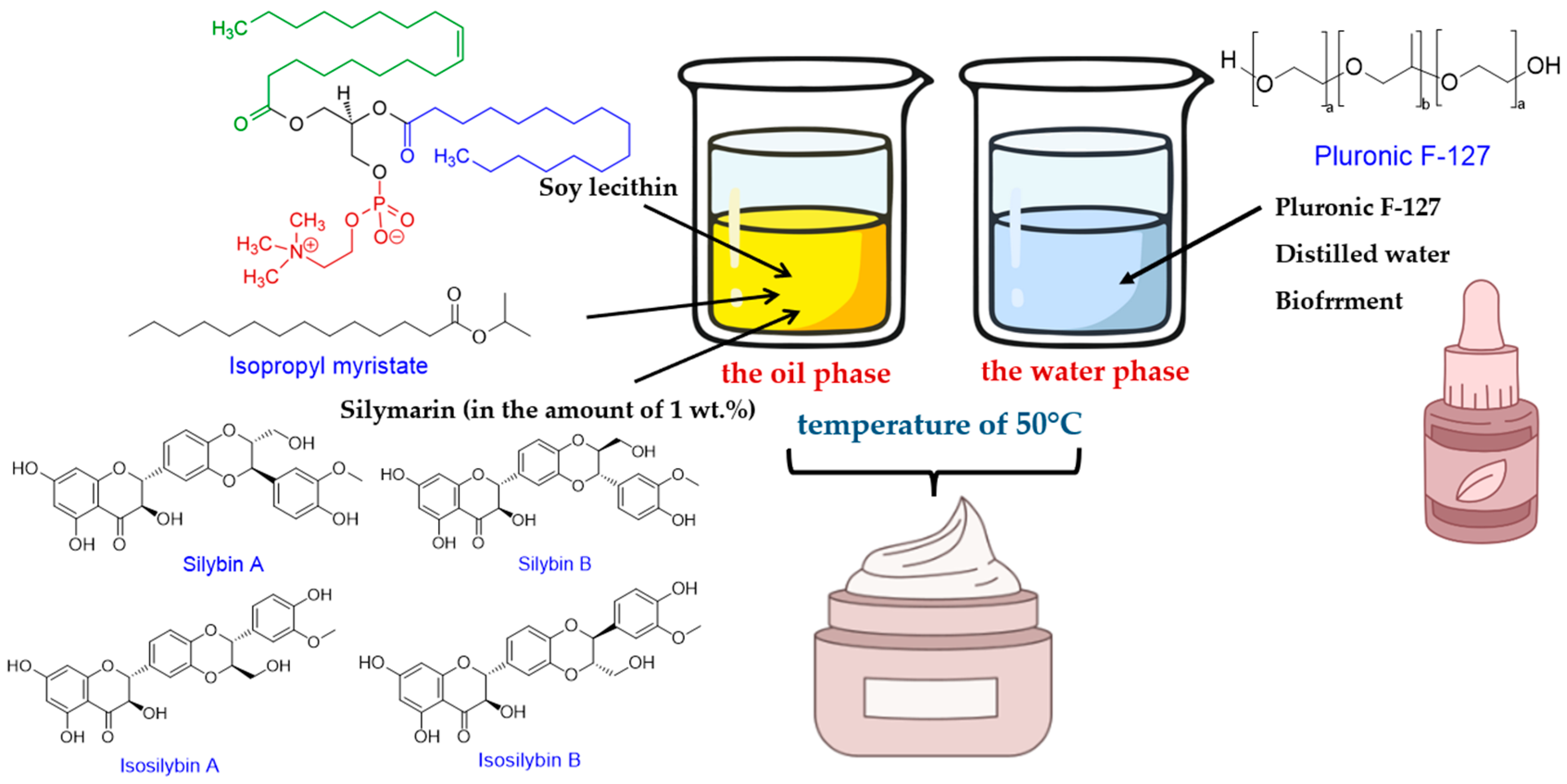
In addition to microencapsulation technology, which significantly improves the solubility and stability of silymarin obtained from milk thistle, preparations containing fermented plant extracts obtained through the biofermentation of plant raw materials are becoming increasingly important in the design of cosmetic formulations. The use of fermentation in cosmetology is another innovative strategy, alongside microencapsulation technology, aimed at increasing the antioxidant activity of plant-based cosmetics and improving the bioavailability of active compounds present in bioferments. Comparative formulation studies in [108] evaluate hydrogels/organogels containing bioferments/extracts and pure silymarin, reporting vehicle-dependent differences in percutaneous absorption and retention (e.g., high taxifolin penetration for silymarin hydrogel) [108]. The aim was to determine the physicochemical properties, stability, and ability of the active ingredients to penetrate the skin using a porcine skin model and a Franz diffusion chamber. The penetration of key active compounds, such as silybin (the main component of silymarin, for which it is standardized) and taxifolin, was analyzed depending on the type of cosmetic vehicle used. Among the tested formulations, the hydrogel containing silymarin showed the highest ability to penetrate taxifolin, reaching a value of 87.739 ± 7.457 μg/cm2, which indicates the significant impact of the type of vehicle on the bioavailability of this active substance (Figure 6). The results of these studies confirm that the appropriate selection of the vehicle system plays a key role in the effectiveness of the penetration of active ingredients through the skin, which is important in the design of modern functional cosmetics based on plants from the Asteraceae family [108].
Although microencapsulation and biofermentation technologies significantly improve the bioavailability of active compounds, research is still being conducted on the effectiveness of traditional methods of introducing plant extracts into cosmetics. Rasul et al. [157] report a W/O emulsion containing 4% milk thistle extract with favorable physicochemical stability and in vivo improvements in hydration, TEWL, and SELS parameters compared with base cream. The stability of the preparation was assessed over a period of 8 weeks under accelerated aging conditions (8 °C, 25 °C, 40 °C, and 40 °C/75% RH) by analyzing organoleptic parameters, emulsion type, conductivity, pH value, and susceptibility to liquefaction. The results confirmed the high physicochemical stability of the formulation, indicating its potential usefulness in cosmetic applications. In vivo studies showed a significant increase in skin hydration (approx. 15–20% compared to baseline values) and a reduction in transepidermal water loss (TEWL) of over 10%, while the base cream showed no significant effects (p ≥ 0.05). Additionally, SELS (Surface Evaluation of Living Skin) parameter analysis confirmed a significant reduction in erythema (SEr), desquamation (SEsc), improvement in smoothness (SEsm), and reduction in wrinkles (SEw) in the group using the cream with the extract. The results clearly indicate that the inclusion of S. marianum extract in a W/O emulsion is effective in improving skin barrier function, reducing signs of aging, and protecting against oxidative stress, making it a valuable active ingredient in modern functional cosmetics [157].
Another area of research is the assessment of stability, antioxidant properties, and total polyphenol content in cosmetics containing various plant extracts, both from the Asteraceae family and other species. Garbossa et al. [158] compare O/W emulsions with chamomile, açaí, and green tea extracts, reporting higher TPC and antioxidant activity for green tea, high photostability across formulations, and favorable sensory outcomes. The formulations were subjected to a comprehensive assessment covering physicochemical stability, rheological properties, photostability, and sensory analysis, with stability assessed under accelerated aging conditions (25 °C and 40 °C). In addition, before being included in the formulations, the extracts were tested for antioxidant activity using chemiluminescence, and the total phenolic content was determined using the Folin–Ciocalteu method. Literature reports indicate notable differences in antioxidant potential among the analyzed extracts. The highest content of phenolic compounds was found in green tea extract (Camellia sinensis L. (C. sinensis))—92 mg GAE/g, which correlated with its highest antioxidant activity (85% inhibition in the chemiluminescence test). M. chamomilla extract had lower values—48 mg GAE/g and 68% inhibition, but its importance in cosmetology stems from its additional anti-inflammatory and soothing properties, which are important in the care of sensitive skin. Açaí extract (Euterpe oleracea) ranked in the middle, with a polyphenol content of 65 mg GAE/g and antioxidant activity of 72%. All the extracts analyzed retained over 90% of their antioxidant activity after exposure to light in formulations, confirming their high photostability. In the sensory evaluation, the emulsion containing green tea extract received the highest acceptance, achieving an average rating of 4.8/5, while the preparations with chamomile and açai received 4.5/5 and 4.3/5, respectively. Despite its lower TPC value compared to green tea, chamomile is distinguished by its anti-inflammatory and skin-soothing properties, which are a significant advantage in cosmetics intended for the care of sensitive and irritated skin. Formulations with chamomile showed physicochemical stability, high photoresistance, and favorable sensory properties, confirming its importance as an ingredient in modern dermocosmetics [158].
Published data indicate that certain Rosaceae extracts can show pronounced temperature-dependent losses in antioxidant activity in O/W emulsions versus synthetic antioxidants (e.g., BHT), and that some Lamiaceae essential oils are oxidation-prone under thermal stress. Studies have shown that their antioxidant activity is significantly reduced under elevated temperature conditions. In oil/water (O/W) emulsions, the antioxidant activity of these extracts decreased more than twofold at 40 °C compared to the synthetic antioxidant BHT (Butylated Hydroxytoluene). The results of the study clearly indicate that the antioxidant activity of preparations containing plant extracts from the Rosaceae family (e.g., rose) depends to a large extent on storage conditions, especially when exposed to elevated temperatures. This phenomenon is related to the degradation of polyphenols. Similar limitations are observed in the case of essential oils from the Lamiaceae family, which are highly susceptible to oxidation processes, leading to a reduction in antioxidant activity under conditions of thermal stress. This relationship highlights the importance of using advanced technologies such as microencapsulation, biofermentation of plant extracts, and the appropriate selection of cosmetic bases that can effectively limit the degradation of active ingredients, increase their bioavailability, and thus improve the stability and antioxidant activity of cosmetic formulations [159].
In addition to technological aspects, the safety of using plant-based raw materials remains an equally important issue. Safety assessments indicate that Chamomilla recutita-derived cosmetic ingredients are generally considered safe under current use conditions, contingent on appropriate formulation and GMP compliance. Furthermore, ingredients derived from Ch. recutita are considered safe in cosmetics under current conditions of use and concentrations, provided that the formulations are prepared in a manner that minimizes the risk of allergic reactions and meets applicable quality standards and good manufacturing practices [160].

6. Oxidative Stress, Antioxidants, and Methods for Assessing Their Activity

ROS are chemically active molecules formed mainly as a result of enzymatic and non-enzymatic reactions occurring in cellular metabolism [31]. Enzymatic reactions leading to ROS generation primarily include processes in the respiratory chain, phagocytosis, prostaglandin synthesis, and the cytochrome P-450 system [52]. ROS can also be formed as a result of non-enzymatic reactions of oxygen with organic compounds and under the influence of adverse environmental factors, such as ionizing radiation, UV radiation, or the effects of toxic chemicals [53].
The ROS and reactive nitrogen species (RNS) have been extensively studied in the context of oxidative stress and their involvement in cell signaling pathways. It was previously believed that ROS and RNS had only harmful effects on the body, leading to pathological changes. It is now known that they also perform important physiological functions, including the regulation of signaling pathways related to cell proliferation, differentiation, and apoptosis [161,162].
Reactive oxygen species do not interfere with normal cell function as long as redox homeostasis is maintained—the balance between the amount of ROS and the concentration of antioxidants. Under physiological conditions, ROS levels are controlled by the body’s antioxidant defense system. Excess ROS that is not neutralized leads to oxidative stress and oxidative damage to lipids, proteins, and nucleic acids. These processes are prevented not only by the endogenous antioxidant system, but also by antioxidants supplied from outside, e.g., in plant-based cosmetics [163,164,165].
Antioxidants are defined as reducing and/or anti-radical substances that prevent cell damage caused by ROS. They are usually compounds with low molecular weight and high reducing potential, although macromolecules such as enzymes also have an antioxidant function. There are five main mechanisms of antioxidant action: the creation of a physical barrier protecting against the formation of ROS and their penetration into biological structures (e.g., UV filters, redox substances in the cell membrane), chemical traps that absorb energy or bind electrons from ROS (e.g., carotenoids, anthocyanins), catalytic systems that neutralize ROS (e.g., enzymes: superoxide dismutase, glutathione peroxidase, catalase), chelation of metal ions, preventing the formation of ROS (e.g., catechins), interrupting the oxidation reaction chain by capturing ROS (e.g., ascorbic acid, tocopherols) [136,161,163,165].
The assessment of the antioxidant capacity of natural substances is based on chemical methods that analyze the effect of antioxidants on the rate of oxidation processes (e.g., ORAC, TRAP), the ability to reduce metal ions (FRAP—iron, CUPRAC—copper) and the capture of synthetic radicals (DPPH, ABTS). The most commonly used methods are in vitro methods based on two main reaction mechanisms: HAT (Hydrogen Atom Transfer) and SET (Single Electron Transfer). The HAT mechanism involves the transfer of a hydrogen atom from an antioxidant molecule, while SET involves the transfer of a single electron [166,167,168].
One of the most widely used methods is the DPPH (2,2-diphenyl-1-picrylhydrazyl) test, based on the reaction of a stable organic radical with an antioxidant, which allows the ability of compounds to neutralize free radicals to be assessed. Under standard conditions, DPPH occurs as a dark purple crystalline powder, whose intense coloration results from the presence of an unpaired electron. The test mechanism involves the reduction in the DPPH radical to DPPH-H by the donation of a hydrogen atom or electron by an antioxidant, which leads to a decrease in absorbance at a characteristic wavelength (515–527 nm). The change in color of the solution from purple to pale yellow is an indicator of the degree of radical neutralization, allowing for a quantitative assessment of the antioxidant capacity of the tested substances. The degree of discoloration of the solution is proportional to the reducing capacity of the compound, allowing for a quick and reliable comparison of the activity of different antioxidants. The DPPH method is considered one of the most versatile and widely used in studies on the antioxidant properties of bioactive compounds such as polyphenols (e.g., ferulic acid, gallic acid, chlorogenic acid) [166,169].
Phenolic acids, belonging to the class of polyphenols, are an important group of secondary plant compounds characterized by the presence of a hydroxyl group on the aromatic ring. They exhibit strong antioxidant properties resulting from their ability to neutralize free radicals and inhibit oxidative reactions in biological systems. The mechanism of action is based on the donation of hydrogen atoms and the formation of stable phenoxy radicals, which are further stabilized by resonance. As a result, phenolic acids play a key role in protecting against oxidative stress, supporting regenerative processes, and exhibiting anti-inflammatory effects. Their presence in plant materials makes them valuable components of pharmaceutical and cosmetic preparations, especially in the context of protecting the skin against UV radiation and free radicals [170,171,172].

7. Environmental Impact of the Cosmetics Industry and Sustainable Solutions Under the European Green Deal

The cosmetics industry is one of the fastest-growing sectors of the economy, but its dynamic growth is associated with serious environmental challenges resulting from the accumulation of chemicals in aquatic and soil ecosystems. After use, cosmetics introduce micropollutants into the environment, such as microplastics, UV filters (octisorb, octinoxate), parabens, silicones, and petroleum-derived substances, which can disrupt the endocrine system of aquatic organisms, cause coral reef degradation, accumulate in the soil, and enter the food chain [173,174]. In response to these threats, the cosmetics industry is implementing solutions in line with the European Green Deal, which aims to reduce greenhouse gas emissions by 55% by 2030 and achieve climate neutrality by 2050, while transitioning to a circular economy. The plan includes doubling the circularity rate of materials in the EU from the current 12.2% to 24% by 2030, introducing a requirement for 100% of cosmetic packaging to be recyclable by 2030, and eliminating microplastics in rinse-off cosmetics by 2027 and in leave-on cosmetics by 2029. It is estimated that the new regulations will prevent the release of 500,000 tons of microplastics into the environment over the next few decades (Table 7) [175,176].
Bioferments play a special role in implementing the principles of clean beauty, transparency, and eco-design. These innovative biotechnological products are created through the fermentation of microorganisms, which increase the bioavailability and stability of active substances (allowing for a reduction in their quantity in the formula while maintaining effectiveness), have moisturizing, antioxidant, and soothing properties, support the skin microbiome, and are biodegradable thanks to the presence of compounds rich in ester and glycosidic bonds. The use of bioferments as active ingredients in cosmetic preparations, as well as other natural components in formulations, is in line with the concept of “clean beauty,” the principles of transparency, and eco-design. This approach minimizes the impact of cosmetics on the environment and supports the implementation of the European Green Deal objectives [12,13,177].

7.1. Biodegradability of Cosmetics—Definition, Significance, and Assessment Methods

According to current definitions, the biodegradability of cosmetic products refers to the capacity of organic compounds present in formulations to undergo biochemical decomposition by saprobiotic organisms—primarily bacteria and fungi—into simple inorganic substances such as carbon dioxide (CO2), water (H2O), and mineral salts. This process can be influenced and accelerated by environmental factors, including sunlight, atmospheric oxygen, and moisture. Biodegradation typically occurs under two main conditions: aerobic and anaerobic, which differ in their pathways and final products [178].
Aerobic biodegradation takes place in the presence of atmospheric oxygen, where the end products are mainly carbon dioxide, water, and microbial biomass (Equation (1)):
C x   H y   O z   + O 2   C O 2   + H 2   O + b i o m a s s
where
CxHyOz—general chemical formula representing organic compounds present in cosmetic formulations.
Anaerobic biodegradation occurs in the absence of oxygen, producing methane (CH4), CO2, H2O, and biomass (Equation (2)):
C x   H y   O z   C H 4   + C O 2   + H 2   O + b i o m a s s
Understanding these mechanisms is fundamental for evaluating the environmental impact of cosmetic products. The assessment of biodegradability relies on standardized testing protocols that ensure both data reliability and comparability across studies. Three major international standardization bodies have come up with the most widely used methods: the Organisation for Economic Co-operation and Development (OECD), the American Society for Testing and Materials (ASTM), and the International Organization for Standardization (ISO). Among these, the OECD 301 series is most frequently applied to cosmetic ingredients, as it evaluates so-called “ready biodegradability”—the ability of a substance to undergo rapid degradation under aerobic conditions (see Equation (1)). This criterion is particularly relevant for cosmetics, which often enter aquatic environments after use (e.g., during washing or bathing).
A substance is classified as readily biodegradable if it achieves at least 60% mineralization within 28 days, providing a strong indication of its environmental safety. Most cosmetic ingredients are organic compounds that can dissolve in water or at least partially dissolve in it. Because of this, OECD 301 methods (301A, 301B, and 301F) are very good for testing them (Table 8). These tests measure key parameters such as the reduction in dissolved organic carbon (DOC), carbon dioxide (CO2) evolution, and oxygen consumption (biochemical oxygen demand, BOD), offering a comprehensive approach to assessing environmental persistence [179]. These tests evaluate key biodegradation parameters, including the reduction of dissolved organic carbon (DOC), carbon dioxide (CO2) evolution, and oxygen consumption (biochemical oxygen demand, BOD). Literature and guidelines suggest incorporating OECD 301 testing during design to prioritize ingredients with low environmental persistence and support regulatory compliance (e.g., REACH, EPA, GHS). Furthermore, these tests are essential for compliance with international regulatory frameworks such as REACH (Registration, Evaluation, Authorization, and Restriction of Chemicals), the U.S. Environmental Protection Agency (EPA), and the Globally Harmonized System of Classification and Labelling of Chemicals (GHS), as they provide rapid and reliable determination of a substance’s environmental impact. Each OECD method contributes to eco-design, informed ingredient selection based on low persistence, and comprehensive risk assessment for both aquatic and terrestrial ecosystems (Table 8) [179,180,181].
Table 8 summarizes the OECD 301 test methods, outlining their names, key parameters, scope of application, regulatory relevance, and contribution to sustainability and environmental risk assessment (ERA). These standardized protocols are essential for evaluating the ready biodegradability of substances under aerobic conditions (a critical factor for cosmetic ingredients). Each method offers distinct advantages depending on the solubility and chemical characteristics of the tested material, thereby supporting eco-design, ensuring compliance with international regulations (REACH, EPA, GHS), and facilitating the development of environmentally responsible formulations [40].

7.2. Biodegradability, Microplastics and Technological Barriers in the Production of Natural Cosmetics

One of the key challenges in the production of natural cosmetics is the widespread belief among consumers that products labeled as “natural” are automatically biodegradable. In reality, the biodegradability of ingredients depends primarily on their chemical structure, not their origin. Furthermore, some synthetic compounds can biodegrade faster than natural substances. For example, polyolefins and polyacrylates belong to a group of synthetic polymers that are generally not biodegradable and can accumulate in the environment [183]. Similarly, squalene (obtained from olives or amaranth oil) is a triterpene hydrocarbon containing six double bonds, which significantly hinders its enzymatic degradation. To date, no enzymes or genes responsible for the microbial decomposition of this substance have been identified. However, squalane, which is a hydrogenated form of squalene, is more susceptible to biodegradation [184]. Inadequate management of plastic waste has led to the contamination of aquatic ecosystems with plastic, including its fragmented particles. Microplastics (<5 mm) pose a serious threat to human and animal health as they can be easily ingested by aquatic organisms and then enter the food chain [185].
Literature reports describe OECD 301B (CO2 Evolution) assessments for cosmetic bioferments, typically using municipal activated sludge as inoculum and SDS as a reference. Bioferments are reported as the sole carbon source (≈40 mg/L organic carbon), with CO2 evolution commonly determined by TOC analysis. Published data indicate biodegradation levels of 60–65% after 28 days for milk-thistle bioferments (pomace, extract, oil, seeds), meeting the OECD criterion for ready biodegradability, while SDS achieves 85% biodegradation (OECD 301B), expressed as % of theoretical CO2 evolution, confirming test validity as a test check [35]. Bioferments serve as the sole carbon source at an organic carbon concentration of approximately 40 mg/L, and CO2 production is commonly determined using TOC analysis [108]. According to published data, bioferments derived from milk thistle (pomace, extract, oil, seeds) reached biodegradation levels of about 60–65% after 28 days, meeting OECD criteria for ready biodegradability. The highest value reported was for seed-based bioferment (65%), while oil-based bioferment showed the lowest (60%). SDS, used as a reference, achieved 85%, confirming test validity [35]. Differences reported across bioferments have been attributed in the literature to compositional variation (e.g., phenolic/flavonoid content) and associated microbial degradability [28,29,186,187]. Many publications focus on fermentation for sustainable cosmetics without reporting quantitative biodegradation metrics; recent reviews discuss circular-economy benefits [2]. Studies such as [35] combine plant-fermentation outcomes with environmental safety considerations (including OECD-based biodegradability), highlighting the need for broader testing at the formulation level. Review articles [2] emphasize the importance of fermentation in the context of the circular economy, carbon footprint reduction, and improvement of the bioactivity of ingredients, but do not refer to the assessment of their environmental impact through biodegradability tests. The direction of research combining plant fermentation with the assessment of their bioactivity and potential environmental impact was set by Kucharska et al. [35], who were the first to address the topic of plant fermentation in the context of natural cosmetics and their environmental safety. In this context, the assessment of biodegradability should cover not only individual ingredients, but entire cosmetic formulations, as the presence of emulsifiers, preservatives, or oils can significantly affect the rate and extent of degradation [40]. Literature emphasizes integrating OECD-based biodegradability testing with life-cycle assessment to evaluate environmental impact from sourcing through use to end-of-life, thereby supporting transparency and sustainability goals [40]. The implementation of such an approach supports the achievement of sustainable development goals, increases brand transparency, and builds consumer trust. Biodegradability should be taken into account at the formulation design stage, which allows for the selection of ingredients with high biodegradability, thus minimizing the risk of accumulation of substances in the aquatic environment [40]. In this context, biodegradable materials used as carriers of active substances in cosmetics are becoming increasingly important. Biodegradable vehicles such as PLA, PGA, and PLGA are reported for encapsulating cosmetic actives, enabling controlled release and reduced environmental impact; the authors highlight selecting high-biodegradability polymers to meet regulatory and sustainability targets. The use of such polymers allows for the controlled release of active substances, improved formulation stability, and reduced environmental impact. The integration of plant fermentation with encapsulation technologies based on biodegradable polymers opens up new possibilities for designing cosmetics that combine high performance with environmental safety [38]. Inter-study variability in OECD 301 outcomes arises from test selection (301B vs. 301F), inoculum provenance and seasonality (municipal activated sludge), carbon loading (mg C/L), and CO2 detection mode (direct vs. TOC). I therefore report mineralization as a percentage of theoretical CO2 evolution and interpret readiness classifications alongside test parameters, rather than comparing raw percentages across heterogeneous setups.

8. Conclusions

8.1. Summary and Implications

The cosmetics industry is among the fastest-growing sectors worldwide; however, its rapid expansion brings significant environmental challenges. The accumulation of cosmetic ingredients in water and soil can impair ecosystem quality, which necessitates solutions aligned with sustainable development. Against this backdrop, biodegradable raw materials—particularly bioferments—are gaining importance, fitting the “clean beauty” trend and the circular economy paradigm.
The fermentation of plants from the Asteraceae family, such as T. officinale and S. marianum, offers an innovative approach to enhancing the biological activity of cosmetic ingredients while managing plant waste. This process produces bioferments with improved bioavailability of active compounds and higher antioxidant activity compared to unfermented extracts. The mechanism relies on enzymatic hydrolysis of glycosidic forms of flavonoids into free aglycones, which are subsequently converted into low-molecular-weight phenolic acids characterized by greater antioxidant potential and enhanced ability to penetrate the epidermal barrier. Additionally, the formation of lactic acid during fermentation supports skin hydration and helps maintain proper pH balance. Evaluating the biological properties of bioferments and conducting biodegradation studies will enable a comprehensive assessment of both environmental and dermatological aspects. These data are essential for the informed design of biodegradable cosmetics that combine high biological efficacy with sustainable development principles. A review of the literature indicates that it is important to develop technologies for producing cosmetics with high antioxidant potential, derived from renewable carbon sources (e.g., plant pomace from the Asteraceae family and beet molasses) using lactic acid bacteria strains capable of synthesizing L(+)-lactic acid. Developing the most favorable conditions for conducting the fermentation process involves selecting appropriate microbial strains, controlling fermentation conditions (temperature, pH, duration), and applying suitable purification and sterilization methods. This approach ensures a product with a consistent metabolite profile, high biological activity, and microbiological purity—critical for cosmetic safety and effectiveness. Bioferments represent an ecological alternative to petroleum-based ingredients, reducing environmental impact and helping to minimize the effect of cosmetics on aquatic and soil ecosystems.

8.2. Evidence Gaps

There is a lack of systematic studies on fermentation kinetics for Asteraceae raw materials to determine technological parameters enabling the highest values of key functional readouts (antioxidant activity—AA, total phenolic content—TPC, lactic acid yield—LAe) under well-defined conditions. To describe the kinetics of changes in these process functions during fermentation, kinetic models (reaction equations, reactions, or first-order equations) should be applied. Such studies would clarify whether AA and LAe depend on the LAB strain used and the proportion of plant material and whether the rate of TPC changes could be influenced by the forms of phenolic compounds generated during fermentation. Bioferments intended for rinse-off/leave-on applications seldom undergo standard ready biodegradability testing and environmental risk assessments tailored to cosmetic use scenarios. Data directly linking in vitro functional assays to in vivo dermatological outcomes remain limited.

8.3. Future Research Priorities

The use of bioferments in cosmetics addresses both consumer demands and environmental protection requirements, forming an important component of the sustainable development strategy in the cosmetics industry. The optimization and standardization of bioferment production processes are prerequisites for obtaining quality certifications, ensuring composition transparency, and meeting the requirements of the European Green Deal. Future research should develop standardized fermentation protocols for Asteraceae raw materials, including strain selection, sugar concentration, plant material ratio, and fermentation time. Apply kinetic modeling to optimize conditions for maximum AA, TPC, and LAe. Conduct OECD 301 biodegradability tests and life-cycle assessments for environmental compliance. Implement quality and safety benchmarks (microbiological purity, metabolite profile consistency) and align with European Green Deal requirements.

Funding

This research received no external funding.

Institutional Review Board Statement

Not applicable.

Informed Consent Statement

Not applicable.

Data Availability Statement

No new data were created or analyzed in this study. Data sharing is not applicable to this article.

Conflicts of Interest

The author declsares no conflicts of interest.

References

  1. Majchrzak, W.; Motyl, I.; Śmigielski, K. Biological and Cosmetical Importance of Fermented Raw Materials: An Overview. Molecules 2022, 27, 4845. [Google Scholar] [CrossRef]
  2. Krzyżostan, M.; Wawrzyńczak, A.; Nowak, I. Use of Waste from the Food Industry and Applications of the Fermentation Process to Create Sustainable Cosmetic Products: A Review. Sustainability 2024, 16, 2757. [Google Scholar] [CrossRef]
  3. Krakowska-Sieprawska, A.; Kiełbasa, A.; Rafińska, K.; Ligor, M.; Buszewski, B. Modern Methods of Pre-Treatment of Plant Material for the Extraction of Bioactive Compounds. Molecules 2022, 27, 730. [Google Scholar] [CrossRef] [PubMed]
  4. Liu, C.; Kou, Y.; Zhang, X.; Cheng, H.; Chen, X.; Mao, S. Strategies and Industrial Perspectives to Improve Oral Absorption of Biological Macromolecules. Expert. Opin. Drug Deliv. 2018, 15, 223–233. [Google Scholar] [CrossRef]
  5. Wertz, P.W. The Nature of the Epidermal Barrier: Biochemical Aspects. Adv. Drug Deliv. Rev. 1996, 18, 283–294. [Google Scholar] [CrossRef]
  6. Pillai, S.; Manco, M.; Oresajo, C.; Baalbaki, N. Epidermal Barrier. In Cosmetic Dermatology; Draelos, Z.D., Ed.; Wiley: Hoboken, NJ, USA, 2022; pp. 1–15. ISBN 978-1-119-67683-6. [Google Scholar]
  7. Seo, M.-J. Fermented Foods and Food Microorganisms: Antioxidant Benefits and Biotechnological Advancements. Antioxidants 2024, 13, 1120. [Google Scholar] [CrossRef] [PubMed]
  8. Essmat, R.A.; Altalla, N.; Amen, R.A. Fermentation-Derived Compounds and Their Impact on Skin Health and Dermatology: A Review. Innov. Med. Omics 2024, 2, 19. [Google Scholar] [CrossRef]
  9. Yang, F.; Hu, Y.; Wu, M.; Guo, M.; Wang, H. Biologically Active Components and Skincare Benefits of Rice Fermentation Products: A Review. Cosmetics 2025, 12, 29. [Google Scholar] [CrossRef]
  10. Ziemlewska, A.; Nizioł-Łukaszewska, Z.; Bujak, T.; Zagórska-Dziok, M.; Wójciak, M.; Sowa, I. Effect of Fermentation Time on the Content of Bioactive Compounds with Cosmetic and Dermatological Properties in Kombucha Yerba Mate Extracts. Sci. Rep. 2021, 11, 18792. [Google Scholar] [CrossRef]
  11. Ziemlewska, A.; Zagórska-Dziok, M.; Nowak, A.; Muzykiewicz-Szymańska, A.; Wójciak, M.; Sowa, I.; Szczepanek, D.; Nizioł-Łukaszewska, Z. Enhancing the Cosmetic Potential of Aloe Vera Gel by Kombucha-Mediated Fermentation: Phytochemical Analysis and Evaluation of Antioxidant, Anti-Aging and Moisturizing Properties. Molecules 2025, 30, 3192. [Google Scholar] [CrossRef]
  12. Klimek-Szczykutowicz, M.; Błońska-Sikora, E.M.; Kulik-Siarek, K.; Zhussupova, A.; Wrzosek, M. Bioferments and Biosurfactants as New Products with Potential Use in the Cosmetic Industry. Appl. Sci. 2024, 14, 3902. [Google Scholar] [CrossRef]
  13. Pérez-Rivero, C.; López-Gómez, J.P. Unlocking the Potential of Fermentation in Cosmetics: A Review. Fermentation 2023, 9, 463. [Google Scholar] [CrossRef]
  14. Awuchi, C.G.; Morya, S. Herbs of Asteraceae Family: Nutritional Profile, Bioactive Compounds, and Potentials in Therapeutics. In Harvesting Food from Weeds; Gupta, P., Chhikara, N., Panghal, A., Eds.; Wiley: Hoboken, NJ, USA, 2023; pp. 21–78. ISBN 978-1-119-79197-3. [Google Scholar]
  15. Vijverberg, K.; Welten, M.; Kraaij, M.; van Heuven, B.J.; Smets, E.; Gravendeel, B. Sepal Identity of the Pappus and Floral Organ Development in the Common Dandelion (Taraxacum officinale; Asteraceae). Plants 2021, 10, 1682. [Google Scholar] [CrossRef] [PubMed]
  16. Michel, J.; Abd Rani, N.Z.; Husain, K. A Review on the Potential Use of Medicinal Plants from Asteraceae and Lamiaceae Plant Family in Cardiovascular Diseases. Front. Pharmacol. 2020, 11, 852. [Google Scholar] [CrossRef]
  17. Rolnik, A.; Olas, B. The Plants of the Asteraceae Family as Agents in the Protection of Human Health. Int. J. Mol. Sci. 2021, 22, 3009. [Google Scholar] [CrossRef]
  18. Sugier, P.; Kołos, A.; Wołkowycki, D.; Sugier, D.; Plak, A.; Sozinov, O. Evaluation of Species Inter-Relations and Soil Conditions in Arnica montana L. Habitats: A Step towards Active Protection of Endangered and High-Valued Medicinal Plant Species in NE Poland. Acta Soc. Bot. Pol. 2018, 87, 3592. [Google Scholar] [CrossRef]
  19. Giorgi, A.; Bononi, M.; Tateo, F.; Cocucci, M. Yarrow (Achillea millefolium L.) Growth at Different Altitudes in Central Italian Alps: Biomass Yield, Oil Content and Quality. J. Herbs Spices Med. Plants 2005, 11, 47–58. [Google Scholar] [CrossRef]
  20. Mirdavoudi, H.; Ghorbanian, D.; Zarekia, S.; Soleiman, J.M.; Ghonchepur, M.; Sweeney, E.M.; Mastinu, A. Ecological Niche Modelling and Potential Distribution of Artemisia Sieberi in the Iranian Steppe Vegetation. Land 2022, 11, 2315. [Google Scholar] [CrossRef]
  21. Khan, N.; Ullah, R.; Ali, K.; Jones, D.A.; Khan, M.E.H. Invasive Milk Thistle (Silybum marianum (L.) Gaertn.) Causes Habitat Homogenization and Affects the Spatial Distribution of Vegetation in the Semi-Arid Regions of Northern Pakistan. Agriculture 2022, 12, 687. [Google Scholar] [CrossRef]
  22. Frolova, A.S.; Fokina, A.D.; Milentyeva, I.S.; Asyakina, L.K.; Proskuryakova, L.A.; Prosekov, A.Y. The Biological Active Substances of Taraxacum officinale and Arctium Lappa from the Siberian Federal District. Int. J. Mol. Sci. 2024, 25, 3263. [Google Scholar] [CrossRef]
  23. Chwil, M.; Skoczylas, M.S. Biologically Active Compounds of Plant Origin in Medicine, 1st ed.; Wydawnictwo Uniwersytetu Przyrodniczego w Lublinie: Lublin, Poland, 2021; ISBN 978-83-7259-332-0. [Google Scholar]
  24. Žlabur, J.Š.; Žutić, I.; Radman, S.; Pleša, M.; Brnčić, M.; Barba, F.J.; Rocchetti, G.; Lucini, L.; Lorenzo, J.M.; Domínguez, R.; et al. Effect of Different Green Extraction Methods and Solvents on Bioactive Components of Chamomile (Matricaria chamomilla L.) Flowers. Molecules 2020, 25, 810. [Google Scholar] [CrossRef] [PubMed]
  25. Vella, F.M.; Pignone, D.; Laratta, B. The Mediterranean Species Calendula officinalis and Foeniculum Vulgare as Valuable Source of Bioactive Compounds. Molecules 2024, 29, 3594. [Google Scholar] [CrossRef]
  26. Lekmine, S.; Benslama, O.; Ola, M.S.; Touzout, N.; Moussa, H.; Tahraoui, H.; Hafsa, H.; Zhang, J.; Amrane, A. Preliminary Data on Silybum marianum Metabolites: Comprehensive Characterization, Antioxidant, Antidiabetic, Antimicrobial Activities, LC-MS/MS Profiling, and Predicted ADMET Analysis. Metabolites 2025, 15, 13. [Google Scholar] [CrossRef]
  27. Hao, D.-C.; Lyu, H.-Y.; Wang, F.; Xiao, P.-G. Evaluating Potentials of Species Rich Taxonomic Groups in Cosmeticsand Dermatology: Clustering and Dispersion of Skin Efficacy of Asteraceae and Ranunculales Plants on the Species Phylogenetic Tree. Curr. Pharm. Biotechnol. 2023, 24, 279–298. [Google Scholar] [CrossRef]
  28. Luo, X.; Dong, M.; Liu, J.; Guo, N.; Li, J.; Shi, Y.; Yang, Y. Fermentation: Improvement of Pharmacological Effects and Applications of Botanical Drugs. Front. Pharmacol. 2024, 15, 1430238. [Google Scholar] [CrossRef] [PubMed]
  29. Liu, N.; Song, M.; Wang, N.; Wang, Y.; Wang, R.; An, X.; Qi, J. The Effects of Solid-State Fermentation on the Content, Composition and In Vitro Antioxidant Activity of Flavonoids from Dandelion. PLoS ONE 2020, 15, e0239076. [Google Scholar] [CrossRef] [PubMed]
  30. Ferreira, L.R.; Macedo, J.A.; Ribeiro, M.L.; Macedo, G.A. Improving the Chemopreventive Potential of Orange Juice by Enzymatic Biotransformation. Food Res. Int. 2013, 51, 526–535. [Google Scholar] [CrossRef]
  31. Xue, H.; Zhao, J.; Wang, Y.; Shi, Z.; Xie, K.; Liao, X.; Tan, J. Factors Affecting the Stability of Anthocyanins and Strategies for Improving Their Stability: A Review. Food Chem. X 2024, 24, 101883. [Google Scholar] [CrossRef]
  32. Charles Dorni, A.I.; Amalraj, A.; Gopi, S.; Varma, K.; Anjana, S.N. Novel Cosmeceuticals from Plants—An Industry Guided Review. J. Appl. Res. Med. Aromat. Plants 2017, 7, 1–26. [Google Scholar] [CrossRef]
  33. Park, M.H.; Kim, M. Antioxidant and Anti-Wrinkle Effects of Marigold Extract Fermented with Lactic Acid Bacteria. Food Sci. Preserv. 2025, 32, 861–869. [Google Scholar] [CrossRef]
  34. Tang, N.; Xu, X.; Guo, Z.; Meng, X.; Qian, G.; Li, H. Preparation of Safflower Fermentation Solution and Study on Its Biological Activity. Front. Microbiol. 2024, 15, 1472992. [Google Scholar] [CrossRef]
  35. Kucharska, E.; Grygorcewicz, B.; Spietelun, M.; Olszewska, P.; Bobkowska, A.; Ryglewicz, J.; Nowak, A.; Muzykiewicz-Szymańska, A.; Kucharski, Ł.; Pełech, R. Potential Role of Bioactive Compounds: In Vitro Evaluation of the Antioxidant and Antimicrobial Activity of Fermented Milk Thistle. Appl. Sci. 2024, 14, 4287. [Google Scholar] [CrossRef]
  36. Nhani, G.B.B.; Di Filippo, L.D.; De Paula, G.A.; Mantovanelli, V.R.; Da Fonseca, P.P.; Tashiro, F.M.; Monteiro, D.C.; Fonseca-Santos, B.; Duarte, J.L.; Chorilli, M. High-Tech Sustainable Beauty: Exploring Nanotechnology for the Development of Cosmetics Using Plant and Animal By-Products. Cosmetics 2024, 11, 112. [Google Scholar] [CrossRef]
  37. Picken, C.A.R.; Buensoz, O.; Price, P.D.; Fidge, C.; Points, L.; Shaver, M.P. Sustainable Formulation Polymers for Home, Beauty and Personal Care: Challenges and Opportunities. Chem. Sci. 2023, 14, 12926–12940. [Google Scholar] [CrossRef] [PubMed]
  38. Ammala, A. Biodegradable Polymers as Encapsulation Materials for Cosmetics and Personal Care Markets. Int. J. Cosmet. Sci. 2013, 35, 113–124. [Google Scholar] [CrossRef]
  39. Vecino, X.; Cruz, J.M.; Moldes, A.B.; Rodrigues, L.R. Biosurfactants in Cosmetic Formulations: Trends and Challenges. Crit. Rev. Biotechnol. 2017, 37, 911–923. [Google Scholar] [CrossRef]
  40. Zacarias, C.H.; Paludetti, M.F.; De Oliveira, A.Á.S.; Federico, L.B. An Integrated Approach to Address the Biodegradability of Cosmetic Formulations as Part of a Corporate Sustainability Strategy. Int. J. Cosmet. Sci. 2025, 47, 343–361. [Google Scholar] [CrossRef]
  41. Behl, T.; Rocchetti, G.; Chadha, S.; Zengin, G.; Bungau, S.; Kumar, A.; Mehta, V.; Uddin, M.S.; Khullar, G.; Setia, D.; et al. Phytochemicals from Plant Foods as Potential Source of Antiviral Agents: An Overview. Pharmaceuticals 2021, 14, 381. [Google Scholar] [CrossRef]
  42. Wójciak, K.; Materska, M.; Pełka, A.; Michalska, A.; Małecka-Massalska, T.; Kačániová, M.; Čmiková, N.; Słowiński, M. Effect of the Addition of Dandelion (Taraxacum officinale) on the Protein Profile, Antiradical Activity, and Microbiological Status of Raw-Ripening Pork Sausage. Molecules 2024, 29, 2249. [Google Scholar] [CrossRef] [PubMed]
  43. Fan, M.; Zhang, X.; Song, H.; Zhang, Y. Dandelion (Taraxacum Genus): A Review of Chemical Constituents and Pharmacological Effects. Molecules 2023, 28, 5022. [Google Scholar] [CrossRef]
  44. Tanasa, M.-V.; Negreanu-Pirjol, T.; Olariu, L.; Negreanu-Pirjol, B.-S.; Lepadatu, A.-C.; Anghel, L.; Rosoiu, N. Bioactive Compounds from Vegetal Organs of Taraxacum Species (Dandelion) with Biomedical Applications: A Review. Int. J. Mol. Sci. 2025, 26, 450. [Google Scholar] [CrossRef]
  45. Thilakarathna, S.; Rupasinghe, H. Flavonoid Bioavailability and Attempts for Bioavailability Enhancement. Nutrients 2013, 5, 3367–3387. [Google Scholar] [CrossRef]
  46. Marceddu, R.; Dinolfo, L.; Carrubba, A.; Sarno, M.; Di Miceli, G. Milk Thistle (Silybum marianum L.) as a Novel Multipurpose Crop for Agriculture in Marginal Environments: A Review. Agronomy 2022, 12, 729. [Google Scholar] [CrossRef]
  47. Abenavoli, L.; Capasso, R.; Milic, N.; Capasso, F. Milk Thistle in Liver Diseases: Past, Present, Future. Phytother. Res. 2010, 24, 1423–1432. [Google Scholar] [CrossRef] [PubMed]
  48. Hosseini, S.; Imenshahidi, M.; Hosseinzadeh, H.; Karimi, G. Effects of Plant Extracts and Bioactive Compounds on Attenuation of Bleomycin-Induced Pulmonary Fibrosis. Biomed. Pharmacother. 2018, 107, 1454–1465. [Google Scholar] [CrossRef] [PubMed]
  49. Wierzbowska, J.; Bowszys, T.; Sternik, P. Effect of a nitrogen fertilization rate on the yield and yield structure of milk thistle (Silybum marianum (L.) Gaertn.). Ecol. Chem. Eng. A 2012, 19, 295–300. [Google Scholar] [CrossRef]
  50. Valková, V.; Ďúranová, H.; Bilčíková, J.; Habán, M. Milk thistle (Silybum marianum): A valuable medicinal plant with several therapeutic purposes. J. Microbiol. Biotechnol. Food Sci. 2020, 9, 836–843. [Google Scholar] [CrossRef]
  51. Pereira, C.; Barros, L.; Carvalho, A.M.; Santos-Buelga, C.; Ferreira, I.C.F.R. Infusions of Artichoke and Milk Thistle Represent a Good Source of Phenolic Acids and Flavonoids. Food Funct. 2015, 6, 55–61. [Google Scholar] [CrossRef]
  52. Horablaga, A.; Şibu, A.; Megyesi, C.I.; Gligor, D.; Bujancă, G.S.; Velciov, A.B.; Morariu, F.E.; Hădărugă, D.I.; Mişcă, C.D.; Hădărugă, N.G. Estimation of the Controlled Release of Antioxidants from β-Cyclodextrin/Chamomile (Matricaria chamomilla L.) or Milk Thistle (Silybum marianum L.), Asteraceae, Hydrophilic Extract Complexes through the Fast and Cheap Spectrophotometric Technique. Plants 2023, 12, 2352. [Google Scholar] [CrossRef]
  53. Drouet, S.; Leclerc, E.A.; Garros, L.; Tungmunnithum, D.; Kabra, A.; Abbasi, B.H.; Lainé, É.; Hano, C. A Green Ultrasound-Assisted Extraction Optimization of the Natural Antioxidant and Anti-Aging Flavonolignans from Milk Thistle Silybum marianum (L.) Gaertn. Fruits for Cosmetic Applications. Antioxidants 2019, 8, 304. [Google Scholar] [CrossRef]
  54. Zhang, X.; Liu, M.; Wang, Z.; Wang, P.; Kong, L.; Wu, J.; Wu, W.; Ma, L.; Jiang, S.; Ren, W.; et al. A Review of the Botany, Phytochemistry, Pharmacology, Synthetic Biology and Comprehensive Utilization of Silybum marianum. Front. Pharmacol. 2024, 15, 1417655. [Google Scholar] [CrossRef] [PubMed]
  55. Chauhan, R.; Singh, S.; Kumar, V.; Kumar, A.; Kumari, A.; Rathore, S.; Kumar, R.; Singh, S. A Comprehensive Review on Biology, Genetic Improvement, Agro and Process Technology of German Chamomile (Matricaria chamomilla L.). Plants 2021, 11, 29. [Google Scholar] [CrossRef]
  56. El Mihyaoui, A.; Esteves Da Silva, J.C.G.; Charfi, S.; Candela Castillo, M.E.; Lamarti, A.; Arnao, M.B. Chamomile (Matricaria chamomilla L.): A Review of Ethnomedicinal Use, Phytochemistry and Pharmacological Uses. Life 2022, 12, 479. [Google Scholar] [CrossRef] [PubMed]
  57. Park, E.-H.; Bae, W.-Y.; Eom, S.-J.; Kim, K.-T.; Paik, H.-D. Improved Antioxidative and Cytotoxic Activities of Chamomile (Matricaria Chamomilla) Florets Fermented by Lactobacillus Plantarum KCCM 11613P. J. Zhejiang Univ. Sci. B 2017, 18, 152–160. [Google Scholar] [CrossRef]
  58. Albrecht, S.; Otto, L.-G. Matricaria recutita L.: True Chamomile. In Medicinal, Aromatic and Stimulant Plants; Handbook of Plant Breeding; Novak, J., Blüthner, W.-D., Eds.; Springer International Publishing: Cham, Switzerland, 2020; Volume 12, pp. 313–331. ISBN 978-3-030-38791-4. [Google Scholar]
  59. Lim, T.K. Matricaria chamomilla. In Edible Medicinal and Non-Medicinal Plants; Springer: Dordrecht, The Netherlands, 2014; pp. 397–431. ISBN 978-94-007-7394-3. [Google Scholar]
  60. Catani, M.V.; Rinaldi, F.; Tullio, V.; Gasperi, V.; Savini, I. Comparative Analysis of Phenolic Composition of Six Commercially Available Chamomile (Matricaria chamomilla L.) Extracts: Potential Biological Implications. Int. J. Mol. Sci. 2021, 22, 10601. [Google Scholar] [CrossRef]
  61. Wu, H.; Yang, K.; Dong, L.; Ye, J.; Xu, F. Classification, Distribution, Biosynthesis, and Regulation of Secondary Metabolites in Matricaria chamomilla. Horticulturae 2022, 8, 1135. [Google Scholar] [CrossRef]
  62. Kolodziejczyk-Czepas, J.; Bijak, M.; Saluk, J.; Ponczek, M.B.; Zbikowska, H.M.; Nowak, P.; Tsirigotis-Maniecka, M.; Pawlaczyk, I. Radical Scavenging and Antioxidant Effects of Matricaria chamomilla Polyphenolic–Polysaccharide Conjugates. Int. J. Biol. Macromol. 2015, 72, 1152–1158. [Google Scholar] [CrossRef]
  63. Lim, T.K. Calendula officinalis. In Edible Medicinal and Non-Medicinal Plants; Springer: Dordrecht, The Netherlands, 2014; pp. 213–244. ISBN 978-94-007-7394-3. [Google Scholar]
  64. Boztaş, G.; Bayram, E. Effects of Different Seeding Rates on Growth Performance, Yield, and Quality of Calendula officinalis L. in Mediterranean Conditions. Turk. J. Field Crops 2025, 30, 138–150. [Google Scholar] [CrossRef]
  65. Yurchenko, T. Modern Methods of Standardization of Biologically Active Compounds of Medicinal Plant Raw Materials Calendulae Flos: Chemical Technologies, Analytical Indicators. SSP Mod. Pharm. Med. 2025, 5, 1–15. [Google Scholar] [CrossRef]
  66. Gupta, N.; Choubey, A.; Gupta, N.; Rajput, D.; Shukla, M.K. Boon Plant Calendula officinalis Linn. (CO): An Investigation, Ethnopharmacological, Phytoconstituent Review. Curr. Funct. Foods 2025, 3, e26668629298407. [Google Scholar] [CrossRef]
  67. Shahane, K.; Kshirsagar, M.; Tambe, S.; Jain, D.; Rout, S.; Ferreira, M.K.M.; Mali, S.; Amin, P.; Srivastav, P.P.; Cruz, J.; et al. An Updated Review on the Multifaceted Therapeutic Potential of Calendula officinalis L. Pharmaceuticals 2023, 16, 611. [Google Scholar] [CrossRef]
  68. Ashwlayan, V.D.; Kumar, A.; Verma, M.; Garg, V.K.; Gupta, S. Therapeutic Potential of Calendula officinalis. Pharm. Pharmacol. Int. J. 2018, 6, 149–155. [Google Scholar] [CrossRef]
  69. Schmidt, T.J. Arnica montana L.: Doesn’t Origin Matter? Plants 2023, 12, 3532. [Google Scholar] [CrossRef]
  70. Perry, N.; Burgess, E.; Rodríguez Guitián, M.; Romero Franco, R.; López Mosquera, E.; Smallfield, B.; Joyce, N.; Littlejohn, R. Sesquiterpene Lactones in Arnica montana: Helenalin and Dihydrohelenalin chemotypes in Spain. Planta Med. 2009, 75, 660–666. [Google Scholar] [CrossRef]
  71. Kimel, K.; Godlewska, S.; Krauze-Baranowska, M.; Pobłocka-Olech, L. HPLC-DAD-ESI/MS Analysis of Arnica TM Constituents. Acta Pol. Pharm. Drug Res. 2019, 76, 1015–1027. [Google Scholar] [CrossRef]
  72. Merfort, I.; Wendisch, D. Flavonolglucuronide Aus Den Blüten von Arnica montana. Planta Med. 1988, 54, 247–250. [Google Scholar] [CrossRef]
  73. Zahra, M.; Abrahamse, H.; George, B.P. Flavonoids: Antioxidant Powerhouses and Their Role in Nanomedicine. Antioxidants 2024, 13, 922. [Google Scholar] [CrossRef] [PubMed]
  74. Kriplani, P.; Guarve, K.; Baghael, U.S. Arnica montana L.—A Plant of Healing: Review. J. Pharm. Pharmacol. 2017, 69, 925–945. [Google Scholar] [CrossRef]
  75. Sugier, P.; Sugier, D.; Miazga-Karska, M.; Nurzyńska, A.; Król, B.; Sęczyk, Ł.; Kowalski, R. Effect of Different Arnica montana L. Plant Parts on the Essential Oil Composition, Antimicrobial Activity, and Synergistic Interactions with Antibiotics. Molecules 2025, 30, 3812. [Google Scholar] [CrossRef] [PubMed]
  76. Kucharska, E.; Wachura, D.; Elchiev, I.; Bilewicz, P.; Gąsiorowski, M.; Pełech, R. Co-Fermentation of Dandelion Leaves (Taraxaci folium) as a Strategy for Increasing the Antioxidant Activity of Fermented Cosmetic Raw Materials—Current Progress and Prospects. Appl. Sci. 2025, 15, 9021. [Google Scholar] [CrossRef]
  77. Dahiya, D.P.; Bipasha, A.S.; Thakur, J. The Therapeutic Value of Dandelion (Taraxacum officinale): A Full Review of Pharmacological Characteristics and Bioactive Component. Int. J. Pharm. Res. Dev. 2025, 7, 56–63. [Google Scholar] [CrossRef]
  78. Mihailović, V.; Srećković, N.; Popović-Djordjević, J.B. Silybin and Silymarin: Phytochemistry, Bioactivity, and Pharmacology. In Handbook of Dietary Flavonoids; Xiao, J., Ed.; Springer International Publishing: Cham, Switzerland, 2023; pp. 1–45. ISBN 978-3-030-94753-8. [Google Scholar]
  79. Chen, W.; Zhao, X.; Huang, Z.; Luo, S.; Zhang, X.; Sun, W.; Lan, T.; He, R. Determination of Flavonolignan Compositional Ratios in Silybum marianum (Milk. Thistle) Extracts Using High-Performance Liquid Chromatography. Molecules 2024, 29, 2949. [Google Scholar] [CrossRef]
  80. Farzaneh, Z.; Hanifian, H.; Nateghpour, M.; Hasanpour, G.; Raeisi, A.; Shabani, M.; Farivar, L.; Khezri, A.; Dehdast, S.A.; Shahsavari, S. Antimalarial Potential of Matricaria chamomilla-Derived MgO Nanoparticles against Plasmodium Falciparum Strains: An Experimental Study. BMC Complement. Med. Ther. 2025, 25, 360. [Google Scholar] [CrossRef] [PubMed]
  81. Paut, A.; Guć, L.; Vrankić, M.; Crnčević, D.; Šenjug, P.; Pajić, D.; Odžak, R.; Šprung, M.; Nakić, K.; Marciuš, M.; et al. Plant-Mediated Synthesis of Magnetite Nanoparticles with Matricaria chamomilla Aqueous Extract. Nanomaterials 2024, 14, 729. [Google Scholar] [CrossRef] [PubMed]
  82. Švehlíková, V.; Bennett, R.N.; Mellon, F.A.; Needs, P.W.; Piacente, S.; Kroon, P.A.; Bao, Y. Isolation, Identification and Stability of Acylated Derivatives of Apigenin 7-O-Glucoside from Chamomile (Chamomilla recutita [L.] Rauschert). Phytochemistry 2004, 65, 2323–2332. [Google Scholar] [CrossRef]
  83. Raal, A.; Kirsipuu, K. Total Flavonoid Content in Varieties of Calendula officinalis L. Originating from Different Countries and Cultivated in Estonia. Nat. Prod. Product. Res. 2011, 25, 658–662. [Google Scholar] [CrossRef]
  84. Gyawali, N.; Rayamajhi, A.; Karki, D.; Pokhrel, T.; Adhikari, A. Arnica montana L.: Traditional Uses, Bioactive Chemical Constituents, and Pharmacological Activities. In Medicinal Plants of the Asteraceae Family; Devkota, H.P., Aftab, T., Eds.; Springer Nature: Singapore, 2022; pp. 61–75. ISBN 978-981-19607-9-6. [Google Scholar]
  85. Zhuang, X.; Shi, W.; Shen, T.; Cheng, X.; Wan, Q.; Fan, M.; Hu, D. Research Updates and Advances on Flavonoids Derived from Dandelion and Their Antioxidant Activities. Antioxidants 2024, 13, 1449. [Google Scholar] [CrossRef]
  86. Miean, K.H.; Mohamed, S. Flavonoid (Myricetin, Quercetin, Kaempferol, Luteolin, and Apigenin) Content of Edible Tropical Plants. J. Agric. Food Chem. 2001, 49, 3106–3112. [Google Scholar] [CrossRef] [PubMed]
  87. Hu, L.; Luo, Y.; Yang, J.; Cheng, C. Botanical Flavonoids: Efficacy, Absorption, Metabolism and Advanced Pharmaceutical Technology for Improving Bioavailability. Molecules 2025, 30, 1184. [Google Scholar] [CrossRef]
  88. Zhao, X.; Li, Y.; Huang, Y.; Shen, J.; Xu, H.; Li, K. Integrative Analysis of the Metabolome and Transcriptome Reveals the Mechanism of Polyphenol Biosynthesis in Taraxacum mongolicum. Front. Plant Sci. 2024, 15, 1418585. [Google Scholar] [CrossRef]
  89. Esatbeyoglu, T.; Obermair, B.; Dorn, T.; Siems, K.; Rimbach, G.; Birringer, M. Sesquiterpene Lactone Composition and Cellular Nrf2 Induction of Taraxacum officinale Leaves and Roots and Taraxinic Acid β-d-Glucopyranosyl Ester. J. Med. Food 2017, 20, 71–78. [Google Scholar] [CrossRef]
  90. Savych, A.; Bilyk, O.; Vaschuk, V.; Humeniuk, I. Analysis of Inulin and Fructans in Taraxacum officinale L. Roots as the Main Inulin-Containing Component of Antidiabetic Herbal Mixture. Pharmacia 2021, 68, 527–532. [Google Scholar] [CrossRef]
  91. Herrera Vielma, F.; Quiñones San Martin, M.; Muñoz-Carrasco, N.; Berrocal-Navarrete, F.; González, D.R.; Zúñiga-Hernández, J. The Role of Dandelion (Taraxacum officinale) in Liver Health and Hepatoprotective Properties. Pharmaceuticals 2025, 18, 990. [Google Scholar] [CrossRef] [PubMed]
  92. Jamal, A.; Arif, A.; Zubair, A.; Kiran, S.; Shahid, M.N.; Hossain, B. Exploring the Phytochemistry and Therapeutic Potential of Indigenously Grown Taraxacum officinale Leaves. J. Chem. 2025, 2025, 4385247. [Google Scholar] [CrossRef]
  93. Surai, P.F. Silymarin as a Natural Antioxidant: An Overview of the Current Evidence and Perspectives. Antioxidants 2015, 4, 204–247. [Google Scholar] [CrossRef]
  94. Vrba, J.; Papoušková, B.; Kosina, P.; Lněničková, K.; Valentová, K.; Ulrichová, J. Identification of Human Sulfotransferases Active towards Silymarin Flavonolignans and Taxifolin. Metabolites 2020, 10, 329. [Google Scholar] [CrossRef]
  95. Wu, C.-H.; Huang, S.-M.; Yen, G.-C. Silymarin: A Novel Antioxidant with Antiglycation and Antiinflammatory Properties In Vitro and In Vivo. Antioxid. Redox Signal. 2011, 14, 353–366. [Google Scholar] [CrossRef] [PubMed]
  96. Selc, M.; Babelova, A. Looking beyond Silybin: The Importance of Other Silymarin Flavonolignans. Front. Pharmacol. 2025, 16, 1637393. [Google Scholar] [CrossRef]
  97. Bijak, M. Silybin, a Major Bioactive Component of Milk Thistle (Silybum marianum L. Gaernt.)—Chemistry, Bioavailability, and Metabolism. Molecules 2017, 22, 1942. [Google Scholar] [CrossRef]
  98. Selc, M.; Macova, R.; Babelova, A. Nanoparticle-Boosted Silymarin: Are We Overlooking Taxifolin and Other Key Components? Front. Plant Sci. 2025, 16, 1628672. [Google Scholar] [CrossRef]
  99. Wianowska, D.; Winiewski, M. Simplified Procedure of Silymarin Extraction from Silybum marianum L. Gaertner. J. Chromatogr. Sci. 2015, 53, 366–372. [Google Scholar] [CrossRef] [PubMed]
  100. Lee, D.Y.-W.; Liu, Y. Molecular Structure and Stereochemistry of Silybin A, Silybin B, Isosilybin A, and Isosilybin B, Isolated from Silybum m arianum (Milk Thistle). J. Nat. Prod. 2003, 66, 1171–1174. [Google Scholar] [CrossRef] [PubMed]
  101. Biedermann, D.; Vavříková, E.; Cvak, L.; Křen, V. Chemistry of Silybin. Nat. Prod. Rep. 2014, 31, 1138–1157. [Google Scholar] [CrossRef] [PubMed]
  102. Lu, Y.; Wang, Y.; Wang, J.; Liang, L.; Li, J.; Yu, Y.; Zeng, J.; He, M.; Wei, X.; Liu, Z.; et al. A Comprehensive Exploration of Hydrogel Applications in Multi-Stage Skin Wound Healing. Biomater. Sci. 2024, 12, 3745–3764. [Google Scholar] [CrossRef]
  103. Altaei, T. The Treatment of Melasma by Silymarin Cream. BMC Dermatol. 2012, 12, 18. [Google Scholar] [CrossRef]
  104. Boira, C.; Chapuis, E.; Scandolera, A.; Reynaud, R. Silymarin Alleviates Oxidative Stress and Inflammation Induced by UV and Air Pollution in Human Epidermis and Activates β-Endorphin Release through Cannabinoid Receptor Type 2. Cosmetics 2024, 11, 30. [Google Scholar] [CrossRef]
  105. Dorjay, K.; Arif, T.; Adil, M. Silymarin: An Interesting Modality in Dermatological Therapeutics. Indian J. Dermatol. Venereol. Leprol. 2018, 84, 238. [Google Scholar] [CrossRef]
  106. El-Sapagh, S.; Allam, N.G.; El-Sayed, M.N.E.-D.; El-Hefnawy, A.A.; Korbecka-Glinka, G.; Shala, A.Y. Effects of Silybum marianum L. Seed Extracts on Multi Drug Resistant (MDR) Bacteria. Molecules 2023, 29, 64. [Google Scholar] [CrossRef]
  107. Bolat, E.; Sarıtaş, S.; Duman, H.; Eker, F.; Akdaşçi, E.; Karav, S.; Witkowska, A.M. Polyphenols: Secondary Metabolites with a Biological Impression. Nutrients 2024, 16, 2550. [Google Scholar] [CrossRef]
  108. Kucharska, E.; Sarpong, R.; Bobkowska, A.; Ryglewicz, J.; Nowak, A.; Kucharski, Ł.; Muzykiewicz-Szymańska, A.; Duchnik, W.; Pełech, R. Use of Silybum marianum Extract and Bio-Ferment for Biodegradable Cosmetic Formulations to Enhance Antioxidant Potential and Effect of the Type of Vehicle on the Percutaneous Absorption and Skin Retention of Silybin and Taxifolin. Appl. Sci. 2024, 14, 169. [Google Scholar] [CrossRef]
  109. Ligęza, M.; Wyglądacz, D.; Tobiasz, A.; Jaworecka, K.; Reich, A. Natural Cold Pressed Oils as Cosmetic Products. Fam. Med. Prim. Care Rev. 2016, 4, 443–447. [Google Scholar] [CrossRef]
  110. Rahim, M.A.; Ayub, H.; Sehrish, A.; Ambreen, S.; Khan, F.A.; Itrat, N.; Nazir, A.; Shoukat, A.; Shoukat, A.; Ejaz, A.; et al. Essential Components from Plant Source Oils: A Review on Extraction, Detection, Identification, and Quantification. Molecules 2023, 28, 6881. [Google Scholar] [CrossRef]
  111. Lutterodt, H.; Slavin, M.; Whent, M.; Turner, E.; Yu, L. Fatty Acid Composition, Oxidative Stability, Antioxidant and Antiproliferative Properties of Selected Cold-Pressed Grape Seed Oils and Flours. Food Chem. 2011, 128, 391–399. [Google Scholar] [CrossRef]
  112. Kudláčková, B.; Misák, P.; Pluháčková, H. Silymarin and Fatty Acid Profiles of Milk Thistle (Silybum marianum L.) Genotypes. Plant Foods Hum. Nutr. 2025, 80, 158. [Google Scholar] [CrossRef]
  113. Małajowicz, J.; Makouei, S.; Bryś, J. Analysis of the Physicochemical and Health-Promoting Properties of Milk Thistle Seeds Oil. Technol. Prog. Food Process. 2025, 1, 21–29. [Google Scholar] [CrossRef]
  114. Saa, A. Effect of Silymarin as Natural Antioxidants and Antimicrobial Activity. Egypt. J. Agric. Res. 2017, 95, 725–737. [Google Scholar] [CrossRef]
  115. Liu, Y.; Wu, M.; Ren, M.; Bao, H.; Wang, Q.; Wang, N.; Sun, S.; Xu, J.; Yang, X.; Zhao, X.; et al. From Medical Herb to Functional Food: Development of a Fermented Milk Containing Silybin and Protein from Milk Thistle. Foods 2023, 12, 1308. [Google Scholar] [CrossRef]
  116. Makouie, S.; Bryś, J.; Małajowicz, J.; Koczoń, P.; Siol, M.; Palani, B.K.; Bryś, A.; Obranović, M.; Mikolčević, S.; Gruczyńska-Sękowska, E. A Comprehensive Review of Silymarin Extraction and Liposomal Encapsulation Techniques for Potential Applications in Food. Appl. Sci. 2024, 14, 8477. [Google Scholar] [CrossRef]
  117. Bermejo, D.V.; Ibáñez, E.; Reglero, G.; Fornari, T. Effect of Cosolvents (Ethyl Lactate, Ethyl Acetate and Ethanol) on the Supercritical CO2 Extraction of Caffeine from Green Tea. J. Supercrit. Fluids 2016, 107, 507–512. [Google Scholar] [CrossRef]
  118. Yıldırım, M.; Erşatır, M.; Poyraz, S.; Amangeldinova, M.; Kudrina, N.O.; Terletskaya, N.V. Green Extraction of Plant Materials Using Supercritical CO2: Insights into Methods, Analysis, and Bioactivity. Plants 2024, 13, 2295. [Google Scholar] [CrossRef] [PubMed]
  119. Pogorzelska-Nowicka, E.; Hanula, M.; Pogorzelski, G. Extraction of Polyphenols and Essential Oils from Herbs with Green Extraction Methods—An Insightful Review. Food Chem. 2024, 460, 140456. [Google Scholar] [CrossRef]
  120. Valmy, J.; Greenfield, S.; Shindo, S.; Kawai, T.; Cervantes, J.; Hong, B.-Y. Anti-Inflammatory Effect of Chamomile from Randomized Clinical Trials: A Systematic Review and Meta-Analyses. Pharm. Biol. 2025, 63, 490–502. [Google Scholar] [CrossRef] [PubMed]
  121. Saeedi, M.; Khanavi, M.; Shahsavari, K.; Manayi, A. Matricaria chamomilla: An Updated Review on Biological Activities of the Plant and Constituents. Res. J. Pharmacogn. 2024, 11, 109–136. [Google Scholar] [CrossRef]
  122. Aksoy, L.; Sözbilir, N.B. Effects of Matricaria chamomilla L. on Lipid Peroxidation, Antioxidant Enzyme Systems, and Key Liver Enzymes in CCl4 -Treated Rats. Toxicol. Environ. Chem. 2012, 94, 1780–1788. [Google Scholar] [CrossRef]
  123. Dai, Y.-L.; Li, Y.; Wang, Q.; Niu, F.-J.; Li, K.-W.; Wang, Y.-Y.; Wang, J.; Zhou, C.-Z.; Gao, L.-N. Chamomile: A Review of Its Traditional Uses, Chemical Constituents, Pharmacological Activities and Quality Control Studies. Molecules 2022, 28, 133. [Google Scholar] [CrossRef]
  124. Blažeković, B.; Čičin-Mašansker, I.J.; Kindl, M.; Mahovlić, L.; Vladimir-Knežević, S. Chemometrically-Supported Quality Assessment of Chamomile Tea. Acta Pharm. 2025, 75, 331–355. [Google Scholar] [CrossRef] [PubMed]
  125. Šamec, D.; Karalija, E.; Šola, I.; Vujčić Bok, V.; Salopek-Sondi, B. The Role of Polyphenols in Abiotic Stress Response: The Influence of Molecular Structure. Plants 2021, 10, 118. [Google Scholar] [CrossRef]
  126. Ferrer, J.-L.; Austin, M.B.; Stewart, C.; Noel, J.P. Structure and Function of Enzymes Involved in the Biosynthesis of Phenylpropanoids. Plant Physiol. Biochem. 2008, 46, 356–370. [Google Scholar] [CrossRef] [PubMed]
  127. Son, Y.-J.; Kwon, M.; Ro, D.-K.; Kim, S.-U. Enantioselective Microbial Synthesis of the Indigenous Natural Product (−)-α-Bisabolol by a Sesquiterpene Synthase from Chamomile (Matricaria recutita). Biochem. J. 2014, 463, 239–248. [Google Scholar] [CrossRef]
  128. Golubova, D.; Salmon, M.; Su, H.; Tansley, C.; Kaithakottil, G.; Linsmith, G.; Schudoma, C.; Swarbreck, D.; O’Connell, M.; Patron, N. Biosynthesis and Bioactivity of Anti-Inflammatory Triterpenoids in Calendula officinalis. Nat. Commun. 2025, 16, 6941. [Google Scholar] [CrossRef]
  129. Sykłowska-Baranek, K.; Kamińska, M.; Pączkowski, C.; Pietrosiuk, A.; Szakiel, A. Metabolic Modifications in Terpenoid and Steroid Pathways Triggered by Methyl Jasmonate in Taxus × Media Hairy Roots. Plants 2022, 11, 1120. [Google Scholar] [CrossRef] [PubMed]
  130. Olennikov, D.N.; Kashchenko, N.I.; Chirikova, N.K.; Akobirshoeva, A.; Zilfikarov, I.N.; Vennos, C. Isorhamnetin and Quercetin Derivatives as Anti-Acetylcholinesterase Principles of Marigold (Calendula officinalis) Flowers and Preparations. Int. J. Mol. Sci. 2017, 18, 1685. [Google Scholar] [CrossRef]
  131. Balázs, V.L.; Gulyás-Fekete, G.; Nagy, V.; Zubay, P.; Szabó, K.; Sándor, V.; Agócs, A.; Deli, J. Carotenoid Composition of Calendula officinalis Flowers with Identification of the Configuration of 5,8-Epoxy-Carotenoids. ACS Agric. Sci. Technol. 2023, 3, 1092–1102. [Google Scholar] [CrossRef]
  132. Silva, D.; Ferreira, M.S.; Sousa-Lobo, J.M.; Cruz, M.T.; Almeida, I.F. Anti-Inflammatory Activity of Calendula officinalis L. Flower Extract. Cosmetics 2021, 8, 31. [Google Scholar] [CrossRef]
  133. Bragueto Escher, G.; do Carmo Cardoso Borges, L.; Sousa Santos, J.; Mendanha Cruz, T.; Boscacci Marques, M.; do Carmo, M.A.V.; Azevedo, L.; Furtado, M.M.; Sant’Ana, A.S.; Wen, M.; et al. From the Field to the Pot: Phytochemical and Functional Analyses of Calendula officinalis L. Flower for Incorporation in an Organic Yogurt. Antioxidants 2019, 8, 559. [Google Scholar] [CrossRef]
  134. Röhrl, J.; Piqué-Borràs, M.-R.; Jaklin, M.; Werner, M.; Werz, O.; Josef, H.; Hölz, H.; Ammendola, A.; Künstle, G. Anti-Inflammatory Activities of Arnica Montana Planta Tota versus Flower Extracts: Analytical, In Vitro and In Vivo Mouse Paw Oedema Model Studies. Plants 2023, 12, 1348. [Google Scholar] [CrossRef]
  135. Reis, B.; Kosińska-Cagnazzo, A.; Schmitt, R.; Andlauer, W. Fermentation of Plant Material—Effect on Sugar Content and Stability of Bioactive Compounds. Pol. J. Food Nutr. Sci. 2014, 64, 235–241. [Google Scholar] [CrossRef]
  136. Gulcin, İ. Antioxidants: A Comprehensive Review. Arch. Toxicol. 2025, 99, 1893–1997. [Google Scholar] [CrossRef]
  137. Valanciene, E.; Jonuskiene, I.; Syrpas, M.; Augustiniene, E.; Matulis, P.; Simonavicius, A.; Malys, N. Advances and Prospects of Phenolic Acids Production, Biorefinery and Analysis. Biomolecules 2020, 10, 874. [Google Scholar] [CrossRef]
  138. Brewer, M.S. Natural Antioxidants: Sources, Compounds, Mechanisms of Action, and Potential Applications. Compr. Rev. Food Sci. Food Saf. 2011, 10, 221–247. [Google Scholar] [CrossRef]
  139. Dias, R.; Oliveira, H.; Fernandes, I.; Simal-Gandara, J.; Perez-Gregorio, R. Recent Advances in Extracting Phenolic Compounds from Food and Their Use in Disease Prevention and as Cosmetics. Crit. Rev. Food Sci. Nutr. 2021, 61, 1130–1151. [Google Scholar] [CrossRef]
  140. Kováčik, J.; Dudáš, M.; Hedbavny, J.; Mártonfi, P. Dandelion Taraxacum linearisquameum Does Not Reflect Soil Metal Content in Urban Localities. Environ. Pollut. 2016, 218, 160–167. [Google Scholar] [CrossRef]
  141. Hosseini, A.; Mobasheri, L.; Rakhshandeh, H.; Rahimi, V.B.; Najafi, Z.; Askari, V.R. Edible Herbal Medicines as an Alternative to Common Medication for Sleep Disorders: A Review Article. Curr. Neuropharmacol. 2024, 22, 1205–1232. [Google Scholar] [CrossRef] [PubMed]
  142. Ozturk, T.; Ávila-Gálvez, M.Á.; Mercier, S.; Vallejo, F.; Bred, A.; Fraisse, D.; Morand, C.; Pelvan, E.; Monfoulet, L.-E.; González-Sarrías, A. Impact of Lactic Acid Bacteria Fermentation on (Poly) Phenolic Profile and In Vitro Antioxidant and Anti-Inflammatory Properties of Herbal Infusions. Antioxidants 2024, 13, 562. [Google Scholar] [CrossRef]
  143. Zhu, Q.; Shi, G.; Gu, J.; Du, J.; Guo, J.; Wu, Y.; Yang, S.; Jiang, J. Impact of Lactic Acid Bacterial Fermentation on the Chemical Composition, Antioxidant Capacities and Flavor Properties of Dandelion. Food Biosci. 2024, 62, 105313. [Google Scholar] [CrossRef]
  144. Nizioł-Łukaszewska, Z.; Ziemlewska, A.; Zagórska-Dziok, M.; Mokrzyńska, A.; Wójciak, M.; Sowa, I. Apiaceae Bioferments Obtained by Fermentation with Kombucha as an Important Source of Active Substances for Skin Care. Molecules 2025, 30, 983. [Google Scholar] [CrossRef] [PubMed]
  145. Shah, P.; Banerjee, S.; Singh, A.; Kulhari, H.; Anand Saharan, V. From Traditional to Modern Medicine: The Role of Herbs and Phytoconstituents in Pharmaceuticals, Nutraceuticals, and Cosmetics. In Formulating Pharma-, Nutra-, and Cosmeceutical Products from Herbal Substances; Singh, A., Kulhari, H., Saharan, V.A., Eds.; Wiley: Hoboken, NJ, USA, 2025; pp. 3–73. ISBN 978-1-119-76947-7. [Google Scholar]
  146. Scott, E.; De Paepe, K.; Van De Wiele, T. Postbiotics and Their Health Modulatory Biomolecules. Biomolecules 2022, 12, 1640. [Google Scholar] [CrossRef]
  147. Seidler, Y.; Rimbach, G.; Lüersen, K.; Vinderola, G.; Ipharraguerre, I.R. The Postbiotic Potential of Aspergillus oryzae—A Narrative Review. Front. Microbiol. 2024, 15, 1452725. [Google Scholar] [CrossRef]
  148. Khan, F.A.; Maalik, A.; Murtaza, G. Inhibitory Mechanism against Oxidative Stress of Caffeic Acid. J. Food Drug Anal. 2016, 24, 695–702. [Google Scholar] [CrossRef]
  149. Rahman, Z.; Aeri, V. Enhancement of Lutein Content in Calendula officinalis Linn. By Solid-State Fermentation with Lactobacillus Species. J. Food Sci. Technol. 2022, 59, 4794–4800. [Google Scholar] [CrossRef]
  150. Budan, A.; Bellenot, D.; Freuze, I.; Gillmann, L.; Chicoteau, P.; Richomme, P.; Guilet, D. Potential of Extracts from Saponaria officinalis and Calendula officinalis to Modulate in Vitro Rumen Fermentation with Respect to Their Content in Saponins. Biosci. Biotechnol. Biochem. 2014, 78, 288–295. [Google Scholar] [CrossRef]
  151. Cvetanović, A.; Švarc-Gajić, J.; Zeković, Z.; Savić, S.; Vulić, J.; Mašković, P.; Ćetković, G. Comparative Analysis of Antioxidant, Antimicrobiological and Cytotoxic Activities of Native and Fermented Chamomile Ligulate Flower Extracts. Planta 2015, 242, 721–732. [Google Scholar] [CrossRef] [PubMed]
  152. Cvetanović, A.; Zeković, Z.; Zengin, G.; Mašković, P.; Petronijević, M.; Radojković, M. Multidirectional Approaches on Autofermented Chamomile Ligulate Flowers: Antioxidant, Antimicrobial, Cytotoxic and Enzyme Inhibitory Effects. South Afr. J. Bot. 2019, 120, 112–118. [Google Scholar] [CrossRef]
  153. Leoni, V.; Borgonovo, G.; Giupponi, L.; Bassoli, A.; Pedrali, D.; Zuccolo, M.; Rodari, A.; Giorgi, A. Comparing Wild and Cultivated Arnica montana L. from the Italian Alps to Explore the Possibility of Sustainable Production Using Local Seeds. Sustainability 2021, 13, 3382. [Google Scholar] [CrossRef]
  154. Fukuoka, T.; Morita, T.; Konishi, M.; Imura, T.; Kitamoto, D. Characterization of New Glycolipid Biosurfactants, Tri-Acylated Mannosylerythritol Lipids, Produced by Pseudozyma Yeasts. Biotechnol. Lett. 2007, 29, 1111–1118. [Google Scholar] [CrossRef]
  155. Jing, C.; Guo, J.; Li, Z.; Xu, X.; Wang, J.; Zhai, L.; Liu, J.; Sun, G.; Wang, F.; Xu, Y.; et al. Screening and Research on Skin Barrier Damage Protective Efficacy of Different Mannosylerythritol Lipids. Molecules 2022, 27, 4648. [Google Scholar] [CrossRef]
  156. Esposito, T.; Sansone, F.; Russo, P.; Picerno, P.; Aquino, R.P.; Gasparri, F.; Mencherini, T. A Water-Soluble Microencapsulated Milk Thistle Extract as Active Ingredient for Dermal Formulations. Molecules 2019, 24, 1547. [Google Scholar] [CrossRef]
  157. Rasul, A.; Akhtar, N. Anti-Aging Potential of a Cream Containing Milk Thistle Extract: Formulation and in Vivo Evaluation. Afr. J. Biotechnol. 2012, 11, 1509–1515. [Google Scholar] [CrossRef]
  158. Garbossa, W.A.C.; Maia Campos, P.M.B.G. Euterpe Oleracea, Matricaria chamomilla, and Camellia sinensis as Promising Ingredients for Development of Skin Care Formulations. Ind. Crops Prod. 2016, 83, 1–10. [Google Scholar] [CrossRef]
  159. Malinowska, P.; Gliszczyńska-Świgło, A.; Szymusiak, H. Protective Effect of Commercial Acerola, Willow, and Rose Extracts against Oxidation of Cosmetic Emulsions Containing Wheat Germ Oil. Eur. J. Lipid Sci. Technol. 2014, 116, 1553–1562. [Google Scholar] [CrossRef]
  160. Johnson, W.; Boyer, I.; Bergfeld, W.F.; Belsito, D.V.; Hill, R.A.; Klaassen, C.D.; Liebler, D.C.; Marks, J.G.; Shank, R.C.; Slaga, T.J.; et al. Amended Safety Assessment of Chamomilla recutita-Derived Ingredients as Used in Cosmetics. Int. J. Toxicol. 2018, 37, 51S–79S. [Google Scholar] [CrossRef]
  161. Di Meo, S.; Reed, T.T.; Venditti, P.; Victor, V.M. Role of ROS and RNS Sources in Physiological and Pathological Conditions. Oxid. Med. Cell. Longev. 2016, 2016, 1245049. [Google Scholar] [CrossRef]
  162. Cerqueira, M.A.; Fasolin, L.H.; Picone, C.S.F.; Pastrana, L.M.; Cunha, R.L.; Vicente, A.A. Structural and Mechanical Properties of Organogels: Role of Oil and Gelator Molecular Structure. Food Res. Int. 2017, 96, 161–170. [Google Scholar] [CrossRef]
  163. Schieber, M.; Chandel, N.S. ROS Function in Redox Signaling and Oxidative Stress. Curr. Biol. 2014, 24, R453–R462. [Google Scholar] [CrossRef]
  164. Manful, C.F.; Fordjour, E.; Subramaniam, D.; Sey, A.A.; Abbey, L.; Thomas, R. Antioxidants and Reactive Oxygen Species: Shaping Human Health and Disease Outcomes. Int. J. Mol. Sci. 2025, 26, 7520. [Google Scholar] [CrossRef] [PubMed]
  165. Wei, Y.; Jia, S.; Ding, Y.; Xia, S.; Giunta, S. Balanced Basal-Levels of ROS (Redox-Biology), and Very-Low-Levels of pro-Inflammatory Cytokines (Cold-Inflammaging), as Signaling Molecules Can Prevent or Slow-down Overt-Inflammaging, and the Aging-Associated Decline of Adaptive-Homeostasis. Exp. Gerontol. 2023, 172, 112067. [Google Scholar] [CrossRef] [PubMed]
  166. Munteanu, I.G.; Apetrei, C. Analytical Methods Used in Determining Antioxidant Activity: A Review. Int. J. Mol. Sci. 2021, 22, 3380. [Google Scholar] [CrossRef] [PubMed]
  167. Bondet, V.; Brand-Williams, W.; Berset, C. Kinetics and Mechanisms of Antioxidant Activity Using the DPPH. Free Radical Method. LWT Food Sci. Technol. 1997, 30, 609–615. [Google Scholar] [CrossRef]
  168. Lissi, E.A.; Modak, B.; Torres, R.; Escobar, J.; Urzua, A. Total Antioxidant Potential of Resinous Exudates from Heliotrapium Species, and a Comparison of the ABTS and DPPH Methods. Free Radic. Res. 1999, 30, 471–477. [Google Scholar] [CrossRef]
  169. Garcia, E.J.; Oldoni, T.L.C.; de Alencar, S.M.; Reis, A.; Loguercio, A.D.; Grande, R.H.M. Antioxidant Activity by DPPH Assay of Potential Solutions to Be Applied on Bleached Teeth. Braz. Dent. J. 2012, 23, 22–27. [Google Scholar] [CrossRef]
  170. Abideen, Z.; Qasim, M.; Rasheed, A.; Adnan, M.Y.; Gul, B.; Khan, M.A. Antioxidant activity and polyphenolic content of Phragmites karka under saline conditions. Pak. J. Bot. 2015, 47, 813–818. [Google Scholar]
  171. Vuolo, M.M.; Lima, V.S.; Maróstica Junior, M.R. Phenolic Compounds. In Bioactive Compounds; Elsevier: Amsterdam, The Netherlands, 2019; pp. 33–50. ISBN 978-0-12-814774-0. [Google Scholar]
  172. Kumar, N.; Goel, N. Phenolic Acids: Natural Versatile Molecules with Promising Therapeutic Applications. Biotechnol. Rep. 2019, 24, e00370. [Google Scholar] [CrossRef] [PubMed]
  173. Bikiaris, N.; Nikolaidis, N.F.; Barmpalexis, P. Microplastics (MPs) in Cosmetics: A Review on Their Presence in Personal-Care, Cosmetic, and Cleaning Products (PCCPs) and Sustainable Alternatives from Biobased and Biodegradable Polymers. Cosmetics 2024, 11, 145. [Google Scholar] [CrossRef]
  174. Yılmaz, D. Sustainability in the Cosmetics Industry: Environmental Impacts, Statistics, and Solutions. In Current Approaches in Applied Statistics I; Tahtalı, Y., Demir, İ., Bayyurt, L., Eds.; Özgür Yayınları: Istanbul, Turkey, 2025; ISBN 9786255646941. [Google Scholar]
  175. Thormann, L.; Neuling, U.; Kaltschmitt, M. Opportunities and Challenges of the European Green Deal for the Chemical Industry: An Approach Measuring Circularity. Clean. Circ. Bioecon. 2023, 5, 100044. [Google Scholar] [CrossRef]
  176. Eckert, E.; Kovalevska, O. Sustainability in the European Union: Analyzing the Discourse of the European Green Deal. J. Risk Financ. Manag. 2021, 14, 80. [Google Scholar] [CrossRef]
  177. Couceiro, B.; Hameed, H.; Vieira, A.C.F.; Singh, S.K.; Dua, K.; Veiga, F.; Pires, P.C.; Ferreira, L.; Paiva-Santos, A.C. Promoting Health and Sustainability: Exploring Safer Alternatives in Cosmetics and Regulatory Perspectives. Sustain. Chem. Pharm. 2025, 43, 101901. [Google Scholar] [CrossRef]
  178. Mohee, R.; Unmar, G.D.; Mudhoo, A.; Khadoo, P. Biodegradability of Biodegradable/Degradable Plastic Materials under Aerobic and Anaerobic Conditions. Waste Manag. 2008, 28, 1624–1629. [Google Scholar] [CrossRef]
  179. Rasmussen, K.; González, M.; Kearns, P.; Sintes, J.R.; Rossi, F.; Sayre, P. Review of Achievements of the OECD Working Party on Manufactured Nanomaterials’ Testing and Assessment Programme. From Exploratory Testing to Test Guidelines. Regul. toxicol. Pharmacol. 2016, 74, 147–160. [Google Scholar] [CrossRef] [PubMed]
  180. Reuschenbach, P.; Pagga, U.; Strotmann, U. A Critical Comparison of Respirometric Biodegradation Tests Based on OECD 301 and Related Test Methods. Water Res. 2003, 37, 1571–1582. [Google Scholar] [CrossRef]
  181. Mei, C.-F.; Liu, Y.-Z.; Long, W.-N.; Sun, G.-P.; Zeng, G.-Q.; Xu, M.-Y.; Luan, T.-G. A Comparative Study of Biodegradability of a Carcinogenic Aromatic Amine (4,4′-Diaminodiphenylmethane) with OECD 301 Test Methods. Ecotoxicol. Environ. Saf. 2015, 111, 123–130. [Google Scholar] [CrossRef]
  182. Strotmann, U.; Thouand, G.; Pagga, U.; Gartiser, S.; Heipieper, H.J. Toward the Future of OECD/ISO Biodegradability Testing-New Approaches and Developments. Appl. Microbiol. Biotechnol. 2023, 107, 2073–2095. [Google Scholar] [CrossRef] [PubMed]
  183. Martins, A.M.; Marto, J.M. A Sustainable Life Cycle for Cosmetics: From Design and Development to Post-Use Phase. Sustain. Chem. Pharm. 2023, 35, 101178. [Google Scholar] [CrossRef]
  184. Popa, O.; Băbeanu, N.E.; Popa, I.; Niță, S.; Dinu-Pârvu, C.E. Methods for Obtaining and Determination of Squalene from Natural Sources. BioMed Res. Int. 2015, 2015, 367202. [Google Scholar] [CrossRef]
  185. Jolaosho, T.L.; Rasaq, M.F.; Omotoye, E.V.; Araomo, O.V.; Adekoya, O.S.; Abolaji, O.Y.; Hungbo, J.J. Microplastics in Freshwater and Marine Ecosystems: Occurrence, Characterization, Sources, Distribution Dynamics, Fate, Transport Processes, Potential Mitigation Strategies, and Policy Interventions. Ecotoxicol. Environ. Saf. 2025, 294, 118036. [Google Scholar] [CrossRef] [PubMed]
  186. Yang, F.; Chen, C.; Ni, D.; Yang, Y.; Tian, J.; Li, Y.; Chen, S.; Ye, X.; Wang, L. Effects of Fermentation on Bioactivity and the Composition of Polyphenols Contained in Polyphenol-Rich Foods: A Review. Foods 2023, 12, 3315. [Google Scholar] [CrossRef] [PubMed]
  187. Martins, S.; Mussatto, S.I.; Martínez-Avila, G.; Montañez-Saenz, J.; Aguilar, C.N.; Teixeira, J.A. Bioactive Phenolic Compounds: Production and Extraction by Solid-State Fermentation. A Review. Biotechnol. Adv. 2011, 29, 365–373. [Google Scholar] [CrossRef]
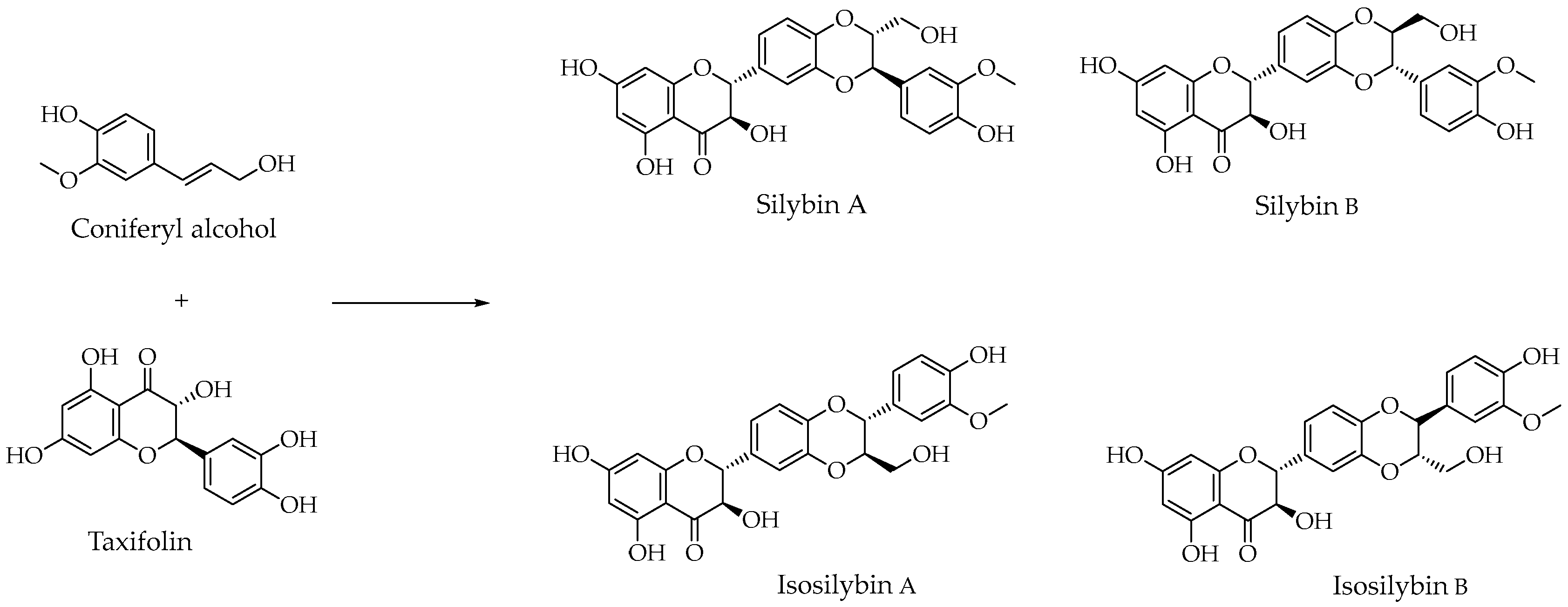
Figure 1. Formation of flavonolignans in milk thistle (S. marianum) through oxidative coupling of taxifolin with coniferyl alcohol. The reaction leads to the main components of silymarin: silybin (diastereoisomers A and B) and isosilybin (A and B).
Applsci 16 00283 g001
Figure 2. The diagram shows the source of silymarin from S. marianum, its main component, silybin, and the phenolic acids contained in milk thistle extract (including gallic acid), as well as the multidirectional biological properties of milk thistle extract: antioxidant, anti-inflammatory, antibacterial, and antiviral, and its use in supporting wound healing.
Applsci 16 00283 g002
Figure 3. Enzymatic conversion of glycosidic forms of flavonoids to free flavonoids, which are then metabolized to small molecules: Prunin to Naringenin, then to ferulic and p-coumaric acids (above); Myrtillin to Delphinidin, and then to gallic, protocatechuic, syringic, vanillic, and ferulic acids (below).
Applsci 16 00283 g003
Figure 4. Classes of phytochemical compounds and examples of bioactive compounds found in plants of the Asteraceae family (e.g., T. officinale) [76,85,140].
Applsci 16 00283 g004
Figure 5. The fermentation process of plants from the Asteraceae family uses molasses as a source for lactic acid production in the presence of lactic acid bacteria.
Applsci 16 00283 g005
Figure 6. Preparation of cosmetic formulations (organogels) incorporating fermented extracts derived from plants of the Asteraceae family.
Applsci 16 00283 g006
Table 1. Flavonoids and their glycoside forms in selected plants of the Asteraceae family.
Plant* Flavonoid Content
(Total)
Main Flavonoids
(Aglycones)
Glycosidic Forms of FlavonoidsRefs.
T. officinale0.5–1.5% in leaves and flowersNaringenin
Delphinidin
Quercetin
Apigenin
Luteolin
Prunin
Myrtyllin
Quercetin-3-rhamnoside
Apigenin-7-O-glucoside
Luteolin-7-O-glucoside
[76,77]
S. marianum0.1–0.3% flavonoids
2–3% flavonolignans
Quercetin
Taxifolin
Apigenin
Luteolin
Rutin
Isoquercitrin
Apigenin-7-O-glucoside
Luteolin-7-O-glucoside
[54,78,79]
M. chamomilla6–8% in basketsApigenin
Luteolin
Quercetin
Apigenin-7-O-glucoside
luteolin glycosides
[80,81,82]
C. officinalis0.3–0.8%Izorhamnetin
Quercetin
Apigenin
(trace amounts)
Isorhamnetin-3-O-glucoside
Isorhamnetin-3-O-rutinoside
Rutin,
Isoquercitrin
[83]
A. montana0.4–0.6%Quercetin
Kaempferol
Isorhamnetin
Luteolin
Isoquercitrin
Rutin
Luteolin-7-O-glucoside
[84]
* Contents expressed as % w/w of dry plant material.
Table 2. Conditions for co-fermentation of dandelion leaves [76].
Number of BiofermentSugars:
Beet Molasses/Cane Molasses
WaterDandelion Leaf* Inoculum: LAB/YeastLipase
[g][g][g][mL][g]
B-12.5/2.5750.059/10.01
B-22.5/2.57529/10.01
B-32.5/2.5750.250.9/0.10.01
B-42.5/2.5750.2522.5/2.50.01
B-50.25/0.25750.2522.5/2.50.01
B-67.5/7.5750.2522.5/2.50.01
* L. rhamnosus MI-0272 and S. cerevisiae; process parameters: B-1-sugar source content 5.6%; initial sugar source content 3.9%; plant material content 0.1%; LAB inoculum content 10%; yeast inoculum content 1.1%; enzyme content 0.01%; B-2—sugar source content 5.4%; initial sugar source content 3.8%; plant material content 2.2%; LAB inoculum content 9.8%; yeast inoculum content 1.1%; enzyme content 0.01%; B-3—sugar source content 6.2%; initial sugar source content 4.3%; plant material content 0.3%; LAB inoculum content 1.1%; yeast inoculum content 0.1%; enzyme content 0.01%; B-4—sugar source content 4.8%; initial sugar source content 3.3%; plant material content 0.2%; LAB inoculum content 21.4%; yeast inoculum content 2.4%; enzyme content 0.01%; B-5—sugar source content 0.5%; initial sugar source content 0.3%; plant material content 0.2%; LAB inoculum content 22.3%; yeast inoculum content 2.5%; enzyme content 0.01%; B-6 sugar source content 13%; initial sugar source content 9%; plant material content 0.2%; LAB inoculum content 19.5%; yeast inoculum content 2.2%; enzyme content 0.01%; co-fermentation process conditions: B-1 and B-2—time 7 days; B-3—time 3 days; B-4—time 5 days; B-5—time 4 days; B-6—time 6 days.
Table 3. Parameters of the two-step fermentation process of dandelion extracts [142,143].
StepProcess DescriptionParameters
I. Raw Material PreparationWashing, drying (50 °C, 20 h), grinding, sieving (60 mesh)Obtained dandelion powder
II. Medium PreparationPowder + distilled water (1:20 w/v), wetting (10 min), pasteurization (90 °C, 10 min), cooling (20 ± 5 °C)Fermentation medium
III. FermentationLAB strains: L. plantarum, L. fermentum, L. rhamnosus, L. casei; inoculum 1 × 10⁸ CFU/mL; addition 1% (v/v)Temperature: 37 °C; time: 8 h
IV. Sterilization and DryingHeating (90 °C, 10 min), drying (45 °C)Obtained fermented plant material
V. Extraction1 g fermented material + water (1:100 w/v), ultrasound-assisted extraction (20 kHz, 30 min), centrifugation (4500× g, 10 min, 4 °C)Obtained bioferment
Table 4. Lactic acid (LA), phenolic acids, and antioxidant activity (DPPH, IC50) in bioferment depending on LAB strain [142,143].
LAB StrainLAPhenolic AcidDPPH
IC50
[mg/g][g/L][mg/g][mg/mL]
L. plantarum32.53 ± 3.050.01617.22 ± 1.39
chlorogenic acid
0.088
L. fermentum53.62 ± 1.000.027--
L. rhamnosus55.53 ± 6.130.028--
L. casei53.36 ± 1.710.0270.77 ± 0.11 caffeic acid
14.90 ± 2.77 cichoric acid
0.075
Table 5. Solid-State Fermentation (SSF) of T. officinale for Enhanced Antioxidant Activity and Flavonoid Bioavailability [29].
StepProcess DescriptionParameters
Raw Material PreparationWhole dandelion plant dried in air, ground, sieved (1 mm), sterilizedSubstrate for SSF
Inoculum
Preparation
Mixed inoculum of S. cerevisiae (CGMCC 2.1190) and L. plantarum (CGMCC 1.12934)Ratio: 3:7
Fermentation ConditionsSolid-State Fermentation (SSF)Time: 52 h;
Temp: 35 °C;
Inoculum: 12%;
Moisture: 52%
Post-Fermentation Extraction1 g fermented material + 35 mL 40% ethanol; water bath (70 °C, 30 min); centrifugation (5000 rpm, 15 min)Supernatant
lyophilized
Sample
Processing
Lyophilized sample ground (zirconia ball mill, 30 Hz, 1.5 min); 100 mg powder extracted overnight at 4 °C in 1 mL 70% methanolFiltration:
0.22 μm
Table 6. Antioxidant activity (determined by the DPPH method), phenolic compound content (determined by the Folin–Ciocalteu method) and lactic acid yield (determined by the GC-MS method) of bioferments (B) compared to their unfermented counterparts (E) [35,108].
B/EAATPCLAeRef.
[mmol Tx/L][mg GA/L][%]
B-1/E-13.21 ± 0.01/1.53 ± 0.012546.69 ± 0.09/1144.88 ± 1.9950 ± 1/0[35]
B-2/E-23.01 ± 0.0/1.32 ± 0.12439.52 ± 0.1/1112.11 ± 2.1353 ± 1/0[35]
B-3/E-33.53 ± 0.01/1.99 ± 0.012599.43 ± 0.12/1764.01 ± 2.6651 ± 1/0[35]
B-4/E-42.41 ± 0.01/1.06 ± 0.012306.82 ± 0.10/1432.77 ± 3.9959 ± 1/0[35]
B-5/E-51.19 ± 0.2/0.91 ± 0.20.92 ± 0.05/0.61 ± 0.0455 ± 1/0[108]
Fermented/unfermented plant extract obtained from: 1—S. marianum pomace, 2—S. marianum extract, 3—S. marianum oil, 4—non-defatted S. marianum seeds, 5—defatted S. marianum seeds.
Table 7. Key Targets of the European Green Deal for the Cosmetics Industry [175,176].
TargetGoalDeadline
Reduction in CO2 emissions−55% compared to 1990 levels2030
Material circularity rate in the EU24% (up from current 12.2%)2030
Recycling of cosmetic packaging100% recyclable packaging2030
Elimination of microplastics in rinse-off cosmeticsComplete elimination2027
Elimination of microplastics in leave-on cosmeticsComplete elimination2029
EU climate neutralityFull climate neutrality2050
Table 8. Characteristics of OECD 301 (A–F) tests in the context of biodegradation, sustainable design and risk assessment [179,180,181,182].
OECD TestMethod NameKey ParameterScope/ApplicationRegulatory RoleSustainability & ERA
301Ready Biodegradability TestCO2 release, O2 consumption, DOC changesChemicals in cosmetics, pharmaceuticals, detergentsRapid evaluation under stringent conditions (REACH, EPA, GHS)Supports sustainable design; Environmental safety assessment
301ADOC Die-Away TestDOC decrease (%)Water-soluble substances; rapid degradation assessmentREACH, OECD, EPA classification ’readily biodegradable’Helps select eco-friendly ingredients; Predicts accumulation in water/soil
301BCO2 Evolution TestCO2 released by microorganisms (%)Organic substances (cosmetics, detergents, pharmaceuticals)REACH, OECD, EPA criterion ≥ 60% mineralization in 28 daysSupports eco-friendly formulations; Models impact on ecosystems
301CMITI Test (I)Oxygen consumption (BOD)Large-scale chemicals; mainly used in JapanMITI requirements, OECDVerifies biodegradability in industrial processes; Risk assessment for large emissions
301DClosed Bottle TestOxygen consumption (BOD)Water-soluble substances; simple screeningOECD, REACHPreliminary assessment of cosmetic ingredient biodegradability; Evaluates aquatic ecosystem effects
301EModified OECD Screening TestDOC decrease (%)Soluble substances during design phaseOECD, REACHVerification during product design; Assesses persistence in environment
301FManometric Respirometry TestO2 consumption (mg O2/g substance)Soluble & partially insoluble substances; pressure measurementOECD, REACHSelection of low-persistence ingredients; Risk assessment for aerobic degradation
Microorganisms under standardized test conditions (OECD criterion: ≥60% degradation, expressed as CO2 evolution, O2 consumption, or DOC reduction) within 28 days, achieved within the so-called “10-day window” after exceeding 10% degradation. Key terms: BOD (Biochemical Oxygen Demand): The amount of oxygen consumed by microorganisms to decompose organic matter in a water sample under aerobic conditions, typically measured over 5 days (BOD5). It is a fundamental indicator of water quality and organic contamination. In OECD biodegradation tests (e.g., 301, 302, 303), BOD reflects the efficiency of microbial degradation. High BOD indicates readily biodegradable organic matter; low BOD suggests poor degradability or potential toxicity. DOC (Dissolved Organic Carbon): The amount of organic carbon present in dissolved form in water. In biodegradation tests (OECD 301, 302, 310), DOC reduction indicates microbial breakdown of substances. DOC-based methods are particularly useful for non-volatile compounds lacking nitrogen or phosphorus.
Disclaimer/Publisher’s Note: The statements, opinions and data contained in all publications are solely those of the individual author(s) and contributor(s) and not of MDPI and/or the editor(s). MDPI and/or the editor(s) disclaim responsibility for any injury to people or property resulting from any ideas, methods, instructions or products referred to in the content.