1. Introduction
In the rapidly advancing fields of nanotechnology and materials science, the precise characterization of nanoscale features is essential for innovation. As feature sizes continue to shrink, achieving high-fidelity surface imaging remains a key technical challenge. Specifically, the rapid growth of semiconductor applications across various sectors has created strong demand for higher manufacturing throughput and more efficient inspection systems [
1]. A challenge has emerged as semiconductor chips become smaller and more complex, increasing the risk of fabrication errors [
2]. Consequently, precise and rapid inspection at each stage is critical to ensuring reliability and preventing throughput bottlenecks in semiconductor manufacturing. Key factors in enhancing inspection performance include increasing the signal-to-noise (S/N) ratio [
3], effectively removing charging effects [
4], and enhancing image contrast [
5].
Scanning electron microscopy (SEM) plays a critical role in material characterization [
6,
7,
8,
9,
10,
11] and in technological development within the semiconductor industry [
12]. SEM provides high-resolution imaging for nanoscale material identification and physical property characterization [
13,
14]. It offers simple specimen preparation [
15] and continuously adjustable magnification [
16]. SEM acquires secondary-electron (SE) and backscattered-electron (BSE) signals that carry essential information about surface morphology and composition [
17]. However, SEM imaging is often hindered by low signal-to-noise ratios and surface charging phenomena that induce image drift and degrade reproducibility [
18,
19,
20,
21]. Conventional SEM imaging of non-conductive materials typically requires a conductive coating and lowering the accelerating voltage to mitigate charging [
22]. Nevertheless, coatings are difficult to remove, and low-voltage operation inevitably increases the beam spot size, resulting in a loss of resolution.
To overcome these issues, several groups have explored contrast enhancement and charge-mitigation strategies, such as acquiring SEM images without metal coating [
23] and exploiting the photoelectric effect by mounting UV LEDs beneath the sample stage or integrating deep-UV sources inside the microscope vacuum chamber [
24]. Other notable approaches include modifying optical microscopes with UV illumination [
25], retrofitting photoelectron systems to the microscope [
26], and utilizing photoemission to analyze complex surface charging dynamics [
27]. While these studies have demonstrated improvements in contrast and charging reduction, they have generally been limited to specific material systems and illumination geometries.
The present work demonstrates an in situ, adjustable ultraviolet (UV) irradiation module designed to enhance SEM image acquisition performance. The system uses the photoelectric effect to generate photoelectrons from the specimen surface during SEM observation. Photoelectron emission occurs when the incident photon energy exceeds the material’s work function [
28], and these photoexcited carriers contribute to two significant improvements: signal enhancement, which increases the effective S/N ratio, and surface-charge neutralization, which minimizes image drift and instability. The proposed UV-assisted imaging method offers a practical and straightforward approach to improving imaging fidelity and inspection throughput in semiconductor manufacturing.
Despite these advances, existing UV-assisted SEM studies have primarily focused on demonstrating contrast enhancement in limited material systems. The underlying mechanisms have not been examined in a consistent manner across samples with different work functions, resistivities, or nano-structural geometries. Moreover, previous implementations have generally relied on fixed or minimally adjustable UV illumination configurations, restricting experimental flexibility and limiting their applicability to wide-bandgap or highly resistive materials that exhibit severe charging and carrier trapping, because these materials require precise control of illumination angle and photon flux to achieve effective photoexcitation and charge neutralization. In particular, conventional SEM often fails to reveal deep-level defects in GaN because trapped carriers produce persistent local charging that suppresses low-energy secondary-electron emission, making defect visualization extremely difficult.
To clarify the technological positioning of this work within the broader field of UV-assisted SEM research, the main differences between previously reported approaches and this work are summarized in
Table 1. This comparison highlights limitations in existing implementations, including fixed illumination geometry, restricted applicability to specific material systems, and the lack of defect-selective imaging. It also clarifies the distinct capabilities enabled by the fully in situ, mechanically adjustable UV module developed in this study.
In contrast to these earlier approaches, the present study introduces a fully in situ and mechanically adjustable UV irradiation module that operates inside the SEM vacuum chamber without requiring any modification in the microscope hardware. This design enables precise control over illumination angle, distance, and optical spot size, allowing for stable and reproducible photoelectric excitation during SEM imaging. More importantly, this work demonstrates that UV-assisted SEM can enhance defect-related contrast in GaN, a wide-bandgap material in which conventional SEM often fails to reveal electronically active defect sites due to carrier trapping and persistent local charging. By systematically evaluating Au/Si, black silicon, and GaN under identical illumination conditions, this study clarifies how UV-induced photoelectron emission modifies secondary-electron generation and surface-charge dynamics across diverse materials. These combined advances establish a new experimental platform for material-selective contrast enhancement and defect visualization in SEM.
2. Materials and Methods
This experiment employed in situ UV LED irradiation to enhance secondary electron (SE) and photoelectric emission during scanning electron microscope (SEM) image acquisition. This technique aims to address challenges in scanning electron microscopy by exploiting the photoelectric effect from light-emitting diodes (LEDs) within the specified UV spectral range, thereby enhancing SE signals and reducing surface charging during SEM image acquisition. All observations were conducted using a JEOL JSM-7001F (JEOL Ltd., Tokyo, Japan), equipped with a Schottky field-emission electron gun, operating at a primary electron energy of 5 kV, a probe current of 190 pA, and a fixed 10 mm working distance.
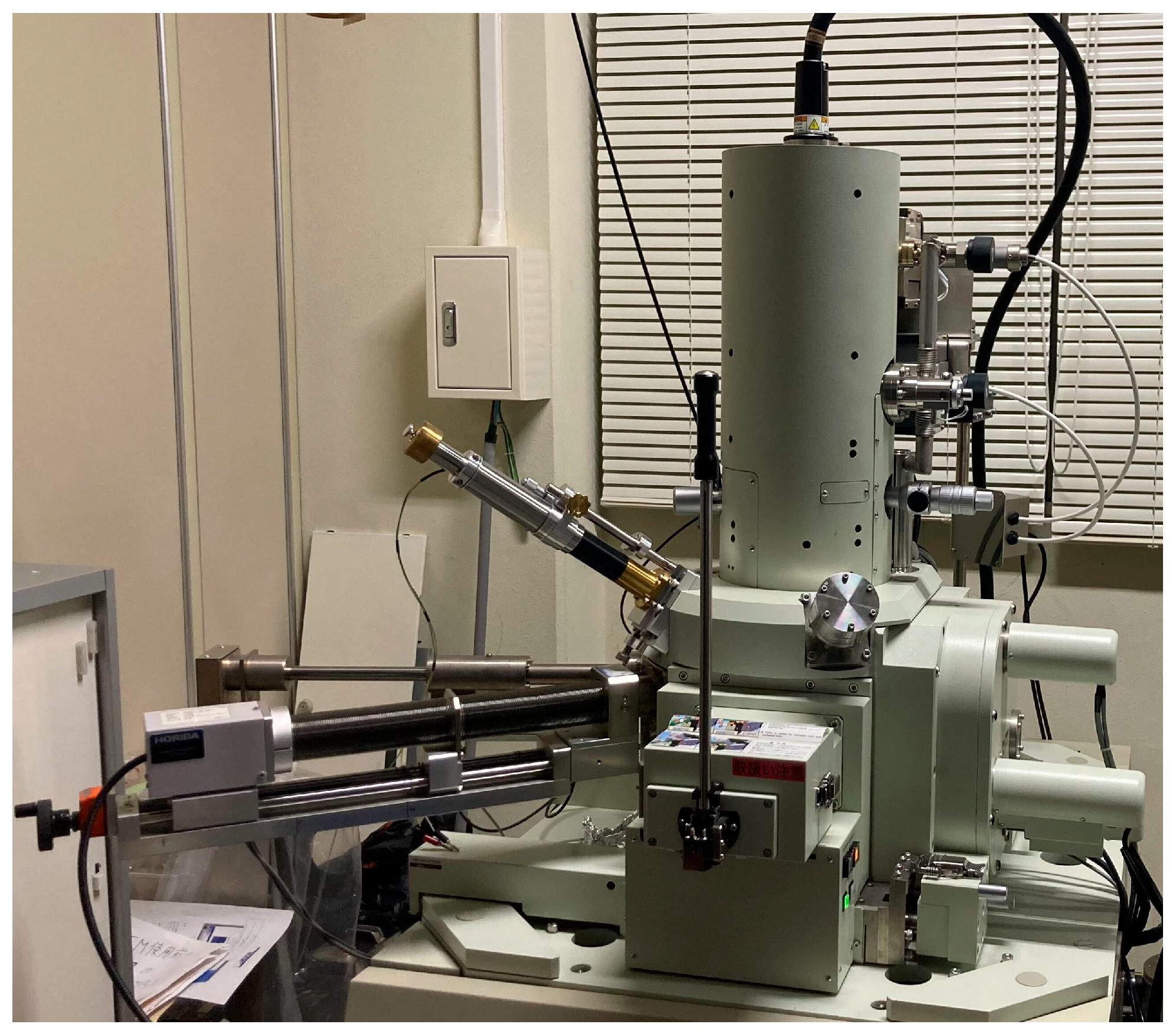
Figure 1 shows a custom-developed, adjustable, in situ UV LED irradiation module mounted directly inside the SEM vacuum chamber. The mounting location is chosen to bring the UV LED into proximity to the sample surface within the vacuum chamber. The UV LED (Crystal IS, OPTAN-250K-BL; peak wavelength 250 nm, specified range 245–255 nm, 3 mW optical output, Crystal IS, Green Island, NY, USA) was installed at the module tip. A focusing lens (f = 21 mm, UV plano-convex lens, Edmund Optics, Yuzawa, Japan) was used to focus the UV light beam to provide approximately uniform illumination within the SEM field of view.
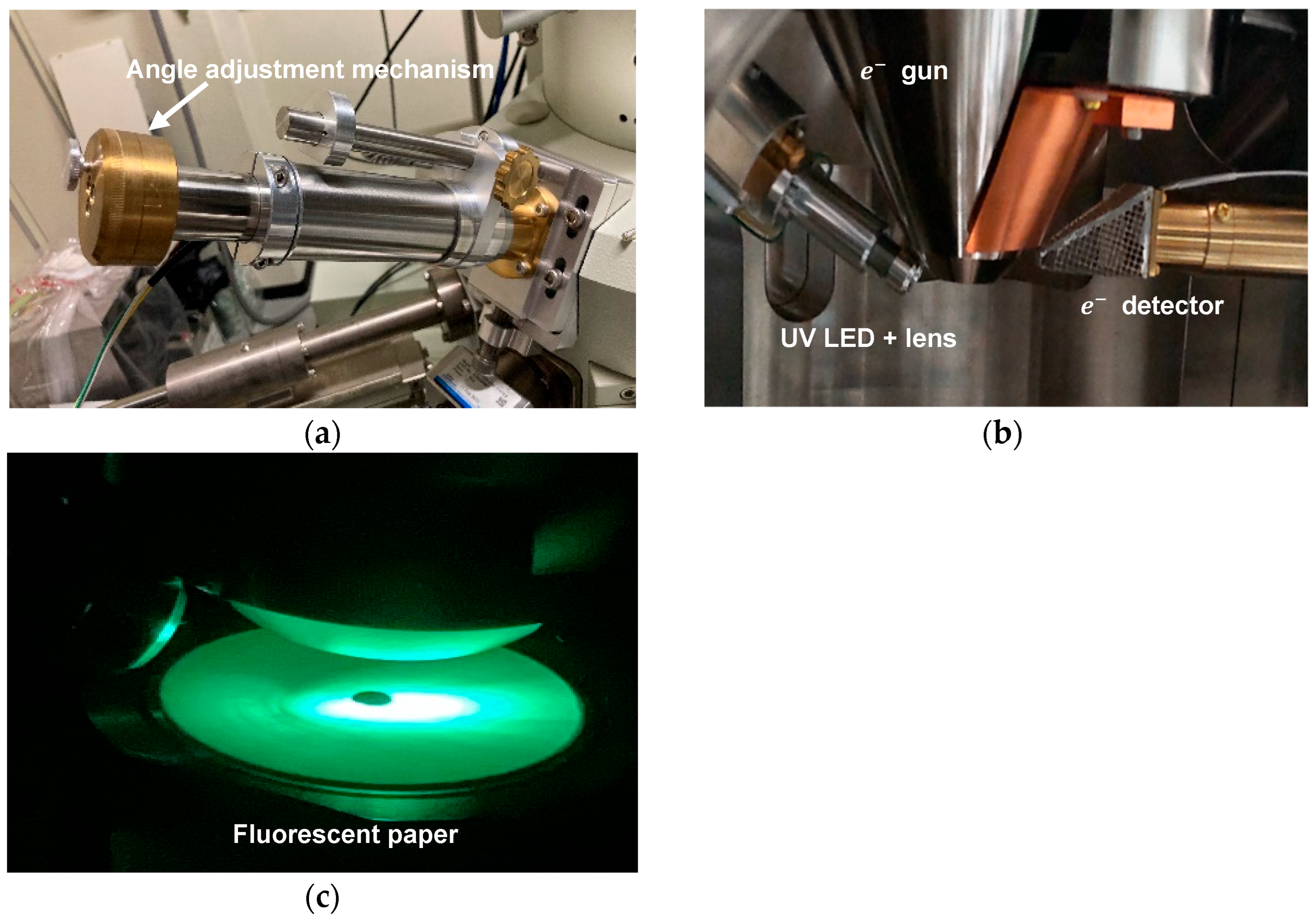
Figure 2a shows the angle adjustment mechanism that facilitates precise control over the light’s angle to the sample surface. The UV light source’s axis is at an angle to the sample; therefore, the focused spot is elongated. The module allows the UV LED to be positioned close to the sample surface for in situ irradiation within the vacuum chamber, as shown in
Figure 2b. It includes control wiring connecting the UV LED to the adjustable external power supply (E3620A, Keysight Technologies, Santa Rosa, CA, USA, non-programmable DC Power Supply). The UV LED irradiation module has been designed to facilitate adjustment of the distance between the focused UV LED and the measured sample, as well as the incident angle. This UV LED module remains installed on the SEM without interfering with the SEM’s standard operation, even when not in use. To measure the illumination spot, a fluorescence paper was attached to a brass disc, installed in the SEM holder, and irradiated with focused UV LED illumination, as shown in
Figure 2c. To conduct the experiments, three primary samples were prepared and utilized. The first sample, used for the UV-induced modulation of secondary-electron emission, was an Au/Si substrate. The sample consisted of a 1 µm thick Au layer sputtered onto a 525 µm thick Si substrate. The work functions of the constituent materials are Au (5.1–5.47 eV) and Si (4.60–4.85 eV). This sample was fabricated using radio-frequency (RF) magnetron sputtering. An Au disk (99.99% purity) was targeted with Ar gas (~1 Pa) using a RF magnetron sputtering machine (SVC-700RF II, Sanyu Electron, Shinjuku, Japan) with a deposition power of 50 W. To create a sample pattern, half of the Si surface was covered with Kapton tape, leaving only the exposed region to be coated. The second sample is black silicon (b-Si), fabricated from a 3-in., ∼0.5 mm thick wafer using inductively coupled plasma reactive ion etching (ICP-RIE). A 15 min etching process produced a homogeneous nanoneedle array across the entire wafer surface [
29]. This b-Si sample was used to investigate UV-assisted suppression of charging-induced image drift. The third sample is a GaN substrate containing a high density of structural defects, used to study deep-level carrier trapping and defect visualization. GaN was selected because its wide bandgap and strong carrier-trapping behavior make it particularly suitable for evaluating UV-induced defect-selective contrast.
3. Results
3.1. Enhanced SE Emission from Au/Si Under UV Illumination
To investigate the increase in secondary electron (SE) emission induced by UV light irradiation, an Au/Si sample was examined using the in situ UV LED irradiation module.
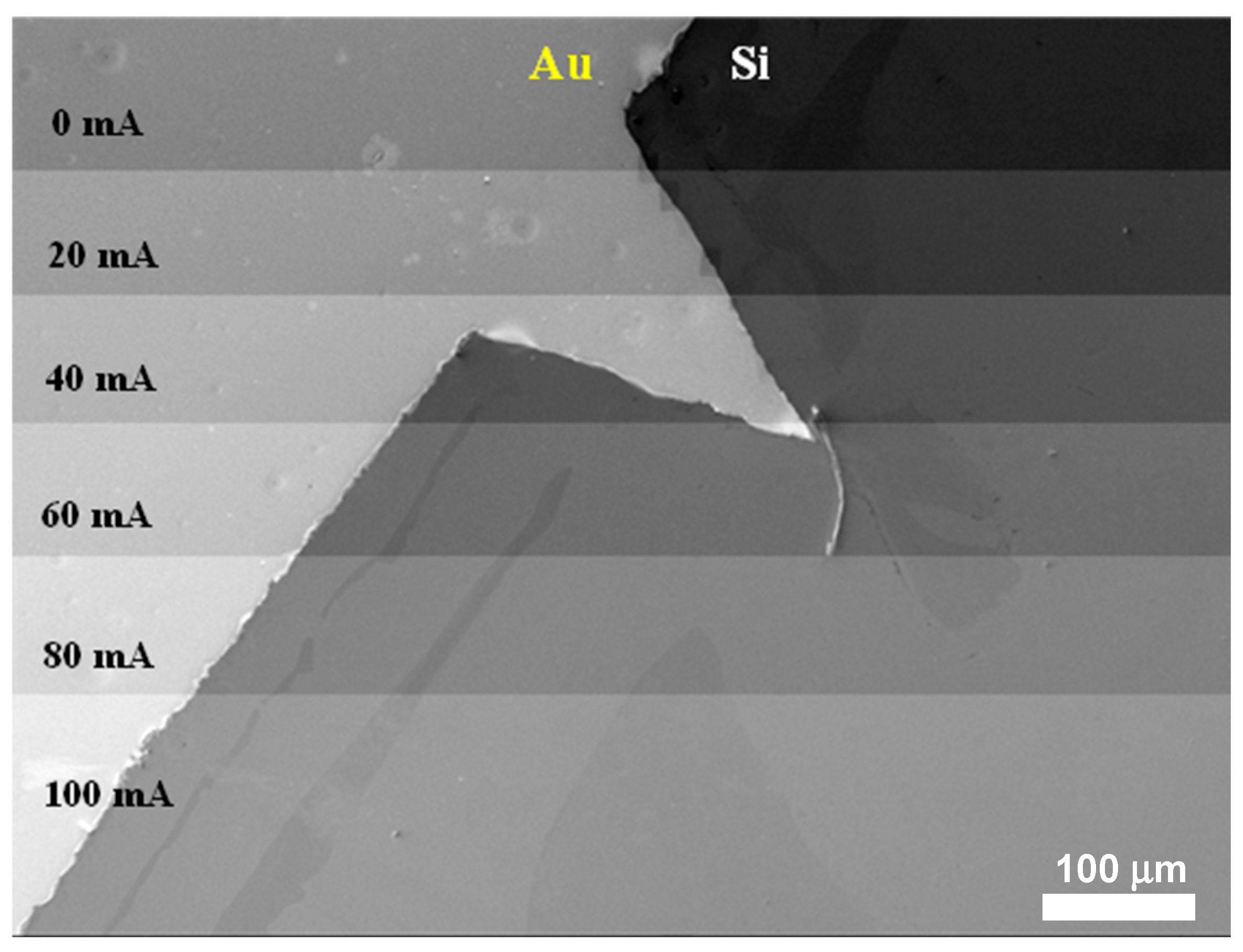
Figure 3 shows the SEM image of the selected region of interest, which includes the boundary between the Au film and the exposed Si substrate. The left side corresponds to the Au layer (work function ø ≈ 5.1 eV). In comparison, the right side corresponds to the Si substrate (work function ø ≈ 4.85 eV), allowing for a clear comparison of the material-dependent response under UV irradiation. SEM imaging was conducted at an accelerating voltage of 5 kV, a probe current of 190 pA, and a magnification of 30× to ensure consistent imaging conditions across all measurements. The in situ UV LED irradiation was systematically varied by adjusting the LED driving current from 0 mA (UV OFF) to 20 mA, 40 mA, 60 mA, 80 mA, and 100 mA, corresponding to increasing UV illumination intensities. Throughout the entire acquisition process, the SEM brightness and contrast settings remained constant to ensure that any observed change in image intensity originated solely from variations in SE emission induced by the applied UV light, rather than from imaging parameter adjustments.
As the UV LED current increased, the SEM image became noticeably brighter, and the contrast between the Au and Si regions increased significantly. This enhancement occurs because the UV LED irradiation generates photoelectrons via the photoelectric effect. These photoelectrons add to the secondary electrons (SE) generated by the primary electron beam, effectively boosting the detector’s overall signal. The improved contrast demonstrates that concurrent UV LED irradiation can effectively impact the material contrast during SEM image acquisition. The overall image brightening confirms that the increased UV current led to higher SE emission from the sample surface. Minimal changes in light were observed over the Au layer. This is attributed to Au’s higher work function, which requires more energy to overcome its potential barrier and enable the escape of photoelectrons, thereby limiting additional SE emission.
To quantify the secondary-electron (SE) enhancement, the signal generated by UV irradiation alone (UV LED ON, primary e-beam OFF) was measured as a background and subtracted from the e-beam ON signal to isolate the UV-induced contribution.
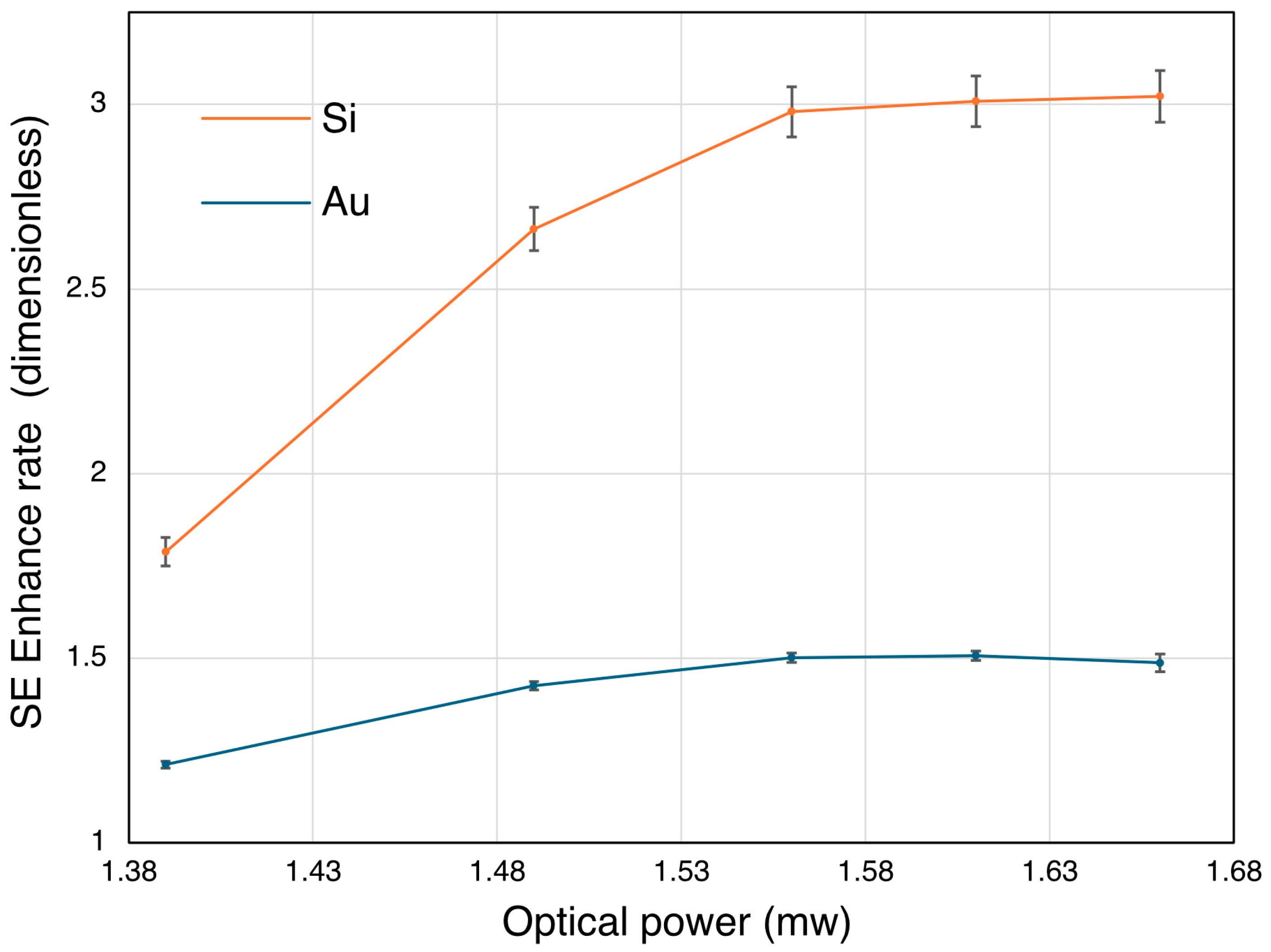
Figure 4 summarizes the enhancement rate obtained from the Au/Si sample under UV irradiation. Here, the enhancement rate was quantified using multiple ROIs within each material region (
n = 5). Data points represent the mean across ROIs, and error bars indicate ± SD across ROIs, reflecting spatial variability within the analyzed images.
The Si region shows a pronounced increase in the enhancement rate with increasing UV drive current (optical power), whereas the Au region exhibits only a modest enhancement that tends to saturate (and may slightly decrease at the highest UV conditions).
The different trends between Si and Au are consistent with the difference in work function and the photon-energy threshold for photoemission. The photon energy of the 250 nm UV LED (~4.96 eV) is comparable to (or exceeds) typical reported work-function values of Si, which can promote photoelectron emission and/or reduce the effective surface barrier, resulting in a larger increase in the detected SE signal. In contrast, for Au the photon energy is below the reported work-function range; so, direct photoemission is expected to be inefficient. Moreover, because Au is highly conductive and less prone to charging under e-beam irradiation, the UV-induced change in surface potential (or charge neutralization) is expected to be smaller than in Si, resulting in a weaker enhancement.
3.2. UV-Assisted Suppression of Charging-Induced Image Drift in Black Silicon (b-Si)
The Black Si (b-Si) sample has been tested to evaluate the effect of UV LED in situ irradiation on surface charging removal during SEM image acquisition. Surface charging is the main issue for imaging nanometer-sized sample structures. The SEM observations were conducted at an accelerating voltage of 5 kV, a beam current of 190 pA, and a 100,000× magnification. The 250 nm UV LED operated at 0 mA (UV OFF) and 100 mA (UV ON).
The prepared b-Si sample was placed on the sample sub-stage for the SEM image acquisition.
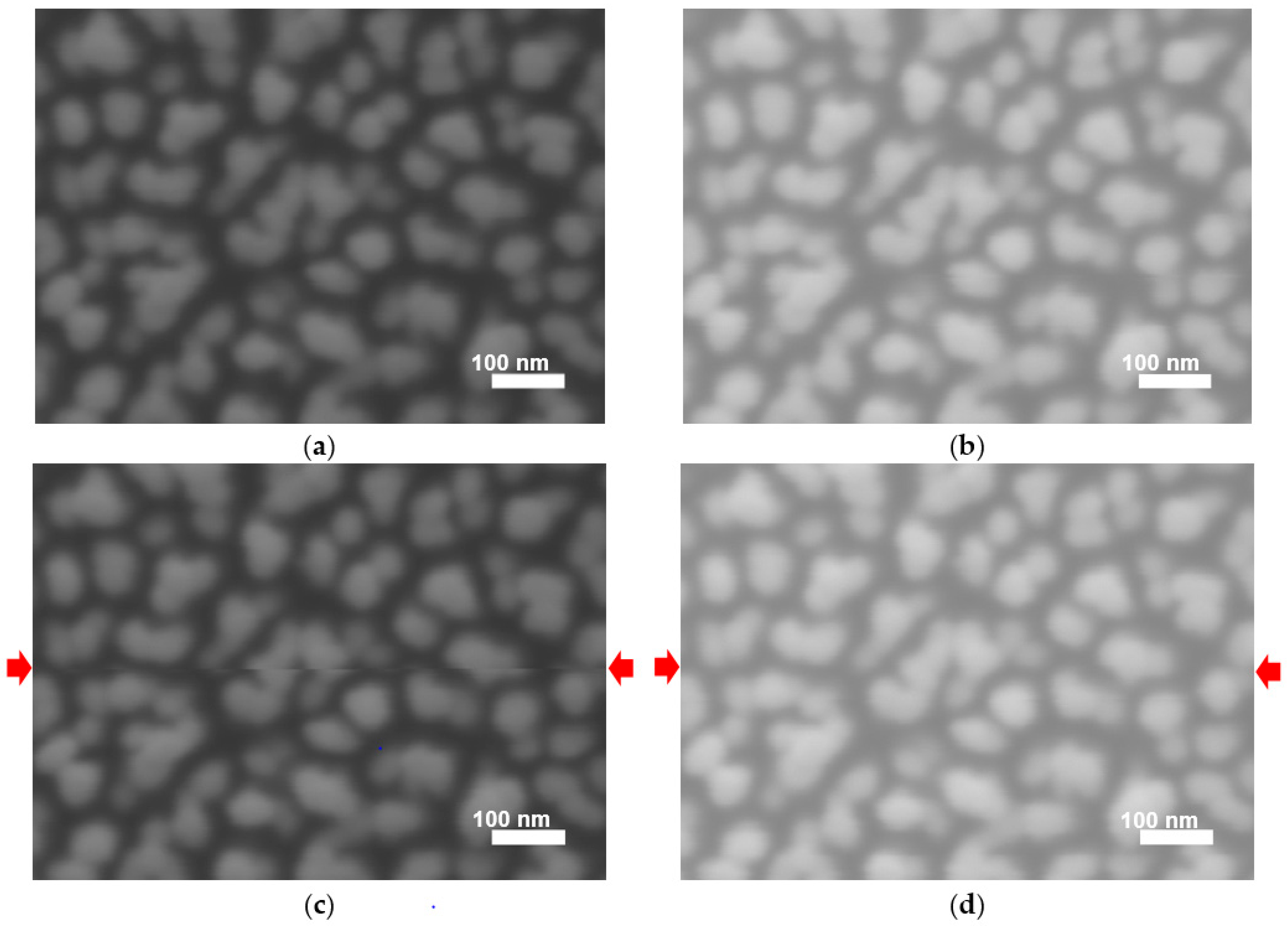
Figure 5a–d shows the SEM image of b-Si under UV-ON and UV-OFF conditions acquired via raster scan to observe a single complete frame and continuously raster scan to observe for sequential scan of one-and-a-half frames. This method allowed for the observation of any image movement, which could indicate charging during SEM image acquisition. In
Figure 5a, the b-Si image acquired without UV light irradiation appears dark.
Figure 5b shows that a substantial contrast increment was observed for the b-Si sample under UV-ON.
Figure 5c shows the b-Si image with a sequential scan, UV-OFF, which clearly exhibits drift due to surface charging. This drift, indicated by the red arrow, forms a line representing the image shift that occurred between the single complete frame SEM image and a sequential one-and-a-half frame scan of image acquisition. In contrast,
Figure 5d reveals that UV LED irradiation simultaneously minimizes drift from surface charging, optimizing image stability and increasing image contrast. The red arrow indicates that the drift line from surface charging is significantly reduced. This result implies that high-energy UV photons ejected excess electrons from the sample surface. The UV light also generates free electrons, which are attracted to the positively charged surface and neutralize the electric charges that accumulate during SEM image acquisition. UV LED irradiation also helps balance charge across the sample’s surface and prevents high local concentrations at any spot that could cause drift.
3.3. Visualization of Deep-Level Defects in GaN Under UV Illumination
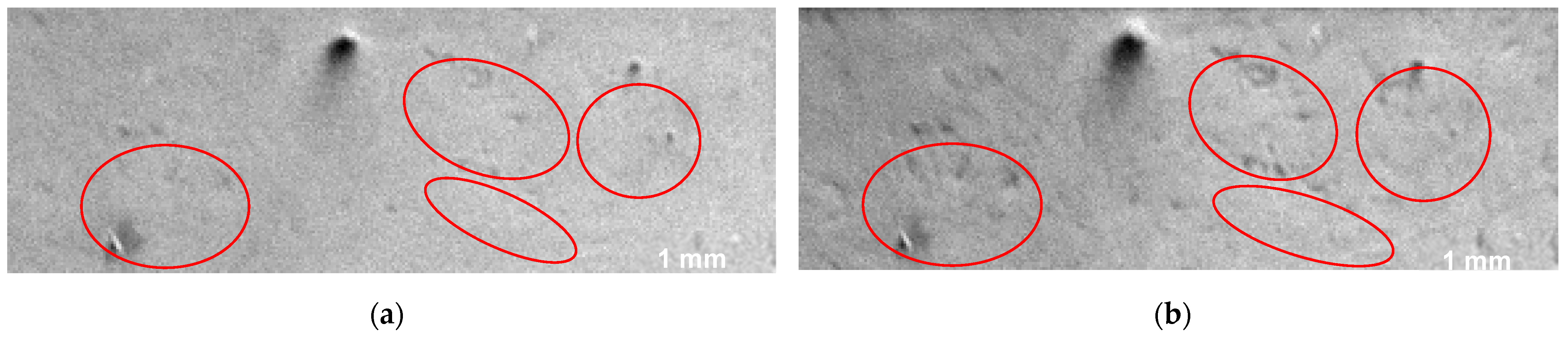
Figure 6 shows SEM images of a GaN surface acquired with and without UV illumination.
Figure 6a presents the SEM image obtained without UV irradiation (UV OFF). The GaN surface appears low-contrast and barely visible, and fine topographical features are difficult to detect due to the low secondary electron (SE) yield. The dark contrast at defect sites can be explained by charge-accumulation behavior and carrier trapping at deep levels during electron-beam irradiation. In SEM, secondary electrons are emitted from the surface, which causes local electron loss. If this loss is not compensated by electron supply from the bulk, the surface becomes locally electron-deficient. This phenomenon leads to positive charging.
Figure 6b shows the same area acquired under UV illumination with photon energy sufficient to induce photoelectron emission (UV ON). Under the UV ON condition, as highlighted by the red circles, specific surface defects and fine structures that were faint in
Figure 6a become clearly visible and sharply defined, several dark, spot-like contrasts become clearly visible. This enhanced visibility within the circled regions demonstrates a substantial increase in SE emission and improved material contrast, driven by the photoelectric effect.
In GaN defect regions, deep levels, nonradiative recombination centers, and donor depletion reduce the free-electron concentration. The local resistivity is also high. As a result, lateral electron transport is hindered. The electron supply cannot keep up with the loss of secondary electrons. Thus, the defect region becomes positively charged and appears dark due to reduced SE collection [
30]. Under UV illumination, electron–hole pairs are generated inside GaN. However, deep levels and nonradiative centers in defect regions rapidly capture these optically generated carriers. They retain the carriers for long periods [
31]. This trapping suppresses the transport of free carriers. Optically generated electrons cannot compensate for surface charging before being trapped. Thus, electron deficiency persists at defect sites even under UV irradiation. In some defects, optically generated holes are also trapped at deep acceptor levels. This process further enhances local positive charging. As a result, defect regions show stronger dark contrast in the UV ON image than in the UV OFF image. SEM with UV illumination selectively enhances the detection of electronically active defects. This method improves the visibility of deep-level defects and nonradiative recombination centers that are otherwise difficult to identify.
4. Discussion
4.1. UV-Induced Modulation of Secondary-Electron Emission
The experimental results demonstrate that UV illumination significantly enhances the secondary-electron (SE) yield for all examined materials, although the underlying mechanisms differ depending on their electronic properties. When UV photons impinge on the specimen, photoexcited electrons are generated in the near-surface region. These photoexcited electrons increase the near-surface electron density and partially neutralize the positive surface potential generated during SEM imaging. As a result, the effective potential barrier for SE escape is reduced, and a larger fraction of low-energy secondary electrons produced by the primary beam can reach the detector. Thus, UV illumination enhances the SE population not only by supplying additional electrons but also by improving their escape probability.
4.2. Charging Behavior and Contrast Stabilization in Black Silicon
Black silicon (b-Si) consists of high-aspect-ratio nanostructures with large internal surface areas and inherently high resistivity. These properties make b-Si highly susceptible to positive charging during SEM observation. In the absence of UV light, the rapid accumulation of positive charge destabilizes the surface potential, causing drift, blurring, and reduced SE emission. Under UV illumination, however, the photoexcited electrons compensate for charge loss and promote a more stable electrostatic environment. This stabilization suppresses image drift and enhances the SE yield, leading to clearer visualization of the nanostructured morphology.
4.3. Deep-Level Trapping and Defect Visualization in GaN
GaN presents a distinct charge-interaction dynamic due to its wide bandgap and the presence of abundant deep-level defects. Although UV photons generate electron-hole pairs, these carriers do not remain mobile; they are efficiently captured by deep traps at defect sites, resulting in locally persistent positive charging. This localized charging modifies the surface electrostatic potential; in regions where positive charge accumulates, the surface potential rises, increasing the effective escape barrier for low-energy secondary electrons and thereby suppressing their emission. As a consequence, defect sites appear darker in SEM images, and UV illumination enhances their visibility by amplifying the contrast between trapped-charge regions and the surrounding material.
This mechanism provides a direct explanation for the experimentally observed an enhancement in defect contrast in GaN. Unlike Si or b-Si, where UV illumination predominantly reduces charging, GaN exhibits contrast amplification at defective sites due to localized carrier trapping. This represents a distinct interaction between photoexcitation and material-specific defect states, enabling selective visualization of subsurface electronic defects that are difficult to detect under standard SEM conditions.
4.4. Influence of UV Illumination Geometry and Field-of-View Uniformity
Because the UV LED introduces light at an oblique angle and is focused into a controlled spot, variations in illumination intensity across the field of view could in principle influence SE enhancement. In our configuration, however, the focused spot is approximately 3 mm in diameter, which is much larger than the SEM field of view at the magnifications used. Although the illumination footprint becomes slightly elliptical due to the incident angle, the photon-flux variation across the imaged region remains negligible. As a result, the observed contrast changes arise primarily from material-dependent photoelectric interactions rather than geometric nonuniformity. Further investigations using higher-power UV sources and quantitative image analysis may expand on these assessments, but no adverse effects from illumination nonuniformity were observed in the present study.
4.5. Limitations and Potential Extensions
While the proposed in situ UV-assisted SEM approach offers substantial advantages for improving image contrast and stabilizing surface charging, several limitations and opportunities for further extension should be considered. First, materials with extremely low UV absorption, such as certain transparent polymers or silica-based substrates, may require shorter-wavelength or higher-power UV sources to generate sufficient photoexcited carriers for effective charge compensation. In such cases, excessive irradiation power may risk photochemical modification, localized heating, or structural damage. Careful optimization of photon energy and illumination power will therefore be essential for extending this technique to radiation-sensitive polymeric systems.
Ceramic materials represent another class in which UV-assisted SEM performance is expected to exhibit particularly strong dependence on illumination geometry. Many ceramics possess low UV absorption coefficients, high electrical resistivity, and dense distributions of surface trap states. As a result, even slight variations in illumination angle or source-to-sample distance can produce substantial changes in local photon flux, directly altering the generation of photoexcited carriers. The extremely low carrier mobility in ceramics inhibits lateral charge dissipation, causing local variations in photoelectron generation to translate immediately into nonuniform charging across the surface. Surface micro-roughness and faceted grain structures further amplify angular sensitivity by modulating local reflectance and shadowing. Consequently, ceramics require more precise optical control than metals or semiconductors, and the mechanically adjustable illumination geometry of the present module is expected to be particularly advantageous for optimizing SE emission and stabilizing charge behavior in these materials.
Beyond charge stabilization, the interplay between UV-assisted neutralization and defect-mediated carrier trapping suggests that this approach may simultaneously suppress macroscopic charging while enhancing defect-selective contrast. In many wide-bandgap materials and ceramics, deep trap states efficiently capture photoexcited carriers, producing localized charging that increases the SE escape barrier at defect sites. This effect causes defect regions to retain distinct SE signatures even under UV irradiation. Thus, while UV illumination flattens the global surface potential and mitigates image drift, electronically active defect sites continue to exhibit strong contrast variations. This dual effect indicates that UV-assisted SEM may serve not only as a stabilization technique for insulating surfaces but also as a powerful tool for visualizing defect distributions that are otherwise inaccessible through conventional SEM imaging.
Composite nanostructures, including hybrid organic–inorganic systems and multiscale textured materials, may exhibit spatially varying optical absorption, work functions, and charge-transport pathways. In such systems, UV illumination is expected to generate correspondingly heterogeneous SE responses. The adjustable illumination geometry of the present in situ module could therefore be particularly beneficial, enabling researchers to tune optical access to specific regions of interest or mitigate artefacts arising from differential photoexcitation. However, the increased structural complexity of such systems may also require further refinement of illumination uniformity and optical modeling to ensure reproducible interpretation of contrast features.
Overall, while the present UV-assisted SEM platform demonstrates strong applicability to a wide range of insulating and wide-bandgap materials, its performance ultimately depends on the balance between optical absorption, carrier generation and trapping, thermal stability, and electrical resistivity. Future improvements may include the integration of tunable-wavelength or higher-power UV sources, collimated beam modules, and automated feedback control of illumination parameters. These extensions will further broaden the applicability of the technique to polymers, ceramics, and electronically or structurally heterogeneous composite materials, enabling more precise control over SE emission and defect-selective imaging in next-generation electron microscopy.
5. Conclusions
This work successfully demonstrates the enhancement in SEM image acquisition using an in situ, adjustable UV LED irradiation module. Integrating UV co-illumination with conventional SEM imaging opens new possibilities for advancing the capabilities of scanning electron microscopy. The custom-designed module can be installed inside the SEM chamber without modifying the vacuum system, enabling direct and reproducible illumination of the specimen under stable imaging conditions.
In addition to improving charge stability in nanostructured and high-resistivity materials, UV illumination produced modest contrast enhancement in the Au/Si sample, consistent with differences in photoemission efficiency between the two materials.
Most importantly, this study identifies two new capabilities enabled by UV co-illumination. First, UV illumination allows for selective visualization of deep-level-defect-related contrast in GaN, a phenomenon that has not been systematically examined in prior SEM imaging studies under comparable UV co-illumination conditions. Photogenerated carriers become trapped at defect sites, producing localized positive charging that raises the secondary-electron escape barrier and generates pronounced dark contrast associated with electronically active defects. This mechanism provides a new SEM-based pathway for probing deep-level electronic states in wide-bandgap semiconductors. Second, this work introduces a newly developed in situ UV LED module capable of direct specimen illumination inside the vacuum chamber with adjustable angle, distance, and irradiation power, without requiring structural modification of the SEM. Unlike fixed-geometry or external illumination approaches, the present module offers stable, versatile co-illumination conditions and is readily adaptable to various SEM platforms.
Furthermore, the customizable and cost-effective design of the module allows for integration with alternative light sources, such as lasers, and provides efficient control of irradiation power and geometry within the vacuum chamber. Overall, the adjustable in situ UV LED irradiation module represents a promising and versatile approach for enhancing contrast, improving charge management, and enabling defect-selective imaging in SEM, thereby expanding the analytical reach of nanoscale characterization and nanofabrication techniques.




 ,
,