Article

Color-Based Laser Engraving of Heritage Textile Motifs on Wood

by
Antonela Lungu
*,
Sergiu Valeriu Georgescu
and
Camelia Cosereanu
Faculty of Furniture Design and Wood Engineering, Transilvania University of Brasov, B-dul Eroilor, Nr. 29, 500036 Brasov, Romania
*
Author to whom correspondence should be addressed.
Appl. Sci. 2025, 15(24), 12900; https://doi.org/10.3390/app152412900 (registering DOI)
Submission received: 11 November 2025 / Revised: 30 November 2025 / Accepted: 4 December 2025 / Published: 7 December 2025

Featured Application

The method presented in this study offers a sustainable and innovative approach to wood decoration, suitable for applications in furniture, interior design, and heritage-inspired product development.

Abstract

This study explores the enhancement of Beech wood (Fagus sylvatica L.) surfaces through the laser engraving of motifs inspired by Romanian textile heritage, combining cultural preservation with modern surface design techniques. A digitization and computer-aided design (CAD)-based workflow was employed to accurately transfer traditional motifs onto wood substrates. Engraving was performed using a nitrogen laser at ten different power settings ranging from 10 W to 150 W, followed by color analysis of the engraved areas. The resulting surfaces were evaluated using the International Commission on Illumination (CIELab) system to identify optimal engraving conditions. Based on colorimetric analysis, three laser power settings were selected for final motif reproduction: 30 W, 45 W, and 105 W. The process enabled the accurate rendering of a traditional three-color motif, achieving both visual fidelity and aesthetic appeal. Results demonstrate that color-based laser engraving allows precise, durable, and culturally significant ornamentation of wooden surfaces. The conclusions highlight the potential of this technique to add artistic and commercial value to wood products while preserving and promoting cultural identity.

1. Introduction

Recent studies indicate that, despite postmodern design’s detachment from traditional artistic practices heritage ornamental motifs continue to be incorporated into contemporary applications through advanced fabrication technologies [1,2,3,4]. Their integration reflects a sustained interest in cultural heritage, while supporting innovation in material processing and product design [5]. Originally embedded in textiles, architecture, and decorative arts, these motifs have increasingly been transferred from their canonical contexts to new media and product categories developed during the late 20th and early 21st centuries.
The reinterpretation of heritage motifs not only preserves aesthetic and cultural values, but also stimulates creative innovation in contemporary design [6,7,8]. Such work underscores the relevance of textile ornamentation as a bridge between traditional craftsmanship and modern technological approaches [9,10,11].
The digital revolution has introduced innovative approaches, such as digital radiography and Reflectance Transformation Imaging for reproducing ornamental designs and assessing the preservation status of heritage textiles [12]. These developments support the reinterpretation of ornamental semantics [13], the transformation of patterns, and their integration into materials and techniques previously unrelated to their original context. In this regard, contemporary digital technologies enable the vectorization and reproduction of original motifs, facilitating their adaptation and application in new products [14,15,16,17]. For example, 3D models of the textile motifs were created by the photogrammetry method in specialized software [14], and ArcGis, or CorelDraw programs were used for the vectorization [14,15]. Contour and color extraction methods were applied to revive artistic motifs and patterns [16,17].
Recent interest in applying heritage-inspired patterns across substrates such as wood, ceramics, stone, and metal further highlights the potential of digital fabrication to support cultural preservation and design experimentation [18,19,20,21]. This has established a foundation for developing new methods to reproduce and valorize cultural patterns within contemporary design systems [22].
Furniture ornamentation is among the domains in which heritage motifs are reinterpreted and applied [23,24,25]. Advanced laser techniques, including color-based engraving, allow designers to reproduce intricate motifs with high fidelity while exploring new expressive possibilities [26,27]. Laser engraving has emerged as one of the most versatile digital fabrication techniques, widely applied in fields ranging from industrial prototyping to art and design. Its precision, repeatability, and adaptability to different materials make it a valuable tool for reproducing intricate ornamental patterns [28]. Unlike traditional carving or printing techniques, laser engraving enables non-contact processing, this reduces material deformation and allows for higher levels of detail [29].
In its conventional form, laser engraving produces monochrome patterns based on the contrast between engraved and non-engraved areas [30]. While suitable for many technical applications, this limits the reproduction of ornaments originally characterized by rich polychromy such as those found in textile traditions [12,14,15,22]. Recent advances have therefore focused on controlling color formation through laser–material interaction—commonly referred to as color-based laser engraving—where adjustments in laser parameters (power, frequency, scanning speed) trigger localized thermal or chemical effects that generate stable color changes without external pigments [31,32,33,34].
Color-based engraving has already been tested on metals, polymers, and ceramics, demonstrating its potential to expand the aesthetic range of laser technologies [35,36,37]. However, the application of such techniques to wood remains comparatively underexplored, despite wood’s central role in both traditional crafts and modern product design [38].
Given its natural texture, tonal variability, and symbolic value as a cultural medium, wood offers unique opportunities for reinterpreting ornamental motifs. Integrating textile-inspired patterns into this substrate through laser engraving provides a promising pathway for cultural innovation, enabling both preservation and reframing of heritage designs. Laser engraving, in particular, has been recognized as a powerful technique for reproducing ornamental detail; however, most existing research emphasizes monochrome applications and technical optimization rather than aesthetic fidelity or cultural authenticity [39,40]. The application of color engraving to wooden substrates remains comparatively limited. Most existing research on laser processing of wood focuses on industrial marking, surface modification, or general decorative purposes, with limited emphasis on aesthetic fidelity or cultural authenticity [28,40,41].
Moreover, while textile ornaments represent a rich repository of geometric structures, symbolic meanings, and chromatic traditions, their transposition onto wood through color-based laser engraving has not been thoroughly investigated. This gap is particularly relevant given the historical significance of wood in both functional and decorative arts, as well as its capacity to act as a cultural bridge between traditional craftsmanship and modern fabrication techniques.
Therefore, there is a clear need for research that explores how heritage textile motifs can be accurately and aesthetically reproduced on wood surfaces using color-based advanced laser engraving techniques, aiming to combine cultural authenticity with innovative material processing methods, and cultural preservation.
This work forms part of an ongoing research project dedicated to adapting Romanian textile motifs for wood surface decoration as a means of cultural preservation and transmission to future generations.

2. Materials and Methods

2.1. Textile Traditional Motif

A traditional Romanian motif, cross-stitched on a man’s shirt from the textile heritage of the Șcheii Brașovului, neighborhood in the Transylvania region, was documented through a photograph provided by the owner of the original garment (Figure 1a). The motif, which adorns the sleeves, upper and lower hem of the shirt, depicts grape leaves and fruit. In Romanian folklore, it is regarded as a Christian symbol of eternal life. The grape clusters and vine leaves have been used, either individually or in ornamental compositions, in all aspects of folk art, including house decorations, embroidered on men’s and women’s festive shirts or on wall towels, as well as woven into the borders of rugs [42].
To prepare the design for wood surface ornamentation, the model was first converted into vector format using the professional graphics software CorelDRAW X7(version 17) (Figure 1c), and the resulting vector CDR file was then imported into AutoCAD LT 2017, as DXF file. in AutoCAD.

2.2. Equipment and Material

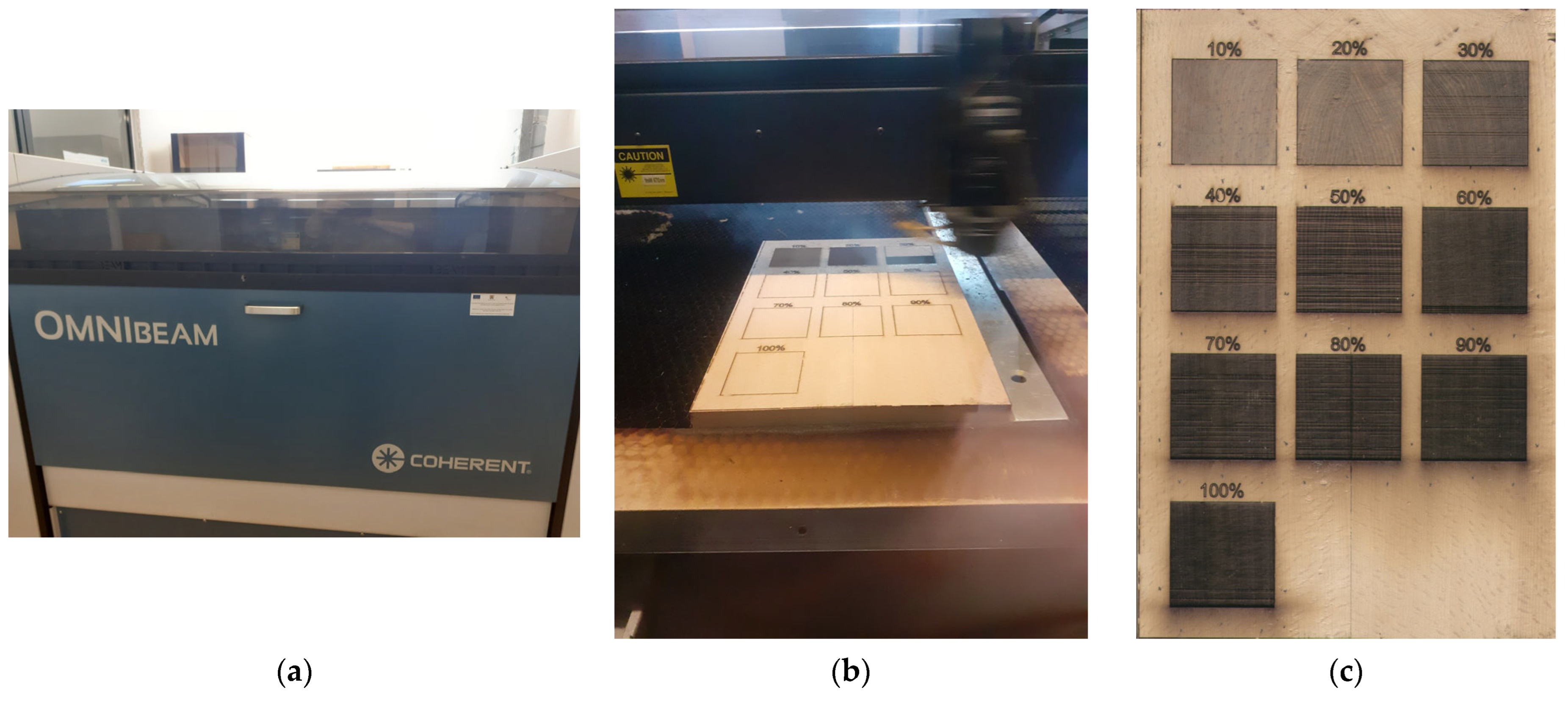
The DXF file was subsequently transferred to the OmniBEAM 150 Laser Machining system (Coherent, Inc., Santa Clara, CA, USA), as shown in Figure 2a, which operated with nitrogen gas assistance.
The experiment used two beech wood (Fagus sylvatica L.) panels with semi-radial grain orientation, each 320 mm long, 200 mm wide, and 18 mm thick, possessing a mean density of 755 kg/m3 and a moisture content of 11%. These panels served both as the base for ornamentation and for preliminary testing to determine suitable laser power settings. Before engraving the motif, the surfaces were sanded with 60-grit paper to achieve adequate flatness. Before testing, the samples were conditioned at temperature of 20 °C and relative air humidity of 65%.
In the preliminary test to determine the appropriate laser beam power settings for the model’s color tones, the laser was used to engrave square patterns measuring 50 mm × 50 mm on the wood surface (Figure 2b), with power levels ranging from 10% to 100% of the maximum laser output (150 W), in 10% increments (Figure 2c).
Colorimetric evaluations were performed in the CIELab color space, a perceptually uniform system in which color differences (ΔE) are calculated as the distance between points representing individual colors, meaning that identical ΔE values correspond to equivalent perceived differences. Color measurements of the engraved areas were carried out using an AvaSpec-2048 USB2 (AVANTES, Apeldoorn, Nederlands) spectrometer in combination with an AvaLight-Hal illumination source and an integrating AVA sphere, all connected via optical fibers. This configuration ensured stable diffuse illumination and improved precision during data collection. The system operated under standard illuminant D65 to simulate natural daylight and was calibrated for a 2° standard observer.
All measurement data were acquired and processed using AvaSoft software (version 7.7.2) equipped with the Colour analysis module (AVANTES, Apeldoorn, Netherlands). Readings were taken through an aperture of approximately 8–10 mm, with multiple measurements recorded at different positions within each 50 × 50 mm sample area. These values were subsequently averaged to obtain the final L*, a*, and b* coordinates along with their respective standard deviations.
The AvaSpec-2048 USB2 spectrometer was selected because of its high spectral resolution, stable diffuse illumination (via the AvaLight-Hal source and integrating sphere), and controlled measurement conditions (illuminant D65, 2° observer) enable accurate and repeatable CIELab color evaluation. Its ability to capture the full reflectance spectrum and its integration with the AvaSoft Color module ensure reliable data processing, making it suitable for precise colorimetric assessment of engraved surfaces.

2.3. Testing Method

A beech wood control sample served as the reference for color comparison. For each engraved square, five individual color readings were taken from different surface points, while ten measurements were recorded for the control sample. The analysis was conducted within the CIELab color space, which describes color using three parameters: L* (lightness, ranging from 0 for black to 100 for white), a* (position on the green–red axis, from negative to positive values), and b* (position on the blue–yellow axis). The a* and b* coordinates together define the chromaticity plane.
The average L*, a*, and b* values, along with their corresponding standard deviations, were determined from ten color measurements taken on the control sample and five measurements recorded for each laser-engraved square area. To quantify the variation between two colors, the color difference (ΔE) was calculated as the distance between their coordinates in the CIELab color space, using Equation (1):
E = d L 2 + d a 2 + d b 2
where dL represents the difference in lightness, da the difference along the red–green axis a*, and db is the difference along the yellow–blue axis b*. The total color difference, ΔE, indicates how perceptibly distinct two colors are [26,27]. Differences between the average values measured on the laser engraved wood surfaces and the average values measured on the control sample surface were employed to calculate the resulting color differences as a function of the laser power.
The mean color values measured on the laser-engraved surfaces were compared with those of the control sample to determine the influence of laser power on the resulting color variation. These computed ΔE values served as a guide for identifying optimal laser parameters capable of producing engraved tones that visually match the color contrasts of the original motif on the textile artifact (Figure 3).
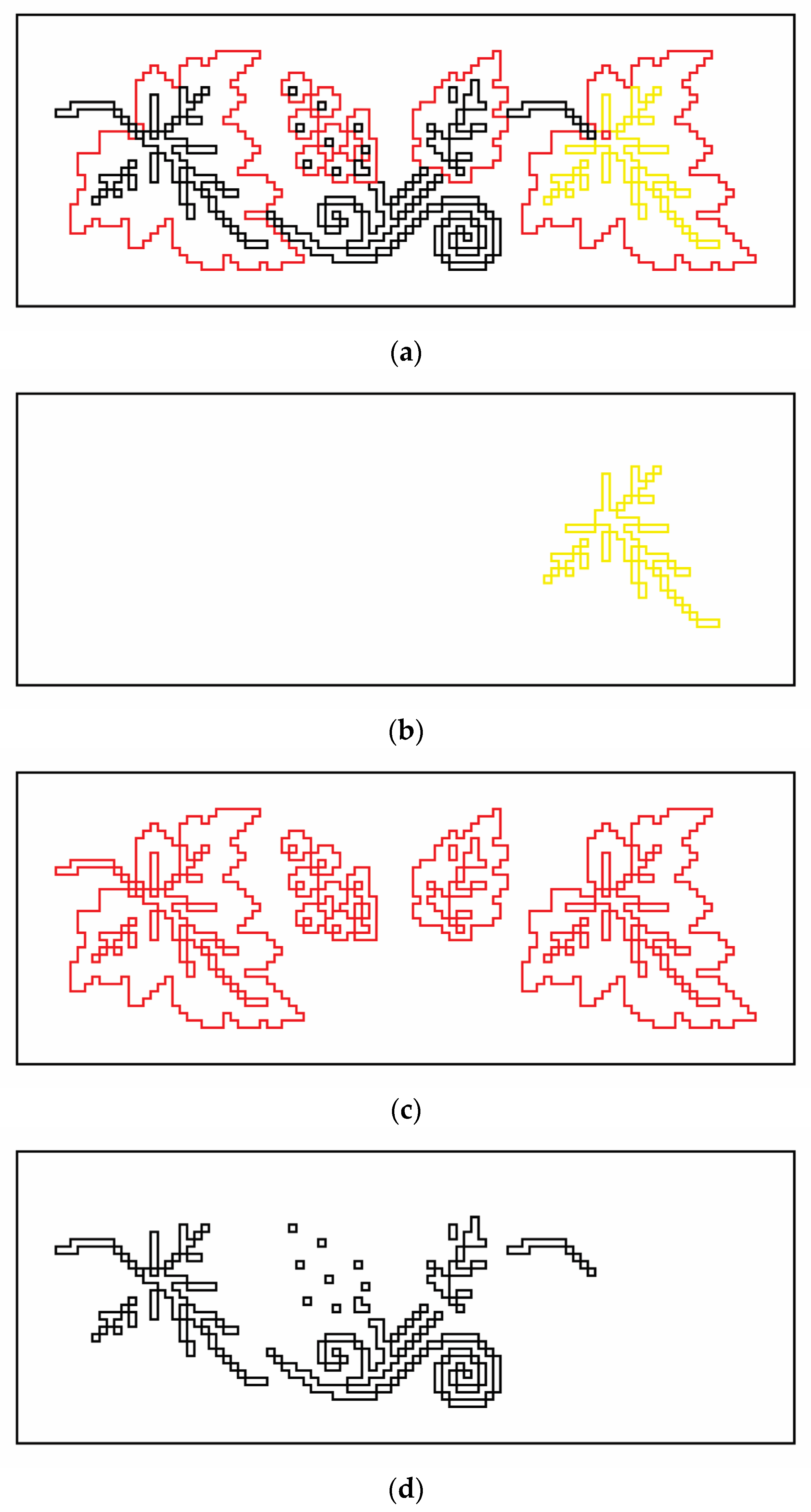
As illustrated in Figure 3a, the original motif contained three different colors: black, red and yellow. To allow for individual laser processing at varying power levels, the motif was decomposed into three separate color layers, each exported as an independent vector file (Figure 3b–d).
To assess the color difference (ΔE) between the original textile motif and the laser-engraved reproductions, the motif’s vector outline was digitally colored using the colors shown in Figure 1b. Three 50 mm × 50 mm squares colored in red, yellow and black were printed on white cardboard (A4 format) to represent the selected colors. Five measurements of L*, a*, and b* values were recorded at different points within each colored square, while ten measurements were taken for the white cardboard, used as the control. The mean values and standard deviations of all measurements were then computed for subsequent analysis.
When the ΔE values calculated between the colors of the original textile motif and the corresponding laser-engraved test surfaces were similar in magnitude, this indicated that the engraved colors reproduced the relative visual contrast present in the original motif. In other words, the relationships between colors (e.g., the contrast between red and yellow, or between black and white) were preserved. The laser power levels that generated these sets of comparable ΔE values were therefore selected for producing the full decorative pattern on the beech wood surface, ensuring that the engraved motif exhibited contrast relationships visually consistent with the textile artifact.

3. Results and Discussion

Table 1 summarizes the mean L*, a*, and b* values obtained from color measurements performed on ten laser-engraved squares, as well as on the three reference colors of the traditional motif printed on cardboard. Each engraved square was assigned an identification code corresponding to the percentage of total laser beam power used during engraving, ranging from 10% (P10) to 100% (P100) of the maximum power of 150 W, meaning 15 W and 150 W, respectively. The blank entries denote the measurement results for the control samples—beech wood and white cardboard—used as baselines for the two material categories.
Table 1 reveals that the lightness (L*) and redness (positive a*) values for the beech wood control sample were quite different to those recorded for the white control sample (L* = 68.67 vs. 93.93, a = 12.03 vs. 4.08). The contrast between the laser-engraved areas and the unprocessed beech background was quantified using ΔEPn (the color difference relative to the blank surface). As shown in Table 2, the lowest ΔE values were obtained at 10% (ΔEP10 = 26.34) and 20% (ΔEP20 = 28.08) of the maximum laser power, whereas all other power levels produced substantially higher color differences (e.g., ΔEP30 = 39.13; ΔEP40 = 47.14; ΔEP100 = 52.81). These low ΔE values indicate that the color of the engraved areas at 10% and 20% power is closest to the background wood, and therefore the visual contrast is minimal at these settings.
Moreover, the positive a* and b* coordinates observed for the beech control and engraved samples demonstrate that the color variation is mainly governed by lightness and by shifts toward the red and yellow tones—consistent with prior studies on laser-treated beech surfaces [26]. The data presented in Table 1 show that the magnitude of the changes in a* and b* are smaller than the changes in lightness (L*). Therefore, the predominant factor driving the perceived color variation was the reduction in lightness caused by laser engraving, accompanied by secondary shifts toward slightly redder and yellower tones. In contrast, the white control sample, used to represent the original motif colors, exhibited a negative b value, indicating the presence of blue hues in its chromatic composition.
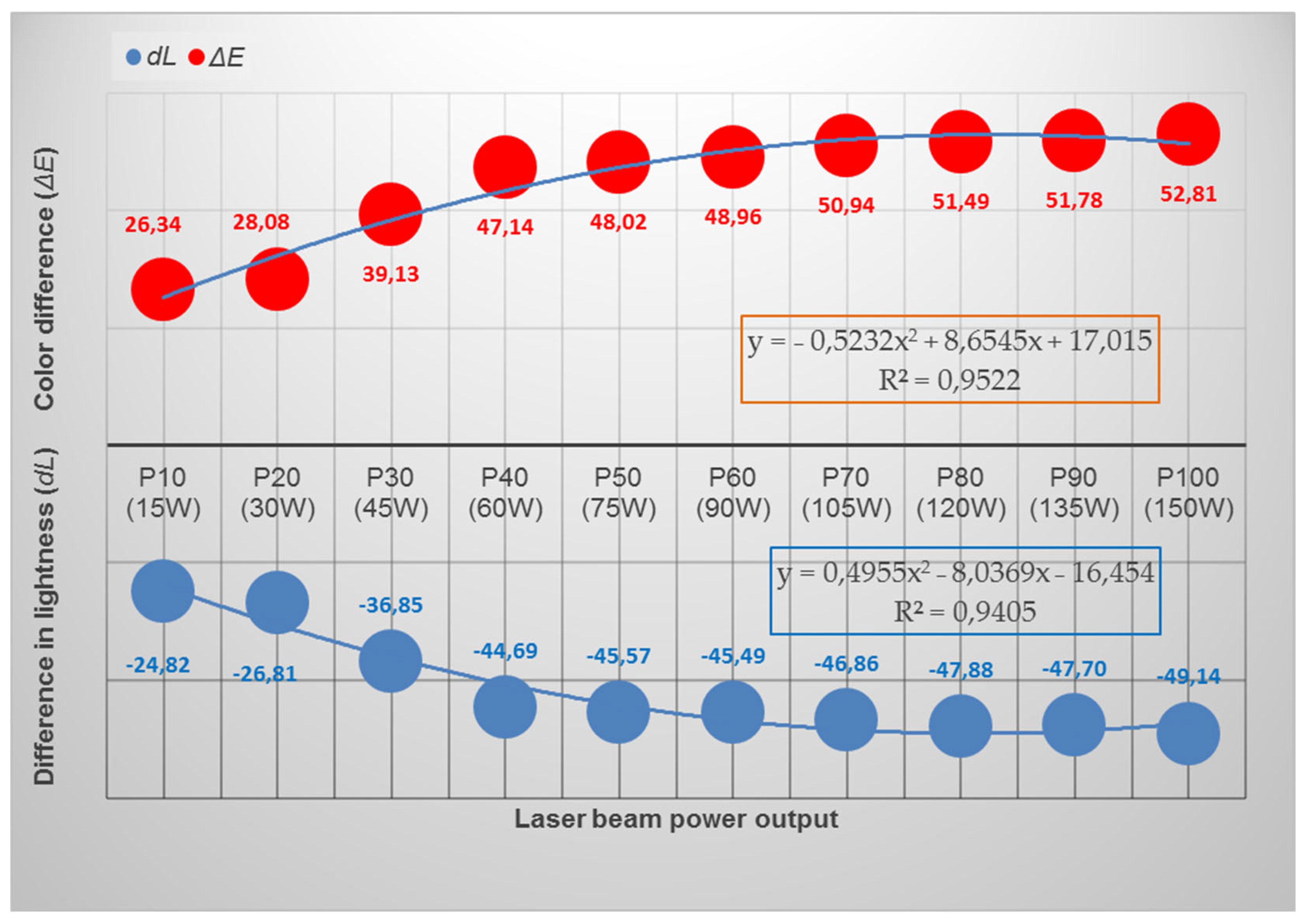
A closer inspection of lightness difference (dL) and total color difference (ΔE), illustrated in Figure 4, shows that the two curves display opposite trends relative to the horizontal axis. As the difference in lightness decreases, color difference increases. Beyond roughly 40% of the maximum laser power 150 W, representing 60 W, both trends flatten considerably. Nonlinear regression yielded power-function relationships with coefficients of determination R2 = 0.94 for dL and R2 = 0.95 for ΔE, confirming their mirrored behavior relative to the horizontal axis.
Although some laser power settings produced ΔE values indicating a partial match with the colors of the original motif, the differences in lightness (ΔL*) and in the a* and b* chromatic coordinates of the control samples (as presented in Table 1) did not permit the laser-engraved surfaces to reproduce perfectly the original contrast between the yellow, red, and black areas.
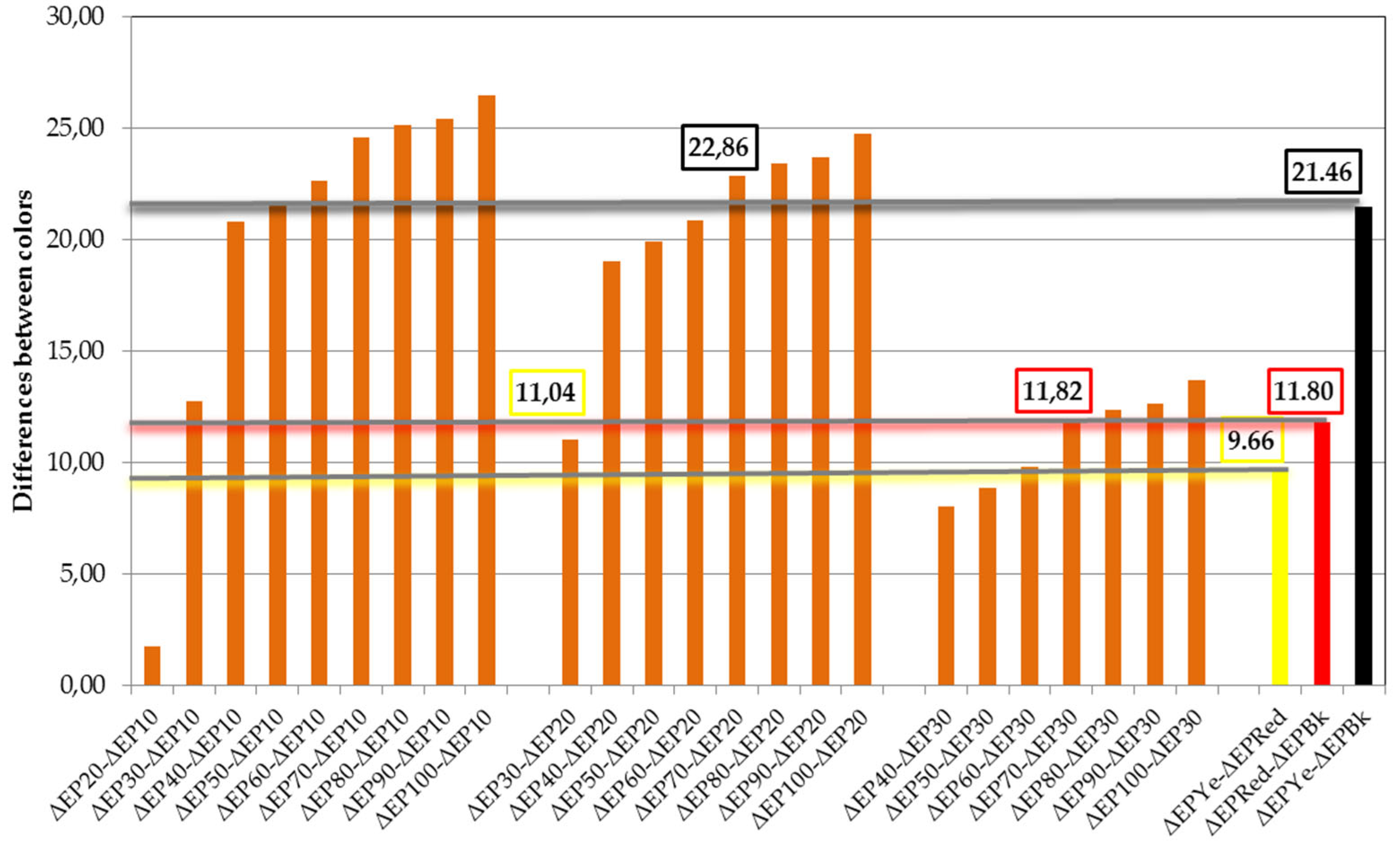
To approximate the visual contrast of the original motif, the difference between colors was expressed as the variation in ΔE values of each hue relative to its control sample. These “contrast-equivalent” differences were determined for both the original motif and the laser-engraved surfaces, as summarized in Table 2. For the engraved specimens, color comparisons were conducted using samples produced at 10%, 20%, and 30% of the maximum laser output of (150 W), corresponding to applied powers of 15 W, 30 W and 45 W, respectively. A graphical representation of these calculated contrasts is provided in Figure 5 to facilitate a clearer comparison between the two sets of data.
Figure 5 shows that using laser powers of 20%, 30%, and 70% of the maximum laser output (corresponding to applied powers of 30 W, 45 W, and 105 W, respectively) resulted in engraved color contrasts that closely replicate those of the original motif. The ΔE differences were comparable: 9.66 vs. 11.04 for yellow–red, 11.80 vs. 11.82 for red–black, and 21.46 vs. 22.86 for yellow–black.
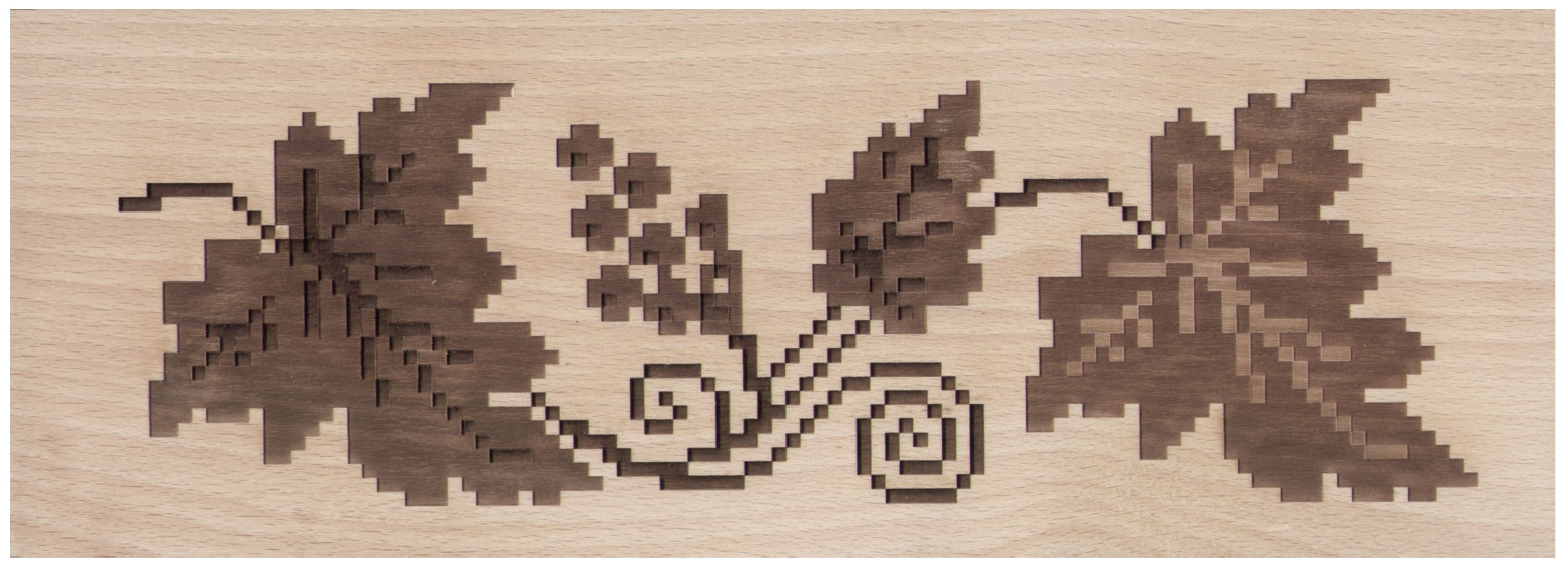
Since the motif design was separated into three chromatic components—yellow, red, and black (Figure 3)—each color was engraved sequentially on the wood surface. The corresponding processing durations were 7 min 54 s for yellow (20% power), 29 min 36 s for red (30% power), and 28 min 52 s for black (70% power), totaling 66 min and 22 s. The final engraved result is displayed in Figure 6.
The findings of this study demonstrate that CO2 laser engraving method represents a viable and reproductible technique for transferring ornamental motifs onto beech wood surfaces, confirming its suitability in furniture production and interior decorative design. The use of the CIELab color system proved to be effective for accurately transferring ornamental motifs onto beech wood surfaces, ensuring the preservation of contrast between individual colors [28,29]. By demonstrating the effectiveness of CIELab-based color assessment for guiding the engraving of ornamental patterns on wood, this study contributes to the broader development of digitally assisted reproduction techniques and complements recent investigations into laser engraving, photo engraving, and color mapping on various materials [31,39,40].
The observed trends in lightness difference (dL) and total color difference (ΔE), which become constant at intermediate laser power levels, reflect the characteristic thermal decomposition and carbonization behavior of lignocellulosic materials subjected to laser energy. This behavior aligns with previously reported studies on CO2 laser–wood interactions, showing that nonlinear thermal effects largely govern the resulting surface coloration [26,27,41]. Although the method provided stable and predictable contrast enhancement, the engraved surfaces did not fully replicate the chromatic relationships of the original multicolored motif. This limitation is consistent with earlier studies on laser-induced color changes in wood, which show that the achievable range of colors is restricted by pyrolytic darkening rather than true hue modulation [28,29,31,32]. Consequently, the present study focuses on reproducing perceptual contrast between the colors of the motif rather than attempting to replicate the original hues, which cannot be accurately generated through CO2 laser engraving.
In the context of existing literature, the results presented in this study support the current technological trends in digital heritage research, and the efforts to document, analyze, and reinterpret traditional motifs using digital acquisition and machining technologies, based on image processing, colorimetric evaluation, and automated engraving or milling to enhance the fidelity and reproducibility of decorative designs across cultural heritage domains [1,2,3,4,7,12,14,15,18,19,20,21,23,38]. Instead, several limitations should be mentioned: (i) wood is an anisotropic material, and its natural anatomical diversity, such as density, grain orientation, and moisture content, can influence the heat absorption during engraving, introducing tonal deviations [37]; (ii) ΔE metrics, which is a standard method in color analysis, simplifies the perceptual assessment of engraved motifs on wood surface, because it does not incorporate textural context or color interactions that may affect visual interpretation; (iii) the achieved color range remains restricted by the carbonization-based mechanism of CO2 lasers, which limits the reproduction of vivid or highly saturated hues.
These results align with previous research employing digital technologies to analyze, conserve, and recreate decorative elements of cultural heritage [38]. Future work should focus on adapting this approach to other wood species commonly used in furniture manufacturing and on developing strategies to enhance the aesthetic and cultural value of ornaments by correlating wood color characteristics with modern digitization and machining techniques. Such developments would strengthen the practical applicability of laser engraving in industrial and heritage-oriented contexts and contribute to the ongoing digitization and modernization of decorative design practices.

4. Conclusions

With the continuous advancement of digitization and wood processing technologies, the techniques of decorating wooden products can be revitalized, while simultaneously contributing to the promotion and preservation of each country’s cultural heritage.
In this study, the objective was to add value to beech wood surfaces by incorporating motifs from Romanian textile heritage, using digitization and CAD-based approaches. The traditional three-color motif was successfully reproduced through laser engraving and was positively evaluated from an aesthetic perspective.
The CIELab-based color evaluation method proved to be effective in analyzing how color differences (ΔE values) evolved with increasing laser power and the contrast relationships between the engraved wood surfaces and the original motif could be compared. ΔE values were therefore treated as continuous quantitative descriptors, showing an increase trend as lightness decreased, and stabilizing beyond approximately 50% of the maximum laser power. The ΔE criteria were thus based on relative differences: (i) ΔE versus the blank surface to evaluate the effect of laser power on engraving intensity, and (ii) ΔE contrasts between hues to approximate the visual contrast present in the traditional motif. These contrast-equivalent ΔE values identified laser powers that best approximated the original color relationships: 20% of maximum power of the equipment for yellow color (laser output of 30 W), 30% of maximum power of the equipment for red color (laser output of 45 W), and 70% of maximum power of the equipment for black (laser output of 105 W). Although the method provides satisfactory contrast enhancement, its industrial limitation is related to the anisotropy of wood in terms of texture, color, density, moisture content and its response to the pyrolytic darkening depending on the laser beam output power. Also, the achieved color range is restricted by the carbonization-based mechanism of CO2 lasers, which induces low contrast over 60% of the maximum laser power and limits thus the reproduction of larger color brand and highly saturated hues.
Future studies should explore the integration of a wider range of colors in traditional motif compositions, supported by computer-aided design software, and their application to various wood species, as well as to sanded and finished laser-engraved ornamental surfaces, investigating chemical or surface pretreatments that may broaden the achievable color range, and exploring hybrid approaches—such as pigment-assisted laser coloration or multilayer engraving—to improve the chromatic fidelity of complex motifs.

Author Contributions

Conceptualization, A.L. and C.C.; methodology, A.L. and C.C.; software, A.L., S.V.G. and C.C.; validation, A.L. and C.C.; formal analysis, C.C.; investigation A.L. and S.V.G.; resources, A.L.; data curation, C.C.; writing—original draft preparation, A.L.; writing—review and editing, C.C.; visualization, A.L. and C.C.; supervision, C.C.; project administration, A.L.; funding acquisition, A.L. All authors have read and agreed to the published version of the manuscript.

Funding

This research received no external funding.

Institutional Review Board Statement

Not applicable.

Informed Consent Statement

Not applicable.

Data Availability Statement

The data presented in this study are available in the article.

Acknowledgments

The authors acknowledge the structural funds project PRO-DD (POS-CCE, O.2.2.1., ID 123, SMIS 2637, No. 11/2009) for providing the infrastructure used in this work and the Contract No. 7/9.01.2014. We acknowledge also the support of Alexandru Stănescu, the owner of the traditional shirt subjected to the present study.

Conflicts of Interest

The authors declare no conflicts of interest.

Abbreviations

The following abbreviations are used in this manuscript:
aRed-green coordinate
bYellow-blue coordinate
BkBlack
CADComputer-Aided Design
CIELabInternational Commission on Illumination system
LLightness
YeYellow
ΔEColor difference

References

  1. Beschastnov, N.P.; Rybaulina, I.V.; Dembitskaya, A.S. From popular arts to decorative and applied arts of the folklore direction: Modern experience and ways of development. Vestn. Slavianskikh Kul’tur 2020, 55, 272–286. [Google Scholar] [CrossRef]
  2. Silah, S.; Basaree, R.O.; Isa, B.; Redzuan, R.S. Tradition and Transformation: The Structure of Malay Woodcarving Motifs in Craft Education. Procedia—Soc. Behav. Sci. 2013, 90, 823–831. [Google Scholar] [CrossRef]
  3. Shaffee, N.; Said, I. Types of Floral Motifs and Patterns of Malay Woodcarving in Kelantan and Terengganu. Procedia—Soc. Behav. Sci. 2013, 105, 466–475. [Google Scholar] [CrossRef]
  4. Yusof, H.; Sabil, A.; Hanapi, A. Typology of Woodcarving Motifs in Johor Traditional Malay Houses. Int. J. Sustain. Constr. Eng. Technol. 2023, 14, 139–152. [Google Scholar] [CrossRef]
  5. Campana, G.; Cimatti, B.; Melosi, F. A Proposal for the Evaluation of Craftsmanship in Industry. Procedia CIRP 2016, 40, 669–674. [Google Scholar] [CrossRef]
  6. Yu-Ming, M.; He-min, D.; Hao, Y. On innovative design of traditional Chinese patterns based on aesthetic experience to product features space mapping. Cogent Arts Humanit. 2023, 10, 2286732. [Google Scholar] [CrossRef]
  7. Krisnawati, E.; Sunarni, N.; Indrayani, L.M.; Sofyan, A.N.; Nur, T. Identity Exhibition in Batik Motifs of Ebeg and Pataruman. Sage Open 2019, 9, 2158244019846686. [Google Scholar] [CrossRef]
  8. Atmaja, D.S.E.; Wibirama, S.; Herliansyah, M.K.; Sudiarso, A. Comparative study of integral image and normalized cross-correlation methods for defect detection on Batik klowong fabric. Results Eng. 2025, 25, 104124. [Google Scholar] [CrossRef]
  9. Li, N.; Zhang, J.; Chen, J. Application of dunhuang decorative tile elements in children’s furniture based on symbolic duality and D4S Theory. Results Eng. 2025, 26, 105422. [Google Scholar] [CrossRef]
  10. Kaya, O.; Cuciuc Romanescu, L. An Analogical Approach to Colors and Symbolism in Romanian and Turkish Folk Art. Art-Sanat. 2021, 15, 161–181. [Google Scholar] [CrossRef]
  11. Ariseftia, E.; Azzahra, A.; Ciptandi, F. Analysis of Traditional Elements in Traditional Woven Fabrics Using the ATUMICS Method: Case Study: Sidan Woven Fabric by the Endo Segadok Weaving Group in Menua Sadap Village. J. Indones. Sos. Sains 2025, 6, 102–118. [Google Scholar] [CrossRef]
  12. Ilieș, D.; Indrie, L.; Caciora, T.; Herman, G.; Huniadi, A.; Șandor, M.-I.; Albu, A.; Costea, M.; Moș, C.; Safarov, B.; et al. Heritage textiles: An integrated approach for assessment and future conservation. Ind. Textilă 2022, 73, 159–164. [Google Scholar] [CrossRef]
  13. Kusumadewi, P.; Wening, S. Study of the Art and Culture of Hinggi and Lau Motifs in the Traditional Ceremonies of the East Sumba Community. J. Vis. Art Des. 2023, 15, 99–112. [Google Scholar] [CrossRef]
  14. Albu, A.; Caciora, T.; Berdenov, Z.; Ilies, D.; Sturzu, B.; Sopota, D.; Herman, G.; Ilies, A.; Kecse, G.; Ghergheleş, C. Digitalization of garment in the context of circular economy. Ind. Textilă 2021, 72, 102–107. [Google Scholar] [CrossRef]
  15. Lungu, A.; Androne, A.; Gurau, L.; Racasan, S.; Cosereanu, C. Textile heritage motifs to decorative furniture surfaces. Transpose process and analysis. J. Cult. Herit. 2021, 52, 192–201. [Google Scholar] [CrossRef]
  16. Liang, H.; Wang, R. Research on Multi-Feature Fusion Shadow Puppet Motifs Generation Based on CSPMotifsGAN and Cultural Heritage Preservation. Comput. Animat. Virtual Worlds 2025, 36, e70047. [Google Scholar] [CrossRef]
  17. Kang, X.; Wang, J. Design optimization of wood-carved window grilles in historical architectures using stable diffusion model and intuitionistic Fuzzy VIKOR. Humanit. Soc. Sci. Commun. 2025, 12, 972. [Google Scholar] [CrossRef]
  18. Liu, H.; Marziana Mohammad Noh, L.; Abd Razak, H. Application of the Chinese Dunhuang Algae Well Pattern in Contemporary Architecture Design: A Review Paper. Malays. J. Soc. Space 2024, 20, 58–73. [Google Scholar] [CrossRef]
  19. Zhang, J.; Yang, X. From Ancient Traditions to Contemporary Design Influences Digital Archeology: A Multidisciplinary Approach to Tibetan Pattern Studies. Mediterr. Archaeol. Archaeom. 2024, 24, 201–219. [Google Scholar]
  20. Barboutis, I.; Kamperidou, V.; Economidis, G. Handcrafted Reproduction of a 17th Century Bema Door Supported by 3D Digitization and CNC Machining. Appl. Sci. 2023, 13, 11690. [Google Scholar] [CrossRef]
  21. Bawono, B.; Yuniarto, T.; Sanusi, C.E.P.; Felasari, S.; Widyanarka, O.K.W.; Anggoro, P.W. Optimization of virtual design and machining time of the mold master ceramic jewelry products with Indonesian batik motifs. Front. Mech. Eng. 2024, 9, 1276063. [Google Scholar] [CrossRef]
  22. Petroviciu, I.; Teodorescu, I.C.; Vasilca, S.; Albu, F. Transition from Natural to Early Synthetic Dyes in the Romanian Traditional Shirts Decoration. Heritage 2023, 6, 505–523. [Google Scholar] [CrossRef]
  23. Dong, R.; Jamali, S.S.B. The application of ancient Chinese ornamentation in modern furniture design. Herança 2025, 8, 56–75. [Google Scholar]
  24. Rakhim, D.; Vermol, V.V.; Legino, R. Designing Movable Kitchen Cart through the Elements of Traditional Baba Nyonya House. Environ. Behav. Proc. J. 2021, 6, 41–46. [Google Scholar] [CrossRef]
  25. Huang, W.; Abdul Rahman, A.R.; Gill, S.S.; Raja Ahmad Effendi, R.A.A. Furniture design based on cultural orientation: A thematic review. Cogent Arts Humanit. 2025, 12, 2442811. [Google Scholar] [CrossRef]
  26. Gurau, L.; Petru, A.; Varodi, A.; Timar, M.C. The Influence of CO2 Laser Beam Power Output and Scanning Speed on Surface Roughness and Colour Changes of Beech (Fagus sylvatica). BioResources 2017, 12, 7395–7412. [Google Scholar] [CrossRef]
  27. Vidholdová, Z.; Reinprecht, L.; Igaz, R. The Impact of Laser Surface Modification of Beech Wood on its Color and Occurrence of Molds. Bioresources 2017, 12, 4177–4186. [Google Scholar] [CrossRef]
  28. Açik, C. Modeling of Color Design on Furniture Surfaces with CNC Laser Modification. Drv. Ind. 2023, 74, 419–426. [Google Scholar] [CrossRef]
  29. Yakimovich, B.; Chernykh, M.; Stepanova, A.I.; Siklienka, M. Influence of selected laser parameters on quality of images engraved on the wood. Acta Fac. Xylologiae Zvolen 2016, 58, 45–50. [Google Scholar] [CrossRef]
  30. Gochev, Z.; Vitchev, P. Colour Modifications in Plywood by Different Modes of CO2 Laser Engraving. Acta Fac. Xylologiae Zvolen 2022, 64, 77–86. [Google Scholar] [CrossRef]
  31. Chernykh, M.; Korepanova, A.; Maksimova, E.; Sevryugin, V.; Gilfanov, M.; Štollmann, V. Selecting Color of Mosaic Pattern Elements for Laser Engraving on Wood. Acta Fac. Xylologiae Zvolen 2024, 66, 89–102. [Google Scholar] [CrossRef]
  32. Kasim, M.; Muhammad, A.; Yusof, S.N.A.; Awang, R.; Mat Rasul, R.; Mohamad, W.; Izamshah, R.; Ginting, A. Determining optimal laser engraving conditions for high-contrast and well-defined engraving on Kapur wood (Dryobalanops) using ImageJ. Int. J. Adv. Manuf. Technol. 2025, 141, 397–410. [Google Scholar] [CrossRef]
  33. Açık, C.; Tutuş, A. Investigation of the effect of laser modification on some wood color characteristics. J. Fac. Eng. Archit. Gazi Univ. 2024, 39, 1973–1981. [Google Scholar] [CrossRef]
  34. Qin, X.; Xue, Z.; Wang, X.; Song, K.; Wan, X. A Color Reproduction Method for Exploring the Laser-Induced Color Gamut on Stainless Steel Surfaces Based on a Genetic Algorithm. Appl. Sci. 2025, 15, 28. [Google Scholar] [CrossRef]
  35. Silva, E.; Lopes, A.; Miranda, G. Ceramics Surface Design by Laser Texturing: A Review on Structures and Functionalities. ” Adv. Mater. Interfaces 2025, 12, e00302. [Google Scholar] [CrossRef]
  36. Czyżewski, P.; Sykutera, D.; Rojewski, M. The Impact of Selected Laser-Marking Parameters and Surface Conditions on White Polypropylene Moldings. Polymers 2022, 14, 1879. [Google Scholar] [CrossRef]
  37. Islam, M.N.; Das, A.K.; Billah, M.M.; Rahman, K.-S.; Hiziroglu, S.; Hattori, N.; Agar, D.A.; Rudolfsson, M. Multifaceted Laser Applications for Wood—A Review from Properties Analysis to Advanced Products Manufacturing. Lasers Manuf. Mater. Process. 2023, 10, 225–250. [Google Scholar] [CrossRef]
  38. Lungu, A.; Timar, M.C.; Beldean, E.C.; Georgescu, S.V.; Coşereanu, C. Adding Value to Maple (Acer pseudoplatanus) Wood Furniture Surfaces by Different Methods of Transposing Motifs from Textile Heritage. Coatings 2022, 12, 1393. [Google Scholar] [CrossRef]
  39. Jurek, M.; Wagnerová, R.; Šafář, M.; Bidhar, S. Crafting pixels in wood: Understanding the interplay of technologies and visual perception in wooden photo engraving. Eur. J. Wood Prod. 2025, 83, 12. [Google Scholar] [CrossRef]
  40. Jurek, M.; Wagnerová, R. Laser beam calibration for wood surface colour treatment. Eur. J. Wood Prod. 2021, 79, 1097–1107. [Google Scholar] [CrossRef]
  41. Kúdela, J.; Kubovský, I.; Andrejko, M. Discolouration and Chemical Changes of Beech Wood After CO2 Laser Engraving. Forests 2024, 15, 2211. [Google Scholar] [CrossRef]
  42. Moisei, L. Ornamentation of Traditional Textiles from the Republic of Moldova. Ph.D. Thesis, Academy of Sciences of Moldova, Institute of Cultural Heritage, Center of Ethnology, Chișinău, Moldova, 2015. [Google Scholar]
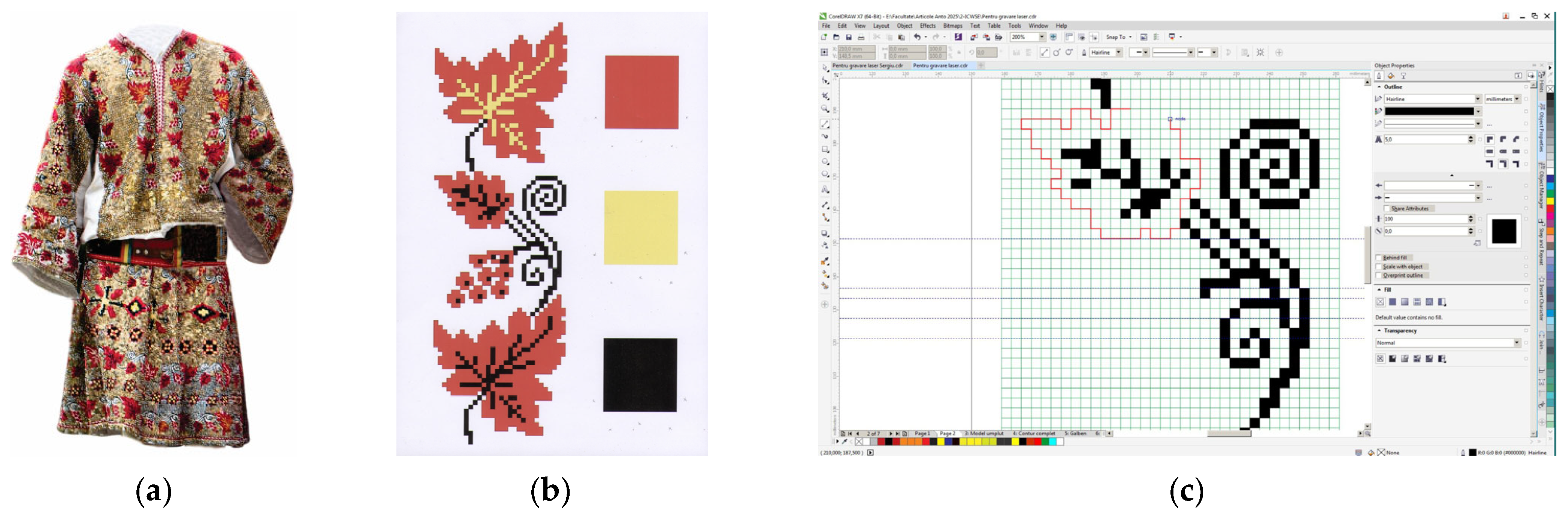
Figure 1. (a) Traditional man’s shirt from a private collection from Transylvania region; (b) The digital drawing of the model and RGB selected color; (c) the model rendered in vector format.
Applsci 15 12900 g001
Figure 2. (a) Equipment used for laser engraving; (b) Close-up during laser engraving; (c) Laser engraved beech wood sample.
Applsci 15 12900 g002
Figure 3. The drawing and the decomposition of the model: (a) complete contour; (b) yellow contour; (c) red contour; (d) black contour.
Applsci 15 12900 g003
Figure 4. Decrease in difference in lightness and total color variation in squares engraved under different laser beam power settings.
Applsci 15 12900 g004
Figure 5. Comparison between the contrast assimilated differences in ΔE values, for original colors: yellow (Ye), red (Red) and black (Bk) and the shades of brown corresponding to the laser engraved surfaces; contrast difference values for the laser processing variants rendering contrast close to the contrast between the original colors are presented.
Applsci 15 12900 g005
Figure 6. Laser engraved model using 20% of maximum power of the equipment for yellow (laser output of 30 W), 30% of maximum power of the equipment for red (laser output of 45 W), and 70% of maximum power of the equipment for black (laser output of 105 W).
Applsci 15 12900 g006
Table 1. The average values of L*, a*, and b*, as recorded experimentally, and their corresponding standard deviation.
Measured ItemsInvestigated AreaAverage L*Average a*Average b*
Laser engraved squares
on beech wood
Blank (untreated wood)68.67 (1.11) 212.03 (0.51)21.08 (0.54)
Square 10% (P10) 143.84 (2.81)11.60 (0.81)12.27 (0.92)
Square 20% (P20)41.86 (0.91)10.92 (0.89)12.79 (0.93)
Square 30% (P30)31.82 (2.25)9.26 (0.43)8.22 (0.77)
Square 40% (P40)23.98 (1.55)5.88 (0.75)7.40 (1.25)
Square 50% (P50)23.10 (1.16)7.30 (1.15)6.71 (3.98)
Square 60% (P60)23.18 (0.75)6.09 (1.22)3.96 (2.67)
Square 70% (P70)21.80 (0.21)5.83 (0.69)2.09 (1.50)
Square 80% (P80)20.79 (0.71)5.46 (1.45)3.32 (1.90)
Square 90% (P90)20.96 (1.98)5.18 (1.60)2.13 (3.63)
Square 100% (P100)19.53 (0.89)4.30 (1.79)3.35 (2.67)
Traditional motif
on cardboard
Blank (White)93.93 (2.03)4.03 (0.16)−10.01 (0.29)
Yellow87.07 (3.29)−12.04 (1.12)73.24 (3.40)
Red47.72 (0.71)55.57 (1.32)19.90 (2.23)
Black30.93 (0.17)0.61 (0.27)−1.96 (0.68)
1 10% represents the percentage of 10% of the total power of the laser beam of 150 W, used to engrave the wood, coded as P10, and representing a power of 15 W. 2 Values in the parenthesis represent standard deviations.
Table 2. Analysis of color contrast, expressed through the difference in ΔE values.
Color
Investigation
Investigated ColorΔEPn 1Difference ΔEPn-ΔEP10
(n ≥ 20)
Difference ΔEPn-ΔEP20
(n ≥ 30)
Difference ΔEPn-ΔEP30
(n ≥ 40)
Laser engraved squaresSquare 10% (P10)26.34000
Square 20% (P20)28.081.7400
Square 30% (P30)39.1312.7811.040
Square 40% (P40)47.1420.8019.068.01
Square 50% (P50)48.0221.6719.938.89
Square 60% (P60)48.9622.6220.889.84
Square 70% (P70)50.9424.6022.8611.82
Square 80% (P80)51.4925.1523.4112.36
Square 90% (P90)51.7825.4423.7012.66
Square 100% (P100)52.8126.4724.7313.68
Color
Investigation
Investigated ColorΔEcolor 2Difference ΔE(Yellow-Red)Difference ΔE(Red-Black)Difference ΔE(Yellow-Black)
Traditional motifYellow85.079.6600
Red75.41011.800
Black63.600021.46
1 ΔEPn —color difference versus Blank sample for surfaces processed with laser power of n% from the maximum one. 2 ΔEcolor —color difference versus Blank sample for colored surfaces.
Disclaimer/Publisher’s Note: The statements, opinions and data contained in all publications are solely those of the individual author(s) and contributor(s) and not of MDPI and/or the editor(s). MDPI and/or the editor(s) disclaim responsibility for any injury to people or property resulting from any ideas, methods, instructions or products referred to in the content.