


Abstract
Understanding the natural resources of native flora in a particular area is essential to be able to identify, record, and update existing records concerning the flora of that area, especially medicinal plants. Until recently, there has been very little scientific documentation on the biological diversity of Aljumum flora. The current study aimed to document medicinal plants among the flora of this region and determine the traditional usages that are documented in the literature. In the flowering season from November 2019 to May 2020, we conducted more than 80 field trips to the study area. The results reported 90 species belonging to 79 genera and 34 families in the Aljumum region, which constitute 82 species of medicinal plants from a total of 2253 known species in Saudi Arabia. The most distributed species were Calotropis procera, Panicum turgidum, and Aerva javanica (5.31%); within four endemic families, we found Fabaceae (32.35%), Poaceae (20.58%), and Asteraceae and Brassicaceae (17.64%). The present study reviews a collection of medicinal plants in Aljumum used in ethnomedicine. Additionally, these natural resources should be preserved, and therefore, conservation programs should be established to protect the natural diversity of the plant species in this region with sustainable environmental management.
1. Introduction
With the first appearance of humans on the earth, and through the centuries, humans have relied on plants and medicinal herbs as a treatment source. Medicinal plants are a part of folk medicine, which is the primary source of modern pharmaceutical discoveries [1,2]. Medicinal plants impact global health, international trade, and the economy through the pharmaceutical industries. In terms of global health, traditional medicinal plants continue to play a central role in the health care systems of a large number of the world’s regions [2,3]. By the mid-1800s, at least 80% of all medicines were derived from plants. Then, after the scientific revolution that led to the pharmaceutical industry’s development, synthetic drugs dominated the therapeutic arena [4].
The dependence on medicinal plants as a source of folk medicine is evident in developing countries, where traditional medicine systems have long historical origins, such as in India, China, and the Arabian Peninsula [5]. Recognition of medicinal plants’ medicinal and economic benefits and their development increased in both developing and industrialized countries, despite the biological, chemical, and genetic differences between regions [6].
Herbal medicines are widely prescribed due to their remarkable effectiveness, minor side effects, and relatively low cost [7]. In Saudi Arabia, folk medicine is considered an essential aspect of people’s cultural heritage, and it was widely used before the introduction of biomedicine [8,9]. The first primary health care center using traditional medicine was established in 1926. Afterwards, the biomedicine hospitals that were founded in the second half of the twentieth century positively affected folk medicine’s increasing trend [10].
There are approximately 4 × 10⁵ species of flowering plants known worldwide [11]. Only about 12% of them are used in traditional medicine, and about 104 species have been studied and described scientifically in alternative medicine systems [12,13,14]. The chemicals derived from higher plants make up approximately 25% of pharmaceutical drugs [15]. Legalizing medicinal plants and their derivatives is necessary when used in folk remedies [16,17]. Medicinal plants represent an essential healthy and economic component of region-specific biodiversity. Therefore, it is necessary to conduct a survey of the biological diversity of medicinal plants in any country for their conservation and sustainable use and to preserve endangered medicinal species [18]. Many Saudi Arabian researchers are interested in this aspect [19,20].
Saudi Arabia has a substantial arid land area covering a significant part of the Arabian Peninsula with a geologic structure [21]. It is distinguished by several ecosystems varying in plant species diversity, comprising critical genetic resources of crop plants, medicinal plants, and xerophytic vegetation [22]. Saudi Arabia is gifted with a wide range of flora, consisting of many medicinal herbs, shrubs, and trees [23]. The flora of Saudi Arabia has about 2250 species [21]. On the other hand, the flora of Makkah district has more than 44 families, 125 genera, and 184 species. A high percentage (24.57%) of these species is used for medicinal purposes [24].
The western region of Saudi Arabia is unique in terms of its natural environment, landforms, harsh climate, and scarce water availability [21]. Previously, few floristic investigations of this region have been conducted [21,22], while numerous studies have been conducted on the floristic makeup of Saudi Arabia [25,26,27,28,29,30,31]. The Aljumum area is one of the largest governorates in the western region, with a life-form composition typical of arid and desert flora; the majority of species are therophytes and chamaephytes, with some Phanerophytes [27]. Furthermore, the flora in this area varies depending on the amount of rain and is threatened by a variety of anthropogenic activities such as urbanization, grazing, and logging [22].
Although this region has a unique diversity due to its geographical composition, there are few studies regarding plant diversity in this region. However, no ethnobotany surveys have been attempted, so there is a complete lack of information about their exploration. As a result, the Aljumum region’s flora has received insufficient attention in terms of recording its wild medicinal plants. As consequence, the purpose of this study was to conduct field surveys within the study area to record the medicinal plants that grow in the Aljumum region.
2. Materials and Methods
2.1. Field Investigations
Aljumum province is a governorate of the Makkah region in western Saudi Arabia and is located northwest of Makkah. The population of Aljumum is about 92,000. Its geography is characterized by mountains, valleys, and arid areas invaded by many wild plants. The climate of this region is dry, and it contains mountains, valleys, and desert areas [32]. Due to its location in the tropical region to the south, its height above sea level, and its relative distance from the Red Sea, its climate is tropical desert with very hot summers. Maximum temperatures reach 44 °C and sometimes rise to the late forties [33]. In winters, the climate is warm, with the average maximum temperature being recorded in January at around 30 °C. The average annual rainfall does not exceed 50–80 mm annually in most seasons, and most of this rain falls between November and April. In autumn, the rains are affected by the so-called region of instability, which is concentrated in the Red Sea region [32].
2.2. Plants Collection
Extensive explorations of the plant diversity of the Aljumum region was conducted during the growing season from November 2019 to May 2020 (The period has not been extended due to the restrictions of the Corona Virus pandemic) where most plant species are expected to flourish (Figure 1a). The study region’s total area is around 10,000 km2, located at 39.7137181 N, 21.6474788 E, and is divided into six districts A–F (Figure 1b). The data was gathered from 90 distinct plant samples collected from the research region, and the diversity, abundance, and different life-form spectra were determined according to Raunkiaer’s classification [34,35,36,37].
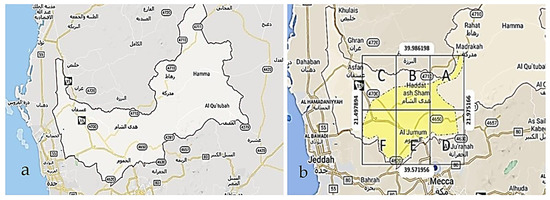
Figure 1.
(a) Geographical boundaries of Aljumum Governorate. (b) Map showing the study areas divided into six zones (A, B, C, D, E, and F) and their coordinates. Google (2021), [google map for Aljumum region], https://goo.gl/maps/AKDQb3CfKQHwBoL59.
2.3. Field Trips
Six research teams were formed for field trips to collect plant samples, each team consisting of two people and a vehicle driver. Each area was visited according to the districts referred to above at a rate of two to four visits per month over a period of four months, with more than 80 field trips. The wild plant species were collected from ten territories within the study area: Aljumum city, Wadi Al-Rayan, Ayen-Shams, Al-Khaif, Rehat, Madrakah, Hada Al-Sham, Al-Fawara, Abu Urwa, and Osfan. The plant species were recorded using a quadrate of the size 10 × 10 m, distributed randomly within each site.
2.4. Plants Identification
After the field trip, the samples were initially identified according to the references of [25,26,31,38,39]. Subsequently, the plant samples were prepared and deposited at the Aljumum University College Herbarium (AUCH) in Umm Al-Qura University (UQU), Saudi Arabia, for taxonomy and confirmation of identity by taxonomy experts. Voucher specimens were preserved at the Department of Biology, Aljumum University College, UQU.
2.5. Ethnomedicinal Data
After the field trips, plant specimens were collected, serially tagged, and pressed between the blotting papers for drying [40]. Ethnomedicinal information was collected and confirmed by referring to the information sources according to [41,42,43,44,45,46,47,48,49,50,51,52,53,54,55,56,57,58,59,60].
2.6. Statistical Analyses
Descriptive statistical methods were applied to analyze and summarize plant species and families data, such as percentages, tables, chart and bar graph used Microsoft Excel 365.
3. Results
A total of 90 taxa belonging to 79 genera and 34 families were recorded and are represented in Table 1; most of the recorded species were shrubs (78%), herbs (14%), and trees (8%). The floristic diversity of the study area is shown in Figure 2. Region D was the most diverse region with frequency rates of 24.55, followed by region C, then E and B, and finally region A with percentages of 20.95%, 18.56%, 14.97%, and 10.77%, respectively. Location F was found to have little diversity, with percentages of 10.17%. Moreover, the most distributed species of flora in Aljumum are Calotropis procera, Panicum turgidum, and Aerva javanica with a percentage 5.31%, followed by Rhazya stricta, Citrullus colocynthis, Acacia ehrenbergiana Trianthema portulacastrum, and Abutilon pannosum, with a percentage of 4.25%. Some of the other species among the flora of Aljumum were distributed with a variation rate of 3.19, such as Arundo donax, Cassia italica, and Acacia tortilis. The lowest recorded percentages were 1.06–2.12% in many species, as shown in Table 1.

Table 1.
The plant taxa recorded in Aljumum, family name, collection site, and distribution rate (%) within the study zones. Zones’ longitude and latitude, respectively. (A) Rehat and Madrakah: 39.721480, 21.669101; (B) Hada Al-Sham: 39.586325, 21.662486; (C) Osfan: 39.475741, 21.666860; (D) Al-Fawara: 39.700831, 21.530311; (E) Wadi Al-Rayan and Ayen-Shams: 39.614290, 21.527353; and (F) Aljumum city and Wadi Al-Rayan: 39.441392, 21.616949.
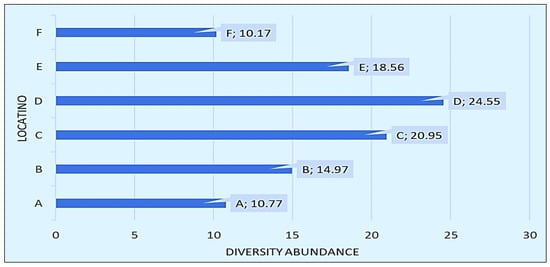
Figure 2.
Flora diversity and abundance in Aljumum within the study areas.
The number and percentage of families and species of flora in Aljumum are shown in Table 2. We found 34 families, and the most prevalent was Fabaceae (32.35%) followed by Poaceae (20.58%) and Asteraceae and Brassicaceae (17.64%), while the least frequently occurring plant families were Acanthaceae, Aizoaceae, Celastraceae, Lamiaceae, Lythraceae, Moringaceae, Oleaceae, Portulacaceae, Resedaceae, Rhamnaceae, Rutaceae, Salvadoraceae, Tamaricaceae, Tiliaceae, Typhaceae, Urticaceae, and Verbenaceae with a frequency ratio of 2.94% (Figure 3). Additionally, Table 2 illustrates the abundances of the families in Aljumum compared to the flora of Saudi Arabia. Poaceae, Asteraceae and Fabaceae, Amaranthaceae, Brassicaceae, and Lamiaceae families have the highest number of species with 285, 243, 128, 93, 86, and 73, respectively, within Saudi Arabian flora, whereas Aljumum has Fabaceae, Poaceae, Brassicaceae, and Asteraceae as high-frequency species, with numbers of 11, 7, 6, and 6, respectively. However, the most frequent families in the Aljumum region, compared with their distribution in Saudi Arabia, according to their abundance or rarity were Moringaceae, Urticaceae Salvadoraceae, and Salvadoraceae, which is considered the least widespread in Saudi Arabia and was recorded among the flora of Aljumum.
Table 2.
Comparison of species’ percentages for each family in the flora of Aljumum and species diversity in Saudi Arabia.
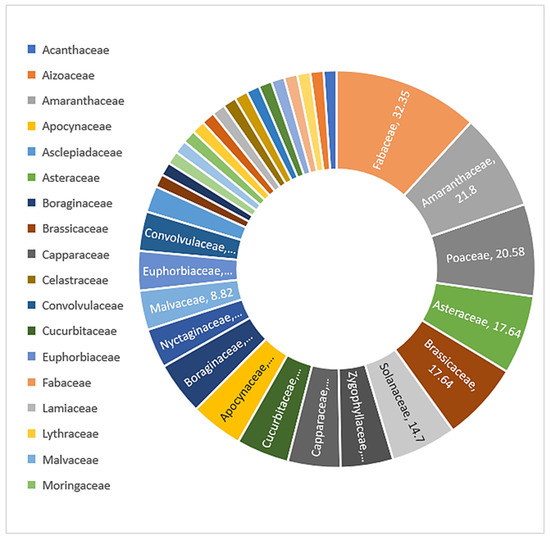
Figure 3.
Family diversity abundance in Aljumum within the study areas.
Out of the 33 collected families from the flora of Aljumum, we recorded 82 plant species used as a medicinal plant using in folk remedies (Table 3). The recorded species were distributed among 32 plant families. Fabaceae was represented by nine species, followed by Brassicaceae (seven species), Poaceae and Asteraceae (six species), Solanaceae (five species), Cucurbitaceae, Amaranthaceae and Capparaceae (four species), whereas Malvaceae, Nyctaginaceae, Convolvulaceae, Apocynaceae, and Amaranthaceae had three species, and Zygophyllaceae and Euphorbiaceae had two species. All other families were represented by one species. The medicinal plants reported in Table 3 are used to treat more than 18 types of diseases, Such as congenital syphilis, rheumatic diseases, malignancies, gastrointestinal diseases, urinary disorders, certain blood disorders, as well as some neuropathies, vascular and arterial diseases, microbiological bacterial infections, liver diseases, parasitic worm infection and so on.
Table 3.
Medicinal uses of ethnobotanical confined species in Aljumum region, Saudi Arabia.
4. Discussion
Saudi Arabia represents a large portion of the Arabian Peninsula, as mentioned earlier, and it is considered a large country with dynamic geographies and variable habitats. Generally, it is very rich in its biodiversity of wild plants (flora) at the level of genera, such as Acacia, Aerva, and Caralluma, or at the family level, such as Fabaceae, Poaceae, and Brassicaceae [30]. Recently, many species have been recorded among the flora of Saudi Arabia, and the number of species is increasing day by day based on new field trips and biodiversity surveys [21,29]. Initially, the number of documented species was around 1500 species, as recorded by Mujahid between 1974–1988 [39]. After 25 years, the number was increased to approximately 2300 based on many scientific publications concerning the flora of Saudi Arabia [38,61,62]. This indicates the importance of conducting more surveys in different and broad habitats in Saudi Arabia to discover the biological diversity and new species, especially medicinal plants [63,64]. This study focused on a specific region of Saudi Arabia, namely, the Aljumum Governorate, which is located northwest of Makkah. It has a wide area of land that was once known for agriculture due to the soil’s fertility and its numerous valleys [65].
The results showed 90 species from this limited area, which contains 6.44% of the species from the total flora of Saudi Arabia. This study can be considered the first study concerning the flora of Aljumum, although some studies have recorded many plant species in the Aljumum area for various research purposes [22,66,67]. The most prevalent families recorded in this study were Fabaceae and Poaceae, which are families with a typical distribution in most ecosystems in the Makkah region according to some studies that were interested in the flora of the western region of Saudi Arabia [68,69,70,71]. The findings of the current study have shown that the locations of C (Osfan), D (Al-Fawara), and E (Wadi Al-Rayan and Ayen-Shams) were the most diverse in general terms of biodiversity assessments. This result is consistent with the studies of [21,72], which suggests that this diversity is a result of variable topography among these locations and the abundance of valleys and their influence on the soils.
The current study also provides a preliminary survey of the medicinal plants in the region as it is known that traditional herbal medicine currently plays an important role as a subject of scientific research, especially when the literature and field work data are properly evaluated. These evaluation results could introduce several plants that could be prioritized in the study of specific biological activity in folk medicine [73]. Additionally, many chemical compounds can be extracted from these plants and used in the pharmaceutical industries [74,75]. These families included the most-used species in traditional medicine, such as Verbenaceae, Urticaceae, and Zygophyllaceae [76].
Recent years have seen an increase in scientific study on traditional plant medicine, particularly when the literature and fieldwork data are carefully analyzed. These evaluation findings can assist in prioritizing various plants for future research for their unique biological activity based on their traditional herbal applications and geographic distribution [73]. In this study, ethnomedicinal information was collected from 82 medicinal plants belonging to 34 families in the Aljumum region. The dominant plant families with a higher number of plant species were Fabaceae (32.35%), Poaceae (20.58%), and Asteraceae and Brassicaceae (17.64%). The use of these species may be preferred because of their ready availability. These are the most widely used medicinal plants in these families according to [77]. Some medicinal plants species (Acacia arabica, Cassia italica, Senna italica, Sorghum bicolor, Echinops viscosus, Sonchus oleraceus, and Sisymbrium irio) among these families are widespread species in local folk medicine. Herbal remedies are prepared using a variety of plant parts. However, the majority of herbal preparations are obtained from the leaves (45%), and a similar observation has been made for other forested communities with abundant leaves and green vegetation [78]. Furthermore, it is possible that the preference for leaves is due to the fact that leaves are the primary photosynthetic organ in plants and are responsible for the majority of the biosynthesis of secondary metabolites, which act on the body as bioactive molecules for remediation [79]. Therefore, the leaves are responsible for photosynthesis and the release of toxins that protect the plant from environmental dangers, which adds further therapeutic value [80].
Many of the plant species recorded in the current study are preferred by herbalists for the treatment of gastrointestinal and dermatological diseases. The majority of herbalists provide oral treatments for gastrointestinal disorders in the form of decoctions and sometimes as raw ingestion. Skin diseases were the most treated ailments by herbal preparations, mainly in paste forms [81]. In Saudi Arabia, rheumatic illnesses affects 2/50,000 inhabitants [82]. However, most Saudi patients, particularly in rural regions and among the elderly, prefer to manage their condition using traditional medicines Six plant species were shown to be beneficial in the management of rheumatic illnesses in our study: Ipomoea batatas, Rhazya stricta, Ricinus communis, Salvadora persica, Solanum incanum, and Withania somnifera. This has been proven in many studies for these plant species [42,83]. Additionally, many plants have been used in traditional medicine as anti-inflammatory agents, which was shown by the results of the current study for many plant species such as Moringa peregrina, Acacia tortilis, Bougainvillea spinosa, Cordia sinensis, Cucumis melo, Echinops viscosus, Forsskaolea tenacissima, Maytenus somalensis, and Tetraena simplex, as described in some reports [84]. Among the various medicinal properties of the plant species collected from this location, anti-inflammatory and antiaromatic actions were found to be particularly useful in treating illness. Otherwise, several curative actions of various species were reported, as shown in the results. Our findings did not discover any previously unknown ethnic uses of therapeutic herbs.
5. Conclusions
The current study identified 82 species that are utilized in folk medicine among the 90 species that were surveyed from various environments throughout the Aljumum region. This study also provides a database that allows researchers to locate medicinal plants in this region for future studies to broaden the use of plant extracts in folk medicine or pharmaceutical manufacturing. The study also discussed the medical significance of these families and plant species in the treatment of various disorders. However, these natural resources must be conserved, which necessitates the establishment of conservation programs to protect the natural diversity of plant species in this region through sustainable environmental management. Researchers will have a better understanding of how varied environmental variables impact a single plant species, allowing them to analyze the impact of different environments on medicinal benefits and take advantage of the biological diversity of the vegetation in the Aljumum region.
Author Contributions
The Conceptualization, S.H.Q.; methodology and investigation, S.H.Q., A.F.A., W.F. and A.Q.; resources, A.F.A.; data curation, W.F.; writing—original draft preparation, A.Q.; writing—review and editing, S.H.Q.; supervision, S.H.Q.; project administration, S.H.Q. All authors have read and agreed to the published version of the manuscript.
Funding
No funding received for this study.
Institutional Review Board Statement
Not applicable.
Informed Consent Statement
Not applicable.
Data Availability Statement
This data is relevant to this research.
Acknowledgments
The authors would like to thank the department of biology in Aljumum university college and the governor of Aljumum governorate for facilitating the stages of research implementation within the administrative area of the research region. Additionally, we thank Ahmed El-banhawy and Iman Nour for proofreading the manuscript. Also, we thanks graduate students Ibrahim Tarbiyyah for references formatting.
Conflicts of Interest
The authors consider themselves clear of any conflict of interest.
References
- Newman, D.J.; Cragg, G.M.; Snader, K.M. The Influence of Natural Products upon Drug Discovery. Nat. Prod. Rep. 2000, 17, 215–234. [Google Scholar] [CrossRef] [Green Version]
- Howes, M.R.; Quave, C.L.; Collemare, J.; Tatsis, E.C.; Twilley, D.; Lulekal, E.; Farlow, A.; Li, L.; Cazar, M.; Leaman, D.J. Molecules from Nature: Reconciling Biodiversity Conservation and Global Healthcare Imperatives for Sustainable Use of Medicinal Plants and Fungi. Plants People Planet 2020, 2, 463–481. [Google Scholar] [CrossRef]
- Akerele, O. Medicinal Plants and Primary Health Care: An Agenda for Action. Fitoterapia 1988, 59, 355–363. [Google Scholar]
- Gilani, A.H.; Atta-ur-Rahman. Trends in Ethnopharmacology. J. Ethnopharmacol. 2005, 100, 43–49. [Google Scholar] [CrossRef] [PubMed]
- Qari, S.H. Assessment of the Potential Genotoxic Risk and Antigenotoxic Effect of Cassia Senna L. Leaves Aqueous Extract Using In Vitro Assays. Egypt. J. Biotechnol. 2008, 101–116. Available online: https://www.researchgate.net/profile/Sameer-Qari/publication/352061023_Assessment_of_the_potential_genotoxic_risk_and_antigenotoxic_effect_of_Cassia_senna_L_Leaves_aqueous_extract_using_in_vitro_assays/links/60b7844492851cde884db806/Assessment-of-the-potential-genotoxic-risk-and-antigenotoxic-effect-of-Cassia-senna-L-Leaves-aqueous-extract-using-in-vitro-assays.pdf (accessed on 4 August 2021).
- WHO. Regulatory Situation of Herbal Medicines—A Worldwide Review: The Evaluation of These Products and Ensuring Their Safety and Efficacy through Registration and Regulation Present Important Challenges; WHO: Geneva, Switzerland, 1998; pp. 1–39. [Google Scholar]
- Odhav, B.; Kandasamy, T.; Khumalo, N. Screening of African Traditional Vegetables for Their Alpha-Amylase Inhibitory Effect. J. Med. Plants Res. 2010, 4, 1502–1507. [Google Scholar] [CrossRef]
- Al-Essa, M.A.; Al-Mehaidib, A.; Al-Gain, S. Parental Awareness of Liver Disease among Children in Saudi Arabia. Ann. Saudi Med. 1998, 18, 79–81. [Google Scholar] [CrossRef]
- Al-Yahya, M. Kuwait. In Proceedings of the III International Conference on Islamic Medicine, Riyadh, Saudi Arabia, 10 September 1984. [Google Scholar]
- Al-Rabeeah, A. The History of Health Care in the Kingdom of Saudi Arabia with Emphasis on Pediatric Surgery. Saudi Med. J. 2003, 24, S9–S10. [Google Scholar]
- Govaerts, R. How Many Species of Seed Plants Are There? Taxon 2001, 50, 1085–1090. [Google Scholar] [CrossRef]
- Schippmann, U.; Leaman, D.J.; Cunningham, A.B. Impact of Cultivation and Gathering of Medicinal Plants on Biodiversity: Global Trends and Issues. In Biodiversity and the Ecosystem Approach in Agriculture, Forestry and Fisheries; FAO: Rome, Italy, 2002. [Google Scholar]
- Mondal, S.; Ghosh, D.; Ramakrishna, K. A Complete Profile on Blind-Your-Eye Mangrove Excoecaria Agallocha L. (Euphorbiaceae): Ethnobotany, Phytochemistry, and Pharmacological Aspects. Pharmacogn. Rev. 2016, 10, 123. [Google Scholar] [CrossRef] [PubMed] [Green Version]
- Hoekou, Y.P.; Tchacondo, T.; Karou, S.D.; Koudouvo, K.; Atakpama, W.; Pissang, P.; Gbogbo, A.K.; Woegan, A.Y.; Batawila, K.; Akpagana, K. Ethnobotanical Study of Latex Plants in the Maritime Region of Togo. Pharmacognosy Res. 2016, 8, 128. [Google Scholar]
- Rao, M.R.; Palada, M.C.; Becker, B.N. Medicinal and Aromatic Plants in Agroforestry Systems. In New Vistas in Agroforestry; Springer: Berlin/Heidelberg, Germany, 2004; pp. 107–122. [Google Scholar]
- Anyinam, C. Ecology and Ethnomedicine: Exploring Links between Current Environmental Crisis and Indigenous Medical Practices. Soc. Sci. Med. 1995, 40, 321–329. [Google Scholar] [CrossRef]
- Vieira, A. A Comparison of Traditional Anti-Inflammation and Anti-Infection Medicinal Plants with Current Evidence from Biomedical Research: Results from a Regional Study. Pharmacognosy Res. 2010, 2, 293. [Google Scholar] [CrossRef]
- El-Shabasy, A. Survey on Medicinal Plants in the Flora of Jizan Region, Saudi Arabia. Int. J. Bot. Stud. 2016, 2, 38–59. [Google Scholar]
- Ali, N.A.A.; Al Sokari, S.S.; Gushash, A.; Anwar, S.; Al-Karani, K.; Al-Khulaidi, A. Ethnopharmacological Survey of Medicinal Plants in Albaha Region, Saudi Arabia. Pharmacognosy Res. 2017, 9, 401. [Google Scholar]
- Alqethami, A.; Aldhebiani, A.Y.; Teixidor-Toneu, I. Medicinal Plants Used in Jeddah, Saudi Arabia: A Gender Perspective. J. Ethnopharmacol. 2020, 257, 112899. [Google Scholar] [CrossRef] [PubMed]
- Alsherif, E.A. Ecological Studies of Commiphora Genus (Myrrha) in Makkah Region, Saudi Arabia. Heliyon 2019, 5, e01615. [Google Scholar] [CrossRef] [Green Version]
- Abdel Khalik, K.; Al-Gohary, I.; Al-Sodany, Y. Floristic Composition and Vegetation: Environmental Relationships of Wadi Fatimah, Mecca, Saudi Arabia. Arid L. Res. Manag. 2017, 31, 316–334. [Google Scholar] [CrossRef]
- Mossa, J.S.; Al-Yahya, M.A.; Al-Meshal, I.A. Medicinal Plants of Saudi Arabia; King Saud University Libraries: Riyadh, Saudi Arabia, 1987. [Google Scholar]
- Al-Eisawi, D.M.; Al-Ruzayza, S. The Flora of Holy Mecca District, Saudi Arabia. Int. J. Biodivers. Conserv. 2015, 7, 173–189. [Google Scholar]
- Migahid, A.M. Proceedings of the First Conference on the Biological Aspects of Saudi Arabia; Held at the University of Riyad, January, 1977; Riyad University Press: Riyadh, Saudi Arabia, 1977. [Google Scholar]
- Migahid, A.M. Migahid and Hammouda’s Flora of Saudi Arabia; Riyadh University Publication: Riyadh, Saudi Arabia, 1978. [Google Scholar]
- Batanouny, K.H.; Baeshin, N.A. Plant Communities along the Medina-Badr Road across the Hejaz Mountains, Saudi Arabia. Vegetatio 1983, 53, 33–43. [Google Scholar] [CrossRef]
- Batanouny, K.H. Vegetation along the Jeddah-Mecca Road: Pattern and Process as Affected by Human Impact. J. Arid Environ. 1979, 2, 21–30. [Google Scholar] [CrossRef]
- Kasem, W.T.; Hamed, M.A. Floristic Compositions and Its Affinities to Phytogeographical Regions in Wadi Khulab of Jazan, Saudi Arabia. Int. J. Plant. Soil Sci. 2017, 16, 1–11. [Google Scholar]
- Younes, H.A.; Zahran, M.A.; El-Qurashy, M.E. Vegetation–Soil Relationships of a Sea Landward Transect, Red Sea Coast, Saudi Arabia. J. Arid Environ. 1983, 6, 349–356. [Google Scholar] [CrossRef]
- Collenette, S. Wildflowers of Saudi Arabia; National Commission for Wildlife Conservation and Development (NCWCD), King Saud University Presses: Riyadh, Saudi Arabia, 1999. [Google Scholar]
- En.Wikipedia.Org. Aljumum—Wikipedia. 2021. Available online: https://en.wikipedia.org/wiki/Index.Php?Title=Al_Jumum&oldid=1018472895 (accessed on 12 August 2021).
- Martin, C.; Zhang, Q.; Zhai, D.; Zhang, X.; Duarte, C.M. Enabling a Large-Scale Assessment of Litter along Saudi Arabian Red Sea Shores by Combining Drones and Machine Learning. Environ. Pollut. 2021, 277, 116730. [Google Scholar] [CrossRef]
- Braun-Blanquet, J.; Lalucat Jo, J. Fitosociología: Bases para el Estudio de las Comunidades Vegetales/Pflanzensoziologie; H. Blume: Madrid, Spain, 1979. [Google Scholar]
- Molinier, R. Le Dynamisme de La Végétation Provençale. Collect. Bot. 1968, 7, 817–844. [Google Scholar]
- Rivas-Martínez, S.; Penas, Á.; del Río, S.; González, T.E.D.; Rivas-Sáenz, S. Bioclimatology of the Iberian Peninsula and the Balearic Islands. In The Vegetation of the Iberian Peninsula; Springer: Berlin/Heidleberg, Germany, 2017; pp. 29–80. [Google Scholar]
- Galán de Mera, A.; Hagen, M.A.; Vicente Orellana, J.A. Aerophyte, a New Life Form in Raunkiaer’s Classification? J. Veg. Sci. 1999, 10, 65–68. [Google Scholar] [CrossRef]
- Chaudhary, S.A. Flora of the Kingdom of the Saudi Arabia; Ministry of Agriculture and Water: Riyadh, Saudi Arabia, 2001; Volume III.
- Migahid, A.M.; Hammouda, M.A. Flora of Saudi Arabia; Riyadh University Publication: Riyadh, Saudi Arabia, 1974; Volume 2. [Google Scholar]
- Dos Santos, L.L.; Vieira, F.J.; de Sousa Nascimento, L.G.; da Silva, A.C.O.; dos Santos, L.L.; de Sousa, G.M. Techniques for Collecting and Processing Plant Material and Their Application in Ethnobotany Research. In Methods and Techniques in Ethnobiology and Ethnoecology; Springer: Berlin/Heidelberg, Germany, 2014; pp. 161–173. [Google Scholar]
- Al-Shanwani, M. Plants Used in Saudi Folk Medicine; KACST: Riyadh, Saudi Arabia, 1996. [Google Scholar]
- Rahman, M.A.; Mossa, J.S.; Al-Said, M.S.; Al-Yahya, M.A. Medicinal Plant Diversity in the Flora of Saudi Arabia 1: A Report on Seven Plant Families. Fitoterapia 2004, 75, 149–161. [Google Scholar]
- Koh, H.L.; Tan, C.H.; Chua, T.K. Guide to Medicinal Plants, A: An Illustrated Scientific And Medicinal Approach; World Scientific: Singapore, 2009. [Google Scholar]
- Ahmad, I.; Mehmood, Z.; Mohammad, F.; Ahmad, S. Antimicrobial Potency and Synergistic Activity of Five Traditionally Used Indian Medicinal Plants. J. Med. Aromat. Plant Sci. 2000, 22, 173–176. [Google Scholar]
- Saqib, F.; Janbaz, K.H. Rationalizing Ethnopharmacological Uses of Alternanthera Sessilis: A Folk Medicinal Plant of Pakistan to Manage Diarrhea, Asthma and Hypertension. J. Ethnopharmacol. 2016, 182, 110–121. [Google Scholar] [CrossRef]
- Nagori, B.P.; Solanki, R. Cynodon Dactylon (L.) Pers.: A Valuable Medicinal Plant. Res. J. Med. Plant 2011, 5, 508–514. [Google Scholar] [CrossRef] [Green Version]
- Sakkir, S.; Kabshawi, M.; Mehairbi, M. Medicinal Plants Diversity and Their Conservation Status in the United Arab Emirates (UAE). J. Med. Plants Res. 2012, 6, 1304–1322. [Google Scholar]
- Kirimuhuzya, C.; Waako, P.; Joloba, M.; Odyek, O. The Anti-Mycobacterial Activity of Lantana Camara a Plant Traditionally Used to Treat Symptoms of Tuberculosis in South-Western Uganda. Afr. Health Sci. 2009, 9, 40–45. [Google Scholar]
- Bokhari, F.M. Antifungal Activity of Some Medicinal Plants Used in Jeddah, Saudi Arabia. Mycopath 2009, 7, 51–57. [Google Scholar]
- Adtani, P.; Malathi, N.; Chamundeeswari, D. Pharmacognostic Evaluation of Leaves of Ocimum Basilicum Linn: The Lamiaceae Family. J. Chem. Pharm. Sci. 2014, 7, 250–253. [Google Scholar]
- Marwat, S.K.; Usman, K.; Shah, S.S.; Anwar, N.; Ullah, I. A Review of Phytochemistry, Bioactivities and Ethno Medicinal Uses of Rhazya Stricta Decsne (Apocynaceae). Afr. J. Microbiol. Res. 2012, 6, 1629–1641. [Google Scholar]
- Asgarpanah, J.; Haghighat, E. Phytochemistry and Pharmacologic Properties of Ziziphus Spina Christi (L.) Willd. Afr. J. Pharm. Pharmacol. 2012, 6, 2332–2339. [Google Scholar] [CrossRef] [Green Version]
- Ghazanfar, S.A. Handbook of Arabian Medicinal Plants; CRC Press: Boca Raton, FL, USA, 1994. [Google Scholar]
- AI-Said, M.S. Traditional Medicinal Plants of Saudi Arabia. Am. J. Chin. Med. 1993, 21, 291–298. [Google Scholar] [CrossRef]
- Chevallier, A. Encyclopedia of Herbal Medicine: 550 Herbs and Remedies for Common Ailments; Penguin: London, UK, 2016. [Google Scholar]
- Akbar, S.; Al-Yahya, M.A. Screening of Saudi Plants for Phytoconstituents, Pharmacological and Antimicrobial Properties. Aust. J. Med. Herbal. 2011, 23, 76–87. [Google Scholar]
- Tresina, P.S. Ethnomedicinal Plants with Therapeutic Properties; Apple Academic Press: Cambridge, MA, USA, 2019. [Google Scholar]
- Al-Musayeib, N.M.; Mothana, R.A.; Al-Massarani, S.; Matheeussen, A.; Cos, P.; Maes, L. Study of the in Vitro Antiplasmodial, Antileishmanial and Antitrypanosomal Activities of Medicinal Plants from Saudi Arabia. Molecules 2012, 17, 11379–11390. [Google Scholar] [CrossRef] [Green Version]
- Ramawat, K.G.; Dass, S.; Mathur, M. Herbal Drugs: Ethnomedicine to Modern Medicine; Springer: Berlin/Heidelberg, Germany, 2009. [Google Scholar]
- El-Ghazali, G.E.; Al-Khalifa, K.S.; Saleem, G.A.; Abdallah, E.M. Traditional Medicinal Plants Indigenous to Al-Rass Province, Saudi Arabia. J. Med. Plants Res. 2010, 4, 2680–2683. [Google Scholar]
- Alfarhan, A.H. A Phytogeographical Analysis of the Floristic Elements in Saudi Arabia. Pakistan J. Biol. Sci. 1999, 2, 702–711. [Google Scholar]
- Masrahi, Y.S.; Al-Turki, T.A.; Sayed, O.H. Wolffiella Hyalina (Delile) Monod (Lemnaceae)—A New Record for the Flora of Saudi Arabia. Feddes Repert. 2010, 121, 189–193. [Google Scholar] [CrossRef]
- Taha, M.A.; Shabbara, H.M.; Aseeri, M.M. New Pottiaceae Genera to the Moss Flora of Saudi Arabia and the Arabian Peninsula. Cryptogam. Bryol. 2020, 41, 1. [Google Scholar] [CrossRef]
- Taha, M.; Shabbara, H. New Fissidens Species to Moss Flora of Saudi Arabia. Egypt. J. Bot. 2019, 59, 803–810. [Google Scholar] [CrossRef] [Green Version]
- Organgi, R.A. Ecological Studies in Makkah Region. 1. Vegetation Development at Wadi Fatma. J. Coll. Sci. Univ. Riyadh 1982, 13, 25–51. [Google Scholar]
- Shehawy, A.A.; Ibrahim, M.T.; Aboutaleb, E.S.; Qari, S.H. Bioactivity and Biochemical Efficacy of Chitinase and Justicia Brandegeana Extract against Red Palm Weevil Rhynchophorus Ferrugineus Olivier (Coleoptera: Curculionidae). Food Sci. Nutr. 2020, 8, 4625–4636. [Google Scholar] [CrossRef] [PubMed]
- Abd El-Ghani, M.M. Phenology of Ten Common Plant Species in Western Saudi Arabia. J. Arid Environ. 1997, 35, 673–683. [Google Scholar] [CrossRef]
- Alharthi, A.S.; Abd-ElGawad, A.M.; Assaeed, A.M. Influence of the Invasive Shrub Nicotiana Glauca Graham on the Plant Seed Bank in Various Locations in Taif Region, Western of Saudi Arabia. Saudi J. Biol. Sci. 2021, 28, 360–370. [Google Scholar] [CrossRef]
- Alharbi, S.A.; Al-Qthanin, R.N. New Records of Indigofera Cordifolia Heyne Ex Roth. (Fabales: Fabaceae) in Saudi Arabia Based on Morphological and Molecular Evidence. J. Asia-Pacific Biodivers. 2020, 13, 430–437. [Google Scholar] [CrossRef]
- Remesh, M.; Masrahi, Y.S.; Sayed, O.H. Phragmites Australis (Poaceae): New Addition to Flora of Southwestern Saudi Arabia. Saudi J. Biol. Sci. 2019, 26, 1563–1566. [Google Scholar] [CrossRef] [PubMed]
- Abd El-Ghani, M.M. Floristics and Environmental Relations in Two Extreme Desert Zones of Western Egypt. Glob. Ecol. Biogeogr. 2000, 9, 499–516. [Google Scholar] [CrossRef]
- El-Shaboury, G.A.; Al-Wadi, H.M.; Badr, A. Biodiversity of Some Solanum Species from Southwestern Saudi Arabia’s Highlands. Bot. Lett. 2021, 168, 246–255. [Google Scholar] [CrossRef]
- Ali, A.A.N.; Al-Rahwi, K.; Lindequist, U. Some Medicinal Plants Used in Yemeni Herbal Medicine to Treat. Afr. J. Tradit. Complement. Altern. Med. 2004, 1, 72–76. [Google Scholar] [CrossRef]
- Cragg, G.M.; Boyd, M.R.; Grever, M.R.; Schepartz, S.A. Pharmaceutical Prospecting and the Potential for Pharmaceutical Crops. Natural Product Drug Discovery and Development at the United States National Cancer Institute. Ann. Mo. Bot. Gard. 1995, 82, 47–53. [Google Scholar] [CrossRef]
- Tosun, F.; Kızılay, Ç.A.; Şener, B.; Vural, M.; Palittapongarnpim, P. Antimycobacterial Screening of Some Turkish Plants. J. Ethnopharmacol. 2004, 95, 273–275. [Google Scholar] [CrossRef] [PubMed]
- Al-Asmari, A.; Manthiri, R.A.; Abdo, N.; Al-Duaiji, F.A.; Khan, H.A. Saudi Medicinal Plants for the Treatment of Scorpion Sting Envenomation. Saudi J. Biol. Sci. 2017, 24, 1204–1211. [Google Scholar] [CrossRef] [PubMed] [Green Version]
- Ullah, R.; Alqahtani, A.S.; Noman, O.M.A.; Alqahtani, A.M.; Ibenmoussa, S.; Bourhia, M. A Review on Ethno-Medicinal Plants Used in Traditional Medicine in the Kingdom of Saudi Arabia. Saudi J. Biol. Sci. 2020, 27, 2706–2718. [Google Scholar] [CrossRef]
- Di Stasi, L.C.; Oliveira, G.P.; Carvalhaes, M.A.; Queiroz-Junior, M.; Tien, O.S.; Kakinami, S.H.; Reis, M.S. Medicinal Plants Popularly Used in the Brazilian Tropical Atlantic Forest. Fitoterapia 2002, 73, 69–91. [Google Scholar] [CrossRef]
- Xavier, T.F.; Kannan, M.; Auxilia, A. Observation on the Traditional Phytotherapy among the Malayali Tribes in Eastern Ghats of Tamil Nadu, South India. J. Ethnopharmacol. 2015, 165, 198–214. [Google Scholar] [CrossRef]
- El-Alfy, T.S.; Ezzat, S.M.; Hegazy, A.K.; Amer, A.M.M.; Kamel, G.M. Isolation of Biologically Active Constituents from Moringa Peregrina (Forssk.) Fiori. (Family: Moringaceae) Growing in Egypt. Pharmacogn. Mag. 2011, 7, 109–115. [Google Scholar]
- Petrovska, B.B. Historical Review of Medicinal Plants’ Usage. Pharmacogn. Rev. 2012, 6, 1–5. [Google Scholar] [CrossRef] [PubMed] [Green Version]
- Wong, R.; Davis, A.; Badley, E.; Grewal, R.; Mohammed, M. Prevalence of Arthritis and Rheumatic Diseases around the World: A Growing Burden and Implications for Health Care Needs; Models of Care in Arthritis, Bone & Joint Disease; Arthritis Community Research and Evaluation Unit: Toronto, ON, Canada, 2010; pp. 1–110. [Google Scholar]
- Kaur, A.; Nain, P.; Nain, J. Herbal Plants Used in Treatment of Rheumatoid Arthritis: A Review. Int. J. Pharm Pharm. Sci. 2012, 4 (Suppl. 4), 44–57. [Google Scholar]
- Koheil, M.A.; Hussein, M.A.; Othman, S.M.; El-Haddad, A. Anti-Inflammatory and Antioxidant Activities of Moringa Peregrina Seeds. Free Radic. Antioxid. 2011, 1, 49–61. [Google Scholar] [CrossRef] [Green Version]
Publisher’s Note: MDPI stays neutral with regard to jurisdictional claims in published maps and institutional affiliations. |
© 2021 by the authors. Licensee MDPI, Basel, Switzerland. This article is an open access article distributed under the terms and conditions of the Creative Commons Attribution (CC BY) license (https://creativecommons.org/licenses/by/4.0/).