1. Introduction
In today’s knowledge-based economy, the capacity of firms to create and sustain competitive advantage increasingly depends on intellectual capital—the stock of knowledge, skills, relationships, organizational routines and intangible resources embedded within human, structural and relational dimensions. Management accounting, and particularly management accounting systems, play a crucial role in identifying, measuring, managing, and reporting these intangible assets.
The resource-based view of the firm posits that resources that are valuable, rare, inimitable, and non-substitutable serve as sources of sustainable competitive advantage. In this view, intellectual capital qualifies as such a resource (
Subramaniam & Youndt, 2005). Management accounting systems provide the mechanisms by which firms can monitor, control, and leverage such resources: through cost control, performance measurement, budgeting, and risk management tools (
Tayles et al., 2007).
Strategic management accounting extends this by focusing not only inward, but also outward, to the external environment, customer value, supplier relationships, innovation capacity, etc., enabling the firm to manage relational capital and innovation more effectively (
Pires et al., 2020).
While management accounting tools provide mechanisms to monitor and leverage intellectual capital, the increasing reliance on measurement systems also raises questions regarding how intangible resources are framed, valued, and governed within organizations. In this sense, accounting practices may influence not only organizational performance but also how knowledge and intangible assets become visible, controllable, and strategically mobilized.
According to
Hariyati et al. (
2023), management accounting plays a crucial role in the development, measurement, and strategic exploitation of intellectual capital, especially within small and medium-sized enterprises. Intellectual capital encompasses the intangible assets of an organization, such as human, structural, and relational capital, which drive innovation and organizational performance. The integration of management accounting information systems mediates and enhances the relationship between intellectual capital and business performance, emphasizing the optimization of information technology usage for strategic decision-making.
Intellectual capital is transformed into competitive advantage when organisations successfully convert knowledge, skills, internal systems, and external relationships into innovation, operational efficiency, and market differentiation. Human capital, structural capital, and relational capital interact to enhance firm performance. Recent studies indicate that human capital often has the strongest influence on innovation and competitive advantage, particularly when supported by effective organisational systems and digital transformation (
Amitrano et al., 2026;
Nguyen Thi et al., 2025;
Yin & Xu, 2025). Moreover, innovation acts as the main mediating mechanism, meaning that knowledge only generates competitive advantage when it is effectively applied to the development of new products, services, and processes. From the Resource-Based View perspective, intellectual capital creates sustainable competitive advantage because it is valuable, rare, and difficult for competitors to imitate, making it one of the most significant determinants of long-term organisational performance and strategic success (
Abdallah et al., 2025).
Management accounting systems play a crucial role in managing intangible assets by transforming intellectual capital into measurable and strategically useful information, thereby reducing uncertainty and supporting risk management. Through tools such as budgeting, performance indicators, balanced scorecards, and non-financial reporting, management accounting systems help firms monitor human, structural, and relational capital, improving decision-making, resource allocation, and protection against knowledge loss. This risk management function enhances innovation performance by aligning investments in intangible assets with strategic objectives and reducing the uncertainty associated with innovation processes. As a result, firms strengthen their ability to develop new products, improve services, and respond more effectively to market changes. Moreover, management accounting systems contribute directly to competitive advantage by enabling the strategic use of valuable, rare, and difficult-to-imitate resources, improving customer loyalty, operational efficiency, and organisational learning. Recent studies confirm that management accounting systems positively influence firm performance, with competitive advantage acting as a key mediating mechanism, especially when supported by digital transformation and advanced information systems (
Nguyen & Vo, 2025;
Pedroso & Gomes, 2024;
Abdallah et al., 2025).
The extant literature provides robust theoretical and empirical support for the notion that management accounting systems play a crucial role in identifying, measuring, managing, and reporting these intangible assets. Beyond their technical role, such systems also shape how organizations define value, visibility, and control over intangible resources, influencing governance practices and strategic decision-making within organizations. However, relational capital remains less clearly impacted, measurement practices are varied, and causality is not always firmly established. Addressing these gaps will enhance our understanding of how firms can better use management accounting to harness intellectual capital as a strategic asset.
In this context, the present study seeks to critically examine the scientific production on the intersection of management accounting and intellectual capital through a systematic literature review and bibliometric analysis. Specifically, it aims to map the intellectual structure of the field and to identify how research has conceptualized the role of management accounting in shaping the governance, measurement, and strategic use of intellectual capital in organizations. Drawing on a curated sample of publications from the Scopus and Web of Science (WoS) databases, it aims to provide a comprehensive overview of research trends and to map the underlying conceptual structure of the field.
By synthesizing and mapping the intellectual structure of the literature on management accounting and intellectual capital, this study contributes to a deeper understanding of how accounting research conceptualizes the measurement, governance, and strategic management of intangible resources. In doing so, it highlights the evolving role of management accounting as a technical system for performance evaluation and also as a mechanism that shapes organizational visibility, knowledge management, and decision-making processes.
This study is pertinent to identifying the current state of scientific research and future research opportunities within this domain of knowledge. In this sense, the results can facilitate researchers in deepening their knowledge in specific areas of this theme and its content.
This paper begins with a review of the literature, followed by the methodology and results, discussion and concludes with the main findings, limitations and further research suggestions.
2. Literature Review
2.1. Intellectual Capital
In the new era of a knowledge-based economy, companies have begun to shift their reliance from physical assets to intangible assets to maintain or create a competitive advantage (
Nassar, 2020). Intellectual capital is a widely recognized topic of significant importance today. Organizations are not only dedicated to physical assets but also intangibles since these are the current value generators (
Mehralian et al., 2013). Therefore, it is not surprising that there is considerable interest from both public and private organizations, as well as from the academic community, in dissecting its structure and creating models and tools for its analysis, understanding, and evaluation. Intellectual capital is the expression of the value of a type of resource whose potential is among the fundamental elements in the process of creating organizational value and strategic innovation (
Novas, 2008;
Cabrita, 2009).
According to
Prusak and Kardas (
2024), understanding the role of intellectual capital and consciously incorporating it into organizational and management processes is one of the key aspects of building unique competitive advantages in the context of sustainable development. In the same vein,
Silva et al. (
2021) add that according to the literature, intellectual capital is a critical element of value creation in organizational performance, capable of contributing to higher and sustainable financial returns.
The idea of intellectual capital was first mentioned in a significant number of publications and developed in three phases, although other studies focus on different perspectives. According to
Cabrita and Bontis (
2008) and
Thien and Hung (
2023), there is no consensus on the definition of intellectual capital, but most authors agree that it is a multidimensional concept that includes knowledge capital that can create competitive advantage or value for companies. The first phase, which began in the 1990s, helped people understand why intellectual capital is fundamental, highlighting its advantages and how to define it. The second phase, which began in 2000, focused on measurement, modeling, international case studies, and other forms of analysis (
Mehralian et al., 2013). The third phase, which began in 2004, consisted of trying to figure out how to integrate it into products and services so that customers and other stakeholders could see it (
Dumay & Garanina, 2013).
Intellectual capital is the set of intangible resources, skills, expertise, wisdom, and reputation of the organization, which can help achieve a company’s vision of sustainable development and help improve its productivity and performance (
Johnson, 1999). Intellectual capital has a significant impact on the economic health of a company (
Osinski et al., 2017;
Pirogova et al., 2020) and enhances innovation and knowledge management, leading to better performance (
Bansal et al., 2023;
Shabbir et al., 2023).
Sveiby (
1997) pioneered the classification of intangibles into three components: internal structural assets, external structural assets, and individual competence assets.
Edvinsson (
1997) divides intellectual capital into human capital, structural capital, and customer capital. This classification was later modified, replacing customer capital with relational capital, and this is the most widely agreed classification to date. There is a broad consensus on the presence of three fundamental non-financial factors that are interconnected: human capital, structural capital, and relational capital (
Bontis, 1998;
Edvinsson & Sullivan, 1996).
Human capital encompasses the knowledge acquired by a person, as well as other individual characteristics, such as loyalty, versatility, or flexibility, which increase productivity and the value of the individual’s contribution to the organization (
Cañibano et al., 2008). Structural capital includes all the non-human stores of knowledge in organizations, including databases, organizational charts, process manuals, strategies, and routines (
Bontis et al., 2000;
Tayles, 2006). As for relational capital, it is the sum of a company’s direct and indirect relationships with the market (
García-Merino et al., 2014;
Anifowose et al., 2017).
Through the combination, interaction, and alignment of the three types of intellectual capital, as well as the management of the flow of knowledge between the three components, intellectual capital is an essential element for organizations in the knowledge economy (
Kong, 2008), assuming itself as a factor of heterogeneity of companies (
Cabrita, 2009).
2.2. Management Accounting and Intellectual Capital
Management accounting has undergone a significant transformation due to the digital revolution. It has evolved from reporting historical data to encompassing performance measurement and providing information for decision-making (
Appelbaum et al., 2017).
One of the definitions of management accounting recognized in the literature is that published by the Institute of Management Accounting (IMA), which defines it as “the process of identifying, measuring, accumulating, analyzing, preparing, interpreting and communicating financial information used by management to plan, evaluate and control the organization internally and to ensure that the use of its resources has been appropriate and accounted for” (
IMA, 2008, p. 48). According to
Kalogiannidis et al. (
2024), the main function of management accounting is to gather, organize, and store data generated in other organizational subsystems so that management can access information of a quantitative, financial, and non-financial nature, to assist decision-making and provide a comprehensive and unambiguous picture of the organization’s performance (
Gonidakis et al., 2020).
For
Novas et al. (
2017), changes in organizational paradigms have motivated the evolution of management accounting to respond effectively to questions of a theoretical, technical, and practical nature. According to these authors, the current paradigm of management accounting associates it with the management of organizational resources, based on their efficient use and their contribution to the global process of value creation.
Since intellectual capital is related to knowledge, management control systems, and management accounting should fundamentally contribute to the management and development of this knowledge (
Al-Dhubaibi, 2024). There have been attempts to clarify the role of management accounting in the recognition, measurement, and management of intellectual capital (
Cleary, 2015;
Guthrie et al., 2012;
Toorchi et al., 2015).
While management accounting provides relevant and timely information to support decision-making, management control systems ensure the effective execution of those decisions and evaluate their results. The information provided by management accounting and controlled by management control systems is processed by individuals and departments within organizations, which promotes organizational learning and consequently the development of intellectual capital (
Al-Dhubaibi, 2024). Thus, organizations align their management control systems and management accounting tools with other organizational functions to optimize knowledge management and intellectual capital development (
Novas et al., 2017).
Tayles et al. (
2007) found that firms with greater investment in intellectual capital tended to adopt more sophisticated management accounting practices, such as advanced performance measurement, planning and control. They also found that intellectual capital influences the shape of management accounting practices, which in turn are linked to better performance.
Pires et al. (
2020) propose strategic management practices, such as target costing, value-chain costing, quality costing, and brand valuation, as means to measure and manage different dimensions of intellectual capital. However, several studies find that management accounting systems have a weaker or non-significant effect on relational capital compared to human or structural capital (
Novas et al., 2017).
According to
Quesado et al. (
2012), most researchers agree that the true source of sustainable competitive advantage is the creation, management, and dissemination of knowledge. Therefore, organizations should focus their attention on the development of knowledge-based strategies, design and maintain their accounting and management control tools in coherence with other organizational functions, to optimize knowledge management and intellectual capital development (
Novas et al., 2017). Management accounting further contributes by providing timely, relevant data that supports managers in identifying, deploying, and evaluating intellectual capital resources.
This topic can be interpreted through a critical accounting perspective, which argues that management accounting systems are not neutral tools but active mechanisms that shape organisational reality and decision-making (
Burchell et al., 1980;
Hopwood, 1987). From this viewpoint, accounting defines what knowledge becomes visible and measurable, while simultaneously rendering other forms of knowledge invisible, thereby influencing organisational priorities and reinforcing power relations. This idea is consistent with the argument that accounting systems play a constitutive role in constructing organisational behaviour and governance structures (
Miller & O’Leary, 1987).
From a corporate governance perspective, management accounting extends beyond financial control by embedding accountability and legitimacy into everyday organisational practices, shaping how intellectual capital is governed and evaluated. However, critical perspectives highlight that this process is not purely technical, but also political, as it determines how value is defined and distributed within organisations.
The increasing digitalisation of accounting systems intensifies these dynamics by expanding monitoring and control capabilities, reinforcing managerial power and increasing the visibility of certain organisational activities while marginalising others. As accounting becomes more integrated with digital technologies, it also strengthens systems of surveillance and control, consistent with broader critiques of audit and accountability societies.
Overall, the intellectual capital is not only managed but also socially constructed through accounting and control systems that mediate knowledge visibility, governance, and power relations within organisations.
Existing research recognises intellectual capital as a key source of sustainable competitive advantage due to its contribution to innovation, productivity, and value creation, while management accounting systems support its measurement and development (
Cabrita & Bontis, 2008;
Cleary, 2015). However, the literature remains fragmented and largely focused on functional and performance-oriented approaches, emphasising measurement and decision-making rather than the broader governance role of accounting (
Guthrie et al., 2012;
Tayles et al., 2007). Less attention has been given to how accounting systems shape the visibility and prioritisation of human, structural, and relational capital, as well as how they influence the transformation of knowledge into strategic outcomes (
Miller & O’Leary, 1987). Additionally, although digital transformation is recognised as important, its impact on the relationship between intellectual capital and accounting systems remains underexplored (
Appelbaum et al., 2017). This study addresses these gaps by viewing management accounting not only as a measurement tool but also as a governance mechanism that actively structures intellectual capital and competitive advantage (
Burchell et al., 1980;
Hopwood, 1987).
Rather than treating intellectual capital and management accounting as neutral and technical constructs, this study adopts a constitutive perspective in which accounting systems are understood as shaping how organisational value, knowledge, and performance are defined and enacted. Within this view, intellectual capital is not merely a pre-existing resource to be measured, but a socially constructed category whose meaning is mediated through accounting and control practices.
The critical accounting perspective is not employed as an external interpretive layer added after the analysis, but as an analytical lens that informs the interpretation of bibliometric patterns throughout the study. In this sense, concepts such as visibility, power, rationality, and governance are used to interrogate how intellectual capital is constructed within the academic literature and how management accounting systems privilege certain forms of knowledge over others.
3. Methodology
3.1. Research Strategies
In order to provide a rigorous, reproducible, and comprehensive foundation for our study, we adopted a dual-method approach combining a systematic literature review (SLR) with a bibliometric analysis, using as primary sources the WoS and Scopus databases. These databases are chosen because of their extensive coverage of peer-reviewed literature in accounting, control systems, knowledge management, and intellectual capital measurement, their rich and consistent metadata needed for bibliometric mapping, and because many prior influential studies in this domain have used them (
Mongeon & Paul-Hus, 2016;
Quintero-Quintero et al., 2021;
Suciati et al., 2024). Moreover, reviews of citation databases show that WoS and Scopus enable robust analyses of citation impact, co-authorship networks, and trends, which are foundational in bibliometric studies (
Waltman, 2015).
Using WoS and Scopus improves the quality of a literature review because it increases coverage, reduces selection bias, and strengthens reliability. WoS is more selective and focused on high-impact journals, while Scopus offers broader international coverage and includes more recent and interdisciplinary publications. Using both databases helps ensure that relevant studies are not missed, improves the representativeness of the sample, and allows researchers to verify and compare bibliographic information, making the review process more rigorous and academically robust.
A systematic review follows a predefined, transparent protocol—search strategy, inclusion/exclusion criteria, screening, and synthesis—ensuring reproducibility and minimizing bias. The PRISMA (Preferred Reporting Items for Systematic Reviews and Meta-Analyses) 2020 protocol (
Page et al., 2021) was adopted not as a content-synthesis instrument, but as a transparent and reproducible framework for documenting the sample selection process, consistent with its recognised application in bibliometric research (
Sharif et al., 2019;
Yao et al., 2024). This in-depth synthesis builds a coherent narrative of the field. Moreover, by applying rigorous inclusion criteria, the systematic literature review ensures that only relevant and high-quality studies are analyzed (
Siddaway et al., 2019;
Page et al., 2021).
Bibliometric analysis allows quantitative mapping of a field—tracking publication growth, citation networks, keyword co-occurrence, and emerging topics. It complements the qualitative contributions of systematic literature review by providing a macroscopic overview of the field’s structure (
Serra et al., 2018). Thus, bibliometric analysis is a popular and meticulous technique for investigating and scrutinizing a large amount of bibliographic data. It is used by researchers for various reasons, from discovering new trends in the performance of articles and journals, patterns of association, and research elements, to analyzing the cognitive structure of a given area in the existing literature (
Donthu et al., 2021a,
2021b;
Verma & Gustafsson, 2020). Because bibliometric techniques rely on structured metadata, they enhance objectivity and replicability. Tools like Bibliometrix (
Aria & Cuccurullo, 2017) make such analyses transparent and reproducible. It is important to note that bibliometric analysis is divided into two main categories of analytical techniques: performance analysis and science mapping (
Aria et al., 2020;
Donthu et al., 2021a;
Mukherjee et al., 2022). Performance analysis assesses productivity and impact, while science mapping identifies clusters of knowledge in a field. In the specific context of management accounting and intellectual capital, where the literature is dispersed across multiple disciplines and journals, bibliometric analysis offers a comprehensive overview that helps consolidate fragmented knowledge and identify gaps for future research (
Mukherjee et al., 2022).
Combining systematic literature review and bibliometric analysis is now seen as best practice. The two methods triangulate: the systematic literature review deepens understanding of themes, while bibliometrics quantifies and validates them.
Marzi et al. (
2025) advocate for this integrated approach to enhance methodological robustness and theory development. Bibliometric techniques also support strategic foresight, revealing research trends and gaps through co-word analysis, thematic maps, and burst detection (
Saraiva et al., 2016;
Chiu et al., 2019).
Considering the above, bibliometric analysis and systematic literature review are valuable methods for their ability to minimize bias, improve reliability, and potentially increase the effectiveness of research findings (
Sharif et al., 2019;
Yao et al., 2024). These methods are complementary and, when integrated, can provide unique advantages for advancing theory and practice in a scientific field (
Mukherjee et al., 2022).
In sum, the joint use of WoS and Scopus as data sources, a systematic literature review as the qualitative backbone, and bibliometric analysis as a quantitative lens ensures rigor, coverage, transparency, and insight in mapping and synthesizing the scholarly landscape. As recommended by
Turzo et al. (
2022), ensuring methodological transparency in bibliometric studies requires explicit documentation of search strategies, clear justification for analytical choices, and comprehensive reporting of limitations to enable replication and critical evaluation. Accordingly, this study addresses the following research questions: What is the present state of research relating management accounting and intellectual capital? and what are the key characteristics of the conceptual structure of the bibliographic sample concerning management accounting and intellectual capital?
3.2. Sample Selection and Workflow
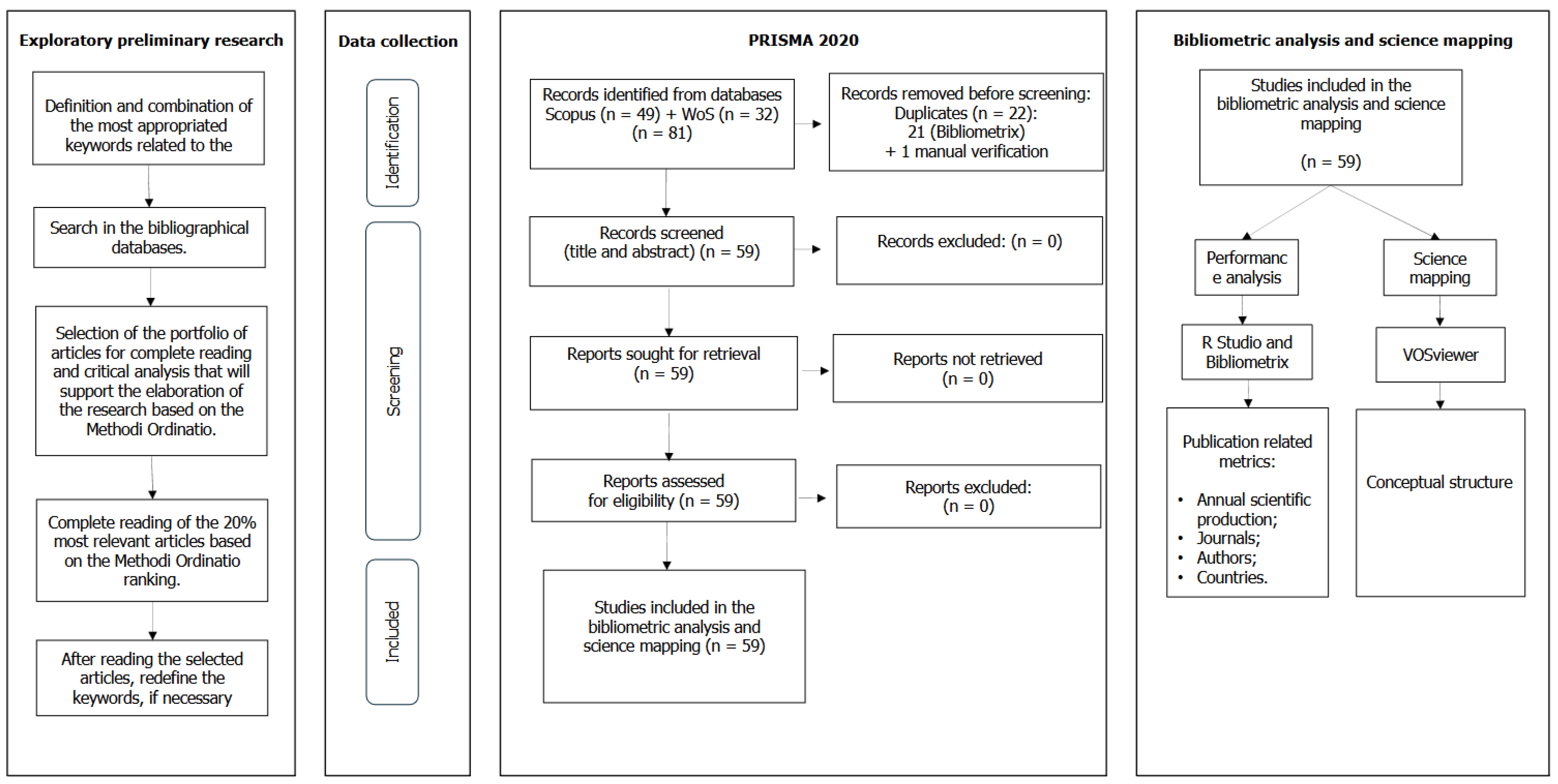
To achieve the proposed objectives, this study used three main stages, as shown in
Figure 1. The sample selection process comprised two sequential stages. The first was a preparatory phase focused on keyword selection and search string construction. Drawing on an initial exploratory review of the literature (
Pagani et al., 2015;
Rikhardsson & Yigitbasioglu, 2018), the Methodi Ordinatio framework was applied to identify and rank the most relevant publications in the domain, thereby informing the selection of the most appropriate search terms. Methodi Ordinatio is a structured approach for selecting and ranking academic articles based on three main criteria: journal impact factor, citation count, and publication year. It generates a weighted score (InOrdinatio) that prioritises studies which are both influential and recent, reducing subjectivity in the selection process (
Pagani et al., 2015,
2023). This preparatory phase ensured that the subsequent search query was grounded in the core conceptual vocabulary of the field and would retrieve a thematically focused and representative corpus. The search string resulting from this process—“manage* account*” AND “intellectual capital”—was applied identically in both databases.
The second stage comprised the systematic sample selection process, structured according to the PRISMA 2020 guidelines (
Page et al., 2021), as described below and illustrated in
Figure 1. In the identification phase, the search was conducted on 25 July 2024, yielding 49 records from Scopus and 32 from WoS, for a total of 81 records. For both databases, the search was restricted to publications written in English, while all document types were considered. No filters by field of knowledge were applied, reflecting the multidisciplinary nature of research on management accounting and intellectual capital. These parameters constituted the initial inclusion criteria at the search stage. In the deduplication process, 22 records were removed, reducing the sample to 59 publications.
These methodological choices are mainly justified by the need to maximise coverage and reduce selection bias, particularly in an interdisciplinary field. Restricting to English-language studies is commonly used to ensure comparability and reduce translation issues, although it may introduce language bias. The absence of subject-area filters helps capture relevant research across multiple disciplines such as management, accounting, and information systems, avoiding the exclusion of pertinent studies. However, including all document types without distinction between peer-reviewed and grey literature is more problematic, as it increases heterogeneity in methodological quality. While this may reduce publication bias and include emerging research, it also risks giving equal weight to studies with very different levels of scientific rigour.
In the screening phase, all 59 records were assessed against the conceptual inclusion criteria. Studies were included if they explicitly examined the relationship, integration, or interaction between management accounting (including management accounting systems or practices) and intellectual capital or its main components (human, structural, and relational capital). Publications focusing exclusively on management accounting or exclusively on intellectual capital were also retained when their theoretical or empirical insights were considered relevant for understanding the linkage between the two research streams. Only publications with complete and consistent metadata were included to ensure the reliability of the bibliometric analysis. No further records were excluded at this stage. In the eligibility phase, all 59 records were assessed for full-text eligibility. No records were excluded due to lack of full-text access, as all 59 retained publications were fully accessible and met the established eligibility criteria. Consequently, all 59 publications were retained for bibliometric analysis and science mapping, constituting the final analytical sample.
The selection of bibliometric indicators followed the framework proposed by
Donthu et al. (
2021a) and
Mukherjee et al. (
2022). For performance analysis, annual scientific production, journal distribution, author productivity, and country citation impact were selected as standard indicators of field growth and dissemination, directly addressing the study’s first research question. For science mapping, keyword co-occurrence analysis was preferred over co-citation or bibliographic coupling, given the interdisciplinary nature of the field and the relatively small sample size (
n = 59), which would limit the robustness of citation-based network analyses. The text-mining feature of VOSviewer (version 1.6.20) was used to generate term co-occurrence maps, overcoming the limitations of author-assigned keywords, which are often inconsistent across disciplines and databases (
van Eck & Waltman, 2010). The number of clusters was determined by VOSviewer’s built-in modularity optimisation algorithm, ensuring analytical objectivity in thematic grouping.
The bibliometric analysis and science mapping were performed using Bibliometrix (
Aria & Cuccurullo, 2017) and VOSviewer (
van Eck & Waltman, 2010). RStudio (version 2023.06.0, build 421) was used to visualize and interpret the data.
4. Results
The results provide a structured overview of how the academic literature has developed at the intersection of management accounting and intellectual capital. Beyond identifying publication patterns and influential contributors, the analysis allows us to explore how research has conceptualized the role of management accounting in the measurement, governance, and strategic use of intellectual capital. In this sense, the findings reveal not only the intellectual structure of the field but also the dominant perspectives through which intangible resources are framed, evaluated, and managed within organizations.
4.1. Bibliometric Performance Analysis
4.1.1. Type of Document and Areas of Knowledge of Publications
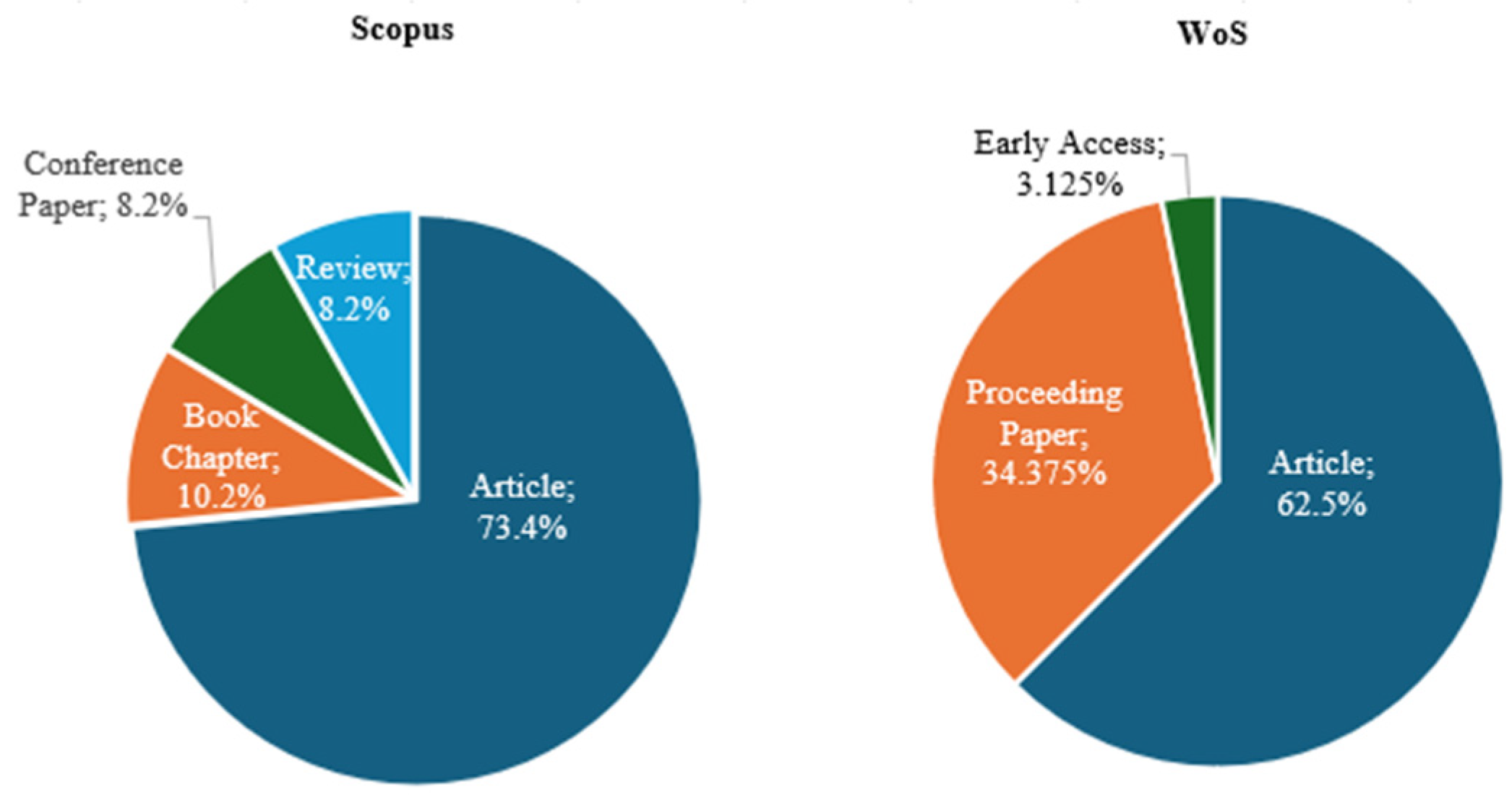
According to the metadata, most documents in WoS and Scopus are articles, as illustrated in
Figure 2.
The predominance of journal articles in WoS and Scopus can be explained by the fact that these databases prioritise peer-reviewed scholarly outputs, particularly journal publications, as they are considered the most reliable and methodologically rigorous form of academic communication. As a result, both databases systematically index journals more comprehensively and give them greater visibility and citation tracking compared to other publication types. Additionally, in fields such as management accounting and intellectual capital, journal articles are the primary medium for disseminating novel theoretical frameworks and empirical findings, while conference papers often represent preliminary research and book chapters tend to have lower citation impact and slower diffusion.
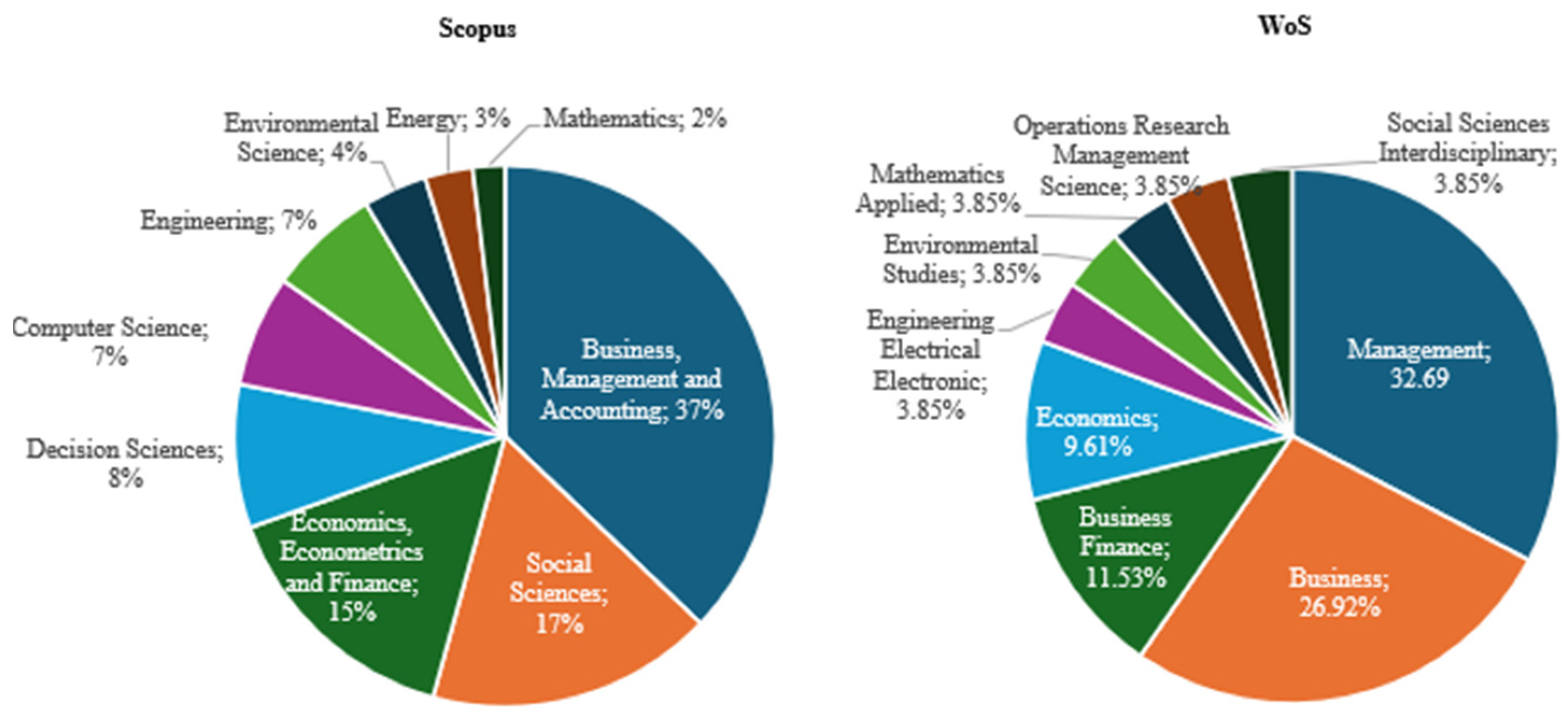
Figure 3 shows that WoS documents are mostly indexed in the management and business areas, at approximately 32.69% and 26.92%, respectively. The predominant thematic area in the Scopus database is similar, with business, management, and accounting for around 37%. This significant presence was to be expected given that the study focuses on topics such as intellectual capital, accounting, and management. The inclusion of areas such as computer science and engineering highlights the importance of technological aspects and digitalization for intellectual capital management. Conversely, the importance of sustainability is reflected by the presence of environmental sciences in the Scopus database and environmental studies in the WoS database.
It should be noted that the categorization of thematic areas differs between the databases.
The observed differences between WoS and Scopus in
Figure 3 can be better understood by considering both database classification structures and indexing scope. In WoS, the “social sciences” category aggregates disciplines such as management, business, finance, and economics, whereas Scopus applies a broader and more granular taxonomy that additionally includes accounting and econometrics. This structural difference explains why the distribution of publications appears uneven across categories and why percentage differences between the two databases are meaningful rather than merely statistical variation.
4.1.2. Annual Scientific Production
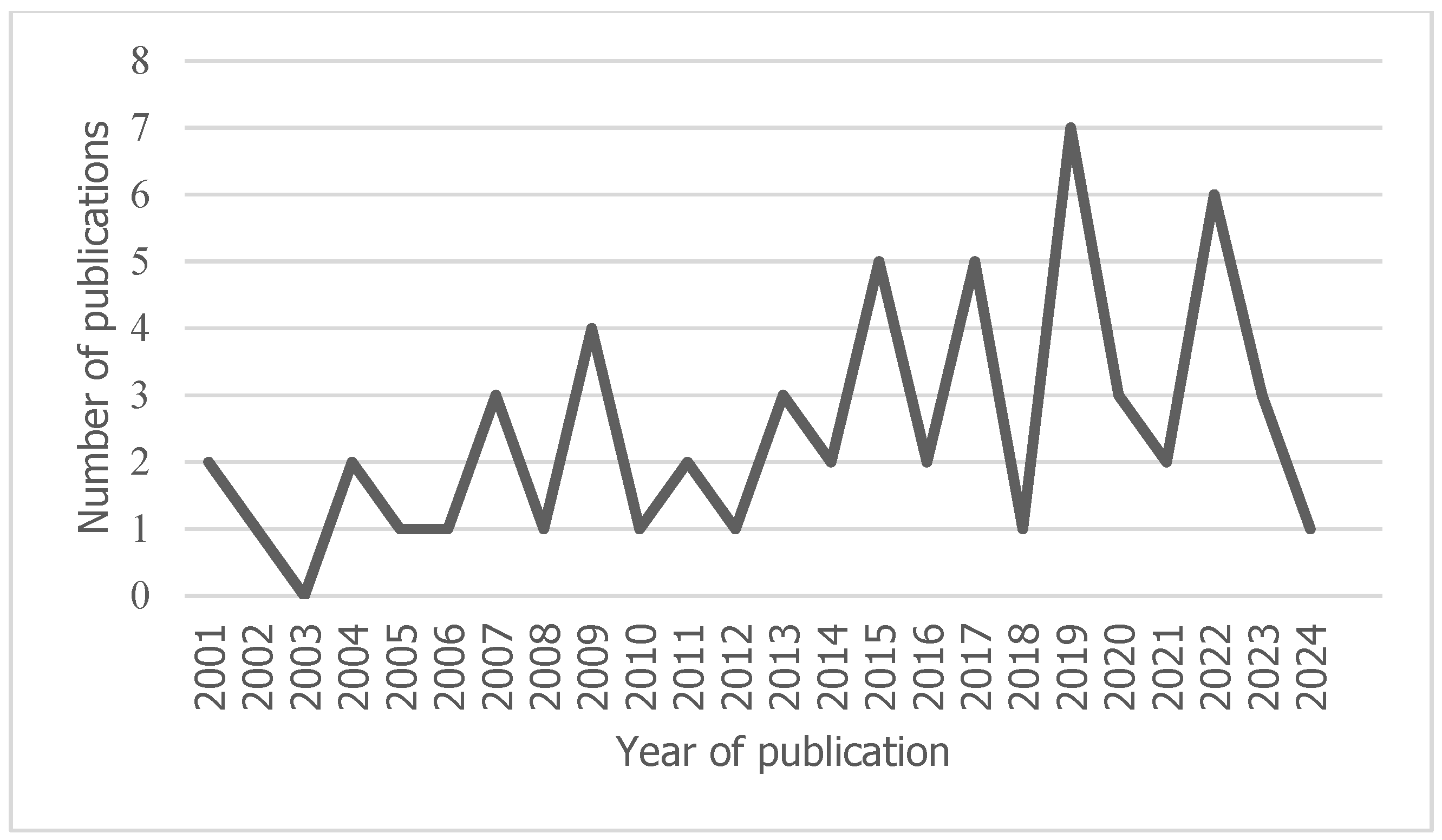
An examination of
Figure 4 reveals that the theme emerged in 2001 with two publications and reached its zenith in 2019. The five years with the highest number of publications were 2019 (seven publications), 2022 (six publications), 2017 and 2015 (five publications each), and 2009 (four publications). A notable oscillation in annual scientific production is evident, with a pronounced increase in 2019 and 2022, and approximately 51% of publications occurring within the last nine years. These fluctuations in the number of publications on intellectual capital and management accounting can be attributed to a variety of factors reflecting changes in academic priorities, the digital transformation driven by artificial intelligence, and the impact of global economic events (
Švarc et al., 2021;
Vărzaru, 2022).
This phenomenon may also be associated with the increasing global integration and competitiveness among companies, as well as the growing demand for reliable and prompt information from managerial entities (
Gallardo-Vázquez et al., 2019).
In the early 2000s, the notion of intellectual capital was still undergoing a period of consolidation, with its integration into management accounting being a relatively recent development. The paucity of publications during this era might be indicative of the nascent stage of theoretical development, as well as the absence of a consensus on suitable methodologies. The financial crisis of 2008, however, may have given rise to an exploration of alternative forms of resource valuation and management. This period may have seen an uptick in the study of intellectual capital due to the mounting recognition of the significance of intangible assets in generating value for companies.
From 2015 to 2017, there was a notable surge of interest in the management and reporting of intellectual capital, particularly in the context of novel accounting regulations and the globalization of financial standards (
Inn et al., 2015). The prevailing discourse in management accounting during this period underscored the significance of management decision-making and the imperative for effective intellectual capital management to enhance organizational performance (
Khosravipour et al., 2017).
Notably, the year 2019 witnessed a significant surge in scientific production. The impact of digital transformation and disruptive technologies, such as artificial intelligence and big data, has increased the importance of intellectual capital management (
Secundo et al., 2017;
Švarc et al., 2021). This growth also reflects the increasing relevance of intellectual capital in knowledge-based and digitalized economies, where organizations rely more heavily on intangible assets. Consequently, management accounting research has progressively explored new mechanisms to measure, control, and govern such resources, particularly in contexts influenced by digital transformation and sustainability concerns.
The significant increase in 2022 can be explained by the global economic uncertainty that encouraged organizations to optimize their resources, including knowledge and skills, to ensure sustainability, with publications linking green intellectual capital and green innovation to sustainable competitive advantages. In this context,
Asiaei et al. (
2022a,
2022b) have demonstrated how attention to sustainability has influenced academic interest in this topic.
4.1.3. Journals
The analysis revealed that the 59 documents were published in 45 different scientific journals.
Table 1 represents the top 10 most relevant journals corresponding to 26 publications. The study revealed that publications on this subject were published in a variety of journals, suggesting the presence of multiple perspectives and discussions related to management accounting and intellectual capital within the sample.
Despite this multidisciplinary approach, many publications were published in journals specializing in accounting, management, and business, with others specializing in information systems following closely behind. The number of publications and the proportion of these journals are displayed in
Table 1.
The analysis revealed that the Journal of Intellectual Capital was the journal with the highest number of publications in this sample (11 publications), followed by the Accounting, Auditing and Accountability Journal, with 4 publications. These results confirm the journals as the most relevant in the area of accounting about issues associated with the integration of intellectual capital and accounting. This disciplinary diversity indicates that the topic is not only associated with performance measurement but also with broader debates on accountability, value creation, and the governance of intangible resources.
4.1.4. Authors
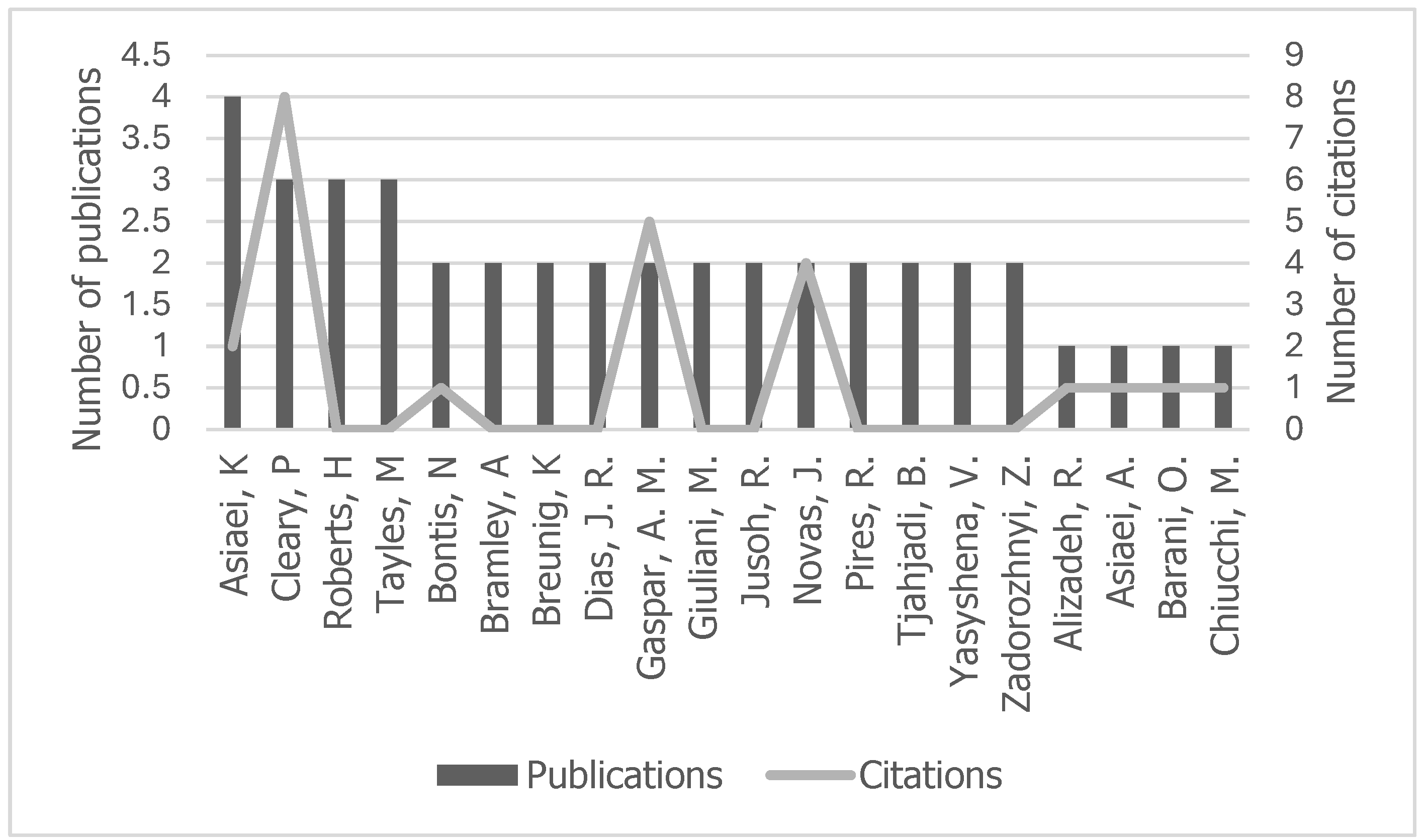
As illustrated in
Figure 5, the 20 most prolific authors in the field of research on management accounting and intellectual capital are shown. The most productive author in the sample was Kaveh Asiaei, who published two of the four articles in 2022. These articles focused on intellectual capital and management accounting from different perspectives, such as sustainability and performance.
After analyzing the 59 documents, the articles “Green intellectual capital and environmental management accounting: Natural resource orchestration in favor of environmental performance” by
Asiaei et al. (
2022a) and “How does green intellectual capital boost performance? The mediating role of environmental performance measurement systems” by
Asiaei et al. (
2022b) were found to address salient topics related to environmental management accounting and green intellectual capital. The former article explores the potential of environmental management accounting to function as a strategic instrument, fostering the development of green intellectual capital within organizational frameworks. Additionally, it delves into how environmental management accounting exerts influence on organizational performance, thereby engendering conditions conducive to the valuation and optimization of green intellectual capital. The authors posit that enterprises that adopt environmental management accounting practices stand to attain a substantial strategic advantage.
The second article examines the relationship between environmental management accounting and green intellectual capital, emphasizing the way these environmental practices can foster innovation and efficiency in resource management. The authors delve into the mechanisms by which environmental management accounting contributes not only to the identification of environmental resources but also to the promotion of innovative knowledge within organizations.
In terms of the number of citations, Peter Cleary was the most cited author, followed by Maria do Céu Gaspar Alves and Jorge Casa Novas. Of note in this sample of 59 documents is the publication by
Cleary (
2015) “An empirical investigation of the impact of management accounting on structural capital and business performance” which investigates the impact of management accounting on companies’ structural capital and business performance. This author was followed by Maria do Céu Gaspar Alves and Jorge Casa Novas, who analyze the relationships between management accounting systems, intellectual capital, and performance, providing an overview of the process in the article entitled “The role of management accounting systems in the development of intellectual capital”. It is worth highlighting the relevance of studying the relationship between management accounting, intellectual capital and performance.
The contributions of the most cited authors indicate that the literature has mainly explored the relationship between management accounting systems, intellectual capital development, and organizational performance. However, these studies also highlight the role of accounting information systems in structuring how knowledge resources are identified, measured, and strategically mobilized within organizations. In this sense, management accounting emerges not only as an information system but also as a mechanism shaping organizational approaches to the governance of intellectual capital.
4.1.5. Most Cited Countries
Table 2 depicts the top ten countries significantly contributing to intellectual capital and management accounting research. Particularly noteworthy is the research productivity demonstrated by the United Kingdom, which boasts 246 total citations (TC) and an average of 82.0 citations per publication. Following the United Kingdom, Brazil and Canada stand out as the second and third most prominent contributors, with 170 and 100 TC, respectively. The Netherlands, although contributing a lower total citation count of 39, displays a strong average of 39.0 citations per publication, reflecting the high impact of its research outputs.
In addition, it is worth mentioning that Portugal and Malaysia have each accumulated 55 total citations. Ireland follows closely with 49 TC, while Australia contributes with 46. Iran and China, with 56 and 37 TC, respectively, show moderate engagement, with average citations of 18.7 and 18.5. This substantial involvement from both developed and developing nations underscores the growing global interest and collaborative efforts in advancing research in intellectual capital and management accounting.
4.2. Science Mapping
The conceptual structure was mapped through VOSviewer’s text-mining feature, which supports the creation of term maps to visualize the conceptual structure of a field (
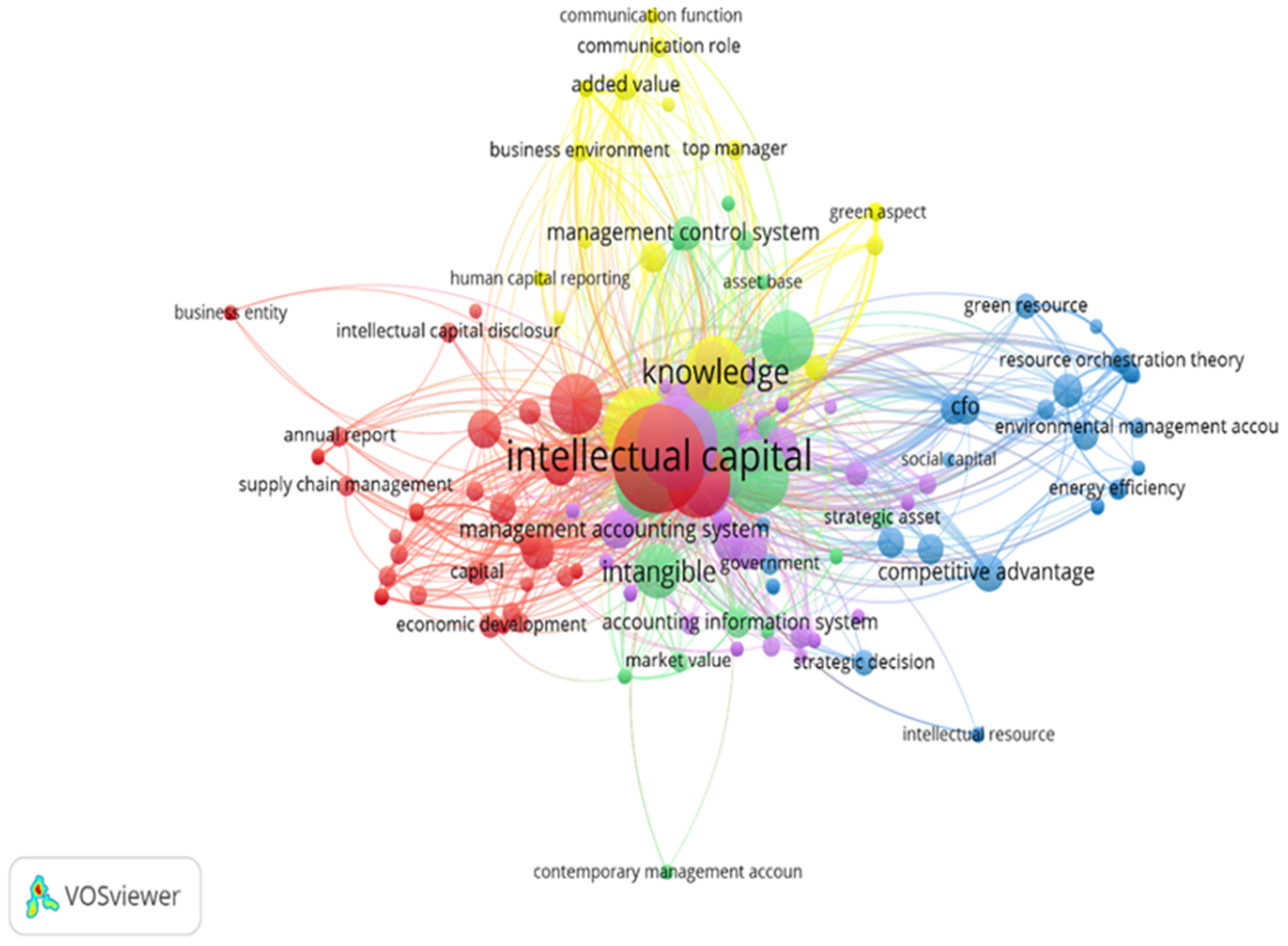
van Eck & Waltman, 2010), based on the co-occurrence of the most relevant terms from the 59 publications. For this proposal, a method of binary counting and considering the minimum number of occurrences of a term was applied in the software. The application of these parameters resulted in the initial selection of 1724 terms, which were subsequently refined through a four-stage process to remove terms deemed irrelevant to the subject matter. This refined list of 215 terms was then grouped into five clusters, as illustrated in
Figure 6. These clusters represent the five primary research streams within the field.
From the vantage point of this analytical perspective,
Table 3 presents the most salient terms associated with each cluster and its primary lines of research. These terms include intellectual governance and corporate strategy, management and performance accounting, green intellectual capital and strategic performance, digitalization and value creation, and management control and intangibles.
The first cluster, entitled “Intellectual capital and corporate strategy”, explores the nexus between intellectual capital, corporate development, and the integration of technology within the business environment. It underscores the pivotal role of intellectual capital as a strategic asset for companies (
Cabrita, 2009;
Thien & Hung, 2023). Moreover, it is noteworthy that economic development and technology are inextricably linked with intellectual capital. From this perspective, the components of intellectual capital enhance the incorporation of technology through knowledge, relationships, and organizational learning (
Shabbir et al., 2023). This cluster highlights how intellectual capital is framed as a strategic organizational resource. Research within this stream emphasizes the role of management accounting practices in supporting strategic decision-making and aligning knowledge resources with long-term organizational objectives.
Cluster 2 (management and performance accounting) explores the role of management accounting in organizational performance, highlighting the role of human capital, structural capital, and relational capital in achieving better business outcomes.
Cleary (
2009) posits that the development of management accounting systems by firms is driven by the need to provide the requisite information for effective management and measurement of the growing importance of stock in intellectual capital.
Cleary (
2015) further suggests the existence of a plausible and statistically significant relationship between advanced management accounting systems and business performance. This cluster reflects the traditional emphasis on performance measurement systems. Studies in this stream examine how management accounting tools enable organizations to evaluate the contribution of intellectual capital to organizational outcomes. At the same time, they reveal the central role of accounting metrics in shaping how value derived from intangible resources becomes visible and governable. This finding also supports critical accounting perspectives arguing that accounting systems are not passive representations of organisational reality but active mechanisms that shape organisational priorities and forms of conduct (
Burchell et al., 1980;
Hopwood, 1987). The predominance of themes related to performance measurement, strategic alignment, and control suggests that the literature has largely conceptualised intellectual capital through categories that are measurable, manageable, and economically exploitable. In this sense, management accounting contributes to constructing intellectual capital as a governable organisational resource rather than merely describing it.
The third cluster (green intellectual capital and strategic performance) centers on the concept of competitive advantage and the impact of green intellectual capital and environmental management on organizational performance.
Jiao et al. (
2023) posit that green intellectual capital and environmental management accounting can function as levers to enhance environmental performance and achieve a competitive advantage, thereby underscoring the mounting significance of sustainable business practices and their ramifications on organizational performance. This stream connects intellectual capital with environmental and sustainability concerns, highlighting the role of environmental management accounting in supporting sustainable innovation and green knowledge resources.
The fourth cluster, entitled “Digitalization and value creation” underscores the significance of value, knowledge, and the role of communication in the business environment. The value of knowledge frequently transcends conventional financial metrics, encompassing dimensions such as innovation, efficiency, and competitive advantage. Consequently, this cluster delves into the significance of knowledge as a strategic asset and the pivotal role of knowledge-based value creation within organizations (
Cabrita, 2009;
Thien & Hung, 2023). Additionally, this cluster addresses subjects pertinent to digital transformation and the digital economy. Digitalization is transforming the way organizations manage their assets, including their intellectual capital, while facing challenges related to the digital business environment (
Scafarto et al., 2023). The emergence of this cluster reflects the growing influence of digital transformation on knowledge management and organizational decision-making. Digital technologies and data analytics expand the capacity of management accounting systems to capture and analyze intangible resources. From a critical perspective, this expansion of digital accounting infrastructures also reinforces new forms of organisational visibility and surveillance. The increasing reliance on digital metrics, dashboards, and real-time reporting systems extends managerial control over knowledge-based activities and employee performance, reflecting the constitutive role of accounting described by
Miller and O’Leary (
1987). Thus, digitalisation does not simply improve measurement efficiency; it reshapes how organisational value and acceptable performance are defined.
The fifth cluster, entitled “Management control and intangibles,” encompasses the management of intangible assets and the role of management control systems in the optimization of these resources. Intangible capital, including knowledge, skills, and innovation, has become increasingly central to organizational stability, underscoring the necessity for effective control systems (
Claver-Cortés et al., 2018;
Dancaková & Glova, 2024). The discourse within this cluster centers on the challenges associated with quantifying intangible assets and the efficacy of management control systems in optimizing their utilization. The interconnectedness of these terms underscores the pivotal role of management control in the administration and maximization of intangible assets, including human capital, knowledge, and innovation, which are indispensable for the competitiveness of organizations. This cluster emphasizes the relationship between management control systems and the governance of intangible assets, suggesting that accounting tools play an important role in structuring how knowledge resources are monitored, coordinated, and integrated within organizational processes. The emergence and growing prominence of this cluster also indicate a shift in the literature from viewing management accounting as a technical support function towards understanding it as a broader governance mechanism. Consistent with
Hopwood’s (
1987) argument, accounting systems increasingly participate in structuring organisational processes, responsibilities, and strategic behaviours. The strong association between terms such as “responsibility”, “management control system”, and “intangibles” suggests that accounting practices actively define how intellectual capital should be monitored, valued, and disciplined within organisations.
This analysis revealed a clear evolution in the five identified lines of research over time, particularly in cluster 5. This cluster, which includes key terms such as “management control system”, “intangible”, “accounting information system”, and “responsibility”, has become increasingly prominent in recent years.
The growing number of recent publications in this cluster indicates a growing academic interest in the strategic role of management control systems in managing intangible assets, including knowledge, innovation, and human capital. This indicates that literature is increasingly recognizing management control systems as not only instruments of financial supervision but also facilitators of the utilization of intellectual capital to enhance organizational competitiveness. Thus, the time dimension reinforces the relevance of cluster 5 as an emerging and evolving area at the intersection of management control and intellectual capital research.
Taken together, these thematic clusters reveal how research on management accounting and intellectual capital has evolved across several complementary perspectives. While early studies primarily emphasized performance measurement and the strategic role of intangible resources, more recent research increasingly addresses issues related to sustainability, digitalization, and knowledge governance. This evolution suggests that management accounting systems are not only technical tools for evaluating organizational performance but also mechanisms that shape how intellectual capital is identified, monitored, and strategically mobilized within organizations.
The five clusters collectively show that intellectual capital is a strategic, measurable, and evolving organisational resource that drives competitive advantage. It begins as a strategic asset linked to knowledge and organisational learning, is then operationalised through management accounting systems to support performance measurement, extends into sustainability through green and environmental practices, is amplified by digital transformation and data-driven value creation, and is ultimately governed through management control systems that structure and optimise intangible assets. Together, these perspectives highlight a coherent evolution in which intellectual capital is integrated into strategy, performance management, sustainability, digitalisation, and control, reinforcing its central role in organisational competitiveness.
The relationships between the five clusters also reveal important theoretical complementarities and tensions within the field. Clusters 1 and 2 are largely complementary, as both are grounded in strategic and performance-oriented assumptions derived from managerial and resource-based perspectives. In contrast, Clusters 4 and 5 introduce broader governance concerns associated with digitalisation, organisational visibility, and management control, thereby extending the field beyond purely technical and performance-focused approaches. Cluster 3 partially bridges these perspectives by incorporating sustainability concerns while still remaining strongly connected to managerial notions of competitive advantage and performance optimisation. At the same time, the coexistence of these clusters reveals important theoretical limitations within the literature. Across most streams, intellectual capital is predominantly framed through measurable, controllable, and economically valuable dimensions. Consequently, forms of tacit knowledge, informal organisational learning, social relations, and ethical dimensions of knowledge governance remain comparatively underexplored. This suggests that the field continues to privilege functional and managerial perspectives, while critical, sociological, and institutional approaches remain relatively marginal within the dominant intellectual structure of the literature.
5. Discussion
The findings suggest that the literature on management accounting and intellectual capital has evolved beyond a predominantly technical concern with performance measurement towards broader questions of governance, organisational visibility, and strategic control. While early contributions mainly conceptualised intellectual capital as a resource to be measured and leveraged for competitive advantage, more recent research increasingly frames management accounting systems as mechanisms through which knowledge resources are structured, monitored, and strategically governed within organisations. This evolution reflects a broader transformation in the role of accounting within knowledge-based economies, where intangible assets have become central to organisational competitiveness and legitimacy.
The bibliometric analysis indicated fluctuations in annual scientific production, with a more significant increase observed in 2019 and 2022. Specifically, in 2019, a higher level of scientific output was recorded, accounting for approximately 51% of the publications analyzed, which were published in the last nine years. The digital transformation, propelled by artificial intelligence, and the mounting concern with sustainability issues have also played a pivotal role in this context. The bibliometric analysis reveals a non-linear evolution of scientific production, suggesting that research on intellectual capital and management accounting is closely aligned with broader macro-trends in the global economy. The increase observed in 2019 can be interpreted in light of the acceleration of digital transformation and the growing diffusion of artificial intelligence technologies, which intensified scholarly interest in how intangible resources are measured, managed, and leveraged in knowledge-based economies (
Appelbaum et al., 2017). The concentration of publications around digital transformation and sustainability themes indicates that the field increasingly responds to broader institutional and technological shifts affecting contemporary organisations. Rather than treating intellectual capital merely as an internal organisational asset, recent studies increasingly position it within wider governance frameworks shaped by digitalisation, sustainability pressures, and accountability demands. This suggests an expansion of management accounting from a performance-oriented function towards a broader organisational governance infrastructure. Similarly, the peak in 2022 reflects the consolidation of sustainability and Environmental, Social, and Governance (ESG)-related concerns, which have progressively repositioned intellectual capital as a key driver of long-term organisational resilience and sustainable performance (
Asiaei et al., 2022a;
Jiao et al., 2023). These results suggest that intellectual capital research is highly sensitive to external institutional and technological shifts, particularly those linked to digitalisation and sustainability transitions.
The analysis further indicated that the Journal of Intellectual Capital was the leading journal in this sample, followed by the Accounting, Auditing and Accountability Journal. The most prolific author in the sample was Kaveh Asiaei, who published two of the four articles in 2022, focusing on intellectual capital and management accounting from various perspectives, including sustainability and performance. The most cited country was the United Kingdom. The dominance of journals such as the Journal of Intellectual Capital and the Accounting, Auditing and Accountability Journal reinforces the dual identity of the field, positioned at the intersection between managerial strategy and critical accounting scholarship. While the former is traditionally associated with performance measurement and value creation, the latter is more closely aligned with governance, accountability, and critical reflections on accounting practices (
Guthrie et al., 2012;
Hopper et al., 2017). This duality is also reflected in the most prolific authors and countries, with contributions from the United Kingdom highlighting the strong influence of Anglo-Saxon accounting research traditions, particularly in shaping intellectual capital as both a performance and governance construct.
The science mapping further confirms the existence of five interconnected but conceptually distinct research streams: (i) intellectual capital and corporate strategy, (ii) management accounting and performance, (iii) green intellectual capital and sustainability, (iv) digitalisation and value creation, and (v) management control and intangibles. These clusters collectively illustrate an expansion of the field from traditional resource-based and measurement-oriented approaches towards more complex, multi-dimensional frameworks that integrate sustainability, digital transformation, and control systems (
Cleary, 2015). However, despite this diversification, the underlying analytical logic remains largely anchored in performance optimisation and value maximisation, reflecting the persistence of an instrumental rationality in intellectual capital research.
The findings of this study suggest that the literature on management accounting and intellectual capital has been predominantly shaped by performance-oriented and instrumental perspectives. While these approaches provide valuable insights into measurement and value creation, they tend to overlook the broader governance implications of accounting practices.
The bibliometric findings provide empirical support for critical accounting arguments that management accounting systems play a constitutive rather than merely representational role within organisations (
Burchell et al., 1980;
Hopwood, 1987). The dominance of research streams centred on performance measurement, strategic alignment, control systems, and governance indicates that intellectual capital is predominantly conceptualised through accounting categories that render knowledge visible, measurable, and economically actionable. Consequently, the literature does not simply analyse intellectual capital as a pre-existing organisational resource; it actively contributes to defining what forms of knowledge are considered valuable, legitimate, and manageable.
By defining what is measurable and reportable, accounting systems shape organizational priorities and influence how knowledge resources are governed. This process involves implicit assumptions about value, relevance, and legitimacy, which may privilege certain forms of knowledge while marginalizing others (
Burchell et al., 1980;
Hopwood, 1987).
Moreover, the increasing reliance on digital technologies amplifies these dynamics, extending the scope of accounting systems in monitoring and controlling organizational activities. This raises important questions regarding power, visibility, and accountability, particularly in contexts where transparency may function as a mechanism of control rather than deliberation (
Vasarhelyi et al., 2015).
Accordingly, this study highlights the need to move beyond purely technical understandings of management accounting and to engage more critically with its role in shaping governance structures and organizational realities. By integrating insights from critical accounting, governance theory, and digital transformation literature, the study underscores that intellectual capital is not only managed and measured but also actively produced through accounting practices that shape power relations, visibility structures, and organisational knowledge hierarchies.
At the same time, the findings also reveal important silences within the literature. The predominance of performance-oriented and economically driven perspectives suggests that dimensions of intellectual capital that are difficult to quantify (such as informal knowledge, tacit capabilities, ethical values, or social relations) remain comparatively underexplored. This reinforces critical concerns that accounting systems may privilege measurable dimensions of organisational life while marginalising forms of knowledge that escape formal quantification.
Beyond identifying thematic areas, the five clusters also reveal distinct underlying theoretical paradigms through which the relationship between management accounting and intellectual capital has been conceptualised. While the clusters are interconnected, they reflect different assumptions regarding the role of accounting, the nature of intellectual capital, and the purpose of organisational control. Taken together, they illustrate the coexistence of functional, strategic, sustainability-oriented, technological, and governance-based perspectives within the field, while also revealing important theoretical absences and tensions.
In addition, although the five clusters share a common interest in the management and exploitation of intellectual capital, they are underpinned by distinct theoretical assumptions. Most clusters adopt functionalist, resource-based, or performance-oriented perspectives that view accounting as a tool for measuring and optimising intangible resources. By contrast, the critical accounting lens adopted in this study highlights how accounting systems participate in constructing organisational realities by defining what forms of knowledge become visible, measurable, and strategically relevant. The coexistence of these perspectives reveals an unresolved theoretical tension between accounting as a neutral managerial technology and accounting as a constitutive mechanism of governance and organisational control.
Cluster 1 is primarily grounded in the Resource-Based View and strategic management literature, where intellectual capital is conceptualised as a valuable organisational resource capable of generating competitive advantage. Within this paradigm, management accounting systems are mainly interpreted as strategic tools that support the alignment of intangible resources with organisational objectives. However, this perspective largely privileges economically exploitable and performance-oriented dimensions of intellectual capital, while giving limited attention to broader social, political, or ethical implications associated with knowledge governance. Consequently, alternative perspectives that conceptualise intellectual capital as socially embedded or institutionally constructed remain comparatively marginalised.
Theoretical contributions within this cluster are largely grounded in the Resource-Based View and knowledge-based perspectives of the firm. Studies such as
Cabrita (
2009) and
Cabrita and Bontis (
2008) conceptualise intellectual capital as a strategic resource capable of generating sustainable competitive advantage through the effective combination of human, structural, and relational capital. The underlying assumption is that knowledge assets can be identified, developed, and aligned with organisational strategy through managerial intervention. From a critical accounting perspective, however, this instrumental view tends to treat intellectual capital as an objective organisational resource, paying limited attention to how accounting practices themselves shape the meaning, visibility, and strategic value attributed to knowledge resources.
Cluster 2 reflects a predominantly functionalist and performance-oriented paradigm, focusing on how management accounting systems contribute to organisational efficiency, business performance, and value creation. The dominant assumption underlying this stream is that intellectual capital can be objectively measured, monitored, and optimised through accounting and control systems. While this approach has generated important insights into performance measurement and strategic alignment, it tends to treat accounting systems as neutral and technical mechanisms. As a result, relatively little attention is devoted to how accounting practices may simultaneously shape organisational behaviour, construct managerial priorities, or reinforce specific power relations, as emphasised in critical accounting literature.
The most influential studies within this cluster, particularly
Tayles et al. (
2007) and
Cleary (
2015), frame management accounting as an enabling mechanism through which intellectual capital can be measured, monitored, and transformed into organisational performance.
Tayles et al. (
2007) argue that firms with higher levels of intellectual capital tend to adopt more sophisticated management accounting practices, suggesting a mutually reinforcing relationship between knowledge resources and accounting systems. Similarly,
Cleary (
2015) assumes that management accounting systems contribute positively to structural capital and business performance by providing relevant information for managerial decision-making. These studies share a functionalist assumption that accounting systems are largely neutral instruments supporting organisational effectiveness. This creates an important tension with critical accounting perspectives, which view accounting not as a passive measurement device but as a constitutive practice that actively shapes what forms of knowledge become visible, legitimate, and governable within organisations (
Burchell et al., 1980;
Hopwood, 1987).
Cluster 3 introduces sustainability and environmental management perspectives into the intellectual capital debate, extending traditional performance-oriented approaches towards ecological and long-term value creation concerns. This cluster is largely influenced by sustainability governance and environmental management paradigms, where accounting systems are viewed as instruments for supporting green innovation, environmental accountability, and sustainable competitive advantage. Nevertheless, the literature within this stream remains predominantly managerial in orientation, focusing on how sustainability contributes to organisational performance rather than critically examining potential tensions between environmental accountability, corporate legitimacy, and managerial control.
Theoretical developments within this cluster are primarily informed by the Natural Resource-Based View and Resource Orchestration Theory. Studies such as
Asiaei et al. (
2022a,
2022b) and
Jiao et al. (
2023) argue that environmental management accounting and green intellectual capital jointly enhance environmental and organisational performance by facilitating the strategic mobilisation of sustainability-related knowledge resources. The underlying assumption is that environmental capabilities can be systematically measured and managed to generate competitive advantage. While this perspective expands the scope of intellectual capital research towards sustainability, it largely retains a managerial orientation centred on performance optimisation rather than questioning how sustainability metrics themselves influence organisational priorities and accountability structures.
Cluster 4 reflects the growing influence of digital transformation and data-driven governance within management accounting research. The dominant perspective in this stream assumes that digital technologies enhance organisational capacity to capture, process, and mobilise intellectual capital more efficiently. However, from a critical perspective, this cluster also reveals the increasing expansion of organisational visibility and surveillance through digital accounting infrastructures. The growing reliance on real-time data, analytics, and monitoring systems suggests a shift towards forms of algorithmic governance in which accounting systems increasingly shape organisational conduct, employee visibility, and strategic decision-making processes.
The literature within this cluster conceptualises digitalisation as a transformative force that enhances the creation, dissemination, and exploitation of organisational knowledge. Contributions such as
Scafarto et al. (
2023) suggest that digital infrastructures and data-driven systems strengthen organisations’ ability to generate value from intellectual capital by improving information processing and decision-making capabilities. This perspective assumes that increased availability of information leads to improved organisational effectiveness. However, from a critical accounting standpoint, digital technologies may also reinforce new forms of visibility, surveillance, and managerial control, raising questions about how digital accounting systems redefine acceptable performance and organisational behaviour.
Cluster 5 is conceptually the closest to critical accounting and governance-oriented perspectives. Unlike the more functionalist clusters, this stream increasingly conceptualises management accounting systems not merely as performance measurement tools but as organisational mechanisms that structure visibility, accountability, and control over intangible resources. The prominence of terms such as “management control system”, “responsibility”, and “intangibles” suggests that accounting practices actively participate in defining how intellectual capital should be governed and legitimised within organisations. This interpretation aligns closely with critical accounting arguments that accounting systems are constitutive of organisational reality rather than passive representations of it (
Burchell et al., 1980;
Hopwood, 1987;
Miller & O’Leary, 1987).
Key contributions in this cluster, including
Novas et al. (
2017),
Claver-Cortés et al. (
2018), and
Dancaková and Glova (
2024), emphasise the role of management control systems in coordinating, monitoring, and leveraging intangible resources. These studies generally assume that intellectual capital can be effectively governed through formal control mechanisms, accounting information systems, and performance measurement frameworks. Such an approach reinforces the view of accounting as an organisational infrastructure for managing knowledge assets. In contrast, critical accounting scholars would argue that these control systems do not merely regulate organisational activities but actively construct the categories through which intellectual capital is understood, evaluated, and disciplined.
From a critical accounting perspective, the five clusters are not theoretically neutral but reflect different forms of rationality underlying the field. Clusters 1 and 2 are predominantly aligned with strategic and instrumental rationalities, where intellectual capital is framed as a measurable and economically exploitable organisational resource. In these streams, management accounting systems are primarily conceptualised as technical instruments designed to optimise organisational performance, efficiency, and competitive advantage. This dominant orientation reinforces functionalist assumptions in which accounting is treated as an objective and neutral mechanism for supporting managerial decision-making.
By contrast, Clusters 4 and 5 introduce broader concerns associated with governance, organisational visibility, and control. In particular, Cluster 5—centred on management control systems, responsibility, and intangibles—most clearly reflects a governance-oriented perspective consistent with critical accounting literature. The prominence of terms related to monitoring, accountability, and organisational coordination suggests that accounting systems are increasingly understood not only as measurement devices but also as mechanisms that shape organisational conduct and define how intellectual capital becomes visible, governable, and strategically legitimate within organisations. Similarly, Cluster 4 reveals how digital transformation expands the scope of accounting-based visibility through data-driven infrastructures, analytics, and real-time monitoring systems. This suggests a movement towards forms of algorithmic governance in which accounting systems increasingly structure organisational behaviour and managerial control through digital technologies.
At the same time, the predominance of instrumental and performance-oriented perspectives across most clusters reveals important blind spots within the literature. Intellectual capital is overwhelmingly framed through dimensions that are measurable, controllable, and economically valuable, while tacit knowledge, informal organisational learning, social relations, and ethical or political dimensions of knowledge governance remain comparatively marginalised. This imbalance suggests that the field continues to privilege managerial and functionalist paradigms over more critical, sociological, and institutional approaches.
6. Conclusions
In today’s knowledge-oriented economy, organizations compete through their intellectual capital. However, the effective harnessing of intellectual capital requires robust management control systems and sound management accounting practices (
Al-Dhubaibi, 2024).
Empirical studies reveal that the interaction between management accounting information systems and intellectual capital promotes sustained innovation and competitive advantage, particularly when technology adoption levels align with strategic business objectives. Systematic literature reviews highlight that most research treats intellectual capital as either an independent or mediating variable, underscoring its significance in both theoretical models and applications within the accounting discipline (
Hariyati et al., 2023).
The use of bibliometric studies in accounting is increasingly significant in accounting research. These studies facilitate the identification of various elements of research, including journals, sources of information, authors, research themes, and approaches, among other aspects. They also detect potential gaps in the research process, contributing to the enhancement of future research.
By mapping the main research streams, influential authors, and thematic clusters, the study provides a comprehensive overview of how academic research has conceptualized the role of management accounting in the measurement, strategic management, and governance of intellectual capital. The analysis was conducted on a sample of 59 publications indexed in the Scopus and WoS databases.
The analysis yielded a multidisciplinary approach, namely the evolution of intellectual capital measurement methodologies, the intersection between intellectual capital and sustainability, the influence of digital technologies and disruptive innovations in knowledge and intellectual capital management, and the need to adapt management accounting practices to the digital age. Additionally, intellectual capital has been discussed as a factor of innovation and renewal of organizations (
Cabrita, 2009), highlighting the importance of management control systems and non-financial metrics in the evaluation of organizational performance.
This study is necessary to understand the intersection between intellectual capital and management accounting, a still underexplored area. Through bibliometric analysis and science mapping, it is possible to identify trends, gaps, and conceptual structures, consolidating existing knowledge and guiding future research.
The findings suggest that management accounting plays a central role in structuring how organizations identify, measure, and mobilize intangible resources. Through performance measurement systems, management control practices, and strategic management accounting tools, accounting information contributes to making intellectual capital visible and actionable within organizational decision-making processes. The results also reveal a gradual expansion of the research agenda beyond traditional performance perspectives. Recent studies increasingly connect intellectual capital with themes such as sustainability, digital transformation, and environmental management accounting, suggesting a growing recognition of the broader organizational and societal implications of managing knowledge-based resources.
The findings also reveal an important tension within the literature. Although intellectual capital is frequently presented as a source of innovation, creativity, and organisational learning, the dominant management accounting approaches tend to translate these dimensions into measurable indicators and performance metrics. This process potentially narrows the understanding of intellectual capital by privileging codified and quantifiable knowledge while marginalising tacit, informal, or socially embedded forms of knowledge that are more difficult to capture through accounting systems.
More broadly, the study suggests that management accounting systems contribute not only to measuring intellectual capital but also to shaping the organisational meanings attached to knowledge, innovation, and performance. In this sense, accounting practices participate in defining which forms of intellectual capital become strategically visible and governable, reinforcing the constitutive role of accounting highlighted in critical accounting literature.
The bibliometric structure identified in this study therefore reflects not only thematic diversity but also the dominance of particular epistemological orientations within the field. The prevalence of performance measurement, strategic alignment, and management control themes indicates that management accounting research on intellectual capital remains largely shaped by instrumental and managerial rationalities, despite the recent emergence of governance and digitalisation concerns.
These findings contribute to decision-making by providing managers and policymakers with a clearer understanding of how intellectual capital, management accounting, and digital transformation interact to shape organisational performance and strategic priorities. The identification of key research clusters, ranging from corporate strategy and performance measurement to sustainability, digitalisation, and control systems, helps decision-makers recognise that value creation is not limited to financial indicators but is strongly driven by intangible resources and their governance. At the same time, the results highlight that management accounting systems play an active role in defining what is considered measurable and relevant, thereby influencing organisational priorities and decision-making processes.
From a theoretical perspective, the study advances the existing literature by shifting the focus from a purely performance-oriented view of intellectual capital towards a more critical understanding of accounting as a constitutive mechanism of organisational reality. It shows that management accounting does not merely measure intellectual capital but also shapes how it is constructed, controlled, and legitimised within organisations. Furthermore, the increasing influence of digital technologies reinforces the need to reconsider issues of power, transparency, and accountability in contemporary governance systems. In this way, the study enriches the literature by integrating technical, strategic, and critical perspectives, and by calling for a more holistic understanding of how accounting systems influence both organisational behaviour and knowledge-based value creation.
This study offers three main theoretical contributions to the literature on management accounting and intellectual capital. First, it demonstrates that the field has progressively evolved from a predominantly functional and performance-oriented perspective towards broader concerns related to governance, organisational visibility, and strategic control. The bibliometric evidence suggests that management accounting is increasingly conceptualised not merely as a technical support system but as an organisational mechanism that structures how intellectual capital is defined, monitored, and legitimised.
Second, the study contributes to critical accounting literature by showing how the dominant research streams privilege forms of intellectual capital that are measurable and economically actionable. The predominance of themes associated with performance measurement, management control systems, and strategic alignment reinforces the argument that accounting systems actively shape organisational reality by determining which forms of knowledge become visible, governable, and strategically relevant.
Third, the findings extend existing research on digital transformation by highlighting how digital accounting infrastructures intensify processes of organisational visibility and control. The emergence of digitalisation-related clusters suggests that contemporary management accounting systems increasingly rely on data-driven mechanisms that expand monitoring capabilities and reshape organisational decision-making processes.
The study’s primary limitations stem from the utilization of only the WoS and Scopus databases. Additionally, it is crucial to acknowledge that our search was limited to publications containing the specific expressions “manage* accounting” and “intellectual capital” in the subject area. Furthermore, it is important to note that some relevant articles may have been overlooked due to their exclusion from the analyzed databases. Therefore, it is plausible that the research strategies and keywords utilized may have exerted an influence on the outcomes, in addition to the bibliometric analysis and science mapping techniques that were employed. Another limitation relates to the temporal scope of the dataset, which reflects publications indexed up to mid-2024. Given the rapid evolution of management accounting and intellectual capital research, particularly in areas associated with artificial intelligence, ESG reporting, digital governance, and data-driven accounting systems, important emerging developments may not yet be fully captured in the bibliometric structure identified in this study. In recent years, increasing scholarly attention has been devoted to topics such as AI-assisted decision-making, algorithmic control, automated reporting systems, sustainability governance, and the integration of ESG metrics into management accounting frameworks. These developments may significantly reshape future research agendas by expanding discussions around organisational visibility, digital accountability, ethical implications of data-driven governance, and the strategic management of intangible assets. Consequently, the clusters identified in this study should be interpreted as representing the intellectual structure of the field during a specific stage of its evolution rather than as a definitive or stable representation of the literature. In particular, the growing relevance of Artificial Intelligence (AI)-related accounting practices and sustainability-oriented governance mechanisms may lead to the emergence of new thematic configurations and theoretical perspectives that are not yet fully visible within the current dataset.
With regard to search terms, we do not use similar terms for intellectual capital, such as “intangible assets”, “knowledge assets,” “intellectual assets,” and “intangible resources”, which may limit the search. We also note that the Boolean operators used did not include variations such as, for example, “accounting”.
Additional methodological limitations inherent to bibliometric research should also be acknowledged. Bibliometric analyses are highly dependent on the quality, consistency, and completeness of database metadata, which may contain inaccuracies, inconsistencies, or missing information related to author names, affiliations, citations, keywords, and indexing practices. Such inconsistencies may influence citation counts, co-authorship networks, and thematic mappings. Furthermore, the search strategy based on titles, abstracts, and keywords may introduce selection biases, since relevant studies that discuss intellectual capital or management accounting using alternative terminologies or implicit conceptual approaches may not have been captured by the search query. Conversely, some retrieved publications may include the selected terms without focusing substantively on the relationship between management accounting and intellectual capital. Another limitation concerns the integration and harmonisation of records obtained from different databases, particularly WoS and Scopus. Although duplicate removal and data cleaning procedures were conducted, differences in indexing standards, citation formats, metadata structures, and journal coverage may result in the loss, duplication, or partial distortion of bibliometric information during the merging process. These limitations are common challenges in bibliometric research and continue to be widely discussed within the methodological literature.
It is recommended that future research continue exploring the mediating and dependent roles of intellectual capital in accounting studies, as well as the influence of emerging Information Technology (IT) solutions on intellectual capital management. Additionally, future investigations could focus on comparative studies across industries and countries to examine how intellectual capital practices vary in different economic and regulatory contexts. Longitudinal analyses would also be valuable to assess the evolution of intellectual capital management and its impact on firm performance over time. To increase the sample size, it would be important to include variations in the Boolean operators, such as “accounting”. A more in-depth analysis of the metrics would benefit from normalising categories across databases or explicitly harmonising disciplinary classifications before comparison. This would allow for more robust interpretations of research trends and avoid potential bias introduced by inconsistent categorisation systems between WoS and Scopus.
Further research could integrate intellectual capital with sustainability and ESG reporting to understand its contribution to environmental, social, and governance outcomes. Interdisciplinary approaches, combining insights from finance, management, and organizational behavior, may yield more comprehensive models of intellectual capital utilization. Future research could further explore how management accounting practices influence the governance and accountability of intangible resources, particularly in contexts shaped by digitalization, sustainability reporting, and increasing demands for transparency in organizational decision-making. Finally, qualitative case studies could provide in-depth insights into organizational practices, challenges, and best practices in intellectual capital management.
This approach will not only foster a deeper understanding and provide practical guidance for organizations seeking to maximize value from their intangible assets, but it can also enhance strategic decision-making by linking intellectual capital to organizational performance. Moreover, it may improve reporting practices through the development of standardized frameworks for measuring and disclosing intellectual capital, support innovation management by highlighting how knowledge and human capital drive new products and processes, inform policy and governance by guiding regulators on the significance of intangible assets, and advance theoretical development by integrating contributions from accounting, management, and information systems to refine models of intellectual capital utilization.
In an increasingly knowledge-based and digitally mediated economy, understanding how organizations account for, measure, and govern intellectual capital becomes crucial. Consequently, advancing research at the intersection of management accounting and intellectual capital remains essential for improving our understanding of how accounting practices shape the strategic management of knowledge resources and contribute to organizational value creation.
Overall, this study demonstrates that research on management accounting and intellectual capital is still predominantly shaped by instrumental and performance-oriented paradigms, despite the growing emergence of governance, sustainability, and digitalisation perspectives. More importantly, the findings suggest that management accounting systems should not be understood merely as neutral mechanisms for measuring intellectual capital, but as constitutive organisational practices that shape how knowledge becomes visible, governable, and strategically valuable within contemporary organisations.