

Toxic Effects of Nanoplastics on Animals: Comparative Insights into Microplastic Toxicity


Abstract
1. Introduction
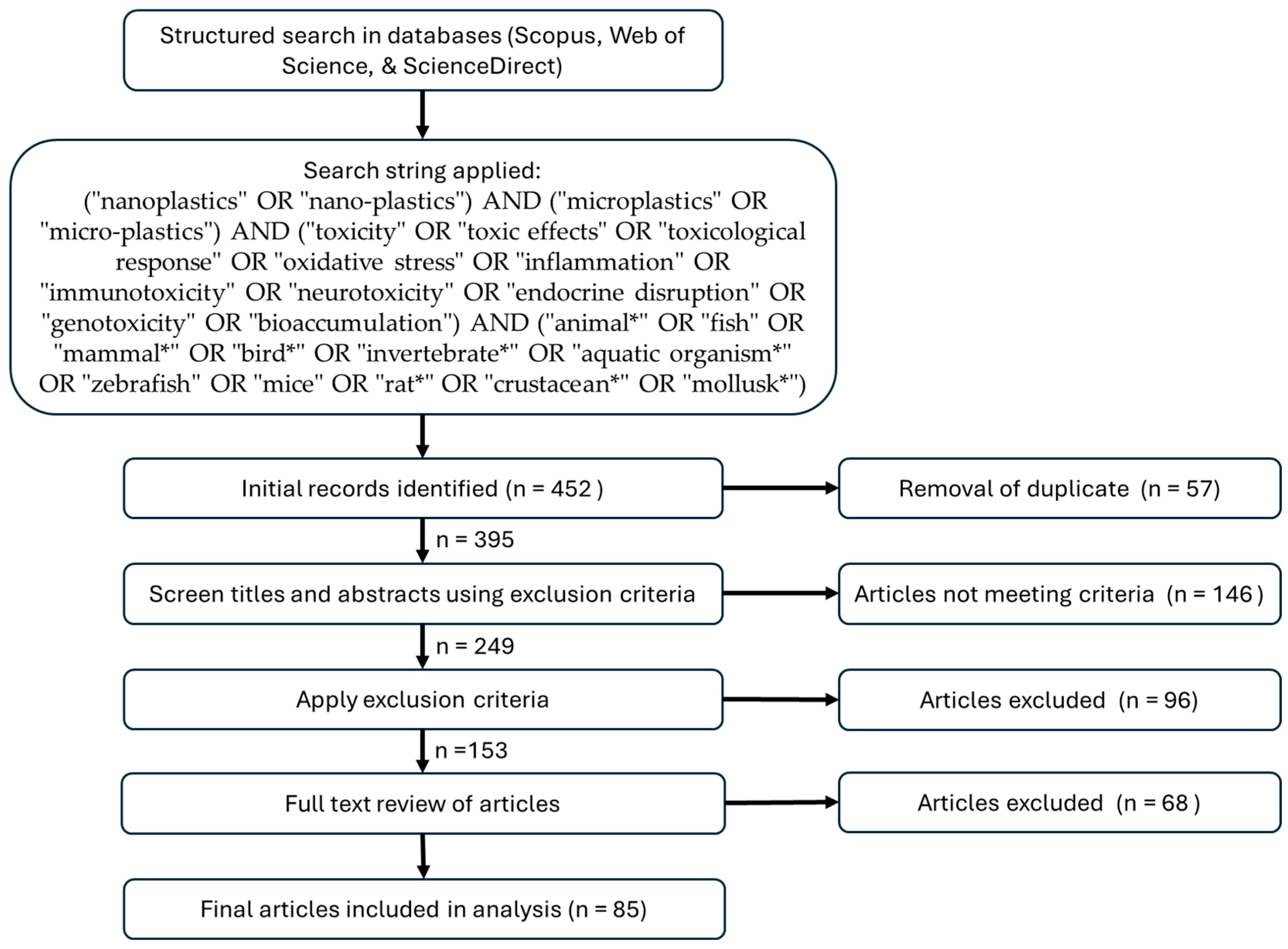
2. Review Methodology
3. Toxic Effects of Nanoplastics
3.1. Mouse Models
3.1.1. Effects on the Brain and Behaviors
3.1.2. Effects on the Digestive System and Kidneys
3.1.3. Systemic Toxicity
3.1.4. Transgenerational Effects
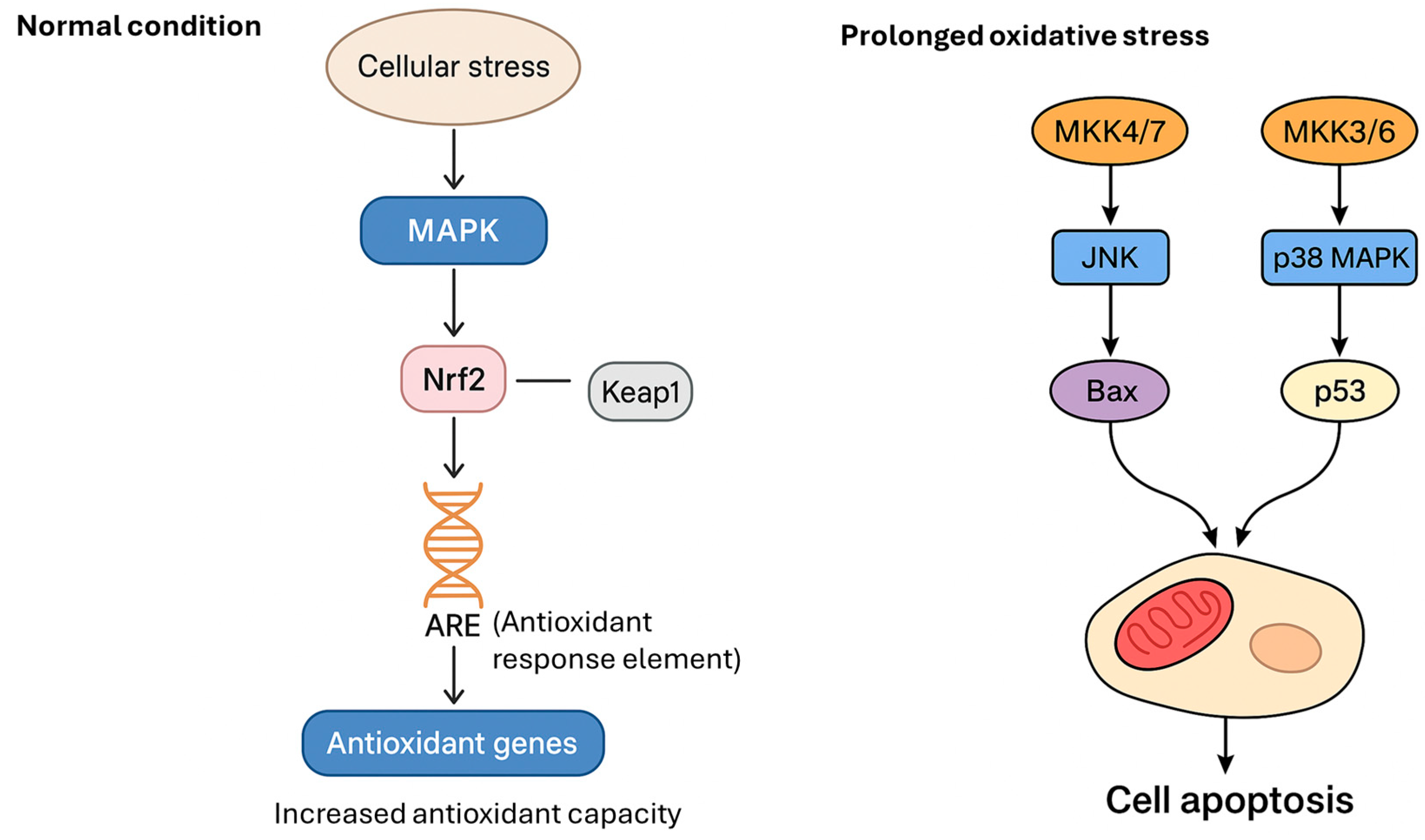
3.1.5. Effects on the Reproductive System
3.1.6. Comparative Studies
3.1.7. Implications
3.2. Crustaceans
3.2.1. Comparative Studies
3.2.2. Implications
3.3. Fish Models
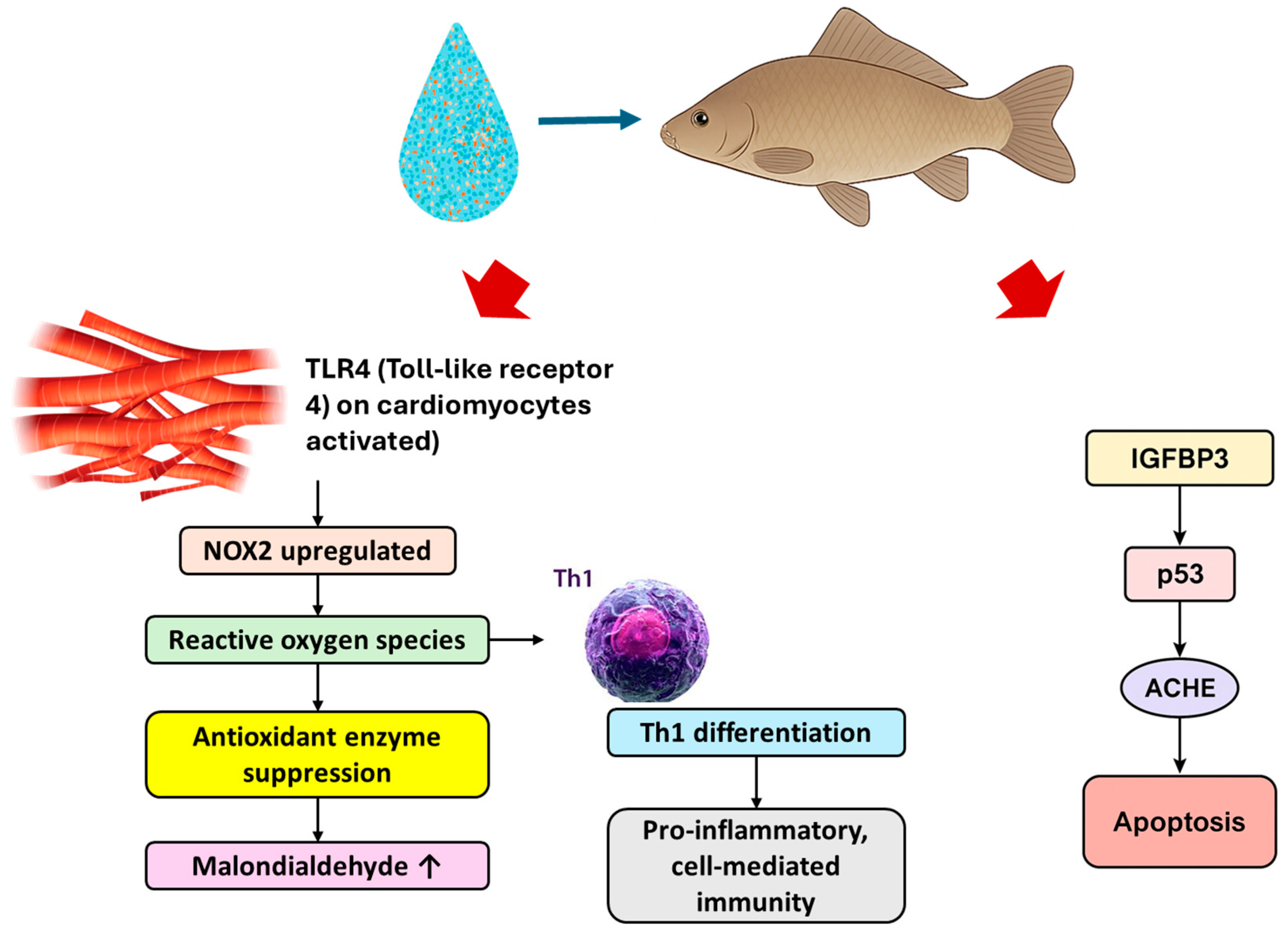
3.3.1. Comparative Studies
3.3.2. Implications
3.4. Bivalves
3.4.1. Comparative Studies
3.4.2. Implications
3.5. Terrestrial Invertebrates
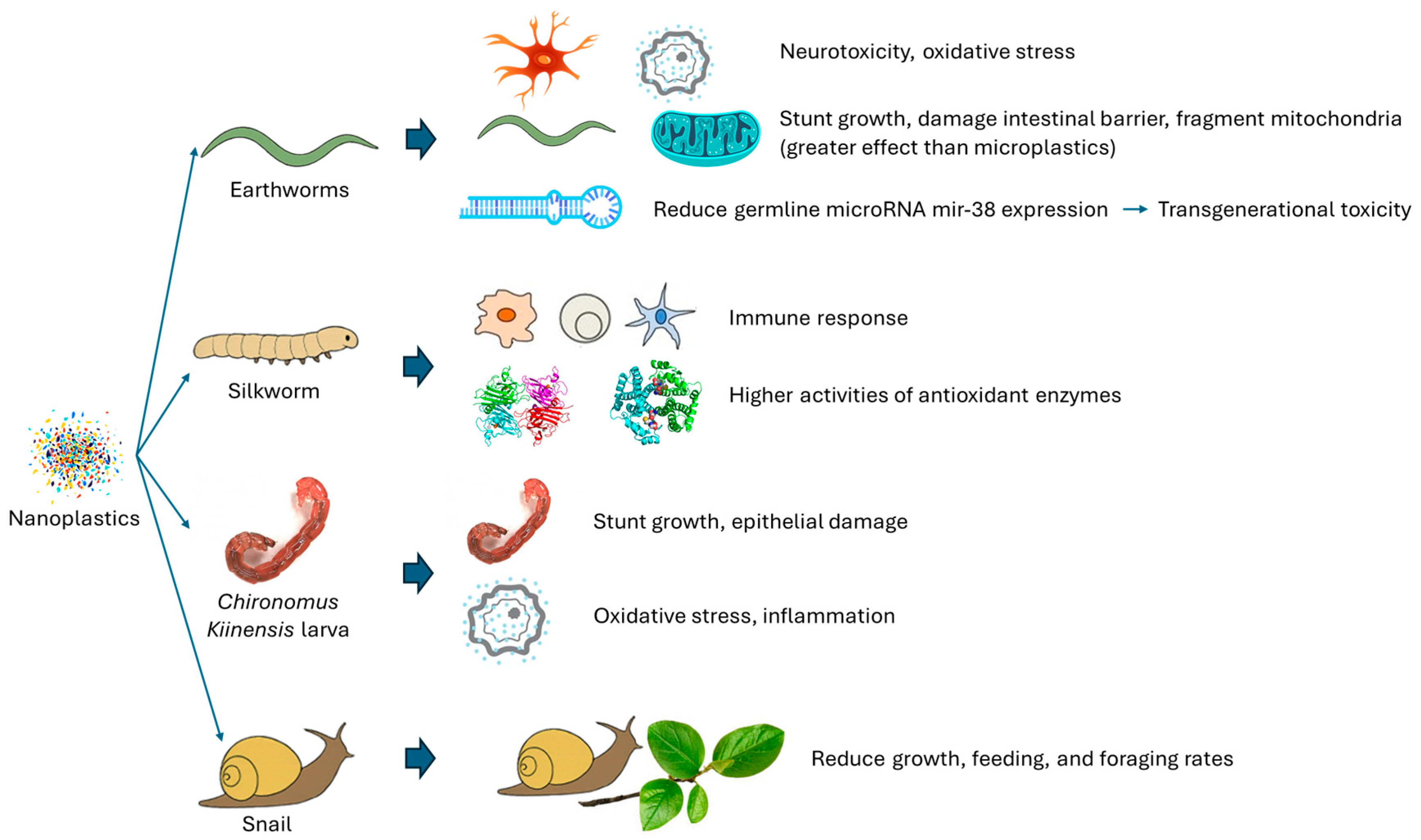
3.5.1. Comparative Studies
3.5.2. Implications
3.6. Other Aquatic Invertebrates
Implications
4. Conclusions
Funding
Data Availability Statement
Acknowledgments
Conflicts of Interest
References
- Tang, K.H.D. Microplastics in Soil: Uncovering Their Hidden Chemical Implications. Trop. Aquat. Soil Pollut. 2025, 5, 88–109. [Google Scholar] [CrossRef]
- Statista. Plastic Waste Worldwide—Statistics & Facts. Available online: https://www.statista.com/topics/5401/global-plastic-waste/#topicOverview (accessed on 15 August 2025).
- OECD. Plastics. Available online: https://www.oecd.org/en/topics/sub-issues/plastics.html? (accessed on 13 August 2025).
- Dokl, M.; Copot, A.; Krajnc, D.; Fan, Y.V.; Vujanović, A.; Aviso, K.B.; Tan, R.R.; Kravanja, Z.; Čuček, L. Global projections of plastic use, end-of-life fate and potential changes in consumption, reduction, recycling and replacement with bioplastics to 2050. Sustain. Prod. Consum. 2024, 51, 498–518. [Google Scholar] [CrossRef]
- Pinto, R.B.; van Emmerik, T.H.M.; Duah, K.; van der Ploeg, M.; Uijlenhoet, R. Mismanaged plastic waste as a predictor for river plastic pollution. Sci. Total Environ. 2024, 951, 175463. [Google Scholar] [CrossRef]
- Tang, K.H.D. Microplastics in seagrass ecosystems: A review of fate and impacts. Res. Ecol. 2024, 6, 41–53. [Google Scholar] [CrossRef]
- Rochman, C.M. Microplastics research—From sink to source. Science 2018, 360, 28–29. [Google Scholar] [CrossRef]
- Tang, K.H.D. Occurrence and Fate of Microplastics in Anaerobic Digestion of Dewatered Sludge. In Management of Micro and Nano-Plastics in Soil and Biosolids: Fate, Occurrence, Monitoring, and Remedies; Bhat, S.A., Kumar, V., Li, F., Kumar, S., Eds.; Springer Nature Switzerland: Cham, Switzerland, 2024; pp. 325–341. [Google Scholar]
- Zhang, M.; Xu, L. Transport of micro- and nanoplastics in the environment: Trojan-Horse effect for organic contaminants. Crit. Rev. Environ. Sci. Technol. 2022, 52, 810–846. [Google Scholar] [CrossRef]
- Besseling, E.; Redondo-Hasselerharm, P.; Foekema, E.M.; Koelmans, A.A. Quantifying ecological risks of aquatic micro- and nanoplastic. Crit. Rev. Environ. Sci. Technol. 2019, 49, 32–80. [Google Scholar] [CrossRef]
- UNEP. Everything You Should Know About Microplastics. Available online: https://www.unep.org/news-and-stories/story/everything-you-should-know-about-microplastics (accessed on 17 August 2025).
- Agency, E.E. Microplastics from Textiles: Towards a Circular Economy for Textiles in Europe. Available online: https://www.eea.europa.eu/en/analysis/publications/microplastics-from-textiles-towards-a-circular-economy-for-textiles-in-europe (accessed on 18 August 2025).
- Zhang, K.; Hamidian, A.H.; Tubić, A.; Zhang, Y.; Fang, J.K.H.; Wu, C.; Lam, P.K.S. Understanding plastic degradation and microplastic formation in the environment: A review. Environ. Pollut. 2021, 274, 116554. [Google Scholar] [CrossRef]
- Gerdes, Z.; Ogonowski, M.; Nybom, I.; Ek, C.; Adolfsson-Erici, M.; Barth, A.; Gorokhova, E. Microplastic-mediated transport of PCBs? A depuration study with Daphnia magna. PLoS ONE 2019, 14, e0205378. [Google Scholar] [CrossRef]
- Mitrano, D.M.; Wick, P.; Nowack, B. Placing nanoplastics in the context of global plastic pollution. Nat. Nanotechnol. 2021, 16, 491–500. [Google Scholar] [CrossRef]
- Gigault, J.; El Hadri, H.; Nguyen, B.; Grassl, B.; Rowenczyk, L.; Tufenkji, N.; Feng, S.; Wiesner, M. Nanoplastics are neither microplastics nor engineered nanoparticles. Nat. Nanotechnol. 2021, 16, 501–507. [Google Scholar] [CrossRef]
- Hartmann, N.B.; Rist, S.; Bodin, J.; Jensen, L.H.S.; Schmidt, S.N.; Mayer, P.; Meibom, A.; Baun, A. Microplastics as vectors for environmental contaminants: Exploring sorption, desorption, and transfer to biota. Integr. Environ. Assess. Manag. 2017, 13, 488–493. [Google Scholar] [CrossRef]
- Tang, K.H.D. A review of the toxic effects of microplastics based on studies on mammals and mammalian cell lines. Environ. Sci. Adv. 2024, 3, 1669–1678. [Google Scholar] [CrossRef]
- Mateos-Cárdenas, A.; van Pelt, F.N.A.M.; O’Halloran, J.; Jansen, M.A.K. Adsorption, uptake and toxicity of micro- and nanoplastics: Effects on terrestrial plants and aquatic macrophytes. Environ. Pollut. 2021, 284, 117183. [Google Scholar] [CrossRef]
- Tang, K.H.D. Combined Toxicity of Microplastics and Antimicrobials on Animals: A Review. Antibiotics 2025, 14, 896. [Google Scholar] [CrossRef]
- Gong, H.; Li, R.; Li, F.; Guo, X.; Xu, L.; Gan, L.; Yan, M.; Wang, J. Toxicity of nanoplastics to aquatic organisms: Genotoxicity, cytotoxicity, individual level and beyond individual level. J. Hazard. Mater. 2023, 443, 130266. [Google Scholar] [CrossRef]
- Tang, K.H.D. Genotoxicity of Microplastics on Living Organisms: Effects on Chromosomes, DNA and Gene Expression. Environments 2025, 12, 10. [Google Scholar] [CrossRef]
- Haldar, S.; Muralidaran, Y.; Míguez, D.; Mulla, S.I.; Mishra, P. Eco-toxicity of nano-plastics and its implication on human metabolism: Current and future perspective. Sci. Total Environ. 2023, 861, 160571. [Google Scholar] [CrossRef]
- Tang, K.H.D. Counteracting the Harms of Microplastics on Humans: An Overview from the Perspective of Exposure. Microplastics 2025, 4, 47. [Google Scholar] [CrossRef]
- Capó, X.; Company, J.J.; Alomar, C.; Compa, M.; Sureda, A.; Grau, A.; Hansjosten, B.; López-Vázquez, J.; Quintana, J.B.; Rodil, R.; et al. Long-term exposure to virgin and seawater exposed microplastic enriched-diet causes liver oxidative stress and inflammation in gilthead seabream Sparus aurata, Linnaeus 1758. Sci. Total Environ. 2021, 767, 144976. [Google Scholar] [CrossRef]
- Lim, D.; Jeong, J.; Song, K.S.; Sung, J.H.; Oh, S.M.; Choi, J. Inhalation toxicity of polystyrene micro(nano)plastics using modified OECD TG 412. Chemosphere 2021, 262, 128330. [Google Scholar] [CrossRef]
- Lee, W.S.; Cho, H.-J.; Kim, E.; Huh, Y.H.; Kim, H.-J.; Kim, B.; Kang, T.; Lee, J.-S.; Jeong, J. Bioaccumulation of polystyrene nanoplastics and their effect on the toxicity of Au ions in zebrafish embryos. Nanoscale 2019, 11, 3173–3185. [Google Scholar] [CrossRef]
- Liao, H.; Liu, J.; Gao, D.; Chen, G.; Kong, C.; Huang, X.; Wang, J. Toxicity mechanisms and alleviation strategies of micro/nanoplastics to animals: A review. TrAC Trends Anal. Chem. 2025, 182, 118061. [Google Scholar] [CrossRef]
- Urli, S.; Corte Pause, F.; Crociati, M.; Baufeld, A.; Monaci, M.; Stradaioli, G. Impact of Microplastics and Nanoplastics on Livestock Health: An Emerging Risk for Reproductive Efficiency. Animals 2023, 13, 1132. [Google Scholar] [CrossRef]
- Jiang, B.; Kauffman, A.E.; Li, L.; McFee, W.; Cai, B.; Weinstein, J.; Lead, J.R.; Chatterjee, S.; Scott, G.I.; Xiao, S. Health impacts of environmental contamination of micro- and nanoplastics: A review. Environ. Health Prev. Med. 2020, 25, 29. [Google Scholar] [CrossRef]
- Bai, C.-L.; Wang, D.; Luan, Y.-L.; Huang, S.-N.; Liu, L.-Y.; Guo, Y. A review on micro- and nanoplastics in humans: Implication for their translocation of barriers and potential health effects. Chemosphere 2024, 361, 142424. [Google Scholar] [CrossRef]
- Liu, X.; Zhao, Y.; Dou, J.; Hou, Q.; Cheng, J.; Jiang, X. Bioeffects of Inhaled Nanoplastics on Neurons and Alteration of Animal Behaviors through Deposition in the Brain. Nano Lett. 2022, 22, 1091–1099. [Google Scholar] [CrossRef]
- Liang, B.; Huang, Y.; Zhong, Y.; Li, Z.; Ye, R.; Wang, B.; Zhang, B.; Meng, H.; Lin, X.; Du, J.; et al. Brain single-nucleus transcriptomics highlights that polystyrene nanoplastics potentially induce Parkinson’s disease-like neurodegeneration by causing energy metabolism disorders in mice. J. Hazard. Mater. 2022, 430, 128459. [Google Scholar] [CrossRef] [PubMed]
- Rafiee, M.; Dargahi, L.; Eslami, A.; Beirami, E.; Jahangiri-rad, M.; Sabour, S.; Amereh, F. Neurobehavioral assessment of rats exposed to pristine polystyrene nanoplastics upon oral exposure. Chemosphere 2018, 193, 745–753. [Google Scholar] [CrossRef] [PubMed]
- Shan, S.; Zhang, Y.; Zhao, H.; Zeng, T.; Zhao, X. Polystyrene nanoplastics penetrate across the blood-brain barrier and induce activation of microglia in the brain of mice. Chemosphere 2022, 298, 134261. [Google Scholar] [CrossRef]
- Chu, C.; Zhang, Y.; Liu, Q.; Pang, Y.; Niu, Y.; Zhang, R. Identification of ceRNA network to explain the mechanism of cognitive dysfunctions induced by PS NPs in mice. Ecotoxicol. Environ. Saf. 2022, 241, 113785. [Google Scholar] [CrossRef]
- Fan, X.; Wei, X.; Hu, H.; Zhang, B.; Yang, D.; Du, H.; Zhu, R.; Sun, X.; Oh, Y.; Gu, N. Effects of oral administration of polystyrene nanoplastics on plasma glucose metabolism in mice. Chemosphere 2022, 288, 132607. [Google Scholar] [CrossRef]
- Xiao, J.; Jiang, X.; Zhou, Y.; Sumayyah, G.; Zhou, L.; Tu, B.; Qin, Q.; Qiu, J.; Qin, X.; Zou, Z.; et al. Results of a 30-day safety assessment in young mice orally exposed to polystyrene nanoparticles. Environ. Pollut. 2022, 292, 118184. [Google Scholar] [CrossRef]
- Choi, Y.J.; Park, J.W.; Lim, Y.; Seo, S.; Hwang, D.Y. In vivo impact assessment of orally administered polystyrene nanoplastics: Biodistribution, toxicity, and inflammatory response in mice. Nanotoxicology 2021, 15, 1180–1198. [Google Scholar] [CrossRef]
- Ding, Y.; Zhang, R.; Li, B.; Du, Y.; Li, J.; Tong, X.; Wu, Y.; Ji, X.; Zhang, Y. Tissue distribution of polystyrene nanoplastics in mice and their entry, transport, and cytotoxicity to GES-1 cells. Environ. Pollut. 2021, 280, 116974. [Google Scholar] [CrossRef]
- Xu, D.; Ma, Y.; Peng, C.; Gan, Y.; Wang, Y.; Chen, Z.; Han, X.; Chen, Y. Differently surface-labeled polystyrene nanoplastics at an environmentally relevant concentration induced Crohn’s ileitis-like features via triggering intestinal epithelial cell necroptosis. Environ. Int. 2023, 176, 107968. [Google Scholar] [CrossRef]
- Li, L.; Lv, X.; He, J.; Zhang, L.; Li, B.; Zhang, X.; Liu, S.; Zhang, Y. Chronic exposure to polystyrene nanoplastics induces intestinal mechanical and immune barrier dysfunction in mice. Ecotoxicol. Environ. Saf. 2024, 269, 115749. [Google Scholar] [CrossRef]
- Choi, Y.J.; Park, J.W.; Kim, J.E.; Lee, S.J.; Gong, J.E.; Jung, Y.-S.; Seo, S.; Hwang, D.Y. Novel Characterization of Constipation Phenotypes in ICR Mice Orally Administrated with Polystyrene Microplastics. Int. J. Mol. Sci. 2021, 22, 5845. [Google Scholar] [CrossRef]
- Babaei, A.A.; Rafiee, M.; Khodagholi, F.; Ahmadpour, E.; Amereh, F. Nanoplastics-induced oxidative stress, antioxidant defense, and physiological response in exposed Wistar albino rats. Environ. Sci. Pollut. Res. 2022, 29, 11332–11344. [Google Scholar] [CrossRef]
- Xu, D.; Ma, Y.; Han, X.; Chen, Y. Systematic toxicity evaluation of polystyrene nanoplastics on mice and molecular mechanism investigation about their internalization into Caco-2 cells. J. Hazard. Mater. 2021, 417, 126092. [Google Scholar] [CrossRef]
- Kamel, N.A.; Bashir, D.W.; El-Leithy, E.M.M.; Tohamy, A.F.; Rashad, M.M.; Ali, G.E.; Aa, E.-S. Screening the toxic effect of polyethylene terephthalate nanoplastics on kidney of adult male Swiss albino mice with promising betaine alleviation. J. Appl. Vet. Sci. 2024, 9, 55–66. [Google Scholar] [CrossRef]
- Nikolic, S.; Gazdic-Jankovic, M.; Rosic, G.; Miletic-Kovacevic, M.; Jovicic, N.; Nestorovic, N.; Stojkovic, P.; Filipovic, N.; Milosevic-Djordjevic, O.; Selakovic, D.; et al. Orally administered fluorescent nanosized polystyrene particles affect cell viability, hormonal and inflammatory profile, and behavior in treated mice. Environ. Pollut. 2022, 305, 119206. [Google Scholar] [CrossRef]
- Huang, T.; Zhang, W.; Lin, T.; Liu, S.; Sun, Z.; Liu, F.; Yuan, Y.; Xiang, X.; Kuang, H.; Yang, B.; et al. Maternal exposure to polystyrene nanoplastics during gestation and lactation induces hepatic and testicular toxicity in male mouse offspring. Food Chem. Toxicol. 2022, 160, 112803. [Google Scholar] [CrossRef]
- Jeong, B.; Baek, J.Y.; Koo, J.; Park, S.; Ryu, Y.-K.; Kim, K.-S.; Zhang, S.; Chung, C.; Dogan, R.; Choi, H.-S.; et al. Maternal exposure to polystyrene nanoplastics causes brain abnormalities in progeny. J. Hazard. Mater. 2022, 426, 127815. [Google Scholar] [CrossRef]
- Amereh, F.; Babaei, M.; Eslami, A.; Fazelipour, S.; Rafiee, M. The emerging risk of exposure to nano(micro)plastics on endocrine disturbance and reproductive toxicity: From a hypothetical scenario to a global public health challenge. Environ. Pollut. 2020, 261, 114158. [Google Scholar] [CrossRef]
- An, R.; Wang, X.; Yang, L.; Zhang, J.; Wang, N.; Xu, F.; Hou, Y.; Zhang, H.; Zhang, L. Polystyrene microplastics cause granulosa cells apoptosis and fibrosis in ovary through oxidative stress in rats. Toxicology 2021, 449, 152665. [Google Scholar] [CrossRef]
- Li, S.; Wang, Q.; Yu, H.; Yang, L.; Sun, Y.; Xu, N.; Wang, N.; Lei, Z.; Hou, J.; Jin, Y.; et al. Polystyrene microplastics induce blood–testis barrier disruption regulated by the MAPK-Nrf2 signaling pathway in rats. Environ. Sci. Pollut. Res. 2021, 28, 47921–47931. [Google Scholar] [CrossRef]
- Sharma, K.; Sharma, A.; Bhatnagar, P. Combined effect of polystyrene nanoplastic and di-n-butyl phthalate on testicular health of male Swiss albino mice: Analysis of sperm-related parameters and potential toxic effects. Environ. Sci. Pollut. Res. 2024, 31, 23680–23696. [Google Scholar] [CrossRef]
- Meng, X.; Zhang, J.; Wang, W.; Gonzalez-Gil, G.; Vrouwenvelder, J.S.; Li, Z. Effects of nano- and microplastics on kidney: Physicochemical properties, bioaccumulation, oxidative stress and immunoreaction. Chemosphere 2022, 288, 132631. [Google Scholar] [CrossRef]
- Cheng, Y.; Chen, J.; Fu, R.; Zhang, P.; Chen, H.; Cao, H.; Jiang, Z.; Hong, Y.; Li, Y.; He, C.; et al. Molecular mechanism differences between nanoplastics and microplastics in colon toxicity: Nanoplastics induce ferroptosis-mediated immunogenic cell death, while microplastics cause cell metabolic reprogramming. J. Nanobiotechnol. 2025, 23, 505. [Google Scholar] [CrossRef]
- Zha, H.; Xia, J.; Wang, K.; Xu, L.; Chang, K.; Li, L. Foodborne and airborne polyethersulfone nanoplastics respectively induce liver and lung injury in mice: Comparison with microplastics. Environ. Int. 2024, 183, 108350. [Google Scholar] [CrossRef]
- Jin, H.; Ma, T.; Sha, X.; Liu, Z.; Zhou, Y.; Meng, X.; Chen, Y.; Han, X.; Ding, J. Polystyrene microplastics induced male reproductive toxicity in mice. J. Hazard. Mater. 2021, 401, 123430. [Google Scholar] [CrossRef] [PubMed]
- Yang, Z.S.; Bai, Y.L.; Jin, C.H.; Na, J.; Zhang, R.; Gao, Y.; Pan, G.W.; Yan, L.J.; Sun, W. Evidence on Invasion of Blood, Adipose Tissues, Nervous System and Reproductive System of Mice After a Single Oral Exposure: Nanoplastics versus Microplastics. Biomed. Environ. Sci. 2022, 35, 1025–1037. [Google Scholar] [CrossRef]
- Wen, Y.; Cai, J.; Zhang, H.; Li, Y.; Yu, M.; Liu, J.; Han, F. The Potential Mechanisms Involved in the Disruption of Spermatogenesis in Mice by Nanoplastics and Microplastics. Biomedicines 2024, 12, 1714. [Google Scholar] [CrossRef]
- Tang, K.H.D.; Li, R.; Li, Z.; Wang, D. Health risk of human exposure to microplastics: A review. Environ. Chem. Lett. 2024, 22, 1155–1183. [Google Scholar] [CrossRef]
- Cox, K.D.; Covernton, G.A.; Davies, H.L.; Dower, J.F.; Juanes, F.; Dudas, S.E. Human Consumption of Microplastics. Environ. Sci. Technol. 2019, 53, 7068–7074. [Google Scholar] [CrossRef]
- Contino, M.; Ferruggia, G.; Indelicato, S.; Pecoraro, R.; Scalisi, E.M.; Salvaggio, A.; Brundo, M.V. Sublethal Effects of Polystyrene Nanoplastics on the Embryonic Development of Artemia salina (Linnaeus, 1758). Animals 2023, 13, 3152. [Google Scholar] [CrossRef]
- Mishra, P.; Vinayagam, S.; Duraisamy, K.; Patil, S.R.; Godbole, J.; Mohan, A.; Mukherjee, A.; Chandrasekaran, N. Distinctive impact of polystyrene nano-spherules as an emergent pollutant toward the environment. Environ. Sci. Pollut. Res. 2019, 26, 1537–1547. [Google Scholar] [CrossRef]
- Kim, L.; Cui, R.; Kwak, J.I.; An, Y.-J. Sub-acute exposure to nanoplastics via two-chain trophic transfer: From brine shrimp Artemia franciscana to small yellow croaker Larimichthys polyactis. Mar. Pollut. Bull. 2022, 175, 113314. [Google Scholar] [CrossRef]
- Machado, A.J.T.; Mataribu, B.; Serrão, C.; da Silva Silvestre, L.; Farias, D.F.; Bergami, E.; Corsi, I.; Marques-Santos, L.F. Single and combined toxicity of amino-functionalized polystyrene nanoparticles with potassium dichromate and copper sulfate on brine shrimp Artemia franciscana larvae. Environ. Sci. Pollut. Res. 2021, 28, 45317–45334. [Google Scholar] [CrossRef]
- Sendra, M.; Sparaventi, E.; Blasco, J.; Moreno-Garrido, I.; Araujo, C.V.M. Ingestion and bioaccumulation of polystyrene nanoplastics and their effects on the microalgal feeding of Artemia franciscana. Ecotoxicol. Environ. Saf. 2020, 188, 109853. [Google Scholar] [CrossRef]
- Varó, I.; Perini, A.; Torreblanca, A.; Garcia, Y.; Bergami, E.; Vannuccini, M.L.; Corsi, I. Time-dependent effects of polystyrene nanoparticles in brine shrimp Artemia franciscana at physiological, biochemical and molecular levels. Sci. Total Environ. 2019, 675, 570–580. [Google Scholar] [CrossRef]
- Bergami, E.; Pugnalini, S.; Vannuccini, M.L.; Manfra, L.; Faleri, C.; Savorelli, F.; Dawson, K.A.; Corsi, I. Long-term toxicity of surface-charged polystyrene nanoplastics to marine planktonic species Dunaliella tertiolecta and Artemia franciscana. Aquat. Toxicol. 2017, 189, 159–169. [Google Scholar] [CrossRef]
- Hsieh, S.-L.; Hsieh, S.; Xu, R.-Q.; Chen, Y.-T.; Chen, C.-W.; Singhania, R.R.; Chen, Y.-C.; Tsai, T.-H.; Dong, C.-D. Toxicological effects of polystyrene nanoplastics on marine organisms. Environ. Technol. Innov. 2023, 30, 103073. [Google Scholar] [CrossRef]
- Wang, L.; Zhu, Q.; Hu, M.; Zhou, X.; Guan, T.; Wu, N.; Zhu, C.; Wang, H.; Wang, G.; Li, J. Toxic mechanisms of nanoplastics exposure at environmental concentrations on juvenile red swamp crayfish (Procambarus clarkii): From multiple perspectives. Environ. Pollut. 2024, 352, 124125. [Google Scholar] [CrossRef]
- Pikuda, O.; Dumont, E.R.; Matthews, S.; Xu, E.G.; Berk, D.; Tufenkji, N. Sub-lethal effects of nanoplastics upon chronic exposure to Daphnia magna. J. Hazard. Mater. Adv. 2022, 7, 100136. [Google Scholar] [CrossRef]
- Pochelon, A.; Stoll, S.; Slaveykova, V.I. Polystyrene Nanoplastic Behavior and Toxicity on Crustacean Daphnia magna: Media Composition, Size, and Surface Charge Effects. Environments 2021, 8, 101. [Google Scholar] [CrossRef]
- Heinlaan, M.; Viljalo, K.; Richter, J.; Ingwersen, A.; Vija, H.; Mitrano, D.M. Multi-generation exposure to polystyrene nanoplastics showed no major adverse effects in Daphnia magna. Environ. Pollut. 2023, 323, 121213. [Google Scholar] [CrossRef]
- Han, M.; Zhu, T.; Zhou, Z.; Si, Q.; Zhu, C.; Li, Y.; Jiang, Q. Effects of different concentrations and particle sizes of nanoplastics on gut microbiology, metabolism, and immunity in Chiromantes dehaani. Fish Shellfish Immunol. 2024, 147, 109461. [Google Scholar] [CrossRef]
- Pashaei, R.; Dzingelevičienė, R.; Putna-Nimane, I.; Overlinge, D.; Błaszczyk, A.; Walker, T.R. Acute toxicity of triclosan, caffeine, nanoplastics, microplastics, and their mixtures on Daphnia magna. Mar. Pollut. Bull. 2023, 192, 115113. [Google Scholar] [CrossRef] [PubMed]
- Sun, Z.; Wu, B.; Yi, J.; Yu, H.; He, J.; Teng, F.; Xi, T.; Zhao, J.; Ruan, J.; Xu, P.; et al. Impacts of Environmental Concentrations of Nanoplastics on Zebrafish Neurobehavior and Reproductive Toxicity. Toxics 2024, 12, 617. [Google Scholar] [CrossRef]
- Sarasamma, S.; Audira, G.; Siregar, P.; Malhotra, N.; Lai, Y.-H.; Liang, S.-T.; Chen, J.-R.; Chen, K.H.C.; Hsiao, C.-D. Nanoplastics Cause Neurobehavioral Impairments, Reproductive and Oxidative Damages, and Biomarker Responses in Zebrafish: Throwing up Alarms of Wide Spread Health Risk of Exposure. Int. J. Mol. Sci. 2020, 21, 1410. [Google Scholar] [CrossRef]
- Elizalde-Velázquez, A.; Crago, J.; Zhao, X.; Green, M.J.; Cañas-Carrell, J.E. In vivo effects on the immune function of fathead minnow (Pimephales promelas) following ingestion and intraperitoneal injection of polystyrene nanoplastics. Sci. Total Environ. 2020, 735, 139461. [Google Scholar] [CrossRef]
- Wang, Q.; Huang, F.; Liang, K.; Niu, W.; Duan, X.; Jia, X.; Wu, X.; Xu, P.; Zhou, L. Polystyrene nanoplastics affect digestive function and growth in juvenile groupers. Sci. Total Environ. 2022, 808, 152098. [Google Scholar] [CrossRef]
- Pang, M.; Wang, Y.; Tang, Y.; Dai, J.; Tong, J.; Jin, G. Transcriptome sequencing and metabolite analysis reveal the toxic effects of nanoplastics on tilapia after exposure to polystyrene. Environ. Pollut. 2021, 277, 116860. [Google Scholar] [CrossRef]
- Wu, H.; Guo, J.; Yao, Y.; Xu, S. Polystyrene nanoplastics induced cardiomyocyte apoptosis and myocardial inflammation in carp by promoting ROS production. Fish Shellfish Immunol. 2022, 125, 1–8. [Google Scholar] [CrossRef]
- Chen, M.; Yue, Y.; Bao, X.; Feng, X.; Ou, Z.; Qiu, Y.; Yang, K.; Yang, Y.; Yu, Y.; Yu, H. Effects of polystyrene nanoplastics on oxidative stress, histopathology and intestinal microbiota in largemouth bass (Micropterus salmoides). Aquac. Rep. 2022, 27, 101423. [Google Scholar] [CrossRef]
- Yang, H.; Xiong, H.; Mi, K.; Xue, W.; Wei, W.; Zhang, Y. Toxicity comparison of nano-sized and micron-sized microplastics to Goldfish Carassius auratus Larvae. J. Hazard. Mater. 2020, 388, 122058. [Google Scholar] [CrossRef]
- Ding, J.; Huang, Y.; Liu, S.; Zhang, S.; Zou, H.; Wang, Z.; Zhu, W.; Geng, J. Toxicological effects of nano- and micro-polystyrene plastics on red tilapia: Are larger plastic particles more harmless? J. Hazard. Mater. 2020, 396, 122693. [Google Scholar] [CrossRef]
- Zheng, S.; Tang, B.Z.; Wang, W.-X. Microplastics and nanoplastics induced differential respiratory damages in tilapia fish Oreochromis niloticus. J. Hazard. Mater. 2024, 465, 133181. [Google Scholar] [CrossRef]
- Huang, J.-N.; Wen, B.; Xu, L.; Ma, H.-C.; Li, X.-X.; Gao, J.-Z.; Chen, Z.-Z. Micro/nano-plastics cause neurobehavioral toxicity in discus fish (Symphysodon aequifasciatus): Insight from brain-gut-microbiota axis. J. Hazard. Mater. 2022, 421, 126830. [Google Scholar] [CrossRef]
- Li, R.; Nie, J.; Qiu, D.; Li, S.; Sun, Y.; Wang, C. Toxic effect of chronic exposure to polyethylene nano/microplastics on oxidative stress, neurotoxicity and gut microbiota of adult zebrafish (Danio rerio). Chemosphere 2023, 339, 139774. [Google Scholar] [CrossRef] [PubMed]
- Hamed, M.; Martyniuk, C.J.; Naguib, M.; Lee, J.-S.; Sayed, A.E.-D.H. Neurotoxic effects of different sizes of plastics (nano, micro, and macro) on juvenile common carp (Cyprinus carpio). Front. Mol. Neurosci. 2022, 15, 1028364. [Google Scholar] [CrossRef] [PubMed]
- Chu, T.; Zhang, R.; Guo, F.; Zhu, M.; Zan, S.; Yang, R. The toxicity of polystyrene micro- and nano-plastics on rare minnow (Gobiocypris rarus) varies with the particle size and concentration. Aquat. Toxicol. 2024, 269, 106879. [Google Scholar] [CrossRef]
- Chen, Q.; Gundlach, M.; Yang, S.; Jiang, J.; Velki, M.; Yin, D.; Hollert, H. Quantitative investigation of the mechanisms of microplastics and nanoplastics toward zebrafish larvae locomotor activity. Sci. Total Environ. 2017, 584–585, 1022–1031. [Google Scholar] [CrossRef]
- Bhagat, J.; Zang, L.; Nishimura, N.; Shimada, Y. Zebrafish: An emerging model to study microplastic and nanoplastic toxicity. Sci. Total Environ. 2020, 728, 138707. [Google Scholar] [CrossRef]
- Pedersen, A.F.; Meyer, D.N.; Petriv, A.-M.V.; Soto, A.L.; Shields, J.N.; Akemann, C.; Baker, B.B.; Tsou, W.-L.; Zhang, Y.; Baker, T.R. Nanoplastics impact the zebrafish (Danio rerio) transcriptome: Associated developmental and neurobehavioral consequences. Environ. Pollut. 2020, 266, 115090. [Google Scholar] [CrossRef]
- Zhou, Y.; Wu, C.; Li, Y.; Jiang, H.; Miao, A.; Liao, Y.; Pan, K. Effects of nanoplastics on clam Ruditapes philippinarum at environmentally realistic concentrations: Toxicokinetics, toxicity, and gut microbiota. J. Hazard. Mater. 2023, 456, 131647. [Google Scholar] [CrossRef]
- Arini, A.; Gigault, J.; Venel, Z.; Bertucci, A.; Baudrimont, M. The underestimated toxic effects of nanoplastics coming from marine sources: A demonstration on oysters (Isognomon alatus). Chemosphere 2022, 295, 133824. [Google Scholar] [CrossRef]
- Auguste, M.; Balbi, T.; Ciacci, C.; Canonico, B.; Papa, S.; Borello, A.; Vezzulli, L.; Canesi, L. Shift in Immune Parameters After Repeated Exposure to Nanoplastics in the Marine Bivalve Mytilus. Front. Immunol. 2020, 11, 426. [Google Scholar] [CrossRef]
- Liu, Q.; Zheng, H.; Luan, L.; Luo, X.; Wang, X.; Lu, H.; Li, Y.; Wen, L.; Li, F.; Zhao, J. Functionalized polystyrene nanoplastic-induced energy homeostasis imbalance and the immunomodulation dysfunction of marine clams (Meretrix meretrix) at environmentally relevant concentrations. Environ. Sci. Nano 2021, 8, 2030–2048. [Google Scholar] [CrossRef]
- Wang, X.; Shao, S.; Zhang, T.; Zhang, Q.; Yang, D.; Zhao, J. Effects of exposure to nanoplastics on the gill of mussels Mytilus galloprovincialis: An integrated perspective from multiple biomarkers. Mar. Environ. Res. 2023, 191, 106174. [Google Scholar] [CrossRef]
- Cole, M.; Galloway, T.S. Ingestion of Nanoplastics and Microplastics by Pacific Oyster Larvae. Environ. Sci. Technol. 2015, 49, 14625–14632. [Google Scholar] [CrossRef]
- Latchere, O.; Roman, C.; Métais, I.; Perrein-Ettajani, H.; Mouloud, M.; Georges, D.; Feurtet-Mazel, A.; Gigault, J.; Catrouillet, C.; Baudrimont, M.; et al. Toxicity assessment of environmental MPs and NPs and polystyrene NPs on the bivalve Corbicula fluminea using a multi-marker approach. Comp. Biochem. Physiol. Part C Toxicol. Pharmacol. 2023, 273, 109714. [Google Scholar] [CrossRef] [PubMed]
- Qi, P.; Qiu, L.; Feng, D.; Gu, Z.; Guo, B.; Yan, X. Distinguish the toxic differentiations between acute exposure of micro- and nano-plastics on bivalves: An integrated study based on transcriptomic sequencing. Aquat. Toxicol. 2023, 254, 106367. [Google Scholar] [CrossRef] [PubMed]
- Capolupo, M.; Valbonesi, P.; Fabbri, E. A Comparative Assessment of the Chronic Effects of Micro- and Nano-Plastics on the Physiology of the Mediterranean Mussel Mytilus galloprovincialis. Nanomaterials 2021, 11, 649. [Google Scholar] [CrossRef] [PubMed]
- Jeong, A.; Park, S.J.; Lee, E.J.; Kim, K.W. Nanoplastics exacerbate Parkinson’s disease symptoms in C. elegans and human cells. J. Hazard. Mater. 2024, 465, 133289. [Google Scholar] [CrossRef]
- Liu, H.; Tian, L.; Wang, S.; Wang, D. Size-dependent transgenerational toxicity induced by nanoplastics in nematode Caenorhabditis elegans. Sci. Total Environ. 2021, 790, 148217. [Google Scholar] [CrossRef]
- Hua, X.; Zhao, Y.; Yuan, Y.; Zhang, L.; Bian, Q.; Wang, D. Nanoplastics cause transgenerational toxicity through inhibiting germline microRNA mir-38 in C. elegans. J. Hazard. Mater. 2022, 437, 129302. [Google Scholar] [CrossRef]
- Muhammad, A.; Zhou, X.; He, J.; Zhang, N.; Shen, X.; Sun, C.; Yan, B.; Shao, Y. Toxic effects of acute exposure to polystyrene microplastics and nanoplastics on the model insect, silkworm Bombyx mori. Environ. Pollut. 2021, 285, 117255. [Google Scholar] [CrossRef]
- Zhang, J.; Ma, C.; Xia, X.; Li, Y.; Lin, X.; Zhang, Y.; Yang, Z. Differentially Charged Nanoplastics Induce Distinct Effects on the Growth and Gut of Benthic Insects (Chironomus kiinensis) via Charge-Specific Accumulation and Perturbation of the Gut Microbiota. Environ. Sci. Technol. 2023, 57, 11218–11230. [Google Scholar] [CrossRef]
- Chae, Y.; An, Y.-J. Nanoplastic ingestion induces behavioral disorders in terrestrial snails: Trophic transfer effects via vascular plants. Environ. Sci. Nano 2020, 7, 975–983. [Google Scholar] [CrossRef]
- Urbisz, A.Z.; Małota, K.; Chajec, Ł.; Sawadro, M.K. Size-dependent and sex-specific negative effects of micro- and nano-sized polystyrene particles in the terrestrial invertebrate model Drosophila melanogaster. Micron 2024, 176, 103560. [Google Scholar] [CrossRef]
- Lei, L.; Liu, M.; Song, Y.; Lu, S.; Hu, J.; Cao, C.; Xie, B.; Shi, H.; He, D. Polystyrene (nano)microplastics cause size-dependent neurotoxicity, oxidative damage and other adverse effects in Caenorhabditis elegans. Environ. Sci. Nano 2018, 5, 2009–2020. [Google Scholar] [CrossRef]
- Wu, Y.; Tan, X.; Shi, X.; Han, P.; Liu, H. Combined Effects of Micro- and Nanoplastics at the Predicted Environmental Concentration on Functional State of Intestinal Barrier in Caenorhabditis elegans. Toxics 2023, 11, 653. [Google Scholar] [CrossRef]
- Kumar, B.P.; Vijayakumar, S.; Thomas, J. Effect of polystyrene nanoplastics on its toxicity and reproduction in Philodina roseola. Sci. Rep. 2025, 15, 14206. [Google Scholar] [CrossRef]
- Zeng, F.; Wang, L.; Zhen, H.; Guo, C.; Liu, A.; Xia, X.; Pei, H.; Dong, C.; Ding, J. Nanoplastics affect the growth of sea urchins (Strongylocentrotus intermedius) and damage gut health. Sci. Total Environ. 2023, 869, 161576. [Google Scholar] [CrossRef]
- Baranzini, N.; Pulze, L.; Bon, C.; Izzo, L.; Pragliola, S.; Venditto, V.; Grimaldi, A. Hirudo verbana as a freshwater invertebrate model to assess the effects of polypropylene micro and nanoplastics dispersion in freshwater. Fish Shellfish Immunol. 2022, 127, 492–507. [Google Scholar] [CrossRef]
- Silva, M.S.S.; Oliveira, M.; Valente, P.; Figueira, E.; Martins, M.; Pires, A. Behavior and biochemical responses of the polychaeta Hediste diversicolor to polystyrene nanoplastics. Sci. Total Environ. 2020, 707, 134434. [Google Scholar] [CrossRef]
- Cesarini, G.; Coppola, F.; Campos, D.; Venditti, I.; Battocchio, C.; Di Giulio, A.; Muzzi, M.; Pestana, J.L.T.; Scalici, M. Nanoplastic exposure inhibits feeding and delays regeneration in a freshwater planarian. Environ. Pollut. 2023, 332, 121959. [Google Scholar] [CrossRef]



| Target System/Aspect | Nanoplastic Type/Size | Exposure Route and Dose | Key Findings | Reference |
|---|---|---|---|---|
| Brain and behavior | Polystyrene, 80 nm (carboxyl-/amino-functionalized) | Inhalation (aerosol), dose not reported | Crossed brain tissue; reduced locomotor activity; suppressed acetylcholinesterase activity (neurotoxicity) | [32] |
| Polystyrene, 50 nm | Oral, 0.25–250 mg/kg, 28 days | Parkinson’s-like neurodegeneration; mitochondrial dysfunction; excitatory neurons most vulnerable; astrocyte/microglia inflammation | [33] | |
| Polystyrene, ~39 nm | Oral (rats), 1–10 mg/kg/day, 5 weeks | No major behavioral changes; subtle anxiety-related behavior shifts (↑ entries in elevated plus maze) | [34] | |
| Polystyrene, 50 nm | Oral, 0.5–50 mg/kg, 7 days | Crossed blood–brain barrier; microglial activation; neuronal damage; ↑ reactive oxygen species, NF-κB activation, TNF-α release, necroptosis | [35] | |
| Polystyrene, 25 nm | Oral, 0–50 mg/kg, 6 months | Cognitive decline; reactive oxygen species ↑; DNA damage; altered expression of mRNAs, miRNAs, circRNAs; synaptic dysfunction | [36] | |
| Digestive system and kidneys | Polystyrene, 80 nm | Oral, 5 and 15 mg/kg | Accumulated in liver, kidneys, pancreas; disrupted lipid metabolism, insulin resistance; ↑ reactive oxygen species, glucose | [37] |
| PS, ~50 nm | Oral, 0–10 mg/kg, 30 days | Altered gut microbiota and mucus-related genes; no inflammation or oxidative stress in major organs | [38] | |
| PS, ~80 nm and 500 nm | Oral, 5–50 mg/kg, 2 weeks | Accumulated in intestine > kidneys > liver; ↑ iNOS, COX-2, cytokines, reactive oxygen species, superoxide dismutase activity, Nrf2 expression | [39] | |
| Polystyrene, 60 nm | Oral gavage 50 µg/mL; in vitro GES-1 cells | Detected in stomach, intestines, liver; entered cells via endocytosis; induced apoptosis, autophagy, lysosomal disruption | [40] | |
| Polystyrene, ~100 nm (functionalized/unmodified) | Oral, 1 mg/day, 28 days | Crohn’s-like ileitis; intestinal epithelial necroptosis (RIPK3/MLKL); impaired mitophagy (lysosomal dysfunction) | [41] | |
| Polystyrene, 50 nm | Drinking water, 0.1–10 mg/L, 32 weeks | Intestinal barrier damage (↓ tight junctions); villus erosion; oxidative stress; immune disruption (↑ B cells, ↓ CD8+ T cells) | [42] | |
| Polystyrene, 500 nm | Oral, 10–100 µg/L, 2 weeks | Constipation; ↓ stool weight/moisture; colon structure changes; ↓ AQP3/8, CFTR; MAPK/NF-κB pathway activation | [43] | |
| Systemic | Polystyrene, 25–50 nm | Oral, 1–10 mg/kg/day, 5 weeks | Increased reactive oxygen species; altered liver/kidney markers; disrupted energy metabolism; stress-related biochemical changes | [44] |
| Polystyrene, ~100 nm | Oral, 10 mg/mL, 100 µL, 28 days | Accumulated in multiple organs; inflammation, apoptosis, lipid metabolism disruption; functionalized polystyrene more toxic | [45] | |
| PET, ~96 nm | Oral, 200 mg/kg, 30 days | Kidney damage (renal corpuscles/tubules degeneration); ↑ blood urea nitrogen, creatinine, malondialdehyde; ↓ glutathione | [46] | |
| Polystyrene, 40 and 200 nm | Oral, 0.01–0.1 mg/day | Accumulated in organs; male testis toxicity (↓ testosterone, abnormal sperm); immune disruption; anxiety-like behavior | [47] | |
| Transgenerational | Polystyrene, 100 nm | Maternal, 0.1–10 mg/L | Reduced offspring body weight; male offspring liver damage, oxidative stress; impaired testis development and sperm count | [48] |
| Polystyrene, 50 and 500 nm | Maternal, 0.5–1000 µg/day | Impaired neural stem cell function; altered brain structure in offspring; sex-specific neurocognitive deficits | [49] | |
| Reproductive system | Polystyrene, ~39 nm | Oral (rats), 1–10 mg/kg/day, 5 weeks | Decreased testosterone, luteinizing hormone, follicle-stimulating hormone; sperm DNA damage; abnormal sperm morphology; disrupted hypothalamic-pituitary axis | [50] |
| Polystyrene, 0.5 µm | Oral (rats), ≤1.5 mg/d, 90 days | Ovarian fibrosis; ↓ follicles and anti-Müllerian hormone; granulosa cell apoptosis via Wnt/β-catenin; NAC mitigated toxicity | [51] | |
| Polystyrene, 500 nm | Oral (rats), 0–1.5 mg/day, 90 days | Damaged seminiferous tubules; sperm apoptosis; impaired BTB integrity via MAPK/Nrf2 suppression | [52] | |
| Polystyrene, 50 nm | Oral, 0.2 mg/mL, 60 days | Lower body/testis weight; poor sperm quality; Leydig cell hyperplasia; vascular congestion; structural damage | [53] |
| Target System/Aspect | Nanoplastic Type/Size | Exposure Route and Dose | Key Findings | Reference |
|---|---|---|---|---|
| Comparative (nanoplastics and microplastics) | Polystyrene, 50–600 nm vs. 4 µm | Oral, 5 mg, 24 h | All accumulated in kidneys; 600 nm most toxic; oxidative stress and inflammation; weight loss, mortality | [54] |
| Polystyrene, 100 nm vs. 10 µm | Oral, 0.1 mg/day, 7 weeks | Nanoplastics → oxidative stress and ferroptosis (Fosl1/p53/GPX4 axis); microplastics → mechanical injury, inflammation (YAP) | [55] | |
| Polyethersulfone, 50 nm vs. 5 µm | Oral 5 mg/kg, airborne 0.75 mg/kg | Disrupted gut/lung microbiota; liver/lung injury; nanoplastics caused more severe toxicity than microplastics | [56] | |
| Polystyrene, 0.5–10 µm | Oral 10 mg/mL, 28 days | Decreased sperm quality/testosterone; seminiferous tubule damage; BTB disruption | [57] | |
| Polystyrene, 100 nm vs. 3–10 µm | Oral, 200 mg/kg | Nanoplastics distributed widely (blood, brain, reproductive organs); microplastics showed limited tissue penetration | [58] | |
| Polystyrene, 80 nm vs. 5 µm | Oral, 40 mg/kg/d | Reduced spermatocyte numbers in the seminiferous tubules; polystyrene microplastics affected retinoic acid metabolism and polystyrene nanoplastics affected pyruvate and thyroid hormone metabolism | [59] |
| Species | Nanoplastic Type/Size | Concentration and Duration | Main Effects | Key Implications | Ref. |
|---|---|---|---|---|---|
| Zebrafish (D. rerio) | Polystyrene, 50 nm | 1 mg/L; 21 days | Increased anxiety and depression-like behavior; brain damage, oxidative stress, inflammation, hormonal imbalance, gonadal injury; disrupted brain–pituitary–gonadal axis | Neuroendocrine and reproductive toxicity, with sex-dependent effects | [76] |
| Zebrafish (D. rerio) | Polystyrene, ~70 nm | 0.5 and 1.5 ppm; 7 days and 7 weeks | Nanoplastic accumulation in brain, liver, intestine, and gonads; disrupted lipid/energy metabolism; oxidative stress; behavioral alterations (locomotion, aggression, shoaling, circadian rhythm) | Long-term neurobehavioral and metabolic disruption; reproductive risk | [77] |
| Fathead minnow (P. promelas) | Polystyrene, 50 nm | 5 µg/L (injection, ingestion); 48 h | Downregulation of immune genes (ncf, mst1, c3); immunotoxicity in liver and head kidney | Impaired immune function through realistic exposure routes | [78] |
| Orange-spotted grouper (E. coioides) | Polystyrene, 100 nm | 300 and 3000 µg/mL; 14 days | Reduced digestive enzyme activity; gut dysbiosis (↑ Vibrio, Aliivibrio); reduced growth | Gut microbial and digestive impairment; growth inhibition | [79] |
| Tilapia (O. niloticus) | Polystyrene, 100 nm | 20 mg/L; 7 days + 7-day recovery | 2152 differentially expressed genes, 203 altered metabolites; disturbed glycolipid and amino acid metabolism; inflammatory and olfactory pathway changes | Persistent transcriptomic and metabolic toxicity | [80] |
| Common carp (C. carpio) | Polystyrene, 50–400 nm | 1000 µg/L; 28 days | Myocardial inflammation and apoptosis; ↑ TLR4, NOX2, reactive oxygen species, malondialdehyde; ↓ antioxidant enzymes; Th1 immune shift | Size-dependent oxidative stress and cardiac inflammation | [81] |
| Largemouth bass (M. salmoides) | Polystyrene, 100 nm | 10 and 100 µg/L; 7–19 days | Gill, liver, and intestinal histological alterations; transient oxidative stress; no growth effect | Sublethal tissue injury despite stable growth | [82] |
| Comparative studies | |||||
| Goldfish larvae (Carassius auratus) | Polystyrene nanoplastics 70 nm vs. microplastics 50 µm | 10–1000 µg/L; 1–7 days | Oxidative stress, tissue damage; nanoplastics penetrated muscle, damaged nerves, inhibited acetylcholinesterase; impaired swimming | Nanoplastics more neurotoxic and invasive than microplastics | [83] |
| Red tilapia (Oreochromis sp.) | Polystyrene nanoplastics (0.3 µm) vs. microplastics (5–70 µm) | 92–112 µg/L; 14 days | Microplastics caused greater oxidative stress; nanoplastics inhibited CYP3A; brain acetylcholinesterase reduced by 5 µm microplastics | Mixed size-dependent responses; microplastics sometimes more harmful | [84] |
| Tilapia (O. niloticus) | PS, 80 nm–20 µm | 100 µg/L; 28 days | Respiratory damage (2–20 µm > 80 nm); disrupted tricarboxylic acid cycle; cytokine/chemokine upregulation | Larger plastics induced greater respiratory and metabolic stress | [85] |
| Discus fish (S. aequifasciatus) | Nanoplastics ~88 nm and microfibers 900 µm | 0–200 µg/L; 96 h | Nanoplastics reduced swimming/predation; altered neurotransmitters; shifted gut microbiota; altered neural gene expression | Nanoplastics disrupted gut–brain axis and neural signaling | [86] |
| Zebrafish (adult) | Polyethylene nanoplastics 70 nm vs. microplastics 13.5 µm | 20 μg/mL; 21 days | Neurotoxicity and gut microbiota disturbance; no significant size-based difference | Comparable neurotoxicity from both nanoplastic and microplastic exposure | [87] |
| Common carp (C. carpio) | Polyethylene nano–micro–macro | 100 mg/L; 15 days | Decreased brain acetylcholinesterase, monoamine oxidase, and NO (30–40%); necrosis and tissue degeneration (brain, retina) | Size-dependent neurotoxicity (NP > MP > macro) | [88] |
| Rare minnow (G. rarus) | Polystyrene nanoplastics 100 nm vs. microplastics 1 µm | 1 and 10 mg/L; 14 days | Reduced growth; histopathological lesions; oxidative stress; altered gut microbiota | Both sizes disrupt gut and tissue integrity | [89] |
| Zebrafish larvae (D. rerio) | Polystyrene nanoplastics 50 nm vs. microplastics 45 µm | 1 mg/L; 48–72 h | Nanoplastics reduced movement (−22%), acetylcholinesterase activity (−40%); altered neural and visual gene expression | Nanoplastics caused greater neurodevelopmental impairment | [90] |
| Species | Nanoplastic Type/Size | Concentration and Duration | Main Effects | Key Implications | Ref. |
|---|---|---|---|---|---|
| Manila clam (R. philippinarum) | Pd-doped polystyrene nanoplastics (139.5 nm, +43.8 mV) | 0.02 and 2 mg·L−1, 14 days | Accumulated up to 137.9 mg·kg−1; high dose induced reactive oxygen species, lipid peroxidation, apoptosis, and tissue damage; altered gut microbiota at low dose | Environmentally realistic levels disrupt intestinal microbiota without overt toxicity; high concentrations cause oxidative and apoptotic stress | [93] |
| Caribbean swamp oyster (I. alatus) | Environmental nanoplastics (polyethylene, polypropylene; 280 nm) and polystyrene nanoplastics (260 nm) ± As (1 mg·L−1) | 7.5 and 15 μg·L−1, 7 days | Environmental nanoplastics (nanoplastics-G) caused stronger molecular responses than polystyrene nanoplastics; with As, strong upregulation of p53 and bax (up to 59-fold), suppression of cat and sod1 | Environmentally derived nanoplastics more toxic than synthetic; co-exposure with metals enhances oxidative and apoptotic stress | [94] |
| Mediterranean mussel (M. galloprovincialis) | Amino-modified polystyrene nanoplastics (50 nm) | 10 μg·L−1, 24 h × 2 (72 h interval) | First exposure caused mitochondrial and lysosomal stress, reduced lysozyme, altered gene expression; re-exposure restored function and enhanced immune gene expression | Repeated exposure induces adaptive immune modulation; transient cellular stress followed by immune recovery | [95] |
| Asian clam (Meretrix meretrix) | Amino- and carboxyl-modified polystyrene nanoplastics | 0.02–2 mg·L−1, 21 days | Non-lethal but caused inflammation, growth inhibition, lysosomal destabilization, impaired phagocytosis; affected TLR, NF-κB, phagosome, lysosome pathways | Energy imbalance and immune dysregulation underlie growth inhibition; chronic exposure affects multiple biological levels | [96] |
| Mussel (M. galloprovincialis) | Polystyrene nanoplastics (100 nm) | 0.5 and 5 mg·L−1, 7 days | Increased total antioxidant capacity, inhibited acetylcholinesterase, disturbed Na+/K+-ATPase and key metabolic enzymes, altered lipids | Disrupted ion regulation, oxidative balance, and energy metabolism in gills | [97] |
| Comparative studies | |||||
| Pacific oyster larvae (M. gigas) | Polystyrene (70 nm–20 µm; varied surface) | <100 particles/mL, ≤8 days | Nanoplastics (<1 µm) ingested and internalized; larger particles less likely to cross gut; no developmental or feeding effects | Nano-sized polystyrene can cross gut barrier; environmental concentrations unlikely to cause acute effects | [98] |
| Asian clam (C. fluminea) | Polystyrene nanoplastics (200 nm) and environmental micro-/nanoplastics (1.2–300 µm; 235 nm) | 0.008–100 μg·L−1, 21 days | Environmental nanoplastics most toxic, impairing detoxification and immunity; microplastics less harmful; low/intermediate concentrations caused strongest effects | Manufactured nanoplastics may underestimate environmental risk; complex size-dependent responses | [99] |
| Thick-shelled mussel (M. coruscus) | Polystyrene nanoplastics (100 nm) and microplastics (1 µm) | 10–100 mg·L−1, 2 days | Nanoplastics strongly induced inflammation, reactive oxygen species, antioxidant responses, and stress-related gene expression; microplastics caused mild responses | Nanoplastics more bioavailable and inflammatory than microplastics | [100] |
| Mediterranean mussel (M. galloprovincialis | Polystyrene nanoplastics (50 nm) vs. microplastics (3 µm) | 1.5, 15, 150 ng·L−1, 21 days | Nanoplastics caused stronger lysosomal stress, lipid peroxidation, elevated catalase, glutathione S-transferase, and lysozyme; microplastics reduced phagocytosis | Nanoplastics more immunotoxic and neurotoxic than microplastics | [101] |
Disclaimer/Publisher’s Note: The statements, opinions and data contained in all publications are solely those of the individual author(s) and contributor(s) and not of MDPI and/or the editor(s). MDPI and/or the editor(s) disclaim responsibility for any injury to people or property resulting from any ideas, methods, instructions or products referred to in the content. |
© 2025 by the author. Licensee MDPI, Basel, Switzerland. This article is an open access article distributed under the terms and conditions of the Creative Commons Attribution (CC BY) license (https://creativecommons.org/licenses/by/4.0/).
Share and Cite
Tang, K.H.D. Toxic Effects of Nanoplastics on Animals: Comparative Insights into Microplastic Toxicity. Environments 2025, 12, 429. https://doi.org/10.3390/environments12110429
Tang KHD. Toxic Effects of Nanoplastics on Animals: Comparative Insights into Microplastic Toxicity. Environments. 2025; 12(11):429. https://doi.org/10.3390/environments12110429
Chicago/Turabian StyleTang, Kuok Ho Daniel. 2025. "Toxic Effects of Nanoplastics on Animals: Comparative Insights into Microplastic Toxicity" Environments 12, no. 11: 429. https://doi.org/10.3390/environments12110429
APA StyleTang, K. H. D. (2025). Toxic Effects of Nanoplastics on Animals: Comparative Insights into Microplastic Toxicity. Environments, 12(11), 429. https://doi.org/10.3390/environments12110429