Role of Melatonin in Ovarian Function


Dipartimento di Scienze Medico-Veterinarie, Università degli Studi di Parma, 43126 Parma, Italy
*
Author to whom correspondence should be addressed.
Animals 2024, 14(4), 644; https://doi.org/10.3390/ani14040644
Submission received: 19 January 2024
/
Revised: 12 February 2024
/
Accepted: 13 February 2024
/
Published: 17 February 2024
(This article belongs to the Special Issue Endocrinology of the Female Reproductive System)
Simple Summary
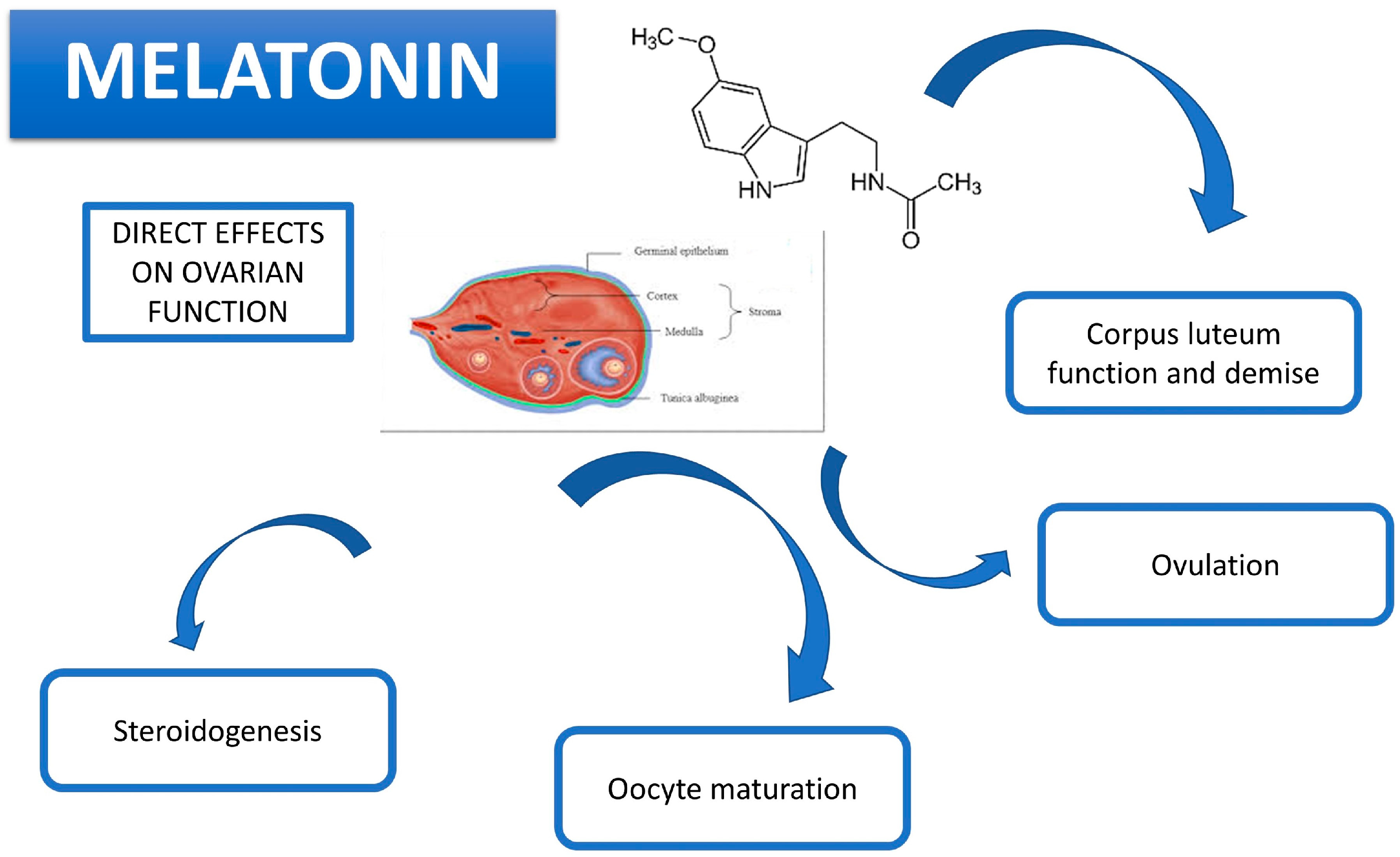
Melatonin is a hormone known for regulating the sleep–wake cycle and as an indicator of the photoperiod in seasonally reproducing mammals. Its direct role in ovarian function has been described in the several studies reviewed in the present paper.
Abstract
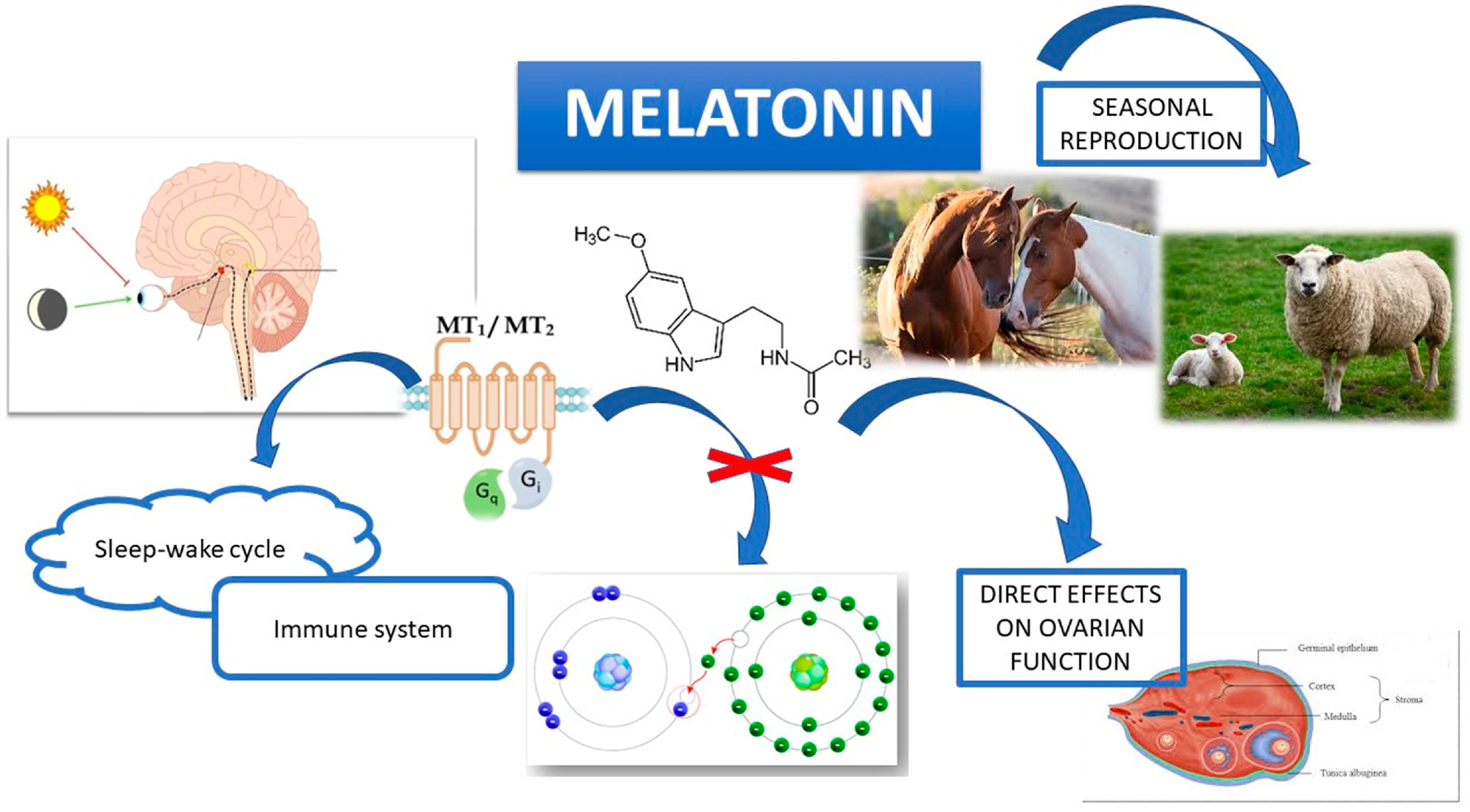
Melatonin is a hormone mainly produced by the pineal gland in the absence of light stimuli. The light, in fact, hits the retina, which sends a signal to the suprachiasmatic nucleus, which inhibits the synthesis of the hormone by the epiphysis. Mostly by interacting with MT1/MT2 membrane receptors, melatonin performs various physiological actions, among which are its regulation of the sleep–wake cycle and its control of the immune system. One of its best known functions is its non-enzymatic antioxidant action, which is independent from binding with receptors and occurs by electron donation. The hormone is also an indicator of the photoperiod in seasonally reproducing mammals, which are divided into long-day and short-day breeders according to the time of year in which they are sexually active and fertile. It is known that melatonin acts at the hypothalamic–pituitary–gonadal axis level in many species. In particular, it inhibits the hypothalamic release of GnRH, with a consequent alteration of FSH and LH levels. The present paper mainly aims to review the ovarian effect of melatonin.
Keywords:
indolamine; ovary; ovarian follicle; corpus luteum; reproduction