Serum Lipid, Amino Acid and Acylcarnitine Profiles of Obese Cats Supplemented with Dietary Choline and Fed to Maintenance Energy Requirements
by

Adronie Verbrugghe
1,*, 
Alexandra Rankovic
2,
Shafeeq Armstrong
3,
Amanda Santarossa
1,
Gordon M. Kirby
2 and
Marica Bakovic
3
1
Department of Clinical Studies, Ontario Veterinary College, University of Guelph, 50 Stone Road East, Guelph, ON N1G 2W1, Canada
2
Department of Biomedical Sciences, Ontario Veterinary College, University of Guelph, 50 Stone Road East, Guelph, ON N1G 2W1, Canada
3
Department of Human Health and Nutritional Sciences, University of Guelph, 50 Stone Road East, Guelph, ON N1G 2W1, Canada
*
Author to whom correspondence should be addressed.
Animals 2021, 11(8), 2196; https://doi.org/10.3390/ani11082196
Submission received: 4 June 2021
/
Revised: 20 July 2021
/
Accepted: 21 July 2021
/
Published: 24 July 2021
(This article belongs to the Collection The Role of Nutrition in Maintaining Well-Being and Health of Dogs and Cats)
Simple Summary
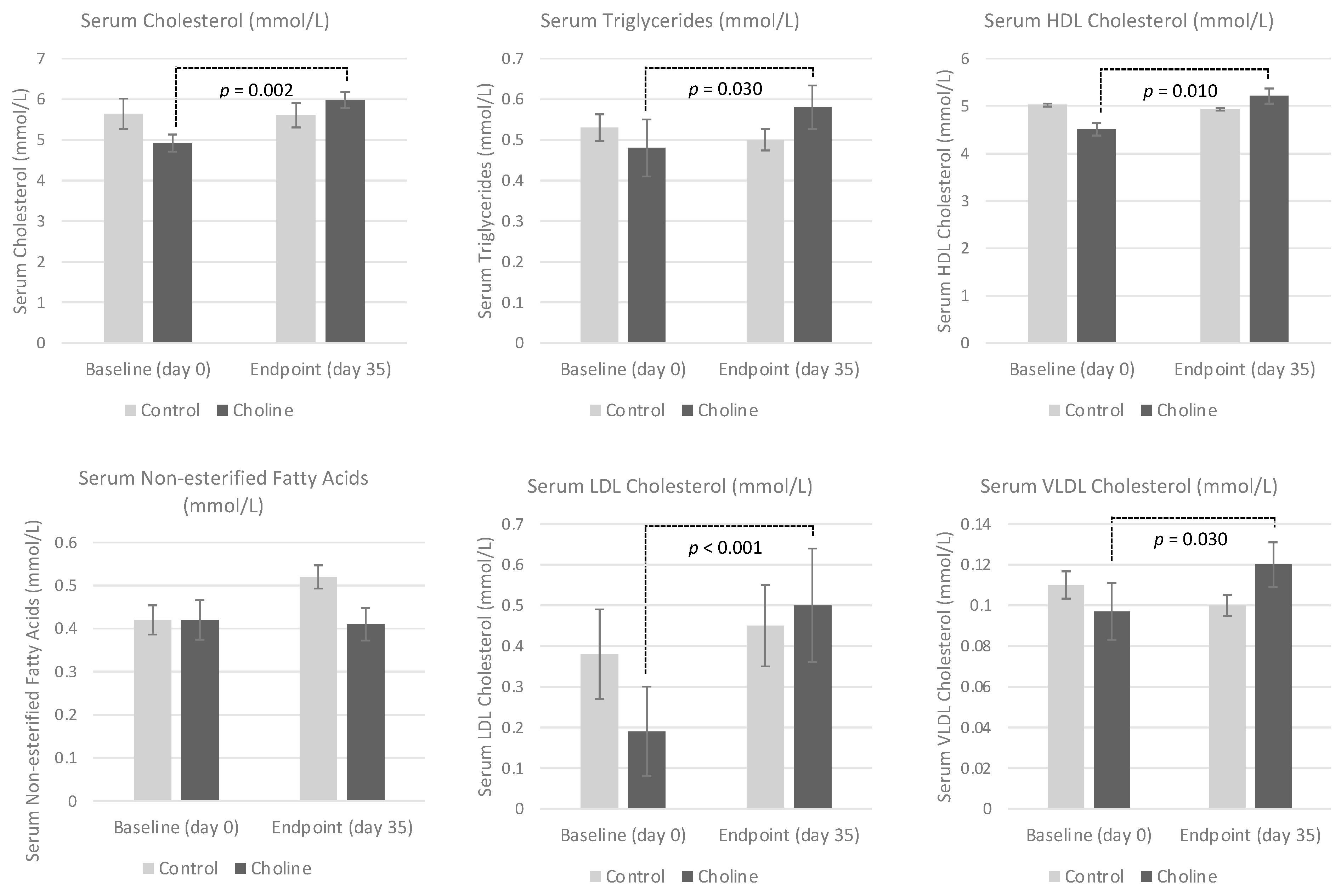
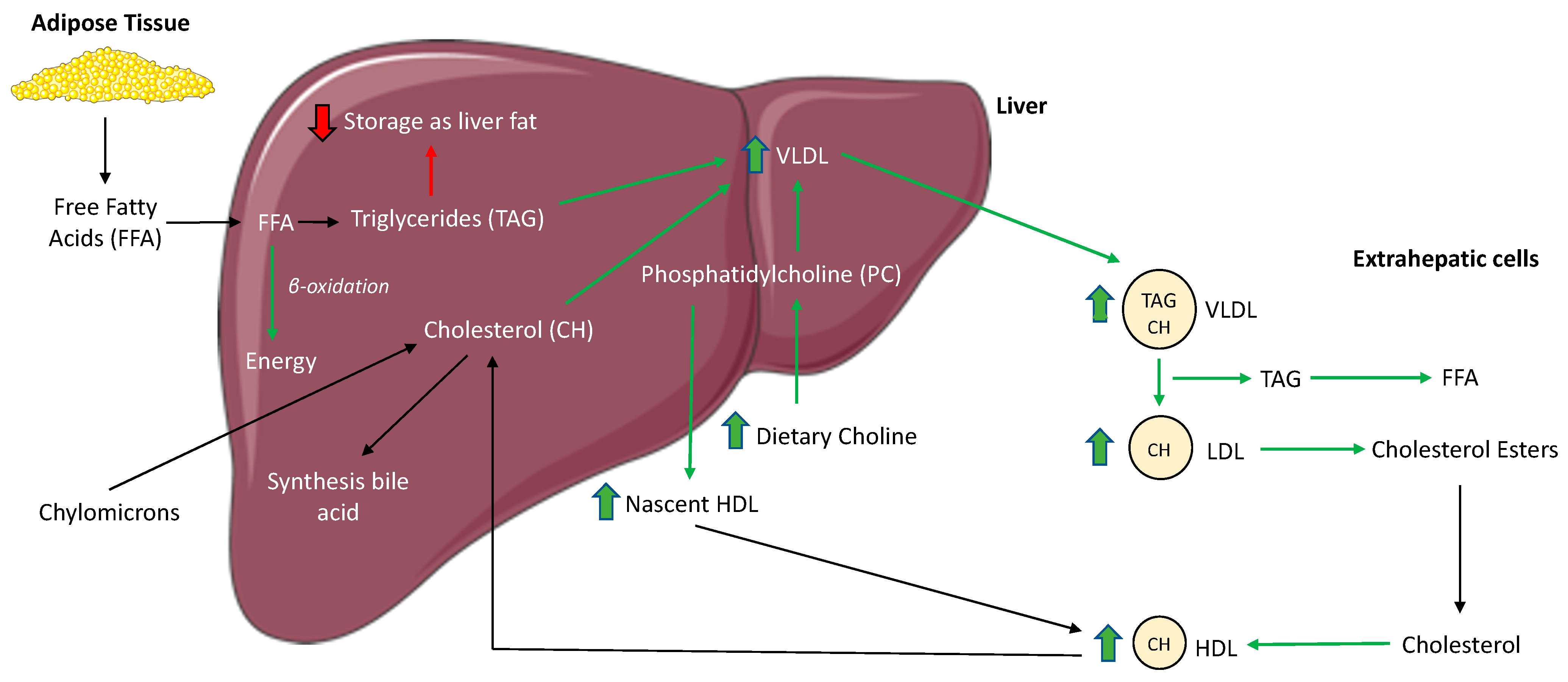
Research has estimated that the majority of domestic cats are overweight or obese. Current weight-loss plans tend to have disappointing outcomes and are not without risk. During periods of severe energy restriction, obesity predisposes cats to developing fatty liver. Choline has been linked to fat metabolism in other animals but has not been studied in cats. Twelve obese cats were split into two groups and were fed a control diet (n = 6; 4587 mg choline/kg dry matter) or a high choline diet (n = 6; 18,957 mg choline/kg DM) for 5 weeks. Cats were fed to maintain body weight. Choline increased serum cholesterol, triacylglycerides, lipoproteins, and plasma methionine. It also decreased serum blood urea nitrogen and alkaline phosphatase as well as the ratio of plasma acylcarnitine to free carnitine. The results suggest that choline supplementation may increase fat transport out of the liver and help maintain liver health in obese cats. Choline supplementation may prove useful for safe weight loss in obese cats by minimizing the risks of fatty liver.
Abstract
Obesity is a health concern for domestic cats. Obesity and severe energy restriction predispose cats to feline hepatic lipidosis. As choline is linked to lipid metabolism, we hypothesized that dietary choline supplementation would assist in reducing hepatic fat through increased lipoprotein transport and fatty acid oxidation. Twelve obese cats (body condition score [BCS] ≥ 8/9) were split into two groups. Cats were fed a control (n = 6; 4587 mg choline/kg dry matter [DM]) or a high choline diet (n = 6; 18,957 mg choline/kg DM) for 5 weeks, for adult maintenance. On days 0 and 35, fasted blood was collected, and the body composition was assessed. Serum lipoprotein and biochemistry profiles, plasma amino acids and plasma acylcarnitines were analyzed. The body weight, BCS and body composition were unaffected (p > 0.05). Choline increased the serum cholesterol, triacylglycerides, high-density lipoprotein cholesterol, low-density lipoprotein cholesterol, very low-density lipoprotein cholesterol and plasma methionine (p < 0.05) and decreased the serum blood urea nitrogen and alkaline phosphatase (p < 0.05). Choline also reduced the plasma acylcarnitine to free carnitine ratio (p = 0.006). Choline may assist in eliminating hepatic fat through increased fat mobilization and enhanced methionine recycling.
Keywords:
methyl donor; one carbon; obesity; methionine; fatty liver