Article

Characterization of Simple Sequence Repeats (SSRs) in Ciliated Protists Inferred by Comparative Genomics


Institute of Evolution & Marine Biodiversity, KLMME, Ocean University of China, Qingdao 266003, China
*
Authors to whom correspondence should be addressed.
These authors contributed equally.
Microorganisms 2020, 8(5), 662; https://doi.org/10.3390/microorganisms8050662

Submission received: 22 January 2020 / Revised: 24 April 2020 / Accepted: 26 April 2020 / Published: 1 May 2020

Abstract

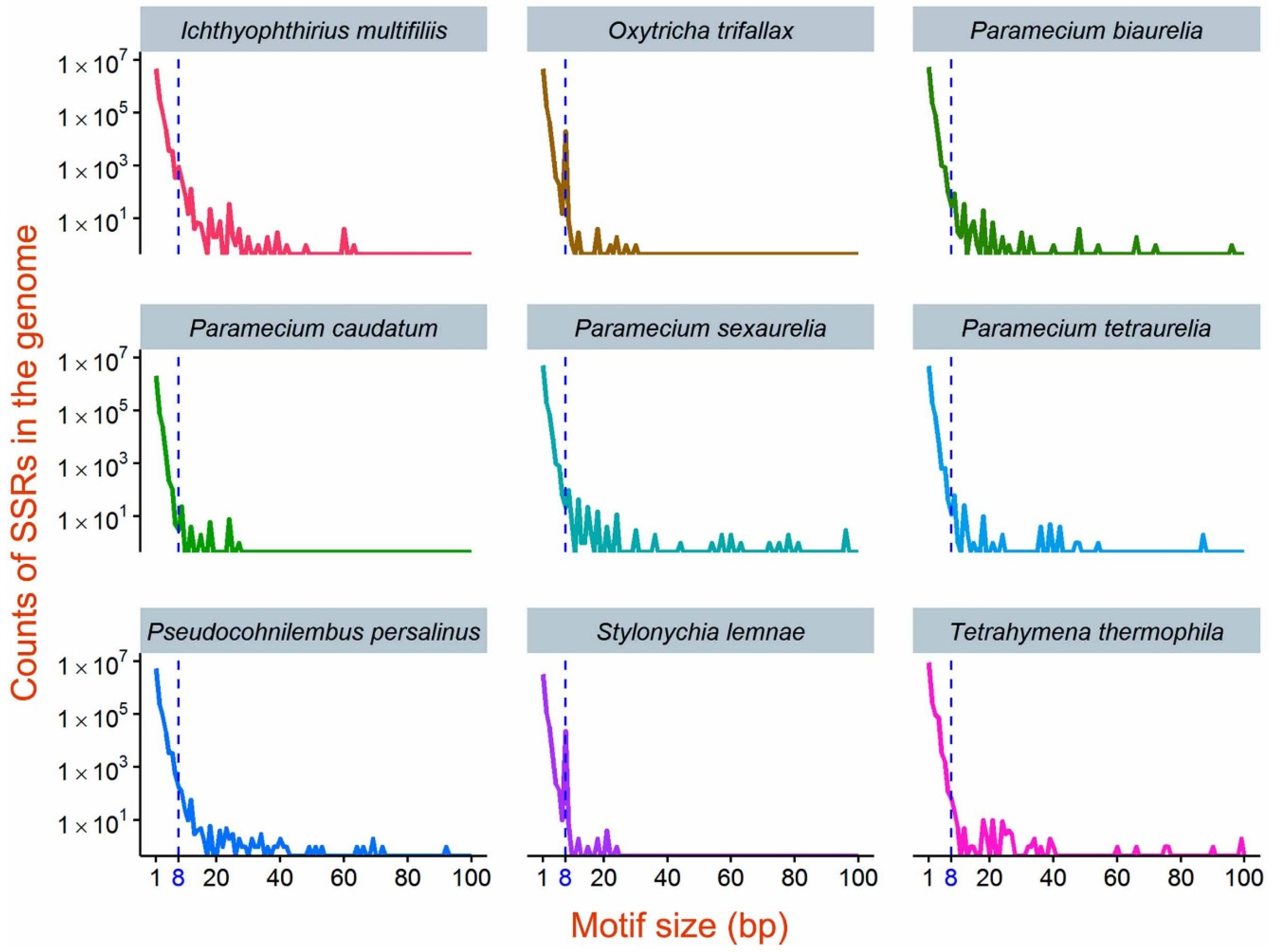
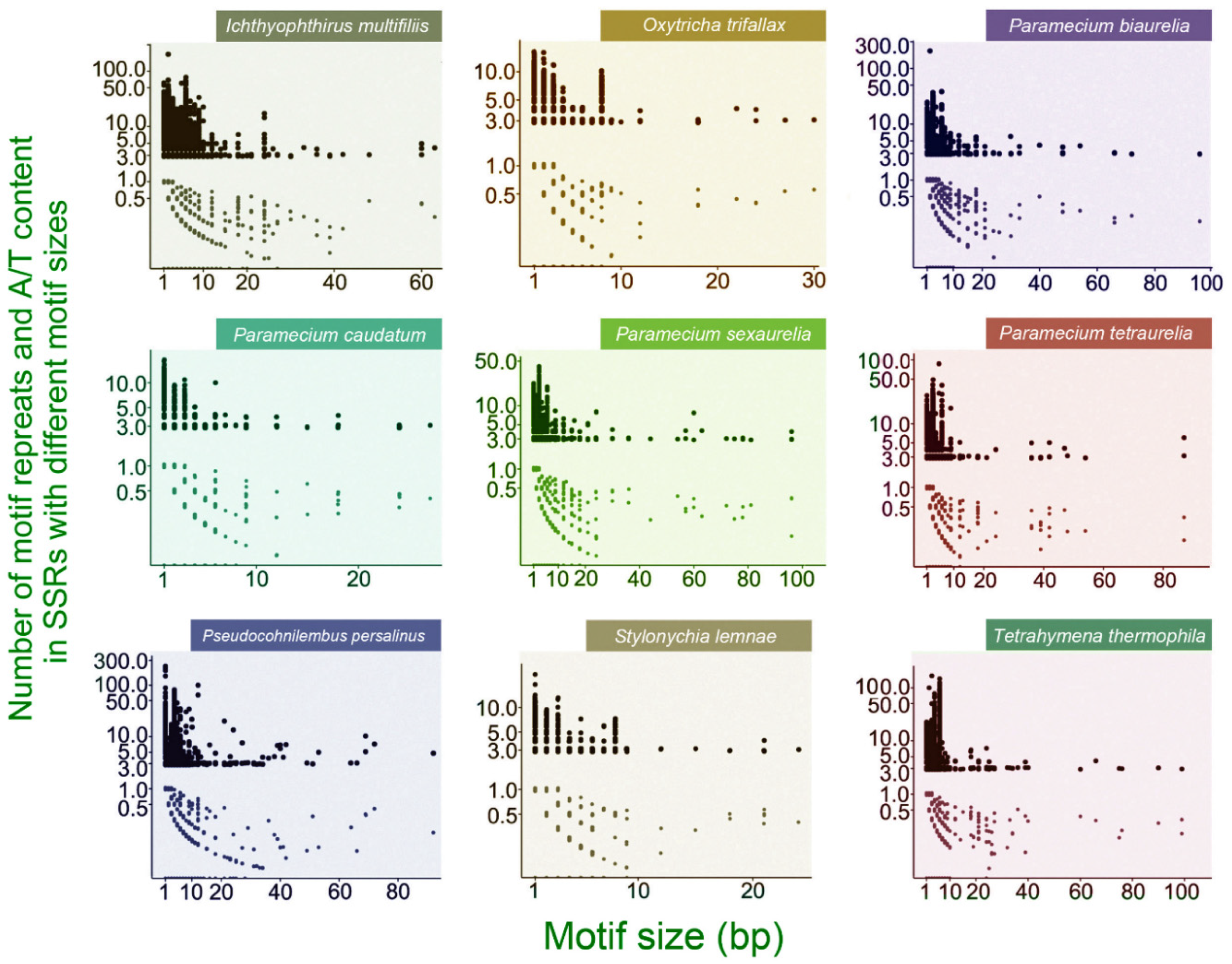
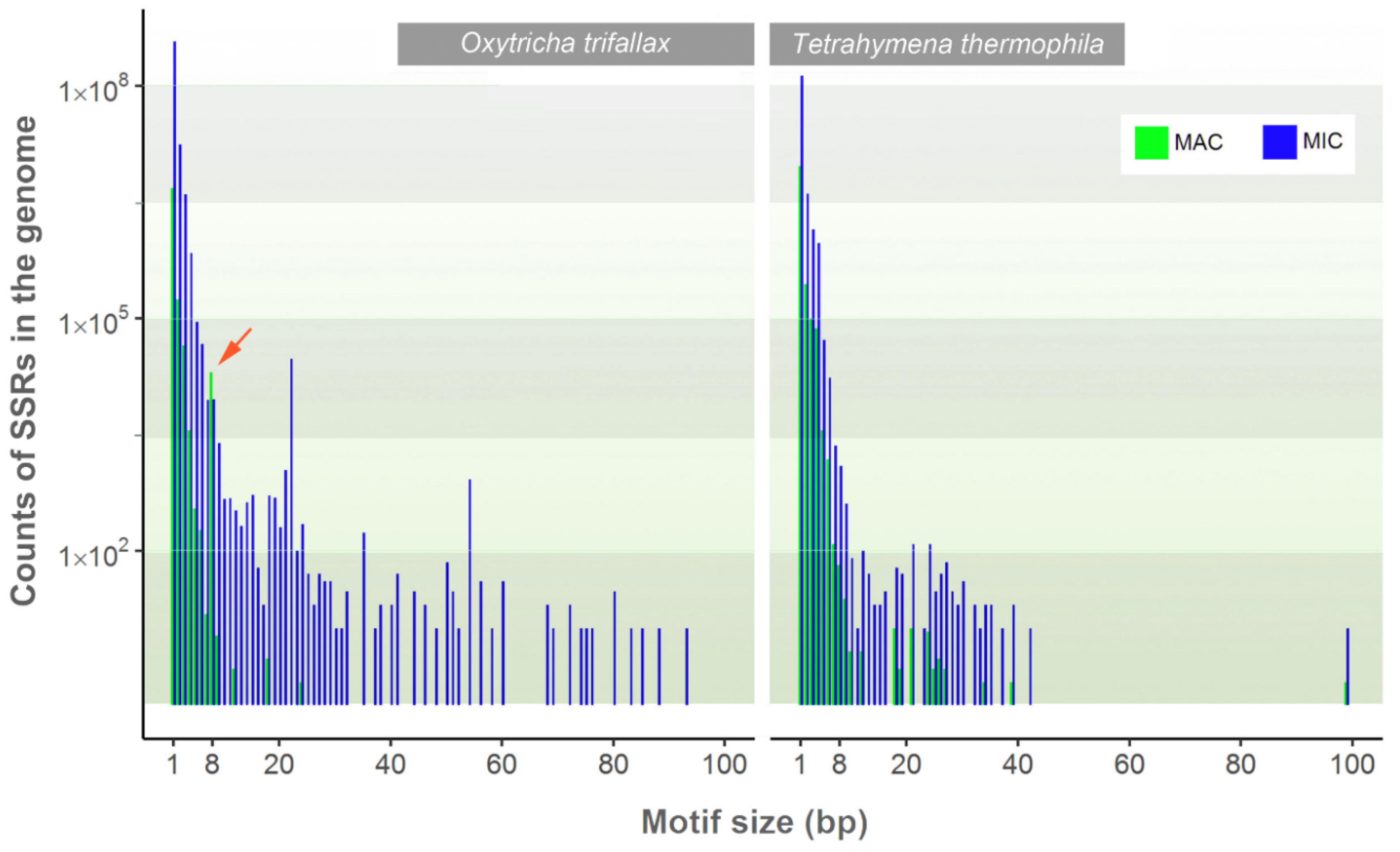
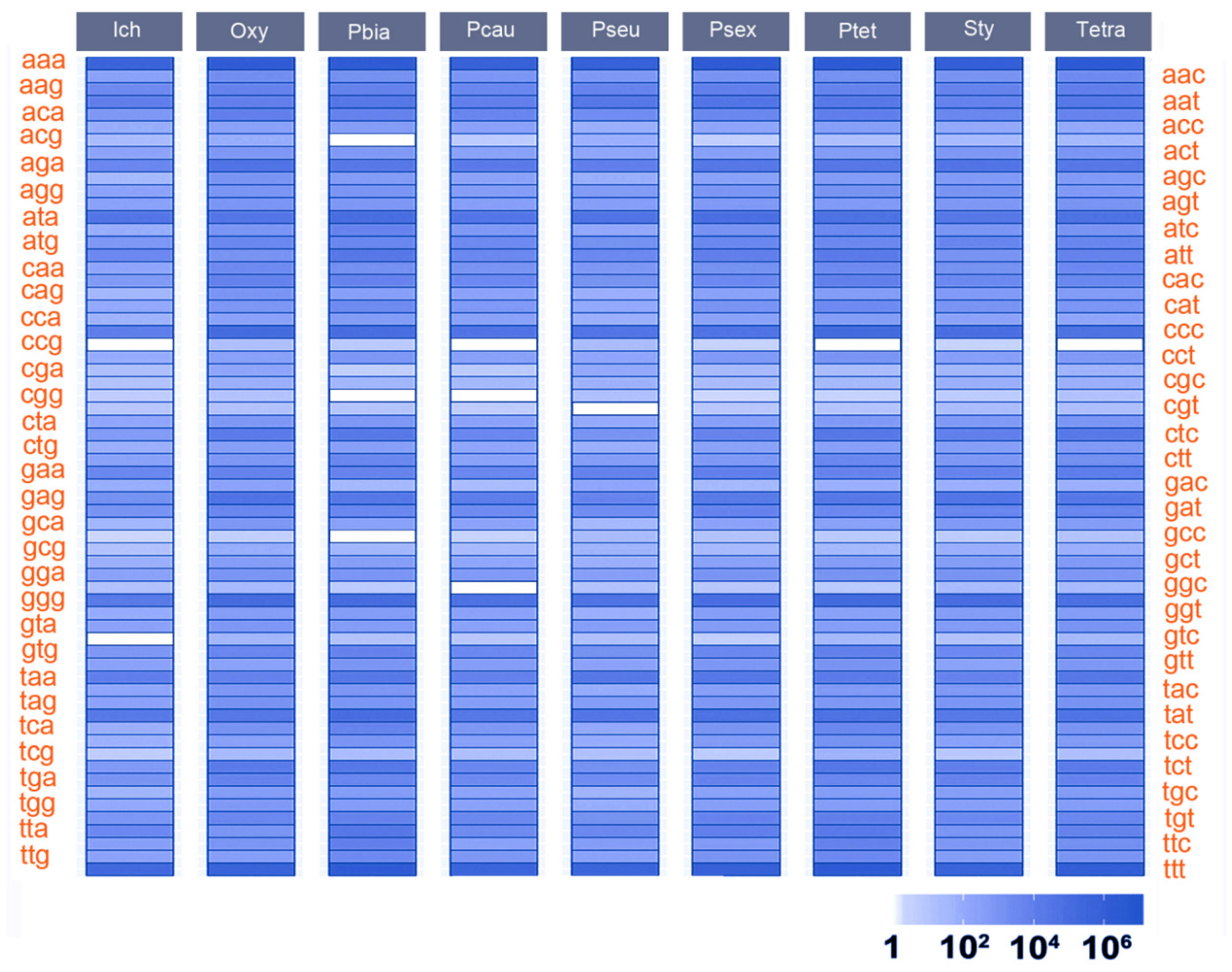
Simple sequence repeats (SSRs) are prevalent in the genomes of all organisms. They are widely used as genetic markers, and are insertion/deletion mutation hotspots, which directly influence genome evolution. However, little is known about such important genomic components in ciliated protists, a large group of unicellular eukaryotes with extremely long evolutionary history and genome diversity. With recent publications of multiple ciliate genomes, we start to get a chance to explore perfect SSRs with motif size 1–100 bp and at least three motif repeats in nine species of two ciliate classes, Oligohymenophorea and Spirotrichea. We found that homopolymers are the most prevalent SSRs in these A/T-rich species, with AAA (lysine, charged amino acid; also seen as an SSR with one-adenine motif repeated three times) being the codons repeated at the highest frequencies in coding SSR regions, consistent with the widespread alveolin proteins rich in lysine repeats as found in Tetrahymena. Micronuclear SSRs are universally more abundant than the macronuclear ones of the same motif-size, except for the 8-bp-motif SSRs in extensively fragmented chromosomes. Both the abundance and A/T content of SSRs decrease as motif-size increases, while the abundance is positively correlated with the A/T content of the genome. Also, smaller genomes have lower proportions of coding SSRs out of all SSRs in Paramecium species. This genome-wide and cross-species analysis reveals the high diversity of SSRs and reflects the rapid evolution of these simple repetitive elements in ciliate genomes.
Keywords: evolution; genome instability; genome repetivity; protists; simple sequence repeats evolution; genome instability; genome repetivity; protists; simple sequence repeats