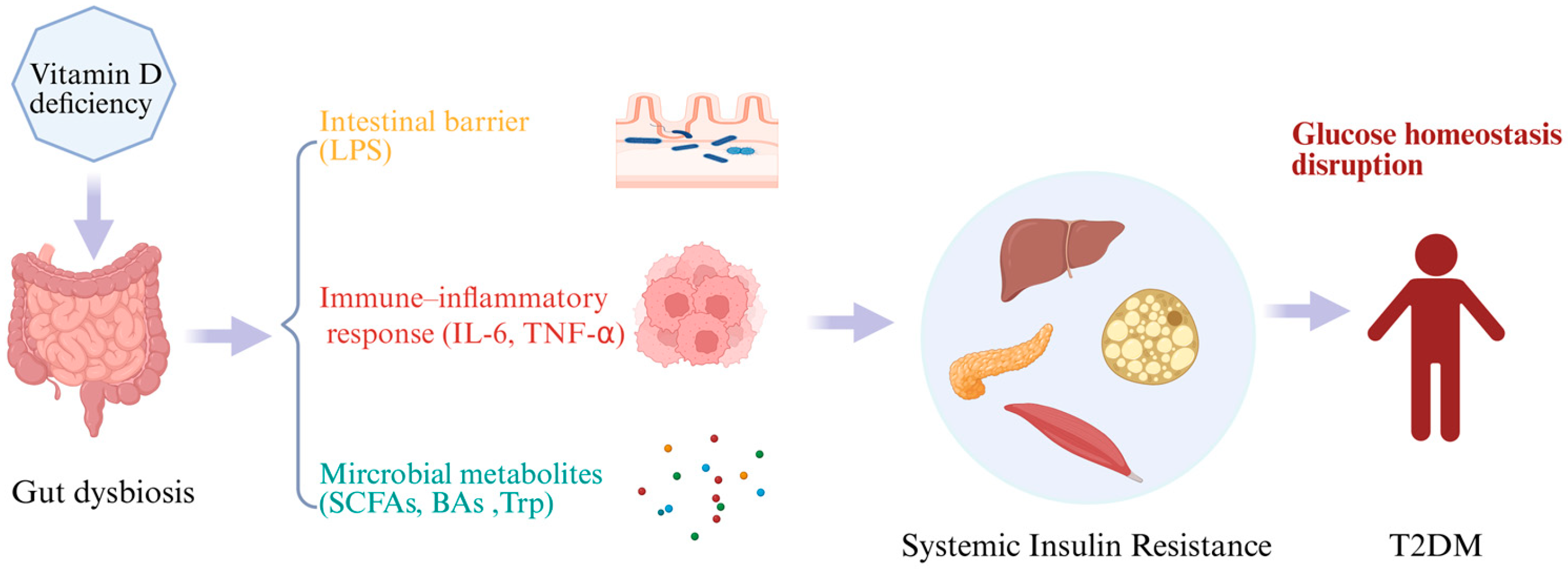
Role of Gut Microbiota in Bridging Vitamin D Deficiency and Type 2 Diabetes Mellitus Pathogenesis

Abstract
1. Introduction
2. Literature Search and Study Selection
3. Vitamin D Deficiency and Type 2 Diabetes Mellitus Risk
4. Vitamin D and Gut Microbiota in Type 2 Diabetes Mellitus
4.1. Effects of Vitamin D on Gut Microbiota Composition and Diversity

| Study | Study Design | Subjects/Model | Vitamin D Exposure | Microbial Taxa (↑/↓) |
|---|---|---|---|---|
| Song et al. [32] | Cohort study | 87 mother–infant pairs VD deficient (n = 59) and VD sufficient (n = 28). Infant stool samples at 1 month (M1) and 6 months (M6) | Maternal VD insufficiency vs. sufficiency | M1: Campylobacter ↓; Bacteroides ↑. M6: Clostridium and Morganella ↑; Epulopiscium and Proteus ↓. |
| Gong et al. [33] | Cross-sectional study | 88 postmenopausal women HVD (n = 44) and LVD group (n = 44) | HVD group with 25(OH)D levels ≥ 20 ng/mL and a LVD group with 25(OH)D levels < 20 ng/mL | In the HVD group: Christensenellaceae, Eggerthellaceae, Cloacibacillus ↑ In the LVD group: Bifidobacterium, Bacillus, F0332, Jeotgalibaca, Lachnospiraceae (unclassified), Lachnospira (UC5_1_2E3 group), Ruminococcus gnavus group ↑. |
| Boughanem et al. [34] | A nested cross-sectional and prospective study | 91 adults with obesity and metabolic syndrome Optimal 25(OH)D (n = 45) and Low 25(OH)D (n = 46) | Optimal 25(OH)D > 24.05 ng/mL Low 25(OH)D ≤ 24.05 ng/mL | Baseline differences in Low 25(OH)D group: Bacteroides, Prevotella, Clostridiales feature 1, Clostridiales feature 2 ↑. |
| Wyat et al. [35] | RCT | Vitamin D3 group (n = 20) vs. Placebo group (n = 21) | Vitamin D3 group: 4000 IU/day for 12 weeks Placebo group: Matching placebo for 16 weeks. | In Vitamin D3 group: Bifidobacterium, Firmicutes, Anaerostipes, Erysipelotrichaceae UCG-003 ↑; Bacteroides, Faecalibacterium, Prevotella, Eubacterium coprostanoligenic ↓. |
| Naderpoor et al. [37] | RCT | Overweight/obese, vitamin D-deficient adults (25(OH)D ≤ 20 ng/mL) Vitamin D group (n = 14) Placebo group (n = 12) | Vitamin D group: 100,000 IU cholecalciferol, followed by 4000 IU/day for 16 weeks Placebo group: Matching placebo for 16 weeks | After supplementation: Lachnospira ↑ and Blautia ↓. In participants achieving higher vitamin D status (>75 nmol/L): Coprococcus ↑ and Ruminococcus ↓. |
| Singh et al. [36] | Single-arm study | Healthy vitamin D-deficient women (n = 80) | Received 50,000 IU of oral vitamin D3 weekly for 12 weeks. | Akkermansia, Bifidobacterium, Bacteroidetes/Firmicutes ratio and gut microbial diversity ↑. |
| Zhang et al. [40] | Animal study | KKay mice | Weekly intraperitoneal Vitamin D3 at different doses vs. PEX168 vs. vehicle | After Vitamin D3 supplementation: Muribaculaceae (unclassified), Lachnospiraceae_NK4A136_group ↑. Lactobacillus, Odoribacter ↓. |
| Zhang et al. [41] | Animal study | Rats with HFD-induced NAFLD | Vitamin D injection, twice weekly, 12 weeks | After Vitamin D supplement: α-diversity, Prevotella, Porphyromonadaceae ↑. Firmicutes/Bacteroidetes ratio, Mucispirillum, Acetatifactor, Desulfovibrio, Oscillospira ↓. |
| Xiang et al. [42] | Animal study | Male C57BL/6J mice with HFD-induced obesity | Dietary Vitamin D3 supplementation, 5650–11,300 IU/kg, 8 weeks | After Vitamin D3 supplementation: Bacteroidetes, Proteobacteria, Desulfobacterota, Dehalobacterota, Odoribacterota, Parabacteroides and α-diversity ↑ Firmicutes, Ruminococcus and Firmicutes/Bacteroidetes ratio ↓. |
| Liu et al. [43] | Animal study | Rats with early-life (0–8 weeks) VD deficiency | Vitamin D deficiency from 0 to 8 weeks (F1), normal diet afterwards; F2 fed normally | In Vitamin D deficiency group: Desulfovibrio, Roseburia, Ruminiclostridium, Lachnoclostridium, A2, GCA-900066575, Peptococcus, Lachnospiraceae_FCS020_group, Bilophila ↑ Blautia ↓. |
4.2. Gut Microbiota Alterations in Type 2 Diabetes Mellitus
| Study | Study Subjects/Country | Microbial Taxa | Change in T2DM (↑/↓) |
|---|---|---|---|
| Wu et al. [52] | 3378 healthy individuals and 551 T2DM patients from six Asian studies | ET-L: Escherichia fergusonii, Collinsella aerofaciens, Enterococcus faecalis, Bifidobacterium longum. ET-P: Escherichia fergusonii, Megasphaera elsdenii, Oscillibacter valericigenes. | ↑ |
| ET-L: Phocaeicola vulgatus, Bacteroides uniformis, Faecalibacterium prausnitzii ET-P: Bacteroides koreensis, Faecalibacterium prausnitzii. | ↓ | ||
| Park et al. [53] | 1039 T2DM patients and 872 healthy controls from the United States | Enterocloster bolteae, Faecalicatena fissicatena, Clostridium symbiosum, Faecalibacterium prausnitzii. | ↑ |
| Bacteroides koreensis, Oscillibacter ruminantium, Bacteroides uniformis, Blautia wexlerae. | ↓ | ||
| Ruuskanen et al. [49] | 5572 healthy individuals, including 432 who developed T2DM during follow-up, from Finland. | Clostridium citroniae, Enterocloster bolteae, Tyzzerella nexilis, Ruminococcus gnavus. | ↑ |
| Alistipes spp. | ↓ | ||
| Larsen et al. [55] | 18 T2DM patients and 18 non-diabetic individuals from Denmark | Bacteroides–Prevotella group, Lactobacillus group, Escherichia–Shigella. | ↑ |
| Faecalibacterium prausnitzii, Roseburia, C. coccoides–E. rectale group. | ↓ | ||
| Thinghol et al. [56] | 633 lean individuals without diabetes, 494 obese individuals without diabetes, and 153 obese individuals with T2DM from Germany | Escherichia–Shigella. | ↑ |
| Mei et al. [48] | 8117 individuals from 10 cohorts in the USA, Europe, Israel, and China (T2DM: n = 1851; prediabetes: n = 2770; normoglycemia: n = 2277) | Enterocloster bolteae. | ↑ |
| Coprococcus eutactus, Turicibacter sanguinis, Ruminococcus lactaris, Bacteroides plebeius, Butyrivibrio crossotus. | ↓ | ||
| Doumatey et al. [57] | 98 T2DM patients and 193 controls from Africa | Prevotella, Peptostreptococcus, Desulfovibrio piger, Eubacterium. | ↑ |
| Clostridiaceae, Peptostreptococcaceae, Clostridium butyricum, Ruminococcus lactaris, Anaerostipes, Cellulosilyticum ruminicola. | ↓ | ||
| Qin et al. [9] | 71 T2DM patients and 74 healthy controls from China | Bacteroides caccae, Clostridium hathewayi, Clostridium ramosum, Clostridium symbiosum, Eggerthella lenta and Escherichia coli, Akkermansia muciniphila, and Desulfovibrio. | ↑ |
| Clostridiales sp. SS3/4, Eubacterium rectale, Faecalibacterium prausnitzii, Roseburia intestinalis, and Roseburia inulinivorans. | ↓ | ||
| Alvarez-Silva et al. [58] | 279 Danish individuals (138 normoglycemic, 141 T2DM) and 294 Indian individuals (137 normoglycemic, 157 T2DM) | Lachnoclostridium. | ↑ |
| Subdoligranulum, Butyricicoccus, Anaerosporobacter. | ↓ | ||
| Karlsson et al. [59] | European women with T2DM (n = 53), IGT (n = 49), NGT (n = 43) | Lactobacillus gasseri, Streptococcus mutans. | ↑ |
| Roseburia, Eubacterium eligens, Bacteroides intestinalis, Coriobacteriaceae. | ↓ | ||
| Morsy et al. [60] | 10 T2DM patients and 10 non-diabetic individuals from Egypt | Bacteroides, Blautia, and Lachnospiraceae_FCS020_group. | ↑ |
| Faecalibacterium and Roseburia. | ↓ | ||
| Letchumanan et al. [61] | 45 T2DM patients and 45 non-T2DM individuals from Malaysia | Escherichia–Shigella. | ↑ |
| Anaerostipes and Romboutsia. | ↓ |
4.3. Evidence for the Potential Regulatory Axis of Vitamin D Modulating Type 2 Diabetes Mellitus via Gut Microbiota
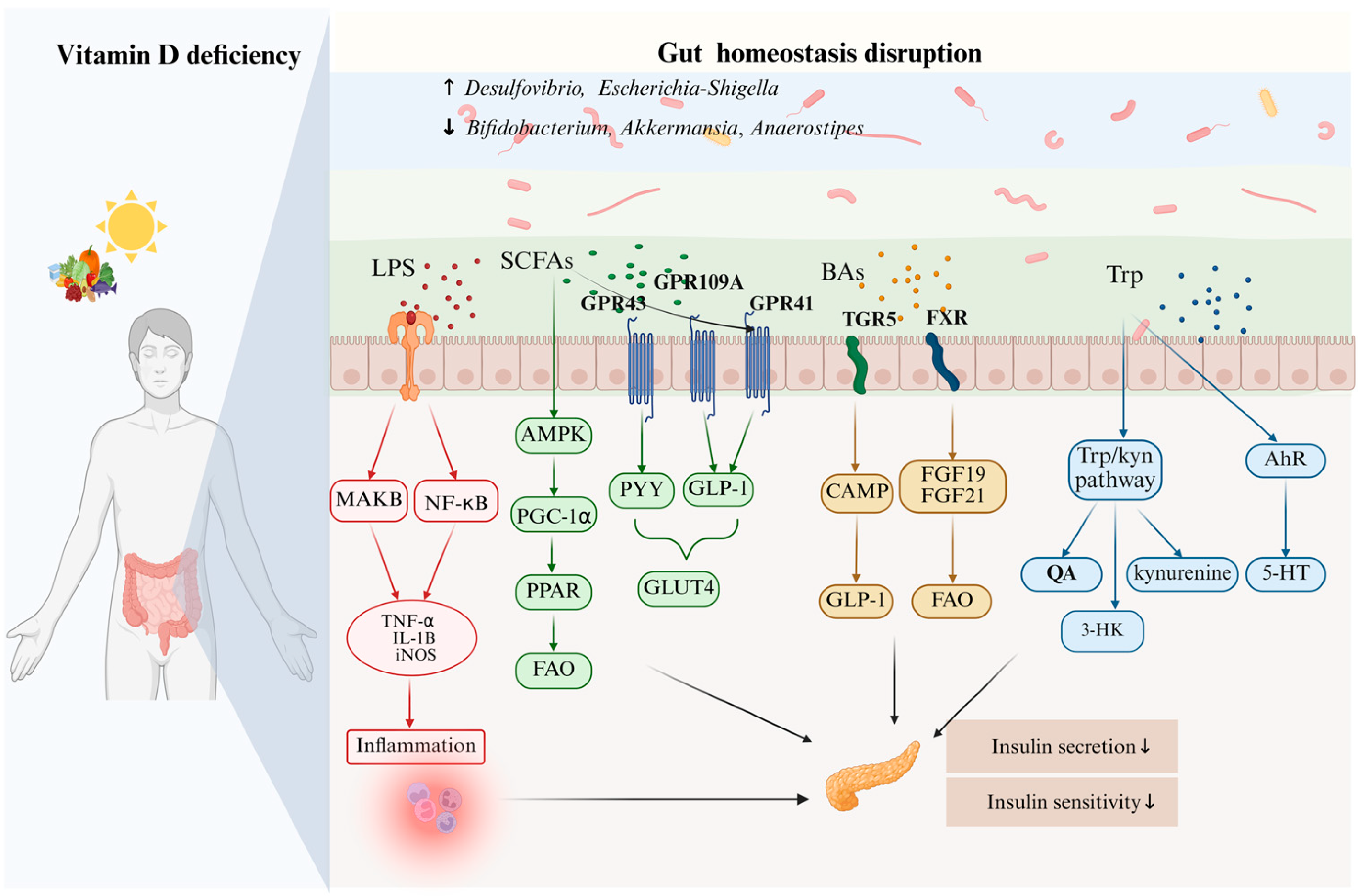
5. Potential Mechanisms Linking Vitamin D, Gut Microbiota, and Type 2 Diabetes Mellitus
5.1. Intestinal Barrier Function and Endotoxin Translocation
5.2. Immune Modulation and Inflammatory Regulation
5.3. The Mediating Role of Microbial Metabolites in the Vitamin D–T2DM Axis
6. Conclusions
Author Contributions
Funding
Institutional Review Board Statement
Informed Consent Statement
Data Availability Statement
Conflicts of Interest
References
- Lytrivi, M.; Tong, Y.; Virgilio, E.; Yi, X.; Cnop, M. Diabetes mellitus and the key role of endoplasmic reticulum stress in pancreatic β cells. Nat. Rev. Endocrinol. 2025, 21, 546–563. [Google Scholar] [CrossRef] [Scilit]
- Duncan, B.B.; Magliano, D.J.; Boyko, E.J. IDF diabetes atlas 11th edition 2025: Global prevalence and projections for 2050. Nephrol. Dial. Transplant. 2025, 41, 7–9. [Google Scholar] [CrossRef] [Scilit]
- Suzuki, K.; Hatzikotoulas, K.; Southam, L.; Taylor, H.J.; Yin, X.; Lorenz, K.M.; Mandla, R.; Huerta-Chagoya, A.; Melloni, G.E.M.; Kanoni, S.; et al. Genetic drivers of heterogeneity in type 2 diabetes pathophysiology. Nature 2024, 627, 347–357. [Google Scholar] [CrossRef] [Scilit]
- Accili, D.; Deng, Z.; Liu, Q. Insulin resistance in type 2 diabetes mellitus. Nat. Rev. Endocrinol. 2025, 21, 413–426. [Google Scholar] [CrossRef] [Scilit]
- Giustina, A.; Bilezikian, J.P.; Adler, R.A.; Banfi, G.; Bikle, D.D.; Binkley, N.C.; Bollerslev, J.; Bouillon, R.; Brandi, M.L.; Casanueva, F.F.; et al. Consensus Statement on Vitamin D Status Assessment and Supplementation: Whys, Whens, and Hows. Endocr. Rev. 2024, 45, 625–654. [Google Scholar] [CrossRef] [Scilit]
- Bouillon, R.; Marcocci, C.; Carmeliet, G.; Bikle, D.; White, J.H.; Dawson-Hughes, B.; Lips, P.; Munns, C.F.; Lazaretti-Castro, M.; Giustina, A.; et al. Skeletal and Extraskeletal Actions of Vitamin D: Current Evidence and Outstanding Questions. Endocr. Rev. 2019, 40, 1109–1151. [Google Scholar] [CrossRef] [Scilit] [PubMed]
- Ortiz-Prado, E.; Vasconez-Gonzalez, J.; Izquierdo-Condoy, J.S.; Suárez-Sangucho, I.A.; Prieto-Marín, J.G.; Villarreal-Burbano, K.B.; Barriga-Collantes, M.A.; Altamirano-Castillo, J.A.; Borja-Mendoza, D.A.; Pazmiño-Almeida, J.C.; et al. Cholecalciferol (vitamin D3): Efficacy, safety, and implications in public health. Front. Nutr. 2025, 12, 1579957. [Google Scholar] [CrossRef] [Scilit] [PubMed]
- Sukik, A.; Alalwani, J.; Ganji, V. Vitamin D, Gut Microbiota, and Cardiometabolic Diseases—A Possible Three-Way Axis. Int. J. Mol. Sci. 2023, 24, 940. [Google Scholar] [CrossRef] [Scilit] [PubMed]
- Qin, J.; Li, Y.; Cai, Z.; Li, S.; Zhu, J.; Zhang, F.; Liang, S.; Zhang, W.; Guan, Y.; Shen, D.; et al. A metagenome-wide association study of gut microbiota in type 2 diabetes. Nature 2012, 490, 55–60. [Google Scholar] [CrossRef] [Scilit]
- Canfora, E.E.; Meex, R.C.R.; Venema, K.; Blaak, E.E. Gut microbial metabolites in obesity, NAFLD and T2DM. Nat. Rev. Endocrinol. 2019, 15, 261–273. [Google Scholar] [CrossRef] [Scilit]
- Ge, X.; Liu, T.; Wang, Y.; Wen, H.; Huang, Z.; Chen, L.; Xu, J.; Zhou, H.; Wu, Q.; Zhao, C.; et al. Porous starch microspheres loaded with luteolin exhibit hypoglycemic activities and alter gut microbial communities in type 2 diabetes mellitus mice. Food Funct. 2025, 16, 54–70. [Google Scholar] [CrossRef] [Scilit] [PubMed]
- Cheng, L.; Lv, C.; Xue, L.; Zhang, C.; Wang, L.; Wang, X.; Chen, S.; Li, X.; Feng, W.; Xie, H.; et al. The prevention and improvement effects of vitamin D on type 2 diabetes mellitus: Evidence from an umbrella review on Meta-analyses of cohort studies and randomized controlled trials. Front. Nutr. 2024, 11, 1462535. [Google Scholar] [CrossRef] [Scilit]
- Zhang, Y.; Xu, D.; Cai, X.; Xing, X.; Shao, X.; Yin, A.; Zhao, Y.; Wang, M.; Fan, Y.N.; Liu, B.; et al. Gut Commensal Barnesiella intestinihominis Ameliorates Hyperglycemia and Liver Metabolic Disorders. Adv. Sci. 2025, 12, e2411181. [Google Scholar] [CrossRef] [Scilit]
- Chong, S.; Lin, M.; Chong, D.; Jensen, S.; Lau, N.S. A systematic review on gut microbiota in type 2 diabetes mellitus. Front. Endocrinol. 2024, 15, 1486793. [Google Scholar] [CrossRef] [Scilit]
- Fuentes-Barría, H.; Aguilera-Eguía, R.; Flores-Fernández, C.; Angarita-Davila, L.; Rojas-Gómez, D.; Alarcón-Rivera, M.; López-Soto, O.; Maureira-Sánchez, J. Vitamin D and Type 2 Diabetes Mellitus: Molecular Mechanisms and Clinical Implications—A Narrative Review. Int. J. Mol. Sci. 2025, 26, 2153. [Google Scholar] [CrossRef] [Scilit]
- Lin, K.; Zhu, L.; Yang, L. Gut and obesity/metabolic disease: Focus on microbiota metabolites. MedComm 2022, 3, e171. [Google Scholar] [CrossRef] [Scilit]
- Warmbrunn, M.V.; Attaye, I.; Aron-Wisnewsky, J.; Rampanelli, E.; van der Vossen, E.W.J.; Hao, Y.; Koopen, A.; Bergh, P.O.; Stols-Gonçalves, D.; Mohamed, N.; et al. Oral histidine affects gut microbiota and MAIT cells improving glycemic control in type 2 diabetes patients. Gut Microbes 2024, 16, 2370616. [Google Scholar] [CrossRef] [Scilit]
- Tangestani, H.; Boroujeni, H.K.; Djafarian, K.; Emamat, H.; Shab-Bidar, S. Vitamin D and The Gut Microbiota: A Narrative Literature Review. Clin. Nutr. Res. 2021, 10, 181–191. [Google Scholar] [CrossRef] [Scilit] [PubMed]
- Zeb, F.; Osaili, T.; Hashim, M.; Alkalbani, N.; Papandreou, D.; Cheikh Ismail, L.; Naja, F.; Radwan, H.; Hasan, H.; Obaid, R.S.; et al. Effect of Vitamin D Supplementation on Human Gut Microbiota: A Systematic Review of Randomized Controlled Trials. Nutr. Rev. 2025. online ahead of print. [Google Scholar] [CrossRef] [Scilit]
- Mitri, J.; Dawson-Hughes, B.; Hu, F.B.; Pittas, A.G. Effects of vitamin D and calcium supplementation on pancreatic β cell function, insulin sensitivity, and glycemia in adults at high risk of diabetes: The Calcium and Vitamin D for Diabetes Mellitus (CaDDM) randomized controlled trial. Am. J. Clin. Nutr. 2011, 94, 486–494. [Google Scholar] [CrossRef] [Scilit]
- Pittas, A.G.; Dawson-Hughes, B.; Sheehan, P.; Ware, J.H.; Knowler, W.C.; Aroda, V.R.; Brodsky, I.; Ceglia, L.; Chadha, C.; Chatterjee, R.; et al. Vitamin D Supplementation and Prevention of Type 2 Diabetes. N. Engl. J. Med. 2019, 381, 520–530. [Google Scholar] [CrossRef] [Scilit] [PubMed]
- Zhang, Y.; Ni, P.; Miao, Y.; Chen, H.; Tang, L.; Song, H.; Li, W.; Li, X. Vitamin D(3) improves glucose metabolism and attenuates inflammation in prediabetic human and mice. J. Nutr. Biochem. 2024, 130, 109659. [Google Scholar] [CrossRef] [Scilit]
- Pramono, A.; Jocken, J.W.E.; Blaak, E.E.; van Baak, M.A. The Effect of Vitamin D Supplementation on Insulin Sensitivity: A Systematic Review and Meta-analysis. Diabetes Care 2020, 43, 1659–1669. [Google Scholar] [CrossRef] [Scilit]
- Rohold, C.K.; Jørgensen, H.L.; Vojdeman, F.J.; Madsen, C.M.; Olsen, A.; Heegaard, A.M.; Lind, B.S.; Tjønneland, A.; Schwarz, P.; Gæde, P.H. Levels of plasma 25-hydroxy vitamin D and risk of developing type 2 diabetes in a large Danish primary health care population. Acta Diabetol. 2025, 62, 397–404. [Google Scholar] [CrossRef] [Scilit] [PubMed]
- Valer-Martinez, A.; Sayon-Orea, C.; Martinez, J.A.; Basterra-Gortari, F.J.; Martinez-Gonzalez, M.A.; Bes-Rastrollo, M. Vitamin D and risk of developing type 2 diabetes in the SUN project: A prospective cohort study. J. Endocrinol. Investig. 2024, 47, 2313–2323. [Google Scholar] [CrossRef] [Scilit]
- Zhang, J.; Wu, K.; Dong, X. Exploring the association between serum vitamin D levels and type 2 diabetes risk in US adults. Ann. Med. 2025, 57, 2522320. [Google Scholar] [CrossRef] [Scilit]
- Lemieux, P.; Weisnagel, S.J.; Caron, A.Z.; Julien, A.S.; Morisset, A.S.; Carreau, A.M.; Poirier, J.; Tchernof, A.; Robitaille, J.; Bergeron, J.; et al. Effects of 6-month vitamin D supplementation on insulin sensitivity and secretion: A randomised, placebo-controlled trial. Eur. J. Endocrinol. 2019, 181, 287–299. [Google Scholar] [CrossRef] [Scilit] [PubMed]
- Hu, Z.; Zhi, X.; Li, J.; Li, B.; Wang, J.; Zhu, J.; Zhang, Z. Effects of long-term vitamin D supplementation on metabolic profile in middle-aged and elderly patients with type 2 diabetes. J. Steroid Biochem. Mol. Biol. 2023, 225, 106198. [Google Scholar] [CrossRef] [Scilit]
- Tobias, D.K.; Pradhan, A.D.; Duran, E.K.; Li, C.; Song, Y.; Buring, J.E.; Cook, N.R.; Mora, S.; Manson, J.E. Vitamin D supplementation vs. placebo and incident type 2 diabetes in an ancillary study of the randomized Vitamin D and Omega-3 Trial. Nat. Commun. 2025, 16, 3332. [Google Scholar] [CrossRef] [Scilit] [PubMed]
- Virtanen, J.K.; Hantunen, S.; Kallio, N.; Lamberg-Allardt, C.; Manson, J.E.; Nurmi, T.; Pihlajamäki, J.; Uusitupa, M.; Voutilainen, A.; Tuomainen, T.P. The effect of vitamin D(3) supplementation on the incidence of type 2 diabetes in healthy older adults not at high risk for diabetes (FIND): A randomised controlled trial. Diabetologia 2025, 68, 715–726. [Google Scholar] [CrossRef] [Scilit]
- Kawahara, T.; Suzuki, G.; Mizuno, S.; Inazu, T.; Kasagi, F.; Kawahara, C.; Okada, Y.; Tanaka, Y. Effect of active vitamin D treatment on development of type 2 diabetes: DPVD randomised controlled trial in Japanese population. BMJ 2022, 377, e066222. [Google Scholar] [CrossRef] [Scilit]
- Song, Q.; Li, Y.; Zhou, T.; Xiao, M.; Xiao, B.; Wang, M.; Zhu, Y. Maternal vitamin D status during pregnancy and infant’s gut microbiota: A prospective cohort study. Front. Nutr. 2024, 11, 1428356. [Google Scholar] [CrossRef] [Scilit]
- Gong, J.; He, L.; Zou, Q.; Zhao, Y.; Zhang, B.; Xia, R.; Chen, B.; Cao, M.; Gong, W.; Lin, L.; et al. Association of serum 25-hydroxyvitamin D (25(OH)D) levels with the gut microbiota and metabolites in postmenopausal women in China. Microb. Cell Fact. 2022, 21, 137. [Google Scholar] [CrossRef] [Scilit]
- Boughanem, H.; Ruiz-Limón, P.; Pilo, J.; Lisbona-Montañez, J.M.; Tinahones, F.J.; Moreno Indias, I.; Macías-González, M. Linking serum vitamin D levels with gut microbiota after 1-year lifestyle intervention with Mediterranean diet in patients with obesity and metabolic syndrome: A nested cross-sectional and prospective study. Gut Microbes 2023, 15, 2249150. [Google Scholar] [CrossRef] [Scilit]
- Wyatt, M.; Choudhury, A.; Von Dohlen, G.; Heileson, J.L.; Forsse, J.S.; Rajakaruna, S.; Zec, M.; Tfaily, M.M.; Greathouse, L. Randomized control trial of moderate dose vitamin D alters microbiota stability and metabolite networks in healthy adults. Microbiol. Spectr. 2024, 12, e0008324. [Google Scholar] [CrossRef] [Scilit]
- Singh, P.; Rawat, A.; Alwakeel, M.; Sharif, E.; Al Khodor, S. The potential role of vitamin D supplementation as a gut microbiota modifier in healthy individuals. Sci. Rep. 2020, 10, 21641. [Google Scholar] [CrossRef] [Scilit]
- Naderpoor, N.; Mousa, A.; Fernanda Gomez Arango, L.; Barrett, H.L.; Dekker Nitert, M.; de Courten, B. Effect of Vitamin D Supplementation on Faecal Microbiota: A Randomised Clinical Trial. Nutrients 2019, 11, 2888. [Google Scholar] [CrossRef] [Scilit]
- Pham, H.; Waterhouse, M.; Rahman, S.; Baxter, C.; Duarte Romero, B.; McLeod, D.S.A.; Ebeling, P.R.; English, D.R.; Hartel, G.; O’Connell, R.L.; et al. The effect of vitamin D supplementation on the gut microbiome in older Australians—Results from analyses of the D-Health Trial. Gut Microbes 2023, 15, 2221429. [Google Scholar] [CrossRef] [Scilit]
- Shieh, A.; Lee, S.M.; Lagishetty, V.; Gottleib, C.; Jacobs, J.P.; Adams, J.S. Pilot Trial of Vitamin D3 and Calcifediol in Healthy Vitamin D Deficient Adults: Does It Change the Fecal Microbiome? J. Clin. Endocrinol. Metab. 2021, 106, 3464–3476. [Google Scholar] [CrossRef] [Scilit] [PubMed]
- Zhang, Y.; Ni, P.; Chen, H.; Tang, L.; Song, H.; Wen, H.; Miao, Y.; Li, W.; Li, X. Vitamin D(3) ameliorates hyperglycemia by modulating gut microbiota and metabolites in prediabetic KKay mice. Food Res. Int. 2025, 211, 116369. [Google Scholar] [CrossRef] [Scilit] [PubMed]
- Zhang, X.L.; Chen, L.; Yang, J.; Zhao, S.S.; Jin, S.; Ao, N.; Yang, J.; Liu, H.X.; Du, J. Vitamin D alleviates non-alcoholic fatty liver disease via restoring gut microbiota and metabolism. Front. Microbiol. 2023, 14, 1117644. [Google Scholar] [CrossRef] [Scilit] [PubMed]
- Xiang, L.; Du, T.; Zhang, J.; Zhang, Y.; Zhou, Y.; Zhao, Y.; Zhou, Y.; Ma, L. Vitamin D(3) supplementation shapes the composition of gut microbiota and improves some obesity parameters induced by high-fat diet in mice. Eur. J. Nutr. 2024, 63, 155–172. [Google Scholar] [CrossRef] [Scilit] [PubMed]
- Liu, J.; Liu, J.; Zhang, J.; Liu, C.; Qu, C.; Na, L. Vitamin D deficiency in early life regulates gut microbiome composition and leads to impaired glucose tolerance in adult and offspring rats. Food Funct. 2023, 14, 5768–5786. [Google Scholar] [CrossRef] [Scilit]
- Zhao, L.; Lou, H.; Peng, Y.; Chen, S.; Zhang, Y.; Li, X. Comprehensive relationships between gut microbiome and faecal metabolome in individuals with type 2 diabetes and its complications. Endocrine 2019, 66, 526–537. [Google Scholar] [CrossRef] [Scilit]
- Nuli, R.; Cai, J.; Kadeer, A.; Zhang, Y.; Mohemaiti, P. Integrative Analysis Toward Different Glucose Tolerance-Related Gut Microbiota and Diet. Front. Endocrinol. 2019, 10, 295. [Google Scholar] [CrossRef] [Scilit]
- Gaike, A.H.; Paul, D.; Bhute, S.; Dhotre, D.P.; Pande, P.; Upadhyaya, S.; Reddy, Y.; Sampath, R.; Ghosh, D.; Chandraprabha, D.; et al. The Gut Microbial Diversity of Newly Diagnosed Diabetics but Not of Prediabetics Is Significantly Different from That of Healthy Nondiabetics. mSystems 2020, 5, e00578-19. [Google Scholar] [CrossRef] [Scilit] [PubMed]
- Ebrahimi, F.; Maleki, H.; Ebrahimi, M.; Beiki, A.H. A novel approach to finding the compositional differences and biomarkers in gut microbiota in type 2 diabetic patients via meta-analysis, data-mining, and multivariate analysis. Endocrinol. Diabetes Nutr. (Engl. Ed.) 2025, 72, 501561. [Google Scholar] [CrossRef] [Scilit] [PubMed]
- Mei, Z.; Wang, F.; Bhosle, A.; Dong, D.; Mehta, R.; Ghazi, A.; Zhang, Y.; Liu, Y.; Rinott, E.; Ma, S.; et al. Strain-specific gut microbial signatures in type 2 diabetes identified in a cross-cohort analysis of 8,117 metagenomes. Nat. Med. 2024, 30, 2265–2276. [Google Scholar] [CrossRef] [Scilit]
- Ruuskanen, M.O.; Erawijantari, P.P.; Havulinna, A.S.; Liu, Y.; Méric, G.; Tuomilehto, J.; Inouye, M.; Jousilahti, P.; Salomaa, V.; Jain, M.; et al. Gut Microbiome Composition Is Predictive of Incident Type 2 Diabetes in a Population Cohort of 5,572 Finnish Adults. Diabetes Care 2022, 45, 811–818. [Google Scholar] [CrossRef] [Scilit]
- Yu, Y.; Ding, Y.; Wang, S.; Jiang, L. Gut Microbiota Dysbiosis and Its Impact on Type 2 Diabetes: From Pathogenesis to Therapeutic Strategies. Metabolites 2025, 15, 397. [Google Scholar] [CrossRef] [Scilit]
- Takeuchi, T.; Kubota, T.; Nakanishi, Y.; Tsugawa, H.; Suda, W.; Kwon, A.T.; Yazaki, J.; Ikeda, K.; Nemoto, S.; Mochizuki, Y.; et al. Gut microbial carbohydrate metabolism contributes to insulin resistance. Nature 2023, 621, 389–395. [Google Scholar] [CrossRef] [Scilit]
- Wu, X.; Park, S. Fecal Bacterial Community and Metagenome Function in Asians with Type 2 Diabetes, According to Enterotypes. Biomedicines 2022, 10, 2998. [Google Scholar] [CrossRef] [Scilit]
- Park, S.; Zhang, T.; Kang, S. Fecal Microbiota Composition, Their Interactions, and Metagenome Function in US Adults with Type 2 Diabetes According to Enterotypes. Int. J. Mol. Sci. 2023, 24, 9533. [Google Scholar] [CrossRef] [Scilit]
- Chávez-Carbajal, A.; Pizano-Zárate, M.L.; Hernández-Quiroz, F.; Ortiz-Luna, G.F.; Morales-Hernández, R.M.; De Sales-Millán, A.; Hernández-Trejo, M.; García-Vite, A.; Beltrán-Lagunes, L.; Hoyo-Vadillo, C.; et al. Characterization of the Gut Microbiota of Individuals at Different T2D Stages Reveals a Complex Relationship with the Host. Microorganisms 2020, 8, 94. [Google Scholar] [CrossRef] [Scilit]
- Larsen, N.; Vogensen, F.K.; van den Berg, F.W.; Nielsen, D.S.; Andreasen, A.S.; Pedersen, B.K.; Al-Soud, W.A.; Sørensen, S.J.; Hansen, L.H.; Jakobsen, M. Gut microbiota in human adults with type 2 diabetes differs from non-diabetic adults. PLoS ONE 2010, 5, e9085. [Google Scholar] [CrossRef] [Scilit]
- Thingholm, L.B.; Rühlemann, M.C.; Koch, M.; Fuqua, B.; Laucke, G.; Boehm, R.; Bang, C.; Franzosa, E.A.; Hübenthal, M.; Rahnavard, A.; et al. Obese Individuals with and without Type 2 Diabetes Show Different Gut Microbial Functional Capacity and Composition. Cell Host Microbe 2019, 26, 252–264.e10. [Google Scholar] [CrossRef] [Scilit] [PubMed]
- Doumatey, A.P.; Adeyemo, A.; Zhou, J.; Lei, L.; Adebamowo, S.N.; Adebamowo, C.; Rotimi, C.N. Gut Microbiome Profiles Are Associated With Type 2 Diabetes in Urban Africans. Front. Cell Infect. Microbiol. 2020, 10, 63. [Google Scholar] [CrossRef] [Scilit]
- Alvarez-Silva, C.; Kashani, A.; Hansen, T.H.; Pinna, N.K.; Anjana, R.M.; Dutta, A.; Saxena, S.; Støy, J.; Kampmann, U.; Nielsen, T.; et al. Trans-ethnic gut microbiota signatures of type 2 diabetes in Denmark and India. Genome Med. 2021, 13, 37. [Google Scholar] [CrossRef] [Scilit] [PubMed]
- Karlsson, F.H.; Tremaroli, V.; Nookaew, I.; Bergström, G.; Behre, C.J.; Fagerberg, B.; Nielsen, J.; Bäckhed, F. Gut metagenome in European women with normal, impaired and diabetic glucose control. Nature 2013, 498, 99–103. [Google Scholar] [CrossRef] [Scilit]
- Morsy, Y.; Shafie, N.S.; Mostafa, M.; Ali, K.A.; Afife, O.N.; Zedan, S.; Darwish, B.A.; Nour, H.T.; Ahmed, M.M.; Ghaly, M.T.; et al. Integrative analysis of gut microbiota and metabolic pathways reveals key microbial and metabolomic alterations in diabetes. Sci. Rep. 2025, 15, 30686. [Google Scholar] [CrossRef] [Scilit] [PubMed]
- Letchumanan, G.; Marlini, M.; Baharom, N.; Lawley, B.; Syed Mohideen, F.B.; Jogulu, S.R.; Addnan, F.H.; Nur Fariha, M.M.; Omar, M.R.; Pathmanathan, S.G. Ethnicity-matched case-control study reveals significant gut microbiota differences in Malaysian adults with type 2 diabetes. J. Med. Microbiol. 2025, 74, 001963. [Google Scholar] [CrossRef] [Scilit]
- Das, T.; Jayasudha, R.; Chakravarthy, S.; Prashanthi, G.S.; Bhargava, A.; Tyagi, M.; Rani, P.K.; Pappuru, R.R.; Sharma, S.; Shivaji, S. Alterations in the gut bacterial microbiome in people with type 2 diabetes mellitus and diabetic retinopathy. Sci. Rep. 2021, 11, 2738. [Google Scholar] [CrossRef] [Scilit] [PubMed]
- Velizarova, M.; Yanachkova, V.; Boneva, T.; Giragosyan, S.; Mihaleva, I.; Andreeva-Gateva, P.; Svinarov, D.; Dimova, I. Relationship between Vitamin D status and microbiome changes in Bulgarian patients with type 2 diabetes mellitus. Biotechnol. Biotechnol. Equip. 2023, 37, 2209662. [Google Scholar] [CrossRef] [Scilit]
- Arora, T.; Tremaroli, V. Therapeutic Potential of Butyrate for Treatment of Type 2 Diabetes. Front. Endocrinol. 2021, 12, 761834. [Google Scholar] [CrossRef] [Scilit] [PubMed]
- Qin, L.; Fan, B.; Zhou, Y.; Zheng, J.; Diao, R.; Wang, F.; Liu, J. Targeted gut microbiome therapy: Applications and prospects of probiotics, fecal microbiota transplantation and natural products in the management of type 2 diabetes. Pharmacol. Res. 2025, 213, 107625. [Google Scholar] [CrossRef] [Scilit]
- Byndloss, M.; Devkota, S.; Duca, F.; Hendrik Niess, J.; Nieuwdorp, M.; Orho-Melander, M.; Sanz, Y.; Tremaroli, V.; Zhao, L. The Gut Microbiota and Diabetes: Research, Translation, and Clinical Applications-2023 Diabetes, Diabetes Care, and Diabetologia Expert Forum. Diabetes Care 2024, 47, 1491–1508. [Google Scholar] [CrossRef] [Scilit] [PubMed]
- Wyatt, M.; Choudhary, A.; Dohlen, E.V.; Heileson, J.L.; Forsse, J.S.; Greathouse, L. Vitamin D3 Supplementation Alters Gut Microbiome Composition And Increases Stability In Healthy Individuals. Med. Sci. Sports Exerc. 2024, 56, 489. [Google Scholar] [CrossRef] [Scilit]
- Hussein, H.M.; Elyamany, M.F.; Rashed, L.A.; Sallam, N.A. Vitamin D mitigates diabetes-associated metabolic and cognitive dysfunction by modulating gut microbiota and colonic cannabinoid receptor 1. Eur. J. Pharm. Sci. 2022, 170, 106105. [Google Scholar] [CrossRef] [Scilit]
- Wang, J.; Mei, L.; Hao, Y.; Xu, Y.; Yang, Q.; Dai, Z.; Yang, Y.; Wu, Z.; Ji, Y. Contemporary Perspectives on the Role of Vitamin D in Enhancing Gut Health and Its Implications for Preventing and Managing Intestinal Diseases. Nutrients 2024, 16, 2352. [Google Scholar] [CrossRef] [Scilit]
- Yan, Y.; Guo, Y.; Li, Y.; Jiang, Q.; Yuan, C.; Zhao, L.; Mao, S. Vitamin D, Gut Microbiota, and Cancer Immunotherapy-A Potentially Effective Crosstalk. Int. J. Mol. Sci. 2025, 26, 7052. [Google Scholar] [CrossRef] [Scilit]
- Verma, R.; Kim, J.Y. 1,25-Dihydroxyvitamin D3 Facilitates M2 Polarization and Upregulates TLR10 Expression on Human Microglial Cells. Neuroimmunomodulation 2016, 23, 75–80. [Google Scholar] [CrossRef] [Scilit]
- Luo, R.; Yao, Y.; Chen, Z.; Sun, X. An examination of the LPS-TLR4 immune response through the analysis of molecular structures and protein-protein interactions. Cell Commun. Signal. 2025, 23, 142. [Google Scholar] [CrossRef] [Scilit]
- Winer, D.A.; Luck, H.; Tsai, S.; Winer, S. The Intestinal Immune System in Obesity and Insulin Resistance. Cell Metab. 2016, 23, 413–426. [Google Scholar] [CrossRef] [Scilit]
- Probosari, E.; Subagio, H.W.; Heri, N.; Rachmawati, B.; Muis, S.F.; Tjandra, K.C.; Adiningsih, D.; Winarni, T.I. The Impact of Vitamin D Supplementation on Fasting Plasma Glucose, Insulin Sensitivity, and Inflammation in Type 2 Diabetes Mellitus: A Systematic Review and Meta-Analysis. Nutrients 2025, 17, 2489. [Google Scholar] [CrossRef] [Scilit]
- Sun, J.; Zhang, Y.G. Vitamin D Receptor Influences Intestinal Barriers in Health and Disease. Cells 2022, 11, 1129. [Google Scholar] [CrossRef] [Scilit]
- Delalat, S.; Sultana, I.; Osman, H.; Sieme, M.; Zhazykbayeva, S.; Herwig, M.; Budde, H.; Kovács, Á.; Kaçmaz, M.; Göztepe, E.; et al. Dysregulated inflammation, oxidative stress, and protein quality control in diabetic HFpEF: Unraveling mechanisms and therapeutic targets. Cardiovasc. Diabetol. 2025, 24, 211. [Google Scholar] [CrossRef] [Scilit]
- de Deus, I.J.; Martins-Silva, A.F.; Fagundes, M.M.A.; Paula-Gomes, S.; Silva, F.; da Cruz, L.L.; de Abreu, A.R.R.; de Queiroz, K.B. Role of NLRP3 inflammasome and oxidative stress in hepatic insulin resistance and the ameliorative effect of phytochemical intervention. Front. Pharmacol. 2023, 14, 1188829. [Google Scholar] [CrossRef] [Scilit]
- Sorski, L.; Gidron, Y. The Vagal Nerve, Inflammation, and Diabetes—A Holy Triangle. Cells 2023, 12, 1632. [Google Scholar] [CrossRef] [Scilit]
- Wu, S.; Zhang, Y.G.; Lu, R.; Xia, Y.; Zhou, D.; Petrof, E.O.; Claud, E.C.; Chen, D.; Chang, E.B.; Carmeliet, G.; et al. Intestinal epithelial vitamin D receptor deletion leads to defective autophagy in colitis. Gut 2015, 64, 1082–1094. [Google Scholar] [CrossRef] [Scilit] [PubMed]
- Cutolo, M.; Smith, V.; Paolino, S.; Gotelli, E. Involvement of the secosteroid vitamin D in autoimmune rheumatic diseases and COVID-19. Nat. Rev. Rheumatol. 2023, 19, 265–287. [Google Scholar] [CrossRef] [Scilit] [PubMed]
- Recharla, N.; Geesala, R.; Shi, X.Z. Gut Microbial Metabolite Butyrate and Its Therapeutic Role in Inflammatory Bowel Disease: A Literature Review. Nutrients 2023, 15, 2275. [Google Scholar] [CrossRef] [Scilit] [PubMed]
- Prasad, S.; Singh, S.; Menge, S.; Mohapatra, I.; Kim, S.; Helland, L.; Singh, G.; Singh, A. Gut redox and microbiome: Charting the roadmap to T-cell regulation. Front. Immunol. 2024, 15, 1387903. [Google Scholar] [CrossRef] [Scilit]
- Murugesan, R.; Kumar, J.; Leela, K.V.; Meenakshi, S.; Srivijayan, A.; Thiruselvam, S.; Satheesan, A.; Chaithanya, V. The role of gut microbiota and bacterial translocation in the pathogenesis and management of type 2 diabetes mellitus: Mechanisms, impacts, and dietary therapeutic strategies. Physiol. Behav. 2025, 293, 114838. [Google Scholar] [CrossRef] [Scilit]
- Bellerba, F.; Muzio, V.; Gnagnarella, P.; Facciotti, F.; Chiocca, S.; Bossi, P.; Cortinovis, D.; Chiaradonna, F.; Serrano, D.; Raimondi, S.; et al. The Association between Vitamin D and Gut Microbiota: A Systematic Review of Human Studies. Nutrients 2021, 13, 3378. [Google Scholar] [CrossRef] [Scilit]
- Zhang, Y.; Jiang, H.; Peng, X.H.; Zhao, Y.L.; Huang, X.J.; Yuan, K.; Yang, Y.F.; Du, Y.; Ji, S.; Tang, D.Q. Mulberry leaf improves type 2 diabetes in mice via gut microbiota-SCFAs-GPRs axis and AMPK signaling pathway. Phytomedicine 2025, 145, 156970. [Google Scholar] [CrossRef] [Scilit] [PubMed]
- Wu, J.; Yang, K.; Fan, H.; Wei, M.; Xiong, Q. Targeting the gut microbiota and its metabolites for type 2 diabetes mellitus. Front. Endocrinol. 2023, 14, 1114424. [Google Scholar] [CrossRef] [Scilit]
- Guo, W.; Li, W.; Su, Y.; Liu, S.; Kan, X.; Ran, X.; Cao, Y.; Fu, S.; Liu, J. GPR109A alleviate mastitis and enhances the blood milk barrier by activating AMPK/Nrf2 and autophagy. Int. J. Biol. Sci. 2021, 17, 4271–4284. [Google Scholar] [CrossRef] [Scilit]
- Zhang, Y.; Li, X.; Huang, G.; Wang, H.; Chen, H.; Su, Y.; Yu, K.; Zhu, W. Propionate stimulates the secretion of satiety hormones and reduces acute appetite in a cecal fistula pig model. Anim. Nutr. 2022, 10, 390–398. [Google Scholar] [CrossRef] [Scilit]
- Guo, W.; Zhang, Z.; Li, L.; Liang, X.; Wu, Y.; Wang, X.; Ma, H.; Cheng, J.; Zhang, A.; Tang, P.; et al. Gut microbiota induces DNA methylation via SCFAs predisposing obesity-prone individuals to diabetes. Pharmacol. Res. 2022, 182, 106355. [Google Scholar] [CrossRef] [Scilit] [PubMed]
- Pham, N.H.T.; Joglekar, M.V.; Wong, W.K.M.; Nassif, N.T.; Simpson, A.M.; Hardikar, A.A. Short-chain fatty acids and insulin sensitivity: A systematic review and meta-analysis. Nutr. Rev. 2024, 82, 193–209. [Google Scholar] [CrossRef] [Scilit] [PubMed]
- Liao, M.; Zhu, Y.; Cui, Q.; Yue, M.; Li, J.; Gao, L.; He, Y.; Guo, Y.; Zhang, W.; Wei, Z.; et al. Intestinal Butyrate Ameliorates Rheumatoid Arthritis Through Promoting the Expression of Cortistatin in Ileum via HDAC3-Vitamin D Receptor Pathway. Immunology 2025, 175, 373–390. [Google Scholar] [CrossRef] [Scilit]
- von Essen, M.R.; Kongsbak, M.; Schjerling, P.; Olgaard, K.; Odum, N.; Geisler, C. Vitamin D controls T cell antigen receptor signaling and activation of human T cells. Nat. Immunol. 2010, 11, 344–349. [Google Scholar] [CrossRef] [Scilit] [PubMed]
- Fleishman, J.S.; Kumar, S. Bile acid metabolism and signaling in health and disease: Molecular mechanisms and therapeutic targets. Signal Transduct. Target. Ther. 2024, 9, 97. [Google Scholar] [CrossRef] [Scilit] [PubMed]
- Clifford, B.L.; Sedgeman, L.R.; Williams, K.J.; Morand, P.; Cheng, A.; Jarrett, K.E.; Chan, A.P.; Brearley-Sholto, M.C.; Wahlström, A.; Ashby, J.W.; et al. FXR activation protects against NAFLD via bile-acid-dependent reductions in lipid absorption. Cell Metab. 2021, 33, 1671–1684.e4. [Google Scholar] [CrossRef] [Scilit]
- Chow, E.C.; Magomedova, L.; Quach, H.P.; Patel, R.; Durk, M.R.; Fan, J.; Maeng, H.J.; Irondi, K.; Anakk, S.; Moore, D.D.; et al. Vitamin D receptor activation down-regulates the small heterodimer partner and increases CYP7A1 to lower cholesterol. Gastroenterology 2014, 146, 1048–1059. [Google Scholar] [CrossRef] [Scilit] [PubMed]
- Fu, Y.; Lyu, J.; Wang, S. The role of intestinal microbes on intestinal barrier function and host immunity from a metabolite perspective. Front. Immunol. 2023, 14, 1277102. [Google Scholar] [CrossRef] [Scilit]
- Yu, J.; Zhang, H.; Chen, L.; Ruan, Y.; Chen, Y.; Liu, Q. Disease-Associated Gut Microbiota Reduces the Profile of Secondary Bile Acids in Pediatric Nonalcoholic Fatty Liver Disease. Front. Cell Infect. Microbiol. 2021, 11, 698852. [Google Scholar] [CrossRef] [Scilit]
- Zheng, X.; Chen, T.; Jiang, R.; Zhao, A.; Wu, Q.; Kuang, J.; Sun, D.; Ren, Z.; Li, M.; Zhao, M.; et al. Hyocholic acid species improve glucose homeostasis through a distinct TGR5 and FXR signaling mechanism. Cell Metab. 2021, 33, 791–803.e7. [Google Scholar] [CrossRef] [Scilit]
- Jia, W.; Xie, G.; Jia, W. Bile acid-microbiota crosstalk in gastrointestinal inflammation and carcinogenesis. Nat. Rev. Gastroenterol. Hepatol. 2018, 15, 111–128. [Google Scholar] [CrossRef] [Scilit]
- Pathak, P.; Xie, C.; Nichols, R.G.; Ferrell, J.M.; Boehme, S.; Krausz, K.W.; Patterson, A.D.; Gonzalez, F.J.; Chiang, J.Y.L. Intestine farnesoid X receptor agonist and the gut microbiota activate G-protein bile acid receptor-1 signaling to improve metabolism. Hepatology 2018, 68, 1574–1588. [Google Scholar] [CrossRef] [Scilit]
- Chen, Q.; Zhao, L.; Mei, L.; Zhao, X.; Han, P.; Liu, J.; Meng, C.; Li, R.; Zhong, R.; Wang, K.; et al. Vitamin C and vitamin D(3) alleviate metabolic-associated fatty liver disease by regulating the gut microbiota and bile acid metabolism via the gut-liver axis. Front. Pharmacol. 2023, 14, 1163694. [Google Scholar] [CrossRef] [Scilit]
- Zhang, D.; Lv, W.; Xu, Y.; Zhang, Z.; Zeng, S.; Zhang, W.; Gong, L.; Shao, L.; Zhang, M.; He, T.; et al. Microbial bile acid metabolite ameliorates mycophenolate mofetil-induced gastrointestinal toxicity through vitamin D3 receptor. Am. J. Transplant. 2024, 24, 1132–1145. [Google Scholar] [CrossRef] [Scilit]
- Nie, Q.; Luo, X.; Wang, K.; Ding, Y.; Jia, S.; Zhao, Q.; Li, M.; Zhang, J.; Zhuo, Y.; Lin, J.; et al. Gut symbionts alleviate MASH through a secondary bile acid biosynthetic pathway. Cell 2024, 187, 2717–2734.e33. [Google Scholar] [CrossRef] [Scilit] [PubMed]
- Qu, Q.; Chen, Y.; Wang, Y.; Wang, W.; Long, S.; Yang, H.Y.; Wu, J.; Li, M.; Tian, X.; Wei, X.; et al. Lithocholic acid binds TULP3 to activate sirtuins and AMPK to slow down ageing. Nature 2025, 643, 201–209. [Google Scholar] [CrossRef] [Scilit]
- Xue, C.; Li, G.; Zheng, Q.; Gu, X.; Shi, Q.; Su, Y.; Chu, Q.; Yuan, X.; Bao, Z.; Lu, J.; et al. Tryptophan metabolism in health and disease. Cell Metab. 2023, 35, 1304–1326. [Google Scholar] [CrossRef] [Scilit]
- Tan, Y.; Liu, M.; Li, M.; Chen, Y.; Ren, M. Indoleamine 2, 3-dioxygenase 1 inhibitory compounds from natural sources. Front. Pharmacol. 2022, 13, 1046818. [Google Scholar] [CrossRef] [Scilit]
- Seo, S.-K.; Kwon, B. Immune regulation through tryptophan metabolism. Exp. Mol. Med. 2023, 55, 1371–1379. [Google Scholar] [CrossRef] [Scilit]
- Nguyen, D.T.; Kleczko, E.K.; Dwivedi, N.; Monaghan, M.T.; Gitomer, B.Y.; Chonchol, M.B.; Clambey, E.T.; Nemenoff, R.A.; Klawitter, J.; Hopp, K. The tryptophan-metabolizing enzyme indoleamine 2,3-dioxygenase 1 regulates polycystic kidney disease progression. JCI Insight 2023, 8, 154773. [Google Scholar] [CrossRef] [Scilit]
- Li, M.; Wu, Y.; Xu, Y.; Huang, X.; Gao, K.; Hu, N.; Zhu, S.; Wang, C.; Liang, S. Peripheral tryptophan-kynurenine pathway dysfunction in first-episode schizophrenia. Sci. Rep. 2025, 15, 2432. [Google Scholar] [CrossRef] [Scilit] [PubMed]
- Li, C.; Peng, K.; Xiao, S.; Long, Y.; Yu, Q. The role of Lactobacillus in inflammatory bowel disease: From actualities to prospects. Cell Death Discov. 2023, 9, 361. [Google Scholar] [CrossRef] [Scilit]
- Li, S. Modulation of immunity by tryptophan microbial metabolites. Front. Nutr. 2023, 10, 1209613. [Google Scholar] [CrossRef] [Scilit] [PubMed]
- Fukunaga, M.; Yamamoto, Y.; Kawasoe, M.; Arioka, Y.; Murakami, Y.; Hoshi, M.; Saito, K. Studies on tissue and cellular distribution of indoleamine 2,3-dioxygenase 2: The absence of IDO1 upregulates IDO2 expression in the epididymis. J. Histochem. Cytochem. 2012, 60, 854–860. [Google Scholar] [CrossRef] [Scilit]
- Jaworska, K.; Kuś, M.; Ufnal, M. TMAO and diabetes: From the gut feeling to the heart of the problem. Nutr. Diabetes 2025, 15, 21. [Google Scholar] [CrossRef] [Scilit]
- Zheng, X.; Huang, Y.; Yang, M.; Jin, L.; Zhang, X.; Zhang, R.; Wu, Y.; Yan, C.; Gao, Y.; Zeng, M.; et al. Vitamin D is involved in the effects of the intestinal flora and its related metabolite TMAO on perirenal fat and kidneys in mice with DKD. Nutr. Diabetes 2024, 14, 42. [Google Scholar] [CrossRef] [Scilit] [PubMed]
- Zhou, L.; Mei, S.; Ma, X.; Wuyun, Q.; Cai, Z.; Chen, C.; Ding, H.; Yan, J. Multi-omics insights into the pathogenesis of diabetic cardiomyopathy: Epigenetic and metabolic profiles. Epigenomics 2025, 17, 33–48. [Google Scholar] [CrossRef] [Scilit] [PubMed]
- Chen, Y.; Jiang, S.; Wang, H.; Si, M.; Wu, H.; Liang, X.; Yao, S.; Zhang, Y.; Wen, X.; Yang, J. The Probiotic Parabacteroides johnsonii Ameliorates Metabolic Disorders Through Promoting BCAAs to BSCFAs Conversion. Adv. Sci. 2025, 12, e02624. [Google Scholar] [CrossRef] [Scilit] [PubMed]
- Mansoori, S.; Ho, M.Y.; Ng, K.K.; Cheng, K.K. Branched-chain amino acid metabolism: Pathophysiological mechanism and therapeutic intervention in metabolic diseases. Obes. Rev. 2025, 26, e13856. [Google Scholar] [CrossRef] [Scilit]
- Alfaqih, M.A.; Melhem, N.Y.; Khabour, O.F.; Al-Dwairi, A.; Elsalem, L.; Alsaqer, T.G.; Allouh, M.Z. Normalization of Vitamin D Serum Levels in Patients with Type Two Diabetes Mellitus Reduces Levels of Branched Chain Amino Acids. Medicina 2022, 58, 1267. [Google Scholar] [CrossRef] [Scilit]

Disclaimer/Publisher’s Note: The statements, opinions and data contained in all publications are solely those of the individual author(s) and contributor(s) and not of MDPI and/or the editor(s). MDPI and/or the editor(s) disclaim responsibility for any injury to people or property resulting from any ideas, methods, instructions or products referred to in the content. |
© 2026 by the authors. Licensee MDPI, Basel, Switzerland. This article is an open access article distributed under the terms and conditions of the Creative Commons Attribution (CC BY) license.
Share and Cite
Zhan, Y.; Liu, J.; Di, Q.; Na, L. Role of Gut Microbiota in Bridging Vitamin D Deficiency and Type 2 Diabetes Mellitus Pathogenesis. Microorganisms 2026, 14, 628. https://doi.org/10.3390/microorganisms14030628
Zhan Y, Liu J, Di Q, Na L. Role of Gut Microbiota in Bridging Vitamin D Deficiency and Type 2 Diabetes Mellitus Pathogenesis. Microorganisms. 2026; 14(3):628. https://doi.org/10.3390/microorganisms14030628
Chicago/Turabian StyleZhan, Yinghua, Jing Liu, Qiannan Di, and Lixin Na. 2026. "Role of Gut Microbiota in Bridging Vitamin D Deficiency and Type 2 Diabetes Mellitus Pathogenesis" Microorganisms 14, no. 3: 628. https://doi.org/10.3390/microorganisms14030628
APA StyleZhan, Y., Liu, J., Di, Q., & Na, L. (2026). Role of Gut Microbiota in Bridging Vitamin D Deficiency and Type 2 Diabetes Mellitus Pathogenesis. Microorganisms, 14(3), 628. https://doi.org/10.3390/microorganisms14030628