H+-Translocating Membrane-Bound Pyrophosphatase from Rhodospirillum rubrum Fuels Escherichia coli Cells via an Alternative Pathway for Energy Generation

Abstract
1. Introduction
2. Materials and Methods
2.1. Strains, Plasmids, and Media
2.2. DNA Manipulation
2.3. Construction of the Plasmid pAH162-TcR-2Ter-hppaRru
2.4. Construction of Strains
2.5. Isolation of E. coli Inverted Membrane Vesicles (IMV)
2.6. PPi Hydrolysis Measurement of R. rubrum H+-PPaseRru
2.7. PPi Hydrolysis Measurement of E. coli PPase
2.8. Southern Blotting Analysis
2.9. 13C-MFA
2.9.1. Carbon Labeling Experiment
2.9.2. Analysis of Substrate and Products
2.9.3. Metabolic Map
2.9.4. Requirements for Biomass Synthesis
2.9.5. Determination of Protein and RNA Content
2.9.6. GC-MS Analysis
2.9.7. Flux Calculation and Statistics Analysis
3. Results
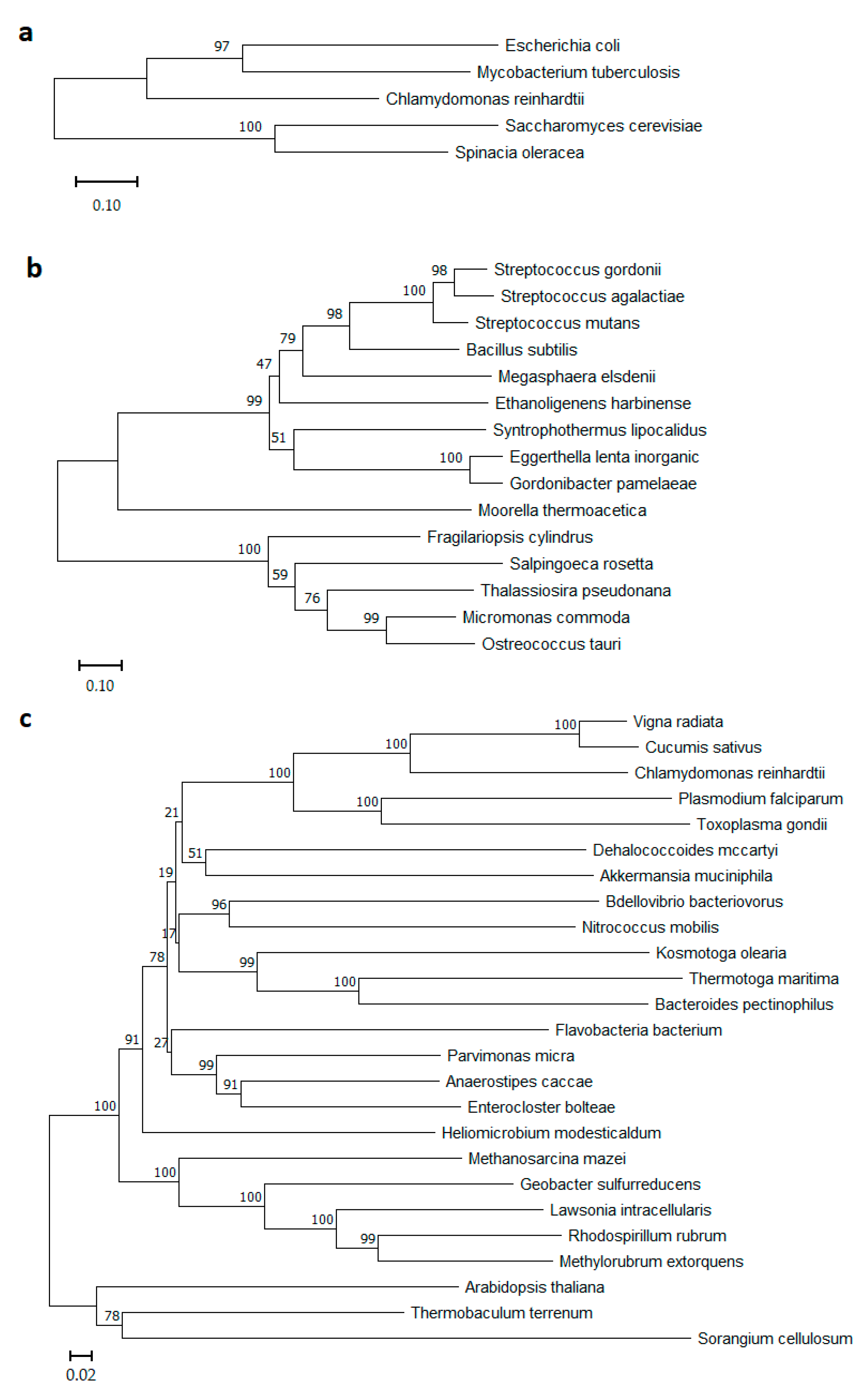
3.1. Heterologous Expression of H+-PPaseRru in E. coli with Replacement of the Native S-PPase
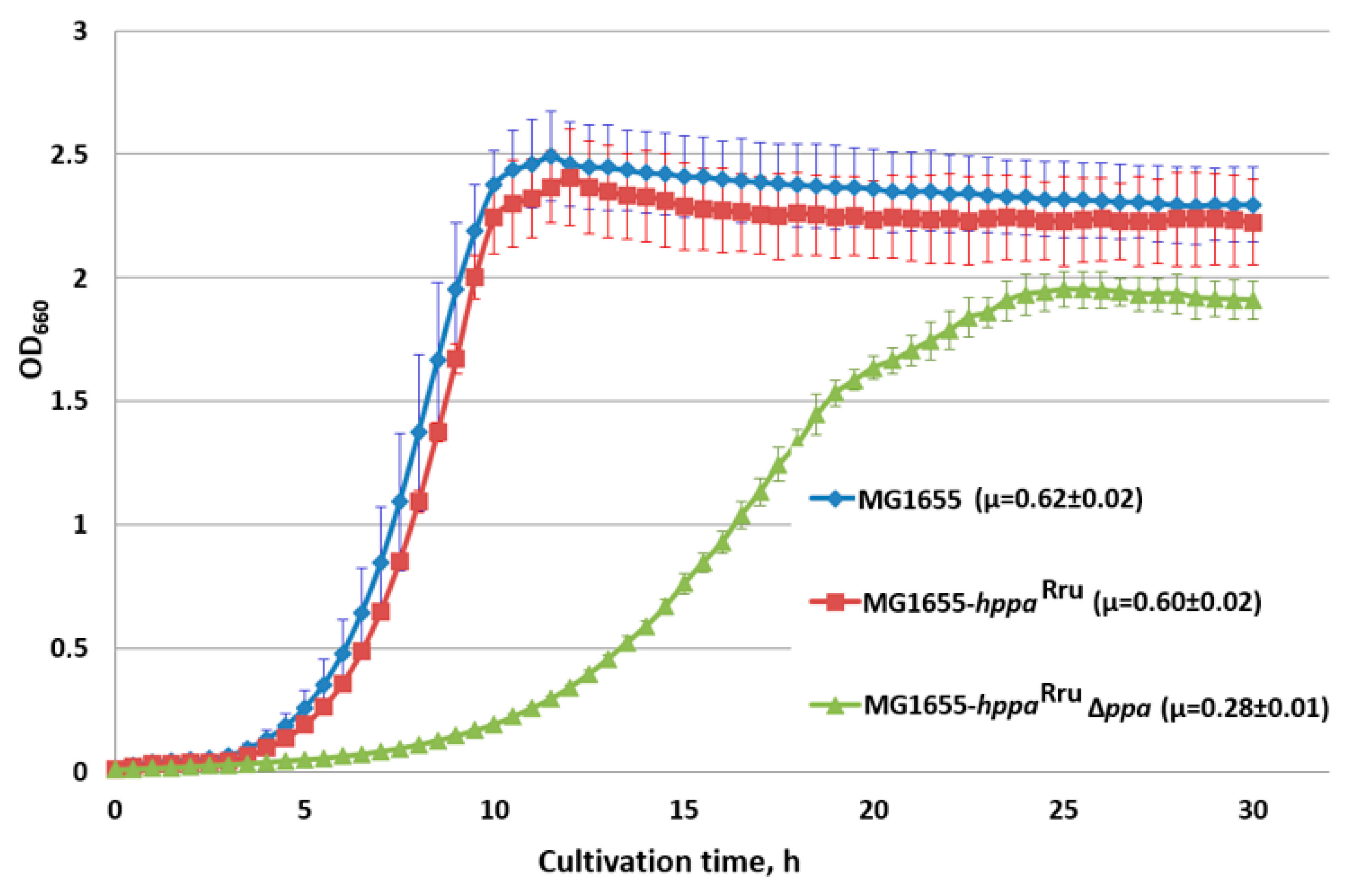
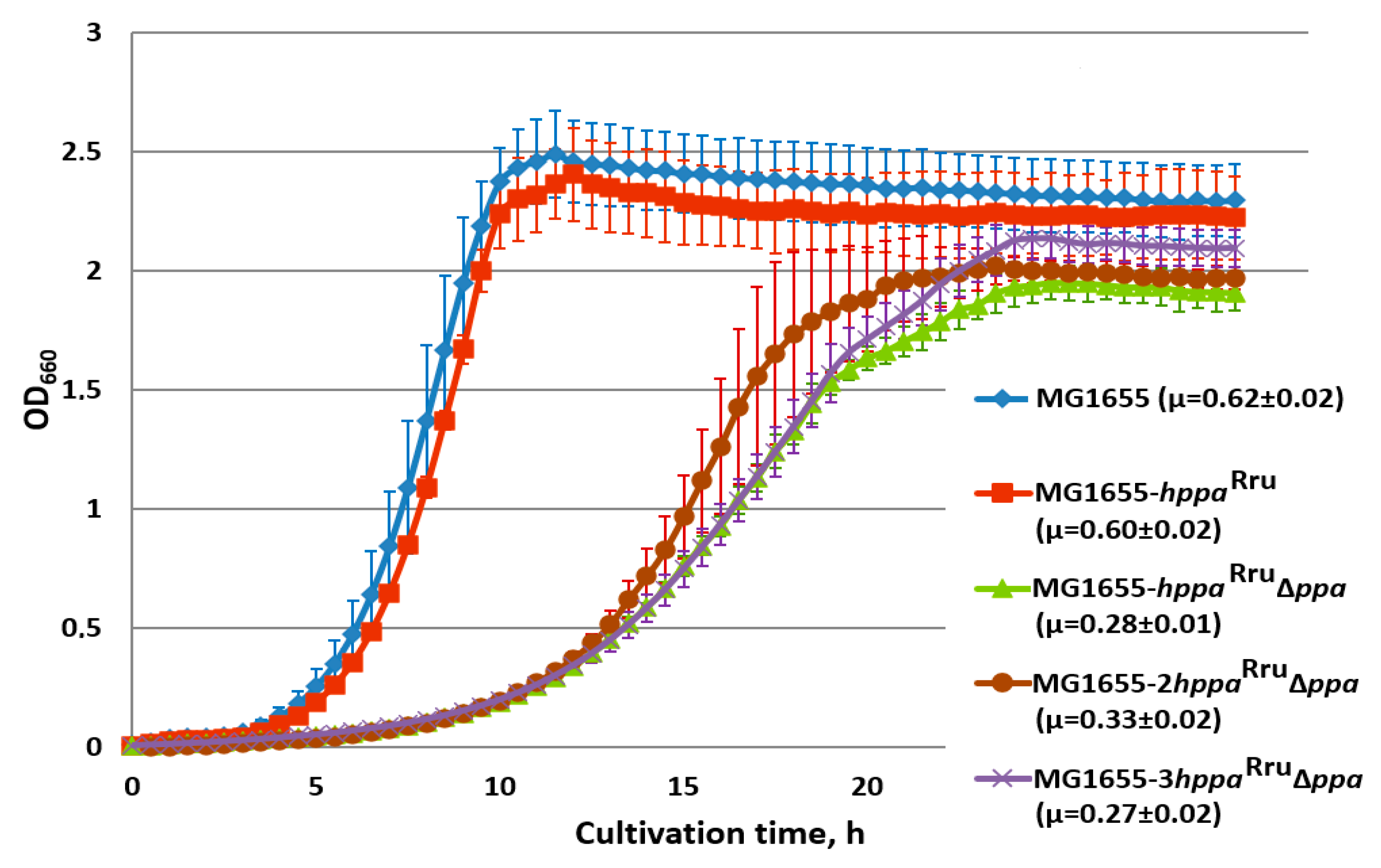
3.2. Analysis of the Growth of Strains Containing H+-PPaseRru and the Effects of Increasing hppaRru Gene Copy Number
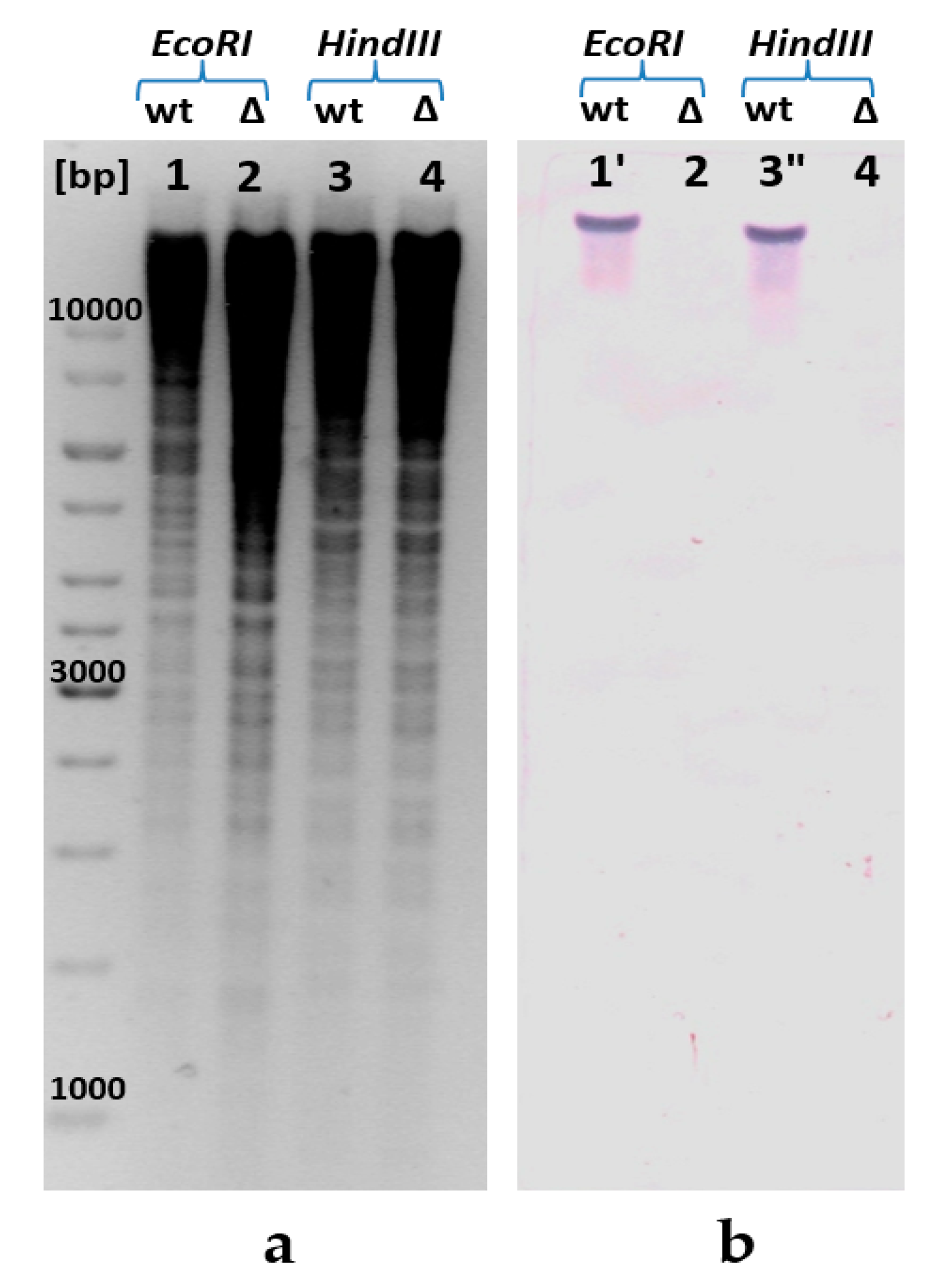
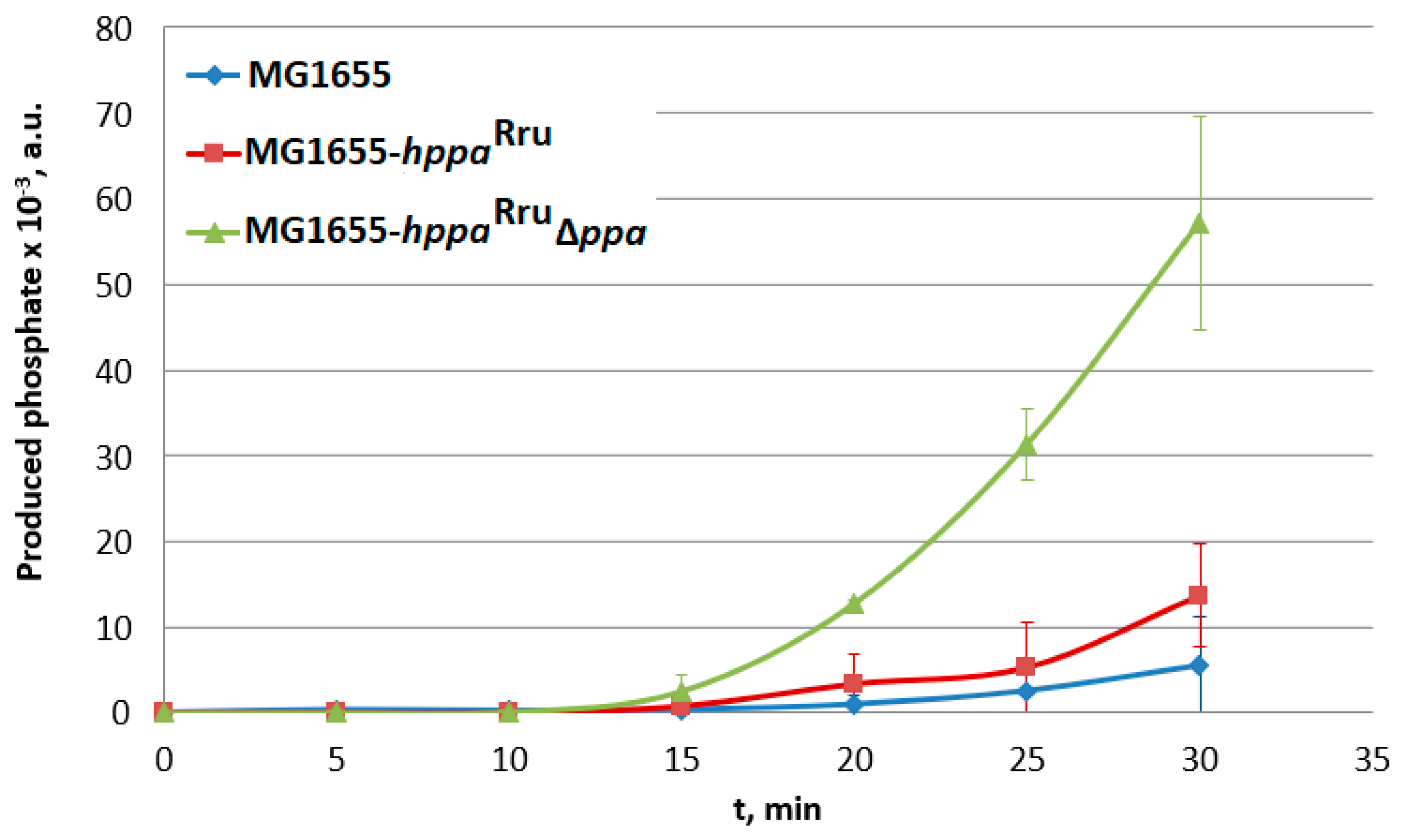
3.3. Analysis of PPase Activity of E. coli Strains Containing S- and M-PPases
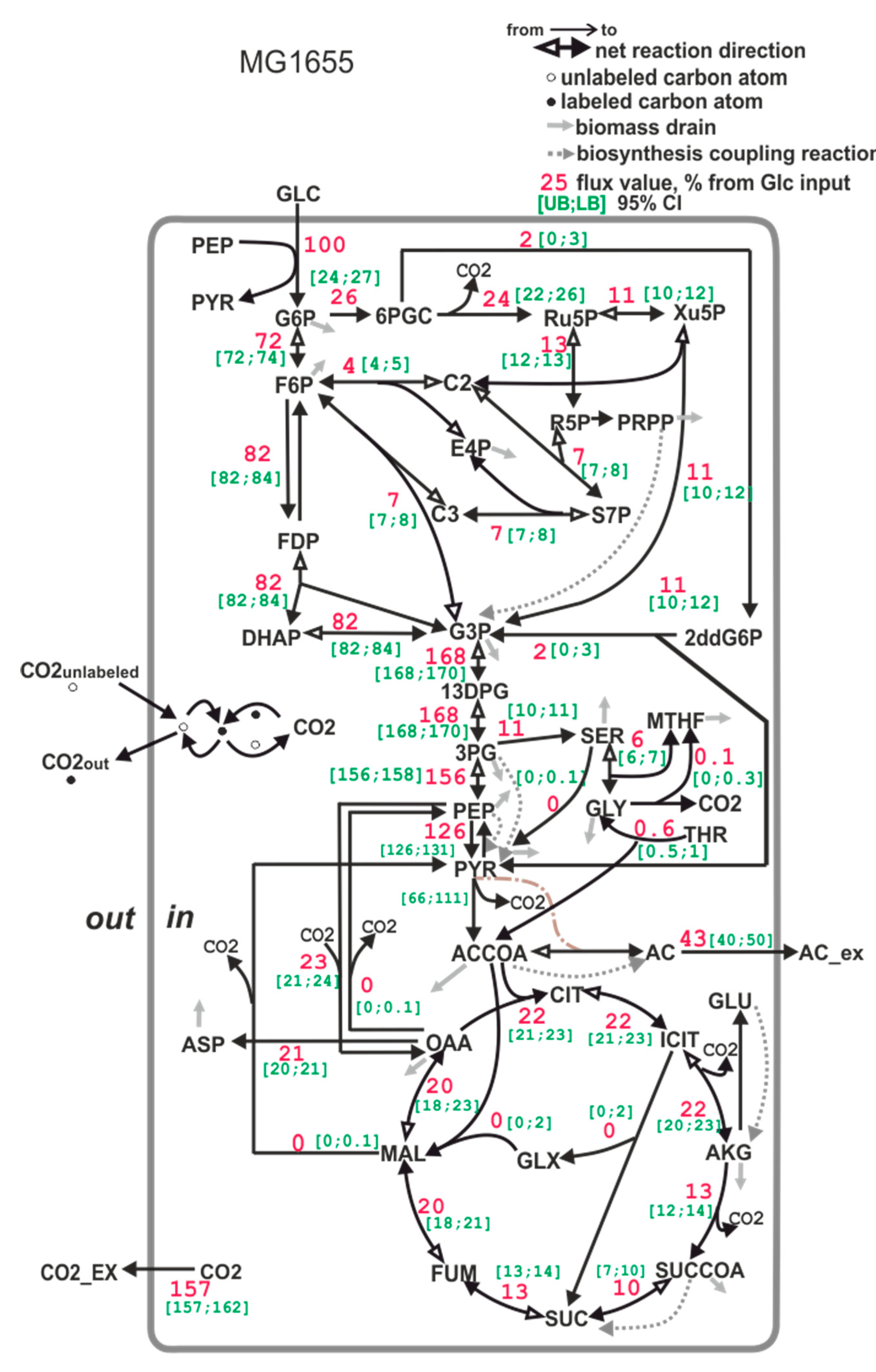
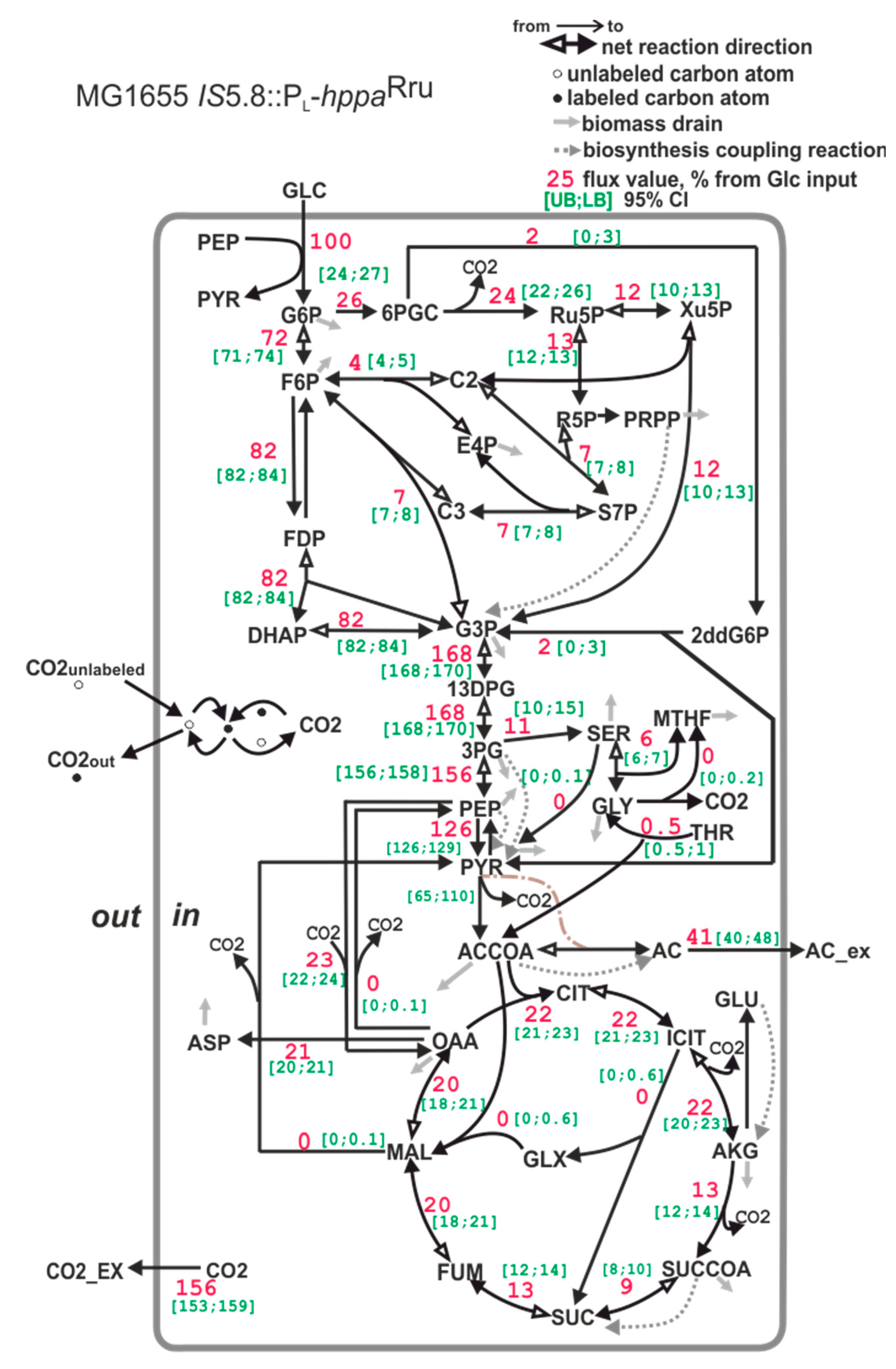
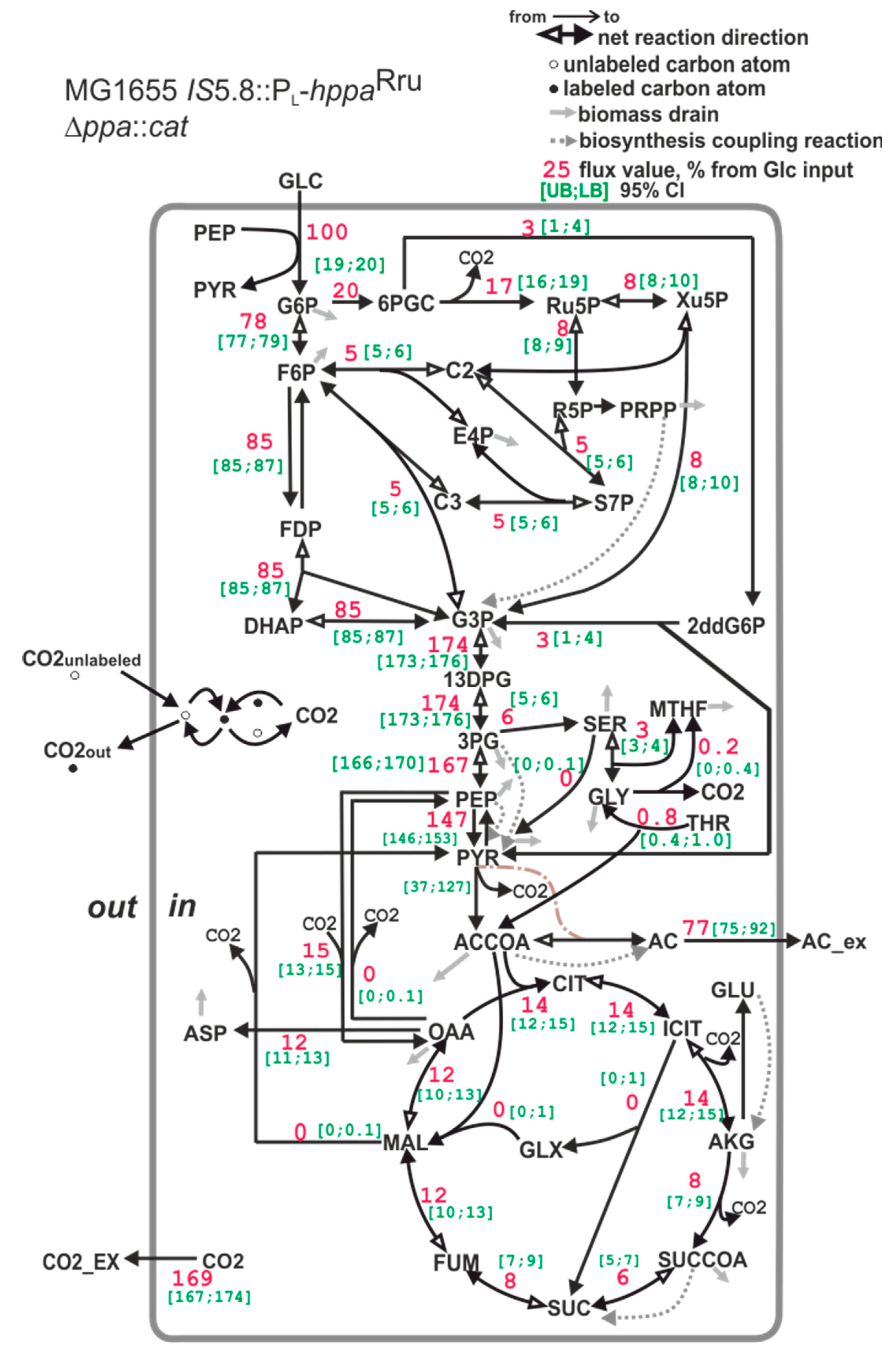
3.4. Carbon Flux Distribution in E. coli MG1655, MG1655 IS5.8::PL-hppaRru and MG1655 IS5.8::PL-hppaRru ∆ppa::cat Strains
4. Discussion
5. Conclusions
6. Patents
Supplementary Materials
Author Contributions
Funding
Data Availability Statement
Acknowledgments
Conflicts of Interest
Appendix A
- Sequence of codon-harmonized hppaRru(from 5’ to 3’)
Appendix B
- Construction of E. coli MG1655 IS5.8::PL-hppaRru
Appendix C
- Construction of E. coli MG1655 IS5.8::PL-hppaRru ∆ppa
Appendix D
- Construction of E. coli strains containing two and three copies of hppaRru gene
Appendix D.1. Construction of E. coli MG1655 adrA::PL-hppaRru and MG1655 adhE::PL-hppaRru
Appendix D.2. Construction of E. coli MG1655 adrA::PL-hppaRru ∆ppa and MG1655 adhE::PL-hppaRru ∆ppa
References
- Lahti, R. Microbial inorganic pyrophosphatases. Microbiol. Rev. 1983, 47, 169–178. [Google Scholar] [CrossRef] [PubMed]
- Baykov, A.A.; Anashkin, V.A.; Salminen, A.; Lahti, R. Inorganic pyrophosphatases of Family II—Two decades after their discovery. FEBS Lett. 2017, 591, 3225–3234. [Google Scholar] [CrossRef] [Scilit] [PubMed]
- Edgar, R.C. MUSCLE: Multiple sequence alignment with high accuracy and high throughput. Nucleic Acids Res. 2004, 32, 1792–1797. [Google Scholar] [CrossRef] [Scilit]
- Baltscheffsky, M. Inorganic pyrophosphate and ATP as energy donors in chromatophores from Rhodospirillum rubrum. Nature 1967, 216, 241–243. [Google Scholar] [CrossRef] [Scilit] [PubMed]
- Baltscheffsky, H. Inorganic pyrophosphate and the evolution of biological energy transformation. Acta Chem. Scand. 1967, 21, 1973–1974. [Google Scholar] [CrossRef] [Scilit]
- Brown, M.R.W.; Kornberg, A. Inorganic polyphosphate in the origin and survival of species. Proc. Natl. Acad. Sci. USA 2004, 101, 16085–16087. [Google Scholar] [CrossRef] [Scilit]
- Baltscheffsky, M.; Nadanaciva, S.; Schultz, A. A pyrophosphate synthase gene: Molecular cloning and sequencing of the cDNA encoding the inorganic pyrophosphate synthase from Rhodospirillum rubrum. Biochim. Biophys. Acta (BBA)-Bioenerg. 1998, 1364, 301–306. [Google Scholar] [CrossRef] [Scilit]
- Docampo, R.; Moreno, S.N. Acidocalcisomes. Cell Calcium 2011, 50, 113–119. [Google Scholar] [CrossRef] [Scilit]
- Baykov, A.A.; Anashkin, V.A.; Malinen, A.M.; Bogachev, A.V. The Mechanism of Energy Coupling in H+/Na+-Pumping Membrane Pyrophosphatase-Possibilities and Probabilities. Int. J. Mol. Sci. 2022, 16, 9504. [Google Scholar] [CrossRef] [Scilit]
- Belogurov, G.A.; Turkina, M.V.; Penttinen, A.; Huopalahti, S.; Baykov, A.A.; Lahti, R. H+ pyrophosphatase of Rhodospirillum rubrum High yield expression in Escherichia coli and identification of the Cys residues responsible for inactivation my mersalyl. J. Biol. Chem. 2002, 277, 22209–22214. [Google Scholar] [CrossRef] [Scilit]
- Schultz, A.; Baltscheffsky, M. Properties of mutated Rhodospirillum rubrum H+-pyrophosphatase expressed in Escherichia coli. Biochim. Biophys. Acta (BBA)-Bioenerg. 2003, 1607, 141–151. [Google Scholar] [CrossRef] [Scilit]
- Kellosalo, J.; Kajander, T.; Palmgren, M.G.; Lopéz-Marqués, R.L.; Goldman, A. Heterologous expression and purification of membrane-bound pyrophosphatases. Protein Expr. Purif. 2011, 79, 25–34. [Google Scholar] [CrossRef] [Scilit]
- Gouiaa, S.; Khoudi, H.; Leidi, E.O.; Pardo, J.M.; Masmoudi, K. Expression of wheat Na+/H+ antiporter TNHXS1 and H+-pyrophosphatase TVP1 genes in tobacco from a bicistronic transcriptional unit improves salt tolerance. Plant Mol. Biol. 2012, 79, 137–155. [Google Scholar] [CrossRef] [Scilit]
- Lv, S.; Jiang, P.; Tai, F.; Wang, D.; Feng, J.; Fan, P.; Bao, H.; Li, Y. The V-ATPase subunit A is essential for salt tolerance through participating in vacuolar Na+ compartmentalization in Salicornia europaea. Planta 2017, 246, 1177–1187. [Google Scholar] [CrossRef] [Scilit]
- Dyakova, E.V. Influence of Rhodospirillum rubrum Membrane H+-Pyrophosphatase Gene Expression in on the Level of Salt Tolerance in Tobacco Plants. Ph.D. Thesis, Russian State Agrarian University (Moscow Timiryazev Agricultural Academy), Moscow, Russia, 2012. (In Russian) [Google Scholar]
- Kellosalo, J.; Kajander, T.; Kogan, K.; Pokharel, K.; Goldman, A. The structure and catalytic cycle of a sodium-pumping pyrophosphatase. Science 2012, 337, 473–476. [Google Scholar] [CrossRef] [Scilit]
- Lin, S.M.; Tsai, J.Y.; Hsiao, C.D.; Huang, Y.T.; Chiu, C.L.; Liu, M.H.; Tung, J.Y.; Liu, T.H.; Pan, R.L.; Sun, Y.J. Crystal structure of a membrane-embedded H+-translocating pyrophosphatase. Nature 2012, 484, 399–403. [Google Scholar] [CrossRef] [Scilit]
- Baykov, A.A.; Malinen, A.M.; Luoto, H.H.; Lahti, R. Pyrophosphate-fueled Na+ and H+ transport in prokaryotes. Microbiol. Mol. Biol. Rev. 2013, 77, 267–276. [Google Scholar] [CrossRef] [Scilit]
- Malinen, A.M.; Anashkin, V.A.; Orlov, V.N.; Bogachev, A.V.; Lahti, R.; Baykov, A.A. Pre-steady-state kinetics and solvent isotope effects support the “billiard-type” transport mechanism in Na+-translocating pyrophosphatase. Protein Sci. 2022, 31, e4394. [Google Scholar] [CrossRef] [Scilit]
- Bailey, J.E. Toward a science of metabolic engineering. Science 1991, 252, 1668–1675. [Google Scholar] [CrossRef] [Scilit]
- Zhou, J.; Liu, L.; Shi, Z.; Du, G.; Chen, J. ATP in current biotechnology: Regulation, applications and perspectives. Biotechnol. Adv. 2009, 27, 94–101. [Google Scholar] [CrossRef] [Scilit]
- Aoki, R.; Wada, M.; Takesue, N.; Tanaka, K.; Yokota, A. Enhanced glutamic acid production by a H+-ATPase-defective mutant of Corynebacterium glutamicum. Biosci. Biotechnol. Biochem. 2005, 69, 1466–1472. [Google Scholar] [CrossRef] [Scilit] [PubMed]
- Liu, L.M.; Li, Y.; Du, G.C.; Chen, J. Increasing glycolytic flux in Torulopsis glabrata by redirecting ATP production from oxidative phosphorylation to substrate-level phosphorylation. J. Appl. Microbiol. 2006, 100, 1043–1053. [Google Scholar] [CrossRef] [Scilit] [PubMed]
- Yokota, A.; Henmi, M.; Takaoka, N.; Hayashi, C.; Takezawa, Y.; Fukumori, Y.; Tomita, F. Enhancement of glucose metabolism in a pyruvic acid-hyperproducing Escherichia coli mutant defective in F1-ATPase activity. J. Ferment. Bioeng. 1997, 83, 132–138. [Google Scholar] [CrossRef] [Scilit]
- Sánchez, A.M.; Bennett, G.N.; San, K.Y. Effect of different levels of NADH availability on metabolic fluxes of Escherichia coli chemostat cultures in defined medium. J. Biotechnol. 2005, 117, 395–405. [Google Scholar] [CrossRef] [Scilit]
- Lin, H.; Castro, N.M.; Bennett, G.N.; San, K.Y. Acetyl-CoA synthetase overexpression in Escherichia coli demonstrates more efficient acetate assimilation and lower acetate accumulation: A potential tool in metabolic engineering. Appl. Microbiol. Biotechnol. 2006, 71, 870–874. [Google Scholar] [CrossRef] [Scilit]
- Chen, J.; Brevet, A.; Fromant, M.; Leveque, F.; Schmitter, J.M.; Blanquet, S.; Plateau, P. Pyrophosphatase is essential for growth of Escherichia coli. J Bacteriol. 1990, 172, 5686–5689. [Google Scholar] [CrossRef] [Scilit]
- Sambrook, J.; Russell, D.W. Molecular Cloning: Ch. 15. Expression of Cloned Genes in Escherichia coli; Cold Spring Harbor Laboratory Press: New York, NY, USA, 2001; Volume 3. [Google Scholar]
- Studier, F.W.; Mofatt, B.A. Use of bacteriophage T7 RNA polymerase to direct selective high-level expression of cloned genes. J. Mol. Biol. 1986, 189, 113–130. [Google Scholar] [CrossRef] [Scilit]
- Herrero, M.; de Lorenzo, V.; Timmis, K.N. Transposon vectors containing nonantibiotic resistance selection markers for cloning and stable chromosomal insertion of foreign genes in Gram-negative bacteria. J. Bacteriol. 1990, 172, 6557–6567. [Google Scholar] [CrossRef] [Scilit]
- Minaeva, N.I.; Gak, E.R.; Zimenkov, D.V.; Skorokhodova, A.Y.; Biryukova, I.V.; Mashko, S.V. Dual-In/Out strategy for genes integration into bacterial chromosome: A novel approach to step-by-step construction of plasmid-less marker-less recombinant E. coli strains with predesigned genome structure. BMC 2008, 8, 63. [Google Scholar] [CrossRef] [Scilit]
- Datsenko, K.A.; Wanner, B.L. One-step inactivation of chromosomal genes in Escherichia coli K-12 using PCR products. Proc. Natl. Acad. Sci. USA 2000, 97, 6640–6645. [Google Scholar] [CrossRef] [Scilit]
- Haldimann, A.; Wanner, B.L. Conditional-replication integration excision and retrieval plasmid-host systems for gene structure–function studies of bacteria. J. Bacteriol. 2001, 183, 6384–6393. [Google Scholar] [CrossRef] [Scilit]
- Angov, E.; Hillier, C.J.; Kincaid, R.L.; Lyon, J.A.; Angov, E. Heterologous protein expression is enhanced by harmonizing the codon usage frequencies of the target gene with those of the expression host. PLoS ONE 2008, 3, e2189. [Google Scholar] [CrossRef] [Scilit]
- Ublinskaya, A.A.; Samsonov, V.V.; Mashko, S.V.; Stoynova, N.V. A PCR-free cloning method for the targeted phi80 Int-mediated integration of any long DNA fragment bracketed with meganuclease recognition sites into the Escherichia coli chromosome. J. Microbiol. Methods 2012, 89, 167–173. [Google Scholar] [CrossRef] [Scilit]
- Moore, S.D. Assembling new Escherichia coli strains by transduction using phage P1. In Strain Engineering; Humana Press: Totowa, NJ, USA, 2011; pp. 155–169. [Google Scholar]
- Bradford, M.M. A rapid and sensitive method for the quantitation of microgram quantities of protein utilizing the principle of protein-dye binding. Anal. Biochem. 1976, 72, 248–254. [Google Scholar] [CrossRef]
- Kamal, A.; Thao, L.; Sensintaffar, J.; Zhang, L.; Boehm, M.F.; Fritz, L.C.; Burrows, F.J. A high-affinity conformation of Hsp90 confers tumour selectivity on Hsp90 inhibitors. Nature 2003, 425, 407–410. [Google Scholar] [CrossRef] [Scilit]
- Sugiura, T.; Nagano, Y.; Noguchi, Y. DDX39, upregulated in lung squamous cell cancer, displays RNA helicase activities and promotes cancer cell growth. Cancer Biol. Ther. 2007, 6, 957–964. [Google Scholar] [CrossRef] [Scilit]
- Heinonen, J.K.; Lahti, R.J. A new and convenient colorimetric determination of inorganic orthophosphate and its application to the assay of inorganic pyrophosphatase. Anal. Biochem. 1981, 113, 313–317. [Google Scholar] [CrossRef] [Scilit]
- Long, C.P.; Gonzalez, J.E.; Feist, A.M.; Palsson, B.O.; Antoniewicz, M.R. Fast growth phenotype of E. coli K-12 from adaptive laboratory evolution does not require intracellular flux rewiring. Metab. Eng. 2017, 44, 100–107. [Google Scholar] [CrossRef] [Scilit]
- Kleijn, R.J.; Van Winden, W.A.; Van Gulik, W.M.; Heijnen, J.J. Revisiting the 13C-label distribution of the non-oxidative branch of the pentose phosphate pathway based upon kinetic and genetic evidence. FEBS J. 2005, 272, 4970–4982. [Google Scholar] [CrossRef] [Scilit]
- Sedivy, J.M.; Babul, J.; Fraenkel, D.G. AMP-insensitive fructose bisphosphatase in Escherichia coli and its consequences. Proc. Natl. Acad. Sci. USA 1986, 83, 1656–1659. [Google Scholar] [CrossRef] [Scilit]
- Oh, M.K.; Rohlin, L.; Kao, K.C.; Liao, J.C. Global expression profiling of acetate-grown Escherichia coli. J. Biol. Chem. 2002, 277, 13175–13183. [Google Scholar] [CrossRef] [Scilit] [PubMed]
- Trauchessec, M.; Jaquinod, M.; Bonvalot, A.; Brun, V.; Bruley, C.; Ropers, D.; de Jong, H.; Jérôme Garin, J.; Bestel-Corre, G.; Ferro, M. Mass spectrometry-based workflow for accurate quantification of Escherichia coli enzymes: How proteomics can play a key role in metabolic engineering. Mol. Cell Proteom. 2014, 13, 954–968. [Google Scholar] [CrossRef] [Scilit] [PubMed]
- Patnaik, R.; Roof, W.D.; Young, R.F.; Liao, J. Stimulation of glucose catabolism in Escherichia coli by a potential futile cycle. J. Bacteriol. 1992, 174, 7527–7532. [Google Scholar] [CrossRef] [Scilit] [PubMed]
- Chambost, J.P.; Fraenkel, D.G. The use of 6-labeled glucose to assess futile cycling in Escherichia coli. J. Biol. Chem. 1980, 255, 2867–2869. [Google Scholar] [CrossRef] [Scilit] [PubMed]
- Daldal, F.; Fraenkel, D.G. Assessment of a futile cycle involving reconversion of fructose 6-phosphate to fructose 1,6-during gluconeogenic growth of Escherichia coli. J. Bacteriol. 1983, 153, 390–394. [Google Scholar] [CrossRef] [Scilit]
- Torres, J.C.; Baul, J. An in vitro model showing different rates of substrate cycle for phosphofructokinases of Escherichia coli with different kinetic properties. Eur. J. Biochem. 1991, 200, 471–476. [Google Scholar] [CrossRef] [Scilit]
- Hädicke, O.; Bettenbrock, K.; Klamt, S. Enforced ATP futile cycling increases specific productivity and yield of anaerobic lactate production in Escherichia coli. Biotechnol. Bioeng. 2015, 112, 2195–2199. [Google Scholar] [CrossRef] [Scilit]
- Abdel-Hamid, A.M.; Attwood, M.M.; Guest, J.R. Pyruvate oxidase contributes to the aerobic growth efficiency of Escherichia coli. Microbiology 2001, 174, 1483–1498. [Google Scholar] [CrossRef] [Scilit]
- Dittrich, C.R.; Bennett, G.N.; San, K.Y. Characterization of the acetate-producing pathways in Escherichia coli. Biotechnol. Prog. 2005, 21, 1062–1067. [Google Scholar] [CrossRef] [Scilit]
- De Mey, M.; Lequeux, G.J.; Beauprez, J.J.; Maertens, J.; Van Horen, E.; Soetaert, W.K.; Vanrolleghem, P.A.; Vandamme, E.J. Comparison of different strategies to reduce acetate formation in Escherichia coli. Biotechnol. Prog. 2007, 23, 1053–1063. [Google Scholar]
- Leighty, R.W.; Antoniewicz, M.R. Parallel labeling experiments with [U-13C] glucose validate E. coli metabolic network model for 13C metabolic flux analysis. Metab. Eng. 2012, 14, 533–541. [Google Scholar] [CrossRef] [Scilit]
- Marcus, J.P.; Dekker, E.E. Threonine formation via the coupled activity of 2-amino-3-ketobutyrate coenzyme A lyase and threonine dehydrogenase. J. Bacteriol. 1993, 175, 6505–6511. [Google Scholar] [CrossRef] [Scilit]
- Szyperski, T. Biosynthetically directed fractional 13C-labeling of proteinogenic amino acids an efficient analytical tool to investigate intermediary metabolism. FEBS 1995, 232, 433–448. [Google Scholar] [CrossRef]
- Quek, L.E.; Wittmann, C.; Nielsen, L.K.; Krömer, J.O. OpenFLUX: Efficient modelling software for 13C-based metabolic flux analysis. Microb. Cell Fact. 2009, 8, 25. [Google Scholar] [CrossRef] [Scilit]
- Quek, L.E.; Nielsen, L.K. Steady-state ¹³C fluxomics using OpenFLUX. Methods Mol. Biol. 2014, 1191, 209–224. [Google Scholar]
- Pramanik, J.; Keasling, J.D. Stoichiometric model of Escherichia coli metabolism: Incorporation of growth-rate dependent biomass composition and mechanistic energy requirements. Biotechnol. Bioeng. 1997, 56, 398–421. [Google Scholar] [CrossRef]
- Pramanik, J.; Keasling, J.D. Effect of Escherichia coli biomass composition on central metabolic fluxes predicted by a stoichiometric model. Biotechnol. Bioeng. 1998, 60, 230–238. [Google Scholar] [CrossRef] [Scilit]
- Dauner, M.; Sauer, U. Stoichiometric growth model for riboflavin-producing Bacillus subtilis. Biotechnol. Bioeng. 2001, 76, 132–143. [Google Scholar] [CrossRef] [Scilit]
- Zamboni, N.; Fendt, S.M.; Rühl, M.; Sauer, U. 13C-based metabolic flux analysis. Nat. Protoc. 2009, 4, 878–892. [Google Scholar] [CrossRef] [Scilit]
- Neidhardt, F.C.; Umbarger, H.E. Chemical composition of Escherichia coli. In Escherichia coli and Salmonella: Cellular and Molecular Biology, 2nd ed.; Neidhardt, F.C., Ed.; ASM Press: Washington DC, USA, 1996. [Google Scholar]
- Marx, A.; de Graaf, A.A.; Wiechert, W.; Eggeling, L.; Sahm, H. Determination of the fluxes in the central metabolism of Corynebacterium glutamicum by nuclear magnetic resonance spectroscopy combined with metabolite balancing. Biotechnol. Bioeng. 1996, 49, 111–129. [Google Scholar] [CrossRef]
- Fischer, E.; Zamboni, N.; Sauer, U. High-throughput metabolic flux analysis based on gas chromatography-mass spectrometry derived 13C constraints. Anal. Biochem. 2004, 325, 308–316. [Google Scholar] [CrossRef] [Scilit] [PubMed]
- Herbert, D.; Phipps, P.J.; Strange, R.E. Chemical analysis of microbial cells. In Methods in Microbiology; Norris, J.R., Ribbons, D.W., Eds.; Academic Press: London, UK; New York, NY, USA, 1971; Volume 5B, pp. 209–344. [Google Scholar]
- Spirin, A.S. Spectrometric determination of a total quantity of nucleic acids. Biohimiya 1958, 23, 656–662. (In Russian) [Google Scholar]
- Karklinya, V.A.; Birska, I.A.; Limarenko, Y.A. Quantitative determination of nucleic acids in salmonidae milt by various methods. Chem. Nat. Compd. 1989, 25, 109–112. [Google Scholar] [CrossRef] [Scilit]
- Antoniewicz, M.R.; Kelleher, J.K.; Stephanopoulos, G. Accurate assessment of amino acid mass isotopomer distributions for metabolic flux analysis. Anal. Chem. 2007, 79, 7554–7559. [Google Scholar]
- Long, C.P.; Au, J.; Gonzalez, J.E.; Antoniewicz, M.R. 13C metabolic flux analysis of microbial and mammalian systems is enhanced with GC-MS measurements of glycogen and RNA labeling. Metab. Eng. 2016, 38, 65–72. [Google Scholar] [CrossRef] [Scilit]
- Fernandez, C.A.; Des Rosiers, C.; Previs, S.F.; David, F.; Brunengraber, H. Correction of 13C Mass isotopomer distributions for natural stable isotope abundance. J. Mass Spectrom. 1996, 31, 255–262. [Google Scholar] [CrossRef] [Scilit]
- Shupletsov, M.S.; Golubeva, L.I.; Rubina, S.S.; Podvyaznikov, D.A.; Iwatani, S.; Mashko, S.V. OpenFLUX2: 13C-MFA modeling software package adjusted for the comprehensive analysis of single and parallel labeling experiments. Microb. Cell Fact. 2014, 13, 152. [Google Scholar] [CrossRef] [Scilit]
- Theorell, A.; Leweke, S.; Wiechert, W.; Nöh, K. To be certain about the uncertainty: Bayesian statistics for 13C metabolic flux analysis. Biotechnol. Bioeng. 2017, 114, 2668–2684. [Google Scholar] [CrossRef] [Scilit]
- Diciccio, T.J.; Romano, J.P. A review of bootstrap confidence intervals. J. Royal Stat. Soc. B (Methodological) 1988, 50, 338–354. [Google Scholar] [CrossRef] [Scilit]
- Joshi, M.; Seidel-Morgenstern, A.; Kremling, A. Exploiting the bootstrap method for quantifying parameter confidence intervals in dynamical systems. Metab. Eng. 2006, 8, 447–455. [Google Scholar] [CrossRef] [Scilit]
- Kajander, T.; Kellosalo, J.; Goldman, A. Inorganic pyrophosphatases: One substrate, three mechanisms. FEBS Lett. 2013, 587, 1863–1869. [Google Scholar] [CrossRef] [Scilit]
- Belogurov, G.A.; Malinen, A.M.; Turkina, M.V.; Jalonen, U.; Rytkönen, K.; Baykov, A.A.; Lahti, R. Membrane-bound pyrophosphatase of Thermotoga maritima requires sodium for activity. Biochemistry 2005, 44, 2088–2096. [Google Scholar] [CrossRef] [Scilit]
- Norland, S.; Heldal, M.; Tumyr, O. On the relation between dry matter and volume of bacteria. Microb. Ecol. 1987, 13, 95–101. [Google Scholar] [CrossRef] [Scilit]
- Volkmer, B.; Heinemann, M. Condition-dependent cell volume and concentration of Escherichia coli to facilitate data conversion for systems biology modeling. PLoS ONE 2011, 6, e23126. [Google Scholar] [CrossRef] [Scilit]
- Crown, S.B.; Long, C.P.; Antoniewicz, M.R. Optimal tracers for parallel labeling experiments and 13C metabolic flux analysis: A new precision and synergy scoring system. Metab. Eng. 2016, 38, 10–18. [Google Scholar] [CrossRef] [Scilit]
- Leighty, R.W.; Antoniewicz, M.R. COMPLETE-MFA: Complementary parallel labeling experiments technique for metabolic flux analysis. Metab. Eng. 2013, 20, 49–55. [Google Scholar] [CrossRef] [Scilit]
- Long, C.P.; Antoniewicz, M.R. Metabolic flux responses to deletion of 20 core enzymes reveal flexibility and limits of E. coli metabolism. Metab. Eng. 2019, 55, 247–249. [Google Scholar] [CrossRef] [Scilit]
- Cronan, J.E.; Laporter, D. Tricarboxylic acid cycle and glyoxylate bypass. In Escherichia coli and Salmonella: Cellular and Molecular Biology, 2nd ed.; Neidhardt, F.C., Ed.; ASM Press: Washington, DC, USA, 1996. [Google Scholar]
- Sauer, U.; Canonaco, F.; Heri, S.; Perrenoud, A.; Fischer, E. The soluble and membrane-bound transhydrogenases UdhA and PntAB have divergent functions in NADPH metabolism of Escherichia coli. J. Biol. Chem. 2004, 279, 6613–6619. [Google Scholar] [CrossRef] [Scilit]
- Pérez-Castiñeira, J.R.; López-Marqués, R.L.; Villalba, J.M.; Losada, M.; Serrano, A. Functional complementation of yeast cytosolic pyrophosphatase by bacterial and plant H+-translocating pyrophosphatases. Proc. Natl. Acad. Sci. USA 2002, 99, 15914–15919. [Google Scholar] [CrossRef] [Scilit]
- Nyre´n, P.; Strid, A. Hypothesis: The physiological role of the membrane-bound proton-translocating pyrophosphatase in some phototrophic bacteria. FEMS Microbiol. Lett. 1991, 77, 265–270. [Google Scholar] [CrossRef]
- García-Contreras, R.; Celis, H.; Romero, I. Importance of Rhodospirillum rubrum H(+)-pyrophosphatase under low-energy conditions. J Bacteriol. 2004, 186, 6651–6655. [Google Scholar] [CrossRef] [Scilit] [PubMed]
- Ajinomoto Genetika Research Institute, Method for preparing L-amino acids, strain Escherichia coli as producer of L-amino acid (variants). Russian Patent No. RU2222596 C1, 14 August 2002. (In Russian)


| Strain or Plasmid | Description | Reference or Source |
|---|---|---|
| MG1655 | Escherichia coli K12 wild-type | VKPM a B6195 |
| BL21 (DE3) | E. coli B F− ompT gal dcm lon hsdSB (rB−mB−) λ(DE3 [lacI PlacUV5-T7gene1 ind1 sam7 nin5]) [malB+]K-12 (λS) | [29] |
| CC118 λpir+ | Host strain for maintenance of pir-dependent recombinant plasmids | [30] |
| MG1655 Δ(ϕ80-attB) | MG1655 with deleted native (ϕ80-attB) site | [31] |
| DH5α | F-ϕ80lacZ∆M15 ∆(lacZYA-argF) U169 recA1 endA1 hsdR17 (rk−, mk+) phoA supE44 λ-thi-1 gyrA96 relA1 | Laboratory collection |
| MG1655 Δ(ϕ80-attB) IS5.8::ϕ80-attB | MG1655 with deleted native ϕ80-attB site and reconstruction of attB site in IS5.8 locus | [31] |
| MG1655 IS5.8::PL-hppaRru | MG1655 with deleted native ϕ80-attB site and IS5.8::PL-hppaRru | This work |
| MG1655 IS5.8::Ptac-hppaRru | MG1655 with deleted native ϕ80-attB site and IS5.8::Ptac-hppaRru | This work |
| MG1655 IS5.8::Ptac21-hppaRru | MG1655 with deleted native ϕ80-attB site and IS5.8::Ptac21-hppaRru | This work |
| MG1655 ∆(ϕ80-attB) adrA::ϕ80-attB | MG1655 with deleted native ϕ80-attB site and artificial ϕ80-attB site in adrA locus | Laboratory collection |
| MG1655 ∆(ϕ80-attB) adhE::ϕ80-attB | MG1655 with deleted native ϕ80-attB site and artificial ϕ80-attB site in adhE locus | Laboratory collection |
| MG1655 adrA::PL-hppaRru | MG1655 with deleted native ϕ80-attB site and adrA::PL-hppaRru | This work |
| MG1655 adrA::PL-hppaRru ∆ppa::cat | MG1655 with deleted native ϕ80-attB site and adrA::PL-hppaRru and ∆ppa::λattR-cat-λattL | This work |
| MG1655 adhE::PL-hppaRru | MG1655 with deleted native ϕ80-attB site and adhE::PL-hppaRru | This work |
| MG1655 adhE::PL-hppaRru ∆ppa::cat | MG1655 with deleted native ϕ80-attB site, adhE::PL-hppaRru and ∆ppa::λattR-cat-λattL | This work |
| MG1655 IS5.8::PL-hppa ∆ppa::cat | MG1655 with deleted native ϕ80-attB site and IS5.8::PL-hppaRru and ∆ppa::λattR-cat-λattL | This work |
| MG1655 IS5.8::PL-hppa ∆ppa | MG1655 with deleted native ϕ80-attB site and IS5.8::PL-hppaRru and ∆ppa::λattB | This work |
| MG1655 IS5.8::PL-hppaRru adrA::PL-hppaRru | MG1655 with deleted native (ϕ80-attB) site, IS5.8::PL-hppaRru and adrA::PL-hppaRru | This work |
| MG1655 IS5.8::PL-hppaRru adrA::PL-hppaRru ∆ppa | MG1655 with deleted native ϕ80-attB site and IS5.8::PL-hppaRru, adrA::PL-hppaRru and ∆ppa::λattB | This work |
| MG1655 IS5.8::PL-hppaRru adrA::PL-hppaRru adhE::PL-hppaRru | MG1655 with deleted native ϕ80-attB site and IS5.8::PL-hppaRru, adrA::PL-hppaRru and adhE::PL-hppaRru | This work |
| MG1655 IS5.8::PL-hppaRru adrA::PL-hppaRru adhE::PL-hppaRru ∆ppa | MG1655 with deleted native ϕ80-attB site and IS5.8::PL-hppaRru, adrA::PL-hppaRru, adhE::PL-hppaRru and ∆ppa::λattB | This work |
| pKD46 | oriR101, repA101ts, araC, ParaB-[γ, β, exo of phage λ], ApR; used as a donor of λRed-genes to provide λRed-dependent recombination | [32] |
| pMWts-λInt/Xis | oriR101, repA101ts, λcIts857, λPR→λxis-int, ApR; used as a helper plasmid for thermoinducible expression of the λ xis-int genes | [31] |
| pAH123 | oriR101, repA101ts, λcIts857, λPR→ϕ80-int, ApR; used as a helper plasmid for thermoinducible expression of the ϕ80-int gene | [33]; GenBank accession number AY048726 |
| pAH162-TcR-2Ter | ϕ80-attP, pAH162, λattL-tetA-tetR-λattR | [31]; Gene Bank accession number AY048738 |
| pAH162-TcR-2Ter-hppaRru | ϕ80-attP, pAH162, λattL-tetA-tetR-λattR, codon-harmonized [34] hppaRru from R. rubrum | This work |
| pUC57-hppaRru | pUC57 low-copy plasmid, codon-harmonized hppaRru from R. rubrum | This work |
| pMW118-CmR | oriR101, repA, MCS, ApR, λattR-cat-λattL—donor of λXis/Int-excisable CmR marker | [35] |
| pMW118-KmR | oriR101, repA, MCS, ApR, λattR-kan-λattL—donor of λXis/Int-excisable KmR marker | [35] |
| Primer | Sequence 5′→3′ | Description |
|---|---|---|
| P1 | TGTAAAACGACGGCCAGT | Verification of the presence of chemically synthesized hppaRru gene by sequence analysis |
| P2 | AGGAAACAGCTATGACCAT | Verification of the presence of chemically synthesized hppaRru gene by sequence analysis |
| P3 | TCGAAGGAGGCAACGATTTCAGCTT | Amplification of the ppa gene for Southern hybridization |
| P4 | TATTGAGATCCCGGCTAACGCAGAT | Amplification of the ppa gene for Southern hybridization |
| P5 | CCTCCCTTTTCGATAGCGACAA | Verification of the presence of hppaRru gene in artificial ϕ80-attB site |
| P6 | ACCGTTGGCGATCCGTACAA | Verification of the presence of hppaRru gene in artificial ϕ80-attB site |
| P7 | TGGCCAGTGCCAAGCTTGCATGCCTGCAGCGCTCAAGTTAGTATAAAAAAGCTGAACGAGAAAC | Integration of phage lambda PL promoter upstream hppaRru gene |
| P8 | AGCGGCGGCTACGACGAAAAGATAGATGCCAGCCATAGTTAGTTCTCCTTCCGGCCAATGCTTCGTTTCG | Integration of phage lambda PL promoter upstream hppaRru gene |
| P9 | AACCGAAGCCCGGCGTTCAGGGTTATTACGCCAGAAGAACCGCTCAAGTTAGTATAAAAAAGCTGAAC | Amplification of the fragment for the ppa gene deletion |
| P10 | CTCGGCACTTGTTTGCCACATATTTTTAAAGGAAACAGACTGAAGCCTGCTTTTTTATACTAAGTTGG | Amplification of the fragment for the ppa gene deletion |
| P11 | TTACTAACCGAAGCCCGGC | Verification of the ppa gene deletion |
| P12 | CGAAAACAAGCGAAGACATT | Verification of the ppa gene deletion |
| Strain | PPase Activity, µmol min−1 mg−1 |
|---|---|
| MG1655 | 5.6 ± 0.3 |
| MG1655 IS5.8::PL-hppaRru | 5.5 ± 0.5 |
| MG1655 IS5.8::PL-hppaRru ∆ppa | <0.5 |
Disclaimer/Publisher’s Note: The statements, opinions and data contained in all publications are solely those of the individual author(s) and contributor(s) and not of MDPI and/or the editor(s). MDPI and/or the editor(s) disclaim responsibility for any injury to people or property resulting from any ideas, methods, instructions or products referred to in the content. |
© 2023 by the authors. Licensee MDPI, Basel, Switzerland. This article is an open access article distributed under the terms and conditions of the Creative Commons Attribution (CC BY) license (https://creativecommons.org/licenses/by/4.0/).
Share and Cite
Malykh, E.A.; Golubeva, L.I.; Kovaleva, E.S.; Shupletsov, M.S.; Rodina, E.V.; Mashko, S.V.; Stoynova, N.V. H+-Translocating Membrane-Bound Pyrophosphatase from Rhodospirillum rubrum Fuels Escherichia coli Cells via an Alternative Pathway for Energy Generation. Microorganisms 2023, 11, 294. https://doi.org/10.3390/microorganisms11020294
Malykh EA, Golubeva LI, Kovaleva ES, Shupletsov MS, Rodina EV, Mashko SV, Stoynova NV. H+-Translocating Membrane-Bound Pyrophosphatase from Rhodospirillum rubrum Fuels Escherichia coli Cells via an Alternative Pathway for Energy Generation. Microorganisms. 2023; 11(2):294. https://doi.org/10.3390/microorganisms11020294
Chicago/Turabian StyleMalykh, Evgeniya A., Liubov I. Golubeva, Ekaterina S. Kovaleva, Mikhail S. Shupletsov, Elena V. Rodina, Sergey V. Mashko, and Nataliya V. Stoynova. 2023. "H+-Translocating Membrane-Bound Pyrophosphatase from Rhodospirillum rubrum Fuels Escherichia coli Cells via an Alternative Pathway for Energy Generation" Microorganisms 11, no. 2: 294. https://doi.org/10.3390/microorganisms11020294
APA StyleMalykh, E. A., Golubeva, L. I., Kovaleva, E. S., Shupletsov, M. S., Rodina, E. V., Mashko, S. V., & Stoynova, N. V. (2023). H+-Translocating Membrane-Bound Pyrophosphatase from Rhodospirillum rubrum Fuels Escherichia coli Cells via an Alternative Pathway for Energy Generation. Microorganisms, 11(2), 294. https://doi.org/10.3390/microorganisms11020294