Article

Molecular Characterization and Preliminary NGS Profiling of Terbinafine-Resistant Trichophyton indotineae Isolates in Italy

1
Istituto Zooprofilattico Sperimentale dell’Umbria e delle Marche “Togo Rosati”, 06126 Perugia, Italy
2
Clinica Dermatologica di Terni, Dipartimento di Medicina e Chirurgia, Università degli Studi di Perugia, 06123 Perugia, Italy
3
Section of Dermatology, Health Sciences Department, University of Florence, 50122 Florence, Italy
4
National Institute for Health, Migration and Poverty, 00153 Rome, Italy
5
Microbiology Unit, Perugia General Hospital, 06100 Perugia, Italy
6
Dermatology Section, Department of Medicine and Surgery, University of Perugia, 06100 Perugia, Italy
7
Microbiologia e Virologia Clinica Section, Presidio Ospedaliero “Spirito Santo”, 65123 Pescara, Italy
8
Istituto Zooprofilattico Sperimentale dell’Abruzzo e del Molise “Giuseppe Caporale”, Campo Boario, 64100 Teramo, Italy
*
Author to whom correspondence should be addressed.
Pathogens 2026, 15(4), 435; https://doi.org/10.3390/pathogens15040435
Submission received: 23 March 2026 / Revised: 14 April 2026 / Accepted: 16 April 2026 / Published: 17 April 2026
(This article belongs to the Special Issue Epidemiology and Molecular Detection of Emerging Fungal Pathogens)

Abstract

Trichophyton indotineae is an emerging dermatophyte associated with extensive, chronic, recalcitrant, and frequently terbinafine-resistant dermatophytosis worldwide. In this study, 30 T. indotineae strains isolated in Italy were investigated. The isolates were obtained from patients originating from Asian countries, from patients from other countries, and from Italian patients who reported no travel outside Italy in the preceding years. Clinical isolates were identified by internal transcribed spacer (ITS) sequencing and analyzed to assess the occurrence and molecular basis of terbinafine resistance. Terbinafine resistance was detected in 18 strains (60%) using a real-time PCR assay. Sequencing of the squalene epoxidase (SQLE) gene revealed mutations associated with resistance, including L393S in nine strains and F397L in another nine strains. NGS analysis confirmed two terbinafine-resistant strains carrying the L393S and F397L mutations, respectively, and detected the A448T mutation in one terbinafine-susceptible strain. These findings demonstrate the presence of terbinafine-resistant T. indotineae across five regions of Italy and confirm the occurrence of SQLE mutations previously linked to antifungal resistance. Data obtained also support a link with endemic Asian areas, other than suggesting the possible occurrence of autochthonous transmission in Italy.

1. Introduction

Trichophyton indotineae (formerly T. mentagrophytes genotype VIII) is a recently recognized, globally emerging dermatophyte species [1]. It was first described on the Indian subcontinent, where it displaced T. rubrum in prevalence, reflecting a notable epidemiological shift [2]. Infections caused by T. indotineae typically present as extensive, intensely pruritic, erythematous and scaly maculopapular lesions, with an active, well-defined border and centrifugal expansion, evolving into erythematous infiltrated plaques, particularly in long-standing cases. The lesions are often annular or polycyclic and may involve large body areas, frequently accompanied by marked inflammation and a burning sensation. Multifocal involvement of different body sites is common, and the clinical course is often chronic or recalcitrant to conventional antifungal therapy with terbinafine. Tinea corporis, tinea cruris, and tinea faciei represent the most common clinical manifestations, whereas nail and scalp involvement is relatively uncommon. Additionally, T. indotineae exhibits high rates of terbinafine resistance. Terbinafine is an allylamine antifungal that inhibits the squalene epoxidase enzyme (SQLE) in the early stages of ergosterol biosynthesis; this results in toxic intracellular accumulation of squalene and depletion of ergosterol in the fungal cell membrane, thereby compromising membrane integrity and function, leading to fungal cell death. Various mechanisms linked to transcriptional modifications may underlie terbinafine resistance, including single nucleotide variants (SNVs) in the SQLE gene that result in amino acid substitutions inducing conformational changes in the squalene epoxidase enzyme. According to Gupta et al., F397L is the most frequent substitution in terbinafine-resistant T. indotineae (33%) strains, followed by F397L + A448T combination (18.9%), and L393S (13.7%) [3]. The single A448T mutation has been identified in several T. indotineae isolates (24.5%) even if its distal position to the terbinafine binding pocket does not typically confer resistance to terbinafine; therefore, A448T has been associated with a decreased susceptibility to azole antifungals [4]. These findings suggest that the impact of mutations on resistance is dependent on their structural proximity to the enzyme’s binding site, where alterations that diminish terbinafine binding affinity can facilitate fungal survival [3]. Less common mutations linked to terbinafine resistance include Q408L, F397I, S395P, F415C, and other combinations [5]. Furthermore, a minority of terbinafine-resistant isolates may lack known SQLE mutations, implying possible alternative resistance mechanisms (e.g., efflux pumps overexpression and other adaptive cellular responses), although SQLE substitutions remain the primary known mechanism [3].
In Italy, T. indotineae isolates have been detected in patients originally from Asian countries such as India, Bangladesh, and Pakistan, as well as in Italian patients reporting contact with persons from or travel to these regions. Notably, some Italian patients denied any travel outside Italy in the preceding years, hypothesizing an autochthonous transmission. Among the terbinafine-resistant isolates, the mutations identified included F397L, F397L + A448T, L393S, and F415C [6,7,8].
Several authors concur that molecular techniques are indispensable for reliably differentiating T. indotineae from other members of the T. mentagrophytes/T. interdigitale species complex and for providing additional strain-level information, including SNVs associated with antifungal resistance [3,9,10,11]. A good diagnostic practice is essential to guide selection of the most appropriate antifungal therapy, thereby improving clinical outcomes and reducing the likelihood of recurrence and further dissemination.
A positive trend is the marked increase in publications on T. indotineae in recent years, reflecting growing awareness of its diagnosis and clinical management. Furthermore, T. indotineae outbreaks in dogs have been reported in India [12], Iran [13], and Egypt [14] suggesting a host range extension from humans to animals and raising concerns about zoonotic transmission.
In this study, T. indotineae isolates were identified and genetically analyzed using PCR and Sanger sequencing to determine their susceptibility or resistance to terbinafine. A subset of samples was additionally analyzed using next-generation sequencing (NGS) to evaluate an alternative sequencing strategy and to minimize potential operator-dependent errors associated with Sanger sequence processing. The resulting data were useful in optimizing antifungal therapy and improving the knowledge about the distribution of T. indotineae. Although the number of isolates is limited to support conclusions regarding geographical distribution, this study represents the first to investigate a broader area of Italy, covering five regions.

2. Materials and Methods

2.1. Study Population

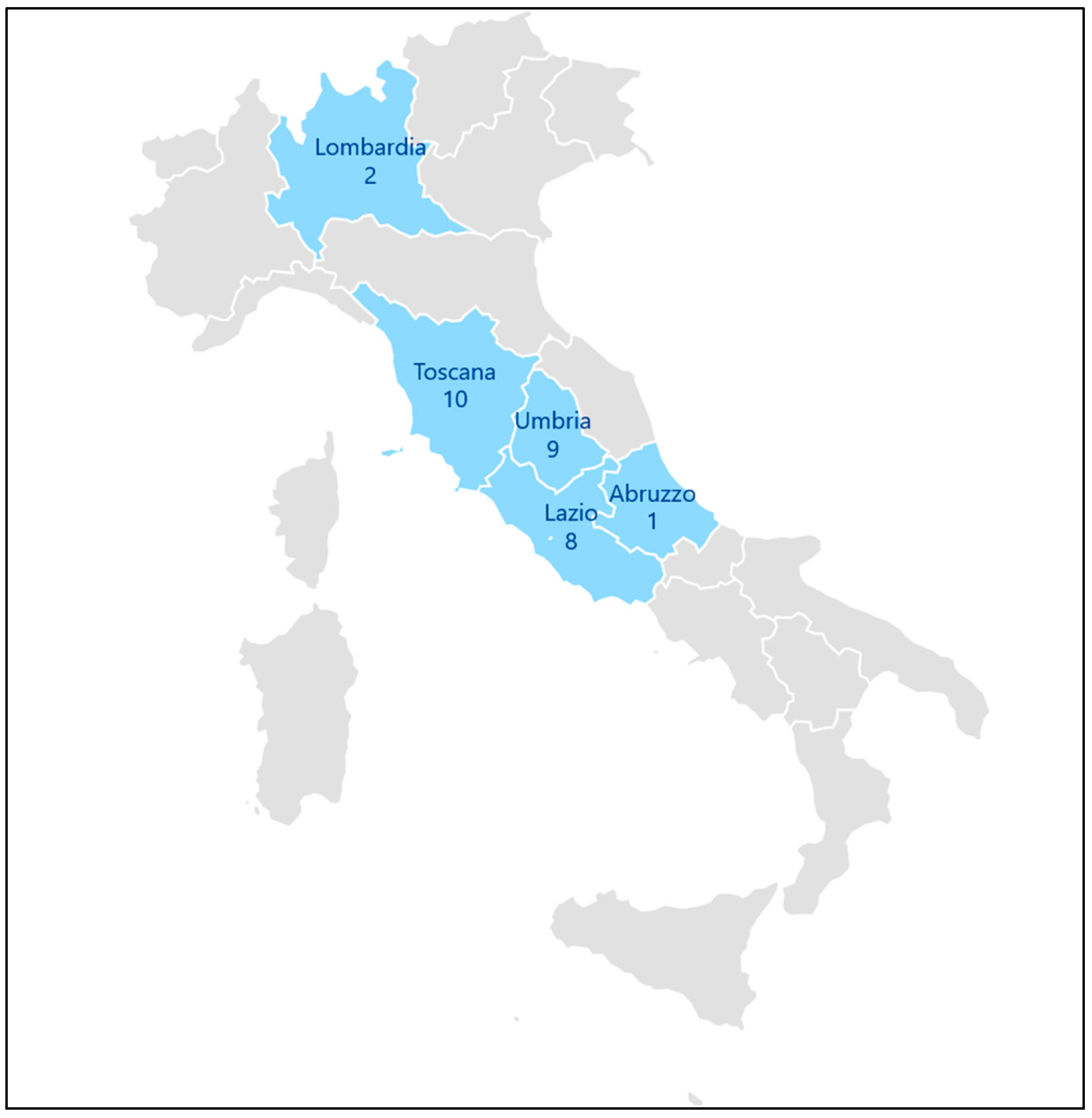
Since June 2023 to December 2025, a total of 30 T. indotineae strains were isolated from human samples in six different public medical centers and one private medical clinic. These health care facilities were located in five regions of central–northern Italy: Umbria (Santa Maria Hospital in Terni and Santa Maria della Misericordia Hospital in Perugia), Toscana (Piero Palagi Hospital in Florence), Lazio (National Institute for Health, Migration and Poverty in Rome), Lombardia (Papa Giovanni XXIII Hospital and the private medical clinic in Bergamo), and Abruzzo (Santo Spirito Hospital in Pescara) (Figure 1).
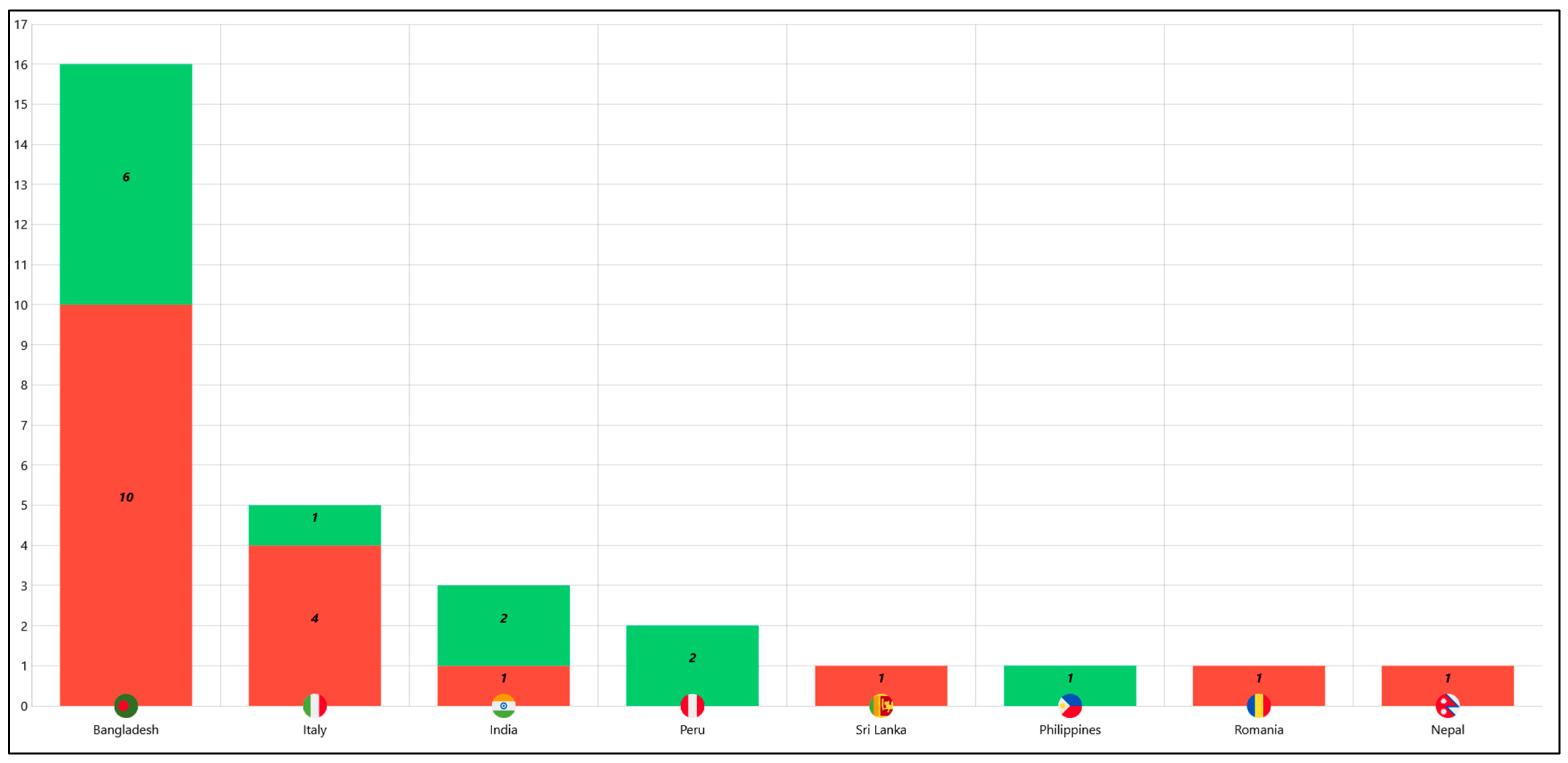
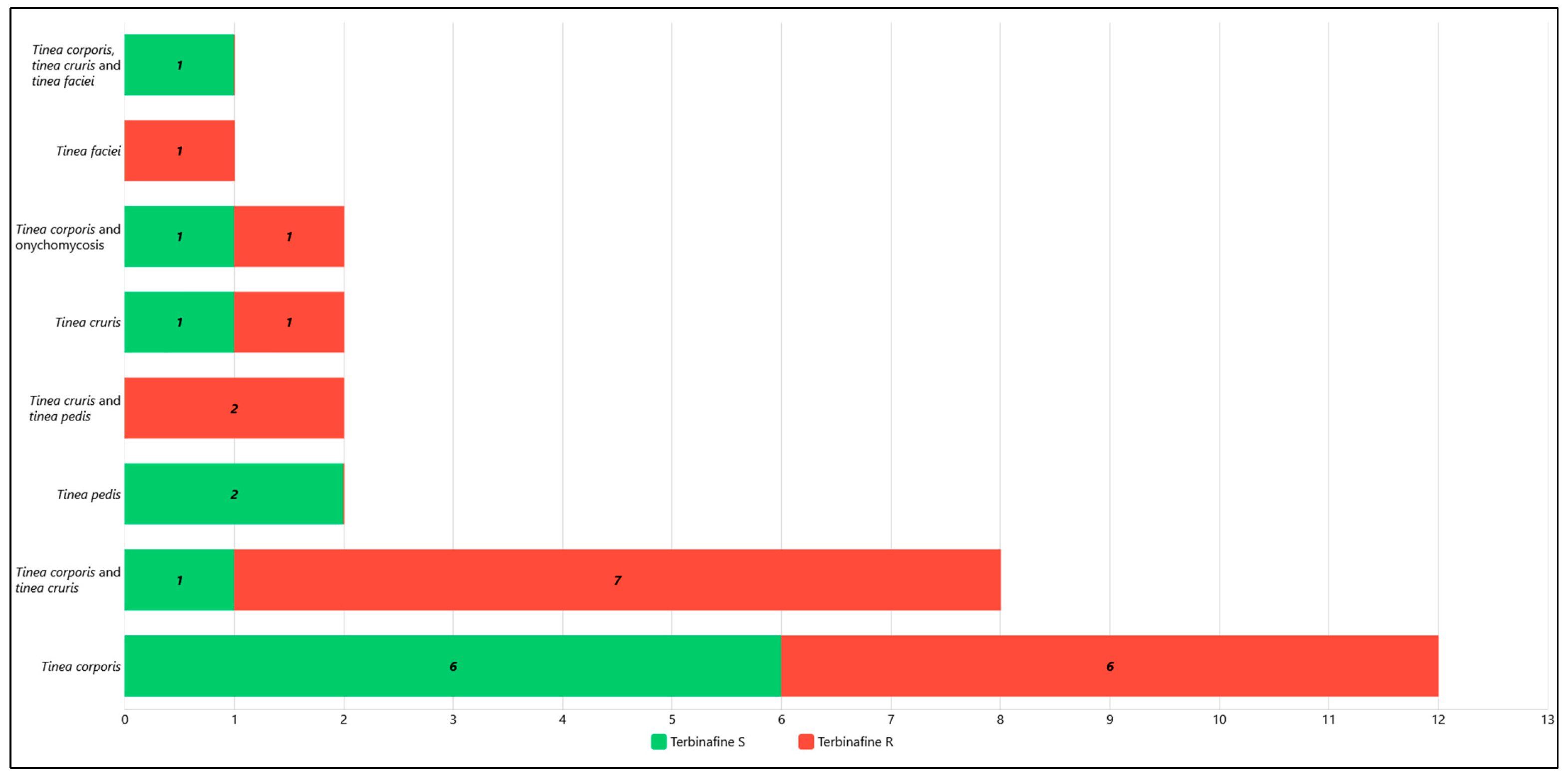
Patients, 21 male (70%) and 9 female (30%), with an average age of 36 (range: 11–60 years old), originated from Bangladesh (n = 16), Italy (n = 5), India (n = 3), Peru (n = 2), Sri Lanka (n = 1), Philippines (n = 1), Romania (n = 1), and Nepal (n = 1). They underwent clinical examination showing dermatological skin or nail lesions listed in Table 1 and attributable to dermatophyte fungal infection. The majority of patients presented with a single clinical manifestation: tinea corporis (n = 12, 40%), tinea cruris (n = 2, 6.7%), tinea pedis (n = 2, 6.7%), and tinea faciei (n = 1, 3.3%). Twelve patients exhibited two concurrent clinical manifestations: tinea corporis + tinea cruris (n = 8, 26.7%), tinea corporis + onychomycosis (n = 2, 6.7%), tinea cruris + tinea pedis (n = 2, 6.7%). In one case (3.3%) a combination of three clinical manifestations—tinea corporis + tinea cruris + tinea faciei—was observed.

2.2. Sample Collection

During the clinical examination, direct light microscopy after 20% KOH was performed to detect the presence of fungal filaments. Skin scraping and nail clipping samples were then collected by the dermatologist, inoculated onto Dermasel agar, incubated at 25 ± 1 °C, and observed daily. Fungal colonies grew over the course of a week: they were isolated and evaluated based on their macroscopic and microscopic features.

2.3. Molecular Analysis for Dermatophyte Species Identification

Polymerase Chain Reaction (PCR) and Sanger sequencing were performed at the Istituto Zooprofilattico Sperimentale of Umbria and Marche regions “Togo Rosati” (IZSUM) as previously described [9,15]. Trichophyton mentagrophytes var. mentagrophytes, T. mentagrophytes var. interdigitale, and T. mentagrophytes var. indotineae reference sequences were used to align the consensus sequences obtained for species identification [16].

2.4. Terbinafine Susceptibility

The DermaGenius® Resistance Multiplex real-time PCR assay (Pathonostics®, Maastricht, The Netherlands) was employed to differentiate mutant and wild-type profiles associated with terbinafine resistance and susceptibility, respectively. Terbinafine behavior was investigated by analyzing the melting temperature (Tm): a Tm between 54.0 °C and 64.0 °C was indicative of terbinafine-resistant strains harboring mutant SQLE, whereas a Tm between 64.5 °C and 68.0 °C corresponded to terbinafine-susceptible strains with wild-type SQLE. Each melting peak corresponded to a specific amino acid substitution at position 393 or 397 of the SQLE gene (e.g., F397L, L393F, L393S, F397I, or F397V); however, this assay does not precisely identify the exact nucleotide substitution within SQLE. Therefore, an additional end-point PCR was performed to amplify the gene encoding squalene epoxidase, using primers Tricho SE-F0 (5′-TGTAAAACGACGGCCAGTTGACAGCGACAAGTGCCA-3′) and TINT SE-R0 (5′-CAGGAAACAGCTATGACCAAAGAGCTAGAGATAAGCCTATCTG-3′) [17]. PCR was carried out in a 50 μL reaction volume and the conditions included initial denaturation for 5 min at 95 °C followed by 34 cycles of 30 s at 95 °C, 30 s at 60 °C, and 180 s at 72 °C [18]. The amplicon of about 1500 bp was then sequenced using internal primers TRI-SE-F3 (5′-TGTAAAACGACGGCCAGTGGAATATCTCCCCATACAACCAG-3′) and TRI-SE-R3 (5′-CAGGAAACAGCTATGACCCCTCCCTTCTCCAACGCAG-3′) [17]. Consensus nucleotide sequences were then translated into amino acid sequences and subsequently compared to the wild-type squalene epoxidase reference protein QVD37574 retrieved from the NCBI Protein database to assess sequence variation.

2.5. Next Generation Sequencing

To explore an alternative sequencing approach, three samples were preliminarily selected and subjected to next-generation sequencing (NGS) at the National Reference Centre for Whole Genome Sequencing of microbial pathogens (IZSAM, Teramo, Italy). The same SQLE PCR product generated by Tricho SE-F0 and TINT SE-R0 also represented the input for NGS library preparation using the Illumina DNA Prep kit. Sequencing was then performed on an Illumina NextSeq 1000 instrument (Illumina, San Diego, CA, USA), employing NextSeq 1000/2000 P1 XLEAP-SBS Reagents and a 600-cycle (2 × 300 bp) P1 cartridge.
Raw reads (FastQ) were pre-processed using Fastp v0.23.4 [19]. The filtered reads were then mapped against the 1439 bp reference sequence of the T. indotineae squalene epoxidase mRNA (voucher 216520/17; GenBank accession MW187977.1) [6,7,20]. Variant calling, including single nucleotide polymorphisms (SNPs) and insertions/deletions (INDELs), was performed using Snippy v4.6.0 (https://github.com/tseemann/snippy, accessed on 16 March 2026) to generate comprehensive Variant Call Format (VCF) reports. Data analysis was performed using the GenPat Platformversion 26.04.1 (https://genpat.izs.it, accessed on 16 March 2026), a bioinformatics suite developed by the Italian National Reference Centre for Whole Genome Sequencing of Microbial Pathogens. Finally, the same workflow was used to test a reduced subsample of reads (100 K per sample) using Rasusa [21] in order to further reduce the cost of sequencing.
Table 1. Information on the T. indotineae-affected patients and the sequences deposited in the GenBank database.
CaseYearSexAgeNative
Country
Clinical
Manifestation
Accession
Number
ITS
Reference ITSTerbinafine
S/R 1
SQLE
Mutation
Accession
Number SQLE
Reference SQLE
12023F42IndiaTinea corporis and onychomycosisOR192943[22]S//This study
22023F33Sri LankaTinea corporis and onychomycosisOR880561[15]RF397LPZ050527This study
32024F44PeruTinea pedisPP898430[15]S//This study
42024M16PeruTinea pedisPP898431[15]S//This study
52024M28BangladeshTinea corporisPP898432[15]RL393SPZ050528This study
62024M38BangladeshTinea corporisPP898433[15]RL393SPZ050529This study
72024M47BangladeshTinea crurisPP898434[15]S//This study
82024F39BangladeshTinea corporisPP898435[15]RL393SPZ050530This study
92024M20BangladeshTinea facieiPP898436[15]RL393SPZ050531This study
102024M38BangladeshTinea corporisPP898437[15]S//This study
112024M28BangladeshTinea corporis and
tinea cruris
PP898438 [15]RF397LPZ050532This study
122024M37ItalyTinea corporis and
tinea cruris
PP898439[15]RL393SPZ050533This study
132024F22IndiaTinea corporis and
tinea cruris
PQ892291This studyRF397LPZ050534This study
142024F19PhilippinesTinea corporis, tinea cruris, and tinea facieiPQ892292This studyS//This study
152024M39Italy Tinea cruris and tinea pedisPQ892293This studyRL393SPZ050535This study
162024M46BangladeshTinea corporisPQ892294This studyRF397LPZ050536This study
172024F20RomaniaTinea corporis and
tinea cruris
PQ892295This studyRL393SPZ050537This study
182025M53ItalyTinea corporisPZ028454This studyRL393SPZ050538This study
192025M29BangladeshTinea corporisPZ028455This studyS//This study
202025M36ItalyTinea crurisPZ028456This studyRF397LPZ050539This study
212025M60ItalyTinea corporisPZ028457This studyS//This study
222025F15BangladeshTinea corporisPZ028458This studyS//This study
232025M29BangladeshTinea corporisPZ028459This studyRF397LPZ050540This study
242025M36BangladeshTinea corporisPZ028460This studyS(A448T) */This study
252025M25BangladeshTinea corporis and
tinea cruris
PZ028461This studyS//This study
262025M11IndiaTinea corporisPZ028462This studyS//This study
272025F13BangladeshTinea corporis and
tinea cruris
PZ028463This studyRF397LPZ050541This study
282025M18BangladeshTinea corporis and
tinea cruris
PZ028464This studyRL393SPZ050542This study
292025M15NepalTinea cruris and
tinea pedis
PZ028465This studyRF397LPZ050543This study
302025M18BangladeshTinea corporis and
tinea cruris
PZ028466This studyRF397LPZ050544This study
1 S: terbinafine susceptible; R: terbinafine resistant. * (A448T): mutation found through NGS; NGS was only performed in two terbinafine-resistant cases (18 and 23) and in susceptible case 24.

3. Results

3.1. Fungal Culture

Mycological examination allowed us to isolate 30 fungal colonies attributable to Trichophyton spp. Macroscopically, the colonies appeared flat and powdery to granular. Their surface was white to cream-colored, with occasional beige to light brown hues developing centrally as growth progressed. Reverse pigmentation of the agar exhibited light yellowish to yellow-brown tones. Microscopically, hyaline and septate hyphae were observed, together with several hyaline and smooth-walled microconidia showing spherical to subspherical and occasional clavate to pyriform shapes. Macroconidia were observed very rarely: when present, they were smooth, thin-walled, and multicellular, and clavate in shape.
As many authors agree, the phenotypic features observed overlap extensively between dermatophytes belonging to the T. mentagrophytes/T. interdigitale species complex; therefore, molecular analyses become necessary for species identification and terbinafine resistance characterization [3,9,10,11].

3.2. Isolate Molecular Identification

According to Gupta et al. [16], ITS sequencing and comparison of the resulting consensus sequences with reference sequences for T. mentagrophytes var. mentagrophytes, T. mentagrophytes var. interdigitale, and T. mentagrophytes var. indotineae highlighted nucleotide substitutions at positions 125 and 462, allowing the identification of all 30 fungal strains as T. indotineae.

3.3. Terbinafine Susceptibility

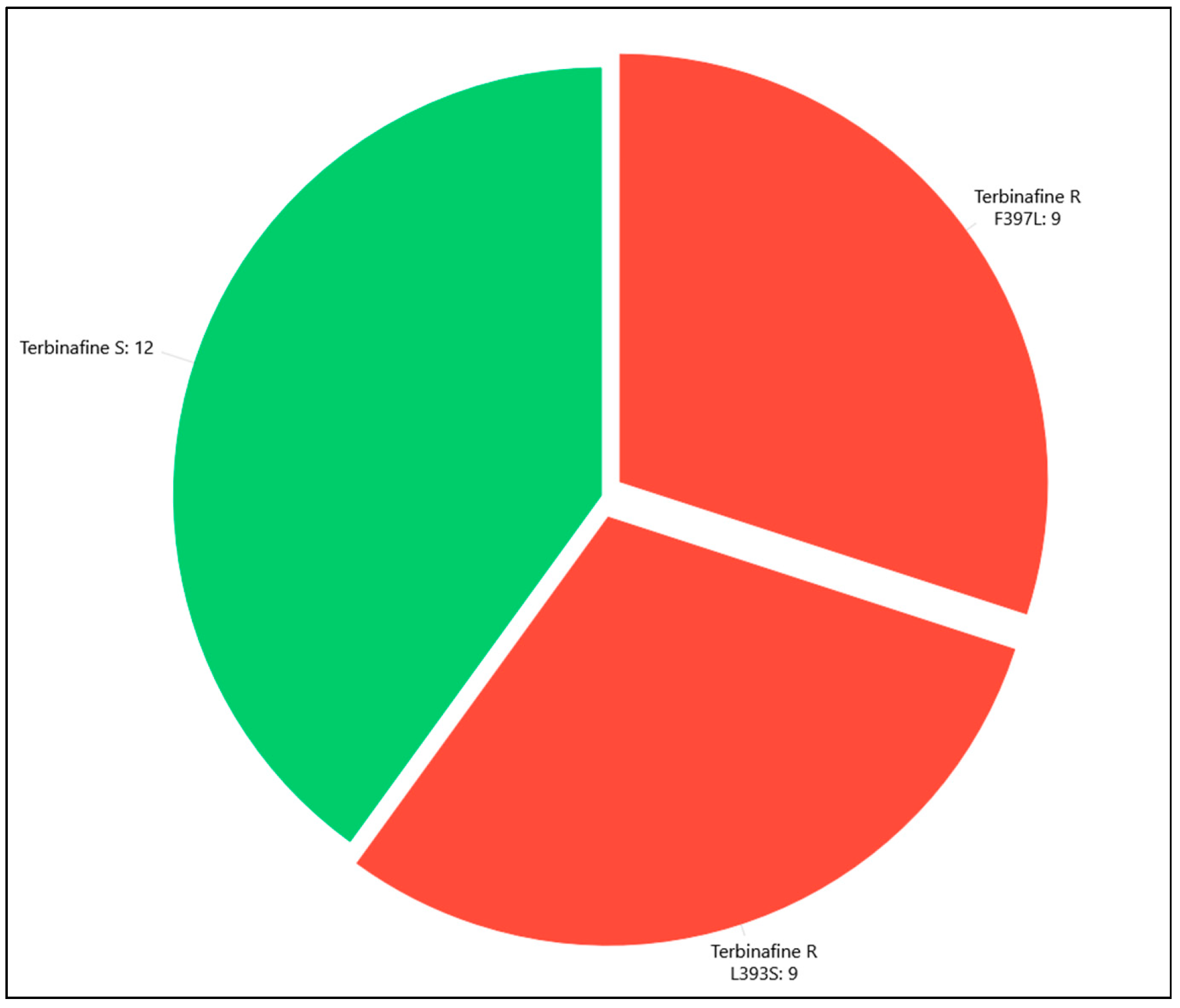
The DermaGenius® Resistance Multiplex real-time PCR assay identified 18 terbinafine-resistant strains (60%) and 12 terbinafine-susceptible strains (40%) (Table 1). Among the 18 resistant strains, L393S and F397L substitutions were each detected in nine (50%) cases (Figure 2).
The resistance patterns of the T. indotineae strains are presented in Figure 3 and Figure 4, correlating them with the patients’ country of origin and their clinical manifestations, respectively.
The sequences obtained from the ITS and SQLE sequencing were deposited in the GenBank database under the accession number listed in Table 1.

3.4. Next Generation Sequencing

Sequencing yielded a total of 3.6 million reads with a mean Phred quality score (Q-score) 37.5. The VCF report confirmed 100% reference coverage (1439/1439), extending through both distal ends where sequencing depth typically declines. Even in these regions, the mean minimum coverage was maintained at 5800X. Two terbinafine-resistant strains (cases 18 and 23) each harbored a SNP at positions 1178 (T→C) and 1189 (T→C), respectively, consistent with the Sanger sequencing results and corresponding to the L393S and F397L substitutions. Case 24 showed a SNP at position 1342 (G→A), corresponding to the amino acid substitution A448T. Given this isolate’s susceptibility to terbinafine, Sanger sequencing analysis was not performed.
The same SNP results were obtained using 100K reads per sample with a mean minimum coverage in both distal ends 284X (lowest 271X; highest 293X).

4. Discussion

In this study, 30 T. indotineae strains were investigated to assess the occurrence and molecular basis of terbinafine resistance. More than two-thirds of the strains were isolated from patients originally from endemic regions (India, Sri Lanka, Bangladesh, Philippines, and Nepal). Some other patients with a history of contact with individuals from or travel to these regions were also included, corroborating the epidemiological links of T. indotineae to Asian endemic areas, as confirmed in other studies [10,23]. Moreover, some Italian patients denied any travel outside Italy in the preceding years, suggesting the possibility of autochthonous transmission in Italy.
Patients included in this study were from five regions of central–northern Italy, reflecting active multidisciplinary collaboration among different professionals and public and private institutions within a One Health framework.
The higher prevalence among male patients (70%) and a median age of 36 years closely mirrored the findings of a genomic study by Ribeiro dos Santos et al. [5], indicating a strong concordance between the demographic profiles.
In this investigation, tinea corporis was the predominant single clinical manifestation (n = 12, 40%) and frequently occurred alongside one (n = 10, 33.3%) or two (n = 1, 3.3%) additional lesions, confirming the role of T. indotineae in causing extensive and multifocal dermatophytosis [10]. As reported by Gupta et al. [3], in this study tinea cruris and tinea faciei were also observed as other common lesion sites. In addition, T. indotineae was associated with tinea pedis in four patients: in two cases as the sole clinical manifestation and in two cases in association with tinea cruris. In cases 1 and 2, the clinical presentation included onychomycosis, although nail involvement in T. indotineae infections is considered uncommon and has been rarely reported in the international literature [3,22].
The proportion of terbinafine-resistant strains obtained in this investigation was 60% (n = 18/30), similarly to those observed by Ribeiro dos Santos et al. in their previously mentioned study [5]. In particular, 14 of the 18 resistant strains (77.8%) were isolated from tinea corporis, either alone (n = 6, 33.3%) or in combination with other clinical manifestations (n = 8, 44.4%). These findings underscore the high pathogenic potential of T. indotineae, considering that in some patients the distribution of lesions involves much of the body surface.
As already discussed by the same [24] and other authors [25], cases 12 and 15 may be attributable to a sexually transmissible T. indotineae infection in men who have sex with men (MSM), which is a hypothesis supported by the clinical manifestations associated with tinea cruris. It is noteworthy that in 10 out of 13 patients with tinea cruris, T. indotineae showed resistance to terbinafine, including the two MSM cases. This potential transmission route should be considered in patients with sexual behaviors associated with a higher risk of sexually transmissible infections (STIs), in those presenting dermatophytosis lesions at anatomical sites commonly linked to close physical contact (e.g., genitals, groin, buttocks, or face) without an obvious alternative source of infection (such as animal exposure or concurrent foot/nail disease), and in cases where similar lesions are observed in sexual partners.
Molecular investigations identified L393S (n = 9) and F397L (n = 9) substitutions in the same proportion (50% each one) in the 18 resistant strains, confirming them among the most frequent single mutations in SQLE gene [3].
Decreasing sequencing costs, coupled with high-throughput capabilities and user-friendly bioinformatics platforms, have established NGS as a robust alternative for molecular typing. In this study, analysis was performed on three strains representing distinct resistance profiles: one terbinafine-susceptible strain and two terbinafine-resistant strains harboring the L393S and F397L mutations, respectively. The NGS results for these former samples were perfectly concordant with findings obtained via Sanger sequencing. Furthermore, the detection of the A448T mutation aligns with previous reports suggesting that this substitution independently confers resistance to azoles but results in susceptibility to terbinafine [3,4]. In contrast, terbinafine resistance is specifically associated with mutations at positions 393, 397 or 415, such as L393S, F397L and F415C, respectively [4]. NGS demonstrated high robustness even at a depth of 100 K reads. This capacity enables the simultaneous processing of a substantially higher number of samples per run—up to 200,000 using the P1 flow cell—consequently lowering costs.
In this study, the mRNA sequence MW187977.1 was used as the reference wild-type SQLE sequence, in accordance with previous reports [6,7,20]. Amplification and sequencing of the target DNA revealed a 62 bp Operon “insertion” within the VCF report (GTAAGCATATGTTTTCACTCCCTTTGTTACTGGTTAGTGGTTACTAACATCCTACTATGTAG). This feature can be managed either by modifying the laboratory protocol (e.g., by amplifying RNA) or by designating the sequence as a “control” during bioinformatic analysis, since it is consistently present in all DNA samples.
Given the critical need for rapid information to guide optimal pharmacological treatment and improve patient’s clinical conditions, the DermaGenius® Resistance Multiplex real-time PCR assay was usually used as an initial routine screening step. Even if minimal inhibitory concentration (MIC) values are not available, genotypic data remain reliable, as they frequently correspond with the phenotypic resistance profile [5,26].
Therefore, molecular approaches are essential for accurately defining the geo-graphical distribution of T. indotineae and for enabling rapid and reliable diagnosis, thereby supporting appropriate therapeutic management in the context of increasing antifungal resistance. Considering that such advanced diagnostic techniques are not widely available in routine microbiology laboratories, the findings highlight the importance of specialized mycological reference centers. These laboratories play a pivotal role in improving diagnostic accuracy, preventing the underestimation of T. indotineae circulation in Italy, particularly with regard to antifungal resistance behavior.

5. Conclusions

This study provides further evidence of the emergence of T. indotineae in Italy and highlights the possible occurrence of local transmission beyond imported cases. The high proportion of terbinafine-resistant strains, mainly associated with L393S and F397L substitutions in the SQLE gene, confirms the growing clinical relevance of antifungal resistance in this species. NGS analysis, although preliminary, encourages the authors to extend this approach to the remaining strains in order to evaluate whether it could be incorporated into the routine diagnostic workflow. Considering that the NGS technique is currently considered the most reliable and advantageous in terms of time and throughput, it may also be useful for investigating terbinafine-susceptible strains to obtain additional information, such as the A448T mutation identified in this study. The predominance of extensive dermatophytosis, particularly tinea corporis which is often associated with additional lesions, underscores the pathogenic potential of this dermatophyte. Molecular diagnostic tools are essential for accurate species identification and the rapid detection of resistance-associated mutations, enabling appropriate therapeutic management. As these techniques are not widely available in routine laboratories, the availability of specialized mycological reference centers is crucial to prevent the underestimation of T. indotineae circulation and antifungal resistance in Italy.

Author Contributions

Conceptualization, D.C. and S.C.; methodology, D.C. and S.C.; validation, S.C.; formal analysis, D.C., M.T., M.D.D., S.S. and S.C.; investigation, D.C., A.M., M.T., M.D.D., A.F., S.S. and S.C.; resources, M.P., L.P., R.C., D.P., T.G. and P.F.; data curation, D.C., M.P., L.P., R.C., D.P., T.G., P.F., M.D.D. and S.C.; writing—original draft preparation, D.C., M.D.D. and S.C.; writing—review and editing, D.C., M.P., L.P., R.C., D.P., T.G., P.F., A.M., M.T., M.D.D., A.F., S.S. and S.C.; visualization, D.C. and S.C.; supervision, S.C.; project administration, S.C.; funding acquisition, S.C. All authors have read and agreed to the published version of the manuscript.

Funding

This research was funded in part by the Italian Ministry of Health (RC001/2025 IZSUM-DERMARES) and in part by PNRR: “One Health Basic and Translational Actions Addressing Unmet Needs on Emerging Infectious Diseases (PE00000007-INF-ACT).

Institutional Review Board Statement

This study did not require formal ethical approval under national regulations for non-interventional studies. It is an observational and non-experimental investigation based exclusively on fungal strains obtained during routine clinical diagnostic non-invasive procedures without impact on patient care or welfare. No additional sampling, intervention, or interaction with patients was performed for research purposes. Moreover, all data and isolates were collected as part of standard clinical care and were subsequently analyzed in an anonymized manner.

Informed Consent Statement

Verbal informed consent was obtained from the participants. Verbal consent was obtained rather than written because the strains were derived from samples collected during routine clinical examinations in a non-experimental setting, involving non-invasive procedures and no impact on patient care or welfare.

Data Availability Statement

The original data presented in the study are openly available in the GenBank database under accession number listed in Table 1.

Acknowledgments

The authors would like to thank Francesca Leoni for the involvement in the PNRR project, Anna Di Landro for sharing one of her clinical cases, Vincenzo Piscioneri for technical assistance, and Eros Rivosecchi for the graphical preparation of the data.

Conflicts of Interest

The authors declare no conflicts of interest.

Abbreviations

The following abbreviations are used in this manuscript:
INDELInsertion/deletion
ITSInternal transcribed spacer
IZSUMIstituto Zooprofilattico Sperimentale dell’Umbria e delle Marche “Togo Rosati”
MICMinimal inhibitory concentration
MSMMen who have sex with men
NGSNext-generation sequencing
PCRPolymerase chain reaction
SNPSingle nucleotide polymorphism
SNVSingle nucleotide variant
SQLESqualene epoxidase gene
STISexually transmissible infections
VCFVariant Call Format

References

  1. Chowdhary, A.; Singh, A.; Kaur, A.; Khurana, A. The Emergence and Worldwide Spread of the Species Trichophyton indotineae Causing Difficult-to-Treat Dermatophytosis: A New Challenge in the Management of Dermatophytosis. PLoS Pathog. 2022, 18, e1010795. [Google Scholar] [CrossRef]
  2. Gupta, A.K.; Talukder, M.; Carviel, J.L.; Cooper, E.A.; Piguet, V. Combatting Antifungal Resistance: Paradigm Shift in the Diagnosis and Management of Onychomycosis and Dermatomycosis. J. Eur. Acad. Dermatol. Venereol. 2023, 37, 1706–1717. [Google Scholar] [CrossRef]
  3. Gupta, A.K.; Susmita; Nguyen, H.C.; Liddy, A.; Economopoulos, V.; Wang, T. Terbinafine Resistance in Trichophyton Rubrum and Trichophyton indotineae: A Literature Review. Antibiotics 2025, 14, 472. [Google Scholar] [CrossRef] [PubMed]
  4. Ebert, A.; Monod, M.; Salamin, K.; Burmester, A.; Uhrlaß, S.; Wiegand, C.; Hipler, U.; Krüger, C.; Koch, D.; Wittig, F.; et al. Alarming India-wide Phenomenon of Antifungal Resistance in Dermatophytes: A Multicentre Study. Mycoses 2020, 63, 717–728. [Google Scholar] [CrossRef] [PubMed]
  5. dos Santos, A.R.; Uhrlaß, S.; Nenoff, P.; Gold, J.A.W.; Bhuiyan, M.S.I.; Goturu, S.; Gade, L.; Bagal, U.R.; Peterson, J.G.; Wiederhold, N.P.; et al. Global Emergence of Antifungal-Resistant Dermatophytosis Caused by Trichophyton indotineae (Formerly T. Mentagrophytes ITS Genotype VIII ): A Genomic Investigation Involving 14 Countries. Mycoses 2025, 68, e70101. [Google Scholar] [CrossRef] [PubMed]
  6. Bortoluzzi, P.; Prigitano, A.; Sechi, A.; Boneschi, V.; Germiniasi, F.; Esposto, M.C.; Romanò, L.; Pavan, G.; Matinato, C.; Veraldi, S.; et al. Report of Terbinafine Resistant Trichophyton spp. in Italy: Clinical Presentations, Molecular Identification, Antifungal Susceptibility Testing and Mutations in the Squalene Epoxidase Gene. Mycoses 2023, 66, 680–687. [Google Scholar] [CrossRef] [PubMed]
  7. Lepera, V.; Tocci, G.; Palladini, G.; Arosio, M.E.G.; Farina, C.; Lo Cascio, G. Epidemiology and Molecular Identification of Dermatophytes: Focus on the Detection of the Emerging Species Trichophyton indotineae in Northern Italy. Microbiol. Res. 2025, 16, 148. [Google Scholar] [CrossRef]
  8. Gaibani, P.; Cattaneo, P.; Deiana, M.; Signoretto, C.; Sorrentino, A.; Lavezzari, D.; Burlacchini, G.; Locatelli, E.; Malagò, S.; Orza, P.; et al. Clinical Characteristics and Genomic Analysis of a Trichophyton indotineae Strain Resistant to Terbinafine and Fluconazole Isolated in Italy. Mycoses 2025, 68, e70105. [Google Scholar] [CrossRef]
  9. Ngo, T.M.C.; Ton Nu, P.A.; Le, C.C.; Ha, T.N.T.; Do, T.B.T.; Tran Thi, G. First Detection of Trichophyton indotineae Causing Tinea Corporis in Central Vietnam. Med. Mycol. Case Rep. 2022, 36, 37–41. [Google Scholar] [CrossRef]
  10. Uhrlaß, S.; Verma, S.B.; Gräser, Y.; Rezaei-Matehkolaei, A.; Hatami, M.; Schaller, M.; Nenoff, P. Trichophyton indotineae—An Emerging Pathogen Causing Recalcitrant Dermatophytoses in India and Worldwide—A Multidimensional Perspective. J. Fungi 2022, 8, 757. [Google Scholar] [CrossRef]
  11. Kano, R.; Kimura, U.; Kakurai, M.; Hiruma, J.; Kamata, H.; Suga, Y.; Harada, K. Trichophyton indotineae sp. nov.: A New Highly Terbinafine-Resistant Anthropophilic Dermatophyte Species. Mycopathologia 2020, 185, 947–958. [Google Scholar] [CrossRef] [PubMed]
  12. Kumar, M.; Thomas, P.; Nair, S.S.; Bagra, J.K.; Chaturvedi, V.K.; Kumar, B.; Kumar, A.; Rudramurthy, S.M. Abhishek Molecular Epidemiology of Trichophyton Infections among Canines from Northern India. J. Med. Mycol. 2023, 33, 101352. [Google Scholar] [CrossRef] [PubMed]
  13. Oladzad, V.; Nasrollahi Omran, A.; Haghani, I.; Nabili, M.; Seyedmousavi, S.; Hedayati, M.T. Multi-Drug Resistance Trichophyton indotineae in a Stray Dog. Res. Vet. Sci. 2024, 166, 105105. [Google Scholar] [CrossRef] [PubMed]
  14. Zineldar, H.A.; El-Neshwy, W.M.; Cristina, R.T.; Abouzeid, N.Z.; Eisa, M.I.; Muselin, F.; Dumitrescu, E.; Abdelkhalek, A.; Tartor, Y.H. Molecular Diagnostics and Control of Zoonotic Dermatophytosis: First Detection of Trichophyton indotineae in a Dog in Africa. Animals 2025, 15, 2622. [Google Scholar] [CrossRef]
  15. Crotti, S.; Cruciani, D.; Sabbatucci, M.; Spina, S.; Piscioneri, V.; Torricelli, M.; Calcaterra, R.; Farina, C.; Pisano, L.; Papini, M. Terbinafine Resistance in Trichophyton Strains Isolated from Humans and Animals: A Retrospective Cohort Study in Italy, 2016 to May 2024. J. Clin. Med. 2024, 13, 5493. [Google Scholar] [CrossRef]
  16. Gupta, A.K.; Wang, T.; Mann, A.; Polla Ravi, S.; Talukder, M.; Lincoln, S.A.; Foreman, H.-C.; Kaplan, B.; Galili, E.; Piguet, V.; et al. Antifungal Resistance in Dermatophytes—Review of the Epidemiology, Diagnostic Challenges and Treatment Strategies for Managing Trichophyton indotineae Infections. Expert Rev. Anti. Infect. Ther. 2024, 22, 739–751. [Google Scholar] [CrossRef]
  17. Cañete-Gibas, C.F.; Mele, J.; Patterson, H.P.; Sanders, C.J.; Ferrer, D.; Garcia, V.; Fan, H.; David, M.; Wiederhold, N.P. Terbinafine-Resistant Dermatophytes and the Presence of Trichophyton indotineae in North America. J. Clin. Microbiol. 2023, 61, e00562-23. [Google Scholar] [CrossRef]
  18. Singh, A.; Masih, A.; Khurana, A.; Singh, P.K.; Gupta, M.; Hagen, F.; Meis, J.F.; Chowdhary, A. High Terbinafine Resistance in Trichophyton interdigitale Isolates in Delhi, India Harbouring Mutations in the Squalene Epoxidase Gene. Mycoses 2018, 61, 477–484. [Google Scholar] [CrossRef]
  19. Chen, S. Fastp 1.0: An Ultra-fast All-round Tool for FASTQ Data Quality Control and Preprocessing. iMeta 2025, 4, e70078. [Google Scholar] [CrossRef]
  20. Astvad, K.M.T.; Hare, R.K.; Jørgensen, K.M.; Saunte, D.M.L.; Thomsen, P.K.; Arendrup, M.C. Increasing Terbinafine Resistance in Danish Trichophyton Isolates 2019–2020. J. Fungi 2022, 8, 150. [Google Scholar] [CrossRef]
  21. Hall, M. Rasusa: Randomly Subsample Sequencing Reads to a Specified Coverage. J. Open Source Softw. 2022, 7, 3941. [Google Scholar] [CrossRef]
  22. Crotti, S.; Cruciani, D.; Spina, S.; Piscioneri, V.; Natalini, Y.; Pezzotti, G.; Sabbatucci, M.; Papini, M. A Terbinafine Sensitive Trichophyton indotineae Strain in Italy: The First Clinical Case of Tinea Corporis and Onychomycosis. J. Fungi 2023, 9, 865. [Google Scholar] [CrossRef] [PubMed]
  23. Jabet, A.; Brun, S.; Normand, A.-C.; Imbert, S.; Akhoundi, M.; Dannaoui, E.; Audiffred, L.; Chasset, F.; Izri, A.; Laroche, L.; et al. Extensive Dermatophytosis Caused by Terbinafine-Resistant Trichophyton indotineae, France. Emerg. Infect. Dis. 2022, 28, 229–233. [Google Scholar] [CrossRef] [PubMed]
  24. Pisano, L.; Cruciani, D.; Crotti, S.; Papini, M. Terbinafine-Resistant Trichophyton indotineae in Two Italian MSM: A New Emerging Sexually Transmissible Infection. J. Med. Mycol. 2025, 35, 101578. [Google Scholar] [CrossRef] [PubMed]
  25. Benzoni, L.; Godinot, M.; Berset de Vaufleury, J.; Reynaud, V.; Dupont, D.; Tirard-Collet, P.; Menotti, J.; Durupt, F. Sexual Transmission of Terbinafine-Resistant Trichophyton indotineae among Men Who Have Sex with Men. New Microbes New Infect. 2025, 68, 101645. [Google Scholar] [CrossRef]
  26. Bidaud, A.-L.; Normand, A.-C.; Jabet, A.; Brun, S.; Delliere, S.; Cremer, G.; Foulet, F.; Ayachi, A.; Imbert, S.; Hennequin, C.; et al. Reliability of a Terbinafine Agar Containing Method for the Screening of Dermatophyte Resistance. Med. Mycol. 2023, 61, myad043. [Google Scholar] [CrossRef]
Figure 1. Geographic distribution of the medical centers involved in the study across central–northern Italy regions.
Pathogens 15 00435 g001
Figure 2. T. indotineae terbinafine-susceptible strains (in green) and terbinafine-resistant strains (in red). F397L and L393S substitutions are shown in detail.
Pathogens 15 00435 g002
Figure 3. T. indotineae strains correlated to patients’ country of origin. In red are terbinafine-resistant strains and in green are terbinafine-susceptible strains.
Pathogens 15 00435 g003
Figure 4. T. indotineae strains correlated to patients’ clinical manifestations. In red are terbinafine-resistant strains and in green are terbinafine-susceptible strains.
Pathogens 15 00435 g004
Disclaimer/Publisher’s Note: The statements, opinions and data contained in all publications are solely those of the individual author(s) and contributor(s) and not of MDPI and/or the editor(s). MDPI and/or the editor(s) disclaim responsibility for any injury to people or property resulting from any ideas, methods, instructions or products referred to in the content.