Article

The Numerical Study of the Vertical Collapse Capacity of Reinforced Concrete Spatial Beam–Slab Structures with Unequal Spans

1
School of Civil Engineering and Architecture, Northeast Electric Power University, Jilin 132012, China
2
Key Laboratory of Urban Security and Disaster Engineering of China Ministry of Education, Beijing University of Technology, Beijing 100124, China
3
Shandong Electric Power Engineering Consulting Institute Corporation Limited (SDEPCI), Jinan 250013, China
4
State Grid East Inner Mongolia Electric Power Co., Ltd., Construction Company, Hohhot 010010, China
*
Author to whom correspondence should be addressed.
Buildings 2026, 16(9), 1718; https://doi.org/10.3390/buildings16091718

Submission received: 21 March 2026 / Revised: 7 April 2026 / Accepted: 22 April 2026 / Published: 27 April 2026

Abstract

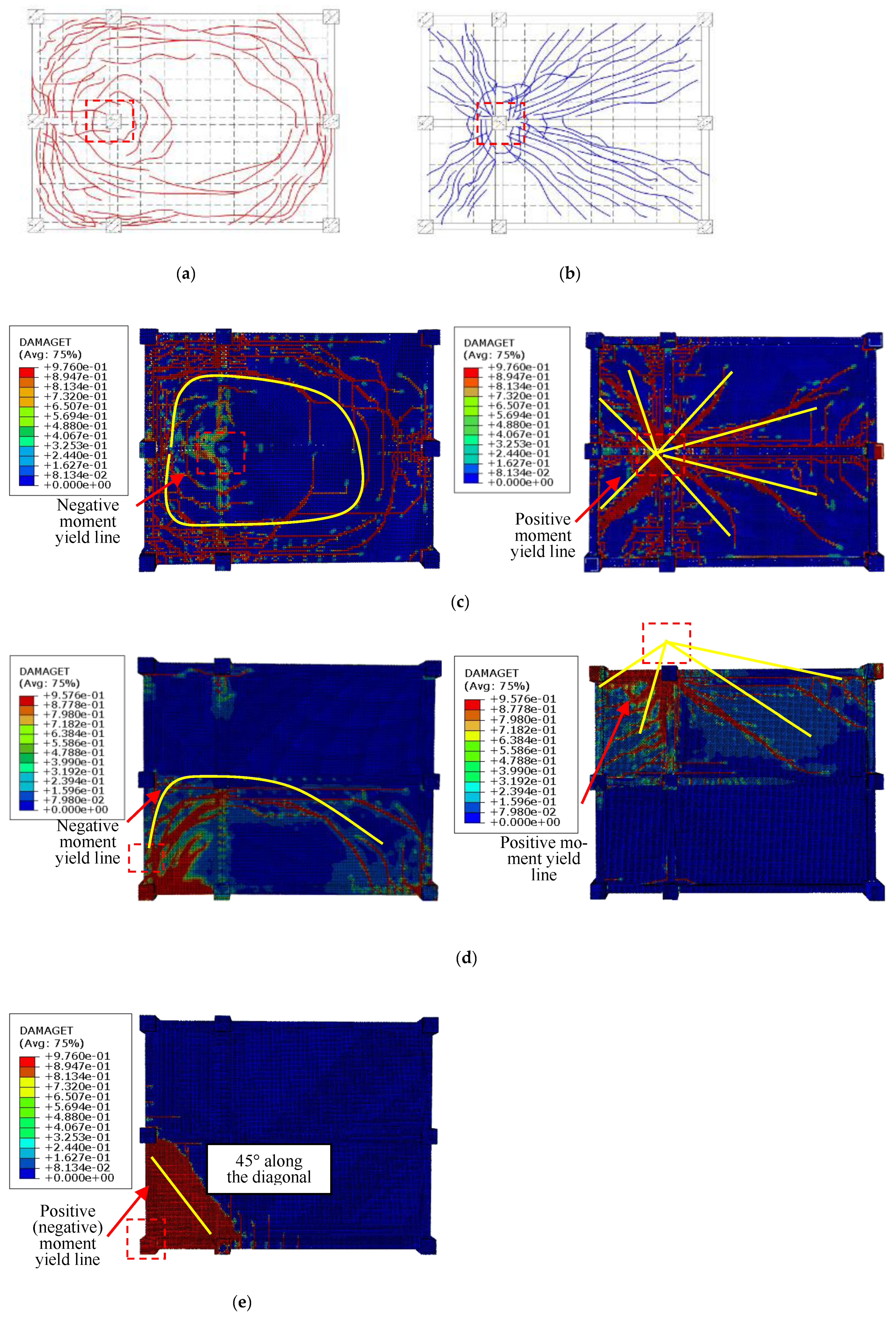
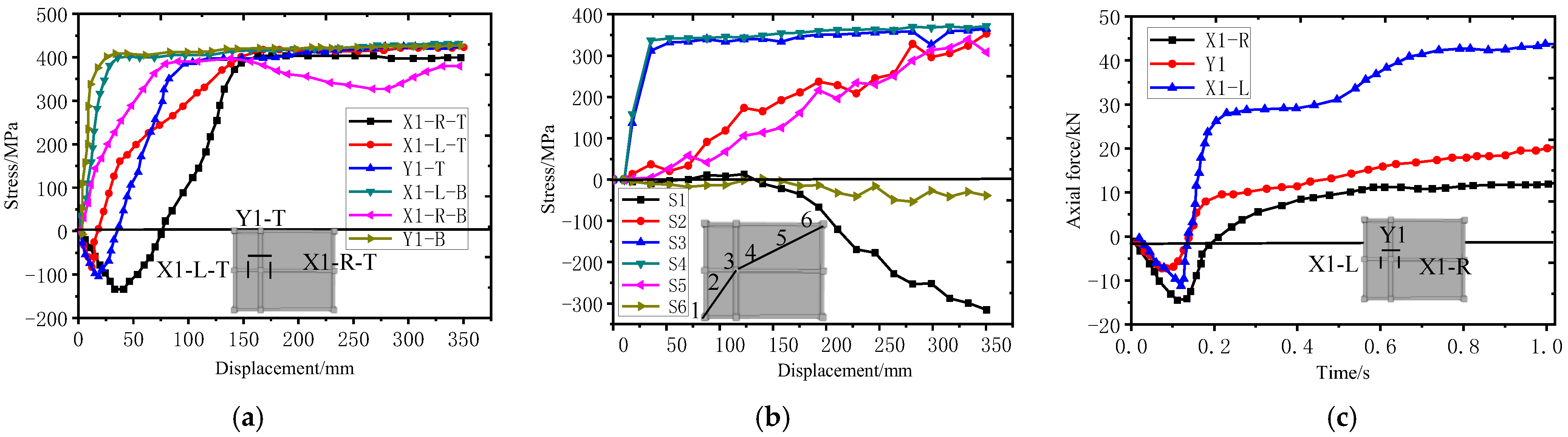
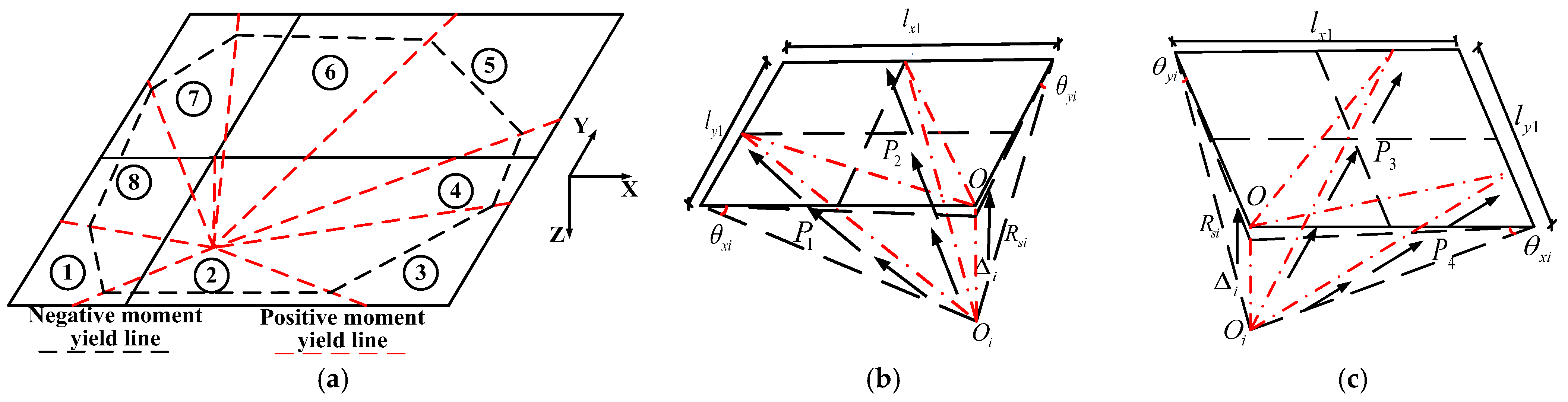
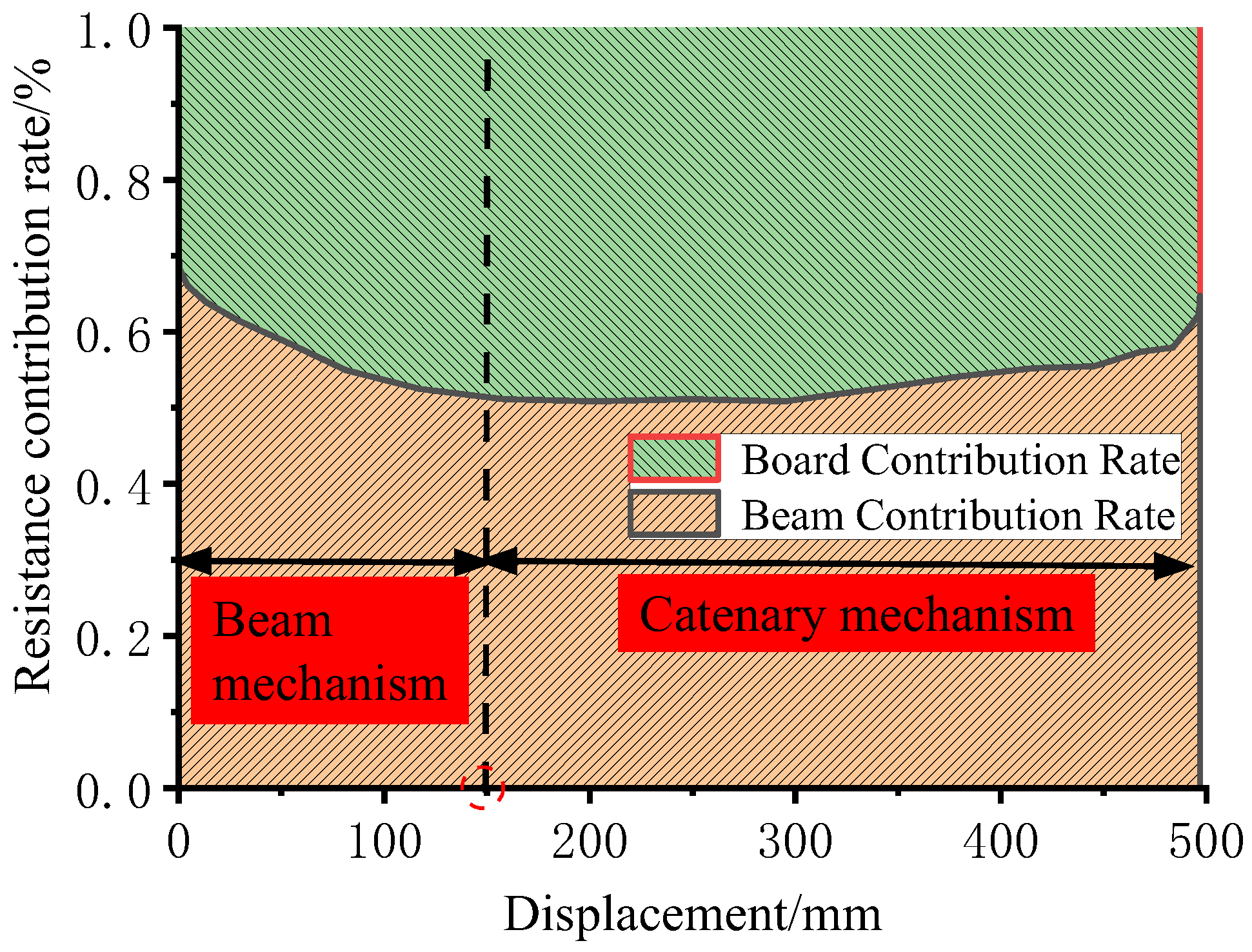
To reveal the progressive collapse mechanism of reinforced concrete spatial beam–slab structures with unequal spans and improve their collapse-resistant design level, this study investigates the progressive collapse resistance of reinforced concrete spatial beam–slab structures with unequal span arrangements. A finite element model of the spatial frame structure was developed in ABAQUS under inner column failure conditions, and pushdown analysis was employed for numerical simulation of the test samples. The effects of the inner column failure position, beam–slab parameters, floor slab damage performance, and beam-end internal forces on the collapse capacity of reinforced concrete spatial beam–slab structures were analyzed. The results indicate that, under inner column failure, the floor slab contributes 40–50% of the structure’s bearing capacity; under side column failure, it contributes 20–30%; and under corner column failure, it contributes 15–25%. A larger beam span reduces the structure’s bearing capacity after column failure. Additionally, equal-span designs exhibit a “lag” in force compared with unequal-span designs, and lateral constraints of the floor slab have minimal influence on the bearing capacity of slabless structures. The beam and slab design parameters significantly affect the bearing capacity and ductility of a structure. The damage performance of the floor slab under small deformations reflects its yield mode, enabling inference of the crack distribution. These findings provide scientific insight into the progressive collapse mechanism of unequal-span reinforced concrete spatial beam–slab structures. On the practical side for engineering design, a bearing capacity formula incorporating the influence of the floor slab in unequal span arrangements is proposed. The innovation of this paper lies in systematically analyzing the differences in progressive collapse between equal-span and unequal-span structures, as well as the influence of the floor slab on the progressive collapse of unequal-span structures, thereby providing a theoretical basis for research on the progressive collapse of unequal-span structures such as the Xuankou Middle School in Wenchuan.
Keywords: RC spatial frame structures; progressive collapse; slab damage; beam–slab parameters; unequal spans; bearing capacity; pushdown analysis RC spatial frame structures; progressive collapse; slab damage; beam–slab parameters; unequal spans; bearing capacity; pushdown analysis