Systematic Review

Compressed Stabilized Earth Blocks for Sustainable Building Construction: A PRISMA-Guided Systematic Review and TCCM Analysis

by
Swati Sinha
,
Jayaraman Sethuraman Sudarsan
* and
Abhijat Arun Abhyankar
School of Energy and Environment, NICMAR University, Pune 411045, India
*
Author to whom correspondence should be addressed.
Buildings 2026, 16(8), 1633; https://doi.org/10.3390/buildings16081633
Submission received: 14 December 2025 / Revised: 19 February 2026 / Accepted: 4 March 2026 / Published: 21 April 2026
(This article belongs to the Special Issue Advance in Eco-Friendly Building Materials and Innovative Structures)

Abstract

Global interest in sustainable building materials is increasing due to growing concerns regarding the environmental impacts of conventional construction materials, particularly fired clay bricks. Compressed Stabilized Earth Blocks (CSEBs) have emerged as a viable, cost-effective, and environmentally sustainable alternative for building construction. The incorporation of waste-derived additives in CSEBs not only addresses waste management challenges but also enhances the functional performance of earthen materials. This study presents a comprehensive synthesis of existing research on the influence of fibers, binders, stabilizers, and production processes on the performance characteristics of CSEBs. A systematic literature review was conducted following the Preferred Reporting Items for Systematic reviews and Meta-Analyses (PRISMA) 2020 guidelines, resulting in the identification and analysis of 256 relevant studies. The selected literature was synthesized using the Theories, Contexts, Characteristics, and Methodologies (TCCM) framework to map research trends and methodological approaches. The review indicates that fiber reinforcement primarily improves flexural strength and thermal performance, while binders significantly enhance compressive strength and erosion resistance. The findings also demonstrate that selected waste materials can partially replace natural soil, provided minimum material and performance standards are satisfied. The study highlights the need for standardized manufacturing guidelines and testing protocols to improve the reliability, scalability, and wider adoption of CSEBs in sustainable building applications.

1. Introduction

The construction industry is one of the largest contributors to global environmental degradation, accounting for over one-third of greenhouse gas (GHG) emissions [1]. Rapid urbanization has further intensified this impact by increasing emissions across the entire building life cycle, from material extraction and manufacturing to construction, operation, and end-of-life stages [2]. As a result, the Construction, Real Estate, and Infrastructure Projects (CRIP) sector plays a decisive role in achieving several Sustainable Development Goals (SDGs), particularly SDGs 7, 9, 11, 12, and 13 [3]. Despite this alignment, the sector remains a major obstacle, accounting for approximately 33% of global emissions and nearly 40% of total waste generation [4].
A substantial share of this environmental burden arises from the continued dependence on conventional construction materials such as fired clay bricks, concrete, cement, steel, and plastics, which are inherently energy and carbon intensive [5,6]. In particular, the cement and steel industries together account for nearly 14% of global energy-related emissions, highlighting the urgent need to reduce reliance on these materials [7]. The dominance of these materials has prompted growing concern regarding their long-term compatibility with climate mitigation targets, resource conservation, and sustainable urban development. As a result, there is a clear need for alternative building materials that are not only structurally and economically viable but also aligned with long-term sustainability and circular economy principles [8].
Within this context, sustainable building materials and low-energy construction technologies have gained increasing attention as effective strategies for reducing both embodied and operational carbon emissions. Among these alternatives, earth-based construction systems, particularly Compressed Stabilized Earth Blocks/Bricks (CSEBs), have emerged as promising walling materials due to their use of locally available soil, reduced processing energy, and potential compatibility with circular economy principles.
From a life-cycle perspective, earthen construction systems consistently demonstrate lower embodied energy and carbon emissions compared to conventional masonry materials. For example, the initial embodied energy per m3 of country-fired brick is approximately 6122.5 MJ/m3, whereas for CSEBs it is 572.6 MJ/m3. Similarly, the carbon emissions (kg CO2/m3) for country-fired brick is reported to be 642.9 kg/m3. In contrast, for CSEB, it is 54.5 kg/m3 [9]. In contrast to fired clay bricks, which permanently alter soil mineralogy and contribute to land degradation, stabilized soil blocks retain much of the original mineral structure. They may allow partial recovery of soil functionality with considerably lower environmental costs [10]. At the material production stage, comparative assessments report CO2 emissions as low as 22 kg CO2/tonne for CSEBs, compared to approximately 200 kg CO2/tonne for fired clay bricks, 143 kg CO2/tonne for concrete blocks, and 280–375 kg CO2/tonne for aerated concrete blocks [11]. Several studies indicate that constructing a meter square of masonry with CSEB requires one-fifth the energy of a meter square of clay brick masonry and one-fifteenth the energy of locally burned bricks [12]. These material-level advantages translate into building-level benefits, including reduced thermal discomfort and lower air-conditioning demand in hot and dry climates [13].
The performance of CSEBs, however, is strongly influenced by several interrelated parameters, including soil composition, stabilization type and dosage, and degree of compaction [14]. To enhance strength, durability, and long-term performance, researchers have explored a wide range of stabilizers and additives, including cement, lime, natural binders, and industrial or agricultural waste-based materials such as rice husk ash and fly ash. Waste-derived stabilizers are particularly attractive due to their lower embodied energy and carbon emissions, while simultaneously supporting waste valorization and landfill reduction [15,16]. Hydrated lime is also frequently discussed as a near carbon-neutral binder over its life cycle due to carbonation processes [17].
Despite the demonstrated environmental, technical, and economic potential of CSEBs, their large-scale adoption remains limited. One of the primary barriers is the lack of harmonized and comprehensive guidelines for soil selection, material characterization, and stabilization strategies. Existing recommendations often focus mainly on particle-size distribution, providing limited guidance on mineralogical composition, plasticity, and compatibility with alternative stabilizers [18]. While a few countries have developed standards and guidance documents for earth construction, such as New Zealand (NZS 4297, NZS 4298, NZS 4299), Spain (UNE 41410), Australia (HB 195), and Germany (E.080), global standardization remains fragmented. Indian standards such as IS 1725 and IS 17165 contribute to this framework but do not fully address the variability of local soils and emerging waste-based stabilization approaches [19].
From a socio-economic perspective, stabilized soil blocks are frequently reported as economically competitive and socially inclusive, particularly for affordable housing applications [20]. Several studies indicate cost reductions of approximately 15–20% for CSEB masonry compared to fired brick construction in India, with additional savings at the building scale depending on material sourcing, transportation distances, and construction practices [12,21,22].
Existing literature clearly demonstrates the potential of CSEBs to reduce embodied carbon, operational energy demand, and construction costs. At the same time, it reveals persistent gaps related to material variability, inconsistent performance reporting, and the absence of unified technical guidance. Addressing these gaps requires a structured synthesis of existing research to better understand production parameters, performance characteristics, and limitations, thereby supporting informed decision-making and wider adoption of CSEB-based construction systems. This study synthesizes and critically evaluates existing research on CSEBs to consolidate current knowledge, identify limitations, and highlight directions for future research.

2. Materials and Methods

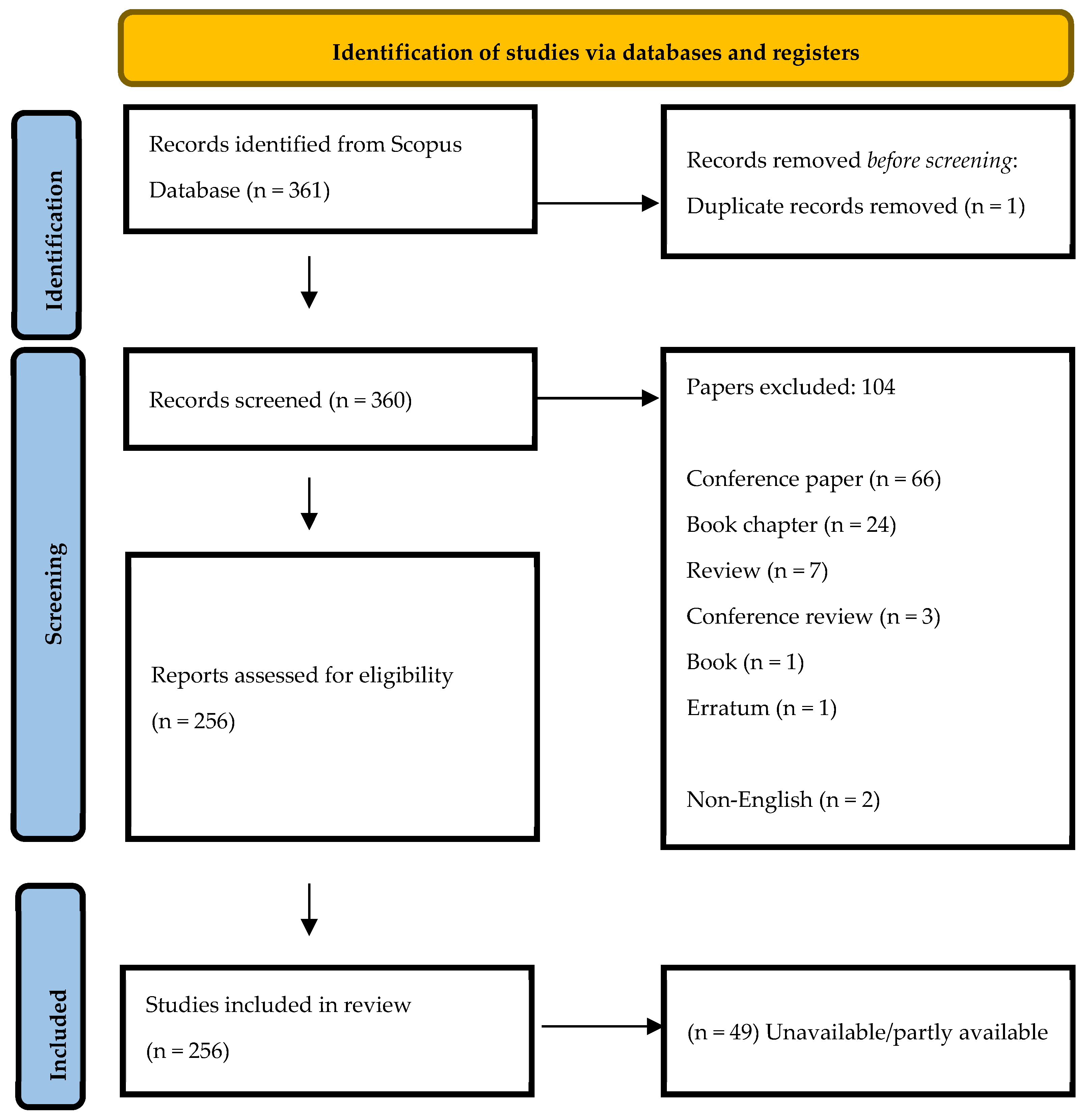
To fulfill the study’s goals and provide a thorough understanding of the potential for experimental work in CSEB as a sustainable construction material, a systematic literature review (SLR) approach was employed. We followed the Preferred Reporting Items for Systematic Reviews and Meta-Analyses (PRISMA) 2020 [23] criteria in order to do an SLR, which emphasizes several areas to guarantee clear, dependable, and scientific systematic evaluations that were synthesized through the Theories, Contexts, Characteristics, and Methodologies (TCCM) framework to map key research trends. The details of PRISMA checklist is provided in Supplementary Materials. This ensures transparency, reproducibility, and methodological rigor in research as it provides a structured format that enhances readability, facilitates critical appraisal, and promotes consistency across studies, thereby reducing biases. Consequently, a protocol was developed to outline the research inquiries and specify the selected information sources, search methodology, selection criteria, data extraction, and analysis. The systematic review process was phased, beginning with identification, continuing with screening articles according to a set of predefined guidelines, validating the selected articles’ eligibility based on their content, and concluding with the establishment of inclusion and exclusion criteria for the articles qualified for the review stage. The screening and data extraction process was conducted by a single author using predefined inclusion and exclusion criteria. While inter-rater reliability statistics were not applicable, systematic procedures were followed to ensure consistency and minimize selection bias. The steps used to filter the articles in accordance with PRISMA 2020 recommendations are indicated in Figure 1.

2.1. Identification

For the study, the advanced search function of the SCOPUS database was used, and research papers/articles related to CSEB published over the last 24 years (from 2000 to 2024) were examined. This timeframe was selected to capture the most relevant and recent advancements in CSEB research while maintaining a balance between comprehensiveness and manageability. The chosen period also reflects the increased availability and reliability of digital academic databases, enabling a rigorous and efficient literature search. By emphasizing recent studies, the review ensures that the synthesized findings are aligned with current environmental concerns and contemporary construction challenges. The search string in Table 1 was used to identify relevant articles. The subsequent search terms, which contain different combinations of ‘Compressed’, ‘Stabilized’, ‘Stabilised’, ‘Earth’, ‘Soil’, ‘Blocks’, and ‘Bricks’, were used in the Scopus database to identify journal publications. Table 1 also presents the criteria for including and excluding articles.

2.2. Screening

The category of literature was limited to journal papers only. This ensured that the research was based on peer-reviewed, high-quality, and credible sources, thereby enhancing the reliability and validity of the findings. To prevent misunderstandings and translation issues, the search was limited to English articles, and an effort was made to exclude non-English publications. A total of 256 papers advanced to the eligibility phase. Figure 1 illustrates the screening process, along with the other steps. Bibliographic details, including titles, abstracts, keywords, authors’ affiliations, journal names, and publication years, were exported into an MS Excel spreadsheet for systematic analysis. Following the completion of the searches, the titles and abstracts were filtered according to the given criteria. Any title or abstract that does not mention CSEB is excluded. The PDFs and hard copies of the full papers were extracted for those included after screening the titles and abstracts.

2.3. Eligibility

To select only relevant articles for the qualitative analysis, the remaining articles underwent an eligibility screening. Full-text articles were read and summarized.

2.4. Analysis of the Selected Articles

Microsoft Word and Excel were used to document and tabulate the data from the 256 final papers. The data contained a wide range of information, including the affiliations and nationalities of the various writers, the journals and publishers involved, and the different types of binders and fibers used, along with their stabilizers. The characteristics of the CSEBs were studied. The block type and the machinery utilized in block manufacture were also reviewed.

2.4.1. Publication Trends of the Papers Reviewed

The publishing trend of the papers under examination, including the year of publication, journal name, and publisher, was investigated to gain a comprehensive understanding of the overall scenario.

2.4.2. Year of Publication

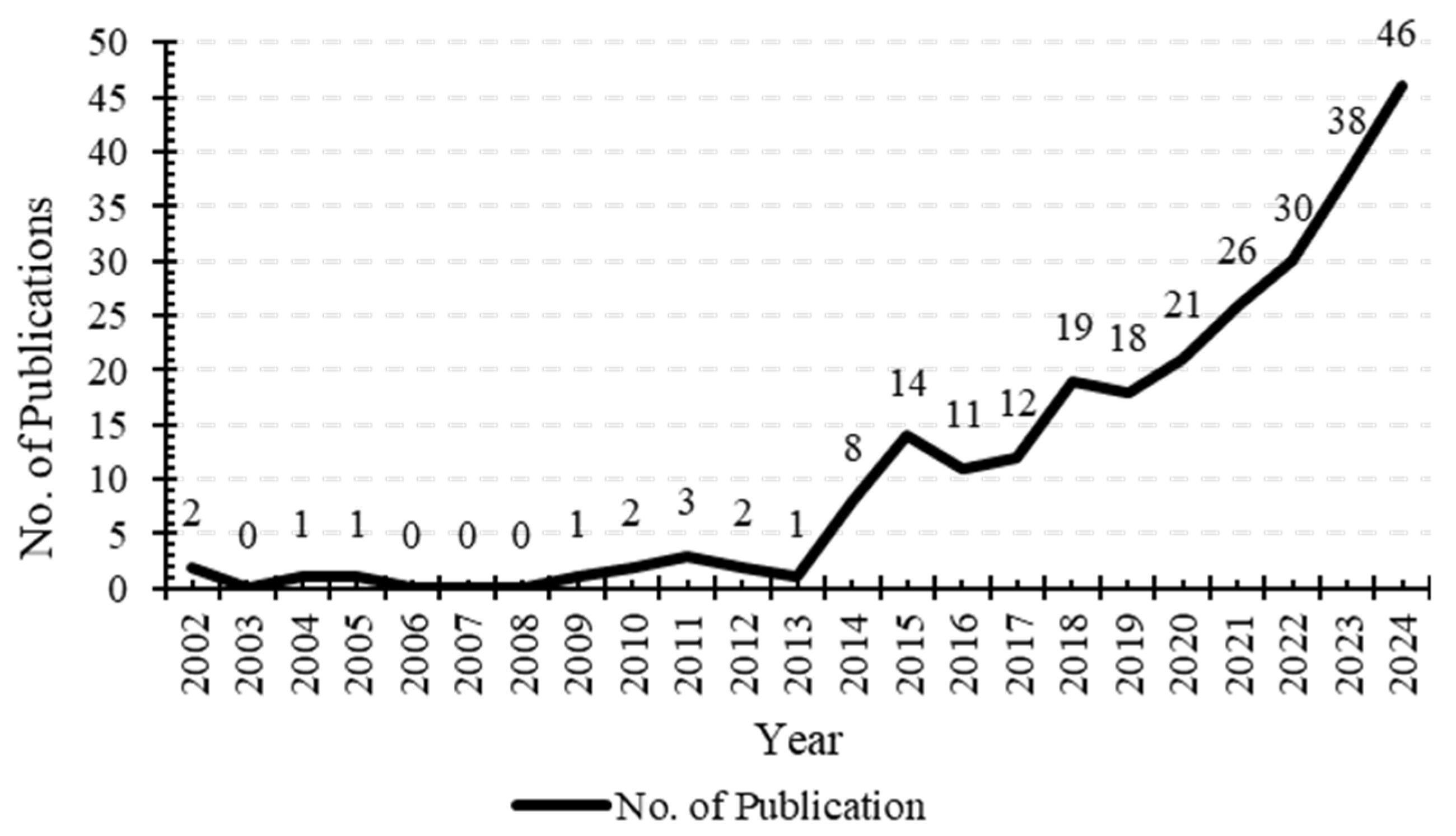
A total of 256 relevant articles published between 2000 and 2024 were selected for this review to capture recent developments in CSEB production and the use of alternative fibers and binders. Early research activity in this area was limited, with no publications recorded in 2003, 2006–2008, and only isolated publications in 2004, 2005, 2009, and 2013. From 2013 onward, a clear upward trend in publications was observed, culminating in a peak of 46 articles in 2024. This growing research interest in CSEBs as sustainable construction materials is closely associated with global climate action initiatives, particularly following the Paris Agreement in 2015. Figure 2 shows the publication trend of the articles that were selected for review.

2.4.3. Journal and Publisher

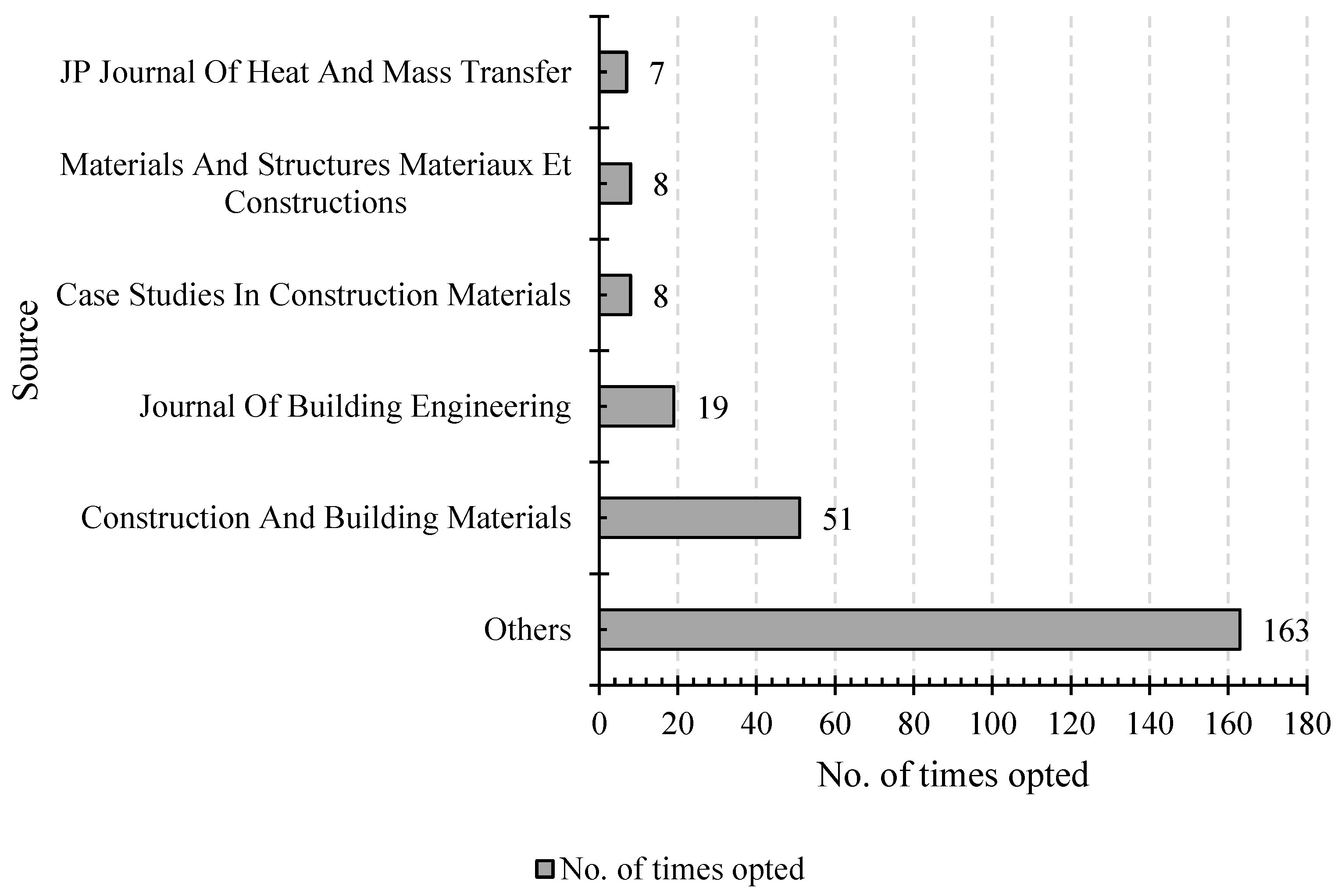
The relevant publications were categorized according to the journals in which they appeared, resulting in the identification of 111 distinct journals. This wide dispersion of publications highlights the multidisciplinary nature of CSEB research, spanning materials science, civil engineering, sustainability, and environmental studies (Figure 3). At the same time, the absence of concentration in a small number of core journals indicates that research on CSEBs remains fragmented, with findings dispersed across diverse outlets rather than consolidated within a dedicated or dominant journal domain. This fragmentation suggests both the evolving character of the field and the need for greater thematic integration to strengthen knowledge transfer and coherence within CSEB research.

2.4.4. Geographic Location of Experimentation

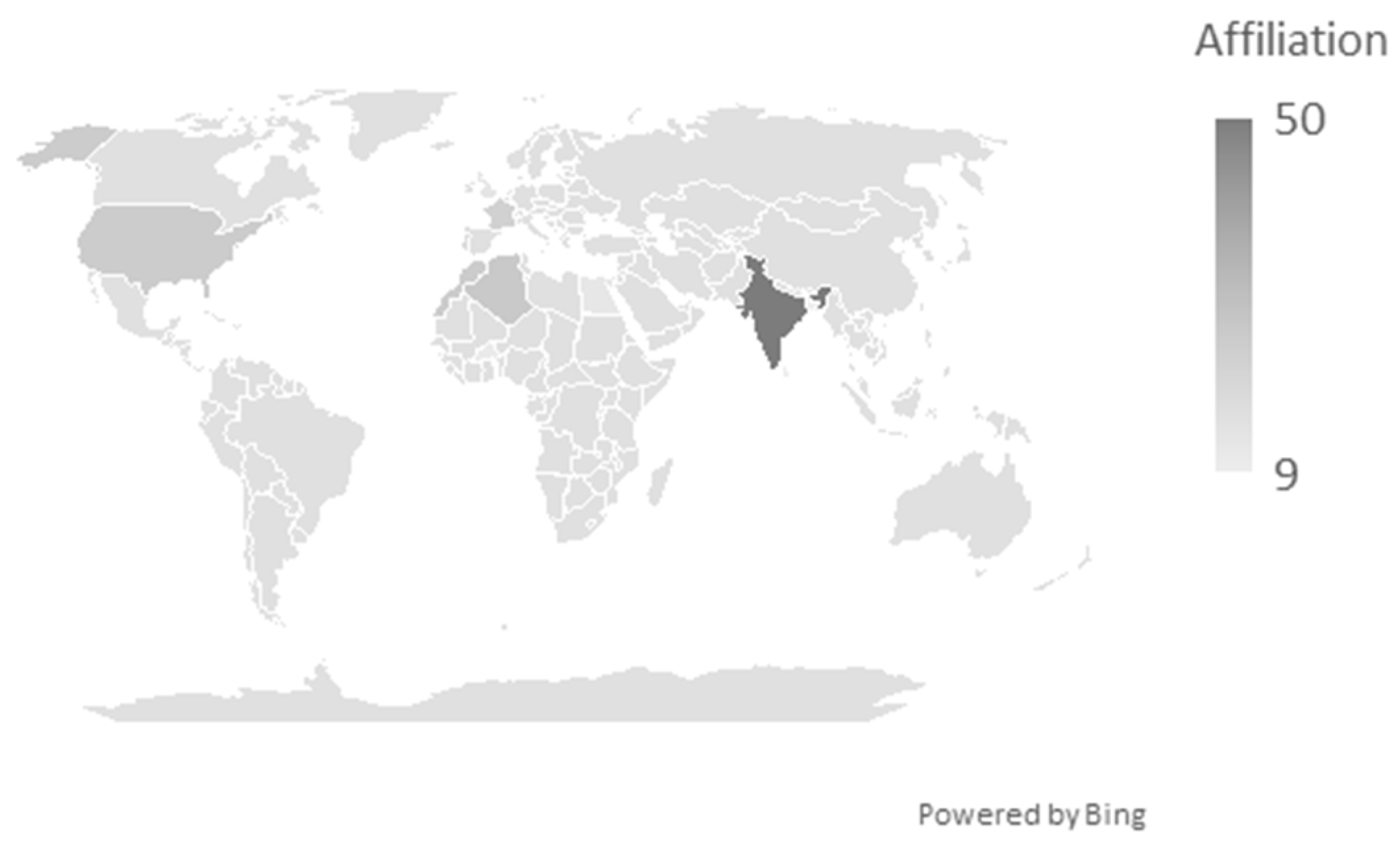
To identify the geographical origin of soils investigated in previous studies, a geographical distribution analysis was conducted for the selected articles (n = 256) (Figure 4). The spatial distribution of research outputs at national and continental levels is presented in Figure 4. India emerged as the leading contributor, with 50 publications (14.79%), reflecting strong research activity driven by the country’s reliance on earthen construction, availability of local soils, and demand for affordable and sustainable housing solutions. Algeria ranked second with 20 publications (6.50%), followed by the United States and Morocco, each contributing 21 publications (6.21%).
While these publication counts indicate prevailing research trends and regional interest in soil-based construction, they should not be interpreted as definitive measures of a country’s overall research capacity or leadership in the field. Notably, the analysis reveals that CSEB-related research spans a broad geographical base, with contributions from 56 countries worldwide. This widespread participation underscores the global relevance of stabilized soil blocks—while also highlighting the context-specific nature of research outcomes—as soil properties, climatic conditions, and construction practices vary significantly across regions.

2.5. TCCM Framework Analysis

To systematically categorize and analyze research on CSEBs incorporating waste materials, this study employs the TCCM (Theories, Contexts, Characteristics, and Methodologies) framework. The TCCM framework helps in synthesizing existing studies, identifying research gaps, and suggesting future research priorities.

3. Results and Discussion

3.1. Earthen Blocks: Classification and Production Methods

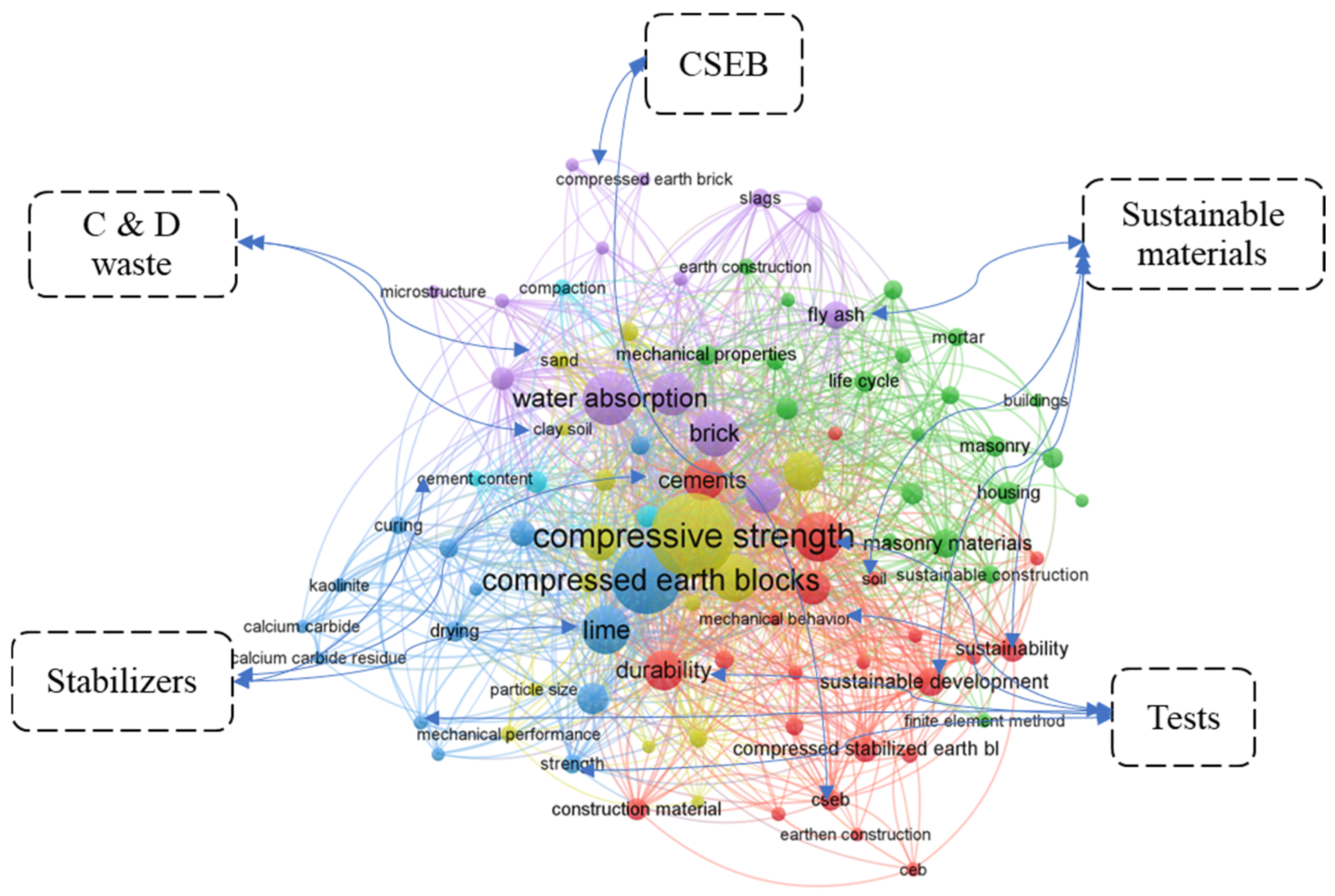
Several types of earthen blocks are used in construction, such as adobe, rammed earth, and extruded earth masonry units, typically manufactured from subsoil and sometimes stabilized with additives like lime or straw [24]. Earthen blocks are produced using manual, semi-automated, or automated methods, often incorporating locally available low-cost components, and their performance is evaluated through compressive strength testing, mix design optimization, and block thickness assessment. Figure 5 exhibits the bibliometric analysis of the keywords cited by the authors. “Bibliometrix,” an open-source tool for quantitative research in scientometrics and bibliometrics, was utilized alongside its web application, “Biblioshiny”, for the analysis [25].
As per the articles analyzed, the constructed specimens were primarily composed of solid or hollow blocks, except for a few cylindrical samples [26,27,28,29,30]. The dimensions of the manufactured samples differed significantly because there were no established criteria. The need for uniformity of block production arises due to this variation.

3.1.1. Type of Soil

Topsoil is generally unsuitable for earth based construction due to its susceptibility to deterioration, volumetric instability, and the presence of organic matter, which adversely affects mechanical performance and durability [31] and thus, is not recommended [32,33]. Instead, subsoil is predominantly utilized for earth block manufacturing, enabling the conservation of nutrient-rich topsoil for agricultural purposes [11]. This distinction reflects both technical and ecological considerations in sustainable material sourcing.
The performance of earthen construction depends fundamentally on appropriate soil selection, preparation, and modification. Soils must be screened to remove organic and inorganic impurities using manual or mechanical sieving methods to ensure uniformity and consistency [34]. Adjustments are made to align soil characteristics with the chosen clay building method, with studies showing sand can effectively stabilize soils with high clay content [13]. Where natural soil properties remain inadequate, chemical stabilizers such as cement, lime, gypsum, bitumen, fly ash, and alkali-activated binders may be incorporated to enhance strength and durability [21,35].
Soil type is crucial in selecting stabilizers for block properties. According to Burroughs (2010) [30], the three most influential parameters are (i) appropriate soil selection, (ii) suitable stabilizer type and dosage, and (iii) adequate compaction pressure. Current soil classification systems, including the Unified Soil Classification System, rely primarily on particle size distribution and plasticity characteristics [30]. Soils with liquid limit (LL) < 6.0 and clay–silt content ≤ 20%, or LL < 6.0 with clay–silt between 21% and 35%, are considered optimal categories for stabilization. Although low-plasticity soils are generally preferred, high-plasticity soils can also be improved through appropriate stabilization strategies. Lime and pozzolanic binders are particularly effective alternatives to cement in low-plasticity soils [11].
Mineralogical composition further influences performance. Tropical red soils rich in kaolinite have demonstrated suitability for CSEBs due to their durability and long-term stability [36]. It is commonly recommended that sand content should not exceed approximately 70% to ensure adequate cohesion and strength. Soils with higher quartz content tend to exhibit improved mechanical behavior, thereby reducing stabilizer demand [14].
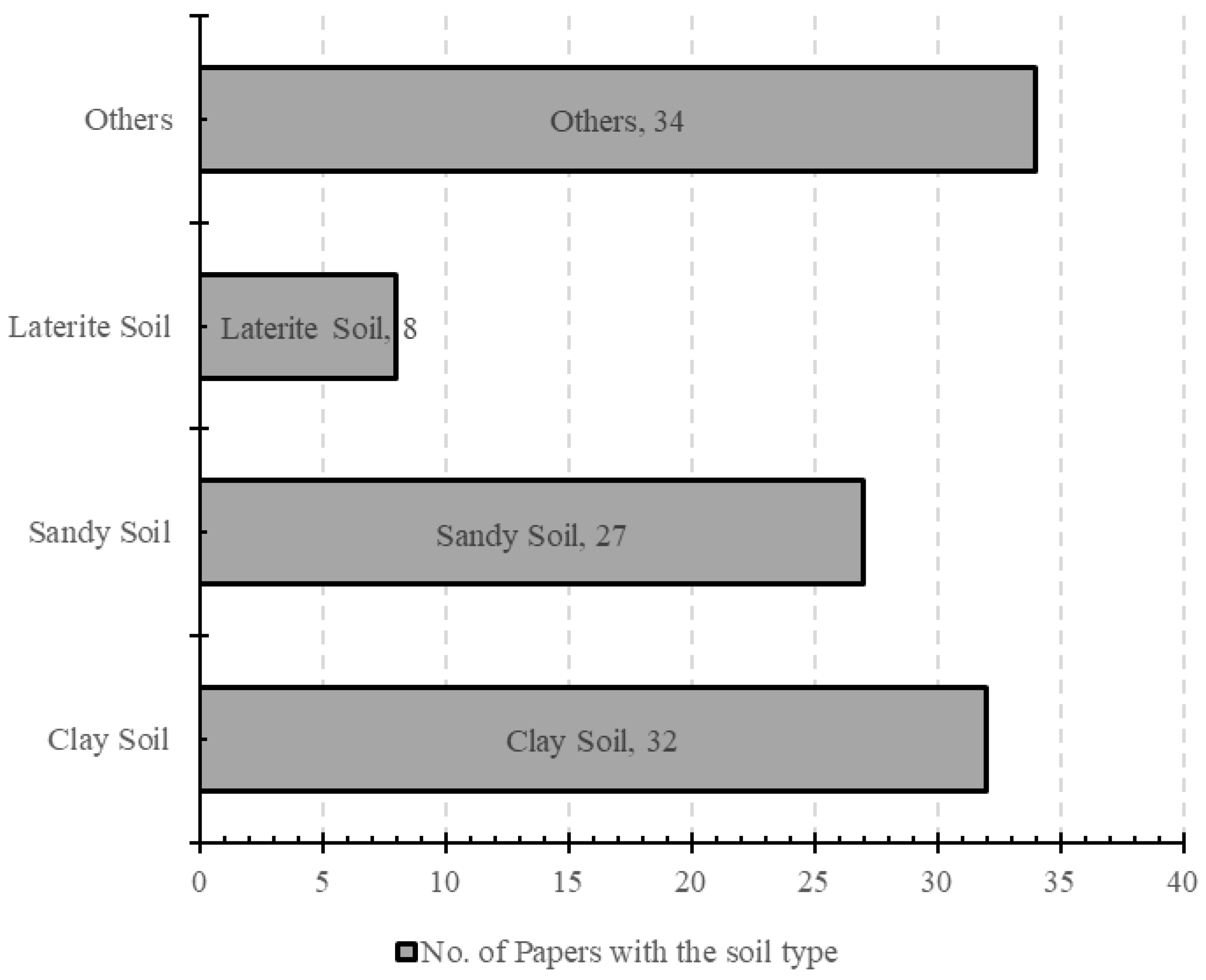
Chemical stabilization with lime and cement has proven effective in producing earth blocks, overcoming the issue of suitable local soils for mechanical behavior and durability [16]. When the soil has a very low clay content and activity, cement is typically used as the binding agent [37], and is well-suited for hot and dry locations with moderate weather conditions and significant temperature fluctuations between day and night. On the other hand, blocks with high clay content are more appropriate for cold climates with minimal temperature swings throughout the day [37]. Among the various soil types investigated in the literature, clayey, sandy, and lateritic soils have been most extensively studied, although numerous studies have also examined locally sourced soils depending on regional availability (see Figure 6).

3.1.2. Stabilization of the Soil

Soil stabilization is a widely adopted technique to enhance the engineering performance of earthen construction materials. It involves the addition of suitable admixtures to improve the strength, permeability, durability, and volumetric stability of soil [38]. Broadly, stabilization can be classified into three categories: mechanical stabilization, physical stabilization, and chemical stabilization [11]. Among these, chemical stabilization is most frequently employed in earth block production due to its effectiveness in improving long-term mechanical behavior and durability.
The manufacture of earth blocks requires soils with appropriate gradation and plasticity; however, natural soils often do not meet the required performance criteria. In such cases, chemical stabilization using cement or lime is commonly adopted to achieve the desired structural performance [16]. Cement and lime are therefore the most widely used stabilizers in earth block stabilization.
Previous studies indicate that both cement and lime stabilization reduce water vapor permeability and enhance overall durability, with cement generally exhibiting greater effectiveness than lime in improving strength and stiffness [33]. Cement enhances stiffness by forming rigid inter-particle bonds within the soil matrix [39]. However, the efficiency of these binders depends on soil type: cement performs better with coarse-grained soils, whereas lime is more suitable for highly plastic, fine-grained soils such as clay [40]. Economic considerations also influence binder dosage, as cement contents beyond approximately 12% are generally not cost-effective [41].
Although cement and lime remain predominant stabilizers, over 100 different materials—including sand, gravel, bitumen, resins, volcanic tuff, sodium silicate, fibers, and geopolymers—have been explored for soil stabilization [31]. Nevertheless, the high energy demand and associated greenhouse gas emissions from cement and lime production raise environmental concerns. For instance, lime production is among the leading contributors to industrial carbon emissions in China [42], underscoring the need to explore alternative, low-carbon stabilization strategies aligned with sustainable construction objectives.

3.1.3. Optimum Moisture Content

The optimum soil moisture content is defined as the water content at which maximum dry density is achieved under a given compaction energy. Under these conditions, soil particles are sufficiently lubricated to permit rearrangement into a denser configuration. When water content is excessive, compaction pressure is partially dissipated through pore water, reducing effective particle interlocking; conversely, insufficient water restricts lubrication, preventing adequate densification. The Proctor compaction test is the most commonly employed method to determine optimum moisture content (OMC) in earth block studies [43], and IS 2720 provides the corresponding procedural framework in the Indian context. For CSEB production, recommended soil combinations typically contain 12–15% clay with moisture contents ranging between 10 and 12% for effective molding.
However, OMC values are not universal and depend on soil gradation, mineralogy, compaction technique, and stabilizer type. Ref. [11] reported that dynamic compaction systems may reduce required moisture from approximately 12% to 10%, indicating that compaction energy directly influences water demand. The wet mix must ensure adequate workability while preventing adhesion to the mold during ejection and maintaining sufficient green strength for handling. Water addition may be carried out manually or using mechanical mixers such as pan mixers, but uniform distribution remains critical for consistent block quality.
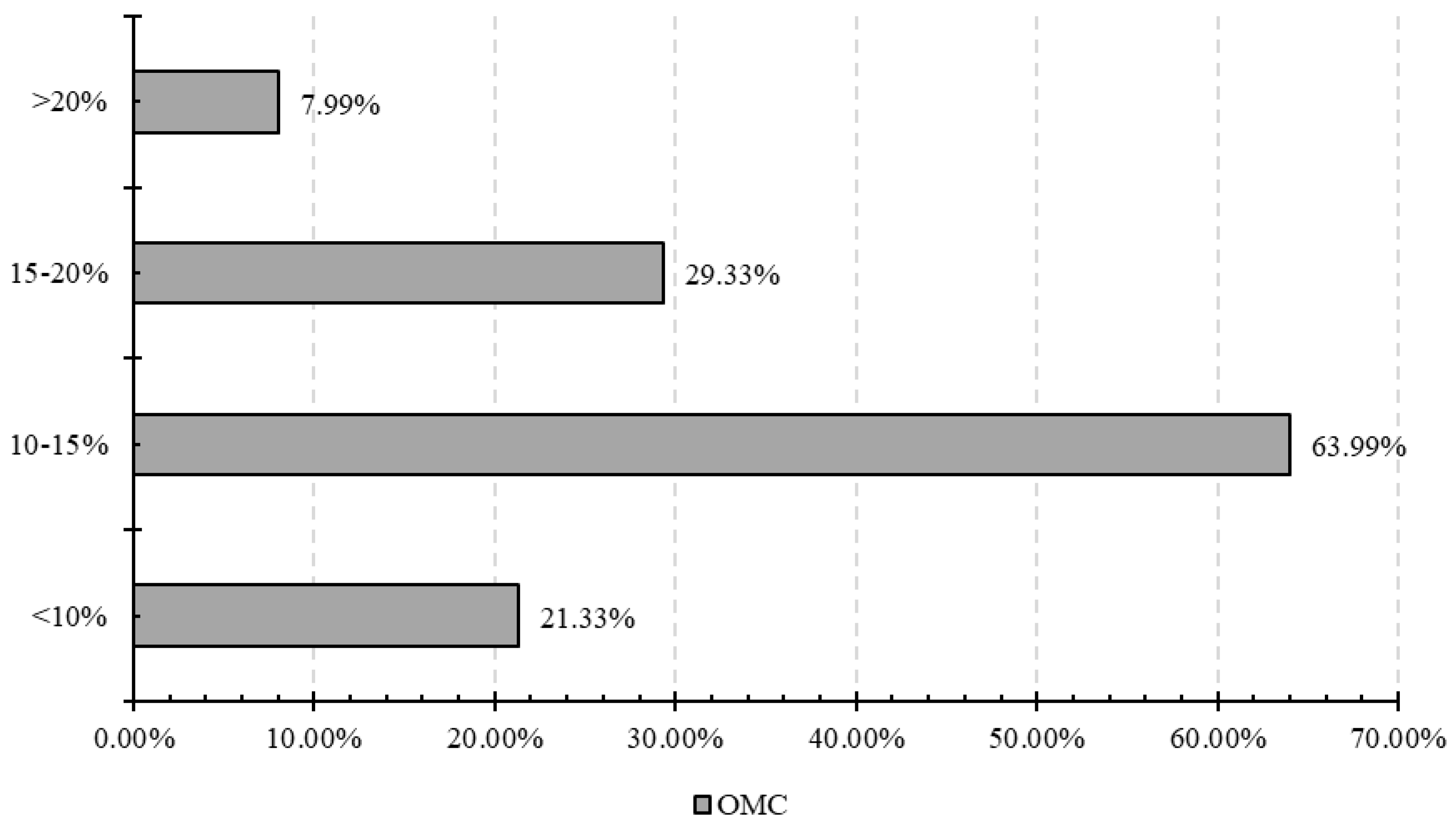
Reported moisture contents in the literature vary significantly—from 8% [44] to as high as 25% [45]—with 10–15% by dry soil weight being most commonly adopted (Figure 7). Alternative approaches, such as the CDE method [46] and the drop test specified in SLS 1382 Part 2 [47], have also been used to estimate optimum water content.
While Proctor-based OMC provides a standardized laboratory benchmark, it may not fully represent field compaction conditions or block press characteristics. Excess reliance on generic moisture ranges (e.g., 10–15%) without soil-specific validation can lead to variability in density, strength, and durability. Furthermore, the interaction between moisture content and chemical stabilizers is often underreported, despite its influence on hydration reactions and early-age strength development. Therefore, determination of optimum moisture content should be integrated with compaction method, soil mineralogy, and stabilizer dosage to ensure reproducible and performance-oriented CSEB production rather than relying solely on standardized laboratory values.

3.1.4. Types of Press Used

CSEBs are manufactured using either manual or hydraulic presses, and the choice of press significantly influences block density, strength, dimensional accuracy, and production efficiency [24,39,48]. The key considerations when selecting a press for manufacturing CSEB include the types of stabilizers and reinforcements used, the production parameters, and the curing environment [49]. These variables collectively determine the achievable mechanical properties and durability of the blocks.
Manual presses, such as the Float RAM 1.0 Press, are designed for regions with limited access to technology and allow the production of interlocking blocks via mono-directional and bi-directional compaction [24]. There are also traditional block-making machines in operation, including the CINVA-RAM [50,51], which compresses the moist soil in the mold by hand using a toggle lever and piston system [50]. While such systems are suitable for decentralized, small-scale production, the achievable compaction pressure is highly dependent on operator effort, leading to variability in density and strength.
Fortunately, more recent improvements, such as the UK- and India-developed BREPAC and Astram, were developed, which may apply compacting forces ranging from 16 MN/m2 to 5 MN/m2 [52]. In order to produce CSEBs that are adequately durable, it is necessary to subject the soil to a pressure of approximately 105.5–140.7 kg/cm2 (1500–2500 psi) while it is within the mold. This can be achieved using either a manual or a mechanical press [34]. Researchers in the examined articles frequently used the Cinva-Ram Hydraulic Machine, ASTRAM press, Auram press 3000 and 4000, Terstaram press, Rhino Block Manual press, Soeng Thai Model BP6 press, AECT 2001A machine, Mardini soil block press, and Float Ram 1.0 press, among others.
Despite these advancements, critical gaps remain in the literature. Many studies report the type of press used but do not explicitly quantify the applied compaction pressure or correlate it with the resulting density and strength. This limits comparability across studies. Moreover, while hydraulic systems enhance consistency and productivity, they require higher capital investment and a reliable power supply, potentially reducing accessibility in low-resource contexts. Conversely, manual presses promote local employment and decentralization but may compromise quality control without standardized operating procedures.
Some researchers have also used the conventional Proctor compaction technique to produce compressed specimens; however, this laboratory method does not fully replicate field-pressing conditions or industrial block-making processes. Therefore, future studies should explicitly report compaction pressure, energy input, and press type in relation to performance outcomes to enable more robust comparison and optimization of CSEB manufacturing systems.

3.1.5. Size of the Specimens

The results show that specimen scale does not significantly affect compressive strength, with negligible differences observed between laboratory-scale bricks and full-scale units [14]. This suggests that controlled laboratory testing can reasonably represent field-scale block performance, provided compaction and curing conditions are comparable. However, specimen geometry has been shown to affect measured strength. Cubic and rectangular specimens typically exhibit higher compressive strength than slender cylindrical specimens, primarily because of differences in stress distribution and end-restraint effects [53]. This indicates that geometry-induced confinement may artificially enhance strength results, underscoring the need for consistent specimen dimensions when comparing studies.
Block configuration also influences structural behavior. The ductility of a stabilized earth wall increases with an increase in height-to-width aspect ratio, while its strength can be enhanced by a flange but decreased by an aperture [54]. Solid bricks and hollow bricks show similar results, but compressive strength decreases to 3.17 MPa due to the negative impact of two holes. Thermal conductivity does not significantly correlate with block form or size [55], suggesting that material composition may play a more dominant role than geometry in thermal performance.
From a standardization perspective, notable variability exists. The Spanish UNE 41410, NMAC 14.7.4, and ASTM standards do not strictly prescribe block dimensions or tolerances, allowing flexibility in manufacturing [56]. While such flexibility supports adaptation to local practices, it also complicates cross-study comparison and quality control. In contrast, the latest Indian standard IS 1725 (2023) specifies modular block dimensions—290 mm × 90 mm × 90 mm, 290 mm × 140 mm × 90 mm, 240 mm × 240 mm × 90 mm, 190 mm × 90 mm × 90 mm, and 190 mm × 90 mm× 40 mm—along with additional non-modular sizes. The presence of defined dimensions enhances consistency in testing, construction compatibility, and structural integration.

3.1.6. Curing

Curing of CSEBs is a crucial step in the production process that significantly influences the final strength and durability of the blocks [49,57]. Proper curing of stabilizers like cement or lime enhances blocks’ structural integrity, while hydraulic presses achieve ideal compression levels for CSEB, eliminating high-temperature curing issues [56]. The curing process of these blocks necessitates their spreading and rotation to provide consistent exposure to sunlight [12]. To achieve optimal hydration of the stabilizer, the bricks are subjected to moist curing under a polythene covering (referred to as wet gunny in India) in the open air for roughly 28 days when cement is used as the stabilizer. Traditionally, the CSEB production process takes advantage of natural humid environments where bricks can be stacked immediately after compression. However, over time, strength increases, and it is important to prevent rapid drying out [11]. Past research has demonstrated that the compressive strength of specimens comprising quartz and feldspars has a positive correlation with longer curing durations [14].
Although extended curing generally improves strength, the literature often lacks standardized reporting of curing temperature, relative humidity, and moisture control methods. Variations in curing protocol can significantly influence hydration efficiency, shrinkage behavior, and durability outcomes, thereby limiting comparability across studies. Moreover, accelerated curing methods such as oven curing may enhance early strength [40] but may not accurately reflect field performance under ambient conditions. Therefore, curing regimes should be explicitly documented and aligned with intended service environments to ensure reproducibility and realistic performance assessment of CSEBs.

3.1.7. Standards

Several nations have established technical regulations for earth building, but only a few have officially published testing criteria for CSEBs. Notably, Brazil, Colombia, France, Spain, and Mexico have distinguished themselves in this regard [58]. However, most available regulations, guidelines, and recommendations address earthen construction under ordinary design loads and do not comprehensively consider extreme loading scenarios such as seismic or high-wind conditions [59]. Only a small number of building regulations, recommendations, and standards are applicable to earthen construction under normal loads. The references used include Bulletin 5 from the National Building Technology Centre in 1987, Houben and Guillaud’s work from 2003, New Zealand Standards from 1998 (a, b, c), the California Building Code from the California Building Standards Commission in 2010, and the New Mexico building code from the State of New Mexico in 2009. While these documents provide foundational guidance, their scope remains limited in terms of performance-based structural validation.
At the material characterization level, researchers have relied on a wide range of international standards. For soil classification and plasticity assessment, ASTM C136-06 (sieve analysis), ASTM D4318 (Atterberg limits), ASTM C117 (wet sieve analysis), and SLS 1382 have been employed [47]. In the Indian context, IS 2720 is commonly used for soil classification and characterization [60], while IS 1725 provides specifications for stabilized soil blocks. Other standards cited across studies include NBR (Brazil), ARSO, KS 02-1070 (Republic of Korea), XP P13-901 (France), NTC 5324 (Colombia), UNE 41410 (Spain), ASTM E2392M-10, NMAC 14.7.4 (New Mexico), EBAA 2001, HB 195, and Bulletin 5. Masonry and strength-related testing have referenced BS 5628: Part 1 (flexural strength), TMS 602 (masonry specifications), Mexican standard NMX-C-508 (compressive strength), and Indonesian Standard SNI 15-2094-2000 (similar to ASTM C67-05) [58,59,61,62]. Additionally, environmental assessments have followed IRAM-ISO 14040 for Life Cycle Assessment.
The diversity of referenced standards reflects the absence of a universally harmonized framework for CSEB testing and performance evaluation (Table 2). Researchers frequently adopt conventional masonry or soil-testing standards in the absence of CSEB-specific provisions, leading to inconsistencies in specimen preparation, curing regimes, load application methods, and acceptance criteria. Moreover, many national codes emphasize compressive strength while underreporting durability, thermal performance, and long-term behavior under environmental exposure. The reliance on standards developed for fired bricks or concrete masonry units may not fully capture the hygro-mechanical behavior unique to stabilized earth materials. Therefore, there remains a need for integrated, performance-based, and climate-responsive standards tailored specifically to CSEBs to enhance comparability, structural reliability, and broader regulatory acceptance.

3.1.8. Stabilizers, Binders, and Fibers Used in the Manufacturing of CSEB

Many researchers have used stabilizers, binders, and fibers as additions to improve the mechanical and durability properties of CSEBs, enhancing soil quality and achieving comparable properties to conventional blocks [63] by reducing the soil’s tendency to swell [11] (see Table 3 and Table 4). Among all stabilizers, Portland cement remains the most commonly used worldwide, largely due to its predictable strength gain and compatibility with diverse soil types.
Cement stabilization significantly improves compressive strength and durability. Even small additions (>4%) enhance performance, while strength at 10% cement has been reported to be nearly twice that achieved at 4%, depending on soil characteristics. However, economic and environmental constraints limit its dosage. Cement contents above 10% substantially increase production cost, and proportions exceeding 15% are generally considered technically and economically unjustifiable [64]. Moreover, cement stabilization performs best in soils with lower clay fractions (typically <13–17%), whereas higher clay contents reduce effectiveness unless combined with lime [36,38].
Lime, in contrast, is particularly suitable for clay-rich soils due to its ability to initiate cation exchange and pozzolanic reactions. Although cement-stabilized blocks often demonstrate higher early strength and durability than lime-stabilized blocks, lime–cement combinations have shown superior long-term performance in soils with moderate to high clay content [36]. For example, mixtures such as 2% lime with 6% cement have demonstrated improved early and sustained strength development in clayey soils. Importantly, lime has a lower environmental footprint compared to Portland cement [36], making it attractive in sustainability-driven contexts. Nevertheless, aerial lime alone has been shown to provide limited compressive strength improvement and may not always justify its environmental impact unless properly optimized [58].
Locally produced natural fibers offer significant benefits to the population due to their availability, low energy costs, and positive economic and environmental impact [65]. Recent research on earth blocks shows that natural fibers improve composite materials’ thermal conductivity, tensile strength, and shrinkage crack size, and are more cost-effective than synthetic fibers [65]. Cement’s gel-like structure has long been used as a stabilizer, and adding fibers can enhance block characteristics [66]. Many papers included cement in the soil mix, proving its superiority over alternative materials. Adding up to 10% (by weight of soil) of cement was shown to boost the compressive strength of blocks by up to three times compared to blocks that were not crushed or stabilized [67]. In the past 10 years, lime has become a popular, lower-cost soil substitute blended with cement. It binds like cement in certain ways. Additional binders frequently used to stabilize soils included sawdust ash, fly ash, SBA, RHA, and crushed, granulated furnace slag. However, over the past 10 years, there has been a move toward unconventional binders, such as agricultural and industrial wastes [26,51,55,63,64,68,69,70,71,72,73,74,75,76,77,78,79,80,81]. Researchers also experimented with materials such as waste concrete powder [82], sisal fibre and brick waste [83], green mussel shells [84], and sandy soils in these review articles [85].
Lime and RHA additions negatively impact stabilized soil’s strength, while their combination improves compressive strength and water-absorbing capacity, reaching a maximum ratio of 1:1 [62]. While surface porosity is unaffected by cement content, pore size decreases as block cement content increases [85]. The ability to absorb moisture is decreased when cassava peels are used [83].
The optimal amount of lime in cement results in blocks with superior mechanical strength compared to cement alone [17]. Increased use of cement and lime increases CEB costs and energy use, reducing competitiveness. Alkaline-derived geopolymeric binders reduce CO2 emissions. CSEBs manufactured with PPC and lime have superior durability properties [15]. This is particularly evident in blocks made from soils with lower clay concentration (i.e., clay below 17%) and observed to show greater strength with cement alone as a stabilizer up to 6 months of aging. Cement is an efficient stabilizer for coarse-grained soils, while lime is ideal for clayey ones. Combining lime and cement can improve soil stability, but it is crucial to evaluate their effectiveness for specific clay concentrations [36]. Lime and cement stabilize sand and clay components, enhancing long-term strength and durability, a feat not achievable by using cement or lime individually [47]. The combination of cement and lime is more appropriate for soil blocks with low levels of clay and silt, compared to using lime or cement stabilization alone [47]. When using cement alone as a stabilizer for making CSEBs, good results can only be achieved when the clay percentage in the block is lower, namely about 13%. As the proportion of clay in the block increases, the strength of the block decreases. The presence of larger amounts of clay in soil can nevertheless be beneficially utilized in the creation of CSEBs. This may be achieved by utilizing lime in conjunction with cement. Utilizing lime in an optimal ratio with cement as an additive for manufacturing blocks often enhances their characteristics, particularly when the soil has a larger proportion of clay [36]. Lime, both aerial and hydraulic, is commonly used as an addition to stabilize the blocks. Its environmental effect is considerably smaller than that of Portland cement [58]. Lime is environmentally friendlier than cement [47]. It was found that blocks made with the ideal amount of lime in addition to cement have continued to strengthen for more than two years, while blocks made with cement alone and less lime than the ideal amount had not significantly strengthened after six months of block preparation [38]. This would also contribute to the sustainable growth of society by optimizing resource utilization, lowering energy consumption, and reducing environmental pollution [38]. While clay minerals in lime-stabilized soil products are consumed in the lime-clay reactions and only a small amount remains in the stabilized soil compacts, clay minerals can be recovered from cement-stabilized soil products [10]. When it comes to removing clay minerals from stabilized soil compacts, cement stabilization works better than lime stabilization [10].
Irrespective of the type of soil, the addition of Na2SiO3 at concentrations of 6% and 10% to cement and lime resulted in significant improvements in compression resistance compared to treatments without Na2SiO3 [86]. The utilization of the enzyme in minimal amounts is expected to decrease the reliance on cement and/or lime as exclusive stabilizers in the production of CSEBs [87]. The use of oil shale as a stabilizing agent in soil has a distinct function in enhancing the mechanical characteristics, concealing the shrinkage fractures, and diminishing the volume shrinkage value of the blocks [31]. Palm fibers’ low tensile strength, high water absorption, heterogeneity or dispersion, and poor adherence to the matrix all had an adverse effect on the tensile strength [65]. The leftover concrete powder, albeit significantly coarser, displays a comparable pattern and may be simply utilized as a replacement for riverbed sand [82]. Earth bricks, which are enhanced by acid or alkaline activation of an aluminosilicate, exhibit excellent performance [88]. The stabilized blocks that were stabilized with 20% of geopolymer had the maximum compressive strength of 8.9 MPa [88]. Ceramic concrete made from fly ash, rice husk ash, sugarcane bagasse ash, and cassava powder has been investigated as an alternative binder, showing decreased porosity and increased airflow resistivity [89].
The mechanical characteristics of blocks stabilized with a geopolymer binder and heat-treated at 60 °C are excellent and improve significantly with increasing geopolymer concentration [90]. Geopolymerized blocks have lower thermal properties than reinforcement-stabilized blocks, with thermal conductivity remaining close to that of unstabilized blocks. Improvement in mechanical properties does not alter thermal properties, unlike cement stabilization [90]. Biopolymers have demonstrated diverse applications in enhancing soil stability, mitigating erosion, managing dust, treating water, and regulating soil permeability [91]. Despite being utilized in various trials, asphalt has been demonstrated in the past to have no influence on stabilized strength and, when combined with cement and/or lime, should only be used as a water proofer [30]. The block’s ability to withstand erosion is enhanced by the stabilizer component [56]. The findings indicate that the inclusion of coir fibers substantially enhances the walls’ ability to withstand axial loads and increases their ductility, irrespective of other factors taken into account [92]. The utilization of locally accessible materials like coir fibers and bamboo splints as reinforcement for masonry walls has demonstrated significant effectiveness in improving the axial load capacity and ductility of earth-block masonry walls [92]. Introducing date palm fibers enhances the capillary absorption of blocks. The thermal conductivity of blocks decreased as the quantity of fibers increased [40].
In order to enhance the mechanical properties, researchers typically add fibers. Nevertheless, numerous studies have discovered that the CSEBs’ physical characteristics are diminished by the addition of these fibers. Although there is a distinct difference when it comes to the use of cement as a binder, the same cannot be said for fibers. This is because different soil compositions exhibit differential improvements in attributes like strength and durability when cement is added as a binder [63]. Recent study findings indicate that using natural fibers in crushed earth blocks reduces the occurrence of shrinkage fractures and enhances durability and tensile strength. However, some writers have stated that incorporating natural fiber into the soil during the stabilized blocks compression process is not suitable, as it makes the mixture too elastic [40]. The inclusion of unprocessed fibers in stabilized block mixes reduces tensile strength as fiber concentration increases. The authors relate this phenomenon to decreased adhesion between the fiber and matrix, which occurs when the stabilized blocks decompress after being unloaded during their manufacture. Improving adhesion between the fiber and matrix is essential, and this can be achieved by increasing the surface roughness of natural fibers. A variety of physical and chemical methods are used to process the surface of natural fibers [40]. Fibers and stabilizers enhance soil blocks’ performance by increasing their resistance to cracks and crack propagation, resulting in increased compressive and tensile strength, typically achieved with minimal fiber percentages [93]. Earthen masonry materials are most economically produced using natural fibers [93]. Increased fiber content in a fiber/soil-cement mix reduces overall strength due to bonding between fibers and the matrix, which is influenced by factors such as fiber size, surface conditions, and fiber concentration. This leads to a decrease in the block’s compressive strength [40]. Researchers found that adding coir fiber to lime-treated soft soil increases its strength up to a certain point, but beyond this point, the fibers negatively affect the soil’s strength [40]. Coconut, sisal, palm, and barley, all natural fibers, were used in previous studies on soil stabilization. Nevertheless, the combination of these fibers, together with their degradability, poor strength, low tenacity, and low resistance to water absorption, results in reduced durability when used as a stability material [94]. The strength of composite materials is affected by the contact sites between fibers and matrix. High fiber concentrations decrease fiber–matrix and matrix–matrix linkages, thereby reducing strength. The optimal range for polypropylene fibers in soil-cement mixtures is 0.4–0.8%, with an inverse correlation between fiber content and strength [93].
The combination of oil shale and lime as stabilizers was deemed unsuitable due to shrinkage cracks, while oil shale and cement were suitable due to their absence [31]. The inclusion of the enzyme significantly improved the structural characteristics of the blocks [87]. By altering only the material’s mesh distribution, the compressive stress increased by almost 200%, while keeping the binder quantity constant [95]. Stabilizing with aerial lime does not enhance the compressive strength of stabilized blocks. Instead, it considerably amplifies their adverse environmental effects [58]. Standards for Lime (IS 712 (1984)) and rice husk ash (IS 3812 (Part 1) 2003), among others, were employed [15].
Although blocks stabilized with cement have shown good performance, it is important to note that their production involves high-temperature thermal processes, reaching 1450 °C. These processes release significant amounts of CO2 into the atmosphere, in addition to the high economic cost of the additive. Approximately 0.86 tons of carbon dioxide (CO2) are emitted into the atmosphere for every ton of Portland cement manufactured [58].
Table 3. Types of stabilizers/binders.
Paper IdReferenceStabilizer/Binder
CementLimeOthers
2[96] Sawdust
4[61]
6[30]Asphalt
7[62] Rice Husk Ash
10[51] Coal-Ash
11[56]
13[38]
15[97]NaOH (Sodium Hydroxide)
16[65]
17[10]
20[32]
21[19] Alkaline Activated Fly Ash, NaOH
22[48]
23[98]Metakaolin, GGBS
25[99]
26[100]Metakaolin
27[26]
28[27]Alumino-Silicate
29[101]
30[102] Natural Pozzolana
31[103]
32[53] Kaolin
33[67]
34[54]
36[34]
39[15]Rice Husk Ash
40[36]
41[86]Sodium Silicate
42[93]
44[104]Metakaolin, Plasticure
45[40]
47[105] Alkali-Activated Fly Ash
48[33]
49[106] Silica Fume (SF), Fly Ash (FA), Ground Granulated Blast Furnace Slag (GGBS), Brick Powder
(BP) And Fine Recycled Concrete Aggregate (FRCA)
50[39]
52[16] Alkali-Activated Fly Ash
53[87]Enzyme
54[37]
55[28]
58[107]
59[108]
61[95]
62[12]
63[90] Geopolymer Binder Synthesized from a mixture of Metakaolin and Sodium Hydroxide solution.
65[109]
66[110]
67[111] Granulated Blast Furnace Slag
68[112] Sawdust Lignin
71[113]White Resin named “MEDALATEX”
72[68]Marble Cutting Waste (MCW)
73[24]
75[114] Industrial Lime, Artisanal Lime
76[69] Geopolymer Binder, Fly Ash (FA), Ground Granulated
Blast-Furnace Slag (GGBS)
77[115]
79[116]
80[117] Geogrids
82[84] Powdered Green Mussel Shell (GMS)
84[118]
85[119]
86[120]
88[121] Geogrid
89[122]
90[123] Calcium Carbide Residue, Rice Husk Ash
91[59]
92[124]Coal
Combustion By-Products
93[125]Recycled Aggregates
94[126]
95[127] Fly Ash
96[128] Fly Ash, Alkali Activator
97[129] Aloe Vera Mucilage
98[130] Ground Granulated Blast Furnace Slag (GGBS), Fly Ash (FA) with Alkali Activator Solution.
100[131] Phosphoric Acid
101[58]
102[47]
103[132]
104[133] Fly Ash
105[134] Sand
106[135] Saw Dust Ash
107[136]
108[137] Sand, Used Motor Oil
109[138] CCR (Calcium Carbide Residue)
110[139] Biopolymer Guar Gum
111[49] Calcium Carbide Residue (CCR)
112[140]
114[141] Calcium Carbide Residue (CCR) And Rice Husk Ash (RHA)
116[72] Crushed Brick Waste
117[142] Calcium Carbide Residue (CCR) And Rice Husk Ash (RHA)
118[143]
119[144]
120[5]Nopal Mucilage Aqueous Solution
121[145] Fly Ash
122[146] Gum Arabic
123[73] Cassava Wastewater
125[147]
126[148]
127[149]
129[74] Glass Waste, Fly Ash
130[150]Sodium Silicate
133[151]
135[152] Geopolymer
136[153]
137[75] Construction Waste
138[44] Fly Ash
139[154]
143[155]
145[156] Fly Ash
147[76] Municipal Solid Waste Incinerator Bottom Ash
(MSWIBA)
148[157]
149[158]
150[159]
152[160]
154[161] Alkali-Activated Byproducts
157[162]
160[163]
161[164]
162[43] Fly Ash Binder, Sodium Hydroxide (NaOH)
164[50]
166[41]
168[165]
169[166]
170[42] Combination Of Metakaolin-based Geopolymer (MKG) and Sugarcane Molasses (SM)
171[55] Phosphogypsum (PG),
Calcareous Material (CM) And Red Clay (RC)
172[66]
173[78] Glass Waste, NaOH Solution
174[167]
175[79] Rice Husk Ash (RHA)
176[168]
177[35]
178[17] Water Hyacinth Ash
179[89] Water Hyacinth Ash (WHA)
And Sugarcane Bagasse Ash (SBA)
182[169] Fly Ash-Based
Geopolymer, Alkaline Activator Solution
183[81] Phosphate Waste Rock, Red Marls
185[170]
186[171]
187[172] Silica Fume
188[173] Thermoactivated Recycled Cement
190[63]Fly Ash
192[31]Oil Shale Ash
193[174]
194[175]
196[176] Wood Biomass Ash
197[177] Fly Ash, PVA (Polyvinyl Alcohol), Polyester
198[13] Granite Dust
199[91] Carob Gum (CG)
200[178]
201[92]
205[88] Geopolymer synthesized in acidic and alkaline conditions
207[22]
208[45] Rice Husk Ash (RHA)
209[46] Crushed Mussel Shells (CMS)
210[82] Waste Concrete Powder
211[64] Municipal Solid Waste Incinerator Bottom Ash
(MSWIBA)
214[179]
216[180] Recycled Cement Paste (RCP) and Concrete (RCC) Waste
217[181]Fly Ash
218[182] Portland Composite Cement (CPJ)
220[183]Xanthan Gum and Animal Glue
225[184]
226[185] Thermoactivated Recycled Cement (RCP)
227[186] Civic Garbage Torched Bottom Ash
228[187]
230[188] Marble Dust (MD), Sugarcane Bagasse Ash (SBA)
231[189]
234[190]Metakaolin, Ground Granulated Blast-Furnace Slag
235[191]
236[192]
237[193] Phosphate Waste Rock (PWR) and Phosphate Washing Sludge
238[194] Grewia Bicolor Bark Powder (GBBP)
239[195]
241[196] Cement Kiln Dust (CKD) activated with Ground Granulated Blast-Furnace Slag (GGBS)
244[197]
245[198]
247[199]
249[200] Recycled Cement Paste (RCP)
251[201] Low-Carbon thermoactivated Recycled Cement (RC)
252[202]Asphalt Emulsion
255[203] Sugarcane Bagasse (SCB) and Molasses (SCM)
256[204]
Table 4. Types of fibers.
Paper IdReferenceFiber
10[51]Cassava Peels
16[65]Date Palm Fibers
25[99]Cork Aggregates
27[26]Waste-Plastic Fibers
42[93]Polypropylene Fibers
45[40]Date Palm Fibers (Untreated And Alkali-Treated)
66[110]Coir, Abaca, Maguey Fibers
69[94]Polyethylene Terephthalate (PET) Fibers, Polypropylene (PP) Sack Fibers
73[24]Straw
76[69]Coir Fibers
78[205]Polypropylene (PP) Sack Fibers
82[84]Pig Hair Fibers
87[70]Shredded Waste Plastic
97[129]Coconut Fibers
115[206]Jute Fiber
125[147]Unchopped Barley Straw
133[151]Straw
143[155]Doum Palm Fibers
152[160]Bagasse Fibers
157[162]Doum Palm Fibers
160[163]Bamboo Fibers
172[66]Coir Fibre, Bamboo Splints, or Steel Bars
186[171]EPS Beads
190[63]Coconut, Straw, Synthetic
197[177]Kenaf
198[13]Quackgrass Straw
201[93]Coir Fiber
207[22]Date Palm Midribs (DPLM)
215[179]Rice Husk Fiber
218[182]Corn Straw
225[184]Juncus Fibers (JF)
227[186]Sisal Fiber
228[187]Palm and Glass Fibers
230[188]Paddy Straw Fiber (PSF)
231[189]Sisal and Barley Straw, and Cork Aggregates
244[197]Alfa Fibers
256[204]Coir

3.2. Types of Tests Conducted

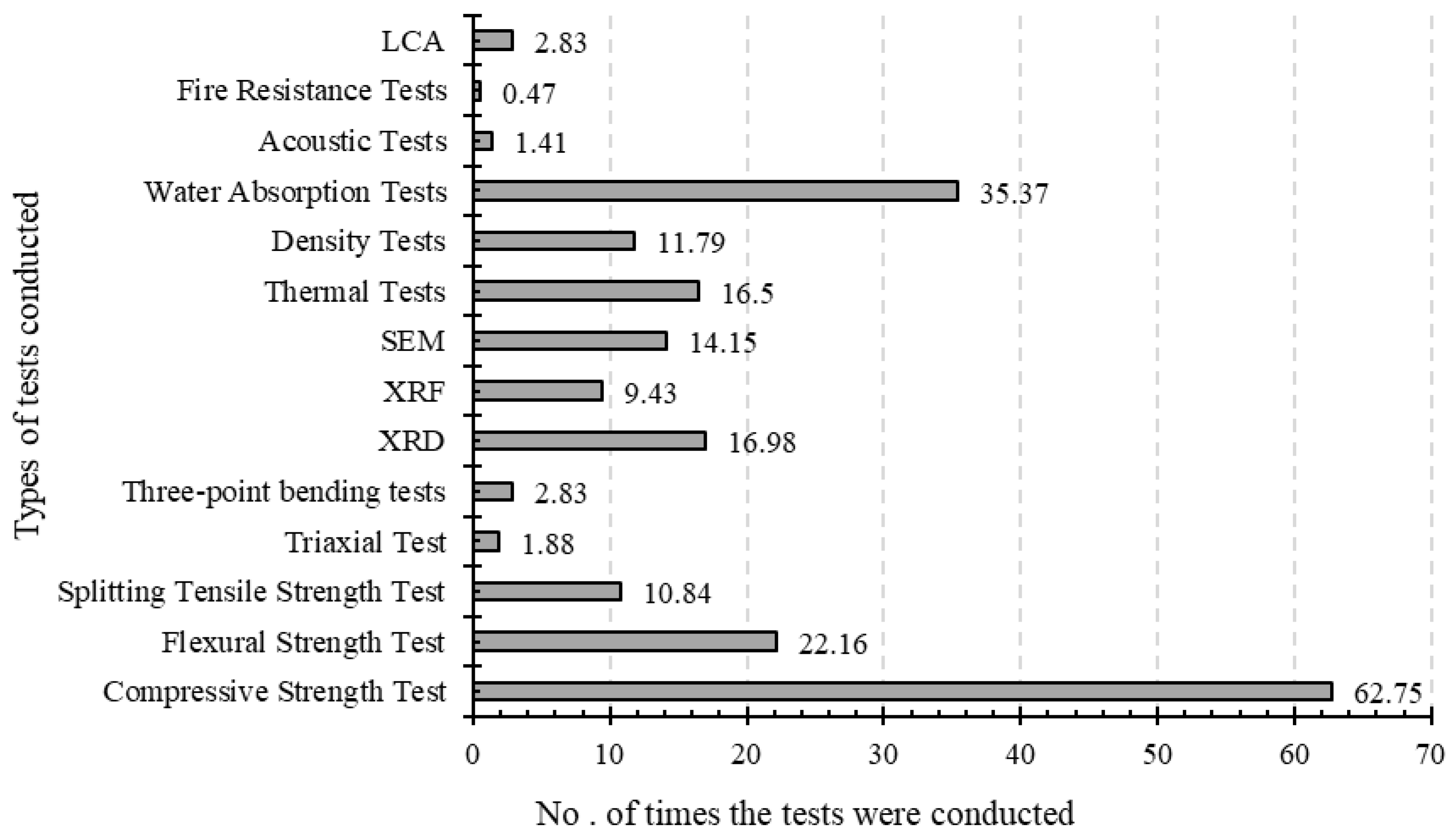
This section presents the numerous characteristics of the CSEBs observed during the researchers’ experiments (see Figure 8). The researchers found that a substantial proportion of these examinations focused on the physical and mechanical characteristics of the CSEB. Traditional tests, such as in situ tests (e.g., “cigar” and jar tests), were also carried out but very rarely [108].

3.2.1. Physical and Thermal Characteristics of CSEBs

Bulk Density
Bulk density in CSEBs is defined as the ratio of mass to volume in the dry state and represents a fundamental indicator of compaction quality and internal pore structure. Similar to soils, density determination is based on mass-to-volume measurement procedures [75]. In practice, density is typically evaluated alongside water absorption and compressive strength to provide a comprehensive assessment of block quality [75].
Most studies report CSEB densities ranging between approximately 1500–2000 kg/m3, depending on soil composition, stabilizer type, and compaction pressure [11]. Standardized methods such as BS 1924-2 (1990) and ASTM C140 are commonly used to determine density and related physical properties [11]. However, variations in specimen preparation, curing regime, and moisture conditioning often introduce inconsistencies in reported values, complicating cross-study comparison.
Bulk density significantly influences mechanical performance. A direct relationship between density and compressive strength has been observed, with lower densities generally corresponding to reduced compressive strength due to increased porosity and weaker interparticle bonding [39]. This correlation reflects the role of compaction in minimizing void ratio and enhancing particle interlocking. At the same time, density influences durability-related properties. An inverse relationship between bulk density and water absorption has been reported, indicating that denser blocks exhibit lower water uptake due to reduced capillary pore connectivity [40].
Thermal and acoustic properties are also affected by density, but in a more complex manner. Higher density generally increases load-bearing capacity and may improve overall structural robustness; however, increased density typically raises thermal conductivity, potentially reducing insulation performance. Although some literature links higher density with improved energy efficiency, this is highly context-dependent and must be interpreted carefully. In fact, lighter blocks often provide better thermal insulation due to greater air entrainment within the matrix. Similarly, blocks with high bulk density tend to exhibit lower sound absorption coefficients (often <0.1), as reported by [39], since acoustic absorption benefits from higher internal porosity. Therefore, optimal density in CSEBs should be performance-driven rather than maximized indiscriminately.
Non-destructive techniques, such as ultrasonic pulse velocity (UPV), have been employed to assess internal homogeneity and to correlate wave velocity with density and compressive strength [207]. While UPV provides useful insights into internal defects and compactness, it does not replace direct density measurement and must be interpreted alongside mechanical testing.
Water Absorption
The absorption test is a crucial evaluation method for assessing the performance of CSEBs, evaluating their resistance to water penetration and potential damage [208], and providing insights into the material’s durability and environmental sustainability [209]. A water-absorption test can be performed to determine a specimen’s resistance to immersion [62]. The test can also indicate the effectiveness of different stabilizing agents in improving CSEB performance [210].
The majority of standard codes follow a similar procedure for calculating water absorption. Dry samples are weighed, submerged in water for 24 to 48 h, and their mass is determined and compared with that of the dry samples. Standards frequently cited for water absorption testing include Australian Standards 2733 (initial rate of absorption), BS EN 771-2, and ASTM C 140 (total water absorption) to measure water absorption [11], IS 3495 (Part 1): 1992 and IS: 1725-2013 [64], Bureau of Indian standards (IS: 1725, 1982) [38]. The Indian Standard IS 1725 specifies a maximum permissible absorption of 15% [15]. However, while immersion absorption is widely used, it does not fully represent capillary rise or cyclic wetting–drying exposure, both of which are critical under field conditions.
Numerous studies report that increasing cement content reduces water absorption due to densification and formation of hydration products that block capillary pores [55]. Within cement ranges of 2–16%, absorption by mass has been observed to decrease approximately linearly [175]. However, Ref. [96] noted that beyond about 8% cement content, further additions produce minimal additional reduction in absorption, indicating diminishing returns. This suggests that once critical pore filling is achieved, excess binder primarily increases cost and embodied carbon rather than durability.
Lime stabilization exhibits similar trends, although performance depends strongly on clay mineralogy. Ref. [97] reported that OPC-treated samples showed lower absorption compared to lime-treated samples under similar conditions. In blended systems, lime and rice husk ash combinations have demonstrated improved absorption performance when optimized at specific ratios [62]. The reduction in water absorption with higher stabilizer content is often attributed to the formation of cementitious compounds that fill voids and reduce pore connectivity [55,86]. However, this mechanism is soil-dependent; higher clay content generally increases water absorption due to higher plasticity and microstructural porosity [33].
Emerging stabilizers such as alkali-activated binders, sodium silicate, and enzyme-based treatments have shown potential to reduce water absorption while enhancing wet strength [86,87,88]. Sodium silicate, silicone, and siloxane treatments significantly reduced absorption in fine soils by promoting additional cementitious reactions [86]. Enzyme-treated blocks also demonstrated reduced water absorption, likely due to improved particle bonding and reduced void interconnectivity [87]. Similarly, alkali-activated binders and calcium carbide residue (CCR) combined with rice husk ash (RHA) have shown improved compressive strength and thermal efficiency, with associated improvements in moisture resistance [209]. Nevertheless, many alternative binders are assessed primarily on compressive strength, while systematic durability evaluation (capillary absorption, erosion resistance, cyclic wetting–drying) is less consistently reported. This limits definitive conclusions regarding their long-term performance.
Unlike cement and lime, fiber addition generally increases water absorption due to the creation of additional voids and the hydrophilic nature of lignocellulosic fibers [40]. Increased fiber content and length have been associated with higher absorption coefficients because fibers disrupt matrix continuity and introduce capillary pathways. Alkali treatment of natural fibers, specifically date palm lignocellulosic fibers, may further increase hydrophilicity by removing lignin, thereby increasing absorption [40]. Although fibers improve ductility and crack control, their presence often compromises moisture resistance unless carefully optimized. Vegetable wastes and natural binders can also influence absorption behavior, depending on particle size, dispersion, and compatibility with the soil matrix [211,212]. Replacement ratio and particle grading of crushed brick waste have similarly been shown to affect absorption properties [207].
Water absorption typically decreases with curing time and aging due to progressive hydration and pozzolanic reactions [11,64]. After 28 days or more, stabilized blocks often exhibit significantly lower absorption as cementitious products refine pore structure. Several studies report that aged blocks achieve absorption values well below the 15% limit specified in IS 1725 [64]. Under certain conditions, acidic exposure combined with binder addition and longer curing further reduces absorption [88].
Although water absorption is widely used as a durability indicator, reliance solely on 24-h immersion values may oversimplify moisture-related performance. Capillary suction, erosion resistance, and cyclic wetting–drying behavior are equally important in real-world exposure. Cement and lime effectively reduce absorption up to an optimal dosage, but excessive binder content yields marginal gains while increasing cost and embodied carbon. Fiber reinforcement, while beneficial for crack control, often increases absorption due to matrix disruption. Therefore, absorption performance in CSEBs is governed by a balance between pore refinement (via stabilization), matrix continuity (affected by fibers), soil mineralogy, and curing regime.
Future research should report absorption alongside pore structure characterization, wet compressive strength, and durability cycling tests to ensure a comprehensive performance evaluation rather than relying on a single immersion-based metric.
Thermal Conductivity
Thermal conductivity quantifies a material’s capacity to transmit heat through conduction, with lower conductivity indicating greater insulation. It quantifies the rate of heat transfer for a specific change in temperature [40]. IS 3792-78 (BIS, 1978) defines thermal conductivity as “the amount of heat in steady state conditions flowing through a unit area of a uniform material” [37]. Thermal conductivity measurements utilize steady-state heat transfer, highlighting the hygroscopic capacity of raw earth to capture and emit moisture based on indoor microclimate fluctuations for energy-efficient indoor comfort [91]. Water concentration positively correlates with thermal conductivity. A damp substance has a higher thermal conductivity compared to a dry one [96]. Because of the thermal mass characteristics of CSEB, earth walls offer a more stable interior climate with less temperature variation during the day and throughout the seasons [30].
The use of unfired clay in earth blocks aids in the regulation of interior temperature and humidity, hence enhancing thermal comfort for inhabitants [213]. The thermal conductivity value of CSEBs was found to be superior to that of burned clay bricks [11]. Introducing cement and sand into the brick might somewhat reduce its conductivity [11,33,107]. A building’s environmental friendliness, energy efficiency, and savings on summer air conditioning and winter heating are all benefits of low thermal conductivity [11].
The appropriate utilization of adequate amounts of earthy material results in walls with significant thermal mass, which effectively maintains occupant comfort throughout daily temperature fluctuations [34]. Additionally, it is worth noting that lime-stabilized soil blocks exhibit lower thermal conductivity values compared to cement-soil blocks. In general, the thermal conductivity of CSEB is increased by increasing the concentration of stabilizers in the mixture [107]. This occurrence may be attributed to the hydration interaction between cement and lime. Augmenting the amount of stabilizer enhances the formation of hydration products, which effectively occupy the voids between soil particles. Consequently, an increase in stabilizer concentration elevates heat transfer through the blocks by enhancing their thermal conductivity. It is important to note that the thermal conductivity decreased with increasing fiber content, but increased with greater amounts of cement and gypsum [107]. A study reveals that increasing fiber content from 0% to 0.2% decreases thermal conductivity percentage to 11.4% and 6.2% for untreated and treated fibers, respectively. This decrease is attributed to the fibers’ lower thermal conductivity than the matrix, not the compaction pressure [40]. The thermal insulation of earth blocks packed with date palm fibers was negatively impacted by the alkali treatment of the fibers [40]. The research indicates that the thermal conductivity increases proportionally with the amount of stabilizers present [107], which contrasts with a study in which the thermal conductivity marginally decreased with increasing cement and sand content [37]. This phenomenon has been linked to reduced instances of unbound water, resulting from increased hydration in specimens with higher cement content. Compared to burnt clay bricks and concrete blocks, CSEBs may be a more viable choice for a building envelope material since they have a lower heat conductivity [37]. The enhancement in thermal efficiency in produced blocks is followed by a decrease in their mechanical strength [46]. The mechanical properties and thermal conductivity of earth blocks do not change in the same way.
The following standards have been used to ascertain the thermal value of CSEBs: BS EN 1745 (thermal conductivity and thermal resistance), ASTM C 518-91, and ASTM C 1132-89 (thermal value) [11], ISO 22007-2 [46] Brazilian Standard ABNT NBR 15220:2005a [86], ASTM C1046 and ASTM C1155 [105] etc.

3.2.2. Mechanical Properties of CSEBs

This section assesses the mechanical properties of CSEBs, focusing on binders, fibers, testing criteria, and final material changes.
Compressive Strength (CS) Test
Compressive strength (CS) is the primary performance indicator used to assess the structural capacity, density, and porosity of CSEBs, and is widely accepted as a benchmark for quality evaluation [14,78]. Due to the absence of a universally standardized testing protocol specifically for CSEBs, most researchers adopt procedures developed for fired clay bricks or concrete masonry units, including IS 3495 (Part 1), XP P13-901, ASTM standards, BS 6073-1, BS EN 772-1, BS 1924-2, and relevant Australian standards [11,38,64]. This variability in testing approaches contributes to inconsistencies in reported strength values across studies.
Compaction plays a critical role in governing compressive strength. Dynamic compaction has been shown to reduce optimal water content from approximately 12% to 10%, resulting in up to a 50% improvement in CS [11]. Increased compaction pressure reduces porosity and water absorption while enhancing strength [33]. Generally, dry specimens exhibit higher compressive strength than wet specimens due to moisture-induced weakening [62]. Strength development also improves over time under curing conditions, particularly for cement-stabilized blocks [96].
Soil characteristics significantly affect CS, including clay content, mineral composition, and the presence of reactive components. The relationship between clay content and strength is complex: while wet compressive strength correlates positively with clay content in lime–cement combinations, excessive clay may reduce strength when cement is used alone [36]. Additionally, iron-rich soils have been associated with poor stabilization performance [11].
Among stabilizers, cement consistently yields higher compressive strength compared to lime [33]. Increasing cement dosage enhances CS due to the formation of calcium silicate hydrate (C–S–H) gels, which improve interparticle bonding and reduce void spaces [64]. Blocks treated with ordinary Portland cement (OPC) have demonstrated compressive strengths exceeding 6 MPa under proper curing conditions [95]. Lime and RHA combinations improve CS up to an optimal ratio (often around 1:1), beyond which strength declines [62]. Higher binder content generally enhances mechanical performance, particularly in aggressive or acidic environments [88].
Industrial and waste-derived additives have shown promising improvements in CS. The incorporation of municipal solid waste incineration bottom ash (MSWIBA) significantly enhances strength compared to traditional earth blocks [33]. Natural pozzolans, sawdust, crushed brick waste, and biopolymers have also demonstrated strength improvements while potentially reducing density and thermal conductivity [91,96]. These findings support the feasibility of partial cement replacement while maintaining structural adequacy.
At the masonry scale, compressive performance is influenced by block geometry, mortar joints, and structural configuration. Masonry prism strength decreases with increasing block size but may improve with higher proportions of mortar joints due to load redistribution effects [12]. Wall openings significantly reduce structural capacity and introduce stress concentrations, although ductility may increase under certain aspect ratios [54].
Recent experimental research on grout–soil interfaces highlights the importance of soil–binder interaction mechanisms in governing shear resistance and failure evolution [214]. Interfacial behavior, influenced by soil density and specimen height, plays a critical role in predicting mechanical performance and supports the need for constitutive modeling approaches in stabilized earth systems.
Overall, compressive strength in CSEBs is governed by a complex interaction of soil composition, stabilization strategy, compaction pressure, moisture condition, and structural configuration. Cement stabilization remains the most effective approach for achieving high compressive strength, although environmental concerns encourage the exploration of alternative binders. While numerous studies report strength improvements through various additives, inconsistencies in testing standards, specimen preparation, and curing protocols limit direct comparability across the literature. This highlights the need for harmonized testing frameworks and optimized mix design strategies to ensure reliable and transferable compressive performance in stabilized earth construction.
Flexural Strength Test
Flexural strength is a critical parameter for evaluating crack resistance and bending performance of CSEBs, particularly in wall panels and structural applications. Most flexural strength investigations have focused on fiber-reinforced soil blocks, although some studies have tested unstabilized or non-fiber blocks using standards such as SNI 03-6458-2000, depending on regional practice and laboratory accessibility [64].
The literature consistently indicates that flexural strength improves with stabilization. Cement addition has been shown to produce a nearly linear increase in flexural strength within cement contents ranging from 0% to 16% [61,175]. Similarly, lime and RHA stabilization improves mechanical performance and durability [62], while cement–lime combinations enhance strength and bonding [215]. Other alternative binders—including alkali-activated fly ash [16,43,105,128], geopolymer binders with coir fibers [69], granulated blast furnace slag and cement [111], phosphogypsum and phosphate mining by-products [55], waste rice husk ash and cement [79]—have demonstrated comparable or improved flexural behavior.
Flexural strength has also been observed to correlate with clay concentration, suggesting that matrix cohesion significantly influences bending resistance [36]. Moisture content negatively affects flexural strength, whereas cement stabilization mitigates this reduction [66].
Fiber reinforcement is widely reported to enhance flexural performance by improving crack control, post-cracking ductility, and load-carrying capacity. Additives such as date palm fibers [65], bamboo fibers [163], coconut fibers [129], bagasse fibers [160], and shredded waste plastic [70] have demonstrated positive effects on flexural strength. In some cases, substantial gains have been reported—for example, a mix containing 10% GMS and 0.75% PHF yielded a 626% increase in flexural strength [85]. Wall-scale testing further indicated a 33.79% increase in load capacity with fiber reinforcement [110].
However, the influence of fibers is not universally beneficial. In certain studies, the inclusion of fibers reduced both unconfined compressive strength (UCS) and flexural strength due to poor matrix–fiber bonding and fiber slippage. Polyvinyl alcohol (PVA) fibers showed significant strength reductions, whereas polyester and kenaf fibers resulted in only moderate declines [177]. These findings suggest that fiber type, dosage, and compatibility with the soil–binder matrix are critical determinants of performance.
The incorporation of recycled aggregates, coal ash, cassava peels, crushed brick waste, municipal solid waste incineration fly ash (MSWIFA), and other pozzolanic materials has been shown to maintain or enhance flexural strength while improving durability [51,76,125]. In particular, the addition of 20% crushed brick waste significantly improved both compressive and flexural strength [66]. Expanded polystyrene (EPS) beads improved flexural strength at low contents (≤0.5%) but reduced strength at higher dosages [171], indicating threshold-dependent behavior.
Beyond material composition, block geometry and construction technique influence flexural performance. Hollow interlocking designs have demonstrated improved structural integrity and adequate flexural capacity for structural applications [66,93,121]. Cement-stabilized soil block (CSSB) masonry has exhibited high compressive and flexural strength, supporting its application in disaster-resistant construction, including tornado-resistant housing [59,66,133]. Flexural bond strength in masonry panels is strongly influenced by brick type and bonding configuration [11].
Production methods also play a role; blocks produced using float-ram presses show variations in flexural behavior depending on compaction efficiency [24]. Optimized particle packing techniques that reduce excessive clay and silt fractions have been shown to enhance mechanical performance [115]. At failure, stabilized earth beams typically exhibit limited deflection (2–6 mm), reflecting brittle-to-quasi-ductile behavior depending on stabilization and reinforcement strategy [62].
Literature demonstrates that flexural strength in CSEBs is primarily governed by binder type and dosage, fiber reinforcement, moisture condition, and production methodology. While many binders and fibers enhance flexural performance, improvements are highly dependent on compatibility between the matrix and reinforcement. Excessive additive content, poor bonding, or high moisture levels can adversely affect strength. These findings highlight the need for optimized mix design and standardized testing procedures to ensure reliable and transferable flexural performance in stabilized earth construction.
Split Tensile Test
Splitting tensile strength evaluates the ability of CSEBs to resist cracking and fracture under tensile stresses, which is critical for structural integrity, particularly in seismic and flexural applications. Although most tensile strength testing standards are originally developed for concrete specimens, they are commonly adapted to assess stabilized earth blocks. Cement stabilization has consistently been reported to enhance the tensile strength of earthen blocks, improving crack resistance and overall durability [50,66]. Optimal mixtures containing 4–8% cement combined with 5–10% RHA have demonstrated significant improvements in tensile performance [79]. Similarly, tensile strength gains have been observed with 10% lime and 1% doum palm fibers [162], while industrial lime has shown superior performance compared to artisanal lime [114].
Fiber reinforcement has been widely explored to mitigate the inherent brittleness of earthen materials. Embedded waste-plastic fibers have improved tensile strength [26], and modest increases in modulus of rupture have been reported with jute fiber addition [206]. Natural pozzolana incorporation has also enhanced mechanical and durability properties [102]. Furthermore, certain sand–soil ratios (1:3, 1:2, and 2:3) have been associated with satisfactory tensile performance [216].
However, tensile strength enhancement is not universal across all binders and fibers. In some cases, untreated or alkaline-treated fibers reduced tensile strength due to weak matrix–fiber adhesion and fiber slippage [40]. Similarly, increased contents of crushed mussel shells (CMS) and cork aggregates have been associated with reductions in tensile strength, attributed to flaky particle morphology, organic content, and reduced effective cementitious bonding [46,99]. Moisture content also plays a significant role, with tensile strength decreasing as moisture increases, although cement stabilization partially mitigates this effect [159].
Literature indicates that tensile performance in CSEBs is strongly influenced by binder type, fiber characteristics, mix proportions, and moisture conditions. While certain additives and stabilization strategies can significantly improve tensile resistance, others may adversely affect performance. These findings underscore the need for optimized mix design and improved understanding of matrix–reinforcement interaction mechanisms to ensure reliable tensile behavior in stabilized earth construction.

3.2.3. Durability and Seismic Properties of CSEBs

Researchers have evaluated the durability of CSEBs using rigorous testing methods, including seismic, cycle wetting and drying, freeze–thaw, and erosion tests, to assess their vulnerability to erosion and degradation due to air preconditioning resulting from weathering and pitting of the block surface.
Seismic
The seismic behavior of CSEB masonry has been investigated through experimental, analytical, and numerical studies, demonstrating promising structural performance under earthquake loading. Comparative analyses of 3D masonry models indicate that CSEB constructions outperform conventional burnt brick systems when subjected to seismic forces, particularly when earthquake-resistant features are incorporated [32]. Similarly, finite element investigations on single-storey masonry walls show that CSEB and geopolymer blocks exhibit improved structural response under seismic loading compared to adobe and conventional concrete blocks [152].
Structural configuration and reinforcement strategies significantly influence seismic performance. Concrete structural columns enhance the energy dissipation capacity of interlocking earth block walls, although the contribution of core column reinforcement alone is limited [174]. Increasing the aperture rate (i.e., larger wall openings) reduces lateral load-bearing capacity, while the addition of lateral strengthening strips or composite wall configurations improves structural resistance. Experimental studies on these walls under flexural loading report stable hysteretic behavior and increased ductility with higher height-to-width aspect ratios; however, lateral resistance decreases in the presence of openings, with stress concentrations observed at corners and flange junctions [54,103].
Reinforcement systems further enhance seismic resilience. The use of geogrid reinforcement has been shown to significantly improve ductility and seismic resistance in masonry vault structures [121]. Interlocking block designs also contribute to improved structural integrity by enhancing load transfer and confinement effects [174].
Despite these promising findings, the viability of CSEB construction in high-seismic regions remains contingent upon adequate reinforcement and design detailing. In areas lacking proper structural reinforcement, wall mass and seismic forces may limit application in multi-storey construction [34]. Furthermore, the literature reveals limited research on the performance of masonry systems—including CSEB—under extreme wind events such as tornadoes [59], indicating a broader gap in hazard-resilient earth construction research.
Erosion Test
Erosion resistance is a critical durability parameter for CSEBs, particularly in regions exposed to rainfall, surface runoff, and splash erosion. Unstabilized compressed earth blocks exhibit poor resistance to water exposure and can degrade rapidly upon direct contact with moisture [142]. This underscores the necessity of stabilization and reinforcement to enhance long-term structural performance.
Stabilized blocks consistently outperform unstabilized counterparts in erosion resistance. The incorporation of fibers, while sometimes associated with a slight reduction in compressive strength, has been shown to improve resistance to surface erosion by enhancing crack control and structural integrity under moisture exposure [84,177]. Similarly, bio-based binders such as carob gum have demonstrated promising results, improving both compressive strength and durability against water erosion, with optimal performance reported at a 2% dosage [91]. Alternative industrial by-products have also shown strong erosion resistance potential. CSEBs stabilized with Calcium Carbide Residue (CCR) and RHA exhibited excellent durability under both standard water pressure (50 kPa) and elevated pressure conditions (500 kPa), indicating their suitability for aggressive environmental exposure [142].
These findings indicate that erosion resistance in CSEBs is highly dependent on stabilization strategy and material composition. While cement-based stabilization remains effective, alternative binders and fiber reinforcement offer promising pathways for improving durability while potentially reducing environmental impact. However, standardized testing procedures and comparative long-term performance data remain limited, highlighting the need for more systematic evaluation frameworks.
Cyclic Wetting and Drying Test
Cyclic wetting and drying tests are essential for evaluating the long-term durability of CSEBs under simulated environmental exposure. These tests replicate natural weathering conditions and assess the material’s resistance to moisture-induced degradation, which directly influences structural integrity and service life.
Studies indicate that incorporating crushed brick aggregates significantly improves resistance to cyclic wetting–drying and sulfate attack, enhancing overall durability performance [72]. Stabilization level also plays a critical role; a minimum cement content of approximately 10% has been recommended to improve resistance to rupture and environmental stressors such as precipitation, capillary rise, gravity-driven infiltration, suction effects, and internal condensation [41]. Durability under wetting–drying cycles can be further enhanced through the incorporation of waterproofing agents, fiber reinforcement, and industrial by-products. These additives not only improve moisture resistance and mechanical stability but may also contribute to cost-effectiveness and reduced environmental impact. However, long-term performance validation under repeated environmental cycles remains an area requiring more systematic and standardized investigation.
Freeze–Thaw Performance
Freeze–thaw durability of CSEBs is strongly influenced by moisture content, material composition, and stabilization strategy. Damage due to freeze–thaw occurs exclusively when the moisture content of the specimen is above the saturation threshold [104]. In the absence of accessible water for capillary absorption, blocks subjected to freeze–thaw cycles showed minimal or no deterioration. Interestingly, certain dry earth blocks exhibited increased compressive strength after freeze–thaw exposure, particularly those without Plasticure, due to water absorption during testing that enabled additional cement hydration. However, improvements in wet strength were limited [104]. Blocks stabilized with 5% cement, 2.5% lime, and 2.5% metakaolin demonstrated superior retention of dry compressive strength after 12 freeze–thaw cycles, though wet strength gains remained marginal [104]. Similarly, combined cement–lime stabilization has been shown to significantly enhance freeze–thaw resistance and maintain structural integrity after repeated cycles [126]. The incorporation of water repellents further improves freeze–thaw performance by reducing water absorption while preserving compressive strength [104]. Standard testing procedures commonly adopted for such evaluations include ASTM C67, CSA A82-0, DD CEN/TS 772-22, and ASTM D560.

3.3. TCCM Analysis

The TCCM framework was adopted in this review to move beyond a descriptive aggregation of findings and toward a structured, theory-informed synthesis of the literature on waste-integrated CSEBs. While systematic and bibliometric mapping provides insight into publication trends, keyword co-occurrence, and properties, it does not inherently reveal structural imbalances or conceptual fragmentation. Therefore, the identified thematic clusters, primarily related to sustainability, soil stabilization, waste valorization, and mechanical performance, were systematically reorganized into the four interrelated TCCM dimensions: Theory, Context, Characteristics, and Methodology (Table 5). This reclassification enabled a deeper evaluation not only of what has been studied but also of how it has been conceptualized, under which conditions it has been validated, and where systemic gaps persist.
From a theoretical standpoint, the majority of studies are anchored in Sustainable Material Science theory. This theoretical orientation emphasizes embodied energy reduction, carbon footprint mitigation, utilization of local resources, and low-impact construction processes. Within this framework, CSEBs are often positioned as environmentally superior alternatives to conventional burnt clay bricks and concrete blocks, thanks to their low-temperature production processes and reduced reliance on energy-intensive materials. However, the application of this theory is predominantly confined to material-scale environmental comparisons. The analytical focus typically remains at the level of embodied energy or carbon emissions per unit volume of block, without extending the evaluation to building-scale performance, structural integration, or system-level lifecycle consequences. As a result, sustainability claims are often limited to eco-efficiency metrics rather than eco-effectiveness within broader construction systems. This theoretical narrowing restricts the scalability of CSEBs beyond low-rise or experimental housing applications, as structural reliability, durability performance, and code compliance are not consistently embedded within the sustainability discourse.
Circular Economy (CE) principles constitute the second major theoretical foundation emerging from the literature, particularly in studies incorporating C&D waste, fly ash, slag, agricultural residues, or other industrial by-products. In this domain, CSEBs are conceptualized as vehicles for waste valorization and resource substitution. The circular narrative frequently highlights landfill diversion, conservation of virgin sand and topsoil, and reduction in linear material flows. Nevertheless, the operationalization of circularity remains largely qualitative. Few studies quantify circular performance using closed-loop system modeling or resource efficiency metrics. Furthermore, CE-based investigations often remain confined to material replacement ratios, without extending analysis to structural performance implications or lifecycle trade-offs. The integration of circular economy theory into high-rise construction systems, where load-bearing capacity, seismic resilience, and fire performance become critical, is notably underdeveloped. Consequently, circularity is frequently presented as an environmental add-on rather than as a system-integrated design strategy.
Geotechnical and structural engineering theories provide the empirical foundation for validating CSEB performance. These studies rigorously examine soil classification, particle size distribution, stabilization mechanisms, binder interactions, and compressive strength enhancement. The experimental emphasis on compressive strength testing reflects alignment with existing masonry standards and structural safety requirements. Critical parameters such as thermal conductivity, flexural behavior, cyclic loading response, shear resistance, durability under aggressive environmental exposure, long-term shrinkage, and seismic performance remain comparatively underexplored. This imbalance limits the confidence required for integrating CSEBs into multi-story or performance-intensive structures. In addition, most structural validations are laboratory-based, with limited field-scale or long-term monitoring data available to confirm durability under real climatic and loading conditions.
Life Cycle Assessment (LCA) and sustainability modeling represent the most comprehensive theoretical lens identified within the TCCM analysis. However, methodological limitations are evident. The majority of studies adopt cradle-to-gate system boundaries, excluding operational energy interactions, maintenance cycles, and end-of-life recovery scenarios. Moreover, integration between LCA and Building Information Modeling (BIM) or structural simulation tools remains rare. Without dynamic modeling that captures operational performance or design optimization, lifecycle conclusions remain partially decoupled from structural and architectural decision-making processes. As a result, environmental superiority is often inferred from embodied metrics alone, rather than demonstrated across the full-service life of buildings.
When these theoretical dimensions are examined alongside contextual factors, additional structural gaps become evident. Geographically, research is concentrated in regions with established traditions of earthen construction, particularly India, parts of Sub-Saharan Africa, and selected Latin American countries. These regions often possess abundant lateritic soils and strong socio-economic incentives for low-cost housing solutions. While this concentration has advanced technical understanding within these contexts, it also reinforces a narrow application domain. Performance validation under temperate freeze–thaw cycles, high humidity regimes, or stringent regulatory environments remains limited. Similarly, adaptation to high seismic zones and integration into formal building code frameworks in developed economies are not addressed.
Industrial application contexts further illustrate this limitation. The majority of documented implementations focus on single-story or low-rise residential structures. Research addressing commercial buildings, institutional facilities, or multi-story load-bearing systems is comparatively scarce. Without systematic evaluation of long-term structural reliability, fire resistance ratings, and code-compliant design methodologies, the transition from alternative housing material to mainstream structural solution remains constrained.
The Characteristics dimension reinforces this observation. Mechanical properties, particularly compressive strength, dominate the literature. While other tests are occasionally investigated, comprehensive multi-performance optimization remains rare. Trade-offs between strength enhancement and durability, or between waste substitution ratios and long-term stability, are not consistently reported. Replacement ratio optimization studies frequently rely on short-term performance metrics without integrating lifecycle or structural implications. Consequently, material optimization is often conducted in isolation from system-level design considerations.
Methodologically, the literature is heavily dependent on controlled laboratory experimentation and comparative benchmarking against conventional bricks. Although this approach establishes foundational technical feasibility, it does not fully address real-world complexity. Numerical modeling techniques, such as finite element analysis, structural load simulation, or coupled thermal–structural modeling, are underutilized. Similarly, integrated BIM–LCA workflows, which could bridge material design and building-scale performance, remain emergent rather than established methodologies. The limited adoption of multi-criteria decision analysis frameworks further restricts the ability to evaluate trade-offs among mechanical, environmental, economic, and contextual variables.
The TCCM analysis indicates that research on waste-integrated CSEBs remains fragmented across theoretical and methodological domains. Because these perspectives are typically explored in isolation, CSEBs continue to be positioned largely within experimental or low-rise housing contexts rather than as standardized, performance-validated construction materials.
In addition, contextual variability—such as differences in soil types, climatic exposure, and waste composition—is not systematically addressed, and there is no harmonized protocol/standards governing waste incorporation, curing standard, or performance testing. The dominance of laboratory-scale studies further limits confidence in real-world durability and structural reliability. Collectively, these limitations underscore the need for a more integrated and context-sensitive research approach that combines structural validation, lifecycle sustainability, circular resource modeling, and field-scale performance assessment to support broader and more scalable adoption of waste-integrated CSEBs. Such integration would facilitate the development of standardized testing protocols, inform regulatory guideline formation, and enable scalability across diverse climatic and industrial settings. Bridging these dimensions is essential for transforming waste-integrated CSEBs from niche sustainable materials into performance-validated components suitable for both low-rise and high-rise construction sectors.

4. Conclusions

This systematic review synthesizes findings from 256 peer-reviewed studies (2000–2024) to evaluate the performance and sustainability potential of Compressed Stabilized Earth Blocks (CSEBs) as alternative masonry materials. The evidence consistently indicates that CSEBs can achieve compressive strengths exceeding 6 MPa with appropriate stabilization and compaction, placing them within the structural range of conventional masonry units. Energy and environmental comparisons further demonstrate that CSEB production may emit as little as 22 kg CO2/tonne, compared to approximately 200 kg CO2/tonne for fired clay bricks, with energy inputs reported to be up to 80–90% lower in some cases. Cost reductions of 15–20% relative to conventional brick construction have also been reported in several regional studies.
Mechanical performance is strongly influenced by soil composition, compaction pressure, and stabilizer dosage. Cement stabilization remains the most effective approach for achieving high compressive strength and erosion resistance, primarily through the formation of calcium silicate hydrate (C–S–H) bonds that enhance particle cohesion and reduce porosity. However, environmental concerns associated with cement production—accounting for roughly 7–8% of global CO2 emissions—necessitate exploration of alternative binders. Industrial and agricultural by-products such as rice husk ash, fly ash, geopolymer binders, and lime-based blends have shown promising mechanical and durability performance, although long-term validation remains limited. Fiber reinforcement improves tensile and flexural strength, ductility, and crack resistance; however, durability concerns and matrix–fiber compatibility require further optimization.
Despite substantial advances in compressive strength research, other critical performance indicators—including erosion resistance, wetting–drying durability, seismic behavior, porosity, efflorescence, and long-term environmental exposure—remain comparatively underexplored. In addition, inconsistencies in testing standards and specimen preparation limit direct comparability across studies. Greater harmonization of soil selection criteria, stabilization guidelines, and compaction protocols is necessary to enhance reproducibility and reliability.
Future research should integrate life cycle assessment (LCA), cost–benefit analysis, and standardized environmental disclosure mechanisms such as Environmental Product Declarations (EPDs) or Product Environmental Footprint (PEF) frameworks. Such approaches will enable more transparent comparison of environmental trade-offs and support informed material selection in sustainable construction. Overall, CSEBs demonstrate strong potential as low-carbon, resource-efficient masonry units; however, standardized evaluation frameworks and broader performance validation are essential to facilitate large-scale adoption.

Supplementary Materials

The following supporting information can be downloaded at: https://www.mdpi.com/article/10.3390/buildings16081633/s1. The PRISMA 2020 Checklist.

Author Contributions

Conceptualization, S.S. and J.S.S.; methodology, S.S.; software, S.S.; validation, J.S.S. and A.A.A.; formal analysis, S.S.; investigation, S.S.; resources, S.S.; data curation, S.S.; writing—original draft preparation, S.S.; writing—review and editing, S.S., J.S.S. and A.A.A.; visualization, S.S.; supervision, J.S.S. and A.A.A. All authors have read and agreed to the published version of the manuscript.

Funding

This research received no external funding.

Data Availability Statement

The raw data supporting the conclusions of this article will be made available by the authors on request.

Acknowledgments

The authors express their profound gratitude to NICMAR University, Pune, for providing the necessary facilities to conduct this research. During the preparation of this manuscript/study, the authors used ‘Grammarly’ (version 1.2.218) for the purposes of improving grammar and readability. The authors have reviewed and edited the output and take full responsibility for the content of this publication.

Conflicts of Interest

The authors declare no conflicts of interest.

Abbreviations

The following abbreviations are used in this manuscript:
CSEBCompressed Stabilized Earth Blocks/Bricks
C&DConstruction and Demolition
PRISMAPreferred Reporting Items for Systematic Reviews and Meta-Analyses
TCCMTheories, Contexts, Characteristics, and Methodologies

References

  1. Ahmed, N.; Abdel-Hamid, M.; Abd El-Razik, M.M.; El-Dash, K.M. Impact of Sustainable Design in the Construction Sector on Climate Change. Ain Shams Eng. J. 2021, 12, 1375–1383. [Google Scholar] [CrossRef]
  2. Shen, L.; Ma, Z.; Liu, C. Study on Life-Cycle Carbon Emission of Urban Residential Buildings: A Case Study of Xi’an. Sustainability 2025, 17, 1602. [Google Scholar] [CrossRef]
  3. United Nations. THE 17 GOALS|Sustainable Development. Available online: https://sdgs.un.org/goals (accessed on 16 December 2023).
  4. Ness, D.A.; Xing, K. Toward a Resource-Efficient Built Environment: A Literature Review and Conceptual Model. J. Ind. Ecol. 2017, 21, 572–592. [Google Scholar] [CrossRef]
  5. Elahi, T.E.; Shahriar, A.R.; Islam, M.S. Engineering Characteristics of Compressed Earth Blocks Stabilized with Cement and Fly Ash. Constr. Build. Mater. 2021, 277, 122367. [Google Scholar] [CrossRef]
  6. Pakdel, A.; Ayatollahi, H.; Sattary, S. Embodied Energy and CO2 Emissions of Life Cycle Assessment (LCA) in the Traditional and Contemporary Iranian Construction Systems. J. Build. Eng. 2021, 39, 102310. [Google Scholar] [CrossRef]
  7. IEA. Collaboration on Steel and Cement Standards Is Crucial for Global Markets. Available online: https://www.iea.org/commentaries/collaboration-on-steel-and-cement-standards-is-crucial-for-global-markets (accessed on 10 February 2026).
  8. Navas, S.; Ruksana, S.; Junaid, R.; Ali, A.M.; Anees Beegom, H. Sustainable Building Replacing Normal Construction Materials with Sustainable Materials. Int. J. Eng. Res. Technol. 2022, 11, 675–685. [Google Scholar] [CrossRef]
  9. Auroville Earth Institute. Available online: https://www.earth-auroville.com/world_techniques_introduction_en.php (accessed on 6 March 2024).
  10. Venkatarama Reddy, B.V.; Latha, M.S. Retrieving Clay Minerals from Stabilised Soil Compacts. Appl. Clay Sci. 2014, 101, 362–368. [Google Scholar] [CrossRef]
  11. Mujahid, A.; Zaidi, A.; Riza, F.V.; Rahman, I.A. Preliminary Study of Compressed Stabilized Earth Brick (CSEB). Aust. J. Basic Appl. Sci. 2011, 5, 6–12. [Google Scholar]
  12. Bradley, R.A.; Gohnert, M. Compressed Stabilized Earth Block Shell Housing: Performance Considerations. Pract. Period. Struct. Des. Constr. 2018, 23, 04018009. [Google Scholar] [CrossRef]
  13. Kiki, G.; Nshimiyimana, P.; Kouchadé, C.; Messan, A.; Houngan, A.; André, P. Physico–Mechanical and Durability Performances of Compressed Earth Blocks Incorporating Quackgrass Straw: An Alternative to Fired Clay. Constr. Build. Mater. 2023, 403, 133064. [Google Scholar] [CrossRef]
  14. Ojo, E.B.; Matawal, D.S.; Isah, A.K. Statistical Analysis of the Effect of Mineralogical Composition on the Qualities of Compressed Stabilized Earth Blocks. J. Mater. Civ. Eng. 2016, 28, 06016014. [Google Scholar] [CrossRef]
  15. Sathish Kumar, R.; Janardhana, M.; Darga Kumar, N. Mechanical Properties of Sustainable Soil Blocks Stabilised with Rice Husk Ash, Cement and Lime. Int. J. Mason. Res. Innov. 2016, 1, 207–222. [Google Scholar] [CrossRef]
  16. Miranda, T.; Silva, R.A.; Oliveira, D.V.; Leitão, D.; Cristelo, N.; Oliveira, J.; Soares, E. ICEBs Stabilised with Alkali-Activated Fly Ash as a Renewed Approach for Green Building: Exploitation of the Masonry Mechanical Performance. Constr. Build. Mater. 2017, 155, 65–78. [Google Scholar] [CrossRef]
  17. Ouma, J.; Ongwen, N.; Ogam, E.; Auma, M.; Fellah, Z.E.A.; Mageto, M.; Ben Mansour, M.; Oduor, A. Acoustical Properties of Compressed Earth Blocks: Effect of Compaction Pressure, Water Hyacinth Ash and Lime. Case Stud. Constr. Mater. 2023, 18, e01828. [Google Scholar] [CrossRef]
  18. Kulshreshtha, Y.; Mota, N.J.A.; Jagadish, K.S.; Bredenoord, J.; Vardon, P.J.; van Loosdrecht, M.C.M.; Jonkers, H.M. The Potential and Current Status of Earthen Material for Low-Cost Housing in Rural India. Constr. Build. Mater. 2020, 247, 118615. [Google Scholar] [CrossRef]
  19. Silva, R.A.; Soares, E.; Oliveira, D.V.; Miranda, T.; Cristelo, N.M.; Leitão, D. Mechanical Characterisation of Dry-Stack Masonry Made of CEBs Stabilised with Alkaline Activation. Constr. Build. Mater. 2015, 75, 349–358. [Google Scholar] [CrossRef]
  20. Mioch, J.; Murillo, F. Darfur Early Recovery, Stabilized Soil Blocks for Sustainable Urban Growth; United Nations Human Settlements Programme: Nairobi, Kenya, 2009. [Google Scholar]
  21. Bredenoord, J.; Kulshreshtha, Y. Compressed Stabilized Earthen Blocks and Their Use in Low-Cost Social Housing. Sustainability 2023, 15, 5295. [Google Scholar] [CrossRef]
  22. Abdel Gelil Mohamed, N.; Abo Eldardaa Mahmoud, I. Cost-Effectiveness and Affordability Evaluation of a Residential Prototype Built with Compressed Earth Bricks, Hybrid Roofs and Palm Midribs. Front. Built Environ. 2023, 9, 1058782. [Google Scholar] [CrossRef]
  23. Page, M.J.; McKenzie, J.E.; Bossuyt, P.M.; Boutron, I.; Hoffmann, T.C.; Mulrow, C.D.; Shamseer, L.; Tetzlaff, J.M.; Akl, E.A.; Brennan, S.E.; et al. The PRISMA 2020 Statement: An Updated Guideline for Reporting Systematic Reviews. BMJ 2021, 372, n71. [Google Scholar] [CrossRef]
  24. Sassu, M.; Romanazzi, A.; Giresini, L.; Franco, W.; Ferraresi, C.; Quaglia, G.; Orefice, E. Production Procedures and Mechanical Behaviour of Interlocking Stabilized Compressed Earth Blocks (ISCEBs) Manufactured Using Float Ram 1.0 Press. Eng. Solid Mech. 2018, 6, 89–104. [Google Scholar] [CrossRef]
  25. Aria, M.; Cuccurullo, C. Bibliometrix: An R-Tool for Comprehensive Science Mapping Analysis. J. Informetr. 2017, 11, 959–975. [Google Scholar] [CrossRef]
  26. Subramaniaprasad, C.K.; Abraham, B.M.; Kunhanandan Nambiar, E.K. Influence of Embedded Waste-Plastic Fibers on the Improvement of the Tensile Strength of Stabilized Mud Masonry Blocks. J. Mater. Civ. Eng. 2015, 27, 04014203. [Google Scholar] [CrossRef]
  27. Bouassria, K.; Ammari, A.; Tayyibi, A.; Bouabid, H.; Zerouaoui, J.; Cherraj, M.; Charif D’ouazzane, S. The Effect of Lime on Alumino-Silicate and Cement on the Behavior of Compressed Earth Blocks. J. Mater. Environ. Sci. 2015, 6, 3430–3435. [Google Scholar]
  28. Ammari, A.; Bouassria, K.; Cherraj, M.; Bouabid, H.; Charif D’ouazzane, S. Combined Effect of Mineralogy and Granular Texture on the Technico-Economic Optimum of the Adobe and Compressed Earth Blocks. Case Stud. Constr. Mater. 2017, 7, 240–248. [Google Scholar] [CrossRef]
  29. Bruno, A.W.; Gallipoli, D.; Perlot, C.; Mendes, J. Mechanical Behaviour of Hypercompacted Earth for Building Construction. Mater. Struct./Mater. Constr. 2017, 50, 160. [Google Scholar] [CrossRef]
  30. Burroughs, S. Recommendations for the Selection, Stabilization, and Compaction of Soil for Rammed Earth Wall Construction. J. Green Build. 2010, 5, 101–114. [Google Scholar] [CrossRef]
  31. Al-Fhaid, H.; Edris, W.F.; Al-Tamimi, M. Potential Utilization of Oil Shale as a Stabilizing Material for Compressed Earth Block. Front. Built Environ. 2023, 9, 1199744. [Google Scholar] [CrossRef]
  32. Srisanthi, V.G.; Keshav, L.; Poorna Kumar, P.; Jayakumar, T. Finite Element and Experimental Analysis of 3D Masonry Compressed Stabilised Earth Block and Brick Building Models against Earthquake Forces. Period. Polytech. Civ. Eng. 2014, 58, 255–265. [Google Scholar] [CrossRef]
  33. Touré, P.M.; Sambou, V.; Faye, M.; Thiam, A.; Adj, M.; Azilinon, D. Mechanical and Hygrothermal Properties of Compressed Stabilized Earth Bricks (CSEB). J. Build. Eng. 2017, 13, 266–271. [Google Scholar] [CrossRef]
  34. Holliday, L.; Ramseyer, C.; Reyes, M.; Butko, D. Building with Compressed Earth Block within the Building Code. J. Archit. Eng. 2016, 22, 04016007. [Google Scholar] [CrossRef]
  35. Befikadu Zewudie, B. Experimental Study on the Production and Mechanical Behavior of Compressed Lime-Cement-Stabilized Interlock Soil Blocks. Adv. Mater. Sci. Eng. 2023, 2023, 2933398. [Google Scholar] [CrossRef]
  36. Nagaraj, H.B.; Rajesh, A.; Sravan, M.V. Influence of Soil Gradation, Proportion and Combination of Admixtures on the Properties and Durability of CSEBs. Constr. Build. Mater. 2016, 110, 135–144. [Google Scholar] [CrossRef]
  37. Balaji, N.C.; Mani, M.; Venkatarama Reddy, B.V. Thermal Conductivity Studies on Cement-Stabilised Soil Blocks. Proc. Inst. Civ. Eng. Constr. Mater. 2017, 170, 40–54. [Google Scholar] [CrossRef]
  38. Nagaraj, H.B.; Sravan, M.V.; Arun, T.G.; Jagadish, K.S. Role of Lime with Cement in Long-Term Strength of Compressed Stabilized Earth Blocks. Int. J. Sustain. Built Environ. 2014, 3, 54–61. [Google Scholar] [CrossRef]
  39. Ben Mansour, M.; Ogam, E.; Jelidi, A.; Cherif, A.S.; Ben Jabrallah, S. Influence of Compaction Pressure on the Mechanical and Acoustic Properties of Compacted Earth Blocks: An Inverse Multi-Parameter Acoustic Problem. Appl. Acoust. 2017, 125, 128–135. [Google Scholar] [CrossRef]
  40. Taallah, B.; Guettala, A. The Mechanical and Physical Properties of Compressed Earth Block Stabilized with Lime and Filled with Untreated and Alkali-Treated Date Palm Fibers. Constr. Build. Mater. 2016, 104, 52–62. [Google Scholar] [CrossRef]
  41. Banakinao, S.; Drovou, S.; Attipou, K. Influence of Cement Dose on the Durability of Structures in Stabilized Compressed Earth Blocks. Int. J. Sustain. Constr. Eng. Technol. 2022, 13, 121–129. [Google Scholar] [CrossRef]
  42. Dabakuyo, I.; Mutuku, R.N.N.; Onchiri, R.O. Mechanical Properties of Compressed Earth Block Stabilized with Sugarcane Molasses and Metakaolin-Based Geopolymer. Civ. Eng. J. 2022, 8, 780–795. [Google Scholar] [CrossRef]
  43. Brahim, M.; Ndiaye, K.; Aggoun, S.; Maherzi, W. Valorization of Dredged Sediments in Manufacturing Compressed Earth Blocks Stabilized by Alkali-Activated Fly Ash Binder. Buildings 2022, 12, 419. [Google Scholar] [CrossRef]
  44. Malkanthi, S.N.; Galabada, H.; Perera, A.A.D.A.J.; Dharmaratne, P.D. Enhancement of the Properties of Compressed Stabilized Earth Blocks through the Replacement of Clay and Silt with Fly Ash. Eng. Technol. Appl. Sci. Res. 2021, 11, 7927–7931. [Google Scholar] [CrossRef]
  45. Olumodeji, A.O.; Ayodele, F.O.; Oluborode, K.D. Evaluation of Compressive Strength and Abrasive Properties of Rice Husk Ash—Cement Compressed Stabilized Earth Bricks. Niger. J. Technol. 2023, 42, 191–198. [Google Scholar] [CrossRef]
  46. Khalil, C.; Barbachi, M.; Biriane, M. El The Effect of Mussel Shell Additions on the Mechanical and Thermal Properties of Compressed Earth Blocks. Rev. Compos. Mater. Av. 2023, 33, 201–210. [Google Scholar] [CrossRef]
  47. Malkanthi, S.N.; Balthazaar, N.; Perera, A.A.D.A.J. Lime Stabilization for Compressed Stabilized Earth Blocks with Reduced Clay and Silt. Case Stud. Constr. Mater. 2020, 12, e00326. [Google Scholar] [CrossRef]
  48. Venkatarama Reddy, B.V. Design of a Manual Press for the Production of Compacted Stabilized Soil Blocks. Curr. Sci. 2015, 109, 1651–1659. [Google Scholar] [CrossRef]
  49. Nshimiyimana, P.; Moussa, H.S.; Messan, A.; Courard, L. Effect of Production and Curing Conditions on the Performance of Stabilized Compressed Earth Blocks: Kaolinite vs Quartz-Rich Earthen Material. MRS Adv. 2020, 5, 1277–1283. [Google Scholar] [CrossRef]
  50. Hall, E.; Pulatsu, B.; Erdogmus, E.; Skourup, B. Compression, Tension, and Fracture Energy Properties of Compressed Cement-Stabilized Earth Blocks. J. Archit. Eng. 2022, 28, 06021005. [Google Scholar] [CrossRef]
  51. Villamizar, M.C.N.; Araque, V.S.; Reyes, C.A.R.; Silva, R.S. Effect of the Addition of Coal-Ash and Cassava Peels on the Engineering Properties of Compressed Earth Blocks. Constr. Build. Mater. 2012, 36, 276–286. [Google Scholar] [CrossRef]
  52. International Labour Organization. Small-Scale Manufacture of Stabilised Soil Blocks; Chapter IV. Forming: VII. Soil Block Making Machines: VII.10. Brepak Block Making Machine; International Labour Office: Geneva, Switzerland, 1987; 204p, Available online: https://www.nzdl.org/cgi-bin/library?e=d-00000-00---off-0cdl--00-0----0-10-0---0---0direct-10---4-------0-0l--11-en-50---20-about---00-0-1-00-0-0-11----0-0-&a=d&c=cdl&cl=CL2.19&d=HASH0194ef8f4e437a8c0ab0aa70.7.7.11#HASH0194ef8f4e437a8c0ab0aa70.7.7.11 (accessed on 6 March 2024).
  53. Sturm, T.; Ramos, L.F.; Lourenço, P.B. Characterization of Dry-Stack Interlocking Compressed Earth Blocks. Mater. Struct./Mater. Constr. 2015, 48, 3059–3074. [Google Scholar] [CrossRef]
  54. Qu, B.; Stirling, B.J.; Jansen, D.C.; Bland, D.W.; Laursen, P.T. Testing of Flexure-Dominated Interlocking Compressed Earth Block Walls. Constr. Build. Mater. 2015, 83, 34–43. [Google Scholar] [CrossRef]
  55. Oubaha, S.; Hakkou, R.; Taha, Y.; Mghazli, M.O.; Benzaazoua, M. Elaboration of Compressed Earth Blocks Based on Phosphogypsum and Phosphate Mining By-Products. J. Build. Eng. 2022, 62, 105423. [Google Scholar] [CrossRef]
  56. Cid-Falceto, J.; Mazarrón, F.R.; Cañas, I. Assessment of Compressed Earth Blocks Made in Spain: International Durability Tests. Constr. Build. Mater. 2012, 37, 738–745. [Google Scholar] [CrossRef]
  57. Kamwa, R.A.T.; Tome, S.; Nemaleu, J.G.D.; Noumbissie, L.T.; Tommes, B.; Eguekeng, I.; Spieß, A.; Woschko, D.; Chongouang, J.; Janiak, C.; et al. Effect of Curing Temperature on Properties of Compressed Lateritic Earth Bricks Stabilized with Natural Pozzolan-Based Geopolymer Binders Synthesized in Acidic and Alkaline Media. Arab. J. Sci. Eng. 2023, 48, 16151–16165. [Google Scholar] [CrossRef]
  58. Cabrera, S.P.; Jiménez, Y.G.A.; Domínguez, E.J.S.; Rotondaro, R. Compressed Earth Blocks (CEB) Stabilized with Lime and Cement. Evaluation of Both Their Environmental Impact and Compressive Strength. Rev. Habitat Sustentable 2020, 10, 70–81. [Google Scholar] [CrossRef]
  59. Erdogmus, E.; Skourup, B.; Garcia, E.; Matta, F. Tornado-Resistant Residential Design Using Experimentally Obtained Characteristic Strength Values for Cement-Stabilized Earthen Masonry. J. Archit. Eng. 2019, 25, 04019012. [Google Scholar] [CrossRef]
  60. Ganesh, C.R.; Sumalatha, J.; Sreekeshava, K.S.; Sharath, K. Experimental Study on Strength Behaviour of Geofibre Reinforced Stabilized Mud Blocks Using Industrial By-Products. Mater. Today Proc. 2023; in press. [CrossRef]
  61. Jayasinghe, C.; Mallawaarachchi, R.S. Flexural Strength of Compressed Stabilized Earth Masonry Materials. Mater. Des. 2009, 30, 3859–3868. [Google Scholar] [CrossRef]
  62. Muntohar, A.S. Engineering Characteristics of the Compressed-Stabilized Earth Brick. Constr. Build. Mater. 2011, 25, 4215–4220. [Google Scholar] [CrossRef]
  63. Raj, A.; Sharma, T.; Singh, S.; Sharma, U.; Sharma, P.; Singh, R.; Sharma, S.; Kaur, J.; Kaur, H.; Salah, B.; et al. Building a Sustainable Future from Theory to Practice: A Comprehensive PRISMA-Guided Assessment of Compressed Stabilized Earth Blocks (CSEB) for Construction Applications. Sustainability 2023, 15, 9374. [Google Scholar] [CrossRef]
  64. Thennarasan Latha, A.; Murugesan, B.; Thomas, B.S. Compressed Stabilized Earth Block Incorporating Municipal Solid Waste Incinerator Bottom Ash as a Partial Replacement for Fine Aggregates. Buildings 2023, 13, 1114. [Google Scholar] [CrossRef]
  65. Taallah, B.; Guettala, A.; Guettala, S.; Kriker, A. Mechanical Properties and Hygroscopicity Behavior of Compressed Earth Block Filled by Date Palm Fibers. Constr. Build. Mater. 2014, 59, 161–168. [Google Scholar] [CrossRef]
  66. Kasinikota, P.; Tripura, D.D. Flexural Behavior of Hollow Interlocking Compressed Stabilized Earth-Block Masonry Walls under out-of-Plane Loading. J. Build. Eng. 2022, 57, 104895. [Google Scholar] [CrossRef]
  67. Matta, F.; Cuéllar-Azcárate, M.C.; Garbin, E. Earthen Masonry Dwelling Structures for Extreme Wind Loads. Eng. Struct. 2015, 83, 163–175. [Google Scholar] [CrossRef]
  68. El-Mahllawy, M.S.; Kandeel, A.M.; Latif, M.L.A.; El Nagar, A.M. The Feasibility of Using Marble Cutting Waste in a Sustainable Building Clay Industry. Recycling 2018, 3, 39. [Google Scholar] [CrossRef]
  69. Palanisamy, P.; Kumar, P.S. Effect of Molarity in Geo Polymer Earth Brick Reinforced with Fibrous Coir Wastes Using Sandy Soil and Quarry Dust as Fine Aggregate. (Case Study). Case Stud. Constr. Mater. 2018, 8, 347–358. [Google Scholar] [CrossRef]
  70. Akinwumi, I.I.; Domo-Spiff, A.H.; Salami, A. Marine Plastic Pollution and Affordable Housing Challenge: Shredded Waste Plastic Stabilized Soil for Producing Compressed Earth Bricks. Case Stud. Constr. Mater. 2019, 11, e00241. [Google Scholar] [CrossRef]
  71. Narayanaswamy, A.H.; Walker, P.; Venkatarama Reddy, B.V.; Heath, A.; Maskell, D. Mechanical and Thermal Properties, and Comparative Life-Cycle Impacts, of Stabilised Earth Building Products. Constr. Build. Mater. 2020, 243, 118096. [Google Scholar] [CrossRef]
  72. Kasinikota, P.; Tripura, D.D. Evaluation of Compressed Stabilized Earth Block Properties Using Crushed Brick Waste. Constr. Build. Mater. 2021, 280, 122520. [Google Scholar] [CrossRef]
  73. de Souza, J.M.; Ramos Filho, R.E.B.; Duarte, J.B.; da Silva, V.M.; do Rêgo, S.R.; de Lucena, L.F.L.; Acchar, W. Mechanical and Durability Properties of Compressed Stabilized Earth Brick Produced with Cassava Wastewater. J. Build. Eng. 2021, 44, 103290. [Google Scholar] [CrossRef]
  74. Rivera, J.; Coelho, J.; Silva, R.; Miranda, T.; Castro, F.; Cristelo, N. Compressed Earth Blocks Stabilized with Glass Waste and Fly Ash Activated with a Recycled Alkaline Cleaning Solution. J. Clean. Prod. 2021, 284, 124783. [Google Scholar] [CrossRef]
  75. Malkanthi, S.N.; Wickramasinghe, W.G.S.; Perera, A.A.D.A.J. Use of Construction Waste to Modify Soil Grading for Compressed Stabilized Earth Blocks (CSEB) Production. Case Stud. Constr. Mater. 2021, 15, e00717. [Google Scholar] [CrossRef]
  76. Abinaya, T.L.; Balasubramanian, M. A Circular Economy in Waste Management Carrying out Experimental Evaluation of Compressed Stabilized Earth Block Using Municipal Solid Waste Incinerator Fly Ash. J. Eng. Res. 2022, 9, 1–18. [Google Scholar] [CrossRef]
  77. Atiki, E.; Taallah, B.; Feia, S.; Almeasar, K.S.; Guettala, A. Effects of Incorporating Date Palm Waste as a Thermal Insulating Material on the Physical Properties and Mechanical Behavior of Compressed Earth Block. J. Nat. Fibers 2022, 19, 8778–8795. [Google Scholar] [CrossRef]
  78. Larbi, S.; Khaldi, A.; Maherzi, W.; Abriak, N.E. Formulation of Compressed Earth Blocks Stabilized by Glass Waste Activated with Naoh Solution. Sustainability 2022, 14, 102. [Google Scholar] [CrossRef]
  79. Paul, S.; Islam, M.S.; Elahi, T.E. Potential of Waste Rice Husk Ash and Cement in Making Compressed Stabilized Earth Blocks: Strength, Durability and Life Cycle Assessment. J. Build. Eng. 2023, 73, 106727. [Google Scholar] [CrossRef]
  80. Mouih, K.; Hakkou, R.; Taha, Y.; Benzaazoua, M. Performances of Compressed Stabilized Bricks Using Phosphate Waste Rock for Sustainable Construction. Constr. Build. Mater. 2023, 388, 131577. [Google Scholar] [CrossRef]
  81. Mouih, K.; Taha, Y.; Benzaazoua, M.; Hakkou, R. Valorization of Phosphate Waste Rocks for the Production of Compressed Stabilized Earth Bricks Using Cement Stabilizer. Mater. Today Proc. 2023; in press. [CrossRef]
  82. Aninda, S.S.; Islam, M.S. Effectiveness of Waste Concrete Powder in Fabricating Compressed Stabilized Earth Blocks: Strength, Durability and Thermal Assessment. J. Build. Eng. 2023, 80, 107989. [Google Scholar] [CrossRef]
  83. Labiad, Y.; Meddah, A.; Beddar, M. Performance of Sisal Fiber-Reinforced Cement-Stabilized Compressed-Earth Blocks Incorporating Recycled Brick Waste. Innov. Infrastruct. Solut. 2023, 8, 107. [Google Scholar] [CrossRef]
  84. Lejano, B.A.; Gabaldon, R.J.; Go, P.J.; Juan, C.G.; Wong, M. Compressed Earth Blocks with Powdered Green Mussel Shell as Partial Binder and Pig Hair as Fiber Reinforcement. Int. J. GEOMATE 2019, 16, 137–143. [Google Scholar] [CrossRef]
  85. Venkatarama Reddy, B.V.; Gupta, A. Characteristics of Soil-Cement Blocks Using Highly Sandy Soils. Mater. Struct./Mater. Constr. 2005, 38, 651–658. [Google Scholar] [CrossRef]
  86. De Castro Ferreira, R.; De Carvalho Ulhôa, M.L. Mechanical and Thermal Behaviors of Stabilized Compressed Earth Blocks. Cienc. Eng./Sci. Eng. J. 2016, 25, 125–135. [Google Scholar] [CrossRef]
  87. Sravan, M.V.; Nagaraj, H.B. Potential Use of Enzymes in the Preparation of Compressed Stabilized Earth Blocks. J. Mater. Civ. Eng. 2017, 29, 04017103. [Google Scholar] [CrossRef]
  88. Aurelie Tchouateu Kamwa, R.; Tchadjie Noumbissie, L.; Tome, S.; Idriss, E.; Giogetti Deutou Nemaleu, J.; Tommes, B.; Woschko, D.; Janiak, C.; Etoh, M.A. A Comparative Study of Compressed Lateritic Earth Bricks Stabilized with Natural Pozzolan-Based Geopolymer Binders Synthesized in Acidic and Alkaline Conditions. Constr. Build. Mater. 2023, 400, 132652. [Google Scholar] [CrossRef]
  89. Ongwen, N.O.; Alruqi, A.B. Acoustics of Compressed Earth Blocks Bound Using Sugarcane Bagasse Ash and Water Hyacinth Ash. Appl. Sci. 2023, 13, 8223. [Google Scholar] [CrossRef]
  90. Omar Sore, S.; Messan, A.; Prud’homme, E.; Escadeillas, G.; Tsobnang, F. Stabilization of Compressed Earth Blocks (CEBs) by Geopolymer Binder Based on Local Materials from Burkina Faso. Constr. Build. Mater. 2018, 165, 333–345. [Google Scholar] [CrossRef]
  91. Nouaouria, A.; Nouaouria, M.S. Mechanical Behaviour and Durability of Compressed Earth Blocks Treated with Bio-Binder. Indian Geotech. J. 2023, 54, 1187–1197. [Google Scholar] [CrossRef]
  92. Tripura, D.D.; Kasinikota, P. Axial Load Behavior of Unreinforced and Reinforced Hollow Interlocking Compressed Stabilized Earth Block Masonry Walls. Constr. Build. Mater. 2023, 407, 133451. [Google Scholar] [CrossRef]
  93. Donkor, P.; Obonyo, E. Compressed Soil Blocks: Influence of Fibers on Flexural Properties and Failure Mechanism. Constr. Build. Mater. 2016, 121, 25–33. [Google Scholar] [CrossRef]
  94. Menon, J.; Ravikumar, M.S. Strength Evaluation of Laterite Soil Stabilized Using Polymer Fibers. Int. J. Civ. Eng. Technol. 2018, 9, 227–234. [Google Scholar]
  95. González-López, J.R.; Juárez-Alvarado, C.A.; Ayub-Francis, B.; Mendoza-Rangel, J.M. Compaction Effect on the Compressive Strength and Durability of Stabilized Earth Blocks. Constr. Build. Mater. 2018, 163, 179–188. [Google Scholar] [CrossRef]
  96. Meukam, P.; Jannot, Y.; Noumowe, A.; Kofane, T.C. Thermo Physical Characteristics of Economical Building Materials. Constr. Build. Mater. 2004, 18, 437–443. [Google Scholar] [CrossRef]
  97. McGregor, F.; Heath, A.; Fodde, E.; Shea, A. Conditions Affecting the Moisture Buffering Measurement Performed on Compressed Earth Blocks. Build. Environ. 2014, 75, 11–18. [Google Scholar] [CrossRef]
  98. Mahendran, K.; Vignesh, N.P. Studies on Compression Strength Parameters of Stabilized Black Cotton Soil Blocks. Int. J. Earth Sci. Eng. 2015, 8, 275–278. [Google Scholar]
  99. Bachar, M.; Azzouz, L.; Rabehi, M.; Mezghiche, B. Characterization of a Stabilized Earth Concrete and the Effect of Incorporation of Aggregates of Cork on Its Thermo-Mechanical Properties: Experimental Study and Modeling. Constr. Build. Mater. 2015, 74, 259–267. [Google Scholar] [CrossRef]
  100. Maskell, D.; Heath, A.; Walker, P. Use of Metakaolin with Stabilised Extruded Earth Masonry Units. Constr. Build. Mater. 2015, 78, 172–180. [Google Scholar] [CrossRef]
  101. Yu, H.; Zheng, L.; Yang, J.; Yang, L. Stabilised Compressed Earth Bricks Made with Coastal Solonchak. Constr. Build. Mater. 2015, 77, 409–418. [Google Scholar] [CrossRef]
  102. Izemmouren, O.; Guettala, A.; Guettala, S. Mechanical Properties and Durability of Lime and Natural Pozzolana Stabilized Steam-Cured Compressed Earth Block Bricks. Geotech. Geol. Eng. 2015, 33, 1321–1333. [Google Scholar] [CrossRef]
  103. Laursen, P.T.; Herskedal, N.A.; Jansen, D.C.; Qu, B. Out-of-Plane Structural Response of Interlocking Compressed Earth Block Walls. Mater. Struct./Mater. Constr. 2015, 48, 321–336. [Google Scholar] [CrossRef]
  104. Mak, K.; MacDougall, C.; Fam, A. Freeze-Thaw Performance of on-Site Manufactured Compressed Earth Blocks: Effect of Water Repellent and Other Additives. J. Mater. Civ. Eng. 2016, 28, 04016034. [Google Scholar] [CrossRef]
  105. Leitão, D.; Barbosa, J.; Soares, E.; Miranda, T.; Cristelo, N.; Briga-Sá, A. Thermal Performance Assessment of Masonry Made of ICEB’s Stabilised with Alkali-Activated Fly Ash. Energy Build. 2017, 139, 44–52. [Google Scholar] [CrossRef]
  106. Kumar, B.M.V.; Ananthan, H.; Balaji, K.V.A. Experimental Studies on Cement Stabilized Masonry Blocks Prepared from Brick Powder, Fine Recycled Concrete Aggregate and Pozzolanic Materials. J. Build. Eng. 2017, 10, 80–88. [Google Scholar] [CrossRef]
  107. Saidi, M.; Cherif, A.S.; Zeghmati, B.; Sediki, E. Stabilization Effects on the Thermal Conductivity and Sorption Behavior of Earth Bricks. Constr. Build. Mater. 2018, 167, 566–577. [Google Scholar] [CrossRef]
  108. Kumar, N.; Barbato, M.; Holton, R. Feasibility Study of Affordable Earth Masonry Housing in the U.S. Gulf Coast Region. J. Archit. Eng. 2018, 24, 04018009. [Google Scholar] [CrossRef]
  109. Chaibeddra, S.; Kharchi, F. Contribution to the Study of the Impact of Sulphates, Temperature and Humidity on the Behaviour of Compressed Stabilized Earth Blocks Cseb. Int. J. Sustain. Build. Technol. Urban Dev. 2018, 9, 222–238. [Google Scholar] [CrossRef]
  110. Lejano, B.A.; Pineda, K.S.D. Investigation of the Effects of Different Natural Fibers on the Strength of Compressed Stabilized Earth Blocks (Cseb). Int. J. GEOMATE 2018, 14, 37–43. [Google Scholar] [CrossRef]
  111. Sekhar, D.C.; Nayak, S. Utilization of Granulated Blast Furnace Slag and Cement in the Manufacture of Compressed Stabilized Earth Blocks. Constr. Build. Mater. 2018, 166, 531–536. [Google Scholar] [CrossRef]
  112. Fadele, O.A.; Ata, O. Water Absorption Properties of Sawdust Lignin Stabilised Compressed Laterite Bricks. Case Stud. Constr. Mater. 2018, 9, e00187. [Google Scholar] [CrossRef]
  113. Mahdad, M.; Benidir, A. Hydro-Mechanical Properties and Durability of Earth Blocks: Influence of Different Stabilisers and Compaction Levels. Int. J. Sustain. Build. Technol. Urban Dev. 2018, 9, 44–60. [Google Scholar] [CrossRef]
  114. Zebair, A.; Hamouine, A.; Abdeldjabar, R.; Bouzerouata, S. Comparative Study of Mechanical Behavior and Durability of Compressed Earth Blocks Stabilized by Two Types of Lime: Industrial and Artisanal. Int. J. Civ. Eng. Technol. 2018, 9, 654–664. [Google Scholar]
  115. Malkanthi, S.N.; Perera, A.A.D.A.J. Particle Packing Application for Improvement in the Properties of Compressed Stabilized Earth Blocks with Reduced Clay and Silt. Eng. Technol. Appl. Sci. Res. 2019, 9, 4538–4542. [Google Scholar] [CrossRef]
  116. Davis, L.K.; Varma, M.; Maïni, S. Sharanam: Case Study of a 15 Meter Span Earthen Conical Vault. Structures 2019, 18, 10–19. [Google Scholar] [CrossRef]
  117. Sachin, M.S.; Kavitha, S. Stress Strain Behavior of Compressed Stabilised Earth Blocks Using Geogrids. Int. J. Innov. Technol. Explor. Eng. 2019, 8, 258–261. [Google Scholar] [CrossRef]
  118. Chaibeddra, S.; Kharchi, F. Performance of Compressed Stabilized Earth Blocks in Sulphated Medium. J. Build. Eng. 2019, 25, 100814. [Google Scholar] [CrossRef]
  119. Bezerra, W.V.D.C.; Azeredo, G.A. External Sulfate Attack on Compressed Stabilized Earth Blocks. Constr. Build. Mater. 2019, 200, 255–264. [Google Scholar] [CrossRef]
  120. Yang, X.; Wang, H. Strength of Hollow Compressed Stabilized Earth-Block Masonry Prisms. Adv. Civ. Eng. 2019, 2019, 7854721. [Google Scholar] [CrossRef]
  121. Ramage, M.; Hall, T.J.; Gatóo, A.; Al Asali, M.W. Rwanda Cricket Stadium: Seismically Stabilised Tile Vaults. Structures 2019, 18, 2–9. [Google Scholar] [CrossRef]
  122. Moses, P.E.; Chockalingam, M.P.; Venkatakrishnaiah, R.; Dayakar, P. Advantage of Laterite over Clay in the Manufacture of Compressed Stabilized Earth Bricks (CSEBs). Int. J. Adv. Res. Eng. Technol. 2019, 11, 45–51. [Google Scholar] [CrossRef]
  123. Nshimiyimana, P.; Messan, A.; Zhao, Z.; Courard, L. Chemico-Microstructural Changes in Earthen Building Materials Containing Calcium Carbide Residue and Rice Husk Ash. Constr. Build. Mater. 2019, 216, 622–631. [Google Scholar] [CrossRef]
  124. Lawane, A.; Minane, J.R.; Vinai, R.; Pantet, A. Mechanical and Physical Properties of Stabilised Compressed Coal Bottom Ash Blocks with Inclusion of Lateritic Soils in Niger. Sci. Afr. 2019, 6, e00198. [Google Scholar] [CrossRef]
  125. Bogas, J.A.; Silva, M.; Glória Gomes, M. Unstabilized and Stabilized Compressed Earth Blocks with Partial Incorporation of Recycled Aggregates. Int. J. Archit. Herit. 2019, 13, 569–584. [Google Scholar] [CrossRef]
  126. Rempel, A.W.; Rempel, A.R. Frost Resilience of Stabilized Earth Building Materials. Geosciences 2019, 9, 328. [Google Scholar] [CrossRef]
  127. Elahi, T.E.; Shahriar, A.R.; Islam, M.S.; Mehzabin, F.; Mumtaz, N. Suitability of Fly Ash and Cement for Fabrication of Compressed Stabilized Earth Blocks. Constr. Build. Mater. 2020, 263, 120935. [Google Scholar] [CrossRef]
  128. Rivera, J.F.; Mejía de Gutiérrez, R.; Ramirez-Benavides, S.; Orobio, A. Compressed and Stabilized Soil Blocks with Fly Ash-Based Alkali-Activated Cements. Constr. Build. Mater. 2020, 264, 120285. [Google Scholar] [CrossRef]
  129. Velasco-Aquino, A.A.; Espuna-Mujica, J.A.; Perez-Sanchez, J.F.; Zuñiga-Leal, C.; Palacio-Perez, A.; Suarez-Dominguez, E.J. Compressed Earth Block Reinforced with Coconut Fibers and Stabilized with Aloe Vera and Lime. J. Eng. Des. Technol. 2020, 19, 795–807. [Google Scholar] [CrossRef]
  130. Preethi, R.K.; Venkatarama Reddy, B.V. Experimental Investigations on Geopolymer Stabilised Compressed Earth Products. Constr. Build. Mater. 2020, 257, 119563. [Google Scholar] [CrossRef]
  131. Mimboe, A.G.; Abo, M.T.; Djobo, J.N.Y.; Tome, S.; Kaze, R.C.; Deutou, J.G.N. Lateritic Soil Based-Compressed Earth Bricks Stabilized with Phosphate Binder. J. Build. Eng. 2020, 31, 101465. [Google Scholar] [CrossRef]
  132. Di Gregorio, L.; Guimarães, G.; Tenório, M.; Lima, D.; Haddad, A.; Danziger, F.; Jannuzzi, G.; Santos, S.; Lima, S. The Potential of CEB Reinforced Masonry Technology for (Re)Construction in the Context of Disasters. Materials 2020, 13, 3861. [Google Scholar] [CrossRef]
  133. Islam, M.S.; Elahi, T.E.; Shahriar, A.R.; Mumtaz, N. Effectiveness of Fly Ash and Cement for Compressed Stabilized Earth Block Construction. Constr. Build. Mater. 2020, 255, 119392. [Google Scholar] [CrossRef]
  134. Islam, M.S.; Tausif-E-Elahi; Shahriar, A.R.; Nahar, K.; Hossain, T.R. Strength and Durability Characteristics of Cement-Sand Stabilized Earth Blocks. J. Mater. Civ. Eng. 2020, 32, 04020087. [Google Scholar] [CrossRef]
  135. Elahi, T.E.; Shahriar, A.R.; Alam, M.K.; Abedin, M.Z. Effectiveness of Saw Dust Ash and Cement for Fabrication of Compressed Stabilized Earth Blocks. Constr. Build. Mater. 2020, 259, 120568. [Google Scholar] [CrossRef]
  136. Toure, P.M.; Dieye, Y.; Gueye, P.M.; Faye, M.; Sambou, V. Influence of Envelope Thickness and Solar Absorptivity of a Test Cell on Time Lag and Decrement Factor. J. Build. Phys. 2020, 43, 338–350. [Google Scholar] [CrossRef]
  137. Kolawole, J.T.; Olalusi, O.B.; Orimogunje, A.J. Adhesive Bond Potential of Compressed Stabilised Earth Brick. Structures 2020, 23, 812–820. [Google Scholar] [CrossRef]
  138. Nshimiyimana, P.; Fagel, N.; Messan, A.; Wetshondo, D.O.; Courard, L. Physico-Chemical and Mineralogical Characterization of Clay Materials Suitable for Production of Stabilized Compressed Earth Blocks. Constr. Build. Mater. 2020, 241, 118097. [Google Scholar] [CrossRef]
  139. Bruno, A.W.; Scott, B.; D’Offay-Mancienne, Y.; Perlot, C. Recyclability, Durability and Water Vapour Adsorption of Unstabilised and Stabilised Compressed Earth Bricks. Mater. Struct./Mater. Constr. 2020, 53, 149. [Google Scholar] [CrossRef]
  140. Barbero-Barrera, M.M.; Jové-Sandoval, F.; González Iglesias, S. Assessment of the Effect of Natural Hydraulic Lime on the Stabilisation of Compressed Earth Blocks. Constr. Build. Mater. 2020, 260, 119877. [Google Scholar] [CrossRef]
  141. Nshimiyimana, P.; Messan, A.; Courard, L. Physico-Mechanical and Hygro-Thermal Properties of Compressed Earth Blocks Stabilized with Industrial and Agro by-Product Binders. Materials 2020, 13, 3769. [Google Scholar] [CrossRef]
  142. Nshimiyimana, P.; Messan, A.; Courard, L. Hydric and Durability Performances of Compressed Earth Blocks Stabilized with Industrial and Agro By-Product Binders: Calcium Carbide Residue and Rice Husk Ash. J. Mater. Civ. Eng. 2021, 33, 04021121. [Google Scholar] [CrossRef]
  143. Sen, R.; Bhattacharya, S.P.; Chattopadhyay, S. Are Low-Income Mass Housing Envelops Energy Efficient and Comfortable? A Multi-Objective Evaluation in Warm-Humid Climate. Energy Build. 2021, 245, 111055. [Google Scholar] [CrossRef]
  144. Joseph, P. Brick: Sustainability through Policy. Urban Res. Pract. 2021, 14, 201–211. [Google Scholar] [CrossRef]
  145. Martínez Loaiza, A.; Pérez-Sánchez, J.F.; Suárez-Domínguez, E.J.; Sánchez-Medrano, M.T.; García Izaguirre, V.M.; Palacio-Pérez, A. Morphological Evaluation of Surface Degradation and Mechanical Properties of Compressed-Earth Blocks (Ceb). Civ. Eng. Archit. 2021, 9, 992–998. [Google Scholar] [CrossRef]
  146. Rimbarngaye, A.; Mwero, J.N.; Ronoh, E.K. Performance Evaluation of Compressed Laterite Blocks Stabilised with Cement and Gum Arabic. Int. J. Adv. Technol. Eng. Explor. 2021, 8, 1268–1278. [Google Scholar] [CrossRef]
  147. Laouni, I.; Mazouz, S. Towards a Sustainable Building Material in Hot Arid Environments: Compressed and Stabilized Earth Brick (CSEB) Prototype. Int. J. Sustain. Dev. Plan. 2021, 16, 1195–1208. [Google Scholar] [CrossRef]
  148. Neya, I.; Yamegueu, D.; Coulibaly, Y.; Messan, A.; Ouedraogo, A.L.S.N. Impact of Insulation and Wall Thickness in Compressed Earth Buildings in Hot and Dry Tropical Regions. J. Build. Eng. 2021, 33, 101612. [Google Scholar] [CrossRef]
  149. Hanafi, W.H.H. Compressed Stabilized Earth Block: Environmentally Sustainable Alternative for Villages Housing. J. Eng. Appl. Sci. 2021, 68, 14. [Google Scholar] [CrossRef]
  150. Edris, W.; Matalkah, F.; Rbabah, B.; Sbaih, A.A.; Hailat, R. Characteristics of Hollow Compressed Earth Block Stabilized Using Cement, Lime, and Sodium Silicate. Civ. Environ. Eng. 2021, 17, 200–208. [Google Scholar] [CrossRef]
  151. Rivera-Gómez, C.; Galán-Marín, C.; López-Cabeza, V.P.; Diz-Mellado, E. Sample Key Features Affecting Mechanical, Acoustic and Thermal Properties of a Natural-Stabilised Earthen Material. Constr. Build. Mater. 2021, 271, 121569. [Google Scholar] [CrossRef]
  152. De Villiers, W.I.; Van Zijl, G.P.A.G.; Boshoff, W.P. Finite Element Analysis of Single-Storey Unreinforced Alternative Masonry Walls. Adv. Struct. Eng. 2021, 24, 2011–2026. [Google Scholar] [CrossRef]
  153. Al-Jabri, K.; Hago, A.W.; Al-Saadi, S.; Al-Harthy, I.; Amoatey, P. Physico-Thermal, Mechanical, and Toxicity Properties of Stabilised Interlocking Compressed Earth Blocks Made with Produced Water from Oilfields. J. Build. Eng. 2021, 42, 103029. [Google Scholar] [CrossRef]
  154. Miloudi, Y.; Labbaci, B.; Fezzioui, N.; Oumeziane, Y.A.; Benidir, A.; Bennaceur, S. Temperature Effects on Sorption Behaviour of Compressed and Cement-Stabilised Earth Blocks. Mag. Concr. Res. 2021, 73, 476–486. [Google Scholar] [CrossRef]
  155. Bougtaib, K.; Jamil, Y.; Nasla, S.; Gueraoui, K.; Cherraj, M. Compressed Earth Blocks Reinforced with Fibers (Doum Palm) and Stabilized with Lime: Manual Compaction Procedure and Influence of Addition on Mechanical Properties and Durability. JP J. Heat Mass Transf. 2022, 26, 157–177. [Google Scholar] [CrossRef]
  156. Rathore, A.S.; Pradhan, M.; Deo, S.V.; Dash, A.K. Coal Mine Overburden As Resource Material For Making Brick. Int. J. Eng. Trends Technol. 2022, 70, 118–125. [Google Scholar] [CrossRef]
  157. Briga-Sá, A.; Silva, R.A.; Gaibor, N.; Neiva, V.; Leitão, D.; Miranda, T. Mechanical Characterization of Masonry Built with ICEBs of Granite Residual Soils with Cement–Lime Stabilization. Buildings 2022, 12, 1419. [Google Scholar] [CrossRef]
  158. Cabrera, S.; Elert, K.; Guilarducci, A.; Margasin, A. The Effect of Local Pozzolans and Lime Additions on the Miner-Alogical, Physical and Mechanical Properties of Compressed Earth Blocks in Argentina. Rev. Constr. 2022, 21, 248–263. [Google Scholar] [CrossRef]
  159. Kasinikota, P.; Tripura, D.D. Prediction of Physical-Mechanical Properties of Hollow Interlocking Compressed Unstabilized and Stabilized Earth Blocks at Different Moisture Conditions Using Ultrasonic Pulse Velocity. J. Build. Eng. 2022, 48, 103961. [Google Scholar] [CrossRef]
  160. Kumar, N.; Barbato, M. Effects of Sugarcane Bagasse Fibers on the Properties of Compressed and Stabilized Earth Blocks. Constr. Build. Mater. 2022, 315, 125552. [Google Scholar] [CrossRef]
  161. Belayali, F.; Maherzi, W.; Benzerzour, M.; Abriak, N.E.; Senouci, A. Compressed Earth Blocks Using Sediments and Alkali-Activated Byproducts. Sustainability 2022, 14, 3158. [Google Scholar] [CrossRef]
  162. Bougtaib, K.; Nasla, S.; Jamil, Y.; Gueraoui, K.; Cherraj, M. Impact of Rate of Addition (Fibers and/or Binders) on the Thermomechanical Properties of Compressed Earth Blocks Made up According to Two Methods of Compaction. JP J. Heat Mass Transf. 2022, 27, 77–96. [Google Scholar] [CrossRef]
  163. Abessolo, D.; Biwole, A.B.; Fokwa, D.; Ganou Koungang, B.M.; Yembe, B.B.A.A.H. Physical, Mechanical and Hygroscopic Behaviour of Compressed Earth Blocks Stabilized with Cement and Reinforced with Bamboo Fibres. Int. J. Eng. Res. Afr. 2022, 59, 29–41. [Google Scholar] [CrossRef]
  164. Goutsaya, J.; Ntamack, G.E.; D’Ouazzane, S.C. Damage Modelling of Compressed Earth Blocks Stabilised with Cement. Adv. Civ. Eng. 2022, 2022, 3342661. [Google Scholar] [CrossRef]
  165. Yannick, T.L.; Oumar Ali, T.; Taypondou, D.J.; Leke Fekwe Kom, M.I.; Liyong Luc, A.; Mambou Ngueyep, L.L.; Mache, J.R. Statistical Analysis of Nkoulou Soils Properties and Suitability for Earthen Constructions. Heliyon 2022, 8, e11141. [Google Scholar] [CrossRef]
  166. Taypondou Darman, J.; Keyangue Tchouata, J.H.; Ngôn Ngôn, G.F.; Ngapgue, F.; Lindou Ngakoupain, B.; Tchedele Langollo, Y. Evaluation of Lateritic Soils of Mbé for Use as Compressed Earth Bricks (CEB). Heliyon 2022, 8, e10147. [Google Scholar] [CrossRef]
  167. Bakam, V.A.; Mbishida, M.A.; Danjuma, T. Acoustic Property of Interlocking Compressed Stabilized Earth Blocks: A Sustainable Alternative for Building Materials. J. Sustain. Constr. Mater. Technol. 2023, 8, 89–95. [Google Scholar] [CrossRef]
  168. Boulmaali, M.; Belhamri, A. Investigation of Thermal Inertia and Hydric Properties of an Eco-Building Material: Compressed Stabilized Earth Blocks. Heat Mass Transf./Waerme-Und Stoffuebertragung 2023, 59, 713–727. [Google Scholar] [CrossRef]
  169. Bui, Q.B.; Nguyen, T.P.; Schwede, D. Manually Compressed Soil Blocks Stabilised by Fly Ash Based Geopolymer: A Promising Approach for Sustainable Buildings. Sci. Rep. 2023, 13, 22905. [Google Scholar] [CrossRef] [PubMed]
  170. Kebaili, N.; Saci, M.; Kehila, Y.; Bensalem, R. Satisfaction and Representations of Raw Earth Habitat: A Case Study of Auroville, India. J. Asian Archit. Build. Eng. 2023, 23, 1550–1572. [Google Scholar] [CrossRef]
  171. Kougoum, G.G.; Tatchum, U.G.D.; Koungang, B.M.G.; Ndapeu, D.; Tchinda, R. Effects of Recycled Expanded Polystyrene Beads on the Mechanical and Physical Properties of Cement-Stabilized Compressed Earth Bricks. Adv. Civ. Eng. 2023, 2023, 6675227. [Google Scholar] [CrossRef]
  172. Ait Salem, A.A.; Benchouk, A.; Belayachi, N. Influence of Silica Fume on the Mechanical, Thermal and Water Absorption Behavior of Compressed Earth Bricks. MRS Adv. 2023, 8, 976–981. [Google Scholar] [CrossRef]
  173. Bogas, J.A.; Real, S.; Cruz, R.; Azevedo, B. Mechanical Performance and Shrinkage of Compressed Earth Blocks Stabilised with Thermoactivated Recycled Cement. J. Build. Eng. 2023, 79, 107892. [Google Scholar] [CrossRef]
  174. Lan, G.; Wang, T.; Wang, Y.; Zhang, K. Seismic Performance of Interlocking Compressed-Earth Block Composite Walls. Compos. Struct. 2023, 308, 116704. [Google Scholar] [CrossRef]
  175. Hershey, R.; Kalina, M.; Kafodya, I.; Tilley, E. A Sustainable Alternative to Traditional Building Materials: Assessing Stabilised Soil Blocks for Performance and Cost in Malawi. Int. J. Sustain. Eng. 2023, 16, 155–165. [Google Scholar] [CrossRef]
  176. Nadia, B.; Fatma, K.; Nasser, C. Mechanical, Thermal and Durability Investigation of Compressed Earth Bricks Stabilized with Wood Biomass Ash. Constr. Build. Mater. 2023, 364, 129874. [Google Scholar] [CrossRef]
  177. Nguyen, T.T.M.; Rabbanifar, S.; Luo, Z.; Huddleston, C.; O’Connor, T.; Richard, A.; Michel, M.; Moon, R.; Yao, C.W.; Jao, M.; et al. Development of Fiber Reinforced Sustainable Dredge Bricks. Appl. Sci. 2023, 13, 789. [Google Scholar] [CrossRef]
  178. Dulal, P.; Maharjan, S.; Timalsina, M.P.; Maharjan, Y.; Giri, A.; Tamang, A. Engineering Properties of Cement-Stabilized Compressed Earth Bricks. J. Build. Eng. 2023, 77, 107453. [Google Scholar] [CrossRef]
  179. Bazuhair, R.W. Laboratory Evaluation of the Effect of Rice Husk Fiber on Soil Properties and Behaviors. J. Umm Al-Qura Univ. Eng. Archit. 2023, 14, 166–171. [Google Scholar] [CrossRef]
  180. Cruz, R.; Bogas, J.A. Durability of Compressed Earth Blocks Stabilised with Recycled Cement from Concrete Waste and Incorporating Construction and Demolition Waste. Constr. Build. Mater. 2024, 450, 138673. [Google Scholar] [CrossRef]
  181. Abdel Gelil Mohamed, N.; Moustafa, A.; Darwish, E.A. Structural, Acoustical, and Thermal Evaluation of an Experimental House Built with Reinforced/Hollow Interlocking Compressed Stabilized Earth Brick-Masonry. J. Build. Eng. 2024, 86, 108790. [Google Scholar] [CrossRef]
  182. Kidari, R.; Tilioua, A. Investigation of the Thermomechanical Characteristics of Compressed Earth Bricks Reinforced with Cement and Corn Straw Waste Fibers. Clean. Waste Syst. 2024, 9, 100160. [Google Scholar] [CrossRef]
  183. Ma, J.; Abdelaal, A.; Zhang, H.; Zhou, A.; Fu, Y.; Xie, Y.M. Ultra-Compressed Earth Block Stabilized by Bio-Binder for Sustainable Building Construction. Case Stud. Constr. Mater. 2024, 21, e03523. [Google Scholar] [CrossRef]
  184. Sadouri, R.; Kebir, H.; Benyoucef, M. The Effect of Incorporating Juncus Fibers on the Properties of Compressed Earth Blocks Stabilized with Portland Cement. Appl. Sci. 2024, 14, 815. [Google Scholar] [CrossRef]
  185. Real, S.; Bogas, J.A.; Cruz, R.; Gomes, M.G.; Nabais, M. Thermal Performance of Compressed Earth Blocks Stabilised with Thermoactivated Recycled Cement. Energy Build. 2024, 314, 114288. [Google Scholar] [CrossRef]
  186. Thennarasan Latha, A.; Murugesan, B. Predicting and Evaluating the Engineering Properties of Civic Garbage Torched Bottom Ash and Sisal Fibre-Reinforced Earth Blocks. Adv. Civ. Archit. Eng. 2024, 15, 193–219. [Google Scholar] [CrossRef]
  187. Fidjah, A.; Rabehi, M.; Kezrane, C.; Hamdau, B.; Ferhat, M.; Zitouni, T.A.; Sakhi, T.; Garadi, F. The Effect of Glass and Palm Fibers on the Mechanical and Thermal Properties of Compressed Earth Blocks (CEB) Stabilized with Cement. J. Nat. Fibers 2024, 21, 2397809. [Google Scholar] [CrossRef]
  188. Sharma, T.; Singh, S.; Sharma, S.; Sharma, U.; Sharma, P.; Gehlot, A.; Kumar, A.; Makki, E.; Abbas, M. Implications of Agro-Industrial Wastes on the Durability and Erosion Characteristics of Unfired Soil-Blocks Reinforced with Paddy Straw Fibers: Sustainable Earth Construction. J. Eng. Fiber. Fabr. 2024, 19, 1–22. [Google Scholar] [CrossRef]
  189. Kheltent, M.; Nasla, S.; El Maatoufi, Y.; Laatar, M.; Lbakhkhouch, H.; Gueraoui, K.; Cherraj, M. Experimental Comparison for Physical and Thermal Characterization of Compressed Earth Block Reinforced with Fibers and Block Reinforced with Cork Aggregates. JP J. Heat Mass Transf. 2024, 37, 111–126. [Google Scholar] [CrossRef]
  190. Keeler, E.; Sarhat, S.; Green, M.F.; Yusuf, M.D.; Schmid, K. Mechanical Properties of On-Site Manufactured Stabilised Compressed Earth Blocks: An Experimental Investigation and Proposed Models. Aust. J. Civ. Eng. 2024, 23, 115–137. [Google Scholar] [CrossRef]
  191. Rengifo-López, E.L.; Kumar, N.; Matta, F.; Barbato, M. Homogeneity and Isotropy of Compressed and Stabilized Earth Block Material: Mechanical Characterization and Statistical Analysis. J. Mater. Civ. Eng. 2024, 36, 04024303. [Google Scholar] [CrossRef]
  192. Messara, K.; Djadouf, S.; Chelouah, N. Properties and Durability of Compressed and Stabilized Earth Blocks Using Excavated Soil Rich in Limestone. Mater. Tech. 2024, 112, 107. [Google Scholar] [CrossRef]
  193. Inabi, O.; Khalil, A.; Zouine, A.; Hakkou, R.; Benzaazoua, M.; Taha, Y. Investigation of the Innovative Combined Reuse of Phosphate Mine Waste Rock and Phosphate Washing Sludge to Produce Eco-Friendly Bricks. Buildings 2024, 14, 2600. [Google Scholar] [CrossRef]
  194. Yamadjako, M.J.; Abuodha, S.; Gathimba, N. Physicomechanical and Durability Properties of Compressed Earth Blocks Stabilized with Grewia Bicolour Bark Powder and Cement. SSRG Int. J. Civ. Eng. 2024, 11, 56–66. [Google Scholar] [CrossRef]
  195. Asha, S.A.P.; Anbalagan, C. Constructions in India for Sustainable Built Environment Based on Compressed Stabilized Earth Blocks (CSEB) Case Studies. Proc. Eng. Sci. 2024, 6, 1021–1030. [Google Scholar] [CrossRef]
  196. El-Mahllawy, M.S.; Mohsen, S.A. Characterization and Utilization Capabilities of Industrial Wastes for Green Bricks Production. Beni. Suef. Univ. J. Basic Appl. Sci. 2024, 13, 57. [Google Scholar] [CrossRef]
  197. Sadouri, R.; Kebir, H.; Benyoucef, M. The Effect of Incorporating Alfa Fibers on the Properties of Compressed Stabilized Earth Blocks. EuroMediterr. J. Environ. Integr. 2024, 10, 1161–1175. [Google Scholar] [CrossRef]
  198. Reyna-Ruiz, C.; Gómez-Soberón, J.M.; Rojas-Valencia, M.N. Feasibility and Application of Local Closed-Loop Materials to Produce Compressed and Stabilized Earth Blocks. Materials 2024, 17, 3358. [Google Scholar] [CrossRef]
  199. Zakham, N.; Aberdane, I.; Bouassria, K.; Elhadrati, N.; Nasla, S.; Rhaffari, Y.E.I.; Cherraj, M.; Bouabid, H.; Samaouali, A.; Gueraoui, W. Technico-Economic Optimum Value of the Thermal Behavior of the Compressed Earth Block Stabilized with Mutual Effect of Water and Cement Contents. JP J. Heat Mass Transf. 2024, 37, 641–665. [Google Scholar] [CrossRef]
  200. Real, S.; Bogas, J.A.; Cruz, R.; Gomes, M.G. Eco-Recycled Cement’s Effect on the Microstructure and Hygroscopic Behaviour of Compressed Stabilised Earth Blocks. J. Build. Eng. 2024, 95, 110227. [Google Scholar] [CrossRef]
  201. Cruz, R.; Bogas, J.A.; Balboa, A.; Faria, P. Water Resistance of Compressed Earth Blocks Stabilised with Thermoactivated Recycled Cement. Materials 2024, 17, 5617. [Google Scholar] [CrossRef]
  202. López-Rebollo, J.; Cárdenas-Haro, X.; Parra-Vargas, J.P.; Narváez-Berrezueta, K.; Pino, J. Improvement of Mechanical Properties of Compressed Earth Blocks with Stabilising Additives for Self-Build of Sustainable Housing. Buildings 2024, 14, 664. [Google Scholar] [CrossRef]
  203. Chantit, F.; El Abbassi, F.E.; Kchikach, A. Performance of Compressed Earth Bricks Reinforced with Sugar Industrial By-Products Bagasse and Molasse: Mechanical, Physical and Durability Properties. J. Build. Eng. 2024, 90, 109403. [Google Scholar] [CrossRef]
  204. Malkanthi, S.N.; Sathsara, K.G.K.; Dharmaratne, P.D.; Galabada, H. Proposed Mix Design Improvements of Compressed Stabilized Earth Blocks (CSEB) with Particle Packing Optimization and Coir Reinforcement. J. Natl. Sci. Found. Sri Lanka 2024, 52, 159–167. [Google Scholar] [CrossRef]
  205. Menon, J.; Ravikumar, M.S. Evaluation of Laterite Soil Stabilized Using Polymer Sack Fibers. Int. J. Innov. Technol. Explor. Eng. 2019, 8, 682–685. [Google Scholar]
  206. Zardari, M.A.; Lakho, N.A.; Amur, M.A. Structural Behaviour of Large Size Compressed Earth Blocks Stabilized with Jute Fiber. J. Eng. Res. 2020, 8, 60–72. [Google Scholar] [CrossRef]
  207. Kasinikota, P.; Tripura, D.D. Predicting the Effect of Crushed Brick Particle Size on Anisotropy, Physical and Mechanical Properties of Compressed Stabilized Earth Blocks Using Ultrasonic Pulse Velocity. Mater. Struct./Mater. Constr. 2021, 54, 112. [Google Scholar] [CrossRef]
  208. Losini, A.E.; Woloszyn, M.; Chitimbo, T.; Pelé-Peltier, A.; Ouertani, S.; Rémond, R.; Doya, M.; Gaillard, D.; Force, M.S.; Outin, J.; et al. Extended Hygrothermal Characterization of Unstabilized Rammed Earth for Modern Construction. Constr. Build. Mater. 2023, 409, 133904. [Google Scholar] [CrossRef]
  209. Nshimiyimana, P.; Hema, C.; Sore, S.O.; Zoungrana, O.; Messan, A.; Courard, L. Durability Performances of Compressed Earth Blocks Exposed to Wetting–Drying Cycles and High Temperature. WIT Trans. Built Environ. 2022, 210, 141–149. [Google Scholar] [CrossRef]
  210. Moses, P.E.; Chockalingam, M.P.; Venkatakrishniah, R.; Dayakar, P. Compressed Stabilized Earth Block: A Case Study Report. J. Crit. Rev. 2020, 7, 577–578. [Google Scholar] [CrossRef]
  211. Akhzouz, H.; El Minor, H.; Tatane, M.; Bendarma, A. Physical Characterization of Bio-Composite CEB Stabilized with Argan Nut Shell and Cement. Mater. Today Proc. 2020, 36, 107–114. [Google Scholar] [CrossRef]
  212. Mohamed, T.; Hajar, A.; Hassan, E.; M’bark, F. Thermal, Mechanical and Physical Behavior of Compressed Earth Blocks Loads by Natural Wastes. Int. J. Civ. Eng. Technol. 2018, 9, 1353–1368. [Google Scholar]
  213. Hafez, H.; El-Mahdy, D.; Marsh, A.T.M. Barriers and Enablers for Scaled-up Adoption of Compressed Earth Blocks in Egypt. Build. Res. Inf. 2023, 51, 783–797. [Google Scholar] [CrossRef]
  214. Han, J.; Ni, P.; Chen, Y.; Bai, X.; Li, T.; Wang, Q.; Wu, J.; Tao, S. Experimental Study on the Shear Mechanical Properties of the Grout–Soil Interface Considering Grout Permeation. J. Geotech. Geoenviron. Eng. 2025, 152, 04025169. [Google Scholar] [CrossRef]
  215. El-Sawalhi, N.I.; Ajwa, H.E.A. Mud Building Practices in Construction Projects in the Gaza Strip. Int. J. Constr. Manag. 2013, 13, 13–26. [Google Scholar] [CrossRef]
  216. Tatiana, K.D.; Zinsou, C.L.; Marcel, V.; François, N. Physical Characterization of Alterites for the Manufacture of Compressed Earth Blocks. Open Civ. Eng. J. 2018, 12, 187–194. [Google Scholar] [CrossRef]
Figure 1. Methodology.
Buildings 16 01633 g001
Figure 2. Publication trend of (n = 256) articles.
Buildings 16 01633 g002
Figure 3. Journals opted by the researchers.
Buildings 16 01633 g003
Figure 4. Geographic location of experimentation.
Buildings 16 01633 g004
Figure 5. Bibliometric analysis of the keywords of the selected articles.
Buildings 16 01633 g005
Figure 6. Type of soil.
Buildings 16 01633 g006
Figure 7. OMC reported by the researchers.
Buildings 16 01633 g007
Figure 8. Commonly researched tests.
Buildings 16 01633 g008
Table 1. Inclusion and Exclusion Criteria.
Databasekeywords UsedIncludedExcluded
Scopus(ALL (compressed AND stabilised OR stabilized) AND ALL (earth OR soil AND blocks OR bricks)) AND (LIMIT-TO (PUBSTAGE, “final”)) AND (LIMIT-TO (DOCTYPE, “ar”)) AND (LIMIT-TO (SUBJAREA, “ENER”) OR LIMIT-TO (SUBJAREA, “ENGI”) OR LIMIT-TO (SUBJAREA, “MATE”) OR LIMIT-TO (SUBJAREA, “ENVI”)) AND (LIMIT-TO (LANGUAGE, “English”))Journal articles
2000–2024
Full-text Available
English Language
Conference paper 66
Book chapter 24
Review 7
Conference review 3
Book 1
Erratum 1
Other language 2
Full-text unavailable
Table 2. The disparity between the minimum values of compressive strength and water absorption values in different standards for CSEBs.
Code/StandardCountry/ScopeMinimum Compressive Strength RequirementWater Absorption Requirement
IS 1725 (Stabilized Soil Blocks)India3.5 MPa minimum average compressive strength≤18% (24 h immersion, by weight)
ABNT NBR 8491 (Soil–Cement Bricks)Brazil≥2.0 MPa average (with individual minimum also specified in the same reference)≤20% average (with individual max also specified)
SLS 1382 Part 1 (CSEB specification)Sri LankaDry compressive strength (Grades): G1 ≥ 6.0 MPa, G2 ≥ 4.0 MPa, G3 ≥ 2.8 MPaTotal water absorption < 15%
NMAC 14.7.4 (Earthen Building Materials Code—CEB)New Mexico (USA)≥300 psi (≈2.07 MPa) minimum compressive strength for cured unitsNot specified as a % limit (code instead defines “wet strength” concept for stabilized vs. unstabilized and references ASTM D1633 wet strength approach in definitions)
NZS 4298:1998 (Materials And Workmanship For Earth Buildings)New ZealandDoes not give a single “minimum MPa” like IS 1725; it sets testing + grading/quality control approachesNo “water absorption %” limit found; durability is assessed via wet/dry appraisal and erosion tests
UNE 41410 (Compressed Earth Blocks)SpainStrength is declared by the manufacturer by class; requirements are class-basedWater absorption is not typically set as a single 24 h % limit (often uses capillary/durability tests)
ASTM E2392M-10 (Guide)USAGuide (not a prescriptive product standard)Not specified
Table 5. TCCM analysis.
Theoretical Lens ↓/TCCM Dimension →ContextCharacteristicsMethodological OrientationAnalysis
Sustainable Material Science
  • Predominantly low-rise housing in India, Sub-Saharan Africa, and Latin America
  • Embodied energy
  • carbon reduction
  • density
  • Comparative embodied energy analysis
  • material-level benchmarking
  • Environmental evaluation is rarely extended to structural-scale or high-rise applications
Circular Economy Frameworks
  • Waste incorporation within small-scale block production
  • Replacement ratios
  • waste substitution %
  • landfill diversion potential
  • Laboratory mix optimization trials
  • Circularity is discussed at the material level without system-level or lifecycle quantification
Soil Mechanics and Structural Engineering
  • Load-bearing block prototypes
  • limited multi-story validation
  • Compressive strength (7–28 days)
  • water absorption
  • IS/ASTM-based compression testing
  • short-term curing
  • Narrow performance evaluation
  • limited seismic, fire, or long-term durability data
Life Cycle Assessment Models
  • Comparative environmental assessment of masonry materials
  • CO2 emissions
  • primary energy demand
  • Cradle-to-gate LCA
  • Lifecycle modeling is not integrated with structural or BIM-based design workflows
Disclaimer/Publisher’s Note: The statements, opinions and data contained in all publications are solely those of the individual author(s) and contributor(s) and not of MDPI and/or the editor(s). MDPI and/or the editor(s) disclaim responsibility for any injury to people or property resulting from any ideas, methods, instructions or products referred to in the content.