Article

Acoustic Characteristics of Coconut and Sugarcane Fibre Composites with Starch Binders: Effects of Fibre-to-Binder Ratio on Sound Absorption and Transmission Coefficient


by
Nuushuun Archie Gboe
1,*,
Robert Ružickij
2 and
Raimondas Grubliauskas
1
1
Department of Environmental Protection and Water Engineering, Vilnius Gediminas Technical University, Saulėtekio al. 11, LT-10223 Vilnius, Lithuania
2
Research Institute of Environmental Protection, Vilnius Gediminas Technical University, Saulėtekio al. 11, LT-10223 Vilnius, Lithuania
*
Author to whom correspondence should be addressed.
Buildings 2026, 16(8), 1631; https://doi.org/10.3390/buildings16081631
Submission received: 20 March 2026 / Revised: 15 April 2026 / Accepted: 18 April 2026 / Published: 21 April 2026
(This article belongs to the Special Issue Trends and Prospects in Sustainable Green Building Materials)

Abstract

The use of agricultural waste fibres and natural binders is being investigated as alternatives to synthetic indoor acoustic materials. However, few studies have compared the fibre type, biopolymer type, and fibre-to-binder ratio for both sound absorption and sound transmission within a single controlled composite system. This study investigated the acoustic performance of sugarcane fibre (SF) and coconut fibre (CF) with a fixed thickness of 20 mm and density of 200 kg/m3, mixed with cassava, corn and potato starch binders with fibre–binder ratios from 1:1.0 to 1:0.1. Sound absorption coefficient was measured with an impedance tube, according to ISO 10534-2, and the sound transmission coefficient was determined using a four-microphone impedance tube system, according to ASTM E2611. Porosity was also tested for its relation to acoustic behaviour. The results showed that the coconut fibre composite recorded higher peak absorption, including α = 0.95 for cassava 1:0.6 to 1:0.7 and corn 1:0.6, while sugarcane fibre showed stronger transmission resistance, with SF-CAS-200-1:0.3 decreasing from τ = 0.11 at 160 Hz to 0.02 at 5000 Hz, and SF-PT-200-1:0.4 from τ = 0.10 to 0.03. The highest porosity values were 85.29%, recorded for SC-CAS-200-1:0.1, and 84.13% for CF-CAS-200-1:0.1. Overall, sugarcane fibre composites offered the best balance of absorption and low transmission, indicating strong potential for sustainable indoor acoustic panels, such as ceiling linings and wall systems. Further research should evaluate mechanical strength, fire performance, durability, and moisture resistance to support practical building applications.

1. Introduction

Building noise is still an indoor environmental issue due to its effects on comfort, speech clarity, focus, and well-being in residential, educational, office, and public buildings. On the other hand, there is mounting pressure on the construction industry to minimise waste, decrease environmental impact, and replace conventional synthetic materials with greener alternatives [1]. All these combined issues have sparked interest in acoustic materials made from renewable and recycled resources, especially those that can enhance indoor sound quality while supporting circular construction [1,2].
Agricultural waste is a potential source for sustainable acoustic materials due to its ability to convert low-value waste into useful building materials, while avoiding open burning, dumping, and land accumulation. Most agricultural residues have fibrous and porous structures that allow sound dissipation and are, therefore, suitable for lightweight acoustic composites. It has recently been demonstrated that cardboard–natural fibre blends, rice husk, groundnut shell, and coir can be recycled into sound-absorbing panels used in buildings [3,4,5,6]. Similar potential for corn husk, luffa fibre, and chemical-free agricultural waste panels has been reported in other studies, with added thermal insulation benefits [7,8,9]. Recent work has also been expanded to include water hyacinth, fruit stones, and Typha latifolia fibres, demonstrating that a huge variety of agricultural residues can be used in ceiling boards, wall linings, and other non-structural building materials where lightweight sound-absorbing materials are required [10,11,12].
Among waste fibres, coconut and sugarcane fibres are attractive materials due to their fibrous and biodegradable nature, and natural availability. Coconut and sugarcane fibres are also readily available as both are made from widely grown crops and processing residues. FAO production statistics show that worldwide coconut production has remained at around 65 million tonnes per year in recent years, with global sugar-crop output around 2.2 billion tonnes in 2024 [10]. Coconut and sugarcane fibres are readily available, biodegradable, and fibrous among waste fibres. Coconut fibre is a low-density, naturally porous substance containing 30 to 46% lignin; sugarcane bagasse fibre is a lignocellulosic residue with 35 to 48% cellulose, 26 to 35% hemicellulose, and 11 to 29% lignin. Recent studies have verified that both materials could offer good sound absorption when processed into composite panels, especially in the mid- and high-frequency ranges relevant to indoor acoustics control [5,6,13,14,15]. Sugarcane-based systems have also been investigated in micro-perforated composite forms and in chemically modified fibre treatments to further demonstrate their application in acoustic structures [16,17].
The role of the binder is a major problem in natural-fibre acoustic composites. Fibre bonding, pore structure, airflow resistivity, tortuosity, and structural stability are influenced by binder content. In porous absorbers, this is particularly important, as an overly thick binder can block pores and depress sound absorption, while too thin a binder may make the panel weaker and transmit more sound. Recent research in coir–starch and starch–sisal composites has demonstrated that binder formulation is not only a manufacturing requirement but an important design parameter controlling the acoustic behaviour [18,19]. This is especially important for sustainable material development, where fully bio-based binders like starches replace the use of synthetic resins and mineral-based systems.
Coconut and sugarcane fibre, combined with starch binders, represent a viable route towards the production of sound absorption building materials. Coconut and sugarcane fibres are biodegradable agricultural residues with porous and fibrous structures for acoustic energy dissipation, and recent experimental results obtained for sugarcane fibre composites have shown an effective sound absorption coefficient of 0.94 at 800 Hz and 0.91 at 1000 Hz under selected density and thickness conditions, confirming their use for indoor acoustic applications. Meanwhile, life cycle assessment of binder materials has indicated that natural starch binders (cassava, wheat, and corn starch) have a lower environmental impact than synthetic binders (polyvinyl acetate (PVA) and carboxymethyl cellulose (CMC)), with corn starch showing the lowest global warming burden and PVA the highest [20,21]. These results demonstrate that natural fibres combined with starch binders can contribute to improving indoor acoustic performance in line with environmental sustainability.
Despite recent advances, research gaps still exist. Many investigations deal with a single agricultural fibre, a single binder, or just sound absorption. Fewer studies compare the effects of different starch binders and controlled fibre-to-binder ratios on sound absorption and transmission loss in a single material system. This gap is important for building applications, since good indoor noise suppression is not only about the sound absorption in a room but also about sound transfer through interior structures [1,2]. In this respect, this study examines the effects of natural starch binders in a regulated composite matrix. This study compares coconut and sugarcane fibres under identical manufacturing conditions, incorporates three natural starch biopolymers as binders, and systematically varies the fibre-to-binder ratio to show how these parameters jointly influence sound absorption and transmission loss within one unified materials system. This integrated approach provides a clearer picture of the fibre–binder–binder proportion interaction than is available from previous single-variable or single-material studies [13,22].
This paper investigates the acoustic properties of coconut and sugarcane fibre composite containing cassava, corn, and potato starch binders at different fibre-to-binder ratios. By analysing both sound absorption and transmission coefficient under controlled specimen conditions, this work contributes to the design of eco-friendly acoustic building materials and shows how agricultural waste can be converted into useful products for indoor noise reduction. By assessing both sound absorption and transmission coefficient under controlled specimen conditions, this work will help to design more environmentally friendly acoustic building materials and to provide a scientific basis for understanding the behaviour of bio-based fibre–binder interactions in terms of acoustic performance. The work contributes to the design of ecologically sound indoor acoustic materials and shows how agricultural waste can be turned into high-value products for building noise abatement.

2. Materials and Methods

This section describes the preparation of the composite samples and the techniques employed for acoustic and non-acoustic determinations. All samples were prepared under the same controlled conditions to ensure reproducibility; specimen thickness, target density, fibre mass, mould geometry, drying procedure, and testing standards were kept constant. The parameters were chosen to isolate the influences of the fibre type, starch type, and fibre-to-binder ratio on acoustic performance.

2.1. Method of Sample Preparation

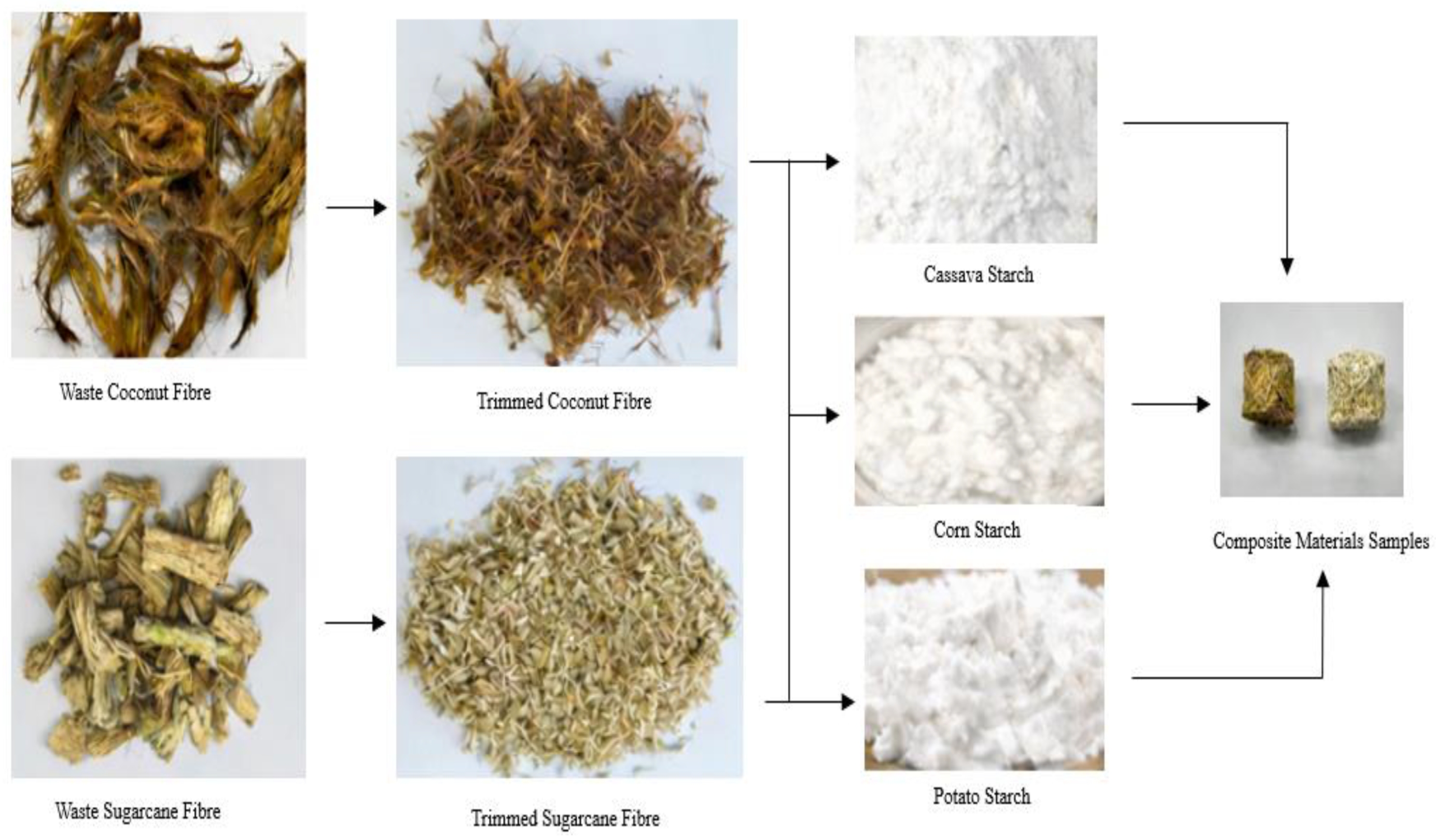
The coconut and sugarcane fibres were obtained from a local farm processing facility in Liberia. Fibres were manually separated to remove agglomerates and then cut to obtain a particle size range of about 0.5 to 1.0 mm, which was selected to improve homogeneity during mixing and to reduce variability in the internal pore structure of the composites. All specimens were prepared at a nominal thickness of 20 mm and a target density of 200 kg/m3. These values were selected to provide a uniform basis for comparing all formulations and to represent a lightweight porous panel suitable for indoor acoustic applications. For each specimen, the fibre mass was kept constant at 2.11 g, while the starch mass was varied from 2.11 g to 0.21 g to obtain fibre-to-binder ratios from 1:1.0 to 1:0.1. The volume of distilled water was matched to the binder mass to maintain consistent mixing conditions across all samples. The mixtures were manually stirred for 1.5 min to ensure even binder distribution, then placed in a cylindrical mould of 29.9 mm diameter and 20 mm thickness, lined with parchment paper to avoid adhesion during demoulding (Figure 1).
Samples were left to air-dry at room temperature for 48 h, then flipped over and left to air-dry for another 48 h at room temperature. Upon completion of the drying, the samples were removed from the moulds for the determination of the sound absorption coefficient. Three identical samples for each fibre:binder ratios were prepared for determining the sound absorption coefficient and sound transmission coefficient. The sample preparation is shown below (Table 1). The systematic variation in the fibre:binder ratios allows a thorough examination of the effect of binder content on the sound absorption and sound transmission properties of the composite fibre materials.

2.2. Determining Sound Absorption Coefficient in Impedance Tube

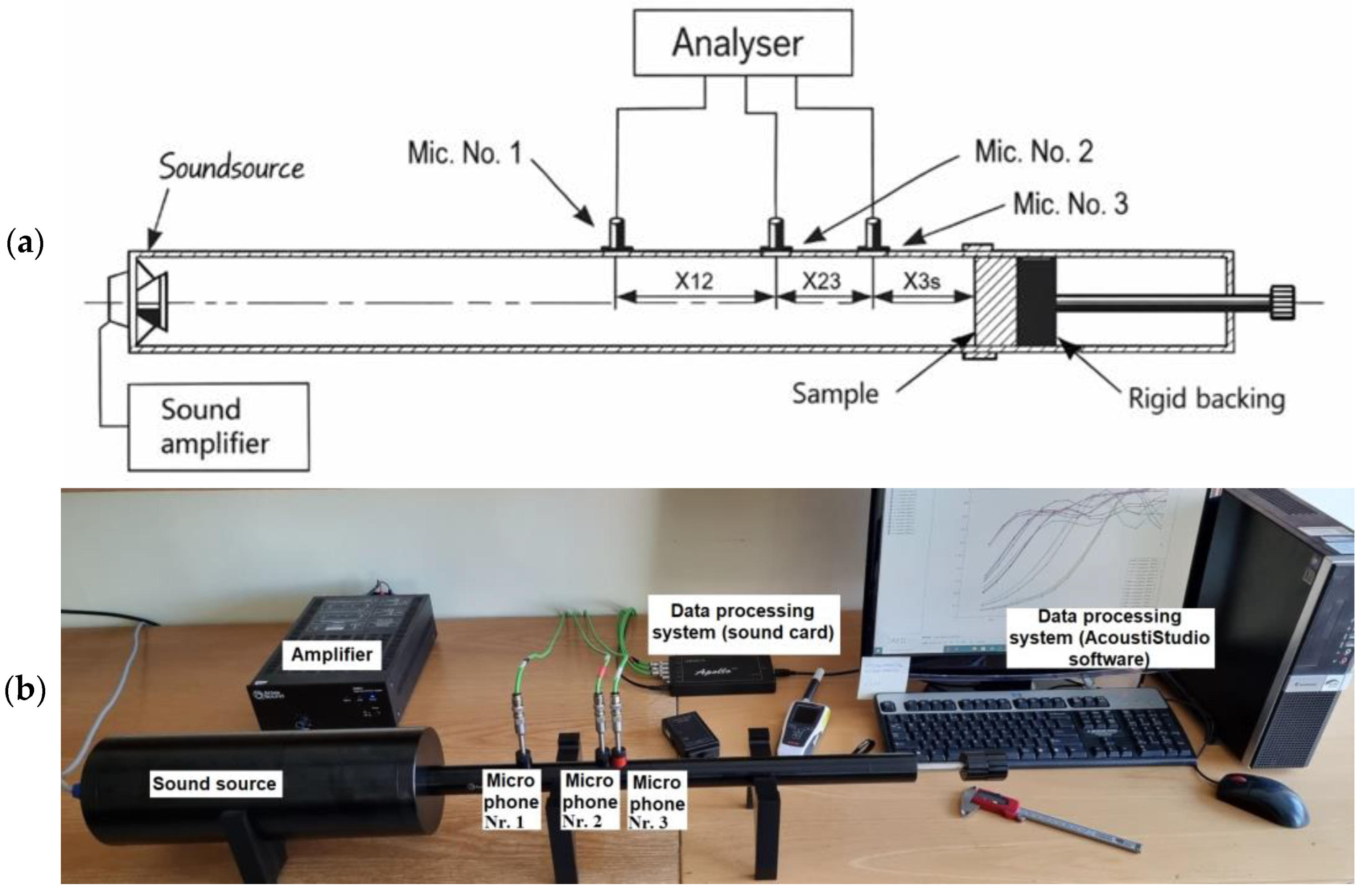
The sound absorption coefficient was determined using impedance tubes based on the standard method, described in the ISO 10534-2 standard, the two-microphone technique [22]. Samples were placed in an impedance tube of 30 mm diameter with a rigid backing. A schematic of the impedance tube is shown in Figure 2. The microphone for measuring the sound pressures are No. 1, No. 2 and No. 3. The low-frequency sound absorption was calculated (160–1000 Hz) with mics No. 1 and No. 3, and the high-frequency sound absorption coefficient was calculated (1000–5000 Hz) with microphones No. 2 and No. 3. The distance from microphone No. 1 and No. 2 was x 12 = 100 mm, between No. 2 and No. 3 was x 23 = 20 mm, and from microphone No. 3 to the sample x 3 S = 60 mm. Such distances are because of wavelength characteristics: low-frequency sound waves have long wavelengths, so the distance in between the microphones must be long enough to register the data; higher frequency sound waves have short wavelengths. The sound absorption coefficient is given in a 1/3 octave band with 50 averages. Measurements were conducted together with the “AcoustiTube” impedance tube from AED (Dresden, Germany). The equipment is compatible with first-class accuracy equipment. Measurement data were processed with the software “AcoustiStudio” (version 2.2.2) for the impedance tube used in this study.
As per the method, the initial step is determining the transfer function. The transfer functions, H13 and H23 (Equation (1)) [22], are derived by calculating the ratio of pressure captured by microphone pairs No. 1, No. 2, and No. 3, across the entire frequency spectrum.
H 13 = P 3 ( f ) P 1 ( f ) ,   H 23 = P 3 ( f ) P 2 ( f ) ;
H I ( 160 1000   H z ) = P 3 I P 1 I = e j k o ( x 12 + x 23 ) ;   H I   ( 1000 5000   H z ) = P 3   I P 2 I = e j k o   ( x 23 )
H R   ( 160 1000   H z ) = P 3 R   P 1 R = e j k o   ( x 12 + x 23 ) ;   H R   ( 1000 5000   H z ) = P 3 R   P 2 R = e j k o   ( x 23 )
Followed by determining the sound reflection coefficient from Equations (2) and (3) [22]:
R   160 1000   H z =   H 13     H I 160 1000   H z H R 160 1000   H z   H 13     e 2 j k o   X 12 + X 23 + X 3 S ; R   ( 1000 5000   H z ) =   H 23     H I ( 1000 5000   k H z ) H R ( 1000 5000   k H z )   H 23     e 2 j k o   ( X 23 + X 3 S )
where p 1 , p 2 , and p 3 represent the pressures captured by the microphones in pascals (Pa); H I is the incident wave transfer functions; H R is the reflected wave transfer function; X 12 is the distance between microphone No. 1 and No. 2 in millimetres (mm); X 23 is the distance between microphones No. 2 and No. 3 in mm; X 3 S is the distance between No. 3 and the sample in mm; R is the sound reflection coefficient; j is the complex number; and K 0 is the wave number.
Lastly, the sound absorption coefficient is determined by Equation (5) [22].
α = 1 | R | 2

2.3. Determining Sound Transmission Coefficient

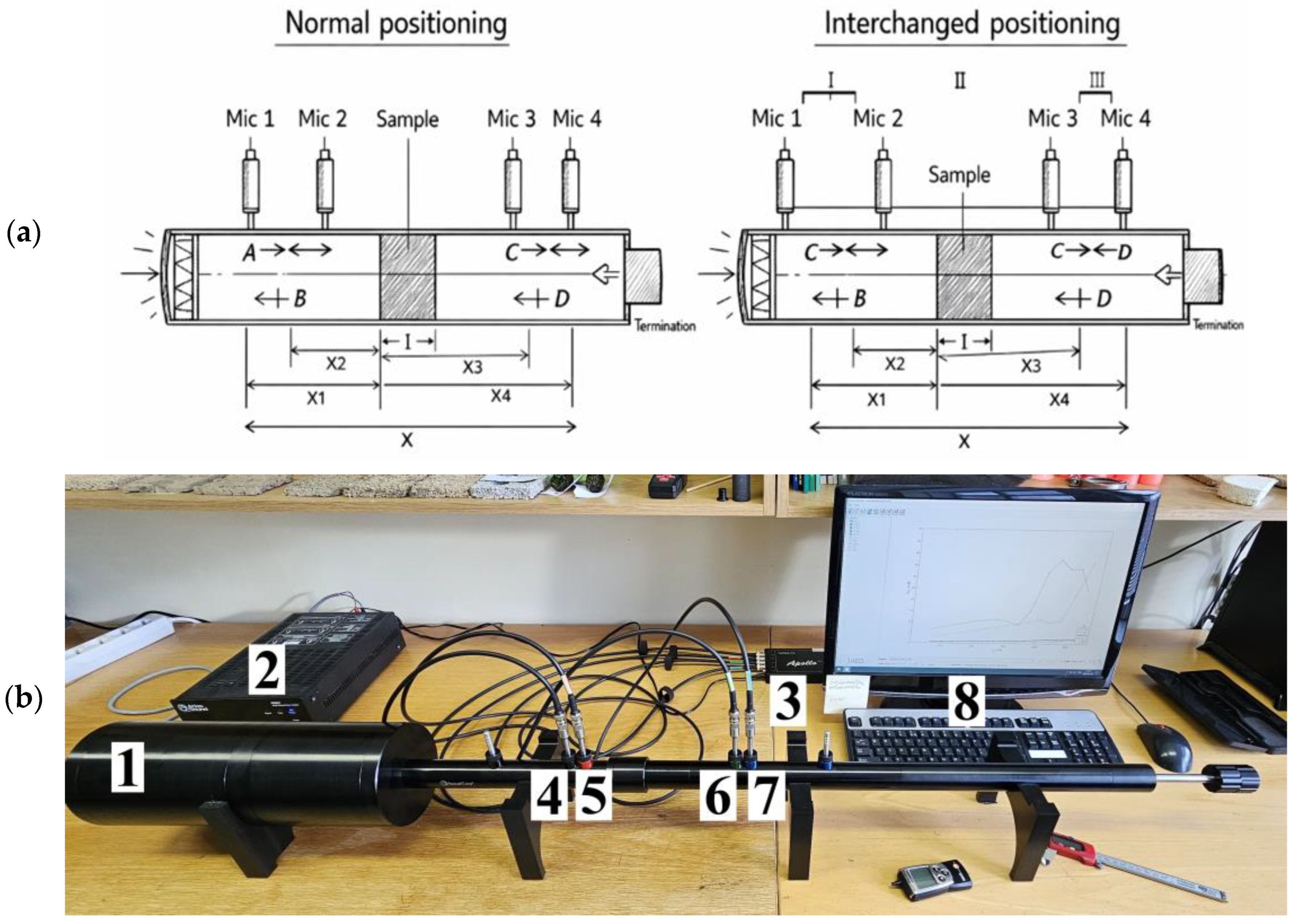
The sound transmission coefficient was determined using four microphone impedance tubes, in line with the ASTM E2611 standard [23,24], which covers microphones and frequency analysis for determining normal–incidence transmission loss and related acoustic properties from the transfer matrix. The tube used for the measurement was 30 mm in diameter, and an anechoic termination was used at the end of the tube. The transmission loss had 1 load and 4 microphone combinations, and the tube setup is presented in Figure 3. In the setup, the sample is placed inside the tube between the source side and the receiving side. Four microphones are positioned, two microphones positioned upstream (No. 1, No. 2), before the sample, and two microphones (No. 3, No. 4) positioned downstream, after the sample, as shown.
The distances between the microphones and the sample for low-frequency (160–1000 Hz) determination were x 12 = 120 mm, x 2 S = 60 mm, x 3 S = 40 mm, x 34 =120 mm, and L S H = 100 mm. The distances for high-frequency (1000–5000 Hz) sound transmission loss were x 12 = 20 mm, x 2 S = 60 mm, x 3 S = 40 mm, x 34 = 20 mm, and L S H = 100 mm, with an average number set to 50.
The transfer matrix:
p 1 u 1 =   T 11 T 21     T 12 T 22   p 2 u 2
The transmission coefficient for samples can be determined using Equation (7):
τ =   2 e j k d T 11 + T 12   +   ρ c +   ρ c T 21 +   T 22
where τ —the sound transmission coefficient; k —the wave number in the air, m−1; d —the thickness of the sample, m; ρ —the density of the air, kg/m3; and c —the speed of sound in the air, m/s.
Following this, the normal incidence sound transmission loss is expressed as [23]:
T L n =   20 log 10 1 T
where T L n —the sound transmission loss in the octave band n, dB, and T —the sound transmission coefficient.
Summarising the results, the equivalent sound transmission loss is calculated using Equation (9).
T L e q = 10 × log i = 1 n 10 L i 10
where T L e q —the total equivalent sound pressure level, dB, and L i —the sound pressure level in the 1/3 octave frequency band, dB.

2.4. Determining the Bulk, True Density and Porosity of Composite Samples

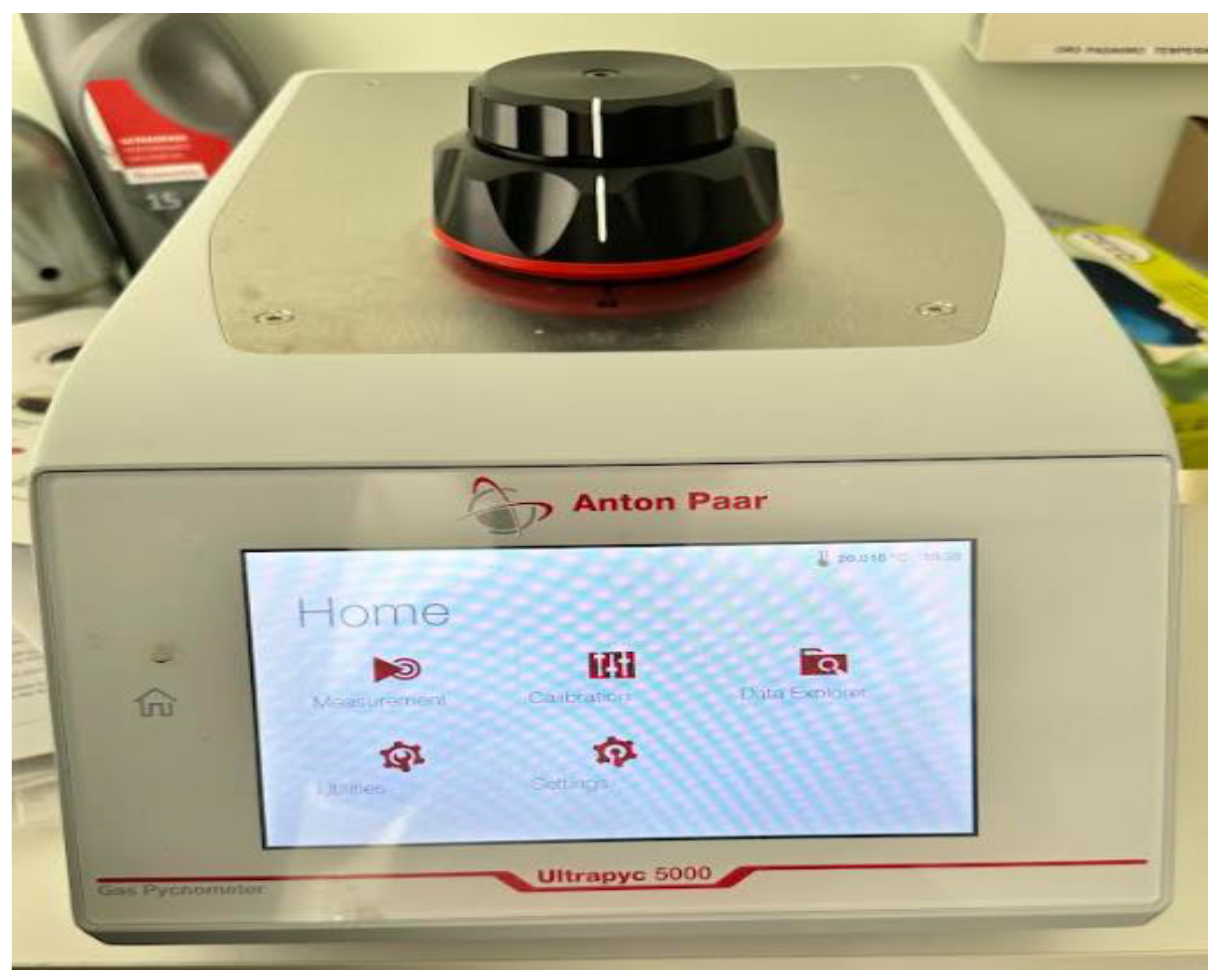
The true density of the composite sample was determined by using an automated gas pycnometer produced by Anton Paar (Graz, Austria), as shown in Figure 4. This approach leverages Archimedes’ displacement law and Boyle’s law of gas expansion to determine the actual volume and density of the material. In gas pycnometry, a sample of known mass is placed in a sealed sample chamber of known volume and pressurised with an inert gas to a specified value. The mass ( m ) of the sample was measured with analytical scales with an accuracy of 0.1 ×   10 6 kg. After the chamber pressure stabilised, a valve opening from the sample chamber to a known-volume reference chamber was opened, allowing the gas to expand into the new volume.
The gas expands into a new volume. The instrument uses the resulting pressure readings to calculate the volume of the sample, using Equation (10).
V s = V c V R P i P f 1
where V is the true sample volume, V c is the volume of the chamber, V R is the volume of the empty chamber, P i is the initial pressure, and P f is the final pressure. This is followed by measuring the true density, which is calculated according to Equation (11).
  ρ t = m V s
where ρ t —the true density and m —the mass of the sample. Then, the porosity φ from a proportion of the composite sample is calculated according to Equation (12).
φ = ρ t ρ b   ρ t
where φ —the porosity of the material, and ρ b —the bulk density. The porosity value was used for the sound absorption coefficient prediction of the composite.

3. Results and Discussion

This section presents the results and findings and discusses the acoustic and non-acoustic properties of the composite sound-absorbing samples.

3.1. Coconut and Sugar Fibre Composite Materials Sound Absorption Coefficient

The sound absorption behaviour of a material depends on several important factors, including the density, porosity, airflow resistivity, fibre-to-binder bonding, composite preparation method, and type of material used. These properties strongly influence how sound waves travel through the material and how much acoustic energy is lost during propagation [25,26,27]. Figure 5 and Figure 6 show the normal-incidence sound absorption coefficient α of coconut fibre (CF) composites prepared at a fixed thickness of 20 mm.

3.1.1. Coconut Fibre Composite Material Samples Sound Absorption Coefficient

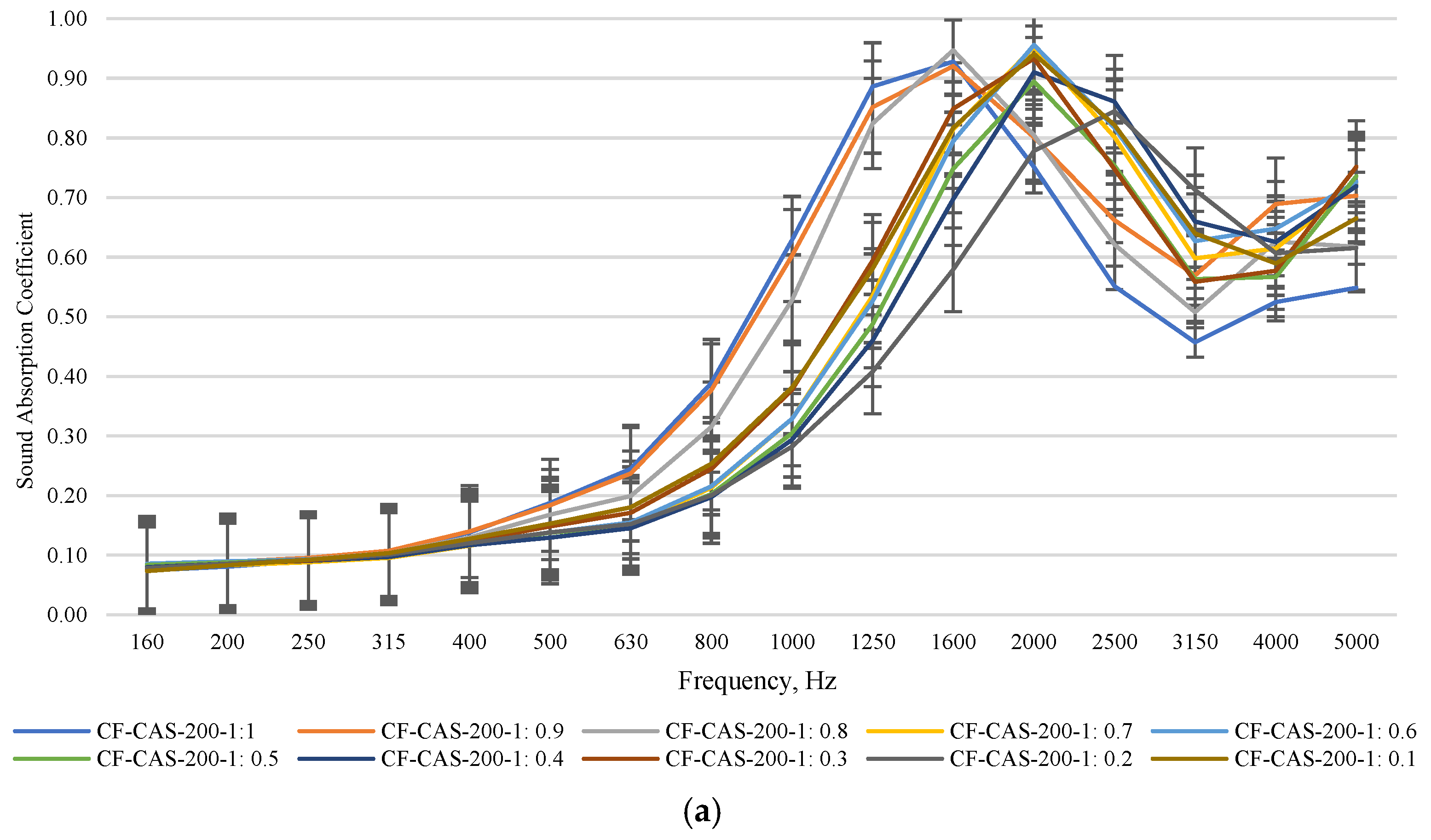
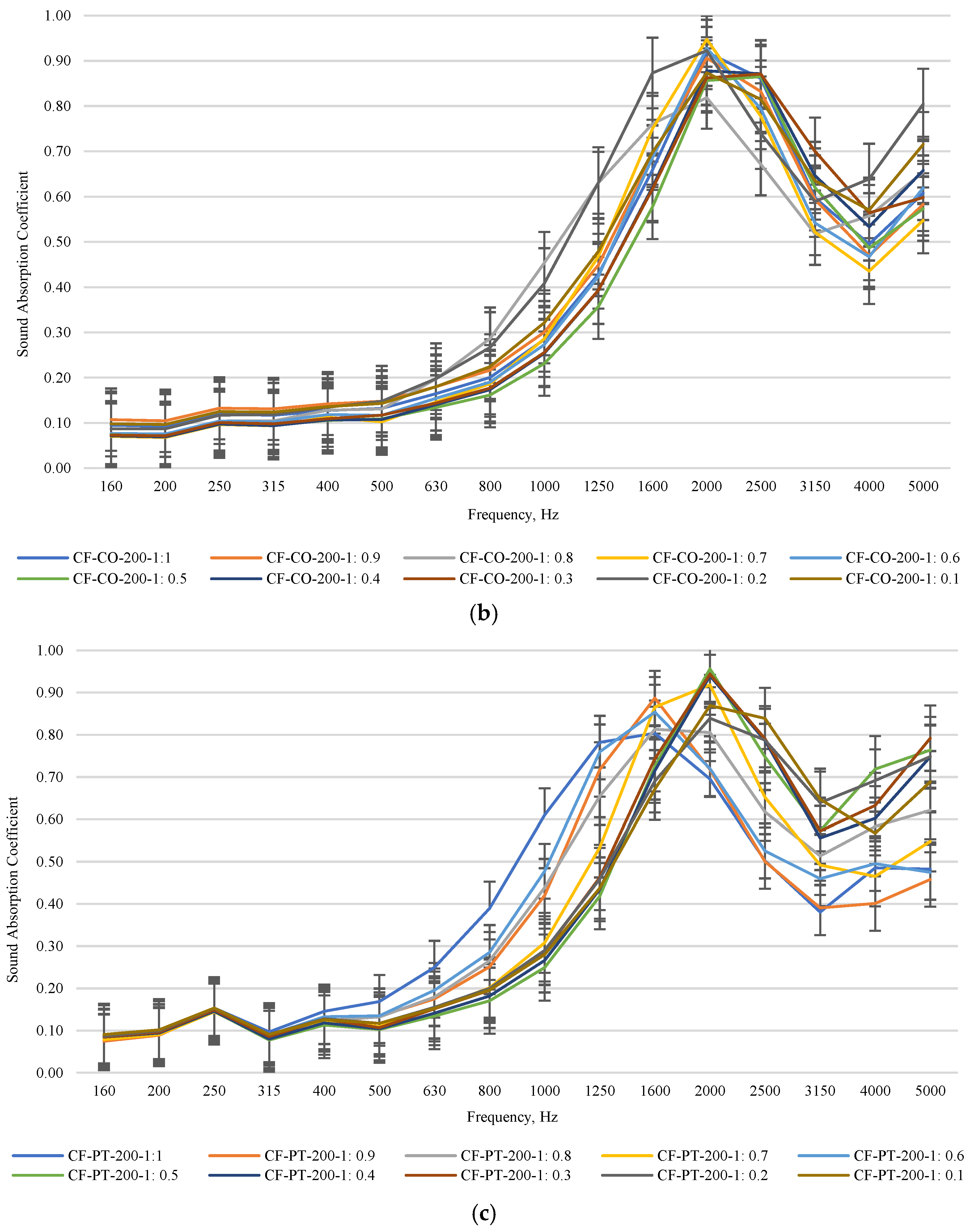
Figure 5 shows the normal-incidence sound absorption coefficient α of coconut fibre (CF) composites prepared at a fixed thickness of 20 mm and density of 200 kg/m3, mixed with cassava, corn, and potato starch binders, which were systematically reduced from 2.11 g to 0.21 g, and the distilled water was systematically reduced from 2.11 mL to 0.21 mL, corresponding to the fibre:binder ratios from 1:1.0 to 1:0.1, while maintaining a constant fibre mass of 2.11 g.
Cassava starch series
For the cassava starch samples, sound absorption remained low at 160 to 500 Hz, with an increase in the mid frequency range, and reached its maximum values between 1600 and 2500 Hz. The change from 1:1.0 to 1:0.1 did not create a linear pattern, but influenced the absorption level and the peak performance frequency. The 1:0.9 ratio gave the best overall mean absorption of about 0.45, while the 1:0.6, 1:0.7, and 1:0.8 ratios recorded the highest peak values of 0.95, 0.95, and 0.94 in the upper mid frequency range. Overall, the 1:09 ratio showed the most balanced acoustic response, whereas the 1:0.6 to 1:0.8 ratios recorded the highest peak absorption.
Corn starch series
For the corn starch samples, sound absorption was low at 160 to 500 Hz, progressively increased in the mid-frequency range, and reached its maximum between 1600 and 2500 Hz (confirming mainly medium- and high-frequency absorption). The change in fibre-to-binder ratio from 1:1.0 to 1:0.1 did not create a linear pattern, but influenced the absorption level and the peak performance frequency. The 1:0.9 ratio recorded the best mean absorption of about 0.44, while the 1:0.6 ratio recorded the highest peak of about 0.95 at 2000 Hz. Overall, the 1:0.9 ratio showed the most balanced acoustic performance, whereas ratios from 1:0.6 to 1:0.8 were more effective for mid-frequency absorption.
Potato starch series
For the potato starch samples, sound absorption was low at 160 to 500 Hz, increased in the mid-frequency range, and reached its maximum between 1600 and 2500 Hz; the mid and high frequencies performed better than the low frequencies. The change in fibre-to-binder from 1:1.0 and 1:0.1 did not create a linear pattern, but influenced the absorption level and the peak performance frequency. The 1:0.2 ratio recorded the highest overall mean absorption of about 0.42, while the 1:0.7 sample recorded the highest peak absorption of about 0.94 at 2000 Hz. Overall, the 1:0.2 ratio showed the most balanced acoustic performance, while the 1:0.7 ratio recorded the strongest peak absorption.

3.1.2. Sugarcane Fibre Composite Material Samples Sound Absorption Coefficient

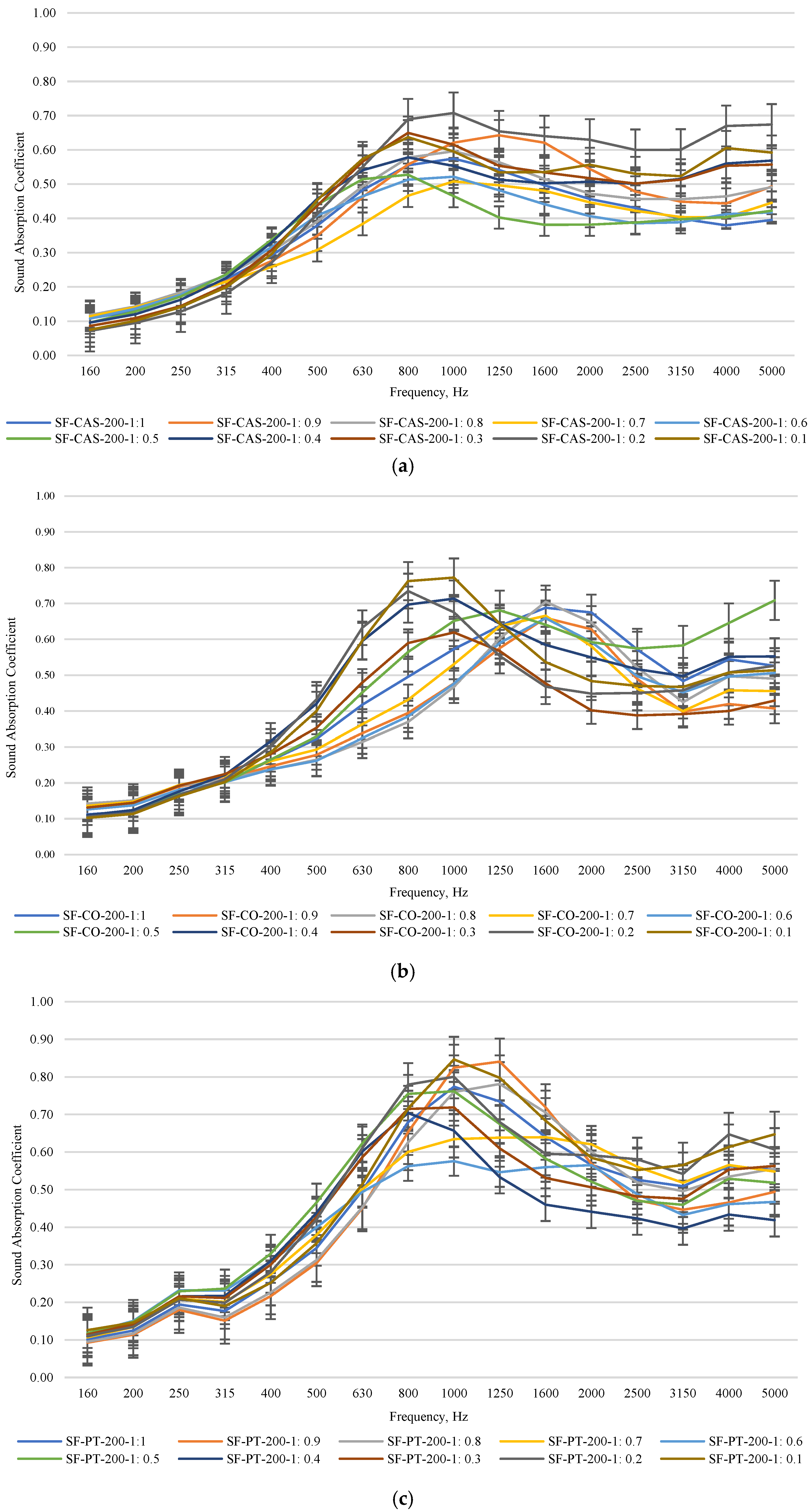
Figure 6 shows the normal-incidence sound absorption coefficient α of sugarcane fibre (SF) composites prepared at a fixed thickness of 20 mm and density of 200 kg/m3, mixed with cassava, corn, and potato starch binders, which were systematically reduced from 2.11 g to 0.21 g, and the distilled water was systematically reduced from 2.11 mL to 0.21 mL, corresponding to the fibre:binder ratios from 1:1.0 to 1:0.1, while maintaining a constant fibre mass of 2.11 g.
Cassava starch series
For the cassava starch samples, sound absorption was low at 160 to 400 Hz, and then increased from 500 Hz upwards, with an improved performance in the medium- and high-frequency range. The change in fibre-to-binder from 1:1.0 to 1:0.1 did not create a linear trend, but influenced the absorption level and the peak performance frequency. The 1:0.2 ratio recorded the highest mean absorption coefficient of 0.47, and also recorded the highest peak of about 0.70 at 1000 Hz, with strong performance from 800 to 5000 Hz. Overall, the reduction in cassava starch content improved the acoustic performance, with the 1:0.2 ratio showing the best performance across all frequency ranges measured.
Corn starch series
For the corn starch samples, sound absorption was low at 160 to 315 Hz, then increased from 400 Hz upwards, with stronger performance in the medium- and high-frequency range. The change in fibre-to-binder ratio from 1:1.0 to 1:0.1 did not create a linear trend, but influenced the absorption level and the peak performance frequency. The 1:0.5 ratio recorded the highest mean absorption coefficient of 0.45, while the 1:0.1 record the highest peak of 0.77 at 1000 Hz. Overall, moderate corn starch content enhanced acoustic balance, and lower binder content enhanced peak absorption in the mid-frequency range.
Potato starch series
For the potato starch samples, sound absorption was low at 160 to 400 Hz, then increased from 500 Hz upwards, with improved performance in the medium- and high-frequency range. The change in fibre-to-binder ratio from 1:1.0 to 1:0.1 did not create a linear trend but influenced the absorption level and peak performance. The 1:0.1 recorded the highest mean absorption coefficient of 0.48 and also recorded the highest peak of 0.84 at 1000 Hz. Overall, lower potato starch content improved the acoustic response, with the 1:0.1 ratio showing the best overall performance.

3.2. Sound Transmission Coefficient in Relation to Sound Absorption Coefficient and Porosity

The sound transmission coefficient indicates the fraction of sound energy that passes through the material; this is closely related to the sound absorption, porosity of the fibre-based material, and how reflective the material is. Even though the porosity enhances sound waves in the material and internal energy dissipation, strong acoustic performance depends on an optimum balance of pore structure, density, fibre characteristics, and fibre and binder bonding to reduce sound transmission, thus improving absorption [26,28,29].

3.2.1. Coconut Fibre Composite Material Sound Transmission Coefficient

Table 2 presents a summary of the best-performing sugarcane fibre composite samples mixed with cassava, corn, and potato based on the sound absorption coefficient, sound transmission coefficient, and porosity. Figure 7 shows the sound transmission coefficient for sugarcane fibre composite samples. These results show how variations in fibre:binder ratio and pore structure influenced the acoustic performance of the composites.
Cassava starch series
The coconut fibre composites mixed with cassava starch showed two clear transmission trends across the tested fibre-to-binder ratios. The 1:1, 1:0.9, and 1:0.8 samples recorded showed lower transmission throughout the tested frequency range, with τ = 0.55, 0.47 and 0.53 at 160 Hz to τ = 0.16, 0.13 and 0.09 at 5000 Hz; in contrast, the 1:0.7–1:0.1 samples remained more transmissive due to the high porosity. Overall, the higher binder ratios produced a more compact structure that reduced sound transmission, while the 1:0.8 sample retained strong mid- and high-frequency sound absorption.
Corn starch series
The sound transmission coefficient results for the coconut fibre mixed with corn starch samples remained relatively transmissive across all frequency ranges tested, but transmission decreased with increasing frequency. The lowest average transmission was recorded for 1:0.9 and 1:0.8 ratios at τ ≈ 0.32 and τ ≈ 0.34, whereas the more porous samples 1:0.4 to 1:0.2 recorded higher values of τ ≈ 0.62. The trend aligns with the porosity results; higher porosity allowed more sound passage through the fibre–binder network. Overall, greater sound absorption in the more porous samples did not necessarily mean lower transmission.
Potato starch series
The sound transmission coefficient results for the coconut fibre mixed with potato starch samples showed high transmission across all frequency range tested. The lowest transmission was recorded for the sample 1:1, which decreased from τ = 0.42 at 160 Hz to τ = 0.10 at 5000 Hz, while the 1:0.9 and 1:0.8 ratios remained lower than other ratios. The lower binder ratio samples 1:0.7 to 1:0.1 remained more transmissive, with τ = 0.60 to 0.82 at 160 Hz and τ = 0.06 to 0.50 at 5000 Hz. Overall, the higher binder content reduced sound transmission by producing a compact structure, although the lowest-transmission samples did not maintain high sound absorption.

3.2.2. Sugarcane Fibre Composite Material Sound Transmission Coefficient

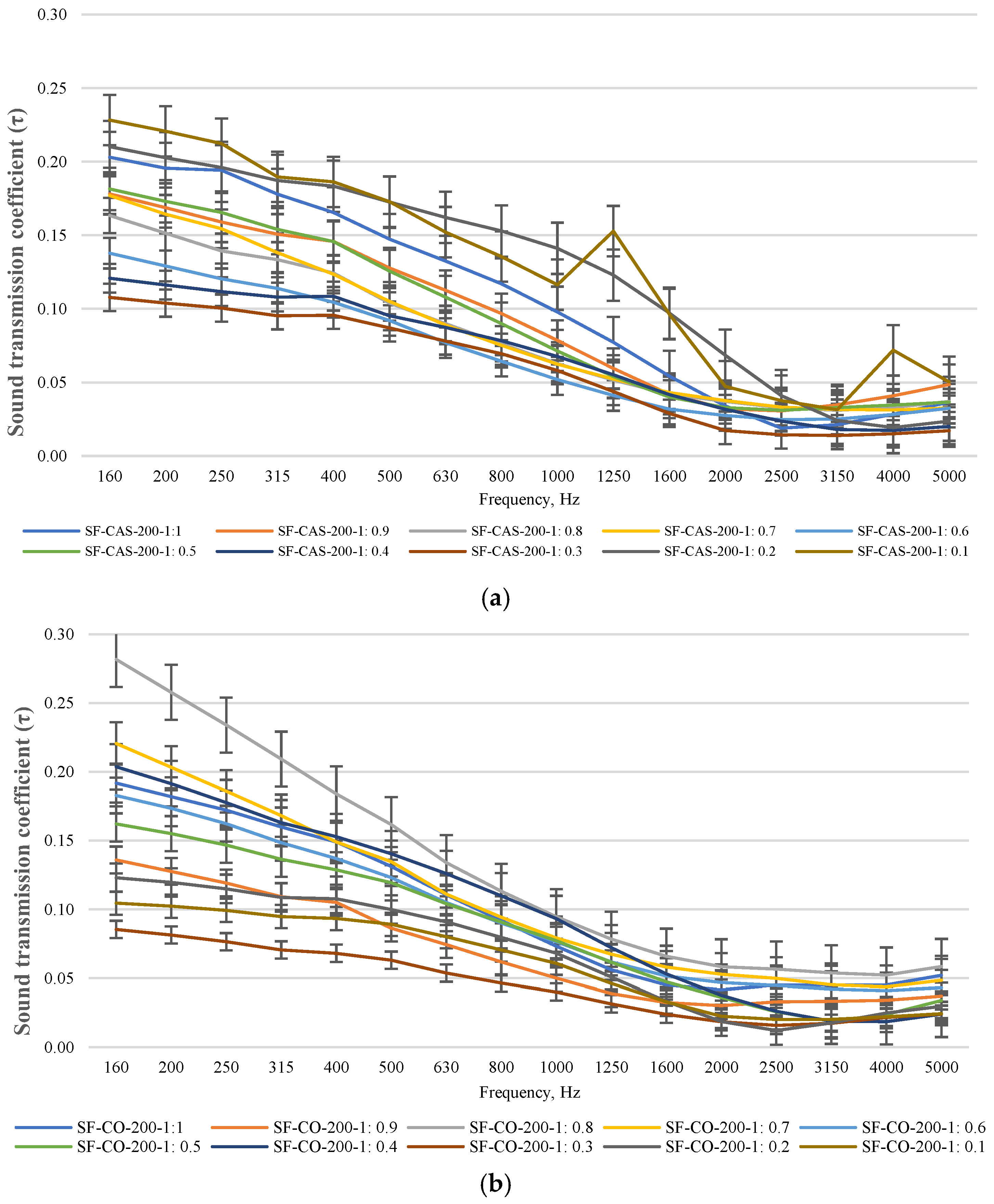
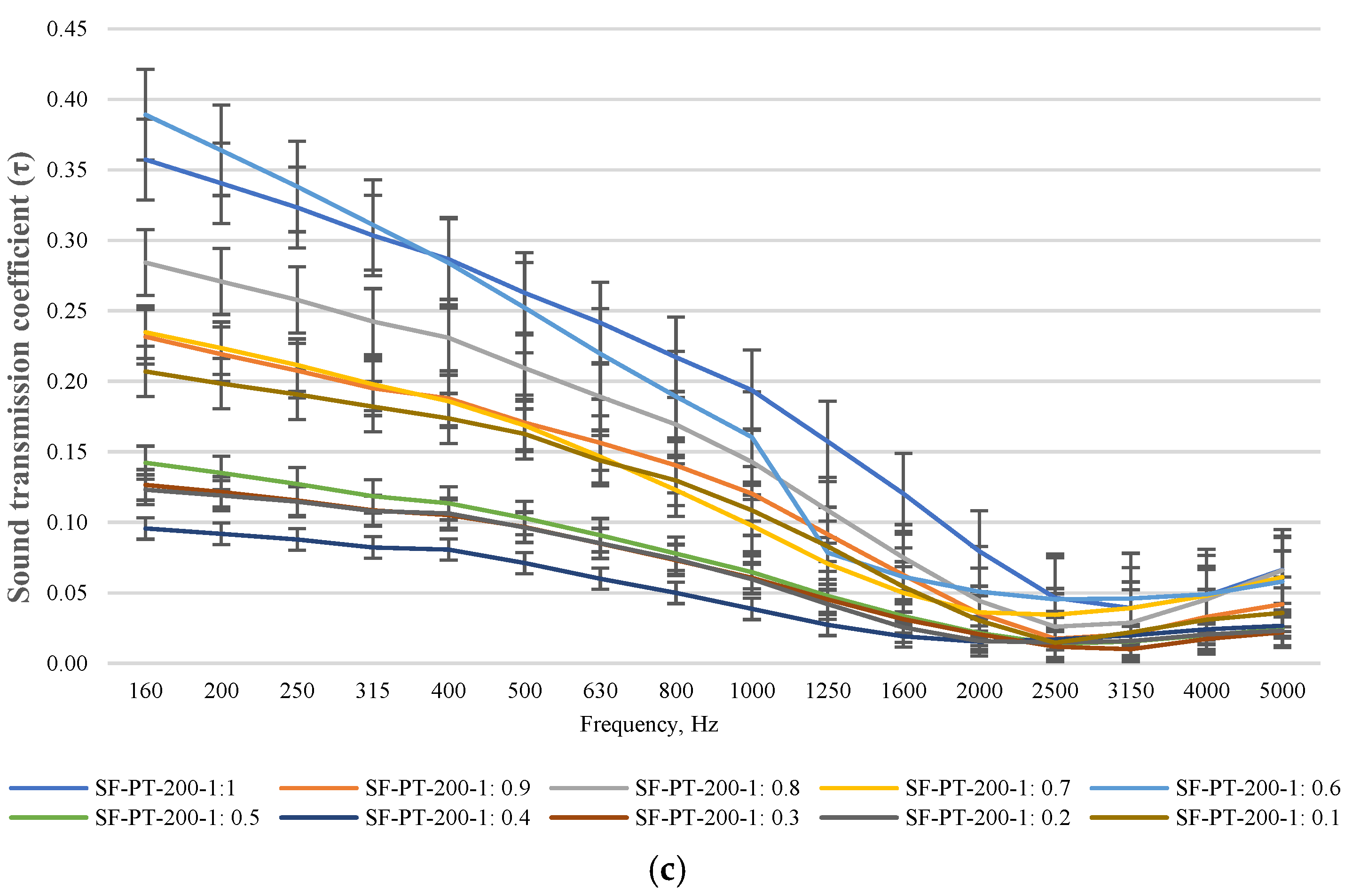
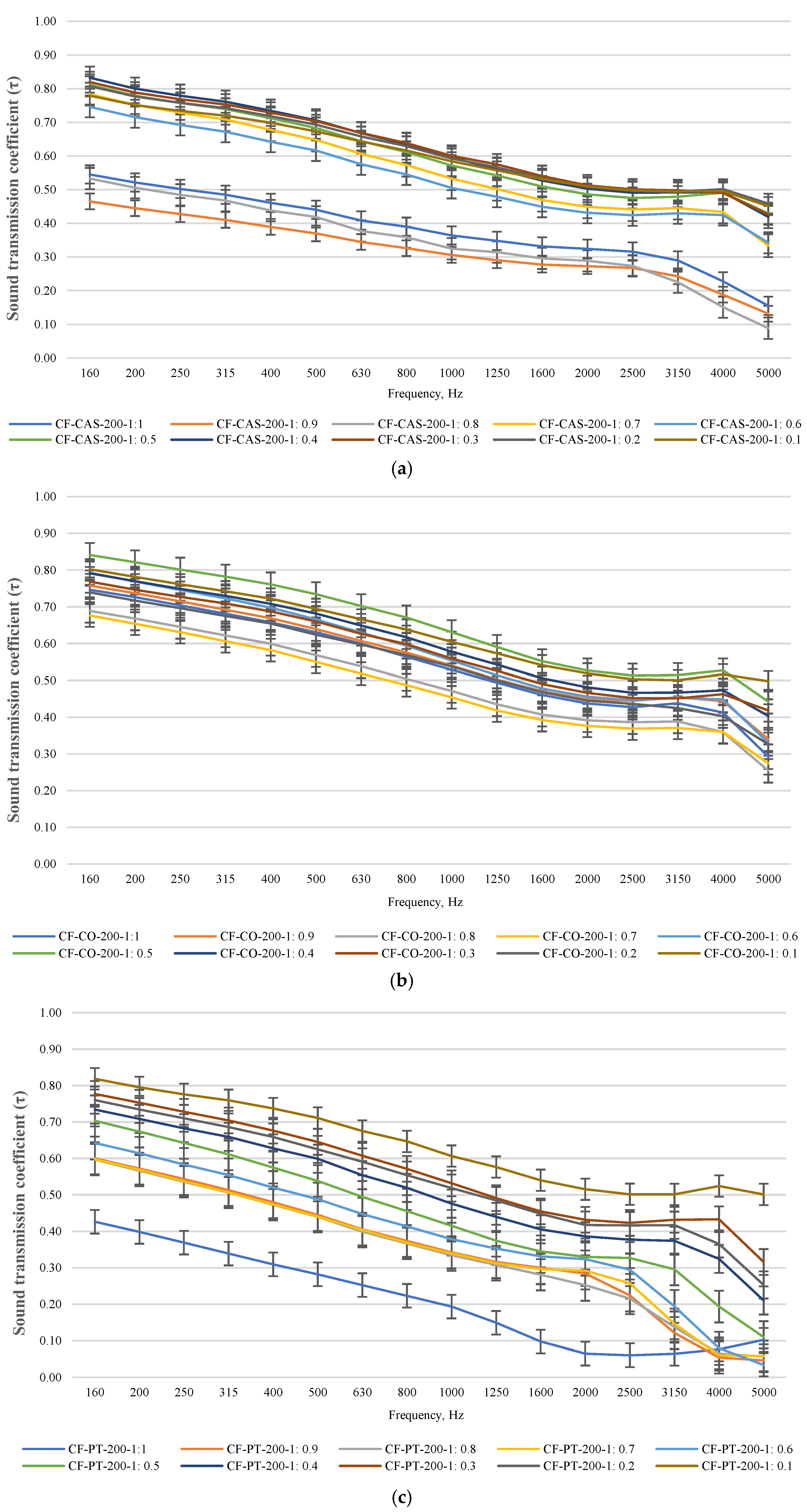
Table 3 presents a summary of the best-performing sugarcane fibre composite samples mixed with cassava, corn, and potato based on the sound absorption coefficient, sound transmission coefficient, and porosity. Figure 8 shows the sound transmission coefficient for sugarcane fibre composite samples. These results show how variation in the fibre:binder ratio and pore structure influences the acoustic performance of the composites.
Cassava starch series
The sugarcane fibre composites mixed with cassava starch showed low transmission across all frequency ranges tested, and transmission decreased as the frequency increased. At 160 Hz, the transmission range was from τ = 0.11 to 0.23, while at 5000 Hz, it decreased to τ = 0.02 to 0.05, which shows a good resistance to sound passage for all the samples. The best performing sample is 1:0.3, decreasing from τ = 0.11 at 160 Hz to τ = 0.02 at 5000 Hz, while 1:0.2 and 1:0.1 were a bit more transmissive. Overall, the results suggest that optimal acoustic performance was obtained from a balanced pore structure rather than maximum compactness or maximum pore openness alone.
Corn starch series
The sugarcane fibre composites mixed with corn starch composites show low transmission across all frequency ranges, with transmission decreasing as frequency increased for all fibre:binder ratios. At 160 Hz, transmission ranged from τ = 0.09 to 0.28, and decreased at 5000 Hz from 0.02 to 0.06, which indicates that the samples have good resistance to sound passage through them. The best performing sample was 1:0.3, which dropped from τ = 0.0.9 at 160 Hz to 0.02 at 5000 Hz, whereas 1:0.8 remained more transmissive through much of the range. Overall, these findings indicate that the best acoustic performance was obtained from an optimised pore structure rather than the binder content alone.
Potato starch series
The sugarcane fibre composites mixed with potato starch showed low transmission across all measured frequency ranges, with transmission decreasing as frequency increased for all fibre:binder ratios. At 160 Hz, transmission ranged from τ = 0.10 to 0.39, and decreased at 5000 Hz from τ = 0.02 to 0.07, showing excellent resistance to sound passage for those samples. The best performance was recorded for 1:0.4 (τ = 0.10 at 160 Hz and τ = 0.03 at 5000 Hz), while 1:1 and 1:0.6 showed the highest low-frequency transmissions. Overall, the findings indicate that the best acoustic performance resulted from an optimal pore structure and not from the highest or lowest porosity alone.

3.3. Porosity of Coconut Fibre and Sugarcane Fibre Composites with Potato, Corn, and Cassava Starch Binders

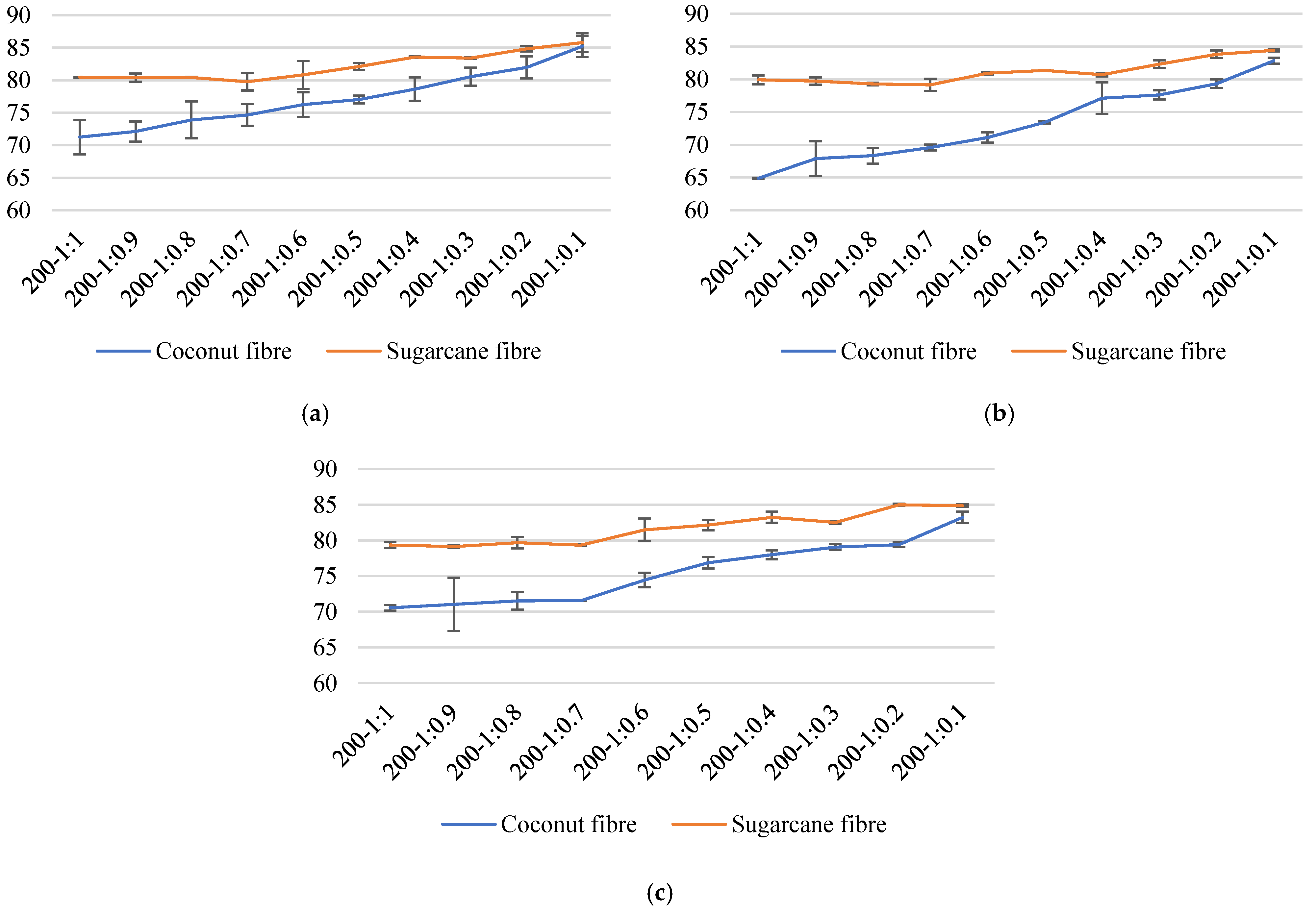
Porosity measurements revealed that all sugarcane fibre composites remained highly porous throughout the full fibre-to-binder range, with most values around or above 79% (Figure 9). In general, porosity increased as binder content decreased from 1:1 to 1:0.1, suggesting lower starch content favoured a more porous internal structure. This behaviour can be ascribed to the reduced starch content required to coat the fibre surfaces, fill inter-fibre voids, and form bonding bridges in the fibrous network. The mixture contains less binder, fewer contact points are sealed, the packing framework is looser, and a greater percentage of interconnected pores is retained after drying. By contrast, higher binder contents probably promoted more intense fibre-to-fibre adhesion and partial pore filling, resulting in a smaller internal geometry. For the cassava starch series, porosity increased from 80.73% at 1: 1 to 85.29% at 1: 0.1, which was the highest value among all sugarcane fibre samples, although a distinct drop to 72.36% was observed at 1: 0.7. The potato starch series showed a narrower range, from 80.46% at 1: 1 to 84.41% at 1: 0.1, indicating a more stable and homogeneous pore topology. For the corn starch series, porosity increased from 79.37% at 1: 1 to 85.16% at 1: 0.2, before slightly decreasing to 84.52% at 1:0.1. These findings suggest that cassava and corn starch gave the highest porosity values, and potato starch gave the most stable trend of the tested ratios.
A direct comparison of the binders suggests that the sugarcane fibre has a highly porous structure independent of starch type, although reduced binder content generally increased pore openness further. The highest porosity values were recorded for cassava at 85.29%, corn at 85.16%, and potato starch at 84.41%. Cassava also had the highest initial porosity at the highest binder content, followed by potato and corn starch. These results indicate that binder type moderately influenced pore development, although the overall effect was moderate due to high porosity being maintained throughout the full composition range. As high porosity facilitates sound wave penetration and internal energy dissipation, the findings suggest that low starch content sugarcane fibre composites, particularly those made with cassava and corn starch, could be used in porous sound-absorbing applications.

3.4. Comparison of Acoustic Performance of Coconut Fibre and Sugarcane Fibre Composites with Potato, Corn, and Cassava Starch Binders

Comparing the two fibre–binder systems showed that the transmission coefficients of sugarcane fibre composites were lower than those of coconut fibre composites for all the starch binders. Although transmission for all fibre–binder samples decreased with increasing frequency, the sugarcane fibre samples remained at very low- to high-frequency values and showed better resistance to sound transmission through the 20 mm composite thickness. The coconut fibre composites, however, remained more transmissive at low and middle frequencies, but transmission decreased towards the high end of the spectrum. This difference indicates that the sugarcane fibre samples comprised a better internal network for the damping of sound transmission. Such behaviour may be related to fibre morphology variations and interfacial behaviour between the two fibre types, such as fibre size, stiffness, surface texture, packing configuration, and adhesive strength to the starch matrix. These can affect the interplay between the fibres, the distribution of voids, and the degree to which the internal structure resists through-transmission of sound. On the other hand, the coconut fibre composites may have had much more open transmission pathways within the panel structure, allowing a greater fraction of the acoustic energy to diffuse throughout the material. In the sugarcane fibre composites, the best performing samples were SC-PT-200-1:0.4 to 1:0.5 for potato starch, SC-CO-200-1:0.3 for corn starch, and SC-CAS-200-1:0.3 for cassava starch. The fibre:binder ratio combined low transmission with moderate to high absorption and porosity values that allowed internal acoustic dissipation without excessively increasing sound passage.
For the coconut fibre composites, the best performing samples were CF-PT-200-1:1, CF-CO-200-1:0.7 to 1:0.8, and CF-CAS-200-1:0.9, but remained more transmissive than the sugarcane matrix. Among the coconut fibre binders, potato starch shows the best barrier performance, cassava starch produced intermediate performance, and corn starch showed the least resistance to sound transmission, showing that the binder type influenced the acoustic response in both systems, but fibre type remained the main factor in controlling overall sound transmission behaviour. The differences are further emphasised by sound absorption and porosity. In both fibres, absorption was increased from low to middle and high frequencies in binder systems, and wider pore structures promoted greater absorption by allowing greater sound penetration. However, the acoustic effect of porosity varied between the two fibres. In coconut fibre composites, higher porosity resulted in higher sound transmission, whereas sugarcane fibre composites, with mid- and high-porosity samples, maintained low transmission with moderate absorption, indicating pore connectivity. Finally, the comparison of the results confirms that sugarcane fibre composites, especially for fibre:binder with corn starch and cassava starch, are better suited for applications where both sound absorption and reduced sound passage are required, while coconut fibre composites are better suited for applications where absorptive performance is more important than high transmission resistance.
The present results align well with recent studies on sustainable acoustic composites, which report that natural-fibre materials perform best when pore structure, density, and fibre–binder interaction are kept in balance rather than pushed to their extremes. A recent coconut fibre bio-composite study reported sound absorption average values of 0.46 to 0.62 dB, confirming that coconut-based systems can provide useful acoustic absorption for building applications for structures that are properly designed [30]. Similarly, [31] developed cardboard–natural-fibre insulation panels and reported sound absorption coefficients between 0.4 and 0.8 dB, together with sound transmission loss of 20 to 45 dB, indicating that porous bio-based panels can provide absorption and insulation when the fibre morphology and bulk structure are suitable.
In water–hyacinth composites, similarly, it has been found that lower-density specimens have higher absorption, while denser specimens have higher transmission loss, which supports the present findings that the best overall acoustic performance depends on a compromise between pore openness and resistance to sound passage [8]. Moreover, recent reviews have noted that natural-fibre bio-composites commonly achieve sound absorption coefficients of about 0.6 to 0.8 dB, and in some cases up to about 0.9 dB, in the mid-to-high frequency range, because of their porous structure, tortuous internal pathways, and fibre-matrix synergy [32]. The present study showed a similar trend, with both coconut and sugarcane fibre composites showing good performance at middle and high frequencies rather than at low frequencies. It also expands the recent literature by showing, under the same test conditions, that sugarcane fibre composites give lower sound transmission, while coconut fibre composites often produce higher peak absorption, providing a basis for selecting fibre–binder combinations for indoor acoustic panels.

4. Conclusions

This study investigated the acoustic behaviour of coconut fibre and sugarcane fibre composites mixed with cassava, corn, and potato starch at fibre-to-binder ratios from 1: 1.0 to 1: 0.1, with a fixed thickness and density. The acoustic properties of these bio-based composites were highly dependent on the fibre type, binder type, and pore structure interaction. In both fibre systems, sound absorption generally improved at middle and high frequencies, and sound transmission decreased with increasing frequency. The correlation between porosity, absorption, and transmission was not linear, as optimal internal structure, not the highest or lowest porosity, gave the best performance.
The two fibre–binder systems are vastly different. The sound transmission coefficient of the sugarcane fibre composites was lower than that of the coconut fibre composites, indicating better resistance to sound passage through the 20 mm thickness. The best sugarcane fibre–binder ratios were SC-PT-200-1: 0.4 and 1: 0.5, representing moderate potato starch content and a balanced pore structure, SC-CO-200-1: 0.3 for low-to-moderate corn starch with good acoustic balance, and SC-CAS-200-1: 0.3, corresponding to low-to-moderate cassava starch content with good sound resistance and absorption. In comparison, the best coconut fibre formulations were CF-PT-200-1: 1, for a high potato starch content and denser structure, CF-CO-200-1: 0.7 to 1: 0.8 (medium corn starch content), and CF-CAS-200-1: 0.9, indicating high levels of cassava starch content, although these were still more transmissive than the sugarcane composites.
The findings confirm that sugarcane fibre composites, particularly those prepared with corn and cassava starch at moderate binder contents, are more suitable for building applications where both sound absorption and reduced sound passage are required. Coconut fibre composites also showed useful acoustic potential, but they were more appropriate for applications where sound absorption is prioritised over transmission resistance. Overall, this study demonstrates that agricultural waste fibres combined with natural starch binders can be developed into sustainable indoor acoustic materials for non-structural applications, such as ceiling panels, wall linings, and interior sound-control systems.
This work is limited by the fact that the sound absorption coefficient and transmission behaviour were assessed within the measured impedance tube frequency range, and the lower frequency region at 50 Hz was not examined. Future research should investigate the mechanical properties, durability, fire performance, moisture sensitivity, and large-scale panel behaviour of the best formulations to evaluate their acoustic properties together with their practical suitability for building applications.

Author Contributions

N.A.G.: writing original draft, methodology, software, validation, formal analysis, investigation, data curation. R.R.: methodology, validation, investigation, data curation, writing review and editing. R.G.: writing—review and editing, supervision. All authors have read and agreed to the published version of the manuscript.

Funding

This research received no external funding.

Data Availability Statement

The data that support the findings of this study are available from the corresponding author upon reasonable request.

Acknowledgments

During the writing of this manuscript, the authors used ChatGPT (OpenAI) GPT-5.4 version for grammar, spelling, punctuation, formatting, and language editing. All AI-assisted output was reviewed, validated, and revised by the authors who are responsible for the final manuscript content.

Conflicts of Interest

The authors declare no conflicts of interest.

References

  1. Giannotas, G.; Kamperidou, V.; Barboutis, I. Tree bark utilization in insulating bio-aggregates: A review. Biofuels Bioprod. Biorefining 2021, 15, 1989–1999. [Google Scholar] [CrossRef]
  2. Korjakins, A.; Sahmenko, G.; Lapkovskis, V. A Short Review of Recent Innovations in Acoustic Materials and Panel Design: Emphasizing Wood Composites for Enhanced Performance and Sustainability. Appl. Sci. 2025, 15, 4644. [Google Scholar] [CrossRef]
  3. Ouda, M.; Abu Sanad, A.A.; Abdelaal, A.; Krishna, A.; Kandah, M.; Kurdi, J. A Comprehensive Review of Sustainable Thermal and Acoustic Insulation Materials from Various Waste Sources. Buildings 2025, 15, 2876. [Google Scholar] [CrossRef]
  4. Bousshine, S.; Ouakarrouch, M.; Bybi, A.; Laaroussi, N.; Garoum, M.; Tilioua, A. Acoustical and thermal characterization of sustainable materials derived from vegetable, agricultural, and animal fibers. Appl. Acoust. 2022, 187, 108520. [Google Scholar] [CrossRef]
  5. Daniel, D.; Vui, C.; Saragondlu, N.; Guna, V.; Reddy, N. Groundnut shell and coir reinforced hybrid bio composites as alternative to gypsum ceiling tiles. J. Build. Eng. 2022, 57, 104892. [Google Scholar] [CrossRef]
  6. Fattahi, M.; Taban, E.; Soltani, P.; Berardi, U.; Khavanin, A.; Zaroushani, V. Waste corn husk fibers for sound absorption and thermal insulation applications: A step towards sustainable buildings. J. Build. Eng. 2023, 77, 107468. [Google Scholar] [CrossRef]
  7. Lawanwadeekul, S.; Jun-on, N.; Kongthavorn, P.; Sangkas, T. Chemical-free thermal-acoustic panels from agricultural waste for sustainable building materials. Clean. Mater. 2024, 12, 100245. [Google Scholar] [CrossRef]
  8. Srisawas, M.; Kerdkaew, T.; Chanlert, P. Industrial Crops Products From invasive species to bio-based composites: Utilizing water hyacinth for sound absorption and insulation. Ind. Crops Prod. 2024, 220, 119242. [Google Scholar] [CrossRef]
  9. Khojasteh, S.; Soltani, P.; Javad, M. Acoustical, thermal, and mechanical performance of Typha Latifolia fiber panels: Experimental evaluation and modeling for sustainable building applications. J. Build. Eng. 2025, 99, 111579. [Google Scholar] [CrossRef]
  10. Food and Agriculture Organization of the United Nations. Agricultural Production Statistics 2010–2023. 20 December 2024. Available online: https://www.fao.org/statistics/highlights-archive/highlights-detail/agricultural-production-statistics-2010-2023/en (accessed on 19 March 2026).
  11. Maderuelo-Sanz, R.; García-Cobos, F.J.; Sánchez-Delgado, F.J.; Mota-López, M.I.; Meneses-Rodríguez, J.M.; Romero-Casado, A.; Acedo-Fuentes, P.; López-Ramos, L. Mechanical, thermal and acoustical evaluation of biocomposites made of agricultural waste for ceiling tiles. Appl. Acoust. 2022, 191, 108689. [Google Scholar] [CrossRef]
  12. Bravo-Moncayo, L.; Puyana-Romero, V.; Chávez, M.; Ciaburro, G. Improving Building Acoustics with Coir Fiber Composites: Towards Sustainable Construction Systems. Sustainability 2025, 17, 6306. [Google Scholar] [CrossRef]
  13. Rodríguez-Robalino, M.F.; Ferrández, D.; Verdú-Vázquez, A.; Zaragoza-Benzal, A. Development and Performance of Coconut Fibre Gypsum Composites for Sustainable Building Materials. Buildings 2025, 15, 1899. [Google Scholar] [CrossRef]
  14. Hafizah, D.; Azma, K.; Iwan, P. Performance of Natural Multi-layer Coir and Kenaf Fibers as Sustainable Acoustic Absorber. Acoust. Aust. 2026. [Google Scholar] [CrossRef]
  15. Beheshti, M.H.; Khavanin, A.; Jafarizaveh, M.; Tabrizi, A. A novel acoustic micro-perforated panel (MPP) based on sugarcane fibers and bagasse. J. Mater. Sci. Mater. Eng. 2024, 19, 35. [Google Scholar] [CrossRef]
  16. Hajizadeh, R.; Montazeri, A.; Esnaasharieh, M.; Beheshti, M.H.; Garavand, Z. Determination of the effect of alkaline chemical modification using sodium hydroxide on the acoustic and thermal properties of bagasse fibers. Sci. Rep. 2025, 15, 17515. [Google Scholar] [CrossRef] [PubMed] [PubMed Central]
  17. Parikh, H.H.; Rana, H.; Raj, A.; Gbadeyan, O.J. Acoustic performance of coir fi ber-reinforced starch-based bio composites. Compos. Adv. Mater. 2025, 34, 26349833251339768. [Google Scholar] [CrossRef]
  18. Meng, T.; Li, F.; Li, J.; Liu, D.; Liu, Q.; Gong, X. International Journal of Biological Macromolecules Tunable starch / sisal fiber porous composites for broadband acoustic absorption: Experimental design, JCA modeling, and sustainable applications. Int. J. Biol. Macromol. 2025, 321, 146411. [Google Scholar] [CrossRef]
  19. Gboe, N.A.; Ružickij, R.; Grubliauskas, R. Grubliauskas, Exploring the Sound Absorption Characteristics of Biodegradable Agricultural Wastes, Coconut Fiber, Groundnut Shell, and Sugarcane Fiber. Environ. Clim. Technol. 2024, 28, 940–951. [Google Scholar] [CrossRef]
  20. Gboe, N.A.; Garnevičius, M.; Grubliauskas, R. Grubliauskas, Assessment of Potential Environmental Impact: Synthetic and Natural Binders. Environ. Clim. Technol. 2025, 29, 300–312. [Google Scholar] [CrossRef]
  21. Bravo-Moncayo, L.; Puyana-Romero, V.; Argotti-Gómez, M.; Ciaburro, G. Enhanced Environmental Sustainability for the Acoustic Absorption Properties of Cabuya Fiber in Building Construction Using Machine Learning Predictive Model. Sustainability 2024, 16, 6204. [Google Scholar] [CrossRef]
  22. ISO/FDIS 10534-2:2023(E); Acoustics—Determination of Acoustic Properties in Impedance Tubes—Part 2: Two-Microphone Technique for Normal Sound Absorption Coefficient and Normal Surface Impedance. International Organization for Standardization: Geneva, Switzerland, 2023. Available online: https://cdn.standards.iteh.ai/samples/81294/07a566ee2a0148c69a8dbb6c646b7945/ISO-10534-2.pdf (accessed on 19 March 2026).
  23. Salissou, Y.; Panneton, R.; Doutres, O. Complement to standard method for measuring normal incidence sound transmission loss with three microphones. J. Acoust. Soc. Am. 2012, 131, EL216–EL222. [Google Scholar] [CrossRef]
  24. ASTM E2611; Test Method for Normal Incidence Determination of Porous Material Acoustical Properties Based on the Transfer Matrix Method. ASTM International: West Conshohocken, PA, USA, 2024.
  25. Ružickij, R.; Romagnoli, F.; Grubliauskas, R. Waste Tyre Textile Fibre Composite Material: Acoustic Performance and Life Cycle Assessment. Sustainability 2024, 16, 6281. [Google Scholar] [CrossRef]
  26. Seddeq, H.S. Factors Influencing Acoustic Performance of Sound Absorptive Materials. Aust. J. Basic. Appl. Sci. 2009, 3, 4610–4617. [Google Scholar]
  27. Yang, T.; Hu, L.; Xiong, X.; Petr, M.; Noman, M.T. Noman, Sound Absorption Properties of Natural Fibers: A Review. Sustainability 2020, 12, 8477. [Google Scholar] [CrossRef]
  28. Ružickij, R.; Kizinievič, O.; Grubliauskas, R.; Astrauskas, T. Development of Composite Acoustic Panels of Waste Tyre Textile Fibres and Paper Sludge. Sustainability 2023, 15, 2799. [Google Scholar] [CrossRef]
  29. Arenas, J.P.; del Rey, R.; Alba, J.; Oltra, R. Sound-Absorption Properties of Materials Made of Esparto Grass Fibers. Sustainability 2020, 12, 5533. [Google Scholar] [CrossRef]
  30. GVela, G. Ascens, Development of an innovative biocomposite using coconut fibres and bio-based binder for thermal and acoustic aplications in buildings. J. Clean. Prod. 2025, 491, 144834. [Google Scholar] [CrossRef]
  31. Ouakarrouch, M.; Bousshine, S.; Bybi, A.; Laaroussi, N.; Garoum, M. Acoustic and thermal performances assessment of sustainable insulation panels made from cardboard waste and natural fibers. Appl. Acoust. 2022, 199, 109007. [Google Scholar] [CrossRef]
  32. Namakka, M.; Rahman, R.; Bin Bakri, M.K.; Karuppasamy, B.D.; Ahmmad, M.S.; James, A.A.; Rahman, I.M.M. Advancements in acoustic properties of natural waste biocomposites: Current trends, applications, and future perspectives. Adv. Compos. Hybrid. Mater. 2025, 8, 386. [Google Scholar] [CrossRef]
Figure 1. Sample preparation process of composite sound-absorbing materials.
Buildings 16 01631 g001
Figure 2. Sound absorption setup: (a) schematic diagram of impedance, and (b) impedance tube used in this study.
Buildings 16 01631 g002
Figure 3. The setup of the impedance tube for measuring the transmission coefficient: (a) a schematic diagram of the transmission tube, and (b) the impedance tube used in the study (1—the sound source; 2—the power amplifier; 3—the sound card; 4, 5, 6, 7—microphones; 8—the data acquisition software).
Buildings 16 01631 g003
Figure 4. The device used for the gas pycnometry.
Buildings 16 01631 g004
Figure 5. Sound absorption coefficients for coconut fibre composites mixed with cassava, corn, and potato starch binders: (a) cassava starch; (b) corn starch; and (c) potato starch.
Buildings 16 01631 g005aBuildings 16 01631 g005b
Figure 6. Sound absorption coefficients for sugarcane fibre composites mixed with cassava, corn, and potato starch binders: (a) cassava starch; (b) corn starch; and (c) potato starch.
Buildings 16 01631 g006
Figure 7. Sound transmission coefficients for coconut fibre composites mixed with cassava, corn, and potato starch binders: (a) cassava starch; (b) corn starch; and (c) potato starch.
Buildings 16 01631 g007
Figure 8. Sound transmission coefficients for sugarcane fibre composites mixed with cassava, corn, and potato starch binders: (a) cassava starch; (b) corn starch; and (c) potato starch.
Buildings 16 01631 g008aBuildings 16 01631 g008b
Figure 9. Sound transmission coefficients for sugarcane fibre composites mixed with cassava, corn, and potato starch binders: (a) cassava starch; (b) potato starch; and (c) corn starch.
Buildings 16 01631 g009
Table 1. Mix proportions of composite sound-absorbing materials.
Sample No.Starch TypeBinder Mass (g)Volume of Distilled Water (mL)Fiber: Binder Ratio %
1Cassava/corn/potato2.112.111:1.0
2Cassava/corn/potato1.891.891:0.9
3Cassava/corn/potato1.681.681:0.8
4Cassava/corn/potato1.471.471:0.7
5Cassava/corn/potato1.261.261:0.6
6Cassava/corn/potato1.051.051:0.5
7Cassava/corn/potato0.840.841:0.4
8Cassava/corn/potato0.630.631:0.3
9Cassava/corn/potato0.420.421:0.2
10Cassava/corn/potato0.210.211:0.1
Table note (constants): fibre mass = 2.11 g for all specimens; thickness = 20 mm; target density = 200 kg/m3. Starch type = cassava, corn, or potato. Sample name format: CF-[CAS/COR/POT]-n, SF-[CAS/COR/POT]-n.
Table 2. Best performing coconut fibre composite samples by acoustic parameters.
Acoustic CategoryPotato StarchCorn StarchCassava StarchBasis for Selection
Lowest sound transmission coefficientCF-PT-200-1:1CF-CO-200-1:0.7CF-CAS-200-1:0.9Lowest transmission across most of the measured frequency ranges
Highest sound absorption performanceCF-PT-200-1:0.1CF-CO-200-1:0.2CF-CAS-200-1:0.1Highest absorption at middle and high frequencies
Highest porosity, most open pore structureCF-PT-200-1:0.1 (81.18%)CF-CO-200-1:0.1 (83.23%)CF-CAS-200-1:0.1 (84.13%)Greatest pore openness, favourable for sound entry and internal dissipation
Lowest porosity, densest structureCF-PT-200-1:1 (65.14%)CF-CO-200-1:1 (67.98%)CF-CAS-200-1:1 (71.25%)Most compact internal structure
Overall balance between absorption and low transmissionCF-PT-200-1:1CF-CO-200-1:0.7 to 1:0.8CF-CAS-200-1:0.9Best combined performance in absorption, porosity, and transmission resistance
Table 3. Best performing sugarcane fibre composite samples by acoustic parameters.
Acoustic CategoryPotato StarchCorn StarchCassava StarchReason
Lowest sound transmission coefficientSC-PT-200-1:0.4SC-CO-200-1:0.3SC-CAS-200-1:0.3Lowest transmission across most of the measured frequency ranges
Highest sound absorption performanceSC-PT-200-1:0.1SC-CO-200-1:0.1SC-CAS-200-1:0.1Highest absorption at middle and high frequencies
Highest porosity, most open pore structureSC-PT-200-1:0.1 (84.41%)SC-CO-200-1:0.2 (85.16%)SC-CAS-200-1:0.1 (85.29%)Greatest pore openness, favourable for sound entry and internal dissipation
Lowest porosity, densest structureSC-PT-200-1:0.7 (79.15%)SC-CO-200-1:0.7 (78.97%)SC-CAS-200-1:0.7 (72.36%)Most compact internal structure
Overall balance between absorption and low transmissionSC-PT-200-1:0.4 to 1:0.5SC-CO-200-1:0.3SC-CAS-200-1:0.3Best combined performance in absorption, porosity, and transmission resistance
Disclaimer/Publisher’s Note: The statements, opinions and data contained in all publications are solely those of the individual author(s) and contributor(s) and not of MDPI and/or the editor(s). MDPI and/or the editor(s) disclaim responsibility for any injury to people or property resulting from any ideas, methods, instructions or products referred to in the content.