Article

Sustainable Stabilization of Collapsible Clay Soils Using Eco-Friendly Additives and Sarooj Mortar: Experimental Assessment of Strength and Collapse Behavior

by
Yashar Mostafaei
1,
Mohammad Ali Arjomand
2,
Ali Asgari
3,*,
Abolfazl Soltani
2 and
Mohammad Ali Ramezanpour
1
1
Department of Civil Engineering, Ro.C., Islamic Azad University, Roudehen, Iran
2
Faculty of Civil Engineering, Shahid Rajaee Teacher Training University, Tehran 16788-15811, Iran
3
Department of Civil Engineering, Faculty of Engineering and Technology, University of Mazandaran, Babolsar 47416-13534, Iran
*
Author to whom correspondence should be addressed.
Buildings 2026, 16(8), 1561; https://doi.org/10.3390/buildings16081561
Submission received: 31 December 2025 / Revised: 11 April 2026 / Accepted: 14 April 2026 / Published: 16 April 2026
(This article belongs to the Section Building Materials, and Repair & Renovation)

Abstract

Collapsible soils present significant geotechnical challenges due to their abrupt volume reduction and strength degradation upon wetting, which can lead to severe structural damage. This study evaluates the effectiveness of sustainable and eco-friendly additives—including rice husk ash, lime, eggshell powder, turmeric, polypropylene fibers, nanosilica, and Sarooj mortar—in stabilizing a naturally collapsible clay soil from Gorgan, Iran. A comprehensive experimental program comprising collapse potential, unconfined compressive strength (UCS), and unconsolidated undrained (UU) triaxial tests was conducted. The untreated soil exhibited a high collapse potential of approximately 11.1%, classifying it as severely collapsible. Upon stabilization, the collapse potential was significantly reduced to 1.35–4.63%, representing a reduction of up to ~88%, and reclassifying the soil into slight to moderate collapsibility. In terms of strength improvement, the UCS increased from 0.71 kg/cm2 (untreated soil) to values exceeding 3.5–4.3 kg/cm2 after 28 days of curing, corresponding to an increase of more than 4–5 times depending on the mixture composition. Additionally, triaxial test results indicated improvements of over 20% in shear strength parameters, including cohesion and friction angle, particularly after 28 days of curing. The observed improvements are attributed to the combined effects of pozzolanic reactions (lime, rice husk ash, nanosilica), cementitious bonding (Sarooj mortar), and mechanical reinforcement (polypropylene fibers), which collectively enhance soil structure, reduce the void ratio, and increase interparticle bonding. Among the tested mixtures, samples containing higher nanosilica and fiber content demonstrated superior performance in both strength and collapse resistance. Overall, the integration of traditional Sarooj mortar with modern eco-friendly additives provides a sustainable and efficient solution for mitigating collapse potential and enhancing the mechanical behavior of clayey soils. The proposed approach offers a low-carbon alternative to conventional stabilization methods, with significant implications for foundation engineering and infrastructure development in regions with problematic soils.

1. Introduction

Collapsible soils are widely recognized as one of the most problematic geomaterials in geotechnical engineering due to their susceptibility to sudden volume reduction upon wetting. This phenomenon can lead to excessive settlement, loss of bearing capacity, and severe damage to infrastructure such as foundations, embankments, and pavements. The collapse behavior is primarily associated with loose soil structure, low density, and the presence of weak interparticle bonding, which becomes unstable when exposed to moisture infiltration [1,2,3].
Over the past decades, various ground improvement techniques have been proposed to mitigate the adverse effects of collapsible soils. Traditional stabilization methods, including lime and cement treatment, have been widely used due to their effectiveness in enhancing strength and reducing compressibility [4,5]. However, these approaches are often associated with environmental concerns, particularly high carbon emissions and energy consumption. In recent years, increasing attention has been directed toward the use of sustainable and eco-friendly additives as alternatives to conventional stabilizers. Materials such as rice husk ash, nanosilica, and industrial by-products have demonstrated promising performance due to their pozzolanic reactivity and ability to improve soil microstructure [6,7]. Additionally, fiber reinforcement has been shown to enhance ductility and reduce brittleness, thereby improving deformation characteristics under loading conditions.
Despite these advances, the combined use of traditional binders and modern eco-friendly additives, particularly in conjunction with historical materials such as Sarooj mortar, remains insufficiently explored. Sarooj, a traditional lime-based material, has been used for centuries in construction due to its durability and cementitious properties. However, its potential role in modern soil stabilization, especially when integrated with advanced additives, has not been thoroughly investigated.
Therefore, the primary objective of this study is to evaluate the effectiveness of a hybrid stabilization approach combining Sarooj mortar with eco-friendly additives—including rice husk ash, lime, eggshell powder, turmeric, polypropylene fibers, and nanosilica—in improving the mechanical behavior of collapsible clayey soil. A comprehensive experimental program was conducted to assess collapse potential, strength characteristics, and deformation behavior. This study aims to bridge the gap between traditional and sustainable stabilization techniques by providing a quantitative and comparative evaluation of their combined performance. The findings are expected to contribute to the development of low-carbon, cost-effective, and efficient solutions for problematic soils in geotechnical engineering applications.

2. Literature Review

Collapsible soils are widely recognized as problematic geomaterials due to their porous structure, low initial moisture content, and metastable fabric, which make them highly susceptible to sudden volume reduction and strength loss upon wetting. Among collapsible soils, loess deposits are of particular importance, covering nearly 10% of the Earth’s continental surface and extending across regions from northern China to southeastern Europe, as well as parts of the Americas and New Zealand [2,8]. In Iran, extensive loess formations are found in areas such as Golestan Province, where their interaction with infrastructure systems has intensified geotechnical challenges.
The collapse behavior of these soils is primarily governed by weak interparticle bonding, high void ratio, and moisture-sensitive structure. As a result, substantial research efforts have focused on developing effective stabilization techniques aimed at improving strength, reducing compressibility, and mitigating collapse potential. Traditional chemical stabilization using lime and cement has long been considered a reliable approach due to its ability to induce cation exchange, promote clay flocculation, and generate cementitious compounds such as calcium silicate hydrates (C–S–H), which enhance soil stiffness and strength [4,9,10]. Despite their effectiveness, the widespread use of these materials is increasingly questioned due to environmental concerns, including high energy consumption and CO2 emissions.
In response, recent studies have increasingly explored sustainable and alternative stabilizers derived from agricultural, industrial, and waste materials. Pozzolanic by-products such as rice husk ash and fly ash have demonstrated considerable potential in improving soil mechanical properties through void filling and secondary cementation reactions [6,11,12,13]. For instance, fly ash has been shown to reduce plasticity, increase cohesion, and improve compaction characteristics, with optimal performance typically observed at moderate replacement levels [14,15].
Similarly, calcium-rich materials such as eggshell powder contribute to enhanced stiffness and reduced compressibility, while nanomaterials—particularly nanosilica—have been found to significantly accelerate pozzolanic reactions, leading to improved strength and microstructural densification over time [7,16,17]. Kolias et al. [15] found that the effectiveness of the additive is influenced by the proportion used, soil characteristics, and curing time. Incorporating 5–20% fly ash by dry soil weight resulted in increased maximum dry density and reduced optimum moisture compared to untreated samples. The addition of 2–4% cement further accelerated setting and improved strength, with the magnitude of improvement depending on soil type. In summary, fly ash application was shown to improve the soil’s strength, elasticity, and load-bearing capacity.
Beyond chemical stabilization, mechanical reinforcement techniques such as stone columns, pile foundations [18,19], densification, grouting [20] and deep soil mixing have also been widely adopted to improve the deformation characteristics of problematic soils.
Ziaie Moayed and Kamalzare [21] investigated the improvement of collapsible soils at a railway site in Tehran–Semnan. They found that injecting cement significantly reduced the soil’s collapsibility. Laboratory tests showed that the intact soil initially had a collapsibility index of 45.3%, which decreased to 28.1% after cement treatment—representing approximately a 63% reduction. Additionally, direct shear tests indicated that cement addition increases the shear strength parameters (c and φ) of the collapsible soil.
The inclusion of discrete fibers, such as polypropylene fibers, has been shown to enhance tensile strength, control crack propagation, and improve ductility, particularly under post-peak loading conditions [10,22,23,24]. This reinforcement mechanism is especially beneficial in collapsible soils, where brittle failure and sudden collapse are critical concerns. Furthermore, combining fibers with chemical stabilizers has been reported to produce synergistic effects, simultaneously improving strength, durability, and resistance to deformation. In parallel, polymer-based and advanced chemical treatments have also been investigated. For example, the application of acrylate resins has been shown to reduce collapsibility by more than 60% by coating soil particles and limiting moisture ingress [20]. Similarly, geopolymer-based stabilization techniques, including metakaolin systems, have gained attention for their ability to enhance strength, ductility, and durability while reducing shrinkage [25,26]. Dassekpo et al. [26] varied the loess-to-fly ash ratio (L/FA) from 0 to 100 and found that adding geopolymer significantly enhanced the unconfined compressive strength (UCS) of the samples. The strength gain during early curing exceeded that observed at 28 days, with the highest UCS achieved in samples containing 0% loess and 100% fly ash. Moreover, substituting loess with fly ash not only improved compressive strength but also offered benefits for environmental management, such as reducing CO2 emissions.
Despite these advancements, growing attention has been directed toward hybrid stabilization approaches that combine multiple additives to exploit their complementary mechanisms. Such approaches integrate chemical bonding, microstructural modification, and mechanical reinforcement to achieve superior performance. However, most existing studies have focused on modern industrial materials, with relatively limited attention given to traditional binders. One such material is Sarooj, a historical lime–clay pozzolanic mortar widely used in ancient construction, particularly in arid regions [27]. Produced through calcination of clay and subsequent mixing with lime and natural additives, Sarooj exhibits favorable properties such as low permeability, long-term durability, and resistance to environmental degradation. Its performance is strongly influenced by raw material composition, calcination conditions, and curing time [28,29]. Previous studies have highlighted its chemical similarity to hydraulic binders, with silica and alumina playing key roles in strength development through pozzolanic reactions. Moreover, recent applications—such as textile-reinforced Sarooj mortar—have demonstrated significant improvements in structural performance, including increases of up to 2.5–3 times in flexural resistance [30].
In regions such as Gorgan in northern Iran, where loess soils are widely distributed and exhibit pronounced collapsibility, this gap becomes even more significant. Previous investigations in this area have confirmed the critical role of microstructural and geochemical factors in governing soil collapse behavior and have demonstrated that advanced additives, such as nanomaterials, can significantly improve soil performance [2]. However, the combined use of traditional materials like Sarooj with modern eco-friendly additives has not been evaluated. Therefore, this study aims to address this gap by investigating the combined effects of Sarooj mortar, nanosilica, and polypropylene fibers, along with other sustainable additives, on the mechanical and collapse behavior of clayey collapsible soils. By integrating traditional knowledge with modern material science, this research seeks to develop a sustainable, cost-effective, and high-performance stabilization approach, contributing to improved soil management practices and infrastructure resilience in regions affected by problematic soils.

3. Research Methodology

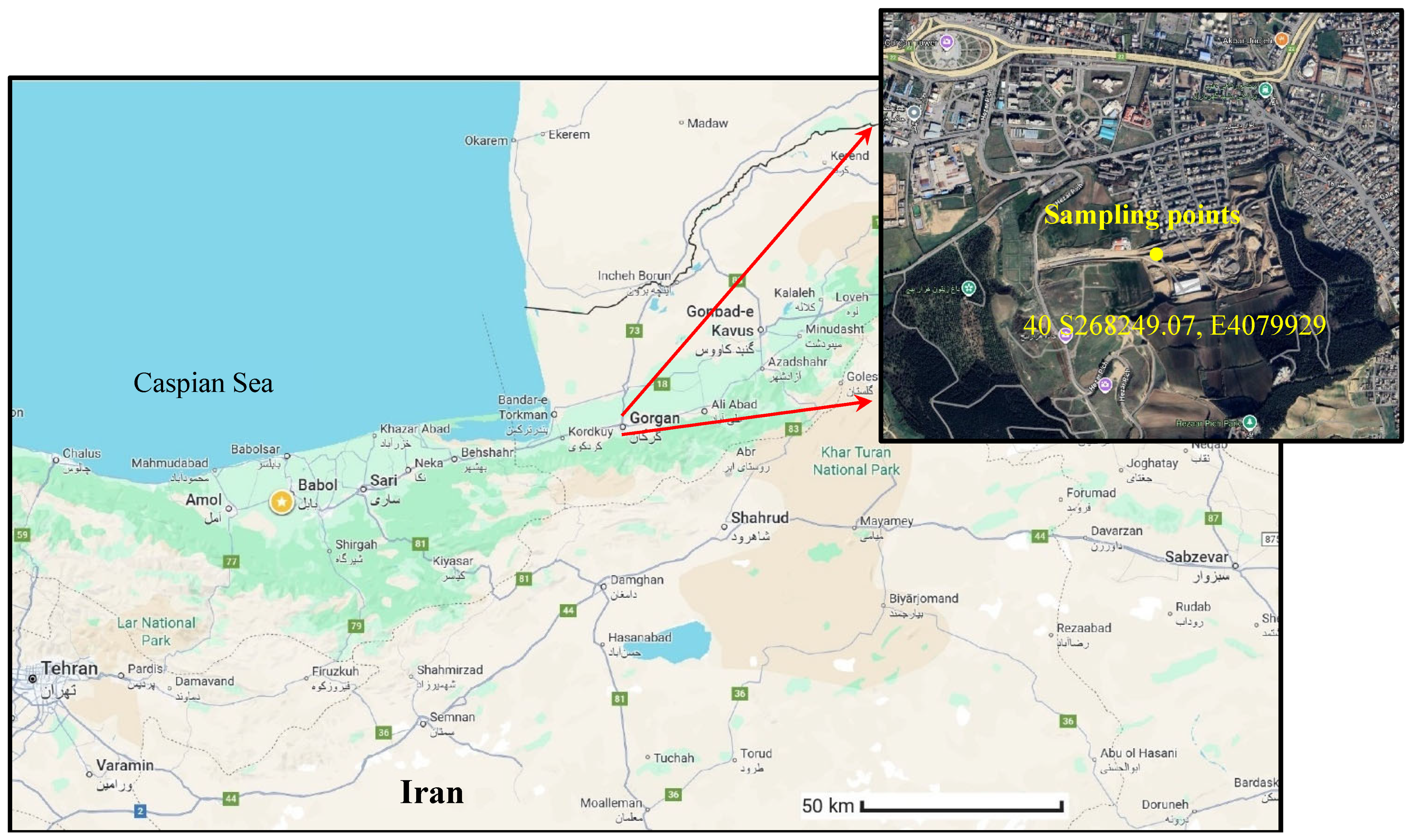
The soil investigated in this study is the loess of Gorgan, associated with ongoing local development projects. As recreational centers are planned in these areas, it is essential to evaluate the soil’s properties, identify potential geotechnical issues, and develop appropriate stabilization strategies to ensure safe and sustainable construction. Understanding the behavior of this loess, particularly its collapsibility and susceptibility to settlement, is critical for designing effective foundations and infrastructure. Figure 1 illustrates a view of the loess sampling locations under investigation. Undisturbed samples were prepared by the sampler according to ASTM D1587 standard [31], and after completion of the excavations, both disturbed and undisturbed samples were sent to the laboratory.
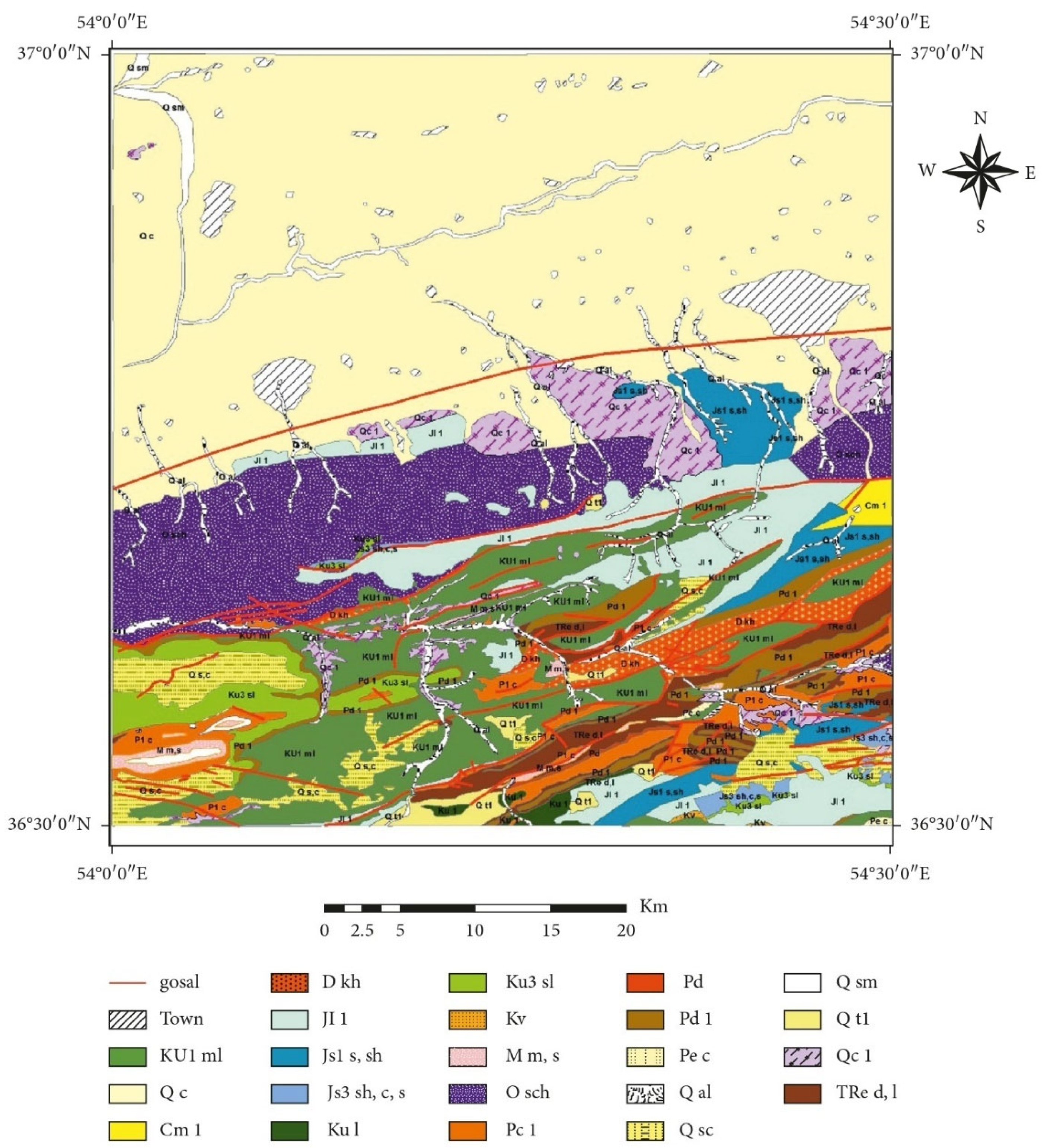
Based on the field investigation, interpretation of aerial photographs, and the geological map of the area, it is observed that the study site is located on Quaternary deposits. These deposits consist of young alluvial terraces and alluvial fans, older terraces, and alluvial fan systems, loessal hills, and finally clay units. The morphological domains of the plain and hilly terrains are primarily composed of Quaternary sediments. The hilly areas are formed of loess, which—due to their specific sedimentological characteristics—possess a high capacity for retaining moisture over extended periods. This property significantly enhances the potential for slope instability, including sliding and flow-type failures. In contrast to the youngest Quaternary formations, the oldest identifiable units within the Gorgan region are metamorphic rocks commonly known as the Gorgan Schists. The geological map of the area is presented in Figure 2.

4. Physical and Mechanical Properties of the Investigated Soil

To identify the materials and compounds used in this study and to determine their physical and mechanical properties, characterization tests were conducted on the soil. Laboratory procedures were carried out in accordance with ASTM standards [31] and included particle size analysis, hydrometer tests, Atterberg limits, compaction, and chemical analysis tests. This section presents detailed information on the materials and the tests performed. The experimental details cover material preparation, sample conditioning, as well as the testing procedures and the standards employed.

4.1. Results of the Hydrometer Test (ASTM D7928) [31]

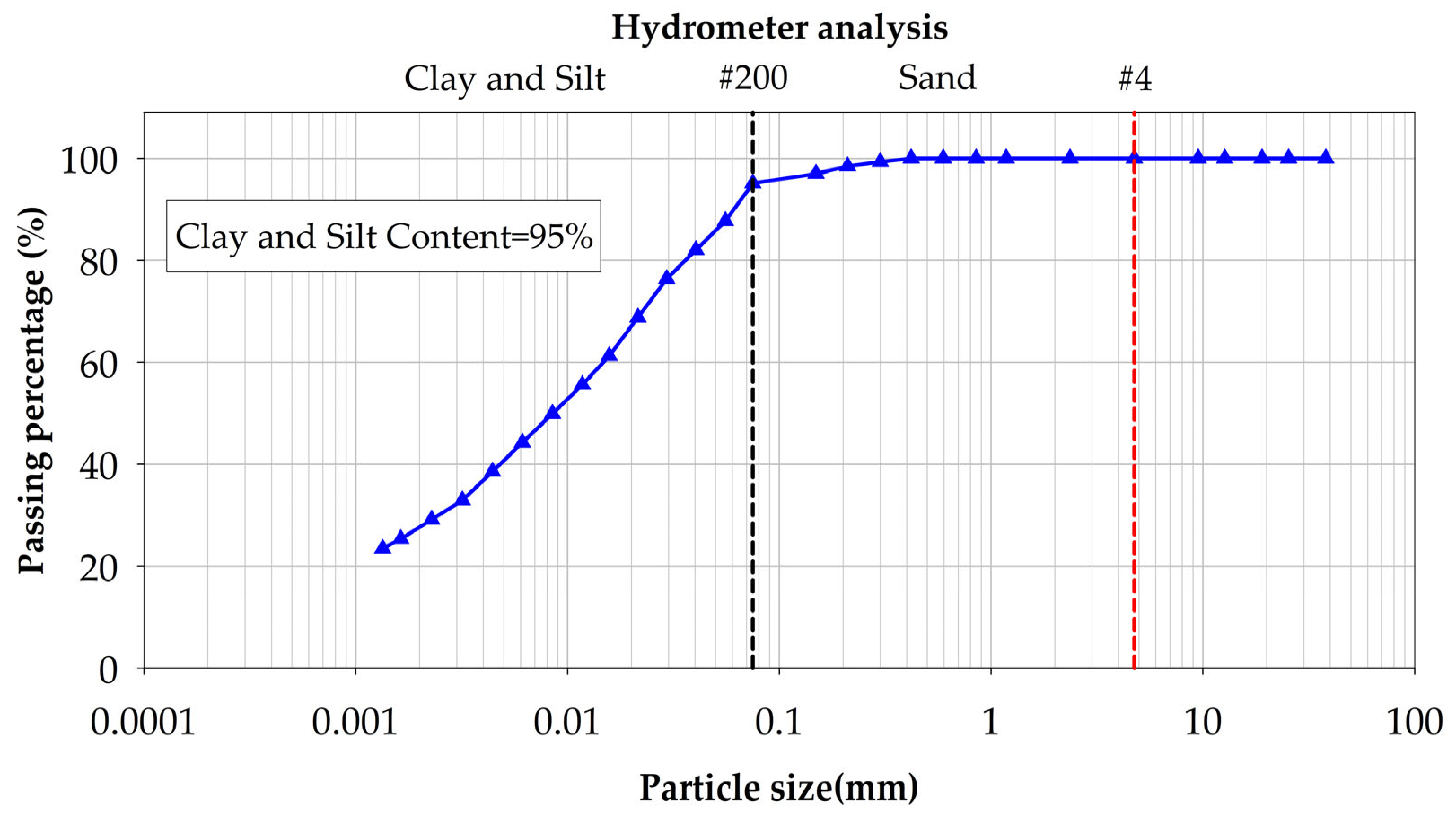
The hydrometer analysis was performed in accordance with ASTM D7928 [31] to determine the particle-size distribution of the fine-grained fraction of the natural soil. This test is particularly suitable for characterizing small particles, including silt- and clay-sized components, which cannot be accurately measured using sieve analysis. Figure 3 illustrates the results of the hydrometer test in the form of a particle-size distribution curve, representing the cumulative percentage by weight of particles finer than a given equivalent diameter. The curve exhibits a smooth and gradual slope across the fine particle-size range, indicating a continuous and relatively well-distributed gradation of fine particles without abrupt changes in particle size distribution.
The results reveal that the soil contain approximately 5% sand-sized particles, while the remaining 95% consists of silt and clay fractions, confirming that the soil is predominantly fine-grained. Such a high percentage of fines suggests that the soil behavior is likely to be governed by its plasticity, compressibility, and sensitivity to changes in moisture content, rather than by granular mechanics.
Given the dominance of fine particles, classification of the soil based solely on particle-size distribution is insufficient. According to the Unified Soil Classification System (USCS), the determination of Atterberg limits (liquid limit and plastic limit) is required to distinguish between silt and clay and to assign an appropriate group symbol. Therefore, Atterberg limits tests were conducted, and the results are presented and discussed in the subsequent sub-section.

4.2. Atterberg Limits and Plasticity Characteristics of the Studied Soil

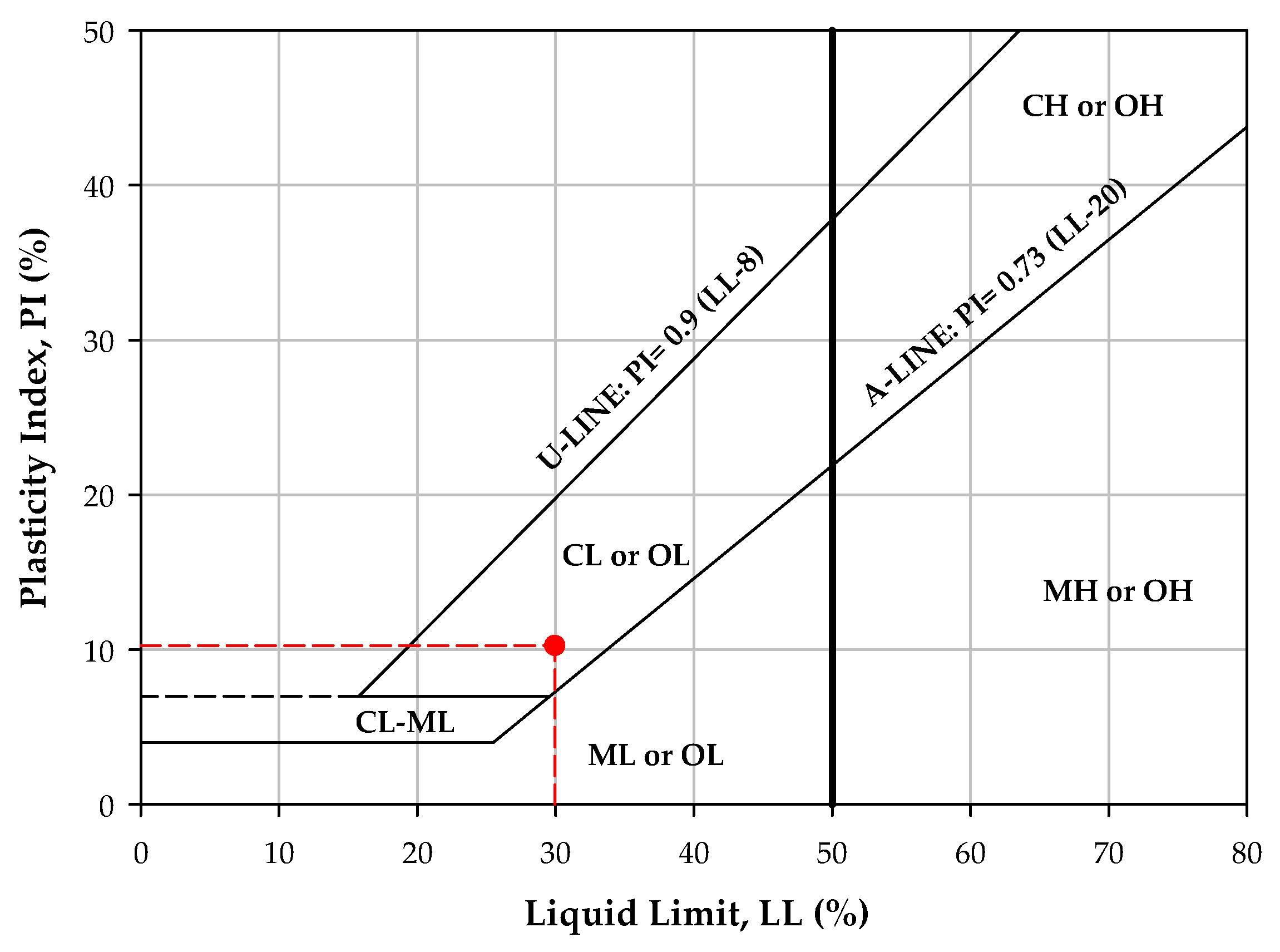
Atterberg limits are considered fundamental parameters for the analysis and design of various geotechnical structures, as they provide insight into soil behavior, including settlement, consolidation, and bearing capacity. In the present study, Atterberg limit tests were conducted on studied soil samples, following ASTM D4318 [31]. For the liquid limit (LL) determination, soil passing a #40 sieve (0.425 mm) was tested using the Casagrande apparatus, recording moisture content at the transition from semi-solid to plastic and from plastic to liquid states. The plastic limit (PL) was assessed by rolling cylindrical specimens of 3.2 mm diameter until visible cracks appeared. Subsequently, the plasticity index (PI) was calculated as the difference between LL and PL. Figure 4 presents the results of the Atterberg limits tests conducted in accordance with ASTM D4318 [31]. The liquid limit (LL) and plastic limit (PL) of the studied soil were determined to be 29.94% and 19.67%, respectively, resulting in a plasticity index (PI) of 10.27%. These values indicate that the soil exhibits low to moderate plasticity. Based on the plasticity chart (Figure 4), the soil sample plots within the CL region, corresponding to medium-plasticity clay according to the Unified Soil Classification System (USCS).

4.3. Results of Laboratory Compaction Test (ASTM D698) [31]

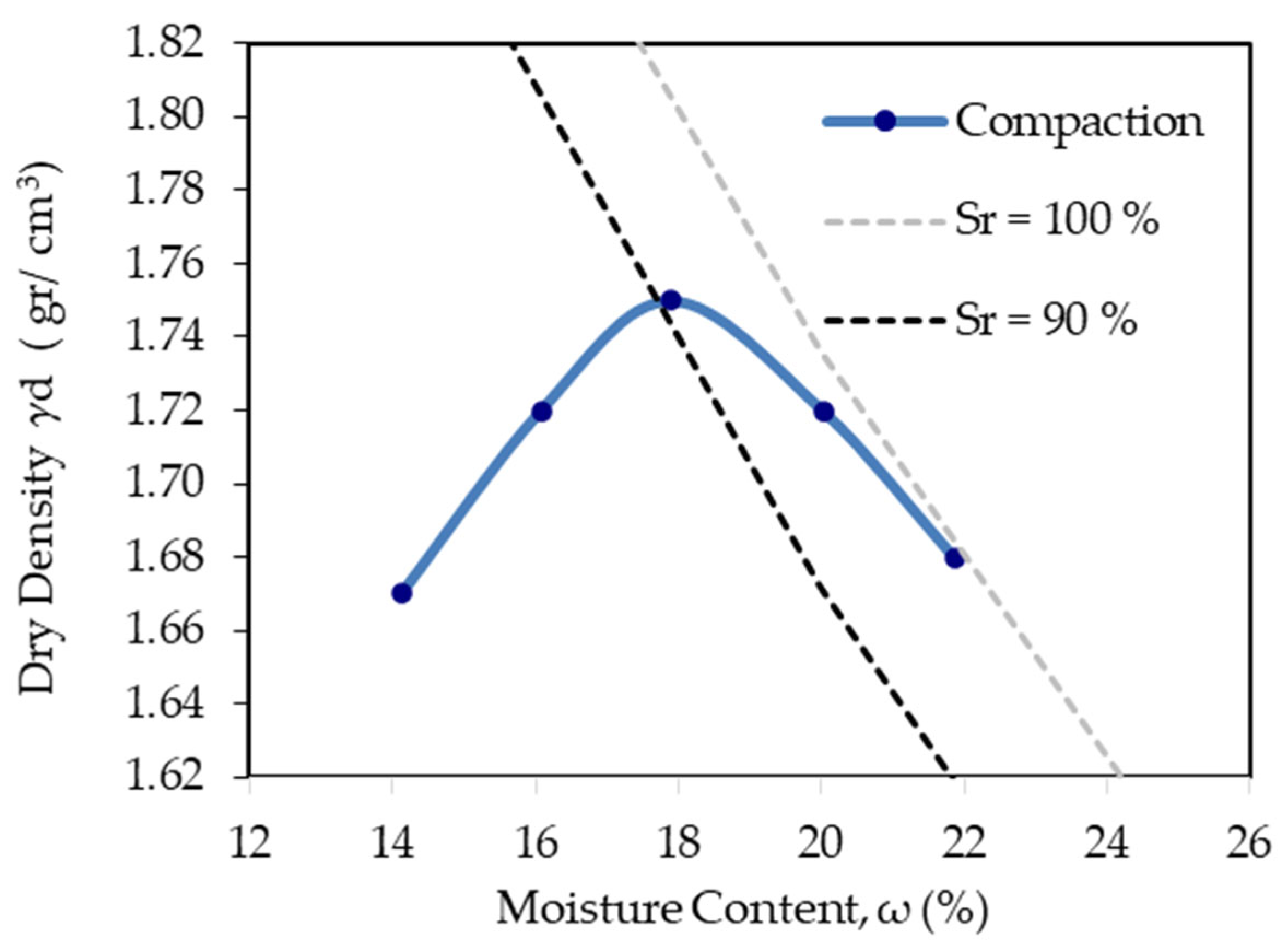
The Standard Proctor compaction test, performed in strict accordance with ASTM D698 [31], was utilized to determine the compaction characteristics of the soil. This involved establishing the optimum moisture content (OMC) and maximum dry density (MDD) for the soil. For each test, precisely 3 kg of dry soil was uniformly mixed with distilled water to achieve target moisture levels. These moistened soil samples were then compacted within a standard mold using a 2.5 kg hammer, dropped from a height of 300 mm, delivering 25 blows to each of the three distinct layers.
Both untreated and treated soil specimens were prepared at their individually determined OMC and MDD conditions. Figure 5 presents the moisture content-dry unit weight relationships derived from the compaction tests conducted on the natural soil. These values establish a critical baseline against which the mechanical behavior and the efficacy of the stabilization treatments detailed in this study can be rigorously assessed.
The geotechnical characteristics of the collected soil are summarized in Table 1.

5. Dispersion and Collapse Potential of the Investigated Soil

5.1. Chemical and Pore Water Analysis

The chemical characterization of the in situ soil provides valuable insight into its physicochemical behavior and susceptibility to swelling, dispersion, and chemical reactivities (Table 2). The measured pH of 7.80 indicates a mildly alkaline environment, whereas the relatively low electrical conductivity (EC = 0.76 dS/m) confirms that the soil is essentially non-saline.
To evaluate the inherent dispersive tendency of the clay fraction, pore water extraction was conducted to quantify soluble ionic constituents. This procedure enables the rapid separation of soil pore fluid and facilitates the determination of dissolved salts. Subsequent chemical analyses identified the concentrations of major cations, including Ca2+, Mg2+, Na+, and K+, as well as associated anions. The results revealed that sodium plays a dominant role in influencing the soil’s dispersion potential. As summarized in Table 2, the sodium percentage (SP) was calculated relative to the total dissolved salts (TDSs), defined as the sum of the aforementioned cations, following Equation (1) [2].
SP ( % ) = Na + TDS × 100 ;   TDS = Na + + Mg 2 + +   K + + Ca 2 +
Analysis of the saturated extract indicated that bicarbonate ( H C O 3 = 4.20 meq/L), sulfate ( S O 4 2 = 4.60 meq/L), and chloride (Cl = 3.25 meq/L) constitute the dominant anions, yielding a total anionic concentration of 12.05 meq/L. Correspondingly, sodium (Na+ = 4.60 meq/L), magnesium (Mg2+ = 4.05 meq/L), and calcium (Ca2+ = 3.70 meq/L) were identified as the principal cations, with a total concentration of 12.45 meq/L, indicating satisfactory ionic equilibrium.
Although the sodium adsorption ratio (SAR = 2.34) suggests a low sodicity risk, the comparatively high SP value (36.95%) reflects a substantial sodium presence that may adversely alter soil structure by enhancing clay particle dispersion. Nevertheless, based on Sherrard’s classification criteria, which consider TDSs and SP, the soil samples are categorized as non-dispersive.

5.2. Collapse Potential Test of Studied Soil

Because wetting-induced collapse is widely recognized as a dominant mechanism driving instability in collapsible soils, a series of oedometer tests was performed to evaluate the collapse behavior of the investigated soil. Collapse potential was quantified in terms of volumetric strain variation resulting from saturation. In accordance with ASTM D5333 [31], this procedure assesses one-dimensional collapse by inundating initially unsaturated soil specimens under a constant vertical stress during consolidation. These tests repeated two to three times to ensure reproducibility and minimize experimental error in the same condition.
Test specimens were prepared from undisturbed soil blocks by trimming the material using a rigid metal ring, following the procedures specified in ASTM D2435 [31]. Each specimen, with a height of 20 mm and a diameter of 50 mm, was installed in a consolidometer cell. Vertical stress was applied through a lever-arm loading system with a 1:10 ratio. The samples were subjected to incremental loading in six stages, with applied stresses ranging from 5 to 200 kPa under natural moisture conditions, and each load increment was maintained for one hour. After one hour at the maximum applied stress of 200 kPa, the specimens were inundated, and the vertical stress was maintained constant for an additional 24 h while continuous deformation measurements were recorded. The collapse potential at an axial stress of 200 kPa was evaluated using the collapse index, defined in Equation (2):
I e = Δ e 1 + e 0
where e0 represents the initial void ratio and Δe denotes the change in void ratio induced by saturation. The severity of collapse was subsequently classified according to the criteria summarized in Table 3.
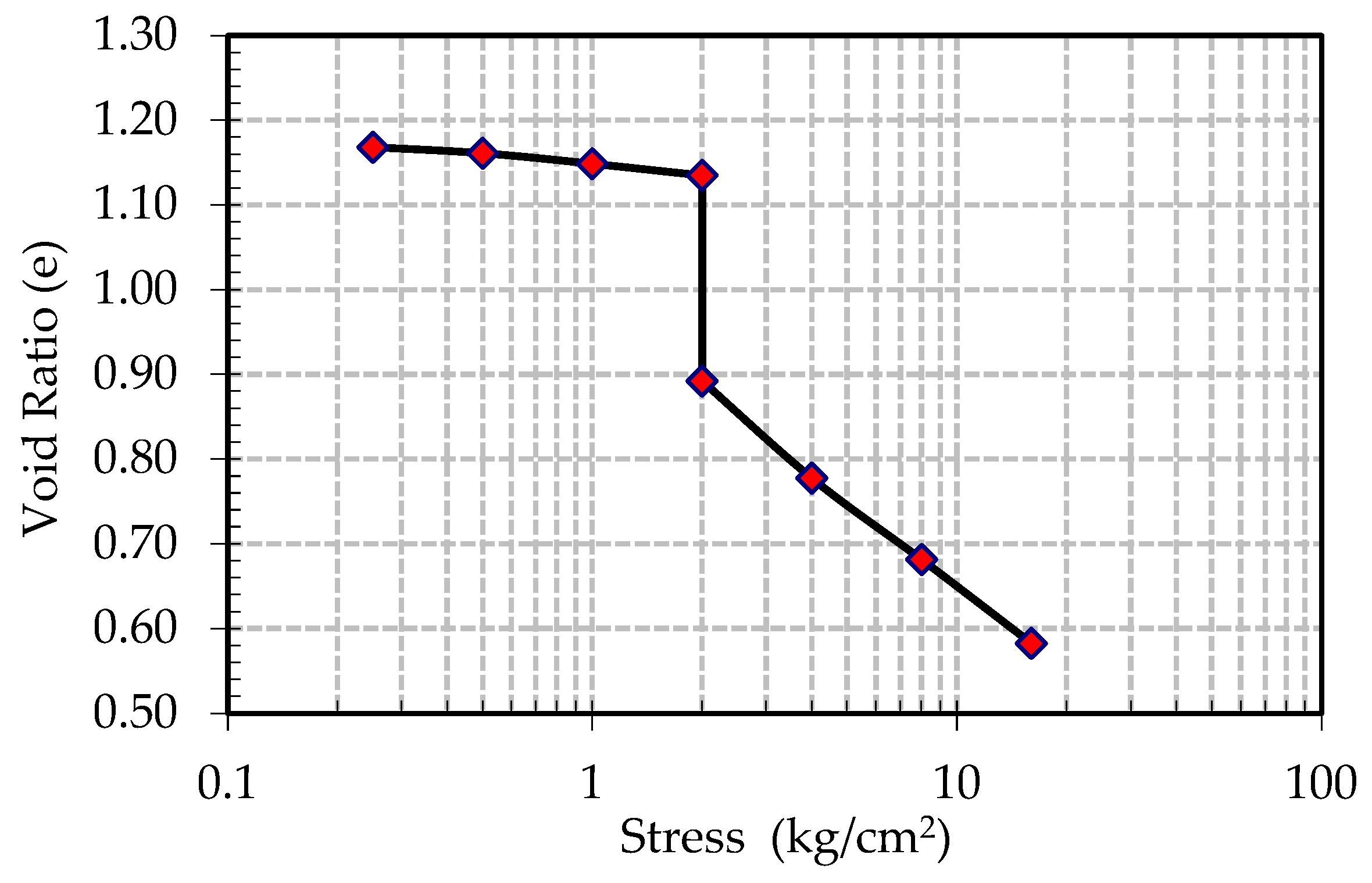
As illustrated in Figure 6, the untreated soil is characterized by a relatively high initial void ratio (e0 = 1.183), reflecting a loose fabric and a pronounced tendency toward volumetric contraction. With increasing applied stress, a substantial reduction in void ratio is observed, decreasing to 0.583 at a vertical stress of 16 kg/cm2, which indicates a highly compressible soil structure. This response is further corroborated by the calculated collapse index (Ie), which quantifies the magnitude of deformation induced by wetting. The evaluated collapse potential of 11.125% places the natural soil within the “severely collapsible” category, demonstrating its high vulnerability to instability under saturated conditions.

6. Soil Stabilization Program and Experimental Results

To achieve the research objectives and evaluate the effects of different additives on the behavior of collapsible clay, rice husk ash, lime, eggshell powder, turmeric, polypropylene fibers, and nanosilica were incorporated into the natural soil at predetermined proportions. Subsequent tests were carried out to investigate the impact of these mixtures on soil properties after curing periods of 1, 7, and 28 days. All experiments were conducted under controlled laboratory conditions within a temperature-regulated chamber to replicate field environments. Each test was repeated three times to ensure reliability and reproducibility of the results. To facilitate classification and comparative evaluation of the effect of each additive, ten distinct soil samples with varying additive percentages were prepared and tested, enabling the identification of the most effective sample in terms of mechanical strength. The types and proportions of the additives used to prepare the ten samples are summarized in Table 4. Ten samples, each with varying additive contents, were designed to allow a comparative assessment and to identify the most effective combination in terms of mechanical strength and overall performance.

6.1. Collapse Potential

The results of the collapse potential test conducted on the local soil and the prepared specimens demonstrate a clear reduction in void ratio with increasing applied pressure. The natural soil exhibits a significantly higher initial void ratio (e0 = 1.183) compared to the treated samples (e0 ≈ 0.742), indicating a looser initial structure and greater susceptibility to volume reduction. With increasing stress, the natural soil shows a pronounced decrease in void ratio, reaching 0.583 at 16 kg/cm2, which highlights its high compressibility.
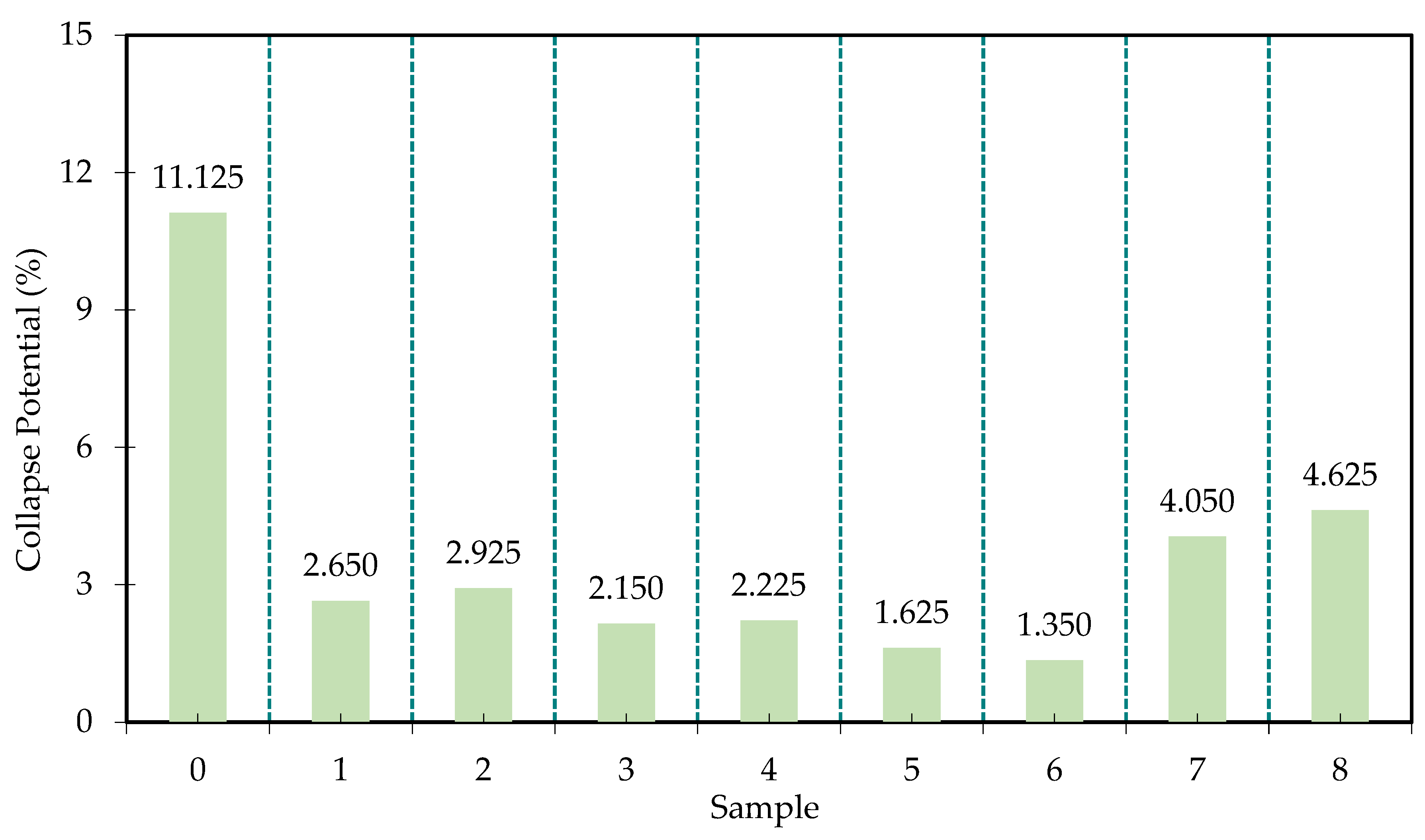
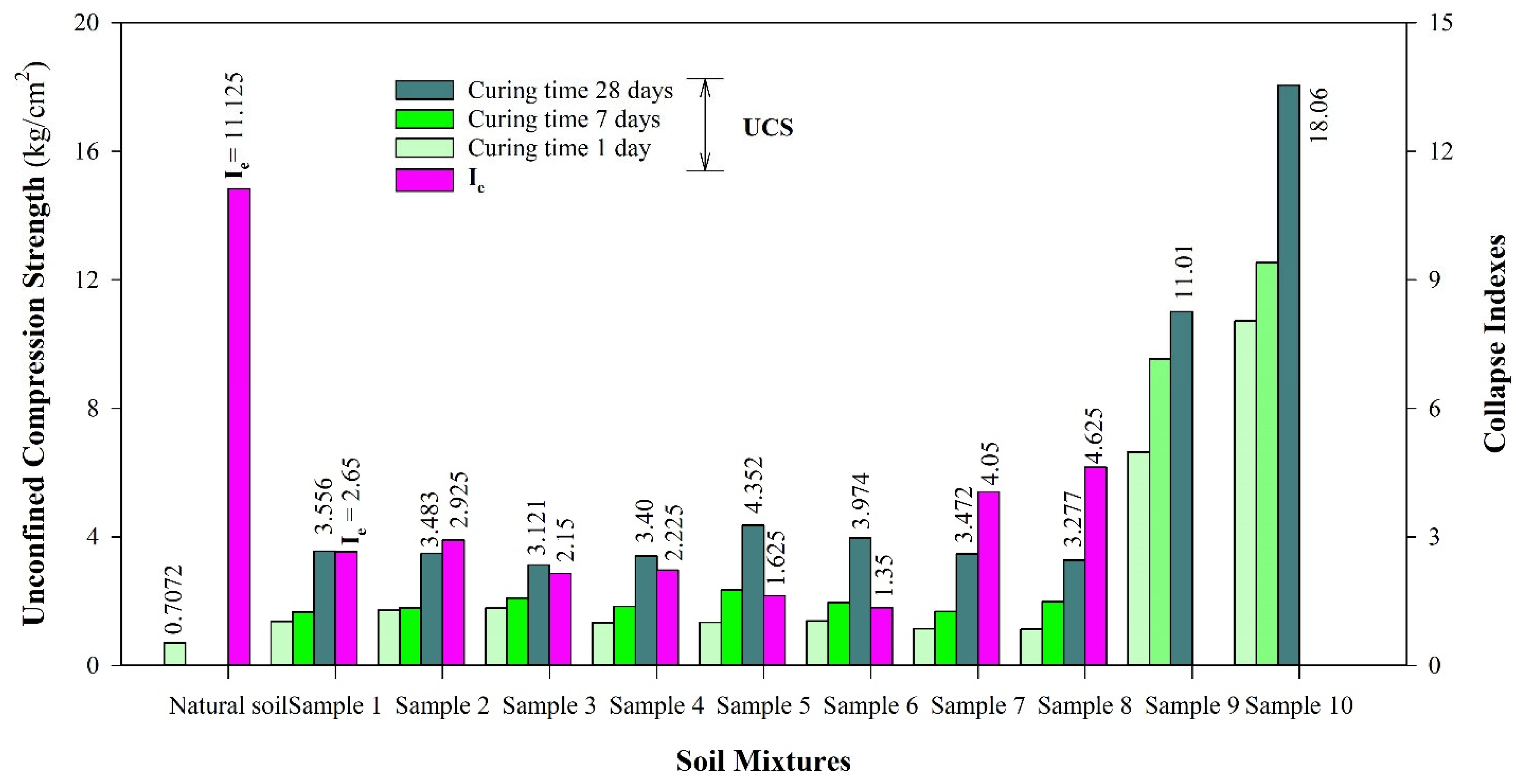
Figure 7 illustrates the variation in the collapse potential index (Ie) for natural soil and eight treated soil samples. The natural soil exhibits a collapse potential of 11.125%, which falls within the category of “severe collapse potential”. This high value indicates that the soil is highly susceptible to sudden volume reduction upon wetting or increased loading, posing a considerable risk for foundation performance, differential settlement, and structural damage in practical applications. In contrast, all treated samples show a substantial reduction in collapse potential, with Ie values ranging from 1.35% to 4.63%. Based on the classification provided in Table 3, all samples fall within the low to moderate collapsibility range. Samples 5 and 6 (with indexes less than 2.1%) are classified as having slight collapsibility, while samples 1 to 4, 7, and 8—with indices exceeding 2.1%—are categorized as having moderate collapsibility. This improvement can be attributed to the modification of the soil fabric, enhanced interparticle bonding, and reduced void space resulting from the treatment. As illustrated in Figure 7, Samples 7 and 8 exhibit the highest collapse potential among the tested specimens, with measured values of 4.050% and 4.625%, respectively. In contrast, the collapse test was not performed on Samples 9 and 10, as these specimens exhibited high stiffness and showed no observable tendency toward collapse.
These require particular attention in foundation design and the implementation of appropriate ground improvement measures.

6.2. Results of Unconfined Compressive Strength Test—ASTM D2166 [31]

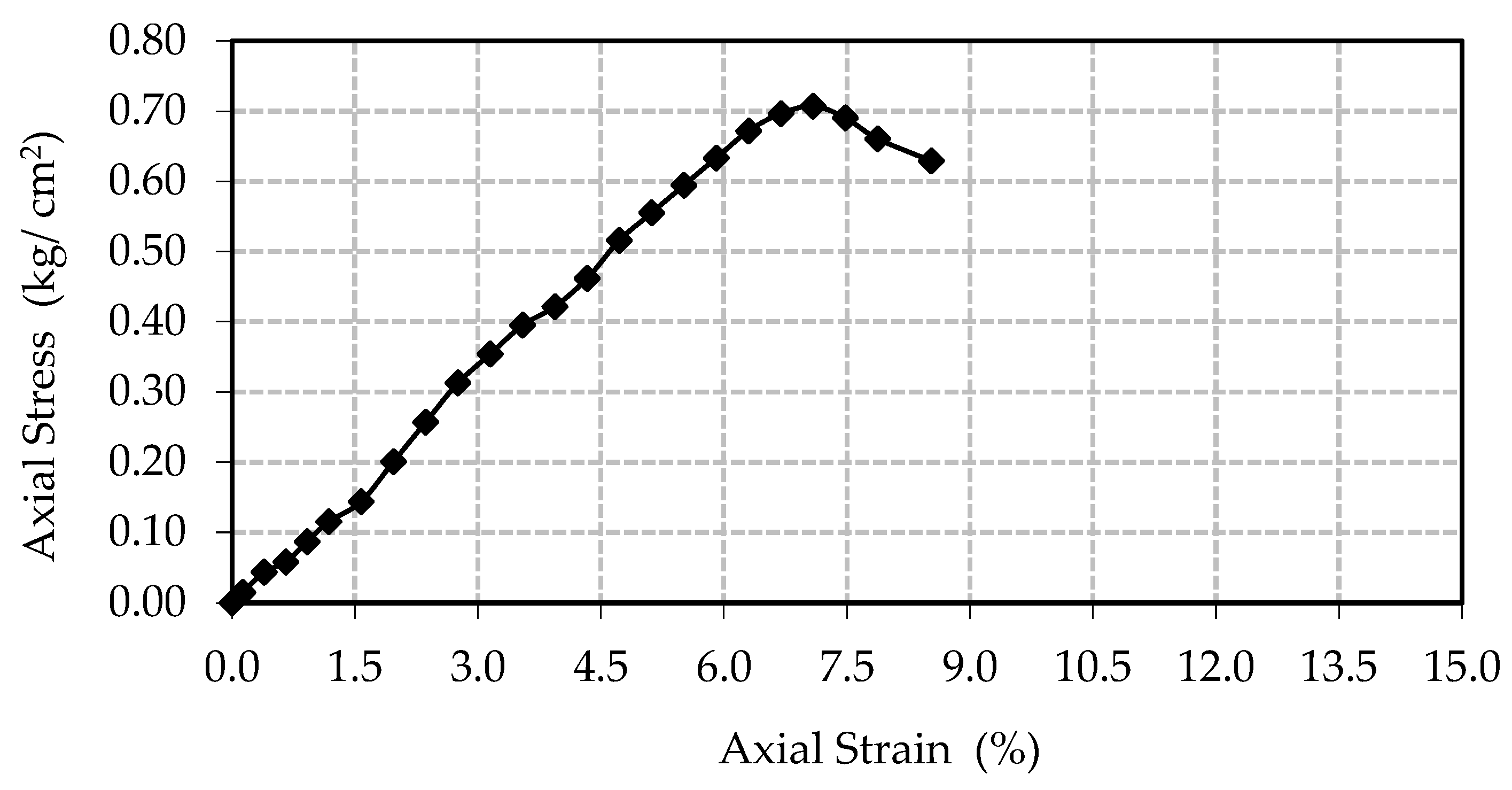
Figure 8 presents the stress–strain response obtained from the unconfined compression test conducted on the natural soil. The curve illustrates the development of axial stress with increasing axial strain until failure, reflecting the undrained shear behavior of the soil under unconfined conditions. The soil exhibits a distinct peak axial stress, corresponding to the unconfined compressive strength (UCS), followed by a reduction in stress with continued straining, which is indicative of strain-softening behavior. This response is characteristic of cohesive fine-grained soils and suggests the presence of a structured soil fabric that loses strength after reaching the failure point. The measured unconfined compressive strength provides a direct estimate of the undrained shear strength of the soil, which is a key parameter for evaluating short-term stability of foundations, slopes, and earth structures constructed on cohesive soils. The observed stress–strain behavior highlights the relatively low inherent strength of the natural soil, emphasizing the necessity of soil improvement measures where higher bearing capacity and reduced deformation are required.
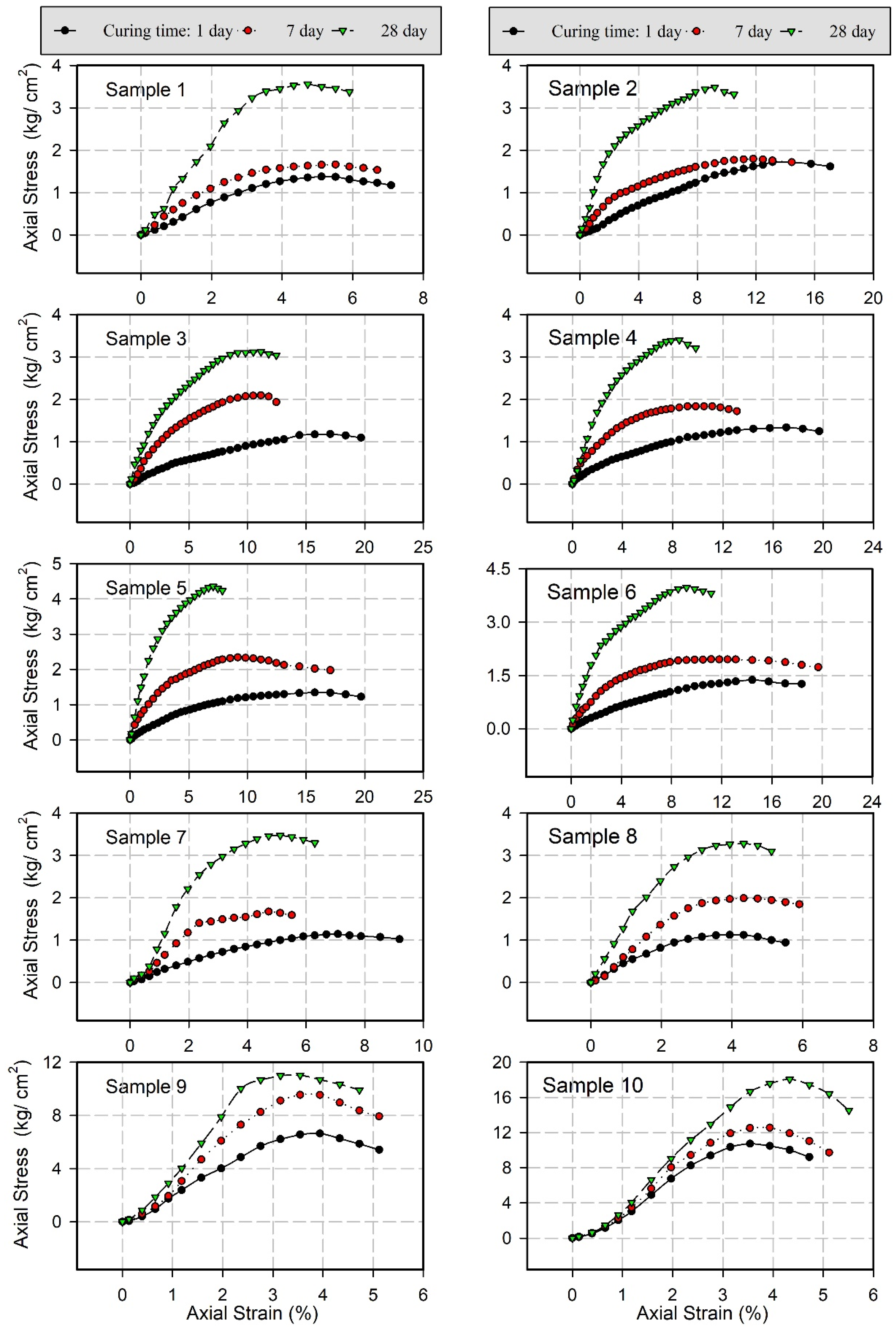
Figure 9 presents the stress–strain responses obtained from unconfined compression tests on all stabilized specimens cured for 1, 7, and 28 days. The untreated soil exhibits the lowest strength, reflecting weak interparticle bonding and high susceptibility to axial deformation. In contrast, stabilized specimens show a progressive increase in peak axial stress with curing time, indicating continuous strength development. The 1-day cured specimens display the lowest unconfined compressive strength (UCS) and a relatively ductile response, whereas the 7-day and 28-day specimens exhibit higher peak stresses and stiffer behavior. The specimen cured for 28 days achieves the highest UCS and shows a more brittle post-peak response, attributable to the progression of physicochemical bonding and cementation within the soil matrix.
Overall, UCS increases consistently with curing duration, confirming the effectiveness of the stabilization treatment and the critical role of curing in enhancing soil strength. Differences in strength gain among specimens are associated with variations in stabilizer type or dosage, soil characteristics, and compaction conditions. Mixtures exhibiting higher early-age strength indicate rapid bonding, while those with substantial gains between 7 and 28 days reflect efficient long-term stabilization mechanisms. The specimen with the highest 28-day UCS is therefore identified as the optimal mixture, providing superior structural stability and durability for geotechnical applications.

6.3. Results of Unconsolidated Undrained (UU) Triaxial Test—ASTM D2850 [31]

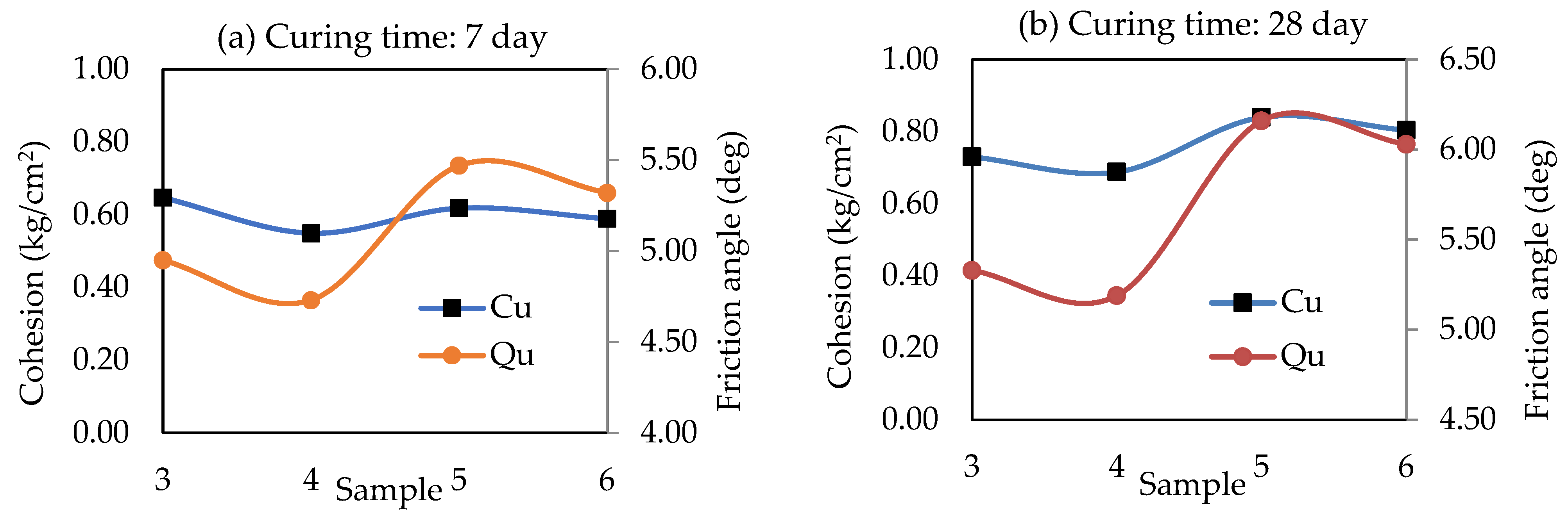
Figure 10 presents the results of triaxial tests (under unconsolidated-undrained or similar conditions) conducted on six soil samples after two distinct curing periods: 7 days and 28 days. The key shear strength parameters—cohesion (Cu), and friction angle (Qu)—are displayed simultaneously for comparative analysis. The results demonstrate a significant improvement in all strength parameters with the increase in curing time from 7 to 28 days. Increases in Cu and Qu exceeding 20% are observed in some samples, primarily attributed to hydration processes and the formation of calcium silicate hydrates in soils stabilized with cementitious agents (e.g., cement or lime). Furthermore, the increase in the internal friction angle indicates enhanced frictional characteristics and particle interlocking due to prolonged consolidation. These findings hold substantial practical importance for predicting soil behavior in ground improvement projects, slope stabilization, and foundation design over different timeframes. The gradual improvement in shear strength with time underscores the necessity of incorporating the “time effect” into numerical models and geotechnical stability analyses. The quantitative presentation of these relationships can significantly contribute to developing predictive models for the long-term strength of stabilized soils.

7. Results and Discussion

The mechanical behavior observed across the ten tested samples demonstrates a consistent trend in strength development, as reflected in both the unconfined compressive strength (UCS) values and the corresponding shear parameters. According to Figure 11 and Table 5, variations among the specimens indicate the influence of inherent heterogeneity, particle arrangement, and fabric structure within the soil matrix. Samples with higher UCS exhibited denser microstructural packing and stronger interparticle bonding, suggesting a more advanced degree of cementation or suction-induced strengthening. Conversely, the lower-strength specimens displayed more compressible behavior and weaker particle interlocking, highlighting the sensitivity of the soil’s mechanical performance to slight changes in index properties and initial void ratio. Collectively, the UCS results indicate that the soil exhibits sufficient load-bearing capacity for light to moderate geotechnical applications, while still demonstrating measurable variability attributable to its microstructural characteristics.
The collapse potential analysis further reveals that the soil undergoes notable structural rearrangement upon wetting, with samples exhibiting a range of collapse strains depending on their initial density and fabric. Specimens with lower UCS generally experienced higher collapse potential, confirming the inverse correlation between structural stability and susceptibility to hydro-mechanical degradation. This behavior underscores the dominance of metastable bonding—common in silty or loess-like soils—where the addition of moisture triggers rapid bond breakdown, leading to volumetric instability. The integration of UCS and collapse data emphasizes that while the soil may offer acceptable strength in its natural or dry state, its performance under sudden wetting requires careful consideration in design. These findings highlight the necessity of mitigation measures such as pre-wetting, compaction control, or chemical stabilization to ensure long-term stability, particularly for foundations or embankments exposed to seasonal moisture variations.

8. Conclusions

This study presented a comprehensive experimental investigation on the stabilization of collapsible clayey soil using a combination of traditional Sarooj mortar and eco-friendly additives, including rice husk ash, lime, eggshell powder, turmeric, polypropylene fibers, and nanosilica. The untreated soil exhibited poor engineering performance, characterized by high collapsibility, low shear strength, and significant sensitivity to moisture variation.
Quantitative results demonstrated substantial improvements in the hydro-mechanical behavior of the soil after stabilization. The collapse potential decreased from approximately 11.1% (severe category) in the natural soil to 1.35–4.63% in treated samples, representing a reduction of up to ~88% and shifting the soil classification to slight to moderate collapsibility.
In terms of strength enhancement, the unconfined compressive strength (UCS) increased from approximately 0.71 kg/cm2 for the untreated soil to values exceeding 3.5–4.3 kg/cm2 after 28 days of curing, corresponding to an improvement of more than 400–500% depending on the mixture composition. Furthermore, unconsolidated undrained triaxial test results indicated increases of over 20% in shear strength parameters, including cohesion and internal friction angle, particularly for samples containing higher nanosilica and fiber contents.
The observed improvements are attributed to the synergistic effects of pozzolanic reactions (lime, rice husk ash, nanosilica), cementitious bonding (Sarooj mortar), and mechanical reinforcement (polypropylene fibers), which collectively reduce void ratio, enhance interparticle bonding, and improve soil stiffness and ductility. The reduction in collapse potential, combined with the significant increase in strength and improved deformation resistance, demonstrates the effectiveness of the proposed stabilization approach.
Overall, the results confirm that the combined use of Sarooj mortar and eco-friendly additives provides a sustainable and efficient solution for improving collapsible soils. The proposed method offers a low-carbon alternative to conventional stabilizers, with significant potential for application in foundation engineering, embankments, and infrastructure projects in regions with problematic soils.

9. Perspectives

Recent advances in machine learning (ML) [33] are transforming the analysis and prediction of collapsible soil behavior. By harnessing extensive datasets from laboratory experiments and field measurements, ML models—including artificial neural networks, support vector machines, and random forests—can reliably estimate key soil properties such as collapsibility index, shear strength, and compressibility. These predictive tools allow for the optimization of stabilization strategies by simulating the impacts of various chemical, mechanical, and hybrid treatments under diverse environmental conditions. Coupling ML approaches with experimental investigations establishes a robust framework for developing efficient, site-specific soil improvement methods, minimizing trial-and-error procedures, and accelerating the implementation of sustainable geotechnical solutions.
Building on these computational insights, the present study demonstrates that the use of Sarooj mortar combined with eco-friendly additives offers a viable, low-carbon approach to improving the performance of collapsible clayey soils. Incorporating rice husk ash, eggshell powder, and turmeric illustrates the potential of integrating agricultural and bio-based waste materials into geotechnical practice, promoting pozzolanic reactions and long-term strength development while reducing dependence on traditional stabilizers such as cement or high-dosage lime. Furthermore, the hybrid incorporation of Sarooj mortar with nanosilica and polypropylene fibers highlights the synergistic benefits of combining traditional pozzolanic binders with modern engineering materials, leading to enhanced shear strength, reduced brittleness, and improved ductility. The marked reduction in collapse potential—from roughly 11% in untreated soils to 1.3–2.9% in optimized mixtures—underscores the practical relevance of this strategy for infrastructure in arid and semi-arid regions.
To advance the adoption of this sustainable stabilization approach, further research is warranted to assess long-term durability under cyclic environmental conditions such as wetting–drying, while detailed microstructural analyses (e.g., SEM/EDS) can elucidate the mechanisms underpinning observed improvements in strength and collapse resistance. Finally, field-scale trials will be critical to validate laboratory findings, address construction challenges, and inform the development of design guidelines for the practical implementation of eco-friendly stabilizers in collapsible soils.


Author Contributions

Conceptualization, Y.M., M.A.A., A.A. and A.S.; Methodology, Y.M., M.A.A., A.A. and A.S.; Formal analysis, Y.M.; Investigation, Y.M., M.A.A., A.A., A.S. and M.A.R.; Data curation, Y.M., A.A. and M.A.R.; Writing—original draft, Y.M. and A.A.; Writing—review & editing, M.A.A., A.A., A.S. and M.A.R.; Visualization, Y.M.; Supervision, M.A.A., A.A. and A.S. All authors have read and agreed to the published version of the manuscript.

Funding

This research received no external funding.

Data Availability Statement

The original contributions presented in this study are included in the article. Further inquiries can be directed to the corresponding author.

Conflicts of Interest

The authors declare no conflict of interest.

References

  1. Ayeldeen, M.; Negm, A.; El-Sawwaf, M.; Kitazume, M. Enhancing mechanical behaviors of collapsible soil using two biopolymers. J. Rock Mech. Geotech. Eng. 2017, 9, 329–339. [Google Scholar] [CrossRef]
  2. Asadoullahtabar, S.R.; Asgari, A.; Mohammad Rezapour Tabari, M. Assessment, identifying, and presenting a plan for the stabilization of loessic soils exposed to scouring in the path of gas pipelines, case study: Maraveh-Tappeh city. Eng. Geol. 2024, 342, 107747. [Google Scholar] [CrossRef]
  3. Derbyshire, E.; Mellors, T.W. Geological and geotechnical characteristics of some loess and loessic soils from China and Britain: A comparison. Eng. Geol. 1988, 25, 135–175. [Google Scholar] [CrossRef]
  4. Bahmyari, H.; Ajdari, M.; Vakili, A.; Ahmadi, M.H. The Role of the Cement, Lime, and Natural Pozzolan Stabilizations on the Mechanical Response of a Collapsible Soil. Transp. Infrastruct. Geotechnol. 2021, 8, 452–472. [Google Scholar] [CrossRef]
  5. Sabbaqzade, F.; Keramati, M.; Moradi Moghaddam, H.; Hamidian, P. Evaluation of the mechanical behaviour of cement—Stabilised collapsible soils treated with natural fibres. Geomech. Geoengin. 2022, 17, 1735–1750. [Google Scholar] [CrossRef]
  6. Qu, J.; Li, B.; Wei, T.; Li, C.; Liu, B. Effects of rice-husk ash on soil consistency and compactibility. Catena 2014, 122, 54–60. [Google Scholar] [CrossRef]
  7. Iranpour, B.; Haddad, A. The influence of nanomaterials on collapsible soil treatment. Eng. Geol. 2016, 205, 40–53. [Google Scholar] [CrossRef]
  8. Li, Y.; Shi, W.; Aydin, A.; Beroya-Eitner, M.A.; Gao, G. Loess genesis and worldwide distribution. Earth-Sci. Rev. 2020, 201, 102947. [Google Scholar] [CrossRef]
  9. Clemence, S.P.; Finbarr, A.O. Design Considerations for Collapsible Soils. J. Geotech. Eng. Div. 1981, 107, 305–317. [Google Scholar] [CrossRef]
  10. Ayeldeen, M.; Azzam, W.; Arab, M.G. The Use of Fiber to Improve the Characteristics of Collapsible Soil Stabilized with Cement. Geotech. Geol. Eng. 2022, 40, 1873–1885. [Google Scholar] [CrossRef]
  11. Brooks, R.M. Soil stabilization with flyash and rice husk ash. Int. J. Res. Rev. Appl. Sci. 2009, 1, 209–217. [Google Scholar]
  12. Yadav, J.S.; Roy, A.K.; Shekhawat, P.; Kumar, S. Mechanical properties of bentonite soil stabilized with rice husk ash and ground granulated blast furnace slag geopolymer. J. Build. Pathol. Rehabil. 2024, 9, 102. [Google Scholar] [CrossRef]
  13. Duong, L.H.; Nguyen, M.N. Colloidal interaction of fly ash and soil clay. Colloids Surf. A Physicochem. Eng. Asp. 2024, 692, 133944. [Google Scholar] [CrossRef]
  14. Zia, N.; Fox, P.J. Engineering Properties of Loess-Fly Ash Mixtures for Roadbase Construction. Transp. Res. Rec. 2000, 1714, 49–56. [Google Scholar] [CrossRef]
  15. Kolias, S.; Kasselouri-Rigopoulou, V.; Karahalios, A. Stabilisation of clayey soils with high calcium fly ash and cement. Cem. Concr. Compos. 2005, 27, 301–313. [Google Scholar] [CrossRef]
  16. Kong, R.; Zhang, F.; Wang, G.; Peng, J. Stabilization of Loess Using Nano-SiO2. Materials 2018, 11, 1014. [Google Scholar] [CrossRef]
  17. Chen, Z.; Ji, Y.; Jiang, S.; Song, S.; Lai, X.; Hu, T. Sustainable soil stabilization with Nano-Silica and polypropylene fibers mechanical properties durability and microstructural analysis. Sci. Rep. 2026, 16, 9634. [Google Scholar] [CrossRef]
  18. Ranjbar, F.; Asgari, A.; Bagheri, M.; Bengar, H.A. Insights into the mechanisms and seismic performance of reinforced concrete buildings on a pile foundation in liquefiable deposits. Structures 2026, 87, 111557. [Google Scholar] [CrossRef]
  19. Asgari, A.; Arjomand, M.A.; Bagheri, M.; Ebadi-Jamkhaneh, M.; Mostafaei, Y. Assessment of Experimental Data and Analytical Method of Helical Pile Capacity Under Tension and Compressive Loading in Dense Sand. Buildings 2025, 15, 2683. [Google Scholar] [CrossRef]
  20. Fattah, M.Y.; Al-Ani, M.M.; Al-Lamy, M.T.A. Studying collapse potential of gypseous soil treated by grouting. Soils Found. 2014, 54, 396–404. [Google Scholar] [CrossRef]
  21. Ziaie_moayed, R.; Kamalzareh, M. Improving Physical Characteristics of Collapsible Soil (Case Study: Tehran-Semnan Railroad). J. Eng. Geol. 2015, 9, 2869–2890. [Google Scholar] [CrossRef]
  22. Wang, H.; Ni, W.; Yuan, K. Improvement of strength and impermeability of fiber-reinforced loess by bentonite and polypropylene fibers: A response surface analysis. Environ. Earth Sci. 2023, 82, 252. [Google Scholar] [CrossRef]
  23. Hanna, A.; Soliman, S. Experimental Investigation of Foundation on Collapsible Soils. J. Geotech. Geoenviron. Eng. 2017, 143, 04017085. [Google Scholar] [CrossRef]
  24. Bakir, N.; Abbeche, K.; Panczer, G. Experimental study of the effect of the glass fibers on reducing collapse of a collapsible soil. Geomech. Eng. 2017, 12, 71–83. [Google Scholar] [CrossRef]
  25. Zhang, M.; Guo, H.; El-Korchi, T.; Zhang, G.; Tao, M. Experimental feasibility study of geopolymer as the next-generation soil stabilizer. Constr. Build. Mater. 2013, 47, 1468–1478. [Google Scholar] [CrossRef]
  26. Dassekpo, J.-B.M.; Zha, X.; Zhan, J. Synthesis reaction and compressive strength behavior of loess-fly ash based geopolymers for the development of sustainable green materials. Constr. Build. Mater. 2017, 141, 491–500. [Google Scholar] [CrossRef]
  27. Masoumi, M.M.; Banakar, H.; Boroomand, B. Review of an Ancient Persian Lime Mortar Sarooj. Malays. J. Civ. Eng. 2018, 27, 94–109. [Google Scholar] [CrossRef]
  28. Al-Rawas, A.A.; Hago, A.W. Evaluation of field and laboratory produced burnt clay pozzolans. Appl. Clay Sci. 2006, 31, 29–35. [Google Scholar] [CrossRef]
  29. Hago, A.W.; Al-Rawas, A.A.; Al-Riyami, A. Effect of varying cement content and curing conditions on the properties of sarooj (artificial pozzolana). Build. Environ. 2002, 37, 45–53. [Google Scholar] [CrossRef]
  30. Al-Saidy, A.H.; Al-Busaidi, M.; El-Gamal, S.; Abu Sohel, K.M. Flexural Strengthening of Stone Masonry Walls Using Textile-Reinforced Sarooj Mortar. Materials 2023, 16, 5703. [Google Scholar] [CrossRef]
  31. American Society for Testing and Materials (ASTM International). Annual Book of ASTM Standards; American Society for Testing and Materials (ASTM International): West Conshohocken, PA, USA, 2009. [Google Scholar]
  32. Mahdavifar, M.R. Analytical Evaluation and Design of Landslide Risk Management System of the Earthquake in Iran. Ph.D. Thesis, IIEES (International Institute of Earthquake Engineering and Seismology), Tajrish, Iran, 2006. [Google Scholar]
  33. Akbarzadeh, M.R.; Jahangiri, V.; Naeim, B.; Asgari, A. Advanced computational framework for fragility analysis of elevated steel tanks using hybrid and ensemble machine learning techniques. Structures 2025, 81, 110205. [Google Scholar] [CrossRef]
Figure 1. Geographical location of Golestan Province within Iran and location of sampling points.
Buildings 16 01561 g001
Figure 2. Geological map of the study area and the associated geological legend [32].
Buildings 16 01561 g002
Figure 3. Grain size distribution curve of the studied soil.
Buildings 16 01561 g003
Figure 4. Relationship between Plasticity Index and Liquid Limit, illustrating soil classification according to Atterberg limits.
Buildings 16 01561 g004
Figure 5. Results of the laboratory compaction test (ASTM D698 [31]) of natural soil showing the relationship between dry unit weight and moisture content.
Buildings 16 01561 g005
Figure 6. Relationship between void ratio (e) and vertical stress (kg/cm2) for the soil under investigation.
Buildings 16 01561 g006
Figure 7. Comparison of collapse potential (Ie) for natural soil and treated soil samples.
Buildings 16 01561 g007
Figure 8. Results of the unconfined compression test for the natural soil.
Buildings 16 01561 g008
Figure 9. Results of the unconfined compression test for all treated samples at curing periods of 1, 7, and 28 days.
Buildings 16 01561 g009
Figure 10. The Influence of Curing Time on the Shear Strength Parameters of Stabilized Soils: Results from Triaxial Tests (a) at 7- and (b) 28-Day Intervals.
Buildings 16 01561 g010
Figure 11. The unconfined compression strength, and collapse indexes of different stabilization alternatives.
Buildings 16 01561 g011
Table 1. Summary of the geotechnical parameters obtained for the investigated soil.
ParameterSoil PropertyUnit
USCSCL-
Moisture content10.24%
Dry density1.52gr/cm3
Liquid limit29.97%
Plastic limit19.67%
Plasticity index10.27%
Optimum moisture content17.90%
Maximum dry density1.75gr/cm3
Table 2. Chemical properties of the investigated soil.
Soil Classification (Unified)pHECCations and Anions in Saturated Extract (m.e/L)SARSP
C O 3 H C O 3 Cl S O 4 2 Sum of the AnionsCa+Mg+Na+K+Total Dissolved Salts (TDSs)
CL7.800.760.004.23.254.612.053.74.054.60.112.452.3436.95
Table 3. Classification of collapse index (ASTM D5333 [31]).
Degree of Specimen CollapseCollapse Index, I e (%)
None0
Slight0.1–2
Moderate2.1–6
Moderately Severe6.1–10
Severe>10
Table 4. Composition of soil samples with various additives.
Sample DetailsRice Husk Ash (%)Lime (%)Eggshell Powder (%)Turmeric (%)Polypropylene Fibers (%)Nanosilica (%)Water Content (%)
Sample 130.10.10.10.10.0117.9
Sample 230.10.10.10.10.0517.9
Sample 330.10.10.10.10.117.9
Sample 430.10.10.10.50.0117.9
Sample 530.10.10.10.50.0517.9
Sample 630.10.10.10.50.117.9
Sample 710.10.10.10.10.0117.9
Sample 850.10.10.10.10.0117.9
Sample 9330.10.10.50.0517.9
Sample 10350.10.10.50.0517.9
Table 5. Overall results of tests performed on clay soil.
Sample CharacteristicsLocal SoilSample 1Sample 2Sample 3Sample 4Sample 5Sample 6Sample 7Sample 8Sample 9Sample 10
Rice Husk Ash (RHA) % 3333331533
Lime % 0.100.100.100.100.100.100.100.1035
Eggshell % 0.100.100.100.100.100.100.100.100.100.10
Turmeric powder % 0.100.100.100.100.100.100.100.100.100.10
Polypropylene fibers % 0.100.100.100.500.500.500.100.100.500.50
Nanosilica % 0.010.050.100.010.050.500.010.010.050.05
Water content % 17.917.917.917.917.917.917.917.917.917.9
Collapse index %11.253.652.9252.1502.2251.6251.3504.0504.625--
UCS of 1-Day (kg/cm2)0.70721.37491.71671.77761.33541.34421.37761.14241.12496.636710.7299
UCS of 7-Day (kg/cm2) 1.65961.79422.09371.83432.33951.95061.67351.98849.544012.5421
UCS of 28-Day (kg/cm2) 3.55613.48263.12103.40074.35193.97443.47203.276711.012318.0640
Disclaimer/Publisher’s Note: The statements, opinions and data contained in all publications are solely those of the individual author(s) and contributor(s) and not of MDPI and/or the editor(s). MDPI and/or the editor(s) disclaim responsibility for any injury to people or property resulting from any ideas, methods, instructions or products referred to in the content.