1. Introduction
The construction sector constitutes a pivotal pillar of Saudi Arabia’s economic diversification agenda under Vision 2030, which is characterized by unprecedented megaproject investments exceeding USD 1.5 trillion in infrastructure, urban development, and tourism hubs [
1,
2]. Unlike conventional development cycles, the current expansion exhibits heightened complexity through large-scale interdependencies, compressed schedules, and stringent sustainability mandates, thereby amplifying exposure to multidimensional risks spanning cost, time, and quality performance [
3,
4]. Construction risks in this context manifest through dual pathways: engineering risks intrinsic to project execution, encompassing design integrity, resource coordination, and managerial capability, and non-engineering risks extrinsic to technical processes, including regulatory volatility, macroeconomic fluctuations, and environmental constraints [
5,
6,
7,
8].
Prior studies within Saudi Arabia have identified isolated risk factors, ranging from oil-price volatility and extreme climatic conditions to weak safety inspection protocols and contractor payment delays, yet methodological limitations persist. Specifically, conventional risk matrices often rely on arbitrary weighting schemes or singular probability-impact assessments that fail to accommodate the heterogeneous sensitivity of cost, time, and quality objectives [
9,
10,
11,
12,
13]. Empirical evidence that different risk categories interact dynamically; for instance, inflationary pressures (non-engineering) exacerbate resource mismanagement (engineering), while statutory clearance delays cascade into scheduling conflicts and quality compromises [
14,
15]. Despite such interdependencies, the extant literature predominantly examines these risk domains in isolation or prioritizes unidimensional impact assessments (cost overruns alone), leaving critical gaps in understanding cross-dimensional risk propagation [
16,
17].
Structured decision-making approaches such as the Analytic Hierarchy Process (AHP) further enable systematic ranking of financial, design, and regulatory risks, enhancing transparency and mitigation planning [
18]. Multi-method studies by Al-Gahtani [
19] using PLS-SEM and Relative Importance Index techniques identify critical risks, including specification gaps, financial failure, poor material quality, and weak threat monitoring. The results emphasize the value of integrated, multi-analytical risk assessment frameworks for improving performance in complex construction projects. Researchers worldwide have identified numerous construction risk factors and developed diverse techniques for their identification and assessment [
20]. Despite methodological advances, risk evaluation in practice frequently depends on professional judgment and experience [
21]. Risk management is therefore recognized as an iterative process involving systematic identification, analysis, and response planning, including risk retention where uncertainties cannot be eliminated [
22,
23]. Prior studies have categorized risks by source (engineering vs. non-engineering) [
24] and applied quantitative model—such as hierarchical analysis, Monte Carlo simulation [
25], and hybrid MCDM techniques, including COPRAS–SWARA [
26]—to improve construction risk prioritization.
Methodological Contributions of Proposed Integrated Risk Assessment
Conventional methods such as the Relative Importance Index (RII) primarily rely on mean-based rankings derived from Likert-scale responses, often treating risk factors independently and without explicitly linking probability and impact. While effective for identifying dominant risks, RII lacks the ability to capture interaction effects and dimensional trade-offs, thus limiting its applicability in complex megaproject environments. Similarly, the Analytic Hierarchy Process (AHP) provides structured pairwise comparisons and weighting schemes but depends heavily on expert judgment, introducing subjectivity and consistency bias, particularly when large numbers of risk factors are involved. Fuzzy MCDM approaches improve uncertainty representation by incorporating linguistic variables; however, they often involve computational complexity and limited interpretability for practitioners, reducing their practical adoption in industry settings. Monte Carlo–based models, on the other hand, offer probabilistic simulation of risk outcomes but require extensive input data, distribution assumptions, and computational resources, making them less suitable for perception-based survey datasets. In contrast, the proposed RPS–ORI framework offers several methodological advantages. First, it employs scale normalization (0–1) to harmonize probability and impact measures, eliminating scale bias and enabling consistent comparison across risk dimensions. Second, it introduces a data-driven weighting mechanism, where the relative importance of cost, time, and quality emerges from empirical responses rather than predefined assumptions. Third, the framework captures asymmetric probability–impact relationships, allowing risks with high likelihood but low consequence (or vice versa) to be more accurately prioritized. Fourth, the integration of RPS into a composite Overall Risk Index (ORI) enables unified ranking of engineering and non-engineering risks within a single analytical structure, bridging the gap between external systemic risks and internal project governance factors. Despite extensive global research on construction risk management, relatively few empirical studies have examined multidimensional risk prioritization within the specific institutional and economic context of Saudi Arabia. Existing studies often focus on either probability or impact, single performance dimensions, or isolated project phases, thereby limiting a comprehensive understanding of risk criticality across cost, time, and quality. Addressing this gap, the study develops and validates a normalized probability–impact–priority framework to assess and rank engineering and non-engineering risk factors affecting Saudi construction projects. By deriving dimension-specific weights from practitioner perceptions rather than a priori assumptions, the research computes risk priority scores (RPS) and an Overall Risk Index (ORI) that enable cross-dimensional risk benchmarking. Accordingly, this study is guided by the following key questions: what are the most critical engineering and non-engineering risk factors affecting construction projects in Saudi Arabia; how can these risks be systematically classified and evaluated; and how do their probability and impact influence project performance across cost, time, and quality dimensions? To answer these questions, the identified risks were evaluated through a survey of construction professionals, and their probability and impact were analyzed using a normalized multidimensional prioritization framework to generate an integrated risk ranking that informs evidence-based governance strategies under Vision 2030. The novelty of this study is twofold. Methodologically, it advances beyond traditional single-dimension risk indices by introducing a data-driven weighting mechanism that reflects the empirical trade-offs between project objectives in the Saudi context. Practically, it disentangles the dominant drivers of systemic risk (macroeconomic/regulatory) from operational variability (managerial/resource-based), offering targeted levers for policy intervention and project governance enhancement.
2. Methodology
2.1. Literature Review Methodology for Risk Factors Selection
By employing this multi-level literature-based process, the study aims to develop an integrated risk priority assessment framework of engineering and non-engineering factors influencing Saudi Arabian construction projects by processing secondary data, i.e., reviews of published research and books. Major scientific databases, including Scopus, ScienceDirect, Web of Science, and Google Scholar, were searched for peer-reviewed journal articles, conference papers, and reports published between 2010 and 2024 to capture recent advancements aligned with Vision 2030 developments. The search strategy employed combinations of keywords and Boolean operators such as “construction risk” AND “Saudi Arabia”, “engineering risk” OR “non-engineering risk”, “risk assessment” AND (“cost” OR “time” OR “quality”), and “construction project risk factors”. Additional sources were identified through backward and forward citation tracking to ensure comprehensive coverage
A structured screening process was applied to ensure relevance and quality. Studies were included if they addressed construction risk identification, classification, or assessment using empirical or analytical methods, particularly within developing or Middle Eastern contexts. Exclusion criteria comprised studies unrelated to construction and articles lacking methodological rigor or clear risk classification. After removing duplicates and irrelevant records through title, abstract, and full-text screening with consultation of experts, the final selection informed the identification of 19 risk factors, which were categorized into engineering and non-engineering risks, forming the basis for subsequent quantitative analysis.
The selection of the 19 risk factors (13 engineering and 6 non-engineering) was guided by three key criteria: (i) frequency of occurrence in the prior literature; (ii) demonstrated impact on project performance (cost, time, and quality); (iii) relevance to the Saudi Arabian construction context, particularly under large-scale infrastructure and Vision 2030 projects. This ensured that the identified risks were not only theoretically grounded but also contextually applicable. A filtering and validation step was subsequently conducted to eliminate redundancy and overlap among risk variables. Similar or conceptually overlapping risks identified across multiple sources were consolidated to avoid duplication, resulting in a concise yet comprehensive set of representative risk factors. To further enhance validity, the preliminary list of risk factors was reviewed through expert consultation involving industry professionals and academic specialists in construction management. This process functioned as a qualitative validation step analogous to a modified Delphi approach, where expert feedback was used to confirm the relevance, clarity, and completeness of the selected risk factors prior to questionnaire design.
2.2. Study Design and Data Collection
The construction sector in Saudi Arabia involves a diverse network of stakeholders responsible for managing complex technical, financial, environmental, and regulatory risks, particularly within the accelerated development context of Vision 2030. To examine the probability and impact of risks affecting construction project performance, a structured questionnaire survey was conducted among professionals involved in planning, design, and execution of construction projects across the Kingdom. The survey was designed to capture practitioners’ real-world experience with construction risks and their influence on cost, time, and quality performance. Risk factors were identified through an extensive review of the construction risk management literature and consultations with experienced practitioners to ensure contextual relevance to Saudi construction conditions. Nineteen risks were identified and categorized into two groups: engineering risks and non-engineering risks. The identified risk factors are presented in
Table 1 and
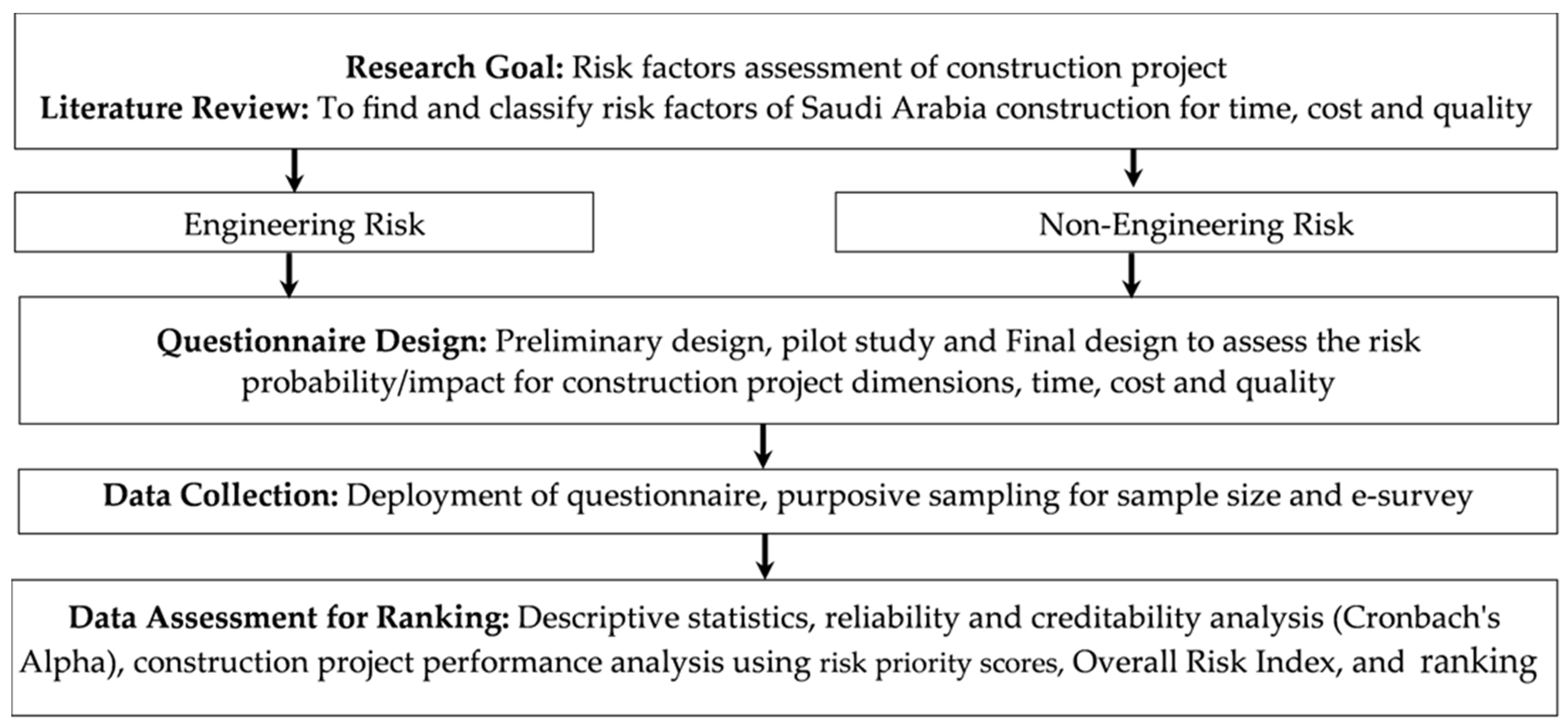
Table 2. The methodology flowchart for secondary data-based risk assessment of critical risk factors (CRFs) of Saudi Arabia construction projects is depicted in
Figure 1.
2.3. Questionnaire Content
The questionnaire consisted of three sections: respondent characteristics, probability assessment of risk factors, and impact assessment of risk factors on cost, time, and quality performance (
Appendix B). Probability and impact were measured using frequency-based ordinal scales expressed in practical terms ranging from very low to very high likelihood or consequence. Specifically, probability was assessed using a 5-point Likert scale (Very Low to Very High), while impact was measured using a 6-point scale (No Impact to Very High Impact), each supported by descriptive frequency -based interpretations (e.g., “one in 20 projects” or “greater than 50% likelihood”) and practical consequence ranges (e.g., cost or performance implications), enabling respondents to anchor their judgments in real project experience rather than abstract scoring. Prior to full-scale data collection, the questionnaire was subjected to a pilot review involving a small group of industry professionals and academic experts to assess clarity, relevance, and completeness of the items. Feedback from this preliminary evaluation was used to refine wording, eliminate ambiguities, and improve the logical sequencing of questions, thereby enhancing content validity. In addition, potential bias and ambiguity in subjective risk perception were minimized by providing practical descriptors for each scale level, clearly defining risk categories, and targeting experienced professionals capable of informed judgment.
The respondent characteristics, first section of questionnaire, include educational qualification and profession (to understand the educational background and profession of participants, which may influence their responses and insights on risk factors), stakeholders role in construction project s (to reflect diverse roles in project decision-making), working experience sectors (to incorporate the organizational perspectives on risk factors), professionals job location in Saudi Arabia (to incorporate the wider covering of opinions and decisions on risk factors), types of executed project (to incorporate the various infrastructure perspectives on risk factors), executed projects in the last 5 years (to incorporate the experience on effect of degree of risk factor). The other two sections include the degree of impact and the probability of engineering and non-engineering types of risk factors influencing the success or failure of construction projects, covering financial, technical and environmental aspects, regulatory challenges, resource availability, project management practices, and stakeholder involvement. The degree of impact and probability for each risk type was included in the questionnaire as per the degree of impact and probability matrix for each risk type presented in
Table 3. Questions are designed to assess how these factors affect project performance and the effectiveness of current management strategies. Participants are asked to rate the significance of these risks and their impact on project outcomes. A total of 113 valid responses were obtained and used for analysis, providing representation across professional roles, sectors, and project types within the Saudi construction industry.
2.4. Data Analysis and Risk Prioritization Framework
The data collected were analyzed using descriptive and composite risk assessment techniques to evaluate the probability and impact of engineering and non-engineering risks on construction project performance. Frequency and percentage distributions were first used to examine respondents’ perceptions of likelihood and consequences across cost, time, and quality dimensions. Chi-square goodness-of-fit tests were applied to examine the distribution of respondent characteristics and confirm the representativeness of the survey sample relative to the structure of the Saudi construction industry. To evaluate response consistency and distribution characteristics, standard deviation, skewness, and kurtosis were computed to assess dispersion, symmetry, and concentration of responses, as well as to verify the suitability of the data for further statistical interpretation. These distributional statistics ensured that the probability and impact assessments demonstrated acceptable variability and stability prior to normalization and aggregation.
To enable quantitative assessment, probability responses were converted into weighted scores on a 1–5 scale (Very Low = 1 to Very High = 5), while impact responses were converted into weighted scores on a 1–6 scale (No Impact = 1 to Very High Impact = 6). Mean probability and mean impact values were then calculated for each risk factor and performance dimension. Because probability (P
n) and impact (I
n) were measured on different numerical scales (1–5 and 1–6, respectively), both variables were normalized to a 0–1 range prior to calculating the overall risk priority score. Normalization was performed as:
The risk priority score was then computed as:
The use of normalization in this study offers a methodological advantage over conventional risk matrices, which typically rely on discrete categorical scoring and may introduce implicit bias due to unequal scaling of probability and impact axes. By transforming both variables into a common 0–1 scale, normalization ensures comparability, eliminates scale-induced weighting distortions, and enables continuous ranking of risks across multiple performance dimensions (cost, time, and quality). This is particularly important in multidimensional assessments where risks exhibit varying sensitivity across performance outcomes. Alternative scaling approaches (e.g., z-score or min–max normalization) may be considered; however, fixed-scale normalization based on theoretical maxima (5 for probability and 6 for impact) was adopted to maintain interpretability and alignment with the questionnaire design. This ensures direct linkage between normalized values and original ratings. Although treating ordinal Likert-scale data as interval data assumes equal spacing between categories, this common approach enables quantitative analysis. To reduce potential bias, clearly defined, experience-based descriptors were used for each scale level, improving consistency in respondent interpretation. The normalization approach ensures scale compatibility, eliminates implicit weighting bias between probability and impact measures, and enables consistent comparison of risk criticality across cost, time, and quality dimensions. The resulting RPS values provided a structured and statistically robust basis for ranking risks and identifying critical risk factors affecting construction project performance in Saudi Arabia.
Construction project performance is jointly determined by cost, time, and quality outcomes; however, the relative burden of risks across these dimensions may vary depending on industry context. To obtain an integrated performance-based risk measure, an Overall Risk Index (ORI) was developed by combining normalized risk priority scores across the three dimensions. Rather than applying assumed or arbitrary weights, dimension weights were derived directly from the survey data using aggregate normalized RPS values across all risks. The total perceived risk burden for each performance dimension was calculated as:
Dimension weights were then obtained as:
This data-driven weighting approach reflects the collective risk burden perceived by respondents across cost, time, and quality outcomes in Saudi construction projects. The weighted Overall Risk Index for each risk factor was computed as:
The ORI integrates probability, impact, and performance sensitivity into a single consolidated measure, enabling unified ranking of engineering and non-engineering risks. This approach provides an overall representation of risk criticality across construction project performance in Saudi Arabia while maintaining empirical grounding in survey-derived perceptions.
3. Results
3.1. Descriptive Statistics for the Participant Characteristics
Table 4 and
Table 5 show the descriptive statistics for 113 respondents. The statistics for the participant characteristics reveal several insights into the distribution and variability of responses. The participant profile reflects a well-balanced and industry-representative sample. Consultants formed the largest professional group (34.5%), followed by project managers (22.1%), risk managers (15.0%), and department managers (13.3%), ensuring strong representation from roles directly involved in decision-making and risk control. Most respondents were from the private (45.1%) and semi-government sectors (27.4%), which aligned with the dominant structure of the construction industry, while educational qualifications ranged from a diploma (28.3%) to postgraduate degrees (34.5%), indicating a technically competent sample. Geographically, respondents were primarily based in the Eastern (36.3%) and Northern (23.0%) regions, with representation from all major regions of Saudi Arabia. Nearly half of the participants were involved in highway projects (48.7%), followed by other civil projects (40.7%), reflecting the country’s infrastructure-driven development agenda. In terms of experience, the majority had managed up to 20 projects in the past five years (73.4%), suggesting moderate to substantial practical exposure. Stakeholder representation was dominated by engineering consultants (39.8%), project owners (19.5%), designers (18.6%), and main contractors (16.8%), ensuring that the findings are largely informed by stakeholders central to construction risk management and project execution.
The standard deviations for all characteristics are relatively low, indicating that most participants’ responses are close to the mean, except for Profession, which has a higher standard deviation of 1.705, suggesting more variability in responses. The chi-square goodness-of-fit results given in
Table 5 indicate that the distribution of respondents across all participant characteristics deviates significantly from a uniform distribution (
p < 0.05), confirming that the sample reflects the structural composition of the construction industry rather than random variation. Professional background shows a significant imbalance (χ
2 = 30.67, df = 5,
p < 0.001), with consultants, project managers, and risk managers forming the majority of respondents. This concentration is methodologically beneficial, as these roles are directly involved in project planning, coordination, and risk-related decision-making. Similarly, significant non-uniformity is observed across working experience sectors (χ
2 = 33.12, df = 3,
p < 0.001), with private and semi-government sectors dominating the sample, which aligns with the prevailing industry delivery models. Although educational qualifications vary significantly (χ
2 = 16.51, df = 3,
p = 0.001), the strong presence of bachelor’s and postgraduate degree holders indicates an academically competent sample capable of evaluating complex construction risks.
Geographical and project-related characteristics further support the representativeness and practical relevance of the data. Job location varies significantly across regions (χ2 = 19.84, df = 4, p = 0.001), showing concentration in major construction hubs while maintaining national coverage. The types of executed projects also differ significantly (χ2 = 21.45, df = 2, p < 0.001), with infrastructure and highway projects being overrepresented, reflecting national development priorities. Experience-related characteristics exhibit strong non-uniformity (χ2 = 36.92, df = 4, p < 0.001), suggesting varied but generally substantial project exposure among respondents. Stakeholder representation shows the highest deviation from uniformity (χ2 = 52.60, df = 6, p < 0.001), confirming the dominance of engineering consultants, contractors, and project owners, whose central role in risk identification and mitigation enhances the managerial relevance and external validity of the study’s findings.
3.2. Descriptive Statistical Characteristics of Risk Assessment Data
Cronbach’s Alpha was calculated to evaluate the internal consistency of the questionnaire items measuring the probability and impact of engineering and non-engineering risks across cost, time, and quality dimensions. The results indicate strong reliability of the survey instrument. For engineering risk factors, Cronbach Alpha values ranged from 0.82 to 0.87, while for non-engineering risks, the values ranged from 0.78 to 0.82, all exceeding the recommended threshold of 0.70 for reliable measurement. The overall Cronbach Alpha for the combined instrument was approximately 0.85, confirming that the questionnaire items consistently measure construction risk factors. These results demonstrate that the dataset is statistically reliable and suitable for further analysis, including normalization of probability and impact scores and the computation of risk priority scores (RPS). The reliability statistics of the survey instrument are tabulated in
Table 6 for engineering and non-engineering risk factors related to cost, time, and quality dimensions.
Descriptive statistics were computed to examine the distributional characteristics of probability and impact assessments for engineering and non-engineering risk factors across cost, time, and quality performance dimensions.
Table A1 and
Table A2 (
Appendix A) summarize the standard deviation, skewness, and kurtosis values derived from 113 valid responses for each risk factor. Standard deviation values for engineering risks indicate moderate variability in both probability and impact assessments across all three performance dimensions, suggesting that respondents exhibited a reasonable spread of perceptions without excessive dispersion. Similar variability patterns are observed for non-engineering risks, indicating consistent response behavior across regulatory, economic, environmental, and labor-related factors.
Skewness values for both risk categories generally fall within acceptable statistical limits, indicating no severe asymmetry in the distribution of responses. Most probability assessments display slight positive skewness, suggesting a tendency toward moderate-to-high likelihood perceptions, whereas impact assessments show balanced distributions across rating levels. Kurtosis values are predominantly negative, indicating responses are more evenly spread across rating categories rather than heavily concentrated at extreme ends of the scale. The descriptive statistics confirm stable response behavior, moderate dispersion, and acceptable symmetry across probability and impact variables, which support the suitability of the dataset for subsequent normalization, aggregation, and risk prioritization analysis.
3.3. Normalized Probability and Impact Assessment of Engineering Risk Factors
Normalized mean probability and impact values for engineering risks across cost, time, and quality dimensions are presented in
Table A3 (
Appendix A). Probability values (P
n) were normalized from the original five-point scale, and impact values (I
n) from the six-point scale, enabling consistent comparison across performance dimensions. The normalized probability results indicate that coordination and management-related risks exhibit comparatively high likelihood levels across performance domains. Improper coordination, insufficient management skills, and contractor competence deficiencies demonstrate consistently elevated probability values across cost, time, and quality. In contrast, supervision and change management-related risks show comparatively lower likelihood levels.
The normalized impact results reveal a different pattern, with resource productivity, testing and commissioning practices, and contractual implementation showing stronger consequence levels across performance dimensions. Resource-related risks exhibit particularly high impact in the time dimension, while contractual and quality control-related risks show elevated impact in the quality dimension. The probability assessment emphasizes managerial and coordination exposure, whereas the impact assessment highlights operational control and contractual compliance consequences. These normalized probability and impact values form the foundation for evaluating overall risk priority in an integrated manner. By enabling consistent comparison across cost, time, and quality dimensions, they support the identification of the most critical engineering risks based on both likelihood and consequence.
3.4. Normalized Probability and Impact Assessment of Non-Engineering Risk Factors
Table A4 (
Appendix A) presents normalized probability and impact values for non-engineering risks across cost, time, and quality performance dimensions. Probability normalization enables comparison across regulatory, economic, labor, and environmental risk categories. Probability results indicate a strong likelihood of exposure to regulatory and macroeconomic risks. Statutory clearance procedures, inflation, and financial transaction restrictions consistently show the highest probability levels across performance dimensions. Labor availability risks demonstrate moderate likelihood, while weather-related risks show comparatively lower probability levels.
Impact results indicate differentiated consequence patterns across dimensions. Regulatory and financial risks demonstrate a strong impact on the cost dimension, while environmental and labor-related risks show a stronger impact on time and quality outcomes. Weather and labor availability risks exhibit particularly high consequence levels in schedule and quality performance. The normalized results indicate that non-engineering risks combine high regulatory and economic likelihood with dimension-specific environmental and workforce consequences, supporting their inclusion in integrated risk prioritization analysis.
3.5. Normalized Risk Priority Scores (RPS) of Engineering and Non-Engineering Risk Factors
Integrated risk priority scores (RPS), obtained by combining normalized probability and impact values, are presented in
Table 7 and
Table 8 for engineering and non-engineering risks, respectively. The RPS provides a unified measure of likelihood–consequence interaction across performance dimensions. Engineering RPS results indicate that resource management, managerial capability, and dispute resolution risks exhibit the highest integrated priority levels, particularly in the time and quality dimensions. Resource mismanagement and testing deficiencies demonstrate strong time-related RPS values, while contractor competence and managerial skills show elevated quality-related RPS values. Coordination and supervision risks exhibit comparatively lower integrated priority.
Non-engineering RPS results show strong dominance of regulatory and macroeconomic risks across dimensions. Statutory clearance delays, inflation, and transaction restrictions demonstrate high integrated priority, particularly in cost and time performance. Labor availability risks exhibit strong priority in quality outcomes, while weather risks show moderate but consistent cross-dimensional influence. The RPS analysis confirms that both internal managerial risks and external systemic risks exert substantial multidimensional influence on construction project performance.
3.6. Data-Driven Weighted Overall Risk Index (ORI) of Engineering and Non-Engineering Risk Factors
To obtain a consolidated cross-dimensional measure of risk criticality, a data-driven weighted Overall Risk Index (ORI) was computed by combining cost, time, and quality RPS values using empirically derived dimension weights. Aggregate RPS values across all risks indicated nearly equal perceived burden for cost (0.336) and time (0.336), with quality slightly lower (0.328). These weights were applied to generate unified ORI values for each risk factor.
Table 7 and
Table 8 present the weighted ORI and consolidated rankings for engineering and non-engineering risks, respectively. Among engineering risks, managerial capability and resource control factors exhibit the highest overall indices. Mismanagement of resources and insufficient management skills rank as the most critical engineering risks, followed by testing and commissioning deficiencies and resource productivity uncertainty. Contractual implementation and coordination risks show moderate overall indices, while supervision and technology-related risks exhibit comparatively lower integrated influence.
For non-engineering risks, macroeconomic and regulatory conditions demonstrate the strongest overall effects. Inflation, statutory clearance delays, and financial transaction restrictions occupy the highest consolidated positions, indicating the dominant influence of external systemic factors on construction project performance. Regulatory payment delays show a substantial overall impact, whereas labor availability and weather-related risks exhibit comparatively lower overall indices. The weighted ORI analysis indicates that internal managerial and operational control deficiencies dominate the engineering risk profile, while external economic and regulatory conditions represent the most critical non-engineering risks affecting construction project performance in Saudi Arabia. The data-driven weighting approach provides a unified cross-dimensional representation of risk criticality across cost, time, and quality outcomes.
4. Discussion
The study focuses on discerning the risk factors (RFs) pertinent to construction projects in Saudi Arabia, categorizing them into engineering and non-engineering risks. A combination of qualitative and quantitative methods is employed to measure the extent to which different risks (engineering and non-engineering types) contribute to project delays, cost overruns, and quality performance issues. The reliability of the reported risk patterns is supported by the composition and statistical distribution of the respondent sample. The survey primarily captured perceptions from professionals directly engaged in project planning, coordination, and risk governance, including consultants (34.5%), project managers (22.1%), and risk managers (15.0%), together representing over 70% of respondents (
Table 3). Stakeholder representation was similarly concentrated among engineering consultants (39.8%), project owners (19.5%), and designers (18.6%), indicating that risk assessments were provided by actors responsible for technical and managerial decision-making across project lifecycles (
Table 4). Chi-square goodness-of-fit tests confirm that the distributions of profession, sector, education, region, project type, and project volume deviate significantly from uniformity (χ
2 = 16.51–52.60,
p < 0.001), demonstrating that the sample reflects the structural realities of the Saudi construction industry rather than random variation (
Table 5).
The internal consistency of the questionnaire was evaluated using Cronbach’s Alpha. The results indicate strong reliability, with alpha values ranging from 0.78 to 0.87 for engineering and non-engineering risk dimensions, exceeding the recommended threshold of 0.70. The overall reliability of the instrument was α ≈ 0.85, confirming that the survey items consistently measure construction risk factors and that the dataset is suitable for subsequent risk prioritization analysis (
Table 6). The predominance of private and semi-government sector professionals (72.6%) and strong representation from highway and civil infrastructure projects (89.4%) indicate that the findings primarily reflect large-scale infrastructure delivery conditions under Vision 2030. However, it is important to note that highway projects alone constitute 48.7% of the sample, which may introduce sectoral bias in the observed risk prioritization patterns. While infrastructure projects share several common risk characteristics, certain risks, particularly those related to design complexity, stakeholder engagement, and construction methods, may vary across other sectors such as building, industrial, or energy projects. In addition, the moderate standard deviations (≈1.16–1.93) and predominantly negative kurtosis values observed in probability and impact distributions suggest stable and non-extreme response dispersion across risk factors (
Table A1 and
Table A2). The observed characteristics support the credibility and practical representativeness of the risk perceptions used in subsequent analysis. To provide an integrated overview of perceived likelihood and consequence across dimensions, the highest normalized probability and impact values for engineering and non-engineering risks were consolidated. The synthesis highlights the dominant drivers of perceived exposure prior to combining probability and impact into risk priority scores (
Table A3 and
Table A4).
In comparison with recent Saudi-focused studies, such as Alshihri et al. [
1] and Al-Gahtani et al. [
19], which primarily relied on single-dimension ranking approaches (e.g., Relative Importance Index or isolated probability/impact assessments), the present study introduces a methodological advancement through multidimensional normalization of probability and impact across cost, time, and quality. While prior studies effectively identified dominant risks, particularly economic and financial factors, they often lacked the ability to capture cross-dimensional interactions and trade-offs among performance objectives. The proposed framework overcomes this limitation by integrating normalized probability–impact scores into a unified structure, enabling consistent comparison of risk criticality across multiple performance dimensions. This approach not only enhances the robustness of risk prioritization but also provides deeper insight into how different risk categories simultaneously influence cost, schedule, and quality outcomes, thereby offering a more comprehensive basis for decision-making in complex Saudi construction environments.
Cost performance is primarily shaped by external regulatory and macroeconomic pressures, complemented by internal dispute and capability risks. Among non-engineering risks, statutory clearance and approvals (RPS = 0.565), inflation (0.488), and delayed payment (0.481) dominate cost exposure (
Table 8). These exceed all engineering cost priorities, indicating that budget performance in Saudi projects is perceived as highly sensitive to approval latency and price escalation. Within engineering risks, delay in resolving disputes (0.392), insufficient management skills (0.385), and contractors’ poor knowledge (0.381) represent the strongest cost drivers (
Table 7). The contrast between high coordination probability (P
n = 0.800,
Table 9) and moderate impact (I
n = 0.410,
Table A3) explains its mid-level cost RPS (0.328), suggesting that coordination failures are frequent but often absorbed unless they escalate into claims or rework.
Schedule performance is more strongly influenced by engineering execution and resource governance. Mismanagement of resources (RPS = 0.442), absence of testing and commissioning (0.424), and uncertain resource productivity (0.415) represent the dominant engineering time risks (
Table 7). Their prominence reflects the combined effect of high probability and high impact values associated with productivity variability and commissioning delays. Non-engineering schedule risks are led by restriction on revenue movement and inflation (RPS = 0.425 each), followed by delayed payment (0.390) (
Table 8). Although weather has the highest time impact (I
n = 0.722,
Table 9), its lower probability results in moderate overall priority (0.375), indicating that financial flow constraints are perceived as more persistent delay drivers than environmental disruptions. Quality outcomes reflect both managerial capability and workforce stability. The most critical engineering quality risks are insufficient management skills (RPS = 0.415), delay in resolving disputes (0.400), mismanagement of resources (0.396), and contractors’ poor knowledge (0.393) (
Table 7). These findings suggest that quality degradation is strongly linked to governance maturity and contractor competence. Non-engineering risks show the highest quality priority for labor shortage (0.454), restriction on revenue movement (0.449), and inflation (0.409) (
Table 7). The high impact of labor shortage (I
n = 0.685,
Table 9) indicates that workforce instability directly affects workmanship and compliance, even when the occurrence probability is moderate. To integrate cost, time, and quality simultaneously, Overall Risk Index (ORI) values were examined. The consolidated ORI ranking (
Table 10) confirms that external systemic risks dominate the overall risk environment, with inflation (0.441), statutory approvals (0.432), and financial movement restrictions (0.432) ranking highest, followed by key engineering risks such as resource mismanagement (0.401) and insufficient management capability (0.395). This pattern reflects a clear managerial distinction between external and internal risk domains. Non-engineering risks primarily influence cost performance because they originate outside project control and directly affect material prices, financing conditions, and contractual payments, leading to immediate budget escalation. In contrast, engineering risks mainly influence schedule performance, as they arise within project execution and directly affect productivity, coordination, and workflow continuity. Inefficiencies in resource planning and management propagate delays more rapidly than cost impacts, which tend to accumulate over time. This dual structure highlights that cost risks are largely externally driven, whereas schedule risks are governed by internal managerial capability, reinforcing the need for both institutional reforms and improved project governance in Saudi construction projects.
5. Limitations, Practical Implications, and Recommendations
Despite the robustness of the normalized probability–impact–priority framework, the present study has several limitations. The analysis is based on perception-driven survey data rather than objective project performance records; although respondents were experienced practitioners, subjective assessments may introduce bias. The sample is largely drawn from infrastructure projects within private and semi-government sectors, which may constrain generalizability to other construction contexts. In addition, probability and impact ratings were collected using ordinal scales and transformed into normalized means, implicitly assuming equal interval properties between scale categories. Cross-sectional design reflects risk perceptions at a specific point in time and may not capture rapidly evolving geopolitical and economic conditions. Ongoing regional geopolitical tensions, including the Iran-related conflict dynamics, may influence construction risk environments through supply chain disruptions, material price volatility, labor mobility constraints, and heightened regulatory or financial uncertainties. These emerging risks were not explicitly captured in the present dataset and therefore represent a temporal limitation of the study. The Overall Risk Index employs dimension weights derived from aggregated sample perceptions; while data-driven, these weights remain context-specific and may vary across project types or regions.
The integrated probability–impact–priority analysis indicates that construction risk exposure in Saudi Arabia is shaped by both external systemic constraints and internal project governance capability. Consolidated ORI rankings show that macroeconomic and regulatory risks, particularly inflation, statutory clearance delays, and financial transaction restrictions, exert the strongest overall influence on project performance, whereas engineering risks related to resource management, managerial capability, and testing and commissioning dominate project-level outcomes. These findings carry important implications for construction stakeholders in the Kingdom. From a policy perspective, the prominence of approval and financial-flow risks suggests that institutional processes remain central to cost and schedule stability. Streamlining statutory clearance through integrated digital permitting, standardized review timelines, and inter-agency coordination could reduce approval delays and associated cost escalation. Likewise, inflation and payment risks highlight the need for contractual provisions such as price adjustment clauses and secured payment mechanisms to stabilize contractor cash flow in long-duration infrastructure projects under Vision 2030. At the project level, managerial capability and resource governance emerge as primary levers for improving time and quality performance. High ORI values for mismanagement of resources, insufficient management skills, and absence of testing and commissioning underscore the importance of strengthened project management offices, competency-based training, and structured resource planning systems. The quality results further emphasize workforce stability and compliance-oriented supervision, indicating that skill development, retention strategies, and robust commissioning and quality assurance practices are essential for sustaining workmanship and specification compliance across project phases.
Future research can extend this work in several directions. Longitudinal studies linking perceptual risk ratings with actual project performance data would enable validation of the probability–impact–priority framework against observed outcomes. Comparative studies across different project sectors (e.g., building, industrial, transport, energy) could refine sector-specific risk profiles and weighting structures. Integration of quantitative schedule and cost performance datasets with survey-based risk perception models could also support predictive risk analytics. Additionally, the proposed ORI framework could be enhanced through advanced multi-criteria decision approaches or machine-learning-based weighting methods to capture nonlinear interactions among risk dimensions. Future research could also extend the proposed framework to sector-specific analyses (industrial vs. residential vs. infrastructure) and explore machine learning approaches to capture nonlinear risk interactions. Furthermore, future studies should explicitly incorporate war-adjusted and geopolitical risk variables, such as cross-border supply disruptions, sanctions-related financial constraints, energy price shocks, and regional security risks, to improve the adaptability and resilience of construction risk assessment frameworks in volatile environments.
6. Conclusions
This study has developed and empirically validated a normalized probability–impact–priority framework to evaluate engineering and non-engineering risks in Saudi Arabian construction projects. Through analysis of survey data from 113 experienced professionals, the research integrated normalized probability and impact measures into risk priority scores (RPS) and an Overall Risk Index (ORI), enabling consistent cross-dimensional comparison of risk criticality. The findings reveal a bifurcated risk architecture governing project performance. Non-engineering risks, particularly inflation, statutory clearance delays, and financial transaction restrictions, exert the strongest overall influence on project outcomes (ORI: 0.441, 0.432, and 0.432 respectively). The external systemic constraints primarily threaten cost stability and reflect the macroeconomic volatility and regulatory complexity inherent to the Kingdom’s rapid development trajectory under Vision 2030. Conversely, engineering risks, specifically mismanagement of resources, insufficient management skills, and absence of testing and commissioning, dominate operational performance variability, particularly in time and quality dimensions (ORI: 0.401, 0.395, and 0.390). This dichotomy underscores that while project-level governance capabilities determine execution reliability, external institutional conditions set the foundational risk threshold for the industry.
The research contributes methodologically by demonstrating that data-driven dimensional weights (cost: 0.336; time: 0.336; quality: 0.328) can supersede arbitrary assumptions in risk aggregation, providing a replicable model for similar emerging market contexts. For practitioners, the results signal two strategic imperatives: (i) at the policy level, streamline statutory approval processes and establish price-adjustment mechanisms to mitigate inflationary exposure; (ii) at the project level, strengthen resource governance frameworks, competency-based project management protocols, and quality assurance systems to reduce operational variability. The proposed framework provides an immediately applicable tool for prioritizing risk mitigation investments in one of the world’s most dynamic construction markets.