1. Introduction
Enzyme-induced calcium carbonate precipitation (EICP) is an environmentally friendly soil improvement technology that utilizes urease to catalyze urea hydrolysis, generating calcium carbonate (CaCO
3) to cement loose granular media [
1,
2,
3,
4,
5]. This technology holds broad application prospects in soil improvement and the conservation of historic masonry structures. Currently, common EICP implementation methods mainly include three categories: spraying/grouting [
6,
7,
8,
9,
10], pre-mixing [
11,
12,
13,
14,
15], and one-phase low-pH grouting [
16,
17,
18]. The spraying/grouting method is simple to operate but prone to reaction clogging near the injection point, affecting the penetration depth and repair range. The pre-mixing method improves uniformity but is difficult to apply to deep soil or existing structures. The one-phase low-pH method alleviates clogging but requires stringent control of reaction conditions, making implementation challenging. More notably, all the aforementioned methods are constrained by the inherent reaction–penetration coupling dilemma, which usually requires multiple cyclic operations and thus leads to extremely low repair efficiency. For example, it took 161 treatments over at least 80.5 h to repair a brick crack measuring 3 mm × 115 mm × 10 mm [
19]. It required three rounds of grouting per sample to enhance the reinforcement effect, taking at least 36 h when pumping grout at 60 mL/h with a peristaltic pump [
20]. Therefore, improving the repair efficiency and overcoming the penetration–reaction coupling limitation has become one of the key factors in promoting the engineering application of EICP technology.
It is worth noting that the concept of pre-formed repair materials is not entirely novel in the field of bio-mediated crack remediation. For instance, Jedrzejko et al. (2025) systematically compared EICP and MICP with organic/non-organic additives for repairing cracks in cement-based materials, demonstrating that both methods were effective in sealing cracks smaller than 0.35 mm and that additives could enhance the precipitation efficiency [
21]. Similarly, Shi et al. (2025) employed a ‘one-time mixing method’ in which EICP/MICP solutions were pre-mixed with earthen site soil before curing, achieving uniform reinforcement and improved mechanical properties [
22]. More recently, a two-component biological self-healing agent was developed by adsorbing microorganisms and mineralized substances onto porous volcanic rock, achieving a maximum crack healing width of 335.4 μm after 28 days of curing [
23].
However, despite the adoption of pre-mixed or pre-formed repair materials, these methods fundamentally rely on in situ reactions within the crack zone. In Jedrzejko et al.’s approach, the injected slurry requires the precipitation reaction to occur after the material is placed, meaning that the actual CaCO3 formation happens within the crack and remains dependent on the reaction conditions. Similarly, the one-time mixing method still involves the reaction taking place within the soil matrix during curing. The two-component self-healing agent, while pre-adsorbed onto carriers, also relies on post-placement activation and mineralization within the crack. Consequently, multiple interventions or extended curing times are often still necessary to achieve complete filling.
This limitation—the reliance on in situ reactions—is not unique to these approaches, but reflects a deeper issue that is inherent to traditional EICP methods. This low efficiency is not merely a matter of operational inconvenience, but stems from the inherent coupling of reaction and penetration. When the cementation solution is injected, the urease-catalyzed precipitation of CaCO3 occurs almost immediately upon contact. This leads to rapid pore clogging near the injection point, which physically blocks further ingress of fresh solution. Consequently, the reaction zone cannot propagate deeper into the crack. Fresh solution is blocked, leaving deeper voids unfilled. As a result, multiple injection cycles are required to achieve gradual, layer-by-layer filling. This process is both time-consuming and material-intensive.
In contrast, the centrifugal EICP method proposed in this study fundamentally decouples the reaction and penetration processes. By allowing the CaCO3 precipitation reaction to proceed ex situ (i.e., in centrifuge tubes) prior to engineering application, it eliminates the spatiotemporal conflict between reaction and penetration. The CaCO3 is first generated under optimal, unconfined conditions to maximize the yield, then concentrated via centrifugation into a ready-to-use slurry. This transforms a slow, diffusion-limited process into a fast, direct injection repair. The cementitious phase (CaCO3) is already fully formed before application, and the subsequent repair involves only physical placement and drying, eliminating the need for further chemical reactions, nutrient addition, or multiple injections. This results in significantly simpler construction: the repair can be completed in a single application within minutes, rather than requiring days of controlled injections and nutrient supplementation.
Building on this concept, the present study proposes a centrifugal EICP method that not only addresses these practical limitations but also offers new insights into the fundamental mechanisms of CaCO3 precipitation. Specifically, this research investigates the influence of the centrifugation process on the microscopic morphology and phase of calcium carbonate, with a particular focus on the formation mechanism of spherical calcite. The findings aim to provide both a practical technical solution for masonry rehabilitation and theoretical support for the further development of EICP technology.
2. Materials and Methods
2.1. Basic Principle of EICP
EICP achieves cementation and reinforcement through the urease-catalyzed hydrolysis of urea in soybean urease extract, which induces the in situ formation of CaCO3 precipitates in the presence of calcium ions (Ca2+). The main reaction steps are as follows:
- (1)
The hydrolysis of urea is catalyzed by urease, producing ammonia and carbonic acid:
- (2)
The generated ammonia is combined with water to form ammonium ions, while carbonate ions are produced by the dissociation of carbonic acid:
- (3)
Calcium carbonate precipitate is formed by the combination of carbonate ions with calcium ions in the solution:
2.2. Experimental Materials
The experimental materials mainly included a self-prepared crude soybean urease extract, treated river sand, and ordinary blue brick specimens. The crude soybean urease extract was prepared according to the following method. Commercially available soybeans were ground for 10 min and sieved through a 100-mesh sieve. The obtained soybean powder was mixed with deionized water at a specific solid–liquid ratio. After being stirred at 1500 r/min for 10 min and allowed to settle for 1 h, the supernatant was taken. It was then centrifuged at 5000 r/min for 15 min to finally obtain a clear urease solution [
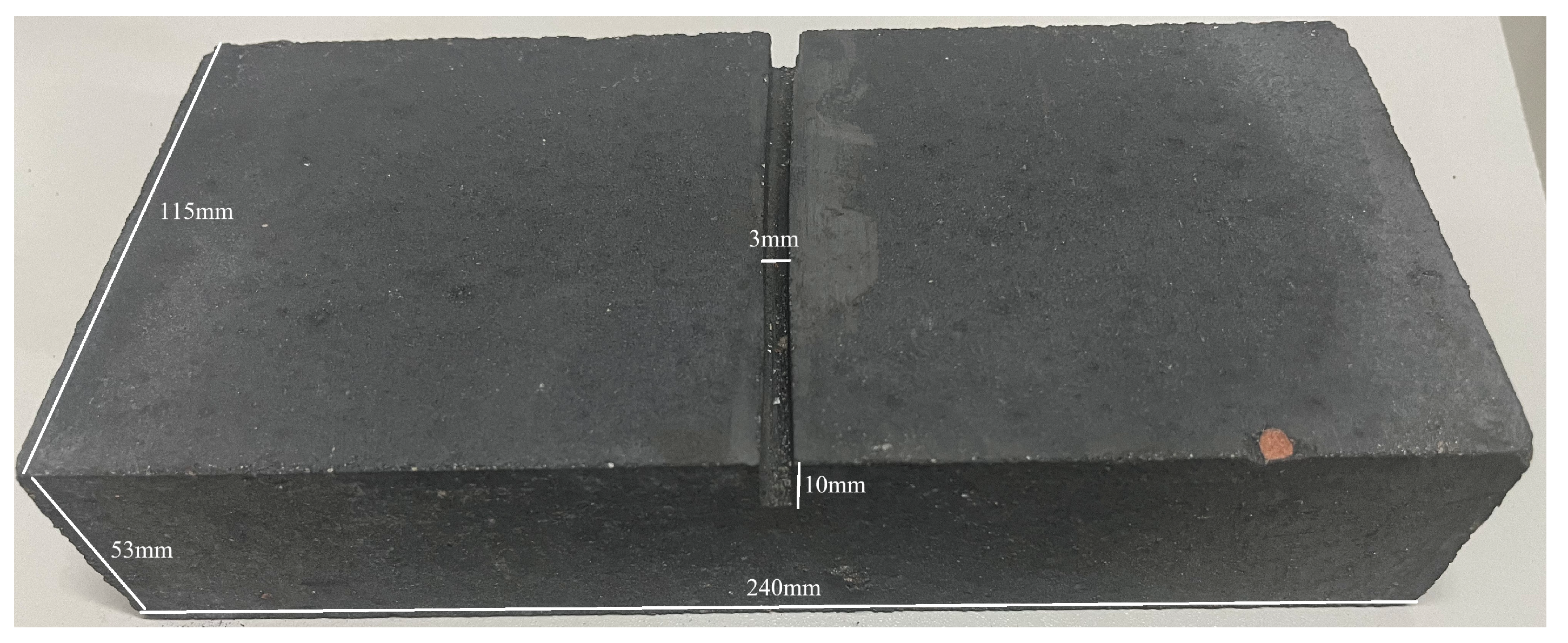
24]. The fine sand used in the experiment was obtained by sieving commercially available river sand through a 0.15 mm sieve, with its basic physical properties as follows: specific gravity 2.58, uniformity coefficient 4.26, and curvature coefficient 2.14. The brick samples were commercially available ordinary blue bricks. Its specification was 240 mm × 115 mm × 53 mm. Their average flexural strength was 3.03 MPa.
2.3. Determination of Optimal Soybean Powder Concentration
The rate of NH
4+ and CO
32− generation from urease-catalyzed urea hydrolysis is positively correlated with the rate of change in solution conductivity. Accordingly, the conductivity method was used in this study to quantitatively evaluate the urease activity of soybean powder for the screening of the optimal concentration. First, soybean powder solutions with concentrations of 20, 40, 60, 80, 100, 120, 140, 160, 180, and 200 g/L were prepared. For each concentration, 30 mL was taken, and three parallel samples were set up. Simultaneously, a sufficient amount of 1.1 mol/L urea solution was prepared as the reaction substrate. During testing, 27 mL of urea solution was placed in a water bath at a constant temperature of 30 °C. After the temperature was stabilized, 3 mL of soybean powder solution at different concentrations was rapidly added under the maintained constant temperature conditions. The conductivity of the solution was measured using a conductivity meter before the addition and 15 min after the addition of the soybean powder solution. The urease activity could be calculated using Equation (1) [
25]:
where
Ua is the urease activity in mS/cm/min and
Aa and
Ba are the conductivity values at 0 min and 15 min of reaction, respectively, in mS/cm.
2.4. Optimization of Cementation Solution Concentration and Reaction Time
The concentration of the cementation solution (a mixed solution of urea and calcium chloride) and the reaction time are key parameters that determine the yield of CaCO
3 precipitation. A study by Yu et al. found that the reaction between the cementation solution and urease proceeds rapidly, and the precipitation amount tends to stabilize after 24 h [
26]. Therefore, the key observation time points set in this experiment were 0.5, 1, 2, 4, 6, 10, 14, 18, and 24 h. Mixed cementation solutions with a urea-to-calcium chloride molar ratio of 1:1 were prepared. Their molar concentrations were set at 0.2, 0.4, 0.6, 0.8, 1.0, 1.2, 1.4, 1.6, 1.8, and 2.0 mol/L, respectively. Three parallel samples were set for each concentration. To eliminate the confounding variables and ensure consistent urease activity across all experiments, the soybean powder concentration was fixed at 180 g/L (the peak activity concentration identified in
Section 3.1). Only the cementation solution concentration (mol/L) was varied (0.2, 0.4,…, 2.0 mol/L) during optimization, with other reaction parameters (temperature: 30 °C, solution volume ratio: 1:1) maintained as constant [
27]. Fixing the soybean powder concentration at 180 g/L (peak urease activity) ensures sufficient catalytic capacity for urea hydrolysis across all cementation solution concentration levels. This approach avoids the economic inefficiency of using excessively high soybean powder concentrations while maintaining consistent enzyme activity. Therefore, this approach balances the reaction efficiency with material economy, providing a practical basis for selecting effective concentration ranges for the proposed centrifugal method. The conductivity of each sample at different time points was measured using a conductivity meter.
Similarly, based on the aforementioned cementation solution parameters, 100 mL of urease solution was mixed with 100 mL of cementation solution. They were allowed to react fully until the aforementioned times. The mixture was then placed in a high-speed refrigerated centrifuge (Model GL16M, BeiHong, Zhengzhou, Henan, China) equipped with a swing-bucket rotor (4 × 100 mL) and centrifuged at 5000 rpm (approximately 1700×
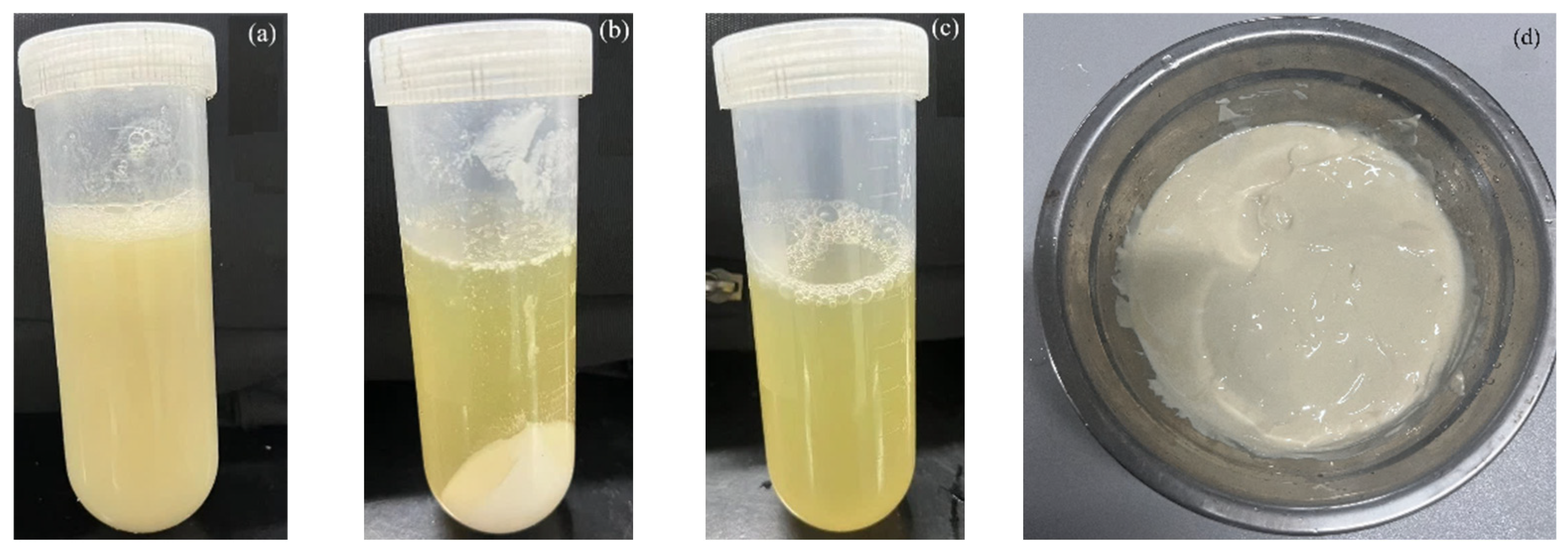
g) for 15 min at a controlled temperature of 25 °C. After centrifugation, the supernatant was carefully decanted, and the high-concentration calcium carbonate colloid was collected from the bottom of the centrifuge tubes. To ensure reproducibility, the moisture content of the collected colloid was immediately determined by drying a subsample at 105 °C to a constant weight, and it was found to be consistent across all batches (approximately 60%). It should be noted that the total reaction time was defined as the period from the moment the urease and cementation solutions were mixed until the start of centrifugation. The 15 min centrifugation step was excluded from the reported reaction times, as negligible precipitation occurs during this short separation at 25 °C. This was verified by control experiments in which the supernatant after centrifugation showed no detectable additional precipitate after standing for 15 min. The obtained high-concentration calcium carbonate colloid, as shown in
Figure 1, was placed in an oven and dried to a constant weight. The weight of the generated calcium carbonate could then be obtained.
Because urea and CaCl
2 were mixed at a 1:1 molar ratio with urea in excess, the theoretical maximum CaCO
3 mass was determined solely by the initial Ca
2+ concentration. It is worth noting that prior to drying, the collected precipitate was washed with deionized water to remove any residual soluble salts (e.g., NH
4Cl) that could otherwise contribute to the measured mass and lead to an overestimation of the CaCO
3 yield. The precipitation efficiency was calculated using the following Equation (2):
where
Pe is the precipitation efficiency in %;
m1 is the theoretical maximum mass calculated from the initial amount of Ca
2+ in the cementation solution (based on the reaction Ca
2+ + CO
32− → CaCO
3, molar mass of CaCO
3 = 100.09 g/mol) in g; and
m2 is the actual dry mass of CaCO
3 precipitate obtained after centrifugation and drying at 105 °C to a constant weight, in g.
2.5. Flexural Strength Test of Blue Bricks
A small portion of the calcium carbonate colloid was taken to measure its mass before and after drying. So, the moisture content of that batch of calcium carbonate colloid can be calculated. The calcium carbonate colloid was mixed with fine sand, and an appropriate amount of water was added to prepare a paste-like mortar composed of calcium carbonate and fine sand. The solid mass percentages of calcium carbonate were set at 20%, 40%, 60%, 80%, and 100%, with 10 specimens in each group. To ensure reproducibility, the following parameters were carefully controlled and recorded:
- (1)
Solids content of the calcium carbonate colloid after centrifugation. For each batch, the solids content was determined by drying a subsample of the colloid at 105 °C to a constant weight. The solids content can be calculated by using Equation (3).
where ω
s is the solids content in % and
mt and
mc are the masses of the colloid before and after drying, respectively, in g.
- (2)
After mixing the colloid and sand, additional water was added to achieve a workable, paste-like consistency. The amount of added water was fixed at 40% of the total dry mass (CaCO
3+ sand) for all batches, ensuring consistent workability and reproducibility. The actual mass ratios were calculated based on the solids content of the colloid, as in Equations (4) and (5).
where
mcr is the required mass of the colloid in g;
msr is the required mass of the fine sand in g;
mtr is the required mass of the total solid in g; and
η is the designed solid mass percentage of calcium carbonate in %.
To facilitate the filling of the repair mortar into the cracks, the crack width was set to 3 mm in accordance with the method reported in the literature [
18]. So, in the middle of the blue brick specimen, a crack with a width of 3 mm, a depth of 10 mm, and a length equal to the width of the brick was cut using an electric cutting machine, as shown in
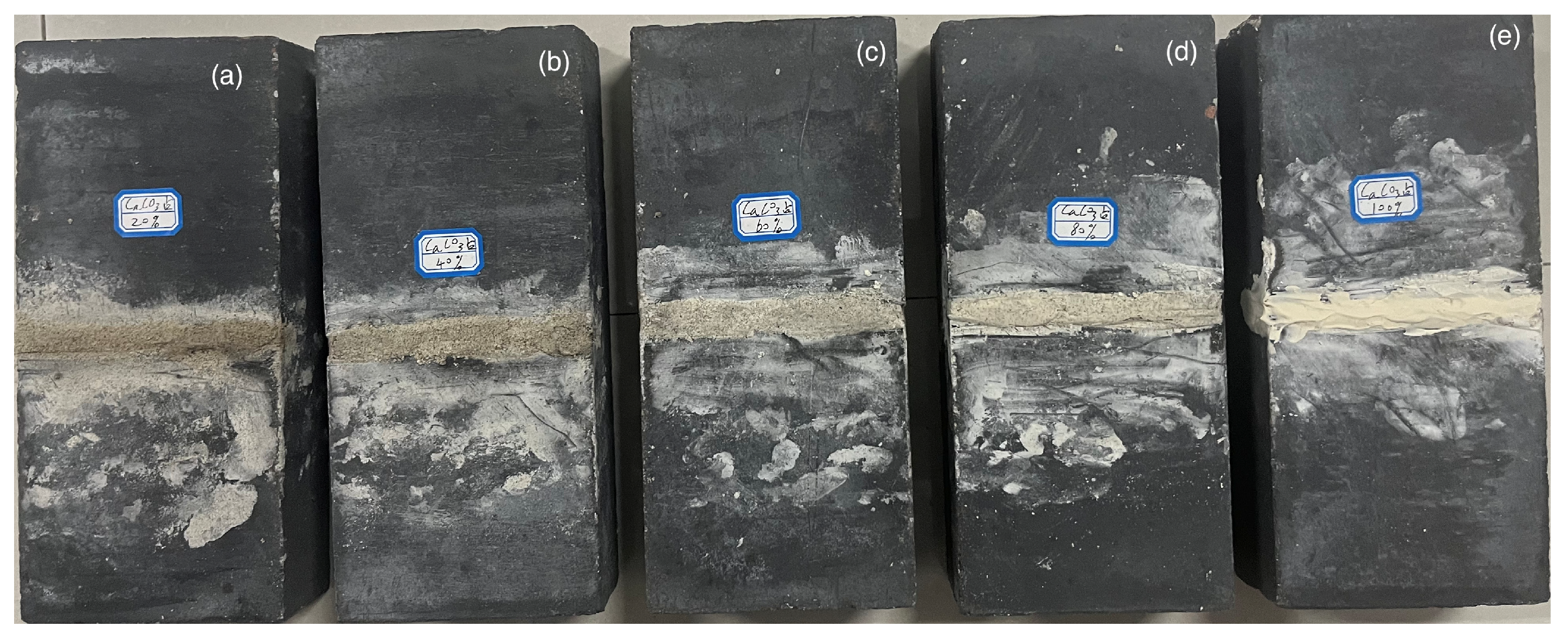
Figure 2. A rubber trowel was used to press the mortar with different ratios into the crack layer by layer, ensuring dense filling. The surface of the brick was scraped flat, and the repair layer was made slightly higher than the brick surface by about 1 mm. The treated specimens are shown in
Figure 3.
This method can rapidly and stably obtain a large amount of calcium carbonate precipitate within a few hours. In contrast, the method mentioned in the introduction required dozens or even hundreds of hours to complete. Therefore, the calcium carbonate generation rate of this method is better than that of traditional methods. Moreover, traditional methods require spending a lot of time on solution penetration and waiting for the reaction process. The injection construction after obtaining the colloid can be completed within minutes, achieving “one-time repair, no cycling required.” The repaired blue brick specimens were subjected to natural curing under indoor conditions. The curing periods were set at 3, 7, 15, 21, and 28 days [
28]. After curing, a three-point bending test was performed, using a universal testing machine. The flexural strength of the bricks was calculated using Equation (6) [
29]:
where
Rc is the flexural strength in kN/m
2;
P is the maximum load at specimen failure in kN;
L is the support span in m;
B is the specimen width in m; and
H is the specimen height in m.
The test was conducted in accordance with the Chinese national standard [
29]. Prior to testing, the specimens were immersed in water at (20 ± 5)°C for 24 h, then removed and wiped with a damp cloth to remove the surface moisture. The flexural test was performed using a 1000 kN hydraulic pressure testing machine (Model YAW-2000, Zhongluchang Testing Machine Manufacturing Co., Ltd., Jinan, China). The curvature radius of both the upper loading roller and the lower support rollers was 15 mm, with one of the lower support rollers being a pinned support. The span of the lower support rollers was set to 200 mm, and the upper loading roller was positioned at the center of the specimen. The load was applied uniformly at a rate of 50 N/s until specimen failure. Ten replicate specimens were tested for each group, and the average flexural strength was reported.
2.6. SEM and XRD Tests
To investigate the micro-morphology and crystal phase composition of the repair mortar, a small amount of sample was gently scraped from the cured brick specimen’s repair layer. The powder sample was fixed on an SEM (Scanning Electron Microscope) (Model Mira4, Tescan, Brno, Czech Republic) sample stage with conductive double-sided tape and sputter-coated with gold to enhance its conductivity. The SEM was used to observe the microscopic morphology of the sample. Micro-area elemental analysis was performed using the coupled Oxford Ultim Max65 energy dispersive spectrometer (Oxford Instruments, Abingdon, United Kingdom). The phase analysis was conducted using a Dandong Haoyuan DX-2700BH X-ray diffractometer (Dandong Haoyuan, Dandong, Liaoning, China) for XRD (X-ray diffraction) tests.
3. Results and Discussion
3.1. Optimal Soybean Powder Concentration
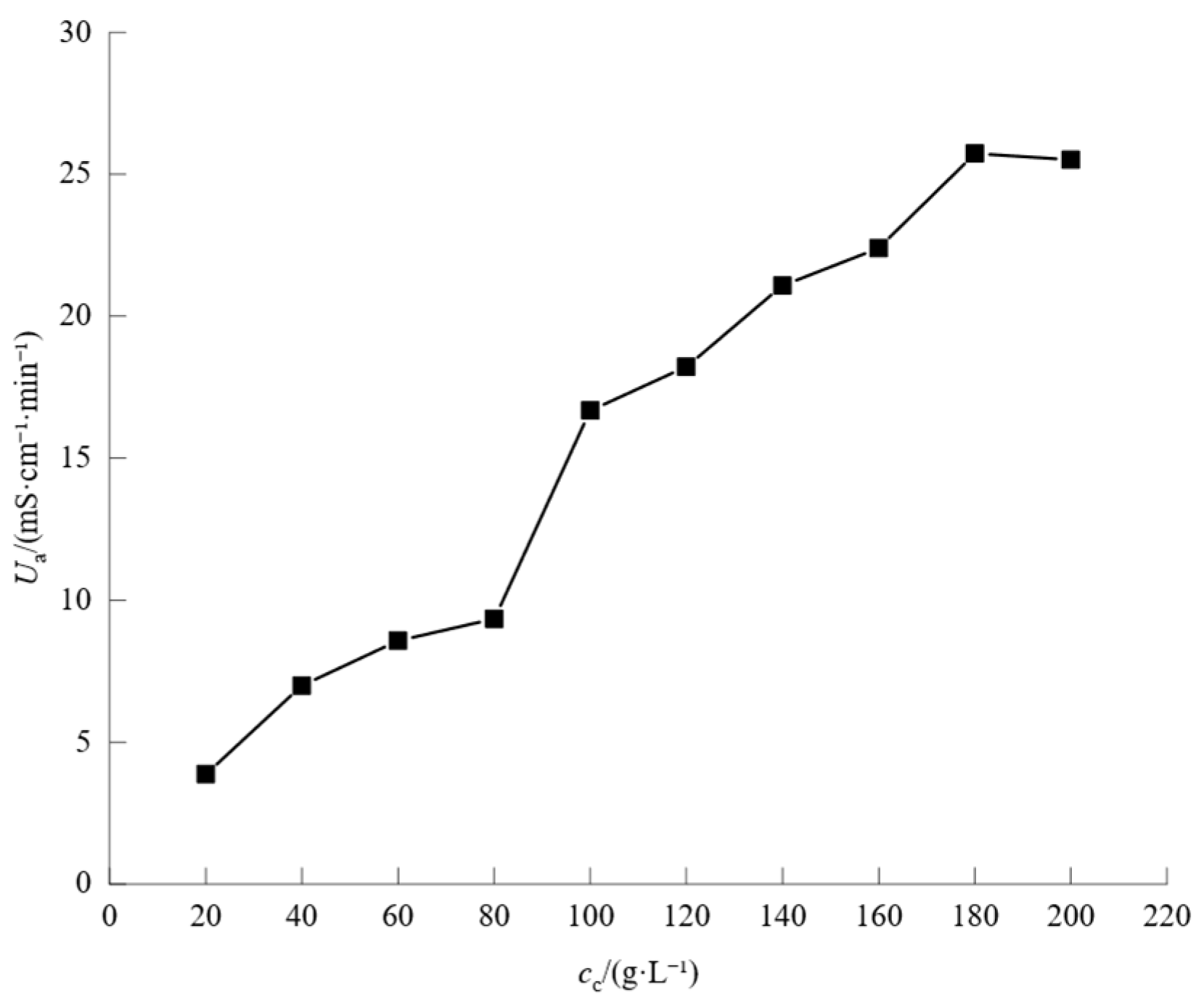
Urease activity is a key factor determining the rate of urea hydrolysis and the efficiency of calcium carbonate precipitation. To establish an efficient EICP reaction system, the concentration of soybean powder, the source of urease, was optimized in this study. The relationship between soybean powder concentration csf and urease activity Ua was shown in
Figure 4.
Within the concentration range of 20 g/L to 180 g/L, the urease activity increased significantly with the increase in soybean powder concentration, rising sharply from 3.87 mS/cm/min to 25.73 mS/cm/min. This trend clearly indicated that increasing the soybean powder concentration was equivalent to increasing the amount of effective urease in the reaction system. In the presence of sufficient urea, more ions were catalyzed per unit time, leading to a significant increase in conductivity. This trend was consistent with the expectations of classical enzyme reaction kinetics. However, when the soybean powder concentration increased to 200 g/L, the urease activity (25.51 mS/cm/min) slightly decreased compared with that at 180 g/L (25.73 mS/cm/min). This phenomenon can be attributed to the following factors. The main reason for this phenomenon is that, when the substrate concentration is constant, the reaction rate tends to saturate with the increasing enzyme concentration. Furthermore, an excessively high soybean powder concentration may introduce matrix effects, such as excessive solution viscosity, limiting molecular diffusion. The increase in system pH caused by urea hydrolysis may lead to a decrease in enzyme activity. Given that 180 g/L corresponds to the peak urease activity (25.73 mS/cm/min) and balances reaction efficiency with practicality, this concentration was uniformly fixed for all subsequent experiments. Fixing the soybean powder concentration avoids variability in enzyme activity across batches, ensuring that the observed effects during cementation solution optimization are solely attributed to the varying cementation solution concentration.
3.2. Optimal Cementation Solution Concentration and Reaction Time
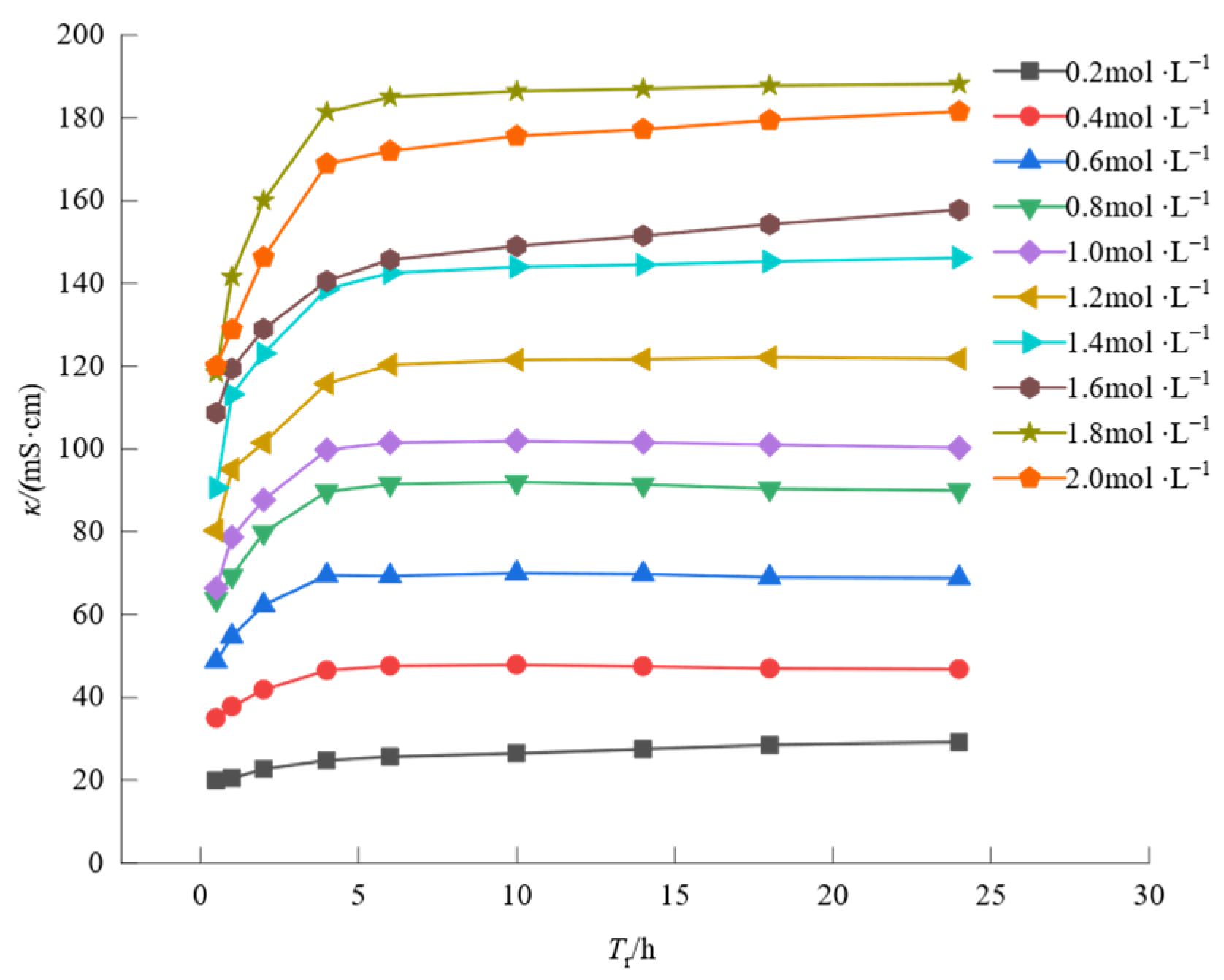
The electrical conductivity values,
κ, at different reaction times,
Tr, and cementation solution concentrations,
cc, were presented in
Table 1. It can be seen from
Table 1 that the electrical conductivity of the reaction system increased continuously with the prolonged reaction time. However, the growth rate gradually slowed down and eventually stabilized within 14–24 h. During the initial stage (0–6 h), rapid urea hydrolysis dominated the process, resulting in a sharp increase in ion concentration and a rapid rise in electrical conductivity. In the middle stage (6–14 h), as urea was consumed and calcium carbonate precipitate was generated, a dynamic equilibrium was reached between ion generation and consumption, leading to a decelerated increase in electrical conductivity. In the later stage (14–24 h), urea was nearly depleted, the reaction reached equilibrium, and the electrical conductivity was becoming stable. The details were shown in
Figure 5.
As shown in
Figure 5, the cementation solution concentration exerted a decisive influence on the final ionic number of the reaction system. Under the same reaction time, the system conductivity increased significantly with the increase in the cementation solution concentration. For example, after 24 h, the conductivity at 0.2 mol/L concentration was 29.2 mS/cm, while at 1.8 mol/L concentration, it was as high as 188.2 mS/cm. However, this positive correlation was not completely linear. In the low concentration range (0.2–1.0 mol/L), the increase in conductivity was more significant. Conversely, in the high-concentration range (1.6–2.0 mol/L), the increase slowed down, and the final electrical conductivity at 2.0 mol/L was slightly lower than that at 1.8 mol/L. The intrinsic mechanism can be primarily attributed to two factors. On one hand, a high ionic environment can have an inhibitory effect on urease activity. On the other hand, the rapidly generated calcium carbonate precipitate at high concentrations can encapsulate the urease molecules, causing “product inhibition” and reducing the effective catalytic rate. Therefore, considering both the economy and reaction efficiency, it is recommended to control the cementation solution concentration between 1.4 mol/L and 1.8 mol/L when the enzyme-to-cementation solution volume ratio is 1:1. Centrifugal extraction of calcium carbonate precipitate can be started after the reaction time reaches 10 h. To find the effects of cementing the solution concentration and reaction time on the EICP process, the variation in the calcium carbonate precipitation yield over time under different concentration conditions was monitored, as presented in
Table 2.
The entire CaCO
3 precipitation process presented in
Table 2 can be divided into three distinct stages, which are consistent with the conductivity change characteristics. In the initial precipitation stage (0–6 h), the CaCO
3 precipitation yield increased rapidly with the reaction time and was extremely sensitive to variations in the cementation solution concentration. Taking 6 h as an example, the generation rate increased significantly from 17.8% at 0.2 mol/L to 81.2% at 2.0 mol/L. This indicated that in the initial stage, a higher cementation solution concentration can provide sufficient Ca
2+ and CO
32− ions, significantly promoting the nucleation rate and crystal growth. In the middle reaction stage (6~14 h), the increase in the generation rate slowed compared to the initial stage but was still steadily improving. For instance, at a concentration of 1.0 mol/L, the generation rate increased from 56.3% at 6 h to 86.9% at 14 h, representing an increase of approximately 30 percentage points, but it was lower than the increase observed in the initial stage. Under high concentration conditions (≥1.6 mol/L), the generation rate at 14 h exceeded 90%, approaching reaction equilibrium, indicating that this stage is critical for completing most of the calcium carbonate conversion. In the later reaction stage (14~24 h), the growth of the generation rate further slowed, gradually approaching a plateau. Especially under medium to high concentration conditions (≥1.2 mol/L), the generation rate generally exceeded 90% after 14 h, and by 24 h, most were close to or above 99%. The low-concentration system (e.g., 0.2 mol/L) still maintained some growth during this stage (32.8% → 48.2%), indicating that it had not yet reached saturation and the reaction was still proceeding slowly. Therefore, a cementation solution concentration of 1.4 mol/L and a reaction time of 14 h are recommended. Under these conditions, the calcium carbonate generation rate has reached 94.8%, approaching reaction equilibrium. From economic and operational perspectives, a high conversion rate is ensured by this concentration and duration. Concurrently, two issues are avoided: the cost increase associated with higher concentrations, and the diminishing marginal benefits caused by a prolonged reaction time.
It is important to emphasize that a single-factor optimization design was adopted in this study: the soybean powder concentration was fixed at 180 g/L (peak urease activity) to ensure a constant enzyme concentration, while only the cementation solution concentration (substrate concentration) was varied. Therefore, the observed trends in
Table 1 and
Table 2 are primarily attributed to changes in the cementation solution concentration, with no interference from variable enzyme levels. The recommended concentration range (1.4–1.8 mol/L) is thus applicable when the soybean powder concentration is fixed at 180 g/L and the volume ratio of urease solution to cementation solution is 1:1.
3.3. Evaluation of Repair Effect and Flexural Mechanical Properties
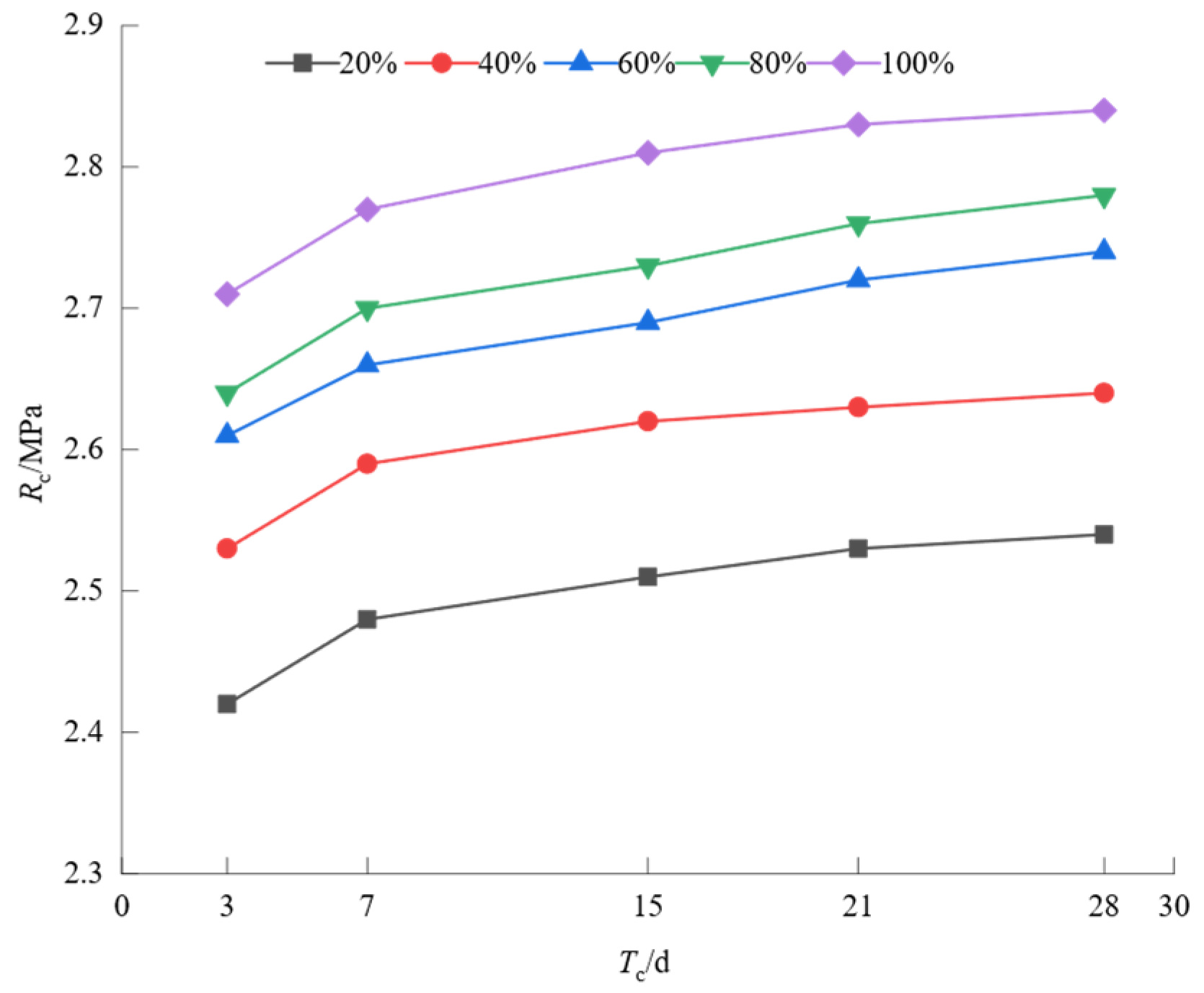
The flexural strengths of intact blue bricks and cracked unrepaired blue bricks were measured to be 3.03 MPa and 2.31 MPa, respectively, serving as the control groups for subsequent repair effect evaluation. The flexural strength test results of repaired blue bricks under different calcium carbonate contents and curing times,
Tc, were presented in
Figure 6.
As shown in
Figure 6, the flexural strength of the repaired blue bricks exhibited a steady increasing trend with both an increasing calcium carbonate content and curing time. At the same curing age, the strength increased with the calcium carbonate content (20–100%). Similarly, at a fixed calcium carbonate content, the strength increased with the curing time (3–28 d), but the growth rate slowed down significantly during the 21–28 d period, indicating that the material properties had stabilized. The improvement in the flexural strength of the blue bricks can be primarily attributed to the following mechanisms. The calcium carbonate colloid, serving as an active cementing component, directly enhanced the cementing capacity of the mortar with an increased content. It also filled pores within the cracks, and improved interfacial bonding with the brick body. When the content reached 80–100%, the calcium carbonate formed a continuous spatial network, enabling more effective stress transfer and distribution. Simultaneously, during the natural curing process, the evaporation of moisture continuously strengthens the bonding between the calcium carbonate colloid and sand particles. Under the combination of a high calcium carbonate content and long curing time, the repaired strength could reach 122.9% of that of cracked unrepaired blue bricks, fully demonstrating the effectiveness of this repair method.
To provide a complete quantitative record of the experimental results, the full flexural strength data (mean ± standard deviation) for all combinations of calcium carbonate content (20–100%) and curing time (3–28 days) were presented in
Table 3.
Across all test conditions, the flexural strength of the repaired bricks ranged from 2.42 MPa to 2.84 MPa, with the minimum value recorded for the 20% CaCO3 group cured for 3 days and the maximum value for the 100% CaCO3 group cured for 28 days. This represented a 17.4% increase. The standard deviations ranged from 0.10 to 0.25 MPa. These values corresponded to coefficients of variation (CV) between 3.6% and 9.6%. All CVs were well within the acceptable range for masonry material testing (CV < 15%). Thus, good reproducibility of the experiments was confirmed. Notably, the lowest CV (3.6%) was observed for the 60% content group at 3 days and the 100% content group at 28 days. This indicated particularly stable results for these combinations. An examination of the data across curing time revealed progressive strengthening. For example, at 20% content, mean strength increased by 5.0% from 3 to 28 days. At 100% content, the increase was 4.8%. The effect of the CaCO3 content was evident at every curing time. At 28 days, an increase in content from 20% to 100% improved strength by 0.30 MPa (11.8% relative increase). Consistently low variability (CV < 10% for all groups) was observed. This attested to the well-controlled specimen preparation and testing procedures.
It should be acknowledged that the claim of “one-time repair, no cycling required” is based on a procedural comparison with the literature reports [
19,
20], rather than on direct side-by-side experimental validation under identical conditions. Additionally, this study focuses on short-term mechanical performance with a fixed soybean powder concentration (180 g/L), and future research will verify the scalability across different enzyme concentrations. While the proposed method indeed requires only a single application of the pre-formed paste, a direct comparative study using the same crack geometry and substrate materials would provide more robust evidence. This limitation should be addressed in future work.
3.4. Microstructure and Formation Mechanism
3.4.1. Micromorphology and Elemental Distribution Characteristics
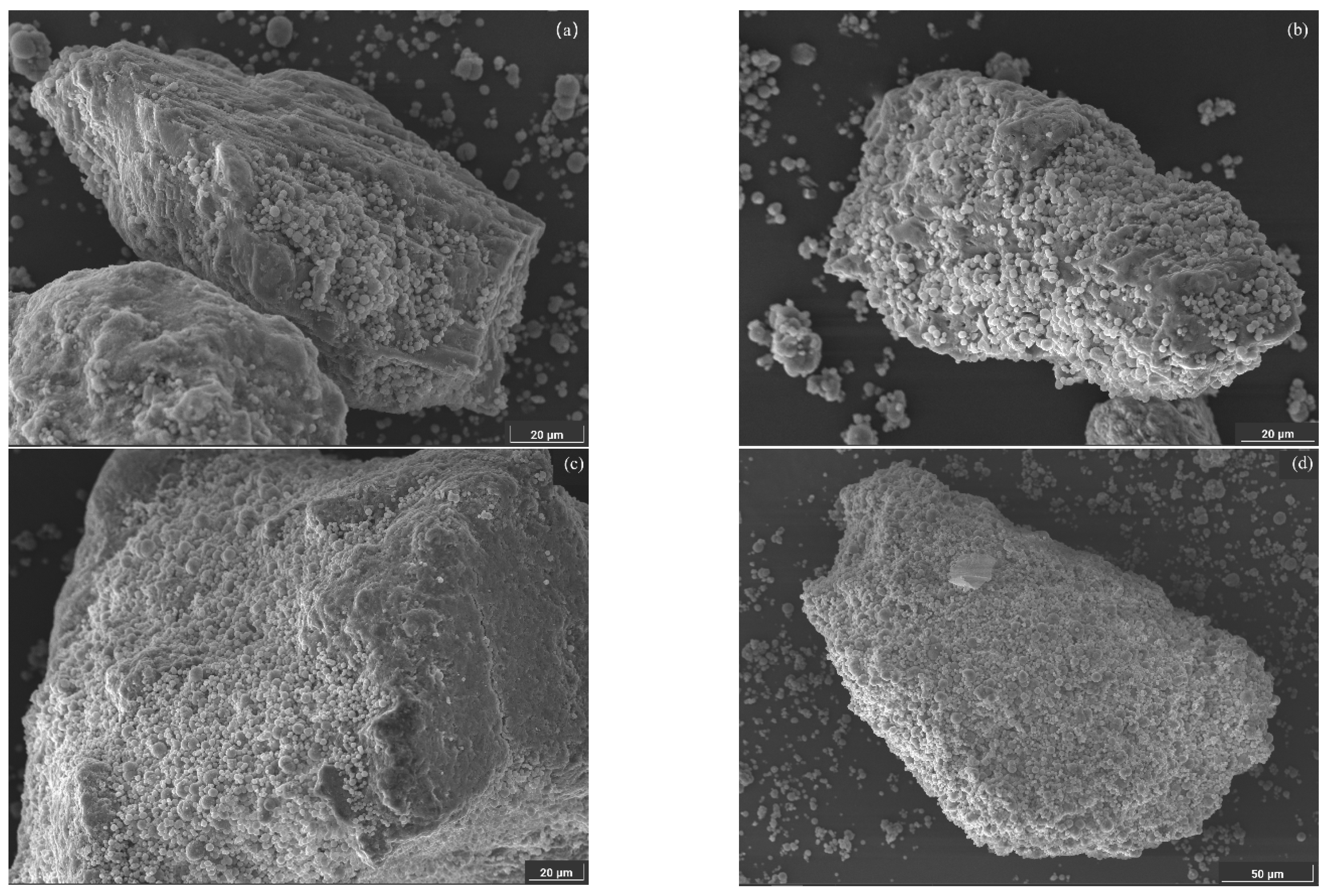
SEM observations revealed that a large number of spherical particles were abundantly present in the repair mortar, as illustrated in
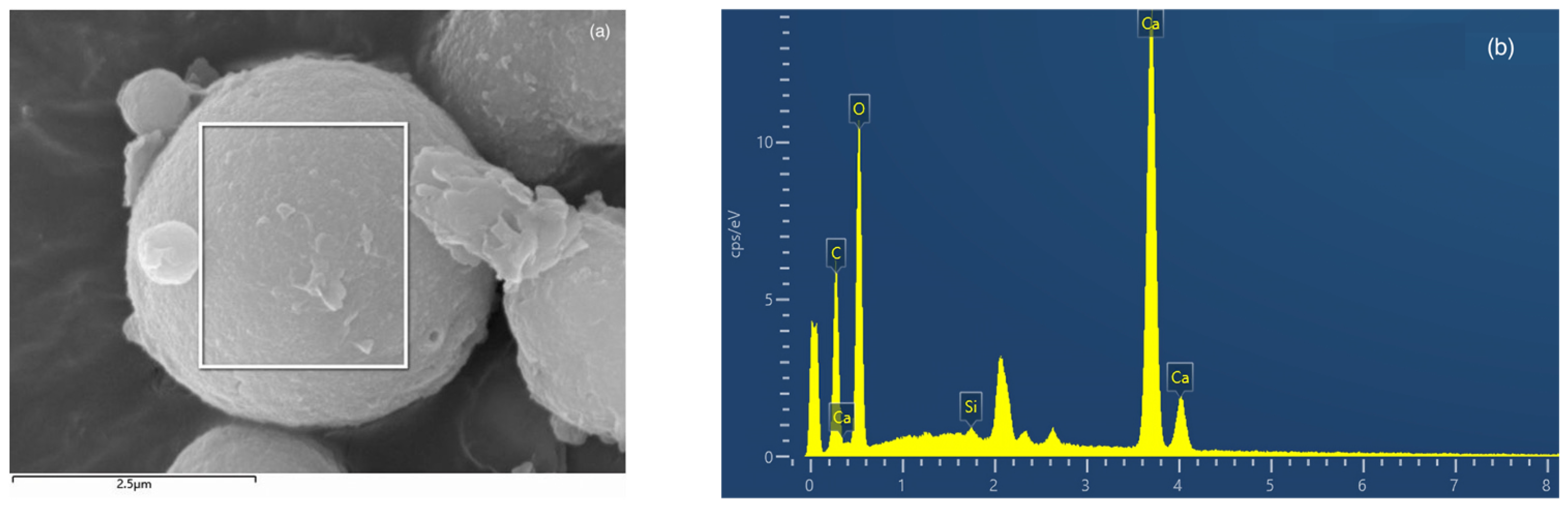
Figure 7. EDS analysis in conjunction with SEM indicated that these spherical particles were primarily composed of Ca, O, and C elements, confirming that they are essentially CaCO
3. It could be inferred that their essence was calcium carbonate, as shown in
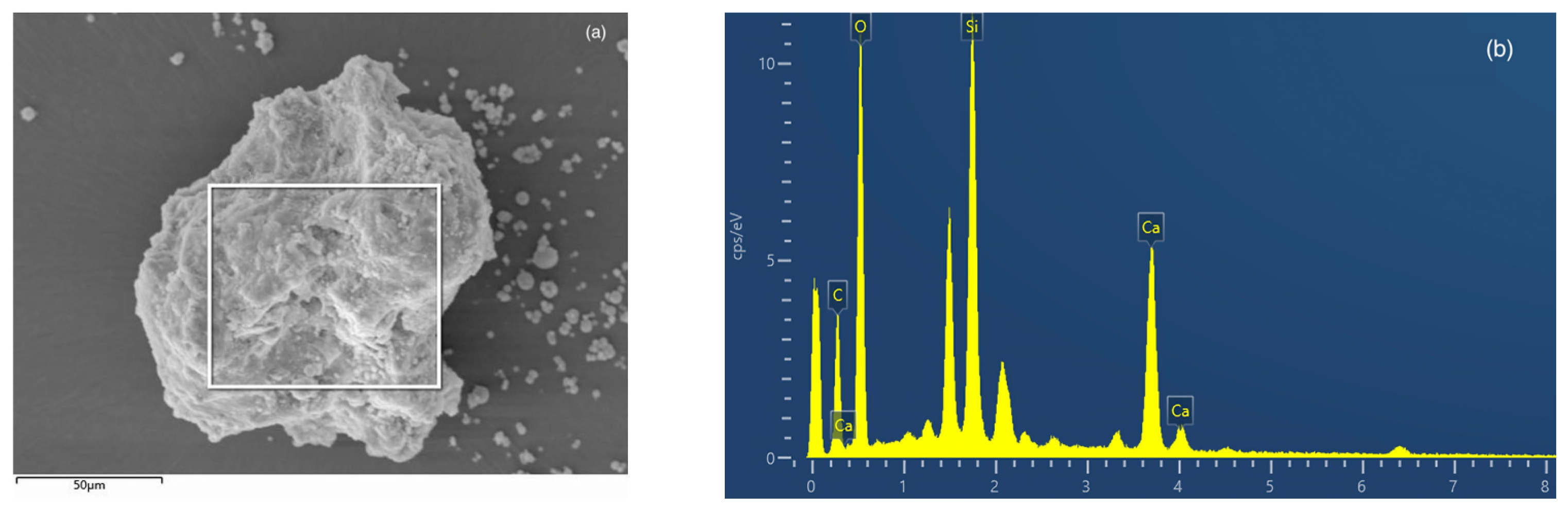
Figure 8. Additionally, a large number of irregular particles were observed. Their composition was mainly Si and O, with a certain amount of C and Ca attached, which could be determined as fine sand particles coated with calcium carbonate on the surface, as shown in
Figure 9. Through systematic SEM observation, an evolution pattern of calcium carbonate distribution with increasing content was identified. Based on a visual inspection of multiple images, the following trends were observed. At 20% content, calcium carbonate appeared as discrete particles selectively deposited on surface defects of sand grains. At 60% content, partial coating was observed, with calcium carbonate covering most but not all of the sand grain surfaces. At 80% content, the coating became nearly continuous, although some smooth areas remained less covered. At 100% content, calcium carbonate formed self-aggregated clusters, with sizes exceeding 100 μm.
It should be noted that the EDS analysis presented herein has certain limitations. The detection of carbon is semi-quantitative and may be influenced by the carbon coating applied to the samples for conductivity enhancement. Additionally, the EDS interaction volume may extend beyond individual particles, potentially including signals from the underlying substrate. Therefore, the elemental compositions reported should be interpreted as indicative, rather than absolute.
3.4.2. Phase Composition and Crystal Structure Analysis
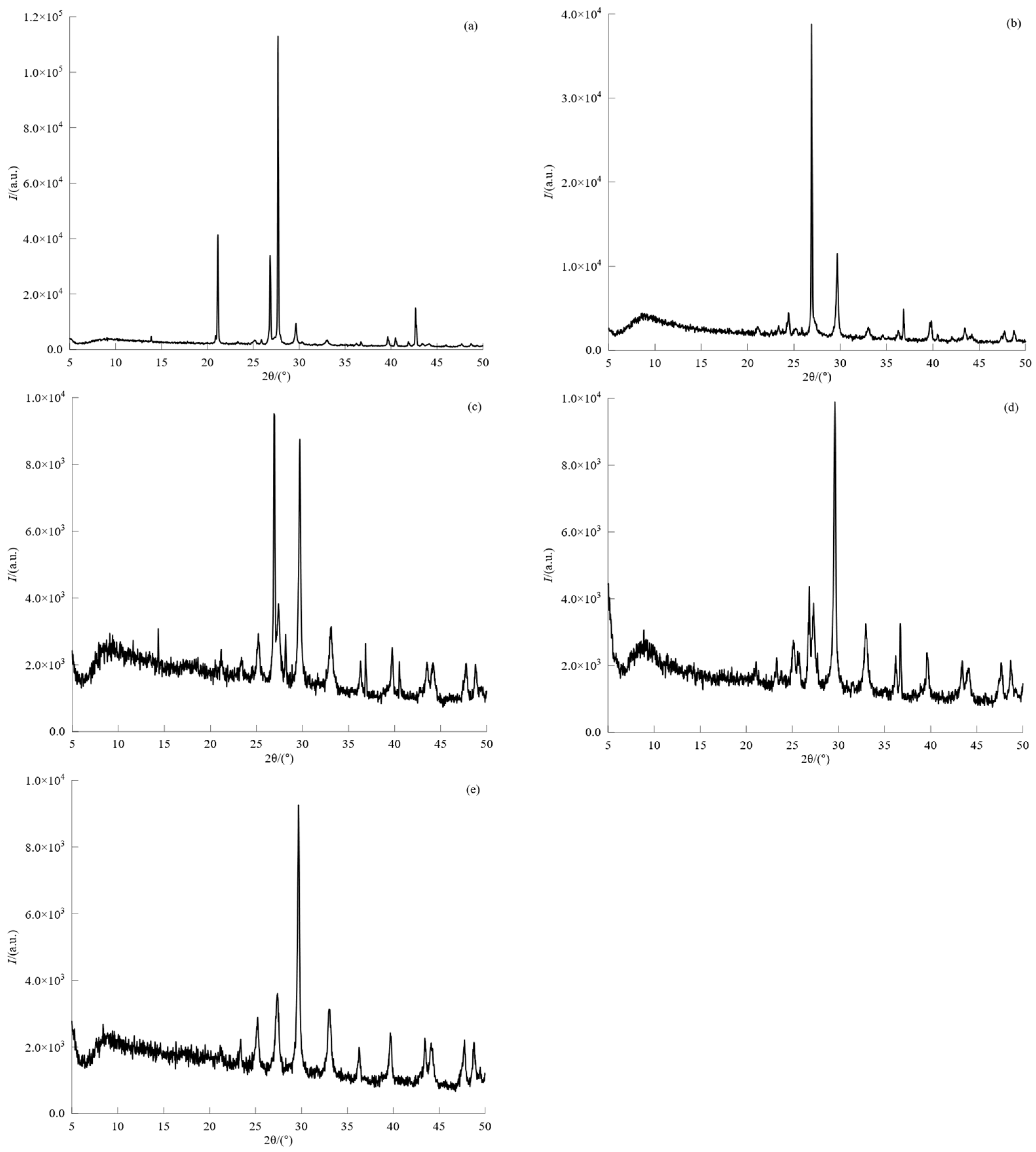
XRD patterns of samples with different calcium carbonate contents were shown in
Figure 10, displaying the relationship between intensity I and diffraction angle 2
θ. The phase analysis results can be observed from
Figure 10. Quartz: The intensity of its strongest diffraction peak (101 crystal plane, 2θ ≈ 26.6°) decreased systematically with the reduction in fine sand content, intuitively reflecting the compositional changes in the repair mortar. It evolved from absolute dominance at 20% content to trace presence at 100% content, intuitively reflecting the compositional changes. Calcite: Its strongest diffraction peak (104 plane, 2
θ ≈ 29.4°) was clearly visible in all samples containing calcium carbonate. The peak intensity continuously increased with the increase in the calcium carbonate proportion. Furthermore, a series of characteristic peaks of calcite were also observed at approximately 2
θ ≈ 3.0°, 36.0°, 39.4°, and 43.1°. The sharp peak shapes indicated good crystallinity and the dominant crystal form of calcite. Vaterite: In samples with 20% and 40% content, its typical peaks (e.g., 110 plane, 2
θ ≈ 24.9°) were obscured by strong quartz peaks. However, in samples with 60% and 80% content, as the quartz peaks weakened, an obvious “shoulder peak” appeared near 24.9°. In the 100% content sample, the broadened peak near 27.0° (112, 004 planes) was particularly clear, providing conclusive evidence for the presence of vaterite. However, its content remained at a relatively low level compared to calcite. Aragonite: Its strongest peak (111 plane, 2
θ ≈ 26.2°) overlapped with the position of the main quartz peak, making detection difficult. Weak signals near 26.2° and 45.9° were detected solely in the 100% content sample, which is indicative of its potential presence as a trace phase.
3.4.3. Proposed Formation Mechanism of Spherical Calcite
An observation worthy of in-depth discussion is presented. The SEM images, shown in
Figure 7, are dominated by spherical particles. Through XRD phase analysis, these particles were identified as having a calcite-based crystal structure. This finding contrasts with the metastable vaterite phase that their morphology might suggest. This “decoupling” phenomenon between morphology and phase may primarily originate from the centrifugal preparation method adopted in this study.
Based on the physical conditions imposed by centrifugation, a hypothetical formation mechanism of spherical calcite is proposed. Observations from SEM and XRD show that spherical particles are calcite (a morphology-phase decoupling phenomenon), which is hypothesized to originate from the following processes. First, the strong shear forces and spatial constraints during centrifugation may disrupt the ordered ionic diffusion required for equilibrium crystal growth. This disruption likely inhibited the development of regular crystal faces (e.g., rhombohedral). Instead, it may have promoted rapid, explosive homogeneous nucleation, which instantaneously generated a large number of nanoscale calcite primary particles. Subsequently, these nanoscale particles may have undergone Ostwald ripening. This process is thermodynamically driven. Smaller particles dissolve and redeposit onto larger ones to minimize the total surface energy. Under the kinetically controlled conditions imposed by centrifugation, these primary particles may have randomly aggregated and fused, ultimately forming the micron-scale spherical aggregates observed in SEM images.
This hypothesized mechanism was consistent with the final product morphology. However, it should be emphasized that this mechanistic interpretation remains a hypothesis derived from final-product characterization (SEM/XRD). Direct validation requires time-resolved in situ observations (e.g., in situ SEM/XRD during centrifugation) and controlled experiments with systematically varied centrifugation parameters (e.g., speed, duration, temperature). Nevertheless, this study is the first to report spherical calcite formation via the centrifugal EICP method, providing valuable experimental foundations for understanding how centrifugal force fields may modulate the nucleation and growth pathways of calcium carbonate.
3.5. Limitations and Future Perspectives
While the proposed centrifugal EICP method exhibits promising short-term repair performance for masonry structures under laboratory conditions, several limitations are acknowledged.
First, control group comparative tests (no-centrifugation EICP, commercial CaCO3) were not conducted, limiting the quantification of the method’s superiority. Second, key durability/compatibility tests (capillary water absorption, wet–dry cycling, freeze–thaw/salt crystallization resistance) were not performed. Third, reaction chemical parameters (pH, NH4+ accumulation), advanced characterizations (TGA, FTIR, rheological testing), and comprehensive mechanical properties (compressive/bond strength) were not fully investigated, limiting the engineering applicability evaluation. Finally, the spherical calcite formation mechanism remains a hypothesis derived from SEM/XRD, requiring in situ observations and centrifugation parameter tests for direct validation.
Future research will address these by: (1) conducting control group comparisons; (2) performing standardized durability tests; (3) monitoring chemical parameters and supplementing characterizations; and (4) exploring crack geometry effects and broader applications.