Skip to Content
BuildingsBuildings
  • Article
  • Open Access

3 March 2026

Intelligent HBIM Framework for Group-Oriented Preventive Protection: A Case Study of the Suopo Ancient Watchtower Complex in Danba

,
,
,
and
1
School of Architecture and Planning, Hunan University, Changsha 410082, China
2
School of Architecture, Southwest Minzu University, Chengdu 610207, China
*
Author to whom correspondence should be addressed.

Abstract

Heritage Building Information Modeling (HBIM) is accelerating the transition from reactive restoration to preventive conservation in architectural heritage management. Nevertheless, research at the heritage-cluster scale remains limited, particularly in terms of multi-source data integration, dynamic value–risk coupling, and lifecycle-oriented decision support. This study proposes an intelligent HBIM-based framework designed to support integrated data processing, automated value–risk assessment, and preventive intervention planning for masonry heritage clusters. The framework is validated through its application to the Suopo Ancient Watchtower Complex in Danba, Sichuan, consisting of 84 polygonal stepped-in stone towers. By integrating 3D laser scanning, unmanned aerial vehicle (UAV) oblique photogrammetry, and historical archival data, a closed-loop workflow is established, spanning data acquisition, parametric semantic modeling, and intervention prioritization. A dedicated parametric component library and hierarchical semantic database tailored to irregular polygonal masonry significantly enhance modeling consistency, semantic coherence, and cross-building reusability. Leveraging the Revit Application Programming Interface (API) and Dynamo, the framework embeds a value–risk model (P = V × R), enabling automated component-level evaluation, real-time visualization of conservation priorities, and one-click generation of intervention lists. Results demonstrate improved modeling accuracy, efficiency, and decision reliability compared with conventional manual workflows. The framework offers a scalable and replicable pathway for sustainable conservation of masonry heritage clusters in high-seismic regions and provides a foundation for future integration with IoT-enabled digital twin systems.

1. Introduction

In recent years, architectural heritage preservation has undergone a paradigm shift, moving from reactive “post-event restoration” toward proactive “preventive protection,” which emphasizes continuous monitoring, risk assessment, and timely interventions to mitigate potential damage before it occurs [1]. Heritage Building Information Modeling (HBIM) has become the core technical means driving this transformation [2,3,4]. This global shift is also reflected in UNESCO and ICOMOS guidelines, which highlight that systematic monitoring and risk-oriented preventive measures are essential for safeguarding heritage under the compounded pressures of climate change, natural disasters, and human activities [5].
In China, immovable cultural heritage sites are numerous and diverse, but the overall state of preservation is worrying. The ongoing Fourth National Survey of Immovable Cultural Relics further highlights the grim reality that a large number of heritage sites are at high risk [6]. The traditional passive model relying on restoration is no longer adequate to address complex, multi-scale risks; thus, there is an urgent need to establish an active protection mechanism based on digitalization and intelligence. Against this backdrop, the concept of a “heritage cluster” has been proposed, referring to a spatially contiguous set of heritage assets that share historical functions and construction logic, with interdependent internal structures. Compared with individual buildings, heritage clusters require holistic, cross-building risk control and integrated management, necessitating the development of dedicated, cluster-level digital information frameworks [7].
Globally, HBIM has been widely adopted in fields including geometric reconstruction, damage documentation, structural analysis, and virtual visualization [8,9,10,11,12]. Recent advances in Heritage Building Information Modeling (HBIM) have been largely driven by European research groups. Notably, Oreni and Banfi pioneered ontology-based semantic enrichment frameworks for heritage documentation [13]; Brumana and colleagues developed robust parametric scan-to-HBIM reconstruction workflows [14]; Logothetis investigated interoperability standards and their application in conservation management [15]; and Martínez-Rodrigo integrated HBIM with structural risk assessment to support decision-making in heritage protection [16]. In recent years, the integration of artificial intelligence (AI) has further improved the automation of damage identification and condition assessment [17]. However, existing research still shows significant limitations: most studies focus on individual buildings, leaving cluster-level integration largely unexplored [18]. Similarly, research on Scottish brochs [19], Italian Apennine watchtowers [20], and Himalayan stone tower groups [21] highlights comparable challenges, including seismic vulnerability, material deterioration, and cluster-scale management issues, underscoring the urgent need for integrated HBIM workflows specifically tailored to heritage clusters [22].
The Suopo Ancient Watchtower Group in Suopo Township, Danba County, Ganzi Prefecture, Sichuan Province, exemplifies this need. The settlement comprises 84 stone-built watchtowers, with floor plans ranging from four to thirteen sides, renowned for their outstanding seismic performance and unique Jiarong Tibetan cultural significance, and was listed in the “Tentative List of China’s World Cultural Heritage” in 2013 [23]. Located in a high-intensity seismic zone, the site is further challenged by long-term material weathering and increasing tourism pressures, which together pose persistent risks to its structural integrity and cultural value. Similar vulnerabilities and transformation pressures affecting Tibetan-style dwellings and settlements under seismic and environmental constraints have been reported in recent studies [24,25,26], highlighting the broader relevance of Suopo as a representative case for cluster-scale preventive conservation research.
Motivated by these challenges, this study proposes a cluster-level intelligent HBIM framework for preventive protection, validated through the Suopo Ancient Watchtower Group. The framework achieves systematic management at the cluster scale by integrating multi-source data, semantic–parametric representations, and value–risk-driven intelligent decision-making. It extends HBIM applications beyond individual buildings, providing standardized tools for modeling, enabling cross-building management, and supporting real-time, automated protection decision support [27,28]. This approach significantly enhances management efficiency and sustainability for heritage clusters, laying the groundwork for replicable cluster-level heritage protection strategies [29].
The remainder of this paper is structured as follows. Section 2 outlines the methodological framework, including multi-source data acquisition, parametric modeling strategies, the value–risk assessment model, and sensitivity analysis. Section 3 presents the implementation results at both component and cluster scales. Section 4 discusses the technical contributions, performance evaluation, limitations, and broader implications in relation to international research. Section 5 concludes the study and highlights directions for future development toward IoT-integrated digital twin systems.

2. Research Methodology

This study establishes an intelligent HBIM-based preventive protection framework for heritage clusters, designed to address the limitations of existing HBIM applications in cluster-scale management, dynamic risk assessment, and decision-making automation. The framework comprises three progressive modules, creating a closed-loop workflow encompassing multi-source data collection, parametric representation, and value–risk-driven intelligent decision-making. During the entire research process, formal approval was secured from the Danba County Cultural Heritage Administration and local communities. Specifically, community members were invited to participate in the process of cultural value identification, thus ensuring the study adheres to ethical standards and respects cultural sensitivity [30]. Considering the widespread use of Autodesk Revit in HBIM practice, the Autodesk Revit 2023 (Autodesk Inc., San Rafael, CA, USA) platform was selected as the core modeling environment for this study. Through the Revit Application Programming Interface (API) and Dynamo (integrated within Autodesk Revit 2023) visual programming interface, the system enables rule-based automation and customization of parametric components. This setup ensures the framework’s modules can be effectively implemented and integrated within a cluster-scale HBIM environment.

2.1. Technical Framework

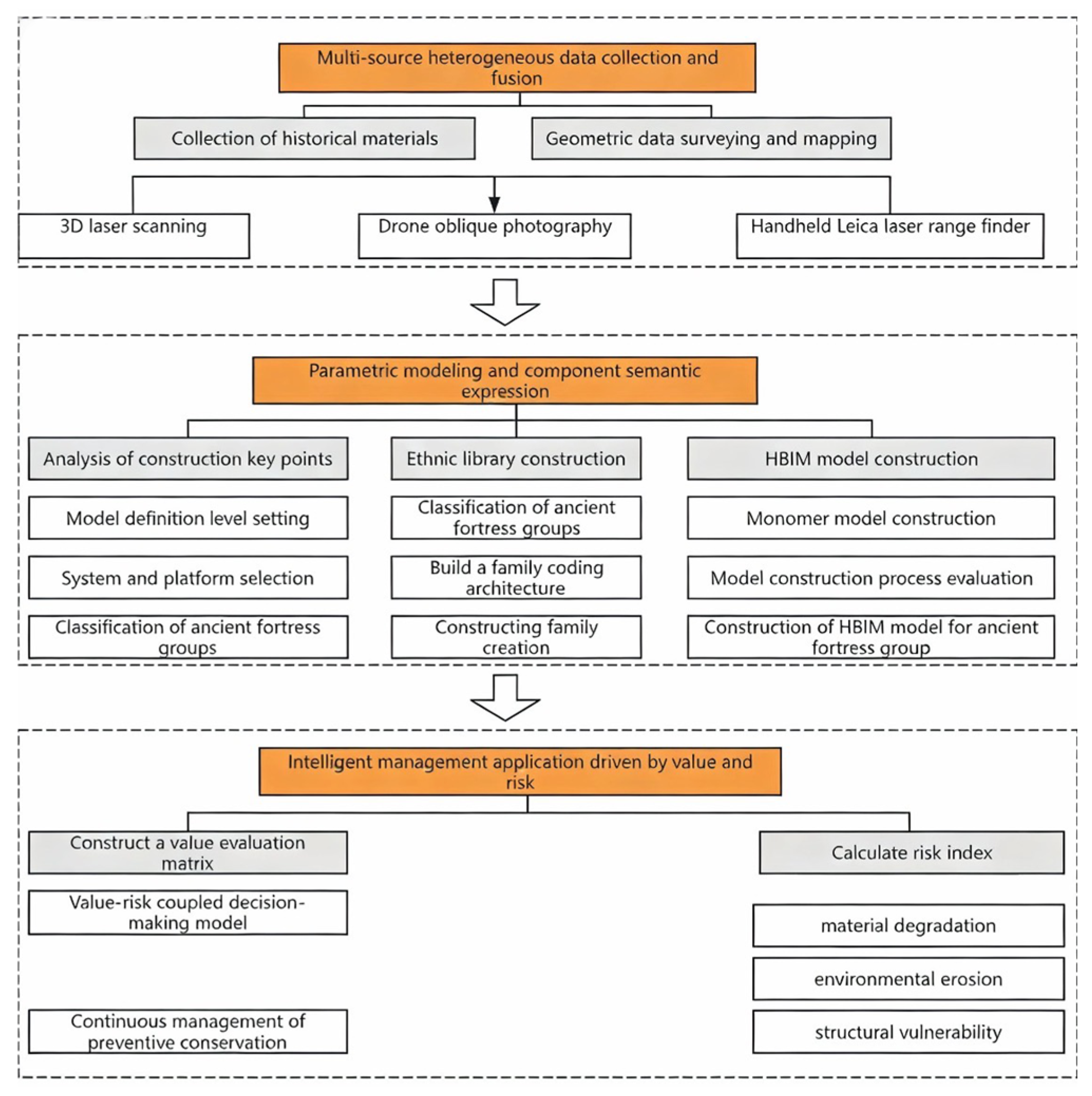
The overall structure of the framework is divided into three main modules (as shown in Figure 1):
Figure 1. Overall technical framework of the intelligent cluster-oriented preventive HBIM system. Orange boxes represent the three core modules of the framework; gray/white boxes denote specific tasks and sub-processes within each module. Large hollow arrows indicate the main workflow progression between stages, while solid lines show logical connections between components. Dashed borders define the boundaries of each functional module. (Source: Authors’ own elaboration).

2.1.1. Multi-Source Heterogeneous Data Collection and Fusion

Geometric morphology, material properties, damage conditions, and cultural information of the watchtowers are acquired via a combination of 3D laser scanning, unmanned aerial vehicle (UAV) oblique photogrammetry, historical archive collation, and field surveys. Point cloud registration and fusion are implemented using the Iterative Closest Point (ICP) algorithm to ensure the high-precision integration of multi-source data [31].

2.1.2. Parametric Modeling and Component-Level Semantic Representation

A multi-level HBIM model is established on the Autodesk Revit 2023 platform (Autodesk Inc., San Rafael, CA, USA), and a dedicated parametric component library is developed for polygonal stepped-in stone masonry. Semantic information, including materials, construction details, historical maintenance records, and damage information, are embedded at the component level. An alphanumeric coding system is adopted to enable the unified organization and efficient retrieval of models within the cluster.

2.1.3. Value–Risk-Driven Intelligent Management Module

By leveraging Revit API and Dynamo visual programming, the value–risk evaluation model based on the ICOMOS value system and structural and environmental risk factors is deeply integrated into the HBIM system. The core calculation formula is the priority index P = V × R (where V denotes the comprehensive value score and R denotes the risk coefficient). After experts complete the initial weight calibration, the system can automatically calculate the protection priorities of all watchtowers and their components, conduct real-time color and opacity mapping within the model, and generate emergency intervention lists with one click [32]. This module incorporates a built-in rule engine that supports threshold-triggered alerts and reserves interfaces for Industry Foundation Classes (IFC) and Power Business Intelligence (BI) extensions, allowing future integration of Internet of Things (IoT) sensors—networked devices capable of collecting real-time environmental and structural data—for more advanced dynamic monitoring of heritage components.

2.2. Case Study and Data

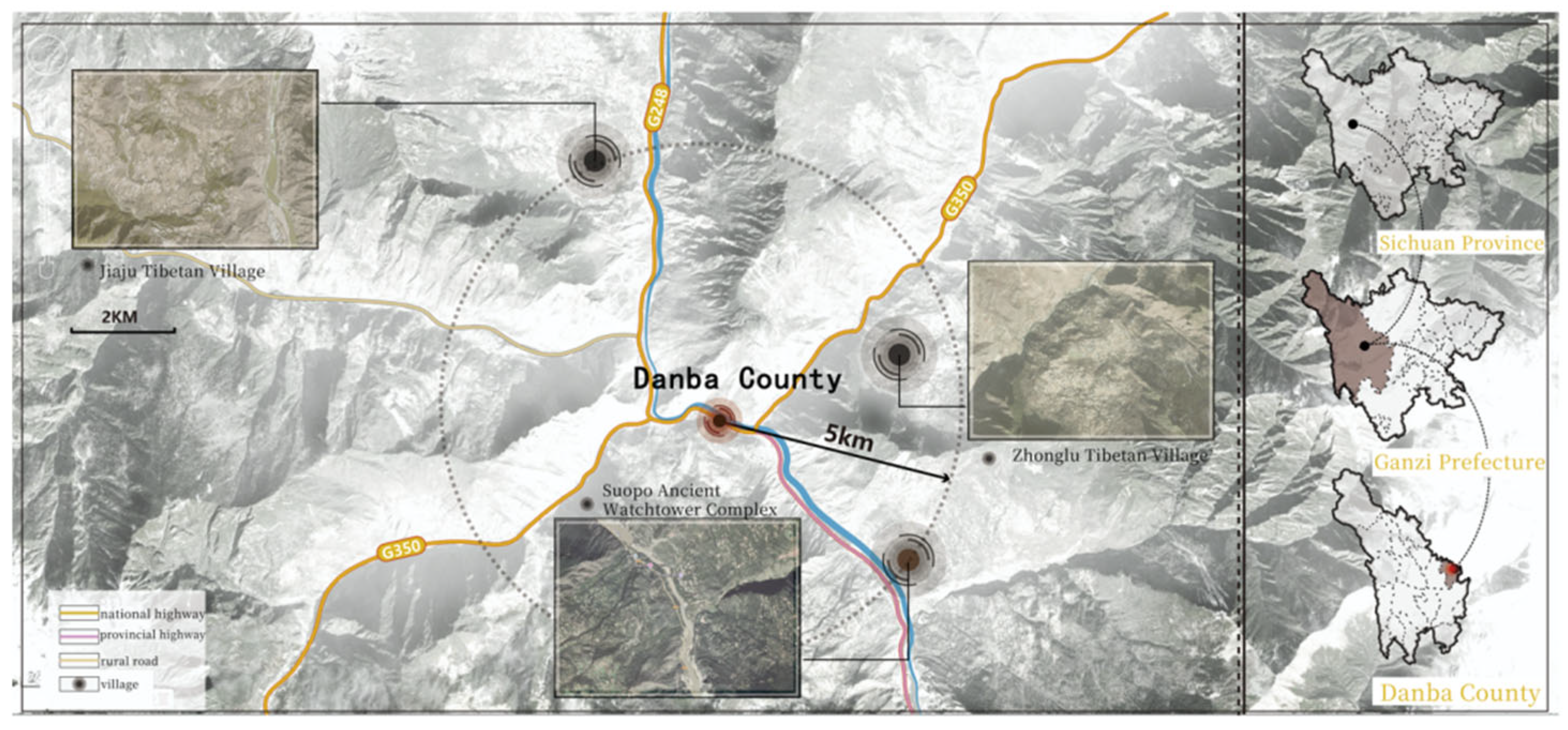
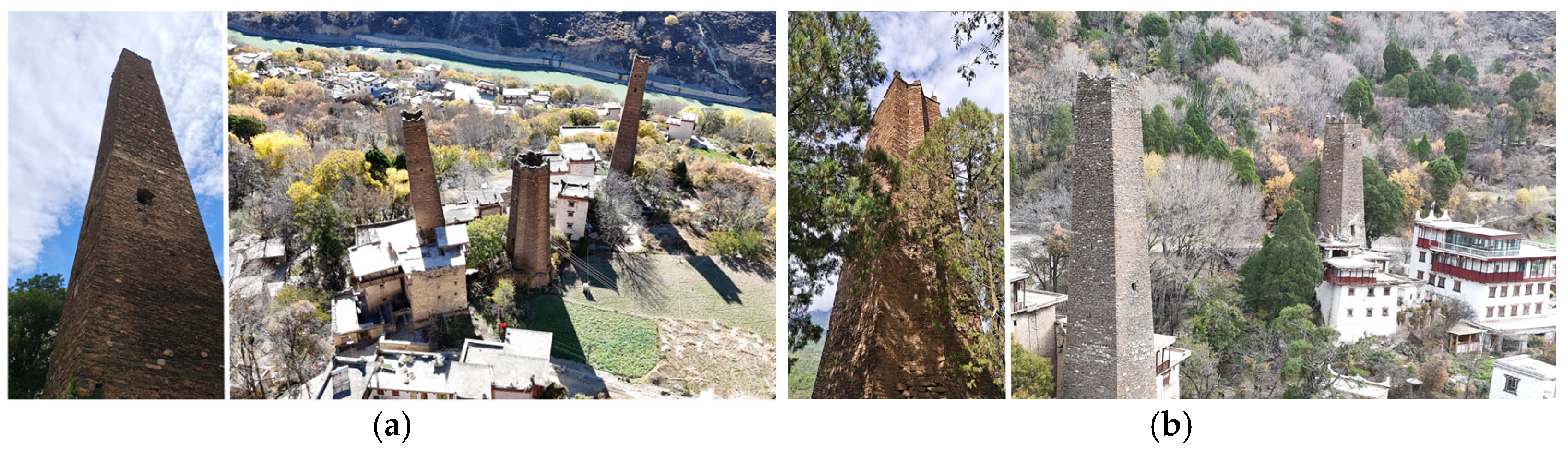
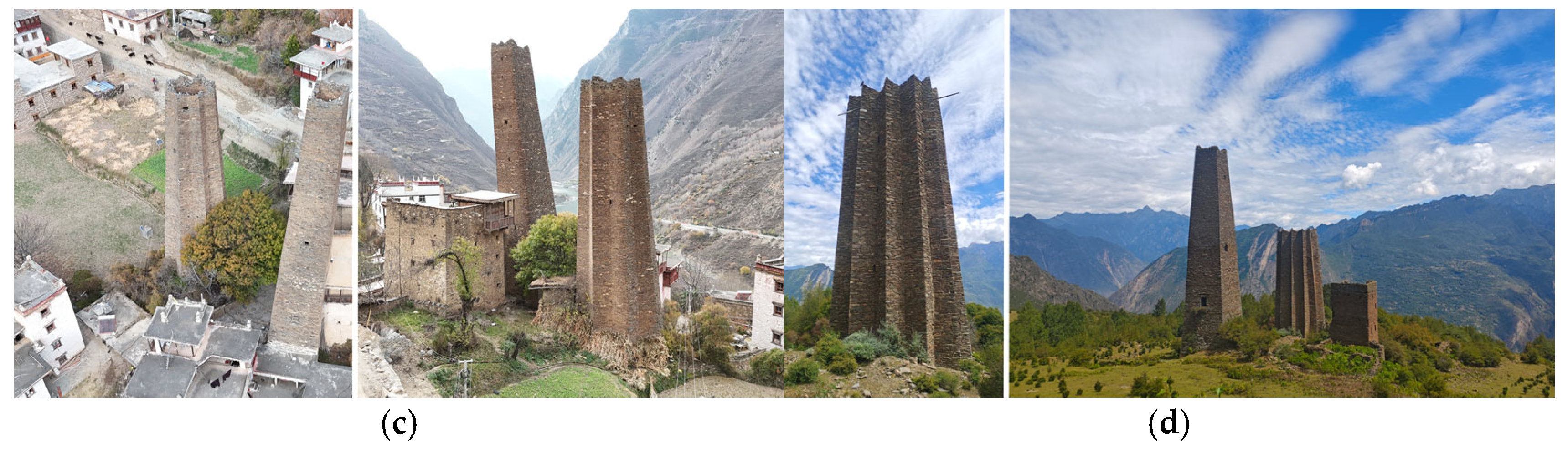
The research subject is the Suopo Ancient Watchtower Group in Danba County, Sichuan Province (Figure 2), comprising 84 stone-built watchtowers of diverse configurations (four-cornered, five-cornered, eight-cornered, thirteen-cornered, etc., Figure 3). These watchtowers adopt local dry-laid rubble masonry and feature a typical stepped-in structure with a narrow top and a wider base [33]. Additionally, located in a high-intensity seismic zone, they are continuously threatened by earthquakes, weathering, and rainwater erosion, thus serving as an ideal case for verifying the applicability of the proposed framework.
Figure 2. Spatial distribution of Suopo watchtower cluster. The right panel shows the location of Danba County within Ganzi Prefecture and Sichuan Province. The black dots indicate the distribution of ancient watchtower clusters and Tibetan villages. The dashed gray circles represent the buffer zones (or monitoring radii) around key heritage sites. The blue and pink lines denote provincial highways and rural roads, respectively. The black arrow with label indicates a distance of 5 km for scale reference. Inset images show detailed views of Jiaju Tibetan Village, Zhonglu Tibetan Village, and the Suopo complex. (Source: Authors’ own elaboration).
Figure 3. (a) Four-corner watchtower; (b) Pentagonal watchtower; (c) Octagonal watchtower; (d) Thirteen-Cornered Watchtower. (Source: Authors’ own elaboration).
Details regarding data collection technologies and their corresponding objectives are presented in Table 1. All the collected data have undergone unified registration, denoising, and coordinate anonymization processes.
Table 1. Data Acquisition Techniques (Source: Authors’ own elaboration).

2.3. Value and Risk Assessment

The value assessment is grounded in the ICOMOS framework, employing a multi-criteria matrix that encompasses five dimensions: historical, artistic, scientific, social, and cultural. To determine the weights for each criterion, the Delphi method was applied. This structured consensus-building technique involved a panel of 10 experts selected for their diverse expertise and stakeholder representation: five senior researchers in heritage conservation, three officials from cultural heritage management authorities and two specialists in Jiarong Tibetan architecture and culture. This composition ensured interdisciplinary balance and incorporation of both scientific and indigenous knowledge perspectives.
The Delphi process consisted of three iterative rounds. In the first round, experts independently assigned initial weights and provided qualitative justification. In the second round, anonymized statistical feedback (mean, median, and range) from the first round was distributed, allowing experts to revise their judgments. The third round confirmed final weights until convergence was achieved, yielding a consistency coefficient k > 0.8. Particular attention was paid to the cultural value dimension, where weights were refined in consultation with local community representatives during the field survey, thereby respecting cultural sensitivity and contextual authenticity. The resulting weights are presented in Table 2.
Table 2. Weights of Value Criteria Determined by the Delphi Method (Source: Authors’ own elaboration).
For the risk assessment, the framework integrates material degradation (e.g., weathering and biological growth), structural vulnerability (e.g., cracks and inclination), and environmental threats (e.g., seismic activity and rainfall erosion). The risk coefficient R (ranging from 0 to 1) is calculated via weighted summation of these factors, with sub-weights calibrated through the same expert panel to maintain consistency.
The priority index is then computed as P = V × R, where V is the weighted comprehensive value score. A value–risk priority matrix is subsequently generated to categorize components and watchtowers into emergency intervention (P0), high-priority monitoring (P1), medium-priority (P2), and routine maintenance (P3). This model is deeply embedded in the HBIM system via Dynamo scripts and Revit shared parameters, enabling automated calculation and real-time visualization of priorities across the entire cluster once expert weights are inputted.

2.4. Sensitivity Analysis of the Value–Risk Priority Model

To further validate the robustness of the priority index formula P = V × R and justify the adoption of a multiplicative relationship, a sensitivity analysis was conducted. The multiplicative form was selected because it effectively captures the compounded urgency of high-value assets facing high risks, aligning with preventive conservation principles outlined in ICOMOS guidelines [34], where objects with simultaneously elevated value and risk demand prioritized intervention. In contrast to additive models, which may underestimate such synergies, the multiplicative approach ensures that priority escalates non-linearly for critical cases, as supported by similar value–risk matrices in heritage management literature [35].
Sensitivity to uncertainty in value criteria weights was assessed using Monte Carlo simulation (10,000 iterations). Weights for the five value dimensions (historical, artistic, scientific, social, and cultural) were sampled from a Dirichlet distribution with concentration parameters α = [10, 10, 10, 10, 10], simulating minor expert disagreements following Delphi convergence (κ > 0.8). This distribution centers weights around equal proportions (0.2) while allowing realistic small variations. Comprehensive value scores V were recalculated for each iteration, multiplied by fixed risk coefficients R to generate distributions of P or representative components.

2.5. Parametric Modeling

Level of Development (LOD) is used to define the level of geometric and semantic detail in the model. The adaptation of LOD frameworks in HBIM has been recognized as a critical methodological approach to balance the complexity of historical information with computational efficiency [36]. Unlike new constructions, LOD in heritage contexts often integrates geometric accuracy with the “Level of Knowledge” (LoK), encompassing archaeological and stratigraphic data [37]. In this study, a grading strategy corresponding to LOD 100–400 is adopted, where LOD 100 represents coarse conceptual massing, LOD 200 includes generalized system geometry, LOD 300 provides accurate geometry with basic parameters, and LOD 400 represents fully detailed, constructible elements with complete semantic information. To organize the model at the component level, a three-level classification system based on type, material, and construction subclass is established with a unified alphanumeric coding. Contours of irregular polygonal plans are first accurately generated in Rhino before being imported into Revit. Stepped-in walls are implemented via adjustable angle parameters, while regular four-cornered watchtowers are batch-instantiated through templates [38]. This process ultimately develops a parametric component library containing over 100 reusable families, including walls, doors, windows, decorations, and roofs, which supports the efficient assembly and semantic retrieval of cluster-scale models.

3. Results

Based on the proposed intelligent HBIM-based preventive protection framework, this study has completed comprehensive digital modeling, semantic representation, and value–risk analysis for the Suopo Ancient Watchtower Group in Danba, ultimately establishing a cluster-scale digital system for sustainable management. The core outcomes encompass a dedicated parametric component library, a multi-level HBIM database, a unified classification and coding system, and an embedded intelligent decision-making module.

3.1. Core HBIM Outcomes

3.1.1. Parametric Component Family Library

A dedicated parametric component library tailored to the Suopo Ancient Watchtowers has been established on the Revit platform, covering six major categories: walls, foundations, roofs, doors and windows, stairs, and Jiarong Tibetan-style decorations. This library integrates geometric parameters, material properties, historical maintenance records, and damage tags, enabling the precise representation of 3° stepped-in angles, polygonal plans, and decorative details. A three-level coding system (category–type–serial number) is adopted to ensure the unique identification and efficient retrieval of components (Table 3). Successfully adapted to various watchtower configurations ranging from four-cornered to thirteen-cornered, the library provides reusable standard resources for cluster-scale model assembly.
Table 3. Component Coding (Source: Authors’ own elaboration).
Typical components are detailed as follows:
Wall family: Developed based on system families, it comprises a 400 mm rubble base and a 20 mm yellow mud surface layer. An adjustable 3° stepped-in parameter is incorporated to accurately capture the “narrow top and wide base” characteristics of Tibetan masonry.
Door and window families: A total of 8 window families and 4 door families have been developed. Key parameters include opening width, windowsill height, and frame proportions, with links to on-site images and damage annotations. This design enables the simultaneous expression of both geometric and heritage information (Table 4).
Table 4. Parametric families for doors and windows with damage annotation (Source: Authors’ own elaboration).
Decoration families: Covering 13 types of Jiarong Tibetan-style decorative elements (e.g., “Lawoze” and eave carvings), the library restores their dimensions, configurations, and symbolic meanings through image-based surveying and mapping as well as parameter mapping (Table 5).
Table 5. Library of decorative parametric families for Jiarong Tibetan features (Source: Authors’ own elaboration).
Currently, this parametric component library contains over 100 reusable families, further demonstrating excellent adaptability to both regular and irregular watchtowers and serving as the foundational standard component resource for the digital modeling of the Suopo Ancient Watchtowers.

3.1.2. Architectural Model Database

An HBIM database covering all 84 watchtowers in Suopo Township has been established, which is divided into two levels: individual building models and cluster models.
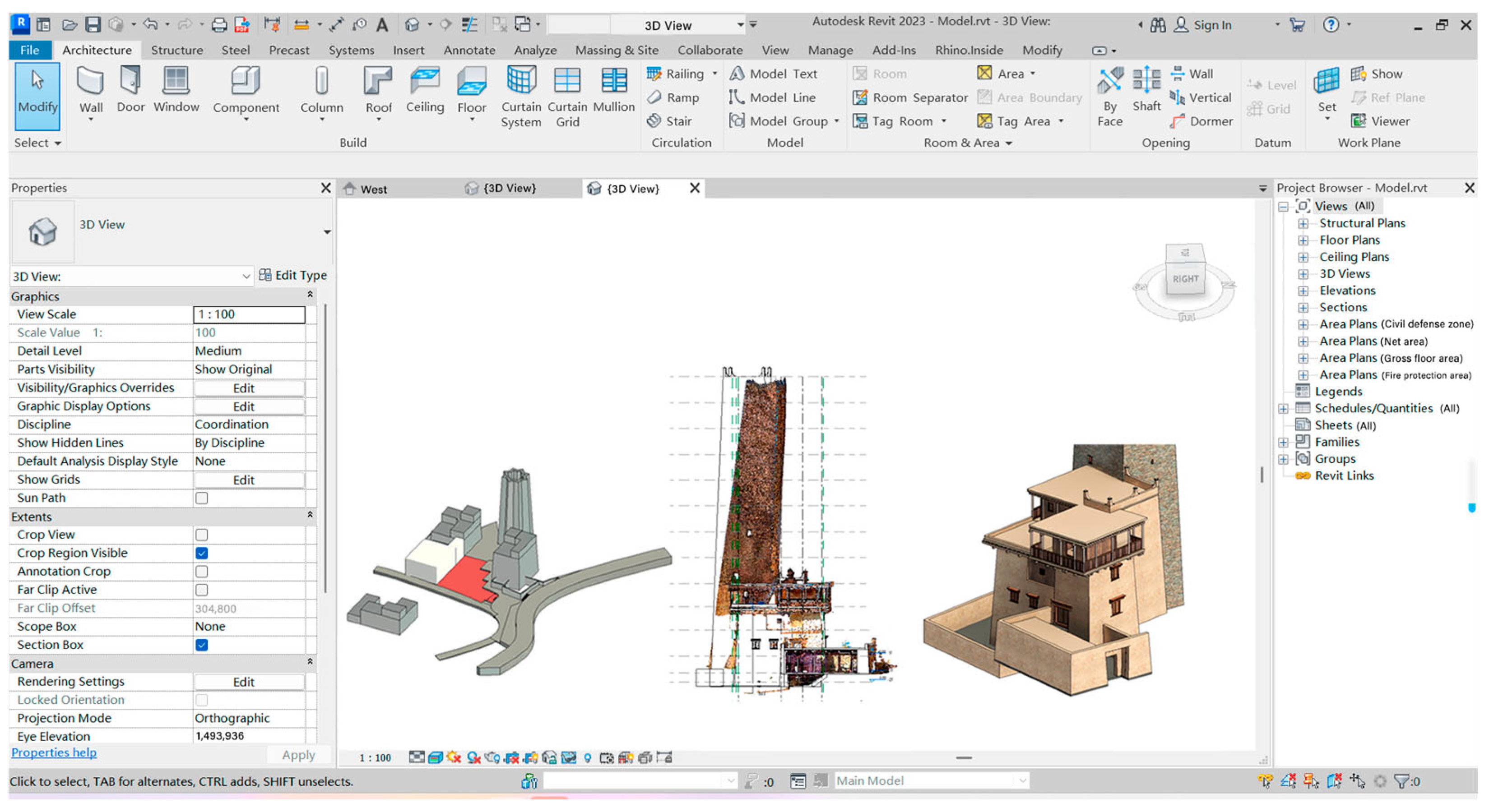
Individual building Models: The modeling process involves four key steps: first, point cloud scene initialization; second, coordinate and grid calibration; third, load-bearing system construction; and fourth, the assembly of doors, windows, and accessory components (Figure 4). Damage information is classified into six categories (e.g., plant infestation, spalling, and decay) and graded into three levels (mild, moderate, and severe) based on deterioration rate. RGB color bands are adopted for the visual representation of this damage information [39].
Figure 4. Schematic diagram including site modeling, datum elements and linked point cloud references, and main structural model. The image displays three views: the site layout with surrounding terrain (highlighted in red), the comparison between laser scanning point clouds and the BIM model, and the detailed textured model of the watchtower. The red area represents the specific site context, while gray structures denote the ancient watchtowers. (Source: Authors’ own elaboration).
Model accuracy validation showed that the mean geometric deviation between the point clouds and HBIM models was less than 5 mm (verified across 1000 control points). Damage annotation achieved 95% accuracy through manual review.
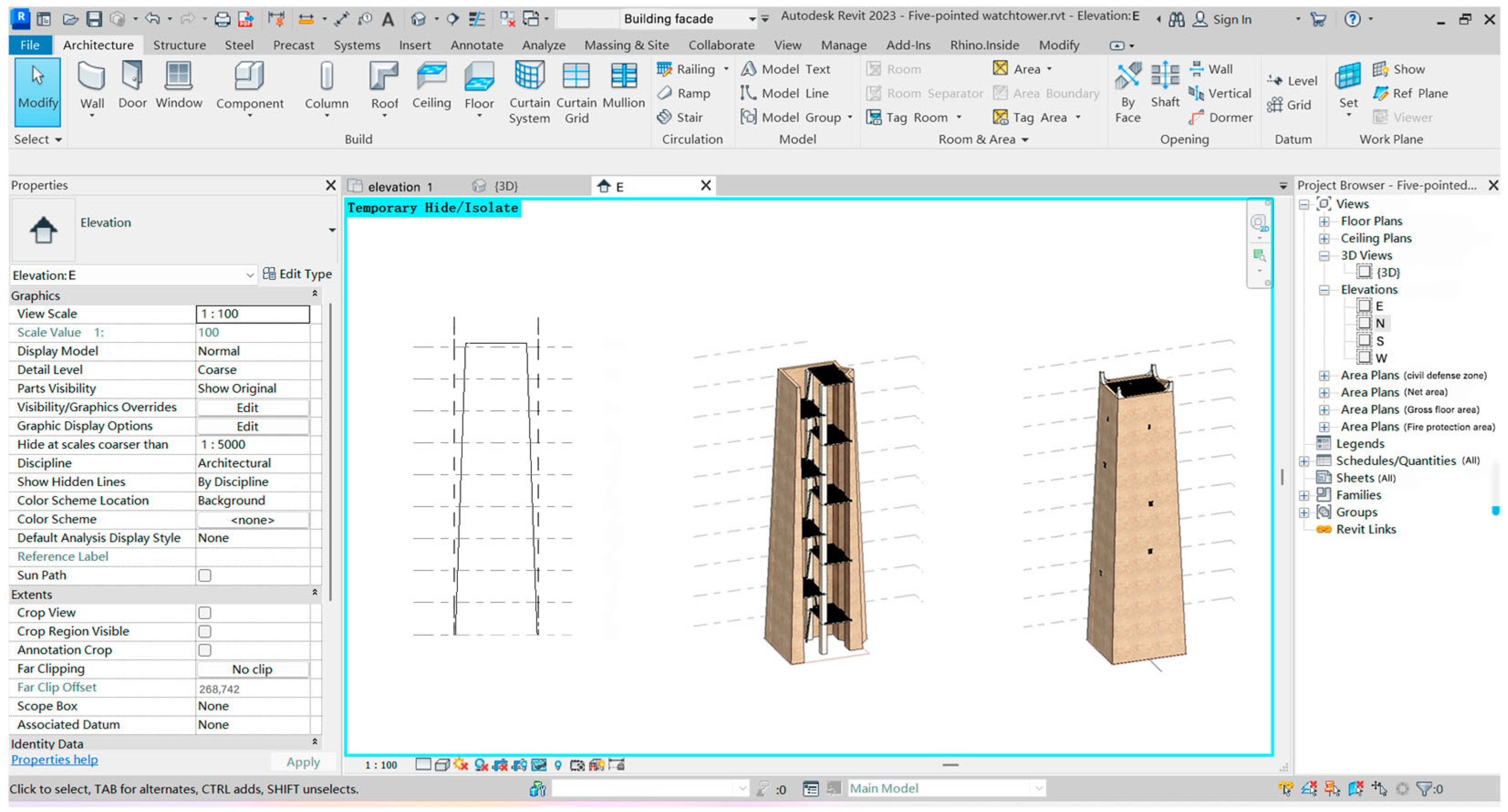
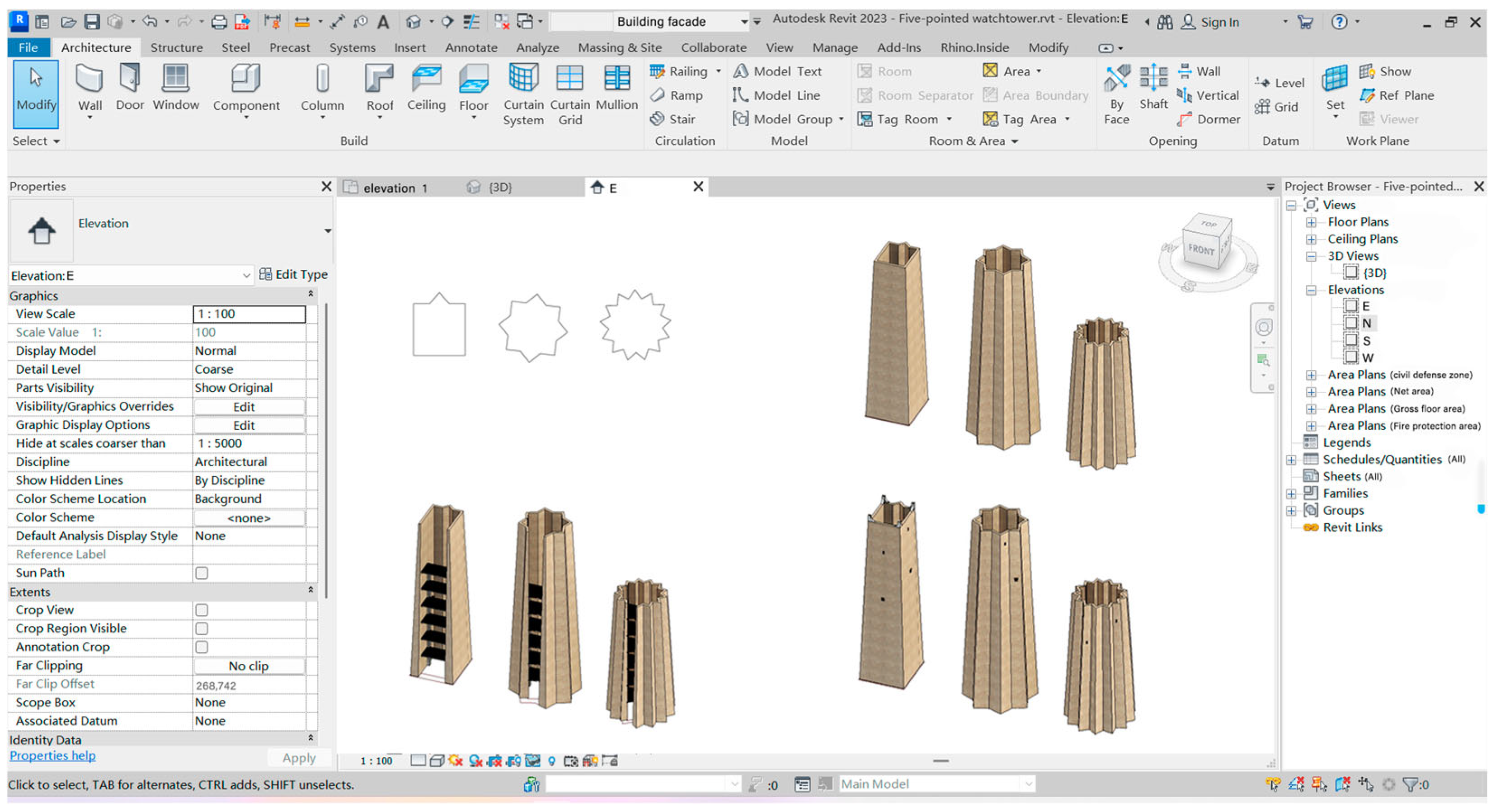
Cluster models: The database is organized following the hierarchy of “building type—village—individual ID,” enabling model retrieval and spatial distribution analysis. For five-cornered, eight-cornered, and thirteen-cornered watchtowers, their planar features are first generated as contours in Rhino before being imported into Revit for model construction. In contrast, four-cornered watchtowers adopt a template reuse strategy for batch parametric modeling, which significantly improves modeling efficiency (Figure 5 and Figure 6). This database supports cross-model comparison, facilitating the revelation of potential correlations between watchtower morphological characteristics, damage distribution, and seismic activity.
Figure 5. Schematic diagram of the HBIM modeling process in Revit. The three views illustrate: (left) wall height adjustment via 2D elevation profiles; (center) the internal array of columns, staircases, and floor slabs shown in a section view; and (right) the final model with imported door and window components. This sequence demonstrates the parametric construction from basic geometry to detailed architectural elements. (Source: Authors’ own elaboration).
Figure 6. Schematic diagram of modeling variations. The image displays: (top) 2D geometric outlines and initial massing models; (bottom left) sectioned views showing internal component arrays (columns, stairs, floors); (bottom center) wall height adjustments; and (bottom right) the final topped-out structures. These views demonstrate the parametric capabilities for complex masonry geometries. (Source: Authors’ own elaboration).
The application of this parametric library has significantly improved modeling efficiency. For a typical thirteen-sided watchtower, modeling time was reduced from approximately 40 h using traditional manual methods to 8 h, representing an efficiency improvement of approximately 80%. Across the 84 watchtowers, the more than 100 family files achieved a reuse rate of 92%, substantially reducing repetitive workload while maintaining geometric and semantic consistency.

3.1.3. Classification and Coding System

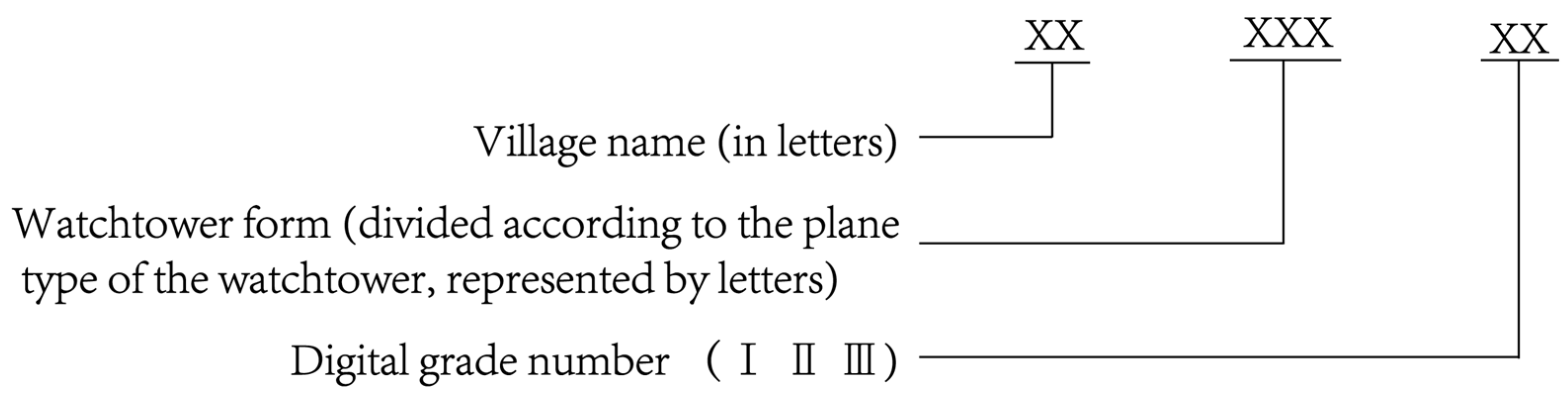
A multi-dimensional classification system has been established based on plan form, functional usage, and preservation status. Buildings are uniformly coded according to village name, watchtower configuration, and digitization level (Figure 7), while building components are assigned a three-level coding system based on component location, structural type, and component name (Table 6). Hierarchical coding is adopted to achieve precise identification of component types and data visualization. Taking the stone exterior wall on the west side of the main facade of the Wengdujia Ancient Watchtower in Molo Village as an example, its complete code is “MLC-SJD-01-I_ZQ.QL.01_001.” This code denotes: “Molo Village four-cornered watchtower, column-wall section, wall component, stone exterior wall, and the first exterior wall.”
Figure 7. Hierarchical structure of the Suopo watchtower HBIM library (Source: Authors’ own elaboration).
Table 6. Three-Level Coding System (Source: Authors’ own elaboration).
Through its hierarchical classification mechanism for building structures, this coding system effectively mitigates the risk of data omission and supports multi-condition intelligent retrieval based on criteria such as configuration, component type and location, risk level, and damage severity. The location and severity of component damage are visually differentiated by color, facilitating the rapid identification of high-risk objects.

3.2. Management and Application Implementation

3.2.1. Information Delivery and Retrieval

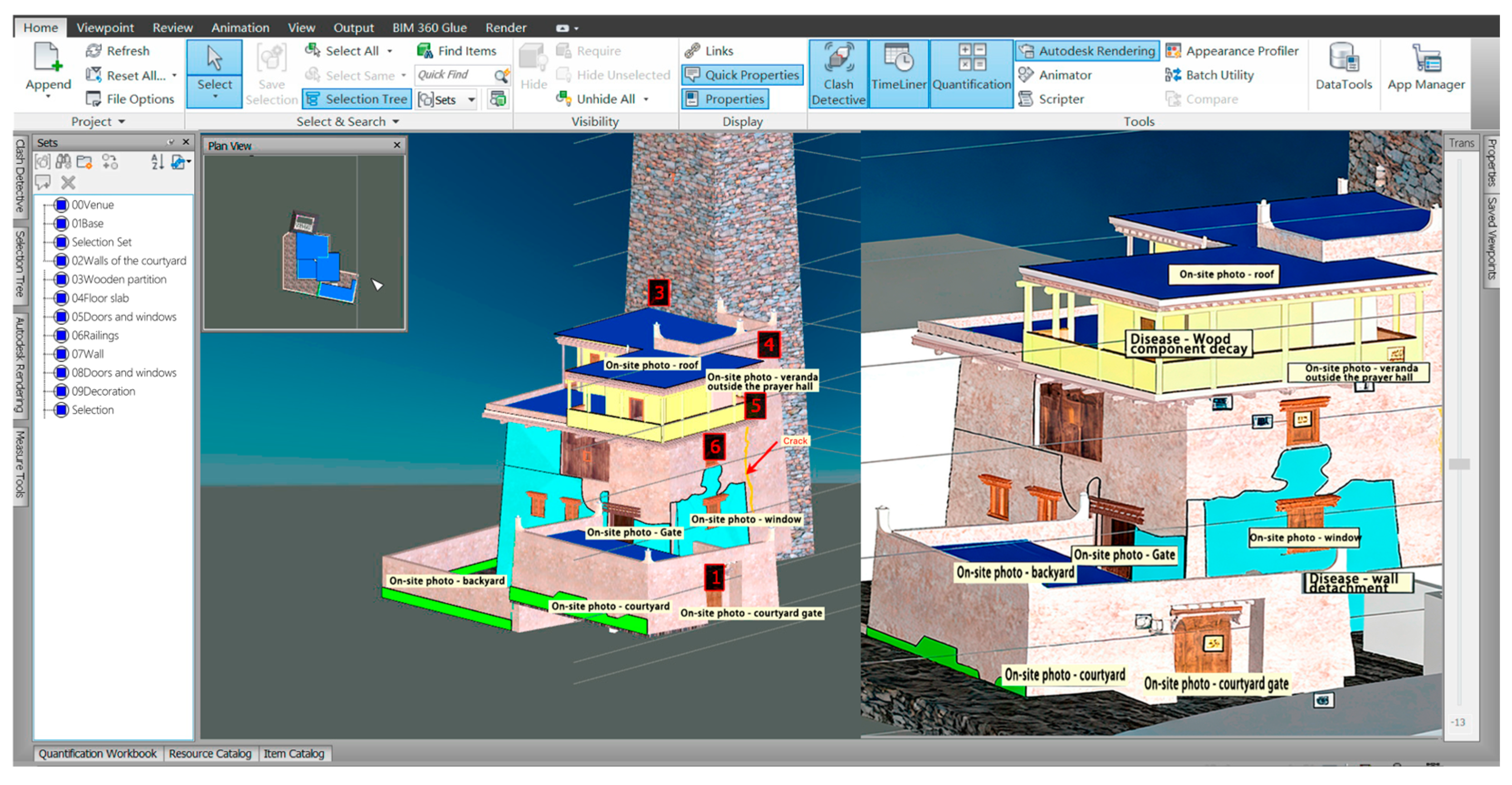
Component families are provided in RFA (Revit Family) format, defining reusable parametric elements, while complete models are delivered in RVT (Revit Project) and IFC (Industry Foundation Classes) formats to ensure seamless interoperability across various BIM platforms. A lightweight viewing version is also provided to support mobile and cloud-based browsing. A multi-source data retrieval system based on hyperlinks has been established, enabling the associated access of models with images, texts, and damage records (Figure 8).
Figure 8. Multi-source information integration in Navisworks. The model visualizes photos, notes, and damage records mapped onto specific components: blue (roofs), yellow (wooden structures), cyan (walls), and green (courtyards). Red markers indicate identified defects like masonry cracks. Dual views are provided to show the spatial distribution of these integrated data sources. (Source: Authors’ own elaboration) (Source: Authors’ own elaboration).

3.2.2. Digital Visualization Display

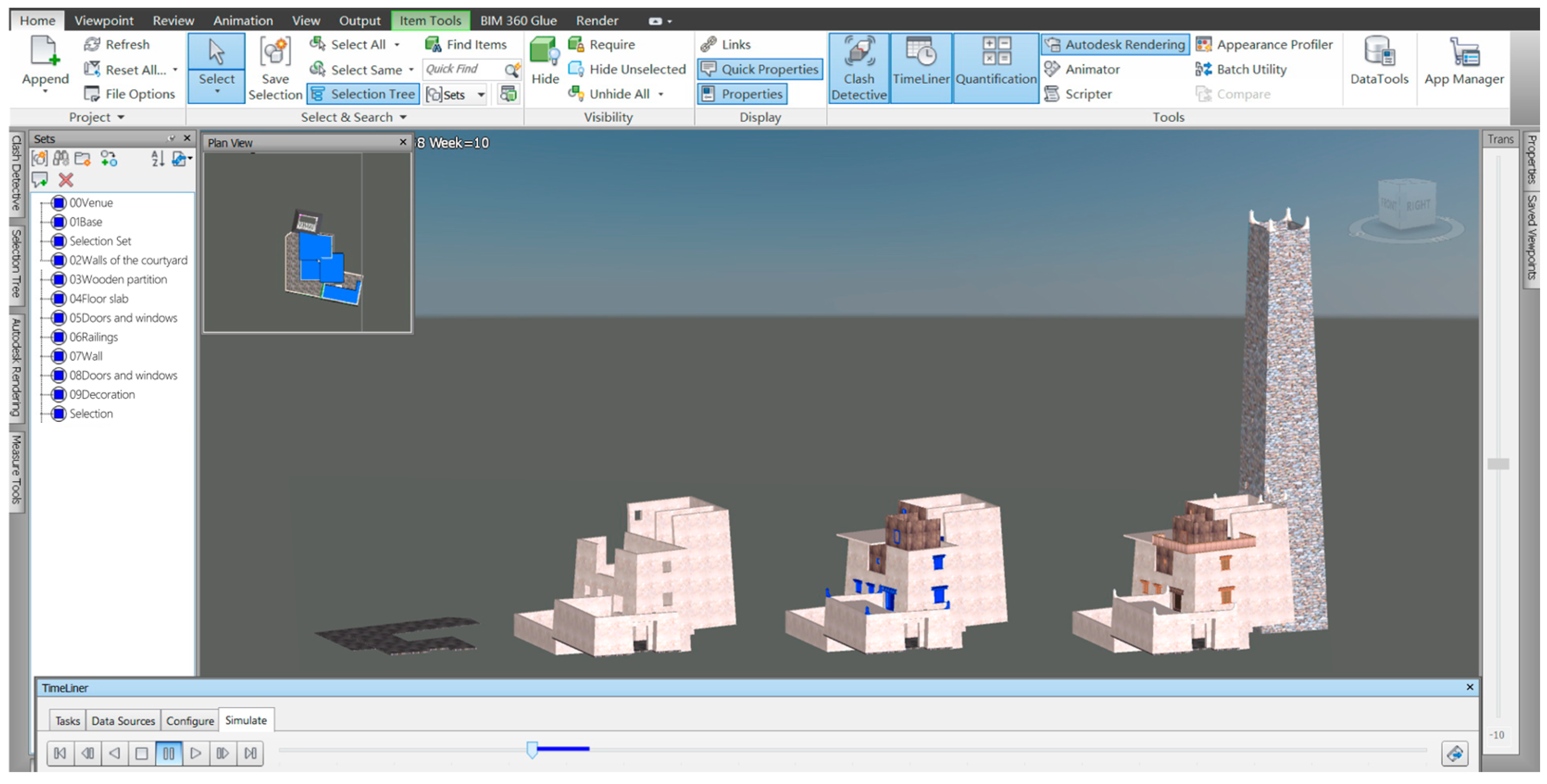
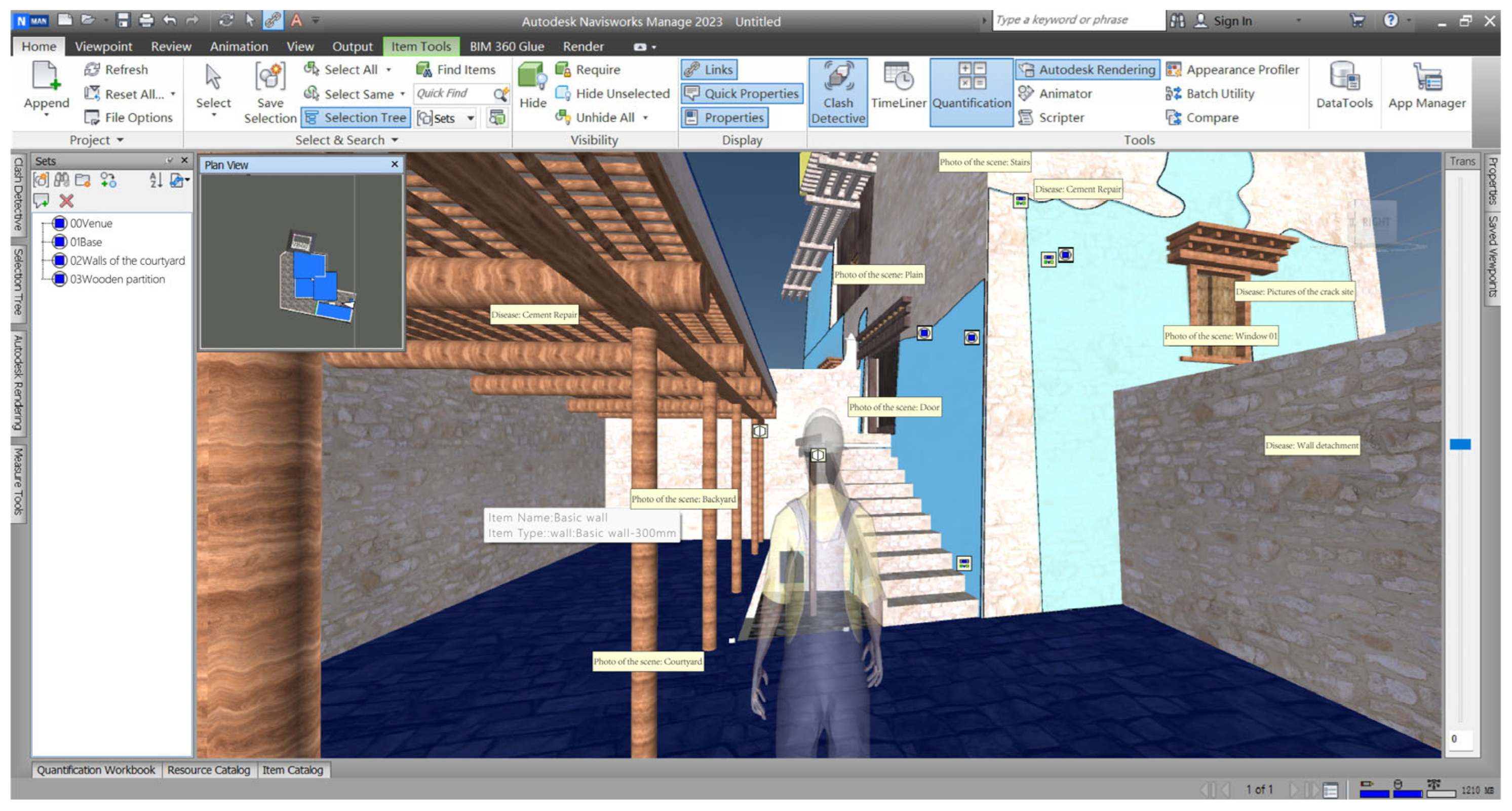
Immersive navigation (Figure 9) and phased display (Figure 10) have been realized using Autodesk Navisworks Manage 2023 (Autodesk Inc., San Rafael, CA, USA). This system provides technical support for public education and heritage protection promotion.
Figure 9. Immersive walkthrough in Navisworks. Immersive walkthrough simulation in Navisworks for virtual heritage inspection. The first-person view (indicated by the avatar) enables navigation as if physically present. Yellow labels display mapped on-site photos and component attributes (e.g., “Photo of the scene: Stairs”), allowing real-time access to multi-source data. This demonstrates visual inspection of detailed elements like wooden beams and stone walls within an integrated digital environment. (Source: Authors’ own elaboration).
Figure 10. 4D construction sequence simulation of the Wengdu family watchtower, including masonry foundation, masonry wall, partition construction, and blockhouse top construction (Source: Authors’ own elaboration).

3.2.3. Value Assessment Matrix

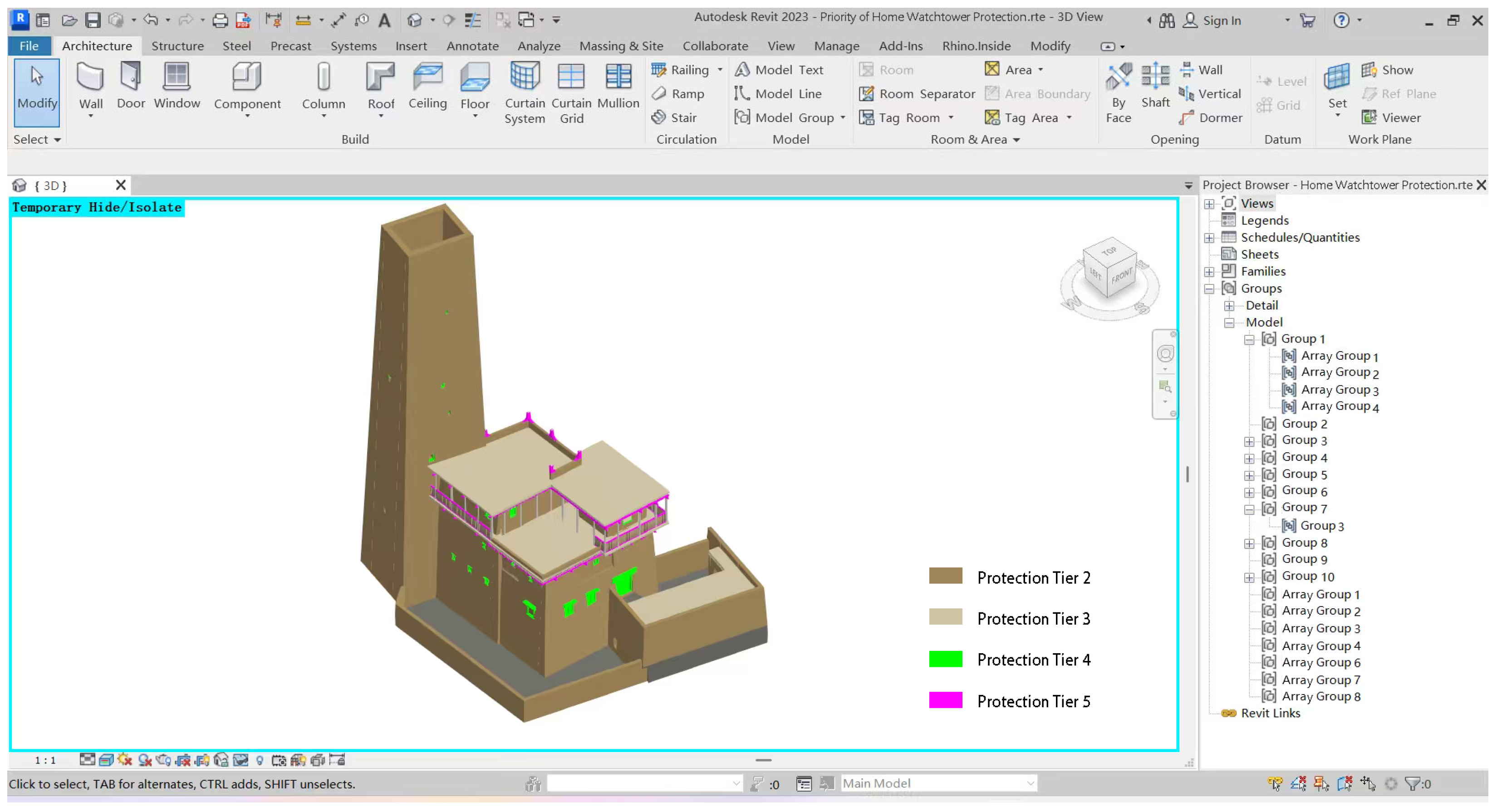
Value assessment for all watchtowers has been completed based on the ICOMOS framework, and the priority index P = V × R has been calculated by incorporating risk factors (Table 7). For instance, the “Wall” component exhibits the highest comprehensive value (88) due to its embodiment of traditional dry-stone masonry techniques and historical defensive function, but also the highest risk (0.9) owing to widespread vertical cracks and moisture infiltration observed during field inspection. Conversely, “Other components”—including carved wooden lintels and ritual niches—score high in artistic (19) and cultural (19) value, reflecting intangible heritage aspects, yet show lower physical risk (0.5) as they are often sheltered or recently restored. Weights were determined by a panel of 10 experts through three rounds of the Delphi method, with a consistency coefficient κ > 0.8. After experts completed the weight calibration, the system automatically ranked the priorities of tens of thousands of components and implemented real-time mapping of material color and opacity within the Revit model (Figure 11). Across the approximately 12,000 major components in the 84 watchtowers, the priority distribution was as follows: P0 (urgent) accounted for 3.2% (384 components), P1 (high) 15.8%, P2 (medium) 42.3%, and P3 (routine) 38.7%. The cluster-scale value–risk intervention list (Table 8) prioritizes components accordingly, from emergency (P0) to routine (P3) maintenance.
Table 7. Protection Priority of an Individual Watchtower (Source: Authors’ own elaboration).
Figure 11. Real-time visualization of conservation priority using material color and transparency mapping (Source: Authors’ own elaboration).
Table 8. Intervention List of ‘Value–Risk’ Objects for Part of the Watchtower Group (Source: Authors’ own elaboration).

3.3. Sensitivity Analysis

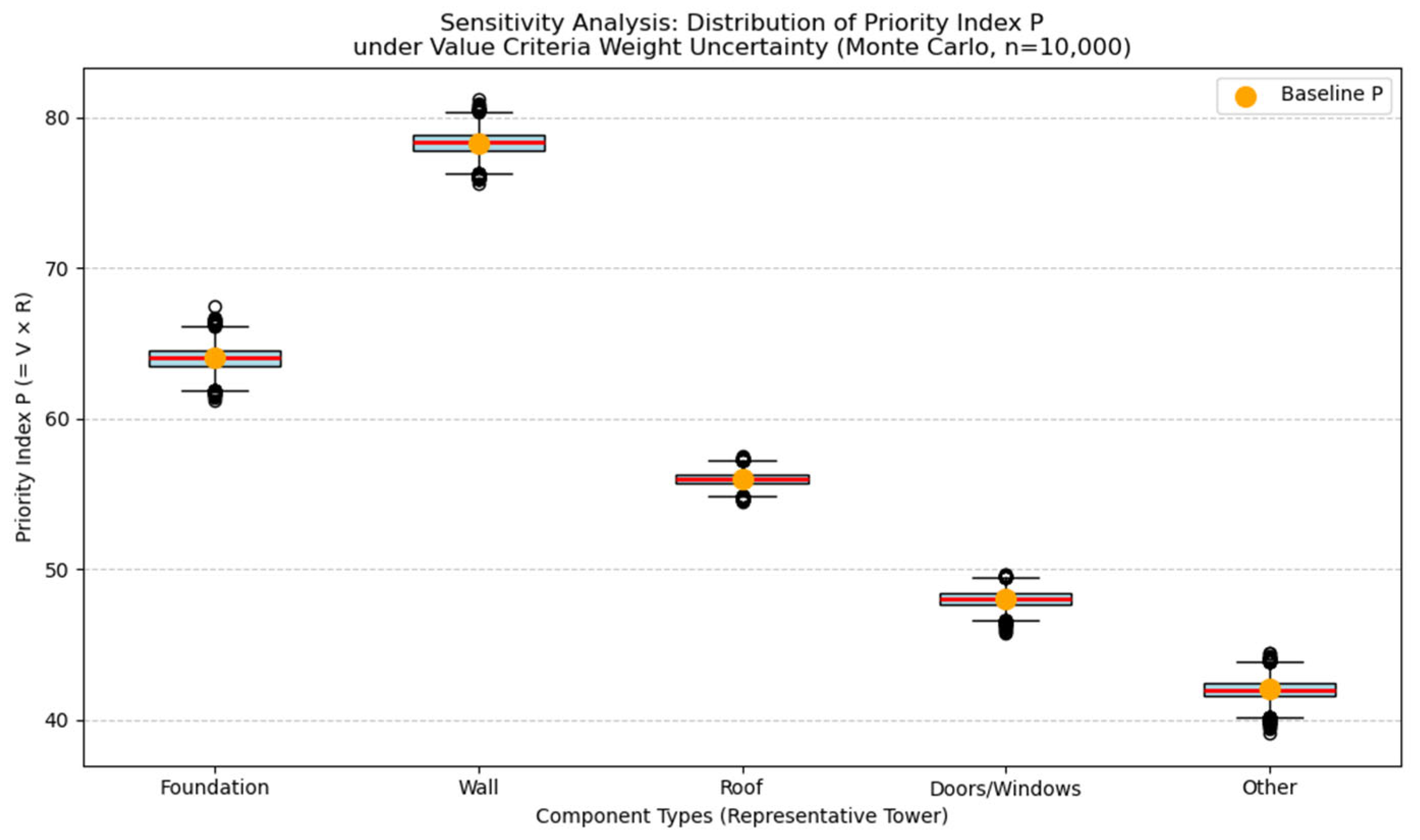
To further evaluate the robustness of the multiplicative value–risk model (P = V × R), Monte Carlo simulations with 10,000 iterations were conducted, introducing plausible variations in expert-assigned weights for the value criteria. The resulting distributions of priority indices P across different component types in a representative watchtower exhibited extremely low variability, with standard deviations below 1.0 and coefficients of variation under 1%, indicating minimal sensitivity to weight fluctuations (Figure 12). Baseline P values, calculated under equal weights, closely matched the medians of the simulated distributions (e.g., walls: ~79; foundation: ~64; roof: ~56), and priority rankings remained invariant throughout all iterations, with critical load-bearing walls consistently holding the highest priority. At the cluster scale, aggregated analyses showed similar stability, with top-ranked objects (e.g., P0-level) retaining their positions in over 99% of iterations. These results confirm that the model reliably identifies high-priority components even under weight uncertainty, providing robust decision support for cluster-scale preventive conservation.
Figure 12. Sensitivity Analysis: Distribution of Priority Index P under Value Criteria Weight Uncertainty (Monte Carlo, n = 10,000). The boxes represent the interquartile range (25th–75th percentiles) of the simulated PP values, while the red horizontal lines indicate the medians. The yellow dots denote the baseline PP values calculated with equal weights, and the black circles represent outliers. The stability of the median relative to the baseline confirms the model’s robustness. (Source: Authors’ own elaboration).

4. Discussion

The intelligent HBIM framework proposed in this study for cluster-based preventive protection exhibits significant applicability in the digitalization and intelligent management of complex masonry heritage. Compared with existing HBIM applications that primarily focus on individual buildings, this framework achieves the integration of unified data organization, semantic representation, and value–risk coupled decision-making at the cluster scale [40]. It effectively addresses three key limitations in current heritage protection practices: the lack of an overall management mechanism for heritage clusters, inadequate connection between preventive processes and dynamic risk assessment, and insufficient targeted parametric expression for ethnic minority regional architecture.

4.1. Technical Contributions and Innovation

In terms of parametric modeling, the component library developed in this study has successfully adapted to complex configurations such as polygonal plans and stepped-in walls. By leveraging adjustable parameters and a three-level coding system, it enables efficient component reuse and unified cluster-scale management, significantly enhancing the digital expression capability of irregular stone masonry heritage. Compared with recent parametric methods focused on individual objects, this framework exhibits distinct advantages in cross-object semantic consistency and model maintainability [41].
The key innovation lies in the integration of an intelligent decision-making layer. Through HBIM customization tools, the value–risk matrix is embedded into model attributes, enabling automated prioritization, real-time visualization of risk levels, and a feedback-driven decision mechanism. This transforms traditional static HBIM from a documentation tool into an active perception–decision–feedback system, shifting preventive protection from “experience-based judgment” to data-driven decision-making, addressing the gap in automation for preventive conservation [42]. To provide a comprehensive quantitative evaluation of the framework’s performance, a comparison between the traditional manual workflow and the proposed HBIM-based approach is summarized in Table 9.
Table 9. Performance Comparison Between Traditional and HBIM-Based Workflows (Source: Authors’ own elaboration).

4.2. Performance Advantages and Application Effectiveness

Application to the Suopo Ancient Watchtower Group has demonstrated several advantages: (1) cluster-scale parametric modeling reduces repetitive workload while maintaining geometric and semantic consistency across all watchtowers; (2) the hierarchical HBIM database supports multi-condition retrieval, cross-model comparison, and integrated morphological and damage analysis; and (3) the embedded value–risk module provides objective, intuitive guidance for resource allocation and intervention planning.
This framework is particularly suitable for masonry heritage clusters in high-seismic zones, exhibiting high adaptability to environmental constraints. Its modular architecture and intelligent decision-making layer provide strong potential for replication in similar heritage protection projects, extending the applicability of HBIM beyond individual buildings to cluster-level preventive management.

4.3. Limitations and Future Directions

Despite the aforementioned progress, this study still has certain limitations: (1) Due to terrain obstruction, the data integrity of some watchtowers is limited. (2) The current value–risk assessment primarily relies on expert initial weights and phased surveys, and has not yet achieved dynamic updates based on continuous time-series data. (3) Although the system reserves an IoT interface, long-term field validation in actual engineering projects has not been carried out.
Future research will be further advanced in the following directions: (1) Integrate point cloud semantic segmentation algorithms to realize automatic damage identification and annotation. (2) Introduce IoT sensors and time-series data, and combine models such as LSTM (Long Short-Term Memory) to achieve short-term and medium-term dynamic prediction of risk coefficients, with degradation trends visualized through animations within the model. (3) Develop a mobile inspection tool based on Revit API, which supports on-site one-click positioning of high-priority components and pushes intervention recommendations.
All these improvements are based on the reserved interfaces of the existing framework, featuring high feasibility. Moreover, they can further evolve into a complete heritage digital twin system, providing more comprehensive technical support for the intelligent preventive protection of masonry heritage clusters.
Beyond these technical and methodological limitations, issues related to data governance, ethical management, and long-term sustainability also warrant consideration. Ownership of the HBIM models, parametric libraries, and databases is jointly held by the Danba County Cultural Heritage Administration and the local Suopo community, as stipulated in the research approvals. All data were delivered in open, interoperable formats and securely archived by the heritage authority with local backups. Future updates will be co-managed to ensure cultural sensitivity and long-term sustainability, in line with ICOMOS principles for ethical digital heritage management.

4.4. Theoretical Significance and Practical Value

At the theoretical level, this study advances HBIM from a digital archiving tool to a preventive intelligent decision-making system, providing a novel technical approach for the protection of ethnic regional architectural clusters. Practically, it establishes a comprehensive digital archive and management platform for the Suopo Ancient Watchtower Group, supporting daily monitoring and decision-making. The modular and scalable design allows potential application to similar masonry heritage clusters worldwide, offering a Chinese solution for sustainable heritage protection and enabling cross-regional cooperation and technology sharing.
Compared with international practices, our framework addresses a critical gap in current digital heritage workflows. While EU-funded initiatives such as PROTHEGO [43] and CHARTER [44] have advanced geohazard monitoring through InSAR and BIM, they primarily focus on externally driven structural risks and offer limited integration of cultural value dimensions as defined by ICOMOS. Similarly, HBIM studies by D’Amico et al. [45] and Bruno et al. [46] demonstrate sophisticated condition assessment for individual monuments but do not scale to interrelated heritage ensembles. In contrast, our approach uniquely couples ICOMOS-aligned cultural values—encompassing historical, artistic, scientific, social, and cultural significance—with physical risk factors within a unified, cluster-scale HBIM environment. This integration enables conservation decisions that explicitly balance significance and vulnerability, transforming HBIM from a static documentation tool into an actionable, intelligent system for preventive conservation. By extending parametric modeling, semantic consistency, and value–risk-driven decision support to the heritage cluster level, the framework provides a replicable, scalable, and practical pathway for managing complex masonry ensembles in high-risk environments—particularly where cultural importance is high but technical and financial resources are constrained.

5. Conclusions

This study proposes and validates an intelligent HBIM-based framework for the preventive conservation of masonry heritage clusters, applying it to the Suopo Ancient Watchtower Group in Danba County, Sichuan Province—a complex of 84 polygonal, stepped-in stone watchtowers. The framework establishes a closed-loop workflow spanning multi-source data integration, parametric modeling, and value–risk-driven decision-making, significantly enhancing the efficiency and responsiveness of cluster-scale heritage management.
The major outcomes of this study can be summarized as follows:
(1)
A dedicated parametric component library and unified coding system were developed, enabling efficient reuse and consistent semantic representation across all 84 watchtowers. This provides a practical solution for modeling complex, irregular masonry structures at the cluster scale.
(2)
A hierarchical HBIM database was established, supporting multi-level retrieval, cross-building comparison, and correlation analysis of morphology, material behavior, and damage patterns. This database underpins systematic, traceable management of heritage clusters.
(3)
The integration of a value–risk priority model (P = V × R) within HBIM enables automated prioritization, real-time visualization, and one-click generation of intervention lists, transforming preventive conservation from subjective judgment into data-driven, intelligent decision-making.
(4)
The framework demonstrates strong scalability, adaptability, and practical applicability, particularly for masonry heritage clusters in high-seismic zones. Its modular design and intelligent decision-making layer provide a replicable technical paradigm for similar high-risk heritage environments worldwide.
Theoretically and practically, this study advances HBIM from a passive documentation tool to a preventive intelligent decision-making system, offering a novel approach for the sustainable protection of ethnic regional architectural clusters and laying the groundwork for cross-regional cooperation and heritage digital twin development.
Overall, the proposed framework provides a comprehensive, operable, and replicable solution for cluster-scale preventive protection of masonry heritage. With further integration of IoT and AI technologies, it is expected to evolve into a full-fledged digital twin system, offering enhanced monitoring, predictive intervention, and long-term conservation support for complex heritage clusters.
Furthermore, the research demonstrates that the proposed framework effectively supports the entire preventive protection process, from data acquisition to intervention decision-making, providing an operable and replicable paradigm for the sustainable management of masonry heritage in Chinese ethnic minority settlements. With the further integration of IoT and AI technologies, the framework is expected to evolve into a comprehensive heritage digital twin system, offering enhanced monitoring, predictive interventions, and long-term conservation support for complex heritage clusters worldwide.

Author Contributions

Conceptualization, L.Z. and F.X.; methodology, L.Z., C.T. and Y.Y.; software, Y.Y.; validation, C.T. and Y.Y.; formal analysis, L.Z. and J.Y.; investigation, L.Z. and C.T.; resources, F.X.; data curation, C.T. and J.Y.; writing—original draft preparation, L.Z.; writing—review and editing, F.X., Y.Y. and J.Y.; visualization, L.Z. and C.T.; supervision, F.X.; project administration, F.X.; funding acquisition, F.X. All authors have read and agreed to the published version of the manuscript.

Funding

This research was funded by the Natural Science Foundation of Sichuan Province, grant number 2022NSFSC1080. The APC was funded by the authors.

Data Availability Statement

The original contributions presented in this study are included in the article. Further inquiries can be directed to the corresponding author.

Conflicts of Interest

The authors declare no conflicts of interest.

References

  1. Vandesande, A. Preventive Conservation Strategy for Built Heritage Aimed at Sustainable Management and Local Development. Doctoral Dissertation, KU Leuven, Leuven, Belgium, 2017. Available online: https://lirias.kuleuven.be/1727568 (accessed on 1 February 2026).
  2. Ouan, P.; Hallot, P. Digital twin: Research framework to support preventive conservation policies. ISPRS Int. J. Geo-Inf. 2020, 9, 244. [Google Scholar] [CrossRef]
  3. Rolim, R.; López-González, C.; Viñals, M.J. Analysis of the current status of sensors and HBIM integration: A review based on bibliometric analysis. Heritage 2023, 6, 98. [Google Scholar] [CrossRef]
  4. Baik, A. A comprehensive heritage BIM methodology for digital modelling and conservation of built heritage: Application to Ghiqa Historical Market, Saudi Arabia. Remote Sens. 2024, 16, 2833. [Google Scholar] [CrossRef]
  5. Venkatachalam, T.; Jigyasu, R.; Heron, S.F. A systematic approach for defining thematic groups of World Heritage properties to support the strategic management of threats. Environ. Chall. 2022, 4, 100538. [Google Scholar] [CrossRef]
  6. State Council of the People’s Republic of China. Circular of the State Council on Carrying Out the Fourth National Survey of Immovable Cultural Relics; State Council of the People’s Republic of China: Beijing, China, 2023. Available online: http://www.gov.cn/zhengce/content/202310/content_6912288.htm (accessed on 1 February 2026).
  7. Vuoto, A.; Funari, M.F.; Lourenço, P.B. Shaping Digital Twin Concept for Built Cultural Heritage Conservation: A Systematic Literature Review. Int. J. Archit. Herit. 2024, 18, 1762–1795. [Google Scholar] [CrossRef]
  8. De Paoli, R.G.; Di Miceli, E.; Giuliani, F. Disasters and Cultural Heritage: Planning for prevention, emergency management and risk reduction. IOP Conf. Ser. Mater. Sci. Eng. 2020, 949, 012084. [Google Scholar] [CrossRef]
  9. Chabuk, M.; Alamiri, S. Risk management and conservation strategies for heritage sites using analytic hierarchy process (AHP). AIP Conf. Proc. 2023, 2651, 020074. [Google Scholar] [CrossRef]
  10. Chabbi, A.; Jerome, P.; Jigyasu, R.; Kelley, S.J.; Reap, J.K. Tangible risks, intangible opportunities: Long-term risk preparedness and responses for threats to cultural heritage. In Proceedings of the ICOMOS Scientific Symposium, Beijing, China, 31 October 2012; ICOMOS China: Beijing, China, 2014; Available online: https://publ.icomos.org/publicomos/technica/9DC1E04186C2FFE4E6963A6B4F3695A6 (accessed on 1 December 2025).
  11. Aktürk, G.; Hauser, S.J. Integrated understanding of climate change and disaster risk for building resilience of cultural heritage sites. Nat. Hazards 2024, 121, 4309–4334. [Google Scholar] [CrossRef]
  12. Rossi, M.; Bournas, D. Structural health monitoring and management of cultural heritage structures: A state-of-the-art review. Appl. Sci. 2023, 13, 6450. [Google Scholar] [CrossRef]
  13. Banfi, F.; Brumana, R.; Oreni, D. Semantic web and ontology-based HBIM for architectural heritage: Toward a new documentation and management approach. ISPRS Int. J. Geo-Inf. 2019, 8, 588. [Google Scholar] [CrossRef]
  14. Brumana, R.; Oreni, D.; Raimondi, A.; Georgopoulos, A.; Bregianni, A. From survey to HBIM for documentation, dissemination and management of built heritage: The case study of St. Maria in Scaria d’Intelvi. In Proceedings of the 2013 Digital Heritage International Congress (DigitalHeritage), Marseille, France, 28 October–1 November 2013; IEEE: Piscataway, NJ, USA, 2013; Volume 1, pp. 497–504. [Google Scholar] [CrossRef]
  15. Logothetis, S.; Karachaliou, E.; Valari, E.; Stylianidis, E. Open source cloud-based technologies for BIM. Int. Arch. Photogramm. Remote Sens. Spatial Inf. Sci. 2018, XLII-2, 607–614. [Google Scholar] [CrossRef]
  16. Martínez-Rodríguez, R.; Fernández, F.J.; Pastor, J.L. HBIM-based risk assessment and decision-making for the preventive conservation of historic buildings. J. Build. Eng. 2022, 45, 103594. [Google Scholar] [CrossRef]
  17. Calò, A.; Savini, F.; Parrinello, S. A deep learning approach for automatic detection and classification of stone deterioration in historical buildings. Heritage 2023, 6, 3169–3191. [Google Scholar] [CrossRef]
  18. Barazzetti, L.; Banfi, F.; Brumana, R.; Previtali, M. Creation of parametric BIM objects from point clouds using NURBS. Photogramm. Rec. 2015, 30, 339–362. [Google Scholar] [CrossRef]
  19. Cavers, G.; Barber, J.; Ritchie, M. The survey and analysis of brochs. Proc. Soc. Antiqu. Scotl. 2016, 145, 153–176. [Google Scholar] [CrossRef]
  20. Marra, A.; Betti, M.; Bartoli, G. Seismic vulnerability assessment and retrofit strategies for medieval stone watchtowers in the Central Italian Apennines. Eng. Struct. 2021, 243, 112661. [Google Scholar] [CrossRef]
  21. Darnal, P. Significant Heritages of Upper Mustang and Issue of Conservation. Dhaulagiri J. Sociol. Anthropol. 2017, 11, 1–23. [Google Scholar] [CrossRef]
  22. Banfi, F.; Brumana, R.; Della Torre, S.; Oreni, D.; Previtali, M.; Barazzetti, L. HBIM for heritage clusters: A review and a conceptual workflow for multi-scale management of archaeological sites and scattered heritage assets. Remote Sens. 2023, 15, 1901. [Google Scholar] [CrossRef]
  23. International Council on Monuments and Sites China. China’s Tentative List of World Cultural Heritage (2023 Update Launch Edition); Media Center of ICOMOS China: Beijing, China, 2023; Available online: http://www.icomoschina.org.cn/content/details92_17268.html (accessed on 1 February 2026).
  24. Yang, Q.; Xu, F.; Lu, W.; Yang, Z.; Bai, Y.; Wen, B. Green renovation and multi-objective optimization of Tibetan courtyard dwellings. Build. Environ. 2025, 279, 113071. [Google Scholar] [CrossRef]
  25. Yang, Q.; Lu, W.; Xu, F.; Luo, X.; Wen, B. A passive strategy for energy-saving retrofitting of courtyard dwellings and its climatic adaptability. Energy Build. 2026, 352, 116811. [Google Scholar] [CrossRef]
  26. Xu, F.; Bai, Y.; Wen, B.; Xie, W.; Huang, L.; Ou, Y.; Luo, X.; Yang, Q. Contemporary evolution of Tibetan-style dwellings under urbanization: A case study of the Shannan city. J. Asian Archit. Build. Eng. 2026, 25, 1–18. [Google Scholar] [CrossRef]
  27. Mehranfar, M.; Braun, A.; Borrmann, A. From dense point clouds to semantic digital models: End-to-end AI-based automation procedure for Manhattan-world structures. Autom. Constr. 2024, 162, 105392. [Google Scholar] [CrossRef]
  28. Firmansyah, H.R.; Sarli, P.W.; Twinanda, A.P.; Santoso, D.; Imran, I. Building typology classification using convolutional neural networks utilizing multiple ground-level image process for city-scale rapid seismic vulnerability assessment. Eng. Appl. Artif. Intell. 2024, 131, 107824. [Google Scholar] [CrossRef]
  29. Fattore, C.; Buldo, M.; Priore, A.; Porcari, S.; Porcari, V.D.; De Fino, M. A comprehensive overview of heritage BIM frameworks: Platforms and technologies integrating multi-scale analyses, data repositories, and sensor systems. Heritage 2025, 8, 247. [Google Scholar] [CrossRef]
  30. Grazianova, M.; Mesaros, P. HBIM: The digital transformation of cultural and existing heritage. MATEC Web Conf. 2023, 385, 01040. [Google Scholar] [CrossRef]
  31. Puerto, A.; Castañeda, K.; Sánchez, O.; Peña, C.A.; Gutiérrez, L.; Sáenz, P. Building information modeling and complementary technologies in heritage buildings: A bibliometric analysis. Results Eng. 2024, 22, 102192. [Google Scholar] [CrossRef]
  32. Lovell, L.J.; Davies, R.J.; Hunt, D.V.L. The application of historic building information modelling (HBIM) to cultural heritage: A review. Heritage 2023, 6, 6691–6717. [Google Scholar] [CrossRef]
  33. Huang, Y.Y. Value Evaluation and Protection Strategies of Tibetan-Qiang Stone Tower Architectural Heritage. Doctoral Dissertation, Southwest University of Science and Technology, Mianyang, China, 2023. (In Chinese) [Google Scholar]
  34. International Council on Monuments and Sites. ICOMOS Guidelines for Education and Training in the Conservation of Monuments, Ensembles and Sites. Sofia, Bulgaria. 1993. Available online: https://www.icomos.org/images/DOCUMENTS/Charters/education_e.pdf (accessed on 1 February 2026).
  35. Michalski, S.; Pedersoli, J.L., Jr. The ABC Method: A risk Management Approach to the Preservation of Cultural Heritage; Canadian Conservation Institute & ICCROM: Ottawa, Canada & Rome, Italy, 2016; Available online: https://www.iccrom.org/sites/default/files/2017-12/risk_manual_2016-eng.pdf (accessed on 1 February 2026).
  36. Dore, C.; Murphy, M. Current state of the art historic building information modelling. Int. Arch. Photogramm. Remote Sens. Spatial Inf. Sci. 2017, XLII-2/W5, 185–192. [Google Scholar] [CrossRef]
  37. Castellano-Román, M.; Pinto-Puerto, F. Dimensions and levels of knowledge in Heritage Building Information Modelling, HBIM: The model of the Charterhouse of Jerez (Cádiz, Spain). Digit. Appl. Archaeol. Cult. Herit. 2019, 15, e00110. [Google Scholar] [CrossRef]
  38. Hoàng, V.T.; Nguyễn, P.H.T.; Duong, B.L.; Lê, T.T.B.; Võ, Q.H.; Nguyễn, T.Q.H.; Ngô, N.H.; Bae, M.; Jung, Y.; Min, B. 3D scan and HBIM of Thai Hoa Hall for the conservation of Hue’s cultural heritage. Int. Arch. Photogramm. Remote Sens. Spatial Inf. Sci. 2025, XLVIII-M-9-2025, 587–594. [Google Scholar] [CrossRef]
  39. Zhang, R.; Wang, R.; Liu, X.; Zhao, C. Application of parametric modeling in the construction of historic building information models. J. Graph. 2017, 38, 144–149. (In Chinese) [Google Scholar]
  40. Huang, W.; Wang, R.; Zhang, R.; Liu, X.; Li, X. Information modeling and knowledge expression for traditional village building clusters based on ontology and GIS. J. Inf. Technol. Civ. Eng. Archit. 2021, 13, 1–10. (In Chinese) [Google Scholar]
  41. Huang, W.; Zhang, R. Implementation of an automated risk assessment method for ancient buildings based on Revit and Dynamo. J. Inf. Technol. Civ. Eng. Archit. 2021, 13, 1–9. (In Chinese) [Google Scholar]
  42. Diara, F. Open source HBIM and OpenAI: Review and new analyses on LLMs integration. Heritage 2025, 8, 149. [Google Scholar] [CrossRef]
  43. Cigna, F.; Tapete, D.; Lee, K. Prothego: Protection of European Cultural Heritage from Geo-Hazards. Project Report. 2018. Available online: https://www.heritageresearch-hub.eu/project/prothego (accessed on 1 February 2026).
  44. CHARTER Alliance. Cultural Heritage Skills Alliance and Action Plan: Recommendations for Sustainable Strategies; European Commission: Brussels, Belgium, 2024; Available online: https://charter-alliance.eu/wp-content/uploads/2024/11/D5.3-CHARTER-Skills-Strategy.pdf (accessed on 1 February 2026).
  45. D’Amico, F.; Gagliardo, S.; Trombetti, T. An integrated UAV–deep learning approach for rapid damage assessment of historic structures. J. Build. Eng. 2022, 51, 104299. [Google Scholar] [CrossRef]
  46. Bruno, N.; Roncella, R.; Fantini, F. HBIM for the preservation of a historic infrastructure: The case study of the San Michele complex in Padua. Int. Arch. Photogramm. Remote Sens. Spatial Inf. Sci. 2021, XLVI-M-1-2021, 133–140. [Google Scholar] [CrossRef]
Disclaimer/Publisher’s Note: The statements, opinions and data contained in all publications are solely those of the individual author(s) and contributor(s) and not of MDPI and/or the editor(s). MDPI and/or the editor(s) disclaim responsibility for any injury to people or property resulting from any ideas, methods, instructions or products referred to in the content.

Article Metrics

Citations

Article Access Statistics

Multiple requests from the same IP address are counted as one view.